If then there is any encouragement in Christ, any consolation from love, any sharing in the Spirit, any compassion and sympathy, make my joy complete: be of the same mind, having the same love, being in full accord and of one mind. Do nothing from selfish ambition or conceit, but in humility regard others as better than yourselves. Let each of you look not to your own interests, but to the interests of others. Let the same mind be in you that was in Christ Jesus, who, though he was in the form of God, did not regard equality with God as something to be exploited, but emptied himself, taking the form of a slave, being born in human likeness. And being found in human form, he humbled himself and became obedient to the point of death– even death on a cross. Therefore God also highly exalted him and gave him the name that is above every name, so that at the name of Jesus every knee should bend, in heaven and on earth and under the earth, and every tongue should confess that Jesus Christ is Lord, to the glory of God the Father.
Therefore, my beloved, just as you have always obeyed me, not only in my presence, but much more now in my absence, work out your own salvation with fear and trembling; for it is God who is at work in you, enabling you both to will and to work for his good pleasure.
——————————————————————————————————–
This is the Epistle reading from the Episcopal Lectionary for Year A, Proper 21, the seventeenth Sunday after Pentecost. It will next be read aloud in church on Sunday, October 1, 2017. It is important because Paul tells how true Christians are resurrections of Jesus Christ.
If one goes to the BibleGateway.com website and looks up this selection, you are offered some of those summary headings I have talked about before. For the New International Version, the two segments in the presentation above each have a heading. The first part says, “Imitating Christ’s Humility,” with the second part entitled, “Do Everything Without Grumbling.” For the New American Standard Bible, the whole reading is under the heading, “Be Like Christ.”
That NASB heading sounds an awful like the old (I’m dating myself now) “Be like Mike” commercials for Gatorade. Mike was Michael Jordan. Of course, nobody drank Gatorade and became Michael Jordan. Certainly, lots of players of all ages and all skills drank Gatorade, like Michael Jordan did (at least for the commercials), and many of those played basketball in all types of basketball courts, indoors and outdoors; but none other than Michael Jordan was ever Mike (the person dunking basketballs in the Gatorade commercials).
Do the people at the New American Standard Bible think God wants a lot of pretend Jesuses being as bad at ministry as those who thought drinking Gatorade would make them soar down the lane with a basketball held high before a slam dunk?
If they really do, they should slip a few bucks to the Gatorade advertisers and ask permission to begin a “Be like Christ” campaign. They could sell Nike Jesus sandals and Under Armour Jesus robes, and for the kids some costume Jesus wig-beard head gear. Somebody would get rich; but they would get the exact same result as Gatorade got … still only one Christ, and he (like all superstars promoted on TV) cannot be duplicated … only imitated (as implied by the NIV heading).
When someone reads (or hears read) this excerpt of Paul’s letter to the Philippians and then preaches that it means, “Dear brothers and sisters, it is imperative to live your lives like Jesus did,” one ends up with a world exactly like we have surrounding us today. It is a world that is lost and has little hope of finding itself. After all, who knows how to live like Jesus?
I’m sure there are many who think, “Today’s times are so different than those back then. I bet Jesus would be different if alive today.”
Reading that into the message from Paul – who was an Apostle, a Saint, a Christian – is to be a chirstian like the vast majority of Westerners who have called themselves that since Constantine reorganized a Spiritual movement into a business plan for an Empire. Today’s Christians are more creations of the Church of Rome than Apostles, as that Church routinely read Latin verses to people who could barely read, much less understand Latin, while telling their captive audiences, “Just do as we say, not as we do” (mostly).
It begat the mindset that has one pondering, “What would Jesus do?” when confronted with life’s decisions.
Certainly, those who ponder like that – and make the right decisions and live a good life of sacrifice – are headed in the right direction; but that direction, invariably, leads to a plateau, with high mountains that must be climbed still well in the distance. It represents a return to the same state of life that was for Jews in Judea and Galilee, who were plateaued believers in God when Jesus and followers were walking the land. The Jews then were people who were trying to ponder, “What did Moses tell us to do?” but people who were unable to make all the sacrifices and good life choices (consistently) the Law said to do.
And were miserable then, just as many are today.
“Forgive me God. I go to church but nobody ever tells me how to stop sinning.”
There is a statement of faith openly recited in Episcopal churches each week (and other brands of churches), which is labeled “the Nicene Creed.” There is a variation of that, known as “the Apostle’s Creed,” where an “Apostle” should be defined as “a Saint,” with a “Creed” being defined as, “A formal statement of religious belief; a confession of faith.”
It is a statement that is supposed to be read aloud only by Saints, as the trueChurch is an exclusive body (although it welcomes seekers of truth). Both Creeds are confessions of faith that all true Christians fully understand. This is especially understood when Saints say, “He [Jesus Christ, God’s only Son, our Lord] will come again to judge the living and the dead.” The Nicene Creed varies that to state, “He will come again in glory to judge the living and the dead, and his kingdom will have no end.”
What a true Apostle realizes – knows – when he or she makes that public confession of faith is what Paul wrote in this selection of his letter to the Christians of Philippi. While the ordinary – do as I say and not as I do – Christian is asked, “What does that mean … will return again?” they smile and say, “Shhhhhh! We don’t talk about Judgement Day or the End Times in church.”
That implies, “That is what those evangelicals do.” It fosters an “Us vs. Them” mentality. It represents divided brains and not One Mind in Christ.
Such views totally miss the point of how Jesus Ascended on the 49th day and “came again” the next day (the 50th day – Pentecost). The spread of true Christianity meant an exponential return of Christ, with 3,000 filled with the Holy Spirit because the Mind of Christ opened that many eyes, ears, and hearts that day. That spread was why Paul had to write letters to those in his wake, telling them to, “Keep up the good works.”
But, that rapid spread of true Christianity was slowed by those who dreamed of empires.
The Day of Pentecost was when eleven disciples (and close family of Jesus who were in the upstairs room) were filled with the Holy Spirit and became multiple New reproductions of Jesus of Nazareth, in possession of the same Christ Mind. At that time, those Apostles were judged by Jesus Christ as being worthy of climbing those distant mountains – the boundaries of mortal death – thus gaining eternal life. The disciples-turned-to-Apostles began living at that point.
Their bodies became the “kingdom” of God, with the Christ Mind being the right hand of the LORD within them. They bowed down to Christ Jesus, so each human body’s soul would forevermore serve God.
When Paul wrote, “Be of the same mind, having the same love, being in full accord and of one mind,” he was saying, “You cannot keep your big brain and try to figure out what God and Christ want you to do, when the love in your heart is for self and the brain in your head keeps trying to ask, “What would Jesus do?”
You cannot be like Christ, when you like being you more.
And darn it, we like being us.
When Paul then wrote, “Let the same mind be in you that was in Christ Jesus,” we have to remember that Jesus’s name was not “Christ.” The statements of faith that say, “[Jesus] was conceived by the power of the Holy Spirit and born of the Virgin Mary. He suffered under Pontius Pilate, was crucified, died, and was buried,” all acknowledge that Jesus was a human body, just like all of us are. What made Jesus the promised Messiah was the presence of a Messianic Mind, coming from God, via the Holy Spirit.
The same process came upon the followers of Jesus on Pentecost, when they too became with “the same mind that was in Christ Jesus.” With tongues like fire they became Christ Peter, Christ James of Zebedee, Christ John of Zebedee, etc., etc. They suddenly became filled with the same mind.
This is why Paul wrote, “Therefore God also highly exalted him and gave him the name that is above every name,” which is “Christ,” or the name-title as the “Messiah.” That title is greater than any title ever held by any human rulers; but it is a title that human beings, like Jesus, can gain.
This means that when Paul wrote, “So that at the name of Jesus every knee should bend,” all true Christians are to bend a knee to Jesus, by sacrificing their own name, being knighted as Christ Jesus reborn. You must sacrifice your brain to the service of the Christ Mind. Your brain is not capable of figuring out what Jesus would do.
“Every tongue should confess that Jesus Christ is Lord, to the glory of God the Father,” is stated in the Apostle’s Creed where it says, “We believe in the Holy Spirit, the Lord, the giver of life, who proceeds from the Father and the Son. With the Father and the Son he is worshiped and glorified.” Still, “every tongue” in every Apostle stops saying, “I think this is what Jesus would have us do,” as those tongues wag to an ego-driven brain.
An Apostle’s tongue speaks as Jesus spoke, and as Peter spoke with the other ten, when they all spoke to the crowds of pilgrims in Jerusalem. They spoke what God told them to say, which is why Jesus repeatedly said, “For I did not speak on my own, but the Father who sent me commanded me to say all that I have spoken.” (John 12:49)
Jesus of Nazareth, born in Bethlehem to a Virgin Mother, as a mortal human being, was never quoted in the Gospels, because his tongue confessed that his being the Christ was due to the LORD, with all glory going to God the Father. The answer to the question, “What would Jesus say?” is “Jesus would say, ‘You know, LORD.”‘ That is what those with the Christ Mind always say.
This devotion is why Paul encouraged the Christians of Philippi to “work out your own salvation.” You will not save your soul by eavesdropping and overhearing someone say, “You know, I’ve been thinking about what Jesus would want us to do, and that is ….” You cannot be like Christ by repeating what the Apostles Matthew, Mark, Luke and John said Jesus said. You have to do as Jesus did. You have to work for God in order to be saved by the Christ Mind.
This means “to will and to work for his good pleasure” is a statement that only God’s will can guide one’s actions. One does the work of Christ, for his good pleasure, which means one is reborn as Jesus, led only by God, through the Christ Mind. This is why the Acts of Jesus are called Gospels, and the Acts of the Apostles is the first book that follows those four. All of the letters written are also Acts of Apostles, as it is the work of Christ that does “nothing from selfish ambition or conceit, but in humility regard others as better than yourselves. Let each of you look not to your own interests, but to the interests of others.”
Scene from the 1980 movie The Resurrection.
There are no words that can tell one how to be filled with the Holy Spirit and gain the Mind of Christ. If words could make that happen, then just do this: “If you want to be perfect, go, sell what you have and give to the poor, and you will have treasure in heaven; and come, follow Me.” (Matthew 19:21) Too many read those words and start looking down at the footsteps of Jesus, trying hard to place their foot in the same prints. You do not follow Jesus by walking behind his legacy. You follow Jesus by being another Jesus Christ; and that requires happily working for others.
I am the Lord your God, who brought you out of the land of Egypt, out of the house of slavery; you shall have no other gods before me.
You shall not make for yourself an idol, whether in the form of anything that is in heaven above, or that is on the earth beneath, or that is in the water under the earth.
You shall not make wrongful use of the name of the Lord your God, for the Lord will not acquit anyone who misuses his name.
Remember the sabbath day, and keep it holy. For six days you shall labour and do all your work.
Honor your father and your mother, so that your days may be long in the land that the Lord your God is giving you.
You shall not murder.
You shall not commit adultery.
You shall not steal.
You shall not bear false witness against your neighbor.
You shall not covet your neighbor’s house; you shall not covet your neighbor’s wife, or male or female slave, or ox, or donkey, or anything that belongs to your neighbor.
When all the people witnessed the thunder and lightning, the sound of the trumpet, and the mountain smoking, they were afraid and trembled and stood at a distance, and said to Moses, “You speak to us, and we will listen; but do not let God speak to us, or we will die.” Moses said to the people, “Do not be afraid; for God has come only to test you and to put the fear of him upon you so that you do not sin.”’
—————————————————————————————————
This is the Old Testament selection from the Episcopal Lectionary for Year A, Proper 22, the eighteenth Sunday after Pentecost. It will next be read aloud in a church on Sunday, October 8, 2017. It is quite important because this is what Christians call the Ten Commandments.
As a disclaimer: There can be no “pencil-whipped,” Cliff Notes explanation of this reading, as the Ten Commandments stands as the cornerstone of Judaic-Christian beliefs. This article of interpretation is therefore of some length, simply because it addresses each Commandment. Because a standard Episcopalian sermon is between ten and twelve minutes in length, one can expect the totality of time spent on this Old Testament reading selection will be the time the reader puts into reading it. At most, a priest might gloss over one or two laws, to suit the points of a sermon hammered solidly to the Gospel (after all, Christians aren’t Jews, so no need to spend a lot of time on the Law). This posting might be the only time some people will have any of this explained.
With those added words set into the word count, let me begin.
———-
A few things are important to realize before digging deeper into the meaning found in these selected verses (skipping a few between verse 1 and verse 20).
First, the Jews laugh when they hear Christians talk about “the Ten Commandments.” Statues have been removed from courthouse lawns that condense this reading to “10 easy steps to living holy.” The Jews recognize that Moses brought down 613 commandments.
Second, Moses did not come down the mountain and send out messengers to all nations of the world, telling them the news of laws that must be adopted universally. That inaction means ALL of the Laws of Moses (God’s Commandments) are directed at His priests, and only to those who were to be totally freed from the “house of slavery” – life in a world that allures with sin.
This means God was (and is) quite aware that: 1.) There are other gods mankind serves; 2.) Idol worship is normally accepted around the world; 3.) People everywhere play the “god card”; 4.) Some people like to play golf on Friday, some Saturday, and some Sunday, with all calling that their holy day; 5.) Everyone has a mother and father, even if everyone has not personally met them; 6.) Humans love to kill just about anything that moves; 7.) People love sex, in all forms; 8.) People love to have what others have, even if they cannot afford it; 9.) People commonly lie to protect their behinds from punishment; and 10.) People everywhere always think someone else has more than them.
In other words, God knew the world more commonly served Satan (Beelzebub, Baal, Lucifer, etc., etc., by many other names), so the males and females created by God regularly did what displeased YHWH, making Him turn His back to the world in general. But, to save that world, God was laying down the Law only for those who would serve Him in that effort towards Salvation.
Third, these laws of God, sent down by Moses, were given to the Israelites who had followed Moses to Mt. Sinai, but they always apply to those who wish to enlist their services to the LORD. The Jews (of Jesus days and of today) follow these rules religiously (meaning they know when they have broken one or all). Christians (who have delighted in killing Jews in the name of the Jesus – a sin, as listed above) enjoy the fact that they are not Jews, so they can trim down the 613 laws to just ten (while retaining the holy right to amend and adjust the penalties stated by God, through Moses, as they see fit). Jesus, however, made it clear the Law is fixed and just the first step to being a priest for God, when he said, [After obedience to the Law] “sell your possessions and give to the poor, and you will have treasure in heaven. Then come, follow me.” (Matthew 19:21) So, if you cannot live up to Ten Commandments, you might as well find another god to openly serve.
With those basic realizations grasped, it is next worth looking at what is actually written, versus the English translations that are posted above and will be read in churches.
For the First Commandment, the Hebrew of verse 3 is: “lō yih·yeh- lə·ḵā ’ĕ·lō·hîm ’ă·ḥê·rîm ‘al- pā·nā·ya.” Literally, this translates to state, “Not (lo) you shall have (yih·yeh-) to you (ḵā) gods (’ĕ·lō·hîm) other (’ă·ḥê·rîm) before me (‘al-) the face of (pā·nā·ya).” (Bible Hub Interlinear) When this is translated into English as saying, “You shall have no other gods before me,” an important element is lost – “the face of” (pā·nā·ya).
Certainly, a priest serving YHWH can have no other gods that he, she, or it holds in higher accord than the One God. In fact, I have met people who (supposedly) educate people for Christian ministry, who vehemently deny there are any other gods. They translate “elohim” as “God” (singular capitalized), when it is the Hebrew plural form of “el,” meaning “gods.” Genesis’s first chapter is filled with references to “gods” (“elohim”) acting during the Creation, but all those references have been lost in translation, so we learn: “God” did this and “God” did that.
True. God WAS … before the Creation. Therefore, “In the beginning [it was God who had] gods created.” YHWH made and then commanded little-g gods to do everything; and, this proves there are many other gods around (angels and Satan being a couple of examples of non-human spiritual entities … gods).
Sure, the First Law says do not worship any other gods; but isn’t that too simple? Doesn’t every Judaic-Christian believer get credit for that one (well, except the 51% of people in the 2010 U. S. Census who claimed their religion to be “Jew”, but then checked the “no” box asking, “Do you believe in God?”)? Still, doesn’t every believer believe only in God?
The answer lies in “panaya” – “the face of.” That answer says, “It is not that simple.
While the English translators (and probably the Hebrew translators, way back to the time of origin?) see this as something like colloquialism, where “before me the face of” was an ancient way of overstating “before, above, over” God, whom all servant-priests must face. However, “panaya” (according to Brown-Driver-Briggs) “literally [means] [faces] of Man,” as found stated in “Genesis 43:31; 2 Samuel 19:5; 1 Kings 19:13; Leviticus 13:14; Daniel 8:18; Daniel 10:9, 15 +; ׳עוֺר”.
This says, Man thinks of himself or herself as just as important in the worldly scheme of things as is God. Humans can say they have no other God they believe in “above God,” but then they say that wearing that sinful “face” of himself or herself, when they plead “before God.” Man has proven to be too full of itself to bow down “before God’s face,” so God’s face cannot be then reflected back at God, from the bald scalp of Man having self-sacrificed.
In Jesus message terms, the First Law goes beyond memorization of the words and continues on to giving away everything that keeps you bowing down before self, until you then follow in the ways of Jesus, as Jesus reborn, with the Christ Mind. We know this because “Jesus said to his disciples, “Whoever wants to be my disciple must deny themselves and take up their cross and follow me.”‘ (Matthew 16:24)
A hint at how this is the correct meaning intended to be honored, I recommend reading the end of Exodus 19, as God told Moses a few things that are relevant here:
“So Moses went up and the Lord said to him, “Go down and warn the people so they do not force their way through to see the Lord and many of them perish. Even the priests, who approach the Lord, must consecrate themselves, or the Lord will break out against them.” Moses said to the Lord, “The people cannot come up Mount Sinai, because you yourself warned us, ‘Put limits around the mountain and set it apart as holy.’” The Lord replied, “Go down and bring Aaron up with you. But the priests and the people must not force their way through to come up to the Lord, or he will break out against them.” So Moses went down to the people and told them.” (Exodus 19:20b-25, NIV)
Moses and Aaron were holy (“consecrated” means that, as “sacred”). The mountain of God is therefore the Law. “Do not force your way through to see the LORD” means do not say you obey the Law, when you really do not understand it as non-consecrated plebes. “Even the priests, who approach the Lord, must consecrate themselves,” which applied to the elders then, the ones in the days of the Pharisees, and the ones who call themselves Rabbis, Pastors, Ministers, and Priests today. Just because you have a following that makes you feel mighty important, do not approach God wearing that face; “or the Lord will break out against you.”
Hint: One can onlybe sacred when a divine presence has joined with one’s soul. Moses and Aaron were so divinely possessed. Their souls were possessed by the soul of Jesus (a name meaning “YAH Saves“); and, that union is eternal. This means when alive in a body of flesh, one has forever submitted to serve Yahweh; and, Yahweh has sent His Son Jesus to forever keep one from breaking the marriage vows. So, when one dies and one’s soul goes “before” Yahweh, one will always wear the “face” of the Father, through the Son. First Commandment, therefore, demands this self-sacrifice to marry Yahweh and become His bride, as well as the ‘mother’ soul to His Son reborn.
If you have read this far and are thinking, “Wow! So many words on just the First Law! I don’t know if I have the time to read the rest,” then keep in mind how Jesus said, “’Love the Lord your God with all your heart and with all your soul and with all your mind. This is the first and greatest commandment. And the second is like it: ‘Love your neighbor as yourself.’ All the Law and the Prophets hang on these two commandments.” (Matthew 22:37-40, with similar in Luke 10:27; Mark 12:30-31) The following nine Commandments are relative to loving God and loving your neighbor as a God-loving you (consecrated, holy, sacred, and Saintly Apostle).
When you read the Second Commandment, ask yourself, “Have I ever watched American Idol?” We read this and think of the Golden Calf the Israelites made, when we never once think of our worship of idols and heroes, politicians and ministers, as being what God instructed against. America’s knees are flat from bowing down to movie stars, singers, activists and protesters, and even sweet Jesus himself.
I imagine it was the Holy Roman Emperor who saw the fish symbol (Pisces = sacrifice) and said, “Scrap that! Make the cross the symbol of Roman power and might. Hang a Jesus on it and put it around the necks of every Roman Catholic … and charge a pretty denarii for it!” This too is a graven image that is in the “form of earth,” as the instrument that killed the body of Jesus, even though it became an earthly symbol of his soul’s release to heaven. In its precious metal presentation, a cross is an idol.
[Aside: The cross, as a symbol of death and destruction, is as pagan as a Roman temple to Pluto. The holiness of a cross symbol comes through seeing it as representative of the Trinity: Horizontal (God) + Vertical (Son) + Intersection (Holy Spirit). Each Christian must be that cross of the Trinity. The presence of that Intersection makes each Christian be Jesus resurrected; but he sure ain’t hanging dead on it. You are! You cannot be reborn as Jesus with the Christ Mind while still being a living ego trying to control things in your world.]
The Third Law does not mean “Do not cuss like a sailor, using God as a word in that process.” This is actually why Jesus had such a problem with the Pharisees and Temple scribes and priests. They were using the name of God as a way to get rich and as a way to condemn those who challenged their racket. They used the Lord’s name in vain every time they said, “I condemn you in the name of the LORD!” Today, a whole lotta ministers go around saying, “I rebuke you in the name of Jesus Christ!” It is great theatrics; but God is not pleased when His name is tossed about like that.
The Forth Commandment seems like all a believer has to do is go to church on Sunday (a Christian Sabbath … not). The Jews who returned from exile, self-flagellating themselves for having strayed so far they lost their valuable property, made it a well-monitored rule that no one could do anything on the Sabbath, except walk to the synagogue and walk home. That is more than the Christian view of getting a day off work on Sunday, with attendance in a church optional. My deceased mother turned to watching religion on television, rather than go to church. She was not alone.
What is missed in this Law is the part that says, “For six days you shall labor and do all your work.” As a priest of YHWH, what “work” is that which makes one consecrated? Selling Ponzi scheme stock options, or used cars, or life insurance, or practicing being someone one is not, as an actor in the movie industry does? If one is going to be a priest for the One and Only God, the work required is 24/7 practice being His servant. He might want you to shear a sheep or hammer some nails and sweat a lot in the sun; or, He might want you to raise children right or tend to the elderly and sick. You just get to stay home on the Seventh Day and eat the manna that God provided the day before and thank God He leads you in your labors.
Intermission: I know this is a long article, but what can be better than spending a whole Sabbath looking at the opinions of others and expanding you own views of the truth. Interpreting Scripture should be fun and uplifting, when one’s mind is seeking to be consecrated. After all, the Law comes from sacred ground, so take off your sandals and let the Holy Spirit guide your thoughts for a few hours. Remember, it is not what I think and write that matters. It is what you think and do that leads to Sainthood. That takes more work than one day a week can satisfy.
———-
When Law number five says, “Honor your father and your mother,” it does not mean draw a picture for the refrigerator for mom, or let mom tell you which tie to pick out for dad, two days a year. It does not even imply that you have parents worthy of any kind of respect. The Hebrew word “kab·bêḏ” means, “to be heavy, weighty, or burdensome.” Thus, you “honor” your parents by taking on the same “burden” they took on when they began cleaning up your messes as a baby. It means to be fruitful and multiply; but the true “honor” is to teach your children to serve the LORD, like you were taught (Charles Manson, et al, excluded).
The Sixth Commandment, “You shall not murder,” is one of those that Americans struggle with, especially those who want to have the government make it illegal for Americans to get their hands on guns and shooting anything that moves (forgetting that humans can kill with their bare hands and anything that fits into them can make killing easier). Cain used a rock, we think. On top of that, Americans think it is murder to execute someone who actually did murder, so there is less effect that law will keep anyone from murdering. Beyond that, Americans argue “murder versus kill,” and try to justify war, if certain criteria are met … none of which has anything to do with loving your neighbor like yourself.
If you are consecrated, you don’t go looking to kill anyone in any way. You do not love a country more than God, so some politician or general cannot order you to, “Go kill in the name of us.” Just don’t kill, unless God blesses you with an Ark and an order to do so. Then be prepared to die for God.
Here lies a true conscientious objector.
With the Seventh Commandment we come up with adultery, which is the human urge to have sex without planning to propagate. “Adultery” is a word used to denote (especially a man) having extramarital sex; still, Ezekiel, Jeremiah, and Isaiah used this same word (“naaph”) as figurative when a priest of YHWH cheats on Him (an indication that a priest is the wife, regardless of human gender). Still, as a word in English, the root word is “adult,” which makes the intent be related to those urges that begin at puberty, which usually results in getting married and making babies. However, adults who are led by their groins and sensuality will rub on anything, kind of like human hands love to grasp powerful instruments of death.
As such, “Do not commit adultery” means do not have sex with anyone and everyone prior to marriage. It also means do not have sex with anyone other than your spouse after marriage. It also means do not have sex with yourself. It also means do not have sex with someone of the same sex (where making babies is impossible). It also means do not have sex outside your own species. It also means do not have sex with minors. It means once you become a mature human being you have uncontrollable physical urges. Congratulations! You are normal; but normal and being sacred are two different creatures.
Again, I know this sexual limitation is almost impossible for anyone between the ages of 14 and 84 to comply with; but the point of consecration is why Paul wrote, “”It is good for a man not to have sexual relations with a woman.” (1 Corinthians 7:1). Sex becomes like one of those gods that likes to stand between you and God, when it is Face Time. That is why Jesus said, “And if your right hand causes you to stumble, cut it off and throw it away. It is better for you to lose one part of your body than for your whole body to go into hell.” (Matthew 5:30) The hand causes adults to stumble when it strokes those sensual parts of the body.
For the Eighth Law, “Thou shalt not steal,” the element of adultery implies consent with another adult, and what seems stolen from a spouse is really still there (just missing the heart part). This command is then relative to the material world and innate human lusts for things and gadgets. The people of Israel and Judah who owned land and grew crops were supposed to allow 10% of their crops (the outer fringes) to be for the needy. The needy were going to take what they needed, just to survive; so, one loves a neighbor by allowing one to take freely what one needs, rather than deny them that right. Denial would make them steal for it, because food is a necessity. That is a way to love your neighbor as yourself.
This means stealing is relative to excess, or taking more than you need. That can mean taking that which is not yours to take; but that can also mean taking that which should be left for someone else. After all, how many billions of dollars does one need to live comfortably within the Law?
The Ninth Commandment then addresses bearing false witness against your neighbor. This is certainly meaning not to badmouth someone behind his or her back, where sowing the seeds of hate, in hopes of personal benefit, are a long way from being consecrated. I see it more as a warning to stay out of court as much as possible. Stay away from the “sue me sue you” mentality, especially as it has become such an easy way to make a profitable living – easy money. If you are called to witness in a trial, tell the truth – and that means no paid experts who are willing to twist the truth into a knot that benefits the highest bidder.
It is not coincidence that the Pharisees were Lawyers. Their law practices dealt with the Laws of Moses exclusively. Then, as now, lawyers are very closely related to the eighth No-No, stealing. Middlemen, like people who charge interest on loans (Usurers), are like lawyers and advertisers who stir up business by promoting people bearing false witness. (“I’m not a doctor, but I play one on TV.”) These are the people who say, “I’ll get you $100 and all you have to do is nod “yes” when I point to you.” Then, after you follow those instructions, he gives you $50, saying “$40 goes to me and $10 to the court.” Then you feel dirty and used … like an adulterer that has been robbed.
Finally, the Tenth Commandment is about coveting, which is all about jealousy and envy. As far as priests for YHWH go, if your mind is on what someone else has, what someone else looks like, or how important someone else seems to be, you are not serving the LORD. As the song sang, “Don’t worry, be happy,” you can only do that when you wear sacred blinders. God will provide everything you need. Everything beyond that is not yours for a purpose. So, deal with it. It is your test.
In conclusion, The Israelites “said to Moses, “You speak to us, and we will listen; but do not let God speak to us, or we will die.” Moses said to the people, “Do not be afraid; for God has come only to test you and to put the fear of him upon you so that you do not sin.”’ This point means it is so very easy … normal, common, expected … to let someone else be consecrated. Getting close to God is frightening, simply because of all the worldly things you like to do having a damper be put on them. However, that is just a typical fear of those who are addicted to the worldly. The holy have no fears. The consecrated can enter hallowed grounds.
Those fears are erased when you start to take the test and realize, “this is easier than I thought.” When the Holy Spirit comes everything is possible. The Holy Spirit is a reachable goal, just like Mount Sinai was. However, as is stated in Exodus 19, Moses set “limits around the mountain [to] set it apart as holy.” (Exodus 19:23b). It is the Law that forms those boundaries.
“If anyone else has reason to be confident in the flesh, I have more: circumcised on the eighth day, a member of the people of Israel, of the tribe of Benjamin, a Hebrew born of Hebrews; as to the law, a Pharisee; as to zeal, a persecutor of the church; as to righteousness under the law, blameless.
Yet whatever gains I had, these I have come to regard as loss because of Christ. More than that, I regard everything as loss because of the surpassing value of knowing Christ Jesus my Lord. For his sake I have suffered the loss of all things, and I regard them as rubbish, in order that I may gain Christ and be found in him, not having a righteousness of my own that comes from the law, but one that comes through faith in Christ, the righteousness from God based on faith. I want to know Christ and the power of his resurrection and the sharing of his sufferings by becoming like him in his death, if somehow I may attain the resurrection from the dead.
Not that I have already obtained this or have already reached the goal; but I press on to make it my own, because Christ Jesus has made me his own. Beloved, I do not consider that I have made it my own; but this one thing I do: forgetting what lies behind and straining forward to what lies ahead, I press on toward the goal for the prize of the heavenly call of God in Christ Jesus.”
——————————————————————————————————–
This is the Epistle selection from the Episcopal Lectionary for Year A, Proper 22, the eighteenth Sunday after Pentecost. It will next be read aloud in church on Sunday, October 8, 2017. It is an important message from Paul, an Apostle and Saint, that says nothing of this world is worth sacrificing one’s soul for.
When Paul wrote, “If anyone else has reason to be confident in the flesh, I have more,” he wrote of the false assurances one thinks one has because of following the orders of Man (those in religious robes). When Paul then went on to make statements about his devotion as a Jew – a member in the “God’s Chosen People Club” – this should be taken (in our modern “Christian” times) as though Paul spoke for you.
Imagine Paul knows you as he knew himself. See him writing as if he knows your claims of the flesh. A generic statement of your accomplishments might go like this:
“I was placed in a silver bowl full of holy water as an infant, sprinkled by a man (or woman) in a robe, and then placed in a cradle in the church nursery. I earned all gold stars at children’s church (Sunday school). Today I am an adult member of the church with the largest membership in the United States of America. I am a devout follower of the most highly recognized televangelist (or syndicated televised minister or local pastor whose Sunday service is telecast). I also graduated from a school with a revered seminary program (gaining a Bachelor of Arts degree, not a Master of Divinity). I am a regular attendee at my church on Sunday mornings (when not vacationing), with a plaque bearing my parent’s names on the sill of a stained glass window and everyone knows which pew my family sits on. I assist in the setting up chairs in the room where adult Sunday School is held (and sometime putting the chairs back). I am a devoted ten-percent tither, who also donates to multiple national charities. To top that off, I have been certified to assist the priest (or preacher) on the altar, as well as read aloud in church on occasion.”
Paul would say about you, as he said about himself: “As to righteousness under the law, [you are] blameless.”
Still, such resumes do nothing to gain entrance into Heaven, because it is lacking the most important qualification – humility. When Paul wrote about all the boxes he had checked off for righteousness, saying, “Yet whatever gains I had, these I have come to regard as loss because of Christ,” he was blind to what really counted.
If you remember, Paul was named Saul, when he was seen by the people who take notice of such things as being a devoted Pharisee in the service of the Temple of Jerusalem. The “I” was all important to Saul. Thus he implied, “I was “circumcised of the eighth day.” I was “a member of the people of Israel, of the tribe of Benjamin, a Hebrew born of Hebrews.” I was “a Pharisee.” I was “a persecutor of the church” (Christians). I was “blameless,” because I was somebody important.”
Saul lost his I-sight after encountering the Spirit of Jesus Christ and then became Paul. Can you hear his new Paulian voice saying, “I have come to regard [that] loss because of Christ.”
The presence of the Christ Mind changed him forever, as he lost the I that Saul’s ego was.
“I regard everything as loss because of the surpassing value of knowing Christ Jesus my Lord,” is a statement by a reborn Christ Jesus, named Paul. That new name comes from the Latin adjective “paulus,” meaning “little or small.” That name symbolizes how such a proud, important, big-ego man lost all that he was, becoming most humble … a little man, as far as his self was concerned.
When Paul went on to write that his change meant he “suffered the loss of all things,” this says big egos are attracted to grand examples of God’s favor surrounding them. So many see worldly success as a sign of God’s approval to the way so many are living. But, as Jesus told the young rich Pharisee in Matthew 19:21, “Go, sell your possessions and give to the poor … and then come, follow me,” big egos walk away sad, with heads hung down.
Their brains think, “Give up all things? I can’t do that.”
When Paul then wrote that righteousness “comes through faith in Christ, the righteousness from God based on faith,” one has to realize that “faith” can never be rewarded with “things.” True “faith” is belief in intangibles. When “things” come to those who check all the boxes that look good on a resume, their reward of “things” negates a heavenly reward.
When the brain is blind to spiritual rewards, it works just as hard as one of true “faith” does, but all the work done goes to reward self, in just one temporal life. Those works are “confidence in the flesh,” rather than confidence in God.
Righteousness is the intangible reward for true faith, because the presence of the Christ Mind supports the soul, as faith motivating the flesh. The brain stops plotting what the flesh can do to bring even greater reward in “things.” The Christ Mind uses that flesh to find more souls who need to see the light … they are motivated to fish for men’s souls.
For Paul to write, “I want to know Christ and the power of his resurrection and the sharing of his sufferings by becoming like him in his death, if somehow I may attain the resurrection from the dead,” this is THE desire for righteousness. Paul’s desire should be mirrored by all Christians.
All Christians want to know Christ, where knowledge is the Christ Mind within (not written in some book or on the pages of some sermon). The “power of his resurrection” is when one changes and is born anew as Christ Jesus. To feel one’s self “sharing his suffering,” one is walking in the footsteps of Jesus AS Jesus reborn, attracting souls and opposition. Thus, one has become “like him in his death,” by sacrificing one’s own self, like changing from Saul to Paul.
That says it is a requirement for everyone – Changing from (your name here) to another who is filled with the Holy Spirit of God, gaining a righteous name (“in the name of Christ Jesus”). The desire has to be there first, for you and all who want to gain the right to Heaven, in order “to attain the resurrection from the dead.”
If you look around you, you will find many souls born of death, simply by being in mortal bodies. They are born to die, over and over again, as eternal souls continually trapped in new bodies of flesh, which can only surround them until death returns. To “attain the resurrection from the dead,” your soul has to be released from this material world cycle.
Only righteousness brings that freedom.
By Paul writing, “Not that I have already obtained this [resurrection from the dead] or have already reached the goal [Heaven]; but I press on to make it my own,” he knew that Apostles are the ones who Satan most tries to lure back into the dead. Satan tempted Jesus in the Wilderness with wealth, fame, and worldly glory; but Jesus told Satan where to go.
The life of a Saint means one of tests and more tests, so one has to press on. The Holy Spirit makes that work be seen as happiness, amid denials of pleasure and the acceptance of suffering.
You cannot make it through the righteousness obstacle course alone. You need Christ Jesus making you his own, just as he made Paul his. That is why the I has to die. Your ego’s death means God in your heart and Christ leading your thoughts. Your body becomes another Trinity. So, although you look alone, you are with good company.
That is why a promising resume cannot be written in the present, as everything in the past has to be forgotten. Straining forward is not the stuff that wins smiles from V.I.P.’s looking for new managers and partners, as suffering means the loss of all one’s old material world references.
The only writing that matters will be a headstone in a pauper’s field that says, “Here lies a fool who gave up everything for others.”
The Fool card symbolizes innocence with faith. Eyes to heaven about to take a leap of faith. He is not concerned about what happens next, as all he knows is, “I can no longer stay here.”
That is the kind of resume God likes. It is the kind that attains “the goal for the prize of the heavenly call of God in Christ Jesus.” And, if you are really good at gaining righteousness, people whose lives crossed your righteous path will write honorable words about the you who you became, when you changed, after you’ve gone to heaven.
“How long, O simple ones, will you love being simple?
How long will scoffers delight in their scoffing
and fools hate knowledge?
Give heed to my reproof;
I will pour out my thoughts to you;
I will make my words known to you.
Because I have called and you refused,
have stretched out my hand and no one heeded,
and because you have ignored all my counsel
and would have none of my reproof,
I also will laugh at your calamity;
I will mock when panic strikes you,
when panic strikes you like a storm,
and your calamity comes like a whirlwind,
when distress and anguish come upon you.
Then they will call upon me, but I will not answer;
they will seek me diligently, but will not find me.
Because they hated knowledge
and did not choose the fear of the Lord,
would have none of my counsel,
and despised all my reproof,
therefore they shall eat the fruit of their way
and be sated with their own devices.
For waywardness kills the simple,
and the complacency of fools destroys them;
but those who listen to me will be secure
and will live at ease, without dread of disaster.”
———————————————————————————————————-
This is an optional Old Testament selection from the Episcopal Lectionary for the Seventeenth Sunday after Pentecost, Year B 2018. In the numbering system that lists each Sunday in an ordinal fashion, this Sunday is referred to as Proper 19. If chosen, it will next be read aloud in an Episcopal church by a reader on Sunday September 16, 2018. It is important because Solomon was led to write about the foolishness of human being, ignoring the call to serve God; then they call out when times of trouble have hit, having squandered their souls from that ignorance.
Here, again, is Solomon writing a song of praise to the LORD, referencing “Wisdom” as feminine. He wrote, “Wisdom cries out in the street; in the squares she raises her voice. At the busiest corner she cries out; at the entrance of the city gates she speaks.” This reference to Wisdom as a female means Wisdom is a goddess. She is one of the elohim, under Yahweh – Yahweh elohim – the Lord of the gods of Israel. Wisdom is then the manifestation of the voice of God through one of His messengers.
Wisdom is ruled by elohim. This goddess of wisdom was named Athena.
It should be grasped that Solomon, as a child king, had God appear to him in a dream, asking, “What can I do for you?” Solomon asked for the ability to understand adult matters. In response to that request, God blessed Solomon with wisdom that was greater than any other human being had ever possessed, or would ever possess. This means the goddess of Wisdom was always made available to Solomon, such that he had the insight for this song from her; albeit the voice of God disguised as a goddess. This means Solomon could write this song in ways that can be interpreted as God speaking, while also reading the same words as the voice of intelligence calling to the ignorant to listen to those with Big Brains.
The translation of verse 20 misses the aspect presented by the literal, where it is written, “Wisdom outside – calls aloud in the open square – she raises her voice.” The Hebrew word “ba·ḥūṣ” (rooted in “chuts”) is then stating that “Wisdom” is an external influence, where one learns from one’s environment, as opposed to one being filled with “Wisdom” within, promoting God like a prophet. The translation above makes one be unsure of the source of this voice.
Children look for outer guidance and adults offer them wisdom.
When the questions are then raised, “How long, O simple ones, will you love being simple? How long will scoffers delight in their scoffing and fools hate knowledge?” there is a double-edged sword being raised. On the one edge cuts God, but on the other cuts the philosophies of man.
The latter is presented by the leaders of governments as their reasoning that offers to lead the ignorant masses, leaving them ignorant. The few rise above the many who are left in love with their simple minds. Wisdom cannot be special when everyone possesses it.
While the religious (Biblical readers) will see this song as Solomon and immediately think he was writing about God’s warning to the people, prompting them from his wisdom to be led by God’s will, the reality is they then fail to heed this message. The people are more often led, like lambs to the slaughter, by those possessing Big Brains, than inspired to seek God’s Wisdom. The promotion of fear leads one astray.
The words translated as “simple ones” and “simple” (actuality “simplicity”) imply an “open-mindedness” that stems from the Hebrew word “pthiy,” which means “one.” This can be read as “oneself,” where one is “stupid” to think one knows enough to save “oneself.” As such, “Wisdom cries out,” asking “how long” before ‘oneself’ realizes a need for inner guidance that is greater than ‘one’ can give alone?”
The question is then, “Will ‘one’ choose God or ‘elohim’?” The “open-mindedness” implied is “one” can be like a god with Wisdom’s influence, rather than having to allow God to be one’s source of Wisdom.
The Hebrew word that states “fools,” is “kesil.” That word means “stupid fellow, dullard, fool,” implying a “foolish man” and “stupid man.” This again can be taken two ways. One is as someone who does not listen to the reasoning of logic and fails to apply the powers of intellect. Most educated Christians would shudder at the thought of being called a “fool.” The second option is to see stupidity as a positive, where innocence and purity are a desired absence of cunning and strategy.
I have regularly used metaphor to portray “fools” that have been characters in popular movies in this positive light. I have done this because one dying of self-ego means willingly becoming “dumb” – “ Conspicuously unintelligent; stupid.” This is then a willingness to sacrifice intellect for the blindness of faith that is obedient to God’s voice. I have projected this image as “simpleton heroes.”
Forrest Gump, Navin R. Johnson, Chance the gardener, and even Karl Childers are all fictitious examples of “stupid men” that achieved higher goals, while being incapable of plotting their successes alone. Ezekiel, likewise, did not offer God his mental powers of thought when asked, “Can these dried bones live?” He simply replied, “Lord, you know.” That statement said he was too stupid to know the answer. Therefore, “fools” should not be seen categorically as a shortfall.
The translation, “Give heed to my reproof,” is perhaps better read literally as, “Turn at my rebuke , surely,” where the one-word statement that is the Hebrew word “hinneh” (“surely”) says, “behold!” This places emphasis on how one “gives heed” to the call of Wisdom, as it is by beholding that outer influence within, as the inspiration of God’s knowledge in one’s soul. Thus, Wisdom says, “I will pour out my thoughts to you; I will make my words known to you.”
The Hebrew word “rū·ḥî” is translated above as “thoughts,” but it means “my spirit,” or “my breath,” rooted in the word “ruach,” which means “spirit, wind, and breath.” It acts as “thoughts” when the voice is heard inside one’s brain, when the external influence has been welcomed to come into “one.”
This is just as Jesus said to his disciples (those “fools”), when he appeared in the upstairs room after his resurrection, saying, “Receive the Holy Spirit.” (John 20:22) John began that verse by stating, “He breathed on them” that command. Solomon’s wisdom now makes it possible to see that John meant the Mind of Christ had joined with the brains of his disciples, so he was leading their “thoughts” by the Holy Spirit of God.
This is where “I will make my words known to you” becomes prophetic of Jesus Christ, where “my words” (the possessive “debaray”) become more than believing that God was the source of “the words spoken through the prophets,” but those “words known” by being one with God. This was the ability of Jesus to instantly know Scripture and point out the errors in the Pharisees. This knowledge comes from the Holy Spirit into Apostles, as the Christ Mind. Still, the Hebrew word “debaray” can state “my business,” in which case one is not filled with holy knowledge of “words,” but influenced to act selfishly. The “words” heard are not divine inspirations.
Can you handle the “charm of making” like Merlin could? Can you call the dragon with Wisdom?
When the song sings, “Because I have called and you refused, have stretched out my hand and no one heeded, and because you have ignored all my counsel and would have none of my reproof, I also will laugh at your calamity,” it becomes difficult to believe that Yahweh would take delight in such failures. Satan, on the other hand, would be an elohim who would. Instead of God being refused, unheeded and ignored, those who seek God and find His love are then laughed at by their persecutors. Their calamity is then due to their refusal to be swayed to be influenced by evil, which uses Wisdom as it means to success and power.
The verses that state, “I will mock when panic strikes you, when panic strikes you like a storm, and your calamity comes like a whirlwind, when distress and anguish come upon you,” the repeated word “p̄aḥ·də·ḵem” is found. Coming from the Hebrew root word “pachad,” it states the possessive use of “panic, terror, dread, and fear.” It says “your terror” or “your panic.”
Since it is told to the Israelites, “You shall fear the Lord your God and no other,” the “calamity that comes like a whirlwind” is the death of one’s ego, when one chooses to serve God and fear only Him. The Hebrew word “bə·’ê·ḏə·ḵem” can then change from “your calamity” to “your destruction,” where you is destroyed, making you free to marry with God. Then, the “distress and anguish” that “come upon you” is not from within, but without.
Wisdom is thus saying, all who choose to serve God rather than self (the Big Brain) will be mocked for having turned one’s back to the lures of the material realm.
Conversely, when one has not come to fear only God, these words project the influences that will lead one to seek Wisdom and worldly safety through knowledge and intellect. It will be the dullards who will be destroyed, because they cannot call upon their brains for help. They will be abused for their lack of education, being treated like wild animals whose fears lead them into traps. Thus, when the song continues by singing, “Then they will call upon me, but I will not answer; they will seek me diligently, but will not find me,” the “fools” will have no way to link to Wisdom. God will be their only salvation.
Singing, “Because they hated knowledge and did not choose the fear of the Lord, would have none of my counsel, and despised all my reproof, therefore they shall eat the fruit of their way and be sated with their own devices,” it is easier to see this as Solomon speaking for Yahweh, because “did not choose the fear of the Lord” uses “Yahweh.” In this view, sinners are without counsel, rebuked, and promised to suffer the consequences of their waywardness. Seeing the literal Hebrew, however, shows this in a different light.
Two segments make up the first statement: “Because they hated knowledge and did not choose the fear of the Lord.” It literally states, “Because that they hated knowledge , and the fear of Yahweh not did choose.” The second separated segment literally can actually state that one “did not choose,” because of “the fear of Yahweh.” Following a separated segment that says, “Because that they hated knowledge,” the second segment is then seen to be not choosing knowledge, due to “fear of the Lord.” Therefore, this section of verses can be seen as Wisdom singing angrily at her rejection, due to the influence of God winning out.
This means, “would have none of my counsel” means ignoring common advice based on probability. It says “despised all my reproof” means pointing out the errors of reasoning that many argue. When Wisdom is not accepted wholly, as Jesus refused to bow under the pressure of the Pharisees, it is possible to “eat the fruit of that way” of righteousness. Christians can “be sated with their own devices,” when those are the “principles” (from “moetsah “) come from God, rather than man.
The final verses then sing, “For waywardness kills the simple, and the complacency of fools destroys them; but those who listen to me will be secure and will live at ease, without dread of disaster.” The Hebrew word “mə·šū·ḇaṯ” can equally mean “turning away,” as an alternative to “waywardness.” When one then reads, “For turning away kills the simple,” this is both the death of one’s ego, to those who choose to serve God, as well as the continuance of mortal death to those who are “wayward” from God. The root word is “meshubah,” which states “faithlessness.” It predicts the outcome of one’s faith,” be it towards righteousness or wickedness.
The focus on “complacency,” stemming from the Hebrew “shalvah,” is actually the “ease, quietness, and time of tranquility” that “fools” experience when self is “destroyed.” That is a statement of God’s presence within them. However, when one becomes at “ease” with a “foolish” lifestyle, which sells a soul for momentary gains, that is then self-destructive. The result is a soul destroyed because it stupidly followed Wisdom.
The danger of Wisdom is it lures one into a mindset that seeks “those who listen to me,” thinking they “will be secure and will live at ease, without dread of disaster.” This is the trap that so many Christians today have fallen deep into, as they seek a lifestyle of comfort and material power, thinking God has made their lives “secure” and “at ease,” due to the profits of their brainy wiles.
When God speaks, he sounds like did Jesus when he said, “If you want to be perfect, go, sell what you have and give to the poor, and you will have treasure in heaven; and come, follow Me.” (Matthew 19:21) Failure to do this means one should face the “dread of disaster” that comes when one’s physical time on earth comes to an end … and all possessions are lost. The rich and famous listen to Big Brains, so they cannot fathom self-made disaster that helps others, at their expense. This is the trick of Wisdom.
As an optional Old Testament reading for the seventeenth Sunday after Pentecost, when one’s personal ministry for the LORD should be underway – one has been played the fool by the world – the message here is to see the danger of Wisdom. There is a fine thin line, one that cuts deep, which separate the powers of intellect from the All-Knowing Mind of Christ. If Holy Wisdom is sought, then one needs to destroy the biggest impediment to that: the love between the self and its brain.
Holy Wisdom reads the words of this song of wisdom written by Solomon and sees the dangers a Big Brain can cause. The human mind shuts the soul away in a heart that is kept from the voice of God.
The self is falsely empowered by higher education and study of philosophies that use logic and reason to find advantages over others and put those advantages to use for personal gains. Wisdom was an overpowering influence on Solomon, such that he lost his way, turned his back on God, and brought the onset of destruction to the land of his father.
The heart is where one falls in love with Yahweh and sees the flaws of a brain that rejects oneness with the Lord. Subservience can only be complete when one realizes a union with God demands the destruction of self, because a house divided against itself cannot stand. The heart trusts God and follows His lead, finding the power within to withstand any outer troubles. Wisdom is then a slave of God that comes to speak to others as the Mind of Christ, from within the simple and meek.
Wisdom, as an angel of Satan, cannot display perfection. It is the voice of catch phrases and double-speak that sounds good, but under closer inspection dissolves into nothing. Wisdom is the voice used by false prophets and bad shepherds. Her voice is used to mislead the ignorant masses, taking them away from a personal relationship with God, so the heart cannot be opened by Scripture.
In today’s world, where science has replaced religion as the belief system of the West, faith has been placed in the care of Wisdom. Technology can be seen as an elohim that many now bow down before. The simple masses listen to talk of life existing elsewhere in our universe and believe travel through space, to distant worlds, will soon be within the grasp of human intellect. Wisdom has become the god (elohim) of the Twentieth and Twenty-first centuries.
To test that statement, take one minute out of a busy day, while in a public place, and look around you. See how many people are engaged in one-to-one conversations and then how many are engaged with a cell phone in their hand. One shows the heart-mind connection, while the other shows the brain-heart enslavement.
Eventually, one has to have a conversation with another, if only to say, “I want the value meal, please.”
Jesus spoke of the signs at the end of the age (Matthew 24:3-14). He began those words of true Wisdom by warning, “See that no one leads you astray. For many will come in my name, saying, ‘I am the Christ,’ and they will lead many astray.” Can Wisdom be one who comes falsely in the name of Christ, intent on leading believers astray?
The signs of the times are pointing toward Wisdom worship. This signals the beginnings of the Age of Aquarius, where the heart is disconnected, allowing the brain to rule freely. This follows the age of Pisces, when self-sacrifice and faith in an unseen presence ruled for two thousand years. The Age of Pisces was all about the emotions flowing from the heart. Jesus and his Apostles wrote of the end of the age, and we are reaching that point now. The voices of the elohim are getting louder and more persistent than ever; many like what they are saying.
It is time to determine which way the sword of Wisdom cuts. Has it made us complacent fools that have become addicted to the illusions of the world? Or, has it awakened us to the faithlessness that is trying to destroy our souls?
Remembering how John prophesied Jesus coming on a white horse and “out of His mouth goes a sharp two-edged sword, that with it he should strike the nations” (Revelations 19:15a), is that not symbolic of how “I will make my words known to you”? Will that sword of truth come from his mouth as words that defend the servants of the Father and cut to pieces those who have dared to speak falsely in his name?
Cannot Wisdom be both the path to salvation and the road to destruction?
19 “There was a rich man who was dressed in purple and fine linen and lived in luxury every day. 20 At his gate was laid a beggar named Lazarus, covered with sores 21 and longing to eat what fell from the rich man’s table. Even the dogs came and licked his sores.
22 “The time came when the beggar died and the angels carried him to Abraham’s side. The rich man also died and was buried. 23 In Hades, where he was in torment, he looked up and saw Abraham far away, with Lazarus by his side. 24 So he called to him, ‘Father Abraham, have pity on me and send Lazarus to dip the tip of his finger in water and cool my tongue, because I am in agony in this fire.’
25 “But Abraham replied, ‘Son, remember that in your lifetime you received your good things, while Lazarus received bad things, but now he is comforted here and you are in agony. 26 And besides all this, between us and you a great chasm has been set in place, so that those who want to go from here to you cannot, nor can anyone cross over from there to us.’
27 “He answered, ‘Then I beg you, father, send Lazarus to my family, 28 for I have five brothers. Let him warn them, so that they will not also come to this place of torment.’
29 “Abraham replied, ‘They have Moses and the Prophets; let them listen to them.’
30 “‘No, father Abraham,’ he said, ‘but if someone from the dead goes to them, they will repent.’
31 “He said to him, ‘If they do not listen to Moses and the Prophets, they will not be convinced even if someone rises from the dead.’”
———————————————————
FOREWORD: This is a rather long explanation of a well-known Biblical story. It is a rather simple (seeming to be) story of a repeated lesson that warns the wealthy believers in Yahweh, while giving solace to the poor of faith. It is so seemingly simple to grasp that it is easy to ‘ho-hum’ it and just yawn. I was led to look at it deeper than I had before and was surprised to see what is sweetly hidden in the verbiage that makes this lesson told by Jesus take on a fresh appearance.
Recently, my writing on a book had me researching the mythology behind the names of the planets. What I learned about Pluto was very interesting, which is most befitting the discovery of that orb (since downgraded to a dwarf planet or planetoid). Pluto was discovered in 1930, with the element plutonium discovered in 1934, and produced and isolated in 1940, named as an honor to the discovery of a new planet. Pluto became the symbolic dawning of the nuclear age. The same Greek word from which “Pluto” comes is the same word from which comes “rich man” in this reading (and others of similar focus).
One important thing I found in this reading is relative to each of the characters being named, when it appears only Lazarus stands out. The name Lazarus is representative of a class of people, making the “rich man” also be representative of the same. Therefore, we are all today either one or the other. As such, I write this in-depth explanation for all who might want to know this. Still, it is less for the Christians that sit in pews and more for the ones who will stand before the pewples. My hope is they will give this lesson the proper attention it deserves.
————————————————————-
The Greek text of this lesson taught by Jesus, recounted by Mother Mary to the doctor Luke, begins with a statement about each of two men. Both are identified as “certain,” from the Greek word “tis.” This identifies each man as known individually, while identifying two who were associated with many like them. Their “certainty” is what bonds two of opposite status levels together in this story. As a lesson taught by Jesus to the Jews of Galilee, that use of “certain” then spoke of specific members from their religious group. Therefore, the two men identified in verses nineteen and twenty were not people of uncertain religious beliefs, as each adhered to the principles of Mosaic Law. Being Jewish was “certain” of both men.
The second man is identified as “certain,” with this further specified as “named Lazarus,” from the Greek words “onomati Lazaros.” The mistake that is made in reading those two words that way comes from thinking one man was named Lazarus, which eliminates other symbolic meaning. That not only ignores the meaning behind the name, but it disconnects all later students from relating to the characters of this story. Reading that there was a “man named Lazarus” into a teaching by Jesus leads all who read these words or hear them read aloud in a church and think, “Well this is about somebody long ago, “named Lazarus,” who I have no affinity with.” The mistake comes from not seeing oneself as “Lazarus.”
The truth that Jesus spoke to a Jewish audience bears deep meaning to all Christians also. Christians are supposed to be founded in the principles of Mosaic Law … at least those commonly termed “the Ten Commandments” … but are truly supposed to be seeking to be reborn as Jesus Christ. When one reading this lesson realizes that Jesus spoke in metaphor about Christians today (those who are supposed to be “in the name of Jesus Christ”), then understanding the meaning behind that name “Lazarus” is most important.
The name “Lazarus” (Greek spelling “Lazaros”) is “the Hellenized version of the Hebrew name אלעזר, Eleazar.” (Abarim Publications) The name is then like “El-azarus.” The Hebrew meaning of the root name is then “God Has Helped” or “Helped Of God.” (same Abarim Publications source)
The capitalization should then not be read as simply stating a proper name (a syntactical rule of the English language that misleads, taking one away from the importance of the meaning behind a name), but a significantly important word of meaning, which identifies more than one human being. “Lazarus” is intended to be one character of parable that reflects upon a whole class of faithful that are like “Lazarus.”
This means the capitalized word “Lazaros” is making two statements. First, it is stating the importance of the One God (El) in all who believe in Yahweh. Second, it is stating the importance of all who are “named” as “certain,” being relative to a specific religious set of beliefs commanded by El. That name is then a statement of all who see the value of the Laws of God, through Moses, as worthy of complete commitment and submission. Therefore, “Lazarus” is not naming one person but naming all Jews and Christians who “God Has Helped.”
When one has become comfortable overcoming that limitation of the word “Lazaros” and understand how the capitalization makes this lesson be pointed at every Jew and Christian who believes in Yahweh, the question should be, “Then why is Lazarus (one who God Has Helped) identified in the translation as a “beggar”?
It is important to read these verses (or have them read aloud in one’s presence) and question, “I feel like I have been helped by God, because I am a successful person; so why is one Helped Of God laid at a gate as a beggar?”
One needs to ponder, “If I am truly helped by the One God, how am I reflective of one who is covered in sores?”
The reasoning should be to find out who oneself identifies with in this teaching, as Jesus was not only speaking to a group of Jews in Galilee when he gave this lesson. The reasoning should be to see Jesus speaking to everyone who will read his words forevermore. The reasoning should be to understand what one has overlooked in the past, as a student called again to listen to a lesson with a more mature mind.
First of all, verse twenty begins by stating the Greek word “ptōchos,” a word that is not capitalized. English syntax calls for the first word in a sentence be capitalized, but Biblical Greek text is following divine syntactical rules. The word “ptōchos” translates as “poor, destitute, spiritually poor, either in a good sense (humble devout persons) or bad.” (Strong’s) The lack of capitalization says (silently) that poverty is not an important issue. The lack of material wealth is not an issue for any whom God Has Helped. As this story (eventually) tells of “Lazarus” going to Heaven, one should assume the identification is to one who is “a humble devout person,” whose “poor” status does not deter God from having his needs met, as a devoted servant. The result of one “Helped Of God” is one is “poor” due to a lack of material needs.
HELPS Word-studies states, relative to Jesus’ usage of “ptōchos,” the word’s usage acts as an assumption of a reduction in physical stature, which leaves one a beggar. They state: “ptōxós (from ptōssō, [meaning] “to crouch or cower like a beggar”) – properly [means], bent over; (figuratively) deeply destitute, completely lacking resources (earthly wealth) – i.e. helpless as a beggar. (ptōxós) relates to “the pauper rather than the mere peasant, the extreme opposite of the rich.”’
This word’s usage has led translators to paraphrase what Jesus said, making his words be twisted, creating a misleading visual by saying Lazarus “was laid a beggar.” In reality, those who belong to the class of people “God Has Helped” are “bent over” to Yahweh, subservient to His Will. They are “lacking earthly wealth” that simply keeps them from identifying with the materially “rich.” IF there are any sores visible on their bodies, the sores signify the admission of their sins, which places them prostrate before the gate of Heaven, begging for forgiveness from God.
Knowing this about the identification of one “God Has Helped” makes not seeing Lazarus as a beggar easier to fathom. The descriptive term that makes this lesson of Jesus more powerful says that the person identified as Lazarus was the “extreme opposite of [one who was deemed] rich.” [HELPS Word-studies] Seeing a lame beggar covered in sores as helpless, reduced to seeking crumbs (metaphor for alms for the poor) for survival, makes it quite difficult to grasp the evil of a “rich man.” It almost excuses being rich today, while caring little about how many poor people there are in the world, as if with the attitude, “They should pray to God more.”
Understanding that verse twenty is Jesus setting up a lesson where the one “Helped Of God” is the “extreme opposite of the rich” means looking closer at verse nineteen is important. The literal translation of that verse states, “A man now certain existed rich ,and he was clothed in purple and fine linen , making good cheer every day in splendor.” This verse has three segments of words, set off by the presence of comma marks. It is important not to erase this punctuation (whether it is imagined or real), as it keeps one from paraphrasing what was written. Paraphrase is a trick of human language, but it is the application of syntax not spoken by Jesus.
I have found that wherever the Greek word “kai” (typically translated as “and”) appears it should be read as a statement of importance to come (that which is stated next), rather than as simply stating “and.” English syntax frowns on placing “and” and a comma mark together, so when we see “,and” above this concept that “kai” is written-spoken as a mark of importance to come is supported. Strong’s Concordance states that “kai” is written in the New Testament 9079 times. That repetition should be viewed as more significant than simply being a sttutering use of “and,” like “oh yeah, add this.”
The comma mark separates like a conjunctive word (“and”), while the word “kai” acts as a signal of importance to follow. This non-translation of “kai” as a conjunction (which finds many are deleted from translation, due to redundancy) also means that where it is written “purple and fine linen” there are two statements made. By simply stating “and” (the trick of syntax again), the mind quickly computes “fine purple linen,” missing the importance of “purple.” The word translated as “fine linen” is a separately important description that follows the symbolism of the word translated as “purple.” The word “kai” says, “See the separate elements, “purple” followed by “fine linen.”
When one read verse twenty previously and found that “certain” was followed by “named Lazarus,” where “Lazaros” was less about the name of a specific person but an identification of all devout believers in the One God (and all to come), the parallel should be seen in verse nineteen. There, the word “certain” is followed by the Greek word “plousios,” which has been translated as “rich man.” This should be seen as a parallel ‘name’, just as is “Lazarus.”
The word “plousios” is defined as meaning, “rich, abounding in, wealthy; subst: a rich man.” (Strong’s) This says that the translation as “rich man” is a substitute for the true meaning. Realizing that means “plousios” is how this “certain man” is ‘named’, which separates him from all uncertain wealthy people, misses that he, like “Lazaros,” is named “Plousios,” without the importance of capitalization.
HELPS Word-studies adds to this understanding of usage as such: “ploúsios (an adjective, derived from 4149 /ploútos, “abundance”) – properly, fully resourced; rich (filled), by having God’s “muchness” – i.e. His abundance that comes from receiving His provisions (material and spiritual riches) through faith (4102 /pístis).” This is another way that seemingly justifies seeing value in the “rich man,” as his wealth is assumed to be due to his “faith.” That assumption allows one to wrongfully think, “rich duds on the outside correlates to a wealth of inner goodness.”
This later assumption of “God’s muchness,” which includes “material riches” must be seen as not fitting the set-up that is opposite the lack of material concerns sought by one “God Has Helped.” Yahweh, as the One God, does not help His believers become materially “rich,” making this lesson demand seeing that truth. Despite the mega-churches that have ‘slick Willy’ preachers in thousand dollar suits that only preach, “Jesus wants you to be rich,” that is a lie that does not match what this lesson by Jesus teaches.
It is better to remember what Jesus said to his disciples later in his ministry. Then he said, “Truly I tell you, it is hard for someone who is rich [“plousios“] to enter the kingdom of heaven. Again I tell you, it is easier for a camel to go through the eye of a needle than for someone who is rich [‘plousion‘] to enter the kingdom of God.” (Matthew 19:23-24) Jesus said that after he told a young man [one who owned lots of possessions] how to be assured of going to heaven. The young man walked away sadly, after being told following the Law was (of course) required, but the key to getting to heaven was this: “If you want to be perfect, go, sell your possessions and [“kai“] give to the poor [“ptōchois“] , and [“, kai] you will have treasure in heaven. Then [“kai” translated as a capitalized “Then”] come, follow me.” (Matthew 19:21)
It becomes important to see how the “certain man” of verse nineteen is then given the name of “plusious” (lower-case of insignificance), just as the “certain man” of verse twenty was “named Lazarus.” The lack of capitalization is then a statement of the lack of importance that Jesus gave to all believers who (exactly like the rich men of Jerusalem and Galilee when he taught) place wealth as a statement of their piety. This makes the substitute translation of “rich man” realize another substitute implication, as an identifying name – both for an individual and a group of Jews [and Christians].
The Romans named their god of the underworld Pluto, because Pluto was a form of “plusious.” Pluto’s etymology, according to the Wikipedia article “Pluto (mythology)” is: “Plūtō (genitive Plūtōnis) is the Latinized form of the Greek Plouton. Pluto’s Roman equivalent is Dis Pater, whose name is most often taken to mean “Rich Father” and is perhaps a direct translation of Plouton.” The Romans revered that lesser god as the god of abundance (and with abundance comes power and influence). The equivalent Greek god was named Hades, who was not revered in any way by the Greeks. However, the Romans saw the underworld as where the riches of the world came from, as mineral rich ores that were mined from under the earth’s surface.
By seeing this in verse nineteen, Jesus gave the rich man the extreme opposite name to “God Has Helped,” as being one specifically who the god of the underworld has helped. Verse nineteen can be read as naming an individual Jew named Pluto (or Shepha or Mamónas), if there is only one man named Lazarus. The two men, or those Jews and Christians who are just like one of those two men, claim to be believers in Yahweh, but the verse nineteen group prays to two gods, while those of the second group pray to One God.
This awareness means that it was abundance that enabled the “certain man” of verse nineteen to be “clothed with purple.” The Greek word “porphyran” is a color that represents “power or wealth.” (Strong’s) Purple is the color of the robes of kings, because they wield the power and wealth of nations of people, whose “certainty” is a nationality, more than religious beliefs. To wear that color was a statement of royal status. More importantly, it was a Self-assumed state of power and influence, as no Jews in Galilee or Judea were truly of royalty.
At the time that Jesus taught this lesson, the “certain” Jews of Jerusalem had the power and wealth of the Second Temple that allowed them to pretend to be royalty. The fall of Israel and Judah was due to having followed their human kings to ruin. The were no kings in Jerusalem after Herod the Great died, and Herod owed his royal dynasty to his Roman masters that placed him in power. As the Roman Emperor sought to pacify the Jews of Jerusalem, by letting them think they ran a city state within the province of Judea, that region was placed under a governor from Rome, after Herod the Great died. After their return from exile in Babylon, the ruling class Jews of the Temple had forgotten that God should be their King.
This means the use of “enedidysketo porphyrin” (“he was clothed in purple”) is a statement that one who claimed to be a Jew (today a Christian or believer in Jesus Christ) was “putting on airs.” He (and all like him) “was clothed in” the invisible robes of Self-importance, based solely on how much wealth one had amassed (at the expense of others). The extreme opposite view that fits this segment of words is “putting on the clothes of righteousness.” Righteous is not the view one should have, when reading what Jesus said identifying the one as “rich” (“pluto“).
Evidence in this regard comes from the Apocalypse of John, who wrote of righteous clothing in two verses. He wrote, “But you have a few people in Sardis who have not soiled their garments; and they will walk with me in white [not purple], for they are worthy.” (Revelations 3:4) John also wrote, “It was given to her to clothe herself in fine linen, bright and clean; for the fine linen is [metaphor for] the righteous acts of the saints.” (Revelations 19:8) Isaiah also wrote of righteous clothing (Isaiah 11:5; 59:17; 61:10; and 64:6), and Zechariah 3:4 also spoke of this. David wrote, “Let your priests be clothed with righteousness, And let your godly ones sing for joy” (Psalm 132:9). That was a statement that those of “certain” faith, who served in the Tabernacle. Those priests would wear the sacred garments of the servants of Yahweh, not the garments of kings.
The use of “kai” says that simply dying common clothing the color “purple” was not all the abundant ones did. They enhanced that signal of royalty greatly by adding that color to “fine linen,” which could have been “purple” or any other color when purchased. The Greek word used by Jesus is “bysson,” which [according to HELPS Word-studies] means, “fine linen, i.e. a very expensive (sought-after) form of linen – “a specific species of Egyptian flax or linen made from it that is very costly, delicate.” (J. Thayer).”
This means that in addition to putting on the clothes of self-glorification, rather than the clothes of righteousness, the people who were like this “certain man” always made sure people could tell their status by the clothes they wore, knowing their fabric was imported. This is like men and women today that wear expensive suits that clearly say, “I am powerful.” It reflects an inner drive that forces one to selfishly live up to the English saying: “You have to spend money to make money.” More money must be reinvested in self-appearances and airs.
The comma then leads to the final segment of words that add detail to this acting like royalty that separates oneself from the common class of people by dressing in finery, all because one is of a “certain” faith. The Greek states “euphrainomenos kath’ hēmeran lamprōs,” which literally translates as “making good cheer every day in splendor.” This says, basically, the abundance of one’s position of wealth has made them “feast” (“euphrainomenos “) twenty-four-seven (“kath’ hēmeran“) on the finest of everything (“lamprōs“).
This makes the sum of verse nineteen be about one’s opulence, which is a sign of one’s decadence caused by wealth. That means that if Yahweh has initially given one abundance, then it was as a test of faith. Jesus told the young rich Pharisee how to pass that test and be “perfect.” However, he walked away sad, reflecting how most rich Jews (and Christians today ) fail to deal with “abundance” properly. The projection of self-worth, while ignoring the “poor,” is an imperfect state of being that keeps one from heaven.
When one has a firm grasp of verse nineteen being about everyone of Judaic-Christian values (who believe in Jesus Christ’s lessons), it points to those who misjudge wealth as God’s blessing for them to rule the world. When one can see how “Lazaros” is a powerful statement of true Christians that have been filled with God’s Holy Spirit and been reborn as Jesus Christ (bearing his name as “God Has Helped”), then it is easy to see how verse twenty needs some translation adjustments, so that those who are the extreme opposites of the rich are not seen as crippled beggars.
Verse twenty’s Greek states two segments, separated by one comma mark: “ebeblēto pros ton pylōna autos , heilkōmenos.” That can literally say about “God Has Helped” that one of His faithful “was thrown to outsiders porch same , being full of sores.” This is because “ebeblēto” (from the root “balló“) means, “to throw, cast,” in a stronger sense than “laid” implies (somewhat) “with care” or “gently.” The Greek word “pylōna” refers to “a large gate; a gateway, porch, vestibule,” meaning something more significant than a private gate to a country villa on a dirt road. It implies an entrance to a palace, which fits the royal motif.
When “pylōna,” is realized to translate as “a large gate; a gateway, porch, vestibule,” then this word should be seen as representing Herod’s Temple – a fixture of Jerusalem. It then is a statement that this “certain poor man” of Jewish faith was denied access to the inner courts, deemed too poor to gather along with well-to-do Jews.
The Greek word “ton” simply translates as “the,” but NASB (New American Standard Bible) lists three times it translates as “outsiders,” and four times as “others.” The implication is then creating the imagery of one being “cast” or “thrown” outside the Temple proper, to the Court of the Gentiles, which was beyond the Beautiful Gate and near Solomon’s Porch.
Following the separation from a comma mark, the Greek word “heilkōmenos” states the one exception to this general banishment. If one was “covered in sores,” then one could gain access to the Court of Lepers, in the general area of the Women’s Court, not far from the Nicanor Gate. Still, it would be better to stand outside the temple with “outsiders,” even if the rich and powerful saw that association with Gentiles as sores covering one’s body.
When verse twenty-one begins by stating “kai,” this is again signaling a level of importance that is relative to “longing.” The Greek word “epithymōn” means “desiring,” usually in a negative sense of lustful wanting or longing; but it also means “setting one’s heart on,” where the heart is the seat of the soul. As one “named God Has Helped,” one can make the assumption that that soul’s heart is pure, in this case. Therefore, “to be fed” (from “chortasthēnai“) is less a reference to physical food, and more a statement of needing one’s heart be fed with spiritual food.
The Greek word “chortasthēnai” bears the meaning, “to be satisfied, filled,” where there is an emptiness that needs filling or satisfaction, but that does not necessarily mean in one’s belly. To desire such nourishment “to fall from the table of the rich man” is a statement of lack from the “rich man,” rather than plenty that is shared. Since no one places a “table” (“trapezēs“) in one’s ‘driveway’ by a “gate,” Lazarus was never able to see the “table” of the wealthy. That Greek word, when associated with money, implies a “money-changing or business” “table,” from which Lazarus was denied.
This means that those who pretend to be holy (based on abundance of wealth) and wear fancy clothes rather than priestly robes rarely (if ever) produce morsels of insight that nourish the souls of the faithful. Still, the sequence of words actually states (from the Greek), “from that falling from the table away from the table of the rich man,” where the Greek word “piptontōn” equally states, “falling under (as under condemnation)” and “falling prostrate.” This is then not waiting for food to fall from a dinner table, but “falling down” from having been outcast (“falling under” the decrees of royal priests) and praying to God (“falling prostrate”) outside the Temple gate.
The translation that has verse twenty-one concluding with the statement, “Even the dogs came and licked his sores,” needs refining. The new sentence is confusing, as the word for “dogs” (“kynes“) implies “scavenging canines,” who ran wild and were disdained by the citizens. For Lazarus to be portrayed as a lame beggar that was hungry for crumbs to keep him alive, one would assume a stray dog would likewise compete with him for any crumbs. To lick his wounds, after stealing his crumbs, would be like adding insult to injury. However, this segment of words is poorly translated.
Following a semi-colon mark (absent in the translation above) is the word of exception “alla.” That means “but” or “however,” such that there is a caveat being stated by Jesus, one that is relative to this “falling from the table of the wealthy.” After notice of an exception comes the Greek word “kai” again, which prepares one for an important statement to follow. That statement comes in three segments, which literally can say: “but kai outsiders dogs , coming , were licking clean this wounds the same.”
The exception is then pointing to the importance of “ta kynes,” or “the dogs.” It is the presence of “kai” that alerts the reader to look for meaning that is greater than a simple article (a, an, or the). In this regard, the word “ta” is another that typically translates as “the,” but the NASB lists the same translation options as “outsiders” or “others” (seen for the Greek word “ton“). This way of seeing that translation working here, where “ta” is identified as important, means that “outsiders” become the Gentiles that were also barred from the tables inside the Temple. This makes “dogs,” the literal translation of “kynes,” refer to the figurative translation of the word, so “dogs” is a statement (importantly) of the way the elite Jews viewed Gentiles.
The one-word statement next, following a comma mark, is “coming.” This is then relative to those who were not Jews, but came to the Temple just to stand outside. This would have been Samaritans and Greeks, or any of the scattered Israelites who had become mixed blood, while still believing in the God of their ancestors who were Israelites. It would be outside the Temple that teachers (like Jesus, and later his Apostles) would offer insight about Scripture. The Gentiles came for those morsels falling from the table, rather than hoping to get inside where nothing of importance was ever said. Thus, being among those who were seeking to find God, whether Jew or Gentile, all “were licking the wound” of banishment, exile, and rejection for past sins unforgiven. That is especially true for those of great faith, as not being able to join with those of “the same” stated religious beliefs (the “certain”) is hurtful.
The aspect of “covered in sores” and dogs licking “sores” is what makes it seem that some man named Lazarus was a leper and a poor beggar (perhaps lame too). In the times of Jesus, people like that would have been banned from holy spaces and blamed for their physical plights. “Sores” were seen as outward projections of imperfections stemming from one’s inner being, which were then deemed as evidence of sins.
The Greek root word “helkos” means “a wound, a sore, an ulcer,” often used to denote a “(festering) sore.” (Strong’s) Still, the one-word statement that assumes one person was “full of sores” can also allow for the assumption that one was treated like a leper, when the only ‘sores’ that covered his body were from the honest wear and tear a poor man of values earns from hard labors.
When invisible “sores” are angers that fester within one’s soul, due to unfair treatment at the hands of the rich and powerful (with no recourse other than suck it up and bear it), there is no doubt a faithful follower of Yahweh would be falling prostrate before God asking for forgiveness and strength to continue. Job was an upright man who suffered mightily from sores he did not deserve. Job fell prostrate before the Lord, as he blamed himself for not knowing what sins he did to bring about his plight. Never was Job found blaming God for his plight (although others advised him to do so).
It is very important to see this lesson of Jesus from the perspective of two who have been placed on God’s scales of judgment. God would judge both men (just as God judges all human beings), based on each individual’s faith as “certain men” who claimed to serve Yahweh. They would not be judged by how much wealth and abundance one had or who had physical maladies that others saw as evidence of sins. God’s judgment is based on souls that have no flesh to drape with finery and no flesh to ooze from sores.
This becomes quite evident after both have died. God’s judgment found the one who professed faith in Him (a “certain man”), but lived only to satisfy himself and deny others, as being worthy of entering an eternity of suffering. The one who served God (a “certain man”) and was identified as “God Has Helped” (“Lazarus”) was “carried away by the angels,” taken to the embrace of Abraham in the spiritual realm. The one who most pew-sitting Christians today would root for (as many see themselves in that man), would be the one to go to a burning place.
This is where one must understand that Jesus was not teaching about two imaginary individual characters. He was speaking instead with metaphor, of all who were identified as Jews, which has evolved today to the present state where it includes all who identify as Christians. Jesus told of the fate of everyone who claims to be devoted to Yahweh. His lesson says: Be rewarded in the material world by the joy of fleeting riches, and know the soul will suffer in the afterlife; or, be assured that the soul will be rewarded in the spiritual world by eternal bliss, after momentary suffering in a world that is careless.
This lesson is no different than when Jesus said, “No one can serve two masters. Either you will hate the one and love the other, or you will be devoted to the one and despise the other. You cannot serve both God and money.” (Matthew 6:24) The word for “money” is “mamónas,” which many have translated as the personified deity Mammon. The lower case can make that statement, as Mammon was a lesser god, not close to earning the distinction of personification, where capitalization states important. Still, so many worship “money” as their god, when that “love of money” means a hatred of Yahweh (regardless of what their tongues say).
[“For the love of money is a root of all kinds of evil. Some people, eager for money, have wandered from the faith and pierced themselves with many griefs.” (1 Timothy 6:10)]
It is again at this point of death that the ‘rich man’ is identified by the Greek word “plusios,” as Jesus said, “Died next kaithis plusios kai was buried.” The same words identify what appears to be an unnamed entity that bears the same name as everyone who serves the god of abundance, who the Romans called Pluto. It becomes important to read “plusios ” as one would read “mamónas,‘ where the lower case reflects the inferiority of the god they are named after. Thus, Jesus said, “Died next * this servant of abundance * was buried (i.e.: placed in the ground and covered with earth).”
This is then a powerful statement about the god of the underworld. Hades, according to the Greeks, hated those who attempted to escape the eternity of his unseen realm. Hades would find those who escaped to the surface and bring them back. The god of the Underworld is why it is so poetically stated, “ashes to ashes, dust to dust,” during funeral rites. The human body is said to now be worth one U.S. dollar, based on the breakdown of elements it contains. As little as that is worth in currency, you still cannot take anything you own with you when you die.
The Greek name of the god of the underworld is Hades, whose name means “the Unseen.” The Greeks paid as little attention as possible on this god, whom they loathed. Their ignorance, countered by the Roman’s adoration of Pluto as a god of abundance from within the earth (i.e.: iron, salt, gold, silver, copper, tin, etc.), left the name Hades relegated to being the name of the realm he ruled. The Underworld became synonymous with Hades.
[Although there is no Hebrew or Israelite mythology, the equivalent master of the Underworld would be the fallen angel that was cast within the Earth for going against God. There is the name Azazel, one of the fallen angels written of by Enoch, but Christians prefer the name Lucifer or Satan. Some Hebrews spoke of Beelzebub. They all share common threads with Hades and Pluto.]
By understanding this mythological ‘history’, then see how Jesus said one who worshipped Pluto in life died and was promptly placed back into the earth (interment underground, either in a tomb hewn into rock, or a six foot deep hole dug into soil), as the rightful property of his god. Jesus said next (in verse 23), “kai en tō hadē,” which very capably states, “kai in the realm of the one Hades.”
[Notice how “hadē” is written in the lower case, but loves to be capitalized in translation?]
Neither “plusios” nor “hadē” is given the respect of capitalization, because those ‘proper names’ are worthy of lower case identification (as lesser gods); but the lesson of Jesus here is: All who worship Pluto (the god of abundance, wealth, riches, and opulence) will find their souls going to Hell (Pluto’s realm), where their god Hades reigns. This is regardless of what came out of their mouths when in the flesh, which made them “certain” as believers in Yahweh.
When the one identified as Lazarus died, his body of flesh was not carried by angles to the bosom of Abraham. His flesh was returned to the earth (give unto Pluto what is Pluto’s). The burial of his flesh is inconsequential, as his flesh had no value to him, nor anyone God Has Helped. It was the soul of one whom God Has Helped that spiritual messengers lifted away. The implication is that Lazarus lived in the spiritual real while trapped in his body, having sacrificed his life in the flesh to serve God [like an Apostle or Saint]. This makes Lazarus like the Lazarus Jesus raised (his brother-in-law), who was then another soul living in the spiritual realm within a body of flesh that had been sacrificed to serve the Lord. When Jesus was resurrected, he too was a living Spirit in a dead and worthless body of flesh.
That identifies all who serve Yahweh in the flesh and suffer momentarily (twenty to sixty human years are like a split second in eternity) from the disrespect of the souls whose worship of Pluto (a.k.a. Mammon), who are treated as ‘second class’ or ‘lepers’ of society, as being “named Lazarus.” All who earn that name, especially those reborn in the name of Jesus Christ, are quite capable of withstanding the suffering of a material world, where the lures of riches no longer are appealing to them. They abstain from taking any more than is necessary to serve Yahweh with strength, meaning they refuse to sell their souls for temporary comfort.
[Joseph of Arimathea was a “rich man,” but he used his wealth to support God’s ministry in Jesus. He did not love money; he loved Yahweh. God rewarded him with money to use supporting God’s Apostles. Had he given all his wealth to those in the name of Jesus Christ, then God would know to trust him with renewed wealth, as an eternal flow of living waters flowing from the earth. This would be as opposed to the efforts required to dig riches from the Underworld.]
The soul of the “rich man” is immediately found unable to withstand an existence that has discomfort, to the point of torment. Fresh from a life in the flesh, where those like Lazarus saw his pretense of royalty and felt the finery of his imported clothing, that soul called out for his fellow “certain man” to serve him with a drop of water placed on the tip of his burning tongue. His soul was so used to living a life of decadence to the max, once removed from a physical body it screamed out for pity, when his former ears ignored the pleas for help that other living beings made to him daily. The karmic reward is shown as being that souls who worship lesser gods in the flesh will find no relief for their souls once removed from that flesh.
Finding that hard lesson too late, the soul that was the property of Hades begged that the one who God Has Helped show mercy on the wealthy brothers he left behind (who probably were even wealthier then, after their brother had died). He wanted Lazarus to go appear as a ghost to warn them of the fate that awaited them. However, Abraham said there would be no ghosts sent to those who serve the god of wealth and abundance; they have Moses and the prophets to guide them, because they profess to be “certain men.” Faith is based on a promise of future gains, not gains realized in the present. They would have to earn their way to the good place, as had “Lazarus.”
The lesson is one that speaks of everything one needs to serve the Lord. That need is Spiritual, not material. This is repeatedly written in the Holy texts. This lesson by Jesus is another in a long line of lessons that repeatedly say, “Love the Lord with all your heart, all you soul, and all your mind.” There is even a Charles Dickens novel that tells the rich to be warned against selfishness.
The problem now is, as it has always been, the souls who pray to “god” for wealth and get it will always make the mistake of thinking the “god” they prayed to was Yahweh. The sad reality is they are praying to Pluto; and Pluto will pay any price in material goods, knowing nothing material will ever be lost from this world. Hades is a hateful god that has claims on every soul in the flesh; and the only way to escape his realm is through Jesus Christ. Then one’s soul will be carried away to eternal bliss by angels.



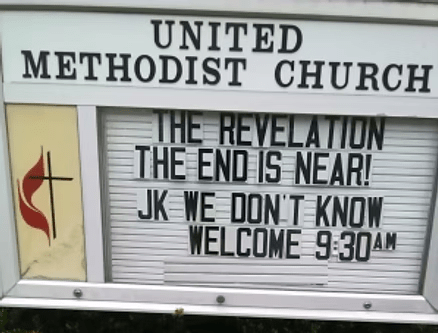



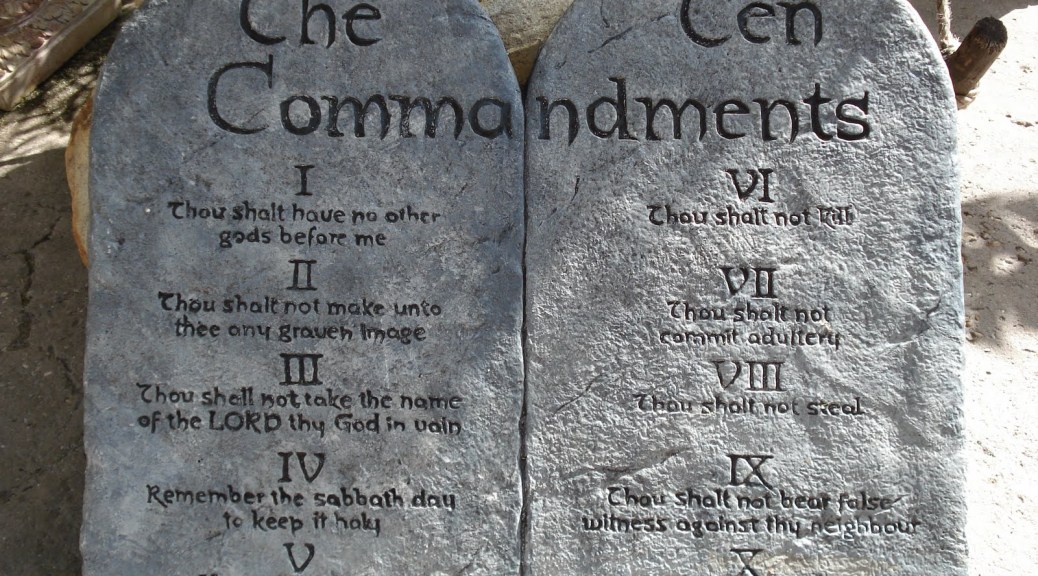









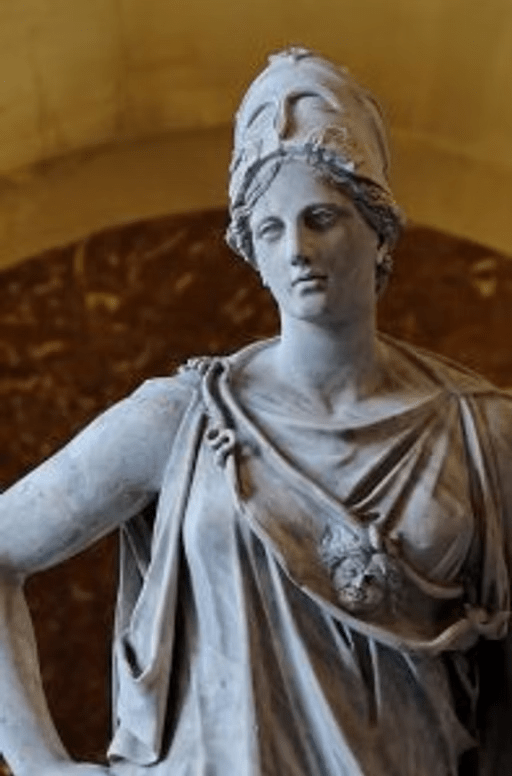

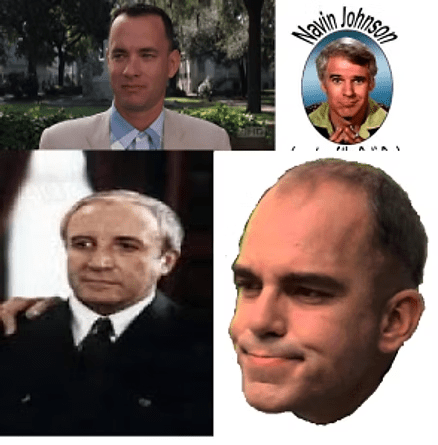





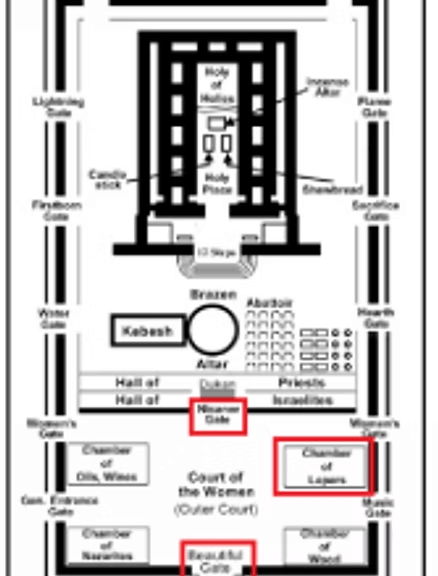
 Explaining the Readings