
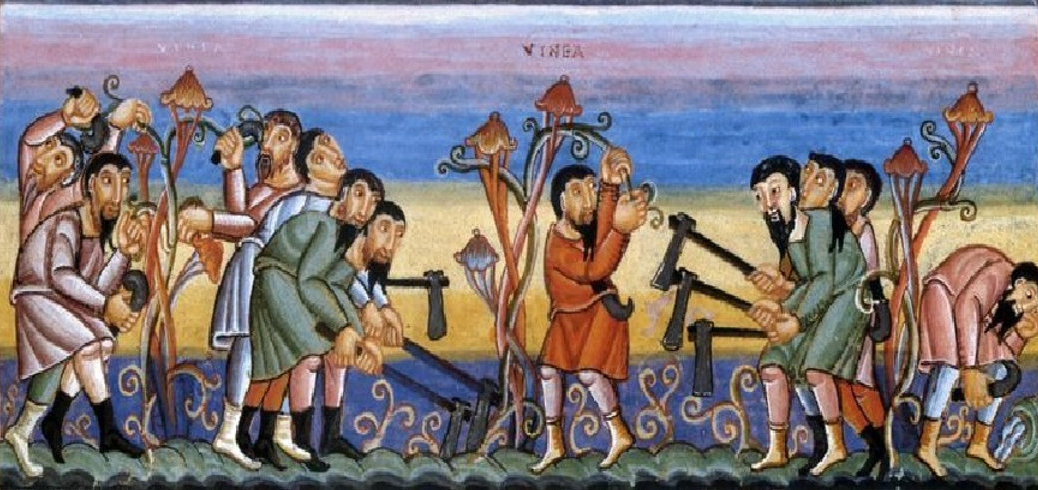
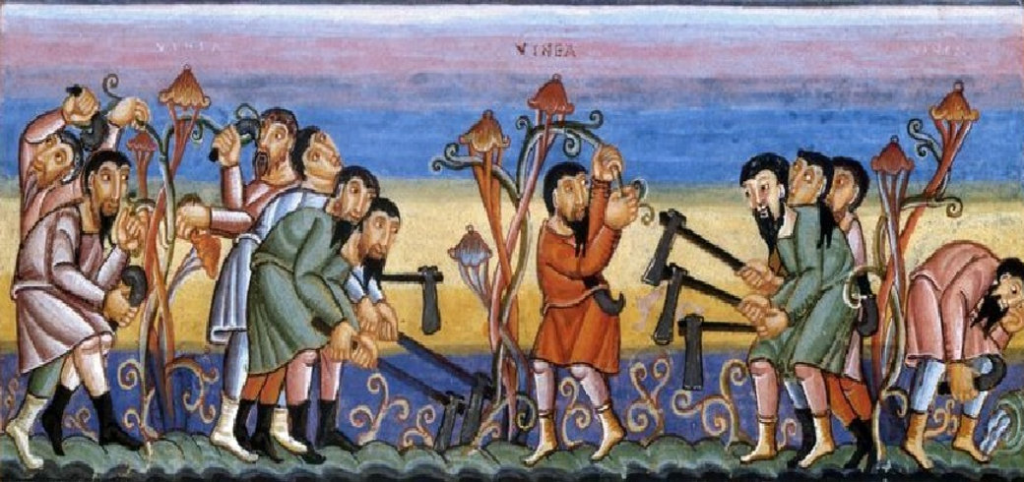
“Jesus said, “The kingdom of heaven is like a landowner who went out early in the morning to hire laborers for his vineyard. After agreeing with the laborers for the usual daily wage, he sent them into his vineyard. When he went out about nine o’clock, he saw others standing idle in the marketplace; and he said to them, ‘You also go into the vineyard, and I will pay you whatever is right.’ So they went. When he went out again about noon and about three o’clock, he did the same. And about five o’clock he went out and found others standing around; and he said to them, ‘Why are you standing here idle all day?’ They said to him, ‘Because no one has hired us.’ He said to them, ‘You also go into the vineyard.’ When evening came, the owner of the vineyard said to his manager, ‘Call the laborers and give them their pay, beginning with the last and then going to the first.’ When those hired about five o’clock came, each of them received the usual daily wage. Now when the first came, they thought they would receive more; but each of them also received the usual daily wage. And when they received it, they grumbled against the landowner, saying, ‘These last worked only one hour, and you have made them equal to us who have borne the burden of the day and the scorching heat.’ But he replied to one of them, ‘Friend, I am doing you no wrong; did you not agree with me for the usual daily wage? Take what belongs to you and go; I choose to give to this last the same as I give to you. Am I not allowed to do what I choose with what belongs to me? Or are you envious because I am generous?’ So the last will be first, and the first will be last.”’
——————————————————————————————————
This is the Gospel reading from the Episcopal Lectionary for Proper 20, the sixteenth Sunday after Pentecost. It will next be read aloud by a priest on Sunday, September 24, 2017. It is the parable of the workers in the vineyard, which concludes with the message, “The last will be first, and the first will be last.” (NIV)
This New International Version selection, as shown on the Episcopal Lectionary website, omits the full statement of verse 16 (beyond that conclusion), which says, “For many are called, but few chosen.” As this is a significant clarification to “the last will be first, and the first will be last,” I will interpret this Gospel reading as if the whole statement were to be read (as it is in the King James versions available).
According to the website Greek New Testament (http://www.greeknewtestament.com/B40C020.htm#V16), there are five versions of the Greek text, from which all translations are based. Verse 16 is shown to contain “outwV esontai oi escatoi prwtoi kai oi prwtoi escatoi polloi gar eisin klhtoi oligoi de eklektoi.” That shows in the Stephens 1550 Textus Receptus, the Scrivener 1894 Textus Receptus, and the Byzantine Majority copies. However, only “outwV esontai oi escatoi prwtoi kai oi prwtoi escatoi” is shown for the Alexandrian and the Hort and Westcott copies, omitting “polloi gar eisin klhtoi oligoi de eklektoi.”
The quote from Jesus (“Many are called, however few chosen”) appears in Matthew 22, verse 14, as a stand-alone conclusion to the parable of the wedding banquet. All five of the above copies show verse 14 of Matthew 22 as, “polloi gar eisin klhtoi oligoi de eklektoi.” It is the same text found in two verses, in two chapters.
As to this stand-alone parable, context may help to understand why Jesus would address “length of service” to the Lord. In Matthew’s seventeenth chapter, Jesus appeared transfigured on Mt. Hermon (in Gaulanitis), before going to Capernaum (Galilee) at the shores of the sea. In chapter 19, Matthew began by telling the readers that Jesus “departed from Galilee and came into the region of Judea beyond the Jordan.” That is where Jesus told this parable of the vineyard laborers.
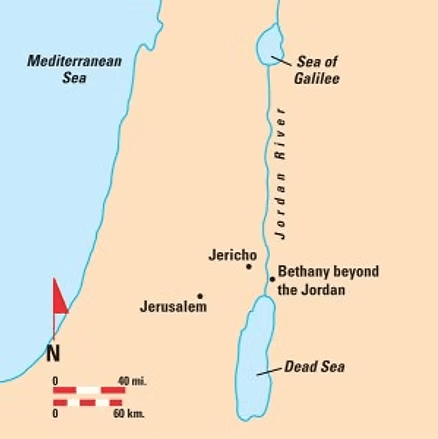
One could then assume that the lessons Matthew remembered Jesus teaching, in chapters 18 and 19, were lessons on different Shabbats, as weeks were passing. In John, we learn that Jesus was in Jerusalem during the winter festival for the Feast of the Dedication (now known as Hanukah, beginning on 25 Kislev, usually in December). Then, after angry Pharisees tried to grab and stone Jesus, he eluded them and went to the other side of the Jordan. This means Jesus is telling this parable probably in January or February, in the dead of winter, quite some time after being in a high mountain that is known for being a ski resort today.
Immediately following this parable of the workers in the vineyard, Matthew wrote that Jesus told his disciples they will soon return to Jerusalem, where he will be arrested, killed, and rise on the third day. That would take place during the time of the Passover, usually in April or May, during the spring. On the eve of that return to Jerusalem, the news of Lazarus being sick reached Jesus while he was beyond the Jordan. During the return to raise Lazarus from death, soon before the Passover festival would begin, Matthew tells of Jesus healing a blind man in Jericho, as the group was returning from beyond the Jordan. This sequence of events recorded allows one to see a timeframe of months passing, which means the parables can be weeks apart. It is my belief that they were all told on Sabbaths, as Jesus was a rabbi for his disciples.

It may be that the reading that led to Jesus telling this parable was from the Songs of Solomon, chapter 8, verses 10-14, as that uses the metaphor of a vineyard and laborers.
10 “I was a wall, and my breasts were like towers;
Then I became in his eyes as one who finds peace.
11 “Solomon had a vineyard at Baal-hamon;
He entrusted the vineyard to caretakers.
Each one was to bring a thousand shekels of silver for its fruit.
12 “My very own vineyard is at my disposal;
The thousand shekels are for you, Solomon,
And two hundred are for those who take care of its fruit.”
13 “O you who sit in the gardens,
My companions are listening for your voice—
Let me hear it!”
14 “Hurry, my beloved,
And be like a gazelle or a young stag
On the mountains of spices.”
In this song, reality is not stated, as much as the Songs of Solomon are written as metaphor of the love between a human being and God. Because they appear strongly as human love in a setting of sensuality, there is higher meaning to such physical love. This makes his songs parables, which require explanation beyond the obvious.

A vineyard represents a productive land, amid a world less cultivated. Baal-hamon (the name of a deity of Carthage & Phoenicia) is representative of the surrounding barren lands, among which Israel was set as a jewel of fertility. This is why the vineyard was so valuable to tenants, who had a need for devoted caretakers of their fruit. Such an explanation by Jesus to his disciples would have raised questions about the loss of that vineyard of Solomon’s and if it still bore fruit. If so, who were the laborers then, in a Roman-dominated Judea and Galilee?
As the time neared when Jesus would return to Jerusalem his final time, such questions would have perfectly been answered as a new parable, remembering how Jesus had already told his disciples, “The harvest is plentiful but the workers are few.” (Matthew 9:37) That statement, which followed Jesus saying that the crowds who followed him “were harassed and helpless, like sheep without a shepherd” (Matthew 9:36). It was made prior to his saying, “Ask the Lord of the harvest, therefore, to send out workers into his harvest field,” (Matthew 9:38) Both of those truths are reinforced in this parable. With Jesus’ time on earth being ripe for harvest, it was time to have God call for laborers. That urgency is seen in how the landowner went out regularly during the day to hire workers for the harvest.
Because this landowner possessed a vineyard, this is metaphor for Jesus being the good vine (“I am the true grapevine, and my Father is the gardener” – John 15:1). As grapevines are cut back after each season, allowing for new growth each year, the roots are those coming from “the stump of Jesse” (Isaiah 11:1 – “A shoot will come up from the stump of Jesse; from his roots a Branch will bear fruit.”) The “landowner” is therefore a metaphor for God, with the “true grapevine” being the source for those feeding on the body and blood of Jesus the Messiah, and the grapes being harvested representing the souls saved. The good workers are thus true Christians, as devoted priests filled with the Holy Spirit, which the disciples would become (as well as all others they would affect). However, not all workers are good.
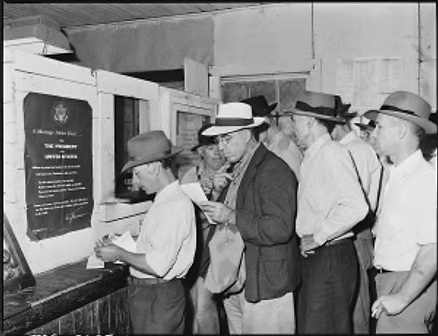
The various times of day, when the laborers were hired, reflects the history of God choosing people to “take care of his fruit.” They are representing: the Israelites freed from Egypt, who first entered Canaan (led by Joshua and judges) at 9 AM; They are the people of the nations Israel and Judah (led by kings and prophets) at noon; They are the scattered remnants of those fallen nations (led by Pharisees, High Temple Priests, and Scribes) at 3 PM; and, They are the disciples, family and crowds who sought their Messiah (led by John the Baptizer and Jesus of Nazareth), at 5 PM.
The grumbling of the workers, who were all paid the same wages at 6 PM, regardless of how long they had been working (poor babies “who have borne the burden of the day and the scorching heat”), are those made by Jews who believed they were closer to the landowner because they had been hired hands longer. This group can be generalized as the trail of tears so frequently shown by Israelites, Judeans and Jews – The Grumblers. They easily complain, as if being chosen by God demands their being due more in return than other “mere humans.”
Their bellyaching did not agree with the landowner, as the Covenant was clearly stated from the beginning, at 9 AM (“Did you not agree with me for the usual daily wage?”). Some things never change, as God told Moses, “”I have seen these people,” the LORD said to Moses, “and they are a stiff-necked people.” (Exodus 32:9).
Because the wages were all the same, the metaphor cannot be all getting the same reward of getting to live in the landowner’s palatial estate or heavenly kingdom manor. The agreement was not “work a day and get eternal rest.” The “usual daily wages” says the reward was limited (“daily” can be read as “most temporal,” not eternal), which means they are physical rewards for physical labors, rather than spiritual rewards for picking a few grapes.
The Jews often take pride in how many are doctors – medical and academic – and lawyers (the highest paid professions in worldly wages), while being known for always giving discounts to other Jews (generosity at the expense of Gentiles). As day laborers, they are not regular employees of the landowner, but they have been “chosen by God” to work for Him. Such an arrangement symbolizes how they (like all human beings) have been born of death, as mortals in new “chosen one” bodies, who then do as they want until they need the LORD to come and bring them some material gain. They hang out in the town square (“standing idle in the marketplace”), doing nothing to harvest the fruit of God, by taking no actions upon themselves (unsolicited) that seek to serve Him.

Certainly, the whole world of humankind is just as self-serving, whether or not Gentiles earn more or less physical wealth than Jews. This is why the landowner showed up at the marketplace at 5 PM, asking, “Why are you standing here idle all day?” When “they said to him, ‘Because no one has hired us,’” this is the ignorance of all who have not been led to the LORD. Rather than be a seeker of higher meaning, many just idly wait for God to come serve them.
When the lateness of the five o’clock hiring’s is seen as work still needing to be done, one can assume that many of the workers hired earlier in the day were slackers, so work was left undone. Perhaps, they were too good to work in the fields of grapevines, especially when the sun was so hot overhead. While there, they probably hung out at the water cooler more than they filled baskets with grapes. They were hired hands who were just there to draw a paycheck at the end of the day. This means they were getting material reward, but doing nothing towards earning spiritual reward.
This is where the continuation of verse 16 is so important. “For many are called, but few chosen” is a statement less about the landowner not having enough laborers, as it is more powerful as a statement that those who call themselves laborers are simply pretending to work. It becomes an amphibological statement – with double meaning intended.
The Greek word translated as “few” is “oligoi.” The root form, “oligos,” means, “small, brief, few, soon, little,” with the implication, “hence, of time: short, of degree: light, slight, little.” (Strong’s Concordance) This word’s compliment, “many,” is the Greek word “polus,” which also denotes “much, or often.” (Strong’s Concordance)
This means the deeper meaning comes out when read as, “Often does God summon, little however choose.” This has the effect of stating, “The call to serve God is always there for everyone, but those who choose to answer most frequently do little of value.”
This means the other part of verse 16, “So the last will be first, and the first will be last,” is not a matter of everything about the harvest coming down to the bad planning of God (You should have known there are slackers and starting hiring well in advance of the harvest time), but the unwillingness of human beings to heed the continuous call of God.
A valid literal translation of “So the last will be first, and the first will be last,” is “Thus will be until the end most important, and the principal, extreme.” The Greek word translated as “last” is “eschatoi,” which is the root word (“eschatos”) for “eschatology,” or “the study of the End Times,” more properly defined as, “any system of doctrines concerning last, or final, matters, as death, the Judgment, the future state, etc..” (Dictionary.com) That word being used twice in this verse makes its deeper meaning have more impact as a parable that leads to the end of the day, when wages are paid individually. It reflects a time when the sun sets on one’s life.
Each human being chooses what is “most important” in his or her life (what comes “first”), until that life reaches its death (what comes “last”). It is a matter of whose “principal” one lives by (God is the “highest,” “the first”). That decision projects to the end of the physical time on earth, when the soul is released.
The “Text Analysis” of this Greek text on BibleHub.com shows a comma separating the last two words, as though necessary for an English translation, as if written: “prōtoi , eschatoi.” A separation indicates each word has equal importance, with one’s meaning preceding the second’s. Thus, the implication becomes one’s “principal” (“first” choice of philosophy) in life then determining the “extreme” (the “final” state) to come upon one’s soul.
As a matter of seeing “So the last will be first, and the first will be last” as some ranking of service to the LORD, or seeing the weak and poor as inheriting the earth being implied here in this parable, that is being misled. Neither is it a statement about having done little all your life for God, but on your death bed you confess all your sins, so you are then allowed to go to heaven. It is more in-line with Jesus being the Alpha and the Omega.
As such, length of service has absolutely nothing to do with this message. As a broad-stroke view, it says anyone, at any time, who has been filled with the Holy Spirit and had the Christ Mind born within him or her, that person will be alive as Jesus – the Alpha and the Omega. Moses worked in the vineyard. Elijah worked in the vineyard. Saint Paul worked for God during his day on earth. All the holy have worked for God, but they have done so alongside some riffraff who were just there for the paycheck. The point is that time ceases to exist when in the Spirit, as human bodily death represents an awakening to eternal life.
Again, as this parable comes not long before Jesus would head the gang of followers from beyond the Jordan to the vicinity of Jerusalem, for his End Time on earth, Christians today need to see this message as being told by Jesus directly to each reader or listener. Are you one of those who was hanging out at the marketplace at 9 AM, as a baby raised from “cradle to grave” in a church, but still do not know Jesus? By the time old age comes around at 6 PM, do you grumble at the thought of all those so-called Christians who are Johnny-come-lately’s, calling themselves Born Again Christians and acting like they deserve heaven more than you?
Or, are you one of those who escaped the real heat of being Christian, by acting atheist as long as that was cool and that got you places, only to find some life emergency made praying to an unseen God the only promise of hope still available, meaning you got hired at 3 PM?
The mega importance of this parable is to realize it is now 5 PM and you are still standing idle in the town square, with God once again offering the same employment as always. God says to open your eyes and realize NOW is the time to go to work for God. There are other parables about those fools who thought they could wait a little longer, only to find out that didn’t work out to well for their souls. The ones hired at the last hour of daylight are the ones who sincerely want to serve God with their whole heart.
God is asking you, individually, “Am I not allowed to do what I choose with what belongs to me? Or are you envious because I am generous?” If you are arguing with God about what you think He owes you, then you might want to re-read that contract you agreed to (both Old part and New part). Prove to God you belong to Him, not by how much you know, but how much you selfishly do. If you do service to the LORD without expectations (letting go of the ego), then you will find out His generosity extends well beyond the wages of one lifetime.
 Explaining the Readings