Tag Archives: Matthew 22:37-40

Exodus 20:1-4, 7-9, 12-20 – The Ten Commandments are the marriage vows between one’s soul and Yahweh [Eighteenth Sunday after Pentecost]

Exodus 20:1-4, 7-9, 12-20

“Then God spoke all these words:

I am the Lord your God, who brought you out of the land of Egypt, out of the house of slavery; you shall have no other gods before me.

You shall not make for yourself an idol, whether in the form of anything that is in heaven above, or that is on the earth beneath, or that is in the water under the earth.

You shall not make wrongful use of the name of the Lord your God, for the Lord will not acquit anyone who misuses his name.

Remember the sabbath day, and keep it holy. For six days you shall labour and do all your work.

Honor your father and your mother, so that your days may be long in the land that the Lord your God is giving you.

You shall not murder.

You shall not commit adultery.

You shall not steal.

You shall not bear false witness against your neighbor.

You shall not covet your neighbor’s house; you shall not covet your neighbor’s wife, or male or female slave, or ox, or donkey, or anything that belongs to your neighbor.

When all the people witnessed the thunder and lightning, the sound of the trumpet, and the mountain smoking, they were afraid and trembled and stood at a distance, and said to Moses, “You speak to us, and we will listen; but do not let God speak to us, or we will die.” Moses said to the people, “Do not be afraid; for God has come only to test you and to put the fear of him upon you so that you do not sin.”’

—————————————————————————————————

This is the Old Testament selection from the Episcopal Lectionary for Year A, Proper 22, the eighteenth Sunday after Pentecost. It will next be read aloud in a church on Sunday, October 8, 2017. It is quite important because this is what Christians call the Ten Commandments.

As a disclaimer: There can be no “pencil-whipped,” Cliff Notes explanation of this reading, as the Ten Commandments stands as the cornerstone of Judaic-Christian beliefs. This article of interpretation is therefore of some length, simply because it addresses each Commandment. Because a standard Episcopalian sermon is between ten and twelve minutes in length, one can expect the totality of time spent on this Old Testament reading selection will be the time the reader puts into reading it. At most, a priest might gloss over one or two laws, to suit the points of a sermon hammered solidly to the Gospel (after all, Christians aren’t Jews, so no need to spend a lot of time on the Law). This posting might be the only time some people will have any of this explained.

With those added words set into the word count, let me begin.

———-

A few things are important to realize before digging deeper into the meaning found in these selected verses (skipping a few between verse 1 and verse 20).

First, the Jews laugh when they hear Christians talk about “the Ten Commandments.” Statues have been removed from courthouse lawns that condense this reading to “10 easy steps to living holy.” The Jews recognize that Moses brought down 613 commandments.

Second, Moses did not come down the mountain and send out messengers to all nations of the world, telling them the news of laws that must be adopted universally. That inaction means ALL of the Laws of Moses (God’s Commandments) are directed at His priests, and only to those who were to be totally freed from the “house of slavery” – life in a world that allures with sin.

This means God was (and is) quite aware that: 1.) There are other gods mankind serves; 2.) Idol worship is normally accepted around the world; 3.) People everywhere play the “god card”; 4.) Some people like to play golf on Friday, some Saturday, and some Sunday, with all calling that their holy day; 5.) Everyone has a mother and father, even if everyone has not personally met them; 6.) Humans love to kill just about anything that moves; 7.) People love sex, in all forms; 8.) People love to have what others have, even if they cannot afford it; 9.) People commonly lie to protect their behinds from punishment; and 10.) People everywhere always think someone else has more than them.

In other words, God knew the world more commonly served Satan (Beelzebub, Baal, Lucifer, etc., etc., by many other names), so the males and females created by God regularly did what displeased YHWH, making Him turn His back to the world in general.   But, to save that world, God was laying down the Law only for those who would serve Him in that effort towards Salvation.

Third, these laws of God, sent down by Moses, were given to the Israelites who had followed Moses to Mt. Sinai, but they always apply to those who wish to enlist their services to the LORD. The Jews (of Jesus days and of today) follow these rules religiously (meaning they know when they have broken one or all). Christians (who have delighted in killing Jews in the name of the Jesus – a sin, as listed above) enjoy the fact that they are not Jews, so they can trim down the 613 laws to just ten (while retaining the holy right to amend and adjust the penalties stated by God, through Moses, as they see fit). Jesus, however, made it clear the Law is fixed and just the first step to being a priest for God, when he said, [After obedience to the Law] “sell your possessions and give to the poor, and you will have treasure in heaven. Then come, follow me.” (Matthew 19:21)  So, if you cannot live up to Ten Commandments, you might as well find another god to openly serve.

With those basic realizations grasped, it is next worth looking at what is actually written, versus the English translations that are posted above and will be read in churches.

For the First Commandment, the Hebrew of verse 3 is: “lō yih·yeh- lə·ḵā ’ĕ·lō·hîm ’ă·ḥê·rîm ‘al- pā·nā·ya.” Literally, this translates to state, “Not (lo) you shall have (yih·yeh-) to you (ḵā) gods (’ĕ·lō·hîm) other (’ă·ḥê·rîm) before me (‘al-) the face of (pā·nā·ya).” (Bible Hub Interlinear) When this is translated into English as saying, “You shall have no other gods before me,” an important element is lost – “the face of” (pā·nā·ya).

Certainly, a priest serving YHWH can have no other gods that he, she, or it holds in higher accord than the One God. In fact, I have met people who (supposedly) educate people for Christian ministry, who vehemently deny there are any other gods. They translate “elohim” as “God” (singular capitalized), when it is the Hebrew plural form of “el,” meaning “gods.” Genesis’s first chapter is filled with references to “gods” (“elohim”) acting during the Creation, but all those references have been lost in translation, so we learn: “God” did this and “God” did that.

True. God WAS … before the Creation. Therefore, “In the beginning [it was God who had] gods created.” YHWH made and then commanded little-g gods to do everything; and, this proves there are many other gods around (angels and Satan being a couple of examples of non-human spiritual entities … gods).

Sure, the First Law says do not worship any other gods; but isn’t that too simple? Doesn’t every Judaic-Christian believer get credit for that one (well, except the 51% of people in the 2010 U. S. Census who claimed their religion to be “Jew”, but then checked the “no” box asking, “Do you believe in God?”)?  Still, doesn’t every believer believe only in God?

The answer lies in “panaya” – “the face of.” That answer says, “It is not that simple.

While the English translators (and probably the Hebrew translators, way back to the time of origin?) see this as something like colloquialism, where “before me the face of” was an ancient way of overstating “before, above, over” God, whom all servant-priests must face. However, “panaya” (according to Brown-Driver-Briggs) “literally [means] [faces] of Man,” as found stated in “Genesis 43:31; 2 Samuel 19:5; 1 Kings 19:13; Leviticus 13:14; Daniel 8:18; Daniel 10:9, 15 +; ׳עוֺר”.

This says, Man thinks of himself or herself as just as important in the worldly scheme of things as is God. Humans can say they have no other God they believe in “above God,” but then they say that wearing that sinful “face” of himself or herself, when they plead “before God.”  Man has proven to be too full of itself to bow down “before God’s face,” so God’s face cannot be then reflected back at God, from the bald scalp of Man having self-sacrificed.

In Jesus message terms, the First Law goes beyond memorization of the words and continues on to giving away everything that keeps you bowing down before self, until you then follow in the ways of Jesus, as Jesus reborn, with the Christ Mind.  We know this because “Jesus said to his disciples, “Whoever wants to be my disciple must deny themselves and take up their cross and follow me.”‘ (Matthew 16:24)

A hint at how this is the correct meaning intended to be honored, I recommend reading the end of Exodus 19, as God told Moses a few things that are relevant here:

“So Moses went up and the Lord said to him, “Go down and warn the people so they do not force their way through to see the Lord and many of them perish. Even the priests, who approach the Lord, must consecrate themselves, or the Lord will break out against them.” Moses said to the Lord, “The people cannot come up Mount Sinai, because you yourself warned us, ‘Put limits around the mountain and set it apart as holy.’” The Lord replied, “Go down and bring Aaron up with you. But the priests and the people must not force their way through to come up to the Lord, or he will break out against them.” So Moses went down to the people and told them.” (Exodus 19:20b-25, NIV)

Moses and Aaron were holy (“consecrated” means that, as “sacred”). The mountain of God is therefore the Law. “Do not force your way through to see the LORD” means do not say you obey the Law, when you really do not understand it as non-consecrated plebes. “Even the priests, who approach the Lord, must consecrate themselves,” which applied to the elders then, the ones in the days of the Pharisees, and the ones who call themselves Rabbis, Pastors, Ministers, and Priests today. Just because you have a following that makes you feel mighty important, do not approach God wearing that face; “or the Lord will break out against you.”

Hint: One can only be sacred when a divine presence has joined with one’s soul. Moses and Aaron were so divinely possessed. Their souls were possessed by the soul of Jesus (a name meaning “YAH Saves“); and, that union is eternal. This means when alive in a body of flesh, one has forever submitted to serve Yahweh; and, Yahweh has sent His Son Jesus to forever keep one from breaking the marriage vows. So, when one dies and one’s soul goes “before” Yahweh, one will always wear the “face” of the Father, through the Son. First Commandment, therefore, demands this self-sacrifice to marry Yahweh and become His bride, as well as the ‘mother’ soul to His Son reborn.

If you have read this far and are thinking, “Wow! So many words on just the First Law! I don’t know if I have the time to read the rest,” then keep in mind how Jesus said, “’Love the Lord your God with all your heart and with all your soul and with all your mind. This is the first and greatest commandment. And the second is like it: ‘Love your neighbor as yourself.’ All the Law and the Prophets hang on these two commandments.” (Matthew 22:37-40, with similar in Luke 10:27; Mark 12:30-31) The following nine Commandments are relative to loving God and loving your neighbor as a God-loving you (consecrated, holy, sacred, and Saintly Apostle).

When you read the Second Commandment, ask yourself, “Have I ever watched American Idol?” We read this and think of the Golden Calf the Israelites made, when we never once think of our worship of idols and heroes, politicians and ministers, as being what God instructed against. America’s knees are flat from bowing down to movie stars, singers, activists and protesters, and even sweet Jesus himself.

I imagine it was the Holy Roman Emperor who saw the fish symbol (Pisces = sacrifice) and said, “Scrap that! Make the cross the symbol of Roman power and might. Hang a Jesus on it and put it around the necks of every Roman Catholic … and charge a pretty denarii for it!” This too is a graven image that is in the “form of earth,” as the instrument that killed the body of Jesus, even though it became an earthly symbol of his soul’s release to heaven.  In its precious metal presentation, a cross is an idol.

[Aside: The cross, as a symbol of death and destruction, is as pagan as a Roman temple to Pluto.  The holiness of a cross symbol comes through seeing it as representative of the Trinity: Horizontal (God) + Vertical (Son) + Intersection (Holy Spirit).  Each Christian must be that cross of the Trinity.  The presence of that Intersection makes each Christian be Jesus resurrected; but he sure ain’t hanging dead on it.  You are!  You cannot be reborn as Jesus with the Christ Mind while still being a living ego trying to control things in your world.]

The Third Law does not mean “Do not cuss like a sailor, using God as a word in that process.” This is actually why Jesus had such a problem with the Pharisees and Temple scribes and priests. They were using the name of God as a way to get rich and as a way to condemn those who challenged their racket. They used the Lord’s name in vain every time they said, “I condemn you in the name of the LORD!” Today, a whole lotta ministers go around saying, “I rebuke you in the name of Jesus Christ!” It is great theatrics; but God is not pleased when His name is tossed about like that.

The Forth Commandment seems like all a believer has to do is go to church on Sunday (a Christian Sabbath … not). The Jews who returned from exile, self-flagellating themselves for having strayed so far they lost their valuable property, made it a well-monitored rule that no one could do anything on the Sabbath, except walk to the synagogue and walk home. That is more than the Christian view of getting a day off work on Sunday, with attendance in a church optional. My deceased mother turned to watching religion on television, rather than go to church. She was not alone.

What is missed in this Law is the part that says, “For six days you shall labor and do all your work.” As a priest of YHWH, what “work” is that which makes one consecrated? Selling Ponzi scheme stock options, or used cars, or life insurance, or practicing being someone one is not, as an actor in the movie industry does? If one is going to be a priest for the One and Only God, the work required is 24/7 practice being His servant. He might want you to shear a sheep or hammer some nails and sweat a lot in the sun; or, He might want you to raise children right or tend to the elderly and sick.  You just get to stay home on the Seventh Day and eat the manna that God provided the day before and thank God He leads you in your labors.

Intermission: I know this is a long article, but what can be better than spending a whole Sabbath looking at the opinions of others and expanding you own views of the truth. Interpreting Scripture should be fun and uplifting, when one’s mind is seeking to be consecrated. After all, the Law comes from sacred ground, so take off your sandals and let the Holy Spirit guide your thoughts for a few hours. Remember, it is not what I think and write that matters. It is what you think and do that leads to Sainthood. That takes more work than one day a week can satisfy.

———-

When Law number five says, “Honor your father and your mother,” it does not mean draw a picture for the refrigerator for mom, or let mom tell you which tie to pick out for dad, two days a year. It does not even imply that you have parents worthy of any kind of respect. The Hebrew word “kab·bêḏ” means, “to be heavy, weighty, or burdensome.” Thus, you “honor” your parents by taking on the same “burden” they took on when they began cleaning up your messes as a baby. It means to be fruitful and multiply; but the true “honor” is to teach your children to serve the LORD, like you were taught (Charles Manson, et al, excluded).

The Sixth Commandment, “You shall not murder,” is one of those that Americans struggle with, especially those who want to have the government make it illegal for Americans to get their hands on guns and shooting anything that moves (forgetting that humans can kill with their bare hands and anything that fits into them can make killing easier). Cain used a rock, we think. On top of that, Americans think it is murder to execute someone who actually did murder, so there is less effect that law will keep anyone from murdering. Beyond that, Americans argue “murder versus kill,” and try to justify war, if certain criteria are met … none of which has anything to do with loving your neighbor like yourself.

If you are consecrated, you don’t go looking to kill anyone in any way. You do not love a country more than God, so some politician or general cannot order you to, “Go kill in the name of us.” Just don’t kill, unless God blesses you with an Ark and an order to do so. Then be prepared to die for God.

Here lies a true conscientious objector.

With the Seventh Commandment we come up with adultery, which is the human urge to have sex without planning to propagate. “Adultery” is a word used to denote (especially a man) having extramarital sex; still, Ezekiel, Jeremiah, and Isaiah used this same word (“naaph”) as figurative when a priest of YHWH cheats on Him (an indication that a priest is the wife, regardless of human gender). Still, as a word in English, the root word is “adult,” which makes the intent be related to those urges that begin at puberty, which usually results in getting married and making babies. However, adults who are led by their groins and sensuality will rub on anything, kind of like human hands love to grasp powerful instruments of death.

As such, “Do not commit adultery” means do not have sex with anyone and everyone prior to marriage.  It also means do not have sex with anyone other than your spouse after marriage.  It also means do not have sex with yourself.  It also means do not have sex with someone of the same sex (where making babies is impossible).  It also means do not have sex outside your own species.  It also means do not have sex with minors.  It means once you become a mature human being you have uncontrollable physical urges.  Congratulations!  You are normal; but normal and being sacred are two different creatures.

Again, I know this sexual limitation is almost impossible for anyone between the ages of 14 and 84 to comply with; but the point of consecration is why Paul wrote, “”It is good for a man not to have sexual relations with a woman.” (1 Corinthians 7:1). Sex becomes like one of those gods that likes to stand between you and God, when it is Face Time. That is why Jesus said, “And if your right hand causes you to stumble, cut it off and throw it away. It is better for you to lose one part of your body than for your whole body to go into hell.” (Matthew 5:30) The hand causes adults to stumble when it strokes those sensual parts of the body.
For the Eighth Law, “Thou shalt not steal,” the element of adultery implies consent with another adult, and what seems stolen from a spouse is really still there (just missing the heart part). This command is then relative to the material world and innate human lusts for things and gadgets. The people of Israel and Judah who owned land and grew crops were supposed to allow 10% of their crops (the outer fringes) to be for the needy. The needy were going to take what they needed, just to survive; so, one loves a neighbor by allowing one to take freely what one needs, rather than deny them that right. Denial would make them steal for it, because food is a necessity.  That is a way to love your neighbor as yourself.

This means stealing is relative to excess, or taking more than you need. That can mean taking that which is not yours to take; but that can also mean taking that which should be left for someone else. After all, how many billions of dollars does one need to live comfortably within the Law?

The Ninth Commandment then addresses bearing false witness against your neighbor. This is certainly meaning not to badmouth someone behind his or her back, where sowing the seeds of hate, in hopes of personal benefit, are a long way from being consecrated. I see it more as a warning to stay out of court as much as possible. Stay away from the “sue me sue you” mentality, especially as it has become such an easy way to make a profitable living – easy money. If you are called to witness in a trial, tell the truth – and that means no paid experts who are willing to twist the truth into a knot that benefits the highest bidder.

It is not coincidence that the Pharisees were Lawyers.  Their law practices dealt with the Laws of Moses exclusively.  Then, as now, lawyers are very closely related to the eighth No-No, stealing.  Middlemen, like people who charge interest on loans (Usurers), are like lawyers and advertisers who stir up business by promoting people bearing false witness.  (“I’m not a doctor, but I play one on TV.”) These are the people who say, “I’ll get you $100 and all you have to do is nod “yes” when I point to you.”  Then, after you follow those instructions, he gives you $50, saying “$40 goes to me and $10 to the court.”  Then you feel dirty and used … like an adulterer that has been robbed.

Finally, the Tenth Commandment is about coveting, which is all about jealousy and envy. As far as priests for YHWH go, if your mind is on what someone else has, what someone else looks like, or how important someone else seems to be, you are not serving the LORD. As the song sang, “Don’t worry, be happy,” you can only do that when you wear sacred blinders.  God will provide everything you need.  Everything beyond that is not yours for a purpose.  So, deal with it.  It is your test.

In conclusion, The Israelites “said to Moses, “You speak to us, and we will listen; but do not let God speak to us, or we will die.” Moses said to the people, “Do not be afraid; for God has come only to test you and to put the fear of him upon you so that you do not sin.”’ This point means it is so very easy … normal, common, expected … to let someone else be consecrated. Getting close to God is frightening, simply because of all the worldly things you like to do having a damper be put on them. However, that is just a typical fear of those who are addicted to the worldly.  The holy have no fears.  The consecrated can enter hallowed grounds.

Those fears are erased when you start to take the test and realize, “this is easier than I thought.” When the Holy Spirit comes everything is possible. The Holy Spirit is a reachable goal, just like Mount Sinai was. However, as is stated in Exodus 19, Moses set “limits around the mountain [to] set it apart as holy.” (Exodus 19:23b). It is the Law that forms those boundaries.
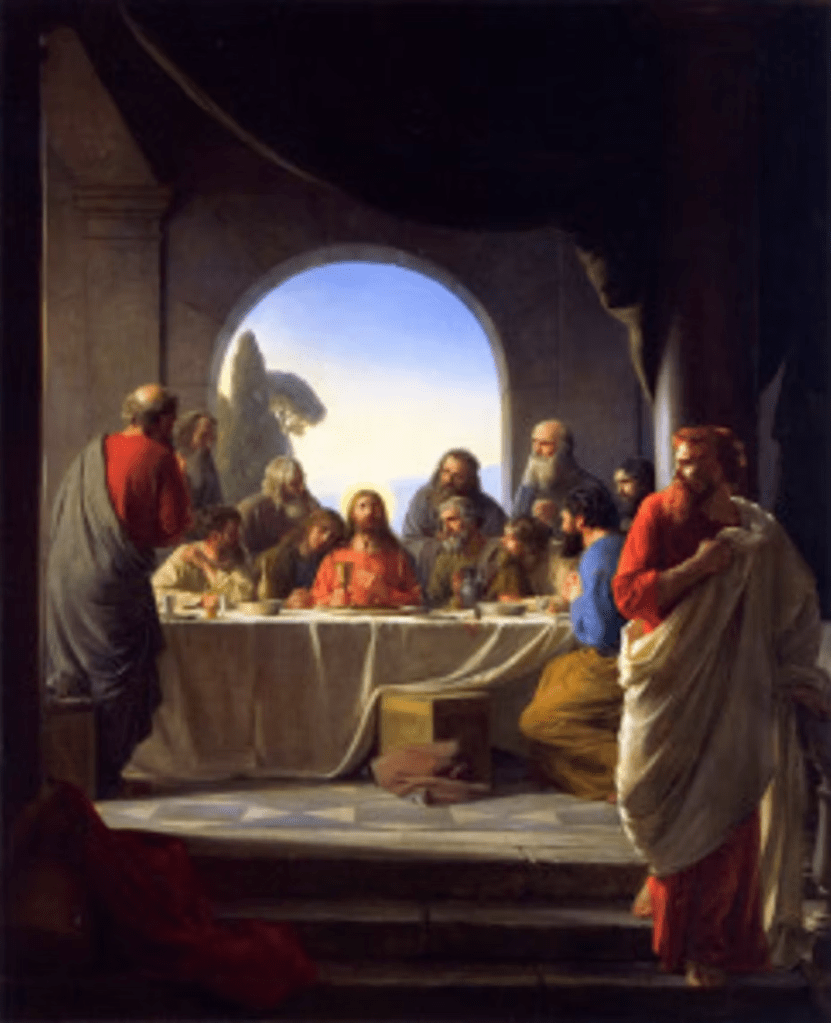
John 15:9-17 – The commandment to love one another as Jesus has shown love

Jesus said to his disciples, “As the Father has loved me, so I have loved you; abide in my love. If you keep my commandments, you will abide in my love, just as I have kept my Father’s commandments and abide in his love. I have said these things to you so that my joy may be in you, and that your joy may be complete.

“This is my commandment, that you love one another as I have loved you. No one has greater love than this, to lay down one’s life for one’s friends. You are my friends if you do what I command you. I do not call you servants any longer, because the servant does not know what the master is doing; but I have called you friends, because I have made known to you everything that I have heard from my Father. You did not choose me but I chose you. And I appointed you to go and bear fruit, fruit that will last, so that the Father will give you whatever you ask him in my name. I am giving you these commands so that you may love one another.”

——————————————————————————-

This is the Gospel selection from the Episcopal Lectionary for the Sixth Sunday of Easter, Year B 2018. It will next be read aloud in a church by a priest on Sunday, May 6, 2018. It is important because it tells of Jesus instructing his disciple to love one another, just as he has loved them. It is more important when one understands exactly what that commandment to love one another means.

———————————————————-

Preface Note: I believe this is a vital lesson that all Christians should be able to know and defend.  For that reason, I have expanded the scope of this interpretation to include other Scripture in support of this lesson.  As such, this writing is longer than usual, in order to make this reading fully understandable.

———————————————————–

It is worthwhile realizing that this reading from John is the second time where Jesus told his disciples to love one another. The first time is also found in the Gospel of John, two chapters earlier.  There one reads:

“A new command I give you: Love one another. As I have loved you, so you must love one another. By this everyone will know that you are my disciples, if you love one another.” (John 13:34-35)

Both times that John recalled this instruction being given were on the same day – the the evening of the Passover Seder meal (15 Nisan). The first time was soon after the ritual dinner, not long after Judas left to betray Jesus. Jesus knew Judas was going to do that as he said, “What you are about to do, do quickly.” (John 13:27)

That timing makes it worthwhile to know that Jesus did not say to Judas, “Before you leave to betray me, I have a new commandment you need to hear first. It is: Love one another as I have loved you. Okay Judas, what you are about to do, do it quickly.”

Leaving friends behind.

Because that conversation did not take place, nor get recorded as a lesson of love, the omission acts to show how Jesus gave this commandment to a select group of followers – his disciples. By waiting for a traitor to leave, Jesus did not say that commandment as a lesson for the whole world to follow.   Although that would be the ideal, just as would Heaven being on Earth would be ideal, the whole world would have to be followers of Jesus Christ; but because that cannot be, one cannot read that ideal as the intended message in this lesson.

Recently, I encountered a man who had solved the whole world’s problems, based on misunderstanding this teaching of Jesus. He had written a short story that used this flawed logic: Because Jesus said his disciples must love one another, then all the world’s problems are rooted in the failure of Christians to follow that order.

This man was less concerned with helping anyone but himself (through sales of his short story), because his ultimate motivation was to throw blame on Christians for not living up to the lessons of Jesus Christ, through the sacrifice of their beliefs to the beliefs of others. He surmised that all the mental problems in the world were due to Christians not forgiving sinners, as though love means not judging anyone. He rationalized that Christians are to blame for pushing guilt onto the guilty, making sinners become psychotic due to a lack of love and acceptance of sins.  This man concludes (I presume) that Jesus taught forgiveness as the only expression of love.

The sad thing is this man does not stand alone in using this passage from John 15 as a stick to beat Christians into submission to a world of sin.  His view is how so many misunderstand this lesson (especially atheists). People misunderstand this command given for several reasons, but foremost is the difficulty that people have understanding God’s love. The theme for the Sixth Sunday of Easter is God’s love, but the mistake comes from thinking Jesus gave a command relative to human “love.”

Before discussing today’s Gospel lesson, it should be noted that Jesus gave other commandments about love. Unless those commands are understood as still in effect, making this reading’s order be additional, one cannot properly grasp the meaning here.

First, Jesus presented this lesson about loving your enemies:

“You have heard that it was said, ‘Love your neighbor and hate your enemy.’ But I tell you, love your enemies and pray for those who persecute you, that you may be children of your Father in heaven. He causes his sun to rise on the evil and the good, and sends rain on the righteous and the unrighteous. If you love those who love you, what reward will you get? Are not even the tax collectors doing that? And if you greet only your own people, what are you doing more than others? Do not even pagans do that? Be perfect, therefore, as your heavenly Father is perfect.” (Matthew 5:43-48, but similarly in Luke 6:27-36)

It looks harmless.

That passage directly instructs one to love an enemy, but it refers to love of a neighbor also.  Jesus directly addressed that love later in his ministry. Jesus was asked what the greatest of the Commandments was, to which he said:

“‘Love the Lord your God with all your heart and with all your soul and with all your mind. This is the first and greatest commandment. And the second is like it: ‘Love your neighbor as yourself.’ All the Law and the Prophets hang on these two commandments.” (Matthew 22:37-40, but similarly in Mark 12:30-31)

When we read in John 13:34, “A new commandment I give you,” the Greek word “kainēn” means “fresh, new, unused, and novel.” That indicates Jesus was not offering a replacement or superseding command. In the same way, the New Testament is an additional Covenant with God, through Jesus Christ.  It does nothing to change or eliminate the importance of the Old Testament.

It is as Jesus said: “Do not think that I have come to abolish the Law or the Prophets; I have not come to abolish them but to fulfill them.” (Matthew 5:17) Therefore, Jesus did not make any changes to his previous statements about loving enemies and neighbors. He added another element to the love commands.

When the totality of these commandments to love is grasped, it is easy to see how Jesus recognized there were natural divisions in the world. For Jews, their “enemy” was any and all who sought to take their focus off Yahweh and their Covenant with Him (i.e.: Gentiles). For the disciples, collectively the family and followers of Jesus, they lived among Jews (by Law), many of whom not only broke the laws of Moses but also displayed anger and resentment towards the disciples and Jesus (i.e.: the Temple elite). This means the love that needed to be found between those closest to Jesus (one another) was different than the same love that needed to be found for enemies and neighbors.

When Jesus told those listening to his sermon on the mount, “You have heard it told, ‘Love your neighbor and hate your enemy,’” he was addressing the rulers of Judaism teaching the law based on human principles, not divine guidance. They taught a misleading principle, because they understood the Law only on human levels, not Spiritual .

Because there are enemies, it is human nature to hate those who are opposed to you.  Likewise, it is human nature to love those who agree with you. Because Mosaic Law speaks more about guarding from falling under the influence of people who worship other gods, demanding the Israelites submit to complete obedience to the Law of Yahweh, all who are of those distracting influences are deemed enemies.

Because Yahweh promised land to His Israelite people (those who agreed to His Commandments), the people who resided on that land prior (and subsequently) all worshipped other gods.  Those indigenous peoples saw the Israelites as their enemies, because they took their land from them. The result was a mixture of races and beliefs, where all who resided on opposing sides were then both neighbors to one another (the Israelites), while also enemies because they opposed one another (all the other inhabitants of Canaan – Israel).

Enemies confront one another.

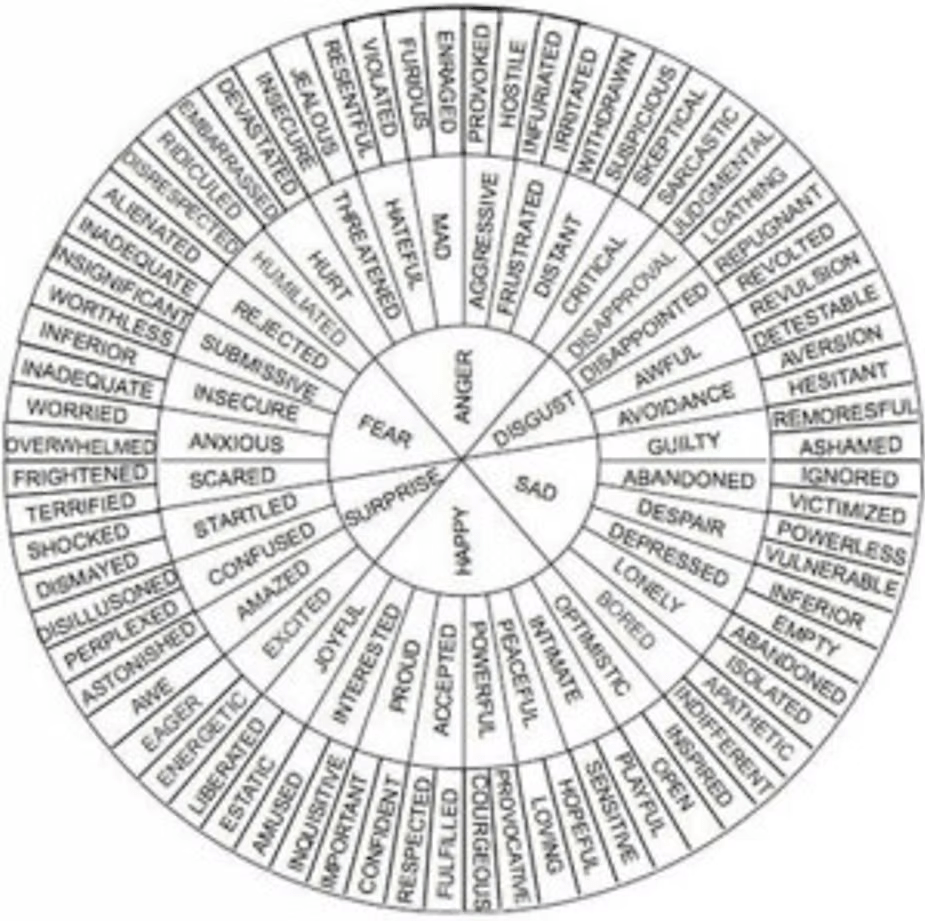
When this view is established, one can see that neighbors are those who profess belief in the One God (the Jews and scattered Israelites collectively). Enemies are then all Gentiles. The commands to love all who profess belief in the same God and also love all who believe in other gods becomes a love that is above and beyond human “love,” because human “love” must be defined by “hate.”  Human emotions are like coins that must have two sides.  For every emotion, there is an equal and opposite counter-emotion.

The wheel of human emotions.

The way that God’s love allows one the capacity for an uplifting ability, to rise above all human differences, is done by reaching a state of love that is heart-centered and within oneself. The world’s petty differences become inconsequential because one has found the truth of being chosen by God; and that means loving all others who have not reached that state of bliss.   By allowing those who focus on differences to do as they choose, without interference, one is loving others of all kinds.

The love then shown to both neighbors and enemies is a willingness to “Do unto others as you would have them do unto you.” (Matthew 7:12, Luke 6:31)  This is not a recommendation to surrender one’s beliefs to another, but an understanding that others are like oneself.  Just as one does not want to be told to surrender one’s beliefs, one should not ask others to surrender their beliefs.  That mutual respect requires a higher level of love to accomplish.

This love is not self-willed, as an attempt to gain neighbors or eliminate enemies. As a human being in the world, human beings will always be divided and at odds with one another. Wars and fights will always be waged.  As such, God did not send Jesus into the world to bring about human peace and “love.”

Jesus said, “Do not suppose that I have come to bring peace to the earth. I did not come to bring peace, but a sword.” (Matthew 10:34) All Christians know that the presence of Jesus caused the ruling elite of Judaism to become the enemy of Jesus.  They plotted to kill Jesus; and they recruited Judas from his followers, while convincing the Roman governor to sentence Jesus to death. Thus, Jesus did not teach love as the way to transform the earth into such a wonderful place that no one would ever strive to be good enough to go to Heaven.

From this understanding, one can then see how Jesus is speaking to a select subset of those who profess belief in the One God (Yahweh) – “his disciples.” It is also vital to always keep in mind how Jesus spoke from a human being perspective, having been born of a woman, so he knew his personality was separate from the Father’s.   Still, everything Jesus said that is recorded in the Gospels of the Holy Bible was not his brain calculating, but the Mind of Christ that led him to speak.

We know this because Jesus said, “The Son can do nothing by himself; he can do only what he sees his Father doing, because whatever the Father does the Son also does.” (John 5:19) Further, Jesus also said, “I did not speak on my own, but the Father who sent me commanded me to say all that I have spoken.” (John 12:49)

Who said that?

This means that the commandments about love come from God, as requirements that will set one apart from normal human beings through the elevation to Christ status (sainthood). As such, “his disciples” were students on the path to righteousness.  That distinction makes “his disciples” unlike those who simply believed in the same God (neighbors) and those who believed in other gods (enemies).

In today’s aftermath of the spread of Christianity, “his disciples” are those who believe in the One God and take steps towards understanding the words Jesus spoke as the means to reach the elevated state of being truly Christian. Now, those who are merely professed Christians and never go beyond learning children’s Bible stories are the neighbors. Now, those who formulate ways to destroy Christianity through belief in lesser gods (philosophies and other worldly idols), some who may even mimic the One God (as false shepherds), they are the enemies.

The command is then to love in three different ways, as love expressed toward three different groups of human beings.  This means one must not be blind to the fact that there are indeed enemies, neighbors, and family in the world. This means that the love of God will be expressed differently, accordingly, through those who have received God’s love.

In the reading today from John, we begin by hearing Jesus tell his disciples, “As the Father has loved me, so I have loved you.” That has to be seen as a love of family, where the disciples were the children of Jesus.  All the others who followed his ministry and supported it were family members – as brothers, sisters, including his mother. The Gospel stories paint pictures of how Jesus acted differently, yet still from love, to his family, to his neighbors, and to his enemies.

First, his family sought to learn from Jesus. To receive that knowledge, they became subservient to his needs. They carried tents, fetched lunch, prepared meals, and anointed his head and feet with oil. That says a love of family is total commitment to one another.

In this regard, after the crowds would leave Jesus, having heard Jesus speak in profound, yet unclear and uncertain language (as in a parable or a question answered by words that required the listener to truly answer), the disciples were just as confounded as were neighbors and enemies. They would ask Jesus to explain his words; and, Jesus would explain to them. The difference, therefore, in family and friends from neighbors and enemies is the family of Jesus sought to know more.

The neighbors and enemies could sense that was where Jesus was going with his words and that was where they did not want to go. They did not ask questions for fear of being exposed as unknowing or ignorant.  When they did ask questions, it was to trap Jesus and expose him as a false leader; but Jesus always turned the tables on them, so they fell into their own traps.  Thus, Jesus loved his family and friends by guiding them closer to where they were ultimately intended to go.

Seeing an advisor on registration day is advisable.

As for the neighbors, this primarily meant the Jews. Jesus said he was only sent to the Jews (“the lost sheep of Israel”), which by extension included his disciples. In the great commission, Jesus ordered them, “Do not go among the Gentiles or enter any town of the Samaritans. Go rather to the lost sheep of Israel.” (Matthew 10:5-6) This identifies the Jews as the neighbors who were to be loved. Still, Jesus encountered the outcast neighbors, who typical Jews saw as enemies and worthy of hatred.

In the story of Jesus encountering the Samaritan woman at a well, the woman said to Jesus, “You are a Jew and I am a Samaritan woman. How can you ask me for a drink?” (John 4:9) In the story of Jesus encountering a Canaanite woman, Jesus said to his disciples (who urged Jesus to send the woman away), “I was sent only to the lost sheep of Israel.” (Matthew 15:26) A leper was essentially a Jew that was forced to be outcast because skin lesions were seen as signs of sin; and, contact with a sinner was forbidden by Jewish law. Jesus touched a leper, saying, “I am willing (to make you). Be clean.” (Matthew 8:3) Jesus then encountered a Centurion (a Roman officer who had Jewish slaves), who told Jesus one of his slaves was deathly ill. Again, Jesus would have been forbidden by Jewish law to visit the home of a Gentile, but he asked the Centurion, “Shall I come and heal him?” (Matthew 8:7) All of these examples (and the many more) show the love of Jesus to neighbors, as those who came to Jesus because they believed he was holy.

Because they sought him out, as those who lived in the neighborhood (so to speak) but were not approved Jews, those neighbors were given the same treatment as if they were family and friends. They were lost sheep that heard the voice of their shepherd and came to Jesus willingly, without him seeking them out (against Jewish law). Therefore, the unwritten message of neighbors is it represents all those who live together but in segregated into groups, because of cultural demands, kept from intermingling by protocols. 

Jesus loved those neighbors by not rejecting them at face value.

Some neighbors do not believe in cutting grass.

As for the enemies that surrounded Jesus, one has to look at the examples where Jews were angered by something said by Jesus. In Nazareth, we read how all the Jews in the synagogue there, “were furious when they heard [Jesus speak]. They got up, drove him out of the town, and took him to the brow of the hill on which the town was built, in order to throw him off the cliff.” (Luke 4:28-29) While speaking to the Jews on the steps of the Temple, he told them the truth would set them free, which led to them denying they were enslaved. Jesus then spoke of the Father, to which the Jews claimed Abraham as their parentage. This inability to hear the truth in Jesus’ words angered them so, “At this, they picked up stones to stone him.” (John 8:59) During the Feast of the Dedication (now called Hanukkah), we read how the Jews gathered around Jesus and asked when he would clearly say he was the Messiah. He explained to them how they had heard that but did not believe, due to them not being his lost sheep. We then read, “Again his Jewish opponents picked up stones to stone him.”

Those were all the enemies of Jesus, yet Jesus loved them by telling them the truth, even though the truth hurt. Jesus did not capitulate to their demands to accept illegitimate reasoning, as if “love” meant not causing a stir.

It is also important to see some of the acts of Jesus that were also motivated by the love of God are often misunderstood as if an expression of pent up human emotions. For example, when we read, “In the temple courts he found people selling cattle, sheep and doves, and others sitting at tables exchanging money,” we then see the response Jesus had was, “So he made a whip out of cords, and drove all from the temple courts, both sheep and cattle; he scattered the coins of the money changers and overturned their tables.” (John 2:14-15) Later in his ministry, we see how, “When Jesus entered the temple courts, he began to drive out those who were selling.” (Luke 19:45 and similar in Matthew and Mark)

As Jesus was commuting between Jerusalem and Bethany during the pre-Passover week, we read, “Seeing a fig tree by the road, he went up to it but found nothing on it except leaves. Then he said to it, “May you never bear fruit again!” Immediately the tree withered.” This is given a title “Jesus Curses a Fig Tree.” (Matthew 21:19)

It is very easy to miss how Jesus acted appropriately in each instance, because his actions were backed by Scripture, as God’s love being that of a Father (not a mother). His physical acts were vivid and shocking lessons, but they were all backed up by divine words.  By those actions, Jesus taught lessons to his family and friends, and also to neighbors and enemies who witnessed them.  Jesus demonstrated love as an act in defense of one’s beliefs.

You’ll thank me later, although that is beyond your grasp now.

With that in-depth interpretation of love being much more than human “love,” where one comes from God in one’s heart, with the other coming from self-will that is ever-changing, one can then fully grasp the true intent of Jesus having a heart-felt chat with his students, on the eve of their graduation to Sainthood. This is not a conversation that equally applies to anyone who has not proved a committed relationship with God, through a love bond with His Son. This means understanding these words requires the presence of the Holy Spirit, as the disciples who were told this command did not write about it. (John was not a disciple, as he was family.)

Thus, students of Jesus to this day will have these words fall upon drunken ears, only to forget them when the fear and panic – generated by a world that is filled with dangerous enemies – grabs hold of their hearts and fills them with doubt. (“Oh you of little faith, why did you doubt?” – Matthew 14:31; and, “You of little faith, why are you so afraid?” – Matthew 8:26)

When Jesus told his disciples, “abide in my love,” he had just said his love was that of the Father, so the disciples were commanded to be in the same state. The Greek word “menó” (root of “meinate”) not only translates as “abide,” but also as “await” or “wait for my love.” That must be taken as Jesus telling anyone who desires to be a Saint, like Jesus, how he or she must wait until he or she becomes Jesus reborn.

Because the Father spoke through Jesus, the Son, Jesus saying, “If you keep my commandments, you will abide in my love, just as I have kept my Father’s commandments and abide in his love,” is saying all who have God’s love in their hearts will always obey God’s Will. This means each disciple will never again disobey the Father out of selfish will. That is the sacrifice of self that is awaited, which brings forth the Mind of Christ, so one is a new Jesus.

When Jesus then said, “I have said these things to you so that my joy may be in you, and that your joy may be complete,” the friends and family of Jesus had been seeking the “joy” and “gladness” that comes from “rejoicing” (all derivatives of the Greek word “chara”) that the promised Messiah had been delivered. In modern terms, Christians have the same desire in the promise of Jesus returning. The Jews all said they believed in the Prophets who promised the coming of a Savior, in the same way that Christians believe in the interpretations of Scripture that predict a Rapture and Second Coming. The Jews are still waiting for their Christ, while Christians who do not become Saints are still waiting for the End Times.

The “joy made in” a true disciples is “complete” when the return of Jesus Christ is now, in oneself. As such, the Greek word “plērōthē,” which means “may be complete,” also represents the conditional form of “might be filled.” This “fulfillment” depends on whether or not one opens oneself up to receive the Holy Spirit, which first requires one accept a marriage to God, becoming subservient to His love.

Understanding that self-sacrifice is the conditional demand makes it easier to see how Jesus saying, “This is my commandment, that you love one another as I have loved you. No one has greater love than this, to lay down one’s life for one’s friends.”  That says how the ability to possess God’s love demands one sacrifice one’s ego (the Greek word “egó” is the first-person pronoun “I,” emphatically stated as “I am.”). It means that the reward of that sacrifice is love, which is much greater than human “love.”

That sacrifice makes one capable of understanding the divine love that had been established between themselves and Jesus, as the Father being in touch with them through the Son. Thus, as Saints, they would have the love of family and friends between others of the same person (all begat from YHWH – “I Am That I Am” – as the Son reborn).  They could then promote the same love in multiplicity to other seekers, so more would become the children of Jesus Christ.

While it is easy to hear Jesus speak of laying down his life for his friends, through the Big Brain Syndrome of knowing the end of the story from the beginning, we can jump to the conclusion that meant Jesus would soon die on a wooden cross.  Unfortunately, such a conclusion is wrong. Jesus did not die on a cross so “philōn” (“friends”) could be saved, because that would deny all neighbors and enemies the same opportunity for Salvation.

If that were the case, then call back all the missionaries who travel the world trying to preach the Gospel to heathen enemies.

The meaning of what Jesus said has to be applied to Jesus’ life, not his death.  His life began at his birth, which means Jesus willingly sacrificed his human life before his soul was breathed into the human body that was born of a woman. Jesus laid down his life as a mere mortal, so he could become the Son of God, the Messiah.

By his making that sacrifice – laying down his life prior to birth – Jesus could live to create family and friends who would be saved by God’s love through that living body of Christ. Therefore, the conditional demands one exude God’s love amid the lives of neighbors and enemies, so that one will attract the seekers who desire to be close to one of righteousness.

When Jesus said, “You are my friends if you do what I command you,” this is the conditional proposition. If one reads the New Testament of the Holy Bible – the Gospels and the Epistles – and hears Jesus speaking to oneself, then one is a friend of God and Christ. That friendship is then conditional on obedience, which is by definition, “submissive behavior.” (see Collins English Dictionary definition 2)

That then defines a disciple as a slave or servant, such that a student must follow the lead of the teacher in order to obtain a passing grade and the ultimate goal – graduation to teacher status. When one has progressed to teacher status, one has become part of the family of teachers, who then teach their own begotten student friends. When one becomes a teacher of the Word of God, then one has become reborn as Jesus Christ.

In this line of thought that projects a student-teacher relationship that is intended to make the students self-sufficient as teachers, one can see the purpose of Jesus saying, “I do not call you servants any longer, because the servant does not know what the master is doing; but I have called you friends, because I have made known to you everything that I have heard from my Father.” The sacrifice of self that yields obedience, or servitude to the master’s orders, is itself a relationship that calls for love that does not accept failure as passing.

The students are the friends of the master because the master’s desire is for the students to learn the correct way. That level of love for friends means dressing the student down who has failed a test and praising the student who has successfully grasped a lesson. Jesus did this to Peter when Peter tried to rebuke Jesus, when Jesus told Peter, “Get behind me Satan.” (Matthew 16:23) Still, Jesus praised Peter when Peter answered Jesus’ question, “Who do you say I am?” (Matthew 16:15) The praise was because Peter’s answer, “You are the Messiah, the Son of the living God” (Matthew 16:16) was divinely inspired and not memorized (or hearsay). Therefore, Jesus the master told Peter the student, “Blessed are you, Simon son of Jonah, for this was not revealed to you by flesh and blood, but by my Father in heaven.” (Matthew 16:17)

When Jesus said, “You did not choose me but I chose you,” this is a statement of family. It is the relationship a parent has with a child, such that the saying goes, “You can choose your friends, but not your family.” Jesus then became the father of his disciples, telling them, “Follow me” individually, as his children.

That was a selection process based on divine insight, which says (in a way) that the souls who fill the bodies of our children are divinely chosen, by God, with purpose. Nothing happens by chance.

Students do not choose a course of study because they idolize a certain teacher. They choose a course of study because they desire to know that discipline. The disciples of Jesus chose to know righteousness, through one identified as the Christ. They never expected to become Jesus. Therefore, Jesus said it is up to the student to choose to achieve a goal that is higher than the teacher; and, for that reason Jesus chose his disciples because of their hearts having already opened to learn to love God – the ultimate goal.

Realizing that, when Jesus said next, “I appointed you to go and bear fruit, fruit that will last, so that the Father will give you whatever you ask him in my name,” Jesus affirmed he had chosen the eleven because they too would become teachers. They were buds that would blossom and grow into fruit, filled with seeds that would continue as the spread of Christianity.  As soon to be fruit from the true vine, the Apostles would become the offspring, true duplications of the Christ fruit.

By seeing this and by realizing that Jesus spoke these words to his disciples after Judas had left to betray him, Judas was like the fig tree that had born no fruit, which became cursed and died. This statement says a true Christian is appointed to also teach disciples, so they too become Jesus Christ reborn. Only by having been so resurrected can one ask God in the name of Jesus Christ for anything that will bear favorable results. Therefore, to be chosen is to be resurrected as Jesus Christ.

With the ending statement being, “I am giving you these commands so that you may love one another,” one must grasp that Jesus was not sitting in the dark of night on the Mount of Olives, speaking to a multitude of doubting Jews and enemies. Jesus, again speaking for the Father, spoke of God’s love being the DNA that joined them all together as brothers, who within fifty days would be reborn as Jesus Christ via the Holy Spirit. This means the command “to love one another” is an order to form a church – a graduate school of brotherhood and sisterhood, where only true Christians can support one another on a human level, as family.  In a Church family, every member has bonded to God as His Son reborn. (“For where two or three gather in my name, there am I with them.” – Matthew 18:20)

See this view of Church as a teachers’ breakroom or a faculty lounge, as a place to go when there are no classes of students for the masters to teach.  As a teacher of God’s love, one is still “on the clock,” but occasionally in need of re-energizing.  The command to love one another is then a command to give support to those in the same “line of work.”  The Church is how Christians maintain connection with all who are in the name of Jesus Christ. That is then a new command to amend the teachings of the synagogue.

A Church should be modeled after the rules set forth by Moses, where there are three “break times” a year – Passover, Shavuot, and Sukkot – with a call for Christians to share their love with their neighbors and enemies on every Shabbat. The natural abuse that would then be inflicted on those Christians, by neighbors and enemies, would require them to help each other’s wounds in healing.

Lend a hand.

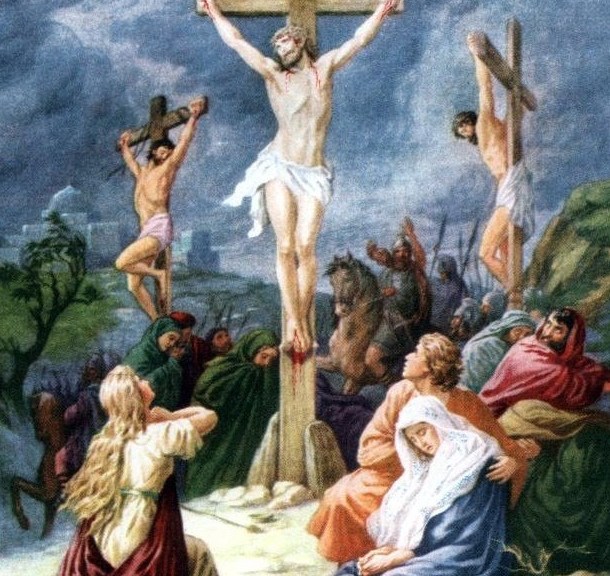
Jesus wept and felt human emotions, because he was human. He was unable to carry his instrument of destruction to his execution, because he was human. He was able to take all the abuse because of God’s love within him, overriding his human feelings. As Jesus hung dying on the cross, he looked down and saw the true members of his Church … his family and friends.

To all the subsequent graduates of Jesus’ teaching, it was knowing their sacrifices would be worthwhile, for a great reward to come. The addition of new student believers, those who sought to know more about the promised Messiah having been delivered, would add to the joy of completeness felt in all having been Jesus Christ reborn. Those new masters would always find support in the others just like them … their family and friends.

As a lesson in the Easter season, it should be easier to see how one fits into this command to love one another. One has to have served one’s time learning the foundations of one’s religion. One has to desire to know God and from that desire seek the teacher that is the Holy Bible and those who can explain its deeper meaning.

Then one has to die of self-will and be reborn of God’s Will, with His love in one’s heart and the Christ Mind exposing all the truth that divine Word holds. All the commandments become second nature and not forced. One lives a life or righteousness for the purpose of attracting more seekers to oneself.

One understands how loving enemies is done by allowing others to hate you, without adding fuel to that hatred. One understands how loving a neighbor is done by living at peace with others who share the same belief in the One God, although others may not share the same devotion to God’s Will. Finally, one understands how loving one another as Jesus loved friends and family means to support others who have also been reborn as Jesus Christ.  One is devoted to that end so that the fruit produced will come from enemies and neighbors, led to seek God by the master’s light shining from within a servant of the Lord.