Jesus said, “Then the kingdom of heaven will be like this. Ten bridesmaids took their lamps and went to meet the bridegroom. Five of them were foolish, and five were wise. When the foolish took their lamps, they took no oil with them; but the wise took flasks of oil with their lamps. As the bridegroom was delayed, all of them became drowsy and slept. But at midnight there was a shout, ‘Look! Here is the bridegroom! Come out to meet him.’ Then all those bridesmaids got up and trimmed their lamps. The foolish said to the wise, ‘Give us some of your oil, for our lamps are going out.’ But the wise replied, ‘No! there will not be enough for you and for us; you had better go to the dealers and buy some for yourselves.’ And while they went to buy it, the bridegroom came, and those who were ready went with him into the wedding banquet; and the door was shut. Later the other bridesmaids came also, saying, ‘Lord, lord, open to us.’ But he replied, ‘Truly I tell you, I do not know you.’ Keep awake therefore, for you know neither the day nor the hour.”
———————————————————————————————————-
This is the Gospel selection from the Episcopal Lectionary for Year A, Proper 27, the twenty-third Sunday after Pentecost. It will next be read aloud in church by a priest on Sunday, November 12, 2017. It is important because of the warning of preparedness, as told in the parable of the ten bridesmaids.
This parable seems quite straightforward, in the sense that it paints a clear picture of being prepared for when the bridegroom comes, which appears to be Jesus in allegory. Of course, nothing is Scripture is that simple, as there is deeper meaning always embedded in the specific verbiage used. Every word coming from Jesus, and remembered by Matthew, came from the All-Knowing Mind of God. Each word of Greek is perfectly chosen.
In fact, one can see such knowledge as allegorically mentioned in this parable, as the oil that the lamps burn for light. Light is metaphor for the truth. One assumes that some oil is already in the lamp, which had been lit in the evening. By there being ten different lamps, this becomes metaphor for ten different ways the same words written in Greek can be made available to “light” one’s way in translation. However, meditation that goes beyond the apparent and ponders the scope of meaning that is possible from the Greek, then that acts as an extra “flask of oil” from which the “light” of truth can shine.
This Gospel reading is presented on the same Sunday as the story I interpreted about Joshua, who in his last year of life told the leaders of the Twelve Tribes, “Choose to serve God, or choose to serve the gods of others.” It also goes along with the first letter Paul sent to the Christians of Thessaly, where he wrote words that were read in church as saying “died,” but in reality three times the word implying death was used, metaphorically saying, “having fallen asleep.”
Can you see how this parable strongly links to those themes, when the bridesmaids have fallen asleep, with half having extra oil, and half only having the oil that was already in their lamps? Can you see how “to become drowsy and sleep” is the same metaphor of death? Can you see Jesus telling a parable that warns to be prepared for that time of death, which all mortals cannot escape?
In the interpretation I wrote referring to 1 Thessalonians 4, I wrote how one only needs to look at the parables that Jesus told and place oneself in the story “as the fools,” rather than as Jesus – the one telling the story. I had not read this Gospel accompaniment at that time; but as I prepared to write this, I saw the word “fool” used. Exactly as I stated prior, one has to ponder, “How am I one of the five bridesmaids that were foolish?”
This brings us back to the point that I have made previously, where we are all called to marry the King (and become his Son), as was the allegory in the parable of the Wedding Banquet. That thought, humanly mistaking the proposal to be to marry Jesus, causes manly men to stand up and pronounce, “That is gay! No man can marry another man!” Meanwhile, all the female Christians (especially Roman Catholic nuns and nuns of other denominations) gleefully proclaim, “I am already wearing the ring of marriage to Jesus Christ!”
As I have said, sex organs play no role in spiritual matters. When Jesus told Nicodemus that being reborn did not mean finding some physical way to get back into the mother’s womb, he was heard saying, “Truly, truly, I say to you, unless one is born of water and the Spirit he cannot enter into the kingdom of God.” (John 3:5) Jesus was not talking about bridesmaids being exclusively females because sex organs are not “born of water and the Spirit.” That says “water” is symbolic of “love,” and “the Spirit” is the Holy “Spirit.”
Love of God brings the Holy Spirit, as the marriage of the Son to the human being of faith, devotion, and submission – the traits of God’s bridesmaids. That marriage of one’s heart with God – a Holy Union – in turn allows one entrance into the Kingdom of Heaven. That was what Jesus was talking about to Nicodemus – being reborn is what gains entrance into God’s Kingdom (Heaven). Therefore, the bridesmaids are symbolic of Christians that have sacrificed their self-egos, to be married to God.
In this way, anyone who thinks like Nicodemus and wonders how an old man can get back into his momma’s womb (via momma’s sex organ) is as “foolish” as a bridesmaid without extra oil for a lamp. Think of it as some male Christian saying he will marry God and have God’s baby Jesus Christ be born in him, but then that “fool” never gets the extra oil of Scriptural knowledge, to help him through the threshold of death, or “having fallen asleep” like Lazarus (the one Jesus loved) did.
When we read, “When the foolish took their lamps, they took no oil with them,” one can assume they took a lamp that had some oil already in it, so the lamp was able to shine a light for a few hours. All ten bridesmaids have lamps, so the similarity means all ten are led by the light of religion. That religion represents belief in the One God, YaHWeH, the LORD. So, they are either Jewish lamps or Christian lamps today, while Jesus was talking to Jews then.
Simply by having a lamp does nothing for anyone, so being Jewish or Christian in name only (by birth), with no knowledge of what that means as an adult, means one is not deeply committed to God. No holy light leads one’s path through life. One is (figuratively) still “playing the field,” and “keeping one’s options open.” One is a bachelor-bachelorette and not a bridesmaid (remembering that sex organs do not matter).
The oil that is already in the lamps should then be seen as one’s personal knowledge of what one’s religion says to believe. As such, all active Christians carry the knowledge that fuels the light that shines faith in God. Jews carry around lamps that are full of the oil that reflects memorizing 613 commandments, sent from God through Moses. In this way, the extra oil that five of the bridesmaids have with them is the oil of the New Testament, which fuels the light that shines faith in Jesus Christ, as the Son of God. The foolish bridesmaids do not carry that extra oil.
Still, the five foolish bridesmaids can be broken down into five different types of Christians and Jews. These can be compared to the seven churches, to which the Spirit of Jesus told John to write letters (in The Revelation). The Jews that reject Jesus as their Messiah, while remaining devout in their adherence to the laws of Moses, simply do not have that extra oil needed to get them beyond death, into Heaven. This was the reason Jesus preached in parables to such holy Jews in Jerusalem, to no avail. But, Christians who mirror those Jews in Jerusalem today, who maintain devotion to amassing fortunes and things, through a misguided belief that God blesses His believers with things, they are not being filled with God’s Holy Spirit; and that means a “foolish” waste of holy oil.
When the ten had waited so long they had “became drowsy and slept,” this then states symbolically that the “delay” leading to that point of rest was a lifetime of waiting “to meet the bridegroom.” The Greek word that is translated as “slept” is “ekatheudon.” That is rooted in the word “katheudó,” which Thayer’s Greek Lexicon states is used: euphemistically [as], “to be dead,” and metaphorically [as], “to yield to sloth and sin, and be indifferent to one’s salvation.”
This hints at the weights placed upon human beings, as mortals, such that the “drowsiness” is brought on not only by the deterioration of bodily parts, from age, but the weariness that comes from denying oneself the lures of the world (being faithful and true to the bridegroom), as well as succumbing to them (secretly cheating on one’s verbal commitment). It is a lifetime of temptation to worldly things that wears one out and makes one tired.
To then hear Jesus say, “At midnight there was a shout, ‘Look! Here is the bridegroom! Come out to meet him.’ Then all those bridesmaids got up and trimmed their lamps,” the symbolism of “midnight” has to be grasped. The actual Greek words written are “mesēs de nyktos,” which says, “the middle of the night.” That can be simplified as “midnight,” but a viable implication of “nyktos” (from “nux”) can be “midnight,” by itself. As such, the simplification makes one miss the point of the word “mesēs” (form of “mesos”), where “in the middle” becomes less a statement of time of day, and more a statement about being in transition, from life to the afterlife, when “in the middle” means the transition of death.
Seeing “the middle” from that perspective, then one can grasp how death is that period of darkness when an absence of light surrounds one’s soul. This is termed “spiritual dryness,” but St. John of the Cross, OCD, wrote a poem that has been called “The Dark Night of the Soul.” An article on that poem and its topic explains: “The term “dark night (of the soul)” in Roman Catholic spirituality describes a spiritual crisis in the journey toward union with God.” The same “crisis towards union” can be seen in this parable told by Jesus.
Jesus, the teller of this parable, said, “There was a shout, ‘Look! Here is the bridegroom! Come out to meet him,’” which can be read as Jesus Christ making that cry of alert. Seeing that as the voice of the Christ Mind exclaiming, “Good News!” is then confirmed when Jesus said at the end of this story, “Keep awake therefore, for you know neither the day nor the hour.” This is clearer when the Greek text is found to add, “in which the Son of man comes,” (“en hē ho huios tou anthrōpou erchetai“), words with translations omitted, as they have not been included in the NASB translation above.
This parable then projects the future, when Jesus told his followers, while on the other side of the Jordan, about the death experienced by Lazarus. Jesus said, “Our friend Lazarus has fallen asleep; but I go, so that I may awaken him out of sleep.” (John 11:11) That parallels this story that tells allegorically of vigilance. The Lazarus story ended when we read, “There was a shout,” as John wrote, “He cried out with a loud voice, “Lazarus, come forth.’” (John 11:43)
The slumbering bridesmaids were awakened by a shout to “Look!” or “Behold!” or “See with the Mind of Christ!” (which is the intent of “horaó”). In both stories, the command was to “Come out,” which is an invitation to leave the darkness of death, but also the darkness of mortality. That command is to enter the heavenly realm of eternal life.
In the statement, “Then all those bridesmaids got up and trimmed their lamps,” the Greek word “ekosmēsan” is translated as “trimmed.” It is the past tense of the word “kosmeó,” which means “to order, arrange,” implying “I put into order; I decorate, deck, adorn.” The word “trimmed” is then used like “trimming the Christmas tree,” and not like cutting a wick, or pulling the wick of a lamp out, so it can be re-lit. According to Thayer’s Greek Lexicon, this specific usage implies “to put in order,” as well as “to make ready” and “prepare” the lamp for the meeting of the bridegroom. This is where adorning the lamp ceremoniously would mean putting the extra oil into effect, as that was what would make meeting the bridegroom possible.
We know that is the case, because we read how Jesus then said, “The foolish said to the wise, ‘Give us some of your oil, for our lamps are going out.’” Because the “fools” said that, as a command to “Give,” this makes an important point of what makes a “fool” “foolish” and not “wise.” People expect to be given Heaven. They expect to be “placed, allowed, put, bestowed, granted, and permitted” (among other possibilities stemming from “Dote,” rooted in “didómi”), rather than having to do work themselves.
Can you hear St. James saying, “Faith without works is dead”? (James 2:14-26)
One can be given many things, but entrance into Heaven (the Kingdom of God) requires the work of the wise. This means being “wise” comes from being filled with the Holy Spirit, with all the “smarts” of the Christ Mind guiding one’s works. It is that presence of the Christ Mind’s “wisdom” that gives the five “wise bridesmaids” that “flask of oil.” That “oil” anoints them with the talents of the Holy Spirit, to prophesy and to understand prophecy, which is the fuel that “lights” their way to Heaven. It is the Holy Spirit that “adorns” the “lamp” of religion and simple faith.
Matthew 11:25 writes of Jesus saying, “I praise you, Father, Lord of heaven and earth, because you have hidden these things from the wise and learned, and revealed them to little children.” There, “sophōnkai synetōn” says “cleverness importantly intelligence” is the mistake of thinking a Big Brain will be all the ‘oil’ one’s lamp needs to stay awake until the bridegroom comes. God does not come to meet those fools. God does not propose to those who fall in love with convoluted masses of synapses that only serve mortal existence. God proposes to “little children” whose faith is not hindered by the limits a human organ presents one’s soul. Children are those who are neuter gender and not those who have not become limited to love that follows the lead of a sex organ.
In one commentary that I briefly skimmed over, the refusal of the five “wise bridesmaids” to “Give” lamp oil to the five “foolish” ones was seen as selfishness or petty bickering and jealousy. This is not the case at all.
To grasp that, I want you to think now of the story Jesus told about poor Lazarus, who in life sat at the gate of the rich man, begging for the crumbs off his table. In death, it was the rich man who begged Abraham’s Spirit to let Lazarus “Give” his tongue a touch of “cool water.” When Abraham refused, because the chasm between Heaven and Hell was too wide for Lazarus to cross, the rich man still wanted Lazarus to “Give” notice to his still living brothers, so they might change their ways (which were the ways of all rich humans).
In this parable, the five “wise bridesmaids” have to be seen exactly like poor Lazarus is seen, after death. None of them were able to “Give” what was not theirs to “Give.” It was not a matter of selfishness, but the lesson that requires one earn that which one is “Given.” Lazarus earned reward, while the rich man earned punishment.
The translation presented by the New American Standard Bible (NASB) has the “wise” saying, with an exclamation point, “No! there will not be enough for you and for us.” This is not what is written. The capitalized first word of this reply is “Mē¦pote” (root being “mépote”) which means “Lest.” It implies, “Lest at any time” and “Perhaps,” with the connotation of “Not” beginning their reply (without that being exclaimed).
The Greek written literally states the reply to a command to be “Given” the Holy Spirit, in the form of lamp oil. The written words say, “Not cannot no [a triple negative] it is assistance for us and you.” That does not say there is not enough to be shared. It says there is plenty to go around, but they “cannot” “Give” that which the “wisdom” allows them to know: “not is it assistance for me and you.” The statement of reply says, “No cannot [for] it is not to suffice for us and you.” The “wise bridesmaids” knew, through the Christ Mind, that each individual must work for the unlimited shares that God has to Give.
The completion of the “wise bridesmaids’” reply, “you had better go to the dealers and buy some for yourselves,” states this individual responsibility to secure the holy oil necessary, by which one can enter Heaven. The literal translation says this in two segments: “but go rather to those selling,” and then “buy for yourselves.”
When one is hearing an allegory told, it is natural to think in normal, human terms; so when one hears lamp oil needed (a commodity), then it is natural to go to a lamp oil “dealer” to purchase that. In this story, we visualize some stupid girls running in darkness, trying to get an oil shop to open up and sell them some lamp oil. However, the metaphor of “oil” is spiritual oil, or holy oil.
This means the “sellers” and “dealers” of holy oil are churches and synagogues. Therefore, the lack of work done by the “foolish” is being pointed out by those of “wisdom.” The ones who said they were “Giving” away “get to Heaven oil without working for it” I.O.U.’s are those who never “Gave” them the Holy Spirit’s “oil.” They could not give what they did not themselves have; or they refused to give what they selfishly thought they had – scholarly knowledge – not wanting ignorant commoners to be special like them. If you have the extra flask of oil and you are still alive, then you Give it away to those who seek it.
This, certainly, was a slap to the face of the Pharisees, Sadducees, scribes and Temple priests in Jerusalem, as Jesus was speaking allegorically in parable. That was because it pointed the finger of “wisdom” at the lack of spiritual competence in those religious leaders.
Nicodemus, identified by John as “a man of the Pharisees” and “a ruler of the Jews” (John 3:1), was asked by Jesus, “Are you the teacher of Israel and do not understand these things (the spiritual meaning of being reborn)?” (John 3:10) This made Nicodemus one of those getting rich off selling the “oil” of Mosaic Law; but he and his pals never had in stock (as a commodity to sell) “spiritual oil,” the kind that anoints one for entrance into the Kingdom of God.
Jesus demonstrated how selling in the Father’s house was unappreciated.
Because the Holy Bible is a Living document, that which was written in ancient times, of ancient people, still applies at all times, to all people. The eternal value of Scripture is as Paul wrote to the Hebrews of Rome: “For the word of God is living and active and sharper than any two-edged sword, and piercing as far as the division of soul and spirit, of both joints and marrow, and able to judge the thoughts and intentions of the heart” (Hebrew 4:12). Therefore, this slap at the leaders of Judaism in Jerusalem, by Jesus speaking in parable, is equally a slap at all religions professing belief in YaHWeH, the One God (the “lamps” of religion) that keep their flocks filled with costly physical “lamp oil” (like the vendors of the marketplace, selling shares of responsibility in the costs of buildings and programs), and do nothing that anoints the believers with the spiritual oil that prepares them to go beyond mortal death.
Those who are “wise” have become so by coming in touch with someone with the Holy Spirit. Jesus passed that onto his Apostles (who became Christ Jesus reborn), and they passed the Holy Spirit onto those they contacted (such as Paul and the Thessalonians). Apostles today have been led to Scripture, by those teaching programs of churches in the denominations of Christianity (readings, sermons, Bible studies, etc.); but the Holy Spirit does not come by trick or by human command.
Individuals have to show God their sincerity in wanting to become His bridesmaids-in-waiting, so that the extra flask of holy oil (the Holy Spirit) will be born within them. That rebirth of Christ Jesus in Apostles sends those Apostles out to “Give” that same opportunity to others. However, all who receive the Holy Spirit have to prove themselves as worthy, through the works of evangelism.
By the time one reaches that point of slumber, ready to meet the bridegroom they have worked so hard to please, there is no place a soul can go and “buy” or “purchase” the Holy Spirit. When Jesus said, “You cannot serve two masters. You cannot serve both God and money” (Luke 16:13), we see now how that means you cannot “purchase” a ticket to Heaven. You cannot reserve a room in the Father’s house with a credit card.
Seeing how the bridesmaids’ slumber is reference to death, after being told to go and “buy for yourselves,” the only place those five “foolish” souls could go was their own funerals.
Their souls would then hover over those grieving their passing, only to find prayers being recited over their physical corpses, as they were being lowered into the ground. Those souls then returned to the place of the wedding banquet, bringing with them the words spoken by priests, ministers, pastors, preachers, and rabbis, asking God to receive them.
Prayers are good. Prayers are helpful to the living. However, prayers for released souls are more for those left remaining in grief, than of any benefit for the dead. A prayer cannot trump the requirement of being in possession of the Holy Spirit.
Reading, “Later the other bridesmaids came also, saying, ‘Lord, lord, open to us.’ But he replied, ‘Truly I tell you, I do not know you,’” that says those “virgins” (actual meaning of the word “parthenoi,” which is translated as “bridesmaids”) had supposedly set themselves apart from other lords, as committed to marry the bridegroom (God). While they promised their hearts to God, and confessed to others that was where their hearts were, the truth exposed (“Amēn legō” – “Truly I say”) is that they never did as promised nor publicly proclaimed.
God did not know those souls intimately. They were still “virgins,” “bridesmaids” with no real, committed relationship with the Lord; AND remember – we are not talking females for marriage. ALL are “virgins” until God consummates a relationship by sending His wives-to-be His Son and His Holy Spirit. The allegory of that is there must be possessed an extra “flask of oil.” Without that to light the lamp to Heaven, God can truly say, “I have not known you (in the Biblical sense).”
You have to be reborn as Christ Jesus to gain entrance into Heaven.
Jesus then said, as the storyteller who spoke for the Father, “Keep awake therefore, for you know neither the day nor the hour.” “Keep awake” means do not die before you have become baby Jesus reborn in the flesh. Do not die before the Holy Spirit has used you as an Apostle, to bring other bridesmaids-in-waiting to the Lord.
Keep awake because you never know when death will make it too late to run to the church and get some Holy Spirit. You need to be prepared beforehand.
As Jesus came out of the temple, one of his disciples said to him, “Look, Teacher, what large stones and what large buildings!” Then Jesus asked him, “Do you see these great buildings? Not one stone will be left here upon another; all will be thrown down.”
When he was sitting on the Mount of Olives opposite the temple, Peter, James, John, and Andrew asked him privately, “Tell us, when will this be, and what will be the sign that all these things are about to be accomplished?” Then Jesus began to say to them, “Beware that no one leads you astray. Many will come in my name and say, ‘I am he!’ and they will lead many astray. When you hear of wars and rumors of wars, do not be alarmed; this must take place, but the end is still to come. For nation will rise against nation, and kingdom against kingdom; there will be earthquakes in various places; there will be famines. This is but the beginning of the birthpangs.”
———————————————————————————————————-
This is the Gospel selection from the Episcopal Lectionary for the Twenty-sixth Sunday after Pentecost, Year B 2018. In the numbering system that lists each Sunday in an ordinal fashion, this Sunday is referred to as Proper 28. It will next be read aloud in an Episcopal church by a priest on Sunday November 18, 2018. It is important because Jesus foretold of the destruction of Herod’s Temple, telling how nothing man creates – no matter how grandiose – can withstand the tests of time. Only God offers everlasting accomplishments and without God is destruction assured.
When one reads that “one of his disciples said to [Jesus], “Look, Teacher, what large stones and what large buildings!”’ he was marveling over the construction project that gave the Second Temple the nickname “Herod’s Temple.” According to the Wikipedia article on Second Temple, under the sub-heading “Herod’s Temple: Construction,” the following is written:
“Herod’s Temple was one of the larger construction projects of the 1st century BCE. Josephus records that Herod was interested in perpetuating his name through building projects, that his construction programs were extensive and paid for by heavy taxes, but that his masterpiece was the Temple of Jerusalem.”
By the time Jesus was in the final days of his ministry [he was in Jerusalem for his final Passover when this event occurred], the Temple beautification project initiated by King Herod [the Great] was in its forty-ninth year, having begun twenty years before Herod’s death. While much of the outer work might have been basically in place when one of the disciples pointed out the magnitude to Jesus, work on Herod’s Temple would continue until 63 A.D. [ref.], such that the rebuilding process stretched over eighty years. One should calculate that Jesus’ last Passover in Jerusalem [in the body of a living human being] was around 27 A.D., when he was about 33 years of age.
While in Jerusalem during the Passover at the onset of Jesus’ ministry, he had told pilgrims in Jerusalem, “Destroy this temple, and I will raise it again in three days.” (John 2:19) That conversation was not recorded by the disciples of Jesus (neither Matthew nor Mark), but three years later Jesus defined “Destroy this temple” as, “Not one stone will be left here upon another; all will be thrown down.”
This meant not simply the destruction that would be done by the Romans, but the ravages of time after that, especially when the Saracens [Arabians] spread into Palestine, becoming synonymous with Muslims. Stones of the temple ruins would have been utilized in other small building projects over five hundred years of time, and the transformation of the temple mount to the Dome of the Rock [691 A.D.] would be when “all will be thrown down” completely [except part of the Western wall, today called the Wailing Wall].
It is important to grasp the history, both the prior and future changes affecting the Second Temple and the two times Jesus spoke of the temple being destroyed. First of all, God never asked for a temple of stone, as He said He preferred to be mobile. That means the destruction of a brick and mortal temple that had become a monument to Herod the Great, not to God, would be replaced by Jesus Christ [the high priest] being reborn in true Christians [each a rebuilt mobile tabernacle]. That transformation would wait until after Jesus had died by execution and was dead for three days before resurrecting. Third, the complete erasure of Herod’s Temple and the rebuilding of a Muslim holy building on that same piece of real estate would simply be God’s way of saying, “I Am That I Am when I am written on the hearts of Apostles and Saints [The Ark of the Covenant within the Tabernacle], which are in the name of Jesus Christ.” God cannot be made a shrine that pilgrims must visit once in a lifetime, as God is limitless, available to all who love Him dearly.
When we read, “When he was sitting on the Mount of Olives opposite the temple,” the Greek written by Mark includes a comma, such that the literal translation says: “And sitting of him upon the mountain the [one] of Olives , opposite the temple”. This is two segments of words, not one. The second segment is then a helpful segment of words that is used to clarify which mountain or hill with olive trees that Peter [through Mark] was talking about.
This story is found also told in Matthew and Luke. Luke does not state where Jesus privately told the disciples when the temple would be destroyed. Matthew wrote that it was on the mount the [one] of Olives, but did not get specific about where that hill was, in comparison to the temple. This means mark’s version adds truth that is helpful to the one carefully paying attention to Scripture.
The reason Mark made this clarification is there were two hills that were known for having olive trees. Only one had an olive oil press [Gethsemane], which was near the base of the Mount of Olives. Simply by capitalizing “Elaiōn” the implication was “Mount of Olives.” Still, there was also a hill outside the Essenes Gate that was known as a “hill of Olive trees.” That was where Jesus would lead his disciples after the Passover meal. However, Mark was making clear that the private discussion Jesus had with his disciples was on the mountain of Olives that was “opposite the temple.”
When Mark then wrote that “Peter, James, John, and Andrew asked him privately,” it should be realized that neither Matthew nor Luke listed anyone specifically. Only Mark [Peter’s Gospel writer] wrote those names. Peter was the brother of Andrew and James and John were the sons of Zebedee. Those were the disciples first chosen by Jesus. Peter was making it clear that the ones who raised the question: “Tell us, when will this be, and what will be the sign that all these things are about to be accomplished?” were the ones who had served Jesus the longest and the ones who thought they were Jesus’ most trusted disciples. Therefore, they felt it was their right to know when to look for the signs of destruction that Jesus knew was coming.
The reading then follows with Mark writing, “Then Jesus began to say to them.” The Greek word “ērxato” is the past tense of “archomai,” meaning “to begin” or “to commence.” It also means Jesus, for the first time, established the “rule” by which the times of Jewish destruction, as a religion meant only for the descendants of Abraham, Isaac and Jacob [a biological subrace of the human race – see “Physiological race”], would occur.
As it was then, the radiance of Herod’s Temple stood as an outward glorification of Judaism. Rather than a simple reproduction financed by the Persian kings Cyrus the Great and Darius I, Herod the Great would enhance the old, so it spoke loudly for his greatness. Still, the grander the temple complex became, the more it projected how a most powerful, singular God, made Israelites [under David primarily] and Jews a select people, amid the vast empirical holdings of those who worshipped many gods, but rose and sank over time: Egyptians, Assyrians, Babylonians, Persians, Greeks, and then Romans. For as lasting as YHWH had proved His capability to keep the children of Israel intact [remnants that they had become], still adherents to Mosaic Law, Jesus began to tell of the destruction that would be the end of that favor.
To best understand the words that then came out of Jesus’ mouth, one must remember that Jesus was not speaking as a favored son of God. That would be how the elite of Judaism saw themselves: the Pharisees, the Sadducees, the temple scribes and high priests. Jesus spoke as THE Son of God, which meant he only spoke the truth, which the Father was speaking through him. Therefore, Jesus then responded to the question posed by his disciples in the voice of God that flowed through him.
It was then God that told Jesus’ disciples, “Beware that no one leads you astray.” In actuality, the capitalized Greek word, “Blepete,” is a one-word statement of importance, separate from the words that follow by a comma [real or implied]. As a form of the root word “blepó,” the impact is placed on “Sight, Perception, Discernment, and Observance.” To “Beware” means to become “Aware,” by being “Watchful.”
Before anything else, Jesus said, “Look!” This is then the importance of Jesus’ parables about “Vigilance” and staying “Awake.” The purpose of staying “Awake” means to not fall asleep, which is the danger of mortal death and the recycling of reincarnation, rather than the wakeful state of eternal life.
It is then the importance of that state of “Alertness” that has one prepared to wait for the bridegroom’s call [Parable of the Ten Virgins], “lest anyone you mislead.” Being misled is then forgetting to keep oil in one’s lamp, so the light of alertness will shine through the darkness of night [symbolic death]. This translates according to common language as “that no one leads you astray,” but in the same words says one is responsible for not letting others be misled through self-failure of “Being aware.” The “Wakeful” state keeps one from misleading others and being misled. That is parallel to the five bridesmaids who saw they would run out of oil and asked the other five to share their oil. The lamp oil is what keeps one awake and alert, thus it represents personal devotion to the Lord. Each is responsible for preparing one’s soul for a marriage to God.
God then said through His Son, “Many will come in my name and say, ‘I am he!’ and they will lead many astray.” This translation does not capture God as the voice speaking those words. The literal Greek states, “many will come in the name of me , saying then , I am , and many will be misled .” This needs closer inspection.
Jesus then prophesied that “many [lower-case] will come in the name of Jesus Christ [“mou” as “of me.”].” The word “mou” is a form of the Greek word “egó,” which means “I.” That is then a statement that “many will come” who will have sacrificed their “egos” [their “I”s] so they will assume the ego of Jesus Christ, where Jesus of Nazareth is a Son “of God.” Therefore, the Christ is the presence “of God” [“of me”] that “many will become” filled with love from.
This foretold of the advent of Christianity, where those “many” would be “then saying” or “speaking then” the truth of God, just as was Jesus of Nazareth. Rather than one man “speaking then,” who led a relatively small group of Jewish disciples [men and women], “many” would spread the breadth and scope of that Gospel. Those who follow Jesus become reborn as Jesus Christ.
This spread of true Christianity will “then” lead “many” to “say” they are Christian [without the bold type], simply because it seems like the good thing to do. The problem that comes with those who “speak then” but do not tell the truth, is they do not say, “this voice comes from God as Jesus reborn.” Instead, they proclaim, “I am” a Christian, where the Greek word “Egō” is capitalized, showing there has been absolutely no sacrifice of self-ego for God. They proclaim they are gods, rather than acting as wholly subservient slaves of YHWH – “I Am That I Am.”
This is the Big Brain Syndrome that I speak of. People who say, “I am Christian,” often then say, “I am sure, if Jesus were here today, he would say the same things that I am saying. By admitting that I am Christian, I am then allowed to play god.”
God was then advising the disciples of His Son that “namely” [the viable translation of the Greek word “kai,” which commonly means “and”] is as “namely” does. Using the “I” word then identifies those who will number “many,” such that through their claims of “I am” righteous “many will be misled.”
One has to see how God spoke through Jesus saying that the time was coming when the destruction of Judaism would be due to the improper leadership the people had. They would be misled into believing that “I am” was the ego of God’s chosen people. For that heresy, every stone of the renovations done to the Second Temple would be thrown down. Still, the errors of the Jews were foretold by Jesus to be repeated in the far distant future, when the stone foundations of Christianity would likewise come tumbling down. Any time that religious leaders mislead God’s children [false shepherds and false prophets], they will be exposed as liars and overthrown by God.
God then spoke through Jesus, saying “When you hear of wars and rumors of wars, do not be alarmed; this must take place, but the end is still to come.”
When one realizes Jesus spoke to his disciples in 27 A.D. [C.E.] that was still four decades before the Jewish revolt against Rome would begin [67 C.E.]. Prior to that there would be words of war, even rumors would spread that another Messiah had come [a warrior Christ], who would lead the Jews to independence and win the return of Israel into the world. By 70 A.D. [C.E.] that war would be won by Rome, with all the false prophets of Judaism killed and the grandiose temple in Jerusalem razed to the ground. However, even that many years after Jesus would be dead, resurrected, ascended and return in Apostles, “the end is still to come.”
The vision of God stretched well beyond that of ordinary human eyes. That “end,” from the Greek word “telos,” meaning the “conclusion” of the destruction of the religion of the One God Yahweh, that would be after “nation will rise against nation, and kingdom against kingdom; there will be earthquakes in various places; there will be famines.” That too needs closer inspection.
The Greek word “ethnos” is translated as “nation,” but it conveys a meaning of “the heathen world,” that of Gentiles. It is a statement that “race will rise against race.” We live now in a time when “race” is commonly used as a weapon of destruction. There is no longer a clear boundary that keeps the “races” of the world pure. The mixture of “races” dilutes that purity, so the “races” designed by God are forced to mingle, so pure blood become one global blob of humanity. Then, none of the Gentiles stand out for their God-given superiorities. Likewise, the religions of the world have blended into misleading dogmatic rituals of meaningless sayings, because the “people rise against people” whose beliefs are impure [false].
The Greek word “basileia” means “kingdom,” which is different from the Israel under Herod the Great. Judea had a governor that was appointed by an emperor, who reigned from Rome over many lands. The segment of words that say “kingdom against kingdom” is then a vision that extended beyond the fall of the Roman Empire, to a distant time when the lands of Europe would be led by kings [and queens]. Those kings would be believed to have been descended from the holy bloodline of God’s Son, indirectly descended from Jesus of Nazareth. Those European “kingdoms” would then become the resurrection of the anger of brother against brother, or Can against Abel, since royal lines of “kingdoms” made them Apostles [regardless of gender] by holy blood. Eventually, all of those “kingdoms” would be reduced to governments of philosophies that lied to the people as if the will of all would rule a commonly elected few.
For God to state, “there will be earthquakes in various places,” this is a normal occurrence of shifting tectonic plates. Rather than have Jesus seem to state a forecast of common natural events, the Greek word “seismoi” should be understood as many violent “shakings” and “commotions” (from the root word “seismos”) on earth that will crumble the foundations of religious faith. These are then the philosophies of man that will introduce the concepts of democracy, equality among men [not always implying women too], and freedom, giving rise to all kinds of “–isms” that will shake belief in religions to their cores.
The statement, “there will be famines,” has nothing to do with the weather patterns that bring drought and failing crops. It has little to do with having billions of human beings on a limited space of land, where the land cannot produce enough food for that many people to be fed. It has no bearing on the desert environments of the world that have historically produced minimal numbers of plants and animals; and there is no correlation to global warming, pollutants caused by ignorant masses, or the extinctions of flora and fauna caused by an earth teeming with uncaring human beings. The “famine” God spoke of was due to a lack of spiritual food being available for a corrupted mankind to be fed. That lack of religious feeding will be most evident when the “end” time arrives.
Again, the evidence of all those signs stated by the mouth of Jesus are prevalent today. The people rise up against the people. The kingdoms have been reduced to political parties forcing their will upon the meek. The philosophies of the world are shaking religion just as the Romans destroyed the Temple of Jerusalem. The people are famished from lack of spiritual nourishment. Thus, we are ripe for the end coming.
When Jesus then said to his disciples, “This is but the beginning of the birthpangs,” his word “archē” (“beginning”) refers them [and the reader] back to his first statement of explanation, which Mark introduced by saying, “And Jesus began to say to them.” Jesus was telling them that the words of what to look for, which they would see, would only be “the beginning of the birthpangs” of the destruction of Judaism. The “birth” would produce Christianity, but “birthpangs” are always followed by death pains. We are all born mortal, bound to die. Death’s pains occur at the end of life on earth. For that reason, one should be “Awake” when the end time comes.
While this ends the reading selection as chosen, the text of Mark adds one more verse to this section. It repeats the capitalized “Blepete,” or “Take heed,” returning one’s focus to the same important one-word statement. This warning of vigilance was directed at the disciples themselves, where Jesus told them, “You will be handed over to the local councils and flogged in the synagogues. On account of me you will stand before governors and kings as witnesses to them.” (Mark 13:9; NIV) Those signs will indicate the beginning of a new religion of self-sacrifice for devotion wholly to Yahweh. The deaths of the Apostles will bring the birthpangs of true Christianity into being.
As the Gospel selection for the twenty-sixth Sunday after Pentecost, when one’s own personal ministry for the LORD should be underway – one is aware of the signs of the end times – the message here is to not be mesmerized by the wonders of a material world. Everything is in a state of change, which slowly builds up and slowly breaks down; it is often difficult to see how the world is crushing the life out of humanity. We have to know what signs to look for and we need to always be alert to the fact that Satan wants all human beings to be misled.
As American Christians, in a multitude of sects and denominations, just driving around town brings forth a reaction to the grandiosity of buildings of worship. They appear to strive, by design, to beacon to the passerby, “You need to come inside and see more!” This is akin to the disciples telling Jesus, “Look, Teacher, what large stones and what large buildings!” We are easily distracted by bells and whistles, smoke and mirrors.
The problem with palatial buildings is the cost involved. It should lead one to wonder, “To what end?” If there is so much pain and suffering in the world that needs donations and contributions, why is money being put into anything more than a tent with poles, folding chairs and some sawdust?
This is in addition to a monthly payment to his church’s Capital Campaign and normal Stewardship tithing.
The answer is profit. There has not been an American business man or woman yet that proposes spend a huge sum on freebies. The news in the past couple of years has been how the downtrodden of Houston, after a hurricane hit Texas, found chains put on the doors of Joel Osteen’s megachurch. No public shelter there! It seems he built it with money donated to him (not God) and he invested that money into a profit-making megastructure. After what happened to the inside of the Superdome, following Hurricane Katrina, who can blame him wanting to avoid the renovation costs of being charitable?
[I do not name him specifically as the only one who has followed this model of profiting from selling religion to people willing to pay. He is simply one of “many” – nothing more.]
Jesus replied to his disciples, “Do you see these great buildings? Not one stone will be left here upon another; all will be thrown down.” He was not simply speaking about the beautification project of the Temple of Jerusalem. He was speaking of all who had, all who were, and all who would try to box God into permanent buildings. There has not been built one yet that can last as long as God. They will all find the same end that mortal human beings find – death and destruction of all that had been built over time. The only thing that lasts like God is the soul, but souls cannot return to God if they find a sense of self-pride in a magnificent building.
The private question the disciples asked Jesus – by Peter, James, John, and Andrew – were not much different than that asked by the young, rich ruler. Rather than, “What do I have to do to get to Heaven?” they asked, “When will Heaven come?” Such a question asked privately might mean those four disciples secretly either hoped for the destruction of evil, seen in opulent wealth and material objects of worship cast down, or they were most worried about when they should be careful of their lives, because the destruction of the Temple of Jerusalem would mean a powerful enemy was at hand. Either way, there were inner doubts that they were trying to assuage by trying to get inside information about how much time Jesus was talking about.
It is important to remember that the disciples had not yet been filled with God’s Holy Spirit. They had not yet been given the Christ Mind, in exchange for their own self-egos. They are then the models of all Christians today, who know a thing or two about what Jesus did, but know nothing about the love of God and being adopted as His Son.
One has to imagine one’s own fears rising, as Jesus spoke for the Father about the fall of the religion the disciples had invested so much time and energy into believing. Christians today feel exactly how the disciples felt. We are all still being taught to “Be aware!” “Stay awake!” “Be vigilant!” or be lost.
Jesus taught to his disciples in the same manner that parents teach their young children. They tell a child, “Do not touch the stove top burner, as it will hurt very much if you do.” Children trust their parents and listen to what they say. They do not have to touch the hot stove top to find out the truth, as the vividness of their imagination and having experienced pain and crying is enough to believe a warning from someone they know loves them deeply.
Jesus then told his disciples to always discern the truth. One has to see the truth with one’s own eyes, or belief will never convert into faith. By not testing the words of those who preach from a position of “I am!” humans return to that state of being as a trusting child. Humans do not want to take the time or put in the energy it takes to see a truth with their own eyes: what was really said and what that really means. This is the warning given by Jesus. If one does not test the many that will come and say, “I am speaking for Christ,” then those will be misled, fall asleep and miss the boat to Heaven.
I do not ask anyone to believe what I say. Believing what I say will make one a poor reproduction of me. If questioned about my life, anyone other than myself will turn and run away in fear. I demand that everyone who wants to become Jesus Christ resurrected test what Jesus said, as recorded in the Gospels.
If I am wrong, then tell me where I missed what you see.
Jesus said, “Then the kingdom of heaven will be like this. Ten bridesmaids took their lamps and went to meet the bridegroom. Five of them were foolish, and five were wise. When the foolish took their lamps, they took no oil with them; but the wise took flasks of oil with their lamps. As the bridegroom was delayed, all of them became drowsy and slept. But at midnight there was a shout, ‘Look! Here is the bridegroom! Come out to meet him.’ Then all those bridesmaids got up and trimmed their lamps. The foolish said to the wise, ‘Give us some of your oil, for our lamps are going out.’ But the wise replied, ‘No! there will not be enough for you and for us; you had better go to the dealers and buy some for yourselves.’ And while they went to buy it, the bridegroom came, and those who were ready went with him into the wedding banquet; and the door was shut. Later the other bridesmaids came also, saying, ‘Lord, lord, open to us.’ But he replied, ‘Truly I tell you, I do not know you.’ Keep awake therefore, for you know neither the day nor the hour.”
——————–
I addressed this reading that is scheduled as the Proper 27, Year A, Gospel reading in my 2017 interpretation. I stand behind my words then and recommend any who are seekers to read them.
This reading will next be read aloud in church by an Episcopal priest on Sunday, November 8, 2020. That will constitute the twenty-third Sunday after Pentecost, the same ordinal number when read in 2017; but in 2014 it represented the twenty-second Sunday numbered after Pentecost.
In my analysis now, I want to focus on just a few aspects presented in this parable; but first I again must point out that Jesus spoke in parable about the proposal of marriage. That is why this reading if sometimes called the Parable of the Ten Bridesmaids. The picture I have attached to the heading of this article depicts ten young girls, or virgins, each holding a lamp. When one reads “bridesmaid” or “virgin,” the first impression is of females. Because it is parable, that notion should be dismissed.
Think of ten as one, where that is subdivided into two paths one can go towards being ‘engaged’ to marry Yahweh.
Knowing the focus is not set fully upon females, but all human beings, another mistake is commonly made. The “bridegroom” is not Jesus, as the assumption generally is made. The “bridegroom” should simply be seen as the complement of “bridesmaid,” such that a “bridegroom” is masculine essence [Spirit], while the “bridesmaid” is feminine essence [a soul in flesh]. Seeing that makes it easier to grasp the Greek word “nymphiou” as representative of the wife-to-be, whose husband-to-be is proposing to take the soul away from the flesh, like a daughter is given away in marriage. A husband then gives the wife a new name to go by, which is symbolic of a soul having been named mortal but after marriage to God takes on the eternal name of Christ.
Human marriage, as an institution of Holy Matrimony, is all about having children [sorry homosexuals]. The physical act of sex after marriage is meant to bring about a child. To royalty, a male heir is all important in marriages. A child is the result of sperm and egg uniting, in a bond that can never be separated. A new human body of flesh is given a soul by God’s grace. God is therefore the true officiant of that marriage, as God is the Creator of all life on earth. Spiritual marriage is all about being reborn as Jesus Christ, where soul and Holy Spirit unite and create an eternal bond that can never be parted.
Getting to that point of the most Holy Matrimony is why Jesus told this parable to his disciples.
In Matthew’s twenty-fourth chapter, the final day of inspection of the Paschal Lamb was completed. The Sadducees and Pharisees had looked Jesus over closely and found no blemishes. They made no encounters on the fourth day; so Jesus walked to the Mount of Olives with his followers, where he explained the Temple of Jerusalem would be destroyed. In Matthew’s twenty-sixth chapter, we read of the plan made by “the chief priests and the elders of the people gathered in the palace of the high priest,” as to the butchering of that sacrificial Lamb of God. Thus, in between, in Matthew’s twenty-fifth chapter, Jesus was speaking to those who expressed faith in him, with love and devotion.
The disciples were not those who were clearly opposed to Jesus or completely unknowing of who Jesus was. Thus, the disciples (who were all males) were like bridesmaids, promised the kingdom of heaven. A question must have arose about that promise, which is what led Jesus to make a comparison between the two, in a series of parables then told.
In the twenty-fifth chapter of Matthew’s Gospel, Jesus spoke in metaphor. Here, it was of “bridesmaids” [also known as “virgins”], some “wise” and some “foolish.” Then, he would speak of a master with slaves that would be given “talents” in differing amounts, with all expected to be used to promote the master’s business [presumably a vineyard?]. Two of those slaves would be deemed “good and trustworthy,” while the third would be called a “wicked and lazy slave.” Finally, Jesus spoke of the coming of the “son of man” (not capitalized – “huios tou anthrōpou“), when like a shepherd separates the sheep from the goats [which is done in the evening, before dark], so too would be the souls of the faithful be culled by Christ the king. Then will be set those who “are blessed by my Father” (“the righteous”) at the “right hand” and the rest to the “left hand,” those who would end up being sent “away into eternal punishment.”
All of what Jesus said to his disciples is read aloud in churches for all who claim to be Christians to hear today. It is as meaningless to non-Christians today, as it would have been to the Temple leaders back then. Bridesmaids (or virgins), slaves, and farm animals must be seen as possessions of an owner, where an owner has a special relationship with those he possesses. One who is not a believer in God will not understand the metaphor in the correct manner. Thus, Jesus spoke privately to those in relationship to him, to whom he was the master, but a master who loved his followers [like a husband to a wife and vice versa]; conversations he would not have had with anyone else.
All of this means that Christians, who are Jesus’ disciples today, supposedly in a close relationship of mutual love and affection, fall into one of two categories that will become evident when Judgment Day comes. A Christian is either a wise or foolish bridesmaid, a good and trustworthy or wicked and lazy servant, or one blessed by the Father (a sheep) and promised heaven or one not blessed and destined for eternal damnation (a goat).
Know that, when you ponder the meaning of these words.
Realize that as Jesus spoke, Judas Iscariot was listening to them. Understand that there was a good possibility that Judas did not have a clue that God was speaking through His Son about him, when the metaphor of foolish bridesmaids, wicked and lazy slaves, and selfish goats was spoken. Judas would then be just like many so-called “Christians” who I know, those thinking their failures to fully commit to God are not failures at all. They think that because they wear priestly garments or give regularly to a church organization.
The soapbox of righteousness upon which many so-called Christians stand can just as easily be toppled, as Judas would find; his noose of sins wrapped tight around his neck when his realization that Jesus was talking about him metaphorically dawned on him. “What have I done?” snapped him to a dark place.
Jesus did not tell the parables remembered in Matthew 25 to his disciples because he was too naïve to think all his followers were faithful marriage partners. God knows all and Jesus spoke for the Father, realizing not everyone calling themselves a follower of his was as promised. “I do” to some means once the fun stops, then its time for ‘talking the talk and not walking the walk’. God spoke through Jesus knowing that Judas was a lamp without extra oil, a wicked and lazy user of God-given talent that was intended to be used to lead others to God, and therefore a goat destined to be separated into the “Go to Hell” pile. God knows the world is full of Judases.
If a cold shiver just went down your spine realizing that, then now is the time to hear the call to totally submit to marriage to God [meaning confessions of unfaithfulness cease forevermore].
With that sermon preached, see yourself as a bridesmaid, no matter what sex you are. If you think because you have a penis you are exempt from that designation, then you just designated your sexless soul to condemnation. Expect that soul to remain where it is – cast into the outer darkness that can never be a lamp that shines the light of truth into the world of death – destined to be reincarnated over and over, born to grow new teeth that will forever gnash when death comes a calling again.
A “bridesmaid” is a “virgin,” based on the meaning of the Greek word “parthenois.” According to HELPS Word-studies, the intent of the word is “(figuratively) believers when they are pure (chaste).” This is the distinction of one’s soul and not relative to anything of human flesh. Chaste is as chaste does. Chaste is then the wedding robes worn, which is metaphor for righteousness.
It is vital to realize that one being a “bridesmaid” has nothing to do with how often one has had sexual relations (or lusts thereof), which flow like the waters over Niagara Falls after boys and girls reach the human state of puberty. Rather than think of a virgin in terms of whether or not one has had sexual relations with another human being, one should think in terms of souls entering flesh [the repetition of reincarnation]. In that sense, one should realize the eternity of a soul means it has ‘had sex’ with one body of flesh after another, ever since first separated from God Almighty to experience the illusion of the material plane. Reincarnation should make one feel like a prostitute (regardless of human gender), because sexless souls give life to both genders of human beings (over epochs of time).
The ones who think they have been born into the wrong body in this life [who make foolish demands for third-party bathrooms] are simply still attached to their past life gender. Therefore, being a “bridesmaid” or “virgin” means one has to accept the invitation of the king to attend the wedding banquet, for the first time. If it is easier to commit under the guise of marrying the king’s son, that will still be a first experience. In reality, it means marrying God and becoming His Son reborn, which is a Spiritual form of union. It is a commitment to be chaste, for the purpose of getting off the reincarnation merry-go-round and returning to be one with God again.
When you understand that your soul is the “virgin” state of willingness to sacrifice self for a higher cause, one is then committed to God as a “slave” waiting for the master’s instruction, like a sheep brought into the fold of new shepherd, whose voice one must learn to heed. One’s body of flesh (regardless of human gender) then becomes marked as “taken.” That is the metaphor of putting on the wedding robes or carrying a lamp.
The light produced by a lamp (“lampadas” means “lamp, torch, lantern”) is then akin to taking a talent of wealth and multiplying it (not burying it in the ground, or hiding a lamp under a bushel basket). When Jesus said, “I am the light of the world. Whoever follows me will never walk in darkness, but will have the light of life,” (John 8:12) he is the light that shines from the lamp of one’s being [a rebirth essential]. Therefore, a true Christian is one who is a lamp of God, which give the light of His Son to the world as an identifying mark of one’s commitment to God through monogamous marriage.
That commitment to marriage then leads one to wash one’s flesh free of sin [a ritual cleansing or baptism by water]. In Jewish laws, ritual cleansing was often done by women after sloughing off a wasted egg. A mature woman was deemed a sinner that needed to be washed clean because she lost an egg, one given to her by God for the purpose of His making it a body for a returning soul. As such, a “virgin” becomes representative of a new egg that is in place and ready to be impregnated by God’s Holy Spirit. That is what makes a body of flesh be metaphor for an egg that needs to be transformed. It also reflects how a lost opportunity for a soul in a body of flesh, which does not be an offering to God, is sloughed off through death, washed clean through reincarnation. Therefore, men and women who fail to marry God during a lifetime both have ‘periods’ that represent failures that needs to be ritually cleansed.
Because there are many who accept the messenger-delivered invitation to marriage, the parable of the wedding banquet told of one [a man] who arrived without putting on the robes of righteousness, the symbol of commitment to marriage. Jesus had Judas sitting in his ‘banquet room’ on the hillside of the Mount of Olives who he knew was not dressed appropriately. Likewise, Christianity has those who pretend to be lamps, but are really not. Those can be described as false shepherds, hired hands, and those who are filthy with sin but love the idea of having to do nothing more than say “I believe” and get a free ticket to heaven. They enter the banquet hall with expectations, but it soon becomes obvious they are not truly committed. When God the king called that one man out, he called him “Friend,” which meant “Pretender.”
This is where the lamp oil comes into play.
According to HELPS Word-studies, the Greek word “elaion,” which typically means “olive oil” (Strong’s definition and usage), means “(figuratively) the indwelling (empowering) of the Holy Spirit.” The same word literally means a physical oil and metaphorically means a spiritual essence. It is the dual meaning of one word that makes the foolish bridesmaids be lamps with physical oil, whereas the wise bridesmaids are lamps filled with the Holy Spirit. It is the duality that separates the wise from the foolish.
This separation (as with the good and trustworthy slaves, versus the wicked and lazy slaves; as well as the helpful sheep and the selfish goats) says the lamps with olive oil were only yielding the light of written words that were memorized: laws, songs, and soundbites of Scripture. The lamps filled with the Holy Spirit were shining the light of truth: living according to the laws, constantly singing praises to the Lord, and teaching others the deeper meaning of Scripture every chance they had. One was Big Brain foolish, while the other had the heartfelt wisdom of the love of God. One group’s light was the flashiness of a con man and pretender (reflected light), while the others’ had the inner glow of Saints (a halo or Moses’ face of God).
Could it be that brides wear a veil to hide the face of God, like Moses did?
In the article I posted in 2017, I placed focus on the coming of the bridegroom in the middle of the night as being metaphor for one’s death and the transition of a soul from a body of flesh. I will not repeat that here; but know that those lamps filled with God’s Holy Spirit are more than bridesmaids or virgins awaiting marriage, but they are bodies of flesh animated by souls that have already been merged with God, reborn as Jesus Christ – the true meaning of being Christian. Those who are not so filled at the time of death, thus not already married to God [cue the soundbite of an Evangelical minister telling listeners to wait for the second return of Jesus], well their souls are told, “Honey, you got the wrong god. I don’t know who you are. I thought you married the world you live in. See ya.” [door slam soundbite]
That means the ones who light their lamps with the olive oil of flimsy sermons, prepared by those who kneel at the altar of COVID19 fears and worship in the temple of plotting the demise of hated politicians, they never took the time to get filled with God’s Holy Spirit. Being filled with the Holy Spirit is not an elective course offered in seminaries. Being filled with God’s Holy Spirit can seem like the swoon of first love, but that feeling is fleeting, like when an injection of heroin dissipates. Life has its ups and downs, but being filled with the Holy Spirit, reborn as Jesus Christ, is that something extra that always keeps God’s light of truth shining so others can see.
The Holy Spirit is then the difference of oil used by the lamps of the religious. Anointing oils are physical (olive oil) and used symbolically, in place of the real thing. A lamp, lantern, or torch produces physical light that is fueled by physical oil, but a spiritual lamp shines the light of truth that cannot be measured in photons, waves and rays. The Holy Spirit is the extra fuel, carried in another “vessel” – the soul. Carrying around a vessel filled with extra olive oil is difficult. It is like trying to memorize the whole Bible, when it is much easier to just light the lamp on Sunday mornings at 7:00 and then snuff out the flame at noon (game time!). That saves the physical oil for longer usage on one ‘tank.’
The foolish bridesmaid did not have their spiritual “vessel” (the Greek word “aggeion,” meaning “receptacle, flask” i.e.: body of flesh) with them when it got late into the night. They did not know that meant their a need to sacrifice their self-egos so God could fill their soul vessels with the high octane Holy Spirit oil. They oil cans used to store extra oil was left behind or empty [the fools!]. But then they were stuck seeing only the physical solutions to spiritual matters, which is the curse of fools, lazy souls, and those only trying to get more of the world for themselves.
The physical oil American Christians use for light today is petroleum based, as fuel. American Christians often use their fuel to set ablaze the fire of Scripture. They enjoy igniting that light as a weapon for sport. Instead of rays of insight emitted from their human lamps, American Christians shoot flaming arrows of righteous condemnation wickedly at others [like the Pharisees did in Jesus’ time on earth]. It is one thing to run around shooting Biblical arrows at all you hate (friend or foe), proving “I know my Scripture!” (from a library of opinions in your study at home), but to be so free and easy with darts and stingers means you better have the real stuff in you [insight from the Holy Spirit], to back it all up. Otherwise, when the arrows run out and the enemy [death] is at the doorstep, you best have smeared the blood of Christ over your doorpost or [to use a Lenny Bruce line], “You’re gonna die, kemosabe.” [See what I said earlier about reincarnation.]
When Jesus told his disciples that the wise virgins told the foolish ones, “You had better go to the dealers and buy some for yourselves,” AND “they went to buy it,” think about that for a moment. The fools actually went out in the middle of night, looking for someone to sell them spirituality. They were foolish to the end, never once realizing that “you cannot buy your way into heaven!”
Of course, the place one goes to buy the written law, the songs that make the toes tap to a melodic beat, and favorite Scriptural quotes is to a church building or to the person who runs one. That is where some priest, minister, or preacher [rabbis too] will be found whittling down Holy Bible selected readings to a bitesize portions – about as big as a small, thin wafer, easily washed down by a sip of wine. That sold [usually only available on Sundays] is the message that always says, “Don’t bother yourself with studying Scripture, just place an offering in the tray and go home knowing you are saved.” Buying more of the watered down version of Christianity [baptisms with water sprinkled onto human babies] still will not get a soul to shine the light of truth. Marrying a church building-organization-proprietor is not the same as marrying God Almighty. You get what you pay for. A vessel that is still empty of truly Holy Oil!
——————–
Again, I want to say that I wrote about this reading in 2017. The same meaning then is the same meaning now. I have tried to add to that here and feel that I have. However, at this time [2020] I feel a strong need to share this “extra oil” now with any and all who have personally known me, either from having been in the same school, church, or town, able to recognize me on sight, regardless of whether or not you having ever spoken a kind word to me.
If you know me, then you knew my wife.
My wife was alive in 2017, but she knew she was going to die from terminal cancer. As I write this, the first anniversary of her death is approaching. If you know me, then you know that my wife was an Episcopal priest, who was forced into disability retirement, due to her diagnosis. My wife and I were married, not only as man and woman, but as souls that were fully and completely devoted to God. Therefore, my wife and I were … and are still … married to God; our vessels always kept full and nearby.
This reading from Matthew 25:1-13 now sparks my “indwelling (empowering) of the Holy Spirit,” such that I am strongly feeling a need to share that my wife was a wise bridesmaid whose lamp was filled with the oil of the Holy Spirit. She had an extra vessel that she always kept near her: when she went through discernment, when she went through seminary, when she went through ministry, and when she went through the darkness of impending death – meaning the known coming loss of family and friends [most who had already stayed far away].
Her lamp never stopped shining brightly. When she heard the call, “Look! Here is the bridegroom! Come out to meet him,” I held her hand. I gave her away to the bridegroom. Her body has left this world, but her Holy Spirit has remained with me.
My wife’s most divine soul wants me to ask all you who know me, “Why do you think you are gods?”
She wants to know how much the marketplace sells a “thank you Robert” for these days, because the price must be so high that casual “friends” cannot afford to give those away. Why would anyone calling himself or herself Christian ever bury the talent of kindness, love, and caring? Does the Parable of the Talents make you hear the voice of God (the master) calling you wicked and lazy slaves?
Everyone my wife knew loved her. They loved her to death, because she so freely gave of her Holy Spirit to ease the pains of others. The “weak in spirit” flocked to her, to be touched by her light of truth; and she gave to them all as they needed.
What did you give her in return? The cancer of rejecting her husband, after her death?
You are blind to how the cancer she got was because of you. My wife died so you could have more time to commit to God, just as did Jesus. “Lord, forgive them for they know not what they do.” She would have it no other way. It is what Saints do!
Over the past year, there have been a few who have ventured onto the thin ice of acknowledging that I exist in this world. I appreciate those gestures of kindness. It saddens my heart, however, to see these writings that I post here on WordPress, which I share with my wife’s MANYfriends [I have only a few] on her Facebook account, rejected.
I share the insight of the Holy Spirit in her name (with her approval spiritually) and in return we both see an absence of friendly response. It signifies a silence that loudly screams “We loved your wife, not you! We can’t stand you! Kill her Facebook page and let us keep empty vessels, with only physical olive oil in our lamps.”
Kill the messenger is a most human response to a message unwanted. And Jesus said, “A prophet is not a prophet in his hometown” because no mortal with a vessel empty of God’s Holy Spirit wants to hear anyone speaking as if he or she does have the Holy Spirit.
Kill the messenger!
Just as my wife did not enter the priesthood to get accolades or to be showered with praises, I do not write interpretations of Scripture to be told how much my words are loved. My wife and I both always spoke what the Father told us to speak, just as did Jesus. The Father has us speak the words of truth because Christianity is filled with foolish bridesmaids, wicked and lazy slaves, and goats that do nothing that isn’t self-serving. God never speaks through humans to make humans be recognized as gods on earth, because most will be crucified with persecution.
My wife presented herself to you as Mary the mother of Jesus; and you called her Mother out of respect for that presence. Do you reject me because I speak here like an no-nonsense Father, one who knows it is best not to spoil the child?
I use the rod of truth. David told God “thy rod comforts me.” The rod is not made to smash a clay pot that is flawed; but it can do that it need be. The rod and the staff are tools of shepherding, to save those lost and keep evil wolves away.
Does the truth of the Gospels hurt your feeling so much it turns your hearts to stone and your brains to hate?
Are you Judas, planning to sell out anyone who no longer tells you what you want to hear for some pieces of silver? How much do you sell your favoritism for? What is the going rate for self-worth?
My wife and I were two sides of the same God. She wore the smile, as I wear the frown.
God wears many faces. Be careful which faces you slap, which faces you pity, and which faces you scorn. Most certainly, lift up the veils that cover the faces of those you love and adore, so you can see the truth that hides underneath. You never know whose face is hiding God and Jesus Christ beneath, just as you never know who wears the face of Satan.
The most important face to be determined is yours. You should wear the face of God, because to wear your own face means you are the god you worship. That is an empty vessel with no truth of Christ within.
To wear the face of God is to be truly Christian. Then, if you reject a fellow Christian, there are protocols that must be taken: one to one; a small group to one; the whole assembly to one. None of those steps call for silence and backstabbing rejection, first or last.
May the peace of the Lord always be with you, especially when your time of slumber comes; and it will come to all mortals.
25 “Then the kingdom of heaven will be comparable to ten virgins, who took their lamps and went out to meet the groom. 2 Five of them were foolish, and five were prudent. 3 For when the foolish took their lamps, they did not take extra oil with them; 4 but the prudent ones took oil in flasks with their lamps. 5 Now while the groom was delaying, they all became drowsy and began to sleep. 6 But at midnight [a]there finally was a shout: ‘Behold, the groom! Come out to meet him.’ 7 Then all those virgins got up and trimmed their lamps. 8 But the foolish virgins said to the prudent ones, ‘Give us some of your oil, because our lamps are going out.’ 9 However, the prudent ones answered, ‘No, there most certainly would not be enough for us and you too; go instead to the merchants and buy some for yourselves.’ 10 But while they were [b]on their way to buy the oil, the groom came, and those who were ready went in with him to the wedding feast; and the door was shut. 11 Yet later, the other virgins also came, saying, ‘Lord, lord, open up for us.’ 12 But he answered, ‘Truly I say to you, I do not know you.’ 13 Be on the alert then, because you do not know the day nor the hour.
——————–
The above is the New American Standard Bible (NASB) translation, with some versions offering a title that announces: Parable of the Wise and Foolish Virgins or the Parable of the Ten Bridesmaids. As a “parable,” it is “a usually short fictitious story that illustrates a moral attitude or a religious principle” (Merriam-Webster’s), where the word comes from the Greek parabolḗ, meaning “comparison.”
This means this story is metaphor, where every element of it must be compared with each individual who reads it or hears it read aloud (just as the disciples of Jesus heard him tell them), as relating directly to him or her singularly (each an eternal, unsaved soul in a body of flesh, where sexual gender is nothing more than the fleeting physicality of a warm body). Thus, Jesus told this to souls, which have no gender beyond the flesh, making a “virgin” or a “bridesmaid” be a statement about a soul trapped in flesh.
Seekers of eternal Salvation are thus single souls (as “unmarried daughters” in bodies of flesh) trapped in the femininity of physical matter. Because Spirit penetrates, it is therefore masculine. Dust and clay must be penetrated spiritually, in order for flesh to receive life (a soul). Therefore, a soul trapped in flesh is feminine.
These thirteen verses have become, in my mind, most important to grasp. This is simply because the failure to understand what Jesus is telling all serious-minded disciples – those who truly seek Salvation for their souls – means a failure to have one’s soul saved. Because this truth is not what is being taught by priests and ministers in Christian churches today, the vast majority of Christians are to be compared to the “foolish unmarried daughters,” rather than those who are “thoughtful unmarried daughters.” The truth needs to be known for Salvation of souls to manifest.
In that regard, I will relist each of these thirteen verses above, including the English translation from the New American Standard Bible, the Greek text [from the Blue Letter Bible website], and viable English literal translations, with punctuation [provided by Bible Hub Interlinear website].
As the Blue Letter Bible Greek text does not include any punctuation, I have placed red slashes (/) at break points, based on the literal translation presented by Bible Hub Interlinear. You will notice that I place in brackets the capitalized Greek words presented by Bible Hub Interlinear, which do not show as capitalized in the Blue Letter Bible Greek text. Additionally, the Blue Letter Greek text does not include a string of Greek words that end verse thirteen, which Bible Hub Interlinear shows as placed within brackets (⧼ἐν ᾗ ὁ υἱὸς τοῦ ἀνθρώπου ἔρχεται⧽). Often, I find, such bracketed words of Scripture are omitted from English translations, thus are often not read aloud in churches. When found incorporated into text read aloud, the brackets disappear and are not explained. I present all of this as the source text, where scholarly differences should be noted and discussed, in order for the full truth to be exposed.
With all of the source text presented, with my literal translation, based on the scope of possibilities each Greek word allows, it then offered as different from that read aloud in churches and read from the pages of a printed Bible, which depends on the scholars who decided words with broad meanings can be honed down into statements the faithful can memorize, without discerning the truth for themselves (individually).
In order for Salvation of souls to be the purpose of Scripture, I then explain the truth of what each verse means; and, as a parable, that truth must be a comparison made by each soul in the flesh reading this lesson offered.
——————–
1 Then the kingdom of heaven will be comparable to ten virgins, who took their lamps and went out to meet the groom.
Then [Τότε] it will be likened this kingdom of you of souls to ten unmarried daughters , whosoever have received these torches of their souls , you have come forth in union going to meet of this of bridegroom .
The use of Tote is a statement of time, where “Then” can just as easily mean “At that time.” As the first word of a chapter and a verse, the Bible Hub Interlinear capitalization captures the intent of importance being stated in this word. This means most readers will miss a signal to think deeper about this meaning “then” or “at that time.” To think deeper means to realize that “At that time,” it is important to reflect upon when that “time” in the future “will be comparable” to when “he, she, or it” (third-person) will oneself realize “this kingdom of this of heavens.” This is where “parable” is defined as a “comparison” to each individually, as when “she will be comparable,” with “she” implied to mean a soul in a body of flesh.
The word basileia states “kingdom, sovereignty, royal power,” which in Scripture denotes the “authority” and “rule” of Yahweh “in the hearts of men.” This is then speaking in Spiritual terms, more than a physical realm that can be defined specifically as a “kingdom.” To understand this means to see oneself (an individual soul seeking Salvation) as “comparable to” a physical “kingdom.” To think Yahweh is somewhere other than within one’s heart means one has not yet reached “that time” of “comparison” to “a kingdom” where Yahweh fills one’s spiritual heart and soul, which is the realm of life given to a physical body of flesh. A “comparison” to a “kingdom” is “then” to be “compared to” a temple made of flesh. The “realm” of Yahweh is “then,” “at that time,” oneself – the domain of one’s soul.
Following this word “kingdom” are two words written in the genitive case, which makes them both be indications of possession. The seeming article tōn means (on a deeper level of understanding) “of this,” where being a “kingdom” means divine possession “of this” that is “of heavens.” Here, the genitive plural spelling of ouranōn says there is more than one “heaven” (ouranos). Again, when one thinks only in physical terms, one hears “heavens” and lets the mind wander into deep outer space, thinking maybe the sky between the earth and outer space in the other “heaven,” making there be two “heavens.”
To then realize the genitive case makes this “of heavens,” where this means divine spiritual possession, the word “heaven” becomes ethereal, as something invisible, which is one’s soul. One’s soul alone in its body of flesh means one body has one “heaven.” The soul is in possession of that flesh, until the flesh turns the tables and begins making the soul obedient to the desires of the flesh (sin). This is not the one “heaven” that is one’s soul, but that soul being influenced by the worldly “sprits” that whisper the thoughts of desires to the soul, through its fleshy brain. That means Satan is in possession of one’s soul, so being “of heavens” means to be not only divinely possessed, but equally be demonically possessed (in an either-or situation). What Jesus is telling his disciples (all forever who will hear these words in Scripture), is “At that time” when ”one will be comparable” to Yahweh’s “kingdom,” “Then” one must be divinely possessed “of this” that is “of souls” joined together with Yahweh (not Satan).
This then leads to two dative feminine plural words, where the first one is the number “ten.” This might seem like some nice round figure Jesus pulled out of the air, which needs no deep thought; but it is a number with deeper meaning. A human being (a soul in possession of its flesh) progresses through life on a base “ten” number system. Zero is in the womb and nine is the end of time a soul can possess that body of flesh (death).
The number “ten” (deka) is then numerologically broken down into a 1 plus a 0 (1+0=10). Notice how the base ‘ten” progression has elevated to two numbers added together: 1 and 0. When one sees the reality of 1+0=10 in reality calculates to 1+0=1, this is a number that represents when one’s soul (the zero) has been divinely elevated by the one soul that is the Son of Yahweh (Yahweh only made one Son). This then means that the number “ten” reflects on one’s soul having submitted fully unto Yahweh (divine possession, “comparable” to His “kingdom”), changing from wherever one’s life had progressed on a base “ten” system (the reality of a physical life, filled with all kinds of past sins) to being a zero – washed clean by Spiritual Baptism.
That submission to divine possession then means being sent the only Son of Yahweh to be one’s Lord and Savior, as the 1 that keeps sin forevermore away from that zero “heaven.” To then grasp this number “ten” in the feminine plural, one then must understand the feminine plural of being “unmarried daughters” or “virgins” (parthenois). Becoming a zero means one has never laid down with Satan and become his bride. In the progressions of life, where one will have laid down with Satan (as somewhere between 1 and 9), to become a ten (1+0) that elevation wipes away the past, returning a soul to the newborn-fetus state of purity of being, with Yahweh joined with the soul. This makes “ten” be only comparable to two: a soul joined with Yahweh; and, that duality projects upon the whole of humanity, not just “ten unmarried daughters.”
At this point, the Bible Hub Interlinear version inserts a comma mark, which is normal in conversation; and, Yahweh (being omniscient as He is) knew about punctuation when He gave Matthew total recall of this parable (and everything else he wrote as Scripture) AND Matthew had become “of heavens,” so the soul of Jesus was his “1” (his soul the 0) and Jesus as the Lord of that “kingdom” made Matthew pause before writing down this that follows. To be led by the whispers of Jesus’ “heaven” means it is okay to indicate a pause by placing symbols between the Greek text. That said, the feminine plural is again found, indicating everything stated prior applies to “whosoever” also are “those souls” in flesh (feminine plural) that will be found “At that time” “having received” (labousai) within “these torches” (more feminine plural). That “receipt” is then said (in the genitive feminine third-person plural) to make “these” possessed “of them” as divinely lit “torches” or “lanterns” of light within their souls (divinely possessed).
Following another comma mark placed by the Bible Hub Interlinear, “these” divinely possessed souls having become lit “torches” or “lanterns” did not just wish upon a star and click their heels together three time, as “these” are identified as the ones “having gone out,” making the point of moving “towards” the objective of Salvation of their souls (washed clean of all sins past, with no sins ever to come again – a zero, led by the 1, as a “ten”) to individually “meet” (hypantēsin) Yahweh. This word being in the singular, following so many feminine plural words, says Yahweh does not just keep a place of “lanterns,” with a sign up that says, “Free Salvation. Take one lantern.” Each individual soul must “go out” of one’s sinful way of life and “meet” Yahweh. Yahweh is who Saves souls. The name “Jesus” means “Yah Saves.” Jesus does not save. His presence ensures a saved soul never “goes back in” and ceases to “go meet” Yahweh.
It is then that we read at the end of verse one how “these having gone out towards” Salvation of their souls, to “meet” individually with Yahweh in submission to His Will, they became then possessed, where in the genitive case is written “of this of bridegroom.” This says Yahweh is the “bridegroom.” Yahweh is the one who possesses souls to save them. One’s soul must “go out to meet” Yahweh by becoming His bride, so He become the “bridegroom” to who your soul will be given in divine union. Thus, “unmarried daughters” (souls alone in bodies of flesh) become married wives Spiritually.
——————–
2 Five of them were foolish, and five were prudent.
πέντε δὲ ἐξ αὐτῶν ἦσαν μωραὶ / καὶ πέντε φρόνιμοι .
five now out from within their souls they existed foolish ones ,kaifive thoughtful ones .
The Bible Hub Interlinear version does not show the word pente capitalized, which makes the word be a statement that is less than the divine meaning of “Five.” The word needs to be read in the same sense as was “ten,” where the meaning is deeper than a simple division of “ten” into two halves, “five” each. That deeper meaning has “five” be the number of scrolls in the Pentateuch, where that name is based on there being “five” books orated by Moses (to be written as divine Scripture).
At the time of Jesus, the synagogues would read from scrolls, which also included singing the Psalms of David and Solomon, while reviewing the lessons of failure to serve Yahweh, as told by the scrolls of the Prophets (the whole of the Torah). If there was a capitalized Pente, then this would be an indication of understanding the truth contained in the words of Moses, which would not fit a description of those “foolish” (mōrai), nor would it fit those said to be “thoughtful” (phronimoi). Thus, a lower-case “five” is a statement that all “ten” were “stupid” to the truth, but the use of kaiis a signal that understanding the truth of the “five” demanded “sensibility.”
To grasp this better, the use of “now” (de) says “At that time” none of the “ten” understood the truth of what Scripture held. All were then “moreover” external memorizers of that written, where words were taken “out of” that read (ex) and retained “out of” their souls, in the fleshy storage compartment of the body called a brain. This says “moreover” than being saved souls, the “ten” were committed Jews, who all retained knowledge of the first “five” books of the Old Testament (their history and background to claim religious superiority over others), but “of their souls (autōn, written in the third-person plural genitive case, where a “self” is a “soul”) “they existed” (ēsan, third-person imperfect of “to be”) “foolish” (mōrai), which can also be translated as “moronic” and [properly] “dull (insipid), flat (“without an edge”); (figuratively) “mentally inert”; dull in understanding; nonsensical (“moronic”), lacking a grip on reality (acting as though “brainless”).” (HELPS Word-studies)
Again, this is not just “five unmarried daughters” as listed in this “comparison” to all souls alone in bodies of flesh – unsaved. It is every disciple sitting on the mount of olives, while Jesus told this “Parable.” This includes everyone who reads Matthew 25:1-13 and everyone reading this interpretation now. This says EVERYONE is “stupid” to the truth of Scripture when one is an unsaved soul in a body of flesh; thus, an unsaved soul cannot explain the truth of Scripture so other lost souls can be saved. Therefore, the “ten” that is a zero soul (0) led by the one Son of Yahweh (1), with two joined within one’s soul-body (a 1 + 0) does not divide into being half saved or half condemned. On the base-ten progress of life, becoming a “five” is like having memorized enough Scripture to know one is a sinner, based on realizing one has broken way too many Commandments.
It is then, with this important revelation made, that the Bible Hub Interlinear places a comma mark, allowing a pause for that important realization to sink in, before beginning to add a caveat that is important to grasp. In my college 101 English class, I used to throw commas in everywhere, because I had no clue about writing. I asked my teacher to tell me when to use a comma mark. He said, “If you can write the word “and” or a comma, use one or the other, not both.” Here, Matthew writes the word kai after Bible Hub Interlinear inserts a comma mark. Assuming that source knows kai is a Greek conjunction meaning “and, even, also,” they would only insert such a mark if they felt a pause were necessary, before the next series of words were spoken by Jesus were stated (introduced by a marker for importance). But, kai is a word repeated so many times it makes Yahweh seem to be thinking about what He wants a Jesus to say (and every other Apostle who wrote in Greek), like the idiot sidekick on the old Howard Stern show – Stuttering John. The comma mark says pause and reflect on that just read (being “stupid” about Scripture), with kaisignaling “Now get this.”
Yahweh knows what He wants a Prophet to write; and, His use of the Greek kai means this: “Do not translate this as a word.” It is like punctuation, as a marker word (before punctuation was invented) that says, “Importance to follow these letters – kai (καὶ).” To read it as “and” (especially after a comma mark) means to play act religion like Monty Python and the Holy Grail, where every kai read means popping oneself on the forehead with a large tablet. PLEASE learn that kaisays, “Importance to follow.” Read it as such.
With the kai following the comma mark (real or implied by the soul of Jesus whispering “pause here” to a translation Prophet), the importance to take note of is the truth of the “five” – the Pentateuch, the Torah, the Holy Bible; and, everything in Holy Scripture – comes from true “intelligence, sensibility, practical wisdom, and prudence.” This has absolutely nothing to do with how big one’s brain is. In fact, the more “stupid” one becomes, where the Big Brain is not acting as ‘Devil’s Advocate’ to argue against submission to Yahweh (like a ‘best friend’ trying to talk an engaged young man or woman out of marriage), the more apt one is to do as Yahweh commanded to Peter (at the Transfiguration) – “Shut up! Listen to him!” When one reaches that state of commitment, as an “unmarried daughter” being given away as a “virgin” to be a “Bridegroom’s” “bridesmaid,” then one listens to the inner whispers of one’s lover (Spiritual Love, not carnal knowledge), becoming “wise,” because Yahweh demands his committed souls (the engagement before divine union) to yearn to understand the “five.” Because this is preceded by a kai, it is important to ponder deeply.
——————–
3 For when the foolish took their lamps, they did not take extra oil with them;
they indeed foolish ones , them having received them torches <of their souls> , not they did receive with of their souls oil ;
This verse follows a period mark inserted by Bible Hub Interlinear, as can be seen they do not capitalize the first word hai, which is the nominative plural article that best is translated as “these” (rather than miss the plural generated by a generic English “the”). Both verse three and four begin with this same word, meaning “these” is a statement of the “ten” who are “dull” to the meaning of Scripture (“five”), but hold hope as “unmarried daughters” that are engaged to Yahweh, where it will be important to listen to the voice within (not the written words “out of” one’s soul), so one’s soul can be led to understanding, through “prudence” and intellectual “discernment.” The first segment of words then says, “these indeed fools,” where the word gar means “indeed,” as “a conjunction used to express cause, explanation, inference or continuation.” (Strong’s Concordance) This means all “unmarried daughters” are incapable of knowing the meaning of Scripture, as all are “virgins” to true “wisdom.”
After Bible Hub inserts a comma mark to indicated pause to reflect on that stated by Jesus, he then said this verse says the “stupid” have made the commitment to marry Yahweh, where the proposal of the “bridegroom” has been accepted; such that “these having received” the proposal “having taken” (the aorist participle labousai) upon themselves to become married to salvation. Then “these received they” became “torches, lanterns, or lamps” (lampadas). This is important to grasp, as there were no complimentary “lamps” handed out as pre-marriage gifts to the bridesmaids or “unmarried daughters.” The meaning of “these [the dull and foolish] having received” Yahweh as their committed love to marry, is “they” have become vessels of light (individually), which will importantly transform them from being blind “fools” into “wise” wives of Yahweh. Here, it is also important to see how the Bible Hub Interlinear places brackets around the next word “<autōn>,” which is the third-person feminine plural genitive case word stating “<of their souls>”.
To find brackets surrounding text means the literal is being replaced with the spiritual. When the word is read without the brackets being recognized as divinely intended to make a point, this series of words (following the inserted comma mark) says, “having received the lamps of them.” When the deeper meaning is shown to say, “these having received” the proposal of Yahweh, from whom wisdom comes, “they” became “lamps” or “torches” that has nothing to do with the physical. Nobody grabbed a free “lamp” by the door, by a sign saying, “Free lamps for bridesmaids.” Each individual body with an “unmarried” soul (therefore a “daughter” soul in flesh) becomes a “lamp, lantern, or torch,” so it was “of their souls” that “received” Yahweh’s acceptance of one’s soul promising to be His wife. The brackets become a spiritual statement that “of their souls” was a spiritual “receipt,” not anything to hold in their hands; and, this means none of them were given a free copy of a Holy Bible to be their “lamp out of” their body of flesh. The brackets signal the reader to read these words as being relative to spiritual marriage, whereby “of one’s soul” is all Yahweh is interested in marrying.
Following a comma mark inserted by Bible Hub Interlinear, the whispered pause to reflect on that “receipt of their souls” as “torches,” the next statement says “not they did receive with” these “lamps” “of their souls” (here heautōn states the third-person feminine plural genitive). This possession “of their souls” becomes a confirmation of the bracketed <autōn> that spiritually spoke of “their souls receiving torches.” Now, the lesson says ALL of “these” who “having received them” were “foolish” or “stupid.” Therefore, ALL became “lamps” were without “oil” (elaion) that leads to the light of truth.
Here, it is worthwhile to recall how Elijah challenged all the priests of Ba’al under Jezebel and Ahab to light a dry pile of wood, simply by calling upon their gods. That pile of dry wood is like a “torch” without any “oil,” where a magician (one slight of hand) would only need to create a spark and light a fire to wood soaked in “oil.” Yahweh does not marry “daughter souls” in the flesh who are already His Son Jesus (like Elijah was a resurrection of in the flesh, before Jesus was born of Mary). When Elijah poured water all over his altar of wood, that was symbolic that Yahweh only comes to light a fire in those who could not possibly become a light or warmth to comfort others otherwise. Yahweh is not to be thought of as possible. Yahweh is to be KNOWN; and, marriage is about spiritual knowledge that ignites one’s “torch” or “lamp.”
——————–
4 but the prudent ones took oil in flasks with their lamps.
they now them thoughtful they received oil within to these receptacles , with to these of torches of their souls .
Once again, a verse begins with the feminine plural “these,” which like verse three is a reference to the “unmarried daughters” that are souls in flesh, as believers in Yahweh, while being “stupid” to the meaning of the Torah (the “five”). Whereas verse three told of all who submit to Yahweh in divine union will be those “having received torches not” filled with “oil,” here Jesus told how “these now” or “moreover” can become “them thoughtful,” as “them practically wise, sensible, and prudent,” with the deeper intent of phronimos being, “personal perspective regulating outward behavior,” and “”how we size things up,” reflecting our personal (“visceral”) opinions, i.e. what we consider “savvy” (smart). This always roots to our personal perspective (“inner outlook”) which regulates our definition of being “shrewd,” i.e. reflects personal mind-set (insight).” (HELPS Word-studies) It is this inner presence of true wisdom (Yahweh’s Spirit) that makes it possible for “them dull” and “foolish” to become “these now them intelligent” and “wise.”
This change is then explained as “they received oil within to these vessels” that “these” all “received.” Here, the word angeiois is the dative plural of a “receptacle,” such that it acts as a “vessel, flask, pail, or container.” Again, this is not the identification of some physical leather bag appearing that had physical olive oil in it. It is “these” who “now” have “moreover” become “them wise” because “they received oil within” their souls, which is the Spirit of Yahweh. He is the “oil” that is poured out “into,” where en means properly “in (inside, within); (figuratively) “in the realm (sphere) of,” as in the condition (state) in which something operates from the inside (within).” (HELPS Word-studies) The “oil” does nothing of value in an external “flask” or outer “container.” It only becomes a source of light when “within” or internal to a “vessel.” Thus, the “wise” who “received oil” became lit “lanterns” or “torches,” which produced the light of truth that shines from Yahweh.
This is an important verse to understand an there are two separate “receipts” that need to be realized. First, all of “these” are those “having received torches” or “lanterns.” This says they are Jews, not Gentiles. It says they are believers of Yahweh, not believers of other gods. To be in “receipt” of that belief means being able to call oneself a name that expresses one’s belief. The Jews would say, “I am born of the Tribe of [fill in the blank]; therefore, I am blessed by Yahweh.” Christians today will likewise say, “I am born of the denomination [fill in the blank]; therefore, I am blessed by Jesus.” Both sets of statement come from “stupid” and “foolish” people, because neither know anything about the truth.
Still, going to synagogue on the Sabbath and listening to someone read from the scrolls, which singing psalms memorized in Hebrew school is what pours out “oil” that can be used in a beginner “lamp.” Likewise, going to a church on Sunday and listening to readings from the Holy Bible and hearing a sermon about what readings mean, that too is “oil” for “torches.” This is then the “oil” that leads an :unmarried daughter” to say, “Yes” to the proposal of divine marriage to Yahweh, simply because not having any knowledge of God means not knowing about this offer of spiritual union. So, only those “unmarried daughters” raised to be given away to their parents’ God will lead those to oblige their parents and say “Yes, I will marry you.” However, that is an “oil” that quickly runs out, if there is little truth beyond Sunday School or Children’s Church lessons for Bible Stories.
As such, the “stupid” people led around by the Prophet Samuel told him, “Give us a king like other nations.” When Samuel told Yahweh what the people said, Yahweh said, “I am their King,” which points out how “stupid” their demand was. Yahweh let Samuel pour some olive “oil” on Saul’s head, making him be the king the people demanded; but, physical “oil” did nothing to light the soul of Saul on fire, as a “vessel” of Yahweh. Young David, on the other hand (at about age eight), had Samuel ordered by Yahweh to pour external “oil” on David’s head (a physical “anointment,” which in Hebrew is “mashach”), marking him as the Yahweh named King of Israel (a physical title). Then, 1 Samuel 16:13b says, “and came the spirit of Yahweh upon David from that day forward.”
That is the meaning of a capitalized “Anointment” by Yahweh’s “Spirit” (ruach) that says the soul of David “received” the “oil” of Yahweh, which made David’s soul become a capitalized Messías, as the “Anointed one.” The Greek equivalent word for “the Anointed one” (capitalized) is Christos or Xristós,meaning “Christ.” This is then the truth of what a capitalized “Christ-ian” is. It is one whose soul is a “receptacle” for the Spiritual “oil” of Yahweh to be poured “within,” so the light of truth shines through one’s inner “torch,” because that inner light comes from being Jesus resurrected “within” one’s “receptacle” of soul.
With that Biblical lesson understood, verse four then has Bible Hub present a comma mark, which becomes a place to pause and reflect on what Jesus had just said about “these now them wise they received oil within them vessels” (they were Anointed as Christs). Here, Jesus spoke the word meta, which was used earlier (in verse three), which said the ‘foolish” were not “with of their souls oil” (meth’ heautōn elaion). Here, the word properly means, “with (“after with”), implying “change afterward” (i.e. what results after the activity). As an active “with,” 3326 (metá) looks towards the after-effect (change, result) which is only defined by the context.” (HELPS Word-studies) Now, having become “with,” as a “change afterward” from having “received within them receptacles” of their souls the “oil” of Yahweh’s Spirit, they have become the possessions of Yahweh. Their souls are “with” Yahweh.
This is seen in three genitive feminine plural words stated, which end this verse. Those words state: “of these of lanterns it of their souls.” The words are tōn, which says they are possessed “of this” that is “with them;” lampadōn, which says they are “with” the “oil” that activates “them” as “torches of” Yahweh; and, heautōn, which says they are “of it” (third-person genitive) that is the Spirit of Yahweh, which is “of their souls” (the feminine plural of “oneself,” where a “self” is a “soul”).
This is the same as Saul and David, where both believed in the same Yahweh; but Saul was “foolish,” as a “receptacle” without any Spirit “within.” David became “wise,” as a “torch” that became filled with Spiritual “oil” of divine Baptism; so, David would shine the light of truth that would lead true Israelites to all serve Yahweh as His Sons (souls in human bodies of both genders) reborn into flesh. David, at age eight, was not the “King of Israel” (He was over thirty when he got that title). But the “oil” of Yahweh’s Spirit that was poured into his “lamp” made Jesus be the “King” over David’s soul-body. David became one “Who Retains the El” that is Jesus within, as his Lord. Later, ALL of Israel would each become a Messiah, when David was a “lantern” of Yahweh leading them. This means ALL of true Christianity must be resurrections of the Christ Anointment of Yahweh, as “torches” lit from “within” as the soul of Jesus reborn into human flesh that can truthfully act Christian.
——————–
5 Now while the groom was delaying, they all became drowsy and began to sleep.
delaying now of this of bridegroom , they became drowsy them all kai they were falling asleep .
The Bible Hub Interlinear inserts a period mark at the end of verse four, which ends that line of thought about “receipt of oil within” one’s soul. Following that period, they present the Greek text in the lower-case (as does Blue Letter Bible), which is an indication that capitalization is reserved for the importance behind a word, not for superfluous things, such as simply beginning a new “sentence.” Each word of divine text can be its own ‘sentence’ or ‘paragraph’ of meaning, depending on how deep one is led to understand, through internal “wisdom” from the Spirit.
The first word of verse five is chronizontos, which is in the genitive case, as the present participle form saying “of tarrying, delaying, spending time, or lingering.” This is then followed by “now” or “moreover,” which says a next step comes in this process of being lit “lanterns” or “torches,” “having received them oil.” That makes “spending time” important, because this leads to two more words in the genitive, which say, “of this of bridegroom.” The “bridegroom” is Yahweh; but it is imperative that the word nymphiou is a statement of divine union, as a spiritual marriage.
For anyone who has taken marriage seriously, having married a man or woman and had children together, the vows taken in marriage include “to love, honor, and obey … till death do us part.” In today’s get bored quick world, where the societal breakdown means to add “to my [fill in the blank number]” of spouses, when one says, “I am married,” the vows are indeed until death do you part, when a couple has a child (or more than one). The DNA of two is forever joined (married) together, so the husband and wife live forever in their children (and their children’s children, and so on). Still, because the marriage vows are serious, marriage must likewise be taken seriously, where an engagement period is understood to be the meaning “of tarrying” or “of spending time.” This time is to confirm one’s total commitment forever, so one does not get ‘cold feet’ walking to the altar. It also means there is no Las Vegas ‘quickie’ wedding chapels that Yahweh uses to join forever with His soul brides.
In the story of Mary being betrothed to Joseph, when she told him about her pregnancy, we read:
This is how the birth of Jesus the Messiah came about: His mother Mary was pledged to be married to Joseph, but before they came together, she was found to be pregnant through the Holy Spirit. Because Joseph her husband was xxxxxxxx xx xxx xxx a righteous being and yet did not want to expose her to public disgrace, he had in mind to xxxxxxx xxx send her away quietly. (Matthew 1:18-19)
In this, it is important to see that this was after the necessary “spending time” during an engagement, in case something came up and the marriage had to be called off. Because both had already officially married, Joseph planned a discrete divorce, which was allowable, due to adultery. It took a visit from Gabriel to tell Joseph to go ahead with the marriage, as planned; because Mary was still a “virgin,” and no adultery had been committed. Thus. Mary, as an “unmarried daughter,” was truly committed to being the wife of Joseph (he was much older than she), because she knew Joseph was “righteous in his existence” (dikaiosōn). The fact that Joseph had not yet had sex with Mary says the marriage was not for pleasure, but for other reasons that brought about an engagement for righteous reasons.
Here, Bible Hub Interlinear inserts a comma mark, which is again time to pause and reflect on this period of purposeful “spending time,” which must be seen as a souls test of commitment. Before the righteous ‘go to town’ making babies (the ultimate reason for marriage), they need to make sure the new wife-to-be is sure she wants to make a lifetime promise “to love, honor, and obey … until death” of their lineage. Thus, following the comma mark, Jesus said, “they became drowsy all.” Here, it must be understood that “nodding off, daydreaming, or feeling drowsy” comes when one has become tired or bored and is close to sleep, but not truly asleep. The metaphor for sleep must be realized to mean death. Mary telling Joseph she was pregnant, when Joseph had not had sex yet with Mary, would have been when Joseph would put that marriage to sleep; but Gabriel came to wake him from his slumber, as a “righteous being,” so he became alert and awake.
This element of “drowsiness” (enystaxan) is then a statement about “all” (pasai) of “them unmarried daughters” being tired keeping their “lanterns” lit with divine “oil,” or being bored from being an unlit “torch,” which none had no idea how to light (without spiritual “oil within”). This means “all of them” importantly (the use of kai) “they were sleeping” (ekatheudon). This is not a statement of failure, but an assessment of truth, which says “all of them were” still “unmarried daughters” engaged to be married to Yahweh; but none of them had actually reached that point of being awake and full of life. Therefore, “they were all” in a metaphorical state of death, as “asleep,” because a soul alone in its body of ‘death’ is one of the Walking Dead, whose lost souls will remain lost, after their souls separate from their flesh at death … unless they stay the course (have a visit from Gabriel) and remain on track to become divinely wed. All were engaged to “receive” eternal life in divine union with Yahweh; but the “waiting” period had not yet passed, proving which souls were truly committed (tired from trying to please Yahweh) or simply pretending (bored from not being able to flirt with all the other “unmarried daughters” the world has to offer.
——————–
6 But at midnight there finally was a shout: ‘Behold, the groom! Come out to meet him.’
Of the middle [Μέσης] now of night , outcry he came into being : Behold! [Ἰδοὺ] , this bridegroom ! you go forth within encounter <his soul> !
Because Bible Hub Interlinear ends verse five with a period mark, verse six become a new line of thought. Whereas verse four also was shown to end with a period, verse five did not begin with a capitalized first word. Here, Bible Hub Interlinear presents a capitalized Mesēs, meaning importance needs to be read into a word written in the genitive feminine singular, meaning “of Middle, of Between, of In the midst of.” While Blue Letter Greek does not indicate a capitalized word, it is important to realize the possession of the genitive case saying “In the midst of” is a statement “of one’s soul” being divinely possessed. This is important to grasp, following a word ending the prior verse that importantly implied “death” – kai “they were sleeping.”
To transition from “death” (Jesus said of Lazarus being ill, “He is only sleeping.”) to an important state of being importantly “possessed of” “In the midst” of one’s soul says one must first die of self (self-will and self-ego), where that ego-driven soul is laid to “rest” or put to “sleep.” The soul never dies, as it is eternal; but the body’s control over the soul must forever cease, which is a “death” of that external control. To be internally controlled by Yahweh’s Spirit, one must fully and absolutely surrender oneself in divine marriage, whereby Yahweh possesses one’s freed soul, which then raises a soul from “death” to rebirth, washed free of all past sins. This is what an “unmarried daughter” is expected to do to the husband-to-be. She must die of self, surrendering her father’s last name, so she becomes the possession of her “bridegroom,” taking on his name forevermore. This transition from “sleeping” being metaphor for “death” to an important “possession of” Yahweh, where His Spirit then is “In the midst” of one’s soul is vital to see now.
This is then said to be “now” or “moreover” a presence that only comes “of night.” Not only does this say that “night” is when people become tired and lay down to go to “sleep,” before awakening the next morning, it says ALL souls must go through an absence of light, before they will be able to be reborn as resurrections of Jesus within, in “possession of” one’s “Midst” or soul.
This was seen in Lazarus being dead for four days, entombed because his flesh was stinking. This has to be seen in Saul being stricken down (figurative death) and made blind (the absence of sight, from light, thus night) for three days. Even Jesus told his disciples he had to spend three “nights” without contact with the outside world, before his soul could be raised for possessing other souls, where the Father would send his soul. Lazarus was resurrected with the soul of Jesus within him (before Jesus was dead and risen – proving Yahweh’s Spirit is what is “possessing In one’s midst”). Saul would regain his eyesight and see he was no longer to be called by that name, as his soul had become “possessed” by Yahweh’s Spirit “In his midst.”
This is how the whole of divine Scripture increases proof of truth, when multiple pieces are shown to say the same things, with receptiveness a strength of truth. All saints must change from being sinners, so all the stench of past sins has passed away, dead and gone. All must spend three “nights” purging the soul of its addiction to the flesh.
Here, Bible Hub Interlinear inserts a comma mark, which is a place to pause and reflect that this “night” being “possessed In one’s midst” is not affixed to only one “night.” The “absence of light” or “darkness” is just as eternal as is a soul; so, each soul must know firsthand what being unable to see Yahweh means. It is the eternal damnation into which Lucifer (Azazel) was sent forever to remain in “night.” This “night” is then a test of one’s commitment to divine marriage to Yahweh. Following that pause, Jesus then said, “an outcry” came ( kraugē), which is more than a simple “shout” or “lament.” The word properly means, “loud crying, done with pathos (great emotion); clamorous screaming (shrieking) that is extremely boisterous, like a wounded person emitting “unearthly” (non-human) types of sounds.” (HELPS Word-studies) This should be seen as a scream, produced by a fear of losing Yahweh, not one caused by a fear of darkness.
In the vision that was shown by the apparition of the Virgin Mary to three Portuguese children at Fatima, Portugal, the lone survivor of that holy event( Lúcia Santos, later Sister Lucia) wrote she and her cousins were shown the end of the papacy. It was thought the vision lasted no longer than a second, but in that time they saw so much more than they wanted to see, they all “cried out” to make the vision stop. They were not afraid of what they were shown, as much as they were afraid of seeing the world headed to a time when there would be no saints leading Christians on earth. The “absence of the light of Jesus” was what made them “shriek.” This needs to be understood in this word kraugē, more than thinking someone “cried out” like a town crier in the street, hawking newspapers.
When this then leads to the word gegonen, which is the third-person indicative active form of ginomai,” this is a statement of being, as “it there came” or “it there came into being,” with “it” (the third-person) being Yahweh. This then says that entering presence awakened those who “cried out,” as “it cried out” from within those souls. The word ginomai also means “to be born [am born]” and “to become.” The proper usage says, “to emerge, become, transitioning from one point (realm, condition) to another. It fundamentally means, “become” (becoming, became) so it is not an exact equivalent to the ordinary equative verb “to be” (is, was, will be) as with eimi.” (HELPS Word-studies) This is then the soul within alerting the flesh (which has died of self), “You have been reborn!”
Like the conversation Jesus had with Nicodemus, this concept of “rebirth” is different than normal, physical “birth” – thus a different word is used to define it. Nicodemus is then a reflection of those who deny this meaning in this parable, with Nicodemus likely paired with Judas Iscariot when Jesus sent out the seventy in pairs. While the others went proclaiming the kingdom of God has come near (as the Spirit reborn within their souls – “born from above”), Nicodemus and Judas Iscariot probably went around dressed in fine robes, passing a plate around for contributions to their cause.
Anyone who listens to a priest NOT tell them to become engaged to Yahweh (be His promised “unmarried daughter”), becoming a “lantern” or “torch” without the “oil” of Anointment (becoming a Christ reborn), such that work and study is the proof of one’s commitment to forevermore serve Yahweh, in His nameis being misled by an “absence of light” (“darkness, night, Satan”). A true spiritual guide (an Apostle or Saint) will then instruct that oneself (a soul controlled by its body of flesh) must die of self-ego and submit fully to Yahweh’s Will. In other words, any pastor or priest who says, “See you next Sunday; and, don’t forget to send in your pledge money!” he or she is a resurrection of Nicodemus and/or Judas Iscariot, rolled into one soul-body reincarnated for failure to do as this parable says do.
At this point, Bible Hub Interlinear inserts a colon, which says further understanding of this which “cried out” and “there was reborn” comes from a capitalized Idou. Blue Letter Greek does not show this word as capitalized, but like the word Mesēs was an important transition word, stating “of In the midst” from the “death” of “sleeping,” here too is another important transition that demands a capitalized word. Every translation into English of this word Idou is capitalized; but they all miss the point of capitalization, by translating the word as “Behold!”
Now, I certainly am not a scholar of Greek, by any means; so, all I can do if follow the directions that say this is a second-person singular (“you,” personally directed), aorist imperative, where the aorist is a statement of “that an action has happened,” in the “simple past tense.” (Ezra Project) That understanding in my pea brain says to translate Idou as saying (emphatically) “Beheld!” Having just read the aorist perfect indicative say, “there was born,” a colon should lead to an exclamation that something important was “Beheld!” Certainly, once something like Yahweh has been “Beheld,” one then wants to forevermore “Behold!” that same presence “In one’s midst.” That, to me, justifies the capitalization of this Greek word.
Following a comma mark inserted by Bible Hub Interlinear, allowing one to pause and reflect on this command to grasp what has been “Beheld!” the explanation is that which was and must always be “Beheld,” which is “this bridegroom.” Once again, the focus is on a marriage. Because no parable is talking about a physical joining of a man (a “bridegroom”) and a female virgin (an “unmarried daughter”), the spiritual of “this bridegroom” is one’s soul has just “become reborn” from a “sleeping death” by the Spirit of Yahweh, a soul’s (coming in all genders of flesh) “bridegroom.” It is vital to stay focused on this parable being told to the reader, now, today; and, not thought to be some ancient imaginary story told by Jesus to others, long ago. Yahweh, Jesus, and all the souls of those saved way back then are still alive and well, whether or not they have been reincarnated into different flesh now. If the reader’s age-old soul wants to be a true Christian, divine marriage is the only way to get to that state of being.
Following the exclamation point inserted by Bible Hub Interlinear, which takes the assumed exclamation of “Behold” and places at the end of an imaginary (spiritual) “cry out,” this then becomes an additional command that goes along with the exclaimed “Behold!” This word is not shown as capitalized in Greek, so (once again) a new line of thought begins with a word in the lower-case. That word is exerchesthe, which is another command that says, “come forth” or “come out of.” Here, it is vital to recall what Jesus said, when all his closest family members came boohooing to him, saying, “Lazarus is dead. If only you had been here, you could have saved him.” After Jesus “cried out” silently with a tear or two, meaning he was thinking, “What do I have to do to make these of such little faith believe my Father can do anything?” When he wiped his eye dry, he asked to be taken to where Lazarus’ tomb was; and, when there, Jesus said to the “sleeping” Lazarus, “Come out!” Can you see the parallel here?
Jesus had done that not long before, but his disciples were not there to witness that resurrection of the dead. Now, Jesus is telling the same story to his disciples, in the comparison to their own souls; and, Matthew wrote it all down so we can hear the same message now and always. “Come out!” says we ALL have to have faith that giving up all we bow down to in self-worship is praying to a false idol. We have to have a LEAP OF FAITH that knows Yahweh will not let us commit spiritual suicide. After a period of being blind to the lures of a world of sin (junkies might call this the shakes, trying to get the monkey off their backs), serious commitment to serving Yahweh and Yahweh only (a loving, devoted, wife-soul – without sex organs) will wake us up … just like the voice said to Tom Cruise’ character in Vanilla Sky.
With this understood, that command says to “to meet,” where eis is also a statement that says move “towards,” in an inward direction (“in”). The proper use says, “into (unto) – literally, “motion into which” implying penetration (“unto,” “union”) to a particular purpose or result.” (HELPS Word-studies) The “meeting” (apantēsin) is a statement about a first time introduction. This says one does not KNOW Yahweh, even though one can be told to believe in him (people call Him a generic “God,” rather than His name Yahweh; but His wives are expected to know that name), until one’s soul has “come out to meet” this who now commands one’s eternal life. When Yahweh says, “come towards to meet,” Moses used to scare people with how much his face would glow like Yahweh, after he came out of the tent of “meeting.” His face glowed like he still had Yahweh all over it. This means “meeting” Yahweh is when one’s soul and His spirit ‘get it on!’
This then leads to the last word of this verse, which is another bracketed word, this time enclosing the word “autou.” Just like Matthew 25:3 had brackets surrounding <autōn>, here the difference states the possessive case (genitive), which unfolds into “of his soul,” where “his” is the third-person possessive form of “him,” with “himself” converting to “his soul.” Again, the placement of brackets means physical words cannot express what one soul says to another soul, when one soul has just been awakened from “sleeping death,” by a “bridegroom” soul that has “reborn” the “unmarried daughter” soul by “his soul” taking “possession.” Thus, the “meeting” is the divine union of a previous lost soul, saved by Yahweh; and, the name a wife-soul takes on at that point on is “Jesus,” which means “Yah Saves.”
——————–
7 Then all those virgins got up and trimmed their lamps.
Then [Τότε] they raised up them all them unmarried daughters those kai they put into order these torches of their souls .
Following Bible Hub Interlinear placing an exclamation point at the end of verse six, they then repeat a capitalized Tote, like they did to begin verse one. To capitalize this says “At that time” is intended to be read as an important point of transition. Having had felt the presence of Yahweh’s Spirit enter their souls, causing them to “Cry out” in a spiritual ecstasy [the truth of the Rapture, of which Saint Teresa of Ávila wrote (and was depicted in the artwork of Bernini in Rome)].
For their “souls” (a bracketed <autou>) to “Come out to meet his soul,” this is the most important Spiritual transition in a soul’s existence within its flesh. This is then confirmed by the word translating as “they awoke” or “they got up,” where the deeper meaning of ēgerthēsan is (in the third-person plural aorist) “they were raised up.” Again, when all Scripture should be read as Yahweh speaking Spiritually to all who read it, each word can be read on the lowest level of translation or meaning, when (with Yahweh’s assistance to those “unmarried daughters” who commit to be His brides) “those” serious readers “will be raised up” spiritually to see the truth that otherwise cannot be seen. [“At that time Jesus said, “I praise You, Father, Lord of heaven and earth, that You have hidden these things from the wise and intelligent, and have revealed them to infants.”’ Matthew 11:25, NASB]
This means “At that time” when all those souls ‘engaged’ to be Spiritually joined with Yahweh “they were elevated” “to meet the bridegroom,” this is the official marriage ceremony about to take place, where consummation of that union takes place within the marriage tabernacle. The soul is only the proprietor of its body of flesh, such that the flesh is the tent that covers the spiritual priest within. That priest either works alone or is a hired hand of a more dominant spirit, whereby doing the works of evil means one’s soul is possessed by Satan and one’s body is a tabernacle of sin. That is a low level of existence; so, to be “raised up” means to prepare to have Spiritual ‘intercourse’ (divine penetration of a soul within flesh) with Yahweh, the “bridegroom.” That “elevation” seals the deal on becoming His possession and forevermore in His name (Yah Saves).
This then leads to a series of words that say, “all these unmarried daughters those.” The seeming repetition of the feminine plural hai (these) and ekeinai (those) can seem confusing; but “these” is reference to “all” (pasai) who are offered divine union (every soul in human form – in the feminine), while “those” is a more specific statement that points to “the ones” who actually experienced the Rapture of Yahweh touching their “souls,” so “those” were “the ones elevated” spiritually. This is the essence of the meaning of Matthew 22:14, when Jesus told the parable of the Marriage Feast, saying: “For many are called [or invited], but few are chosen.” Here, “those” are “the ones” chosen by Yahweh as worthy.
At this point is written the word kai, which should not be translated as Jesus saying “and.” The word kaimust always be read as a signal (punctuation using letters) that says, “importance to follow this ‘word.’” That importance then says “they having beautified,” where ekosmēsan is written in the third-person plural aorist indicative, which is not a present action of “trimming, adorning, or adjusting” their bodies. Instead, it says “At that time” of divine “elevation” of “those” chosen, “those souls” were “the ones” that previously “had beautified” their souls for Yahweh. Here, the root word kosmeó is derived from the world meaning “world” (kosmos) and properly means “to beautify, having the right arrangement (sequence) by ordering; to adorn, make compellingly attractive, very appealing (inviting, awesomely gorgeous).” This is then reference to the ACTIONS of engagement to become married spiritually to Yahweh, which means all the necessary work and study of Scripture that must be done to prove one’s commitment to eternal marriage.
These ACTS of “having the right ordering” of divine Scripture says they experience the love of Yahweh that can only be felt from seeing through the surface clutter of words, to the underlying truth. These enlightening times are then like two lovers playing sweet music together, developing a relationship that must be established prior to going to the stage of being all-in, when marriage becomes permanent. Yahweh does not just invite all souls to marry Him and then leave those who accept His offer, to do Yahweh stuff, coming back at some unknown time to magically tap someone’s shoulder with His magic wand, making them become saints. He listens to the questions of his lovers, who then listen for the gentle whispers He returns, which leads a soul to find the elevated meaning of His Word (spoken through His Prophets – all of them). Therefore, it is the ACTS of “those” who are seriously committed to divine union, which makes each “unmarried soul” become ‘awesomely gorgeous’ to Yahweh; so, He wants to Spiritually penetrate that ‘inviting’ soul and impregnate it with the soul of His Son Jesus.
Verse seven then ends by stating in the feminine plural, “these torches of their souls.” This aspect of being a “torch” or “lantern” or “lamp” is now said to be set ablaze by the presence of Yahweh, who is the spark that lights up the “souls” that have become filled with His “oil” through courtship. By being “torches” filled with His “oil,” they are no longer useless tools incapable of providing light. They have placed everything “in an arranged order,” where an empty “lamp” must be filled with oil and the wick “trimmed,” before a fire can be touched to it, making it fulfill the purpose of a “lantern.” This is a filled “torch” prepared to be set on fire with eternal salvation – the Ecstasy of union with Yahweh.
——————–
8 But the foolish virgins said to the prudent ones, ‘Give us some of your oil, because our lamps are going out.’
they now those foolish to them to thoughtful they commanded , you Offer [Δότε] to us from among of this of oil of your souls , because these torches of ours they are extinguishing .
Bible Hub Interlinear places a period mark at the end of verse seven, making verse eight become a new line of thought being presented; but it does not begin with a capitalized hai, which is the nominative feminine plural ‘article’ seen prior, which translates as “these,” referring to all the souls who were given “torches, lanterns, or lamps” upon their engagement to Yahweh – the “bridegroom.” Here, we read “these now” or “these moreover” (a repeated use of de) are not “the ones” or “those” who experienced the ecstasy of Yahweh’s presence touching “their souls,” calling “them souls” to “Come out” and “meet his soul.” In this regard, “these moreover” are the “foolish, heedless, and stupid” ones, who have become alerted that the “bridegroom” is there, by the actions of “them wise and thoughtful.” Thus, “these moreover stupid to those thoughtful spoke” (eipan) in the third-person aorist indicative active, “they (the stupid) commanded” “to those wise.”
This needs to be seen as the “stupid” being blind to the spiritual elevation of a soul in “those chosen having been raised.” All they see is physical bodies stirring about, so they think they know what’s up, by reading signals. This is akin to a slack student in school who does nothing to prepare for a test; and, once a test is passed out, they demand “those wise” to tell them the answers, because they are special, in a worldly sense (jocks, cheerleaders, etc.). They are always too busy doing worldly things to have time for spiritual matters, such as taking the time to court Yahweh and find out what pleases Him. The “stupid ones” depend on physical demands to get their way, through verbal commands, as if they possess some super power as worldly gods.
Here, Bible Hub Interlinear capitalizes the word Dote, which is the second-person aorist imperative active word that says, “Give, Offer, Put, or Place.” This is the “stupid commanding those wise” present them with a “gift.” The importance of capitalization says this is not some physical “gift,” but the “Gift” of “Beauty” that will make “these foolish” become equally attractive to Yahweh. Thus, “they commanded, Give to us,” where “us” (hēmin) is the first-person dative plural possessive pronoun, where “us” is “ourselves,” with “selves” equating to “souls.” This means “they stupidly demanded” of “those chosen,” who had spent time courting Yahweh to prove their soul’s commitment (each individually) to divine union with Him, “to Give our souls your established relationship.”
This impossible demand then specifically said, “from out of of this of oil of your souls” (in the genitive case). This said they were “out of” or “without” possession “of oil,” which is only possible from spending time developing a relationship with Yahweh, who provides the “oil” of desire for Him. The “stupid” were “without” any spiritual “oil,” so their “gift” “lamps, torches, or lanterns” were lightless. Their souls saw the lights go on in the “thoughtful chosen ones,” while their “torches” were unlit and provided no light. Their demand was then to “Give to us the oil that has filled your lamps,” which would only be possible if “oil” were physical “olive oil” and all the “thoughtful unmarried daughters” had to do was pour physical “oil” from one physical “lamp” to another physical “lamp.” However, everything about this parable is spiritual; so, no spiritual “oil” can physically be removed from a spiritual “lamp.”
With this demand “Given,” the Bible Hub Interlinear then places a comma mark to indicate a need to ponder this concept of giving a spiritual presence to another and how you would do that, if you were filled with Spiritual “oil” and someone else made such a demand on you. The comma mark forces one to think, “How is that possible?”
Then, following the comma mark, the “foolish unmarried daughters” explain why they made such a “foolish command.” This is then said to be “because these lamps of our souls are without.” In this, the word sbennyntai is the third-person plural present indicative that means “we are quenching, extinguishing, suppressing, or thwarting” “their souls” (as “lamps, torches, or lanterns”), by having little to imitate a light with. The implication that they had something, but “are quenching” when the time for being ignited has come, says the only light they had was their commitment to marry Yahweh. However, because their hearts never were committed to that marriage (their parents told them, “You are Christian, so be Christian”).
That means the physical “oil” of memorizing verses of Scripture was weak “oil,” but without knowing the truth of Scripture, through courtship with Yahweh (serious study of Scripture and the delights that come when He whispers insights into the deeper meaning), those who wasted their time to of engagement were now seen no light at the end of the tunnel. Instead, they were seeing darkness when their souls would leave their flesh, at the time of physical death. Their commands were then coming from the panic stated in “because these lamps of our souls are without Salvation.” This is why waiting until the deathbed to give your soul to Yahweh is too late. Marriage is a first step. Ministry then follows; and, one has to have a soul with living flesh to minister to those who seek Salvation.
——————–
9 However, the prudent ones answered, ‘No, there most certainly would not be enough for us and you too; go instead to the merchants and buy some for yourselves.’
they Replied [Ἀπεκρίθησαν] now these thoughtful ones , saying , Not Ever [Μή¦Ποτε] no not he may be satisfied to us kai to yours . you die rather towards all those selling , kai you purchased to your souls .
Bible Hub Interlinear ends verse eight with a period mark, making verse nine begin a new line of thought. Here, Bible Hub Interlinear capitalizes the word Apekrithēsan, which means there is an important “Response” made by “those chosen wise unmarried daughters,” to “these foolish,” who demanded the impossible be “Given to their souls.” The importance of this is it is the truth spoke from the “wisdom” that has possessed “those chosen.” The “Taking up the conversation” is done “moreover” or “now” by “these” who are the “wise and thoughtful.” Following a comma mark that makes one pause to reflect on who would be speaking that makes one “wise,” that pause then says the “wise” began “speaking” in return. Here, the word legousaiis different from the word eipan, found in verse eight. This word (in the nominative feminine plural present participle) is used to denote “speech in progress,” with the proper usage being “to say (speak), moving to a conclusion (bringing it to closure, “laying it to rest”).” (Strong’s Concordance and HELPS Word-studies)
What was ‘laid to rest’ in this conversation was the concept that spiritual “oil” that can ONLY come from Yahweh, not one of His “chosen.” Thus, Bible Hub Interlinear places a dual capitalized Mē¦Pote, where they place a semi-colon or colon between the two capitalized words, whereas the Blue Letter Greek shows everything as one word, in the lower-case. The two words then importantly state, “No ; Ever,” where the mark in between acts to place pause between an important “No,” not now, before saying, “Ever,” which says it is possible, but “not” from their souls. This is then further stated in the negative, by adding “no not that” (ou mē), before saying “it might suffice to our souls.” In that, the word arkesēstates (in the third-person singular aorist subjunctive) “it” (the spiritual “oil”) “might suffice, satisfy, or assist,” where the presence of Yahweh’s “oil” is for singular souls, such that “those chosen” each received the “oil” of His Spirit, to which He ignited that by His becoming pleased with their works that “made beautiful their souls” for Him.
It is here that Jesus spoke the word kai, which once more must be taken as a signal to find importance in that stated next. The “wise” then said, “to your souls” (hymin). This becomes a one-word statement that Bible Hub Interlinear follows with a period mark, meaning “to your souls” is a statement that it is impossible for one soul to give another soul the “oil” of Spiritual Baptism. Because each soul must be individually Baptized by the touch of Yahweh (being “those chosen” individually by Him), the responsibility the “wise” were “saying” to the “foolish unmarried daughters” is this: “It is up “to your souls” to get your own individual “oil” of Anointment.”
With the period mark ending that line of thought, the “wise” then suggested to the “foolish,” “you go,” which is a statement about the responsibility that goes “to your souls.” Here, the word poreuesthe is the second-person plural present imperative form of the word that says, “go, travel, journey, or die.” This means the deeper meaning of what is stated has nothing to do with physical movement away, as much as it says the reason they have no “oil” within “their souls” that have been made into “torches, lamps, and lanterns.” They were supposed to “die” of self, so they could be reborn as the wives of Yahweh.
That “death” is of a dependency on their flesh, which is lured away from marriage to Yahweh. During this period of proving each soul’s commitment to Yahweh, when serious courtship has been expected of each soul, the “foolish” instead were “these” who were ‘to go” and do otherwise. Then, the “wise” added, “rather towards those selling,” this says they had nothing to do with Yahweh, preferring “to go” where people were “selling, exchanging, or bartering” more physically pleasing things.
In this, the word pōlountas is the masculine plural present participle, where this gender change must be read on a spiritual level of meaning. All souls are “unmarried daughters,” because they are neuter souls imprisoned by the femininity of matter, which is a body of flesh. This is why all words describing the “unmarried daughters” have been in the feminine gender. Now, the masculine is a statement of a spirit or soul, like is Yahweh’s Son Jesus, but those who are “selling” addictions to the worldly realm, making them demon spirits, most of which serve Satan as his minions. This means “those selling” are souls possessed by demon spirits, who lure “unmarried daughters” away from divine union with Yahweh’s Spirit (Spiritual Baptism), towards the oblivion of darkness.
At this point, Bible Hub Interlinear places a comma mark, which signifies a pause to reflect on this masculine aspect of “selling.” With Yahweh the ultimate masculine “bridegroom,” “those selling” are then the rest of the field of suitors, who are “selling” what the world offers to the ones who buy into their “selling” pitch. Following the comma mark, the “wise” then say, “kai you bought to your souls.” Here, the word agorasate is the second-person plural aorist imperative, making this not a statement of what the “foolish” can do, but one that says what they have done. It says, “you all bought to your souls” (heautais), which says they chose a different possessor than Yahweh. It says that sold their souls to Satan, as those “foolish” enough to be addicted to the worldly realm, unable to have the forethought to sacrifice now for eternal Salvation to come.
At this point, it is important to equate this parable to Jesus telling his disciples the way to Salvation was NOT through other men who preached in the Temple or in the synagogues. They were possessed by demon spirits and were “selling” religion to make themselves rich. Those “buying” their pitches (which offered excuses for there being no need for Salvation) were then likewise lead down a road to perdition. This environment has not changed today. Souls who place money in an offering basket, thinking that will save their souls, is the same mistake these “foolish unmarried daughters” made.
——————–
10 But while they were on their way to buy the oil, the groom came, and those who were ready went in with him to the wedding feast; and the door was shut.
of Going away [Ἀπερχομένων] now of these souls to purchase , he came this bridegroom , kaithey prepared he entered of his soul into these marriages ; kai he closed this opportunity .
Bible Hub Interlinear ends verse nine with a period mark, ending that line of thought. Verse ten then begins a new idea, with Bible Hub Interlinear showing the first word as capitalized, which means the word should be read as making an important statement. Aperchomenōn is the genitive feminine plural present participle, saying, “of them Going away.” In this, “them” (the feminine plural) refers back to verse nine, where “to their souls” (“themselves”) those “unmarried daughters had “bought” a different “bridegroom,” who had worldly wares that excited “them.” Thus, the genitive says “of them” who had ‘played the field,’ rather than establishing a relationship with Yahweh. Instead of proving they were committed to eternal union, we now hear Jesus saying “of them” the importance of “Going away, Going after, Returning, or Departing.” The capitalization says “of them” their engagement with Yahweh was called off, due to the actions (or inactions) “of them.” The reason then stated says, “moreover of their souls having been bought” (de autōn agorasai). In other words, those “souls” were then the “possessions” of a different master.
Following a comma mark inserted by Bible Hub Interlinear, where a pause cause one to focus on what “Going away” means, we then read Jesus saying, “he came this bridegroom.” This says “he came” only for those souls of “unmarried daughters” who had proved their commitment to Yahweh, by establishing a deep relationship with Him during the engagement period. This commitment is proved by serious work and study, where one ponders the meaning below the surface, while Yahweh softly whispers hints to follow. Rather than Yahweh give all the answers, like a Teacher, He makes it a game between lovers, which the “unmarried daughters” who are seriously involved take delight in what new revelation Yahweh will lead one to discover each new day. Here, again, Bible Hub places a comma mark, making one pause to reflect on this “coming of the bridegroom.”
After the comma mark, the word kaionce again signals that the following is most important to grasp, which is relative to “he came this bridegroom.” Here, Jesus said, “these them prepared” (hetoimoi) “they went in in company with of his soul into these wedding ceremony.” Here, the word hetoimoi means “prepared,” as in “made ready.” Prior (in verse seven), “those chosen” had “adorned their souls,” which was building a relationship with Yahweh. That referred to the “preparations” that the “foolish” fiancées neglected; so, they were not “prepared.” The proper use of this word says, “ready because prepared; “standing by,” ready to meet the opportunity (challenge) at hand; ready because the necessary preparations are done (or are sure to happen as needed).” (HELPS Word-studies) Then, it was this relationship established that says “they went in company with,” where the word eisēlthon means “to come in, or enter.” This means the imagery of the “unmarried daughters” that were “those chosen” is not such that they packed up and leave, “trimming” their lamps for a light to travel by. It instead says their souls were “entered” by Yahweh. This means they became His possessions, “of his soul,” as it was the Spirit of Yahweh (not just His “oil”) that put Yahweh “into these.”
This is then the consummation of a marriage, where the word gamous is a masculine accusative plural word that means “wedding feast” in the plural; but that denies that each individual soul is “married” to Yahweh. His “marriages” are not like some Moonie mass wedding ceremony. Thus, each of “those chosen” individually became “married” to Yahweh, in an individual “marriage ceremony,” as each individually suddenly was having their (his or her flesh, all with neuter souls) “wedding” to Yahweh. As an All-Powerful Deity [Omnipotent], it is easily within Yahweh’s abilities to do multiple things at the same time, with each and every thing an individual experience of Yahweh. Thus, that act of “marriage” to “those chosen” is then the consummation of “them prepared,” where each became a personal wife-soul of Yahweh, each “entered” separately. Only after they had all been individually “married” to Yahweh would they attend a “wedding feast.” Still, the “wedding feast” (in the plural) is the joining of two – soul and spirit – where that plurality is the “feast” of sharing love of one with the Love of another.
It is here that Bible Hub Interlinear inserts a semi-colon, which says thought needs to be placed on that which was just said; but that thought still has more to add, after reflection has been put into understanding the “marriage” and a “wedding feast.” Following the semi-colon, another use of kai is found, which says more importance needs to be grasped, to go along with that importance of the consummation of a soul to Spirit.
Following the kaiJesus said, “it was closed this door.” In this, the word ekleisthē is written in the third-person singular indicative, where the focus is on “it” which is “this door,” where the implication is a physical place that would be a private room, in which a “wedding feast” would be held. When the importance (kaiusage) of a “marriage ceremony” or a “wedding” is an actual union of two, not the celebration of an event that plans the joining of two as one, the purpose of “marriage” is to produce fruit (multiply). From understanding that importance, it then becomes important to grasp the reason why “was it closed” or “shut,” where that importance says a banquet room was not where many went with Yahweh. The soul prepared and the Spirit of the “bridegroom” “entered into” the “marriage” tent [a tabernacle of Divine Spiritual worship], where spiritual intercourse would take place (between an individual soul and the Spirit of Yahweh). Within that tabernacle can be only two; so, the “entrance way” (thyra) “this it was closed,” as private, between a soul (now married daughter) and Yahweh (now the Father and Husband).
Here, the importance that must be grasped is related to the lessons of Jesus that tells of his being the Good Shepherd. Here is some of what Jesus said:
“Truly, truly, I tell you, whoever does not enter the sheepfold by the gate, but climbs in some other way, is a thief and a robber. But the one who enters by the gate is the shepherd of the sheep.” (John 10:1-2)
“Truly, truly, I tell you, I am the gate for the sheep. All who came before Me were thieves and robbers, but the sheep did not listen to them. I am the gate. If anyone enters through Me, he will be saved. He will come in and go out and find pasture. The thief comes only to steal and kill and destroy. I have come that they may have life, and have it in all its fullness.” (John 10:7-10)
This says “those chosen” to be “married” to Yahweh will then importantly (kaiusage) be “sealed” as one of the sheep placed within the sheepfold of Yahweh (the “gatekeeper”). Once a lost sheep has been found by the Good Shepherd, the “gatekeeper” opens the “door, gate, entrance” so the sheep can “enter” and become the wife-souls of Yahweh. When “it was closed this gate,” this says Yahweh ushered the saved souls into His safe enclosure, where consummation of the “marriage” was the gathering of the sheep into Yahweh’s sheepfold. Once safely within that divine “union,” Jesus becomes “he” who has closed this door,” as being both the “gatekeeper” and the “gate,” who forevermore guards the sheep (no longer “unmarried daughters”) from “thieves and robbers” of souls. Those who were “of them Going away,” those souls had been stolen from engagement to be married to Yahweh, no longer those “possessed” by Yahweh as ‘engaged,’ as they had become “bought” by the trinkets of the worldly realm. Thus, only two enter the “marriage” tent together; and, no other souls are allowed “entrance” into that sacred bond of soul and Spirit. Once “married,” the souls become the property of Yahweh, with the consummation of their divine “union” being the rebirth of His Son, the Good Shepherd, the gatekeeper, and the gate, all rolled into one.
This is most important to realize. It is why Jesus told this parable to disciples that included committed sheep of Yahweh and those he would later refer to as “goats.” All who have been taught to believe in “God” (a wife-soul known His name – Yahweh – “I Am Who I Am”) will be raised as immature Jews and Christians, told “God has chosen you,” so you must always serve ‘God.’ Because this consummation of Yahweh, which receives His Spirit that becomes the soul of His Son re-procreated into flesh is not understood to means no one is telling their children (males and females, each a feminine soul trapped in human flesh), “You will serve Yahweh as one of His Saints reborn in the name of Jesus … like I, your parent demonstrate to you daily.” This means “unmarried daughters” (males and females) are not prepared to do the works that leads to Sainthood, in the name of Jesus … as a Christ (Anointed one of Yahweh). Not being a Saint means not being assured of Salvation and forgiveness of sins. Only those souls resurrected with the soul of Jesus alongside, as one’s Lord (and Savior), can truly serve God and be His “chosen ones.”
——————–
11 Yet later, the other virgins also came, saying, ‘Lord, lord, open up for us.’
After [Ὕστερον] now he came kaithese them left behind unmarried daughters , them commanding , Lord [Κύριε] , lord , you opened up to us !
Bible Hub Interlinear places a period mark at the end of verse ten, ending that line of thought. That thought must be realized. That thought is like Yahweh playing Love games with His engaged “brides-to-be.” If it is too boring to try to understand Scripture, then this next verse relates to you.
Verse eleven then begins a new line of thought. As such, Bible Hub Interlinear shows a capitalized Hysteron, which Blue Letter Greek does not. Because capitalization is reserved for only words of importance, this capitalization must be shown to say importance comes from the meaning of that word, which is “Afterward(s), Later, or Last(ly).” When one is listening to Jesus tell an imaginary story of comparison to one’s soul, where one’s vision from his words spoken sound like ten virgins were all hanging around a harem, waiting for their bridegroom to come tell them, “Follow me to the wedding feast,” but five had to go to the market place in the middle of the night and buy oil,” then “Afterwards” or “Later” should not be capitalized. In fact, no words should be capitalized, which is basically what Blue Letter Greek shows. However, when one sees “Last” as a statement of an individual life on earth, “Last” becomes the importance of a ‘deathbed plea to God’ (those who wait that long, never marrying His Spirit to their souls, they do not and cannot call Him by name).
When one reads “Afterwards” as a long life in the flesh having married every material object one can “buy,” then death becomes the ultimate Homer Simpson “Duh!” Unsaved souls suddenly realize there is a balloon payment due, relative to all those souls have become married to. Keep in mind, there is no limit to females in this parable. ALL souls are feminine essence, when existing as a soul imprisoned in the material realm. This usually is for punishment due past life sins; so, this lesson applies to men and women human beings. However, like one does not graduate as a medical specialist after mastering the first grade in primary school, there are many lives each soul should expect to live, advancing through those lives to the point of graduation (divine marriage to Yahweh forevermore). Those who have committed unforgivable sins will come back life “After” life as Satan’s little helpers, the thieves and robbers of souls in God’s flock. Those who have become Saints in past lives can be sent back to continue to serve Yahweh as possessed by that talent earned in past lives. Death is then the event in each incarnation, when one’s past becomes a fear or anxiety about the future, unless one knows Jesus will usher one through to the hereafter.
This “Last” statement has its importance tested by the following verbiage, where one finds the repeated use of de, meaning “now” or “moreover.” When “now” is seen as a reference to this time “Afterwards,” then “now” is a present condition that has suddenly prompted souls that left the ‘marriage waiting room’ and went to buy their souls some other husband to bow down before (men and women serving the many ‘gods’ of the material realm). When “moreover” is the translation, then “now” has become a time when one’s life is passing before one’s eyes, as what was, versus what could have been; and, what should have been.
The conversation that once was an “unmarried daughter” soul saying to Yahweh, “Yes, I will marry you,” became a lie. To never do anything to prove a commitment to that agreement, leaving to find a demon ‘husband,’ the conversation “moreover” returns to the selfishness of those lost souls. Thus, “moreover they come” to a point where giving their souls seems like the easy way out. This says “they come” begging for a second chance. Unfortunately, “now they come” with worthless flesh surrounding a soul, meaning no ministry can result. Their fleshy wombs are too dried up from use to conceive the soul of Jesus and do any good, in his name. (Going door-to-door at the old folks home, asking, “Have you found Jesus?” is not ministry that serves Yahweh.) Those souls have become barren, thereby making marriage to a barren soul a waste of good Spirit. Still, out of the desperation of it being their “Last” hope, “ moreover they come.”
At this point Jesus had the word kai be written, which indicates importance is to follow. That importance needs to be grasped from his saying, “these them left behind unmarried daughters.” In that, the word loipai is the nominative feminine plural form of the word that says, “them rest, them remaining, or them others.” While “them left behind” is a good reminder of those who “left” to “go buy” a different ‘husband,’ the word strongly suggests “them remnant,” as “them residue.” (Strong’s Exhaustive Concordance) Rather than imply Yahweh “left them behind,” the truth is they are “them remnant” of the true Children of Israel, having nothing to do with the truth of “Israel,” which is a word that says “He Retains God” or “God Is Upright.” Further, when one sees old bodies of flesh having souls crying out for a second chance, none of them are “unmarried daughters” as “virgins.” All have been married to many sinful ways of the world, “Afterwards” the time they “went” to “buy” demon spirits [a price paid with a soul]. So, all those demons had “left behind” those bodies filled with sold souls about to see their “Last” days, knowing each of those souls would be “left behind” for them to come pick up “Later.”
Here, Bible Hub Interlinear places standard comma marks around the word legousai, which says “these commanding” (as the selfish always do). Here, as a stand alone statement, set apart by marks of punctuation, this means “they were bringing closure” to this long past relationship with Yahweh; but they were not praying for His help. Instead, they were speaking to Him like a wife would speak to a husband, which is a relationship based on equal value shared by a pair. Here, walking out on Yahweh to go marry some floozy (male and female bodies of flesh, filled with neuter souls) makes it seem (to those long lost souls) they have anything Yahweh wants to hear them say, if not spoken from their knees in prayer.
What they then say, according to Bible Hub Interlinear shows, is a capitalized “Lord” (Kyrie), which (following a comma mark that sets it off as an important one-word statement) is then followed by a second statement of “lord” (kyrie), which is also singled out by a comma mark following it. Blue Letter Greek does not capitalize either word, meaning the first use of “Lord” must have greater importance than the following use of “lord.” In this, such repetitive “speech” must be seen as necessitating some difference in meaning, as this is not sold old lady on her deathbed acting like on a stage, needing repetitiveness to begin a soliloquy.
The word kyrie means “lord, master, owner, or sir,” with the proper meaning alluding to “absolute rights of ownership, as a lord.” (Strong’s & HELPS Word-studies) Seeing this coming from souls demanding attention, the capitalization should be heard as coming off to Yahweh as, “Sir!” Here, the relationship between a Husband and a wife (Yahweh Spirit and a soul in flesh) IS one of equality, where the wife-soul calls her Husband by His name – Yahweh (not “Lord”) It is then the soul born into a wife-soul, which is the Son, where that inner presence of Jesus becomes an individual soul’s “Lord.” Because “these commanding” are not talking to the other souls who became married wives of Yahweh, they are shouting out loudly at Yahweh, as if to get His attention, like they are important souls He must listen to. This is the importance of speaking to Yahweh like He was nothing more than a Masculine Spirit, as are all spirits (demons and angels) not trapped within limiting bodies of flesh. This is then not a declaration that Yahweh was their “Owner,” because they ran off on their marriage to Him, having done nothing to warrant such divine union.
Thus, the second use of “lord,” is almost like another Homer Simpson, after a gulp, when those souls whisper “lord,” as a realization of who they were talking to. Again, Yahweh is not the ‘Lord God’ (a standard mistranslation of Yahweh elohim), because Yahweh does not “Lord” or even “lord” over any souls. Those who “Were Going away” did so, with Yahweh’s blessing of Free Will. Yahweh only marries those souls who want to marry Him AND then prove a commitment to that desire. Jesus, on the other hand, must be the “Lord” that commands sin to get behind his Father’s wife-soul, while being the Good Shepherd “lord” that leads those wife-souls to the safety of the sheepfold.
For “these commanding” to then play the “owner” ‘card’ says they are placing the blame for their past sins on Yahweh, as He is the “Owner” of All souls. The problem with that thought is Yahweh is the Creator of All souls, who places the sinners in prisons of flesh, then offering them freedom through divine marriage to His Spirit. When His Spirit impregnates a soul in its flesh, then His Son’s soul enters that soul-flesh becoming its individual “Lord.” Sinner souls who never spent time developing a relationship with Yahweh, never for a second lived an adult life in ministry in the name of their “Lord” Jesus, means Yahweh’s Salvation (the meaning of “Jesus”) never happened to “these commanding.” Only the lost souls (those grasping at straws) have no concept of calling Yahweh by His name, as His wife-souls would each do.
Following the comma mark Bible Hub Interlinear places after the use of kyrie in the lower-case, “these them residue” souls that are “unmarried daughters” via divorce from demon spirits, Jesus said they demanded, “you opened to our souls!” In that, the Greek word anoixonis written in the second-person aorist imperative, which does not have them demand Yahweh “open” the “door” that “was closed” – the marriage ceremony tabernacle that is where two are joined as one. Rather, it says “you opened” as a statement that they had previously agreed to Yahweh’s proposal of divine union, at which point in past history Yahweh had indeed “opened” that window of opportunity “to their souls.” Then they ran away.
They did not fulfill their obligations of engagement, which most certainly would mean learning the meaning of the Ten Commandments. The courtship is when understanding the truth of what those vows (the Covenant of divine marriage) say. In that sense, Yahweh has “opened” the same door to all the “remnant” Jews, which these days includes the “residue” of various religions calling themselves ‘Christian,’ when none of them can teach anyone what the First Commandment truly means. Souls marry Yahweh individually, not through mass ceremonies held by organized religions that rob souls promised to be Yahweh’s flock. Those hired hand cannot toss Yahweh’s sheep in a sheepfold that then bills the sheep for sheepfold maintenance, feed, and shearing … as the cost of doing business a ‘church’ must pass along to the users (a flock). So, their demand to reopen Yahweh’s offer for divine marriage, when their souls are about to lose their flesh is a door they all closed long before. What can such a soul do to make itself beautiful for Yahweh, when it has no time left to minister in the name of Yahweh’s Son Jesus?
——————–
12 But he answered, ‘Truly I say to you, I do not know you.’
This [Ὁ] now having taken up the conversation he brought word , Truly [Ἀμὴν] I say to you , not I remember you .
Bible Hub Interlinear ends verse eleven with an exclamation point, which is implied by the tone of voice (a command) demanding a recall of something past, which had been “opened.” The urgency comes from the capitalized “Sir,” as a loud call to get attention. While that use of punctuation certainly works, it is not necessary for understanding a reminder of something past, at an important time that is “Lastly” (death). Bible Hub Interlinear then follows the end of a complete statement with a capitalized “O,” which Blue Letter Greek does not show. As the word is a simple article, capitalization elevates it to an important statement about “This,” which was the intellectual reasoning of a one-time offer of divine union having been accepted, but then the one accepting (an “unmarried daughter”) ended up doing nothing to prove a commitment to such spiritual marriage, before running off to “buy” a husband of the material world (rejecting spiritual salvation). There, it is “This” argument that Yahweh heard.
Next, the word de is again used, meaning “now” in the present time of pending death, when “moreover” it is “This” opportunity lost that Yahweh will be found “having taken up responding” (apokritheis) to the demand (not a prayer) that the offer must still be on the table, because of them having believed in ‘God’ all their lives. This is the Jewish argument that physical birth, as a descendant of one of the Tribes of Jacob (not Israel, because Israel is only relative to spiritual descendants), thereby owed eternal salvation by birthright (like that stolen from Esau by Jacob). The demon spirits of the material world will have been the husbands those lost souls ran off to marry, just as the Jews worship many gods that set expectations of worldly rewards, due to belief in Yahweh (also called adonai, elohim, and other words in Hebrew no Jews truly understand). This difference between the spiritual (Israel) and the physical (Jacob) must be seen here in Yahweh’s “bringing word” (eipen) to those making demands. The duality of the ”unmarried daughters” (souls) that actually married Yahweh, from getting to know and love Him (Israel), and those who ran off and married the earthly realm (Jacob) must be grasped. In a subsequent parable about the sheep and goats, the same duality is the focus.
Following a comma mark inserted by Bible Hub Interlinear, the reader should pause and reflect on the Word of Yahweh about to be stated. He will speak in response to every soul that has not taken Yahweh up on His offer to divinely marry with their souls. Those who would marry Him, by His sending His Spirit upon their souls and their flesh, they then become impregnated with His Son’s soul (one with the host soul), as it forevermore Lord. As the Lord of those souls, none will ever command Yahweh to do anything. It is this inner Lord that becomes one’s savior from physical death; so, only those who ran off and married worldly demons will cry out from their near death places, demanding another chance. One must be prepared “now” and “moreover” to hear that “response,” because Yahweh is speaking to everyone likewise today, including those reading this “now.”
At this point Jesus told of Yahweh speaking the “Truth,” where the word Amēn is capitalized by Bible Hub Interlinear but not Blue Letter Greek. Obviously, to speak “Truly” is of great importance, as the “Truth” does not beat around the bush or hem and haw about confronting those who do not understand the “Truth,” because the “Truth” can only “Truly” be known through divine insight, which only comes through divine union with Yahweh’s Spirit and being reborn as His Son. Once divinely possessed by Jesus, he is one’s inner Lord that always speaks “Truly” about the meaning of Scripture and how to live righteously in his name. At this time, the “Truth” is spoken (“I say”) to the souls of those lost, who are “these unmarried daughters” whose earthly husbands have now (nearing death) left them, with no promise of anything beyond the physical.
That “Truth” then “said to their souls” was-is-and-will-always-be: “not I do know your souls.” In this, the Greek word oida is the first-person perfect indicative that speaks of “being aware, behold, consider, perceive of,” as well as “I know, remember, appreciate.” (Strong’s Concordance) The proper usage says, “to see with physical eyes (cf. Ro 1:11), as it naturally bridges to the metaphorical sense: perceiving (“mentally seeing”). This is akin to the expressions: “I see what You mean”; “I see what you are saying.” (HELPS Word-studies, relative to a form of eídō (oida))
When one realizes this is Yahweh answering “these unmarried daughters” who never married Him, this spelling says Yahweh does “not perceive the logic” of the point “their souls” are arguing from. Being illogical means a fallacy, which always leads to false conclusions. Yahweh is speaking the “Truth,” which logic always proves. When the option of the root verb eídō (“seeing that becomes knowing”) is understood, this properly says, seeing “is a gateway to grasp spiritual truth (reality) from a physical plane; as eídō then is physical seeing (sight) which should be the constant bridge to mental and spiritual seeing (comprehension).” (HELPS Word-studies) The root word oikeios is then a statement of Biblical “knowing, where the definition is “to know,” with usage reference “of one’s family, domestic, intimate.”
This then implies strongly that Yahweh never actually married their souls, so none of them went into the marriage tabernacle, where the marriage ceremony was the consummation of marriage, bringing forth the soul of His Son, transforming the soul in temporal flesh into a recognizable face that Yahweh always knows – HIS, which is on the face of His Son Adam (a.k.a. “Jesus,” which means “Yah Saves” by His Creation of a most divine soul placed in a most divine Man, on the Holy Day). When Yahweh says, “not I do know your souls” to any souls, this says “I do know your souls” because I made them and placed them into flesh. It then adds, “I know your souls” were offered eternal salvation “through divine marriage to Me; but your souls never got to know Me.” No Spiritual marriage – no Jesus reborn as one’s Lord – no face of the Son that says, “I am family”).
The “not“is then based on the actions of the lost souls, as it was they who could not argue: “You married me and you recognize me as your son reborn into my soul and flesh.” The engagement period for divine union was when one’s soul flirted with Yahweh, whispering sweet nothings, such as, “Why does Genesis chapter one say elohim so many times, but does not name you once, whereas Genesis chapter two names you eleven times by saying Yahweh elohim?”
Things like that lead Yahweh to think, “Oh boy! This soul is making itself beautiful for me and only for me. I want to get to know it” But, alas, just like looking alike, where all “unmarried daughters” are simply souls in flesh (male and female), in the same way souls give life to both sheep and goats, the presence of a soul does not make that soul be known by Yahweh. To be known by Yahweh, one’s soul has to look like Yahweh’s Son Jesus. That is the proof of family ties.
——————–
13 Be on the alert then, because you do not know the day nor the hour.
you Stay vigilant [Γρηγορεῖτε] certainly , because not you remember this while the sun is shining [day] , neither this particular hour .
Bible Hub Interlinear then ends verse twelve with a period mark, indicating that Yahweh had finished making a complete thought by say no relationship had ever been developed between the “unmarried daughters” that accepted His offer of divine marriage, but then did nothing to follow-up on that false engagement. They failed the test of commitment; and, demonstrating a soul’s commitment to divine union is the only way to get a passing grade that makes a soul be beautiful in Yahweh’s sight.
In verse thirteen, Yahweh begins another line of thought, which Bible Hub Interlinear shows as using a capitalized Grēgoreite, which Blue Letter Greek does not capitalize. This must be shown to be an important statement, for capitalization to be the intent.
This word is written in the second-person plural present imperative, where the meaning is “to Watch, be Awake, be Watchful, be Alert, and to be Vigilant.” The second-person plural does more than address those who had demanded Yahweh remember His offer of marriage to their souls, as it addresses all souls that say, “Yes,” to His offer of Spiritual marriage. This then connects to the word “therefore” or “then” (oun), saying this is a very important instruction. In the second-person it states that Yahweh is indeed the Creator of all souls (and everything spiritual and physical); so, He knows every detail about every soul He Created. He also knows the test of a soul being placed into a body of flesh is to find its way to Yahweh and say, “Yes,” to His offer of Salvation.
Each soul has been told (thus is knows spiritually this truth) that Salvation only comes through divine union with a soul and His Spirit (the soul of Jesus then remaining within after that consummation of marriage). Yahweh likewise knows most souls will fail to return to Him, choosing instead to “buy” pleasures on the physical plane, rather than do the work involved in denying those earthly delights that are wastes of one’s time. Yahweh does not turn away from souls that have turned away from Him, as He sends whispers that say, “Come back,” which are designed to lure souls back to Him (by their own will); and, these whispers are one’s inner sense of guilt. Guilt is only known by those who know of Yahweh (or ‘God’) and what He says is right or wrong.
Souls will always wander (the Prodigal Son Parable), but those who become the “unmarried daughters” that submit to divine union realize the work for Salvation can only be done with Yahweh’s help, which is why He Created Jesus (the Yahweh elohim we call Adam) – to Save souls (“Yeshua“). The test of one’s commitment to Salvation is how much one will do prior to that actual joining of Spirit and soul. Most find the work too difficult; so, they leave, turning their back on Salvation. Others will stay for a while, until Satan lures them away from Yahweh, offering them easier spiritual possession (demonic). Those who stay the course are then those who “Stay vigilant” through it all; and, that is the metaphor of a “lamp” that needs “oil.”
Yahweh is the “oil” that lights the “lantern,” such that the light of truth keeps one “Alert” and “Watchful” for when the time comes to experience the Rapture of entering the marriage ceremony tabernacle and becoming impregnated with the resurrected soul of Jesus. Exiting that marriage as Jesus reborn in flesh means immediate entrance into ministry in his name (as one “He Saved”). Therefore, all of “you” who seek to serve Yahweh, as Jesus reborn, so those souls will never cry or demand Yahweh to fulfill a promise made long before being on one’s deathbed, they must be reminded to “Stay alert.”
Following a comma mark inserted by Bible Hub Interlinear, the presence of that mark forces one to pause and reflect on this important instruction to “Stay alert.” Yahweh then explains the reason for “Vigilance” is: “because not you do know this day.” Here, the word oidate is written in the second-person plural, which says none of those “unmarried daughters” who agreed to be committed to Yahweh knew how long they would have to prove their commitment, doing the work to make their souls beautiful for Him. Because the word “not” (ouk) is separate and preceding oidate, the two words say “not you do know” and “not” will you know, until “you do know.”
When the time comes, it is impossible to “not know” Yahweh’s Spirit has entered into one’s body and soul, leaving His Son’s soul as the forever part of marriage. This then bring out the symbolism of the word “day” (hēmeran), which is in the feminine gender, meaning only souls in flesh (the feminine) know both night and “day.” The time of “day” is then when the light of truth shines upon one’s soul, during the courtship period. All are coming from darkness, which is why each soul-body symbolizes a “torch” that is without “oil” and unlit. The more time one spends in communication with Yahweh, about the meaning of Scripture, the more “daylight” shines within one’s soul, which then radiates to the heart and mind (not a statement of brain, but a brain is put to use certainly). One’s “lantern” is lit by the “oil” of Yahweh’s closeness. Thus, when the “not” is stated as the beginning state of knowledge, when one “not does know” anything about the “light” of Scripture, the more one whispers to Yahweh and listens to His replies (hints that require more work to uncover things missed), then the more one’s soul spends in “daylight.” That is a well-lit “torch” filled with Yahweh “oil,” and “day” keeps one “Vigilant.”
Bible Hub Interlinear then places another comma mark at this point, forcing one to understand these concepts stated, relative to knowing, which moves from the darkness of “not,” to the light of “day.” With that firmly grasped, Yahweh then said, “not even this hour.” In this, the word oude means, “not, neither, or not even.” This, having been separated from the prior series of words, is not a continuation about “not knowing the day.” Even a blind person knows the difference between night or darkness and day and the warmth of the sun’s rays.
The comma mark ends that series, with a new series beginning by saying, “not even” will one know “this” that is the “light of truth” coming from Scripture “now, at this moment in time,” AFTER one’s soul has been led to a feminine state of “day.” This says that marriage to Yahweh lights one’s fire within one’s “lamp,” but like all worldly things, they need to be kept filled with Spiritual “oil.” This is why Yahweh impregnates a soul He marries with His Son’s soul, because a Yahweh elohim (Adam-Jesus) has access to everything that Yahweh knows. A feminine brain of flesh has no capability to know everything, all at the same “time.” Thus, “light of day” will shine on Scripture for truth in meaning one “day,” but still bring new “light of day” at other times, based on a ‘need to know’ basis. So, one never stops needing to have Jesus as one’s inner Lord, leading one into ministry in his name, so others can be led to commit to Yahweh in divine union. As is always the case in ministry, new questions one’s soul never thought of before (one “day”) will arise, which only Jesus can answer for those who are led by him. This is the meaning of “not even this hour.”
——————–
Written within brackets but not shown by Blue Letter Greek:
⧼ἐν ᾗ ὁ υἱὸς τοῦ ἀνθρώπου ἔρχεται⧽ .
<inside to whom this son of this or man he comes> .
These words are shown by Bible Hub Interlinear, but omitted by Blue Letter Greek. The King James Version shows verse thirteen as saying, “Watch therefore, for ye know neither the day nor the hour wherein the Son of man cometh,” which includes this verbiage, but it does not indicate it as separated text. The New American Standard Bible (NASB) shows it like Blue Letter Greek, with one comma added: “Be on the alert then, because you do not know the day nor the hour.” The New International Version (NIV) shows, “Therefore keep watch, because you do not know the day or the hour,” which also deletes that placed within brackets, very similar to the NASB translation. The point is the words were written, but some translations (because of the brackets that they do not understand) omit them. That is being one that “not you do know” the “daylight” of “this hour’s” lesson.
Bible Hub Interlinear places a period mark after the word “hour.” They then were led (somehow) to see that a complete though had been made, ending the first three parts of verse thirteen. A period mark signals the end of a complete thought. Thus, the NASB and NIV (and others) see that point of ending as if that following in brackets is ‘optional text.’ Following the period mark, Bible Hub Interlinear displays clearly beginning and ending brackets that enclose the final seven words of this last verse of the Parable of the Ten Virgins. Whether Bible Hub Interlinear knows why or not there are brackets (I assume) shown in the original Greek scroll, the reason is (I have been led to understand) these seven words are not uttered aloud so physical ears can hear them. They speak silently as Spiritual communication (the Father through the Son to the souls of the disciples listening [including you]) to the true wives of Yahweh, as only their souls will grasp them.
These words then say, “inside to whom this son of this of man he comes.” Bible Hub Interlinear then places a period mark outside the ending bracket, as a way of stating this final instruction does not end. That is a statement of eternal presence in Saints forevermore, as all those souls will have married Yahweh and received in that Spiritual union “this son of this of man,” which is Jesus … the one telling this parable. The period mark should then make all the disciples hearing this parable sit up and wonder, “I thought Jesus was the Son of man. How does he get into these virgins?”
Here, the word “inside” (en) properly means, “in (inside, within); (figuratively) “in the realm (sphere) of,” as in the condition (state) in which something operates from the inside (within).” (HELPS Word-studies) This MUST BE UNDERSTOOD as “in” one’s soul, which is given ‘to whom” chooses to say, “Yes,” to Yahweh’s offer of Salvation through divine union; and, to those souls that prove to be committed, by beautifying one’s soul through a period of courtship. With “to whom this son [a soul reborn] of man [human forms – mankind] is within,” then those will never worrying about when the actual wedding ceremony takes place.
One’s whole heart, mind, strength, and soul is devoted to loving Yahweh as one betrothed. In all these verses about a marriage between “unmarried daughters,” not once has Jesus stated the “bridegroom” is himself. To call himself a “son of man” means his soul in a body of flesh is the same as a “daughter,” with the exception being Jesus was a soul married to Yahweh at birth (a Yahweh elohim), thus masculine (a “married son”). He is “of this of man” because the soul of Adam-Jesus was placed by Yahweh into a body of flesh (born of a woman) to be “of mankind.” Still, Jesus was “this son” by Spirit having been poured out upon his soul, making him be Anointed by Yahweh (a Christ or a Messiah).
Every soul that marries Yahweh is then where “this son” soul takes possession (genitive case) “of this of mankind” (souls in both male flesh and female flesh). It is then only to those wife-souls “of mankind” “within to whom this son” has been resurrected. Only they will know the love of Yahweh comes in the soul of “this son,” who is the love of Yahweh that saves souls from being lost. Only those can hear this whisper “within.”
This aspect of love is important to grasp, because divine marriage with Yahweh demands (the most important Commandment, per Jesus) one “shall love the lord (kyrie) your God (Theon) of your soul with all your heart, kaiwith all your soul, kai with all your mind.” (Matthew 22:37, adjusted a little) In this, the “lord of you” is Jesus. This says “your soul shall love” because of the presence of Jesus’ soul within as one’s “lord.” Because Jesus can only come within after Spiritual marriage between Yahweh (“God”) and a soul, divine marriage is ALL about receiving the love of Yahweh within, which IS Jesus resurrected with one’s soul.
This says no one can know the truth of LOVE, in Spiritual terms (spiritual matters), if one is: A.) Not married to Yahweh; and, B.) Not reborn as His Son.
Thus, divine union cannot come without a soul’s love of Yahweh, which is returned as His LOVE through the Son.

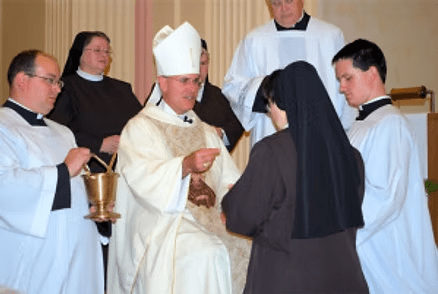



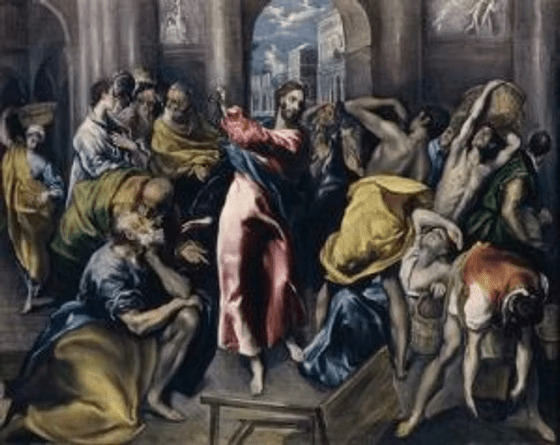
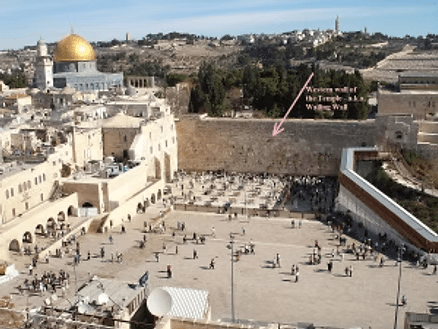
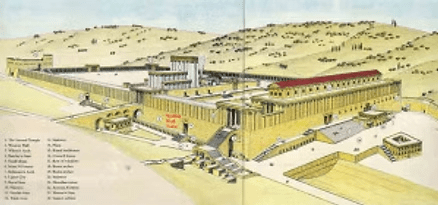

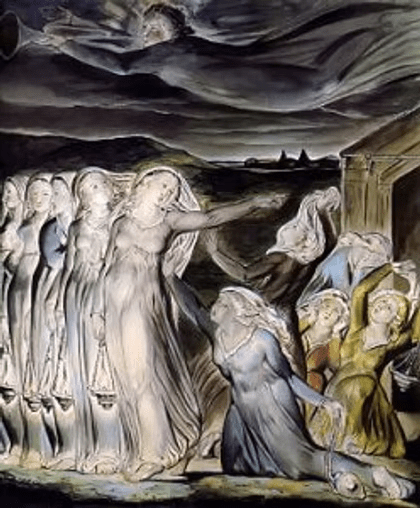

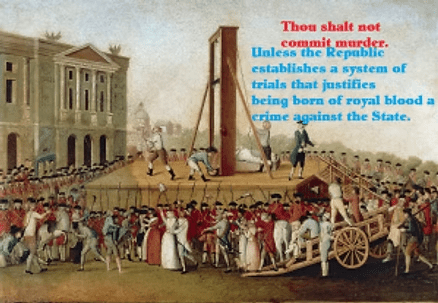


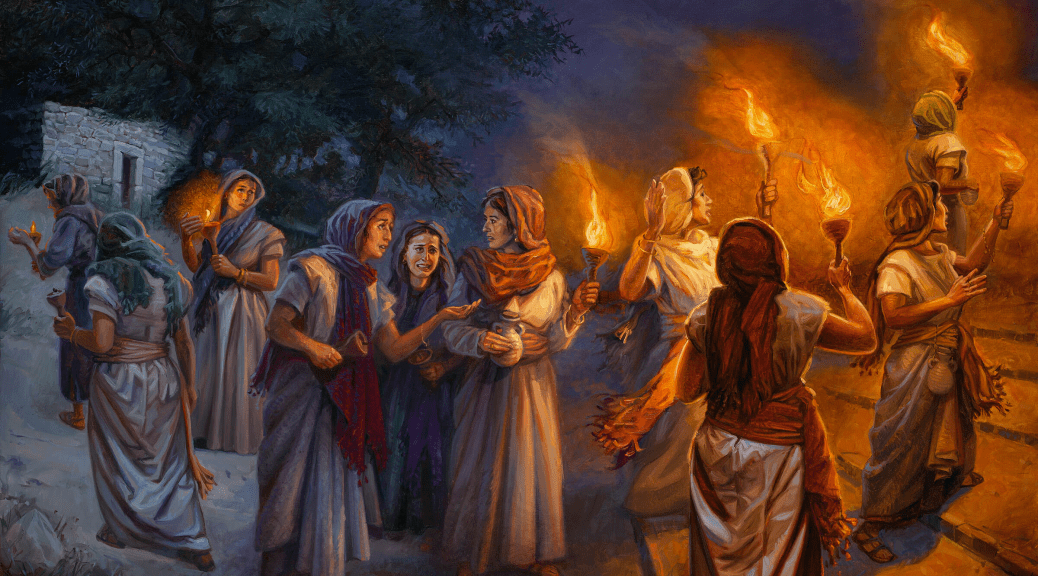
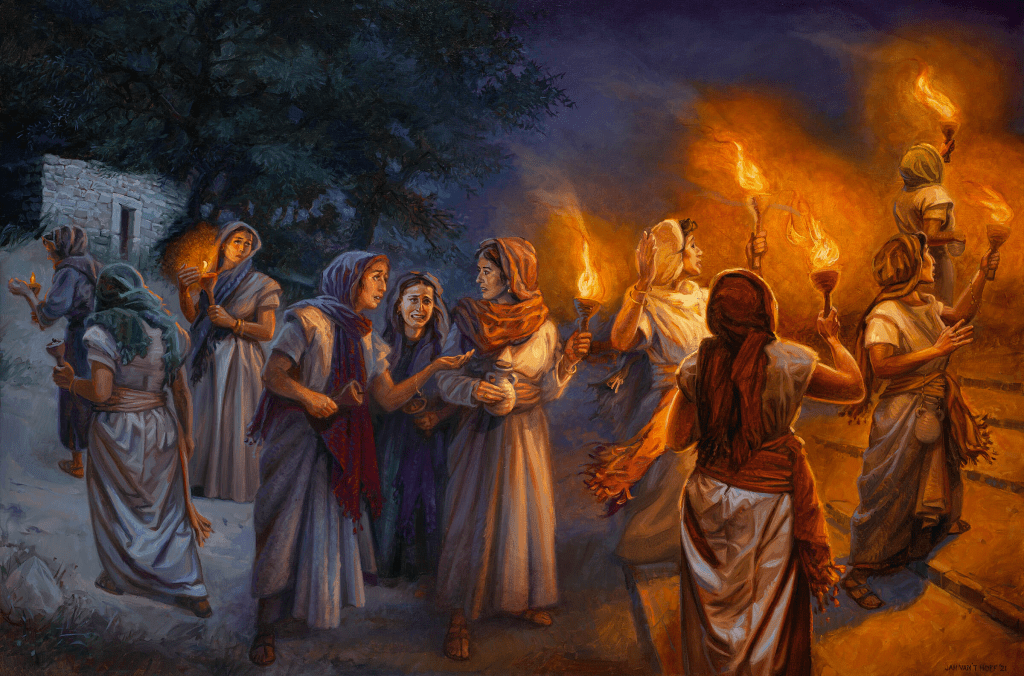


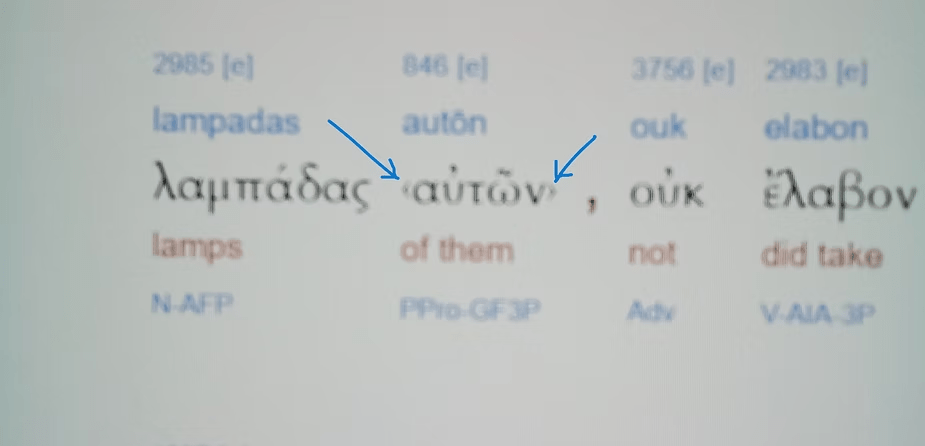
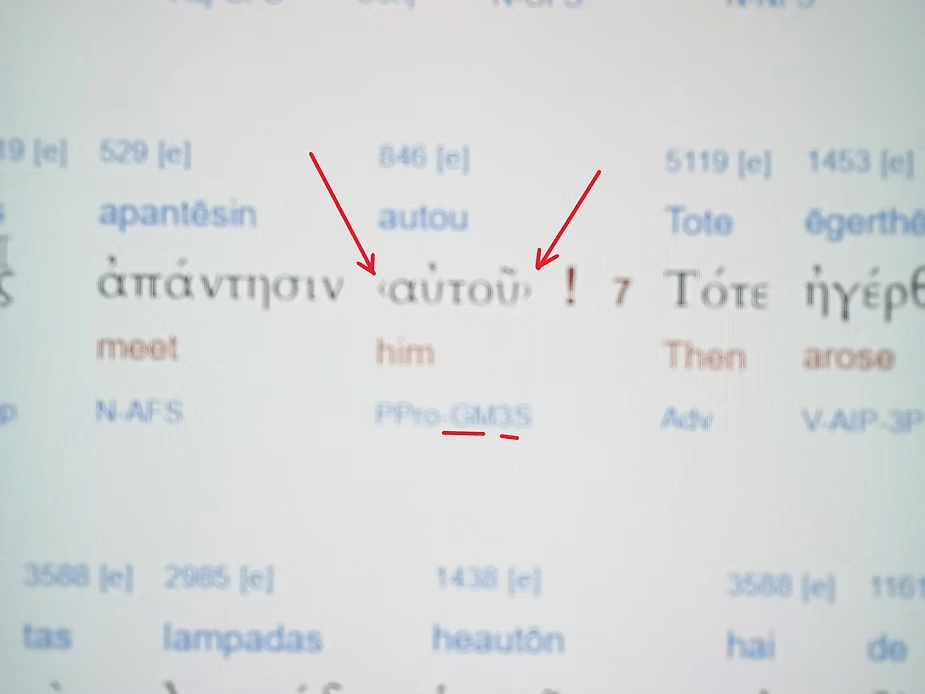
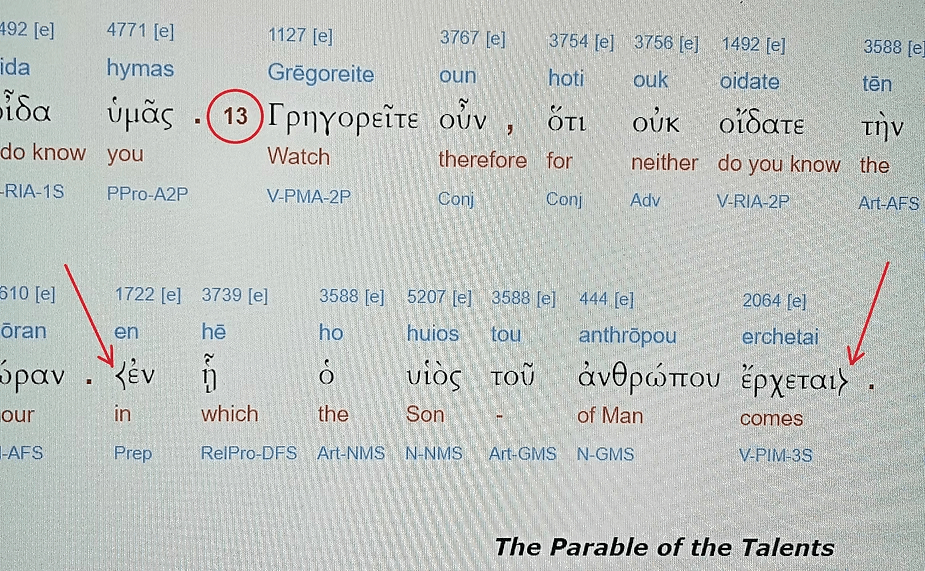
 Explaining the Readings