Joshua gathered all the tribes of Israel to Shechem, and summoned the elders, the heads, the judges, and the officers of Israel; and they presented themselves before God. And Joshua said to all the people, “Thus says the Lord, the God of Israel: Long ago your ancestors—Terah and his sons Abraham and Nahor—lived beyond the Euphrates and served other gods. Then I took your father Abraham from beyond the River and led him through all the land of Canaan and made his offspring many.
“Now therefore revere the Lord, and serve him in sincerity and in faithfulness; put away the gods that your ancestors served beyond the River and in Egypt, and serve the Lord. Now if you are unwilling to serve the Lord, choose this day whom you will serve, whether the gods your ancestors served in the region beyond the River or the gods of the Amorites in whose land you are living; but as for me and my household, we will serve the Lord.”
Then the people answered, “Far be it from us that we should forsake the Lord to serve other gods; for it is the Lord our God who brought us and our ancestors up from the land of Egypt, out of the house of slavery, and who did those great signs in our sight. He protected us along all the way that we went, and among all the peoples through whom we passed; and the Lord drove out before us all the peoples, the Amorites who lived in the land. Therefore we also will serve the Lord, for he is our God.”
But Joshua said to the people, “You cannot serve the Lord, for he is a holy God. He is a jealous God; he will not forgive your transgressions or your sins. If you forsake the Lord and serve foreign gods, then he will turn and do you harm, and consume you, after having done you good.” And the people said to Joshua, “No, we will serve the Lord!” Then Joshua said to the people, “You are witnesses against yourselves that you have chosen the Lord, to serve him.” And they said, “We are witnesses.” He said, “Then put away the foreign gods that are among you, and incline your hearts to the Lord, the God of Israel.” The people said to Joshua, “The Lord our God we will serve, and him we will obey.” So Joshua made a covenant with the people that day, and made statutes and ordinances for them at Shechem.
———————————————————————————————————
This is the Old Testament selection from the Episcopal Lectionary for Year A, Proper 27, the twenty-third Sunday after Pentecost. This will next be read aloud in church on Sunday, November 12, 2017. This is important as it clearly states that a Christian must serve only the LORD, totally, and there can be no variation in that service.
This selection begins by stating, “Joshua gathered all the tribes of Israel to Shechem.” This was a very special place, as Abram reached “the great tree of Moreh at Shechem,” where Abram built an altar and made a sacrifice to the LORD. (Genesis 12:6-7) This was where the LORD promised Abram’s descendants the land of the Canaanites.
The word “Moreh” is believed to mean “teacher” or “oracle.” The word “elon,” which is translated as “tree,” can mean specifically an “oak tree,” or generally a “tall tree.” As such, the site of Shechem (from shékém), indicates a “Saddle” or “Shoulder,” which sat between two ridges – Mount Gerizim and Mount Ebal. That resting place, situated between figurative shoulders and hips, is then important as the “Saddle” that was at a holy “tree.”
This makes Shechem similar to the place where Moses found the “burning bush,” on Mount Horeb. Moses was told to take off his sandals, because that was holy ground. The prophetess Deborah was said to get insights from God between two hills (near Beth-el, in Ephraim), under a palm tree. Shechem must also be seen as where a tree of prophecy invoked the voice of the LORD, making that place be holy.
A mighty oak tree and the Kabbalah Tree of Life
Shechem was in the land given to the Manasseh tribe, which was split into two parts, on both sides of the Jordan River. Western Manasseh was between the far northern and southern reaches of Israel. Joshua was a member of the Ephraim tribe, whose land was just south of the western half of Manasseh. Because Manasseh was in a central location in Israel, and because it was the holy ground where God promised Abraham that his descendants would possess that land, and it was a place that Abram built an altar and offered sacrifices, it makes sense that Shechem was chosen for purposes that are not clearly stated in the Book of Joshua.
It is also worthwhile to realize that this reading from chapter 24 comes well after the Proper 26 reading, from chapter 3. Chapter 23 states that Joshua is getting old and is about to turn the leadership reigns over to the leaders of each tribe. This is why Joshua “summoned the elders, the heads, the judges, and the officers of Israel” to Shechem. Twenty-eight years (give or take a few months) had passed since the crossing of the Jordan, and many wars had been fought (and won), which had then secured all the lands that were subsequently divided among the tribes.
With this setting understood, the reading today is under the heading “Joshua’s Farewell Address” (Chapter 23, NASB), while this specific text falls under the overview entitled “The Covenant Renewed at Shechem” (Chapter 24, NIV). This review of the history of the Israelites, from Abraham being called by God out of Ur, to that holy ground in Shechem, where the land of Canaan was promised, to being back in Shechem again, symbolizes the history of the Israelites had come full circle. Thus, it was a time of transition, where the cycles of time repeat.
As a time of transition, Joshua said, “Choose this day whom you will serve.” That led to him saying, “For me and my household, we will serve the Lord.”
What do you seek? I seek the Holy Grail. Who does it serve? It serves You.
That additional statement is a powerful statement to grasp.
Joshua had told the leaders of the twelve tribes that they came from ancestry that had worshipped many different gods in the past. He basically said, “Your flesh and blood calls you as a distraction. It takes your eyes off YaHWeH” and lets your brain think, “If it was good for ole granpappy, it ought to be good for me.”’
It is the common ancestry of all human beings, since God had elohim create animal men and animal women in their likeness. Man will always find a way to do what Man wants; and knowing the difference between Good and Evil will never keep Man from being tricked into serving little-g gods: gods of harvest; gods of fertility; gods of buildings; gods of property; gods of money; and all the gods of pride, envy, lust, gluttony, sloth, wrath, and greed.
It’s what Man does.
So, serving the LORD goes beyond the oral promises made to men long since gone. It goes well past physical agreements written or etched into stone; and it exceeds belief that someone died on a wooden cross, two thousand years ago (give or take a few decades). Serving the LORD is not what someone else did for you, so you could benefit without having to help anyone but yourself.
The cycles of time means the old is done and the new has begun. Holding onto the past means you have an imaginary deed to a Promised Land. It is the epitome of “What have you done for me lately?” The past is a dream that dissipates when reality wakes you up in the present.
“Oh dear! Oh dear! I shall be too late!”
Joshua said, “For me and my household, we will serve the Lord.”
The use of “we” means the plural pronoun indicating only those whom Joshua could influence via teaching [i.e.: his family]. The power of that says the history of the world is the illusion – the dream – that is as fleeting as is mortal life on earth. The future is imagination of that which one wishes for, but has no foundation in reality.
The Lord makes the reality of NOW be known, when one is awake and alive with promise fulfilled, through being in touch with YaWHeH’s Holy Spirit. NOW lasts forever, when one’s soul loves God with its whole heart and the dream state of the world becomes the holy ground upon which one walks, which others cannot detect.
Thus, each individual has to be like Joshua said and: “Choose this day whom you will serve.” There is no better time than the present.
Of course, in the now, as one hears these words be read aloud in church or as one reads them here or in the Book of Joshua, chapter 24, as a Christian or a Jew (reading in English translation or in Hebrew on scrolls), the easy and fast answer is the same as Joshua heard shouted in unison by the leaders of the twelve tribes: “Far be it from us that we should forsake the Lord to serve other gods. Therefore we also will serve the Lord, for he is our God.”
“Here! Here!”
“Well said!”
“Same here!”
“I hear you, brother Joshua!”
“I agrees with the brother!”
“Amen to that!”
Forty years later … … prayers would go out from some last vestige of those who so gladly agreed to serve the Lord, when Joshua was old and gray (or grey). “Help us Lord,” someone cried, “for we have gone astray!”
That cycle of history repeated every 80 years: 40 years serving God, followed by 40 years serving themselves (little-g gods). They needed Judges to bail them out. They wanted a king, then two; and then they lost everything.
You cannot serve the Lord by edict, where someone says, “You must do this or you must do that.”
Governments do that, and all government-fearing citizens do the true patriotic thing, year in and year out: They hire a lawyer, and an accountant, and a financial advisor (or adviser) that recommends their actions, where all the letters of the laws are bent every which way. Governments purposefully write laws in gray (or grey), between the official looking black and white of legal legislation, because everyone knows the people love ways to get around the Law. The high and mighty are selected from among the low and feeble, so it is proclaimed okay to serve as many little-g gods as your heart desires. That way one is still (legally) able to say, “I am a Christian!” or “I am Jewish!”
“I have the receipts to prove it, dang it!” some say.
Jesus said it best: “No one can serve two masters. Either you will hate the one and love the other, or you will be devoted to the one and despise the other. You cannot serve both God and money.” (Matthew 6:24) However, Joshua said the same basic thing, well before Jesus.
Adolf wasn’t the only one not filled with the Holy Spirit to misuse Scripture. How many Americans today (NOW) would sacrifice the State or the Party, as a master destroyed? I say few, if any.
Joshua told all those Israelites, the leaders who had seen a few things firsthand over the prior 70 years (give or take a couple of years), from Egypt to Shechem: “You cannot serve the Lord, for he is a holy God. He is a jealous God; he will not forgive your transgressions or your sins. If you forsake the Lord and serve foreign gods, then he will turn and do you harm, and consume you, after having done you good.” Joshua said, “I know you guys. I’ve been there and seen how stubborn you can be.”
That says that you can only serve YaWHeH by being holy [i.e.: righteous; sanctified; saintly]. There can be no “two- hours sitters” (give or take a couple of hours), as those who sit in a church or synagogue pew for that long each week, who can call themselves “servants of the Lord.”
That goes for “the elders, the heads, the judges, and the officers of Israel,” which translates in modern times (forevermore) as also going for “priests, pastors, ministers, rabbis, bishops, cardinals, archbishops, popes,” and anybody and everybody who is a leader of some religious tribe that professes complete devotion to the One God.
If you take 30 minutes off to make sure your tax receipts are in order, so you don’t miss out on any deductions; or if you take a couple of hours one day, shopping for the finest clothes to be seen wearing in church; or if you take a week off to look at exclusive properties near the beach, as an investment; or if you take 30 minutes to abuse a child sexually, or take the same 30 minutes to look the other way while that happens; or if you take a few hours to plan some political demonstration, because your fav politician-lawyer thinks your presence will have an impact on others; and so on and so on … then you are under the misconception that God does not see you serving yourself, over God.
Joshua, having been a common human being prior to becoming holy and righteous, prior to being able to hear the LORD, after being touched by Moses. He knew where the hearts of commoners (and their leaders) lay. Hearts are fleshy muscles pumping blood, before they become spiritual reservoirs that flow forth living waters. Joshua understood where the Israelites were bound and determined to go, whether they would admit it or not.
Joshua clearly said, “[YaHWeH] is a jealous God; he will not forgive your transgressions or your sins.”
But … but … but … Jesus said … didn’t he …?
This is because rule number one has been broken, “You shall not wear the face of any other gods before My face.” God will not forgive part-time believers or those of come-and-go faith. It means that you cannot have a drawer of godly faces that you decide are okay to wear, interchangeably, depending on the special occasion. By thinking it up to you to decide when it is okay to take off the face of God and slide on another face of your choosing, you just made mistake Number One.
God don’t like that.
This means the moral of this story of old Joshua renewing the Covenant (the Holy Agreement, which came with legally binding words) with the Israelites (and thereby all of their spiritual descendants, Christian and Jewish) can be summed up with this statement: “Then put away the foreign gods that are among you, and incline your hearts to the Lord, the God of Israel.”
I have underscored and made bold the pronouns “you” and “your.” Please make sure you read those in the singular, as if old Joshua were having a face-to-face with you, individually. After all, nobody else in this world matters.
You think, therefore you are.” Everyone else – past, present, or future – is imaginary. Joshua wore the face of God, as His servant. Therefore, Joshua was speaking as if God where here NOW, telling you this.
This means that when we read the conclusion above: “So Joshua made a covenant with the people that day, and made statutes and ordinances for them at Shechem,” it was like when God spoke to Abram many years before. Abram built an altar and made sacrifices after the covenant of his descendants was made. Keep in mind that Abram had no – nada – zero – zilch – children then, meaning the agreement was based on the imaginary, not the real. Likewise, Joshua made the leaders of Israel throw their egos on the altar he made that day, as immediate acts that sealed that agreement (with new statues and ordinances spoken). Those leader sacrificed themselves on the altar built by Joshua, burning their egos in the flesh, so the smoke of their spiritual blood plumed towards heaven.
The crowd came together again, so that Jesus and his disciples could not even eat. When his family heard it, they went out to restrain him, for people were saying, “He has gone out of his mind.” And the scribes who came down from Jerusalem said, “He has Beelzebul, and by the ruler of the demons he casts out demons.” And he called them to him, and spoke to them in parables, “How can Satan cast out Satan? If a kingdom is divided against itself, that kingdom cannot stand. And if a house is divided against itself, that house will not be able to stand. And if Satan has risen up against himself and is divided, he cannot stand, but his end has come. But no one can enter a strong man’s house and plunder his property without first tying up the strong man; then indeed the house can be plundered.
“Truly I tell you, people will be forgiven for their sins and whatever blasphemies they utter; but whoever blasphemes against the Holy Spirit can never have forgiveness, but is guilty of an eternal sin”— for they had said, “He has an unclean spirit.”
Then his mother and his brothers came; and standing outside, they sent to him and called him. A crowd was sitting around him; and they said to him, “Your mother and your brothers and sisters are outside, asking for you.” And he replied, “Who are my mother and my brothers?” And looking at those who sat around him, he said, “Here are my mother and my brothers! Whoever does the will of God is my brother and sister and mother.”
——————————————————————————-
This is the Gospel selection from the Episcopal Lectionary for the Third Sunday after Pentecost, Year B 2018. In the numbering system that lists each Sunday in an ordinal fashion, this Sunday is referred to as Proper 5. It will next be read aloud in church by a priest on Sunday, June 10, 2018. This reading is important because Jesus makes it clear that one cannot serve God part of the time and then serve self the rest of the time, because that is a recipe for disaster. In that way, one is not born into God’s favor, as the Jews deemed themselves as God’s chosen people. God does not choose part-time priests.
In this translation, where we read, “When his family heard it, they went out to restrain him,” this (I feel) is incorrect. The Greek words translated as “his family” – “hoi pará” – more accurately state, “others alongside of.” The Greek words translated as “restrain him” – “kratēsai auton” – more accurately state, “to seize hold of him.” In my mind, this better describes those who had parallel reputations as rabbis or teachers of Judaic Scripture (Pharisees).
Equals beside with greater fears of competition.
I struggle with the concept that the family of Jesus (as stated much later in the text) would not be considered “alongside of” or “beside” him. They would know their place was behind him. Nor can I accept that relatives would be so bold as to “seize” Jesus, as they would know full well his ministry would rock the Jewish boat. It makes more sense that Jesus would have told his family to keep a distance and stay mute. Therefore, I see Peter (through Mark) recounting the rabbis of the synagogues in Galilee and the Pharisees there were joining with the “scribes who came down from Jerusalem” (actually “scribes, from Jerusalem” – those coming up to Galilee, not down[1]) in placing pressures against Jesus, because he was drawing such attention from the locals and pilgrims.
[[1] The use of “having come down” (from “katabantes” = “descended”) means the high-ranking scribes of Jerusalem had removed their holy buttocks from their golden seats in the Temple and ventured out amongst the “great unwashed” of Galilee.]
When we read the scribes (as well as the Pharisees and rabbis) saying, “He has Beelzebul, and by the ruler of the demons he casts out demons,” this stems from the trap the Pharisees had set in the synagogue where Jesus had been asked to lead the Sabbath service, only to enter and find a man with a withered hand in the congregation. When Jesus asked for comments, from the question, “Is it better to do good or evil on a Sabbath?” he then simply told the man to “stretch out your hand,” which the man did – healed. That act was then being deemed the act of Satan, by high authorities, after testimony given by well-respected Pharisees.
When the scribes had declared Jesus possessed by Satan, we read how Jesus “spoke to them in parables.” This leads one astray, since we tend to interpret a “parable” as: “A simple story illustrating a moral or religious lesson.” (American Heritage Dictionary) In reality, the Greek word “parabolais” comes from the word “pará” (“close beside” or “alongside of”) combined with the word “bállō” (“to cast”), which makes it a companion word to the prior statement that relates to “those beside” Jesus (the Pharisees). Thus, the word actually states that Jesus offered those who condemned him a “comparison” for themselves to consider.
Just as Jesus has addressed the synagogue in Capernaum (Galilee) with a question that went unanswered, he spoke again in questions. He first asked, “How can Satan cast out Satan?”
The optional Genesis reading this week is about the serpent being cast out of Eden. How could the serpent cast out the serpent?
The scribes had just implied that Jesus was able to straighten out a lame hand supernaturally, which (in the opinion of the Jerusalem think-tank) could only have been caused by Beelzebul (Satan). They then concluded that by calling upon that “ruler of demons” to “cast out demons” (those determined to be within men with lame hands), Jesus had called upon Satan to cast Satan out of a man’s lame hand. Jesus asked then (in essence), “How is what you propose even possible?”
The “comparison” spoken by Jesus (“parabolais”) was that the scribes and Pharisees were Satan. Here they were attempting to cast out Jesus, because they thought he was Satan. Jesus had simply asked, “Which is lawful on the Sabbath: to do good or to do evil, to save life or to kill?” That was excellent discussion material, but none of the Jews in the synagogue (including the teacher Pharisees) responded. When Jesus asked the man with the withered hand to straighten it out, and he did, why would that be grounds for saying Jesus did anything more than ask the man to stretch out his hand? If his hand was healed, was that good or evil? And, if good, would that not be the work of God?
By the scribes, who came to speak judgment against Jesus based on the Pharisees who reported what Jesus had done, calling Jesus evil, they were answering the question posed by Jesus in the synagogue. They were saying it was unlawful to do good on the Sabbath. That inverts to a decree that says it is lawful to do evil on the Sabbath. The only one who would be so bold as to say that evil was lawful – EVER – even worse on the Sabbath – would be Satan. Therefore, the scribes had just claimed to be – themselves, not Jesus – those who called upon the ruler of the demons (Beelzebul), attempting to cast out the one who would break their laws and do good on the Sabbath.
Jesus spoke truthfully, when he made the scribes’ decree become a reflection on them. Jesus then said, “If a kingdom is divided against itself, that kingdom cannot stand.” That was a statement of history.
The scribes and the Temple priests, with the Pharisees, had become the straw bosses of ancient Israel. Unfortunately (for them), ancient Israel had split into Israel and Judah, with both falling to foreign invaders. The Promised Land of Canaan had been given to those who had to serve the LORD (by official Covenant) in order to keep their land. Instead, they waxed and waned, rising in devotion and falling in neglect. Then, tired from all the hard work, they asked for a king so Israel could be a kingdom, to be like other nations. Then that plan did not work, so they split one kingdom into two. Things then went from bad to worse, and Jerusalem was then in Roman Judea (not Judah), with Galilee another Roman province (not Israel). It all collapsed because the people followed bad rulers.
Jesus then added, “And if a house is divided against itself, that house will not be able to stand.” The use of “oikia” (“house”) is a step down from a “sovereign nation” or the “realm of a king,” where it means “household,” while inferring “family.” The whole claim to fame of the Israelites – as God’s chosen people – was ALL about being a house of worship, as a family linked through priesthood (and interbreeding only between the Twelve Tribes, with marriage to Gentiles forbidden).
That means Jesus was saying that the Pharisees running to tattletale on Jesus, and the scribes running to condemn Jesus by hearsay, was evidence of Jewish scholars being divided against a Jewish newcomer who was working miracles and drawing large crowds of followers. This division was not something that could ever be fixed (Nicodemus had attempted to sway Jesus to join their ranks, and failed), so the fact that Temple rulers (straw bosses) were up in arms about good having been done on a Sabbath, well then … “the house of Judaism was doomed to fall down.”
And that after so much work and planning had brought the exilic Jews back from Babylon. And that after so many years of work having been done, especially in the remodeling and beautification of the Second … ooops …. Herod’s Temple. And that after all the lamenting and complaining to their Roman overseers had allowed Jerusalem near city state status (but not quite). By 70 A.D. very little of that house would still stand, while the new house of Christianity was rapidly taking off.
That assessment can then be seen in Jesus next saying, “And if Satan has risen up against himself and is divided, he cannot stand, but his end has come.” There was still an opportunity for these Satan-serving scribes to run back to Jerusalem and spread the word, “Hey guys, we have it all backwards. This Jesus fellow from Nazareth is the real deal. We need to stop serving ourselves and drop everything and follow him.” Unfortunately, knowing in hindsight that was a BIG IF that did not happen, Jesus then prophesied the end of the Jews. As Jesus died on the cross, God left the inner chamber of the Temple in Jerusalem for the last time. Thus, because Satan had overtaken the Temple, Satan was reaching out to divide and conquer the remnants of Judaism.
Those “comparisons” of ancient failures and current failures were then addressed by Jesus, where he offered the solution. Jesus stated the exception to that history, saying, “But no one can enter a strong man’s house and plunder his property without first tying up the strong man; then indeed the house can be plundered.” A “strong man” had been known prior as individual Judges, Prophets, and (from time to time) Kings who ruled benevolently over the people. John the Baptizer had shown strength, and Jesus was certainly a “strong man” with a house he protected.
The lion is a symbol for strength. It is called the king of the jungle. One with a lionheart is courageous and strong.
By stating “a strong man’s house” (literally, “into the house of a strong man”), Jesus was saying the course to or from failure is each one’s responsibility, such that “the house” of “a strong man” was the domain of each Jew’s body. Their strength was then dependent upon that individual’s commitment to serving God as His priest. The strong individual does not seek any king other than God, who then sits upon the throne of one’s heart and soul. God is the source of a man’s strength.
When that state of service is established, no one can “plunder his property” (where “property” is “goods” [“skeuē”], which are the “works” of that individual). Jesus was such a “strong man,” whose “house” was truly holy; so the efforts of the Pharisees and scribes could not stop Jesus from being a holy and righteous man.
Still, Jesus offered the caveat that IF one “first tied up the strong man; then indeed the house could be plundered.” That means plundering would then have to be the objective, such that the good deeds of the strong man were inconsequential. Such a judgment would be only be meted by evil-doers. In such a case, even the house of a strong man could be plundered, which would be the execution of the pure and innocent, at the hands of the wicked. That could only be prevented if the plunderers were to likewise become strong men, in holy houses, refusing to go against their dominant tyrant rulers. Jesus would eventually be the strong man tied up in arrest and trial, his being judged a criminal, and his being executed by crucifixion.
In this regard, Jesus had just prophesied his own eventual death, symbolically, at the hands of the elite of Jerusalem. He then forecast their ends, when he said, “Truly I tell you, people will be forgiven for their sins and whatever blasphemies they utter; but whoever blasphemes against the Holy Spirit can never have forgiveness, but is guilty of an eternal sin.” For all who stand in churches today and promise that Jesus offered forgiveness to all, are those pastors remembering these words or excusing blasphemers of the Holy Spirit?
The Greek words written by Mark actually state, “tois huiois tōn anthrōpōn,” which is translated above simply as “people,” but is better grasped as “the sons them of men.” Those who will be forgiven for their evil actions will be those following the orders of their elders. Those who were expecting their religious leaders to properly guide them would be forgiven for their sinful acts against the pure, when their “blasphemies” were echoing what their brains remembered their revered scribes saying. That day the common Jews heard the scribes blaspheme Jesus by saying, “He has Beelzebul, and by the ruler of the demons he casts out demons.” Are not “sons of men,” rather than “sons of God” (Saints and Apostles), the ones who find excuses for sinners, because they cannot lead anyone to the Holy Spirit?
A leader who tempts with forbidden fruit is a son of man.
Because that blasphemy was uttered due to a man with a withered hand being healed, where the affliction was deemed by blind men leading the blind people to believe physical infirmities were signs of the presence of sin (i.e.: Satan or Beelzebul planted demons), then the only logical explanation of healing could be God.
The scribes would have to remember the fire-starting contest that Elijah initiated (1 Kings 18), where four hundred fifty priests of Baal could not summon him to light dry wood, while Elijah soaked his wood pile with water and it was lit into a roaring flame by God’s Holy Spirit.
God is the power that makes the impossible possible. Therefore, those who would call God’s work that of someone calling upon Beelzebul were the utterers of a blasphemy of eternal proportions, unworthy of forgiveness.
Did the scribes think the four hundred fifty priests of Baal were forgiven after they called Elijah and his God names, accepting the challenge? Of course not.
Those evil priests, if one recalls, were priests imported by Jezebel into the Northern Kingdom, to guide Ahab and the common Israelites. They were the sons of men, not Sons of God. Those priests of Jezebel all still burn in hell.
Jesus then said, “For they had said, “He has an unclean spirit.” I imagine there could have been a finger pointed when Jesus said “they said” (“elegon”), used in identifying the scribes and their Pharisees pals. “They said” the Holy Spirit of God, which makes crippled hands straight and strong, was the work of “an unclean spirit.”
I imagine Jesus pointed out “them” to the crowd that had been roused to a maddened state, murmuring that Jesus “had gone out of his mind.” I imagine Jesus silenced all of them as they pondered to themselves, “Did Jesus just say I am guilty of an eternal sin?”
Then, I imagine, Jesus went inside the house he and his disciples had been welcomed into, so they could sit peacefully and enjoy some lunch. As the door closed, the crowd was silently stunned … I imagine.
It is then that we read, “Then his mother and his brothers came.” This, again, was not an arrival based on fear for Jesus, as the implication can seem when reading, “When his family heard it, they went out to restrain him.” It might be that the Pharisees (“those beside” Jesus in responsibility, as teachers of Scripture) had stirred such a row that someone ran to tell Jesus’ mother that excitement was about. As this statement is actually separated into two segment (by a comma), it first says “and arrived the mother of him,” followed by a subsequent arrival, “and the brothers of him.” That would imply Mary told someone to go alert her other sons, so she left before them, with each Mary and the brothers arriving one right after the other, in the order of departure from where they were. One would then assume they came in support of Jesus, in case he was being threatened.
By reading, “and standing outside, they sent to him and called him,” they did not know the place where Jesus was with his disciples. Because it is not actually stated to be a home of someone, it could have been a public place, like an eatery. Their not entering could well have been due to the “crowd” that “was sitting around” Jesus was so many there was no room for them to wedge inside.
Good places to eat are not always big, so waits are common.
Thus, they sent word by asking strangers to tell Jesus who was outside. To ensure Jesus got the message, they hollered out Jesus’ name, in familiar voices he might recognize.
Then we read, “They said to him, “Your mother and your brothers and sisters are outside, asking for you.” The inclusion here of “sisters” should be read as the wives of Jesus’ brothers, as “sisters-in-law.” The point of Peter recalling “mother, brothers and sisters” is to make it a point that “the house” of Joseph, husband of Mary, and father of sons through at least two wives, they all had arrived to support their flesh and blood relative. They came to make a show that the “house of Jesus” was not divided, even though Jesus went and did his thing with his disciples, while the rest of the family did their things separately. They arrived to show solidarity of blood.
Jesus knew who was outside. God would have told him; but Jesus heard their cries and recognized them. Still, he did not want to make a show of how one family was strong in support of a common house; but he did want to demonstrate how one man had the strength to defend a holy house of righteousness. Thus, we read, “He replied, “Who are my mother and my brothers?”
Again, this is two segments, separated by a comma. Jesus asked, “Who is the mother of me?” and then, “And [Who are] the brothers of me?” Each separate focus questions not the identity of multiple people, but asked esoterically, “A I not an individual of responsibility?”
These questions were not directed at the physical people standing outside, as they are alluding to what makes a strong man. As a mother is the one who gives birth to a child, Jesus asked, “Who is it that gives birth to a strong man?” Is it one’s physical mommy? Or, is it God?
When Jesus then referred to other male siblings, he was then alluding to what makes a man truly strong. Does strength come in numbers of others who will come to one’s aid? Or, does true strength depend on the relationship that one has with the Holy Spirit? Can one not find inner strength from knowing others like oneself have been made strong by God?
When we then read how Jesus looked “at those who sat around him, [and] said, “Here are my mother and my brothers! Whoever does the will of God is my brother and sister and mother,” that was not a claim of the present state of being. It was prophetic. Certainly, Jesus did not see Mary, James, and his other brothers sitting around him. Instead, we see the twelve disciples that Mark had named earlier in chapter three. Even those twelve had nothing to do with what Jesus said.
Jesus actually did not say, “Here,” as that is a poor translation. The Greek word he actually used was “Ide,” a form of “horaó.” That word says, “Behold!” or “See!” or “Perceive!”
Jesus was not pointing his finger at the human beings dining with him, or even tapping his finger forcefully on the table they were seated at. Jesus probably had used his finger when he pointed to “those” outside who blasphemed the Holy Spirit. In my mind’s eye, at this point in the story, I “See!” Jesus lifting both arms high, inviting all who sat near to realize he held within him the mother of his faith and the lineage of all prior prophets of the LORD who were his brothers. Everyone sitting around him, and those outside calling out his name, would also be his own mother and brothers of Christ and all other Apostles, when they would become saints in the name of Jesus Anointed.
We realize that when Jesus then said, “Whoever does the will of God is my brother and sister and mother.” This is the recipe of a “strong man whose house cannot be plundered.” It is whoever does the will of God – not the will of Pharisees, not the will of scribes, not the will of friends who tell you someone might be in danger, and not the will of relatives who will defend one’s body without question.
The will of God is done by those who sacrifice their dependency on the outside world, so they only respond to the direction of the Holy Spirit. Of course, those all go by the same name – Jesus Anointed.
That name comes when one gives birth to a new you, after marriage to God in one’s heart (a holy house). You become the brother of Jesus of Nazareth, by being reborn as the Son of God. You become the sisters-in-law of Jesus, as human beings given away in marriage to the Father. The officiant of that sacrament is Holy Spirit, which washes away one’s sins, so God can take His throne. A most holy matrimony through a most holy baptism, followed by a most holy christening [naming one as Jesus Anointed].
As the selected Gospel reading for the third Sunday after Pentecost, when one’s personal ministry for the LORD should be underway, Apostles are called to recognize they are either with Jesus, through the Holy Spirit – the mother and brother of Jesus the Anointed one – or they are standing outside, either calling out, “Sweet Jesus, come to me!” or “Cast out my demons, Jesus, if you are indeed holy!” or “Jesus was nothing more than another prophet who did some good things, but not the Messiah we still await.” They are one or the other, not both.
A non-sacred cow.
The reality of today is there are crowds of people wanting a good show, in search of a dependable idol to worship. Few people are strong enough to keep themselves as a holy house worthy of God’s presence.
People remember how “Honest” Abe Lincoln quoted Scripture when he compared the divide between the slave states and the free states as a “house that cannot stand.” Few people realize that ordering the deaths of 620,000 Americans, through battles that would force the will of Abraham Lincoln (as the “king” of a nation divided) upon the people. America has built a monument to Mr. Lincoln. They immortalize some notes he scribbled on an envelops, while on a train to the battlefield where about 50,000 soldiers (both sides of battle) were killed, wounded, or went missing. He wrote of forefathers, the ones who said states had rights, including the right to dissolve the union. Abraham Lincoln rewrote the Constitution, as far as thirteen southern states were concerned. The reality, as far as spirituality goes, is the United States of America fell in 1865, regardless of who claimed victory, simply because a son of man played god – calling upon Baal for all to worship.
Whoever hitches up their wagon to a country, or claims great pride in associations (political, racial, philosophical, or religious, et al) those people are bowing down before a master of lesser value that God Almighty. When Jesus said, “No one can serve two masters” (Matthew 6:24) the same lesson applies to the divisions that inevitably will arise in kingdoms and houses. Only a strong man in his own house, one of absolute devotion to God, stands a chance of surviving the destruction of his tabernacle (bodily temple).
The unnamed place that Jesus sat with his disciples, when he exclaimed, “Behold my mother and brothers!” is the epitome of a church. Jesus said, “Where two or three have gathered together in my name, I am there in their midst.” (Matthew 18:20) The church is not exclusively an elaborate brick and mortar building that is decorated with candlesticks, altar, crosses, stained glass windows and red carpeting between polished pews.
Jesus and his disciples might have gone into the equivalent of a pub or café, where he and his disciples shared a non-Passover loaf of bread and cups of wine. The disciples and the crowd were there because they wanted to be close to Jesus of Nazareth. When Jesus said there would be those who would later “gather in my name,” he meant Apostles in the name of Jesus Christ – as Jesus Christ reborn – the Holy Spirit and the Christ Mind would then be in their midst.
The sacrament of Communion is the gathering of Saints at a time when there is need to get away from the maddening crown that utters one blasphemy after another. It has to do with sharing common experiences of body and blood, and very little to do with a wafer followed by a sip of wine from a fancy cup. The disciples AND those who wanted to be near Jesus that day were in “communion” with Jesus of Nazareth, where that word is defined: “The sharing or exchanging of intimate thoughts and feelings, especially when the exchange is on a mental or spiritual level.”
The message of ministry is not to go out memorizing words found in various translations of the Holy Bible. The Pharisees did that and misled the people. The scribes of Jerusalem did that and misled the people. Ministry for the LORD can only be done by His Son, Jesus Christ.
Apostles and Saints have made that possible since the day of Pentecost, when Jesus returned in twelve disciples, and they in turn filled another three thousand who heard them speak with the power of the Holy Spirit. All 3012 found Jesus Christ within their midst. Ministry is thus about that baton passing. Ministry is all about doing the will of God, so one can be reborn as a brother of Christ.
America has become a nation of king worshippers, regardless of which philosophical persuasion one swings. We love the thought of strength, when the only thing that stands in the way of Americans being attacked and invaded is the fear our enemies have created within themselves. That fear is being tested more and more these days, with a little terrorism here and a little insanity there. We are living in the times when the world has gone out of its collective mind.
There are sects of religions that worship Beelzebul. Their leaders are calling upon the ruler of their demons to cast out the demons they see in a “Christian West.” They call America the “Great Satan,” as a motivator for hatred. Hatred is an emotion of Satan, not God. So, again we have the lunacy of Satan calling to cast out Satan.
In the houses of religion in America, which call themselves “Christian,” we have one preacher praising the works of Donald Trump and condemn the works of Barack Obama. Meanwhile, in another denomination, there is another priest denouncing the works of Donald Trump, while longing for a return of the days when Barack Obama ruled the “kingdom.” Just like when ole Abe ruled the roost, America is a divided kingdom that cannot stand. It has no strong men and women who defend their holy temples as Saints and Apostles in personal ministry. There is no central house of religious thought, so everything sits upon a precipice, about to slide into the oblivion of the Great Abyss.
People question why Christianity is decreasing in numbers. People want to know why “Millennials” are turning away from churches. This video shows the reason as it sings, “You cannot save me. You cannot even save yourself.” This perfectly shows why true ministry was necessary in Jesus’ day, and why true ministry is necessary today. It shows how decadent our society has become. It screams out a need for the truth of Christ to guide us out of our lunacy.
We can be saved, but not as oneself and not by external means. Salvation comes within, through the power of God. For that to happen, one has to fall in love with God and get rid of the ego. Satan loves Americans with big egos and sons of man who go out casting false judgment on the holy, while pretending to know the Law. Ministry is being a real representative of Jesus Christ, leading by example.
Remember that at one time you Gentiles by birth, called “the uncircumcision” by those who are called “the circumcision” —a physical circumcision made in the flesh by human hands— remember that you were at that time without Christ, being aliens from the commonwealth of Israel, and strangers to the covenants of promise, having no hope and without God in the world. But now in Christ Jesus you who once were far off have been brought near by the blood of Christ. For he is our peace; in his flesh he has made both groups into one and has broken down the dividing wall, that is, the hostility between us. He has abolished the law with its commandments and ordinances, that he might create in himself one new humanity in place of the two, thus making peace, and might reconcile both groups to God in one body through the cross, thus putting to death that hostility through it. So he came and proclaimed peace to you who were far off and peace to those who were near; for through him both of us have access in one Spirit to the Father. So then you are no longer strangers and aliens, but you are citizens with the saints and also members of the household of God, built upon the foundation of the apostles and prophets, with Christ Jesus himself as the cornerstone. In him the whole structure is joined together and grows into a holy temple in the Lord; in whom you also are built together spiritually into a dwelling place for God.
——————————————————————————–
This is the Epistle selection from the Episcopal Lectionary for the ninth Sunday after Pentecost, Year B 2018. In the numbering system that lists each Sunday in an ordinal fashion, this Sunday is referred to as Proper 11. It will next be read aloud in a church by a reader on Sunday July 22, 2018. It is important because it is the Apostle Paul speaking in tongues – the divine word of God – telling the Christians of Ephesus they, like Paul and the other Christians that were filled with the Holy Spirit, were all one church, with each the resurrection of Jesus Christ – the cornerstone.
In the New International Version of Paul’s second chapter of his epistle to the Ephesians, they list most of these verses above under the heading: “Jew and Gentile Reconciled Through Christ.” The New Revised Standard Version simply says, “One in Christ,” which matches the heading shown on the BibleHub website’s Interlinear Greek-English translation. The New American Standard Bible simply lists everything in chapter two as “Made Alive in Christ.” Certainly, some versions (such as King James) do not attempt to separate verses into any sub-groups and then add interpretive titles. That is good because translating Paul into English, in any and all of this letters, is so weakly done that only the essence of the depth shines through. That summary can certainly be applied here.
It should be noted that Paul does not state the name of or type of people that are known as “Gentiles.” He makes it clear that there are two groups of “people, race, nation” (“ethnē”) that are “in flesh” (“en sarki”), which can then be named as Gentiles and Jews. As such, any “reconciliation” between these two groups is misconstrued if one sees how both Gentiles and Jews were equally holy by believing in Jesus as the Christ [Hebrew Messiah]. The point of this reading, from a letter sent by Jewish heritage Paul to Gentile heritage Ephesians is twofold: A.) Gentiles and Jews once were equal in their ignorance and failure to serve the One God Yahweh; and B.) As Christians, equality with Jews comes in the equal sacrifice of one’s physical nature for spiritual blessing, as Jesus Christ reborn.
In chapter two of Paul’s epistle to the Ephesians, the first ten verses are headed (some versions) “Alive in Christ.” There, Paul compared one’s life without Christ to death, which is the metaphor of a mortal existence that meets a final end with the death of the body and the eternal soul’s reincarnation back into a body of flesh or eternal condemnation (depending on how great one’s sins were). In these verses, which are the remainder of chapter two, Paul is basically telling the Ephesians that they have become alive in Christ, explaining how that life comes from being one with God, such that the result of that union is being reborn as Jesus Christ. Still, reading Paul’s words are beyond the comprehension of those who are still dead men walking, as the length of apparent sentences make it impossible for a human brain to follow.
In my interpretations of Paul, I have repeatedly pointed out how Paul’s words must be read slowly, pausing where the punctuation places a sign of direction. In the highways of life there are signs along the road to let a traveler know where one is and what lies ahead. Failure to follow those signs means it is much easier to get lost. The punctuation shown in the above reading (as usual) does not match that which the Interlinear Greek (of BibleHub.com) shows. This means the translation read aloud in an Episcopal church is a paraphrase of the truth, which is denying the signs and making up the directions. The essence of truth cannot be completely covered over, but the paraphrasing makes it easier to get lost.
This time I will present the segments from above in quotation marks, followed by an underlined literal translation, and assisted by some Greek words that may have been improperly translated. Not all words will be transposed from above, if they are irrelevant (such as “and”) or paraphrase additions. All of this will be bullet pointed and a synopsis of the meaning will be made in reference to each bullet point. Hopefully, one can see the depth of meaning emerge.
• “at one time you Gentiles by birth” = Gentiles = ethnē– people, race, nation, heathen + by birth = en sarki – in flesh – formerly you those race in flesh – Before your transformation to spiritual people you were of a nation that had faith only in the physical.
• ‘“called “the uncircumcision” by those who are called “the circumcision”’ – the ones being called uncircumcision by that being called circumcision – Those “people in flesh” are identified as Gentiles by Jews, when both Gentiles and Jews are “people in flesh.”
• “a physical circumcision made in the flesh by human hands” – in the flesh made by hand – Jews make Jews be marked in the flesh by circumcision, as God does not make Jews be born circumcised. Thus, faith in God does not demand circumcision, although circumcision is a requirement that separates the priests of Israel (all Israelites) from those who worshiped lesser gods.
• “that you were” (good translation) – The word “that” refers to flesh made by hand, so the reference means how all spiritual Apostles come from the flesh first, regardless of what hands have done to a male’s foreskin. The means Jews who are circumcised (at a bris, when a male child is eight days old) have no spiritual transformation that comes from that handiwork.
• “at that time without Christ” – at the time that separate from Christ – Again, this also refers to the “that” state of the flesh, which is always absent of the Holy Spirit and the Christ Mind. That separation makes one’s flesh incapable of becoming Jesus Christ reborn.
• “being aliens from the commonwealth of Israel” – alienated from the commonwealth of the one Israel – This refers to the alienation or estrangement that those in the flesh, who are not in the name of Jesus Christ. They then suffer from not having citizenship to the franchise (= “politeias” -commonwealth, citizen body, citizen-rights, franchise) that is a child of Israel, where Israel is the name representing the spiritual elevation God gave to Jacob. In this spiritual sense, this means being more than a follower of Moses, such that God’s chosen people were chosen to be each a priest of Yahweh. In that way a “citizen of Israel” means being a devotee to God as “He Will Be Prince With God” [the meaning of Is-ra-el].
• “strangers to the covenants of promise” (good translation) – Regardless whether one is a Gentile or a non-compliant Jew, who denies the laws of God through Moses, the promise a heavenly reward is impossible for all “strangers” to those laws. While many memorize all the statues and laws, their failures show that few are ever able to live up the moral standards set. Even the ones who followed Moses directly (and all those after him) were such a stubborn lot (eventually demanding a king so individual responsibilities of priesthood could be shunned) that all since freed from Egyptian bondage have been foreigners to God’s nation (just like Gentiles), who broke their promise (and lost their land).
• “having no hope” – hope not having – All human beings who fail to live up to the covenants of promise have no hope of ever reaching Heaven; and as foreigners, strangers, and aliens to that covenant, none really expect the promise to ever be fulfilled, with no personal experience of God in their hearts.
• “without God in the world” (good translation) – This means those who alienate themselves from the covenant of promise are human beings not led by God (YHWH), regardless of whether they profess belief in a God whose covenant they cannot uphold. Without God leading them through the world’s distractions to sin, one cannot live up to those beliefs that are founded on misunderstood words.
• “But now in Christ Jesus” – now however in Christ Jesus – Paul was stating the present situation, where Apostles had changed. The timing of “now,” where “nuni” says “immediately” and “instantly,” the advent of the Christ of God has come over them, so they have become Jesus Christ reborn.
• “have been brought near by the blood of Christ” – have become near by the blood this of Christ – Literally, the blood in one’s veins flows the same as the blood that flowed in the veins of Jesus of Nazareth, where one’s physical blood is infused with the Holy Spirit that brings about Jesus Christ in another human form. Figuratively, the blood is the Holy Spirit the same as surrounded Jesus of Nazareth. This is the fermented wine of the Passover Seder being consumed, so the spirits of alcohol reflect the pumping of blood through one’s heart yielding the feeling that Christ is near. This reflects the “immediacy” of this closeness.
• “he is our peace” = eiréné– peace of mind, one’s sense of personal welfare – he himself is indeed the peace of us – Being Jesus Christ reborn is how an Apostle has peace of mind as the result of having sacrificed self-ego.
• “he has made both groups into one” – having made condition (“ta” = cause, circumstance, condition, experience) of two one – The becoming of Jesus Christ reborn is on the condition of self-sacrifice, as Jesus said it is impossible to serve two masters. (Matthew 6:24, Luke 16:13)
• “has broken down the dividing wall” – and the dividing wall of the partition having broken down – The wall separating the spiritually divine and the worldly human has disappeared when the ego dies and is replaced by Jesus Christ.
• “the hostility between us” – the hostility in the flesh of him = echthra– enmity, alienation, hostility – The hostility between Jews and Gentiles, where Jesus was a Jew, sent by God only to the Jews, is also the hostility of the Jews who denied Jesus as the Son of God – the Messiah – which means the dividing wall of the hostility in the flesh (ego) must be broken so one can live as him (Jesus Christ).
• “He has abolished the law with its commandments and ordinances” = katargeó– made idle, made of no effect, separate from – The law of the commandments in ordinances (“dogma” – decrees, edicts, ordinances) having annulled – The Christ Mind means God’s Laws are written on one’s heart, not on paper or parchment, where externally written words can be wrongly interpreted or made to suit one’s self (egotistic) needs.
• “he might create in himself one new humanity in place of the two, thus making peace” = [segmented by punctuation] that the two , he might create in himself , into one new man , making peace of mind – The Holy Spirit of God, joined with a man, is so the man will be led to know what is within the Law by insight having come from being reborn anew as Jesus Christ. The oneness brings about the peace of the Christ Mind, when one is made a new Jesus Christ on earth.
• “through the cross” – because of the upright stake – This is the stake (“stauros”) that one must bear (holding upright the true vine) in order to follow Christ. This means sacrifice of self to be made righteous (upright); and it is the cross of Jesus’ sacrifice, by crucifixion, that freed his Spirit to return to God and thereby be sent to join with Apostles.
• “putting to death that hostility through it” – having slain the hostility by it – The two (body and Spirit of Christ) are joined when oneself is put to death so the enmity that self-ego creates is out of the way for Christ to emerge.
• “he came and proclaimed” = “euaggelizó” – Gospel – having come he proclaimed the good news– Once one’s self-ego has been replaced by Jesus Christ and the Holy Spirit, then one can preach salvation to others.
• “peace to you who were far off and peace to those who were near” = [two segments of statements with a comma before “and”] – peace to you who afar off , and peace to those near – The message of salvation is spread far where the scattered flock has gone into foreign lands , and it is spread near in the areas that were once Israel (under David). The promise of salvation is given to those who have a long way to go to make the sacrifices necessary to become Jesus Christ reborn. Additionally, once one has become an Apostle in the name of Jesus Christ, then the peace of mind continues through the brotherhood (including sisters) of Christ’s church.
• “for through him both of us have access” – for through him we have the approach (= “prosagógé” – approach, access, admission) of two – Each Apostle in Jesus Christ reborn, so traveling in pairs (two) gave two who preach of salvation near and far (two) to Gentiles and Jews (two).
• “in one Spirit” – by one Spirit – The approach and access in all ways was from the same truth and wisdom coming from God.
• “to the Father” – with the Father – The words they spoke came from the Father because the Father was in them as they were in him, the same as was the relationship between the Father and Jesus Christ. This is because the Apostles/Saints were Jesus Christ reborn of the Father.
• “So then you are no longer strangers and aliens” (good translation) – The Ephesians were no longer strangers to God and Jesus Christ, having been filled with God’s love the Holy Spirit and risen as Jesus Christ. So, they were no longer wanderers as God’s lost sheep.
• “but you are citizens with the saints and also members of the household of God” – but are fellow-citizens of the saints and of the household of God – This says all Apostles/Saints become members of the one body of Christ, All are fellow saints who are assured a place in heaven with the Father.
• “built upon the foundation of the apostles and prophets” – having been built up on the foundation of the apostles and prophets – Each Apostle is the resurrection of Jesus Christ who is the cornerstone they have been raised from like all apostles and prophets have the same Christ Mind from God.
• “with Christ Jesus himself as the cornerstone” – being the cornerstone same Jesus Christ – Each Apostle/Saint is the same cornerstone as himself has been resurrected as the cornerstone that the builders rejected, Jesus Christ.
• “In him the whole structure” – in whom all are building – Every one of the Apostles/Saints are in his name as the edification of Jesus Christ incarnate.
As the selected epistle reading for the ninth Sunday after Pentecost, when one’s personal ministry should be underway, the message is from Paul to each newly anointed Apostle in Christ. In most cases today, being Christian is more akin to be Gentile, simply because few “Christians” practice their religion as closely as do many Jews. Paul’s letter points out how both “religions” are failing, as neither teaches how one is filled with the Holy Spirit. Neither promotes individuals kill their egos and become a reborn Jesus Christ. Therefore, as educated or uneducated as Jews and Christians may be, the sad result is a tremendous lack in righteous people being in the world today.
Paul wrote to ministers of the LORD, as a minister of the LORD. He wrote in words that anyone can read, but only Saints can understand. It requires a secret decoder ring to understand; and that is being Jesus Christ reborn.
Paul spoke of the achievement that comes from building oneself into an Ark upon which God can rest. Just as God gave instructions for taking common parts and joining them together in the right way, so a whole of holiness could come into being, so too must people in flesh be joined with God to become the holy of holies. This requires work, that of a craftsman, but the reward comes instantly when completed.
The lesson here is to see the divinity in Paul’s words, so one can see how the human flesh that was Paul, whose body had a physical brain, did not … could not possibly … write this way, so that he intended people who were fluent in Greek to mistranslate his words, confusing many and giving quite a few headaches reading his words. One needs to see the presence of God’s hand in Paul’s writings.
That requires work, that of the Christ Mind. And, the reward comes immediately when one can see the meaning and its source.
Joshua gathered all the tribes of Israel to Shechem, and summoned the elders, the heads, the judges, and the officers of Israel; and they presented themselves before God. And Joshua said to all the people, “Thus says the Lord, the God of Israel:
“Now therefore revere the Lord, and serve him in sincerity and in faithfulness; put away the gods that your ancestors served beyond the River and in Egypt, and serve the Lord. Now if you are unwilling to serve the Lord, choose this day whom you will serve, whether the gods your ancestors served in the region beyond the River or the gods of the Amorites in whose land you are living; but as for me and my household, we will serve the Lord.”
Then the people answered, “Far be it from us that we should forsake the Lord to serve other gods; for it is the Lord our God who brought us and our ancestors up from the land of Egypt, out of the house of slavery, and who did those great signs in our sight. He protected us along all the way that we went, and among all the peoples through whom we passed; and the Lord drove out before us all the peoples, the Amorites who lived in the land. Therefore we also will serve the Lord, for he is our God.”
———————————————————————————————————-
This is an optional Old Testament selection from the Episcopal Lectionary for the Fourteenth Sunday after Pentecost, Year B 2018. In the numbering system that lists each Sunday in an ordinal fashion, this Sunday is referred to as Proper 16. If chosen, it will next be read aloud in an Episcopal church by a reader on Sunday August 26, 2018. It is important because it says the option is up to the individual, as to what deity one chooses to serve.
This reading takes the introductory verses of this chapter and then jumps to verse fourteen. In between is a brief history of the lineage of Abraham, Isaac, Jacob, with all the great signs given by God to them; and then it moves to the powers that protected the Israelites under Moses and their move into Canaan. Basically, every time there was an enemy trying to get in the way of that holy line, God caused the defeat of that enemy. With that history stated as a reminder for why the Israelites should completely devote themselves and their households to Yahweh (the LORD), Joshua gathered the elders of all the tribes of Israel to Shechem and asked them to commit to Yahweh or commit to some lesser god of prior.
This element of commitment makes this gathering read like an engagement party. Joshua was the first to announce his planned marriage to Yahweh. The history of Yahweh being with the children of Abraham, Isaac, and Jacob reads as the courtship, when the family came to know God on an intimate level. With Joshua’s announcement of his planned union, his entire household (family under Joshua’s direct control) was to be committed to the same One God. Such a thorough marriage would then be forever – till death do them part.
Prior to that pledge to “serve him in sincerity and in faithfulness,” Joshua was free to ‘play the field’. He knew of the polytheism of Egypt, where there was an individual god for each different aspect of life; and he knew the gods of the Amorites (the Philistines generally, but the Assyrians too), where similarly many gods were worshiped for many things. One could choose to be closer to a few “household idols” and ambivalent to the rest, until a special need arose. However, Joshua had been in a close relationship with Yahweh and that relationship was built on love; and there was nothing any other god offered that could persuade Joshua to leave the God of his heart.
When we read the introduction that states, “Joshua gathered all the tribes of Israel to Shechem, and summoned the elders, the heads, the judges, and the officers of Israel; and they presented themselves before God,” it is easy to presume that Joshua held the sway of a king. Certainly, Joshua was important in the settling in Canaan by the Israelites and his call for a gathering, so he could announce his engagement with Yahweh, would have been heeded. After all, Joshua was close to God and had defeated the Amorite enemies, with God’s helpful guidance. Still, the aspect of the tribes of Israel being presented before “elohim” (“gods,” the plural form of “el“) is a clue about the timing of this event.
The “gods” of other nations.
In verses two through thirteen, Joshua differentiated the “elohim” of others and the “Yahweh ’ĕ·lō·hê yiś·rā·’êl” – “the LORD of gods of Israel.” Those who had worshiped “other gods” had been defeated – as their history told – by those who followed “the LORD of gods of Israel.” That remembrance, told to the leaders of the Twelve Tribes of Israel, was most probably done at one of the three God-commanded gatherings: Passover, Shavuot, or Sukkot. As Shechem was the holy city of Israel, where the Ark’s tabernacle was set up, attended by the Levite priests, the leaders of Israel would have naturally gathered in compliance to their Covenant with Yahweh. In that atmosphere of recognition, celebration and remembrance, Joshua stood before those leaders and stated his commitment to God forever.
In a gathering that was obligatory and with manna no longer falling each day to spiritually uplift each family of Israelites, strengthening their commitment to Yahweh, the Israelites were set amid peoples who served other gods. At a time when the Israelites were obliged to remember all that the LORD of gods of Israel had done, setting them free, delivering them into a Promised Land, and defeating all the enemies whose land was taken from them, they were spread out into places where the enemy might outnumber them. Set before the “elohim” of the Amorites and knowing in their history their forefathers knew the “elohim” of Egypt and Canaan, it would be much easier to allow their enemies the right to worship as they pleased, and even adopt some of the foreign rituals as their own, so everyone could live happily together.
A holy day like the Passover remembrance was kept so such reductions to the Laws of Moses would forever be avoided. Joshua’s engagement announcement was a call for all the Israelite tribes to likewise choose which of the gods they would be married to as one.
“Then the people answered, “Far be it from us that we should forsake the Lord to serve other gods; for it is the Lord our God who brought us and our ancestors up from the land of Egypt, out of the house of slavery, and who did those great signs in our sight. He protected us along all the way that we went, and among all the peoples through whom we passed; and the Lord drove out before us all the peoples, the Amorites who lived in the land. Therefore we also will serve the Lord, for he is our God.”’
The Israelites all became engaged to Yahweh. All of the families under the leaders of Israel made the same commitment to become one with the LORD of gods of Israel. They would become His wives and serve him sincerely and faithfully forever. The leaders of Israel spoke a commitment that would bind generation after generation (“for me and my household”), to forever be married to Yahweh.
When they said “we also will serve the Lord, for he is our God,” that meant God was the husband betrothed to the Israelites (regardless of what tribal names they called themselves). “Our God” also stated they would serve “Yahweh,” for He was all “gods” (“elohim” translated as “God”) to them. Yahweh was the only God protecting a household, and the only God to whom one of that household should pray.
As the reading selection for the fourteenth Sunday after Pentecost, when one’s own ministry to the LORD should be underway – one should be married to Yahweh – the message here is to examine one’s past and see if one enemy after another has been miraculously defeated, with all credit for such victories due to God. If not, then one needs to examine who one faults for those setbacks.
Many people prefer to give the credit to the god of good luck and good fortune. Some say the god of chance swept into their lives. Others bow down before the altar of the god of self-accomplishment, the twin brother of the god of self-importance. Of course, there is the god of higher education, overseeing his sprites and fairies that specialize in the degree fields of universities: law, medicine, professional sports, acting, television series writing, and film (others don’t show a profit after student debt is calculated).
Those are all under the great god Mammon, whose favors drive away the lesser gods: famine, poverty, and sickness. No matter which god(s) one chooses to serve, one or more is the only option if one does not marry Yahweh, the LORD of the gods, making Him one’s only God.
You have heard of “Wearing one’s heart on one’s sleeve”? Well this is wearing one’s faith so nobody can mistake one as a simple person of faith.
A minister of the LORD knows that it is easier to announce one’s engagement to Yahweh than it is to actually follow through with the marriage. Rather than a gold ring with a huge precious stone, the engagement ring of Yahweh is a halo of righteousness (invisible to the naked eye).
This is because God requires virgin brides (again, human gender has nothing to do with that designation), which means a holy engagement is a promise that comes with sincere confession and a trial period of abstinence from sin. During that proving period, tests of one’s commitment to righteousness will be presented, with patience and restraint needed to be demonstrated. That is because during that period old lovers will be drawn to call upon one newly engaged, suggesting one last fling with: drugs, sexual ‘hook-ups’, lying, gossip, cheating, stealing, and all the things the lesser gods whisper in one’s ear, while nuzzling one’s neck: “It’s okay. No one will know.”
In the Roman Catholic Church news these days is the touchy subject of the Church failing to do anything to stop sexual predators – pedophiles – who held positions of trust that were: parish priests, dioceses bishops, and cardinals, all under the head of a series of popes. In other denominations, homosexuals have been ordained and even elevated into great leadership positions, some proudly pronouncing themselves as still actively homosexual. All of these men (and women) have announced their engagement to the One God, simply by their titles, the robes they wear, and the Sacraments they bless; but, at some point in their lives they reverted to paganism and turned away from Yahweh. They chose to serve Satan.
Now, they believe they can beg the people for forgiveness and then go on as if there is no sin that cannot be absolved. They absolve one another from confessed atrocities, while professing to be holy Apostles. They have fallen in love with the god of evil, who loves to mislead them to such beliefs. An Apostle of Jesus Christ does not break holy vows.
Jesus said, “No one can serve two masters. Either you will hate the one and love the other, or you will be devoted to the one and despise the other. You cannot serve both God and money.” (Matthew 6:24) He said that to the Pharisees who loved to milk the Jews for their wealth, proving their love of Mammon. Had Jesus known of pedophile priests, bishops and cardinals, he would have told them the same thing, only ending his words with “You cannot serve God and lust.”
These uncorrected acts of abuse are reason for good Catholics to leave the Roman Catholic Church. There is no trust left when church leaders are led by lust in their hearts. They do not serve Yahweh, the LORD of gods. If a religious organization refuses to drive out the false shepherds, then the good shepherds will stand outside building owned by that organization and lead the flock away from corruption.
Staying with a corrupted Church (an organization) means the guilt of association spreads, spoiling all good priests that think serving God means protecting those who rape children. Priests swear oaths to their bishops, not to God. When an individual has committed the sin of using the LORD’s name in vain – by professing to be of holy cloth and acting in unholy ways – forgiveness has been placed in much higher hands than any human body can reach. Good priests and ministers must leave a corrupted Church, or they bow down to an institution and serve it.
God never said His priests must organize and institutionalize. God never authorized His wives to kill their children. God never gave His seal of approval to Jezebel and her priests of Baal. God did not send prophets to scream His condemnations at the blending of religions that overtook Israel and Judah, because God wanted it known that He does not approve of cheating wives.
What is different between the sacrifice of children by clerics in modern times and the sacrifice of children by those abusers that God told Jeremiah of:
“The people of Judah have done evil in my eyes, declares the Lord. They have set up their detestable idols in the house that bears my Name and have defiled it. They have built the high places of Topheth in the Valley of Ben Hinnom to burn their sons and daughters in the fire—something I did not command, nor did it enter my mind.” (Jeremiah 7:30-31)
A child trusting a man he or she has been told to call “Father”, only to lose his or her life of innocence to burning nightmares by a holy trust broken, is like being a trembling lamb in the hands of a priest holding a slaughter knife before the altar. Once the knife slices the neck and the life blood is forever spilled, there is undoing that act. No child harmed by a priest has ever been done in the name of the LORD – Yahweh. They are sacrifices made to lesser gods.
When the message of this reading is taken as simply being, “Choose who you will serve – God or god(s)” – the ambiguity leaves this open to thinking one’s choice leaves room for some affairs and flings from time to time. It is easy to see how Jesus and God forgive sins, as if each week new sins are gladly wiped off the heavenly ledger. An engagement to God that thinks sins will forever be forgiven, so go out and sin in the name of the LORD, is misguided. It mistakes modern families as the norm.
The looseness of how Westerners, including many Christians, see marriage today misleads many to think God and Jesus Christ have approved lower standards of morals. Gays of the same sex can now marry one another, even in services overseen by priests or ministers … in some Christian churches. Marriages can be ‘open’, so multiple partners are okay if both agree, with or without both of the married pair present during sexual liaisons. This corrupted way of life has always existed, but never deemed appropriate behavior for one married to God.
Divorce is so rampant that it belittles the lifetime commitment the marriage vows emptily state. Prenuptial contracts are signed because someone expects divorce. Couples more frequently choose not to have children, if they do choose to be limited to one spouse, simply because it is so difficult determining what to do with the offspring after the divorce. This is another example of child sacrifices done in the name of God, every time divorce follows a church wedding.
All of these lowered standards make it seem it is okay to cheat on Yahweh. No such changes have been made. The statement made by Jesus still hold true: “What God has joined together, let no one separate.” A man and a woman join together to make babies, which will forever be formed of the DNA of two parents. A marriage is a commitment to have children AND THEN raise those children until they get married. That is the oath of marriage. It is not a commitment to have sex, but a vow to serve God by being fruitful and then serving God by raising children to love God.
An oath to serve God is a greater oath than one made between two human beings. It is a pledge to complete and total subservience. It is not to be taken lightly. Therefore, no one is ever forced to marry God against one’s will. Therefore, choosing God and then living life like a sinner is breaking an oath.
Jesus said, during his “sermon on the mount”:
“Again, you have heard that it was said to the people long ago, ‘Do not break your oath, but fulfill to the Lord the vows you have made.’ But I tell you, do not swear an oath at all: either by heaven, for it is God’s throne; or by the earth, for it is his footstool; or by Jerusalem, for it is the city of the Great King. And do not swear by your head, for you cannot make even one hair white or black. All you need to say is simply ‘Yes’ or ‘No’; anything beyond this comes from the evil one.” (Matthew 5:33-37)
“Do you swear to tell the truth, the whole truth and nothing but the truth, so help you God?” means one helps God by spreading the truth, not lies. Breaking that oath appears to be commonplace in the courts these days.
Jesus spoke those words after speaking wisdom about adultery and divorce, where oaths of commitment are broken. All of this can apply to the words of Joshua, where he said, “Now if you are unwilling to serve the Lord, choose this day whom you will serve.” Each individual of adult age is responsible for making that choice. No one is forced to choose God. However, you cannot announce your engagement to God and then run out and cheat on Him with lesser gods (“elohim”).
Because Joshua gave all the Israelites that option out, there is nothing that says anyone must be a child of Yahweh. Yahweh chose the children of Israel; but Joshua’s challenge to the Israelites was to choose God too. It is a proposal that makes one choose the One God for one’s life. It requires an oath when one says, “Yes.” “Yes” means God does all the leading from then on, while the wife (male and female they are made) subserviently follows.
Before one chooses, or if one says, “No,” then everyone is free to play the ‘god field’ all their lives. Everyone is free to gamble his or her soul away. Everyone is free to choose to serve self at all times, walking over as many people as might dare to get in one’s way. God has given all souls the freedom from heaven, to do as they please on earth. People are free to commit the most heinous of crimes imaginable, because without morals creating laws, no crimes can be judged. It is up to each freed soul to decide when and if that soul wants to return and live with God.
Yahweh does not hang out in bars and nightclubs, looking for one night stands.
But, there comes a time when one has to stand and defeat evil, which requires an engagement to Yahweh [minimally]. Everyone is free to choose to be the wife of Yahweh and follow His orders completely. Equally, everyone is free to choose to be the wife of religions, governments, philosophies and all of that of the world, which breeds the arguments and disagreements that lead to wars.
One way or another, one has to fight for survival. Everyone has the freedom to choose who he or she will fight for or fight against. Everyone has the freedom to choose to fight for temporary pleasures, with death as their future; just as everyone has the freedom to choose to fight for temporal pains, with everlasting life as the future.
Choosing is not easy, just as marriage and commitment means hard work. Just keep in mind how the things earned through hard work and attention to details are the most rewarding. It is good to look back one one’s life and see where sacrifice paid off greatly later. Most likely, God played a role.
19 “There was a rich man who was dressed in purple and fine linen and lived in luxury every day. 20 At his gate was laid a beggar named Lazarus, covered with sores 21 and longing to eat what fell from the rich man’s table. Even the dogs came and licked his sores.
22 “The time came when the beggar died and the angels carried him to Abraham’s side. The rich man also died and was buried. 23 In Hades, where he was in torment, he looked up and saw Abraham far away, with Lazarus by his side. 24 So he called to him, ‘Father Abraham, have pity on me and send Lazarus to dip the tip of his finger in water and cool my tongue, because I am in agony in this fire.’
25 “But Abraham replied, ‘Son, remember that in your lifetime you received your good things, while Lazarus received bad things, but now he is comforted here and you are in agony. 26 And besides all this, between us and you a great chasm has been set in place, so that those who want to go from here to you cannot, nor can anyone cross over from there to us.’
27 “He answered, ‘Then I beg you, father, send Lazarus to my family, 28 for I have five brothers. Let him warn them, so that they will not also come to this place of torment.’
29 “Abraham replied, ‘They have Moses and the Prophets; let them listen to them.’
30 “‘No, father Abraham,’ he said, ‘but if someone from the dead goes to them, they will repent.’
31 “He said to him, ‘If they do not listen to Moses and the Prophets, they will not be convinced even if someone rises from the dead.’”
———————————————————
FOREWORD: This is a rather long explanation of a well-known Biblical story. It is a rather simple (seeming to be) story of a repeated lesson that warns the wealthy believers in Yahweh, while giving solace to the poor of faith. It is so seemingly simple to grasp that it is easy to ‘ho-hum’ it and just yawn. I was led to look at it deeper than I had before and was surprised to see what is sweetly hidden in the verbiage that makes this lesson told by Jesus take on a fresh appearance.
Recently, my writing on a book had me researching the mythology behind the names of the planets. What I learned about Pluto was very interesting, which is most befitting the discovery of that orb (since downgraded to a dwarf planet or planetoid). Pluto was discovered in 1930, with the element plutonium discovered in 1934, and produced and isolated in 1940, named as an honor to the discovery of a new planet. Pluto became the symbolic dawning of the nuclear age. The same Greek word from which “Pluto” comes is the same word from which comes “rich man” in this reading (and others of similar focus).
One important thing I found in this reading is relative to each of the characters being named, when it appears only Lazarus stands out. The name Lazarus is representative of a class of people, making the “rich man” also be representative of the same. Therefore, we are all today either one or the other. As such, I write this in-depth explanation for all who might want to know this. Still, it is less for the Christians that sit in pews and more for the ones who will stand before the pewples. My hope is they will give this lesson the proper attention it deserves.
————————————————————-
The Greek text of this lesson taught by Jesus, recounted by Mother Mary to the doctor Luke, begins with a statement about each of two men. Both are identified as “certain,” from the Greek word “tis.” This identifies each man as known individually, while identifying two who were associated with many like them. Their “certainty” is what bonds two of opposite status levels together in this story. As a lesson taught by Jesus to the Jews of Galilee, that use of “certain” then spoke of specific members from their religious group. Therefore, the two men identified in verses nineteen and twenty were not people of uncertain religious beliefs, as each adhered to the principles of Mosaic Law. Being Jewish was “certain” of both men.
The second man is identified as “certain,” with this further specified as “named Lazarus,” from the Greek words “onomati Lazaros.” The mistake that is made in reading those two words that way comes from thinking one man was named Lazarus, which eliminates other symbolic meaning. That not only ignores the meaning behind the name, but it disconnects all later students from relating to the characters of this story. Reading that there was a “man named Lazarus” into a teaching by Jesus leads all who read these words or hear them read aloud in a church and think, “Well this is about somebody long ago, “named Lazarus,” who I have no affinity with.” The mistake comes from not seeing oneself as “Lazarus.”
The truth that Jesus spoke to a Jewish audience bears deep meaning to all Christians also. Christians are supposed to be founded in the principles of Mosaic Law … at least those commonly termed “the Ten Commandments” … but are truly supposed to be seeking to be reborn as Jesus Christ. When one reading this lesson realizes that Jesus spoke in metaphor about Christians today (those who are supposed to be “in the name of Jesus Christ”), then understanding the meaning behind that name “Lazarus” is most important.
The name “Lazarus” (Greek spelling “Lazaros”) is “the Hellenized version of the Hebrew name אלעזר, Eleazar.” (Abarim Publications) The name is then like “El-azarus.” The Hebrew meaning of the root name is then “God Has Helped” or “Helped Of God.” (same Abarim Publications source)
The capitalization should then not be read as simply stating a proper name (a syntactical rule of the English language that misleads, taking one away from the importance of the meaning behind a name), but a significantly important word of meaning, which identifies more than one human being. “Lazarus” is intended to be one character of parable that reflects upon a whole class of faithful that are like “Lazarus.”
This means the capitalized word “Lazaros” is making two statements. First, it is stating the importance of the One God (El) in all who believe in Yahweh. Second, it is stating the importance of all who are “named” as “certain,” being relative to a specific religious set of beliefs commanded by El. That name is then a statement of all who see the value of the Laws of God, through Moses, as worthy of complete commitment and submission. Therefore, “Lazarus” is not naming one person but naming all Jews and Christians who “God Has Helped.”
When one has become comfortable overcoming that limitation of the word “Lazaros” and understand how the capitalization makes this lesson be pointed at every Jew and Christian who believes in Yahweh, the question should be, “Then why is Lazarus (one who God Has Helped) identified in the translation as a “beggar”?
It is important to read these verses (or have them read aloud in one’s presence) and question, “I feel like I have been helped by God, because I am a successful person; so why is one Helped Of God laid at a gate as a beggar?”
One needs to ponder, “If I am truly helped by the One God, how am I reflective of one who is covered in sores?”
The reasoning should be to find out who oneself identifies with in this teaching, as Jesus was not only speaking to a group of Jews in Galilee when he gave this lesson. The reasoning should be to see Jesus speaking to everyone who will read his words forevermore. The reasoning should be to understand what one has overlooked in the past, as a student called again to listen to a lesson with a more mature mind.
First of all, verse twenty begins by stating the Greek word “ptōchos,” a word that is not capitalized. English syntax calls for the first word in a sentence be capitalized, but Biblical Greek text is following divine syntactical rules. The word “ptōchos” translates as “poor, destitute, spiritually poor, either in a good sense (humble devout persons) or bad.” (Strong’s) The lack of capitalization says (silently) that poverty is not an important issue. The lack of material wealth is not an issue for any whom God Has Helped. As this story (eventually) tells of “Lazarus” going to Heaven, one should assume the identification is to one who is “a humble devout person,” whose “poor” status does not deter God from having his needs met, as a devoted servant. The result of one “Helped Of God” is one is “poor” due to a lack of material needs.
HELPS Word-studies states, relative to Jesus’ usage of “ptōchos,” the word’s usage acts as an assumption of a reduction in physical stature, which leaves one a beggar. They state: “ptōxós (from ptōssō, [meaning] “to crouch or cower like a beggar”) – properly [means], bent over; (figuratively) deeply destitute, completely lacking resources (earthly wealth) – i.e. helpless as a beggar. (ptōxós) relates to “the pauper rather than the mere peasant, the extreme opposite of the rich.”’
This word’s usage has led translators to paraphrase what Jesus said, making his words be twisted, creating a misleading visual by saying Lazarus “was laid a beggar.” In reality, those who belong to the class of people “God Has Helped” are “bent over” to Yahweh, subservient to His Will. They are “lacking earthly wealth” that simply keeps them from identifying with the materially “rich.” IF there are any sores visible on their bodies, the sores signify the admission of their sins, which places them prostrate before the gate of Heaven, begging for forgiveness from God.
Knowing this about the identification of one “God Has Helped” makes not seeing Lazarus as a beggar easier to fathom. The descriptive term that makes this lesson of Jesus more powerful says that the person identified as Lazarus was the “extreme opposite of [one who was deemed] rich.” [HELPS Word-studies] Seeing a lame beggar covered in sores as helpless, reduced to seeking crumbs (metaphor for alms for the poor) for survival, makes it quite difficult to grasp the evil of a “rich man.” It almost excuses being rich today, while caring little about how many poor people there are in the world, as if with the attitude, “They should pray to God more.”
Understanding that verse twenty is Jesus setting up a lesson where the one “Helped Of God” is the “extreme opposite of the rich” means looking closer at verse nineteen is important. The literal translation of that verse states, “A man now certain existed rich ,and he was clothed in purple and fine linen , making good cheer every day in splendor.” This verse has three segments of words, set off by the presence of comma marks. It is important not to erase this punctuation (whether it is imagined or real), as it keeps one from paraphrasing what was written. Paraphrase is a trick of human language, but it is the application of syntax not spoken by Jesus.
I have found that wherever the Greek word “kai” (typically translated as “and”) appears it should be read as a statement of importance to come (that which is stated next), rather than as simply stating “and.” English syntax frowns on placing “and” and a comma mark together, so when we see “,and” above this concept that “kai” is written-spoken as a mark of importance to come is supported. Strong’s Concordance states that “kai” is written in the New Testament 9079 times. That repetition should be viewed as more significant than simply being a sttutering use of “and,” like “oh yeah, add this.”
The comma mark separates like a conjunctive word (“and”), while the word “kai” acts as a signal of importance to follow. This non-translation of “kai” as a conjunction (which finds many are deleted from translation, due to redundancy) also means that where it is written “purple and fine linen” there are two statements made. By simply stating “and” (the trick of syntax again), the mind quickly computes “fine purple linen,” missing the importance of “purple.” The word translated as “fine linen” is a separately important description that follows the symbolism of the word translated as “purple.” The word “kai” says, “See the separate elements, “purple” followed by “fine linen.”
When one read verse twenty previously and found that “certain” was followed by “named Lazarus,” where “Lazaros” was less about the name of a specific person but an identification of all devout believers in the One God (and all to come), the parallel should be seen in verse nineteen. There, the word “certain” is followed by the Greek word “plousios,” which has been translated as “rich man.” This should be seen as a parallel ‘name’, just as is “Lazarus.”
The word “plousios” is defined as meaning, “rich, abounding in, wealthy; subst: a rich man.” (Strong’s) This says that the translation as “rich man” is a substitute for the true meaning. Realizing that means “plousios” is how this “certain man” is ‘named’, which separates him from all uncertain wealthy people, misses that he, like “Lazaros,” is named “Plousios,” without the importance of capitalization.
HELPS Word-studies adds to this understanding of usage as such: “ploúsios (an adjective, derived from 4149 /ploútos, “abundance”) – properly, fully resourced; rich (filled), by having God’s “muchness” – i.e. His abundance that comes from receiving His provisions (material and spiritual riches) through faith (4102 /pístis).” This is another way that seemingly justifies seeing value in the “rich man,” as his wealth is assumed to be due to his “faith.” That assumption allows one to wrongfully think, “rich duds on the outside correlates to a wealth of inner goodness.”
This later assumption of “God’s muchness,” which includes “material riches” must be seen as not fitting the set-up that is opposite the lack of material concerns sought by one “God Has Helped.” Yahweh, as the One God, does not help His believers become materially “rich,” making this lesson demand seeing that truth. Despite the mega-churches that have ‘slick Willy’ preachers in thousand dollar suits that only preach, “Jesus wants you to be rich,” that is a lie that does not match what this lesson by Jesus teaches.
It is better to remember what Jesus said to his disciples later in his ministry. Then he said, “Truly I tell you, it is hard for someone who is rich [“plousios“] to enter the kingdom of heaven. Again I tell you, it is easier for a camel to go through the eye of a needle than for someone who is rich [‘plousion‘] to enter the kingdom of God.” (Matthew 19:23-24) Jesus said that after he told a young man [one who owned lots of possessions] how to be assured of going to heaven. The young man walked away sadly, after being told following the Law was (of course) required, but the key to getting to heaven was this: “If you want to be perfect, go, sell your possessions and [“kai“] give to the poor [“ptōchois“] , and [“, kai] you will have treasure in heaven. Then [“kai” translated as a capitalized “Then”] come, follow me.” (Matthew 19:21)
It becomes important to see how the “certain man” of verse nineteen is then given the name of “plusious” (lower-case of insignificance), just as the “certain man” of verse twenty was “named Lazarus.” The lack of capitalization is then a statement of the lack of importance that Jesus gave to all believers who (exactly like the rich men of Jerusalem and Galilee when he taught) place wealth as a statement of their piety. This makes the substitute translation of “rich man” realize another substitute implication, as an identifying name – both for an individual and a group of Jews [and Christians].
The Romans named their god of the underworld Pluto, because Pluto was a form of “plusious.” Pluto’s etymology, according to the Wikipedia article “Pluto (mythology)” is: “Plūtō (genitive Plūtōnis) is the Latinized form of the Greek Plouton. Pluto’s Roman equivalent is Dis Pater, whose name is most often taken to mean “Rich Father” and is perhaps a direct translation of Plouton.” The Romans revered that lesser god as the god of abundance (and with abundance comes power and influence). The equivalent Greek god was named Hades, who was not revered in any way by the Greeks. However, the Romans saw the underworld as where the riches of the world came from, as mineral rich ores that were mined from under the earth’s surface.
By seeing this in verse nineteen, Jesus gave the rich man the extreme opposite name to “God Has Helped,” as being one specifically who the god of the underworld has helped. Verse nineteen can be read as naming an individual Jew named Pluto (or Shepha or Mamónas), if there is only one man named Lazarus. The two men, or those Jews and Christians who are just like one of those two men, claim to be believers in Yahweh, but the verse nineteen group prays to two gods, while those of the second group pray to One God.
This awareness means that it was abundance that enabled the “certain man” of verse nineteen to be “clothed with purple.” The Greek word “porphyran” is a color that represents “power or wealth.” (Strong’s) Purple is the color of the robes of kings, because they wield the power and wealth of nations of people, whose “certainty” is a nationality, more than religious beliefs. To wear that color was a statement of royal status. More importantly, it was a Self-assumed state of power and influence, as no Jews in Galilee or Judea were truly of royalty.
At the time that Jesus taught this lesson, the “certain” Jews of Jerusalem had the power and wealth of the Second Temple that allowed them to pretend to be royalty. The fall of Israel and Judah was due to having followed their human kings to ruin. The were no kings in Jerusalem after Herod the Great died, and Herod owed his royal dynasty to his Roman masters that placed him in power. As the Roman Emperor sought to pacify the Jews of Jerusalem, by letting them think they ran a city state within the province of Judea, that region was placed under a governor from Rome, after Herod the Great died. After their return from exile in Babylon, the ruling class Jews of the Temple had forgotten that God should be their King.
This means the use of “enedidysketo porphyrin” (“he was clothed in purple”) is a statement that one who claimed to be a Jew (today a Christian or believer in Jesus Christ) was “putting on airs.” He (and all like him) “was clothed in” the invisible robes of Self-importance, based solely on how much wealth one had amassed (at the expense of others). The extreme opposite view that fits this segment of words is “putting on the clothes of righteousness.” Righteous is not the view one should have, when reading what Jesus said identifying the one as “rich” (“pluto“).
Evidence in this regard comes from the Apocalypse of John, who wrote of righteous clothing in two verses. He wrote, “But you have a few people in Sardis who have not soiled their garments; and they will walk with me in white [not purple], for they are worthy.” (Revelations 3:4) John also wrote, “It was given to her to clothe herself in fine linen, bright and clean; for the fine linen is [metaphor for] the righteous acts of the saints.” (Revelations 19:8) Isaiah also wrote of righteous clothing (Isaiah 11:5; 59:17; 61:10; and 64:6), and Zechariah 3:4 also spoke of this. David wrote, “Let your priests be clothed with righteousness, And let your godly ones sing for joy” (Psalm 132:9). That was a statement that those of “certain” faith, who served in the Tabernacle. Those priests would wear the sacred garments of the servants of Yahweh, not the garments of kings.
The use of “kai” says that simply dying common clothing the color “purple” was not all the abundant ones did. They enhanced that signal of royalty greatly by adding that color to “fine linen,” which could have been “purple” or any other color when purchased. The Greek word used by Jesus is “bysson,” which [according to HELPS Word-studies] means, “fine linen, i.e. a very expensive (sought-after) form of linen – “a specific species of Egyptian flax or linen made from it that is very costly, delicate.” (J. Thayer).”
This means that in addition to putting on the clothes of self-glorification, rather than the clothes of righteousness, the people who were like this “certain man” always made sure people could tell their status by the clothes they wore, knowing their fabric was imported. This is like men and women today that wear expensive suits that clearly say, “I am powerful.” It reflects an inner drive that forces one to selfishly live up to the English saying: “You have to spend money to make money.” More money must be reinvested in self-appearances and airs.
The comma then leads to the final segment of words that add detail to this acting like royalty that separates oneself from the common class of people by dressing in finery, all because one is of a “certain” faith. The Greek states “euphrainomenos kath’ hēmeran lamprōs,” which literally translates as “making good cheer every day in splendor.” This says, basically, the abundance of one’s position of wealth has made them “feast” (“euphrainomenos “) twenty-four-seven (“kath’ hēmeran“) on the finest of everything (“lamprōs“).
This makes the sum of verse nineteen be about one’s opulence, which is a sign of one’s decadence caused by wealth. That means that if Yahweh has initially given one abundance, then it was as a test of faith. Jesus told the young rich Pharisee how to pass that test and be “perfect.” However, he walked away sad, reflecting how most rich Jews (and Christians today ) fail to deal with “abundance” properly. The projection of self-worth, while ignoring the “poor,” is an imperfect state of being that keeps one from heaven.
When one has a firm grasp of verse nineteen being about everyone of Judaic-Christian values (who believe in Jesus Christ’s lessons), it points to those who misjudge wealth as God’s blessing for them to rule the world. When one can see how “Lazaros” is a powerful statement of true Christians that have been filled with God’s Holy Spirit and been reborn as Jesus Christ (bearing his name as “God Has Helped”), then it is easy to see how verse twenty needs some translation adjustments, so that those who are the extreme opposites of the rich are not seen as crippled beggars.
Verse twenty’s Greek states two segments, separated by one comma mark: “ebeblēto pros ton pylōna autos , heilkōmenos.” That can literally say about “God Has Helped” that one of His faithful “was thrown to outsiders porch same , being full of sores.” This is because “ebeblēto” (from the root “balló“) means, “to throw, cast,” in a stronger sense than “laid” implies (somewhat) “with care” or “gently.” The Greek word “pylōna” refers to “a large gate; a gateway, porch, vestibule,” meaning something more significant than a private gate to a country villa on a dirt road. It implies an entrance to a palace, which fits the royal motif.
When “pylōna,” is realized to translate as “a large gate; a gateway, porch, vestibule,” then this word should be seen as representing Herod’s Temple – a fixture of Jerusalem. It then is a statement that this “certain poor man” of Jewish faith was denied access to the inner courts, deemed too poor to gather along with well-to-do Jews.
The Greek word “ton” simply translates as “the,” but NASB (New American Standard Bible) lists three times it translates as “outsiders,” and four times as “others.” The implication is then creating the imagery of one being “cast” or “thrown” outside the Temple proper, to the Court of the Gentiles, which was beyond the Beautiful Gate and near Solomon’s Porch.
Following the separation from a comma mark, the Greek word “heilkōmenos” states the one exception to this general banishment. If one was “covered in sores,” then one could gain access to the Court of Lepers, in the general area of the Women’s Court, not far from the Nicanor Gate. Still, it would be better to stand outside the temple with “outsiders,” even if the rich and powerful saw that association with Gentiles as sores covering one’s body.
When verse twenty-one begins by stating “kai,” this is again signaling a level of importance that is relative to “longing.” The Greek word “epithymōn” means “desiring,” usually in a negative sense of lustful wanting or longing; but it also means “setting one’s heart on,” where the heart is the seat of the soul. As one “named God Has Helped,” one can make the assumption that that soul’s heart is pure, in this case. Therefore, “to be fed” (from “chortasthēnai“) is less a reference to physical food, and more a statement of needing one’s heart be fed with spiritual food.
The Greek word “chortasthēnai” bears the meaning, “to be satisfied, filled,” where there is an emptiness that needs filling or satisfaction, but that does not necessarily mean in one’s belly. To desire such nourishment “to fall from the table of the rich man” is a statement of lack from the “rich man,” rather than plenty that is shared. Since no one places a “table” (“trapezēs“) in one’s ‘driveway’ by a “gate,” Lazarus was never able to see the “table” of the wealthy. That Greek word, when associated with money, implies a “money-changing or business” “table,” from which Lazarus was denied.
This means that those who pretend to be holy (based on abundance of wealth) and wear fancy clothes rather than priestly robes rarely (if ever) produce morsels of insight that nourish the souls of the faithful. Still, the sequence of words actually states (from the Greek), “from that falling from the table away from the table of the rich man,” where the Greek word “piptontōn” equally states, “falling under (as under condemnation)” and “falling prostrate.” This is then not waiting for food to fall from a dinner table, but “falling down” from having been outcast (“falling under” the decrees of royal priests) and praying to God (“falling prostrate”) outside the Temple gate.
The translation that has verse twenty-one concluding with the statement, “Even the dogs came and licked his sores,” needs refining. The new sentence is confusing, as the word for “dogs” (“kynes“) implies “scavenging canines,” who ran wild and were disdained by the citizens. For Lazarus to be portrayed as a lame beggar that was hungry for crumbs to keep him alive, one would assume a stray dog would likewise compete with him for any crumbs. To lick his wounds, after stealing his crumbs, would be like adding insult to injury. However, this segment of words is poorly translated.
Following a semi-colon mark (absent in the translation above) is the word of exception “alla.” That means “but” or “however,” such that there is a caveat being stated by Jesus, one that is relative to this “falling from the table of the wealthy.” After notice of an exception comes the Greek word “kai” again, which prepares one for an important statement to follow. That statement comes in three segments, which literally can say: “but kai outsiders dogs , coming , were licking clean this wounds the same.”
The exception is then pointing to the importance of “ta kynes,” or “the dogs.” It is the presence of “kai” that alerts the reader to look for meaning that is greater than a simple article (a, an, or the). In this regard, the word “ta” is another that typically translates as “the,” but the NASB lists the same translation options as “outsiders” or “others” (seen for the Greek word “ton“). This way of seeing that translation working here, where “ta” is identified as important, means that “outsiders” become the Gentiles that were also barred from the tables inside the Temple. This makes “dogs,” the literal translation of “kynes,” refer to the figurative translation of the word, so “dogs” is a statement (importantly) of the way the elite Jews viewed Gentiles.
The one-word statement next, following a comma mark, is “coming.” This is then relative to those who were not Jews, but came to the Temple just to stand outside. This would have been Samaritans and Greeks, or any of the scattered Israelites who had become mixed blood, while still believing in the God of their ancestors who were Israelites. It would be outside the Temple that teachers (like Jesus, and later his Apostles) would offer insight about Scripture. The Gentiles came for those morsels falling from the table, rather than hoping to get inside where nothing of importance was ever said. Thus, being among those who were seeking to find God, whether Jew or Gentile, all “were licking the wound” of banishment, exile, and rejection for past sins unforgiven. That is especially true for those of great faith, as not being able to join with those of “the same” stated religious beliefs (the “certain”) is hurtful.
The aspect of “covered in sores” and dogs licking “sores” is what makes it seem that some man named Lazarus was a leper and a poor beggar (perhaps lame too). In the times of Jesus, people like that would have been banned from holy spaces and blamed for their physical plights. “Sores” were seen as outward projections of imperfections stemming from one’s inner being, which were then deemed as evidence of sins.
The Greek root word “helkos” means “a wound, a sore, an ulcer,” often used to denote a “(festering) sore.” (Strong’s) Still, the one-word statement that assumes one person was “full of sores” can also allow for the assumption that one was treated like a leper, when the only ‘sores’ that covered his body were from the honest wear and tear a poor man of values earns from hard labors.
When invisible “sores” are angers that fester within one’s soul, due to unfair treatment at the hands of the rich and powerful (with no recourse other than suck it up and bear it), there is no doubt a faithful follower of Yahweh would be falling prostrate before God asking for forgiveness and strength to continue. Job was an upright man who suffered mightily from sores he did not deserve. Job fell prostrate before the Lord, as he blamed himself for not knowing what sins he did to bring about his plight. Never was Job found blaming God for his plight (although others advised him to do so).
It is very important to see this lesson of Jesus from the perspective of two who have been placed on God’s scales of judgment. God would judge both men (just as God judges all human beings), based on each individual’s faith as “certain men” who claimed to serve Yahweh. They would not be judged by how much wealth and abundance one had or who had physical maladies that others saw as evidence of sins. God’s judgment is based on souls that have no flesh to drape with finery and no flesh to ooze from sores.
This becomes quite evident after both have died. God’s judgment found the one who professed faith in Him (a “certain man”), but lived only to satisfy himself and deny others, as being worthy of entering an eternity of suffering. The one who served God (a “certain man”) and was identified as “God Has Helped” (“Lazarus”) was “carried away by the angels,” taken to the embrace of Abraham in the spiritual realm. The one who most pew-sitting Christians today would root for (as many see themselves in that man), would be the one to go to a burning place.
This is where one must understand that Jesus was not teaching about two imaginary individual characters. He was speaking instead with metaphor, of all who were identified as Jews, which has evolved today to the present state where it includes all who identify as Christians. Jesus told of the fate of everyone who claims to be devoted to Yahweh. His lesson says: Be rewarded in the material world by the joy of fleeting riches, and know the soul will suffer in the afterlife; or, be assured that the soul will be rewarded in the spiritual world by eternal bliss, after momentary suffering in a world that is careless.
This lesson is no different than when Jesus said, “No one can serve two masters. Either you will hate the one and love the other, or you will be devoted to the one and despise the other. You cannot serve both God and money.” (Matthew 6:24) The word for “money” is “mamónas,” which many have translated as the personified deity Mammon. The lower case can make that statement, as Mammon was a lesser god, not close to earning the distinction of personification, where capitalization states important. Still, so many worship “money” as their god, when that “love of money” means a hatred of Yahweh (regardless of what their tongues say).
[“For the love of money is a root of all kinds of evil. Some people, eager for money, have wandered from the faith and pierced themselves with many griefs.” (1 Timothy 6:10)]
It is again at this point of death that the ‘rich man’ is identified by the Greek word “plusios,” as Jesus said, “Died next kaithis plusios kai was buried.” The same words identify what appears to be an unnamed entity that bears the same name as everyone who serves the god of abundance, who the Romans called Pluto. It becomes important to read “plusios ” as one would read “mamónas,‘ where the lower case reflects the inferiority of the god they are named after. Thus, Jesus said, “Died next * this servant of abundance * was buried (i.e.: placed in the ground and covered with earth).”
This is then a powerful statement about the god of the underworld. Hades, according to the Greeks, hated those who attempted to escape the eternity of his unseen realm. Hades would find those who escaped to the surface and bring them back. The god of the Underworld is why it is so poetically stated, “ashes to ashes, dust to dust,” during funeral rites. The human body is said to now be worth one U.S. dollar, based on the breakdown of elements it contains. As little as that is worth in currency, you still cannot take anything you own with you when you die.
The Greek name of the god of the underworld is Hades, whose name means “the Unseen.” The Greeks paid as little attention as possible on this god, whom they loathed. Their ignorance, countered by the Roman’s adoration of Pluto as a god of abundance from within the earth (i.e.: iron, salt, gold, silver, copper, tin, etc.), left the name Hades relegated to being the name of the realm he ruled. The Underworld became synonymous with Hades.
[Although there is no Hebrew or Israelite mythology, the equivalent master of the Underworld would be the fallen angel that was cast within the Earth for going against God. There is the name Azazel, one of the fallen angels written of by Enoch, but Christians prefer the name Lucifer or Satan. Some Hebrews spoke of Beelzebub. They all share common threads with Hades and Pluto.]
By understanding this mythological ‘history’, then see how Jesus said one who worshipped Pluto in life died and was promptly placed back into the earth (interment underground, either in a tomb hewn into rock, or a six foot deep hole dug into soil), as the rightful property of his god. Jesus said next (in verse 23), “kai en tō hadē,” which very capably states, “kai in the realm of the one Hades.”
[Notice how “hadē” is written in the lower case, but loves to be capitalized in translation?]
Neither “plusios” nor “hadē” is given the respect of capitalization, because those ‘proper names’ are worthy of lower case identification (as lesser gods); but the lesson of Jesus here is: All who worship Pluto (the god of abundance, wealth, riches, and opulence) will find their souls going to Hell (Pluto’s realm), where their god Hades reigns. This is regardless of what came out of their mouths when in the flesh, which made them “certain” as believers in Yahweh.
When the one identified as Lazarus died, his body of flesh was not carried by angles to the bosom of Abraham. His flesh was returned to the earth (give unto Pluto what is Pluto’s). The burial of his flesh is inconsequential, as his flesh had no value to him, nor anyone God Has Helped. It was the soul of one whom God Has Helped that spiritual messengers lifted away. The implication is that Lazarus lived in the spiritual real while trapped in his body, having sacrificed his life in the flesh to serve God [like an Apostle or Saint]. This makes Lazarus like the Lazarus Jesus raised (his brother-in-law), who was then another soul living in the spiritual realm within a body of flesh that had been sacrificed to serve the Lord. When Jesus was resurrected, he too was a living Spirit in a dead and worthless body of flesh.
That identifies all who serve Yahweh in the flesh and suffer momentarily (twenty to sixty human years are like a split second in eternity) from the disrespect of the souls whose worship of Pluto (a.k.a. Mammon), who are treated as ‘second class’ or ‘lepers’ of society, as being “named Lazarus.” All who earn that name, especially those reborn in the name of Jesus Christ, are quite capable of withstanding the suffering of a material world, where the lures of riches no longer are appealing to them. They abstain from taking any more than is necessary to serve Yahweh with strength, meaning they refuse to sell their souls for temporary comfort.
[Joseph of Arimathea was a “rich man,” but he used his wealth to support God’s ministry in Jesus. He did not love money; he loved Yahweh. God rewarded him with money to use supporting God’s Apostles. Had he given all his wealth to those in the name of Jesus Christ, then God would know to trust him with renewed wealth, as an eternal flow of living waters flowing from the earth. This would be as opposed to the efforts required to dig riches from the Underworld.]
The soul of the “rich man” is immediately found unable to withstand an existence that has discomfort, to the point of torment. Fresh from a life in the flesh, where those like Lazarus saw his pretense of royalty and felt the finery of his imported clothing, that soul called out for his fellow “certain man” to serve him with a drop of water placed on the tip of his burning tongue. His soul was so used to living a life of decadence to the max, once removed from a physical body it screamed out for pity, when his former ears ignored the pleas for help that other living beings made to him daily. The karmic reward is shown as being that souls who worship lesser gods in the flesh will find no relief for their souls once removed from that flesh.
Finding that hard lesson too late, the soul that was the property of Hades begged that the one who God Has Helped show mercy on the wealthy brothers he left behind (who probably were even wealthier then, after their brother had died). He wanted Lazarus to go appear as a ghost to warn them of the fate that awaited them. However, Abraham said there would be no ghosts sent to those who serve the god of wealth and abundance; they have Moses and the prophets to guide them, because they profess to be “certain men.” Faith is based on a promise of future gains, not gains realized in the present. They would have to earn their way to the good place, as had “Lazarus.”
The lesson is one that speaks of everything one needs to serve the Lord. That need is Spiritual, not material. This is repeatedly written in the Holy texts. This lesson by Jesus is another in a long line of lessons that repeatedly say, “Love the Lord with all your heart, all you soul, and all your mind.” There is even a Charles Dickens novel that tells the rich to be warned against selfishness.
The problem now is, as it has always been, the souls who pray to “god” for wealth and get it will always make the mistake of thinking the “god” they prayed to was Yahweh. The sad reality is they are praying to Pluto; and Pluto will pay any price in material goods, knowing nothing material will ever be lost from this world. Hades is a hateful god that has claims on every soul in the flesh; and the only way to escape his realm is through Jesus Christ. Then one’s soul will be carried away to eternal bliss by angels.




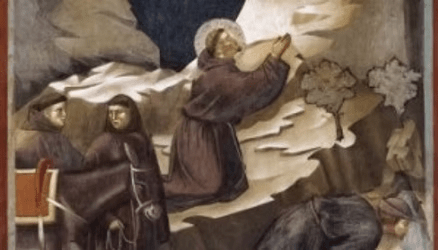
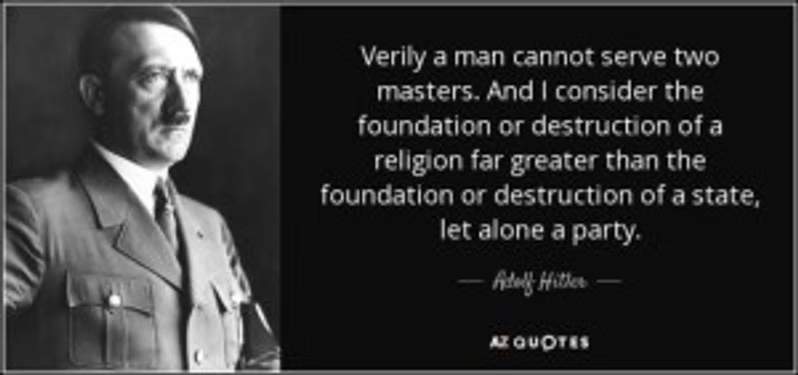

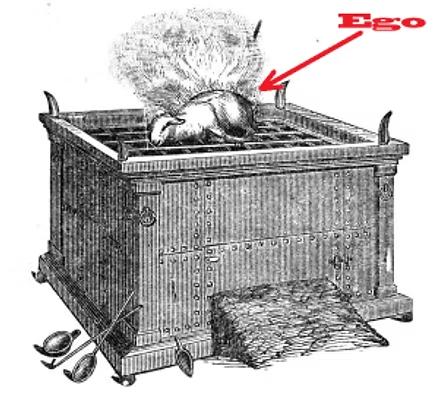


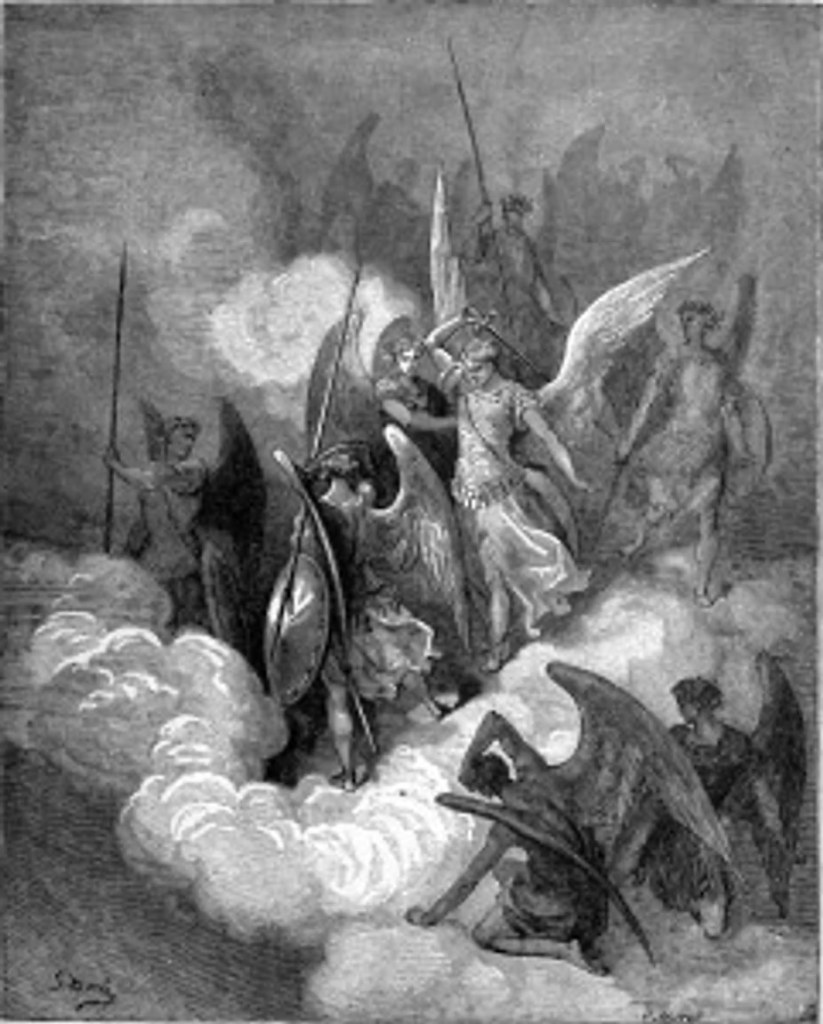


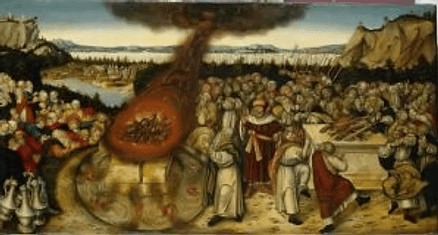



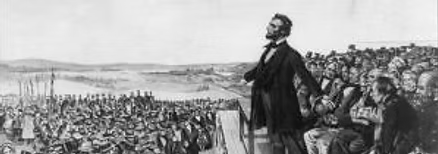
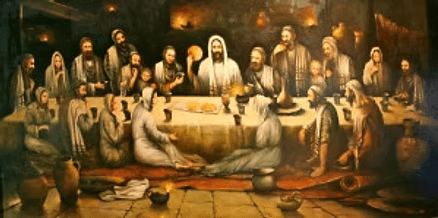





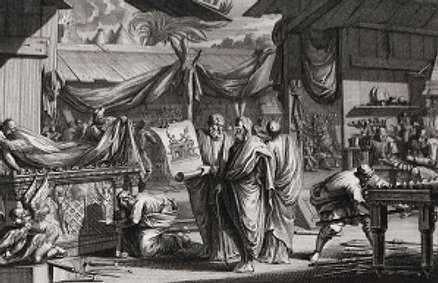
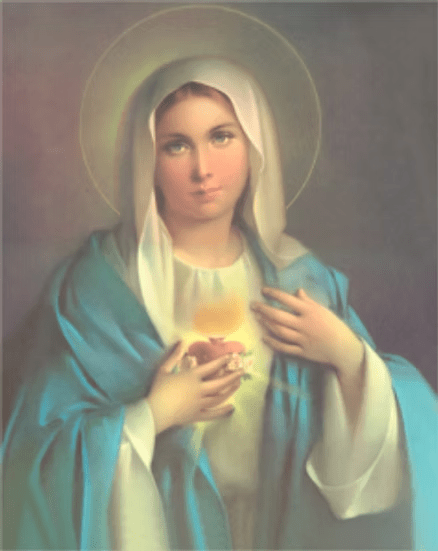


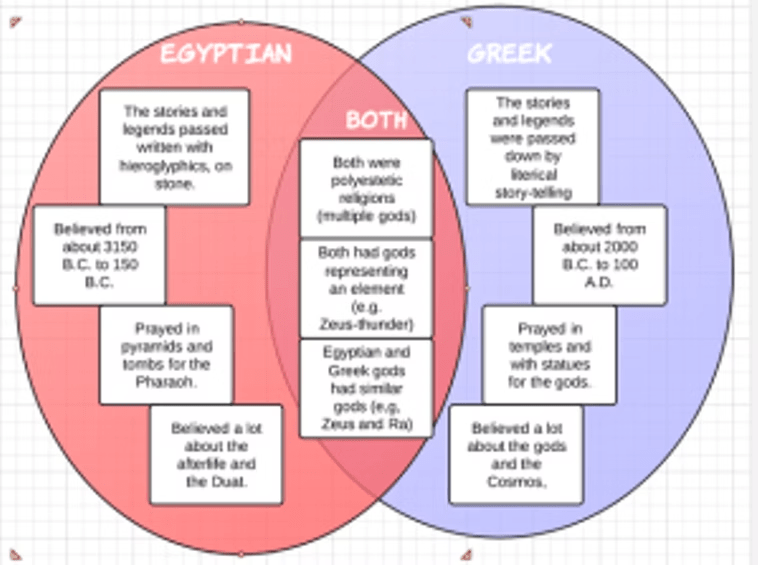



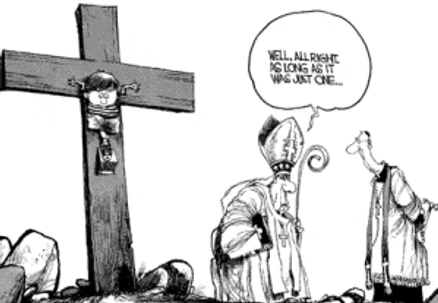


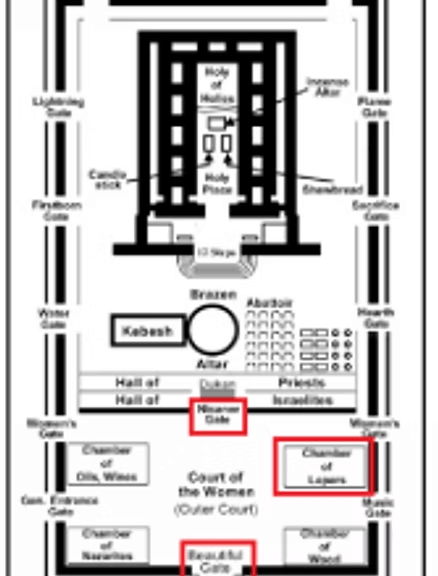
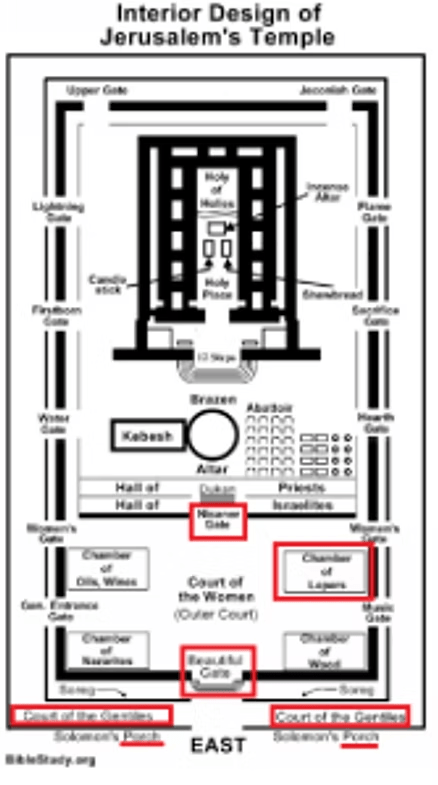
 Explaining the Readings
