Tag Archives: Nineteenth Sunday after Pentecost

Exodus 32:1-14 – A dream of the future when believers will lose patience and turn to evil ways [Nineteenth Sunday after Pentecost]

When the people saw that Moses delayed to come down from the mountain, the people gathered around Aaron, and said to him, “Come, make gods for us, who shall go before us; as for this Moses, the man who brought us up out of the land of Egypt, we do not know what has become of him.” Aaron said to them, “Take off the gold rings that are on the ears of your wives, your sons, and your daughters, and bring them to me.” So all the people took off the gold rings from their ears, and brought them to Aaron. He took the gold from them, formed it in a mold, and cast an image of a calf; and they said, “These are your gods, O Israel, who brought you up out of the land of Egypt!” When Aaron saw this, he built an altar before it; and Aaron made proclamation and said, “Tomorrow shall be a festival to the Lord.” They rose early the next day, and offered burnt offerings and brought sacrifices of well-being; and the people sat down to eat and drink, and rose up to revel.

The Lord said to Moses, “Go down at once! Your people, whom you brought up out of the land of Egypt, have acted perversely; they have been quick to turn aside from the way that I commanded them; they have cast for themselves an image of a calf, and have worshiped it and sacrificed to it, and said, ‘These are your gods, O Israel, who brought you up out of the land of Egypt! The Lord said to Moses, “I have seen this people, how stiff-necked they are. Now let me alone, so that my wrath may burn hot against them and I may consume them; and of you I will make a great nation.”

But Moses implored the Lord his God, and said, “O Lord, why does your wrath burn hot against your people, whom you brought out of the land of Egypt with great power and with a mighty hand? Why should the Egyptians say, ‘It was with evil intent that he brought them out to kill them in the mountains, and to consume them from the face of the earth’? Turn from your fierce wrath; change your mind and do not bring disaster on your people. Remember Abraham, Isaac, and Israel, your servants, how you swore to them by your own self, saying to them, ‘I will multiply your descendants like the stars of heaven, and all this land that I have promised I will give to your descendants, and they shall inherit it forever.’“ And the Lord changed his mind about the disaster that he planned to bring on his people.

———————————————————————————————————-

This is the Old Testament selection from the Episcopal Lectionary for Year A, Proper 23, the nineteenth Sunday after Pentecost. It will next be read aloud in church on Sunday, October 15, 2017. This is important as it is about the Israelites building an idol of a golden calf, when Moses was not back on time; and how Moses seems to bargain for the LORD’s patience.

To me, this reading has been a source of slight confusion. First of all, Aaron appears to have fallen in with the wayward Israelites, even helping them with their rebellion. Second, it seems to make God appear surprised at that panic in the camp at the foot of the mountain. However, knowing the truth is always spoken in Scripture and confusion is always a matter of not putting deeper thought into that which confuses, I believe I have something to offer about these aspects of the reading.

In the Exodus 19 we read, “Moses said to the Lord, “The people cannot come up to Mount Sinai, for You warned us, saying, ‘Set bounds about the mountain and consecrate it.’” Then the Lord said to him, “Go down and come up again, you and Aaron with you; but do not let the priests and the people break through to come up to the Lord, or He will break forth upon them.” (Exodus 19:23-24) A.) This means that Aaron was holy, just as Moses was holy; and B.) Moses came down from the mountain of God and presented the Laws to the people, as was the reading from Exodus 20, about the “Ten Commandments,” the selection for Proper 22 Sunday.

Now, in Exodus 32, we have jumped beyond the chapters that tell of the other laws, and the willingness of the people to serve the LORD. They accepted the Covenant. Chapters 25 through 30 deal with building an ark to hold the tablets, the specifics of the tabernacle, and the specifics of the priests who will be allowed in that holy place. Aaron and his sons were designated the first priests of that tabernacle. This means chapter 32 is like one of those Quentin Tarantino time jumps (i.e.: Pulp Fiction), or it is a dream sequence.

Wait. He was in Pulp Fiction?

When the story of Genesis was telling about Abraham, a similar dream sequence was presented in the second telling of the destruction of Sodom and Gomorrah. Abraham’s nephew, Lot, was simply held ransom by the kings of the five cities on the plain in the first telling (where Sodom and Gomorrah were two of those cities), at which point Abraham got some friends together and went and defeated those kings, freeing Lot. Several chapters later, we then read the dream of the fire and brimstone destruction, after Abraham bargained with God about saving those cities … if there were five good people in them. Lot became a weak character in that second telling of Sodom and Gomorrah (along with his whole family), much like Aaron appears to be in this second telling of Moses on the mount.

The reality is that the dream sequences are not to be read as literal history. The dream sequences are to be read as prophecies, with prophecies focused on an omnipresent and continuing future. In dream sequences, metaphor plays a greater role in interpretation. However, a dream sequence cannot ever be used as reason for doubt, as an error reproducing a previous story.  Anything that seems to be contradiction is not.

Realizing that prophecy needs to be seen as the value here, we read: “When the people saw that Moses delayed to come down from the mountain, the people gathered around Aaron, and said to him, “Come, make gods for us, who shall go before us; as for this Moses, the man who brought us up out of the land of Egypt, we do not know what has become of him.”’ The Hebrew word translated as “delayed” is “ḇō·šêš” (or “buwsh”) which is rooted in the word “bosh.” That word actually states “to be ashamed, or disappointed.”

This means the entire dream sequence is founded on a time when the people shamed Moses, after he came down with the Law. It reflects their disappointment caused by their inability to honor those holy laws, leading them to figuratively seek Aaron.  That name means, “Very High” (Jones’ Dictionary of Old Testament Proper Names) or “Bright” (NOBSE Study Bible Name List). This means the people will invariably fail to live up to their commitments to God and seek out a surrogate in their stead (a king to be like other nations, a pope to be God’s link to mankind, or a televangelist who needs money to keep from being called home by God).  It is an ongoing disappointment.

In this reading, Aaron became the figurehead spokesman for God, whom the people approached, saying, “Come, make gods for us, who shall go before us; as for this Moses, the man who brought us up out of the land of Egypt, we do not know what has become of him.” The Hebrew word translated as “gods” is the infamous “elohim,” which in Genesis chapter one was written many times, with each routinely translated in the singular (and capitalized) as “God.” By matching the plural number to “us” and the prior use of “the people,” it is easier to see how the Israelites asked Aaron to make them (little-g) “gods,” as those chosen by God to be led out of Egypt.

In the prophecy, this says a future will come when the people will act as gods on earth, due to their religious heritage. Certainly, there are many Christians who see the Jews in this light, and the history of disappointment to uphold their end of the Covenant with God  making the Jews a fulfillment of this prophecy. Still, Christians do a good imitation of the miserable records held by “chosen by God” people, with their shameful acts in the name of Christ.

Seeing Aaron, a “Bright,” upstanding holy man (man of the cloth), who has suddenly been elected to a “Very High” position of responsibility, a quick brain hears the people clamoring for him to make them able to claim eternal life in heaven ownership (“gods”).  Having gone to his head, he does what all future High Priests, Popes, and Megachurch pastors always do. Aaron said, “Bring me all your gold!”
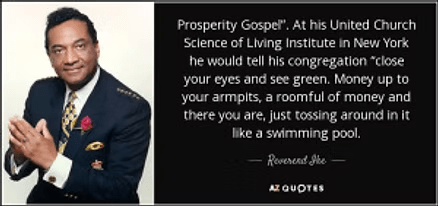
By specifying “golden earrings” (“gold rings”) the symbolism is the people wanted to be “gods,” but they sought words of approval about material wealth [golden news to their ears]. Therefore, this is a prophecy of the people wanting to see holy men in robes, holding tall staffs, wearing “Very High” hats, who live in palatial estates that are trimmed in gold; and it is a statement of the willingness of the people to contribute to that end.

In regard to this, we read: “[Aaron] took the gold from them, formed it in a mold, and cast an image of a calf; and they said, “These are your gods, O Israel, who brought you up out of the land of Egypt!”’ This is an over simplification of the Hebrew text, as it is not actually stated, “He took from them.”

The literal translation has Aaron “receiving [the gold earrings] from their hands,” which makes the gold an offering, more than a demand. It was motivated by an instruction from the “Very High” holy man, but compliance was never mandatory.  It is received in the same way that believers are told they can do the Lord’s work by sending them their pledges and check.

Once the gold was received, it was then “fashioned with a graving tool,” which says the gold was altered with some form of writing etched into the earrings. This was a separate process that took place, prior to the gold being changed into a “molten calf.”

The Hebrew words that are translated as “molten calf” are “‘ê·ḡel mas·sê·ḵāh.” There is evidence that this translation may be misleading and not saying the golden earrings were melted and poured into a mold. Such a transformation would negate all fashioning with an engraving tool, begging the question, “Why do that?”  In the reading read in church, this aspect of engraving is omitted in translation.

The word “egel” does mean “calf,” but “maccekah” (theroot word) means “covering.” It makes more sense that Aaron would call for a real, live, “nearly grown male steer” to be brought before him. The golden earrings would have been engraved with the names of the families contributing them, and these would be “made” into a ceremonial “covering” of metal, which would be placed over that “calf.”

I imagine that, especially from a distance, the calf would look golden when covered in a woven spread with many thousands of golden earrings pinned to it.  It would look like a young live bull had been molded as molten gold.

Given this possibility, Aaron saying, “These are your gods, O Israel,” is a plural statement that the individual earrings were symbolizing the wealth given to the Israelites as they exited Egypt. This makes revisiting Exodus 12:35-36 worthwhile, which took place after the angel of death passed over the Egyptians and killed every firstborn male.

As their exodus began, we read: “Now the sons of Israel had done according to the word of Moses, for they had requested from the Egyptians articles of silver and articles of gold, and clothing; and the Lord had given the people favor in the sight of the Egyptians, so that they let them have their request. Thus they plundered the Egyptians.” (NASB)

This can now be seen as Aaron calling for all those ill-gotten gains, which would be deemed as the cause for why Moses was “delayed.” Worry had set in that God was no longer leading them because of that greed. So, with all those Egyptian earrings pinned to a cloth spread that was placed over a bull of sacrifice, it makes perfect sense to read, “When Aaron saw this, he built an altar before it.”

From Genesis 4 and throughout the Old Testament, an altar was “a place of slaughter or sacrifice” (the meaning of the Hebrew word mizbeaḥ, which is written in the text of this reading). Christians today seem to think all the Old Testament altars were some stone barbecue pits, used for outdoor grilling and fun. All the people in the Old Testament who used altars were priests, those who ritually sacrificed fresh slaughtered animals to please God. Ordinary people had campfires and usually ate breads, dairy products and vegetables. Therefore, Aaron had an altar built to sacrifice a living, young bull “calf.”

Popes don’t make steak sacrifices.

It is difficult for me to grasp Aaron making an altar to sacrifice an idol made of gold.  I am fairly certain this is not commonly taught, so I ask you: “What does you brain tell you about this?”

When Aaron then said to the Israelites, “Tomorrow shall be a festival to the Lord,” the word written that is translated as “Lord” is “Yah·weh.” This means the calf was not a sacrifice to Egyptian gods. It was a cleansing offering to YHWH – “I Am that I Am” – the One God of Israel (and Jesus and Christians).

To then read, “They rose early the next day, and offered burnt offerings and brought sacrifices of well-being; and the people sat down to eat and drink, and rose up to revel,” the people celebrated a festival not commanded by God.  This too acts to say this reading from Exodus 20 is then a prophecy of such festivals.

Rosh Hashanah (Beginning of the Year) and Yom Kippur (Day of Atonement) can be seen as such a Jewish festival of New Year celebration. The Day of Atonement is when a scapegoat is released into the wilderness, carrying away all the sins of the people.  In John there is mention of the Festival of the Dedication (aka Festival of Lights – Hanukkah), which was added when the Second Temple was erected.  None of these festivals were ordered observed by God. However, this festivity that seems dedicated to God does not stop there.

In America, there is Thanksgiving, which is in some sense a quasi-religious holiday, where Americans (mostly Christians) give thanks for all the fruits of a new world. The festival known as Mardi Gras (Fat Tuesday) and even Halloween (All Hallows Eve) are examples of how Christians like to party, more than care about a religious connection to a holiday (from holy day). These can then be seen as the symbolism of this festival created by a High Priest, Pope, or King (President, Prime Minister) and not God.  This story of Aaron and the golden calf festival prophesied that future that has since come.

When the focus of the story then goes to God and Moses on top of the mountain, we have an example of the Abraham story retold, when he bargained with God about how few holy people being present in wicked places would be required for God to spare those places His wrath.

At this point we read, “But Moses implored the Lord his God.” This also is a weak translation of what is written.

The literal translation states, “And sought Moses the face of the LORD his God.” This includes the Hebrew word “paneh,” which was the last word in the First Commandment, the one that all translations leave out. That Commandment fully states, “Thou shall not have the face of another god before [God].” The same words still mean you should not hold any other gods in higher respect than the LORD; but that now includes the face of one’s self.

The presence of that word here says that Moses did not speak as holy Moses, as if he were an equal to the LORD. In the same way, Abraham did not debate with God wearing his face as worthy of divine consideration. Moses then spoke as God speaking through him, because “the face of the LORD” was upon Moses.  Undoubtedly, that face had a bright glow.

Keep in mind the symbolism of Moses being with God, on a plane that is high above the ordinary folk. Remember also how Peter, James, and John (of Zebedee) saw Jesus aglow next to Moses and Elijah. The symbolism is Moses was in heaven with the LORD, and the LORD was telling Moses to “Go down at once!”  Those stubborn Israelites are at it again!

The same soul in Moses was in Elijah (who went down and ascended without death), and in Jesus (who went down and ascended after death and resurrection). What God told Moses in anger was a prophecy of the terrible ways that his priests were foreseen to act. For God to say, “Now then let Me alone, that My anger may burn against them and that I may destroy them; and I will make of you a great nation,” that is a prophecy of Christianity  to come.  A “great nation” of Moses followers would come through Jesus Christ (the same soul as Moses).

When we then read how Moses told the LORD a thing or two about how it would be wrong to punish the people He just saved, this has to be seen as God speaking through the face of Moses. The defense of mankind’s priests would come through the Judges, David, the Prophets, and Jesus of Nazareth (then Apostles).  All would come speaking to the children of Israel who had sinned, telling them to repent or face destruction. Jesus and his followers were like Lot and his small family, in the corruption that was Sodom and Gomorrah, and the corruption that had come over Jerusalem.

Moses speaking as God on the mountain is a prophecy of all the prophets who would come in the name of the LORD. The message is always the same: “Repent or face destruction.”  It is (needless to say) a prophecy that is in effect until the End Times.
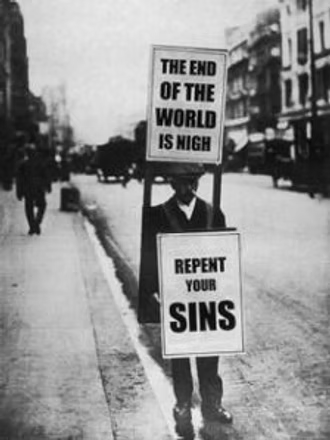
When this reading ends by stating, “And the Lord changed his mind about the disaster that he planned to bring on his people,” the LORD did not change His Mind. What was written was “way·yin·nā·ḥem,” which is rooted in “nacham.” That word means, “To be sorry, console oneself, or comfort.” It means God would send messengers of repentance to the people, which was part of His plan all along.

It is God’s pity for mankind that is why he bothers to comfort a bunch of stiff-necked backsliders.

I recall when in a class that was reading Genesis, I commented that God knew Adam and Eve would sin. I said it was part of His plan there also. However, a woman blurted out, “How can you say that!?!?!”

I replied, “Because God is Omniscient.” God knows the story from beginning to end, but we love to put a human face on God, because that makes him more approachable … more like an equal.  God is not surprised by anything human do.  He’s the Father, which means He has “eyes in the back of His head.”

Thus, the moral of this dream sequence prophecy is that God knows us so-called believers are like children who are told not to take a cookie from the cookie jar, which is then left unattended right in front of the children. To be born in a sinful world means sinners will abound … even those chosen by God to help redeem the ones not chosen.

To see anger in God is really to see anger in believers, when God is not giving believers their way. We love to say, “God turned His back to us,” when the reality is we turn away from God when we sin. The wrath of God is reincarnation, just as the wrath of a first grade teacher is to send little Johnny, who never learned anything, back to the first grade.

This prophecy tells us there will be the Law; but after that presence that will only mean breakage of the Law, requiring repentance.

Same story forever told.

Philippians 4:1-9 – Some saints might be hot and others cold, depending on the Spirit [Nineteenth Sunday after Pentecost]

My brothers and sisters, whom I love and long for, my joy and crown, stand firm in the Lord in this way, my beloved.

I urge Euodia and I urge Syntyche to be of the same mind in the Lord. Yes, and I ask you also, my loyal companion, help these women, for they have struggled beside me in the work of the gospel, together with Clement and the rest of my co-workers, whose names are in the book of life.

Rejoice in the Lord always; again I will say, Rejoice. Let your gentleness be known to everyone. The Lord is near. Do not worry about anything, but in everything by prayer and supplication with thanksgiving let your requests be made known to God. And the peace of God, which surpasses all understanding, will guard your hearts and your minds in Christ Jesus.

Finally, beloved, whatever is true, whatever is honorable, whatever is just, whatever is pure, whatever is pleasing, whatever is commendable, if there is any excellence and if there is anything worthy of praise, think about these things. Keep on doing the things that you have learned and received and heard and seen in me, and the God of peace will be with you.

——————————————————————————————————–

This is the Epistle selection from the Episcopal Lectionary for Year A, Proper 23, the nineteenth Sunday after Pentecost. It will next be read aloud in church on Sunday, October 15, 2017. It is important because Paul made a call for Apostles to be steadfast in their support of one another, making it a point to mention the role women played in assisting in the spread of the early church.

Chapter 4 of Paul’s letter to the Christians of Philippi is the end of that epistle of encouragement. By beginning his closing statements with, “My brothers and sisters, whom I love and long for, my joy and crown, stand firm in the Lord in this way, my beloved,” he was stating their closeness in Spiritual relationship. They were all, sender and receivers, “firm in the Lord” as true Christians, filled with a deep love of God, gifted the Christ Mind, via the Holy Spirit of God. This statement of closing says the love of God produces a love within, which is so strong it generates a desire for others to seek their own inner strength of love. They are brothers and sisters as born from the same love that comes from the Father.

When Paul named three people of the church in Philippi, to whom the whole of the epistle was written, those three (a number that is symbolic of initial completion, as representative of the Trinity) were in need of special attention. To recommend that the two women “be of the same mind in the Lord,” says they were still struggling to let go of their egos fully. That could have then been a statement of those two having opposite agendas for the Lord, thus making it difficult for one to fully support the other. Clement then became the one man that both women loved and respected, so he could mediate the differences between the two women. Therefore, Paul was asking all to leave their egos behind and follow the one mind of Christ, as that represents a strengthening of their faith.

On a symbolic level, the names of those mentioned have meanings. A name (then) was given as a parent’s blessing to a child, as a prayer to the Lord. A name then reflects a parent’s wish upon the life of the child, which the child then knows to live up to. Euodia means “Good Road” or “(Have a) Good Trip.” It can be used to denote “Success!” or “Good Luck!” Syntyche means “Great Fortune” (Good or Bad Fortune), but can also mean “Accident” or “Happy Event.” Clement means “Calm or Peaceful or Tranquil.”

Given these name meaning, for Paul to write: “They have struggled beside me in the work of the gospel, together with Clement and the rest of my co-workers,” the intent is less to say those people were actually with Paul in his travels; but the purpose was to show how they were remembered by the meanings of their names, as Paul struggled in his evangelism. Paul needed to find the “good road” to travel, so he had “a nice trip” spreading the Gospel. He was having the “good fortune” of encountering people of all walks in life (some good and some bad), with each meeting yielding the “happy event” of another soul led to Christ. Those people met Paul seemingly by “accident.” Still, through his travels, Paul longed for those friends in Christ that he had to leave behind. Therefore, he struggled with that heartfelt pain, by remaining “calm” and at “peace” in the Lord.  Paul reached out to the other disciples of Christ, with true love and affection … that of brotherhood.

The remainder of this letter touched on the traits characterized by the presence of the Holy Spirit. Those become the measuring sticks that show one’s growth in spiritual love. Those traits are: 1.) “Rejoice in the Lord,” as your heart leads your brain; 2.) “Gentleness,” which means one is considerate of others; 3.) “Do not worry,” because fears only come in the absence of God’s love; 4.) “Prayer and thanksgiving,” which is staying in touch with the Lord’s presence within; 5.) “The peace of the Lord,” which is letting the Christ Mind lead your actions; and 6.) Be a model of Christ Jesus, which means all truth, honor, justice, pleasure, and commendation that comes to you is due to his presence within.

n this closing chapter of Paul’s letter to the Philippians, the message that should be taken today is Love. Paul is doing (naturally) what Jesus said to do: “A new command I give you: Love one another. As I have loved you, so you must love one another.” (John 13:34) Jesus said that to his disciples at the Passover Seder meal (the Last Supper), and should not be read as a general “love everyone” message. This is known by the subsequent verse, which says, “By this everyone will know that you are my disciples, if you love one another.” Therefore, Paul was doing as Jesus would have him do, from his heart and soul.

Paul loved his brothers and sisters, and everyone knows that Paul was a disciple of Jesus Christ because of the love he showed in his travels and follow-up letters. It is a commandment given by God, through His Son, and is therefore not an option.  To be Christian is to support all Christians with love and acceptance.

What Christians do not read in the books of the Holy Bible are the letters written back to Paul. Paul might have received letters from Euodia, Syntyche, and Clement while traveling, which he responded to in this letter’s closing statements. The same answer spoke to all three.

The point is a true Christian does not shun other Christians. Love is not a silent emotion. Love throws its arms around its brothers and sisters in Christ; and when physical touch is impossible, love throws its arms around its brothers and sisters in Christ through communications and prayers.

It is not the confessions of the disciples that proves they have obeyed this final commandment of Jesus Christ. Jesus gave that command as he was telling the eleven that one would betray him. Judas Iscariot stood as a symbol of Christians without true faith.  As such, many will confess they believe in Christ, but not all will join together in unity and steadfastness, as some will sneak out in betrayal.

The measure of success is then the love one expresses to other Christians – the Acts of the Apostles.  And that love is known by God , as He knows the heart quite well.

Love comes from the heart, where the throne of God rests. Are you of one mind, which means God sits upon that throne in you – making you his kingdom? Or, do you keep God from ruling over you, because there are so many other Christians who promote agendas in opposition to yours?

Matthew 22:1-14 – The parable of the wedding banquet [Nineteenth Sunday after Pentecost]

Matthew 22:1-14

Once more Jesus spoke to the people in parables, saying: “The kingdom of heaven may be compared to a king who gave a wedding banquet for his son. He sent his slaves to call those who had been invited to the wedding banquet, but they would not come. Again he sent other slaves, saying, ‘Tell those who have been invited: Look, I have prepared my dinner, my oxen and my fat calves have been slaughtered, and everything is ready; come to the wedding banquet.’ But they made light of it and went away, one to his farm, another to his business, while the rest seized his slaves, mistreated them, and killed them. The king was enraged. He sent his troops, destroyed those murderers, and burned their city. Then he said to his slaves, ‘The wedding is ready, but those invited were not worthy. Go therefore into the main streets, and invite everyone you find to the wedding banquet.’ Those slaves went out into the streets and gathered all whom they found, both good and bad; so the wedding hall was filled with guests.

“But when the king came in to see the guests, he noticed a man there who was not wearing a wedding robe, and he said to him, ‘Friend, how did you get in here without a wedding robe?’ And he was speechless. Then the king said to the attendants, ‘Bind him hand and foot, and throw him into the outer darkness, where there will be weeping and gnashing of teeth.’ For many are called, but few are chosen.”

———————————————————————————————————-

This is the Gospel reading from the Episcopal Lectionary for Year A, Proper 23, the nineteenth Sunday after Pentecost. This will next be read aloud by a priest in church on Sunday, October 15, 2017. This is the parable of the Wedding Banquet and is important because it speaks of all who are invited to serve the Lord, but treat that invitation with ridicule and scorn.

This parable immediately follows the parable of the tenants, which was the Gospel reading for the prior Sunday. Because it begins a new chapter, one can say a day in Jesus’ “inspection” has passed and a new day has begun. This would be why Matthew began by writing, “Once more Jesus spoke to the people in parables.”

Still, the Greek word “apokritheis” was written and not factored into the translation above. That word states that Jesus “answered” the people, or “took up conversation” with them.  The implication is that some question asked or something said that needed clarification. This means Jesus did not simply begin speaking in a parable, as a parable is an answer created to make someone think about its symbolism.

This parable begins with the statement that is the overview. Everything hangs from Jesus beginning by stating, “The kingdom of heaven may be compared to a king who gave a wedding banquet for his son.” Thus, the question being answered or the clarification needed is relative to the kingdom of heaven.

The parable could then be addressing the question, “How do we gain the assurance of Heaven?” A similar question was posed to Jesus at a prior time to his return to Jerusalem for the Passover festival.  That time a young, wealthy Pharisee asked, “Teacher, what good thing must I do to get eternal life?” (Matthew 19:16-22)  Jesus answered quite clearly then: Law, Give, Follow. Now, it is answered symbolically.

When Jesus said the comparison was “to a king who gave a wedding banquet for his son,” the focus given by all Christians today is on “his son.”  This (of course) is Jesus. Still, to think that Jesus is telling a parable about about himself is over-simplifying this message.

Over-simplification is part of what I call “Big Brain Syndrome.” We think we know a thing or two today, so we are smarter than those rubes who were standing around Jesus then. We slap Jesus on the back and say, “Tell them Jesus, we know you’re talking about you as his son.” However, the sad reality is most people do not have a clue about the real meaning of this parable; but because people today know how to operate a smart phone, they think that makes them become Jesus-like.

Sure, the “king” is God and “his son” is Jesus; but the operative word that needs to be grasped here is “wedding.”

When we read, “[The king] sent his slaves to call those who had been invited to the wedding banquet, but they would not come,” “his slaves” are those who serve the LORD. Those who would not come are those who think they are better than slaves and equal to a king.

In the symbolism of this parable, the “slaves” are the descendants of Abraham, Isaac and Jacob [aka Israel], who served God and attended to His needs.  There are quite a few over a long period of time: The Israelites were freed by Moses, who was one of “his slaves”; All the Judges (like Gideon, Deborah, Samson, Eli, et al) were the king’s slaves; all the leaders of the people (like Joshua, Samuel, David, et al) were the slaves of God; and all the temple prophets (like Elijah, Elisha, Ezekiel, Jeremiah, Isaiah, et al) were “his slaves.”  That is the meaning of those who were sent out “to call” the invited.

Some of the slaves of God.

The “invited” are all the children of Israel, which includes Jews (who were then surrounding Jesus) and Christians (now, who are reading about this parable).

What flies over everyone’s head is how the invitation was not to have a bunch of party-goers come to the king’s palace for free food, with plenty of wine available for getting drunk. The invitation has to be seen symbolically as quite important, meaning the invitation was to marry his son. Better yet, it was to marry God and become his son, which would make that person be reborn as Jesus Christ.

Either way, the books of the Holy Bible (then called the Torah and the scrolls) are the record of “slaves” inviting those following the trail of the One God, who all believed they were promised land AND Heaven. The problem was the invitations (then, as an allusion to those standing within earshot of Jesus) only went to Jewish men of position and power.

That is why those who were invited got angry and upset, so that “they made light of it and went away, one to his farm, another to his business, while the rest seized his slaves, mistreated them, and killed them.” Keep in mind this was a parable told well before “women’s lib,” so all the invited were adult Jewish males – menfolk who owned property and wares (things).  Now, it applies to anyone (both sexes, Judeo-Christian) who own stuff and control people.

Even in these modern times, when human beings love to call 0 and 1 equal [we’re all numbers], and when the concept of marriage has been rolled in the mud for so long it is barely recognizable and hardly desirable, those who still hold marriage in high regard do so by standards that are considered “old fashioned.”

By this, I mean the man asks a woman to marry him. The man give something of value to the woman (an engagement ring, usually).  The woman takes the man’s name in marriage.

To some, perhaps, marriage pleasantly leads to dreams of the husband going off to work and earning a living.  He buys the wife a house.  The wife then stays home, to cook, clean, and raise babies (the intent of a honeymoon).

Admittedly, fewer and fewer people grow up with this ideal in mind, especially now that some primary schools and kindergartens are teaching gender identity is what you want to be, not what you are.  Go figure.

No wonder marriage is seeming more and more like dinosaur bones and relics (“Mortal can these dried bones live?”)

Because of this innate social concept of marriage and submission being a matter of the heart and not one of brawn, females have long been much more inclined to look forward to marriage, as well as believe in religion, God, prayer, and all the things “church ladies” do. Nuns are such devoted believers they marry Christ.  Faith, therefore, is a matter of the heart.

Men [gruff, gruff], on the other hand, tend to stay away from all this faith stuff, as much as possible.  They usually pray only when they are about to lose money gambling on sports teams.  Most men will go along with the pretense of faith, “as long as it keeps the wife happy.”  Men also like children … God’s blessings … but still men like the sex part about making babies too (an outward sign of inward grace?).

Women are from Venus, men are from Mars?

Because of that male-dominated-world mentality, when a man is invited to marry the “son” of “the king,” … well forget that! Men have property to purchase and wares to sell, because they have families to provide for … thank you very much for understanding that!

How ’bout dem Bears?

Well, the application of this parable is “one size fits all.” Men and women – equally – are invited to marry God and become Jesus Christ, by receipt of God’s Holy Spirit. Accepting the invitation means gladly saying, “I do!”  That does not mean, “I comply.”  It means, “I love you God.”

When Jesus said the king announced, “I have prepared my dinner, my oxen and my fat calves have been slaughtered, and everything is ready; come to the wedding banquet,” this is the ceremonial sacrifices for all those planned marriages. The “oxen” and “fat calves” are those egos that overestimate their virility and net worth. They are egos fattened by the blessings of God, so those who took the engagement rings of wealth are His beasts of burden … His chosen ones.  Once those animals are sacrificed, “everything is ready” to join with the Christ Mind and become “his son” (for the umpteenth time … regardless of one’s human gender).

When we read, “they made light of it and went away, … (and) seized his slaves, mistreated them, and killed them,” this is how every Jew of Jesus’ Jerusalem and every Christian today, any who will admit “I am no Saint,” they reject this plan of God. God’s plan is for lost human beings to be found, through the light of Christ. But, lost human beings have so much fun being lost, they think self is more important than holy selflessness.

They hear all those slaves of the king giving the same invitations in the holy texts (differently), but they only laugh at it as nonsense, or they mistreat it by writing it off as being a long time ago – no longer applicable in this complex world.  Some even kill those writers through the scientific methods of agnosticism and atheism (where they attempt to kill the spirit of anyone reading an invitation and thinking, “Hmmmm. Maybe I’ll go.”)

This kind of response to God’s wedding invitation did not go over well with God. We read, “The king was enraged. He sent his troops, destroyed those murderers, and burned their city.” Can you recall how the divided kingdoms, Israel and Judah, were overrun and destroyed? Scattered people who had their Promised Land repossessed by God, for failure to accept His invitation to be married to God as “his son.”

This same fate applied to the Second Temple businessmen, and it applies to the exponentially growing number of “Christian” churches that are preaching (through the absence of a “How to be a Saint” message), “Don’t be married to God.” Those are seen as murderers of wide-scale Apostlehood, as the bad shepherds holding flocks of sheep in centers designed for wool profiteering.

When we then read, “He said to his slaves, ‘The wedding is ready, but those invited were not worthy. Go therefore into the main streets, and invite everyone you find to the wedding banquet,” those unworthy were the Pharisees (and other Temple-related well-to-dos). That then factors to modern times as Christians who make a living selling Christianity on TV or in mega-churches [including the Vatican].

This makes “the main streets” be the mainstream of humanity that flows in torrents around the world. The invitation is for anyone who picks up a Holy Bible and reads a slave pronouncing an invitation to be married to God and become “his son” (regardless of human gender).  If that person says, “Yes! I want that!”, then, “You’re engaged to marry God!”

To then read, “[The slaves] found, both good and bad; so the wedding hall was filled with guests,” the “good and bad” actually states “the wicked, evil, malicious, slothful” (“ponērous”) and “the intrinsically good, good in nature, good whether or not it can be seen, and believers” (“agathous”). That means there are those found by the “slaves” who were like those who Jesus said were closer to salvation (tax collectors and prostitutes) than the Pharisees (Popes, televangelists, authors of bestselling Christian novels, et al). The “bad” were those sinners who wanted to not be bad, and the “good” were those who fought hard to find support and encouragement to keep up the good fight.

None of those were led to marry God by anyone other than the king’s slaves.

Written by God’s slaves.

When we read “guests” filled the banquet hall, this is misleading, as weddings are typically many more guests than marriage participants. The Greek word written is “anakeimenōn,” which means “recliners” or those “seated” at the dinner table. Because we are told, “[the king] noticed a man there who was not wearing a wedding robe,” the implication is all those “seated” were properly dressed for their marriage. Now, here was this guy who strolled in wearing his street clothes, or perhaps he was looking like a wolf, uncovered?

When Jesus said the king (God) asked this man, politely, “Friend, how did you get in here without a wedding robe?” the implication is the man had proclaimed to be a “friend” of God and “his son.” However, to be wedded to God, to become “his son” through marriage, to be ceremoniously sacrificed of ego means to be more than simply a “friend.” The Greek word here is “Hetaire,” which means, “a companion (normally an impostor), posing to be a comrade but in reality only has his own interests in mind.”

This is actually a statement of what a true Church consists of. Paul wrote, “There is one body, but it has many parts. But all its many parts make up one body. It is the same with Christ.” (1 Corinthians 12:12) The same can be said of this wedding banquet, where many types of people had submitted themselves to God, to be married through His Christ.  All would become “one body” through marriage, as all would become one with God and Christ.

Anyone who is not a true Saint or Apostle, not having talents of the Holy Spirit, is just a “pal,” who “has his or her own interests in mind.” When one’s own interest is a “Big Brain” and not the Christ Mind, then that person is spotted by God the king and questioned.  God does not call those “Friend.”  He calls them “Impostor!” and asks, “What are you doing with my chosen people?”

Jesus said the response to that questioning by God was, “And [the uninvited guest] was speechless.” That impostor, who didn’t even dress like he was going to get married to “his son,” had nothing to say.  When saying the truth, “Just here for the food and wine,” would have been a good start to a conversation; the reality is he was “speechless” for a symbolic reason.

Here, “speechless” means the man’s tongue had not been lit “like a violent rush of wind,” which gave him “a tongue of fire.”  His being speechless meant he was unable to answer, because he could not begin speaking in holy language, as would be given from the Spirit within.  This is confirmed when one sees how the Greek word translated as “speechless” is “ephimōthē,” which implies “muzzled” or “put to silence.” Thus, only those who were rightfully present at the wedding banquet could speak, but they could only speak what the Holy Spirit allowed.

The moral of this parable is then stated by Jesus as being, “The king said to the attendants, ‘Bind him hand and foot, and throw him into the outer darkness, where there will be weeping and gnashing of teeth.” Clearly, the easy summary says, “Ignore the invitations found in the Holy Bible and go to Hell.”  However, it is not that simple.

To be bound “hand and foot” is less about the acts of the Lord’s “servants” or “attendants” (those rightfully present at the wedding banquet), but that which binds is self-inflicted.  The man was bound by his own actions. He was bound by the path he had taken and those whom he had walked upon to get there (“feet”).  Additionally, he was bound by what he had taken from others and kept for himself, instead of giving freely (“hands”).

It was those self-binding actions that cast himself “into the outer darkness,” away from the light of Christ. In darkness souls suffer, because they are reborn time and time again into fleshy bodies that feel the pains of a sinful world.  In the world of flesh “there will [always] be weeping and gnashing of teeth.” Lamentations will always be for the pains of that which was lost; and, the gnashing of teeth comes from eternally biting on the backs of others, causing a karmic debt that makes one’s own back always be bitten.

The “outer darkness” is the opposite of an inner light.  To be cast there is to deny the Mind of Christ.  The outer darkness is all the answers a Big Brain becomes speechless to know.  The inner light comes from a heart in love with God.

This moral then makes it easier to read the last verse, which states: “For many are called, but few are chosen.”  It can lead to confusion, since the man who ended up being cast out can seem to have answered a call. Why, then, wasn’t he chosen?  Doesn’t God love everyone?

The man has to be understood as being there under false pretenses. It is like someone going to a church because he thinks he will be more promotable at work that way. The man was not there to be committed to God and Christ on a permanent (24/7/365.25) basis. He was called, but he rejected the true call.

When we read “few are chosen,” certainly God only allows those who love Him deeply from their hearts to marry Him and become One with the Trinity – be a Saint.  But, the deeper meaning is (sadly) how few will choose to sacrifice their egos and submit totally to God’s Will.  All are called to do that, because the “slaves” took the invitations to those who were not born of a special race and/or religion.  No one goes to the kingdom of God simply by birth, with no special requirements of any kind.

One has to earn that.  And, when they say you can’t take it with you, it means more than material things.  No Big Brains allowed either.  The young, rich ruler who Jesus told how to be assured of eternal reward was to get rid of that brain that thinks having more than others makes that point.  Then, when Jesus said, “Follow me,” that meant accept God’s invitation to be married, so he would be the next Jesus … Christ … God’s Son.

If only the males of the world could see themselves as called to a wedding banquet to be the bride of God … to become “his son” through marriage … then the world would have a chance of being a better place.  However, the world makes men surround themselves with that defender mentality; and, it is hard for both sexes to sacrifice ego and trust in the LORD.

We all know there is only one Son of God, who is Jesus Christ, who sits at the right hand of God. Marriage to God brings about the rebirth of Jesus Christ in the one wearing the wedding gown, reclining before God in subservience. This is quintessentially the meaning of being Christian.  Listen to what the “slaves” are saying.

Mark 9:38-50 – Salted with fire

John said to Jesus, “Teacher, we saw someone casting out demons in your name, and we tried to stop him, because he was not following us.” But Jesus said, “Do not stop him; for no one who does a deed of power in my name will be able soon afterward to speak evil of me. Whoever is not against us is for us. For truly I tell you, whoever gives you a cup of water to drink because you bear the name of Christ will by no means lose the reward.

“If any of you put a stumbling block before one of these little ones who believe in me, it would be better for you if a great millstone were hung around your neck and you were thrown into the sea. If your hand causes you to stumble, cut it off; it is better for you to enter life maimed than to have two hands and to go to hell, to the unquenchable fire. And if your foot causes you to stumble, cut it off; it is better for you to enter life lame than to have two feet and to be thrown into hell. And if your eye causes you to stumble, tear it out; it is better for you to enter the kingdom of God with one eye than to have two eyes and to be thrown into hell, where their worm never dies, and the fire is never quenched.

“For everyone will be salted with fire. Salt is good; but if salt has lost its saltiness, how can you season it? Have salt in yourselves, and be at peace with one another.”

———————————————————————————————————-

This is the Gospel selection from the Episcopal Lectionary for the Nineteenth Sunday after Pentecost, Year B 2018. In the numbering system that lists each Sunday in an ordinal fashion, this Sunday is referred to as Proper 21. It will next be read aloud in an Episcopal church by a priest on Sunday September 30, 2018. It is important because Jesus made it clear that being a part-time Christian would not qualify one eternal life in Heaven.

In this reading, Mark is first shown to identify a disciple of Jesus by name – “John.” This is the same John who had been chosen to go up the high mountain with Peter (whose story was recorded by Mark) and Jesus. John was accompanied by his brother James, both the sons of Zebedee. This means John was one of the first disciples Jesus chose, along with Simon-Peter. It is not John the writer of the Gospel by that name. That John was called “little child” (“paidion”) by Mark, in verses 36-37 of this chapter, meaning children were not mentioned by name.

Realizing that, we then read that the disciple John said to Jesus, “Teacher, we saw someone casting out demons in your name, and we tried to stop him, because he was not following us.” Before the response by Jesus should be understood, one needs to recall the Gospel lesson of the eighteenth Sunday after Pentecost and how Jesus had used his son, John, to tell his disciples, “Whoever welcomes one [like my son John] in my name welcomes me; and whoever welcomes me does not welcome me but the one who sent me.” (Mark 9:37) Now, in the very next verse (Mark 9:38), John’s memory has been joggled so that he remembered how on the trip down to Capernaum (while the disciples were arguing who was greatest among themselves) they saw someone claiming to be in the name of Jesus, casting out demons. And, oh by the way, John said, “We tried to stop him, because he was not following us.”

Now the heading for verses 38-41 of Mark’s chapter nine says “Intolerance Rebuked.” (Bible Hub Interlinear) Other websites that translate the Holy Bible and add such headings say, “Whoever is not against us is with us.” That is restating Jesus’ response to John (briefly), but it gives the impression that Jesus saw his disciples attempting to stop someone from casting out demons, while shouting out, “In the name of Jesus of Nazareth, I command you to leave this person!” The rebuke is, therefore, because someone is not a follower of Jesus does not mean he (or she) should be stopped.

The word “intolerance” can be defined as meaning, “An unwillingness or refusal to tolerate or respect contrary opinions or beliefs, persons of different races or backgrounds, etc.” [Random House Kernerman Webster’s College Dictionary] The fact that John admitted that he and the gang tried to stop someone from using the name of Jesus (not tried to stop someone from casting out demons) says they would not tolerate that association of healing with a man that person did not follow, as a student of Judaism [remember, John referred to Jesus as “Teacher”]. As such, the acts of the disciples were as intolerant as would be one branch of Christianity [a religion in the name of Jesus Christ] competing against another branch, simply because one sees the other as not following the teachings of Jesus Christ. While that is somewhat true, the focus on intolerance is misleading and misses the point of Jesus’ response.

Jesus said to John, “Do not stop him; for no one who does a deed of power in my name will be able soon afterward to speak evil of me.” That was first a command: “Do not stop him.” Then, it is an explanation in two parts.

The first says, “There is no one who can do a work of power that is contrarily in my name.” The use of the Greek word “epi,” which means “against, on the basis of, or to,” implying “upon,” such that Jesus said, “No one can cast out demons [a work of power] simply by calling out my name.” This then is a statement that says, “Only those who are me, reborn in my name, can do deeds of power that are born from above.”

Finally, reading that Jesus said, “Afterward to speak evil of me” is misleading. As a separate segment of words that literally state, “And will be able quickly to speak evil of me,” this is not a focus on the one in the name of Jesus who was casting out demons [doing works of power].  Instead, it refers to those who will witness such deeds and will call out the person in claiming to be in the name of Jesus as evil, not good.

By John and the other disciples trying to stop that person from doing good, they exemplified that point made by Jesus. That was then a statement about why Jesus would be “delivered into the hands of men who will kill him.” (Mark 9:31)

This is the point of Jesus then having said, “Whoever is not against us is for us.” That was not a watered-down version of the ancient proverb that says, “The enemy of my enemy is my friend,” such that Jesus was not telling his disciples, “It does not matter how wrong someone is, if they are going against those who are most wrong, as are we, then they are right.”

Those wanting to kill Jesus come disguised as religious men.

That means Jesus was not preaching tolerance to wrong, as “Two wrongs make a right,” if one wrong is better than the other. Jesus was saying that the enemy of his cause, which his disciples were learning, were those who persecuted the righteous. Thus, the assumption to be made from Jesus saying, “Whoever is not against us is for us” is that the one casting out demons in the name of Jesus was righteous, being for the same cause.

Keep in mind that Jesus was alive and well at that time.  No religion existed then that had believers calling themselves “Christians.”  The only ones who knew the name of Jesus, the Jesus of Nazareth, were those who came in direct contact with him.  It was not like today, when it is common to turn on the television and hear some televangelist shout out, “In the name of Jesus Christ be healed!”  One has to be able to see that there is a difference between using someone’s name and representing oneself as being the one named.

This perspective is clouded and difficult to comprehend when one does not grasp the influence Jesus had on those whose lives he affected, through healing.

I have written before and it bears repeating here now, someone who was born blind but was given sight by the presence of Jesus did not simply experience a miracle in the physical sense. The same goes for the lame made able to walk, the deaf made able to hear, the lepers cured, the dead raised, and even the ones who were fed bread and fish on the plain of Bethsaida.  All who experienced a miracle of Jesus were changed Spiritually.

While the pages of the New Testament do not tell the stories of the ones healed by Jesus, beyond their healing, one has to be able to intuit their futures.  They went forth into the world as the first Apostles, those unrecognized as such. They are then expressions of the epitome of what an Apostle is: One whose self-name is unimportant, because one has been reborn as Jesus Christ, sent forth to do the work of the Lord without recognition.  None of the Apostles ever sought recognition for themselves, desiring to take credit for miracles done in the name of Jesus Christ.

Realizing there were many Apostles in the name of Jesus prior to the disciples being filled with the Holy Spirit on a Sunday that was the Fiftieth Day Festival, that awareness brings more meaning to the words Jesus then spoke: “Whoever gives you a cup of water to drink because you bear the name of Christ will by no means lose the reward.” This translation is poor and should be inspected closer.

Symbolizing emotional and spiritual fulfillment.

The Greek written by Mark literally states, “Whoever for however might give to drink you a cup of water  ,  in name because Christ you are  ,  truly I say to you  ,  that none ever shall he lose the reward of him  .” I welcome all readers to look at this verse (Mark 9:41) and inspect this closer. I have only changed the double negative (“ou ”) from “no not” to a viable translation that says, “none ever.”

To repeat the use of water in all verses in the Holy Bible, the symbolism has to be realized as a word conveying the fluidity of emotions. Because water is needed for life to be maintained, we have likewise emotional needs that make life bearable.  As such, by Jesus saying “give you a cup of water,” this is metaphor for meeting an emotional need in one.

This is seen in the song of David, when he sang, “My cup runneth over.” (Psalm 23:5, KJV) It is the conversation between Jesus and the Samaritan woman at the well, when Jesus asked her, “If you knew the gift of God and who it is that asks you for a drink, you would have asked him and he would have given you living water.” (John 4:10) That focus on the element of water points to the spiritual uplift that comes from God and is always available to be poured out freely.  Therefore, what Jesus was then saying to John of Zebedee first was: “Many can meet the spiritual needs of others,” which was the obvious act the disciple witnessed, where some stranger was offering a cup of living water in the name of Jesus.  His trying to cast out demons in others was a God-sent gift, just like Jesus was offering.

This is why the second segment of words clarifies that the man they saw casting out demons was not lying, as some Jesus impersonator, but he was “in the name of Christ.” The Greek written here is “en onomati hoti Christou este.” Stating “in name because Christ is.” This is not a claim that he was saying he was “Jesus of Nazareth.”  Jesus said the man was “in Christ … because Christ is.”  That is sort of like saying the name of God is “I am that I am” (YHWH).

Tell them I AM WHO I AM sent you. Thus, I AM YOU. I speak through You.

The word “este” is a word of “being,” such that one takes on the name of Christ when one is filled emotionally by the Holy Spirit. One’s personal self state of being has moved aside, allowing the Holy Spirit to be the replacement self – the Christ.  This new state of being is then when one’s soul has become married with God, as One.

That is not a lie or a stretching of the truth, as Jesus confirmed: “Truly I say [this] to you.” That is the truth, as is the next statement from the final segment of words: “none ever shall he lose the reward of him.” This has two meanings.

The first is that the one who is in the name of Christ has been given the works of power from above, by Jesus [the Messiah], so he or she can have the reward of the Holy Spirit. Then, secondly, it says the one given that reward will not lose it.  So, having been given the name of Christ, such that one can act truly in the name of Jesus, means always having the same works of powers.

More than a cup of physical water given, the cup holds living waters that never leave one spiritually thirsty. Therefore, this series of segments is reflective of Jesus telling his disciples that they will be acting exactly as the one they saw, whom they tried to stop [but could not], while saying all who he had touched in his ministry were ahead of them, evangelizing as the Christ born in them [including the Gentiles healed].

Because Jesus had just told John and the rest of his disciples not to ever stand in the way of God working through one of His devotees, given the powers of the Christ, such a hindrance would be contrary to the ministry of Jesus. That awareness breathes new meaning into his warning, “Whoever is not against us is for us.”

The plural pronoun “us” is used to denote all who are married to God and committed to do His Will. One is then either part of the God team or one is against God, as influenced by Satan. As ‘black and white, right and wrong’ as that statement now becomes, it naturally follows that Jesus would then say, “If any of you put a stumbling block before one of these little ones who believe in me, it would be better for you if a great millstone were hung around your neck and you were thrown into the sea.”

Going against God is then a death sentence for the soul [the flesh that imprisons one].  Still, it is not a sentence by the judgment of God.  Instead, it is suicide, as a self-inflicted punishment.  Jesus was then using the metaphor of placing a heavy stone around one’s neck and then leaping into deep waters, where one would then die by drowning, as a better way to die than trying to save one’s life, while persecuting the righteous.  The metaphor of water (especially deep waters) as the means of self-sacrifice says it would be better to give up one’s ego and release one’s soul to the vastness of God’s living waters, than to try to keep living for self.  This example is then confirming Jesus having said, “Those who try to save their life will lose it.” (Mark 8:35)

This death of the soul is then stated by Jesus in the physical elements that represent the body parts of sensation, where the sacrifice of hands, feet, and eyes are symbolic of human aspirations. These aspirations are from adult minds that seek self-aggrandizement. It means the self “stumbles” as far as affecting the lives of “little ones” [where Jesus used the word “mikrōn” as a parallel to his prior use of his son, John, as a “little child” – “paidion”], who are those who have been accepted into the family of Jesus, as Sons of the Father [human gender insignificant]. It means acts against the children of God are against those who are reborn as Jesus Christ.

Jesus said, “If your hand causes you to stumble, cut it off; it is better for you to enter life maimed than to have two hands and to go to hell, to the unquenchable fire. And if your foot causes you to stumble, cut it off; it is better for you to enter life lame than to have two feet and to be thrown into hell. And if your eye causes you to stumble, tear it out; it is better for you to enter the kingdom of God with one eye than to have two eyes and to be thrown into hell, where their worm never dies, and the fire is never quenched.” Here, Jesus three times used a form of the Greek word “skandalizó”: “skandalisē” once; and “skandalizē” twice.

This word is synonymous with the English word “scandalize,” meaning, “to cause to stumble, cause to sin, cause to become indignant, shock, offend.” It literally means “to set a snare (a stumbling-block),” while implying “to hinder right conduct or thought.” [HELPS Word-studies] It means if any part of one’s body is used “to make a child of God fall into a trap,” one’s soul will be condemned forever.

Can anyone recall how often the word “scandalous” has been applied to the revelations associated with the Roman Catholic Church, involving money matters, murders, and the abuse of altar boys?

Vatican Bank’s Roberto Calvi, with ties to the Mafia, found hanging from bridge.  Just one of many scandals the Church has become known for.

The symbolism of one’s “hand” is based on the figurative meaning of “cheir”: “the instrument a person uses to accomplish their purpose (intention, plan).” [HELPS Word-studies] To cause one of the Apostles of God, in the name of Christ, to fall into a trap as part of a plot to destroy is then a prophecy of the leaders of Jerusalem plotting to destroy Jesus. Still, it foretells of the persecution that would befall many of the Saints of Christianity. To cut off such a “hand” means to sever one’s association with such figures. If those “hands” are passing thirty pieces of silver into the “hands” of a “little one,” causing him to sin, they are then responsible for the failure of that soul to return to God.

The symbolism of one’s “foot” is based on the path one travels. To cause one of the children serving God, in the name of Christ, to be misled, sending towards a trap into which they will be snared was the reason Jesus had been leading his disciples away from the normal routes taken by the Pharisees and Temple scribes. They expected all Jews to prostrate themselves at their feet. They taught Jews to follow in their footsteps, not how to walk in the ways of the Lord. It is better to hobble along a path that has evil-doers cause one to trip and fall, to be lifted up by the angels sent by God, than to take the easy road to ruin.

The symbolism of one’s “eye” is based on the figurative meaning of “ophthalmos,” where this is the “mind’s eye.” When one is led by the Mind of Christ, one will always be shown the light of truth. When one is led by the Big Brain, one envisions a course that is self-serving. The singular number, as “eye,” which had Jesus then say “it is better for you with one eye to enter the kingdom of God,” that is a willingness to be blinded to the distractions of a material world, becoming fully dependent on the All-seeing Eye of God to know the way to Heaven.

Those who see with two eyes are trapped in the physical plane and cannot see the value of Spiritual things. Nicodemus was a Pharisee ruler who had eyes but could not see in the ways of religion. They see well enough to bow down before science and its demand for obedience to the observable, condemning their souls to hell for failing to see through the wall of physical senses to the divine.

With these symbolic meanings explored, and each leading to hell, where the “fire is not quenched, “Mark wrote of Jesus stating, “For everyone will be salted with fire. Salt is good; but if salt has lost its saltiness, how can you season it? Have salt in yourselves, and be at peace with one another.” Here, words focused on “salt” are found repeated, meaning “salt” needs to be understood.

The Greek word “hals” translates as “salt,” which was a valuable commodity in ancient times, usually having to be mined. It is abundant in sea water, which is undrinkable. Salt was one form of preserving fish (along with smoking), meaning it pulls moisture from the fish, keeping the flesh from rotting. As a preservative, it would also add necessary salt to a human diet, while being a flavorful addition to an ordinarily bland food.

A friendly fire of life.

By realizing this, to hear Jesus say, “Everyone will be salted with fire,” this is a statement about the preservation of human souls. A soul is rolled in the salt of a human body that is seventy percent saltwater, much in the form of salty blood. The fire is smoking process or the sun drying that surrounds the salt wrap, which makes the soul a productive commodity.

When Jesus then said, “Salt is good,” it is the preservation of a soul that keeps it useful on the earthly plane. The loss of flavor is then the effect that sin has on that protective wrap. When one has sinned to the point of having lost all flavor, it has become useless. The question, “How can you season [salt that no longer is salty]?” can only be answered by realizing that salt without saltiness [the state of being salt] is nothing. The soul without a protective wrap is then like a fish out of water in the hot sun, without salt to keep it from rotting. A soul covered in sin cannot be restored to life, once the flesh surrounding it has burned away.

This is then why Jesus said to his disciples, “Have salt in yourselves, and be at peace with one another.” This returns to the family theme of all who will serve God in the name of Christ, because they have seen Jesus as the Son of the Father. Jesus is the salt that protects the soul. Jesus promised John of Zebedee and his brother James, “I will make you fishers of men.” They would all seek out the souls of men who needed to be rolled in the Holy Spirit (cast out demons) and then salted by God and Christ.

They should see themselves as salted by Jesus of Nazareth; but, like the one who they tried to stop casting out demons in the name of Jesus, they would be salted in the name of Christ soon enough. Once they reached that point in their lives, peace would come to all but Judas. The resurrected Jesus would appear to the eleven in the upstairs room, telling them, “Peace be with you! As the Father has sent me, I am sending you.” (John 20:21)

As a Gospel selection for the nineteenth Sunday after Pentecost, when one’s personal ministry for the LORD should be underway – one has removed all the limitations of hands, feet, and eyes and is fully trusting in God – the message here is to stop being part of the problem and begin being part of the solution. A minister in the name of Jesus Christ knows who is for God and who is against God.

This reading from Mark is a continuation of the past Sunday’s lesson, but few will be able to see that unless they are told to look closer. No one understands that the “little child” was Jesus’ son, and no one sees how that father-son relationship is vital for disciples of Jesus to see themselves in a Father-Son replication, as family. Being able to see that value of a family of God makes this lesson a continuation of the family theme. However, failing to see that makes this reading seem as if John of Zebedee just laughed Jesus off, saying, “Ha ha ha Jesus. But, changing the topic let me tell you how we tried to stop someone who was promoting himself as you.”

This lesson is more about the family theme, demanding that one understand the Father-Son lesson of last Sunday, which leads directly into this. Instead, there will be sermons galore about how Jesus taught us not to be intolerant to all the other people of the world, most of who are trying to kill Jesus and the truth of Christianity.  Most handouts at church doors will say, “Whoever is not against us is for us.”

By seeing with two eyes that read Scripture in socio-political ways, people promote themselves just like did the Pharisees, Temple scribes, and High priests. They find reason to justify sin, by misusing Scripture.  In doing so, they are trying to mishandle, trip, and get congregations to see things their way, so they benefit and others beat their chests as they pray to God to forgive their sins, which they know not how to stop.

Not again! Lord, please help us!

It used to be that preachers used the message of fear to get people to toe the line of righteousness. The told of fire and brimstone coming to those who did not follow Jesus religiously. That is a message that comes through loud and clear today, especially when Jesus said, “It is better for you to enter life maimed than to have two hands and to go to hell, to the unquenchable fire.” People today do not want to think of a theme of punishment, because they like to see Jesus in the light of all lovey-dovey forgiveness. It is that mean ole God that likes to burn souls in fire.

As I had stated before about every reference to water in the Holy Bible is metaphor for emotional needs, let me now add the metaphor that comes from fire. Fire is the different from emotions, as it symbolizes actions that come from within. Whereas the water of emotions can come as rushes, like waterfalls, river rapids, or tumultuous seas, they can also be still pools, quiet creeks, and the depth of oceans. Fire, on the other hand is a smoldering urge, an inspiring bonfire, or a raging forest fire. Whereas water can be solid, liquid or gas, as an indication of temperature – from frozen, to thawed, to evaporating – fire is transformative, such that the destruction of one state of matter is necessary for a return to elemental properties.

This analysis means “the unquenchable fire” (or “the fire not quenched”) means a state of existence has been reached where it is impossible for the emotions of love to become a cool touch on the tip of one’s tongue. The fire will rage on forever, always having fuel to feed it, rather than something damp to put it out. Since matter is the fuel that burns hottest, a soul will be condemned to always return into a body of flesh that will reignite into a burning spirit of selfishness, time after time after time (reincarnation). The only respite will be when the earth is cool enough to let a body of flesh grow before the flames burst forth again. Should mankind cause the planet to be too hot for any comforts, it will become the hell Jesus referred to (reincarnation no longer possible in a zombie world on fire).

Still, when Jesus said “Everyone will be salted with fire,” it is not from a vacuum that souls are drawn to the Holy Bible and the promise of Jesus Christ. I have used the analogy, “Wouldn’t it be nice to pray to God before bedtime, asking “God, please let me wake up and be a lawyer making lots of money.” If God were to answer such a prayer, it would be to send one the insight to study long and hard, so one could gain entrance into a prestigious law school. Then, after years of hard work, one could graduate from law school and begin at the bottom at some law firm. Then after years of doing all the hard labors of law, maybe one will come to understand that making a lot of money means selling one’s soul. Being a lawyer is only one way to sellout.

The moral of that story is everyone has to face the fire of testing. God will see how willing one is to do all the work He expects from a fiancée (human gender is insignificant). God will see how much flavor is in one’s salt. God will determine if one is worth His salt.

James 5:13-20 – The benefits of prayer

Are any among you suffering? They should pray. Are any cheerful? They should sing songs of praise. Are any among you sick? They should call for the elders of the church and have them pray over them, anointing them with oil in the name of the Lord. The prayer of faith will save the sick, and the Lord will raise them up; and anyone who has committed sins will be forgiven. Therefore confess your sins to one another, and pray for one another, so that you may be healed. The prayer of the righteous is powerful and effective. Elijah was a human being like us, and he prayed fervently that it might not rain, and for three years and six months it did not rain on the earth. Then he prayed again, and the heaven gave rain and the earth yielded its harvest.

My brothers and sisters, if anyone among you wanders from the truth and is brought back by another, you should know that whoever brings back a sinner from wandering will save the sinner’s soul from death and will cover a multitude of sins.

———————————————————————————————————-

This is the Epistle selection from the Episcopal Lectionary for the Nineteenth Sunday after Pentecost, Year B 2018. In the numbering system that lists each Sunday in an ordinal fashion, this Sunday is referred to as Proper 21. It will next be read aloud in an Episcopal church by a reader on Sunday September 30, 2018. It is important because James presents the power of prayer as being magnified within the family of God, when those of the same relationship in the name of Jesus Christ unite to work wonders.

In the first verse above (James 5:13) the Greek word “kakopatheó” is written. This is translated as simply “suffering.” The full meaning is “suffering evil,” “enduring affliction,” where the combined root words come from “pain” [pathos] “of a malicious disposition” [kakós]. Thus, instead of falling off a bicycle and breaking an arm (suffering), the word implies “experiencing painful hardship (suffering) that seems to be a “setback” but really isn’t.” [HELPS Word-studies]

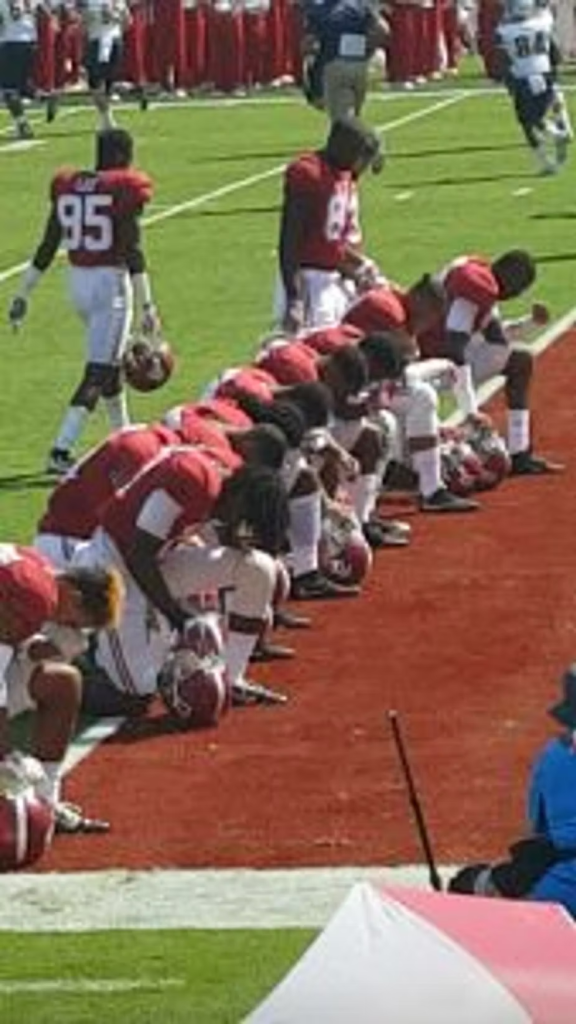
Please let us destroy the other team for the glory of a pro ball contract. Amen

Seen in that light, James was saying that “prayer” was the answer to setbacks that are the result of evil deeds. While prayer can help ease one’s pain from wounds, scrapes and bruises, medical treatment is God’s gift to mankind, knowledge allowed to be used as physical treatments for physical maladies. The mental damage of sins, worries, guilt, and the pressures of life’s hardships, however, makes prayer be the prescribed remedy.

It is also important to read the words, “any among you,” knowing that James was not writing a letter blankly to all humanity. His congregation was Jewish, in particular those who accepted Jesus as their Messiah. They did not accept James as their holy leader, meaning as a subsequence they accepted Jesus within themselves, like James had. Instead, they accepted Jesus Christ into their souls, due to James evangelizing to them, so all were reborn as Jesus Christ, servants of the Lord. This is, therefore, to whom James referred prayer, as all humanity regularly suffers from evil afflictions; but whereas common Jews did not know how to pray properly, those who were in the name of Jesus Christ were being reminded of the power of prayer that was available to them.

Likewise, when James repeated the Greek word “tis,” which means “anyone, someone, or some people,” the word pointed to “certain ones.” As a question to “certain ones,” stated as “Are you cheerful?” that question, like the first question, was directed at those who were filled with the Holy Spirit.

As a question following the suggestion for prayer at times of mental anguish, when prayers are answered and the sufferings of evil are removed, the natural state is cheerfulness. For those whose prayers have been answered, “They should sing songs of praise.” This, of course, is not a generic song from a hymnal of praises, but a specific song from one’s heart, praising God for having answered one’s specific prayer.

The hymnal holder has been replaced by arm rests with cup holders. Now you just follow the bouncing ball on the big screen.

This then leads to the question, “Are any among you sick?” where, again, the use of “tis” implies Jews in the name of Jesus Christ. The question says that sickness is a common affliction that occurs in all human bodies. Some viruses and infections can have the effect of removing the soul from the body, simply to separate a soul cleansed of sin from a mortal body in the process of breakdown. This separation can keep the human brain from thinking thoughts of prayer, because the soul is disconnected from the pains of a sickness.

In these cases, the elders (those “certain ones” who lead “certain ones” in gatherings) should be called to pray for the one needing prayer. This is a case where a “church” (“ekklēsias”) was understood to be “an assembly” (gathering) of members, who are all in the name of Jesus Christ.

That is stating the family relationship that comes from all Christians being reborn as the Son of the Father, so they have all taken on the name of Christ as Christians. This is then stated in verse 14 where it says, “anointing them with oil in the name of the Lord.”

While that is a viable translation, the scope of meaning that comes from the literal Greek makes this more powerful when it says, “giving shares of penetrating comfort to impart healing [aleipsantes] themselves [auton] with the indwelling of the Holy Spirit [elaiō] manifesting the character [onomati] of the Lord.” This becomes a viable translation of the intent, based on the words chosen.

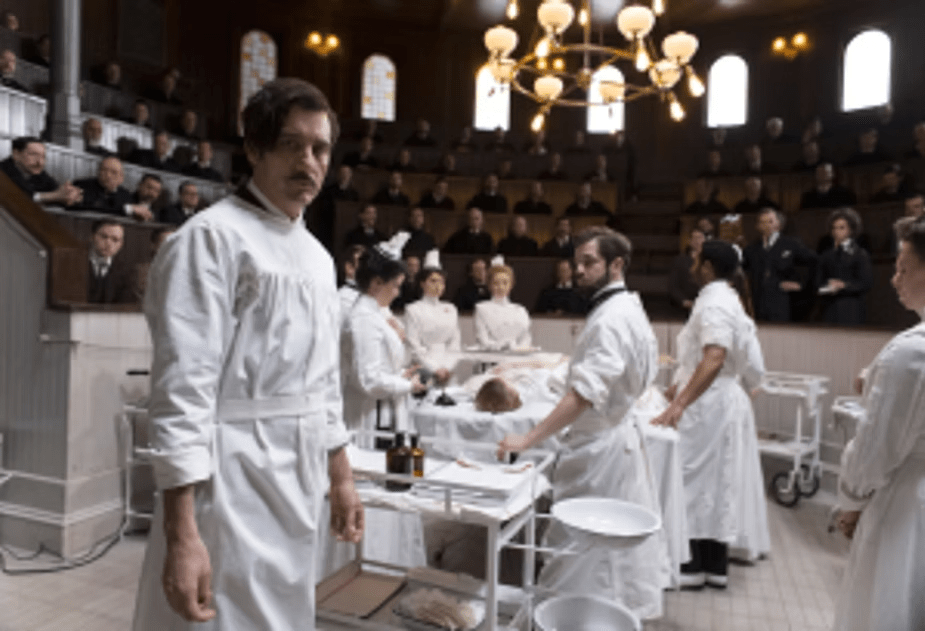
If you needed surgery, you would not like to find out a bunch of actors were pretending to be your doctors; so if you need prayer, it always helps to have real priests of God surrounding you, not actors.

This healing is then done by those empowered by the Holy Spirit of God, using prayer as their personal call for divine assistance.  This is holy work done by the “elders” (“presbyterous”), who have been reborn as Jesus Christ longer and spread the Holy Spirit to more others more often, thus teaching those taught and healing those who cannot use the Holy Spirit to heal their own bodies. Family does not simply smear oil on the foreheads of Christians and pray a generic prayer book prayer for a soul to return to a healed body.

That would be a prayer of belief, where a book told one what to say and what to believe. That is what an institution or organization does. James, however, said that elders offer a “prayer of faith” (“pisteōs”), which is a prayer “received from God, and never generated by us.” A prayer of belief offers “confidence,” which is from a human perspective – the self-brain. That is, therefore, generated by the one believing in prayer, without true faith. A prayer of faith is a prayer from one who has Jesus Christ speaking through him or her, as an extension of God in an Apostle.

This is why James then added, “A prayer of faith will save the one ailing.” Again, when one is sick and incapacitated, unable to offer prayer, it becomes the one(s) who send collective prayer from the Christ Mind to the Holy Spirit of the sick Apostle. That intercession calls upon God for salvation. James then said, “The Lord will raise them up.”

The Greek word “egerei” is used, which is the future active form of “egeiró,” translated as “will raise up.” It is then important to know that the word is implying strongly (and can be directly translated as) “will wake us.” This is where one needs to realize that the implication of James asking, “Are any among you sick?” the meaning was, “Are any of you dying?”

The word translated as “sick” is “astheneó,” which (if not used to denote one being morally ill, which an Apostle would not be) means in a state of feebleness and weakness. Therefore, “save” and “raise up” have a meaning that intercessory prayers by the elders are to request the Lord to receive the soul of an Apostle in Heaven; but if the soul has more use on the earthly plane, the Lord can reconnect the soul to the body and awaken the body and soul back to life … and back to health.

This aspect says the elders gather (as Apostles in the name of Jesus Christ) and offer prayers that would request God forgive any sins the sick person might have committed prior to his or her illness, because that person might have become unable to plead for forgives personally. This is why James added, “Anyone who has committed sins will be forgiven.”

It is important to realize that James did not give a blanket “Get out of Sins Free card” by those words. They are written about one having fallen gravely ill and in need of fellow Apostles to intercede for that soul and body.

When the translation above has James saying, “Confess your sins to one another,” the Greek written better translates as, “Confess therefore yourselves the sins,” where the Greek word “allēlois” is the dative plural form of “allélón.”  That says confession can only bring forgiveness from God. Therefore, all Apostles should admit their sins freely to God. This means James was foremost giving the instruction to keep one’s personal sins at a minimum; but when one does sin, the confession (among all Apostles, each other, one another, themselves) must be to the LORD.

Certainly, it is the presence of the Christ Spirit within one that reminds one of sin, so the shame of guilt should be to confess before Jesus Christ, who is merged with one’s soul.  So, that petition is set before God for forgiveness by the Christ Spirit as sincere. To then admit one’s sins to other Apostles should only be to admit the flaws of the human condition and praise the forgiveness that God has shown.  Confession to others can only be done by those (giving and receiving) who model the life of Christ, which became the life those have lived in return for God’s forgiveness of sins.

What? Again?

The confessional in a private booth, between one who is not an Apostle and a priest who is, cannot have penitence given by that Apostle. Such confession should bring forth a recommendation that the sinner establish a life that pleases God; as that is the true path to forgiveness. Confession to a priest who is not filled with the Holy Spirit means sinners will not be led toward a life devoted to God.

When James then said to “pray for one another,” this is of course what Apostles do within the gathering of Saints.  That is the purpose of a Church (not a building). Still, when the series of segments began with a confession of sins “yourselves” before the Lord, that confession is now being said to be through prayer. Prayer is one taking to God.

Each Apostle is advised to pray often. Since Saints are more often apart than together, confession of sins and daily prayer are developing the Father-Son relationship each needs.  This daily communication is part of the training process for an Apostle, as through prayer one develops an ability to see, hear, and touch the answers that come from God as subtle signs and whispers of insight.

When James then added, “so that you may be healed,” the Greek word “iathēte” is a statement about prayer as a routine maintenance for the body. It is a word stated in the conditional voice, where the result is not guaranteed; one understands that.  It asks God to protect one from physical disease and spiritual misdirection.  God will respond as is necessary for God’s Will to be done.

An Apostle-Saint is a soul sought by Satan, so lures and traps (stumbling blocks) are to be expected, as well as avoided. Prayer enlightens one to steer clear of such pitfalls. Routine prayer is then done to beg for forgiveness for having fallen into one of Satan’s traps and to learn to spot a trap before any damage is done. This two-way communication with God keeps one healthy and able to help lead others to the same healthy relationship with God, reborn as Jesus Christ.

James then made the statement, “The prayer of the righteous is powerful and effective.” The literal translation shows this as, “Much prevails [the] prayer of a righteous [man] being made effective.” There is more to this than might initially meet the eye.

The Greek word “ischyei” comes from “ischuó,” which states an “ability” that is “strong” and “powerful.” The point being made by James is that “prayer” having been fully developed in one becomes the “power” of the “righteous.” Hand-in-hand, “prayer” is the “power” that makes one “righteous.”

The word “energoumenē” is then a form that focuses on the “work” that is associated with “righteousness.” This is (in the present participle of “work”) “being made” in those “righteous,” coming from God.  This is the building of one’s relationship with God, such that it strengthens and becomes more powerful over time.  The more one acts for God, the more one is “being made effectively” into what deems one “righteous.” Those acts done are led by the influence of God, through the Christ Mind, so one willfully follows. Everything is “powered” by “prayer.”

James then gave the example of Elijah, when he wrote, “Elijah was a human being like us, and he prayed fervently that it might not rain, and for three years and six months it did not rain on the earth.” This begins with a statement that Elijah was not born righteous. He was just like all the Jewish Apostles that James knew, being a man of flesh and blood, alive with a soul breathed from God.

Elijah became righteous because he heard the voice of God and listened.  Following that guidance, Elijah  developed a powerful ability to call upon the Lord through prayer.  That powerful ability effectively made Elijah the most highly revered prophet in Israelite history.

James further explained how Elijah “prayed fervently that it might not rain, and for three years and six months it did not rain on the earth.” Elijah did not cause it not to rain. God answered the prayers of Elijah, which extended over three years and six months.  Each day Elijah was praying daily to God.

The word translated as “fervently” comes from “proseuché,” which means “a place for prayer.” Since this was prior to buildings of prayer (synagogues) in Israel, Elijah was himself the place of prayer to God. Therefore he prayed to God daily, more than once a day, wherever he went.  Elijah had developed the Father-Son relationship that a prophet must have.

That is the power of prayer. It links God to the servant, making the servant as powerful as God sees His servant needs to be. It should be realized that the Father is the Master and the Son is the willing slave.  This does not imply an abusive relationship, but a necessary one between a Teacher and an Apostle.  The student must prove an ability to demonstrate what has been taught.  Therefore, God saw the righteousness of Elijah’s prayer for drought, and He granted the wish.

The land of Israel had become overrun with wickedness. When we then read that “Then [Elijah] prayed again, and the heaven gave rain and the earth yielded its harvest,” this says the land had seen the error of its wicked ways and turned back to God. The prayers of Elijah were joined with those of others who had been denying God their devotion. Therefore, when we read, “the earth yielded its harvest,” this was more than vegetables growing from the land. The people of Israel had repented and returned to praying to God.

The Festival of Sukkot is a God-commanded observance of the earth’s harvest – in plants and children of God.

That ending brought by Elijah is then turned by James towards his audience. As male Jews who he addressed, He called them “Brothers of mine,” which is a statement of all Apostles being “Brothers” in the (masculine) name of Jesus Christ, the (masculine) Sons of God. All Jewish females then, those who had been filled with the Holy Spirit and made Apostles, were also included in this address as “Brothers.” James said to them all, “If anyone among you wanders from the truth and is brought back by another, you should know that whoever brings back a sinner from wandering will save the sinner’s soul from death and will cover a multitude of sins.”

That means that just like Elijah brought back all the sinners of Israel by prayer to God, then the same expectations are in themselves, set by God for them. As the embodiment of the resurrected Son of God, each of them had the same powers of prayer as did Elijah. All were as righteous in their paths as was Elijah. All the Apostles were sent forth into Israel (then Judea and Galilee, et al.) to “bring back sinners from wandering,” just as they were once wandering sinners, saved by accepting Jesus Christ as the Messiah within their soul.

Each of the Apostles had been brought back from the death of their self-egos and the potential of losing their souls to hell.  They were saved because God forgave them all their sins. They were then expected to be like Elijah and pray to God for the great powers that will lead sinners to penitence.  The same expectations exist today.

As the Epistle selection for the nineteenth Sunday after Pentecost, when one’s personal ministry for the LORD should be underway – one has found the value of daily prayer as a way to care for others – the message here is to talk to God as part of developing a life of righteousness. One has to see God as the Father, which is a close personal relationship between the child (Son) and its parent, more than seeing God as the Creator of all and distant through His greatness and invisibility.

It should be realized that James was the brother of Jesus, as the son from Joseph the carpenter’s loins. James was a follower of Jesus, as a family member, but he was not a disciple who saw Jesus as a teacher. The disciples asked Jesus to teach them how to pray, which is an indication that prayer was not taught by the rabbis in the synagogues. Despite being taught the Israelites were the children of God’s choosing, they were not told how to see God as a loving progenitor.

This is why Jesus immediately told his disciples to pray by first identifying the Lord as “Father” (Luke 11) or “Our Father in heaven” (Matthew 6). Today, there is the repetition of a set grouping of words called “The Lord’s Prayer.” This is not what Jesus told his disciples to recite. Rotely repeating the words of Jesus aloud in church is missing the point of Jesus teaching his disciples, using the words recited, that prayer is a son asking his Father for that which is needed.

A Son asks the Father for insight each and every day (daily bread). He asks for forgiveness of his sins done and to release his angers in his heart for other sinners. He asks his Father to keep him from being swayed by the temptations of evil. In this reading from James’ letter, he followed that model without repeating the words of The Lord’s Prayer.

This says that the Jewish Apostles to whom James wrote understood the intent of Jesus’ teaching his disciples how to pray. As those filled with the Holy Spirit and reborn as God’s Son, they all felt in their souls a close personal relationship with God, as each of them was the Son of the Father. This is not the case of Christians in pews, if they do not feel the same closeness with God.  Many fail to contact Him daily, so many fail to live righteous lives.

Jesus did not recite “The Lord’s Prayer,” as he was simply giving instructions as to what sons should ask of their Holy Father [not a pope]. After speaking those famous words, few are taught to remember how Jesus then told his disciples the explanation behind those words.  Jesus said:

Ask and it will be given to you; seek and you will find; knock and the door will be opened to you. For everyone who asks receives; the one who seeks finds; and to the one who knocks, the door will be opened.”

Jesus continued: “Which of you fathers, if your son asks for a fish, will give him a snake instead? Or if he asks for an egg, will give him a scorpion? If you then, though you are evil, know how to give good gifts to your children, how much more will your Father in heaven give the Holy Spirit to those who ask him!”” (Luke 11:9-13)

Jesus explained that the way to pray was to speak to God as one’s Father in heaven.

More importantly than an instruction to “say after me,” Jesus told his disciples to pray to God for help – help for strength amid weakness, help for others in need – because the Father listens and will not refuse His Sons. However, if the only prayer one knows how to say is “The Lord’s Prayer,” God listens and then says, “Yada, yada, yada. But what do you want specifically. TALK TO ME!”

[“Yada” is the Hebrew word meaning, “I know.”]

Seeing this relationship – this entrance into the family of God, as His Sons (regardless of human gender) – is where one needs to realize prayer is not for selfish needs. Parents will know how their children quickly learn the word “gimme.” They incessantly repeat that word – “gimme, gimme, gimme, gimme, gimme …” – without really wanting anything specific. They scream for self-satisfactions, which are rewarded whenever parents actually give the child what it screams for, just to make it stop begging.

Humans are like our own children, as we love to see what we can get for nothing.  Humans are also like our own parents, as we love to make our kids happy, even if it means doing without personally.  This is how we can call God the Father, because God (like dad, more than mom) knows how to turn a deaf ear to the brains of selfishness.  Instead, God listens to hear what our hearts desire.

This is why one has to die of self-ego, in order to become married to God the Husband (to all human gender wives) and begat His Son in each – Jesus Christ resurrected.  We have to become one of the family.  We have been adopted as believers in Jesus as the Christ.  We come into the family as the children of God.

The rebirth of God’s Son means a serious growth development in the child, where the asking is not for selfish demands, but petitions for a better world. Prayers submitted through the Christ Mind are for healing purposes and church gathering support.  They are not self-serving, but to gain God’s health in the body of Christ – the whole (Church) and the individual (an Apostle-Saint).

True prayer, such as James wrote of in his fifth chapter, is for those who have matured in Christ. It asks God to give an Apostle the strength and stamina to become a reflection of the Father to the little children on earth.

Esther 7:1-6, 9-10; 9:20-22 – Saving others as God’s Queen

The king and Haman went in to feast with Queen Esther. On the second day, as they were drinking wine, the king again said to Esther, “What is your petition, Queen Esther? It shall be granted you. And what is your request? Even to the half of my kingdom, it shall be fulfilled.” Then Queen Esther answered, “If I have won your favor, O king, and if it pleases the king, let my life be given me– that is my petition– and the lives of my people– that is my request. For we have been sold, I and my people, to be destroyed, to be killed, and to be annihilated. If we had been sold merely as slaves, men and women, I would have held my peace; but no enemy can compensate for this damage to the king.” Then King Ahasuerus said to Queen Esther, “Who is he, and where is he, who has presumed to do this?” Esther said, “A foe and enemy, this wicked Haman!” Then Haman was terrified before the king and the queen.

Then Harbona, one of the eunuchs in attendance on the king, said, “Look, the very gallows that Haman has prepared for Mordecai, whose word saved the king, stands at Haman’s house, fifty cubits high.” And the king said, “Hang him on that.” So they hanged Haman on the gallows that he had prepared for Mordecai. Then the anger of the king abated.

Mordecai recorded these things, and sent letters to all the Jews who were in all the provinces of King Ahasuerus, both near and far, enjoining them that they should keep the fourteenth day of the month Adar and also the fifteenth day of the same month, year by year, as the days on which the Jews gained relief from their enemies, and as the month that had been turned for them from sorrow into gladness and from mourning into a holiday; that they should make them days of feasting and gladness, days for sending gifts of food to one another and presents to the poor.

———————————————————————————————————-

This is an optional Old Testament selection from the Episcopal Lectionary for the Nineteenth Sunday after Pentecost, Year B 2018. In the numbering system that lists each Sunday in an ordinal fashion, this Sunday is referred to as Proper 21. If chosen, it will next be read aloud in an Episcopal church by a reader on Sunday September 30, 2018. It is important because the story of Esther saving her people from being executed wrongfully, in Persia, is symbolic of redemption by God, brought on by prayer.

In this story, we are told, “The king and Haman went in to feast with Queen Esther.” This feast is unnamed, but scholars believe it aligns closely (although not exactly) with the Persian-Iranian celebration called Nowruz, which is the Persian New Year (“New Day”).

Happy Nowruz!

That is on the day of the Vernal Equinox, or the first day of spring (March 21). Because the fourteenth and fifteenth of Adar align with the full moon during the last month of a Hebraic year (February-March), this would be within a couple of weeks prior to the beginning of spring. As the Book of Esther is one of value to the Judaic people (not the Persians), the month of Adar would be representative of their time in Egypt, prior to the Exodus, meaning this feast of the full moon would be recognized twenty-eight days before the Passover full moon (a lunar cycle).  The reason for recognizing Purim then would fit the timing in a year when the emotional judgment of Moses was found challenging Pharaoh for the safety of the Israelite people.  The plagues upon Egypt were to spare the Israelites, just as would Xerxes I’s execution of Haman save the Jews in Persia.

It is important to realize that (in the story told in the Book of Esther) the king of Persia did not know the religious practices of his wives, including Esther. Xerxes I had approved a plan by Haman to execute all the Jewish people in Persia, because he was told they refused to abide by Persian laws.

When we read that Esther told the king: “If I have won your favor, O king, and if it pleases the king, let my life be given me– that is my petition– and the lives of my people– that is my request. For we have been sold, I and my people, to be destroyed, to be killed, and to be annihilated. If we had been sold merely as slaves, men and women, I would have held my peace; but no enemy can compensate for this damage to the king,” that was news to Xerxes I (a.k.a. King Ahasuerus).

Esther, most likely, was one of many queens of Ahasuerus, as kings were expected to have many sons.  After the king’s prior wife, Vashti, refused to appear before the king and dance for him, he ordered for other women to choose from.  Esther was one of many young women who were then called to dance for the king, with the king choosing Esther based on her beauty and seductive dance moves. Her religious beliefs were the last thing on Xerxes I’s mind when he had sex with Esther afterwards.

It was then this sexual intercourse that forever bound the king to a queen, as intercourse was for the purpose of impregnating a woman with a child of the king (hopefully a son). As such, the designation of Esther as “queen,” is less about her having been given great powers of royalty and more about her being the “wife” of the King of Persia.  She was a mother-to-be in that role.

In chapter 2 of Esther, we see that Xerxes I took Esther as his wife in the tenth month (Anāmaka – December-January) of his seventh year of reign. He fell so in love with Esther that he took the crown away from Vashti and placed it on Esther’s head. He then planned a feast for Esther, which might mean he dedicated the feast of the New Day (Nowruz, on March 20 – 21) as when she would be recognized as the new queen. A two month window would give dignitaries time to travel to Susa for the feast.

“Events mentioned in the Old Testament book of Esther are said to have occurred in Susa during the Achaemenid period.” – Wikipedia

That timing of a standard two-day feast with the celebration of a new marriage would have been to symbolize the newness of the sexual encounters between the king and his new wife.  Expectations of a new child would be set so the kingdom could celebrate the coming of a new heir. This explains why the king offered to give Esther anything she wanted.

When Esther told Xerxes I, her husband, “my people” were “to be destroyed,” he did not know Esther’s people were the Jews that Haman had gotten approval to kill.  His approval had led Haman to build a gallows on his property, upon which to hang those who would not comply with Persian law. Mordecai was a trusted advisor to the king and the uncle of Esther, had overheard this plan and told his niece.

When we read that Mordecai pointed out the newly built gallows to Xerxes I, that visual immediately angered him to act.  Haman was ordered to be executed as the criminal, hung on the gallows he had built. That then led to the beginning of the Jewish recognition of the Feast of Purim.

The Hebrew word “Purim” is rooted in “pur,” which means, “lots,” as a form of “sortation” or “casting of lots” [confirmed via the aside “goral“).  In Esther 9:24 (not part of the reading selection) one finds written, “For Haman son of Hammedatha, the Agagite, the enemy of all the Jews, had plotted against the Jews to destroy them and had cast the pur (that is, the lot) for their ruin and destruction.” This means the name of the feast denotes how Haman took a gamble that his will would be done, through deceit and trickery. Haman ‘rolled the dice’ and he ‘crapped out’.

Rut roh.

The Jews celebrate that luck was on their side; but they attribute their luck as the Will of God.

As an optional Old Testament reading selection for the nineteenth Sunday after Pentecost, when one’s personal ministry for the LORD should be underway – one has been saved from the soul’s death plotted by Satan – the message here is to serve God as a loving wife, accepting His gift of a queen’s (Apostle’s) wish being granted. Just as Ester used her wish to save her people (her life was not in danger, as queen), God will protect those who serve Him. He will do this through His wives being elevated in His Spirit.

In the recent past we have discussed the Proverbs song about “a good wife.” Esther demonstrated those qualities in the way she impressed King Ahasuerus to love her and protect her. This symbolizes how all Apostles (males and females) should likewise impress God, so He loves us and protects us in the same manner.

The Jews of Persia, whose ancestors had been taken into exile by the Babylonians, had been freed by the Persian King Cyrus the Great, with he and his son Darius the Great rebuilding the Temple in Jerusalem. The Jews who went to Persia did so voluntarily, as willing servants to those who freed them, not as captives and slaves. In that way, all the Jews of Persia had submitted to the kings who had set them free.

Sure, we work for a living; but we don’t mind work because we get paid for our voluntary service. “Slavery” is a way of life and we love our work.

In the Epistle reading chosen to accompany this Old Testament reading option, James wrote of prayer being the way to end suffering, to bring cheerfulness, and to raise up the sick. This is then the lesson that Jesus taught to his disciples, when they asked him to teach them how to pray. Jesus told them to see God as their Father, where they ask Him for strength and miraculous powers of salvation. Jesus said, “If you ask you shall receive.” This is now seen in the story of Esther.

Esther had developed a relationship with King Xerxes I, as his wife. He then offered her the benefits of his power. All she had to do was ask, which she did truthfully. She begged the king to save her people, and out of love he answered her prayer. Esther is then symbolic of every Christian.

Like all Christians, we volunteer to serve the Master, because God has freed us from the oppression of worldly addictions that once enslaved us. We live in an earthly realm that is distant from heaven, devoted to living lives as piously as we can, resisting laws that demand we turn our backs to God. We are all called upon to dance before God, to show our willingness to do acts that will impress God with our loyalty to Him. This, in turn, excites God and leads Him to propose marriage. Christians are then put in a position to choose to please God by becoming His Queen (regardless of human gender). A “Queen” means being an Apostle of the Lord. That then makes us become the wives of God, bearing Him children that are all in the name of Jesus Christ.

Christians must have this willingness to love and serve the Lord our God unconditionally. It is that devotion that leads us to communicate directly to God, rather than see God as some unapproachable deity that is too great to care about us individually. We must see how God cares deeply for each of us who marry with Him and serve Him daily.

As the wives of a most powerful God, He hears our pleas for help, especially when those pleas are for others in need. Because of a relationship of love, God, the Father of the resurrected Son within us, will grant our requests. That favor will not only save many others, but it will grant each soul that is united with the Christ Spirit eternal salvation. That eternal celebration is then why Purim was commanded to forever be recognized.

It is also important to see how Esther, as a Jew, sacrificed herself before King Ahasuerus. She was willing to sacrifice returning to the land of Judah and Jerusalem, choosing to give up that option of self-importance, brought by returning to the land where Cyrus the Great had allowed Jews to openly serve their God again. By choosing to stay in Persia and dance before the Persian king, she had opted to live among Persians who served one god, under a different name (Ahura Mazda). That sacrifice of self is then symbolic of one’s sacrifice of self-ego, in order to serve divine will.

Christians often find the Book of Esther and her story as one that the women of the church can most readily identify with. Study groups composed only of women, led by female priests or pastors, see Esther as representative of a feminine only relationship with God.

Men do not try to crash those study groups, demanding equal rights under the Laws of Christianity, as they are comfortable with not having to understand Esther, Ruth, Deborah, the Queen of Sheba, or any other female character in the Holy Bible. Gender-based religious study represents the ways of denial, denying one’s self as being exempt from certain Scriptural stories.

Refusal to believe that stories involving women have anything to do with men is projecting the perceived importance of the male human body (or a female body), denying it is surrounding an asexual soul. It is no different than both sexes of Christians refusing to see themselves as the Pharisees, Temple scribes, or even Haman, here in the Book of Esther.  This becomes part of the problem that keeps all Christians from seeing Esther as himself or herself.  Christians must identify with all Biblical characters, in order to see the errors of all mortal ways.

In the accompanying Gospel message from Mark, we are told how John of Zebedee admitted to Jesus, “We saw someone casting out demons in your name, and we tried to stop him, because he was not following us.” (Mark 9:38)  See if you (regardless of human gender) can read those word told to Jesus and grasp them as capable of being restated now as, “We read of some woman was casting out demons in Persia, and we ignored her because we are men and she was female.”

Jesus later said to his male disciples, “Whoever gives you a cup of water to drink because you bear the name of Christ will by no means lose the reward.” (Mark 9:41)  Can that not also mean, “Esther presented the reader a cup of living water to drink because understanding that message means being reborn with the Christ Mind, whether in a male or a female form, so the reward of faith is gender nonspecific”?

Seeing Esther as a projection of one’s faith, through a personal relationship with God (as His Queen), means human sexuality is of no bearing.  She represents any and all who would be asking God to help others; and then, seeing that help comes through divine means is how God uses people of power to do His Will.

Hopefully, this element of marriage to God and bearing His Son as the responsibility of ALL Christians (males and females) can be grasped. This is why Esther was written and is read in Year B’s lectionary – a year when good wives and marriage to God is a pronounced message. Sacrifice of self-ego and submission before God is not something only one gender of humans are called to do.

———————————————————————————————————-

There are parts of this reading referenced in a sermon I presented in September 2017, posted on my previous blog.  On my old defunct website I also had published these “notes” below.  You might notice I utilized some of this in the above post.

Notes: (For Esther reading)

“We pick up the story of Queen Esther without knowing anything about her.  I feel it is important to see last week’s Proverbs 31 reading (about a capable wife) as leading to this story of a capable wife … a queen to a king.  The story told today, where we read, “they should keep the fourteenth day of the month Adar and also the fifteenth day of the same month, year by year,” tells of the first Jewish holiday known as Purim.  The word “purim” means, “lots,” as a form of “sortation” or “casting of lots.”  As such, Queen Esther (and her uncle Mordecai) gambled that exposing the truth would pay off and save the Jews of Persia, which it did.

When last week’s meaning is seen as a call for all believers in God to become joined with Him, as the truest form of marriage – God seated in one’s heart – one can now see God as the king, such that all of God’s faithful wives are queens.  We have a subservient place, but it is a place of respect and regality.  Thus, as capable wives to the King (as Christ is our true King, with God the Father), we are allowed to petition the Lord for favor.  Because of our faithfulness and devotion, when our pleas to God are heard, when they are warranted, then justice will be served and prayers are answered.

In last week’s lessons there was the repeated theme of “gentleness,” which would be tested by the evil in the world.  I said our sacrificial lamb characteristic is in our submission before God and Christ.  Still, injustice cries out for justice; and, it is not the place of us gentle lambs to determine what punishment those with evil hearts will find.  The same gentleness is now found in Queen Esther’s request to her husband, King Ahasuerus (Xerxes I), for her life and the lives of all Jews in Persia be spared.  She did not ask for Haman’s death by hanging; but justice came from the king as such.  The fact that Haman was hung on the gallows he had prepared for others is then symbolic of how the sins of others will be the cause of their own rewards, as justice will be served upon all injustices.

Numbers 11:4-6,10-16,24-29 – Crying for attention in all the wrong ways

The rabble among them had a strong craving; and the Israelites also wept again, and said, “If only we had meat to eat! We remember the fish we used to eat in Egypt for nothing, the cucumbers, the melons, the leeks, the onions, and the garlic; but now our strength is dried up, and there is nothing at all but this manna to look at.”

Moses heard the people weeping throughout their families, all at the entrances of their tents. Then the Lord became very angry, and Moses was displeased. So Moses said to the Lord, “Why have you treated your servant so badly? Why have I not found favor in your sight, that you lay the burden of all this people on me? Did I conceive all this people? Did I give birth to them, that you should say to me, ‘Carry them in your bosom, as a nurse carries a sucking child,’ to the land that you promised on oath to their ancestors? Where am I to get meat to give to all this people? For they come weeping to me and say, ‘Give us meat to eat!’ I am not able to carry all this people alone, for they are too heavy for me. If this is the way you are going to treat me, put me to death at once—if I have found favor in your sight—and do not let me see my misery.”

So the Lord said to Moses, “Gather for me seventy of the elders of Israel, whom you know to be the elders of the people and officers over them; bring them to the tent of meeting, and have them take their place there with you.

So Moses went out and told the people the words of the Lord; and he gathered seventy elders of the people, and placed them all around the tent. Then the Lord came down in the cloud and spoke to him, and took some of the spirit that was on him and put it on the seventy elders; and when the spirit rested upon them, they prophesied. But they did not do so again.

Two men remained in the camp, one named Eldad, and the other named Medad, and the spirit rested on them; they were among those registered, but they had not gone out to the tent, and so they prophesied in the camp. And a young man ran and told Moses, “Eldad and Medad are prophesying in the camp.” And Joshua son of Nun, the assistant of Moses, one of his chosen men, said, “My lord Moses, stop them!” But Moses said to him, “Are you jealous for my sake? Would that all the Lord’s people were prophets, and that the Lord would put his spirit on them!”

———————————————————————————————————-

This is an optional Old Testament selection from the Episcopal Lectionary for the Nineteenth Sunday after Pentecost, Year B 2018. In the numbering system that lists each Sunday in an ordinal fashion, this Sunday is referred to as Proper 21. If chosen, it will next be read aloud in an Episcopal church by a reader on Sunday September 30, 2018. It is important because it tells how God gets angry hearing the complaints of His children when they do not get what they want. God promised to deliver what they so wanted; but before He did so He filled seventy elders with the Holy Spirit, so they prophesied the truth of the LORD. This is a lesson that confirms God hears the prayers of His believers, while also being a lesson to be careful what one asks of God.

This is a long reading selection; it is only half of a longer story. I recommend everyone read the whole chapter here. The whole story gives one a view of how God and Moses were tired of the complaining that was going on. In verse four, the translation above shows: “The rabble among them had a strong craving; and the Israelites also wept again, and said, “If only we had meat to eat!” The literal can also state: “And the mixed multitude who were among them had yielded to cravings — and again so wept the sons of Israel and said , who will give us to eat meat ?”

This says the “rabble” (a valid translation of “wə·hā·sap̄·sup̄”) is only part of the whole “collection” of people. As a “mixed multitude,” one can assume there were people complaining loudly in each of the twelve tribes. Not everyone was complaining, but no one could escape the cries of lament.  Whatever percentage that “rabble” amounted to be in numbers (assuming it was a minority), it was their crying and weeping that ignited all of the “sons of Israel” to follow the lead of complainers.

It was like in the nursery of a day care facility, when one baby starts crying, soon all the babies join in. They were crying to be fed; but the babies were no longer satisfied with mother’s milk (manna on the dew). They wanted meat to eat, along with fresh vegetables, which were not available in the wilderness.

In the first three verses of Numbers 11 (not read aloud), the complaints angered Yahweh so much that He burned the outskirts of the camp. This might have been because people were going beyond the boundaries where the manna fell, in search of some other type of food (including forbidden meats). It might also have been because some on the outer fringes were where some children of Israel were running away from camp, attempting to go back to Egypt. Perhaps, God was making sure the Israelites knew where the nation of Israel’s temporary border was, since the Promise of a reward seemed to be the only reason many were ‘tagging along’?  Whatever the reason for God using fire to burn the earth, this is the context from which the “rabble” was moaning and groaning more loudly.

We then read that Moses became aware of the loud cried of complaints coming from the tents of the Israelites. Here, Moses complains to God (another time of several), referring to the Israelites as infants, with him expected to be their mother. This should be read as Moses being the wife of God, with his complaints being those of a wife to a husband.  Being the only adult in a house of demanding babies was frazzling to Moses and not only did the crying become contagious but so too did the anger God felt.

When God told Moses, “Gather for me seventy of the elders of Israel, whom you know to be the elders of the people and officers over them,” this amounts to 5 or 6 elders per tribe. What is not read (from verse twenty-one) is that Moses wondered how God was going to feed six hundred thousand “men on foot,” meaning there were probably a minimum of one million total Israelites, counting men, women and children. That means seventy elders were to be chosen, where each was a leader of about ten thousand people.

The vastness of this number has to be seen in the light of God promising to answer their complaints of no meat by sending in quail, so many that every Israelite would eat meat for a whole month (a lunar month of 28 days), “until [the meat] was coming out of their nostrils, becoming loathsome to them.” (Numbers 11:20)  To gorge a million people each day, that would mean at least two million quail would fly into the wilderness camp and land, to be killed each day!  They covered the entire camp two cubits deep (three feet)!  There were so many the birds had to be taken and eaten, just to make room for more the next day!

By realizing that, the calling of seventy elders to the tent of meeting was not a ‘sweet meet’, so God could try to pep up His priests or some “hang in there,” “attaboys.”  Remember that all had agreed to the Covenant, so being in the wilderness and eating manna was part of that contract.  If you have ever heard the term used that indicates a serious discussion (a reprimand) as a “Come to Jesus meeting,” then you can grasp how God was calling for a “come to Moses meeting,” with God’s cloud of smoke billowing angrily in view.

We then read, “Then the Lord came down in the cloud and spoke to [Moses], and took some of the spirit that was on [Moses] and put it on the seventy elders; and when the spirit rested upon them, they prophesied.” What is not explained fully is what they prophesied, knowing that “to prophesy” means: “To reveal or foretell (something, esp a future event) by or as if by divine inspiration.” [Collins English Dictionary – Complete and Unabridged, 12th Edition 2014]

This was not God impressing seventy Israelite men with His powers to make one dance wildly while singing unintelligible gobbledygook, like speaking in the tongues of fools. It was God showing those leaders the future that cry babying and endless bellyaching was about to bring upon a million Israelites. Since Moses telling them not to worry was not enough, the Holy Spirit on Moses was brushed onto seventy guys so they could see the light of truth that was coming their way.

“They said we’re going the wrong way. How do they know where we are going?”

We are then told, “They did not do so again,” meaning that was the only time those straw bosses would stand in the sandals of Moses and see the responsibility that a Saint bears, as opposed to some diaper crapping baby … the one that controls the overall mood of a nursery filled with about ten thousand babies. One time seeing what was coming was all they would need. The truth they were shown coming was enough to burn an indelible mark of spiritual reckoning in their minds. Call it an epiphany, if you will.  Afterwards, they would wish never to have an ominous future be shown them again.

THAT is the true meaning of a “come to Jesus meeting” … and once is all one ever needs.

When it is written about Eldad and Medad, their names should be understood, as naming them was for that reason. The Hebrew word “eldod” means “God has loved” and “yadid” means “beloved.” Thus, two did not go to the tent of meeting as ordered, choosing instead to remain in the general camp because of “love.”  That hint should remind the reader that Numbers 11 began with the complaints of those who had “strong cravings,” having “yielded” to cravings of desire.

Those two elders were then singled out as not going to surround the tent of meeting with the other sixty-eight on the list of those summoned. Either their love of God had kept them from complaining, so they felt it was a mistake to be called to be scolded; or, they were defiant in their love of complaining to God, refusing to be told to leave the camp. Whatever the case, God chose them to scare the bejebbers out of the Israelites in the camp by prophesying among the common folk, not at the sacred place of the tabernacle and tent of meeting.

[Personally, I like to see them as like an omen of prophets who would be forced to prophesy outside the confines of Jerusalem’s Temple.  That makes them rebels with a cause for God.]

By reading, “A young man ran and told Moses, ‘Eldad and Medad are prophesying in the camp.’ And Joshua son of Nun, the assistant of Moses, one of his chosen men, said, ‘My lord Moses, stop them!’” we see the shock and awe that their prophesying had. Those two were wildly speaking in understandable language, which the common Israelites heard and became immediately frightened to hear them.  Their message was so frightening that even Joshua was scared that two wild and crazy guys running amok and crying out what the future portends could cause a million people to stampede like wile wildebeests.

Moses seems to have gotten a chuckle out of it all, by responding to Joshua, saying “Are you jealous for my sake? Would that all the Lord’s people were prophets, and that the Lord would put his spirit on them!” Moses told Joshua (then a young devotee), “Do not worry is someone else speaks prophecy as I do.  It is always a good thing when a prophet of the Lord speaks the truth.”

[It is worthwhile to remember the Gospel lesson in Mark 9, where John of Zebedee told Jesus that he and the other disciples saw someone casting out demons in the name of Jesus, so they tried to stop him, because he was not a follower.  Jesus said, “He who is not against us is for us.”  Eldad and Medad were not speaking against God.  They were His agents in camp, speaking the truth of God.]

In terms of Moses being the wife of God, with Joshua his teen son who is trying to help mom take care of the babies that are crying, Moses spoke of a relieved mother.  His words said the same as that of a satisfied wife who has spent a full day telling disorderly children.  The prophecy, “Wait until your Father comes home and gets out the belt!” had had little effect.  Now, the quails were coming home to roost (so to speak).

[For those of you who have never experienced corporal punishment, it is at the root of Proverb that says, “Whoever spares the rod hates their children, but the one who loves their children is careful to discipline them.” (Proverbs 13:24)]

We do not read all the gory details of what Eldad and Medad were prophesying, but it follows that the quail came in such large numbers and the Israelites could not walk without gathering them up and preparing them to eat. The meat of the quail would get stuck in their teeth, which began a plague in the camp. That led to the deaths of those who “yielded to cravings.” The dead were then buried there. So many died and were buried that the place was named “Kibroth Hattaavah,” which means “graves of desire.”

[Please see the reason of a baby crying because it is teething.  This is a natural development in a baby’s body.  Teeth are necessary for chewing solid foods. That symbolism is why the quail meat became stuck in the teeth of the Israelites.  Their cries of desire to be fed meat would become the downfall of those who began that “teething” complaint for solid food, no longer satisfied with manna from heaven.]

As an optional Old Testament reading for the nineteenth Sunday after Pentecost, when one’s personal ministry for the LORD should be underway – one should have grown up and learned to stop complaining about one’s desires not being met by God – the message here is that cold chill that runs down one’s back when one realizes one just made a huge mistake. There is no way out of the punishment in the future, because one has a whipping’ coming and it will not be pretty.

As I was preparing to write this, I was distracted by the atrocity that was a slanderous claim made by a questionable woman, against a Supreme Court nominee. A hearing was held that was like a three ring circus [four when you count the sexual abuse lawyer as a side act]. The woman making claims of sexual misconduct [call it whatever you will] were clearly motivated by political reasons, with no evidence produced that would ever be upheld in a court of law.  One political party approved the reputation of one man to be smeared, just to buy time, hoping the future will bring them their cravings for power returned.  They were teething for the meat of America, which comes from control of the government.

The whole affair played out like the crybaby Israelites raising a stink about wanting fish, cucumbers, melons, leeks, onions, and garlic, like they once enjoyed back in Egypt. Egypt was the warm, fuzzy feelings of a prior administration, having forgotten that service to Yahweh means getting off one’s knees and stop bowing to the leaders of a nation.  Rather than a bunch of rubes being pulled out into the wilderness by God and His wives Moses, Aaron, and Joshua, this was a bunch of crybaby Democrats who were remembering the times past, when they controlled the House and Senate.

The whole nursery was wailing!

Certainly, the government established by the Constitution of the United States of America is not to be compared with Moses and the Laws given to him by God. The people of America are not priests that have been chosen by the One God [Yahweh]; they have been promised nothing. While the Congress is an equally inept group of elders [most appearing to be over seventy years of age, judging by the wrinkles], and the citizens of the U.S. of A. are a collection of people, divided into mixed multitudes [paid by some mega-billionaire, here or there, to be called either Democrat or Republican], there is nothing about America that compares to the Israelites in the wilderness … other than their dirty diapers, red faces, crocodile tears and leather lungs of desire.

If this country were to be truly Christian [ha ha ha ha … a Theocracy!] it would have to have the same “Come to Jesus meeting” as this story tells. There would have to be leaders screaming, “We are going to die if we do not change!,” causing great fear in the populace.

Then, those one-time prophets would be judged by all the philosophers, statisticians, atheists, and Baptists as actually being true prophets, because those prophecies of coming doom and gloom would have all come true exactly as foretold. So many people would have to die to prove a Prophecy of God that they would have to rename the United States of America the “Dead Zone” or “Graveyard of Doubters.”

[Aside: The actual purpose of prophecy is to: 1.) Listen; 2.) Believe; 3.) Perform Acts of Faith to Change; 4.) Avert the Foretold Disaster; and 5.) Prophesy … that the disaster is still actively in the future, if the changes fall apart and revert to the ways that brought the first Prophet to prophesy.  Thus, a true prophet’s prophecy might not come true IF people actually follow steps 1, 2, and 3 above.]

I imagine news of those deaths befalling Americans would further embolden America’s enemies, causing them to keep piling on the death. Remember, God would not be protecting us 350-million sinners, just because we called ourselves Christian. The moral of this story in Numbers 11 is God gets angry listening to the prayers of those who say they will follow His Laws and then wallow in sin, crying, “I’m dirty again daddy!”

Watching the hearings on television today made me sick to my stomach. It is hard to defend America as a Christian nation, when a man [at least publicly professing] said to be a life-long Christian had so much filth thrown on him by politicians who want to glorify their rank with the epitaph on their tombstones that says, “I kept it legal to kill fetuses … to tear asunder what God had joined together.”

God really does not care if America is just another pagan nation, like so many others on this planet. God does not care is governments reflect the evil hearts of the people.  God has not become angered by the desires and cravings of Americans, so God has not scorched the earth on the outskirts of the United States of America as if saying, “This is My turf!  It is sacred ground.  Take off your sandals of selfishness!”  Instead, God chooses those who willfully leave that insanity behind them and submit to the Will of the Lord.  God chooses those who choose Him and understand the wilderness is symbolic of self-sacrifice.  However, I think God gets mighty angry at those who say, “I love God!” and then do nothing that bears that claim up with verifiable evidence.

It seems to me to be “Every man to himself!” Sorry ladies. Let me add, “Every woman for herself!” too. We are all about self, not self-sacrifice for a higher goal. Half the people cheer one political party, while jeering the other.  The other half does the same thing in reverse.  Where are Eldad and Medad … the lovers of God?

I am sure there are small pockets of families that try to live righteous lives, somewhere in the world; but it seems less likely that the sell-out God demands is impossible to be found in a place where an I-Pod is in every hand, chips are implanted in stiff necks, and barcodes are tattooed on the wrists of people claiming to be Christians.  Being “Made in the U.S.A.” is no longer a birthright of righteousness, but a mockery of God.

God help us all. The zombie reality is here.

John 9:1-41 The Man Born Blind Healed

As Jesus walked along, he saw a man blind from birth. His disciples asked him, “Rabbi, who sinned, this man or his parents, that he was born blind?” Jesus answered, “Neither this man nor his parents sinned; he was born blind so that God’s works might be revealed in him. We must work the works of him who sent me while it is day; night is coming when no one can work. As long as I am in the world, I am the light of the world.” When he had said this, he spat on the ground and made mud with the saliva and spread the mud on the man’s eyes, saying to him, “Go, wash in the pool of Siloam” (which means Sent). Then he went and washed and came back able to see.

The neighbors and those who had seen him before as a beggar began to ask, “Is this not the man who used to sit and beg?” Some were saying, “It is he.” Others were saying, “No, but it is someone like him.” He kept saying, “I am the man.” But they kept asking him, “Then how were your eyes opened?” He answered, “The man called Jesus made mud, spread it on my eyes, and said to me, ‘Go to Siloam and wash.’ Then I went and washed and received my sight.” They said to him, “Where is he?” He said, “I do not know.”

They brought to the Pharisees the man who had formerly been blind. Now it was a sabbath day when Jesus made the mud and opened his eyes. Then the Pharisees also began to ask him how he had received his sight. He said to them, “He put mud on my eyes. Then I washed, and now I see.” Some of the Pharisees said, “This man is not from God, for he does not observe the sabbath.” But others said, “How can a man who is a sinner perform such signs?” And they were divided. So they said again to the blind man, “What do you say about him? It was your eyes he opened.” He said, “He is a prophet.”

The Jews did not believe that he had been blind and had received his sight until they called the parents of the man who had received his sight and asked them, “Is this your son, who you say was born blind? How then does he now see?” His parents answered, “We know that this is our son, and that he was born blind; but we do not know how it is that now he sees, nor do we know who opened his eyes. Ask him; he is of age. He will speak for himself.” His parents said this because they were afraid of the Jews; for the Jews had already agreed that anyone who confessed Jesus to be the Messiah would be put out of the synagogue. Therefore his parents said, “He is of age; ask him.”

So for the second time they called the man who had been blind, and they said to him, “Give glory to God! We know that this man is a sinner.” He answered, “I do not know whether he is a sinner. One thing I do know, that though I was blind, now I see.” They said to him, “What did he do to you? How did he open your eyes?” He answered them, “I have told you already, and you would not listen. Why do you want to hear it again? Do you also want to become his disciples?” Then they reviled him, saying, “You are his disciple, but we are disciples of Moses. We know that God has spoken to Moses, but as for this man, we do not know where he comes from.” The man answered, “Here is an astonishing thing! You do not know where he comes from, and yet he opened my eyes. We know that God does not listen to sinners, but he does listen to one who worships him and obeys his will. Never since the world began has it been heard that anyone opened the eyes of a person born blind. If this man were not from God, he could do nothing.” They answered him, “You were born entirely in sins, and are you trying to teach us?” And they drove him out.

Jesus heard that they had driven him out, and when he found him, he said, “Do you believe in the Son of Man?” He answered, “And who is he, sir? Tell me, so that I may believe in him.” Jesus said to him, “You have seen him, and the one speaking with you is he.” He said, “Lord, I believe.” And he worshiped him. Jesus said, “I came into this world for judgment so that those who do not see may see, and those who do see may become blind.” Some of the Pharisees near him heard this and said to him, “Surely we are not blind, are we?” Jesus said to them, “If you were blind, you would not have sin. But now that you say, ‘We see,’ your sin remains.”

——–

This reading next will be presented in Episcopal churches on March 22, 2020, as the Gospel selection for the Fourth Sunday in Lent.  At the present time, when a fear of coronavirus is grabbing the hearts and brains of American human beings that call themselves Christians, it is doubtful that many people will show up to hear a sermon about this reading.  It is doubtful that the fear of death from airborne disease will allow a priest the peace of mind to preach well about this Gospel of John choice for the season of Lent.  It is doubtful that the symbolism of self-sacrifice (Lent) will be seen in this reading and taught to those who seek the truth, at a time when so many are fearful of self-loss: health, position, stability, etc.  So, this lesson will act as a seed waiting for the fertile ground of a seeker of truth to come and welcome this truth be planted within.

As a precursor, what will probably be pointed out by a priest is this miracle is only told in the Gospel of John.  Nothing else will be said that explains, “Why only John?”  The same lack of explanation will have been offered the two prior weeks, when the story of Nicodemus and the Samaritan woman at the well are stories only found in John.  The same “only in John” story will continue in the fifth Sunday in Lent, when the story of Lazarus being raised from death will be told.  No one will say why “only in John.”  That lack should be realized for what it is.

It should be understood that the priests who lead churches everywhere, in all denominations of Christianity, learned everything they know about Scripture while they were educated at Children’s church or “Sunday School” as children.  Their adult education led them to find little more than adults telling the same childish viewpoints, while offering confusing conjecture, with little research for the truth possible.  Devotion to a deeper truth leads men (an now women) to seek ordination (thus education for ministry), so they can expand beyond self-led faith and help others in need.  After discernment by organizations that restrict ministry to only the chosen, some feel special for being given a right for higher education and being placed on a path to employed priesthood.  That leads them to institutions for higher religious learning … but it is not Biblical explanation they find.

Seminaries do a great job teaching about church history, the dogma of liturgy and the secondary books of prayer.  They read overviews of Old Testament New Testament Bible Stories, retold from a scholastic viewpoint of superiority that refuses to get bogged down in the details of the written text (none of which was written originally in English).  To further muddle the mind of a priest, they throw brains that struggle with language learning after the age of five electives, such as Latin, Greek, and Hebrew.  By the time a priest is evacuated from a seminary, none of them have had time to ponder what it is they profess faith from – the Word.  They are told to practice delivering sermons that are based on their memories of personal life – with the modern trend having young priests relating how Scripture mirrored their infancy, not adulthood.  Therefore, it is important to see that the parishioners and the priests have all been born blind, because the truth is before them every Sunday, pre-chosen by a lectionary that has been prepared with deep thought involved, but they (pastors and flock) cannot see the truth.

This means the value of this lesson from the Gospel of John is that redemption comes to true seekers of truth, as they beg for guidance in times of darkness.  It is no different today than it was in the times of Jesus, when the Jews knew nothing, because their teachers only knew meaningless tidbits taught to them at law school.  God sent His Son into a world that was blind, thus Jesus said, “I came into this world for judgment so that those who do not see may see, and those who do see may become blind.”  The leaders and followers of those who were not Jesus were blind.  It is the “same ole same ole” all over again, as nothing ever changes when there will always be crafty snakes to produce false shepherds to watch over ignorant flocks.

John, by the way, was the son of Jesus (born of Mary Magdalene) and John accompanied his father to Jerusalem when it was festival time (Passover, Shavuot, Sukkot, Hanukkah).  For instance, in the “only John” reading about the Samaritan woman at the well, why would “the disciples” leave Jesus at a well to go get food, but John was still there, obviously able to tell that story? The simple deduction is that John was not a disciple.  He was the one Jesus loved, as his son.  Jesus was left alone as far as adult companions were concerned (and women and children did not count in the first century writings).  Now, good luck trying finding a priest that will confirm that.

In the first part of this reading, where I placed a map of Old Jerusalem that shows where the Siloam Pool was located, it is always good to get a lay of the land.  That visual helps place oneself into the story, rather than keep one thousands of miles and thousands of years away, as a priest stands in an aisle and reads a story that one has heard before.  Visualize being there at the time Jesus walked up to the man born blind.  That location makes the Tekoa Gate become a probable place where the blind beggar had laid his mat and begged for help.  It was festival time (because John is with Jesus in Jerusalem), so the paths were overflowing with pilgrims and residents.  From that gate the sound of the water in the pool nearby would be noticeable, making it be a place a blind man could find by sound, after being told “Go, wash in the pool of Siloam.”  By that being followed by John writing, “Then he went and washed and came back able to see,” the blind man did as instructed without assistance.  That is important to grasp.

The accompanying Epistle, from Paul’s letter to the Christians of Ephesus, he wrote, “Once you were darkness, but now in the Lord you are light. Live as children of light.”

As Saul, he was made blind for three days.  He became aware of his darkness.  He came out of that blindness with a new way of seeing what he had been blinded from seeing before.  Paul was a changed man from becoming a child of light, just as the man born blind  suddenly could see.  The same ability to see the truth of the Word comes to all sinners are who are reborn as Jesus Christ.  But, Jesus is not going to come to a sinner and magically do everything the sinner wants, so the sinner does not have to do anything for redemption – anything more than say “I always believed Jesus died so I could sin and be saved.”

Saul had to go to the place that made him Paul.  He had to do that on his own.  All sinners have to find their own way to the Pool of Siloam and wash the sin off their eyes, because we are all sinners born of sin in a world of sin.  We each, individually, must take those first steps to redemption and we must take them alone.  Jesus is later said to have “heard that [the Pharisees] had driven [the man born blind] out,” so Jesus had to go find him to talk with him.  That says he put mud on his eyes, told him what to do and then left.  Perhaps he left with his disciples, leaving his son John to watch what happened?  The point is Jesus heard a prayer for help, answered that prayer, and then left for the prayer’s answer to take effect.  It is always up to sinners to do what is necessary to stop sinning, before Jesus comes back to us for good.

John made an aside that says Siloam means “Sent.”  According to Abarim Publication’s Biblical Dictionary: ”The verb שלח (shalah) means to send; to send whatever from messengers to arrows. It may even be used to describe a plant’s offshoots or branches.”  Siloam is then the past tense of shalah, as “sent,” but using the dictionary’s assessment, the man born blind was “sent” to wash his own sins away.  John wrote that aside for our benefit, not to let us know he knew what Siloam meant.  If we are to become offshoots or branches of YHWH, we must receive that direction to go to the living waters and be made clean.  We are “Sent” to that pool.

The Greek word written by John that makes that aside translation of Siloam is “Apestalmenos,” which is rooted in the word “apostelló,” meaning “I send forth, send (as a messenger, commission, etc.).” (Strong’s)  According to HELPS Word-studies, “This verb is used of closely connecting the Lord (the sender) to the believers He personally commissions.”  Here, it should be recognizable that “apostelló” is the root word for the noun “Apostle,” as those who are sent by God as His messengers – His “offshoots and branches”.  The capitalization of the Greek makes this a spiritually increased meaning, not a low-level one. [Notice how God is the sender of Apostles sent, not a prestigious seminary?]

Prior to Jesus acting upon the man born blind, he was asked by his disciples, “Rabbi, who sinned, this man or his parents, that he was born blind?”  That says Jesus was not only with his son John, but with some number of disciples.  It then becomes important to realize the disciples heard Jesus’ response, but after hearing his response they went their separate ways.  The disciples who were taught, “Neither this man nor his parents sinned; he was born blind so that God’s works might be revealed in him. We must work the works of him who sent me while it is day; night is coming when no one can work. As long as I am in the world, I am the light of the world,” then left Jesus without grasping what that meant.  They did not say, “Master, please tell us what that means,” or one of them would have written about an amazing lesson taught by Jesus.  Since they did not, they left at that point.

The disciples asked their question because they had been taught a person with a disease or a deformity was visibly projecting his or her inner sin.  They had been taught that by Pharisees leading synagogues, who had little more than their childhood teaching to go from.  The questions they asked were never answered; so the disciples did not know how to interpret a man born blind.  Was he responsible for his defect at birth?  surely not!  So, then, did his parents’ sins cause him to be born showing sin?  How many Christians have similar question that they would love to ask their priest or pastor, only to not ask because they have never been given the pleasure of having a friendly conversation about religion with a professional teacher of religion. [What?  You think I know these things?]

The disciples were just like Episcopalians who listen to Scriptural readings and then a sermon (maybe or maybe not about the readings), but thirty minutes after church is over could not tell anyone anything about what they had heard – in one ear and out the other. [Although, those political sermons that have nothing to do with Scripture do get so mangled and twisted into a personal viewpoint that some listeners with either love or hate a sermon, which is remembered longer.]

On the other hand, one finds John repeatedly telling of Jesus saying, “I am the light of the world” (variations in John 1, John 2, John 3, John 8, John 9, and John 12); but nary a word from his other disciples’ Gospels.  That lack says it is more typical to hear light and think of daytime, nothing more.  That would confuse the disciples further, when they heard Jesus say, “We must work the works of him who sent me while it is day; night is coming when no one can work.”  That might have come across like Jesus saying, “Come on guys, daylight’s burning.  We got things to do and people to see.”

This departure of the disciples should be seen as due to two reasons.

First, the only reason Jesus would be in Jerusalem was because of a festival.  A festival was not a time of ministry, as it was a time of commitment to the Covenant to YHWH.  All Jews traveled to Jerusalem, meaning the families of all Jesus’ disciples were also there.  All were staying at different places, either with extended family or in rented rooms.  Thus, this event happened when Jesus and some of his disciples were walking along the path outside of the walls of Jerusalem, most probably with a large crowd of other Jews walking there.  While in Jerusalem for the same reason, it makes sense that friends would gather and meet on occasion, before parting ways.

The second reason is stated by John as “Now it was a sabbath day when Jesus made the mud and opened his eyes.”  That bit of information – a sabbath day – comes well into this story’s retelling, which says the time of synagogue (a main focus of the Shabbat) was over and Jesus and some disciples were heading home for lunch and family time.  They were restricted by Jewish law from walking more than .59 of a mile from the city limits, but the Tekoa Gate was well within the legal distance.  After Jesus gave their question an answer, the disciples probably said, “Huh.  Imagine that.  Okay Jesus.  We’ll see you in the morning,” and off they went.  That left Jesus, John and the man born blind together on a sabbath after synagogue, at the Tekoa Gate, near the Siloam Pool.

Matthew told of Jesus restoring the sight of two blind men in Jericho, when he touched their eyes.  Mark told of people bringing a blind man to Jesus in Bethsaida, when Jesus spat twice in that blind man’s eyes, restoring his eyesight.  Neither tell of this story of a man born blind in Jerusalem.  When we then read here in John, “[Jesus] spat on the ground and made mud with the saliva and spread the mud on the man’s eyes,” there is the element of earth being added to both spit and touch that must be understood.  Mud is a Trinity of soil (Son), spit (Holiness) and touch (Father).

Again, children’s church does not teach any of the stories in the plethora of holy texts that have been shunned by the Roman Catholic Church (the “Apocrypha“).  This means few ordained Episcopal priests are going to climb into the pulpit and speak about the Infancy Gospel of Thomas.  None are going to relate how young Jesus had the following story told of him (Greek text A):

“1 This little child Jesus when he was five years old was playing at the ford of a brook: and he gathered together the waters that flowed there into pools, and made them straightway clean, and commanded them by his word alone. 2 And having made soft clay, he fashioned thereof twelve sparrows. And it was the Sabbath when he did these things (or made them). And there were also many other little children playing with him.”

“3 And a certain Jew when he saw what Jesus did, playing upon the Sabbath day, departed straightway and told his father Joseph: Lo, thy child is at the brook, and he hath taken clay and fashioned twelve little birds, and hath polluted the Sabbath day. 4 And Joseph came to the place and saw: and cried out to him, saying: Wherefore doest thou these things on the Sabbath, which it is not lawful to do? But Jesus clapped his hands together and cried out to the sparrows and said to them: Go! and the sparrows took their flight and went away chirping. 5 And when the Jews saw it they were amazed, and departed and told their chief men that which they had seen Jesus do.”

Well, that story mixed with the story only told in John’s Gospel says that Jesus never stopped working with mud on the Sabbath and he never stopped sending off sparrows to do the Lord’s work.

When you realize this story and accept if wholeheartedly as “the Gospel” (which takes an act of faith), then you can see a glimpse of God the Father in his boy Jesus.  Both like to make things from clay that would later serve a purpose AND they both do that on the day God deemed holy.  (Always keep in mind that these days we live in now are still the Sabbath God Day, as there is nothing that says “On the eighth day ….”)

The “sparrows” Jesus made remind me of the song by Guadalcanal DiaryLittle Birds,” with a line in the lyrics saying, “And God watches us through the eyes of little birds.”  In that way Jesus made sparrows that would be born from the pool’s waters made clean by Jesus (commanded by his word alone) and those sparrows would bring vision to a man born blind.

Of course, nothing states any of that in the reading from John, so it is up to each individual to figure out why Jesus needed mud for this blind man, when Matthew said Jesus just used touch to heal blindness and Mark said he just used spit.  To understand, it might be good to bring in the aspect of blind from birth.

It could be possible that the other people Jesus healed were blinded by cataracts or by some disease of the eyes later in life, so they had all known sight previously.  Because of previously having sight mud was not necessary for their healing.  Remember how this reading not only had the disciples knowing this man had been born blind, but the neighbors had always known him as a beggar (due to blindness) and the Pharisees called in his parents to confirm he had been born blind, because they too believed that his blindness was a birth defect.  The mud then has to be symbolic of rebirth, such that Jesus made new eyes for a new birth.

The Greek word “pēlon” is written five times in this story, where the multiplicity alone is a signal to see importance.  The word translates as “clay” but also as “mud.”  Thayer’s Greek Lexicon states that the word means “clay, which the potter uses,” but it also is “equivalent to mud (wet clay),” and they reference this reading from John as the “mud (wet clay)” usage of “pēlon.”  By knowing that mud (wet clay) is placed on a potter’s wheel so that it can become molded by the hands of a potter; that is an act of creating something beautiful from something ordinary.

In the Old Testament reading, where Samuel has been sent [eslahaka – “I am sending you”] to anoint one of Jesse’s sons to be the replacement for Saul (a failed king), we are told of David’s appearance: “Now he was ruddy, and had beautiful eyes, and was handsome.”  When that reading is matched with the reading of a man born blind, Saul was the king born blind to Israel (as chosen by his parents who demanded a king to be like other nations).  God would mold a new set of eyes for Israel from the mud (wet clay) of Jesse, which would be a work of beauty in the master potter’s hands.  Thus, when we read, “the spirit of the Lord came mightily upon David from that day forward,” so too did the spirit of the Lord come mightily upon the man born blind that could then see.

In every reading from the Gospels, week in and week out, Sunday after Sunday, we see someone testing or confronting Jesus.  Christians hear these stories (including the priests that read them aloud) and see them like fans of Team Jesus.

Go, Jesus! Go!

Like fans of sports teams or fans of music stars and movie stars, fans think they are doing what the players are doing, when they are really doing nothing but watching.  It is very easy to “watch” a Jesus play and believe we would be right there, rooting for Jesus, knowing that Jesus will win the day.  The sad reality is do-nothings are in the play with Jesus, usually as the Pharisees or those who are trying to cause Jesus pain.  That is why anyone who reads this story needs to see oneself as the man born blind, who miraculously has the ability to see just how deep in sin he (or she) has been.  The readings and sermons are designed so light bulbs of dawning happen – so people suddenly see the Light of truth.  “Aha!”

Unfortunately, that is not the case.  Unlike Peter and the twelve standing and speaking in the tongues of God’s Holy Spirit, the best a priest can do these days is be theatrical enough to keep an aged congregation awake.  If we do not actually become a player in this “sport” of Christianity, we find the reality of our lives played out by the characters that are the parents of the man born blind and the Pharisees, who argued and bickered at one another.

The failure of Saul, leading to the need for a David that was led by the light of God, is mirrored in how John wrote:

“The Jews did not believe that he had been blind and had received his sight until they called the parents of the man who had received his sight and asked them, “Is this your son, who you say was born blind? How then does he now see?” His parents answered, “We know that this is our son, and that he was born blind; but we do not know how it is that now he sees, nor do we know who opened his eyes. Ask him; he is of age. He will speak for himself.” His parents said this because they were afraid of the Jews; for the Jews had already agreed that anyone who confessed Jesus to be the Messiah would be put out of the synagogue. Therefore his parents said, “He is of age; ask him.”

That is, in essence, the blind leading the blind.  The priest asked the pewple, “What do you know about God.”  The pewple replied, “You tell me.  I only know what you say.”  They both read from the same scroll, hearing the same words spoken aloud, but nobody knows what the words mean, because nobody can ever read between the lines!

The only reason a priest or pastor is scheduled to stand before believers and preach is to elevate faith, so that all eyes are able to see the truth that comes from that light.

Paul said, “Sleeper, awake!  Rise from the dead, and Christ will shine on you.”

Being a fan of Jesus is being asleep at the wheel.  Being mortal means being bound to death, nothing more.  If one seeks immortality, one must rise from watching a play and take part in the Acts of the Apostles.  Receive the Holy Spirit and the Light of Christ will shine in you.  Stop being blind.  Beg for someone to help.  Pray for someone to show you the way!!!

Here’s mud in your eye.

The man born blind is not nameless.  His name is Sidonius, but some spell that Celidonius.  He became a disciple of Jesus after being given sight (imagine that).  This is confirmed by John when he wrote, “Then [the Pharisees] reviled [Sidonius], saying, “You are his disciple, but we are disciples of Moses.”  This devotion is also later stated when John wrote, “Jesus heard that [the Pharisees] had driven [Sidonius] out, and when he found him, he said, “Do you believe in the Son of Man?” [Sidonius] answered, “And who is he, sir? Tell me, so that I may believe in him.” Jesus said to him, “You have seen him, and the one speaking with you is he.” He said, “Lord, I believe.” And [Sidonius] worshiped him.”

Sidonius stayed with Mary, Martha, and Lazarus in Bethany, as a servant. He was there along with Maximin (one of the unnamed 70 sent out in ministry, told of in Luke). Maximin was a close friend of Lazarus.  They were not slaves.  They were family, with responsibilities and duties, based on love and commitment.  These names, and more, are part of a revered past in southern France, which is well worth looking deeper into (look here and also here), as all would be deemed Saints.  The House of Bethany would be transplanted into Europe, beginning the seeding of Christianity there.

This means that the affect of being healed of sins by Jesus are not temporary.  One does not receive the Holy Spirit, become the body of flesh in which the Christ Mind will rule a soul and guide it into eternal life, only to forget all about that life changing experience later and go about one’s merry way, returning to doing sins whenever one pleases.  Sure.  Jesus will save us from sins; but not time after time, like he and God work for us and not the other way around!  To be saved from sins a true Christian must take the steps towards eternal salvation and not ever again return to the beggar’s mat.

In order to read between the lines of Scripture, Maximin and Sidonius were willingly devoted disciples of Jesus who served him by maintaining the chores of the homestead in Bethany.  By seeing they had been touched by the Holy Spirit and became forever devoted to serve God through His Son, they were the ones who were sent out (siloam again) on borrowed mules to get Jesus when he was on the other side of the Jordan, after Lazarus had become very ill.   Mules would be needed to get there and back speedily.  On their way back, after Jesus had refused to return with them, saying Lazarus is only sleeping, one has to realize that it was Sidonius who saw blind beggars along the road in Jericho. Guess what he did for them. He told them there would be a man named Jesus (of Nazareth) coming through there in a couple of days or so. “He was the one who healed my blindness” was what Sidonius gave to them, rather than coins. That was how they knew to call out the name Jesus, saying, “Jesus, Son of David, have mercy on me!” 

How did a blind man know someone named Jesus (a rather common name then) was able to heal him? Did he have forewarning from the man born blind healed giving him a head’s up?

Sidonius became an Apostle!  He was a messenger Sent (Siloam) by God to leave a light of hope to follow.  Sidonius was like Paul, after he shed the darkness of Saul.

None of this is seen through the eyes of children’s church ministers.  It is the same as when the Pharisees ruled the synagogues and the people went along with what little they gave them, simply because if they complained they could be run out of their place of worship.  We read this Scripture (and all other Scripture) so that our eyes will open and the Light of Christ will let us see.  Once you have seen the truth you cannot unsee it.  It stays with you forever.

Matthew 22:1-14 – The Wedding Banquet

Once more Jesus spoke to the people in parables, saying: “The kingdom of heaven may be compared to a king who gave a wedding banquet for his son. He sent his slaves to call those who had been invited to the wedding banquet, but they would not come. Again he sent other slaves, saying, ‘Tell those who have been invited: Look, I have prepared my dinner, my oxen and my fat calves have been slaughtered, and everything is ready; come to the wedding banquet.’ But they made light of it and went away, one to his farm, another to his business, while the rest seized his slaves, mistreated them, and killed them. The king was enraged. He sent his troops, destroyed those murderers, and burned their city. Then he said to his slaves, ‘The wedding is ready, but those invited were not worthy. Go therefore into the main streets, and invite everyone you find to the wedding banquet.’ Those slaves went out into the streets and gathered all whom they found, both good and bad; so the wedding hall was filled with guests.

“But when the king came in to see the guests, he noticed a man there who was not wearing a wedding robe, and he said to him, ‘Friend, how did you get in here without a wedding robe?’ And he was speechless. Then the king said to the attendants, ‘Bind him hand and foot, and throw him into the outer darkness, where there will be weeping and gnashing of teeth.’ For many are called, but few are chosen.”

——————–

This Gospel reading will be delivered publicly by an Episcopal priest on the Sunday of the Ordinary season after Pentecost that is known as Proper 23. This will next take place on October 11, 2020, the day in the lectionary deemed the nineteenth Sunday after Pentecost.  It was last read aloud on October 15, 2017, which was also the nineteenth Sunday after Pentecost.

This reading comes from the string of parables Jesus taught while in Jerusalem prior to the official beginning of his final Passover attendance in the flesh.  Following Jesus’ return from beyond the Jordan, when he raised Lazarus from death, he spent four days making his presence be known, preaching on  the Temple steps.  This served as his time of inspection as the sacrificial lamb of God, when he would be found to be blemish free.  Matthew 21 told of his first day in this inspection process.  This reading is then an account of the beginning of the second day of Jesus’ inspection in the pubic arena.

It is worthwhile to take note that Luke presents a similar parable, told at a prior time when Jesus used the analogy of a great banquet.  In Luke 14 we read how Jesus went to eat dinner with some Pharisees on a Sabbath, at which point he noticed how the lawyers tried to gain favorable seating at the table.  This led Jesus to privately tell a parable that also told of invited guests refusing to accept an invitation to be freely fed by a man of great wealth.  That scenario is now made public, as Jesus is answering a question about the “kingdom of heaven” on the steps of Herod’s Temple.

When it is realized this is a parable about what the kingdom of heaven is like, it become important to grasp how nothing is stated by Jesus that says this place can be compared to some ethereal realm, such as Sheol. 

Instead, just as Jesus told a parable that was relative to the Pharisees scrambling to find a place of honor at a table inside a high-ranking Temple leader’s house, this parable about the kingdom of heaven is relative to the world we all live in.  It is a worldly comparison, which is both metaphor and symbolic of known reality.  That means the kingdom of heaven does exist in the worldly realm, just as Jesus existed there, while also existing beyond the realm of comprehension a human brain can fathom.

When the word “kingdom” is realized to be the place where a king rules, the realm of heaven is where God (YHWH) rules.  This means the “king” in this parable is God the Father.  When Jesus said his story was about “a king who gave a wedding banquet for his son,” it is easy to see how that metaphor is speaking of God as the king and Jesus as the son.  However, this is not the way to read the intent.

First of all, when Christians identify Jesus as the Son of God, the truth of that identification is Jesus became a vehicle of flesh within whom God spoke.  By realizing that, God was telling the parable through His Son Jesus.  This simple factor makes Jesus become synonymous in the parable Jesus told to a slave or servant, as one who went to invite others to a “wedding feast” (Greek “gamous“).

Second, and most important to realize, when Jesus is realized as the messenger in this parable, that says that when he spoke (as God) to the people, saying the wedding feast was “for his son” (“tō huiō autou  ” – “to son of him”) the metaphor is not about a marriage planned for Jesus (the servant) but to those others wo receive the message.  The invitation for a ‘wedding feast” (or “banquet”) is not to come as a guest, but the invitation is to become married to the king and become his son.  The invitation is a proposal from God to become the “son of him.”

Certainly, in the times of Jesus, men were the only ones of significance.  Women and the feminine pronouns were exempted from Jesus’ words, giving the impression that the message was only for males of importance.  Christians today love to think that having a penis was seen in olden times as a God-given right to rule the world (at least for men to lord over women).  Today, ordination of female priests, as an aftermath of “Women’s Liberation” and “Equal Rights” and as some mighty statement of power to all people, everyone loves to play the exact role as God painted through the words of Jesus (recalled by Matthew).  Nobody wants to hear an invitation to become the “son of [the king]” because all those hearing the invitation are so filled with self-importance that nobody (male or female) wants to submit to being the wife of God – and we all know that being a wife means being completely submissive to the Will of God, at all times.

[Here it is important to realize the tradition, as to who is responsible for throwing a wedding feast, says the father of the bride foots that bill.  Part of that designation is based on the tradition that having a female child is an ongoing expense, until someone takes that responsibility away through marriage.  Thus, a wedding reception is a celebration that a financial liability [a daughter] has been given away!  Seeing this makes it easier to accept the invitation to become a son of the king was metaphor for being a wife.]

The term “tō huiō autou  ” – “to son of him” must be grasped as an offer to become the offspring of God.  Because God is spiritual, God is the creator of all souls.  God is masculine [He is not a goddess], thus all souls are masculine as all that is spiritual is masculine.  All that is flesh is feminine, simply because feminine is the opposite of masculine.  The feminine flesh comes with different body parts that accommodate procreation [called males and females], so human beings like to think they are both masculine and feminine.  The proposal by God, sent via His messenger Jesus, says: “Your soul-flesh needs to marry God in order to become holy.  If you become holy, then you become subservient to God’s Holy Spirit, as the wife of God.  That, in turn, makes God your Father and you [regardless of human gender] His Son.”

Now, the metaphor in the parable told on the Temple steps spoke loudly of the Jews, who were God’s chosen people.  More than delivered to the normal Jews [many of them pilgrims in town for the upcoming Passover], God directed this parable though Jesus to those leaders of the Temple (Pharisees, Sadducees, high priests and the Sanhedrin), saying “they made light of it and went away, one to his farm, another to his business, while the rest seized his slaves, mistreated them, and killed them.”  Not only had those leaders plotted to have Jesus killed (roughly one week later), but they would later persecute the apostles of Jesus (“his slaves” of God reborn as Jesus in the Christ) the same way.  Still, that is the historic bend of this parable, which denies the present historic and all times since Christianity became an exact reflection of the degradation of a religion claiming to be chosen by God.

Christians today make light of the concept of marrying God and becoming His Son Jesus reborn.  Just as the Jews [the remnant leftovers of a fallen Israelite nation] were only special in the sense that God had sent His servant(s) Moses (and Aaron) to invite the children of Israel to begin a learning process that would lead them to complete servitude to Yahweh, all marrying His Holy Spirit and becoming His sons [regardless of them possessing penises or vaginas], they never could fully sacrifice their self-egos and become lowly servants of God.  Likewise, worship of Jesus as an external god [an idol] keeps Jesus on the car dashboard or in a box at the church, so one is free to sin and then kneel before an icon and pray for forgiveness.  Christianity has then become an exact reflection of ancient Judaism, because so few over time had bothered to actually marry God and become Jesus reborn.  It is much easier to pretend righteousness than actually walk that rocky road.

Today, none of the big names of Christianity [called all kinds of prestigious titles] would accept an invitation to give up all the celebrity that comes from being a leader of multitudes, only to serve God as a lowly messenger [sans golden crucifixes and bejeweled crosiers].  It would mean giving up the best seats at the buffet and all the benefits of being known as a cable media contributor, when times come to defend religion.  That is why God spoke through Jesus about one going to a “farm” [the Greek “agron” means “field,” thus an area of interest] and another to a “business” [the Greek word “emporian” means “trade” or “trafficking”].  Today, this should be seen as the invited choosing instead to go to their mega-churches or their major denomination headquarters [be it what it may be], rather than marry God.

Christians seize those who ask questions about seeming inconsistencies in Scripture or what the true meaning is about when Scripture has been twisted so it fits one group’s special political agenda.  Those who speak the truth that comes out from within them, making them minimally become temporary sons of God [regardless of human gender], they become mistreated as outcasts.  While the laws of the land no longer allow for public lynching’s, burnings at a stake, or stoning those deemed sacrilegious to death, the messenger is regularly killed if the messenger does not toe the line as to commonly held beliefs.  Those beliefs are where misguided ideologies have been constructed, themselves taught and worshipped as gods.  Jesus said a prophet is not a prophet in his home town; so, if they will try to kill Jesus, they will certainly try to kill anyone who threatens a safe (and profitable) way of existence.

When God then spoke through His Son Jesus, saying, “The king was enraged. He sent his troops, destroyed those murderers, and burned their city,” this should strike fear in everyone who cannot place their (his or her) hand on a Holy Bible and swear to God, “I have sacrificed my self-ego so my body of flesh can serve the Lord totally as a lowly servant that does nothing but seek others who will receive the Holy Spirit and become likewise Jesus Christ reborn.  I understand that is the truth of being Christian.  So help me God or strike me dead for lying.”

Plenty would stand up and publicly state those words, knowing no lightning bolts will ever come from the sky and kill anyone who says them.  They would have too much to lose by giving up their lifestyles as leaders who profit from religion, knowing the masses will give and keep giving more to follow someone who says he or she is God’s servant, so he or she never has to do anything other than give a few bucks to be saved.  What they do not realize as they would have broken a commandment (using the Lord’s name in vain) and death will surely come to them, as they stand in a body of flesh that breathes air, because their soul will be promised nowhere to go once physical death does overcome that body of flesh [a certainty].  Thus, the king sending troops to destroy murderers and burn cites [remember Sodom and Gomorrah?] is then metaphor for removing all chances of eternal life from those who anger God by rejecting His invitation to marry His Holy Spirit and become His Son reborn.

The troops are not angels flying down from heaven, swinging flaming swords.  They are all dressed like soldiers in the Red Chinese Army.  They are so-called Russians with CCCP t-shirts under their fatigues.  They are any and all Muslim militia ready, willing and able to sacrifice their lives for Allah, just to think that the great Satan in the West can be struck down dead.  The King does not create those who are willing to commit evil deeds in the world.  The troops of evil are created by the lack of God’s sons on earth.

Marriage to God is the only way for a soul to avoid an end that will always find it returning into the world as a body of flesh that has no true life.  Jesus is the model that all true Christians must become, in order to release their souls from that path to death.  Refusing to accept a proposal of marriage to the King means signing one’s own death sentence.  An “incarnation” means “the embodiment of a soul in some earthly form,” so “reincarnation” says a soul failed to marry God and be released from that repetition.  Refusing the proposal says one said, “I believe,” when that was a lie, bringing about one’s own condemnation – always a weak soul controlled by the evils of the flesh.

God then told the crowd that had asked what the kingdom of heaven is like what God the King did next.  He ordered his slaves, saying “The wedding is ready, but those invited were not worthy. Go therefore into the main streets, and invite everyone you find to the wedding banquet.” Then we read that “Those slaves went out into the streets and gathered all whom they found, both good and bad; so the wedding hall was filled with guests.”  Clearly, this is the advent of true Christianity.  The Jews no longer were the special people they thought they were, as simple Jews and Gentiles were invited by the servant apostles to come marry their God.  Those accepting the proposal became true Christians.

As true as that was, the truth is also that the rapid spread of true Christianity became stunted by Constantine beginning to use the separation made from the fallen Temple of Jerusalem and the influx of pagans into gatherings called churches [ekklesia] to create an organization that would be little more than a reproduction of that Temple system destroyed.  This becomes a model of the collapse of Israel and Judah [two nations split from one], falsely resurrected as Jerusalem in Judea.  Early Christianity also split into Eastern and Western ideologies that organized hierarchies that ruled over the people, rather than lead the people to individual marriage with God.  Thus, the “good and the bad” reflects a mix of true Christians (apostles-saints) with pretend Christians [themselves degreed in beliefs], all at the same celebration of marriage for different reasons; that becomes a comparison to Jesus later talking of the sheep and the goats.

It is here that the companion reading from Luke becomes helpful in understanding the collection of “both good and bad.”  After those invited to come to the great banquet came up with one measly excuse after another for not attending, the master of the house instructed his servants to “Go out quickly into the streets and alleys of the town and bring in the poor, the crippled, the blind and the lame.”  The metaphor of “poor, crippled, blind, and lame” says the replacement invitees were those deemed to be sinners because of their physical maladies.  As for the Jews being the invitees, that meant the servants were told to go find the lesser Jews and bring them in the house to be fed.  The same sense of oneness should be applied to the Christians brought to the wedding banquet (or feast), such that “both good and bad” is a poor translation that needs to be closely examined, in order to grasp what God actually told his slaves to find.

The Greek text states the servants of the king brought all they could find, who were “ponērous te  kai  agathous” or “evil both  kai  good in nature.”  The Greek includes the word “kai,” which is a word that makes a statement of importance that should be recognized in that to follow where “kai” is placed.  By realizing that and by knowing these words are separated by comma marks, making them work collectively as one segment of words, the translation actually states, “pain-ridden also  kai  good in nature.” 

When read as one segment of words, the “bad” comes first, but then importantly (“kai“) those have been transformed into “good.”  The word “te” has been translated as “both” (a good translation possibility), but it translates better as “and.”  Because “kai” translates as “and,” “te” is transformed into “both,” simply to avoid saying “and and.”  Because all words are part of one segment, the meaning is the ones called are “both – pain-ridden turned into good.”  Therefore, no one present in the wedding banquet is “evil” or “bad,” although all had prior been “wicked” as sinners, who were pained by those addictions to sin before their marriage to God.

Improper translations need to be addressed at this point, as twice the NRSV & NIV ignore an important element (in particular when realizing the Jewish audience Jesus was speaking to), which is translated as “guests.”  In both cases, forms of the root Greek word “anakeimai” are written (“anakeimenōn” and “anakeimenous“), which translates as “I recline, especially at a dinner-table.” (Strong’s usage)  Certainly, any hired help would not be permitted to recline at a wedding party, implying that any so relaxed would be guests; but the element of reclining at a table to eat and drink offers implications that must be grasped.

In the Passover Seder ritual, the Jews recline while eating that specific dinner.  It is customary for a child to ask his (or her) father, “Why do we always sit to eat, but tonight we recline?”  The father then teaches all in attendance that reclining while eating is something only the rich do.  This says the Israelite race is meant to be poor servants to Yahweh, with the exception allowed being when they honor their commitment to observe the Passover.  It is then symbolically stated through the ritual that it is the sacrifice of themselves to serve only God that makes them rich spiritually.  Thus, at a dinner offering bitter herbs and charred bones of flesh, they are allowed to recline while dining.

The Passover was when the Israelites committed to their God, through the sacrifice of a blemish free yearling lamb, whose flesh was eaten and whose blood was spread over the doorposts of their homes.  It was the presence of that blood that spared them from the physical death of the firstborn males that came when the Lord passed over Egypt that night.  This must be read into this parable told by God through His Son, as it says all who had been wicked but then were good in nature had made themselves sacrificial lambs, so their souls had married God making each of them the son of the king.

By understanding that everyone is wholly good, through that marriage to God the King, it then makes sense when God said through Jesus, “When the king came in to see the one’s reclining, he noticed a man there who was not wearing a wedding robe.”  That translation leads a non-Jew to think, “Well, I guess the Jews back then all dressed in wedding robes and gowns, as some Jewish ritual us Christians don’t have to observe.”  That is wrong to think, as the only ones who dress up fancy in a wedding is the bride and bridesmaids.  That makes knowing what was actually written important.

The Greek text written states, “eiden ekei anthrōpon ouk endedymenon endyma gamou“.  That literally translates to say, “he saw there a man not being dressed in clothes of marriage”.  The last word, “gamou,” can either translate as “marriage” or “wedding,” as it is the root word written throughout this parable, even meaning “wedding feast.”  That makes the word “endyma” (“clothes”) combine to mean the “apparel of marriage” or the “wedding garment.”  This says that “the king” [i.e.: God, who has an all-seeing eye] looked out over everyone present in this metaphorical gathering [for what the “kingdom of heaven is like”] and “saw one of the human race [which can include males and females as “anthrōpon“] not wearing a wedding gown.”

Back when gowns were not so expensive they had to be rented for a day and returned.

Of course, most Christians have seen the movie Wedding Crashers and they know people looking for free food and alcohol at a wedding reception (especially one paid for by wealthy parents of the bride) do not show up dressed like street urchins.  Everyone shows up wearing nice clothes, but none of those clothes hang in their closets afterwards, never to be worn to anything again, other than weddings.  The only “clothes of wedding” are those worn by the ones being married, most particularly the wedding gown of the bride.  Knowing that, God the King saw someone crashing His wedding reception whom He had not married.

God then spoke to the wedding crasher.  He called him “Friend,” through the capitalized Greek word “Hetaire.”  While this importantly (capitalization) makes it seem God is not angry with the wedding crasher, the word should be read accordingly: “hetaíros – properly, a companion (normally an imposter), posing to be a comrade but in reality only has his own interests in mind.” (HELPS Word-studies)  God then called this human being out for what he (or she) truly was: a pretender; one who rejected the proposal of marriage, but then expected to enter God’s kingdom because of a life of pretense.

Knowing this, the capitalization becomes the importance of God the King knowing the heart of the impostor trying to sneak into the kingdom of heaven.  The importance is a statement about the goats Jesus told his disciples would be separated from the sheep when the “son of man” comes in his glory.  The sheep go to the right hand of the king, while the goats go to the left hand.  Both sheep and goats feed in the same fields, but only the sheep are married to God, as “sons of man.”  The sheep are true friends, who help God without their egos allowing them to realize that fact.  Conversely, the goats do nothing to help God and they are too egotistical to realize that failure.  Therefore, the one who is called out in this wedding gathering is a goat and clearly a false friend.

When God asked this human how he came without being dressed as a bride to be married, the impostor was “speechless.”  This act of “silence” becomes proof that there was no love of God that drew in this soul to the wedding party.  All who are married to God, as rebirths of the Son, speak only what the Father tells them.  If the impostor was indeed married to God, he would have spoken the truth.  The truth was then spoken through an inability to speak for the Father.

This failure to be a devoted bride of God became clear when God the King had his servants take this impostor and “Bind him hand and foot, and throw him into the outer darkness, where there will be weeping and gnashing of teeth.”  In that translation is another example of translators reversing the order of what is written.  The Greek text states: “Dēsantes autou podas  kai  cheiras“, where we find another “kai” indicating importance.   

The capitalized first word shows the importance of being “Bound,” by present actions in the past [Greek aorist active participle].  It was the inability to speak the Word of God that cause the human himself (or herself) to find its own actions “having Bound” itself to a state of being that was not a wife to God.  This meant the soul could not walk the path of righteousness – which was symbolized by the wedding dresses all the others had put on.  They had all walked down the aisle of righteousness, clothed in those robes that state commitment through self-sacrifice.  Thus, as Jesus had told his disciples only those who could raise the cross of responsibility and walk the path set by him could follow, this one wedding crasher was a failure in that regard.  That soul in a body of flesh was like Judas Iscariot and unable to walk, due to his own binding of his feet.

Following the use of “kai,” the importance is then placed on “hands” (Greek “cheiras“).  The importance must be read as another self-inflicted binding, where this soul would not sacrifice self-ego in order to serve God fully.  Thus, he (or she) bound its own hands, keeping them from being the hands of a servant.  According to HELPS Word-studies: “xeír – properly, hand; (figuratively) the instrument a person uses to accomplish their purpose (intention, plan).”  The importance says tied hands prevent one from truly becoming a Christian.

When the judgment of the impostor is found to be “throw him into the outer darkness, where there will be weeping and gnashing of teeth,” this should be realized as two phases.  In the Greek text a semicolon is placed, rather than a comma mark.  That punctuation mark makes it clearer to see the two are separate stages of punishment.  First, “the outer darkness” (or “skotos to exōteron” – “darkness about external”) is the opposite of the inner light of life that comes from God, through the Son: “I am the light of the world. Whoever follows me will never walk in darkness, but will have the light of life.” (John 8:12)  God did not throw this soul there, as that soul cast itself into darkness [an absence of light] by not being willing to sacrifice self and serve only God.

Following the semicolon is a series of words that are separated by the word “kai.”  The first half of this segment places focus on the “weeping” or “lamentations.”  This becomes representative of the physical realm, where the plagues of the flesh cause pains and tears to flow.  The Greek word “klauthmos” (“weeping”) becomes a statement that says, “bitter grief that springs from feeling utterly hopeless.” (HELPS Word-studies)  The “wails” are from those who expect God to come to their aid, only to find their “cries” going unheeded, because of their own self-egos. 

Still, following the word marking importance to follow (“kai“), the “gnashing of teeth” symbolizes the true emotional feeling held for God, when He does not reward the goats of the Christian world, because they reap what they have sown.  The importance of this gnashing of teeth is similar to the “speechless” state the soul found.  The eyes of tears and the grinding of teeth are all physical elements surrounding a reincarnated soul, one which cannot be released from a soul’s refusal to serve only God.

Finally, God spoke through Jesus summing all this up by saying, “Many are called, but few are chosen.”  The “Many” (a capitalized “Polloi“) includes both Jews and Gentiles, so the whole world that seeks the truth of Yahweh will hear a call to attention.  The importance of capitalization says there is no human being that cannot find God offering their soul to marry Him and become His Son and letting Him become the Father.  This is the importance of the servants (apostles in the name of Jesus Christ) carrying invitations to more than just the Jews and then to the Gentiles.  Still, the “Many” are those who are seeking God in their lives.

The reality of “few are chosen” is it means “few indeed choose,” where it is up to the individual to self-sacrifice and say, “Yes” to God’s proposal.  When that devotion leads one to commit to God, then God will choose that soul to be His forever. 

Summary

The first words of Matthew 22 are: “Kai  apokritheis“.  This says this parable is most important to realize.  The importance it presents is such that what Jesus would then say  presents an “answering,” God “responding,” and a conversation “replying” to the questions seekers have about what the kingdom of heaven is.  It is a question that not only existed that day, because it is still one needing “answering” today.

The kingdom of heaven is then a marriage between one’s soul and God.  This is the merger of a soul with the Holy Spirit.  Jesus is the prototype of this state of being, such that it is his soul that becomes reborn into all who marry God.  Marriage to God means the death of the self-ego, to be replaced by the Christ Mind.  Thus, the invitation so easily refused asks, “Will you submit your ego to God and become His wife?” – an invitation those stubborn and stiff-necked people refuse to accept.

The moral of this story is the choice is always left to the individual.  God will not force humanity to walk a road of righteousness; but then the world is the only place sin is permitted to exist.  Choosing to not sacrifice self and be willing die of ego, to be resurrected as Jesus Christ, is what most people choose to do.  Only those whose hearts feel the presence of God is near will open those hearts to be penetrated by God’s Holy Spirit.  That is how all spiritual wives receive their husbands.

Job 1:1; 2:1-10 – Seeing what is hidden there

There was once a man in the land of Uz whose name was Job. That man was blameless and upright, one who feared elohim and turned away from evil.

One day the heavenly beings [the sons haelohim] came to present themselves before Yahweh, and Satan also came among them to present himself before Yahweh. Yahweh said to Satan, “Where have you come from?” Satan answered Yahweh, “From going to and fro on the earth, and from walking up and down on it.” Yahweh said to Satan, “Have you considered my servant Job? There is no one like him on the earth, a blameless and upright man who fears elohim and turns away from evil. He still persists in his integrity, although you incited me against him, to destroy him for no reason.” Then Satan answered Yahweh, “Skin for skin! All that people have they will give to save their lives. But stretch out your hand now and touch his bone and his flesh, and he will curse you to your face.” Yahweh said to Satan, “Very well, he is in your power; only spare his life.”

So Satan went out from the presence of Yahweh, and inflicted loathsome sores on Job from the sole of his foot to the crown of his head. Job took a potsherd with which to scrape himself, and sat among the ashes.

Then his wife said to him, “Do you still persist in your integrity? Curse elohim, and die.” But he said to her, “You speak as any foolish woman would speak. Shall we receive the good at the hand haelohim, and not receive the bad?” In all this Job did not sin with his lips.

——————–

This is the Track 1 Old Testament reading that will be read aloud (if the church is on this track) on the nineteenth Sunday after Pentecost [Proper 22], Year B, according to the lectionary for the Episcopal Church. If read, it will be accompanied by Psalm 26, which sings, “Do not sweep me away with sinners, nor my life with those who thirst for blood.” That pair will precede a reading of the Epistle Hebrews, where Paul wrote, “Long ago God spoke to our ancestors in many and various ways by the prophets, but in these last days he has spoken to us by a Son, whom he appointed heir of all things, through whom he also created the worlds.” All will accompany the Gospel reading from Mark, when Jesus responded to a question about divorce from some Pharisees, saying “Moses allowed a man to write a certificate of dismissal and to divorce her,” adding, “Because of your hardness of heart he wrote this commandment for you.”

I wrote about this reading selection the last time it came up in the lectionary cycle (2018) and posted those views on my website at that time. That commentary can be read on this website bysearching this site. At that time I was not focused on the English translations that routinely transform “Yahweh” to “Lord” and the plural “elohim” to “God.” Because I have done that to this reading, those clarifications make it necessary to add more comments to my prior interpretation. The meaning stated in 2018 is still valid today; and, I welcome all readers to read that posting and compare what I said then to what I will now say. As always, I welcome comments, questions, suggestions and corrections.

In the above English translation that the Episcopal Church says comes from the New Revised Standard Version [NRSV], you will note where I have placed “Yahweh” in bold text [eight times] and versions of “elohim” in italics [five times]. While chapter one’s first verse does not include any adjustments in the text that shows “Yahweh” written as “Lord,” that proper name is found written ten times there. The use of “elohim” or “haelohim” is found written seven times in chapter one, with all translated as “God” or “of God.” All of this is significant to realize when interpreting this reading.

In the first verse of chapter two, the translation says “the heavenly beings,” which is innocuous enough to totally miss what that says. One can assume it means Yahweh met Satan, as one could assume both are “heavenly beings.” The Hebrew written [transliterated] is “bə·nê hā·’ĕ·lō·hîm,” or “sons of elohim,” means “sons of gods.” The “sons” are then the creations of Yahweh; and, the fact they are “gods” says they are angels, as “elohim” means an eternal being. Satan is an angel, with his being named making him stand out in this reading as a purposeful creation of Yahweh to test the Creation.

The reality of the Hebrew text of verse one begins by stating [transliterated], “way·hî hay·yō·wm,” which translates to state, “and came to pass the day.” This must be seen as more than some fairy tale beginning, as “Once upon a time,” because in those two words is stated “the day,” which is the seventh “day,” after Creation had rested. We still live in “the seventh day” today, as that is the day that Yahweh hand-made His Son and his mate in Eden, before releasing them into the world as His first priests.

In chapter one [unread] is basically the same text as is written in chapter two, verses 1 through 3a. At that point in chapter one, Satan said to Yahweh, “Have you not put a fence around him and his house and all that he has, on every side?” In that NRSV translation, the Hebrew word “śaḵ·tā,” from “suk,” has been translated as “fence,” while equally meaning “hedge.” That was stated by Satan as his recognizing a protective environment had been made by Yahweh, in which Job lived. That “fence” or “hedge” prevented Satan from touching Job. As such, the “hedge” can be seen as Eden, with Job being the equivalent of Adam.

If that is so, then while Adam was in Eden, he and “wife” (some call her “Eve”) had children (seven sons and three daughters). He also had many livestock. However, once Satan met with Yahweh at a prior meeting of the “sons of elohim,” Job no longer had the protective “hedge,” and Satan’s first attack on Job was to cause him to lose his children and livestock. [The unread story in chapter one.] That attack did not sway Job away from being true to Yahweh, saying, “Yahweh gave and Yahweh has taken away,” while still worshiping Yahweh.

That becomes the set-up for what we read in chapter two; but if Job is not Adam, then he is a direct descendant of that lineage because he offered burnt offering as a priest, when nobody else on earth was doing so. In support of that concept, Yahweh said, “There is no one like him on the earth.” (Job 2:3b)

When one takes into consideration that it was the Book of Enoch that told of the war of angels, listing two hundred fallen “watchers,” for Satan to meet with Yahweh says this rebellion took place after Adam had been expelled from Eden. After the rebellion – brought on because of a refusal to serve man [Adam?], rather than only Yahweh – Satan was cast into the depths of the earth and forbidden from ever appearing before Yahweh again. Thus, for Satan to appear before Yahweh twice in Job (chapters one and two) becomes a statement that this was “the day” of rest, when Yahweh made a Holy man [a Son of man]. Job is therefore the test Yahweh allowed for His Son to endure, which would lead Satan to rebel and be forever condemned.

The authorship of the Book of Job is unknown, although Moses is said to be the one who orated the story first. Like the story of Creation and all that happened before the Book of Exodus, all of Genesis comes from the Mind of Yahweh through a prophet of His. That is a Yahweh elohim and Moses was certainly one. This means Job was real and not a parable.

Because Adam is a Hebrew word that means “man” it is not necessarily his proper name. The name “Job” (while uncertain) is believed to be from Aramaic, meaning “he who turns (to God).” This can then be seen as “Returning.” [Abrahim Publications] Such a name would then aptly apply to Adam, as after his sin expelled him from Eden, his passing the test of Satan allowed his soul to “Return (to God)” after he died. Still, the statement that Job “was a man in the land of Uz,” this can be a statement that he was born as a descendant of Noah: A son of Aram, a son of Shem, a son of Noah (Genesis 10:23). This would mean Job was a descendant of Adam, prior to the birth of Abram.

In this regard, I want to address what Satan said to Yahweh, which is “Skin for skin! All that people have they will give to save their lives. But stretch out your hand now and touch his bone and his flesh, and he will curse you to your face.” In that, first of all, the Hebrew word “or” is repeated, transliterated as “‘ō·wr bə·‘aḏ-‘ō·wr,” translated as “skin for skin.” That should be seen as a statement that “man” had to take the “skins” (hides, pelts) of animals to cover his “skin,” because his “skin” was not made strong and able to face harsh environments.

Look and see if you see something to skin for warmth.

That becomes the weak link between human beings and the other animals on earth. For having life on earth (“all that people have”), they have to take the lives of animals, so they can eat their flesh and clothe themselves in their furs and hides (“they will take to save their lives,” with “nathan” acceptable when translated as “take”). This means “skin” is a statement about the presence of a living soul [a minor form of elohim] in a body of flesh [death animated], where “skin for skin” is merely the exchange of one soul’s dead flesh to be additional dead covering for another soul.

Seeing this meaning, when Satan said, “But stretch out your hand now and touch his bone and his flesh,” this speaks of an elohim attempting to unite with a living soul, so that a spiritual possession within the death of flesh is natural to resist and reject. By saying, “he will curse you to your face,” this is not about a living soul cursing Yahweh, but Satan saying the Son of man made by Yahweh would curse all elohim [“heavenly beings,” like Satan] from joining his soul. The rejection of that possession would similarly be opposite of how the Son of man did not curse his taking of animal life to cover his weakness – fair skin.

That rejection must be seen as stated by Yahweh, when he told Satan that Job was “a blameless and upright man who fears elohim and turns away from evil.” In that “fear” is more that of losing the presence of Yahweh within, by facing an elohim that would be an influencer of “evil.” That “fear” would be in losing Yahweh’s presence, for some spirit less than Yahweh. As such, when Satan said, “he will curse you to your face,” the reality of that written translates literally as saying, “and not to your face he will surely curse you.”

In that, the word “pā·ne·ḵā,” from “paneh,” has little to do with the “skin” of a “face,” but the Spiritual “face of Yahweh” that the Sons of man all wear. They wear the “face” of Yahweh and curse any other “face” that would suggest it be worn, especially that “face” of an evil elohim. As such, a Son of man will willingly put the skin of an animal over its skin, but it will curse the idea of putting the “face” of evil over the human face that glows with the “face” of Yahweh.

When Yahweh [who is All-Knowing, so able to know the ending of a story at the beginning] agreed to let His Son be tested by Satan, saying, “he is in your power; only spare his life,” that command to “spare his life” needs to be understood. All creatures that live on earth and breathe oxygen in any manner have souls that animate the death of matter that is their flesh. That says a soul equals “life.” Thus, the command was that Satan had free use of his powers of influence and present changes that effected dead matter, but he could not destroy the flesh to the point that it forced the release of Job’s soul from it. Therefore, “spare his life” means do not cause his soul to exit his flesh.

When Satan caused the skin of Job to be covered in painful sores, from the bottom of his feet to the top of his head, he looked as if he was covered in evil. Even with the face of Job covered in sores, the face of Yahweh glowed through them. For Job to then scrape the boils with a sharp piece of pottery and spread ashes in the wounds, he was attempting medical treatment and putting his trust in Yahweh that natural healing would occur. When healed wounds became new sores, his wife told Job it was not Yahweh causing this plight, but an evil elohim. Thus, she said, “Curse elohim, and die.” The aspect of death means the wife knew the soul would be released from a diseased body of flesh that had been overtaken demonically. There never was any suggestion that Job should curse Yahweh, because to do than and then “die” would be time for Judgment, which would not go well.

That is why Job responded to his wife, saying, “You speak as any foolish woman would speak. Shall we receive the good at the hand haelohim, and not receive the bad?” Because Job knew Yahweh was greater than all elohim combined (having Created them all), it would be foolish to give up on that power, simply because of some unsightly and painful boils all over the skin. The “integrity” of being Yahweh’s “hand” on the earth (“the good at the hand haelohim”), which meant being a beacon to all other human beings that marriage of one’s soul to Yahweh means eternal reward that is freedom from the physical plane, it was foolish to see life in the flesh as anything more than a temporary period of limitation [even knowing Adam lived for nine hundred and thirty years]. That says “the bad” IS being in the flesh, which is known to die at some time. In other words, Job knew his soul was being tested by Yahweh, not Satan.

My new perspective on this reading, beyond what I have just added, deals with how the other readings on this Sunday relate to a theme of angels and marriage. The alternate Old Testament reading comes from Genesis 2, when the wife for the Son was made from his rib [sex chromosome] and divine marriage was made to project in physical unions. The Gospel reading has Jesus refer to this Genesis reading, in answer to a question about divorce [a test of Satan]. Paul wrote of man being made “a little lower than angels” [a quote from David], which is his divine knowledge of elohim, in the same way Job and wife knew of their spiritual presence [evil and watchers]. Thus, this reading selection states hidden terms that make it adhere more strongly to the others needs to be exposed.

As a reading for the nineteenth Sunday after Pentecost, when one’s own personal ministry for Yahweh should already be well underway, the less of Job is to be a soul married to Yahweh, which is the only way to be blameless [sinless] and upright [righteous]. From that strength of divine possession, there can be no capitulation to the threats of evil in the world. All of the sins of the world cover the skin that is the presence of humanity, from one end of the globe to the other, in all directions [head to toe]. Because sin exists (“the bad”), ministry for Yahweh means not to give that too much credit, so one sells one’s own soul cry-babying about all that is evil, becoming blind to all that is “good of elohim.” Being a wife of Yahweh as a soul married to His Spirit, means one is a “good elohim,” regardless of whatever persecution the world throws at your flesh of death. The lesson is to be one in the name of Yahweh, as Job – a name that means “Returning” to Eden, when this life’s work is finished.