Tag Archives: Nineteenth Sunday after Pentecost

Genesis 2:18-24 – Bone of my bones and flesh of my flesh

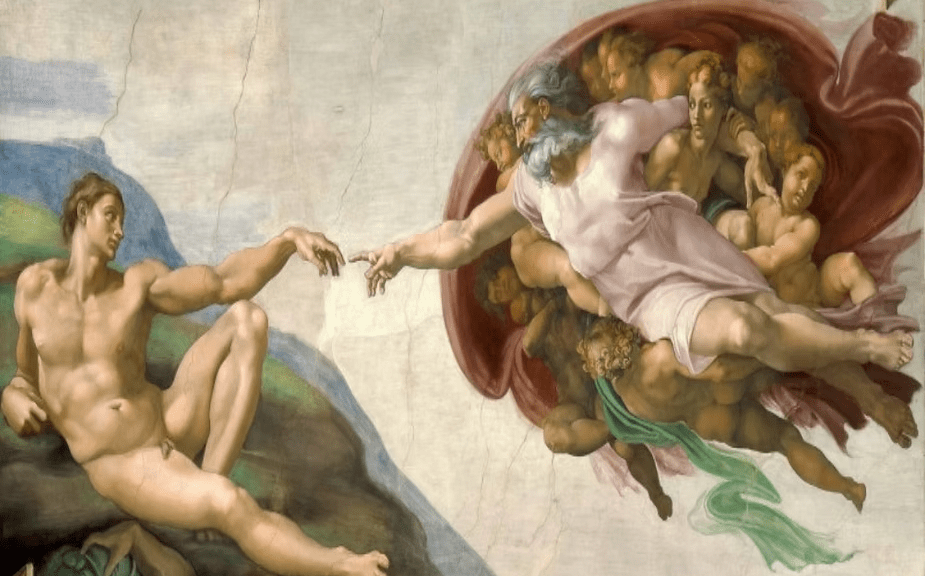
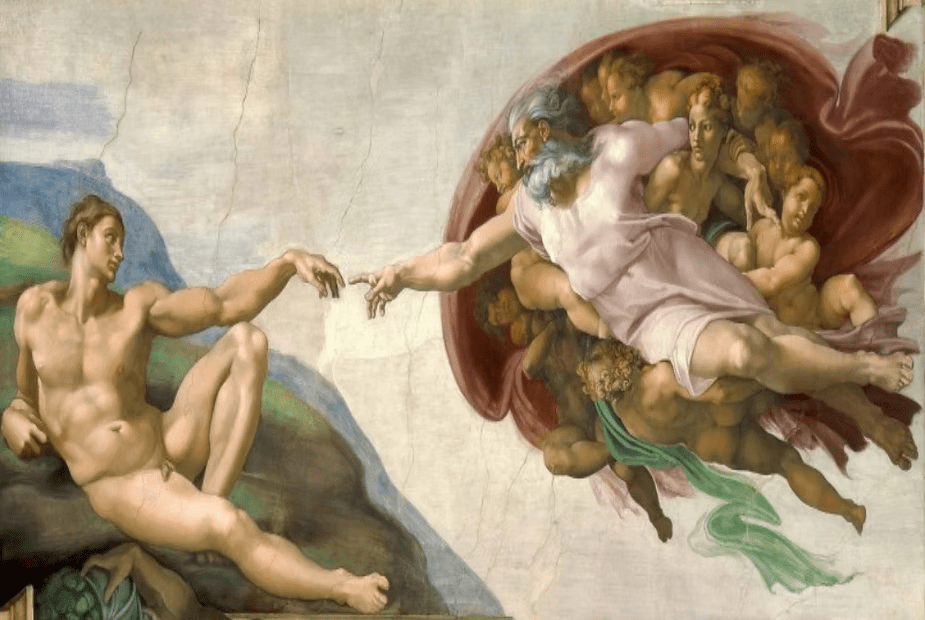
Yahweh elohim said, “It is not good that the man should be alone; I will make him a helper as his partner.” So out of the ground Yahweh elohim formed every animal of the field and every bird of the air, and brought them to the man to see what he would call them; and whatever the man called every living creature, that was its name. The man gave names to all cattle, and to the birds of the air, and to every animal of the field; but for the man there was not found a helper as his partner. So Yahweh elohim caused a deep sleep to fall upon the man, and he slept; then he took one of his ribs and closed up its place with flesh. And the rib that Yahweh elohim had taken from the man he made into a woman and brought her to the man. Then the man said,

“This at last is bone of my bones and flesh of my flesh; this one shall be called Woman, for out of Man this one was taken.”

Therefore a man leaves his father and his mother and clings to his wife, and they become one flesh.

——————–

This is the Track 2 Old Testament reading that will be read aloud if a church is following the Track 2 path during Year B. It will be read on the nineteenth Sunday after Pentecost [Proper 22], according to the lectionary for the Episcopal Church. If read aloud, it will be paired with a singing of Psalm 8, which includes the verse praising, “You have set up a stronghold against your adversaries, to quell the enemy and the avenger.” Those will precede the Epistle reading from Hebrews, where Paul wrote, “It was fitting that God, for whom and through whom all things exist, in bringing many children to glory, should make the pioneer of their salvation perfect through sufferings.” All will accompany the Gospel reading from Mark, where is written: “Some Pharisees came, and to test Jesus they asked, “Is it lawful for a man to divorce his wife?”’

In 2018, the last time this reading came up in the lectionary cycle, I wrote my observations and posted them on my website. I placed focus on the genetics of ‘Adam’s rib,’ which is the remarkable truth that is to be found in this reading. Therefore, I firmly stand behind what I wrote three years ago, as I feel it is necessary to see that truth come forth. I invite all readers to search this site and read what I wrote then, as it still applies today. Again, I welcome comments, questions, suggestions and corrections. However, at this time I will take a different angel approach to this reading, as it is an anchor for all the readings on this Sunday.

In the above translation I have amended the text to show the specific combination of words written (four times) that are “Yahweh elohim.” In all of these places, the NRSV [like all translators] states this simply as “the Lord God,” as if saying “the Lord” was not enough for Moses (the author), feeling the need to specify, “Oh, you know the God Lord, not just any old Lord.” That ridiculousness [putting words into the mouth of a Son of man (Moses)], when translators would not know Yahweh if He spoke to them in a dream, denies the obvious truth that says “el” translates as the singular “god” [not capitalized] and “elohim” translates as the plural “gods” [again, not capitalized].

In Genesis 1 Moses recited for rote memorizers to eventually put down on scroll parchment the word “elohim” thirty-two times. Not once did Moses [who was told by God, “Tell them I Am That I Am … or Yahweh for short.”] have the memorizers memorize the name “Yahweh.” Genesis 1:1 begins by stating, “In the beginning created elohim.” That infers creation was all possible only by Yahweh, so the first step in that process was the creation of “elohim” or little-g gods. Call them angels or call them the laws of physics, all of them are eternal beings and none of them possessed material bodies, as that was the point of the Creation: from the Spiritual came the material.

Now, the people who try to build ladders to stand on, which makes them feel higher than Yahweh [call them science worshipers], they like the idea that Genesis 2:1-3 was written by some guy they call “E” [short for the “Elohim writer”]. They theorize that “E” wrote Genesis 1 and then began to write Genesis 2, but somebody yelled out “Break time!” so E ran off, never finishing Genesis 2. The Big Brains figured out that E left a piece of scroll mostly unused, so this “J” guy [the Germans pronounce a “Y” like a “J”, so this is who they presume is the “Yahweh writer,” or “Yahwehist”] comes in and finishes Genesis 2, where he writes “Yahweh elohim” (in that exact same order) eleven times. So, rather than be devoted to Yahweh and asking Him to guide their understanding of this change, the eggheads say, “E wrote Genesis 1, which includes Genesis 2:1-3 as the end of Genesis 1; and, J wrote Genesis 2:4 through Genesis 4.

By seeing the word “elohim” as clearly meaning the “gods” created by Yahweh, to create the physical realm (by His design), it is then a simple adjustment in the minds of divinely led readers, to see the seventh day [a day we still live in today] as being when “Yahweh elohim” were “gods” possessed by Yahweh Himself. Two, in particular [Man and wife], would be angels placed within bodies of flesh, formed by the hand of God. This is then the creation of the first Saint, the one we love to call “Adam,” and the first “Saint” [the French would denote gender as “Sainte”], the one we love to call “Eve.” By being “saints” they were “Yahweh elohim,” while all the human beings [male and female, made by the elohim on day six] were not elohim and did not have a clue who Yahweh was. So, Yahweh created “Yahweh elohim” for the purpose of sending them to earth as the first priests of Yahweh [ergo teachers of religion].

In these verses, when it seems as if “Yahweh elohim is more like Yahweh talking to Himself [the Lord God], this should be read in multiple ways. First, in the Creation of the first “six days” [eons of time uncalculatable otherwise], when “elohim” means all kinds of spiritual, unseen presences directing things [aka “matter”] to form. These same “spirits” were the heavenly host who stayed closest to Yahweh, as “Yahweh elohim.” Second, “Yahweh elohim” can be seen as the soul that was to be placed into the body that would be a divine “man.” Because a soul is only a creation of Yahweh, those creatures created on “day six” by the elohim, using Yahweh’s design, were all life souls that came from Yahweh, but because they were not directly formed from earth by Yahweh, they were simply life forms – souls in bodies of flesh – unable to hear the voice of Yahweh. This means the soul of Adam was a “Yahweh elohim” before it was placed into an earthly form. Third, once the soul of Adam was in his body of flesh, he became a “Yahweh elohim” that had form. In a body, Adam was able to communicate with Yahweh directly.

At this time, when in Eden (the garden or enclosure), Adam (man) was like a demigod, rather than a pure human being, meaning he did not age fast, although he did age, because he was formed from the earth. Just like a “day” of Creation is an unfathomable number of years in earth time, the forming of Adam in Eden cannot be seen as being fixed, according to the conception of time human beings accept. Thus, from his infancy, Adam was able to communicate with Yahweh, as an elohim in the flesh, which could have placed Adam in this protective environment for quite some time, relative to the geological and archeological assessments of the earth’s age.

In this selected reading, the Hebrew word “ezer” is written, which means “helper.” This is after we read Adam was “alone.” The Hebrew word translated as “alone” is “bad” [transliterated “lə·ḇad·dōw”], but the word better states “separated” or “apart.” This should be understood as Adam being created in something akin to a bubble, where he existed in the flesh on the earth, but not part of all the other things existing in the flesh on the earth. Think of this like Hollywood loves to present ‘haunted houses,’ where ghosts live in the same place, but in different states of being that keep one from knowing the other is there.

This means a “helper” should be seen as a necessary aid for all souls, such that in all life forms on earth none can exists in solitary. This becomes the way lifeforms congregate in numbers of their own species, such that all souls in the flesh are social creatures. The reason there is “safety in numbers” is because many provide help that otherwise would be absent. Therefore, Yahweh created ‘special’ animals (not necessarily the creatures that existed on the earth – like giant fish, lizards and fowl called dinosaurs) that could see Adam and Adam could see and touch them. That social interaction was then a help to Adam.

The aspect of Adam being able to name animals is a statement that divine communication existed. As this occurred well before the Greek and Roman Empires arose and the languages of Greek and Latin were created, such that this is less a statement about phylum and genus being determined, this takes one down to the individual relationship level, where each and every creature [“every animal of the field and every bird of the air”] had a personal relationship with Adam. I imagine language in this rudimentary era means human beings grunted like animals, with their grunts understood; so, language was more telepathic than oral. More than a lion being called a “lion,” the meaning here is something like: “Adam called that lion Rusty,” because Adam asked the lion what its name was and was told, “I like the name Rusty, because my fur is red.” The animals all had souls that could communicate divinely.

This is where it must be realized that Adam and all the animals were divine creatures, not simply those animals created on days five and six. The creations on days five and six (including the fish of the sea) all needed to breathe, eat and drink to live, mate to propagate their species, and age from birth to death. Those creatures created by Yahweh elohim on the seventh day, in the garden of Eden, were of divine nature in form, thus none of them needed to kill or be killed, none needed to breathe, or eat food and drink, and mating and aging were unnecessary. The fruit from the two trees in the center of the garden must be seen as spiritual food, not physical food. To eat only the fruit from the tree of life means there was no necessity to breathe air. Life was the presence of Yahweh within them all, making all creations of day seven in Eden be Yahweh elohim. They were essentially angels placed in physical bodies of flesh.

When we read [NRSV], “but for the man there was not found a helper as his partner,” the Hebrew translated as “helper as his partner” is (transliterated) “‘ê·zer kə·neḡ·dōw” [from “ezer neged”], which actually says, “helper opposite to.” This says Adam [a male form, albeit sterile, like a child] not only had no other forms of flesh holding a divine soul that were human, but he had no other souls in human form that were his opposite [a female form, albeit sterile, like a child]. This is where the DNA genetics is important to catch.

Yahweh certainly had the ability to whip up some more earth (like He did making the divine animals of Eden) and make a female version of Adam. Because Yahweh did not do that, each of the creations He personally crafted as Yahweh elohim had a most specific genetic code. For Yahweh to make a female like Adam would be the difference between the elohim creating Neanderthals and Cro-Magnons – similar, but different. Each creation had a specific DNA sequence, so as each were made, “male and female elohim made them.” Each species was made as opposites, so each could mate and propagate on the earth. Yahweh, of course, played a role in the formation of babies and the breathing in of souls, in all species.

When we read, “Yahweh elohim caused a deep sleep to fall upon the man, and he slept,” sleep must be seen as metaphor for death. Since a soul cannot die, being an eternal being – an elohim – death means the separation of the soul from the physical form. Just as Lazarus was “only sleeping,” Jesus knew Yahweh had placed the soul of Lazarus outside his body of flesh, with the plan being to restore that flesh to life, by returning the elohim to it. In this case with Adam, his soul was taken away so Yahweh could duplicate his DNA code in a second body of earth, with the difference being instead of an XY sex chromosome, the opposite form would be made XX. When two opposite forms of flesh were complete, the soul of Adam was returned to his male form, while the soul of Eve was breathed into the female form.

Again, because Adam had no opposite prior, there was no need for him to be making babies in Eden. One can assume that Adam was created in the bubble of an womb, which would have been with the Yahweh elohim that is Mother Earth. As such, baby Adam would take an unknown amount of heavenly time to grow and develop to something like a ten-year old child. Eve would have been made the same, again using the divine egg of Mother Earth and her Yahweh elohim womb. This would mean Eve was given to Adam in the same way a son would be allowed to hold his new baby sister, having come from the same parents. The ‘age difference’ would be planned as appropriate for a male to have a younger wife. Still, Adam and Eve were more like identical twins at different stages of development, more like brother and sister than husband and wife.

When we then read of Adam saying, “This at last is bone of my bones and flesh of my flesh; this one shall be called Woman, for out of Man this one was taken,” this is him being presented a new ‘animal’ to name, just as he had been presented other creatures of the air and ground. By saying, “This at last is bone of my bones and flesh of my flesh,” Adam recognized Eve was his opposite, of the same species, not an animal and not a different type of man. Because the only difference was in sexual orientation, he said, “this one shall be called Woman, for out of Man this one was taken.” In that, the Hebrew needs to be realized, as the word meaning “man” as a sexual statement is “ish,” and the Hebrew word for “female, woman, wife” is “ishshah.” In other words, Adam named Eve “the opposite of me.”
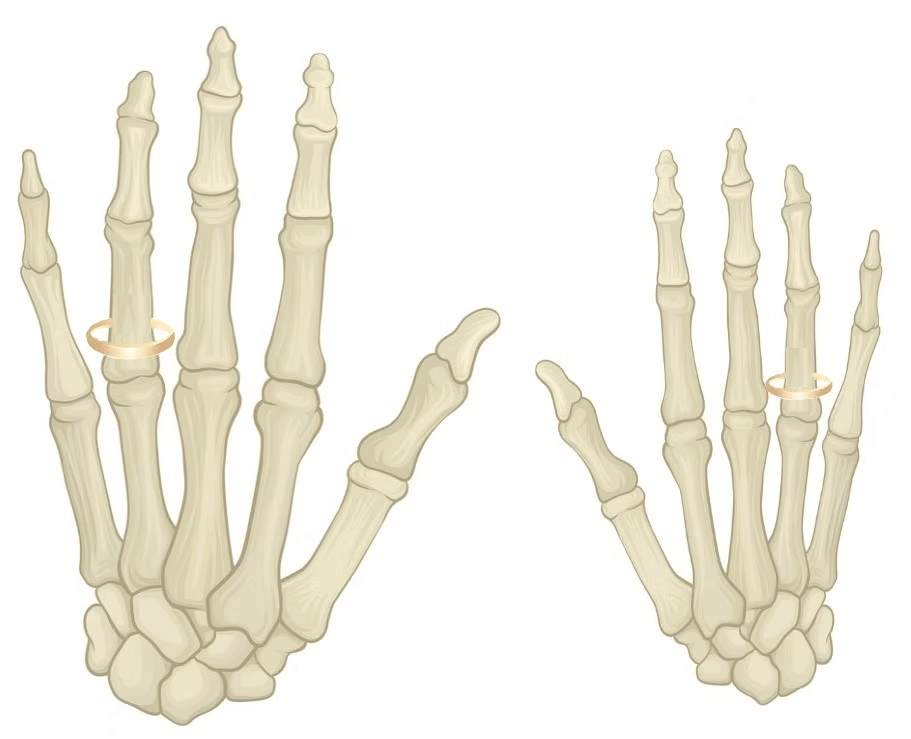
This then leads to the concluding verse that says [NRSV], “Therefore a man leaves his father and his mother and clings to his wife, and they become one flesh.” Jesus will bring this out in the Gospel reading from Mark, when talking to Pharisees about divorce. This is seen as a statement of marriage; but Adam was not old enough to realize what the purpose of marriage was. The translation of “ishshah” as wife, when in Adam’s mind he was saying “female,” means Adam knew that he (“man” – “ish”) and Eve (his sister, “ishshah”) came from a “father” and a “mother,” which means a child has both – without a clue what makes a “father” be that and a “mother” be that as well. To Adam [the equivalent of a ten-year old boy], Yahweh and Earth were Yahweh elohim; and, those two kept bringing him new creations to name. Now, they had brought him a female form of himself, so the two opposites made one whole, both of the same flesh.

If one jumps ahead in the banishment portion of this story (Genesis 3), one sees how the punishment of sin would mean all the realities of men and women living as mortals on the earth, with all the pains of childbirth and parenthood completely unknown to both Adam and Eve. Thus, the “cleaving, clinging, or joining” [from “wə·ḏā·ḇaq,” rooted in “debaq”] actually means “keeping close” as the same species, with the exact DNA chromosome count. The divine element that comes from this [because Adam was a Yahweh elohim] says Adam was paired with another Yahweh elohim like himself, both him and Eve having come from the merger of Yahweh and Earth, as divine, which is better than being simply human. This needs to be seen as why Jesus responded to the Pharisees that divorce was adultery, in the same way that rejecting a soul’s marriage to Yahweh was sinful. One needs to marry one’s soul to Yahweh, in the same way that the DNA of a sperm merges with the DNA of an egg – all split and rejoined by the Hand of Yahweh – so the union of the two can never be separated or torn asunder.

As the Track 2 Old Testament reading for the nineteenth Sunday after Pentecost, when one’s own personal ministry for Yahweh should already be well underway, the lesson here is divine marriage to Yahweh. One is called to be the wife of Yahweh so one’s soul is made into a Yahweh elohim. Because Eve had been created and handed into Adam’s arms, he proclaimed that both men and women could become Yahweh elohim, as souls born from the father and the mother that were Yahweh and elohim. Both could be one in the flesh. Ministry is all about this divine marriage. The message to preach is the truth of divine marriage, which is the truth of marriage as a Sacrament. Marriage of this divine nature cannot be given to anyone else. It is up to each soul to bow down before Yahweh and receive His Spirit. Then, ministry is spreading the truth so others will seek to do likewise. Only in that way can a Saint pass on the sacredness of divine marriage.
Hebrews 1:1-4; 2:5-12 – The angels of God

Long ago God spoke to our ancestors in many and various ways by the prophets, but in these last days he has spoken to us by a Son, whom he appointed heir of all things, through whom he also created the worlds. He is the reflection of God’s glory and the exact imprint of God’s very being, and he sustains all things by his powerful word. When he had made purification for sins, he sat down at the right hand of the Majesty on high, having become as much superior to angels as the name he has inherited is more excellent than theirs.

Now God did not subject the coming world, about which we are speaking, to angels. But someone has testified somewhere,

“What are human beings that you are mindful of them, or mortals, that you care for them?

You have made them for a little while lower than the angels; you have crowned them with glory and honor, subjecting all things under their feet.”

Now in subjecting all things to them, God left nothing outside their control. As it is, we do not yet see everything in subjection to them, but we do see Jesus, who for a little while was made lower than the angels, now crowned with glory and honor because of the suffering of death, so that by the grace of God he might taste death for everyone.

It was fitting that God, for whom and through whom all things exist, in bringing many children to glory, should make the pioneer of their salvation perfect through sufferings. For the one who sanctifies and those who are sanctified all have one Father. For this reason Jesus is not ashamed to call them brothers and sisters [“adelphous”], saying, “I will proclaim your name to my brothers and sisters [“adelphois”], in the midst of the congregation I will praise you.”

——————–

This is the Epistle reading to be read aloud on the nineteenth Sunday after Pentecost [Proper 22], Year B, according to the lectionary for the Episcopal Church. It will follow one of two pairs of Old Testament and Psalm readings that will be either Track 1 or 2, depending on the church’s course set for Year B. Track 1 will focus on a reading from Job, which states, “One day the heavenly beings came to present themselves before Yahweh, and Satan also came among them to present himself before Yahweh.” Psalm 26 sings, “I will wash my hands in innocence Yahweh, that I may go in procession round your altar.” The Track 2 Old Testament reading is from Genesis, stating, “A man leaves his father and his mother and clings to his wife, and they become one flesh.” Psalm 8 then sings, “You have made him but little lower than the angels; you adorn him with glory and honor.” Whichever are chosen, all will accompany the Gospel reading from Mark, where Jesus said, “Let the little children come to me; do not stop them; for it is to such as these that the kingdom of God belongs.”

I wrote about this reading and posted my views on my website the last time it came up in the lectionary cycle [2018]. That commentary can be read by searching this site. At that time, I went deeply into discerning this reading, because all of the Epistles are written in language that seems to make sense; but it is so much deeper than first caught that readers without the time (and devotion) of a true Christian will walk away, leaving much left behind. Because I went to such depth, I will not repeat that here now. I welcome all readers who would enjoy seeing how the depth rises to read that three-year old posting and send their comments, questions, suggestions and corrections to me. For today, I will take a different approach.

In the above English translation, you will note where I placed the repeated word “angels” in bold type. Any time that a word is repeated in Scripture [in the same text] it takes on greater importance. I have also stricken out the words not written (“and sisters”) as that is a distraction produced by modern slavers, who pander to the sexuality of humanity, not attempting to explain why men and women Christians are all “brothers.” Still, my primary focus now is on Paul having written about “angels.” These selected words, coming from two chapters in his epistle to the Hebrew-speaking people (Jews) of Rome, were so chosen because of the “angels” in both Old Testament readings of today; and, that is where I am going with this analysis today.

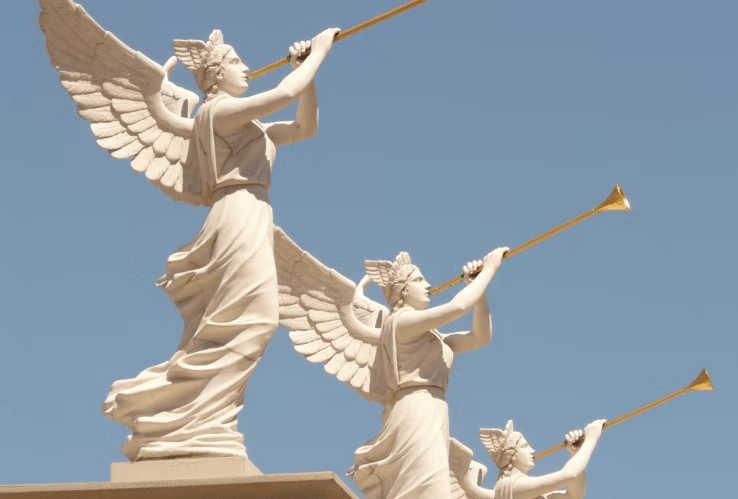
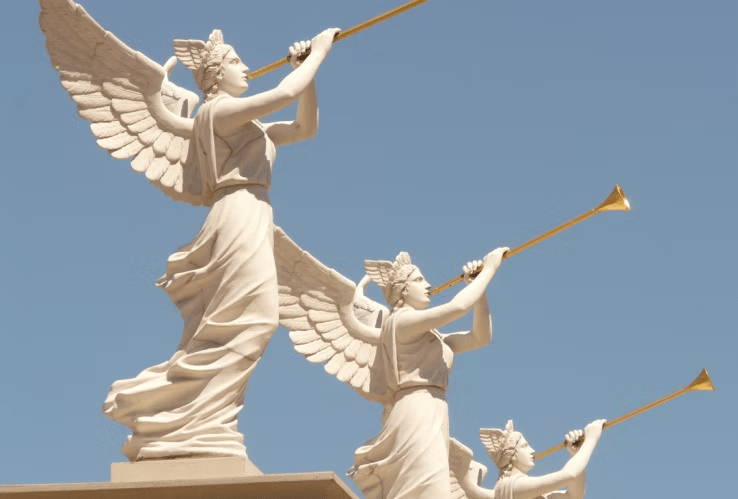
In the reading [Track 1 course] from Job, we read “One day the heavenly beings came to present themselves before Yahweh, and Satan also came among them to present himself before Yahweh.” [My adjustments replace “Lord” with the proper name written in the text.] In that, the Hebrew words translated as “heavenly beings” are [transliterated] “bə·nê hā·’ĕ·lō·hîm.” That Hebrew text actually says “sons of gods,” where the lower-g “gods” are “elohim.” It is vital for all who seek to become true Christians, those that Paul wrote of here [and in all his letters], to learn the word “elohim,” because “elohim” are “angels.” The meaning of “angels” is then eternal spirits that have no material form and are not confined within the parameters and limitations of a physical realm. We imagine them with wings; but that human view is an addition that makes “angels” have the ability to fly like birds.

In my analysis of the Job reading, I pointed out how “Satan also came among [the sons of elohim] to present himself before Yahweh” means Satan was not yet a “fallen angel.” That made me see [for the first time] that Job is actually Adam. In the Creation story of Genesis 1, there are thirty-two references to “elohim,” with zero references to “Yahweh.” The assumption has to be that Genesis 1:1a saying, “In the beginning created elohim” means an unnamed Yahweh first “created elohim,” or “angels.” The “elohim” are thus the ‘worker bees’ of the One God – Yahweh.

In the above English translation of Hebrews 1 and 2, I have underlined seven times where Paul wrote “God.” Of those seven, two in chapter one are assumptions deduced from “autou” having been written [“of him”] and three in chapter two are likewise leading translations, not what was actually written. Twice [once in chapter one and once in chapter two] are capitalized forms of “Theos” written, which clearly states “God.” The only point I wish to make about this is Greek is a different language than Hebrew. Although Paul was a Jew [obviously who spoke Hebrew], he wrote “Theos” [“God”] and “angelous” [“angels”], while meaning “Yahweh” and “elohim.” That is important to always keep in mind.

In the Genesis 2 reading, four times “Yahweh elohim” is translated as “Lord God.” That mistranslation keeps one from realizing that the making of Adam [“ha-a-dam”] means his soul was taken from the “elohim” and placed into a body formed from the earth. In the same way, divine creatures [beasts of the field and birds of the air] were made for Adam to have playmates. When Adam went into a “deep sleep” [metaphor for the removal of his angelic soul from his body of flesh, or death] a duplication of his DNA made a separate body of flesh that would be given the angelic soul of Eve. One has to see that the reason this Old Testament reading goes with this Epistle from Paul is because the “angels of God” were no longer only non-material. The creations of Yahweh in Eden were the first of the Sons of man, who are “Yahweh elohim.”

When Paul wrote, “he sustains all things by his powerful word,” this was referencing those in human form [“prophets”], including Jesus [“a Son”]. The aspect of Yahweh creating Adam [“a Son”] means that creation by the hand of God became the prototype for all who are sustained by the “word of God.” Thus, when Paul added, “having become as much superior to angels as the name he has inherited,” this “having become” is the divine possession that makes a “Yahweh elohim” or an “angel of God,” which is “superior” to being mere mortals [souls in flesh]. The “name inherited” is “Jesus,” which means “Yah[weh] Saves.”

Paul then wrote these words, which come from Psalm 8, which is the companion song of praise to the Genesis 2 reading option:

“What are human beings that you are mindful of them, or mortals, that you care for them? You have made them for a little while lower than the angels; you have crowned them with glory and honor, subjecting all things under their feet.”

In that quote in Greek, of the Hebrew that was written by David, verse four shows “human beings” and “mortals” as translations from “anthrōpos” and “huios anthrōpou.” The Greek literally says, “human” and “son of man.” The transliterated Hebrew written by David is “’ĕ·nō·wōš” [“enosh”] and “ū·ḇen-‘ā·ḏām” [“ben adam”], literally saying “mankind” and “son of man”. Because Jesus referred to himself as a “Son of man” [with a capitalized “Huios”], the Hebrew that states “son of Adam” should be read as “Yahweh elohim,” when the questions are on Yahweh being “mindful” and “caring” of those “sons of man.”

When David sang of those like himself, who was Anointed by Yahweh, thus one of Yahweh’s Christs (as King of Israel-to-be), it was by the hand of Yahweh that he was “made for a little while” to be an “angel” in the flesh [Yahweh elohim]. The flesh, being from material substance, is lower than that of divine spirit, as are angles [elohim]. David’s use of “tə·‘aṭ·ṭə·rê·hū” [from “atar”], as “you have crowned,” and “tam·šî·lê·hū” [from “mashal”], as “you have made him to have dominion,” sings of the kingly presence of Jesus being resurrected within one’s body of flesh – as a Saint.

Seeing that as the reason Paul quoted David, as Paul was one whose soul had married Yahweh and was a resurrection of Jesus within, Paul then wrote: “We do see Jesus, who for a little while was made lower than the angels.” That says Jesus was in the flesh, thus visible to human eyes. Jesus of Nazareth was a real human being that walked and talked like other real human beings. He was not invisible, as would be an “angel” or “elohim.” However, Jesus was an “elohim” that had been made by the hand of Yahweh to be in the flesh “for a little while.” After thirty-something years in the flesh, Jesus the elohim was freed from his flesh, so that elohim could be reborn in countless others of flesh, who submitted to Yahweh the King and Jesus His High Priest. That is the meaning of Paul writing, “so that by the grace of God [“Theou”] he might taste death for everyone.”

When Paul then wrote, “For the one who sanctifies and those who are sanctified all have one Father,” that says: A. The elohim that is the angel of Jesus sanctifies sinful flesh; B. All who have been reborn with the elohim of Jesus have become Saints; and, C. The elohim of Jesus and all who are reborn as the elohim of Jesus come from the hand of Yahweh, so all have the same “Father.” This is then a mirror image of Genesis 2, when Adam stated, “This at last is bone of my bones and flesh of my flesh; this one shall be called wife, for out of mankind this one was taken.” To become a Yahweh elohim means to become the wife of Yahweh, taken from being a mere mortal and transformed into Jesus Christ.

As the Epistle reading to be read aloud on the nineteenth Sunday after Pentecost, when one’s own personal ministry for Yahweh should already be well underway, the lesson that needs to be seen is to stop being a mere mortal and transform into an angel of God [a Yahweh elohim]. That means being a Saint; and, it means Jesus again entering ministry [in another’s flesh] so others can be divinely led. It means being another in a long line of “prophets” who are “sustained by his word.” It means being an angel that can be seen, so others can believe and find faith.

Mark 10:2-16 – Letting no man tear one’s soul asunder

Some Pharisees came, and to test Jesus they asked, “Is it lawful for a man to divorce his wife?” He answered them, “What did Moses command you?” They said, “Moses allowed a man to write a certificate of dismissal and to divorce her.” But Jesus said to them, “Because of your hardness of heart he wrote this commandment for you. But from the beginning of creation, ‘God made them male and female.’ ‘For this reason a man shall leave his father and mother and be joined to his wife, and the two shall become one flesh.’ So they are no longer two, but one flesh. Therefore what God has joined together, let no one separate.”

Then in the house the disciples asked him again about this matter. He said to them, “Whoever divorces his wife and marries another commits adultery against her; and if she divorces her husband and marries another, she commits adultery.”

People were bringing little children to him in order that he might touch them; and the disciples spoke sternly to them. But when Jesus saw this, he was indignant and said to them, “Let the little children come to me; do not stop them; for it is to such as these that the kingdom of God belongs. Truly I tell you, whoever does not receive the kingdom of God as a little child will never enter it.” And he took them up in his arms, laid his hands on them, and blessed them.

——————–

This is the Gospel selection that will be read aloud by a priest on the nineteenth Sunday after Pentecost [Proper 22], Year B, according to the lectionary for the Episcopal Church. It will follow one of two pairs of Old Testament and Psalm readings, either Track 1 or Track 2, depending on the individual church’s path for Year B. Track 1 will feature a reading from Job, where Satan was allowed by Yahweh to test Job’s faith. Psalm 26 sings, “As for me, I will live with integrity; redeem me, Yahweh, and have pity on me.” Track 2 features a reading from Genesis 2, when Yahweh made Adam’s opposite companion, Eve. Psalm 8 then sings, “You have made him but little lower than the angels; you adorn him with glory and honor.” The Epistle from Hebrews will then be read, where Paul wrote, “When he had made purification for sins, he sat down at the right hand of the Majesty on high, having become as much superior to angels as the name he has inherited is more excellent than theirs.”

I wrote about this reading the last time it came up in the lectionary cycle (2018) and posted those views on my website back then. That commentary is available to be read on this website; and, it can be found by searching this site. That article is quite deep with reflections and background that deal with the issues of marriage and having children. I stand firmly behind my opinions expressed then; and, I invite all readers to read those observations and compare them to those I will add here soon. As always, I welcome comments, questions, suggestions and corrections via the website contact form or signup and comment on the blog article as a regular visitor. Now, I will address some views that take this reading in the whole-view of the other readings presented with it.

Jesus quoted from Genesis in his response to the question on divorce, presented to him by “some Pharisees.” When he said, “God made them male and female,” this comes from the day six, where the Hebrew translates as “in the image elohim it created with him, male and female it created them.” In the English translations that take “elohim” [meaning “gods”] and have it state “God” [thirty-two times “elohim” is translated as “God” in Genesis 1], means examination of Jesus saying “God” [in Greek] needs to take place.

What is found in the Greek of Mark is this: “arches ktiseōs , Arsen kai thēly epoiēsen autous”. In that, there is no capitalized use of “Theos,” meaning “God.” What is written that Jesus said is this: “beginning of creation , Male kai female it made them”. In that, the Greek word “epoiēsen” is written in the third-person [he, she, it] aorist [past] active indicative [speaking of the past in the present], meaning “it made.” One must also take note that “Male” is capitalized, which gives it a divine level of meaning, which can be seen as a statement about “Adam,” which was the divine “Male” first made by “Yahweh elohim.” (Genesis 2) It is also important to read this as a sexual statement (“Male”), rather than a statement of mankind or man. The presence of the word “kai” marks importance to follow, such that “female” is a statement that reproduction demanded a sexual counterpart to “Male,” in order for generation to take place. By quoting Genesis 1, Jesus was saying marriage was an intended union of a male and a female, for a species to grow. However, by making divine importance be places on “Male,” as Adam, Jesus did not quote Genesis 2, but spoke of the focus that comes from the reading that accompanies this reading in Mark, from Genesis 2.

It is in Genesis 2:24 that Jesus quoted, “For this reason a man shall leave his father and mother and be joined to his wife, and the two shall become one flesh.” In this translation, the confusion comes from “gynaika” being translate solely as “wife.” The word also means “a woman” (Strong’s Definition) or “my lady.” (Strong’s Usage) In the Hebrew of Genesis 2:24 is written “bə·’iš·tōw” [transliterated], which is rooted in “ishshah,” meaning “woman, wife, female.” Because this verse tells of Adam having been presented the baby that is customarily named “Eve,” to assume Adam knew what a “wife” was is poor judgment. The words of Adam, repeated by Jesus, are the truth coming from a child’s mind that expressed joy that he [the “Male” of Yahweh and Earth, “father and mother”] now had another human being as a playmate [previously he only had animals to play with], and that playmate [more like a twin sibling] was a “female.” Seeing that intent behind the words spoken by Adam, that makes it possible to understand this is not a plan of Adam’s for making babies [the sole purpose of a “wife”].

In the mind of Adam [I surmise his brain was as developed as a ten-year old boy], he was happy that he had another of the same species. As such, he did not name Eve, he said now “male” has a “female” [from “ish” comes “ishshah”]. Because Adam had not come from human parents, his “father” was “Yahweh” and his “mother” was the “elohim” that was Mother Earth, he was not thinking like ordinary human boys think. Thus, in the mind of a ten-year old boy, he was celebrating a “Yahweh elohim” [a divine soul in a body of flesh] that was not only “Male” [him, Adam], but also one that was “female” [the one we love to call Eve]. As such, Jesus was not quoting Genesis 1 and Genesis 2 as examples of what Moses said about human marriage, but what Moses was told by Yahweh to write down as an example of divine marriage that should take place between a soul and Yahweh, in a body of flesh.

When Jesus stated, “What God has joined together, let no one separate” [using the capitalized Greek word “Theos”], this is speaking of divine marriage. In the aspect where a man and woman marry and become husband and wife, then father and mother, they can never do more than get real close and feel as one flesh. A man and a woman will always remain that. The two are capable of reproduction because of possessing bodies of flesh that have opposite reproductive organ; but still, all a man can do is leave a sperm deposit within a woman’s vagina.

Everything that happens beyond that deposit is done by elohim, who were created by Yahweh’s design. Sperm swims as “gods.” An egg rejects all but one particular sperm as one of the “egg gods” inside a woman’s body of flesh. The splicing of DNA, the RNA-transfer, the re-splicing together are done by “elohim,” guided by the hand of Yahweh. The entire growth of the fetus in the womb is done by “elohim,” guided by the hand of Yahweh. Thus, once Yahweh has made a baby, from the parts of a father and a mother, to abort that baby or kill it unnaturally is sinful; but that was still not the point made by Jesus.

In the argument presented by the trickster Pharisees, their question about divorce should be seen as motivated by a reading from the Torah or a Psalm that dealt with marriage. According to the Wikipedia article “Jewish views on marriage,” they state: “In traditional Judaism, marriage is viewed as a contractual bond commanded by God in which a man and a woman come together to create a relationship in which God is directly involved.” In Deuteronomy 24:1 is stated the aspect of a divorce. This was what Jesus referred to, but when he said, “Because of your hardness of heart he wrote this commandment for you,” that was a statement about what a “contractual bond commanded by God” means. Because the Pharisees were just pretending to be in a relationship with God, it was their hardened hearts that kept their souls from marrying Yahweh and being true Israelites.

Because Jesus told the Pharisees their souls [metaphor for “hearts”] were cold, that said they had no real love of Yahweh. To them, Yahweh was just the God who made them special, as chosen people. They had absolutely no concept that marriage [as Jews understood it, contractually … being lawyers] was possible in any way other than by physical pairings. To them, it could only be between Jewish males and females, with many marriages arranged and plenty of adultery about, due to arranged marriages not being sexually pleasing. When Jesus said, “What God has joined together, let no one separate,” his disciples heard that like the Pharisees, who walked away muttering, “Yeah, right. Tell that to Moses. He knew why it was necessary for a contract of marriage allowing for divorce.” The disciples [all married men with children] probably knew well the difficulties of having a non-pleasing wife, to whom one was forever stuck, because of children.

Once the Pharisees were gone and Jesus and his disciples were inside the house where they were staying, the disciples asked why Moses would be wrong about allowing divorce. Jesus then spoke of the human lusts of the flesh, where all sex outside of marriage to a wife – the mother of one’s children – is adultery. Animals might do similar things, as far as being promiscuous and non-committal, but they have no brains that think like human beings. Humans have the option of divorce, because Moses knew human beings were just animals by nature. This makes sin be unavoidable, unless one’s soul is married to Yahweh; and, that was the whole point of Moses taking Israelites [not Jacobites] out of Egypt.

When Jesus then said, “Let the little children come to me; do not stop them; for it is to such as these that the kingdom of God belongs,” this reflects back on Adam being the equivalent of a ten-year old boy [regardless of how many ‘years’ he had lived in a body of flesh in Eden] and Eve was just a newborn baby girl. Both were of the same species, so their chromosome count made it possible for them to mate, after the serpent got involved; but, at that time, they were both two “Yahweh elohim,” formed not merely by a soul joined with a body of flesh, but divine angels placed in the womb of Mother Earth. Those children had become the marriage of their souls to Jesus, as divine human beings.

The “kingdom of God” is a body of flesh, so that flesh becomes the temple of the soul, where Yahweh sits enthroned. Jesus is the High Priest of that temple. Jesus was one of the Yahweh elohim to whom Yahweh spoke, before Adam was born. Adam was Jesus. All who are Saints are the same.

As the Gospel selection to be read aloud on the nineteenth Sunday after Pentecost, when one’s own ministry for Yahweh should already be well underway, the lesson here is to marry Yahweh and become the little child that welcomes being in the name of Jesus, as a child welcomes being in the arms of its Father. One has to know that state of being, in order to present it to others; so, they too will become that child in heart and soul.

Psalm 26 – Being governed by Yahweh so one walks with integrity

1 Give judgment for me, Yahweh,

for I have lived with integrity; *

I have trusted in Yahweh and have not faltered.

2 Test me, Yahweh, and try me; *

examine my heart and my mind.

3 For your love is before my eyes; *

I have walked faithfully with you.

4 I have not sat with the worthless, *

nor do I consort with the deceitful.

5 I have hated the company of evildoers; *

I will not sit down with the wicked.

6 I will wash my hands in innocence, Yahweh, *

that I may go in procession round your altar,

7 Singing aloud a song of thanksgiving *

and recounting all your wonderful deeds.

8 Yahweh, I love the house in which you dwell *

and the place where your glory abides.

9 Do not sweep me away with sinners, *

nor my life with those who thirst for blood,

10 Whose hands are full of evil plots, *

and their right hand full of bribes.

11 As for me, I will live with integrity; *

redeem me, XXXXX and have pity on me.

12 My foot stands on level ground; *

in the full assembly I will bless Yahweh.

——————–

This is the companion Psalm to be read aloud in unison or sung by a cantor following the reading of Job on the nineteenth Sunday after Pentecost [Proper 22], Year B, according to the lectionary for the Episcopal Church. In Job is written: “[Job] was blameless and upright, one who feared God and turned away from evil.” This pairing will precede a reading from Hebrews, where Paul wrote, “God did not subject the coming world, about which we are speaking, to angels. But someone has testified somewhere … You have made them for a little while lower than the angels; you have crowned them with glory and honor, subjecting all things under their feet.” All will accompany a reading from Mark’s Gospel, where is written: “[The Pharisees] said, “Moses allowed a man to write a certificate of dismissal and to divorce her.” But Jesus said to them, “Because of your hardness of heart he wrote this commandment for you.”

You will note that in six places I have restored the text written, as “Yahweh,” in bold type. In each of those places the English translation has erroneously shown “Lord.” That was not written. Additionally, in verse eleven you will find my insertion of “XXXXX.” This is to show my erasure of the NRSV translation [there may be other translators also, I don’t know] of “Lord,” where nothing was written in that regard, meaning it is a fabrication of Holy text. Because of these errors making everything presented be a paraphrase of what was actually written, with paraphrases having a tendency to mold themselves to personal, hidden agendas, I will not analyze the verses as translated. Instead, I will offer a literal translation into English and interpret from that.

Verse one literally says, “govern me Yahweh that I in my integrity have walked ; Yahweh I have trusted , not shall I waver .” In this, the Hebrew word “shaphat” begins this verse, meaning “to judge, govern.” This means David is placing immediate focus on his submission of self-will to that of Yahweh’s. For Yahweh to “govern” (or “judge”) David, Yahweh has to be married to David’s soul. This makes the theme statement for this song be relative to all souls, like David’s, who allow divine possession to guide one’s actions.

The Hebrew word “ani” means “I.” This must be seen as the equivalent of the Greek “ego,” which is a statement of “self.” When David stated “that I in my integrity have walked” (with “my” being a statement about the possession of self), the use of “I” and “my” says Yahweh has taken the role of “I” from David, although David gets credit for that guidance being perceived by others as his “integrity.” The Hebrew word “tom” means “completeness, integrity, also part of the high priest’s breastplate,” and the same word was used in Job 2:9, when Job’s wife asked Job why he still held onto his “integrity” [from “tom”]. This is then why this psalm is linked to the Job reading; and, “integrity” becomes a statement about one’s self being possessed by Yahweh, with that soul not wavering from that guidance.

When David used the first person form of “batach” in saying, “I have trusted,” this is the ego of David having faith in the presence of Yahweh leading his actions. It is the personal experience (“I”) that knows Yahweh through divine possession (“have trust”), not someone telling him about this, as an influence to believe. It is only from that personal possession experience that “trust” becomes the cornerstone of faith, which does not ‘waver.” Thus, David is establishing a song of praise that states his steadfast love of Yahweh, who is one with his soul.

Verse two then says, “try me Yahweh and test me , [refine] (my inward being) and my heart .” In this, “try me” and “test me” must be seen as one who understands metallurgical testing, where the combination of Yahweh with a soul is like the addition of carbon to iron, mixed with other metals. These metals are smelted with fire and pounded with hammers, to mix the elements together into a strong alloy, before quenched in oil or water, to prove the metal to be hard and strong.

In the second half of this verse, “refine” [“tsaraph”] becomes a similar heating process, but because this word appears in brackets, it should be seen as a statement that is non-physical. The brackets [not shown in translation] are an indication of the soul’s “refinement,” as opposed to the body being fused with a new Spirit. Then, following that soul’s testing, David wrote in parentheses “kilyah,” which literally means “kidney,” but reflects “inward parts” or “inmost being.” That should be seen as the soul. Again, the surrounding of this word with marks [brackets and parenthesis] show this not to be physical parts, but the soul of the body, now being alongside a Spirit of Yahweh. No longer just a soul in a body of flesh, Yahweh has joined as an overriding purifier. This becomes a test of purity, where “my heart” is a statement of one’s “soul” or “inner mind, mind, will” being made refined by the presence of Yahweh testing.

Verse three then says, “for goodness before my eyes ; and I have walked , in your truth .” This is David singing about his wearing the face of Yahweh, so the “goodness” of Yahweh becomes the face through which David sees. By having that divine face glowing upon his face [the sign of a true Saint – artistically depicted as a halo], the “I” of David has walked righteously. That path of righteousness is based on being shown the “truth” of the world, known by Yahweh. It also is the “truth” of the meaning of Scripture, which otherwise is overlooked and unknown.

Verse four then says, “not I have dwelt with men of emptiness ; and with pretenders , nor will I go in .” This is David singing about the company he keeps, as a wife of Yahweh. Those of his family, as well as those of his nation of people, all are likewise filled with the Spirit of Yahweh, from also having married their souls to Him. In David’s Israel, the name of the nation was a true reflection that all within its boundaries were truly “Those Who Retained God.” There were no ”pretenders,” where the Hebrew word “alam” means “to conceal,” where the meaning is to hide the fact that one’s soul has been retained for selfish purposes. David’s Israel found those out and converted them to welcome divine marriage or be banished. When David sang “I will not go in,” this says there was nothing offered by the Gentile peoples surrounding Israel that lured him to turn away from Yahweh, to seek their ways.

Verse five then sings, “I have hated the congregation of evildoers ; and with the criminal not will remain .” In this verse, David is saying that Israel still had those who broke the laws of Moses and promoted lives that were not righteous. Saul was an example of that. Samuel had sons who did not follow in his ways. So, there were pockets of people calling themselves Israelites, but who were the ones retaining their own souls, while doing lip-service to Yahweh and Moses. David is saying that one whose soul is married to Yahweh will find disgust in those who do evil works; and, he will not add any support to those who think of ways to sidestep Mosaic Law.

Verse six then says, “I will wash in innocence my feet ; so I will walk about your altar Yahweh .” Here, the Hebrew word “kaph” means, “hollow or flat of the hand, palm, sole (of the foot), a pan,” such that the standard translation would be “hands.” In the Tabernacle, according to the decrees of Exodus that a “bronze laver” was constructed for the priests of the Tabernacle to wash both their hands and their feet, before going to the altar of sacrifice. [Exodus 30:17-21] As feet are dirtier than hands, from walking in sandals in dusty ground, it is more important to see “feet” as that area [the sole or instep] least likely to be clean. The aspect of Jesus washing feet needs to be seen here. Each body in submission to Yahweh is a sacrifice upon His altar. Thus, the Hebrew word “sabab,” which means “to turn about, go around, surround,” is viable in translation as “will walk about.” As for “innocence,” instead of water to bathe in, the outpouring of Yahweh’s Spirit is the “innocence” that cleans a soul.

Verse seven then sings, “that I may hear of the sound of thanksgiving ; and relate all your wonders .” This is David singing that all who are the wives of Yahweh are not silent about His presence within them. There is the singing of praises for all He does. It is not just one guy telling everyone how wonderful it is, when no one else could hear that as anything more than selfish bragging. This sings of the widespread glory given Yahweh from His faithful.

Verse eight then says, “Yahweh I have loved the dwelling of your house ; and the standing place , tabernacle of your gloriousness .” In this, the first half of the verse sings about Yahweh “dwelling” within one’s being, such that David was the “house” in which Yahweh lived and gave him true life [eternal life]. The second half is then relating to the Tabernacle, where the Ark and the Covenant was where Yahweh rested between the Cherubim.

Verse nine then sings, “not do gather with the sinners my soul , not with men bloodthirsty for my life .” This is David singing about his knowing that there were enemies that wanted to kill him. This verse can be seen as the truth of Jesus saying to “love your enemies and pray for those who persecute you,” because “[Yahweh] causes his sun to rise on the evil and the good, and sends rain on the righteous and the unrighteous.” The way to love your enemy is to leave them alone to hate you, while you pray Yahweh will lead them to righteousness, without your presence igniting hatred within them. Faith in Yahweh working miracles without one’s presence needed elsewhere, which means sometimes it is better to stay in a state of love oneself, while others find the same.

Verse ten then says, “who in one’s hands a wicked scheme ; and whose right hand is full of bribes .” In this, the mention of both “hands” says one who plots evil against others has put his or her own soul in the “hands of wickedness.” This says “one’s hands are full,” which does not leave any room for anything other than evil doings. Because the “right hand” [“yamin”] is typically a statement of that which leads a soul, when it is holding “bribes” it has been paid by Satan in material gains, none of which will have any lasting value. Rather than be at the “right hand” of Yahweh, as His servant, with Him leading one’s soul, one’s soul has been sold for thirty pieces of silver.

Verse eleven is where the non-existent “Lord” was removed above. It literally sings, “but I in my integrity will walk , ransom me and show favor to me .” Following a verse that says the wicked will waste their time planning to get rich and powerful, at the expense of others, David is now saying his soul will not be distracted by such temporary profits. He will reject bribes because Yahweh will maintain his “integrity” and committed state of divine being. When the Hebrew word “padah is read as “ransom me,” rather than “redeem me,” David is saying he sacrifices himself to be the “bribe” that draws others to Yahweh. David is willing to be used by Yahweh, trusting that whatever happens to his body of flesh, his soul will be promised “favor.”

Verse twelve then says, “my foot takes a stance in uprightness ; in the assemblies I will kneel to Yahweh .” This sings of the stability that comes from having the “integrity” of David and the patience of Job in one’s soul, married to Yahweh’s Spirit. All who share this inner presence, as an “assembly” of His wives who are all known truly as Israelites, the kneeling to Yahweh is a restating of the wedding vows. All who acknowledge the Covenant as their contract to be the people of Yahweh, they must all “kneel” in submission of their souls to His presence, in order to live up to that agreement.

As the accompanying Psalm to the Job reading, to be read on the nineteenth Sunday after Pentecost, when one’s own personal ministry for Yahweh should already be well underway, the lesson here is stated in the theme of verse one: Let Yahweh govern your life, so you walk with the integrity of Job. Yahweh boasted to Satan how faithful Job was. It should be one’s ministry to be equally committed to walking with true faith that is unwavering. Only with that commitment can others see Yahweh on your face and feel His presence.

Psalm 8 – A little lower than angels

1 [1a] Yahweh adonenu, *

how exalted is your Name in all the world!

2 [2a] Out of the mouths of infants and children *

[1b] your majesty is praised above the heavens.

3 [2b] You have set up a stronghold against your adversaries, *

to quell the enemy and the avenger.

4 [3] When I consider your heavens, the work of your fingers, *

the moon and the stars you have set in their courses,

5 [4] What is man that you should be mindful of him? *

the son of man that you should seek him out?

6 [5] You have made him but little lower than the angels; *

you adorn him with glory and honor;

7 [6] You give him mastery over the works of your hands; *

you put all things under his feet:

8 [7] All sheep and oxen, *

even the wild beasts of the field,

9 [8] The birds of the air, the fish of the sea, *

and whatsoever walks in the paths of the sea.

10 [9] Yahweh adonenu, *

how exalted is your Name in all the world!

——————–

This is the accompanying Psalm for the Genesis 2 reading about Adam being handed Eve to name, which will be read aloud in unison or sung by a cantor on the nineteenth Sunday after Pentecost [Proper 22], Year B, according to the lectionary for the Episcopal Church. This pair will precede the Epistle reading from Hebrews, where Paul wrote, “Now in subjecting all things to them, God left nothing outside their control. As it is, we do not yet see everything in subjection to them, but we do see Jesus, who for a little while was made lower than the angels, now crowned with glory and honor because of the suffering of death, so that by the grace of God he might taste death for everyone.” All will accompany the Gospel reding from Mark, where Jesus said, “Let the little children come to me; do not stop them; for it is to such as these that the kingdom of God belongs. Truly I tell you, whoever does not receive the kingdom of God as a little child will never enter it.”

In the above translation, you will notice that I have renumbered the verses, so the reality of nine is shown [not ten]. The NRSV shows the proper numbering; but the Episcopal Church has found some unexplainable reason to alter divine Scripture, changing nine verses into ten. They take a portion of verse one and slip it into verse two, changing the rest of verse two, while then changing the remainder of verse two into verse three. They add the extra verse in the process. In addition to that, the first and last verses begin with “Yahweh adonenu,” which translates as “Yahweh of lords.” The NRSV translates this as “O Lord, our Sovereign,” while the Episcopal Church shows, “O Lord our Governor.” Because both are errors of translation, I have restored the written text.

My main resource for the translations of the Hebrew is the BibleHub Interlinear website. That site assigns names for Psalms and also adds headers for segments of other texts. None of these are part of the actual text, but they are taken from key words in the text. Other translation versions do the same, while others add nothing. The ‘title’ for this Psalm is “How Majestic is Your Name!” The NRSV applies one that says, “Divine Majesty and Human Dignity,” with others getting further away from what is written by David, as summations of the content. I feel the BibleHub Interlinear ‘title’ is most appropriate, simply because it includes the key term used in verse one, which is “name.” It must be understood that the only way a “name” has any greater power or glory, as far as Yahweh is concerned, is when His name is part of one’s being. That becomes a statement of marriage, when a Husband’s “name” is taken by the wife. That is when all “divine majesty” can be known.

In verse one, as well as its repetition as verse nine, the beginning words written by David are “Yahweh adonenu,” which literally translates as “Yahweh lords of us.” The plural form of “adon” [a singular “lord,” which is not written] is the possessive case, as “our lords.” That can be restated as “lords ours” or “lords of us,” as long as the plural number of “lords” is maintained. This specific form of “adon” [“adonenu“] is found written seven times in the Old Testament, with two of those times in this Psalm. All English translations show it in the singular, as “our lord,” which is not the truth of the word written. The truth is “adonay” [plural “lords”] is much like “elohim” [plural “gods”], in the sense that both words are referring to divine possession [“our” or “of us”]. The divine is “Yahweh.” Thus, “Yahweh adonenu” is a statement about David being one of the hands of Yahweh on the earth, whose souls are governed by His Spirit, making them take positions of importance as guides over other souls that need to be led to marriage to Yahweh. This whole song is praising that presence in David, as he was one of those experiencing “Yahweh lords of us.”

Verse one then literally says, “Yahweh lords of us , how majestic your name in all the land ; who have been given your majesty , upon the heavens .” In this, “how majestic your name” means the definition of “majestic” [from “addir”] must be realized as: “having or showing impressive beauty or dignity.” (Google search, Oxford Languages) To grasp that “Yahweh” is the “name” of “us lords” means “us lords” then display (“showing”), via Yahweh possessing many (“having”), “in the land” that is called Israel. Still, “earth” can be the translation of “eretz,” with that a statement of “matter” or “substance,” from which human flesh is made. That says the “majesty” that is Yahweh is then the “majesty” displayed in human form … on “earth.” This presence is through divine marriage, between souls and Yahweh’s Spirit.

This is then stated to be a “gift” [from “nathan”], as “us lords” “have been given” the “majesty” of Yahweh. When the word “shamayim” is translated as a physical entity – as “sky” or “heavens” – it loses the ability to be clearly seen as a statement of the spiritual. This last segment of verse one must be read as a statement about how “the majesty has been given,” as it is placed “upon the souls.” In “‘al-haš·šā·ma·yim” the preposition attachment (“al-“) should be read as “upon,” rather than “above” or “over,” although those additions state an elevated state of being as becoming part of the “majesty” felt by a soul. A “soul” must be realized as the “heavens” within a dead body of flesh, which animates that flesh. Thus, the “gift” is an elevation of the “soul” to a “heavenly” state of being, within the “earth” of one’s flesh.

Because David sang this in verse one and then repeated it in the last verse, it is imperative to realize that “Yahweh adonenu” is more than some worthless statement that says, “Lord God.” That is much ado about nothing, because it means nothing of value. If begs the question, “”Lord of what, who, how many, etc., etc.?” By seeing “adonenu” as a statement of all who are divinely possessed by Yahweh, sent into ministry in His “name,” one can realize the truth of all the verses in between that theme.

Verse two then literally sings, “out of the mouth of children and sucklers you have established strength intent your binds ; you may cease enemy , and the avenger .” Here, the use of “children,” commonly translated as “babes,” must be seen purely as metaphor, where the focus is not on infants, but on newborns of faith. When verse one ended saying “upon the soul,” that “heavenly” presence within cannot be contained. Now it comes “out of the mouth,” which means the soul is led to speak as the presence of Yahweh on “earth,” which is the power of “lords” in His “name.” As those reborn anew, all that is said comes from Yahweh, just as Jesus regularly said, “I speak what the Father says.” Thus, souls “suckle” on that source of knowledge, as the source of their words.

It is here that the Hebrew verbiage is twisted to make it appear that “enemies” are why Yahweh possesses His “children.” That is not what is written, as “you have established strength intent your binds” becomes reflective of swaddling clothes wrapped tightly around a newborn. It is then the “intent” [from “le-maan”] for a newborn Saint to have no freedom to move beyond God’s Will. That becomes the “strength” possessed by a “lord” like David. Rather than be possessed because enemies threaten, the “intent” is then stated to “cease” all who would go against Yahweh, where unmarried souls become their own worst “enemy.” Rebirth in the Spirit then stops that self-abuse. By being divinely possessed, one has “avenged” his or her own sins, through the redemption of Yahweh.

Verse three then sings literally, “when I see your divinity the deeds of your fingers ; the moon and the stars , which you have set firm .” In this, the Hebrew word “raah” [transliterated as “’er·’eh,” – “I see”] must be understood as being beyond a meaning of physical sight. The word reads as “understanding,” such that the ones who are Yahweh’s “lords” on earth are able to intuit the vastness of the “works” and “deeds” that Yahweh has commanded. To write “’eṣ·bə·‘ō·ṯe·ḵā,” saying “of your finger[s],” the focus placed on a “finger,” rather than a whole hand, says that the acts of Yahweh demand little effort on His part. Therefore, each of the “lords” in His “name” are like “fingers” touching the earth with His presence.

To then make a comparison that one like David was as equal a creation by Yahweh, as were His commanding “the moon and the stars” to be “set firm” in place, says the “intent” of verse two is no different than the “intent” in stellar formations. The magnitude of a “moon” and all the “stars” become a reflection of the axiom ‘as above, so below,’ so all Yahweh adonenu” are equally as purposeful. Divine possession does not happen randomly, as scientists would propose, as if Creation were haphazardly occurring laws of physics, with no controls whatsoever. David is saying everything is “appointed” and has been “firmly established.”

Verse four then literally says in English, “what is mankind that you are mindful of it ; the son of man , that you appoint him .” Here, David has come down from outer space and placed focus on the presence of life on the planet, that of human brains, called “mankind.” It rhetorically asks, “what is mankind?” The answer is “mankind [from “enosh”] is eternal souls imprisoned [some would say freed] in bodies of flesh that are made of dead matter. David questions why souls in human bodies of flesh are any more than souls in animal bodies of flesh. All flesh will die, releasing their souls.

When David then sang, “the son of man,” where “man” in Hebrew is now “adam” [a change from “enosh”], the focus is explaining that Yahweh is “mindful of” humanity because it has been given the gift of a brain that creates a mind that will act in ways that other animals do not. The souls of animals are only able to act in natural ways, meaning they do not devise ways that hurt their own souls [the “enemy” that needs ceasing]. Therefore, Yahweh was “mindful” of the ability of “mankind” to sin, creating the need for Yahweh to forge the first divinely possessed “man” [“adam“], who would then be “appointed” to lead sinful “man” [“enosh”] away from its mind-driven lust with death.

Verse five then sings literally, “you have made him lacking a little than the angels ; and with glory and honor you have crowned him .” Here, it is imperative to realize that David wrote [transliterated] “mê·’ĕ·lō·hîm,” where “elohim” becomes a comparison to the “adonenu.” The tendency of translators of Hebrew into English is to see “elohim” and twist and turn it into “God.” Unfortunately (for them), they cannot do that here, as they would then be forced to translate this verse as, “you have made [man] lacking a little than God.” The reality is the truth says Yahweh [the One God] has “lowered” Himself into “man,” making “man” become an “elohim” or one of the “adonenu.” Thus, it is the presence of Yahweh within Adam [divine “man,” like divine David] that became [unlike “man” of “enosh”] his “crown of glory and honor.”

Look at this like God is the bus driver, dropping Adam-angel off at earth, telling him, “Remember I’ll be back when school lets out.” Meanwhile, the bus is still full of “elohim.”

This verse and the verse to follow are quoted by Paul in his letter to the Hebrews. This Psalm is a companion to the Genesis 2 reading, which tells of the creation of Eve from Adam. In that Genesis reading, the truth stated is that both Adam and Eve were “mankind” from “enosh” that had been made into “sons of man” [male and female], which were “Yahweh elohim.” The elohim are “angels.” The “Yahweh elohim” are still angels, but those who support Yahweh. When “man” [as “adam”] is a “Yahweh elohim” [as were Adam and Eve] they were angels within bodies of flesh.

Realizing that, verse six then sings in English, “you have made him to have rule over the works of your hands ; all you have put under his feet .” This says that a divine Adam, or all “sons of man,” have been given the power of Yahweh incarnate into dead matter, placed on earth. When David then said, “all you have put under his feet,” that says divine man – all who are souls married to Yahweh – are angles, therefore they are on a higher level of consciousness than are mere mortals. This in no way implies divine “adonenu” will walk all over mere mortals. They simply are sent by Yahweh to show mankind [“enosh”] that there is a higher way of living: uprightness and righteousness.

Verse seven then sings in English, “sheep and oxen all ; moreover , beasts of the earth .” Here, the metaphor of “sheep” must be seen as those “under the feet” of divine “man,” who become the shepherds of the flocks. The Hebrew word translated as “oxen” [from “eleph”] can mean “herd, such that the first segment of words states, “sheep and herd.” For that to lead to a one-word statement that says “even, moreover, also” [“from “gam”], this says the shepherd and the sheep are the same: man [but one is “adam” and the flock is “enosh”]. Thus, all are “beasts of the world,” where the Hebrew word “sadeh” means “field,” implying “agriculture.” Thus, the purpose of mankind is to do the works of “beasts” that will bring forth a yield of good fruits for those labors.

Verse eight then sings, “the birds of heaven and the fish of the sea , that pass over the way of the sea .” In this metaphor, “the birds of heaven” are not flying, feathered creatures, but angels in the name of Yahweh. The metaphor of the “fish of the sea” is why Jesus told his disciples, “I will make you fishers of men.” This makes the “fish” be those willing to follow a divine leader, such as Moses, David, and Jesus. That then lead to the word “abar,” which means “to pass over,” which is the defeat of mortal death, through a soul’s commitment to Yahweh, becoming His “elohim.” That becomes the “path” the Israelites took, following Moses, where “the sea” was parted so they could cross.

Verse nine is then a repeat of verse one, which states that those who “pass over” will become the new “Yahweh adonenu.” It means taking on the “name” of Yahweh, as His spiritual wife. It is that commitment that purifies the soul of all past sins and forever leads one to do His Will.

As the companion Psalm to be sung aloud on the nineteenth Sunday after Pentecost, when one’s own personal ministry for Yahweh should already be well underway, the lesson here is to be reborn in the name of Yahweh. To be reborn in that name, one needs to learn the name and stop referring to Yahweh as a “Lord.” It is one’s soul’s responsibility to realize Yahweh “lords” the world through His Saints. Those are souls who divinely marry His Spirit and suckle His knowledge, so the truth comes out of their mouths. One does not come to this state of being by trying to memorize the library at the seminary where diplomas mean easy-money jobs in the religion industry. One must become a true shepherd of a flock; and, that means hard work in the name of Yahweh.