The Gospel reading for October 2, 2016 (Twentieth Sunday after Pentecost, Proper 22) was from Luke (17:5-10). The reading stated:
“The apostles said to the Lord, “Increase our faith!” The Lord replied, “If you had faith the size of a mustard seed, you could say to this mulberry tree, `Be uprooted and planted in the sea,’ and it would obey you.
“Who among you would say to your slave who has just come in from plowing or tending sheep in the field, `Come here at once and take your place at the table’? Would you not rather say to him, `Prepare supper for me, put on your apron and serve me while I eat and drink; later you may eat and drink’? Do you thank the slave for doing what was commanded? So you also, when you have done all that you were ordered to do, say, `We are worthless slaves; we have done only what we ought to have done!’”
While many people hear or read the words “mustard seed” and think in terms of itty-bitty small, they confuse this reading with Matthew 13:33. There, Jesus was quoted as saying, “Though it [a mustard seed] is the smallest of all seeds, yet when it grows, it is the largest of garden plants and becomes a tree, so that the birds come and perch in its branches.” The mistaken thought comes from applying that growth of a physical seed into a large tree, as if Jesus implied that in the reading from Luke. Therefore, when people hear or read this reference to a mustard seed by Luke, people imagine a seed that needs to grow, in order to fulfill the statement, “You could say to this mulberry tree, `Be uprooted and planted in the sea,’ and it would obey you.”
That is wrong to think.
One cannot go to the garden store and buy a bag of faith seeds. In Luke’s verses, Jesus was stating that faith cannot be grown or increased in size. The use of mustard seeds is metaphoric, such that the reference is to say, “If you had but one iota of faith, you could work miracles.”
The disciples had told Jesus, “Increase our faith!”, which must be seen as a braggart saying, “I have faith, but I want more!” Jesus replied, in essence, “You have no faith. Not even one iota. Not even the amount that would match the minuscule size of a mustard seed.”
When Jesus said, “If you had faith the size of a mustard seed, you could say to this mulberry tree, `Be uprooted and planted in the sea,’ and it would obey you.’” then remember when Jesus saw a fig tree that did not produce fruit. Jesus said to the tree, “May you never bear fruit again!” (Matthew 21:19b) He was also remember to have said, “May no one ever eat fruit from you again,” by Mark’s Gospel (Mark 11:14b). Immediately, the tree withered before the disciples, prompting them to ask, “How did the fig tree wither so quickly?” (Matthew 21:20b)
Matthew then wrote, “Jesus replied, “Truly I tell you, if you have faith and do not doubt, not only can you do what was done to the fig tree, but also you can say to this mountain, ‘Go, throw yourself into the sea,’ and it will be done.’” That is the same thing as Jesus saying, “If you had faith the size of a mustard seed, you could say to this mulberry tree, `Be uprooted and planted in the sea,’ and it would obey you.” Therefore, “faith the size of a mustard seed” is equal to “faith without doubt.”
The disciples who followed Jesus had doubts, thus they had no true faith. All Jews who believed in the Law of Moses had doubts, because they sinned. Because the Jews had produced the fruit of maintaining an education system for religious principles, they were not ordered, “May no one ever eat fruit from you again,” such that Judaism would wither and die. Still, they had no real faith, simply from memorizing what they were told to memorize. Therefore, when Peter jumped out of the boat and attempted to walk on water, because he saw Jesus walking on water, he sank because he doubted, prompting Jesus to say, “Oh you of little faith, why did you doubt?” (Matthew 14:31b)
Jesus told his disciples, “You of little faith, why are you talking among yourselves about having no bread?” (Matthew 16:6) He further said to them, “You of little faith, why are you so afraid?” (Matthew 8:26) when they were on the Sea of Galilee and a storm came up, threatening to sink them. The point is clear: Jesus was one who did have a mustard seed’s worth of faith, such that he had faith in God with no doubt and no fear. The disciples, who called themselves the followers of Jesus – his disciples – they had zero faith, because they still doubted and feared, regardless of how many rules they followed.
As Christians today, we are no better than the disciples were then. We follow Jesus because we feel safe with him around. We think it will make Jesus happy if we do a few things that make it seem as if we have faith, to the point that we think we actually have faith. But, then we feel bad because we cannot heal the sick or cast out demons, so we demand of Jesus, “Increase our faith!”
We fail to see how Jesus did “Jesus-type” things when he only needed a mustard seed size amount of faith in God to do them. In actuality, faith with no doubt in God means a human with a soul is all God needs for God to work miracles through one of faith. If Jesus had demanded that God increase his faith, Jesus would have asked to be God. To ask to be God is to admit one is full of doubt and fear. To simply have faith, as small as one iota, that is all one needs to be God, as a servant through whom God works.
This is then the purpose of the story Jesus told the disciples, about a master and a slave. Jesus asked who among the disciples would treat a slave as an equal, if they were the slave’s master. A slave can never aspire to anything more than to meet a master’s expectations. Therefore, the disciples had asked Jesus to make them the equal of God, their master, when they were unworthy of taking a seat at that table of privilege. Jesus said, “When you have done all that you were ordered to do, say, `We are worthless slaves; we have done only what we ought to have done!’” That is an admission of service to God, which is true faith.
By understanding that seeking more faith is an admission of no faith, telling those whose faith is full of doubts and fears, “If you only have a mustard seed’s worth of faith, then planting it in good soil will make that faith grow as big as a tree that birds and squirrels can find a home in” is misleading. It leads those of “little faith” away from gaining “one iota of true faith.” To serve God as an Apostle, whose mind is led by Christ – full of faith without doubt – then the message should be to tell people to gain the fundamentals from which true faith comes.
The Greek word for “faith” is “pistis.” The word stems from “peithô” meaning, “persuade, be persuaded,” with “pistis” properly meaning, “persuasion (be persuaded, come to trust); faith.” One does not have faith in anything without knowledge of that thing first taught to one. Thus, knowledge of God is what faith in God comes from.
The knowledge of God the Jews had was the Law of Moses, the psalms of praise, and the warnings of the prophets. Still, that knowledge had brought forth only a few who had true faith (those who are referenced in the books we read in the Old Testament). Jesus was sent by God to make that prior knowledge reach maturity and fulfillment, so the stories of Jesus would elicit more who would come forth and have true faith. However, no one gets to sit at the table with the master as a reward for being a slave on earth, as Jesus was sent to show the world how to become a slave for God. All reward comes from attaining heaven, which is why the Kingdom of Jesus was never meant to be of this world; and we are asked to be reborn as Jesus the slave to God.
If you are a slave to God, then you spend 24/7 in contact with the Lord. You read Scripture and ponder its meaning daily, through prayer. You hear the whispers of Jesus telling you the answers you need for the enrichment of faith, as your mustard seed’s amount of faith that makes you Jesus reborn. You then go out and plow the fields and tend the sheep, by letting that awareness given to you be known by others seeking to find faith. Then, when that work is done, you prepare a meal for the Lord, which is the bread of your body and the wine of your blood, as a duplication of Jesus Christ. When God has been fed by your servitude, then you may find your needs met – salvation.
At no time are you able to maintain that iota of faith, if you go asking, “Please, sir, may I have some more?” That is when there are too many chiefs and not enough Indians.
In this reading, Paul asks the question: “Do you not know that all of us who have been baptized into Christ Jesus have been baptized into His death?” I realize that the words of Paul are not easy to understand; but think about what “baptized into His death” says.
The root Greek word “baptizó” is recognizable as “baptize,” but let us examine the true meaning of that word. According to Strong’s Concordance, the basic definition says, “I dip, sink.” The literal meaning is said to be: “I dip, submerge, but specifically of ceremonial dipping; I baptize.” That means the religious mind takes a word of basic meaning and elevates it to a ceremonial title, such that “baptize” means, “I baptize.” It assumes everyone knows that is a ceremonious sinking underwater, just as John the Baptizer did to Jews in the Jordan River.
That is part of the reason Paul is so difficult to grasp. He wrote in basic terms that are interpreted by the later mind – those who possess the Big Brain of Hindsight – as having greater than basic meaning. Paul somehow transforms from being just a normal guy that is filled with the Holy Spirit to suddenly being a pope, dressed in the finest papal robe and tiara, holding a golden scepter and silver staff. Simple Paul speaks on such a high level that the majority of normal folk whisper to one another, “This is over my head. Thank God we have priests who know what Paul meant.”
Consider the same words written by Paul in ‘ordinary guy’ language: “Do you not know that all of us who have been submerged into Christ Jesus have been sunk into His death?”
First of all, Paul spoke as if his question could not be misunderstood by asking, “Do you not know?” He spoke to those who would easily understand what his words meant. Thus, he began chapter six with the question: “Should we continue in sin in order that grace may abound?”
That leads one to “grace” being another word that the Big Brain thinks it knows, but goes too far beyond a meaning easily defined by the ordinary Joe. The Greek word translated as “grace” is “charis,” which is defined in simple-to-understand terms like “favor, gratitude, thanks, and kindness.” The higher meaning is then: “a gift or blessing brought to man by Jesus Christ.”
Paul said that being submerged into Christ Jesus means our little brains have gone under the control of the Christ mind, so we act just as did Jesus. The favor of that presence … the blessing brought … is Salvation. Salvation means we have been washed clean of our past sins AND that gift means everyone who understands Paul readily agrees that going back to sin would mean rejecting that holy presence … that grace from God. No one who has submerged into Christ Jesus would return to the old ways, bobbing like a Big Brain float on the surface of the water, unable to sink.
This brings out the most confusing part, where Paul added, “all of us … were baptized into his [Jesus’] death.” We know Jesus died for our sins, but we think that means Jesus suffered death and was buried, so we can all go on sinning. All we have to do is realize when we have sinned (like reciting the Confession of Sins aloud together) and ask God for forgiveness. However, that is not the meaning of “we were sunk into his death,” after having been “submerged into Christ.”
Paul goes on to explain: “Our old self was crucified with him so that the body of sin might be destroyed, and we might no longer be enslaved to sin. For whoever has died is freed from sin.” To have ourselves also be crucified, so we too die alongside Jesus, such that “whoever has died is freed from sin,” these are concepts the uninitiated struggle to grasp. Confusion is how a Big Brain attaches baptism to death.
Certainly, human beings are not fish and cannot survive in a submerged state, when water is the element of submersion. If someone were to hold a human being underwater for more than ten minutes, that human being would drown and be dead. In that way, someone could be washed clean of sins by being executed via baptism by water … the ritual where someone dunks a willing participant’s head underwater. If Christians were killed in that act of willing sacrifice, then Judaism and Christianity would be celebrated in cemeteries, rather than synagogues and churches, with priests and pastors in prison for murder.
Realizing how this means “baptism” has absolutely nothing to do with submersion in water seems so difficult for Christians to grasp. It becomes like Consuela, the maid on Family Guy: “Baptism no water. That’s nice. I dunk clean now.”
Priests call christening with water sprinkles a sacrament, while pastors who dunk congregation members in industrial baptismal pools or go down to the local river to do it; both are making their followers believe baptism by water is the cat’s meow. This is even though John the Baptizer said, “I dip you in water. The one after me will submerge you with the Holy Spirit and fire.” Getting wet does not make a Christian “baptized into his [Jesus’] death.”
When Paul then wrote, “We have been united with him in a death like his” … because all Apostles can equally say, “Our old self was crucified with him” … think about what that means.
The Greek word “anthrōpos” was written by Paul and translated into the word “self.” The Greek word actually means “man” (parallel to the Hebrew “adam”), inferring then “human, mankind,” with the contextual reference there being the body of flesh that holds a soul within. A body without a soul is nothing more than dust or clay – matter without the spirit of life. When the English definition of “self” is then understood to mean, “The total, essential, or particular being of a person; the individual,” as well as “one’s consciousness of one’s own being or identity; the ego,” and “the distinct individuality or identity of a person or thing,” “self” or “man” is that part of a Christian-being that must suffer a death like Jesus.
Christians are expected to have already experienced that death, stated by Paul, if they can truly say they have received the gift of the Holy Spirit. The “spirit of life” (man with self) is not the same as “the Holy Spirit.” Thus, the true sacramental baptism cannot be given by a priest or pastor, as they can only symbolically mimic what God’s presence (His gift) in a human being is like. This is seen in each of the Seven Sacraments of the Universal Church.
Baptism through the Holy Spirit is like being submerged in the water of God in Christ. Confirmation through the Holy Spirit is like being able to explain why one wants to be with others of like Mind (the Mind of Christ). That Mind fills Saints with all knowledge of the prophecies of Holy Scriptures, knowledge coming from being filled with the blood of Christ, via the Holy Spirit (not seminaries). Such understanding is then symbolized by the Eucharistic ritual of bread and wine, as the body of words that leads a disciple to be filled with the blood of Jesus – God’s Son. Confession by the Holy Spirit is the admission of sins past, made with the power and promise of never sinning again. The Healing of the Sick is a talent given to those who have the Holy Spirit, thus becoming a reproduction of Jesus Christ, with God’s healing touch the gift given. The Holy Orders of ordination means each Apostle is a Saint, as the rebirth of Jesus Christ, who then repeats a ministry that goes to others for the purpose of passing that Spirit on (as Paul did to the Christians of Rome). They preach the truth via the Holy Spirit, so the kingdom of heaven goes to them (not vice versa). Finally, Marriage is human, when on the human level of two uniting for the physical reproduction of offspring. However, marriage by the Holy Spirit comes when a human being sacrifices self (subservience), in order to become the bride of God. That holy union produces the offspring that is a reborn Jesus Christ, into the human form that has died of ego (self).
When Paul wrote, “The death he [Jesus] died, he died to sin, once for all,” Paul meant Jesus suffered in the death of his physical body only one time. The “once for all” part of that statement of truth does not mean no one else has to die. It means that, like Jesus dying only once before his resurrection, those who will pick up their crosses and follow, “in a death like his,” also only have to die once. Jesus died physically so we can die figuratively, of self. The Apostles all died in that manner, even though they were then likewise persecuted to physical death, similar to that imposed on Jesus. That “pre-death” death is necessary, because it is the ego that will easily be tricked into following sin and make one lower his or her stake (cross) to the ground (no longer lifted up). Thus, the ego must die, so that “we will also live with him,” as him reborn.
So, as Paul wrote, “You must consider yourselves dead to sin and alive to God in Christ Jesus.” The Romans to whom Paul wrote were not trainees. They were Jews who believed the prophecy of a Messiah. They were Jews who believed Paul’s conviction that Jesus of Nazareth was indeed their Christ. Still, they were not believers in Paul. They were alive to God through a deep love in their hearts and a willingness to be subservient to their most holy husband. They were alive to God in Jesus Christ as the deaths of their egos allowed them to be reborn versions of the Savior … just as Paul was.
All this means you don’t need to worry about the way the world is heading, praying to God to save the world of the sin that has taken over. That prayer can only find the “tag, you’re it” response. The world is the mother of all sin, thus (as matter/dust) humans are all born of sin. Jesus had died on a cross and ascended into heaven, but his absence meant his disciples would carry the torch of Christ Jesus, leading others to the kingdom of heaven, where sin does not exist. Paul too was tagged; but his imprisonment did not mean Christianity would die on the vine, because Paul spread the Gospel to thousands of new Jesus Christs. The stakes have been kept high, so the vine can bear good fruit … until today.
Today, as always, maintenance in the vineyard is necessary, so the wild grapes of sin are kept out. Test yourself: Can you fluently understand Paul? Or, do you need it explained to you? Is it clear as mud? Or, is it crystal clear … clear as day?
Jesus went out of the house and sat beside the sea. Such great crowds gathered around him that he got into a boat and sat there, while the whole crowd stood on the beach. And he told them many things in parables, saying: “Listen! A sower went out to sow. And as he sowed, some seeds fell on the path, and the birds came and ate them up. Other seeds fell on rocky ground, where they did not have much soil, and they sprang up quickly, since they had no depth of soil. But when the sun rose, they were scorched; and since they had no root, they withered away. Other seeds fell among thorns, and the thorns grew up and choked them. Other seeds fell on good soil and brought forth grain, some a hundredfold, some sixty, some thirty. Let anyone with ears listen!”
“Hear then the parable of the sower. When anyone hears the word of the kingdom and does not understand it, the evil one comes and snatches away what is sown in the heart; this is what was sown on the path. As for what was sown on rocky ground, this is the one who hears the word and immediately receives it with joy; yet such a person has no root, but endures only for a while, and when trouble or persecution arises on account of the word, that person immediately falls away. As for what was sown among thorns, this is the one who hears the word, but the cares of the world and the lure of wealth choke the word, and it yields nothing. But as for what was sown on good soil, this is the one who hears the word and understands it, who indeed bears fruit and yields, in one case a hundredfold, in another sixty, and in another thirty.”
—————————————————————————————————-
Here, in this pared down reading, a valuable conversation between Jesus and his disciples is omitted. They questioned why Jesus spoke in parables to the ignorant masses, because everything Jesus told those crowds flew well over their heads. The disciples understood the meaning (usually), but they wondered why Jesus did not speak in easy to understand language.
Jesus told his disciple that they had been allowed to understand by a higher power, due to their devotion to Jesus and his message. Paul explained that ability to understand as such: “You are in the Spirit, since the Spirit of God dwells in you.” (Romans 8:9a) Jesus told them, “Blessed are your eyes, because they see; and your ears, because they hear.” (Matthew 13:16) This means a test of one’s being “in the Spirit” is how well one understands Scripture – Torah, Psalms, Prophets, and Jesus parables.
When Matthew wrote, “Such great crowds gathered around [Jesus] that he got into a boat and sat there, while the whole crowd stood on the beach,” can you see the symbolism of a boat in Christianity? With Jesus sitting in a boat, was he not symbolizing how he promised to turn his disciples (James and John of Zebedee) into “fishers of men”? Do you realize the “bark of Saint Peter” is the symbol of a ship as the Church of Rome? Do you understand that the “nave” of a church is designed to symbolize the inside of a ship (upside down)?
Notice who is doing the rowing of the boat.
Jesus explained to his disciple by quoting Isaiah 6:10, where God told his prophet:
“For the heart of this people has become dull, With their ears they scarcely hear, And they have closed their eyes, Otherwise they would see with their eyes, Hear with their ears, And understand with their heart and return, And I would heal them.” (Matthew 13:15)
The model that modern Christianity has adopted, which attempts to mirror the ministry of Jesus, is the trained disciples taking Jesus’ place in the boat, speaking in parables to the ignorant masses on the beach. This model is further reflected in how the “pulpit” is (by definition) “a raised platform in the bow of a fishing boat or whaler.” Of course, the pews become the white sandy beaches of a seacoast, where sermons drift over the listeners like warm and salty ocean breezes and the words sound as comforting as seagulls cawing overhead. The water becomes the barrier that keeps the masses from trying to act like a sea captain.
A “sermon” today becomes like a parable, when all listeners are expected to interpret metaphor, catchy phrases, and the life experiences of a priest-pastor-minister as comparisons to Biblical stories. Too often, an oration (12 minutes or 1.5 hours) is boldly spoken as if everything read aloud in church is being explained as it was intended to be understood. However, many sermons come across like someone saying, “I’m thinking of a number between 1 and 10,” or “1 and a million” – depending on the complexity of the sermon. It seems I frequently come up with the wrong number, or I get lost contemplating the values of only a couple of numbers in the range, before the sermon is over.
Whoops … another sermon flew over my head.
In a reading like the one from Matthew above, it seems clear to me that Jesus is testing the abilities of the masses to understand – without explanation. I imagine how then is like now; and I imagine when Jesus finished telling the Parable of the Sower, he rowed to shore and stood there shaking the hands of all the masses as they passed by. I imagine Jesus would hear things like this:
“Nice sermon rabbi,” says one.
“Thanks. What did the parable of the sower mean to you?” asks Jesus.
“Makes me want to go home and do some gardening,” is the reply, with a smile.
“Hmmm,” ponders Jesus, before asking, “Would you mind speaking from the boat to the masses next Sabbath?”
“Oh no, rabbi!” Jesus is told. “I could never do what you are doing. Besides, we love you being there for us. We love the imagery of your parables.”
The reason I imagine that today is because priests-pastors-ministers today read Paul and think Paul wrote to the ignorant masses, just like Jesus attracted. That assumes everyone sitting in the pews is filled with the Holy Spirit, because Paul would say some confusing things and then abruptly say, “But you are not in the flesh; you are in the Spirit, since the Spirit of God dwells in you.”
Yes!!! Thank yo brother Paul. I needed to hear that!
I knew I was saved! Thank you Jesus!
How often have you head a reading in church and thought, “Oh no. I hope I won’t be pointed out as a sinner in church today,” only to have the priest-pastor-minister kindly say, “But I’m not talking about anyone here today, because we are all filled with the Holy Spirit’?
Whew. That was close.
The news flash is this: Christianity is not about selfish contentment through absolution by berobed speakers. Christians are not filled with the Holy Spirit by eating wafers, sipping wine, or having their political persuasions stroked by the words of a sermon.
A Christian is Christ in a body that does not look like Jesus; but a Christian is Jesus reborn, through the Christ. This is what Paul said, when he wrote: “Anyone who does not have the Spirit of Christ does not belong to him. But if Christ is in you, though the body is dead because of sin, the Spirit is life because of righteousness.”
You see, Paul was writing to those who were all filled with the Holy Spirit, so he could abruptly say, “But you are not in the flesh; you are in the Spirit, since the Spirit of God dwells in you.”
The crux of the matter is that being a Christian has absolutely nothing to do with what someone says or surmises, based on what someone believes. A Christian’s body is no longer ruled by sin … PERIOD. There is no need to recite a confession of sin, when one is truly a Christian. The actions of a Christian are only righteous. Therefore, a Christian is a Saint.
To be a Saint, one does the same things Jesus did. You go into the boat and preach to the ignorant masses. You teach those who believe you are a manifestation of the Christ to also be Saints. You pass onto those disciples, through their faith, a holy allowance to understand God’s Word. You understand that a refusal to welcome a test, in particular as to meaning of Scripture, means you are not a Christ, but one of the ignorant masses.
It is the either-or principle. The only gray matter in-between comes from being drawn to be near a Saint. However, since gawking and rubbernecking are common amongst the ignorant masses, just because they have eyes and ears does not mean they have a mind that can make sense of righteousness.
The ignorant masses represent every place where seeds of thought, like those being sown by Jesus in his parables, land and take root. The crack in rocks, where the seed grows into joy … for a short time … quickly fades away when the heat is on.
When they have to stand up to protesters at the state capitol, when the atheists are demanding laws that protect their rights, while trampling on the rights of the religious, they run away. Those parts of the ignorant masses that take root amongst thorns are those who are pathological sinners, looking for someone to accept their filthy selves as is, without demands for them to change. This is not merely the drug addicts and hookers, but also the pushers and pimps of all industries, who make a living using people so they can be rich. They only appear to grow when they think they have been washed clean of sin, simply by the fact Jesus came into the world 2,000 years ago. However, they quickly run away from all calls to righteousness, when sin becomes opportunity to do as one pleases.
The good soil can be in the crowd of ignorant masses. After all, that is where the disciples came from. Despite the allowances given to them they were still fairly dense, to much of what Jesus said to them. At the last Seder meal, they were asking Jesus to tell them the address for his Father, because it dawned on them that Jesus never told them what town God lived in. When Jesus was arrested and executed, all those brave disciples were trying their best to blend in with the ignorant masses. Still, they were good soil, because they had been tilled and prepared to give strong root to the seeds of thought Jesus gave them … through the Christ Mind from the Holy Spirit.
When those seeds of thought took root, the eleven grew into Saints. They were the first Christians, as Christ first returned in each of them, the day after he Ascended. By 10:00 AM on Pentecost Day, Christ returned in 3,000 others who were parts of the ignorant masses, but they were willing to be educated as to the meaning of that they worked so hard studying. So much of it seemed like questions without answers, because they were led by those whose roots were in bad soil.
What was then is still the way of today. People want a religion that is simple and easy. They want parables explained to them, so they do not have to figure anything out. If someone has told them what they want to hear and they happily go about thinking they are going to heaven (filthy with the sins they think are washed clean), only to have someone speak to them from the holy boat offshore:
“The kingdom of heaven has come near. Repent and follow Jesus,” the Saint says.
“I don’t believe you,” they shout. “If it says I am going the wrong way, then why doesn’t it say that in the Bible, or why didn’t some priest-pastor-minister tell me before?”
That is when you knock the dust off you sandals and say, “Have a nice life.” Then walk away.
P.S.
As far as parables go, you do known why Jesus told the disciple to do that when rejected by Jews who did not want to hear about permanent repentance being a requirement for entrance into heaven, right?
The ignorant masses are ignorant to anything beyond this world. They work so hard getting what they have gotten that they never want to hear anyone tell them, “You must give all that up and take a leap of faith.”
So, when they tell a Saint, “Scram!” it is polite to make sure the Saint does not walk away and take anything that the ignorant have sold their soul for … not even the dust from their doorstep. Leave it. They own it. The ignorant masses deserve everything this world has to offer them.
“The Lord said to Moses and Aaron in the land of Egypt: This month shall mark for you the beginning of months; it shall be the first month of the year for you. Tell the whole congregation of Israel that on the tenth of this month they are to take a lamb for each family, a lamb for each household. If a household is too small for a whole lamb, it shall join its closest neighbor in obtaining one; the lamb shall be divided in proportion to the number of people who eat of it. Your lamb shall be without blemish, a year-old male; you may take it from the sheep or from the goats. You shall keep it until the fourteenth day of this month; then the whole assembled congregation of Israel shall slaughter it at twilight. They shall take some of the blood and put it on the two doorposts and the lintel of the houses in which they eat it. They shall eat the lamb that same night; they shall eat it roasted over the fire with unleavened bread and bitter herbs. Do not eat any of it raw or boiled in water, but roasted over the fire, with its head, legs, and inner organs. You shall let none of it remain until the morning; anything that remains until the morning you shall burn. This is how you shall eat it: your loins girded, your sandals on your feet, and your staff in your hand; and you shall eat it hurriedly. It is the passover of the Lord. For I will pass through the land of Egypt that night, and I will strike down every firstborn in the land of Egypt, both human beings and animals; on all the gods of Egypt I will execute judgments: I am the Lord. The blood shall be a sign for you on the houses where you live: when I see the blood, I will pass over you, and no plague shall destroy you when I strike the land of Egypt.
This day shall be a day of remembrance for you. You shall celebrate it as a festival to the Lord; throughout your generations you shall observe it as a perpetual ordinance.”
——————–
This is the Old Testament reading for Proper 18, the fourteenth Sunday after Pentecost. It will be read aloud on Sunday, September 10, 2017. It is a story all adult Christians have heard many times, as it is the most important element of the book Exodus.
While few Christians observe the “perpetual ordinance” of the Passover (reason for this reading being spotlighted deep into the Ordinary Time calendar) and devout Jews recreate the meal ordered by God, symbolically, the sacrifice of young livestock (enough to feed millions) dwindled after the fall of the second Temple of Jerusalem. The smearing of goat or sheep blood on doorways appears to be a once-in-a-lifetime practice, because (after all) the freed Israelites did not have fixed housing in the wilderness of the Sinai. However, the element of blood has been replaced by the ceremonial cups of wine that are ritually consumed during the Seder meal.
Remember how Jesus referred to the Seder matzo as his body and the cup of wine as his blood? The cup of wine he referred to was the third ceremonial cup of wine, called the Kos Shlishi, which follows the Bareich (Grace after Meals). This third cup (poured before the blessing (Birkat Hamazon) is commonly called the Cup of Blessing.
In the Tarot, the 3 of Cups symbolizes reason to celebrate.
Therefore, the symbolism Jesus was pointing out was: A.) He was the unblemished sacrificial lamb, symbolized by unleavened bread; and B.) His blood must be smeared on the doorway of one’s soul, symbolized as alcoholic wine (not unfermented grape juice) being consumed that then circulates through the blood system, so when it reaches the heart one enters an altered state of being.
When Moses wrote what the LORD commanded of the Israelites – “This day shall be a day of remembrance for you. You shall celebrate it as a festival to the Lord; throughout your generations you shall observe it as a perpetual ordinance.” – the focus placed on a “day” of “remembrance,” which is then seen as the calendar date the Israelites escaped death, the deeper purpose of this command is missed. Missing that deeper meaning means one misses the deeper meaning of the new covenant Jesus presented.
Christians may or may not feel an obligation to follow an order given by God to the Israelites. Christians may hate Jews because they think they denied Jesus of Nazareth as their Messiah. Jews may feel they are blessed by God because they ritualistically follow an order by God, through Moses; and Jews may believe that blessing remains intact, regardless of how most of them today are still waiting for that promised savior to come.
The reality is that nobody gets to heaven because they eat unleavened bread (matzo or wafers) or they drink commemorative wine (Mogen David, not Welch’s). The deeper meaning of all Scripture is found by looking beyond the physical meaning and realizing a personal relationship with God. God is speaking directly to YOU in all stories in the Holy Bible (Torah, Psalms, Prophets, Gospels, and letters from the Apostles). Therefore, YOU have to hear God telling the same instruction He told to Moses: “This day shall be a day of remembrance for YOU. YOU shall celebrate it as a festival to the Lord; throughout YOUR generations YOU shall observe it as a perpetual ordinance.”
Because YOU (Christian or Jew) are not an Israelite in Egypt thousands of years ago, and YOU probably do not own any sheep or goats, much less know how to properly inspect one for blemishes or butcher one, YOU can only read God speaking those words to YOU symbolically. Jesus Christ is YOUR sacrificial lamb and YOUR human body is the home for YOUR soul. YOU will only escape the cycle of death that life on the mortal plane is when you stop making you (little tiny letters) the god (little tiny letters) of God’s soul.
Eternal death is the repeating of life in one physical body after another physical body, all temporal in their presence, while always seeing the Earth as your personal play world, with heaven little more than an idyllic dream world. Death is then reincarnation, where each human life is a repeated incarnation that leads to another physical end. It is like a record player reaching the end of a record and then beginning to play the same tunes again, only ceasing when one stops the record player from playing and takes the record off the turntable.
That breaking of the record, so to speak, can only occur when YOUR soul becomes protected by the Blood of Christ.
You are not filled with the Blood of Christ by professing faith and only eating wafers and drinking a sip of priest-blessed wine. When you have been reborn as Jesus Christ, then “YOU shall celebrate it as a festival to the Lord.” The “day of remembrance” is when YOU stopped serving you (little tiny letters) and began serving God … as did Jesus of Nazareth from birth. This means YOUR Passover, from the reincarnation of death to eternal life, is a festival celebrated every day!
That day is like YOUR wedding day, when YOU married God, giving birth to the Christ Mind within YOU.
In the Tarot, the 4 of Wands symbolizes a wedding and the celebration that stability brings.
After that day, you are not just married one day each year, or for an hour each (or some) Sundays (or Saturdays), YOU are filled with the Holy Spirit forevermore.
At which point you act like God has set YOU free from you (little tiny letters).
I just thought it was important to point this out.
“Owe no one anything, except to love one another; for the one who loves another has fulfilled the law. The commandments, “You shall not commit adultery; You shall not murder; You shall not steal; You shall not covet”; and any other commandment, are summed up in this word, “Love your neighbor as yourself.” Love does no wrong to a neighbor; therefore, love is the fulfilling of the law.
Besides this, you know what time it is, how it is now the moment for you to wake from sleep. For salvation is nearer to us now than when we became believers; the night is far gone, the day is near. Let us then lay aside the works of darkness and put on the armor of light; let us live honorably as in the day, not in reveling and drunkenness, not in debauchery and licentiousness, not in quarreling and jealousy. Instead, put on the Lord Jesus Christ, and make no provision for the flesh, to gratify its desires.”
——————————————————————————————————-
This is the Epistle reading for Proper 18, the fourteenth Sunday after Pentecost. It will be read aloud in Episcopal churches (and others) on Sunday, September 10, 2017. While a short reading selection, it is a powerful disclaimer message, one worth taking note of.
When Paul said – again, realizing that Paul spoke as did Jesus, “for the Father,” through the Holy Spirit – “Owe no one anything, except to love one another; for the one who loves another has fulfilled the law” means a true Christian (only Saints and Apostles) repays everyone to whom he or she ever associates with love. LOVE (which is grossly misunderstood, but what else is new?) has been given as God’s blessing, making LOVE the only currency that matters. Thus, LOVE is all a true Christian owes in return for receipt of the Holy Spirit.
When Paul wrote, “The one who loves another has fulfilled the law,” the message between that line is: “Jesus Christ is LOVE.” Think back to the encounter Jesus had with the young rich man, who asked Jesus, “How can I be assured of going to Heaven?” When Jesus said, “Of course, there is the Law,” he meant step number one was to LOVE.
The rich man mistook obedience to the Law of Moses as step one, when LOVE is the only way anyone can be so compliant to the demands that include “You shall not commit adultery; You shall not murder; You shall not steal; You shall not covet,” … on and on. We know he mistook what Jesus meant, when Jesus then followed up the young man’s happy acknowledgement of the religious legal maintenance requirements by saying (in essence), “Don’t forget how much you owe!” That means that Jesus telling the young rich man to sell what he owned and give to the poor, was him saying, “The love of the poor made you rich; now go and show your return LOVE, which is you debt that holds you in the material realm.”
That is what Paul was saying as he wrote, “Love does no wrong to a neighbor; therefore, love is the fulfilling of the law.” Paul wrote that after stating the second greatest commandment that Jesus told an “expert of the law” (like a lawyer, only religious), when asked which was the greatest commandment. The first was, “Love the Lord your God with all your heart and with all your soul and with all your strength and with all your mind.” This means Paul was repeating that line of thought, speaking from the same Mind of Christ.
When Paul told the Christians of Rome, “Love your neighbor as yourself,” you have to realize the context. Romans ruled vast regions of the world as the Roman Empire; and they ruled as pagans, in the sense that they believed in many gods. Those Romans certainly did not believe in Jesus of Nazareth as the promised savior of Jews. Just as Jesus had his ministry for the Jews of Judea and Galilee (and the neighboring places where Jews lived), Paul was a Jew of Roman citizenship. Therefore, he wrote to the Jews of Rome, who were Romans. However, they were the lowest class of citizens of Rome, most of whom lived in the slums that Nero would burn, so he could build a more beautiful Rome.
Simply by understanding these logistics, where Roman domination saw Jews as little more than slaves to the State – which was certainly in the minds of most Jews – Rome was the enemy Gentiles that enslaved poor Jews. Jews were then neighbors only to other Jews, because they believed in the same YHWH – the living God, while giving honor to the Law set forth by Moses.
This means a “neighbor” is someone of like kind. Of course, it is normal for human beings to question my views, pondering just who is a “neighbor” in the eyes of Paul and Jesus. Much confusion has come in modern times, since the Christian world (primarily Europe and the Americas) has become so culturally blended. World wars pitted nations against neighboring nations, so perhaps the blending is a grand plan to confuse who neighbors are, with immigration, migration and refugee displacement testing the limits of Christian acceptance of foreign “neighbors.”
According to the various definitions of the word “neighbor,” it commonly is a word used to denote someone who lives next door or in the same general area; but the word also bears a most generalized meaning, as that of “a fellow human.” Non-Christians like to focus on that definition, such that everyone on the planets can be called a “neighbor.”
That, of course, makes it hard to differentiate a family member who lives in the house on the lower 40 acres of the family ranch, and the enemy who hates your guts, who lives near the same town where you buy groceries. That makes subsets of the “neighbor” set, so a “neighbor” is a separate subset that is exclusive of “family” and “enemies.” This means a “neighbor” has to be someone who lives nearby. When geographic areas are widened, so that “near” becomes the same country,” a “neighbor” easily becomes any fellow countrymen.
Because Jesus spoke of love that identified enemies, neighbors, and friends (and by association family), and because Jesus was a Jew, who as a group segregated themselves from those of other religious-cultural values, a “neighbor” was (and still is) clearly a reference to someone who believes in the same God and follows the same moral codes. These are personal and cultural values passed on over great lengths of time, and not government declarations.
As a Christian in the eclectic neighborhoods of the United States of America, a “neighbor” would be other Christians; but they would represent those that one was not in a close personal relationship with. Further, in America, where so many religious backgrounds have relocated that do not worship the same God, but a brotherhood exists as “Americans,” one would want to show the same love that you would expect in return as another American.
Because Paul was a true Christian, Apostle, and Saint, we Christians who truly want to be just like Paul (and just like Jesus) should read “Love your neighbor as yourself” and only think in terms of having the same Christian mindset. There is a commandment to love the rest of the world, so it is okay to differentiate “neighbors” as just being other Christians.
The Jews could truly call someone in their subdivision a “neighbor,” because the Jews lived among those of the same faith and did not mix with Gentiles. We do not have that same arrangement today, especially in the United States of America. We can identify people by race, creed, or national origin, such as “My India Indian neighbor” or “My Facebook Muslim friend” or “My son’s Catholic teacher at the parochial school,” but this is simply a sign that Americans have largely lost their Christian identity. Political correctness requires that everyone must be a friend, regardless of how little one knows about someone’s personal and cultural values. That is quite relative to the newfound inability to properly identify who we are supposed to love like we love ourselves.
Meet the neighbors through children and block parties.
Relative to that dawning, when Paul then wrote, “You know what time it is, how it is now the moment for you to wake from sleep,” he was not referring to “time” as if wrist watches were common in 50 AD. He was referring to the “opportunity” that came with the presence of the Holy Spirit. He meant and other Apostles understood (thus “you know”) that the Holy Spirit made it the “right moment” to “rise up” and help their neighbors, as enlightened disciples. It was a presence that made putting on the armor of light possible: the protection of the Holy Spirit and the knowledge of the Mind of Christ. It was a light that easily identified friends, neighbors, and enemies … with LOVE.
The slumber they had awakened from was their prior state of confusion about the purpose of being a Jew. The Law had been difficult to incorporate into their daily lives and they struggled with the responsibility of be chosen by God, but not knowing what that meant.
Or dreams can become nightmares in the darkness.
The “works of darkness” kept neighbors divided against one another, while their fear of contact with their enemies led to disdain and animosity towards them by Gentiles. However, the presence of the Holy Spirit brought them to that state of understanding love automatically, especially in seeing all who welcomed Christ as their “neighbors.”
The Apostles found their love of God allowed them to “live honorably as in the day,” as shining examples of what God truly chose them to be – ministers of the truth and fishers of men’s souls. The light of day removed all fear of inadequacies and guilt that always surrounded them in a lustful world. As Saints, they could release that worry and realize the Christ Mind made them much closer to “salvation” than they ever thought they would be, when they first believed Jesus was their Christ.
The presence of the Holy Spirit being understood by the Romans to who the letter was addressed is the only explanation for how Paul could write, “Let us then lay aside the works of darkness and put on the armor of light.” The works of darkness are the imaginary dreams and fantasies of those asleep. Thus, being asleep is akin to being a mortal in a world that cannot sustain life eternally. To survive eternally is to awaken from the illusions of the world. That wake state is only possible when one “puts on the Lord Jesus Christ, and make no provision for the flesh, to gratify its desires.” To “put on the clothing of Christ” means to be reborn as him.
“Jesus said, “If another member of the church sins against you, go and point out the fault when the two of you are alone. If the member listens to you, you have regained that one. But if you are not listened to, take one or two others along with you, so that every word may be confirmed by the evidence of two or three witnesses. If the member refuses to listen to them, tell it to the church; and if the offender refuses to listen even to the church, let such a one be to you as a Gentile and a tax collector. Truly I tell you, whatever you bind on earth will be bound in heaven, and whatever you loose on earth will be loosed in heaven. Again, truly I tell you, if two of you agree on earth about anything you ask, it will be done for you by my Father in heaven. For where two or three are gathered in my name, I am there among them.”’
——————————————————————————————————–
This is the Gospel reading that a priest will read aloud in church on Sunday, September 10, 2017. That Sunday will be Proper 18, the fourteenth Sunday after Pentecost, as listed in the episcopal Lectionary schedule. It is the Word of the Lord spoken by Jesus, defining what a church truly is and is therefore very important to understand deeply.
If one looks up these verses from Matthew’s Gospel, one can find a summary title in some versions of the Holy Bible. For example, one title says these verses are about “A Brother who Sins.” Other titles say they are “Dealing With Sin in the Church” or “Reproving Another Who Sins.” These titles influence the reader to think of that summary before reading the verses, when a title was never offered by Matthew. Therefore, the title is an outside opinion that usually is not the only correct summary.
To get the context of this element of Matthew’s Gospel, one needs to go back to chapter 17. At the beginning of that chapter, Jesus had transfigured before Peter, James, and John on the high mountain, Mount Hermon, in the northern reaches of Gaulanitis, beyond Caesarea Philippi, and actually into Phoenicia. By the end of the chapter, Matthew wrote: “When they reached Capernaum, the collectors of the temple tax came to Peter and said, “Does your teacher not pay the temple tax?” That says the group following Jesus had traveled south, reaching the northern shore of the Sea of Galilee. This was where Jesus gave lessons to the disciple, prior to them leaving Galilee and going to “the region of Judea beyond the Jordan” (as stated in the next chapter, Matthew 19:1b).
In this big picture view, one can fully grasp how chapter 18 of Matthew’s Gospel is a remembrance of Jesus giving personal guidance to the disciples in Capernaum. It may be that Jesus sat them all down and then rattled off everything in chapter 18; but it might rather be that these lessons and parables were told to them over a period of time, while the group was basically back home by the sea.
It then becomes easier to see a group of devout Jews together, all of whom saw Jesus as their rabbi (or as John wrote in John 20:16b: “in Aramaic, “Rabboni!” (which means “Teacher”).” The lessons of Matthew 18 then might have been given on a Shabbat (or multiple Sabbaths), in a house that acted as a synagogue. The lessons might have been brought on due to readings from the scrolls, which then led to questions and discussion, which were memorable.
The element of “church,” at that time, was absolutely nothing like a modern mind tends to think. The disciples, at that time, were not Christians. In fact, the Greek words that begin this selected Gospel reading can most clearly be translated as saying, “If a brother of you sins against you, go reprove him, between you and him alone.” (Bible Hub Interlinear Bible). The translation that will be read aloud, “If another member of the church sins against you, go and point out the fault when the two of you are alone,” can then be seen like a title that influences you to make conclusion about this reading that may be incomplete or incorrect.
In actuality, Jesus was restating Deuteronomy 19:15-21, which gives strength to the notion that Matthew 18:15-20 was a clarification that Jesus made, relative to that text from the Torah, about “witnesses to a crime” (another one of those titles). That would mean Matthew wrote about how Jesus related ancient Scripture to his modern times. As such, the scroll reading (if translated into English) would have been this:
Deuteronomy 19:15 – “One witness is not enough to convict anyone accused of any crime or offense they may have committed. A matter must be established by the testimony of two or three witnesses. 16 If a malicious witness takes the stand to accuse someone of a crime, 17 the two people involved in the dispute must stand in the presence of the Lord before the priests and the judges who are in office at the time. 18 The judges must make a thorough investigation, and if the witness proves to be a liar, giving false testimony against a fellow Israelite, 19 then do to the false witness as that witness intended to do to the other party. You must purge the evil from among you. 20 The rest of the people will hear of this and be afraid, and never again will such an evil thing be done among you. 21 Show no pity: life for life, eye for eye, tooth for tooth, hand for hand, foot for foot.” (NIV)
Seeing this parallel means the focus placed on “fellow Israelite,” who were all that were in the wilderness with Moses (no Gentiles involved in this instruction), is relative to the identifying word “adelphos,” meaning “a brother, member of the same religious community, especially a fellow-Christian.” (Strong’s) The New International Version (NIV) makes the leap from Israelite in a wilderness tent, and Jew in a Capernaum synagogue, to “member of the church.” There was no “church” then, at least not one as most Christians think of when they read the word “church.”
When the translation read aloud gets down to the point where the priest says, “If the member refuses to listen to them, tell it to the church,” the Greek word actually written is “ekklēsia,” which means, “an assembly, congregation, church; the Church, the whole body of Christian believers.” (Strong’s) Certainly, since the New Testament and the four Gospels lay the foundation of what has since become identified as “the Church” of Christianity, and this Scripture naturally is applicable to that translation, one cannot overlook how Jesus was discussing Jewish LAW with Jewish disciples that were not yet Apostles. Thus, it is more appropriate to grasp “the assembly” as the intent, more than something that can be as misleading as “the church.”
Keep in mind that God was dictating the LAW to Moses, so Moses could make a list of “must and mustn’t do’s” that an exclusive group of people – “the assembly” of Israelites – had to follow. Hopefully, when the Deuteronomy verses above were read, one noticed how Moses (speaking for God, just as Jesus spoke for the Father) wrote, “You must purge the evil from among you. The rest of the people will hear of this and be afraid, and never again will such an evil thing be done among you. Show no pity: life for life, eye for eye, tooth for tooth, hand for hand, foot for foot.” (Deuteronomy 19:19b-21)
This means this particular LAW was not about some nitpicking arguing Israelites taking revenge on others who enjoyed back-biting or spreading gossip or generally bad-mouthing someone. It was about purging “the assembly” of all evil-doers. End of story.
What seems to be lost in the freeing of the Israelites is they were actually enslaved to God, as His priests. The Israelites agreed to a promise of a land to call their own forever; but more than the incubator that was Canaan (like the first delegated seminary, with Dead David and Dean Solomon), the greater promise was to be freed from earthly servitude so their souls would be released to Heaven (the true Promised Land). Their role in that bargain was to serve the LORD with all their hearts and all their minds. Therefore, God chose totally committed Israelites as His representatives on Earth, with all the unfaithful Israelites ending up freed of the obligations to God, able to come back as reincarnated non-Israelites (i.e.: they died).
Here is the biggest surprise to Christians: The Laws of Moses were never intended to be applied to common human beings. All the sins of the world – the listed crimes and allowed sins of civilizations and governments – are fully expected to be a part of the world. Murder is what human beings do. Stealing is what human beings do. Coveting is what human beings do. Lying, cheating, and tricking others so one never goes punished for sins and crimes committed is what human beings do. Lawyers love to get the guilty freed and make the victims seek revenge illegally. It is what ordinary lawyers do. However, the ways of the evil world are NOT what priestly servants of YHWH do.
Thus, the wicked are culled from the righteous. It is a necessary process that can only be that. Evil is the way of the world (as Satan’s realm). Righteous is the way of the LORD.
The saying, “A chain is only as strong as its weakest link” means God does not allow common human beings to gain leadership over His flock. It is like another saying: One bad apple spoils the whole barrel. Jesus told parables about the weeds and plants that did not bear fruit. An Apostle has to be a responsible gardener.
This is the message Jesus was presenting to the disciples at that time, and it is what Jesus should be understood as saying to all human beings to heed, at all times, in particular those who are truly Christian. The element of “brothers” being two of “the assembly” means “the assembly” can only be strong when both are full-fledged Apostles, or at least truly devoted disciples who are earning their righteousness badges (100% on board). The message is that a true Christian is required to confront those caught committing crimes (sins) against the Laws and demand a return to righteousness (repentance). If the guilty party refuses to admit guilt, then denial of a crime committed means to lie before God, or to claim to possess the Holy Spirit falsely.
Matthew 11:30-32 addresses this, when Jesus said, ““Whoever is not with me is against me, and whoever does not gather with me scatters. And so I tell you, every kind of sin and slander can be forgiven, but blasphemy against the Spirit will not be forgiven. Anyone who speaks a word against the Son of Man will be forgiven, but anyone who speaks against the Holy Spirit will not be forgiven, either in this age or in the age to come.”
In essence, verse 30 says, “If you are not in Christ then you are not truly Christian.” Verse 31 says, “Repentance can mean forgiveness, but it is blasphemy to claim to be a reborn Jesus, through the Holy Spirit (say you are a true Christian), and be lying.” Verse 32 says, “You can speak against Jesus Christ and be forgiven, but you cannot claim the Holy Spirit tells you your crime is not a crime, without eternal condemnation.”
Thus, a true Christian addresses the blasphemy of professing righteousness, when one is not so. To confront one who has openly committed a sin in one’s presence is not only a required responsibility of the Apostle, confrontation is proof of Apostleship, because the Holy Spirit knows the truth, can spot a wolf in sheep’s clothing, and does not shrink in fear of confrontation. The progression of confrontation against one sinner, from one-on-one, to a small group of Apostles on one, and finally to the whole “assembly” or “congregation” confronting a sinner is totally for the purpose of gaining sincere repentance or forcing total expulsion from the flock. No half-ass professed Christians can be allowed to remain in “an assembly” of true Apostles and devoted disciples.
This has not changed one iota from when God told Moses to lay down that Law. Jesus did nothing to amend that Law.
Again, living a sin free life is not what common human beings do. The Law is not established to be like a school system, where getting a minimum percentage of things done right gains a passing grade. There can be no C- graduates sent out into ministry (with one or two D grades transferable). Again, using the Israel as a seminary analogy, that whole school eventually collapsed in utter ruin.
The Law of Apostlehood requires total subjection to the LORD, from a deep love of God. It is one’s total commitment to God’s will, which means every Law must be followed completely. To ensure that happens, God sends His Holy Spirit to lead an Apostle with the Christ Mind. While God would love the whole world to make this complete commitment to His service, the world is the place where the lure of sin is too great for everyone to make that sacrifice.
Therefore, God understands there will be MANY human beings who will choose life in a sinful world (born of death), than sacrifice everything here for eternal life (reborn in Christ).
Maybe it will help if you think of Jesus telling his disciples about the requirements demanded for a recruit to become a Navy SEAL. Half-ass does not make the grade, because the life of your fellow SEAL depends on one’s complete physical and mental competence, through total sacrifice of self, for the good of “the assembly.” You might get the point then. Like those washout standards, the world is where weak links abound and that is okay. However, weak links are not accepted by God (nor SEALs); and to pretend otherwise is not fooling God … it is the actor fooling him or herself.
Also remember, Jesus had twelve disciples, but one failed to graduate to Apostlehood (Judas Iscariot). This mean it is better to only have “two or three are gathered in my name” – two or three true Christians-Saints-Reborn Jesuses – than to have that number amid a sea of ordinary human beings prone to crimes against God. Wherever “two or three are gathered as reproductions of Jesus Christ,” there will be the true “assembly” … “the church” of God … where only His chosen priests gather together.
“The angel of God who was going before the Israelite army moved and went behind them; and the pillar of cloud moved from in front of them and took its place behind them. It came between the army of Egypt and the army of Israel. And so the cloud was there with the darkness, and it lit up the night; one did not come near the other all night.
Then Moses stretched out his hand over the sea. The Lord drove the sea back by a strong east wind all night, and turned the sea into dry land; and the waters were divided. The Israelites went into the sea on dry ground, the waters forming a wall for them on their right and on their left. The Egyptians pursued, and went into the sea after them, all of Pharaoh’s horses, chariots, and chariot drivers. At the morning watch the Lord in the pillar of fire and cloud looked down upon the Egyptian army, and threw the Egyptian army into panic. He clogged their chariot wheels so that they turned with difficulty. The Egyptians said, “Let us flee from the Israelites, for the Lord is fighting for them against Egypt.”
Then the Lord said to Moses, “Stretch out your hand over the sea, so that the water may come back upon the Egyptians, upon their chariots and chariot drivers.” So Moses stretched out his hand over the sea, and at dawn the sea returned to its normal depth. As the Egyptians fled before it, the Lord tossed the Egyptians into the sea. The waters returned and covered the chariots and the chariot drivers, the entire army of Pharaoh that had followed them into the sea; not one of them remained. But the Israelites walked on dry ground through the sea, the waters forming a wall for them on their right and on their left.
Thus the Lord saved Israel that day from the Egyptians; and Israel saw the Egyptians dead on the seashore. Israel saw the great work that the Lord did against the Egyptians. So the people feared the Lord and believed in the Lord and in his servant Moses.”
——————————————————————————————————-
This is the primary Old Testament selection in the Episcopal Lectionary for Year A, scheduled as Proper 19, the fifteenth Sunday after Pentecost. It will next be read aloud in church on Sunday, September 17, 2017. It is the story reproduced in the Hollywood movie The Ten Commandments, with Charlton Heston as Moses.
The story is that of Moses parting the Red Sea, so the escaping Israelites could cross safely, with the approaching Egyptian chariots caught drowning. This story is both awesome and difficult to totally believe. It is one of those stories that tell of miraculous happenings that have not been reproduced since.
Disbelievers can point to that uniqueness and scoff that the story is simply made up – untrue. Believers seek natural phenomena (such as the destruction of the island Santorini and the subsequent major tidal changes at the “Reed Sea”) as explaining this rare (but repeatable given similar conditions) occurrence.
Such arguments, as with any that debates the truth of God in the absence of observable proof, can never be completely solved. It is either believed or not. After all, it happened so long ago that there are no witnesses alive that can confirm how Moses put an end to the Pharaoh’s last-ditch chase.
The Old Testament, as is every holy document, is primarily intended to be prophecy. Sure, Exodus tells a series of great stories, worthy of Cecil B. DeMill’s attention; however, prophecy is less about the cinematic details and more about the symbolic fabric. Prophecy is always more applicable to the present and future, than as a presentation of the fixed and fast past.
While it has to be wholeheartedly believed as a story that is totally, completely and 100% true, with everything happening exactly as the holy book of Exodus claims, that story must also have a personal and most real application to those who do believe in the parting of the Red Sea and the escape of the Israelites, under the guidance of Moses. That application does not require one go to Egypt.
The story of the Israelites being freed from bondage under a mean Pharaoh has to be seen personally, as one reaching a point where the stresses and pains of life make it a struggle to continue onward. When whatever happiness one finds from life is short-lived and replaced by another oppressive demand that seems almost impossible to bear, the story of freedom from such bondage is one that can be renewed continually. Thus, the willingness of Pharaoh to allow one to escape becomes symbolic of one seeing the light of opportunity that comes in serving God. Christ then becomes one’s personal Moses, who has taken up the staff of responsibility over one’s soul.
That comparison of Jesus to Moses is a good one to ponder. Recall how Matthew wrote of the Transfiguration of Jesus, as witnessed by the disciples Peter, James and John (of Zebedee). They saw Jesus glowing brightly and standing alongside Moses and Elijah. That threesome is less symbolic of three separate persons, or three separate souls, but one most holy soul manifest in three different mortal manifestations. Jesus is Moses and Jesus is Elijah. Jesus leads souls to safety and teaches them how to be holy priests. Jesus is the most high prophet who speaks through the Mind of Christ, as one being with a soul. Jesus is the Good Shepherd who knows each lamb by name and goes to rescue the ones who get lost.
When one has found faith in God has moved one to act, then one stops sitting on the sofa complaining about how hard my life has been. So much has been debated about the teeter-totter of just who qualifies as a Christian, based on works or faith. So many Christians sit on the fence, afraid to do much of either. Saint James made that issue fairly moot, when he wrote:
“But someone will say, “You have faith, and I have works.” Show me your faith without your works, and I will show you my faith by my works. You believe that there is one God. You do well. Even the demons believe—and tremble! But do you want to know, O foolish man, that faith without works is dead?” (James 2:18-20, NIV)
That last verse recalls how all mortals are “born of death,” which means human beings are born into life after life of reincarnations that says a soul is marked as, “Couch Potato Here.” To get beyond that eternal cycle of death, one has to be moved by the Holy Spirit to do something to save yourself. After you prove you are capable of following the lead of a Moses, or Elijah, or Jesus, you can begin your training to actually help others.
So, you have to be able to see yourself in this Exodus story. You have to be the eyewitness that saw the miracles happen, just as written. You must be one who saw the angel of God and the pillar of cloud, before you and behind you. You have to have personally marched on dry land, between two walls of water. You have to be able to look back and see how miraculously you were saved, while those who hated seeing you leave their ranks – as the living dead – drown in the same emotional upheavals (walls of water that come crashing down) that always does in those who are enslaved to the material realm.
The Israelites were oppressed in Egypt, known to be a separate people of faith; but their works were those of slaves to a human ruler, not to the God in whom they professed faith in. Only when Moses was sent to the Israelites by God, hearing their moans and groans from being too weak to act on their faith alone, did the Israelites get off their Egyptian couches and march to the commands of God’s voice. Therefore, in this selected reading, it projects upon anyone who has up-close and personal experience of having followed that inner voice that comes from the LORD.
I can relate personally to this reading from Exodus. In my early twenties, I was stupidly headed down the wrong life path. I was close to be enslaved to the world, which would have meant a most bleak future. Without going into the sordid details, inexplicably, I had an automatic writing experience. That means I suddenly began writing down on paper a conversation that sounded loud and real (not imagined), as if two men were standing behind me. It was God and Satan; and they were (calmly) discussing who had the right to take my soul. Satan pointed out the rewards of my present being his bargain with me. God told Satan that He had plans for me and Satan must stand down.
That experience was frightening. I have not had one since and do not expect to ever have another one. Still, it made a cold chill run down my spine, because I was alerted that I was in perilous danger if I did not immediately change the direction I was headed. I did just that and my life changed for the better. I avoided ruining my life by believing that conversation, which I heard as quite real, as a warning to act now, not later.
Like the freed Israelites, I had been told to leave and I obediently did. Out into the unknown I went, but as I wandered through life I became attentive to signs that led me to an eclectic education. I was open to investigating and exploring, with the faith that God was exposing me to new ideas for a purpose. I learned things that are known, but not commonly. I found values from experiences, rather than simply being told what to believe and disbelieve. I became a seeker, but I did not know what (if anything) I expected to find.
Then, I went dormant, like a seed waiting to germinate. It was like a shell surrounded me that made my past invisible. This period of my life was like walking through the sea on dry ground, with walls of water forming the path I was supposed to take. I did not look back with emotional fondness or anger, as I lacked personal emotions because I could not be distracted from my commitment to walk the straight and narrow. Those I once associated with, who might have been wildly chasing after me to drag me back into a past that I was being led away from, they drown into history. Once I had reached a point of safety, on the other side of that sea of personal history, I could see the bodies of those I once knew washing ashore, like the Pharaoh’s men. I had reached a point where my past could no longer harm me.
Just as Moses had the story be written in the Torah – “Israel saw the great work that the Lord did against the Egyptians” – I saw that my actions were successful because I had followed the directions of the LORD. I followed diligently and had been protected.
Still, my life was my own. Sure, I had followed God’s warning and straightened out my course through life, but like all other human beings I was necessarily selfish. I cried when things did not go my way and rejoiced when things did. In that phase, I had developed a hard shell. But, then my shell split open and I began the evolution towards being what God had said His plan for me was, so many years before. My static life changed and I began to grow. What would develop over the years to come, in hindsight was a rapid transformation into a vine cultivated to bear fruit.
As those roots were taking hold, the forces of nature – the world’s darkness that I was saved from in my early twenties – tried to destroy me again, before I could bring forth a yield. At those times I was again protected. I have been aware of how little (small and insignificant) I can become, as if invisible, when the world is blindly swiping at anything not paying attention to its wrath. This, again, is walking through the sea on dry ground, with all the turmoil parted away from one’s path.
The destructive powers of nature are still collapsing on those unprotected, just like it swallowed up the Egyptian army. I watched as those who sought to return me to a life I was not meant to live realized: “[They] said, “Let us flee from the [Protected], for the Lord is fighting for them against [Us].”
I thought I would share this with you so you do not yawn when you hear another unbelievable Bible story and think, “This has nothing to do with me.” Hopefully, it has everything to do with you, as you too have a similar life story as mine.
“Welcome those who are weak in faith, but not for the purpose of quarreling over opinions. Some believe in eating anything, while the weak eat only vegetables. Those who eat must not despise those who abstain, and those who abstain must not pass judgment on those who eat; for God has welcomed them. Who are you to pass judgment on servants of another? It is before their own lord that they stand or fall. And they will be upheld, for the Lord is able to make them stand.
Some judge one day to be better than another, while others judge all days to be alike. Let all be fully convinced in their own minds. Those who observe the day, observe it in honor of the Lord. Also those who eat, eat in honor of the Lord, since they give thanks to God; while those who abstain, abstain in honor of the Lord and give thanks to God.
We do not live to ourselves, and we do not die to ourselves. If we live, we live to the Lord, and if we die, we die to the Lord; so then, whether we live or whether we die, we are the Lord’s. For to this end Christ died and lived again, so that he might be Lord of both the dead and the living.
Why do you pass judgment on your brother or sister? Or you, why do you despise your brother or sister? For we will all stand before the judgment seat of God. For it is written,
“As I live, says the Lord, every knee shall bow to me,
and every tongue shall give praise to God.”
So then, each of us will be accountable to God.”
———————————————————————————————–
This is the Epistle selection for the Episcopal Lectionary readings for Year A, Proper 19, the fifteenth Sunday after Pentecost. It will next be read in church on Sunday, September 17, 2017. This is an important lesson that can be summarized as a notice to all true Christians that they are not to judge their brothers or sisters in Christ.
The first verse of this reading, as translated by the New International Version (and similarly by other versions) has English syntax pull the Greek word “proslambanesthe” (meaning “receive, take aside, take to yourself,” thus “welcome”) to the front, so we think an instruction is given to “Welcome” those who have “weak faith.”
This can be confusing if one assumes (which many people readily do) that Paul was asking you (the reader) to greet some newbies. Instead, as I see it, it addresses all of the Christians of Rome (Romans) who had not yet fully welcomed the Holy Spirit. That is the majority of Christians today, so modern Christians can read Paul telling them (all who are weak in the gifts of the Holy Spirit) to “receive.” Once that is grasped, those true Apostles are to welcome those who are struggling with the letting go of the ego and the opening of the heart to God, so others can increase and strengthen their faith.
In John 20:22, Jesus breathed upon the disciples-in-hiding and then said, “Receive the Holy Spirit.” The word written there is “Labete,” which means “take hold of” or “get.” The difference between “proslambanesthe” and “Labete” (or “welcome” verses “Take hold of”) can be seen as relative to the different states of the disciples.
When Jesus “breathed into them” (or “blew upon them”), his followers had been stricken with fear, afraid they would be the next to be crucified, if they were to be identified as followers of Jesus. His “breath” was then akin to someone telling a panicked child, “breathe … slowly … in … out.” In other words, Jesus calmed the disciples before he then gave an order to God that those in that upstairs room were his to be saved. As such, Jesus made a prayer to God, for those present to be given his approval to “Receive the Spirit of Sainthood.”
In Paul’s case, he was writing to those who had been presented the revelation that the promised Messiah had indeed been delivered to them, in the person that was Jesus of Nazareth. Those Jews (and a few Gentiles possibly, other slave citizens in the slums of Rome) had “welcomed” that Good News. Certainly, some had believed and readily acted upon that belief, such that they full-heartedly were filled with the Holy Spirit. Others were not so able to be so self-sacrificing, which hindered their progress to sainthood. Therefore, Paul was telling those filled with the Holy Spirit to help those who still had doubts and questions, while also telling those who were struggling to stop thinking so much … and just let the Holy Spirit come into you.
“Breathe … slowly … in … out.”
Giving birth to a new you requires some labor.
When one is able to see that significance that comes from looking deeper at just one word written, one then needs to understand the second half of verse 1. It is translated above as, “but not for the purpose of quarreling over opinions.”
This seems to be a clarification as to why one has “weak faith,” as they are using their brains too much (“quarreling opinions”). As such, one of true faith should “welcome” those who like to argue about faith. That actually leads one to missing the point of what Paul wrote.
The Greek of the letter has verse 1 saying, “mē eis diakriseis dialogismōn.” This literally states, “not for passing judgment on reasonings.” It could also be translated to say, “not for discernment on deliberations.” This means a new disciple who, for example, believes Jesus was the Messiah, but struggles with the concept of resurrection and ascension, should be aided in that struggle (‘welcomed, received”) but not for the purpose of “setting them straight” on what to believe.
This is why Paul went into the example of foods. Some meats and vegetables are seen by some as acceptable to eat, but by others as forbidden. Because new disciples are seeking God in their struggles to understand (“discernment by deliberations”), they are seeing ways that faith can be weakened by outside influences. (“Hey, I ate pork and nothing bad happened! What’s up with that?”)
These become confusing at first; but because new disciples have been “welcomed by God,” this is part of their “discernment” towards stronger faith. This means it is not for an Apostle “to pass judgment on servants” other than themselves, as their “reasonings” [the Apostle’s] may not be where God will lead another [the weak-faith disciple] to conclude. Therefore, “Let all be fully convinced in their own minds.”
This means that following someone else’s brain will never lead one to ownership of an idea. Each disciple must be convinced of the truth alone, with only God’s whispers being the breath that one’s mind follows.
Since Paul was an Apostle, one who never personally knew the living man that was Jesus of Nazareth, he had to have a metaphysical experience of Jesus Christ to find his own way to receiving the Holy Spirit.
In Acts (9:9) we read, “For three days he [Saul] was blind, and did not eat or drink anything.” Remembering that, see how that parallels Paul writing to the Romans about food and eating.
A new disciple has “blind faith,” which is “weak faith.” Paul was stricken blind by his encounter with Jesus Christ, which is a symbolic statement that Saul was no longer able to see as he had seen before – as a Jew who condemned Jesus and those Jews who believed he was the Messiah. Saul had been totally influenced by one view prior to encountering that Holy Spirit, which was that view the Pharisees preached to him.
This means the symbolism of food and drink are those words and beliefs that one consumes, which come from external sources. This is where those who are not filled with the Holy Spirit will preach what to eat or what not to eat, with opposing viewpoints on religious matters being that which further weakens faith [contradictions]. Thus, Paul wrote of his personal experience of going without food and drink for three days (three is a symbolic number that denotes a period of initial completion), simply by saying in his letter to the Romans how someone else’s views do nothing to strengthen the faith of new disciples. Without external influences, Saul became Paul.
From this understanding, one is then led to understand the deeper meaning that caused Paul to write, “Those who observe the day, observe it in honor of the Lord.” The only light of day one observes that matters is that of God’s, which is absorbed like photosynthesis and nourishes the new disciples (young vines) inwardly. This inner growth of awareness is then what leads one to stronger and stronger faith, such that one cannot owe honor to another human being, as all honor and thanks is due to the LORD.
When Paul posed the question, “Why do you pass judgment on your brother or sister?” he asked from personal experience. Saul held the coats for those who stoned Saint Stephen to death, when his “brother” Jews had cast their judgment on Stephen, for proclaiming Jesus as the Christ. Paul, as Saul, it was written: “Saul was still breathing out murderous threats against the Lord’s disciples.” That action brought on his spiritual encounter, where the Spirit of Christ asked Saul, “Why do you persecute me?” Thus Paul (the name of the converted Apostle) knew not to judge others, and by the Holy Spirit he advised those Christians of Rome, “We will all stand before the judgment seat of God.”
True Christians stand together as fountains of water of eternal life. They support one another by offering a drink of the Spirit, when another may become thirsty. But Apostles do not judge others, as they known no human can get any soul to Heaven, other than their own; and that means supporting others in their own individual relationships with God.
This is why Paul quoted Isaiah, who wrote: “Before me [the LORD] every knee will bow; by me [the LORD] every tongue will swear.” (Isaiah 45:23b) In that way Paul reminded those Christians of Rome to lead by example, with the Holy Spirit being the only motivation for tongue-wagging.
[Isaiah 45:23 – “By myself I have sworn, my mouth has uttered in all integrity a word that will not be revoked: Before me every knee will bow; by me every tongue will swear.”]
“Each of us will be accountable to God.” When each individual has found his or her judgment coming from within, knowing there are no secrets kept from God, where every heart is truly known by the Christ Mind, then total commitment to God lead each one’s knee to bow to Him and an oath of love is sworn to serve only Him [engaged to God].
Accountability leads to repentance, which means one is able to gain a clear idea of where all false influences come, leading to the severance of loyalties to those who offer opinions that weaken one’s faith. We become “accountable to God,” which means we are each “expected or required to account for one’s actions.” One is then able to receive the Holy Spirit and then ACT for God, “in the name of Christ.”
The moral of this part of the Epistle to the Romans is directed at those human beings who claim to be Christian, but really have “weak faith.” I like to use the Forrest Gump analogy, where a true Christian sits at the bus stop meeting strangers. Strangers are those of all varying degrees of faith, most very weak in their devotion to the One God.
Weak-faith Christians often will “go to battle” for Christ, as if humming the tune to “Onward Christian soldiers” in their heads (an external influence). Many follow the mega-church superstars of cable television as their teachers, who tell them what to eat and what not to eat (or what trinket to buy for a “love offering”, so in return Pastor [fill in the blank] will have God bless them).
At the bus stop encountering the “Forrest Gump” Christian, those of weak faith open their mouths and insert their feet. Time and again Forrest asks them a question they have never been told the answer to. Those so-called Christians hop on the next bus or run away with their tails between their legs. All atheists (those of faith in science, not God) are left scratching their heads, with no learned retorts of biblical quotes they have memorized as examples of contradiction. The “Forrest” Christian explains all of that seeming inconsistency for them, using the tongue of God (not his brain … he’s not a smart man).
Like Forrest, Paul would not be judging any of the varying opinions that show up at the bus stop. When one is fishing for souls, you still have to put bait on the hook. The elderly woman that was enthralled by what Forrest was saying, offering, “Oh, there will be another bus. Please, go on.” was like the Romans. The ones who want to hear the truth have weak faith, but they want their faith strengthened. An Apostle has to speak for God, because God will have it no other way.
The Israelites made lots of commitments to God, through Moses, Aaron, and Joshua, but they really had weak faith. They eventually went to Samuel and told him to go tell God they wanted to be led by a king, to be like other nations. That meant they were tired of being personally responsible for their own souls. They wanted to put all the guilt of a nation on one scapegoat, and then catch the bus into town so they could do wicked deeds for self-advancement. They lost everything in that process.
Paul was writing letters to lead the lost sheep back to the One God. The picture in Sunday School for children shows Jesus carrying a lost lamb to safety. In the adult word of true Christianity, the picture is you doing the carrying of your little lamb ego, while you can barely make out the Jesus Christ Mind that is behind your face. The moral of that picture is you must bow your knee to the LORD. After you make that commitment, then you go to bus stops and let God speak the truth. Forget ever getting on a bus and getting lost again.
“Each of us is accountable to God.” I know that is a fearful concept. So … breathe … slowly … in … out. Receive the Holy Spirit.
“Peter came and said to Jesus, “Lord, if another member of the church sins against me, how often should I forgive? As many as seven times?” Jesus said to him, “Not seven times, but, I tell you, seventy-seven times.
“For this reason the kingdom of heaven may be compared to a king who wished to settle accounts with his slaves. When he began the reckoning, one who owed him ten thousand talents was brought to him; and, as he could not pay, his lord ordered him to be sold, together with his wife and children and all his possessions, and payment to be made. So the slave fell on his knees before him, saying, ‘Have patience with me, and I will pay you everything.’ And out of pity for him, the lord of that slave released him and forgave him the debt. But that same slave, as he went out, came upon one of his fellow slaves who owed him a hundred denarii; and seizing him by the throat, he said, ‘Pay what you owe.’ Then his fellow slave fell down and pleaded with him, ‘Have patience with me, and I will pay you.’ But he refused; then he went and threw him into prison until he would pay the debt. When his fellow slaves saw what had happened, they were greatly distressed, and they went and reported to their lord all that had taken place. Then his lord summoned him and said to him, ‘You wicked slave! I forgave you all that debt because you pleaded with me. Should you not have had mercy on your fellow slave, as I had mercy on you?’ And in anger his lord handed him over to be tortured until he would pay his entire debt. So my heavenly Father will also do to every one of you, if you do not forgive your brother or sister from your heart.”’
—————————————————————————————————–
This is the Gospel reading for Year A Proper 19, the fifteenth Sunday after Pentecost. It will next be read aloud by a priest on Sunday, September 17, 2017. This lesson is important because it addresses the issue of forgiveness by human beings, with the parable of the Unmerciful Servant told.
The context of this reading is it continues Matthew’s account of the Proper 18 lesson, when Jesus explained to his disciples (as a Sabbath clarification of a reading from the scrolls from Deuteronomy) how it was the responsibility of each follower to maintain the religious focus of other followers. That began by one confronting another who had sinned against that one. Having personally witnessed a breaking of the laws, each of God’s devoted faithful was required to bring such an offender to honest repentance.
When this reading begins by Peter asking Jesus a question about forgiveness limits, it does not mean that he rose in a synagogue and challenged Jesus’ instruction of how a Law of Moses should be applied to modern believers (then and now). It makes more sense that Peter had contemplated what Jesus said and later spoke outside the synagogue, when only Jesus and the disciples were present. Therefore, it should be noted that the Proper 18 Gospel focus was not on forgiveness, but the responsibility of confronting sinners; and Jesus was doing his share of pointing out how the Pharisees and priests of the Temple were in a confrontational state with little repentance openly stated by anyone.
Peter, who appears often as the spokesman of the disciples, was then asking Jesus when confrontation should end and complete separation begins, as far as keeping the “Church” pure. Because the Law forbid Jews from commonly associating with Gentiles (and the disciples were not yet Apostles), they could understand Jesus’ instruction to directly confront one on one, then confront in a small group, before advancing to confrontation before the whole gathering in the synagogue.
In general, all Gentiles were sinners, so there was no need to forgive them for not being born into the exclusive race-religion that bore the responsibility of being chosen by God. Thus, Peter’s question was about who excommunicates who among Jews and when? This was relative to one who had run the gamut of confrontations, but who (still was born Jewish) was just not feeling any responsibility to obey the laws of Moses.
For Peter to ask Jesus, “Lord, if another member of the church sins against me, how often should I forgive? As many as seven times?” it is important to realize that Peter did not just pick the number seven out of thin air. Seven is a special number, which is repeated in Biblical stories that include cycles of seven weeks and seven years, but the greatest aspect to grasp is seven days. The seventh day is the Sabbath, which God blessed as holy and rested from His work of Creation. Therefore, Peter was asking if devoted Jews should rest all complaints against those who simply would not comply with Law, and allow them to act unrepentant by simply being Jewish … God’s chosen people (remnants thereof).
When we then read: “Jesus said to him, “Not seven times, but, I tell you, seventy-seven times.”’ This has to be realized as Jesus saying, “Seven times eleven times.” This, like the number seven, is also use of numbers to symbolically make an important statement. This is because the number eleven is a holy number.
In Numerology (a division of Kabbalistic training that teaches how to recognize signs and symbols), there are nine base numbers: 1 through 9. A ten is a repeated 1, as 10=1+0 => 1. All numbers can be reduced to one of the base numbers, no matter how large the number. For example, 2017 is seen as 2+0+1+7=10 => 1+0=1. A 1 number symbolizes the beginning of a cycle; so the year 2017 is (generally) symbolic of a year starting a new cycle [such as a new President and new reaction to him … for one of many possible examples].
Still, besides the base numbers, Numerology recognizes three Master Numbers: 11, 22, and 33. Each of those numbers represents elevations from the mundane or base, due to holiness levels achieved. An 11 could be a base 2, with a 22 elevated from 4 and 33 a higher form of 6, with the difference being the presence of God in some way. As such, it is easy to reflect a 2, but it takes a special presence to reflect that as an 11.
The number 2 is a reflection of duality. A base 2, as seen in Peter’s question, is 1 relating to another 1, where 2 are the focus. Peter’s focus on how he (1) should deal with someone (1) who sins against him is an ordinary circumstance of relationship. For Peter to use the number 7 as how he (1) should accept the sins of another (1), he sought a peaceful solution that reflected forgiveness because “God said to rest.” It removed God from 2, where 1 acts as God says, and another 1 does not act that way.
Jesus said, “No!” to that common (human) response to another’s sin. Jesus said, “Let God be the influence for forgiveness.” This means Jesus said not to be 1+1=2 but be 1+10=11, where that number becomes 1+God (10). One’s self is then elevated intuitively, from the common and mundane, to a spiritual presence of God incarnate in 1. Thus, to act in a restful and holy way to the presence of sin in another, one should do more than react to what was being told by God through Moses. Instead, act by the inspiration of the Holy Spirit within. That is the true answer Jesus gave to Peter’s question.
Of course, neither Peter nor the other disciples (remember, Judas Iscariot is still present with the disciples then, and possibly Peter has witnessed Judas stealing – a sin against them all) were elevated as 11’s yet (much less 22’s or 33’s). They still stumbled around as 2’s, 4’s, and 6’s, so what Jesus said often flew over their human brains. While they would later full well recall this lesson and understand its meaning (after being filled with the Holy Spirit), they needed to hear Jesus tell a parable that would make everything about the 7×11=77 be more meaningful later.
Realizing this aspect of numerological values, the parable begins by saying, “For this reason the kingdom of heaven may be compared to a king who wished to settle accounts with his slaves.” This is relative to the number seventy-seven (or seventy times [and] seven). The “kingdom of heaven” is brought to earth by God’s presence in one who does as Jesus says about how many times to forgive a sinner. Therefore, a king (more like an emperor) is reflective of the number seventy-seven, as an eleven times seven, such that an Apostle is the kingdom in which God presides.
The reason behind the royalty of Europe was a bloodline to Jesus. Thus, a king was elevated above commoners.
The slaves are each a one, just like the person was (like Peter) who wanted to “settle accounts” before he was elevated to that kingly status. While Jesus referred to God as the landowner or king in other parables, it is best to see the king (11 x 7) here as a human being (1) influenced by God (10). After all, we are all humans first.
One needs to also see the parable addressing Peter, who along with the other disciples would become kings after the Holy Spirit lit upon them. Without that holy presence, the king of the parable would simply be someone like a Pharisee (a wealthy landowner with slaves), who would not otherwise “wish to settle accounts with his slaves.” That “desire” (an alternative translation for “ēthelēsen”) comes from an elevation from common human (one of Jewish race-religion) to one who wants to do the right thing and do as Jesus said (“forgive as a seventy-seven”). The title of king (“basilei,” which infers emperor) means one of great wealth, but material possessions (money and property) should be interpreted as side-effects of God’s blessings. Thus, the king gave his blessings to his slaves. The measure in “talents” (as the symbolism of the parable of the talents) is more powerful when viewed as the gifts of the Holy Spirit.
The focus that then goes to “one who owed [the king] ten thousand talents,” who “was brought to [the king]” for repayment, should be seen as the type of person that spurred Peter’s question about how much should I give, with never any repayment. To see just how much value was placed upon ten thousand amounts of gold or silver (one talent was worth about 6,000 denarii silver, 18,000 denarii gold), this “slave” is more than just some Joe Schmo.
A talent is actually a weight (about 75 lbs.) of precious metal, which can then be smelted into denarii coins, with ten thousand talents being representative of 75,000 pounds of gold and/or silver (roughly $1.56 billion @ today’s price of gold). A king (or emperor, like Augustus Caesar) that “loans” that much wealth, would only do so to a governor (like Pilate, or the sons of Herod the Great), or perhaps whoever was in charge of the seemingly never-ending beautification and remodeling that going on at the second Temple of Jerusalem (Herod’s Temple). Since no small-time “slave” will ever be able to get that deep into debt, let’s pretend Jesus had in mind the High Priest of the Temple as the “one who owed … ten thousand talents” to the king (or emperor).
This would mean that the king (or emperor) was led by God to give or loan that much wealth; but because the “kingdom of heaven” made the king decide to settle up with those who owed him, the “kingdom of heaven” was then like a doctor telling the king he only had so much time left in this world. While love and recognition of God led to his benevolent loans, failure to be repaid with death so near meant the only way to get something back would be to sell the slave and his entire family and possessions.
This would mean changes would be foreseen in the management structure of the king’s empire, like him sending an envoy to an Assyrian king or Persian king, letting them know Galilee and Judea (along with a lovely Temple-Palace) was on the market to the highest bidder. This, of course, would upset the High Priest significantly, causing him to plead with the King (or emperor) not to let heathen take over the building where God lived.
This “seven of swords” Tarot card (upside down) represents thieves caught.
When the slave “fell on his knees before [the king (or emperor)], saying, ‘Have patience with me, and I will pay you everything,’” that was like Peter catching Judas stealing funds for the group surrounding Jesus. Once confronted with being found committing the sin of living off the donations and personal contributions of the disciples and their families, Judas must have begged Peter to not tell anyone … he would repay everything he owed. If Jesus spoke to Judas about his sins, as the king (or emperor) warning how Judas was damning his soul, meaning his own deeds were selling him into the service to Satan and eternity is Hades, then Jesus would have done that individually, before progressing the issue to the whole group. Jesus confronting Judas would have had him pleading for forgiveness, like seen in the parable.
The personality of this slave in the parable shows that his first sin was as a thief; but he then followed that sin closely as being a liar. To have accepted large quantities of gold and silver as loans, when such quantities could only be repaid by a king (or emperor) and never a slave, was stealing. The promise of repayment, both prior to the loans and after payment was demanded, was a lie. Most probably, lies were made to get the loans. So, the slave is like the habitual sinner that Peter asked Jesus, “How often should I forgive a person like this?”
To then hear Jesus say, “Out of pity for him, the lord of that slave released him and forgave him the debt,” this is only done by the king (or emperor) acting as a seventy times [plus] seven. The Greek word “splanchnistheis” has been translated to read, “out of pity,” but it properly says, “having been moved with compassion,” which is more than some slight degree of sympathy or sorrow felt (imagine Bernie Maddoff telling all he owed money to how sorry he was and them releasing him of his debts “out of pity”).
The Greek word “splagchnizomai” (the root) is best read as meaning “to be moved in the inward parts” as feeling “compassion,” which becomes a statement of a higher presence that offers forgiveness. Such deep feelings come from God’s presence, which then offers forgiveness of debt. When Peter suggested seven times, that meant a one-to-one exchange (a 2); but human beings do not get moved by the lies of thieves, when caught red-handed, so a common forgiveness is void of compassion. The forgiveness Peter was referring to was by orders from God, leaving deep-seated residues of resentment. Therefore, Jesus was telling Peter, “You have no powers of forgiveness (as a 2), as only God can forgive sinners.”
It is easier to grasp this as the message when the forgiven slave then reacts to forgiveness like this in the parable:
“But that same slave, as he went out, came upon one of his fellow slaves who owed him a hundred denarii; and seizing him by the throat, he said, ‘Pay what you owe.’ Then his fellow slave fell down and pleaded with him, ‘Have patience with me, and I will pay you.’ But he refused; then he went and threw him into prison until he would pay the debt.”
There is a saying, “A leopard can’t change its spots.”
I wonder if there is symbolism to “being spotted”?
It actually comes from Jeremiah (13:23), who wrote, “Can an Ethiopian change his skin or a leopard its spots? Neither can you do good who are accustomed to doing evil.” (NIV) Jeremiah wrote that as a response to his writing, “And if you ask yourself, “Why has this happened to me?”– it is because of your many sins that your skirts have been torn off and your body mistreated.” (Jeremiah 13:22) Therefore, the sinful slave, even after God-inspired forgiveness, will still be sinful.
The reason no lasting change will take place is we human beings are born to a sinful world and no matter how much we try to will ourselves to be sinless, we will always have that will broken by the lures of that sinful world. We are therefore 2’s, us (1) in the world (1). It is our dual nature. Only by the elevation of God can we ceases being sinful AND forgive others of their sins against us.
In the parable told by Jesus, we read how other slaves saw what had happened and ran to tell the king. This is symbolic of how those led by God will be enlightened as to the truth that is often covered from them.
Into the right ear comes the whispers of good angels.
It is by being at that elevated state of eleven that we are led to the truth. This is how Peter became aware of those sinning against him and how Jesus knew everything about Judas, well before his final betrayal.
It becomes vital to grasp the change of attitude the king has in the parable, after he has been made aware of his “wicked slave!” We must realize that the forgiving king (or emperor) was led by God to forgive, by feeling compassion from an inner presence. That presence of the LORD has not left the king (or emperor), when he confronts that wicked slave a second time, knowing that the wicked slave has sinned once again against him. We read: “In anger his lord [the king] handed him [the wicked slave] over to be tortured until he would pay his entire debt.”
That is the answer given by Jesus to Peter, about how much forgiveness devout Jews should have in dealing with wicked Jews. Jesus said not to be forgiving simply because you believe in a merciful God, as it is written in Numbers:
[Moses said to the LORD] “In accordance with your great love, forgive the sin of these people, just as you have pardoned them from the time they left Egypt until now.” The LORD replied, “I have forgiven them, as you asked. Nevertheless, as surely as I live and as surely as the glory of the LORD fills the whole earth, not one of those who saw my glory and the signs I performed in Egypt and in the wilderness but who disobeyed me and tested me ten times—not one of them will ever see the land I promised on oath to their ancestors. No one who has treated me with contempt will ever see it.” (14:19-23, NIV)
Only the LORD can truly forgive, although common and mundane believers in God must accept sin in others as a way of the world, forgiving it when confronted and repentance is given by the sinner. Disciples in training must both ask God for forgiveness and “forgive those who trespass against us,” in order to be elevated to Apostles. However, forgiving as a means of forgiving someone else who reflects one’s own sins is not a state of true repentance (“forgive me for my sins like I forgive those who sin like me” misses the point).
This is why this parable ends with Jesus saying, “So my heavenly Father will also do to every one of you, if you do not forgive your brother or sister from your heart.” A disciple is training his or her brain to develop a will to obey the Laws of Moses, but an Apostle has gone beyond the thought process of self-power and fallen in love with God. When one loves the LORD, one opens their heart to receive God in marriage (“till death do us part”). With God in one’s heart, one will be led to forgive a brother or a sister from inner stirrings of compassion and pity. Still, with God in our hearts we will condemn those who are wicked and do not welcome the LORD as their lover.
It must be seen that this lesson in no way contradicts the prior lesson about maintaining the purity of the “Church,” where Jesus explained the process of confrontation that is a devoted believer’s responsibility. The issue of forgiveness is then a subset of confrontation, where we are also responsible for forgiving those who repent, once confronted and exposed as a sinner. At all times, a true Christian will attack the wicked who sin against Christ by saying they are Christian and not acting as such.
A true Christian also has God within him or her, so their ego has been sacrificed for the will of God to shine through him or her. The will of God will tell a true Christian when to show compassion and forgiveness from the heart (an inner part). However, the will of God will equally tell a true Christian when to cast evil out from his or her midst.
The moral of the story, which applied then as it applies today, is to elevate your common and mundane self to a self that is led totally by God. Then you don’t only act Christian on Sundays (day seven). You act Christians 24/7 (or seventy times [plus] seven).
“The whole congregation of the Israelites complained against Moses and Aaron in the wilderness. The Israelites said to them, “If only we had died by the hand of the Lord in the land of Egypt, when we sat by the fleshpots and ate our fill of bread; for you have brought us out into this wilderness to kill this whole assembly with hunger.”
Then the Lord said to Moses, “I am going to rain bread from heaven for you, and each day the people shall go out and gather enough for that day. In that way I will test them, whether they will follow my instruction or not. On the sixth day, when they prepare what they bring in, it will be twice as much as they gather on other days.” So Moses and Aaron said to all the Israelites, “In the evening you shall know that it was the Lord who brought you out of the land of Egypt, and in the morning you shall see the glory of the Lord, because he has heard your complaining against the Lord. For what are we, that you complain against us?” And Moses said, “When the Lord gives you meat to eat in the evening and your fill of bread in the morning, because the Lord has heard the complaining that you utter against him—what are we? Your complaining is not against us but against the Lord.”
Then Moses said to Aaron, “Say to the whole congregation of the Israelites, ‘Draw near to the Lord, for he has heard your complaining.’“ And as Aaron spoke to the whole congregation of the Israelites, they looked toward the wilderness, and the glory of the Lord appeared in the cloud. The Lord spoke to Moses and said, “I have heard the complaining of the Israelites; say to them, ‘At twilight you shall eat meat, and in the morning you shall have your fill of bread; then you shall know that I am the Lord your God.’“
In the evening quails came up and covered the camp; and in the morning there was a layer of dew around the camp. When the layer of dew lifted, there on the surface of the wilderness was a fine flaky substance, as fine as frost on the ground. When the Israelites saw it, they said to one another, “What is it?” For they did not know what it was. Moses said to them, “It is the bread that the Lord has given you to eat.”
———————————————————————————————–
This is the Old Testament reading for Proper 20, Year A of the Episcopal Lectionary, the sixteenth Sunday after Pentecost (2017 and 2020; 15th in 2014). It will next be read aloud in an Episcopal church on Sunday, September 24, 2017 (September 20, 2020). It tells of the Israelites complaining to Moses about not having food, which leads to God providing food for them. This is least important as a story of God producing the miracle of manna and quail as sustenance, as its greatest meaning is directed to the individual who is reading (or hearing) these words. They, like everything in Scripture, should be read as a message intended for you to grasp. Therefore the manna and quail are likewise God’s gifts to you.
Again, the miracles of the Exodus story makes atheists crawl out of their holes and point to the quail of Exodus 16 as being a contradiction of what is written in Numbers 11. In turn, rejections of Scripture either makes Jews and Christians stop being active in their faith, or they just shrug their shoulders and say, “I dunno. I can’t explain anything. I just go to church (or the synagogue) and believe what they tell me to believe.” Reading the Holy Bible as a scholastic-history-story book, without the assistance of the Holy Spirit, leads many people to misunderstandings, like seeing contradictions or being blind to everything.
Atheists study the Holy Bible more than most Christians. They do it to make Christians tuck their tails between their legs and run away.
If one has read the whole Exodus story, one might think this story is eerily similar to the Israelites complaints about not having anything to drink. They did that in chapter 15, when they arrived at Marah (in the Desert of Shur), where they found bitter water. After complaining, Moses led them to “Elim, where there were twelve springs and seventy palm trees, and they camped there near the water.” (Exodus 15:27) There would also be complaints of thirst later, when Moses went to God and God told him to strike the ground with his staff, and lo and behold water flowed forth. (Numbers 20) This reading is about food, rather than drink, but both are to be understood as necessities of life being met and not the grumblings of selfishness being satisfied. Still, the specifics of what foods and what drinks were provided, as the result of miracles, are really less unimportant than the symbolism.
Missing from this reading is verse 1, which states the timing of this complaint: “On the fifteenth day of the second month after they had come out of Egypt.” The Passover meal was eaten after 6:00 PM, beginning the fifteenth day of the first month (15 Nissan, or the evening of 14 Nissan). This makes the complaint of this reading be 30 days after eating the roasted lamb, which is 15 Iyar (the second month). This information is important because 14 Iyar is a Jewish day of recognition named Pesach Sheni, meaning Second Passover. Therefore, the focus of this reading should begin with this realization. The symbolism of this reading is for a ceremonial remembering, even if their bellies felt empty.
When I wrote about Exodus 12, the instructions for the Passover (Proper 18), the food of the lamb and the blood of the lamb were the symbols of the Passover Seder (last supper), which are the same symbols of the Eucharistic wafers and wine. The roasted lamb with unleavened bread and bitter herbs was not God feeding hungry people. It was God feeding hungry souls with spiritual food. That same element of spiritual food has to be seen in the manna (“what is it?”) from heaven.
The reason this can be said confidently is the Israelites had livestock with them. In Numbers 20:4 the Israelites went to Moses, asking: “Why did you bring the LORD’s community into this wilderness, that we and our livestock should die here?” In Exodus 9:4, before the plague that would strike the Pharaoh’s animals, Moses said, “But the LORD will make a distinction between the livestock of Israel and that of Egypt, so that no animal belonging to the Israelites will die.’” Finally, the yearling lambs or goats that were to be inspected and slaughtered for the initial Passover meals came from Israelite livestock. These animals went with the Israelites when they left Egypt.
When you realize the complaint of hunger cannot be from lack of food for survival, then one has to read the complaints of the Israelites on a spiritual level. They complained, “If only we had died by the hand of the Lord in the land of Egypt, when we sat by the fleshpots and ate our fill of bread; for you have brought us out into this wilderness to kill this whole assembly with hunger.” This is a longing for the ways of the world and not the LORD.
Death is synonymous with living in the world without God leading one’s soul, as was life in Egypt, which is the true force of life (a soul) within a “pot of flesh” (“sîr hab·bā·śār,” rooted in “ciyr basar“). The Israelites were full of life as mortals born to die, before Moses took them away from their teat of addiction – worldly existence – like a mother weaning a child and leading it to eat solid food. Their complaint, as such, should be read as the cries of a baby not getting what it wants.
Rather than die a death of ego (symbolically die as common laborers and be reborn as servants of God), to serve the LORD as His priests, they wished to have died like all mortals who are born of death. They saw the cauldrons of boiled meats and vegetables with lust, as their memories of the offerings of the world were more pleasurable than those of the LORD presently (stuck in the wilderness, off the well-beaten path to Canaan). They remembered bread risen with yeast, which made them feel full inside, due to the gas releases of microbes. Leavened bread is symbolic of more than one’s basic needs being met.
This means Exodus 16:2-25 is the Israelites telling Moses, “We’re just not feeling why God chose us. Release us back to Egypt, or feed us with some tasty inspiration and promise that will make us feel alive, filled with spiritual knowledge.” Metaphorically, the Israelites were like a mixture of flour, salt, and some water, rolled into unleavened dough ready to be baked each day. (If dough could talk), they asked Moses for a pinch of yeast, so they could rise in the oven and be hot, fresh, desirable bread, like that the world loves to consume. The manna is then them gathering a daily amount of yeast to give rise to their spiritual connection to Yahweh. Without that, the Israelites would never amount to anything more appealing than crackers or flatbread.
The unknown substance that covered the ground in the morning (manna) was then spiritual additive to the life Moses had brought them to know, which gave the Israelites reason to continue following Moses and Aaron, as devoted disciples of the LORD. This is why the men would gather for themselves and their families, as the men were the rabbis of each, who taught the ways of the LORD to their own, passing on knowledge that came to them from that spiritual addition taken in as food. The men were thus “fathers,” and their families were their responsibilities, just as “fathers” are priests (or pastors) of flocks.
[This is a non-human gender-specific title, as anyone – male or female – who acts as a vehicle of God the Father is a “father” Spiritually. It is then wrong to identify female priests as “mother” because had Moses played the role of momma to a bunch of crying babies who wanted to go back to Egypt, then that is where they would have gone. The end of the story. However, the “father” principle is one that teaches, disciplines, and rewards good behavior, turning the weak into the strong, through ‘tough love’.]
This is indicated when God told Moses, “Each day the people shall go out and gather enough for that day. In that way I will test them, whether they will follow my instruction or not.” The manna of knowledge was like the title of this Word Press blog, where Our Daily Bread offers just enough to feed a Christian until another hunger pang for inspirational knowledge is felt. Scripture is written like unleavened bread, requiring the insight of the Holy Spirit – the true bread from heaven. This article also offers a test, as to whether or not the reader (or listener) is following these insights that I offer as manna from heaven.
As for the quail, one needs to look at what they symbolize, rather than see them as a truck load of Cornish Game Hens being dropped off in the wilderness (or U.S. military MRI’s after a disaster). A quail is a wild bird. Birds have wings, so they can easily transition from ground-pecking to airborne.
Supposedly (from the account in Numbers 11:31), the quail were blown off course from the “sea” (Red or Mediterranean?) in large numbers. So, their flight plan had been changed by God, so that they all landed in the same place as the Israelites. The Israelites also had a path they were following, but they had taken flight from Egypt (after crossing the sea). It was the breath of God (as an east wind) that blew apart the waters, so the Israelites crossed on dry land. The quail are thus symbolic of the Israelites themselves.
The quails died as food for the Israelites. That is metaphor that says the Israelites died as those doubting their faith in this guy with a magic staff (Moses) and whether or not YHWH really meant to choose them … for only God knows what purpose that is. Quails and Israelites together in the wilderness, with both surprised to be there.
In the song The Twelve Days of Christmas, six of the first seven days are represented by birds: partridge; turtle doves; French hens; calling birds; geese; and swans. (The fifth day is represented by a wedding ring, by the way – marriage to God, a soul forever united with the Holy Spirit.) In the hidden meaning of the song, it is the numbers that are symbolic of the Holy Bible and its messages. The birds are symbols of humans who leave the mundane world and fly as Christians. So, in that way of looking at birds, it is worthwhile seeing the Israelites as symbolic of quails.
Before anyone raises their hand to question how any Israelites could eat his fill of other Israelites, recall how Jesus said this: “Very truly I tell you, unless you eat the flesh of the Son of Man and drink his blood, you have no life in you.” (John 6:53) There are atheist sowing doubts & Bible study groups that delight in seeing this as the “cannibalism” of Christianity (even the Jews who heard Jesus say that were greatly offended).
Of course, the meaning of Jesus’ words are not literal but spiritual. To eat the body of Jesus Christ, you must consume the body of text that prophesied his coming, as he came – the Son of God, the Messiah. At that time, that body was the Torah, the Psalms, and the writings of the Prophets. Today, that body has a “New Testament” (two turtle doves = Old & New Testaments).
Since Jesus was not yet in the world and God had just begun to train His Israelite disciples, just as Jesus would train his many centuries later, the Israelites still had a history that needed to be shared. In the evening, a quail roasted over a spit dinner would pass by quickly; but the coming together of the groups so they could recall their histories, as to why God had chosen them – the descendants of Abraham, Isaac, and then Jacob (aka Israel) – that was spiritual food that filled them with the knowledge of their exclusivity.
The quail (symbolically) is representative of “communication and social relations. (link) Thus, being fed quail means their coming together as an “assembly, gathering, congregation” (i.e.: church – “edah” or “ecclesia“) for religious purposes.
The quail then represented how God told Abraham, “I will surely bless you and make your descendants as numerous as the stars in the sky and as the sand on the seashore. Your descendants will take possession of the cities of their enemies,” (Genesis 22:17) They became specifically bred to become quail. They were different than all the other ‘birds’ of the world that were likewise descendants, born without God’s prophets to lead them, those more numerous than the Israelites, because of being common to the world. The Israelites would become the blessed quail sent to the Gentiles, en masse, as the first Christians blown off course from Judaism, sent to feed hungry spiritual seekers.
From this perspective, one hears read aloud on Sunday, “When the Israelites saw it, they said to one another, “What is it?” [Hebrew “manna“means that] For they did not know what it was. Moses said to them, “It is the bread that the Lord has given you to eat.”’ Another way to read the Hebrew word “lechem” (“bread”) and “oklah” (“eating”) is Moses saying, “It is the additive to bread that the Lord has given to make this gathering be a tasty experience.”
The same words are spoken to each and every Christian today and forever. Scripture is the bread gathered to be eaten. Still, it is unleavened bread that is bland and difficult to eat alone. It needs the additive from the Lord making it desirable to eat, fulfilling to digest, and energizing as nourishment. Manna is why I write here and it should be why priests, pastors, and ministers preach each Sunday. It is why there is Bible studies offered in places where atheists fear to tread. Manna is the additive that makes the divinity of the Holy Bible rise and be consumed; but when first seen, Christians ask, “What is it? What does it mean? Who can understand it all?”
The answer is, “It is the bread that the LORD has given you to eat.” Only eat what you need for a day; but then in the evening gather with other Christians and feed on the knowledge that comes from the Holy Spirit. Instead of quail, eat the body of Christ and share that experience with others of like mind.
If you don’t, then your complaint is against the LORD, so you say, “You have brought us out into this wilderness to kill this whole assembly with hunger.”
Eat the manna! Have it with cheese, compliments of the cow near your tent, and put some cheese on unleavened crackers.
The LORD has provided you with spiritual food. You are supposed to gather it six days, with the seventh day’s portions gathered on the sixth day. How many only go hunting for a little manna on Sunday mornings, but never seek a quail gathering in the evening? Remember: The LORD said, “I will test [you], whether [you] will follow my instruction or not.”
You know He said that to you, because you heard it read aloud or you read it here. Who are you going to share this with now?



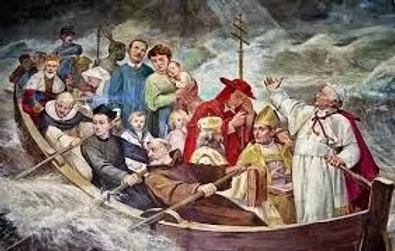















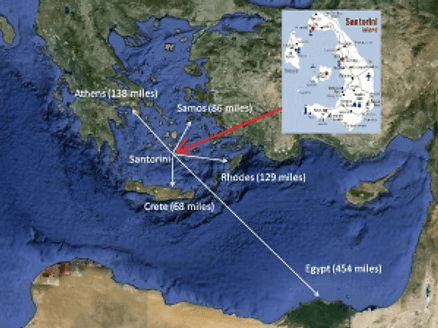
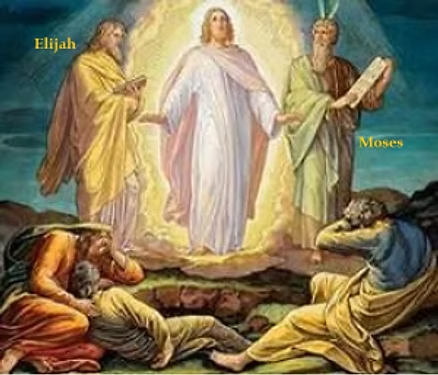















 Explaining the Readings