and like a sheep that before its shearers is silent,
so he did not open his mouth.
By a perversion of justice he was taken away.
Who could have imagined his future?
For he was cut off from the land of the living,
stricken for the transgression of my people.
They made his grave with the wicked
and his tomb with the rich,
although he had done no violence,
and there was no deceit in his mouth.
Yet it was the will of the Lord to crush him with pain.
When you make his life an offering for sin,
he shall see his offspring, and shall prolong his days;
through him the will of the Lord shall prosper.
Out of his anguish he shall see light;
he shall find satisfaction through his knowledge.
The righteous one, my servant, shall make many righteous,
and he shall bear their iniquities.
Therefore I will allot him a portion with the great,
and he shall divide the spoil with the strong;
because he poured out himself to death,
and was numbered with the transgressors;
yet he bore the sin of many,
and made intercession for the transgressors.
———————————————————————————————————-
This is an optional Old Testament selection from the Episcopal Lectionary for the Twenty-second Sunday after Pentecost, Year B 2018. In the numbering system that lists each Sunday in an ordinal fashion, this Sunday is referred to as Proper 24. If chosen, it will next be read aloud in an Episcopal church by a reader on Sunday October 21, 2018. It is important because Isaiah spoke of how weak all human beings are, but the ones who hold true to God are upheld.
Not read in this selection is verse one, which says this song of praise was written with a theme that asks, “To whom has the arm of the Lord been revealed?” The “arm of the Lord” is known today as Jesus Christ, as the Christ Mind brought within those to whom that “arm” has been “revealed.” Therefore, the verses in this reading are addressing (as a prophecy, but also as a truth that is always) characteristics that would later become identifiable as the Son of Man, Jesus of Nazareth.
Because God was speaking through the prophet Isaiah, who was a human being of faith (an Israelite of Judah), Isaiah spoke the words sent by God to his Holy Spirit companion that was the Christ Mind. Before there was a physical Jesus of Nazareth, there always existed the arm of God, with God, as God. John called that presence “the Word” (“Logos”). As such, Isaiah knew Jesus Christ as his high priest, without knowing him by that name. All Prophets, Apostles and Saints have this reach of God within them, so all become the arm of God in the earthly realm.
This manifestation of the Holy Spirit that is Jesus Christ then heals those of their worldly maladies. Jesus Christ comes to increase the faith of others, passing them the torch of fire for God, so sins become a failure of the past. Those who are lost and seeking God’s help will be found.
Still, because the earth is the realm of Satan, who tries to always lead mankind away from the true God, all who carry the Holy Spirit of Jesus Christ will face oppression. Silence and obedience comes from the strength of God, not fear of Man. Humans abort the Law of God and pervert justice. Because of that lack of a firm cornerstone to build trust upon, the future for godless Man is always in doubt. However, Jesus Christ offers the reward of eternal life, by his presence in the righteous.
Those who sell their souls for worldly gains will find them all short-lived. Their deaths will be when their souls pay the price of retribution, for having tried to harm the flesh of God’s perfect servants. In this way, Jesus Christ bore the transgression of many, not once flinching from fear of his own flesh being harmed. Those who are reborn as Jesus Christ have the same strength given to them; all they have to do to earn that strength is go out and be a beacon of light to all seekers of faith.
As an optional Old Testament reading for the twenty-second Sunday after Pentecost, when one’s own personal ministry for the LORD should be underway – one should have become the arm of the Lord reborn – the message here is to expect persecution without fear. When Jesus Christ has been resurrected within one’s being, then the only fear one should have is failing to serve God with all one’s heart.
This alternative reading restates the unjust punishment Satan laid upon Job. The reading from Job that is the option that parallels this reading from Isaiah says that Job, like Isaiah, was a righteous man, with both filled with God’s Holy Spirit that allowed them to be righteous. That presence brings a most holy presence into one’s soul, joining the soul to its Maker. The Son of God is then reborn in both Job and Isaiah, allowing them to speak to God and speak for God.
The sufferings stated by Isaiah that prophesy the coming of Jesus of Nazareth, which paralleled the sufferings of Job, project the expectations of all minister for the LORD. The easy way out is the way of sin, as Satan takes it easy on those who turn away from God. The lessons of Job and Isaiah are the same, as no ordinary human being can remain righteous by self-will alone. This is where sufferings come from the sacrifice of self-ego, while accompanied by a smile, knowing all worldly pains are fleeting. The reward of eternal life is lasting.
Close up of man’s arm showing biceps
For those who are too weak of spirit to find love in their hearts for God, they will become married to the material, which can only exist on the physical plane. For those who cannot pay the dowry required for marriage to God (the change of lifestyle that comes with commitment to only one), then there will be no offspring coming that will be called the Son of God. For all the comforts a soul can be sold for, the life expectancy of an American is merely 75 years. That time pales in comparison to eternity, as it is only a dewy thought of one drop in a bucket of time.
Isaiah should be read based on one’s commitment to God. Without a commitment, Isaiah wrote of some imaginary figure in the clouds of Heaven – pie in the sky that is unseen, and not proved. With a commitment to God, one feels the reality of Jesus of Nazareth, as if one lived through all his pains and sufferings.
Jesus and his disciples came to Jericho. As he and his disciples and a large crowd were leaving Jericho, Bartimaeus son of Timaeus, a blind beggar, was sitting by the roadside. When he heard that it was Jesus of Nazareth, he began to shout out and say, “Jesus, Son of David, have mercy on me!” Many sternly ordered him to be quiet, but he cried out even more loudly, “Son of David, have mercy on me!” Jesus stood still and said, “Call him here.” And they called the blind man, saying to him, “Take heart; get up, he is calling you.” So throwing off his cloak, he sprang up and came to Jesus. Then Jesus said to him, “What do you want me to do for you?” The blind man said to him, “My teacher, let me see again.” Jesus said to him, “Go; your faith has made you well.” Immediately he regained his sight and followed him on the way.
———————————————————————————————————-
This is the Gospel selection from the Episcopal Lectionary for the Twenty-third Sunday after Pentecost, Year B 2018. In the numbering system that lists each Sunday in an ordinal fashion, this Sunday is referred to as Proper 25. It will next be read aloud in an Episcopal church by a priest on Sunday October 28, 2018. It is important because it tells of the healing of a blind beggar, who symbolizes all those who would follow Jesus as Apostles, due to their faith raised in the presence of Jesus, allowing the Holy Spirit to be upon them.
The setting in this reading is Jesus is returning to Bethany (in Judea) from across the Jordan River. The return takes him naturally through Jericho. When we read, “[Jesus] and his disciples and a large crowd were leaving Jericho,” it should be realized that all of the regions surrounding Jerusalem had been filling up with Jewish and Israelite pilgrims, because of the soon approaching Passover festival. Jesus was returning to Bethany because he had received news that Lazarus (his brother-in-law) had become gravely ill.
The crowd that Jesus walked with, for the most part, was not followers of Jesus. Those in Jericho knew of him because Jesus had made himself known as a teacher in the region of Perea, especially in Bethany (beyond the Jordan).
It is also worthwhile to know that Matthew and Luke also wrote about this event that Mark tells. John did not write of it because he was too young to go on an extended trip across the Jordan. He stayed at home in Bethany, with his mother, aunt and uncle, waiting for Jesus to come back. Mother Mary (and her other sons) and the disciples (and their families) did not follow Jesus to Bethany (in Judea), as is seen in the fact that no one other than John would write about Jesus raising Lazarus (his brother-in-law) to life. Lazarus was raised after being dead four days and stinking of death. That event was quite special; so absence is the only reason the others did not write about that miracle. They did not witness it.
In this miracle that was witnessed by three of the Gospel writers, Mark names “Bartimaeus son of Timaeus,” and calls him “a blind beggar.” Matthew says there were “two blind [men],” naming no one. Luke [Mary’s account] writes of “a blind [man] certain,” in the singular number, with “certain (from “tis”) being an indication that a blind man was known, in some way.
The name stated by Mark is redundant (as an aside clarifying the name), such that “Bar-timaeus” means “son of Timaeus.” The name Timaeus is believed to be Greek, meaning “Highly Prized.” This would mean “Bartimaeus” was named by his father as a “Son of Honor.”
Some say that the name could be rooted in Hebrew, because of the redundancy factor yielding no meaning of merit. As such, the Hebrew verb “tame,” when seen as the root, would change the name to meaning Son of Uncleanness or Son of the Unclean One. Since Bartimaeus did not say he had been blind since birth, that history could mean a name with dual meanings, to fit the life he grew into. That view would allow for him being a highly valued baby when born, but due to some later factor (perhaps working in an unclean environment caused cataracts to grow?) he went blind.
If there were indeed two blind beggars in the same place on the side of the Jericho road (as Matthew’s account must be seen as true), then Bartimaeus might be a name generally given to blind beggars, by Peter or others in common, to identify blindness as a sin of unclean living. That was somewhat the opinion the Pharisees had when Jesus healed a blind man from birth (who also begged), putting mud on his eyes on a Sabbath, telling him to wash the mud off in the pool of “Sent.” (John 9) Even when the man was able to see (thus no longer a sinner), the Pharisees threw him out of the Temple for giving credit to Jesus for being able to see. As such, each of two blind beggars could have been referred to a Bartimaeus, which would then be a “certain” term commonly used.
Regardless of the name stated, Mark tells us that when the beggar “heard that it was Jesus of Nazareth,” this was due to a crowd passing being louder than normal, prompting those without eyesight to ask, “What’s going on?” While Matthew is similar to Mark in the generality of what the beggar(s) heard, Luke makes it clear that they asked and were told what Mark said they heard. Still, while being told that “Jesus of Nazareth” was passing by, when he was just one in a “large crowd,” that would only have meaning to those who had heard Jesus give public sermons.
Any healings that Jesus might have done along the Jericho road (where one can assume the blind beggar had been for some time), or in Jericho, were not written of by his disciples. Only through the rumor mill would Bartimaeus have known who Jesus of Nazareth was. It would be wrong to assume that the blind beggar(s) had traveled to Jericho to wait for Jesus, even though a traveler giving alms to the poor might have told him (them), “If a man named Jesus of Nazareth comes by here, then ask him to help. He is a healer.”
When the beggar(s) began shouting, “Jesus, Son of David, have mercy on me!” and again, “Son of David, have mercy on me!” this was not a call that was based on what they were told by bystanders with good eyes. The shout was based on what they “heard” from the Holy Spirit moving through him (them). The shouts were akin to when Peter blurted out, “You are the Messiah, the Son of the living God.” (Matthew 16:16) In other words, God was signaling His Son by those shouts, identifying Jesus as a descendant of the holy Davidic line. That was what Jesus heard.
The Lineage of Jesus
It is important to know that the Greek word hollered by the blind man (men) that is translated as “Son” is “huios,” which is not capitalized. The lower-case spelling means a more accurate translation would be “descendant,” although figuratively the word could state “likeness.” Still, the translation as “son of David” has to be seen as coming from one whose blindness made him be known as a “Son of Uncleanness,” from a man who wanted to be returned to a “Son Highly Prized.” God knew this blind man’s heart and God knew it was time to return eyesight to a man that spoke the words of God, without regard for those rebuking him to doing so.
When Bartimaeus (and another) are said to have twice shouted out, “Have mercy on me (us),” all Gospel writers used the Greek word “eleēson,” which means “to have pity,” or “to show mercy.” The same word can imply the receipt of or the finding of mercy, when directed at someone asking for it.
The root word, “eleéō,” means “to show mercy as God defines it, i.e. as it accords with His truth (covenant) which expresses “God’s covenant-loyalty-mercy” (i.e. acting only on His terms).” [HELPS Word-studies] Thus, Jesus heard his name called, along with recognition of his holy lineage, with a plea that both requested help and stated an inner presence of God’s Holy Spirit in one of the onlookers.
This means that Jesus was not hearing over the loudness of a large crowd the voices of those making selfish requests. One can imagine that a large crowd of pilgrims were walking along with Jesus and his disciples and family (all headed generally towards Jerusalem) generated a parade-like effect, where the people on the sides of the road had heard Jesus speak in the synagogue of Jericho before and recognized him. Like it is when parades are held, recognizable people (celebrities) are asked to ride in convertible cars or fancy floats, simply to wave to the crowd. All the foreign pilgrims walking along with Jesus were just like the high school marching bands, Cub Scout troops, and local public servants in their cars and trucks (with lights flashing), where the bystanders did not know those people. However, some of them recognized Jesus of Nazareth.
One would expect that when one of the known people was spotted, people would call out their names, as a friendly, “Hello!” No one would expect a parade to stop because a bystander recognized a celebrity and asked for an autograph. An obnoxious screamer in the crowd would be told to shut up.
This is how those near the blind beggar(s) rebuked his (their) cries, sternly ordering the man (men) to be quiet. Parade protocol does not allow for requests to be made of the paraders. Because of the din of the traffic was noisy, the people were annoyed at how loud the cries for attention were. The people got angry because the shouts were quite loud and (in their minds) unwarranted; but the common people of Jericho were not filled with the Holy Spirit.
We then read, “Jesus stood still,” where the actual Greek written begins with “Kai stas.” That is a capitalized adverb, joined with an verb, as a two-word statement that importantly states, “Namely stopped.” Before that segment of words identifies with “Jesus,” we need to grasp how the parade, the noise, the hubbub all kept moving along, but the one whose name had been called loudly then “stopped.”
The common conjunction “kai” usually means “and,” but when capitalized it becomes more than an important conjunction. The Thayer’s Greek Lexicon for “kai” states a third usage as such:
“3. It annexes epexegetically both words and sentences (καί epexegetical or ‘explicative’), so that it is equivalent to and indeed, namely.” This is: “A.); equivalent to and indeed, to make a climax, for and besides … our and this, and that, and that too, equivalent to especially,” [Thayer’s Greek Lexicon]
This flexibility of translation (and intent) being attached to what appears to be a new ‘sentence’ beginning with the word “And” is instead detailing the one called “son of David” and bridging to the one named “Jesus.” He was “especially called,” as “indeed” the one among the many, “besides” all the rest, thus “namely” Jesus was indicated. Based on the definition of “namely,” the “son of David” “specifically stopped,” as he was named “Jesus.”
The word “histémi,” from which “stas” is the past historic form, can actually translate as “Namely became a bystander.” It states the importance of “Jesus taking a stand,” rather than moving on by with the rest, ignoring the cries made from the bystanders.
It can be assumed that the large crowd on the same road as Jesus and his disciples (and families) did not come to a halt. They had not been spiritually called to “Stand still.” I imagine Jesus made his way to the side of the road, so those going to Jerusalem would not be blocked by him standing in their way [the parade must go on]. It would have been there that Jesus would instruct his disciples, “Call him here.” In reality, based on the Greek written, Jesus was not quoted. The text states that Jesus “commanded [the blind beggar] be brought to [Jesus].”
Neither Matthew nor Luke include the specifics that Peter recounted to Mark, such that he alone wrote, “They called the blind man, saying to him, “Take heart; get up, he is calling you.” So throwing off his cloak, he sprang up and came to Jesus.”’ This means that Peter was one of the disciples sent to bring the blind beggar(s) to Jesus.
The capitalized Greek word “Tharsei” is written, which is translated as “Take heart.” The root word, “tharseó,” also means “good courage, good cheer, and emboldened.” The substitution of “heart” indicates the emotional plea made by the blind beggar(s) was heard and felt. The capitalization shows the importance given, which shows the strength of the blind beggar(s) cries. Bartimaeus moved Jesus by his heart touching the heart of Jesus, joining them emotionally.
This one-word statement of importance [again, realizing that every word of the Gospels is the Word of God, through an Apostle], is then followed by the command to “get up” or to “rise up.” It should be recalled [from past interpretations that use this word] that the word “egeiró” has more than the mundane meaning to getting up from a sitting position, as it means “wake up” and to “elevate.”
Wake up! It is time to be born again into a new day.
The symbolic aspect of waking makes it a command to rise from death, where sleeping has that double meaning too. Likewise, to become “raised,” in a spiritual sense, means to “rise above” the mundane to the heavenly, as were the Apostles on the day of Pentecost. Therefore, Peter issued a second one-word statement relative to “Courage,” where heartfelt emotions had just elevated a lowly blind beggar (or two), saying, “be risen.”
Mark also is the only Gospel writer to indicate that the blind beggar(s) did anything other than be led to Jesus. Mark wrote (as translated in the reading), “So throwing off his cloak, he sprang up and came to Jesus.” What was written, but untranslated as a word of unspoken value, is the capitalized word “Ho,” which is the article “The.” This is then followed by another unspoken word, “de,” which is routinely not a spoken word, seen in English as “a weak adversative particle, generally placed second in its clause.” [Strong’s Concordance]
One must see how those words were purposefully written by Mark, as directed by God, with the realization that they would not translate in Greek or English, as not having any spoken worth or value. Common people translate in common ways; but those led by God to understand holy Scripture see words that are key to understanding the cloak removal aspect.
Often “ho” is used to identify Jesus or God, such that it indicates “the[one]” who is God or the [one] who is Jesus. It is unnecessary to speak those words in reference to those who are important individuals; set apart by the factor of being “one” of a kind. Still, such words act to indicated “the” important singularity of “one.”
The word “de” is then more than a weak adversative particle, but a statement of conjunction that has joined with “The [one],” and that “having cast away.” As such, “de” makes sense appear from out of nowhere, as “on the other hand,” or “on top of this.” The word that was invisible “The [one] on the other hand having cast away the cloak of him,” says that the hand of God has become one with the blind beggar(s), removing his robe of insignificance.
We then read Mark having stated fully: “The [one] on the other hand having cast away the cloak of him , having risen up , he came to Jesus . ” Those series of word segments allows one to see both the mundane and the Spiritual.
As for the mundane, Jesus was traveling through Jericho before the commanded ritual of spring [Passover], so it might have been chilly in the shade of March [Roman calendar]. That would have required a sedentary beggar wear a cloak or outer robe for warmth. For a beggar (or two), one would expect this to be some rag for warmth, which was too unseemly for those with eyes, but good enough for a blind man (or two). When the blind beggar(s) was called to go to Jesus, his warmth came from within, causing him to toss aside his outer garment.
Even as that reality was witnessed, Peter told Mark that the blind beggar was Spiritually touched by Jesus welcoming him. It was then the hand of God that removed the cloak of invisibility the blind beggar (or two) had been forced to wear, as unclean and unwelcome. God raised him (them) to a higher spiritual state of being. In the truest sense of a “come to Jesus” experience, Bartimaeus went to Jesus.
When the parade has passed you by, the cloak of invisibility keeps the rejected from seeing those who ignore them.
Jesus was indeed quoted, once the blind beggar had been set before him, as he asked, “What do you want me to do for you?”
Here, one needs to remember how Jesus only spoke the truth of the Father. This means God asked, through Jesus, His Son, “Ask and you shall receive.” (Matthew 7:7) God had spoken those words through His Son when he spoke the truth during a sermon on the mount. Now, Jesus was making that promise become true to a blind beggar (or two).
Bartimaeus then said, “My teacher, let me see again.”
In both Matthew and Luke, the address of Jesus was written as “Lord,” (from the capitalized Greek “Kyrie”). Mark [as Peter] recalled the Aramaic word “Rabbouni” being used. That was the same address Mary Magdalene would use at the tomb of Jesus, when she recognized the ‘gardener’ she thought she was speaking to was the risen Jesus. (John 20:16) This has the same meaning as Kyrie, as both say “Master,” but it is a more personal address as “My teacher.”
One needs to see the blind beggar has not been a disciple of Jesus, so he has not been directly taught by his lessons of ministry. Because of the beggar’s affliction to his eyesight, he would not even be allowed into a synagogue to hear Jesus preach the meaning of the Torah. This means he had never been taught by Jesus, so the politeness of that address, as to why the beggar said “My teacher,” is what routinely is understood by Biblical readers. However, there is more to this address that needs to be caught.
First of all, we read of a Pharisee coming to Jesus and calling him “good Teacher,” where Mark wrote the capitalized Greek word “Didaskale,” meaning, “Teacher or Master.” (Mark 10:17) Jesus jumped all over that rich, young ruler about what gave him the idea he could call him “good.” The only reason the man could give, at that point, was, “Sorry. I was just being polite.” So being polite does not carry well here, where a blind beggar called Jesus “My teacher.”
It is then important to see the progression of events, based on the language written, for the second element of this address as “Rabboni.” We have been told to see the connection of the presence of God in the beggar’s heart [“Courage”]. His crying out “son of David” was divinely inspired, which caused Jesus to be “Namely stopped.” Peter told the beggar to be born anew [“awaken”], because God had removed the cloak that made a blind man be one his people had “cast away,” allowing him to be seen as worthy enough to be brought to Jesus. As such, Bartimaeus was reborn as Jesus by being in his presence, in the sense that both men then had the same higher thought. Instead of Bartimaeus’ own brain leading him, the beggar would forevermore depend on Jesus [who possessed the same Christ Mind] to be his Teacher within. Therefore, without having regained his sight, Bartimaeus had been taught Redemption and given Salvation by having become one with the Christ Spirit.
When he said, “let me see again,” or more precisely, “in order that I might regain my eyesight,” this is both a mundane request to see again, but it is also a Spiritual statement that prayed, “let the truth shine within me so I see the way.”
Just as there could have been others crying out for personal gains, with selfish intent, those pleas would have gone unheard by Jesus. God hears all the moans and groans of lament that are offered by the commoners of the world, but His ear is trained on those who pray to be part of His order of priests on earth. When the blind beggar(s) made this request, it was asking for a second chance, to prove a child of high values was named to serve the Lord with a vision for all to share.
Because that was asking Jesus for his permission to serve God, Jesus responded by saying, “Go.”
The capitalized Greek word “Hypage” made an important one-word statement that said, “Lead away under someone’s authority (mission, objective).” [HELPS Word-studies] That authority was God’s, as Bartimaus was sent into a mission of ministry. The root word is “hupagó,” which has a scope of meaning that is “depart, begone, or die,” where the important statement implies, “Be dead as a blind beggar and live as the eyes of God, so that others might see like you.”
Jesus then said to Bartimaeus, “your faith has made you well,” which he said to others that were healed in his presence. Again, the key word is “faith,” which is the translation of the Greek word “pistis.” The word also means, “belief, trust, confidence; fidelity, and faithfulness.” Its use implies that it “is always a gift from God, and never something that can be produced by people.” [HELPS Word-studies] It is a derivative of the word “peithô,” meaning “be persuaded,” such that one has gone beyond simple belief (told to have faith) and become “persuaded” by personal experience to believe with trust and confidence.
As I once had a priest give an explanation of the difference between belief and faith, he said, “I once taught at the university and mentioned that I was a licensed pilot. At the beginning of each semester, I offered students to come and take a flight with me … and some would take me up on the offer. However, I would always remind them of that offer on a most worrisome weather day, when it was windy and stormy outside. I would tell them I was going to fly after class and ask for a show of hands who would like to go flying with me. No hands would ever raise. After a pause, I would look at them intently and say, ‘That is the difference between belief and faith. You believe I can fly. However, flying with me in stormy weather demands you have faith that I will not crash.”’
In the same way, Jesus told Bartimaeus, “You have proved your faith in God. In return, your eyes are no longer blinded.” Mark then wrote, “Immediately he regained his sight and followed him on the way.” Still, it must be realized that Bartimaeus did not simply walk on the Jericho road behind Jesus.
Having the faith to heal his own blindness meant having the faith of Jesus. Bartimaeus had picked up [“elevated”] his cross [“stake” for holding vines above the ground] and followed Jesus as one of his Apostles, filled with the Holy Spirit from having been healed. He became one who was Christ reborn through the Teacher being within, after his uncleanliness had been cast away by the hand of God.
As the Gospel reading selection for the twenty-third Sunday after Pentecost, when one’s own personal ministry for the LORD should be underway – one’s faith should be raised to the point of seeing the truth of Christ being born again – the message here is to be the one crying out for the Son of Man to have mercy on one. Each individual is expected to be like Bartimaeus, as a blind beggar, until one can see the light.
Christianity, that which is prevalent today and not that which began with people filled with the Holy Spirit, reborn as Jesus Christ long ago, has become like the crowd that marches like a parade with Jesus of Nazareth, including those who stand on the sidewalks of the path to Heaven as observers who shush those who might dare cry out for Salvation. While many pour their hearts out to Jesus, saying, “Save me from this sin or that sin,” coming in all forms of maladies and bad predicaments, few make Jesus stop in his tracks, from having heard the Holy Spirit of God crying out from one of faith.
We have plenty of belief still (although that is dwindling), but we have few people that have the faith of Jesus Christ within them. We have become, “the blind leading the blind.”
The cloak that all humanity wears is mortality. All human beings are born with the only preset expectation being to die. We feel cold chills from the thought of death, so we wrap ourselves snugly in the robes of denominational religion, scientific breakthroughs in medicine, and denial that there is anything beyond this material realm. It is in those baskets of knowledge that so many have put all their trust and confidence.
The tattered, hand-me-down, donated robes we put on are what identifies us as “bar timaeus,” as “sons of uncleanness,” which shows others our obvious sins: adultery; theft; greed; envy; pride, wrath, gluttony, and sloth (to name a few). We get angered at anyone crying out loudly, “son of David show mercy on me,” because no one wants a do-gooder making all the rest look bad!
Still, when our mortality day finally comes, we are judged by having failed to wear the holy robes of sainthood, as the brides of God, reborn as Jesus Christ. The moment of death, when judgment is made, is when human failures have to weakly admit to God for having chosen to be adopted as the sons of Satan – the unclean one (human gender irrelevant). There can be no excuses for having rejected sacrifice of self and accepted God’s love. The love of sin was too great to set aside.
America can be called the ‘land of gods’, where the lower-case “g” means every man and woman in this country thinks his or her path is the most important path in the entire history of paths, because so many take care of self, long before some other self gets a handout. Even the ones who regularly proclaim they go to church, give willingly to charities, and try their hardest to do the right things, without the Holy Spirit and the presence of Jesus Christ within their soul and being, find that some sins (often kept secret) cannot be shaken. That keeps them beggars in the eyes of God; but begging becomes a common way of life; just not a way that leads to eternal life.
Bartimaeus is an example of standing out in the crowd. A true Christian has to be willing to serve God, no matter how angry that makes others. One has to be blind to Jesus walking by, because one needs to be in touch with God first. When one can find love for God, despite one’s abnormalities and shortcomings, then one will hear the hubbub of Jesus and begin begging God to show His mercy by letting Jesus Christ stop in one’s soul, to teach one what to do. Then one walks the walk of the path to Heaven, so someone just like that one – another blind man on the side of the road – will be told, “Jesus of Nazareth is walking by.”
The path to Heaven is a circuitous course. What goes around comes around.
The former priests were many in number, because they were prevented by death from continuing in office; but Jesus holds his priesthood permanently, because he continues forever. Consequently he is able for all time to save those who approach God through him, since he always lives to make intercession for them.
For it was fitting that we should have such a high priest, holy, blameless, undefiled, separated from sinners, and exalted above the heavens. Unlike the other high priests, he has no need to offer sacrifices day after day, first for his own sins, and then for those of the people; this he did once for all when he offered himself. For the law appoints as high priests those who are subject to weakness, but the word of the oath, which came later than the law, appoints a Son who has been made perfect forever.
———————————————————————————————————-
This is the Epistle selection from the Episcopal Lectionary for the Twenty-third Sunday after Pentecost, Year B 2018. In the numbering system that lists each Sunday in an ordinal fashion, this Sunday is referred to as Proper 25. It will next be read aloud in an Episcopal church by a reader on Sunday October 28, 2018. It is important because Paul wrote more about Jesus Christ being the high priest of all true Christians.
One should first realize that this reading selection follows twenty-two verses where Paul wrote of the relationship established between Abraham and Melchizedek. Both figures were high priests, along with Aaron and the oath of the Law set forth by God through Moses, which Paul mentioned. This history then leads to verse twenty-three, with Paul prefacing this series of verses read today by identifying Jesus Christ as the ultimate high priest in that order of most-holy priests, now a permanent fixture as such. In all of Hebrews 7, Paul mentioned “Jesus” specifically one time, as the last word in verse twenty-two.
These six verses seem fairly standardized, so they fit the organization concept that is promoted in Christianity today. That view sees Jesus as an ethereal high priest, who sits in a chair to the right side of the Father, who has become the god of human beings that believe Jesus of Nazareth was the Son of God, sent by the Father to die a grizzly death, so no other believer will ever have to be washed squeaky clean of all sin, in order to get into Heaven. Getting into Heaven is promoted as being just a matter of believing in Jesus.
While that view makes it easy to go to Heaven, thus easy to welcome, it is like buying an online certificate of law school completion, having done nothing that would constitute studying law and nothing that would make one ready to pass a bar exam. Jesus was not sent to do all the work, like some modern tycoon who wants to make so much money his children will never have to work a day in their lazy lives. It is most important to realize that God sent His Son as a model for righteousness; and being righteous is the only way to earn eternal life.
Think of God as Henry Ford. Then, think of Jesus as the Model T. Would Henry be served if he only made one car?
Paul did not sell that easy concept of Christianity when he wrote to the Hebrew-speaking Jews of Rome. Jesus Christ is the eternal high priest whose temple is each individual human body that welcomes the Christ Mind to transform an ordinary follower of Jesus of Nazareth, and believer of Yahweh as the One God, into a walking, talking reproduction of Jesus of Nazareth – the Son of God reborn on earth [not idly taking it easy in the spiritual realm]. This means being Christian is being Jesus Christ resurrected in one who is called an Apostle or a Saint.
Just like becoming a lawyer that makes lots of money requires a lot of work, becoming Jesus Christ means doing all that is required to reach that goal. Just as being a successful lawyer means having the assistance of higher-ups, becoming an Apostle or Saint demands that one be together with the Christ Spirit [baptism by the Holy Spirit], so one’s soul will not fail to live up to the Jesus of Nazareth holiness.
All of that was written by Paul in this six-verse reading. The proof of that pudding is found in a close examination of the words written and the ordering of those words. I welcome everyone to ‘double check my math’ by visiting the Bible Hub Interlinear presentation of the Greek-to-English translations that they post for Hebrews 7, as well as look deeply into the scope of meaning each word can have, beyond their immediate translations into literal English. Minimally, looking at the Greek and then looking at the English translations makes it obvious all English translations are paraphrases, created for easy reading or easy listening. However, God did not have His holy authors paraphrase His Word.
As is my custom, to eliminate the problem of paraphrases, I have broken each verse into segments of words, based on the presence of punctuation (written or implied). I recommend slowly reading each segment and grasping the meaning of what was stated there, before continuing onto the next segment. Reading Scripture is designed to be slowly savored.
In this reading, please note where capitalized words appear, as capitalization indicates a level of importance that must be realized. There are nine capitalized words in these six verses, with six being “Theos” (God) and one being “Huion” (Son), where the importance is readily seen. The other two are words that require some investigation as how they reflect importance.
23. Namely followers certainly more excellent ones are having been born priests ,
on account of followers by physical death being kept from continuing .
24. circumstances however successfully suitable remaining with him into this age ,
an unchangeable he possesses those of holy office ,
25. whereby namely ,
to preserve union followers through all time he is enabled by God ,
all coming forward on account of him who of God ,
at all times being alive unto followers to intervene on behalf of themselves .
26. Such as these after all ourselves namely became [fittingly] high priest ,
beloved of God ,
simple [characters without guile] ,
free of stains ,
having separated ourselves away from circumstances sinful ones ,
even uplifted conditions of spiritual heavens having been born into being ,
27. these things not possesses accordingly daily necessity ,
just as together high priests ,
before above things one’s own failures ,
sacrifices to offer up unto God ,
afterwards followers those who the laity of God ;
this because he acted one time for all ,
himself having offered up to God on high .
28. followers of divine laws why human beings are set in order as high priests ,
holding weakness ;
together divine utterance on the other hand people make an oath ,
together beyond those of a force impelling to action ,
Son into condition an age ,
having been made perfect .
Verse 23 begins with the capitalized word “Kai.” That typically is the conjunction “and,” but shows little importance as a one-word statement as that (“and”) or as “even” and “also,” especially when disconnected from that which is stated prior. This means the importance comes from the adverbial translation as “Namely,” which is a statement of specificity placing focus on a clear and precise name. As a capitalized word, verse twenty-three begins by making that statement that begins with an important specific reference that has implied intent, although it is separate from the fact that verse twenty-two ends with the name “Jesus.”
The word “hoi” follows “Kai,” and typically can translate as “those,” indicating the masculine nominative plural of “ho” (“the”). Still, an acceptable translation is as “followers,” which is important in this reading, where the “followers” of Jesus will be identified as “those” who receive the specific character of Jesus as the Christ, when they become specifically reborn to that name. The translation of “followers” become repetitive in this selection of verses.
Notice how the translation read aloud says, “The former priests were many in number, because they were prevented by death from continuing in office.” That translation ignores the “Kai hoi” as worthy of address. Still, the translation I explained now begins with “Namely followers,” who are the disciples-to-Apostles of Jesus, who are the ones “having been born priests.”
This has nothing to do with a lineage of Temple high priests that were not “certainly more excellent ones,” keeping in mind the many years that the Jews spent in captivity in Babylon, when their ruin was based on a corrupted Temple and false high priests.
Seeing this aspect of human mortality means that one is not “prevented by death from continuing in office,” but one is prevented from that holy title because of being mortal and not having earned eternal life. All high priests of Jesus Christ have a record of excellence because of having gained the promise of eternal life. Once filled with the High Priest, always filled.
Verse 24 is read aloud saying, “but Jesus holds his priesthood permanently, because he continues forever.” Certainly, Jesus is the eternal high priest, but his name was not written in this verse. It has been drawn in from verse twenty-two. Rather than make it appear that Jesus is an absentee high priest (in Heaven), this verse allows one to see how his Holy Spirit “possesses those of holy office” [i.e.: high priests].
Verse 25 begins with a two-word statement of relatively insignificant Greek words – “hothenkai.” The translation read aloud basically ignores this as a separate statement (perhaps translated as “consequently”?), but the statement addresses the end of verse 24, “whereby” “those of holy office” are specific to Jesus Christ “namely.” That means being possessed by the Christ Mind brings the name of Jesus Christ upon a high priest (Apostle – Saint).
This whole verse then speaks of God sending that presence into “followers” (Christians), who become “alive” or “living” because of eternal life defeating mortal death. The Holy Spirit of God does not send His Son as a spirit that can be accessed through prayer (as intercessory implies); but access is given by the presence of the Holy Spirit, so it “intervenes” as the new self, when ego has been subjugated.
Verse 26 begins with the capitalized Greek word “Toioutos,” where the importance reflects back on verse twenty-six ending by stating, “” – in “living followers” where the Christ Mind “intervenes on behalf of themselves” saying, “Such as these.” That intervention is due to “all ourselves namely” being Jesus Christ. They “became high priest” [fittingly] because of: 1.) marriage to God through love; 2.) they sacrificed their Big Brains of self-ego so they were characters without guile; and 3.) they were baptized by the Holy Spirit and made clean of all past sins. That presence then “separated ourselves” [self-sacrifice] so no “circumstances of sinful acts” would distract them and cause them to stray. This means a Saint – Apostle has been “uplifted spiritually” to heavenly status, through being reborn as Jesus Christ.
Verse 27 begins by stating that the Holy Spirit does not come and go. Instead it remains in possession of one’s physical body at all times. The human body is joined together with the Christ Mind [a high priest having been made] by the Holy Spirit having joined with the soul. The sacrifice of self is what allows one to become a high priest, and that can only happen one time. Like Jesus only died physically once, so his Spirit would be freed to possess those who would follow him in service to God, one’s self-ego can only be sacrificed once. Apostles and Saints are likewise “offered up to God on high” so their sins can be erased and eternal life be received.
Verse 28 says the purpose of a high priest is to establish the Law as the measure of one’s divinity; but all humans have weaknesses, such that being a Pope or an Archbishop, Bishop, or high priest as a job title is no guarantee of a lifetime of holiness. One has to be joined “together” with the Law, so it is written on one’s heart. This togetherness allows one to go “beyond” an external “force” compelling others to obey the law, through an internal “force impelling” one “to actions” of righteousness.
Being adopted as God’s “Son” is the “condition of an age.” That is the Age of Pisces, which means “self-sacrifice for spiritual rewards.” Once in the name of Jesus Christ, one has “been made perfect,” the same as the high priest possessing one.
From the Age of Fishers of Men’s Souls to the Age of Gadgets Entrapping Men’s Souls.
Again, there are two quite different translations presented here. One will be publicly read. One will only be found on this blog. It is important for all who place value in Scripture to have a personal investment in knowing the truth, which ultimately has to be sought and found on an individual basis. While listening to multiple outside opinions can help lead one to that personal epiphany, conflicting opinion can lead one away from it, towards doubt and fears. The only way to really find the truth is to make an effort to look for it yourself.
As the Epistle selection for the twenty-third Sunday after Pentecost, when one’s own personal ministry for the LORD should be underway – one has sacrificed self and received the Holy Spirit, becoming the temple for God’s high priest – the message here is to stop looking for Jesus outside of oneself. One must find the love of God and marry Him, before His Son can be reborn within a new wife. One can no longer pretend to worship Jesus as the high priest, while admitting righteousness is a state of being that no man or woman can possibly match.
Part of the problem that brings about this negative thought process is a translation like that read aloud, which says, “For it was fitting that we should have such a high priest, holy, blameless, undefiled, separated from sinners, and exalted above the heavens.” Think about how meaningless that is.
God is “holy, blameless, undefiled, separated from sinners, and exalted above the heavens.” What is the point of have Jesus be made as “God II,” when all we need is One God in Heaven?
There is no need for a high priest without a temple or tabernacle – a physical structure placed on holy ground – because God is “holy, blameless, undefiled, separated from sinners, and exalted above the heavens.” It becomes as ludicrous as the elders of Israel going to Samuel saying, “We want you to appoint us a king, to be like other nations.” Samuel said, “God is your King.”
He didn’t say it, but had to have thought: “If God wanted His children to be like other nations, He would have left you in Egypt.” That means God is the King on earth, wherever one of His priests goes. God’s kingdom is then not a piece of real estate but the body in which God resides Spiritually.
The same logic applies to a Jesus the high priest in Heaven. Who goes to God and says, “We want you to appoint us a high priest so we have someone imaginary that forgives all our sins, so we can keep on sinning,” knowing how hard You [God] are on sinners.
If Samuel were to hear that (after shaking his head in disgust) he would say, “The kingdom of God should be in YOU, so get that situation fixed and THEN YOU will need Jesus Christ to be God’s high priest in YOU.”
The reason God sent His Son to be born of a woman, was to have an extension of God incarnated on earth – in a man. Jesus of Nazareth [born in Bethlehem] was necessary because earth is where God’s Son was needed. That man had to die in the flesh so his holy soul [an extension of God] could be reborn countless times in countless humans of faith [God has the power to do that]. But, therein lies the caveat.
God’s Son must be brought in by God, as a welcomed rebirth of God’s love. God will not accept a freak show, where multiple personalities force their way into a body and then fight over control of one body of flesh [like in demonic possessions]. Instead, God demands all His servants fall in love with Him and as a wedding dowry each individual must wrap-up the self-ego and hand that [willingly] over to God.
One must become a submissive wife to God the Husband. That union of God and human heart brings in the Holy Spirit to cleanse the soul of all past sins. Once that setting is complete, baby Jesus Christ is born again [although he comes not really a baby – baby is metaphor for rebirth].
It is imperative that all who want Salvation know this. Paul wrote it over and over and over in his epistles. It is all through Scripture. It is there to see, if one takes the time to look and see.
In John’s Gospel (John 1:39), he wrote in Greek: “Erchesthekaiopsesthe.” Jesus spoke those words [translated from Aramaic into Greek] to his first disciples, Simon [Peter] and Andrew. The simple translation is, “Come and see.” The same words can also translate as: “Arrival namely experience.”
When one has arrived at the state of Apostlehood, then one takes on the character of Jesus Christ. That, in turn, allows one to see the meaning of Scripture as clearly as did Jesus of Nazareth, the Son of God. The knowledge of God opens one’s eyes to see the light of truth, which is necessary for spreading that light to others.
The first step (stated by the capitalized word “Erchesthe”) is to “Come” to Jesus and learn to love the Father.
‘Who is this that hides counsel without knowledge?’
Therefore I have uttered what I did not understand,
things too wonderful for me, which I did not know.
‘Hear, and I will speak;
I will question you, and you declare to me.’
I had heard of you by the hearing of the ear,
but now my eye sees you;
therefore I despise myself,
and repent in dust and ashes.”
And the Lord restored the fortunes of Job when he had prayed for his friends; and the Lord gave Job twice as much as he had before. Then there came to him all his brothers and sisters and all who had known him before, and they ate bread with him in his house; they showed him sympathy and comforted him for all the evil that the Lord had brought upon him; and each of them gave him a piece of money and a gold ring. The Lord blessed the latter days of Job more than his beginning; and he had fourteen thousand sheep, six thousand camels, a thousand yoke of oxen, and a thousand donkeys. He also had seven sons and three daughters. He named the first Jemimah, the second Keziah, and the third Keren-happuch. In all the land there were no women so beautiful as Job’s daughters; and their father gave them an inheritance along with their brothers. After this Job lived for one hundred and forty years, and saw his children, and his children’s children, four generations. And Job died, old and full of days.
———————————————————————————————————-
This is an optional Old Testament selection from the Episcopal Lectionary for the Twenty-third Sunday after Pentecost, Year B 2018. In the numbering system that lists each Sunday in an ordinal fashion, this Sunday is referred to as Proper 25. If chosen, it will next be read aloud in an Episcopal church by a reader on Sunday October 28, 2018. It is important because Job responds to God, clarifying that he knew he had been given the power of God’s Holy Spirit so he could resist all temptations to surrender his faith.
In verse two Job speaks “יָדַעְתִּי) ידעת)”, which says, “yadata (yadati)”. The Hebrew word “yada” means “to know.” As such, Job said “I know” and then whispered as a correction (in the parentheses), “(I knew).” The whispered ‘aside’ is not translated into the reading; but the whisper is important to realize.
Verse two goes on to state that what was known by Job was relative to the power of God, such that God “can do everything” (from “ḵōltū·ḵāl”). While it is easy to believe in the omnipotence of God, it is another to state (twice), “I know you can do anything.” This was Job stating a personal experience of God within his being; that was so overwhelmingly presently felt (and felt previously) that this knowledge could not be held back (or “thwarted” – from “batsar”). To know God was the purpose of God’s presence, so no pain could unseat that power or cause impatience to overcome that knowledge.
That importance then further stands out when one realizes that this reading seemingly has Job quoting God’s question, which was asked in Job 38:2. While the translation read aloud here (from the New International Version) is almost the same, it is not identical. By believing that Job has made a direct quote here, one can imagine how Job was telling God he heard the question and will now answer it. However, Job did not restate what God asked.
The Hebrew of Job 38 states: “mî zeh maḥ·šîḵ ‘ê·ṣāh , ḇə·mil·lîn bə·lî- ḏā·‘aṯ.?”.
The Hebrew of Job 42 states: “mî zeh ma‘·lîm ‘ê·ṣāh , [- – – – – ] bə·lî ḏā·‘aṯ ?”.
The question God asked in Job 38 was: “Who is this that darkens counsel by words without knowledge?” Now, Job is restating the question as: “Who is this that hides counsel without knowledge?” There is no mention of “by words” in Job 42. This difference is significant.
In the interpretation I presented for the optional Job reading for the twenty-second Sunday after Pentecost, I explained that the root word for “maḥ·šîḵ” is “chashak,” which does mean “darken,” but has an acceptable translation as “hide and conceal,” with a figurative translation as “obscure and confuse.” The word now used by Job, “ma‘·lîm,” is rooted in the word “alam,” meaning “to conceal.” Thus, the intent that I explained as possible is now confirmed by Job.
I also offered the opinion that the intent of “by words” was alluding to the previous three chapters (Job 35-37), where the surprise character Elihu spoke to the three friends of Job, who all counseled Job to seek another god in whom to believe. The words spoken by Elihu (I suggested) came from Job’s mouth, but were not his. Instead, it was a Holy Spirit presence within him, which identified as Elihu [meaning “He Is My Lord” or “God The Lord”], in the same way that Christians are expected to be in the name of Jesus Christ.
Elihu was a presence that was concealed within the body that was Job; so Elihu spoke “by words” that countered the “counsel” of Job’s three friends, which had “darkened” the presence of God that was within Job. Elihu spoke to those “without knowledge,” while Job was not the source of the knowledge Elihu spoke through Job’s lips. Therefore, God did not speak to Job as a question of Job’s complaining, but He was asking Job, “Can you feel my power within you, even though you know nothing?”
This is now why Job answered God without quoting “by words.” Job spoke the Word of God because of God’s presence, as Elihu. Job had countered the arguments of his three friends with the convicting words of God, but they were known to not be identifiable as Job speaking them. Credit was given to a Holy Spirit within Job, named Elihu.
Job knew he was speaking; but Job also knew he was not the author of those words. That revelation (through automatic speaking) is how Job also knew he was totally “without knowledge” [lacking the Big Brain] that could generate the power of those words. Thus, Job knew Elihu was God within Him (then) and now answered God in this reading from the perspective of knowing that God is hidden within him, making the knowledge of Job [the man who thought God had been lost from him, due to a horrible skin condition] be useless.
Job told God that he realized his words of complaint were based on his brain keeping him from understanding the presence of God within him. It was Job’s thinking that he knew what God wanted him to do, so he could be a righteous and upstanding priest for the One God of all the gods, giving his brain more credit than it deserved. The success that Job had was then realized as “things too wonderful for me,” things impossible to have been brought about simply by thinking and solving problems alone. Job was then telling God that he knew all of his righteousness was based on Elihu’s presence, having been sent by God to lead Job, silently, unknown to Job’s Big Brain.
Job then said God had spoken to him before, saying, “Hear, and I will speak;
I will question you, and you declare to me.”
This had been Job’s prior knowledge of God, which was through prayers and supplications and the signs God sent to Job, in answer to his prayers. Job, in turn, would thank God for those answers. That was then explained by Job, to God, as “I had heard of you by the hearing of the ear.”
The use of the Hebrew word “ozen” (meaning “an ear”) does not mean that God physically spoke to Job and the sound vibrations registered in the small bones inside an ear, which sent electrical impulses to the brain for interpretation of sound waves. Instead, it is symbolic of “revelation” sent by God to the mind’s ear. Therefore, Job “listened” for insights from God, which would always make Job understand where the path of a righteous man would be.
Job then further revealed that his new understanding had come from seeing God. He wrote, “Now my eye sees you.” The power of this statement has to be grasped.
The power of that statement comes from remembering what God told Moses. God said, “You cannot see my face, for no one may see me and live.” (Exodus 33:20)
The same Hebrew root is found in those words by God to Moses and the word Job spoke to God. Both spoke of “seeing” (from “raah”), which implies the physical sense of sight, registered through the eyes. However, that statement of truth does more than imply that the only way one can “see” the full glory of God is as a soul released from a human body of flesh, when the limits of physical “eyes” are lost.
Moses would wear the face of God after “seeing” God in the tent of meeting. Moses, obviously, did not physically physically die; he died of self-ego. Instead of wearing the face of Moses, he wore the face of God, because God had become one with Moses. This was the intent of Job’s statement.
Because Job had had the epiphany that Elihu was God within him, he then ceased trying to think what was right to do. When the singular number of “my eye” is stated (from “‘ê·nî”), this is then the ‘mind’s eye’ that has seen God. This is the equivalent of the Mind of Christ. It is one’s ability to wear the face of God and have sight based on the knowledge of God. While one can still listen for the voice of God to speak instructions of insight, the ability to “see God” comes from the complete surrender of self-ego and setting the Big Brain free to roam the wilderness like a “scapegoat.”
All the sins of the children of God ride on the back of stubborn intelligence. That has to be released, so God can come into the hearts of the faithful and let them see the light of truth.
The sacrifice of the Big Brain is then stated by Job as, “I despise myself.”
The Hebrew written is: “’em·’as,” where the root word is “ma’ac,” meaning “to reject.” This says that Job had“cast off, rejected, and refused” to be “himself.” Job realized it was his own big, fat brain that kept him from “seeing” his righteousness was solely because God had been with him, leading him – in spite of his self-ego.
When this is seen, then one can understand that Job is not repenting from being a “darkness that counseled without knowledge,” but from keeping the light that was concealed within him from shining brightly. God spoke to Job after Elihu had been freed to openly express God’s perspective to the three friends of Job. Elihu spoke “by words” sent from God [“Verily I say to you … I speak for the Father who is within me.”], which was above and beyond the knowledge of Job the man. Therefore, Job repented for having tried to be important … as Job, a priest of God, known as a righteous man … until Satan had all hell fall upon Job unjustly.
Job had been incomplete because righteousness had kept him from repentance. Elihu spoke “by words” saying that God can punish the righteous as a way of preventing future sins. Job needed to understand that. Therefore, Job repented by letting his self-ego become the concealed identity within him and letting God’s face be upon him forevermore.
The symbolism of “dust and ashes” goes beyond Job having sat down with a shard of pottery, which he used to scrape off his sores that were on him. He burned the wounds with fire and clay, as an act of purification. The image we have of Job sitting in the dust of the ground and the ashes of a fire before him become inconsequential.
The “dust and the ashes” are the funeral service words, formed from the banishment of Adam from Eden: “In the sweat of thy face shalt thou eat bread, till thou return unto the ground; for out of it wast thou taken: for dust thou art, and unto dust shalt thou return.” (Genesis 3:19, KJV) The use of ashes, dust, and death is written in Job 17, where he began with, “My spirit is broken, my days are cut short, the grave awaits me” and ended by stating, “He has cast me into the mire, And I have become like dust and ashes.”
This means Job had repented through death. The death was not physical, but spiritual. Job meant the end of his soul being tied to earthly things had occurred, because it had been transformed through Spiritual rebirth.
The ending of Job’s story then reads as do all happy endings in fairy tales. Many will find comfort in being given “twice as much as before.” It is always a motivation when great rewards are promised. Such delight comes from minds that have not yet been sacrificed to God. That which is lost in the translation is the Hebrew that actually states, “kāl– ’ă·šerlə·’î·yō·wḇlə·miš·neh,” which literally says, “all who were of Job’s lineage doubled.”
Bible Hub’s Interlinear translates those words literally as, “all in the face of Job twice as much as before.” When seen in this way, the friends of Job, for whom he prayed to Yahweh, were then also given double identities. That says that all also became servants to the One God, as had been Job. This is then a statement of what an Apostle or Saint does, by passing on the Holy Spirit, so lots of Jesus Christs and Elihus are reborn in others. Job touched his friends in that manner.
The specific numbers of livestock then stated as profit Job reaped are then representative of gains far greater than double what Job had before. By the story saying that Job then had ten children that acts as a statement that Job was still young when stricken by Satan’s ills. If so, then Job gave back to the Lord by not only through passing on the Holy Spirit to his friends, but by also touching his wife and the children they had in the same way. The specific naming of Job’s three daughters [Dove, Cinnamon, and Splendor of Color] and then saying they were given the inheritance of Job, this means that the servants devoted to Yahweh were both males and females, brothers and sisters. Well before Jesus became known as the Son of God, so all born in the name of Jesus Christ were called brothers, this says those filled with God’s Holy Spirit has always included humans of both genders.
As an optional Old Testament reading for the twenty-third Sunday after Pentecost, when one’s own personal ministry for the LORD should be underway – one should have come to know the Christ Spirit has been within one’s being, so the self-ego has been killed so Jesus Christ can be known – the message here is to realize the inability of human eyes to see beyond the present. One can only imagine a future that is based on the personal experiences of the past; but one is blind to all possibilities of injustice [persecution] being heaped upon one’s being, as a test of faith and as a lesson of how to prevent future mistakes from being hurtful.
So many people these day put their faith in external beings and organizations. The doubts about the future are based on the personal failures in the past, where one missed this or ignored that and was totally misled to believe this was going to be … and none of it came as promised. The result of personal failures means one hesitates making important life decisions about the future matters – such as education, career, healthcare, savings, and retirement planning. It then seems easier to let others make the important decisions for us and just go with the flow. That works, until some unforeseen problem arises and all future plans have suddenly been jettisoned and one’s safety is threatened.
The story of Job is one man’s fight to alleviate the fears that come knocking, like all those “I told you so” friends that everyone knows. When one can no longer pay for external wisdom, to have another see the future for one, then one sits miserably with only free advice that can only point to past errors as the cause. Nothing said then can change the present circumstances and make a brighter future be assured. The saying is “misery loves company,” so the majority of Job reads like one big pity party.
The element that gets overlooked in the association of Job’s story to patience (there are 40 chapters to read before one reaches the happy ending) is Job was filled with the Holy Spirit of God from the very beginning. When one reads that Job was a righteous man, he began this story of withstanding punishment that many would call a curse of God from a point of belief that God would never punish the faithful without reason. That means Job was a man of deep faith, before Satan began to test that faith.
God had faith in Job, not only because Job had faith in God, but because God had sent His Son Elihu to be with Job. Not only did Job not know the Holy Spirit was within him, neither did Satan. God knew Job would not break because Job was God incarnate on earth … just to busy thinking to realize that asset.
Few people today – in this “I can’t take a step in any direction without my cell phone firmly in hand” society – can begin a test of Satan from a Job-like position of true faith. While there are many who say they believe in God [the one the Israelites identify as Yahweh], belief is dropped like a hot rock when the going gets tough. People routinely sell their souls for credit today, with no care for what the future might bring. Therefore, patience is not a virtue known today, in a world that demands immediate self-service.
This reading fits perfectly with the Epistle reading from Hebrew 7, where Paul detailed Jesus Christ as the high priest of God. Paul was not telling people to believe that Jesus held that title but to know that, by being one with the Christ Spirit, reproducing Jesus of Nazareth on earth. Job 42 has Job confessing to that presence within him, as the high priest of God [Elihu] was then known to Job. Paul wrote to the Hebrew-speaking Jews of Rome, who understood Paul’s meaning because they too had been prayed for and given double presence – they had souls cleansed by the Holy Spirit – reminding them they were expected to be high priests. They all had despised themselves and repented to be reborn as Jesus Christ.
In the Gospel reading that accompanies this reading of Job 42, Jesus heard the cry of the Holy Spirit that came from a blind beggar on the side of the Jericho Road. That blind beggar had once been able to see, sometime before; but he had lost that ability. Bartimaeus is then a reflection of Job, who sat in misery, having once been known as a righteous man; but with the sores of sin all over his body, that view of Job was no longer visible. Bartimaeus had been named Son of Honor, but had been changed into Son of Uncleanness. In both their cases, God heard their cries and laments, which said all they wanted was to be able to serve the Lord. They confessed a willingness to sacrifice their self-egos to be whole again. Both were allowed to wear the face of God, as those who see the truth and know the future is blessed.
If one is looking for God to bring one “fourteen thousand sheep, six thousand camels, a thousand yoke of oxen, and a thousand donkeys,” as charges for services rendered unto God, one is praying up the wrong deity tree.
Dr. Faust and Satan’s field agent Mephistopheles.
Satan is the one who buys souls, with payment assured beforehand. One can have everything he or she desires by praying to evil spirits. The last laugh is always held by Satan, because things are nothing more than illusions created in the material realm. Things are like dreams – here today, gone tomorrow, having never really existed. The only true existence is in the spiritual realm, which is eternal, never ending. Satan loves selling pipe dreams to impatient souls.
The statement made here in Job 42 says, “The Lord blessed the latter days of Job more than his beginning.” Job was not without blessing before, as he had plenty that were the rewards of a faithful priest – more than he needed. However, Job became most blessed when he realized all he had to do to find the greatest reward ever was sacrifice his ego and experience the presence of God. No number of things could ever match that.
Job amassed things as a servant of the Lord. Others were supported by the things Job amassed, so they could also serve the Lord. Therefore, all the livestock stated was not so Job could be materially rich, but so a church of faith could keep many from feeling the need to sell their souls to Satan. When one goes all in for God, God will make sure all the needs of one are met, knowing one multiplies into many with needs, all who serve God will not need to worry about earthly needs.
The blessings later in life are ones friends and family that have come together in their sacrifice of self-ego and service to God. Patience is required to reach that happy ending but the first step in that thousand miles is faith. Faith comes from a personal relationship with God.
See, I am going to bring them from the land of the north,
and gather them from the farthest parts of the earth,
among them the blind and the lame, those with child and
those in labor, together;
a great company, they shall return here.
With weeping they shall come,
and with consolations I will lead them back,
I will let them walk by brooks of water,
in a straight path in which they shall not stumble;
for I have become a father to Israel,
and Ephraim is my firstborn.
———————————————————————————————————-
This is an optional Old Testament selection from the Episcopal Lectionary for the Twenty-third Sunday after Pentecost, Year B 2018. In the numbering system that lists each Sunday in an ordinal fashion, this Sunday is referred to as Proper 25. If chosen, it will next be read aloud in an Episcopal church by a reader on Sunday October 28, 2018. It is important because God spoke to His people through the prophet Jeremiah telling His children He is their Father.
It is important to see in these three verses of Jeremiah 31 how pain and suffering are what draws children closer to their Father. As an alternate Old Testament reading choice other than the story of Job, the message of rejoicing is the same. The pain of defeat, unjustly brought upon the ignorant masses, will test their love of Yahweh and tell Him they despise their plight and repent their failures. Thus, as was the lesson of Job, where Elihu spoke from within Job telling his friends that God will allow the righteous to be persecuted to prevent sins, God spoke the same promise to the scattered remnant of Israel.
When Jeremiah wrote, “among them the blind and the lame,” this links this reading to the Gospel story of Jesus healing the blind beggar Bartimaeus. That story then becomes an example of this prophecy of Jeremiah being fulfilled (among other examples). The same presence of the Holy Spirit within one’s soul is required, just as Job realized that presence had kept him from capitulating to the pressures of evil. The remnant of Israel that maintained its faith in exile was like a blind beggar crying out for forgiveness. These verses offer the promise of redemption.
In the last verse, where it is written: “I have become a father to Israel, and Ephraim is my firstborn,” the name Ephraim is significant. In Hebrew the name means, “Two-Fold Increase” or “Doubly Fruitful.” This matches the story told in Job 42, where Job’s rejection of himself and his repentance was rewarded by God, such that “the Lord restored [Job’s] fortunes and gave him twice as much as he had before.” Rather than Ephraim representing a physical gain for the remnant of Israel, it represents a prophecy of Jesus and his Christ Spirit joining with those who will maintain faith in God. As the Son of God is His firstborn, God will “become the father to Israel” through their receipt of the Holy Spirit, being resurrections of the Son of Man.
Twins are a two-fold increase of physical cells, as two souls. One soul merged with the Holy Spirit becomes like twins within the same flesh, becoming doubly fruitful.
As an optional Old Testament reading for the twenty-third Sunday after Pentecost, when one’s own personal ministry for the LORD should be underway – one has cried out praises to God for Salvation – the message here is to be reborn as Jesus Christ, so one has “twice as much as one had before.” Rather than being only oneself, one needs to be reborn as Ephraim, with a “Two-Fold Increase.” One must be adopted in the holy family that is only Apostles and Saints as brothers and sisters in the name of Jesus.
In verse seven, where rejoicing and gladness are to be raised as “shouts for the chief of the nations,” one should see this as expressions of faith in the midst of persecutions. This makes the Gospel story of Bartimaeus stand out as one who praised God, even when the people largely shunned him. He cried out to Jesus, despite having been told to shut up.
Today, the concept of “democracy” and “republics” are proposing to give power to the people [“nations,” from the Hebrew “hag·gō·w·yim,” rooted in “goy”], when the power is always in the hands of revolving chiefs. Those leaders constantly persecute the faithful by giving away their rights (as the majority), so the minority will is assuaged. Regardless of this insult, the faithful have the power of God within them, which causes them to scream out praises to Yahweh, no matter how many silently pray to false and lesser gods.
All Hail the minority. It is patriotic to kill all faith in that which is against us.
While this short reading squarely places focus on the Israelites that were scattered across the face of the earth, it should be realized that the living humans thousands of years ago are no longer the same living humans. Those have died in the flesh, but their souls have always remained. Those souls of faith in the One God and His Son Jesus Christ are now called Christians, as a religious statement. Christians must be seen as the remnant of Israel, to whom God spoke through the prophet Jeremiah.
Especially today, as the Age of Faith is winding down and being absorbed in the coming Age of Technology [worship of the god for the Big Brain], Christians are a remnant. The birth and swell that spread the “Good News” via Apostles and Saints has now dwindled, as did the strength of numbers the faithful had before the fall of Israel and Judah. We see the end coming, but our faith keeps us praying that end will be averted. However, as the years pass by, the faithful pass away and the new souls filling human flesh are bound and determined to end religion (of all kinds), further tattering the remnant to shreds.
True Christians are blind to the low threshold the world has developed, relative to pain and suffering. Christians, like Job and Bartimaeus, suffer unjustly without losing faith. Modern human beings cower at the thought of being unsightly. They step on and over the homeless in the streets, seeing them as valueless in societies that worship value in things. True Christians are vastly outnumbered by the throngs and masses of heathen hearts.
He leads me beside quiet waters, he refreshes my soul.
As difficult as it seems, when so much news on television endlessly presents the images of turbulence and tumult, making it seem the norm, one needs to “walk by brooks of water, in a straight path in which [one] shall not stumble.” This is inner peace; and, inner peace comes from the love of God, the protection of the Holy Spirit and the adoption as the Son of God.”
One of the scribes came near and heard the Sadducees disputing with one another, and seeing that Jesus answered them well, he asked him, “Which commandment is the first of all?” Jesus answered, “The first is, ‘Hear, O Israel: the Lord our God, the Lord is one; you shall love the Lord your God with all your heart, and with all your soul, and with all your mind, and with all your strength.’ The second is this, ‘You shall love your neighbor as yourself.’ There is no other commandment greater than these.” Then the scribe said to him, “You are right, Teacher; you have truly said that ‘he is one, and besides him there is no other’; and ‘to love him with all the heart, and with all the understanding, and with all the strength,’ and ‘to love one’s neighbor as oneself,’ —this is much more important than all whole burnt offerings and sacrifices.” When Jesus saw that he answered wisely, he said to him, “You are not far from the kingdom of God.” After that no one dared to ask him any question.
———————————————————————————————————-
This is the Gospel selection from the Episcopal Lectionary for the Twenty-fourth Sunday after Pentecost, Year B 2018. In the numbering system that lists each Sunday in an ordinal fashion, this Sunday is referred to as Proper 26. It will next be read aloud in an Episcopal church by a priest on Sunday November 4, 2018. It is important because it shows that careful study of Scripture can yield its deeper (divine) intent to those who devote their lives to searching for the truth.
Often in the Gospels we read of “the scribes,” but might not know what that title meant in the days of Herod’s Temple and Jesus. Simply by the word implying a writer, it must be realized that a “scribe” (from the Greek “grammateōn“) is defined as: “In Jerusalem, a scribe, one learned in the Jewish Law, a religious teacher.” [Strong’s Concordance] When this is used in Biblical references, it means: “A man learned in the Mosaic law and in the sacred writings, an interpreter, teacher.” [Thayer’s Greek Lexicon]
According to the Wikipedia article entitled “Scribe,” the report for the title in Judaism states: “Scribes in Ancient Israel, were distinguished professionals who would exercise functions which today could be associated with lawyers, journalists, government ministers, judges, or financiers. Some scribes also copied documents, but this was not necessarily part of their job.”
One of the scribes questioned Jesus.
With those definitions understood, a “scribe” would be similar today to a university professor of religious studies, one whose expertise would be in some field of Judeo-Christian knowledge. In cases of seminaries for various Christian denominations, such professors might even be ordained ministers. However, the world of academia has been found to be more lucrative to them, due to having a captive congregation that is required to purchase the “scribblings” of those professors in the school’s bookstore. [The ‘scribble or be scratched’ principle.]
By seeing that educational aspect – as teachers of Mosaic Law (Rabbis) – “the scribes” were the ones who had memorized the holy scrolls, interpreted their meanings, and taught that knowledge to the Sadducees, Pharisees and High Priests. Their minds were trained to see errors of reasoning and sound logic, which would be observed in the rabbis who would teach on the Temple’s steps. They would watch and listen as if each rabbi were being graded for their schooling, which in most cases was home-taught.
Having that understanding firm in hand, this chapter of Mark has skipped forward from when Jesus was leaving from beyond the Jordan, heading to Jerusalem for the Passover festival. Mark 11 began with the story of Jesus’ triumphal entry [the Palm Sunday lesson], but had Mark also writing of Jesus going out and back into Jerusalem. In those days prior to the Friday day of preparation for a Sabbath Passover [15 Nisan], Jesus taught on the Temple steps for four days. During those four days he was inspected and found without blemish (as are all sacrificial lambs slaughtered for Passover). [Jesus, after his arrest, would be inspected for four more days before being found ‘worthy’ of sacrifice, meaning there was a second inspection.]
When this reading begins by stating, “One of the scribes came near and heard the Sadducees disputing with one another, and seeing that Jesus answered them well,” Jesus had just passed an inspection. The Sadducees were disputing why their trap set for Jesus had failed, in reference to the resurrection. The Sadducees (like atheist Jews today) did not believe there was anything beyond physical life. Jesus left them reasoning among themselves [from the Hebrew “syzētountōn”], for having not realized that God is Lord of the living, not the dead. Jesus had added that souls do not marry nor have sex organs, as they are like angels.
Like angels, souls are also invisible.
Now, “one of the scribes” had given Jesus an A+ for that sermon, so he felt the need to ask Jesus about something that was personal to him. More than a test of knowledge, this scribe wanted to see if Jesus could answer a burning question within him, which meant his deep studies had led him to test himself with this question; in case some student might ask it some day. However, the scribe’s answer had not led him to be bold enough to let others know his inner feelings, largely because it could not be easily defended against biased reason. [Some times it is fear that keeps one from getting ‘outside the box’ of the usual and customary.]
The question the scribe asked to Jesus was, “Which commandment is the first of all?”
According to Exodus 20:3, the first of the Ten Commandments was: “Thou shall have no other gods before me.” [More on that later.] In response, Jesus quoted Deuteronomy 6:4 to the scribe, where Deuteronomy 5 restated the Ten Commandments, with all restated as reminders of the Laws the Israelite had sworn to uphold, once they entered the Promised Land.
On a test at Jewish Rabbi School, a student priest would not have answered the way Jesus did. The scribe would have then marked a red X through that answer, making a note in the margin that said, “You misread the intent of “prōtē” (form of “prótos”),” which in Greek says, “first,” but also means “foremost” and “most important.”
After Jesus answered by quoting Deuteronomy 6:4, he added, “The second is this, ‘You shall love your neighbor as yourself.’” This was like going for extra credit on a test; but this addition was Jesus telling the scribe, “You must know that there is a duality to the most important commandment, such that one assumes the other. It is impossible to obey the love of God with all your heart, and with all your soul, and with all your mind, and with all your strength, when this commandment is demanded of all Israel. When the foremost commandment states, ‘God is one,’ then God is one with oneself and one’s neighbors, so one cannot give absolute total love to God without it also being a given that one must love one’s neighbors as oneself.”
The Greek word “deutera” was translated as “second,” but it also can mean “subsequently.” That means Jesus was staying within the parameters of giving one answer, but that primary commandment had an immediate element that came underlying it. Therefore, the word has the impact of “twice,” where there are two parts to the one answer.
There is nothing in Exodus or Deuteronomy that Jesus quoted when he gave that additional answer. His quote comes from Leviticus 19:18b. It is the second half of a law from an assortment of laws that is the fourth [and last] of a series that refers to “neighbors.” The verse fully says, “Do not seek revenge or bear a grudge against anyone among your people, but love your neighbor as yourself. I am the Lord.”
Take a moment and think about that. What does that say to you?
Jesus was in Jerusalem being inspected as a sacrificial lamb. He would be found blemish free; but “one of the scribes” had just been told [without the use of spoken words], “Do not seek revenge or bear a grudge against anyone among your people.” Because of the scribe’s knowledge of the Torah, the omitted words did not go unnoticed. As one of the Temple insiders, he was aware of the plot to entrap Jesus. I imagine a cold shiver went down the scribe’s spine by Jesus reminding him of the “love thy neighbor as yourself” law.
That law, which is one of many in chapter 19 so the chapter is given a title by the New International Version as “Various Laws,” were those laws restated for all of the Israelites as well as those added specifically to the priests [the Levites] who would serve in the Temple. That would include scribes; that would include those sacrificing lambs for the Passover festival. The foremost commandment for Jews, especially the ruling elite, said love God totally, and love all who also love God totally as an extension of yourself … as God.
I imagine that one scribe had figured that out over the years. He realized that God never told Moses to establish a hierarchy or point system, like being one of His priests was akin to degrees [of knowledge] given to Freemasons or degrees [of physical progress] given to martial arts enthusiasts. A Rabbi was not expected to post his knowledge on the wall of the synagogue, like a restaurant has to let customers know how clean the inspectors found it. All Rabbi are expected to be the same in knowledge, with all connected to the same Godhead.
Being an Israelite was never meant to come with a box of business cards that announced, “I graduated in the lower ten percent of my class, but I did graduate!” Such announcements are worthless for doctors, lawyers, accountants, and college professors.
What job?
All of the Jews (as the ‘second time around’ children trying to reclaim their birthright as God’s chosen people) were expected to totally love God. Having already experienced what failing to follow all the laws of Moses had led their ancestors to experience, there could be no exceptions this time around. That was why the Second Temple was manned with no nonsense scribes and priests. The Pharisees and Sadducees [the Law Police] were supposed to be laying down an ‘all or nothing’ scenario.
Unfortunately, this one scribe had seen many a poor excuses for those claiming to be the children of God in his day, with few living up to expectations. That, undoubtedly, caused him to wonder: “With so many laws routinely broken, which is the foremost commandment that makes one worthy of God’s love?”
Having heard the answer given by Jesus, the scribe was moved to say: “You are right, Teacher; you have truly said that ‘he is one, and besides him there is no other’; and ‘to love him with all the heart, and with all the understanding, and with all the strength,’ and ‘to love one’s neighbor as oneself,’ —this is much more important than all whole burnt offerings and sacrifices.” The emotion of that response needs to be grasped.
The actual Greek begins that response is two one-word statements of importance, as was written in a capitalized “Kalōs” and (following a comma) a capitalized “Didaskale.” This not only made a “You are correct, sir!” statement (where “Kalōs” means “Right”) – as a professor passing a student’s paper – but it also stated the excellence of insight that the scribe knew Jesus possessed, by his ability to give the answer he gave. Because Jesus answered quickly, without hesitation or prayerful meditation, he gave an answer of highest honor, as recognition that Jesus was connected to the Godhead [a.k.a. the Christ Mind]. That inner source of wisdom meant the scribe could declare Jesus truly as a “Teacher” and “Master.”
The scribe recognized that Jesus had spoken the truth (from the Greek word “alētheias”), which according to the rules of Logic is an undefeatable conclusion. A ‘false’ answer is when the words are twisted to fit a biased conclusion, which was how one used Logic to uncover ‘false shepherds’. Without Jesus saying directly to the scribe as he did so often, “Truthfully I say,” the scribe confirmed that Jesus spoke the truth. That implied that Jesus spoke as a vehicle of the Lord.
When the scribe said, “He is one, and besides him there is no other,” he was quoting Scripture as had Jesus, while adding a clarification for the quote of Jesus – “the Lord is one.” The Greek word “heis” can mean “one,” as a cardinal number. This is like the first Commandment, which says, “Thou shall have no other gods before me,” as if that said God was number One. The word in Hebrew that says, “God is one,” is “echad,” where it too has a similar scope of meaning, based on intent of usage.
Both the Hebrew and Greek words can mean “alone” or “singularly,” and this was what the scribe was adding by saying, “besides him there is no other.” God is love, such that to love God means to become one with God. In that way oneself becomes singularly focused on God.
First Commandment that is commonly accepted as stating, you shall have no other gods before me is stated in Hebrew as, “lō -yih·yeh lə·ḵā ’ĕ·lō·hîm ’ă·ḥê·rîm- ‘al pā·nā·ya.” This can literally be translated as: “not shall have you gods other upon face.” The last two words, “‘al pā·nā·ya” are rooted in “al panim (or paneh).” The primary translation of “panim” is as “face, faces.” The translation recognized as “You shall not have other gods before me,” says that “before me” means “face of you before” or “face before,” with “me” being implied.
A scribe (fluent in Hebrew) would know this aspect of facing God, as well as the history of Moses’ face glowing after meeting with God.
For one who studied the Torah all day, every day, this first commandment would imply the oneness of God means all Israelites (like Moses) were expected to love God so much that they would become one with God, thereby wearing His face. Moses was a model of what being an Israelite should be … not an example of superhuman talents that no one could ever duplicate. As the model of righteousness, any face worn other than God’s (including one’s own) would constitute worshipping some other “elohim” (the “gods”). God and another is then duality, not singularity. This means the scribe who questioned Jesus had also deeply looked at this commandment (Exodus 20:3) and this was why he added, “besides him there is no other.”
The Greek word written that has been translated as “besides” is “plēn.” This adverb can give the impression of the preposition “beside,” leading one’s mind to imagine empty space to the right and left of God. For many Christians today, they believe Jesus Christ sits “beside” God, to his right hand side. This image makes it difficult to see how there is only One God, as many Christians pray to Jesus as if he were an elohim. The better translation of “plēn” is then as “except that” or “only,” such that the scribe said, “only him there is … no other.”
That was when the scribe told Jesus an extra credit aside, like Jesus had added a second commandment. He was linking the most important commandment with the first commandment, so the true children of God could only wear the face of God on their faces. No other face would be Yahweh’s.
That addition then linked to the next partial quote, where the scribe remembered: “to love him with all the heart, and with all the understanding, and with all the strength.” To recognize there was only One God, and no other, was dependent on loving God with all one’s heart. It was then from the love that one would become one with the One God; and that union [marriage] meant access to the Godhead [Christ Mind] where “all understanding” becomes possible.
The Greek word translated as “strength” is “ischyos,” which can also mean “power, might, force, ability.” The Hebrew word that ends Deuteronomy 6:4 and is commonly translated as “strength” (from which the scribe was quoting) is “mə·’ō·ḏe·ḵā” [“your strength”]. This is rooted in “meod,” which also means “muchness, abundance, and exceedingly,” with some usage indicating “duplication.” [Brown–Driver–Briggs] Thus, love of God allows one to have the knowledge of God duplicated or abundantly placed within one, as an extension of God [which means wearing His face].
When one has reached this state of duplicating God on earth, one must then be aware of others who also wear the face of God. Those others will also be loving God with all their hearts, having the same access to God’s wisdom and abundance. This is then how it becomes a natural extension of the foremost commandment “to love one’s neighbor as oneself.” This presumes a “neighbor” is understood as another child of the One God and not just anyone roaming the face of the earth. After all, Jesus said, “I was sent only to the lost sheep of Israel.” (Matthew 15:24)
The Hebrew word that is translated as “neighbor” is “amith.” That word means, “an associate, fellow, relation.” The word can be used to indicate a “friend,” where it was originally used to denote the Israelites who were isolated, together in the wilderness. A friend would be someone not of direct lineage, thus not close family, making a “friend” be an associate, fellow, or relation of Jacob in some way, as a child chosen by God to be His priest. The Greek word written in Mark is “plēsion” [“your neighbor”], which means someone who lives “nearby” or a “friend.” Again, the Jews of that era did not live in mixed subdivisions. They lived among their own people [many still do today], so someone “nearby” would be a Jew, as would be their “friends.”
This meant that loving another Jew, one who also loved God as much as commanded by God, must be loved as oneself. One is God. The other is God. All love God and God loves all. This is the meaning the scribe saw the foremost commandment as a natural amendment to love of God.
The scribe then added to the “love your neighbor as yourself” statement, saying “this is much more important than all whole burnt offerings and sacrifices.” This revelation was what the scribe saw in the twice daily sacrifices on the Temple altar, commanded by God as “peace offerings” as well as those for atonement of sins. While such sacrifices were made to appease God, as admissions of human frailties and a lack of commitment to love God totally, the scribe saw letting animals be sacrificed rather than self-ego as opening the flood-gates to sin, which could never lead the faithful to follow the most important commandments and its dual command to love spiritually and physically.
Look at it this way: Rather than sacrificing your milk cow for this coming weekend’s wild sins, you just pay a small indulgence fee.
Jesus [knowing he was about to become the substitute sacrificial animal for sinning Jews] heard the wisdom coming from the scribe and knew the scribe was led by God the Father. For that reason he said to him, “You are not far from the kingdom of God.” In that statement, the Greek word “basileias” is translated as “kingdom.” The word better conveys Jesus’ intent as, “rule, especially of God, both in the world, and in the hearts of men.” [Strong’s Concordance]
Knowing that a scribe’s task was to interpret Scripture and then teach that meaning to rabbinical students, rules were more important than kingdoms. As much of that meant teaching an understanding of Mosaic Law [or Rules to live by], Jesus’ comment struck to the heart of the scribe. While still meaningful but less clearly caught by the spoken word, Mark capitalized the Greek word “Ou,” which is an important “Not.”
Rather than a simple, “You are not far away,” Mark wrote “Not far are you from this,” such that the capitalized negation has the power of converting this to a positive statement. The capitalization then implies that Jesus intended to state, “You are close to the rule of God.” For a human being, close to God was how Jesus was. Therefore, Jesus blessed the scribe with neighborly love.
They both loved God with all their hearts, with all their souls, with all their minds, and with all their abundances. Once they discovered two children of God were at the same place, at the same time, they loved one another as neighborly brothers. Because the scribe was spying on Jesus for the Temple, which led to this encounter, the love the scribe then felt for Jesus was why we read, “After that no one dared to ask him any question.”
Jesus had passed his inspection for blemishes that day. The scribe departed and would no longer play a role in the entrapment of Jesus. He waved off the Sadducees, as if to say, “The party’s over fellows. It’s quitting time.”
“I thought for sure the widow of seven brothers trap would work.”
As the Gospel selection for the twenty-fourth Sunday after Pentecost, when one’s own personal ministry for the LORD should be underway – one has put on the face of God and lovingly embraces all other true Christians – the message here is to realize reading Bible verses from the Holy Bible your grandmother gave you when you were baptized as a child is only one tiny step in the thousands of steps that God expects His chosen servants to take. We are all called to be devoted scribes if we are ever going to be close to God. We have to write the meaning of Scripture ourselves … not just be rocked to sleep by someone else reading to us, showing us pretty pictures.
Beginning with the simple question, “Which commandment is the first of all?” one must seriously ask oneself, “Could I have answered the way Jesus did?”
Chances are that most people would have to honestly answer, “No.”
Bible Studies is the greatest failure of Christians. Most who call themselves Christian were raised in a church, forced to go there by their parents. They were placed in a Children’s Church or Sunday School program and taught the Bible with picture books. Those children that did not leave the church once they went to college or just got old enough to tell mom, “I’m not going anymore!” rarely do more than listen to sermons as adults, having little idea of what’s written. Even the ones that go to a seminary to become a minister, priest, pastor or preacher, they are more often than not taught not to believe what they learned as children.
Christians today are not enlightened. Sadly, it is the blind leading the blind – a normal way of mortal life.
Has anyone taught you the most important commandment is to love God and then love your neighbor as yourself? Has anyone said the heathen of no religious values are who Jesus meant … who the scribe meant … who Moses meant … who God meant, when the most important commandment was to love “neighbors” as yourself?
If they have, love is not showing very well. The world is in turmoil. One man’s “neighbor” is another man’s enemy. We live amid those who are most difficult to call “friends, relations, or associates,” simply because they have far different values.
Has anyone ever said, “We are Protestants so we hate Catholics” or “We are Catholics so we hate Jews”? Has anyone ever said, “We are Muslims so we hate Jews” or “We are Iranians so we hate Americans”?
Sometimes it seems like religion has turned into cage fights for entertainment, where hatred between two people claiming to love God [by whatever name] have nothing but hatred uncontrollably come spewing out. It is not the love of God or neighbor, but hatred of anyone who has socio-political-philosophical beliefs different than mine!
As I was looking through Exodus, Deuteronomy and Leviticus to see what was written there, I couldn’t help but see the surrounding text. The Deuteronomy 6:5 verse quoted by Jesus and the scribe leads to the following:
“These commandments that I give you today are to be on your hearts. Impress them on your children. Talk about them when you sit at home and when you walk along the road, when you lie down and when you get up. Tie them as symbols on your hands and bind them on your foreheads. Write them on the doorframes of your houses and on your gates.” (Deuteronomy 6:6-9)
That says how one who loves God totally is. Loving one’s neighbor as oneself means devoted study of Scripture and talking about it. It means raising one’s children to be able to talk about it when your neighbors are not around. It means loving God so much you want to share that love with others who love God like you do. When no one is around, you pull out the Holy Bible and start reading, all the time listening for the inner voice to say, “Write this down and ask the neighbor what that means to him or her.”
Jesus found one scribe like that in all of Jerusalem. I can only imagine the glow each had surrounding them as they walked back home after that encounter.
Additional proof:
This is one example of hatred. A collared Methodist feels he has been sent by God to place blame on all he does not agree with. The “caravan” of potential invaders are not true Christians trying to steal something they have no claim to – American asylum or residence. It is purely a political issue that only involves those who pretend to be religious in order to serve political “gods” [“elohim”]. Everything this “pastor” shouted at a career politician could equally be shouted at the leaders of Honduras, Ecuador and Mexico, but souls have been sold to the financiers [philosophers] of politicians not in power in the USA, to show religious hatred [not love of God and Christian neighbors] in front of news cameras. The face worn by political protesters is most certainly not the face of God.
Religious leaders interrupt Attorney General Jeff Sessions’ speech: “Brother Jeff, as a fellow United Methodist I call upon you to repent, to care for those in need.” Sessions: “Well, thank you for those remarks and attack but I would just tell you we do our best everyday” pic.twitter.com/NUq5HSZZMg — ABC News Politics (@ABCPolitics) October 29, 2018
When Christ came as a high priest of the good things that have come, then through the greater and perfect tent (not made with hands, that is, not of this creation), he entered once for all into the Holy Place, not with the blood of goats and calves, but with his own blood, thus obtaining eternal redemption. For if the blood of goats and bulls, with the sprinkling of the ashes of a heifer, sanctifies those who have been defiled so that their flesh is purified, how much more will the blood of Christ, who through the eternal Spirit offered himself without blemish to God, purify our conscience from dead works to worship the living God!
———————————————————————————————————-
This is the Epistle selection from the Episcopal Lectionary for the Twenty-fourth Sunday after Pentecost, Year B 2018. In the numbering system that lists each Sunday in an ordinal fashion, this Sunday is referred to as Proper 26. It will next be read aloud in an Episcopal church by a reader on Sunday November 4, 2018. It is important because Paul connected Jesus as the high priest to his willingness to make himself a holy sacrifice. Apostles and Saints have been made possible by the high priest being resurrected in those who are also reborn through self-sacrifice.
This reading selection follows ten verses written by Paul, which focus on the physical tabernacle that was erected in the wilderness. Paul reviewed the entrance of the priests into an earthly place and the order of responsibilities that recognized the tabernacle as holy ground. This history is not a creation in the desert of the Sinai, but a recreation of the sacrifices and gifts each family performed in Egypt, in preparation for the Passover. The priests, high priest, and tabernacle are the microcosm of the overall plan for righteous living by all.
A marked by blood tabernacle, with priests inside? If death passes by, is not eternal life gained?
Once again, we have a translation that is one-dimensional, as it projects the righteousness of Jesus as singularly important, as if God would bless His own Son with the qualification of a high priest, while leaving the masses in awe of an unreachable status. That is not what the multiplicity of meaning states, as the same words written not only point to the truth of the read aloud translation but also point to the same state of holiness being made possible to all God’s servants.
To make this shown, I will present the literal translation possibilities, as made visible by the Bible Hub Interlinear page for Hebrews 9. I recommend all readers see for themselves how the following translation is found. As is my practice, I list the segments of words, which are based on the placement of punctuation marks (real or implied). Please note that capitalized words bear an importance that needs to be understood. In this four-verse selection, there are five capitalized words. Two are “Christ” and two are “God,” where importance is easily grasped. However, the capitalized “If” should be seen as the significance of a condition, such that a “big if” is the intent.
Hebrews 9
11. Christ now ,
having appeared as high priest all having come good in nature ,
by the greater and more perfect tabernacle not made by hands ,
he is ,
not this those creation ,
12. not by blood of goats and calves ,
through on the other hand followers blood ,
he entered once for all into the sacred ones ,
eternal redemption having obtained .
13. If through the blood of goats ,
and bulls ,
and ashes of a heifer ,
sprinkling those who having been defiled ,
sanctify with this people flesh purification ,
14. how much more condition blood followers of Christ ,
those whom by the instrumentality of Spirit eternal ,
ourselves offered unblemished condition to God ,
will cleanse those conscience ourselves [ego] from dead works ,
towards followers to serve God living !
Verse 11 begins with the capitalized “Christos,” which is the Greek equivalent of the Hebrew “Messiah.” To grasp this meaning here in a vacuum [no lead in verses to aid interpretation], one has to see that Paul did not write Jesus’ name. Alone, “Christ” is that which comes from God, making one be The Anointed One. We know [we profess to know] that Jesus was so Anointed by God; but interpreting “Christ” as Jesus Christ is limiting God’s ability to Anoint any number of Apostles and Saints in the name of Jesus Christ, making them also possess the Christ Spirit.
We heard the blind beggar call out, “Son of David.” Was not David the anointed one by God, through His high priest Samuel?
In verse five, Paul named Aaron as the high priest of the first tabernacle. In verse seven, Paul told of the ritual sacrifices made in the designated area of the tabernacle, by the high priest, for himself and the people’s sins of ignorance. In verse eight, Paul stated that “the Holy Spirit had not yet been manifest into those holy places.” By realizing that lost text, one can then see that verse eleven begins by saying the tabernacle – the holy place erected for the high priest – was “now Christ.” However, the tabernacle is no longer one man-made but human, as “all having come good in nature.” It is in those tabernacles of flesh that “he is.” High priests are not “institutions” or “created beings via ordinance” [ordained holy by men not holy]. All high priests now must be Christ reborn.
Verse 12 then continues this line of thought by saying there can no longer be animal sacrifices for a priest [ordained and/or elevated in rank] or the people to have their sins of ignorance wiped clean. Instead, it is through the followers having sacrificed themselves, becoming filled with the blood of Christ [i.e.: the Holy Spirit, the “blood” relationship to Jesus Christ, as the Son of Man reborn]. Jesus is reborn [“entered into once for all”], so his presence signifies a Saint [“sacred ones”]. This is the only sacrifice that forever offers eternal redemption.
Verse 13 then begins with the capitalized “Ei,” meaning “If, For as much as, That, Whether and/or Suppose.” This is then stating a conditional scenario, which states the circumstances by which a premise is true. It acts as a statement of assumption, in order to determine if some condition is indeed fact. The ‘big If’ is then saying, “If the practices of animal sacrifice did have any effect for sanctifying, then it would only be a purification of flesh, because only flesh has been effected by animal blood being sprinkled or ashes from burned animal carcasses being smeared symbolically on flesh.
One needs to see how such animal sacrifices are common throughout the world, in many cultures that have been isolated from other religious practices and ceremonies. The Christian act of using oil and ashes to make the foreheads of believes on Ash Wednesday falls into this symbolism having zero effect on a spiritual transformation within a human being. Thus, Paul was stating If someone thinks a physical act of ritual has had any effect on the absolution of sins, it is akin to baptism by water, where only the flesh has been changed, for only that day … not eternally.
And the Baptizer said, “I baptize you with water. But one who is more powerful than I will come, the straps of whose sandals I am not worthy to untie. He will baptize you with the Holy Spirit and fire.” (Luke 3:16)
Verse 14 says that spiritual transformation is “so much more” than burnt offerings. The “condition” that was set up by the “If” is now turned to the “blood” of the “followers” of Jesus of Nazareth. They must sacrifice themselves, so their blood is spilled on the altar where “Christ” is the high priest officiating that service. This leads to a “thorough” cleansing [“by the instrumentality of” from “dia”] by the Holy Spirit, which is not a temporal change, but an “eternal” transformation. Rather than Jesus of Nazareth being offered in sacrifice after being found blemish free, it is “ourselves offered,” because that is the “condition of God” [from “tōTheō”]. The words translated as “ourselves” are “heautonand hēmōn,”with “hēmōn” a form of “egó,” or the “self.” Neither are limited to only translating as “himself” or “us.” The last two segments then says, “We sacrifice the dead works of mortal selves to become the living servants of God.”
As the Epistle reading selection for the twenty-fourth Sunday after Pentecost, when one’s own personal ministry for the LORD should be underway – one should have sacrificed one’s self-ego on the altar of one’s tabernacle body – the message is to see that the only atonement for one’s sins of ignorance is to be a willing sacrifice for a higher goal, as was Jesus of Nazareth. One does not simply change overnight; so it takes time to convince God one is not trying to pull some wool over His All-seeing Eye.
It is worthwhile to realize the changes that Paul wrote of in the first [unread] ten verses of this chapter. By seeing how Paul [who personally experienced the animal sacrifices of the Temple in Jerusalem] wrote of a significant change, from an accepted practice to one that no longer pleased God, this is not the only example found in the Bible.
In Genesis we find the sons of Adam offering burnt offerings to God. God liked Abel’s sacrifice of the firstborn of the flock, but did not recognize the offering of the first fruits by Cain. That began the ceremonial offering of animal sacrifice. When the story in Genesis gets to Abraham and Isaac the aspect of human sacrifice was introduced. An angel of the Lord stopped that slaughter, because the physical killing was not the desire of God, so a human being could be recognized as one of the lineage of high priests. Finally, the sacrifice of yearling lambs that were blemish free and the smearing of that blood on the doorways of the Israelite families, with the burnt offerings made in the home ovens was the model from which the Passover would arise, with each Israelite deemed a priest who performed such ritual sacrifices. The tabernacle and its high priests were prophetic models of Apostles that would come after Jesus became the sacrificial lamb. That was the pleasing human sacrifice God originally intended.
All within the Tabernacle of Holy Flesh
In the books of the prophets, God said he no longer was pleased by sacrifices of animals and burnt offering. Through Isaiah He said, “The multitude of your sacrifices– what are they to me?” says the LORD. “I have more than enough of burnt offerings, of rams and the fat of fattened animals; I have no pleasure in the blood of bulls and lambs and goats.” (Isaiah 1:11) In Amos was written, “Even though you bring me burnt offerings and grain offerings, I will not accept them. Though you bring choice fellowship offerings, I will have no regard for them.” (Amos 5:22) Even David sang, “You do not delight in sacrifice, or I would bring it; you do not take pleasure in burnt offerings.” (Psalm 51:16) All of this says that God knew His Son would be the last physical sacrifice that would satisfy the desire of God.
This had to have been known to the returning Jews, as they expanded their self-cleansing with water rituals, such that dunking into river water became a rebellious admission of sins of the spirit. The ‘wildcat’ rabbis – like John the Baptizer – made that a man-made sacrifice, in hopes that God would be pleased by those acts of admission of sins. Christians today still see the washing of physical water as a magical protection of the body, where admission of Jesus as the Christ washes away all sins and seals one’s soul for Heaven. This reading from Paul says that all physical acts, even If emotionally moving and in some way believed to be a pact with God, the soul cannot be changed by symbolic rituals of physical elements.
As an accompanying Epistle reading for the Gospel selection from Mark 12, where a scribe and Jesus agreed that the foremost commandment was to love God completely, without reservation, it is that unconditional love of God that prepares one’s body of flesh to be sanctified and holy. This is a heartfelt entrance of God into one’s being, where God is absolute Spiritual. His Holy Spirit must baptize the soul, once and forevermore of sin. This makes the body and soul the holy ground of a tabernacle, in which Jesus Christ performs the sacrifice of an unblemished lamb, upon the altar that is one’s heart. The spiritual blood of Christ then fills the human brain (self-ego then dead) with the Mind of Christ. There is nothing physical that can be perceived in this transformation of one’s soul.
All human beings are born with the only assured end being physical death. The souls, being eternal, returns to another body that will die at some time. It becomes a seemingly endless cycle of birth, life, and death. It is like being on a carousel or merry-go-round, where grabbing the brass ring wins one the right to get off the circular ride of physical life and gain admittance into God’s realm.
The brass ring then symbolizes one’s devotion to loving God with all one’s heart, soul, and strength.
To even try to reach that goal, one has to ride the galloping steeds on the outer ring of the carousel. Sitting in the bench-seats on the interior keeps one from having a chance.
In the days when the judges ruled, there was a famine in the land, and a certain man of Bethlehem in Judah went to live in the country of Moab, he and his wife and two sons. The name of the man was Elimelech and the name of his wife Naomi, and the names of his two sons were Mahlon and Chilion; they were Ephrathites from Bethlehem in Judah. They went into the country of Moab and remained there. But Elimelech, the husband of Naomi, died, and she was left with her two sons. These took Moabite wives; the name of the one was Orpah and the name of the other Ruth. When they had lived there about ten years, both Mahlon and Chilion also died, so that the woman was left without her two sons and her husband.
Then she started to return with her daughters-in-law from the country of Moab, for she had heard in the country of Moab that the Lord had considered his people and given them food. So she set out from the place where she had been living, she and her two daughters-in-law, and they went on their way to go back to the land of Judah. But Naomi said to her two daughters-in-law, “Go back each of you to your mother’s house. May the Lord deal kindly with you, as you have dealt with the dead and with me. The Lord grant that you may find security, each of you in the house of your husband.” Then she kissed them, and they wept aloud. They said to her, “No, we will return with you to your people.” But Naomi said, “Turn back, my daughters, why will you go with me? Do I still have sons in my womb that they may become your husbands? Turn back, my daughters, go your way, for I am too old to have a husband. Even if I thought there was hope for me, even if I should have a husband tonight and bear sons, would you then wait until they were grown? Would you then refrain from marrying? No, my daughters, it has been far more bitter for me than for you, because the hand of the Lord has turned against me.” Then they wept aloud again. Orpah kissed her mother-in-law, but Ruth clung to her.
So she said, “See, your sister-in-law has gone back to her people and to her gods; return after your sister-in-law.” But Ruth said,
“Do not press me to leave you or to turn back from following you! Where you go, I will go; Where you lodge, I will lodge; your people shall be my people, and your God my God. Where you die, I will die— there will I be buried. May the Lord do thus and so to me, and more as well,if even death parts me from you!”
When Naomi saw that she was determined to go with her, she said no more to her.
———————————————————————————————————-
This is an optional Old Testament selection from the Episcopal Lectionary for the Twenty-fourth Sunday after Pentecost, Year B 2018. In the numbering system that lists each Sunday in an ordinal fashion, this Sunday is referred to as Proper 26. If chosen, it will next be read aloud in an Episcopal church by a reader on Sunday November 4, 2018. It is important because it tells how all who love God must be as devoted as was Ruth.
I need to be honest here for a moment.
Whenever I hear the name Ruth, my mind immediately goes to The Firesign Theatre [a comedy group from the late 1960’s and early 1970’s … and beyond] and an audio sketch they did on their album How Can You Be in Two Places at Once When You’re Not Anywhere at All. Side two of that record was a mock of a fictitious 1941 radio serial “The Further Adventures of Nick Danger.” As that supposed radio re-broadcast began and the narrator was building up the suspense of the play, he spoke of the bravery of the private detective, Nick Danger. As the narrator boldly spoke, “ruthlessly,” the character muttered, “I wonder where Ruth is.” That comedic line struck me as so funny that I cannot help but remember it whenever someone says, “Ruth.”
Now, the mother of my best neighborhood friend while growing up was named Ruth. I never think of her when the Book of Ruth is mentioned by anyone. I think of that gag from The Firesign Theatre because the only time I hear of the Book of Ruth is when the Revised Common Lectionary devotes two Sundays into optional readings from Ruth, of which the reading above is the first. The Episcopal Church only reads from Ruth during Year B.
While a member of one large Episcopal church, there was a female priest [one of two, with a head priest that was male] who led a women’s Bible Study on Wednesday afternoons. One year the group’s discussions focused on the Book of Ruth. I assume [or heard mentioned] the Book of Ruth was important for women to understand. Being forbidden from attending that study group because I am male, I have no idea why that was.
Personally, I felt that Bible study segregated by gender was wrong, as it shunned the sharing of insight with men. I still feel that way. To have a Bible studies group led by a female priest was certainly not a problem, as gender does not prevent or assist one, as far as having the Holy Spirit’s guidance to understanding Scripture. To have a mid-week study group be led by a woman priest and only teach women made me imagine that women must feel a need to get together and discuss ‘women needs from Scripture’ was from a need to find strength dealing with and maintaining a wife’s subservience to a husband. If it was not that, then I wondered if it were a private revolutionary programming of women, against the male dominated world, in an ever-changing Women’s Power indoctrination. Neither would be a worthwhile agenda for a Bible studies group.
Happily, I did not dwell long on being outcast from that Bible study that focused on the Book of Ruth. I kept saying to myself, “I wonder where Ruth is.”
Still, for all who are familiar with my interpretations that say all true Christians are “brothers,” which means males and females are both reborn as the Sons of God [Jesus Christ] and all who are familiar with my having stated that all true Christians are the wives of God, regardless of human gender, Ruth is likewise meant for both human genders to see as a model of themselves. It is a great flaw in this modern version of Christianity that relegates women as nuns and males as priests. It is not meant for only males to speak for the Father, such that male priests are called “Father,” while female priests are downgraded to “Mother” status [a pagan title that bears importance, more than a designation of a woman who heads a convent]. Alas, women in leadership roles in Christianity are still hard to classify, simply because of self-imposed human gender issues.
Rather than one outhouse, indoor plumbing has created the need to gender identification rooms.
Everybody who reads the Book of Ruth needs to go beyond those gender issues and see him or herself as Ruth, a devoted wife of God. In this beginning to the story of Ruth we are given a background scenario. While all of this should be read as truth and many encouraging elements of this story told can be beneficial to women that struggle for a voice in a male-dominated world, the story has to be raised to a higher level of truth, where metaphor and symbolism must be understood. None of this has anything to do with human sexuality or gender.
The first thing one should be aware of is Scripture is always about YOU. An event that occurred long ago (which scholars may battle over whether or not it actually happened, saying it might have been made up) is meaningless history, unless it has bearing on life today. This is why all the characters of the stories are in some way reflections of what one needs to see in oneself, mostly that which needs to be corrected.
When that set of eyes become focused on this story, one should see how “In the days when the judges ruled” is relative to these days, when the children of Israel [i.e.: Christians today] are not individually led by the Holy Spirit. The “judges” (from the Hebrew “haš·šō·p̄ə·ṭîm”) are those men (and women) who the people [i.e.: Christians] accept as those who graduate from seminaries and are elevated through years of service as the voices of God. Such “judges” today range from popular televangelists, to best-selling book authors and megachurch pastors, to a South American socialist pope and to a rising number of bishops who are known more for their race, gender, and/or sexual preferences than they are known for teaching others to be filled with the Holy Spirit.
That grasp of current religious trends fits into the times when Canaan was filled with Israelites, in Twelve Tribes, whose religious leaders were spread about to all the nooks and crannies of the land where those people had been dispersed. While the Book of Judges focuses on the series of rescuer judges, there were an untold many who were quite slack in their righteous judgment, so the people invariably backslid into sinful ways. It was the punishment of those sins (by those who despised their land being stolen by foreigners) that kept leading the faithful to their knees, where they cried out to God for mercy and redemption. The Book of Ruth is telling of one of those down periods, when “there was a famine in the land.” There is currently such a “famine” in Christianity; but no one is crying out for redemption, as they are too busy crying out for the blood of their political enemies.
When we read, “a certain man of Bethlehem in Judah went to live in the country of Moab,” it is important to know that “a certain man” is a generic way of identifying a known person, but one who is too young to name. The Hebrew word that is translated as “a certain man” is “’îš,” which is rooted in “ish,” meaning “man.” When one knows “adamah” is another Hebrew word for “man” [actually meaning “red” or “clay,” which is then combined with “ish” – “clay man”], “a certain man of Bethlehem in Judah” is known today as Jesus.
When “Moab” is known to be the land settled by Lot in Genesis and not part of the Promised Land of Abraham, this should be grasped on today’s terms as a land of Gentiles, albeit a land that welcomed Israelites. The United States of America (as well as all nations where Christianity has been accepted) is where Gentiles have welcomed Jesus into their midst. While the religious values of Moab were different than those handed down by Moses to the Israelites [pagan rituals that were rooted in multiple deities], the marriage of Christian rituals with pagan rituals becomes a reflection of the how the Roman Catholic Church won over pagans by adhering Jewish festivals to pagan holy days, creating a new religion that was led by “judges.” Still, that religion is caused by “famine.”
Realizing that, this is where the names of the characters have meanings that perfectly relate to today’s Christians. Here is a list of the players:
Elimelech = God Is King. Naomi = My Delight; Pleasantness of the Lord Mahlon = Great Infirmity; Man of Weakness; Sickly Chilion = Wasting Away; Pining; Consuming Orpah = Mane; Neck Ruth = Beauty
With that known, look at how the story unfolds.
Jesus is given the name that means “God Is King.” Jesus is married to his followers, who were Jews initially, who take on the name that projects the “Pleasantness of the Lord.” The sons that were born of the marriage between Jesus Christ and Apostles – Saints in the name of Jesus Christ – were the synagogues of Judaism that believed Jesus was their Messiah and the churches of Christianity that were created by Gentiles believing that Jesus was the Christ. One religion is then named “Great Infirmity” and the other is named “Wasting Away,” which indicates a weakness seen in both of them by their Father, when they were born.
The “Great Infirmity” in Judaism is it sought to remain one with the Jews, while not being welcoming to Gentiles. The same exclusivity can be seen in the Roman Catholic Church, such that it refuses to recognize non-Catholics as worthy to receive sacramental rites. James, the saintly brother of Jesus, tried to convert Jews, so all would realize the faith of God’s people had been rewarded by Jesus Christ. The Mosaic Law and all the expectations of the remnant of Israel were to be upheld; and, due to the fact that the Christian Church accepted Gentiles, there was little reason to convert Gentiles to Judaism, a form that converted Jews to belief in Christ. The “Sickly” aspect of Judaism was its Zionist branch, which saw the return of national status, through the possession of the Holy Land, as why God chose the children of Israel.
The “Wasting Away” was then Christianity. The strength of Judaism was it being considered a race of bloodline. While its numbers would stay relatively low compared to all in the human race, it would grow in numbers. Its weakness was always having the “Great Infirmity” of works, where their self-imposed restriction to fellow Jews kept their Christian numbers “Sickly” low. Christianity, on the other hand, would grow by leaps and bounds, but then reach an apex that began a slow and steady decline.
“God Is King” saw those ends coming, when he gave his children those names. We are living today in the aftermath of those two children having passed away. Still, Jesus knew his own death would be prior to those deaths.
When the story tells, “But Elimelech, the husband of Naomi, died, and she was left with her two sons,” this is not a reference to Jesus of Nazareth being crucified. There is no death, but a period of transformation and change, where the initial spread of Christianity ended. It says that Jesus Christ would be removed as the husband of Apostles and Saints, which had the effect of stripping the wife, “Pleasantness of the Lord,” from passing on the Holy Spirit directly. At that time, Saints became only recognized through the two religions of Jesus Christ.
When the story says, the two churches “took Moabite wives,” this is a marriage with the pagan Gentiles that took place in Western Europe and the Middle East (including Eastern Europe). This was during the Jewish diaspora from Judea, following the Roman destruction of Jerusalem and the defeat of the Jews in the Jewish–Roman wars (66 – 135 CE).
The wife of “Great Infirmity” was then “Mane” or “Neck,” which traveled the shortest distance. Nearby lands were where the seven churches listed in John’s Apocalypse were. Those people extended into the surrounding areas: Greece, Turkey, Armenia, Syria, Romania, and into Mesopotamia, Persia and lands to the north and east. The husband of the Middle East and Eastern Europe was the Eastern Orthodox Church and all the variations thereof. The Jewish religion became absorbed in that “Neck” of the world.
Could this be the neck with a European head and Asian body?
The wife of “Wasting Away” was then the “Beauty” of Northern and Western Europe. The husband of Northern and Western Europe was then the Roman Catholic Church. The Jewish religion also became absorbed by the “Beauty” of Roman culture and architecture.
In both areas, the people had been cut off from directly being in touch with Jesus Christ, which is the symbolism of that change that came from institutions of ritual. With the destruction of the Temple in Jerusalem (the famine that sent Christianity into the surrounding world), the people were no longer taught to be filled by the Holy Spirit by Apostles and Saints. Following that historic change, the two churches that were already destined to likewise transform and change did so. They both died, as no longer being powers of influence.
When the story tells, “the woman [Naomi – “Pleasantness of the Lord” – the Apostles – Saints] was left without her two sons and her husband,” there was no longer any association with an organized religion promoting access to God’s Holy Spirit. This state of divine “Pleasantness” was then left in the company of Gentile converts to Christianity, but the weaknesses that were inherent in the two churches had failed to elevate the people to Apostle-Saint status. They were merely followers of a religion that promoted belief, without teaching how to be reborn as Jesus Christ – knowing “God Is King.” They had only been taught the laws of Moses as the cornerstone upon which laws should be built.
To then read, “[Pleasantness of the Lord] started to return with her daughters-in-law from the country of Moab, for she had heard in the country of Moab that the Lord had considered his people and given them food,” this means God spoke to His Saints, Apostles, Prophets and Holy Priests saying that the Kingdom of God was theirs. The return to Judah [which is a name that means “Let Him (God) Be Praised”] was the promise of eternal life, with the remainder of one’s time on earth spent as a Church of Christ [Paul’s Tabernacle with its spiritual high priest].
By realizing this singularity of responsibility to please God, we read how the Apostles and Saints said to the Gentile people who had joined their respective churches due to belief and not true faith: “Go back each of you to your mother’s house [motherland]. May the Lord deal kindly with you, as you have dealt with the dead [the collapse of Eastern and Western churches – plus Judaism] and with me [the Apostles and Saints honored by those institutions]. The Lord grant that you may find security, each of you in the house of your husband [the respective church of each, with whom the people married].”
The release of the people of the “Mane” of the Middle East and Eastern Europe was the collapse of the religion due to the rise of Communism. The Russian and Romanian Orthodox churches fell to the atheist governments and the Armenian Christians, Jewish Christians and Arab Christians were slain by Islamic extremism. Like Samson [a judge], the “Mane” was cut, exposing the “Neck,” making Christianity powerless in those places. This was the symbolism of “she kissed them [a goodbye kiss … a kiss of death], and they wept aloud [from knowing the outcome before it happened].”
The release of the people of “Beauty” would come from the beheading of the royalty of France, due to the influence of Zionists in Geneva. Without a bloodline of Jesus being present in the rulers of nations, the moneychangers would then strip the Church of Rome [and all its Reformation derivatives] of any real influence over the people. The “Beauty” created by the power and wealth of a corrupted Church was overturned by the same lusts and greed that had overcome it from within. Instead of a Church offering spiritual promises, philosophical concepts of republics and democracies promised the people freedom through equality. Likewise, there was the goodbye kiss and tears from knowing this change could not be righted.
When the Apostles and Saints [“Pleasantness of the Lord”] said to the people of all Europe and the Middle East, “Turn back, my daughters, why will you go with me? Do I still have sons in my womb that they may become your husbands? Turn back, my daughters, go your way, for I am too old to have a husband. Even if I thought there was hope for me, even if I should have a husband tonight and bear sons, would you then wait until they were grown? Would you then refrain from marrying? No, my daughters, it has been far more bitter for me than for you, because the hand of the Lord has turned against me,” the symbolism needs to be grasped.
Going back to one’s roots is when ministry can be revived or die completely. The question, “Why will you go with me?” is a statement that says, “You cannot go where I am going, because I must go there alone.” The Saints asked them, “Why do you need me, when you have already been shown the way to God?”
When the Saints then asked, “Do I still have sons in my womb that they may become your husbands?” they had been reborn as Jesus Christ. God was their husband. The churches of Jesus Christ had then married the people. However, the death of the churches would not bring about a new Savior from one was a servant to God. The people could marry any number of philosophies and religions, but there would be no new churches in the name of Jesus Christ.
“Turn back, my daughters, go your way, for I am too old to have a husband” says that Apostles of Jesus Christ have now lasted two thousand years [give or take a decade]. That means the end of an Age has come [on the doorstep of the Age of Aquarius]. When the Saints then continued, “Even if I thought there was hope for me, even if I should have a husband tonight and bear sons, would you then wait until they were grown?” The meaning was that a new sacrificial lamb would take centuries to develop a following [become Church relevant], at which time the new Age worship of science and knowledge would mean the rejection of faith-based religion.
The question, “Would you then refrain from marrying?” is then future looking. In an Age of handheld telephones-computers and the impatience of high-speed Internet and Wi-fi plugging all into the worldwide web of information, by satellites revolving in the heavens surrounding earth makes that question rhetorical. Therefore the answer was, “No, my daughters, it has been far more bitter for me than for you, because the hand of the Lord has turned against me.” That says the “hand of the Lord” is the changing of the Ages. The Age of Technology has made Saints persona non grata.
The remainder of this reading says that the people of the West [more so in the United States than Canada, Central America or Western Europe] have refused to give up an ideal, even though they have nothing more than the hopes that come from belief. With their Roman Church dead [including all splinter groups that amount to the blind leading the blind and the Jewish-Christian synagogues] and only knowledge of Apostles and Saints to believe in, Christianity as a religion will still not die.
“Where you die, I will die— there will I be buried” is a statement of the mortality of all human beings. The funeral rites are recognized as a sacrament. Yet, it offers the potential of individual self-sacrifice of ego, to serve God.
“May the Lord do thus and so to me, and more as well” is a prayer that the end of Christianity will not come, but instead return to life. The hope is to be reborn as Jesus Christ.
“If even death parts me from you!” is a promise of commitment, as like a vow in marriage. It swears an oath to defend the memory of Saints, even is mortality takes the lives of the people away, having never known the glory of the Holy Spirit. It is a marriage promising, “Till death do us part.”
When we read that the Saints “saw that she was determined to go with her, she said no more to her,” that indicates that nothing more could be said as the Word of God from “Beauty” was more than enough.
It is a fresh view of Ruth that tells the story in a light that only us today can see. It strips away all the antiquity and exposes Jesus Christ as the high priest from Paul’s letter to the Hebrews. Elimelech [“God Is King”] is the husband Christians must marry to become the tabernacle in which Jesus Christ can sacrifice our brains to save our souls. Ruth promises the “Beauty” of the mind-meld between Jesus and the scribe, when they both knew the foremost commandment was to love God with all one’s heart, all one’s soul, and all one’s strength. The message of Ruth exposed says we must marry a Church to express one’s commitment; but true commitment is shown when Jesus Christ stops being an icon in heaven and the churches have proven incapable of getting anyone into Heaven. Even looking to a Saint brings no reply. The story of Ruth says each soul is responsible for saving it from eternal damnation, by finding the way to righteousness through patient commitment (love of God) and prayerful sacrifice (the high priest within).
As an Old Testament optional reading selection for the twenty-fourth Sunday after Pentecost, when one’s own personal ministry for the LORD should be underway – one should see how one IS Ruth (regardless of one’s human gender) – the message here is to see beyond the stories told in the Holy Bible and see oneself. One is living in most obvious times of religious failure and denial of that fact is expressing how the Church of Jesus Christ is dead and we are all flickering flames of individual soul responsibility.
In this story of Ruth, Elimelech and Naomi left Judah with their two sons and went to Moab. I have presented that place as a generic for all Gentile nations on earth, which it is. Still, the root meaning of “Moab” says it either questions, “Who’s Your Daddy?” or “What’s Your Father?” or it is a statement of “Water Of A Father.” Regardless of the dispute over how “Moab” is interpreted, the certainty places focus on “Father,” which is God. As such, wherever “God Is King” would go, it was a flow [as “Water”] of the Father, through the Son. Without God [YHWH] there is no Christ, just as without Christ being reborn in Apostles there is no Church. Everything then becomes a ministry that searches for those who are famished and asks, “Who Is Your Father?”
By understanding the offspring of Jesus Christ and his Saints as the two churches that would promote the Emotion [Water is the element that symbolizes Emotions] of religion, it is easy to see how institutions are lifeless organizations that are recreations of the failures of Israel and Judah. One is “Sickly” and the other is “Wasting Away.” The same inability [impotence] to teach being filled with God’s Holy Spirit as the only way to serve God, being reborn as one Most Holy means none of the people making up those organizations serve God as true Priests. It is believing Jesus said, “Follow the leader,” when the death of such a leader can only cause all those behind in rank to fall down.
The ‘Big Picture’ that is present today includes the failures of Christian institutions past, just as this story tells of the deaths of Mahlon and Chilion. Christians today are the widowed wives of icons of weakness, although Communism and Islam have severed the head of Orpah, so the Greek Orthodox Church, the Russian Orthodox Church, the Romanian Orthodox Church, Arab Christians, Jewish Christians and Armenians are persecuted and forgotten as was Eastern Europe after World War II. The “Beauty” of Christianity in Western Europe has been reduced to state-owned buildings that were once demanded by Rome to be built by the people. Christianity in Western Europe has become a tourist attraction; it is not where Saints are born.
We are all on our own, which is why I state each time I interpret these readings as it is when one’s own personal ministry for the LORD should be underway. The “Pleasantness of the Lord” has given the instructions to go back to when you came from and take with you whatever good that has been implanted in you by a church of Christianity. The laws of Moses might or might not be vogue in all lands, so it is up to each individual to be righteous without a true Church to assist.
What did your priest do on his or her summer vacation [or sabbatical]? Did he die on the cross for strangers, so a fill-in had to baptize your grandbaby? Why can’t priests give unto Caesar what is Caesr’s and focus on giving their souls to Yahweh, the rightful owner?
As can be seen, today’s churches have become soapboxes for liberalism and socialism, speaking for a Jesus Christ they never knew. The laws are rewritten to accommodate the sins of the present. We glorify politicians as if they were saints. So, as reflections of Moab, the question is “Who Is Your Father?”
It is impossible to worship two lords or masters. The United States of America, as Ruth, wants to cling to the concept of Saints; but the question is, “Who does she serve?”
We are trudging through the end of the Age of Pisces, ruthlessly – a word that is defined as: “Having no compassion or pity; merciless.” [American Heritage® Dictionary of the English Language, Fifth Edition]
Once again it makes me laugh. “I wonder where Ruth is.”
Moses said: Now this is the commandment–the statutes and the ordinances–that the Lord your God charged me to teach you to observe in the land that you are about to cross into and occupy, so that you and your children and your children’s children, may fear the Lord your God all the days of your life, and keep all his decrees and his commandments that I am commanding you, so that your days may be long. Hear therefore, O Israel, and observe them diligently, so that it may go well with you, and so that you may multiply greatly in a land flowing with milk and honey, as the Lord, the God of your ancestors, has promised you.
Hear, O Israel: The Lord is our God, the Lord alone. You shall love the Lord your God with all your heart, and with all your soul, and with all your might. Keep these words that I am commanding you today in your heart. Recite them to your children and talk about them when you are at home and when you are away, when you lie down and when you rise. Bind them as a sign on your hand, fix them as an emblem on your forehead, and write them on the doorposts of your house and on your gates.
———————————————————————————————————-
This is an optional Old Testament selection from the Episcopal Lectionary for the Twenty-fourth Sunday after Pentecost, Year B 2018. In the numbering system that lists each Sunday in an ordinal fashion, this Sunday is referred to as Proper 26. If chosen, it will next be read aloud in an Episcopal church by a reader on Sunday November 4, 2018. It is important because it is identified by Jesus as the first of all commandments, when one of the Temple scribes asked him to answer that question. As the part A of a two-part answer, from which all of the other commandments stem, the faithful will love God with all their hearts, all their souls, and all their strength. That love of God is then what brings God’s love upon one in return, via the Holy Spirit.
This alternate Old Testament reading choice is based on the Gospel reading from Mark 12. I have prepared an analysis of Mark 12:28-34, which offers an opinion on verses four through nine here. I recommend reading that article, as I will not take time to rehash that in this writing. I will offer some opinions on the first three verses.
In verse one, where we read, “Now this is the commandment–the statutes and the ordinances–that the Lord your God charged me to teach you to observe in the land that you are about to cross into and occupy,” there are two important aspects to grasp. One, Deuteronomy 5 restates the Ten Commandments and tells of Moses speaking for God to the Israelites. As such, verse one refers back to the prior chapter, of instructions that God had commanded through Moses. Second, the singular number spoken – “the commandment” [from “ham·miṣ·wāh”] – is both all that was spoken in chapter 5 AND that about to follow, as the singular Word of God. Everything Moses spoke (and thus recorded in writing) “—the statutes and the ordinances—“ was God’s commandment.
Verse two beings by stating [appearing later in the above paraphrase], “Purpose you may fear Yahweh your god,” where “Yahweheloheka” is written. The “purpose” for God’s commandment is to fear Yahweh, who must be “your god” (from “elohim,” meaning “gods”), collectively and individually.
This is a commandment that the LORD IS GOD, the only God of Israel, and He has given Commandments, statutes and ordinances that demand compliance or all will be lost. Fear of breaking the commandment should then make each and every Israelite make the LORD become your gods. Anyone who does not have this fear of God will not comply with “the commandment –the statutes and the ordinances” and will start walking around wearing a Big Head, thinking one is him or herself a god.
Moses, then speaking for God and himself said, “I command you” to keep all the statutes and commandments, not only alone, but to teach one’s children (“son”) and grandchildren (“grandson”) to keep them. This was based on oneself having a fear of God; but to teach one’s family was not motivated by a fear of God. It was motivated by love of God, such that the greatest fear of God was not from Him punishing those who broke His commandments, but from losing God in one’s life. One’s greatest fear was that one’s actions would disallow one from God’s love.
This aspect of one’s love of God is then that of a devoted wife (regardless of human gender), who has loved God and been loved by God in return. There has been a commitment made between the two. The commitment is spelled out in the marriage contract that is the commandments of God. Still, that loving relationship has led to offspring (“ū·ḇin·ḵā” – “your son”) and [after forty years in the wilderness, a second generation] then further offspring (“ū·ḇen-bin·ḵā” – “your grandson”).
This is then the marriage contract taught within family, out of love of God and bloodline being born of God’s love. It is the wife also becoming one with the Father, so that parents [both wives of the Lord] love their children in a Father–Son manner, with a commandment being for all to “honor your father and mother,” where “honor” means to continue the bloodline and the love of God.
This is why verse three says “that it may be well with you that you may multiply greatly.” The word stating, “it may be well” is “yî·ṭaḇ,” which is rooted in “yatab,” meaning, “to be good, well, glad, or pleasing.” This then states the power of love in the production of offspring.
These three verses are then stating that living up to the commandments of God demand love. That love puts one in touch with God individually and deeply, so each of the Israelites felt the love of God born in them. Through the teachings of the commandments, carried on by loving parents and grandparents, each soul felt the wonders and powers of their God.
That love from God was so special, no one ever wanted to not love God completely. Still, the thought of losing God’s love – as a divorce that was justified by cheating on God, through serving another [even self] –was the fear of God each had to rely on, should any doubts or trials enter into one’s mundane life.
As an optional Old Testament reading selection for the twenty-fourth Sunday after Pentecost, when one’s own personal ministry for the LORD should be underway – one fears God and fears losing God’s love – the message here is to follow the most important commandment(s) – love God completely and then love your neighbors [extended families, all related by blood with the Father] as yourself. Love of God is what places God’s love in one’s heart, where all the commandments are written.
This modern world (which began developing long ago [see Ruth 1]) has ceased being led by hearts that love God. The brain has become “your gods” that keep all from loving God totally. This pretense of self as god then prevents most from being able to recognize our “neighbors,” so we can love them too.
We have become followers of dogma, with empty souls standing among us who preach, “Jesus would love foreigners (or sinners, or non-family, or those who have never loved God totally),” as if they have been given a piece of sheepskin that proclaims “Authority on Jesus Christ.” They have no fear of losing God’s love, because they think the way to God’s heart is through His Son. As such, they love the ideal of Jesus Christ, but always speak of him in the third person, never as the Son having been reborn.
If they did, they would preach, “I love all foreigners,” speaking asone filled with God’s Holy Spirit, as Apostle-Saint reborn to the world as Jesus Christ. Since Jesus only spoke the truth of the Father, such bold claims would be known to be lies. Jesus of Nazareth never promoted all Jews love all Romans and welcome them into the land once known as the Promise Land. Jesus actually said, “I come only for the children of Israel,” which rejected those who were not commanded to love God totally, loving others of the same God as themselves (who loved God totally).
Instead, those reborn as Jesus Christ today should open their mouths only when teaching their family the Law. Rather than venom being spewed on people – fellow Christians who also say they love Jesus Christ, but do not love foreigners or those Christians that speak lies – one reborn as Jesus Christ would say, “Bring me the children.”
Priests of Yahweh would stand with smiles on their faces, saying, “I love God. I teach you to love God with everything within you, because losing the love of God turns one into a worshiper of self-ego.” They would then add, “Loving God with all your heart, with all your soul, and with all your strength means wherever one is then so too is God. There is no need to roam the world for a nice place to love God.”
There is a silent movement in the United States to mix the blood of a Christian [albeit misled] society with those of different blood, different ideologies, and different gods [if any]. This long-term plan has been promoted through the propaganda of network television and national advertisements (and still is).
The more people watch such false familial projections, the more [especially in the children] they begin to think “I should be like that.”
That program’s success is based on the breakdown of the historic family units, where love is the common bond, so it can be replaced by confusion about how a modern family should act. It will not be taught to obey the commandments of God and to love Him completely.
The concept of love in today’s world has been reduced to physical delights and material pleasures.
The wellness, the goodness, the gladness, and the pleasing nature of oneness with God, so it spreads to one’s family and to one’s neighbors, who are all married to Yahweh has been perverted. Love has been changed into a physical lust of the brain, in unnatural ways that the heart cannot bear. The love of God becomes a desire for worldly things and relationships are from Big Brain planning, which demands a hardened heart to accept. There is no longer a fear of God because all sense of love towards God has been mutated, if not stripped bare.
Last night I watched a clip of an interview between a cable news talking head and a comedian and his producer. They were promoting an upcoming movie that questioned, “When did America lose its sense of humor?” The comedian was saying that comedy has always been left of center, but it had been presented in a way that could easily be laughed at.
Chevy Chase mocking President Ford in 1975.
He said that now, comedy has become propaganda of hatred. It is not funny. It is an outright attack on those of conservative values, such that one has to immediately defend oneself (needlessly), saying why one is not a racist, one is not a homophobe, one is not a terrorist, or one is not an abuser of women, simply because the left [liberals against conservative and retaining standard social values] has caricatured values that have always been based on love as now being evil.
The producer friend of the comedian said (I paraphrase), “I am a religious man. I was raised to be religious and to fear only God. However, I have told friends that there is significantly more fear of the extreme left in this country, than there is fear of God.”
Amen to that brother.
Fear of God means to love God with one’s whole being. It means to know God in one’s heart. One’s mind will then be led by God’s love in one’s heart. When that love is present, then all the blurred parameters of who one should love and who one should hate disappear.
Just as God is love, He is the absence of hate. When one is in union with God, then one becomes God’s love.
In a world that is filled with hatred, one must be led by God’s love to avoid direct conflict with those who serve other gods and are filled with hate. One loves one’s enemy by letting that enemy hate him or her, without that hatred getting in the way of God’s love. [“Get behind me Satan.”]
The love of God is then between those in one’s bloodline family that also loves God completely, and those other families [neighbors] whose blood is also born of the love of God. God said (through Moses), “[Maintaining the commandment of God is] so that you may multiply greatly in a land flowing with milk and honey, as the Lord, the God of your ancestors, has promised you.” That meant, when one land is divided into twelve parts, each part will be neighbors, just as the parts of one’s body makes a whole. To love one’s neighbors as oneself is then akin to saying, “Love your hand as you love your foot, because all parts are connected to one who loves God, and who God loves in return.”
One fears God by refusing to vouch for those whose criminal acts [against God’s commandments] are defended by non-believers who blaspheme the Son of God as a lover of evil. One has to fear losing God’s love more than one fears being outcast and persecuted for not getting with the blended family program.
As Jesus taught, he said, “Beware of the scribes, who like to walk around in long robes, and to be greeted with respect in the marketplaces, and to have the best seats in the synagogues and places of honor at banquets! They devour widows’ houses and for the sake of appearance say long prayers. They will receive the greater condemnation.”
He sat down opposite the treasury, and watched the crowd putting money into the treasury. Many rich people put in large sums. A poor widow came and put in two small copper coins, which are worth a penny. Then he called his disciples and said to them, “Truly I tell you, this poor widow has put in more than all those who are contributing to the treasury. For all of them have contributed out of their abundance; but she out of her poverty has put in everything she had, all she had to live on.”
———————————————————————————————————-
This is the Gospel selection from the Episcopal Lectionary for the Twenty-fifth Sunday after Pentecost, Year B 2018. In the numbering system that lists each Sunday in an ordinal fashion, this Sunday is referred to as Proper 27. It will next be read aloud in an Episcopal church by a priest on Sunday November 11, 2018. It is important because Jesus pointed out the disparity between those who wear church robes and the laity, as well as the wealthy of the church compared to the poor. Jesus said to beware of incorrect assumptions of piety because of collars and donations to the church treasury.
On the heels of the Gospel lesson from Mark that was delivered the prior Sunday[1], where Jesus made a spiritual connection with “one of the scribes,” we now read of Jesus saying, “Beware of the scribes.” This follows the encounter with a scribe, but after Jesus was again teaching [being inspected for blemishes] in the Temple. As part of that day’s discussion, Jesus had pointed out the error that the scribes had used in stating their conclusion that the Messiah will be the “son of David.” Jesus used logic to defeat the logic of the scribes, who spent more time than ordinary Jews coming up with answers to the questions the people had, such as, “Who will the Messiah be?”
Following that answer to the crowd [of which those trying to find error in Jesus’ words were present], Jesus then gave this warning about the scribes, giving his assessment of the privilege the scribes took advantage of, even when they knew less than they put on that they knew. To fully grasp what Jesus said next, it is important to realize that the scribes were the equivalent of modern scholastic researchers of holy texts [Judeo-Christian], with most then being like those now – far removed from life as a practicing Jew or Christian. As scholars they considered themselves to be part of the elite.
When we read that the scribes were those “who like to walk around in long robes,” this paraphrase misses the point of the word “thelontōn,” which means “desiring.” While “desire” can be reduced to “wanting, wishing, intending, and designing,” the “liking to walk around” is based on personal “will,” and not some mandatory rule that says a scribe must always wear a robe ‘in the work place AND in public’. Even if there were a ‘scribe dress code’, they would have written it and made it a point of mandating what they liked to wear.
When Peter recalled Jesus adding that the scribes did this “to be greeted with respect in the marketplaces, and to have the best seats in the synagogues and places of honor at banquets,” this is stating that the wearing of robes ‘off campus’ was to gain personal profit from being a scholar. The robes worn within the Temple’s library and as theological professors on the steps of the Temple were that of academia. The robes of a scribe let those within the Temple walls know who was a scribe, without needing to ask. It would be like a military officer wearing his or her uniform, which displayed a rank that others on a base must immediately recognize, as a matter of maintaining a service hierarchy. However, ‘off base’ or outside the Temple walls, where common people displayed no rank or privilege, dressing like normal folk was allowed.
By Jesus pointing out how the scribes were always found wearing their finest uniforms in public, he was saying they purposefully intended to play the role of elite rank, in order to gain favors that were not required of the poor and common people to give. They got discounted food and at-cost dry goods from vendors. The synagogues would give them front row seats and make others stand, placing them close to the speakers, while others might not hear as clearly in the back. The seats of favor would intimidate the rabbis, influencing them to say what they knew the scribes had taught, rather than speak from a connection to the Godhead. The places of honor at the banquets were near the head of the table, where the host sat. There, they would reap royal service and the choicest meats and drinks.
Imagine how skinny I would be without this frock!
Not only do the scribes profit from good deals and free lunches, they visit widows and make demands on their property, which a widowed woman without sons could do little to prevent. Jesus said they were “devouring” (from “katesthiontes,” meaning “eating up, eating until it is finished, squandering, and injuring”) what little a widow could have. They did this by placing guilt on them and making threats of laws being broken, forcing the Temple to make them outcast. The scribes did this for personal gain. For old Jewish women, being one of God’s chosen people was all they had.
Then after going out to rob old women of their last jar of meal and oil [an allusion to an optional accompanying Old Testament reading], leaving them to starve to death, the scribes would recite their scholastic dissertations as if they were prayers to God. They would pretend to pray for the contributions of the dead, when such prayers of thanks never came when they were alive. Therefore, the scribes offered up prayers for self-recognition, as if lengthy prayers were the only prayers they thought God appreciated.
As we remember our dear departed donor, on whose land our new cathedral will be built, let me now offer this prayer of thanksgiving.
Of this corruption Jesus had witnessed [and had inside information via the Christ Mind to know], he said, “They will receive the greater condemnation.”
The word translated as ‘condemnation” is “krima.” That is a legal term that means “judgment; a verdict; sometimes implying an adverse verdict,” as “a condemnation.” It bears the essence of “a lawsuit, as a case at law,” which was what the scribes specialized in studying and teaching.
The word translated as “greater” is “perissoteron,” which implies an abundance of, leaning towards “excessive,” “vehemently” administered. That says the judgment of God, towards those who the scribes condemn publicly and privately, will pale in comparison to the verdict that will be handed down in their cases, for the misdeeds of the scribes.
But I used to pretend to be a fine, upstanding doctor and respected citizen on TV.
It is important to see how the Law was given to the children of Israel for each to memorize and live by them. The “rabbi” for each family was the father. Each tribe of Israel had elders, who were connected to Moses physically, but should have been connected to God spiritually. The high priest (Aaron) offered sacrifices for the sins of the whole (and himself individually). A “scribe” was a useless position in that initial organization, as his only job was to record the Law on scrolls, not interpret them.
The elevation of scribes to being scholarly teacher and interpreters of the Law came after all of Judah had been lost. It was lost because few knew the details of the Law, and fewer followed them. A scribe then became one judge amid the returning Jews to Judea and Galilee, to whom the common people were told to turn to, so failure would not happen again.
The problem was the scribes did more misinterpreting of the Word of God than they showed competence, through divine guidance. Their failing to tell the people, “I really don’t know what it means, other than what the words appear to say, because I, like you, am not that much smarter than you are,” meant falsely representing themselves as those approved by God to speak for Him.
God did not give His approval. That was what Jesus was telling the people to “Beware” (with a capital “B”).
The Greek word written is “Blepete,” which is rooted in “blepó.” It better says to “Look, See, Perceive, or Discern,” with the implication being to “Be careful” and “Take heed.” This says to be vigilant and aware when one hears a scribe teaching, because one must question them as to how they draw their conclusions.
In other words, Jesus called the scribes (largely) liars, which meant the long robes they wore made them false shepherds. Because they avowed to speak the language of God (from the scrolls) they were self-proclaimed prophets. However, due to their lies about the meaning of the Word, they were not true prophets but false prophets.
This leads one to the warnings of God, through Moses, in Deuteronomy 18:20. There is written: “The prophet who dares to speak a message in My name that I have not commanded him to speak, or who speaks in the name of other gods—that prophet must die.” While a physical execution could certainly be read into that commandment, one must realize that “death” is metaphor for not gaining the reward of eternal life. That was (and still is) the purpose of being God’s chosen people. Therefore, when Jesus said the scribes faced “greater condemnation,” that judgment would be banishment from Heaven.
Unfortunately, the realm of Christianity today has become top-heavy with false prophets, many who proclaim to speak for Jesus Christ, the external (yet ethereal) divine presence at the right hand of God. Simply by pretending to know what Jesus would do, they are breaking the same commandment the scribes broke; and, it is known to be a lie, because the right hand of God is an Apostle, who has been reborn in the name of Jesus Christ.
It is impossible to speak for Jesus Christ when one is supposed to be Jesus Christ AND when one is reborn as Jesus Christ, then one does not enter the realm of politics. Is that not what “Give unto Caesar what is Caesar’s” mean? Does not “Render unto God what is God’s” a statement that spirituality is the only goal of God’s people?
Jesus would have been talking to pilgrims on the Temple steps, outside the Nicanor Gate. Those steps rose from the Court of the Women, from which the Treasury alcoves were located. While it is not known how many alms boxes were arranged in those opposing rooms, it would have been near that court area that Jesus and his disciples “sat down opposite the treasury, and watched the crowd putting money into the treasury” (or “collection boxes”).
Having just recently answered someone’s question on the steps to the Nicanor Gate (about why that Jewish someone had heard a scribe explain a law differently than Jesus had taught), Jesus’ warning about the scribes using their position within the Temple to profit from both rich and poor, led him to point out to his disciples what he meant. As he sat and watched the treasury activity, he knew the treasury would bring forth an example of what he had said to be wary of.
Jesus made his disciples learn by seeing for themselves how: “Many rich people put in large sums.” The disciples were from humble roots and had never known the wealth possessed by the rich. They had not yet faced any temptations to turn their backs to God for thirty pieces of silver [not copper]. One can imagine they were impressed by the amount of money they saw being dropped into the collection boxes [especially Judas Iscariot].
Jesus would have known the disciples would have wide eyes over such large donations being made, so he sat quietly and let the “many rich” that were present make their ritual commitments, so the Temple business of dealing with the poor could be funded. Then, after “a poor widow came and put in two small copper coins, which are worth a penny,” Jesus called their attention to that donation.
Jesus said, “Truly I tell you, this poor widow has put in more than all those who are contributing to the treasury. For all of them have contributed out of their abundance; but she out of her poverty has put in everything she had, all she had to live on.”
Don’t think the widow was unhappy about only being able to give two pennies. See her with a smile on her face, because she gave her all.
That meant that the “poor widow” only had “two small copper coins” to her name (called “kodrantés” in Greek, but “quadrans” in Latin), which were the smallest Roman coins minted. She put “everything she had” into the collection box.
For as little as she had, the rich gave about that little of their wealth, even though the amounts given seemed large and generous. When the donation ratio is 100% [poor widow] to 1% [many rich] (a 100:1 ratio), the rich were certainly not giving as much as they could.
Now, while this ratio is a figment of my imagination, it is likewise a figment of the imagination of those who pretend to speak for Jesus Christ as they stand on soapboxes with megaphones and lead protests against the players on Wall Street. The wealthy have recently been targeted [within the last decade] as being those who are said to be “the one percent.” Someone has come up with the number that says one percent of all people own ninety-nine percent of the world’s wealth.
Holy protesters who demand the wealth of the world be shared equally?
Jesus did not point out the law that said the land owners (the rich) had to leave the outer ten percent of their crops for the poor, such that this reading was meant to make a statement that the rich were not putting in ten percent of their wealth. At that time, when the Roman’s owned all the land, but Jews were allowed to buy deeds for parcels of land and pay taxes to Rome, Jesus was not proposing that an uprising should take place. Jesus was not teaching his disciples that it was necessary to force the rich to support the poor (something alms were for), such that the laws of Moses should be amended and new laws written, which would force the rich to become poor.
Jesus was not saying that future Christian churches should establish a heuristic of ten percent tithing … not to support the poor, but to support the organizations called churches. In short, Jesus was not concerned with the money element of this lesson.
He was driving home a point about the scribes. This “poor widow” was just like the other poor widows whom the scribes “devoured widows’ houses.” They were said to “eat it up until finished,” by misusing the Law when they visited old ladies with houses of value. Wealthy Jews could pay higher rent in such properties. Rather than the poor widow being left with two cents to by food to eat (again, this ties in to an optional Old Testament reading that can accompany this Gospel reading), this devoted Jewish widow gave one hundred percent to those who pretended to be her shepherds.
She was “all-in,” even though she barely had two pennies to rub together. She gave “everything she had” because she trusted the false shepherds.
In Ezekiel 34:16, God said through His prophet (about false shepherds and the flocks they were prophesied to bring harm to): “I will seek the lost and bring back the strays; I will bandage the injured and strengthen the sick, but the fat and the strong I will destroy. I will feed them—with judgment!”
Hey little lamb, you lost? I can show you the way, if you would like me to.
Jesus was using the example of a poor widow woman being injured by the lies of scribes. The poor widow was probably old and feeble. Giving all the money she had would play into the hands of the scribes, who wanted to inherit her rights to a house. She had no heirs, as her son would have assumed her debts as being his own. She was poor because she was unable to provide for herself and she was soon to die because of the injury done by the men of law.
Their verdict was to kill her, using her love of the law and wanting to remain in good standing as a Jew.
God’s verdict, however, would be to grant the poor widow eternal life for her devotion, while the scribes would face a greater judgment … one they would not be expecting.
As the Gospel reading for the twenty-fifth Sunday after Pentecost, when one’s own personal ministry for the LORD should be underway – one should have been made aware of the false teachings of those saying they know what Jesus would do if he were alive today – the message here is to see the verdict that comes from God’s Judgment, for having lived a life under the pretense of religion, rather than having loved God with all one’s heart, soul, and strength, is one that just might be an unexpected shock that a soul is unprepared to hear.
In the Book of the Acts of the Apostles, there is the story of Ananias and his wife Sapphira (Acts 5:1-10).
They wanted to become members of the new church of Jews that Peter and the other Apostles were forming. That church was not for people pretending to believe in Jesus as the Messiah. Disbelievers still had the Jewish synagogues. The new church was only for those who had been filled with the Holy Spirit, due to an immediate opening of their hearts and love pouring out to God. They were all those who had been reborn as Jesus Christ, through the Holy Spirit and the Christ Mind.
Membership in that new church required the sacrifice of self-ego, such that wealth was not something individually held. Wealth was held in common (a treasury) for the good of the whole church (all Apostles[2]). In that way, no one was poor, no one was rich, all needs were met and all served the Lord as a most holy and righteous priests (i.e.: Christians).
In verses one and two we see how Ananias and his wife sold a piece of property, and then agreed to hold back a portion of the proceeds for themselves. Think of this as a situation of wanting to be Christians, but they were lying about having received the Holy Spirit. They were “desiring” just like the scribes. They so wanted to get in on this new church venture (for whatever self-motivations they saw) that they sold one piece of property (possibly of many they owned). Still, because they were not totally committed to God (perhaps they had some reservations about losing everything they had) they held back some of the cash. One can assume they kept it hidden somewhere secret that only they knew: how much that was and where it was stashed. The remainder Ananias took and lay at Peter’s feet (as it was coins in a bag).[3]
In verses three, four and five we read, “Then Peter said, “Ananias, how is it that Satan has so filled your heart that you have lied to the Holy Spirit and have kept for yourself some of the money you received for the land? Didn’t it belong to you before it was sold? And after it was sold, wasn’t the money at your disposal? What made you think of doing such a thing? You have not lied just to human beings but to God.” When Ananias heard this, he fell down and died. And great fear seized all who heard what had happened.”
Peter’s questions asked were statements that said, “Nobody told you to give anything up. God certainly did not tell to lie as a way to gain His favor.”
Some texts say he “gave up the ghost.” Death is the release of a soul, but Ananias gave up his chance for the Holy Ghost by lying to it.
When that reading was discussed in a church lectionary class that I attended (years ago), the discussion ended as it was about time for the next church service to begin. As the leader of that lectionary class hurried off to get settled into his favorite seat in the church (possibly a favored seat?), I hurried to ask him, “Whatever happened to that all-in church?”
He barely turned his head my way as he said with a smile, “That didn’t work out very well.” Then he kept hurrying to his seat.
Just by coincidence, the man was a wealthy lawyer. He contributed large sums of money to that church, and he was involved with leading discussion groups and being deeply involved with more in-depth study programs. He was what I consider a very nice man … a Christian man … in today’s partially-in church.
I can only imagine that he saw the two pennies the poor widow woman gave, in this lesson today, as a good example of how the poor widows today are better off, due to taxing the rich more. The welfare state cares for poor widows, unlike the Jewish leaders of Herod’s Temple. It took Christianity to appoint bishops to correct that problem.
Not long ago, the lesson was Jesus telling his disciples, “It is harder to get a rich man into heaven, than it is to get a camel through the eye of the needle.” There also was the parable of the talents, which so many today see as a lesson on signing up for church stewardship pledges, reminding the people how much they can afford to give. One cannot forget that there also was the parable about the poor beggar Lazarus and the rich man. All [so many] have a theme of money.
Then there is the saying, “The love of money is the root of all kinds of evil.” (1 Timothy 6:10)
None of those lessons say anyone has to give any money, to anyone, at any time. Money only has value in the earthly realm.
Being Christian is not about joining a club, such as Ananias and Sapphira thought. There are no monetary dues for being a Christian. The love of God cannot be placed on a scale and measured by ounces and pounds. The only portion of love of God that can make one a Christian is one hundred percent (“Love God with all your heart, with all your soul, and with all your strength.”) Therefore, it never worked out very well for a church of All Saints to be anything less than All Saints.
We are supposed to be all-in. That “membership fee” is not based on one’s material wealth. It is based on faith.
When everything one has is given to assure that God’s work is done (knowing God does not seek to feed the world or allow anyone capable of walking a thousand miles to be given some amount of free wealth, but God wants Saints to pass on the Holy Spirit to those who seek to know God), then God will make sure that the money jar you just emptied, so a fellow Saint could have a coat, is now full again (this related to that optional Old Testament reading that associates with this Gospel reading). Money becomes nothing more than a tool that must be used, so positive growth can result (parable of the talents). Positive results are measured in faith given and faith returned.
When one is all-in for God, then there is no need to worry about someone wearing a collar coming to visit, suggesting that it is time to remember the church when you pass away. That promise of eternal happiness can only be promised to those who held back most of what they owned, having never given God any love.
When one has submitted to God completely, any physical property left over when one dies will go to surviving family. Material inheritance will have been set up for a church of people, not an organization with buildings to maintain and employees to pay. A church of people is usually sons and daughters and close friends who have had the Holy Spirit passed onto them, keeping worldly wealth at the feet of Saints.
In the end, it will not matter what physical possessions are left behind. After all, you can’t take it with you. What you do take is your soul and physical death needs to become the entrance into the eternal kingdom. This is how this reading in Mark ends; it states, “all she had to live on,” or literally from the Greek, “all the life of her.”
When Jesus pointed out to his disciples, “she out of her poverty has put in everything she had,” everything she had was eternal “life.” The time to suffer through physical life [mortal existence], for a promise of eternal life, is long before one is set upon one’s death bed. That is not when one wants to ask God to forgive a lifetime that kept total commitment held back.
Eternal life does not come at discounted rates. This lesson says to always give all you have, with love of God being the only currency that ultimately matters.
———-
[1] The Proper 26 readings were probably rejected in lieu of the All Saints readings that normally fell on Thursday, November 1, 2018. Because few went to a mid-week church service [too lazy], many churches will feel it customary to toss out the Proper 26 readings and give a [usually] poor assessment of what All Saints represents.
Actually, this Gospel reading that warns of such berobed changes, in order to meet the lazy needs of high roller contributors [who never attend church on any day other than Sunday morning], is why the Episcopal Lectionary says, “All Saints may be celebrated” instead of the readings set up for Proper 26. I add this just in case you went to church and heard nothing that came from Mark 12, Hebrews 9, and Ruth 1.
[2] It is important to return to the element of All Saints day, as this can now be seen not as a tribute to all the dead Saints that have been officially recognized by one or more Christian churches, but a recognition that all members of a church should be Saints. If it is not All Saints, then the church becomes a chain of weak links, which ultimately leads to a weak chain that breaks apart. Think about that and ask yourself, “When was the last time I saw a real, true Saint?”
[3] While not stated in this story in Acts 5, the bag of money laid at Peter’s feet would have been returned to the heirs of Ananias and Sapphira, not kept as an unholy offering.





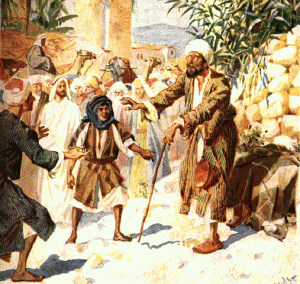
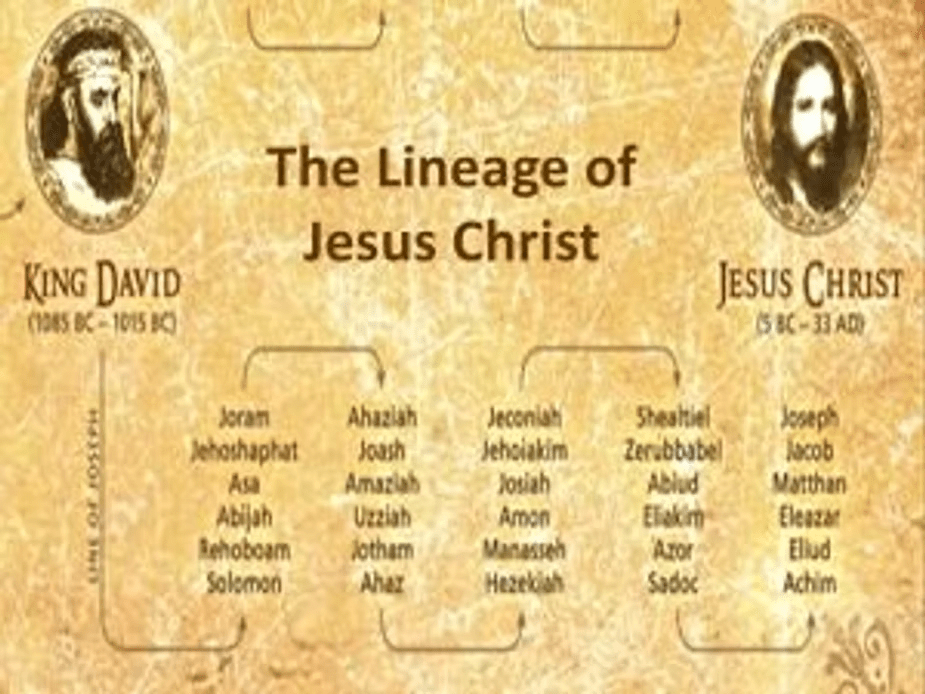








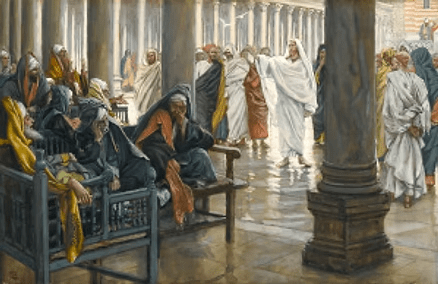

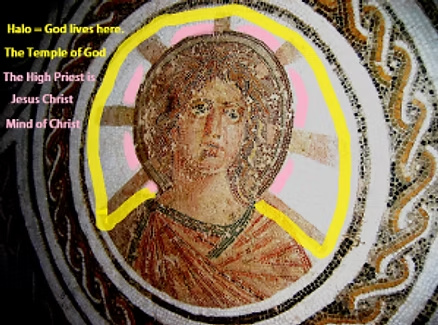






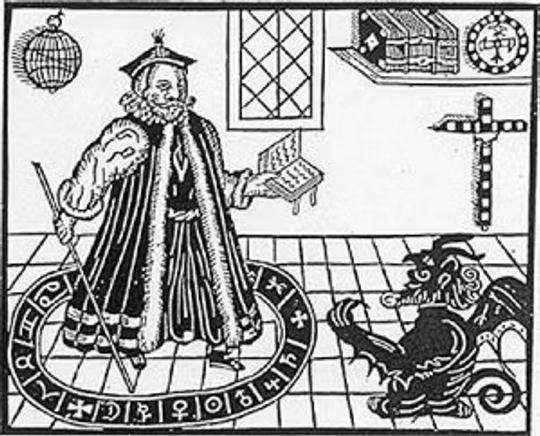
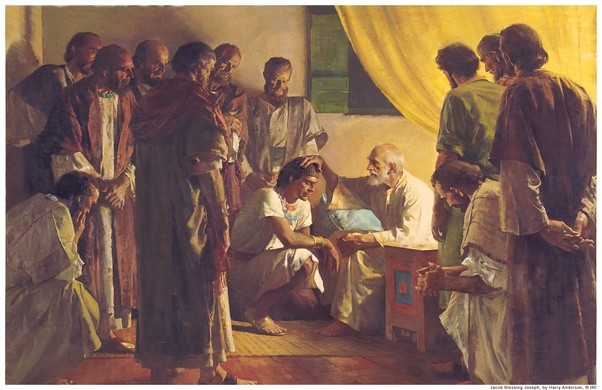








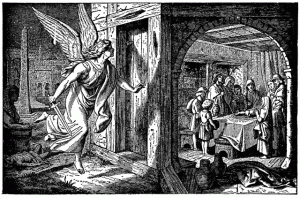

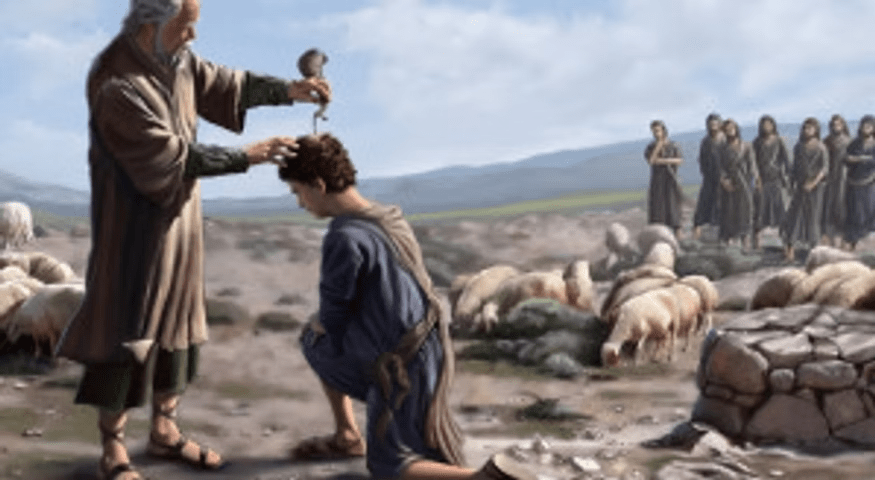

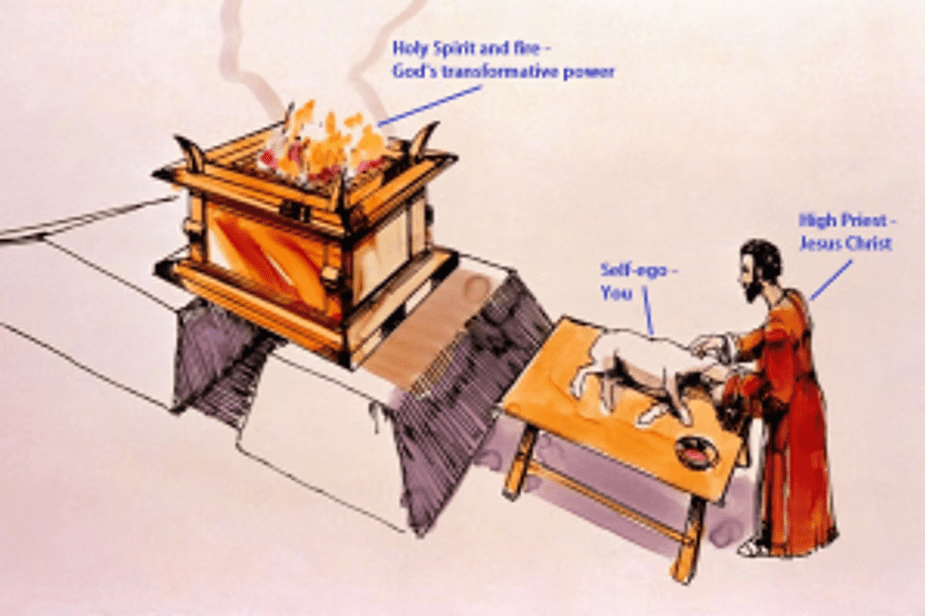








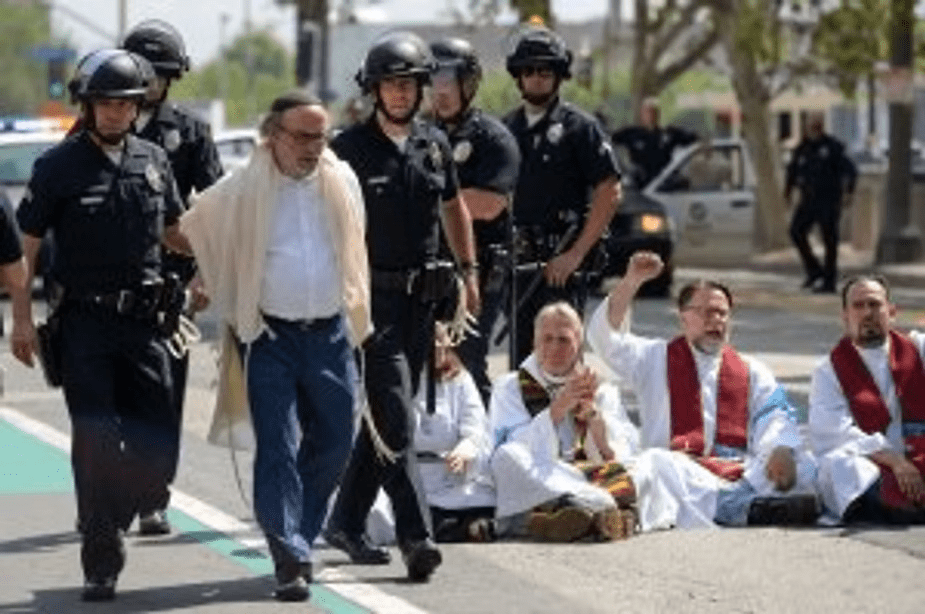
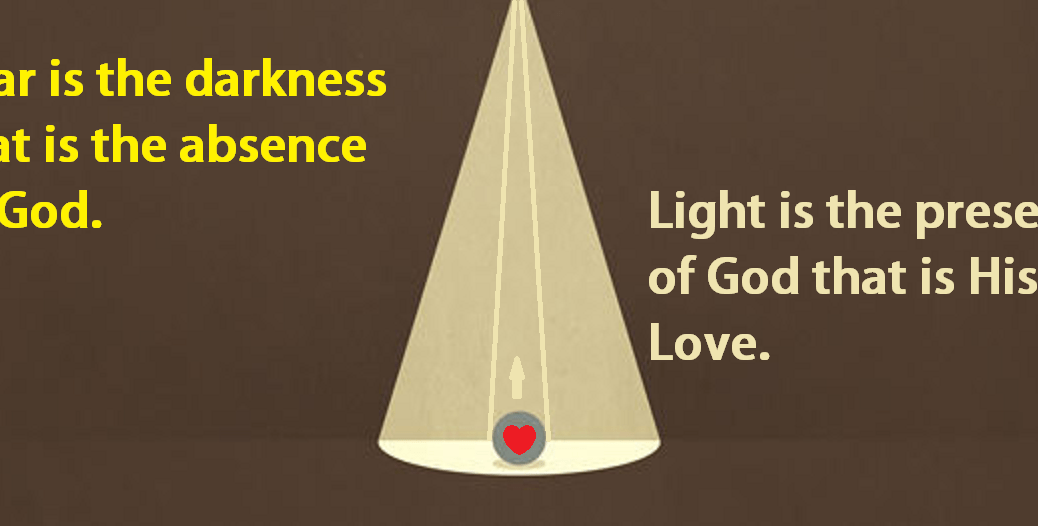

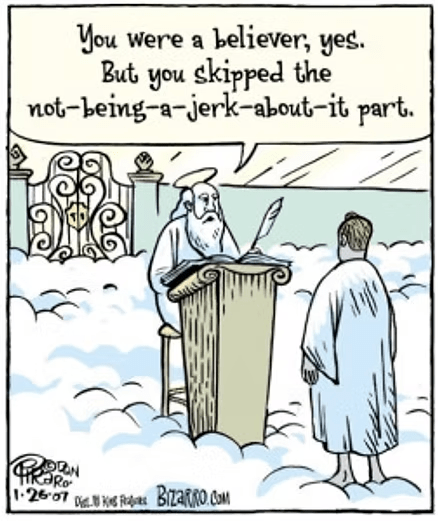








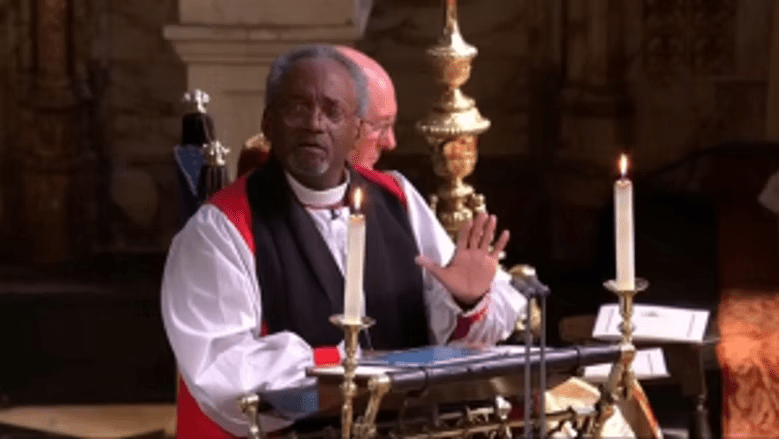


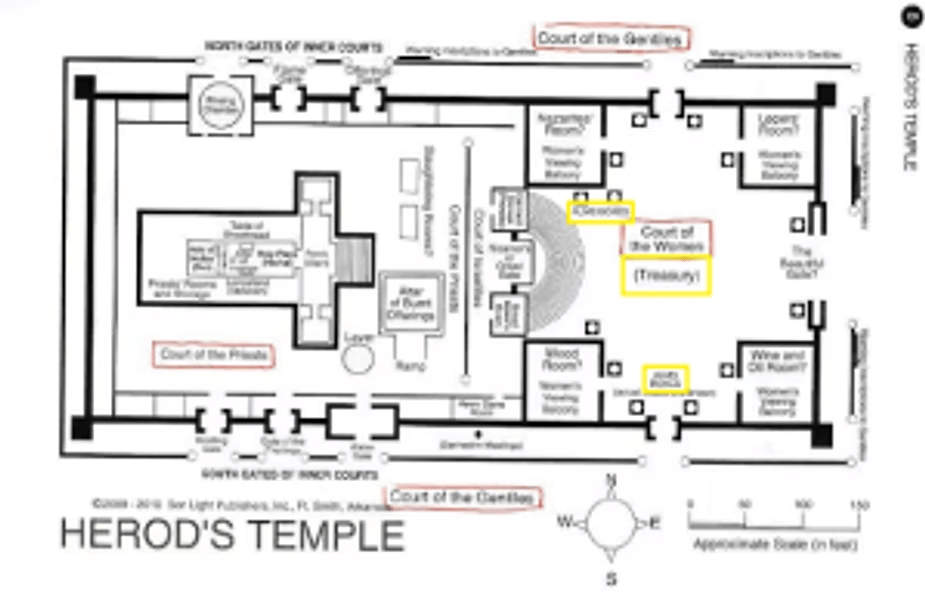
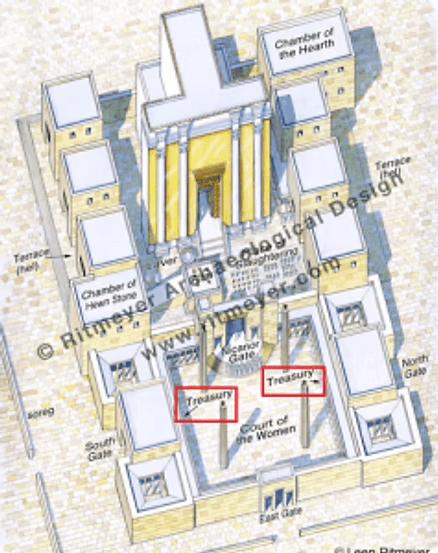

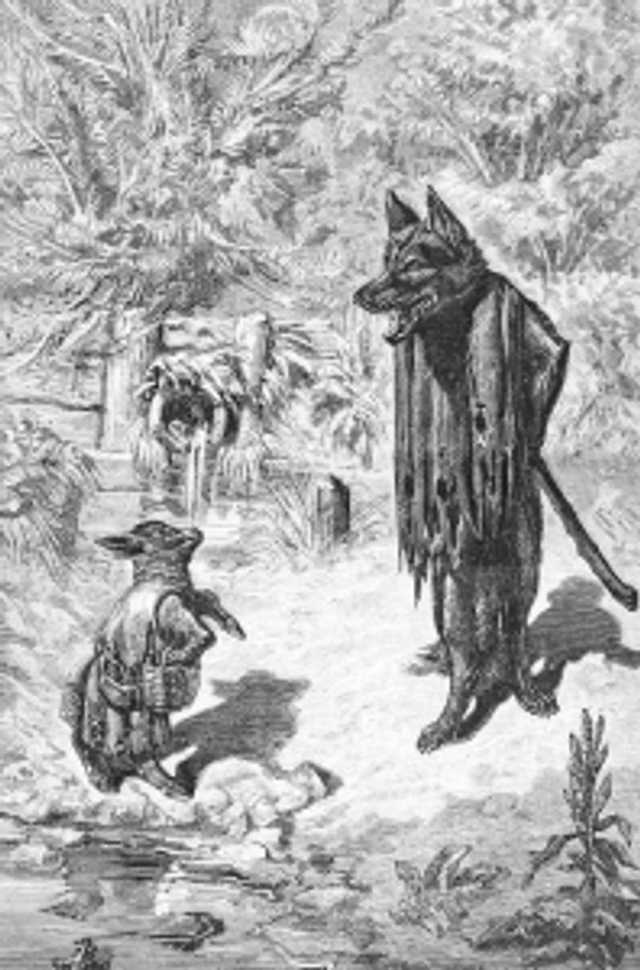
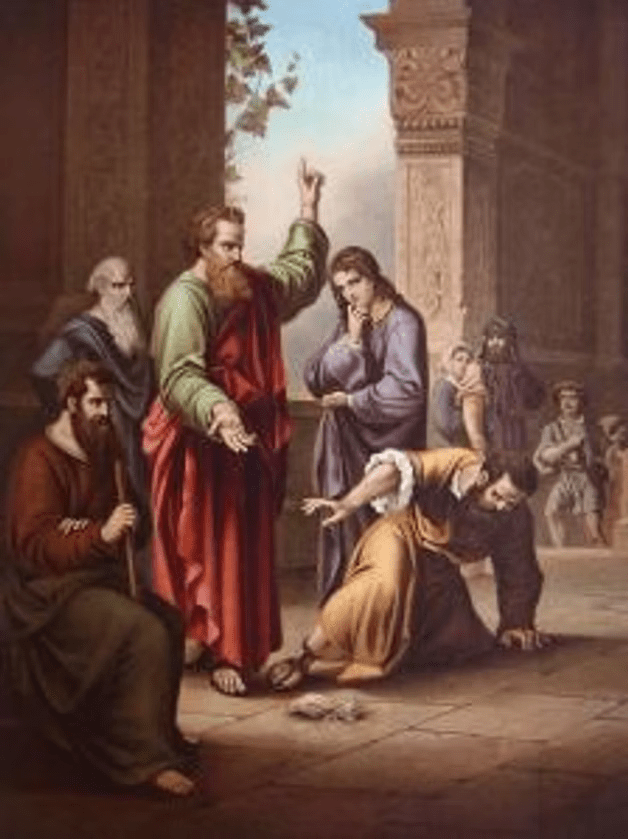
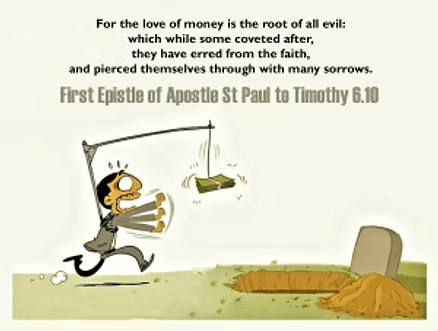

 Explaining the Readings