and ten thousand times ten thousand stood attending him.
The court sat in judgment,
and the books were opened.
As I watched in the night visions,
I saw one like a human being
coming with the clouds of heaven.
And he came to the Ancient One
and was presented before him.
To him was given dominion
and glory and kingship,
that all peoples, nations, and languages
should serve him.
His dominion is an everlasting dominion
that shall not pass away,
and his kingship is one
that shall never be destroyed.
———————————————————————————————————-
This is an optional Old Testament selection from the Episcopal Lectionary for the Twenty-seventh Sunday after Pentecost, Year B 2018, which is the Last Sunday after Pentecost. In the numbering system that lists each Sunday in an ordinal fashion, this Sunday would be referred to as Proper 29, but it is called “Christ the King Sunday.” If chosen, it will next be read aloud in an Episcopal church by a reader on Sunday November 25, 2018. It is important because Daniel was shown a vision of God as the King, whose throne is within all who serve Him, as kingdoms where the Lord has dominion within those dominions. All who allow God [the Ancient One] to rule are then Sons of Man, through the Christ Mind.
A repeated theme here [including in the unread verse eleven] is “I watched.” As a seer of visions and a dream interpreter, Daniel was given the Mind of Christ by God. As this reading is set up in halves [at the point of omitted verses], each half is begun by the statement “As I watched.” When the second half adds, “in the night” (from “wa·’ă·rū lê·lə·yā” – “behold night”), this aspect of night is symbolic of vision on the earthly plane, where mankind is mortal and born of death. Therefore, the absent of “night” implies heaven, where the light always shines.
The worldly realm is a wheel that turns to the light and then away from the light.
As such, the thrones [plural number] Daniel witnessed are those set for all who have served God on earth, and received the promise of eternal life. As heaven is always lit by the light of God, there is no time there [as humans sense time]. All prophets and priests of YHWH, from all worldly times and eras, have a throne [“The power, dignity, or rank of one who occupies a throne.” – American Heritage® Dictionary of the English Language, Fifth Edition.], including Jesus. All thrones are at the right hand of God, because God’s right hand extends to the earthly domain.
When we are told by Daniel, “The Ancient One took his throne,” this segment of words literally translates as, “The Ancient of Days was seated.” This is the seat of the King, to whom all in Heaven submit.
The white robe symbolizes the purity of God, which means none of God’s servants can be less pure. All who are enthroned also wear white robes. The hair of pure wool is a mistranslation that skips over a period mark.
The statement literally says, “his garment of snow” [an implication of “white,” without needing to state the word]. Following a comma mark, the next segment of words say, “white and the hair on his head like wool.” There is no mention of “pure wool,” but the hair is “white” and like that of “wool.” The reference to “white” is again stating “purity,” while “wool” is then an allusion to God being the owner of a flock of sheep. One can assume those sheep also have white hair. Following that is the word “pure,” which is referencing “his throne,” a seat of “flame.” The “flame” is then “pure,” which means there is no ash or particles transformed from matter changing states. In the production of God’s flames, which encircle His throne like a “fiery wheel,” all fire is Spiritual light shining brightly.
We look for evidence of a human King Arthur, but not a human Ancient of Days?
This also becomes an indication of the other thrones that have been set in place, where all thrones are like “burning wheels.” Nothing of this fire is less than pure flames of the light of truth. There is no smoke of lies or deception or past histories of worldly failure. The “wheels” are like the angels Jacob saw going up and down the ladder to heaven. Those are who Daniel said were “A stream of fire issued and flowed out from his presence.”
This number is then said to be “A thousand thousands served him, and ten thousand times ten thousand stood attending him.” These are the countless numbers of souls who have been sent to the earth by God to guide other souls back to the light of God. All have been listed in the Holy “archives” that were written from the time Adam was sent into the world as the first priest to God. This is the “book” known of as the Akashic Record, of which Daniel was shown.
Following two omitted verses, Daniel then watched as those pure souls entered the realm of darkness, called “night.” This is where the Holy Spirit was shown to descend, “with clouds of heaven.” This means the heavenly is unseen, thus obscured from human eyes, as if a cloud of mist surrounded them. Those angels and spirits will each transform a human being into a “son” of God, born into a “man” [or woman, as a Son of God]. This means all who have this Holy Spirit descend upon them will be like Jesus Christ, even if it happened prior to Jesus of Nazareth being born on earth, of a woman. Jesus Christ is timeless – who was in the beginning, in now, and will always be.
When Daniel said, “And he came to the Ancient One and was presented before him,” the literal states: “like a son of man came; coming even to Ancient of Days – he came and before him they brought him near.” This [because it is a vision “in the night” of the worldly plane] was not anyone being brought before God in Heaven. This was the model of the Christ [Jesus Christ] that is the Son of Man, the Son of the Father [the Ancient of Days], who appears “before him” all who serve the Father as a wife, then becoming the Son. They bring Jesus Christ [“him”] “near,” as one with their souls.
Another “fiery wheel” has turned.
When we then read Daniel saying, “To him was given dominion and glory and kingship,” the Hebrew word “ū·mal·ḵū” means “kingdom.” This is how Jesus told Pilate, “My kingdom is not from here.” A “kingdom” means the Ancient of Days [God] is the King of such a “kingdom.” By a soul within flesh and bones allowing God to have “dominion,” through the presence of the Holy Spirit joining with one’s soul [the purification process], then the “glory” comes, which is the “honor” of God’s Holy presence.
Rise My Son and serve well.
When Daniel saw “that all peoples, nations, and languages should serve him,” this is from having seen the light of eternity in God’s holy realm. To write, “His dominion is an everlasting dominion that shall not pass away,” this is the promise given to all who sacrifice of self-ego to become one with the Lord. By giving God “dominion” over one’s soul [and thus flesh], there is an “everlasting” covenant that redeems a soul, preventing it from being on the wheel of death [reincarnation].
The part of the verse that concludes: “and his [kingdom] is one that shall never be destroyed,” this is the power of God to keep one pure. This purity is what joins the presence of God in Heaven with the human who has submitted himself or herself to God’s dominion. That flesh will never be turned away from God by the forces of evil. The “kingdom” is the soul, so that after the flesh has released the soul it will find a throne set at the right hand of God, as one more in the countless number who have “stood attending him.”
As an optional reading selection from the Old Testament for the last Sunday after Pentecost, also known as Christ the King Sunday, when one’s own personal ministry for the LORD should be well underway – one has felt the cloud upon one’s soul and submitted one’s body, mind, and soul to the dominion of God – the message here is to receive the glory of serving God, so one can become a shining example of how “all peoples, nations, and languages should serve him.”
The world is headed in the wrong direction. It is breaking apart because of individual human beings dividing the world into an “us or them” place of conflict. No world leader can unify the peoples as one nation, where all are speaking the same language of faith. No man who proclaims self so loudly can ever do anything but lead that self and many other selves to ruin and damnation. This is evident by the number of world leaders who make no proclamations of religious beliefs, with those who do giving little evidence that supports those claims.
All hail the kings of the earth, until new kings replace them.
Christ the King Sunday is the last Sunday of a burning wheel that spins the Holy Spirit from Heaven to earth, as it renews when the wheel’s fiery burn returns to God’s throne. Advent should be a time when seasoned Apostles have their first rewards, from passing on the Holy Spirit into those ripe for self-sacrifice to God.
Alas, fewer and fewer are preaching to the throngs of people that are on their knees praying to a national leader for salvation. It is so much easier preaching to the choir. It is even easier still when the blind preach to the blind, breaking into songs of praise that no one understands, but the emotions feel better with song.
We are leaving the after Pentecost [Ordinary Time] season. Everyone is in the Black Friday spend-spend-spend mood. Christmas trees are going up and there is the jingle of cash in the air.
It seems to be the time to sell some stuff and give baby Jesus credit for all the giving we do [more and more to ourselves]. Not many people are accepting God’s gift sent to us – the opportunity to be His Son reborn. If we did, then we could give the gift that keeps on giving – the Holy Spirit – without needing a credit card. We strike God off our Christmas list because we think He is Santa Claus and nobody ever gives ole Santa more than a glass of milk and some cookies.
Again, no souls for me to collect this year.
It is easier to waste some food, than to make a commitment that would give one’s body, mind and soul to God, letting Him have dominion over a sinner.
19 “There was a rich man who was dressed in purple and fine linen and lived in luxury every day. 20 At his gate was laid a beggar named Lazarus, covered with sores 21 and longing to eat what fell from the rich man’s table. Even the dogs came and licked his sores.
22 “The time came when the beggar died and the angels carried him to Abraham’s side. The rich man also died and was buried. 23 In Hades, where he was in torment, he looked up and saw Abraham far away, with Lazarus by his side. 24 So he called to him, ‘Father Abraham, have pity on me and send Lazarus to dip the tip of his finger in water and cool my tongue, because I am in agony in this fire.’
25 “But Abraham replied, ‘Son, remember that in your lifetime you received your good things, while Lazarus received bad things, but now he is comforted here and you are in agony. 26 And besides all this, between us and you a great chasm has been set in place, so that those who want to go from here to you cannot, nor can anyone cross over from there to us.’
27 “He answered, ‘Then I beg you, father, send Lazarus to my family, 28 for I have five brothers. Let him warn them, so that they will not also come to this place of torment.’
29 “Abraham replied, ‘They have Moses and the Prophets; let them listen to them.’
30 “‘No, father Abraham,’ he said, ‘but if someone from the dead goes to them, they will repent.’
31 “He said to him, ‘If they do not listen to Moses and the Prophets, they will not be convinced even if someone rises from the dead.’”
———————————————————
FOREWORD: This is a rather long explanation of a well-known Biblical story. It is a rather simple (seeming to be) story of a repeated lesson that warns the wealthy believers in Yahweh, while giving solace to the poor of faith. It is so seemingly simple to grasp that it is easy to ‘ho-hum’ it and just yawn. I was led to look at it deeper than I had before and was surprised to see what is sweetly hidden in the verbiage that makes this lesson told by Jesus take on a fresh appearance.
Recently, my writing on a book had me researching the mythology behind the names of the planets. What I learned about Pluto was very interesting, which is most befitting the discovery of that orb (since downgraded to a dwarf planet or planetoid). Pluto was discovered in 1930, with the element plutonium discovered in 1934, and produced and isolated in 1940, named as an honor to the discovery of a new planet. Pluto became the symbolic dawning of the nuclear age. The same Greek word from which “Pluto” comes is the same word from which comes “rich man” in this reading (and others of similar focus).
One important thing I found in this reading is relative to each of the characters being named, when it appears only Lazarus stands out. The name Lazarus is representative of a class of people, making the “rich man” also be representative of the same. Therefore, we are all today either one or the other. As such, I write this in-depth explanation for all who might want to know this. Still, it is less for the Christians that sit in pews and more for the ones who will stand before the pewples. My hope is they will give this lesson the proper attention it deserves.
————————————————————-
The Greek text of this lesson taught by Jesus, recounted by Mother Mary to the doctor Luke, begins with a statement about each of two men. Both are identified as “certain,” from the Greek word “tis.” This identifies each man as known individually, while identifying two who were associated with many like them. Their “certainty” is what bonds two of opposite status levels together in this story. As a lesson taught by Jesus to the Jews of Galilee, that use of “certain” then spoke of specific members from their religious group. Therefore, the two men identified in verses nineteen and twenty were not people of uncertain religious beliefs, as each adhered to the principles of Mosaic Law. Being Jewish was “certain” of both men.
The second man is identified as “certain,” with this further specified as “named Lazarus,” from the Greek words “onomati Lazaros.” The mistake that is made in reading those two words that way comes from thinking one man was named Lazarus, which eliminates other symbolic meaning. That not only ignores the meaning behind the name, but it disconnects all later students from relating to the characters of this story. Reading that there was a “man named Lazarus” into a teaching by Jesus leads all who read these words or hear them read aloud in a church and think, “Well this is about somebody long ago, “named Lazarus,” who I have no affinity with.” The mistake comes from not seeing oneself as “Lazarus.”
The truth that Jesus spoke to a Jewish audience bears deep meaning to all Christians also. Christians are supposed to be founded in the principles of Mosaic Law … at least those commonly termed “the Ten Commandments” … but are truly supposed to be seeking to be reborn as Jesus Christ. When one reading this lesson realizes that Jesus spoke in metaphor about Christians today (those who are supposed to be “in the name of Jesus Christ”), then understanding the meaning behind that name “Lazarus” is most important.
The name “Lazarus” (Greek spelling “Lazaros”) is “the Hellenized version of the Hebrew name אלעזר, Eleazar.” (Abarim Publications) The name is then like “El-azarus.” The Hebrew meaning of the root name is then “God Has Helped” or “Helped Of God.” (same Abarim Publications source)
The capitalization should then not be read as simply stating a proper name (a syntactical rule of the English language that misleads, taking one away from the importance of the meaning behind a name), but a significantly important word of meaning, which identifies more than one human being. “Lazarus” is intended to be one character of parable that reflects upon a whole class of faithful that are like “Lazarus.”
This means the capitalized word “Lazaros” is making two statements. First, it is stating the importance of the One God (El) in all who believe in Yahweh. Second, it is stating the importance of all who are “named” as “certain,” being relative to a specific religious set of beliefs commanded by El. That name is then a statement of all who see the value of the Laws of God, through Moses, as worthy of complete commitment and submission. Therefore, “Lazarus” is not naming one person but naming all Jews and Christians who “God Has Helped.”
When one has become comfortable overcoming that limitation of the word “Lazaros” and understand how the capitalization makes this lesson be pointed at every Jew and Christian who believes in Yahweh, the question should be, “Then why is Lazarus (one who God Has Helped) identified in the translation as a “beggar”?
It is important to read these verses (or have them read aloud in one’s presence) and question, “I feel like I have been helped by God, because I am a successful person; so why is one Helped Of God laid at a gate as a beggar?”
One needs to ponder, “If I am truly helped by the One God, how am I reflective of one who is covered in sores?”
The reasoning should be to find out who oneself identifies with in this teaching, as Jesus was not only speaking to a group of Jews in Galilee when he gave this lesson. The reasoning should be to see Jesus speaking to everyone who will read his words forevermore. The reasoning should be to understand what one has overlooked in the past, as a student called again to listen to a lesson with a more mature mind.
First of all, verse twenty begins by stating the Greek word “ptōchos,” a word that is not capitalized. English syntax calls for the first word in a sentence be capitalized, but Biblical Greek text is following divine syntactical rules. The word “ptōchos” translates as “poor, destitute, spiritually poor, either in a good sense (humble devout persons) or bad.” (Strong’s) The lack of capitalization says (silently) that poverty is not an important issue. The lack of material wealth is not an issue for any whom God Has Helped. As this story (eventually) tells of “Lazarus” going to Heaven, one should assume the identification is to one who is “a humble devout person,” whose “poor” status does not deter God from having his needs met, as a devoted servant. The result of one “Helped Of God” is one is “poor” due to a lack of material needs.
HELPS Word-studies states, relative to Jesus’ usage of “ptōchos,” the word’s usage acts as an assumption of a reduction in physical stature, which leaves one a beggar. They state: “ptōxós (from ptōssō, [meaning] “to crouch or cower like a beggar”) – properly [means], bent over; (figuratively) deeply destitute, completely lacking resources (earthly wealth) – i.e. helpless as a beggar. (ptōxós) relates to “the pauper rather than the mere peasant, the extreme opposite of the rich.”’
This word’s usage has led translators to paraphrase what Jesus said, making his words be twisted, creating a misleading visual by saying Lazarus “was laid a beggar.” In reality, those who belong to the class of people “God Has Helped” are “bent over” to Yahweh, subservient to His Will. They are “lacking earthly wealth” that simply keeps them from identifying with the materially “rich.” IF there are any sores visible on their bodies, the sores signify the admission of their sins, which places them prostrate before the gate of Heaven, begging for forgiveness from God.
Knowing this about the identification of one “God Has Helped” makes not seeing Lazarus as a beggar easier to fathom. The descriptive term that makes this lesson of Jesus more powerful says that the person identified as Lazarus was the “extreme opposite of [one who was deemed] rich.” [HELPS Word-studies] Seeing a lame beggar covered in sores as helpless, reduced to seeking crumbs (metaphor for alms for the poor) for survival, makes it quite difficult to grasp the evil of a “rich man.” It almost excuses being rich today, while caring little about how many poor people there are in the world, as if with the attitude, “They should pray to God more.”
Understanding that verse twenty is Jesus setting up a lesson where the one “Helped Of God” is the “extreme opposite of the rich” means looking closer at verse nineteen is important. The literal translation of that verse states, “A man now certain existed rich ,and he was clothed in purple and fine linen , making good cheer every day in splendor.” This verse has three segments of words, set off by the presence of comma marks. It is important not to erase this punctuation (whether it is imagined or real), as it keeps one from paraphrasing what was written. Paraphrase is a trick of human language, but it is the application of syntax not spoken by Jesus.
I have found that wherever the Greek word “kai” (typically translated as “and”) appears it should be read as a statement of importance to come (that which is stated next), rather than as simply stating “and.” English syntax frowns on placing “and” and a comma mark together, so when we see “,and” above this concept that “kai” is written-spoken as a mark of importance to come is supported. Strong’s Concordance states that “kai” is written in the New Testament 9079 times. That repetition should be viewed as more significant than simply being a sttutering use of “and,” like “oh yeah, add this.”
The comma mark separates like a conjunctive word (“and”), while the word “kai” acts as a signal of importance to follow. This non-translation of “kai” as a conjunction (which finds many are deleted from translation, due to redundancy) also means that where it is written “purple and fine linen” there are two statements made. By simply stating “and” (the trick of syntax again), the mind quickly computes “fine purple linen,” missing the importance of “purple.” The word translated as “fine linen” is a separately important description that follows the symbolism of the word translated as “purple.” The word “kai” says, “See the separate elements, “purple” followed by “fine linen.”
When one read verse twenty previously and found that “certain” was followed by “named Lazarus,” where “Lazaros” was less about the name of a specific person but an identification of all devout believers in the One God (and all to come), the parallel should be seen in verse nineteen. There, the word “certain” is followed by the Greek word “plousios,” which has been translated as “rich man.” This should be seen as a parallel ‘name’, just as is “Lazarus.”
The word “plousios” is defined as meaning, “rich, abounding in, wealthy; subst: a rich man.” (Strong’s) This says that the translation as “rich man” is a substitute for the true meaning. Realizing that means “plousios” is how this “certain man” is ‘named’, which separates him from all uncertain wealthy people, misses that he, like “Lazaros,” is named “Plousios,” without the importance of capitalization.
HELPS Word-studies adds to this understanding of usage as such: “ploúsios (an adjective, derived from 4149 /ploútos, “abundance”) – properly, fully resourced; rich (filled), by having God’s “muchness” – i.e. His abundance that comes from receiving His provisions (material and spiritual riches) through faith (4102 /pístis).” This is another way that seemingly justifies seeing value in the “rich man,” as his wealth is assumed to be due to his “faith.” That assumption allows one to wrongfully think, “rich duds on the outside correlates to a wealth of inner goodness.”
This later assumption of “God’s muchness,” which includes “material riches” must be seen as not fitting the set-up that is opposite the lack of material concerns sought by one “God Has Helped.” Yahweh, as the One God, does not help His believers become materially “rich,” making this lesson demand seeing that truth. Despite the mega-churches that have ‘slick Willy’ preachers in thousand dollar suits that only preach, “Jesus wants you to be rich,” that is a lie that does not match what this lesson by Jesus teaches.
It is better to remember what Jesus said to his disciples later in his ministry. Then he said, “Truly I tell you, it is hard for someone who is rich [“plousios“] to enter the kingdom of heaven. Again I tell you, it is easier for a camel to go through the eye of a needle than for someone who is rich [‘plousion‘] to enter the kingdom of God.” (Matthew 19:23-24) Jesus said that after he told a young man [one who owned lots of possessions] how to be assured of going to heaven. The young man walked away sadly, after being told following the Law was (of course) required, but the key to getting to heaven was this: “If you want to be perfect, go, sell your possessions and [“kai“] give to the poor [“ptōchois“] , and [“, kai] you will have treasure in heaven. Then [“kai” translated as a capitalized “Then”] come, follow me.” (Matthew 19:21)
It becomes important to see how the “certain man” of verse nineteen is then given the name of “plusious” (lower-case of insignificance), just as the “certain man” of verse twenty was “named Lazarus.” The lack of capitalization is then a statement of the lack of importance that Jesus gave to all believers who (exactly like the rich men of Jerusalem and Galilee when he taught) place wealth as a statement of their piety. This makes the substitute translation of “rich man” realize another substitute implication, as an identifying name – both for an individual and a group of Jews [and Christians].
The Romans named their god of the underworld Pluto, because Pluto was a form of “plusious.” Pluto’s etymology, according to the Wikipedia article “Pluto (mythology)” is: “Plūtō (genitive Plūtōnis) is the Latinized form of the Greek Plouton. Pluto’s Roman equivalent is Dis Pater, whose name is most often taken to mean “Rich Father” and is perhaps a direct translation of Plouton.” The Romans revered that lesser god as the god of abundance (and with abundance comes power and influence). The equivalent Greek god was named Hades, who was not revered in any way by the Greeks. However, the Romans saw the underworld as where the riches of the world came from, as mineral rich ores that were mined from under the earth’s surface.
By seeing this in verse nineteen, Jesus gave the rich man the extreme opposite name to “God Has Helped,” as being one specifically who the god of the underworld has helped. Verse nineteen can be read as naming an individual Jew named Pluto (or Shepha or Mamónas), if there is only one man named Lazarus. The two men, or those Jews and Christians who are just like one of those two men, claim to be believers in Yahweh, but the verse nineteen group prays to two gods, while those of the second group pray to One God.
This awareness means that it was abundance that enabled the “certain man” of verse nineteen to be “clothed with purple.” The Greek word “porphyran” is a color that represents “power or wealth.” (Strong’s) Purple is the color of the robes of kings, because they wield the power and wealth of nations of people, whose “certainty” is a nationality, more than religious beliefs. To wear that color was a statement of royal status. More importantly, it was a Self-assumed state of power and influence, as no Jews in Galilee or Judea were truly of royalty.
At the time that Jesus taught this lesson, the “certain” Jews of Jerusalem had the power and wealth of the Second Temple that allowed them to pretend to be royalty. The fall of Israel and Judah was due to having followed their human kings to ruin. The were no kings in Jerusalem after Herod the Great died, and Herod owed his royal dynasty to his Roman masters that placed him in power. As the Roman Emperor sought to pacify the Jews of Jerusalem, by letting them think they ran a city state within the province of Judea, that region was placed under a governor from Rome, after Herod the Great died. After their return from exile in Babylon, the ruling class Jews of the Temple had forgotten that God should be their King.
This means the use of “enedidysketo porphyrin” (“he was clothed in purple”) is a statement that one who claimed to be a Jew (today a Christian or believer in Jesus Christ) was “putting on airs.” He (and all like him) “was clothed in” the invisible robes of Self-importance, based solely on how much wealth one had amassed (at the expense of others). The extreme opposite view that fits this segment of words is “putting on the clothes of righteousness.” Righteous is not the view one should have, when reading what Jesus said identifying the one as “rich” (“pluto“).
Evidence in this regard comes from the Apocalypse of John, who wrote of righteous clothing in two verses. He wrote, “But you have a few people in Sardis who have not soiled their garments; and they will walk with me in white [not purple], for they are worthy.” (Revelations 3:4) John also wrote, “It was given to her to clothe herself in fine linen, bright and clean; for the fine linen is [metaphor for] the righteous acts of the saints.” (Revelations 19:8) Isaiah also wrote of righteous clothing (Isaiah 11:5; 59:17; 61:10; and 64:6), and Zechariah 3:4 also spoke of this. David wrote, “Let your priests be clothed with righteousness, And let your godly ones sing for joy” (Psalm 132:9). That was a statement that those of “certain” faith, who served in the Tabernacle. Those priests would wear the sacred garments of the servants of Yahweh, not the garments of kings.
The use of “kai” says that simply dying common clothing the color “purple” was not all the abundant ones did. They enhanced that signal of royalty greatly by adding that color to “fine linen,” which could have been “purple” or any other color when purchased. The Greek word used by Jesus is “bysson,” which [according to HELPS Word-studies] means, “fine linen, i.e. a very expensive (sought-after) form of linen – “a specific species of Egyptian flax or linen made from it that is very costly, delicate.” (J. Thayer).”
This means that in addition to putting on the clothes of self-glorification, rather than the clothes of righteousness, the people who were like this “certain man” always made sure people could tell their status by the clothes they wore, knowing their fabric was imported. This is like men and women today that wear expensive suits that clearly say, “I am powerful.” It reflects an inner drive that forces one to selfishly live up to the English saying: “You have to spend money to make money.” More money must be reinvested in self-appearances and airs.
The comma then leads to the final segment of words that add detail to this acting like royalty that separates oneself from the common class of people by dressing in finery, all because one is of a “certain” faith. The Greek states “euphrainomenos kath’ hēmeran lamprōs,” which literally translates as “making good cheer every day in splendor.” This says, basically, the abundance of one’s position of wealth has made them “feast” (“euphrainomenos “) twenty-four-seven (“kath’ hēmeran“) on the finest of everything (“lamprōs“).
This makes the sum of verse nineteen be about one’s opulence, which is a sign of one’s decadence caused by wealth. That means that if Yahweh has initially given one abundance, then it was as a test of faith. Jesus told the young rich Pharisee how to pass that test and be “perfect.” However, he walked away sad, reflecting how most rich Jews (and Christians today ) fail to deal with “abundance” properly. The projection of self-worth, while ignoring the “poor,” is an imperfect state of being that keeps one from heaven.
When one has a firm grasp of verse nineteen being about everyone of Judaic-Christian values (who believe in Jesus Christ’s lessons), it points to those who misjudge wealth as God’s blessing for them to rule the world. When one can see how “Lazaros” is a powerful statement of true Christians that have been filled with God’s Holy Spirit and been reborn as Jesus Christ (bearing his name as “God Has Helped”), then it is easy to see how verse twenty needs some translation adjustments, so that those who are the extreme opposites of the rich are not seen as crippled beggars.
Verse twenty’s Greek states two segments, separated by one comma mark: “ebeblēto pros ton pylōna autos , heilkōmenos.” That can literally say about “God Has Helped” that one of His faithful “was thrown to outsiders porch same , being full of sores.” This is because “ebeblēto” (from the root “balló“) means, “to throw, cast,” in a stronger sense than “laid” implies (somewhat) “with care” or “gently.” The Greek word “pylōna” refers to “a large gate; a gateway, porch, vestibule,” meaning something more significant than a private gate to a country villa on a dirt road. It implies an entrance to a palace, which fits the royal motif.
When “pylōna,” is realized to translate as “a large gate; a gateway, porch, vestibule,” then this word should be seen as representing Herod’s Temple – a fixture of Jerusalem. It then is a statement that this “certain poor man” of Jewish faith was denied access to the inner courts, deemed too poor to gather along with well-to-do Jews.
The Greek word “ton” simply translates as “the,” but NASB (New American Standard Bible) lists three times it translates as “outsiders,” and four times as “others.” The implication is then creating the imagery of one being “cast” or “thrown” outside the Temple proper, to the Court of the Gentiles, which was beyond the Beautiful Gate and near Solomon’s Porch.
Following the separation from a comma mark, the Greek word “heilkōmenos” states the one exception to this general banishment. If one was “covered in sores,” then one could gain access to the Court of Lepers, in the general area of the Women’s Court, not far from the Nicanor Gate. Still, it would be better to stand outside the temple with “outsiders,” even if the rich and powerful saw that association with Gentiles as sores covering one’s body.
When verse twenty-one begins by stating “kai,” this is again signaling a level of importance that is relative to “longing.” The Greek word “epithymōn” means “desiring,” usually in a negative sense of lustful wanting or longing; but it also means “setting one’s heart on,” where the heart is the seat of the soul. As one “named God Has Helped,” one can make the assumption that that soul’s heart is pure, in this case. Therefore, “to be fed” (from “chortasthēnai“) is less a reference to physical food, and more a statement of needing one’s heart be fed with spiritual food.
The Greek word “chortasthēnai” bears the meaning, “to be satisfied, filled,” where there is an emptiness that needs filling or satisfaction, but that does not necessarily mean in one’s belly. To desire such nourishment “to fall from the table of the rich man” is a statement of lack from the “rich man,” rather than plenty that is shared. Since no one places a “table” (“trapezēs“) in one’s ‘driveway’ by a “gate,” Lazarus was never able to see the “table” of the wealthy. That Greek word, when associated with money, implies a “money-changing or business” “table,” from which Lazarus was denied.
This means that those who pretend to be holy (based on abundance of wealth) and wear fancy clothes rather than priestly robes rarely (if ever) produce morsels of insight that nourish the souls of the faithful. Still, the sequence of words actually states (from the Greek), “from that falling from the table away from the table of the rich man,” where the Greek word “piptontōn” equally states, “falling under (as under condemnation)” and “falling prostrate.” This is then not waiting for food to fall from a dinner table, but “falling down” from having been outcast (“falling under” the decrees of royal priests) and praying to God (“falling prostrate”) outside the Temple gate.
The translation that has verse twenty-one concluding with the statement, “Even the dogs came and licked his sores,” needs refining. The new sentence is confusing, as the word for “dogs” (“kynes“) implies “scavenging canines,” who ran wild and were disdained by the citizens. For Lazarus to be portrayed as a lame beggar that was hungry for crumbs to keep him alive, one would assume a stray dog would likewise compete with him for any crumbs. To lick his wounds, after stealing his crumbs, would be like adding insult to injury. However, this segment of words is poorly translated.
Following a semi-colon mark (absent in the translation above) is the word of exception “alla.” That means “but” or “however,” such that there is a caveat being stated by Jesus, one that is relative to this “falling from the table of the wealthy.” After notice of an exception comes the Greek word “kai” again, which prepares one for an important statement to follow. That statement comes in three segments, which literally can say: “but kai outsiders dogs , coming , were licking clean this wounds the same.”
The exception is then pointing to the importance of “ta kynes,” or “the dogs.” It is the presence of “kai” that alerts the reader to look for meaning that is greater than a simple article (a, an, or the). In this regard, the word “ta” is another that typically translates as “the,” but the NASB lists the same translation options as “outsiders” or “others” (seen for the Greek word “ton“). This way of seeing that translation working here, where “ta” is identified as important, means that “outsiders” become the Gentiles that were also barred from the tables inside the Temple. This makes “dogs,” the literal translation of “kynes,” refer to the figurative translation of the word, so “dogs” is a statement (importantly) of the way the elite Jews viewed Gentiles.
The one-word statement next, following a comma mark, is “coming.” This is then relative to those who were not Jews, but came to the Temple just to stand outside. This would have been Samaritans and Greeks, or any of the scattered Israelites who had become mixed blood, while still believing in the God of their ancestors who were Israelites. It would be outside the Temple that teachers (like Jesus, and later his Apostles) would offer insight about Scripture. The Gentiles came for those morsels falling from the table, rather than hoping to get inside where nothing of importance was ever said. Thus, being among those who were seeking to find God, whether Jew or Gentile, all “were licking the wound” of banishment, exile, and rejection for past sins unforgiven. That is especially true for those of great faith, as not being able to join with those of “the same” stated religious beliefs (the “certain”) is hurtful.
The aspect of “covered in sores” and dogs licking “sores” is what makes it seem that some man named Lazarus was a leper and a poor beggar (perhaps lame too). In the times of Jesus, people like that would have been banned from holy spaces and blamed for their physical plights. “Sores” were seen as outward projections of imperfections stemming from one’s inner being, which were then deemed as evidence of sins.
The Greek root word “helkos” means “a wound, a sore, an ulcer,” often used to denote a “(festering) sore.” (Strong’s) Still, the one-word statement that assumes one person was “full of sores” can also allow for the assumption that one was treated like a leper, when the only ‘sores’ that covered his body were from the honest wear and tear a poor man of values earns from hard labors.
When invisible “sores” are angers that fester within one’s soul, due to unfair treatment at the hands of the rich and powerful (with no recourse other than suck it up and bear it), there is no doubt a faithful follower of Yahweh would be falling prostrate before God asking for forgiveness and strength to continue. Job was an upright man who suffered mightily from sores he did not deserve. Job fell prostrate before the Lord, as he blamed himself for not knowing what sins he did to bring about his plight. Never was Job found blaming God for his plight (although others advised him to do so).
It is very important to see this lesson of Jesus from the perspective of two who have been placed on God’s scales of judgment. God would judge both men (just as God judges all human beings), based on each individual’s faith as “certain men” who claimed to serve Yahweh. They would not be judged by how much wealth and abundance one had or who had physical maladies that others saw as evidence of sins. God’s judgment is based on souls that have no flesh to drape with finery and no flesh to ooze from sores.
This becomes quite evident after both have died. God’s judgment found the one who professed faith in Him (a “certain man”), but lived only to satisfy himself and deny others, as being worthy of entering an eternity of suffering. The one who served God (a “certain man”) and was identified as “God Has Helped” (“Lazarus”) was “carried away by the angels,” taken to the embrace of Abraham in the spiritual realm. The one who most pew-sitting Christians today would root for (as many see themselves in that man), would be the one to go to a burning place.
This is where one must understand that Jesus was not teaching about two imaginary individual characters. He was speaking instead with metaphor, of all who were identified as Jews, which has evolved today to the present state where it includes all who identify as Christians. Jesus told of the fate of everyone who claims to be devoted to Yahweh. His lesson says: Be rewarded in the material world by the joy of fleeting riches, and know the soul will suffer in the afterlife; or, be assured that the soul will be rewarded in the spiritual world by eternal bliss, after momentary suffering in a world that is careless.
This lesson is no different than when Jesus said, “No one can serve two masters. Either you will hate the one and love the other, or you will be devoted to the one and despise the other. You cannot serve both God and money.” (Matthew 6:24) The word for “money” is “mamónas,” which many have translated as the personified deity Mammon. The lower case can make that statement, as Mammon was a lesser god, not close to earning the distinction of personification, where capitalization states important. Still, so many worship “money” as their god, when that “love of money” means a hatred of Yahweh (regardless of what their tongues say).
[“For the love of money is a root of all kinds of evil. Some people, eager for money, have wandered from the faith and pierced themselves with many griefs.” (1 Timothy 6:10)]
It is again at this point of death that the ‘rich man’ is identified by the Greek word “plusios,” as Jesus said, “Died next kaithis plusios kai was buried.” The same words identify what appears to be an unnamed entity that bears the same name as everyone who serves the god of abundance, who the Romans called Pluto. It becomes important to read “plusios ” as one would read “mamónas,‘ where the lower case reflects the inferiority of the god they are named after. Thus, Jesus said, “Died next * this servant of abundance * was buried (i.e.: placed in the ground and covered with earth).”
This is then a powerful statement about the god of the underworld. Hades, according to the Greeks, hated those who attempted to escape the eternity of his unseen realm. Hades would find those who escaped to the surface and bring them back. The god of the Underworld is why it is so poetically stated, “ashes to ashes, dust to dust,” during funeral rites. The human body is said to now be worth one U.S. dollar, based on the breakdown of elements it contains. As little as that is worth in currency, you still cannot take anything you own with you when you die.
The Greek name of the god of the underworld is Hades, whose name means “the Unseen.” The Greeks paid as little attention as possible on this god, whom they loathed. Their ignorance, countered by the Roman’s adoration of Pluto as a god of abundance from within the earth (i.e.: iron, salt, gold, silver, copper, tin, etc.), left the name Hades relegated to being the name of the realm he ruled. The Underworld became synonymous with Hades.
[Although there is no Hebrew or Israelite mythology, the equivalent master of the Underworld would be the fallen angel that was cast within the Earth for going against God. There is the name Azazel, one of the fallen angels written of by Enoch, but Christians prefer the name Lucifer or Satan. Some Hebrews spoke of Beelzebub. They all share common threads with Hades and Pluto.]
By understanding this mythological ‘history’, then see how Jesus said one who worshipped Pluto in life died and was promptly placed back into the earth (interment underground, either in a tomb hewn into rock, or a six foot deep hole dug into soil), as the rightful property of his god. Jesus said next (in verse 23), “kai en tō hadē,” which very capably states, “kai in the realm of the one Hades.”
[Notice how “hadē” is written in the lower case, but loves to be capitalized in translation?]
Neither “plusios” nor “hadē” is given the respect of capitalization, because those ‘proper names’ are worthy of lower case identification (as lesser gods); but the lesson of Jesus here is: All who worship Pluto (the god of abundance, wealth, riches, and opulence) will find their souls going to Hell (Pluto’s realm), where their god Hades reigns. This is regardless of what came out of their mouths when in the flesh, which made them “certain” as believers in Yahweh.
When the one identified as Lazarus died, his body of flesh was not carried by angles to the bosom of Abraham. His flesh was returned to the earth (give unto Pluto what is Pluto’s). The burial of his flesh is inconsequential, as his flesh had no value to him, nor anyone God Has Helped. It was the soul of one whom God Has Helped that spiritual messengers lifted away. The implication is that Lazarus lived in the spiritual real while trapped in his body, having sacrificed his life in the flesh to serve God [like an Apostle or Saint]. This makes Lazarus like the Lazarus Jesus raised (his brother-in-law), who was then another soul living in the spiritual realm within a body of flesh that had been sacrificed to serve the Lord. When Jesus was resurrected, he too was a living Spirit in a dead and worthless body of flesh.
That identifies all who serve Yahweh in the flesh and suffer momentarily (twenty to sixty human years are like a split second in eternity) from the disrespect of the souls whose worship of Pluto (a.k.a. Mammon), who are treated as ‘second class’ or ‘lepers’ of society, as being “named Lazarus.” All who earn that name, especially those reborn in the name of Jesus Christ, are quite capable of withstanding the suffering of a material world, where the lures of riches no longer are appealing to them. They abstain from taking any more than is necessary to serve Yahweh with strength, meaning they refuse to sell their souls for temporary comfort.
[Joseph of Arimathea was a “rich man,” but he used his wealth to support God’s ministry in Jesus. He did not love money; he loved Yahweh. God rewarded him with money to use supporting God’s Apostles. Had he given all his wealth to those in the name of Jesus Christ, then God would know to trust him with renewed wealth, as an eternal flow of living waters flowing from the earth. This would be as opposed to the efforts required to dig riches from the Underworld.]
The soul of the “rich man” is immediately found unable to withstand an existence that has discomfort, to the point of torment. Fresh from a life in the flesh, where those like Lazarus saw his pretense of royalty and felt the finery of his imported clothing, that soul called out for his fellow “certain man” to serve him with a drop of water placed on the tip of his burning tongue. His soul was so used to living a life of decadence to the max, once removed from a physical body it screamed out for pity, when his former ears ignored the pleas for help that other living beings made to him daily. The karmic reward is shown as being that souls who worship lesser gods in the flesh will find no relief for their souls once removed from that flesh.
Finding that hard lesson too late, the soul that was the property of Hades begged that the one who God Has Helped show mercy on the wealthy brothers he left behind (who probably were even wealthier then, after their brother had died). He wanted Lazarus to go appear as a ghost to warn them of the fate that awaited them. However, Abraham said there would be no ghosts sent to those who serve the god of wealth and abundance; they have Moses and the prophets to guide them, because they profess to be “certain men.” Faith is based on a promise of future gains, not gains realized in the present. They would have to earn their way to the good place, as had “Lazarus.”
The lesson is one that speaks of everything one needs to serve the Lord. That need is Spiritual, not material. This is repeatedly written in the Holy texts. This lesson by Jesus is another in a long line of lessons that repeatedly say, “Love the Lord with all your heart, all you soul, and all your mind.” There is even a Charles Dickens novel that tells the rich to be warned against selfishness.
The problem now is, as it has always been, the souls who pray to “god” for wealth and get it will always make the mistake of thinking the “god” they prayed to was Yahweh. The sad reality is they are praying to Pluto; and Pluto will pay any price in material goods, knowing nothing material will ever be lost from this world. Hades is a hateful god that has claims on every soul in the flesh; and the only way to escape his realm is through Jesus Christ. Then one’s soul will be carried away to eternal bliss by angels.
The Fifth Sunday after Pentecost includes a Gospel reading from the Book of Matthew. It will next be read aloud in the aisle of an Episcopalian church (and live-streamed on Facebook … audio quality uncertain) on July 5, 2020.
I will not be going to a local church because my last name does not match my time slot preference for going to church and I don’t want to sit amid all the fear that is going around these days (even with a mask on), because that stuff is contagious. So, I will instead play church at home and write my own sermon.
The Gospel reading (as translated by the New Revised Standard Version Bible, copyright 1989 by the Division of Christian Education of the National Council of the Church of Christ in the USA, and used by permission) is as follows:
Matthew 11:16-19, 25-30
Jesus said to the crowd, “To what will I compare this generation? It is like children sitting in the marketplaces and calling to one another,
‘We played the flute for you, and you did not dance; we wailed, and you did not mourn.’
For John came neither eating nor drinking, and they say, ‘He has a demon’; the Son of Man came eating and drinking, and they say, ‘Look, a glutton and a drunkard, a friend of tax collectors and sinners!’ Yet wisdom is vindicated by her deeds.”
At that time Jesus said, “I thank you, Father, Lord of heaven and earth, because you have hidden these things from the wise and the intelligent and have revealed them to infants; yes, Father, for such was your gracious will. All things have been handed over to me by my Father; and no one knows the Son except the Father, and no one knows the Father except the Son and anyone to whom the Son chooses to reveal him.
“Come to me, all you that are weary and are carrying heavy burdens, and I will give you rest. Take my yoke upon you, and learn from me; for I am gentle and humble in heart, and you will find rest for your souls. For my yoke is easy, and my burden is light.”
—————
Please excuse my lack of flowing robe and absent collar, as I come before you today in a t-shirt (probably with stains that cannot be washed clean) and pajama pants. I am but a common fellow, nothing special in the eyes of other human beings. There are so-called Christians who see me as worthy of contempt, because I never graduated from a seminary, have not been ordained by a diocese, and I have never been given one of those magic boxes of priesthood, from which all sermons must come. (My childish mind sees sermons coming out of the box, like cereal into a bowl; just add the latest news and stir).
My claim to priesthood dates back to shortly after September 11, 2001, when all hell broke loose. For some reason, God opened my eyes so I could see how to understand Nostradamus’ work entitled Les Propheties. Long story short, I have been seen ever since as evil, simply by trying to present Nostradamus as a ‘modern’ prophet of Jesus Christ.
This version now only available through Katrina Pearls Publishing.
The ones who love the name Nostradamus hate me because they hate the Church of Christianity (all versions). The ones who hate the name Nostradamus hate me because they refuse to accept anyone born after John of Patmos wrote Apokalypsis as being a prophet of Jesus Christ.
For me, it has been like the adage, “between a rock and a hard place.” Everyone loves to hate me, which is their right. I write it off as how Jesus said, “You will be hated by everyone because of me, but the one who stands firm to the end will be saved.” (Matthew 10:22) Standing firm means being wedged in tight, between a rock and a hard place.
The only reason I bring any of this up is Nostradamus quoted from this Gospel reading from Matthew today. While not as clear cut as some have thought, it is obvious to many before and after me that a quote from Matthew 11 was written in Nostradamus’ “Letter of Preface” in his book. According to Edgar Leoni’s translation into English, he said Nostradamus wrote this:
“Thou hast hidden these things from the wise and the prudent, that is, from the powerful and from kings, and hast revealed them to the small and the weak. And to the Prophets. By means of the Immortal God, and his good Angels, they received the spirit of prophecy, by which they see distant things and foresee future events.”
If you follow the link I provided, the quote is nine paragraphs down. However, I warn everyone not to believe the translation of Edgar Leoni, as everywhere he translated “and” Nostradamus wrote an ampersand [&]. Nostradamus only wrote the French word “Et” at the beginning about a dozen lines (out of 3800 lines); and, he began some ‘sentences’ [that which follows a period mark.] with a capitalized Et in his letters of explanation. The ampersand mark serves a higher purpose than translating simply as “and,” with a capitalized Et acting as a capitalized ampersand. [An ampersand denotes importance to follow. A capitalized Et says that line is most important to grasp.]
Everything about Les Propheties is purposeful, just as is everything written in Holy Scripture. In the Preface (also called the Letter to Cesar, Nostradamus’ infant son), Nostradamus would switch from his normal Old French and write in Latin. In the published editions of his earliest work, the font would also change, which made it clear, as if writing between the lines: “Hey people, this is Latin now.” Latin represented the language of the Holy Roman Church, at a time when the Church of Rome did not want people attempting to translate their Holy Language into some common language.
This says (symbolically) that when Nostradamus quoted from Holy Scripture, he wrote in what was accepted to be Holy Language. Edgar Leoni, in his all-English translation, had no way of letting his readers know that such a transition took place, as it became hidden text. Therefore, his readers were dependent on Edgar Leoni as being “wise and intelligent” about what Nostradamus wrote.
It really does not take being “wise and intelligent” to realize that Nostradamus knew (before publication of his first edition) Les Propheties was unwise and unintelligible, as far as giving the people what they wanted to hear. Prior to that book coming out, he had written and published Almanachs, which were yearly predictions that had been amazingly accurate, although written slightly metaphorical. They were written in cloaked verbiage, but aristocracy and commoner alike were “wise and intelligent” enough to make sense of what the implications were. Then, when Les Propheties came out, nobody could figure out what he meant with his poems.
That is precisely why he wrote in the Preface, “Thou hast hidden these things from the wise and the prudent, that is, from the powerful and from kings, and hast revealed them to the small and the weak. And to the Prophets. By means of the Immortal God, and his good Angels, they received the spirit of prophecy, by which they see distant things and foresee future events.” Just like he said – being smart and a graduate from a university is not the way to figure out future matters, when only the Immortal God knows such things.
He has spoken through the Prophets, whom He told, “Don’t make it clear. Bury the meaning a little deeper child.”
Now, it has long been my contention that Nostradamus simply wrote what the Holy Spirit of Jesus Christ dictated to him, as prophecy coming from God Almighty. Hence the title: The Prophecies. For Nostradamus to quote (paraphrase, actually, from Latin) something Jesus said, as to why his work was so difficult to interpret, his source (Jesus) needs to be understood. That means, it is imperative to understand why Jesus used his words in the first place. The wise and intelligent should know such things.
Not read today is the verse that says, “Jesus began to speak to the crowds about John [the Baptizer].” (Matthew 11:7b) Jesus called John a Prophet, who was God’s Messenger of God’s Messiah coming. (Matthew 11:9-10) Jesus then said:
“ From the days of John the Baptist until now the kingdom of heaven suffers violence, and violent men take it by force. For all the prophets and the Law prophesied until John.” (Matthew 11:12-13)
That is the lead in to Jesus asking, “To what will I compare this generation?”
Beware of sermons coming out of the box about that question. All generations of mankind are alike – before Jesus, during Jesus, and after Jesus. Jesus was not speaking about the violence of the world [as seen recently in the news – the additive of weak excuses used by hired ‘priests’], but the violence of the leaders of religions [like was the Temple of Jerusalem, like is the Vatican, like are all denominations of the religions deemed ‘Christian’]. Thus, “generations” (such as “Generation XYZ”) is not the focus here.
The Greek word “genea” means (among several things) “genealogy.” According to Thayer’s Greek Lexicon, the first definition of “genea” is: ” a begetting, birth, nativity.” That definition is why Jesus asked a rhetorical question, which he then answered by saying:
“It is like children sitting in the marketplaces and calling to one another”.
Children are always “this generation,” as “this newborn” or “this infant.” Children are never those causing violence. They are just forced to have to live and learn from it.
When you understand that Jesus did not give a shit about Black Lives Matter or the typical use of violent force that allows criminals to run amok, while slamming old people to the ground (figuratively) for not wearing masks in public, then you realize that Jesus was talking about the violent force that causes such common negligence, brought about by poor excuses for religious leaders. They are as constant – past, present, and future – just as is the other shit that floats downstream in the sewage of human history.
The children sing to one another, “We played the flute for you, and you did not dance; we sang a dirge, and you did not mourn.”
Think about that for a moment.
Every Sunday in a Catholic-Methodist-Anglican-Episcopalian church is recited a Psalm of David (this Sunday it is a choice between 45 or 145, plus a Song of Solomon option). They are all either songs of praise to get up and dance to, or a song of lament to sob miserably to. Yet, these days zero emotion flows from the crowd when the words of a Psalm are read in unison.
Unless a ‘high church’ has a commissioned cantor to sing it in Hebrew, the Psalms all sound like cattle mooing in the field.
David wrote his songs via divine inspiration, feeling a need to express how necessary Israel’s relationship was with Yahweh – success and failures, joy and sorrow – songs of praise, songs of lament.
When David wrote with divine inspiration, he wrote what God knew must always be. “Always” includes these miserable times we suffer through now. We should all sob loudly when David points out what happens to those who turn away from God.
Tell me when was the last time you felt the inner child be touched by the songs of David (and son) while sitting in a pew in a church. Please don’t lie.
Jesus then told the crowd that had been born into the world and set before him on that day (that generation, as well as today’s generation) that John the Baptizer [a true Prophet and Messenger] was said to have a demon, by Temple leaders. And Jesus? According to the Temple elite, Jesus was said to be a glutton and drunkard, who hung out with sinners.
Raise your hand if you have heard your priest ever suggest you should hang out with sinners – looters, rioters, protesters, arsonists, assaulters, murderers, abortionists, perverts, haters, et al – because that was what Jesus did.
Jesus never hung out with any of those types of people.
Whenever sinners came in contact with Jesus, they were forever changed. They sinned no more. A Christian must be Jesus reborn, so the same affect on sinners always takes place.
Jesus then followed that recount of slander by saying, “wisdom is vindicated by her deeds.”
Think about that for a moment.
The Greek word “sophia” translates as “wisdom,” but also as “insight, skill (human or divine), intelligence.” (Strong’s) It is rooted in the word that means “clarity” – saphēs, “clear.”
(HELPS Word-studies) This means the “clarity” of who John and Jesus were was beyond what the brains of the Temple could figure out. (AND that applies to all times – past, present, and future; so, today’s priests are yesterday’s priests* and yesterday’s Temple is today’s Church).
Clarity is then how one speaks clearly about that which is unclear. Wisdom is vindicated by the deeds of true knowledge, divine skill to interpret divine words, and intelligence that strikes a cord in one’s heart, not one’s brain.
Now the Episcopal Church Lectionary peeps skipped over verses 20-24, which the NASB gives the title: “The Unrepenting Cities.” That’s a good thing, given the news additive of late, of protests in Seattle, Los Angeles, New York City, Atlanta and Chicago. Jesus said of little-bitty Capernaum, “I say to you that it will be more tolerable for the land of Sodom in the day of judgment, than for you.” (Matthew 11:24)
Ouch! Makes me want to both dance and mourn, thinking about that future coming to unrepentant cities.
This brings us to the meat and potatoes of today’s Gospel reading, where Jesus said: “I thank you, Father, Lord of heaven and earth, because you have hidden these things from the wise and the intelligent and have revealed them to infants.” Leoni has Nostradamus change “infants” (Greek word “nēpiois,” also meaning “a simple-minded or immature person; unlearned, unenlightened; child”) into “the small and the weak.” Same difference, if you ask me.
Now what on earth would make Jesus come right out and begin thanking his Father for hiding things? Could it be that he was thankful that he was not one of those people walking around looking smart, possessing degrees and certificates of knowledge in legal matters, but dumb as stumps about Spiritual matters?
[Remember Nicodemus? He was a leader of the Temple elite and he though being reborn meant re-entering his mother’s womb! Dumbass!]
Could Jesus be thanking God that his being called names by the Temple police [today’s Church people] because that did nothing to demean him; but instead, it condemned their sorry asses by the very words they spoke?
It means that simple-minded true Christians know more about what Scripture says than do those who get paid a lot of money to talk and write about it. It means immature me, with no training in what Nostradamus wrote, can know more about its meaning than all the “wise and intelligent” people with scholastic diplomas – who speak French fluently [like all the Old French in Nostradamus’ day did]!
The reason such infants can have such great insight was then explained by Jesus by his saying: “Father, for such was your gracious will. All things have been handed over to me by my Father; and no one knows the Son except the Father, and no one knows the Father except the Son and anyone to whom the Son chooses to reveal him.”
That says that all the bad-mouthing about Jesus and John was the neon sign of warning [not a halo] hanging over the heads of idiots, those who wore fancy robes and hats and got paid a pretty penny for having ‘law degrees.’ In today’s world of ‘Christianity’ that translates as neon signs of warning [not halos] hanging over the heads of idiots who wear fancy robes and wear crosses of gold-plating, who get some pay with great benefits, to be community organizers, thinking that makes them ‘in the name of Jesus Christ.’ They are all part of that sum total Jesus thanked God about, who knew Jesus and who knew God: no one.
The only ones who know the Father are the ones the Son introduces them to, after they have been reborn children (a new generation) who can call the Father daddy, as the Son reborn.
Jesus then said, “Come to Me, all who are weary and heavy-laden, and I will give you rest.”
Beware of this also coming out of the sermon box and sprinkled with the moisture of social justification for sin. The “come to me” part means this is only applicable to those who really are in the name of Jesus Christ. That means pretenders do not count. They are part of the “no one.” [See above.]
The ones who are “weary and heavy-laden” are the ones who want to serve God as priests, but keep running into roadblock after roadblock [or rocks and hard places]. Those who sit comfortably in pews, who never get emotional when the Psalms are sung, they do not count as “weary and heavy-laden.” They, too, are part of the “no one.” [See above.]
The ones who are “weary and heavy-laden” are people like me, who have been shown by God that Nostradamus was a Prophet of Jesus Christ, who wrote a warning to all today’s unrepentant cities that Sodom and Gomorrah ain’t over yet, only to be outcast and spat upon. The same thing happens when I try to write about Scripture’s meaning, based on the same insight that came to me about how to read Nostradamus for understanding. Of course, any and all like me also qualify. I am not saying I am the only one; but, I sure feel like the last Northern White Rhino in the world (since my wife died).
When Jesus said, “Take my yoke upon you, and learn from me,” that means STOP LOOKING UP QUOTES FROM BONHOEFFER TO USE IN A SERMON! It says be reborn as Jesus Christ and let your Big Brain become like the brain of a simpleton, knowing nothing of value beyond what the Christ Mind reveals to you. Just let Jesus Christ do all your talking and you will never go wrong. As Jesus speaks through your mouth and you listen, then you learn from God the Father, through His Son.
When Jesus said, “for I am gentle and humble in heart,” this refers to those who are as “mild” as children and who are just as “lowly” in self-ego, always looking up to Jesus Christ for guidance. The first-person pronoun “I” means Jesus has been reborn into “infants” (newborns), whose old self-egos have died and been replaced by Jesus’ love and the Father’s protection. These are the “little ones” who play the flute and dance and sing dirges and mourn.
Jesus then added, “you will find rest for your souls.”
A soul is uneasy in a body of flesh that is always finding sin to wallow in, and then always feeling guilt afterwards (or worse – excitement about the opportunity for more sin to follow). Rest means a replenishing of eternal life with the cool, living waters of Jesus Christ being married to a soul. All souls will come back into new bodies of flesh, always facing yet another challenge to master in a new life, but always falling short … unless they realize the need to submit their souls to the Lord and be reborn as His Son. Rest is then the only escape from the wheel of the rat race in the cage of life on earth.
Finally, Jesus said, “For my yoke is easy, and my burden is light.”
That means marriage to God, reborn as His Christ, becomes a weightless spirit that encircles one’s being. It means there is nothing hard about doing the Lord’s work, because all you have to do is sit and write or stand and speak as Jesus Christ dictates. Sure, the pagans might get restless and crucify the Messenger; but, that only means a release of a soul married to God to Heaven. And, that death will only happen when it is God’s Will. He likes to help us servants escape undue persecution from time to time.
Just to make sure that everyone is on the same page of meaning, let me be clear. Holy Scripture was not written in English. Holy Scripture was not written in a way that ordinary human beings can grasp its full meaning, especially hidden from those who possess extraordinary brains [with HUGE Self-egos]. Whereas Zen meditation is meant to have one reach a state of nirvana; when one thinks one is there, then one is not. Likewise, if one believes what someone else said about what Holy Scripture means, as if that is what it means, then one is not filled with the Holy Spirit and has no opinion worth talking about. Being filled with the school library is being “wise and intelligent.” Unfortunately, people not filled with the Holy Spirit have no business talking about Holy Scripture. The ones with the biggest brains are the ones to stay away from the most.
I’m not telling anyone what to believe. Holy Scripture is what you make of it. I’m just trying to let others know that sitting on a pew won’t get anyone to heaven. If you want to get to heaven, then think about it like wanting to get to Hawaii. If you want to get to Hawaii, you better learn to swim real well, or you best buy a ticket on some mode of transportation, because doing nothing more than thinking (wishing or believing) won’t make that dream come true.
Footnotes
Yesterday’s “priests” were called Pharisees, Sadducees, Essenes, scribes, High Priest of the Temple, and rabbis. Today’s “priests” are called vicars, rectors, ministers, pastors, professors, bishops, cardinals, or popes. All titles are dependent on what philosophy their organization thinks is better than another’s.
The Gospel reading for Sunday, June 28, 2020 – the Fourth Sunday after Pentecost – is one you will not hear any Episcopal priests preach the truth about. Beware of lies being told by false shepherds. Guard yourselves from being eaten up by wolves in sheep’s wooly vestments.
Jesus said, “Whoever welcomes you [his disciples] welcomes me [Jesus as the Christ], and whoever welcomes me [Jesus Christ again] welcomes the one who sent me [God the Father]. Whoever welcomes a prophet [one who speaks the truth of God] in the name of a prophet [Jesus Christ, meaning being reborn as that prophet] will receive a prophet’s reward [eternal life]; and whoever welcomes a righteous person [a Saint or Apostle] in the name of a righteous person [Jesus Christ again] will receive the reward of the righteous [eternal life again]; and whoever gives even a cup of cold water [some iota of emotional welcoming, even if as cold as a verbal insult of recognition*] to one of these little ones in the name [reborn as Jesus Christ] of a disciple [someone calling himself or herself truly “Christian“] — truly I tell you, none of these [aforementioned] will lose their reward [eternal life in Heaven].”
All of the bracketed insertions are mine. Print this out and take it with you to an Episcopal church [even if not a member … especially if not a member] and check off how many times an Episcopal priest will mention “being in the name of Jesus Christ.” It will not happen!
Why, you might ask?
Because when my wife died the Episcopal Church had no one filled with the Holy Spirit left within their organizational ‘priest pool’, no one righteous … by far, and no one a Saint … not even close. And, on top of that, outside of church you can forget about a priest even talking to you [unless you schedule a meeting in his or her church office], because it is Church Canon: Do not stoop as low as the sheeple, because the last thing the Church needs is the sheeple finding out its priests don’t know shit.
This means the whole concept of “welcoming” is a lie, as far as the Episcopal Church is concerned. Do not listen to any bull about “welcoming the poor immigrants who have not paid a dime in taxes to live off the fat of the land” [white people who work for a living and pay taxes]. The Episcopal Church priests do not have the time of day to offer anyone who calls himself or herself Christian. They are too busy wearing masks and being afraid their elderly (white mostly) congregations will sue them out of existence, because they went to an Episcopal church and caught COVID19 or some white person brought an assault rifle to church because the priest was marching in some protest that said “I hate everyone in my flock!”
The Episcopal priesthood, circa 2020. They served Pope Fauci.
I urge you to try to be welcomed in the Episcopal Church. I implore you to schedule time with a priest and demand he or she give you straightforward explanations about Scripture. I plead with you to stand up in the middle of church and ask loudly, “When did Jesus tell his disciples to devote their lives to forcing social justice, by standing before a rabble screaming, “Do not do what Pontius Pilate or Julius Caesar say to do!”
Ask them, please, in your most Spiritually raised voice, “When did Jesus say to only love those a priests decides who is worthy of love, when priests say to love those so filthy with sin they need to be left alone … just to keep from getting sin all over oneself?” Ask how a presiding bishop can openly be an active homosexual, which is an admission of sin and a stance that says, “I love sin too much to give it up! Screw God’s denouncement of it being an abomination! Screw Moses! Screw anyone who will not sell their soul for carnal delights!”
Beg them to answer the question, “When did Jesus say it was God’s Will to preach hate for anyone (much less those like yourselves, who claim to be “Christian”), because of their race? Wasn’t being Jewish a race? Did Jesus teach “Hate the Jews!”?
Please, as you file past a priest after his or her having ridiculed himself or herself before God and Christ, in word and deed, on the way out of church say, “You know, neither God nor Christ said you have to be religious. Free will says do as you wish. You can break all the Commandments whenever you like. However, pretending to be a priest when you are not will earn the ‘anti-reward’ – not that “eternal life reward” Matthew wrote that Jesus promised.”
The Episcopal Church has no one with any truth in them, as none of them are led by God and Christ. In that summation, my disgust it targeting the institution, from top down. Least are the minions that sparsely sit in pews [in non-pandemic times] and have never done anything righteous, simply from lack of being taught righteousness is expected by God and Christ – nothing less counts. Still, the whole system is one of enablers, from bottom to the top. So, all are guilty of sin … like all human beings; so redemption is still within their grasps. But ….
For that to happen, someone needs to slap some sense into them.
Jesus called the Episcopal Church out when he said, “You hypocrites! Woe to you, teachers of [Scripture, no better than] Pharisees. You shut the door of the kingdom of heaven in people’s faces. You yourselves do not enter, nor will you let those enter who are trying to.”
Can I hear an “Amen!”?
Amen!
* In case you can’t read between the lines … I post religious insight regularly and regularly some people read what I post. However, not a one has the Christian courage to comment, even if it is a cold splash of water that says, “I hate you for writing that … but it did make some sense. Still, I hate you!”
P.S.
Don’t get me started about the Epistle reading from Paul’s letter to the Christians of Rome, when he said, “Do not let sin exercise dominion in your mortal bodies, to make you obey their passions. No longer present your members to sin as instruments of wickedness, but present yourselves to God as those who have been brought from death to life, and present your members to God as instruments of righteousness. For sin will have no dominion over you, since you are not under law but under grace.” (Romans 6:12-14)
There won’t be anyone preaching the truth of those words either, because no Episcopal priests are under grace! They might, however, be protesting to free some rioters, flag burners, statue topplers, assaultors, murderers, thieves, arsonists, and faggots. They love those ‘lost creeps.’
Update Note:
It seems there is some Episcopal guidance booklet somewhere that knows priests will ask the question, “How the hell am I supposed to preach about the lessons of the Fourth Sunday after Pentecost, without making all the flock run away in fear?” The booklet says, “Simple son or daughter, just take where Jesus said, “Whoever welcomes” and preach about the hospitality of the Church.
It is sickening to me, but it should be frightening to all you who buy priests who will feed you Pablum [an old brand name of baby food] and place no expectations of piety on your sinful asses. I read one sermon where the ‘priest’ wrote about the Hospitality Committee at his first church [his first church employer, long since left for greener pastures], where he and his wife were wined and dined by those leading church officials. That fool complained that they did not maintain that luxurious amenities and accommodations for everyone in that church [including the lesbians who married in that church – I assume he officiated, but he did not fess up to that], as if Jesus said, “Welcome anyone and everyone with open arms. Spare no expense for the cheap who cannot afford luxury.”
My wife [a priest] and I were similarly treated. It is the wealthy of a church who run the church and who interview applicants and offer them jobs [called the Search Committee, the Vestry, and/or the Hospitality Committee … they are the same people recycled]. They do the wining and dining because they want to get to know the priest they selected better [not the spouse]. They want to make sure they chose a puppet wisely, so there will not be power plays later, when the priest’s eyes are open to the labyrinth of wealthy Mammon worshippers he or she has landed amidst. The “Welcoming Committee” is nothing more than a statement, “We run this church, and don’t you forget it.”
Ever wonder why priests get paid less than minimum wage, full-time Walmart employees and are happy with that position? It is because: they barely have to work; they get great benefits; and they get to prance around town with a collar that says, “Look at me! I am holy!” Do not fall for it. These days, they are all hired hands and false shepherds, with no intention of leading any flock to God and Christ.
The Epistle reading for the Seventh Sunday after Pentecost (Proper 11) will next be read aloud in Episcopal churches on Sunday, July 19,2020. It comes from Paul’s letter to the Christians of Rome. According to the New Revised Standard Version, the words read will be these:
Romans 8:12-25
So then, brothers and sisters, we are debtors, not to the flesh, to live according to the flesh– for if you live according to the flesh, you will die; but if by the Spirit you put to death the deeds of the body, you will live. For all who are led by the Spirit of God are children of God. For you did not receive a spirit of slavery to fall back into fear, but you have received a spirit of adoption. When we cry, “Abba! Father!” it is that very Spirit bearing witness with our spirit that we are children of God, and if children, then heirs, heirs of God and joint heirs with Christ– if, in fact, we suffer with him so that we may also be glorified with him.
I consider that the sufferings of this present time are not worth comparing with the glory about to be revealed to us. For the creation waits with eager longing for the revealing of the children of God; for the creation was subjected to futility, not of its own will but by the will of the one who subjected it, in hope that the creation itself will be set free from its bondage to decay and will obtain the freedom of the glory of the children of God. We know that the whole creation has been groaning in labor pains until now; and not only the creation, but we ourselves, who have the first fruits of the Spirit, groan inwardly while we wait for adoption, the redemption of our bodies. For in hope we were saved. Now hope that is seen is not hope. For who hopes for what is seen? But if we hope for what we do not see, we wait for it with patience.
———-
It is a passion of all the children pretending to be priests [those in particular hired by the Episcopal Church and sent out as community organizers, social justice advocators, and race-baiting ignoramuses, with no insight whatsoever from God’s Holy Spirit – ALL THINKING with pea-sized brains (as all children possess)] that God wants them to always protect the weak. That misconception leads the children priests to see ‘po black folk’ [an uncommon element in Episcopal churches, overall] as being in need of the sympathy of ‘dem racists white Americans’ [which is the majority of Episcopalians]. Since children are never able to fully understand the real world, it is important now to get a jump on their condemnations of “White privilege” and the delusion that there are “White Nationalists” that Jesus would protest against (if Jesus were here today). The need is to cut off their dim-witted sermons ‘at the pass’ and expose them as the charlatans they are – in advance. Therefore, the following sermon is necessary.
First of all, Jesus is supposed to be here today AS CHISTIANS, as those who have been reborn AS HIM in different bodies of flesh. Thus, the reason a true SAINT uses the word “Christian” is it explains that rebirth as meaning: IN THE NAME OF JESUS CHRIST. An idiot thinks , “All I have to do to be powerful is call upon my boy Jesus, by saying, “in your name Jesus, Come to me!” A child thinks Jesus walks invisibly next to him or her, with his invisible arm draped around his or her shoulders, asking, “What can I do for you today, massah?”
Idiots think Jesus is their slave. Idiots pretending to be priests, projecting that inane imagery is why there are fewer human beings calling themselves ‘Christians’ these days.
Today’s version of Christianity is a model of the rebirth of the final days of Nazi Germany, when all the adult soldiers, those between the ages of 18 and 45, had been so defeated and dwindled down to thin lines of panicked defense, there were too few of them left to be called up to defend the capital. The adult fight to the death for a lost cause was ending. It was then that ole Adolph called upon the Hitler Youth to defend Berlin. You cannot depend on children to save the day.
Just like that failed attempt to save something gone terribly wrong, children dressing like priests, with all the paraphilia used by true Saints, but not filled with God’s Holy Spirit – not in the name of His Son – does not make them capable of filling the void that has been created by a lack of true Saints. Pretending Jesus is beside you – that he has your back and wants to serve your wants and needs – always ends up with the result that Jesus prophesied would come: When [a hired hand] sees the wolf coming, he-she-it abandons the sheep and runs away. (John 10:12)
The hired hands of the Episcopal Church (presently led by a Martin Luther King-worshiping presiding bishop, who loves his hired hands to do the same) are just like Hitler’s youth, indoctrinated in the false philosophies of bad shepherds (many decades long now). As such, they will take the words of Paul and twist them like some pretzel dough into propaganda that supports selective anarchy in America. I guess (thinking about it now) that means they can freely call themselves: in the name of Josef Goebbels.
Since a full understanding of anything Paul wrote exceeds the Episcopalian twelve minute limit on oration [with no questioning of flawed premises allowed], most will only take the one word found above (“slavery”) and run amok with that, like looters who know some Black Lives Matter mayor has ordered the police to stand down and let anarchy reign. None will even give an inkling of thought to “slavery” being how the American media has made Americans, due to the pandemic threat. Unless one riots and protests, using masks as the way to avoid facial identification cameras still in operation, everyone else is a slave to catching the bad version of the common cold. That includes the shackles placed on church doors, keeping Christians from entering churches [unless to demand entrance to violently protest and tear down statues]. Episcopal priests (children that they are, with soft impressionable brains) have been told to believe that the only slaves in America are negroes, with anyone not negro being responsible for slavery.
Paul was IN THE NAME OF JESUS CHRIST, so Paul was a true Christian, filled with God’s Holy Spirit. Paul never limited himself to writing twelve minute letters. Anyone who calls himself or herself a priest of Yahweh – the One True God – but then does not fully explain what Jesus said (through the man named Paul) is due the ‘reward’ of drowning:
“If anyone causes one of these little ones—those who believe in me—to stumble, it would be better for them to have a large millstone hung around their neck and to be drowned in the depths of the sea.” (Matthew 18:6)
Jesus said through Paul, “if you live according to the flesh, you will die.” Not being filled by the Holy Spirit of God means all you have that is keeping breath going in and out of your lungs is a soul. A soul is an eternal spirit of life given to a body of flesh at birth. What that statement says is this: If your soul does what the body of flesh wants, then mortal death is a certainty. A soul cannot save your ass from death and recycling.
Thus, Jesus said through Paul, “if by the Spirit you put to death the deeds of the body, you will live.” That says the soul dies as the animator of sinful acts in the flesh, because one becomes filled with God’s Holy Spirit, which marries with the soul of a body of flesh [“Spirit” and “spirit” above] and the Holy Spirit becomes the overseer that denies any “deeds of the body” that are sinful.
Guess what? That means one becomes Jesus reborn, through the Christ Mind, which is where all the muscular activities of the body are originated. When one subjects oneself to Yahweh, becoming His Son reborn, no longer will the body be controlling the brain, no longer will a soul be a slave to the flesh.
When Jesus then said through Paul’s handwriting, “For all who are led by the Spirit of God are children of God,” the idiots wearing vestments and pretending to be speaking for Jesus, rather than as Jesus reborn, are incapable of understanding that God (Yahweh, the Only God) is not the Father of all humanity. ONLY those “who are led by the (Holy) Spirit of God are children of God,” thus that select group represents the only ones able to call God “Father” (with a capital “F”).
The idiot children pretenders act as if everyone is a child of God, no matter how filthy with sin they are. Born into the world that is the only place sin can thrive means being born to a father of flesh and a mother of flesh. One is then a child of the flesh, much like the Egyptians, much unlike the Israelites. Those hired hands have no clue that being clean from sin means being filled with God’s Holy Spirit, because they have never had the pleasure of that experience.
Listen hard in an Episcopalian service on July 19th and tell if you hear those hired hands talk, minimally, about Jesus saying through his Apostle Paul: “For you did not receive a spirit of slavery to fall back into fear, but you have received a spirit of adoption. When we cry, “Abba! Father!” it is that very Spirit bearing witness with our spirit that we are children of God, and if children, then heirs, heirs of God and joint heirs with Christ– if, in fact, we suffer with him so that we may also be glorified with him.”
Having never come close to ‘filling out the adoption papers,’ the sinners in robes and wearing crosses will not talk about how those sitting lifelessly in the pews having absolutely no right to “cry, “Abba! Father!” when praying to a God that does not know them. Listen and hear if that confession is forthcoming from the pulpit.
All the hired hands want to talk about is taking up your cross of responsibility for slavery having ever existed in America and feel the weight of guilt that should propel one to elect politicians that will enact new laws that will slap the shackles of reparations all over your white ass, making you responsible for adopting whole ghettos filled with worthless criminals and lazy welfare addicts. Your priests will write off many millions of human beings that are the vast majority of all races, who understand slavery is a fact of life, having nothing whatsoever to do with the pigmentation of one’s skin.
Jesus said through Paul, “All humanity is a slave to the flesh,” meaning human beings are all born as slaves to the material realm. Slavery to the flesh means death, as a soul being led to that end by a body of flesh. It does not matter what lies the material world is telling the soul, whether it is: “All police murder black folk, whose only sin is an inability to keep from breaking the law and resisting arrest;” or, “If you don’t hate the politicians I vote against, then you are showing your hatred for Jesus … who I speak for because I wear a collar.”
A lie is a lie is a lie.
The only way to be free of a mortal death sentence is to die of self-ego before your body of flesh physically dies and be reborn as a new baby Jesus, led by the Christ Mind and the love of God as your new Father. However, that does not free one from slavery.
It makes one a slave of God (Yahweh). You become a true priest that no longer gets to preach a political party platform and call that a sermon for Jesus. You naturally speak the WORD OF GOD, and that includes being able to tell the lies people speak, throwing filth all over the name of Jesus Christ.
Then Jesus said through the words in Paul’s letter to the Christians of Rome, “I consider that the sufferings of this present time are not worth comparing with the glory about to be revealed to us.”
If your worthless priest starts talking about the riots in major U.S. cities, the toppling and defacing of monuments and statues, the stealing of things not theirs from looted stores, the burning and destruction of cars and buildings, the savage beatings of innocent human beings, and the threats of armed insurrection – if anyone dared try to stop their “right to protest” – then listen intently to hear if he or she is telling you this:
“Don’t be swayed to accommodate sin, resist it with all the might God sends you, because when Jesus told Peter ‘Those who live by the sword will die by the sword’ that implies someone has to stand up and kill those living in the present by the sword.”
In the media broadcasts of the rioters (like a televised replacement ‘sport’ for it being to dangerous to play baseball or basketball), who is it now ‘living by the sword’? In the place identified as CHAZ in Seattle, who is it putting up barricades and forcing locals to bow to their will … or else? Seems to me that evil is wielding the sword, with no one willing to face evil down.
Listen, then, to your young priest. See if you can hear the children promising to lead you to kill the protestors ‘in the name of Jesus Christ.’
The glory that will be revealed to us true CHRISTIANS is the reward of being a good slave to the Holy Spirit. Tell me when Jesus ran and hid from the threat of those who wanted him dead. Tell me when Jesus was afraid to confront those in power by fighting – striking with truth against lies. Tell me when Jesus was said to have promoted overthrowing either the Romans or the Temple elite and starting a new government.
You can’t, because Jesus was never a coward; not anything like the cowardice that is seen all over the face of the United States of America today. The country is about to be overrun by evil and evil will not stop being evil, simply by gaining whole power of government. Slavery will be the reward everyone will receive, if they gain control. With that subservience comes assured death, with souls sold into the slavery of repeating that plight forevermore.
Jesus then added via Paul’s letter: “For the creation waits with eager longing for the revealing of the children of God; for the creation was subjected to futility, not of its own will but by the will of the one who subjected it, in hope that the creation itself will be set free from its bondage to decay and will obtain the freedom of the glory of the children of God.” The antithesis of those words are in play now.
There are no longer Saints touching the hearts of sinners, transforming the sinners into Saints. The futility of creation has returned in force, by the will of Satan, causing humanity to turn away from God and His Son. The bondage of decay is once again the death sentence of mortality, regardless of one’s racial distinction. If there are no “children of God” to stand and be counted, then the end will bring great misery.
Does the lesson of David mean anything? David was a child of God, leading other Israelite children of God. Israel constantly had to fight against evil; and they did so with God’s help. They had the Ark of the Covenant as their ally from God. Jesus Christ is the Ark of the Covenant that is no longer kept in a box in a building of stones, as he is kept within the being of a Saint. If there is no newborn David to fight age old Goliath today, then the illusion of freedom from the whips and chains of a world run by savages will bring about the end of the age of Christianity.
Jesus then spoke again as Paul, saying, “We know that the whole creation has been groaning in labor pains until now; and not only the creation, but we ourselves, who have the first fruits of the Spirit, groan inwardly while we wait for adoption, the redemption of our bodies.”
The labor pains of Christianity are being replaced by the labor pains of a new creation, brought about by the failure of Christianity to maintain a production of true Saints in the name of Jesus Christ. The good fruit has been lowered to spoiled fruit. The bodies redeemed these days are few and far between; certainly they are not those drawing a paycheck from the Episcopal Church.
They are the fathers of insurrection and destruction, because their souls are black and void of purity and righteousness. They do not promote adoption, as they promote the abject failure of the Western world, to be replaced by a slavery to the State [Marxism decaying into Communism]. The priests are too naïve to understand that they too will be beaten savagely into submission to an evil overlord.
In this Epistle reading, Jesus ended by having Paul write: “For in hope we were saved. Now hope that is seen is not hope. For who hopes for what is seen? But if we hope for what we do not see, we wait for it with patience.”
Hope cannot come from empty shells of flesh speaking empty words of promise. The hope of Christianity has been lost through the negligence of Church leaders. Hope is seen through priests, ministers, pastors, and rabbis all walking arm-in-arm, leading some worthless protest that serves only as a distraction, while true evil is freed elsewhere to do it damage. Such “hope” is not affording one redemption.
A pope was murdered in 1978. His murder was covered up by his murderers, those within the Church the pope was about to expose and discipline. A Communist was elected as the replacement pope. That False Shepherd led the Church of Rome to ruin, over the course of his twenty-five years at the helm. His co-accomplice in murder became his replacement; but then he resigned, rather than pretend to be holy any longer. He took the money and ran.
The Church of Rome was considered a root to the vine of hope that was the flow of the blood of Christ that brought the good fruit of its vine. That ceased to be. That vine now snakes across the ground, where all evil has become one with it. Patience will not restore that dead stump to life.
This is the sad state our religion has fallen into. It is a repeating story throughout the Holy Bible’s Old Testament. Forty years as faithful slaves, followed by forty years as worthless slaves, causing all the evils of an evil world to befall the children of God. The lesson of hope can only be found in the cries of those who see the truth, pleading for forgiveness and God’s help to return life to souls lost.
You cannot gain God’s ear by promoting race. You have to understand that a soul is without color, as color is a physical characteristic. There are no physical characteristics in a spiritual entity.
You have to realize that God is the creator of all lifeforms, even though He is not the Father of a sinful soul being returned to the earthly realm – a failure, not a Son. In that realization, one must understand that God decides what race, what birth defects, what imperfections, what barriers and hurdles one will be born to face. A new birth – a returning soul in a reshaped ball of matter – is by the design of God, for the purpose of the soul facing up to challenges and doing what is right, rather than what is wrong.
Believe you me when I say, it is easier to follow the crowd and do everything wrong, than it is to stand against the crowd and demand that right be done. That is the challenge we all face today. Where is the faith that lives and breathes, “Thou shall only fear the Lord thy God”?
The problem is confounded by priests being part of the crowd preaching, “Do the wrong thing!”
The Gospel reading scheduled for the Seventh Sunday after Pentecost (Proper 11), according to the Episcopal Lectionary, will come from the Book of Matthew. On Sunday, July 19, 2020 a priest of the Episcopal Church will read aloud, amid ritual pageantry from the center aisle of his or her church building, the following (from the New Revised Standard Version):
Matthew 13:24-30,36-43 Jesus put before the crowd another parable: “The kingdom of heaven may be compared to someone who sowed good seed in his field; but while everybody was asleep, an enemy came and sowed weeds among the wheat, and then went away. So when the plants came up and bore grain, then the weeds appeared as well. And the slaves of the householder came and said to him, ‘Master, did you not sow good seed in your field? Where, then, did these weeds come from?’ He answered, ‘An enemy has done this.’ The slaves said to him, ‘Then do you want us to go and gather them?’ But he replied, ‘No; for in gathering the weeds you would uproot the wheat along with them. Let both of them grow together until the harvest; and at harvest time I will tell the reapers, Collect the weeds first and bind them in bundles to be burned, but gather the wheat into my barn.’”
Then he left the crowds and went into the house. And his disciples approached him, saying, “Explain to us the parable of the weeds of the field.” He answered, “The one who sows the good seed is the Son of Man; the field is the world, and the good seed are the children of the kingdom; the weeds are the children of the evil one, and the enemy who sowed them is the devil; the harvest is the end of the age, and the reapers are angels. Just as the weeds are collected and burned up with fire, so will it be at the end of the age. The Son of Man will send his angels, and they will collect out of his kingdom all causes of sin and all evildoers, and they will throw them into the furnace of fire, where there will be weeping and gnashing of teeth. Then the righteous will shine like the sun in the kingdom of their Father. Let anyone with ears listen!”
———-
Omitted from this reading selection are verses 31-35. The heading given to those verses is “The Parables of the Mustard Seeds and the Yeast.” (NRSV) I believe reading verses 34 and 35 are worth knowing, before attempting to explain “The Parable of the Weeds.” Those two verses state:
“Jesus spoke all these things to the crowd in parables; he did not say anything to them without using a parable. So was fulfilled what was spoken through the prophet:
“I will open my mouth in parables, I will utter things hidden since the creation of the world.”
The fulfillment of prophecy, quoted by Matthew, was prophesied by David in his Psalm 78:2 (footnote supplied by NRSV). That is not a Psalm selection option for July 19, 2020. The words of Psalm 78:2 will be recited in unison during the Proper 21 and the Proper 27 Sunday readings, as determined by the Revised Common Lectionary, applied to the Year A Ordinary schedule. However, it should be seen how Jesus speaking in parables – metaphor that will explain “things hidden since the creation of the world” – should shake one’s memory and make one recall the reading from Matthew 11, which was orated on the Fifth Sunday after Pentecost (Proper 9 – Year A), when Jesus said:
“I thank you, Father, Lord of heaven and earth, because you have hidden these things from the wise and the intelligent and have revealed them to infants.”
Simply by hearing such words be read aloud in an Episcopal Church that alone should awaken the pew-sitter to the realization that what is read aloud publicly in a building set aside as holy (consecrated) demands explanation. The only ones who can easily supply that are those filled with God’s Holy Spirit. That is the truth of a priest, as a true priest is an Apostle (i.e.: a Saint) who has been reborn as Jesus Christ [God has revealed things hidden to newborns], so the deeper meaning is why seekers gather on days set apart as holy (consecrated) – they want to be fed Spiritual food by Saints.
One should not be forced to listen to an ordinary human being dress up like a priest and then orate opinions about the news of the day, because everyone sitting in a pew knows what is broadcast daily through media. The media has not been set apart as holy (not consecrated), because the media does not care about Spiritual matters. Saints of Yahweh do not explain the sins of the world. They explain the Word of God in ways that will open one’s hearts to a burning desire to know more of the truth to the meaning of Scripture. That is the only reason Christians go to church … on Sunday or any other day.
This is then stated in the reading today. Jesus told the parable of the weeds. Then he told the parable of the mustard seeds, followed by the parable of the yeast. After that, verse 36 says:
“Then he left the crowd and went into the house. His disciples came to him and said, “Explain to us the parable of the weeds in the field.”’
The question posed by Jesus’ disciples says two things. First it says that the disciples understood the parables of the mustard seeds and the yeast. They both related to the Psalm 78:2 prophecy of little things yielding big results. The “kingdom of heaven” is like an infant (a mustard seed) having access to the Godhead (a mustard tree). The “kingdom of heaven” is like a pinch of yeast added to a large amount of flour (plus salt, oil and water), rolled and turned and placed in an oven, giving rise to hot, freshly risen bread. The metaphor was of Scripture, which was the flatbread of Jewish sustenance, but just add God and the meaning of the words expand greatly. The disciples listened daily to Jesus feed them the bread of heaven, which was probably lessons lasting longer than twelve minutes. They were allowed to ask questions back then, because disciples always are students seeking to learn.
Second, it says the disciples did not understand the parable of the weeds. They did not ask to have anything else explained to them. Previously, in Matthew’s thirteenth chapter, Jesus had told the parable of the sower and the disciples asked him to explain that to them, which he did. Rather than listen to Jesus say something that made no sense to them, they asked him to explain what he meant, so they could learn.
This means that verses 37 through 43 are a classic example of what a sermon delivered by Jesus was like. Anyone professing to be “Christian,” thereby claiming to be “in the name of Jesus Christ,” should take the time to explain ALL READINGS delivered on a Sunday. Every sermon should begin with the invitation: “Anyone have any questions about what had just been read?” Any priest that does not make this offering and does not take the time to fully explain Scripture to those seeking to learn the meaning is not qualified to hold that position [because of a lack of Holy Spirit within].
Jesus explained to his disciples – his students who thirsted for learning – “The one who sowed the good seed is the Son of Man.”
Jesus said, in the Greek of Matthew, “Huios tou anthrōpou,” which is three words with three meanings, not one meaning in three words. The only capitalized word is “Huios,” which alone states the importance of “Son” or “Descendant.” That one word (capitalized) stands for the “Son” of God, stating the Father of Jesus was greater than a normal father. The word “tou” is a definite article (from “ho“), meaning “the,” which is omitted from translation. Still, as a form of “tis,” the word means “what,” as a statement of possession. The “Son” (a noun) is clarified as in “what” form God’s offspring possessed, which was “of man.” The Greek word “anthrōpou” means, “human, mankind, of the human race.” Therefore, the good seed sown is that grown into everyone stated in the Holy Bible, from Adam to Jesus, by all who had become the “Sons” of God, which were then the Jews, but which are today Christians. It should be read as stating “good seed yields the Son reborn in mankind.”
Jesus explained to his disciples, “The field is the world, and the good seed stands for the people of the kingdom.”
The Greek word “kosmos” is translated as “the world,” but the word also conveys “worldly affairs; the inhabitants of the world; adornment.” According to HELPS Word-studies, the literal meaning is “something ordered” “properly, an “ordered system” (like the universe, creation); the world.” The Greek word “agros” translates as “field,” but that should be seen as metaphor for the “material realm,” from which comes the order of bodies of flesh that are filled with souls. Here, the Greek word “huios” is written in the lower case, in the plural number (“huioi“) and translated as “people;” but, the truth says “the sons of the kingdom” or “the descendants of the kingdom.” Therefore, “the people of the kingdom” are the souls planted into the world to continue the lineage of God’s Sons of mankind of earth, being first “sons,” before they grow into “Sons.”
Jesus then explained to his disciples, “The weeds are the people of the evil one.”
Again, the lower case spelling of the Greek word “huioi” is found. The words “huioi tou ponērou” then states “sons what of evil” (or “sons possessed by evil”), where the Greek word “ponērou” also translates as “toilsome, bad, wicked, malicious, slothful” (Strong’s definition and usage), but means “properly, pain-ridden, emphasizing the inevitable agonies (misery) that always go with evil.” (HELPS Word-studies) Thus, the “weeds” are metaphor for the growth of “sons” that are natural in the “world,” as the earth is the only place evil can exist in human form.
Jesus then explained to his students, “the enemy who sows them is the devil.”
The Greek word “echthros” is translated as “the enemy,” but that is a substitute word for the real meaning: “hostile, hated,” with “a deep-seated hatred,” implying “irreconcilable hostility, proceeding out of a “personal” hatred bent on inflicting harm.” (HELPS Word-studies) The one who then planted the weeds upon the face of the earth is identified as “the devil,” coming from “diablos,” meaning “slanderous, accusing falsely. The word (if capitalized) gives a proper name read as “the Slanderer” or “the Devil,” but the lower case becomes a statement that evil one, like its weeds are, is weak, unworthy of being properly addressed or given heightened importance.
Jesus then explained to his Apostles-to-be, “The harvest is the end of the age.”
The Greek word “therismos” is translated as “harvest,” but the same word means a time for “reaping” that which has been sown and is fully grown. This then leads to the Greek words “synteleia tou aiōnos,” which have been translated as “end of the age.” The same words can also be stated as “completion what of a time span.” The Greek word “aiōnos” is the genitive case of “aión,” which is defined by Strong’s as meaning “an age, a cycle (of time), especially of the present age as contrasted with the future age, and of one of a series of ages stretching to infinity.” HELPS Word-studies adds, “characterized by a specific quality (type of existence).” This then does not mean “at the end of some unknown, distant time,” but it instead means the end of every human being’s life. Everyone’s soul will be harvested at “the completion of one’s time span on earth.”
Jesus then explained to his disciples, “the harvesters are angels.”
The Greek word translated as “angels” is “angelous.” The usage, according to Strong’s is ”a messenger, generally a (supernatural) messenger from God, an angel, conveying news or behests from God to men.” When one recalls how the parable stated: “The owner’s servants came to him and said, ‘Sir, didn’t you sow good seed in your field? Where then did the weeds come from?’’ One must realize that “the servants” of God, as “angels.” This awareness exposes the hidden reality that is consistently stated in all Hebrew usage of “Yahweh elohim.” The “elohim” are the “gods” of God, His servants who both planted (in the Creation) and harvested souls released, when their times on earth in bodies of flesh are completed. Thus, “the world” or “the universe” was “the field” into which Yahweh planted souls via His elohim – in their image was mankind – males and females – to be.
Jesus then explained privately to his children, “As the weeds are pulled up and burned in the fire, so it will be at the end of the age.” This referred them to remember the conclusion to the parable story that said, “First collect the weeds and tie them in bundles to be burned.”
Here it becomes valuable to look closely at the written Greek, as the NRSV translation has veered from the truth and transformed it incorrectly, by paraphrase (a common flaw of English). The Greek text states: “Hōsper oun syllegetai ta zizania , kai pyri katakaietai , houtōs estai en tē synteleia tou aiōnos .” This is clearly three segments of words, which state three stages of development. The second segment of words is introduced by the Greek word “kai,” which typically translates as the conjunction “and.” However, there is no need to write “and” following a comma mark, meaning this word in Greek alerts the reader to a vital element that must be understood. With this knowledge, the Greek literally can become translated as stating:
“Indeed just as therefore is gathered those worthless resemblances of wheat , kai in fire is burned , in this manner it will be in the realm that completion what space in time .“
The Greek word “zizania,” which the NRSV translates as “weeds,” is actually stated by Strong’s to mean (in the singular): “zizanium (a kind of darnel resembling wheat).” The usage is then said to mean, “spurious wheat, darnel; a plant that grows in Palestine which resembles wheat in many ways but is worthless.” HELPS Word-studies adds, “(figuratively) a pseudo-believer (false Christian); a fruitless person living without faith from God and therefore is “all show and no go!”‘ Therefore, rather than Jesus simply saying to his disciples, “As the weeds are pulled,” he stated the metaphor of those who clearly will be judges: “Indeed just as therefore is gathered those worthless resemblances of wheat.”
The capitalization of the Greek word “Hōsper” serves the purpose of stating the importance that must be seen in the translation “Indeed just as.” The metaphor of parable then clearly states moreover than “weeds,” but the souls of “false Christians” and “fruitless people living without faith” will be treated exactly as would be weeds harvested, which have no value. The importance of kai is then announcing those souls will likewise “be burned in fire.” The final segment then places focus on full opportunity being given to sinners to change themselves – die of self-ego and cease being worthless growth, as weeds, transforming into good wheat – over a natural lifespan. Once reaped, one’s soul will be judged by the results of one’s life – good seed grown mature or bad seed reflecting having been sown by evil.
Jesus then explained to his disciples, “The Son of Man will send out his angels, and they will weed out of his kingdom everything that causes sin and all who do evil.”
In this repeating of “Son of mankind,” just as seen previously, but those words are now complemented by the Greek “tous angelous autou,” which is best stated as, “those messengers of him.” Knowing that an “angel” is the same as an “elohim,” and knowing that all “elohim” are Spiritual creations of “Yahweh,” the reality of this statement is that Jesus is one of Yahweh’s elohim, as the Christ. His “messengers” then become elohim by being reborn as him, being transformed from worthless human beings into “angels in the name of Jesus Christ.” At the time Jesus was speaking to his disciples, he was still alive and well – as an elohim of the Father in the flesh. However, after his death, resurrection and ascension, Jesus Christ came back on Pentecost Sunday and then “sent out the elohim” that would be his Holy Spirit soul merged (married) to the souls of men and women who had previously been mere mortals.
Again, the NRSV does not adequately preserve the divine intent of the written text, so it becomes necessary to realize the Greek that is written. It states: “kai syllexousin ek tēs basileias autou panta ta skandala kai tous poiountas tēn anomian ,” which can translate better as:
“kai they will collect out from among those ruled by [the Christ Spirit] all who are stumbling blocks kai those causing this disobedience ,“
This translation makes it easy to see how this fully supports what Jesus would say later, found in Matthew 18:6-7: “If anyone causes one of these little ones—those who believe in me—to stumble, it would be better for them to have a large millstone hung around their neck and to be drowned in the depths of the sea. Woe to the world because of the things that cause people to stumble! Such things must come, but woe to the person through whom they come!” The same Greek word “skandala” is used, with it also written as “skandalisē” – “shall cause to stumble.”
This says, overall in verse 41, that the good seed sown as good wheat are the disciples of Jesus, who would fully develop as Apostles (i.e.: Saints), who would in turn act as elohim in the name of Jesus Christ to convert worthless Jews and Gentiles from weeds into wheat. All other Jews and Gentiles [i.e.: Romans] would continue to be worthless replicas of wheat (false Christians) or weeds trying to choke the life out of good wheat, while producing more weeds from their own evil works. The seed sown by the devil are the stumbling blocks to all growth and development of good wheat. Those will then be identified upon their deaths by the souls who gained eternal life as elohim in the name of Jesus Christ. In essence, this says “You can run, but you cannot hide.”
Jesus then explained this parable’s outcome to his disciples by stating, “They will throw them into the blazing furnace, where there will be weeping and gnashing of teeth. Here, the introducing word “kai” is missing. By adding that marker to the text, the verse then shows the importance of “they will throw them into the blazing furnace.”
The plural pronoun “they” is produced through the Greek word “balousin,” such that the third person future plural form of “balló” says, “they will cast.” The ambiguity of “they” needs to be realized as not being the elohim in the name of Jesus Christ, but instead the evil ones themselves. Their own actions as stumbling blocks will condemn their own souls, based on their actions while in the flesh. It will then be those lifestyles enjoyed while alive as mortal human beings, which did as much as humanly possible to block the growth of true Christians in the world, that will be what will “cast” the plural “they” into the “furnace possessing eternal fire.” Because sin is only allowed to exist on earth – in the material realm – the core of the Earth is where molten material generates the gravity that keeps all matter in this world from flying out into outer space. Thus, the metaphor of of ‘furnace possessing eternal fire” means those souls will be “cast” back into the world they so dearly loved, where Satan will form them new bodies of temporal flesh to die in once again [reincarnation].
The “weeping kai gnashing of teeth” are impossible of immaterial souls, especially those thought to be consumed by a furnace of fire. Therefore, eyes that weep and teeth that gnash are signs of a rebirth in a human body of flesh, which has grown old enough to know the errors of one’s ways and realize the anger of oneself not being less selfish before. This is the glimpse of the future God allows to the lost souls, before returning to the material realm.
At that point Jesus explained to his disciples, “Then the righteous will shine like the sun in the kingdom of their Father.”
The Greek word “dikaioi” translates as “righteous,” but this is a word that requires personal experience to begin to fathom. To be righteous is the actualization of Christ within one’s being. Anything less makes ‘righteous” just a word of human parameters, which is the ideal or concept of being “morally right or justifiable; virtuous.” (Oxford Languages definition) The use by Jesus, as written by Matthew, implies having released a soul from a dead body of flesh that had been in union (married) to Yahweh, a brother or sister in the name of Jesus Christ, the Sons of God the Father. Thus, those souls will return to “the kingdom of the Father.”
What is overlooked, due to one missing the aspect of the center of the Earth being the furnace of fire that creates a gravitational pull to the matter possessed by the devil, is how the “righteous will shine like the sun.” The Greek word “eklampsousin” is a statement (in the third person plural future) that says “will shine forth.” This is then a statement about the radiance that will be emitted from the souls of those filled with God’s Holy Spirit (i.e.: married souls to the Christ Spirit). It is the same shining forth that came from Moses’ face, when he spoke with God in the tent of meeting. It is the same aura depicted in religious painting of Saints with halos over their heads. The shining forth is then the righteousness of Jesus being the light of truth by which men’s souls are led. It is the shining light of the Good Shepherd, which cannot be hidden under a barrel or behind a veil, as it will always be known as a source of life for those souls lost in bodies doomed to die mortal deaths.
As a contrast to the magnetism of the earth’s gravitational pull, the sun emits a much greater field of influence, such that all planets in our solar system circle the sun. This, again, relates back to the lower case spelling of “diablos” – “the devil” – as no matter how hard the influence of earthborne evil is targeting human beings, it pales in comparison to the strength of the light of God – Jesus Christ. This is how Jesus said, “I am the light of the world. Whoever follows me will never walk in darkness, but will have the light of life.” (John 8:12) Therefore, the metaphor of “like the sun” is a statement of Jesus being the light, who shines through his Apostles (i.e.: Saints) as them being true examples of righteousness.
Finally, Jesus explained to his disciples, “Whoever has ears, let them hear.”
This is a statement that becomes the mantra of Apostles and the “Good News” of the truth being told. Jesus spoke those words to his disciples, which included Judas Iscariot, whose ears were probably tuned in to Jesus speaking heresies that could be sold for silver coins. The rest of the disciples would begin hearing the Word of God, as it flowed past their lips on Pentecost Sunday, when they spoke in foreign languages they had never learned, but then spoke so fluently that about three thousand with ears heard the truth and their hearts burned to know more. Jesus said that to his would-be-Saints, so they would be able to explain Scripture just as fluently as he did. Jesus said that to future Apostles who would explain the parables of Jesus in ways that go well beyond his explanations to them as disciples.
In the great overview of this parable told to the crowd of Jews, which was over the heads of Jesus’ disciples, causing them to ask him to give them insight to the meaning [the had also asked Jesus to explain to them the Parable of the Sower, which he did] it is important to know that the metaphor of servants planting good seed in their master’s field, finding good wheat surrounded by weeds, it is imperative to realize that the earth IS the place where weeds grow, without the need for servants planting them. The seeds of evil blow in the wind and land everywhere. Thus, the weeds were not the exception found by the servants. The exception was the wheat among weeds.
Without good priests explaining such things to the ones who show up in a church on Sunday, the fields of the world will be nothing but weeds.
In the year that King Uzziah died, I saw the Lord sitting on a throne, high and lofty; and the hem of his robe filled the temple. Seraphs were in attendance above him; each had six wings: with two they covered their faces, and with two they covered their feet, and with two they flew. And one called to another and said:
“Holy, holy, holy is the Lord of hosts; the whole earth is full of his glory.”
The pivots on the thresholds shook at the voices of those who called, and the house filled with smoke. And I said: “Woe is me! I am lost, for I am a man of unclean lips, and I live among a people of unclean lips; yet my eyes have seen the King, the Lord of hosts!”
Then one of the seraphs flew to me, holding a live coal that had been taken from the altar with a pair of tongs. The seraph touched my mouth with it and said: “Now that this has touched your lips, your guilt has departed and your sin is blotted out.” Then I heard the voice of the Lord saying, “Whom shall I send, and who will go for us?” And I said, “Here am I; send me!
——————–
This is the Old Testament reading selection for Trinity Sunday, Year B, according to the lectionary for the Episcopal Church. This will precede the singing of Psalm 29, which says, “The voice of the Lord is a powerful voice; the voice of the Lord is a voice of splendor.” That will be read before the Epistle selection from Romans, where Paul wrote: “For all who are led by the Spirit of God are children of God.” All will come before the reading from John’s Gospel, where Jesus said, “Very truly, I tell you, no one can see the kingdom of God without being born from above.”
I wrote about this reading selection in 2018. You can read it by searching this site for: Isaiah 6:1-8 – An ordinary leap of faith. I addressed this reading from a different perspective than I will take now. I stand by my insights three years ago; so, please feel free to read both and offer comments.
King Uzziah was said to have been the second greatest King of Judah since Solomon. He was an upright leader for about forty years, but then his ego took hold of him and he tried to burn incense in the Temple, which the Levite priests tried to stop. During the confrontation, a major earthquake occurred that broke open the roof over the Holy of Holies and sunlight shone on Uzziah, immediately causing him to have leprosy. He had to live in a separate house for the remaining eleven years of his life (still a king), with his son Jotham the co-ruler of Judah. Following the death of Uzziah, Jotham’s rule lasted five years. this history of Judah is all downhill after that.
[WARNING: This reading selection involves a divine vision shown to Isaiah. It appears to be a sweet story about him seeing God in all His magnificence and glory, with some kind and gentle seraphim all standing around, forever saying, “Holy Holy Holy.” That does not make sense of the reading. If all were bliss and glorious, then why would Yahweh ask Isaiah, “Who shall I send? Who will go?” I have been led to painstakingly comb through the Hebrew text and see this vision as the horror of religion being overcome by Satan. These verses paint a clear picture of the demonic spirits that have taken over the thrones of Judaism and Christianity, such that there are few left who can answer Yahweh’s question and say, “Here I am! Send me.” Christians today think Isaiah did all the work; so, they can just sit in church pews [if even that is some watery profession of faith] and then go to heaven when they die. I recommend running away now. Do not read further. This was me beginning by praying, “What does this mean?” and being led down a dark path that reflects true wickedness in this world. Just go read some crap somewhere else on the Internet and be thrilled somebody is still keeping faith in Yahweh alive.]
See the Star of David as a seraph that can hide the face of self in service to Yahweh – the leviathan of the sea of Yahweh’s hands. See the Star of David as a seraph that can hide the sins through which the feet have walked – the false prophets. See the Star of David as the presence of darkness that tries to hide the light of Christ – all religions that preach hatred.
——————–
So often when reading Scripture do we disregard something like Isaiah being divinely led to write, “In the year that King Uzziah died.” That is easily assumed to be an ancient historical dating statement, which becomes of no consequence today. We think, “Uzziah died a long, long time ago. That has nothing to do with me.” That attitude says Yahweh leads His prophets to write superfluous crap; and, that is not the case.
I say that as I was about to toss that intro out with yesterday’s garbage, and begin after that tidbit. Then, I was led to ponder the meaning of that history. That led to read the history of Uzziah, which I remembered, but had forgotten his name. The name means “Yah[weh] Is My Strength,” which is important to know [all names in divine Scripture are written with the meaning of the name being the primary intent]. By reading the history of King Uzziah, it dawned on me that Uzziah is a reflection on the whole of Judaism; and, therefore, he is a reflection on the whole of Christianity. Let me explain what I mean.
There is an axiom: As above, so below. That applies here, as King Uzziah’s history becomes a reflection of Christianity today. His history certainly was a reflection of the wrong turn Judah took, leading to its eventual demise. Uzziah is then a perfect example of how the Israelites sought to have a king lead them religiously, so they could go about the usual business of slowly evolving so far away from what Yahweh expected of them that ruin was inevitable. David was not the king the first Israelites chose. They chose an abject failure in Saul. It is a human flaw to always raise the shit of the world into power, to in turn force their subjects to eat shit and die. It is an innate sickness of being born mortal. Even David eventually let down his guard and walked away from Yahweh, proving Yahweh is the only King of merit, because all others will fail to lead the people to salvation.
Like Uzziah, Christianity began with only true Christians, as all were filled with Yahweh’s Spirit and made Saints. Then, someone decided to enter the Holy of Holies and light some incense on the Golden Altar, when that person was not a Saint. Uzziah was an upright king, until his ego took over his body of flesh, making him think he was an equal to Yahweh. Look at this like the system of popes the Roman Catholic Empire created, which led to the extermination [Inquisitions] of anyone who would challenge their rule. After true reproductions of Jesus, all Christs, began a movement that became known as Christianity, someone decided his shit don’t stink and entered the Holy of Holies to burn some incense on the Golden Altar [West]. That form of religion then became stricken with leprosy and forced to live in a house that was separate from Jerusalem: Rome.
The same model then applies to every denomination of Christianity, as all are led by men who were not Saints, because a Saint has no ego and no need to build an organization, with rules and by-laws, and pecking orders, where some are seen as closer to God, usually based on how much wealth they bring into the organization. Christianity has been stricken with leprosy. This whole reading has to begin with the concept that the religions of Christianity have died. They have no usefulness left within their carcasses. To review last week’s First Lesson from Ezekiel: Christianity has become dry bones.
This leads to another sign of Christianity being dead: It is afraid to call Yahweh by that name, thinking [using a brain is always a bad sign] “Yahweh” is the God of Israel, and Roman Catholics most certainly hate Jews, so reduce “Yahweh” to “the Lord.” The problem then comes from not having a way to differentiate “adonay” from “Yah-weh.” This inability raises its ugly head in verse 1. After recognizing that religion was dead, Isaiah is said [NRSV] to write: “I saw the Lord sitting on a throne.” That implies to the ignorant masses of the universal catholic churches that Isaiah saw God. That is not what is written.
The Hebrew of verse 1 states: “wā·’er·’eh ’eṯ-’ă·ḏō·nāy yō·šêḇ ‘al- kis·sê,rām wə·niś·śā,wə·šū·lāw mə·lê·’îm ’eṯ-ha·hê·ḵāl.” That literally translates to say, “and I saw the king sitting on a throne , exalted and lifted up , and his skirt filled the palace .”
When one realizes that “adonay” is not Yahweh [who is specifically named in verse 3], the use of “adonay” reflects back to the death of Uzziah, who was a “king.” Again, from realizing the mention of Uzziah’s death as metaphor for all religions that pretend to serve Yahweh, when they do little more than serve the leaders of those religions, “adonay” is referring to a “lord” [lower case] or a “king” that has subsequently been elevated to fil the vacancy left at the top of an organization.
When I say this, I base it on the regularity that Old Testament books use “adonay Yahweh” together in verses. It is ridiculous to translate that as “Lord Lord.” It says the “lord” of my soul is “Yahweh.” In Christian terms [none Hebrew written], “adonay” is equal to one’s soul having been merged with the soul of Jesus, so Jesus is “the lord” of one’s flesh.
On the level of Christian discipleship, Jesus was the king [who denied the world was his realm of authority] that died. This has led, since the Roman Empire’s collapse into the business of religion, to a hierarchy that built a palace [“ha·hê·ḵāl” can mean both “temple” and “palace,” so what better place does that define than Vatican City?]. None of the Saints that built a religious movement pandered for things opulent, such as thrones and long, trailing gowns or robes. Yahweh never wanted a building of stone to be caged within; and, at three o’clock the day Jesus died, Yahweh left that building. So, it is doubtful that Isaiah was led to a divine vision of Yahweh looking so ‘stately,’ meaning “adonay” does not refer to Him.
Seeing this, verse two begins with the one-word statement: “śə·rā·p̄îm,” which translates as “seraphim.” That word is followed by a long dash [“—“], isolating it from the following text that then describing this creature. This makes it most important to realize what a “seraphim” is.
According to the Wikipedia article entitled “Seraph” the following is written: “The word saraph/seraphim appears four times in the Book of Isaiah (6:2–6, 14:29, 30:6). In Isaiah 6:2–6 the term is used to describe a type of celestial being or angel. The other uses of the word refer to serpents.” The word “seraph” is defined by Strong’s as “fiery serpent.” The Biblical presence of a serpent is not always associated with leading human beings [or souls] to do the right thing.
After having been led just a couple of days ago to see the “leviathan” as the Spirit of Yahweh that filled the “sea” of souls that had become the “hands” of Yahweh, I saw how that word is equally defined in frightful words: “sea monster, sea serpent, dragon.” In my analysis then, I presented how spiritual possession could be both divine [righteousness of a body of flesh and salvation of a soul] and demonic [sinful wasting of a body and soul]. I feel that the seraphim [multiple seraph] in this vision, seen after Uzziah had died and a “lord” sat stately upon a “throne” (which presumably a king ruling Judah), says the “seraph” Christians revere might not be all that glitters, that a serpent is given credit for.
Following the long dash Is written “ō·mə·ḏîm,” which is followed by a “׀” mark, indicating a statement directly relative to a “seraph.” The “׀” mark I read as a “stop” sign. The Hebrew means “it stood,” with the root verb meaning “to stand, remain, endure, take one’s stand.” Whereas the verb indicating “to stand” implies rising to a divine state of being, such that Job was described as being “upright,” here the addition as a clarifying element of the “seraphim” is “it remains,” to assist the “throne,” following the “death” of Uzziah. Knowing that a “seraphim” is a heavenly creature [spiritual, not material], it is doubtful that elevation is possible in that realm, although religious scholars enjoy determining a ‘pecking order’ for angels, such as “seraphim.”
The “׀” mark, which seems to me to end the combination “seraphim — omedim,” is followed by words that say, “above it” or “upwards it” [from “mim·ma·‘al- lōw”]. These words are separated from the “׀” mark and the words that follow, by a comma mark, making them be a separate statement relative to the seraphim. While that could lead one to see the standing as being relative to an elevated position, the stop bar [the opposite of a long dash] begins a new line of thought. This leads me to see the seraphim as the new king’s source of spirituality, which makes it be less a divine possession like the leviathan. The leviathan was beneath and unseen, not above.
This then leads to the repetition of “six wings,” which the NRSV translation has reduced to only one. The literal translation says, “six wings six wings had one.” In this, the number “six” is significant as the number of days the world or universe was created. That aligns the number “six” with the physical realm, not the spiritual realm, where seven is holy. Additionally, man was created on the sixth day, which makes man represent the number six, rather than the soul of man. Finally, in Revelation 13:18, John wrote the number of the beast was “six hundred, sixty, and six” [“hexakosioi hexēkonta hex”]. That is “six” on three levels of awareness: one, ten, and one hundred. Thus, “six” being repeated is not a positive sign.
As for the Hebrew word “kə·nā·p̄a·yim” [plural number of “kanaph”], the word can mean “wings,” with that being descriptive of a garment, such as it is the “extremities” of a “skirt, corner, or loose flowing end.” [Brown-Driver-Briggs] When the word is used in reference to the earth, “wings” becomes a statement about the ends of the earth. When one recalls Isaiah writing “wə·šū·lāw,” which was translated as the “skirt” of the “king” that “filled the palace,” “wings” can be seen as mirroring that usage.
In the repetition, where there is some flexibility in translation, the words translated as “six wings six wings had one,” the same words can now be read as “six extremities six free-flowing ends in one.” When the directions of the winds are numbered as four: north, south, east, and west; the addition of two more directions would then be above and beneath. However, when the number “six” is seen to keep this in the material realm only, above would be the atmosphere of the earth, with beneath being that within the earth, beneath the surface. This would lean me towards seeing this “seraphim” as akin to Satan, more than Yahweh, where the “six” becomes descriptive of where their power is limited.
The remainder of verse 2 then is divided into three segments that each begin with the words “with two.” In the use of “two,” one cannot see the repetition as disappearing, as three times two equals six. Each use of “two” must be read as a duality being expressed. Man is the duality of flesh and soul – matter and spirit. Still, in regard to Elisha requesting a “double share of Elijah’s spirit,” the Hebrew of “double portion” is “pî-šə·na·yim,” whereas here “with two” is written as “biš·ta·yim,” with both pulling from the same root meaning “two.” The reason I mention this, is the duality can mean a spirit joined with a soul.
Seeing those possibilities, the three segments say: “with two was covered his face,” “with two was covered his feet,” and “with two he flew.” From a duality involving “face” and “feet,” it is easy to see that as being relative to the “face” of Yahweh and those Yahweh sends out into the world (His “feet”). In respect to the “face covered,” it should be remembered that Moses talked with Yahweh in the tent of meeting and afterwards his face shone brightly. The Israelites feared seeing that glow on Moses’ “face,” so they demanded he wear a veil, to “cover his face.” That denotes a halo surrounding the “face” of Yahweh’s wives, which is depicted in art as the Saints of Christianity. Thus, that can be a sign of one joined with Yahweh’s Spirit.
As to the covering of “feet,” this seems to be at odds with symbolism of doing Yahweh’s work. When Jesus sent out the seventy in pairs, he told them to take no purse or sandals, meaning their feet must be uncovered. Still, in the act of washing “feet,” Peter reacted badly to the thought that anyone but him handle them, because “feet” are always dirty from walking. To “cover his feet” is then a sign that one does nothing to become dirty, which can also mean failure to enter ministry as Jesus expected.
In all three where “covered” is found, that word can mean “conceal, hide, and shroud.” When a “face is covered” this can mean a mask is worn over the “face,” to keep the true face underneath “covered,” so the true “face” is not seen. As to the “feet” being “covered,” this can be seen as an anointment or washing, such as Mary Magdalene did to Jesus’ “feet.” When Jesus washed the “feet” of his disciples, he said that was a way of treating each other as equals, where the “feet” were always the dirtiest parts of the body, so it was up to all to keep one another clean. That symbolism goes beyond physical “feet,” to metaphor for keeping one another free from sin. Therefore to “cover his feet” means one of royalty that is protected from getting dirty, while never cleaning anything of anyone else.
The aspect of flying must be seen as something human beings were incapable of, in ancient times. Birds flew with wings, but there is no reason for a human being to be expected to literally fly. Angels have no need to use wings to fly, as they simply appear where needed. As such, the Hebrew word “yə·‘ō·w·p̄êp̄” [from “uwph”] has the figurative definitions: “(by implication of dimness) to faint (from the darkness of swooning): – brandish, be (wax) faint, flee away, fly (away – ).” This means the word “to fly” can mean “to be exhausted, to be dark, or to vanish.”
Because the central theme of verse 2 is the details of the “seraphim,” it must be seen as finding it powers only possible within the earthly realm. All of the duality says it can go either way, as far as spirit possession is concerned. It can be joined with one’s face, so one serves Yahweh, only wearing His face. It can be joined with one’s feet, making it a demonic possession that a serpent is known most for doing. The third ability can go both ways, as the ability to escape the worldly realm by divine possession, or to never see heaven because one always flees the responsibility of commitment to serve Yahweh, instead hiding in darkness.
This view of the “seraphim” then leads to verse three, which immediately begins by stating, “and cried this,” where the Hebrew word “wə·qā·rā” means “to proclaim, to call unto.” The word attached to that [“zeh”] adds, “this, here,” but is relative to “he,” as a statement of “(self) same,” which is a “soul.” As this vision is ethereal, like a dream, the “seraphim” is a Spirit, to which the “soul” of Isaiah “called out to.”
It is then identified that it was the “seraphim” who “said, ‘holy,’” with the first use of “qā·ḏō·wōš” [“holy, sacred”] followed by another “׀” mark, indicating an emphasis on what the soul of Isaiah heard the “seraphim” saying. This then follows with Isaiah writing of the dream: “holy holy,” where the repetition can use different translations, such as “sacred holy,” or “saintly sacred.”
One Hebrew translation site says [of the first two presentations of “qā·ḏō·wōš” [ignoring the stop mark], “holy of holies,” which would revert back to the “palace” as the “temple” of Solomon. If that is allowed [to make one of three uses of “qā·ḏō·wōš” be in the possessive, as “of holy”], then the second and third uses could be “holy of holies,” with the first use [leading to the stop] translate as “sanctuary.” It has been my finding in divine texts, when repetition of one word is found, it is more informative to translate each use with a different [yet viable] translation, rather than simply repeat the same translation multiple times.
Following a comma mark of separation, Isaiah wrote “Yahweh,” which is the name of his One God. After that name, he wrote “ṣə·ḇā·’ō·wṯ,” which is translated as “of hosts.” That second word is rooted in “tsaba,” such that a “host” is defined as “army, war, warfare.” The same word is found in Genesis, referring to all Creation. It is found elsewhere as being relative to the “sun, moon and stars.” According to Strong’s Exhaustive Concordance, the word can mean: “appointed time, army, battle, company, host, service, soldiers, waiting upon.”
As one word following “Yahweh,” this acts as a defining aspect of “Yahweh,” as He is not only the Creator of everything known to mankind [all within the visible universe], but he is also the Creator of Spirits, including “seraphim.” These spirits [Jewish scholars do not classify them as angels, although they are of spiritual essence] are then an “army” of “seraphim” [a plural number of “seraph”] that are created by Yahweh.
This identification has nothing to do with the “seraphim” saying “sanctuary ׀ holy of holies.” It can only be understood that Yahweh is the Most Holy, such that defining Him as “holy” is unnecessary. Only those created by the hand of Yahweh, as those having received His Spirit, can then be termed “holy.” Yahweh’s “army” of “holy” entities implies a “sea of saints,” as that is where David said the leviathan swam.
Following a comma mark that separates “Yahweh of hosts” from the last segment of words is found “mə·lō,” meaning “full, fullness, that which fills.” This needs to be seen as a verb that is now describing the “host” of “Yahweh,” which are “filled” with His Spirit. The remaining words in this segment then say, “all the earth his glory.” In that, the word “kə·ḇō·ḏōw” [from “kabowd”] means “glorious, abundance, riches, dignity of position, honor, reputation, character of a man, and reverence” [Brown-Driver-Briggs], which is like the use of “holy.” Yahweh is exempt from all goodness that He bestows “on the earth.” When united with the verb stating “full,” as having been “filled,” the Spirit of Yahweh is what brings all these qualities into the world.
Verse 5 then begins by stating, “and were shaken the posts of the door.” In that, the Hebrew words “’am·mō·wṯ has·sip·pîm” can also be translated as saying “the cubits of the basin” or “cubits of the goblet” [from the roots “ammah caph”]. It is secondary translations that make this become a statement that makes this segment speak of “a door-base” and “a threshold.” This can further be read as a statement about the “measure” or the “limits” of “doorposts,” which in the Israelite history has to be seen as the blood of the lambs spread over the doorposts in the first Passover. It was that blood that kept the firstborn males from dying.
Now, Isaiah is telling that there came a “trembling, wavering, or quivering,” not of fear, but of a “disturbance” in the past, which has made “to be gone away” all “measures” of “doorposts” still being so covered in sacrificial blood. Relative to the history of King Uzziah, when he entered the Holy of Holies to burn incense on the Golden Altar, an earthquake opened the ceiling and light shone upon him, giving him leprosy. This statement by Isaiah must be seen as metaphor for that change having come upon Judah.
Following a comma mark that separates that statement about a “measure” of change to escaping death [the promise of eternal life], Isaiah wrote of the “voice” or “the sound” of “him who cried out.” This refers one back to verse 3, which began “and cried this” or “called out soul.” That was the “seraphim” that was “proclaiming” everything relative to “holy” and the “host of Yahweh.” Now, “shaken” by the “change of measure” that deems a soul saved, it is the seraphim making proclamations, which are part of this change.
Following a comma mark of separation, we learn that the proclamations of the seraphim have “filled the house with smoke.” Here, the word “yim·mā·lê” becomes a progression of “mə·lō,” where the “measure of the goblet” [a viable translation of “has·sip·pîm,” rather than “threshold”] has changed from “all that is glory on earth” to “the house was filled with smoke.” Whereas this too can make one recall the sinful actions of King Uzziah attempting to burn incense [smoke] in the Golden Altar, the use of “smoke” must be seen as a destructive burning of the House of Israel, including Judah.
This then leads to verse 5, where Isaiah first speaks. The first words say, “so I said woe me for I am destroyed.” In that, the Hebrew word “niḏ·mê·ṯî” [from “damah”] means, “to cease, cause to cease, cut off, destroy.” To translate this as “undone” is mild, to say the least. The implication is “to perish,” which says the “limits” set by the blood of the lamb on the “doorposts,” which spared one from death, has now been removed and Isaiah feared the loss of his soul.
Following a comma mark of separation, Isaiah then wrote the segment of words that stated: “that man of unclean speech I.” In that, the words “ṭə·mê- śə·p̄ā·ṯā·yim” [from “tame saphah”] have been translated as “unclean lips,” but the implication is more about what rolls off the “lips,” as “speech” or “language.” The aspect of “’îš” [“ish”] then becomes a statement of a “man,” not the Word of Yahweh. This then implies that the changes of “measurement” are relative to that “spoken” by the one who replaced King Uzziah, whose regality has (along with self-love) been surrounded by “fiery serpent spirits.” It is that presence that has brought about the destruction of Yahweh “man,” those who had been “glorified” by His Spirit.
The last word in this segment is “’ā·nō·ḵî,” which is a statement of “I” [not a stop bar sign]. When one is truly a leader of Yahweh’s people, one has submitted to His Will, such that the “I” of self has been lost. For this to be the last word in this segment of words about “that man of unclean speech,” the element that makes it “unclean” or “defiled” is “that man” expresses personal opinions, relative to the “I” of self-ego. That means one having turned away from Yahweh, not wearing His “face,” but worshiping “self” as a god. In that way, everything said is “unclean,” with nothing “holy.”
This realization is then furthered by the segment that follows the comma after “I,” which says, “and in the midst of people of unclean lips.” This becomes a statement that says, “As goes the head, so goes the rest.” As a king on a throne, whose skirt reaches in all directions, those under his influence are following the guidance of unholy words. As an extra element, following a comma mark of separation, one finds a one-word statement that repeats “’ā·nō·ḵî,” or “I,” which says that the “people” have all followed the lead of this king, such that none of them serve Yahweh through marriage and submission of their souls. It has become a land where everyone is for himself or herself.
Following the one-word statement of “I” is a semi-colon, denoting a new statement of relative context. It is relative to these “people,” as they are said to “dwell for the king.” Here, the Hebrew word “ham·me·leḵ” [from “melek”] refers one back to verse 1, where “adonay” was the “lord sitting on a throne.” As “king” is now stated, this leader must be seen as the replacement for King Uzziah [on a literal, historical sense], while also representing the one who has become the “leader of the people of unclean lips.” When the “measure” of righteousness, which saves a soul from reincarnation, is the sacrifice of the “I” unto Yahweh, the “king” is now who “the people dwell for.” They “inhabit” the “I” of self, such that none of their souls have been sacrificed unto Yahweh. This is a statement of a great lack of souls who will serve Him as His messengers [Apostles].
Following a comma mark that separates the segment of words ending with “king” comes a segment that begins with the naming (a second time) of “Yahweh.” The two words being presented sequentially, as “king , Yahweh” gives the impression that “Yahweh” has been named as “king,” but the comma prevents that association. The “king” is now claiming to be one of “Yahweh’s hosts,” whose claims of “I” now include, “my eyes have seen Yahweh.” Rather than hear Isaiah saying this, one must hear them stating the sacrilege of a “king,” who is a “man” now claiming to be god on earth, as a human deity – as was the presentation of a Roman emperor’s reason for rule.
This then leads to verse 6 beginning with the words that translate to say, “and flew towards me,” where “’ê·lay” is a form of “el,” meaning a “motion” that is “to, into, towards me.” This implicates Isaiah as a soul then recognized as one of “the people,” such that the seraphim was a spirit that sensed a presence that was not of the “I” teaching. As such, the word “el” acts as a statement of rules or standards being enforced, where “flew” [from “way·yā·‘āp̄”] becomes a presence of “darkness” that surrounded the soul of Isaiah.
Following a comma mark of separation, the next segment of words say, “one from the seraphim,” which says the seraphim were relative to this darkness, all of which has surrounded the “king,” the “people,” and influenced the changes of “measure” of the “goblet” or “threshold.”
At that point comes another comma mark, leading to the next segment of words that say, “and in his hand having a live coal.” Here, the Hebrew word “ū·ḇə·yā·ḏōw” [from “yad”] brings out the human characteristic of “a hand,” when the seraphim had been detailed as having “wings” or “extremities,” which “hid” the “face” and “feet,” with nothing mentioned about “hands.” It is now “in his hand” that the seraphim is “holding a live coal.”
In that, the Hebrew word “riṣ·pāh” [from “ritspah”] means “glowing hot stone,” which is not the same as a piece of burnt wood, reduced to a “hot coal.” When the implication is a “stone,” with the “measure” or “limit” of the “goblet” or “doorpost” being relative to that which would lead Moses to bring down the “stone” tablets with the Covenant, this says the original Covenant had been placed into the Golden Altar to destroy it.
Next, following another comma mark of separation, Isaiah wrote, “with the tongs he had taken from the altar.” This implies that the seraph, which is a spirit and not flesh, so it should not be burnt by physical fires, was not allowed to touch the “stone” that was “red hot.” It says the priests of the Temple had “tongs” that were used for the purpose of removing the charred remains of sacrificial animals, for the purpose of those remains being eaten. Thus, the use of “altar tongs” for the removal of a “glowing hot stone” means the “stone” was sacrificed upon the altar. If the “stone” is the “tablet” of Mosaic Law, that marriage agreement between the Israelites and Yahweh was being sacrificed, with its charred remains intended to be served to the pilgrims who came to worship “I” and consume the burnt offering that had been the Covenant to marriage with Yahweh.
Verse 7 then begins by Isaiah writing, “and he reached over my mouth,” where the Hebrew words “way·yag·ga ‘al-pi” can also be translated to say, “and he touched upon my mouth.” This does not mean there was actual touching, but the implication of that nearness leads to the next separate segment.
That is the single Hebrew word “way·yō·mer” [from “amar”], meaning “said.” This form is in the third person singular vav-consecutive imperfect (hence past tense), which then implies the seraphim spoke; but because this word follows the word “mouth” [“peh”], it can be read as words coming from the “mouth” of Isaiah, as “it said.”
This is then followed by another single-word statement, which is “behold!” [from “hin·nêh”]. This should then be seen as the importance of the words spoken, as they need to be grasped as important.
Following the comma mark at the end of “behold!,” Isaiah wrote, “reached here upon your speech,” where again the Hebrew word “nā·ḡa‘” reflects back on the use as “way·yag·ga,” where “reached, touched, or stricken” can be the implication. Once more, the translation of “lips” can equally mean “speech” or “language.” As words flow from the “mouth,” what rolls off the “lips” becomes “speech.”
Following a comma mark at that point, a new two-word statement is shown as “wə·sār ‘ă·wō·ne·ḵā,” which is translated as “is taken away your inequity.” While this translation gives the impression of the burning of lips becomes an act of purification, that cannot be the case when the “mouth” has “uttered” words worthy of “beholding.” The literal translation of “wə·sār” [from “sur”] is “to turn aside” or “to take away,” as meaning “removed, departed, or put aside.” When that is implied to be the “removal of inequity” from words “spoken,” then the presence of the “stone” had evoked “holy” words to come forth, which were not “sinful.”
This then leads to the last two words of verse 7, which state: “and your sin has been covered over.” Here, the use of “tə·ḵup·pār” [from “kaphar”] refers one back to the two uses of “yə·ḵas·she” [each from “kasah”], where the “extremities” of the “seraphim covered the face” and “covered the feet.” This says the “feet” are the source of “sin” or “iniquity,” so the covering of “sin” is based on words “spoken” that still express the Covenant as having not been destroyed. No matter how hot the altar had been stoked, the Covenant being consumed [as words spoken from it] purified Isaiah’s soul. This has nothing to do with the seraphim [a spirit of both divine and demonic spiritual influence, thus neutral] purifying the lips of Isaiah, as the presence of the “glowing hot stone” or “coal” would elicit the truth of a soul. This becomes symbolic of a test, as to whether one cried out “I” or bowed in submission to Yahweh.
Seeing this playing out over seven verses, verse 8 begins with Isaiah saying, “and I heard the voice of adonay.” This is the second of three uses of “adonay” in this chapter. It matches the three uses of “Yahweh” also found written in his sixth chapter. In the first use, in verse 1, following the announced death of Uzziah, the “lord” was seen sitting on a throne. Because “was seen” [from “wā·’er·’eh”] implies a vision of a “lord” that was external to Isaiah’s soul, that use can be generic for one pretending to rule as god’s extension on earth [see the history of popes]. Now, “I heard” implies an inner voice that is with the soul of Isaiah, rather than a voice projected to him [which would be “I saw” – “he said,” rather than “I heard”]. As such, this second use of “adonay” suggests the covering of Isaiah’s feet, left his face so it projected Yahweh as his “lord.” Thus, what Isaiah “heard” was the “voice” of Yahweh, who his soul had married, making Yahweh be his “lord.” In Christian terms, this “lord” would be the soul of Jesus resurrected within.
Following a comma mark of separation is a one-word statement: “’ō·mêr.” That word is the present participle of “amar,” which was seen in the previous verse, as “way·yō·mer,” as “and it said,” referencing the “mouth” of Isaiah. Now, the “voice of the lord” is “saying,” which means there is significance in what is being said within Isaiah.
What Yahweh was “saying” was two questions, separated by comma marks, although there are no question marks written. The first askes, “whom shall I send”. This is followed by “and who will go to.” In that, the Hebrew word “’eš·laḥ” [from “shalach”] has connotations that says “who shall I grow long” or “shoot (forth),” where the question is relative to a vine or new growth. In that, the implication is the “dead stump of Jesse,” which was the death of Israel and Judah. From that dead tree, there would come few who would speak the Word of the “hot stone” when it was placed near their “mouths.” Thus, the questions are relative to being “sent” by Yahweh into ministry, to keep alive the truth of His Spirit.
To these questions, the soul of Isaiah answered, “behold! Send me.” This becomes the mantra of all priests of Yahweh, who do not enter ministry unprepared, as “men” and “women” “filled with the power of I.” They do not go out to present an agenda demanded by a “man on a throne” above them, not Yahweh. They go out as pure servants of Yahweh, speaking only His Word.
As the first lesson after graduation day – Pentecost Sunday – this reading, known popularly as “the commission of Isaiah,” should be the mantra of all who identify as priests, ministers, pastors, preachers, or rabbis. God has not died and left someone of “man” in charge, speaking what “I” wants for oneself. Ministry for Yahweh must be seen as amid the weeds and vines that grow wild grapes, producing only the good fruit that is filled with the truth of a Covenant. Isaiah’s soul was shown the necessity of keeping alive the true Spirit of Yahweh, because the death of Uzziah ushered in the beginning of the end for Judaism. That same end is now reflected in Christianity, a corrupt version that preaches all the lies and inconsistencies of an “I” agenda.
As a Sunday designated as Trinity Sunday, the aspect of the Trinity has to be known. It is not some flowery word that has no truth to its meaning. The Trinity is the union of the Father with the Son [Yahweh and soul], which the point of union is where the Spirit that makes a soul Holy connects those two. The Holy Spirit is then the presence within of Jesus resurrected. The Ordinary time after Pentecost is when only those in possession of Yahweh – His divine possession in Spirit – enter ministry. Please not that the truth of the Trinity symbol is a cross, where the intersection of vertical [Yahweh] and horizontal [soul-flesh] occurs at one point, which is unseen because if blends the two together. In the picture I have attached to this commentary, one will see the Star of David has two triangles intersecting. The triangle cannot be seen as a symbol for the Trinity, because all sides are separate and equal; and, the son is nothing more than man, without marriage to Yahweh and His Spirit.
So then, brothers and sisters [adelphoi brothers only], we are debtors, not to the flesh, to live according to the flesh– for if you live according to the flesh, you will die; but if by the Spirit you put to death the deeds of the body, you will live. For all who are led by the Spirit of God are children of God. For you did not receive a spirit of slavery to fall back into fear, but you have received a spirit of adoption. When we cry, “Abba! Father!” it is that very Spirit bearing witness with our spirit that we are children of God, and if children, then heirs, heirs of God and joint heirs with Christ– if, in fact, we suffer with him so that we may also be glorified with him.
——————–
This is the Epistle selection for Trinity Sunday, Year B, according to the lectionary for the Episcopal Church. It will follow the Old Testament selection from Isaiah, which says: “Then I heard the voice of the Lord saying, “Whom shall I send, and who will go for us?” And I said, “Here am I; send me!’” That will lead to the singing of Psalm 29, where David wrote: “The Lord shall give strength to his people; the Lord shall give his people the blessing of peace.” This reading will accompany the Gospel reading from John, where Jesus said, “And just as Moses lifted up the serpent in the wilderness, so must the Son of Man be lifted up, that whoever believes in him may have eternal life.”
Last Sunday – Pentecost – the optional “New Testament” was from Romans 8, verses 22 to 27. The translation into English was so bad, it was nearly impossible to listen to it be read aloud and come away with any idea about its meaning. I did an in-depth analysis of the Greek text and a remarkable reading appeared, full of life and truth. I said it was an example of what “speaking in tongues” was all about. This reading selection is so much clearer to grasp, it is funny to see that reading and this reading coming from the same chapter of the same epistle. Still, as Paul did not change course as to the purpose of his letter [stating the same thing twice, differently], the Christians churches today refuse to understand what Paul wrote here, which is vividly clearly stated.
The problem with modern translations is evident in verse twelve, where the words read aloud say, “brothers and sisters.” This was not written. The word written is “adelphoi,” which means “brothers.” On top of that, it is one word separated by comma marks, so it is an important one-word statement. The word is a masculine noun in Greek. While it is possible to expand the translation to say “member of the same religious community, especially a fellow-Christian” (Strong’s Usage), it still is masculine.
As a stand-alone statement, one needs to realize Yahweh wrote that word using the hand of Paul. To change a Word of Yahweh is heresy. Jesus said, “For truly I say to you, until heaven and earth pass away, not the smallest letter or stroke of a letter shall pass from the Law, until all is accomplished!” The same philosophy should apply to all Scripture.
The curse modern churches have to deal with these day [if not always] is women make up the majority of those who sit in the pews. They are the gender most delighted by the pageantry of church services [especially the music]. For as little as males contribute to churches [other than money], the women have married their churches, putting more effort in to being a ‘church lady’ than being a wife to their husband. A ‘church lady’ definitely is not married to Yahweh. That means few these days are marrying their souls to Yahweh and few these days are being reborn as Jesus – the Son of Yahweh.
The only reason for Paul to only address “brothers” was Yahweh and the Spiritual realm of heaven is positive-masculine-light, while all made of matter is negative-feminine-darkness. This means Paul was addressing all who had been reborn as Jesus, their souls Anointed ones of Yahweh. So, even the females in Rome who would read Paul’s epistle were Sons of Yahweh, brothers in Jesus. [Not of Jesus, in Jesus.]
When churches pander to paying customers and not work to deliver the message of Yahweh [an Apostle is a Messenger], sent through His prophets [all Scripture], they then reduce themselves to being hired hands [or worse] and they keep lost souls lost. Under such ineptitude in pastoring a flock, no one is led to get up out of a pew and enter ministry, filled with Yahweh’s Spirit, made Saints, appointed as new Christs in the name of Jesus. Whenever that is not happening, then churches are an impediment to salvation, not an assistant to that.
That aspect of being lost and then being found is stated by Paul, when he wrote “debtors we are.” Paul and other true Christians were indebted to Yahweh for having been accepted in marriage, as their souls had been promised eternal life. That promise is their debt, as it does not come with a “Just sit in a pew and I’ll do all the work” card. The debt a soul owes Yahweh for the promise of Salvation is devoted service. Service means entering ministry – the point of the longest season of the Ecclesiastical Calendar – Ordinary time after Pentecost.
As a debt, ministry is an expectation, not an option. The option is either the salvation of a soul or the freedom to serve oneself and come back again in a next life. Reincarnation is a ‘been there, done that’ all souls know. Over eons, it gets old. All souls know past failures; and, all souls know it is a gamble to roll the dice and see what will come next, because all souls know the next incarnation might not have all the luxuries one has enjoyed in this failed life.
When Paul wrote, “not to the flesh,” that says humanity is not indebted to Yahweh for having breathed in the breath of life [a soul]. Being born in the physical realm is actually one’s sentence from the failures of a life before. Because souls are eternal [like Yahweh, having come from Him], they must have flesh in which to exist, if their eternal souls have become dirtied by a past life in the flesh.
While Yahweh is the Father and Jesus is the Son and all that is heavenly is masculine, the soul is neuter gender, having to adjust to life in new bodies of flesh, which can be male or female, but always negative-feminine-darkness. Thus, a soul takes on the femininity of the flesh [matter], regardless of the human necessity for opposite sexes. Souls have no need to mate, but flesh does; because so many souls keep failing to return to Yahweh. There is no debt for being placed in a physical prison for a lifetime. However, that lifetime is when one should be working towards ‘earning freedom.’
That is the meaning of Paul writing, “to live according to the flesh.” The literal translation of the Greek says, “of this according to flesh to live.” The word “tou” [not translated] says “of this,” which reflects back on the debt of the flesh. The part that then adds “according to the flesh to live” is a statement that the debt has nothing to do with being in a body of flesh and calling that being “alive.” The soul is always “alive,” as matter [flesh] is always dead, such that a soul animating flesh gives the impression of dead matter having “life.” That description of “life” comes with no debt owed, as that is debt being paid for past soul failures.
Verse 13 then furthers this by saying, “for if you live according to the flesh, you will die.” Here, the literal translation rephrases this, as “if indeed according to flesh you live , you are about to die.” The nuisance of this says calling the flesh “living” means the neuter soul has become controlled by the feminine matter that a soul has animated. This can be attributed to the fleshy brain, which is a most complicated computer that receives influences from all spiritual sources. When Satan gains control over a soul, it has used the lures of sin [the worldly pleasures] as a way to convince the soul that the flesh equates to “life.” It does not, as matter [flesh] is dead without a soul, thus it is called “mortal life,” meaning the flesh concept of “life” “will die.”
The second half of verse 13 [following a semi-colon] says, “but if by the Spirit you put to death the deeds of the body , you will live.” In that, “Spirit” [as a capitalized word] is not written. The actual Greek states “pneumati,” which refers to the “soul,” which is the “ruach” from Yahweh [with “ruach” meaning “breath, wind, spirit]. Thus, in essence, Paul said this: “If you put to death the influences of the flesh over the soul , then you will live.” This means the self-ego [a fleshy brain sense of self-importance] must die, in order for the soul to be marriage material [with soul] for Yahweh. Such a self-sacrifice must be made first, to be considered for such a divine union [holy matrimony].
It is then in verse 14 that Paul capitalized “Pneumati Theou,” which means marriage to Yahweh and the union of “His Spirit” with one’s “soul” [lower-case “pneumati”]. Knowing that can only happen if one has “put to death the deeds of the flesh,” Paul then wrote [according to the NRSV]: “For all who are led by the Spirit of God are children of God.” Herein lies another ugly snake of translation, where the self- patronizing churches of modern Christianity take the Greek word “huioi” – which clearly states “sons” – and transform it into the uselessness of “children.”
This is not so much ignorance, as it is a complete lack of understanding the masculinity of divine Spirit, which means there is no one alive in Spirit in the places that now translate the Holy Bible. The churches have no Spirit in their hired hands, so [in fear of running off some old ladies with lots of inheritance monies to will to a church organization] they pander to worldly sex organs, not souls.
According to Strong’s, the word “huios” [singular number] translates as “son, descendant.” That means a translation as “descendants” would be somewhat more acceptable, with the caveat being “male descendants.” According to HELPS Word-studies, this is written about “huios“: “hyiós – properly, a son (by birth or adoption); (figuratively) anyone sharing the same nature as their Father.” When one’s soul [“spirit”] has joined with the “Spirit of God” [“Pneumati Theou – Yahweh’s Spirit], then one becomes a “descendant” that “shares the nature of the Father:” i.e.: a son. This is most important to grasp.
The literal translation of the Greek text of verse 14 says, “as many as Spirit of God are brought , these sons are”. There, “agontai” can translate as “are led, are guided, or are carried.” This is reference to marriage, where a bride is “led” down the aisle and given away by her biological father, given wholly to her new husband as the rightful owner. [I feel sorry for any feminists who are disturbed by that thought.] Once “carried away” by Yahweh, the new Husband of a soul [“spirit”], “these sons are.” In that statement, “eisin” is a statement of “being, “ as “are,” but the intent of that word is to say those souls have changed possession.
It is here that a mathematical symbol is inserted in the Greek text, which is a symbol that cannot be translated by translators; so, they ignore it. The symbol is called a left right arrow, which looks like this: ⇔. The symbol appears between two elements that are true, as “if true [to the left] then true [to the right]. It equally applies to statements that are false; but the point is to state the truth being equal. The two words this symbols appears between are: “eisin” and “Theou.” Thus, the change occurring to a soul [“spirit”] says the truth of “being” [“are”] is the truth “of God.” There, the genitive case says the changed “being” has become that “of God,” therefore that soul has been divinely possessed.
As for the explanation that “a son” is either by “birth or adoption,” Paul then wrote in verse 15 [NRSV]: “For you did not receive a spirit of slavery to fall back into fear, but you have received a spirit of adoption.” In that, twice the lower-case “spirit” is used, which means “soul.” In understanding this double statement of “spirit,” it helps to realize the purpose of marriage.
The purpose of marriage is not to legally have sex, to legally play together, to impressively show each other off to friends and family [like the modern concept of marriage has degenerated into]. Marriage is all about having babies. The marriage of kings would bring about witnesses to the consummation of that union, because the purpose was to have a womb generate a male heir. The etymology of the word “husband” means to be the head of a family [household], which means more than two.
The literal translation of verse 15 must address how it beginning with a capitalized “Ou,” which becomes an important statement of what is “Not.” It then says, “Not indeed you have taken hold of spirit of slavery again towards fear.” That segment of words says a human being has already received a “soul” [“spirit”] that is the slave to a body of flesh. That has already taken place, so marriage will not bring that condition about again. Yahweh, that soul’s [“spirit’s”] new Husband, is not going to impregnate that soul with another lost soul [“spirit”]. That would put two lost souls in one body of mortal flesh, so twice the fear of death would arise. That is Not the purpose of divine union [holy matrimony of Spirit and spirit].
The second half of verse 15 then literally says, “on the other hand you have received spirit of adoption as sons.” Here, the NRSV has conveniently omitted the “of sons” [from “huiothesias”] part. That matches its ineptitudes earlier [“brothers and sisters” and “children”]. Here, the “receipt of spirit” has to remind all Christians how the resurrected Jesus appeared to his disciples and “breathed upon them, saying ‘Receive Spirit Holy.’” Jesus appeared as a “spirit” [his “soul” appeared and spoke], so the “spirit” his disciples “received” was his. Even the women of Jesus “received his spirit” so they too were “adopted as sons” of Yahweh, as Jesus reborn within them.
This element of being Jesus reborn was the theme of the seven week [eight Sundays] Easter season. One was supposed to already be married to Yahweh [spirit to Spirit], so the little baby Jesus soul could arise in one’s flesh. The Easter season was all about being comfortable being Jesus reborn in one’s flesh, beside [but leading] one’s soul, as “brothers” in Spirit. Ministry cannot begin until that transformation has occurred and the truth says “I am ⇔ of God.”
Verse 15 then ends by saying, “When we cry, “Abba! Father!” That means only those “adopted as sons” can call Yahweh “Abba!” It says only those who have received the soul [“spirit”] of Jesus can likewise call Yahweh “Father!” One who has not been “adopted as sons” by Yahweh, because one’s soul still hides snugly within its flesh, fearing sacrifice of self and a commitment to servitude to Yahweh as His wife, reborn as His Son Jesus, those have absolutely no right to call Yahweh their Father. Their only father such souls can claim is the man who made a deposit within his wife’s womb, which Yahweh formed into your flesh, before breathing your soul into that prison you refuse to give up. Calling oneself “Christian” does not make Yahweh one’s Father. Only idiots think God is the Father to Red Chinese and Communist Russians [i.e.: all atheists]. One has to marry Yahweh [a commitment of soul], so one can be reborn in the name of Jesus Christ, in order to be adopted as a son of Yahweh – one’s Father.
Verse 16 then states [NRSV]: “it is that very Spirit bearing witness with our spirit that we are children of God.” Here, the Greek word “tekna” is written by Paul, which does translate as “children.” Still, this misses the truth contained in the words written by Paul. To begin, he wrote “auto,” which translates as “self.” The meaning must be realized as referencing a “soul” [a “self”] and not the body of flesh it animates. The body of flesh is either the son or daughter of a human father. It is the “soul” that must be “adopted as the son.”
Next, the literal translation says, “soul this Spirit bears witness with the spirit of us because we are children of God.” That says the marriage between a “soul” and Yahweh is “soul this Spirit.” By becoming one with Yahweh – as His wife – one “bears witness.” This must be seen as giving birth from that divine union, where the truth of “symmartyrei” is it says, “bears witness together with” [Strong’s], where the union of a Husband and a wife “bears” a child that becomes “witness” to that union.
This is then the meaning of the Apostles saying they “bear witness to the resurrection of Jesus,” because Jesus was reborn within each of them, from the union of their souls to Yahweh. That says Jesus reborn is “the spirit of us,” where “spirit” means the “soul” of Jesus having resurrected alongside [but reigning over] one’s soul. As such, all who are created by this Spiritual nature are “children of God,” as “adopted sons.”
This then leads to the last verse in this reading selection, which is translated to state [NRSV]: “and if children, then heirs, heirs of God and joint heirs with Christ– if, in fact, we suffer with him so that we may also be glorified with him.” The Greek text here includes two uses of “kai,” which designates importance to two words written. The NRSV translation does not know to recognize “kai” in that way, so it is best to literally translate that now.
This begins with a conditional statement: “if now children.” This is an implication as one of the “children of God,” which ended verse 16. The “if” condition says “Not” everyone will have been “adopted as sons” by marriage to Yahweh. The conditional says the decision to marry Yahweh is left up to each individual soul, with the freedom to be the “children” of earthly fathers then given.
Following a comma mark of separation, Paul wrote the word “kai,” which then places significant importance on the word “heirs.” The implication of the “if” is then “heirs,” but the importance of “heirs” is elevated, above that of worldly “heirs.” As an “inheritor,” it is worthwhile to realize the ancient tradition of firstborn males being sole inheritors of a father’s estate, which included inheriting the responsibility of the family of that father’s household [as a husband]. This should be seen as a divine birthright, but one that is completely dependent on the “if” one decides to be reality. The inheritance of the Father [who will never die] is His Son. This is then stated in the following segment of words, which say: “inheritors truly of God.”
This then leads to a next segment that begins with the word “synklēronomoi,” which means “joint-participants,” as “co-inheritors” or “joint heirs.” While this can only be possible from a soul joining with the Spirit of Yahweh, the “joint-participants” become the reality of divine possession, where there are two “souls” [“spirits”] possessing the same body of flesh. Both are inheritors of the divine guidance of Yahweh. One is the host soul and one is the soul of Jesus. Since Jesus is the Son of man, so too does the host “soul” inherit that title. Thus, both are “joint-participants now of Christ.”
This selection is given the title by BibleHub as “Heirs with Christ.” This reflects the refusal of Christians to accept any responsibility that comes from being oneself a “Christ” of Yahweh. It sets an expectation that Jesus will adopt those who profess to believe he is the Son of God, so all a Christian has to do is wait for Jesus to die again and let the lawyers come bearing free stuff. It sounds like the last name of Jesus was “Christ.” It sounds like the nickname Christians give to Jesus is “Christ.” All this belittles Yahweh, as if He has not choice in the matter of designating who, what, how many and why a soul other than Jesus of Nazareth [born in Bethlehem] can ever be “the Christ.”
Yes, there is only one Jesus and Jesus is “the Christ,” as the one prophesied [the Messiah], but those word “Christ” [“Christos“] mean “Anointed one.” Yahweh has the power to Anoint whomever He pleases; thank you very much for recognizing that power. Therefore, EVERY APOSTLE-SAINT THAT EVER LIVED – has been, is, and will forever be “the Anointed ones” of Yahweh, ALL REBORN AS JESUS … ALL THE CHRIST.
At that point, Paul wrote: “if indeed [another conditional] we sympathize together.” That means one’s soul “suffers” along with the soul of Jesus. Being the Son of man is hard work, albeit wonderful work. This is how all of the disciples, who had received the soul of Jesus in them, could see the wounds of Jesus in their own flesh. They could witness Jesus resurrected because it was a resurrection within their own bodies of flesh, where they sympathetically could experience the crucifixion personally. It is that personal experience that transforms belief into true faith. It is how someone centuries later could witness the resurrection of Jesus, as a Saint adopted as the son of Yahweh … long after Jesus was born, lived, died, resurrected and ascended.
The final segment of words includes the second use of “kai,” stating: “in order that kai we may be glorified together.” The importance shines light on the conditional [as “may be”], such that the order of transformation demands sacrifice first. Just as Jesus had to die, “in order that” his soul could be inherited by a wife of the Father, so too must the host soul “die of self” to make all the “suffering together” bond two souls. Thus, it is only as two “spirits” in one body of flesh that two “may be glorified together” by Yahweh, the Father.
As the Epistle selection for Trinity Sunday, this has to be seen as the perfect match for Jesus talking to Nicodemus about being reborn from above. It makes bonehead Nicodemus out to be the one who ordered the NRSV to strike out all references to “sons” and “brothers,” because his view of religion is so failed it is wicked. This selection clearly says what needs to happen, if one is going to run around calling God the Father, when one has never considered sacrificing self-ego in order to serve Yahweh. Christians tremble at the thought of calling God Yahweh. Get over yourselves!
There was a Pharisee named Nicodemus, a leader of the Jews. He came to Jesus by night and said to him, “Rabbi, we know that you are a teacher who has come from God; for no one can do these signs that you do apart from the presence of God.” Jesus answered him, “Very truly, I tell you, no one can see the kingdom of God without being born from above.” Nicodemus said to him, “How can anyone be born after having grown old? Can one enter a second time into the mother’s womb and be born?” Jesus answered, “Very truly, I tell you, no one can enter the kingdom of God without being born of water and Spirit. What is born of the flesh is flesh, and what is born of the Spirit is spirit. Do not be astonished that I said to you, ‘You must be born from above.’ The wind blows where it chooses, and you hear the sound of it, but you do not know where it comes from or where it goes. So it is with everyone who is born of the Spirit.” Nicodemus said to him, “How can these things be?” Jesus answered him, “Are you a teacher of Israel, and yet you do not understand these things?
“Very truly, I tell you, we speak of what we know and testify to what we have seen; yet you do not receive our testimony. If I have told you about earthly things and you do not believe, how can you believe if I tell you about heavenly things? No one has ascended into heaven except the one who descended from heaven, the Son of Man. And just as Moses lifted up the serpent in the wilderness, so must the Son of Man be lifted up, that whoever believes in him may have eternal life.
“For God so loved the world that he gave his only Son, so that everyone who believes in him may not perish but may have eternal life.
“Indeed, God did not send the Son into the world to condemn the world, but in order that the world might be saved through him.
——————–
This is the Gospel selection to be read aloud by a priest on Trinity Sunday, Year B, according to the lectionary for the Episcopal Church. This reading will follow the Old Testament selection from Isaiah, where we read: “And I said: “Woe is me! I am lost, for I am a man of unclean lips, and I live among a people of unclean lips.” That is followed by a reading of Psalm 29, which sings: “And in the temple of the Lord all are crying, “Glory!”’ Lastly, a reading from Paul’s Epistle to the Romans will be read aloud, saying “we are debtors, not to the flesh, to live according to the flesh– for if you live according to the flesh, you will die.”
The first verse of this reading says [NRSV]: “There was a Pharisee named Nicodemus, a leader of the Jews.” In the accompanying reading from Romans, it begins by stating, “So, brothers,” but the Episcopal Church has not accepted that truthful translation. Instead, they become little-g gods on earth and rewrite Scripture, in order to satisfy their need to appease people of the feminine gender. They put the words in Paul’s pen that writes, “So, brothers and sisters.” This raises the thought in my mind, here with this reading, “Why stop there? Why not rewrite this Gospel selection too?” There should be questions in everyone’s mind that asks, “Why should we put up with the ‘male only’ stereotypes of ancient Judea? Why can’t we have John write: “There were two Pharisees named Nicodemus and Nicodema, one a leader of the Jews and the other a female Temple priest”?
Certainly, there is mockery in my questions; but the point I make by raising them is this: Modern Christianity is made up of a sea of Nicodemus’, with so many being elevated into leadership positions now, being females, that I feel the females that make up those leadership positions should not be kept from the guilt of a Nicodemus. The character Nicodemus reflects a priest with a complete lack of spiritual knowledge. Since both men and women now routinely come from the same ‘puppy mills’ that are seminaries that feed ‘wet-behind-the-ears young priests’ to the Episcopal Church, it is those who are blind now routinely leading the blind of belief to ruin. Because Paul’s use of “brothers” has been ignored by the Episcopal Church, as to why he would use that specific word as an divine instrument of Yahweh [an Apostle-Saint], the same lack of divine understanding in male priests has been passed on [like an unholy spirit of ignorance] to the women and children of the Church, so all [women and men] are now reflections of Nicodemus.
I always encourage all readers of Scripture to see himself or herself as the weakest link in a Biblical story, rather than the strength. In this reading, Jesus is the strength and all Christians prefer to side with Jesus and cast condemnation on Nicodemus, who is clearly the weak link. By using the philosophy of successful addiction programs, where the first step is to identify “I have a problem,” one needs to identify with Nicodemus, if one wants to realize his weakness are reflections of the self in need. Unfortunately, most people have been in denial for so long, most people could not see himself or herself as having any weaknesses that need fixing. Therefore, rewrite Scripture, by all means, to make the modern women of Christianity equally see themselves as just as flawed as the men – none are Jesus resurrected.
Seeing the flaws mirrored in Nicodemus must begin from understanding the name “Nicodemus” means “Victory of the [Common] People.” When the capitalization takes that meaning to a divine level of understanding, this has to reflect on the name being Latin-based [Roman, in Judea], so a “ruler” – a member of the Sanhedrin – was more a reflection of telling the “People” what they wanted to hear, than finding the “Victory of God” as what he took to the people. The Hebrew word for “Yah[weh] Is Salvation,” also meaning “Victory,” is “Yeshuah.” That is the name “Jesus.” Both Nicodemus and Nicodema [Latin male and female endings on the same meaning] reflect pride in self-actualization. Thus, this meeting of Nicodemus and Jesus reflects on two opposites coming together. All who serve self over Yahweh seek “Victory as [Common] People.”
When in the reading John says, “He came to Jesus by night,” the symbolism of “night-time” [“niktos”] must be seen as the darkness of insight, which is one misled by the ways of the world. The light of truth is missing. While this fact most probably means Nicodemus was prohibited by Jewish laws to travel outside Jerusalem [as far as Bethany] on a Sabbath, “by night” means Nicodemus had to wait until after 6:00 PM to go meet with Jesus. That then says the Passover week [Festival of the Unleavened Bread] ended on a Sabbath.[1] Still, it is the symbolism that aligns this reading to all modern priest [“rulers” of Christians] who are just as ‘in the dark’ spiritually now, as was Nicodemus then.
When Nicodemus said to Jesus, “Rabbi, we know that you are a teacher who has come from God; for no one can do these signs that you do apart from the presence of God,” John capitalized the word “Rhabbi,” as a sign of recognition that Jesus was a divine “Teacher.” That recognition was then voiced by Nicodemus stating the word “didaskalos,” as a stand-alone statement meaning “teacher,” which says Jesus spoke with insight others had not heard before. Jesus expressed new ideas that were applied to old texts. Nicodemus then recognized that ability as coming from Yahweh, which means “Rabbi” being capitalized made Jesus the equivalent of a Prophet of God [like a Samuel or Elijah or Isaiah]. Nicodemus seeing this trait in Jesus, causing him to follow him after it was legal to travel on a Sabbath, along with his third person plural use of “we know,” says neither Nicodemus nor those who were also “rulers of the Jews” had the ability Jesus displayed naturally. This recognition of a personal lack of divinity by Nicodemus was a confession that all priests of the Episcopal Church should admit personally – being righteous and wanting to be good are two different things.
When Jesus replied to Nicodemus saying, “Very truly, I tell you, no one can see the kingdom of God without being born from above,” that was Jesus knowing Nicodemus was a lawyer who had memorized all the books written to become Jewish guidance. Still, no one could begin to explain what their words meant. Nicodemus had a high public position, which came with wealth and respect, even the fear of the common Jews because Nicodemus was one who could easily place punishment on those caught breaking the laws; but neither he nor any of his cohorts could explain how not to break them.
What Jesus said is the truth [“Verily,” from a capitalized “Amēn”], which all modern Christian leaders think they know. However, when Jesus said “no one can see the kingdom of God without being born from above,” all Christian leaders today are exactly like Nicodemus. The reason is none can “see the kingdom of God” that is relative to understanding Scripture. No one today can explain how not to break the laws any better than Nicodemus, because none have been “born from above,” meaning none have become Jesus himself or herself. It is much easier, as Nicodemus knew, thinking about the now, explaining away sins or condemning sinners, than knowing how not to sin and then telling others.
This means the absurdity of Nicodemus asking, “How can anyone be born after having grown old? Can one enter a second time into the mother’s womb and be born?” is the same absurdity shown by modern Christian leaders, who never once have taught an individual [much less a flock] how to be born from above and understand Scripture. From being able to see one’s parallel to Nicodemus, one must realize that speaking flowery sermons that are all fluff and no Spiritual substance leaves all the innocent lambs still in the sheepfold, depositing their wealth to the Church, while never being led to the green pastures of God’s kingdom.
Jesus saying, “Very truly, I tell you, no one can enter the kingdom of God without being born of water and Spirit. What is born of the flesh is flesh, and what is born of the Spirit is spirit.” Says water in a bowl by the front door of a church and wafers and wine at the church railing by the altar is all “flesh.” “Flesh” means physical “things,” all made of matter. Everything offered in an Episcopal Church is “flesh,” not Spirit.
Here, “water kai Spirit” [“hydatos kaiPneumatos”] is the same thing repeated as “Spirit , spirit is” “Pneumatos,pneuma estin”. In that, the use of “water” is metaphor for the flow of life that is a “soul.” Water is the element that maintains life in physical beings, which is metaphor for the soul; as without water or souls, all matter would revert to a state of death. A “soul” [“water” and/or “spirit”] must be married-joined-unified with Yahweh, which is His “Spirit.” All that is “flesh” or “matter” is death; and, death cannot enter into the “kingdom of God” [heaven], because death is only found in the darkness of the physical realm.
When Jesus then expanded on this divine insight by saying, “Do not be astonished that I said to you, ‘You must be born from above,’” that says there is no other way to Salvation. When John wrote of Jesus using the capitalized word “Dei,” that speaks of divine essence that elevates “must be born from above” to “Necessary, Inevitable, Proper, and Duty,” that capitalization demands one “be born from above.”
For Jesus to then say, “The wind blows where it chooses, and you hear the sound of it, but you do not know where it comes from or where it goes. So it is with everyone who is born of the Spirit,” this relates to Acts 2 and Pentecost Day, when “came a sound like the rush of a violent wind.” Wind is movement that is unseen; and, while modern meteorologists employ instruments that monitor wind currents in weather prediction, with much of the movements based on the rotation of the earth, the predictability of the weather is still a difficult endeavor, because the winds can change at any given moment. To then compare this to the “birth from above,” which demands the presence of Yahweh’s “Spirit” within, that says human beings [body and soul] are not the ones who determine when such a “birth” takes place. As such, one does not guarantee Salvation by going to seminary and earning a diploma to be employed by a Church, for as much as that might predict the current of one’s soul, it does not make it so. Nicodemus was proof of that.
The proof of that pudding was Nicodemus asking, “How can these things be?” While it seems he is being astounded by Jesus talking about being born from above and the winds that blow, Nicodemus was not a stupid person. Nicodemus was an intellectual, with a great brain in his head. He was able to memorize everything written in Scripture; and, he made a pretty penny from that intellect. Nicodemus is just as logical as are modern Episcopal priests, who scoff at Christians of other [lesser?] denominations, which believe in such nonsense as speaking in tongues and being filled with a Holy Spirit. I know Episcopalians of leadership wealth who ask, “What does God’s voice sound like? I have never heard it?” implying there is no voice of God, or “I would have heard it speak to me.”
When Jesus said to Nicodemus, “Are you a teacher of Israel, and yet you do not understand these things?” every priest of the Episcopal Church should hear Jesus asking them that. In reality, the Greek written by John literally has Jesus make a declaration that says, “You are this teacher this of Israel ,kai these not know ?” In that, the capitalization of “You” [“Sy”], followed by the word “ei” or “are,” becomes a elevated state of being [“are”] that is totally focused on “Self” [“Yourself”]. That must be seen as the selfishness all priests of Christianity possess – Self-worth above the ability to truly “teach” the Word – where their inability to lead others to be Saved says they do not care about knowing the truth, because they only care about saving himself or herself. At no time have they been “born from above,” so at no time do they “know” anything of value Spiritually. The use of “kai” denotes a question of importance that asks, “How can you call yourself holy, when you have never known Yahweh personally?”
Jesus then said, “Very truly, I tell you, we speak of what we know and testify to what we have seen; yet you do not receive our testimony.” In that, Jesus said “I say” [“legō”] what “we know we speak” [“oidamen laloumen”]. That begins in the first person, but leads to twin words in the third person – from “I say” to “we know we speak.” This is not Jesus referring to him and Nicodemus, because Nicodemus knew nothing of value. It says Jesus was “born from above,” having his soul [“spirit” – 1] joined with the “Spirit” of Yahweh [“Spirit” – 2], so that union created the plurality of “we.” That was what Nicodemus lacked; and, it is what the vast majority of people wearing collars, employed by the Episcopal Church lack. There is no “we” connecting human souls to the divine possession of Yahweh’s “Spirit.”
That plural number of “we” then carries over to implying “we testify to what we have seen.” That becomes a statement that God has shown Jesus [Father joined with Son] the truth of the Word. That divine ‘eyesight’ of Jesus is what “we have seen we bear witness to” [“heōrakamen martyroumen”]. That “we bear witness to” element written has been omitted from the above NRSV translation, as they simplify it through ‘osmosis,’ in the following use of “You do not receive what we bear witness to [“testimony”].” The omission denies the repetition of “martyroumen” and “martyrian,” both referencing “witnessing.” In that, Jesus is making a point of showing how the “we” of himself was different from the “You are” of Nicodemus and all his Temple buds. The same “we” difference exists in that which separates the Apostles [each a “we”] and the mutations that have become today’s priests of Christianity [“You are”].
The element of “bearing witness” was stated by Peter and Paul [et al “born from above”], relative to the truth of the resurrection of Jesus. This must be understood as Spiritual insight, not a physical demand that one having seen Jesus’ resurrected body walking around. A witness becomes a legal person that can testify in court, as to the truth of something seen and personally experienced. The resurrection of Jesus is then the truth known by personal Spiritual experience. That is what only Jesus had, when visited by Nicodemus [there was no “we” in the material realm then]. That is what all the Apostles-Saints had [all reborn as Jesus, being “we”]; and, that was what Nicodemus did not have. He could not receive that testimony of truth, because he was “You are,” not “we.” That is the same failure so many priests of Christianity have: they cannot testify to the truth of faith, because they can only recite stuff memorized by brains.
Jesus then asked Nicodemus questions that still apply today, to all the false leaders of churches: “If I have told you about earthly things and you do not believe, how can you believe if I tell you about heavenly things?” The “earthly things” [“ta epeigeia” – “this earthly”] are the sounds of invisible winds. Nicodemus was no expert in meteorology, just as no priest of a Christian flock today is. They might understand some basic concepts, but the weather patters are still unknown. Therefore, if you cannot understand the weather, then how can you even begin to understand the divinity of Scripture? There is no Christian seminary on planet earth that teaches young goody-goody brainiacs to speak in divine tongues. So, even if they read Scripture and think they know how to tell about such things, they can never testify to the truth of what those things mean.
A simple example of this inability to understand was then stated by Jesus. He said, “No one has ascended into heaven except the one who descended from heaven, the Son of Man.” Quick. Go look up who that “Son of Man” is [actually written “Huios tou anthrōpou,” which actually says, “Son this of man”]. Was it Jesus? Do you know? Who do you teach people who question who the “Son this of man” was-is-will be?
The answer is Adam. Adam was made by Yahweh and placed in Eden, which is heaven on earth. Adam was divine, not animal-like; which was what the mass population on earth prior was, along with female animal-like humans. Humans are not born divine; never have been and never will be. Adam descended from Eden after he sinned; but he was still of divine creation. He then ascended after living a devoted soul joined with the “Spirit” of Yahweh for nine hundred thirty years [see if your non-divine flesh can last that long!]. hen this meeting with Nicodemus took place, Jesus had not yet died, nor had he ascended. Do the math! However, Jesus was the soul of Adam reincarnated into a most divine body, which was the DNA of Adam, placed Spiritually within the womb of Mother Mary [a virgin]. It must be realized that Adam is the original Son of man, with Jesus the soul of Adam reborn.
From that realization, Jesus then said, “And just as Moses lifted up the serpent in the wilderness, so must the Son of Man be lifted up, that whoever believes in him may have eternal life.” In that lesson from Numbers 21 recalled by Jesus [which Nicodemus would have known immediately], the serpent was the bite of death to all who turned away from Yahweh. Yahweh told Moses how to save the Israelites from their own self-inflicted punishments; he should make a bronze serpent [a replica of himself [a graven image] as having died and then repented to salvation]. Yahweh then told Moses to mount that replica of himself on a pole, which had to be raised high for all to see.
Look at the fang on that serpent! The bite of death comes to all mortals, due to the serpents of sin being hidden everywhere in the world. The only way to go beyond the cross of death is to marry Yahweh and become the Son of man resurrected.
Thus, being bit with an urge to sin could bring redemption by looking upon that image of Moses saved by Yahweh – as the bronze serpent. Eternal life defeats sin. The image of Yahweh is found in His Son [Moses became a Son of Adam reborn], meaning Salvation then was for the same reasons – turning away from Yahweh to sin. Salvation required the same external way to be reminded of the path of righteousness, seeing how Adam had sinned and died; but Adam was ascended through faith. Of course, the only thing modern Christians can think of here, in verse 13, is Jesus being crucified so all are saved, without having to do a thing. No one understands looking upon the death of Jesus on a cross means one must also die [self-sacrifice], in order to be resurrected as the Son of man. Nicodemus was not about to give up all he had worked to earn materially; and, modern priests of Christianity have the same selfish flaws born in them.
This leads to the one verse that is taken out of context and made to be memorized by all Christian children, such that none ever connects the dots to Moses and Adam. Everyone is trained to think only of Jesus dying for all the sins of the world. That famous quote is: “For God so loved the world that he gave his only Son, so that everyone who believes in him may not perish but may have eternal life.”
When that verse is read out of context, no one ever takes the time to realize Yahweh only made one Son – Adam. Jesus was born of a woman, so even though the holy DNA of Adam was Spiritually placed in the womb of Mary and even though Yahweh’s hand guided the development of Jesus, Yahweh’s hand guides the development of all human-born babies. Jesus was “flesh,” just like everyone else. Adam was flesh, but he had Yahweh personally fill him with His Spirit. Jesus also had that Spirit with his soul at birth [“we”]. So, Adam is still the only hand-begotten Son of Yahweh.
In addition, no one becomes “born from above” ever thinking that “believing” is what Yahweh expects. Believing is what memorizers like Nicodemus do. The Greek word written by John is “pisteuōn,” which means “having faith in; trusting in; is entrusted with” (Strong’s Usage); and, only weakling souls think “belief in Jesus” means anything of value. The meaning, which should always be the translation in divine Scripture says, “everyone who has faith in him may not perish.” In the third person pronoun – “him” – that is the same Yahweh who Adam never lost faith in, where having one’s soul be married to Him means faith that is built from personal experience as the Son of man reborn. Having such faith is then being “born from above,” so that is the only way to “eternal life” and “not perishing” in soul.
When Jesus then told Nicodemus [and all reading here today], “Indeed, God did not send the Son into the world to condemn the world, but in order that the world might be saved through him,” that still speaks of Adam. Adam was known by Yahweh to sin; and, that sin was known by Yahweh to cause Adam to be punished for his sin, by being banished from the heavenly realm and sent into the material realm. That was known by Yahweh, because that was the plan. Adam was the first seed of divine thought planted into the world. Adam would begin a line of divine priests of Yahweh, which would begin religion in a world that knew nothing of God or Spiritual matters. Thus, the world before Adam was like a world of Nicodemus’ and Nicodema’s. The seed of Adam would beget a lineage that would lead to Jesus, born of a woman in Bethlehem, called a Nazarene. But, then, all that flew over the head of Nicodemus, just like no one teaches that today; meaning no one is teaching flocks to become married to Yahweh and keep the lineage alive and strong.
As the Gospel selection to be read aloud in the aisle of Episcopal churches by collared and berobed priests on Trinity Sunday, were the Trinity speaks of one’s soul being in union with the Father, through His “Spirt,” the great failure is to preach to that title. The state of Christianity has regressed back in time, to be like that of Judea, when the Temple elite never led anyone anywhere, other than to the treasury boxes. The serpents of the wilderness are those in the lineage of the serpent in Eden – the craftiest of the animal kingdom. Souls are routinely suffering from the bites of sins; and, the graven image of Jesus on a cross is not meant to represent what will happen to your body of flesh. Death comes to all flesh; but if one do not marry Yahweh and become Jesus reborn, then there will be no resurrection, no Salvation of a soul. Only those reborn as Jesus get down off that cross of death and ascend to heaven. All the failures – like the Nicodemuses reborn in modern Episcopalian churches – go to hell in a handbasket.
With Trinity Sunday being the first of roughly half a year of time, relative to a life led to ministry, that reflects when all souls should be flowing away from the pews (born of water), into service to Yahweh (born of Spirit) as true priests [not seminary graduates and church employees] having been taught the Word by being Jesus reborn. There are few becoming Saints today; and, all those keeping the Spirit of Jesus alive are individual choosing to be self-sacrificed, from personal devotion to finding the truth that leads one to faith. There is now little more than community organizers masquerading as Episcopal priests, leading flocks to the slaughter, for their own personal gratification. They signal a time to find Yahweh directly, with His Word needing to be explained so one’s soul knows truth.
——————–
[1] This was the case in 22 A.D., the Hebrew year 3783.
1 Ascribe to the Lord [Yahweh], you gods [bene elim – sons mighty ones], *
ascribe to the Lord [Yahweh] glory and strength.
2 Ascribe to the Lord [Yahweh] the glory due his Name; *
worship the Lord [Yahweh] in the beauty of holiness.
3 The voice of the Lord [Yahweh] is upon the waters;
the God [el] of glory thunders; *
the Lord [Yahweh] is upon the mighty waters.
4 The voice of the Lord [Yahweh] is a powerful voice; *
the voice of the Lord [Yahweh]is a voice of splendor.
5 The voice of the Lord [Yahweh] breaks the cedar trees; *
the Lord [Yahweh] breaks the cedars of Lebanon;
6 He makes Lebanon skip like a calf, *
and Mount Hermon like a young wild ox.
7 The voice of the Lord [Yahweh] splits the flames of fire;
the voice of the Lord [Yahweh] shakes the wilderness; *
the Lord [Yahweh] shakes the wilderness of Kadesh.
8 The voice of the Lord [Yahweh] makes the oak trees writhe *
and strips the forests bare.
9 And in the temple of the Lord [Yahweh] *
all are crying, “Glory!”
10 The Lord [Yahweh] sits enthroned above the flood; *
the Lord [Yahweh] sits enthroned as King for evermore.
11 The Lord [Yahweh] shall give strength to his people; *
the Lord [Yahweh] shall give his people the blessing of peace.
——————–
This is the selected Psalm of David that will either be read aloud in unison or sung by a cantor on Trinity Sunday, Year B, according to the lectionary for the Episcopal Church. This song will follow a reading from Isaiah, which says, “Seraphs were in attendance above him; each had six wings: with two they covered their faces, and with two they covered their feet, and with two they flew.” Following this song of praise will come a reading from Paul’s Epistle to the Romans, where he wrote: “if children, then heirs, heirs of God and joint heirs with Christ– if, in fact, we suffer with him so that we may also be glorified with him.” All will accompany the Gospel reading from John, where Jesus said, “Indeed, God did not send the Son into the world to condemn the world, but in order that the world might be saved through him.”
In these eleven verses, the word written by David eighteen times, which has been translated as “the Lord” is “Yahweh.” Yahweh is the name of the One God of Israel, which means Yahweh was the One God of Jesus. To lower this name to “the Lord” becomes a statement of self-will, which indirectly says, “I do not want to identify with the God of Jews.” In the New Testament Greek, the word used to denote Yahweh was “Theos,” or “God” [capitalized]. David did not sing praises to a god or a lord.
When Moses asked Yahweh who he should tell the Israelites had sent him, we read Yahweh told Moses, “’eh·yeh ’ă·šer ’eh·yeh,” which says, “I Am who I Am.” That has become the letters “YHWH,” with vowels added so it becomes: YaHWeH. The meaning of “I Am who I Am” says Yahweh IS whoever – whose soul – He marries and becomes One with. In Exodus 3, where this name is told, the name Yahweh appears written seven times, all before Moses asked that question. That says the name is meant to be used from that point on [before any divine texts were written]. Anything lesser in verbiage means one is not One with Yahweh [He is a stranger one is ashamed to call by name]. Such translations reflect how Christianity has degenerated into a lost flock religion.
In verses 1 and 2, both are shown to begin with “Ascribe to the Lord.” That is stated twice in verse 1, so three times that is said in two verses. Such a translation is wonderful, if the lambs in the pews understand the meaning of “ascribe.” It sounds like “subscribe,” so weak brains think [always a weakness in human beings] Yahweh filled David’s heart and led him to write, “Tell everyone to give me some praise, so my Ego will swell.” That is not what is repeated here at the beginning of this song of praise.
The comma mark following “Yahweh” means “hā·ḇū Yah·weh” is a complete statement in one two-word segment. It says, “give Yahweh.” The only thing a human being possesses that is worthy of being “given to Yahweh” is one’s soul. A soul is above and beyond one’s brain of flesh, which often claims possession of the soul within. If a soul is to be one’s “gift to Yahweh,” then one needs to know the name of the God one’s soul is marrying. To get to know that name Yahweh, one needs to free itself [one’s soul] from its brain’s control.
Following the comma mark in verse 1 is written “bə·nê ’ê·lîm,” which the Episcopal Church has translated as “you gods.” The NRSV shows, “O heavenly beings,” with a footnote that says the Hebrew says “sons of gods.” The truth of what is written by David is “sons gods,” where “elim” is akin to “elohim,” as an abbreviated form that states in the plural number “gods.”
It is a routine practice for the Episcopal Church [and others] to fund translators so they change every use of “elohim” to “God.” They love to pretend “elohim” is a statement of “Yahweh” that has not been stated correctly by someone they call the “E writer.” If they did that here, the words would be shown as “sons of God,” or maybe “Sons of God.” In reality, the act of giving one’s soul to Yahweh makes a neuter soul take on the masculine essence of the heavenly, so a neutered soul has transformed [through marriage] into being a “son” [regardless of human gender, as souls are eternal and sterile – no need to reproduce]. That marriage – union – makes those souls have the powers of “elohim,” as a “wedding gift” returned by Yahweh.
That is the truth of the last segment of verse 1, where David wrote “hā·ḇū Yah·weh kā·ḇō·wḏ wā·‘ōz.” Because all “glory and strength” is a statement of Yahweh and not human in any way, thus making it incapable for a soul to “give Yahweh power and glory,” the way to translate this is as “Yahweh gives [His sons elohim] glory and strength.” These “gifts” are what Paul termed the “gifts of the Spirit,” as that which makes one Set apart by God [“Holy” or “Sacred”]. One gives a soul to Yahweh and Yahweh gives that soul the “glory and strength” of Him.
Verse 2 then expands on this return “gift.” In repeating “hā·ḇū Yah·weh” [“give Yahweh”], David added “kā·ḇō·wḏ šə·mōw” [“glory in his name”] which [again repeats] “glory,” while stating that “glory” is from taking on “His name.” When one investigates the ritual of marriage, it is traditional [regardless of how aborted all traditions have become in the modern era] for a wife to lose her family name [daddy’s family name] and assume the family name of her husband. That is why a father “gives away” a daughter in marriage. Since all human beings are feminine in essence [males and females alike], all are expected to have their souls [a neuter spirit presence, which assumes the “name” of the flesh – feminine] lose that earthly family and assume the “name of Yahweh.” We generally call those “Saints” these days, but “Apostles” also works; and, while David did not know Jesus of Nazareth when he was alive in the flesh, being reborn in the “name of Jesus, reborn as a Christ” reflects the same transformation of marriage, as marriage comes with the expectation to produce a child of Yahweh.
Following a long dash [“—“] after “his name,” David then said to “worship Yahweh in the beauty of holiness.” The meaning of “worship” means “to bow down” to Yahweh, such that a wife [a soul] must be obedient and submissive to her Husband [again, regardless of the slackadasical attitude of modern human beings]. This is the attitude shown by Ezekiel, when asked a question by Yahweh. A subservient wife does not offer personal opinions [Yahweh knows all those anyway]. A submissive wife says, “Oh lord of my soul, You know.” This is said with the “beauty of holiness,” which means one obeys while being “adorned” [“beauty”] with that which sets one “apart” and makes one “sacred.” A “Saint” always obeys Yahweh.
The next three verses all begin by saying, “qō·wl Yah-weh,” or “the voice of Yahweh.” Verse 4 states this twice, so the same words were written four times in three verses. When one has read the repetition of the first two verses and understands that “give Yahweh” means marriage, the “voice Yahweh” is not limited to one’s ability to hear Yahweh speak [“voice”]. Just as in the Ezekiel example, after Yahweh told Ezekiel what to do, Ezekiel then did that. Thus, Ezekiel became the physical “voice of Yahweh,” who prophesied to dry bones, their breath, and the house of Israel. Ezekiel spoke what Yahweh told him to say, the way He told him to say it. A soul married to Yahweh is so betrothed because that soul must become “the voice of Yahweh,” and love being “His voice.”
It is in the remaining verses that metaphor takes over and needs to be understood. As such, “the voice of Yahweh” is “upon the waters” [from “‘al- ham·mā·yim”]. When David wrote about the leviathan, it swam beneath the “waters” that was the “sea of Yahweh’s hands,” or those whose souls had become married to Him. The leviathan was the “Spirit” of Yahweh that inter-related them as a “sea.” In the Gospel reading this Sunday, from John 3, Jesus told Nicodemus one must be “born from above of water and Spirit.” This is the flow from Yahweh that is the breath of life that is a soul. A soul must be seen as water, in metaphor. A soul is the “breath” that returned moisture to “dry bones,” so they could produce sinew, flesh, and skin. This watery essence makes the soul reflect the ever-changing states of emotions, just as the tides of the earth ebb and flow. When not married to Yahweh, a soul has no control over human emotions, which are the symbolic waters ships sail atop, but fear sinking into.
When the NRSV translates the second segment of verse 3 to say, “the God of glory thunders,” where this is an example of the knee-jerk reaction of reading “el” and transforming it to “God.” One “el” comes from a sea of “elim,” which is the collection of the married souls of Yahweh. One “el” is one soul married to Yahweh. This means what David wrote says, “a wife adorned in the glory of Yahweh thunders.” Again, by realizing that it is a “son el” [“ben el,” the singular of “bə·nê ’ê·lîm“] who becomes the “voice of Yahweh,” the metaphor of “thunder” is the power of Yahweh’s truth being spoken by a wife of Yahweh. We saw Ezekiel have that power.
When verse 3 ends with a segment of words saying, “Yahweh is upon the mighty waters,” this multiplies “el” to “elim” [“elohim”] and the “waters” become the sea I mentioned from Psalm 104 [Pentecost Sunday]. When David was led to write this, he was one who was a soul married to Yahweh. Still, as the leader of Israel [a “Christos” chosen to be “Anointed” by the prophet Samuel], all of Israel followed suit and likewise married their souls to Yahweh. They too became reproductions of David, all as a “sea” of souls married to Yahweh. That must be seen as a projection [a [a prophecy] to Jesus, as Jesus is NOT the only “el” of Yahweh. “Yahweh is upon souls many” [David did not add the word “mighty”]. The implication is they all have the “glory and strength of Yahweh,” as “His sons.”
In verse 4 is stated, “The voice of Yahweh is powerful — the voice of Yahweh is full of majesty.” The aspect of “powerful” [from “koach”] implies “human strength” that is sourced from the divine. Samson has such divine power as physical strength. When this is attributed to the “voice of Yahweh,” the power and strength become an “ability” or “efficiency” [Brown-Driver-Briggs] to understand prophecy.
Again, using the Ezekiel example, when Yahweh told him to “prophesy,” and he did, that means speaking the Word so the souls led by human brains could see the power that was written. Ezekiel exposed the truth that they could not see. Ezekiel spoke with the ‘Advocate’ within – the Spirit of truth. Thus, the Word of Yahweh is found to be “full of majesty” or “splendor,” the great power of which cannot be known by souls not married to Yahweh. Therefore, it is the role of Saints to become “Messengers” [the meaning of “Apostles”] that expose the “power and beauty” of the “voice of Yahweh,” which has been spoken through His prophets.
Verse 5 then begins by singing, “The voice of Yahweh breaks the cedar trees.” What the NRSV does not translate here is the long dash [“—”] that adds “way·šab·bêr,” where the repetition of “breaks” [from “šō·ḇêr,” of the same root “shabar”] becomes a way of emphasizing “breaks to pieces” or “splinters.” It is that word that attaches to the second segment that translates as “Yahweh breaks the cedars of Lebanon,” where “splintering” must be seen.
The “cedars of Lebanon” must be seen as the strong trees that marked the northern border of Israel, from which strong dwellings were made. When this is seen as metaphor for the “voice of Yahweh,” the strong dwellings for His Word are the holy books written by prophets married to Yahweh. Thus, the “cedars” are metaphor for Divine Scripture.
A couple of Psalm trees standing side-by-side.
The aspect of “breaking to pieces” is what I do here, now and in other Biblical commentaries I produce and publish freely. One must break to pieces, “splinter” the words of the texts and examine each word for the “voice of Yahweh. Only after doing that can one begin to see the “power and glory” of what is contained therein.
It should be noted that verse 6 is the only verse in this song of praise that does not include the name “Yahweh.” The translation that sings, “He makes Lebanon skip like a calf, and Mount Hermon like a young wild ox” actually first states, “and he makes them skip about like a calf.” This says a Saint does not stay put. It says they do not wear a cow path to the same church pew, Sunday after Sunday. Instead, they are filled with the delight of youth [“like a calf”] that keeps them always on the move.
Following a semi-colon separation, when David then combined two words together – Lebanon Hermon [“lə·ḇā·nō·wn wə·śir·yōn”] – he did so by separating the two by a comma mark. This become prophetic of the range Jesus took in ministry, where he went to Tyre and Sidon, which were Lebanon and Syria [Mark 7], before he crossed the northern reaches of Israel and “came to the region of Caesarea Philippi,” before going up the “high mountain” that is Mount Hermon. [Matthew 16 & 17] There he was Transfigured. Thus, “like the son of a wild ox” [from “kə·mōw ḇen- rə·’ê·mîm”] Jesus appeared as the youngest offspring of a holy line of metaphoric oxen – him being of Moses and Elijah. As ‘oxen,’ Yahweh’s wives all have His strength with their souls.
Verse 7 is the shortest verse of the song of praise, as it only states, “ The voice of Yahweh splits the flames of fire.” What the Episcopal Church places in verse 7 is actually in verse 8; and, the NRSV shows that truth in their version in English translation. The literal translation of verse 7 says, “voice Yahweh divides , flames of fire.” The placement of a comma mark needs to be seen as a point of necessary separation, such that one who has married Yahweh and has become “His voice” then becomes one who “hews, chops, cuts in pieces, or hews out” the “cedars of Lebanon.”
The “cedars of Lebanon” act as the Holy Texts that people bow down before [worshiping] without knowing what they honor. They take for granted the whole, while never doing the work of “chopping wood,” which is the work of a servant of Yahweh [a wife]. While belief is a step in the right direction, the “splintering” must be done so one knows personally the power of the splinters. It is those “splinters” that ignite the “flames” within that sets a soul on “fire” with passion for Yahweh. To have a “fire” within, one must “cut some wood,” otherwise one takes for granted the source that burns, warming oneself from the past actions of others.
Verse 8 then sings, “the voice of Yahweh shakes the wilderness; Yahweh shakes the wilderness of Kadesh” [which the Episcopal Church has incorrectly made subdivisions of verse 7]. The use of “shakes” should be read as a “dance” or the “twirls” of “anxious longing” [Brown-Driver-Briggs]. This should be read as seductive moves that are only between Yahweh and His new bride. In this, the “wilderness” must be seen as a place of seclusion.
In the capitalization of “Kadesh,” the actual word written is “qā·ḏêš,” which is “qadesh.” The word is not capitalized [there are no capital letters in the Hebrew alphabet], so it simply means “sacred.” The “wilderness” implies an area without named places. The repetition of “wilderness” [from “miḏ·bār”] says that this is the separation of oneself from society, for the purpose of ‘honeymooning’ with one’s new Husband. This is not a normal ‘honeymoon,’ because it is “sacred.”
The aspect of the number “forty,” which does not matter if it is days or years, is it boils down to representative of a 4 [40 > 4 + 0 = 4]. The number four is symbolic of a foundation or a solid base, upon which a structure is built. Thus, Moses spent forty days atop the mountain with Yahweh, the Israelites spent forty years in the wilderness with Moses led by Yahweh, and Jesus spent forty days in the wilderness with Yahweh – all to build a solid relationship with Yahweh. Thus, the forty days of the Easter season should depict the “wilderness” experience, when one tests one’s soul for its “sacredness” as the wife of Yahweh. Because the “voice of Yahweh” must be on the move in ministry, skipping as a calf, reincarnated as an oxly Saint, it must be tested in the “wilderness,” separate from all distractions. Think of it as a real good time to ponder Scripture, while Yahweh tenderly stokes the synapses of one’s brain, so enlightenment takes place.
The Episcopal Church then shows verse 9 as saying: “The voice of the Lord makes the oak trees writhe and strips the forests bare.” In reality, they have reduced a most important element of this verse [which they number as verse 8] to a confusing afterthought. That reduced is “yə·ḥō·w·lêl,” which is a variation of the prior use of “yā·ḥîl,” translated as “shakes.” Their translation tosses in “writhe” here, following their translation of “shakes” before.
Both words are rooted in “chuwl,” which is defined as meaning “to whirl, dance, writhe.” Whereas before the “dances” in the wilderness symbolized the consummation of a soul as one being united with her Husband, now the same word can be read as the “pains” and “writhing.” The essence “to bring forth” are then meant to be seen as the natural “dances” of childbirth.” [Brown-Driver-Briggs] To now associate that with an “oak tree” [as the Episcopal Church translation implies] makes the word lose all intent and purpose. Thus, the first segment of words in verse 9 says [from “qō·wl Yah-weh yə·ḥō·w·lêl”], “voice of Yahweh makes give birth.” [BibleHub Interlinear]
Omitted completely from both the Episcopal rendition and the NRSV is the Hebrew word “’ay·yā·lō·wṯ,” which translates as “a hind, doe,” which is a female red “deer.” It is this that is said to “strip the forests bare.” After having realized this verse begins with “the voice of Yahweh gives birth,” following a ‘honeymoon’ with a soul-wife in the “wilderness,” that which is born is as gentle as a “doe.” Here, one must be returned to the “splintering” of the “cedars of Lebanon,” which are the “firewood” that produces the “flames” of love for Yahweh, leading to marriage and a honeymoon.
With the birth of a doe [the female gender indicates a soul in human form], which “strips bare the forests,” it is then with gentleness and tenderness that the prior splintering has been practiced, so it is learned to be presented in ministry. Knowing “deer” are not known to be notorious devourers of trees [they may rut against them], the only “stripping bare” would be the leaves. Such feasting can then be read as metaphor for the words and verses that make up a divine book of Scripture [a cedar tree].
The “doe” can then be seen as the soul of Jesus being reborn within the soul-body of a wife of Yahweh. This birth of a doe then makes perfect sense of what Jesus told Nicodemus about being “born from above.” Without giving birth to the “doe,” as a human being whose soul has married Yahweh, one is still as ignorant as Nicodemus [without him pondering how a deer could take his place in his mother’s womb].
This then leads to the third segment of words in verse 9, which says [according to the Episcopal Church, similar to the NRSV], “And in the temple of the Lord all are crying, “Glory!” In that, David wrote the word “ū·ḇə·hê·ḵā·lōw,” which means “and in his temple” or “palace” [from “hekal”]. Remembering that there existed no ‘Temple of Solomon’ while David reigned, with the Ark of the Covenant still housed in a portable tabernacle, there should be no impression given to a brain that interprets metaphor about forests and a temple as being literal. There are no deer devouring forests of trees and there is no Temple upon Mount Zion to think about. The metaphor of a “temple” is the body animated by a soul, which has married Yahweh and become His voice. That now is possible to be seen as the presence of a little “doe” named “Jesus” – “Yah[weh] Will Save.”
The comma marks that create a one-word statement that says, “everyone” [from “kul·lōw”], then speaks of “all” whose bodies of flesh have also become “temples” for the “voice of Yahweh.” The high priest of that temple is then the “Spirit” of Yahweh, which will be known as Jesus reborn. It is that “all” who were Israelites under David, “all” married to Yahweh as “His voices,” and it will be “all” reborn as Jesus, another Christ “temple,” who will “speak” [as “the voice of Yahweh”] all the “glory” that is His Word. Ezekiel was possessed by that Spirit when he prophesied to dry bones and the breath that came to those relics.
This means “everyone” will “voice” meaning that comes from Yahweh within. They will not “all” be chanting in unison one word of meaningless value: “Glory.” Without one having been married to Yahweh [in soul], so one has “given birth” to His Son reborn [as oneself], so one’s body has become the “temple” of Yahweh, where His high priest rules, there can be no “glory” to sing about.
The Episcopal Church finally catches up and lists verse 10 as singing, “The Lord sits enthroned above the flood; the Lord sits enthroned as King for evermore.” This is a weak translation that needs to be more closely inspected. The Hebrew written by David shows: “Yah-weh lam·mab·būl — yā·šāḇ;way·yê·šeḇ Yah-weh me·leḵ lə·‘ō·lām.” That literally translates to state: “Yahweh outpouring — dwelling ; remains Yahweh as king forever .”
In that, the aspect of a “flood” [from “mabbul”] brings one again to the aspect of “water,” seen in verse 3. The word should then take on the motion of an overwhelming flow of Spirit, which is the filling that becomes one’s true baptism. As stated before, about the symbolism of water to the emotional state of human beings, the “flood” of emotions brought on by Yahweh’s presence is the truth of God’s love, which cannot be defined by human brains. All “water” is metaphor for Spirit merging with spirit [soul].
A long dash then leads to a one-word statement that says “dwells, sits, or remains.” This says that once one has been filled with the Spirit of Yahweh, one is always filled. It is the “everlasting waters” of which Jesus told the Samaritan woman at the well. It stays with a soul, as that soul remains the wife of Yahweh forevermore.
Following that one-word statement, the same word is repeated [in a variant form], saying this “siting” of Yahweh makes the body of flesh that has been possessed then transform the soul into His “temple.” There, He will “be enthroned” as king forever.” This is possible countless times, so the same Yahweh [as His extension, Jesus] is enthroned is a “sea” of souls. Yahweh cannot be limited in any way. He has the greatness to marry all souls, should they all agree to His Covenant of marriage.
When the Israelites asked Samuel to tell Yahweh to give them a human king to lord over them, Yahweh said, “I am their king.” The meaning of that truth is individual, not collective. Each soul must marry Yahweh and create their body of flesh as His throne upon which He will sit.
Finally, verse 11 sings [Episcopal Church, similar to the NRSV], “The Lord shall give strength to his people; the Lord shall give his people the blessing of peace.” In that, there is no conditional stated, as “shall” implies. The first segment of words states a truth: “Yahweh strength to his people.” That says “Yahweh is strength,” plain and simple. There is no conditions that can be set upon that truth. For all who become “his people,” individually, and then collectively, the “strength of Yahweh” exists in the world.
Following a long dash after “to his people” [“lə·‘am·mōw”] is written the additional part of this first segment: “will give” [“yit·tên”]. This then says that all “the people” who become Yahweh’s [through the marriage of their souls to Him], they “will give” to Him their soul and He “will give” back to them His Spirit. It is the union of a “soul” [“spirit”] to Yahweh’s “Spirit” that transforms a neuter “spirit” into a Holy Spirit. The addition of the Divine makes one’s soul Sacred, a Saint, one Set apart as holy. That means it will require “strength” to “give” of oneself to Yahweh, but once given, Yahweh will forevermore feed one’s strength needed. The only conditional is whether or not a soul takes the first step towards that marriage.
Once that statement is concluded with the word meaning “will give,” the result of that marriage is then said to be: “Yahweh will bless his people with peace.” The aspect of “blessing” means there will be an “abundance” of Yahweh’s Spirit present, which matches the “flood of Yahweh” that fills one’s soul. The element of “peace” says there will be no fear, as “completeness” will have been found. The greatest fear humans face is death; but once a soul has married Yahweh and become His wife, then there can never be anything more than a known death of a physical body of flesh [as a mortal]. That does not elicit fear, but joy. That is because at which point there will be no return to a material prison. Peace is the certainty of faith.
As the Psalm of David chosen to be sung aloud on Trinity Sunday, which signals the beginning of ministry for Yahweh, it is clear why the elders chose this song of praise. It states the truth of ministry, which was known by David, through the marriage of his soul to Yahweh. The metaphor is thick, but with divine assistance the message shines brightly through.


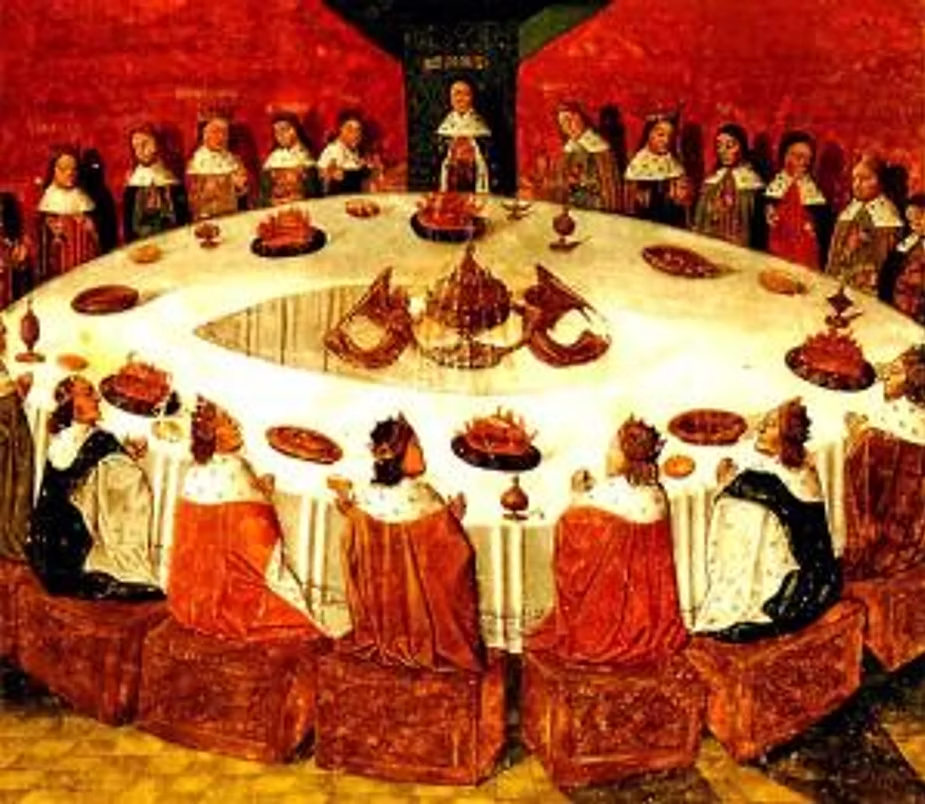



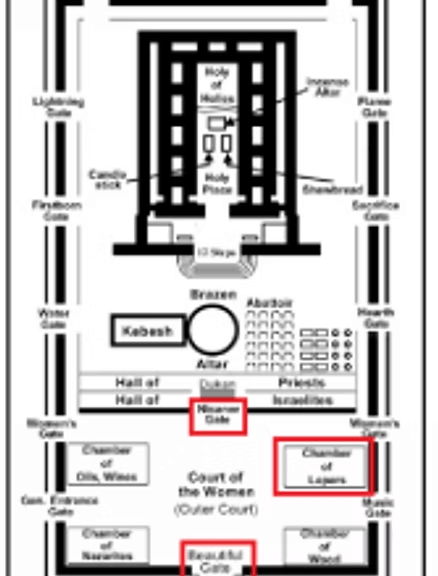
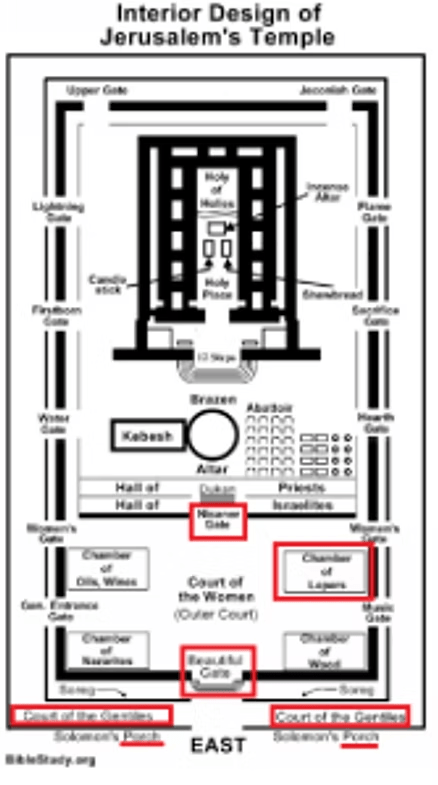
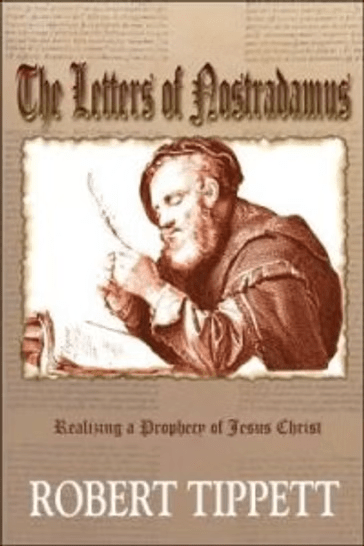








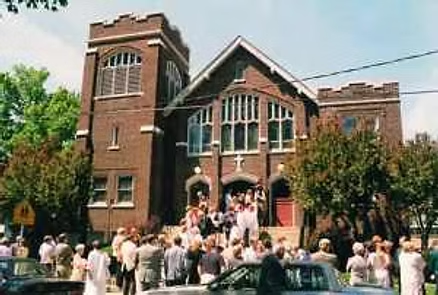
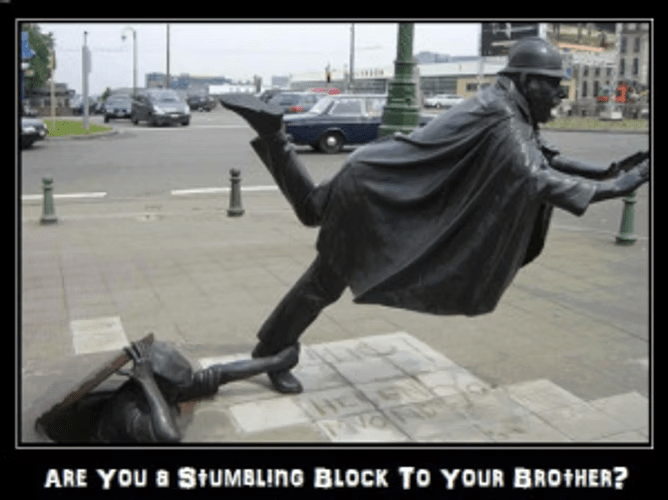
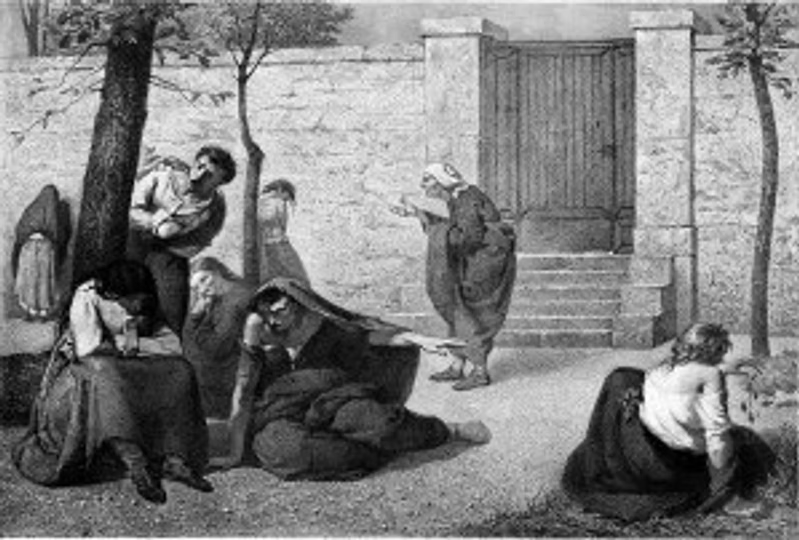
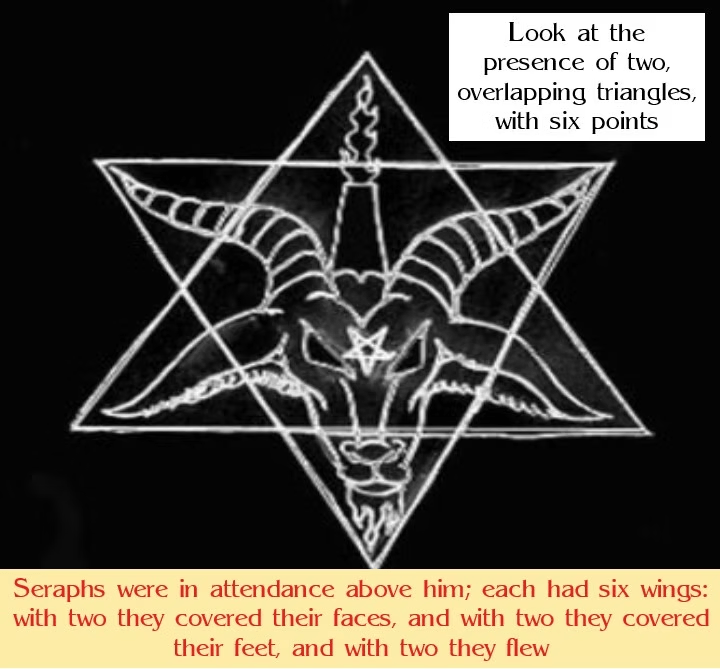


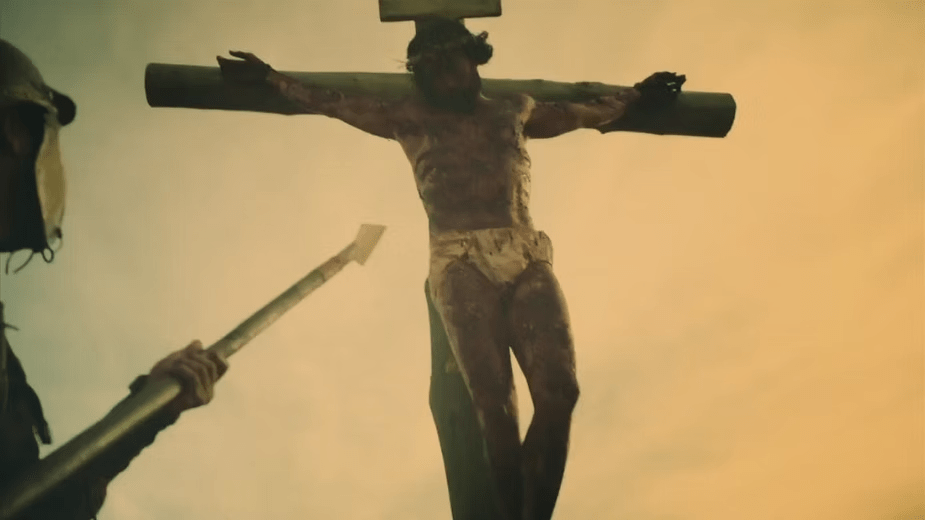
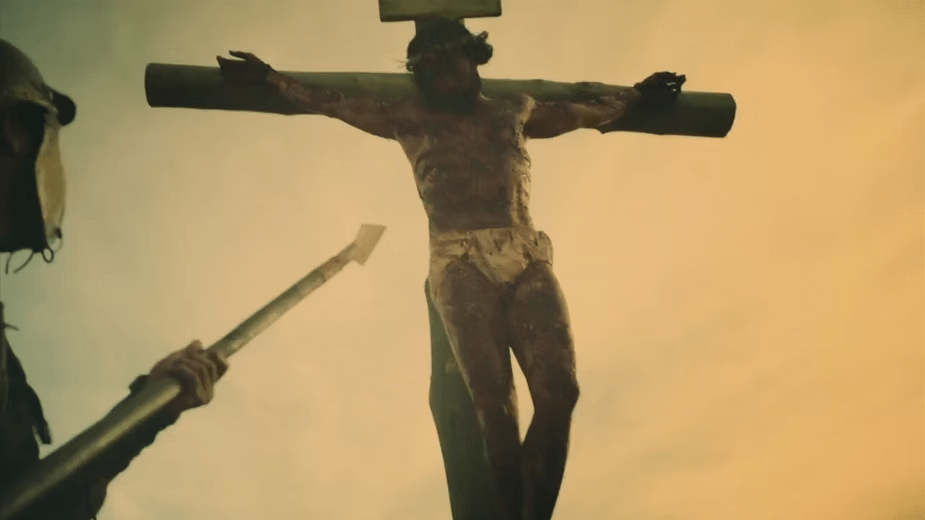


 Explaining the Readings