“To me, living is Christ and dying is gain. If I am to live in the flesh, that means fruitful labor for me; and I do not know which I prefer. I am hard pressed between the two: my desire is to depart and be with Christ, for that is far better; but to remain in the flesh is more necessary for you. Since I am convinced of this, I know that I will remain and continue with all of you for your progress and joy in faith, so that I may share abundantly in your boasting in Christ Jesus when I come to you again.
Only, live your life in a manner worthy of the gospel of Christ, so that, whether I come and see you or am absent and hear about you, I will know that you are standing firm in one spirit, striving side by side with one mind for the faith of the gospel, and are in no way intimidated by your opponents. For them this is evidence of their destruction, but of your salvation. And this is God’s doing. For he has graciously granted you the privilege not only of believing in Christ, but of suffering for him as well– since you are having the same struggle that you saw I had and now hear that I still have.”
——————————————————————————————————-
This is the epistle reading from the Episcopal Lectionary, Proper 20, Year A, the sixteenth Sunday after Pentecost. It will next be read aloud in church on Sunday, September 24, 2017. This reading is important because it addresses the struggles that come with being Christian.
A powerful verse in this reading is number 24, which states: “But to remain in the flesh is more necessary for you.” It isn’t supposed to be you live like a common human being and then get to go to heaven. In order to get your soul released from reincarnating into a sinful world, you have to “remain in the flesh” while serving God first. This states the core purpose of a true Christian, which is not for self-aggrandizement, but to wholly be a servant to God. This is what Paul meant by stating he was, “living is Christ.”
That servitude to God, proved by living a Christ-led life, is why Paul said, “That means fruitful labor for me.” “Fruitful labor” means the work that is involved in planting and sowing, so that an “abundance” of Christians develop, ripen, and mature. [The Gospel reading for Proper 20 is the Parable of the Laborers in the Vineyard, so this reading fits that theme.]
Remember how God instructed animal man and animal woman (not the two individuals who would be made on the seventh day, a.k.a. Adam and Eve), “Be fruitful and increase in number.” (Genesis 1:28) That was an instruction to beasts with big brains to reproduce more bodies that live in the flesh. Paul, speaking for God via the Holy Spirit, with the Christ Mind, was saying that a true Christian reproduces other Christians, increasing their numbers. Thus, Paul’s labor was spreading the seed of the Holy Spirit.
Christians that miss how Paul was writing to them (and everyone who reads Paul’s words) and do not likewise feel a strong urge to do “fruitful labor,” they need to question if their “alive [as] Christ.” Living [as] Christ [or another “Alive Christ”] means more than simply believing Jesus of Nazareth was the promised Messiah, who lived, died, was resurrected, and then floated away into heaven.
Living in Christ [or being “Christ Alive”] means you have lived in the flesh, but then you died of ego, becoming reborn as a brand new reproduction of baby Jesus (in your flesh). Your brain is what goes floating away into the cloud formed around you, which is the Mind of Christ.
Living is Christ means you gave up living as YOU. That means YOUR death [transition, change] represents “dying is gain.” Mortal death comes when God decides (other than suicide), but figurative death comes when humans decide to choose to serve God. Life stops being about “Me! Me! Me!” as one is thus reborn as Jesus was – a laborer of God for others. Living is Christ … from that point on.
Living as you is what common human beings do, with every you always seeking to please selfish desires. Because human beings are social creatures, with strong urges to eat, drink, and reproduce [carnal pleasures], the requirements of societal living mean every you has (at some point in time) to be somewhat “giving,” so that others will enjoy your company. That measure of generosity has to be viewed as selfish sacrifice, because you give in order to receive what it is YOU want. It is like giving to a charity in September and then amazingly having the receipt the next April to deduct on the income taxes.
“Your boasting in Christ Jesus” does not mean you drive a car with a Christian fish on the rear bumper or a decal for the Church you attend in the rear window. It is not exclaimed proudly by your wearing a cross pendant around your neck, for others to see. It is not proven because you “like” and “share” memes on Facebook that say, “share if you love Jesus.”
That is living as YOU, which is like carrying around a Jesus Christ fan club membership card in your wallet or purse. YOU cannot boast in Christ Jesus if you have never once reproduced Christ in another human being.
Paul was writing to Christians in Philippi, a city in eastern Macedonia. As Christians, they had received the Holy Spirit due to Paul’s fruitful labors there. Paul wrote to them afterwards as a continuation of those labors. Thus, Paul was taking the time to speak to others, some of whom he would never meet personally (in the flesh) again, to care for the fruits he had brought forth.
Paul stated that when he wrote: “Live your life in a manner worthy of the gospel of Christ, so that, whether I come and see you or am absent and hear about you, I will know that you are standing firm in one spirit, striving side by side with one mind for the faith of the gospel, and are in no way intimidated by your opponents.” Communicating – one Christian to another or others – is fruitful labor, a labor of love.
“A manner of life worthy of the gospel of Christ” means to live like Jesus lived, leading disciples to God and not being intimidated by any opponents. Being “firm in one spirit” means to not be divided, unable to decide if you should act like Jesus today or act like YOU once more. “Striving side by side with one mind” means your little brain standing behind the Mind of Christ, understanding everything that Mind reveals to you.
In more simple words, Paul told the Philippians (and you), “Remember to live by the Holy Spirit.”
To hear Paul speaking to YOU, it is important to understand just why YOU have such a hard time “letting go” and having faith that the world cannot harm the soul giving life to your flesh. A lifetime of struggles has made all adults wary of the promises of the world. Many have learned that YOU must take what YOU want, because nobody else will give YOU anything. The world is where survival goes to the fittest and only the strong get anywhere of value.
That fleshy YOU has been “intimidated.” YOUR “opponents” are those like YOU, who see religion as a trick that fleeces sheep for profit, while selling belief in the invisible. YOU are distracted by those opponents of Jesus Christ.
YOU do not want to be fooled by life again; but you know you need a warm security blanket to hold onto, just to keep being YOU. So, you go to church and you privately tell people you are Christian; but YOU have a hard time fully grasping what that really means, because it is YOU who keeps Christ a separate entity that you could never match. He lives outside of YOU. Jesus Christ was the Son of God and YOU could never make that claim.
I have said it before (many times), but I will say it again. YOU have to marry into wealth, where “wealth” means “eternal life.” YOU do that by marrying God (not Jesus … Roman Catholic nuns do that).
Marriage to God is how one stands “firm in one spirit, striving side by side with one mind for the faith of the gospel.” Forget all the “equality” stuff that buzzes in a human brain, where women have careers and men do housework. That is more of that distraction that is the opponent that must be destroyed.
Marriage to God means: 1.) One has a deep love for God, which is recognized and accepted through a proposal of marriage. 2.) God is the master of the union with the one to whom He is betrothed, who is totally subservient to God. 3.) God is the husband, a word that means the one who brings forth offspring, with the human being the wife (regardless of physical gender), meaning the womb in which God creates. 3.) The consummation of the marriage bears fruit through the Mind of Christ being born, with the human body caring totally for the needs of that “baby Jesus,” as its mother (regardless of physical gender).
The union is the point where the physical and the Spiritual become One. It is like the 0-point on a graph. That 0-point is where God resides – in the heart. The symbol of holy matrimony is the cross.
Vertical is the physical. Horizontal is the Spiritual. They meet at the heart when married to God.
What Paul wrote in this selection supports this conclusion I have made, as it is representative of his stating: “progress and joy in faith, so that I may share abundantly in your boasting in Christ Jesus.” A true Christian has “progressed” in his or her love of God (the husband), leading to the “joy” that the birth of the Christ Mind brings, greatly expanding one’s “faith.” As Paul was also married to God and had been blessed with the birth of the Christ Mind, he “shares” as a brother to this newborn of the same Father. Brothers and Sisters (depending on gender) “Living as Christ.” Together, all reproductions of Jesus Christ represent an “abundance” of duplicates, all who can “boast in Christ Jesus.”
The Greek word that is translated as “boasting” is “kauchēma.” According to Strong’s cognate of this word, it means: “boasting, focusing on the results of exulting/boasting (note the -ma suffix). This boasting (exulting) is always positive when it is in the Lord, and always negative when based on self.”* This usage by Paul, in the context of “progress” and “joy in Christ Jesus” is then better translated as “exulting,” as such receipt of the Holy Spirit is a triumphal success.
The element of suffering that Paul referred to, which is aligned with the struggles the Philippians had witnessed Paul have, and he knew they faced, can now be seen like birth pangs. The symbolic or metaphoric meaning of “birth pangs” is “Difficulty or turmoil associated with a development or transition.”** Paul is then stating the obvious, which is the joy of giving birth to a new YOU – a true Christian – will always come with tests that will bring aches and pains. Like Paul, YOU will survive this transitional stage and be elated with the new development within your being.
God will be in the delivery room holding your hand, “striving side by side with one mind” to guide you through all that this test brings. That is the fruitful labor that is required first, so all the work to come afterwards will be a piece of cake.
“Jesus said, “The kingdom of heaven is like a landowner who went out early in the morning to hire laborers for his vineyard. After agreeing with the laborers for the usual daily wage, he sent them into his vineyard. When he went out about nine o’clock, he saw others standing idle in the marketplace; and he said to them, ‘You also go into the vineyard, and I will pay you whatever is right.’ So they went. When he went out again about noon and about three o’clock, he did the same. And about five o’clock he went out and found others standing around; and he said to them, ‘Why are you standing here idle all day?’ They said to him, ‘Because no one has hired us.’ He said to them, ‘You also go into the vineyard.’ When evening came, the owner of the vineyard said to his manager, ‘Call the laborers and give them their pay, beginning with the last and then going to the first.’ When those hired about five o’clock came, each of them received the usual daily wage. Now when the first came, they thought they would receive more; but each of them also received the usual daily wage. And when they received it, they grumbled against the landowner, saying, ‘These last worked only one hour, and you have made them equal to us who have borne the burden of the day and the scorching heat.’ But he replied to one of them, ‘Friend, I am doing you no wrong; did you not agree with me for the usual daily wage? Take what belongs to you and go; I choose to give to this last the same as I give to you. Am I not allowed to do what I choose with what belongs to me? Or are you envious because I am generous?’ So the last will be first, and the first will be last.”’
——————————————————————————————————
This is the Gospel reading from the Episcopal Lectionary for Proper 20, the sixteenth Sunday after Pentecost. It will next be read aloud by a priest on Sunday, September 24, 2017. It is the parable of the workers in the vineyard, which concludes with the message, “The last will be first, and the first will be last.” (NIV)
This New International Version selection, as shown on the Episcopal Lectionary website, omits the full statement of verse 16 (beyond that conclusion), which says, “For many are called, but few chosen.” As this is a significant clarification to “the last will be first, and the first will be last,” I will interpret this Gospel reading as if the whole statement were to be read (as it is in the King James versions available).
According to the website Greek New Testament (http://www.greeknewtestament.com/B40C020.htm#V16), there are five versions of the Greek text, from which all translations are based. Verse 16 is shown to contain “outwV esontai oi escatoi prwtoi kai oi prwtoi escatoi polloi gar eisin klhtoi oligoi de eklektoi.” That shows in the Stephens 1550 Textus Receptus, the Scrivener 1894 Textus Receptus, and the Byzantine Majority copies. However, only “outwV esontai oi escatoi prwtoi kai oi prwtoi escatoi” is shown for the Alexandrian and the Hort and Westcott copies, omitting “polloi gar eisin klhtoi oligoi de eklektoi.”
The quote from Jesus (“Many are called, however few chosen”) appears in Matthew 22, verse 14, as a stand-alone conclusion to the parable of the wedding banquet. All five of the above copies show verse 14 of Matthew 22 as, “polloi gar eisin klhtoi oligoi de eklektoi.” It is the same text found in two verses, in two chapters.
As to this stand-alone parable, context may help to understand why Jesus would address “length of service” to the Lord. In Matthew’s seventeenth chapter, Jesus appeared transfigured on Mt. Hermon (in Gaulanitis), before going to Capernaum (Galilee) at the shores of the sea. In chapter 19, Matthew began by telling the readers that Jesus “departed from Galilee and came into the region of Judea beyond the Jordan.” That is where Jesus told this parable of the vineyard laborers.
One could then assume that the lessons Matthew remembered Jesus teaching, in chapters 18 and 19, were lessons on different Shabbats, as weeks were passing. In John, we learn that Jesus was in Jerusalem during the winter festival for the Feast of the Dedication (now known as Hanukah, beginning on 25 Kislev, usually in December). Then, after angry Pharisees tried to grab and stone Jesus, he eluded them and went to the other side of the Jordan. This means Jesus is telling this parable probably in January or February, in the dead of winter, quite some time after being in a high mountain that is known for being a ski resort today.
Immediately following this parable of the workers in the vineyard, Matthew wrote that Jesus told his disciples they will soon return to Jerusalem, where he will be arrested, killed, and rise on the third day. That would take place during the time of the Passover, usually in April or May, during the spring. On the eve of that return to Jerusalem, the news of Lazarus being sick reached Jesus while he was beyond the Jordan. During the return to raise Lazarus from death, soon before the Passover festival would begin, Matthew tells of Jesus healing a blind man in Jericho, as the group was returning from beyond the Jordan. This sequence of events recorded allows one to see a timeframe of months passing, which means the parables can be weeks apart. It is my belief that they were all told on Sabbaths, as Jesus was a rabbi for his disciples.
It may be that the reading that led to Jesus telling this parable was from the Songs of Solomon, chapter 8, verses 10-14, as that uses the metaphor of a vineyard and laborers.
10 “I was a wall, and my breasts were like towers;
Then I became in his eyes as one who finds peace.
11 “Solomon had a vineyard at Baal-hamon; He entrusted the vineyard to caretakers. Each one was to bring a thousand shekels of silver for its fruit.
12 “My very own vineyard is at my disposal; The thousand shekels are for you, Solomon, And two hundred are for those who take care of its fruit.”
13 “O you who sit in the gardens,
My companions are listening for your voice—
Let me hear it!”
14 “Hurry, my beloved,
And be like a gazelle or a young stag
On the mountains of spices.”
In this song, reality is not stated, as much as the Songs of Solomon are written as metaphor of the love between a human being and God. Because they appear strongly as human love in a setting of sensuality, there is higher meaning to such physical love. This makes his songs parables, which require explanation beyond the obvious.
A vineyard represents a productive land, amid a world less cultivated. Baal-hamon (the name of a deity of Carthage & Phoenicia) is representative of the surrounding barren lands, among which Israel was set as a jewel of fertility. This is why the vineyard was so valuable to tenants, who had a need for devoted caretakers of their fruit. Such an explanation by Jesus to his disciples would have raised questions about the loss of that vineyard of Solomon’s and if it still bore fruit. If so, who were the laborers then, in a Roman-dominated Judea and Galilee?
As the time neared when Jesus would return to Jerusalem his final time, such questions would have perfectly been answered as a new parable, remembering how Jesus had already told his disciples, “The harvest is plentiful but the workers are few.” (Matthew 9:37) That statement, which followed Jesus saying that the crowds who followed him “were harassed and helpless, like sheep without a shepherd” (Matthew 9:36). It was made prior to his saying, “Ask the Lord of the harvest, therefore, to send out workers into his harvest field,” (Matthew 9:38) Both of those truths are reinforced in this parable. With Jesus’ time on earth being ripe for harvest, it was time to have God call for laborers. That urgency is seen in how the landowner went out regularly during the day to hire workers for the harvest.
Because this landowner possessed a vineyard, this is metaphor for Jesus being the good vine (“I am the true grapevine, and my Father is the gardener” – John 15:1). As grapevines are cut back after each season, allowing for new growth each year, the roots are those coming from “the stump of Jesse” (Isaiah 11:1 – “A shoot will come up from the stump of Jesse; from his roots a Branch will bear fruit.”) The “landowner” is therefore a metaphor for God, with the “true grapevine” being the source for those feeding on the body and blood of Jesus the Messiah, and the grapes being harvested representing the souls saved. The good workers are thus true Christians, as devoted priests filled with the Holy Spirit, which the disciples would become (as well as all others they would affect). However, not all workers are good.
The various times of day, when the laborers were hired, reflects the history of God choosing people to “take care of his fruit.” They are representing: the Israelites freed from Egypt, who first entered Canaan (led by Joshua and judges) at 9 AM; They are the people of the nations Israel and Judah (led by kings and prophets) at noon; They are the scattered remnants of those fallen nations (led by Pharisees, High Temple Priests, and Scribes) at 3 PM; and, They are the disciples, family and crowds who sought their Messiah (led by John the Baptizer and Jesus of Nazareth), at 5 PM.
The grumbling of the workers, who were all paid the same wages at 6 PM, regardless of how long they had been working (poor babies “who have borne the burden of the day and the scorching heat”), are those made by Jews who believed they were closer to the landowner because they had been hired hands longer. This group can be generalized as the trail of tears so frequently shown by Israelites, Judeans and Jews – The Grumblers. They easily complain, as if being chosen by God demands their being due more in return than other “mere humans.”
Their bellyaching did not agree with the landowner, as the Covenant was clearly stated from the beginning, at 9 AM (“Did you not agree with me for the usual daily wage?”). Some things never change, as God told Moses, “”I have seen these people,” the LORD said to Moses, “and they are a stiff-necked people.” (Exodus 32:9).
Because the wages were all the same, the metaphor cannot be all getting the same reward of getting to live in the landowner’s palatial estate or heavenly kingdom manor. The agreement was not “work a day and get eternal rest.” The “usual daily wages” says the reward was limited (“daily” can be read as “most temporal,” not eternal), which means they are physical rewards for physical labors, rather than spiritual rewards for picking a few grapes.
The Jews often take pride in how many are doctors – medical and academic – and lawyers (the highest paid professions in worldly wages), while being known for always giving discounts to other Jews (generosity at the expense of Gentiles). As day laborers, they are not regular employees of the landowner, but they have been “chosen by God” to work for Him. Such an arrangement symbolizes how they (like all human beings) have been born of death, as mortals in new “chosen one” bodies, who then do as they want until they need the LORD to come and bring them some material gain. They hang out in the town square (“standing idle in the marketplace”), doing nothing to harvest the fruit of God, by taking no actions upon themselves (unsolicited) that seek to serve Him.
I hope God chooses me today.
Certainly, the whole world of humankind is just as self-serving, whether or not Gentiles earn more or less physical wealth than Jews. This is why the landowner showed up at the marketplace at 5 PM, asking, “Why are you standing here idle all day?” When “they said to him, ‘Because no one has hired us,’” this is the ignorance of all who have not been led to the LORD. Rather than be a seeker of higher meaning, many just idly wait for God to come serve them.
When the lateness of the five o’clock hiring’s is seen as work still needing to be done, one can assume that many of the workers hired earlier in the day were slackers, so work was left undone. Perhaps, they were too good to work in the fields of grapevines, especially when the sun was so hot overhead. While there, they probably hung out at the water cooler more than they filled baskets with grapes. They were hired hands who were just there to draw a paycheck at the end of the day. This means they were getting material reward, but doing nothing towards earning spiritual reward.
This is where the continuation of verse 16 is so important. “For many are called, but few chosen” is a statement less about the landowner not having enough laborers, as it is more powerful as a statement that those who call themselves laborers are simply pretending to work. It becomes an amphibological statement – with double meaning intended.
The Greek word translated as “few” is “oligoi.” The root form, “oligos,” means, “small, brief, few, soon, little,” with the implication, “hence, of time: short, of degree: light, slight, little.” (Strong’s Concordance) This word’s compliment, “many,” is the Greek word “polus,” which also denotes “much, or often.” (Strong’s Concordance)
This means the deeper meaning comes out when read as, “Often does God summon, little however choose.” This has the effect of stating, “The call to serve God is always there for everyone, but those who choose to answer most frequently do little of value.”
Christians disguised as empty pews
This means the other part of verse 16, “So the last will be first, and the first will be last,” is not a matter of everything about the harvest coming down to the bad planning of God (You should have known there are slackers and starting hiring well in advance of the harvest time), but the unwillingness of human beings to heed the continuous call of God.
A valid literal translation of “So the last will be first, and the first will be last,” is “Thus will be until the end most important, and the principal, extreme.” The Greek word translated as “last” is “eschatoi,” which is the root word (“eschatos”) for “eschatology,” or “the study of the End Times,” more properly defined as, “any system of doctrines concerning last, or final, matters, as death, the Judgment, the future state, etc..” (Dictionary.com) That word being used twice in this verse makes its deeper meaning have more impact as a parable that leads to the end of the day, when wages are paid individually. It reflects a time when the sun sets on one’s life.
Each human being chooses what is “most important” in his or her life (what comes “first”), until that life reaches its death (what comes “last”). It is a matter of whose “principal” one lives by (God is the “highest,” “the first”). That decision projects to the end of the physical time on earth, when the soul is released.
The “Text Analysis” of this Greek text on BibleHub.com shows a comma separating the last two words, as though necessary for an English translation, as if written: “prōtoi,eschatoi.” A separation indicates each word has equal importance, with one’s meaning preceding the second’s. Thus, the implication becomes one’s “principal” (“first” choice of philosophy) in life then determining the “extreme” (the “final” state) to come upon one’s soul.
As a matter of seeing “So the last will be first, and the first will be last” as some ranking of service to the LORD, or seeing the weak and poor as inheriting the earth being implied here in this parable, that is being misled. Neither is it a statement about having done little all your life for God, but on your death bed you confess all your sins, so you are then allowed to go to heaven. It is more in-line with Jesus being the Alpha and the Omega.
As such, length of service has absolutely nothing to do with this message. As a broad-stroke view, it says anyone, at any time, who has been filled with the Holy Spirit and had the Christ Mind born within him or her, that person will be alive as Jesus – the Alpha and the Omega. Moses worked in the vineyard. Elijah worked in the vineyard. Saint Paul worked for God during his day on earth. All the holy have worked for God, but they have done so alongside some riffraff who were just there for the paycheck. The point is that time ceases to exist when in the Spirit, as human bodily death represents an awakening to eternal life.
Again, as this parable comes not long before Jesus would head the gang of followers from beyond the Jordan to the vicinity of Jerusalem, for his End Time on earth, Christians today need to see this message as being told by Jesus directly to each reader or listener. Are you one of those who was hanging out at the marketplace at 9 AM, as a baby raised from “cradle to grave” in a church, but still do not know Jesus? By the time old age comes around at 6 PM, do you grumble at the thought of all those so-called Christians who are Johnny-come-lately’s, calling themselves Born Again Christians and acting like they deserve heaven more than you?
Or, are you one of those who escaped the real heat of being Christian, by acting atheist as long as that was cool and that got you places, only to find some life emergency made praying to an unseen God the only promise of hope still available, meaning you got hired at 3 PM?
The mega importance of this parable is to realize it is now 5 PM and you are still standing idle in the town square, with God once again offering the same employment as always. God says to open your eyes and realize NOW is the time to go to work for God. There are other parables about those fools who thought they could wait a little longer, only to find out that didn’t work out to well for their souls. The ones hired at the last hour of daylight are the ones who sincerely want to serve God with their whole heart.
God is asking you, individually, “Am I not allowed to do what I choose with what belongs to me? Or are you envious because I am generous?” If you are arguing with God about what you think He owes you, then you might want to re-read that contract you agreed to (both Old part and New part). Prove to God you belong to Him, not by how much you know, but how much you selfishly do. If you do service to the LORD without expectations (letting go of the ego), then you will find out His generosity extends well beyond the wages of one lifetime.
“From the wilderness of Sin the whole congregation of the Israelites journeyed by stages, as the Lord commanded. They camped at Rephidim, but there was no water for the people to drink. The people quarreled with Moses, and said, “Give us water to drink.” Moses said to them, “Why do you quarrel with me? Why do you test the Lord?” But the people thirsted there for water; and the people complained against Moses and said, “Why did you bring us out of Egypt, to kill us and our children and livestock with thirst?” So Moses cried out to the Lord, “What shall I do with this people? They are almost ready to stone me.” The Lord said to Moses, “Go on ahead of the people, and take some of the elders of Israel with you; take in your hand the staff with which you struck the Nile, and go. I will be standing there in front of you on the rock at Horeb. Strike the rock, and water will come out of it, so that the people may drink.” Moses did so, in the sight of the elders of Israel. He called the place Massah and Meribah, because the Israelites quarreled and tested the Lord, saying, “Is the Lord among us or not?”’
———————————————————————————————————-
This is the Old Testament selection from the Episcopal Lectionary for Year A Proper 21, the seventeenth Sunday after Pentecost. It will next be read aloud in church on Sunday, October 1, 2017. It is the story of Moses striking the rock at Mount Horeb and making water flow to quench the thirst of the Israelites.
In Proper 20’s Old Testament reading from Exodus, the Israelites were complaining about being taken out into the wilderness to die of hunger. God responded with manna and quails. Here, they are complaining about having no water. Whereas their complaint for food did not mention the “children and livestock” that were in their numbers, now it does.
As I explained about Exodus 16:2-15, their pleas of hunger were less spoken from their bellies and more from their minds. They needed spiritual food to consume, so they would have reason to live … live in a largely barren land. The fact that they had children and livestock that were not mentioned before says the adults were the ones needing inner motivation, as the babies and beasts would follow them wherever they went. Water, on the other hand, was a need for everyone, women, children, goats, sheep, and cattle; but, similarly, the need expressed here is not meant to be seen solely in a physical way.
To understand this, one needs to grasp how “water” is one of the four basic elements, metaphysically. The four are water, fire, air, and earth. I have repeatedly stated (so I will state again), “Water represents emotions.” Thus, this whole reading is a statement about the emotional needs of all living creatures in an environment that screams, “Get me out of here!” While being mentally motivated by spiritual food will keep one’s determination strong, will power is limited, with those limits eroded away by changing emotional states. Therefore, the Israelites are metaphorically telling Moses, “We need to be confident in our love for God, which means God needs to show us His love so we don’t worry and doubt.”
In the first verse of this reading, beginning chapter 17, the reader is told, “From the wilderness of Sin the whole congregation of the Israelites journeyed by stages, as the Lord commanded.” This is important information that is relative to understanding this theme of “water.” Relative to the “wilderness of Sin,” this is written on a Wikipedia page under that heading:
“The Wilderness of Sin or Desert of Sin (Hebrew: מִדְבַּר סִין, Midbar Sin) is a geographic area mentioned in the Hebrew Bible as lying between Elim and Mount Sinai. Sin does not refer to sinfulness, but is an untranslated word that would translate as the moon; biblical scholars suspect that the name Sin here refers to the semitic moon-deity Sin, who was worshipped widely around the entire periphery of pre-Islamic Arabia, the Levant, and Mesopotamia.”
In astrology, the Moon is seen as a symbol of “water.” The Moon is the ruler of the sign Cancer – a water sign. The Moon symbolizes the inner self and its emotional realm. The Moon is associated with water because of its phases, from New Moon, to Full Moon and back to New Moon. That change reflects how emotions change (have fluidity), as they wax and wane, over and over – the thrill of victory and the agony of defeat.
By knowing this (whether or not you believe it), one can read how “From the wilderness of Sin the whole congregation of the Israelites journeyed by stages, as the Lord commanded” is referring to emotional tests. The “stages” of travel means they moved and stopped, picked up and set up camp multiple times, by the directions of God. Those “stages” can be read as changing states of emotion because they are “of the Moon” (“of Sin”).
When one reads, “They camped at Rephidim, but there was no water for the people to drink,” the Hebrew root verb for Rephidim (rapad) means “to spread.” In a desert setting (like the changing Moon), places that once had vegetation and water can be overcome by “desertification,” which is defined as: “The transformation of arable or habitable land to desert, as by a change in climate or destructive land use.”* Thus, the name for that campsite was given because Moses thought there would be water there, but that place had changed (“spread”) to desert.
When the Israelites “quarreled with Moses,” he asked them, “Why do you test the Lord?” Moses had knowledge of the area, which came from God, so they had arrived to a place that was no longer an oasis for some unknown reason. Moses, taking offense at the quarreling, gave an emotional response to an emotional confrontation, brought on by fears that everyone (children and animals included) would die of thirst. Therefore, it was with strong emotions that Moses “cried out to the Lord, “What shall I do with this people? They are almost ready to stone me.”’
In the emotional outburst made by the Israelites about food (Exodus 16), we are told “The whole congregation of the Israelites complained against Moses and Aaron in the wilderness.” However, there was no report about crying by Moses, as we then simply are told how the LORD told Moses how that problem would be solved.
Since the transition from chapter 16 to chapter 17 is not clearly timed, the statement of “From the desert of the Moon (Sin)” can be an indication that one complete lunar cycle had passed. If that was the 29 days from full Moon to full Moon, then the Israelite people complained the easiest when that “stage” occurred. The symbolism would then be they complained when everyone’s emotions ran high and it was easy to become angered.
Knowing God told Moses to establish the Hebrew calendar, beginning with 1 Nissan, with the Passover on 15 Nissan, and knowing that calendar is lunar based, the Passover occurred when it was full Moon. In Exodus 16, we read that the setting was “on the fifteenth day of the second month,” so the issue over food was also taking place on a full Moon. One can now assume they reached this place where no water was found, again, when the Moon was full.
Additionally, there are some who say the name Israel is a combination of the Egyptian gods Isis (the Moon), Ra (the Sun), and the Hebrew word El (Saturn). Astrologically, the Sun and the Moon, together, project humanity’s duality of an inner soul (Moon) with a bodily projection (Sun); and Saturn (El) represents God and the Law, while el is the Hebrew word for “god.” So, it is important to realize the role the Moon played in Israelite history, as being chosen by God was not because their bodies looked good. They were chosen because of their inner being (descendants of holy men).
Because we read how Moses became upset and expressing fear that the emotions of the people may be so high they would stone their leader, the one who was God’s emissary, we can see that Moses also was affected emotionally. As it is always best to count to ten during times when emotions are overtaking reasonable thought, God responded to Moses, giving him instructions that would solve the problem.
The solution then becomes an uplifting emotional experience for all of the Israelites to witness. The same staff that Moses used at the Nile, when “in the presence of Pharaoh and his officials [he] struck the water of the Nile, and all the water was changed into blood” (Exodus 7:20b), would symbolize God working through Moses, creating miracles. To have wafers of spiritual food (manna) was good to set the head straight; but to have water flow freely in a desert was an uplifting reinforcement that straightened out their hearts.
In my analysis of Exodus 16:1-15, I offered that the manna and quail represented spiritual food, which equate to the body of Christ. One cannot come to Jesus, from a true faith mindset, without devoted study of the holy documents that prophesied his coming, as he came. That requires a deep level of understanding that is aided by the Mind of Christ.
Here, in Exodus 17, the water rushing from the rock, which quenched the thirsts of the Israelites, is then symbolizing the blood of Christ. Because God told Moses to use the staff that turned the Nile waters into blood, rather than the same staff that parted the sea, that specific staff reference is then saying that Moses released the blood of Christ from the rock. That release was to revitalize the Israelites and their children and animals.
The rock (in Greek petra, or in English Peter), symbolizes the cornerstone upon which the blood flows. Therefore, the blood of Christ is the emotional swelling of faith, like that which one feels when fermented wine enters the bloodstream and, from the heart, the body feels high. The Israelites had their faith uplifted by the miracle of Moses and his staff at Horeb, while their emotional distress over lack of water was quelled by flowing water.
This reading can then be seen as a parallel to Jesus speaking with the Samaritan woman at the well, who Jesus told he could provide her with “living water.” In John 4:10 we read, “If you knew the gift of God, and who it is who says to you, ‘Give Me a drink,’ you would have asked Him, and He would have given you living water.” The Israelites were asking Moses, “Give us a drink.” The same lesson can be seen here, as when Jesus said, “Everyone who drinks of this [well] water will thirst again; but whoever drinks of the water that I will give him shall never thirst; but the water that I will give him will become in him a well of water springing up to eternal life.” (John 4:13-14) God was providing, through Moses, this “living water.”
This reading ends with the statement: “He called the place Massah and Meribah, because the Israelites quarreled and tested the Lord, saying, “Is the Lord among us or not?” The name Massah is said to mean “Testing,” as a “test by trial.” The name Meribah means, “Quarrel” or “Place of Strife.” When verse one says, “the whole congregation of the Israelites journeyed by stages, as the Lord commanded,” this means reaching the point of need for spiritual knowledge is one stage of development in one’s faith, while reaching the point of need for becoming emotionally uplifted is another stage in that development.
Faith is a journey in stages, with God’s test of one’s faith requiring emotional outbursts. Without one quarreling, there is no emotional connection at all. This is supported in the New Testament, when God spoke through the Spirit of Christ, saying, “I know your deeds, that you are neither cold nor hot. I wish you were either one or the other! So, because you are lukewarm–neither hot nor cold–I am about to spit you out of my mouth.” (Revelations 3:15-16)
This is why God posed the question at that place, “Is the Lord among us or not?” The question asks, “Is God in your heart? Are you committed to love the LORD? … Or, not?” Caring for God, enough to quarrel over His tests, is a sign of love and commitment, as in a marriage. It is a testing stage all marriages come to, necessarily. “Are we in this thing together or not?”
A marriage built on love and devotion is rock solid, from which flows unconditional love. A marriage built on selfish desires will fail the difficult tests. The aspect of this reading placing focus on the “children and livestock” reflects the symbolism of a marriage extending beyond the realm of two, with those “offspring” not having the mental capacities to understand the reasoning of faith. Every living creature, however, has the capacity for deep-felt emotions.
The metaphor also says human beings are the children of God, with the devoted faithful being his servants, like beasts of burden. Therefore, God will lead us, as David wrote in Psalm 23:
The Lord is my shepherd, I shall not want. He makes me lie down in green pastures; He leads me beside quiet waters. He restores my soul; He guides me in the paths of righteousness For His name’s sake.
If then there is any encouragement in Christ, any consolation from love, any sharing in the Spirit, any compassion and sympathy, make my joy complete: be of the same mind, having the same love, being in full accord and of one mind. Do nothing from selfish ambition or conceit, but in humility regard others as better than yourselves. Let each of you look not to your own interests, but to the interests of others. Let the same mind be in you that was in Christ Jesus, who, though he was in the form of God, did not regard equality with God as something to be exploited, but emptied himself, taking the form of a slave, being born in human likeness. And being found in human form, he humbled himself and became obedient to the point of death– even death on a cross. Therefore God also highly exalted him and gave him the name that is above every name, so that at the name of Jesus every knee should bend, in heaven and on earth and under the earth, and every tongue should confess that Jesus Christ is Lord, to the glory of God the Father.
Therefore, my beloved, just as you have always obeyed me, not only in my presence, but much more now in my absence, work out your own salvation with fear and trembling; for it is God who is at work in you, enabling you both to will and to work for his good pleasure.
——————————————————————————————————–
This is the Epistle reading from the Episcopal Lectionary for Year A, Proper 21, the seventeenth Sunday after Pentecost. It will next be read aloud in church on Sunday, October 1, 2017. It is important because Paul tells how true Christians are resurrections of Jesus Christ.
If one goes to the BibleGateway.com website and looks up this selection, you are offered some of those summary headings I have talked about before. For the New International Version, the two segments in the presentation above each have a heading. The first part says, “Imitating Christ’s Humility,” with the second part entitled, “Do Everything Without Grumbling.” For the New American Standard Bible, the whole reading is under the heading, “Be Like Christ.”
That NASB heading sounds an awful like the old (I’m dating myself now) “Be like Mike” commercials for Gatorade. Mike was Michael Jordan. Of course, nobody drank Gatorade and became Michael Jordan. Certainly, lots of players of all ages and all skills drank Gatorade, like Michael Jordan did (at least for the commercials), and many of those played basketball in all types of basketball courts, indoors and outdoors; but none other than Michael Jordan was ever Mike (the person dunking basketballs in the Gatorade commercials).
Do the people at the New American Standard Bible think God wants a lot of pretend Jesuses being as bad at ministry as those who thought drinking Gatorade would make them soar down the lane with a basketball held high before a slam dunk?
If they really do, they should slip a few bucks to the Gatorade advertisers and ask permission to begin a “Be like Christ” campaign. They could sell Nike Jesus sandals and Under Armour Jesus robes, and for the kids some costume Jesus wig-beard head gear. Somebody would get rich; but they would get the exact same result as Gatorade got … still only one Christ, and he (like all superstars promoted on TV) cannot be duplicated … only imitated (as implied by the NIV heading).
When someone reads (or hears read) this excerpt of Paul’s letter to the Philippians and then preaches that it means, “Dear brothers and sisters, it is imperative to live your lives like Jesus did,” one ends up with a world exactly like we have surrounding us today. It is a world that is lost and has little hope of finding itself. After all, who knows how to live like Jesus?
I’m sure there are many who think, “Today’s times are so different than those back then. I bet Jesus would be different if alive today.”
Reading that into the message from Paul – who was an Apostle, a Saint, a Christian – is to be a chirstian like the vast majority of Westerners who have called themselves that since Constantine reorganized a Spiritual movement into a business plan for an Empire. Today’s Christians are more creations of the Church of Rome than Apostles, as that Church routinely read Latin verses to people who could barely read, much less understand Latin, while telling their captive audiences, “Just do as we say, not as we do” (mostly).
It begat the mindset that has one pondering, “What would Jesus do?” when confronted with life’s decisions.
Certainly, those who ponder like that – and make the right decisions and live a good life of sacrifice – are headed in the right direction; but that direction, invariably, leads to a plateau, with high mountains that must be climbed still well in the distance. It represents a return to the same state of life that was for Jews in Judea and Galilee, who were plateaued believers in God when Jesus and followers were walking the land. The Jews then were people who were trying to ponder, “What did Moses tell us to do?” but people who were unable to make all the sacrifices and good life choices (consistently) the Law said to do.
And were miserable then, just as many are today.
“Forgive me God. I go to church but nobody ever tells me how to stop sinning.”
There is a statement of faith openly recited in Episcopal churches each week (and other brands of churches), which is labeled “the Nicene Creed.” There is a variation of that, known as “the Apostle’s Creed,” where an “Apostle” should be defined as “a Saint,” with a “Creed” being defined as, “A formal statement of religious belief; a confession of faith.”
It is a statement that is supposed to be read aloud only by Saints, as the trueChurch is an exclusive body (although it welcomes seekers of truth). Both Creeds are confessions of faith that all true Christians fully understand. This is especially understood when Saints say, “He [Jesus Christ, God’s only Son, our Lord] will come again to judge the living and the dead.” The Nicene Creed varies that to state, “He will come again in glory to judge the living and the dead, and his kingdom will have no end.”
What a true Apostle realizes – knows – when he or she makes that public confession of faith is what Paul wrote in this selection of his letter to the Christians of Philippi. While the ordinary – do as I say and not as I do – Christian is asked, “What does that mean … will return again?” they smile and say, “Shhhhhh! We don’t talk about Judgement Day or the End Times in church.”
That implies, “That is what those evangelicals do.” It fosters an “Us vs. Them” mentality. It represents divided brains and not One Mind in Christ.
Such views totally miss the point of how Jesus Ascended on the 49th day and “came again” the next day (the 50th day – Pentecost). The spread of true Christianity meant an exponential return of Christ, with 3,000 filled with the Holy Spirit because the Mind of Christ opened that many eyes, ears, and hearts that day. That spread was why Paul had to write letters to those in his wake, telling them to, “Keep up the good works.”
But, that rapid spread of true Christianity was slowed by those who dreamed of empires.
The Day of Pentecost was when eleven disciples (and close family of Jesus who were in the upstairs room) were filled with the Holy Spirit and became multiple New reproductions of Jesus of Nazareth, in possession of the same Christ Mind. At that time, those Apostles were judged by Jesus Christ as being worthy of climbing those distant mountains – the boundaries of mortal death – thus gaining eternal life. The disciples-turned-to-Apostles began living at that point.
Their bodies became the “kingdom” of God, with the Christ Mind being the right hand of the LORD within them. They bowed down to Christ Jesus, so each human body’s soul would forevermore serve God.
When Paul wrote, “Be of the same mind, having the same love, being in full accord and of one mind,” he was saying, “You cannot keep your big brain and try to figure out what God and Christ want you to do, when the love in your heart is for self and the brain in your head keeps trying to ask, “What would Jesus do?”
You cannot be like Christ, when you like being you more.
And darn it, we like being us.
When Paul then wrote, “Let the same mind be in you that was in Christ Jesus,” we have to remember that Jesus’s name was not “Christ.” The statements of faith that say, “[Jesus] was conceived by the power of the Holy Spirit and born of the Virgin Mary. He suffered under Pontius Pilate, was crucified, died, and was buried,” all acknowledge that Jesus was a human body, just like all of us are. What made Jesus the promised Messiah was the presence of a Messianic Mind, coming from God, via the Holy Spirit.
The same process came upon the followers of Jesus on Pentecost, when they too became with “the same mind that was in Christ Jesus.” With tongues like fire they became Christ Peter, Christ James of Zebedee, Christ John of Zebedee, etc., etc. They suddenly became filled with the same mind.
This is why Paul wrote, “Therefore God also highly exalted him and gave him the name that is above every name,” which is “Christ,” or the name-title as the “Messiah.” That title is greater than any title ever held by any human rulers; but it is a title that human beings, like Jesus, can gain.
This means that when Paul wrote, “So that at the name of Jesus every knee should bend,” all true Christians are to bend a knee to Jesus, by sacrificing their own name, being knighted as Christ Jesus reborn. You must sacrifice your brain to the service of the Christ Mind. Your brain is not capable of figuring out what Jesus would do.
“Every tongue should confess that Jesus Christ is Lord, to the glory of God the Father,” is stated in the Apostle’s Creed where it says, “We believe in the Holy Spirit, the Lord, the giver of life, who proceeds from the Father and the Son. With the Father and the Son he is worshiped and glorified.” Still, “every tongue” in every Apostle stops saying, “I think this is what Jesus would have us do,” as those tongues wag to an ego-driven brain.
An Apostle’s tongue speaks as Jesus spoke, and as Peter spoke with the other ten, when they all spoke to the crowds of pilgrims in Jerusalem. They spoke what God told them to say, which is why Jesus repeatedly said, “For I did not speak on my own, but the Father who sent me commanded me to say all that I have spoken.” (John 12:49)
Jesus of Nazareth, born in Bethlehem to a Virgin Mother, as a mortal human being, was never quoted in the Gospels, because his tongue confessed that his being the Christ was due to the LORD, with all glory going to God the Father. The answer to the question, “What would Jesus say?” is “Jesus would say, ‘You know, LORD.”‘ That is what those with the Christ Mind always say.
This devotion is why Paul encouraged the Christians of Philippi to “work out your own salvation.” You will not save your soul by eavesdropping and overhearing someone say, “You know, I’ve been thinking about what Jesus would want us to do, and that is ….” You cannot be like Christ by repeating what the Apostles Matthew, Mark, Luke and John said Jesus said. You have to do as Jesus did. You have to work for God in order to be saved by the Christ Mind.
This means “to will and to work for his good pleasure” is a statement that only God’s will can guide one’s actions. One does the work of Christ, for his good pleasure, which means one is reborn as Jesus, led only by God, through the Christ Mind. This is why the Acts of Jesus are called Gospels, and the Acts of the Apostles is the first book that follows those four. All of the letters written are also Acts of Apostles, as it is the work of Christ that does “nothing from selfish ambition or conceit, but in humility regard others as better than yourselves. Let each of you look not to your own interests, but to the interests of others.”
Scene from the 1980 movie The Resurrection.
There are no words that can tell one how to be filled with the Holy Spirit and gain the Mind of Christ. If words could make that happen, then just do this: “If you want to be perfect, go, sell what you have and give to the poor, and you will have treasure in heaven; and come, follow Me.” (Matthew 19:21) Too many read those words and start looking down at the footsteps of Jesus, trying hard to place their foot in the same prints. You do not follow Jesus by walking behind his legacy. You follow Jesus by being another Jesus Christ; and that requires happily working for others.
When Jesus entered the temple, the chief priests and the elders of the people came to him as he was teaching, and said, “By what authority are you doing these things, and who gave you this authority?” Jesus said to them, “I will also ask you one question; if you tell me the answer, then I will also tell you by what authority I do these things. Did the baptism of John come from heaven, or was it of human origin?” And they argued with one another, “If we say, ‘From heaven,’ he will say to us, ‘Why then did you not believe him?’ But if we say, ‘Of human origin,’ we are afraid of the crowd; for all regard John as a prophet.” So they answered Jesus, “We do not know.” And he said to them, “Neither will I tell you by what authority I am doing these things.
“What do you think? A man had two sons; he went to the first and said, ‘Son, go and work in the vineyard today.’ He answered, ‘I will not’; but later he changed his mind and went. The father went to the second and said the same; and he answered, ‘I go, sir’; but he did not go. Which of the two did the will of his father?” They said, “The first.” Jesus said to them, “Truly I tell you, the tax collectors and the prostitutes are going into the kingdom of God ahead of you. For John came to you in the way of righteousness and you did not believe him, but the tax collectors and the prostitutes believed him; and even after you saw it, you did not change your minds and believe him.
——————————————————————————————————–
This is the Gospel reading from the Episcopal Lectionary for Year A, Proper 21, the seventeenth Sunday after Pentecost. It will next be read aloud in church by a priest on Sunday, October 1, 2017. This in an important lesson because it addresses who has God’s approval to shepherd His flocks.
This reading reminds me of my experience at a seminary school. I was not a seminarian (my wife was), but I socialized with them at school functions and in the neighborhood housing arrangements. I saw several glaring problems with the whole system of educating priests (too many to get into now), but the statement, “the chief priests and the elders of the people came to [Jesus] as he was teaching, and said, “By what authority are you doing these things?” hit home for me.
I was writing books back then, which explained how to read Nostradamus, so that what he wrote can be understandable. Nostradamus can be seen as John the Baptizer, as “the chief priests and elders of the people” have not believed as I believe – that Nostradamus was a prophet of Jesus Christ. Because I fully believe that, I cannot hold my tongue about that belief.
When asked, “What do you do?” I told seminary students about Nostradamus. I told some teachers about Nostradamus. I even told some invited guest speakers coming to that school (whom I picked up or took back to the major airport nearby) about Nostradamus.
It was like I asked them all, “Do you believe The Apocalypse of John of Patmos is similar to The Prophecies of Nostradamus?” It was like I posed the question, “Whose authority did those books come from: Prophet of Christ or Charlatan?”
Some wanted to shun me forever; but some were patronizing. It was as if their minds were calculating, “If we say, ‘Prophet of Christ,’ he will say to us, ‘Why then did you not believe him?’ But if we say, ‘Charlatan,’ we are afraid we might be talking to an unstable, dangerous person.” They all seemed well-versed in the “smile and nod” reaction to uncertain situations.
My amazing ability to understand Nostradamus was a gift given to me by God. There can be no other explanation for that talent. I was the last person on earth who I figured would be able to understand Nostradamus; but I was led by a higher power, and not simply to understand his cryptic writings. I found that I was able to apply the same systems applicable to making sense of Nostradamus to everything in the Holy Bible. That syntax is God’s, as His Holy Language … Speaking in Tongues not taught in schools. So, it applies to everything He had His people write for Him.
There really are no authorities that grant doctorates or even bachelor’s degrees about the meaning of Nostradamus; so if I am seen teaching about his writings, authority figures have no reason to confront me. They just snicker and poke each other. However, since I have been allowed to put Nostradamus on the back burner (so to speak), due to carpal tunnel in both wrists from writing so much, I have been encouraged to write Biblical interpretations. That will attract some frowns and questions by the religious elite.
What school did you attend to learn that? What scholastic volumes of books have you read and footnoted, while preparing properly detailed papers and dissertations that have been argued before expert authorities? How many reputable scholars can you quote in support of your views?
I will answer your questions, if you let me ask you one first. If you can answer that, then I will answer your question.
What seminary did Jesus and his Apostles attend? The same one begun by Moses in the wilderness, or a different one?
When Jesus said, “Neither will I tell you by what authority I am doing these things,” we all know he was authorized by God the Father. We know because he said that a few times, as noted in the Gospels.
“Very truly I tell you, the Son can do nothing by himself; he can do only what he sees his Father doing, because whatever the Father does the Son also does.” (John 5:19) “ Then Jesus said to them, “When you lift up the Son of Man, then you will know that I am He, and that I do nothing of Myself; but as My Father taught Me, I speak these things.” (John 8:28) “For I did not speak on my own, but the Father who sent me commanded me to say all that I have spoken.” (John 12:49)
The original plan was to have ALL the Israelites be ordained priests for YWHW. When Moses first took them on a 40-year hike, you have to look at the Israelites as babies and infants, because they were incapable of doing anything on their own. Forty years of rote memorization of the laws was priestly training that was more like children’s church on Sunday mornings. They just learned the stories, but the deep meaning escaped them.
When the Israelites were supposed to be priests for YHWH in the Promised Land, they were like teenagers under the Judges – always backsliding and getting into trouble, while having to be bailed out time after time. They entered the rebellious age. By the age they asked for a king, “to be like other teens,” they were like young adults who no longer lived by the rules of their parents. But, by the time Israel and Judah fell in ruin, led by politicians whose only god was self, they were like twenty-somethings with arrest records. All their promise was washed away.
By the time the Jews had formed from those Israelite ashes and been released from Babylon, they were like thirty-somethings, who were “street smart.” You could say they had become charismatic, prison ordained street preachers. That was who Jesus ran afoul of in Jerusalem. It was them acting with the know-it-all of young adults – their audacity – that made them the priest police.
In the parable-like question that Jesus posed to those learned men of the Law. both sons sinned against the father. One refused to go at first, but then thought about it and went (to stay out of trouble). The other said he would go, but flat out lied – a sin against his father. However, the one who refused, but then changed his mind, he was easier to forgive.
This lesson is no different than the one Jesus taught when observing the Pharisee and the Publican in the Temple. When Jesus said here, “Truly I tell you, the tax collectors and the prostitutes are going into the kingdom of God ahead of you,” this is not saying the son who lied by saying “No,” but then did “Yes,” is the exact same as a prostitute or tax collector (Publican). Saying “No,” and then thinking about it, before acting, put him in the same boat. Both were sinners, so unless change comes, both are forbidden from heaven.
What Jesus was really saying was, “You Law police fellows are too full of yourselves to ever realize you are going in the opposite direction of heaven.”
Thank you God for making me holy and not like the riffraff of the world. This is the pretense of a priest who knows nothing of spiritual matters.
At least the tax collectors and prostitutes are aware of their sins. They just can’t see how to stop sinning, in a world that forces sin upon everyone. That is where a good teacher – such as John the Baptizer and Jesus – can get the losers to stop being a loser and change.
When the Pharisees and high priests see good teachers like that, they want to hurl stones at them. They certainly don’t want to pull up a chair and listen to what good teachers are saying. They might learn something then. However, whose authority determines who the good teachers are, without a sheepskin to prove one has that approval?
Remember when Jesus said, “Watch out for false prophets. They come to you in sheep’s clothing, but inwardly they are ferocious wolves.” (Matthew 7:15) That was the Pharisees wearing clerical robes, and what was then has always been and will continue to be.
This is why I see Christianity turning into a cesspool of teachers. It is not that all the sordid pieces and parts of waste in a cesspool were made for that ultimate purpose. Waste is the degradation of value. What goes in good is split in two: the unseen nourishes, while the residue usually does not pass the smell test. That gets flushed with good water. It is just that when you mix the bad in with the good water, the good water has to be purified before it can be good water again.
A couple of years ago, my wife (a priest now) followed a bishop of another diocese on Facebook. She liked a few of his sermons that he posted on his website. He wrote one about the lesson of the Tax Collector and the Publican (Luke 18:9-14), which was uninspiring to me. It was what I call out of the “puppy mill” of sermons. What priest has stood in the pulpit and looked at the smiling faces of tithers in the pews and not said the message of the Pharisee and the Publican was, “The sinners of the world have hope, because they are closer to heaven than those who think they have it made”? (The same sermon that can be preached about the two sons who disobeyed the father.)
That bishop published a sermon that had nothing new in it. What is the lesson of “being closer to heaven than some other guy,” if the sinners never hear a good teacher tell them how to “get to heaven.” Jesus was giving a sermon that said YOU bishop (and every priest who cannot see him or herself in this story) are the Pharisee in that story. Forget about the obvious sinners, because it is YOUwho Jesus said is farther away from salvation.
Telling those who feel guilt about their sins, “Have hope! Keep coming here and I will keep telling you to have hope!” they will always come back for more of the same sermons. But, who wants to stay in a pew when the priest says, “Jesus was pointing out how far away from heaven I am. But hey, who gets to heaven anyway?”
That’s entertainment, not a good shepherd.
A good sermon would be a true Apostle (like were Peter and Paul), who stands in front of a group of attentive sinners, all of whom want to hear how to stop sinning, and admit they too were sinners … sinners who changed.
In a good sermon the priest says, “I was the Pharisee in this story. I was farther away from heaven than you people are now; but I saw myself and felt ashamed. I had lied to the Father when I went into the priesthood. It was all about me being holier than thou. I was young and stupid and thought learning about religion would make me holy. Therefore, I raised my arms to the sky and thanked God for giving me a sweet job that has so many fringe benefits.
Then I realized all my work had been only for me, even when I made it seem like I was helping others. I was only imagining I was working in the vineyard, when I was simply tasting the wine. I want to apologize for having not made every one of you self-sufficient priests for Yahweh.
I now speak to the LORD every day and He wants me to teach you the real meaning of the Scriptures, so you can understand by the Holy Spirit and go tell others the truth. Truth comes not from having learned what someone else knows, but from a love of God that thirsts within one for His knowledge.
Please, I invite each and every one of you to join me in Bible Studies and fellowship, so our love of God branches out and produces fruit. Amen”
I made a post on that bishop’s blog, which suggested this alternative view … politely, in different words than here above. While he politely responded to my post, it was another example of people not really hearing what is being said or not being truthful about what they heard. He wrote back something like, “But who would be left in the pews, if I told them that?”
Wasn’t that the point when Moses freed the Israelites from Egypt? At some point the baby has to grow up, the student has to graduate from school and get a job. God didn’t free cradle to grave sons that say, “Yes sir! I’ll be working in that vineyard bright and early!” who then never do.
I am the Lord your God, who brought you out of the land of Egypt, out of the house of slavery; you shall have no other gods before me.
You shall not make for yourself an idol, whether in the form of anything that is in heaven above, or that is on the earth beneath, or that is in the water under the earth.
You shall not make wrongful use of the name of the Lord your God, for the Lord will not acquit anyone who misuses his name.
Remember the sabbath day, and keep it holy. For six days you shall labour and do all your work.
Honor your father and your mother, so that your days may be long in the land that the Lord your God is giving you.
You shall not murder.
You shall not commit adultery.
You shall not steal.
You shall not bear false witness against your neighbor.
You shall not covet your neighbor’s house; you shall not covet your neighbor’s wife, or male or female slave, or ox, or donkey, or anything that belongs to your neighbor.
When all the people witnessed the thunder and lightning, the sound of the trumpet, and the mountain smoking, they were afraid and trembled and stood at a distance, and said to Moses, “You speak to us, and we will listen; but do not let God speak to us, or we will die.” Moses said to the people, “Do not be afraid; for God has come only to test you and to put the fear of him upon you so that you do not sin.”’
—————————————————————————————————
This is the Old Testament selection from the Episcopal Lectionary for Year A, Proper 22, the eighteenth Sunday after Pentecost. It will next be read aloud in a church on Sunday, October 8, 2017. It is quite important because this is what Christians call the Ten Commandments.
As a disclaimer: There can be no “pencil-whipped,” Cliff Notes explanation of this reading, as the Ten Commandments stands as the cornerstone of Judaic-Christian beliefs. This article of interpretation is therefore of some length, simply because it addresses each Commandment. Because a standard Episcopalian sermon is between ten and twelve minutes in length, one can expect the totality of time spent on this Old Testament reading selection will be the time the reader puts into reading it. At most, a priest might gloss over one or two laws, to suit the points of a sermon hammered solidly to the Gospel (after all, Christians aren’t Jews, so no need to spend a lot of time on the Law). This posting might be the only time some people will have any of this explained.
With those added words set into the word count, let me begin.
———-
A few things are important to realize before digging deeper into the meaning found in these selected verses (skipping a few between verse 1 and verse 20).
First, the Jews laugh when they hear Christians talk about “the Ten Commandments.” Statues have been removed from courthouse lawns that condense this reading to “10 easy steps to living holy.” The Jews recognize that Moses brought down 613 commandments.
Second, Moses did not come down the mountain and send out messengers to all nations of the world, telling them the news of laws that must be adopted universally. That inaction means ALL of the Laws of Moses (God’s Commandments) are directed at His priests, and only to those who were to be totally freed from the “house of slavery” – life in a world that allures with sin.
This means God was (and is) quite aware that: 1.) There are other gods mankind serves; 2.) Idol worship is normally accepted around the world; 3.) People everywhere play the “god card”; 4.) Some people like to play golf on Friday, some Saturday, and some Sunday, with all calling that their holy day; 5.) Everyone has a mother and father, even if everyone has not personally met them; 6.) Humans love to kill just about anything that moves; 7.) People love sex, in all forms; 8.) People love to have what others have, even if they cannot afford it; 9.) People commonly lie to protect their behinds from punishment; and 10.) People everywhere always think someone else has more than them.
In other words, God knew the world more commonly served Satan (Beelzebub, Baal, Lucifer, etc., etc., by many other names), so the males and females created by God regularly did what displeased YHWH, making Him turn His back to the world in general. But, to save that world, God was laying down the Law only for those who would serve Him in that effort towards Salvation.
Third, these laws of God, sent down by Moses, were given to the Israelites who had followed Moses to Mt. Sinai, but they always apply to those who wish to enlist their services to the LORD. The Jews (of Jesus days and of today) follow these rules religiously (meaning they know when they have broken one or all). Christians (who have delighted in killing Jews in the name of the Jesus – a sin, as listed above) enjoy the fact that they are not Jews, so they can trim down the 613 laws to just ten (while retaining the holy right to amend and adjust the penalties stated by God, through Moses, as they see fit). Jesus, however, made it clear the Law is fixed and just the first step to being a priest for God, when he said, [After obedience to the Law] “sell your possessions and give to the poor, and you will have treasure in heaven. Then come, follow me.” (Matthew 19:21) So, if you cannot live up to Ten Commandments, you might as well find another god to openly serve.
With those basic realizations grasped, it is next worth looking at what is actually written, versus the English translations that are posted above and will be read in churches.
For the First Commandment, the Hebrew of verse 3 is: “lō yih·yeh- lə·ḵā ’ĕ·lō·hîm ’ă·ḥê·rîm ‘al- pā·nā·ya.” Literally, this translates to state, “Not (lo) you shall have (yih·yeh-) to you (ḵā) gods (’ĕ·lō·hîm) other (’ă·ḥê·rîm) before me (‘al-) the face of (pā·nā·ya).” (Bible Hub Interlinear) When this is translated into English as saying, “You shall have no other gods before me,” an important element is lost – “the face of” (pā·nā·ya).
Certainly, a priest serving YHWH can have no other gods that he, she, or it holds in higher accord than the One God. In fact, I have met people who (supposedly) educate people for Christian ministry, who vehemently deny there are any other gods. They translate “elohim” as “God” (singular capitalized), when it is the Hebrew plural form of “el,” meaning “gods.” Genesis’s first chapter is filled with references to “gods” (“elohim”) acting during the Creation, but all those references have been lost in translation, so we learn: “God” did this and “God” did that.
True. God WAS … before the Creation. Therefore, “In the beginning [it was God who had] gods created.” YHWH made and then commanded little-g gods to do everything; and, this proves there are many other gods around (angels and Satan being a couple of examples of non-human spiritual entities … gods).
Sure, the First Law says do not worship any other gods; but isn’t that too simple? Doesn’t every Judaic-Christian believer get credit for that one (well, except the 51% of people in the 2010 U. S. Census who claimed their religion to be “Jew”, but then checked the “no” box asking, “Do you believe in God?”)? Still, doesn’t every believer believe only in God?
The answer lies in “panaya” – “the face of.” That answer says, “It is not that simple.
While the English translators (and probably the Hebrew translators, way back to the time of origin?) see this as something like colloquialism, where “before me the face of” was an ancient way of overstating “before, above, over” God, whom all servant-priests must face. However, “panaya” (according to Brown-Driver-Briggs) “literally [means] [faces] of Man,” as found stated in “Genesis 43:31; 2 Samuel 19:5; 1 Kings 19:13; Leviticus 13:14; Daniel 8:18; Daniel 10:9, 15 +; ׳עוֺר”.
This says, Man thinks of himself or herself as just as important in the worldly scheme of things as is God. Humans can say they have no other God they believe in “above God,” but then they say that wearing that sinful “face” of himself or herself, when they plead “before God.” Man has proven to be too full of itself to bow down “before God’s face,” so God’s face cannot be then reflected back at God, from the bald scalp of Man having self-sacrificed.
In Jesus message terms, the First Law goes beyond memorization of the words and continues on to giving away everything that keeps you bowing down before self, until you then follow in the ways of Jesus, as Jesus reborn, with the Christ Mind. We know this because “Jesus said to his disciples, “Whoever wants to be my disciple must deny themselves and take up their cross and follow me.”‘ (Matthew 16:24)
A hint at how this is the correct meaning intended to be honored, I recommend reading the end of Exodus 19, as God told Moses a few things that are relevant here:
“So Moses went up and the Lord said to him, “Go down and warn the people so they do not force their way through to see the Lord and many of them perish. Even the priests, who approach the Lord, must consecrate themselves, or the Lord will break out against them.” Moses said to the Lord, “The people cannot come up Mount Sinai, because you yourself warned us, ‘Put limits around the mountain and set it apart as holy.’” The Lord replied, “Go down and bring Aaron up with you. But the priests and the people must not force their way through to come up to the Lord, or he will break out against them.” So Moses went down to the people and told them.” (Exodus 19:20b-25, NIV)
Moses and Aaron were holy (“consecrated” means that, as “sacred”). The mountain of God is therefore the Law. “Do not force your way through to see the LORD” means do not say you obey the Law, when you really do not understand it as non-consecrated plebes. “Even the priests, who approach the Lord, must consecrate themselves,” which applied to the elders then, the ones in the days of the Pharisees, and the ones who call themselves Rabbis, Pastors, Ministers, and Priests today. Just because you have a following that makes you feel mighty important, do not approach God wearing that face; “or the Lord will break out against you.”
Hint: One can onlybe sacred when a divine presence has joined with one’s soul. Moses and Aaron were so divinely possessed. Their souls were possessed by the soul of Jesus (a name meaning “YAH Saves“); and, that union is eternal. This means when alive in a body of flesh, one has forever submitted to serve Yahweh; and, Yahweh has sent His Son Jesus to forever keep one from breaking the marriage vows. So, when one dies and one’s soul goes “before” Yahweh, one will always wear the “face” of the Father, through the Son. First Commandment, therefore, demands this self-sacrifice to marry Yahweh and become His bride, as well as the ‘mother’ soul to His Son reborn.
If you have read this far and are thinking, “Wow! So many words on just the First Law! I don’t know if I have the time to read the rest,” then keep in mind how Jesus said, “’Love the Lord your God with all your heart and with all your soul and with all your mind. This is the first and greatest commandment. And the second is like it: ‘Love your neighbor as yourself.’ All the Law and the Prophets hang on these two commandments.” (Matthew 22:37-40, with similar in Luke 10:27; Mark 12:30-31) The following nine Commandments are relative to loving God and loving your neighbor as a God-loving you (consecrated, holy, sacred, and Saintly Apostle).
When you read the Second Commandment, ask yourself, “Have I ever watched American Idol?” We read this and think of the Golden Calf the Israelites made, when we never once think of our worship of idols and heroes, politicians and ministers, as being what God instructed against. America’s knees are flat from bowing down to movie stars, singers, activists and protesters, and even sweet Jesus himself.
I imagine it was the Holy Roman Emperor who saw the fish symbol (Pisces = sacrifice) and said, “Scrap that! Make the cross the symbol of Roman power and might. Hang a Jesus on it and put it around the necks of every Roman Catholic … and charge a pretty denarii for it!” This too is a graven image that is in the “form of earth,” as the instrument that killed the body of Jesus, even though it became an earthly symbol of his soul’s release to heaven. In its precious metal presentation, a cross is an idol.
[Aside: The cross, as a symbol of death and destruction, is as pagan as a Roman temple to Pluto. The holiness of a cross symbol comes through seeing it as representative of the Trinity: Horizontal (God) + Vertical (Son) + Intersection (Holy Spirit). Each Christian must be that cross of the Trinity. The presence of that Intersection makes each Christian be Jesus resurrected; but he sure ain’t hanging dead on it. You are! You cannot be reborn as Jesus with the Christ Mind while still being a living ego trying to control things in your world.]
The Third Law does not mean “Do not cuss like a sailor, using God as a word in that process.” This is actually why Jesus had such a problem with the Pharisees and Temple scribes and priests. They were using the name of God as a way to get rich and as a way to condemn those who challenged their racket. They used the Lord’s name in vain every time they said, “I condemn you in the name of the LORD!” Today, a whole lotta ministers go around saying, “I rebuke you in the name of Jesus Christ!” It is great theatrics; but God is not pleased when His name is tossed about like that.
The Forth Commandment seems like all a believer has to do is go to church on Sunday (a Christian Sabbath … not). The Jews who returned from exile, self-flagellating themselves for having strayed so far they lost their valuable property, made it a well-monitored rule that no one could do anything on the Sabbath, except walk to the synagogue and walk home. That is more than the Christian view of getting a day off work on Sunday, with attendance in a church optional. My deceased mother turned to watching religion on television, rather than go to church. She was not alone.
What is missed in this Law is the part that says, “For six days you shall labor and do all your work.” As a priest of YHWH, what “work” is that which makes one consecrated? Selling Ponzi scheme stock options, or used cars, or life insurance, or practicing being someone one is not, as an actor in the movie industry does? If one is going to be a priest for the One and Only God, the work required is 24/7 practice being His servant. He might want you to shear a sheep or hammer some nails and sweat a lot in the sun; or, He might want you to raise children right or tend to the elderly and sick. You just get to stay home on the Seventh Day and eat the manna that God provided the day before and thank God He leads you in your labors.
Intermission: I know this is a long article, but what can be better than spending a whole Sabbath looking at the opinions of others and expanding you own views of the truth. Interpreting Scripture should be fun and uplifting, when one’s mind is seeking to be consecrated. After all, the Law comes from sacred ground, so take off your sandals and let the Holy Spirit guide your thoughts for a few hours. Remember, it is not what I think and write that matters. It is what you think and do that leads to Sainthood. That takes more work than one day a week can satisfy.
———-
When Law number five says, “Honor your father and your mother,” it does not mean draw a picture for the refrigerator for mom, or let mom tell you which tie to pick out for dad, two days a year. It does not even imply that you have parents worthy of any kind of respect. The Hebrew word “kab·bêḏ” means, “to be heavy, weighty, or burdensome.” Thus, you “honor” your parents by taking on the same “burden” they took on when they began cleaning up your messes as a baby. It means to be fruitful and multiply; but the true “honor” is to teach your children to serve the LORD, like you were taught (Charles Manson, et al, excluded).
The Sixth Commandment, “You shall not murder,” is one of those that Americans struggle with, especially those who want to have the government make it illegal for Americans to get their hands on guns and shooting anything that moves (forgetting that humans can kill with their bare hands and anything that fits into them can make killing easier). Cain used a rock, we think. On top of that, Americans think it is murder to execute someone who actually did murder, so there is less effect that law will keep anyone from murdering. Beyond that, Americans argue “murder versus kill,” and try to justify war, if certain criteria are met … none of which has anything to do with loving your neighbor like yourself.
If you are consecrated, you don’t go looking to kill anyone in any way. You do not love a country more than God, so some politician or general cannot order you to, “Go kill in the name of us.” Just don’t kill, unless God blesses you with an Ark and an order to do so. Then be prepared to die for God.
Here lies a true conscientious objector.
With the Seventh Commandment we come up with adultery, which is the human urge to have sex without planning to propagate. “Adultery” is a word used to denote (especially a man) having extramarital sex; still, Ezekiel, Jeremiah, and Isaiah used this same word (“naaph”) as figurative when a priest of YHWH cheats on Him (an indication that a priest is the wife, regardless of human gender). Still, as a word in English, the root word is “adult,” which makes the intent be related to those urges that begin at puberty, which usually results in getting married and making babies. However, adults who are led by their groins and sensuality will rub on anything, kind of like human hands love to grasp powerful instruments of death.
As such, “Do not commit adultery” means do not have sex with anyone and everyone prior to marriage. It also means do not have sex with anyone other than your spouse after marriage. It also means do not have sex with yourself. It also means do not have sex with someone of the same sex (where making babies is impossible). It also means do not have sex outside your own species. It also means do not have sex with minors. It means once you become a mature human being you have uncontrollable physical urges. Congratulations! You are normal; but normal and being sacred are two different creatures.
Again, I know this sexual limitation is almost impossible for anyone between the ages of 14 and 84 to comply with; but the point of consecration is why Paul wrote, “”It is good for a man not to have sexual relations with a woman.” (1 Corinthians 7:1). Sex becomes like one of those gods that likes to stand between you and God, when it is Face Time. That is why Jesus said, “And if your right hand causes you to stumble, cut it off and throw it away. It is better for you to lose one part of your body than for your whole body to go into hell.” (Matthew 5:30) The hand causes adults to stumble when it strokes those sensual parts of the body.
For the Eighth Law, “Thou shalt not steal,” the element of adultery implies consent with another adult, and what seems stolen from a spouse is really still there (just missing the heart part). This command is then relative to the material world and innate human lusts for things and gadgets. The people of Israel and Judah who owned land and grew crops were supposed to allow 10% of their crops (the outer fringes) to be for the needy. The needy were going to take what they needed, just to survive; so, one loves a neighbor by allowing one to take freely what one needs, rather than deny them that right. Denial would make them steal for it, because food is a necessity. That is a way to love your neighbor as yourself.
This means stealing is relative to excess, or taking more than you need. That can mean taking that which is not yours to take; but that can also mean taking that which should be left for someone else. After all, how many billions of dollars does one need to live comfortably within the Law?
The Ninth Commandment then addresses bearing false witness against your neighbor. This is certainly meaning not to badmouth someone behind his or her back, where sowing the seeds of hate, in hopes of personal benefit, are a long way from being consecrated. I see it more as a warning to stay out of court as much as possible. Stay away from the “sue me sue you” mentality, especially as it has become such an easy way to make a profitable living – easy money. If you are called to witness in a trial, tell the truth – and that means no paid experts who are willing to twist the truth into a knot that benefits the highest bidder.
It is not coincidence that the Pharisees were Lawyers. Their law practices dealt with the Laws of Moses exclusively. Then, as now, lawyers are very closely related to the eighth No-No, stealing. Middlemen, like people who charge interest on loans (Usurers), are like lawyers and advertisers who stir up business by promoting people bearing false witness. (“I’m not a doctor, but I play one on TV.”) These are the people who say, “I’ll get you $100 and all you have to do is nod “yes” when I point to you.” Then, after you follow those instructions, he gives you $50, saying “$40 goes to me and $10 to the court.” Then you feel dirty and used … like an adulterer that has been robbed.
Finally, the Tenth Commandment is about coveting, which is all about jealousy and envy. As far as priests for YHWH go, if your mind is on what someone else has, what someone else looks like, or how important someone else seems to be, you are not serving the LORD. As the song sang, “Don’t worry, be happy,” you can only do that when you wear sacred blinders. God will provide everything you need. Everything beyond that is not yours for a purpose. So, deal with it. It is your test.
In conclusion, The Israelites “said to Moses, “You speak to us, and we will listen; but do not let God speak to us, or we will die.” Moses said to the people, “Do not be afraid; for God has come only to test you and to put the fear of him upon you so that you do not sin.”’ This point means it is so very easy … normal, common, expected … to let someone else be consecrated. Getting close to God is frightening, simply because of all the worldly things you like to do having a damper be put on them. However, that is just a typical fear of those who are addicted to the worldly. The holy have no fears. The consecrated can enter hallowed grounds.
Those fears are erased when you start to take the test and realize, “this is easier than I thought.” When the Holy Spirit comes everything is possible. The Holy Spirit is a reachable goal, just like Mount Sinai was. However, as is stated in Exodus 19, Moses set “limits around the mountain [to] set it apart as holy.” (Exodus 19:23b). It is the Law that forms those boundaries.
“If anyone else has reason to be confident in the flesh, I have more: circumcised on the eighth day, a member of the people of Israel, of the tribe of Benjamin, a Hebrew born of Hebrews; as to the law, a Pharisee; as to zeal, a persecutor of the church; as to righteousness under the law, blameless.
Yet whatever gains I had, these I have come to regard as loss because of Christ. More than that, I regard everything as loss because of the surpassing value of knowing Christ Jesus my Lord. For his sake I have suffered the loss of all things, and I regard them as rubbish, in order that I may gain Christ and be found in him, not having a righteousness of my own that comes from the law, but one that comes through faith in Christ, the righteousness from God based on faith. I want to know Christ and the power of his resurrection and the sharing of his sufferings by becoming like him in his death, if somehow I may attain the resurrection from the dead.
Not that I have already obtained this or have already reached the goal; but I press on to make it my own, because Christ Jesus has made me his own. Beloved, I do not consider that I have made it my own; but this one thing I do: forgetting what lies behind and straining forward to what lies ahead, I press on toward the goal for the prize of the heavenly call of God in Christ Jesus.”
——————————————————————————————————–
This is the Epistle selection from the Episcopal Lectionary for Year A, Proper 22, the eighteenth Sunday after Pentecost. It will next be read aloud in church on Sunday, October 8, 2017. It is an important message from Paul, an Apostle and Saint, that says nothing of this world is worth sacrificing one’s soul for.
When Paul wrote, “If anyone else has reason to be confident in the flesh, I have more,” he wrote of the false assurances one thinks one has because of following the orders of Man (those in religious robes). When Paul then went on to make statements about his devotion as a Jew – a member in the “God’s Chosen People Club” – this should be taken (in our modern “Christian” times) as though Paul spoke for you.
Imagine Paul knows you as he knew himself. See him writing as if he knows your claims of the flesh. A generic statement of your accomplishments might go like this:
“I was placed in a silver bowl full of holy water as an infant, sprinkled by a man (or woman) in a robe, and then placed in a cradle in the church nursery. I earned all gold stars at children’s church (Sunday school). Today I am an adult member of the church with the largest membership in the United States of America. I am a devout follower of the most highly recognized televangelist (or syndicated televised minister or local pastor whose Sunday service is telecast). I also graduated from a school with a revered seminary program (gaining a Bachelor of Arts degree, not a Master of Divinity). I am a regular attendee at my church on Sunday mornings (when not vacationing), with a plaque bearing my parent’s names on the sill of a stained glass window and everyone knows which pew my family sits on. I assist in the setting up chairs in the room where adult Sunday School is held (and sometime putting the chairs back). I am a devoted ten-percent tither, who also donates to multiple national charities. To top that off, I have been certified to assist the priest (or preacher) on the altar, as well as read aloud in church on occasion.”
Paul would say about you, as he said about himself: “As to righteousness under the law, [you are] blameless.”
Still, such resumes do nothing to gain entrance into Heaven, because it is lacking the most important qualification – humility. When Paul wrote about all the boxes he had checked off for righteousness, saying, “Yet whatever gains I had, these I have come to regard as loss because of Christ,” he was blind to what really counted.
If you remember, Paul was named Saul, when he was seen by the people who take notice of such things as being a devoted Pharisee in the service of the Temple of Jerusalem. The “I” was all important to Saul. Thus he implied, “I was “circumcised of the eighth day.” I was “a member of the people of Israel, of the tribe of Benjamin, a Hebrew born of Hebrews.” I was “a Pharisee.” I was “a persecutor of the church” (Christians). I was “blameless,” because I was somebody important.”
Saul lost his I-sight after encountering the Spirit of Jesus Christ and then became Paul. Can you hear his new Paulian voice saying, “I have come to regard [that] loss because of Christ.”
The presence of the Christ Mind changed him forever, as he lost the I that Saul’s ego was.
“I regard everything as loss because of the surpassing value of knowing Christ Jesus my Lord,” is a statement by a reborn Christ Jesus, named Paul. That new name comes from the Latin adjective “paulus,” meaning “little or small.” That name symbolizes how such a proud, important, big-ego man lost all that he was, becoming most humble … a little man, as far as his self was concerned.
When Paul went on to write that his change meant he “suffered the loss of all things,” this says big egos are attracted to grand examples of God’s favor surrounding them. So many see worldly success as a sign of God’s approval to the way so many are living. But, as Jesus told the young rich Pharisee in Matthew 19:21, “Go, sell your possessions and give to the poor … and then come, follow me,” big egos walk away sad, with heads hung down.
Their brains think, “Give up all things? I can’t do that.”
When Paul then wrote that righteousness “comes through faith in Christ, the righteousness from God based on faith,” one has to realize that “faith” can never be rewarded with “things.” True “faith” is belief in intangibles. When “things” come to those who check all the boxes that look good on a resume, their reward of “things” negates a heavenly reward.
When the brain is blind to spiritual rewards, it works just as hard as one of true “faith” does, but all the work done goes to reward self, in just one temporal life. Those works are “confidence in the flesh,” rather than confidence in God.
Righteousness is the intangible reward for true faith, because the presence of the Christ Mind supports the soul, as faith motivating the flesh. The brain stops plotting what the flesh can do to bring even greater reward in “things.” The Christ Mind uses that flesh to find more souls who need to see the light … they are motivated to fish for men’s souls.
For Paul to write, “I want to know Christ and the power of his resurrection and the sharing of his sufferings by becoming like him in his death, if somehow I may attain the resurrection from the dead,” this is THE desire for righteousness. Paul’s desire should be mirrored by all Christians.
All Christians want to know Christ, where knowledge is the Christ Mind within (not written in some book or on the pages of some sermon). The “power of his resurrection” is when one changes and is born anew as Christ Jesus. To feel one’s self “sharing his suffering,” one is walking in the footsteps of Jesus AS Jesus reborn, attracting souls and opposition. Thus, one has become “like him in his death,” by sacrificing one’s own self, like changing from Saul to Paul.
That says it is a requirement for everyone – Changing from (your name here) to another who is filled with the Holy Spirit of God, gaining a righteous name (“in the name of Christ Jesus”). The desire has to be there first, for you and all who want to gain the right to Heaven, in order “to attain the resurrection from the dead.”
If you look around you, you will find many souls born of death, simply by being in mortal bodies. They are born to die, over and over again, as eternal souls continually trapped in new bodies of flesh, which can only surround them until death returns. To “attain the resurrection from the dead,” your soul has to be released from this material world cycle.
Only righteousness brings that freedom.
By Paul writing, “Not that I have already obtained this [resurrection from the dead] or have already reached the goal [Heaven]; but I press on to make it my own,” he knew that Apostles are the ones who Satan most tries to lure back into the dead. Satan tempted Jesus in the Wilderness with wealth, fame, and worldly glory; but Jesus told Satan where to go.
The life of a Saint means one of tests and more tests, so one has to press on. The Holy Spirit makes that work be seen as happiness, amid denials of pleasure and the acceptance of suffering.
You cannot make it through the righteousness obstacle course alone. You need Christ Jesus making you his own, just as he made Paul his. That is why the I has to die. Your ego’s death means God in your heart and Christ leading your thoughts. Your body becomes another Trinity. So, although you look alone, you are with good company.
That is why a promising resume cannot be written in the present, as everything in the past has to be forgotten. Straining forward is not the stuff that wins smiles from V.I.P.’s looking for new managers and partners, as suffering means the loss of all one’s old material world references.
The only writing that matters will be a headstone in a pauper’s field that says, “Here lies a fool who gave up everything for others.”
The Fool card symbolizes innocence with faith. Eyes to heaven about to take a leap of faith. He is not concerned about what happens next, as all he knows is, “I can no longer stay here.”
That is the kind of resume God likes. It is the kind that attains “the goal for the prize of the heavenly call of God in Christ Jesus.” And, if you are really good at gaining righteousness, people whose lives crossed your righteous path will write honorable words about the you who you became, when you changed, after you’ve gone to heaven.
Jesus said, “Listen to another parable. There was a landowner who planted a vineyard, put a fence around it, dug a wine press in it, and built a watchtower. Then he leased it to tenants and went to another country. When the harvest time had come, he sent his slaves to the tenants to collect his produce. But the tenants seized his slaves and beat one, killed another, and stoned another. Again he sent other slaves, more than the first; and they treated them in the same way. Finally he sent his son to them, saying, ‘They will respect my son.’ But when the tenants saw the son, they said to themselves, ‘This is the heir; come, let us kill him and get his inheritance.” So they seized him, threw him out of the vineyard, and killed him. Now when the owner of the vineyard comes, what will he do to those tenants?” They said to him, “He will put those wretches to a miserable death, and lease the vineyard to other tenants who will give him the produce at the harvest time.”
Jesus said to them, “Have you never read in the scriptures:
‘The stone that the builders rejected has become the cornerstone; this was the Lord’s doing, and it is amazing in our eyes’?
Therefore I tell you, the kingdom of God will be taken away from you and given to a people that produces the fruits of the kingdom. The one who falls on this stone will be broken to pieces; and it will crush anyone on whom it falls.”
When the chief priests and the Pharisees heard his parables, they realized that he was speaking about them. They wanted to arrest him, but they feared the crowds, because they regarded him as a prophet.
——————————————————————————————————-
This is the Gospel reading from the Episcopal Lectionary for Year A, Proper 22, the eighteenth Sunday after Pentecost. It will next be read aloud by a priest in church on Sunday, October 8, 2017. It is called “The Parable of the Tenants,” and is important because Christians are the current tenants of the Father’s vineyard.
The context of this parable is it follows the parable of the two sons, which was the Gospel selection for the prior Sunday. When we begin by reading, “Jesus said, “Listen to another parable,” there is no space of time between the two. Both parables are told to “the chief priests and the elders,” those who questioned Jesus’ authority to teach on the Temple steps.
Additionally, at the beginning of Mathew’s chapter 21, Jesus entered Jerusalem on a donkey with her colt, for his final Passover. So, Jesus was speaking in Jerusalem, prior to his being arrested. At the beginning of Matthew 26, Jesus said “As you know, the Passover is two days away.” (Matthew 26:2) The day of preparation (Friday) was one of those two days, with Passover Day being on Saturday (Shabbat), the second day away.
The Seder meal (the Last Supper), beginning after 6:00 PM, was thus on the Sabbath eve. This means Passover (15 Nisan) began on a Shabbat and ended eight-days later on another Sabbath. This means one can deduce how Matthew’s chapters 21 to 25 (and the beginning of 26) were accounts of Jesus’ time in Jerusalem over a four day stretch: Monday through Thursday.
The parables were told to the pilgrims who were gathering in increasing numbers for the week-long festival, and the officials overseeing the festival were also about, checking things out. Therefore, these stories should be seen as the inspection of the Lamb to be sacrificed. Jesus made himself publicly available for all to inspect; but Jesus knew the ones who held the slaughter knife would be the ones looking most closely. The parables told there are how we know Jesus would be found unblemished.
With that understood, look now at the symbolism of a vineyard, one with a fence around it, with a wine press within and a watchtower overlooking. Certainly, that was meant to be seen as metaphor for Jerusalem, which was a beautiful walled city, with a refurbished Temple (credit to Herod) built to the LORD. Upon its watchtowers, at its gates of entry, were the watchers. That symbolically meant the watchers of that Temple, who were the high priests, scribes, Sadducees and Pharisees. However, because Holy Scripture is the Living Word, can you see how the same parable is speaking also about modern times and modern places?
Beginning with a focus on the vineyard, this is that of Christianity. The wine press represents the churches devoted to Jesus Christ. The fence represents the restrictions (as laws) that mark a nation as obedient to the LORD. Finally, the watchtowers are manned by those whose job it is to protect the holiness of that vineyard. We should see them as kings, popes, priests, pastors, ministers, rabbis, and preachers. Do you see that from this parable?
This means to hear these words as those spoken long ago, about people who have long since died, as a parable to be focused only on a religion that makes it exclusively pertinent to Jews is WRONG. The past is long gone, but Jesus is telling us today, “Listen to another parable” relative to those who say they follow him. Therefore, it means combing through the wool to find how this parable is always a perfect analogy of now, and not a blemish on Jesus, who spoke as the mouth for an All-Seeing God.
Many a Crusade has been fought to gain possession of THE Holy Land. The Jews and Arabs who farmed the land were always caught in the middle, as the poor folk living there. Minding their own business, they were being killed by the religions of Roman Catholicism and Islam. Still, was not North America a holy land to Native Americans (tribes of people who saw Mother Earth as sacred and unable to be possessed by Man); and did they not find the religion of the white man meant, “Give us all you’ve got, or we’ll kill you heathens in the name of Christ”?
Think about that history (I know history always put students to sleep, but try to stay focused and do that), and see if any of that recorded past sounds like, “The tenants seized [the] slaves [of the landowner] and beat one, killed another, and stoned another.”
The theft of land, as if legal and proper if an official declaration of war is made so the spoils go to the victor, is still theft. If the declared “war” results in a greedy adult snatching candy from the little hands of a baby, the declaration was evil and the war was one-sided. Man cannot declare war for God; but God can wreak justice on all who take His name in vain.
Someone must have felt pangs of guilt over the pretend war that allowed the new United Nations to declare Palestine legal tender to the Jews of the world [new name Israel], didn’t someone?
Beginning way back when the “landowner” (psssst – it is God) “finally sent his son to [the Jews], saying, ‘They will respect my son,’” and the Jews had the Romans kill him (by divine plan), the same story has been repeated time and time again. It is a story that keeps on keeping on, as contemporary as can be.
The Inquisitions in Europe were examples of Christians nailing Jesus back on the cross, killing him again, so someone would be allowed a window of opportunity to kill anyone and everyone who moved that did not have a silver cross around their necks, for personal gain and quests to acquire more lands. The evil that exists in the New World today (way too many corrupt players to name), began long ago. Still, it kills Jesus Christ Monday through Saturday, before taking the family to church on Sunday (or otherwise relaxing).
Can you hear Jesus asking Donald Trump, Barack Obama, George Bush (x2), William Clinton, et al American Presidents, “What will the Father do to those tenants?” If only politicians had hearts that loved God more than lobbyists.
The correct answer, which was given by the watchmen to Jesus, still applies today: “The Father will put those wretches to a miserable death, and lease the vineyard to other tenants who will give him the produce at the harvest time.”
One should read the symbolism of “miserable death” as being more than simply being drawn and quartered in the royal field of punishment. If killing was the answer to sin, organizing a storm and siege of Washington D.C., taking over the rule of the land, with the streets then lit by the burning corpses of government officials (and religious ones too) would be the answer.
The French peasants (led by Zionist Jews in Geneva) went there, did that. After cutting off the heads off every royal figure they could try in a kangaroo court (a period known reflectively as “The Reign of Terror”), they found out that wasn’t the answer. Napoleon slapped some Republican sense into them. Then, given a hundred years to let all that sink in, Hitler-karma came to even that score once again.
The path to Dante’s Inferno must go through France.
“Miserable death” means a soul sentenced to eternal reincarnation. It is the misery of mortality. All humans are born of flesh, to die in flesh that will always be in between – either a bad tenant stealing the land, or a messenger of the Father who is mercifully slaughtered as a sacrificial lamb. Decisions, decisions.
When Jesus asked the watchmen of Jerusalem “Have you never read in the scriptures,” he quoted Psalm 118:22-23. Jesus quoted the part that focuses on a “stone that the builders rejected.” That “reject” is too simple to be seen as Jesus, because (after all) many Americans cry out “Sweet Jesus, save me” all the time (to no avail).
Needing salvation comes from having “rejected the stone that has become the cornerstone.” The “stone” rejected is the “Tablets of Stone” sent by God to His priests. It is easy to revere the stone, on the one hand, but then point with the other and say, “Hide it away somewhere, so we don’t feel guilty about not living up to its righteousness.”
In the parable, the tenants had rejected the Law by stealing, killing, bearing false witness, coveting … you name it. The Pharisees and other officials of the Temple could easily see the answer to Jesus’ hypothetical question, because they had memorized those stones. Still ….
They just did not live by those laws, whole heartedly. They rejected that stone, if it did not mean profit for them.
For the Law to become the “cornerstone,” they needed to cease using a brain that calculated, “This is the heir; come, let us kill him and get his inheritance.” Instead, they needed to be like Jesus – living by the Law because he was filled with the Holy Spirit, the Mind of Christ, and love of God. With that cornerstone, you stop being the one taking advantage of a landowner and you start taking messages to those who do.
That is what Jesus meant when he said, “Therefore I tell you, the kingdom of God will be taken away from you and given to a people that produces the fruits of the kingdom.” If you are not bearing the fruit of an Apostle, who takes a message from the Father to the world, then you are breaking all the Laws God sent to His priests. Without acting faithfully as a true priest, you are still in the reincarnation “Return to Sender” category. No “kingdom of God” is in the future of the ones who love land (material things) more than heaven (spiritual gifts).
When Jesus told the watchmen, “The one who falls on this stone will be broken to pieces; and it will crush anyone on whom it falls,” those “holy men” had all fallen upon the Law of Moses, like a Crusader hitting the shores of Jaffa, or a Pilgrim on the beaches of Plymouth Rock. Holding a cross in left hand and a sword in the right hand will crush the living life out of a soul’s wish for freedom from a world of sin.
A New Land with a new promise? Or a new opportunity for the New Testament?
When Matthew wrote, “When the chief priests and the Pharisees heard his parables, they realized that he was speaking about them,” the next thing to ask is, “How do I fit into this parable?”
Can you see how Jesus was “speaking about” all Christians alive in the twenty-first century? Can you see yourself as a tenant in a leased vineyard that has an understanding (a Covenant) that you are supposed to tend the garden, pick some grapes, turn the ripe grapes into holy wine, and then stand before the landowner saying, “I not only have fulfilled my obligation, Sir, but I have done more than required. I offer you everything and thank you for allowing me to serve you in such a wonderful place.”
Help Wanted. Apply Within.
Or, are you paying the minimum, or skimming off the top, thinking there is still time to put back that which has been stolen … maybe … one day … we’ll see?
When the people saw that Moses delayed to come down from the mountain, the people gathered around Aaron, and said to him, “Come, make gods for us, who shall go before us; as for this Moses, the man who brought us up out of the land of Egypt, we do not know what has become of him.” Aaron said to them, “Take off the gold rings that are on the ears of your wives, your sons, and your daughters, and bring them to me.” So all the people took off the gold rings from their ears, and brought them to Aaron. He took the gold from them, formed it in a mold, and cast an image of a calf; and they said, “These are your gods, O Israel, who brought you up out of the land of Egypt!” When Aaron saw this, he built an altar before it; and Aaron made proclamation and said, “Tomorrow shall be a festival to the Lord.” They rose early the next day, and offered burnt offerings and brought sacrifices of well-being; and the people sat down to eat and drink, and rose up to revel.
The Lord said to Moses, “Go down at once! Your people, whom you brought up out of the land of Egypt, have acted perversely; they have been quick to turn aside from the way that I commanded them; they have cast for themselves an image of a calf, and have worshiped it and sacrificed to it, and said, ‘These are your gods, O Israel, who brought you up out of the land of Egypt! The Lord said to Moses, “I have seen this people, how stiff-necked they are. Now let me alone, so that my wrath may burn hot against them and I may consume them; and of you I will make a great nation.”
But Moses implored the Lord his God, and said, “O Lord, why does your wrath burn hot against your people, whom you brought out of the land of Egypt with great power and with a mighty hand? Why should the Egyptians say, ‘It was with evil intent that he brought them out to kill them in the mountains, and to consume them from the face of the earth’? Turn from your fierce wrath; change your mind and do not bring disaster on your people. Remember Abraham, Isaac, and Israel, your servants, how you swore to them by your own self, saying to them, ‘I will multiply your descendants like the stars of heaven, and all this land that I have promised I will give to your descendants, and they shall inherit it forever.’“ And the Lord changed his mind about the disaster that he planned to bring on his people.
———————————————————————————————————-
This is the Old Testament selection from the Episcopal Lectionary for Year A, Proper 23, the nineteenth Sunday after Pentecost. It will next be read aloud in church on Sunday, October 15, 2017. This is important as it is about the Israelites building an idol of a golden calf, when Moses was not back on time; and how Moses seems to bargain for the LORD’s patience.
To me, this reading has been a source of slight confusion. First of all, Aaron appears to have fallen in with the wayward Israelites, even helping them with their rebellion. Second, it seems to make God appear surprised at that panic in the camp at the foot of the mountain. However, knowing the truth is always spoken in Scripture and confusion is always a matter of not putting deeper thought into that which confuses, I believe I have something to offer about these aspects of the reading.
In the Exodus 19 we read, “Moses said to the Lord, “The people cannot come up to Mount Sinai, for You warned us, saying, ‘Set bounds about the mountain and consecrate it.’” Then the Lord said to him, “Go down and come up again, you and Aaron with you; but do not let the priests and the people break through to come up to the Lord, or He will break forth upon them.” (Exodus 19:23-24) A.) This means that Aaron was holy, just as Moses was holy; and B.) Moses came down from the mountain of God and presented the Laws to the people, as was the reading from Exodus 20, about the “Ten Commandments,” the selection for Proper 22 Sunday.
Now, in Exodus 32, we have jumped beyond the chapters that tell of the other laws, and the willingness of the people to serve the LORD. They accepted the Covenant. Chapters 25 through 30 deal with building an ark to hold the tablets, the specifics of the tabernacle, and the specifics of the priests who will be allowed in that holy place. Aaron and his sons were designated the first priests of that tabernacle. This means chapter 32 is like one of those Quentin Tarantino time jumps (i.e.: Pulp Fiction), or it is a dream sequence.
Wait. He was in Pulp Fiction?
When the story of Genesis was telling about Abraham, a similar dream sequence was presented in the second telling of the destruction of Sodom and Gomorrah. Abraham’s nephew, Lot, was simply held ransom by the kings of the five cities on the plain in the first telling (where Sodom and Gomorrah were two of those cities), at which point Abraham got some friends together and went and defeated those kings, freeing Lot. Several chapters later, we then read the dream of the fire and brimstone destruction, after Abraham bargained with God about saving those cities … if there were five good people in them. Lot became a weak character in that second telling of Sodom and Gomorrah (along with his whole family), much like Aaron appears to be in this second telling of Moses on the mount.
The reality is that the dream sequences are not to be read as literal history. The dream sequences are to be read as prophecies, with prophecies focused on an omnipresent and continuing future. In dream sequences, metaphor plays a greater role in interpretation. However, a dream sequence cannot ever be used as reason for doubt, as an error reproducing a previous story. Anything that seems to be contradiction is not.
Realizing that prophecy needs to be seen as the value here, we read: “When the people saw that Moses delayed to come down from the mountain, the people gathered around Aaron, and said to him, “Come, make gods for us, who shall go before us; as for this Moses, the man who brought us up out of the land of Egypt, we do not know what has become of him.”’ The Hebrew word translated as “delayed” is “ḇō·šêš” (or “buwsh”) which is rooted in the word “bosh.” That word actually states “to be ashamed, or disappointed.”
This means the entire dream sequence is founded on a time when the people shamed Moses, after he came down with the Law. It reflects their disappointment caused by their inability to honor those holy laws, leading them to figuratively seek Aaron. That name means, “Very High” (Jones’ Dictionary of Old Testament Proper Names) or “Bright” (NOBSE Study Bible Name List). This means the people will invariably fail to live up to their commitments to God and seek out a surrogate in their stead (a king to be like other nations, a pope to be God’s link to mankind, or a televangelist who needs money to keep from being called home by God). It is an ongoing disappointment.
In this reading, Aaron became the figurehead spokesman for God, whom the people approached, saying, “Come, make gods for us, who shall go before us; as for this Moses, the man who brought us up out of the land of Egypt, we do not know what has become of him.” The Hebrew word translated as “gods” is the infamous “elohim,” which in Genesis chapter one was written many times, with each routinely translated in the singular (and capitalized) as “God.” By matching the plural number to “us” and the prior use of “the people,” it is easier to see how the Israelites asked Aaron to make them (little-g) “gods,” as those chosen by God to be led out of Egypt.
In the prophecy, this says a future will come when the people will act as gods on earth, due to their religious heritage. Certainly, there are many Christians who see the Jews in this light, and the history of disappointment to uphold their end of the Covenant with God making the Jews a fulfillment of this prophecy. Still, Christians do a good imitation of the miserable records held by “chosen by God” people, with their shameful acts in the name of Christ.
Seeing Aaron, a “Bright,” upstanding holy man (man of the cloth), who has suddenly been elected to a “Very High” position of responsibility, a quick brain hears the people clamoring for him to make them able to claim eternal life in heaven ownership (“gods”). Having gone to his head, he does what all future High Priests, Popes, and Megachurch pastors always do. Aaron said, “Bring me all your gold!”
By specifying “golden earrings” (“gold rings”) the symbolism is the people wanted to be “gods,” but they sought words of approval about material wealth [golden news to their ears]. Therefore, this is a prophecy of the people wanting to see holy men in robes, holding tall staffs, wearing “Very High” hats, who live in palatial estates that are trimmed in gold; and it is a statement of the willingness of the people to contribute to that end.
In regard to this, we read: “[Aaron] took the gold from them, formed it in a mold, and cast an image of a calf; and they said, “These are your gods, O Israel, who brought you up out of the land of Egypt!”’ This is an over simplification of the Hebrew text, as it is not actually stated, “He took from them.”
The literal translation has Aaron “receiving [the gold earrings] from their hands,” which makes the gold an offering, more than a demand. It was motivated by an instruction from the “Very High” holy man, but compliance was never mandatory. It is received in the same way that believers are told they can do the Lord’s work by sending them their pledges and check.
Once the gold was received, it was then “fashioned with a graving tool,” which says the gold was altered with some form of writing etched into the earrings. This was a separate process that took place, prior to the gold being changed into a “molten calf.”
The Hebrew words that are translated as “molten calf” are “‘ê·ḡel mas·sê·ḵāh.” There is evidence that this translation may be misleading and not saying the golden earrings were melted and poured into a mold. Such a transformation would negate all fashioning with an engraving tool, begging the question, “Why do that?” In the reading read in church, this aspect of engraving is omitted in translation.
The word “egel” does mean “calf,” but “maccekah” (theroot word) means “covering.” It makes more sense that Aaron would call for a real, live, “nearly grown male steer” to be brought before him. The golden earrings would have been engraved with the names of the families contributing them, and these would be “made” into a ceremonial “covering” of metal, which would be placed over that “calf.”
I imagine that, especially from a distance, the calf would look golden when covered in a woven spread with many thousands of golden earrings pinned to it. It would look like a young live bull had been molded as molten gold.
Given this possibility, Aaron saying, “These are your gods, O Israel,” is a plural statement that the individual earrings were symbolizing the wealth given to the Israelites as they exited Egypt. This makes revisiting Exodus 12:35-36 worthwhile, which took place after the angel of death passed over the Egyptians and killed every firstborn male.
As their exodus began, we read: “Now the sons of Israel had done according to the word of Moses, for they had requested from the Egyptians articles of silver and articles of gold, and clothing; and the Lord had given the people favor in the sight of the Egyptians, so that they let them have their request. Thus they plundered the Egyptians.” (NASB)
This can now be seen as Aaron calling for all those ill-gotten gains, which would be deemed as the cause for why Moses was “delayed.” Worry had set in that God was no longer leading them because of that greed. So, with all those Egyptian earrings pinned to a cloth spread that was placed over a bull of sacrifice, it makes perfect sense to read, “When Aaron saw this, he built an altar before it.”
From Genesis 4 and throughout the Old Testament, an altar was “a place of slaughter or sacrifice” (the meaning of the Hebrew word mizbeaḥ, which is written in the text of this reading). Christians today seem to think all the Old Testament altars were some stone barbecue pits, used for outdoor grilling and fun. All the people in the Old Testament who used altars were priests, those who ritually sacrificed fresh slaughtered animals to please God. Ordinary people had campfires and usually ate breads, dairy products and vegetables. Therefore, Aaron had an altar built to sacrifice a living, young bull “calf.”
Popes don’t make steak sacrifices.
It is difficult for me to grasp Aaron making an altar to sacrifice an idol made of gold. I am fairly certain this is not commonly taught, so I ask you: “What does you brain tell you about this?”
When Aaron then said to the Israelites, “Tomorrow shall be a festival to the Lord,” the word written that is translated as “Lord” is “Yah·weh.” This means the calf was not a sacrifice to Egyptian gods. It was a cleansing offering to YHWH – “I Am that I Am” – the One God of Israel (and Jesus and Christians).
To then read, “They rose early the next day, and offered burnt offerings and brought sacrifices of well-being; and the people sat down to eat and drink, and rose up to revel,” the people celebrated a festival not commanded by God. This too acts to say this reading from Exodus 20 is then a prophecy of such festivals.
Rosh Hashanah (Beginning of the Year) and Yom Kippur (Day of Atonement) can be seen as such a Jewish festival of New Year celebration. The Day of Atonement is when a scapegoat is released into the wilderness, carrying away all the sins of the people. In John there is mention of the Festival of the Dedication (aka Festival of Lights – Hanukkah), which was added when the Second Temple was erected. None of these festivals were ordered observed by God. However, this festivity that seems dedicated to God does not stop there.
In America, there is Thanksgiving, which is in some sense a quasi-religious holiday, where Americans (mostly Christians) give thanks for all the fruits of a new world. The festival known as Mardi Gras (Fat Tuesday) and even Halloween (All Hallows Eve) are examples of how Christians like to party, more than care about a religious connection to a holiday (from holy day). These can then be seen as the symbolism of this festival created by a High Priest, Pope, or King (President, Prime Minister) and not God. This story of Aaron and the golden calf festival prophesied that future that has since come.
When the focus of the story then goes to God and Moses on top of the mountain, we have an example of the Abraham story retold, when he bargained with God about how few holy people being present in wicked places would be required for God to spare those places His wrath.
At this point we read, “But Moses implored the Lord his God.” This also is a weak translation of what is written.
The literal translation states, “And sought Moses the face of the LORD his God.” This includes the Hebrew word “paneh,” which was the last word in the First Commandment, the one that all translations leave out. That Commandment fully states, “Thou shall not have the face of another god before [God].” The same words still mean you should not hold any other gods in higher respect than the LORD; but that now includes the face of one’s self.
The presence of that word here says that Moses did not speak as holy Moses, as if he were an equal to the LORD. In the same way, Abraham did not debate with God wearing his face as worthy of divine consideration. Moses then spoke as God speaking through him, because “the face of the LORD” was upon Moses. Undoubtedly, that face had a bright glow.
Keep in mind the symbolism of Moses being with God, on a plane that is high above the ordinary folk. Remember also how Peter, James, and John (of Zebedee) saw Jesus aglow next to Moses and Elijah. The symbolism is Moses was in heaven with the LORD, and the LORD was telling Moses to “Go down at once!” Those stubborn Israelites are at it again!
The same soul in Moses was in Elijah (who went down and ascended without death), and in Jesus (who went down and ascended after death and resurrection). What God told Moses in anger was a prophecy of the terrible ways that his priests were foreseen to act. For God to say, “Now then let Me alone, that My anger may burn against them and that I may destroy them; and I will make of you a great nation,” that is a prophecy of Christianity to come. A “great nation” of Moses followers would come through Jesus Christ (the same soul as Moses).
When we then read how Moses told the LORD a thing or two about how it would be wrong to punish the people He just saved, this has to be seen as God speaking through the face of Moses. The defense of mankind’s priests would come through the Judges, David, the Prophets, and Jesus of Nazareth (then Apostles). All would come speaking to the children of Israel who had sinned, telling them to repent or face destruction. Jesus and his followers were like Lot and his small family, in the corruption that was Sodom and Gomorrah, and the corruption that had come over Jerusalem.
Moses speaking as God on the mountain is a prophecy of all the prophets who would come in the name of the LORD. The message is always the same: “Repent or face destruction.” It is (needless to say) a prophecy that is in effect until the End Times.
When this reading ends by stating, “And the Lord changed his mind about the disaster that he planned to bring on his people,” the LORD did not change His Mind. What was written was “way·yin·nā·ḥem,” which is rooted in “nacham.” That word means, “To be sorry, console oneself, or comfort.” It means God would send messengers of repentance to the people, which was part of His plan all along.
It is God’s pity for mankind that is why he bothers to comfort a bunch of stiff-necked backsliders.
I recall when in a class that was reading Genesis, I commented that God knew Adam and Eve would sin. I said it was part of His plan there also. However, a woman blurted out, “How can you say that!?!?!”
I replied, “Because God is Omniscient.” God knows the story from beginning to end, but we love to put a human face on God, because that makes him more approachable … more like an equal. God is not surprised by anything human do. He’s the Father, which means He has “eyes in the back of His head.”
Thus, the moral of this dream sequence prophecy is that God knows us so-called believers are like children who are told not to take a cookie from the cookie jar, which is then left unattended right in front of the children. To be born in a sinful world means sinners will abound … even those chosen by God to help redeem the ones not chosen.
To see anger in God is really to see anger in believers, when God is not giving believers their way. We love to say, “God turned His back to us,” when the reality is we turn away from God when we sin. The wrath of God is reincarnation, just as the wrath of a first grade teacher is to send little Johnny, who never learned anything, back to the first grade.
This prophecy tells us there will be the Law; but after that presence that will only mean breakage of the Law, requiring repentance.
My brothers and sisters, whom I love and long for, my joy and crown, stand firm in the Lord in this way, my beloved.
I urge Euodia and I urge Syntyche to be of the same mind in the Lord. Yes, and I ask you also, my loyal companion, help these women, for they have struggled beside me in the work of the gospel, together with Clement and the rest of my co-workers, whose names are in the book of life.
Rejoice in the Lord always; again I will say, Rejoice. Let your gentleness be known to everyone. The Lord is near. Do not worry about anything, but in everything by prayer and supplication with thanksgiving let your requests be made known to God. And the peace of God, which surpasses all understanding, will guard your hearts and your minds in Christ Jesus.
Finally, beloved, whatever is true, whatever is honorable, whatever is just, whatever is pure, whatever is pleasing, whatever is commendable, if there is any excellence and if there is anything worthy of praise, think about these things. Keep on doing the things that you have learned and received and heard and seen in me, and the God of peace will be with you.
——————————————————————————————————–
This is the Epistle selection from the Episcopal Lectionary for Year A, Proper 23, the nineteenth Sunday after Pentecost. It will next be read aloud in church on Sunday, October 15, 2017. It is important because Paul made a call for Apostles to be steadfast in their support of one another, making it a point to mention the role women played in assisting in the spread of the early church.
Chapter 4 of Paul’s letter to the Christians of Philippi is the end of that epistle of encouragement. By beginning his closing statements with, “My brothers and sisters, whom I love and long for, my joy and crown, stand firm in the Lord in this way, my beloved,” he was stating their closeness in Spiritual relationship. They were all, sender and receivers, “firm in the Lord” as true Christians, filled with a deep love of God, gifted the Christ Mind, via the Holy Spirit of God. This statement of closing says the love of God produces a love within, which is so strong it generates a desire for others to seek their own inner strength of love. They are brothers and sisters as born from the same love that comes from the Father.
When Paul named three people of the church in Philippi, to whom the whole of the epistle was written, those three (a number that is symbolic of initial completion, as representative of the Trinity) were in need of special attention. To recommend that the two women “be of the same mind in the Lord,” says they were still struggling to let go of their egos fully. That could have then been a statement of those two having opposite agendas for the Lord, thus making it difficult for one to fully support the other. Clement then became the one man that both women loved and respected, so he could mediate the differences between the two women. Therefore, Paul was asking all to leave their egos behind and follow the one mind of Christ, as that represents a strengthening of their faith.
On a symbolic level, the names of those mentioned have meanings. A name (then) was given as a parent’s blessing to a child, as a prayer to the Lord. A name then reflects a parent’s wish upon the life of the child, which the child then knows to live up to. Euodia means “Good Road” or “(Have a) Good Trip.” It can be used to denote “Success!” or “Good Luck!” Syntyche means “Great Fortune” (Good or Bad Fortune), but can also mean “Accident” or “Happy Event.” Clement means “Calm or Peaceful or Tranquil.”
Given these name meaning, for Paul to write: “They have struggled beside me in the work of the gospel, together with Clement and the rest of my co-workers,” the intent is less to say those people were actually with Paul in his travels; but the purpose was to show how they were remembered by the meanings of their names, as Paul struggled in his evangelism. Paul needed to find the “good road” to travel, so he had “a nice trip” spreading the Gospel. He was having the “good fortune” of encountering people of all walks in life (some good and some bad), with each meeting yielding the “happy event” of another soul led to Christ. Those people met Paul seemingly by “accident.” Still, through his travels, Paul longed for those friends in Christ that he had to leave behind. Therefore, he struggled with that heartfelt pain, by remaining “calm” and at “peace” in the Lord. Paul reached out to the other disciples of Christ, with true love and affection … that of brotherhood.
The remainder of this letter touched on the traits characterized by the presence of the Holy Spirit. Those become the measuring sticks that show one’s growth in spiritual love. Those traits are: 1.) “Rejoice in the Lord,” as your heart leads your brain; 2.) “Gentleness,” which means one is considerate of others; 3.) “Do not worry,” because fears only come in the absence of God’s love; 4.) “Prayer and thanksgiving,” which is staying in touch with the Lord’s presence within; 5.) “The peace of the Lord,” which is letting the Christ Mind lead your actions; and 6.) Be a model of Christ Jesus, which means all truth, honor, justice, pleasure, and commendation that comes to you is due to his presence within.
n this closing chapter of Paul’s letter to the Philippians, the message that should be taken today is Love. Paul is doing (naturally) what Jesus said to do: “A new command I give you: Love one another. As I have loved you, so you must love one another.” (John 13:34) Jesus said that to his disciples at the Passover Seder meal (the Last Supper), and should not be read as a general “love everyone” message. This is known by the subsequent verse, which says, “By this everyone will know that you are my disciples, if you love one another.” Therefore, Paul was doing as Jesus would have him do, from his heart and soul.
Paul loved his brothers and sisters, and everyone knows that Paul was a disciple of Jesus Christ because of the love he showed in his travels and follow-up letters. It is a commandment given by God, through His Son, and is therefore not an option. To be Christian is to support all Christians with love and acceptance.
What Christians do not read in the books of the Holy Bible are the letters written back to Paul. Paul might have received letters from Euodia, Syntyche, and Clement while traveling, which he responded to in this letter’s closing statements. The same answer spoke to all three.
The point is a true Christian does not shun other Christians. Love is not a silent emotion. Love throws its arms around its brothers and sisters in Christ; and when physical touch is impossible, love throws its arms around its brothers and sisters in Christ through communications and prayers.
It is not the confessions of the disciples that proves they have obeyed this final commandment of Jesus Christ. Jesus gave that command as he was telling the eleven that one would betray him. Judas Iscariot stood as a symbol of Christians without true faith. As such, many will confess they believe in Christ, but not all will join together in unity and steadfastness, as some will sneak out in betrayal.
The measure of success is then the love one expresses to other Christians – the Acts of the Apostles. And that love is known by God , as He knows the heart quite well.
Love comes from the heart, where the throne of God rests. Are you of one mind, which means God sits upon that throne in you – making you his kingdom? Or, do you keep God from ruling over you, because there are so many other Christians who promote agendas in opposition to yours?
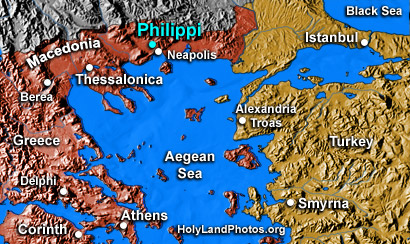






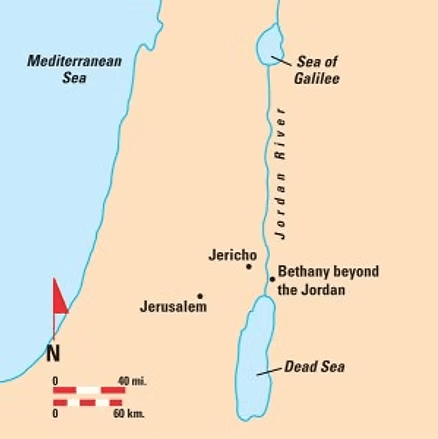


















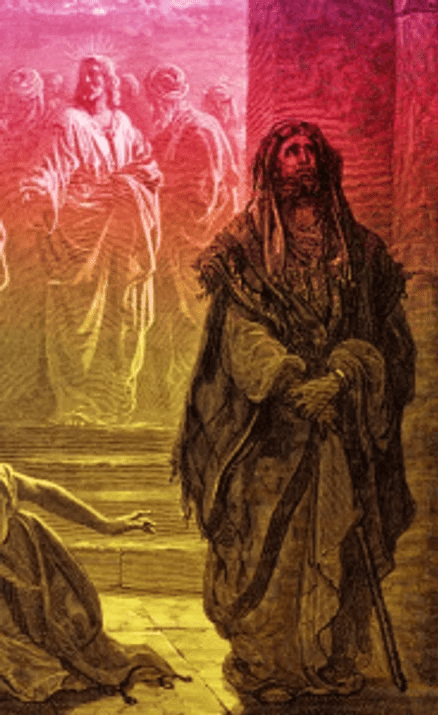

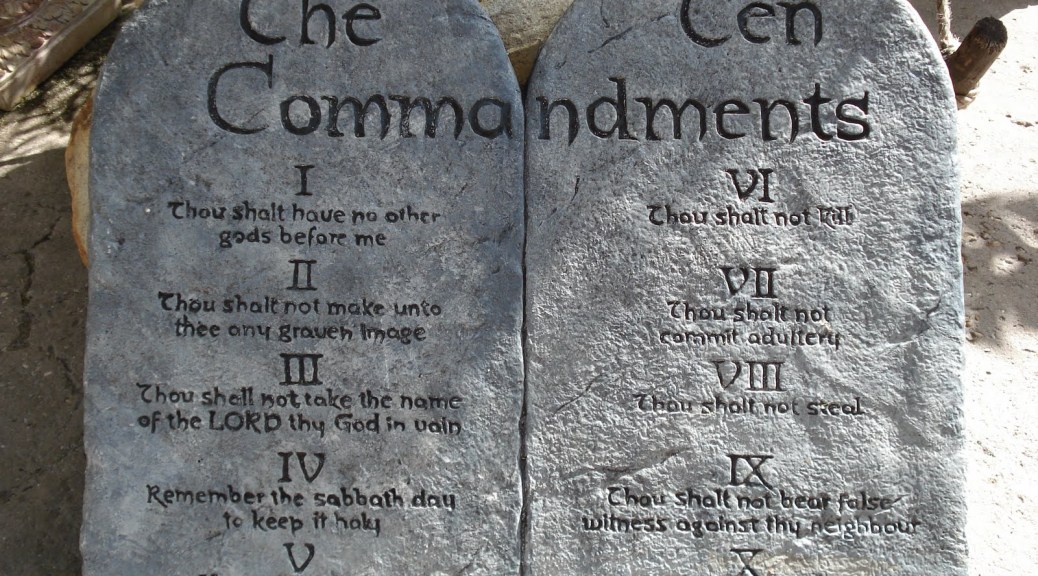




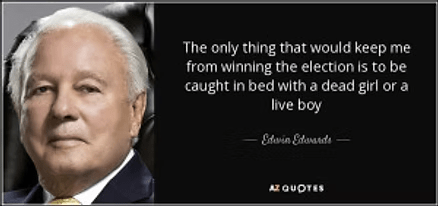

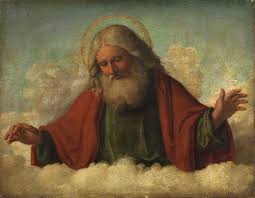















 Explaining the Readings