Tag Archives: Ordinary time after Pentecost

John 6:35, 41-51 – The bread of life

Jesus said, “I am the bread of life. Whoever comes to me will never be hungry, and whoever believes in me will never be thirsty.”

Then the Jews began to complain about him because he said, “I am the bread that came down from heaven.” They were saying, “Is not this Jesus, the son of Joseph, whose father and mother we know? How can he now say, ‘I have come down from heaven’?” Jesus answered them, “Do not complain among yourselves. No one can come to me unless drawn by the Father who sent me; and I will raise that person up on the last day. It is written in the prophets, ‘And they shall all be taught by God.’ Everyone who has heard and learned from the Father comes to me. Not that anyone has seen the Father except the one who is from God; he has seen the Father. Very truly, I tell you, whoever believes has eternal life. I am the bread of life. Your ancestors ate the manna in the wilderness, and they died. This is the bread that comes down from heaven, so that one may eat of it and not die. I am the living bread that came down from heaven. Whoever eats of this bread will live forever; and the bread that I will give for the life of the world is my flesh.”

——————————————————————————–

This is the Gospel selection from the Episcopal Lectionary for the Twelfth Sunday after Pentecost, Year B 2018. In the numbering system that lists each Sunday in an ordinal fashion, this Sunday is referred to as Proper 14. It will next be read aloud in an Episcopal church by a priest on Sunday August 12, 2018. It is important because Jesus speaks of “living bread,” adding to the living water that means one “will never be thirsty.”  It is vital to understand the “bread” meaning in this selection.

I posted an article that explained how to understand John’s chapter six (March 6, 2015). An atheist can read the exchanges between the pilgrims in Capernaum, who were part of the five thousand fed miraculously by Jesus and his disciples, and claim Jesus preached cannibalism. That was not the case at all; and, I stand by those opinions of three years ago.
But now the cycle again turns to Jesus saying, “I am the bread of life” and “I am the living bread that came down from heaven.”

The frightening part that some people shudder to even think about is the meaning that comes from Jesus having said, “Whoever eats of this bread will live forever; and the bread that I will give for the life of the world is my flesh.”

Rather than becoming confident in what this means, well enough to explain it to others and alleviate their fears and uncertainties, many Christians choose to walk away from the difficult passages and return their heads to the warm sands of ignorance.

Hopefully, everyone who reads John’s chapter six in his Gospel realizes that Jesus stood before the Jews as a human being, made of flesh, bones, organs, and blood. Since he was not a loaf of bread and knowing that he was not a glass of water either, one has to realize that Jesus spoke metaphorically.

In the Gospel reading selection for the eleventh Sunday after Pentecost (the past Sunday), Jesus encountered those Jews who were not filled with the Holy Spirit in the gathering on the flood plain of Bethsaida. Jesus told them they sought food that perishes, when they should be seeking “food that endures for eternal life,” which Jesus offered. For many of the five thousand (with women and children adding to that figure), they were fed the Holy Spirit by Jesus. Those did not follow Jesus to Capernaum, seeking more “signs” involving physical bread and dried fish.

When Jesus said, “I am the bread that came down from heaven,” the Jews imagined manna falling like rain from the sky. The Greek word written by John, “ouranos,” can be interpreted as “the visible heavens: the atmosphere, the sky,” and even “the starry heavens,” but Jesus meant “the spiritual heavens.” A “spiritual” anything is invisible and not of the “physical” world. Thus, while manna was a physical manifestation of tiny flakes of “what is it?” (the meaning of the Hebrew word “manna”), which formed somehow in the atmosphere in the wilderness of the Sinai, Jesus was not that kind of bread.

God had “been there, done that” and was not repeating the bread falling from the sky. Instead of “manna” what God sent was “umee-zoh” – “who is this?”  The Jews confronting Jesus in Capernaum were asking that under their breath.

The English word “bread” has these acceptable definitions (among others) listed for it: “Food in general, regarded as necessary for sustaining life; and, something that nourishes; sustenance.” (American Heritage Dictionary of the English Language) This means the metaphor has to be applied in these ways, such that Jesus is necessary for sustaining life, as one who nourishes. “Nourish” means Jesus is necessary for life and growth, as one who fosters the development of those who “eat of this bread” he represents.

When Jesus said, “I am the bread that came down from heaven,” this supported his having said, “Whoever comes to me will never be hungry, and whoever believes in me will never be thirsty.” The word “never” (Greek “ou”) means that hunger and thirst will not be a problem for anyone nourished by the bread Jesus represents. A physical body demands food and water for life to be sustained. However, a soul, which is eternal, never requires anything physical to continue its immortal designation.

Neither government officials nor minister can hand out the bread of life freely. It is God’s to give through Jesus.

The middle of this selection has Jesus making reference to the Father. This clarified that he had come down from the spiritual heaven of God, not the physical atmosphere: like rain, a meteorite, or manna. It is worthwhile to note that the Jews asked, “Is not this Jesus, the son of Joseph, whose father and mother we know?” That is opposed to the insult of Jesus preaching in Nazareth, where he was referred to as “the son of Mary,” his mother (in Matthew 13:55 and Mark 6:3), not dignifying him as the son of Joseph (although Luke 4:22 referred to him in that manner). That reference in Capernaum led Jesus to explain his having been sent by God, while stating indirectly that Joseph was not his biological father. His reference to “the Father” was heard in human terms, not heavenly ones.

Jesus referred to “the Father” four times, saying “by God” one other time, as he told the Jews: “No one can come to me unless drawn by the Father who sent me; and I will raise that person up on the last day. It is written in the prophets, ‘And they shall all be taught by God.’ Everyone who has heard and learned from the Father comes to me. Not that anyone has seen the Father except the one who is from God; he has seen the Father.”

This is important to follow.

First, the translation, “No one can come to me unless drawn by the Father,” is not quite that simple. It is a series of segments that say: “No one is able to come to me,” followed by “if not the Father,” followed by “the [one] having sent me,” followed by “draws him.” The use of the Greek word “helkysē,” which translates as “draws,” means, “to draw by inward power, lead, impel.” [HELPS Word-studies] Rather than “to come to me,” the Greek can translate to say “to enter with me.”

This means “if not the Father” says only those who can call God “the Father,” like Jesus, are those who will also be Jesus, in union “with” him. The Greek word “pempsas,” which is translated as “having sent,” can also say “permitting to go,” where “the Father” determines who will be “with” Jesus, as His Son reborn (able to call God “the Father” too). All of this combines to state that the only ones who can become Jesus are those whose inner spirit leads them to be like Jesus.

By being able to see how Jesus meant that with his statement, look how the conclusion makes more sense. Jesus added, “I will raise that person up on the last day.” By stating the first person future conditional form of the verb “anistémi,” “I will raise up” says Jesus will elevate another, by “standing with” that one. This is a spiritual elevation that is allowed by “the Father” in heaven. At that time, one will experience their “last day” as an ego driven, selfish soul, where darkness abounds, as the light of “day” will forever shine for those servants of the LORD, who are then “in the name of Jesus Christ.”
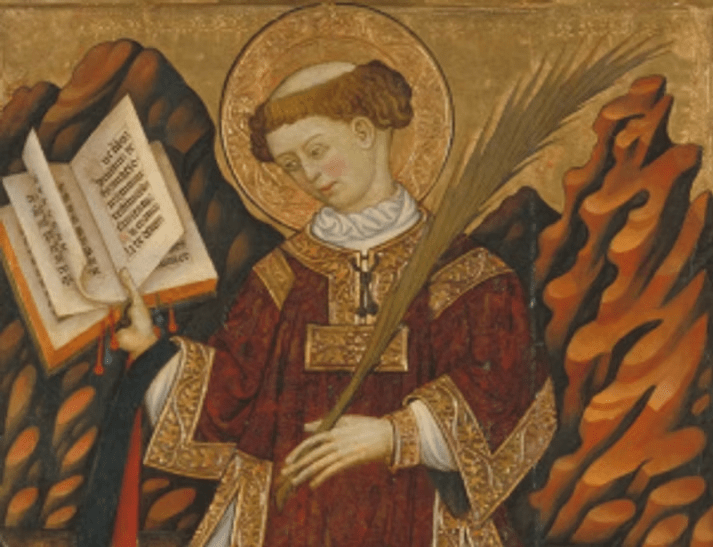
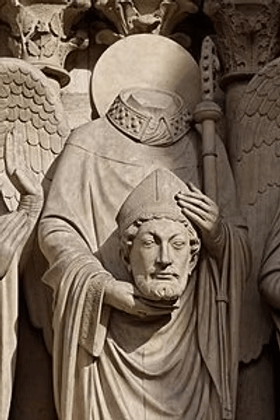
With halo = raised up.

Jesus then said, “It is written in the prophets, ‘And they shall all be taught by God.’” This is quoting from Isaiah 54, where the prophet wrote:

“All your children will be taught by Yahweh, and great will be their peace.”

“In righteousness you will be established: Tyranny will be far from you; you will have nothing to fear.  Terror will be far removed; it will not come near you.”

“If anyone does attack you, it will not be my doing; whoever attacks you will surrender to you.” [Isaiah 54:13-15]

Isaiah told of the future glory of Zion, which has to be seen as heaven. When Jesus said “they shall be taught by God,” this is the Christ Mind that comes to all who are reborn as Jesus Christ. When one is “entered with” Jesus, and “raised up” spiritually by a soul cleansed of sin, one is then “taught” the will of Yahweh. Everything known by God is available to His servants, just as it was available to Jesus of Nazareth, coming at the time of need. This is the spiritual depth of meaning [the wine] that must accompany the bread of Scripture.

Realizing that source of teaching is the Christ Mind, one can then see how Jesus saying, “Everyone who has heard and learned from the Father comes to me,” means one has become one “with” Jesus. One hears the insight of holy wisdom. One learns the meaning of the Word, from God’s whispers of thought. It is repeating the previous statement, confirming this state of hearing and knowing means one has “entered with” Jesus.

This segment of statements about “the Father,” said by Jesus to the Jews, concludes with his saying: “Not that anyone has seen the Father except the one who is from God; he has seen the Father.” This is a statement that is again segmented, with the first segment stating, “Not that the Father has seen anyone,” which means “no one has seen the Father,” but also broadens to say “the Father” only has one Son [Adam], which is “the one who is from God.”  As such, the Greek word “heōraken” [“has seen”] actually refers to a spiritual “knowing,” and God has only “known” one that has “seen the Father,” again in the “knowing” sense.

When Jesus then seemingly changed course abruptly, saying, “Very truly, I tell you, whoever believes has eternal life,” this is relative to seeing God. The saying goes, “Seeing is believing,” but another saying is “The hand is quicker than the eye.” The Greek word “pisteuōn” translates as “believing,” but is best read as “having faith in.” There is a significant difference between belief and faith, such that Jesus regularly asked his disciples, “Oh you of little faith, why did you doubt?”

Doubts come from “seeing,” but faith-based belief comes from “knowing,” which is the depth of commitment that comes from personal experience, not second-hand rumor. Therefore, “faith” leads to becoming Jesus reborn, which is the promise of eternal life.

When Jesus repeated, “I am the bread of life,” and then said to the Jews, “Your ancestors ate the manna in the wilderness, and they died. This is the bread that comes down from heaven, so that one may eat of it and not die,” this demands one understand the manna from heaven.

Manna had physical qualities that were like Jesus in the flesh; but once the physical was gone (when the manna stopped falling, when the Israelites entered the Promised Land; and, when Jesus was executed by crucifixion) the spiritual qualities must take over.  Manna had no lasting effect, in eternal terms.  Jesus offered everlasting life, avoiding the shortfall of death.

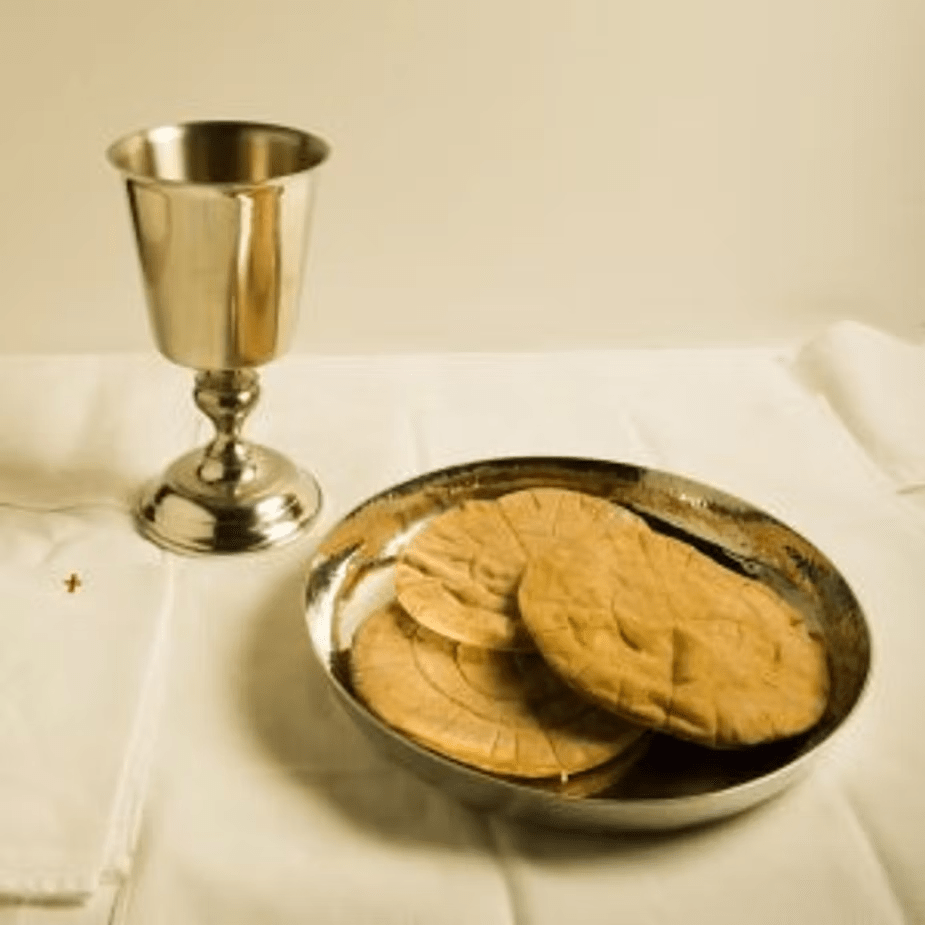
I have written in these posting from time to time about the symbolism of Jesus at his last Seder meal (the Last Supper). The unleavened bread and the four cups of wine are ritual symbols for all Israelite descendants: of freedom from bondage [bound to a temporal world] and the spiritual uplifting that transforms a normal human being into a priest of Yahweh [intoxicated by the Holy Spirit – the reason alcoholic drinks are called “spirits”]. The Jews to whom Jesus spoke [including the disciples who would later partake of Jesus’ last Seder meal] could not see beyond the memorization of ritual that thanked God for making them a separate people – special people in God’s eye, as a race linked by blood that He created.

Christians today have reverted to this same repetition of symbolism, using Jesus as their gift of specialty and favor.   Unfortunately, most Christians do not feel the first Covenant, which demanded three periods of recognition each year, for eternity, which the Israelites (Jews) honor, is required of Gentile converts.  Without knowing the presentation of matzo and wine are a fixed part of the ritual Jesus followed (as a devout Jew), the Christian substitutions of wafers and wine [or grape juice] are being offered metaphorically as Jesus’ body and blood, without realizing the deeper meaning.  One purposefully comes before the other, as a natural progression towards eternal salvation; but Christians believe Jesus has been called down from heaven to become one with the wafer that goes on their tongue, washed down by a sip of wine [fermented or not].

The bread symbolizing the body of Christ is the same as the manna that fell from the sky was that fed the Israelites spiritually. The wine symbolizing the blood of Christ is the same as the living water from the rock that kept the Israelite alive, as they interbred into a race of holy priests. The bread (the body of Christ) is then the holy writings (the Law, the psalms, and the prophets) that foretold of the coming Christ. The wine (the blood of Christ) is then the continuation of the Christ (the legacy of lineage), as those who are the fruits of the living vine.

In a recent posting about the manna falling to the Israelites, I mentioned that this spiritual bread (in physical form) was not to keep the bodies of flesh alive. The Israelites took with them livestock and probably grew crops from the water Moses struck from the rock with his staff. The manna fed their will to serve God for forty years – three generations of the children of Israel’s growth as priests serving the One God.

Think about those forty years spent in the wilderness. Those words of timing slide right over one’s head without the slightest realization of how long that time is. What was one to do in a wilderness environment, beyond gathering manna, caring for the children born, caring for the beasts of burden, the preparation of food to eat, the washing and mending clothes, the milking goats and cattle, and all the mundane things of a normal life? There were no I-phones; there was no Internet, no television, no sports, no concerts, no movie theaters, and no places to go and spend one’s idle time. What does one do over forty years to pass the time and make wilderness living gratifying and rewarding?

There were no radios to tap out with when the Israelites were in the wilderness.

The Sabbath was a day of rest – ALL DAY LONG – but that did not mean walking to a synagogue for a couple of hours of dutiful attendance, with others of the same religious practices. There was time spent praying to Yahweh. In their spare time the Israelites learned the Laws passed down to them by Moses. They memorized the history of the world, up to that point (Genesis). That activity was their entertainment, as they looked forward to living up to their commitment to God. The manna from heaven nourished their desire to do that. Likewise, Jesus, as the bread of life, has to have the same effect on Christians.

When Jesus said, “Your ancestors ate the manna in the wilderness, and they died,” this is another use of symbolism, where “they died” is not meant in physical terms. All mortals die. Mortals do not live for a thousand years; so, it was natural for ancient ancestors to have died in the flesh. Therefore, their only having eaten manna in the wilderness, but not in the Promised Land, says the land of Canaan, which became Israel (and its split into Israel and Judah), could not guarantee eternal life.

Once in the land that had been given to them, and because they stopped being spiritually motivated to keep alive the traditional Word, the Israelites died of commitment to the Father.  The Israelites broke their covenant with God by finding sustenance only from the land. The Law as their bread from heaven became only a physical document (scrolls) and not their motivation to find union with God, so the Law never could pump through their bodies spiritually. The land became the bread of Israel, of which they ate under kings that were not Yahweh. That bread was unable to sustain an inner desire to serve Yahweh, so the land, the Israelites, and their covenant with the One God died.

The same error is found in every place on earth where country or nation is seen as of the utmost importance. The laws of all nations, regardless of what holy documents they may or may not be based upon, are nothing more than the bread that leads to mortal death. The leaders of all nations are merely human beings, incapable of offering eternal life, simply because humans are mortal and all things coming from humans are short-lived. Just as human beings are born to die, so too are nations, as neither the lands nor its kings can lead human beings to serve God. That can only be done individually, spiritually, between a soul and the Father.

When Jesus then said, “I am the living bread that came down from heaven. Whoever eats of this bread will live forever,” he restated “I am the bread of life” a third time. This means Jesus is the incarnation of God on earth. “Whoever eats of this bread” actually states the conditional, in a segment that reads: “if anyone shall have eaten of this the [one] bread.”

This means Jesus is only for those who “consume the divine provisions” that Jesus brings from God. Those divine provisions have been recorded in the Gospels and the Epistles of the Saints. Those divine provisions point out how the Torah, the Psalms, and the Prophets spoke the Word of God prophesying Jesus, who came as the truth answered. To have faith in the truth that is Jesus Christ, one has to eat those holy words and digest them into one’s spiritual being.

The promise of eternal life is then assured by Jesus stating, “The bread that I will give for the life of the world is my flesh.” The physical being that was Jesus was the fulfillment of Scripture; but that fulfillment did not end when Jesus died, was buried, resurrected, and/or ascended. The promise means that once Jesus was sent as the bread of life, Jesus would forever more be resurrected in the flesh of his followers. They would be followers because they would be reborn as Jesus returning into the world, as a Holy Soul united with a cleansed soul in human flesh.

To see “the bread” in light of “my flesh” one has to see these as surface elements. A body without life is a corpse; but a body freshly dead will give the appearance of flesh that is only sleeping.

That look can make one think life still inhabits the body, when it in fact does not. This is symbolic of unleavened bread. There are only the basic ingredients used, which makes bread that is flat. Without the life of yeast within bread’s crust, giving rise to much more desirable bread, unleavened bread simply keeps one alive from day to day. This is the difference between the manna and the bread of life.

Jesus must be mixed within the ingredients of one’s being, so his Spirit gives rise to a human being that is more than a mortal born to die. Jesus must be consumed within one’s being, so his presence can elevate one to eternal life. Just as one cannot tear apart a loaf of fresh hot bread and point to the yeast that gave it rise, one cannot tear apart a Saint and point to Jesus within. Still, Jesus is present in all Saints because they have become one with Jesus Christ in the flesh.

As a Gospel selection for the twelfth Sunday after Pentecost, when one’s personal ministry for Yahweh should be underway, the message is to reproduce the bread of heaven so Christ can feed the seekers called by God today. One needs to be filled with the “yeast” that is the Holy Spirit, being reborn as the Son of God.

The “bread of heaven” is the insight found in Scripture. Feeding the truth of Scripture to the hungry nourishes them in a spiritual manner. The “bread comes down from heaven” because the deep meaning to the Word comes from the whispers of God. The “bread of life” is the elevated way an Apostle follows in the holy footsteps of Jesus, led by the Mind of Christ. Those who consume the meaning then spread that way of living to those seeking to know God and Christ, giving them the opportunity to be blessed with eternal life.

A minister of Yahweh knows the difference in the symbolism of bread in ritual practices, designed to remind one of God’s sending of priests into the world. Whereas the Israelites died when the manna ceased, God sent His Son as the spiritual food that gives rise to the matzo of the Seder meal. Christians, Jews, and Gentiles are all unleavened until they receive the Holy Spirit and are reborn as Jesus Christ. Once they become the flesh of the Son of man, the blood of Christ fills their bodies.  Thus, a minister of the LORD teaches we remember Jesus as the bread of life by finding delight in the breaking of the afikoman and we remember his Holy Spirit – as the Christ – when his blood has become one with ours.


1 Kings 2:10-12; 3:3-14 – The Wisdom of Solomon

David slept with his ancestors, and was buried in the city of David. The time that David reigned over Israel was forty years; he reigned seven years in Hebron, and thirty-three years in Jerusalem. So Solomon sat on the throne of his father David; and his kingdom was firmly established.

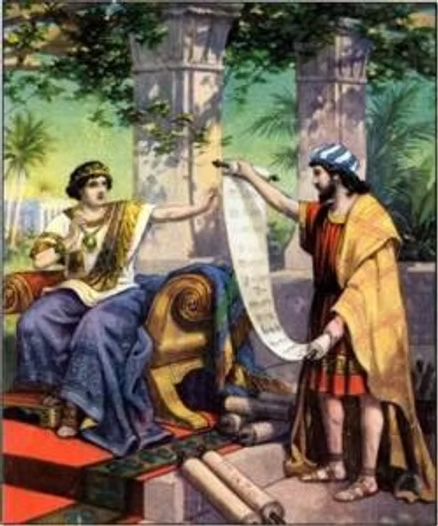
Solomon loved the Lord, walking in the statutes of his father David; only, he sacrificed and offered incense at the high places. The king went to Gibeon to sacrifice there, for that was the principal high place; Solomon used to offer a thousand burnt offerings on that altar. At Gibeon the Lord appeared to Solomon in a dream by night; and God said, “Ask what I should give you.” And Solomon said, “You have shown great and steadfast love to your servant my father David, because he walked before you in faithfulness, in righteousness, and in uprightness of heart toward you; and you have kept for him this great and steadfast love, and have given him a son to sit on his throne today. And now, O Lord my God, you have made your servant king in place of my father David, although I am only a little child; I do not know how to go out or come in. And your servant is in the midst of the people whom you have chosen, a great people, so numerous they cannot be numbered or counted. Give your servant therefore an understanding mind to govern your people, able to discern between good and evil; for who can govern this your great people?”

It pleased the Lord that Solomon had asked this. God said to him, “Because you have asked this, and have not asked for yourself long life or riches, or for the life of your enemies, but have asked for yourself understanding to discern what is right, I now do according to your word. Indeed I give you a wise and discerning mind; no one like you has been before you and no one like you shall arise after you. I give you also what you have not asked, both riches and honor all your life; no other king shall compare with you. If you will walk in my ways, keeping my statutes and my commandments, as your father David walked, then I will lengthen your life.”

———————————————————————————————————-

This is an optional Old Testament selection from the Episcopal Lectionary for the Thirteenth Sunday after Pentecost, Year B 2018. In the numbering system that lists each Sunday in an ordinal fashion, this Sunday is referred to as Proper 15. If chosen, it will next be read aloud in an Episcopal church by a reader on Sunday August 19, 2018. It is important because it tells of Solomon’s choice of wisdom as the best asset a child can have.

When David slew Goliath, he was not yet twelve years old. He was still a young boy when he led the troops out of Gilbeah and back in, after battle. He might have only been sixteen when Saul put David in command of a thousand soldiers. This youthful age of David did not make his son Solomon his equal in courage, when also just a young boy.
The story of David and Bathsheba took place when David was in the twilight of his life, probably occurring when he was around fifty-eight years of age, or twelve years before the end of his life. That means Solomon was conceived when David was around fifty-nine and born when David was close to sixty. When “David slept with his ancestors, and was buried in the city of David,” Solomon was then around ten years old. This means that when “Solomon sat on the throne of his father David,” at a time when David’s “kingdom was firmly established,” Solomon had done nothing to establish Israel. As a child king, Solomon became a “turn-key” ruler, with no threats to the Israelites because of the inexperience of their new king.

In the verses skipped over, one has to be aware that Solomon oversaw the executions of those who took advantage of David in his last years. David’s fourth son, Adoijah, tried to claim the throne, with the aid of Joab (a military general of David’s) and Shimei (who cursed David as disposed by Absalom). Solomon was advised by the priest Zadok and the prophet Nathan in these acts of retribution. Solomon did not shy away from those he would order killed at his young age.


Assuming those executions took a couple of years to administer; Solomon was still “only a little child” when “the Lord appeared to Solomon in a dream by night.” He was probably twelve years of age, before his bar matzah of thirteen. This young age can be overlooked when one reads how Solomon “sacrificed and offered incense at the high places. The king went to Gibeon to sacrifice there, for that was the principal high place; Solomon used to offer a thousand burnt offerings on that altar.”

It becomes important to see these sacrifices and burnt offerings to God were because Solomon was following the “statutes of his father David.” This means Solomon did what was required of him, led by wise men of God; but as a young boy he was still learning what was required of a king.

It makes sense to me that Solomon’s youth and his having experienced so much of the adult world so fast, led him to pray for God’s help.  In response, this would have been when God appeared to him in sleep and said, “Ask what I should give you,”

Solomon wanted the wisdom he had come to know in the adult servants to God, Zadok and Nathan. By telling God, “I do not know how to go out or come in,” young Solomon was saying that he was being told where to stand, what to say, and how to act kingly. Because Solomon knew so many people depended on an intelligent leader, he asked God, “Give your servant therefore an understanding mind to govern your people, able to discern between good and evil.”

The Hebrew word translated as “mind” is “lêḇ,” which also means “heart.” It can likewise mean the “inner man” or “will.” This word shows the link between the heart and the mind, where emotions of the heart stimulate the thought processes. By asking for an “understanding heart to judge” Israel, Solomon was asking for control of his emotions, so his judgments would not be rashly done.  One can imagine that ordering the executions of his father’s enemies was a learning experience, one which he might have been advised by a priest or prophet not to let fears cloud his judgment.

This element of “heart” is also relative to the statement that says, “Solomon loved the Lord.” The first step towards being filled with the Holy Spirit is to fall in love with God. One needs to sacrifice oneself to be the bride of God, where one’s heart opened for the LORD to enter and sit upon His throne, commanding over the kingdom that is His earthly servant.

David had loved the Lord in this manner and never once questioned if God would lead him astray. David gave up his mind so God could rule his actions from David’s heart. David made all his greatest decisions by saying, “As surely as God lives,” because God lived within David and David’s decisions were made by God. Solomon, however, did not love the Lord in that same way as his father had.

When we read how Solomon was “walking in the statutes of his father David,” David was not said to have been walking in the statutes of Jesse, his father. David was walking in the statutes of the Lord, because David loved the Lord. Solomon loved God because he had been told to love God, not because Solomon knew God as his husband. By following the rituals of David, Solomon was “showing his love of God,” a viable translation of “aheb.”  Solomon acted logically as how he understood “love” to be shown, by following the steps of the leader before him (his father). Therefore, Solomon loved God as an external presence worthy of praise as the God of Israel, but not as the God of Solomon.

When Solomon asked God for understanding of mind, rather than ask God to be his understanding of heart, we read, “It pleased the Lord that Solomon had asked this.” This  leads one to recall how God told David, “Out of your own household I am going to bring calamity on you.” (2 Samuel 12:11) Solomon was of David’s household, and was therefore not immune from playing a role in the distress that will befall the House of Israel. Solomon would cause a split in that house, based on how he would run his kingdom. Therefore, the pleasure God took from Solomon’s request is misleading, as the Hebrew word “way·yî·ṭaḇ” (from yatab“) can easily mean God “pleased” Solomon by granting him his request.

God then told Solomon, “Because you have asked this, and have not asked for yourself long life or riches, or for the life of your enemies, but have asked for yourself understanding to discern what is right, I now do according to your word. Indeed I give you a wise and discerning mind; no one like you has been before you and no one like you shall arise after you.”

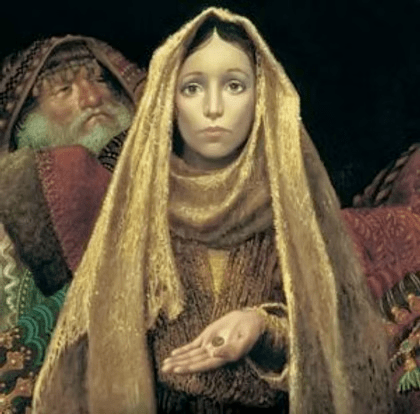
Pay a coin, ask one question, receive the truth … but it might not be what you want to hear.

This might sound good at first, but this falls under the old Chinese proverb that says, “Be careful what you wish for, you might just get it.” Because Solomon asked for (in essence) a Big Brain to judge the world with, God (in essences) said, “Since I cannot give you my Christ Mind [because you didn’t ask to marry me], I’ll give you more natural insight than anyone in the world has ever had and will ever have. There will never be a Bigger Brain that the one I will let you have.”

Then, with the wisdom of Solomon as the gift God gave, God added, “If you will walk in my ways, keeping my statutes and my commandments, as your father David walked, then I will lengthen your life.” Here the reading ends, but it is worthwhile to note that Solomon would die around age fifty-three, of natural causes, the wealthiest king Israel would ever know, failing to follow in the holy footsteps of his father. For all the wisdom Solomon had, it brought him only material rewards. When Solomon died, so too did Israel as one nation under God.

As an optional Old Testament reading selection for the thirteenth Sunday after Pentecost, when one’s personal ministry should be underway – asking not what God can do for one, but what one can do for God – the message here is to put more value in the heart center than the head. The head is where the ego lives. The heart is where one’s love of God resides.

Some people will read this set of verses in 1 Kings and think how wonderful God was to Solomon. The brand of Christianity that has spread across the Western World, in particular in the United States, sees how God blesses his people with riches and honor. It seems that the more bling one has, the more one can proclaim loudly, “Thank you Jesus! Thank you God!”

But, is that really the case?

When one sees the immaturity of young Solomon wanting to be as smart as an adult, rather than learn life’s lessons the hard way – the way the masses are forced to learn – he was asking for an easy way out. Solomon wanted to be his own man, rather than have to rely on advisors to tell him what to do.

Solomon did not once pause to think that God was his wisdom, as all he had to do was ask God, “What do I do, Lord?” God went to Solomon and prompted him to ask for help, saying, “Ask what I should give you.” When Solomon did not ask for God to give him His love, Solomon rejected God as his King, just as the elders of Israel had, when they first asked Samuel for a king, to be like other nations. Solomon, only a little child, wanted to be a king like those of other nations.

Because Solomon rejected God as his lover and husband, God gave Solomon what he did not ask for: wealth and honor. That reputation lasts till this day; but what good did wealth and honor do for Solomon? Wasn’t Israel worse off when Solomon died, than it was when David died?

The same mirage is all around us today. We see wealth as a blessing. We are given honor by credit agencies, banks, and fraternal orders of secrecy. The richer and more powerful one gets, the more praises to God are little more than lip service.

All the wisdom of Solomon would have rejected Jesus, had Solomon asked Jesus to tell how he was assured of eternal life in heaven. Jesus would have told Solomon the same sacrifices that needed to be made he told the young rich Pharisee, and Solomon would have rejected Jesus as did the young rich Pharisee. The only difference might be Solomon offering some smart retort for Jesus (words of wisdom?), but he still would have walked away from any form of self-sacrifice.

A minister to the LORD knows the lures of money and power and has walked away from them. God provides in mysterious ways, as long as one is committed to serving the LORD. One does not need more than enough to feed oneself and one’s family – the same principle of the manna that fell from heaven and God’s orders given through Moses. Being given exceeding wealth and honor means having the problem to figure out how to sell everything and give the profits to the poor … doesn’t it?

That problem is best solved by being poor in material things, but rich in spiritual things. Then giving from the heart and teaching from the Christ Mind is more valuable than all the precious metals and gemstones the world has to offer.

Proverbs 9:1-6 – The temple of wisdom

Wisdom has built her house,

she has hewn her seven pillars.

She has slaughtered her animals, she has mixed her wine,

she has also set her table.

She has sent out her servant-girls, she calls

from the highest places in the town,

“You that are simple, turn in here!”

To those without sense she says,

“Come, eat of my bread

and drink of the wine I have mixed.

Lay aside immaturity, and live,

and walk in the way of insight.”

———————————————————————————————————-

This is an optional Old Testament selection from the Episcopal Lectionary for the Thirteenth Sunday after Pentecost, Year B 2018. In the numbering system that lists each Sunday in an ordinal fashion, this Sunday is referred to as Proper 15. If chosen, it will next be read aloud in an Episcopal church by a reader on Sunday August 19, 2018. It is important because Solomon wrote of the wisdom he possessed and did not attribute it to the Father, but to a goddess.

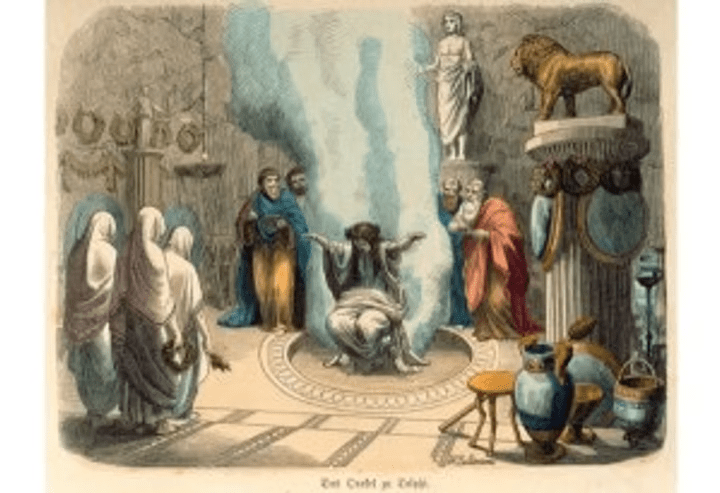
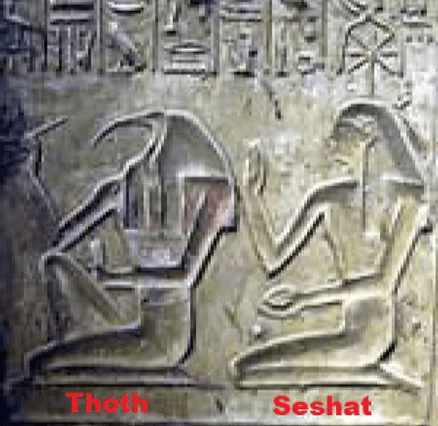
In Greek mythology, the goddess Athena was recognized as the deity who reigned over wisdom. Her Roman equivalent was called Minerva, also a goddess. In ancient Egyptian mythology, perhaps the religion most known by the philosophical minds of the Israelites, Seshat (the counterpart of the god Thoth and his wife Ma’at) was the goddess of wisdom, knowledge and writing.

Because all of these mythological deities are feminine (except Thoth), wisdom should be grasped as a talent that comes from the Earth mother, such that it is a talent of the brain and the powers of physical observation.

In this proverb that is attributed to the writings of Solomon, based on his wisdom possessed, he gives strong support towards that conclusion of wisdom being a feminine characteristic. Solomon wrote of “her house,” “her pillars,” “her animals,” “her wine,” “her table” and “her servant-girls.” That proliferation of feminine pronoun use (in addition to “she” used four other times) says Solomon had discerned (a talent of wisdom) that Yahweh was not the voice of reason he heard in his head.

Solomon’s references to a “house” “hewn” with “seven pillars,” where sacrificed animals spilled their blood upon a “table,” is clearly a statement of a goddess, whose temple was worldly.

The “servant-girls” were then priestesses of that temple. To read that they would “call out from the highest places” means they served the deity of wisdom, who is available to those who submit to that divine power.  The “highest places” were religious temples to gods foreign to Israel.

“You that are simple, turn in here,” says ordinary people do not possess wisdom. Solomon then proposed that the masses should follow the lead of those who serve the goddess of wisdom, as the judges blessed by the temple priests. The line that is translated to say, “To those without sense,” the Hebrew word “lêḇ” is used, which means “heart, mind, inner man, will, and understanding.” This is the word Solomon used when he asked God for a Big Brain, rather than prefer God’s presence within him.

Knowing that Solomon wrote his proverbs for the Israelites, who were sworn to serve God and remember the Passover via the ritual consumption of unleavened bread and cups of wine, it is not coincidence that Solomon wrote of “my bread” and “the wine I have mixed.” That physical food and drink would be filled with yeast, rising hot and fluffy and fermented to a highly intoxicating alcohol level. Solomon was telling his people to let him do all the work of rule, so they could turn their backs to God and enjoy the wealth and honor of Solomon’s realm.  In that scenario, the people were no longer subjected to finding God individually, so their unleavened bodies could become elevated (raised up) to righteousness and their plain blood be infused with the Holy Spirit.

For Solomon to say, “Lay aside immaturity and live,” proposing that the ignorant should “walk in the way of insight,” he was telling the children of Israel to follow him, his ways, and his knowledge.

Rather than asking the Israelites to put their faith in God, he was promoting himself as God’s chosen king, with the insight of a god. Solomon (whether he figured it out or not) was returning Israel to the royal deity worship of Egypt. No longer were the people of Yahweh asked to be priests in individual relationships with the Lord and walk in the ways of righteousness. They were told to let wisdom light their paths.

As an alternative Old Testament selection for the thirteenth Sunday after Pentecost, when one’s personal ministry to the LORD should be underway – as a different angle on Solomon’s wisdom – the message here is the danger of worshiping individuals as gods. When one sees another human being as holier than oneself, one ceases trying to be holy, submitting oneself to that other human.  Israelites did it for Solomon, saying, “No one can be wiser.”  Likewise, Christians do it for Jesus, saying, “There can only be one Son of God.”

This is the trap of Satan, which was set before Jesus, offering him the world if he would submit to the will of evil.  God set the world that Solomon had at his feet, to test his devotion to Him.

Power and wealth are intoxicating, as were the bread and wine of which Solomon wrote. The world is filled with simple folk, who have no sense for taking advantage of others. The mixed drink that comes from the slaughter of animals is the blood of the innocent spilled so that the elite can laugh at how easy it is to become rich off the ignorance of others. Those sacrificed are the people who bow down before those possessing Big Brains.

The aspect of “immaturity” is that of “foolishness,” where the Hebrew word “p̄ə·ṯā·yim” means “naivety.” It bears the same intent as does “foolish”: “Lacking or exhibiting a lack of good sense or judgment; silly.” (American Heritage Dictionary of the English Language)

This is the excuse of childhood ignorance, where simplicity is a natural state of learning from one’s mistakes. Those life lessons develop one’s maturity, and from life experience comes true wisdom. Solomon did not suffer the growth pains of normal people, as he laid aside his immaturity for a life led by reason, unclouded by childish emotions. Thus, his view of living was void of any possibility of eternal life.

A minister of the LORD has known the errors of thought and the failures that come from not having true insight. The only true source of wisdom comes from the Christ Mind, which demands a soul be blissfully ignorant to possess it. It is why prophets like Ezekiel answered questions from God by saying, “You know Lord.” A prophet never speaks for self as the Big Brain is never large enough to see all possibilities and answers at once … like God can.

Ephesians 5:15-20 – Being wise and singing songs of praise

Be careful then how you live, not as unwise people but as wise, making the most of the time, because the days are evil. So do not be foolish, but understand what the will of the Lord is. Do not get drunk with wine, for that is debauchery; but be filled with the Spirit, as you sing psalms and hymns and spiritual songs among yourselves, singing and making melody to the Lord in your hearts, giving thanks to God the Father at all times and for everything in the name of our Lord Jesus Christ.

———————————————————————————————————-

This is the Epistle selection from the Episcopal Lectionary for the Thirteenth Sunday after Pentecost, Year B 2018. In the numbering system that lists each Sunday in an ordinal fashion, this Sunday is referred to as Proper 15. It will next be read aloud in an Episcopal church by a reader on Sunday August 19, 2018. It is important because it tells of the need for divine wisdom to avoid the pitfalls of evil ways.

Keeping in line with the way I have been presenting Paul’s Epistles, in the literal translations from the Bible Hub interlinear page (Ephesians 5), following this lead-in is that translation. The translation above is fairly representative of the message this selection presents, but (as usual) it misses the point that makes it clear each Christian must be reborn as Jesus Christ. Without that occurrence happening to each individual first, Paul’s words here are much easier said than done. [Notice, again, the presence of capitalization as being meaningful, not simply because a new series of statements [sentences] have begun.]

15Take heed therefore carefully how you walk  ,” The word “peripateite” translates as “you walk,” but is used ethically to infer “you conduct your life.”

not as unwise  ,” The word “asophoi” translates as “unwise,” but also means “foolish or unskilled.”  It is used to imply rejecting God’s guidance (His Will).

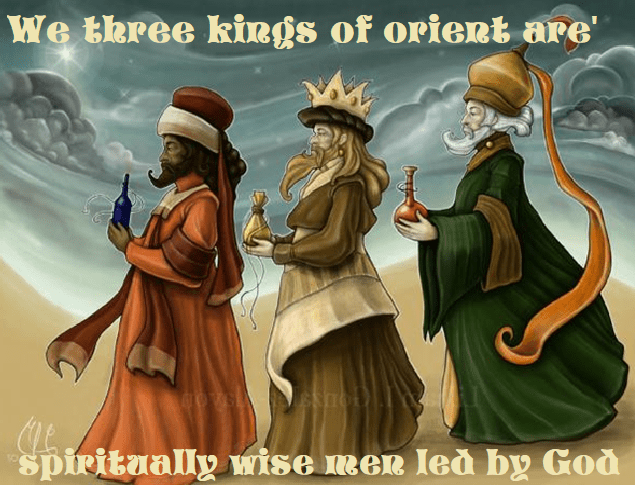
but as wise  ,” The word “sophos” means, “wise, learned, cultivated, skilled, clever.” This means to be “wise men,” where those who visited Jesus as a newborn were not smart enough to figure out where to go, what to find, and what to do on their own. They were led to Jesus by God’s guidance.

16redeeming the time  ,” The words “exagorazomenoiton kairon” are best translated as “use the opportunity” that comes from God’s guidance.

because the days evil are  .” The word “ponērai” means “evil, bad, malicious, wicked, slothful.” The meaning of “days” (“hēmerai” as “one’s time”) is more about the “years” or the “times,” being generally “always.” In another view, the light of truth (“days” versus nights) will attract those who are “evil” to one, because of the “lust of the times.” This requires one be able to shine light on that darkness.

17because of this  ,” The word “touto” (“this”) refers back to the state of evil that is always present, seen from the light of day. There is a cause (“because”) and effect challenge created that must be expected.

not be foolish  ,” One must not be “senseless” (from “aphrones”) to this evil presence, as one will be played the fool by the influences of Satan if not in possession of perspective and insight.

but understand what the will of the Lord [is]  .” The exception to foolishness comes from “perceiving” (from “syniete”) evil when it approaches, which is the will of the Lord for all His Apostles-Saints. This insight of “understanding” comes from the Christ Mind.

18and not to be drunk with wine  ,” The word “methyskesthe” means “become intoxicated,” where “intoxication” means, “overpowering exhilaration or excitement of the mind or emotions.” This is then a warning against the “poisoning” of evil, which possession of God’s Holy Spirit will protect one from.

in which is debauchery  .” The word “asōtia” means not to fall for “wantonness, profligacy, or wastefulness,” where “debauchery” means falling into a state that one cannot be saved from. It means, “spiritual wastefulness due to excessive behavior and the dire consequences it brings.” [HELPS Word-studies]

instead be filled with [the] Spirit  ,” The capitalization of “Pneumati” means the Holy Spirit, which is elevated above the spirit of a soul. This “Spirit” is the protection of God and the true source of wisdom and insight.

19speaking to each other [in] psalms  ,” As this follows a statement to be filled with God’s Holy Spirit, the least impact is “speaking to each other,” as the primary importance is God’s Holy Spirit speaking to them, those who are “themselves” (from “heautois” meaning “themselves” ) in touch with God’s Holy Spirit. It is the Holy Spirit that causes all Apostles and Saints to praise God in songs (“psalms”). Certainly all Apostles and Saints will join in with each other by singing the same songs of praise.

and hymns  ,” The word “hymnois” is much like “psalmois,” as both mean “songs of praise.” A “hymn,” however, is more specifically a “sacred son of praise,” one that “gives honor, praise, or thanksgiving.” In antiquity, a “hymn” was sung in celebration of a pagan god, hero, or conqueror. [HELPS Word-studies] The hero of all Apostles and Saints is Jesus Christ, whose entrance into a sinner means the defeat of Satan and his influences of evil.

and songs spiritual  ;” The word “ōdais” means “odes,” which are defined as: “A lyric poem of some length, usually of a serious or meditative nature and having an elevated style and formal stanzaic structure.” [American Heritage Dictionary of the English Language] This word is used in the New Testament to denote: “spontaneous, impromptu (unrehearsed) melodies of praise – not merely sung about (for) God but to God from a Spirit-filled heart.” [HELPS Word-studies] These songs are thus “spiritual,” stimulated automatically by the intense joy and happiness one feels from the Holy Spirit.

singing and making melody in the heart of you to the Lord  ;” This repeats the intent and purpose of “odes spiritual” and the source of one’s need to sing praises to the LORD.  It is most important to see the use of the word “kardia” as the Greek equivalent to the Hebrew “leb,” meaning “the heart; mind, character, inner self, will, intention, center.”  Because “singing and making melody” (“adontes kai psallontes“) are more acts of the emotional center leading the brain, for the the emotions of music to be heartfelt, this is a statement about God’s presence in one’s heart moving one to sing.

20giving thanks at all times  ,” The praises one sings are of thanks for having been saved by God. This is not simply a time rescued here and there, as being filled with the Holy Spirit means eternal salvation, where the word “pantote” means “ever.”

for all things  ,” There is nothing that comes into the lives of Apostles-Saints that is not to be praised as a benefit of God’s presence.

“All things come of thee of Lord, and of our own have we given thee.” This should not be associated with an offering to an institution. If one truly believes that all things come from God, then all things received are to be used for God.

in [the] name the Lord of us  ,” God’s presence within an Apostle-Saint comes with a name that one must identify as.

Jesus Christ  .” That name is Jesus Christ. One takes on that name as all Apostles-Saints must be reborn with the Holy Spirit of God’s presence in His Son, bringing with it the Christ Mind.

As an Epistle selection for the thirteenth Sunday after Pentecost, when one’s personal ministry to the LORD should be underway – one should be singing praises to the LORD – the message here follows the theme of the Old Testament selections that apply to wisdom.  The wisdom and understanding of which Paul wrote is different than that requested by Solomon, as it requires one sacrifice self-ego for the Christ Mind.

Paul began this series of segments by saying, “Take heed.”  Before one can walk in the ways of Jesus Christ, as a true Christian, one must be led by God, via His Christ Mind.  One must become a “wise man” (regardless of human gender) by being reborn as the Son of God, allowing one’s flesh to become the body of the resurrected Jesus Christ.  Anything short of that total commitment to serve the LORD will leave one foolish, overcome by the evil influences of the days.

The only way one can understand the will of the Lord is to stop giving credit to one’s Big Brain.  The Big Brain represents the drunken state of self-glorification.  Through ego, one wastes the advantages of spirituality.  One sings praises to God for what one has achieved, acting as if God rewards the selfish with wealth and power.  Wealth and power are payments that cease when one’s life on earth ends; and human beings are mortals that are born to die.  Material rewards leave nothing in the spiritual realm to reap.

A minister of the LORD knows the voice within which is a thrill to behold.  One sings constant songs of praise to God, when little can be detected of material gain surrounding oneself.  One’s life song, where an evil end was averted by sacrifice of self for the love of God is sung to others, like a recovering alcoholic sings praises to God for salvation.  One’s salvation came by submitting oneself to God and facing all the trials of commitment, so one can be reborn as Jesus Christ.  One cannot claim to be Jesus Christ, but the glory of that presence is known and it leads one to testify to God’s greatness, so others can come to find the same reward.

John 6:51-58 – Eating the flesh and drinking the blood of Jesus

Jesus said, “I am the living bread that came down from heaven. Whoever eats of this bread will live forever; and the bread that I will give for the life of the world is my flesh.”

The Jews then disputed among themselves, saying, “How can this man give us his flesh to eat?” So Jesus said to them, “Very truly, I tell you, unless you eat the flesh of the Son of Man and drink his blood, you have no life in you. Those who eat my flesh and drink my blood have eternal life, and I will raise them up on the last day; for my flesh is true food and my blood is true drink. Those who eat my flesh and drink my blood abide in me, and I in them. Just as the living Father sent me, and I live because of the Father, so whoever eats me will live because of me. This is the bread that came down from heaven, not like that which your ancestors ate, and they died. But the one who eats this bread will live forever.”

———————————————————————————————————-

This is the Gospel selection from the Episcopal Lectionary for the Thirteenth Sunday after Pentecost, Year B 2018. In the numbering system that lists each Sunday in an ordinal fashion, this Sunday is referred to as Proper 15. It will next be read aloud in an Episcopal church by a priest on Sunday August 19, 2018. It is important because one sees Jesus speaking metaphorically about his flesh and blood, which makes it impossible to associate this reading to the physical wafers and wine served at Communion. The body and blood of Jesus are wholly spiritual and in no way intended to be construed as material.

This reading is a continuation of the Proper 14 Gospel reading selection, with verse 51 appearing in both readings – ending last Sunday’s and beginning this Sunday’s. In my interpretation for August 12, 2018, I touched on Jesus being the yeast that gives rise to bread. That living body has to be consumed into the mixture that forms the dough, or one can only produce unleavened bread. This concept needs to be expanded here.

When Jesus said, “Very truly, I tell you, unless you eat the flesh of the Son of Man and drink his blood, you have no life in you,” he spoke the truth symbolically. The Jews speaking to Jesus (and the majority of Jews returned to Judea and Galilee) were unleavened bread.  They had no spiritual rise in them, which separated them from any other peoples on earth.  God had Moses instruct the Israelites to make unleavened bread the night of the Passover, and then remember that hurried escape from death each year for eternity, because they were to become priests of the LORD, spiritually elevated above all others. The Passover Seder ritual symbolized that they were chosen as souls without life, which God would add to them later. The Jews were totally without the rise of righteousness, by the time God sent His Son as the example of bread (body with yeast) that was risen and full. To eat of Jesus’ body was to add the rise that meant eternal life in them.

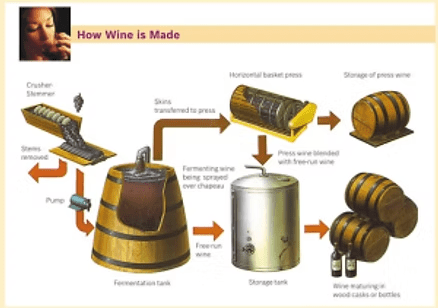
This metaphor continues to work when Jesus said, “drink [the Son of Man’s] blood.” Wine is fermented grape juice, where wild yeast on a grape’s skin has to be crushed so it can react with natural sugars, converting that into alcohol.

Jesus would raise the third ceremonial cup of wine at his final Seder meal and say, “This is my blood of the covenant, which is poured out for many for the forgiveness of sins.” (Matthew 26:28) So, “drink my blood” is no different than “drink my wine.”

The ceremonial cups of wine at a Seder meal (4) represent a progression of spirits being added into the bloodstream, adding to the individuality of the Israelite history lessons that are symbolized by the matzo.  All is a symbolic way to give thanks to God for saving them, through forgiveness and instilling them with holy blood (spiritual, not physical).

Still, one has to understand that “blood” is the fluid of life, which if lost means the threat of death. To put the blood of Jesus Christ within one’s body (only as a spiritual presence) means there is no danger of the soul perishing. That presence that is within – consumed through devotion to God – is what brings eternal life to the soul-body, as Jesus Christ reborn.

When Jesus said, “Those who eat my flesh and drink my blood have eternal life, and I will raise them up on the last day,” the confusion comes from “anastēsō auton tē eschatē hēmera” being translated to say “I will raise them up on the last day.” First of all, “Those” and “them” [the third person plural number] was not stated. Instead, Jesus said, “the [one]” (“ho”) and “him” (“auton”), which is a clearer indication of an individual’s actions towards “eating” and “drinking” Jesus. While the collective is a multiplication of the total number times “one,” without the “one” [as zero] there is no “them.”

Second, when one notices the important aspect of the individual’s responsibility, then one can see how “eschatēhēmera” (“last day”) can only be applied to a grand “end times” when the collective is read. This nebulosity then allows one to project a coming of Christ into a distant future, which may or may not be relevant to the individual’s commitment to God and Christ. However, when one sees the focus on “the [one]” and “him,” then “last day” is reflective of one’s own “end time,” which is assured, from being mortal.  The “last day” is always relevant to one’s assured “end time.”

The word “eschatē” actually can translate as, “last, at the last, finally, till the end.” The word “hēmera” can bear the meanings, “day, always, daily, time, year, or daybreak.” When those translation options show the statement as, “I will raise them up till the end daily,” or as “I will raise them up finally daybreak,” the focus turns away from some distant time in the future and points to when one actually “eats the flesh and drinks the blood of Christ.”  At that point in one’s life, one is then “raised up” spiritually forever more. The “end” of one’s darkness [sin] comes from the “daybreak” God brings to one, through His Son being resurrected again in flesh and blood, shining light where there was the absence of light.

When Jesus said, “for my flesh is true food and my blood is true drink,” the word “alēthēs” is repeated, meaning “true.” The Bible Hub Interlinear translation shows the word translated in all-caps, as “TRUE.” The basic word can mean, “unconcealed, true, true in fact, worthy of credit, or truthful.”

As a Christian, one knows that Jesus frequently began his statements with the words, “Verily,” or “Truly I say.” By saying his flesh and blood was the truth he meant the TRUTH of God was all that was capable of being said by one who has sacrificed self-ego in service to God. Therefore, all who (individually) eat his flesh and drink his blood will become the resurrection of that TRUTH – a voice of God incarnate.  Not only would those “partaking” of Jesus speak the TRUTH, but they could hear it as well [understanding].

As such, Jesus said, “Those who eat my flesh and drink my blood abide in me, and I in them.” This says, “The one who eats and drinks lives in me (the reborn Jesus Christ) and I in him” (“autō” as singular, the one), such that two spirits are in the same body of flesh and blood. One spirit is the one’s soul (cleansed by a Holy Baptism) and one is the Spirit of Jesus Christ, resurrected through the Holy Spirit of God. This says eating the flesh and drinking the blood of the Son of Man makes one unified with the Trinity, as one in three, the same as was Jesus of Nazareth.

Jesus then said, “Just as the living Father sent me, and I live because of the Father, so whoever eats me will live because of me.” The repeated word here is “zōn,” meaning “living, live, alive, or life.”

It is important to see the similarity in Jesus saying, “Just as the living Father” and David (and other prophets of God) regularly having said, “As God lives.” Those are statements of TRUTH spoken by souls that had been purified by God, so God could be one with them, residing in their hearts and leading their minds. Jesus then can be heard saying, “As surely as God sent me and because God is within me, then whoever consumes me also becomes one with God, forever saved.”

By returning to simply referencing the act of eating the flesh of Jesus, where that flesh is again the bread of life from heaven, Jesus differentiated the holy manna from what he represented. Jesus said, “This is the bread that came down from heaven, not like that which your ancestors ate, and they died.”

As I wrote in the interpretation for Proper 14, the “ancestors” of the Jews (the Israelites led into the wilderness by Moses) did not “die” because the manna did not “raise them up” spiritually. They did not “die” because they were mortal human beings of antiquity, such that all human beings face death.

The death experienced by those “ancestors” means Israel fell and collapsed in ruin because they stopped being raised spiritually. They needed to incorporate that holy bread into a race of priests that were the fruit of a holy vine, whose skins were emoting the natural yeast of God’s love. Physical deaths would have caused the breakdown of the natural sugars of their faith, fermenting their blood (lineage) with the elevation of eternal life for their souls. Because that did not happen due to the manna alone, and only served while in the wilderness of the Sinai, could not make the Israelites a multitude of Jesus Christs.

The manna fell before there was the blood of faith [the Son of God] to guide each individual Israelite. Without the blood of faith sustaining each and every one of those who were delivered into the Promised Land they continually stopped worshiping the One God, Yahweh, backsliding into a near-death state. Was it not for judges leading them (externally) to return to the right ways of God, they would have perished completely, before becoming a nation of people. Still, it was the lack of individual faith that led them to desire a king. When David led them towards individual responsibility to God, his sins released all the Israelites to do as they wished (not as God commanded). By the time the Jews stood before Jesus in Capernaum, all the glory of a state of Israel was dead.

It must be understood that without Jesus Christ having been sent into the world by the living God, there was no blood to add to the manna. The bread of the Torah, the Psalms, and the Prophets was all destined to point to the coming of that blood of life, which would be fulfilled by the Messiah of the Jews. It had been the manna that kept the embers of faith still alive at that time. However, Jesus was the bread of life that put new meaning into the words that had been memorized, but never fully understood; and, that flesh being eaten would give rise to a fresh desire to know more, which was the wine of God’s love filling one with desire to serve Him.

As this reading selection ends by Jesus stating the exception to mortal death, he said, “But the one who eats this bread will live forever.” It has to be understood that a body of flesh and physical blood cannot live forever. The body breaks down.

Jesus said to his sleeping disciples at Gethsemane, “The spirit is willing, but the flesh is weak.” (Matthew 26:41) In that same vein of thought, one can see how the spirit is eternal, but the physical body is not designed for everlasting life.

This is evidence for reincarnation, where the eternal soul passes from one temporal body of flesh to another, one life continued multiple times. Each new body of flesh brings about a blank slate of life, which has a soul start over, again and again, with the ultimate purpose being twofold: 1. Do not lose your God-given soul to Satan; and, 2. Gain eternal life with God, finally seeing the end of worldly incarnations and forever experiencing God’s presence as the eternal light of day (“eschatē hēmera”). To reach that gradation day, when one has been raised up to heaven, means all the work of righteousness has been done; and, that means one has eaten the flesh and drank the blood of Jesus Christ, reborn as him.

As the Gospel selection for the thirteenth Sunday after Pentecost, when one’s ministry for the LORD should be underway – one has eaten the flesh and drank the blood of Jesus – the message is to be transformed. One has to stop seeing the world through the eyes of a selfish sinner and see the light of truth.

Because this Gospel reading is scheduled with two other readings that address wisdom as a double-edged sword that can be all brain and little heart or all heart with the Christ Mind, one needs to see the Jews who followed Jesus to Capernaum as those who always represent mankind that is led by Big Brains and not in love with God. The majority of those who had been fed the spiritual food on the plain of Bethsaida (eating the bread and the fish and drinking in the faith of Jesus) – the miracle of Jesus feeding the five thousand (plus) – they had gone out into the world as Apostles. In Capernaum, Jesus was confronted by the twelve percent that followed Jesus there (those served by Judas Iscariot), as those who missed the opportunity others had received.

Those Jews were only looking for a material advantage, not a spiritually uplifting epiphany. Their hearts were closed to God, so this language spoken by Jesus (eat my flesh and drink my blood) could not sink into their Big Brains as metaphor. They were puzzled by the thought of “eating his flesh and drinking his blood.”  Their intellectual dependency meant they were those of little faith, full of doubt and denial, never able to understand the Word of God in that ego-driven state of being.

All Scripture read today, two thousand years after the fact and nearly that long since the first writings about Jesus surfaced, is easy to discern, simply because so many have put both Big Brains and heartfelt wisdom into interpreting Scripture. Christians always need to be wary of thinking, “I know where Jesus is going with this, because I have heard it read before.” The trap is to start thinking that you are one of Jesus’ disciples standing behind Jesus as he says “eat my flesh and drink my blood,” saying under your breath, “How stupid can these guys be?”

The trap is to not see oneself as just as dumbfounded at these words of Jesus as were those Jews to whom Jesus spoke. Many Christians fear discussing any Scripture outside of a Sunday school classroom. Few have any depth of knowledge, much less spiritual insight that comes from God, which is based on a continual thirst for the meaning of Scripture. A typical Christian today puts up with religious education, in the right environment, having learned religion and politics are topics not discussed in mixed company.  In reality, their lack of consuming Jesus on a daily basis means they have become like the Israelites after they entered the Promised Land … “Oh, manna?  No thanks, I used to eat that when I was little, but now I’m all grown up, so I don’t need that anymore.”

Christians who “eat the flesh and drink the blood of Christ” daily are called Apostles and Saints; and they love doing that because of the emotional reward it gives them.  They are given spiritual insights, one after another, each of which acts as yet another epiphany experience for them. It is the living bread come to life and the living waters gushing forth within.  It is a feeling that makes one want to share it with others.

No one teaches epiphany experiences in seminaries or theological institutions, and few pastors lead small groups of devotees to spiritual awakenings in Sunday schools.  The brief sermons that many men and women of the cloth offer up have little to do with the inspirational message of the readings, instead seeming to be lectures that boast of one’s educational acumen or pander as political advocacy. This means Christians today are just as dazed and confused by Scripture as were the Jews in Capernaum.  Atheists who read Jesus’ words cry out like them, saying, “Jesus advocated cannibalism!”

What Christians can ably defend Jesus’ words?

A minister of the LORD has no answers prepared for anyone who questions the meaning of Scripture. Most likely, Jesus was not putting the finishing touches on a sermon about eating his flesh and drinking his blood when the Jews came up to Jesus, asking, “Where did you go?” Jesus simply opened his mouth and the words of God flowed out. Words from God are often so difficult to catch hold of the whole meaning the first time heard that they have to be repeated (as Jesus did).  This challenges the one who hears the words to find the TRUTH, rather than reject it without reflection.

The whole time Jesus was speaking the TRUTH that came through him from God, Jesus delighted in knowing full-well what all those words meant. It tickled his heart to say them, especially knowing how they were like water on a duck’s back to the Jews listening. This is how God sends His Apostles out into the world – unprepared to speak the TRUTH, but speak the TRUTH they do.  That is the difference between believing (the flesh of Jesus) and faith (the blood of Jesus).

1 Kings 8:[1, 6, 10-11], 22-30, 41-43 – Dedicating the temple

[Solomon assembled the elders of Israel and all the heads of the tribes, the leaders of the ancestral houses of the Israelites, before King Solomon in Jerusalem, to bring up the ark of the covenant of the Lord out of the city of David, which is Zion. Then the priests brought the ark of the covenant of the Lord to its place, in the inner sanctuary of the house, in the most holy place, underneath the wings of the cherubim. And when the priests came out of the holy place, a cloud filled the house of the Lord, so that the priests could not stand to minister because of the cloud; for the glory of the Lord filled the house of the Lord.]

Then Solomon stood before the altar of the Lord in the presence of all the assembly of Israel, and spread out his hands to heaven. He said, “O Lord, God of Israel, there is no God like you in heaven above or on earth beneath, keeping covenant and steadfast love for your servants who walk before you with all their heart, the covenant that you kept for your servant my father David as you declared to him; you promised with your mouth and have this day fulfilled with your hand. Therefore, O Lord, God of Israel, keep for your servant my father David that which you promised him, saying, ‘There shall never fail you a successor before me to sit on the throne of Israel, if only your children look to their way, to walk before me as you have walked before me.’ Therefore, O God of Israel, let your word be confirmed, which you promised to your servant my father David.

“But will God indeed dwell on the earth? Even heaven and the highest heaven cannot contain you, much less this house that I have built! Regard your servant’s prayer and his plea, O Lord my God, heeding the cry and the prayer that your servant prays to you today; that your eyes may be open night and day toward this house, the place of which you said, ‘My name shall be there,’ that you may heed the prayer that your servant prays toward this place. Hear the plea of your servant and of your people Israel when they pray toward this place; O hear in heaven your dwelling place; heed and forgive.

“Likewise when a foreigner, who is not of your people Israel, comes from a distant land because of your name —for they shall hear of your great name, your mighty hand, and your outstretched arm—when a foreigner comes and prays toward this house, then hear in heaven your dwelling place, and do according to all that the foreigner calls to you, so that all the peoples of the earth may know your name and fear you, as do your people Israel, and so that they may know that your name has been invoked on this house that I have built.

———————————————————————————————————-

This is an optional Old Testament selection from the Episcopal Lectionary for the Fourteenth Sunday after Pentecost, Year B 2018. In the numbering system that lists each Sunday in an ordinal fashion, this Sunday is referred to as Proper 16. If chosen, it will next be read aloud in an Episcopal church by a reader on Sunday August 26, 2018. It is important because Solomon has followed in the steps of his father and moved the Ark of the Covenant from the place it had rested for years, to a new house built for it and God.

The whole of 1 Kings’ chapter eight is 66 long verses that tell of the moving of the Ark of the Covenant from the City of David to the new temple built by Solomon and his prayer and dedication of all of that. It was scheduled to be incorporated into the God-commanded feast of Sukkot (the Festival of Booths), so it happened on 15 Ethanim (aka Tishri), which was the equivalent of a modern September or October. As such, the dedication of Solomon’s Temple was during the seven-day harvest festival (Feast of the Ingathering – from Genesis), when the Jews also recognized the dependence of the people of Israel on God (Feast of Tabernacles – from Exodus).

So, while this reading is parsed down to just a fraction of that whole, it still reads (to me) like a state fair event, held in a capital city in early fall, when all the deep-fried butter on sticks, cotton candy, grilled corn on sticks, foot-long corn dogs, powdered sugar dusted funnel cakes, caramel apples and a wide assortment of carnival amusement rides are all waiting on the other side of the entrance gate that is blocked by a big blue ribbon and a bunch of dignitaries in suits holding a giant pair of scissors.

Solomon sounds like the governor that has come, bringing with him a posse of political party advisors and a gaggle of news reporters and photographers, to the dedication of the newest and biggest ride the fair has ever known. Of course, that would have never happened if the governor hadn’t used his sway with powerful connections; so, pats on the back for many are publicly made, so all to get some glory … and more votes. It reads like there was a lot of pomp and circumstance surrounding the opening of the fair, more than usual. However, the smells of the foods and the sounds of the carnival music make all the sweat from waiting for the speeches to end, on a warm day, is worth waiting for.

The people of Israel saw more animal sacrifices than could be counted.  The altar was ablaze and the air was filled with barbecue smoke.  The harvest was plentiful, as always while Solomon was king; so a fun time was had by all.

Still, the movement of the Ark from its tabernacle in the City of David, up the path less steep on Mount Zion, across the old city of Jerusalem to the height of Mount Moriah, was made in a more dignified manner than was when it was moved from the house of Abinadab to Jerusalem by David.  Nothing says Solomon was skimpily dressed and dancing wildly before the Ark.  I imagine Micah, daughter of Saul, would have been glad that a King of Israel acted stately and dignified.

This is how I see Solomon treating God – like a side-show to his great accomplishment, the temple named after him. If you read the words of this reading selection carefully, Solomon talks to the Israelites and elders as if God had made a covenant to make sure Israel was always the greatest nation on earth. He even told God to take care of the foreigners who had come to Jerusalem, so the world knew how great Israel’s God was.  Set the hoops up and let the tamer’s whip begin snapping!

P. T. Barnum would have been glad.

However, this is where one needs to be reminded of the past.

Solomon was officially king at age thirteen. The temple construction began when he was seventeen, in his fourth year as king. The temple was completed for the transfer of the Ark when Solomon was twenty-four, seven years later; but, Solomon’s Temple would be a work that lasted his entire reign. This history says that the dedication of Solomon’s Temple was made by a young adult king. While Solomon was highly intellectual (presumably Mensa genius level), he still was confronted with life situations that he had no personal experience to prepare him for, having to problem solve on the go. At the age of twenty-four, he still depended on prophets and priests to advise him on history, religion, and government issues.

In reference to his father’s history, Solomon had to have been told of father David’s plan to build a house of cedar for the Ark, so God would no longer have to live in a tent. Nathan the prophet agreed with David, knowing David’s thoughts were in line with God’s. However, God visited Nathan in a dream and told him what to say to David. This relates to the building of a permanent house for the Lord:

2 Samuel 7:12-16 – “When your days are over and you rest with your ancestors, I will raise up your offspring to succeed you, your own flesh and blood, and I will establish his kingdom. He is the one who will build a house for my Name, and I will establish the throne of his kingdom forever. I will be his father, and he will be my son. When he does wrong, I will punish him with a rod wielded by men, with floggings inflicted by human hands. But my love will never be taken away from him, as I took it away from Saul, whom I removed from before you. Your house and your kingdom will endure forever before me; your throne will be established forever.’”

Nathan was the prophet who advised David. He was still around to anoint Solomon as king and help with the elimination of David’s old enemies. It may or may not be that Nathan advised Solomon of Yahweh’s prophecy sent to David; but it is likely that Solomon, as the approved offspring that ascended to the throne of Israel, would be told it was his place to build a house for God. In a part not read today from 1 Kings 8, Solomon announced that he was fulfilling that prophecy delivered by God to Nathan, repeated to King David.

But … was that true?

For all of Solomon’s wisdom, he missed the point of who God would “raise up.”  He overlooked the prospect of a kingdom lasting forever.  He regularly made references to his father, David, and not to God as his father.  The house that Solomon built, while new then was not a house that will last forever. Solomon knew that.

According to Jewish Encyclopedia and their article on Solomon, they say Solomon ordered secret underground rooms to be carved into the rock below the temple, in which the Ark could be placed at a later date.

Their article writes that this was because Solomon knew the temple would eventually fall into enemy hands (the wisdom of knowing that, strategically, Jerusalem was indefensible). When it did fall to the Babylonians, Solomon’s Temple was destroyed.  After the Persians allowed the Jews to rebuild their lost temple, and the long beautification project begun by King Herod, the Romans would destroy that temple.  The eventual eviction of Jews from the Middle East meant Mount Moriah became the home of a Muslim mosque on that mount.  Therefore, history allows one to surmise that Solomon’s Temple was not what God had told Nathan an offspring of David would build.

What lesser god lives here?

The Temple in Jerusalem that was ordered built by Solomon was little more than an upscale version of David’s plan for a cedar house. When God told Nathan to tell David, “The Lord declares to you that the Lord himself will establish a house for you” (2 Samuel 7:11), God made it clear that He did not want any immobile, physical structure to ever be built for the Ark that held the Covenant within it, over which God presided.

When Solomon said, “Even heaven and the highest heaven cannot contain you, much less this house that I have built!” he was smart enough to realize God did not reside in the Ark, or a tabernacle, or a temple of stone. Solomon should have figured out that God never asked for him specifically to build an everlasting house, when Solomon was part of the House of David God made.  Solomon was a brick in that house built by God; but bricks have a way of crumbling to dust over time.

Solomon’s wisdom allowed him to see how dangerous it was to have the Ark placed on low ground, covered only by canvass.  Anyone who became an enemy of Israel could easily take it into their possession; so higher ground made more logical sense.  However, could it have been that David placed it where others could readily see it, knowing that God would protect the Ark, and Israel and its king, as long as all served the Lord with all their hearts?

That is the difference between having complete faith in God and having a Big Brain, greater than anyone anywhere at any time.

God told Gideon to send all the trained soldiers home and keep the three hundred that felt safe enough to lap water from the stream like dogs. That was enough to defeat the enemy; but would a Big Brain make that decision?

Of course, as Christians two thousand years removed from Jesus Christ, we know that the “offspring to succeed David,” of his bloodline, coming in the flesh, who would “establish his kingdom” was Jesus Christ.  He was the offspring of David God told Nathan about.  As such, we have a bigger brain than Solomon, in that one sense of understanding Scripture.  Therefore, we are not Solomonists.

We are Christians.

Jesus has built the “house in the name of God,” which is the name an Apostle-Saint takes: Jesus Christ. Each true Christian is reborn as Jesus Christ and becomes a living temple of the LORD, in the house of that name. Apostles and Saints can then call God their Father, as they have all (regardless of human gender) become God’s Son, resurrected in the flesh.  An Apostle is all about faith in God and absolutely nothing about strategizing.

The dedication of Solomon’s Temple and the prayer he said needs to be more closely examined.  The reader says Solomon orated:

“O Lord, God of Israel, there is no God like you in heaven above or on earth beneath, keeping covenant and steadfast love for your servants who walk before you with all their heart, the covenant that you kept for your servant my father David as you declared to him; you promised with your mouth and have this day fulfilled with your hand. Therefore, O Lord, God of Israel, keep for your servant my father David that which you promised him, saying, ‘There shall never fail you a successor before me to sit on the throne of Israel, if only your children look to their way, to walk before me as you have walked before me.’ Therefore, O God of Israel, let your word be confirmed, which you promised to your servant my father David.”

The boastfulness of the Pharisees in the Temple make them seem like Solomonists.

That prayer was for God to live up to his promises to David, Solomon, and Israel. There was little there that says the Israelites have to do anything more than walk before a magnificent building … three times a year … to earn their side of the bargain made between the Israelites of Moses and God.  Solomon spoke those words on a day during the festival of Sukkot, which is reminiscent of how the Israelites were placed in booths (tabernacles, tents, or dwellings) in the wilderness … as a sign that they owed everything to their God.  The bounty of the harvest coincides with that dedication and devotion.  However, Solomon spoke as if an eternal house of David had been established, so the rest was up to God to ensure.

After David brought the Israelites closer to God than they had ever been before, David’s sins with Bathsheba and against Uriah cut them loose and began their drift away from God. Solomon, as the offspring of that sin-born relationship, was given a Big Brain by which to steer the course of Israel to ruin. He asked for it and got his wish granted by God.  Building a grandiose temple was one of many steps away from God that Solomon began taking, as his magnificent temple tried to imprison God in a man-made structure, enslaving God to do the will of Israel’s kings.

The House of David will last forever, but not because of Solomon’s Temple.  Jesus Christ would build the house in the name of God.  The Christ (Greek for Messiah) is the name given by God to His Son Jesus, born of a woman and raised in Nazareth.  Jesus took the name of God by being the Christ.  Jesus is then the cornerstone of the house in the name of God that will live forever.  It lives forever through countless human beings losing their ego-driven sense of self-importance, and being reborn as Jesus Christ, servants of God.  The true Temple of the LORD is then Christianity.

As the primary Old Testament option for reading on the fourteenth Sunday after Pentecost, when one’s own personal ministry for the LORD should be underway – one has cut the ribbon and opened the park to the public, in thanks for God’s blessing of a harvest – the message here is to dedicate one’s personal heart and soul to God. There is no building made of stone that God looks upon lovingly.

The Ark of the Covenant has been lost to the world. That physical case for stone tablets, robes, staffs, or whatever other holy material objects might have been placed inside it have been replaced by Jesus Christ. The Gospel theme the entire month of August (2018), from John 6, has been Jesus saying “eat my flesh and drink my blood,” which is (in essence) saying Christians must build the only temple that Yahweh will reside within.  That must be built around their souls, using only the materials of Jesus Christ. The Ark is one’s heart and the Law that binds one to God and God to one is then written on that heart by God.

A “church” of Christians is not a physical place of building. It is wherever two or more people that possess the flesh and blood of Jesus Christ have come together.  It is a gathering of those having become Jesus Christ reborn. It is the place where two or more come together in the name of Jesus Christ, Jesus Christ will be there, as will the Father. Therefore, a church of Christ is a house built of true Christians.

We read how Paul wrote letters to the churches of Greece (when Turkey was Greek) and the tendency is to think in terms of houses of worship. We see the Ephesians, the Philippians, and the Corinthians as being like a Christian church is today – filled with people who believe in Jesus as Christ, but none who will state, “I am Jesus Christ resurrected.”

I imagine that reading “church” and thinking “building” began when the Roman Emperor assumed control of Western Christianity.  Over time, building cathedrals and basilicas became more important than building Saints.  Basking in the glory of a huge building became more important than regular home study of Scripture and living a life of righteousness.

The Pope’s Temple?

There is probably a parallel between the rise of grandiose Christian churches and the decline of Apostles and Saints. Perhaps, this is due to reading about Solomon’s Temple and assuming that was a good thing to do.  Putting God in a box that cost a lot of wealth and time was the easiest way to show one’s love of God.  It was hard work, of course; but it was easier to do than give up sin.

A minister for the LORD is a mobile church, always on the move and in search of members to join that church. He or she is unlike a church building that is run by volunteers and a small handful of paid clergy [employees of an organization or institution].  They offer newcomers baskets of trinkets and free coffee with a possible snack – all designed to get one to come back. Their friendliness is built on a desire to have others help with their work; but it is an endless task that loses its sincerity over time.  After all, a building gets old and begins to deteriorate, just like those who are sworn to maintain it.

A minister for the LORD is not seeking fellowship and human companionship through an organization that enslaves God by expecting Him to do organizational chores, while hanging Jesus on the cross over the altar. A building called a church that does not create true Christians is really only a building; and a church that creates true Christians usually will only have need for two or three chairs, because most members of that body of Christ will also be mobile churches, always on the move in search of members to join Christ with him or her.  As long as the vine is alive and growing, the fruit that comes and goes with the seasons has served a purpose.

Still, remembering the words of the philosopher and storyteller Joseph Campbell, he told Bill Moyer in his interviews that there was something special about being inside a great cathedral. This is a feeling one experiences, usually the strongest when the building is empty. The hugeness of the building becomes like the greatness of God.  In that case, a building promotes a sense of reverence.

That presence felt says that God watches over His Temples, His Cathedrals and His Basilicas, because they are part of the house of Christianity; and, God watches over those who seek Him. Therefore a building can be where God can be found; but as Solomon said, “But will God really dwell on earth? The heavens, even the highest heaven, cannot contain you. How much less this temple I have built!” – God cannot be placed inside a box.

God is everywhere. He watches the seekers, many of which enter buildings called churches. He gets to know those seekers who make themselves a church for the LORD. As Jesus said, “Ask and you shall receive.” Asking for God’s help can be done anywhere.

Just remember to ask God what you can do for Him and leave the asking what God can do for Israel to Solomon’s prayer.

#John6 #2Samuel71216 #1Kings8 #2Samuel711 #dedicationtoSolomonsTemple

Joshua 24:1-2a,14-18 – Choosing to serve the LORD

Joshua gathered all the tribes of Israel to Shechem, and summoned the elders, the heads, the judges, and the officers of Israel; and they presented themselves before God. And Joshua said to all the people, “Thus says the Lord, the God of Israel:

“Now therefore revere the Lord, and serve him in sincerity and in faithfulness; put away the gods that your ancestors served beyond the River and in Egypt, and serve the Lord. Now if you are unwilling to serve the Lord, choose this day whom you will serve, whether the gods your ancestors served in the region beyond the River or the gods of the Amorites in whose land you are living; but as for me and my household, we will serve the Lord.”

Then the people answered, “Far be it from us that we should forsake the Lord to serve other gods; for it is the Lord our God who brought us and our ancestors up from the land of Egypt, out of the house of slavery, and who did those great signs in our sight. He protected us along all the way that we went, and among all the peoples through whom we passed; and the Lord drove out before us all the peoples, the Amorites who lived in the land. Therefore we also will serve the Lord, for he is our God.”

———————————————————————————————————-

This is an optional Old Testament selection from the Episcopal Lectionary for the Fourteenth Sunday after Pentecost, Year B 2018. In the numbering system that lists each Sunday in an ordinal fashion, this Sunday is referred to as Proper 16. If chosen, it will next be read aloud in an Episcopal church by a reader on Sunday August 26, 2018. It is important because it says the option is up to the individual, as to what deity one chooses to serve.

This reading takes the introductory verses of this chapter and then jumps to verse fourteen. In between is a brief history of the lineage of Abraham, Isaac, Jacob, with all the great signs given by God to them; and then it moves to the powers that protected the Israelites under Moses and their move into Canaan. Basically, every time there was an enemy trying to get in the way of that holy line, God caused the defeat of that enemy. With that history stated as a reminder for why the Israelites should completely devote themselves and their households to Yahweh (the LORD), Joshua gathered the elders of all the tribes of Israel to Shechem and asked them to commit to Yahweh or commit to some lesser god of prior.

This element of commitment makes this gathering read like an engagement party. Joshua was the first to announce his planned marriage to Yahweh. The history of Yahweh being with the children of Abraham, Isaac, and Jacob reads as the courtship, when the family came to know God on an intimate level. With Joshua’s announcement of his planned union, his entire household (family under Joshua’s direct control) was to be committed to the same One God. Such a thorough marriage would then be forever – till death do them part.

Prior to that pledge to “serve him in sincerity and in faithfulness,” Joshua was free to ‘play the field’. He knew of the polytheism of Egypt, where there was an individual god for each different aspect of life; and he knew the gods of the Amorites (the Philistines generally, but the Assyrians too), where similarly many gods were worshiped for many things. One could choose to be closer to a few “household idols” and ambivalent to the rest, until a special need arose. However, Joshua had been in a close relationship with Yahweh and that relationship was built on love; and there was nothing any other god offered that could persuade Joshua to leave the God of his heart.

When we read the introduction that states, “Joshua gathered all the tribes of Israel to Shechem, and summoned the elders, the heads, the judges, and the officers of Israel; and they presented themselves before God,” it is easy to presume that Joshua held the sway of a king. Certainly, Joshua was important in the settling in Canaan by the Israelites and his call for a gathering, so he could announce his engagement with Yahweh, would have been heeded. After all, Joshua was close to God and had defeated the Amorite enemies, with God’s helpful guidance. Still, the aspect of the tribes of Israel being presented before “elohim” (“gods,” the plural form of “el“) is a clue about the timing of this event.

The “gods” of other nations.

In verses two through thirteen, Joshua differentiated the “elohim” of others and the “Yahweh ’ĕ·lō·hê yiś·rā·’êl” – “the LORD of gods of Israel.” Those who had worshiped “other gods” had been defeated – as their history told – by those who followed “the LORD of gods of Israel.” That remembrance, told to the leaders of the Twelve Tribes of Israel, was most probably done at one of the three God-commanded gatherings: Passover, Shavuot, or Sukkot. As Shechem was the holy city of Israel, where the Ark’s tabernacle was set up, attended by the Levite priests, the leaders of Israel would have naturally gathered in compliance to their Covenant with Yahweh. In that atmosphere of recognition, celebration and remembrance, Joshua stood before those leaders and stated his commitment to God forever.

In a gathering that was obligatory and with manna no longer falling each day to spiritually uplift each family of Israelites, strengthening their commitment to Yahweh, the Israelites were set amid peoples who served other gods. At a time when the Israelites were obliged to remember all that the LORD of gods of Israel had done, setting them free, delivering them into a Promised Land, and defeating all the enemies whose land was taken from them, they were spread out into places where the enemy might outnumber them. Set before the “elohim” of the Amorites and knowing in their history their forefathers knew the “elohim” of Egypt and Canaan, it would be much easier to allow their enemies the right to worship as they pleased, and even adopt some of the foreign rituals as their own, so everyone could live happily together.

A holy day like the Passover remembrance was kept so such reductions to the Laws of Moses would forever be avoided. Joshua’s engagement announcement was a call for all the Israelite tribes to likewise choose which of the gods they would be married to as one.

“Then the people answered, “Far be it from us that we should forsake the Lord to serve other gods; for it is the Lord our God who brought us and our ancestors up from the land of Egypt, out of the house of slavery, and who did those great signs in our sight. He protected us along all the way that we went, and among all the peoples through whom we passed; and the Lord drove out before us all the peoples, the Amorites who lived in the land. Therefore we also will serve the Lord, for he is our God.”’

The Israelites all became engaged to Yahweh. All of the families under the leaders of Israel made the same commitment to become one with the LORD of gods of Israel. They would become His wives and serve him sincerely and faithfully forever.  The leaders of Israel spoke a commitment that would bind generation after generation (“for me and my household”), to forever be married to Yahweh.

When they said “we also will serve the Lord, for he is our God,” that meant God was the husband betrothed to the Israelites (regardless of what tribal names they called themselves).  “Our God” also stated they would serve “Yahweh,” for He was all “gods” (“elohim” translated as “God”) to them. Yahweh was the only God protecting a household, and the only God to whom one of that household should pray.

As the reading selection for the fourteenth Sunday after Pentecost, when one’s own ministry to the LORD should be underway – one should be married to Yahweh – the message here is to examine one’s past and see if one enemy after another has been miraculously defeated, with all credit for such victories due to God.  If not, then one needs to examine who one faults for those setbacks.

Many people prefer to give the credit to the god of good luck and good fortune. Some say the god of chance swept into their lives. Others bow down before the altar of the god of self-accomplishment, the twin brother of the god of self-importance. Of course, there is the god of higher education, overseeing his sprites and fairies that specialize in the degree fields of universities: law, medicine, professional sports, acting, television series writing, and film (others don’t show a profit after student debt is calculated).

Those are all under the great god Mammon, whose favors drive away the lesser gods: famine, poverty, and sickness. No matter which god(s) one chooses to serve, one or more is the only option if one does not marry Yahweh, the LORD of the gods, making Him one’s only God.

You have heard of “Wearing one’s heart on one’s sleeve”? Well this is wearing one’s faith so nobody can mistake one as a simple person of faith.

A minister of the LORD knows that it is easier to announce one’s engagement to Yahweh than it is to actually follow through with the marriage. Rather than a gold ring with a huge precious stone, the engagement ring of Yahweh is a halo of righteousness (invisible to the naked eye).

This is because God requires virgin brides (again, human gender has nothing to do with that designation), which means a holy engagement is a promise that comes with sincere confession and a trial period of abstinence from sin.   During that proving period, tests of one’s commitment to righteousness will be presented, with patience and restraint needed to be demonstrated. That is because during that period old lovers will be drawn to call upon one newly engaged, suggesting one last fling with: drugs, sexual ‘hook-ups’, lying, gossip, cheating, stealing, and all the things the lesser gods whisper in one’s ear, while nuzzling one’s neck: “It’s okay. No one will know.”

In the Roman Catholic Church news these days is the touchy subject of the Church failing to do anything to stop sexual predators – pedophiles – who held positions of trust that were: parish priests, dioceses bishops, and cardinals, all under the head of a series of popes. In other denominations, homosexuals have been ordained and even elevated into great leadership positions, some proudly pronouncing themselves as still actively homosexual. All of these men (and women) have announced their engagement to the One God, simply by their titles, the robes they wear, and the Sacraments they bless; but, at some point in their lives they reverted to paganism and turned away from Yahweh.  They chose to serve Satan.

Now, they believe they can beg the people for forgiveness and then go on as if there is no sin that cannot be absolved. They absolve one another from confessed atrocities, while professing to be holy Apostles.  They have fallen in love with the god of evil, who loves to mislead them to such beliefs.  An Apostle of Jesus Christ does not break holy vows.

Jesus said, “No one can serve two masters. Either you will hate the one and love the other, or you will be devoted to the one and despise the other. You cannot serve both God and money.” (Matthew 6:24) He said that to the Pharisees who loved to milk the Jews for their wealth, proving their love of Mammon. Had Jesus known of pedophile priests, bishops and cardinals, he would have told them the same thing, only ending his words with “You cannot serve God and lust.”

These uncorrected acts of abuse are reason for good Catholics to leave the Roman Catholic Church. There is no trust left when church leaders are led by lust in their hearts. They do not serve Yahweh, the LORD of gods.  If a religious organization refuses to drive out the false shepherds, then the good shepherds will stand outside building owned by that organization and lead the flock away from corruption.

Staying with a corrupted Church (an organization) means the guilt of association spreads, spoiling all good priests that think serving God means protecting those who rape children.  Priests swear oaths to their bishops, not to God.  When an individual has committed the sin of using the LORD’s name in vain – by professing to be of holy cloth and acting in unholy ways – forgiveness has been placed in much higher hands than any human body can reach.  Good priests and ministers must leave a corrupted Church, or they bow down to an institution and serve it.

God never said His priests must organize and institutionalize.  God never authorized His wives to kill their children.  God never gave His seal of approval to Jezebel and her priests of Baal.  God did not send prophets to scream His condemnations at the blending of religions that overtook Israel and Judah, because God wanted it known that He does not approve of cheating wives.

What is different between the sacrifice of children by clerics in modern times and the sacrifice of children by those abusers that God told Jeremiah of:

“The people of Judah have done evil in my eyes, declares the Lord. They have set up their detestable idols in the house that bears my Name and have defiled it.  They have built the high places of Topheth in the Valley of Ben Hinnom to burn their sons and daughters in the fire—something I did not command, nor did it enter my mind.” (Jeremiah 7:30-31)

A child trusting a man he or she has been told to call “Father”, only to lose his or her  life of innocence to burning nightmares by a holy trust broken, is like being a trembling lamb in the hands of a priest holding a slaughter knife before the altar.  Once the knife slices the neck and the life blood is forever spilled, there is undoing that act.  No child harmed by a priest has ever been done in the name of the LORD – Yahweh. They are sacrifices made to lesser gods.

When the message of this reading is taken as simply being, “Choose who you will serve – God or god(s)” – the ambiguity leaves this open to thinking one’s choice leaves room for some affairs and flings from time to time. It is easy to see how Jesus and God forgive sins, as if each week new sins are gladly wiped off the heavenly ledger.  An engagement to God that thinks sins will forever be forgiven, so go out and sin in the name of the LORD, is misguided.  It mistakes modern families as the norm.

The looseness of how Westerners, including many Christians, see marriage today misleads many to think God and Jesus Christ have approved lower standards of morals. Gays of the same sex can now marry one another, even in services overseen by priests or ministers … in some Christian churches. Marriages can be ‘open’, so multiple partners are okay if both agree, with or without both of the married pair present during sexual liaisons.  This corrupted way of life has always existed, but never deemed appropriate behavior for one married to God.

Divorce is so rampant that it belittles the lifetime commitment the marriage vows emptily state.  Prenuptial contracts are signed because someone expects divorce.  Couples more frequently choose not to have children, if they do choose to be limited to one spouse, simply because it is so difficult determining what to do with the offspring after the divorce.  This is another example of child sacrifices done in the name of God, every time divorce follows a church wedding.

All of these lowered standards make it seem it is okay to cheat on Yahweh.  No such changes have been made.  The statement made by Jesus still hold true:  “What God has joined together, let no one separate.”  A man and a woman join together to make babies, which will forever be formed of the DNA of two parents.  A marriage is a commitment to have children AND THEN raise those children until they get married.  That is the oath of marriage.  It is not a commitment to have sex, but a vow to serve God by being fruitful and then serving God by raising children to love God.

An oath to serve God is a greater oath than one made between two human beings.  It is a pledge to complete and total subservience.  It is not to be taken lightly.  Therefore, no one is ever forced to marry God against one’s will.  Therefore, choosing God and then living life like a sinner is breaking an oath.

Jesus said, during his “sermon on the mount”:

“Again, you have heard that it was said to the people long ago, ‘Do not break your oath, but fulfill to the Lord the vows you have made.’  But I tell you, do not swear an oath at all: either by heaven, for it is God’s throne;  or by the earth, for it is his footstool; or by Jerusalem, for it is the city of the Great King.  And do not swear by your head, for you cannot make even one hair white or black.  All you need to say is simply ‘Yes’ or ‘No’; anything beyond this comes from the evil one.” (Matthew 5:33-37)

“Do you swear to tell the truth, the whole truth and nothing but the truth, so help you God?” means one helps God by spreading the truth, not lies.  Breaking that oath appears to be commonplace in the courts these days.

Jesus spoke those words after speaking wisdom about adultery and divorce, where oaths of commitment are broken. All of this can apply to the words of Joshua, where he said, “Now if you are unwilling to serve the Lord, choose this day whom you will serve.” Each individual of adult age is responsible for making that choice.  No one is forced to choose God.  However, you cannot announce your engagement to God and then run out and cheat on Him with lesser gods (“elohim”).

Because Joshua gave all the Israelites that option out, there is nothing that says anyone must be a child of Yahweh.  Yahweh chose the children of Israel; but Joshua’s challenge to the Israelites was to choose God too.  It is a proposal that makes one choose the One God for one’s life.  It requires an oath when one says, “Yes.”  “Yes” means God does all the leading from then on, while the wife (male and female they are made) subserviently follows.

Before one chooses, or if one says, “No,” then everyone is free to play the ‘god field’ all their lives. Everyone is free to gamble his or her soul away. Everyone is free to choose to serve self at all times, walking over as many people as might dare to get in one’s way. God has given all souls the freedom from heaven, to do as they please on earth.  People are free to commit the most heinous of crimes imaginable, because without morals creating laws, no crimes can be judged.  It is up to each freed soul to decide when and if that soul wants to return and live with God.

Yahweh does not hang out in bars and nightclubs, looking for one night stands.

But, there comes a time when one has to stand and defeat evil, which requires an engagement to Yahweh [minimally].  Everyone is free to choose to be the wife of Yahweh and follow His orders completely.  Equally, everyone is free to choose to be the wife of religions, governments, philosophies and all of that of the world, which breeds the arguments and disagreements that lead to wars.

One way or another, one has to fight for survival. Everyone has the freedom to choose who he or she will fight for or fight against.  Everyone has the freedom to choose to fight for temporary pleasures, with death as their future; just as everyone has the freedom to choose to fight for temporal pains, with everlasting life as the future.

Choosing is not easy, just as marriage and commitment means hard work. Just keep in mind how the things earned through hard work and attention to details are the most rewarding. It is good to look back one one’s life and see where sacrifice paid off greatly later.  Most likely, God played a role.

Ephesians 6:10-20 – Praying for the armor of God

Be strong in the Lord and in the strength of his power. Put on the whole armor of God, so that you may be able to stand against the wiles of the devil. For our struggle is not against enemies of blood and flesh, but against the rulers, against the authorities, against the cosmic powers of this present darkness, against the spiritual forces of evil in the heavenly places. Therefore take up the whole armor of God, so that you may be able to withstand on that evil day, and having done everything, to stand firm. Stand therefore, and fasten the belt of truth around your waist, and put on the breastplate of righteousness. As shoes for your feet put on whatever will make you ready to proclaim the gospel of peace. With all of these, take the shield of faith, with which you will be able to quench all the flaming arrows of the evil one. Take the helmet of salvation, and the sword of the Spirit, which is the word of God.

Pray in the Spirit at all times in every prayer and supplication. To that end keep alert and always persevere in supplication for all the saints. Pray also for me, so that when I speak, a message may be given to me to make known with boldness the mystery of the gospel, for which I am an ambassador in chains. Pray that I may declare it boldly, as I must speak.

———————————————————————————————————-

This is the Epistle selection from the Episcopal Lectionary for the Fourteenth Sunday after Pentecost, Year B 2018. In the numbering system that lists each Sunday in an ordinal fashion, this Sunday is referred to as Proper 16. It will next be read aloud in an Episcopal church by a reader on Sunday August 26, 2018. It is important because Paul states that the forces of evil are too much for human souls that are not protected by the armor of God.

It is important to remember that the places Paul’s journeys took him were all technically Greek. There he sought out the Israelite descendants and in the process of spreading the “Good News” of their Messiah having come, he welcomed the Gentiles there. They were mostly Greeks of pagan religious roots. This map shows Ephesus as one of the places where Greek culture had hold in Asia Minor, then called Galatia.

With that Greek heritage, it can be assumed that Greek mythology was still widely known and there were temples still standing, as well as monuments and statues of the many gods of importance that the Greek people worshiped. With Greece under the Roman Empire’s control, there might have been active temples to the gods who were the Roman equivalents of the Greek gods.

In this part of Paul’s epistle to the Christians of Ephesus, it seems he might be using Greek mythology as a way of making a point about God’s protection, where he wrote, “Put on the whole armor of God.” Besides the Greek word “Theou” not having the full effect of the Hebrew name for God – “YHWH” – or even “El, El Shaddai, Elohai, or Adonay – it is drawn from the implication of “a god,” implying one of the many gods known.  Even capitalized, “Theou” could mean Zeus to some and Yahweh to others.  This helps any implication that the armor was mythological metaphor.

For instance, the Greek theos Hephaestus (Roman equivalent Vulcan) was the maker of special armor.  He was considered the blacksmith of the gods.  Special devices would be ordered by the Greek theoîn,  who would have pieces of heavenly armor be worn by themselves or their chosen Greek heroes.

The mythological story that first comes to mind is that of Perseus, who needed help from the gods to kill the Gorgon Medusa. Athena asked Perseus to kill Medusa. In order to achieve that monumental task, multiple gods helped Perseus.  He was given by Zeus a gemstone-metal curved sword and by Hades a cap of invisibility (the helm of darkness). A polished shield (that acted like a mirror) was given to Perseus by Athena and winged sandals, which allowed Perseus to fly, were lent to him by Hermes. The Hesperides (nymphs of the evening) gave him a special sack to safely put Medusa’s severed head in.

Knowing that detail of divine gifts of armor, look now at what Paul says God gives to His “hero” Apostles-Saints:

• The belt of truth,

• The breastplate of righteousness,

• The shoes to proclaim the gospel of peace,

• The shield of faith,

• The helmet of salvation, and

• The sword of the Spirit.

With all of this armor on, one looks like this:

Physical armor weighs one down to the material realm, so that one is unable to fight from spiritual purity. To stand on even ground “against the spiritual forces of evil in the heavenly places,” one has to be elevated to a force of righteousness by the forces of good in the heavenly places. Innocence defeats evil in the battles between God and the gods of Satan.

With heads bowed, eyes closed, and hands palm to palm, one is armored by the presence of Yahweh, the LORD. Prayer is how one is “strong in the Lord and in the strength of his power.” Prayer is one’s submission to the One God, so one cannot hear “the wiles of the devil.” God hears them and speaks through His servants, putting Satan in his place.  Like Jesus, the strong say, “You shall not tempt the Lord your God” and “You shall worship the Lord your God, and Him only you shall serve.” (Matthew 4:7 & 10)

Prayer leads one to see through the lies of “the rulers,” the cunning of “the authorities,” and prayer shines the light of truth upon all the worldly ploys (“the cosmic powers” – “kosmokratoras”) that hide in “this present darkness,” which is ever-present in the material realm. Prayer leads one to seek humble positions, rather than be like those who seek prideful roles of leadership and authority.  Prayer brings one the light of “day,” so all “evil” is exposed, stripping it of its power to confuse and mislead.

Paul wrote these words of encouragement to the Christians of Ephesus so they would pray for all the “heroes” of God who wore the armor that comes with being reborn as Jesus Christ. An Apostle-Saint is never alone in this battle between good and evil, as Father, Son and the Holy Spirit are always surrounding the soul of life. Still, Apostles and Saints are related to their brothers and sisters in Christ, who gain strength and courage from the prayers that unite all members of the same body, all fighting for the same purpose … in different ways … determined by God.

The belt of truth is the insight of the Christ Mind, which “girders one’s loins” and makes one’s back capable of shouldering any heavy load.

The breastplate of righteousness is one’s heart being protected from external attempts to upset one and cause one to acts irrationally, due to unstable emotions.

The shoes that allow one to spread the truth contained in Scripture means one is always walking towards someone seeking peace in their lives. Comfortable feet says one will never hesitate going wherever the LORD leads one, because one is always feeling good to go.

The shield of faith means that whatever flaming arrows of condemnation are cast at one, in attempts to silence the truth unwanted to be told, nothing will bring harm to the one speaking God’s Word.

The helmet of salvation is an Apostle-Saint’s promise of eternal life in heaven, washed clean of sin by the baptism of the Holy Spirit; and the sword of the Spirit is “the word of God,” which cuts through all twists, turns, and spins of Scripture done by false shepherds.

As the Epistle selection for the fourteenth Sunday after Pentecost, when one’s personal ministry for the LORD should already be underway – one is wearing the armor of prayer constantly – the message here is to trust in “the strength of [God’s] power” and “be strong in the LORD” by removing all doubt that keeps one from picking up the shield of faith.

A minister of the LORD knows the difference between belief and faith. Believing in something is a mental exercise, where study and listening to lectures makes sense. It is like learning to do math problems on paper and making good grades on math tests, but never actually applying the principles of math in the real world. One believes math can solve any problem; but knowing how to break the world down into mathematical equations requires faith.

It is the difference between compliance and ownership. Complying with ideals, principles, and concepts means sometimes we are told to go against personal wants, desires and reasons. Against one’s will, one finds a force that makes one comply or be punished. These external forces are often laws written by rulers and authorities. We often have to choose what is right and wrong, based on the wiles of the devil. Too often we are told to project one’s personal problems on those far away, pitting us against them – as “enemies of blood and flesh.” When government and religion bleed together and clear boundaries are changed or erased, one complies with regret; and that bring about doubts of one system of rule or the other.

Religious compliance is like being a fence-sitter. On one side of the fence is faith in God and on the other side of the fence is faith in self. For all the recommendations to jump off the fence and join with God there are many more suggestions to forget all that promise of eternal salvation stuff and come back and play with the pleasurable sins one knows all about.

One can have faith that sin exists, because one knows sin. Because one has yet to actually KNOW God, it is common to fear taking a leap of faith into the unknown.

Faith takes hold when one takes ownership of Jesus Christ. It happens after one has come to KNOW God as His wife (regardless of human gender), so two have become united as one, with the result of that union being the resurrection of the Father’s Son, Jesus Christ. When one is reborn as Jesus Christ, one has put on the full armor of God, just as that which Jesus of Nazareth wore. At that time, all of the metaphor of Paul’s words is known as the truth of God’s Word, spoken through a Saint. One KNOWS God because one experiences God personally, not secondhand.

Ownership is seen through the words of Jesus, when he said to his disciples:

“Don’t you believe that I am in the Father, and that the Father is in me? The words I say to you I do not speak on my own authority. Rather, it is the Father, living in me, who is doing his work. Believe me when I say that I am in the Father and the Father is in me; or at least believe on the evidence of the works themselves. Very truly I tell you, whoever believes in me will do the works I have been doing, and they will do even greater things than these, because I am going to the Father. And I will do whatever you ask in my name, so that the Father may be glorified in the Son. You may ask me for anything in my name, and I will do it.” (John 14:10-14)

Jesus experienced God the Father personally.  They were united as two in one.

The words spoken by Jesus to his disciples not only asked eleven disciples (Judas had already left to betray Jesus) to believe his words and his prior acts – that he was one with God the Father – and that they should believe they will be reborn “in [Jesus] name” (as Jesus Christ), doing more acts of faith than Jesus had done, Jesus’ words speak to everyone who has ever read them. They speak to all reading this today.

The disciples were committed to complying with the commands of Jesus, because they believed he was the Messiah; but those words had no effect on their faith at that time.  This is known because after Jesus was arrested they ran and hid in fear. They were filled with doubts, not faith … and they lived in the presence of a real flesh and blood Jesus, having personally witnessed his miraculous acts.  That luxury of personally knowing Jesus of Nazareth is not possible today.  If those disciples ran and hid in fear, then the same natural fear of the unknown is expected by all disciples of Christ today (those calling themselves Christian, based on belief of words written and spoken).

It is natural to doubt because one KNOWS fear. One has been there and done that, so often that one has ownership of that automatic response to frightening external stimuli. Doubt comes so easily one does not have to think, “What did the professor say to do when scared stiff?” This natural reaction is how one needs to KNOW God, so one’s automatic reaction to “the wiles of the devil” is to say what Jesus said, “Get outta my face, Satan.”

No fear.

That emotional absence can only come from KNOWING God and having the ownership of “I am in the Father and the Father is in me.” This is when one wears the full armor of the LORD and knows “the strength of his power.” Otherwise, one is walking behind the memory of Jesus of Nazareth, afraid to be Jesus Christ reborn.

Prayer is how one calls upon God to enter one’s heart. Prayer is how God comes to give His armor to Saints. Prayer is how one leads others to come to KNOW God too.

John 6:56-69 – Accepting that which is difficult to swallow

Jesus said, “Those who eat my flesh and drink my blood abide in me, and I in them. Just as the living Father sent me, and I live because of the Father, so whoever eats me will live because of me. This is the bread that came down from heaven, not like that which your ancestors ate, and they died. But the one who eats this bread will live forever.” He said these things while he was teaching in the synagogue at Capernaum.

When many of his disciples heard it, they said, “This teaching is difficult; who can accept it?” But Jesus, being aware that his disciples were complaining about it, said to them, “Does this offend you? Then what if you were to see the Son of Man ascending to where he was before? It is the spirit that gives life; the flesh is useless. The words that I have spoken to you are spirit and life. But among you there are some who do not believe.” For Jesus knew from the first who were the ones that did not believe, and who was the one that would betray him. And he said, “For this reason I have told you that no one can come to me unless it is granted by the Father.”

Because of this many of his disciples turned back and no longer went about with him. So Jesus asked the twelve, “Do you also wish to go away?” Simon Peter answered him, “Lord, to whom can we go? You have the words of eternal life. We have come to believe and know that you are the Holy One of God.”

———————————————————————————————————-

This is the Gospel selection from the Episcopal Lectionary for the Fourteenth Sunday after Pentecost, Year B 2018. In the numbering system that lists each Sunday in an ordinal fashion, this Sunday is referred to as Proper 16. It will next be read aloud in an Episcopal church by a priest on Sunday August 26, 2018. It is important because it tells how Jesus knew how difficult it would be for those who followed him to walk in his footsteps as Christ reborn.

For five Sundays now the Gospel reading has come from John’s chapter six, focusing on Jesus telling those who followed him from the flood plain of Bethsaida, where five thousand Jewish men were served bread and fish miraculously, that they should stop seeking physical food (free handouts from Jesus) and instead eat his flesh and drink his blood. Today we read how hard that message was for the followers of Jesus.  They stopped following him, because it seemed he was saying they had to cannibalize him. Because that message is so hard to grasp, and so difficult to swallow, the Church has meted out John’s retelling of it in small bites.  A little more Jesus food is served each week, so eating his flesh and drinking his blood will seem more palatable.

Nibbling on the flesh and sipping the blood of Christ?

Last Sunday (August 19, 2018), we ended that reading with verses 56, 57, and 58. This week we repeat them, by beginning with those verses and then finishing the chapter, except for verses 70 and 71. Those last two verses are actually important to this whole series of readings from John 6, which began with the feeding of the five thousand [we read of that and the walking on water from Mark]. The last two verses of John 6 are important because they point to Judas Iscariot.

The unread verses state: “Then Jesus replied, “Have I not chosen you, the Twelve? Yet one of you is a devil!” (He meant Judas, the son of Simon Iscariot, who, though one of the Twelve, was later to betray him.)”

If you have been keeping up with my interpretations over the past five Sundays, you might recall that I pointed out that the ones who followed Jesus to Capernaum were those who were not spiritually affected by being fed spiritual food on the plain of Bethsaida. Those who were filled with the Holy Spirit left that event changed men, beginning new lives as Apostles. A fraction, however, were not; and I surmised the number could calculate to one-twelfth of five thousand (about 417), which would have been those served by Judas Iscariot – the one being the devil that would betray Jesus.

This naming of Judas (by John, as an aside), who Jesus referred to as earlier as being a disbelieving follower – “among you there are some who do not believe” – is the whole reason Jesus went off in the flesh and blood direction. The one disciple that followed Jesus because he saw Jesus as some masterful conman (that Judas hoped to figure out), Judas saw Jesus as a path to wealth and fame. Judas was an intellectual who lived for the material world (thus he held onto the money for the group).

Judas was then a disbeliever who passed out bread and fish to like-minded Jews. None of them wanted spirituality, because all of them wanted a physical advantage over others. Their minds were closed to spiritual language, thus spiritual food was nothing more than bread and fish.  We can deduce this because Jesus said, “No one can come to me unless it is granted by the Father.”  Therefore, God set it up so a disbeliever of Jesus and spiritual matters would serve disbelievers.

As for speaking of flesh and blood being eaten, that was not much different than when Jesus tried to tell Nicodemus (another intellectual that profited from religion) about being reborn of the Spirit. Nicodemus could only think in physical terms, so he thought Jesus was the one talking crazy talk. Nicodemus heard Jesus say, “No one can see the kingdom of God unless they are born again,” but he could only grasp that in physical terms. His ignorance caused him to ask Jesus, “How can someone be born when they are old?”

How can anyone eat the flesh and drink the blood of Jesus?  Intellectualizing that statement misses the point.

The encounter with four hundred (plus) Nicodemus-like, close-minded Jews demanded that Jesus use the same approach he told to Nicodemus: “I have spoken to you of earthly things and you do not believe; how then will you believe if I speak of heavenly things?”  It was in that vein of understanding disbelievers that Jesus told those who followed after him (in essence), “The food you were fed on the flood plain was based on your needs.  You obviously seek physical food, not spiritual nourishment.”

How more earthly could Jesus get than to say, “Those who eat my flesh and drink my blood abide in me, and I in them. Just as the living Father sent me, and I live because of the Father, so whoever eats me will live because of me”?

If they had understood heavenly things, then they would have gone out into the world spiritually changed men, after being fed spiritual food. Because they followed Jesus to Capernaum, they demonstrated their ignorance.  Jesus had a way of spotting ignorant Jews, before they could open their mouths.

Nothing Jesus could have said to a group of blind idiots would have been any less misunderstood than was “eat my flesh and drink my blood.”  Jesus said this after he originally told them, “Do not work for food that spoils, but for food that endures to eternal life, which the Son of Man will give you. For on him God the Father has placed his seal of approval.” (John 6:27)  That flew over their heads to, as they asked “What must we do to do the works God requires?”

To those who do understand, Jesus saying, “eat my flesh and drink my blood” is recognized as being no different than his saying one must be “born again” to “see the kingdom of God.” It just makes it clearer that “born again” now means human beings must become walking, talking resurrections of Jesus Christ, as his new “flesh and blood.” Jesus did not expect anyone to whip out a knife and fork and begin carving up the body of Jesus.  He meant after he died his flesh and blood would be that of those who had been spiritually nourished by the living Jesus. Jesus Christ was to be reborn into different living bodies, but with the same Spirit of Jesus joining with the souls of those bodies.  Those reborn as Jesus Christ would then be doing the works God requires.

For Jesus to say, “This is the bread that came down from heaven, not like that which your ancestors ate, and they died. But the one who eats this bread will live forever,” this is (again) repeating what was read last Sunday. Jesus said (in essence), “I am not manna. I am spiritual food.  I am like that spiritual food we handed out on the flood plain, appearing as morsels of bread and fish, but nourishing the soul instead of the stomach. People who physically eat material things are only kept from hunger for a short while. I have to be consumed in whole being – Spiritually eaten and Spiritually drank – at which point I become one with another for eternity.”

The repetition is important because the concept of physically eating Jesus and drinking his blood is still alive and well in the Nicodemian minds that think a priest can call down from heaven the spirit of Jesus Christ (like ‘Christ tamers’ – <whip snap!>) and make him become one with a bowl of wafers and a carafe of wine. It makes Communion come off to disbelievers like comedian Mike Meyers acting like Fat Bastard, saying to Jesus, “Get in my belly!”

YOU CANNOT EAT THE FLESH OF JESUS OR DRINK HIS BLOOD BY THE ‘OVER THE LIPS, PAST THE GUMS, LOOK OUT STOMACH HERE JESUS COMES’ MENTALITY!!!

To even be reborn spiritually, one must become a resurrection of Jesus Christ in the flesh (not drunk from new wine).  To get to that point, one has to fall deeply in love with God (Yahweh, the LORD of gods) and become His wife (regardless of human gender). As a wife of God, God speaks and His wives (like ALL the Prophets) only say, “You know, Lord.”  A wife can then ask God any question and God will respond with inner wisdom.

From that union, where one’s heart becomes married to God and the Holy Spirit has washed away all past sins FOREVERMORE, little baby Jesus is born from that union. One is reborn as Jesus Christ when one becomes an Apostle of Christ, taking on his name.

At that time, one can be deemed “a priest” who serves God Almighty in the name of Jesus Christ. Therefore, no priest – who IS Jesus Christ resurrected – would ever be so sacrilegious as to pretend to be able to command the spirit of Jesus Christ to hop into a cracker or dip into some wine. No one in the name of Jesus Christ would ever feed bread and wine to disciples as supplemental replacements to falling in love with God and giving rebirth to Jesus Christ, for the purpose of filling the world with more Apostles and Saints in the name of Jesus Christ.

The Sacraments of Communion are symbolic replications of God’s commandment to the Israelites to forever observe the Passover.  They do that with bread and wine.  In Jesus’ last Seder meal observance with his disciples, he told them “whenever you eat (or drink) this (the unleavened bread and the wine cup of thanksgiving) remember Jesus.  That remembrance is because Jesus Christ is the yeast that give rise to flat bread; and Jesus Christ is the high of spiritual awareness that the alcoholic beverages cannot match.  Still, remembering Jesus at Passover means one has been freed from the bondage of the material world by being reborn as Jesus Christ.

The wafer is not the flesh of Jesus.  A true Christian is that flesh.  The wine is not the blood of Jesus.  A true Christian is that blood as the Son of Man, born of the Father’s spiritual blood.

As hard and hurtful as this might seem, especially to Roman Catholics and the splinter churches that are modeled after that style of sacramental pretense, such a reality slap in the face is the message of this conclusion to John’s sixth chapter. It is a strong challenge to Christians, to find God’s truth swell up within them in order to understand difficult words.  The Jews in the synagogue of Capernaum struggled mightily as their reaction to Jesus, as John wrote: “When many of his disciples heard it, they said, “This teaching is difficult; who can accept it?”’

You have to ask yourself, “WHY?” “Why is this teaching so difficult to accept?”

The answer is no different today than it was that Sabbath in Capernaum, when Jesus taught in the synagogue. It is no different than any other time in the two thousand years since, when people of belief have been served “useless flesh” when spiritual food should be the fare of the day. The answer is “useless flesh” keeps disciples always coming back for more “useless flesh,” whereas spiritual food transforms disciples into Saints. The responsibilities of a Saint means going out and teaching the same message as did Jesus of Nazareth in Capernaum.

It is difficult to accept Jesus Christ in one’s flesh.  It is difficult to accept the blood of salvation in one’s heart.  It is not easy to receive that Spirit within one’s being, when one is programmed that such a feat is impossible.  The Jews marveled at the miracles of Jesus, but found his ‘out of the box’ ideas about Scripture hard to take.  Christians who have lived their entire lives not knowing “Why?” are shocked that they might not be doing all they should be doing, if heaven is their goal.

Just as Judas Iscariot wore the face of Jesus Christ as he walked before roughly 417 pilgrims and smiled as they took food that amounted to bread and fish that satisfied them until the next morning, priests, pastors, ministers, and preachers of Christianity have long failed to serve themselves as Jesus Christ to disciples who want to be Jesus Christ also. That failure is from having never truly “eaten the flesh and drank the blood” of Jesus Christ themselves. Since church leaders cannot beget Apostles from a disciple’s ignorance, and the irresponsibility of self-love (as theological intellectuals), is is the blind leading the blind (as always).  Difficult to interpret passages of Scripture are avoided or whitewashed with simple stories that are easy to swallow and desirable to accept.

Good boy! [or girl!]

Jesus said, “The words that I have spoken to you are spirit and life. But among you there are some who do not believe.” That means “words” that are from God require one be given His Spirit and possessing His promise of eternal life (through marriage vows), in order to understand what Jesus said. Those who do not have this God-given ability to understand holy words do not fully believe the Word of God.  Laypeople try to learn what works the Lord requires, but without the resurrected Jesus there to inform them, the constantly beat their chests and rend their clothes in exasperation.  They want to know how to not sin, but no one has ever told them how to eat the flesh and drink the blood of Jesus.

Having the people kept in the dark means some will purposefully profit from those who are blind, like them, but want to be close to someone who speak of God’s words (holy texts) with authority.  Because they have never found any teacher who could actually transform any students into the Messiah, they can easily slip on the clothes of a shepherd.  Often, seeing the complete trust their clothing brings, those trusts are violated.  When violations are exposed (and they will be), belief turns to disbelief, with faith nowhere to be found.  Judas was such a disbeliever who profited in this manner.

Today there are plenty resurrections of Judas Iscariot serving as priests; so why not more Jesuses?

John then wrote, “For Jesus knew from the first who were the ones that did not believe, and who was the one that would betray him. And he said, “For this reason I have told you that no one can come to me unless it is granted by the Father.”’ Jesus had earlier said, “It is written in the Prophets: ‘They will all be taught by God.’[Isaiah 54:13] Everyone who has heard the Father and learned from him comes to me.” (John 6:45)  That means this later quote is a statement about one’s commitment to God, through spiritual marriage.  To “come to Jesus,” one must go through God first.

Jesus then said (in essence), “You cannot be reborn as me unless you have come into union with the Father.” Those who could not believe in Jesus were known as disbelievers by Jesus, because Jesus was in the Father and the Father in him, with the Father knowing the hearts of all, including those who had rejected His proposal.

All Christians must know that God wants to marry them.  Therefore, anyone who is not a duplication of God’s Son (regardless of one’s human gender) has rejected that offer.  One has to ask oneself why that is.

This means Jesus knew Judas’ heart when he first was given a seat at the table of Christ, accepted as a disciple that would betray him. Jesus knew a betrayer was necessary for his ability to be reborn in others, following the release of his soul at his death. Therefore, Judas Iscariot was granted that seat by the Father, and Judas’ insincerity was known by the Son immediately (that’s why Jesus picked him to handle the money).

We then read, “Because of this [misunderstanding of “eat my flesh” and “drink my blood”] many of his disciples turned back and no longer went about with him,” the use of “disciples” [from the Greek “mathētōn”] is different from the use of “twelve” [from the Greek “dōdeka”]. Here, the “disciples” were “students” that were pilgrims that came to Capernaum from the Bethsaida plain (and others), who sought to learn from Jesus, seeing him as a worthy “teacher” (rabbi). However, because his lesson that Shabbat was too hard to swallow, those newcomers left Jesus.

[Keep in mind there was a crown of pilgrims who would later scream out, “Crucify him!” They probably heard a lesson that was hard to swallow too.]

When Jesus then turned to “the twelve,” asking those closest followers, “Do you also wish to go away?” it is vital to understand that Judas Iscariot was one of the twelve. This is why not reading the verses that name him and identify him as one who caused doubts and disbelief – stated in the asides that remember him as the one who betrayed Jesus – makes grasping Judas’ role more difficult.

Judas was asked if he wanted to leave, but he did not get up and go, nor did he speak out. Peter spoke (as usual) for the group of twelve, giving Jesus a mild vote of confidence. He said that after they found out of John the Baptizer’s beheading. When Simon-Peter said, “We have come to believe and know that you are the Holy One of God,” that truth was based on the material miracles they witnessed, not their still-to-come Sainthood.

When Jesus said in the unread verse 70, “Have I not chosen you, the Twelve? Yet one of you is a devil!” Jesus made it clear that he knew the hearts of each of those twelve Jews that followed his lead. Jesus knew Judas was a necessary evil; and one who had no plans on leaving at that point in time. Judas is believed to have been the intellectual who tried to pick Jesus’ mind; but Jesus knew how much the brains of all his disciples led them and how befuddled and confused Jesus’ words made them.

They were not going to leave Jesus, but they were no different than the befuddled and confused 417 (there about) pilgrims walking away from Jesus. Those “pupils” were no longer looking like lost sheep running to their master, as they did at the Bethsaida plain. To them, it was like Jesus had just told them, “To be good sheep, you have to eat some haggis and drink some bloody goat milk.”

Run away! Run away!

As the Gospel selection for the fourteenth Sunday after Pentecost, when one’s personal ministry for the LORD should be underway – having come to believe and know that Jesus is the Holy One of God – the message here is know that “among you there are some who do not believe.” This includes those intellectuals that follow Jesus, even though their soul is possessed by the devil, like Judas.

It must be understood that Judaism then stood as the religion of God’s chosen people. This was before Christianity was begun by true Christians – Jews and Gentiles filled with God’s Holy Spirit that were transformed into Saints spreading the truth of God, as Jesus Christ reborn. The Judaic system of religion taught the words memorized and written onto scrolls, but it could not wholly interpret those words. That system was called out by Jesus as being the blind leading the blind, because teachers gained respect (and wealth) simply by knowing more memorized words than the majority.

With all that brain power, no one could teach how to fall in love with God, hear His proposal in one’s heart, accept that proposal and become a prophet that spoke for God – them in the Father as the Father was in them.

While Christianity spread rapidly because it was Saints touching the hearts of seekers of truth, who then married God and became the resurrections of Jesus Christ themselves, the institutions of that religion have long since ceased that growth. It has pruned the living vine, greatly reducing the good fruit that has been produced. It is not yet a stump in the ground, but it is like the fig tree that did not produce fruit.

In that regard, the present state of Christianity is no different than that past state of Judaism. The blind still lead the blind; and some profit, while the majority feels lost. This is because Christians today fail to accept the words that say, “You have to be Jesus Christ reborn, in order to gain eternal life in the kingdom of heaven,” spoken as “eat my flesh and drink my blood [to] abide in me, and I in [you].”

The present state of Christianity is that it has not been taught to receive the Holy Spirit, through complete submission to God out of love. It has been taught to follow Jesus in the same way the Jews were taught to follow Moses’ Laws. To hear a teacher say today, “It is the spirit that gives life; the flesh is useless,” explaining that those words mean one’s soul is responsible for eternal life in God’s kingdom and satisfying the desires of the flesh will never achieve that heavenly goal,” many Christians today would walk away from that teacher.  It is hard to accept responsibility.  Thus, it is easy to do like the Jews of Capernaum did to Jesus, saying, “This teaching is difficult; who can accept it?”

One cannot let Jesus of Nazareth become an idol of worship, where one feels safe and secure doing all the sins of the worldly domain.  To see Jesus Christ as an absent ruler – in heaven with God the Father – Christians are just like the Israelites that went to Samuel saying, “Give us a king so we can follow decrees made for us.”  Each Christian is expected to be an ordained priest of God, authorized to teach as Jesus of Nazareth did.  Believing that idol will forgive one’s continuing to sin each week AND make it easier for some to get wealthy from sins, is an error of reasoning (intellectualism).

How is this possible? The pope is supposed to be the equivalent of Jesus Christ. Prayer yes. Confession no.

Baptism by the Holy Spirit is a one-time cleansing of sins, such that absolutely no sins will again be done by the flesh, after that cleansing of one’s soul. No human flesh can absolve anyone of earthly sins. Confession is an act of one’s relationship with God, not man.  A soul is free to choose a life of sins (with the death of one’s flesh that then comes, over and over again) or choose eternal life (where the flesh is useless to the soul).  A soul is then responsible for the choices made in that regard.

This reading places focus on Jesus turning to his closest followers, with John stating, “Jesus, being aware that his disciples were complaining about it, said to them, “Does this offend you?” That same awareness is held by Jesus Christ and God the Father.

Knowing that “eating the flesh and drinking the blood” of Jesus means becoming a reproduction of the Son of Man, does that offend you?

Do you think it is sacrilege to think anyone other than Jesus of Nazareth can be Jesus Christ, resurrected in flesh and blood?

If you do, then “What if you were to see the Son of Man ascending to where he was before?” With Jesus of Nazareth ascended into heaven, gone to sit in a seat at the right hand of the Father, who then becomes the flesh and blood of righteousness on earth? No one?

What about the Saints? Are they just good men and women that used to walk the earth, trying to be righteous by utilizing will power? Can you believe in Saints when there are so few of them these days?

There just are not enough people who can preach a sermon while walking home after being beheaded wrongfully. Why no more Saint Denis’?

“Jesus asked the twelve, “Do you also wish to go away?” Likewise, Jesus asks you, “Are you a Christian because you love God as your Father, or are you a Christian so you can betray Jesus every time you sin, telling others he forgives so easy?”

There are people wearing sacred robes who are professed sinners. They commit sins that have been condemned in Scripture. For them to change the word to suit their wants and desires, saying it is okay to sin: “Come and let us forgive you! Jesus loves you no matter how much you sin!” … are they not those “who do not believe”? Are they not those seated at the table for the purpose of betraying Jesus, as the devil?

This reading brings to a close a month of Sundays where the Gospel is centered on eating the flesh of Jesus. Jesus never said it was okay, if his message was difficult to swallow, to “Just chew it a little bit at a time and that will be a good start.” It is a call to do as he said or not, with no in-between place having merit. You are Jesus Christ reborn or you are not truly a Christian.

Can you accept that teaching? Or is it too difficult to accept?

Song of Solomon 2:8-13 – Adoration of the bride

The voice of my beloved!

Look, he comes,

leaping upon the mountains,

bounding over the hills.

My beloved is like a gazelle

or a young stag.

Look, there he stands

behind our wall,

gazing in at the windows,

looking through the lattice.

My beloved speaks and says to me:

“Arise, my love, my fair one,

and come away;

for now the winter is past,

the rain is over and gone.

The flowers appear on the earth;

the time of singing has come,

and the voice of the turtledove

is heard in our land.

The fig tree puts forth its figs,

and the vines are in blossom;

they give forth fragrance.

Arise, my love, my fair one,

and come away.”

———————————————————————————————————-

This is an optional Old Testament selection from the Episcopal Lectionary for the Fifteenth Sunday after Pentecost, Year B 2018. In the numbering system that lists each Sunday in an ordinal fashion, this Sunday is referred to as Proper 17. If chosen, it will next be read aloud in an Episcopal church by a reader on Sunday September 2, 2018. It is important because it sings of God’s proposal to a potential bride. As it was written by King Solomon, human gender is insignificant when God is the bridegroom calling to His lover.

This is a song of love; but although it brings forth the sensuality of the love between a man and a woman, where the union of marriage and the sensation of carnal touch is heavily implied by Solomon (known asto be a lover of women), it is a holy love song. The songs of Solomon go beyond the physical plane and elevate to a highly spiritual level.

In the Bible Hub Interlinear presentation of the second chapter of Solomon’s love songs they list break points, stating this poem as a duet, between “Solomon” and “The Bride,” with verses 8-13 listed as “The Bride’s Adoration.” However, one must refocus one’s eyesight and see it instead as words of love spoken between God and Solomon, which means this song is applicable to all who fall in love with God and accept His proposal of union.

I will make some observations of the poetry of this song, taken from the translation above and also the literal from the Interlinear version.

“The voice of my beloved  !” is the inner voice of God, whose whispers of insight act as flashes of the light of inspiration that are signs of His love, in courtship with a human soul.

The word “hin·nêh,” which is translated as “Behold !,” is used three time (in verses 8, 9, and 11), where it is not the eyes that physically see, but the presence of God’s love that is “now” and “surely” felt. “Behold !” is then a one-word statement of an important and overwhelming feeling … an uplifting emotion.

“he comes leaping on the mountains  skipping on the hills  .” says that God suddenly comes into one’s being, through the heart, making one reach figurative height of joy, as if one rises to the top of the world and then roller coasters to ripples of thrill and excitement.

“my beloved is like a gazelle [roe] or a young stag [hart]  .” says the presence of God within brings the sense of “beauty” (the implication of “liṣ·ḇî,” or “gazelle”). The “young stag” or “deer/hart” is the youthfulness of male energy. The presence of the love of God can be seen penetrating one’s being, with one’s soul receiving that Spirit.

“Behold  !” is again a one-word statement of an important feeling that follows the hearts piercing by the presence of God’s love. This can be read as the ecstasy that comes from being filled with God’s Holy Spirit.

Saint Teresa of Avila experienced the ecstasy of beholding an angel of God piercing the walls of her heart with a golden spear.  It is not a rapture possible only for women.

“he stands behind our wall  ,  he looks forth at the windows  ,  showing himself through the lattice  .” This series of lyrics sing of God’s presence within one’s being, where “our wall” uses the plural possessive pronoun with “wall” (“kā·ṯə·lê·nū” for “kothel”). The “wall” is then one heart shared by two, in one body shared by two. The “windows” (plural number in the first person) are then the eyes of that body, which refers one to Matthew 6:22, where Jesus spoke during his sermon on the mount, “the eye is the lamp of the body.” This lamp, which shines light within one’s being, also then acts as a beacon to others, shining “through the lattice,” giving rise to the phrase, “the eyes are the windows to the soul.” This means one’s marriage to God allows one to be the vehicle through which God is present among others.

“spoke  ,  and my beloved said to me rise up  ,  to me love  ,  my fair one  ,  and to come away  .” The pause inflections (commas) place more emphasis on the voice of God heard within one’s mind. The one-word statement, “spoke” (“anah”), means, “sing, shout, testify, and announce,” where one is filled with the awe and joy of truth. God speaks through His brides.  This voice says “rise up,” where “qū·mî” means to “awaken” to a new life, where one also “stands” as God “stands behind our wall.” This rise is due to one’s acceptance of God’s love, brought about by opening one’s heart to God, from love shown Him. One stands in the light of God’s “fair one” or “beauty” (from “yapheh”) as the “gazelle” reflected in one’s being and presence. One then “walks” in the ways of the LORD.

“because  ,  behold  ,  [the death of] winter is past  ,  the rain is gone over  .” When one walks in the ways of the LORD, the cause is known to be one’s submission to God’s Will. One is able to “behold” changes in oneself that were unknown before. One has awoken from the slumber of mortal death and been reborn into eternal salvation. The tears of regret and sorrows of past mistakes have been washed away by a baptism (holy downpour) by the Holy Spirit. The fears of death have been removed from one’s soul.

“the flowers appear in the land – the time of singing [as birds] has come  ,  and the voice of the turtledove is heard in our land  .” The union with God has brought about the newness of spring, where a flower is the onset of new fruit. One’s heart is like a nest of hatchlings, filled with songs to be fed by the Father. The turtledove (from “tor”) is symbolic of the birds released by Noah, who returned with the message that the flood was over and new birth was at hand. The first four gifts sung of in The Twelve Days of Christmas are birds (partridge, doves, hens, and canaries), such that birds sing from the heights, like angels have wings. Therefore, “the voice of the dove is heard in our land” is the presence of new Saints, whose births come from their love of God.

“the fig tree puts forth her green figs  and the vine the tender grape give a [pleasant] smell  .” The Saint is like a green fig, as the new fruit of the tree of eternal life. The Saint is the continuation of God’s love, who radiates goodness that is attractive to others.

“arise  ,  come away  .” The call of a Saint speaks the voice of God to other potential brides. A Saint calls those who are asleep in mortal death to awaken and rise up. The call is to stand and walk in the ways of the LORD also.

“my love  ,  my fair one  ,  come .” God speaks through His brides. The call is to “be His.” The proposal is passed on through His Saints. It becomes personal and individual when one takes the steps that “come” to God’s love.

As an optional Old Testament selection for the fifteenth Sunday after Pentecost, when one’s personal ministry for the LORD should be underway – one has married God and become His bride Saint – the message is to open one’s heart and fall in love with God. This message goes beyond the sensuality of human love, such that one needs to have one’s eyes opened to a proposal made that has been rejected from ignorance.

In ancient times, like those of King Solomon, it would have been simpler to fall in love with the God of Israel, because there was no Jesus born into the world at that time. Today, knowing all about Jesus – being Christians – it seems the call is to be lovers of Jesus Christ, not God. It seems there is a tendency to see the God of the Old Testament as too harsh and too old to marry; but Jesus is young and appealing.

In the Roman Catholic Church (minimally), nuns are supposed to be married to Jesus. Priests are not seen as brides-to-be of God, but reflections of God, called “Father.” Female priests, of Christian churches that allow such recognition of women, are called “Mother,” where that is a human gender application to the “Father.” God has been replaced by those who pray to Jesus as their god.

Jesus of Nazareth loved God. He referred to God as his Father, which was a direct familial relationship he had, making that reference be more personal than the Old Testament presentation of God as the Father of all Creation. Jesus called himself the Son of Man, where “Adam” was the Hebraic word for “Man.” Jesus was the Son of God reincarnated, bearing the soul of Adam. The Jews, on the other hand, saw themselves as the sons of Abraham, Isaac, and Jacob, as those men were their fathers.  They heard Jesus speak of the Father and knew he meant God, but they did not see him as God’s son.  They recognized Joseph as the father of Jesus.

One has to realize that Jesus loved God because his soul was the bride that was married to God. Adam and God had become One, because of a heartfelt love for one another. As Husband (God) and wife (Adam), their union had created Jesus, who was in the flesh because he was born of a woman; but Jesus was the offspring of his soul’s love with the Father. Marrying God meant Jesus could be born of Adam.

Solomon wrote a sensual love song that was prophetic of this union that would produce Jesus, while also being prophetic of this union bringing forth countless resurrection of Jesus Christ.  Just as Adam’s soul married God, all of our souls are welcomed to accept the same proposal.  Acceptance means a cleansing of sin and a new life of complete righteousness.  That can only come from God’s forgiveness and submission to follow God’s guidance.  From that cleansing by God’s Holy Spirit, one receives the blessing of being with child – being reborn as Jesus Christ.

If one loves Jesus Christ, without being Jesus Christ reborn, one is rejecting the husband’s love, dreaming of a baby that will never be reborn within. Jesus of Nazareth is the model of what comes to those who love God and accept His proposal for marriage. Marriage to God means a union that can never be broken. It is a purity of love that begets the Christ Mind within one’s flesh and blood.

One cannot be a Father without surrendering completely to God. One cannot be a Mother when all brides of God have no human gender differentiation, with all God’s wives giving birth to the masculinity of Jesus Christ – in the Father as the Father is in him. To marry Jesus as a female devotee, one becomes a priestess in a pagan temple.  The builders of that temple is then to whom one’s service is committed … not to God.  All of these acts that are believed to be praising the Son of God is idolatry and denies one’s love from God.

Jesus said, “No man can serve two masters: for either he will hate the one, and love the other; or else he will hold to the one, and despise the other.” (Matthew 6:24)  There is only one master – Yahweh – the LORD. Jesus Christ is the result of loving only the LORD. Jesus Christ is the outward sign of inner grace that comes from being one with God. To love the outer and hate the inner is to serve self, pretending to be God.

The Songs of Solomon have a strong sensual appeal that arouses the sexual appetite, because man should be fruitful and multiply. Human marriage and the making of children should be a reflection of the love God allows through the pleasures of union. Humans experience pleasure in sexual encounters, unlike animals that mate instinctively. However, the higher meaning of Solomon’s love songs is to find pleasure in a personal relationship with God Almighty.  One arises above the physical sense of love to the spiritual.

The call is a proposal of holy matrimony. The call is to be fruitful and bring forth Jesus Christ, so others can be fed spiritually.

“Arise, my love, my fair one, and come away.”