Tag Archives: parable of the weeds

Sixth Sunday after Pentecost – Reaching the point of decision

Please read these verses that come from the readings offered for today. A sermon will follow.

Genesis 25:23-26

And the Lord said to her,
“Two nations are in your womb,
and two peoples born of you shall be divided;
the one shall be stronger than the other,
the elder shall serve the younger.”
When her time to give birth was at hand, there were twins in her womb. 25 The first came out red, all his body like a hairy mantle; so they named him Esau. 26 Afterward his brother came out, with his hand gripping Esau’s heel; so he was named Jacob.

Psalm 119:107-110

107 I am deeply troubled; *
preserve my life, O Lord, according to your word.
108 Accept, O Lord, the willing tribute of my lips, *
and teach me your judgments.
109 My life is always in my hand, *
yet I do not forget your law.
110 The wicked have set a trap for me, *
but I have not strayed from your commandments.

Isaiah 55:11; 13

so shall my word be that goes out from my mouth;
it shall not return to me empty,
but it shall accomplish that which I purpose,
and succeed in the thing for which I sent it.

Instead of the thorn shall come up the cypress;
instead of the brier shall come up the myrtle;
and it shall be to the Lord for a memorial,
for an everlasting sign that shall not be cut off.

Psalm 65:2-4

2 To you that hear prayer shall all flesh come, *
because of their transgressions.
3 Our sins are stronger than we are, *
but you will blot them out.
4 Happy are they whom you choose
and draw to your courts to dwell there! *
they will be satisfied by the beauty of your house,
by the holiness of your temple.

Romans 8:5-8

For those who live according to the flesh set their minds on the things of the flesh, but those who live according to the Spirit set their minds on the things of the Spirit. To set the mind on the flesh is death, but to set the mind on the Spirit is life and peace. For this reason the mind that is set on the flesh is hostile to God; it does not submit to God’s law– indeed it cannot, and those who are in the flesh cannot please God.

Matthew 13:20-22

As for what was sown on rocky ground, this is the one who hears the word and immediately receives it with joy; yet such a person has no root, but endures only for a while, and when trouble or persecution arises on account of the word, that person immediately falls away. As for what was sown among thorns, this is the one who hears the word, but the cares of the world and the lure of wealth choke the word, and it yields nothing.

——————–

These are excerpts from the possible readings for the Sixth Sunday after Pentecost (Proper 10, Year A), which will be read aloud in Episcopal churches (those not out of business due to fear of viral disease) and/or broadcast via streaming video (live or recorded) displayed on Facebook (one of the elohim of Aquarian technology) on Sunday, July 12, 2020.

These excerpts are parsed from the whole, rather than present the whole. I cut and paste here to keep wandering minds from being confused by the surrounding verbiage, thus easily confused by the ramblings of a hired hand with a political agenda. If you read the words closely, you might be able to pick up the theme of duality, where “duality” means “an instance of opposition or contrast between two concepts or two aspects of something.” (Google #2)

This should become quite evident in the Genesis reading, as God told Rebekah she would deliver twins. The two fought within her womb, causing her great concern.

Psalm 119 sings of the troubles within the righteous, based on the opposition posed by the wicked, who set traps.

Isaiah sang of the differences present in the world (the duality), all which serves a purpose. He states the duality of a thorn and a cypress and a brier and a myrtle.

Psalm 65 sings of the human duality that is sinner and Saint, where the difference is based on who chooses to “hear prayer.”

Paul wrote to the Christians of Rome, telling them of two types of human beings: those who “set their minds on the things of the flesh” and those who “set their minds on the things of the Spirit.”

Finally, Jesus explained his Parable of the Sower (to his disciples who asked for explanation – found from the missing verses in the reading), such that the seeds will always produce growths that are by design, but dependent on their environment. The duality is (basically) that of a failed purpose and a successful purpose.

The duality of these readings is reflected in the news of America today.

There is fear of a pandemic getting bigger! Oh my!

There is the Caucasian mayor of New York City standing with militant Negroes painting “Black Lives Matter” on a main thoroughfare, in front of a building named after President Donald Trump.

There is the media portraying the demands to defund the police as if that were some kind of logical idea.

There are the Communist Chinese persecuting the Chinese of Hong Kong, while addle-minded (and morally corrupt) Joe Biden is propped up like a stuffed puppet, whose strings are pulled by his keepers making him condemn Donald Trump (like a pot calling a kettle black).

Donald Trump is commuting the sentence of Roger Stone, with Nancy Pelosi introducing a bill to limit presidential powers of pardon (although not a hindsighted bill that would send heinous criminals pardoned by Bill Clinton and Barack Obama back to prison).

Meanwhile, the land is being scorched by oppressive heat and humidity, making wearing a mask in public sweaty, if not life threatening.

The list of terrible news goes on and on and on.

There will never be an end to the terrible news.

It is a purposeful trap played by the media (the duality of left and right wings flapping against one another in the womb of civil war).

It is the illusion of evil that attempts to replace cypress trees with thorns and drown out all ears that hear the voice of God within their minds, designed to turn human brains towards matters of the flesh.

Black lives are souls in colored flesh, are they not? What color exists in the ethereal realm?

Rather than be true priests of Yahweh and speak as divine Apostles – the Saints of true Christianity – hired hands, false shepherds and community organizers with clerical collars around their necks do not teach “stay the course – keep your minds in the Spirit.”

They cannot teach that which they do not know.

One in the pews, who likewise does not know the Holy Spirit within, cannot possibly realize a hired hand, false shepherd, or social justifier is poisoning their minds with propaganda. The blind have no way of knowing who else is blind, but pretending to see.

When I watch the news of the day for five minutes (given that the first four minutes are always commercials – which draw a different rise of ire within me), I cannot believe the world is allowing such things. I boil with hatred.

I turn off the television and go to the computer and log onto Facebook. I am rewarded by meme after meme of worthless clutter, with it being just like the news. I boil with the ineptitude of ‘friends’ thinking an evil world can be kept at bay by inane sayings, stupid jokes, and items of horrific news not shown on the television.

It is enough to cause such deep anger within that one wants to go into the streets shooting anything that moves.

[Calm down. Slow deep breaths. Count to ten.]

To hell with some priest promoting a new protest march on the police department, planning to walk arm-in-arm with the poor Negroes (from another part of town) whose hearts are filled with such deep hatred of Caucasians that they lust for someone – anyone – to set them off as they protest, so they can capture the raw emotion of violence on a smart phone video, which they can then post on social media to further inflame souls.

I don’t need a priest to further my anger that sin has taken over the world, aiding and abetting it by becoming priests.

When Jesus preached a sermon in parable that told of seed planted in good soil, that good soil is the Holy Spirit.

Our souls are the seeds.

Nothing material, physical, or fleshy human – or even American national, including any and all political philosophies coming from the physics of human brains – is the intent of Jesus’ words.

Good seed is ONLY THAT GROWN IN HOLY SOIL – as Saints reborn as Jesus Christ.

From the words of Isaiah, who wrote a song about the ones who will become good seed, the purpose of evil is to tempt.

God knows evil is in the world. God sent His Son Adam to be the first priest to open hearts and minds to the dawning of knowledge of good and evil. To preach about that knowledge, Adam had to experience that evil is as forceful as a suggestionan ideaa whisper that asks, “Why don’t you go ahead and do it?”

Our souls are born into bodies of flesh that are bound to die. That element of death is our ultimate fear in this world. We fear death when we should only fear God – or losing God’s alliance, by turning away from God. With God within one, death becomes a joyful event.

God knows the world loves to bring death to scattered seeds – before they have any chance of doing anything good. That is the metaphor of birds eating them as soon as they are scattered. The symbolism is souls being reincarnated into a repeating of lost life in the death of flesh.

God knows souls are placed in races and in places that offer little in the way of guidance towards the light of Christ. That is the metaphor of rocky ground. Those souls planted might rejoice when they see the light; but that joy is short-lived, before reality throws a soul back into the darkness of the world.

God knows souls will be sown into fertile places, where Satan will be free to sow his seeds of evil alongside. That is the metaphor of the thorns [the duality of Isaiah’s cypress].

Does that not smell like the ‘freedom of Democracy’ and the governments of Republics?

No ‘slaves’ are sent out into the fields to pull the weeds up, which are there to choke the life Spirit out of good seeds, turning fertile ground into Satan’s paradise.

If a ‘slave’ was to do that, then the good would be destroyed with the bad. That is the meaning of the Parable of the Weeds. God told the “slaves’ “Let them all grow until the harvest [End Time], when a sorting will take place. Meanwhile, get the fire pit started.”

Does the news in the media not tempt one to go yank the hell out of the weeds, while stomping all over the innocent lambs that live in those neighborhoods – all the big cities run by fools that promote selective anarchy (only evil has the right to be unfettered by laws)?

The good soil that a seed is planted in is Jesus Christ.

Jesus was a human being, born of the earth. Adam was formed of dust, given the soul of Spiritual life that would reincarnate from the womb of the Virgin Mary. The Son of God is the Son of Adam. An Apostle is adopted into that Soul-Spirit state of being, as the fertile soil that again holds Jesus Christ.

The good soil today is a Saint that teaches other seeds of souls: “Turn off your televisions and computers. Look away from the evil in the world and look to God and Christ within. Be reborn as Jesus Christ!”
Alas, where is the good soil today?

The fertile soil of America is full of weeds, all of which are preaching insanity, trying to choke out the good of the United States of America and replace it with the evil of a philosophy that is whispering, “Why don’t you go ahead and do it?”

Jesus showed us how powerful evil is when he told Satan, “Get behind me!”

Jesus showed us how the demon named Legion begged not to be sent away from the flesh, crying out, “Send us into pigs!” Jesus gave those demons who possessed one man that freedom; but, then the pigs ran off a cliff and drowned.

Evil has no power other than the power you allow it to have over your soul and flesh.

Fallen angels still have to do the will of souls trapped in dust and clay. God ordered it. However, God did not tell them they could not tempt; and, that temptation serves a purpose in God’s overall plan.

Those who hear prayer will become stronger than the winds of suggestion. They will be able to resist temptation.

When David sang:

“Happy are they whom you choose
and draw to your courts to dwell there! *
they will be satisfied by the beauty of your house,
by the holiness of your temple.

Each individual is a house of the Lord. Each Saint becomes a temple for Jesus Christ.

The Israelites were taken away from the world (Egypt) and taught to live together as one separate people, not mixed and not promoted as equal to the evil of the world.

When David was pure of heart and had the Christ Mind, so too did the people of Israel. Evil always surrounded them. Evil always challenged them. It was God who always led His righteous to stand and defeat evil.

Still, defeating evil will never make evil be eliminated from the world. Evil will always be a test of righteousness.

When David was still a boy, he volunteered to go to battle against Goliath. His courage was God within. With God’s help he slew the evil beast and brought the fear of Yahweh into the hearts of people who had been led by evil.

The Israelites were a nation where evil was always trying to be weeds of growth within their land. The weeds were destroyed, pulled from their midst, just as a good gardener will keep weeds controlled. The Israelites did not attempt to eradicate evil from the whole world, as they left the weeds of evil to grow in the places where the Israelites did not live.

The Jews today still try to live in cloistered places, to keep non-Jewish thoughts from infiltrating their safety zones. That becomes the model of salvation for America today.

The fork in the road is upon us. America either becomes an evil nation, at which point the good seed will be destroyed or choked out for the most part by the weeds of evil. Or, America will be led by someone pure of heart and mind [like a Saintly David reincarnation], who will expel the evil from all power of influence in the nation. Evil will beg to be cast into pigs again.

Whichever way it goes, the path to the future will be drenched in blood.

Ashes to ashes, dust to dust. Human blood spilled is only more of the world returned to the world. The soul cannot be killed; but, a soul can either be recycled back to the world in a new body of flesh, or it can rejoice in being placed in an exclusive neighborhood where only good souls exist – Heaven.

To reach that destination, one must first be planted in the good soil of Jesus Christ, becoming a Saint.
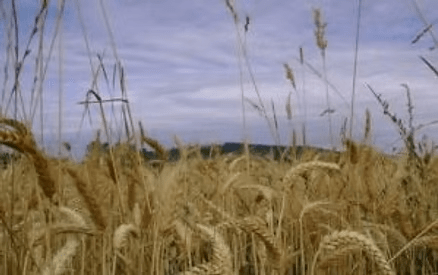
Matthew 13:24-43 – Weeds, weeds, everywhere weeds

The Gospel reading scheduled for the Seventh Sunday after Pentecost (Proper 11), according to the Episcopal Lectionary, will come from the Book of Matthew. On Sunday, July 19, 2020 a priest of the Episcopal Church will read aloud, amid ritual pageantry from the center aisle of his or her church building, the following (from the New Revised Standard Version):

Matthew 13:24-30,36-43
Jesus put before the crowd another parable: “The kingdom of heaven may be compared to someone who sowed good seed in his field; but while everybody was asleep, an enemy came and sowed weeds among the wheat, and then went away. So when the plants came up and bore grain, then the weeds appeared as well. And the slaves of the householder came and said to him, ‘Master, did you not sow good seed in your field? Where, then, did these weeds come from?’ He answered, ‘An enemy has done this.’ The slaves said to him, ‘Then do you want us to go and gather them?’ But he replied, ‘No; for in gathering the weeds you would uproot the wheat along with them. Let both of them grow together until the harvest; and at harvest time I will tell the reapers, Collect the weeds first and bind them in bundles to be burned, but gather the wheat into my barn.’”

Then he left the crowds and went into the house. And his disciples approached him, saying, “Explain to us the parable of the weeds of the field.” He answered, “The one who sows the good seed is the Son of Man; the field is the world, and the good seed are the children of the kingdom; the weeds are the children of the evil one, and the enemy who sowed them is the devil; the harvest is the end of the age, and the reapers are angels. Just as the weeds are collected and burned up with fire, so will it be at the end of the age. The Son of Man will send his angels, and they will collect out of his kingdom all causes of sin and all evildoers, and they will throw them into the furnace of fire, where there will be weeping and gnashing of teeth. Then the righteous will shine like the sun in the kingdom of their Father. Let anyone with ears listen!”

———-

Omitted from this reading selection are verses 31-35. The heading given to those verses is “The Parables of the Mustard Seeds and the Yeast.” (NRSV) I believe reading verses 34 and 35 are worth knowing, before attempting to explain “The Parable of the Weeds.” Those two verses state:

“Jesus spoke all these things to the crowd in parables; he did not say anything to them without using a parable.  So was fulfilled what was spoken through the prophet:

“I will open my mouth in parables,
    I will utter things hidden since the creation of the world.”

The fulfillment of prophecy, quoted by Matthew, was prophesied by David in his Psalm 78:2 (footnote supplied by NRSV). That is not a Psalm selection option for July 19, 2020. The words of Psalm 78:2 will be recited in unison during the Proper 21 and the Proper 27 Sunday readings, as determined by the Revised Common Lectionary, applied to the Year A Ordinary schedule. However, it should be seen how Jesus speaking in parables – metaphor that will explain “things hidden since the creation of the world” – should shake one’s memory and make one recall the reading from Matthew 11, which was orated on the Fifth Sunday after Pentecost (Proper 9 – Year A), when Jesus said:

“I thank you, Father, Lord of heaven and earth, because you have hidden these things from the wise and the intelligent and have revealed them to infants.”

Simply by hearing such words be read aloud in an Episcopal Church that alone should awaken the pew-sitter to the realization that what is read aloud publicly in a building set aside as holy (consecrated) demands explanation. The only ones who can easily supply that are those filled with God’s Holy Spirit. That is the truth of a priest, as a true priest is an Apostle (i.e.: a Saint) who has been reborn as Jesus Christ [God has revealed things hidden to newborns], so the deeper meaning is why seekers gather on days set apart as holy (consecrated) – they want to be fed Spiritual food by Saints.

One should not be forced to listen to an ordinary human being dress up like a priest and then orate opinions about the news of the day, because everyone sitting in a pew knows what is broadcast daily through media. The media has not been set apart as holy (not consecrated), because the media does not care about Spiritual matters. Saints of Yahweh do not explain the sins of the world. They explain the Word of God in ways that will open one’s hearts to a burning desire to know more of the truth to the meaning of Scripture. That is the only reason Christians go to church … on Sunday or any other day.

This is then stated in the reading today. Jesus told the parable of the weeds. Then he told the parable of the mustard seeds, followed by the parable of the yeast. After that, verse 36 says:

“Then he left the crowd and went into the house. His disciples came to him and said, “Explain to us the parable of the weeds in the field.”’

The question posed by Jesus’ disciples says two things. First it says that the disciples understood the parables of the mustard seeds and the yeast. They both related to the Psalm 78:2 prophecy of little things yielding big results. The “kingdom of heaven” is like an infant (a mustard seed) having access to the Godhead (a mustard tree). The “kingdom of heaven” is like a pinch of yeast added to a large amount of flour (plus salt, oil and water), rolled and turned and placed in an oven, giving rise to hot, freshly risen bread. The metaphor was of Scripture, which was the flatbread of Jewish sustenance, but just add God and the meaning of the words expand greatly. The disciples listened daily to Jesus feed them the bread of heaven, which was probably lessons lasting longer than twelve minutes. They were allowed to ask questions back then, because disciples always are students seeking to learn.

Second, it says the disciples did not understand the parable of the weeds. They did not ask to have anything else explained to them.  Previously, in Matthew’s thirteenth chapter, Jesus had told the parable of the sower and the disciples asked him to explain that to them, which he did.  Rather than listen to Jesus say something that made no sense to them, they asked him to explain what he meant, so they could learn.

This means that verses 37 through 43 are a classic example of what a sermon delivered by Jesus was like. Anyone professing to be “Christian,” thereby claiming to be “in the name of Jesus Christ,” should take the time to explain ALL READINGS delivered on a Sunday. Every sermon should begin with the invitation: “Anyone have any questions about what had just been read?”  Any priest that does not make this offering and does not take the time to fully explain Scripture to those seeking to learn the meaning is not qualified to hold that position [because of a lack of Holy Spirit within].

Jesus explained to his disciples – his students who thirsted for learning – “The one who sowed the good seed is the Son of Man.”

Jesus said, in the Greek of Matthew, “Huios tou anthrōpou,” which is three words with three meanings, not one meaning in three words. The only capitalized word is “Huios,” which alone states the importance of “Son” or “Descendant.” That one word (capitalized) stands for the “Son” of God, stating the Father of Jesus was greater than a normal father. The word “tou” is a definite article (from “ho“), meaning “the,” which is omitted from translation. Still, as a form of “tis,” the word means “what,” as a statement of possession. The “Son” (a noun) is clarified as in “what” form God’s offspring possessed, which was “of man.” The Greek word “anthrōpou” means, “human, mankind, of the human race.” Therefore, the good seed sown is that grown into everyone stated in the Holy Bible, from Adam to Jesus, by all who had become the “Sons” of God, which were then the Jews, but which are today Christians.  It should be read as stating “good seed yields the Son reborn in mankind.”

Jesus explained to his disciples, “The field is the world, and the good seed stands for the people of the kingdom.”

The Greek word “kosmos” is translated as “the world,” but the word also conveys “worldly affairs; the inhabitants of the world; adornment.” According to HELPS Word-studies, the literal meaning is “something ordered” “properly, an “ordered system” (like the universe, creation); the world.” The Greek word “agros” translates as “field,” but that should be seen as metaphor for the “material realm,” from which comes the order of bodies of flesh that are filled with souls. Here, the Greek word “huios” is written in the lower case, in the plural number (“huioi“) and translated as “people;” but, the truth says “the sons of the kingdom” or “the descendants of the kingdom.” Therefore, “the people of the kingdom” are the souls planted into the world to continue the lineage of God’s Sons of mankind of earth, being first “sons,” before they grow into “Sons.”  

Jesus then explained to his disciples, “The weeds are the people of the evil one.”

Again, the lower case spelling of the Greek word “huioi” is found. The words “huioi tou ponērou” then states “sons what of evil” (or “sons possessed by evil”), where the Greek word “ponērou” also translates as “toilsome, bad, wicked, malicious, slothful” (Strong’s definition and usage), but means “properly, pain-ridden, emphasizing the inevitable agonies (misery) that always go with evil.” (HELPS Word-studies) Thus, the “weeds” are metaphor for the growth of “sons” that are natural in the “world,” as the earth is the only place evil can exist in human form.

Jesus then explained to his students, “the enemy who sows them is the devil.”

The Greek word “echthros” is translated as “the enemy,” but that is a substitute word for the real meaning: “hostile, hated,” with “a deep-seated hatred,” implying “irreconcilable hostility, proceeding out of a “personal” hatred bent on inflicting harm.” (HELPS Word-studies) The one who then planted the weeds upon the face of the earth is identified as “the devil,” coming from “diablos,” meaning “slanderous, accusing falsely. The word (if capitalized) gives a proper name read as “the Slanderer” or “the Devil,” but the lower case becomes a statement that evil one, like its weeds are, is weak, unworthy of being properly addressed or given heightened importance.

Jesus then explained to his Apostles-to-be, “The harvest is the end of the age.”

The Greek word “therismos” is translated as “harvest,” but the same word means a time for “reaping” that which has been sown and is fully grown. This then leads to the Greek words “synteleia tou aiōnos,” which have been translated as “end of the age.” The same words can also be stated as “completion what of a time span.” The Greek word “aiōnos” is the genitive case of “aión,” which is defined by Strong’s as meaning “an age, a cycle (of time), especially of the present age as contrasted with the future age, and of one of a series of ages stretching to infinity.” HELPS Word-studies adds, “characterized by a specific quality (type of existence).” This then does not mean “at the end of some unknown, distant time,” but it instead means the end of every human being’s life. Everyone’s soul will be harvested at “the completion of one’s time span on earth.”

Jesus then explained to his disciples, “the harvesters are angels.”

The Greek word translated as “angels” is “angelous.” The usage, according to Strong’s is ”a messenger, generally a (supernatural) messenger from God, an angel, conveying news or behests from God to men.” When one recalls how the parable stated: “The owner’s servants came to him and said, ‘Sir, didn’t you sow good seed in your field? Where then did the weeds come from?’’ One must realize that “the servants” of God, as “angels.” This awareness exposes the hidden reality that is consistently stated in all Hebrew usage of “Yahweh elohim.” The “elohim” are the “gods” of God, His servants who both planted (in the Creation) and harvested souls released, when their times on earth in bodies of flesh are completed. Thus, “the world” or “the universe” was “the field” into which Yahweh planted souls via His elohim – in their image was mankind – males and females – to be.

Jesus then explained privately to his children, “As the weeds are pulled up and burned in the fire, so it will be at the end of the age.”  This referred them to remember the conclusion to the parable story that said, “First collect the weeds and tie them in bundles to be burned.”

Here it becomes valuable to look closely at the written Greek, as the NRSV translation has veered from the truth and transformed it incorrectly, by paraphrase (a common flaw of English). The Greek text states: “Hōsper oun syllegetai ta zizania ,  kai  pyri katakaietai  houtōs estai en tē synteleia tou aiōnos  .” This is clearly three segments of words, which state three stages of development. The second segment of words is introduced by the Greek word “kai,” which typically translates as the conjunction “and.” However, there is no need to write “and” following a comma mark, meaning this word in Greek alerts the reader to a vital element that must be understood. With this knowledge, the Greek literally can become translated as stating:

“Indeed just as therefore is gathered those worthless resemblances of wheat kai  in fire is burned  in this manner it will be in the realm that completion what space in time  .

The Greek word “zizania,” which the NRSV translates as “weeds,” is actually stated by Strong’s to mean (in the singular): “zizanium (a kind of darnel resembling wheat).” The usage is then said to mean, “spurious wheat, darnel; a plant that grows in Palestine which resembles wheat in many ways but is worthless.” HELPS Word-studies adds, “(figuratively) a pseudo-believer (false Christian); a fruitless person living without faith from God and therefore is “all show and no go!”‘ Therefore, rather than Jesus simply saying to his disciples, “As the weeds are pulled,” he stated the metaphor of those who clearly will be judges: “Indeed just as therefore is gathered those worthless resemblances of wheat.”

The capitalization of the Greek word “Hōsper” serves the purpose of stating the importance that must be seen in the translation “Indeed just as.” The metaphor of parable then clearly states moreover than “weeds,” but the souls of “false Christians” and “fruitless people living without faith” will be treated exactly as would be weeds harvested, which have no value. The importance of kai is then announcing those souls will likewise “be burned in fire.” The final segment then places focus on full opportunity being given to sinners to change themselves – die of self-ego and cease being worthless growth, as weeds, transforming into good wheat – over a natural lifespan. Once reaped, one’s soul will be judged by the results of one’s life – good seed grown mature or bad seed reflecting having been sown by evil.

Jesus then explained to his disciples, “The Son of Man will send out his angels, and they will weed out of his kingdom everything that causes sin and all who do evil.”

In this repeating of “Son of mankind,” just as seen previously, but those words are now complemented by the Greek “tous angelous autou,” which is best stated as, “those messengers of him.” Knowing that an “angel” is the same as an “elohim,” and knowing that all “elohim” are Spiritual creations of “Yahweh,” the reality of this statement is that Jesus is one of Yahweh’s elohim, as the Christ. His “messengers” then become elohim by being reborn as him, being transformed from worthless human beings into “angels in the name of Jesus Christ.” At the time Jesus was speaking to his disciples, he was still alive and well – as an elohim of the Father in the flesh. However, after his death, resurrection and ascension, Jesus Christ came back on Pentecost Sunday and then “sent out the elohim” that would be his Holy Spirit soul merged (married) to the souls of men and women who had previously been mere mortals.

Again, the NRSV does not adequately preserve the divine intent of the written text, so it becomes necessary to realize the Greek that is written. It states: “kai syllexousin ek tēs basileias autou panta ta skandala  kai  tous poiountas tēn anomian ,” which can translate better as:

kai  they will collect out from among those ruled by [the Christ Spirit] all who are stumbling blocks  kai  those causing this disobedience ,

This translation makes it easy to see how this fully supports what Jesus would say later, found in Matthew 18:6-7: “If anyone causes one of these little ones—those who believe in me—to stumble, it would be better for them to have a large millstone hung around their neck and to be drowned in the depths of the sea. Woe to the world because of the things that cause people to stumble! Such things must come, but woe to the person through whom they come!” The same Greek word “skandala” is used, with it also written as “skandalisē” – “shall cause to stumble.”

This says, overall in verse 41, that the good seed sown as good wheat are the disciples of Jesus, who would fully develop as Apostles (i.e.: Saints), who would in turn act as elohim in the name of Jesus Christ to convert worthless Jews and Gentiles from weeds into wheat. All other Jews and Gentiles [i.e.: Romans] would continue to be worthless replicas of wheat (false Christians) or weeds trying to choke the life out of good wheat, while producing more weeds from their own evil works. The seed sown by the devil are the stumbling blocks to all growth and development of good wheat. Those will then be identified upon their deaths by the souls who gained eternal life as elohim in the name of Jesus Christ. In essence, this says “You can run, but you cannot hide.”

Jesus then explained this parable’s outcome to his disciples by stating, “They will throw them into the blazing furnace, where there will be weeping and gnashing of teeth. Here, the introducing word “kai” is missing.  By adding that marker to the text, the verse then shows the importance of “they will throw them into the blazing furnace.”

The plural pronoun “they” is produced through the Greek word “balousin,” such that the third person future plural form of “balló” says, “they will cast.” The ambiguity of “they” needs to be realized as not being the elohim in the name of Jesus Christ, but instead the evil ones themselves. Their own actions as stumbling blocks will condemn their own souls, based on their actions while in the flesh. It will then be those lifestyles enjoyed while alive as mortal human beings, which did as much as humanly possible to block the growth of true Christians in the world, that will be what will “cast” the plural “they” into the “furnace possessing eternal fire.” Because sin is only allowed to exist on earth – in the material realm – the core of the Earth is where molten material generates the gravity that keeps all matter in this world from flying out into outer space. Thus, the metaphor of of ‘furnace possessing eternal fire” means those souls will be “cast” back into the world they so dearly loved, where Satan will form them new bodies of temporal flesh to die in once again [reincarnation].

The “weeping kai gnashing of teeth” are impossible of immaterial souls, especially those thought to be consumed by a furnace of fire. Therefore, eyes that weep and teeth that gnash are signs of a rebirth in a human body of flesh, which has grown old enough to know the errors of one’s ways and realize the anger of oneself not being less selfish before. This is the glimpse of the future God allows to the lost souls, before returning to the material realm.

At that point Jesus explained to his disciples, “Then the righteous will shine like the sun in the kingdom of their Father.”

 The Greek word “dikaioi” translates as “righteous,” but this is a word that requires personal experience to begin to fathom. To be righteous is the actualization of Christ within one’s being. Anything less makes ‘righteous” just a word of human parameters, which is the ideal or concept of being “morally right or justifiable; virtuous.” (Oxford Languages definition) The use by Jesus, as written by Matthew, implies having released a soul from a dead body of flesh that had been in union (married) to Yahweh, a brother or sister in the name of Jesus Christ, the Sons of God the Father. Thus, those souls will return to “the kingdom of the Father.”

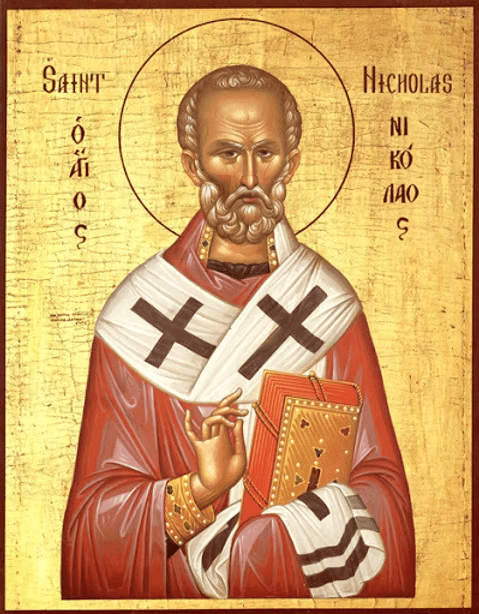
What is overlooked, due to one missing the aspect of the center of the Earth being the furnace of fire that creates a gravitational pull to the matter possessed by the devil, is how the “righteous will shine like the sun.” The Greek word “eklampsousin” is a statement (in the third person plural future) that says “will shine forth.” This is then a statement about the radiance that will be emitted from the souls of those filled with God’s Holy Spirit (i.e.: married souls to the Christ Spirit). It is the same shining forth that came from Moses’ face, when he spoke with God in the tent of meeting. It is the same aura depicted in religious painting of Saints with halos over their heads. The shining forth is then the righteousness of Jesus being the light of truth by which men’s souls are led. It is the shining light of the Good Shepherd, which cannot be hidden under a barrel or behind a veil, as it will always be known as a source of life for those souls lost in bodies doomed to die mortal deaths.

As a contrast to the magnetism of the earth’s gravitational pull, the sun emits a much greater field of influence, such that all planets in our solar system circle the sun. This, again, relates back to the lower case spelling of “diablos” – “the devil” – as no matter how hard the influence of earthborne evil is targeting human beings, it pales in comparison to the strength of the light of God – Jesus Christ. This is how Jesus said, “I am the light of the world. Whoever follows me will never walk in darkness, but will have the light of life.” (John 8:12) Therefore, the metaphor of “like the sun” is a statement of Jesus being the light, who shines through his Apostles (i.e.: Saints) as them being true examples of righteousness.

Finally, Jesus explained to his disciples, “Whoever has ears, let them hear.”

This is a statement that becomes the mantra of Apostles and the “Good News” of the truth being told. Jesus spoke those words to his disciples, which included Judas Iscariot, whose ears were probably tuned in to Jesus speaking heresies that could be sold for silver coins. The rest of the disciples would begin hearing the Word of God, as it flowed past their lips on Pentecost Sunday, when they spoke in foreign languages they had never learned, but then spoke so fluently that about three thousand with ears heard the truth and their hearts burned to know more. Jesus said that to his would-be-Saints, so they would be able to explain Scripture just as fluently as he did. Jesus said that to future Apostles who would explain the parables of Jesus in ways that go well beyond his explanations to them as disciples.

In the great overview of this parable told to the crowd of Jews, which was over the heads of Jesus’ disciples, causing them to ask him to give them insight to the meaning [the had also asked Jesus to explain to them the Parable of the Sower, which he did] it is important to know that the metaphor of servants planting good seed in their master’s field, finding good wheat surrounded by weeds, it is imperative to realize that the earth IS the place where weeds grow, without the need for servants planting them.  The seeds of evil blow in the wind and land everywhere.  Thus, the weeds were not the exception found by the servants.  The exception was the wheat among weeds.

Without good priests explaining such things to the ones who show up in a church on Sunday, the fields of the world will be nothing but weeds.

Amen

#explanationoftheparableoftheweeds #SeventhSundayafterPentecost2020 #Matthew132430 #Matthew1867 #Matthew132443 #Parableoftheweeds #Matthew133643