Tag Archives: Passion Sunday

Mark 14:1-15:47 – From Lent to a New View of Holy Week

Rather than list almost two complete chapters from the Gospel of Mark, I recommend going to this site and reading that account of the Passion Play.

Instead of a lengthy Gospel reading, please take the time to read this lengthy explanation of what the Passion Play says, which becomes most relative to the following Holy Week.

Palm Sunday is the last day of Lent.  The celebration of Jesus entering Jerusalem is the antithesis of Mardi Gras (Fat Tuesday), with no parades, sugary cakes, or complimentary beads are passed out.  Rather than revelry prior to a difficult test, it should after the successful conclusion and the end of testing that one cheers one’s graduation to the next level of achievement.  To turn this day of happiness and celebration into a day of sorrowful focus on a most necessary death is the wrong view to take, remembering how Jesus said, “unless a kernel of wheat falls to the ground and dies, it remains only a single seed. But if it dies, it produces many seeds.” (John 12:24).  This is why the symbol of Christianity is not the crucifix (a symbol of punishment), but the Trinity of the spiritual intersecting with the physical (+).  Death is the bane of mortality; but one has gone through Lent to be prepared for a Resurrection to eternal life.  Celebrate that victory!

—————————————————————————————-

This is the main Gospel selection from the Episcopal Lectionary for the Sunday of the Passion: Palm Sunday, Year B. It will next be read aloud in church by a combination of parishioners, a reader, and a priest, as a reenactment of the final two weeks of Jesus’ ministry, depicting his final entrance into Jerusalem, his final Seder meal with his disciples, his arrest, presentation before rulers, his trial, sentence, punishment, death, and entombment. It is important as these remembrances of Peter, through Mark, become the source of Eucharistic rites and the points of recognition that highlight the reverence of “Holy Week,” the lead-in to Easter and the risen Lord.

According to my Word program’s word count, the reading from Mark is over 2,400 words (making it as long, if not longer than one of my interpretations of much shorter readings). Whenever holy days call for readings of such length and audience involvement the priest is basically given the day off, with no sermon preached. The logic is, “I will let the reading speak for itself. Let us sit and bask in the glory of those words recited.”
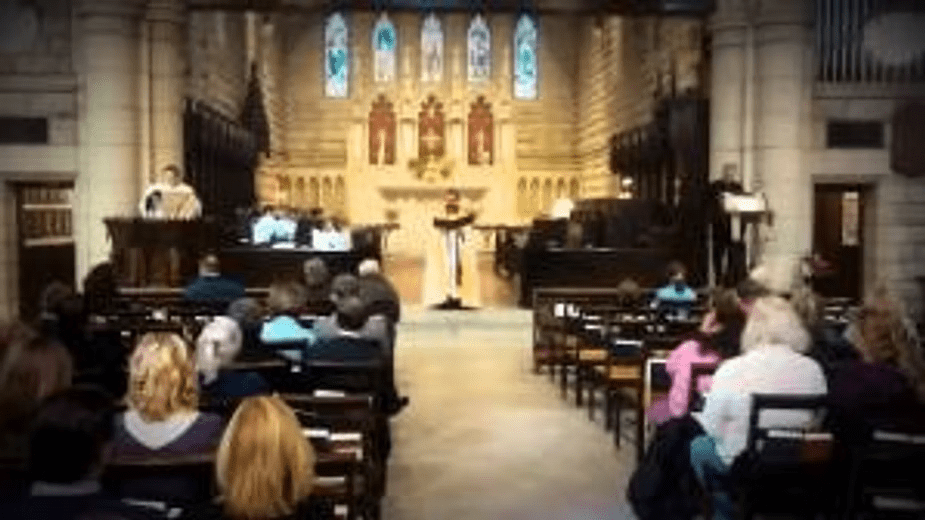
And the atheists Beatles asked, “All the lonely people, where do they all belong?” Due to a lack of bodies present in this picture, it looks like the people thought they belonged some place other than church.

Involving a congregation (often with begging, pleading, and threats) makes for a great theatrical presentation, but the people should seek to know the meaning of the words; and that is what a priest is called by the Holy Spirit to provide. Anyone who has a tee time scheduled after church (or a football game to watch, etc.), or has not planned on spending extra time listening to holy words being explained on Holy Days, with no plans for spending all Sunday in church, that one needs to cease coming to a building that allows the pretense of Christianity.

Whenever twenty four hundred words of God are spoken (the Year C reading from Luke is only 2,242 words, and the Year A reading from Matthew is just under 2,700 words), true Christians should thirst for deeper understanding … not just bask in the uncertainty that is known to be present, which demands a true priest explain God’s intent.  As Holy Week follows the Passion Sunday reading, it would make more sense to divide this lengthy reading into seven readings, with deeper explanation of meaning able to be given each day of a Holy Week.  Because this is not done, the readings theatrically presented one day a year, without explanation (in-depth sermon), are always left up to the ignorant to discern, with ignorance begetting ignorance.

The degraded state of American church worship has created many congregations that are easily bored with “religious talk.”  Therefore, I will forego any attempt to spend a week’s time writing about all the meaning that can be found in this reading from Mark.

One’s easy answer to the literal is equally a horror. Take away all idiots who have no time for understanding and the Holy Bible expands for inquiring minds, well beyond the capabilities of the literal.

Instead, here I will address the element that has been the Catholic-Anglican production of a Holy Week, which come from elements found in Mark (and the other Gospels that tell similar accounts). These will be shown to support the six days of special recognition, leading to Easter Sunday.

Let me first state that it is my opinion that Holy Week is a fabrication of the Church of Rome, as a way to mimic the Passover week-long festival, while erasing all Jewish influence that could be associated with the resurrection of Jesus Christ. That would be well and fine IF (big IF) Jesus had told one of his Gospel writers, “Hey! Make sure you let it be known that I have come with a New Covenant, which means my followers two thousand years from now will need to toss out all remembrance of the festivals my daddy (God) told Moses to make sure the Israelites must recognize forevermore. Instead of Passover, let’s call that Easter and make sure bunnies, colorful eggs and yellow marshmallow chickens are part of that new festival in my honor.”

Unfortunately for many, Jesus did not say those words.  Instead, he said, “Do not think that I have come to abolish the Law or the Prophets; I have not come to abolish them but to fulfill them.” (Matthew 5:17)

Hint: The Law being fulfilled by Jesus would include Christians recognizing Passover, of which God sent his Son to be a memorable part of.  I recommend everyone read Exodus 12, with Jesus kept in mind, as a parallel event.
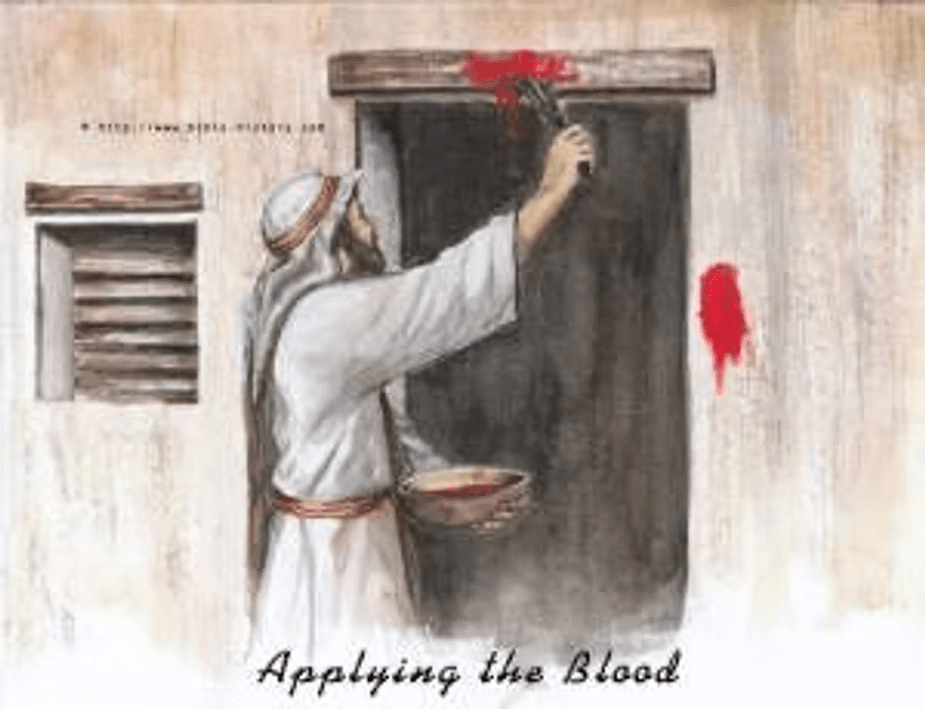
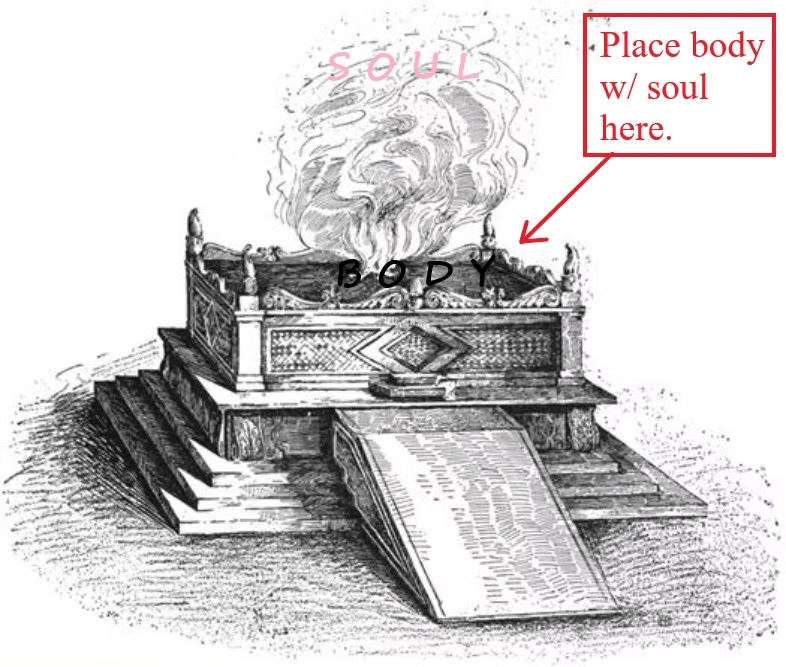
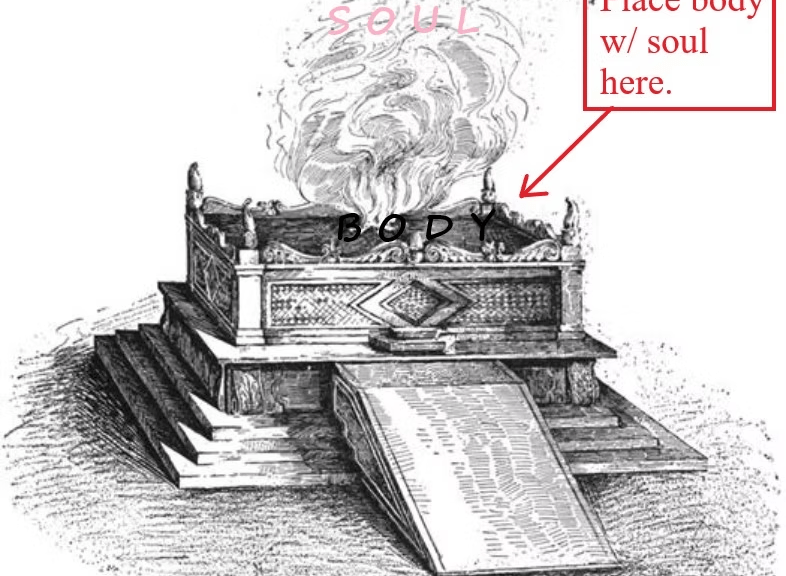
Get the picture and see yourself needing to paint the blood of Jesus Christ over your body, so you can avoid the mortality death sentence. That blood represents YOUR PASSOVER through Christ, so reincarnation does not get your soul.

The erasure of the permanence of God telling Moses, “This is a day [the Passover day of blood] you are to commemorate; for the generations to come you shall celebrate it as a festival to the LORD–a lasting ordinance” (Exodus 12:14) means Christians (for the most part) know absolutely nothing about the true Holy Week that is the eight days of Passover. Most years the Jews recognize the Passover at different times than do Christians recognize Easter, when both should observe the one and the same event. Since the Roman Church made up a calendar that differs from the Hebrew calendar (not lunar-based), they artificially created a nebulous time of recognition, which only rarely aligns with the Jewish timing.

Let me add that this new tradition created by the Church centuries ago means there are dedicated priests whose faith leads them to have great belief in that tradition, as being truly holy, so their dedication is sincere. The sincerity of faith priests devote to the resurrection of Jesus on the first day of the week, following the end of the Passover festival, is a model by which Christians should match. Still, the attendance for Palm Sunday services pales in comparison to attendance for Easter Sunday services; and attendance for the Monday through Saturday services in between are sparse, at best. Thus, the faith of priests is not fully passed onto the people, which is due to an inability to explain the obvious questions that arise over Jewish Passover and Christian Easter.

Some churches like to show their non-hatred of Jews by inviting Jewish rabbis to come speak to a congregation about the Passover Seder meal.  Because most churches do not incorporate the two religions regularly, only on special occasions like Passover-Easter, few Christians know anything about the Seder ritual or Jewish traditions.  Even when a visit by a Jewish representative makes that awareness made, only Christian Jews would be able to explain the Passover in terms of Jesus being the God-sent Messiah to the Jews.  Standard Jews would only talk about Moses and their privilege as God’s chosen people, which is why Christians do not make the same observances as do Jews.

This is why it is important to realize that Jesus of Nazareth, born of a woman in Bethlehem, was a Jew, one who said, “I was sent only to the lost sheep of Israel.” (Matthew 15:24) The Jews were those who were lost to Babylon; but the scattered descendants of the Northern Kingdom (Israel), including the Samaritans, had become assimilated into foreign nations and cultures, earning them the distinction by true Jews as being people of “Gentile” heritage.
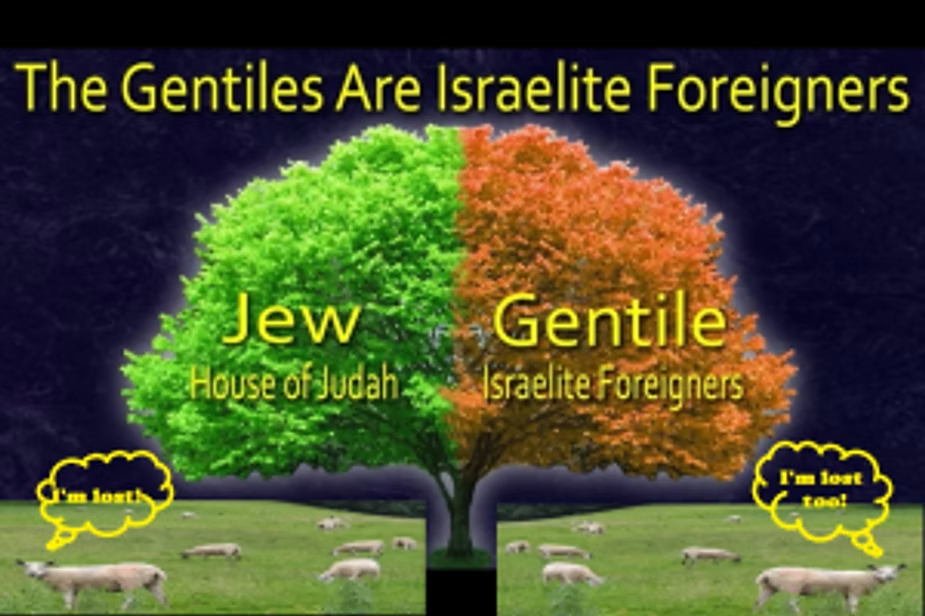
To be found is to be a TRUE Christian. That can be either Jew of Gentile.

As such, Christians of the Gentile nations of Europe (and the extended places the imperialism of those nations sent sheep to get lost) are therefore spiritual descendants of the lost sheep of Israel. They have become so lost they do not know why they believe in the King of the Jews, the Son of Man who called God his Father … born a Jew … but they respond to his call. Therefore, it is important to look at the Passover festival as the true root of Holy Week, so more lost sheep can hear the voice of truth calling them by name.

To first look at the element of Palm Sunday, it was John who wrote of Mary Magdalene anointing Jesus’ feet with nard, stating that event took place “six days before the Passover” (John 12:1).  Since the Passover that year began on the Sabbath, six days before the Sabbath is Sunday (the first day of the week). However, when one realizes the Hebrew days begin at 6:00 PM, such that the Passover Seder meal (Jesus’ “Last Supper”) took place on technical Sabbath (our Friday evening), six days prior to that was the feast given in honor of Jesus raising Lazarus from the dead.  Because that dinner took place in the evening, it was on an actual Sabbath eve, when 6:00 PM made it technical Sunday.

Thus, when John wrote, “On the next day” (John 12:12a) Jesus entered Jerusalem to a cheering crowd and street lined with palm branches, that “next day” was actual Sunday, following technical Sunday.  This is why Palm Sunday is right to be called that.

In Mark’s Gospel, it seems the timing of the anointing with nard is confusing, because Mark 14:1 states, “It was two days before the Passover and the festival of Unleavened Bread.” That timing says when the “chief priests and the scribes were looking for a way to arrest Jesus by stealth and kill him.”  This means the two days timing factor was not when the anointing took place. We can deduce that by Mark then recounting the event that drove Judas Iscariot over the edge, so that he would betray Jesus and become an asset for the Temple in their plot.  Mark was then recalling an event that occurred earlier in time … six days before the Passover.

John wrote after that celebration dinner for Jesus and Lazarus, “the chief priests planned to put Lazarus to death also; because on account of him many of the Jews were going away and were believing in Jesus.” (John 12:10-11) That states the nebulosity of their plot, such that it had not been finalized prior to Jesus entering Jerusalem (Palm Sunday), but Judas Iscariot helped them go with their plot to arrest and kill Jesus, by his going to them.  Judas then made that commitment to betray Jesu on Wednesday or Thursday, “two days before the Passover.”

Look then at how the Temple authorities acted towards Jesus in comparison to how Pharaoh acted towards Moses “two days before the Passover.” The Passover in Egypt was the spilling of blood from sacrificial lambs (young and without blemish), whose blood was then painted over the doorways of the Israelite homes, so the angel of death would spare them. The meat of the lambs was then eaten inside the marked homes, as directed by God, through Moses [preparation, cooking, and wholly consumed].
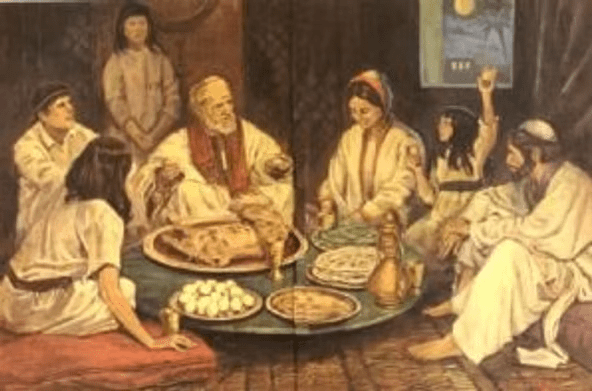
After a series of plagues upon Egypt, the dinner on the eve of the angel of death passing over was probably a little sparse on taste. … thus bitter herbs and unleavened bread were all that was available to them for seven days. That symbolizes how the fruits of the earth were no longer pleasing to those who would serve God.

Following the deaths that occurred, which saved the Israelite firstborn, the bondage of Egypt was broken, beginning a trek of fifty days. Passover then begins a count towards that number [“Pentecost” means “fiftieth day”], which should be part of any Christian Holy Week, because God commanded that count be made.  In that number of days, they were in the wilderness without the comforts of natural food and water sources for forty days, between day eleven and day fifty.  That is the symbolism of Lent leading one to Palm Sunday (40 days) AND the time Jesus spent teaching his disciples after he was risen (40 days).

Jesus, being like Moses, was going to lead the Israelites (Jews and pilgrim scattered) from the bondage that the Temple forced upon them, to a similar freedom for their souls. Whereas Moses came down with the First Testament after fifty days, Jesus came down from his Ascension on Pentecost, bringing the New Covenant when the Holy Spirit made eleven disciples become reproductions of Jesus, as the Christ Mind was in them. However, before that realization of Christ being reborn could occur, Jesus had to become the sacrificial lamb (Paschal Lamb), whose blood would be spread around each individual (to avoid the death that mortal existence brings); and forty days represents the time Christians have to digest everything written that is the body of prophecy about Jesus Christ foretold, with no scraps leftover when the sunrises within one.

That parallel of Jesus leading Jews to God, just as Moses led Israelites the same way, is the reason why observing the Passover Seder meal, by Christians, is most important.  Every Passover Seder meal forevermore will symbolize Jesus Christ and the New Covenant, through  remembrance of the body and blood that saved their souls for eternal life.  Just as Israelites had to leave the comforts of Egypt for the hardships of the wilderness, so too do Christians have to sacrifice their worldly comforts to serve God.

Because Christians (in particular those of Anglican and Protestant descent) do not have a grasp of the symbolisms practiced in the Passover Seder meal, going to lengths to project it as Jesus’ Last Supper (see Leonardo DaVinci’s famous picture that captures European dining habits, not Jewish).  Calling it a supper makes it seem to be an ordinary meal.  As such, Christians do not fully understand the “bread” is unleavened matzah.

The Seder ritual calls for three matzah squares be placed on a central plate, from which the middle matzah is broken into two pieces … by the father of a family, who presides over the ritual meal.  The Passover is not an official requirement that is led by a rabbi, done in a synagogue.  This is what Jesus did in the upstairs room, as noted when Mark wrote, “While they were eating, he took a loaf of bread, and after blessing it he broke it, gave it to them, and said, “Take; this is my body.”’ (Mark 14:22)
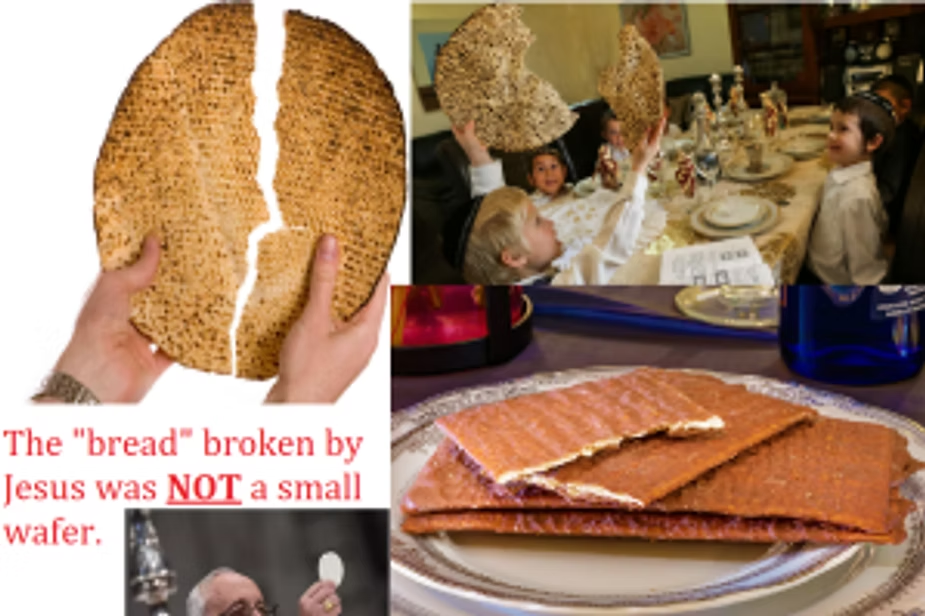
Some priests break the wafer and then raise the two halves high, held together. No priest hides half for the children to find later.

The Greek word written that translates as “bread” is “arton.” According to Thayer’s Greek Lexicon, “arton” is primarily referenced as meaning this:

1. food composed of flour mixed with water and baked; the Israelites made it in the form of an oblong or round cake, as thick as one’s thumb, and as large as a plate or platter; hence, it was not cut, but broken.

The website My Jewish Learning has posted this about how much matzah one is supposed to eat:

“During the seder, one makes two different blessings over the matzah. The first blessing is hamotzi (“…who brings forth bread from the earth”), which is recited whenever one eats bread, and which is obligatory at any festival meal. The second blessing recalls the particular obligation to eat matzah (“…who has sanctified us with the commandments and commanded us concerning the eating of matzah”).”

You will notice that Mark made reference to a very standard element of the Jewish Seder ritual, when he matter of fact stated: “Took the bread, blessed it, and broke it.” Prior to that, one washes one’s hand, and after the breaking of the middle matzah, the largest piece is hidden, as a teaching game to keep the children’s interest.

The hidden half of a matzah is later to be eaten as dessert (called  afikoman). That symbolism is Jesus Christ, who is broken away and hidden, causing the devoted to seek his reward.  Finding Jesus Christ is the sweet dessert that comes after sacrificing one’s self ego to allow Christ to lead one’s mind.

Likewise, the washing of hands ritual, which occurs several times during the Seder ritual, was modified by Jesus as the act of washing feet (which Mark did not write about).  Jesus said to Peter, who rejected his feet being washed (not a recognized ritual), “What I do you do not realize now, but you will understand hereafter.”  The feet symbolize the hidden sins that are only known by God, just as washing hands before eating symbolizes not taking in anything unclean.  What only an Apostle can understand if no sins are overlooked by God, so all must be washed clean before entrance into eternal life with God can occur.

Simply from reading the Last Supper accounts of Matthew and Mark, one can easily get the impression that Jesus stood, blessed and broke bread, passed it out and then raised a toast with wine, all at the same time. That is not the case, as there are four ceremonial glasses of wine consumed during the Seder ritual, drank in an orderly and purposeful manner. Therefore, when Mark immediately followed verse 22 with, “Then he took a cup, and after giving thanks he gave it to them, and all of them drank from it. He said to them, “This is my blood of the covenant, which is poured out for many,”’ (Mark 14:23-24) it can seem like it took place shortly in time. However, thirty minutes to an hour could have elapsed in between the two – matzah followed by wine.

Each of the four cups of wine has a specific symbolic meaning and name. Jesus raised the third cup, such that he was the Redeemer that Christians must remember.

Mark then wrote, “When they had sung the hymn, they went out to the Mount of Olives.”  That reference to a hymn meant an ending psalm in a lengthy “after dinner” ritual of singing. Many songs are sung in the Songs of the Nirtzah, with songs sung before the meal as well as after. The singing of songs can last for a couple of hours, with this accompanied by freely drinking more wine. Many Jewish children say their first experience of being drunk was from being allowed to drink wine during the Seder ritual (parents do not condone this, but aunts and uncles look the other way).

Thus, Mark’s reference was to it being late in the evening, after much drinking and singing, when Jesus led his disciples to the Mount of Olives. That exit officially ended the Passover Seder meal (first version, as the next evening the same ritual is repeated), and Mark writing, “He came and found them sleeping” (Mark 14:27a) means Jewish adult males drink themselves into sleep on that evening. The disciples were asleep because they were drunk and it was late at night (around 1:00 AM.).

That ended the eve that began the Holy Week of Passover. There were still eight days before the festival would end (Sabbath to Sabbath). However, as an aside, I will point out that when Mark wrote (and he is the only one who wrote this), “A certain young man was following him, wearing nothing but a linen cloth,” (Mark 14:51) it was improper for a Jewish male to name a woman or child in writing (unless a significant woman, such as Mary the mother or Mary Magdalene).  It was proper to generally identify such people.

That reference to “A certain young man” means Mark (via Simon-Peter) knew who that someone was (“certain”), yet he was too “young” to name. The same lack of naming can be seen in the feeding of five thousand, where a “boy” was referenced, who had five loaves and two fish.  The “boy” was not just someone passing by, it was a known (“certain”) “boy” who was holding the lunch for Jesus and the gang.  Thus, it was communal property, not that of the boy holding the basket.
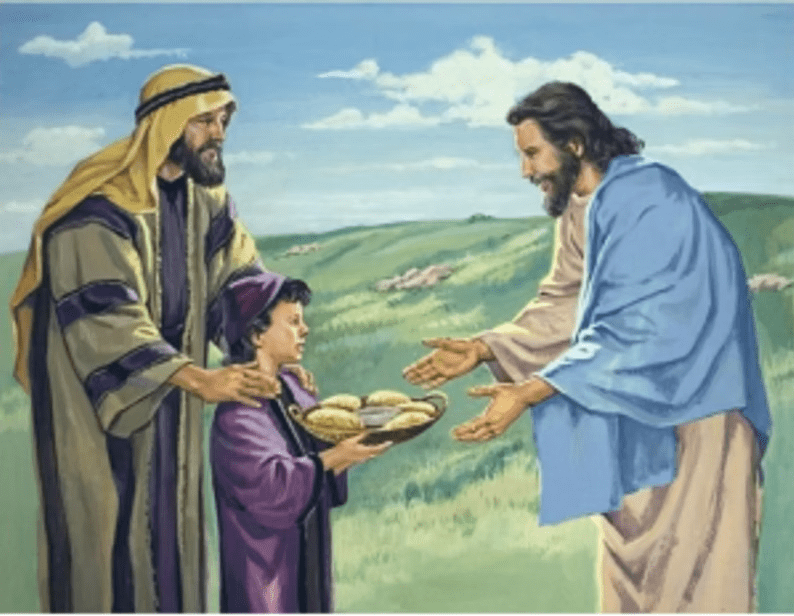
John, my beloved son, watch what can be done with our meager lunch when we share it with others.

Both that “boy” and this “young man” referenced by Mark was John the Beloved, the child who reclined his head in Jesus’ lap and asked, “Lord, who is it?” (John 13:25b) John also wrote four chapters (John 14, 15, 16 & 17) about what Jesus taught after the Seder meal, as the child present who was eager to learn, while the adults were busy singing and getting drunk, thus not paying close attention, as was “young” John. Mark did, however, remember John was still awake, but in night clothes, as he tagged along with the adults to Gethsemane; and John was termed “a certain young man” who ran after his close relative, when Jesus was taken away, under arrest.

As the Passover Seder began on the technical Sabbath (after 6:00 PM on actual Friday), Jesus was arrested and held prisoner by the Temple Priests on the night of the Sabbath. By sunrise on the actual Sabbath, Peter had already denied knowing Jesus three times … before the cock’s crow (which is a watch that ends at 3:00 AM, followed by the Morning watch between 3:00 AM and 6:00 AM).

When Mark wrote, “As soon as it was morning, the chief priests held a consultation with the elders and scribes and the whole council,” it is worthwhile seeing this as the morning of Sunday, the first day of the week, and not the Sabbath. Keep in mind the chief priests, Pharisees and other elders had previously condemned Jesus for healing and doing miracles on the Sabbath.  That alone would state how they could not do the work of processing a prisoner on the Sabbath. Sending a prisoner they want condemned to death to the Roman governor would be clearly against their own laws if done then AND with it being the beginning of the Passover festival, there would be plenty of witnesses that would see them breaking the law that limited work on a Saturday, had they done that. Therefore, day one of this Holy Passover Week is like Rejection Saturday, when Judas turned Jesus in with a kiss, Peter denied him three times to strangers, and the high priest spit on him.

A Sad Sabbath? Not when it is one’s own ego that is denied.

Sunday, the first day of the week, is when the “whole council” would meet to discuss Jesus’s death by Roman decree. This means Pilate would see Jesus and question him then; but Pilate would get no response from Jesus. While Mark does not write of this, Pilate ordered Jesus be sent to Herod Antipas (who was in Jerusalem for the Passover festival), because Jesus was from Nazareth of Galilee (Herod’s area of rule). Therefore, with Sunday finished, Jesus would not be moved to Herod’s palace, until Monday. This makes the second day of Holy Passover Week be Silent Jesus Sunday.

Shhhhh. Don’t tell anyone the old you needs to be saved and returned, when you already know changes are best.

Once one has reached the second day of Holy Passover Week, one must begin counting the number of days in will take for Jesus to come down from his Ascension with the New Covenant – THE HOLY SPIRIT. That would take place in fifty days, just exactly the same as Moses came down from the mountain with the First Covenant after so much time. Keep in mind that none of these comparisons are happenstance or haphazardly took place, by chance. God commanded the timing of the events of Moses, and God commanded the timing of the events of Jesus. If you cannot believe that, then you are not yet ready to be a Christian.

The Jews do what is called “the Counting of the Omer,” where an “omer” is a dry measure, which acts as an amount of grains harvested from the first fruits of spring. That omer of first fruits would be placed in the Temple on the second day of the Passover festival. When the count reaches “Pentecost” (the fiftieth day), then the holiday known as Shavuot (a two day festival) takes place. Pentecost is the first day of Shavuot, with “Shavuot” meaning “Weeks.” There are seven weeks between the second day of Passover and Pentecost. This timing is then attached to Silent Jesus Sunday, making it be the First Day of the Jesus Return Counting.

Monday, Jesus would have waited his turn to see Herod Antipas, just a small person in a line with all the dignitaries and the others who sought his judgment or decree, as Herod Antipas was an important man during his time on earth. Regardless of how important Jesus is to Christians today, he was seen as a lowly Jew. He was the king of a couple of Roman provinces, Galilee being one.  Because it was the leaders from the Temple of Jerusalem who argued against Jesus, and with Jesus not being a legally wanted man in Galilee, Antipas ordered Jesus back to Pilate for judgment. This would have taken up all Monday, with Tuesday being the big day Pilate had scheduled to free a criminal for festival time. This makes the third day of Holy Passover Week be You’re Not My Problem Monday. This is then the Second Day of the Jesus Return Counting.

Break no laws and I’ll serve you no sentences.

Tuesday is the big day. It makes the fourth day that Jesus appeared before important people. This is not to be overlooked, as Jesus was the Paschal Lamb that had to be inspected for four days and be found without blemish. No one told the truth about Jesus being a blasphemer to the chief priest, and Pilate saw no crime, and Herod did not either. Still, once back before Pilate and the crowd cheering for Barabbas to be freed and Jesus crucified, Pilate washed his hands of the mess and ordered Jesus flogged that evening, and crucified the next day. On Tuesday his jailers mocked Jesus with a crown of thorns, a purple robe, and spit upon his face as they called him King of the Jews. Jesus laid in that jail, beaten by a whip, until Wednesday morning. This makes the fourth day of Holy Passover Week be Flog an Innocent Son of Man Tuesday. This is then the Third Day of the Jesus Return Counting.
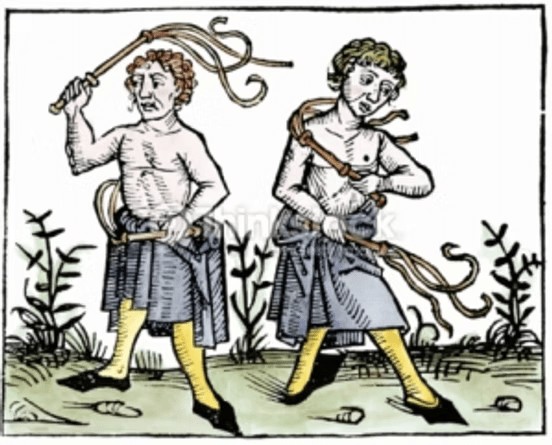
Only you know the troubles you have caused. Repentance does not come by others whipping the sin out of you.

By the time Wednesday morning came around (it begins at 6:00 AM), Jesus was too beaten to carry his cross from the jail to the place of execution.  This symbolism says that Jesus never asked his disciples to carry their own crosses to their own executions, when he said, “Take up your cross and follow me” (Matthew 16:24; Mark 8:34; Luke 9:23). That was a reference to raising one’s state of existence and becoming a reproduction of Jesus Christ.  A beaten Jesus struggling to carry a heavy crucifix of death had no bearing on his having lived a most pious life.

It was then with help (a pilgrim in Jerusalem for the Passover – Simon from Cyrene, Libya) that Jesus and his cross reached the Place of the Skull (Golgotha).  The cross was able to be in position, in time for him to be crucified (a raised cross) by 9:00 AM. For three hours Jesus was taunted and ridiculed by Pharisees, chief priests and scribes, as those were the Jews who hated Jesus. Meanwhile, Jesus’ family gathered and followed him the whole way, to mourn this punishment until the end. At noon the sun stopped giving its light, which was not a natural phenomenon such as an eclipse. At 3:00 PM on Wednesday Jesus physically died. This makes the fifth day of Holy Passover Week be Death of Jesus Wednesday. This is then the Fourth Day of the Jesus Return Counting.

Death of the body is only the end of that which imprisons a soul.

Now, I have no idea why a Seder meal ritual of handwashing, which Jesus adjusted to be a symbolic foot-washing at his last Seder officiation; but it had nothing to do with a Thursday.  It is laughable (in my mind) to name a day in Holy Passover Week Maundy Thursday, as Thursday was when the dead body of Jesus had hung suspended on a cross, publicly for twenty-four hours. The only indirect mention of Thursday was when Mark wrote, “When evening had come, and since it was the day of Preparation … Joseph of Arimathea … went boldly to Pilate and asked for the body of Jesus.” Because it was evening, it makes sense that the spear pierced into the side of Jesus took place on Friday morning. However, the order might have been given on technical Friday, which is actual Thursday after 6:00 PM. This makes the sixth day of Holy Passover Week be Jesus Dead on the Cross One Full Day Thursday. This is then the Fifth Day of the Jesus Return Counting.
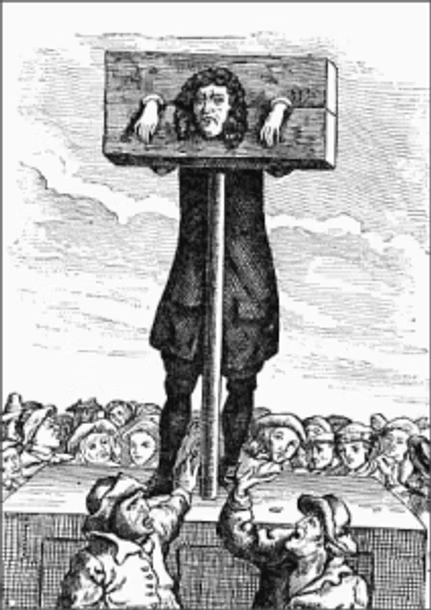
Having a full day (24 hours) for everyone to see just how small one is makes day two become representative of when one totally commits to serve God through death (repentance) or resolves to get revenge if given another shot at life (reincarnation).

Friday is called by the Jews “the day of preparation.” This is because there can be no work done on a Sabbath, so all cooking for the Sabbath is done on Friday (before 6:00 PM). Pause for a moment and think about the significant that Jesus’ dead body was prepared for burial on the day of preparation, so Jesus would be ready to rise on the day of the LORD. After the guard pierced Jesus’ side (rather than break his legs to hasten suffocation, if he had still been alive) and reported the confirmation of death to Pilate, then his body was taken down.  It was then moved to an appropriate place for washing and wrapping with his rabbinical prayer shawl (provided by family), a shroud to wrap the body (the shroud of Turin), and a face linen. By 3:00 PM on Friday, Jesus would have been dead for two full days; and at 3:00 PM is about when his body was placed in the tomb. This makes the seventh day of Holy Passover Week be Two Full Days Dead Jesus Entombed Friday. This is then the Sixth Day of the Jesus Return Counting.
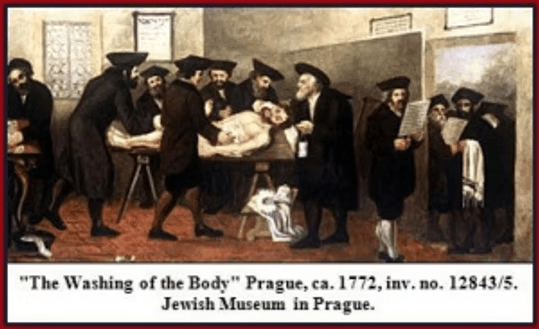
Baptism from repentance is followed by baptism for reception by God, which comes before baptism of the Holy Spirit. It is a Trinity of baptisms.

In the traditional Church, there is recognition of Saturday (the Sabbath) before Easter Sunday.  This recognition is known as the day of the Easter (or Paschal) Vigil. This element of a “vigil,” which means “an overnight watch,” is more than the women of Jesus going early Sunday morning to further dress the body with nard and possibly other adornments of ritual, knowing that Jesus was only temporarily placed in the tomb of Joseph of Arimathea. The element of a vigil is a Jewish custom, keeping in mind the Temple authorities and the Roman guards kept a vigil overnight on technical Saturday, but were frightened away by angels and the stone being rolled away (Saturday while it was still night).  Of this, Matthew wrote, “The guards shook for fear of him [Jesus appearing from the tomb bright and white as snow] and became like dead men.” (Matthew 28:4)

The Jewish word “shemira” means “watching” or “guarding.” The word becomes a noun when someone is employed as a shemira (males and females have gender modified variations of this word).  A shemira is typically someone Jewish who is paid to stay with a deceased body from death to burial, rather than a close family member volunteering to stay awake with the deceased’ body overnight, at a time when funeral planning must be done.
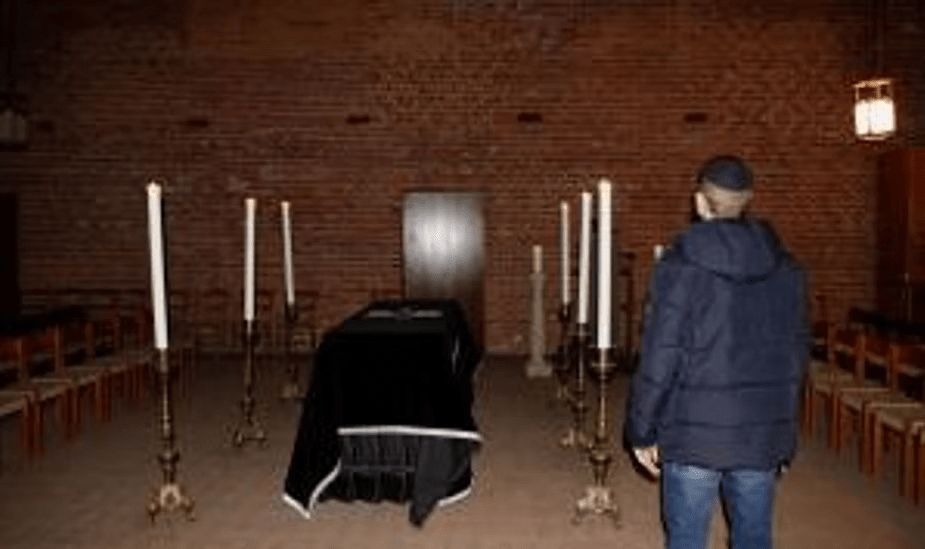
A male shemira is a Shomin.

This night watch is for three days, which is why Jesus foretelling he would be dead for three days was significant. The belief was based on knowledge that some dead people had come back to life, when thought dead, needing assistance when that happened.  Because of this having happened, and not wanting to entomb a body that might return to life naturally, a watcher was made part of the necessary funeral process. Still, as we read with Lazarus, the heat of the Middle East caused his body to begin decomposing, which brought about the stench of death. Less than three days “dead” meant a body that was possibly comatose, showing no sign of life but not dead, could awaken and make sounds for assistance. However, it was a belief that after three days no soul could come back into a dead body and return it to life (Lazarus was a true miracle, and that was why the chief priests plotted his death too).

As such, someone from Jesus’ family stayed near his body on the cross Wednesday night and Thursday night, as a vigil. On Friday night, when in the tomb, the Temple paid a shemira, who stayed with a Roman guard, in case a thief came to steal the body.

Now, if you have been keeping up with the timing of Holy Passover Week, Jesus was dead a full three days at 3:00 PM on the Sabbath, while in the tomb. The guard and shemira would not have to be there until 6:00 PM, but due to limits on walking distances on a Sabbath the shemira might have waited until 6:00 PM to leave home.  The change to technical Sunday would have allowed him to walk any distance, however far away the tomb was from that home. Jesus could have been removed by angels before the watchers arrived, during the day of the Sabbath. However, Matthew indicated the guards confessed sleeping while on watch, as they only woke up when the women made a commotion and they saw the tomb opened and were questioned: “Where have you taken him?”

This means the eighth day of Holy Passover Week must be called Our Lord is Risen on the Day of the LORD Saturday. This is then the Seventh Day of the Jesus Return Counting.

Knowing God has called one His bride is a great awakening within.

Note: It is not insignificant that Jesus rose on the seventh day, which (besides being the Sabbath day – Seventh day) means the day God deemed holy.  It is a day of rest, so one can contemplate God and His marvelous powers.  Therefore, it is a day when the devoted spend time alone with the Father … as Jesus did inside the tomb.  Plus, Jesus had time to neatly fold his shroud and face linen, as he talked with the Father.

It is important to realize that God planned for His Son to be offered up as the Paschal Lamb on a Sabbath and God planned for His Son’s soul to rise after three days dead on a Sabbath. With the day that soul rose again in the same flesh being on a Saturday AND the counting of Weeks being seven (one week passed), then one can see how seven Sabbaths later, on the eve of Pentecost, God planned for His Son to Ascend to his throne, next to God’s, on a Sabbath. On Pentecost (which then was on a Sunday, fifty days after Jesus was realized risen), Jesus Christ returned (his Spirit as the Christ) in eleven disciples, transforming them into Apostles, beginning the onset and spread of Christianity, from Judaic customs and commitments.  They then realized the return of Christ, as Jesus risen within them … Jesus Returned.

When you love explaining holy words, you have been given the gift of the Holy Spirit to speak in the tongue of the LORD. You begin Prophesying the truth when that resurrection comes.

It is important to see the forty days that the risen Lord spent with his followers, teaching them in Spiritual matters, stretched from the tenth day of the Jesus Return Counting, until the 49th day. Sunday, when Jesus first appeared to the women who loved him and relatives on the road to Emmaus, and his disciples in the upstairs room (twice), was the eighth day of the counting to Jesus’ Return. When Jesus appeared in unrecognizable form on the shore of the Sea of Galilee (a dream of John’s), that was on Monday, the ninth day of the Jesus Return Counting. Thus, when one reads in Acts, “To these [Jesus] also presented himself alive after his suffering, by many convincing proofs, appearing to them over a period of forty days and speaking of the things concerning the kingdom of God” (Acts 1:3), those forty days began on Tuesday, the tenth day in the Jesus Return Counting.

Hopefully, this article will become a seed for thought.  Analyze what I have presented.  Demonstrate your devotion by deeply pondering the possibilities, which have not been clearly seen since the lost sheep of Israel ceased relying on ritual training.  I firmly believe what I have written, but each Christian must be able to see what I see for him or herself.  Feel free to comment or ask questions.  Again, the Passion Play is largely left up to movie directors to interpret, since priests like to let the words speak for themselves, without explanation.  Each Christian must be in touch with the real meaning of this holy week of Passover.
Psalm 118:1-2, 19-29 – A round stone and flesh going up in smoke

1 Give thanks to Yahweh, for he is good; *

his mercy endures forever.

2 Let Israel now proclaim, *

“His mercy endures forever.”

—–

19 Open for me the gates of righteousness; *

I will enter them; I will offer thanks to Yah.

20 “This is the gate of Yahweh; *

he who is righteous may enter.”

21 I will give thanks to you, for you answered me *

and have become my salvation.

22 The same stone which the builders rejected *

has become the chief cornerstone.

23 This is Yahweh doing, *

and it is marvelous in our eyes.

24 On this day Yahweh has acted; *

we will rejoice and be glad in it.

25 Hosannah, Yahweh, hosannah! *

Yahweh, send us now success.

26 Blessed is he who comes in the name of Yahweh; *

we bless you from the house of Yahweh.

27 el is Yahweh; he has shined upon us; *

form a procession with branches up to the horns of the altar.

28 “You are eli, and I will thank you; *

you are my elohay, and I will exalt you.”

29 Give thanks to Yahweh, for he is good; *

his mercy endures forever.

——————–

On March 31, 2021 I posted an interpretation of this Psalm, which is read each Palm Sunday, in Years A, B, and C. I recommend reading that analysis by following this link here. I am reposting this with adjustments in the NRSV text, which I was not making in my earlier commentary. You will note that there are ten places where David wrote the proper name “Yahweh,” only to have some modern English translation service change that proper name to a generic “Lord.” Also, in verse nineteen, the word written by David is “Yah,” which is an abbreviated form of “Yahweh.” I have restored that written by David in bold type.

In verse twenty-seven is a use of the Hebrew word “el,” which is misleading to translate it as a capitalized “God.” It and the two forms of “el” that are “eli” and “elohay” (both translated as “my God”) are misleading in the way they were translated; so, I have restored the Hebrew text [transliterations] in italics. I will explain my reasons for this soon.

This song of praise is closely associated with the entrance of Jesus into Jerusalem, prior to his final Passover festival there. The whole of the theatrics of that “triumphal entrance” is anything but. In Zechariah’s prophecy, where verse nine says, “your king is coming to you , righteous and having salvation he , lowly and riding on a donkey , and upon a colt foal of a donkey .” That prophecy, which Jesus fulfilled, says everyone who thinks Yahweh is going to send some human hero to become another temporal David reborn is a fool. The prophecy say celebrate the fact there will never be anyone other than Jesus. Thus, that needs to be understood in this song of David.

In verses nineteen and twenty, David wrote of “the gates of righteousness” and “the gate of Yahweh.” This needs to be merged with Zechariah’s prophecy of “the king is coming to you.” Prior to Zechariah writing that, he called to the “daughters of Zion [meaning Dryness]” and the “daughters of Jerusalem [meaning “Teaching Peace],” with “daughters” needing to be seen as every soul living in a body of flesh. A body of flesh is a “daughter,” who is then the bridesmaid of Yahweh. The ”gate” is then the marriage pathway to a soul, penetrated by the divine. The “king” is then the new Lord over one’s flesh, which is the “righteousness” of “Yahweh.” The symbolism of Jesus riding a donkey colt into Jerusalem, through the Dung Gate, says one is sacrificing one’s soul to a most divine possession. Nothing in the material world will catch one’s eye, as all heads are bowed in total submission to Yahweh, because salvation is one’s only prayer being answered in holy matrimony.

In the past several months (or so), I have come to an entirely new view of the meaning of verse twenty-two, which sings, “The same stone which the builders rejected has become the chief cornerstone.” When writing about the stone that sealed the tomb where Jesus’ body had been laid (the tomb of Joseph of Arimathea), it dawned on me how such a round stone was symbolic of how being reborn as Jesus places a movable stone, which allows a soul to escape a sealed in death, gaining eternal life. It makes no logical sense that any builder of merit would reject a solidly fashioned cube of stone as a cornerstone for a permanent building. However, they would reject a round stone all day long; and, that means one is not building materially (where mortals have no permanence), but spiritually.

The death one avoid by the round stone as one’s cornerstone is that of being a soul born into mortal flesh. Flesh is “mortal” because it will die. When the flesh dies, then the soul is released for Judgment. To be found sealed in a tomb with a squared stone sealing the entrance-exit, then death means coming back again into a body of flesh that is bound to die (repeated death). Only when one’s soul has been married to Yahweh and merged with the soul of His Son can one die of self, without physical dying. One becomes a changed person, as a Saint.

Verses twenty-three through twenty-six sing repeatedly (six times) about “Yahweh.” When we hear the song say, “This is Yahweh’s doing,” that is creating a Son that will be the stone rolled away after death, so one resurrects spiritual as Jesus did. We become Jesus because of Yahweh. This is divine marriage; so, when verse twenty-six sings, “Blessed is he who comes in the name of Yahweh,” the ”name of Yahweh” says one’s soul has taken on His name in marriage AND one has been born in the name of Jesus, as a Christ.

In verse twenty-seven, where David sang, “form a procession with branches up to the horns of the altar,” this sings of a wedding “procession.” The “horns of the altar” are features of the Temple (Tabernacle for David) altar of sacrifice. Thus, marriage to Yahweh means the sacrifice of one’s soul, so it no longer claims control over one’s born flesh. Self goes up in smoke, which is a delight to Yahweh.

When verses twenty-seven and twenty-eight then mention “el” and then “eli” and “elohay,” this sings of the ministry in the name of Jesus that comes. An “el” is an eternal presence, like an angel is. A soul is an eternal entity, but it is not an “el,” per se. An “el” is a spiritual possession within one’s soul-flesh. This can be a demonic spirit that possesses a soul, making it do evil deeds. However, when “el is Yahweh” is stated, that becomes a statement of a divine possession, by Yahweh’s Spirit. That then leads to David singing “my god” (“eli” and “elohay”), these come in quotation marks, as said to a soul by Yahweh. That means Yahweh has heard one’s cries of “thanks” and told those souls “You are mine, as Yahweh elohim.”

As a Psalm that will be sung outside a church, in a precession into a nave for the reading of so much scripture that none of it can be preached (in a twelve minute timeframe), that means the test of Lent is to do your own contemplation about what scripture means to your own soul. Everything in Scripture is valuable insight towards deep faith. Going to a church to have priests do nothing that teaches the meaning of the Word says the blind are leading the blind to a huge pit. One must have more than twelve minutes to devote to Yahweh a week; or, one must plan on repeating life all over again (if lucky).

Isaiah 50:4-9a – A Passion prerequisite that requires a Teacher of Yahweh to explain

[4] adonay Yahweh has given me

the tongue of a teacher,

that I may know how to sustain

the weary with a word.

Morning by morning he wakens–

wakens my ear

to listen as those who are taught.

[5] adonay Yahweh has opened my ear,

and I was not rebellious,

I did not turn backward.

[6] I gave my back to those who struck me,

and my cheeks to those who pulled out the beard;

I did not hide my face

from insult and spitting.

[7] wadonay Yahweh helps me;

therefore I have not been disgraced;

therefore I have set my face like flint,

and I know that I shall not be put to shame;

he who vindicates me is near.

[8] Who will contend with me?

Let us stand up together.

Who are my adversaries?

Let them confront me.

[9a] It is adonay Yahweh who helps me;

who will declare me guilty?

——————–

This song of Isaiah is read on every Passion Sunday (a.k.a. Palm Sunday), in Years A, B, and C.

September 2018 can be searched here. This is what my observations were, when this reading was part of the Proper 19 readings, for the seventeenth Sunday after Pentecost lessons.

March 2021 can also be searched here. This was what I wrote when this was part of the Passion Sunday Year B service.

August 2021 also in here to be searched. This was when the same reading is presented on the sixteenth Sunday after Pentecost [Proper 19], during Year B.

In my last commentary, I adjusted the text to show “adonay,” “wadonay,” and “Yahweh.” I pointed out how that does not mean “the Lord God.” The word “adon” is the singular number Hebrew word that says “lord” (not capitalized), with the two variations of “adonay” being the plural version, clearly saying “lords.” To then pair that with the fools who translate Hebrew into paraphrased English (besides their changing a plural word into the singular and capitalizing that as a singular “Lord”), they all of a sudden stop translating “Yahweh” as “the Lord,” making Him be a “God.” Of course, they could explain that by saying, “Oh! Our paraphrase switched the order of the words written, so we translated “Yahweh” as “the Lord,” making “adonay” become “God.”’ Still, that ignores the plural number and their lie needing to be translated as “the Lord of lords.” That would actually be more in line with the true meaning of “adonay.”

In the time that has passed since August of 2021 (six months), I have come to realize more clearly that “adonay” is similar to the Hebrew word “elohim,” but with a slightly higher connotation. One of the “elohim” (an “el”) is an ‘angel in the flesh,’ which means a soul in a body of flesh has become married to Yahweh, with His Son’s soul (that of Adam-Jesus) resurrected within that soul hosting flesh, becoming divinely possessed. That divine possession is an “elohim” (one being an “el”). One has to reach that state of existence to become a Saint, one in the name of Jesus, as a Christ. That is the basic statement of divine possession. However, becoming one of the “adonay” (or “adonai,” as an “adon”) is the purpose for Yahweh divinely possessing a soul animating flesh; and, that is to teach.

In verse four, this aspect of teaching (as a Saint) is explained as Isaiah singing, “adonay Yahweh has given me the tongue of a teacher, that I may know how to sustain the weary with a word. Morning by morning he wakens — wakens my ear to listen as those who are taught.” This becomes why the disciples called Jesus their “Teacher, Master, or Lord.” In John 13:13 (when Jesus had washed the feet of his disciples at the Seder meal in the upper room), he said, “you call me This Teacher kai this Lord , kai honorably you say , I am indeed .” This is the truth spoken by Jesus, because his soul in his flesh was not only as a Yahweh elohim (the Son of Yahweh reborn – Adam’s soul returning as one whose name says, “Yah[weh] Saves”), but also as the epitome of an “adon” or “lord,” as a “teacher” of those who sought the truth of Yahweh. Isaiah was another soul in human flesh that was an “elohim,” who was sent out to others, for the purpose of being “a teacher” of Yahweh’s truth.

Verse four states that clearly.

In the rest of these verses, which I have commented on prior (multiple times), it is important to see that an “adonay Yahweh” is a divine “teacher” of truth, where he listens to that told to his possessing soul (Adam-Jesus) by Yahweh [as Jesus said, “For I myself have not spoken, but this having sent me Father the same, me a commandment gave what I should say kai what I should speak.” – (John 12:49)]. These verses from Isaiah 50 reflect that same obedience, as a soul divinely possessed by the Father – Yahweh. Thus, it is important to see how the persecution of others, who direct their anger at anyone who acts righteously, to force them to stop pretending to be ‘holier than thus,’ because they do not believe such righteousness is truly possible. It is not only possible; but Isaiah (and Jesus too) sang how he could withstand the punishment, because he knew his ego had already been sacrificed for a much higher cause. Isaiah (and Jesus too) knew that punishment resulting in death would only release an “elohim” soul to eternal life, having already died as a lord over one’s flesh.

As an Old Testament song sung inside a nave, prior to the reciting of about two chapters of Luke (in Year C), no priest will have the balls – nor any parishioners have the guts – to spend a whole day explaining and listening to explanations (verse by verse), about everything that has been read aloud on what is called “Passion Sunday.” That is a reflection that no one is an “elohim,” no one is a Saint, no one is an “adon” of Yahweh, and (certainly) no one is Jesus reborn, as a Christ. It says Christianity has been reduced to some form of entertainment that is all about the pageantry of show, with no one ever able to become a teacher like Isaiah or Jesus. The only thing anyone gets out of this day is a blade of palm branch … and that is then given back to the church, so they can form them into crosses that will be passed out at another time, before collecting those to be burned for ashes to be added to oil (used on Ash Wednesday – more pageantry).

Aside Note:

In case this is difficult to grasp, it really is not. A soul in a body of flesh is the “lord” (“adon“) of its flesh … the flesh into which Yahweh breathed a soul at birth. As a child that grows, the fleshy brain (the seat of one’s “lord” or “adon“) is taught many things: from the environment, from parents, from friends, and from school teachers. A fleshy brain absorbs knowledge like a sponge (with not all knowledge the truth). When puberty kicks in, the body of flesh (extensions of the fleshy brain) begins to scream out, “Hey! What about me!” The body of flesh slowly becomes the “lord” over the brain, so the brain begins to justify the desires of the body of flesh. This is regardless of what one has been taught to guard against. Then, it takes an innocent soul and enslaves it to follow the whims of the flesh, which is what religion says are sins. While sins are natural, some become addictions. External things of the world … like drugs, sex, money … become influences (gods or elohim) that take total control over a soul and its body of flesh, making it not only sin, but do heinous acts that are criminal. In the Bible are stories of those demonically possessed; and, such demonic possessions are the presence of an evil soul within one’s birth soul. This becomes the “lord” or “adon” one was naturally born with being enslaved by a Satanic or Devilish soul that joins with one’s soul; and, that demonic presence becomes one’s “Lord.” This capitalized “Lord” is why a true Christian does not want to refer to Yahweh as something so general and non-specific. To have evil demons cast out, one needs to seek Yahweh’s help. That leads to an encounter with a Saint, who is a normal soul possessed by Yahweh’s Spirit, reborn with Jesus as his “Lord.” That presence initiates the Spirit, sent by Yahweh’s Son’s soul to enter one’s natural soul, casting out all bad demons. That is Baptism by the Spirit, which cleanses a natural soul, in the marriage of a soul to the Yahweh Spirit. The presence of Jesus’ soul within one’s soul (a good possession of spirit – the resurrection of Jesus within) makes his soul become one’s “Lord” or “Adon.” Jesus rules as “Lord” over one’s natural soul and its flesh. Rule over the natural soul ensures that soul a return to be one with Yahweh, when it leaves its body of flesh. If you would like to read more on this subject, look up Eudaimonia. The root word there is “daímōn,” which is where the word “demon” comes. It actually refers to a “spirit,” which is like a “soul.” One needs to realize there are bad spirits and there are good spirits. The capitalized “Spirit” (“Pneuma“) is the best Spirit to be possessed by. It is the challenge of a soul’s presence in matter. The soul must find the way back to Yahweh. Matter becomes the tomb, as well as the “Lord” to overcome. The antonym is “Disdemona” (from Greek “δυσ + δαίμων), which means “ill-fated, unfortunate.” Any spirit that takes over a body of flesh, enslaving a natural soul to serve it, is a “Lord.” A natural soul cannot defeat any “Lord.” Thus, a soul must surrender itself to Yahweh in divine union, which means His Son Jesus (“Yahweh Saves”) is one’s “Lord,” who defeats all others “gods” or “elohim.”

Psalm 31:9-16 – Begging for mercy when you don’t really think you need it

9 Have mercy on me, Yahweh, for I am in trouble; *

my eye is consumed with sorrow, and also my throat and my belly.

10 For my life is wasted with grief, and my years with sighing; *

my strength fails me because of affliction, and my bones are consumed.

11 I have become a reproach to all my enemies and even to my neighbors,

a dismay to those of my acquaintance; *

when they see me in the street they avoid me.

12 I am forgotten like a dead man, out of mind; *

I am as useless as a broken pot.

13 For I have heard the whispering of the crowd; fear is all around; *

they put their heads together against me; they plot to take my life.

14 But as for me, I have trusted in you, Yahweh. *

I have said, “You are elohay.

15 My times are in your hand; *

rescue me from the hand of my enemies, and from those who persecute me.

16 Make your face to shine upon your servant, *

and in your loving-kindness save me.”

——————–

This is the Psalm that will be read aloud in unison or sung by a cantor (inside the nave), after a congregation has met outside the inner sanctuary of a church, holding palm spears and reciting in precession verses from Psalm 118. Here is when they begin to go brain-numb from having reached their maximum normal Sunday allowance of readings, with still many more minutes of readings to come, before wondering, “Now I remember why I only go to church a couple of times a year!” They have shown up on Palm-Passion Sunday because there is no sermon; but, they show up having forgotten how dreadfully long the service is.

In March 2021 I posted this commentary on this selection from Psalm 31, which can be searched here by that name and number. That was when this same Psalm selection was part of the Year B schedule of readings. This Psalm selection is read every Passion Sunday, in Years A, B, and C. It is not read at any other time in the lectionary schedule; so, because no sermon will ever be preached on a Sunday when the Episcopalian ‘twelve minute rule’ has already been broken by reading aloud half the New Testament (well, almost two chapters of Luke in Year C), nobody’s brain is capable of focusing on religious thought. Like everything about finding true Salvation for a soul … it is best done alone, without allowing any church to get in the way, mucking everything up.

I have come to the conclusion that the reason Christians allow their English translation service to change “Yahweh” to “the Lord” and “elohay” to “our God” is because they do not want to ever accept a Jewish dedication to scriptural memorization. Christians would much rather learn five sets of verse and chorus from a popular song book: example being Silent Night or Old Time Religion (where scripture has been aborted by some songwriter that never understood any meaning to scripture), than to memorize one hundred fifty psalms, divinely inspired by David (and maybe others) – In Hebrew – because that would take away from so much party time in life (by whatever means one calls ‘partying’). So, even though most modern Jews know some Yiddish and pretend to be closer to God because of extensive early education in religious scripture, Christians want to be known for being dumb as stumps, while superior because the Jews rejected Jesus.

This Psalm selection is chosen to be sung aloud on Passion Sunday, because the Passion (a word meaning “suffering,” not sexual rubbing) never is about Jesus. It is repeated year after year because of all the new souls that need to be “Suffering” like David wrote of them all begging for forgiveness. Those who only show up at some Christian church to be entertained a few times a year will find their souls in this position one day … because ALL MORTALS DIE. Bodies of flesh do not beg for forgiveness. Souls do.

As a song of lament and begging for forgiveness (something David did later in life, but Jesus never did) to be read aloud on Passion Sunday, the point is to foresee your own worthless soul facing your inevitable death and have a ‘come to Jesus’ talk with Yahweh [learn his name you lazy sinner!]. Learn that when David sang, “I have said, “You are my gods,” that truly means Yahweh says to His ‘angels in the flesh’ – His elohim – “You trusted in Me, when you became extensions of Me on earth … as Yahweh elohim. An “elohim” is only going to receive the Salvation of eternal life. Party hardy you fools and find this truth out when you miserable end times come. Then prostrate your souls before Yahweh and explain to Him why you never had time to serve Him in life. Now is the time to practice being sincere with you future answer … in tears … knowing something bleak is going to be your Judgment.

Philippians 2:5-11 – This is important to understand

[5] Let the same mind be in you that was in Christ Jesus,

[6] who, though he was in the form of God,

did not regard equality with God

[7] as something to be exploited,

but emptied himself,

taking the form of a slave,

being born in human likeness.

[8] And being found in human form,

he humbled himself

and became obedient to the point of death–

even death on a cross.

[9] Therefore God also highly exalted him

and gave him the name

that is above every name,

[10] so that at the name of Jesus

every knee should bend,

in heaven and on earth and under the earth,

[11] and every tongue should confess

that Jesus Christ is Lord,

to the glory of God the Father.

——————–

This is the Epistle selection to be read aloud, along with two thousand, five hundred sixty three other words of scripture (Old Testament, Psalm and Gospel), on the day called “Passion Sunday.” This Word Count total does not include the “Palm Sunday” readings done outside a nave (a Gospel and processionary Psalm), while holding palm spears. Due to the excessive amount of readings collected for one day [Moses warned the children of Yahweh not to collect more manna than could be consumed in one day [unless it was a Friday, when two days’ worth could be gathered], it will turn to maggots and mush, being all pomp and circumstance – a ‘photo op.’ However, it is entertaining and the people do love a show. They come out from under their rocks for Sundays when they do not have to listen to some sinner pretend to know a thing or two about righteousness (at least the clothes the righteous wear).

In March 2021 I posted a commentary on Philippians 2 that can be searched here. I will let that stand for what I still believe should be found in these verses. However, as divine Scripture is so marvelous that it always has a way of shining new truths unseen before, I will add a couple of nuggets of insight for this posting (maybe new, maybe not, as it is hard to remember thirty minutes ago, much less three years back in time).

Do I just go home after a service with no sermon and do nothing? Or, do I take some responsibility to do something on my own, as I go forward?

The first verse of this selection from Paul’s letter to the true Christians he helped usher into that state of being says what must be grasped firmly, in order to have a true clue about what Paul meant … in any of his letters sent to true Christians everywhere [those able to read his words]. The Greek words he wrote are these: “Touto phroneite en hymin ho kai en Christō Iēsou”. In that are three capitalized words; and, all capitalized word in divine Greek Scripture bear an elevated state of meaning, relative to Yahweh. Then, there is one use of the word “kai,” which is a marker word that does not get read as “and,” but as a direction to look for importance to follow.

The capitalized word “Touto” takes it to an elevated state that is beyond a simple “this.” It is a word that points back to that which had just been said (written in verse four, but unread here), which the NRSV shows saying: “Let each of you look not to your own interests, but to the interests of others.” That means “This” is referring to self-sacrifice, such that in a Spiritual marriage of one’s soul to Yahweh, it is not simply (“this”) for one’s benefit alone. It is, instead (“This”) to be “to the interest of others,” so “you have understanding, think, judge, observe, and care for” [the meaning of “phroneite”]. “This” is not something natural to a normal human being of the selfish world, which takes great delight in “looking to your own self-interests.” As such, “This” is divinely elevated to have come “within your souls this,” which is read from the Greek words “en hymin ho.” There, “hymin” is normally translated simply as “your,” as the possessive pronoun written in the second-person plural; but when “This” is relative to Yahweh’s presence, which only deals with souls, “your” becomes “yourselves,” with a “self” understood to be a “soul.” Therefore, “This” divine ability to not be selfish means “your souls” have achieved “this,” when Yahweh’s Spirit is “within” one [not far, far away, externally, seeing heaven as in outer space].

Following the use of “kai,” Paul then explained what “within” means [from “en”]. He said “This” leading to “this” [from “Touto” and “ho”] is “within” [“en”] because one’s soul has been “Anointed” by Yahweh’s Spirit [the truth of “Christō”]. “This” is a most divine presence that comes upon one’s soul after that soul has submitted to Yahweh in holy union. The presence of Yahweh – becoming a ”Christ” – means all the selfishness of a sinful world has been washed away from one’s soul, so one’s filthy ass soul has become squeaky clean. That means the onset of a “Christ” [Yahweh’s “Anointment”] clears the way for one’s weak ass soul to be joined with His Son’s soul – two souls in one body of flesh. Once “Jesus” is resurrected “within” one’s soul, then his divine soul takes the place of one’s weak ass soul [the lord over its flesh, until the flesh has a revolt of lusts and turns a soul into its earthly slave] into flesh led by a most holy “Lord” [as seen in verse eleven].

The rest of this selection from Paul’s letter (presented as a song of praise) says oneself – one’s soul – steps to the rear and lets Jesus take over. The meaning of the name “Jesus” is “Yahweh Saves.” Without Jesus becoming one’s “Lord” of the flesh, one will always be sinning, because one’s soul is so weak and powerless to tell the flesh, “No!” The flesh bows down to the soul of Jesus, just as demon spirits would flee the bodies they possessed, when Jesus came near (during his physical ministry one earth). When one has been reborn as Jesus, then one can have the same effect on others; as long as one realizes that has nothing to do with glorifying one’s sorry ass. “This” divine possession is only so Yahweh can send His Son into a body of flesh to minister to others again.

As a selected Epistle reading on Passion Sunday, when nothing will ever be said about these important verses on that day. Fortunately, these same verses (within Philippians 2:1-13) will be read on the Proper 21 Sunday, in the Year A. So, at least there is a chance someone might pontificate some social politics and condemn his or her soul by using the name “Jesus Christ” as why social politics is so important. That is more maggot mush; so, please do not eat that crap. It is vital that one’s soul understand what Paul wrote. He wrote the same things over and over again, all truth, all meant for your soul to realize. The realization comes from taking more than one Sunday every year in devotion to Yahweh and becoming His Son reborn (regardless of what sex organ your body of flesh has).

Side Note: I had an elderly gentleman in a church Bible Studies class once ask the question, “Certainly nobody here thinks he or she is Jesus, do they?” This elderly man was a regular contributor to that church; so, being Jesus was never to be (in his mind). Going “to heaven” was all about sending money in regularly to that church and having a spot claimed in a pew, with pillows and tissues marking that spot as one’s.

The truth of this path to Yahweh is it is wrong. Upon the Judgment that comes from death, when a soul stands naked, colorless, moneyless, and wearing the face of self, not Jesus as one’s spiritual Lord, the cold realization is just how wrong it is to think “Certainly nobody here can be Jesus.” This is because, before Yahweh, He will say, “Nice try. The answer to your question is this: Every soul to be saved must be Jesus reborn. Now, this next life I will take away all your money, so you cannot buy pillows and boxes of tissues; so, you will know you must come back as My Son reborn. Sound good to you?”

This is when all shivering souls respond, “You know, Yahweh.”

Take this and realize the truth:

“They will come with weeping; they will pray as I bring them back. I will lead them beside streams of water on a level path where they will not stumble, because I am Israel’s father, and Ephraim is my firstborn son.” (Jeremiah 31:9, NIV)

The name “Ephraim” means: “Two-fold Increase; Doubly Fruitful.”

Ephraim was a son of Joseph. He was a twin born with Manasseh, where Manasseh was born first. Ephraim was blessed by Joseph, not Manasseh, in the same way Jacob was the second-born twin with Esau, whom Isaac blessed. For Joseph to name his son “Doubly Fruitful,” he realized that when a second baby popped out of Asenath’s womb. Therefore, for Yahweh to speak through Jeremiah and say, “I am Israel’s father, and Two-fold Increase is my firstborn son, it means this:

Adam was the firstborn Son of Yahweh. Adam is the soul that was returned by Yahweh into the baby Gabriel announced to Mary, whom he told, “You shall name the baby Jesus. “Jesus” means “YAH Saves” or “YAH Will Save.” This says the soul of Adam (called Yahweh elohim in Genesis 2) is the firstborn of Yahweh, who is the father of Israel.

The name “Israel” means “He Retains God” or “God Is Upright.” “Israel” was the name bestowed upon Jacob, after his sorry ass wrestled with his sinner soul all night long, finally telling his sinner soul, “Get behind me Satan!” For winning that wrestling match, Jacob became “Israel,” as his “Doubly Fruitful” name – his Spiritual name – for having been reborn with the soul of Yahweh’s “firstborn son” – Adam.

To be “Two-fold Increase,” one’s sinner soul must be washed pure by the Anointment of Yahweh (made “Christos“), at which time one’s once sinner soul is joined by the soul of Adam, who now goes by the name “Jesus,” because “YAH Has Saved” a soul, as being given a Lord within, who will not allow a cleansed soul to every become dirty again. This means one lives righteously or “Upright As God.”

This is then divine possession, or a “guiding spirit of good,” called eudaimonia by the Greeks, which means the call of lost souls it to become Jesus resurrected within one’s flesh, as the Son of Yahweh reborn. Anything short of that is not a soul “Saved by YAH.” (Not “Jesus”).

Passion Sunday Year C – Seventeen omers of manna to be spread out over two-plus weeks (Part I)

It is very important to preface this presentation by saying this: The indoors production of what is commonly called “The Passion Play” follows the outdoors production of that called “The Liturgy of the Palms.”

In Exodus 16:4 is read, “Then Yahweh said to Moses, “I am going to rain bread from heaven for you, and each day the people shall go out and gather enough for that day. In that way I will test them, whether they will follow my instruction or not.”

Because Palm-Passion Sunday is still in the testing period of Lent, this verse should be seen as Yahweh giving all who say they believe in Him and His Word through Scripture a clue that says, “Here is how I test faith.”

In Exodus 16:16-19 is written: “This is what Yahweh has commanded: ‘Gather as much of it [manna] as each of you needs, an omer to a person according to the number of persons, all providing for those in their own tents.’” The Israelites did so, some gathering more, some less. But when they measured it with an omer, those who gathered much had nothing over, and those who gathered little had no shortage; they gathered as much as each of them needed. And Moses said to them, “Let no one leave any of it over until morning.”

Aaahhh. But human beings are like children that do not listen. They love to fail tests. So, in Exodus 16:20-21 says this: “But they did not listen to Moses; some left part of it until morning, and it bred worms and became foul. And Moses was angry with them. Morning by morning they gathered it, as much as each needed; but when the sun grew hot, it melted.”

On the sixth day (Friday), the Israelites were allowed to collect two days’ worth, so they had to do no work on the Sabbath Day. Still, they only had one day’s worth of manna to consume; never having fifteen days’ worth.

On the fourth Sunday in Lent this Year C (three Sundays prior, or fourteen-fifteen days ago), the Old Testament reading was from Joshua 5, where we read: “The manna ceased on the day they ate the produce of the land, and the sons of Israel no longer had manna; they ate the crops of the land of Canaan that year.” (Joshua 5:12) The deeper meaning of that verse says manna from the sky ceased, but spiritual food became those who were truly “sons of Israel.” The source of spiritual food was within those who Joshua crossed over into the Promised Land [which is not physical land, but a marriage of a soul to Yahweh’s Spirit – a Yahweh elohim, divinely saved]. As such, that state of blissful marriage only lasted a year; and, then they began having children and not teaching them how to do as they had become, in order to be truly “sons of Israel.” They soon fell onto hard time, needing to receive their spiritual food from Judges, Samuel, David, and a series of Prophets. Still, those only passed out spiritual food in daily amounts, not half-month loads.

The land, once the “sons of Israel” diminished to a trickle of souls, split and fell into ruin, scattering the peoples around the known world. When a few ‘sons of Israel” led some people back to what was once their physical earth once owned, but since lost, a new series of “sons of Israel” began dispensing spiritual food. The Gospels, Acts, and the Epistles are their versions of ‘manna from the sky.’ Still, only a daily allotment will lead a soul to being Spiritually self-sufficient, able to become a Yahweh elohim – a “son of Israel” (regardless of human gender). Cutting off huge chunks and letting them go uneaten before the next day’s sunrise means that huge chunk melts in the next day’s sun, turning to maggots and stinking to high heaven. That makes Yahweh angry.

The moral of this story I have told is this: I am going to salvage the spiritual food carved from Luke’s Gospel, and place it into omer-sized baskets for one’s daily nourishment from ‘manna from the sky.’ Any church that presents over 2,500 words in one morning service cannot possibly spend the time necessary to explain that spiritual food, so it has the benefit intended. It is like offering an all-you-can-eat buffet of Christian religion, paying nothing to get this freely provided ‘manna,’ while expecting to receive twenty dollars a head for using it in pageantry, not caring if it all goes to waste. To eliminate the shame that comes from just a couple of morsels here, which have been served up as one huge Passion Sunday dinner, will ever be taken out again (like leftovers) and served at other times in a three-year cycle; I will address everything as an individual lesson that should be known.

As I have now completed this project (one that was well worthwhile), I will say that I began it on one day, completing it eleven days later. I want you to think about that.

In eleven days, I examined ever word of every verse; and, there are 113 verses. Having never been told any of the meaning to those 113 verses (with Palm Sunday’s Gospel reading adding another thirteen verses), people calling themselves ‘Christians’ will go a lifetime never fully understanding the powerful message that Yahweh had Luke write. AND … that is just one of the four Gospels that tell additional details to this “Passion Play!”

In the past eleven days, I have written almost in a trance, so at this point there are plenty of nits and burs (misspelled words and grammatical errors) that will run off all English teachers (I presume there is a special place in hell for them, for that reason). So, beware reading unedited texts. My email is available for any questions (like that would ever happen!); but I feel enough is clear enough to see how much is missed in the theatrics of a “Passion Play,” when the players have no true passion (pains of dying with Jesus within).

It is important to know that this story is not told so everyone remembers how Jesus sacrificed his life so others could be saved. It is told (one way or another) every year because those sitting in the pews are killing Jesus over and over again, never once stopping to think, “I wonder what true commitment like that feels like?”

Every true Christian needs to see just how much they play the role of Temple Jews … the Sanhedrin … screaming at Pontius Pilate, “Crucify him!” More people calling themselves ‘Christians’ show up for church on this Sunday and the following Easter Sunday; so, they must prefer killing Jesus, rather than killing themselves so they can be reborn as Jesus.

For all the lazies that only have an hour or two a year for church things, I have made it easy to read each little section, one at a time, as your lazy leisure. Just click on the links

Don’t thank me. Enjoy! Eat all seventeen meals (over seventeen days or a lifetime) and grow into a true “son of Israel.”

Here are the first nine.

Part I, Divisions A through I (Luke 22:14-71)

A: Luke 22:14-23

B: Luke 22:24-30 [verses 24-30 also read on Saint Bartholomew – a Wednesday in 2022]

C: Luke 22:31-34

D: Luke 22:35-38

E:Luke 22:39-46

F: Luke 22:47-53

G: Luke 22:54-62

H: Luke 22:63-65

I: Luke 22:66-71

Passion Sunday Year C, Seventeen omers of manna to be spread out over two-plus weeks (Part II)

The change of chapters has to be seen as significant, in the terms of timing. All of the readings from Luke’s twenty-second chapter begin after six o’clock in the evening. Everything must be seen in terms of a fixed number of days in the Passover festival recognition, which is eight days: It begins and it ends on the same day of the week – ALWAYS. In this case – Jesus’ final Passover festival, where he is the sacrificial lamb – The first day of the Passover was a Sabbath, which began at 6:00 PM on the Friday night prior (14 Nisan). Because there are two Passover Seder meals that the Jews recognized then (and still today), the first Passover Seder was in Bethany, at Simon the leper’s house. Because travel from Bethany to Jerusalem (the upper room in the Essene Quarter) would be beyond a ‘Sabbath’s day’s walk,’ Jesus and his disciples and all family members in Bethany would have not begun to go there, from Bethany, until after six in the evening (in the Evening Watch of night). That travel would have been on an official timing of Sunday, on 15 Nisan. Therefore, everything written in Luke 22 told of the events that spread from about 6:45-ish P.M. on Saturday night (officially Sunday) 15 Nisan and extended into the Morning of Day, before the Sanhedrin, on official first day of the week. The arrest followed Jesus’ second Seder meal for that Passover, therefore his “last supper” (as opposed to his first supper).

Realizing the story of Joseph and Mary, when Jesus was born (unexpectedly) in Bethlehem, the reason there was “no room at the inn” was all the surrounding villages and towns of Jerusalem were packed like sardines, due to the Passover. Pilgrim from all around the globe had traveled there for this event; and, they would remain there until the Shavuot Festival (the fiftieth day, or Pentecost). So, imagine the tourists in a city for a Super Bowl, or coastal citizens fleeing their homes to an inland city, when a major hurricane is forecast. Everywhere is packed with people. There are no idyllic, peaceful roads, where silence and solitude are easily found. Due to that hectic level of activity, the Roman soldiers in the garrison of Fort Antonia and surrounding forts and placements, were on high alert to make sure no riots were caused by Roman force. All non-Jews headed to, through, or by Jerusalem would have been halted and forced to camp or take another route. Only Jews would be allowed in Jerusalem; and, it would have been packed with Jews. Because of that heightened level of people, there would be a long list of citizens requesting an audience with public officials; and, there would be no city clerks leaning on the elbows with nothing to do. All would be working feverishly to keep up with heightened demands for attention. Therefore, anyone who thinks Jesus went from seeing the Sanhedrin, to seeing Pilate, to seeing Herod Antipas, to back to seeing Pilate in one day is an idiot, who does not realize what getting a day in court demands. Try calling the governor’s office for your state and tell them you demand to see the governor in two hours. You will find out you are an idiot and certainly unimportant.

This means the text of all the Gospels that tell of the same time period during Jesus’ sacrifice as the lamb of Yahweh are not written to denote a short timeframe between verses. The Passover Seder meal begins after six o’clock, but Jesus’ arrest was around one in the morning, some six hours (or so) later. When Matthew and Mark and Luke says Jesus bork bread and then blessed wine, there was real time that passed between the verses that act as stenographer notes, in between sips of wine and eating a ritual dinner. Thus, in the same way, one can see a day taking place between Jesus being told to send Jesus to Herod, because all Galileans were under his area of rule. Herod was a king (puppet to Rome as that title was), but at this time the puppet ruler of Canada is acting like a baby tyrant, threatening peaceful demonstrations; but the word out recently says his family is in hiding, due to threats on his baby tyrant life. So, some person name Jesus of Nazareth, who Josephus belittles as nobody significant, was not some mega rock star or Hollywood celebrity, who would demand any ‘cutting in line,’ just so Herod could see him a.s.a.p.

Because it is shown that Jesus’ dead body was taken down from the cross on a Friday, when there had to be special approval to take a criminal’s body down before death had occurred – a statement that crucifixion was not a speedy form of death – it is highly likely that the other two men crucified on the same day as Jesus were near death, but still alive. That led to Jesus being proved to be dead, which allowed for his body to be taken down on Friday, when three days had not yet passed. Because Jesus appeared before the Sanhedrin on a Sunday and was taken down from his cross on a Friday, five days had passed, with the last two being when Jesus hang dying and dead on the cross, before being taken down. This timing says Jesus appeared before Pilate on Sunday; and, then he appeared before Herod Antipas on Tuesday morning, before being brought back to Pilate on Tuesday afternoon. Tuesday after noon was when Barabbas was chosen to be freed; and, Tuesday evening Jesus was scourged, then kept in a cell overnight. Wednesday morning he was led to Golgotha, crucified and died by three o’clock in the afternoon. He had been dead forty-eight hours when speared and taken down on Friday. Thus, it was on his Father’s day – the Sabbath – that Jesus resurrected, at three o’clock in the afternoon. All of this must be seen as planned by Yahweh.

Each of these nine sections from Luke 23 will be discerned separately and posted separately. A link to each commentary will be created, so all are welcomed to understand the great depth that comes from Scripture; so, it is not misused as too much manna gathered for one day. Of course, the whole of the Passion Sunday reading could be justified IF everyone reading and hearing read were committed to stay for the whole day, discussing the meaning of this divine Word.

Divisions A through F (Luke 23:1-56)

A: Luke 23:1-7

B: Luke 23:8-12

C: Luke 23:13-25

D: Luke 23:26-43 [Verses 33-43 read also on Proper 29 A]

[Part A] Luke 23:26-32

[Part B] Luke 23:33-38

[Part C] Luke 23:39-43

E: Luke 23:44-49

F: Luke 23:50-56