When the king was settled in his house, and the Lord had given him rest from all his enemies around him, the king said to the prophet Nathan, “See now, I am living in a house of cedar, but the ark of God stays in a tent.” Nathan said to the king, “Go, do all that you have in mind; for the Lord is with you.”
But that same night the word of the Lord came to Nathan: Go and tell my servant David: Thus says the Lord: Are you the one to build me a house to live in? I have not lived in a house since the day I brought up the people of Israel from Egypt to this day, but I have been moving about in a tent and a tabernacle. Wherever I have moved about among all the people of Israel, did I ever speak a word with any of the tribal leaders of Israel, whom I commanded to shepherd my people Israel, saying, “Why have you not built me a house of cedar?” Now therefore thus you shall say to my servant David: Thus says the Lord of hosts: I took you from the pasture, from following the sheep to be prince over my people Israel; and I have been with you wherever you went, and have cut off all your enemies from before you; and I will make for you a great name, like the name of the great ones of the earth. And I will appoint a place for my people Israel and will plant them, so that they may live in their own place, and be disturbed no more; and evildoers shall afflict them no more, as formerly, from the time that I appointed judges over my people Israel; and I will give you rest from all your enemies. Moreover the Lord declares to you that the Lord will make you a house. When your days are fulfilled and you lie down with your ancestors, I will raise up your offspring after you, who shall come forth from your body, and I will establish his kingdom. He shall build a house for my name, and I will establish the throne of his kingdom forever. I will be a father to him, and he shall be a son to me.
——————————————————————————–
This is an optional Old Testament selection from the Episcopal Lectionary for the ninth Sunday after Pentecost, Year B 2018. In the numbering system that lists each Sunday in an ordinal fashion, this Sunday is referred to as Proper 11. If chosen, it will next be read aloud in a church by a reader on Sunday July 22, 2018. It is important because it tells how the LORD is not concerned with buildings made of worldly materials, for He is looking for buildings of flesh who will become His servants.
In the first verse where we read, “When the king was settled in his house, and the Lord had given him rest from all his enemies around him,” one can look at this as David and the kingdom of Israel having reached a symbolic Sabbath.
David is now settled into the role of King of Israel. He has overcome all the threats to the safety and security of a nation. He has built a house of cedar in the City of David. All the work of that creation is complete. At that point, “the Lord had given him rest,” which, as the Sabbath was deemed by God to be holy, the “rest” means a focus turned inward, because the outward work is finished.
Seeing that symbolism, look at how David turned to his prophet Nathan, who would be like the court of David’s high priest. One could imagine that the bringing of the ark into Jerusalem called for one to be the man in charge of the tabernacle. Nathan had that position; thus David called upon Nathan to talk about building a permanent house for the LORD for that purpose.
After decades of Saul having to fiercely fight Philistines, Edomites, Amalekites, Ammonites, Moabites, and the kings of Zobah, a time of peace and tranquility had come by David’s rise as King of Israel. This became the final phase of hostilities and the beginning of the establishment of the House of David. That ‘Sabbath time of rest’ can then be seen as holy. David was surely holy, as Nathan said: “The Lord is with you.”
The name “Nathan” means, “Gift, He Will Give, or Given,” which can be hinting at Nathan having the gift of the Holy Spirit, which allowed him to be a prophet. Thus, David speaking with Nathan symbolizes the true nature of a Church of Christ, where two had gathered that the Holy Spirit possessed; and they supported one another as committed to serve God.
With Nathan speaking from the Holy Spirit about David’s relationship with God (he was not simply being a “Yes man” to get in good with the king), we then see how Nathan spoke with God (unsolicited) that night, in a prophetic dream. God told Nathan to remind David that He is a mobile God. Since God freed the Israelites from Egyptian oppression, He had continuously moved with them wherever they had gone. A tent or a tabernacle (a large tent) for which the Ark of the Covenant had been stored meant God was always with the Israelites and not in some place that made moving it quite difficult.
What would happen to God is someone was to overrun Jerusalem and take possession of the city, along with the fixed house of cedar, with the ark inside?
God told Nathan to pass this along to David (paraphrasing): “If you keep Me in a tent or tabernacle, then I will protect Israel just like it was when Joshua and Sampson were sent to judge the people.” Judges are sent when the people recognize they have sinned against God and thus repented their sins, praying for guidance. When a judge of God is in place, the people know to obeyed God’s commands, through that judge. David would be enabled to lead the Israelites to righteous ways of living and thus prosperous times.
That would be known as the House of David, which would always be known as a holy nation under the One God. By the LORD being with David, his Kingdom of Israel would become etched in history as the greatest. The Star of David would become Israel’s shield of identity.
What can be confusing in what God told Nathan is when we read, “When your days are fulfilled and you lie down with your ancestors, I will raise up your offspring after you, who shall come forth from your body, and I will establish his kingdom. He shall build a house for my name, and I will establish the throne of his kingdom forever.”
This can be mistaken for King Solomon, who was an offspring of David, who did build a house” for God, called Solomon’s Temple However, God was not prophesying to Nathan about that young son of David, who was still decades away from birth, but who David would name, through Nathan, to be his successor.
If God came to Nathan to tell him that He did not want a fixed structure to be placed in, which would be like a prison that locked God from the Israelites, then God wanted to be forever free to move with the people as needed. A fixed house would be like the pagan idols other people worshipped, those of other nations, made to be sold and set upon shelves in various house rooms. A permanent temple would be like the statues and monuments to the many gods, like those Paul saw while in Greece. The Greek and Roman temples to their gods have long fallen into ruin, those gods now related with myth. Building a place of brick and mortar for God would be like erecting Him a tomb or mausoleum, meaning God would be seen as dead to the Israelites. Only the memory of God would then be kept alive in a building of stone.
Solomon would begin to lay God to rest in the fourth year of his reign, when he laid the foundation for his Temple for God. Seven years later that tomb would be complete.
That temple would not be “the throne of his kingdom forever,” as Solomon’s death meant the split of Israel into two kingdoms, with the northern kingdom erecting a duplicate temple in Bethel. That temple would be destroyed by the priests of Baal, while the Temple in Jerusalem would be destroyed by the conquering Babylonians, centuries later.
The ruins of Jeroboam’s temple built in Bethel.
Because of that history, the truth of God’s prophecy to Nathan is He foretold of an “offspring after” David (“from the root of Jesse” – Isaiah 11:01 & 11:10, repeated by Paul in Romans 15:12), which was Jesus of Nazareth (born in Bethlehem). As a descendant of the Tribe of Benjamin, as having a heritage from Bethlehem, and in the line of David, Jesus came “forth from that body.” Jesus Christ would establish “his kingdom” (Christ the King”) on earth and “build a house for God’s name” (Christianity), sent by God to “establish the throne of his kingdom forever.”
The Persians would rebuild a Second Temple in Jerusalem. The Herodians would spend many decades beautifying that building (Herod’s Temple). Then the Romans would destroy that physical building and once again a building made of stone and mortar would prove to be temporary, at best, far from one lasting forever.
Jesus Christ would be killed, buried in a tomb, then resurrected so he could teach his disciples to become him reborn. After Jesus ascended to heaven, to sit at the right hand of God, Jesus Christ was sent back to the earthly realm the next day, being reborn into a new house of God that can never be destroyed. The Holy Spirit breathed the Ark of the Covenant into new tabernacles, who were mobile Apostles. That spread of the House of God into Apostles has not yet ceased. This is the truth of what God told Nathan.
Jesus was the temple of the LORD. The Ark of the Covenant, which held the Law of Moses, being placed within an Apostle then fulfills how Jesus said God writes His laws on the hearts of His faithful. That lost ark no longer sits in a tent, tabernacle, or cedar house, as God rests between the cherubim in the hearts of true Christians. This makes every Apostle-Saint, who have all been reborn as Jesus Christ, be the throne of God that sits inside the covering that is the Holy Spirit, as the everlasting house of God.
As an optional Old Testament selection to be read on the ninth Sunday after Pentecost, when one’s personal ministry should be underway, the message is to be the place where God is enthroned. A true Christian is called to realize that Jesus is not in heaven waiting for all hell to break loose on earth, before he swoops down on a white horse, with fire in his eyes and a double-edged sword to smite all evil coming from his mouth. A true Christian IS JESUS CHRIST, reborn on the earth to serve God, just as Jesus of Nazareth did two thousand years ago. A minister is thus the House of God, not some fixed building on Main Street (a building that is vacant more than it is filled).
A minister reads how Nathan said to David, “Go, do all that you have in mind; for the Lord is with you,” and realizes the “mind” of David was greater than the brain of a smart human being. Long before God sent His Son to be born as Jesus, giving him the Mind of the Christ, God sent the same Mind to all those who judged Israel by setting the standard of righteousness in the land. David had the same Mind of Christ leading his actions, because God was in his heart.
In fact, the Hebrew that has been translated as, “do what you have in mind, because the Lord is with you,” actually says “heart,” rather than “mind.” The Hebrew segment of words, “kōl ’ă·šerbil·ḇā·ḇə·ḵā,” actually state, “all that [is] in your heart.” As the heart goes, the mind will follow.
The brain acts naturally, needing the heart simply for a supply of blood, but the brain acts without any need for emotions. The inner works of the human body are naturally controlled by the base brain lobe (the medulla). Still, man has a bigger brain that those of animals. When the spiritual heart controls the brain’s functions, then the mind of the soul amends natural acts. When God is within one’s heart, then the Holy Spirit has joined with one’s soul, meaning the Christ Mind leads one to reject natural acts that are not righteous.
David and Nathan had the same mind, although they were in different physical bodies. God was in both of their hearts, so their brains did not lead their actions. They sacrificed self to the Will of the LORD. Jesus was the same and so were his Apostles, who each were reborn as their Savior.
This is a lesson learned by those who become ministers of the LORD; and it is the lesson taught to seekers of truth. When God is housed in a mobile minister, then the problem of getting the seeker to come to a church is solved. The ark is in the tent of the Holy Spirit, moving as directed by God, so the temple of the LORD can go to the seekers.
Woe to the shepherds who destroy and scatter the sheep of my pasture! says the Lord. Therefore thus says the Lord, the God of Israel, concerning the shepherds who shepherd my people: It is you who have scattered my flock, and have driven them away, and you have not attended to them. So I will attend to you for your evil doings, says the Lord. Then I myself will gather the remnant of my flock out of all the lands where I have driven them, and I will bring them back to their fold, and they shall be fruitful and multiply. I will raise up shepherds over them who will shepherd them, and they shall not fear any longer, or be dismayed, nor shall any be missing, says the Lord.
The days are surely coming, says the Lord, when I will raise up for David a righteous Branch, and he shall reign as king and deal wisely, and shall execute justice and righteousness in the land. In his days Judah will be saved and Israel will live in safety. And this is the name by which he will be called: “The Lord is our righteousness.”
——————————————————————————–
This is an optional Old Testament selection from the Episcopal Lectionary for the ninth Sunday after Pentecost, Year B 2018. In the numbering system that lists each Sunday in an ordinal fashion, this Sunday is referred to as Proper 11. If chosen, it will next be read aloud in a church by a reader on Sunday July 22, 2018. It is important because it prophesies the coming of Christianity, where Salvation comes when one is led by the true Shepherd.
One should know that Jeremiah was a prophet of Israel, the Northern Kingdom, but the LORD called him to preach about the destruction of Jerusalem and the captivity its people would suffer. He was born into a priestly family; but he went to the people to minister, as he was not welcomed by the temple priests. During his life both Israel and Judah were influenced heavily by Baal worshipers and their priests; and Jeremiah had made them enemies by proclaiming them false prophets. Knowing that history makes it easier to grasp what God was telling Jeremiah in this reading.
In the first verse, “Woe to the shepherds who destroy and scatter the sheep of my pasture,” it is important to know the Hebrew words “ra’ah” (written “rō·‘îm”) – translated as “the shepherds” – and “marith” (written “mar·‘î·ṯî”) offer insight through the similarities of their focus. The word “ra‘ah” accurately states “pastors,” where the word is “figurative of ruler, and teacher, accusative of people, flock.” When one sees that use of metaphor as being who powerful “Woe” (from first word importance – capitalization) will befall, then “sheep” can be read figuratively as “flock” or “multitude, which have been in God’s “pasturing” and “shepherding.”
A whole lotta woe going on!
This figure of speech is then how Judaic priest read this Scripture and it is how God intended Jeremiah to understand His words. God was not irked by little boy shepherds who let their father’s sheep get lost. God was angered at the bad rule of the Israelites by the bad kings of both the Northern and Southern Kingdoms (“Woe be to shepherds”), who let in bad shepherding priests (“who destroy and scatter the sheep”) that did not serve the God of Israel (“of my pasture”).
This means that the Promised Land that had been Canaan was “the pasture” where the flock of Israelites had been placed, to be fed and cared for. In that way, some “sheep” (rams) were raised to “shepherd” status, as they were the “rulers and teachers of the people” (the metaphor of “shepherd”), beginning with Moses and Aaron, passing to Joshua and the series of judges and prophets of Israel, including King David. Those shepherds unified the flock and kept them safe, doing so for the LORD – the figurative owner of the land and the wealth thereof, measured in the number of heads of Israelites.
As a prophecy of God’s actions against the destruction and scattering of His flock, we read, “I myself will gather the remnant of my flock out of all the lands where I have driven them, and I will bring them back to their fold, and they shall be fruitful and multiply. I will raise up shepherds over them who will shepherd them, and they shall not fear any longer, or be dismayed, nor shall any be missing.” The use of the first person here says that God “alone” will keep the evil masters from achieving what they sought: the destruction and the scattering of those who serve the true LORD, YHWH. This even includes all those who sacrificed with their lives at the swords of the wicked, because all God’s chosen souls will be brought “back to their fold.”
It should be grasped that God was speaking to Jeremiah about the faith of those souls destroyed and scattered. Despite all the trauma caused by evil shepherds, they retained their faith. There were many who held dear to their religious tenets and never surrendered to the influence of those who served other gods. As such, those shepherds that would be raised up by God, “who will shepherd” the lost sheep, were those souls who were unjustly persecuted in human body. This makes Jeremiah’s words be a prophecy of the Apostles of Jesus Christ, although individual prophets and leaders maintained reason for the Israelites to keep faith.
Still, only those shepherds who would be descended from Jesus of Nazareth, through the Holy Spirit, could remove the fears (heartfelt emotions), return courage to their being (strength of heart), and make the lost know they are found. They would place God in the hearts of the faithful by passing on the Holy Spirit, making each a shepherd be raised spiritually by the LORD. Each Apostle became synonymous with a servant knighted by the Trinity.
Kneel before your sovereign and be renamed Sir, in the name of the Father, the Son, and the Holy Spirit. Rise Sir knight.
Certainly, one could see how God raised up the Persians to overthrow the Babylonians. One could see Cyrus as a shepherd who allowed the scattered Jews to return to Jerusalem. He would rebuild the temple destroyed by the Babylonians; but none of the Persians would return the pasture’s ownership to those lost sheep. The Persians had won the land in battle and deserved the spoils as victors. Then, the Greeks, and after the Romans would gain the upper hand militarily and become the owners and dominators. This history of empirical rises and falls does not match the prophecy of Jeremiah. This shows the prophecy has a higher meaning, which is the advent of Christianity; and that requires the fulfillment of Jesus Christ being raised.
God then prophesied this coming to Jeremiah, when He said, “The days are surely coming … when I will raise up for David a righteous Branch, and he shall reign as king and deal wisely, and shall execute justice and righteousness in the land.” By God naming David, whose six-pointed star was the shield of the nation of Israel (all twelve tribes), “a righteous Branch” (where “ṣe·maḥ” is capitalized in translation) means an offshoot of new growth, one stemming from the line that had fallen in destruction. This is how Isaiah (a mentor of Jeremiah) prophesied “a shoot will spring up from the stump of Jesse.” (Isaiah 11:1 and 11:10)
The righteous “stump” (Hebrew “mig-gê-za‘,” meaning “stem, stock, stump”) of David would become known as Judaism, which began in Babylonian captivity and returned to Jerusalem as those who clung to land and a new temple. That branch was severed and then grafted back onto its former shell. The “righteous Branch” raised would be that religion named after the fulfillment of prophecies of a Messiah. Many would claim to be that raised shepherd, but none (not even Jesus of Nazareth) would be followed in large numbers. At the time of Jesus’ death, the lives he touched was only a small sample of what Judaism was. However, the religion that followed the rise of Apostles, in the name of Jesus Christ, as a religion that exists to this day and as a separate Branch of Davidic religion, those who have expresses belief in the One God (YHWH) have far exceeded those of Judaism.
The Jews remain the stem from the stump of David because they are still a lost flock that follows no new Shepherd. They failed then in their commitment to serve God by living righteously, as priests to YHWH; and by rejecting Jesus as their Messiah, they continue to fail in this regard. Christians grew into a dominant religion, due to a spread that was human servants (ministers of the LORD) filled with the Holy Spirit. They, in turn, passed that righteousness to the faithful through their ministries. However, after centuries of Saints propagating the lands, searching for the lost, Christianity (as a dogmatic organization) also has suffered the same destruction and scattering as that of Israel and Judah.
The true Branch of David is then relative to those who act righteously, not who professes a belief in God. After 70 A.D., the Jews were again destroyed and scattered to the lands of the world. Once again, their fate was due to their rejection of Jesus and losing the protection of God, fulfilling this prophecy of Jeremiah. The Jews became lost sheep again; and that has been their mantra ever since.
Christianity has been become equally scattered into denominations and sects, many of which have hatred in their hearts for each other. For every new branch (lower case purposefully) created, the flock is further scattered. New leaders pop up for each, claiming to be the new Messiah, while also claiming ownership of all the profits that comes with that new sect’s turf. All these leaders are no different than the prophets of Baal or the Pharisees of Judea. They come with desires set on possessing his or her own pasture with the booty of sheep and goats as their own. The false shepherds still exist.
It is this element of one true divine line (“a Branch”) that makes this prophecy of Jeremiah’s mean Jesus Christ was not simply a shepherd raised by God, one who would lead the flock, remove their fears, give them courage, and show them they have been found by God. Jesus of Nazareth was a Sacrificial Lamb of the flock, in the sense that God sent His Son to be born, then die, resurrect, and ascend back to God.
God is the owner of the flock and they are to be pastured by His Son forevermore. This means that Jesus Christ is then God incarnate on the earthly plane, as a human being born of a woman, such that Jesus Christ was the “I” stated in this prophecy of Jeremiah that would gather the lost sheep and bring them back to the fold. However, Jesus is not God in heaven, since he is the Shepherd on earth, which means his death sequence was the beginning of a lineage (“a Branch”) that would place the Holy Spirit of Jesus Christ in countless sheep.
The shepherds who would be raised thereafter would be the replications of Jesus Christ in Apostles. Jesus Christ would “reign as king” over human bodies who made themselves sacrificial lambs unto God. Jesus Christ would “deal wisely” as Apostles filled with the wisdom of the Christ Mind. The flocks “shall execute justice and righteousness in the land” when they have been raised as the Good Shepherd resurrected.
When we then read, “In his days Judah will be saved and Israel will live in safety,” this goes well beyond the names of two fallen nations. It does not foretell of the scattered and destroyed gaining their beloved land back. They killed that Covenant when they became a stump. This means Judah and Israel are statements of the characteristics of a shepherd that will be raised, based on the meanings associated with those names.
The name Judah means, “Let Him (God) Be Praised.” Thus, those who praise God (He sits on His throne in their hearts) will be saved. The name “Israel” (while debatable) means “He Will Be Prince With God,” where those who sacrifice self to be reborn as Jesus Christ are the Resurrection of the Son of God, once again raised in the world. When one has allowed the Son of God his earthly kingdom (one’s physical body and spiritual soul), then having “God’s (Vicarious) Governor” (an alternate translation of “Israel”) control one’s being, then one can “live in safety,” assured of everlasting life. This means God named Judah and Israel as requisites for shepherding His sheep.
Seeing the meaning of the names Judah and Israel, one then reads, “And this is the name by which he will be called: “The Lord is our righteousness.”’ This is then God prophesying the name of Jesus Christ, the Spirit of whom will be resurrected in human beings of faith and devotion.
This name is a translation of the Hebrew “Yah·wehṣiḏ·qê·nū,” which others collectively call “Jehovah Tsidkenu.” “Jehovah Tsidkenu” can be translated as Hebrew, stating “The Lord is our righteousness.” That is not a name, such that a name should be condensed from those two word, as a combined form new word. By doing an Internet search of “Lord is our righteousness,” several links appear that offer interpretations of “Jehovah Tsidkenu” (one here); but none of them place a focus on a single name that conveys that message. None of them take that phrase and show it as a prophesied name to be watchful of, like Judah and Israel are single names that translate as phrases.
This means the key word “ṣiḏ·qê·nū” needs to be understood. The word come from the root “tsedeq,” which is why others analyze the spelling similar to Jeremiah’s – “Tsidkenu.” The word “tsedeq” means, “rightness, righteousness, what is right, just, justice, vindication, and righteous cause.” It is related to the Hebrew word “tsadak” (or “tsadeq),” which has the same meaning, while adding “acquit, acquitted, lead to righteousness, properly restored, and proved righteous.” That has to be seen as the constant characteristic by which ALL Christians are to be measured.
In the history of names in the Old Testament, this word would become combined as a name that is an indication of this state of righteousness and is relative to Yahweh. In that history there are names that can be listed as possible recreations: Jeshua, Isaiah, Jehozadak, Zadok, and Melchisedek. Those names all imply individual born, who were given names they lived up to, by becoming those whose righteousness or salvation could be due to their service to the LORD. Therefore, all of these names deserve analytic inspection based on this prophecy of Jeremiah.
The name “Jeshua” is the root of the name known as Joshua, where the Hebrew word “yasha‘” is combined with “Yah-,” yielding a name that means “Yah Is Salvation” or “God Is Deliverance.” Of course, the Greek name “Jesus” or “Iēsous” is deemed a variation of “Jeshua.” Thus “Jesus” is a name that means “God Is Salvation.” Certainly those who interpret “Jehovah Tsidkenu” associate that name with Jesus Christ.
While “Righteousness” is not the same as “Salvation,” righteousness is the path one must take to reach that destination. When Jesus said, “I am the way,” that says the way to salvation is righteousness. In my opinion, “the LORD of our righteousness” comes through the Trinity in each individual, where a marriage to God in one’s heart brings about the cleansing of sins from one soul by the Holy Spirit, and the resurrection of Jesus Christ in one’s body. It is then that presence of “Jeshua” that becomes the “Lord of one’s righteousness.”
The name “Isaiah” represents an instance where the letter “j” is a relatively modern invention, as before the letter “i” was used in place of a “j.” The Hebrew letters YHWH are pronounced in English as “Yahweh,” but in German the “y” is pronounced like a “j.” Additionally, in German a “w’ is pronounced like a “v” in English, so the same YHWH is enunciated as “JeHoVaH.” From this, one can then see how “Isaiah” is a combination of the same root found in Jeshua” – “yasha‘” – with the ending now the abbreviated form of YHWH. This means Isaiah bears the same meaning as Jeshua: Yahweh Is Salvation or Salvation Of The Lord.
The parallel of Isaiah that is Jeshua can then be seen as Isaiah being a resurrection of the spirit of Joshua, who was a righteous judge of Israel. Isaiah was a contemporary of Jeremiah, said to be his mentor, so they were two prophets gathered in God’s name (as a church). They reflect how all judges and prophets are cases of the Lord raising up shepherds for His flock. The same spirit can then be seen in prophets as was in Jesus Christ, who would come later and also be known as a prophet of Yahweh.
This brings out the commonality of the Christ Mind, where all prophets hear the word of God speaking to them. That word can only be heard by those who are sacrificial lambs, letting the din of self go so the divine word can be heard. This is how the same comes upon Apostles, whose king within brings about the personal identification of “the LORD Of My Righteousness,” which assures one’s salvation.
The name “Jehozadak” is said to be: “Jehozadak is a high priest, a son of Seraiah (1 Chronicles 6:14) and father of Jeshua, both high priests. Jehozadak was among the exiles to Babylon, and his son Jeshua was among the returnees (Ezra 3:2).” (Abarim Publications) This name clearly combines “Jehovah” (YHWH) with the Hebrew word “sadeq,” which is rooted in the Hebrew word “Tsidkenu,” as “tsadeq.” Notice how the history shows this high priest, whose name means “Yahweh Is Justified” or “Yah Is Righteous,” was the father of a son he named Jeshua.
There is more to that than coincidence, when this prophecy of Jeremiah is analyzed. God told Jeremiah, in essence, the new “righteous Branch” will be ruled “by a king [who will] deal wisely” in the same manner as when one high priest was shown to be risen in an offspring. This means an Apostle is like Jeshua, born of Jehozadak, where Jesus of Nazareth is Spiritually the high priest of one Apostle (a Saint), from whom is born another Apostle (also a Saint), with all Apostles reborn as Jesus Christ (the high priest within).
It is important to see how Jehozadak means “the Lord Has Made Just” or “Yahweh Has Justified,” where the name conveys a change of being. For one to be “just” or “justified,” one has to be transformed from a being that was previously “unjust” or “without faith” and “dishonored.” This leads one back to the beginning of this reading, where the LORD said, “Woe to the shepherds who destroy and scatter the sheep of my pasture.” Those who have been destroyed and scattered by the bad shepherds will resort to survival mode and that represents sins. That wildness is where one finds guilt from their own wretched states of being, from their own misfortune, sorrow and misery as the inner call to repent and seek salvation through righteous ways. Lost sheep call out for salvation. Still, only the power of God within them can bring about that change.
The name “Zadok,” who might not be well known, was that of a priest of David, who became high priest under Solomon. David placed the Ark of the Covenant in the care of Zadok during a rebellion, and Zadok anointed Solomon as King of Israel. This name is not a combined form because “sadeq” is the name. This name makes a direct statement of “Righteous” or “Just.”
This leads one to analyze the name of the high priest and King of Salem, “Melchisedek.” The same word found combined in Jehozadak, “sadeq,” is found in this name as well. The combinations here are of the Hebrew words “melek” and “sadeq,” where the result is a name that pronounces, “the King of Righteousness.”
This makes the history of Melchisedek important, as he offered bread and wine to Abraham; and David wrote (in Psalm 110:4) how God told him, “You are a priest forever, in the order of Melchizedek.” David was a king, thus a King of Righteousness.” In Paul’s letter to the Hebrews of Rome, he wrote how Jesus Christ is also “a priest forever, in the order of Melchisedek” (Hebrews 7), which matches how God told Jeremiah, “I will raise up for David a righteous Branch, and he shall reign as king.” This equates the Son of God to the Son, as Yahweh, who is truly the “King of our righteousness.”
It is said that Melchisedek (in Hebrews 7:3) was: “Without father or mother, without genealogy, without beginning of days or end of life, resembling the Son of God, he remains a priest forever.” Paul wrote those words with the wisdom of the Christ Mind, meaning he had some “inside knowledge” about this matter. This then states that Melchisedek is as John wrote in his Gospel, “In the beginning was the Word, and the Word was with God, and the Word was God. He was with God in the beginning.” (John 1:1-2) This language states the permanence of one’s soul, with few who have lived righteously forever.
This is a statement that the human embodiment of God is for the purpose of bearing the Word to mankind. Melchisedek is said to have given Abraham the robes of Adam, thereby blessing Abraham as a priest in the same order, who was at that time childless, but who would become the father of many nations. Jesus was likewise fatherless, as Joseph the human did not sire him. Again, few souls can claim God as the Father, as His Son.
This means Jesus Christ is a Spiritual king that cannot be recreated, as he is, as always, a most righteous being, as is God. Jesus Christ can pass on the robes of Adam (the Son of God) to those who have successfully passed the test of priesthood in the highest order. Apostles in the name of Jesus Christ wear those kingly robes. They are invisible, as they are worn inwardly, reflecting Christ the King has been reborn. Therefore, Jeremiah was saying for God, “I will raise up for David a righteous Branch, and he shall reign as king in the order of Melchisedek.”
As an optional Old Testament reading for the ninth Sunday after Pentecost, when one’s ministry to the LORD should be underway – raised up as the Good Shepherd – the message has to be: Shepherd the flock as God wants His people pastured. This means one must be found and be resurrected from the ways that a worldly life tends to destroy religious values and scatter the focus of humans, from One God to many idols. To be a shepherd raised by God, one has to have God “attend to you for your evil doings,” so the Good Shepherd can come forth.
A minister of the LORD is then one who has been brought back to the fold, safe and secure in the presence of Jesus Christ. This then leads one into ministry, as God says an Apostle “shall be fruitful and multiply.” While the simplicity of that message is to marry and have a family that one raises to serve God (just as Jehozadak begat Jeshua), the reality is one’s children are not born without a need to find their own path to righteousness. Therefore, one is fruitful by being of the living Branch of Christ that multiplies by being the food for thought for others to consume. A minister to the LORD offer the fruit of the Word to those seeking to find redemption from misfortune, sorrow and misery.
Watching over a flock does not mean yelling and screaming “Wolf!” just to see what happens. Flocks need to feel strength shown in presence, not words that cause fear.
A minister of the LORD is one sent to others, so “they shall not fear any longer, or be dismayed, nor shall any be missing.” In this direction, one should realize that a minister of the LORD does not randomly go out into the world preaching to those who find hatred in one speaking of the One God, Yahweh. Muslims do not want to hear such a person speak publicly. It is doubtful that atheists would welcome anyone offering religious talk of any kind. Attempting to “save” a Buddhist or Tibetan monk could become an unending argument in logic, where each response is, “I hear you saying the same thing as I,” with no benefit being the result. Thus, a minister of the LORD is for those who are lost sheep of Judaic-Christian values, but only those who are crying out, “Help me. I am lost.”
In today’s America, there are many who stand up and pretend to be ministers of Jesus Christ, who express sorrow, fear, and misery, preaching that the evil government should be replaced by an equally evil (or compoundingly evil) government, which has nothing to do with saving or justifying any specific individuals. This means we are today suffering in the same ways as was Jeremiah’s corrupted Israel and Judah.
The LORD’s ministers that are raised up to find the lost and gather them again into the fold of righteousness, do not preach hatred or violent upheaval. Hatred is an emotion felt for one’s enemies. One can only love an enemy by allowing an enemy to hate one by afar. One does not stand before an enemy and curse it for being evil. Turn the other cheek by leaving one’s enemies alone. Take care one those who cry for help, as a shepherd returning lost sheep to the fold.
A minister of the LORD can only establish one-to-one relationships that bear real fruit. Many of those have no need for an exchange of words. Being verbally attacked and not responding in kind may have an unexpected result. Simply by being an example of quiet acts of love can cause another to be touched by the Holy Spirit and seek the path of righteousness in one’s life.
When the current troubles of our times are factored in, some can read, “shall execute justice and righteousness in the land” and think that means name-calling and threats that are made in social media, by people with religious order collars around their necks. Those people are the puppets at the ends of string that are being pulled by the same equivalents as were the priests of Baal. They were allowed into the pastures of Israel and Judah by kings who married the harlots of foreign nations, a sign of mixed blood and reduced links to heritage. They are the same as were the temple scribes, Pharisees and Sadducees, none of whom were good shepherds of Judea and Galilee. Anyone who preaches revolution against governments or religions is only seeking to destroy and scatter, not gather and restore. The error in misreading those words comes from overlooking “deal wisely.”
A minister of the LORD has sacrificed the Big Brain of self-importance, such that the Christ Mind brings about the wisdom of God. A Big Brain has it all figured out and sends its emissaries to protest, arm-in-arm with photo-op downtrodden and ‘poster boy’ images of evil-doings. They are false prophets and bad shepherds, based on having figured out what “Jesus wants.” Rather than utilizing the wisdom of being Jesus Christ reborn, using the “I” word instead of “Jesus says,” they become agitators – those who scatter the flock with fearful messages.
A minister of the LORD, without thought, will see how a kind act without publicity will be noticed by the one looking for signs, causing the first step of positive change. The media portrays those who think Jesus (who is in heaven) said to do what a minority of the society desires to hear priest of Baal to say. Like them, priests today stand with women who want the right to abort babies, which is no different than the practice of human sacrifices Jeremiah sought to warn the people against. Those ‘would-be gods’ today are speaking hatred in the name of Jesus, which breaks the Commandment that says, “Do not use the LORD’s name in vain.” That Law says, “Do not act like you know what Jesus wants, before you become Jesus Christ reborn.”
Therefore, the message in this reading says to become one who knows the “LORD is our righteousness.” Our righteousness does not go about pointing out the lack of righteousness in a world owned by wicked people, as the world is not the ultimate goal. Our righteousness is only possible by becoming married to God in our individual hearts, and then becoming a walking, talking reproduction of Jesus of Nazareth.
The apostles gathered around Jesus, and told him all that they had done and taught. He said to them, “Come away to a deserted place all by yourselves and rest a while.” For many were coming and going, and they had no leisure even to eat. And they went away in the boat to a deserted place by themselves. Now many saw them going and recognized them, and they hurried there on foot from all the towns and arrived ahead of them. As he went ashore, he saw a great crowd; and he had compassion for them, because they were like sheep without a shepherd; and he began to teach them many things.
When they had crossed over, they came to land at Gennesaret and moored the boat. When they got out of the boat, people at once recognized him, and rushed about that whole region and began to bring the sick on mats to wherever they heard he was. And wherever he went, into villages or cities or farms, they laid the sick in the marketplaces, and begged him that they might touch even the fringe of his cloak; and all who touched it were healed.
——————————————————————————–
This is the Gospel selection from the Episcopal Lectionary for the ninth Sunday after Pentecost, Year B 2018. In the numbering system that lists each Sunday in an ordinal fashion, this Sunday is referred to as Proper 11. It will next be read aloud in an Episcopal church by a priest on Sunday July 22, 2018. It is important because it shows the care that Jesus had for the ones of faith in God, who acted upon their beliefs with faith. This includes the disciples who had returned from their assigned ministry and those who searched for Jesus and went to him when he was seen and recognized.
It should be realized that this reading comes from two parts of Mark’s sixth chapter. These two selected sets of verses let the reader see how the first segment came after the twelve had been sent out, and then upon their return hearing the news of John’s beheading. Verse 30 relates to the twelve returning and reporting their doings and teachings of their commission. Verse 31 relates to the news of John, as Jesus’ instruction, “Come away to a deserted place all by yourselves and rest a while” was not because their travels made them weary, but because some of the disciples had been disciples of John the baptizer. They needed time to reflect on that loss. Verse 32 then adds that the activity of travel had meant the disciples needed seclusion to rest and eat, in addition to grieving without the need to do chores for the church of Jesus.
Verses 33-34 precede the feeding of 5,000. When we read, “Now many saw them going and recognized them, and they hurried there on foot from all the towns and arrived ahead of them,” one can assume that some disciples went to get some food to eat, like preparing for a picnic once they reached the deserted place. The place was probably Capernaum, as that was where Jesus lived. Since the disciples were recognized, people surely asked them, “When will Jesus be around?” They probably answered with the truth, saying something akin to, “Probably tomorrow. We’re headed for some R & R in Bethsaida.”
That answer can be assumed because Luke (Mary’s story) says, “When the apostles returned, they reported to Jesus what they had done. Then he took them with him and they withdrew by themselves to a town called Bethsaida,” where “the crowds learned about it and followed him.” (Luke 9:10-11) Some disciple let that be publicly known.
Because Mark wrote, “they went away in the boat,” they had to have traveled in a large fishing vessel (used primarily for commercial purposes), which would have been required for twelve disciples, Jesus and others going to fit safely on board. A large fishing vessel then requires a marina with piers and docks in which to be moored, so it would most likely have been in a ‘slip’ in Capernaum.
We are told that Jesus moved to Capernaum from Nazareth and while walking by the sea (presumably there) he called Peter and Andrew and then James and John of Zebedee to follow him. (Matthew 4:18-22 & Mark 1:16-20) While Peter, Andrew and Philip (possibly Nathaniel too) lived in Bethsaida (John 1:44), their fishing business might have been best based in Capernaum. That may be where Zebedee maintained a spot on the dock for his fishing boat.
Based on the information in Luke (the truth told), this seems to indicate Jesus and his followers went by boat from Capernaum to Bethsaida; but because the crowd there would not let them have solitude, they then set sail again and went further south, along the eastern shore of the Sea of Galilee. The area known as the Bethsaida valley is shown in this map of Roman-era docks on Lake Tiberius, as the flood plain (in a semi-arid environment – steppe climate) at the northeastern shore of the lake. The map shows there were two docks that were in the Bethsaida valley, one at the mouth of the Jordan River and the other further to the south.
Seeing this segmented trip from Capernaum to Bethsaida and then to the somewhat marshy flood plain of Bethsaida (which the roads and aqueducts avoided) shows how the boat with Jesus would have traveled relatively close to the shore, thus be visible to those walking the road along the shoreline. Had Jesus and disciples set sail directly across the sea, the route of the boat would have made it difficult to spot from land. However, if it stayed close to shore the people who “hurried there on foot from all the towns” could have anticipated the marina the boat was headed toward and thus “arrived ahead of them.”
This makes it easier to fathom, “As [Jesus] went ashore, he saw a great crowd.” The Greek word written by Mark, “synedramon,” conveys more than “[the crowd] hurried there on foot.” That word means, “They ran (rushed) together,” or “they ran with,” where the crowd of people were running down a road while looking over their right shoulders to make sure they kept up with where the boat with Jesus was. When one reads that the multitude was five thousand strong, one has to realize that was men counted only. The crowd also included women and older children. When Jesus got off the boat, on the pier in the place he was taking the disciples for solitude, he went from a being surrounded by a sea of water to being surrounded by a sea of exhausted pilgrims.
Lamb-pede.
Think about that sight, which only Simon-Peter wrote of in this manner. Mark wrote how Jesus “had compassion for them, because they were like sheep without a shepherd.” Get the picture in your mind now of sheep running when called home by their shepherd. Jesus looked out from the dock at the Bethsaida valley and figuratively saw the lost sheep of Israel lying down in the green pastures of that flood plain (albeit in the dry season) with still waters. Jesus felt compassion for this flock in search of a shepherd, because they had run, in growing numbers, from Capernaum to Bethsaida, only to have the shepherd lead them to a large open space where they could be fed – spiritually more than physically.
This is why Peter (through Mark’s Gospel) said, “[Jesus] began to teach them many things.” Jesus became the Good Shepherd. He acted as a rabbi would to his assembly, by teaching them the meaning of the scrolls. This brings up the question, “Why would so many Jews run away from their shepherd-rabbis and follow Jesus?”
The answer comes from John’s Gospel, when he wrote, “A great crowd of people followed [Jesus] because they saw the signs he had performed by healing the sick” (John 6:2), while adding, “The Jewish Passover Festival was near.” (John 6:4) The advent of large numbers of pilgrims in Galilee and Judea, filling all the inns and vacant rooms in Jewish homes means many Jews were left to their own observances of prayers and studies. They wanted more, but were nowhere close to home. Then, the news of this man Jesus reached out to them; and seeing the miracles he worked meant there were lots of lost sheep mixing in with established flocks, but they were not being taken care of by good shepherds. To spend time with such a marvelous rabbi was worth running to meet a boat before it landed.
In between verses selected for this Sunday’s reading are the verses that tell of Jesus feeding the multitude and then Jesus sending the disciples across the sea in the boat, while he stayed to pray in the mountains of Geshur (the eastern ridges overlooking the Sea of Galilee). Mark says Jesus stayed alone, but John (the son of Jesus – the “boy” holding the basket with five loaves of bread and two salted fish) stayed with his father. Jesus was alone only in the sense that John was a child (probably about ten then) and it was customary for adult Jewish males not to address women or children by name, much less give them credit for being an asset. Therefore, Jesus was alone because there was no adult male that stayed with him.
The verses skipped over also tell of how Jesus walked on water when the boat was difficult to oar against the wind. Jesus got into the boat when the disciples were frightened. In John’s Gospel, he wrote how” “When [the disciples] had rowed about three or four miles, they saw Jesus approaching the boat, walking on the water.” (John 6:19) The actual Greek states “twenty five to thirty furlongs,” which converts to 3.13 and 3.75 miles. The text of John also says, “They see Jesus walking on the sea,” which is true because they were on the sea and they saw Jesus walking. The assumption is Jesus walking on the water, not the land.
Knowing John was with Jesus, this either means Jesus was walking on the water while holding young John on his shoulders, or Jesus and John were walking along the road going around the sea and saw the lanterns in the boat on the water, knowing that was the disciples. With the wind strongly against a rowed boat, the distances stated by John can mean one mile forward and a half a mile back. Still, by John saying, “[The disciples] got into a boat and set off across the lake for Capernaum,” the straight-line distance from the Bethsaida valley dock was roughly two and a half miles. It would have been half that to Bethsaida’s dock.
Mark wrote that Jesus told them to go to Bethsaida, which was only a three or so mile walk away, with a boat traveling about two miles in an arc. So, if the disciples changed the plan and decided to go to Capernaum instead, the contrary winds that made their rowing fruitless might have been spiritually created. The wind and rough water, naturally blowing eastward, with a downward flow into the sub-sea-level bowl that was the lake’s surface (nearly 696 feet below sea level), meant if they had a sail hoisted, then the wind would have been blowing them to the shore and the marina at Bethsaida. If Jesus had told them to sail there, then it would have been where he and John would have planned to walk and meet the disciples, after Jesus was finished praying in the mountains. [Keep in mind how John was the only Gospel writer who wrote of Jesus’ prayers late in the evening of the ‘Last Supper’].
When the disciples saw Jesus coming towards them, Mark reports it was around four o’clock in the morning (the fourth night watch is between 4:00 A.M. and 6:00 A.M.), so it was as dark as the night would be then. Jesus probably would have walked after dark with a torch or lantern to light the road he and John were taking. Jesus would then have carried this light with him as he walked out on the pier at Bethsaida. That light surrounding him, as seen from a boat being blown close to shore, would have made it seem like a ghost. Due to the lack of perspective in pitch black night, Jesus walking on the pier would seem as though he were walking on the water, because the fear in the disciples would have disoriented them from all sense of reality.
When John wrote that as soon as Jesus reached out his hand to those in the boat and got in with them, “immediately the boat reached the shore where they were heading.” This would have happened had Jesus been on the dock and got into the boat as it was time to throw out the ropes to secure the boat to the dock.
This omitted story is important to review because when we read, “When they had crossed over, they came to land at Gennesaret and moored the boat,” this does not mean there is an immediacy of Jesus seen walking and getting in the boat and “when they had crossed over.” There can be time between “when they had crossed over,” so the disciples were able to sleep and rest, well before “they came to land at Gennesaret.” This means a day or two could have passed, prior to Jesus traveling to Gennesaret.
When we then read, “When they got out of the boat, people at once recognized him, and rushed about that whole region,” we see that those who missed the opportunity to go to Jesus in the Bethsaida valley were equally running about like sheep who heard their shepherd’s call. Still, whereas the people who ran to meet Jesus first had sought him for teaching – spiritual feeding – the people on the western shore brought the sick to Jesus for healing. Here we read how the people “began to bring the sick on mats to wherever they heard he was.”
This led Peter to tell Mark, “Wherever [Jesus] went, into villages or cities or farms, they laid the sick in the marketplaces, and begged him that they might touch even the fringe of his cloak; and all who touched it were healed.” This means that Jesus did near the marina of Gennesaret as he would do many times, in other places in Galilee. Still, there is symbolism that this segregated reading selection points out, which can be missed due to the admiration all Christians have for Jesus.
Because everyone sees Jesus as the ‘miracle man’, whose feats can never be matched by other human beings, it is easy to hear Jesus teaching to a multitude before he miraculously fed them with five loaves and two fish. The tendency is to connect Jesus crossing over to Gennesaret as being after he had miraculously walked on water. By intuiting the miracles of Jesus, it is harder to see the common duality each disciple would show, as Jesus Christ reborn into Apostles.
To have this reading purposefully overlooking the miracles, the duality becomes visible. Jesus taught on the eastern plain of the Sea of Galilee; and then Jesus healed on the western plain, the one surrounding Gennesaret. In both places the people came to Jesus. This is the duality of preaching and healing, as two core talents of the Holy Spirit. While both are Spiritual, one is the body and bread, while the other is the wine and blood. The duality is a complimentary set of the completed Trinity, when body and soul are united with God. The people came to Jesus because they hungered and thirsted for those dual needs.
Jesus first fed his flock with spiritual food, which was him serving up the meaning in the Torah that no rabbi had ever before unlocked. Jesus taught as if giving the people the manna they needed for maintaining life in a barren world. Thus, Jesus raised the minds of all who heard the Word of God, to the point that physical food (five loaves of bread and two salted fish) seemed to satisfy their appetites supernaturally.
To have the disciples collect twelve baskets full of ‘leftovers’, the result of Jesus spiritually feeding the multitude meant the multitude began to speak in the tongues of understanding. Once filled with the Holy Spirit, the lost sheep gave back to Jesus and his disciples more than they had been given. By taking five loaves and two fish worth of inspiration, the presence of the Holy Spirit in new Apostles meant they had turned that spiritual food into twelve full baskets (symbolic of the Twelve Apostles) of God’s Word. The symbolism is the Word leads the faithful to Apostlehood.
Jesus then cared for his flock by mending their wounds. The people came to Jesus with their loved ones, carrying them and bringing the mats (or beds, mattresses) upon which they lay, as those sick of illnesses. It is most important to grasp how Mark wrote that the sick, “begged [Jesus] that they might touch even the fringe of his cloak.”
Jesus did not charge admission (or pass a plate for donations by cash or check), nor did he parade the sick across a stage while he made a big production of grasping the sick firmly, as if the harder he grabbed them with his hands the more the positive, healing energy within him would flow from his holy body into their unclean ones. Jesus never shouted out, “HEAL this sick person!” Jesus never presumed to be the one who would command God to act as he wished, because he acted as God commanded him.
The words of Peter, through Mark, are stating the same as Jesus told others who touched the fringe of his garment, “Your faith has healed you.” By having faith that Jesus is the Son of God – the Messiah – having the desire to “touch even the hem of his cloak” means to desire to become Jesus Christ reborn. The “touch” that faith seeks turns into far more than feeling the fringe of a shawl, as one’s faith transforms one into the human being wearing the resurrection of Jesus Christ. The stories that had spread across the countryside then are the equivalent today of those written into the Gospels of the Holy Bible. The fame and glory of Jesus of Nazareth is known, so all lost sheep can run to his voice.
Simply by recognizing Jesus as the Christ (professing to be Christian), one’s belief (not true faith) can lead one to limp or be carried on a sick bed to beg Jesus for wellness (prayer). True faith comes from first coming in touch with the Holy Spirit. That personal experience then becomes the stepping stone (the cornerstone of faith) that leads to the cure of all worldly ills, through the love of God and the submission of self for others.
In the first verse read in this selection, we read of the reports of the disciples, after they had served Jesus as Apostles. We read, “The apostles gathered around Jesus, and told him all that they had done and taught.” This is the duality that is then shown in Jesus – he taught and he healed. The disciples had achieved in the same way as did Jesus, because they too were passed the torch of the Holy Spirit. Their brains had not filled them with knowledge of the Torah, nor had their energy flow as living human beings cause them to glow like ghosts, visible in the dark. God had become temporarily married to them (an engagement) and they submitted to His Will, speaking in His tongues and doing as He commanded them. When one has God in one’s heart, then one is able to teach the Word and be healed of all sins.
This element of sin is how the Jews perceived sickness. This is why the disciples asked Jesus, relative to the blind man, “Who sinned, this man or his parents, that he was born blind?” (John 9:2) The commonly held belief was that sins were reflected openly as illness and disease. The cure, as shown in the story of Job, was faith. The problem (then, as now) was no one could teach anything beyond belief, as faith demands a personal relationship with God. When Jesus answered his disciples by saying, “Neither this man or his parents sinned, but this happened so the works of God might be displayed in him,” the meaning says that the “works of God” are the result of faith. To be healed of sins one must become Jesus Christ, thus know faith.
As the Gospel choice for the ninth Sunday after Pentecost, when one’s personal ministry to the LORD should be underway, the lesson is to teach and heal in the name of Jesus Christ (being reborn as Christ). So many feel the message is to prove one’s faith by spreading the “good news” of Jesus of Nazareth being the Messiah, which can only be done by evangelizing all around the globe. Going to tell a poor man in India or a sick man in Africa that Jesus Christ means salvation, while one is carrying food and medicine in a backpack, will get all kinds of compliance to religious dogma. Getting more people to say they “believe in Jesus” is not the message here.
A minister of the LORD realizes that the people seeking God’s love, the presence of the Holy Spirit, and the knowledge of the Christ Mind will come to meet a minister, like lost sheep seeking the care of a good shepherd. Most frequently, those are family, friends and neighbors, where one has a heartfelt relationship established. When they come to one, one feels compassion and acts to spiritually feed the faith in God those loved ones want and need.
The message of duality says that ministry calls for times of solitude and times of contact with others. When on the eastern shores of one’s life, one prays for those seeking to find God and Christ. As an Apostle that has been reborn as Jesus Christ, one is sent by God into public arenas so one’s presence (looking nothing like the pictures of Jesus of Nazareth) offers the fringe of the Savior’s cloak. This presence does not mean putting any demands on anyone or setting standards that others must meet. In both ways, a minister to the LORD lives inwardly and outwardly as a reflection of God’s love.
When the king was settled in his house, and Yahweh had given him rest from all his enemies around him, the king said to the prophet Nathan, “See now, I am living in a house of cedar, but the ark ha-elohim stays in a tent.” Nathan said to the king, “Go, do all that you have in mind; for Yahweh is with you.”
But that same night the word of Yahweh came to Nathan: Go and tell my servant David: Thus says Yahweh: Are you the one to build me a house to live in? I have not lived in a house since the day I brought up the people of Israel from Egypt to this day, but I have been moving about in a tent and a tabernacle. Wherever I have moved about among all the people of Israel, did I ever speak a word with any of the tribal leaders of Israel, whom I commanded to shepherd my people Israel, saying, “Why have you not built me a house of cedar?” Now therefore thus you shall say to my servant David: Thus says Yahweh of hosts: I took you from the pasture, from following the sheep to be prince over my people Israel; and I have been with you wherever you went, and have cut off all your enemies from before you; and I will make for you a great name, like the name of the great ones of the earth. And I will appoint a place for my people Israel and will plant them, so that they may live in their own place, and be disturbed no more; and evildoers shall afflict them no more, as formerly, from the time that I appointed judges over my people Israel; and I will give you rest from all your enemies. Moreover Yahweh declares to you that Yahweh will make you a house. When your days are fulfilled and you lie down with your ancestors, I will raise up your offspring after you, who shall come forth from your body, and I will establish his kingdom. He shall build a house for my name, and I will establish the throne of his kingdom forever. I will be a father to him, and he shall be a son to me.
——————–
This is the Track 1 Old Testament option for reading aloud on the eighth Sunday after Pentecost [Proper 11], Year B, according to the lectionary for the Episcopal Church. If chosen, it will be accompanied by a partial singing of Psalm 89, where is written: “I will establish his line for ever and his throne as the days of heaven.” Those will precede an Epistle reading from Ephesians, where Paul wrote: “So he came and proclaimed peace to you who were far off and peace to those who were near; for through him both of us have access in one Spirit to the Father.” All will accompany the Gospel reading from Mark, where it is written, “[Jesus] saw a great crowd; and he had compassion for them, because they were like sheep without a shepherd; and he began to teach them many things.”
In the first verse, where the NRSV translation shows, “When the king was settled in his house,” the meaning of “house” should not be limited to a physical structure. The statement says the “house” was also that of his reign as king over a united Israel and Judah. The verb translated as “settled” can also be used to mean “sat enthroned” or even “married.” [NAS Exhaustive Concordance] This then says time had elapsed since David moved the Ark of the Covenant into the City of David; and, during this time “a house of cedar” had been constructed and furnished.
In these selected verses, the name “Yahweh” was written seven times, with all translated benignly by the NRSV to say “the Lord.” The name of the God of Moses is Yahweh; and, that specific name being uttered in writing says Yahweh was married to the writer and all characters to whom Yahweh communicated. The general meaning of a capitalized “Lord” says an eternal presence that inhabits a body of flesh and possesses the soul of that flesh. Satan is such a “Lord,” as well as all demonic possessions or evil spirits that would cause a soul to lead a life of sin. Rejecting Yahweh, by name, means one is inclined towards an evil spirit coming to the threshold of one’s soul, wanting to come in and be one’s “Lord.” David and Nathan were both possessed by their souls having married Yahweh, specifically; thus, that specific God is named. All true Christians should feel comfortable naming Yahweh as their Husband.
When we then read that “Yahweh had given [David] rest from all his enemies around him,” this says the conflicts that had faced Saul’s Israel had ceased. In 2 Samuel 6:17-25, after David was made King of Israel and Judah, he led an attack against Philistines who challenged his new reign over that expanse of a kingdom, defeating them. In verse 25 is written: “David did just as Yahweh had commanded him; and he struck down the Philistines from Geba all the way to Gezer.” In that, it must be understood that David was possessed by Yahweh, so that possession made him as powerful as he had been when he faced Goliath. With that possession, there was no need to call for the Ark to be brought out, where the Ark was a know place where Yahweh sat enthroned between two Cherubim. David being possessed by Yahweh [not some generic “Lord”] was the embodiment of the Ark; therefore, Israel was given “peace” [synonym of “rest”] when David became King of Israel and Judah.
With peace at hand and the Ark resting on Mount Zion in the place where David had prepared, David saw his new cedar house having been completed as a sign to make a permanent structure for the Ark to be properly housed. The motivation of this thinking must be realized as David being one with Yahweh, just as Yahweh was one with the Ark. If David deserved a cedar house for him to reside in, as a soul married to Yahweh, then so too should the Ark deserve the same, rather than a canvass Tabernacle. This should be seen as the logic of a human brain being used to think for God; and, David is now shown how human logic is flawed, when applied to Yahweh. When Nathan told David, “Go, do all that you have in mind; for Yahweh is with you,” that recognized David’s “soul” [“bil·ḇā·ḇə·ḵā” was written, meaning “in your heart,” with a “heart” meaning “inner man” or “soul”] was possessed by marriage to Yahweh. Therefore, David’s thought was assumed to be the Word of Yahweh telling David what to do, such as he took Jebus and moved the Ark [and probably ordered his own cedar house to be built too] because of that inner voice.
When we next read, “But that same night the word of Yahweh came to Nathan,” that says Nathan’s soul had likewise married Yahweh, so he was a true prophet. As a true prophet, Nathan’s only goal in life was to please Yahweh. Knowing David was also married to Yahweh, Nathan knew David was the same way in his desire to please their God. When Nathan told David, “Because your heart and soul are married to Yahweh, go where your heart tells you to go,” that was based on the same human state of being that David used to think logically, rather than pray to Yahweh for guidance. This exchange between Nathan and David says they conversed as would wives of Yahweh, discussing ways to please Him without being told what to do. This says a soul married to Yahweh still has the freedom to think independently, as Yahweh is not a micromanager of the lives of His souls possessed.
To sum up what Yahweh told Nathan, He spoke to the eternal soul of Nathan, which was not limited to only that current incarnation as the prophet of Israel. By Yahweh saying, “I have not lived in a house since the day I brought up the people of Israel from Egypt to this day,” that goes beyond the written texts of the Torah and speaks the truth that was known by Yahweh and the soul of Nathan. In the text, neither the Ark nor the Covenant existed when the children of Israel were led my Moses out of Egypt. There was a pillar of cloud that went before them by day, and stood behind them by night. The Tabernacle of canvass was requested for housing the Ark afterwards, so that became a tent of meeting between the soul of Moses and Yahweh. Anything permanent was both unnecessary and unwanted.
In the translation of the NRSV that says, “I have moved about among all the people of Israel,” the actual Hebrew states: “hiṯ·hal·laḵ·tî bə·ḵāl bə·nê yiś·rā·’êl.” That literally translates to say, “I have moved about with all the sons of Israel.” This says Yahweh was married with many souls of the Israelites, spread through all the tribes, possessing all the elders, as well as most of the others. This says the marriage vows were not only written in stone and kept in a special box, protected by elohim [ark ha-elohim], but also in the hearts of all who served Yahweh. Wherever those souls took their flesh, they also took Yahweh with them. That widespread marriage between the Israelite people and Yahweh had been broken many times over their history, but repaired through repentance. During those times of breakage, the presence of Yahweh married to the Ark meant their prayers would be heard and a judge would be sent to bring the hearts of the people back to Yahweh. However, when the elders chose to have a king, that was the last break allowed; and, David was the last ‘Mr. Fix-it’ that would ever be sent to the Israelites, meaning David was the messenger [an elohim Israel] sent to keep Yahweh readily available to all those souls under David.
The reason “sons of Israel” should not be generalized as “people of Israel” is it reduces the meaning in the same way that reducing “Yahweh” to “the Lord” does. The masculinity of “sons” [Hebrew “benê”] is stating the spiritual ‘gender,’ not human gender. While men certainly ruled the day back when in the wilderness, up till well after David’s reign came and went, all souls in human flesh are deemed neuter gender, with them taking on the essence of the flesh, which is feminine. Therefore, a “son of Israel” means a soul [neuter, of feminine flesh] married to Yahweh [masculine Spirit] has taken on the ‘masculinity’ of a “son,” regardless if in the feminine flesh of males or females.
The word “yiś·rā·’êl” must then be seen as a statement of this masculine Spiritual presence, such that the word means “He Retains God” or “God Is Upright.” This was what the soul of Jacob was told he could identify with, after his elohim wrestling match. All of the children of Jacob had to be taught to become children who were “Israel,” as “sons” [males and females, husbands and wives] whose souls were married to Yahweh. Thus, David was being reminded, through Nathan, that he had become a “Messiah” – an Anointed one of Yahweh – to shepherd the people to return to the sheepfold where all knew they needed to each be “sons” of Yahweh, “Israel” in being.
By realizing the importance of “yiś·rā·’êl,” as it is repeated five times in this reading selection, one can see Yahweh speaking to the soul of Nathan refers to the divine level of meaning, much more than the mundane name of a wayward people who had demanded they no longer be led by Yahweh, but by some human king. Thus, when Yahweh said this to Nathan: “I will appoint a place for my people Israel and will plant them, so that they may live in their own place, and be disturbed no more; and evildoers shall afflict them no more, as formerly, from the time that I appointed judges over my people Israel; and I will give you rest from all your enemies,” that speaks loudly of each soul under David – his flock of priests for Yahweh – would no longer be rescued by an Ark that sat in a cave, guarded by elohim, which meant the people thought they were free to break all their marriage vows and still claim to be “He Retains God.” Therefore, there would never be a time when Yahweh should ever again be seen as a god that was no longer needed, so He could be kept in a house or a fixed place.
At this point, Yahweh tells Nathan to say to David, “Moreover Yahweh declares to you that Yahweh will make you a house.” In that, the literal translation says more clearly, “you Yahweh , that house will make you Yahweh.” This says that David is where Yahweh resides, so the ‘House of David’ will become synonymous with a ‘house of servants’ who will be the “ark of elohim.” Each individual born into that house will then be like David, as all their souls will be individually married to Yahweh. Because the name David means “Beloved,” all of the ‘house of David’ will be wives of God.
When this understanding of “a house” is seen, where there was no promise made for God to physically allow a box for Him to be stowed away in, the following states, “When your days are fulfilled and you lie down with your ancestors, I will raise up your offspring after you, who shall come forth from your body, and I will establish his kingdom.” While the history of Israel makes this appear to be Yahweh prophesizing the coming of Solomon and his kingdom, that is not the deeper truth revealed to Nathan. The “offspring” [from “zar·‘ă·ḵā,” meaning “sowing”] are not any of the sons of David. They are the “sons of Israel” that will follow the spiritual ‘house of David,’ being all the prophets whose souls would marry Yahweh and become the voices of God speaking to all the wayward kings, queens, and false prophets that would come. These would all be like David, as physical bodies whose souls were led by Yahweh’s Spirit. This would be the true “kingdom” Yahweh intended, where all of His children would have Yahweh as their king, each individually.
Where the NRSV has translated, “He shall build a house for my name, and I will establish the throne of his kingdom forever,” this again is wrong to think Yahweh was so nearsighted that he would only look forward to Solomon, as Solomon would lead the union of Israel and Judah to the ruin of divorce. The Temple built took on the name of its builder, not Yahweh. This means the “house for my name” is “Jesus,” whose name means “Yah[weh] Will Save.” The soul of Jesus will become the king of a ‘house of Yahweh,” where each ‘house’ will be an Apostle-Saint. Those ‘kingdoms’ will last “forever,” through those souls having gained eternal life. That prophecy given to Nathan then extends throughout the duration of all Christianity, where “Christ” becomes a “house built for my name,” as a house of those Anointed by God as holy.
Again, Solomon was not the intent, although he was the heir to David’s physical throne. When this reading ends with Yahweh telling Nathan, “I will be a father to him, and he shall be a son to me,” this speaks of Jesus, but also all who will be reborn in his name, through the marriage of their souls to Yahweh. Here, again, is the element of “sons of Israel” being foretold to be continued through all who would be Anointed by Yahweh, as was David, as were the Prophets, as was Jesus, and were all the Apostles and Saints to this day. All are the “sons” of Yahweh, with Him the “Father” of all.
As the Old Testament optional reading for the eighth Sunday after Pentecost, when one’s personal ministry to Yahweh should be well underway, this speaks of one’s own body of flesh needing to become a “house” of Yahweh. That can only come from one’s soul marrying Yahweh and receiving His Spirit. It also says one must become Anointed, as a new Christ, which means the Spirit has allowed one’s soul to be possessed by the resurrected soul of Jesus. One becomes a “house in the name of Yahweh” by being reborn as His Son Jesus. Because Yahweh told Nathan to tell David He did not want, had never wanted, nor would ever want a fixed structure of materials made for him to be housed in, this not only rejected a house of cedar and a temple of stone, it also rejects a church, cathedral, and/or any house said to be a place of God. The only place where Yahweh resides is human flesh, where the soul within has solemnly married Yahweh.
Woe to the shepherds who destroy and scatter the sheep of my pasture! says Yahweh. Therefore thus says Yahweh elohe of Israel, concerning the shepherds who shepherd my people: It is you who have scattered my flock, and have driven them away, and you have not attended to them. So I will attend to you for your evil doings, says Yahweh. Then I myself will gather the remnant of my flock out of all the lands where I have driven them, and I will bring them back to their fold, and they shall be fruitful and multiply. I will raise up shepherds over them who will shepherd them, and they shall not fear any longer, or be dismayed, nor shall any be missing, says Yahweh.
The days are surely coming, says Yahweh, when I will raise up for David a righteous Branch, and he shall reign as king and deal wisely, and shall execute justice and righteousness in the land. In his days Judah will be saved and Israel will live in safety. And this is the name by which he will be called: “Yahweh is our righteousness.”
——————–
This is the Track 2 Old Testament reading option for the eighth Sunday after Pentecost [Proper 11], Year B, according to the lectionary for the Episcopal Church. If chosen, it will be accompanied by a reading of Psalm 23, which says, “The Lord is my shepherd; I shall not be in want.” That pair will be read before a reading from Ephesians, where Paul wrote, “So then you are no longer strangers and aliens, but you are citizens with the saints and also members of the household of God, built upon the foundation of the apostles and prophets, with Christ Jesus himself as the cornerstone.” All will be followed by the Gospel reading from Mark, where it is written: “As [Jesus] went ashore, he saw a great crowd; and he had compassion for them, because they were like sheep without a shepherd; and he began to teach them many things.”
In these six verses, it is most important to realize that Jeremiah wrote what Yahweh said to him in ecstatic trance, as it was not a voice coming from some unnamed [thus unknown] “Lord.” When it says “Yahweh elohe,” that defines Jeremiah [and all prophets like him, whose souls were married to Yahweh] as an extension of Yahweh on earth – thus one of His “gods.” To fully understand this, one needs to be like Jeremiah and speak the name of one’s spiritual Husband, knowing personally how He speaks.
The message sent by Yahweh through Jeremiah is then a warning to all who pretend to be shepherds of His flock. At the time, Jeremiah prophesied to a wayward Judah, long after the Northern Kingdom had fallen to the Assyrians and the Israelites had been scattered to the four ends of the globe. The leaders [including the priests of their holy places] had been false shepherds who received what Jeremiah prophesied was still to come. Because the same warning must be seen as once true, then always true, the value of this warning persists to this day. “Woe to the shepherds who destroy and scatter the sheep of my pasture! Says Yahweh.”
Because Jeremiah was a prophet of Judah, and the nation named “Israel” had already been destroyed and scattered, as well as most of Judah, with Jerusalem under siege, for him to write, “Therefore thus says Yahweh elohe of Israel” [from “lā·ḵên kōh- ’ā·mar Yah-weh ’ĕ·lō·hê yiś·rā·’êl”], it must be understood that the word translated as “Israel” means “He Retains God” or “God Is Upright,” with that the intent. Therefore, Yahweh is identified as the source of power within human “gods who retain God and stand upright.” While the flocks were the children dependent on it leaders to shepherd their souls into the sheepfold of marriage to Yahweh, only to be destroyed and scattered by thieves and hired hands who ran from danger, there were still those who stood up and spoke the Word of truth for all to hear and heed.
When Yahweh identifies the actions of these bad shepherds as “evil doings” [“rō·a‘ ma·‘al·lê·ḵem”], this needs to be realized as being the opposite of “righteous doings.” The word “maalal” means “dealing, doing, deed, practice.” A human being with a normal soul will naturally develop activities that fill one’s natural needs. When one goes to extremes, either to the left [sinister, evil, bad] or to the right [righteous, holy, good] one has become possessed by a greater spirit than simple soul. This means that Yahweh is calling out all who would scatter, destroy, or leave unattended those souls that need to be directed to the right [away from the left] as demonically possessed and agents of “evil” [“roa”].
The gathering of remnant souls [the “sheep” of Yahweh] who know, believe, and pray to Yahweh will be rescued. The prophecy of being fruitful and multiplying says Yahweh spoke of times when true Christians would become the good fruit of the vine that would grow from Jesus, going out into ministry as extensions of the good vine [a holy possession of Spirit] and multiply by producing more good fruit. The “shepherds” who would be their shepherds would be Saints and Apostles.
When the reading then says, “The days are surely coming, says Yahweh, when I will raise up for David a righteous Branch,” the capitalization is purely from a translator’s perspective. While “Yahweh” is certainly seen as the proper name of the One God and “David” is the proper name of the greatest King of Israel, the name “David” means “Beloved.” Additionally, the word translated as a capitalized “Branch” [“tsemach”] means, “growth [of a vine], sprout, or bud.” Thus, the same written words can prophesy a time when Yahweh “will raise as beloved a growth [of a vine] righteous.” This way of reading these words then equates David to righteousness, such that all grown from that vine will be beloved souls married to Yahweh … the intent of David’s Anointing and his reign as king.
When Jeremiah was told by Yahweh, “he shall reign as king and deal wisely, and shall execute justice and righteousness in the land,” this identifies properly “a king of prudence.” The Hebrew words “me·leḵ wə·hiś·kîl,” says “a king” will come as a “teacher, who has insight, and great attention that will yield prosperously” to those taught. Because David was a “prince” who was chosen to be a king, the true “king” that reigned through David was Yahweh. Whereas David did not teach the Israelites to become like him, he taught by example, physically demonstrating that his success was due to his soul having been Anointed by the Spirit of Yahweh. He was known to have Yahweh with him.
Jesus would come like a David [a “Beloved” of Yahweh], who led and taught disciples as a rabbi [a teacher]. Jesus would not be the king “of the earth” [“bā·’ā·reṣ”], but “of the flesh,” as a soul resurrected within those who he had prepared to receive the Spirit through divine marriage. Those would then be reborn as Jesus, so Jesus resurrected within a kingdom of flesh could be led to “judgments of righteousness” and have their souls saved.
When the NRSV translation says, “In his days Judah will be saved and Israel will live in safety,” these two proper names need to be understood as the meaning, not the places. Since both Israel and Judah became lost lands [the present artificial government called “Israel” is far from the meaning of that name, thus false], this is not about “righteousness on the earth,” but all about “righteousness in the flesh.” This then says those who “Let Him Be Praised” [name meaning of “Judah”] will be “delivered, saved, freed, and/or victorious.” Those souls who have been deemed “He Retains God” or “God Is Upright” in them will then dwell in the “safety and security” of eternal life.
Because the false State of Israel is called that, named by the infidels of Zionism, they obviously did not remember this prophecy that says, “the name by which he will be called: “Yahweh is our righteousness.” There is no belief in Yahweh in modern Israel and that is clearly demonstrated by their complete lack of “righteousness.” Thus, the one named by Yahweh, through Jeremiah, is a true Christian whose soul has submitted to Yahweh in marriage; so, the soul of Jesus, His Son, will lead a body of flesh to be “Upright as God’s” hand on earth.
As an alternate Old Testament reading for the eighth Sunday after Pentecost, when one’s own personal ministry for Yahweh should be well underway, this says one must become a good shepherd and properly tend the souls of Yahweh’s flock. The only way to do this is to be divinely possessed by the Spirit of Yahweh and be made Holy. One must be reborn as Jesus, one like David who has had the Spirit poured out upon one’s soul, thus a Christ. Only with that divine presence can one minister to the souls and feed them the spiritual food they need, until the time they too can be married to Yahweh and continue the branch of righteousness as new good shepherds.
Remember that at one time you Gentiles by birth, called “the uncircumcision” by those who are called “the circumcision” —a physical circumcision made in the flesh by human hands— remember that you were at that time without Christ, being aliens from the commonwealth of Israel, and strangers to the covenants of promise, having no hope and without God in the world. But now in Christ Jesus you who once were far off have been brought near by the blood of Christ. For he is our peace; in his flesh he has made both groups into one and has broken down the dividing wall, that is, the hostility between us. He has abolished the law with its commandments and ordinances, that he might create in himself one new humanity in place of the two, thus making peace, and might reconcile both groups to God in one body through the cross, thus putting to death that hostility through it. So he came and proclaimed peace to you who were far off and peace to those who were near; for through him both of us have access in one Spirit to the Father. So then you are no longer strangers and aliens, but you are citizens with the saints and also members of the household of God, built upon the foundation of the apostles and prophets, with Christ Jesus himself as the cornerstone. In him the whole structure is joined together and grows into a holy temple in the Lord; in whom you also are built together spiritually into a dwelling place for God.
——————–
This is the Epistle reading for the eighth Sunday after Pentecost [Proper 11], Year B, according to the lectionary for the Episcopal Church. It will follow one of two optional tracks that pair Old Testament readings with Psalms. The first tells of David telling Nathan his plan to build a house for the Ark, only to have Yahweh tell Nathan He wants no house of cedar. The second tells of Jeremiah being told by Yahweh that bad shepherds who destroy and scatter His flock will be punished. All will precede the Gospel reading from Mark, when Jesus told his disciples, “Come away to a deserted place all by yourselves and rest a while.”
I posted about this reading in 2018. I went into great detail about each verse, based on the written Greek text. I welcome everyone to read that commentary by searching this site. I wrote that because Paul’s writings can be very difficult to follow; and, this is one that can be seen as confusing. For that reason, with a deep explanation of everything written already done [looking each word up becomes painstaking work that must be done], I will leave what I wrote before to speak for the whole meaning. Now, I will only address a few things in a different light.
On the broad view, verse eleven must be seen as Paul reminding the true Christians of Ephesus that before they married their souls to Yahweh they had been different in a physical sense. They were considered natural people of the world, as “races” and “nations” of people, or “ethnos,” where the males were uncircumcised. That differed from those who had been marked as Yahweh’s children, soon after birth, by “a physical circumcision made in the flesh by human hands.” This ritualistic act, which would be known through nakedness, but otherwise concealed by clothing, physically marked one as believing in Yahweh, while all others were free to follow the gods of the world. That remembrance must be seen stating the importance of physical change being required in order to serve Yahweh.
Verse twelve then transitions from the physical changes that mark one as a bride of Yahweh and places focus on the spiritual changes. The translation that says, “remember that you were at that time without Christ” must be seen as containing one capitalized word “Christ.” That word means “Anointed One,” but in the form written – “Christou” – that is the genitive case, which states possession, as “of the Anointed.” The word “Christ” is not a statement about Jesus, as if his last name was “Christ.” Jesus was the “Anointed One” of Yahweh. This must be grasped firmly, as Paul writing “you were at that time without Christ” says “you were at that time without an Anointment from Yahweh.”
In that statement in Greek is the little word “ēte,” which is a past tense form of “I am, I exist,” translated as “were.” That is a statement of being that is elevated from the physical body of flesh, as the soul. When that is seen as the intent, the past state of one’s soul [“you were”] was like the past state of the flesh when it was identified as “ethne,” or “of the world” – “Gentile.” In this way being “without Christ” is now compared to being “uncircumcised,” but on a soul level of being, beyond the physical.
When the NRSV translation then shows Paul writing, “being aliens from the commonwealth of Israel,” this gives the impression that being “without Christ” was because the Greeks of Ephesus did not live in the land of Jesus. That is not what Paul meant by this; and, this needs to be fully understood. First of all, the word “being” is transferred to this segment of words, as directly referencing the state of being that was – “ēte” – “you were.” That state of “being” is now said to be “alienated from” [“apēllotriōmenoi”] “of this” [“tēs” is the genitive form of “the”], where “commonwealth” is actually meant as “citizen body” [from “politeias”] that relates to a spiritual level, not being a “race” or nation” of people, as is the physical body of flesh.
A better way of translating “apēllotriōmenoi” would be as “estranged,” which is less inducive of making one think being “foreign” to “Christ,” as if living in another country made one such an “alien.” When “estranged” is read, the meaning implies “having lost former closeness and affection,” such that the realization that the “Christ” is a Spiritual Anointment from Yahweh, it says a soul in a body of flesh [symbolically “uncircumcised”] was once close to Yahweh, but after birth into a body of flesh lost that closeness. As “estranged,” there is a psychic sense of longing to return to that relationship, which is then viewed in the sense of “citizenship” of heaven, as having rights, through “franchise,” to be a “Christ” once more.
That sense of disenfranchisement is then relative to “tou Israēl” or “of Israel,” where the genitive case is once again stated. Those two Greek words become reflective of “Christou,” “of Israel” is a synonym of “of Christ.” This is where Paul’s writing “Israēl” is not a statement about a place, because the Northern Kingdom that was named “Israel” had been lost around eight hundred years before. When Jesus walked the face of the earth, he traveled in lands known as Galilee, Judea, Perea, Gaulanitis, Decapolis, and Phoenicia. Jesus traveled and ministered to Jews – the circumcised – and even though he said he came for Israelites; he was never about being in a land named “Israel.”
This is where one’s mind needs to see the truth of the use by Paul. The meaning behind the name, which was given divinely to Jacob, in his spiritual conversion to being a wife of Yahweh, says: “He Retains God” or “God Is Upright.” That name was never given to be applied to anything physical, as it can only be applied to souls. Therefore, the “alienation” or “disenfranchisement” or “estrangement” felt was by souls that have not returned to a “Christ” state of being, because they have not married Yahweh and in turn had their souls named “Israel.”
When this is understood, Paul then emphasized by his writing the word “kai” and followed that with: “strangers to the covenants of promise.” Here, again, is a reference to the “alienation” factor, where “strangers” [from “xenoi”] is relative to souls who are “foreign” to Yahweh. The “covenants” are those personal agreements made between two – in this case a soul and Yahweh – which are the Commandment Moses brought down from Mount Sinai as the marriage agreement that was demanded of the Israelites, which made their souls become His wives. Thus, the agreements become those “of promise” [the genitive “tēs” applied to “epangelias”], where both soul and Spirit are sworn to uphold their ends of the agreement. This becomes an important statement [led by “kai”] of marriage vows. This says all who are “estranged” souls [symbolically “uncircumcised”] are so because they have not agreed to submit to Yahweh and serve Him as His wives in marriage.
It is the failure to come to the altar of spiritual marriage that then led Paul to write, “having no hope and without God in the world.” The Greek word translated as saying “without God” [“atheoi”] is better stated as “godless.” This means one’s soul is “pagan,” in the sense that those people of the world that have not been brought to know Yahweh will invariably worship multiple “gods” of nature, which makes all those “gods” [the truth of the word “elohim,” which can be laws, angels, or those who have become Saints, like Paul and the Ephesians] the same as Yahweh – external to their state of being. To set Yahweh up as an idol of worship means to reduce Him to a “god,” such that the truth of the word “atheoi” is it says a soul stands separate from Yahweh, thereby being “without Yahweh” married to it.
Because Paul was writing to souls who had been brought to the altar of marriage and all had come to now Yahweh as their Husband, he wrote: “But now in Christ Jesus you who once were far off have been brought near by the blood of Christ.” In that he wrote “Jesus” for the first time in this series of verses, while repeating the word “Christ” twice. All there words are capitalized, which means they are all raised to a divine level of meaning, higher than simply stating a name or catchphrase.
The first segment of this verse states, “But now in Christ Jesus,” which states a transformation has taken place, due to souls having married Yahweh. By “now in Christ,” the spiritual state of being “uncircumcised” has changed. Being “in Christ” [“en Christō”] states a singular state of being for each soul married to Yahweh. For as many Ephesians as Paul led to divine marriage, each individual soul reached a state where “in” means “with, among, at, and by,” where this is stating there is no longer an externalization that made a soul “godless” or “without God.” It says each has become an “Anointed One, individually, so each has become a “Christ.” This changed state of being is then the spiritual act of circumcision, where instead of paring away the foreskin of a male penis, all souls [in both bodies of males and females] are joined with the soul of Jesus, so his name is resurrected within all souls married to Yahweh. In this sense, the meaning of the name “Jesus” must be realized as a statement like “Israel,” which says “Yah[weh] Will Save” or “Yah[weh] Saves.” Being a soul reborn in the name of “Jesus” says that soul has been saved, through marriage to Yahweh.
By seeing this change as the spiritual reality that is opposite to the pretense of physical difference, the issue of “alienation, estrangement, and exclusion” has been removed. Paul writing “you who once were far off have been brought near by the blood of Christ,” says the externalization of Yahweh has been removed. In this case, “near” [“engys”] means “at hand.” [NAS Exhaustive Concordance] It is so “near” that Yahweh’s Spirit flows within one’s body of flesh, like does one’s physical “blood.” Here, again, the Greek word “en” is written, but the NRSV has chosen to translate it as “by,” giving the false impression that one’s physical “blood” has been changed, as if a transfusion took place. That is as impossible as would be a spiritual hand come out of the sky and snip off a foreskin. The “blood” musts be seen as a statement of sacrifice.
Christians go to great lengths to distance themselves [a “self” equals a “soul”] from Yahweh. They see that name as the God of the Jews, and Christians like to be different from Jews [they caused Jesus to be crucified, after all]. In that desire to “estrange” themselves [self again] from the Jews, they do nothing that has them recognize the rituals handed down from Moses to the Israelites, the foremost of which was the Passover. The Passover is a remembrance of the sacrifice of special lambs, whose blood was spread over the doorposts, which notified Yahweh [coming as the angel of death] He should pass over all houses painted in the “blood” of the sacrificial lamb. Christians love to pretend the coming of Jesus made belief in him as the Son of God [they do not dare say “Yahweh”], so they pretend the “blood of Jesus” is his spilled in crucifixion, changing everything the Jews ritually maintained so new rituals could be invented. The problem is the Jews who crucified Jesus then were as corrupt a dogmatic religion as has Christianity become today.
By Paul saying “in the blood of Christ,” this must be seen as the act of self-sacrifice that slaughters oneself on the altar, releasing one’s soul to Yahweh. That sacrifice means one has become an equal sacrificial lamb of purity, so the figurative “blood” that flows in one’s body of flesh has been spread over the doorposts of one’s soul, so that soul is spared death, through the receipt of eternal life. This makes the “blood of the Anointed One” make one a saved soul in a body of flesh, as a model of Jesus reborn.
Seeing the truth in what Paul wrote, the following four verses relate to this change. For the specifics of what Paul wrote in those verses, I return you to my offer of reading what I wrote in 2018. As a quick summary, those verses place a focus on two, as “both groups into one” [actually “both one,” from “amphotera hen”] and “one new humanity in place of the two” [actually “two he might create in his own towards one new man”] and “both groups to God in one body” [actually “both in one body”]. From that, I will jump forward in the text to verse eighteen, which the NRSV translates as saying, “for through him both of us have access in one Spirit to the Father.” In that, the literal Greek states: “because on account of his we possess this admission these both in one Spirit with this Father.” This translation requires closer inspection.
In that series of Greek words, the word “autou” has been translated by the NRSV as “him.” The word can actually be used as an adverb, as “here” or “there,” but “him” denies the genitive case and the possessive of “autós,” which would be more appropriately translated as “his.” The root word [“autós”] emphatically means “self.” While it would ordinarily refer to the third person singular as “he,” that would be in the physical sense; and, Paul has been writing in the spiritual since, beginning with verse thirteen. Thus, knowing a “self” means a “soul,” the duality that has become the focus is now stated as “because on account of his,” which means the marriage of a “self” [“soul”] to Yahweh, where one’s soul has submitted unto “him.”
This brings about a state of possession, where the Greek word “echomen” is the plural number of “echo,” which states “we” as a couple who each agree “to have and to hold,” where one becomes the possession of the other. As a collective of true Christian souls making the same commitment of a couple in wedlock, all are then “his” as a shared relationship that “we have.” It is that bond between two – a oul and Yahweh’s Spirit – that then allows a soul “access,” where the better word is “admission,” such that two are “brought together” in an intimate face-to-face relationship. [HELPS Word-studies] This is then strongly suggestive of marriage, on a spiritual level.
This then states “both in one Spirit,” where “both in one” [“amphoteroi en heni”] is a statement of union, as two together as one entity. This is where the past reference to Jesus becomes two souls merged as one being, which is a divine possession, It is this divine possession that occurs through the sacrifice of self-will and self-ego that the “Spirit” of Yahweh allows His wife to be reborn as His Son. The emergence of the Jesus soul as the dominant soul in one’s life allows the “Spirit” to be expressed through one’s flesh, as being reborn in the name of Jesus. It is this change – like going from uncircumcised to circumcised – that makes oneself [self equals soul] not only a wife of Yahweh, but also His Son reborn in one’s flesh; and, that becomes a dual relationship with Yahweh as the “Father.”
The remaining verse further state this marriage and rebirth, which I again refer one to my assessment written and published in 2018. The point I want to make here, which was not so much the focus in 2018, is the clear verbiage that says one must change spiritually in order to be saved and given eternal life. One’s soul must relinquish self-control and let Yahweh lead one through His Spirit. That Spirit will make one’s flesh become Sacred, as His new Saints in ministry, all being sent out anew as Jesus walking the earth in a body of flesh.
As the Epistle selection for the eighth Sunday after Pentecost, when one’s own personal ministry to Yahweh should be well underway, the difficult to see, but vividly clear when the time is taken to look deeply as what Paul wrote, says a spiritual marriage to Yahweh is mandatory. The world is full of two types of souls – those unsaved and those saved. This cannot be determined by the shape of one’s penis, as there is nothing physical that marks one for salvation. The only marker is the presence of Yahweh’s Spirit within one’s soul. That makes one become Jesus reborn; and, the only reason Yahweh will return the soul of His Son to the worldly plane is for it to take a body of flesh out to the world, in order to save more lost souls.
When the them for this Sunday places focus on shepherding, especially the warnings given to false shepherds, marriage of one’s soul to Yahweh is how one knows oneself is truly a good shepherd. Anything less is false; and, being a false shepherd places one’s soul in greater danger of punishment, more than simply being one of the sea of lost souls, commonly called Gentiles. Rather than physical mutilation of the flesh being the determining factor of a servant to Yahweh, it is the mutation of the soul from self-absorbed to self-sacrificing for a higher goal.
The apostles gathered around Jesus, and told him all that they had done and taught. He said to them, “Come away to a deserted place all by yourselves and rest a while.” For many were coming and going, and they had no leisure even to eat. And they went away in the boat to a deserted place by themselves. Now many saw them going and recognized them, and they hurried there on foot from all the towns and arrived ahead of them. As he went ashore, he saw a great crowd; and he had compassion for them, because they were like sheep without a shepherd; and he began to teach them many things.
When they had crossed over, they came to land at Gennesaret and moored the boat. When they got out of the boat, people at once recognized him, and rushed about that whole region and began to bring the sick on mats to wherever they heard he was. And wherever he went, into villages or cities or farms, they laid the sick in the marketplaces, and begged him that they might touch even the fringe of his cloak; and all who touched it were healed.
——————–
This is the Gospel selection to be read aloud by a priest on the eighth Sunday after Pentecost [Proper 11], Year B, according to the lectionary for the Episcopal Church. This reading will be preceded by one of two pairs of Old Testament – Psalm, called Tracks 1 and 2. Track one focuses on Second Samuel’s story of David suggesting to Nathan the need to build a house for the Ark, only to have Yahweh say, “No,” to that idea. Track two then centers on a reading from Jeremiah, where Yahweh spoke to him, telling of the danger those who falsely lead His flock shall face. Both Psalms allude to David being a house of Yahweh, in the flesh, while Psalm 23 is the “Lord is my shepherd” song. The Epistle reading from Ephesians accompanies these, where Paul wrote of the marriage of souls to Yahweh, which states how one becomes a good shepherd.
This reading begins with the section of Mark that tells of the feeding of the five thousand and then Jesus walking on water, but both of those events are skipped over. It begins with the arrival of the flock and then the flock following Jesus to the other side of the sea, to Gennesaret. I wrote about this reading selection and posted it on y website in 2018. I comes with maps and diagrams and is information still pertinent today. I welcome everyone to read that commentary by searching this site and offer comments, questions and suggestions. Grammar checkers are always welcome. Today, I will take a different view on a few things that come from these selected verses.
Verse thirty is a statement of transition, one that tells of the apostles returning from their commission in pairs. In this that says they “gathered around Jesus,” the Greek text written is “synagontai hoi apostoloi pros ton Iēsoun,” where it should be recognized that the word “synagontai” is the same root from which comes “synagogue.” A “synagogue” is from the Greek word “synagogē,” meaning “assembly” or “gathering together.” This statement is then saying that the apostles found their “synagogue” as wherever Jesus was.
It should be remembered that Mark wrote about Jesus being rejected in Nazareth (Mark 6:1-6), which then led to his telling that Jesus sent his disciples out in pairs (Mark 6:7-13). While the apostles were out in ministry, probably each going to his hometown and also finding rejection there, John the Baptist was beheaded by Antipas and his body taken and buried by his followers (Mark 6:14-29). Prior to this timing, Jesus had riled the leaders and scribes in other synagogues; thus, in the interim, Jesus had found a safe place to comfortably teach, without disturbing any of the Jewish elite. The beginning of verse thirty is then designating Jesus as a traveling synagogue.
In the segment of words the NRSV has translated as saying “and told him all that,” the Greek text says: “kai apēngeilan autō panta,” which is importantly marked [use of “kai”] to be understood fully, rather than miss the meaning by not realizing these words make a profound statement. When “apēngeilan autō” are simply translated as only saying, “they told him,” that importance is missed. The words “apēngeilan autō” is better stated as “they proclaimed him,” where “autō” is a statement of “self,” with a “self” equating to a “soul.” This then says “all” the apostles [from “panta”] had gone into ministry as extensions of Jesus, such “they proclaimed” to those they ministered as would have done Jesus, because their “selves” had become one with the “soul” of Jesus. Jesus was not yet dead and his soul fully separated from his body of flesh, but his soul was still allowed by Yahweh to possess his disciples, making them apostles [“messengers”] ‘in the name of Jesus.’ Thus, “everything” they did in ministry [from “panta”], they did the same as would have Jesus; and, that “all” is then stated as “what they had done kai what they had taught.”
It should be understood that Jesus was not ‘in the dark’ about what his “messengers” would do and teach. All were connected to Yahweh at that point, so Jesus did not need a ‘report back’ about what they experienced. Certainly, like excited children explaining to their parents what Santa Claus brough them for Christmas, the wanted to tell Jesus everything. Certainly, he let them talk. However, he knew “all” because his soul was with them “all.”
In verse thirty-one, Mark [thus Peter] denoted it was important [from the use of “kai”] to grasp what Jesus said to his returning apostles. The NRSV translation has this as, “Come away to a deserted place all by yourselves and rest a while.” A literal translation of the Greek has this transform into: “Come you yourselves apart own into solitary place ,kai refresh small .” This needs a full breakdown.
The Greek word “Deute” is capitalized, meaning the word takes on a divine level of meaning, beyond the routine and ordinary “come hither” or “come!” Rather than Jesus giving an order to his apostles to “follow” him some place, he was actually speaking as Yahweh’s voice, explaining how the apostles had done things and taught things beyond their routine and ordinary capabilities. As such, Jesus said they had “Come” to a state of being that was heavenly, so they had been empowered to be like him.
This then leads to the Greek words “hymeis autoi” which ordinarily says, “you yourselves,” but the statement of “you,” which is the second person plural identification of a soul –“ego” – all of those self-identifications had “Come” to Jesus to see what could be done and taught. By the addition of “yourselves,” as the second person plural of “self” or “soul,” all of their souls that had identified with different bodies of flesh, different relationships and families, all of those souls had “Come” to Jesus. Therefore, Jesus was not telling anyone where to go, but he was telling them to where that had “Come” with him.
The Greek word “kat’ ” (abbreviation of “kata”) can then be translated as “apart,” as “of that which so joins itself to one thing as to separate itself from another.” [1.e of Thayer’s Greek Lexicon], where the meaning says the souls of the apostles had been separated from the routine and ordinary control their souls exercised over their bodies of flesh. For a soul to be “apart” [or to Come “down from, i.e. from a higher to a lower plane” – HELPS Word-studies] from its flesh and the flesh still be alive [not dead], this says a divine possession was the reason. As such, the spirit of Jesus joined with each of the souls of the apostles, becoming the dominant controller of those bodies of flesh. One of the abilities they had [what “they had done”] was cast out unclean spirits, which was an opposite form of possession, where the souls of bodies of flesh were “apart” from their actions, instead being led to do sinful acts.
The Greek words “eis erēmon topon” then says, “into solitary place,” where “into” properly says, “”motion into which” implying penetration (“unto,” “union”) to a particular purpose or result.” [HELPS Word-studies] This says the souls of the apostles [twelve] were each “in union” with a “solitary” direction. The word “solitary” does not mean singular, but each self-ego had been set “apart,” as “deserted,” so rather than twelve different ideas of what to do in ministry had been overtaken by one same direction, due to all having been made “desolate” of self-purpose. This unity of spirit was then the “opportunity” that was given to them – their “place” as messengers of Yahweh – as a forecast of where they would be, each individually, after ‘graduation’ from the ‘school of Jesus.’
Following a comma mark and another use of “kai,” Mark stated the importance of “refresh small.” Here, the Greek word “anapausasthe” is routinely and ordinarily translated as “rest,” which gives the impression that being a “messenger” of Yahweh is such hard work that after a few weeks of ministry one needs a ‘sabbatical.’ The intent here has quite the opposite meaning, as Jesus was telling his apostles that their self-egos had been given a break from having to make decisions on what to do and say, due to “you yourselves apart into solitary place.” All the pressures of resisting sinful influences and all the pressures of not knowing how to respond to the forked tongues of lawyers masquerading as holy priests was set aside. The ‘sabbatical’ was ministry, when they no longer had to deal with being nobodies of importance, so they could take pride in their souls being so insignificant and “small.” This realization would be why the egotist Saul changed his name to Paul, meaning “small” [in Latin].
From seeing the meaning of what Jesus said, the second half of verse thirty-one, as well as verses thirty-two through thirty-four is a statement that the souls of the apostles having been married to Yahweh – as newbie reborn Jesuses – they became necessary ‘deacons’ in the “synagogue” of Jesus, which was across the sea from Capernaum [where Jesus lived and where the fishermen’s boats were moored]. When is says “those coming kai those going were many ,kai not even to eat they had opportunity,” this is not speaking of the apostles. It speaks of those who attended this newly formed gathering around Jesus, where he held sermons in a “solitary place” that was outside the government of Galilee, where a flood plain met a steep hillside [with great acoustics]. The part about “not even to eat” [led by the word “kai,” thus important to truly grasp] means those seekers were starved of spiritual food, which is supposed to be the reason for “gatherings” of Jews. When Jesus set up his “synagogue” with twelve freshly trained ‘deacons,’ those who were starving spiritually had finally found an “opportunity” to be fed.
It is essential to read these verses in this new light, as the feeding of the five thousand men [who came with families intact, meaning probably ten to twelve thousand were crammed into the Jesus synagogue, all hungry for spiritual food] required the food be passed out by apostles. Those twelve need to all be seen as if Jesus was doing the handing out, times twelve. While the apostles had been interning as ministers, Jesus had others assist him in beginning his new place of gathering, which Peter was not a party to, so he did not write about that. Therefore, it is important to see that Jesus was not worried about how tired his disciples were, as it makes more sense to see him greet their return by saying, “Now that you see how easy this is [with Yahweh’s help], we have some real work to do.”
Because of the leap over the nineteen verses that lead to the final four verses in this chapter [and this reading selection] there is missing the aspect of the apostles still doing works of the Spirit, while also having doubts were swirling stormily within them. The doubts they experienced on the sea when Jesus was not with them physically signify their souls fighting against the presence of a divine possession, in the same way that Jacob wrestled with himself before he gave in and accepted Yahweh within. They would not rid themselves [and again “self” equates to a “soul”] of their natural drives to control their own bodies of flesh, always keeping their ego intact as much as they could, until Jesus was seen tortured to death and buried; and, the timing of this series of events is still in the first year of Jesus’ ministry.
This means the link between the first verses and the last verses lies in verse thirty-one, which says “not even to eat they had opportunity.” [The NRSV says, “they had no leisure even to eat.”] All of the verses, beginning at verse thirty-three, deal with feeding both the apostles and the other Jewish seekers with the spiritual food they needed. This is where the “shepherd” theme is stated in verse thirty-four.
When the NRSV translation says, “Now many saw them going and recognized them, and they hurried there,” this speaks of the sheep of the flock recognizing Jesus and his apostles. In this way, the apostles were like the rams that led their own sheep that followed their lead. Jesus was recognized as the shepherd, who cared for all the rams and sheep alike. This makes the synagogue or the gathering place be the sheepfold. There is great imagery of a flock of sheep running to the call of their shepherd, when it is time to be protected, in the words that say: “they hurried there on foot” (in verse thirty-four) and “[they] rushed about” (verse fifty-five).
When all of this is related to shepherding, one needs to see that the flock is fed by being led out to pasture. In that basic need being met, there are illnesses and injuries, as well as growth of wool, all of which needed tending. The shepherd learns the way the flock communicates their needs and lets a need for medical treatment be known. Thus, the key statement that leads all of this says, “[Jesus] had compassion for them.”
The Greek word “esplanchnisthē” was written, which the NRSV has simplified as “had compassion.” The root word [“splagchnizomai”] means “to be moved in the inward parts, to feel compassion.” (Strong’s Definition) The implication of its usages says “to have pity on, to be moved.” (Strong’s Usage) HELPS Word-studies says the root comes from “splanxna, ‘the inward parts,’ especially the nobler entrails – the heart, lungs, liver, and kidneys,” where the physical organs are merely symbolic of the soul of Jesus having deep feelings for the souls of his Father’s flock, to whom he was sent to shepherd. This must be seen as a trait of all divinely possessed ministers of Yahweh, as one’s soul must be moved to help other souls, not be content with thinking one’s own soul [or those souls in flesh that are friendly and related] is all that matters.
As a Gospel reading chosen to be read aloud on the eighth Sunday after Pentecost, when one’s own personal ministry for Yahweh should be well underway, it is this shepherding aspect that is the central theme [vividly clear and present underlying] in all the accompanying readings. One must set aside one’s own self-ego [as much of a struggle as that will be] and let one’s soul become led by Yahweh’s Spirit to become Jesus reborn. That will open one’s soul to deep feelings that care for others. One must go to the people, so the seekers will sense the presence of Yahweh and be drawn [rushing] towards one. The souls of this world are starving from lack of spiritual food; and, Yahweh sent His Son to be spread to all those souls who want to serve him as apostles.
32 I will punish their transgressions with a rod *
and their iniquities with the lash;
33 But I will not take my love from him, *
nor let my faithfulness prove false.
34 I will not break my covenant, *
nor change what has gone out of my lips.
35 Once for all I have sworn by my holiness: *
‘I will not lie to David.
36 His line shall endure forever *
and his throne as the sun before me;
37 It shall stand fast for evermore like the moon, *
the abiding witness in the sky.’ “
——————–
This is the accompanying Psalm to the Track 1 Old Testament reading from Second Samuel, which tells of David telling Nathan he wants to build a house for the Ark to be placed inside. If chosen, this pair of readings will precede the Epistle selection from Paul’s letter to the Ephesians, where he wrote: “In him the whole structure is joined together and grows into a holy temple in the Lord; in whom you also are built together spiritually into a dwelling place for God.” All will be presented along with the Gospel reading from Mark, when Jesus told his apostles, “Come away to a deserted place all by yourselves and rest a while.”
This not a song written by David, but by Ethan the Ezrahite. This whole song is called “a contemplation of Ethan the Ezrahite.” Ethan is said to be a cymbal player in David’s court. Because faith believes all Holy Scripture is of divine origin, every reference to “I” must be seen as Ethan being moved by the Spirit of Yahweh to write this song. Therefore, a “contemplation,” from the Hebrew “maś·kîl,” should be seen as a statement both of a “skillful and artistic song” and “a didactic and instructive song.” In it, there are fifty-two verses; but only seventeen are presented here.
Verse twenty says, “I have found David my servant; with my holy oil have I anointed him.” This speaks of Yahweh choosing David as the Israelite who would replace Saul as king. Yahweh knew Saul (the choice of the elders) would fail, so He also knew David would be the choice. Samuel was the one who “found David,” where the Hebrew can also mean “attain,” meaning David was the one Israelite soul who was most able to “attain” the successes Yahweh planned for the Israelite people. To reach those heights, David had to be a servant of Yahweh, which Saul most certainly was not. The word that is translated as “holy” can also mean “sacred,” and the word translating as “oil” come before “sacred.” That means it was not the “oil” poured on David by Samuel that made him “sacred.” David’s soul was made “holy” after Samuel anointed him with “oil,” which was when Yahweh poured out His Spirit upon David. That “anointment” made David a “Messiah” or [in Greek] a Christ.
Verse twenty-one then sings, “My hand will hold him fast and my arm will make him strong.” This translation makes it appear that Yahweh was external to David, as a holy hand reaching down from heaven, with a holy arm giving him strength. In reality, the literal Hebrew translation begins with “who” [“’ă·šer”], which is totally focused on David. That is then “who” is “my hand” that “shall be firm with” or “who shall be established with.” In that use of “my hand,” it is David “who” is a “hand” of Yahweh, which says Yahweh was within his soul, “firmly” guiding his body of flesh. When the Hebrew of the second half says “also my arm,” this says the “hand of Yahweh” will “also” be how Yahweh will extend outward into the Israelite people. As their king, David “shall be strengthened” divinely, as that “arm” of their One God.
Verse twenty-two then sings of this divine presence in David, singing “The enemy shall not outwit him, the wicked shall not humble him.” Because of the history told in the Old Testament of the “enemies” of the Israelites, as those who fought against their presence into the Promised Land [they knew nothing of any promise], that human level of existence is ”not” what this verse sings about. Because of the divine possession of Yahweh, absent from his soul [“not” as “lo-”] was Satan. It is Satan, who as the serpent was the craftiest of the animals in Eden, who is the true “enemy” that the presence of the Yahweh Mind knows all beforehand, so David could not be tricked by Satan’s influences. It was then the “sons of wickedness” [“ū·ḇen-‘aw·lāh”] who were those people who made war against the Israelites, as their souls had become demonically possessed and led to sin. None of their sinful ways could penetrate the armor of Yahweh that David’s soul always wore.
Verse twenty-three then sings, “I will crush his foes before him and strike down those who hate him.” Here is the first person singular returning, as “I will beat down” those “enemies” of Israel. What is missing in this NRSV translation is “before him” actually says “before his face” [“mip·pā·nāw”], where the root word is “paneh” meaning “face.” This says David’s self-ego will have been lowered, in submission to Yahweh, so David did not wear the “face” of self [as Saul had worn], giving all honor and glory to the successes of Israel to Yahweh. David followed the First Commandment in this verse, which sings he had no other gods before the face of Yahweh [which for most is their own face seen as a god]. Therefore, when David went into battle, it was always as the “hand” and “arm” of Yahweh, which “crushed” and “struck down” all who challenged David’s marriage to the true One God. Those who “hated” David and were David’s “foes” were those against Yahweh, who always lose in battle.
Verse twenty-four then sings, “My faithfulness and love shall be with him, and he shall be victorious through my Name.” The key word to this verse is “ū·ḇiš·mî,” which translates as “in my name” [where “shem” means “name”]. One must understand that “in my name” is something said by a Husband to His wife, as the wife is then the property of the Husband and “in his name.” This is seen in the livestock industry as branding, where the owner’s symbol is burned into the hides of animals they possess. Instead of a physical brans making it known that David was the wife of Yahweh, it was “my faithfulness” and “my kindness” [“we·’e·mū·nā·ṯî wə·ḥas·dî”] that marked David [as “with him,” from “‘im·mōw”]. The element of being “victorious” is actually stated as “qar·nōw,” which means the “horn” David would blare [a ram’s horn or shofar] to announce all victories were Yahweh’s. The symbolism of the “horn” that was “exalted” says David was the lead sheep of a flock, who all bore the mark of Yahweh.
Verse twenty-five then sings, “I shall make his dominion extend from the Great Sea to the River.” This is a poor translation, as it forces one to ask, “What river?” The nation of Israel extended beyond the Jordan, but not as far east as the next major river, so is this verse wrong? The answer comes from seeing the literal translation and realizing the metaphor of “sea” and “rivers.”
The literal translation [BibleHub Interlinear] says, “and I will set over the sea his hand ; and over the rivers his right hand .” This speaks of the “sea” of souls who would be married to Yahweh through the “hand” of David. Because David’s “hand” had been taken in divine marriage, so too would a “sea” of Israelite souls become married as extensions of that one “hand.” As such, all Israel would be considered a “sea” of souls married to Yahweh. It would then be the actions of David that became outward flows of spirituality from Yahweh to the Israelites, which are now metaphorically called “rivers” that moved the Israelites to become the “right hands” of Yahweh. In all cases where a “hand” is referred to specifically as a “right hand,” the inference is not a left hand, which is that marriage of souls to Satan, as the hands of wickedness.
Verse twenty-six then sings, “He shall cry to me, ‘You are my Father, my God, and the Rock of my salvation!’” This accurate translation makes it clear that David was a Son of God, just as was Jesus, as any soul that has married Yahweh will be reborn as his feminine flesh will have been transformed by the presence of Yahweh’s positive Spirit, making David an “elohim.” For Christians, such an elohim is a Saint, whose soul has submitted its control over a body of flesh to Yahweh, wherein is resurrected the Son, whose soul is that of Jesus. To be able to truthfully call Yahweh “Father,” one’s soul has to have married Him, been anointed by His Spirit [made a Messiah or Christ] and be reborn as His Son. The name “Jesus” means “Yahweh Saves,” so David was reborn as “Jesus,” thus he cried out Yahweh was his “rock of salvation.” When one calls Jesus the “cornerstone” that the builders rejected, that “rock” was then said to be the “rock” upon which the soul of David was built.
Verse twenty-seven then sings, “I will make him the firstborn, the highest of the kings of the earth.” In this, it is important to see how David being denoted as “the firstborn” [from “bə·ḵō·wr”] that designation says the soul of David gained the right of eternal salvation, the inheritance of submission in marriage to Yahweh AND having been reborn as His Son. This then says the soul of David had been lowered in submission to the soul of Adam entering and merging with his soul-flesh, such that David had the right of eternal life through becoming Adam reborn. This is important to grasp, as Jesus referred to himself as the “Son of man,” where the Greek word for “man” equates to the Hebrew word, which is “adam.” This says Jesus was the reincarnation of Adam’s soul, making him a “firstborn” at conception in Mary’s womb. As Christians realize Jesus to be the King of the “highest” caliber, his kingdom is always the flesh he is resurrected within, alongside but ruler of a host soul that has married Yahweh. Therefore, “kings of the earth” can be seen as “rulers of the flesh,” as no soul or lesser god ruling flesh will ever reach the height of Yahweh’s Son reborn in the flesh.
Verse twenty-eight then sings, “Forever I will keep my steadfast love for him, and my covenant with him will stand firm.” In this, the word “forever” [“lə·‘ō·w·lām”] becomes a statement of eternal union. The word means a “continuing existence,” where “love” is a repeat of the “kindness, goodness” seen earlier, in verse 24. Still, the aspect of “love” [which is beyond the sensations called “love” in the physical flesh] is the foundation upon which marriage comes. Thus, “my covenant” [“ū·ḇə·rî·ṯî”] becomes the marriage vows, of which the first states to lower one’s face and wear the face of Yahweh. By having this agreement “standing firm” [“ne·’ĕ·me·ne”], this says the laws of marriage will have been written on the walls of one’s heart [the ‘love center’]. Still, the meaning of “heart” is the “soul,” which is the only marriage of significance [no nunneries or monasteries necessary, nor monuments on courthouse property].
Verse twenty-nine then sings, “I will establish his line forever and his throne as the days of heaven.” This is another weak translation, as it makes one think all the Israelites who became Jews [after centuries of failing to marry Yahweh] are “forever established as a holy line of human beings.” This is not what is sung; therefore it is a wrong impression to take away. The literal translation expands this to all souls who do marry Yahweh, and that becomes a spiritual lineage that includes all true Christians and Jews who became Apostles and Saints.
The BibleHub Interlinear translation shows: “and I will set forever his seed ; and his seat of honor as the days of heaven .” In that, the use of “forever” is again the promise of eternal life, which equates to the “salvation” cried out about in verse 26. Again, Yahweh’s salvation is stated in the name “Jesus.” This then promises all who are the “seed” [those “sown” or the “offspring”] will be souls, not temporal bodies of flesh [which cannot live “forever”]. This becomes a vine of eternal life, from which souls are married to Yahweh, all becoming His Son, such that a lineage is created by souls who are all related as brothers [Spirit is only masculine] that are all Anointed ones by Yahweh. This then says the “seat of honor” [or “throne”] is only allowed to those souls who marry Yahweh and become “enlightened” by the eternal presence of “day,” which is only possible in the spiritual realm of a soul [“heaven”], not a body of flesh in a rotating world that repeats night and day.
Verse thirty then sings, “If his children forsake my law and do not walk according to my ordinances,” which begins a four-verse series of stipulations and conditions for the aforementioned lineage of David. This sets up the scenario that would befall Israel, including David, where Yahweh is set as an external deity and no longer married spiritually. When a rejection of “law” [from “tō·w·rā·ṯî”] is seen to mean one’s soul is no longer “directed, instructed, or taught” by the Spirit, so one’s soul always maintains the conditions of the marriage agreement, then one separates from that union of bond. This verse then sets up the foundation of spiritual divorce, where sin has crept into one’s fleshy brain and influenced one to stop eating only from the tree of life [eternal salvation] and take a bite of the apple from the tree of know sin in the world, after knowing the law only allows good.
The continuation of this development is then sung in verse thirty-one as: “if they violate my statutes and do not keep my commandments,” where the conditional of “if” is repeated. The foremost example of this “violation of statutes” was when David became tired and did not lead the troops out in the spring. He knew lust in his soul.
As king, he had the right to command anything and anyone to follow his orders, which was an automatic compliance by those expecting David to only speak the Word of Yahweh. Instead, David knew he was breaking the laws and he hid his adultery. He had a love child and he tried to make Uriah lay with his wife, Bathsheba, so she could lie and tell him her baby with David was his. When Uriah was led by Yahweh to not follow the ruse of Satan, that forced David to have Uriah killed in battle, which meant he condoned murder. All of these acts became one sin compounding another, because the soul of David had separated from Yahweh and raised the ugly face of self-will against the face of God. The seduction that befell Saul would befall David, as he violated known statutes and cheated on his marriage vows with Yahweh.
The continuation of this possibility of waywardness, from breaking one’s promise in marriage to Yahweh, verse thirty-two sings, “then I will punish their transgression with the rod and their iniquity with scourges;” where this verse says waywardness will not be tolerated. The use of “rod” here [from “ḇə·šê·ḇeṭ,” root “shebet”] should not be taken as an act of utter destruction. While a “rod” would shatter a potter’s vase into shards, the “rod” was also a stick used by a shepherd to force sheep who acted waywardly into the fold. Thus, in Psalm 23 we read how David sang there was comfort in knowing the shepherd used the “rod” as a tool of caring. It becomes the root of the proverb, “Spare the rod, spoil the child.” As such, no breaking of the laws of a soul’s marriage to Yahweh will go unpunished; but punishment does not mean being cast into the outer darkness, as eternally punished.
When the verse adds “their iniquity with scourges,” there is no addition of any word beyond the first statement of “transgressions” [“piš·‘ām”]. As the central word in this verse, it can be assumed to apply to the “stripes” or “scourges,” as a whipping as punishment can only come due from “transgressions” or sins. Here, the implication of a whip must also be seen as a tool of herding, where the primary use is to get the attention of a stubborn animal and force it into compliance. Returning to the theme of being branded in marriage to Yahweh, where Yahweh possesses a soul as would a rancher possesses livestock, the tools of a rancher are not designed for a purpose to inflict pain and suffering. They are merely intended to be used for guidance, to ensure that the dumb animals do what is best for them wellbeing. Only humans take a tool and misuse it as an instrument of destruction for personal pleasure.
The final verse in this run of verses that state the conditional of stubbornness in a wife of Yahweh, verse thirty-three sings out the hope maintained, singing “but I will not remove from him my steadfast love, or be false to my faithfulness.” Here, once again, is the “kindness and goodness” of “checed” being stated, which has been seen as the “love” that binds two in marriage. The repeating of “steadfastness,” as the “firmness” of “commitment” that is the promise of marriage vows, says waywardness is not grounds for breaking a divine marriage.
In the example of David, Yahweh knew before pouring out His Spirit onto the soul of David that he would break the vows and err. That was all part of the plan that had a committed David set up everything for his own fall, as all subsequent falls from grace would demand a marriage with Yahweh to prevent a divorce. This verse says the soul of David retained the eternal reward, even though his body of flesh left behind a legacy of failure. His flesh’s fall says all flesh will fail. Therefore, each soul must be committed to Yahweh for redemption after death.
Verse thirty-four then sings, “I will not violate my covenant, or alter the word that went forth from my lips.” This verse must be seen as the marriage agreement set by Yahweh on Mount Sinai and taken down by Moses to the Israelites to agree with, which is forever the marriage vows of ALL CHILDREN OF YAHWEH – not just the Jews of today – such that none of them are open for discussion and none of them can be amended. The terms of a souls return to be one with Yahweh are His and His only. All souls are given the freedom to chose whatever face to wear they want. This verse then sings that there is only one Covenant set forth from the “lips” of Yahweh and that are the terms that must be either fully accepted in submission of self, or fully rejected as being a god unto thyself. Like pregnancy, there is no halfway state of being.
Verse thirty-five then sings, “Once and for all I have sworn by my holiness; I will not lie to David.” This verse is better understood by seeing it literally set to English. BibleHub Interlinear shows it as: “once I have sworn by my sacredness , if to David I will not lie .” Here, perhaps most of all statements of the name David, the meaning of that name needs to be realized as meaning “Beloved.” Therefore, this becomes a statement of commitment by Yahweh that says, “All souls who have become my Saints through marriage; I will fill them only with the truth that comes from shared love.” The conditional [not shown by the NRSV translation] says, “if a soul becomes the Beloved of Yahweh, then that soul will always know the truth, and truth is the bond of commitment.”
Verse thirty-six then sings, “His line shall continue forever, and his throne endure before me like the sun.” Here, again, the use of “zar·‘ōw,” as “line,” when the truth says “seed,” gives the false impression that human beings born of the flesh have some special right to eternal life [“foreverness”]. The reality of this verse is it sings about those souls [a truly “forever” entity] who follow the established model of each Israelite soul needing to marry Yahweh, in order to achieve salvation. Here, Israelite needs to be seen as meaning “He Retains God,” as a statement of divine marriage, not birthright. Thus, that begun by David being anointed by Yahweh will forever continue to all souls who become the offspring of that model.
The repeating of “the seat of honor” [or “throne”] says all who will have their flesh become led by the Son of Yahweh [Adam and Jesus] will make their bodies become “thrones” upon which that divine soul will sit. This becomes the light of truth, which is symbolized by the “Sun.” That metaphor matches the use of “days” in verse 29, which makes verse 36 be a repeating of that former verse. The reward of eternity means forever being in the light of truth, never again in darkness.
The last verse in this reading selection is number thirty-seven. It sings, “It shall be established forever like the moon, an enduring witness in the skies. Selah.” It should be noted that the NRSV does include the word “Selah,” which means “to praise, exalt,” but the Episcopal Church chooses not to include it in their presentation for reading aloud. This verse then becomes a reflection of verse 36, just “like the moon” is a body that reflects the light of the sun, itself having no light to project on its own. The light of the sun is the truth that a servant of Yahweh will become a “witness” for. As a “witness,” it will testify to the truth, so that light is reflected from Yahweh to others through the body that is His wife. This way of leading other souls to marriage with Yahweh, through bodies that reflect the light of the sun [the Son], as moons in service to their Husband, the people will forever be shown to look upwards for a better solution to the worries of life. In this, the “sky” [from “baš·ša·ḥaq,” meaning “dust, cloud”] becomes the inner self, or the soul, which is that cloud that is known to be present, but cannot clearly be seen. All praise for Yahweh can only come from the soul.
As a long Psalm that can be read aloud or sung is Track 2 is chosen on the eighth Sunday after Pentecost, when one’s own personal ministry for Yahweh should be well underway, this makes it clear that a true priest of Yahweh is in the offspring of David, where one’s soul has married Yahweh. There can be no faking ministry. Ministry is not for self-glorification, where one’s soul cares nothing about any other soul. In such cases, one lost can never lead any other lost souls to be found. Being “found” is the first focus of this song of praise. A soul “found” is pure and open to be taken by Yahweh. No souls are “found” in the libraries of a seminary or university, while doing a term paper that will earn one’s flesh a passing grade.





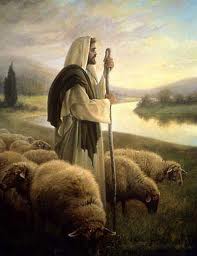
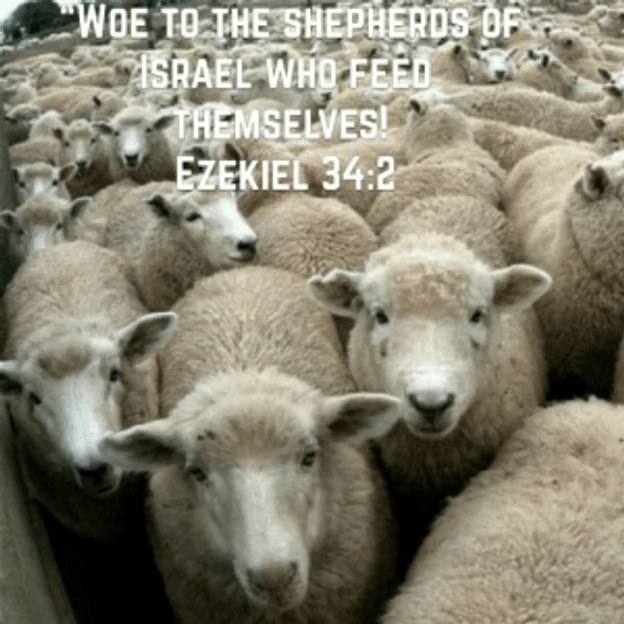
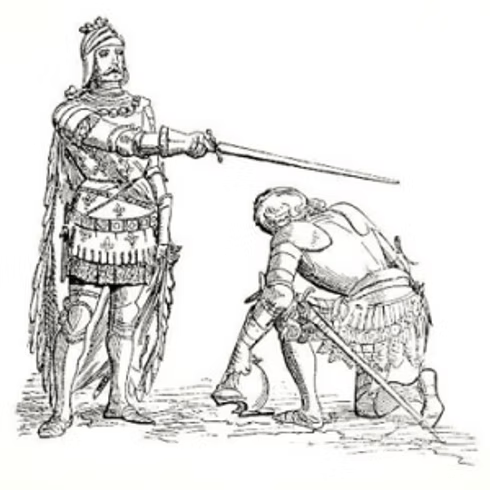
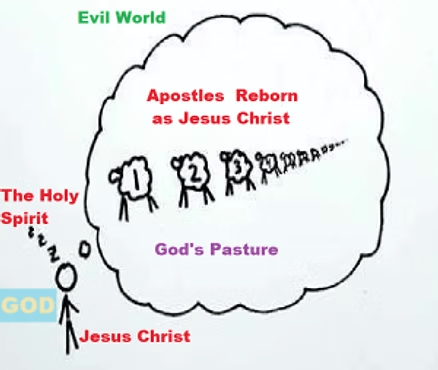

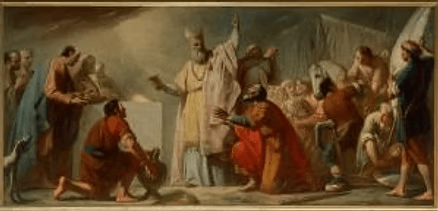
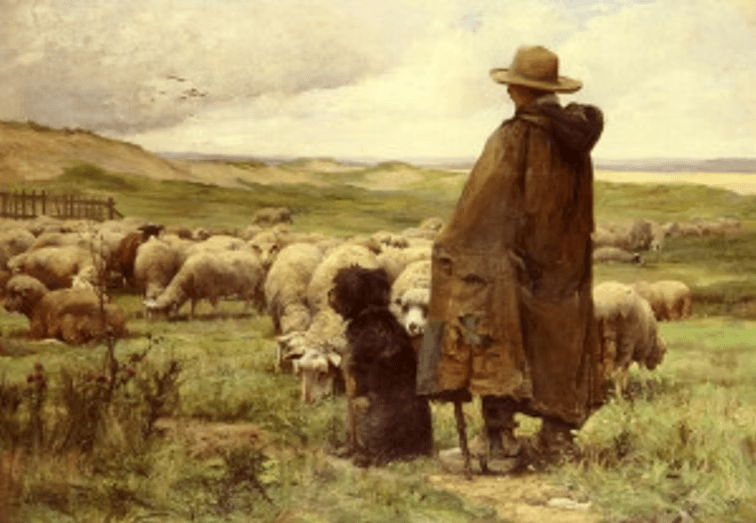



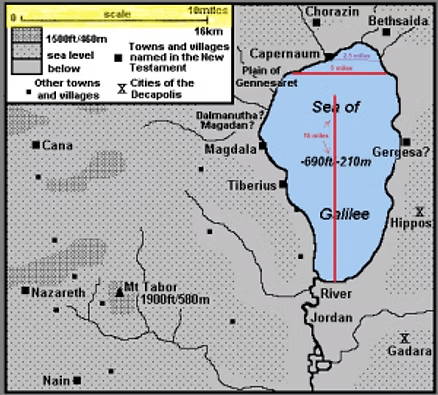











 Explaining the Readings