Tag Archives: Proper 13 Year C

Hosea 11:1-11 – The perpetuity of Sodom and Gomorrah

[1] When Israel was a child, I loved him, and out of Egypt I called my son.

[2] The more I called them, the more they went from me; they kept sacrificing to the Baals, and offering incense to idols.

[3] Yet it was I who taught Ephraim to walk, I took them up in my arms; but they did not know that I healed them.

[4] I led them with cords of human kindness, with bands of love. I was to them like those who lift infants to their cheeks. I bent down to them and fed them.

[5] They shall return to the land of Egypt, and Assyria shall be their king, because they have refused to return to me.

[6] The sword rages in their cities, it consumes their oracle-priests, and devours because of their schemes.

[7] My people are bent on turning away from me. To the Most High they call, but he does not raise them up at all.

[8] How can I give you up, Ephraim? How can I hand you over, O Israel? How can I make you like Admah? How can I treat you like Zeboiim?

My heart recoils within me; my compassion grows warm and tender.

[9] I will not execute my fierce anger; I will not again destroy Ephraim; for el I am God and no mortal, the Holy One in your midst, and I will not come in wrath.

[10] They shall go after Yahweh, who roars like a lion; when he roars, his children shall come trembling from the west.

[11] They shall come trembling like birds from Egypt, and like doves from the land of Assyria; and I will return them to their homes, says Yahweh.

——————–

In verse one are the words saying, “and out of Egypt I called my son.” This is known as the prophecy that would be fulfilled after Yahweh called Joseph (who had been sent to Egypt with his new wife and son Jesus) to return to Nazareth. While that is a truth that makes this verse and song appear to be a literal – geographic – statement, there is much more being stated in these words; and, to understand the fulfilled prophecy of Joseph and Jesus (both “sons” of Yahweh) leaving Egypt behind, one has to understand why Hosea sang of that unfulfilled prophecy in the Northern Kingdom.

For modern times, when people call themselves ‘Christians’ sit in pews and listen to songs that tell of ‘olden times,’ which seem boring to listen to, thinking there is no Egypt of consequence anymore, the danger comes from not hearing these words being sung by Hosea about all times, especially these times present. It is important to remember that in Hosea 1:1 we are told, “the word of Yahweh that came to Hosea.” This becomes the theme for the entire book of Hosea, as Hosea was a prophet through whom Yahweh spoke. This song in chapter eleven is sung by Hosea, singing what Yahweh led him to sing. Therefore, everything stated is from the All-Knowing Mind of Yahweh, which goes far beyond the restrictions placed on human brains and their inabilities to understand the meaning behind names. The truth of this song demands one look deep into that meaning, to understand this song is prophetic of all times, in all places where souls trapped in human flesh roam.

Christians are equally expected to live up to that name. If they do not, then they are lying about a commitment to Yahweh; and, that constitutes taking Yahweh’s name [being Anointed in marriage to Him, via His Spirit] and using it vainly. The people who lived in a nation named Israel, who were most certainly not those Who Retained Yahweh as His elohim, raise His wrath, spoken through the prophet Hosea. Likewise, those of the world today (primarily the Western world) who are doing the same negligence to Yahweh as were those of that nation of Israel, are the intended readers of this song. This makes it important to understand the names used, with several of them repeated.

The name Israel is listed twice: in verse one and again in verse eight. The name Egypt is stated three times: in verse one, verse five, and verse eleven. The name Ephraim is read three times: in verse three, verse eight, and verse nine. The name Assyria is written twice: in verse five and verse eleven. The names Baals, Admah and Zeboiim are stated just once each. This means one should read the deeper meaning of this chapter in Hosea, by hearing the voice of Yahweh speaking of the meaning behind the name. The surface meaning – as names of nations, individual people, and general rulers over souls – still has application. However, the following should be grasped as why Yahweh spoke those names through Hosea.

Israel: Who Retains Yahweh as one of His elohim

Egypt: Married To Tragedy

Baals: Lords

Ephraim: Doubly Fruitful

Assyria: Level Plain, Step, Happy, Just

Admah: Red Ground, Earth – One of the five cities on the plain, with Sodom and Gomorrah

Zeboiim: Collectives, Gazelles – One of the five cities on the plain, with Sodom and Gomorrah

In verse one, the translation above shows it saying: “When Israel was a child, I loved him, and out of Egypt I called my son.” The only way such a statement can be made by Yahweh is to see the truth that Israel was the spiritual name given to Jacob. Jacob was not given that name as a child. He had already sired all his children when he wrestled with his soul (Genesis 31), with the exception of Benjamin, when Rachel died (Genesis 35). So, the name Israel cannot be applied to Jacob or the nation named Israel, which would not come until well after anyone was called out of Egypt.

The name Israel means one in the flesh “Who Retains Elohim,” where this has to be seen as the creation of Yahweh on the seventh day, when he made Adam. That dust and clay form was filled with ”Yahweh elohim,” where this was the “son” made by Yahweh for the purpose of saving lost souls. When Adam “was a child” he was “loved” by Yahweh, meaning that divine soul of Adam (also to be called Jesus) was the truth of Yahweh’s “love.” It was Yahweh’s “love” that merged with the soul of Jacob, allowing his soul to be given the name Israel, as a Son of Yahweh reborn in the flesh.

Now, the name Egypt means “Married To Tragedy,” where the importance of “Marriage” has to be seen as divine union, where an eternal “elohim” has merged with a soul in the flesh. The meaning of Egypt is this divine union is not a Yahweh elohim, as an Israel. In the history of Jacob’s descendants in the land of Egypt, they went there willingly due to need, found Jacob’s son Joseph had power and influence (as a minister of Yahweh, passed to him by father Israel), so they became married to that land; and, in Egypt the children of Jacob were all taught the value of divine union between their souls and Yahweh’s Spirit. Then, after four hundred fifty years, that marriage soured and it became a tragedy of oppression placed upon these wife-souls of Egypt and its Pharaoh. Thus, Yahweh called His people out of a “Marriage To Tragedy” to go to a new land promised them.

The meaning of “I called my son” is Yahweh raised the soul of Adam-Jesus in Moses. Moses was a soul in the flesh who became Israel at the burning bush. As one “Who Retained Yahweh as one of His elohim” Moses went back to Egypt as the incarnation of Adam-Jesus, with all the powers of Yahweh behind him and his actions.

It is this element of being a “son called by Yahweh” that is then the theme of this chapter, as Hosea spoke as a soul in the flesh who was divinely married to Yahweh – an Israel – who was raised to prophesy in the land named Israel, where the people were great sinners. Verse two says what the leaders of the Northern Kingdom were doing, which made Yahweh angry.

In verse three, the name Ephraim must be known to mean “Doubly Fruitful,” where that is a statement of a divine marriage between Yahweh’s Spirit and a lost soul, where the Yahweh elohim that merges with one’s soul is what makes it become “Doubly Fruitful.” The resurrection of the soul of Adam-Jesus becomes the Lord over one’s soul, with that soul becoming like Moses, in only doing as told by his inner Yahweh elohim. Instead of being a servant of Yahweh, the people worship “Baals,” which is a term that means “Lords.” Instead of a divine marriage that links their souls to Yahweh, the lost souls see outer gods and idols as who to make offerings to, keeping their souls enslaved to demonic spirits their souls marry.

Verse four then is Yahweh speaking as the Father of His children. A Baal is dead and can do nothing for a soul. Yahweh, however, fed His wife-souls, so they became reborn as His Sons (in male and female flesh). The manna from heaven was given to them in the wilderness, as an Eden-like Pablum that nourished their souls. When they entered the Promised Land, this ceased being that semi-physical milk and honey, becoming instead inner insight from their souls marrying Yahweh’s Spirit. This is the “bands of love” that is both symbolic of divine marriage and the rebirth of Yahweh’s “Love” in the soul of His Son. It is this presence of Yahweh’s Son’s soul in each wife-soul married to Yahweh that makes each able to call Yahweh their Father.

In verse five, Yahweh sang through Hosea that those descendants who claimed to have a relationship with Him, while acting sinful in His name, had become again “Married To Tragedy,” where the name Egypt bears no meaning as the land of the Pharaoh. The use of Assyria says the people of the Northern Kingdom had fallen in “love” with new ways that made them “Happy.” This became a divine union to “Assyria,” where the name that means “Level Plain” makes that “King” become synonymous with the “five cities of the plain,” two of which were Sodom and Gomorrah. In other words, the people of the Northern Kingdom had become adulterers, having divorced Yahweh, while retaining His name. This is seen stated in verse six, with verse seven says the priests have not taught the ordinary people to marry their souls to Yahweh and serve only Him.
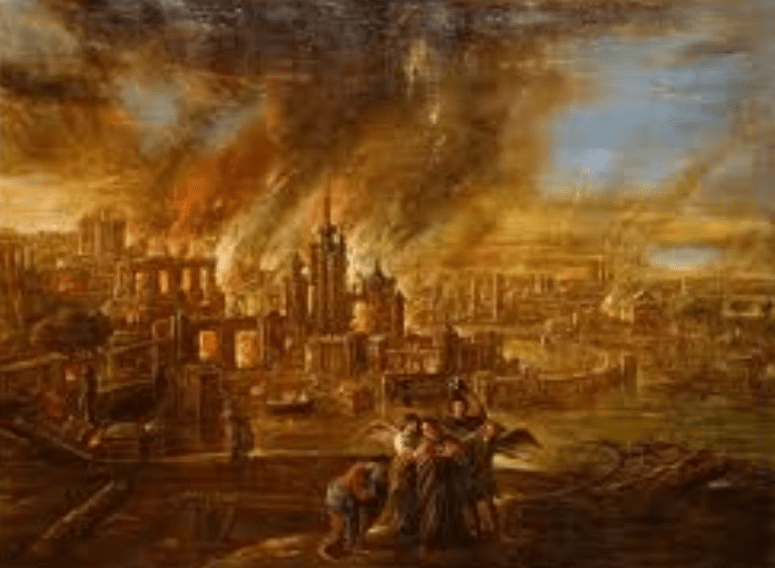
In verse eight are four questions asked by Yahweh, the first relative to the “Doubly Fruitful” souls that had remained faithful to Yahweh. The second called those wife-souls that were still faithful those “Who Retained Yahweh as one of His elohim.” Here, the translation of “Assyria” as “Level Plain,” where Sodom and Gomorrah are inferenced, can be seen confirmed in the names Admah and Zeboiim. Both were cities included with Sodom and Gomorrah. This means verse eight is fulfilling the prophecy of Genesis 18-19, when Abraham bargained for not destroying Sodom is fifty good souls were there.

Verse nine then says “el I am,” where the Hebrew word ‘el” is the lower-g “god” of Israel, which is a single elohim. This says all who will be saved from destruction will be able to say “I am” with Yahweh, because I “Retain His elohim.” When Yahweh says this is “the holy one in your midst,” this refers to the soul of Adam-Jesus having become merged with the soul of a wife of Yahweh, making each be “Doubly Fruitful.” Those who are possessed by Yahweh, reborn as His Sons, will never perish.

Verses ten and eleven then repeat the name Yahweh, which says those soul in His name cannot be destroyed. They are promised the true Promised Land, which is eternal life. The translation above which says “his children shall come trembling from the west” actually says, “and shall come terrified sons of the sea” (the Mediterranean Sea was to “the west”). In that, the symbolism of the “sea” is where all souls are lost in a sea of souls, where the Leviathan will consume them or lead them to find Yahweh in marriage. This “trembling” that comes is the realization that nothing offered in the world will ever bring the security and comfort of Yahweh.


Psalm 107:1-9, 43 – The path to redemption

1 Give thanks to Yahweh, for he is good, *

and his mercy endures forever.

2 Let all those whom Yahweh has redeemed proclaim *

that he redeemed them from the hand of the foe.

3 He gathered them out of the lands; *

from the east and from the west, from the north and from the south.

4 Some wandered in desert wastes; *

they found no way to a city where they might dwell.

5 They were hungry and thirsty; *

their spirits languished within them.

6 Then they cried to Yahweh in their trouble, *

and he delivered them from their distress.

7 He put their feet on a straight path *

to go to a city where they might dwell.

8 Let them give thanks to Yahweh for his mercy *

and the wonders he does for his children.

9 For he satisfies the thirsty *

and fills the hungry with good things.

43 Whoever is wise will ponder these things, *

and consider well the mercies of Yahweh.

——————–

In the above translation by the NRSV, I have reinstated the name “Yahweh,” which was written five times by David, in these ten selected verses. This repetitiveness is confirming that David’s soul was married to Yahweh, so he knew His name personally. To call “Yahweh” by His name means to be in a spiritual relationship with His Spirit. David was “anointed” by Samuel (made a “mashiach”), while Yahweh poured out His Spirit upon David’s soul, forever making him be “Anointed” (a “Messiah” or “Christ”). To be so Anointed means one can call Yahweh by His preferred name (rather than be minimalized as “the Lord”).

When David sang in verse one, “give thanks to Yahweh for he is good,” this says David was joined to His, because only one who knows Yahweh can know “he is good.” This is why Jesus asked the young, rich ruler how he knew Jesus was “good.” Jesus told him, “Only God is good.” This said Jesus knew the young, rich ruler did not know Yahweh personally, therefore he did not know “good.” Without knowing Yahweh (by name), he could not assume Jesus was “good;” and, that said the young, rich ruler did not know Jesus either.

When David sang about Yahweh’s “mercy endures forever,” this speaks of the blessing of eternal life that comes to a soul that has married Yahweh. The Hebrew word translated as “mercy” actually means “goodness, kindness.” This speaks louder as the “foreverness” of salvation, as once a soul is united with Yahweh in marriage it then becomes merged with the essence of Yahweh – that forever brought on by the resurrection of Yahweh’s Son’s soul with one’s soul – which is the ”goodness” and “kindness” of divine possession.

Verse two repeats the verb “redeemed,” which shows the “goodness” of Yahweh comes from all past debts being paid. The debt of sin is washed clean by the Baptism of Yahweh’s Spirit; and, this is the marriage that makes a soul in its flesh become His wife (regardless of human gender). This means “the hand of the foe” is Satan, who is the enemy of all souls. It is a marriage of a lost soul to Satan that leads a soul in the flesh to build up a debt that must be repaid before death. Otherwise, the payment of sins will be either reincarnation of eternal damnation.

When verse two is understood to be placing focus on the trappings of evil being “the foe” or “the enemy,” verse three then makes it clear that the influence of Satan on souls in the flesh is everywhere. The root word that begins this verse is “erets,” which means “earth, land,” should be read metaphorically, such that human flesh is made of “the earth.” There is no place on “the earth” that is more conducive for lusts and sins. This verse is saying that wherever souls in habit “the flesh,” they will be drawn by the guilt of sins to find Yahweh for redemption.

Verse four then speaks of those souls that will be more apt to seek Yahweh. They will be those who “wander into the desolate wilderness” or “desert wastes.” This speaks of a dryness of soul, which seeks ever-living waters to be refreshed. On the other hand, it is the “cities” that create the “excitement” (the Hebrew word “iyr” means both) that leads the flesh to desire pleasures that are morally denied. When one’s soul remains moist from Satan’s rewards of the material realm, the souls are less inclined to seek spiritual nourishment.

Verse five then sings of hunger and thirst, where this is spiritual needs, not physical desires. A soul “faints” or a “spirit languishes” in an environment that finds no solace from religious teachings. When one’s soul is seeking the bread of heaven to feed one’s mind and the blood of Christ [not Jesus – the Spirit of Yahweh] to course through one’s flesh – and everlasting waters that never need replenishing – that flowing from the Spirit being one with one’s soul – then one’s soul will seek Yahweh to fill that void.

Verse six then names “Yahweh” as the one a deprived soul turns to. When a soul cries out to His name in seriousness, then He hears one’s pleas for help and will not deny them. That help comes one bite at a time and one drop at a time, with each drop leading one to seek more.

Verse seven then says those who have been fed spiritual food and given spiritual drink to nourish their souls, they must be led to a place where other lost souls are also seeking help. This sings of the need for ministry in the name of Yahweh. This means that a soul has married Yahweh and given rebirth to His Son’s soul (Adam-Jesus), so that Lord over one’s flesh will keep one from being distracted by the lures of a place of “excitement,” remaining sin free. This becomes the model upon which other souls in bodies of flesh can look to.

In verse eight is found the NRSV translating “children” incorrectly. The literal Hebrew states “sons of men,” from “liḇ·nê ’ā·ḏām.” As can be seen, this can also say “sons of Adam,” since that is the Hebrew word written in Genesis 2, where Adam is named. To be a “son of Adam,” one’s soul has to have the soul of Adam resurrected within it, which is the soul of Jesus [a name meaning “Yah[weh] Saves.” The “wonderful works” or “wonders” done by these reborn “sons of men” are those in ministry, as Saints, each reborn as Jesus, each a “Son of Yahweh.”

Verse nine is then singing praise to these holy men (and women) going out in ministry “feeding the hungry and giving drink to the thirsty.” To then jump ahead to the last verse in this song of David, verse forty-three says this is only possible after a soul has sought Yahweh and served Him as His disciple. Once one has proved one’s worth to Him, Yahweh will marry His wife-souls through divine Baptism of His Spirit. This brings about the rebirth of His Son Adam (a. k. a. Jesus), who becomes a soul in the flesh’s Lord, leading each into ministry as Adam-Jesus resurrected in new flesh.

As a companion song to the Hosea 11 reading, where Yahweh sang through His prophet about the cities on the plains that were destroyed by their own neglect [not Yahweh], this song sings of the influence of “cities” on the flesh of human souls. Only when one has been given an inner protector – a Lord of divine origin – can one not be distracted by the “excitement” these places of mixed souls. The “cities” are like the world, which is a “sea” of souls that must be caught by the Saints of Yahweh. Otherwise, they will be caught by demon spirits and enslaved.

Ecclesiastes 1:2, 12-14; 2:18-23 – Still worshipping lady wisdom?

Vanity of vanities, says the Teacher, vanity of vanities! All is vanity.

I, the Teacher, when king over Israel in Jerusalem, applied my mind to seek and to search out by wisdom all that is done under heaven; it is an unhappy business that God has given to human beings has given elohim to sons of Adam to be busy with. I saw all the deeds that are done under the sun; and see, all is vanity and a chasing after wind.

I hated all my toil in which I had toiled under the sun, seeing that I must leave it to those who come after me — and who knows whether they will be wise or foolish? Yet they will be master of all for which I toiled and used my wisdom under the sun. This also is vanity. So I turned and gave my heart up to despair concerning all the toil of my labors under the sun, because sometimes one who has toiled with wisdom and knowledge and skill must leave all to be enjoyed by another who did not toil for it. This also is vanity and a great evil. What do mortals get from all the toil and strain with which they toil under the sun? For all their days are full of pain, and their work is a vexation; even at night their minds do not rest. This also is vanity.

——————–

According to the Wikipedia article entitled Ecclesiastes, the definition of the word says it is a Greek root that means “assembly,” which is derived from the Hebrew word “Kohelet,” which bears the same translation. The interesting thing to grasp from that article is this observation made: “As Strong’s concordance mentions, it is a female active participle of the verb kahal in its simple (qal) paradigm, a form not used elsewhere in the Bible and which is sometimes understood as active or passive depending on the verb, so that Kohelet would mean ‘(female) assembler’ in the active case (recorded as such by Strong’s concordance), and ‘(female) assembled, member of an assembly’ in the passive case (as per the Septuagint translators).” This means the female gender makes this ‘Book of Wisdom’ be strongly associated with the goddess principle, whereby Solomon wrote of Wisdom as “her,” meaning his soul’s spiritual possessor, by a worldly elohim. This is the opposite of being a soul married to Yahweh [a masculine “assembler”]. Thus, everything in this book should be attributed to that feminine voice emanating from Solomon’s pen.

As opposed to David’s Psalms identifying “Yahweh” and his elusions to an inner elohim that led him to write songs, one should find these selected verses (from two chapters) absent of that name. In verse one of chapter one [not read today], Solomon wrote similarly about what one can expect to find from this Book, in the same way David would write such introductions as a song relative to the “sons of Korah.” In the first verse in chapter one, we read immediately, “words of the teacher” (“diḇ·rê qō·he·leṯ”). In verse two, where we read, “vanity of vanities, says the teacher,” the absence of a name leads one to connect the “teacher” to “wisdom,” as this is known to be a Book of Wisdom, as “assembled words of the teacher.” Thus, the “teacher” is a feminine spirit, not Yahweh.

The Hebrew words translated as “vanity of vanities” are “hă·ḇêl hă·ḇā·lîm,” with those two repeated in this verse, along with another use of “hă·ḇêl.” The Hebrew word “hebel” means “vapor, breath.” In the Wikipedia article, they quote this first verses, explaining: “the Hebrew word hevel, “vapor”, can figuratively mean “insubstantial”, “vain”, “futile”, or “meaningless”.” This implies that the “teacher’s words” were “vain, futile, or meaningless.” I see this as better understood as Lady Wisdom speaking of the source of Solomon’s wisdom, as it came to him much like the ”vapor” of truth came upon the oracle of Delphi. The use of “habel” is then a statement about an unseen possessor of Solomon’s soul, where “vapor of vapors” becomes a statement of two souls or two spirits [unseen sources of animation within flesh] have joined. As such, verse two says, “soul of souls says the teacher , soul of souls the whole soul .” Instead of David’s soul being possessed by Yahweh’s Son and His Spirit [a Trinity], Solomon is wholly one with the goddess of wisdom, which he loves so much.

In verse twelve, the first person “I” is a statement of the ego or identity that Solomon had, where “I the teacher” becomes a statement of his lord or controller. Solomon did not speak for himself, as much as he spoke what “the teacher” told him to say. When this then leads to Solomon writing (in verse thirteen): “applied my mind to seek and to search out by wisdom all that is done under heaven” [NRSV], this says his soul was not seeking Yahweh in any way. As the king of Israel in Jerusalem [names that imply “Who Retains Yahweh as one of His elohim” and “Teaching Peace”], Solomon’s “heart (“lib·bî”) was “seeking and searching for wisdom.” His love was of knowledge, which was to be godlike. When this then says “under heaven,” this should be read as implying “underneath spiritual.” That “under” is hidden and out of view, with the “heaven” being metaphor for the inner soul and its possessing spirit.

The second statement in verse thirteen is then said to say this quest for knowledge is “burdensome,” or “unhappy business,” where all knowledge necessary for a Saint is “given” by Yahweh to those souls that are “sons of elohim,” as “Adam” resurrected. No effort is required to “seek and search” for knowledge, when everything one needs to know is freely “given” by Yahweh to His wife-souls. The “burden” or “unhappiness” comes from finding that a human brain cannot know everything; and, much of what it thinks it knows is found to be wrong.

In verse fourteen, which the NRSV translates as an impossible venture to know everything – “I saw all the deeds that are done under the sun; and see, all is vanity and a chasing after wind” – this is a double-edged verse that cuts two ways. What is missed is that not recognized as a statement of true wisdom, which is “I have seen all the works that are done under the son.” The “sun” is a statement of the light of truth, which comes from Yahweh’s inner elohim. The “works” or “deeds” are those of a Saint, who can easily defeat a brain in logical argument, without any need to say, “Give me a moment to check my resources.”

These “deeds done under the son” were how Jesus so often left the Pharisees, Sadducees and scribes at a loss for words, when their ploys and plots failed miserably. Thus, when the “sun” is seen as this light of truth that is available to all resurrected as Yahweh’s Son, the last words say, “and indeed all breath striving for spirit.” That states the “deeds” of ministry, where a soul does whatever Yahweh’s Son leads one to do in His name.

When chapter one’s verse fourteen speaks of seeing “all the deeds that are done under the sun,” this speaks of a spirit that has rebelled against Yahweh’s command to serve mankind and thus were enslaved within the scope of the earth, just as souls are enslaved within their bodies of flesh (the earth). Those elohim that are spoken of thirty-two times in Genesis 1 are those which were told to rest on the seventh day – when Yahweh created His elohim Adam. Those fallen elohim that (like the serpent) were thrown within the confines of the material plane, can only attempt to lure souls away from Yahweh, by using their access to His knowledge (the serpent was the craftiest of the animals), which came from their time during the Creation. Still, Solomon wrote in chapter two, verse eighteen, “I hated all my toil in which I had toiled under the sun, seeing that I must leave it to those who come after me — and who knows whether they will be wise or foolish?”

Here, again, the “I” is a statement of personal identity with wisdom, where “hatred” is a core element of being, rather than love. This speaks of the service to Yahweh that an elohim has sworn an oath to do forever; but the hatred is for those temporal souls in death that will turn back to dust. The goddess of wisdom hates serving souls in death that will come and go, with the next soul not yet known to be a servant to wisdom or a servant to Yahweh. This places a perspective on a soul that would sacrifice self, to serve Yahweh totally as “foolish.”

When verse nineteen poses the question, “who knows , whether wise he will be or a fool ?” this says not even the goddess wisdom knows what souls will choose to do. To then continue in the third-person masculine singular (where the masculine indicates a divine spirit, of Yahweh), to say “he will have dominion over all my labor in which I have toiled and in which I have shown myself wise under the sun this also is vapor” (or “vanity, meaningless”). This says that even as much as a feminine god or goddess (a demon spirit) has control over a soul in a body of flesh, all that work and effort will come to naught, should that soul change course and seek Yahweh to serve completely. In short, it says all efforts to attempt to become a Big Brain in the world will fail, leading a soul to realize wisdom is not all it is proposed to be.

Verse twenty speaks of a soul realizing the error of toiling for the brain, when the “heart” found “despair.” This says all the facts and figures, all the statistics that point in one direction are empty forms of knowledge. When all those “labors” are revealed by the “sun” – the light of truth – the truth makes averages be seen as lies and half-truths.

Verse twenty-one then speaks of two Adams, where “’ā·ḏām” and “ū·lə·’ā·ḏām” speak of the dual merger of a divine soul with an ordinary soul of mankind, trapped in a body of flesh. It is the “heart” of men and women (their souls) that find “despair” and seek the Son of Yahweh within their souls (“adam”). This presence then leads them “to toil for wisdom and knowledge and skill.” However, it is “yet to mankind who has not toiled for this [led by adam] that has been set [the heritage of the Patriarchs to become “Israel”].” It then follows the truth that says a soul without Adam’s soul is “a vapor of evil great.” Without divine guidance, one’s soul invites Satan to control its fate.

Verse twenty-two then poses the question that can be summed up as asking, “What else has a soul to do when enslaved in a prison of flesh?” The NRSV poses this question as: “What do mortals get from all the toil and strain with which they toil under the sun?” The element of the “sun” being the wisdom, knowledge, and skill that comes from the light of truth is missed in this paraphrase. The answer is more imprisonment that separates a soul from Yahweh – reincarnation or eternal damnation. The truth posed by the question asks, “Why would any soul not welcome the demands of the works and toils of righteous living, if that was all it took to become free for eternity?” It is innate laziness and the influences of evil that play on that flaw that turn this question into one that implies, “Who work hard when the spirit of wisdom can make it easy for a soul to figure things out?”

The answer then tells the truth that failure to do the work places a soul in the darkness of “night,” where no light of truth is shown. The “night” reflects upon the state of death that is the worldly realm. A soul can only animate a bag of dirt for so long, before it must be expelled for judgment. That judgment brings out the “burden” and “sorrow” of a life in the flesh that went totally wrong. When Yahweh told His elohim to “take a rest” when the seventh day came [we are still in the seventh day today], only those who rebelled against Yahweh will steal the “hearts” of mankind and lead them to “vainly” resist doing what is right.

Psalm 49:1-11 – The wise die just like the dull and stupid perish

1 Hear this, all you peoples; hearken, all you who dwell in the world, *

[2] you of high degree and low, rich and poor together.

2 [3] My mouth shall speak of wisdom, *

and my heart shall meditate on understanding.

3 [4] I will incline my ear to a proverb *

and set forth my riddle upon the harp.

4 [5] Why should I be afraid in evil days, *

when the wickedness of those at my heels surrounds me,

5 [6] The wickedness of those who put their trust in their goods, *

and boast of their great riches?

6 [7] We can never ransom ourselves, *

or deliver to lelohim the price of our life;

7 [8] For the ransom of our life is so great, *

that we should never have enough to pay it,

8 [9] In order to live for ever and ever, *

and never see the grave.

9 [10] For we see that the wise die also; like the dull and stupid they perish *

and leave their wealth to those who come after them.

10 [11] Their graves shall be their homes for ever, their dwelling places from generation to generation, *

though they call the lands after their own names.

11 [12] Even though honored, they cannot live forever; *

they are like the beasts that perish.

——————–

This is another of the Psalms of David that sings an ode to the “sons of Korah,” who did evil, were cent beneath the earth but never died. This introduction lets one know that there should be found some focus on evil, which acts as the “sons of Korah” acted against Moses and Aaron.

In verse one, the declaration for “all people … who dwell in the world” must not be seen as some global announcement that what follows is important for everyone to realize. If one does not understand that “all people” are souls in bodies of flesh, where it is that soul that “dwells in the body” that has a limited “duration” [alternate translation of “ḥā·leḏ”], then one will not see all the verses that follow as speaking of the salvation of that soul, in one’s “lifetime” [accepted implication of “ḥā·leḏ”].

The verse presented above as the continuation of verse one is actually verse two. The paraphrase above completely misses the truth of that stated. Verse two sings of “my son Adam also son man”. The two are “together.” It combines the “rich” and the “poor.” This is a statement that the importance that “all people … who dwell” in bodies of temporal flesh must know is divine possession. One’s soul is incomplete without the soul of Adam [a.k.a. Jesus] merged within one’s soul, becoming its Lord. This duality is only possible after one’s soul has married Yahweh, becoming His Spiritual wife, in whose soul is resurrected His Son’s soul.

Verse three becomes the key verse that makes this Psalm 49 be a companion to the Track 2 selections from Ecclesiastes. In that Book of Wisdom, Solomon wrote of “wisdom” being an exercise that brought “despair” to the “heart” – one’s “inner man” or “soul.” In verse three, David is singing that divine possession by Adam’s soul will make one’s “mouth speak wisdom,” while “meditation in one’s heart will bring understanding” of that “wisdom.” The “understanding” was stated by Solomon as the “works of Adam for wisdom, knowledge, and skills.” The word translated as “understanding” also implies “skill.”

In verse four, David sang of “inclining a proverb,” where this means his mind will be able to “stretch out” the meaning of a “parable,” so it is fully understood. It is this inner understanding that will then become the lyrics of his divinely inspired songs, where David was told to write words with multiple translations possible, where the “riddle” is being led to see the truth intended. This would then be placed to music on the “harp.” Like many songs where the lyrics lead one to thing they sing one meaning, the truth is a hidden meaning that requires deeper thought.

In verse five the actual translation has David asking, “what will I fear in the days of evil?” Rather than seeing this as “evil days,” the aspect of “in the days” must be realized as the time when the light of truth [Solomon’s “toil in the sun”] shines brightly. Evil can only exist in the world, but it is “feared” due to its darkness or the absence of light [Solomon’s “night”]. The question is then relative to being able to see the evil that exists and not be influenced by its tricks and ploys. This ability to see evil as it is keeps its “iniquity surrounding the feet,” not the head or heart.

Verse six then points out the lures of evil, which is measured in material objects and things. Those who “put their trust in their wealth” – be it coins, power of position, the support of men paid to do one’s battles, et al – will have no such assistance accompany their souls to, where only souls and spirits are allowed. This element of “trust” is then misplaced beliefs, which fall well short of true faith. When Yahweh is the only one who will hear what values their soul brought with them to Judgment, bragging about riches left behind will be strikes against one’s soul.

Verse seven is then David setting the foundation of Jesus telling the parable about poor Lazarus and the rich man. The soul of the rich man made requests to Father Abraham to send Lazarus to warn his brothers to change their ways; but that request was denied. In this verse, where David said, “brother not to redeem or ransom nor give the elohim as payment,” says one who has married Yahweh and become a soul resurrected with Yahweh’s Son (his “brother” within) cannot save anyone else, simply by having oneself been saved by his or her Yahweh elohim. In this way, believing in Jesus as most holy will do nothing to save one’s soul, because one’s soul must be reborn as Jesus, so one’s soul goes to Judgment before Yahweh as His Son. Seeing physical Jesus as a form of wealth or a valuable coin to hang around one’s neck while alive in the flesh will mean that external Jesus will be left behind, just like coins of gold or silver.

Verse eight says the “cost for redemption” is high. Saying what one has been told to say (a vow of belief, without the personal experience that generates true faith) is a lazy approach to salvation. It speaks out of one side of the mouth, while the other side still speaks as a filthy sinner. This verse says the price of “redemption” is the complete cessation of evil deeds; and, that can only be done by one’s soul having married Yahweh and had His Son’s soul resurrected within one’s soul. It is that personal experience of Adam-Jesus – as one’s Lord over the soul in flesh – that creates true faith, which ceases all deeds of evil forevermore.

Verse nine then confirms that this ceasing is evil deeds, as the amount of evil deeds still in need of redemption at the time of death is how one’s soul will be judged. Without a saving soul [“Jesus” means “Yah[weh] Saves”] to erase all debts of sin from the soul, itself an eternal entity that will live on forever, a filthy dirty soul will be judged as unworthy of eternal life with Yahweh. It will then be judged to return to the “pit,” where that is metaphor for the “grave” of death, where the “grave” or “pit” is a hole in the earth [metaphor for “flesh”]. An eternal soul will then be returned to the earth – the realm of dead matter – until it becomes so sinful it is eternally condemned or it finds the only escape from the prison of “the pit” is marriage to Yahweh and doing the deeds of goodness, as the Son of Yahweh reborn.

In verse ten, David uses the same “wise men” and “fools” as did Solomon in Ecclesiastes, where David saw both as failures, whose souls were sold for “wealth” that others would inherit when they died. Solomon say the “wise” as the elite of the earth, who gained that physical status by worshiping the goddess of wisdom. He saw a soul that would reject worship to an earthly elohim [a demon spirit] as the ”fool,” but either way the view was from the perspective of the demon, who did not know which soul would be available next. All would die. Therefore, David sang of the fleeting nature of a worldly existence; so, to not do the deeds necessary to escape “the pit,” whether “wise man” of “fool,” the results were the same.

Verse eleven then can be seen as an deeper view of “the pit” or “the grave.” It is a reflection of the earth, of which a body of flesh is made. David wrote (literally translated into English): “their inward parts their houses,” which must be read as metaphor for a soul (“inward parts”) being “housed” in a body of flesh or in heaven (the “house” of Yahweh, where a room is prepared). To then say this arrangement is “forever” says a soul has to decide which “house” it will choose – either hell (“the pit” of earth) or heaven (the spiritual realm of Yahweh). To then sing “their dwelling places for all generations they call after their own names on land,” says it all depends on whose “name” they will choose in spiritual marriage. The Hebrew word translating as “and all generations” means self-“generations,” not a statement of lineage. This then projects a repetition of reincarnations (re-“generations”) into the dust and clay of “the ground.” The “name” of importance is self or the elohim that will lord over one’s soul, leading it to do evil deeds. Only by marrying Yahweh and taking His “name” in divine union, becoming the “name” of His Son resurrected can one choose to be “dwelling” in a spiritual eternity of love with Yahweh.

Verse twelve then sings that a “man without honor will perish like the animals,” which can also be read as “a man with honor does not perish like the animals” (an enigmatic statement). The key to reading this is to determine what emphasis the “not” takes hold of. Both are true. One says a soul has become an “honor” to Yahweh, as His wife, giving rebirth to His Son’s soul. That “honor” will bring everlasting life, where the soul will never “perish.” On the other hand, the “not” is a rejection of that “honor,” so one’s soul is nothing more than a “beast” of the field, due to live and die, then repeat … forever.

Colossians 3:1-11 – The condition for becoming a Christ of God

If you have been raised with Christ, seek the things that are above, where Christ is, seated at the right hand of God. Set your minds on things that are above, not on things that are on earth, for you have died, and your life is hidden with Christ in God. When Christ who is your life is revealed, then you also will be revealed with him in glory.

Put to death, therefore, whatever in you is earthly: fornication, impurity, passion, evil desire, and greed (which is idolatry). On account of these the wrath of God is coming on those who are disobedient. These are the ways you also once followed, when you were living that life. But now you must get rid of all such things– anger, wrath, malice, slander, and abusive language from your mouth. Do not lie to one another, seeing that you have stripped off the old self with its practices and have clothed yourselves with the new self, which is being renewed in knowledge according to the image of its creator. In that renewal there is no longer Greek and Jew, circumcised and uncircumcised, barbarian, Scythian, slave and free; but Christ is all and in all!

——————–

In these eleven verses there are five Greek words written that translate in some way to say “Christ.” There are three Greek words that can translate in some way to state “God.” At no place in these eleven verses is the name Jesus written, in any form. It is completely wrong to assume that “Christs” means Jesus (as if that were his last name); and, it is completely wrong to elevate Jesus to a higher level of being than Yahweh, which is the meaning of the capitalized Greek words that translate as “God.” The capitalized words that state “Christ” and “God” are divinely elevated to equate to Yahweh, where it is Yahweh’s “Anointment” of a soul by His Spirit that makes one be able to be identified as a “Christ.” Jesus was certainly “Anointed” by Yahweh and he certainly was a “Christ,” but Yahweh cannot be limited by human mental conceptions that think Jesus is the only “Christ.” David was “Anointed” by Yahweh’s Spirit (while also “anointed” by the oil of Samuel); so, David was a “Christ.” This “Anointment” makes a soul become married to Yahweh, as a wife to “God.”

The BibleHub Interlinear (my main reference source) lists a heading for these selected verses (up to verse eighteen) as “Put on a New Self.” I have said many times in the past (when translating a possessive pronoun like “you” as “yourself,” for example) that a “self” must be understood to be a “soul.” Without a “soul” there is nothing but a corpse, until it returns to the dust and clay from which that body came. To read a title that says, “Put on a New Self,” the immediate concept projected is to change oneself and become a new person. This is simply because one cannot fathom how another “soul” can be “put on,” adding a “new soul” to the “soul” that already exists. The meaning of this heading should be grasped as saying, “Be Divinely Possessed by God,” where that divine possession is the deeper truth that should be learned about the word “Christ.”

Verse one begins with a capitalized “Ei,” which (in the lower-case) means “forasmuch as, if, that.” The common implication of this word’s usage is as “if.” The capitalization makes this into a Big If, which is divinely elevated to a state involving Yahweh. The “If” must then be seen as conditions must be met and choices must be made, as “you have been raised to this Christ” is a statement that says not everyone can truthfully make that claim.

The Greek word “synēgerthēte” is written, which is the second-person plural (“yourselves,” meaning “your souls”) Aorist Indicative form of the infinitive verb “sunegeiró,” meaning “to raise together.” While the word “raise” in English can be read as meaning “to bring up,” as parents would “raise” their children, so the intent is a long period of teaching and preparing for a higher state of being, the divine meaning that should be read into Paul’s word choice (divinely inspired) to be an “uplifting” spiritually, where the Big “If” is the condition of having been “raised” by Yahweh to a new state of being, prepared to serve Him as a priest. This “raised” state of being is then relative to being moved “to this to Christ.”

From that conditional statement made, Paul then wrote: “these above seek,” where the Greek word “anō” translates as “above,” but implies “things above, heaven, the heavenly region,” “in a higher place.” This connects “raised” to the spiritual realm, as “heaven” is not in outer space, but the depth that elevates a soul within.

When Paul then wrote, “where this Christ it exists within to right hand of this of God seated,” this does not imply some cloud where Yahweh and Jesus sit on a throne. “IF” one’s soul has “been raised to this to Christ,” and “these” souls so “raised” are “seeking spiritual” guidance, then once in that place that is the presence of the “Christ, one finds “it exists within” one’s soul, one with one’s being. That makes one’s soul be “the right hand” of God on earth [one of many], as a possession [Genitive case “of this of God] of Yahweh, who is “seated within” one’s heart and soul, He the Holy Husband and the soul His wife.

Verse two then is Paul saying that one’s “mind” or “thinking” is then set towards “understanding these spiritual” matters (those of “above” or “heavenly”). When one’s mindset is towards higher “understanding,” then the matters of “the earth” or the material realm becomes fruitless. When a brain is set upon acquiring wealth, power and influence over others (to control them for one’s benefit), then this is a form of “thinking” that is low and base.

Verse three then says the old “self” or the lusts of the flesh controlling one’s “self-soul” must “die” for the “Christ” of “God” to be “seated within” one’s soul. This is a figurative “death,” where one’s soul must turn away or separate from the influence of a body of flesh, where one’s mind is et on spiritual matters, not physical lusts. While it is easy to see Jesus sacrificing himself to a Roman crucifix as his death, that merely symbolizes how those who will follow him will sacrifice their souls as he did his flesh, so Jesus’ soul can be resurrected within the soul of a servant of Yahweh. As such, Paul wrote death of the self-ego then importantly (use of “kai”) allows “this life of your souls” – the eternal “life” that flesh cannot match – is the divine possession by Yahweh (“of your souls”). This possession is “hidden together with this Christ within this of God.” That which is “hidden” and “within” (from “kekryptai” and “en”) is the unseen soul. The use of “together with” (from “syn”) means the union of a soul with Yahweh’s Spirit, which is the Baptism by His “Anointment” or becoming “Christ.”

The “revelation” Paul wrote of in verse four is then a soul’s personal experience of this “Christ” or “Anointment.” This ability to “visualize” or have “made clear” this presence (rather than read about it in books and have some external concept that is little more than beliefs) means true faith comes from this presence. When Paul then wrote, “this life of your soul , at that time kai your souls together with to his soul you will be clear within honor .” This is then the soul of Jesus having been resurrected “together with your souls” – each wife of Yahweh, individually – so that presence will be “clearly” known to be one with one’s soul, as one’s new Lord. This is Paul speaking of Jesus being reborn in new flesh, without mentioning his name.

Verse five then explains the “death” that one must experience, where the self or soul separates from its body of flesh, which is the connection to worldly desires. Those desires lead a soul to justify sins, due to an inability to ignore the desires of the flesh. When one’s soul dies of self, to be replaced by the Christ presence (Baptism of all sins, making one’s soul-flesh become a virgin womb form which His Son’s soul can resurrect), then when “your souls are together with his soul,” he (Jesus) will take control and override a saved soul from knowing the influences of the flesh. This override will then cease all the sins listed in this verse: sexual immorality; impurity; passion; desire; evil; kai covetousness – which is idolatry.

Verse six then explains that without this “Death by execution,” brought about by a soul’s divine marriage to Yahweh, with His possessions then being where His Son will be reborn, the allowance of such sins will bring about the “wrath of this of God” when one’s soul dies of body and faces Judgment. The Genitive case states the soul is the possession of Yahweh, having come from Him at birth; so, upon separation from the flesh the soul return “of this of God,” where wrath is not a pleasant judgment handed down to one of His souls.

In verse six speaking of the “sons of disobedience” being those who are sinners, verse seven then says every soul will know this waywardness. When Paul wrote, “within to which kai your souls walked once when your souls were existing within to those,” this says a marriage of a different kind – a demonic possession of souls – made sure one “walked within those” sins, leading one’s soul to face “the wrath of this of God.” This then implies that becoming a Christ of Yahweh not only washes all past sins away, but it also casts out all possessing demons that have united with one’s soul-flesh, leading it to hear the allures of a sinful world.

With this removal of demon spirits another benefit of a soul marrying Yahweh, verse eight then lists more sinful acts that are removed from influence over a soul in its flesh. These are: anger; rage; malice; slander; and, foul language out of the mouths of your souls. This last element is less about the verbal words shouted by sinners and more about the “foul language” that comes from those evil demons taking possession of one’s soul. It is them who controls the “mouths” of “your souls,” which is the evil whispers of lust and hate that influences a soul to follow that lead.

Verse nine then restates the death of the self-ego, while fitting the theme set in the heading that says “Put on the New Self.” Here, Paul wrote, “Not to lie to one another , having stripped from one’s soul the old human together with the practices of him.” This is the casting out of the “ancient” influence that loves to torment “mankind,” becoming a divorce of a soul “together with the practices of him.” This states a marriage to Satan will be annulled by the Christ of Yahweh. The first word being a capitalized “Not” then says the prior self will “lie to one another,” while the new soul cleansed by the “Anointment” of Yahweh will “Not tell lies,” meaning only the truth will then be spoken.

In verse ten, Paul again alludes to Jesus without mentioning his name specifically. This verse begins by importantly (use of “kai”) saying, “having been clothed this new,” which is the outpouring of the Spirit that Baptizes a soul and makes it “new” again, without any debts of sin. Paul then wrote, “this being made new into knowledge according to image of this having been created his soul .” This says a soul in its body of flesh will become the “likeness” or “image” of Jesus, who will be the bearer of “knowledge” that comes from the Father, who “created” His Son for the purpose of saving souls and shedding light into a world of darkness.

Verse eleven then says there will be no divisions among all souls who marry Yahweh and receive His “Anointment.” While the natural world is full of different kinds and different types, each led by different gods and idols, symbols and rituals, all souls who die of self-ego and receive the Spirit of the “Christ” will be the same. All with be Baptized clean, so each will be reborn in the name of Yahweh’s Son. All will become Jesus reborn into new flesh, who will then be led into ministry for other souls to be saved. All will be brothers spiritually (regardless of human gender) and all will walk in the name of Jesus, all Christs.

Luke 12:13-21 – The parable of the Rich Fool

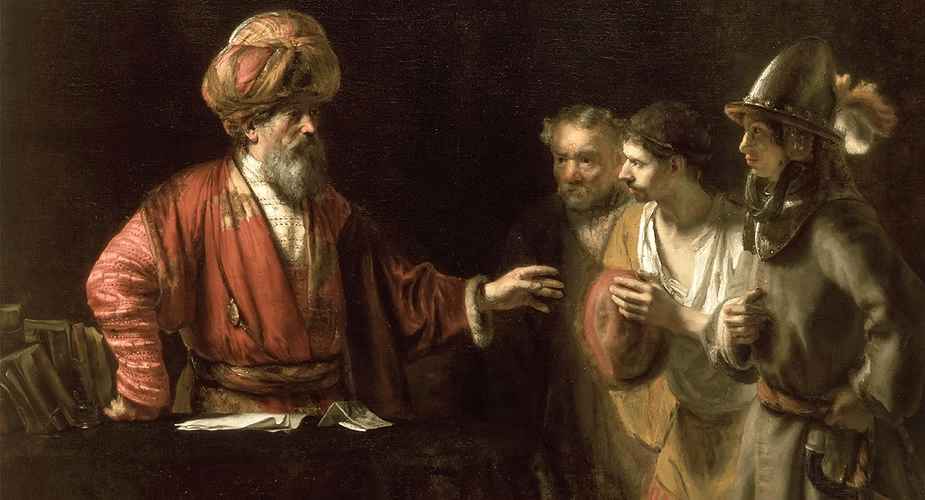
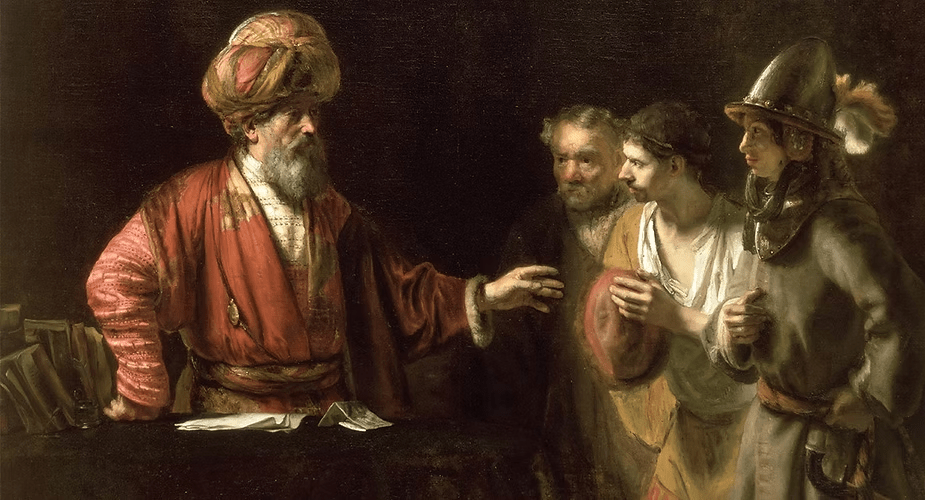
Someone in the crowd said to Jesus, “Teacher, tell my brother to divide the family inheritance with me.” But he said to him, “Friend, who set me to be a judge or arbitrator over you?” And he said to them, “Take care! Be on your guard against all kinds of greed; for one’s life does not consist in the abundance of possessions.” Then he told them a parable: “The land of a rich man produced abundantly. And he thought to himself, `What should I do, for I have no place to store my crops?’ Then he said, `I will do this: I will pull down my barns and build larger ones, and there I will store all my grain and my goods. And I will say to my soul, `Soul, you have ample goods laid up for many years; relax, eat, drink, be merry.’ But God said to him, `You fool! This very night your life is being demanded of you. And the things you have prepared, whose will they be?’ So it is with those who store up treasures for themselves but are not rich toward God.”

——————–

In this parable, the reader can become easily confused when trying to figure out why someone shouting from the crowd (like a crying baby who lost its toy to another baby) for Jesus to tell his “brother” to share. That seems to have little to do with a fictitious rich man buying up so much land he cannot store all the crops in the barns he owns; so, he plans to build bigger storage facilities. His plans call for him to end up “eating, drinking, and being merry” with great abundance; but then he is told by Yahweh his time on earth is up. The question (like so many mistranslations connecting parables of Jesus to the initiating factors) becomes, How does one relate with the other? Again, the translations miss how to read divine meaning, choosing to instead making mismatched paraphrases be pointless.

The first word of verse thirteen is “Eipen,” which in the lower-case means, “answer, bid, bring word, command.” (Strong’s) In the capitalized state, the word becomes elevated to a divine level of meaning, relative to Yahweh. This means that “Bringing of Word” is divinely inspired speech. When this then connects to “now a certain one from of this of crowd to his soul,” this says a Jew who had gathered around Jesus was “Commanded” by Yahweh to speak. He then addressed Jesus as “Teacher,” where the capitalization of “Didaskale” makes this Jew recognize Jesus as a “Master” of Mosaic Law and a “Teacher” of the truth contained in that Law.

After a comma mark following that address of Jesus, this Jew then is said to “speak,” where the lower-case Greek word “eipe” is written. This is then the voice of a common man (a Jew) requesting Jesus to “tell to this to brother of my soul to divide among of my soul this inheritance .” This seems to be a stranger asking Jesus to explain the Law governing “inheritance,” so Jesus will speak for Yahweh and say the Law is unfair and should be changed. However, this question should not be read in that way, when the possessive pronouns (me – myself, as “mou” and “emou”) are read so a “self” equates to a “soul” – as “brother of my soul” and “my soul this inheritance.”

This makes the statement not be about material wealth “divided” but about the marriage of a soul to Yahweh, where “this brother of my soul” is the possession “of my soul” by the soul of Adam-Jesus. This is then the man speaking about “this inheritance of my soul” that was his ‘ticket to heaven.’ This is then no different that the certain rich man who asked Jesus to tell him how he could “inherit eternal life.” This Jew was divinely inspired to ask Jesus to tell his possessing soul from Yahweh to split time with the host soul, letting that host soul make a few decisions from time to time; rather than his soul in his flesh always being told what to do, in order to gain eternal life.

In verse fourteen, Luke began with a capitalized “Ho,” which is a divinely elevated article, which should be translated as “This.” When “This” is relative to Yahweh raising a statement from a “certain Jew in the crowd,” “This” becomes relative to that stated. As Yahweh divinely inspired the request to change Law, Yahweh then speaks through His Son, as we read, “now he said to his soul.” The third-person masculine singular says this reply is spiritual communication, more than an audible reply. Jesus then addresses the person’s soul as “Anthrōpe,” a capitalized statement that “This said” is relative to all “Mankind.” This must be seen as a balance to the certain Jew referring to Jesus as “Master” or “Teacher.” This says the soul of Jesus speaks for the Father to “Mankind,” “Teaching” those souls trapped in human flesh the lessons that will free them to eternal life.

What Jesus then questioned all “Mankind” (forever), asking “who my soul set in order (or appointed) a ruler (or judge) or divider (or partitioner) upon your souls ?” This is then not Jesus belittling some stranger in the crowd who asked Jesus to tell his brother to divide the inheritance of his deceased father. Instead, it is Jesus asking all “Mankind” to tell him “who appointed a ruler or divider within all saved souls?” The “divider” is then the Lord over a wife-soul of Yahweh and its body of flesh.

To be asked to allow the host soul to have some leverage that would choose which sins to reject, while deciding which ones to allow, means a Jew claimed to serve Yahweh but was tired of not getting enough self-pleasure. This is then a question that is asked to all “Mankind,” as this question fits the scenario of Jesus saying one cannot serve two masters. This means two souls are present within saved souls, with one the soul of Adam-Jesus and the other the sinner soul that has been Baptized clean of sins by Yahweh’s Spirit. To ask to have some control over one’s flesh is to say, “I hate Yahweh for saving my soul, because I love sin.”

It is imperative to see this as Jesus’ response, because this duality of souls – one divine and the Lord, with the other the saved sinner – for one to begin to understand how the parable relates to an “inheritance” of one’s soul. This direction is then found in the first word Luke wrote that Jesus said next to the crowd. That capitalized word is “Horate,” which has been translated by the NRSV as “Take care!” but the lower-case spelling has this word mean “to see, perceive, attend to,” implying “look upon, experience, discern, and beware.” (Strong’s) The proper use of the word says, “to see with the mind,” (HELPS Word-studies) where the capitalization elevates this to a divine level that is Yahweh saying through Jesus, “Beware” or “See the truth.” As a word stated to their souls, this warns all of “Mankind” that a soul alone in its flesh cannot “See the truth” without divine assistance.

Following that capitalized word, Luke wrote the word “kai,” indicating this next stated by Jesus was important to grasp. He said, “guard your souls away from of whole of covetousness”. This says without Yahweh’s help, Satan will seek to steal “your souls away from” those seeking to maintain some control over their flesh. Instead of a “divided” control over the flesh, one will be possessed “of whole” and be led to serve a demon spirit set on making souls become lost “of covetousness” or “of a desire for more material things.”

Following a semi-colon mark, indicating a separate yet related statement was stated, expanding from this dangerous view that believes ‘equal rights over the flesh’ is a division that works out best for all, Luke told of Jesus saying: “because not within to this excess beyond that necessary to anyone , this life of one’s soul it exists from out of of those of them possessing to itself .” This says the soul born within a body of flesh is “not” capable of controlling oneself from desiring “this excess beyond that necessary.” This is why the Ten Commandments place so much focus on not coveting what someone else has, while one does not have that. The Ten Commandments (and all the rest) cannot be maintained by a soul alone in its flesh. Thus, Jesus warned that the eternal “life of one’s soul” becomes relative to that possessing soul that will marry a soul, “existing from out of” the world of demons. Without Yahweh possessing a soul as His wife, a soul will be taken by Satan, making “of those of them possessing” be going “to himself,” as “his soul” directs one. That direction is to sin; and, those sins will make the “life of one’s soul” be destined to Judgment and punishment.

This becomes the lesson of the “Teacher” to “Mankind.” A soul cannot be married to a controlling spirit and expect to have any control of its own life. In terms of the Laws of inheritance, the symbolism is the eldest boy or firstborn male will receive the wealth of his father, with that inheritance to then be managed so the others of the father do not squander what the father strived to manage. This becomes seen in the parable of the Prodigal Son, where such disaster was shown as inevitable. The Laws passed down by Moses were much less about a group of people (a family under the guidance of a father) becomes wealthy and prosperous, and much more about the inner values passed down by the father to all his children, which were designed to “Teach” each child to marry its soul to Yahweh and let the Spirit lead one to eternal life. To divide all the material spoils evenly would means no one saw those spoils came from righteous living, not greed and quests for more than one needed. All who called themselves Jews but were not true Israelites were evidence that dividing the spoils among the heirs prematurely led to disaster. Jesus spoke to crowds at such a disastrous time. The same disastrous times exist today still.

With this lesson told, Jesus then told the parable, which immediately placed focus on the capitalized word “Anthrōpou,” which is similar to his prior address of the one who posed a request – “Anthrōpe.” While Jesus addressed the request as being relative to all “Mankind,” this parable begins with the Genitive case (possessive), which translated as “Of Mankind.” The statement “Of” shows the soul “Of Mankind” is that ruler all “Mankind” is born with within one’s flesh. To then say this “Man” was “a certain one” means Jesus was speaking “Of Mankind” that was Jewish, therefore born into the family of Yahweh, where his father had taught him the Torah, Psalms and Prophets, as a way to become “rich” both materially and spiritually.

When Jesus then said this “Man’s” “riches” were due to him “bringing forth abundantly the fruits of the ground,” this needs to be seen in both material and spiritual ways. The “Man” was “rich” in both produce “of the ground,” but he was also “rich” in children “produced of the flesh.” Certainly, having many sons would assist him in “bringing forth more fruits of the ground.” The “Man” was the owner of both the ground he possessed and the children who labored that land for him. The ”Man” did not see any need to “divide” his wealth in any way. As long as his soul was possessed by Yahweh, he would not only teach his children how to make the ground productive for them, he was teaching them the values of preparing to sacrifice their souls to Yahweh after his death. Then, they would reap all the benefits of a divine inheritance.

Luke then began verse seventeen with the word “kai,” which denotes importance must be seen in what Jesus said next. Here, Jesus placed focus on the “Man” not focusing on his inner Lord, as he instead began to use his brain and think for himself. When Luke wrote the Greek word “dielogizeto,” which means “he will reason,” where the proper intent of this word’s use implies “go back-and-forth when evaluating, in a way that typically leads to a confused conclusion. The term implies one confused mind interacting with other confused minds, each further reinforcing the original confusion.” (HELPS Word-studies) This says the “Man” began to think for himself, rather than be led by Yahweh in the right direction, without need to think. With Yahweh’s guidance, the “Man” had all the knowledge he needed; but by “reasoning within to his soul,” this “Man” began taking his inheritance prematurely, dividing a share of control from Yahweh.

This use of his brain led the “man” to ask, “What shall I do,” where the first-person singular “I” is a statement of self-ego coming to the forefront of the “Man’s” brain. The capitalization of “Ti,” meaning “Who? What? Why?” is then a statement that the “Man” began to see his soul as a god, rather than being led by Yahweh to act. This means the “Man” did as the “certain man in the crowd” who told Jesus to “tell his brother to divide the inheritance.” The “Man” became “Who” he depended on for higher thought. To begin “reasoning” mean he was no longer led divinely to act (without forethought), causing him to have to figure out what to do by his own soul alone.

He then surmised, “because not I possess the place where I will bring together these fruits of my soul”. This is posed as a question the “Man” had to ponder, where “the fruits of his soul” were both his material wealth and his children’s souls. The “Man” worried that he did “not possess where he will bring together” both material wealth and spiritual development of his children, as their “teacher.” Without Yahweh leading his soul in both matters, the “Man” had taken it upon himself to play god.

In verse eighteen, the “Man” importantly (use of “kai”) said “This I will do,” where the Greek word “Touto” is capitalized, taking “This” to a divine level of meaning. By the first-person singular following, as a statement of self-ego being the future direction, “This” is importantly a statement of the “Man” playing god and deciding what course of action he will take. This says “This” is self-direction, no longer being controlled by Yahweh. “This” is self and “This” is “I,” which answered his prior question of “Who? What? and Why?”

Following a colon mark, acting as a marker of example of what the “Man will do,” Luke wrote of Jesus having him say, “I will destroy of my soul these places for storing kai greater I will build , kai I will bring together there all this grain kai these good ones in nature of my soul .” This says the “Man” planned “to destroy” or “tear down” or “cast down” Yahweh’s possession “of his soul,” where Yahweh’s knowledge was a wealth of stored guidance. Knowing the “Man” would “cast down” that divine resource, it would then be important to the “man” to “build himself to be greater” than Yahweh. Here, the Track 2 Old Testament reading selection from Ecclesiastes, where Solomon thought he could build himself greater than Yahweh, thorough marriage to the demon spirit Wisdom should be seen as part of the “Man’s” plan. This importantly would be where the “man” would be able to “bring together there all this gran,” where “grain” is the source of spiritual food. The failure was in seeing that physical grain cannot make spiritual food; so, the “Man” planned to feed the souls of his children the lesson that material wealth was what bought one’s way to heaven.

In verse nineteen we see this plan called for a “greater” spirit to align with, where the “Man” said, “I will speak of this soul of my soul,” where his then naming that “soul of my soul” as a capitalized “Psychē,” which is a divinely elevated “Soul.” Whereas Yahweh’s Spirit (the place where His Son’s “Soul” was resurrected after Baptism) had been this “Soul of the Man’s soul,” the replacement (which allowed the ”Man” to think “I” was allowed to him (the curse of Solomon and his worship of Wisdom) would let the “Man speak” and call the shots.

Here, the “Man” said to this possessing “Soul,” “you possess many good ones set into years many,” which said the “Man” knew demonic spirit possession had taken over the souls of “man good ones.” He knew this practice had not begun with his soul, but it had been going on a long time – “set into years many.” This was the state of misery that Jesus was sent to confront. This “Man” was not a singular problem, but a microcosm of the greater whole, where all of the Jewish religion had divorced Yahweh and married Mammon (or some other god of material gain).

The ”Man” then thought he could play like God, after the Creation was complete. He thought all he had to do was command his demon spirit ”Soul” to “take your rest.” The inheritance of a demon spirit would then allow the “Man” to divide time making decisions that concerned the soul and its flesh. Then, the “Man” figured out, with the demon spirit taking the ‘backseat,’ while the “Man” ran his life, his life would a series of events that would amount to “eat, drink, and be merry.” That was to ‘eat” upon all his fruits of the ground. He would “drink” of his flowing self-importance; and, he would “be merry” as a god that could do no wrong.

This is where the moral of the parable story come slapping the “man” in the face. For as much as his soul can reject Yahweh and for as much as a “Man’s” soul can become possessed by a lesser god – a demon of Satan’s worldly realm – the soul is always possessed by Yahweh. When death comes and the soul is released for Judgment, Jesus said the “Man” was called by “God” a “Fool.” When both “Theos” and “Aphrōn” are capitalized to a divine level of meaning, it is easy to see how “God” is a statement about Yahweh. The word “Aphrōn” is then a divinely elevated statement about how “without reason, foolish, senseless, and inconsiderate” the “Man” had been by playing god. He was not a god. Instead, he was a “Fool” that had lost all ability to “Reason” divinely; and, his soul was “Inconsiderate” not only of his soul, but of the souls of his children.

Jesus then told in the parable how Yahweh told the “Man,” “to this of this night,” which says it was “Foolishness” that rejected the light of truth (from Yahweh’s Spirit and His Son’s direction), choosing instead to be in the darkness of “night.” The symbolism of “night” is death, where a soul without oil in its lamp will be left behind when the time comes to be married to eternal life (the only true value). Yahweh then continued, saying “this soul of yourself it is asked back away from of your soul”. That says Yahweh always knows when the day of reckoning will come.

Yahweh then asked the soul of the “Man,” “who now made you ready – to whom it will exist ?” This says all souls come from Yahweh at birth, with each placed in a prison of flesh, where the only release from that prison will be Yahweh as their guide. The jailer (Satan) will try to mislead all souls towards trying to escape the pains of life, through selling their souls to him. The question the asked is akin to this: “Who did you serve? Any answer other tha “Yahweh” will result in a failed judgment placed upon that soul.

The final verse is then Jesus saying to the crowd, “In this manner this saving to his own soul , not in God abounding .” The capitalized “Houtōs,” which means “in this way, thus, so, in this manner,” becomes divinely elevated to be the moral of the story being stated. It says “In this way” of the rich “Man” trying to play god and divide spiritual inheritance – the guarantee of eternal life with Yahweh – as one sees just and fit is “In this manner” how one is deemed to be a “Fool.” Trying to “save one’s own soul” or “treasuring up for himself” is impossible. The only way to redeem one’s soul is importantly to “not” do as the “Man” asked Jesus or as the parable “Man” tried to “bring together for his soul.” Salvation only comes when one’s soul is “rich from God’s presence within.”