Tag Archives: Proper 16 Year B

1 Kings 8:[1, 6, 10-11], 22-30, 41-43 – Dedicating the temple

[Solomon assembled the elders of Israel and all the heads of the tribes, the leaders of the ancestral houses of the Israelites, before King Solomon in Jerusalem, to bring up the ark of the covenant of the Lord out of the city of David, which is Zion. Then the priests brought the ark of the covenant of the Lord to its place, in the inner sanctuary of the house, in the most holy place, underneath the wings of the cherubim. And when the priests came out of the holy place, a cloud filled the house of the Lord, so that the priests could not stand to minister because of the cloud; for the glory of the Lord filled the house of the Lord.]

Then Solomon stood before the altar of the Lord in the presence of all the assembly of Israel, and spread out his hands to heaven. He said, “O Lord, God of Israel, there is no God like you in heaven above or on earth beneath, keeping covenant and steadfast love for your servants who walk before you with all their heart, the covenant that you kept for your servant my father David as you declared to him; you promised with your mouth and have this day fulfilled with your hand. Therefore, O Lord, God of Israel, keep for your servant my father David that which you promised him, saying, ‘There shall never fail you a successor before me to sit on the throne of Israel, if only your children look to their way, to walk before me as you have walked before me.’ Therefore, O God of Israel, let your word be confirmed, which you promised to your servant my father David.

“But will God indeed dwell on the earth? Even heaven and the highest heaven cannot contain you, much less this house that I have built! Regard your servant’s prayer and his plea, O Lord my God, heeding the cry and the prayer that your servant prays to you today; that your eyes may be open night and day toward this house, the place of which you said, ‘My name shall be there,’ that you may heed the prayer that your servant prays toward this place. Hear the plea of your servant and of your people Israel when they pray toward this place; O hear in heaven your dwelling place; heed and forgive.

“Likewise when a foreigner, who is not of your people Israel, comes from a distant land because of your name —for they shall hear of your great name, your mighty hand, and your outstretched arm—when a foreigner comes and prays toward this house, then hear in heaven your dwelling place, and do according to all that the foreigner calls to you, so that all the peoples of the earth may know your name and fear you, as do your people Israel, and so that they may know that your name has been invoked on this house that I have built.

———————————————————————————————————-

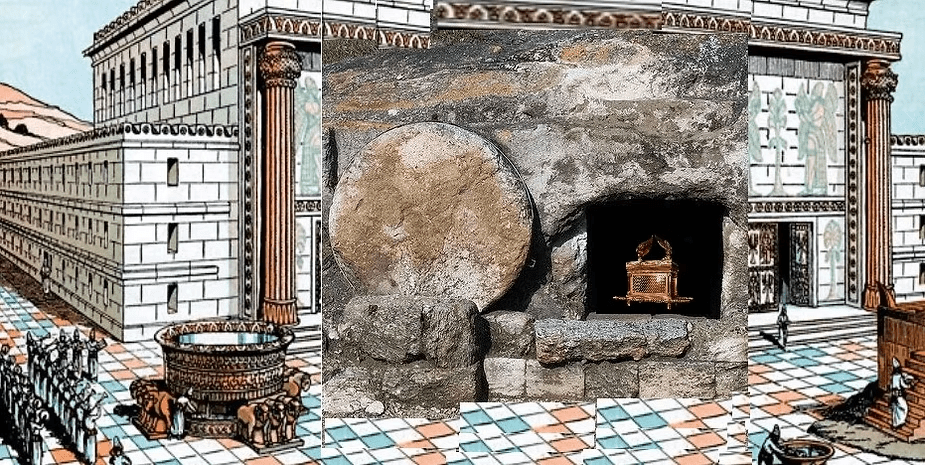
This is an optional Old Testament selection from the Episcopal Lectionary for the Fourteenth Sunday after Pentecost, Year B 2018. In the numbering system that lists each Sunday in an ordinal fashion, this Sunday is referred to as Proper 16. If chosen, it will next be read aloud in an Episcopal church by a reader on Sunday August 26, 2018. It is important because Solomon has followed in the steps of his father and moved the Ark of the Covenant from the place it had rested for years, to a new house built for it and God.

The whole of 1 Kings’ chapter eight is 66 long verses that tell of the moving of the Ark of the Covenant from the City of David to the new temple built by Solomon and his prayer and dedication of all of that. It was scheduled to be incorporated into the God-commanded feast of Sukkot (the Festival of Booths), so it happened on 15 Ethanim (aka Tishri), which was the equivalent of a modern September or October. As such, the dedication of Solomon’s Temple was during the seven-day harvest festival (Feast of the Ingathering – from Genesis), when the Jews also recognized the dependence of the people of Israel on God (Feast of Tabernacles – from Exodus).

So, while this reading is parsed down to just a fraction of that whole, it still reads (to me) like a state fair event, held in a capital city in early fall, when all the deep-fried butter on sticks, cotton candy, grilled corn on sticks, foot-long corn dogs, powdered sugar dusted funnel cakes, caramel apples and a wide assortment of carnival amusement rides are all waiting on the other side of the entrance gate that is blocked by a big blue ribbon and a bunch of dignitaries in suits holding a giant pair of scissors.

Solomon sounds like the governor that has come, bringing with him a posse of political party advisors and a gaggle of news reporters and photographers, to the dedication of the newest and biggest ride the fair has ever known. Of course, that would have never happened if the governor hadn’t used his sway with powerful connections; so, pats on the back for many are publicly made, so all to get some glory … and more votes. It reads like there was a lot of pomp and circumstance surrounding the opening of the fair, more than usual. However, the smells of the foods and the sounds of the carnival music make all the sweat from waiting for the speeches to end, on a warm day, is worth waiting for.

The people of Israel saw more animal sacrifices than could be counted.  The altar was ablaze and the air was filled with barbecue smoke.  The harvest was plentiful, as always while Solomon was king; so a fun time was had by all.

Still, the movement of the Ark from its tabernacle in the City of David, up the path less steep on Mount Zion, across the old city of Jerusalem to the height of Mount Moriah, was made in a more dignified manner than was when it was moved from the house of Abinadab to Jerusalem by David.  Nothing says Solomon was skimpily dressed and dancing wildly before the Ark.  I imagine Micah, daughter of Saul, would have been glad that a King of Israel acted stately and dignified.

This is how I see Solomon treating God – like a side-show to his great accomplishment, the temple named after him. If you read the words of this reading selection carefully, Solomon talks to the Israelites and elders as if God had made a covenant to make sure Israel was always the greatest nation on earth. He even told God to take care of the foreigners who had come to Jerusalem, so the world knew how great Israel’s God was.  Set the hoops up and let the tamer’s whip begin snapping!

P. T. Barnum would have been glad.

However, this is where one needs to be reminded of the past.

Solomon was officially king at age thirteen. The temple construction began when he was seventeen, in his fourth year as king. The temple was completed for the transfer of the Ark when Solomon was twenty-four, seven years later; but, Solomon’s Temple would be a work that lasted his entire reign. This history says that the dedication of Solomon’s Temple was made by a young adult king. While Solomon was highly intellectual (presumably Mensa genius level), he still was confronted with life situations that he had no personal experience to prepare him for, having to problem solve on the go. At the age of twenty-four, he still depended on prophets and priests to advise him on history, religion, and government issues.
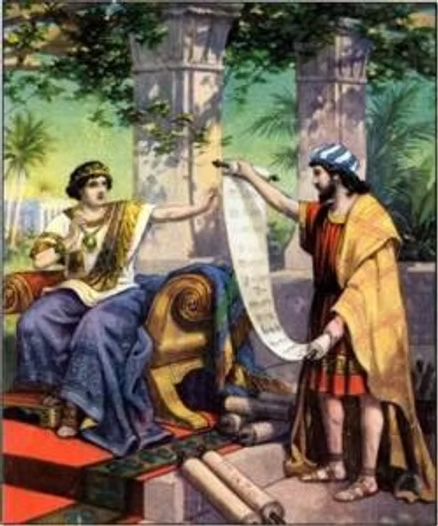
In reference to his father’s history, Solomon had to have been told of father David’s plan to build a house of cedar for the Ark, so God would no longer have to live in a tent. Nathan the prophet agreed with David, knowing David’s thoughts were in line with God’s. However, God visited Nathan in a dream and told him what to say to David. This relates to the building of a permanent house for the Lord:

2 Samuel 7:12-16 – “When your days are over and you rest with your ancestors, I will raise up your offspring to succeed you, your own flesh and blood, and I will establish his kingdom. He is the one who will build a house for my Name, and I will establish the throne of his kingdom forever. I will be his father, and he will be my son. When he does wrong, I will punish him with a rod wielded by men, with floggings inflicted by human hands. But my love will never be taken away from him, as I took it away from Saul, whom I removed from before you. Your house and your kingdom will endure forever before me; your throne will be established forever.’”

Nathan was the prophet who advised David. He was still around to anoint Solomon as king and help with the elimination of David’s old enemies. It may or may not be that Nathan advised Solomon of Yahweh’s prophecy sent to David; but it is likely that Solomon, as the approved offspring that ascended to the throne of Israel, would be told it was his place to build a house for God. In a part not read today from 1 Kings 8, Solomon announced that he was fulfilling that prophecy delivered by God to Nathan, repeated to King David.

But … was that true?

For all of Solomon’s wisdom, he missed the point of who God would “raise up.”  He overlooked the prospect of a kingdom lasting forever.  He regularly made references to his father, David, and not to God as his father.  The house that Solomon built, while new then was not a house that will last forever. Solomon knew that.

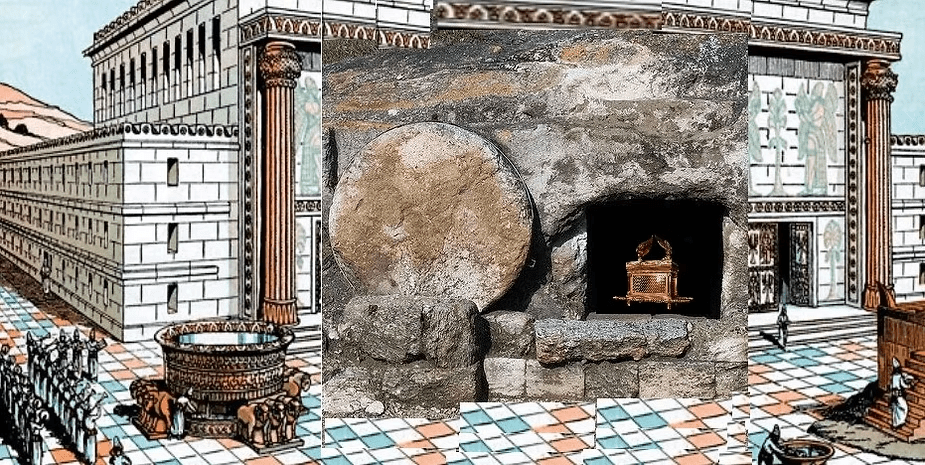
According to Jewish Encyclopedia and their article on Solomon, they say Solomon ordered secret underground rooms to be carved into the rock below the temple, in which the Ark could be placed at a later date.

Their article writes that this was because Solomon knew the temple would eventually fall into enemy hands (the wisdom of knowing that, strategically, Jerusalem was indefensible). When it did fall to the Babylonians, Solomon’s Temple was destroyed.  After the Persians allowed the Jews to rebuild their lost temple, and the long beautification project begun by King Herod, the Romans would destroy that temple.  The eventual eviction of Jews from the Middle East meant Mount Moriah became the home of a Muslim mosque on that mount.  Therefore, history allows one to surmise that Solomon’s Temple was not what God had told Nathan an offspring of David would build.

What lesser god lives here?

The Temple in Jerusalem that was ordered built by Solomon was little more than an upscale version of David’s plan for a cedar house. When God told Nathan to tell David, “The Lord declares to you that the Lord himself will establish a house for you” (2 Samuel 7:11), God made it clear that He did not want any immobile, physical structure to ever be built for the Ark that held the Covenant within it, over which God presided.

When Solomon said, “Even heaven and the highest heaven cannot contain you, much less this house that I have built!” he was smart enough to realize God did not reside in the Ark, or a tabernacle, or a temple of stone. Solomon should have figured out that God never asked for him specifically to build an everlasting house, when Solomon was part of the House of David God made.  Solomon was a brick in that house built by God; but bricks have a way of crumbling to dust over time.

Solomon’s wisdom allowed him to see how dangerous it was to have the Ark placed on low ground, covered only by canvass.  Anyone who became an enemy of Israel could easily take it into their possession; so higher ground made more logical sense.  However, could it have been that David placed it where others could readily see it, knowing that God would protect the Ark, and Israel and its king, as long as all served the Lord with all their hearts?

That is the difference between having complete faith in God and having a Big Brain, greater than anyone anywhere at any time.
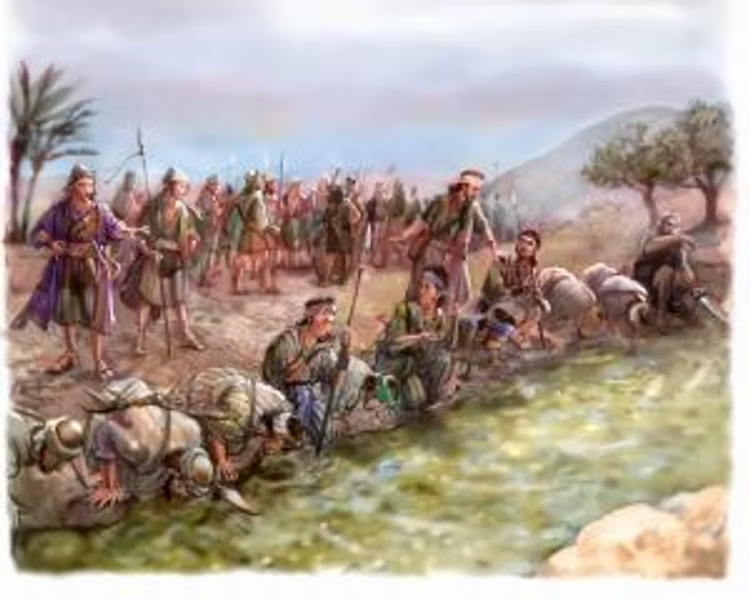
God told Gideon to send all the trained soldiers home and keep the three hundred that felt safe enough to lap water from the stream like dogs. That was enough to defeat the enemy; but would a Big Brain make that decision?

Of course, as Christians two thousand years removed from Jesus Christ, we know that the “offspring to succeed David,” of his bloodline, coming in the flesh, who would “establish his kingdom” was Jesus Christ.  He was the offspring of David God told Nathan about.  As such, we have a bigger brain than Solomon, in that one sense of understanding Scripture.  Therefore, we are not Solomonists.

We are Christians.

Jesus has built the “house in the name of God,” which is the name an Apostle-Saint takes: Jesus Christ. Each true Christian is reborn as Jesus Christ and becomes a living temple of the LORD, in the house of that name. Apostles and Saints can then call God their Father, as they have all (regardless of human gender) become God’s Son, resurrected in the flesh.  An Apostle is all about faith in God and absolutely nothing about strategizing.

The dedication of Solomon’s Temple and the prayer he said needs to be more closely examined.  The reader says Solomon orated:

“O Lord, God of Israel, there is no God like you in heaven above or on earth beneath, keeping covenant and steadfast love for your servants who walk before you with all their heart, the covenant that you kept for your servant my father David as you declared to him; you promised with your mouth and have this day fulfilled with your hand. Therefore, O Lord, God of Israel, keep for your servant my father David that which you promised him, saying, ‘There shall never fail you a successor before me to sit on the throne of Israel, if only your children look to their way, to walk before me as you have walked before me.’ Therefore, O God of Israel, let your word be confirmed, which you promised to your servant my father David.”
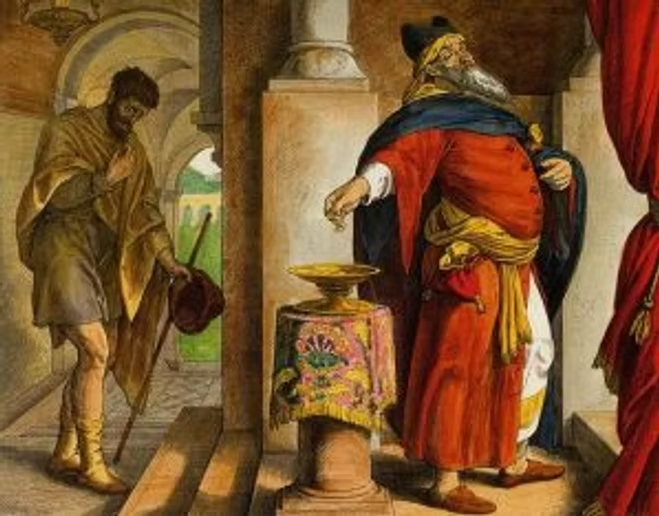
The boastfulness of the Pharisees in the Temple make them seem like Solomonists.

That prayer was for God to live up to his promises to David, Solomon, and Israel. There was little there that says the Israelites have to do anything more than walk before a magnificent building … three times a year … to earn their side of the bargain made between the Israelites of Moses and God.  Solomon spoke those words on a day during the festival of Sukkot, which is reminiscent of how the Israelites were placed in booths (tabernacles, tents, or dwellings) in the wilderness … as a sign that they owed everything to their God.  The bounty of the harvest coincides with that dedication and devotion.  However, Solomon spoke as if an eternal house of David had been established, so the rest was up to God to ensure.

After David brought the Israelites closer to God than they had ever been before, David’s sins with Bathsheba and against Uriah cut them loose and began their drift away from God. Solomon, as the offspring of that sin-born relationship, was given a Big Brain by which to steer the course of Israel to ruin. He asked for it and got his wish granted by God.  Building a grandiose temple was one of many steps away from God that Solomon began taking, as his magnificent temple tried to imprison God in a man-made structure, enslaving God to do the will of Israel’s kings.

The House of David will last forever, but not because of Solomon’s Temple.  Jesus Christ would build the house in the name of God.  The Christ (Greek for Messiah) is the name given by God to His Son Jesus, born of a woman and raised in Nazareth.  Jesus took the name of God by being the Christ.  Jesus is then the cornerstone of the house in the name of God that will live forever.  It lives forever through countless human beings losing their ego-driven sense of self-importance, and being reborn as Jesus Christ, servants of God.  The true Temple of the LORD is then Christianity.

As the primary Old Testament option for reading on the fourteenth Sunday after Pentecost, when one’s own personal ministry for the LORD should be underway – one has cut the ribbon and opened the park to the public, in thanks for God’s blessing of a harvest – the message here is to dedicate one’s personal heart and soul to God. There is no building made of stone that God looks upon lovingly.

The Ark of the Covenant has been lost to the world. That physical case for stone tablets, robes, staffs, or whatever other holy material objects might have been placed inside it have been replaced by Jesus Christ. The Gospel theme the entire month of August (2018), from John 6, has been Jesus saying “eat my flesh and drink my blood,” which is (in essence) saying Christians must build the only temple that Yahweh will reside within.  That must be built around their souls, using only the materials of Jesus Christ. The Ark is one’s heart and the Law that binds one to God and God to one is then written on that heart by God.

A “church” of Christians is not a physical place of building. It is wherever two or more people that possess the flesh and blood of Jesus Christ have come together.  It is a gathering of those having become Jesus Christ reborn. It is the place where two or more come together in the name of Jesus Christ, Jesus Christ will be there, as will the Father. Therefore, a church of Christ is a house built of true Christians.

We read how Paul wrote letters to the churches of Greece (when Turkey was Greek) and the tendency is to think in terms of houses of worship. We see the Ephesians, the Philippians, and the Corinthians as being like a Christian church is today – filled with people who believe in Jesus as Christ, but none who will state, “I am Jesus Christ resurrected.”

I imagine that reading “church” and thinking “building” began when the Roman Emperor assumed control of Western Christianity.  Over time, building cathedrals and basilicas became more important than building Saints.  Basking in the glory of a huge building became more important than regular home study of Scripture and living a life of righteousness.
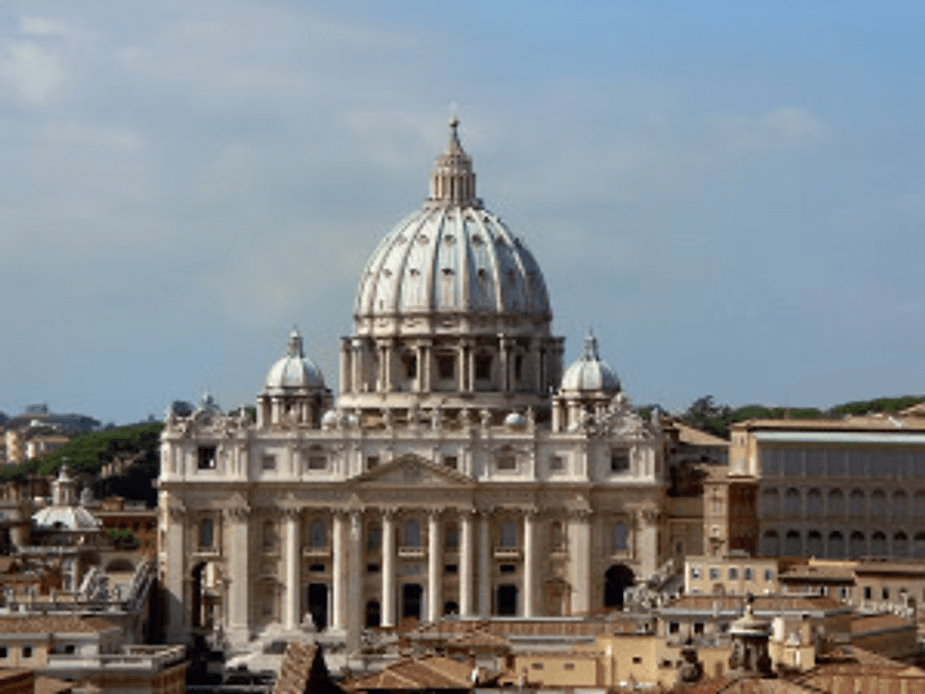
The Pope’s Temple?

There is probably a parallel between the rise of grandiose Christian churches and the decline of Apostles and Saints. Perhaps, this is due to reading about Solomon’s Temple and assuming that was a good thing to do.  Putting God in a box that cost a lot of wealth and time was the easiest way to show one’s love of God.  It was hard work, of course; but it was easier to do than give up sin.

A minister for the LORD is a mobile church, always on the move and in search of members to join that church. He or she is unlike a church building that is run by volunteers and a small handful of paid clergy [employees of an organization or institution].  They offer newcomers baskets of trinkets and free coffee with a possible snack – all designed to get one to come back. Their friendliness is built on a desire to have others help with their work; but it is an endless task that loses its sincerity over time.  After all, a building gets old and begins to deteriorate, just like those who are sworn to maintain it.

A minister for the LORD is not seeking fellowship and human companionship through an organization that enslaves God by expecting Him to do organizational chores, while hanging Jesus on the cross over the altar. A building called a church that does not create true Christians is really only a building; and a church that creates true Christians usually will only have need for two or three chairs, because most members of that body of Christ will also be mobile churches, always on the move in search of members to join Christ with him or her.  As long as the vine is alive and growing, the fruit that comes and goes with the seasons has served a purpose.

Still, remembering the words of the philosopher and storyteller Joseph Campbell, he told Bill Moyer in his interviews that there was something special about being inside a great cathedral. This is a feeling one experiences, usually the strongest when the building is empty. The hugeness of the building becomes like the greatness of God.  In that case, a building promotes a sense of reverence.
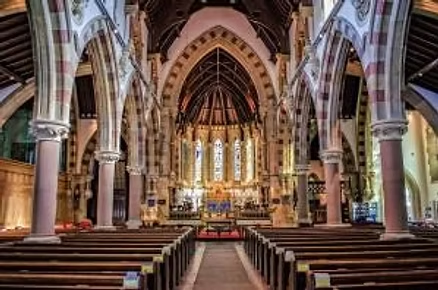
That presence felt says that God watches over His Temples, His Cathedrals and His Basilicas, because they are part of the house of Christianity; and, God watches over those who seek Him. Therefore a building can be where God can be found; but as Solomon said, “But will God really dwell on earth? The heavens, even the highest heaven, cannot contain you. How much less this temple I have built!” – God cannot be placed inside a box.

God is everywhere. He watches the seekers, many of which enter buildings called churches. He gets to know those seekers who make themselves a church for the LORD. As Jesus said, “Ask and you shall receive.” Asking for God’s help can be done anywhere.

Just remember to ask God what you can do for Him and leave the asking what God can do for Israel to Solomon’s prayer.

#John6 #2Samuel71216 #1Kings8 #2Samuel711 #dedicationtoSolomonsTemple

Joshua 24:1-2a,14-18 – Choosing to serve the LORD

Joshua gathered all the tribes of Israel to Shechem, and summoned the elders, the heads, the judges, and the officers of Israel; and they presented themselves before God. And Joshua said to all the people, “Thus says the Lord, the God of Israel:

“Now therefore revere the Lord, and serve him in sincerity and in faithfulness; put away the gods that your ancestors served beyond the River and in Egypt, and serve the Lord. Now if you are unwilling to serve the Lord, choose this day whom you will serve, whether the gods your ancestors served in the region beyond the River or the gods of the Amorites in whose land you are living; but as for me and my household, we will serve the Lord.”

Then the people answered, “Far be it from us that we should forsake the Lord to serve other gods; for it is the Lord our God who brought us and our ancestors up from the land of Egypt, out of the house of slavery, and who did those great signs in our sight. He protected us along all the way that we went, and among all the peoples through whom we passed; and the Lord drove out before us all the peoples, the Amorites who lived in the land. Therefore we also will serve the Lord, for he is our God.”

———————————————————————————————————-

This is an optional Old Testament selection from the Episcopal Lectionary for the Fourteenth Sunday after Pentecost, Year B 2018. In the numbering system that lists each Sunday in an ordinal fashion, this Sunday is referred to as Proper 16. If chosen, it will next be read aloud in an Episcopal church by a reader on Sunday August 26, 2018. It is important because it says the option is up to the individual, as to what deity one chooses to serve.

This reading takes the introductory verses of this chapter and then jumps to verse fourteen. In between is a brief history of the lineage of Abraham, Isaac, Jacob, with all the great signs given by God to them; and then it moves to the powers that protected the Israelites under Moses and their move into Canaan. Basically, every time there was an enemy trying to get in the way of that holy line, God caused the defeat of that enemy. With that history stated as a reminder for why the Israelites should completely devote themselves and their households to Yahweh (the LORD), Joshua gathered the elders of all the tribes of Israel to Shechem and asked them to commit to Yahweh or commit to some lesser god of prior.

This element of commitment makes this gathering read like an engagement party. Joshua was the first to announce his planned marriage to Yahweh. The history of Yahweh being with the children of Abraham, Isaac, and Jacob reads as the courtship, when the family came to know God on an intimate level. With Joshua’s announcement of his planned union, his entire household (family under Joshua’s direct control) was to be committed to the same One God. Such a thorough marriage would then be forever – till death do them part.

Prior to that pledge to “serve him in sincerity and in faithfulness,” Joshua was free to ‘play the field’. He knew of the polytheism of Egypt, where there was an individual god for each different aspect of life; and he knew the gods of the Amorites (the Philistines generally, but the Assyrians too), where similarly many gods were worshiped for many things. One could choose to be closer to a few “household idols” and ambivalent to the rest, until a special need arose. However, Joshua had been in a close relationship with Yahweh and that relationship was built on love; and there was nothing any other god offered that could persuade Joshua to leave the God of his heart.

When we read the introduction that states, “Joshua gathered all the tribes of Israel to Shechem, and summoned the elders, the heads, the judges, and the officers of Israel; and they presented themselves before God,” it is easy to presume that Joshua held the sway of a king. Certainly, Joshua was important in the settling in Canaan by the Israelites and his call for a gathering, so he could announce his engagement with Yahweh, would have been heeded. After all, Joshua was close to God and had defeated the Amorite enemies, with God’s helpful guidance. Still, the aspect of the tribes of Israel being presented before “elohim” (“gods,” the plural form of “el“) is a clue about the timing of this event.

The “gods” of other nations.

In verses two through thirteen, Joshua differentiated the “elohim” of others and the “Yahweh ’ĕ·lō·hê yiś·rā·’êl” – “the LORD of gods of Israel.” Those who had worshiped “other gods” had been defeated – as their history told – by those who followed “the LORD of gods of Israel.” That remembrance, told to the leaders of the Twelve Tribes of Israel, was most probably done at one of the three God-commanded gatherings: Passover, Shavuot, or Sukkot. As Shechem was the holy city of Israel, where the Ark’s tabernacle was set up, attended by the Levite priests, the leaders of Israel would have naturally gathered in compliance to their Covenant with Yahweh. In that atmosphere of recognition, celebration and remembrance, Joshua stood before those leaders and stated his commitment to God forever.

In a gathering that was obligatory and with manna no longer falling each day to spiritually uplift each family of Israelites, strengthening their commitment to Yahweh, the Israelites were set amid peoples who served other gods. At a time when the Israelites were obliged to remember all that the LORD of gods of Israel had done, setting them free, delivering them into a Promised Land, and defeating all the enemies whose land was taken from them, they were spread out into places where the enemy might outnumber them. Set before the “elohim” of the Amorites and knowing in their history their forefathers knew the “elohim” of Egypt and Canaan, it would be much easier to allow their enemies the right to worship as they pleased, and even adopt some of the foreign rituals as their own, so everyone could live happily together.

A holy day like the Passover remembrance was kept so such reductions to the Laws of Moses would forever be avoided. Joshua’s engagement announcement was a call for all the Israelite tribes to likewise choose which of the gods they would be married to as one.

“Then the people answered, “Far be it from us that we should forsake the Lord to serve other gods; for it is the Lord our God who brought us and our ancestors up from the land of Egypt, out of the house of slavery, and who did those great signs in our sight. He protected us along all the way that we went, and among all the peoples through whom we passed; and the Lord drove out before us all the peoples, the Amorites who lived in the land. Therefore we also will serve the Lord, for he is our God.”’

The Israelites all became engaged to Yahweh. All of the families under the leaders of Israel made the same commitment to become one with the LORD of gods of Israel. They would become His wives and serve him sincerely and faithfully forever.  The leaders of Israel spoke a commitment that would bind generation after generation (“for me and my household”), to forever be married to Yahweh.

When they said “we also will serve the Lord, for he is our God,” that meant God was the husband betrothed to the Israelites (regardless of what tribal names they called themselves).  “Our God” also stated they would serve “Yahweh,” for He was all “gods” (“elohim” translated as “God”) to them. Yahweh was the only God protecting a household, and the only God to whom one of that household should pray.

As the reading selection for the fourteenth Sunday after Pentecost, when one’s own ministry to the LORD should be underway – one should be married to Yahweh – the message here is to examine one’s past and see if one enemy after another has been miraculously defeated, with all credit for such victories due to God.  If not, then one needs to examine who one faults for those setbacks.

Many people prefer to give the credit to the god of good luck and good fortune. Some say the god of chance swept into their lives. Others bow down before the altar of the god of self-accomplishment, the twin brother of the god of self-importance. Of course, there is the god of higher education, overseeing his sprites and fairies that specialize in the degree fields of universities: law, medicine, professional sports, acting, television series writing, and film (others don’t show a profit after student debt is calculated).

Those are all under the great god Mammon, whose favors drive away the lesser gods: famine, poverty, and sickness. No matter which god(s) one chooses to serve, one or more is the only option if one does not marry Yahweh, the LORD of the gods, making Him one’s only God.

You have heard of “Wearing one’s heart on one’s sleeve”? Well this is wearing one’s faith so nobody can mistake one as a simple person of faith.

A minister of the LORD knows that it is easier to announce one’s engagement to Yahweh than it is to actually follow through with the marriage. Rather than a gold ring with a huge precious stone, the engagement ring of Yahweh is a halo of righteousness (invisible to the naked eye).

This is because God requires virgin brides (again, human gender has nothing to do with that designation), which means a holy engagement is a promise that comes with sincere confession and a trial period of abstinence from sin.   During that proving period, tests of one’s commitment to righteousness will be presented, with patience and restraint needed to be demonstrated. That is because during that period old lovers will be drawn to call upon one newly engaged, suggesting one last fling with: drugs, sexual ‘hook-ups’, lying, gossip, cheating, stealing, and all the things the lesser gods whisper in one’s ear, while nuzzling one’s neck: “It’s okay. No one will know.”

In the Roman Catholic Church news these days is the touchy subject of the Church failing to do anything to stop sexual predators – pedophiles – who held positions of trust that were: parish priests, dioceses bishops, and cardinals, all under the head of a series of popes. In other denominations, homosexuals have been ordained and even elevated into great leadership positions, some proudly pronouncing themselves as still actively homosexual. All of these men (and women) have announced their engagement to the One God, simply by their titles, the robes they wear, and the Sacraments they bless; but, at some point in their lives they reverted to paganism and turned away from Yahweh.  They chose to serve Satan.

Now, they believe they can beg the people for forgiveness and then go on as if there is no sin that cannot be absolved. They absolve one another from confessed atrocities, while professing to be holy Apostles.  They have fallen in love with the god of evil, who loves to mislead them to such beliefs.  An Apostle of Jesus Christ does not break holy vows.

Jesus said, “No one can serve two masters. Either you will hate the one and love the other, or you will be devoted to the one and despise the other. You cannot serve both God and money.” (Matthew 6:24) He said that to the Pharisees who loved to milk the Jews for their wealth, proving their love of Mammon. Had Jesus known of pedophile priests, bishops and cardinals, he would have told them the same thing, only ending his words with “You cannot serve God and lust.”

These uncorrected acts of abuse are reason for good Catholics to leave the Roman Catholic Church. There is no trust left when church leaders are led by lust in their hearts. They do not serve Yahweh, the LORD of gods.  If a religious organization refuses to drive out the false shepherds, then the good shepherds will stand outside building owned by that organization and lead the flock away from corruption.

Staying with a corrupted Church (an organization) means the guilt of association spreads, spoiling all good priests that think serving God means protecting those who rape children.  Priests swear oaths to their bishops, not to God.  When an individual has committed the sin of using the LORD’s name in vain – by professing to be of holy cloth and acting in unholy ways – forgiveness has been placed in much higher hands than any human body can reach.  Good priests and ministers must leave a corrupted Church, or they bow down to an institution and serve it.

God never said His priests must organize and institutionalize.  God never authorized His wives to kill their children.  God never gave His seal of approval to Jezebel and her priests of Baal.  God did not send prophets to scream His condemnations at the blending of religions that overtook Israel and Judah, because God wanted it known that He does not approve of cheating wives.

What is different between the sacrifice of children by clerics in modern times and the sacrifice of children by those abusers that God told Jeremiah of:

“The people of Judah have done evil in my eyes, declares the Lord. They have set up their detestable idols in the house that bears my Name and have defiled it.  They have built the high places of Topheth in the Valley of Ben Hinnom to burn their sons and daughters in the fire—something I did not command, nor did it enter my mind.” (Jeremiah 7:30-31)

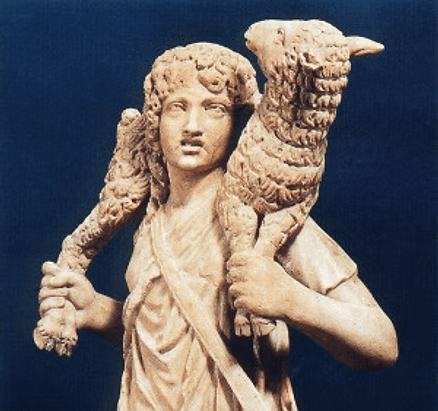
A child trusting a man he or she has been told to call “Father”, only to lose his or her  life of innocence to burning nightmares by a holy trust broken, is like being a trembling lamb in the hands of a priest holding a slaughter knife before the altar.  Once the knife slices the neck and the life blood is forever spilled, there is undoing that act.  No child harmed by a priest has ever been done in the name of the LORD – Yahweh. They are sacrifices made to lesser gods.

When the message of this reading is taken as simply being, “Choose who you will serve – God or god(s)” – the ambiguity leaves this open to thinking one’s choice leaves room for some affairs and flings from time to time. It is easy to see how Jesus and God forgive sins, as if each week new sins are gladly wiped off the heavenly ledger.  An engagement to God that thinks sins will forever be forgiven, so go out and sin in the name of the LORD, is misguided.  It mistakes modern families as the norm.

The looseness of how Westerners, including many Christians, see marriage today misleads many to think God and Jesus Christ have approved lower standards of morals. Gays of the same sex can now marry one another, even in services overseen by priests or ministers … in some Christian churches. Marriages can be ‘open’, so multiple partners are okay if both agree, with or without both of the married pair present during sexual liaisons.  This corrupted way of life has always existed, but never deemed appropriate behavior for one married to God.

Divorce is so rampant that it belittles the lifetime commitment the marriage vows emptily state.  Prenuptial contracts are signed because someone expects divorce.  Couples more frequently choose not to have children, if they do choose to be limited to one spouse, simply because it is so difficult determining what to do with the offspring after the divorce.  This is another example of child sacrifices done in the name of God, every time divorce follows a church wedding.

All of these lowered standards make it seem it is okay to cheat on Yahweh.  No such changes have been made.  The statement made by Jesus still hold true:  “What God has joined together, let no one separate.”  A man and a woman join together to make babies, which will forever be formed of the DNA of two parents.  A marriage is a commitment to have children AND THEN raise those children until they get married.  That is the oath of marriage.  It is not a commitment to have sex, but a vow to serve God by being fruitful and then serving God by raising children to love God.

An oath to serve God is a greater oath than one made between two human beings.  It is a pledge to complete and total subservience.  It is not to be taken lightly.  Therefore, no one is ever forced to marry God against one’s will.  Therefore, choosing God and then living life like a sinner is breaking an oath.

Jesus said, during his “sermon on the mount”:

“Again, you have heard that it was said to the people long ago, ‘Do not break your oath, but fulfill to the Lord the vows you have made.’  But I tell you, do not swear an oath at all: either by heaven, for it is God’s throne;  or by the earth, for it is his footstool; or by Jerusalem, for it is the city of the Great King.  And do not swear by your head, for you cannot make even one hair white or black.  All you need to say is simply ‘Yes’ or ‘No’; anything beyond this comes from the evil one.” (Matthew 5:33-37)

“Do you swear to tell the truth, the whole truth and nothing but the truth, so help you God?” means one helps God by spreading the truth, not lies.  Breaking that oath appears to be commonplace in the courts these days.

Jesus spoke those words after speaking wisdom about adultery and divorce, where oaths of commitment are broken. All of this can apply to the words of Joshua, where he said, “Now if you are unwilling to serve the Lord, choose this day whom you will serve.” Each individual of adult age is responsible for making that choice.  No one is forced to choose God.  However, you cannot announce your engagement to God and then run out and cheat on Him with lesser gods (“elohim”).

Because Joshua gave all the Israelites that option out, there is nothing that says anyone must be a child of Yahweh.  Yahweh chose the children of Israel; but Joshua’s challenge to the Israelites was to choose God too.  It is a proposal that makes one choose the One God for one’s life.  It requires an oath when one says, “Yes.”  “Yes” means God does all the leading from then on, while the wife (male and female they are made) subserviently follows.

Before one chooses, or if one says, “No,” then everyone is free to play the ‘god field’ all their lives. Everyone is free to gamble his or her soul away. Everyone is free to choose to serve self at all times, walking over as many people as might dare to get in one’s way. God has given all souls the freedom from heaven, to do as they please on earth.  People are free to commit the most heinous of crimes imaginable, because without morals creating laws, no crimes can be judged.  It is up to each freed soul to decide when and if that soul wants to return and live with God.

Yahweh does not hang out in bars and nightclubs, looking for one night stands.

But, there comes a time when one has to stand and defeat evil, which requires an engagement to Yahweh [minimally].  Everyone is free to choose to be the wife of Yahweh and follow His orders completely.  Equally, everyone is free to choose to be the wife of religions, governments, philosophies and all of that of the world, which breeds the arguments and disagreements that lead to wars.

One way or another, one has to fight for survival. Everyone has the freedom to choose who he or she will fight for or fight against.  Everyone has the freedom to choose to fight for temporary pleasures, with death as their future; just as everyone has the freedom to choose to fight for temporal pains, with everlasting life as the future.

Choosing is not easy, just as marriage and commitment means hard work. Just keep in mind how the things earned through hard work and attention to details are the most rewarding. It is good to look back one one’s life and see where sacrifice paid off greatly later.  Most likely, God played a role.

Ephesians 6:10-20 – Praying for the armor of God

Be strong in the Lord and in the strength of his power. Put on the whole armor of God, so that you may be able to stand against the wiles of the devil. For our struggle is not against enemies of blood and flesh, but against the rulers, against the authorities, against the cosmic powers of this present darkness, against the spiritual forces of evil in the heavenly places. Therefore take up the whole armor of God, so that you may be able to withstand on that evil day, and having done everything, to stand firm. Stand therefore, and fasten the belt of truth around your waist, and put on the breastplate of righteousness. As shoes for your feet put on whatever will make you ready to proclaim the gospel of peace. With all of these, take the shield of faith, with which you will be able to quench all the flaming arrows of the evil one. Take the helmet of salvation, and the sword of the Spirit, which is the word of God.

Pray in the Spirit at all times in every prayer and supplication. To that end keep alert and always persevere in supplication for all the saints. Pray also for me, so that when I speak, a message may be given to me to make known with boldness the mystery of the gospel, for which I am an ambassador in chains. Pray that I may declare it boldly, as I must speak.

———————————————————————————————————-

This is the Epistle selection from the Episcopal Lectionary for the Fourteenth Sunday after Pentecost, Year B 2018. In the numbering system that lists each Sunday in an ordinal fashion, this Sunday is referred to as Proper 16. It will next be read aloud in an Episcopal church by a reader on Sunday August 26, 2018. It is important because Paul states that the forces of evil are too much for human souls that are not protected by the armor of God.

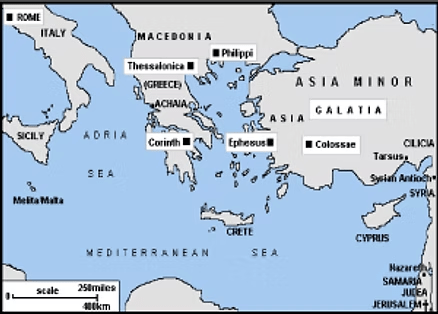
It is important to remember that the places Paul’s journeys took him were all technically Greek. There he sought out the Israelite descendants and in the process of spreading the “Good News” of their Messiah having come, he welcomed the Gentiles there. They were mostly Greeks of pagan religious roots. This map shows Ephesus as one of the places where Greek culture had hold in Asia Minor, then called Galatia.

With that Greek heritage, it can be assumed that Greek mythology was still widely known and there were temples still standing, as well as monuments and statues of the many gods of importance that the Greek people worshiped. With Greece under the Roman Empire’s control, there might have been active temples to the gods who were the Roman equivalents of the Greek gods.

In this part of Paul’s epistle to the Christians of Ephesus, it seems he might be using Greek mythology as a way of making a point about God’s protection, where he wrote, “Put on the whole armor of God.” Besides the Greek word “Theou” not having the full effect of the Hebrew name for God – “YHWH” – or even “El, El Shaddai, Elohai, or Adonay – it is drawn from the implication of “a god,” implying one of the many gods known.  Even capitalized, “Theou” could mean Zeus to some and Yahweh to others.  This helps any implication that the armor was mythological metaphor.

For instance, the Greek theos Hephaestus (Roman equivalent Vulcan) was the maker of special armor.  He was considered the blacksmith of the gods.  Special devices would be ordered by the Greek theoîn,  who would have pieces of heavenly armor be worn by themselves or their chosen Greek heroes.

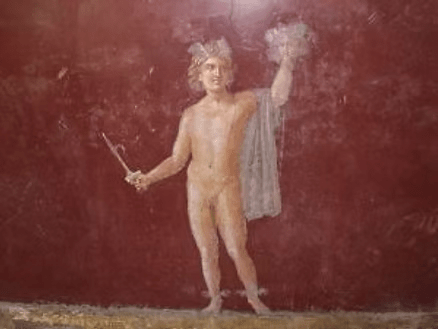
The mythological story that first comes to mind is that of Perseus, who needed help from the gods to kill the Gorgon Medusa. Athena asked Perseus to kill Medusa. In order to achieve that monumental task, multiple gods helped Perseus.  He was given by Zeus a gemstone-metal curved sword and by Hades a cap of invisibility (the helm of darkness). A polished shield (that acted like a mirror) was given to Perseus by Athena and winged sandals, which allowed Perseus to fly, were lent to him by Hermes. The Hesperides (nymphs of the evening) gave him a special sack to safely put Medusa’s severed head in.

Knowing that detail of divine gifts of armor, look now at what Paul says God gives to His “hero” Apostles-Saints:

• The belt of truth,

• The breastplate of righteousness,

• The shoes to proclaim the gospel of peace,

• The shield of faith,

• The helmet of salvation, and

• The sword of the Spirit.

With all of this armor on, one looks like this:

Physical armor weighs one down to the material realm, so that one is unable to fight from spiritual purity. To stand on even ground “against the spiritual forces of evil in the heavenly places,” one has to be elevated to a force of righteousness by the forces of good in the heavenly places. Innocence defeats evil in the battles between God and the gods of Satan.

With heads bowed, eyes closed, and hands palm to palm, one is armored by the presence of Yahweh, the LORD. Prayer is how one is “strong in the Lord and in the strength of his power.” Prayer is one’s submission to the One God, so one cannot hear “the wiles of the devil.” God hears them and speaks through His servants, putting Satan in his place.  Like Jesus, the strong say, “You shall not tempt the Lord your God” and “You shall worship the Lord your God, and Him only you shall serve.” (Matthew 4:7 & 10)

Prayer leads one to see through the lies of “the rulers,” the cunning of “the authorities,” and prayer shines the light of truth upon all the worldly ploys (“the cosmic powers” – “kosmokratoras”) that hide in “this present darkness,” which is ever-present in the material realm. Prayer leads one to seek humble positions, rather than be like those who seek prideful roles of leadership and authority.  Prayer brings one the light of “day,” so all “evil” is exposed, stripping it of its power to confuse and mislead.

Paul wrote these words of encouragement to the Christians of Ephesus so they would pray for all the “heroes” of God who wore the armor that comes with being reborn as Jesus Christ. An Apostle-Saint is never alone in this battle between good and evil, as Father, Son and the Holy Spirit are always surrounding the soul of life. Still, Apostles and Saints are related to their brothers and sisters in Christ, who gain strength and courage from the prayers that unite all members of the same body, all fighting for the same purpose … in different ways … determined by God.

The belt of truth is the insight of the Christ Mind, which “girders one’s loins” and makes one’s back capable of shouldering any heavy load.

The breastplate of righteousness is one’s heart being protected from external attempts to upset one and cause one to acts irrationally, due to unstable emotions.

The shoes that allow one to spread the truth contained in Scripture means one is always walking towards someone seeking peace in their lives. Comfortable feet says one will never hesitate going wherever the LORD leads one, because one is always feeling good to go.

The shield of faith means that whatever flaming arrows of condemnation are cast at one, in attempts to silence the truth unwanted to be told, nothing will bring harm to the one speaking God’s Word.

The helmet of salvation is an Apostle-Saint’s promise of eternal life in heaven, washed clean of sin by the baptism of the Holy Spirit; and the sword of the Spirit is “the word of God,” which cuts through all twists, turns, and spins of Scripture done by false shepherds.

As the Epistle selection for the fourteenth Sunday after Pentecost, when one’s personal ministry for the LORD should already be underway – one is wearing the armor of prayer constantly – the message here is to trust in “the strength of [God’s] power” and “be strong in the LORD” by removing all doubt that keeps one from picking up the shield of faith.

A minister of the LORD knows the difference between belief and faith. Believing in something is a mental exercise, where study and listening to lectures makes sense. It is like learning to do math problems on paper and making good grades on math tests, but never actually applying the principles of math in the real world. One believes math can solve any problem; but knowing how to break the world down into mathematical equations requires faith.

It is the difference between compliance and ownership. Complying with ideals, principles, and concepts means sometimes we are told to go against personal wants, desires and reasons. Against one’s will, one finds a force that makes one comply or be punished. These external forces are often laws written by rulers and authorities. We often have to choose what is right and wrong, based on the wiles of the devil. Too often we are told to project one’s personal problems on those far away, pitting us against them – as “enemies of blood and flesh.” When government and religion bleed together and clear boundaries are changed or erased, one complies with regret; and that bring about doubts of one system of rule or the other.

Religious compliance is like being a fence-sitter. On one side of the fence is faith in God and on the other side of the fence is faith in self. For all the recommendations to jump off the fence and join with God there are many more suggestions to forget all that promise of eternal salvation stuff and come back and play with the pleasurable sins one knows all about.

One can have faith that sin exists, because one knows sin. Because one has yet to actually KNOW God, it is common to fear taking a leap of faith into the unknown.

Faith takes hold when one takes ownership of Jesus Christ. It happens after one has come to KNOW God as His wife (regardless of human gender), so two have become united as one, with the result of that union being the resurrection of the Father’s Son, Jesus Christ. When one is reborn as Jesus Christ, one has put on the full armor of God, just as that which Jesus of Nazareth wore. At that time, all of the metaphor of Paul’s words is known as the truth of God’s Word, spoken through a Saint. One KNOWS God because one experiences God personally, not secondhand.

Ownership is seen through the words of Jesus, when he said to his disciples:

“Don’t you believe that I am in the Father, and that the Father is in me? The words I say to you I do not speak on my own authority. Rather, it is the Father, living in me, who is doing his work. Believe me when I say that I am in the Father and the Father is in me; or at least believe on the evidence of the works themselves. Very truly I tell you, whoever believes in me will do the works I have been doing, and they will do even greater things than these, because I am going to the Father. And I will do whatever you ask in my name, so that the Father may be glorified in the Son. You may ask me for anything in my name, and I will do it.” (John 14:10-14)

Jesus experienced God the Father personally.  They were united as two in one.

The words spoken by Jesus to his disciples not only asked eleven disciples (Judas had already left to betray Jesus) to believe his words and his prior acts – that he was one with God the Father – and that they should believe they will be reborn “in [Jesus] name” (as Jesus Christ), doing more acts of faith than Jesus had done, Jesus’ words speak to everyone who has ever read them. They speak to all reading this today.

The disciples were committed to complying with the commands of Jesus, because they believed he was the Messiah; but those words had no effect on their faith at that time.  This is known because after Jesus was arrested they ran and hid in fear. They were filled with doubts, not faith … and they lived in the presence of a real flesh and blood Jesus, having personally witnessed his miraculous acts.  That luxury of personally knowing Jesus of Nazareth is not possible today.  If those disciples ran and hid in fear, then the same natural fear of the unknown is expected by all disciples of Christ today (those calling themselves Christian, based on belief of words written and spoken).

It is natural to doubt because one KNOWS fear. One has been there and done that, so often that one has ownership of that automatic response to frightening external stimuli. Doubt comes so easily one does not have to think, “What did the professor say to do when scared stiff?” This natural reaction is how one needs to KNOW God, so one’s automatic reaction to “the wiles of the devil” is to say what Jesus said, “Get outta my face, Satan.”

No fear.

That emotional absence can only come from KNOWING God and having the ownership of “I am in the Father and the Father is in me.” This is when one wears the full armor of the LORD and knows “the strength of his power.” Otherwise, one is walking behind the memory of Jesus of Nazareth, afraid to be Jesus Christ reborn.

Prayer is how one calls upon God to enter one’s heart. Prayer is how God comes to give His armor to Saints. Prayer is how one leads others to come to KNOW God too.

John 6:56-69 – Accepting that which is difficult to swallow

Jesus said, “Those who eat my flesh and drink my blood abide in me, and I in them. Just as the living Father sent me, and I live because of the Father, so whoever eats me will live because of me. This is the bread that came down from heaven, not like that which your ancestors ate, and they died. But the one who eats this bread will live forever.” He said these things while he was teaching in the synagogue at Capernaum.

When many of his disciples heard it, they said, “This teaching is difficult; who can accept it?” But Jesus, being aware that his disciples were complaining about it, said to them, “Does this offend you? Then what if you were to see the Son of Man ascending to where he was before? It is the spirit that gives life; the flesh is useless. The words that I have spoken to you are spirit and life. But among you there are some who do not believe.” For Jesus knew from the first who were the ones that did not believe, and who was the one that would betray him. And he said, “For this reason I have told you that no one can come to me unless it is granted by the Father.”

Because of this many of his disciples turned back and no longer went about with him. So Jesus asked the twelve, “Do you also wish to go away?” Simon Peter answered him, “Lord, to whom can we go? You have the words of eternal life. We have come to believe and know that you are the Holy One of God.”

———————————————————————————————————-

This is the Gospel selection from the Episcopal Lectionary for the Fourteenth Sunday after Pentecost, Year B 2018. In the numbering system that lists each Sunday in an ordinal fashion, this Sunday is referred to as Proper 16. It will next be read aloud in an Episcopal church by a priest on Sunday August 26, 2018. It is important because it tells how Jesus knew how difficult it would be for those who followed him to walk in his footsteps as Christ reborn.

For five Sundays now the Gospel reading has come from John’s chapter six, focusing on Jesus telling those who followed him from the flood plain of Bethsaida, where five thousand Jewish men were served bread and fish miraculously, that they should stop seeking physical food (free handouts from Jesus) and instead eat his flesh and drink his blood. Today we read how hard that message was for the followers of Jesus.  They stopped following him, because it seemed he was saying they had to cannibalize him. Because that message is so hard to grasp, and so difficult to swallow, the Church has meted out John’s retelling of it in small bites.  A little more Jesus food is served each week, so eating his flesh and drinking his blood will seem more palatable.

Nibbling on the flesh and sipping the blood of Christ?

Last Sunday (August 19, 2018), we ended that reading with verses 56, 57, and 58. This week we repeat them, by beginning with those verses and then finishing the chapter, except for verses 70 and 71. Those last two verses are actually important to this whole series of readings from John 6, which began with the feeding of the five thousand [we read of that and the walking on water from Mark]. The last two verses of John 6 are important because they point to Judas Iscariot.

The unread verses state: “Then Jesus replied, “Have I not chosen you, the Twelve? Yet one of you is a devil!” (He meant Judas, the son of Simon Iscariot, who, though one of the Twelve, was later to betray him.)”

If you have been keeping up with my interpretations over the past five Sundays, you might recall that I pointed out that the ones who followed Jesus to Capernaum were those who were not spiritually affected by being fed spiritual food on the plain of Bethsaida. Those who were filled with the Holy Spirit left that event changed men, beginning new lives as Apostles. A fraction, however, were not; and I surmised the number could calculate to one-twelfth of five thousand (about 417), which would have been those served by Judas Iscariot – the one being the devil that would betray Jesus.

This naming of Judas (by John, as an aside), who Jesus referred to as earlier as being a disbelieving follower – “among you there are some who do not believe” – is the whole reason Jesus went off in the flesh and blood direction. The one disciple that followed Jesus because he saw Jesus as some masterful conman (that Judas hoped to figure out), Judas saw Jesus as a path to wealth and fame. Judas was an intellectual who lived for the material world (thus he held onto the money for the group).

Judas was then a disbeliever who passed out bread and fish to like-minded Jews. None of them wanted spirituality, because all of them wanted a physical advantage over others. Their minds were closed to spiritual language, thus spiritual food was nothing more than bread and fish.  We can deduce this because Jesus said, “No one can come to me unless it is granted by the Father.”  Therefore, God set it up so a disbeliever of Jesus and spiritual matters would serve disbelievers.

As for speaking of flesh and blood being eaten, that was not much different than when Jesus tried to tell Nicodemus (another intellectual that profited from religion) about being reborn of the Spirit. Nicodemus could only think in physical terms, so he thought Jesus was the one talking crazy talk. Nicodemus heard Jesus say, “No one can see the kingdom of God unless they are born again,” but he could only grasp that in physical terms. His ignorance caused him to ask Jesus, “How can someone be born when they are old?”

How can anyone eat the flesh and drink the blood of Jesus?  Intellectualizing that statement misses the point.

The encounter with four hundred (plus) Nicodemus-like, close-minded Jews demanded that Jesus use the same approach he told to Nicodemus: “I have spoken to you of earthly things and you do not believe; how then will you believe if I speak of heavenly things?”  It was in that vein of understanding disbelievers that Jesus told those who followed after him (in essence), “The food you were fed on the flood plain was based on your needs.  You obviously seek physical food, not spiritual nourishment.”

How more earthly could Jesus get than to say, “Those who eat my flesh and drink my blood abide in me, and I in them. Just as the living Father sent me, and I live because of the Father, so whoever eats me will live because of me”?

If they had understood heavenly things, then they would have gone out into the world spiritually changed men, after being fed spiritual food. Because they followed Jesus to Capernaum, they demonstrated their ignorance.  Jesus had a way of spotting ignorant Jews, before they could open their mouths.

Nothing Jesus could have said to a group of blind idiots would have been any less misunderstood than was “eat my flesh and drink my blood.”  Jesus said this after he originally told them, “Do not work for food that spoils, but for food that endures to eternal life, which the Son of Man will give you. For on him God the Father has placed his seal of approval.” (John 6:27)  That flew over their heads to, as they asked “What must we do to do the works God requires?”

To those who do understand, Jesus saying, “eat my flesh and drink my blood” is recognized as being no different than his saying one must be “born again” to “see the kingdom of God.” It just makes it clearer that “born again” now means human beings must become walking, talking resurrections of Jesus Christ, as his new “flesh and blood.” Jesus did not expect anyone to whip out a knife and fork and begin carving up the body of Jesus.  He meant after he died his flesh and blood would be that of those who had been spiritually nourished by the living Jesus. Jesus Christ was to be reborn into different living bodies, but with the same Spirit of Jesus joining with the souls of those bodies.  Those reborn as Jesus Christ would then be doing the works God requires.

For Jesus to say, “This is the bread that came down from heaven, not like that which your ancestors ate, and they died. But the one who eats this bread will live forever,” this is (again) repeating what was read last Sunday. Jesus said (in essence), “I am not manna. I am spiritual food.  I am like that spiritual food we handed out on the flood plain, appearing as morsels of bread and fish, but nourishing the soul instead of the stomach. People who physically eat material things are only kept from hunger for a short while. I have to be consumed in whole being – Spiritually eaten and Spiritually drank – at which point I become one with another for eternity.”

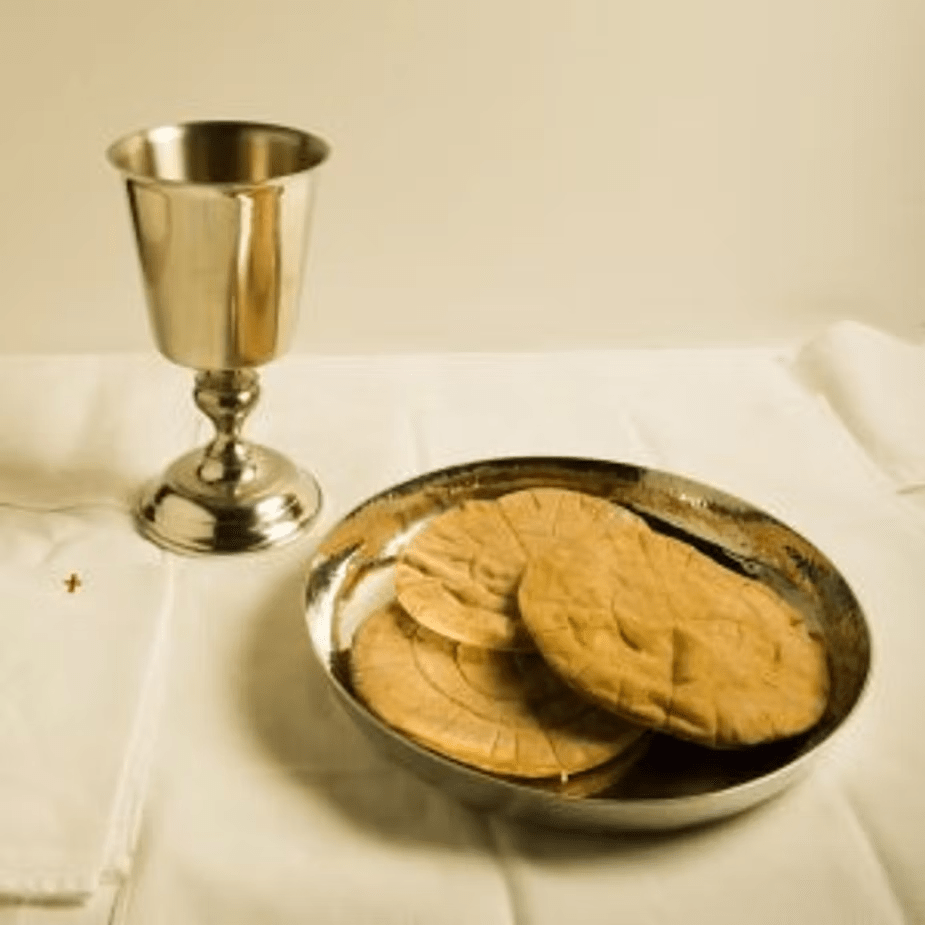
The repetition is important because the concept of physically eating Jesus and drinking his blood is still alive and well in the Nicodemian minds that think a priest can call down from heaven the spirit of Jesus Christ (like ‘Christ tamers’ – <whip snap!>) and make him become one with a bowl of wafers and a carafe of wine. It makes Communion come off to disbelievers like comedian Mike Meyers acting like Fat Bastard, saying to Jesus, “Get in my belly!”

YOU CANNOT EAT THE FLESH OF JESUS OR DRINK HIS BLOOD BY THE ‘OVER THE LIPS, PAST THE GUMS, LOOK OUT STOMACH HERE JESUS COMES’ MENTALITY!!!

To even be reborn spiritually, one must become a resurrection of Jesus Christ in the flesh (not drunk from new wine).  To get to that point, one has to fall deeply in love with God (Yahweh, the LORD of gods) and become His wife (regardless of human gender). As a wife of God, God speaks and His wives (like ALL the Prophets) only say, “You know, Lord.”  A wife can then ask God any question and God will respond with inner wisdom.

From that union, where one’s heart becomes married to God and the Holy Spirit has washed away all past sins FOREVERMORE, little baby Jesus is born from that union. One is reborn as Jesus Christ when one becomes an Apostle of Christ, taking on his name.

At that time, one can be deemed “a priest” who serves God Almighty in the name of Jesus Christ. Therefore, no priest – who IS Jesus Christ resurrected – would ever be so sacrilegious as to pretend to be able to command the spirit of Jesus Christ to hop into a cracker or dip into some wine. No one in the name of Jesus Christ would ever feed bread and wine to disciples as supplemental replacements to falling in love with God and giving rebirth to Jesus Christ, for the purpose of filling the world with more Apostles and Saints in the name of Jesus Christ.

The Sacraments of Communion are symbolic replications of God’s commandment to the Israelites to forever observe the Passover.  They do that with bread and wine.  In Jesus’ last Seder meal observance with his disciples, he told them “whenever you eat (or drink) this (the unleavened bread and the wine cup of thanksgiving) remember Jesus.  That remembrance is because Jesus Christ is the yeast that give rise to flat bread; and Jesus Christ is the high of spiritual awareness that the alcoholic beverages cannot match.  Still, remembering Jesus at Passover means one has been freed from the bondage of the material world by being reborn as Jesus Christ.

The wafer is not the flesh of Jesus.  A true Christian is that flesh.  The wine is not the blood of Jesus.  A true Christian is that blood as the Son of Man, born of the Father’s spiritual blood.

As hard and hurtful as this might seem, especially to Roman Catholics and the splinter churches that are modeled after that style of sacramental pretense, such a reality slap in the face is the message of this conclusion to John’s sixth chapter. It is a strong challenge to Christians, to find God’s truth swell up within them in order to understand difficult words.  The Jews in the synagogue of Capernaum struggled mightily as their reaction to Jesus, as John wrote: “When many of his disciples heard it, they said, “This teaching is difficult; who can accept it?”’

You have to ask yourself, “WHY?” “Why is this teaching so difficult to accept?”

The answer is no different today than it was that Sabbath in Capernaum, when Jesus taught in the synagogue. It is no different than any other time in the two thousand years since, when people of belief have been served “useless flesh” when spiritual food should be the fare of the day. The answer is “useless flesh” keeps disciples always coming back for more “useless flesh,” whereas spiritual food transforms disciples into Saints. The responsibilities of a Saint means going out and teaching the same message as did Jesus of Nazareth in Capernaum.

It is difficult to accept Jesus Christ in one’s flesh.  It is difficult to accept the blood of salvation in one’s heart.  It is not easy to receive that Spirit within one’s being, when one is programmed that such a feat is impossible.  The Jews marveled at the miracles of Jesus, but found his ‘out of the box’ ideas about Scripture hard to take.  Christians who have lived their entire lives not knowing “Why?” are shocked that they might not be doing all they should be doing, if heaven is their goal.

Just as Judas Iscariot wore the face of Jesus Christ as he walked before roughly 417 pilgrims and smiled as they took food that amounted to bread and fish that satisfied them until the next morning, priests, pastors, ministers, and preachers of Christianity have long failed to serve themselves as Jesus Christ to disciples who want to be Jesus Christ also. That failure is from having never truly “eaten the flesh and drank the blood” of Jesus Christ themselves. Since church leaders cannot beget Apostles from a disciple’s ignorance, and the irresponsibility of self-love (as theological intellectuals), is is the blind leading the blind (as always).  Difficult to interpret passages of Scripture are avoided or whitewashed with simple stories that are easy to swallow and desirable to accept.

Good boy! [or girl!]

Jesus said, “The words that I have spoken to you are spirit and life. But among you there are some who do not believe.” That means “words” that are from God require one be given His Spirit and possessing His promise of eternal life (through marriage vows), in order to understand what Jesus said. Those who do not have this God-given ability to understand holy words do not fully believe the Word of God.  Laypeople try to learn what works the Lord requires, but without the resurrected Jesus there to inform them, the constantly beat their chests and rend their clothes in exasperation.  They want to know how to not sin, but no one has ever told them how to eat the flesh and drink the blood of Jesus.

Having the people kept in the dark means some will purposefully profit from those who are blind, like them, but want to be close to someone who speak of God’s words (holy texts) with authority.  Because they have never found any teacher who could actually transform any students into the Messiah, they can easily slip on the clothes of a shepherd.  Often, seeing the complete trust their clothing brings, those trusts are violated.  When violations are exposed (and they will be), belief turns to disbelief, with faith nowhere to be found.  Judas was such a disbeliever who profited in this manner.

Today there are plenty resurrections of Judas Iscariot serving as priests; so why not more Jesuses?

John then wrote, “For Jesus knew from the first who were the ones that did not believe, and who was the one that would betray him. And he said, “For this reason I have told you that no one can come to me unless it is granted by the Father.”’ Jesus had earlier said, “It is written in the Prophets: ‘They will all be taught by God.’[Isaiah 54:13] Everyone who has heard the Father and learned from him comes to me.” (John 6:45)  That means this later quote is a statement about one’s commitment to God, through spiritual marriage.  To “come to Jesus,” one must go through God first.

Jesus then said (in essence), “You cannot be reborn as me unless you have come into union with the Father.” Those who could not believe in Jesus were known as disbelievers by Jesus, because Jesus was in the Father and the Father in him, with the Father knowing the hearts of all, including those who had rejected His proposal.

All Christians must know that God wants to marry them.  Therefore, anyone who is not a duplication of God’s Son (regardless of one’s human gender) has rejected that offer.  One has to ask oneself why that is.

This means Jesus knew Judas’ heart when he first was given a seat at the table of Christ, accepted as a disciple that would betray him. Jesus knew a betrayer was necessary for his ability to be reborn in others, following the release of his soul at his death. Therefore, Judas Iscariot was granted that seat by the Father, and Judas’ insincerity was known by the Son immediately (that’s why Jesus picked him to handle the money).

We then read, “Because of this [misunderstanding of “eat my flesh” and “drink my blood”] many of his disciples turned back and no longer went about with him,” the use of “disciples” [from the Greek “mathētōn”] is different from the use of “twelve” [from the Greek “dōdeka”]. Here, the “disciples” were “students” that were pilgrims that came to Capernaum from the Bethsaida plain (and others), who sought to learn from Jesus, seeing him as a worthy “teacher” (rabbi). However, because his lesson that Shabbat was too hard to swallow, those newcomers left Jesus.

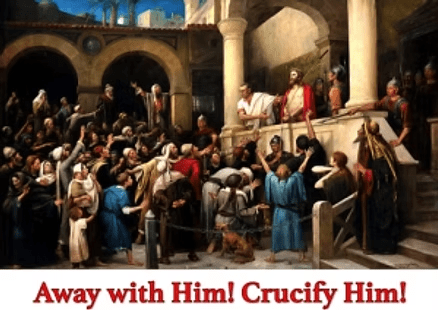
[Keep in mind there was a crown of pilgrims who would later scream out, “Crucify him!” They probably heard a lesson that was hard to swallow too.]

When Jesus then turned to “the twelve,” asking those closest followers, “Do you also wish to go away?” it is vital to understand that Judas Iscariot was one of the twelve. This is why not reading the verses that name him and identify him as one who caused doubts and disbelief – stated in the asides that remember him as the one who betrayed Jesus – makes grasping Judas’ role more difficult.

Judas was asked if he wanted to leave, but he did not get up and go, nor did he speak out. Peter spoke (as usual) for the group of twelve, giving Jesus a mild vote of confidence. He said that after they found out of John the Baptizer’s beheading. When Simon-Peter said, “We have come to believe and know that you are the Holy One of God,” that truth was based on the material miracles they witnessed, not their still-to-come Sainthood.

When Jesus said in the unread verse 70, “Have I not chosen you, the Twelve? Yet one of you is a devil!” Jesus made it clear that he knew the hearts of each of those twelve Jews that followed his lead. Jesus knew Judas was a necessary evil; and one who had no plans on leaving at that point in time. Judas is believed to have been the intellectual who tried to pick Jesus’ mind; but Jesus knew how much the brains of all his disciples led them and how befuddled and confused Jesus’ words made them.

They were not going to leave Jesus, but they were no different than the befuddled and confused 417 (there about) pilgrims walking away from Jesus. Those “pupils” were no longer looking like lost sheep running to their master, as they did at the Bethsaida plain. To them, it was like Jesus had just told them, “To be good sheep, you have to eat some haggis and drink some bloody goat milk.”

Run away! Run away!

As the Gospel selection for the fourteenth Sunday after Pentecost, when one’s personal ministry for the LORD should be underway – having come to believe and know that Jesus is the Holy One of God – the message here is know that “among you there are some who do not believe.” This includes those intellectuals that follow Jesus, even though their soul is possessed by the devil, like Judas.

It must be understood that Judaism then stood as the religion of God’s chosen people. This was before Christianity was begun by true Christians – Jews and Gentiles filled with God’s Holy Spirit that were transformed into Saints spreading the truth of God, as Jesus Christ reborn. The Judaic system of religion taught the words memorized and written onto scrolls, but it could not wholly interpret those words. That system was called out by Jesus as being the blind leading the blind, because teachers gained respect (and wealth) simply by knowing more memorized words than the majority.

With all that brain power, no one could teach how to fall in love with God, hear His proposal in one’s heart, accept that proposal and become a prophet that spoke for God – them in the Father as the Father was in them.

While Christianity spread rapidly because it was Saints touching the hearts of seekers of truth, who then married God and became the resurrections of Jesus Christ themselves, the institutions of that religion have long since ceased that growth. It has pruned the living vine, greatly reducing the good fruit that has been produced. It is not yet a stump in the ground, but it is like the fig tree that did not produce fruit.

In that regard, the present state of Christianity is no different than that past state of Judaism. The blind still lead the blind; and some profit, while the majority feels lost. This is because Christians today fail to accept the words that say, “You have to be Jesus Christ reborn, in order to gain eternal life in the kingdom of heaven,” spoken as “eat my flesh and drink my blood [to] abide in me, and I in [you].”

The present state of Christianity is that it has not been taught to receive the Holy Spirit, through complete submission to God out of love. It has been taught to follow Jesus in the same way the Jews were taught to follow Moses’ Laws. To hear a teacher say today, “It is the spirit that gives life; the flesh is useless,” explaining that those words mean one’s soul is responsible for eternal life in God’s kingdom and satisfying the desires of the flesh will never achieve that heavenly goal,” many Christians today would walk away from that teacher.  It is hard to accept responsibility.  Thus, it is easy to do like the Jews of Capernaum did to Jesus, saying, “This teaching is difficult; who can accept it?”

One cannot let Jesus of Nazareth become an idol of worship, where one feels safe and secure doing all the sins of the worldly domain.  To see Jesus Christ as an absent ruler – in heaven with God the Father – Christians are just like the Israelites that went to Samuel saying, “Give us a king so we can follow decrees made for us.”  Each Christian is expected to be an ordained priest of God, authorized to teach as Jesus of Nazareth did.  Believing that idol will forgive one’s continuing to sin each week AND make it easier for some to get wealthy from sins, is an error of reasoning (intellectualism).

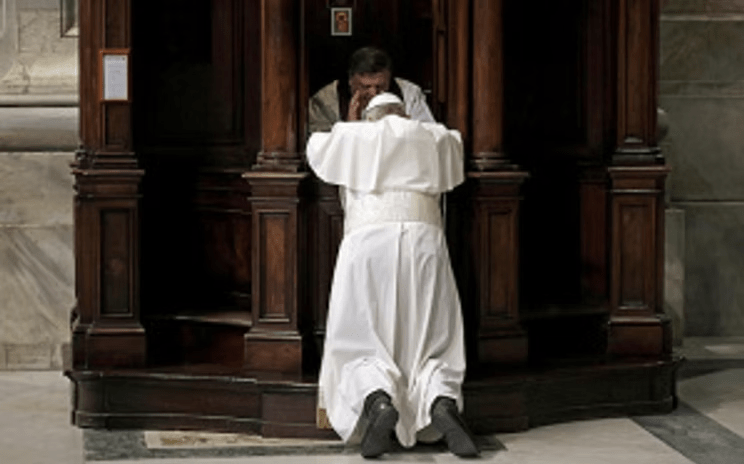
How is this possible? The pope is supposed to be the equivalent of Jesus Christ. Prayer yes. Confession no.

Baptism by the Holy Spirit is a one-time cleansing of sins, such that absolutely no sins will again be done by the flesh, after that cleansing of one’s soul. No human flesh can absolve anyone of earthly sins. Confession is an act of one’s relationship with God, not man.  A soul is free to choose a life of sins (with the death of one’s flesh that then comes, over and over again) or choose eternal life (where the flesh is useless to the soul).  A soul is then responsible for the choices made in that regard.

This reading places focus on Jesus turning to his closest followers, with John stating, “Jesus, being aware that his disciples were complaining about it, said to them, “Does this offend you?” That same awareness is held by Jesus Christ and God the Father.

Knowing that “eating the flesh and drinking the blood” of Jesus means becoming a reproduction of the Son of Man, does that offend you?

Do you think it is sacrilege to think anyone other than Jesus of Nazareth can be Jesus Christ, resurrected in flesh and blood?

If you do, then “What if you were to see the Son of Man ascending to where he was before?” With Jesus of Nazareth ascended into heaven, gone to sit in a seat at the right hand of the Father, who then becomes the flesh and blood of righteousness on earth? No one?

What about the Saints? Are they just good men and women that used to walk the earth, trying to be righteous by utilizing will power? Can you believe in Saints when there are so few of them these days?

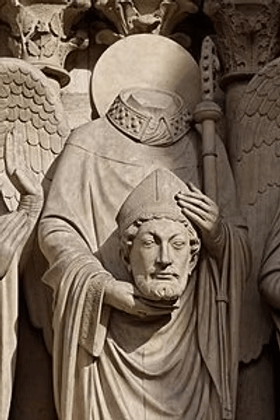
There just are not enough people who can preach a sermon while walking home after being beheaded wrongfully. Why no more Saint Denis’?

“Jesus asked the twelve, “Do you also wish to go away?” Likewise, Jesus asks you, “Are you a Christian because you love God as your Father, or are you a Christian so you can betray Jesus every time you sin, telling others he forgives so easy?”

There are people wearing sacred robes who are professed sinners. They commit sins that have been condemned in Scripture. For them to change the word to suit their wants and desires, saying it is okay to sin: “Come and let us forgive you! Jesus loves you no matter how much you sin!” … are they not those “who do not believe”? Are they not those seated at the table for the purpose of betraying Jesus, as the devil?

This reading brings to a close a month of Sundays where the Gospel is centered on eating the flesh of Jesus. Jesus never said it was okay, if his message was difficult to swallow, to “Just chew it a little bit at a time and that will be a good start.” It is a call to do as he said or not, with no in-between place having merit. You are Jesus Christ reborn or you are not truly a Christian.

Can you accept that teaching? Or is it too difficult to accept?

Ephesians 6:11-18 – Wearing the armor of God

Be strong in the Lord and in the strength of his power. Put on the whole armor of God, so that you may be able to stand against the wiles of the devil. For our struggle is not against enemies of blood and flesh, but against the rulers, against the authorities, against the cosmic powers of this present darkness, against the spiritual forces of evil in the heavenly places. Therefore take up the whole armor of God, so that you may be able to withstand on that evil day, and having done everything, to stand firm. Stand therefore, and fasten the belt of truth around your waist, and put on the breastplate of righteousness. As shoes for your feet put on whatever will make you ready to proclaim the gospel of peace. With all of these, take the shield of faith, with which you will be able to quench all the flaming arrows of the evil one. Take the helmet of salvation, and the sword of the Spirit, which is the word of God.

Pray in the Spirit at all times in every prayer and supplication. To that end keep alert and always persevere in supplication for all the saints. Pray also for me, so that when I speak, a message may be given to me to make known with boldness the mystery of the gospel, for which I am an ambassador in chains. Pray that I may declare it boldly, as I must speak.

——————–

This reading from Paul is scheduled for public presentation in Episcopal churches on the Sunday after Pentecost in years designated as B, known as Proper 16.  This will next occur on August 22, 2021, which will designate the Thirteenth Sunday after Pentecost in that year.  It was last read aloud on Sunday, August 26, 2018, then designated as the Fourteenth Sunday after Pentecost.

This reading is important as it is Paul clearly stating that each and every Christian must himself or herself be a priest to the temple of God.  The temple is one’s own body of flesh.  The soul within that flesh must become a priest that serves the high priest of the temple, who is the soul of Jesus.  The strength then comes from a marriage with Yahweh, the union of one’s soul with the Holy Spirit, which makes one wear the armor of the Christ.

The metaphor of that comes from Paul writing to “fasten the belt of truth around your waist, and put on the breastplate of righteousness.”  This metaphor should be seen, along with the footwear [sandals or shoes] that gives one the expectation to walk the priestly path, as the clothing worn by a high priest of the Tabernacle.

When Paul wrote, “Put on the whole armor of God, so that you may be able to stand against the wiles of the devil,” the whole armor can only come through the marriage with God.  God is the completion that brings wholeness.  Without that presence within one’s being, then one is incomplete and all armor of God is based on knowledge that keeps God external.  The Holy Spirit has not been received and Jesus has not merged with one’s soul.  Without that inner strength, one easily becomes prey to Satan.

The Greek word “methodeia” is translated as “wiles,” but it can equally state “scheming, craftiness, deceit.”  This should be realized as being ever present, with the greatest times when one is vulnerable being when one feels within a safe environment.  For many Christians, a church building, or being amid church members, represents such a safe haven.  This is where the warning comes to beware false shepherds and hired hands, who appear to be there for one’s benefit but in reality they are there for their own benefit and no one else’s.  Without the full armor of God on – filled with the Holy Spirit as a stand-alone temple to the Lord – the devil sows the weeds of doubt, fear, and knowledge as a replacement for God.

This is seen supported in Paul writing, “For our struggle is not against enemies of blood and flesh, but against the rulers, against the authorities, against the cosmic powers of this present darkness, against the spiritual forces of evil in the heavenly places.”  The translation of “enemies” can be misleading, as the Greek word “palē” is written, which means “wrestling, a wrestling bout; hence: a struggle, fight, conflict, contest.” (Strong’s usage).  This says one’s struggle to avoid the influence of Satan is less about one’s heritage [“blood”] and one’s presence [“flesh”] – the inner self struggle as a Christian [or Jew] to commit to righteous living – and more about the powers over self that one gives freely to those who are external to one’s being – governments, philosophies, and influences advocating the denial of God.

The Greek words translated as “rulers” and  “authorities” are “archas” and “exousias.”  In the setting of Paul, who (as Saul) was both a Roman citizen and a Jew, his “rulers” were Roman, which included all that empire’s vassals (such as in Judea).  His “authorities,” however, were those who exerted influential powers over all who were Jews, being the Temple “authorities.”  It was those “authorities” who had fallen away from God, having turned instead to worship the profits they saw as obtainable in the earthly realm.  It is that realm where exists “the spiritual forces of evil in the heavenly places,” where “epouraniois” (“heavenly realm”) should be read as those who rule over one’s soul.
 This external danger is one that exists commonly and is prevalent in all people lacking true faith in Yahweh.  Paul wrote, “Therefore take up the whole armor of God, so that you may be able to withstand on that evil day, and having done everything, to stand firm.”  The Greek word “stēnai” translates as “to stand firm,” but also means one must become one with God in order “to be steadfast” in the ability to resist a most common attack.  The commonality of evil in the world cannot be avoided; without God’s help one will succumb to that power.  The meaning of “having done everything” is emphasized by the word “kai” preceding it, meaning everyone is born a sinner and knows sin all too well.  Thus, to “take up the whole armor of God” means one has to allow oneself to be “raised up” spiritually.

Paul then wrote these words of encouragement: “Stand therefore, and fasten the belt of truth around your waist, and put on the breastplate of righteousness. As shoes for your feet put on whatever will make you ready to proclaim the gospel of peace. With all of these, take the shield of faith, with which you will be able to quench all the flaming arrows of the evil one. Take the helmet of salvation, and the sword of the Spirit, which is the word of God.”  His words spoke of the visual armor worn by Roman soldiers that were prepared to do battle.  However, the metaphor speaks for one who is prepared to do battle against Satan and his realm of evil, as one filled with the Holy Spirit and enabled to “stand fast,” armed with the “truth” of God’s enlightenment, a heart filled with God’s love, an ability to walk the walk of righteousness, more than talk the talk of goodness, because one’s “faith” is an elevation that protects the soul, which comes from having sacrificed self-will for divine “salvation.”  The “sword” of God is the Christ, which comes out of one’s mouth and speaks double-edged words of truth.

When Paul then wrote, “Pray in the Spirit at all times in every prayer and supplication. To that end keep alert and always persevere in supplication for all the saints,” the purpose of prayer is to “at all times” remain in direct communication with God, through His Son’s Holy Spirit within one’s being (Jesus Christ reborn).  The use of “supplication” takes this communication beyond simple chitchat and makes it earnest, heartfelt direction.  When Paul used the term “hagiōn” (“saints”), this was not some measly designation of one who wears vestments and says he or she can call upon the name of the Lord to bless crackers and wine.  The designation of “saints” becomes a statement of truth: one has been made sacred by God as set apart from all influences of evil in the world.  To a saint, prayer and supplication is the conversation between Yahweh and His Son taking place as one’s soul listens and one’s flesh does as commanded.  It is less about self-preservation than it is about bringing others to the same presence within themselves.

As such, Paul then spoke to the saints of Ephesus, saying (per the translation): “Pray also for me, so that when I speak, a message may be given to me to make known with boldness the mystery of the gospel, for which I am an ambassador in chains. Pray that I may declare it boldly, as I must speak.”  In actuality, this is the Greek of what Paul wrote here:

kai hyper emou  ,  hina moi dothē logos en anoixei tou stomatos mou  ,  en parrēsia to mystērion tou euangeliou   ,  hyper hou presbeuō halysei  hina en autō parrēsiasōmai  hōs dei me lalēsai  .

This literally translates to state: “kai on behalf of me  ,  that of me may be given divine utterance in the opening of the mouth mine  ,  with freedom of speech to make known the mystery [revelation] of the coming of the Messiah [Christ]  ,  for which I am older in a chain  ,  that in it I may speak freely  as it is necessary to speak  .

Notice how there is no repeating of the word prayer.  That has been transposed from earlier in a translation effort to create a separate sentence of Paul, with the repetition meaning that has already been stated prior.  These segments of word build from Paul stating the word “saints.”  The word “kai” is then an indicator for the reader to take notice of how the creation and maintenance of “saints” was the purpose of Paul [and all like him – those also filled with God’s Holy Spirit].  Thus, saints are Paul’s “concern” (from “huper” meaning “over, beyond, on behalf of, for the sake of, concerning”), because making and maintaining saints is what saints do.

This then leads Paul to say that saints are made by his speaking divinely.  This does not mean his “divine utterances” (“logos“) are explaining Scripture so well that people’s brains swell with thoughts of devotion.  It means his presence, being joined with the presence of Jesus Christ, makes his words bear the same effect as did Jesus.  The souls readily willing to sacrifice of themselves for service to God will “hear” those words divinely and receive the Spirit.  

The saint is then speaking on such a higher level than physical words can ever bear [the reason Scripture needs explanation] that a seeker of truth’s soul will “hear” the truth in a “secret” or “mysterious” way, where “mystērion” means: “a mystery, secret, of which initiation is necessary; in the NT: the counsels of God, once hidden but now revealed in the Gospel or some fact thereof; the Christian revelation generally; particular truths or details of the Christian revelation.” (Strong’s usage)  That “secret” is the passing on of the Holy Spirit, which means “the coming of the Messiah [Christ]” into a new saint.

Paul then stated that he was “an elder” (“presbeuō“) in a “chain,” which means he married God before those who came after him, but as a chain (“halysei“) all are equal links, with the same strength coming into them as Jesus Christ reborn.  The purpose of his being a link in longer standing becomes meaningless, as his pending death would simply mean more equal links would be needed to replace him and keep the chain growing.

Everything is then dependent on all links in the chain freely speaking the Word of God, as Jesus Christ reborn.  This is the necessity of Christianity.  This does not come from years of having learned what to say from classes taken, books read or lectures heard.  All of that simply prepares one to seek for higher truth, with a history of learning being seen by God and known to be where one’s heart lies.  Where the heart leads the head will follow.  The Jesus Spirit replaces the brain with Mind of Christ.  Still, one needs to hear God speaking, in order to receive the Holy Spirt and become His Son reborn, becoming another link in a most divine chain, where all links are temples unto the Lord and each link is a priest that serves the High Priest Jesus Christ.  At that time the whole armor of God is surrounding one’s soul and one is prepared to battle evil.

1 Kings 8:[1, 6, 10-11], 22-30, 41-43 – Putting Yahweh in a tomb

[Solomon assembled the elders of Israel and all the heads of the tribes, the leaders of the ancestral houses of the Israelites, before King Solomon in Jerusalem, to bring up the ark of the covenant of Yahweh out of the city of David, which is Zion. Then the priests brought the ark of the covenant of Yahweh to its place, in the inner sanctuary of the house, in the most holy place, underneath the wings of the cherubim. And when the priests came out of the holy place, a cloud filled the house of Yahweh, so that the priests could not stand to minister because of the cloud; for the glory of Yahweh filled the house of Yahweh.]

Then Solomon stood before the altar of Yahweh in the presence of all the assembly of Israel, and spread out his hands to heaven. He said, “Yahweh elohe Israel, there is no elohim like you in heaven above or on earth beneath, keeping covenant and steadfast love for your servants who walk before you with all their heart, the covenant that you kept for your servant my father David as you declared to him; you promised with your mouth and have this day fulfilled with your hand. Therefore, Yahweh elohe Israel, keep for your servant my father David that which you promised him, saying, ‘There shall never fail you a successor before me to sit on the throne of Israel, if only your children look to their way, to walk before me as you have walked before me.’ Therefore, elohe Israel, let your word be confirmed, which you promised to your servant my father David.

“But will elohim indeed dwell on the earth? Even heaven and the highest heaven cannot contain you, much less this house that I have built! Regard your servant’s prayer and his plea, Yahweh elohay, heeding the cry and the prayer that your servant prays to you today; that your eyes may be open night and day toward this house, the place of which you said, ‘My name shall be there,’ that you may heed the prayer that your servant prays toward this place. Hear the plea of your servant and of your people Israel when they pray toward this place; O hear in heaven your dwelling place; heed and forgive.

“Likewise when a foreigner, who is not of your people Israel, comes from a distant land because of your name —for they shall hear of your great name, your mighty hand, and your outstretched arm—when a foreigner comes and prays toward this house, then hear in heaven your dwelling place, and do according to all that the foreigner calls to you, so that all the peoples of the earth may know your name and fear you, as do your people Israel, and so that they may know that your name has been invoked on this house that I have built.

——————–

This is the Track 1 optional Old Testament reading selection for the thirteenth Sunday after Pentecost [Proper 16], Year B, according to the lectionary for the Episcopal Church. If chosen, this reading will be partnered with a singing of Psalm 84, which sings, “Happy are they who dwell in your house! they will always be praising you.” Both will then precede a reading from Ephesians, where Paul wrote, “Put on the whole armor of God, so that you may be able to stand against the wiles of the devil.” All will accompany the Gospel selection from John, where Jesus said, “It is the spirit that gives life; the flesh is useless.”

I wrote about this reading selection in 2018 and published it on my website then. By searching this site it can be read. I stand behind my views then, as they are still relative today. I will point out that now, three years later, I correct the language of the English translation, so it shows the proper name “Yahweh,” which is used eight times [not “Lord”]. In addition, there are six variations of the word “elohim,” which do not translated to “God,” so I have restored them to the spellings as written. Because of those changes, I will address how that plays into my additional views today.

It is important to realize that Moses was instructed by Yahweh to build an ark for the covenant stones, as well as a tent [tabernacle] in which the ark would be placed, when Moses spent forty days on top of the mountain. In Exodus 40:34-38 is written:

“Then the cloud covered the tent of meeting, and the glory of the Lord filled the tabernacle. Moses could not enter the tent of meeting because the cloud had settled on it, and the glory of the Lord filled the tabernacle. In all the travels of the Israelites, whenever the cloud lifted from above the tabernacle, they would set out; but if the cloud did not lift, they did not set out—until the day it lifted. So the cloud of the Lord was over the tabernacle by day, and fire was in the cloud by night, in the sight of all the Israelites during all their travels.”

In Exodus 40:12-15, after Moses had set up the tabernacle for use, is written:

[Moses said] “Bring Aaron and his sons to the entrance to the tent of meeting and wash them with water. Then dress Aaron in the sacred garments, anoint him and consecrate him so he may serve me as priest. Bring his sons and dress them in tunics. Anoint them just as you anointed their father, so they may serve me as priests. Their anointing will be to a priesthood that will continue throughout their generations.”

On the “sacred garment,” Exodus 39:2 states, “They made the ephod of gold, and of blue, purple and scarlet yarn, and of finely twisted linen.” In 2 Samuel 6, when David brought the Ark into the City of David, we read: “Wearing a linen ephod, David was dancing before Yahweh with all his might, while he and all Israel were bringing up the ark of Yahweh with shouts and the sound of trumpets.” [2 Samuel 6:14-15]

“They brought the ark of Yahweh and set it in its place inside the tent that David had pitched for it, and David sacrificed burnt offerings and fellowship offerings before Yahweh. After he had finished sacrificing the burnt offerings and fellowship offerings, he blessed the people in the name of Yahweh of hosts.” [2 Samuel 6:17-18]

When David moved the Ark from the place it had been kept for fifty years [Kiriath-jearim], when they had moved it halfway the Ark seemed to slip on the cart it was moved on, which cause one of the house of Abinadab to touch it and die [Uzza]. That took place at Nachon’s threshing room (a winery), where the cart with Ark was left for about two months. The death made David give second thoughts about his moving it, seeing the death as a sign not to go further. That death probably played a role in David’s wild dancing before the Ark, as a display to Yahweh that his motives for moving the Ark were to marry Israel with the stronghold that had been Jebus.

This respect for the Ark is mildly stated in this chapter from First Kings. The fact that the Ark was taken from a tent designed to be mobile and placed into a building of stone, the symbolism that must be seen is not a marriage celebration, but a funeral.

To put Yahweh in that mausoleum, the only “setting out” and “coming back” would be when an invader or occupier would destroy the temple, until someone else came to build it back. Of course, in that history there is not accounting for what happened to the Ark; so, in hindsight it was idiotic for Solomon to move the Ark from where it was. The Philistines [their main enemy] certainly wasn’t going to touch that again.

In the dedication of the grand temple, where Solomon stood prominently and “blessed all the assembly of Israel,” he said, “Blessed be Yahweh elohe Israel, who with his hand has fulfilled what he promised with his mouth to my father David.” In the use of the combination of words that say, “Yahweh elohe Israel,” the truth of those words says, “Yahweh’s gods in human form where each is He Retaining God.” That is the divine understanding, but Solomon, in all his wisdom, would have told the English translators, “Write the Lord God of Israel,” because the possessive form says I, as King of Israel, possess God, so He does what I want. Solomon, therefore, spoke the truth without understanding it, because his soul was not married to Yahweh.

Subconsciously, that is stated above in Solomon stating, “he [Yahweh] promised with his mouth [Yahweh’s voice] to my father David.“ Solomon was not even a figment in David’s corrupted imagination when Yahweh appeared in a dream to Nathan and told Nathan to tell David, “I have moved about with all the sons of Israel,” meaning David [a true son of Israel – one who retained God] was a tabernacle unto Yahweh, so wherever David moved, so too did Yahweh. Therefore, Solomon only knew what Nathan told him about that divine dream; and with all Solomon’s wisdom he could not discern the meaning of what Nathan said to him.

Solomon referenced “my father David,” while calling Yahweh blessed by his words. Solomon was not so blessed; and, because Solomon was not one of the “sons of God,” he could not bless the people, as had his father David. Four times in the speech made by Solomon he said, “my father David,” which took all the responsibility for a fixed building, instead of a tabernacle, away from Solomon and made it seem as if he were doing the plan of his father David. When Solomon then went into his prayer of dedication, three times he said, “your servant my father David,” not once implying he was also a servant of Yahweh [as “your servant and mind”].

In verse twenty-eight, where the NRSV has Solomon say, “Regard your servant’s prayer and his plea, O Lord my God, heeding the cry and the prayer that your servant prays to you today,” the reality is “Yahweh elohay” was written, which makes “my God” [“elohay”] need to be more closely examined.

The meaning of “elohay” is it expresses the possessive case that changes “elohim” [the plural of “god,” as “gods”] into a word stating “my gods” [not “God”]. By seeing the egotism of Solomon, who thinks he is as wise as Yahweh, from having eaten of the fruit of the tree of knowledge of good and evil – as the serpent suggested, an equal to God – him saying “Yahweh of my gods” means Solomon saw Yahweh as his personal servant god, with him an equal god, thus the two made “Yahweh gods.” Thus, all times that Solomon followed by saying “your servant,” this suggests more that Solomon was the one served by Yahweh, because Solomon only served himself.

In verse twenty-nine, when Solomon said, “that your eyes may be open night and day toward this house, the place of which you said, ‘My name shall be there,’ that you may heed the prayer that your servant prays toward this place,” that too requests that Yahweh follow the orders of Solomon and stay put in this place he has built. In the command given by Yahweh to Nathan, to pass on to David, Yahweh said of David’s “seed” “will build a house for my name.” That means the seed of David would be a soul who would make Yahweh a tabernacle that moves within his body of flesh. That “seed” would be minimally the prophets to come afterwards, but certainly Jesus, all of whom would be houses built righteously unto Yahweh. Again, Solomon’s wisdom misunderstood the words of Nathan; and, with David’s death removing the Spirit of Yahweh from nearness to Nathan, it is likely that Nathan could no longer talk to Yahweh to confirm things said.

When Solomon asked the question, “But will elohim indeed dwell on the earth?” [the NRSV translates “God”], the only possible meaning that can come from such a question asks, “Will human souls be married to Yahweh and become His temples?” It would be a clear statement that Solomon did not believe Yahweh truly existed, or the Ark was a tool available for his use. Solomon answered his question by saying [NRSV], “Even heaven and the highest heaven cannot contain you, much less this house that I have built!” This relates back to the dream Solomon had, when he spoke to both Yahweh and Satan. In the end, Solomon realized “it was a dream,” meaning his newfound wisdom said dreams are not real. As such, Solomon saw himself as a god on earth, as the reality of power, influence, and wisdom; so, there would be no problem burying Yahweh and His Ark in a mausoleum named after the god Solomon.

To add insult to injury [done by Solomon to his soul and the future of the Israelite people], Solomon prayed that Yahweh would bow down, roll over, and do tricks for foreigners coming to town. This, of course, was when the kingdom created by David was firmly set, with no major threats to its place from outsiders. That would change greatly after Solomon would welcome foreign influences within his Israel. He had married an Egyptian woman as a way to form an alliance with Egypt, which would help keep the Philistines appeased. In this prayer for foreigners, Solomon was taking a major step towards making Israel a nation like other nations [the lands of kings and royalty], no longer being a nation of people whose God was Yahweh.

As a reading selection for the thirteenth Sunday after Pentecost, when one’s own personal ministry to Yahweh should already be well underway, the lesson of the dedication to the Temple of Solomon is to beware all institutions that have the pretense of being a religion unto Yahweh [when they dare say His name, preferring to call Him “Lord”]. Solomon was the first to place Yahweh in a tomb, but all models of churches ever since are dedications and prayers to the entombed “Lord,” so that humans can assume all the powers of a god, in the name of the true God. It is a Satanic road to travel. So, beware how you walk this road.
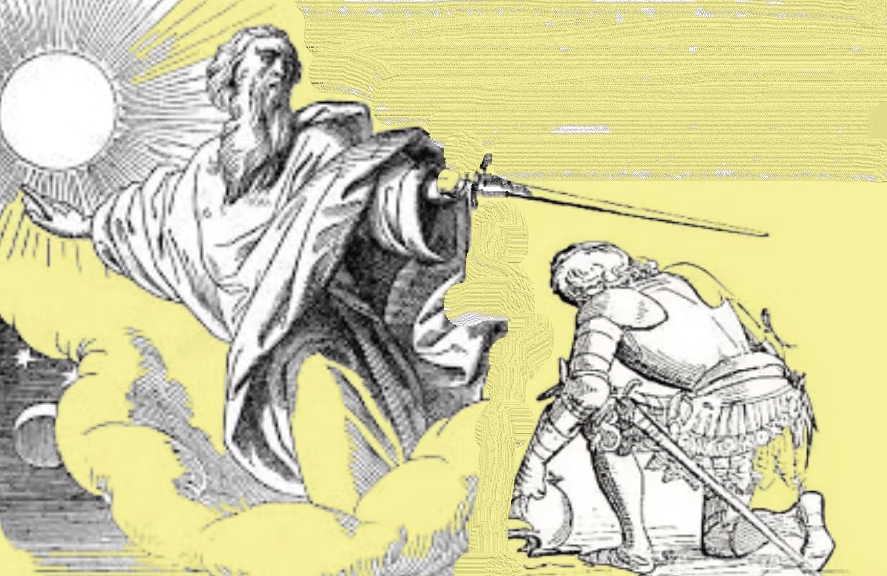
Joshua 24:1-2a,14-18 – Dedicating your house to Yahweh

Joshua gathered all the tribes of Israel to Shechem, and summoned the elders, the heads, the judges, and the officers of Israel; and they presented themselves before haelohim. And Joshua said to all the people, “Thus says Yahweh elohe Israel:

“Now therefore revere Yahweh, and serve him in sincerity and in faithfulness; put away elohim that your ancestors served beyond the River and in Egypt, and serve Yahweh. Now if you are unwilling to serve Yahweh, choose this day whom you will serve, whether elohim your ancestors served in the region beyond the River or elohe of the Amorites in whose land you are living; but as for me and my household, we will serve Yahweh.”

Then the people answered, “Far be it from us that we should forsake Yahweh to serve other elohim; for it is Yahweh elohinu who brought us and our ancestors up from the land of Egypt, out of the house of slavery, and who did those great signs in our sight. He protected us along all the way that we went, and among all the peoples through whom we passed; and Yahweh drove out before us all the peoples, the Amorites who lived in the land. Therefore we also will serve Yahweh, for he is elohinu.”

——————–

This is the Track 2 optional Old Testament reading selection to be read aloud on the thirteenth Sunday after Pentecost [Proper 16], Year B, according to the lectionary for the Episcopal Church. If chosen, it will be accompanied by a singing of Psalm 34, which has the lyric, “The eyes of the Lord are upon the righteous, and his ears are open to their cry.” Those readings will precede the Epistle reading from Ephesians, where Paul wrote, “our struggle is not against enemies of blood and flesh, but against the rulers, against the authorities, against the cosmic powers of this present darkness, against the spiritual forces of evil in the heavenly places.” All will fall in line with the Gospel reading from John, where Jesus said to his disciples, “The words that I have spoken to you are spirit and life. But among you there are some who do not believe.”

I wrote about this reading selection and posted my views on my website, back in 2018. That was the last time these specific verses came up in the lectionary cycle. Those views can be found on this website by searching this site. I stand behind those views today, as the content has not changed; so, I welcome all to read what I wrote then and compare that to the new additional views I offer now.

It should be noted that in 2018 I was not focused on the errors of English translation that have had an effect on the minds of Christians to stay away from calling Yahweh by his ‘proper’ name. By calling His “Lord” one is always prone to think of Yahweh as some external entity, who one is so far below that one could never know Yahweh personally. It is vital to realize the prevalence of “Yahweh” in the Old Testament texts, which must be seen as the relationship all Christians must have in their lives, which is the same closeness the first Israelites of Moses and now Joshua had.

I also was not focused as much on making clear the mistranslation of “elohim,” which is routinely a transformation of the plural word stating “gods,” into an upper case presentation as “God.” This is not the truth and refusing to understand the concept of “gods” under Yahweh keeps Christians from becoming true saints. Again, seeing a ‘double name of God,’ as “Lord God,” reduces the truth to an externalization of Yahweh, making Jesus be non-existent in the Old Testament Scriptures. Jesus was the “Word” that has always been with Yahweh and the “Word” is what created an “elohim” in man. Joshua speaks loudly about that here, as he points out the difference between the “elohim” of dead “gods” worshipped by pagans and Gentiles. All external “gods” are dead. Only Yahweh lives; and, He lives in those who marry their souls to His Spirit. That is the true definition of an “elohim,” but that definition can never be realized when the truth is masked as some lie stating “God.”

First of all, one must see the parallel of Joshua convening a gathering of “all the tribes of Israel to Shechem, and summoned the elders, the heads, the judges, and the officers of Israel” to the shindig Solomon called to Jerusalem for the opening of his building of stone. Shechem was the first ‘capital’ of the people of Israel, in the hill country of the area assigned to the Tribe of Ephraim. After Solomon’s death, a meeting was held at Shechem, when ten tribes decided to secede from the kingdom that named Solomon’s son to take his throne. Shechem was where Yahweh confirmed His covenant with Abraham; and, it was considered the most sacred land in Joshua’s Israel. Conversely, David had taken Jebus, a stronghold of the Jebusites, who had never been conquered by Joshua and who held a treaty that was relative to the tomb of Abraham and Sarah [and Isaac and Jacob]. So, Shechem’s convention must be seen as an equal in importance to the one Solomon convened, if not much greater.

In the selected verses there are eight forms of “elohim” present. The first is “haelohim,” which actually translates as “these gods.” When this is seen to be preceded by the Hebrew word “lip̄·nê,” a form of “panim” or “faces,” the meaning relates to those who were true Israelites, as wearers of the “faces of elohim.” When the marriage vows [those inscribed on the stone tablets within the Ark] includes as the first agreement, “Thou shall wear no other face of a god before Yahweh,” that vow made all the true Israelites become elohim, as the wives of Yahweh that were made holy by His presence within their souls. Thus, Joshua called all who were indeed elohim to a meeting that discussed the resting of the tabernacle and the Ark in one central location, amid all the tribes. It was the Ark that they took with them to defeat all their enemies when they entered the land that was promised only to elohim.

When we read that Joshua said, “Thus says Yahweh elohe Israel,” that says Joshua was speaking as Yahweh, because like Jesus said, “The Father is within me and I in the Father,” Joshua was equally one with Yahweh. Just as Nathan spoke to David and told him what Yahweh said about building him a house, Nathan could have also said, “Thus says Yahweh elohe Israel.” The meaning of those three words says, “Yahweh’s wives Who Retain God [as elohim].” All humans, being souls entrapped in matter, are feminine in essence, making both males and females whose souls are married to Yahweh be His wives [a.k.a.: saints]. Thus, the “children of Yahweh” are the “Sons of God” [again, with no human gender reflected in “Sons”].

In verse fourteen stating [NRSV], “Now therefore revere Yahweh, and serve him in sincerity and in faithfulness,” the word translated as “revere” actually means “fear.” This is another agreement of divine marriage, such that the only fear one can possess is that of Yahweh, which is a focus on losing Yahweh after marriage. All fear should be motivations for commitment and fidelity. The service of a wife to Yahweh comes through sincerity and truth, which daily produces all the proof necessary for faithfulness. Thus, when Joshua stated that, he was like Paul making a personal statement of knowledge that he knew equally applied to all whose souls were possessed by Yahweh; and, that knowledge came from the sacrificing of all former “gods” [“elohim”] that ancestors served [those who originally left Egypt with Moses], which included themselves [self-egos].

It was then that Joshua said the placement of the Ark in Shechem demanded that everyone leave the Ark behind, in the care of Levitical priests [to whom Shechem would be made their city-state], which meant their souls would have to stop depending on the presence of Yahweh on the Ark as a visual motivation to stay true to one’s marriage vows [which they memorized]. The visual presence of a pillar of smoke outside the tabernacle would no longer make them feel the external presence of Yahweh close by. To that, Joshua told them [as Yahweh speaking through him ], “Now if you are unwilling to serve Yahweh, choose this day whom you will serve, whether elohim your ancestors served in the region beyond the River or elohe of the Amorites in whose land you are living.” That meant they would either remain a Yahweh elohim Israelite, through each’s individual marriage of their souls to Yahweh, or they would become Gentiles and wayward, no longer related to those who were elohim.

Joshua then added, “as for me and my household, we will serve Yahweh.” In that lies the truth of a “house of Yahweh.” Joshua was saying that the tabernacle was from then on to be a ceremonial place for Yahweh to assist the priests of Israel and the school of prophets. The presence of the tabernacle in Shechem was for guiding the whole of Israel, in the same way that a heart controls the blood flow throughout a whole body of flesh. Still, that body now extended to the reaches of the lands of the twelve tribes, because the Mind of Yahweh would be centered in the tabernacle, but the blood of Yahweh would be wherever His elohim wives flowed. Where there bodies of flesh had become mobile tabernacle of Yahweh, there too would be where Yahweh resided within. Thus, it did not matter if the Ark was kept in Shechem, or Kiriath-jearim, or the City of David, as long as it was readily portable, to be moved when Yahweh told His High Priest where to take it [when the smoke cleared]. What mattered was the people’s souls being married to Yahweh, so they were all houses of Yahweh wherever they went.

The true elohim of Yahweh heard Joshua state his commitment to serve Yahweh, regardless of where the Ark rested, so they replied to Yahweh’s voice from Joshua, saying “Far be it from us that we should forsake Yahweh to serve other elohim; for it is Yahweh elohinu who brought us and our ancestors up from the land of Egypt, out of the house of slavery, and who did those great signs in our sight.” In that, “Yahweh elihnu” means “Yahweh is ours as elohim.” That becomes a statement that they all had the fear of losing Yahweh within their souls, due to their souls having married Yahweh. The divine marriage of their ancestors had taught them to equally long for the same marriage of soul to Spirit.

When the people spoke to Yahweh about “the house of slavery” that was the life of a soul in Egypt, it is important to realize that the “other elohim” of their ancestors meant they left behind souls that were married to lesser gods, such as all the addictions to a world that is very sinful. The “gods” of lust, greed, gluttony, sloth, pride, wrath and envy were the foci of the marriage vows to Yahweh. Worship to those “gods” must be left behind, because Yahweh said, “I am a jealous God,” who will not accept infidelity. Thus, the “house” built by Solomon was one dedicated to his addiction to the lesser gods like those the Egyptian pharaohs built houses for. The servitude of a soul married to Yahweh also makes one a slave, through willful submission to Yahweh’s Will. However, the difference is a willing sacrifice that makes slavery come with the promise of eternal life after death, versus the slavery that comes with the wish it would all end, only to find death brings on the repeating of sinful addiction through reincarnation.

When the Israelites told Joshua, “We also will serve Yahweh, for he is elohinu,” the meaning here is “Yahweh is our marriage partner that makes us elohim.” Because of leaders like Moses, Aaron, and Joshua, the people had been shown the miracles of those empowered by self-sacrifice in service to Yahweh. Seeing those signs made them fearful of losing that presence, so they willingly submitted their lives to service to the marriage vows. Such due diligence brings about the proposal of marriage to those who serve Yahweh as His bridesmaids; and, those who always keep their lamps filled with the oil of truth will find their souls also married to Yahweh and able to produce miracles of their own. Therefore, the words of Yahweh through Joshua made all the Israelites present reconfirm their wedding vows with Yahweh. He was their Husband in divine marriage.

As an optional reading that is opposite the reading of Solomon’s grandiose meeting to dedicate the monument he constructed for his own kingship, as a place to bury the Ark and forever turn the Israelites away from Yahweh, it is important to grasp the necessity of one’s soul making a personal commitment to marry Yahweh and die of self-ego and self-will. Solomon is the anthesis of that commitment, as Solomon reflects the “elohe of the Amorites,” with his Egyptian wife [one of many, many to come, plus concubines] advising him of other elohim to bring into his new temple. Jesus said, “You cannot serve two masters,” and Yahweh is the only master that counts, when a soul’s eternal life is at stake.

As a reading selection to be read aloud on the thirteenth Sunday after Pentecost, when one’s own personal ministry to Yahweh should already be well underway, the lesson here is to put up or shut up. Yahweh said through Joshua, as I paraphrase, “Nobody tells you to marry Yahweh. Yahweh did not tell Solomon his wish for the fruit that took Adam and Eve away from Eden was a bad idea. One’s soul has been given to one’s body of dead flesh, free to have and to hold until death do you part. Once that marriage has been consummated when the umbilical cord to one’s mother has been cut, one is free to find whatever and whoever one’s soul wants to marry, be it the deadly sins, the Satan who offers wisdom and riches, or to Yahweh, who offers a soul eternal life. The choice is yours, and Joshua said that clearly. Ministry with some pretend god, one of the elohim who are not Yahweh, makes one nothing more than a hired hand [a slave to some boss that one is afraid to piss off and get fired] or a false shepherd [a thief who leads souls away from Yahweh]. Solomon was a wolf in sheep’s clothing, like so many who dress regularly in priestly garb, only to sell lies as truth. Joshua was a true priest of Yahweh, who becomes the icon that those who wish to marry Yahweh must become. That icon is Jesus resurrected in one’s fleshy body.

Ephesians 6:10-20 – Wearing the robes of the High Priest

Be strong in the Lord and in the strength of his power. Put on the whole armor of God, so that you may be able to stand against the wiles of the devil. For our struggle is not against enemies of blood and flesh, but against the rulers, against the authorities, against the cosmic powers of this present darkness, against the spiritual forces of evil in the heavenly places. Therefore take up the whole armor of God, so that you may be able to withstand on that evil day, and having done everything, to stand firm. Stand therefore, and fasten the belt of truth around your waist, and put on the breastplate of righteousness. As shoes for your feet put on whatever will make you ready to proclaim the gospel of peace. With all of these, take the shield of faith, with which you will be able to quench all the flaming arrows of the evil one. Take the helmet of salvation, and the sword of the Spirit, which is the word of God.

Pray in the Spirit at all times in every prayer and supplication. To that end keep alert and always persevere in supplication for all the saints. Pray also for me, so that when I speak, a message may be given to me to make known with boldness the mystery of the gospel, for which I am an ambassador in chains. Pray that I may declare it boldly, as I must speak.

——————–

This is the Epistle reading selection for the thirteenth Sunday after Pentecost [Proper 16], Year B, according to the lectionary for the Episcopal Church. Its reading will follow either a Track 1 or a Track 2 pairing of Old Testament and Psalm readings. The first places focus on Solomon dedicating his new temple and the second places focus on Joshua telling the Israelites it was up to each individual to choose what gods they would serve, from that point onward. Both Psalms are songs of praise, with Psalm 84 singing about the happiness of Yahweh’s dwelling and Psalm 34 sings about the abilities of the righteous. All will accompany the Gospel reading from John, where Jesus told his disciples, “For this reason I have told you that no one can come to me unless it is granted by the Father.”
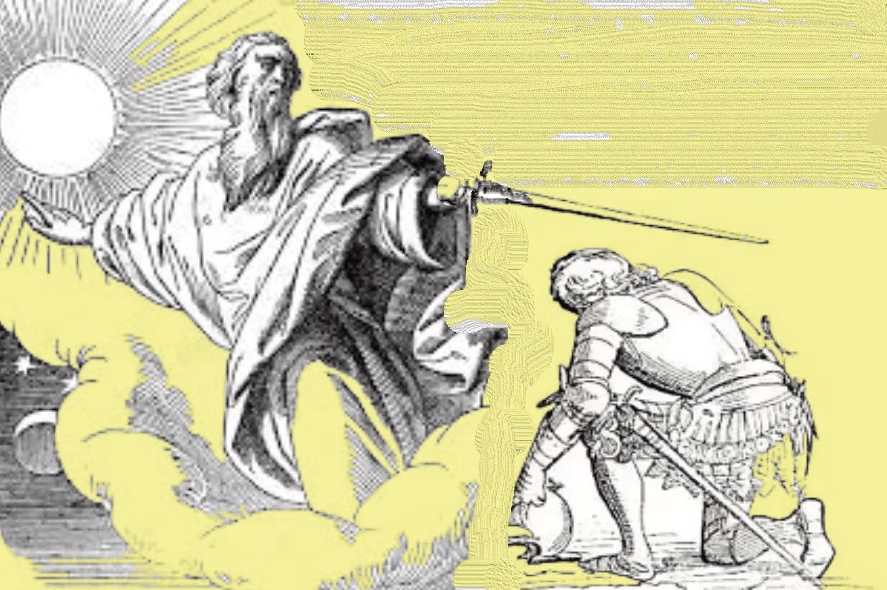
The last time this reading came up in the lectionary cycle (2018), I wrote my opinions and published them on my website. That commentary can be read by searching this site. I welcome all to read those views and compare them to the views I will now add. I also welcome comments and suggestions, questions and correction via the website’s contact format.

In 2018 I was focused on interpreting this reading as the intent behind Paul’s words to true Christians of Ephesus. Certainly, that meaning still fully applies to all Christians today. Therefore, the views I expressed in 2018 are still quite applicable today; but I now want to address this reading in the context of the Old Testament readings, which both took place well before the advent of Christianity.

This reading begins with the appearance that Paul just blurted out, “Be strong in the Lord and in the strength of his power.” As this reading begins at verse ten, it should be realized that there is context written before, which led to this statement. In actuality, the first word in verse ten is a capitalized “Tou,” which takes on a divine level of importance that has been erased in the presentation of this reading. That capitalized word means “of This,” which is the genitive case [possessive form “of”], meaning “That” previously said. The segment of words that finished verse nine said [I summarize] there was “no partiality” given by Yahweh to those “masters” that have become His “Anointed ones” [i.e.: “Christs”] and allowed His Son Jesus to become the “Lord” [“Kyriō”] of their flesh. It is then “of This” that prompted Paul to add, “be empowered by the Lord , kai in this strength of this power oneself”.

That becomes the theme statement for this set of verses. The focus taken by Paul, in a letter written to people who had done just as he had done and understood what he meant, is the empowerment [from “endynamousthe”] that comes within one’s body of flesh after a soul has divinely wed Yahweh’s Spirit and given birth within one’s soul to the merger with the soul of Jesus, as a most divine possession that becomes the “Lord” over one’s flesh. The placement of the word “kai” [following a comma mark] says it is most important to grasp that it is one’s “soul” [from “autou” meaning “of self,” with “self” equating to a “soul”] that has become “in this strength of this power.” It is vital to understand that everything Paul followed this theme statement with – the armor of God – is metaphor for the power and strength that comes from the Spirit and the Christ being one with one’s soul.

When Paul then wrote “put on the whole armor of God,” the Greek word “endysasthe” is better translated as saying “be clothed” [rather than “put on”]. This means the clothing that can be called “the full armor of God” is the priestly garb of the High Priest of the Tabernacle. According to Exodus 28, these garments were the ephod, a breastpiece, tassels with bells, a turban with a seal, and linen undergarments worn from the waist to the thighs. All of this was to be worn “whenever they enter the tent of meeting or approach the altar to minister in the Holy Place, so that they will not incur guilt and die.” (Exodus 28:43)

All of this elaborate priestly clothing is only physically required for Aaron and his Levite descendants, which were those who physically attended to the tabernacle and the Ark and altar, et al, that was moved with the children of Israel. In the Old Testament readings that accompany this reading from Ephesians, the Tabernacle had been set in a central place (Shechem) and that place was given over to the Levites as their property to possess. In Solomon’s dedication of his Temple in Jerusalem, the Ark and alter, et al, was moved into that fixed place. However, the point of Paul’s words say the presence of the resurrected soul of Jesus, within one’s soul-body, his soul comes garbed with everything necessary for a High Priest. His presence within means one’s body of flesh has become the Tabernacle, where Yahweh resides between the Cherubim atop the Ark, which has been placed in one’s heart [where the word for “heart” means “soul” or “inner man”].

This means the “full armor of God” is His Son reborn within one’s being. This must then be seen as a divine possession of one’s soul-body, such that one’s soul has lowered its ‘head’ in submission to a higher power. The metaphor of “armor” then means oneself [self always means soul] has knelt before the King and been ‘knighted’ as a fully devoted servant that will fight all enemies to the throne. Paul then stated that enemy when he said, “so that you may be able to stand against the wiles of the devil.”

In 2018, I had not come to the realization of possession, although I was aware of the need for divine marriage, so a soul became one with Yahweh’s Spirit. The aspect of Jesus’ soul becoming a twin soul merged with one’s physical life soul was still beyond my mental conceptions. Since then, I have come to realize that possession of a soul is least common as divine, where the soul of Jesus comes in to control one’s bodily actions. What is most common is demonic possession, which are less the extremes of Hollywood movies and horror books and more the commonality of drug addiction, sex addictions, and any other worldly lust that can and will overtake a soul-body entity. It is this demonic possession that becomes the reason a soul needs to “be clothed in the whole armor of God.” One needs divine possession to fight [“take a stand”] against the schemes [“methodeias” means “crafts, deceits”] of Satan [“diabolou,” “slanderer, false accuser”].

The point that I have been making for quite some time now is the mistranslation of the Hebrew word “elohim” as “God.” The Hebrew word “el” is the singular form of “god,” but there is no reason to capitalize that into English. The plural form, “elohim,” means “gods,” again with no need to capitalize that into English. The mistranslation, such that Genesis 1 has been mistranslated to say “God created this” and “God created that” is truly a series of statements about Creation, from which the first creation was Yahweh creating “elohim,” who were the “gods” He assigned to make everything. Yahweh is the architect of the Creation, who drew up the plans, but never got his hands dirty building his designs. That was left up to the lower “g” gods. In Genesis 2 we find Yahweh busy creating His Son and then Adam’s mate. In that there is no mention of “elohim” alone, after verse four. Still, because Yahweh created Adam [not the males and females of Genesis 1], Adam must be seen as the first divine “elohim” (a “Yahweh elohim“) who would be sent [along with wifey] to be the first High Priests on earth [outside Eden].

From that story in Genesis 2, by the time we reach Genesis 4, we find that the “elohim” are not limited to being only divine possessions, where the descendants of Adam and Eve were not always possessed by Yahweh’s Spirit. Cain becomes the first example of a demonic possession. Cain would become a reflection of the powers of the earth, which will quickly take possession of a soul, if the soul is not careful and seeking Yahweh in marriage. The books of the Old Testament tell of the lineage of divinely possessed souls, who become opposed by the demonically possessed souls of king, queens, and false prophets and priests. This is a common problem that Paul warned the true Christians of Ephesus about.

Paul said the stance that must be taken by those ‘knights’ wearing the armor of Christ Jesus is “against the rulers, against the authorities, against the cosmic powers of this present darkness, against the spiritual forces of evil in the heavenly places.” This says Satan has less need for possessing the minions of the world, because he knows possessing the leaders of the minions will force them to do their will. This then states the purpose of Yahweh marrying souls and having His Son resurrected into divine elohim is ministry. Those knights do not hide at home, only venturing out to a church pew for others to marvel at their piety [like the hired hands and false shepherds do]. Knights of Yahweh challenge the liars and cheats of the world with the truth. The true Christians Paul was writing to were the front lines in a war of exposure, where the point was to transform the many who sought redemption into divine elohim, who served Yahweh as Jesus reborn. Paul was at the forefront of a major movement back then; a movement that has since been reduced to a slow drip.

The paradox of the First Kings reading, with all the pomp and circumstance of Solomon’s self-aggrandizement, must be seen as his soul having become a demonic elohim, promised the world by the serpent offering him more wisdom than anyone ever, before or after. Solomon was then an agent of Satan, who had a mausoleum built, in which to entomb Yahweh and His Ark. The servants of that temple would slowly cease to attend to the needs of the people; and, with the king no longer an agent of Yahweh [as was David], they would stop being divinely possessed and fall prey to the “schemes of the devil.”

When that reading is set up with Joshua 24 being the counter-reading, it must be realized how often Joshua spoke the word “elohim” to the Israelites he summoned to gather at Shechem, where the Tabernacle and Ark were to be set permanently [although still mobile, when needed]. Because the presence of Yahweh was no longer going to be visible [as a cloud outside the tent of meeting], Joshua told all those who were committed as “Yahweh elohim” to make the decision what “gods” their souls would merge with next. Joshua mentioned the options of the “elohim” of Egypt and the “elohim” of the Amorites, who were those “gods” from which Abraham came, himself believing in Yahweh alone. The lesson of Joshua, verses the lesson of Solomon, says it is up to the individual to become the “god” of their choice. That means there will never be a demand by Yahweh to follow any of His Commandments. Those are the marriage vows that can only be taken by a soul in love with Yahweh, who is willing to submit fully to His Will. All who choose to retain some of himself or herself as a “god” [the demonic elohim], they will be made promises by the devil, all of which will end when the soul is separated from its body of flesh at death.

This choice must be realized from this reading from Ephesians. To make this choice – to become a ‘knight’ in service of the King and fight for truth and justice against the leaders who corrupt souls – Paul said what all true Christians must also say and know. Paul wrote, “Pray that I may declare it boldly, as I must speak.” In that, the Greek word translated as “must” is better translated as “it is necessary.” This is “necessary” because the soul of Paul seeks redemption for his own past sins, and speaking the truth will bring his soul what it seeks. Still, it is “necessary” because the truth has to be heard, so other souls can be freed of their slavery to demonic spirits.

In the Gospels and in Acts are stories of those souls who have been divinely possessed [Jesus and his Apostles] going and touching the souls of others, healing them from deformities, illness, and even death; but many others were found to be possessed by demonic spirits, which were cast out by the words spoken by the Apostles. Only those who had become the elohim of Yahweh, with Jesus resurrected within their soul-flesh, could cast out the Satanic spirits possessing very evil people. It must be realized that “elohim” can be both good and bad. It must be understood that it is much easier to be possessed by a demonic spirit than it is to be married to Yahweh and give birth to His Son once more.

For more on this concept, called Eudaimonia, I recommend reading the Wikipedia article under that name. This is a concept that has been recognized for many centuries. It is not something I have made up. Modern psychology addresses people with “Multiple Personality Disorder,” as some scientific way or renaming an age-old phenomena. The Roman Catholic Church still employs exorcists, because they firmly believe in demonic possession. It is a topic worth becoming familiar with, because it is the root meaning of “elohim,” which scholars will quickly mislead one away from understanding [including the Jews who assist the translators of Hebrew, also seeing the plural as the singular, pronounced].

As the Epistle selection for the thirteenth Sunday after Pentecost, when one’s own personal ministry for Yahweh should already be well underway, the lesson here is to realize the need to become one with Yahweh and be truly reborn as His Son. No ministry will have any lasting positive effects that promote self-worth and act as a minister only to bring one the riches of the world. The organizations of religions must be seen today in the same light they were seen by Paul, as corrupted by evil influences. The Jews of Jerusalem – those of Herod’s Temple – were the ruined remnants of the Israelites of Solomon – those of his temple – all of whom were “the rulers, the authorities, the cosmic powers of an ever-present darkness, as the spiritual forces of evil in the heavenly places.” The “heavenly places” are souls possessed by Satanic promises. The ministry of a true Christian is necessary, so the truth is spoken by Yahweh, as Jesus resurrected in new flesh.

John 6:56-69 – Absorbing the words of eternal life

Jesus said, “Those who eat my flesh and drink my blood abide in me, and I in them. Just as the living Father sent me, and I live because of the Father, so whoever eats me will live because of me. This is the bread that came down from heaven, not like that which your ancestors ate, and they died. But the one who eats this bread will live forever.” He said these things while he was teaching in the synagogue at Capernaum.

When many of his disciples heard it, they said, “This teaching is difficult; who can accept it?” But Jesus, being aware that his disciples were complaining about it, said to them, “Does this offend you? Then what if you were to see the Son of Man ascending to where he was before? It is the spirit that gives life; the flesh is useless. The words that I have spoken to you are spirit and life. But among you there are some who do not believe.” For Jesus knew from the first who were the ones that did not believe, and who was the one that would betray him. And he said, “For this reason I have told you that no one can come to me unless it is granted by the Father.”

Because of this many of his disciples turned back and no longer went about with him. So Jesus asked the twelve, “Do you also wish to go away?” Simon Peter answered him, “Lord, to whom can we go? You have the words of eternal life. We have come to believe and know that you are the Holy One of God.”

——————–

This is the Gospel selection to be read aloud by a priest on the thirteenth Sunday after Pentecost [Proper 16], Year B, according to the lectionary for the Episcopal Church. This reading will be preceded by one of two pairs of Old Testament and Psalm readings, where the reading from First Kings tells of Solomon dedicating his temple in Jerusalem. The alternate reading comes from Joshua, when the Tabernacle was established in Shechem and all the Israelite leaders were told to choose what elohim they would serve afterwards. Joshua said he would be a Yahweh elohim and the rest of the leaders said they would do the same. The Psalms are songs of praise to the dwelling place of Yahweh and the protection the righteous have. The Epistle reading that will accompany them all comes from Ephesians, when Paul told the true Christians of Ephesus to wear the full armor of God.

The last time this reading came up in the lectionary cycle (2018), I wrote my comments and published them on my website. That article can be viewed by searching this site. I stand behind what I wrote then and I welcome all to read that commentary and compare that to this production of additional views. Because the text has not changed, the same things I saw three years ago are pertinent today.

In my observations of 2018, I made it clear that when the Jews in the synagogue in Capernaum heard Jesus talking about eating his flesh and drinking his blood, their saying, “This teaching is difficult; who can accept it?” was a sign that they were not inspired by the Spirit of Yahweh to understand divine language. Thus, Jesus said, “The words that I have spoken to you are spirit and life,” as an affirmation of that his words of the Father were indeed divine language.

For the past twenty years I have been learning to speak divine language. I was led to understand it by first realizing Nostradamus was a modern prophet of Yahweh, whose work The Prophecies [Les Propheties] was in fact divine language. No one has been able to read Nostradamus and make sense of it, because to understand divine language one has to be assisted by the divine. I did not solve how to make sense of what Nostradamus wrote. I was divinely guided to see the truth; and, just as the followers of Jesus to the synagogue in Capernaum said, “This teaching is difficult; who can accept it?” the Christians I have encountered over the past fifteen years have said the same thing to me [as they pick up the stones of destruction, preparing to smash my head for thinking such things].

By spending several years of my life being totally devoted to following the voice of Yahweh as He led me further and further towards understanding divine language, I produced a book I entitled “The Systems of Nostradamus: Instructions for Making Sense of The Prophecies.” I was led to write a book that lists the syntax of divine language, which could be applied to what Nostradamus wrote. But then, I began going to an Episcopal Church and reading the selected readings they printed on a handout, listening to the public reading of those Scriptural verses; and, my mind was opened to understanding those words, because I had been led to understand Nostradamus.

The same methods for understanding Nostradamus made understanding Holy Scripture clear. I read and understood, to the point of investigating insights and asking questions about meaning. However, no priest I ever heard give a sermon presented the truth of the meaning I saw, meaning no priests I ever heard had a clue about understanding divine language.

Christians today have been led away from a personal commitment to Yahweh [they do not even know the name of their God, taught to call Him “Lord”], because of being fed spiritual food by the likes of Judas Iscariot reincarnated in Christian vestments. The priests I have heard have been little more than hired hands. When I have attended Bible Studies led by priests and church deacons, I have had Bible Studies suddenly go on hiatus and teachers tell me to stop raising question that no one can answer [other than scholars making hypotheses]. Because of this false teaching model, Christians gleefully memorize Bible quotes that are English mistranslations, when few can explain what their memorizations mean [they sure do sound pretty, however].

Because I did an acceptable job explaining this message in this reading, back in 2018, I will not beat that bush any further today. What I will do is give a syntactical explanation of what John wrote, about what Jesus said. It should be noted that John wrote his Gospel many years after the fact; but faith says John did not write from memory, as he wrote by divine guidance, which he willingly followed. Thus, every stroke of John’s pen [in Greek] must be seen as divinely chosen by Yahweh and given to John to write, because each specific word bears the meaning Yahweh intended. At no point did John offer opinions that were not divinely led. At no point did he stray from the truth.

In verse 56, the Greek text written [transliterated] is this: “Ho trōgōn mou tēn sarka kai pinōn mou to haima , en emoi menei , kagō en autō .” This verse has been translated into English by the NRSV [New Revised Standard Version] to say, “Those who eat my flesh and drink my blood abide in me, and I in them.”

The standard translation of the Greek into English must be realized as being according to the rules of language [syntax], such that the differences in Greek and English are resolved, so the intent stated in Greek is transposed into a statement of the same intent in English. This result becomes a paraphrase, which should be seen as a step away from the truth. Realizing there is problem with this means one then comes with the task of grasping how Jesus most likely was not speaking Greek, as he was most probably speaking Aramaic. John heard and understood the Aramaic, but did not write his Gospel [as did none of the New Testament writers] in Aramaic.

This makes Greek be a language chosen by Yahweh, both because John was fluent in that language and John understood the intent behind Yahweh selecting exact replacement words in Greek, which would divinely reflect what was said in Aramaic. Anyone who does not have faith that Scripture is the Word of Yahweh [call Him “God” if you want], written by a devoted vehicle [a servant in ministry], needs not read here any further, because such people will always say, “This teaching is difficult; who can accept it?”

In that regard, I once made a comment in a lectionary class, one that was reading the account of Pentecost Sunday, from Acts 2. At that time I said the English translation of “raised,” where Peter stood and with a “raised voice” spoke, that English translation should not be understood simply as meaning, “Peter yelled out to the crowd.” I said the word written in Greek means he spoke in an “uplifted” manner, better meaning that Peter spoke divinely [perhaps even while yelling]. After I made that [in my opinion basic] clarification, one woman blurted out angrily, “Then why doesn’t it say that?!?!” – as if the English translation saying “raised voice” could not be understood any way other than “Peter shouted.” I mention this as one example [of others], where it is much easier for Christians [those calling themselves that] to say, “This teaching is difficult; who can accept it?”

As for the Greek written by John that I have posted above, a literal translation can state, “He partaking of a meal of me this body kai imbibing of me this blood , in me waits , kai ego
in soul .” In this there are four words that place focus on the ego, where “mou” is the genitive or possessive statement of “egṓ,” such that “of me” is a possession relative to “I.” The Greek word “emoi” is the Dative singular form of “egṓ,” such that “me” is again a statement about “I.” Finally, the contracted words “kai and egṓ” create “kagō,” where the use of “kai” is always a marker word denoting importance to follow, with that importance then being placed directly on the state of being that is “I.” That repetition must not be seen so much as the ego of Jesus being stated; but instead, the repetition of “I” must be seen as Yahweh speaking through the Son to all who would forevermore read the words of John and realize “I” becomes a statement of each individual who is resurrected as the Son.

Relative to “trōgōn” being “partaking of a meal,” rather than “eating” [or “eater”], this has to be seen in the context of Jesus having set this up by saying, “I am the bread of life,” followed by his saying, “I am the bread that came down from heaven.” This says Jesus is not a man, as much as Jesus is a soul that has been sent by Yahweh in the form of a man. While Jesus appears to be a man of flesh and blood, he had just told those in a Jewish synagogue that the reality was he stood before them as bread from heaven, which offers life. That makes Jesus be spiritual food; and, spiritual food is as unseen as are words spoken and Greek written with deeper than surface meanings.

The scary word that is so hard to take is “flesh.” Hearing Jesus say “eat my flesh” turns one’s mind away from the truth. The Greek word written by John, “sarka,” can mean “flesh, body, human nature, materiality; kindred.” (Strong’s Usage) According to HELPS Word-studies, the word implies “of human origin or empowerment,” such that the “body” of Jesus, which came down from heaven, was the Spirit of Yahweh within his being [his “I”]. The “body” of Jesus that we know comes from the four written accounts of his life on earth, which is what needs to be “consumed,” in order for one to even begin to think “I am a Christian.”

In the first series of words in verse 56 is the presence of the word “kai,” which [again] marks importance that follows. That marker word follows the use of “body” [“sarka”], which means the consumption of the body of Christ is the preliminary step towards the greater transformation which is [marked by “kai”] “imbibing this blood.” Here, the use of “imbibe” brings about the essence of the definition that is “to absorb or assimilate (ideas or knowledge).” [Google, Oxford Languages] Following the consumption of a body of knowledge, to absorb that knowledge into one’s own self being [a reborn “I”] means to have the same flow of “life” as did Jesus. When “life” equates to the presence of a “soul” in a body of flesh, then to have absorbed the “bread of life” means one has had one’s soul joined by the soul of Jesus. This equates to a divine possession.

The acceptance of that meaning means the “blood” of Jesus is one’s own “blood,” which becomes grounds for claiming a relationship, through divine lineage. The assimilation of the “blood of Jesus” means one has also become the Son of Yahweh, in the flesh of a human. It is the foundation block of true Christianity, where all who truthfully make that claim have become resurrections of the soul of Jesus, so each has married their souls to Yahweh, so He has brought about that divine rebirth. This becomes the truth of “in me waits [or abides]

, kai I upon soul.”

The element of followers of Jesus no longer being able to follow him, is seen through John writing, “Jesus knew from the first who were the ones that did not believe” and “many of his disciples turned back and no longer went about with him.” This prophesied people like that woman who angrily challenged a simple explanation of language as something her belief system cannot survive. By being told, “You must be in Jesus and Jesus one with you,” the fair weather Christians will leave in droves. They have all been promised the moon for doing nothing, with all sins washed away by the rhetoric of hired hands. They have been told, “Jesus died for your sins,” which refuses to explain that Jesus died in the flesh to release his soul to join with yours; so now, the addition has to say [but isn’t preached], “You have to die of self ego and be reborn as Jesus, because of your sins.”

The aspect of Jesus saying, “no one can come to me unless it is granted by the Father” means the first step to receiving the bread from heaven to consume is for one’s soul to accept the marriage proposal from Yahweh [you need to learn His name in order to marry His Spirit] and become a bride of Yahweh. If one’s soul does not marry Yahweh, one cannot “eat the flesh of Jesus and drink his blood,” becoming his brother in Christ [regardless of human gender]. The problem so many denominations of Christianity have is they sweep aside Yahweh, going straight to the Son, seeing Jesus as an equal to God, which forbids them from ever gaining eternal life. The marriage vows [the Covenant, or Commandments] are between the soul and Yahweh. One has to commit to serving Yahweh eternally, before the idea of Jesus comes. There are no shortcuts here.

In regards to the truth that was said by the followers of Jesus being, “This teaching is difficult; who can accept it?” there is nothing about Holy Scripture [All Testaments] that can be understood by 2-hour a week believers. Before there was any written texts to memorize, the children of Yahweh – the true Israelites, who all “Retained God” – were taken away from the glare of the big city, into the wilderness, where for forty years they lived being children of Yahweh. Anyone who does not have the time to look up the Hebrew and Greek texts and figure out the depth of meaning the words written contain, that soul does not want to submit to Yahweh and be His wife. Scripture is meant to be hard to interpret, because the only ones who can accept it are those brides whose lamps never run out of oil.

As the Gospel reading selection to be read aloud by a priest on the thirteenth Sunday after Pentecost, when one’s own personal ministry to Yahweh should already be well underway, the lesson is clear. Either you are a pretender or you are a contender. Pretenders run away from the hard work. They want everything handed to them on a silver platter. The souls who are willing to submit to the Will of God and do all the servitude He demands – willingly, out of love and devotion – they will find all the work that servitude demands will become a joy to behold. Ministry can only be truth when a soul has married Yahweh and then consumed His spiritual bread, which means being His Jesus reborn.

Psalm 84 – Being a house of God

1 How dear to me is your dwelling, Yahweh of hosts! *

[2] My soul has a desire and longing for the courts of Yahweh;

my heart and my flesh rejoice in the living el.

2 [3] The sparrow has found her a house

and the swallow a nest where she may lay her young; *

by the side of your altars, Yahweh of hosts,

my King and welohay.

3 [4] Happy are they who dwell in your house! *

they will always be praising you. Selah

4 [5] Happy are the people whose strength is in you! *

whose hearts are set on the pilgrims’ way.

5 [6] Those who go through the desolate valley will find it a place of springs, *

for the early rains have covered it with pools of water.

6 [7] They will climb from height to height, *

and el-elohim will reveal himself in Zion.

7 [8] Yahweh elohim of hosts, hear my prayer; *

hearken, elohim of Jacob. Selah

8 [9] Behold our defender elohim; *

and look upon the face of your Anointed.

9 [10] For one day in your courts is better than a thousand in my own room, *

and to stand at the threshold of the house of elohay

than to dwell in the tents of the wicked.

10 [11] For the Yahweh elohim is both sun and shield; *

he will give grace and glory;

11 [11] No good thing will Yahweh withhold *

from those who walk with integrity.

12 Yahweh of hosts, *

happy are they who put their trust in you!

——————–

This is the accompanying Psalm for the Track I option from First Kings, which tells the story of Solomon’s dedication of his new temple. If chosen, that pair will be read aloud before the Epistle from Ephesians, where Paul wrote, “take up the whole armor of God, so that you may be able to withstand on that evil day, and having done everything, to stand firm.” All will precede the Gosple selection from John, where the disciples told Jesus, “This teaching is difficult; who can accept it?”

This is another Psalm identified as “of the Sons of Korah,” who were the descendants of the cousin of Moses, who staged a rebellion against Aaron and Moses. As punishment, Yahweh opened the earth and swallowed Korah, which indicates he was sent underground. His descendants [Kohahites] became the “porters” of the Tabernacle and Ark [they maintained the baking pans for meat-offerings]. We last read another of the Psalms dedicated to the Sons of Korah, when Psalm 48 was sung aloud on Proper 9 [sixth Sunday after Pentecost]. That song accompanied the Old Testament reading from Second Samuel, which told about David taking Jebus and building his city there. Because the Old Testament reading this Sunday is associated with also involved a change that is relative to the Tabernacle and Jerusalem [Jebus], this psalm must be viewed in that light and seen as a song of praise to Yahweh and to those who honor His holy ground.

In the translation presented above, I have amended the NRSV-Episcopal Church translation so that every place the translation had been “Lord,” it has now been restored to “Yahweh” [what was written]. In addition to those changes, every place where “God” has been translated, I have restored the Hebrew transliteration, with the singular “el” and the plural forms of “elohim” are found. This becomes important to realize, when one notices “of hosts” [from “ṣə·ḇā·’ō·wṯ” or “tsaba”] must be understood as the angels [minimally], which are “elohim” [“gods”]. Additionally, in two places the Hebrew word “Selah” is written at the end of a verse. Those had been erased in translation, seen as some musical instruction; but I have reinstated those also. Finally, the numbering of the Episcopal Church is wrong, for no understandable reason. Their numbering does not match that of the NRSV, meaning they have presented some paraphrase, as if they are holy enough to do that. I have noted the truth of the verse numbers; and, they will be how I address the analysis by verse.

In verse one, the literal translation says, “a song how beloved your tabernacle , Yahweh of hosts.” In that, the Hebrew word translated as “tabernacle” [from “mishkan”] can also translate as “dwelling place.” This alternate translation makes it clearer that David was speaking of the “beloved” presence of Yahweh within his soul, more than his seeing a tent and altar configuration as a site of beauty. This leads one to be more apt to see “Yahweh of hosts” in the light of David’s soul not being the only one married to Yahweh, because all of Israel under David felt the same inner presence. This use of “of hosts” then allows one to see such devotees as “elohim.”

Verse two then begins with this: “My soul has a desire and longing for the courts of Yahweh.” This is literally stated as, “longs and yes also faints for the courts of Yahweh.” In that, the word translating as “courts” [“lə·ḥaṣ·rō·wṯ,” from “chaster”] means “enclosure.” When one realizes that one’s “soul” can only “long and yes even faint” within the “enclosure” of its body of flesh, the use of “courts” becomes metaphor for the tabernacle of Yahweh being one’s body of flesh. The key is to see the presences of Yahweh, atop the Ark of the Covenant of marriage, as being within one’s heart [and “soul”], where love is the bond.

The second half of verse two then literally sings, “my heart and my flesh cry out for the living God.” Here, the Hebrew word “lib·bî” [from “leb”] translates as “heart,” which affirms the condition of love; but the same word also means “inner man, mind, will,” which are elements of a soul, more than the “flesh.” By then adding the word “flesh,” the outer and inner being is the result, such that “heart and soul” equate to “soul and body.” The use of “el” states the singular was indeed possible, making the writing of “elohim” become upheld as meaning “gods,” which are the divine creations of the “living God.” The focus on living says there are lesser “gods” that are dead, which means those gods only last in the physical realm, having no lasting effect on an eternal soul. The dead gods only serve a body through external delights, while Yahweh delights both the body and soul, the only God offering the promise of eternal life.

Verse three then starts by singing, “The sparrow has found her a house and the swallow a nest where she may lay her young.” The missing word that begins this verse is “even,” which makes this be a comparison to birds that are winged creatures. That makes the comparison to a soul suggest the soul has wings in comparison, which makes one become angelic. The focus on a “house” [“bayith”] and a “nest” [“qen”] is then the place built to provide self-security, from which new growth can come. This makes the body of the soul become a sanctuary, where one is then able to bring forth new life within one’s body of flesh, under the protection of Yahweh. This then reflects as the parable Jesus told, about the mustard seed growing into the mustard shrub, which becomes synonymous with Yahweh providing a home for such nesting angels.

When the conclusion of verse three sings, “by the side of your altars , Yahweh of hosts , my King and welohay,” the bird comparisons to a soul, in a home built within a bush that is Yahweh, the “altars” are then symbolic for self-sacrifice. The sanctuary that is a metaphoric tree, where trust in the protective branches that allows for a bird to lose all inhibitions about entering the tree or shrub. The “altars” [from “mizbeach”] reflect the sacrifice of self-presence, knowing rest and protection means a need for sacrificing individuality to advance one’s life. A shrub, such as the mustard plant provides, becomes the home of many birds, so there are multiple sacrifices within the same sanctuary. When we read “Yahweh of hosts,” the “hosts” are the many angels of God, such that the possessive “my” says one’s soul has submitted to Yahweh, becoming one of His angels, with Him as one’s King to whom a soul submits fully. The use of “welohay” sings of marriage, where each of the soul sacrifices have become married to Yahweh, so His name has been taken and a state of possession exists between His Spirit and one’s soul.

Verse four then sings, “Happy are they who dwell in your house! they will always be praising you. Selah” In this, the word translated as “happy” can equally mean “blessed.” By using “blessed,” the picture becomes more evident that the soul is that “blessed” and “happy.” When this then leads to “those who dwell in your house,” this again relates back to the “hosts” aspect of “elohim.” The “house” is not an external structure, such as a tabernacle or tent of meeting, but the body of flesh that is the “house” [temple] of the soul. This then says the state of “blessedness” and “happiness” is because Yahweh now resides within one’s body, having become one with one’s soul. Because this reflects the “blessed” event of permanent marriage [therefore salvation from past errors of life], the soul “will always be praising” the presence of Yahweh with one’s soul. As noted before, the first appearance of “Selah” comes at the end of this fourth verse, with “selah” meaning “to lift up, exalt.” As a musical direction, it follows the soul’s “praising always,” where the praise is because one’s soul has been “lifted up” to eternal life, from the imprisonment of a corporal body that offers only death.

As a way of continuing this theme of “uplifted praise,” verse five then repeats the first word that began verse four, as singing, “blessed is the man whose strength is in you ; on highway whose soul .” This continues to sing praises of thanks to Yahweh being one with one’s soul, as that union makes one a Son of man. A Son of man is an elohim, because Yahweh is one with one’s soul. In the Hebrew word for “man” written – “’ā·ḏām” – this has to be recognized as the name Christians believe Yahweh gave to His first priestly elohim. One who knows the presence of Yahweh becomes the resurrection of that Yahweh-made “man,” whose “strength” comes from having been made by the One God. The second half of this verse then sings praises to the ministry that comes on the “highway” [from “mesillah”] that is a pilgrim’s path of righteousness. Again, it is not the flesh that leads one on this path, but the “soul,” which has married Yahweh and become His elohim.

In verse six there is a vertical bar following the first word, which acts as a musical direction to pause [I assume], as a long note held, more than a separation from the words that follow. By seeing that marker, the literal translation becomes, “pass through ׀ the valley of weeping a fountain they make it ; moreover with pools , it envelops oneself the rain”. This translation shows a verse that reflects life without Yahweh having married one’s soul. It shows the true cause of self-sacrifice in marriage to His Spirit. The metaphor of a “valley” [from “emeq”] is an erosion of self-worth into despair, where “weeping” [the meaning of “bakah”] is the misery that leads one’s soul to seek Yahweh. Life is a soul “passing through” from one body of flesh to another, in a long series of reincarnations, each finding the deep rut that comes from refusing to marry Yahweh, life after life. It is the “pools” of hope [where the word translated as “pools” is “berakah,” meaning “blessings”] that leads one to pray for forgiveness sincerely, so one’s soul become immersed in the “rain” of Yahweh’s love.

Verse seven then follows by literally singing, “they walk from strength to efficiency , sees before elohim in Zion”. This says the presence of Yahweh within a soul is how it gains the ability to walk a path of righteousness, in a way that is regimented. The words “mê·ḥa·yil ’el-ḥā·yil” pulls in the word “chayil” twice, where the multiplicity of translation allows this to translate as “from strength to efficiency.” Still, the word also means “wealth, army,” where the walking becomes the training and exercises that are demanded to be successful. It is not the strength of self but the strength of many learning the same tactics from a central instructor. The second half of this verse then explains that source, as all the soldiers in this “army” are “seeing” how to “walk,” because they all wear the face of Yahweh as the “elohim” of “Zion.” The word “zion” can mean “dry place,” where the dampness of self-pity and weeping has been removed, so one relies on the deep pools of strength that is Yahweh’s presence. The pre-Israelite meaning of “zion” is “fortress,” meaning becoming an elohim puts a soul within the “fortress” of Yahweh.

Verse eight then begins with the confirmation of this face of Yahweh being that worn by His elohim, as it begins with “Yahweh elohim of hosts.” In that, the use of “hosts” can also have a military-like essence, as it is another word meaning “army,” as an “army of angels.” It is they who have asked Yahweh to marry them, as David sang, “hear my prayer.” That says they have accepted the proposal for marriage and submitted themselves before Yahweh, praying for forgiveness. The second half of the verse then sings, “listens the elohim of Jacob.” Here, it is important to realize that the elohim of Jacob was his elevation from a worldly name [a name that means “Supplanter”] to a divine name – Israel – a name meaning “He Retains God.” Those who “listen” to the commands of Yahweh do so because they have learned to follow orders and march to the instructions of Yahweh.

This verse is the second which ends with the word “Selah,” which means another point of being uplifted is recognized. Hearing the voice of Yahweh giving insight to action is then worthy of praise. One does not feel forced to do anything unwanted. One is amazed at the ease of the work, no matter how difficult, because one’s soul is assured of eternal life.

Verse nine then literally sings about “our shield,” where the “army” [“hosts”] of Yahweh’s elohim are together as one group, where Yahweh is their “shield” against all challengers and obstacles. Whereas the Greeks and Romans were known militarily for tactics, where phalanxes were formed by holding shields forward, along with spears protruding outward, it is similar how the Israelites [and true Christians] are “beheld as elohim.” In that, their personal “shield” of Yahweh gives them no fear in their hearts, regardless of how strong those they face seem. When David sang, “those who look upon the face of your anointed, the “face” [from “paneh”] worn by all Yahweh’s wives [servants] is His “face.” To be “anointed” [from “mə·šî·ḥe·ḵā” or “mashiach”], that says one’s soul has had Yahweh’s Spirit poured onto it, making all become His “messiahs.” This is a holy presence that will be recognized from one’s actions, in the name of God.

Verse ten then sings [NRSV], “For one day in your courts is better than a thousand in my own room, and to stand at the threshold of the house of elohay than to dwell in the tents of the wicked.” Again, the Hebrew word “chatser” is used, which alternatively means “enclosure.” The aspect of “a day” [“yō·wm”] means the light of truth has become eternal, such that one day of Yahweh’s presence is equal to “a thousand” years or physical time. While nothing is written that states “in my own room,” the words literally state, “I choose to be a doorkeeper in the house of my elohim,” such that “elohay” is a statement of possession, as Yahweh’s elohim. To be the doorkeeper becomes synonymous with Jesus saying, “I am the gate” to the sheepfold. The preference is to be the Son of Yahweh, rather than be outside His protection and forced by the world to sleep [metaphor for death] in the “tents of the wicked.”

Verse eleven then includes another bar denoting to hold a note, so it literally sings, “for the sun ׀ and shield Yahweh elohim grace and glory will give Yahweh , not will he withhold good from those who walk uprightly”. The note hold makes the light of truth, which is dwelling in the “sun” of Yahweh’s truth, become the light of truth that is the shield protecting all of Yahweh’s elohim. That, in turn, will have all of Yahweh’s elohim always give full credit to Yahweh for His saving their souls from oblivion. That credit will give all praise for salvation to Yahweh; and, He will never darken His light that shines the path of righteousness before His wives in marriage.

Verse twelve then simply sings, “Yahweh of hosts , blessed is the man who trusts in you.” Once more, Yahweh of hosts says Yahweh is the source of all elohim, which is the army of angels and divine servants in human flesh who serve Yahweh’s needs in the material plane. All who place their souls in the trust of their God will be rewarded with eternal life with Yahweh in heaven, after their mortal flesh has been destroyed.

As the accompanying Psalm that goes along with the First Kings story of Solomon dedicating his glorious Temple in Jerusalem, and his moving the Ark and the Covenant into that enclosure, no longer in a portable tabernacle, the paradox needs to be seen. David sang a song dedicated to the Sons of Korah, which were the spiritual descendants given the task of watching after the holy place [as themselves elohim]. The fact that Solomon constructed a building of stone, against the wishes of Yahweh, as told to David through Nathan, says Solomon was not an elohim. Solomon could not understand the divine language that said the “seed of David” would become a tabernacle of flesh, as a true elohim, in whom the truth of Yahweh would reside. This song of praise sings about the truth of commitment to Yahweh, as Solomon reflects the lie of self-worth. Solomon would lead generations of Israelites and Judeans into the valley of weeping, never again to feels the pools of hope presented by their God, much less be enveloped in the rain of His love.

As a Psalm that stands alone for public reading on the thirteenth Sunday after Pentecost, when one’s own personal ministry for Yahweh should already be well underway, the lesson here is devotion to Yahweh. Oneself [a self is always equal to a soul] must come to the realization that Yahweh does not stay in some distant house, as an external deity who watches down on mere humans from above. Yahweh lives within, and that life comes from a soul marrying Yahweh and feeling the eternal presence of His life in one’s being. One must know Yahweh, not believe in Him. Ministry can only be walking in His light of truth, so that others can be led away from the darkness of death that covers an unwed soul.