Tag Archives: Proper 19 Year B

Proverbs 1:20-33 – Wisdom cries out to fools

Wisdom cries out in the street;

in the squares she raises her voice.

At the busiest corner she cries out;

at the entrance of the city gates she speaks:

“How long, O simple ones, will you love being simple?

How long will scoffers delight in their scoffing

and fools hate knowledge?

Give heed to my reproof;

I will pour out my thoughts to you;

I will make my words known to you.

Because I have called and you refused,

have stretched out my hand and no one heeded,

and because you have ignored all my counsel

and would have none of my reproof,

I also will laugh at your calamity;

I will mock when panic strikes you,

when panic strikes you like a storm,

and your calamity comes like a whirlwind,

when distress and anguish come upon you.

Then they will call upon me, but I will not answer;

they will seek me diligently, but will not find me.

Because they hated knowledge

and did not choose the fear of the Lord,

would have none of my counsel,

and despised all my reproof,

therefore they shall eat the fruit of their way

and be sated with their own devices.

For waywardness kills the simple,

and the complacency of fools destroys them;

but those who listen to me will be secure

and will live at ease, without dread of disaster.”

———————————————————————————————————-

This is an optional Old Testament selection from the Episcopal Lectionary for the Seventeenth Sunday after Pentecost, Year B 2018. In the numbering system that lists each Sunday in an ordinal fashion, this Sunday is referred to as Proper 19. If chosen, it will next be read aloud in an Episcopal church by a reader on Sunday September 16, 2018. It is important because Solomon was led to write about the foolishness of human being, ignoring the call to serve God; then they call out when times of trouble have hit, having squandered their souls from that ignorance.

Here, again, is Solomon writing a song of praise to the LORD, referencing “Wisdom” as feminine. He wrote, “Wisdom cries out in the street; in the squares she raises her voice. At the busiest corner she cries out; at the entrance of the city gates she speaks.” This reference to Wisdom as a female means Wisdom is a goddess. She is one of the elohim, under Yahweh – Yahweh elohim – the Lord of the gods of Israel. Wisdom is then the manifestation of the voice of God through one of His messengers.
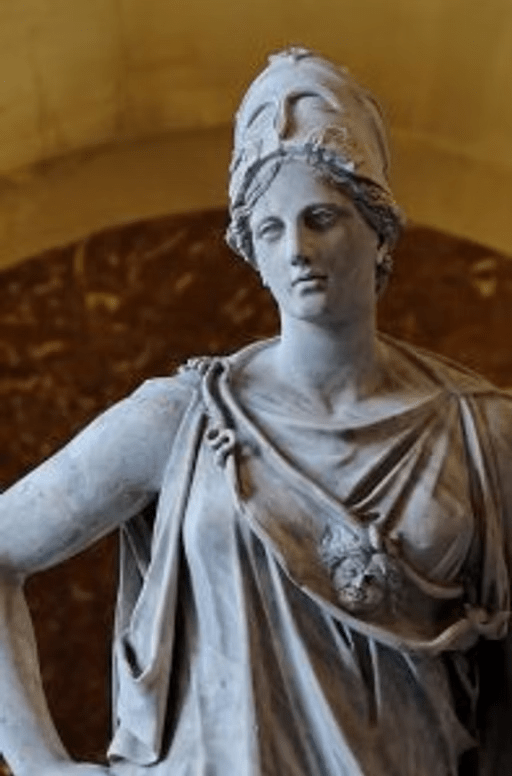
Wisdom is ruled by elohim.  This goddess of wisdom was named Athena.

It should be grasped that Solomon, as a child king, had God appear to him in a dream, asking, “What can I do for you?” Solomon asked for the ability to understand adult matters. In response to that request, God blessed Solomon with wisdom that was greater than any other human being had ever possessed, or would ever possess. This means the goddess of Wisdom was always made available to Solomon, such that he had the insight for this song from her; albeit the voice of God disguised as a goddess. This means Solomon could write this song in ways that can be interpreted as God speaking, while also reading the same words as the voice of intelligence calling to the ignorant to listen to those with Big Brains.

The translation of verse 20 misses the aspect presented by the literal, where it is written, “Wisdom outside – calls aloud in the open square – she raises her voice.” The Hebrew word “ba·ḥūṣ” (rooted in “chuts”) is then stating that “Wisdom” is an external influence, where one learns from one’s environment, as opposed to one being filled with “Wisdom” within, promoting God like a prophet. The translation above makes one be unsure of the source of this voice.

Children look for outer guidance and adults offer them wisdom.

When the questions are then raised, “How long, O simple ones, will you love being simple? How long will scoffers delight in their scoffing and fools hate knowledge?” there is a double-edged sword being raised. On the one edge cuts God, but on the other cuts the philosophies of man.

The latter is presented by the leaders of governments as their reasoning that offers to lead the ignorant masses, leaving them ignorant.  The few rise above the many who are left in love with their simple minds.  Wisdom cannot be special when everyone possesses it.

While the religious (Biblical readers) will see this song as Solomon and immediately think he was writing about God’s warning to the people, prompting them from his wisdom to be led by God’s will, the reality is they then fail to heed this message. The people are more often led, like lambs to the slaughter, by those possessing Big Brains, than inspired to seek God’s Wisdom.  The promotion of fear leads one astray.

The words translated as “simple ones” and “simple” (actuality “simplicity”) imply an “open-mindedness” that stems from the Hebrew word “pthiy,” which means “one.” This can be read as “oneself,” where one is “stupid” to think one knows enough to save “oneself.” As such, “Wisdom cries out,” asking “how long” before ‘oneself’ realizes a need for inner guidance that is greater than ‘one’ can give alone?”

The question is then, “Will ‘one’ choose God or ‘elohim’?”  The “open-mindedness” implied is “one” can be like a god with Wisdom’s influence, rather than having to allow God to be one’s source of Wisdom.

The Hebrew word that states “fools,” is “kesil.” That word means “stupid fellow, dullard, fool,” implying a “foolish man” and “stupid man.” This again can be taken two ways. One is as someone who does not listen to the reasoning of logic and fails to apply the powers of intellect. Most educated Christians would shudder at the thought of being called a “fool.”  The second option is to see stupidity as a positive, where innocence and purity are a desired absence of cunning and strategy.

I have regularly used metaphor to portray “fools” that have been characters in popular movies in this positive light.  I have done this because one dying of self-ego means willingly becoming “dumb” – “ Conspicuously unintelligent; stupid.”  This is then a willingness to sacrifice intellect for the blindness of faith that is obedient to God’s voice.  I have projected this image as “simpleton heroes.”
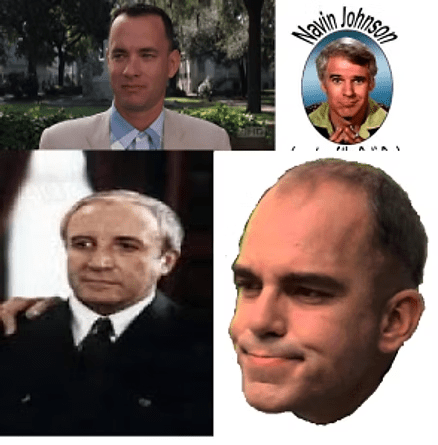
Forrest Gump, Navin R. Johnson, Chance the gardener, and even Karl Childers are all fictitious examples of “stupid men” that achieved higher goals, while being incapable of plotting their successes alone. Ezekiel, likewise, did not offer God his mental powers of thought when asked, “Can these dried bones live?”  He simply replied, “Lord, you know.”  That statement said he was too stupid to know the answer.  Therefore, “fools” should not be seen categorically as a shortfall.

The translation, “Give heed to my reproof,” is perhaps better read literally as, “Turn at my rebuke  ,  surely,” where the one-word statement that is the Hebrew word “hinneh” (“surely”) says, “behold!” This places emphasis on how one “gives heed” to the call of Wisdom, as it is by beholding that outer influence within, as the inspiration of God’s knowledge in one’s soul. Thus, Wisdom says, “I will pour out my thoughts to you; I will make my words known to you.”

The Hebrew word “rū·ḥî” is translated above as “thoughts,” but it means “my spirit,” or “my breath,” rooted in the word “ruach,” which means “spirit, wind, and breath.” It acts as “thoughts” when the voice is heard inside one’s brain, when the external influence has been welcomed to come into “one.”

This is just as Jesus said to his disciples (those “fools”), when he appeared in the upstairs room after his resurrection, saying, “Receive the Holy Spirit.” (John 20:22) John began that verse by stating, “He breathed on them” that command. Solomon’s wisdom now makes it possible to see that John meant the Mind of Christ had joined with the brains of his disciples, so he was leading their “thoughts” by the Holy Spirit of God.

This is where “I will make my words known to you” becomes prophetic of Jesus Christ, where “my words” (the possessive “debaray”) become more than believing that God was the source of “the words spoken through the prophets,” but those “words known” by being one with God.  This was the ability of Jesus to instantly know Scripture and point out the errors in the Pharisees. This knowledge comes from the Holy Spirit into Apostles, as the Christ Mind. Still, the Hebrew word “debaray” can state “my business,” in which case one is not filled with holy knowledge of “words,” but influenced to act selfishly. The “words” heard are not divine inspirations.

Can you handle the “charm of making” like Merlin could? Can you call the dragon with Wisdom?

When the song sings, “Because I have called and you refused, have stretched out my hand and no one heeded, and because you have ignored all my counsel and would have none of my reproof, I also will laugh at your calamity,” it becomes difficult to believe that Yahweh would take delight in such failures. Satan, on the other hand, would be an elohim who would. Instead of God being refused, unheeded and ignored, those who seek God and find His love are then laughed at by their persecutors. Their calamity is then due to their refusal to be swayed to be influenced by evil, which uses Wisdom as it means to success and power.

The verses that state, “I will mock when panic strikes you, when panic strikes you like a storm, and your calamity comes like a whirlwind, when distress and anguish come upon you,” the repeated word “p̄aḥ·də·ḵem” is found. Coming from the Hebrew root word “pachad,” it states the possessive use of “panic, terror, dread, and fear.” It says “your terror” or “your panic.”

Since it is told to the Israelites, “You shall fear the Lord your God and no other,” the “calamity that comes like a whirlwind” is the death of one’s ego, when one chooses to serve God and fear only Him. The Hebrew word “bə·’ê·ḏə·ḵem” can then change from “your calamity” to “your destruction,” where you is destroyed, making you free to marry with God. Then, the “distress and anguish” that “come upon you” is not from within, but without.

Wisdom is thus saying, all who choose to serve God rather than self (the Big Brain) will be mocked for having turned one’s back to the lures of the material realm.

Conversely, when one has not come to fear only God, these words project the influences that will lead one to seek Wisdom and worldly safety through knowledge and intellect. It will be the dullards who will be destroyed, because they cannot call upon their brains for help. They will be abused for their lack of education, being treated like wild animals whose fears lead them into traps. Thus, when the song continues by singing, “Then they will call upon me, but I will not answer; they will seek me diligently, but will not find me,” the “fools” will have no way to link to Wisdom. God will be their only salvation.

Singing, “Because they hated knowledge and did not choose the fear of the Lord, would have none of my counsel, and despised all my reproof, therefore they shall eat the fruit of their way and be sated with their own devices,” it is easier to see this as Solomon speaking for Yahweh, because “did not choose the fear of the Lord” uses “Yahweh.” In this view, sinners are without counsel, rebuked, and promised to suffer the consequences of their waywardness. Seeing the literal Hebrew, however, shows this in a different light.

Two segments make up the first statement: “Because they hated knowledge and did not choose the fear of the Lord.” It literally states, “Because that they hated knowledge  ,  and the fear of Yahweh not did choose.” The second separated segment literally can actually state that one “did not choose,” because of “the fear of Yahweh.” Following a separated segment that says, “Because that they hated knowledge,” the second segment is then seen to be not choosing knowledge, due to “fear of the Lord.” Therefore, this section of verses can be seen as Wisdom singing angrily at her rejection, due to the influence of God winning out.

This means, “would have none of my counsel” means ignoring common advice based on probability.  It says “despised all my reproof” means pointing out the errors of reasoning that many argue.  When Wisdom is not accepted wholly, as Jesus refused to bow under the pressure of the Pharisees, it is possible to “eat the fruit of that way” of righteousness.  Christians can “be sated with their own devices,” when those are the “principles” (from “moetsah “) come from God, rather than man.

The final verses then sing, “For waywardness kills the simple, and the complacency of fools destroys them; but those who listen to me will be secure and will live at ease, without dread of disaster.” The Hebrew word “mə·šū·ḇaṯ” can equally mean “turning away,” as an alternative to “waywardness.” When one then reads, “For turning away kills the simple,” this is both the death of one’s ego, to those who choose to serve God, as well as the continuance of mortal death to those who are “wayward” from God. The root word is “meshubah,” which states “faithlessness.” It predicts the outcome of one’s faith,” be it towards righteousness or wickedness.

The focus on “complacency,” stemming from the Hebrew “shalvah,” is actually the “ease, quietness, and time of tranquility” that “fools” experience when self is “destroyed.” That is a statement of God’s presence within them. However, when one becomes at “ease” with a “foolish” lifestyle, which sells a soul for momentary gains, that is then self-destructive. The result is a soul destroyed because it stupidly followed Wisdom.

The danger of Wisdom is it lures one into a mindset that seeks “those who listen to me,” thinking they “will be secure and will live at ease, without dread of disaster.” This is the trap that so many Christians today have fallen deep into, as they seek a lifestyle of comfort and material power, thinking God has made their lives “secure” and “at ease,” due to the profits of their brainy wiles.

When God speaks, he sounds like did Jesus when he said, “If you want to be perfect, go, sell what you have and give to the poor, and you will have treasure in heaven; and come, follow Me.” (Matthew 19:21) Failure to do this means one should face the “dread of disaster” that comes when one’s physical time on earth comes to an end … and all possessions are lost. The rich and famous listen to Big Brains, so they cannot fathom self-made disaster that helps others, at their expense. This is the trick of Wisdom.

As an optional Old Testament reading for the seventeenth Sunday after Pentecost, when one’s personal ministry for the LORD should be underway – one has been played the fool by the world – the message here is to see the danger of Wisdom. There is a fine thin line, one that cuts deep, which separate the powers of intellect from the All-Knowing Mind of Christ. If Holy Wisdom is sought, then one needs to destroy the biggest impediment to that: the love between the self and its brain.

Holy Wisdom reads the words of this song of wisdom written by Solomon and sees the dangers a Big Brain can cause. The human mind shuts the soul away in a heart that is kept from the voice of God.
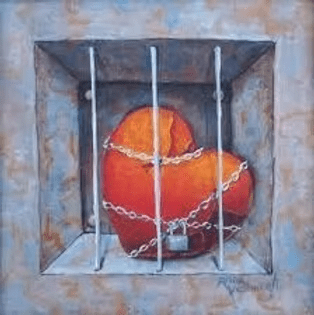
The self is falsely empowered by higher education and study of philosophies that use logic and reason to find advantages over others and put those advantages to use for personal gains. Wisdom was an overpowering influence on Solomon, such that he lost his way, turned his back on God, and brought the onset of destruction to the land of his father.

The heart is where one falls in love with Yahweh and sees the flaws of a brain that rejects oneness with the Lord. Subservience can only be complete when one realizes a union with God demands the destruction of self, because a house divided against itself cannot stand. The heart trusts God and follows His lead, finding the power within to withstand any outer troubles. Wisdom is then a slave of God that comes to speak to others as the Mind of Christ, from within the simple and meek.

Wisdom, as an angel of Satan, cannot display perfection. It is the voice of catch phrases and double-speak that sounds good, but under closer inspection dissolves into nothing. Wisdom is the voice used by false prophets and bad shepherds. Her voice is used to mislead the ignorant masses, taking them away from a personal relationship with God, so the heart cannot be opened by Scripture.

In today’s world, where science has replaced religion as the belief system of the West, faith has been placed in the care of Wisdom. Technology can be seen as an elohim that many now bow down before. The simple masses listen to talk of life existing elsewhere in our universe and believe travel through space, to distant worlds, will soon be within the grasp of human intellect. Wisdom has become the god (elohim) of the Twentieth and Twenty-first centuries.

To test that statement, take one minute out of a busy day, while in a public place,  and look around you.  See how many people are engaged in one-to-one conversations and then how many are engaged with a cell phone in their hand. One shows the heart-mind connection, while the other shows the brain-heart enslavement.

Eventually, one has to have a conversation with another, if only to say, “I want the value meal, please.”

Jesus spoke of the signs at the end of the age (Matthew 24:3-14).  He began those words of true Wisdom by warning, “See that no one leads you astray.  For many will come in my name, saying, ‘I am the Christ,’ and they will lead many astray.”  Can Wisdom be one who comes falsely in the name of Christ, intent on leading believers astray?

The signs of the times are pointing toward Wisdom worship. This signals the beginnings of the Age of Aquarius, where the heart is disconnected, allowing the brain to rule freely. This follows the age of Pisces, when self-sacrifice and faith in an unseen presence ruled for two thousand years. The Age of Pisces was all about the emotions flowing from the heart.  Jesus and his Apostles wrote of the end of the age, and we are reaching that point now. The voices of the elohim are getting louder and more persistent than ever; many like what they are saying.

It is time to determine which way the sword of Wisdom cuts. Has it made us complacent fools that have become addicted to the illusions of the world? Or, has it awakened us to the faithlessness that is trying to destroy our souls?

Remembering how John prophesied Jesus coming on a white horse and “out of His mouth goes a sharp two-edged sword, that with it he should strike the nations” (Revelations 19:15a), is that not symbolic of how “I will make my words known to you”?  Will that sword of truth come from his mouth as words that defend the servants of the Father and cut to pieces those who have dared to speak falsely in his name?

Cannot Wisdom be both the path to salvation and the road to destruction?
Isaiah 50:4-9a – The Lord God and me

The Lord God has given me

the tongue of a teacher,

that I may know how to sustain

the weary with a word.

Morning by morning he wakens–

wakens my ear

to listen as those who are taught.

The Lord God has opened my ear,

and I was not rebellious,

I did not turn backward.

I gave my back to those who struck me,

and my cheeks to those who pulled out the beard;

I did not hide my face

from insult and spitting.

The Lord God helps me;

therefore I have not been disgraced;

therefore I have set my face like flint,

and I know that I shall not be put to shame;

he who vindicates me is near.

Who will contend with me?

Let us stand up together.

Who are my adversaries?

Let them confront me.

It is the Lord God who helps me;

who will declare me guilty?

———————————————————————————————————-

This is an optional Old Testament selection from the Episcopal Lectionary for the Seventeenth Sunday after Pentecost, Year B 2018. In the numbering system that lists each Sunday in an ordinal fashion, this Sunday is referred to as Proper 19. If chosen, it will next be read aloud in an Episcopal church by a reader on Sunday September 16, 2018. It is important because it is the voice of God coming from one of His prophets, projecting the strengths and talents that God gives to His devoted.

In contrast to the Proverbs 1:20-33 reading that is an alternative option to this reading in Isaiah, here it is clear that the giver is God, rather than a feminine power referred to repeatedly by feminine pronouns. Here, Isaiah wrote “adonay Yahweh” (variations thereof) four times in six verses, which says “the lord Lord” (translated as “The Lord God”).

The Hebrew word “adonay” is said to be an emphatic version of “adon,” which means “lord, master, owner, king” and even “husband.” It is used to denote a state of divinity, beyond that of humans. While the Hebrew alphabet has no distinction of upper and lower case, such that translating YHWH implies capitalization as “Yahweh,” the capitalized version, “Adonay” is read as an equivalent name for Yahweh. When combined (as Isaiah wrote) the implication is naming God (Yahweh) as the Supreme deity, which means it clarifies Yahweh elohim (God of gods) as the Lord of lords.

This means that Isaiah is speaking clearly of a masculine deity, one who is the greatest of all gods – God the Father. Solomon’s references to “Wisdom” as a “she” and “her” is placing the concept of human intelligence into the hands of a subordinate “god,” meaning “wisdom” is processed through the human brain from a source that is external to one. This means God is then representative of the elements of human life that teach, which can be formal (i.e.: rabbis and professors) or informal (i.e.: parents and peers).  Their teaching approach is motivated from the heart leading the brain.  Thus, true prophets have learned this method from God.

The dangers of “Wisdom” (the goddess, like Athena) come when one sees the self more godlike, due to being smarter than most of the rest of the human race. It is when humans worship “self-intellect.” “Wisdom” becomes like a protector god that makes humans into heroes, as told in Greek mythology.

This parallels the dangerous course of “mystery schools” of thought (i.e.: Freemasons and Rosicrucians), where the concept of God is relegated to a “Universal Mind,” from which the well-educated can tap into, profiting from the higher knowledge gained. This is then theStar Wars view of God as being the “Force,” into which good (Jedi knights) and evil (Darth Vader and the Dark Side) can access, making God be a slave to human mentality.

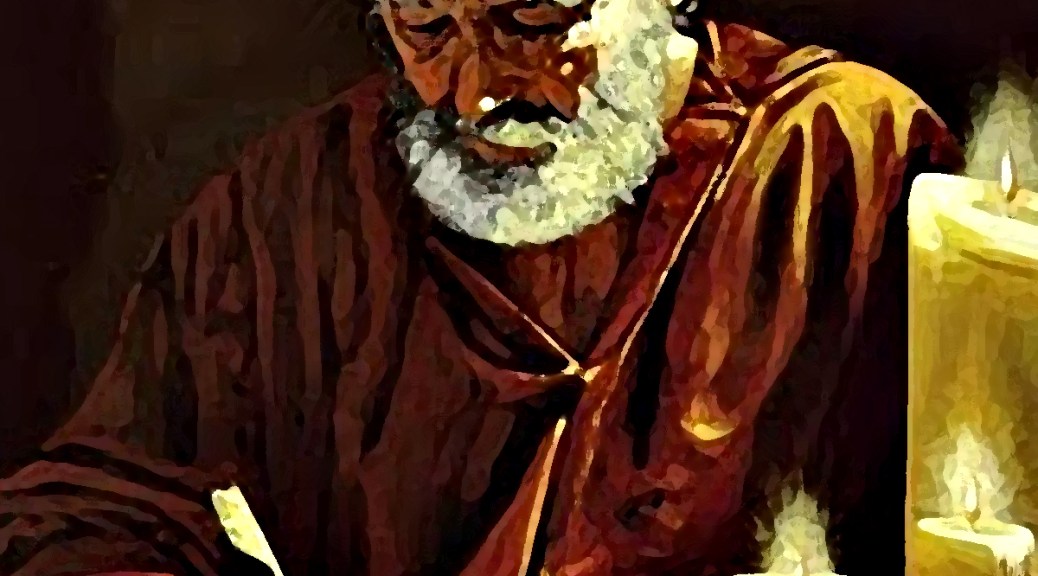
And they called him Lord Vader.

This is not what Isaiah wrote of here. Whereas Solomon (who had been given great wisdom as his own – a known characteristic of him) wrote of “Wisdom” belittling the foolish for not embracing “her call,” Isaiah wrote of what God had given him talents, which comes from Isaiah receiving His call. Isaiah wrote, “The Lord God has given me the tongue of a teacher,” which is the Wisdom of Yahweh coming from the mouth of His prophet. This presence must be seen as chosen by Isaiah, welcomed by God, and acknowledged as God speaking through His servant.

This is where reading “adonay” as emphasizing the marriage of God and Isaiah, where Yahweh is the husband and Isaiah the subservient wife. Unlike when one boasts of intelligence and calls it “Wisdom,” where self is proclaimed as having been blessed by God to have a Big Brain, Isaiah left no room for misinterpretation of his source of wisdom. He stated his “husband Yahweh” told him knowledge he had not known before.

By saying, “that I may know how to sustain the weary with a word,” God gave Isaiah the gift of prophecy to uplift others, not self. The message of a prophet is not believable because people recognize one for having always spoken wisely, but because one who had been seen as simple-minded suddenly speaking profoundly.

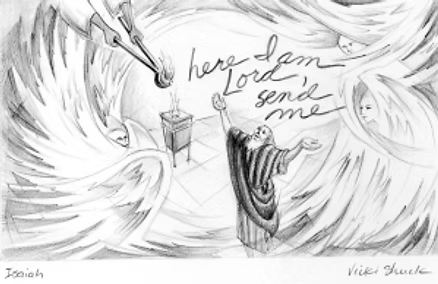
Isaiah was groomed to serve the Temple in Jerusalem as a priest, being from the royal house of Judah; but he saw himself as inadequate, saying in a dream, “Woe to me! I am ruined! For I am a man of unclean lips, and I live among a people of unclean lips, and my eyes have seen the King, the Lord Almighty.” (Isaiah 6:5) For all he had been taught, he knew nothing of value.  Thus, Isaiah volunteered to serve God as His messenger, becoming a prophet, and speaking so others would be led to God.

When Isaiah then wrote, “Morning by morning he wakens — wakens my ear to listen as those who are taught,” it should be realized that Isaiah was not awoken by the voice of God at seven o’clock in the morning. The Hebrew word repeated is “bab·bō·qer,” from the root “boqer,” meaning “morning, dawn, day, and daybreak.” This is metaphor for enlightenment, when the light of truth spoke to Isaiah, showing him the meaning of things previously unnoticed. “Morning” is then Isaiah opening his eyes to signs, as the voice of God’s whispers gave insight that common wisdom would miss and logic would struggle to defend.

This is followed by Isaiah writing, “The Lord God has opened my ear, and I was not rebellious, I did not turn backward.” Again, the use of “ozen,” meaning “ear,” is not about the physical sense of hearing. Isaiah is speaking as did other prophets, including Jesus, who said (in effect), “You have ears but you cannot hear.” Physical sound waves are captured by mature ears and translated by the brain into meaningful thoughts, based on one’s level of education and understanding of thoughts. The metaphorical “ear” is hearing spiritual insights “revealed,” so knowledge is gained without prior learning.

A lack of “rebelliousness” means without question. To question the Lord is to demand one’s brain be filled with explanations and reasoning. To not rebel is to accept silently, understanding that should any need for further explanation arise, then the responding truth will likewise come through holy “revelation.” To “not turn back” (from “achor” meaning “back, backward, away”) means to go forward with that which has been “taught,” as one possessing “the tongue of a teacher.”

Imagine that … a “teaching tongues” lesson during the Pentecost season.

This, again, is different than common intelligence, where the advent of the scientific method has seemingly called as the voice of Wisdom, leading human beings to believe in the powers of observation and calculable data. When “proof” is invisible, as is an inner voice that demands faith, more than belief, it is easier to see how “Wisdom laughs” at those who rebel against her formulas and statistics. In this regard, Isaiah wrote, “I gave my back to those who struck me, and my cheeks to those who pulled out the beard; I did not hide my face from insult and spitting.”

By understanding the times of Judah, when it faced capture and enslavement by the forces of Babylon, a prophet like Isaiah did not offer any tangible advice that could quell a foreign power. The Jews did not want to know how captivity could be a step towards redemption, when they still could not see how they did anything wrong. The punished Jews blamed God for their loss; which was the selfish voice of wisdom seeking to destroy the fools who would be prophesying repentance.

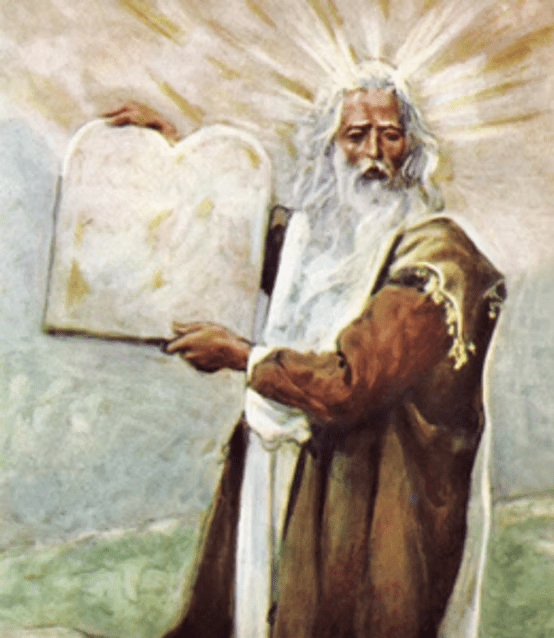
Isaiah offered his back to the whip, as would Jesus when the Jews turned on him, because a prophet can be seen like a stubborn donkey that will not move on the road of public opinion. He let them pull out the hairs of his beard, when holy men are given points by how long their beards are and how untrimmed the edges are. Isaiah let them show their rejection of his words as so that being bearded became a reflection of how Jews were not being those of God.  Isaiah having his beard yanked was because their rabbis did not have ears that could hear. As a prophet of the Lord, Isaiah wore the face of God, as did Moses, so it would be God the Jews cursed and spat upon, not having eyes that could see spiritually.

Isaiah wrote then, “The Lord God helps me; therefore I have not been disgraced.” Whereas Solomon wrote of “Wisdom” mocking and laughing at “fools” that reject bowing down before external knowledge, Isaiah wrote that Lord Yahweh comforts souls that commit to Him from such abuse. The language that attempts to belittle the simple ones into forced slavery, through condemnations and epitaphs, will have no effect on souls married to the true God. The husband Lord of a wife soul will ensure that only grace (not disgrace) will be.

This state of contentment means Isaiah could sing, “Therefore I have set my face like flint, and I know that I shall not be put to shame; he who vindicates me is near.” There will be no trembling of lips, as the face of God is worn with conviction.

It is a face as hard as granite rock that causes sparks to fly off it when struck by metal. It will not be lowered because no shame can be set upon it. As one with one’s soul, within one body, the self (“me”) then can see all questions of proof are vindicated by the Mind of God (the Christ Mind) that is “near.” The word translated as “near” is “qarob,” which also means “related.” That states the marital relationship to God.

When Isaiah then posed the question, “Who will contend with me?” the call is as a teacher to those who will heed the voice of God through a prophet. Whereas “Wisdom” would be making a call to stand off against one, like two gunslingers in the Wild West, Isaiah is asking, “Who will join me to plead for God?” Thus, he said, “Let us stand up together.”

Contrary to that question and statement, Isaiah then asked, “Who are my adversaries? Let them confront me.” This does not take the approach of Solomon and the goddess Wisdom, where the people were asked how long they would be simple and fools, rejecting the call of wealth and power that worldly knowledge offers. Instead, Isaiah spoke for God asking, “Who follows a greater one than Yahweh the Lord?”

In this regard, the translation of “adversaries” is misleading, as two words in Hebrew are stated: “ḇa‘almishpat.” This literally translates as “owners of judgment” or the “masters of justice.”

The new makers of law are those who serve Baal and pass mishpat.

It uses the lower-case “lord” that is the god many called Baal by name. Another viable translation of the Hebrew can transform the question so that it also asks,” Who are the married ones of destruction?” That is less to insult others, and more to offer a better marriage to Yahweh, the true lord of justice and the only owner of judgment.

When one sees that God was posing the questions through His obedient wife, it is easy to grasp how, “Let them confront me” is still not a threat, but an invitation for marriage. The word “yig·gaš” is translated as “let them confront,” when the root word that comes from is “nagash,” which is another form of the word “near.” It asks, “Who will come closer to me?” or “Who will stand with me?” It is then an invitation for a date with God and potentially the beginning of a lasting romance.

Following that proposal, Isaiah wrote, “It is the Lord God who helps me; who will declare me guilty?” For the fourth time in six verses Isaiah claims Yahweh is his husband and master, the one who is married to his soul and who leads him to seek the wayward and offer them a new hope. There are none among those who will accept the invitation of Yahweh and get to know him that will declare Isaiah as guilty of a sin.

Still, this translation of verse 9a is wrong, as no question is posed. The literal actually states: “Surely  ,  the lord God will help me  ,  who he will condemn me indeed  ,”.   A viable translation of this [a paraphrase] says, “It is assured [to all]  ,  God has helped me  who myself would be condemned as well [if not for the Lord God.].” Isaiah has then furthered the invitation to get to know God, through love in one’s heart, because loving God meaning Salvation.

As an optional Old Testament selection for the seventeenth Sunday after Pentecost, when one’s personal ministry for the LORD should be underway – one should be married to God and gladly facing abuse as His prophet – the message here is to understand the difference between intellectual religion and spiritual faith. It is much easier to take the time and make an effort to learn Scripture than it is to walk up to a “professional” and question his or her knowledge of religion. When one is not married to God, one will hide in the shadows (not shine in the “Mornings”), afraid to ask God’s questions and insulted when one’s personal wisdom is questioned.

While Christians can let the words of Isaiah flow over them as they sit in a church on Sunday and like the sounds of the English translations, few realize Isaiah is talking to them. Christians are those who have figuratively been led away into slavery in Babylon. Isaiah still stands as a prophet of the Lord God who is singing a song about how wonderful it is to be married to God, because He sends me out to sing praises to people like you.

This means it is the Christians now who whip the back of those who stop following the road designed to take believers away from God and stubbornly keep hee-hawing, “You’re going the wrong way.”

It is Christians, not Jews now, who are refusing to grow beards, as the new sign of holy men.  Catholic friars would also cut halos onto their scalps; today women can be priests and pastors, not needing a beard to be allowed to preach. Whenever looks are the way to tell righteousness, it is time to worry.  With the message trusted by simple souls, it is then Christians who insult anyone standing firm against liberalism (changing the laws to suit modern desires), only to be spat upon.

This is not an overnight transformation. It is not a change caused by the youth of the sixties free sex and drug experimentation culture clashing with the ‘fire and brimstone’ ‘old time religion’ that was prominent during the horse and buggy era. It is a change coming since Rome led Crusades against Jews and Arab infidels, while stripping the people of all knowledge of Mosaic Law and refusing translations of Scripture that were not Latin. Christianity was attacked then, just as Judah and Jerusalem were in the times of Isaiah; only the attackers were wearing robes and carrying crosses. Priests have long been taught how not to teach marriage to God [although nuns could marry Jesus].

Certainly, the Church of Rome began a rapid decline in the Twentieth Century, with the rottenness of its core became known, after being covered up for decades. Now there is talk of the Church’s “Holy Father” – supposedly an Apostle who is Jesus Christ reborn – resigning, due to being part of this cover-up. Still, there are cults calling themselves religions that call upon the name of Jesus Christ and branch after branch of Christian denominations that have transformed one true vine bearing good fruit into some wild growth of unkempt shrubbery with poisonous berries. Few can interpret Scripture, and fewer want to try, and even fewer have time to listen to interpretation, much less give thanks to anyone for doing so. Therefore, Isaiah is singing this set of verses to us today, just as his song was heard long ago.

Four times Isaiah refrained, “The Lord God helps me.” That does not say, “The Lord God helps you,” as a promise that believing in God will bring a comfortable living.  That was the “Wisdom” boat set sail by Solomon.  Still, it can mean “The Lord God helps you … if you become a me, like Isaiah.

Every problem the world has today, which has to be at least as many (if not more) than the Jews faced in a land that followed different mores and ate unclean meats on holy days, can be alleviated by one being married to God. A me is a wife of the Lord God (regardless of one’s human gender).  God helps His wives.

The Lord God lets me help you, as you … so He helps me be you. I have to be reborn in you.

Until you can honestly sing this song of Isaiah from a personal perspective, from being in love with God and knowing His presence – His near relationship as the Father to His Son Jesus Christ – then you will be a servant of “baal mishpat” – one awaiting the judgments of masters that excel in the worldly realm. If you want to find freedom from this earthly bondage, while still being in the chains of slavery, then you need to get out of that spiritual box you are hiding in and make a meaningful commitment.

No prior knowledge is required. Just a heart full of faith allows one to say, “Yes” to God’s proposal.

James 3:1-12 – Unbridled teachers of truth

Not many of you should become teachers, my brothers and sisters, for you know that we who teach will be judged with greater strictness. For all of us make many mistakes. Anyone who makes no mistakes in speaking is perfect, able to keep the whole body in check with a bridle. If we put bits into the mouths of horses to make them obey us, we guide their whole bodies. Or look at ships: though they are so large that it takes strong winds to drive them, yet they are guided by a very small rudder wherever the will of the pilot directs. So also the tongue is a small member, yet it boasts of great exploits.

How great a forest is set ablaze by a small fire! And the tongue is a fire. The tongue is placed among our members as a world of iniquity; it stains the whole body, sets on fire the cycle of nature, and is itself set on fire by hell. For every species of beast and bird, of reptile and sea creature, can be tamed and has been tamed by the human species, but no one can tame the tongue– a restless evil, full of deadly poison. With it we bless the Lord and Father, and with it we curse those who are made in the likeness of God. From the same mouth come blessing and cursing. My brothers and sisters, this ought not to be so. Does a spring pour forth from the same opening both fresh and brackish water? Can a fig tree, my brothers and sisters, yield olives, or a grapevine figs? No more can salt water yield fresh.

———————————————————————————————————-

This is the Epistle selection from the Episcopal Lectionary for the Seventeenth Sunday after Pentecost, Year B 2018. In the numbering system that lists each Sunday in an ordinal fashion, this Sunday is referred to as Proper 19. It will next be read aloud in an Episcopal church by a reader on Sunday September 16, 2018. It is important because James told how Christianity spread rapidly through Apostles being sent out as teachers, with God-given tongues of fire.

Twice in the verses of this selected reading, James wrote “adelphoi,” which means “brothers.” There are 145 occurrences of this usage in all the New Testament. While it is easy to stick one’s Big Brained head in the sand and deny “brothers” actually means “brothers,” and that must be understood, the modern tendency is to screw the Holy Spirit inspired writers of those books and act as god almighty (lower case purposefully written, to denote the smallness of this) and bless all womankind by changing the text to say, “brothers and sisters.”  That is missing the purpose of “brothers” being written.

The purpose is for an Apostle to address ALL OTHER APOSTLES as the sons of God (therefore, “brothers” in the name of Jesus Christ). This, undoubtedly included women, and the female Apostles back in the days of James knew that. Therefore, changing holy text for political correctness today speaks loudly as saying, “There are no longer any Apostles, so it is best not to piss off the women here, since that is where all the church’s donations come from.”

Re-painting the Last Supper to meet new standards of acceptance.

That is not a good place to be!

Please write that down somewhere and memorize it. “Brothers” is like me saying “married to God” and Christians are “the wives of God.” That has absolutely nothing to do with human sexuality, so one’s genitalia are inconsequential. A wife to God becomes completely subservient to the husband’s commands. James meant no harm to the female of Judaism and they who were truly Christian (reborn as Jesus Christ – a male Spirit) took no offense.  I imagine some version of political correctness existed in 30 A.D., but James was not writing to meet their needs.

This is the message James began this reading with: “Not many of you should become teachers, for you know that we who teach will be judged with greater strictness.” It implies that Apostles would rather not be a male and refer to other males as the wives of God, just like they would shy away from calling women Christians “brothers.” It becomes like the chorus of a Dave Matthews song: So much to say.

Actually, the literal translation of verse one says, “Not often teachers become  ,  brothers ourselves  ,  knowing what greater judgment we will receive  .” This is not a statement by James that Apostles “should not become teachers,” based on the “condemnations that will come,” as lawsuits and sentences, but quite the opposite. Apostles must teach, so there is no choice in the matter. Few, however, would be recognized as official “rabbis” by the Jewish communities. Instead of expectations of wearing special robes and being invited to speak in beautiful synagogues, Apostles would be called to teach wherever God would open their mouths, because a seeker of truth was near.

When James then clarified this by stating, “For all of us make many mistakes,” it means that that it is impossible for God to err, and His Son will never speak anything but the truth. What James was pointing out was the imperfection that is the human form of an Apostle, which makes all of them come from a background of mistakes (i.e.: sinners). God does not marry wives and expect them to become Him reborn. God does not fill the mouths of His wives that bear His Son in another human body at all times. Apostles will return to being normal human beings when they are not teaching for the Father, which lets them all know just how blessed they are to be married to God. His “greater judgment” will keep the mistakes minimal and the ones that sneak in from time to time will be forgiven through penitence.

Still, God and Christ are perfect.  They come to help those who make mistakes.

James then used the analogy of a bridle in a horse’s mouth, which says that God does not control the human brains and force humans to do anything against their will.

So, if everyone agrees, this will be the bridle that will guide you.

As such, true Christians are not made to preach God’s Word as beasts of burden. True Christians are not tamed by God, having been caught unwillingly, corralled in schools of teaching, and then saddled with the burden of riding children around in circles all day long, before being given a bale of hay to munch on.

Apostles want God to lead their lives.  They find great joy arises within them when they experience God flowing through their being, speaking the words of Jesus Christ through their lips.  Apostles have never been trained in the meanings of Scripture they speak, yet they take delight in completely understanding everything coming out of their mouths.

Likewise, James used the analogy of a ship, which are mechanical devices built by man to serve commercial needs. The larger a ship is the more commerce it allows.  All ships have relatively small rudders, which are controlled by just one man. Apostles are not built and used as vehicles of transport that are to be piloted by God. As to size, human beings can deliver the messages of God in small packages, so the size of the Christian (or the human gender) is unimportant. The pilot of a Christian is greater than the size of the Christian, as God is immeasurable. The rudder being steered is Jesus Christ.  Combined, they act to guide where the ship goes.  Still, the ship itself is made for a worldly existence and steered by the wrong pilot can sink on unseen rocks.

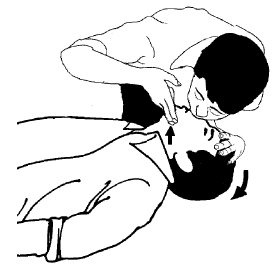
Oooops.

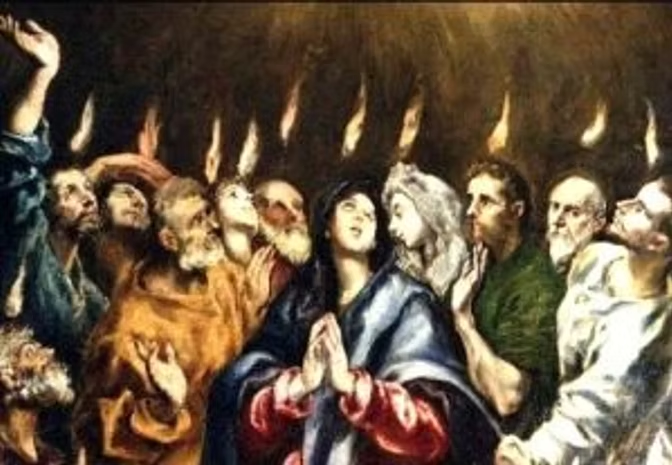
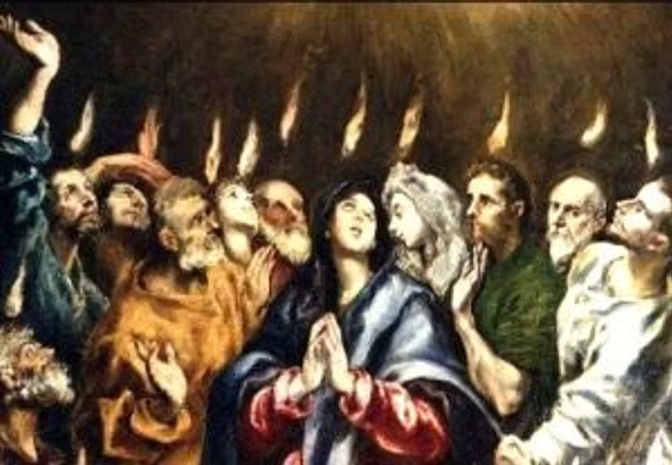
When James wrote, “the tongue is a fire,” which has to be recognized as the story in Acts of the first Apostles having the Holy Spirit descend upon them. They began to speak automatically, in foreign languages they had never been taught. The words that came out of their mouths were then spread to listening pilgrims in Jerusalem.  Just as suddenly, three thousand believers became Apostles set afire with the Holy Spirit. They were like a forest “set ablaze by a small fire” of twelve.

The “fire” is the truth of the Word, from which comes the light and warmth that Scripture contains. The Holy Bible, as was the Torah then, is a forest of words that the Holy Spirit can set ablaze in the teacher each Apostles holds within – Jesus Christ.  Anyone can navigate the words on a page, but it takes an higher power to ignite one to speak in tongues of fire.

The translation that reads, “The tongue is placed among our members as a world of iniquity” is wrong and confusing. Verse six literally begins by stating: “And the tongue afire  ,  the world that is unrighteous  .” That says the Holy Spirit speaks the truth to the unrighteous so they can hear the truth be told. The verse then continues to state: “The tongue is set among the members of us  ,  people defiling all the body  ,  and setting on fire the course this of lineage  ,  and set on fire by what is hell  .

Whoever can give a blessing to mass murder must daily live in a fiery hell of existence.

This series of segments says (paraphrasing): Apostles are given tongues of fire to go forth into a world that is filled with iniquities, one not knowing the truth of the Word. Apostles of God who go forth and speak the truth are set among other Apostles who support those ministries. Together, they open the eyes of those who are defiling their bodies and thus their souls, offering them the cleansing of the Holy Spirit’s baptism by spiritual fire. Apostles speak the truth so the course of their souls can be changed from sinner to Saint, becoming part of the “brothers” of Jesus Christ. The alternative is to remain in the fiery hell their souls are already amidst.

When James wrote, “no one can tame the tongue– a restless evil, full of deadly poison,” the implication is that the “tongue” is the body part that inner spirits love to gain control over. This is confirming what Jesus told the Pharisees, who complained about his disciples not following the laws of handwashing. When Jesus said, “What goes into someone’s mouth does not defile them, but what comes out of their mouth, that is what defiles them” (Matthew 15:11) the “tongue” is the member that speaks for what controls one’s soul.  Inner demons use the tongue to be defiled by deadly poison.

James is then saying that God comes from the “tongues” set afire in His Apostles, acting as a counter to the “restless evil” that controls the unrighteous. The “deadly poison” they spew is the death sentence they have set upon their own souls.  That poison is from self-ego, doing self-harm, more than the damage they could possibly do to anyone else already mortally dead. The “tongues” of Apostles is then the remedy that offers them the cure for their poison.

This opposition of tongues speaking for inner controlling forces is then stated by James as: “With it we bless the Lord and Father, and with it we curse those who are made in the likeness of God. From the same mouth come blessing and cursing.”

This makes better sense when one realizes the pause (a comma) after “and we curse those [men],” where the translation omits the word “men” or “others” (from “anthrōpous“).   As such, the focus is on the “men” cursed, as  “those” who are unrighteous, led by “a restless evil.” Following that pause, “those” cursed are the ones “who are made in the likeness of God,” as false shepherds. Their “resemblances” (from “homoiōsin“) of holiness are the robes they wear that advertise them as holy teachers; but their tongues say otherwise. Therefore, it is from those mouths that comes forth both blessings and curses.

James then addressed his fellow “brothers,” saying this split personality ought not to be. It confuses those who are seeking the truth, when the message they teach is: “Do as I say, not as I do.”

Such contradiction was then stated as comparisons of impossibility, when James wrote, “Does a spring pour forth from the same opening both fresh and brackish water? Can a fig tree, yield olives, or a grapevine figs?”  The obvious answer says, “No more can salt water yield fresh.”

It must be grasped that James was not saying Apostles speak in such contradictory terms; as the message is how to tell those who speak the truth of God and those who speak as if in possession of intellectual prowess.  The focus was placed on those who are bad teachers.

As the Epistle selection for the seventeenth Sunday after Pentecost, when one’s own personal ministry for the LORD should be underway – one’s tongue is on fire with the truth of God – the message here is how to measure the impact of teachers (rabbis, pastors, priests, ministers, and preachers). True teachers have tongues of fire that ignite the passion of the Holy Spirit in those who hear them speak. True teachers spread a forest fire of faith that can only be stopped by a lack of seekers of truth. Others are those who speak out of both sides of their mouths, blessing those who sin and condemning those who do not like those blessings.

The spread of Christianity has turned from a forest fire of faith to sporadic burning embers here and there.

Gone are the days when twelve men could stand before a flood of religious pilgrims and speak the truth in such a way that many lives were instantly changed. The seekers of truth have changed into cults of personality worship. We give our blessings to politicians that then go condemn whole swaths of citizenry, those innocent beings that do not swear allegiance to the same philosophies.  The tendency now is to want the laws changed and to demand freedom be given … to allow the masses to determine what should be held near and dear. Today there is a restless evil that prevails.

Rather than be bridled by the Laws of Moses, our government has set many free to roam as wild horses, while jamming the bridle of government laws into the mouths of those broken and tamed.  Many are made the beasts of burden to laws that call the minority’s rights superior to the majority’s reasoning, based on religion having been the way of the land.

Rather than be a ship built for a specific purpose and given pre-planned routes of transportation, we have surgically removed the rudder of Christianity from Western nations.  Now, what was expected has become chaos.  The laws of nations cause many to circle aimlessly and carelessly steer on to collision courses, with no pilots capable of steering the ship to safety.

We now bless iniquity and curse goodness.  What was known is questionable.  What was up is now down.  What was elemental has become complicated.

Video of song Elemental

This Epistle focuses on teaching, accompanying two Old Testament readings that tell of the goddess of wisdom and marriage to the Lord God as the influences that teach the teachers. Apostles choose the later, while all others choose the former. This leads into a Gospel lesson from Mark, where Jesus taught of the responsibility of following in his footsteps. James, the brother of Jesus, who was reborn as Jesus Christ, becoming a brother to all Apostles, knew firsthand the difference between acting holy and being righteous. His words still speak loudly today.

We all are born human, thus we all make mistakes. No one is going to bridle us with laws that will transform the flawed into perfection. Still, we know that God is perfection. It is then up to each individual to give of themselves to God, requesting that He become one with him or her, so that God’s perfection can be a fire renewed on the earthly plane.

The perfection that comes from a tongue of fire is Jesus Christ. God will not force His Son upon anyone. To be an Apostle of Christ, one must desire God first and foremost in one’s life.

Mark 8:27-38 – Being taught to make a choice

Jesus went on with his disciples to the villages of Caesarea Philippi; and on the way he asked his disciples, “Who do people say that I am?” And they answered him, “John the Baptist; and others, Elijah; and still others, one of the prophets.” He asked them, “But who do you say that I am?” Peter answered him, “You are the Messiah.” And he sternly ordered them not to tell anyone about him.

Then he began to teach them that the Son of Man must undergo great suffering, and be rejected by the elders, the chief priests, and the scribes, and be killed, and after three days rise again. He said all this quite openly. And Peter took him aside and began to rebuke him. But turning and looking at his disciples, he rebuked Peter and said, “Get behind me, Satan! For you are setting your mind not on divine things but on human things.”

He called the crowd with his disciples, and said to them, “If any want to become my followers, let them deny themselves and take up their cross and follow me. For those who want to save their life will lose it, and those who lose their life for my sake, and for the sake of the gospel, will save it. For what will it profit them to gain the whole world and forfeit their life? Indeed, what can they give in return for their life? Those who are ashamed of me and of my words in this adulterous and sinful generation, of them the Son of Man will also be ashamed when he comes in the glory of his Father with the holy angels.”

———————————————————————————————————-

This is the Gospel selection from the Episcopal Lectionary for the Seventeenth Sunday after Pentecost, Year B 2018. In the numbering system that lists each Sunday in an ordinal fashion, this Sunday is referred to as Proper 19. It will next be read aloud in an Episcopal church by a priest on Sunday September 16, 2018. It is important because Jesus taught his followers not to be swayed by outside influences, but to stand firm with the confidence that God will bring what is needed at the time of need.

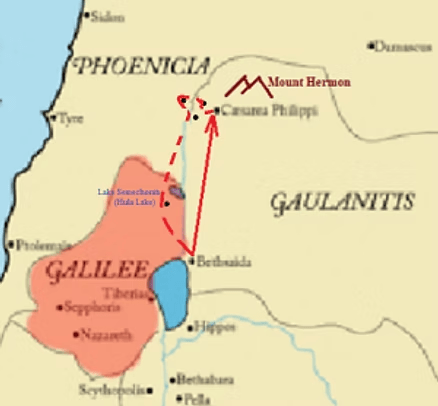
The setting for this reading, as subsequent to the time Jesus and his disciples spent in Tyre and Sidon (last Sunday’s Mark 7 reading) is after they had traveled to Jerusalem for the Shavuot Festival and then returned north to Galilee. Having again encountered the Pharisees and refusing their demand for a sign that would prove Jesus’ divine authority, he returned to Bethsaida. From there, Jesus took his followers north, to Caesarea Philippi, in Gaulanitis (the Golan Heights). That is about twenty-five miles north of the Sea of Galilee, at the foot of Mount Hermon. That was the high mountain of the Transfiguration (Mark 9).

When we read, “Jesus went on with his disciples to the villages of Caesarea Philippi,” it should be recognized that the plural word “villages” (from “kōmas”) implies the group traveled over a number of days. If they traveled along the Jordan River, a village was near Lake Semechonitis (Hulah Lake), with a few in the bend in the river, to the west of Caesarea Philippi (Daphne being the closest). It might be that Jesus obtained supplies, including ropes, tents and warm clothing (rentals possibly), in preparation for his ascent on Mount Hermon, which maintains snow on its peaks most of the year. Since Jesus would only take Peter, James and John of Zebedee with him on the ascent, the remainder of his followers would have set up a ‘base camp’ near Caesarea Philippi.

When we read, “On the way [Jesus] asked his disciples, “Who do people say that I am?” this would imply he was referring to the people in the villages of Galilee, Phoenicia and Gaulanitis.  They had a fresh opinion of Jesus, since this was not a region that Jesus had traveled into before in his ministry. Certainly, Jesus would have sought out scattered Israelites and Jews to speak with while in the Jordan River villages; but his miracles were low-key, if at all. This would mean his question was not to ask if he was doing all he could to keep the crowds coming, but to see what the people were saying when only seeing Jesus as an obvious leader of a religious ‘entourage’.

The question asked by Jesus actually uses the Greek word “legousin,” which literally says “do pronounce,” but implies “What conclusions do the people draw about me?” The answers given by the disciples of Jesus should be accepted as truthful, based on what specific guesses they had heard the people venture.  Based on the responses that are written, the ideas of the descendants of Israel that came to mind were to associate Jesus with other great names in the history of Judaic holy men.

For someone to say “John the Baptist,” this would either be mistaking Jesus as the zealot who called for the sins of Jews to be bathed away in the waters of the Jordan River, or the assumption that the spirit of John had possessed Jesus.  Possibly, the association of the recently dead John to Jesus, when they both lived as contemporaries, was that Jesus had risen to lead John’s disciples after his execution, as a disciple of John assuming the lead. That would be representative of others seeing Jesus as the rebellious ‘wildcat’ that rejected the establishment of Jerusalem.

To then say “others” thought Jesus was Elijah, the most important prophet of Israelite fame, who ascension to heaven without dying, leading to the belief that Elijah would return “before the coming of the great and terrible day of the LORD” (Malachi 4:5), as a harbinger of the coming Messiah, meant that some believed Jesus was a divine human prophet. Still, there were those who mentioned other great prophets of Israel and Judah, which means they thought Jesus was in touch with God, as another example of prophets past.

All of that opinion was the product of a brain trying to make sense of someone who had come into their world making an impact like none prior.  Their opinions had been based solely on seeing Jesus, without knowing him.  Their opinions were like those of an audience who sees a star’s performance, but never goes backstage; they never do the work of a ‘roadie’ or see the star as human like they are.  Therefore, the people are more apt to place people they barely know on pedestals, unlike those who have a closer relationship: family and friends.

This is the reason we read that Jesus asked, “But who do you say that I am?”  The disciples (and other followers) were those who saw Jesus eat, get angry at fig trees, and hold hands with Mary Magdalene.  Jesus wanted them to state their opinion of him, while it should be realized how Jesus knew the hearts and minds of his disciples and family.  Jesus knew in his soul that none of them (including Simon-Peter) felt they were smarter than those whose conclusions had been overheard or voiced to them directly.

Jesus was asking his followers, “When you hear these wild guesses, do you counter them with an opinion of your own?”

This is where one needs to cue the soundbite of crickets chirping.

When reading the translation above that says, “Peter answered him, ‘You are the Messiah,’” this is misleading.  It gives the impression that Peter immediately stood up and answered Jesus.  That is wrong, as one should pause when reading, between question and answer.  The brain wheels were whirring, but no one was speaking; until Peter spoke up.

The verse (9b) literally states, “Answering  ,  the one Peter concluded to him  ,  You are the Christ  .” The separation of the Greek word “Apokritheis” as a one-word statement (of importance due to capitalization) says, “Taking up the conversation.”  This means Jesus did not ask anyone specifically, when he said “You” (capitalized “Hymeis“), understood to capture the plural number.  It was a question for all to answer, as “Who do each of You say I am?”

As such, no one wanted to be the first to answer. This was because all were filled with doubts as to how to answer the question. The question asked by Jesus was followed by a pause of silence, when no one was bold enough to speak. Also, the Greek word “legei” is stating that Peter brought the pregnant pause to “closure” by speaking.

The reason it is so vital to see the presence of an extended pause being the immediate response, prior to Peter speaking, is that is points out the disciples had surrendered their egos in order to follow Jesus. They were too timid to speak for self, including Simon-Peter. That pause meant they were prepared to receive the Holy Spirit, when the time was right.

It means that Peter did not speak from his brain when he said, “You are the Messiah.” He spoke because the Holy Spirit of God flowed through him, “commanding” (a viable translation of legei) those words be spoken, as the disciples needed to hear it said aloud.  Still, none of them was thinking that.  Peter did not speak from his brain, but from his heart.  They all felt the same way

When we read, “[Jesus] sternly ordered them not to tell anyone about him,” this was because such a suggestion is not to be told to anyone.  Jesus did not want a promotional department going into towns before his appearances, using the powers of suggestion that the people needed to see “The Greatest Prophet on Earth!”  Jesus warned his family and friends that it is up to each individual to come to that conclusion spiritually.

In other words, Jesus gave a rebuke of his disciples (as a lesson preparing them to become Apostles) to never tell anyone, “believe my words – Jesus is the Christ,” because people believing what others tell them to believe are defeating the purpose of God sending His Savior. That was sternly stated by Jesus to his students.

Think about that for a moment … silently.

In case anyone is struggling with the concept of Peter speaking via the Holy Spirit, from God flowing through his heart to his mind, the next segment of verses points out just how Peter’s human brain worked. That which follows points out how Simon-Peter was the self-proclaimed lead disciple. After all, Simon, son of Jonah, had been one of John the Baptist’s disciples that switched over to following Jesus.  So (like Farmers insurance) he knew a thing or two. That reasoning power is where age and wisdom can fail those who put their trust in a Big Brain, rather than the One God.

We read, “Then [Jesus] began to teach them that the Son of Man must undergo great suffering, and be rejected by the elders, the chief priests, and the scribes, and be killed, and after three days rise again. He said all this quite openly.”

The Greek word “didaskein” is translated as “to teach,” but the root “didaskó” has more merit as “direct,” as Jesus “imparting knowledge.”  That means his lesson was less about “teaching” and more about preparing them for the future.  To know what is coming, before one sees the future be up close and personal as the present, prepares one to be forewarned, thus forearmed.

In that regard, the mention of “the Son of Man,” which (as “Huion tou anthrōpou”) actually states “the Son [the one] of man,” is preparing ALL DISCIPLES OF JESUS to become the Son (Jesus Christ) reincarnated as a human being. Jesus “said all this quite openly,” where “openly” (“parrésia”) means with great “confidence.”  That certainty was because Jesus knew he had to die first, before the Christ Spirit could return (released through death – as everlasting life) in Apostles.

It must have been difficult for those brains to stay focused after Jesus said he had to be killed.  They obviously missed hearing, “after three days rise again.”  They had no idea that “rise again” would mean forty days of serious spiritual teaching – their final exam prep – sitting with the risen Lord before he Ascended into heaven the day before Pentecost … returning to rise again in them the next day.  Thus, Jesus taught (subliminally) how the future would bring about an unlimited number of reborn Jesuses into the world, including eleven of the twelve disciples being guided to that end that day.

It was a lesson to be grasped in hindsight.

When we then read, “Peter took him aside and began to rebuke him,” this response is in contrast to Peter speaking out for the twelve, which he had done not long before. Instead of openly showing himself as the leader of the followers of Jesus, he “took Jesus aside.” That act should be read as if he thought of himself as an elder, if not an equal to Jesus.  Remember, Peter knew some things … he thought.

A private conversation symbolizes the whispers of influence that are designed to gain control of one’s thinking and gently motivate one to do differently that one had initially planned. To “rebuke” Jesus meant Peter was warning Jesus.  Simon-Peter was a student speaking to his master in the same manner of sternness that Jesus had used to warn the disciple not to tell anyone to believe Jesus was the Messiah.

What had gotten into Peter?!?!

We are told, when Jesus said to Simon-Peter, “Get behind me, Satan!” Peter was then being influenced by the opposite Spirit of God. He had not long before been motivated by God to speak up for the hearts of all the disciples. Now, however, he was being led to speak like the serpent in Eden or Satan when he appeared to Jesus in the wilderness.

Peter was suddenly overtaken by the Big Brain, when he thought he could rebuke the Son of God.  [Remember, he had just announced Jesus as the Messiah.]

Whereas Simon-Peter was a blank slate that spoke for the disciples as channeling God’s Holy Spirit, he then had become a blank slate that was being possessed by the mind of Judas Iscariot, whose thoughts against what Jesus was saying were being manifest through the self-proclaimed leader of the disciples.  God (and thus Jesus) knew the heart and mind of Judas.  However, God would not expose Judas in that setting, because Judas was only a disciple for one purpose; being an example for a teacher to make a point with, about being led by Satan, while instructing students in a camp near Caesarea Philippi was not the right time.

Poor Simon-Peter.

When Jesus then said to Simon-Peter, “You are setting your mind not on divine things but on human things,” that was a continuation of the teaching that Jesus was giving to his followers. Where God had previously used Simon-Peter to demonstrate complete faith, through the sacrifice of self-ego, God then used Peter as an example of one who was not so self-sacrificing, instead holding dear to a plan to use Jesus for selfish rewards. Simon-Peter was not actually led by Satan, but by God, to show the disciples that Satan indeed sat in their midst. While that day it was Judas Iscariot, at all times Satan could be called out in anyone who “set their minds on human things” (i.e.: those who love the Big Brain).

When we then read, “He called the crowd with his disciples,” the “crowd” (from “ochlon”) is reference to “the people” that regularly followed Jesus (primarily family), but were not officially students of his teachings. In an encampment set up in Gaulanitis, there were no “common people” from the nearby villages that were there. By Jesus then saying, “If any want to become my followers,” that was addressing the general premise that all who were there considered themselves “Jesus followers.” Still, the translation is misleading, as the literal states, “If anyone desires after me to come,” which is less about walking “behind” Jesus, because “desires” is used more as a statement of “faith to come after Jesus.”  Jesus based that word’s use on heart-centered devotion, which was the prerequisite teaching demanded to surpass the troubling times ahead.

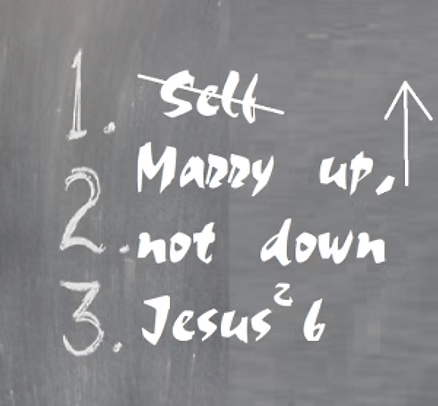
Jesus then taught all who had followed him to the camp in Caesarea Philippi, “let them deny themselves and take up their cross and follow me.” That was basically the same ‘three step’ approach that Jesus told the young rich ruler (the Pharisee that probably was Nicodemus): Obey the Law; sell your possessions and give the profits to the poor; and follow me. The difference was the Pharisee had not been following the Law, whereas the followers of Jesus were; Jesus was the embodiment of God’s Law. Therefore, the three steps were: 1.) Deny your self-ego – let it die – so you don’t have any problem with trading it in for eternal life; 2.) Raise up the stake that keeps your soul from dragging in the gutter [translated as “take up your cross”] by giving the talents of the Holy Spirit to those who do not have it [the “profits” to be given to “the poor”]; and 3.) Follow Jesus by being reborn as Jesus Christ.

When Jesus said, “For those who want to save their life will lose it, and those who lose their life for my sake, and for the sake of the gospel, will save it,” this, again, is reference to sacrifice of self-ego. If one refuses to sacrifice all that self-importance has brought one in the material world (as the young rich ruler walked away from Jesus, ashamed that he could not assure himself of heaven), all one can ever gain is the illusion of the temporary. However, if one sacrifices the self and becomes completely subservient to God’s Will, then the soul will be saved.

It is important to note that the translation states, “for the sake of the gospel,” which should not be read as modern Christians hear the word and assume a capital “G” is applied. Jesus spoke the word that in Greek is “euangeliou,” which means “good news.” It should be noted that the Gospels were written books of the Apostles, not the disciples. All of the New Testament is writings by those filled with the Holy Spirit, who sacrificed their self-egos to be reborn as Jesus Christ. They all proclaim that, such that THAT IS THE GOSPEL. This has to be understood as the meaning of Jesus’ word usage. The “good news” is every soul can find eternal life, from allowing Jesus to be reborn into oneself.

For Jesus to then ask, “For what will it profit them to gain the whole world and forfeit their life? Indeed, what can they give in return for their life?” those questions place focus on lifting up one’s being, by the sacrifice of ego. The young rich ruler had profited from leading other Jews to enslavement to the law (lawyers always profit from the miseries of others), without offering a peep of advice on how to avoid lawyers AND misery [i.e.: giving others good news for free]. Simply because there are laws, lawyers are given the world by those who want to follow the Law, but find that an impossible task. When they have been given the whole world of material possessions, what can they give in return for one saved soul – one’s own?

Hint: Money can’t buy that.

This reading then ends with Jesus saying, “Those who are ashamed of me and of my words in this adulterous and sinful generation, of them the Son of Man will also be ashamed when he comes in the glory of his Father with the holy angels.” The embarrassment comes from being “ashamed” of taking on the name Jesus Christ, giving up one’s given name. This is how one is afraid of being seen in public speaking the meaning of Scripture, when no one else says those things.

The reason is the one speaking is the Holy Spirit of Jesus Christ within a human body that looks nothing like Jesus. The fear comes from watching the persecution of Jesus Christ, just like Saul held the coats of those stoning Jesus Christ to death, because Jesus then looked like Saint Stephen. Stephen was not ashamed to proclaim the “gospel,” just as Jesus of Nazareth had done.  All Apostles speak up as Jesus Christ, because the world will always be full of sinful people worshiping all the gods that pander to selfish gains.  If fear keeps one from becoming Jesus Christ, one bows to Satan, not God. Only those bowing to God, having been reborn as Jesus Christ, are going to see the glory of the Father with the holy angels.

As the Gospel selection for the seventeenth Sunday after Pentecost, when one’s personal ministry for the LORD should be underway – one has sacrificed one’s self-ego and become a lifted up stake upon which the true vine bearing fruit in the name of Jesus Christ is raised – the message here is to realize one must walk in the footsteps of Jesus Christ.  That means announcing to the seekers of the world, “The Kingdom of God has come near.”  That announcement is done through righteous deeds, more than talking of one’s holiness.

When I mentioned earlier about the use of “the gospel” in this reading, it needs to be addressed how the use of “stauron” translates as “cross.” This too should not be read (or heard) as if with capitalized importance (as “THE Cross of Jesus”), because a cross is simply a + or a T or an X configuration, as two lines intersecting (usually forming right angles). In vineyards a “stauron” is simply an “upright stake” that the grapevines are strung upon, which keeps them off the ground. That is how this should be read.

When Mark wrote (Mark the writer for Simon-Peter’s Gospel), “undergo great suffering, and be rejected by the elders, the chief priests, and the scribes, and be killed, and after three days rise again,” there was no mention of crucifixion or being killed on a cross. In fact, Roman execution by crucifixion was not a typical form of execution for ‘white collar criminals’, such as Jesus would deserve. Hanging a criminal on a cross was more typically ordered for rebels and those caught committing crimes against Romans. Despite Jesus saying he would “undergo great suffering” and “be killed,” it would not have been thought to be by the hands of the Romans, but by the Sanhedrin, by stoning to death. Thus, for Jesus to be heard demanding his followers “lift up their cross” that was not a statement that the disciples should be prepared to carry large wooden timbers, as a T-shaped crucifix, from a Roman prison in Jerusalem to the place of the skull.

For Christians to not be given these clarification and to let them hear “take up you cross and bear it,” few will be scared into action, simply because there are no longer executions by hanging criminals on crosses. Criminals have little to worry about in Western nations, because the people are too afraid to allow their governments to execute one.  Therefore, such a catchphrase has little meaning.

While bearing a cross does speak of the responsibility of living an upright life, keeping the fruit of the true vine from the ground, as long as Jesus is seen as a spirit sitting on a throne at the right hand of God, who will come again sometime later … well then. There is still time to carry on business as usual, right?

The mark of Cain could be his refusal to listen to God telling him, “If you keep wallowing on the ground, then the influence of evil will take hold of you.”  The mark is then the human addiction to the dirt bags that are temporary bodies given live by a reincarnated soul.  The mark is the love of self-birth, not the sacrifice of self to be reborn as Jesus Christ, standing tall, having been cleansed of sins by the Holy Spirit.  Is not the mark of Cain the possession of a Big Brain that listens to the influences of evil, denying God?

These three remembrances of Simon-Peter, recorded by Mark, are read together for a purpose. The purpose is they all link together to paint a picture of two alternatives: follow the influence of God or follow the influence of Satan.

God spoke through Peter, who like all the disciples of Jesus had been taught by Jesus by observation, watching him destroy the reasoning of the ruling elite of Jerusalem. What they thought was the meaning of Mosaic Law was proved time and again to be different than their brains had been led to believe. They had become obedient to the Word of God that came to them through Jesus and their egos had taken a backseat to Jesus, as students who thirsted for his knowledge. That is the model of ALL Apostles-to-be.

When Simon-Peter acted in a selfish way, rebuking Jesus for telling them he would be suffering and killed, Jesus called him Satan. That was the influence that would dare to speak out against the teacher. As wise and experienced as Peter thought he was, he knew nothing when he depended on a human brain, turning away from the Word of God. Because Peter was shown as a reflection of the intellectual disciple – Judas Iscariot – Peter represented how easy it is for those with good intentions to be led astray. The same can be said of Christians today. To covet one’s brain is to deny God and serve another master.

When Jesus called all his followers to listen carefully, he told them that they have to choose one master over the other. There can be no compromise. Jesus did not just call his disciples to hear that warning, as if only ministers, pastors, priests and preachers (and all their superiors) have to make such a choice.  It goes for everyone that calls him or herself Christian.  The warning was, is and will always be: Following Jesus does not mean putting a sticker on your car or a crucifix on your wall.

There is nothing about a crucifix that is part of this decision, although one’s self-ego needs to be sacrificed. You cannot hang a soul on a tree.  One cannot become Jesus reborn when one still wants to keep the family name. All the comforts and privilege of a name, race, creed, and national origin has to be sacrificed.  One’s opinion amounts to little more than wild guesses.

In this regard, one should look at how Saul changed his name to Paul. He was not embarrassed to be in the name of Jesus Christ; but he could no longer be the person he was when he had no heart – only brain. He took on a name that was better fitting the Jesus Christ he had become.

The same decision must be made by all Christians, realizing this is an individual responsibility, not a collective. No one can save a soul by words, signs, sprinkles, or smoke waved around.  A life in the name of Jesus Christ means great suffering, and rejection by the establishment, who will seek to silence all who threaten their positions of wealth and power.  One must be taught the expectations and consequences, in preparation for making life altering decisions.

Only the one possessing the soul can do that.  No one can make the decision for anyone other than him or herself.  To do that, then one must choose to marry God and give birth to His Son in one’s body.

Then it is time to start walking in the sandals of Jesus Christ.

Proverbs 1:20-33 – Wisdom is that snake in the grass

Wisdom cries out in the street;

in the squares she raises her voice.

At the busiest corner she cries out;

at the entrance of the city gates she speaks:

“How long, O simple ones, will you love being simple?

How long will scoffers delight in their scoffing

and fools hate knowledge?

Give heed to my reproof;

I will pour out my thoughts to you;

I will make my words known to you.

Because I have called and you refused,

have stretched out my hand and no one heeded,

and because you have ignored all my counsel

and would have none of my reproof,

I also will laugh at your calamity;

I will mock when panic strikes you,

when panic strikes you like a storm,

and your calamity comes like a whirlwind,

when distress and anguish come upon you.

Then they will call upon me, but I will not answer;

they will seek me diligently, but will not find me.

Because they hated knowledge

and did not choose the fear of Yahweh,

would have none of my counsel,

and despised all my reproof,

therefore they shall eat the fruit of their way

and be sated with their own devices.

For waywardness kills the simple,

and the complacency of fools destroys them;

but those who listen to me will be secure

and will live at ease, without dread of disaster.”

——————–

This is the Track 1 Old Testament reading selection possible to be chosen and read aloud on the sixteenth Sunday after Pentecost [Proper 19], Year B, according to the lectionary for the Episcopal Church. If chosen, it will be paired with either a reading from Psalm 19 or a selection from the Wisdom of Solomon 7. If Psalm 19 is selected, it sings, “Above all, keep your servant from presumptuous sins; let them not get dominion over me; then shall I be whole and sound, and innocent of a great offense.” If the Wisdom of Solomon is chosen to be the partner, it says, “Although she is but one, she can do all things, and while remaining in herself, she renews all things; in every generation she passes into holy souls and makes them friends of God, and prophets; for God loves nothing so much as the person who lives with wisdom.” One of those pairings will precede an Epistle reading from James, where he wrote, “Not many of you should become teachers, my brothers and sisters, for you know that we who teach will be judged with greater strictness.” All will accompany the Gospel reading from Mark, where Jesus said, “If any want to become my followers, let them deny themselves and take up their cross and follow me. For those who want to save their life will lose it, and those who lose their life for my sake, and for the sake of the gospel, will save it.”

Please take note that the above English translation has my correction, which is the one place where I have changed the NRSV translation of “Lord” back to the word written: “Yahweh.” Since the Episcopal Church fails to number the verses, I will let the reader know that the ONLY place where Solomon wrote “Yahweh,” in this range of fourteen verses, was in verse twenty-nine. This is important to realize, as a typical Psalm of David would have many more references to Yahweh, in an equal length of verses. This lack is not just in these verses, as in the whole of Proverbs 1 the name “Yahweh” is only found written twice (the other in verse seven). This speaks even louder when one sees the feminine pronouns “her” and “she” found in verses twenty and twenty-one; as Yahweh is not a goddess, as is “wisdom.”

In Proper fifteen, the twelfth Sunday after Pentecost this year, a reading option was from Proverbs 9:1-6, where the same references to “her” and “she” were found relative to “wisdom.” These references to the feminine are not mistakes, as they speak loudly that the wisdom given to Solomon did not come from Yahweh. Instead, it came from Satan, making a ‘big brain’ be a curse, not a blessing. In that realization, the first seven verses of Proverbs 1 is entitled [by BibleHub Interlinear], “The Beginning of Knowledge,” with verses eight through nineteen given the heading, “The Enticement of Sin.” Those titles are given because of the verbiage found in the texts. Therefore, “Knowledge” is closely associated with “Sin.” That is how one should read these fourteen verses, which are headed: “Wisdom Calls Aloud.”

Verse twenty actually translates literally into English as this: “wisdom outside calls aloud ; in the open squares , she raises her voice .” Here, it is essential to realize that “wisdom” is not a true tool of the soul, as it is external to one, which includes one’s physical body of flesh. The soul animates a body from within, such that a brain is flesh that is “outside” the soul. As such, all that is the physical world is the realm of the goddess of wisdom. “She raises her voice” by using those who receive her spirit – the elohim of knowledge – which becomes a tool of those who seek to become masters of universal laws and principles, such as are mathematics and sciences. It is the the wise who routinely attempt to control the masses.

Verse twenty-one can then be read as such: “the head roars , she cries out at the openings of the gates in the city , her words she speaks .” In this, the Hebrew word “bə·rōš” is written, from “rosh,” which means “head.” While this can be symbolic of a “leader,” such as Solomon, the truth is that the “head” is where the brain is housed. The “head” is not the heart or soul. Thus, wisdom is a goddess whose realm pierces one’s brain, through the openings of the eyes and ears. As such, the Hebrew word written – “bā·‘îr” – reads as “city,” but truly reflects the “excitement” [the truth of “iyr”] of knowledge. Feeding the brain new ideas becomes reflective of the hustle and bustle of a city, unlike the ordinary and routine of the country. Thus, from this source of activity comes exclamations. It is then from the mouth that “her words she speaks.”

Verse twenty-two then has wisdom ask two questions, which literally translate as: “how long will you simple ones love simplicity ?” and “for scorners scorning delight in them ; and fools , hate knowledge ?” This must be seen as Solomon belittling all who are “simple ones” [“pthiy”], when the real question is not “how long,” but “will you love simple ones,” where “pthiy” is repeated. A question about “simple love” is then belittled as something only the “foolish” [“pthiy” implied] depend on. That question is then answered by saying, “for scorners scorning,” which says that smart people who “interpret” simple-minded people as easy marks will “scorn” them and “take pleasure in” using them as their pawns. That sage wisdom then points out how those who are laughed at by others are “fools,” leading to the question, [How can anyone] hate knowledge?” The opposing principles of “love” and “hate” are then associated with how much “knowledge” one has in one’s brain. However, the truth is “love” always trumps “hate,” and “simple” gains eternal “love,” while “scorn” brings eternal “hatred.”

In verse twenty-three Solomon wrote of the “spirit” of wisdom, where it being “poured out” makes one receiving that “spirit” an elohim possessed by a worldly goddess. This verse literally translates as: “turn , at my rebuke I will surely pour out on you my spirit ; I will make known my words to you .” In this, the single word “turn” means to “turn away” or “turn back,” implying one should give up on the “love of simplicity.” That is a serpent-like suggestion to turn away from Yahweh and His command not to eat from the fruit of the tree of knowledge. If one does “turn,” then “surely” one will be possessed by a “spirit” less than Yahweh. To find praise in the promise that says, “I will make known my words to you,” one has to be led by a “Lord” that is not Yahweh. This is why the generic translation of “Yahweh” as “Lord” is wholly wrong and should be seen as unacceptable.

In verse twenty-four, the literal English translation is this: “because I have called and you refused ; I have stretched out my hand , no one gives heed .” This speaks of the simple minds that refuse to be influenced from external lures and attractions. David’s Israel was still a long way from ruin, due to the majority of the people still adhering to the Law, even when few since Solomon’s reign began were being told the truth of that meaning. When the arm of wisdom is found “reaching out,” it is rarely offering to help. It is more likely attempting to snatch a soul from Yahweh.

Verse twenty-five then literally states in English: “and because you have let go of my counsel ; and my rebuke , none would consent .” Here, again, is the natural rejection of wisdom, because it seems like a trick of the crafty serpent. Yahweh’s soul being breathed into all human beings has that insight built in, which makes one question external sources that say they are all-knowing and have the answers to everything.

Verse twenty-six then literally translates into English as saying, “also I at your distress will laugh ; I will mock , when comes your fear .” Here, Solomon was making fun at all who reject the temptations of evil masquerading as wisdom. Since all humans will find times when they face “distress,” it is inevitable there will come back the past temptations that foretold a reality that does not take a wizard to see coming. When those times do come, the “laugh” will become an “I told you so,” which belittles a normal phase of life on earth. It is times of “fear” that a soul needs to find the comfort of Yahweh’s power merging with one’s soul; but the serpent of craftiness will quickly try to take advantage of “fear” as an opening for it to enter and take possession.

Verse twenty-seven then says literally, “when comes [a storm] (within a raging storm) your great fear , and your calamity like a tornado comes ; when comes upon you , distress and anguish .” In this verse the NRSV translates the first part as “when panic strikes you like a storm;” but the truth has the Hebrew word “ḵə·ša·’ă·wāh” (from “shaavah”) repeated, the first time in brackets, followed by a presentation in parentheses: “[כשאוה] then (כְשׁוֹאָ֨ה ׀). The “׀” is a symbol of rest in the chant. Still, The brackets symbolize the silence of a storm coming, as weather of turbulence is normal. It is the question of how violent a storm might be. The parentheses then denote the quickness that violence erupts, making a normal weather expectation become a most devastating personal event. In the same way that storms always make one edgy and wary, the prayers are always to let it pass over without striking hard. That becomes the fear of the unknown, knowing only what potential a storm brings. Thus, the second and third segments place focus on it becoming most powerful and upsetting one’s life significantly. That devastation brings great anguish and pain.

Verse twenty-eight then says literally, “then they will call on me but I will not answer ; they will quickly seek me , but not will they find me .” This says that a swift and sudden loss brings out the questions that cannot be answered. There is no wisdom that can explain why something terrible suddenly befell one’s life. All the hindsight will do nothing to remove the suffering of the present, when the present seems unbearable and answers are sought. This says no answers will be found.

That then leads to the one verse in this series that contains the name “Yahweh.” The literal English translation of verse twenty-nine is this: “instead of that they hated knowledge ; and the fear Yahweh not did choose .” This says nobody wants to face the aftereffects of turmoil. No one wants to know that experience of deeply distressful feelings. There are none who can know one’s personal plight, even those who have the healed scars of a similar loss and troubles. It does not take much for even a child to be asked about frightening episodes in life to find “hate” of such times be normal. Nobody wants to live through distress and come to know the pains. Still, Yahweh does not cause natural disasters, either of weather or human existence. One can withstand such events when the only “fear” one knows is that of losing “Yahweh” from one’s soul. If that is “not” a marriage that one “did choose,” then the fear of life’s storms will always lead one to seek the best wisdom for prevention of future natural events. That leads a soul to find the goddess of Satan’s worldly spirits, rather than be led to seek marriage to Yahweh.

Verse thirty then literally states, “not they would consent to my counsel ; despised , all my argument .” This repeats the theme of verse twenty-five. It says now that a soul is ripe for Satan’s influence, after tragedy has stricken a soul. When the wounds are freshly opened, the serpents come to offer advice, supposedly so nothing tragic will ever happen again. It is the same lie previously rejected, but Satan preys on the weak and pitiful.

Verse thirty-one then literally says, “therefore they shall eat the fruit of their own way ; and with their own devices be fully satisfied .” Here, the truth of the temptations of the evil serpent is seen, as the “fruit” [“mip·pə·rî,” from “peri”] that “satisfies” [“yiś·bā·‘ū,” from “saba”] can only come from one of two trees: the tree of life [marriage of a soul to Yahweh]; or, the tree of knowledge of good and evil [marriage of a soul to worldly spirits]. The choice is always left to the soul to make. One is free to eat one’s fill; but it can only be one or the other, not both.

Verse thirty-two then literally translates into English to say, “for the turning away of the simple will surely kill them ; and the quietness of fools will make them perish .” Here, key words from verses twenty-two and twenty-three are repeated, such that Solomon is once again belittling those who do not allow their souls to be possessed by the goddess of wisdom. His views of death speak metaphorically of their inabilities to achieve in the material realm. All chances at wealth and prosperity will be killed and those who are too stupid to speak up or speak out will be lost as nothing of physical value. However, the divine truth speaks of those who do follow the advice of Solomon (like his own soul), as they will face death and be judged for reincarnation. That means the repeating of a soul in the prison of flesh.

The last verse then literally says in English, “but whoever listens to me will settle down safely ; and be secure without fear of evil .” Here, living “safely” [“be·ṭaḥ,” from “betach”] means the pretense of life with material “security,” not the soul’s promise of eternal life. It is a young king speaking ‘his will be done’ to those under his reign. His promise is that his “evil” will not befall those who succumb to his reign, where forced ridicule will be placed upon the ignorant masses. It says wisdom is the evil that can only come upon one once … then last forever.

As an optional Old Testament reading from the brain of Solomon, to be possibly chosen for reading on the sixteenth Sunday after Pentecost, when one’s own personal ministry to Yahweh should already be well underway, the lesson here is to see the dangers of intellect. The goddess wisdom is not a friend to a soul. It is a distraction that turns a soul away from marriage to Yahweh. This Proverb is promoting one place all faith in oneself, which means stupid little you will then need somebody real smart to teach you all the ropes. Such influence leads those souls who truly want to serve Yahweh to walk a path of advisement.

That road takes them to church pastors and discernment committees, then to seminary applications and school interviews, before kneeling down before university professors and then swearing oaths to an organization that hires hands. That path of wisdom never teaches a soul: You only need to marry Yahweh and let His use you as His priest. The trick is found to be learning to follow Solomon’s advice and eat the fruit of the tree of knowledge of good and evil. The lesson is to see how dangerous that is. It should be seen for what it is: the serpent telling Eve she too could be a god (or goddess), if only she turned away from Yahweh’s rule.

Isaiah 50:4-9a – Lords a leaping

[4] adonay Yahweh has given me

the tongue of a teacher,

that I may know how to sustain

the weary with a word.

Morning by morning he wakens–

wakens my ear

to listen as those who are taught.

[5] adonay Yahweh has opened my ear,

and I was not rebellious,

I did not turn backward.

[6] I gave my back to those who struck me,

and my cheeks to those who pulled out the beard;

I did not hide my face

from insult and spitting.

[7] wadonay Yahweh helps me;

therefore I have not been disgraced;

therefore I have set my face like flint,

and I know that I shall not be put to shame;

[8] he who vindicates me is near.

Who will contend with me?

Let us stand up together.

Who are my adversaries?

Let them confront me.

[9a] It is adonay Yahweh who helps me;

who will declare me guilty?

——————–

This is the Track 2 Old Testament reading that can be chosen for reading on the sixteenth Sunday after Pentecost [Proper 19], Year B, according to the lectionary for the Episcopal Church. If Track 2 is chosen for reading this year, it will be accompanied by a reading from Psalm 116, which sings, “The Lord watches over the innocent; I was brought very low, and he helped me.” That pair will precede the Epistle reading from James, where he wrote, “For all of us make many mistakes. Anyone who makes no mistakes in speaking is perfect, able to keep the whole body in check with a bridle.” All will accompany the Gospel reading from Mark, where Jesus said, “Those who are ashamed of me and of my words in this adulterous and sinful generation, of them the Son of Man will also be ashamed when he comes in the glory of his Father with the holy angels.”

In the above English translation, in four places the NRSV translated “adonay Yahweh” as “the Lord God.” Because this is not the truth of that written, I have restored the Hebrew text in those four places. First of all, the Hebrew word “adon” is the singular number word “lord.” It does not demand capitalization, as Yahweh has no lord, only human beings [i.e.: souls] have “lords.” Because “adonay” is the plural number, as “lords,” with there being only one God [i.e.: Yahweh], the intent is as a statement of that which “lords” over human souls; so, the capitalization need not be applied. As for “Yahweh” being translated as “God,” the Hebrew word for “god” is “el,” which was not written. The proper name “Yah-weh” from “יְהוִה֙,” is specifically for the “One God of Israel,” where “Israel” means “He Retains God.” When one retains God, then “Yahweh” is one’s “lord,” not some generic “lord” or “god.” The plural number word for “gods” is “elohim.”

Also, one will note that the Episcopal Church has made the decision to remove the verse numbering. I have applied the numbers, which appear in bold type, between brackets. In the subsequent analysis of this reading, I will refer to the verses by number. My applying those numbers will make it easier for the interested seekers to follow that analysis. Where I list “9a,” this means the full text of verse nine is not included in this reading. Only the first words will then be read. However, the full verse might need to be examined to make what is in the “a” part make more sense.

The BibleHub Interlinear website lists verses four through eleven [the last verse in this chapter of Isaiah] as being headed: “The Servant’s Obedience.” This is, of course, a matter of opinion that was not written by Isaiah, although the title should reflect verbiage that Isaiah did write. The NRSV [the Episcopal Church references that translator as the source of its text] shows these verses as headed: “The Servant’s Humiliation and Vindication.” Again, this should be seen as reflected in the actual verbiage written by Isaiah.

Verse four literally translates into English as: “adonay Yahweh has given me the tongue of the learned , to know how to speak to the faint , speaks ; he awakens me the break of day coming of daylight , he awakens me my ear to hear as the learned .” While the NRSV translation makes this simple to discern, using words like “teacher” and “taught,” their translation of “The Lord God” doing that to Isaiah gives the impression that anyone can roll out of bed in the morning and begin to teach what God wants taught. Ask anyone how he or she says what Scripture means and he or she can say, “The Lord God” said so. The question is then, “What makes you so special that you have a clue what “The Lord God” means?” The only answer possible is, “Well, Yahweh is my lord, which makes me one of His elohim, or one of His whose “lord” is “Yahweh,” also known as His “adonay.” Only by being able to see that written does it make sense that one of Yahweh’s adonay have been “given the tongue of the learned.”

When this selected reading is seen as an option relative to Proverbs 1, where Solomon waxed intelligently about wisdom, one can expect he was one “of the learned,” if not the most “learned” of all history. Isaiah was most likely a ‘graduate’ of the school of prophets in Jerusalem, thus “learned,” so he had a brain and was able to use it. Still, Solomon was an elohim of worldly wisdom [called a goddess, as a “she”] and Isaiah was an “adonay” [one whose spiritual “lord” was] of “Yahweh.” This says “Yahweh has given me the tongue of the learned” is a higher frame of ‘knowledge’ than anything a fleshy brain can calculate. The “tongue” of Yahweh is what many refer to [without understanding] as “speaking in tongues.” No big brained people can do that, unless they have married Yahweh and become “adonay” of His.

When the second segment of words then says, “to know how to speak to the faint,” the words translated as “to the faint” are “’êṯ.yā·‘êp̄,” from “eth yaeph,” meaning “to the weary or faint.” At this time, Jerusalem had fallen and the Temple destroyed, with all the big brains that caused all that destruction tired of coming up with excuses for why they were not smart enough to see that coming. Yahweh spoke to Isaiah so his “tongue” would be that of a true prophet, who would be able to divinely encourage those who lost everything because of their fleshy brains’ limitations, giving them strength that allowed spiritual wisdom, unlike that possessed by Solomon. Solomon-like wisdom brought about the falls of two nations of peoples; and, such wisdom is the mother of all philosophies and doctrines that reject Yahweh and always lead to ruin.

When Isaiah wrote the same Hebrew word twice, such that it can be translated differently each time, as: “he awakens me the break of day coming,” this “speaks” of the light of insight that is the truth which comes from Yahweh. The truth is a dawning of knowledge that can never be predicted by science or mathematics, but always explained as valid in hindsight. That makes wisdom the fumbling around in darkness, which often leads to very bad conclusions. Thus, Isaiah said “he awakens me my ear to hear as the learned,” which means the whispers that come to those souls married to Yahweh allows them to follow divine leads of insight that take one to the truth, which is always the objective of wisdom.

In the fifth verse is repeated “adonay Yahweh,” where it states literally: “adonay Yahweh has opened my ear , and I not was rebellious ; away not did I turn .” Again, Isaiah is saying that his soul’s marriage to Yahweh allowed him to hear His voice guiding his actions. The word saying “rebellious” [“marah”] becomes a statement of obedience, which is customary for a wife to submit to the will of her husband, as well as a subject to submit his or her will to a king. That says that instead of turning away from Yahweh’s presence, Isaiah welcomed it into his soul. This is a further statement of divine marriage.

The sixth verse then can be shown to state, “my body I gave to those who stuck , and my cheeks to those who pluck the beard ; my face not did I hide , from insult and spitting .” From verse five being seen as a statement of submission to Yahweh, Isaiah next said, “my body I gave” [“gê·wî nā·ṯat·tî,” from “gev nathan”], where “gev” means “the back, midst.” When “midst” is used, such that it implies one’s whole “body,” this is the flesh Isaiah “gave” in submission to Yahweh’s will. While that can then be seen as a “back” that was whipped [not something Isaiah experienced], that mental direction leads away from the deeper truth of divine marriage of a soul to Yahweh, so the flesh became His to use. That then makes “those who struck” [“lə·mak·kîm”] relate to the Judaeans who had been “defeated” and “taken” into captivity.

The metaphor of allowing others to pull out the beard on Isaiah’s face, the truth of the word “marat” is “to make smooth, bare or bald, to scour, polish.” Because the beard was a sign of devotion to Yahweh, to be clean shaven was a sign of having lost that devotion. As such, the “cheeks” or the “jawbone” of Isaiah, as parts of his “body given” to Yahweh, to help those “stricken,” it was his beard of priesthood that was being offered to those whose beards had been “plucked out” by the Babylon dominators. Thus, when Isaiah said, “my face not did I hide” that speaks two ways. First, it says Isaiah did not hide his face as a priest of Yahweh. Second, it says it was not the face of Isaiah that was seen, because he hid his face when he put on the face of Yahweh, when he became an “adonay Yahweh.” That face was the strength that could not be phased by “insults and spitting.”

Verse seven again repeats “adonay Yahweh,” although “adonay” is adjusted in spelling, as “wadonay,” meaning “for adonay Yahweh.” Seeing that, verse seven then literally translates to say in English: “for adonay Yahweh will help me , upon thus not I will be humiliated ; upon thus I have set my face like a flint , and I know that not will I be ashamed .” Here, one should allow the insight of Solomon’s wisdom found in Proverbs 1 as ridicule placed upon those who are simple and love simplicity. Solomon’s soul served a worldly goddess as his “lord,” so he was like the leaders of Judah that had become the “faint” and “clean shaven.” They were unable to keep the face of Yahweh’s servants, with His face in like flint. This, again, leads one to need to see the power of divine presence that is an “adonay Yahweh.”

Because Isaiah was a simple mind that sacrificed his ‘big brain’ to obedience to Yahweh’s Will, there was nothing anyone could do to make his soul ever feel shame. As such, the words that literally translate as “I know that not will I be ashamed” also speaks two ways. First, Isaiah could not feel shame from being a true prophet of Yahweh, who served Him obediently. Second, however, it says Isaiah also knew those who did not serve Yahweh in the same way [Solomon and all his buddies of wisdom], once in captivity they would be filled with the humiliation and shame of having been overthrown by those who served other gods.

Verse eight then literally translates to say in English, “near who makes me righteous , who will contend with me let us stand together ; who my lord my judgment ? let him approach me .” In this, the Hebrew word “qā·rō·wḇ” (“qarob”) begins this verse, while “yig·gaš” (“nagash”) ends it, with both words capable of translating as “near.” The first usage is a statement of Yahweh being one with one’s soul [an adonay Yahweh], so the Spirit is what keep Him “near.” When the second use arises, this is for those who are external, therefore close enough to confront, such that those “come near” or “approach,” while not being within one’s body and soul.

The internal question, which basically asks, “Who is my lord and who casts judgment on me?” is a statement that Isaiah was one of Yahweh’s “lords,” His adonay. When that is seen from those repeated words, one can know this question says Isaiah will only be led by the One God he allows to lead him, no matter who owns his flesh and forces that flesh into service. It is the soul of Isaiah who decides who will truly be his “lord.”

In that, the “nearness” of Yahweh in Isaiah’s soul was how he could be made to be “righteous.” In captivity, when one’s failure to serve Yahweh was why many Jews felt faint, the pretense of family lineage, as birthrights no longer served captive slaves, there was no reason to contend with one another, as if one’s past rank meant anything anymore. As those who had professed service to Yahweh [whether true or not], then was the time to “stand together.” As Jews, all should be making the decision who would be his or her true “lord,” as all should marry their souls to Yahweh and become His adonay. Therefore, “let him approach me” should be the willingness to marry Yahweh and let His Spirit come near, which will mean nobody else could ever bring harm to that soul. So, bring em on!

In verse nine, the last verse of this reading, the whole verse translated literally into English as: “behold! adonay Yahweh will help me , who he will condemn me ; indeed they all like a garment will grow old , the moth will eat them up .” In this, the part “a” is that leading up to the semi-colon. One more time, Isaiah made it clear that the “help” that comes only comes to a soul. That is the surety that a soul “beholds.” The condemnation [from the Hebrew “yar·šî·‘ê·nî”] becomes anyone who leads one’s soul to “wickedness,” which is all external influences [living or dead]. This is then seen to be a statement of oppression, such that being a slave to an owner is nothing more than a fact of life on earth. Oppressors are like matter, as it is always in a state of change. Today’s new is tomorrow’s old. Nothing lasts forever [with “thing” the focus of truth]. A soul last forever; so, to avoid its condemnation, the only “lord” that matters is Yahweh. Therefore, a soul is called by Isaiah to become an “adonay Yahweh.”

As the Track 2 Old Testament reading selection for the sixteenth Sunday after Pentecost, when one’s own personal ministry to Yahweh should already be well underway, the lesson here is to do as Isaiah said and become an adonay Yahweh. That means letting Yahweh be one’s lord, by becoming married to His Spirit, as an elohim. One must become the extension of God’s hand on earth. One is called to be a true prophet, one who is sent into the world in ministry. It is not a job or vocation. It does not come with papers and titles. It is guaranteed no respect and no privilege. It only comes with the promise of eternal life; but to redeem that promissory note, one has to do the deeds of service. That is what an adonay Yahweh does, without question.

James 3:1-12 – Being a teacher of faith

Not many of you should become teachers, my brothers and sisters, for you know that we who teach will be judged with greater strictness. For all of us make many mistakes. Anyone who makes no mistakes in speaking is perfect, able to keep the whole body in check with a bridle. If we put bits into the mouths of horses to make them obey us, we guide their whole bodies. Or look at ships: though they are so large that it takes strong winds to drive them, yet they are guided by a very small rudder wherever the will of the pilot directs. So also the tongue is a small member, yet it boasts of great exploits.

How great a forest is set ablaze by a small fire! And the tongue is a fire. The tongue is placed among our members as a world of iniquity; it stains the whole body, sets on fire the cycle of nature, and is itself set on fire by hell. For every species of beast and bird, of reptile and sea creature, can be tamed and has been tamed by the human species, but no one can tame the tongue– a restless evil, full of deadly poison. With it we bless the Lord and Father, and with it we curse those who are made in the likeness of God. From the same mouth come blessing and cursing. My brothers and sisters, this ought not to be so. Does a spring pour forth from the same opening both fresh and brackish water? Can a fig tree, my brothers and sisters, yield olives, or a grapevine figs? No more can salt water yield fresh.

——————–

This is the Epistle reading selection to be read aloud on the sixteenth Sunday after Pentecost [Proper 19], Year B, according to the lectionary for the Episcopal Church. This will be preceded by a variety of readings, based on Track 1 and Track 2 pairings of Old Testament and Psalms, based on the track preselected by a church for Year B. If track 1 is to be read, it will place focus on Proverbs 7, where Solomon wrote, “I also will laugh at your calamity; I will mock when panic strikes you.” If Track 2 is the path for that church year, then the focus will be placed on Isaiah, who wrote, “I did not hide my face from insult and spitting.” All will accompany the Gospel selection from Mark, where Jesus asked his disciples, “But who do you say that I am?”

I wrote about this reading the last time it came up in the lectionary cycle, in 2018. It can be read by searching this site. I offered some opinions then that are still valid today; so, I welcome all to read those views and compare them to the additional views I now offer. Because Scripture can mean many things, all true, I want to focus on some truths that I did not shine light on three years ago.

In 2018, I placed focus on the need to look deeper into the translations that have become English paraphrases that mislead. That is always a problem that needs to be addressed, as Scripture is divine language that is freer to express than the English language allows. Still, with my observations of 2018 addressing that need, I want to focus solely now on the content of James’ words. In that, “Not many of you should become teachers” is the theme throughout this selection. His adding, “From the same mouth come blessing and cursing,” which “ought not to be so,” is then relative to Jewish “teachers,” not everyone in the world. I will now speak about what that means (in my humble opinion).

The Greek word written by James that has been translated as “teachers” is “didaskaloi.” In the singular, “didaskalos” means, “an instructor” (Strong’s Definition), implying “a teacher, or master” (Strong’s Usage). According to HELPS Word-studies, this is written:

didáskalos (a masculine noun derived from 1321 /didáskō, “to teach”) – a teacher, an instructor acknowledged for their mastery in their field of learning; in Scripture, a Bible teacher, competent in theology.”

From this, James – a devout Jew, whose ministry was directed wholly on Jews rather than Gentiles – wrote the Greek equivalent to what Jews today (and to some degree then) call some “rabbi.” Therefore, the point of his adding what “ought not to be so” is not focused on normal speech, from normal teaching, but that of being a “master” of the meaning of Scripture.

In the Wikipedia article entitled “Rabbi,” which is worth reading, they say the term “rabbi” was not used prior to the first century CE. The original intent was rooted in “raising” the children to be “great” in mastery of the tenets of servitude to Yahweh. This meant the teaching of the children was relative to the role of the “father.” This should be seen as why priests of Catholicism take on the name “Father,” as it is not a statement of equality to Yahweh [THE FATHER], but a statement of “teacher of children.” * [ see footnote] Thus, the title “rabbi” took on that same meaning; and, because the title was still new when James wrote his Epistle, he used the word “teacher” to refer to those who were entrusted to teach Mosaic Law to the children of Israel.

This understanding then allows one to see that James wrote, “we who teach will be judged with greater strictness” as a statement about the judgment of Yahweh. Thus, when James wrote, “all of us make many mistakes,” those “mistakes” [the Greek “ptaiomen” was written, meaning “stumbles”] are references to the sins and transgressions of the “teachers,” who were saying one thing, but doing another. James was not referring to simply “mistakes” that come from reading a law of Moses and teaching it meant one thing, when it would later be found out popular opinion changed and said it meant another. The mistakes of “teachers,” as “fathers” setting the examples of the Law for their children to follow, were relative to being an adulterer or murderer (for examples), while teaching, “Do not do that.” Teaching demands practicing what one preaches – leading by example.

This means that control of how one acts, more than the control of what one says, is the purpose behind James using the parallels of a bridle on a horse-mule and a rudder on a boat. In both cases, the animal and boat become metaphor for the way one proceeds in life. One is either aimless or aimed. As far as all the talk goes, a farmer will perfectly plan how to plough a field or make a quick long-distant journey, just as a sea captain will set a course from one port to another, planning to take the shortest route possible. Those plans are parallel to “teaching” the Word of Yahweh, as rote memorization of Mosaic Laws; but the problem is always the reality of what happens once one sets out to do that which has been planned. Life becomes the horse-mule and the boat, which is completely ignorant of any planning. Life goes where it wants, unless it is controlled. Those controls are then why a bridle and a rudder become absolutely necessary – not optional attachments.

By understanding this, James was saying the controls that must be added to a human being – in particular a Jew who claims to have belief in Yahweh, the One God of Israel – is divine possession by Yahweh. That can only come from one’s love of Yahweh leading a soul to do the works that attract a divine proposal for marriage, until one has proved its soul worthy to be a bride and be called into the most holy of all matrimony. In that word – “matrimony” – the root means a bride is called to become a mother, which makes all bridesmaids of Yahweh be feminine [Yahweh is the Father, thus masculine], who receive His Spirit and give birth to the Son, which means the resurrection of Jesus’ soul within one’s being [i.e.: soul]. James was the brother of Jesus, sharing the same mother; but James was not a strong supporter of Jesus during his ministry. It was after Jesus died and resurrected and stayed with his disciples for forty days that James fell in love with Yahweh, married Him, and then became Jesus reborn into his flesh. James added Jesus to his ‘vehicle,’ meaning James ceased being aimless, as Jesus then directed him according to God’s plans.

When James had his divine bridle-rudder installed within his soul, he knew the truth behind his words: “the tongue is a small member, yet it boasts of great exploits.” The Greek word “glossa” not only translates as “tongue,” but also as “a language, a nation (usually distinguished by their speech).” (Strong’s Usage) Because all Jews allowed into the synagogues could speak [the mutes were outcast as sinners], they all had bridles-rudders self-installed that led their course of action. James ceased letting his “tongue” be about what James was led by the world to do. Instead, James became led by the Spirit of Jesus to be righteous AND to speak magnificently about all the Spirit of Jesus had led him to understand and do. Others, unfortunately, bragged about how much money they made from teaching, while having nothing to show for their words other than material things.

When James was then led to write, “the tongue is a fire,” that spoke of how great the effects of what one says [about one’s beliefs, or religion] can have on others [of the same beliefs, or religion]. A few good words can enflame the heart of another and make he or she burn with desire to please Yahweh. On the other hand, a few bad words can act as the go-ahead to sin and have no worry about the consequences. For those who cannot teach the truth that leads others to marry their souls to Yahweh, James wrote: “For every species of beast and bird, of reptile and sea creature, can be tamed and has been tamed by the human species, but no one can tame the tongue– a restless evil, full of deadly poison.” That says no human being can lead others to Yahweh, if that one’s soul has never been in love with Him and brought forth His Son in their own flesh. The Law being written on scrolls cannot make man nor beast do anything that isn’t natural; and, man is naturally inclined to sin. Thus, to have the tongue of a teacher [a “father”], one needs to have been taught to teach first; and, a teacher [“father’] sets a fire that can often be more destructive than beneficial.

It was about the failures demonstrated by those who were the elite of Jerusalem – the Pharisees, Sadducees, scribes, and high priests – that caused James to write: “From the same mouth come blessing and cursing.” They were the epitome of the axiom: “Do what I say, not what I do.” Those who forgave those of stature [for a sizable donation to the cause], but condemned those who did the same sins, but could not afford to buy the judges, they were the ones who spoke out of two sides of the same mouth. The native Americans called that “speaking with a forked tongue.”

When James used the metaphor of “fresh and brackish water,” fig trees yielding olives and grapevines bearing figs, he was saying a human being is a soul alone in a body of flesh that can only do what the world leads the body of flesh to do. The only way to stop doing wrong and do right is to submit one’s soul to Yahweh in marriage, which means the sacrifice of self-will and self-ego, so one’s soul-flesh is no longer influenced by worldly things. The well of only fresh water is the eternal water of Jesus in one’s soul. The presence of Jesus forbids any brackish water from ever entering the well, which springs from the mouth. The rebirth of Jesus means one can only bear the fruit of the truth of Yahweh, the Father.

As a reading selected to be read aloud on the sixteenth Sunday after Pentecost, when one’s own ministry to Yahweh should already be well underway, the lesson is clearly to stop being rudderless or stop being led by natural, knee-jerk reactions. It is impossible to be righteous without Yahweh’s Spirit within one’s being. It is impossible to do the acts of faith without having been reborn in the name of Jesus, as the Christ resurrected. It is impossible to pretend to “teach the children” how to marry their souls to Yahweh, when one’s soul has never known that love.

James had been a believer of Yahweh, as a devout Jew; but he was one who saw Jesus with disdain. One needs to see oneself as James, before he became Jesus reborn. James was speaking in this selection about knowing himself, before his soul married Yahweh and Jesus became resurrected with his soul. He had been a teacher with a poor education. That means all the brackish water and all the condemnation that had flown from his mouth hole before James became Jesus, is no different that the ‘garbage in, garbage out’ teachings of all Christian readers of his Epistle. The lesson is to set the hearts of others on fire for Yahweh, not to burn in hell for spreading the fire of lies. To do that, one has to have one’s own heart be set on fire by Yahweh.

———-

* With the advent of women’s lib in Christian ministry, there should be not change in this aspect of “fathering,” relative to Scripture. The traditional role of “father” is as disciplinarian, such that strict adherence to that taught must be maintained. “Mothering” is not the equal to that, as a mother kisses booboos and makes them well, forgiving lots of crap until pushed to the limits, saying, “Wait until your father gets home.” A “mother” is the opposite of a “father,” as the generality of women is to be emotional, such that being strict is not their forte.
Female priests are proving to be too emotionally weak to make principles be strongly enforced. They act as if hugging the world will make all sins go away. It will not. Men and women should teach the same principles, thus human gender should not be a “teacher of children religious studies.”

I am not in favor of female priests being called “Mother,” as sexual gender is not a value that should receive attention. From what I have heard about the nuns in parochial schools, they used rulers under the axiom: spare the rod, spoil the child. That is a teacher that is “fatherly.” Since Roman Catholic male priests have been found (too many times) not acting “fatherly,” as far as being a “teacher of children,” they should be stripped of the title of “father.” All who cannot teach (the point of what James is writing in this selection) need to go by Mr., Ms., or Hired Hand, like any other regular school teacher.

Mark 8:27-38 – Die of self and let Jesus be your front man

Jesus went on with his disciples to the villages of Caesarea Philippi; and on the way he asked his disciples, “Who do people say that I am?” And they answered him, “John the Baptist; and others, Elijah; and still others, one of the prophets.” He asked them, “But who do you say that I am?” Peter answered him, “You are the Messiah.” And he sternly ordered them not to tell anyone about him.

Then he began to teach them that the Son of Man must undergo great suffering, and be rejected by the elders, the chief priests, and the scribes, and be killed, and after three days rise again. He said all this quite openly. And Peter took him aside and began to rebuke him. But turning and looking at his disciples, he rebuked Peter and said, “Get behind me, Satan! For you are setting your mind not on divine things but on human things.”

He called the crowd with his disciples, and said to them, “If any want to become my followers, let them deny themselves and take up their cross and follow me. For those who want to save their life will lose it, and those who lose their life for my sake, and for the sake of the gospel, will save it. For what will it profit them to gain the whole world and forfeit their life? Indeed, what can they give in return for their life? Those who are ashamed of me and of my words in this adulterous and sinful generation, of them the Son of Man will also be ashamed when he comes in the glory of his Father with the holy angels.”

——————–

This is the Gospel selection to be read aloud by a priest on the sixteenth Sunday after Pentecost [Proper 19], Year B, according to the lectionary for the Episcopal Church. This will be preceded by one of two sets of Old Testament readings, paired with a Psalm or other choice. If the church is on the path of Track 1 during Year B, the reading will focus on Proverbs 7, where Solomon wrote, “For waywardness kills the simple, and the complacency of fools destroys them.” If Track 2 is the path, the reading will focus on Isaiah, where he wrote, “Who will contend with me? Let us stand up together. Who are my adversaries? Let them confront me.” Those will accompany the Epistle reading from James, where the Apostle wrote, “For every species of beast and bird, of reptile and sea creature, can be tamed and has been tamed by the human species, but no one can tame the tongue– a restless evil, full of deadly poison.”

I wrote about much of this reading last February, when Mark 8:31-38 was a Lenten Gospel reading. That can be read by searching this site. In regard to those verses set aside for the second Sunday in Lent, I posted another article that can be searched here. Still, in 2018, the last time this full reading came up in the lectionary cycle, I wrote once again, with that explanation posted on this site. With so much written prior on this reading, I will only address a few elements of this reading now. Please, feel free to read all and compare them to one another, to see the depth that surfaces. I welcome all comments, suggestions, and corrections [I am notorious overlooking typos].

Today I want to focus on the verses that are not part of the Lenten reading, which are twenty-seven through thirty. In particular, I want to make sure verse thirty is grasped, which says [NRSV], “And he sternly ordered them not to tell anyone about him.” In 2018, I made a point of giving my opinion about what that order means; but I did not dwell on it, nor did I relate that to anything else. Now, I want to expand on why Jesus gave that order.

First of all, last Sunday’s Gospel reading came from Mark 7, the chapter before today’s reading selection. Then we read about Jesus healing a deaf man with difficulty speaking; and, I pointed out that Jesus also healed the family of that man from the stigma of them having been seen as less that normal, because they still loved and cared for their relative who was deemed by Judaism as a sinner. All were healed by the deaf man becoming free of physical maladies. In Mark 7:36 we read, “Then Jesus ordered them to tell no one; but the more he ordered them, the more zealously they proclaimed it.” That order must be part of understanding this order in Mark 8:30.

In Matthew’s eighth chapter, he told of Jesus healing a man with leprosy. In Matthew 8:4 [NRSV] we read, “Then Jesus said to him, “See that you say nothing to anyone; but go, show yourself to the priest, and offer the gift that Moses commanded, as a testimony to them.” This event is retold by Mark, found in Mark 1:14.

In Matthew’s ninth chapter, we read about two blind men that ask Jesus to heal them, He does; and then we read, “Then Jesus sternly ordered them, “See that no one knows of this.” But they went away and spread the news about him throughout that district.” (Matthew 9:30-31)

In Mark’s fifth chapter, after Jarius came to Jesus about his sick daughter, Jesus went to Jarius’ home and raised the girl from death. In verse forty-three we read, “ He strictly ordered them that no one should know this, and told them to give her something to eat.” This story is retold In Luke’s eighth chapter (Luke 8:56).

In today’s reading, Matthew 16:20 retells what is written in Mark 8:30. Matthew recalled this: “Then he sternly ordered the disciples not to tell anyone that he was the Messiah.” Luke also wrote of this event, writing, “He sternly ordered and commanded them not to tell anyone.” (Luke 9:21)

In Matthew 17:9 and Mark 9:9, after the event known as the Transfiguration, as Jesus was descending from the high mountain, he ordered, “Tell no one about the vision until after the Son of Man has been raised from the dead.” [NRSV]

All of this needs to be seen in the light of the reading from James, where he wrote of “teachers” and the power of the “tongue” to be one’s direction in life. It has to do with Solomon waxing philosophically about wisdom (a goddess), while belittling those who do not seek knowledge as their god; and, this reading fits the theme of Isaiah, who sang about those having been given the “tongue of a teacher” by Yahweh. Jesus gave orders not to promote a human being as another idol of worship, because Jesus is not to be that. Yahweh did not send His Son to become such an icon. Thus, Jesus did not casually brush off all the praise that was directed towards him, saying, “Aw shucks, you’re embarrassing me.” Instead, he sternly ordered such an external “Savior” is not why the Father sent the Son in human form.

In the vast number of healing that Jesus is associated with performing, he did little more than tell one seeing good health, “Go, your faith has healed you.” While there were times when Jesus made physical contact with someone and he or she was healed, the truth of all healings was not because Jesus, the man, was walking around the earth as some special freak show. The truth of all healings was Yahweh. Because Yahweh merged His Spirit with the soul of a seeker, who came to Jesus as a culmination of one’s faith, the presence of Jesus must be seen as symbolic of a transfer of his soul-spirit into each of the seekers, so the seekers all went away as the wives of Yahweh, spiritually possessed by the soul of Jesus. All became an extension of Yahweh, as His Son reborn, all Anointed by Yahweh to be in the name of Jesus – a name that means “Yah[weh] Saves.”

The importance of understanding this transfer of soul, before Jesus physically died and his soul was fully released to be used by the Father in the rapid creation of the movement now called “Christianity,” is why Jesus followed up his questions to his disciples about the scuttlebutt around the towns, as to who the people said Jesus was. When Yahweh’s Spirit entered Peter and caused his flesh to blurt out, “You are the Christ” [“Sy ei ho Christos.”], the truth of that says Jesus’ soul was the one Anointed by Yahweh. That is why Jesus then told (three times) about his coming death, resurrection and ascension. To truly be the “Christos,” Jesus had to release his Anointed soul so all seekers could become souls married to Yahweh’s Spirit and then be divinely possessed by His Son’s soul. Jesus did not want people thinking Jesus of Nazareth was the only one who could ever be the “Christos.” Jesus thought what Yahweh led him to think.

When Peter, James and John (of Zebedee) were with Jesus on the high mountain and saw the soul-spirit of Jesus appearing not only as his present incarnation, but also as his prior incarnations as Moses and Elijah, he ordered the three not to tell about what they did not understand. Before Jesus was “raised from the dead,” meaning before those three witnesses were reborn as Jesus, having had his soul become one with theirs, anything they could have said would sound like they “saw ghosts,” which was a sign of a crazy person, not a sane one. Once they were divinely in spiritual possession, led by the soul of Jesus, they would know that exact same soul was Yahweh’s extension into the earth plane, which results in most righteous incarnations. Then, Peter, James and John would know the truth of what they had seen; but then, that realization would be more reason why not to tell anyone.

When James, the brother of Jesus and the Apostle who wrote the Epistle connected to this Gospel reading, wrote, “we who teach will be judged with greater strictness,” that means the “greater strictness” of the Spirit of Yahweh, which brings about the soul of Jesus. So, that presence means teaching souls to marry Yahweh and be reborn as His Son, without spewing nonsense. Nonsense is running around telling people what some man has the powers to do, because the “greater strictness” is to go out in ministry, so seekers can find you. Then, do not tell anyone what Jesus did for you, because you do for others as Jesus reborn.

This is why Peter became the vehicle of Yahweh again, when he took Jesus aside and “rebuked” him for talking about his pending death. Peter was the leader of a group of ‘round table’ disciples, each of which had been given the soul-spirit of Jesus [while he was alive and well], so they could be examples of human beings walking around as Jesus reborn [before he was dead and his soul fully released]. Jesus had sent his soul-spirit into his apostles, who were commissioned to go out like Jesus, without looking like Jesus [Jesus reborn interns]. When they returned from their mini-ministries, they then acted the same in the miracle feeding of five thousand Jewish pilgrims [plus wives and children]. Therefore, Peter knew what the others were thinking.

Peter was the spokesman then, speaking for those who today call themselves “Christians” too, simply because they believe a man was born and walked the earth with magical powers, named Jesus [of Nazareth]. When Peter “rebuked” Jesus, he was saying, “Let me tell you what is going to happen! We will protect you, because the world cannot be without Jesus! Jesus cannot die and be reborn in anyone else!” Jesus called out that mindset, saying, “Get behind me, Satan! For you are setting your mind not on divine things but on human things.”

In the classic command, the Greek written by Mark is this: “Hypage opisō mou , Satana”. In that, “Hypage” is a capitalized word, meaning it takes on a divine level of meaning, beyond the ordinary meaning of “get.” The root Greek form is “hupagó,” which means, “to lead or bring under, to lead on slowly, to depart.” (Strong’s Definition) The use of that word implies “I go away, depart, begone, die,” such that “get” should be seen (ordinarily) as a command to an animal, as “Get along little doggie.” Still, HELPS Word-studies adds, “hypágō (from 5259 /hypó, “under” and 71 /ágō, “lead away”) – properly, to lead away under someone’s authority (mission, objective). 5217 /hypágō (literally, “going under”) indicates a change of relation which is only defined by the context.” Seeing that the context is Peter telling the Son of man what to do, rather than listen to Yahweh speaking through the Son of man, “Hypage” becomes Yahweh telling Peter’s soul, “Die of self, mortal!” If you want to use “Get,” it means “Git rid of the self-ego, mortal!”

When that can be seen, the Greek word “opisō” needs to be grasped, as it means “after, backward, behind.” When the capitalization of “Hypage” is understood to be Yahweh speaking to “Die of self,” then for that self is then told to move “backwards,” meaning the submission of self-will and self-ego unto God, who must then be seen as “me” (mou) – Jesus. In that, “mou” is the possessive (genitive) form of the Greek word for “I,” which is “ἐγώ (egṓ).” This means “me” says, “of I,” which means taking on the name of Yahweh in human form, which is “Jesus” [“Yah[weh] Saves]. Thus, this command by Yahweh, through the mouth of the Son, says “Die of self and let my Son be your possessor.” The command was then spoken to “Satan,” who was the spirit that possessed Peter and made him speak for the group as if Jesus must not ever speak of dying. [Notice the paradox of Peter in one moment being possessed by Yahweh to give Jesus the truth in answer to his question, while the next moment his soul was controlled by Satan, and made to rebuke the Son of man.]

After having a direct confrontation of Peter, which was witnessed by all the followers of Jesus, who like Peter did not want to think about life without their “Savior” in human form, it becomes important to realize the truth of Jesus telling them, “If any want to become my followers, let them deny themselves and take up their cross and follow me.” Now, I have written much about this meaning. It speaks clearly of then, when Jesus was still alive and well on earth, but it speaks equally loud and clear about all the people who have paraded through life under the umbrella of “Christianity.” A “follower” is both someone who has a tongue that spews forth brackish water – like Solomon preaching all the wonders of ‘Lady Wisdom’ – while a “follower” is also everyone since who has been a soul possessed by the soul of Jesus, after divine marriage to Yahweh, so the lineage of a true Christ, in the name of Jesus, has followed his death, resurrection and ascension ever since [the true meaning of “Christianity”].

The point I want to make clear now is that aspect of “Satan.” It is Satan that does not want souls to step backwards in submission to Yahweh. It is Satan that does not want souls to be reborn as Yahweh’s Son, becoming “of me” through the Spirit that transforms brackish water into fresh water. It is Satan who promotes wisdom as the power of self, in the mastery of life, so others will happily follow in one’s own footsteps, never once thinking he or she should be a new Jesus walking the face of the earth, helping others do the same. That makes the form of Christianity that exists today be a church headed by Satan, because those churches cannot “Die of self-will and get behind Yahweh,” because that would cause their extinction [as they are now]. There are no churches led by Jesus reborn. All the true Saints venerated by the Roman Catholic Church were not advocates of a religious organization that refused to let Jesus die, so he could be reborn as Saints. Because there are no more Saints leading churches, Satan has worked his evil way into their heads; and, none are making followers in the name of Jesus Christ. They only promote the one “Christ,” who they keep nailed to a cross on the walls of their church buildings [although they think they can call him down to bless wafers and wine, before sending him back into his box].

When Mark wrote of Jesus saying, “For those who want to save their life will lose it, and those who lose their life for my sake, and for the sake of the gospel, will save it. For what will it profit them to gain the whole world and forfeit their life?” this refers one back to the capitalized “Hypage,” where the divine meaning says, “Die of self, mortal.” The command from Yahweh is self-sacrifice, so one can be reborn in the name of Jesus, the Son again in man [flesh of either gender]. If one does not want to give up the worship of self, then the foregone conclusion that every self is going to lose its body of flesh (eventually, at death), then the thing worshipped will “Get.” However, for those souls who do submit to marriage to Yahweh and become His Son reborn [again, regardless of human gender], then “for the sake of me and the news that tells others to do the same (the Gospel)” will be eternally saved.

This is the repeated message of the New Testament. The corruption of true Christianity – where all members of that true Church are all Anointed ones of Yahweh, as His Son resurrected within bodies of flesh – means the idolization of “Jesus Christ” and the “Holy Spirit,” both as external and separate entities that love everyone and require nothing of anyone, preach simple belief in Jesus as the Son of God means eternal salvation, regardless of how much one sins … and Jesus died so everyone can sin … forever and a day … thanks be to the god of wisdom! That is the purpose of this lesson.

As the Gospel reading selection to be read aloud on the sixteenth Sunday after Pentecost, when one’s own personal ministry for Yahweh should already be well underway, the lesson is to let Jesus die, so he can be reborn as oneself. Do not go about telling others who Jesus was or how Jesus can save everybody and perform miracles. The lesson is to be a follower, one whose personal cross of righteousness is to be an erect stake on the earth, upon which the true vine of Jesus grows, so oneself (as Jesus reborn) produces the good fruit of that vine. To be a true follower of Jesus means to do as Jesus did, after total submission of one’s soul to the Will of the Father. Anything less is letting one’s soul be led to ruin by Satan.

Psalm 19 – A heart that is acceptable in the eyes of Yahweh

1 The heavens declare the glory of el, *

and the firmament shows his handiwork.

2 One day tells its tale to another, *

and one night imparts knowledge to another.

3 Although they have no words or language, *

and their voices are not heard,

4 Their sound has gone out into all lands, *

and their message to the ends of the world.

5 In the deep has he set a pavilion for the sun; *

it comes forth like a bridegroom out of his chamber;

it rejoices like a champion to run its course.

6 It goes forth from the uttermost edge of the heavens

and runs about to the end of it again; *

nothing is hidden from its burning heat.

7 The law of Yahweh is perfect

and revives the soul; *

the testimony of Yahweh is sure

and gives wisdom to the innocent.

8 The statutes of Yahweh are just

and rejoice the heart; *

the commandment of Yahweh is clear

and gives light to the eyes.

9 The fear of Yahweh is clean

and endures forever; *

the judgments of Yahweh are true

and righteous altogether.

10 More to be desired are they than gold,

more than much fine gold, *

sweeter far than honey,

than honey in the comb.

11 By them also is your servant enlightened, *

and in keeping them there is great reward.

12 Who can tell how often he offends? *

cleanse me from my secret faults.

13 Above all, keep your servant from presumptuous sins;

let them not get dominion over me; *

then shall I be whole and sound,

and innocent of a great offense.

14 Let the words of my mouth and the meditation of my

heart be acceptable in your sight, *

Yahweh, my strength and my redeemer.

——————–

This is one of two possible Track 1 accompanying songs that can be read aloud in unison or sung by a cantor on the sixteenth Sunday after Pentecost [Proper 19], Year B, according to the lectionary for the Episcopal Church. If chose, it will follow the Old Testament selection from Proverbs 7, where Solomon proposed wisdom said: “I also will laugh at your calamity; I will mock when panic strikes you, when panic strikes you like a storm, and your calamity comes like a whirlwind, when distress and anguish come upon you.” That pair will then precede the Epistle reading from James, where the Apostle wrote, “Does a spring pour forth from the same opening both fresh and brackish water? Can a fig tree, my brothers and sisters, yield olives, or a grapevine figs? No more can salt water yield fresh.” All will connect to the Gospel reading from Mark, where it is written: “Jesus went on with his disciples to the villages of Caesarea Philippi; and on the way he asked his disciples, “Who do people say that I am?” And they answered him, “John the Baptist; and others, Elijah; and still others, one of the prophets.”’

In the above translation provided by the NRSV, one will note that I have amended the text in several places. First, in verse one, the Hebrew written is “el,” which has been translated as a capitalized “God.” I have restored the lower-case, not so much to diminish the status of Yahweh [“the One God of Israel”] but to display how David knew the difference between “el” [“god” in the singular] and “elohim” [“gods” in the plural]. This usage, rather than “Yahweh” can indicate an individual whose soul has married Yahweh, such that one of the “elohim” is then an “el.” In seven other places, twice each in verses 7, 8, and 9, I have restored “Yahweh” [in bold type], where the NRSV has translated “the Lord.” Yahweh is not a generic “Lord.” Many addictions can generalize as a “Lord” over a soul and its flesh. David did not write of a generic god, but his God, specifically by name: Yahweh.

In verse one, David immediately sang about “the heavens.” This immediately brings up images of outer space and distant stars and nebulae. This is a mistake in human thinking. The “heavens” [the Hebrew word “shamayim” in the plural number] are multiple because they are the “elohim,” which are everywhere there is life in the universe. Without “the heavens” the universe is absolutely dead. Thus, “the heavens” should be read at all times in the Old Testament as meaning “the spiritual,” as where “life” abounds in the physical. When the plural number is applied to that, the equivalent is the “elohim,” who are all spiritual lives enhanced by Yahweh’s hand.

By seeing that simple clarity of meaning, the verse then confirms this by singing, “[they] declare the glory of el,” where the singular number means both Yahweh, as the One God, but also the singular powerful creation that is given the power of Spiritual life by Yahweh. Because angels are eternal Spiritual creations made by the hand of Yahweh they equate to “gods.” One angel is an “el.” Again, the plural number applied to “el” is “elohim.” When they “declare the handiwork of his “firmament,” that sings of the multiplicity of these divine creations. Yahweh cannot be limited in how many Spiritual creations His hand can give “life” to. In that, the Hebrew word “raqia” means “an extended surface, expanse,” which should be read as the definition of the Spiritual within the expanse of the universe, meaning all Spiritual creations – with form and without form – that inhabit the material and physical are these “heavens.”

Verses two then sings literally in English, “day by day flows promise ; and night by night declares knowledge .” Here, the opposites stated in “day” and “night” need to be read as metaphor for the life that “flows” from “the heavens” that “declare” Yahweh. The light of “day” is the presence of Yahweh’s Spirit that “flows” or “pours out” unto souls. Because the souls are animating bodies of dead matter, they exist in the “night” of death. A soul alone in a body of matter has no Spirit of life, thus it is limited to the time matter can support the presence of a soul. However, the touch of Yahweh’s Spirit brings the “promise” [“omer” means “promise, speech, thing, word”] of the return to “day.” That “promise” becomes the source of true “knowledge” that creates an “el” that is a Saint, a Prophet, a Son of man. It is a soul no longer alone in a body of dead matter.

In verse three is literally said, “no promise and no word ; not is heard their voice .” This is David stating the absence of “knowledge” comes from that of “night” [death]. He sang about there being nothing that can be created by death that is Spiritual. Thus, all souls animating dead matter can say nothing of importance that will lead another soul to return to the light of “day.” In that regard, those souls not filled with the “flow of the heavens” cannot speak for Yahweh, nor heed His Word.

Verse four then literally sings, “through all the earth has gone out their line , to the end of the world their words ; for the sun , he has set a tabernacle for them .” When the Hebrew form of “qav” [“line”] is written as “qaw·wām,” the plural number is reflected as “their line.” This is not a statement of lineage, but more a reflection on sound, as “line” becomes the “string” used on stringed instruments, such as the harp. Sound is waves of vibrations that are unseen, yet detectable by ears, although the range of audible sounds are greater than those detected by human receptors. It is then like this that David said the elohim of Yahweh are everywhere in the material universe, with “eretz” meaning the “earth” and “tebel” meaning the “inhabited world.” Thus, like sound, light is radiated in “lines” from the “sun,” giving life to the material “earth,” our “world.” The “sun” is then metaphor for Yahweh’s truth, so the “tabernacles” of “the world” are the wives of Yahweh, as those souls who receive His Spirit.

Verse five then literally translates into English as saying, “it like a bridegroom coming out of his canopy ; rejoices like a strong man , to run its course .” Here, the use of “bridegroom” [“chathan”] is a clear statement of marriage, with the metaphor being the Spiritual creation of elohim. The “canopy” [“chuppah” also as “chamber”] is symbolic of the covering that keeps Yahweh unseen, until He appears within His brides. The ones “rejoicing” are then both those united as one, as the celebration of nuptials. Still, it is the wife who “exults” the divine presence within, which brings forth the “strength” of a holy union. The Hebrew word “orach” is a “path” or “way,” which is then led by the Husband’s presence. To “run that course” is to enter into ministry and live a life of righteousness, having taken on the name of the Husband.

Verse six then sings out [literally]: “one end of heaven is rising , and coming around to the other end ; and nothing hidden , from the sun .” Once more we are shown opposites, as “one end coming around to the other end.” When the “end of heaven” is remembered to be the “end of Spirit,” this says receipt of Yahweh in marriage elevates one’s soul – it “is rising” [“mō·w·ṣā·’ōw,” from “motsa“]. There, the Hebrew word “motsa” means, “a place or act of going forth, issue, export, source, spring.” That means the “rising” is more like a welling up within, like a “spring” or “fountain” that is the “flow” from Yahweh, as eternal waters. Again, from being cloaked under a “canopy” until the entrance into a holy wife means “nothing is hidden,” as the Spirit knows all. That is the truth of light that comes from the “sun” [“chammah”], which brings the “heat” and “warmth” of faith and trust.

In the next three verses David wrote the name “Yahweh,” twice in each verse. That identifies the Husband that has been discretely mentioned in the previous six verses. Verse seven then literally sings in English, “the direction Yahweh complete returning the soul ; testimony Yahweh confirm , making wise simple .” After having sung about one coming full circle, the warmth of marriage with Yahweh is now praised. By taking on the name of God [“Jesus” means “Yahweh Will Save”] a soul is promised eternal life, which comes from “returning the soul” to Yahweh’s “heavenly” realm. To reap this promise of reward, a soul then must speak the Word of Yahweh that comes from His Spirit. One “confirms” that salvation is possible. In one’s “testimony” the truth comes forth, which is greater than any brain-led wisdom. This verse makes this Psalm be the response to the Proverbs 7 message of goddess worship, where he claimed wisdom was reason to belittle the simple. Here, David sang that Solomon was nothing, even with his Satanic gifts of wisdom and wealth, because he lacked the truth of Yahweh.

Verse eight then literally sings, “the precepts Yahweh straight rejoicing the heart ; the covenant Yahweh is pure , enlightening the eyes .” The first words of verses seven and eight can be read as “laws” and “statutes,” such that “the direction” is the “law” within one’s heart and the “precepts” are the marriage vows of the Covenant. Seeing those as statements confirming a marriage agreement and the commitment that comes, David sang that following the lead of Yahweh makes one walk a “straight” path [righteousness]. This ability makes the soul [“heart”] “rejoice,” as such perfection is impossible alone. When David sang, “the covenant Yahweh is pure,” this means marriage erases all past sins and debts, so one’s soul has been made “pure” by marriage. That divine union of the utmost holy matrimony means Yahweh’s presence will bring forth the “enlightenment” of truth.

Verse nine then becomes the final in a trilogy that repeats Yahweh’s presence with a soul. This verse then states in English, “fear Yahweh pure to take one’s stand perpetually the judgments of Yahweh truth ; righteous unitedness .” This says it is only natural to experience Yahweh with one’s soul and then “fear” losing that presence. It is that “pure fear” that motivates a soul to submit fully to Him and meet all agreements of His Covenant. This becomes a commitment for eternity and adherence to His demands are done lovingly, always accepting His Will as best, without question. The Hebrew word “yaḥ·dāw,” meaning “unitedness,” makes it clear that “righteousness” can only come through divine marriage of a soul to Yahweh’s Spirit.

Verse ten then sings, “more to take pleasure in , than gold and yea pure gold much ; and sweeter than honey , flowing honey from the comb .” Here, David is singing that the presence of Yahweh with one’s soul is beyond comparison to anything worldly. The “unitedness” of divine marriage brings a sense of elation that is unlimited “desire,” coming from true love (given and received). It is a presence that is of greater value than anything on earth can match. It is greater than the sweetest taste, where “sweetness” becomes a statement of the five senses, such that human feelings cannot describe how amazing this presence is. In the last segment, David is saying that the greatness is beyond one’s ability to control it; so, it flows outward from a wife of Yahweh, just as honey flows from a honeycomb.

Verse eleven then literally translates into English as, “moreover your servant is enlightened by them ; in keeping them reward great .” The initial focus is on being “your servant,” which is one’s subjection of self through marriage. By receiving the “light” of Yahweh, one is not entrapped by the dangers the world naturally sets for souls in bodies of flesh. When one is doing the works of Yahweh, one becomes a light that shines upon others. By being obedient and subservient – a dutiful wife – the promise of salvation is earned.

Verse twelve then sings out, “errors ? who can discern , from concealment empty mine .” In this verse, the one word “errors” is presented as itself being a question. The answer is then saying no human soul alone “can discern” what the right path should be. This means that all human beings will make the wrong choices and sin. It is inevitable. However, from divine marriage, where the Spirit of Yahweh is “secretly” within one’s flesh, merged with one’s soul, then all past sins and “errors” will be erased and remembrance of things done wrong become lessons to share with others. Knowing sin and redemption allows a soul to speak with authority, thus demonstrating true faith.

Verse thirteen then literally translates into English, saying “moreover from insolence refrain your servant , not let them have rule over me then I shall be blameless ; and then I shall be empty of transgression much .” Here, the element of redemption is put in focus, as the ability to “refrain” from the “insolence” that is the “arrogance” of human brains, such as Solomon’s worship of his big brain (gifted him by Lady Wisdom), makes their egos become their “gods.” It becomes external sources of power that become the lords who “rule” over their souls, making them be possessed by unclean spirits [demonic possession]. They all bring the blame of sin upon their souls, which David sang not to have that happen to his soul. The prayer is to be cleansed of all past wrongs, which one makes in a plea to have Yahweh come into one’s soul and lead all one’s future actions.

The final verse in this companion Psalm to Proverbs 7 then literally sings in English, “become present goodwill speaking from my mouth and be the meditation of my heart in your eyes ; Yahweh my strength and my redeemer .” Here is another prayer to Yahweh, such that David wanted Yahweh to see his actions that spoke of his obedience and displayed the true meditation of his soul, discerning what pleases his Holy Husband. By listening and acting David became strong as a leader of Israel and not only was his soul redeemed, but those also of the Israelites who followed David’s lead.

As a potential Psalm to be sung on the sixteenth Sunday after Pentecost, when one’s own personal ministry for Yahweh should already be well underway, the lesson is to turn away from the lures of Solomon – to bow down before intelligence – and find the love of Yahweh that has been sewn into the fabric of every soul. The theme here is of divine marriage, when one’s soul ceases self-idolatry and submits to the highest power possible. Once Yahweh’s Spirit has merged with one’s soul, one fears ever losing that inner presence. The Law is inscribed on the walls of one’s soul and one exudes faith and the light of truth. Ministry cannot be true if one’s soul turns away from Yahweh and only references Him through worship of His Son. The lesson here is to become that Son, regardless of what genitalia one’s body possesses.

Wisdom of Solomon 7:26–8:1 – The nature of wisdom

[7:26] For wisdom is a reflection of eternal light,

a spotless mirror of the working of el,

and an image of his goodness.

[7:27] Although she is but one, she can do all things,

and while remaining in herself, she renews all things;

in every generation she passes into holy souls

and makes them friends of יְיָ and prophets;

[7:28] for יְיָ loves nothing so much as the person who lives with wisdom.

[7:29] She is more beautiful than the sun,

and excels every constellation of the stars.

[7:30] Compared with the light she is found to be superior,

for it is succeeded by the night,

but against wisdom evil does not prevail.

[8:1] She reaches mightily from one end of the earth to the other,

and she orders all things well.

——————–

This is the second of two possible songs that are designated as companions with the Track 1 Old Testament from Proverbs 7 that can be read aloud in unison or sung by a cantor on the sixteenth Sunday after Pentecost [Proper 19], Year B, according to the lectionary for the Episcopal Church. If chosen, it will follow the words of Solomon that say, “Wisdom cries out in the street; in the squares she raises her voice.” The pair will be presented before the Epistle reading from James, where the Apostle wrote, “For all of us make many mistakes. Anyone who makes no mistakes in speaking is perfect, able to keep the whole body in check with a bridle.” All will accompany the Gospel reading from Mark, where Jesus asked his disciples who they thought he was, so we read, “Peter answered him, “You are the Messiah.” And [Jesus] sternly ordered them not to tell anyone about him.”

This optional reading is Apocryphal, meaning is is not accepted as Canon, although widely accepted as true. Because it is not Canon, my reference site [BibleHub Interlinear] does not offer the Hebrew of the Wisdom of Solomon. As such, I do not have access to the literal translations or have an easy reference to the definitions of Hebrew words that they provide. There are, however, Hebrew sites that offer semblances of that, although they are much harder for me to navigate and ascertain the deeper meaning. As such, I offer a most rudimentary interpretation of this song-poem of Solomon.

There are thirty-one verses in the seventh chapter. This reading is then the last six verses of that chapter and the first verse of chapter eight, making a total of seven verses. I have applied the verse numbers in bold type, within brackets, to assist in my analysis when referring to verses. Those numbers come from the NRSV translation, which the Episcopal Church claims to be their source. However, the Episcopal Church has modified that translation. In verses twenty-seven and twenty-eight there are two times that a Hebrew word has been translated as “God.” I have removed that translation and replaced it with the Hebrew written [“יְיָ”], sometimes called “HaShem.”

When this reading is seen as an optional selection to Psalm 19, Psalm 19 has one use of “el” that is translated as “God.” In many other Psalms, David wrote “elohim,” which commonly are erroneously translated as “God.” This is erroneous because the word is “el” is singular, so to be translated here are “God” means it is ludacris to pretend a word written in the plural number (“elohim“) is anything other than “gods” [not worthy of capitalization]. This means Solomon wrote something that amounts to an abbreviation [or something less], which makes it worthwhile to understand what “יְיָ” [“HaShem“] means.

According to the definition supplied by the Klein Dictionary, directed from the Sefaria.org website (where the Hebrew text of the Wisdom is found), this is the explanation:

יְיָ masculine noun: the proper name of God in the Bible, Tetragrammaton. [It prob. derives from הוה (= to be). The usual transliteration ‘Jehovah’ is based on the supposition that the Tetragrammaton is the imperfect Qal Hiph. of הוה and lit. means ‘the one who is, the existing’, respectively ‘who calls into existence’. In reality, however, the pronunciation and literal meaning of the Tetragrammaton is unknown. cp. יָהּ ᴵ.] (Klein Dictionary)

In verse twenty-six, the above translation that had Solomon writing, “For wisdom is a reflection of eternal light, a spotless mirror of the working of el, and an image of his goodness,” one very important word is left out. According to all Hebrew sites I could find that offered the Hebrew text, verse twenty-six begins with the word “הִיא” or “hiy,” which means “she.” The Roman Catholic translation of this verse states, “for she is a reflection,” not “wisdom.” The NRSV translation also includes that feminine third-person pronoun, which says the Episcopal Church wants to make it clear to the lambs in the pews that “she” means “wisdom,” without any questions asked. This should bring up the question, “Why is wisdom referred to as a “she”?”

In my writings posted here, I have regularly commented that the call of divine Scripture is for a soul to marry Yahweh; and, in that scenario of marriage, I have regularly stated that human souls are the brides or wives of Yahweh [both males and females], who is the bridegroom and Husband. This is because Yahweh is “the Father,” thus masculine. Anything of the physical universe (including flesh, bones, and blood) is of feminine essence. As such, those who believe in gods and goddesses see “Mother Earth” as a “she,” which makes all souls in human flesh be feminine in essence because their flesh is part of Mother Earth. This same analogy is stated by Solomon when he routinely referenced wisdom as feminine.

In a past Old Testament reading, when David died and Solomon encountered Yahweh in a dream, I wrote how Yahweh stepped aside and let Solomon converse with Satan, the elohim who had been cast into the depths of the earth. Satan’s reign is thus worldly, but as a demon of the earth his spirit manifests as feminine. When young Solomon asked for the knowledge of good and evil, he sought the forbidden fruit that keeps a soul from achieving heaven. This means it was Satan who granted a young boy king the greatest wisdom – a gift known well by the serpent of Eden – in addition to worldly riches. Yahweh does not tempt human souls with material things. Therefore, wisdom is a she because it is the external world connecting to the human brain, in metaphysical ways that are the gifts of intuition and psychic abilities that are deductions of mind, not the all-knowing instant wisdom of Yahweh.

For anyone who has studied metaphysical topics, such as astrology, one can readily see how a translation saying, “she is a reflection of eternal light, a spotless mirror of the working of el, and an image of his goodness” becomes a statement of the sun (the eternal source of light) and the moon (a reflective mirror of light). The goodness of the sun’s light gives life to earth, whereas that goodness of the moon is weak, beyond an effect on waters of the earth, so it can only provide dim light to the darkness. The moon’s reflection of goodness during daylight is nil. That means the sun reflects the light of life, while the moon reflects the light of death. Everything is metaphoric and symbolic; but just as the sun and the moon reflect heavenly lights, day and night, so too does goddess wisdom confirm that there is a stronger wisdom – that of Yahweh – which the goddess wisdom can only mimic in reflection. The pronoun “she” says the wisdom of Solomon is not and inner light of truth, but an ability to discern external variables through enhanced intelligence.

In the statement that includes “el” – “a spotless mirror of the working of el” – the use of “el” should not be seen as Yahweh per se, because Yahweh does not Himself shine in the material realm. As such, He is unable to be reflected, like is the sun. That makes the sun be metaphor for Jesus – the Son of man – who shines as an elohim [an el] of Yahweh. This makes Saints, as those who are reborn as Jesus, each be like a sun, as a Christ resurrected [the light of Christ]. Therefore, Solomon was saying the powers of brain (called the goddess wisdom) is the mirror image of a true Saint. A true Saint has all the knowledge of Yahweh readily available (as needed), whereas a false prophet has lots of tricks up his or her sleeves. [Remember how Moses was enabled divinely by Yahweh, when he did battle with the priests of Pharaoh, who performed reflective deeds of wisdom.]

When verse twenty-seven begins by stating, “ Although she is but one, she can do all things, and while remaining in herself, she renews all things,” the focus needs to be on the number stated – “one.” To know that Yahweh is the only true “one,” who is the Creator of all that is, including every elohim, including all the spiritual powers of the universe, wisdom can be nothing more than one of many, meaning wisdom was insignificant in the grand scheme of Creation. This means it can only be Solomon stating he was the “one” in whom wisdom reigned. As far as Solomon was concerned, he was the only “one” in whom such great powers of wisdom mattered. For as many as Solomon reigned over as king, he could never become outside of Solomon, so he could never experience more than the “one” that was himself, his own soul-flesh being.

This should be seen as a flaw, which can also be projected on the flaw of thinking Yahweh [like Solomon’s wisdom] can only be in “one.” This is the flaw found in the failing religion that is Christianity, as it is a parallel to Solomon initiating the failure of the concept of Israel as being all individuals who retained Yahweh, the One God. Solomon led the Israelites to worship lesser gods, marrying women who imported pagan religious ideas into the mindset of the people of Israel [the name of a nation]. The same worship of wisdom [intelligence] makes every man and woman a god, like Solomon saw himself as, such that Christians worship themselves [like gods], while seeing only “one Christ,” specifically named the “one Jesus Christ,” to whom they pray to be given great wisdom. All eyes are taken away from the inner soul’s need for Yahweh – the Creator of all souls – instead placing focus on icons of the world, turning all away from a proposal for all souls to marry Yahweh and become His Son resurrected within their souls.

The second half of verse twenty-seven then says, “in every generation she passes into holy souls and makes them friends of יְיָ and prophets.” Here, the first presentation of the unknown Hebrew ‘word’ is found. When Solomon said, “she passes into holy souls,” this should be read as a spiritual possession, where a “soul” has become overcome with a worship of intellectual being. A “holy soul” is one that is “generated” by Yahweh, and only Yahweh; but a soul in a body of flesh is set free, allowed to find its way back to Yahweh. In that process, all souls become possessed by this goddess that expands the brain. It is a necessary growth of the flesh that needs to learn discernment, as normal education. To then see how that “makes them friends,” this is coming to realize there are many deities to be recognized, many other than Yahweh. This means the writing of “יְיָ” becomes a reflection of polytheism, not simply Yahweh. Thus the addition of “prophets” says all “gods” [elohim] have those who worship them exclusively and benefit from such selling of their souls. Solomon’s wives brought in many ‘priests’ of foreign gods, beginning the downfall of Israel. [Remember how Elijah challenged the priests of Baal (450 in number), where those who failed were the “friends” of Ahab and Jezebel, as the “prophets” of a dead god, with “יְיָ” symbolizing Baal.]

For verse twenty-eight to then repeat the use of “יְיָ,” stating “for יְיָ loves nothing so much as the person who lives with wisdom,” this again takes one away from the concept of Yahweh, the Father [masculine essence], where “יְיָ” is “she” who “loves nothing so much.” The “nothing” is the reward of being such a servant or subject of wisdom. This then says the “nothing loved” is given to souls who “live with wisdom,” where “life” is the false appearance of the world [the realm of death] seeming full of “life.” That is only the illusion of an eternal soul animating dead matter. This says wisdom is only possible through material means; so, when the body dies and the soul is released, wisdom cannot be taken with a soul. Wisdom is therefore like material wealth, which gets left behind at death bringing about separation of a soul from all in that realm.

Verse twenty-nine then states “She is more beautiful than the sun, and excels every constellation of the stars.” In this, “beauty” must be seen as in the eyes of the beholder, such that what Solomon meant is this: You can look at the full moon and see imaginations possible; but if one stares at the full sun, one will go blind. By speaking about “every constellation of the stars,” the imaginary lines that connect the tiny dots of light that the stars are, turning separate points of light into a figure within one’s brain, this becomes a statement that says external facts [stars] can be read through reason, deduction, inference, and induction, such that wisdom is that ability to ‘connect the dots.’ That can sometimes lead to the truth, if the mathematics of true logic is applied; but often reason is flawed and the conclusions are (more often than not) invalid and false.

In verse thirty the translation says, “Compared with the light she is found to be superior, for it is succeeded by the night, but against wisdom evil does not prevail.” Here, the meaning of “superior” is akin to the heuristic that says, “the whole is greater than the sum of the parts.” [Gestalt theory] There is nothing greater or superior to Yahweh; and, the light of the Son [an Anointed soul in flesh] is the truth, at all times. Because nothing of mind can be superior to the truth, wisdom (“she”) can only shine in darkness, where ignorance is always inferior to knowledge. When Solomon said, “against wisdom evil does not prevail,” “evil” has no need to use ploys against a soul already committed in marriage to a demonic possession. The aspect of being “succeeded by the night” says wisdom is given to those who choose death [“night”] over life [“light”]. Overall, this verse speaks of the values of having knowledge of good and evil, which is the fruit that prevents a soul from attaining a return to be one with Yahweh.

Whenever the Episcopal Church chooses to combine the end of one song with the beginning of the next (as is done here, with the first verse of the eighth chapter next to be read), the impression given is all being on the same page. The reason for a separate chapter is not running out of parchment. The eighth chapter begins a new line of though, from a new set of core ideas. That needs to be understood when reading, “She reaches mightily from one end of the earth to the other, and she orders all things well.” This is less about specific comparisons of wisdom to natural phenomena and turning to address the way wisdom can direct one’s life.

In the titles given to sections of Scripture, to guide the thought processes of readers, the Catholic Bishops page says verses 23 to 30 of Chapter 7 can be expected to be about “Nature and Incomparable Dignity of Wisdom.” That, of course, is based on the meaning of the words found written in those verses by Solomon. In this regard, the NRSV also applies a header, one that says, “The Nature of Wisdom.” Relative to Chapter 8, the Bishops place a header before verse two, saying, “Wisdom, the Source of Blessings,” while the NRSV puts one in the same place, which states, “Solomon’s Love for Wisdom.” Both do not reflect upon verse 1 of the eighth chapter, as if it were some lost verse, stuck at the top of a random chapter. It should not be read as the leftover thoughts of “The Nature of Wisdom,” but the precursor of “Solomon’s Love of Wisdom.” In that regard, Solomon soon after [verse two] wrote of marrying wisdom, taking it as another of his many wives.

This means Solomon saw the appeal of wisdom, as an asset to behold, or a conquest to be obtained. This is nothing like a comparison of the light, as a reflection, which has to do with the enhancement of mental capacities. This is about the worldly lusts that wisdom can bring within one’s grasp. Thus, “from one end of the earth to the other” praises the vast array of “material things” that wisdom can reveal the secrets for obtaining them. When Solomon said, “she orders all things well,” this should be seen as a value ranking, such as that in which metal objects fall in line with. The rarest are the most valuable, while the most plentiful are the least valuable. The prettier are more valuable than the uglier. This has nothing to do with the truth, as it has only to do with the opinions of an individual. As a king, Solomon could lust for the rarest and the prettiest, so wisdom was his way to achieve all of his lustful desires.

I want to add that the Safaria.org website offers the Hebrew text, with some words searchable as to meaning and definition on their site, linking to the Klein Dictionary. Many Hebrew words are not found on that site, but can be found on other translation websites. In my rudimentary attempts to verify the translations of the NRSV, the Hebrew text presented by Safaria does not translate anywhere close to what the NRSV shows. While I could see how verse twenty-six is most likely correctly translated, verse twenty-seven went far off the rails. Here is what is listed above, compared to what I found:

“Although she is but one, she can do all things, and while remaining in herself, she renews all things” [from verse 26 above]

“by herself she could all turn work and reason all affairs. Appointed time fit in the minds worthy industry my love towards getting.” [My literal translation gleaned.]

In this, there is a very broad scope of leeway given to the translators, which makes everything become a paraphrase that fits snugly into whatever agenda the translator had to begin with. It says this “Wisdom of Solomon” can become more Satanic than it already appears, if one was to seriously dig deeply into what was written. I feel dirty from what I have done to this point; so, I do not care to go further.

As a potential accompaniment to the reading from Proverbs 7 on the sixteenth Sunday after Pentecost, when one’s own personal ministry for Yahweh should already be well underway, the lesson here is to be wary of wisdom. For Solomon to flaunt wisdom as a “she” or “her” is to pronounce his lust for worldly matters, not having any spiritual concerns of value. The focus of this translation says to be a light in the darkness for those who love the night, fearing their exposure in daylight. This makes the lesson to be wary of the dangers of evil that come dressed up in packages of intelligence. So many priests and pastors line the walls of their offices with sheets of paper that profess them to be full of wisdom. However, to have never married one’s soul to Yahweh, being reborn as His Son Jesus, none of the people who sit in the churches of those so-called religious leaders [the children of wisdom] will ever be able to ‘graduate’ and receive grandiose diplomas of wisdom from their church leaders. No souls will be made better, much less have themselves be able to go find a job in a church and have their own office, where they too can line the walls with trinkets of wisdom.

The lesson is then be Jesus, so one can touch the souls of others and have them too become Jesus reborn. That is far better than playing ‘Father Brainy, Mother Superior, or Lady Wisdom” in the eyes of Yahweh.