Tag Archives: Proper 27 Year B

Mark 12:38-44 – The poor widow gave everything she had

As Jesus taught, he said, “Beware of the scribes, who like to walk around in long robes, and to be greeted with respect in the marketplaces, and to have the best seats in the synagogues and places of honor at banquets! They devour widows’ houses and for the sake of appearance say long prayers. They will receive the greater condemnation.”

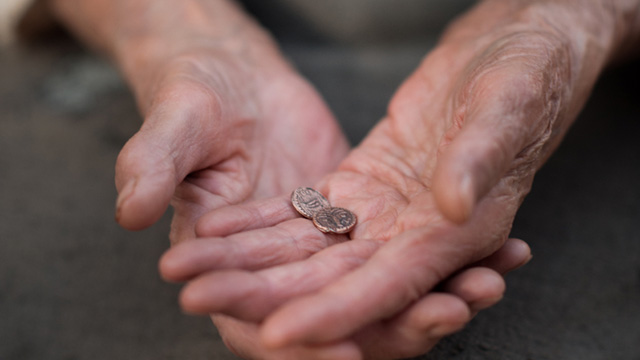
He sat down opposite the treasury, and watched the crowd putting money into the treasury. Many rich people put in large sums. A poor widow came and put in two small copper coins, which are worth a penny. Then he called his disciples and said to them, “Truly I tell you, this poor widow has put in more than all those who are contributing to the treasury. For all of them have contributed out of their abundance; but she out of her poverty has put in everything she had, all she had to live on.”

———————————————————————————————————-

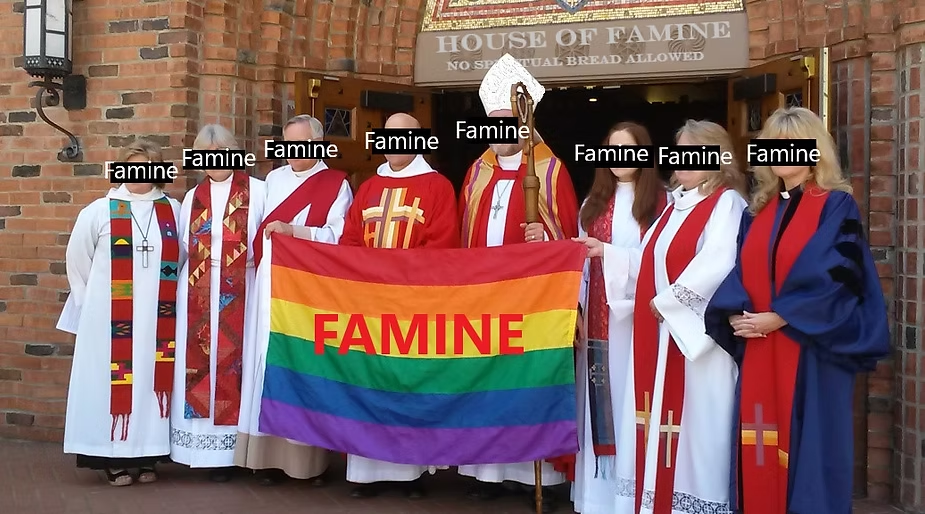
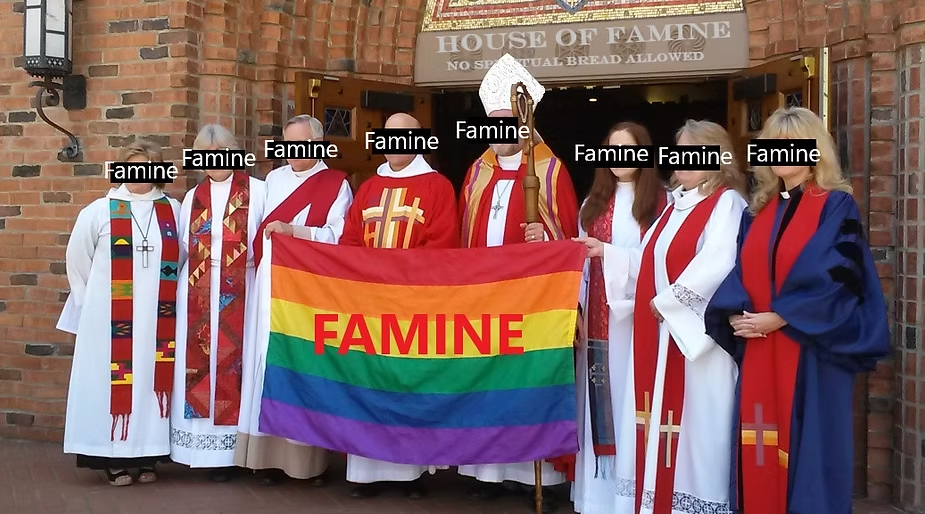
This is the Gospel selection from the Episcopal Lectionary for the Twenty-fifth Sunday after Pentecost, Year B 2018. In the numbering system that lists each Sunday in an ordinal fashion, this Sunday is referred to as Proper 27. It will next be read aloud in an Episcopal church by a priest on Sunday November 11, 2018. It is important because Jesus pointed out the disparity between those who wear church robes and the laity, as well as the wealthy of the church compared to the poor. Jesus said to beware of incorrect assumptions of piety because of collars and donations to the church treasury.

On the heels of the Gospel lesson from Mark that was delivered the prior Sunday[1], where Jesus made a spiritual connection with “one of the scribes,” we now read of Jesus saying, “Beware of the scribes.” This follows the encounter with a scribe, but after Jesus was again teaching [being inspected for blemishes] in the Temple. As part of that day’s discussion, Jesus had pointed out the error that the scribes had used in stating their conclusion that the Messiah will be the “son of David.” Jesus used logic to defeat the logic of the scribes, who spent more time than ordinary Jews coming up with answers to the questions the people had, such as, “Who will the Messiah be?”

Following that answer to the crowd [of which those trying to find error in Jesus’ words were present], Jesus then gave this warning about the scribes, giving his assessment of the privilege the scribes took advantage of, even when they knew less than they put on that they knew. To fully grasp what Jesus said next, it is important to realize that the scribes were the equivalent of modern scholastic researchers of holy texts [Judeo-Christian], with most then being like those now – far removed from life as a practicing Jew or Christian. As scholars they considered themselves to be part of the elite.

When we read that the scribes were those “who like to walk around in long robes,” this paraphrase misses the point of the word “thelontōn,” which means “desiring.” While “desire” can be reduced to “wanting, wishing, intending, and designing,” the “liking to walk around” is based on personal “will,” and not some mandatory rule that says a scribe must always wear a robe ‘in the work place AND in public’. Even if there were a ‘scribe dress code’, they would have written it and made it a point of mandating what they liked to wear.

When Peter recalled Jesus adding that the scribes did this “to be greeted with respect in the marketplaces, and to have the best seats in the synagogues and places of honor at banquets,” this is stating that the wearing of robes ‘off campus’ was to gain personal profit from being a scholar. The robes worn within the Temple’s library and as theological professors on the steps of the Temple were that of academia. The robes of a scribe let those within the Temple walls know who was a scribe, without needing to ask. It would be like a military officer wearing his or her uniform, which displayed a rank that others on a base must immediately recognize, as a matter of maintaining a service hierarchy. However, ‘off base’ or outside the Temple walls, where common people displayed no rank or privilege, dressing like normal folk was allowed.

By Jesus pointing out how the scribes were always found wearing their finest uniforms in public, he was saying they purposefully intended to play the role of elite rank, in order to gain favors that were not required of the poor and common people to give. They got discounted food and at-cost dry goods from vendors. The synagogues would give them front row seats and make others stand, placing them close to the speakers, while others might not hear as clearly in the back. The seats of favor would intimidate the rabbis, influencing them to say what they knew the scribes had taught, rather than speak from a connection to the Godhead. The places of honor at the banquets were near the head of the table, where the host sat. There, they would reap royal service and the choicest meats and drinks.
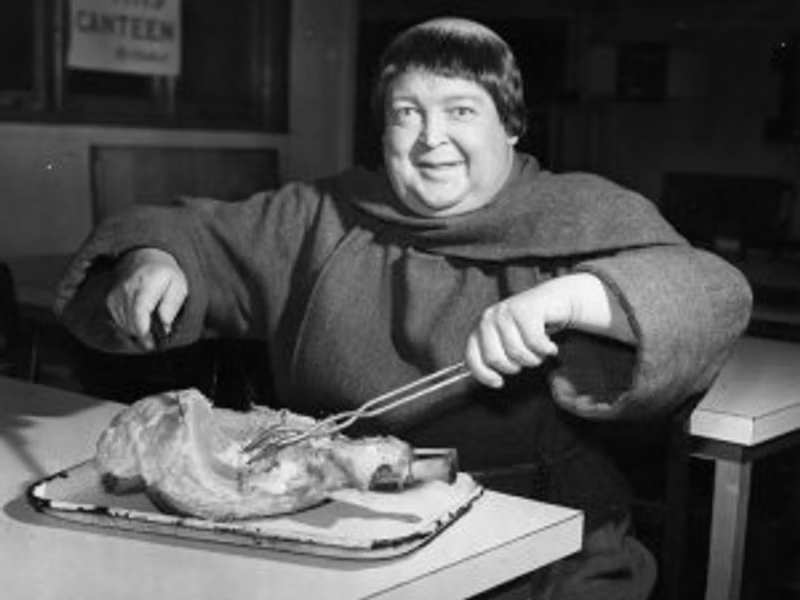
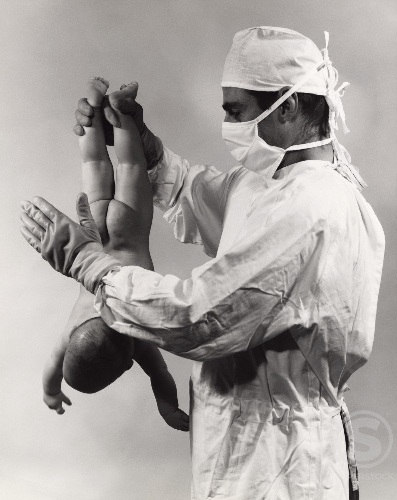
Imagine how skinny I would be without this frock!

Not only do the scribes profit from good deals and free lunches, they visit widows and make demands on their property, which a widowed woman without sons could do little to prevent. Jesus said they were “devouring” (from “katesthiontes,” meaning “eating up, eating until it is finished, squandering, and injuring”) what little a widow could have. They did this by placing guilt on them and making threats of laws being broken, forcing the Temple to make them outcast. The scribes did this for personal gain.  For old Jewish women, being one of God’s chosen people was all they had.

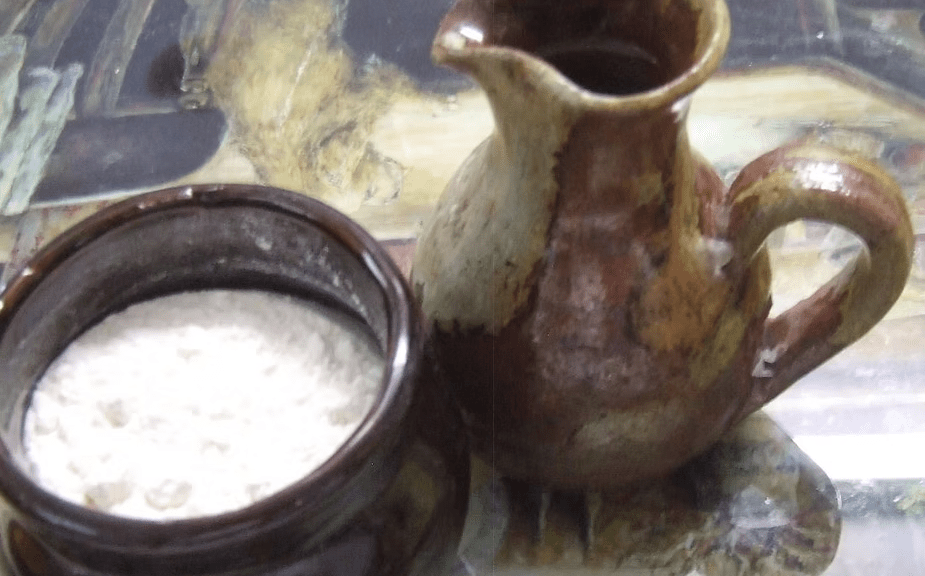
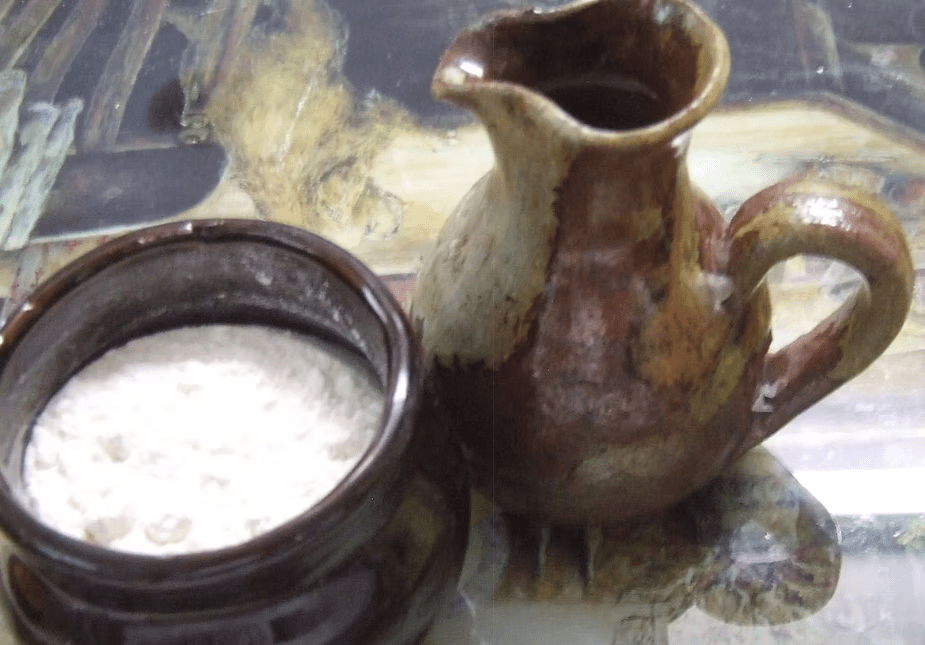
Then after going out to rob old women of their last jar of meal and oil [an allusion to an optional accompanying Old Testament reading], leaving them to starve to death, the scribes would recite their scholastic dissertations as if they were prayers to God. They would pretend to pray for the contributions of the dead, when such prayers of thanks never came when they were alive.  Therefore, the scribes offered up prayers for self-recognition, as if lengthy prayers were the only prayers they thought God appreciated.
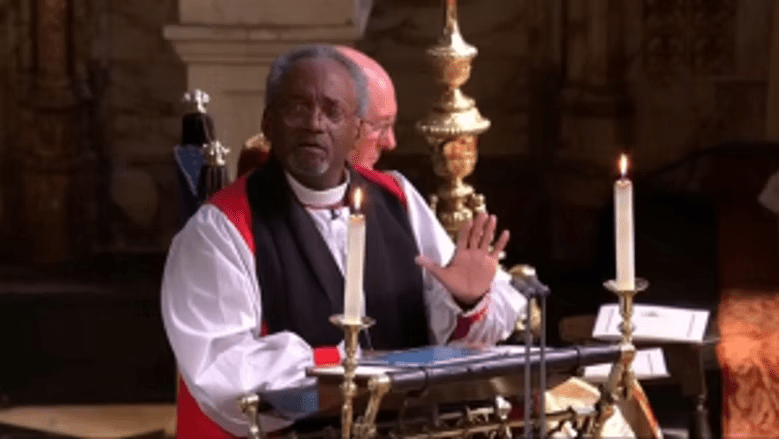
As we remember our dear departed donor, on whose land our new cathedral will be built, let me now offer this prayer of thanksgiving.

Of this corruption Jesus had witnessed [and had inside information via the Christ Mind to know], he said, “They will receive the greater condemnation.”

The word translated as ‘condemnation” is “krima.” That is a legal term that means “judgment; a verdict; sometimes implying an adverse verdict,” as “a condemnation.” It bears the essence of “a lawsuit, as a case at law,” which was what the scribes specialized in studying and teaching.

The word translated as “greater” is “perissoteron,” which implies an abundance of, leaning towards “excessive,” “vehemently” administered. That says the judgment of God, towards those who the scribes condemn publicly and privately, will pale in comparison to the verdict that will be handed down in their cases, for the misdeeds of the scribes.

But I used to pretend to be a fine, upstanding doctor and respected citizen on TV.

It is important to see how the Law was given to the children of Israel for each to memorize and live by them. The “rabbi” for each family was the father. Each tribe of Israel had elders, who were connected to Moses physically, but should have been connected to God spiritually. The high priest (Aaron) offered sacrifices for the sins of the whole (and himself individually). A “scribe” was a useless position in that initial organization, as his only job was to record the Law on scrolls, not interpret them.

The elevation of scribes to being scholarly teacher and interpreters of the Law came after all of Judah had been lost. It was lost because few knew the details of the Law, and fewer followed them. A scribe then became one judge amid the returning Jews to Judea and Galilee, to whom the common people were told to turn to, so failure would not happen again.

The problem was the scribes did more misinterpreting of the Word of God than they showed competence, through divine guidance. Their failing to tell the people, “I really don’t know what it means, other than what the words appear to say, because I, like you, am not that much smarter than you are,” meant falsely representing themselves as those approved by God to speak for Him.

God did not give His approval. That was what Jesus was telling the people to “Beware” (with a capital “B”).

The Greek word written is “Blepete,” which is rooted in “blepó.” It better says to “Look, See, Perceive, or Discern,” with the implication being to “Be careful” and “Take heed.” This says to be vigilant and aware when one hears a scribe teaching, because one must question them as to how they draw their conclusions.

In other words, Jesus called the scribes (largely) liars, which meant the long robes they wore made them false shepherds. Because they avowed to speak the language of God (from the scrolls) they were self-proclaimed prophets. However, due to their lies about the meaning of the Word, they were not true prophets but false prophets.

This leads one to the warnings of God, through Moses, in Deuteronomy 18:20. There is written: “The prophet who dares to speak a message in My name that I have not commanded him to speak, or who speaks in the name of other gods—that prophet must die.” While a physical execution could certainly be read into that commandment, one must realize that “death” is metaphor for not gaining the reward of eternal life.  That was (and still is) the purpose of being God’s chosen people. Therefore, when Jesus said the scribes faced “greater condemnation,” that judgment would be banishment from Heaven.

Unfortunately, the realm of Christianity today has become top-heavy with false prophets, many who proclaim to speak for Jesus Christ, the external (yet ethereal) divine presence at the right hand of God. Simply by pretending to know what Jesus would do, they are breaking the same commandment the scribes broke; and, it is known to be a lie, because the right hand of God is an Apostle, who has been reborn in the name of Jesus Christ.

It is impossible to speak for Jesus Christ when one is supposed to be Jesus Christ AND when one is reborn as Jesus Christ, then one does not enter the realm of politics.  Is that not what “Give unto Caesar what is Caesar’s” mean?  Does not “Render unto God what is God’s” a statement that spirituality is the only goal of God’s people?
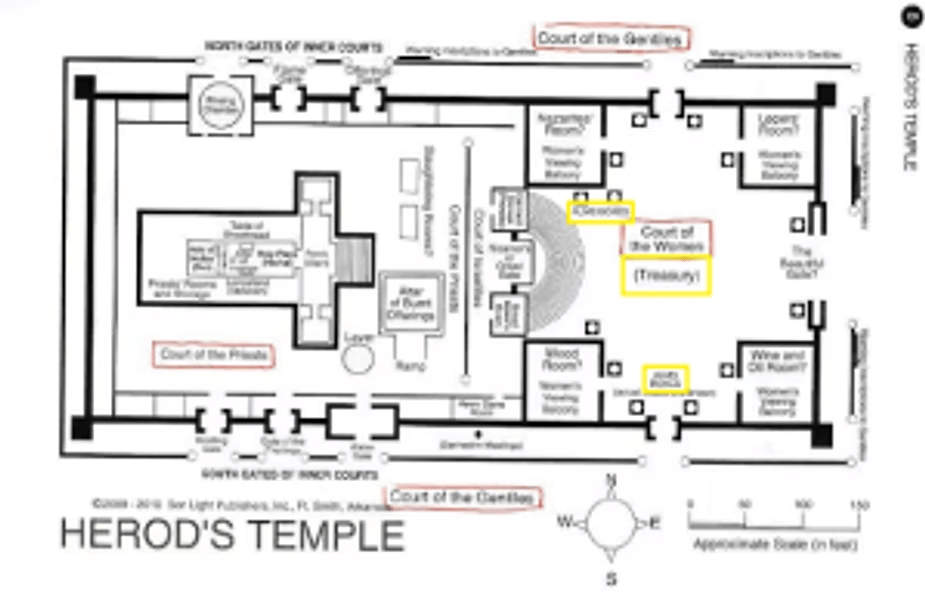
Jesus would have been talking to pilgrims on the Temple steps, outside the Nicanor Gate. Those steps rose from the Court of the Women, from which the Treasury alcoves were located. While it is not known how many alms boxes were arranged in those opposing rooms, it would have been near that court area that Jesus and his disciples “sat down opposite the treasury, and watched the crowd putting money into the treasury” (or “collection boxes”).
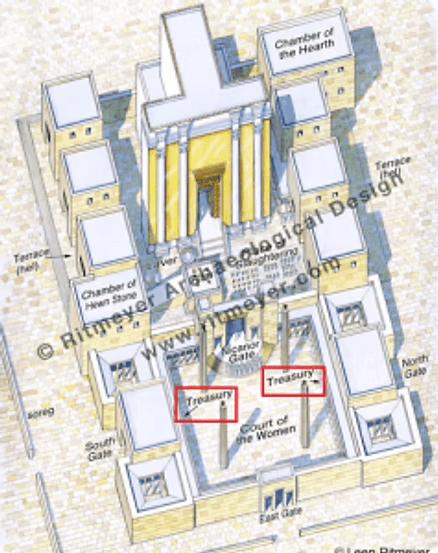
Having just recently answered someone’s question on the steps to the Nicanor Gate (about why that Jewish someone had heard a scribe explain a law differently than Jesus had taught), Jesus’ warning about the scribes using their position within the Temple to profit from both rich and poor, led him to point out to his disciples what he meant.  As he sat and watched the treasury activity, he knew the treasury would bring forth an example of what he had said to be wary of.

Jesus made his disciples learn by seeing for themselves how: “Many rich people put in large sums.” The disciples were from humble roots and had never known the wealth possessed by the rich. They had not yet faced any temptations to turn their backs to God for thirty pieces of silver [not copper].  One can imagine they were impressed by the amount of money they saw being dropped into the collection boxes [especially Judas Iscariot].

Jesus would have known the disciples would have wide eyes over such large donations being made, so he sat quietly and let the “many rich” that were present make their ritual commitments, so the Temple business of dealing with the poor could be funded. Then, after “a poor widow came and put in two small copper coins, which are worth a penny,” Jesus called their attention to that donation.

Jesus said, “Truly I tell you, this poor widow has put in more than all those who are contributing to the treasury. For all of them have contributed out of their abundance; but she out of her poverty has put in everything she had, all she had to live on.”

Don’t think the widow was unhappy about only being able to give two pennies. See her with a smile on her face, because she gave her all.

That meant that the “poor widow” only had “two small copper coins” to her name (called “kodrantés” in Greek, but “quadrans” in Latin), which were the smallest Roman coins minted. She put “everything she had” into the collection box.

For as little as she had, the rich gave about that little of their wealth, even though the amounts given seemed large and generous. When the donation ratio is 100% [poor widow] to 1% [many rich] (a 100:1 ratio), the rich were certainly not giving as much as they could.

Now, while this ratio is a figment of my imagination, it is likewise a figment of the imagination of those who pretend to speak for Jesus Christ as they stand on soapboxes with megaphones and lead protests against the players on Wall Street.  The wealthy have recently been targeted [within the last decade] as being those who are said to be “the one percent.”  Someone has come up with the number that says one percent of all people own ninety-nine percent of the world’s wealth.
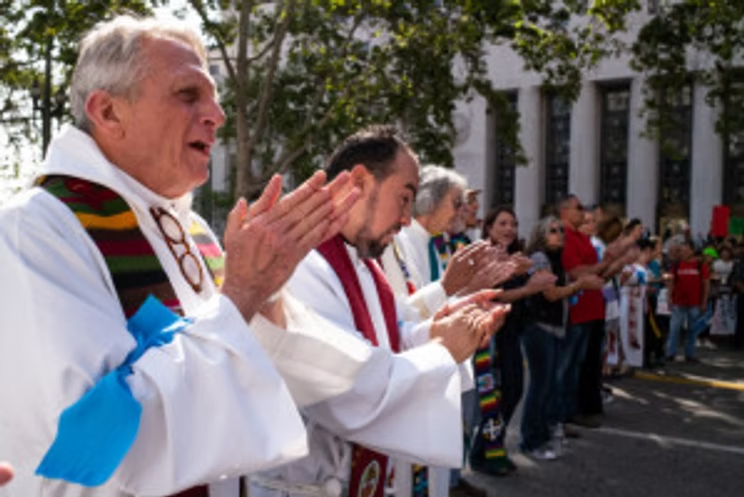
Holy protesters who demand the wealth of the world be shared equally?

Jesus did not point out the law that said the land owners (the rich) had to leave the outer ten percent of their crops for the poor, such that this reading was meant to make a statement that the rich were not putting in ten percent of their wealth.  At that time, when the Roman’s owned all the land, but Jews were allowed to buy deeds for parcels of land and pay taxes to Rome, Jesus was not proposing that an uprising should take place.  Jesus was not teaching his disciples that it was necessary to force the rich to support the poor (something alms were for), such that the laws of Moses should be amended and new laws written, which would force the rich to become poor.

Jesus was not saying that future Christian churches should establish a heuristic of ten percent tithing … not to support the poor, but to support the organizations called churches.  In short, Jesus was not concerned with the money element of this lesson.

He was driving home a point about the scribes. This “poor widow” was just like the other poor widows whom the scribes “devoured widows’ houses.” They were said to “eat it up until finished,” by misusing the Law when they visited old ladies with houses of value. Wealthy Jews could pay higher rent in such properties. Rather than the poor widow being left with two cents to by food to eat (again, this ties in to an optional Old Testament reading that can accompany this Gospel reading), this devoted Jewish widow gave one hundred percent to those who pretended to be her shepherds.

She was “all-in,” even though she barely had two pennies to rub together. She gave “everything she had” because she trusted the false shepherds.

In Ezekiel 34:16, God said through His prophet (about false shepherds and the flocks they were prophesied to bring harm to): “I will seek the lost and bring back the strays; I will bandage the injured and strengthen the sick, but the fat and the strong I will destroy. I will feed them—with judgment!”
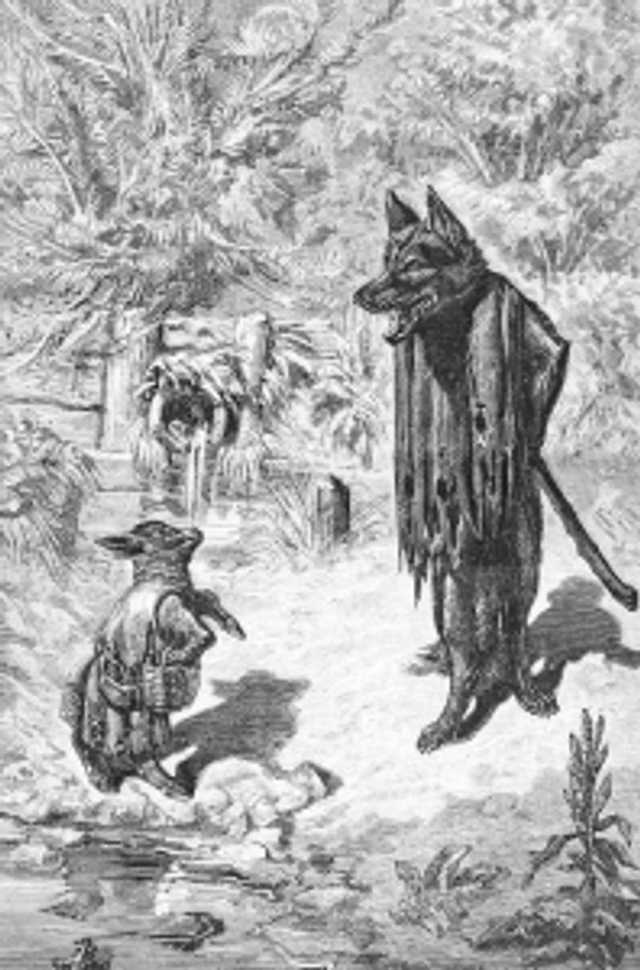
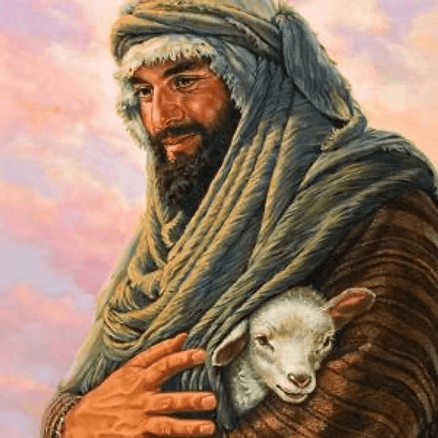
Hey little lamb, you lost? I can show you the way, if you would like me to.

Jesus was using the example of a poor widow woman being injured by the lies of scribes. The poor widow was probably old and feeble. Giving all the money she had would play into the hands of the scribes, who wanted to inherit her rights to a house. She had no heirs, as her son would have assumed her debts as being his own. She was poor because she was unable to provide for herself and she was soon to die because of the injury done by the men of law.

Their verdict was to kill her, using her love of the law and wanting to remain in good standing as a Jew.

God’s verdict, however, would be to grant the poor widow eternal life for her devotion, while the scribes would face a greater judgment … one they would not be expecting.

As the Gospel reading for the twenty-fifth Sunday after Pentecost, when one’s own personal ministry for the LORD should be underway – one should have been made aware of the false teachings of those saying they know what Jesus would do if he were alive today – the message here is to see the verdict that comes from God’s Judgment, for having lived a life under the pretense of religion, rather than having loved God with all one’s heart, soul, and strength, is one that just might be an unexpected shock that a soul is unprepared to hear.

In the Book of the Acts of the Apostles, there is the story of Ananias and his wife Sapphira (Acts 5:1-10).

They wanted to become members of the new church of Jews that Peter and the other Apostles were forming. That church was not for people pretending to believe in Jesus as the Messiah. Disbelievers still had the Jewish synagogues.  The new church was only for those who had been filled with the Holy Spirit, due to an immediate opening of their hearts and love pouring out to God. They were all those who had been reborn as Jesus Christ, through the Holy Spirit and the Christ Mind.

Membership in that new church required the sacrifice of self-ego, such that wealth was not something individually held. Wealth was held in common (a treasury) for the good of the whole church (all Apostles[2]). In that way, no one was poor, no one was rich, all needs were met and all served the Lord as a most holy and righteous priests (i.e.: Christians).

In verses one and two we see how Ananias and his wife sold a piece of property, and then agreed to hold back a portion of the proceeds for themselves. Think of this as a situation of wanting to be Christians, but they were lying about having received the Holy Spirit.  They were “desiring” just like the scribes.  They so wanted to get in on this new church venture (for whatever self-motivations they saw) that they sold one piece of property (possibly of many they owned). Still, because they were not totally committed to God (perhaps they had some reservations about losing everything they had) they held back some of the cash. One can assume they kept it hidden somewhere secret that only they knew: how much that was and where it was stashed. The remainder Ananias took and lay at Peter’s feet (as it was coins in a bag).[3]

In verses three, four and five we read, “Then Peter said, “Ananias, how is it that Satan has so filled your heart that you have lied to the Holy Spirit and have kept for yourself some of the money you received for the land? Didn’t it belong to you before it was sold? And after it was sold, wasn’t the money at your disposal? What made you think of doing such a thing? You have not lied just to human beings but to God.” When Ananias heard this, he fell down and died. And great fear seized all who heard what had happened.”

Peter’s questions asked were statements that said, “Nobody told you to give anything up.  God certainly did not tell to lie as a way to gain His favor.”
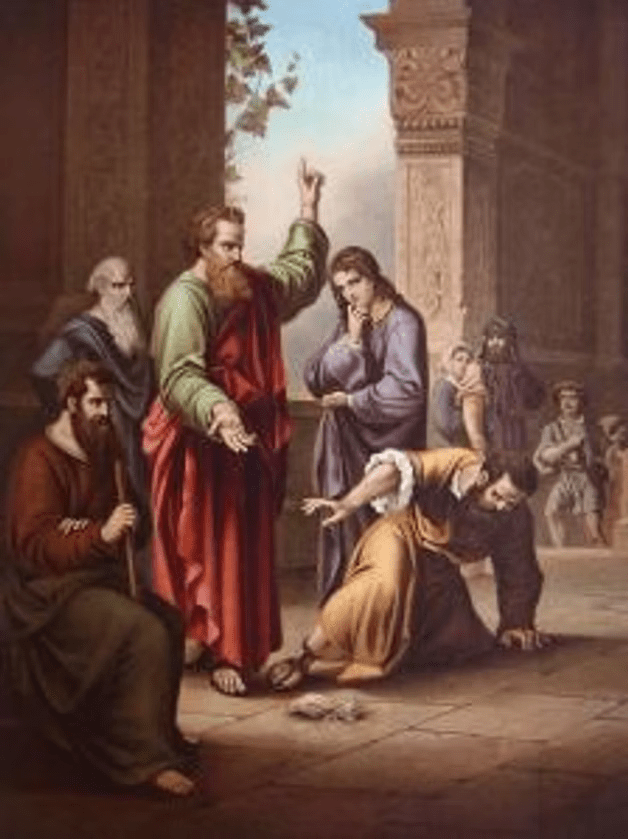
Some texts say he “gave up the ghost.” Death is the release of a soul, but Ananias gave up his chance for the Holy Ghost by lying to it.

When that reading was discussed in a church lectionary class that I attended (years ago), the discussion ended as it was about time for the next church service to begin. As the leader of that lectionary class hurried off to get settled into his favorite seat in the church (possibly a favored seat?), I hurried to ask him, “Whatever happened to that all-in church?”

He barely turned his head my way as he said with a smile, “That didn’t work out very well.” Then he kept hurrying to his seat.

Just by coincidence, the man was a wealthy lawyer. He contributed large sums of money to that church, and he was involved with leading discussion groups and being deeply involved with more in-depth study programs. He was what I consider a very nice man … a Christian man … in today’s partially-in church.

I can only imagine that he saw the two pennies the poor widow woman gave, in this lesson today, as a good example of how the poor widows today are better off, due to taxing the rich more. The welfare state cares for poor widows, unlike the Jewish leaders of Herod’s Temple. It took Christianity to appoint bishops to correct that problem.

Not long ago, the lesson was Jesus telling his disciples, “It is harder to get a rich man into heaven, than it is to get a camel through the eye of the needle.” There also was the parable of the talents, which so many today see as a lesson on signing up for church stewardship pledges, reminding the people how much they can afford to give. One cannot forget that there also was the parable about the poor beggar Lazarus and the rich man.   All [so many] have a theme of money.

Then there is the saying, “The love of money is the root of all kinds of evil.” (1 Timothy 6:10)
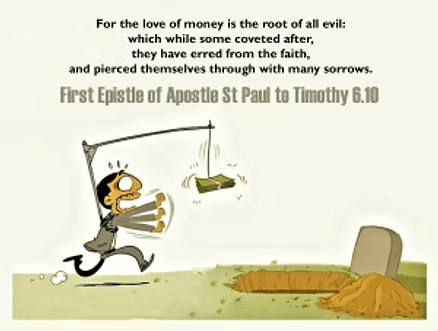
None of those lessons say anyone has to give any money, to anyone, at any time.  Money only has value in the earthly realm.

Being Christian is not about joining a club, such as Ananias and Sapphira thought. There are no monetary dues for being a Christian. The love of God cannot be placed on a scale and measured by ounces and pounds. The only portion of love of God that can make one a Christian is one hundred percent (“Love God with all your heart, with all your soul, and with all your strength.”) Therefore, it never worked out very well for a church of All Saints to be anything less than All Saints.

We are supposed to be all-in.  That “membership fee” is not based on one’s material wealth.  It is based on faith.

When everything one has is given to assure that God’s work is done (knowing God does not seek to feed the world or allow anyone capable of walking a thousand miles to be given some amount of free wealth, but God wants Saints to pass on the Holy Spirit to those who seek to know God), then God will make sure that the money jar you just emptied, so a fellow Saint could have a coat, is now full again (this related to that optional Old Testament reading that associates with this Gospel reading).  Money becomes nothing more than a tool that must be used, so positive growth can result (parable of the talents).  Positive results are measured in faith given and faith returned.

When one is all-in for God, then there is no need to worry about someone wearing a collar coming to visit, suggesting that it is time to remember the church when you pass away.  That promise of eternal happiness can only be promised to those who held back most of what they owned, having never given God any love.

When one has submitted to God completely, any physical property left over when one dies will go to surviving family.  Material inheritance will have been set up for a church of people, not an organization with buildings to maintain and employees to pay.  A church of people is usually sons and daughters and close friends who have had the Holy Spirit passed onto them, keeping worldly wealth at the feet of Saints.

In the end, it will not matter what physical possessions are left behind.  After all, you can’t take it with you.  What you do take is your soul and physical death needs to become the entrance into the eternal kingdom.  This is how this reading in Mark ends; it states, “all she had to live on,” or literally from the Greek, “all the life of her.”

When Jesus pointed out to his disciples, “she out of her poverty has put in everything she had,” everything she had was eternal “life.”  The time to suffer through physical life [mortal existence], for a promise of eternal life, is long before one is set upon one’s death bed.  That is not when one wants to ask God to forgive a lifetime that kept total commitment held back.

Eternal life does not come at discounted rates.  This lesson says to always give all you have, with love of God being the only currency that ultimately matters.

———-

[1] The Proper 26 readings were probably rejected in lieu of the All Saints readings that normally fell on Thursday, November 1, 2018.  Because few went to a mid-week church service [too lazy], many churches will feel it customary to toss out the Proper 26 readings and give a [usually] poor assessment of what All Saints represents.

Actually, this Gospel reading that warns of such berobed changes, in order to meet the lazy needs of high roller contributors [who never attend church on any day other than Sunday morning], is why the Episcopal Lectionary says, “All Saints may be celebrated” instead of the readings set up for Proper 26.  I add this just in case you went to church and heard nothing that came from Mark 12, Hebrews 9, and Ruth 1.

[2] It is important to return to the element of All Saints day, as this can now be seen not as a tribute to all the dead Saints that have been officially recognized by one or more Christian churches, but a recognition that all members of a church should be Saints.  If it is not All Saints, then the church becomes a chain of weak links, which ultimately leads to a weak chain that breaks apart.  Think about that and ask yourself, “When was the last time I saw a real, true Saint?”

[3] While not stated in this story in Acts 5, the bag of money laid at Peter’s feet would have been returned to the heirs of Ananias and Sapphira, not kept as an unholy offering.

Hebrews 9:24-28 – The foundation of the world

Christ did not enter a sanctuary made by human hands, a mere copy of the true one, but he entered into heaven itself, now to appear in the presence of God on our behalf. Nor was it to offer himself again and again, as the high priest enters the Holy Place year after year with blood that is not his own; for then he would have had to suffer again and again since the foundation of the world. But as it is, he has appeared once for all at the end of the age to remove sin by the sacrifice of himself. And just as it is appointed for mortals to die once, and after that the judgment, so Christ, having been offered once to bear the sins of many, will appear a second time, not to deal with sin, but to save those who are eagerly waiting for him.

———————————————————————————————————-

This is the Epistle selection from the Episcopal Lectionary for the Twenty-fifth Sunday after Pentecost, Year B 2018. In the numbering system that lists each Sunday in an ordinal fashion, this Sunday is referred to as Proper 27. It will next be read aloud in an Episcopal church by a reader on Sunday November 11, 2018. It is important because Paul gave further details about each true Christian sacrificing their own self-ego to be reborn as Jesus Christ.

[Omitted text that no longer applies here.]

Speaking of long-winded explanations of holy text, the Epistles (especially those of Paul) require many words that point out the nuances of God’s Word. It is purposefully written so that the whole truth is not readily seen. In the Gospels the whole truth is hidden under the cloak of parables and symbolic stories, which makes them seem easily understandable, but question, “What was the point?” Paul’s letters were almost like in a code that only Apostles could grasp. Breaking codes become more complex.

Here is this week’s breakdown of five verses from the ninth chapter of Paul’s letter to the Hebrew-speaking Jews [Christians] of Rome. There are fifteen word segments that are marked off by punctuation marks. There are five capitalized words, with God found once, Christ found twice and then “Otherwise” and “Namely” requiring insight as to why they are important.

The hard work has been done, by looking at the literal Greek [the ordering of each word being maintained] and looking up each Greek word for viable translation possibilities. By my having restated this reading in the following format, it should be just a matter of slowly reading my words of translation and letting a flow of thought [from reflection, meditation, and comparison to the read aloud translation] to see for oneself where that train of thought leads. Keep in mind how my translations are limiting many words from representing the fullness of translation viability.

Here is Hebrews 9:24-28 restated, from the Bible Hub Interlinear:

24. not then into artificial [made by human hands] has come in sacred ones Christ  ,

corresponding to those sincere ones [genuine ones]  ,

except towards self together heaven  ,

immediately to be made appear those the face followers of God on behalf of ourselves  .


25. nothing so that many times he should make an offering oneself  ¸

just as the high priest enters into those sacred places according to cycle of time when blood belonging to another .


26. Otherwise it was necessary for him many times to have suffered from laying down inhabitants of the world  .

at this instant then once for all on the basis of joint action followers of the present age  ,

towards setting aside followers sin  ,

through those sacrifice self he has been made known  .


27. Namely according to how much he has appointed followers to mankind once more to die  ,

beyond on top of this his divine judgment  .


28. in this manner namely followers Christ  ,

once more having been offered in sacrifice to those who many to offer up as sacrifices for sins  ,

from out of subsequently separately from sin  ,

will appear before him awaiting for salvation  .

Now, let’s look at what each verse says, realizing that each verse is actually like a separate paragraph of text, with a central statement that then presents statements in support of that theme.

Verse 24 begins by saying the central idea is relative to what is “not” to be assumed. As the first word stated, it must be understood that “not” is a transitional word that is based on that stated prior, in verse twenty-three. The segment of words leading up to verse twenty-four spoke of “heavenly sacrifices” or “spiritual offerings.” As such, verse twenty-four can be seen as explaining what “not” to assume about that statement.

By following “not” with the words that state “artificial” or “made by human hands,” this can be visualized as an altar on which slaughtered animals would be burned as burnt offerings. When the inverse of “not then into artificial” is seen as the positive (rather than the negative), Paul was stating “then into one made from God’s hand.” This should be read as implying a human soul, within a human body of flesh.

Still, recalling that this verse was written as an address to “sacrifices” and “offerings,” that which is the soul of a human being, Paul then wrote that this soul sacrifice “has come in” spiritually. It has not been summoned through the slaughter of flesh and the transformation of meat into smoke and ash (all physical changes). Instead, it “has come in” by the hand of God, from above. That presence has then created “sacred ones,” which is translated from the Greek word “hagia,” as the plural number of those who have been “set apart by (or for) God, holy, sacred.” Rather than assume the plural of “sacred” means places [that “made by human hands”], the deduction should be to “those spiritually made holy.”

The last word of this central idea is then “Christ,” which means the “Anointed one.” Therefore, the “offerings” stated in verse twenty-three are now said to be human beings, presumably those who believed Jesus of Nazareth was the Messiah [disciples], sacrifice their souls to God [self-ego slaughtered and transformed], which in return makes them Saints [“holy ones”] in the name of Jesus “Christ.”

The first supporting statement to this central idea begins by stating “antitypa,” which is Greek [in the plural number] for “copies” or “images” that are “corresponding to” the “Christ.” This means those “Saints,” in whom “has come in” the “Christ” spirit, are “patterned” or “representative of” Jesus of Nazareth.

Those representations of the “Christ” are then said to be “sincere ones,” which means they are not pretending to be Christ-like. They are “genuine” in this reproduction, as the Greek word “alēthinōn” states. They are “real” resurrection of Jesus Christ, not fake fans in a “We Love Jesus” club. They are “true” or “made of truth,” which is an inner [heart-driven] motivation, not a head-driven calculation.

The next supporting segment of words begins with “alla,” which states what is “to the contrary” of this recreation of “truth.” This “exception” is relative to the “self,” where “auton” emphatically refers to the “self,” in the sense that “oneself” then identified “the same” as a “condition” of or having joined “together” with “heaven,” the “spiritual” place of God.

Once the “self” has changed spiritually, there is an “immediate” change in the “self.” While still wearing the flesh that is identifiable as one’s own, a glow [invisible to human eyes] emits from “the face.” This is expressed in the “followers” of Jesus of Nazareth, so they too wear “the face of God.” This “face” becomes the “countenance” of a “presence” within; but it is not for the glorification of “self.” Instead, it is a “presence” that comes “on behalf of others.” This means Saints are made by the hand of God [resurrections of the Son of Man] for the purpose of ministry, just as was that recorded of Jesus of Nazareth.

Verse 25 then begins a subsequent paragraph that follows this line of thought. It begins with the Greek word “oude,” which is a negative word that is relative to those who are reborn as Jesus Christ and wear the face of God. The word means, “neither, nor, not even, and not,” such that it is a conjunction that says “nothing.” This should be read as a statement that God has the power to reproduce His Son in those who devote themselves to God – totally and completely – such that such an act is “not even” unfathomable. This negative word is then a balance to the negative word that began verse twenty-four, such that the inverse reading says “everything” is possible of God. This repetition is an example of symmetrical applications of God’s Word.

This is then a statement “so that” wearing the face of God is possible “many times.” This not only states that being reborn as Jesus Christ – as a Saint – has occurred “so that many time” one should find “nothing” that keeps one from also “make an offering of oneself.” Paul was writing this letter to the Saints reborn as Jesus Christ in Rome, who were many and growing in number. Paul was therefore encouraging them to lead more to God and have more wear the face of God. There were “no” limits, as long as one offered oneself to God.

Paul then supported that idea by saying a cycle of change is no different than a “cycle of time,” as one “year” follows with another “year,” so the same cycle of change is always taking place. He compared this to the cyclic entrance of the high priest into the Temple area for sacrifices, as commanded yearly. Just as a man wearing ceremonial robes enters into sacred places according to cycles of time, so too does God’s Holy Spirit enter into human temples that have accordingly been prepared for a ritual sacrifice. The presence of Jesus Christ is the pleasing smoke that rises from a self that has been given fully unto the Lord. The blood of the old has been transformed by the blood of Christ.

Verse 26 then begins with the capitalized Greek word “Epei,” which is elevated in importance. The word commonly translates as “of time: when, after; of cause: since, because; otherwise: else.” The word is said to imply: “properly, aptly if, introducing something assumed to be factual and fitting, i.e. as appropriate to what is assumed.” [HELPS Word-studies] It then becomes an important statement of what would be “Otherwise,” if one did not become filled with the spiritual blood of Jesus Christ. This assumption of fact then says that failure of others to become the resurrection of God’s Son would mean (as translated in the reading in church), “for then he would have had to suffer again and again since the foundation of the world.”

The Greek word translated as “foundation” is “katabolé.” Rather than seeing this as a statement of God’s worldly Creation, the cornerstone should be recalled as Jesus Christ. Paul wrote to the Ephesian Christians, “Consequently, you are no longer foreigners and strangers, but fellow citizens with God’s people and also members of his household, built on the foundation of the apostles and prophets, with Christ Jesus himself as the chief cornerstone.” (Ephesians 2:19-20)

As such, “katabolé” should be realized as a word of “conception,” dating back to the sewing of priests into the world [Adam and sons], the conception of holy lineage promised to Abraham, and the laying down of holy seed into the womb of a holy land [Israel]. The purpose of that “foundation” having been “laid down” means Jesus Christ would fulfill that promise. “Otherwise,” Jesus of Nazareth would have to continually rise from his tomb in human form, only to go through the same suffering and the same end, countless times … all for the sins of others that could not be stopped. Only with Jesus Christ reborn within one [a priest of Yahweh] can sin be stopped.

From that talk of the “foundation of the world.” which would be Christianity, Paul then supported that central idea by beginning, “at this time.” He was talking to Saints who presently were that “foundation” intended by God. Jesus Christ was the cornerstone on which was sacrificed “once for all,” as the “basis of joint action.” Apostles were “joined” with that cornerstone as the “followers” Jesus of Nazareth called for when he lived. Then was realized by Paul and his fellow Saints “at that present time.” The intent had become a living reality.

They had been laid down “towards setting aside sin.” Their sins had been washed clean by their baptisms by the Holy Spirit. That is the only way to set aside sin. For them to go forth [“towards”] others with that promise, they had to be sacred, holy, and righteous, as was Jesus of Nazareth. They had to promote sin-free existence by demonstrating that in themselves [not a “do as I say, not as I do” scenario].

That step could only be possible by “the sacrifice of self.” Those who knew the Apostles prior to their transformations would be most able to see marked changes in personality. Their known “self” would be “made known” as changed. Instead of the persons they used to be, “he has been made known” instead. That was by them wearing the face of God; and that was the “tag, you’re it” immediate transformation that made Christianity grow exponentially in the beginning. Jesus was known to have been reborn in Saints, which then “laid down” more Saints.

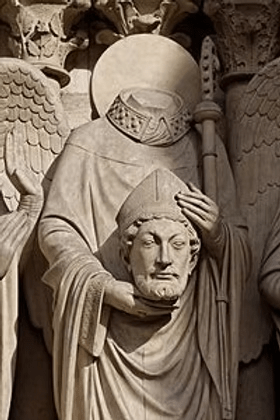
Saint Denis was beheaded and then walked seven miles home, holding his head, which preached a sermon all the way, to many witnesses. What is a more apt symbol of sacrificing self-ego than being beheaded and still being able to be God’s voice?

Verse 27 begins with the capitalized Greek word “Kai,” which we saw in the past Sunday’s translation of Paul’s letters to the Hebrews of Rome. As was found there, the same applies here. The importance of capitalization has less impact as the common conjunction “And,” as it does when translated as “Namely” (a viable translation). Seen as an adverb that indicates the importance of “Specifically,” from which a name acts to identify “he who has been made known,” the importance “That is to say” is God and Christ.

Christ is known “according to how much he has appointed followers.” God is the source of the Christ Spirit, which filled His Son on earth, Jesus of Nazareth, the Son of Man. God has appointed Christ as the “Anointed One,” the “Messiah.” The repetition of Jesus is then his being sent again into “mankind once more,” in each Apostle that has “to die” in his place to receive that Holy Spirit.

Going beyond this inheritance from self-sacrifice is the promise of eternal life. This is God’s “divine judgment” to give and it is the righteousness of the Christ presence that assures one’s soul will end his or her physical life [“to die”] without further sins.

Verse 28 Paul again used “kai” (in the lower-case), where it is again translated as “namely,” with “Christ” following as the importance of specificity. This naming of the “Christ” Spirit as the means to facing God’s “judgment” successfully, Paul returned to the central idea of “sacrifice,” where “Christ” is the high priest that makes “sin offering” unto God. The Christ Spirit within the flesh of a human tabernacle the self will die to please God.

This means the cleansing of past sins, “from out of subsequently” the followers of Jesus of Nazareth will be delivered. Their past histories [as Saul transformed into Paul] then have their souls “separately” divided “from sin.” What was once will be no more. The sinful soul will die with the sacrifice of the self-ego it was led to sin by.

The remaining soul, which will have been cleansed of sin by the Holy Spirit, will be the one that “will appear before him” – the Lord. God will be “awaiting” the return of a lost soul to His realm. This return will be ‘for salvation.” The presence of Jesus Christ in the flesh, replacing the previous ego, then makes Christ the Savior.

When this translation is deeply compared to the translation that will be read aloud in church, one can see how the public reading says nothing that can lead one to anything more than belief. That belief is not sound and capable of withstanding the temptations of Satan. The alternate translation I offer makes it possible to see that faith can only come by being Jesus Christ reborn. Paul was an example of that transformation, as were all the early Saints upon whose works Christianity was built as a “foundation in the world.” The call is for the “followers” to sacrifice, as did Jesus of Nazareth, due to a deep love of God.

As the Epistle reading selection for the twenty-fifth Sunday after Pentecost, when one’s own personal ministry for the LORD should be underway – one should have died of self and been reborn as Jesus Christ – the message here is to see the sincerity that is required to sacrifice self and be joined with God and His Christ Spirit. This is basically the same thing Paul says [over and over] in all of his letters. Again and again, the Apostles to whom he wrote understood what he was saying.

The confusing nature of Scripture is designed by God. Being His Son is not meant to be accomplished by wishful thinking, with zero work required. One has to actually want to do as I have done here – as tedious as it is to write down what I see – to prove to God that one is refusing to read the Holy Book upon which the final exam will be written. Reading what I write and what others write is like buying the Cliff Notes of divine meaning.

There are no such cheat sheets available. If you do not read the assigned material and come to your own deeply reached conclusions, you will forget what you studied and be left with no retention of meaning. Making a C on a religious studies test means one cannot only not save oneself, it means one cannot save anyone else. It means the sins of laziness will always be knocking on one’s door and one will always be yelling from the sofa, “Come in! The door is open!”

Ruth 3:1-5; 4:13-17 – A son has been born to Naomi

Naomi her mother-in-law said to Ruth, “My daughter, I need to seek some security for you, so that it may be well with you. Now here is our kinsman Boaz, with whose young women you have been working. See, he is winnowing barley tonight at the threshing floor. Now wash and anoint yourself, and put on your best clothes and go down to the threshing floor; but do not make yourself known to the man until he has finished eating and drinking. When he lies down, observe the place where he lies; then, go and uncover his feet and lie down; and he will tell you what to do.” She said to her, “All that you tell me I will do.”

So Boaz took Ruth and she became his wife. When they came together, the Lord made her conceive, and she bore a son. Then the women said to Naomi, “Blessed be the Lord, who has not left you this day without next-of-kin; and may his name be renowned in Israel! He shall be to you a restorer of life and a nourisher of your old age; for your daughter-in-law who loves you, who is more to you than seven sons, has borne him.” Then Naomi took the child and laid him in her bosom, and became his nurse. The women of the neighborhood gave him a name, saying, “A son has been born to Naomi.” They named him Obed; he became the father of Jesse, the father of David.

———————————————————————————————————-

This is an optional Old Testament selection from the Episcopal Lectionary for the Twenty-fifth Sunday after Pentecost, Year B 2018. In the numbering system that lists each Sunday in an ordinal fashion, this Sunday is referred to as Proper 27. If chosen, it will next be read aloud in an Episcopal church by a reader on Sunday November 11, 2018. It is important because we see that the commitment Ruth [“Beauty”] made to stay with Naomi, as a Gentile married into the family of Yahweh, paid off as she found a new husband and bore the grandfather of David [Obed].

In last Sunday’s ‘episode’ we left off with the camera zooming in on Naomi, who had nothing to say about Ruth’s promise to stay with her mother-in-law until death, because she was part of her dear family.

She would not return to her homeland [Moab] and her birth family. Now the story has progressed to Naomi doing the works of matchmaking, because Ruth has become Naomi’s full-fledged daughter.

Once again, the reader has to be fluent in the language of names, as all the names of the Holy Bible play a role in establishing the character of those given their names. The first name of importance is Boaz, the eligible Israelite bachelor who will be seduced by Ruth’s “Beauty.” The name “Boaz” means, “By Strength,” implying “In Him [the Lord] Is Strength”. Thus, Naomi knew that Boaz was a righteous man, whose strength was greater than physical.

Now, this reading is the beginning of chapter three [five verses] and then it skips to near then end of chapter four [five verses], which can leave the impression that some hanky-panky took place. Nothing of the sort happened. This reading simply tells how Naomi led Ruth to be introduced to a man of importance, so that a friendly relationship could begin. This then led to Boaz marrying Ruth, out of love, and conceiving a holy child by God’s assistance.

The name of the child is then Obed. The name “Obed” means “Servant” or “Slave.” Some sources say the name means “Serving.” For such a name to be given to an infant by his father means service was a valued characteristic in the Israelite people.

Ruth identified herself to Boaz as “your maidservant” (“’ă·mā·ṯe·ḵā”), because she and Naomi had to serve as slaves because they had no husbands.

Boaz was identified as a “kinsman redeemer” (“ḡō·’êl”) because Naomi was from the same bloodline and as a kinsman with property and wealth, Boaz provided a service to widows by becoming their employer. Therefore, the pair bonded through their service to the tribe and their service to Yahweh; meaning their child was to reflect that value.

As an optional Old Testament reading selection for the twenty-fifth Sunday after Pentecost, when one’s own personal ministry for the LORD should be underway – one has entered into deep-felt Service to God – the message here is the redemption that comes from marriage to God. God is our Strength; and from God entering into our hearts is born the ultimate Servant, Jesus Christ.

The story of Ruth is she was seen as a Moabite, which is a Gentile. She was not born of the blood of the descendant of Jacob. She married into that family when she wed Naomi’s son Mahlon [“Great Infirmity”], but with his death coming before they had a child together, Ruth was free to return to her Moabite roots. She refused to be released from Naomi [“Pleasantness of the Lord”].

Christians [males and females] should all see themselves as Ruth. Being Christian means adhering to the principles of Mosaic Law, believing in only One God – YHWH. In today’s modern world, there is much rejection of the Old Testament stories, where people who sin are called abominations and the enemies of the Israelites were ordered slain [men, women, children and animals] by God’s prophets. Westerners of Christianity reject what they see as no longer viable. They reject it as uncivil and many lean on the concept of Jesus telling everyone to love, rather than judge others for what they are. That is not being a reflection of Ruth.

Ruth was the lowest of the low in the Israelite societal pecking order. She had no voice about what was right or what was wrong, according to the Laws of Moses. She had been given her freedom to practice whatever rules and customs the descendants of Lot had established which might have included idol worship and human sacrifices to please many gods. The same freedom is given to ALL human beings in the world, because God never sent a fireball from outer space to destroy the Egyptians or the Canaanites or anyone else. However, being one of God’s chosen people means: agreeing to the Mosaic Laws; and choosing to only SERVE Yahweh.

When those two stipulations are met, then one lays at the feet of God as His maidservant [regardless of human gender]. There can be no Big Head of self that tells God, “Hey God, we’ve been thinking and all this harsh legal stuff is just too much to agree to anymore. So, we are going to make a few changes here and there and instead of praying to You, we are just going to idolize You Son Jesus. How’s that sound to You?”

[SILENCE] [Cue the cricket chirping soundtrack]

That means turning one’s back on God, so call yourself whatever you want to call yourself, it does not make you one of God’s chosen people. You have rejected God, so God has rejected you. You have gone all Old Testament on your soul and killed its chance of eternal life in Heaven.

Ruth symbolizes a love of the Law – which is symbolized by Naomi being “Pleasantness of the Lord” – where nothing bad ever happened to those who followed the commandments of God through His Prophets. Only the evil suffered physical death – but those souls all lived to be reincarnated another day, with no real harm done. Ruth became a servant of the law, even though the law made he the lowest of the low, as a widow without issue. She did not rise in rebellion to the unfairness of the Law. She complied out of love, trusting in the God of Israel to show His love in return.

It is vital to realize that the STRENGTH of Israel was the Ark of the Covenant. When a judge or prophet was told by God to encounter an enemy, the Ark was always carried into the field of battle. The Israelites were able to defeat evil because God was with them. Israel was a body of parts [the Twelve Tribes] with the Ark of the Covenant being the heart of that body. This is how a heart symbolizes the strength of courage, which is also symbolized in the lion’s strength and kingliness.

When Ruth was taken in marriage by Boaz that symbolizes one today being married to God. One is totally committed to being God’s wife [regardless of human gender]. From that marriage is born Jesus Christ, which is the STRENGTH of God within that defeats all attacks by evil. The Ark of the Covenant has not been lost; it has been transformed into an inner tabernacle, where Jesus Christ serves the Father as one’s personal high priest. Wherever one goes, the Ark of the Covenant is there – in the battlefield of life.

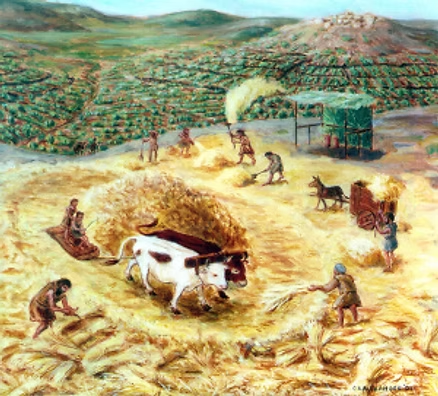
The threshing and winnowing of barley is a necessary work that separates the chaff from the grain.  Ruth was sent to the threshing floor to see the work that is necessary for the bread of life to be gained.  The STRENGTH of Boaz was witnessed, through the work that he did.

Whoever refuses to have the Law written into their hearts is not Ruth. Anyone calling himself or herself Christian, while bending the laws of Moses to suit one’s needs, is more in line with the ex-daughter-in-law of Naomi, Orpah [Mane or Neck]. One proudly holds high the head and its inner brain as the personal source of strength. While one kissed the “Pleasantness of the Lord” and the Law Naomi stood for, one feels strong enough to remember some of the Law, while rewriting that which was misunderstood. One has not then married Yahweh, but one has returned to pagan worship and idolizing multiple gods.

To truly be Christian, one must say to the Law the same as Ruth told Naomi: “All that you tell me I will do.” Jesus said, “Do not think that I have come to abolish the Law or the Prophets; I have not come to abolish them but to fulfill them.” (Matthew 5:17)

Jesus Christ being resurrected within a true Christian is the miracle blessing of the Lord, as one has been recognized as a “next-of-kin,” a Brother [regardless of human gender] in the holy bloodline of God’s chosen people, another Son of Man. Being reborn as Jesus Christ means, “he shall be to you a restorer of life and a nourisher of your old age.”

A true Christian has been redeemed by the STRENGTH of the Lord and made a SERVANT that offers salvation to other lost souls. As such, when one reads, “Naomi took the child and laid him in her bosom, and became his nurse,” this is the “Pleasantness of the Lord” [the Law] being written onto one’s heart and nourished daily. One does not seek to change the Law to match the laws of Gentiles. Instead, the Laws nourish the SERVANT that one has become, as the Son of God reborn. This is why the women [all Christians, regardless of human gender] gave a name to those who honor the Law: “A son has been born to Naomi.”

The Law’s Pleasantness has delivered one’s Savior, once again.

#Matthew517 #Ruth315 #Ruth41317

1 Kings 17:8-16 – Make God a little cake to eat

The word of the Lord came to Elijah, saying, “Go now to Zarephath, which belongs to Sidon, and live there; for I have commanded a widow there to feed you.” So he set out and went to Zarephath. When he came to the gate of the town, a widow was there gathering sticks; he called to her and said, “Bring me a little water in a vessel, so that I may drink.” As she was going to bring it, he called to her and said, “Bring me a morsel of bread in your hand.” But she said, “As the Lord your God lives, I have nothing baked, only a handful of meal in a jar, and a little oil in a jug; I am now gathering a couple of sticks, so that I may go home and prepare it for myself and my son, that we may eat it, and die.” Elijah said to her, “Do not be afraid; go and do as you have said; but first make me a little cake of it and bring it to me, and afterwards make something for yourself and your son. For thus says the Lord the God of Israel: The jar of meal will not be emptied and the jug of oil will not fail until the day that the Lord sends rain on the earth.” She went and did as Elijah said, so that she as well as he and her household ate for many days. The jar of meal was not emptied, neither did the jug of oil fail, according to the word of the Lord that he spoke by Elijah.

———————————————————————————————————-

This is an optional Old Testament selection from the Episcopal Lectionary for the Twenty-fifth Sunday after Pentecost, Year B 2018. In the numbering system that lists each Sunday in an ordinal fashion, this Sunday is referred to as Proper 27. If chosen, it will next be read aloud in an Episcopal church by a reader on Sunday November 11, 2018. It is important because it tells a story of faith being rewarded by God.

This is not the primary Old Testament reading selection, which means it will probably not be read in most Episcopal churches on the twenty-fifth Sunday after Pentecost. It is obviously chosen, however, because the message is centered on a widow woman, which is half of the focus in the Gospel reading of Mark 12. The alternative Old Testament reading selection (from Ruth 3 and 4) also deals with a widow (two actually: Naomi and Ruth) and a son, although they are not named as widows and the boy is a birth celebrated by a new marriage to a widow.

That theme of a widow with child is more pronounced here in 1 Kings. It should be read as symbolic of Mary and Jesus, as a prophecy of God protecting that most holy lineage. In the story of Ruth, Obed was the child born from her marriage to Boaz. Obed would be the father of Jesse, who would be the father of David. The same preservation of a bloodline is stated here in 1 Kings, although the woman and her child are nameless.

When this reading begins, “The word of the Lord came to Elijah,” Elijah is not named in these verses. It is understood that “to him” (Hebrew “’ê·lāw”) means Elijah, from his name having been mentioned earlier in chapter seventeen. The reading is best translated to begin by saying, “And came about the word of Yahweh.” While Elijah was a prophet of the Lord, one who heard the Word, the Word of God was a presence that was not limited “to him” alone.

Because this is a story of God speaking to Elijah, it is worthwhile to realize that the name “Elijah” means: “Yahweh is God” or “Strength Of The Lord.” Every story of Elijah is then one that shows the STRENGTH [this is the meaning of the name “Boaz”] of YHWH in a human form in worldly settings. Elijah had been sent “east” by Yahweh, after he confronted Ahab about his wicked ways, where Elijah could find safety. Ravens brought food to Elijah each day that he was in a place Ahab could not find him.

The setting now has God telling Elijah, “Go now to Zarephath, which belongs to Sidon, and live there.” Zarephath was a “Phoenician village that belonged to Sidon and was located in the northern extremity of Canaan.” Its name means, “Workshop For Melting And Refining Metals” or “Smelting Place.” Sidon was a “town a little over a day’s journey north of Tyre.” Based on the name meaning, “Sidon” was a “Fishery” or a “Place Of Fish.” Zarephath was between the two towns, but under the rule of Sidon.

One way to look at Zarephath is as a place where raw ores and other materials were placed in a furnace and transformed from separate solids to a unified molten liquid.  This liquid would then be poured in shapes, such as ingots and bars, for easy handling and shipment elsewhere.  The production of refined [purified] metals [most likely iron alloys] was hard work, with danger being ever-present from accidents from burning by molten rock or crushing under raw materials being offloaded and transported from a nearby pier [perhaps how the widow woman became a widow?].  Because it was the possession of Sidon [a larger seaport town], it could have smelted more valuable metals, such as gold, copper-bronze, tin-lead or any of the ancient iron alloys, depending on the number of smelting furnaces that were built there.  The symbolism of God telling His Prophet to “live there” should be realized as that where the metal of the widow woman’s heart would be tested for purity.

It also should be recalled that Jesus traveled to Tyre (Matthew 15:21), where he was confronted by a Canaanite woman that pleaded with Jesus to heal her demon possessed daughter (Matthew 15:22). Jesus said he had only been “sent for the lost sheep of Israel.” (Matthew 15:24) The woman begged for help, causing Jesus to say, “It is not right to take the children’s bread and toss it to the dogs.” (Matthew 15:26) The woman agreed and then said, “Even the dogs eat the crumbs that fall from their master’s table.” (Matthew 15:27) Jesus was amazed at her having spoken via the Holy Spirit and said, “Woman, you have great faith! Your request is granted.” That story then says, “her daughter was healed at that moment.”

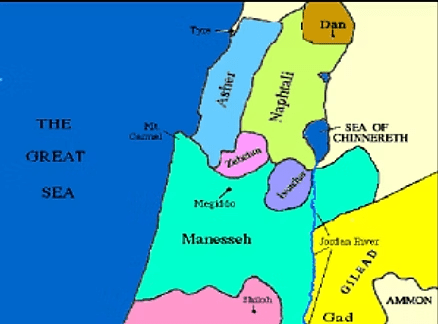
Because that story was of Matthew saying, “Jesus withdrew to the region of Tyre and Sidon” [Phoenicia], the implication could be that the mother traveled to Tyre to find Jesus, having left her daughter in Sidon, but the whole region had once been the land allotted to the Asher tribe.  It became an “alloy” of Israelite, Hittite, and Canaanite blood.

When God sent Elijah to the same region, the land that was once given by God to the Israelites had long been ceded to the neighboring Hittites, who later became the Sidonians and Phoenicians. This region is then symbolic of the outward reach of the Israelite faith, which remained true to Yahweh amid Gentile influence. Just as God sent Jesus into that mixed land, at a time when Jesus was sought by the evil rulers of the land, so too had God previously sent Elijah into the same mixed land for the same purpose of avoiding those searching for him.

When we read, how God told Elijah, “I have commanded a widow there to feed you,” the story obviously does not play out as if the widow woman had received any divine orders from God. Therefore, the Hebrew word translated as “I have commanded” (“ṣiw·wî·ṯî,” from “tsavah”) is better understood as, “I have put” or “I have committed a widow there to feed you.” The implication is a statement of God knowing the commitment of a devoted servant in that region, whom God would allow to serve Him through Elijah; further protecting Elijah, through a woman whose life was committed to following God’s Commandments.

Once Elijah reached the entrance into Zarephath and saw the widow there gathering sticks, one needs to know that the land was near the end of a three and one-half year drought. Rather than picking up vegetables and things growing in a garden, the widow was picking up the death that surrounded Zarephath as sticks were then plentiful. It should be understood that sticks (from “‘ê·ṣîm,” wood from trees) would have been used to feed the furnaces.  It would not be unexpected to find a woman gathering sticks for that purpose.  However, during a period of drought, the smelting operations would probably have been curtailed, if not shut down completely, to avoid a wildfire burning down the village.

When Elijah asked the woman to bring him a cup of water, she immediately began going to the well, which had not gone dry. One needs to see how water symbolizes emotions, so when God appeared in the form of Elijah asking the widow to produce the emotions of faith, she was prepared to readily show God her love.

Because the widow woman did not hesitate when asked to serve Elijah a cup of water, God had him then command, “Bring me a morsel of bread in your hand.” One needs to see how bread is more than simply food that keeps human beings alive. It is the nourishment that comes from faith and is shared with those of the same faith. When it was instructed to come from her “hand,” God wanted the widow woman to share her own encouragement with a stranger, beyond showing her love of God.

When we hear the widow woman say, “As the Lord your God lives,” that was a confession of faith. By adding, “I have nothing baked, only a handful of meal in a jar, and a little oil in a jug; I am now gathering a couple of sticks, so that I may go home and prepare it for myself and my son, that we may eat it, and die.” That confession said she said she was unprepared to serve encouragement to anyone beyond her own family, which was just her and her son.

The meal symbolized the Torah and the oil symbolized those who were anointed by God as the blood of Israel. The sticks would burn as an altar fire, with death being self-sacrifice.

The assumption could then be made that her husband had died leaving his wife and their young child with enough physical foodstuff to last through three years of famine. Elijah then arrived when that inheritance had dwindled to one last supper. Death was then their sacrifice of themselves to God, in thanks for all they had already received. The husband [like Ruth’s departed Mahlon – meaning “Sickly” or “Great Infirmity”] had left behind the Laws of Moses as his only possession. While that had kept the widow and son alive until Elijah’s arrival, she had not foreseen prolonged life on earth.

When God spoke to the widow woman through Elijah, saying “Do not be afraid; go and do as you have said,” the widow was told not to fear death. She was to go and prepare for herself and her son to die, but that would not be soon. She was going to die, as all mortal human beings die … eventually, but her soul had just been assured eternal life, with God’s command through Elijah.

When Elijah then said to the widow, “First make me a little cake of it and bring it to me, and afterwards make something for yourself and your son,” the implication was asking her to make more bread than the woman had said she had left.  There is a change of request made, from “a morsel of bread” (from “paṯ-le·ḥem“) to now a “small cake” (from “u·ḡāh qə·ṭan·nāh).  From unleavened flatbread [implying hand me one of your scrolls of text] to a cake of risen bread [implying the fullness of knowledge that comes from the Holy Spirit], God had Elijah ask the woman to share her knowledge of the meaning of God’s laws, because she had then been touched by a divine presence.

Just as Jesus remarked to the Canaanite woman, “Woman, you have great faith! Your request is granted,” the faith of the widow woman of Zarephath has also been blessed.  The Holy Spirit fell upon her.  She was no longer an unmarried widow, as she was one with Yahweh, her Lord.

This is then the miracle of Jesus feeding the multitudes (twice), before that event occurred.  While Jesus had this same effect of marrying God to His devoted lovers, in numbers of five thousand and four thousand [minimally], each one that was touched by Jesus [as him through his disciples] was exactly like the widow woman touched by Elijah.  In all cases, it is God telling His devotees, “Prepare for eternal life by not fearing death by first serving others before you serve yourself, trusting that I [God] will provide for all My [His] children.”

This reading ends by stating: “For thus says the Lord the God of Israel: The jar of meal will not be emptied and the jug of oil will not fail until the day that the Lord sends rain on the earth.” She went and did as Elijah said, so that she as well as he and her household ate for many days. The jar of meal was not emptied, neither did the jug of oil fail, according to the word of the Lord that he spoke by Elijah.”

That says it was Yahweh speaking through Elijah. The Law of Moses and the anointed of God will not be emptied [disappeared from the world] before new emotion falls upon the land [the rainwater of God’s love]. The widow woman followed the instruction given to her by God’s Prophet. She never once questioned how a miracle could happen. She never doubted that Yahweh lived. Just as the widow who put all she had into the Temple treasury boxes [to feed the poor], the widow woman of Zarephath also gave everything she had to God.

In return, she was promised eternal life.

As an optional Old Testament reading for the twenty-fifth Sunday after Pentecost, when one’s own personal ministry for the LORD should be underway – one should be willing to die without losing one’s faith in God – the message here is God knows His flock. He watches over them all and sees who needs Him to appear before them as a Prophet. Strangers will come when true Christians need reinforcement and strength, to keep one’s spiritual emotions high and to give all you have to other Christians that bring orders from God.

In many Old Testament texts where a prophet is recognized as such, but not known by name, the address given to them is read as “Man of God.” It was a title of respect for the position. The widow woman did not make such an address to Elijah.

That says she only recognized him as an Israelite, but since all Israelites were expected to be men and women of God, she acted without pretense as any Israelites making demands on her during a famine would have found the same responses of service. This also says that Elijah did not travel to draw attention to himself [especially when Ahab was hunting for him], which Jesus pointed out the scribes did.  He said they wear their long robes in the marketplace, meaning that made sure the common people knew what rank they held upon their arrival.  They took advantage of the poor without concern for their lives.  Elijah did nothing of the sort.

In the optional reading from Ruth, the conclusion said the women gave Naomi a name in Hebrew that proclaimed “A son have been born to Naomi.” The son [Obed] was actually born to her daughter[in-law] Ruth, who married Naomi’s kinsman Boaz. Naomi took that son to her bosom and nurtured it, which caused her women friends to name her as a wet-nurse. Naomi was not a wet-nurse, but a woman much like the widow woman here. She helped Ruth much like Elijah helped the widow woman and her son – Elijah took them to his bosom and nurtured them, so the bloodline of God would grow strong and remain pure.

In this way it is vital to see oneself [regardless of human gender] as the widow woman. The assumption always seems to be of an old woman, but the human age [like gender] does not matter. We are all women looking for a husband’s redemption, where redemption means having all one’s debt be assumed by one who had the means to pay that off. Our debts are our sins and the only one who can forgive those debts is God. We must find a way to please God so He will marry each of us; but for that to happen we must be totally committed to pleasing God.

The widow woman was submissive to God when He appeared in the form of His Prophet Elijah. We must likewise be willing to hear the commands of God and obey as good wives. When we prove our devotion, God will show us how the bread and oil will not run out.  The basic materials of faith will give rise to new knowledge that must be shared with others. The child born to each of us, through marriage to God, will be Jesus Christ. We will take him to our bosoms and nurture him forever.

In return, we will be promised eternal life

Ruth 3:1-5; 4:13-17 – Marrying God and having His baby

Naomi her mother-in-law said to Ruth, “My daughter, I need to seek some security for you, so that it may be well with you. Now here is our kinsman Boaz, with whose young women you have been working. See, he is winnowing barley tonight at the threshing floor. Now wash and anoint yourself, and put on your best clothes and go down to the threshing floor; but do not make yourself known to the man until he has finished eating and drinking. When he lies down, observe the place where he lies; then, go and uncover his feet and lie down; and he will tell you what to do.” She said to her, “All that you tell me I will do.”

So Boaz took Ruth and she became his wife. When they came together, Yahweh made her conceive, and she bore a son. Then the women said to Naomi, “Blessed be Yahweh, who has not left you this day without next-of-kin; and may his name be renowned in Israel! He shall be to you a restorer of life and a nourisher of your old age; for your daughter-in-law who loves you, who is more to you than seven sons, has borne him.” Then Naomi took the child and laid him in her bosom, and became his nurse. The women of the neighborhood gave him a name, saying, “A son has been born to Naomi.” They named him Obed; he became the father of Jesse, the father of David.

——————–

This is the Track 1 Old Testament selection that will be rad aloud on the twenty-fourth Sunday after Pentecost [Proper 27], Year B, according to the lectionary for the Episcopal Church. If an individual church is marked for the Track 1 course, then this reading will be accompanied by a singing of Psalm 127, which says, “Children are a heritage from Yahweh, and the fruit of the womb is a gift.” This pair will precede a reading from Hebrews, where Paul wrote, “he has appeared once for all at the end of the age to remove sin by the sacrifice of himself.” All will accompany the Gospel reading from Mark, where Jesus taught, “Beware of the scribes, who like to walk around in long robes, and to be greeted with respect in the marketplaces, and to have the best seats in the synagogues and places of honor at banquets!”

I wrote of this selection from two chapters in Ruth when it last came up in the lectionary schedule (2018). I posted my views on my website then, which can now be read on this website, by searching this site. Rather than repeat what I wrote three years ago, I will add new observations, including some that make this reading fit into the theme of the other reading also chosen by church elders to be read on this Sunday. Please feel free to read this commentary, the one from 2018, and all the others that are written for this same Sunday and let me know what you think.

In this split selection of readings from Ruth’s chapter three and four, it can be easy to misconstrue Naomi telling Ruth to go seduce Boaz after work, which then leads to her getting pregnant. This is a wrong conclusion to draw, as the text of the ‘in between’ story makes it clear that Boaz is a brother of Naomi’s deceased husband, Elimelech, thus much older than Ruth. Indeed, when Naomi told Ruth, “our kinsman Boaz, with whose young women you have been working,” those young women were virgin daughters of Boaz, so all the “young women,” including Ruth, were seen by Boaz and Naomi as children, not yet married.

Because Ruth had been the wife of Naomi’s son Mahlon, she was not a virgin. Because Mahlon died without having impregnated Ruth, Naomi freed Ruth and Orpah to seek other husbands who would supply for their needs in a male-dominated world, herself unable to guarantee such support with her husband and two sons then dead. Ruth clung to Naomi, because of Naomi’s spiritual marriage to Yahweh, which Ruth felt strongly pulled to have her soul serve also. Naomi and Ruth had been in Moab, seeking land that could afford life during famine, because Naomi’s husband, Elimelech, had sold his land in Judah. He sold what he possessed there because he felt a need to leave a land that was no longer supplying food (including spiritual food). Without property, without male heirs to support Naomi, Ruth became her daughter as the two returned to the Bethlehem area, where Elimelech had family still living.

The element of working the fields to harvest grain (barley) says the famine is past or at least rain had returned and the land was producing food. This becomes an indication that Israel, which had been in a spiritual drought, had been in times when led by judges, when a judge was in need but not present. The past famine now over says their wayward ways had been corrected.

Here, again, the names of Ruth’s first chapter are important. There Elimelech was named and is again mentioned [not in this reading], meaning it is important to recall that name means “My God Is King.” That name says Elimelech could no longer live in Judah, selling everything he owned and moving to Moab, because of the wicked ways. In Moab he died. This must be seen as symbolic of Moses and the Covenant [who died and was buried in Moab], where all Israelites were expected to have their souls each be married to Yahweh. When times suffered, this said the commitment to that marriage agreement was not being met. Thus, with the fields again producing grain, physical food reflects the spiritual food of souls returning to honor their marriage agreement.

As the brother of Elimelech, the name “Boaz” means “In Strength, By Strength,” with the Temple of Jerusalem’s left pillar also called “Boaz.” Strong’s alludes to this, as well as saying the word “boaz” means “quickness.” The pillar to the right [both free-standing and not supporting any structure above] was called “Jachin,” which means “He Establishes, He Will Give Certainty,” with “He” referencing “God” [as “Yah”]. This implies that Boaz was a pillar of strength upon which the return of commitment to Yahweh is symbolized. As the brother of “My God Is King,” Boaz was then the kinsman to whom Judah and Bethlehem relied.

When this broad-stroke meaning from the metaphor is seen, an arranged marriage between Ruth (a Moabite woman, not an Israelite) to Boaz (the elder revitalizing commitment to Yahweh), with Ruth realized to be the welcomed adoptee of Naomi (an Israelite soul married to Yahweh), the story develops as a new branch being spliced unto the tree of Israel. The symbolism of the marriage between Boaz and Ruth needs to be viewed as that renewal of the spirit of commitment to Yahweh. Ruth would be the new blood that desired to be one with Yahweh, who would merge with the old blood of those descended as chosen – marrying the dulled with responsibility to the sharpness of desire to please God, with all one’s heart, soul, and strength. It is that union that beget the grandfather of David (Obed).

The name “Obed” means “Servant, Slave.” This must be seen as a name given out of love and admiration for Yahweh. For Naomi to take this child to her bosom and become its nurse (at an old age, beyond that of a wet nurse), she was nurturing Obed to love servitude to Yahweh. From that nurtured love, Jesse and David would come. The name “Jesse” means both “My Husband” and “Yah Exists.” Here again is a name restating the Israelite commitment to Yahweh in divine marriage – soul to Spirit. The name “David” means both “Beloved” and “Weak, Flowing,” where this restates the total commitment to Yahweh through love, with a willingness to go with Yahweh’s flow of direction, letting Yahweh be one’s strength.

In the place where Naomi told Ruth what to do after Boaz ate and drank and laid down to sleep, the Hebrew words [transliterated] “wə·ḡil·lîṯ mar·gə·lō·ṯāw” [from the roots “galah” and “margeloth”] are translated as “uncover his feet.” This is perplexing as to what it means. In the text not read aloud, from Ruth 3, is said that Boaz awoke at midnight and found “there was a woman lying at his feet.” Possibly the words were indicating that Ruth should disrobe (“uncover) and then lie at “his feet.” This would then be both a sign of willingness to submit oneself into one’s service (laying at the feet), while also offering oneself physically in marriage. Boaz thanked Ruth for choosing him, rather than someone else, either poor (youthful passion) or rich (gold-digging). Regardless, there was no sex on the threshing room floor. Boaz told Ruth what needed to happen for the two to marry legally; and, he sent her back to Naomi with an allotment of grain. The meeting promised that Boaz would become the kinsman-redeemer [“gō·’êl”]; but when Ruth told this to Naomi, Naomi said, “We need to wait and see.” That attitude says Naomi had left Bethlehem with her husband and sons because in the times of judges many Israelites said things that were not backed by the truth. She did not distrust Boaz, but the other relative who Naomi knew had to approve Boaz as the kinsman-redeemer.

The jump forward to chapter four then has everything done as planned, with Yahweh guiding the marriage of the two souls that were both married to Yahweh. The land was again restored. Still, when a generation is twenty years, the two generations that would be Obed and Jesse (leading to the generation of David) would amount to forty years, this timing says the cycle of forty years in servitude to the Covenant had ended. That would be followed by forty years of spiritual famine, which coincided with the time David would be born, when the elders of Israel would go to their aging judge – Samuel – and tell him to appoint them a king, to be like other nations. That would make David the final judge of Israel, which makes this marriage between Boaz and Ruth significant to understand.

When this cycle of up and down is seen as continuous, the happiness of Ruth’s marriage saving Naomi and Judah is shown to then collapse in the times of Elijah, who was a prophet of the Northern Kingdom. Rather than be a judge, David had ceased those times. Elijah was a soul married to Yahweh who became a powerful voice of Yahweh on earth. The Track 2 Old Testament reading then tells of Elijah during a time of famine, when Yahweh sent him to Zarephath to be provided for by an old widow. The widow was preparing the last supper for herself and her son, after which they both prepared to die. That becomes a parallel of Naomi and Ruth, as they clung to one another during a time of famine in Judah. The miracle of Elijah should then be seen as a reflection of the miracle of Boaz marrying Ruth, having a son, who restored Naomi from worthless widow to a woman surrounded by the wealth of Yahweh’s love.

In the Hebrews reading, Paul writes that mortals only die once, so Jesus was “offered once to bear the sins of many.” This simply says Jesus was mortal, so he too only could die once. However, his one-time death released a pure soul that could return and fill many souls animating bodies of flesh, who also could only die once. Being possessed by the soul of Jesus would mean the sins of the many would not condemn them, once possessed and led to a righteous state of being. This means the soul of Jesus would become like baby Obed, who Yahweh would send to marry the souls of His wives and make them pure before that one death.

Naomi was married to Yahweh., Ruth marrying Boaz married her soul to Yahweh, so she gave birth to her own baby Jesus, meaning her past sins were erased and she would sin no more. When Paul said Jesus “will appear a second time,” that “second time” occurs many times, each as a second birth in the souls of those married to Yahweh.

Christians have to get beyond thinking ‘belief’ in Jesus as the Son of God will save them, because Jesus died on a cross for them to be saved. That is the fault of Israel obeying the Covenant for forty years, and then straying and breaking all the agreements the next forty. Belief in God does not work for long. One’s soul must marry YAHWEH and be made forgiven of all past sins. Then one’s soul needs to give rebirth to the resurrected soul of Jesus, so that high priest will keep one’s soul from sinning ever again.

Finally, the Gospel reading from Mark places focus on a widow woman. Both Naomi and Ruth were widows. Neither of them had any possessions or any rights. They were, in essence, beggars. They were the poor who could demand alms and the outer fringes of crops (when no famines were around). In the Elijah miracle of First Kings a widow woman and her son were about to die, because they had nothing. Jesus warned about the scribes, who preyed on widows.

That never goes out of style. Every church organization today makes guilt calls on old ladies with some form of security, reminding them to give to the church when they die. None of those berobed hired hands care about the souls of anyone. All they care about is taking from the poor and giving to themselves. This means the story of Ruth is like the time of celebration Job experienced, after he defeated the tests of Satan. Satan always comes looking like a priest, never as the wolf clothed robes.

As the Old Testament reading to be read aloud on the twenty-fourth Sunday after Pentecost, when one’s own personal ministry for Yahweh should already be well underway, the lesson to grasp is to marry Yahweh (as Ruth did Boaz) and then let Yahweh make one conceive and bear his Son Jesus. This is not having a baby with a husband, as if only women can marry Yahweh. Everything is spiritual, with nothing physical (other than servitude and ministry).
Likewise, there is no Jesus salvation without one’s soul marrying Yahweh OUT OF TRUE LOVE.

The message of Ruth chapter three is listen to your soul telling you how to get Yahweh to marry you. Expose your sins to Him in sincere confession and then lay your soul at His feet, in complete and willing submission to His Will. Let Yahweh reward you with a few pounds of spiritual food to chew on, while He watches to see what you do next. Then, follow go with the flow, with complete faith that Yahweh’s hand will be guiding one’s life. When Yahweh calls your soul to the marriage altar, then say, “I do.” Then, let baby Jesus be reborn within your soul, as your new high priest.

1 Kings 17:8-16 One last handful of flour in a jar and a little oil in a jug

The word of Yahweh came to Elijah, saying, “Go now to Zarephath, which belongs to Sidon, and live there; for I have commanded a widow there to feed you.” So he set out and went to Zarephath. When he came to the gate of the town, a widow was there gathering sticks; he called to her and said, “Bring me a little water in a vessel, so that I may drink.” As she was going to bring it, he called to her and said, “Bring me a morsel of bread in your hand.” But she said, “As Yahweh eloheka lives, I have nothing baked, only a handful of meal in a jar, and a little oil in a jug; I am now gathering a couple of sticks, so that I may go home and prepare it for myself and my son, that we may eat it, and die.” Elijah said to her, “Do not be afraid; go and do as you have said; but first make me a little cake of it and bring it to me, and afterwards make something for yourself and your son. For thus says Yahweh elohe of Israel: The jar of meal will not be emptied and the jug of oil will not fail until the day that sends [the gift of] rain on the earth.” She went and did as Elijah said, so that she as well as he and her household ate for many days. The jar of meal was not emptied, neither did the jug of oil fail, according to the word of Yahweh that he spoke by Elijah.

——————–

This is the Track 2 Old Testament reading selection for churches set upon that path, to be read aloud on the twenty-fourth Sunday after Pentecost [Proper 27], Year B, according to the lectionary for the Episcopal Church. If this path is taken, then Psalm 146 will be sung as a companion, saying, “[Yahweh will be] Who gives justice to those who are oppressed, and food to those who hunger.” This pairing will precede a reading from Hebrews, where Paul wrote: “And just as it is appointed for mortals to die once, and after that the judgment, so Christ, having been offered once to bear the sins of many, will appear a second time, not to deal with sin, but to save those who are eagerly waiting for him.” All will accompany the Gospel reading from Mark, where it is written: “A poor widow came and put in two small copper coins, which are worth a penny. Then [Jesus] called his disciples and said to them, “Truly I tell you, this poor widow has put in more than all those who are contributing to the treasury.”

I wrote about this reading selection the last time it came up in the lectionary cycle (2018). If you would care to read those observations, they can be viewed by searching this site. Because I offered many valid opinions on the meaning of this reading, I will not attempt to reproduce what has already been written. Feel free to read that commentary, as well as the many other commentaries I offer, and comment as you see fit. Today, I will address this reading from a slightly different angle.

In 2018, I was not concerned with the routine mistranslation of the Hebrew into English, as I was then like most Christians (then and still today), putting complete faith in the English translations that many different versions of the Holy Bible are published in. I am reminded of an old episode of Gunsmoke, where Marshall Dillon and his sidekick Festus were stuck in the wilderness, expecting to die soon. Matt said it would be nice to read something from the Bible at that time. Festus told him he had a Bible. Matt said, “I didn’t know you could read.” Festus said he could not read, but liked carrying a Bible with him. Matt told Festus to get him his copy of the Bible; and, Festus gives Matt a copy of Little Women. Matt looked at it and asked Festus if someone told him that was a Bible; and, Festus said, “Yessir. He said that was a good book.”

I mention this because Christians are just as illiterate as Festus, full of beliefs that are based on what someone told them to believe. They cannot read for themselves. They do not speak Hebrew or Greek, and they do not seek to learn to read at such a late stage in their lives; so, they bow down and give all honor and praise to someone who is only in the Bible business to make a buck. They will gladly say what the people want to hear, for a profit. The name of Yahweh is “Yahweh” [“יְהוָ֖ה”] and all Old Testament Scripture states that plain as day. However, translators change that to “the Lord,” which is wrong.

In verse one of this chapter, we read of “Elijah the Tishbite” telling Ahab (the King of Israel, the Northern Kingdom) that “Yahweh elohe Israel” would not let rain fall until Elijah said it was time. Ahab was married to the foreigner Jezebel, who imported all kinds of evil prophets of Ba’al. Ba’al was “the lord” of Jezebel, and thus Ahab. Thus, from that history of Israel and from the mouth of a true prophet, anyone who likes to rely on the words of false prophets and call Yahweh “the Lord” will have no rain of insight fall upon their souls. In my version of the reading selection today, you will note where I restored “Yahweh” in bold text. This corrects the wrong.

This correction need mirrors the mistranslations commonly presented for forms of “elohim” – a word that is clearly the plural Hebrew for “el,” meaning “gods.” Translation services make all the Festus-like ‘Christians’ of the world bow down and worship lower-case “gods” as “God.” This, again, is the false religions of polytheism, which Jezebel loved so much. The use of “elohim” is a statement of humans possessed by spirits or the Spirit, as enslaved mutations or elevated creations of souls. Elijah was one of Yahweh’s elohim, as an extension of Yahweh in the flesh, as a true prophet. His soul was married to Yahweh, meaning Yahweh’s Spirit possessed the soul of Elijah. An elohim written in association with the name “Yahweh” means all who serve Yahweh as His angels in the flesh – His hands on the earth. Only a “Yahweh elohim Israel” has the power to decide when rain will fall. That means it is important to open your eyes and read the truth, or be misled.

When we read that Yahweh sent Elijah to Zarephath, a place of Sidon, the name “Zarephath” means “Blast Furnace, Workshop For Smelting And Refining Metals.” The name “Sidon” means “Fishery, Hunting Place.” These two places are capitalized, meaning they bear a divinely elevated meaning that goes beyond the names of two places. This elevation comes forth from realizing the meanings of the words chosen to be the names of places.

This should be realized as being geographically along the coast of the Mediterranean Sea, where fishing would have been a source of plentiful food for the people. As a seaport, Zarephath would have been where ores were shipped, in order to be refined. For Yahweh to send His prophet to a region outside Israel [Assyrian controlled] and find Israelites living there suffering from the same famine from a lack of rain, this says the lack of rain or drought was wherever Israelites lived. This makes the lack of rain controlled by Elijah be more than physical rain from the sky, but also a drought in the spirituality of faith. That lack was caused by those who allowed Ahab and Jezebel to govern their commitments to Yahweh. To send Elijah to a mining-smelting town means he was sent to where people suffered to make valuable metals for kings and queens. The elevation becomes a statement of labors [worshiping] for valuables taken from the earth, not worshiping values obtained from the ethereal.

Elijah was told that a widow woman would provide for Elijah, as commanded by Yahweh. That says the widow, like Naomi, was a soul married to Yahweh and would do everything Yahweh ordered. Elijah heard that and his belief in Yahweh speaking the truth led him to ask the widow woman for a cup of water first. That request was a test if the woman he met was the one who would provide for him. After asking the widow woman to get him water to drink, she went to draw Elijah water; so, Elijah then further tested her as the one, asking for a morsel of bread. Water and bread are then metaphor for an everlasting soul married to Yahweh (cup of water) and a word of truth from the inner guide (a morsel of bread). The test was for spiritual proof, not material means. The widow woman provided Elijah with what he asked for.

When the widow woman said to Elijah, after he requested a morsel of bread, “as lives Yahweh to whom you are one of His elohim [the truth of “eloheka”] I do not have any bread,” that expressed how her soul knew Elijah was a soul married to Yahweh. One must realize that she had never met Elijah before. There was no social media or television to promote Elijah as some celebrity televangelist, who she recognized. Her soul was also married to Yahweh, as was Naomi’s, so she knew who Elijah was through divine inspiration. Her soul sensed that another like her, albeit one more elevated in devotion to Yahweh than she, was in her presence.

This must take one back [if one has been following these lessons I offer, through this Ordinary season after Pentecost] to the story of Elijah “falling asleep under a broom tree.” I said then that Elijah died and was reborn as a most divine Son of Yahweh on earth, which would allow his body to later ascend without seeming to physically die. It was after this transformation of Elijah that Scripture calls him “Elijah the Tishbite.” Elijah has yet to die, as this story is soon after he is introduced in Scripture. His introduction also identifies him as a “Tishbite.” The name “Tishbite” means “Returnee.” Thus, the widow woman was one preparing to become like Elijah and lie down preparing for physical death, before being released as was Elijah’s soul. Elijah’s soul, having returned to be with Yahweh while still in living flesh (à la Jesus’ resurrection), was sent to this servant of Yahweh to save her and her son, reviving the spirit of Israel in the true faithful. Elijah was sent to bring the rain of Yahweh.

When the widow woman said all she had was a handful of flour in a jar and a little oil in a jug, showing that she had gathered two sticks to burn in the oven for their last supper for her and her son, Elijah told her to have no fear. That was a command from Yahweh, telling the soul of the widow that Yahweh was there. As a wife to Yahweh, her only fear should be losing Yahweh. Elijah assured her that Yahweh was there; so, Elijah told her to make him a cake. He assured her it would feed him and her and her son.

This is where a translation that says, “For thus says the Lord God of Israel” is meaningless. Where does “the Lord God of Israel” say, “The jar of meal will not be emptied and the jug of oil will not fail until the day that the Lord sends rain on the earth,” anywhere other than here in First Kings seventeen? Nowhere!!! This is because Elijah said those words, as “Yahweh’s angel in the flesh [“elohe”] who was “One Who Retains Yahweh as one of His elohim” [the meaning of “Israel”]. That identified Elijah the Returnee making that promise, as a servant of Yahweh [an “elohe“]. It is the same as Jesus telling his disciples to feed well over five thousand people (including women and children) with five loaves of bread and two fish. Only Yahweh elohim can make miracles happen. The “jar of flour and the jug of oil will not fail” as they will continue to feed spiritual food and anoint His wives as messiahs [Anointed ones], until the rain of salvation comes.

This is the promise made by Yahweh to all His servants (divine wives). Naomi and Ruth were the equivalent of the widow and her son, as all they had in this world was Yahweh. They trusted in Yahweh and were not afraid of death. Yahweh spoke to them all and told them He would provide, so they could provide.

When Paul wrote that “Christ did not enter a sanctuary made by human hands,” so many Christians read those words and think they say, “Jesus did not enter a sanctuary made by human hands.” The Greek word “Christos” means “Anointed one,” which is a soul that has the Spirit of Yahweh poured out upon it, forever, like Yahweh “Anointed” David’s soul. Paul wrote his words meaning Jesus the Tishbite did not enter a sanctuary “made by human hands.” Elijah was like Jesus Christ, as Elijah Christ. The sanctuary Elijah entered was the soul of the widow woman and her son. The spiritual food of Yahweh was raining down upon them, Anointing them as His beloveds.

That eternal presence is what so many Christians today lack. Christianity is suffering from a spiritual famine, due to a drought of heavenly rains. Jesus the Returnee would be sent to the United States of America, where it has so many hunting and fishing for precious metals (even the printed on paper ‘ores’), so they can heat everything up to make molten images of the gods they love to call “my Lord.” Where are the widows who live only on the presence of Yahweh within … when no Christians these days are taught the name Yahweh, much less how to call upon Him in divine marriage? America today is filled with fears, having strayed so far from Yahweh they cannot possible conceive how to fear losing the One God none have been raised to know personally.

In the accompanying Gospel reading from Mark, Jesus warned his disciples, “Beware of the scribes, who like to walk around in long robes, and to be greeted with respect in the marketplaces, and to have the best seats in the synagogues and places of honor at banquets! They devour widows’ houses and for the sake of appearance say long prayers. They will receive the greater condemnation.” That must be seen as a perfect fit for all the popes, bishops, and priests that love pretending they have some inside skinny on what Jesus would say, if Jesus were here today. If they had that, then there would be no spiritual drought leading the Western world to ruin and destruction!

The lesson is Jesus should be here today, in those who are truly Anointed ones – the Christs of Yahweh – all who have become the resurrections of Jesus within their own souls – a most holy possession. Jesus should be here as the high priest in all who proclaim to be Christians.

But, he is not. Those who profess to be Christian ‘scribes’ are liars. They are false shepherds. They are the drought upon the land, because the people look to them for spiritual feeding [that does not come]. They are the cause of the spiritual famine, because they are the Ahabs and Jezebels who seek to destroy Elijah the Tishbite. Their later ancestors, Christian predecessors, would nail Jesus to a cross, thinking that act had killed him. However, Yahweh cannot be killed.

The reading of this Track 2 Old Testament selection on the twenty-fourth Sunday after Pentecost, when one’s own personal ministry for Yahweh should already be well underway, presents a lesson that says there are true Christians in the world who are suffering. They are preparing to leave this world and let it have itself to destroy all that is good in true Christianity. When the last true Christians leave, those left behind will be condemned prisoners of earth – souls destined to reincarnate over and over, until the world is no longer an inhabitable environment. Then, all hell is let loose upon the wayward souls. Now represents the last times to be sent by Yahweh to save others whose souls are married to Yahweh. The question is, “Are there any who will hear the voice of Yahweh and say, “Here I am. Send me.”’

Hebrews 9:24-28 – The Anointment of Jesus will appear a second time

Christ did not enter a sanctuary made by human hands, a mere copy of the true one, but he entered into heaven itself, now to appear in the presence of God on our behalf. Nor was it to offer himself again and again, as the high priest enters the Holy Place year after year with blood that is not his own; for then he would have had to suffer again and again since the foundation of the world. But as it is, he has appeared once for all at the end of the age to remove sin by the sacrifice of himself. And just as it is appointed for mortals to die once, and after that the judgment, so Christ, having been offered once to bear the sins of many, will appear a second time, not to deal with sin, but to save those who are eagerly waiting for him.

——————–

This is the Epistle selection that will be read aloud on the twenty-fourth Sunday after Pentecost [Proper 27], Year B, according to the lectionary for the Episcopal Church. It will follow one of two pairings of Old Testament and Psalm readings, either the Track 1 or Track 2 sets. Depending on which path an individual church is set on, Track 1 will offer a reading from Ruth, which includes: “So Boaz took Ruth and she became his wife. When they came together, Yahweh made her conceive, and she bore a son.” That is accompanied by Psalm 127, which sings: “Children are a heritage from Yahweh, and the fruit of the womb is a gift.” Track 2 will offer a reading from First Kings, where is written: “For thus says Yahweh elohe of Israel: The jar of meal will not be emptied and the jug of oil will not fail until the day that Yahweh sends rain on the earth.” Psalm 146 will then be sung, which includes: “Yahweh loves the righteous; Yahweh cares for the stranger; he sustains the orphan and widow, but frustrates the way of the wicked.” All will accompany the Gospel reading from Mark, where it is written: “[Jesus said of the scribes] They devour widows’ houses and for the sake of appearance say long prayers. They will receive the greater condemnation.”

I wrote deeply about these five verses the last time it came up in the lectionary cycle (2018) and posted by observations on my website at that time. That commentary can be viewed by searching this site. I will not repeat that detail now today, as it makes it clear that these five verses have been poorly translated; so, the truth contained in what Paul actually wrote is hidden from view by translation.

This is now the sixth Sunday that readings have been scheduled to come from the Book of Hebrews. If one has followed these postings since then, then one will recall how I explained Jews do not consider themselves “Hebrews,” because Hebrew is a language, not the name of a peoples. I stated then that the insight came to me that Paul (being himself a Jew) would have known that. Instead of addressing his book to “Hebrews,” without stating his name as the author, it makes sense that he wrote letters in Hebrew, which were sent to his friends in Rome, who understood Hebrew and divine language (as Saints). It would then be from texts in Hebrew that someone else would translate the Hebrew into Greek, producing this work called “Hebrews.” Because that author of the Greek (divinely inspired) would translate the words in a style different from Paul’s use of Greek, questions would arise about who the true author was. This is an example of how translations modify what was originally stated; and, although all is divinely inspired, Yahweh hides His truth so only the true seekers will be fully enlightened by that truth.

In verse twenty-four the Greek word written is “ἁγία,” which transliterates to “hagia,” which is “inflection of ἅγιος (hágios), in the feminine.” The word means: 1.) devoted to the gods; 2.) of things: sacred, holy; 3.) of people: holy, pious, pure; 4.) accursed.” This word in Greek would have been written in Hebrew as some form of “קָדוֹשׁ,” transliterated as “qadosh,” meaning: “sacred, holy, consecrated, saint.” The NRSV has translated this word as “sanctuary.” That is an opinion of a translator’s powers of interpretation, which means one can bow down and worship a translator as perfect and almighty; or, one can take what is offered by a translator and look beyond what that service provides – seeing that as a generality of something written.

To repeat, I wrote deeply about what Paul wrote, which translators transforming Greek into English cannot show. The translators are forced to produce paraphrases that meet their preconceptions of how these words should fit together in a meaningful way, when they are completely ignorant to the truth. They produce translations that follows the syntax of Greek, translated into English. That would work for a non-divinely inspired writing; but the rules followed by translators are not able to translate the language of Yahweh [speaking in tongues] according to the syntax of either Greek or English, because the words written originally follow a divine syntax, which is automatically rejected as one recognized by translators. In my 2018 analysis, I presented a more accurate presentation of what Paul wrote, if his Hebrew had been divinely translated into Greek by one inspired by Yahweh.

In this short reading selection from Hebrew 9, Paul wrote of “Christ,” twice. In verses twenty-four and twenty-eight, the word “Christos” is written, both times the capitalization elevates the word (which simply means “anointed”) to a divine level of “Anointment.” While it is very easy to read the words of Paul and intuit his writing “Christ” as meaning Jesus – as if Jesus’ last name was “Christ” – the reality is seen in the story of David’s “Anointment.” There, David was “anointed” by the hands of Samuel, when he oil poured over his head [“mashach”]. That was his anointment to become king (or judge) of Israel. At the same time Yahweh poured out His Spirit on David’s soul [“Mashach”]. That “Anointment” gave young David the powers of Yahweh at his disposal, because young David fully submitted his soul to Yahweh in divine marriage. This is the pure meaning of what Paul wrote in Hebrews 9. Yahweh pours out His Spirit on ALL He chooses to “Anoint,” or make a “Christ.”

When that is realized, then the “sanctuary” or those who are made “sacred” by Yahweh, have been made “sacred ones” by the hand of Yahweh, not human priests. David was anointed by human hands, when Samuel poured physical oil on his head. In the same way, all priests of church organizations are physically ordained to serve that church organization. Only when one’s soul is “Anointed” by Yahweh is one truly “sacred” or “set apart as holy by God.” Those then become divine “reproductions” or “copies” of Jesus, because his soul only resurrects within the individual souls of those married spiritually to Yahweh. That soul of Jesus is the “genuine” presence of Jesus reborn into one who is also deemed a “Christ” by Yahweh. This presence within a wife of Yahweh – a servant fully in submission to His Will, through total love – makes that soul “heavenly” [from “ouranon“], as where both Yahweh and Jesus abide.

When one, such as Paul and all other Apostles and Saints, have this heavenly presence “appear” in “themselves” [where a “self” equates to a “soul”], they become the hands of “God” (“Theos”) on earth. They become Jesus reborn in different flesh, as the same soul resurrected over and over again. In the name of Jesus means being in the name of Yahweh, as the name “Jesus” means “Yah[weh] Saves.” This is the truth of “Christianity,” such that ALL are reborn as Jesus, ALL equally a “Christ.” The soul of Jesus is then merged with the souls and bodies of each who has sacrificed self, in submission to Yahweh; so, one’s physical “blood” then becomes the “blood of Jesus,” just as it becomes the “blood of a Christ.”

When it is known that all human beings are mortal, thereby known to die once, Paul was stating a fact of human life. Because Jesus was a soul placed by Yahweh into human flesh (born of a woman in Bethlehem), that flesh was known to only “die once,” at which time the soul of Jesus would be released, in the same way all souls are released at death. Souls not saved via marriage to Yahweh will return through reincarnation … after those souls have a chat with Yahweh. Because the soul of Jesus is pure, it serve Yahweh (as His right hand el), to be used by Yahweh to send into all others He deems a Christ. Because those bodies of flesh will likewise only die once, they must figuratively “die once” of their selves [soul sacrifice in marriage] so the remainder of their mortal life will be led by the soul of Jesus, righteously as a Saint. That transformation is the only way a host soul can receive judgment by Yahweh as saved, prior to physical death and the release of that soul. Being in the name of Jesus means “Yah Will Save.” That is then the promise of salvation.

This is what Paul wrote in these five verses. Each and every soul in mortal flesh must marry Yahweh out of love. Then, from that relationship of love, the Son of Yahweh will be reborn into each and every wife of Yahweh [men and women they are made]. That is the only way to gain the salvation of a soul. That means serving the remainder of one’s life as a servant to Yahweh [meaning true ‘popes’ never retire before death]. The work of ministry is decided by Yahweh, meaning the servant has no rights to refuse assignment or argue against difficult work. Love means gladly doing all that Yahweh has one do, out of deep spiritual love of Yahweh.

The specifics of this comes from analyzing each word written by Paul (or whoever translated his Hebrew into Greek). That is the point of my 2018 posting. It is important to see this truth, as it is repeated many times over in the Epistles, by all authors, all divinely inspired to write in the language of Yahweh. From seeing this meaning, I will now apply that to the other reading selections for this Sunday.

In the reading from Ruth, one needs to place focus on it reporting, “Boaz took Ruth and she became his wife. When they came together, Yahweh made her conceive, and she bore a son.” This becomes a reflection of what Paul wrote, where the “Christ” becomes a creation of Yahweh. It is two coming together in marriage. It is producing a son that is most holy. When Boaz is seen as symbolic of Yahweh, with Ruth a willing subject to that union, then the son born (at the hand of Yahweh, not human hands) is the rebirth of Jesus. Paul is saying the same thing on a spiritual level of understanding.

When one reads the First Kings reading, focus needs to be placed on how “the jar of meal was not emptied, neither did the jug of oil fail.” This is the miracle of divine creation of spiritual food. The jar and the jug are the two who contain Yahweh’s Spirit – the soul married to Yahweh (the jar of flour) and the Son reborn (the jug of oil). The oil reflects the Anointment that is the Spirit of Yahweh, which is poured over the flour to make the bread of life. The fact that it never emptied says the eternal life Paul wrote of bring the same promise of salvation.

As far as the Gospel reading is concerned, when the widow woman theme is repeated here, one needs to look at how Jesus said, “This poor widow has put in more than all those who are contributing to the treasury. For all of them have contributed out of their abundance; but she out of her poverty has put in everything she had, all she had to live on.” All she has to live on is Yahweh within her soul. She is a widow to the mortal world, but her soul lives eternally, through the Spirit of marriage to Yahweh. The number two is also repeated, which are like the jar and the jug, like Boaz and Ruth. The two are her soul with Yahweh. It is the hand of Yahweh that will always refill her hand with two copper coins to give all she has to live on, for as long as her mortal flesh stays alive.

As a reading to be read aloud on the twenty-fourth Sunday after Pentecost, when one’s own personal ministry for Yahweh should already be well underway, the lesson here is to marry one’s soul to Yahweh and give birth to His Son. One must be a Christ, which is not a statement of last name, but a statement that Yahweh’s Spirit has been poured out upon one’s soul, granting it redemption from sins and eternal life beyond death of the flesh (which occurs only one time). The rebirth of Jesus within one Anointed by Yahweh makes one walk the face of the earth as Jesus resurrected in the flesh. The flesh and blood are yours; but they have been submitted to Yahweh, so His hand has worked you to become His Son alive in ministry again. The reason for that is to save others. It is not to make you think you are the greatest thing that ever happened in the world.

Mark 12:38-44 – Beware of the scribes who bring famine to the widows

As Jesus taught, he said, “Beware of the scribes, who like to walk around in long robes, and to be greeted with respect in the marketplaces, and to have the best seats in the synagogues and places of honor at banquets! They devour widows’ houses and for the sake of appearance say long prayers. They will receive the greater condemnation.”

He sat down opposite the treasury, and watched the crowd putting money into the treasury. Many rich people put in large sums. A poor widow came and put in two small copper coins, which are worth a penny. Then he called his disciples and said to them, “Truly I tell you, this poor widow has put in more than all those who are contributing to the treasury. For all of them have contributed out of their abundance; but she out of her poverty has put in everything she had, all she had to live on.”

——————–

This is the Gospel selection that will be read aloud by a priest on the twenty-fourth Sunday after Pentecost [Proper 27], Year B, according to the lectionary for the Episcopal Church. It will follow one of two pairings of Old Testament and Psalm readings, according the Track an individual church is on during Year B. The Track 1 pair will pull from Ruth, where it is written, “Naomi her mother-in-law said to Ruth, “My daughter, I need to seek some security for you, so that it may be well with you.”’ Psalm 127 will then be sung, including this verse: “Unless Yahweh builds the house, their labor is in vain who build it.” The Track 2 pair will offer a reading from First Kings, which says, “The word of Yahweh came to Elijah, saying, “Go now to Zarephath, which belongs to Sidon, and live there; for I have commanded a widow there to feed you.”’ Psalm 146 will follow, including the verse that sings, “Who gives justice to those who are oppressed, and food to those who hunger.” The Epistle will then follow one of those pairs, coming from Hebrews, where Paul wrote, “Nor was it [for Jesus] to offer himself again and again, as the high priest enters the Holy Place year after year with blood that is not his own; for then he would have had to suffer again and again since the foundation of the world.”

I wrote about this selection the last time it came up in the lectionary cycle (2018) and posted my interpretation on my website at that time. That commentary can be read by searching this site. I believe that observation is most appropriate for others to read now, as this Gospel reading selection is a strong reflection on the failures of all organizations that propose to worship any gods, most strongly all who profess to have belief in God (while being afraid to name Him Yahweh) and believe in His Son being Jesus. After all, it is the clothing and special privilege one’s beliefs give one, enabling them to cast judgment on everyone other than themselves. For that reason, I will not attempt to reinterpret these verses as I did in 2018. Instead, I will address this Gospel reading selection as if Jesus were sitting with me and others like me, having us all watch and be observant of the routine daily activities of churches proclaiming to be in his name today. Then, I will address how this reading is supporting the other readings for this Sunday.

I have written prior about the time I sat in a church lectionary class when this reading was discussed. When the class ended and the main church service was about to begin, the class leader – a high-ranking church volunteer – hurried off to get his reserved seat in the nave. I had to shout out to him, “What happened to the ‘all-in’ church?” He barely turned his head to tell me, “That did not work out too well.”

His flippant response paints a clear picture of what this Gospel reading selection says about today’s Church. That man identified as an Episcopalian; but the same reflection he cast is found in all denominations of Christianity. Just recently, while watching a Baptist minister’s sermon that is broadcast each Sunday morning live, via the Internet, he reminded his congregation of a visiting minister who would come soon. That visitor would speak instead of the minister, telling everyone about some mission work being done somewhere. The Baptist minister made a point of saying that future Sunday’s offering would be handed over to that visiting minister, as a gift from that Baptist church to that ministry. The preacher made a point of saying that donation was above and beyond the normal budgetary plans for that quite wealthy church. Because all denominations of Christianity have their own versions of grand churches, which come with grand monetary expectations from their congregations (tithes and gifts), the motto of those churches has to be seen as “You have to spend money to make money.” Money becomes their god of worship; and, that is the point Jesus was making in the lesson.

A wealthy relative of mine told me how his church separated from the main Episcopal Church of North America, because it elected a presiding bishop that was an openly confessed homosexual, a highest-ranking leader who believed the church should marry homosexuals. In that split, my relative’s church congregation – who most all were in agreement to split – found their church building was owned by the Episcopal Church they were splitting from; and, the church would not condone a congregation rejecting the decrees of the presiding bishop. That meant his congregation had to rent space at some other church, where they could continue to gather together where services would be held. They had to do that until the time came that they could purchase land and build a new church that would be theirs.

My relative was so influential that he helped raise over thirteen million dollars for that building, which in a couple of years became a reality. Of course, the problem was that expensive new church building became the property of the new Episcopal Church that congregation joined, in order to use that organizations name on the sign out front. Thus, my wealthy relative, like that leader of the lectionary class, was a high-ranking volunteer for a church, whose greatest asset was his elbows rubbed the elbows of people with lots of money and similar ideas about religion. This means people like them are in the class that is described as scribes; and, Jesus said to beware of them.

The scribes must be seen as those so wealthy that they are not employed by a church. More importantly to them, they have great influence on the church itself, as to what the church believes. In this sense, the wealthy man who led the lectionary class [a lawyer by profession] had great influence in what ideas and ideals governed the church he influenced. Likewise, my wealthy relative played no official role in his church, as his world of expertise was financial; but he had great influence on how the church would be managed. Both would play a volunteer role in the committees that decided who their church’s priest would be; and, that priests had to match their religious beliefs, not vice versa. Thus, it would be a church organization that would supply the applicant priests for open positions, to be chosen based on the interview questions of the vestry. This should be seen as who Jesus was speaking about, as to who should be warned to watch. They would be the ones who hired the hands who would preach, making sure all applicants of ordination saw the meaning of Scripture that matched their needs to be absolved of Mammon worship, pretending to be worshipers of “the Lord.”

A bishop of a diocese that I am well aware of was elected to fill that position, when I know for a fact he was worthless as a priest. He was chosen to be the priest of a parish because he supposedly had fundraising talents. The vestry that hired him needed a new church building built; and, their only need for a pastor of that flock was to lure in huge donors and get that building built. In that endeavor, the lowly priest eventually hired a church fundraising consulting group, who knew all the strongarm tactics of bleeding a congregation for money they were holding tightly onto, forcing them by guilt to sign pledges that would allow a bank to loan the money for church construction to begin. That priest, who the congregation would routinely whispered about, saying he orated the worst sermons they had ever heard, took credit for getting that new church built; and, he used that money success to be elected as the bishop, after the previous bishop got tired of being bishop and wanted to go play with his ‘retirement investments.’ After he became the new bishop, the COVID19 plague befell the world and he has since led his diocese to near default on everything they have gone in debt to possess. The promise of him renewing the vitality of the diocese has fallen into the reality of a church filled with hired hands that is running in panic from the threat of a virus, leaving the entire flock in danger of the wolves.

This is the warning Jesus spoke of in this Gospel reading. When he said, “[The scribes] like to walk around in long robes, and to be greeted with respect in the marketplaces, and to have the best seats in the synagogues and places of honor at banquets! They devour widows’ houses and for the sake of appearance say long prayers. They will receive the greater condemnation,” this speaks of every church that has bowed down before government mandates and forced restrictions on religious practices, because the priests and pastors who comply with the government’s mandates. They see the government as their ticket to wealth, not Yahweh. They will weather any financial storm by playing on the guilts of old women with holdings of value. Even if nobody came to church and put two cents into the offering tray, the church organization would still be valuable … only in material terms, not spiritual values.

The key term that needs to rise to the top is “widow.” That word implies one who was married, but her husband has deceased. That implication of marriage needs to be then applies to the other characters in this scene that Jesus had his disciples watch. Jesus was a soul in human flesh that was married to Yahweh. His disciples were souls in human flesh engaged to be married to Yahweh, as His bridesmaids. The widow woman was a soul in human flesh that was married to Yahweh, through her birth as a Jew. In that sense, her flesh had been married to the Judaic religion; but because that religion rejected her as having any value, she became the widow of the Temple of Jerusalem. All of the ones who took loads of valuables to deposit into the Temple treasury, they were still married to the Temple. None of their souls were married to Yahweh. That is why the widow giving two cents, which reflected everything she possessed of value (money), is the ‘all in’ church that the leader of a church I attended said did not work out too well. The Temple in Jerusalem became an example of Mammon worship, where everyone that was only partially ‘in’ was sinful. The widow, in contrast, was making a statement that said, “Take this sin away from me, because I willing give all money to the sinners, to rid myself of it as something to worship.”

In the story told in First Kings, when Yahweh told Elijah where to go and have his needs met by a widow, the place named Zarephath means “Smelter; Blast Furnace; and/or Workshop For Smelting And Refining Metals.” When Yahweh said that place “belongs to Sidon” the meaning of “Sidon” is “Fishery; Hunting Place.” This means the region was formerly of one of the Tribes of Israel [Asher], where the Israelites there were to hunt or fish for souls. Instead of spreading faith in Yahweh, the northern reaches of Asher were ceded to the Gentiles of that region [today Lebanon]. This says Elijah was sent to the remnant Israelites who suffered from famine over the land, because of bad rulers. The symbolism of Zarephath must be seen as the people laboring to turn ores mined from underground into the precious metals that produced the “large sums” that had “the crowds putting money” into the treasury. Those “large sums” were gold and silver refined by smelting places, which were turned into currencies in the Roman Empire. The widow woman only had two copper coins, which she gave willingly.

The lesson of Elijah being sent is the same lesson as Jesus being sent, as both saw the widows of a mega-church being ‘all in’ for a religion that at least says it believes in God, even though is does all its hunting and fishing for capital campaigns and ‘special offering takes’ for ministries that serve heathens, stepping all over the widows of Yahweh in those attempts to convince Yahweh to let them sit at the preferred seating around His table in Heaven [probably a table made of gold!].

The untold story of Ruth is why Naomi became a widow woman. Her husband Elimelech was the brother of Boaz; and Elimelech had sold everything he owned in Bethlehem because of a spiritual famine, which caused a time when the people were wayward and breaking the Covenant of marriage between their souls and Yahweh. Because Boaz remained [he did not buy the land sold by Elimelech], he must be seen as less willing to leave a place where sinners abound. In the story not read this Sunday, Boaz had to present his offering that would deny his inheritance, as a son of his father [who was still living], and pay the price to buy back the land that had been sold by Elimelech. In doing that, Boaz would be the redeemer relation that would restore Elimelech’s possessions, which would be those of Boaz through death. The untold story says the elders past were led to not release holdings of value; but the times had changed to those when a judge had restored faith to Israel, so the elders approved the redemption by Boaz.

This untold story needs to be seen in the Gospels that tell of Jesus, who was in essence the return of Moses and Elijah to the land that had turned away from its Covenant to Yahweh. While the marriage of Boaz with Ruth – symbolizing the marriage of a soul committed to Yahweh joining with a foreigner relation by marriage, making a union that bring forth a son of promise for the future – can be seen as Jesus joining with all the widows of Judea and Galilee, so they could be redeemed as in relationship with Yahweh. The lesson of Mark 12 is the land had fallen and was like Zarephath in Sidon, where all hunting and fishing was for silver and gold, not souls interested in marrying Yahweh. When the reading says, “Then Naomi took the child [Obed] and laid him in her bosom, and became his nurse,” Jesus was the nurse of his disciples. His teachings were what made their souls grow to love Yahweh. That made Jesus and Naomi the antheses of scribes, whose inability to properly interpret Holy Scripture led to all the failures the people would bring upon the land.

As the Gospel reading to be read aloud on the twenty-fourth Sunday after Pentecost, when one’s own personal ministry for Yahweh should already be well underway, the lesson is to realize only being a believer for show, where the truth of one’s beliefs is seeing religion as some blessing from God to get rich (a sin) and never have to pay for taking wealth from underground and worshiping it as a god. When I was told by a wealthy lawyer, “The ‘all in’ church did not work out,” that was a sinner using religion to cover all his sins in the fancy robes of a religion that can be led to bless sinners, because the wealthy own the churches. The moral of Ruth is one has to buy back – redeem – that given up, in order to be reborn and saved (redemption means salvation). Too many people call themselves Christians, when they are nothing more than Mammonites (money worshipers), in a land that cannot even pretend to offer wafers and wine sips as some blessing from God, because the government has warned them not to spread disease. By doing what the government commands, they reject a Covenant of marriage to Yahweh and spread the disease of spiritual famine across the land.

For many weeks now I have ended these commentaries by saying, “your own personal ministry for Yahweh should already be well underway,” because Pentecost Sunday is the symbolic day when one graduates as a wantabe believer in God and Jesus and actually becomes a soul married to Yahweh, reborn as His Son, sent into ministry as Jesus, in a new body of flesh that is a Christ. This Sunday is third from the last of the Ordinary after Pentecost season. Advent then begins and recycles us to preparations of our souls to receive the seed of righteousness that will be Jesus born within us [Year C]. Ministry is Yahweh’s call to marry one’s soul to Him and become His Son reborn, in order to save the world from spiritual famine. The land is in such a famine now because so many refuse to be “all in” in commitment to serve Yahweh and only Yahweh.

Psalm 127 – Building a house unto Yahweh

1 [1] Unless Yahweh builds the house, *

their labor is in vain who build it.

2 [1] Unless Yahweh watches over the city, *

in vain the watchman keeps his vigil.

3 [2] It is in vain that you rise so early and go to bed so late; *

vain, too, to eat the bread of toil,

for he gives to his beloved sleep.

4 [3] Children are a heritage from Yahweh, *

and the fruit of the womb is a gift.

5 [4] Like arrows in the hand of a warrior *

are the children of one’s youth.

6 [5] Happy is the man who has his quiver full of them! *

he shall not be put to shame

when he contends with his enemies in the gate.

——————–

This is the accompanying Psalm to the Track 1 Old Testament reading from Ruth. It will be read aloud in unison or sung by a cantor on the twenty-fourth Sunday after Pentecost [Proper 27], Year B, if an individual church is on the Track 1 path, according to the lectionary for the Episcopal Church. The Ruth reading will say, “When [Boaz and Ruth] came together, Yahweh made her conceive, and she bore a son.” That pair will precede a reading from Hebrews, where Paul wrote, “[Jesus] has appeared once for all at the end of the age to remove sin by the sacrifice of himself.” All will then accompany the Gospel reading from Mark, where it is written, “Then he called his disciples and said to them, “Truly I tell you, this poor widow has put in more than all those who are contributing to the treasury. For all of them have contributed out of their abundance; but she out of her poverty has put in everything she had, all she had to live on.”

Omitted from this Psalm 127 is the announcement at the beginning of verses one that says, “This is a ‘Song of ascents of Solomon.’” It should then be realized to not be a song of David. This is worth knowing, as in three places the proper name “Yahweh” is written [all mistranslated as “the Lord”], with Solomon not known [from his Wisdoms or Proverbs] to write “Yahweh” often. One can then assume this song was written by the boy king, before the Tabernacle was replaced by the grand Temple of Solomon, when the Ark and the Covenant was moved. As a “song of ascent” this song would have been sung by the faithful slowly proceeding up the steps leading to the “House” of Yahweh, wherever that was at the time sung.

In this Psalm 127, the NRSV clearly shows it as being five verses in length. The Episcopal Church, however, has modified this so they make it be a six-verse song. I have placed the name “Yahweh” in bold text. Additionally, I have placed the proper numbering of the verses in bold text, within brackets. I will refer to those numbers in the following interpretation.

In verse one, where it says, “Unless Yahweh builds the house,” the Hebrew word translated as “house” if “bayith.” That word most typically states a “dwelling place,” but on a broader sense it means a “family of descendants,” as those of one central relationship to one another. In this sense, Solomon was making a statement about the nation of peoples called Israel, of which he was the king. In essence, his wisdom stated it to be an accepted truth that without the “House” of Israel being created by Yahweh, the lasting ability of that nation of peoples would be nill. This means Solomon knew Israel was doomed to failure, if it did not have Yahweh as the “builder” of each and every Israelite, including himself.

As an accompanying Psalm to the story of Ruth, one needs to see how what Solomon wrote was mirrored in that story. When it is stated that Boaz and Ruth “came together,” the truth of the Hebrew written says, “when he went into her.” This clearly states the reality of sexual intercourse; but the metaphor of “entering into” must be seen as the greater statement. A soul is already within a body of flesh; but when a soul marries Yahweh, then Yahweh entering into one’s soul. This is how a “house” to Yahweh is built. Thus, when the story of Ruth then follows by stating, “Yahweh made her conceive, and she bore a son,” that states the truth that Yahweh is the builder. The “house” He built was “the son,” which reflects the Trinity that makes a “house” built by “Yahweh” be truly Holy.

The Ruth story ends by saying that the “son” who was built was named “Obed,” which means “Servant, Slave.” This says the true “house” of Yahweh is one where all family within that “house” is subservient to Yahweh. Yahweh becomes their King. The story of Ruth says Obed would lead to David, so David became a “Son” of this “house,” who was the “Beloved” of Yahweh. Solomon was not a replacement to Yahweh. Thus, a house built by a human king was prophesied by Solomon as bound to failure. The story of Ruth’s fourth chapter follows the famine that existed during the times of judges, when Israel (as a nation of peoples) had cheated on Yahweh and turned away from His Covenant – the agreement of the marriage of their souls to Him. All the down times of Israel were due to having human builders of that “house.”

When verse one continues this theme of being without Yahweh, we see how a soul married to Yahweh has a watcher who protects the “house” from unwanted influences. This has to be seen as the metaphor of the marriage between Boaz and Ruth, which made Naomi so happy. The son born became the watchman sent by Yahweh to protect the city of Bethlehem. When the elders would later go to Samuel and demand a king, to be like other nations, those other nations were not built by Yahweh’s hand. The capital cities were incapable of rejecting invading influences, which would ultimately destroy them from within.

In verse two, the element of “sleep” must be realized as being metaphor for death. To say Yahweh “gives his beloved sleep,” this means a soul in love with Yahweh has submitted itself unto Him, having died of self-importance. As such, that soul no longer needs to keep a vigil over one’s ways. Vanity comes from trying to be smart enough to rise up early and stay awake late, in order to prevent evil from entering into one’s “house.” Only through the sacrifice of “self” [a “self” equals a “soul”] to Yahweh can one enjoy a peaceful life, without worry that evil will overtake one’s “house.”

In verse three, the connection to Ruth is stated in “Children are a heritage from Yahweh, and the fruit of the womb is a gift.” It must be realized that the story of Ruth says, “Yahweh made her conceive.” This is also a statement that Yahweh controls barrenness as necessary; and, at all times He develops the fetus in the womb. It is not the hand of the mother that creates a body of flesh that will receive the breath of life [“ruach”]. The theme of barrenness in the Holy Bible says human beings are incapable of making life. Yahweh is the Creator. Without His hand in play, nothing is sacred. This means Yahweh must enter into one’s soul, in order to build a life cleansed from sins, making one able to bear good fruit.

Verse four then sings, “Like arrows in the hand of a warrior are the children of one’s youth.” This restates the message of Moses to the Israelites, before they took possession of the Promised Land [when they entered into that “house”], which was to teach their children’s children’s children. This means the watchman is the renewal of vigilance through offspring, all made by the hand of Yahweh. The war is against evil, so the souls breathed into flesh built by the hand of Yahweh becomes the arrows that shoot straight and defend the “house” from attackers [the story of Satan going to war with Job].

Verse five then sings, “Happy is the man who has his quiver full of them! he shall not be put to shame when he contends with his enemies in the gate.” This, again, restates the message of Moses to the Israelites, to have many children [be fruitful and multiply] and then teach them to save their souls, through marriage to Yahweh [when adult influences abound]. To have many children who are slaves or servants to Yahweh is truly a blessing. The shame those children of one’s youth prevent is that brought on by the acts of sin. Those warriors will shoot down all efforts by Satan to possess a soul and lead it astray. Well-trained children will prevent that failure, so a “house” will not collapse into ruin.

The story of Ruth began with the failures to uphold the Covenant, when the times of judges means forty years of waywardness, followed by the righting of the ship by a judge sent to be the warrior against evil. The marriage of Boaz and Ruth symbolized the beginning of forty years in service to Yahweh again. Still, after Jesse brought forth David into Israel, the elders were again leading the peoples to ruin. David would become the last judge of Israel, the last child born to defend the people at the gates, so evil was kept away. Everything then boils down to the realization that only the children can defeat evil, as did young David. The longer one goes in life, the weaker one becomes; so, the children are to be raised to take one’s place. This is why Naomi placed the son Obed to her bosom and nursed him. She was teaching Obed the ways of the righteous.

As a song of praise to be sung loudly on the twenty-fourth Sunday after Pentecost, when one’s own personal ministry for Yahweh should already be well underway, the lesson here is to raise one’s children to be submissive to Yahweh. That is a wonderful plan, if one’s parents had married their souls to Yahweh and drew your soul to their bosom and nursed you on moral values. The reality is we are in one great long downturn away from Yahweh. Evil is not only at the gates of the “house” of Christianity, it is the Trojan Horse that has entered the “house” and infected the body of flesh. The COVID19 fears are symbolic of this loss of faith. The religion of Jesus has collapsed into ruin, in the same way Israel and Judah fell in disgrace and shame. The salvation of the land demands individuals submit their souls to Yahweh and go to sleep and stop being the whores of society that cannot stop petting their cell phones as their god. They cannot stop checking their investments for imaginary gains of wealth, none of which will ever leave this material realm.

As the season after Pentecost approaches a close, it is time to realize there are no children defending the walls of a “house” built by Yahweh. We are headed to destruction and enslavement by overlords, thinking the whole time everything is okay. Now is the time to repent and submit totally in service to Yahweh. Otherwise, an eternity of misery will be in one’s future. Ask Solomon. He knew how vain it was to expect anything lasting, without the builder being Yahweh.

Psalm 146 – Same song, Elijah verse

1 Hallelujah! [Praise Yah!]

Praise Yahweh, O my soul! *

[2] I will praise Yahweh as long as I live;

I will sing praises lelohay while I have my being.

2 [3] Put not your trust in rulers, nor in any child of earth, *

for there is no help in them.

3 [4] When they breathe their last, they return to earth, *

and in that day their thoughts perish.

4 [5] Happy are they who have se-el of Jacob for their help! *

whose hope is in Yahweh elohaw;

5 [6] Who made heaven and earth, the seas, and all that is in them; *

who keeps his promise for ever;

6 [7] Who gives justice to those who are oppressed, *

and food to those who hunger.

7 [8] Yahweh sets the prisoners free;

Yahweh opens the eyes of the blind; *

Yahweh lifts up those who are bowed down;

8 [9] Yahweh loves the righteous;

Yahweh cares for the stranger; *

he sustains the orphan and widow,

but frustrates the way of the wicked.

9 [10] Yahweh shall reign forever, *

elohayik, O Zion, throughout all generations.

Hallelujah! [Praise Yah!]

————————-

This is the accompanying Psalm that will be read aloud in unison or sung by a cantor, if an individual church is following the Track 2 path set for the Ordinary after Pentecost season. As a Track 2 accompaniment, it will follow the reading from First Kings, where it is written: “Elijah said to [the widow woman], “Do not be afraid; go and do as you have said; but first make me a little cake of it and bring it to me, and afterwards make something for yourself and your son. For thus says Yahweh elohe of Israel: The jar of meal will not be emptied and the jug of oil will not fail until the day that the Lord sends rain on the earth.” That pair will precede a reading from Hebrews, where Paul wrote, “Christ, having been offered once to bear the sins of many, will appear a second time, not to deal with sin, but to save those who are eagerly waiting for him.” All will accompany the Gospel reading from Mark, where the Apostle wrote: “[The scribes] devour widows’ houses and for the sake of appearance say long prayers. They will receive the greater condemnation.”

Psalm 146, as I have stated before, is an important Psalm of David. In the Year B schedule, it is read on the fifteenth, the twenty-sixth and the twenty-seventh Sundays after Pentecost [Proper numbering]. It is also read twice in the Year B schedule, and partially once in Year A. As this is Proper 27, this same Psalm 146 was read last Sunday. The difference is last week it was Track 1, while now (and on Proper 15) it is Track 2. All of the changes made in the above text were presented the two times before, so nothing has changed there. The only difference now is this same Psalm of praise is applied to the story of Elijah and the widow woman who Yahweh promised would provide for Elijah.

When this is seen as an accompaniment for First Kings seventeen, this is the first chapter where Elijah is mentioned in the Holy Bible. While Elijah is identified as “Elijah the Tishbite,” a name that says “Elijah the Returnee,” it should be seen that Elijah was a judge returned to Israel, at a time when famine was great upon the land. Seeing this in that Old Testament reading makes it clear that David was prophesying by song about all who were judges [as was David] and prophets [as was Elijah], because all would have their souls married to Yahweh and praise Him mightily. This is relative to the first and last words of this song being “Hallelujah!” which means, “Praise Yah!”

In verse two the aspect of “life” or “living,” from the transliterated “bə·ḥay·yāy,” meaning “while I live,” sings praise to the eternal life promised a soul by divine marriage. It is this presence of Yahweh within, One with one’s soul, that makes a soul be experiencing the eternity of heaven while in a body of flesh. Because one is giving life to such dead matter, one has become one of Yahweh’s elohim. Thus, David sang the same praise as would Elijah, where the Hebrew word “lelohay” says “to my [being one of the] elohim.” The “my” becomes a statement of divine possession, which means a soul has fully submitting itself [a “self” is a “soul”] to Yahweh. Thus, “while I have my being” is a statement that says one will serve Yahweh as one of His elohim “for as long as my soul inhabits a body of flesh.” This must be seen as how Elijah could hear the voice of Yahweh speak to him, telling him to go to Zarephath.

Verse three then sings, “not to put your trust in nobility,” because those are only “sons of man,” not immortal or divinely married to Yahweh. In First Kings, Elijah confronted Ahab in the third year of drought. Ahab seems at times to see the divinity of Elijah, but his position as king and his marriage to Jezebel kept him from listening to Elijah. Ahab was merely a “son of man,” who would die in time, leaving no lasting legacy of merit. Thus, those who do not have souls possessed by Yahweh are unable to do anything more then shuffle matter around, usually only in ways that are only beneficial to themselves (temporarily).

Verse four then sings of reincarnation, when “departs” one from his or her body of flesh. Then the “spirit” or “soul” [“ruach”] “returns to the earth,” where “earth” equates to more flesh to be born. David sang this return ends any “plans” that might have been put in place prior to death. Keep in mind here how the Egyptians believed their nobility could return and pick up where they left off. In the case of Elijah, he died under a broom tree and then returned in the same body, without any need for mummification or special priestly chants or embalming fluids. Jesus did the same. This shows how David was led to see reincarnation as not being something mortals can control. Only souls married to Yahweh can return, as He sees fit.

Verse five then sings of those who have followed in the steps of Jacob, who wrestled with himself [a “self” equals a “soul”] and defeated the demon possessing spirit within him. His victory meant his soul was renamed “Israel” [a name meaning “He Who Retains Yahweh – as one of His elolhim”]. Thus, David sang the reward was the “hope” that comes from being one of “Yahweh’s elohim.” David was one, as a judge of the people of Israel [also named king], and so was Elijah.

Verse six then sings of Genesis 1, where thirty-two times is written that “elohim” made everything. The lack of Moses naming “Yahweh” in Genesis 1 was purposeful, as the “elohim” who made everything in the material realm were first created by Yahweh, in order to do the acts of His plan. This verse does not play directly into the Elijah story; but, Elijah, like David and all Yahweh elohim, are the creations of Yahweh. The “elohim” do not create divine wives of Yahweh; although they are the ones who demonically possess human souls, as Jacob knew.

Verse seven then makes a direct link to the First Kings story, where the famine in effect when Elijah was sent by Yahweh relates to the widow woman and her son being “hungry.” While “food” was scarce, the same word [“lechem”] means “bread.” This becomes metaphor for spiritual “bread,” which symbolizes the famine that was under the reign of Ahab and Jezebel. When David sang Yahweh “gives freedom to the prisoners,” this is the story of Elijah meeting the widow woman, who was picking up sticks to burn and make her and her son’s last meal. They were prepared to die and then release their souls from the prison of the flesh and the earthly realm. Elijah was sent by Yahweh to meet her needs, as her soul was one of Yahweh’s faithful.

Verse eight then sings of the “blind,” where this is less about not having physical sight, and more about refusing to see the lures of the material realm as the carrots on a stick or bait on a hook that attempts to steal souls for Satan. They are “blind” because their eyes are looking down, while they are “bowed down in worship of Yahweh.” This is metaphor for those who submit their souls in marriage to Yahweh, which is why David sang of “love.” It is that marriage that makes one be “righteous;” and, Elijah and the widow woman were in this classification of people.

Verse nine then sings of the rescue of the widow woman and her son, which tightly fits the story of Elijah in 1 Kings 17. As for the “wicked,” whose “ways will be turned upside down,” that will be found in the priests of Ba’al, who were imported by Jezebel and Ahab. Because Elijah would put them to shame and then death, Ahab and Jezebel swore to have Elijah killed. That did not work out the way they expected.

Verse ten then sings of the righteous being the ones who will always praise Yahweh and make sure His presence on earth is maintained through a line of “elohim.” Elijah would pass this Spirit onto Elisha, who Elijah would go find and tell. This verse sings praise for the lineage that keep judges remaining on earth to fight Satan.

As a Psalm that will be sung on the twenty-fourth Sunday after Pentecost, when one’s own personal ministry for Yahweh should already be well underway, the lesson is the same as before, when this Psalm of praise has been sung. It sings of faith that comes from a soul being married to Yahweh and acting as His servants on earth. This is the purity of ministry, which is not a position of nobility, where someone is from a bloodline of wealthy who go to the best schools and wear the finest robes after graduation from the most elite seminaries (after multiple degree of education prior). Elijah, like David, was a true teacher because his soul praised Yahweh by doing whatever He led him to say and do.