Tag Archives: proper 28 Year A

Judges 4:1-7 – The judge Deborah [Twenty-fourth Sunday after Pentecost]

The Israelites again did what was evil in the sight of the Lord, after Ehud died. So the Lord sold them into the hand of King Jabin of Canaan, who reigned in Hazor; the commander of his army was Sisera, who lived in Harosheth-ha-goiim. Then the Israelites cried out to the Lord for help; for he had nine hundred chariots of iron, and had oppressed the Israelites cruelly twenty years.

At that time Deborah, a prophetess, wife of Lappidoth, was judging Israel. She used to sit under the palm of Deborah between Ramah and Bethel in the hill country of Ephraim; and the Israelites came up to her for judgment. She sent and summoned Barak son of Abinoam from Kedesh in Naphtali, and said to him, “The Lord, the God of Israel, commands you, ‘Go, take position at Mount Tabor, bringing ten thousand from the tribe of Naphtali and the tribe of Zebulun. I will draw out Sisera, the general of Jabin’s army, to meet you by the Wadi Kishon with his chariots and his troops; and I will give him into your hand.’”

———————————————————————————————————-

This is the Old Testament selection from the Episcopal Lectionary for Year A, Proper 28, the twenty-fourth Sunday after Pentecost. It will next be read aloud in church on Sunday, November 19, 2017. It is important because it tells of God’s response to cries to help, through those who never lost their connection to God.

To make this shorter, I refer readers here to an analysis that I published on this “blog” in November 2014, about this same reading. I entitled that article “The Truth of the Prophetess Deborah.” If one browses the selected reading above, one will find that there are no less than nineteen names of people and places plus words identifying things, all which have hidden meaning that needs to be understood for this “simple” story to unfold fully. I explained this reading based on understanding those name-word meanings in that article; so I will not repeat that interpretation.

I will state in brief review that my thoughts of three years ago focused on Deborah being a High Priestess, more than on her being a “wife.” While that is certainly an identification based on the Hebrew text, there is question as to the meaning of Lappidoth.  Is it naming a husband or a personification of self-identity?  If the latter, then “ishshah” may take on a secondary meaning as the primary intent, intended to state that Deborah was nobody’s “wife,” but a female of Lappidoth.  For this interpretation, however, I will focus more on the traditional translation of Deborah being a “wife,” while looking at a couple of “side items.”

One is a view that I touched on a short while back, when I mentioned the Prophetess Deborah was an ancient example of God working through females.  Simply by her called a “prophetess” all priestly claims for male superiority (Roman Catholics primo uno) are false. My point was that female servants of God, when filled with the Holy Spirit and reborn as Christ Jesus, are not “mothers.” Likewise, males are not “fathers,” in the sense that the word implies progeneration.

All who speak the word of the LORD do not speak as the personal bringer of life to people. The words they speak come from the one they become identified with, through the title of “Father.” A female priest is not meant to nurse all of a congregation’s boo boos away, or give group hugs and lead pep rallies. A female priest calls upon the name of Jesus Christ, the same as does a male priest.  Therefore, a female priest is the Father, in the same way as a male priest is.  This is a simple matter of Spirituality, where the sex of the human cannot change the masculinity of God.

The example of Deborah says, foremost, that she was a “wife,” based on “ishshah” used as an identifier. The Hebrew text says, “’iš·šāh nə·ḇî·’āh” (rooted in “ishshah nebiah”), followed by some indication of separation (written or implied), then “’ê·šeṯ lap·pî·ḏō·wṯ” (rooted in “ishshah Lappidoth”). The word “ishshah” means “wife,” so the actual text says Deborah was “a wife prophetess.” Following that identification, we are told she was “the wife of Lappidoth.” This repeating of “wife” says that Deborah was married to a man who supported her. Together they were husband and wife.

The word “husband” comes from Old Norse, meaning “master of the house,” while implying “a man who has land and stock.” It also strongly implies a man who has a spouse. While these modern times are almost totally focused on the sexuality of a couple, so that “marriage” is only for two single people to have all the sex they want, without any plans for children, the true purpose for marriage is often overlooked.

Rather than marriage being between two lovers, to have and to hold till death does them part (a highly unlikely scenario in the modern world of divorce and multiple marriages), marriage means to have children. It is the marriage of one’s DNA to another’s that “can never be torn asunder.”  A child remains “married” to its parents, regardless of how the parental sexual appetites wane and begin to look elsewhere.

While overlooked today, it was clearly understood in ancient times;  such that a “husband” was more able to tend his land and stock with the assistance of male children.  The “wife” was able to have the female children help her as “mistress of the house.”

As a “wife,” it is then stated indirectly that Deborah was a “mother.” To understand this, I recommend reading Genesis and the history of Abram and Sarai, who were married – as a man and a woman who had sexual relations together, exclusively – but Abram kept introducing Sarai (to important men) as his “sister.” This was probably stated as, “Sarai is the daughter of my father,” which was the truth of a woman who had been “given away” in marriage. However, Abram could not truthfully say, “Sarai is my wife,” because that would cause the important men to inquire, “Oh, nice! Where are the kids?”

When one grasps that Deborah was a “wife” first, which meant she was (in essence) “Mother Deborah,” her sex organs that delivered and nursed babies had absolutely nothing to do with her identification as a “prophetess.” The Hebrew word “nebiah” says, “prophetess,” as the feminine form of “nabi,” which says “prophet.” This says that Deborah was a “wife” who “prophesied.”

In Isaiah 8, the Lord spoke to the “prophet” Isaiah, and in that process we read (Isiah 8:3a): “So I approached the prophetess, and she conceived and gave birth to a son.” This “prophetess” is believed to be the “wife” of Isaiah, the “prophet.” This relationship of a husband prophet to a wife prophetess is then more than a wife taking on the female title of the male (like “father-mother”), or the text would read, “So I approached the wife, and she conceived.” It says Isaiah the prophet was married to a woman who not only shared his household and bed, but a woman of like mind, who was also able to be in touch with God.

This means the prophet Isaiah was married to his female compliment; and that example can then be applied to the relationship between Deborah and Lappidoth. It says a “prophet” or “prophetess” cannot be joined with someone who acts like Darren Stephens, while Samantha was twitching her nose – always trying to get her to stop doing what came naturally. A husband prophet becomes supportive of a wife prophetess, so each knows when the word of God is being spoken by one or both. The words “prophet” and “prophetess” become statements of equality, although one is male and one is female.

According to one web page I found, in a search of “ancient school of prophets,” Samuel initiated that formal institution. It can be presumed that this school focused on presenting Kabbalistic studies to first-born male students who had been given to the priesthood by their parents. Thus, being an “educated” prophet can be seen as a parallel in modern times (since the advent of Christianity) to monasteries, seminaries, and schools of divinity and theology. The difference between then and now is a school of prophecy was designed to educate those who would advise kings, whereas Christian schools are designed to educate the heads of churches and parishes.

The Roman Catholic Church’s program of only allowing males to be leaders of churches, where those males were called “priests,” threw dirt and mud on the concept of a female “priestess.”  That title became associated with the pagan religions. like that Rome had. Forget the Greek mythology of the Oracle of Delphi, where a “priestess” spoke only the truth of Apollo (the Sun god), while in a trance of ecstatic prophecy, if the truth is spoken by a female, then it is a lie. Where a “prophet” and a “prophetess” have equal status, a “priest” and a “priestess” do not.

This is why female priests become such a difficult entity, where giving one a proper title is not as easy as tossing out the female form of the male title. That is where “Mother” comes from, even though people forget that “Mother” is the title of the head nun in a convent. Since a female “priest” is an educated head of a Christian church, the use of “prophetess” would imply almost the same as “priestess” (“oooh! Pagan!”), with neither seeming appropriate.

Still, “Mother” indicates “the Mistress of the Church,” while “Father” means, “I speak for God.”

What most Christians fail to grasp is the differences between human beings – man (little-a adam, identified as “zā·ḵār” – “male”) and woman (identified as “neqebah” – female) – versus holy man (capital-A Adam, made by the breath of God and identified as “the man whom Yahweh had formed” – “hā·’ā·ḏām” – “the man”) and holy woman (identified as “hā·’ā·ḏām lə·’iš·šāh” – “the wife of the man”). Because the human beings that Christians call “Adam and Eve” were created on the Sabbath day – the Holy Day – they are the first “prophet” and “prophetess” (because they spoke with God) AND they are the first “priest” and “priestess” (because they taught sacred rites). They are a complimentary pair, with both sent to the earth as the seeds of religion, teaching animal man and animal woman the differences between good and evil.

When we read of Adam’s son making altars, and Abram making altars, and Abraham going out with Isaac to make an altar and do a sacrifice, the purpose of those Patriarchs was to be “holy priests,” and only “holy priests” build altars and make sacrifices to the LORD. A father teaches his sons, just like the Father teaches His sons (to be the Son). What is not written, but can be assumed, is “holy wives” were also “holy priestesses,” who taught their daughters, just like the Fathers teaches His daughters (to be the Son).

While the sons of fathers turned out frequently to not be as holy as the father (Cain being the first example, but the sons of Eli, Samuel, and David are others – et al), one can see that God sending holy man and holy woman to the earth (a realm of evil), there were “priests” and “priestesses” who did a Darth Vader, and turned to the dark side. The lesson in that is a title is a way of self-aggrandizement, so the ones more likely to truly be holy priests and holy priestesses are those who do not stand before others in pretentious form, so the focus is on them and not the Father.

That is why I have a problem with a female graduate of a Christian seminary being referred to as “Mother.” If a “priest” is a male leader of a congregation, then “priestess” should be the natural feminine gender compliment title.  However, since “priestess” seems muddied by its association to pagan religions, then it might be worthwhile to look at the Jewish title of “rabbi,” which is the same for both sexes.  That translates as “Teacher.”  Both are called the same, with neither insinuating harder or softer.

The “prophetess” that was Deborah means she, like a male “prophet,” spoke to God and then passed that wisdom on to those in need. She taught what the LORD told her.  Ehud did as well, I presume.  That is what holy men and holy women do. It is called being filled with the Holy Spirit, where one prophesies via speaking in tongues – the Word of the LORD.

Seminaries and schools of prophecy cannot teach that; so they have no title for those who do that.  Graduates are sent to seek employment by religious institutions, which then ordains priests (male and female) and assigns them to buildings with congregations.  The problem with “Teacher” (for ordained Christians) is then the onus put on that title by ordained priests who really do not like a ministry shepherding congregations.  Some quit doing that mundane work and return to a school, in order to teach flocks of seminarians.  Fortunately, those add Professor to their title, rather than “Teacher.”

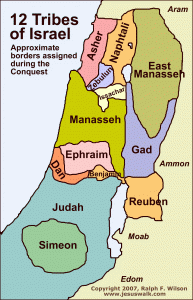
Another thing I wish to point out from this reading selection is the first verse, which states, “The Israelites again did what was evil in the sight of the Lord, after Ehud died.” Ehud was a judge from the Tribe of Benjamin, which was the area of land settled between Jericho, Jerusalem, and Gabaon (Gibeon).
Deborah was also a judge, like Ehud had been. This is a statement of equality, which has nothing to do with the sex of a judge and everything to do with one’s connection to the LORD. This means a “judge” is not some official title of government, as much as it identifies someone filled with the Holy Spirit, as one who is constantly in touch with God.  This ultimately makes God the true Judge. Therefore, Ehud and Deborah were vehicles of God’s judgment.

That judgment was essential because the Israelite people had turned away from their LORD and “did what was evil in [His] sight.” This would be a repeating theme of the Book of Judges. As it was then, so it is now, and forever.

Human beings who claim devotion to the LORD but then run and play like their heathen neighbors are no longer “children of the LORD.” They are no longer His chosen people. To be common is to be like 99.9% (plus) of humanity is, which is unholy (“evil”) and given over to following whomever or whatever human individuals can choose to follow. In this case it was some high ruler in Canaan, but that “King” can be reflective of any President, Pope, or movie star – anyone who puts people on their knees worshipping someone other than the One God, YaHWeH.

Finally, I will address the location of Deborah, which is said to be, “between Ramah and Bethel in the hill country of Ephraim.” Ephraim was the area of Israel that bordered Benjamin, to the north.

Ephraim was the tribe of Joshua; and Joshua was also one who judged Israel for God. Other than what I have written previously about the implications coming from the name meanings that add value in this story, this verse can be a clue as to Deborah’s heritage.  If it is an indication that Deborah (and/or Lappidoth) were descended from a line of holy men and women from the house of Joshua, this would help explain how she became a prophetess. This would mean Deborah was raised with priestly values taught to her, to which she adhered fervently and that devotion led to her abilities as a “prophetess.”

In this scenario, Deborah’s “husband” would be God.  Her marriage to the LORD was then what filled her with the Holy Spirit and allowed her to prophesy.  In the grand scheme of the books of the Holy Bible, the thread from Genesis to The Revelation is holy lineage, as the Tree of Life or the Vine of Christ, which includes many names of the dead branches that were gathered up and thrown into the fire.

The lesson of that lineage is the work involved in being filled with God’s Holy Spirit. Just as Deborah probably never knew Joshua (Ehud judged Israel for 80 years after Joshua died), people today never knew any of the holy figures of the Scriptures. We have to study the word of God, through His prophets and prophetesses and adhere to that teaching.  With hard work and prayer, God will see that devotion as worthy of allowing us to prophesy as God’s judges.

Lord knows we need that.

1 Thessalonians 5:1-11 – Stay awake and sober for when the day of the Lord will come [Twenty-fourth Sunday after Pentecost]

Now concerning the times and the seasons, brothers and sisters, you do not need to have anything written to you. For you yourselves know very well that the day of the Lord will come like a thief in the night. When they say, “There is peace and security,” then sudden destruction will come upon them, as labor pains come upon a pregnant woman, and there will be no escape! But you, beloved, are not in darkness, for that day to surprise you like a thief; for you are all children of light and children of the day; we are not of the night or of darkness. So then let us not fall asleep as others do, but let us keep awake and be sober; for those who sleep sleep at night, and those who are drunk get drunk at night. But since we belong to the day, let us be sober, and put on the breastplate of faith and love, and for a helmet the hope of salvation. For God has destined us not for wrath but for obtaining salvation through our Lord Jesus Christ, who died for us, so that whether we are awake or asleep we may live with him. Therefore encourage one another and build up each other, as indeed you are doing.

——————————————————————————————————–

This is the Epistle selection from the Episcopal Lectionary for Year A, Proper 28, the twenty-fourth Sunday after Pentecost. This will next be read aloud in church on Sunday, November 19, 2017. It is important as it echoes the theme of being prepared for everlasting life, as was seen in the parables of the Ten Bridesmaids and the Rich Fool.

The selected reading from the fifth chapter of Paul’s first letter to the Christians of Thessaly begins with the capitalized Greek word “Peri,” followed by the conjunction “de.” This has been translated as, “Now concerning,” which is a reversal of the written words’ order, rather than literally translating, “Concerning now.” Certainly, this translation reflects translation via standard syntax; but standard syntax misses the subtle intent of capitalization, which places a need to focus some importance onto the word “Peri.”

The word “peri” means, “about, concerning,” and “around,” which “denotes place, cause or subject.” Its implied usage infers, “consideration where ‘all the bases are covered.’” As such, the important focus by the capitalization of this states, “Circumstances now” or “Conditions on top of.”

Because 1 Thessalonians 4:18 (reviewed in the Proper 27 lesson) ended chapter four with a plea to continue teaching the value of being in possession of the Holy Spirit, prior to death, chapter five is then referencing that plea and that message.  This beginning is then stating these are the “Conditions on top of” that prior statement. This next chapter is then adding focus on the “Circumstances now,” which were surrounding Apostles who were filled with the Holy Spirit. While that is also reflected in stating, “Now concerning,” there is something lacking in such an, “Oh, by the way” introduction.

This introduction then refers to “the times and the seasons,” which sounds reminiscent of the song found in Ecclesiastes 3:1-8, made popular by The Birds, with their song “Turn, Turn, Turn” (1965).

The two key words her are “chronōn” and “kairōn” (rooted in “chronos” and “kairos”), which can also state, “durations” and “opportunities.” This means the “Circumstances” that are “next” for those in their positions as Apostles is to look at how long (“times”) they have to serve the LORD, with their new purpose being to seek new believers to bring to Christ (the “opportunities”). Thus, this chapter places focus on that “time” and “purpose’ each Apostle has, relative to preaching the Gospel, and does not reflect an estimation of when one’s “time” is up.

Because Paul then addressed the whole body of Christians in Thessaly as “brothers,” then “the times and the purposes” or “the durations and the opportunities” were those only held by bodies holding the risen Lord (Christ Jesus) within (meaning male and female Thessalonians were “brothers in Christ,” as Jesus reborn). That holy presence, coming with the Christ Mind, means there was “no need to have written” a checklist of “Apostle To-dos” or a schedule for what “times” one should go to church and what “seasons” does a Church recognize, denoted by when it is appropriate to wear robes of green, white, red, purple, black, pink (rose), gold and blue.

Above all, Paul (via the Holy Spirit) was not indicating the Christian Thessalonians thought someone should tell them when they would die and write that in a letter. The deeper meaning is the written Mosaic Laws are no longer external to them, for them to memorize and forcibly follow. The presence of God in their hearts has written His acceptable ways in their hearts.

The translation, “For you yourselves know very well that the day of the Lord will come like a thief in the night,” is shown to be three segments in the Greek text. The dividing points come after a statement that confirms the presence of the LORD within, such that is states, “Yourselves fully know that day of the LORD.” The love of God and His marriage to them, in their hearts, has become “that day of the Lord,” meaning there is no need to follow “cookbook” rules that will make “that day” be in the future. Thus, following a comma (written or implied) is the statement “as a thief in night.” This becomes read separately, as the day of the LORD being when they had their darkness of night was stolen from them.

The final segment of this verse concludes, “in this way comes.” That “manner” is then the “stealth” in which God transforms one from a mortal born of death (“the night”), to a soul with the promise of eternity that become “known” on “that day of the LORD.”

Of course, the double entendre (dual meaning) speaks of “night” as the “time” of death, which is not foretold “in writing.” The “day of the LORD” becomes the “light” of awareness when the soul meets face-to-face with God, who takes the soul “like a thief.’ The factor of “night” becomes representative of the “time” of death.

In verse 3, where the translation is “When they say, “There is peace and security,” the second segment (in quotation marks) is “Eirēnē kai asphaleia,” where the capitalization leads to those referenced (as “they”) saying, “Peace and security.”The presence of capitalization is important to recognize.

It is also worthwhile to know that “eirēnē” was used as an “invocation of peace [as] a common Jewish farewell, in the Hebraistic sense of the health (welfare) of an individual.” Capitalizing this word then infers someone pronouncing “I am healthy and well.” This becomes similar to the common thoughts of mortals, as stating, “I am so good that God has rewarded me physically, with good health.” The word “asphaleia” then adds to that proclamation of physical health the “reliability, firmness, and safety,” which (again) are thought to be from the good graces of YaHWeH.

For Paul to write that to Christians in Thessaly, who undoubtedly were a mix of former Jews and former Gentiles, such words were understood to be those commonly expressed. They were catchphrases, rather than deep beliefs. People of professed faith, who think they have been blessed by God (due to the comfort of their status and position) can then pretend to be a god with a catchy farewell.  This gives the impression: “As I have peace and security, I give you a pinch of that peace and security to keep as your own.”

The same can be said as happening to this day, especially when an Episcopal service comes to the point of “The Peace.” The priest motions everyone to rise, and says, “May the peace of the Lord be with you,” to which the congregations replies, “And also with you.” I expect we do it today because they did it yesterday.

Now, that is all well and fine, IF everyone knows what that means and means what that says.

Myself, not being a “cradle to grave” Episcopalian, I was not confirmed in the Episcopal Church until the ripe old age of fifty-something. After the ceremonial proceedings, the Bishop spoke with me privately, while the others were leaving the nave. He shook my hand and said, “May the peace of the Lord be with you.”

When I heard that, I was thinking, “Wow. That was so nice of the Bishop to say that … to wish me well.” So, I replied, “Thank you.”

As he was walking up the aisle to leave it struck me, “Idiot, that was an Episcopal catchphrase.” As soon as I realized my mistake, I hollered out to the Bishop, “And also with you!”

He didn’t look back; but he kinda waved his left hand to the side, letting me know he heard. Maybe he didn’t want me to see him trying not to laugh?

That becomes symbolic of what Paul was writing; as people think saying the right things is all they have to do to get to Heaven. However, Paul then wrote, “Then sudden destruction will come upon them, as labor pains come upon a pregnant woman, and there will be no escape!” This says that talking a good game is no replacement for sacrificing your Big Brain for the love of God and the Mind of Christ.

When that self-sacrifice is done, then” you do not need to have anything written to you” to memorize as a farewell.  A catchphrase is an automatic statement that comes without out deep thought and meaning.  “Peace and security” implies “I already have this, which only works when that is the truth.

To follow that up with, “sudden destruction will come” means “ruin, doom, destruction, and death” has just been wished upon oneself, simply from thinking one is prepared to enjoy life because God loves him or her, and not doing the will of the LORD. That meaning of “destruction” comes from the Greek word “olethros,” which also “emphasizes the consequent loss that goes with the complete “undoing.”’ One is thus undoing all of their pleasant thoughts of health and safety by boasting about you being well-to-do.  All the counting of one’s chickens before they have hatched will have been “undone” by having the gall to think God loves you so much that He is your slave.

Now, in the verse where it says, “as labor pains come upon a pregnant woman,” this too is spoken with dual meaning intended. First is the obvious, which is “labor pains” come suddenly, when a “pregnant woman” is due to give birth to a baby. Their onset becomes a ‘drop everything’ mentality, with going into rush mode an immediate response. For a lot of married couples who are pregnant, the parents-to-be practice for that time when action needs to be quick. When it is time to react swiftly, looking up something in a book or calling someone to ask what to do is not the best way to get moving.

Second, which is a deeper meaning, relates to my having said prior that all mortal human beings are called to be the brides of God. God wants to impregnate both males and females with His Holy Spirit; but God is not going to rape anyone that refuses to get engaged and become married to Him (in Spirit). Therefore, the metaphor means the “destruction” of death will come suddenly, because mortal human beings (males and females) became “pregnant” from their own rejections of God and Christ.

There is a vulgar saying that involves a word beginning with “F” and involves “yourself.” Consider that the secret second meaning here.

Still, the Greek words only imply a “pregnant woman,” which is the translation provided by the New American Standard Bible (NASB). The actual Greek text says, “ōdin en gastri echousē.” The closest that comes to “labor pains upon a pregnant woman” is as “the pain of childbirth to her [feminine “the”] in the belly holding.” The actual birth of a baby or child is implied, but not said.

A viable alternate translation can be, “the acute pain to her in the stomach having.” This then becomes a reference to a woman that has not become pregnant, as the sudden announcement from “her belly” that mensuration is about to begin sloughing and unused egg. As metaphor, males can know this “sudden pain in the gut” after eating some bad food.

The point is to not get caught up in looking for ways that, “This cannot be a worry for me,” as Paul was not trying to tell of pregnant women suddenly dying. The comparison is to how the state of “death comes so quickly” that “there can be no escape.”

In verse 4, Paul again refers to the recipients of his letter as “brothers.” The translation as “beloved” recognizes a familial relationship, in the same way that John wrote that Jesus loved Mary Magdalene, Martha, John, and Lazarus. The actual identification as “brothers” says Jesus had been reborn in each and all.  The new persona became their escape from the sudden throes of death.

Paul then stated Apostles (males and females) “were not in darkness.” That means they had been elevated from the level of mortal sinner (where darkness always exists) to righteous Saint, where the light of Christ was surrounding them.  This can be seen as the halos depicted above a Saint’s head in art.  This light was brought upon them by God’s Holy Spirit, so that God had snatched away (good translation of “katalabē”), “like a thief,” their souls from Satan.

The presence of this light that removes all possibility of darkness from the Christians of Thessaly is said above to be due to them being “children of light and children of the day.” The actual Greek states, “huioi phōtos” [comma] and “huioi hēmeras.” The word “huioi” is repeated, lending it an importance of identification. Those repeated word are rooted in the singular word “huios,” which properly means “sons.”  The Biblical implication of “huios” as “sons” means it can state (as understood use), “Anyone sharing the same nature as their Father.” (Helps Word Studies for “hyiós“) Certainly, “their Father” has to be understood as God, the LORD.

According to the Helps Word Studies explanation of the Biblical meaning, this word is expanded further by this definition: “For the believer, becoming a son of God begins with being reborn (adopted) by the heavenly Father – through Christ (the work of the eternal Son).” Therefore, while it can be assumed the Christians of Thessaly included men and women, husbands and wives, this use of “sons” clearly identifies them all as the “sons of light” and the “sons of day,” as those embodying the Mind of Christ, Jesus the Son.

By Paul stating “we are” (“esmen”), he was writing as one of those “sons of light,” “sons of day,” so he knew the same as the Christians of Thessaly, because they all were filled with the Mind of Christ as the same Son. Still, “we are” is actually led by the capitalized “Ouk,” meaning “Not.”

The importance of that negative says the voice in Paul’s mind spoke loudly, “Not are we of night nor of darkness.” Paul knew all the writers and addressees had escaped death and the dark night of the soul after death.  They had been saved by each being a reborn Jesus, who said, “I am the light of the world. Whoever follows me will never walk in darkness, but will have the light of life.” (John 8:12) “Follows” means be the next Jesus.

The translation of verse 6, “So then let us not fall asleep as others do,” can seem like Paul was giving a pep talk, urging them not to drift off and die, when they have “light” and “day” on their sides. In reality, the Greek text literally states, “So then not we should sleep like the rest.” The “conditional” form of “katheudó” implies that none will reach death and have a soul lost in darkness because they are “sons of light” and “sons of day.” This conditional form reminds us of verse 1, which said this chapter would address “Conditions on top of” (“Peri”) being tasked to spread the Gospel of Christ.  One condition is Apostles should not sleep like the rest.

Paul then stated the additional responsibilities Apostles have, which is stated where he wrote, “but let us keep awake and be sober.” The word translated as “awake” is “grégoreó,” which is the conditional form of the root word “grēgorōmen.” The proper translation states, “but we should be vigilant.” This is then followed by the word translated as “sober,” which has “néphó” as its root, from the conditional form written– “nēphōmen.” The completion of the statement is then “and we should be free of illusions,” where “not being delusional” is a viable substitute for “sober.” Again, Paul spoke in the conditional form, which maintains the theme set in the introduction of “Conditions on top of” preaching the word of God.

The translation that says, “for those who sleep sleep at night, and those who are drunk get drunk at night” is actually shown in the Greek text for verse 7 as having four segments, with a semi-colon splitting this verse in the middle. Those language ‘road signs’ say pause and reflect on each segment before proceeding to the next. The four segments literally translate as, “those indeed sleeping,” “by night sleep,” [semi-colon] “and those becoming drunk,” “by night get drunk.” Each segment has its own separate idea that needs to be grasped, before one can run and toss everything together in one quick breath of reading.

To begin with, “those indeed sleeping” recognizes the need for an Apostle to remain alert and free of illusions because (“gar” = “indeed,” => “cause”) the rest of humanity is “sleeping,” as mortals born of death. Only those who are alert and awake can rouse those asleep from their slumbering lives. The separate segment that says “by night sleep,” is a focus being placed on the absence of light that night brings. That, in turn, maintains how ‘dead’ humans of normal life sleepwalk towards a dark end. Following a longer pause for reflection on those statements (the intent of a semi-colon), the next segment then continues (“and”) by placing focus on this life of darkness assisting a sleepwalker because mortals born of death have “become drunk.”

This state of “intoxication” is not caused by drinking alcoholic beverages (as if drinking was the only sin of darkness, only done after nightfall).  Instead, it projects all the artificial “highs” and addictive “lows” that one gets from the excesses of the material plane. Excessive drinking can be representative of anything the world has to offer that places the user in an altered state of being, incapable of “seeing the light.” This is then supported in the final segment, “which states “by night get drunk.”

Because “drunk” represents the illusions of life (they used to say drunks saw hallucinations of pink elephants), “sober” is the opposite, where one is “free of illusions.” Paul then encouraged the Thessalonians (in the conditional) to remain “sober,” as those who are led by the light “of day.” That ability to remain focused on helping those who are still in darkness, is then stated as if an Apostle should dress like a ‘Christian soldier’, with a breastplate and helmet.

Halloween – Almost normal
All other days of the year – delusional

That ‘armor’ of protection is then a reference back to the Holy Spirit being the truth of “Peace and safety.” Because a “breastplate” covers the heart area, it becomes the armor of one’s “faith and love” of God. The “helmet,” as the crown of one’s “hope of salvation,” is then the “security” an Apostle receives from the Mind of Christ (with a helmet covering one’s Big Brain of ego).  As visual as the verbiage seems, this armor is invisible and comfortably worn by all Saints.

The translation of verse 9 above (NASB), “For God has destined us not for wrath but for obtaining salvation through our Lord Jesus Christ,” is again set without the pauses Paul indicated. There are four segments here, which literally say, “because not has destined us God to wrath,” followed by “but for obtaining salvation,” and then “through the Lord of us.” The final segment states “Jesus Christ,” which is the entity that true Christians become. “Jesus Christ” becomes the author of our “salvation,” when God changes one’s assignment from mortal born of death to a soul allowed everlasting life in light.

When the translation sums this identity of “Jesus Christ” as, “who died for us,” millions of Christians think: Because Jesus died and went to Heaven, anyone who believes that will also go to Heaven.  This is wrong, because that it an over-simplification of that which was written. The literal Greek says of “Jesus Christ” that he is “the [One] having died for us.”

The word translated as “for” is that word “peri” again, so “Jesus Christ having died” was conditional “(condition on top of”). Further, the singular number of the word “the” (implying “One,” as “the [One]”) is then followed by the plural pronoun “us.” The plural number says “Christ Jesus died so there could be many Jesus Christs.” As One (the singular), Jesus was limited to only being that guy from Nazareth, born in Bethlehem. However, by him “having died,” then “Jesus,” as the “Christ” “could be us.”

Verse 10 then continues in the conditional (not shown in the NASB translation) saying, “that [a reference back to the death of Jesus leading to Christ in us] whether we might watch or we might sleep.” This is saying that by having Christ be one with an Apostle (the same in all Apostles), then the human being that becomes the risen Lord has nothing to worry about in life (“we might be alert and watchful”) or our body’s eventual death (“we might fall into the sleep of death”). We do not have to worry because (the next segment says), “together with him we might live.” The conditional statements then speak of being filled with God’s Holy Spirit, bringing about that ‘living together’ arrangement.

Verse 11 then ends this selected reading with the Greek text showing three segments. The first says, “Therefore encourage each other.” This is what Paul’s letter is doing. It is a statement that Apostles and Saints “console, send for, invite, beg, admonish, and comfort” one another (from “parakaleó”). This is as opposed to Christians glad-handing for five minutes during “the Peace,” and then silently slinking off, never to call upon a fellow Christian otherwise (unless there is money to be made).

The next segment says, “and build up one another,” which says to add strength to the ones who may be older, or sicker, or (in those ancient times) put in jail for being Christian. To “build up one another” is like “encouraging one another,” as it means a compliment here and a handshake there, with going out of one’s way to recognize the works of faith in one other than oneself. It means sharing, because you want others to share with you.  This recommends a fulfillment of the command, “Do unto others as you would have them do unto you.”

Finally, Paul ended with the assurance, “just as you are doing.” The Greek word “poieite” (“you are doing”) is the present infinitive of “poieó.” That is a verb stating “action.” It means “manufacturing, making, constructing, acting and causing.” It is an encouragement to “keep up the good works.” That says Paul knew their “works” and wanted them to know he knew.

This act of kindness, as a written ‘pat on the back’, is what being Christian is all about. If you cannot compliment another Christian for their good deeds, then perhaps some are actually standing in a tunnel of darkness, looking at the light at its end. Depending on how big and bright that light appears, some might still be afraid to step out into that light. Once one does, one will stand with other Saints and Apostles, turning back to the tunnel, so all can be reaching out to someone else who was also lost and afraid.

Come into the light, brother and sister.

Matthew 25:14-30 – What to do with spiritual wealth made avilable? [Twenty-fourth Sunday after Pentecost]

Jesus said, “It is as if a man, going on a journey, summoned his slaves and entrusted his property to them; to one he gave five talents, to another two, to another one, to each according to his ability. Then he went away. The one who had received the five talents went off at once and traded with them, and made five more talents. In the same way, the one who had the two talents made two more talents. But the one who had received the one talent went off and dug a hole in the ground and hid his master’s money. After a long time the master of those slaves came and settled accounts with them. Then the one who had received the five talents came forward, bringing five more talents, saying, ‘Master, you handed over to me five talents; see, I have made five more talents.’ His master said to him, ‘Well done, good and trustworthy slave; you have been trustworthy in a few things, I will put you in charge of many things; enter into the joy of your master.’ And the one with the two talents also came forward, saying, ‘Master, you handed over to me two talents; see, I have made two more talents.’ His master said to him, ‘Well done, good and trustworthy slave; you have been trustworthy in a few things, I will put you in charge of many things; enter into the joy of your master.’ Then the one who had received the one talent also came forward, saying, ‘Master, I knew that you were a harsh man, reaping where you did not sow, and gathering where you did not scatter seed; so I was afraid, and I went and hid your talent in the ground. Here you have what is yours.’ But his master replied, ‘You wicked and lazy slave! You knew, did you, that I reap where I did not sow, and gather where I did not scatter? Then you ought to have invested my money with the bankers, and on my return I would have received what was my own with interest. So take the talent from him, and give it to the one with the ten talents. For to all those who have, more will be given, and they will have an abundance; but from those who have nothing, even what they have will be taken away. As for this worthless slave, throw him into the outer darkness, where there will be weeping and gnashing of teeth.’”

——————————————————————————————————-

The is the Gospel reading selection from the Episcopal Lectionary for Year A, Proper 28, the twenty-fourth Sunday after Pentecost. It will next be read aloud by a priest in church on Sunday, November 15, 2017. It is important because it addresses being given the talents of the Holy Spirit and one’s use of those in God’s service, as told in the Parable of the Talents (or Minas).

In reference to this reading, it is one that I feel is most important to grasp. I have posted on WordPress about the meaning of the parable of the talents twice before. Once on two previous blogs I had.

They both address my feelings on this allegory told by Jesus; and the posting on Bus Stop Sermons addresses this Gospel reading being joined with the other readings on that Sunday – the prophetess Deborah and Paul’s encouragement for vigilance.  That was in October 2014, when Proper 28 fell during “stewardship month,” so few sermons were preached on any of the readings, although “talents” was a lead-in to pointing out how much savings the congregation was sitting on, not giving all they could to the church.

It must be clearly understood that this reading has absolutely nothing to do with money, just as Jesus was not trying to preach to Jews how to build silos to store grains, nor was he teaching how to store lamp oil for future needs. The use of “talents” must be seen as the immensity of power that one receives when blessed by God’s (the Master’s) gifts of the Holy Spirit.

All that glisters is not gold. (The Merchant of Venice)

The Greek word “talanta” is plural number of the word “talanton,” which actually refers to a weight of silver or gold – roughly 75 pounds.  This weight equates to about 6,000 silver denarii, but increases to 180,000 denarii (30x more) if the weight was in gold.  There is nothing in the words of this parable that differentiates this weight of value as one or the other. Nowhere does the words “gold” or “silver” appear. This means a “talent” is meant to be understood as a general statement of value, which (as the money commercials for silver say) “Will never be worth nothing!” Still, a “talent” should be read generally as a precious commodity, one in which time usually yields increased value to fixed amounts held.

For this writing, I will try not to repeat what I have already posted; but because I strongly want to expound on a greatly ignored and misunderstood (or misrepresented) parable, I will add a few tidbits that I now see exposed.

(Isn’t it wonderful how re-reading Scripture always has something new to offer?)

First of all, we are presented a translation in verse 14 (the first verse of this reading), where we read: “Jesus said, “It is as if a man, going on a journey, summoned his slaves and entrusted his property to them.” The Greek text literally states, “Just like for a man going on a journey called their own servants”  ,  “and delivered to them the possessing of him.”

As two segments, the implication of the masculine plural “tous” allows me to see this as a statement of God using man as His servants, so “man going on a journey” becomes not the Master, but the Apostle(s).  The journey will be a commitment of servitude, and that service to the LORD will lead to their being called “slaves.”

By reading the segment that says, “delivered to them the possessing of him,” this makes clear (in Christian ideology terms) the possession of the Holy Spirit. Because these three men have promised to serve the Master, that allowed them the addition (“and”) “of him” within.  The Master never left them as they journeyed; he was in their hearts and minds. That presence means the three became elevated in Spirit by the gifts of “talents.”

Second, when we see the talents have been dispersed unequally (five to one, two to another, and one to the third), we read: “to each according to his ability.” The impact of those words makes one think in terms of “how much the slaves can handle.” This is not the only way the word “dynamin” should be read.

For such a “servant” to have some level of proven “ability” with money, it begs the question: “If the slave was so able to wisely invest money, why is he a slave and not a rich man in the first place, with his own slaves?”  This possibility becomes the most likely, after one sees the “man on a journey” is a volunteer for God, sacrificing self-serving goals for the Father.  Therefore, all three men should be equally able.

I imagine three children of a father being given their allowance.  To the nine- year-old the father hands a five dollar bill. To the seven-year-old he hands a two dollar bill; and to the four-year old he hands a one dollar bill. After the father walks away, I’m sure the conversation between young boys would be something like this:

“Hey!” said the seven-year-old, “How come you get five dollars and I just get two?”

“Its cause you’re just little!” replies the nine-year-old.

Meanwhile, the four-year-old looks at the one dollar bill and says, “I’m going to buy lots of candy with my money.”

None of them could spend any of their money, since the father left.  Without any ability to do anything with pieces of paper, there would no way the boys could spend it (much less invest it).

This is why “according to his ability” means what each had done to get the allowance – through chores and responsibilities that had been previously demonstrated. It has more to do with what one has earned, than being a statement of how able one is to run a farm or a household with land.

In the scenario of three sons, the older boy would have done more work than the younger boys.  They were given an allowance that was proportionate, based on age. Thus, the nine-year-old was able to do more work and it was that experience that made him wiser, thus more capable of earning more. The youngest would have done the least, and therefore would be the least experienced mentally and be less physically adept. His lack of age and maturity would make him incapable of knowing how to volunteer for extra work (for pay) and he would not know how to do any unlearned work (for any bonuses that might come with pay).

This comparison to children and those immature of minds and bodies does not work as a comparison to this parable, once one sees the reaction the Master has when the slave given one talent does not produce a yield. When we hear the Master say to the one given one talent, “You wicked and lazy slave!”, we are told all three were equal mentally and physically.  There were no lowered expectations from this third slave.

That third slave is then addressed based on the mind-body equality of the other two.  By being called “Wicked” (from “Ponēre“) this becomes a statement of personal thought and the brain’s control.  By being called “lazy” (from “oknēre“), that becomes a statement of personal effort.  The capitalization of “Wicked” and the lower-case spelling of “lazy” is a subtle way of saying, “Where the brain leads, the body follows.”

That man admitted he had been “afraid” (“phobētheis”) and his only action was based on fear.  That act was “to hide” (“ekrypsa”) the talent given him. To admit to burying it in the “ground” (“”), he confessed to feeling more secure with worldly values, than the spiritual gift he had been given.

This view of the Master’s, based on the misuse of a talent, says that the three slaves were the equivalents of people saying they served God, with all their heart and all their mind.

The first slave is then the example of one who had studied the Laws, prayed for guidance in understanding, gave a fair share of his wealth to the poor, raised his family to be faithful, and shared his knowledge of faith with others of like mind, who sought answers.

The second slave also studies the Laws and prayed for guidance, but he had no money, so he had no family, and had no influence because of that.

The third slave simply memorized the Laws, well enough to become wealthy from it, but that was his only positive. Otherwise, he prayed loudly in public, so his prayers were answered by those listening on earth (not God); he invested his wealth in the Temple, so he became richer as a business associate; he married for pleasure, to a woman only pretentiously faithful; and he never had children (at least of faith, none who could not see through his façade).

This unspoken way of seeing the Jews of Jesus’ day makes the allegory of the parable have real dimensions that helps to explain the symbolism of the Master giving different amounts of wealth to his slaves. While this view is not to be taken as “the Gospel,” it shows how the works of the slaves merited the dispersal of talents. Since many of the parables and stories told by Jesus were intended to slap the faces of those “wicked and lazy slaves” that were the Pharisees, Sadducees, scribes and Temple priests, this would then be how to see the one slave who did nothing to take a talent and make it grow.

Understanding this parable in that light then makes it possible to direct that light on today’s Christians. There are those who do the works necessary to warrant multiple gifts of the Holy Spirit. There are those who do what they can in limited circumstances, which thereby limits how many gifts they can use, so nothing goes to waste (their ability). Those are the ones whom the Master says, “Well done!” (“Eu“)

Then, there are those who know Scripture, but for all the wrong reasons. They are the ones who are afraid of losing what they can gain in the world, simply by telling people how to find God. They could “witness for Christ,” but there is no money to be made from that sacrifice.  Some might call this group the “wolves in sheep’s clothing.”

When the Master told that last slave, “You ought to have invested my money with the bankers, and on my return I would have received what was my own with interest,” this points the finger of guilt towards the ones who claim their success is proof that it had been given to them by God.

The beneficiary is “God.”

While those Christians may contribute to have beautiful churches to call their own, no church has ever saved one soul from damnation (as only people can). This means it would be better to give “one talent” of cash ($19.8k in going silver rates; $2.34 million if gold) to a local cab company, which would then instruct their drivers to wait outside the places of the night, with instructions to drive the guilty of sin (free of charge) to that man’s church.  They the drunken bodies could be dumped on the church steps, so that maybe one in a million would actually go inside and pray to God for help. That one soul would then represent some R.O.I. as interest on the worth some man reaped from professing to believe in God. Instead, the analogy is that the wicked slave just paid bills for his or her church, which kept the lights and A/C on, the water bill paid, and a new roof in place every 20 years, while writing all that off on his income tax.

Finally, I would like to comment on the condemnation, where the Master gave the order, “Throw him into the outer darkness, where there will be weeping and gnashing of teeth.”  This gives the impression that God has some “bouncer angels” that stand by His side, when He comes to visit the wicked and lazy.  It gives the impression that God punishes people for evil deeds.  That is wrong, simply because it takes the actions of a weak soul and makes God seem like a vengeful deity.

The word translated as “Throw” is “ekbalete,” which is fully shown as “throw out,” or “cast out,” or “banish.” It means “to drive out,” which makes this command not for someone else to administer, as it is done by the Master speaking.  The slave immediately became an “outcast,” based on self actions (or inactions).

With this parable from the Gospel of Matthew being linked with the epistle of Paul, which spoke of sleeping at night and being in darkness, as opposed to true Apostles being “sons of light” and “sons of day,” the same use of metaphor is stated in this expulsion. All three slaves of the Master had the benefit of light and day, from which their talent(s) could grow and expand. However, because the one slave “hid” his talent “in the ground,” he covered that light up.

This is then an enactment of the English proverb, “to hide one’s light under a bushel.” That saying was rooted in Matthew 5:15, which states: “nor does anyone light a lamp and put it under a basket, but on the lampstand, and it gives light to all who are in the house.” Because the one slave was more in love with the darkness and drunkenness of the earthly realm, he was the one who sealed his own fate by his confession of his deed. He got what he preferred. He sought an external light (the meaning of “exoteron,” or “outer”), rather than one that shines within his or her own heart and mind.  Unfortunately, that external illusion of light is the darkness of mortal death.

When God, as the Master said, “Where there will be weeping and grinding of teeth,” an alternative translation of “weeping” is “lamentation.”

No, say it ain’t so! Make this failed election go away!

As Jeremiah wrote of the cries and tears that came from the Jews who had lost their precious land to invaders, the “weeping” was known by God.  It is the moans and cries of those who realized their mistakes too late. God had ‘been there, done that’ with the Jews and Israelites, who wept and gnashed greatly; so Jesus could safely project that was the way of all losers – speaking for the Father.

The “gnashing (or grinding) of teeth” is what people do when they are angry, in one or two ways.  Either anger causes teeth to grind because one faces a complete loss of control, when one wants to do something other than what one is being forced to do; or the gnashing of teeth comes when one has no one to blame but oneself. <Cue picture of Homer Simpson saying “Doh!”>

Both scenarios equally applied in this man’s case.  Therefore, the Master simply pointed out what people bring upon themselves, where the 20/20 of hindsight means lots of tears and eroded enamel are typical.  It is that fuzzy line between prophecy and high probability.

The moral of the story is to put oneself into this man’s position, where God presents one with a talent to use wisely. Then, rather than taking the money and running (or digging a hole in the ground and burying it), one needs to prove to God you will not waste away a good thing. A talent is a heavy responsibility (75 pounds); but you have to bear that load well and say, “Thank you Sir. May I have another?”

#Matthew251430 #Matthew515 #parableofthetalents