Tag Archives: Proper 29 Year A

Ezekiel 34:11-16, 20-24 – Gathering lost sheep [Christ the King Sunday]

Thus says the Lord God: I myself will search for my sheep, and will seek them out. As shepherds seek out their flocks when they are among their scattered sheep, so I will seek out my sheep. I will rescue them from all the places to which they have been scattered on a day of clouds and thick darkness. I will bring them out from the peoples and gather them from the countries, and will bring them into their own land; and I will feed them on the mountains of Israel, by the watercourses, and in all the inhabited parts of the land. I will feed them with good pasture, and the mountain heights of Israel shall be their pasture; there they shall lie down in good grazing land, and they shall feed on rich pasture on the mountains of Israel. I myself will be the shepherd of my sheep, and I will make them lie down, says the Lord God. I will seek the lost, and I will bring back the strayed, and I will bind up the injured, and I will strengthen the weak, but the fat and the strong I will destroy. I will feed them with justice.

Omitted: [17 “As for you, My flock, thus says the Lord God, ‘Behold, I will judge between one sheep and another, between the rams and the male goats. 18 Is it too slight a thing for you that you should feed in the good pasture, that you must tread down with your feet the rest of your pastures? Or that you should drink of the clear waters, that you must foul the rest with your feet? 19 As for My flock, they must eat what you tread down with your feet and drink what you foul with your feet!’” ]

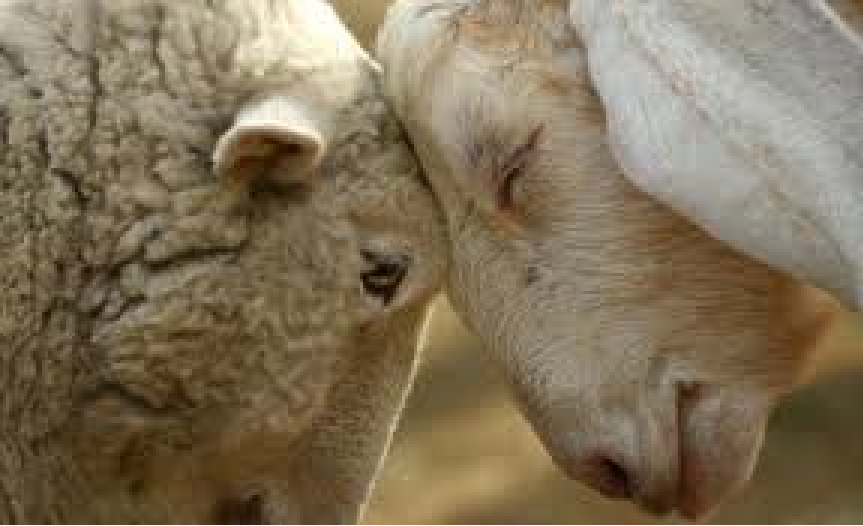
Therefore, thus says the Lord God to them: I myself will judge between the fat sheep and the lean sheep. Because you pushed with flank and shoulder, and butted at all the weak animals with your horns until you scattered them far and wide, I will save my flock, and they shall no longer be ravaged; and I will judge between sheep and sheep.

I will set up over them one shepherd, my servant David, and he shall feed them: he shall feed them and be their shepherd. And I, the Lord, will be their God, and my servant David shall be prince among them; I, the Lord, have spoken.

———————————————————————————————————

This is the Old Testament selection from the Episcopal Lectionary for Year A, Proper 29, the last Sunday of Pentecost. It will next be read aloud in church on Sunday, November 26, 2017. As the last Sunday of Pentecost, it is recognized as Christ the King Sunday. Verses 17 through 19 are omitted from the service reading, but I have been included in the presentation above because they add depth to understanding fat sheep. This is important as it prophesies the coming of Jesus the Messiah, after God will gather the scattered sheep (Israelites and Jews) from their lost places (Babylon and beyond), for him to Shepherd.

This reading’s lead-in (verses 1-10, which are not read aloud) has the title “Prophecy against the Shepherds of Israel,” as the title that appears on the Bible Gateway website, specifically for the New American Standard Bible translation. For the verses shown above, the title changes to “The Restoration of Israel.” The omitted verses lean more towards the main title, rather than about God restoring the chaos caused by bad shepherds. Still, in the beginning and at the start of these verses, Ezekiel is continuing what he stated in verse 1: “The word of the Lord came to me,” which is a clear statement of God speaking through a Prophet.

After reading these verses of God searching for his lost sheep, I recalled an episode of the reality TV show “Alaska: The Last Frontier.” Two of the ranchers had to go to find cattle that had become lost after freezing weather had come in, and a larger storm was to follow that one. The cattle were in danger being on frozen tundra, unable to forge swollen and freezing rivers.

Here is a video clip.

This video is just a portion of what the episode covers; but where someone says the cows get scared and hide under a cedar tree, it becomes clear that the cattle kind of like their new stomping grounds. They would rather hide in fear, than come out and say, “Here we are.  So glad you found us!”

The scattered cattle have to be rounded up and headed back to their respective ranches, or they would happily stay where they were … lost … until a predator killed them for dinner or winter kept them from finding any food. Either way, the out of place cattle would end up dead. The point of my bringing up these cattle is they can then become a parallel for the sheep in this reading, as cattle and sheep are both dumb animals that have a hard time knowing what’s good for them … and what’s evil.  So they need a herder.

Imagining that the scattered sheep in the scenario spoken of by Ezekiel, for God, are like those lost cattle on a cable show, it becomes easier to see how the scattered sheep probably were not baa-ing for saving. After “the days of clouds and thick darkness,” they probably did the best they could and grazed wherever they could.  For a lost grazer, anywhere can be called home.

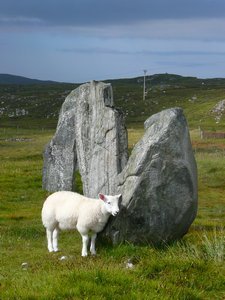
Sometimes it is hard to tell the sheep from the sheep. They blend in so well.

So, when God spoke and said, “I will bring them out from the peoples and gather them from the countries,” the lost sheep were probably allowing foreign “people” to be their shepherds, and they had gotten used to the vegetation of foreign “countries.” They acquired a taste for strange people and places.  However, God had a plan for them: find them; bring them back to the fold; and have them be led by His “servant David,” which means Jesus (of the Bethlehem heritage).

Reading this prophecy of Ezekiel made me think of the Parable of the Prodigal Son, which is not the Gospel reading that will accompany this Old Testament reading. (I know because I checked.) The Gospel of Proper 29 is Matthew 25:31-46 and it is a perfect fit for a reading with the title that says it is “against shepherds.” It ties into the Christ the King theme, but has Christ separating the sheep to his right and the goats to his left.  While Ezekiel 34 feeds that theme, Luke 15:11-32 (the parable of the prodigal son) deals with the aspect of foreign people and foreign countries.

That parable deals with the prodigal son becoming lost, with the end of the story being the celebration of the lost being found – “But we had to celebrate and rejoice, for this brother of yours was dead and has begun to live, and was lost and has been found.” (Luke 15:32) As this reading from Ezekiel is about finding lost sheep, it projects God as if He were planning on going out and selectively choosing which sheep to be found. In an anthropomorphic story, it appears that God lost a little of his All-Knowing Mind and All-Seeing Eye.

In the parable of the prodigal son, the father allows his son to become lost and does nothing to go find him. The father does not send spies to keep up on his son’s whereabouts.  It is through that lens of seeing the Father allowing the lost to be lost that this Ezekiel reading becomes more powerful.  The assumption that God would hunt for lost sheep should be inverted, such that God will make it possible for the sheep to find Him.

In the translation above, including the omitted verses and all coming from the New American Standard Bible version, the word repeated the most times (in variations of usage) is “feed.” It appears six times in the NASB translation, while the actual Hebrew text shows seven times (in verses 11-24).  The translation above, “they must eat,” is the missing time. This repetition is significant, especially when “fat” (2x) and “lean” (1x) are allusions to how much the lost sheep have been fed. This focus on food (which implies grass, upon which sheep graze) becomes an overall statement about how God will search for His lost sheep.

Rather than God Himself taking physical form and hunting for lost livestock (“I myself will search for my sheep, and will seek them out”), the lost will be found by the Word of God.  That is the food that will remain present among the sheep, no matter where they roam. God first sent manna as the food for the Spirit of the Israelites.  They forever remembered being found by God in the breaking of bread at Passover.  When Jesus said, “eat this [bread] in remembrance of me,” the meaning is the food that leads one back to God.

Ezekiel was one of those who would serve God and seek the lost sheep, to return them to the foal. Still, the feed of Israel is the Holy Scriptures, orally recited from memory, as well as written onto scrolls and kept safely secured. That history of promise and all the Laws of the Covenant, with all the songs of praise and prophecies of doom (the “clouds and thick darkness”), that IS the “rich pasture on the mountains of Israel” from which the lost sheep can always feed.

Because God said through Ezekiel that “I myself will judge between the fat sheep and the lean sheep” and “I will judge between sheep and sheep,” one can assume that all of the lost sheep reclaimed will have been fed by God. Some will be fed more than others, with some fed on pure pasture and clean water, while others are left ‘the crumbs off that tableland’. The omitted verses (17-19) state how some of the sheep will walk all over the grass the others graze from and then drink from clean waters, before muddying the streams by walking through that water. This states the quality of the feed (the graze) the lost sheep will have available to them, with the rams taking the best and leaving the other sheep the rest.

In the parable of the prodigal son, it was food that brought him back home. Sure, he had taken his inheritance and squandered it in a foreign country; but he was willing to hire himself out to one individual of that country (probably another lost sheep), rather than consider going home and be seen as a loser. In the midst of a famine that befell that land, the prodigal son fed the scraps from his foreign master’s table to the swine, while he was starved. It was then the memory of the plentiful food that was given to the lowest of his father’s hired hands and the livestock that motivated the lost son to go home.

In the Ezekiel reading, we hear God saying: “I will seek the lost, and I will bring back the strayed, and I will bind up the injured, and I will strengthen the weak, but the fat and the strong I will destroy. I will feed them with justice.” In the parable of the prodigal son, we find of the son’s decision to admit his sins and beg to taken back as a hired hand, led to the father seeing his return.  The son had found his way back home, to the father’s delight.

We read, “while he was still a long way off, his father saw him and felt compassion for him, and ran and embraced him and kissed him.” (Luke 15:20) This says that repentance will be the that which will find, bring back, mend, and strengthen the lost. Those who repent will be those who were lost but then were found. Their repentance will have come from the feed of Scripture, which promises justice.

It is important to see this connection between being fed the Word of God. This Word is ignored by those of foreign countries, who worship other gods and have no concept of resurrection and a lost soul’s return to be with God the Father. Thus, it is the sheep metaphor that represents those of Judaic-Christian heritage and tradition. The sheep are those who graze upon the Word of God. However, there are those among the sheep that dilute the words of God, for the purpose of getting themselves fat, while the other sheep get lean.

The fat sheep are then the bad  (or false) shepherds, who were those who lost the Promised Land and then came back to Jerusalem as the Pharisees, Sadducees, scribes and Temple priests. They offered sacrificed to God as the high and mighty (the fat and the strong), while keeping for themselves the best parts (the good pastures) and leaving the others the guilt (tread upon pastures). They amended the laws (the clear waters) to suit their needs, while forcing (pushed with flank and shoulder, and butted) the rest to comply.
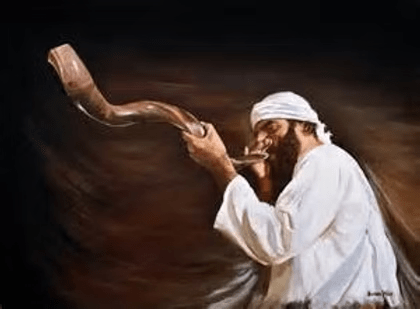
When God said, “I will save my flock, and they shall no longer be ravaged; and I will judge between sheep and sheep;” adding, “I will set up over them one shepherd, my servant David, and he shall feed them: he shall feed them and be their shepherd,” this means more than God sending Jesus (a descendant of the House of David, through Jesse) to Jerusalem. Jesus was one in a line of Holy Prophets who kept the food of Scripture pure, and the spirit of the Word clean.  However, Jesus Christ sired a line of Apostles in his name.

This means the judgment between “sheep and sheep” is determined by whose soul appears at the doorsteps of Heaven. Are they the souls of sheep who were shepherded there by the Mind of Christ? Or, are they the souls of those shepherded by the brains of men, who did nothing to lead another sheep’s soul home to God?  Were they sheep who had fun being with foreign people and the ways of foreign countries?  Or, were they afraid of their absence from the LORD, hiding under trees, before they were found by an Apostle and herded to holy use?

In the parable of the prodigal son, the son proclaimed, “Father, I have sinned against heaven and in your sight; I am no longer worthy to be called your son.” To have “sinned against heaven” means a confession for having allowed the flesh between the earholes (the Big Brain) to guide him selfishly. He had wanted his inheritance in advance, which he then squandered.  He understood that he had done nothing to deserve a return home to Heaven, to be again with the father as his son.

The prodigal son had intended on asking his father if he would take him as a hired hand; but because the father went to meet the son, before he could make that request, the father embraced the son with love. That symbolism is God entering into the heart of the wayward son in a union that was the desire of the wayward son. Once that presence was in the heart, the father ordered his slaves, “Quickly bring out the best robe and put it on him, and put a ring on his hand and sandals on his feet.” (Luke 15:22)
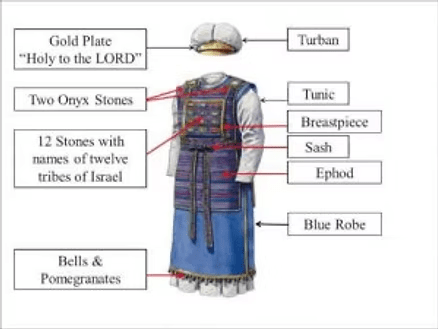
That “best robe” was the wedding gown of marriage. We have read of it in other parables.  The ensuing celebration and feast was the marriage banquet of the sheep to the Father, as an Apostle, as a Saint. It was that holy union that made the return to Heaven possible, as the judgment of the Father was to recognize a sheep that had been led back home by its having the Good Shepherd within.

This is how one should read the last verse, where it says “I will judge between sheep and sheep.” As those who profess to be Christians, we are all sheep on this earth. In order to gain entrance into the Spiritual realm of the Father, we have to determine what kind of sheep we are: Are we the sheep who serve God, through the Holy Spirit and the Mind of Christ, being led by the Good Shepherd? Or, are we the sheep who serve self, who trample underfoot the Word and weaken the spirit of faith in others, being led by Satan?

It is possible to read all Scripture in a vacuum and reach a full understanding of what this reading from Ezekiel means. When we link its meaning to other Scripture, that understanding compounds greatly.

It is the presence of God in one’s heart that seeks understanding – one wants not to be lost. It is the Christ Mind that whispers to seek the same message of one passage to be mirrored in many others. The truth of meaning is how one ceases doubting and finds faith. It takes repentance to seek to be found and worthy of becoming a hired hand for God.

This will become clearer when one reads the accompanying Gospel: Matthew 25:31-46.  That one has the title “Judgement.”
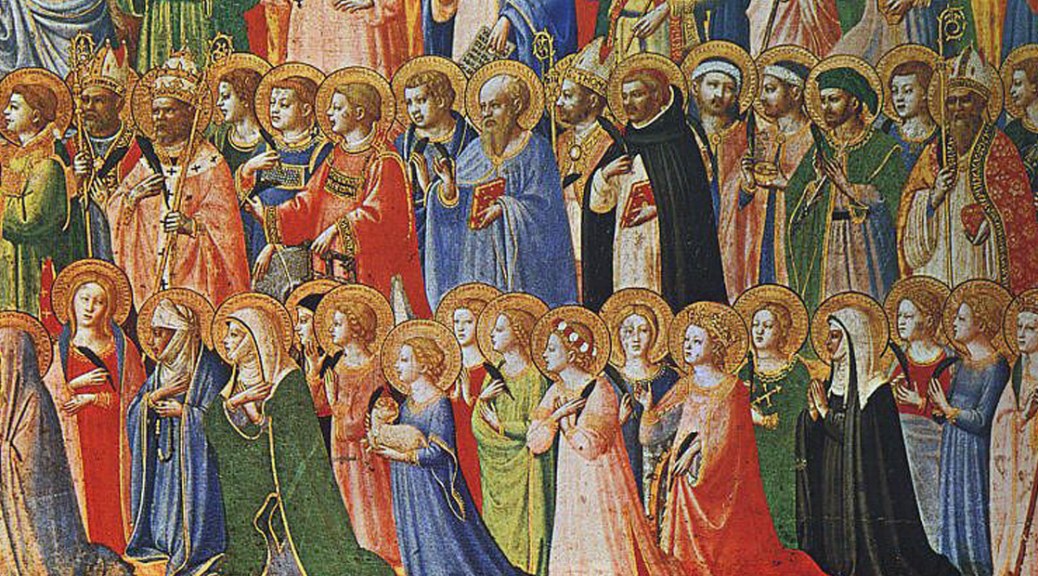
Ephesians 1:15-23 – Praying the spirit of wisdom will come [Christ the King Sunday]

I have heard of your faith in the Lord Jesus and your love toward all the saints, and for this reason I do not cease to give thanks for you as I remember you in my prayers. I pray that the God of our Lord Jesus Christ, the Father of glory, may give you a spirit of wisdom and revelation as you come to know him, so that, with the eyes of your heart enlightened, you may know what is the hope to which he has called you, what are the riches of his glorious inheritance among the saints, and what is the immeasurable greatness of his power for us who believe, according to the working of his great power. God put this power to work in Christ when he raised him from the dead and seated him at his right hand in the heavenly places, far above all rule and authority and power and dominion, and above every name that is named, not only in this age but also in the age to come. And he has put all things under his feet and has made him the head over all things for the church, which is his body, the fullness of him who fills all in all.

——————————————————————————————————–

This is the Epistle selection from the Episcopal Lectionary for Year A, Proper 29, the last Sunday of Pentecost, Christ the King Sunday. It will next be read aloud in church on Sunday, November 26, 2017. This is important because Paul addressed the power of Christ in the world, whose power is spread through Apostles like Paul  and those to whom he wrote in Ephesus.

I apologize for turning selections from Paul’s letters into dissertations of what was written and what the Greek says the meaning is, simply because Paul wrote in a manner that was directed by the Holy Spirit, which intended for his words to be most difficult to grasp. I have explained that I have been led to understand the writings of Nostradamus (relative to his work Les Propheties), which involves close attention to punctuation marks and other ‘guideposts’ of language. However, in the above translation, a long-winded Paul wrote nine verses, with four period marks – seemingly somewhat understandable, if the reader in church takes a breath at those four places of ‘full-stop’ rest.

I have posted the literal translation below, with each break point as indicated by the Greek text found here; and you will find that 180 words of English translation are written (some Greek words indicated multiple English words), all with only one period mark … the one at the end. There is one semi-colon (for emergency air intake), which appears after 144 words have been stated. However, if this selection of Paul is read line by line, in the way I have shown it, it makes 34 statements, such that the commas act as period marks, with the period mark showing where this selection altogether ends.

Because the translation above (New American Standard Bible version) is taking the standard liberties of normal syntax adjustments between Greek and English, they see the long run-on and attempt to make one tremendously long address be more like a very educated fellow, who would need to puff on his pipe four times, just to keep it lit. When this translation reaches a volunteer reader, who may be scared to death in front of an audience, or even a seasoned reader of Scripture, the speed of the reading means the listeners have only seconds to grasp words that hold deep thoughts – from God. Needless to say, Paul flies quickly over the heads of most readers and listeners, so Paul is known to cause heads to ache thinking about what he meant.

To read Paul in the manner that I have made possible below, the purpose is to slow down and listen to what your heart and mind tell you. In the small and manageable segment bits, one is able to see how this becomes Paul speaking conversationally, in the language of God. One has to be involved in the parts prior to this selection, as one set of words is connected to the next. Still, it makes one think and research. This difficulty is so only those who love God can understand – as were the Ephesians, who (like Paul) were given an ability to “speak in foreign tongues.”

The literal translation below should be read and its intent and meaning grasped, one line segment at a time. Nothing is superfluous or unnecessary.

15. Because of this ,
I also ,
having heard of the among you faith in the Lord Jesus ,
and the love the toward all the saints ,
16. not do cease giving thanks for you ,
mention making in the prayers of me ,
17. that the God of the Lord of us ,
Jesus Christ ,
the Father the of glory ,
might give to you spirit of wisdom and revelation ,
in knowledge of him ,
18. being enlightened the eyes of the heart of you ,
in order the to know you ,
what is the hope of the calling of him ,
in the saints ,
19. and what the surpassing greatness of the power of him ,
toward us ,
those believing according to the working of the might of the strength of him ,
20. which he worked in the Christ ,
having raised him out from dead ,
and having set at right hand of him ,
in the heavenly realms ,
21. above every principality ,
and authority ,
and power ,
and dominion ,
and every name being named ,
not only in the age this ,
but also in the coming ;
22. and all things he put under the feet of him ,
and him gave head over all things to the church ,
23. which is the body of him ,
the fullness of the the all things ,
in all filing .

Now, in this literal translation there are multiple points where an awkward “the” shows. Frequently, the Greek-English text will show no translation for these words, although each one is a version of “the” (such as indicating masculine singular or masculine plural, or other versions of “the”). Sometimes, words will be added or added with brackets, often showing “the [One].” This is an indication that an awkward “the” should be read as “the One,” meaning God.

With this presentation done, I will leave the bulk for the reader to ponder. However, I will address a few elements that spoke to me.

First of all is Paul’s use of the word “pistis,” which is properly translated above as “faith.” The context of that use is Paul’s opening statement (for this selection), “I have heard of your faith in the Lord Jesus.” The literal statement is, “having heard of the among you faith in the Lord Jesus,” where the awkward “the” is “tēn,” which is the singular feminine accusative form of “ho.” Because “pistis” is a feminine noun, a feminine article is attached, meaning this can state, “having heard of among you the faith in the Lord Jesus.”

I point this out because the concept many Christians have of “faith” is it means “belief.” As such, “faith in the Lord Jesus,” when said all at once, real fast, in one breath, means to most people: I have heard the story of Jesus’ death, resurrection, and ascension AND I believe that story, as Jesus being the Lord that sits at God’s right hand.” However, the word “faith,” as “pistis,” means more than that.

The word “pistis” brings a translation of “faith, belief, trust, confidence; fidelity, faithfulness,” while being rooted in “peithô,” which means “persuade” or “be persuaded.” According to HELPS Word Studies, Strong’s word number 4102 (“pistis”) infers a meaning that “is always a gift from God, and never something that can be produced by people. In short, 4102/pistis (“faith”) for the believer is “God’s divine persuasion” – and therefore distinct from human belief (confidence), yet involving it. The Lord continuously births faith in the yielded believer so they can know what He prefers, i.e. the persuasion of His will.”

One should read “yielded believer” as one who has sacrificed self will, in order to serve the LORD. The word means one listens to, obeys, yields to and complies with God’s will, more than being talked into belief by the Lord. Therefore, “faith” is “belief” based on personal experience and not simply word of mouth instructions that sound good.

Second, I would like to address Paul’s use of “hagious” and “hagiois,” both of which are properly translated as “saints.” This represents a repeated usage, which makes Paul’s usage be worthy of further inspection.

In the NASB translation above, we find it within the context of “your love toward all the saints” and “inheritance among the saints.” The literal translations I presented show this as “the love the toward all the saints” and “in the saints,” following the segment that states, “what is the hope of the calling of him.”

In the literal translation, one finds another of the awkward “the” uses, where “the love the toward all the saints” shows the word “tēn” again. The word “agapé” (“love”) is a feminine noun, requiring a feminine “the,” but the intent is to denote “the one of love,” which is relative to “Lord Jesus,” stated in the prior segment. When Paul recognized this “love,” he stated it was sent spiritually to “all” who were saints. Thus, Paul (as a saint) was making an assurance that the Ephesians too were saints.

The preposition “eis” is translated as “toward,” but has definitions that can equally be stated as “into, in, unto, to, upon, towards, for, among.” This means the direction of “the love of the Lord Jesus” is not projected outward, but “into, in, unto and among.” Therefore, it is that inner love of the “Lord” that brings “the love into” a “saint,” who becomes reborn as “Jesus.”

This view makes it important to fully grasp what a “saint” means. While looking up that word in English shows synonyms such as “a person who is deemed holy by a Christian church” or “consecrated,” that is itself a failure to grasp the full meaning.

According to HELPS Word Studies, the Greek root word (“hágios”) is properly read as meaning “different (unlike), other (“otherness”), holy; for the believer, 40 (hágios) means “likeness of nature with the Lord” because “different from the world.’” That site continues to state, “The fundamental (core) meaning of 40 (hágios) is “different” – thus a temple in the 1st century was hagios (“holy”) because different from other buildings (Wm. Barclay). In the NT, 40 /hágios (“holy”) has the “technical” meaning “different from the world” because “like the Lord.’”

Following an assumption that Paul fully understood this meaning as “different,” such that Apostles were those “set apart” from normal human beings (be they Jewish or Gentile), Paul was stating the marriage (“the love”) of God with one of deep “faith” means that God is “calling him” (or “calling Jesus”) to be “in the saints.” Therefore, a “saint” has nothing to do with some external reward or bestowing of a title from any institution of men (and/or women), as (just like “faith”) a saint is “never something that can be produced by people.” Only God determines who the saints will be.

This brings about a third element of Paul’s letter that needs clarification. In the NASB translation above, one finds the statement, “may give you a spirit of wisdom and revelation as you come to know him.” (Ephesians 1:17) This makes it appear as if Paul is making a wish (in the form of a prayer) that continued study (“come to know”) “may give you a spirit of wisdom and revelation.” This can sound to some as if Paul was wishing the Ephesians would use the Holy Scrolls in the same way that witches use magic spell books to educate themselves, so they can call upon the spirits and produce “miracles.”

As ludicrous as this may seem, the ruling class of Jerusalem saw Jesus in this exact light; and atheists of science see all miracles as trickery, never as divine presence.

In the literal translations I have presented, this single statement of “coming to know” “God the Father” and “Jesus Christ” (so “faith” and “love of the saints” can manifest) is actually split into two segments: “might give to you spirit of wisdom and revelation,” and “in knowledge of him.” The conditional form of “may give” is harder to see, than is “might give,” where “might” becomes a clearer statement of meeting the conditions that warrant the “giving” of a “gift.”

Those conditions are then to be seen as set by “God the Father,” where one “might” get the “gifts” “of wisdom and revelation,” if one has received within “Jesus Christ.” That then allows the “Christ” Mind to be the source of “wisdom and revelation,” so that all this comes “within,” as the “knowledge of him.” It says one can ONLY “come to know Jesus Christ” by BEING the resurrection of the Son of God in earthly form.

The fourth item I will address is the use of the word “elpis,” which has correctly been translated as “hope.” The NASB translation shows this word appearing in the statement, “you may know what is the hope to which he has called you.” (Ephesians 1:18b) The literal translation that I have provided shows this in the segment stating, “what is the hope of the calling of him.”

An English translation of the word “hope” finds verb usage as: “To wish for a particular event that one considers possible;” and “To desire and consider possible.” As a noun it means, “The longing or desire for something accompanied by the belief in the possibility of its occurrence.” When its meaning is applied to Christian ideology, the definition becomes, “The theological virtue defined as the desire and search for a future good, difficult but not impossible to attain with God’s help.” These definitions have become so ingrained into the intellect of humans that speak English fluently that one reads “hope” in a Scriptural context and immediately thinks, “That is some big wish made by Paul for the Ephesians to live up to.”

That is not what Paul meant when he wrote the word “elpis.” The word is rooted in the Greek word “elpō,” which means, “to anticipate, welcome” – properly, expectation of what is sure (certain); hope.” As such, “elpis” means “expectation, trust, and confidence,” which means that “hope” becomes the conditions by which God calls His Son to use a believer as one of His saints.

Hope is the expectation of devoted service. It is the trust that God has in His Son. It is the confidence that the presence of the Holy Spirit brings to an Apostle. Therefore, the only “hope, desire, longing and wishing” is not IN the saint, but in those who are called to Jesus by one confidently presenting hope in a world of despair.

Finally, I would like to comment about the verse that states, “and above every name that is named” (NASB), which I show literally to say, “and every name being named.” (Ephesians 1:21e). This segment follows a trinity of traits held by Christ, as King (the theme of Christ the King Sunday): authority, power, and dominion. All fall with his realm of “principality,” where Jesus Christ rules as the Prince of Peace. Because this series of kingly attributes leads to Paul writing of the church (“ekklésia”), it is easy to bounce right over this speed bump that says, “every name being named.”

Since God rules in Heaven, Jesus Christ can only be King of the Earth. Because Jesus told Pilate, “My kingdom is not of this world. If it were, my servants would fight to prevent my arrest by the Jewish leaders. But now my kingdom is from another place” (John 18:36) the Earth is the matter of which human beings are made – flesh, sinew, bones and blood, all metaphorically deemed as “clay”.

This means the verses that say, “and him gave head over all things to the church, which is the body of him” (Ephesians 1:22b and Ephesians 1:23a) are directly referring to the physical body of a saint as the church of him, where that body’s brain, in the head, becomes the throne upon which the Mind of Christ rules. Christ is King of the kingdom of saints, where each individual is a church and a collection of saints represents the Church.

When this view is grasped, then one can read “and every name being named” as “pantos onomatos” is stating “each character” or “all reputation” that is “authority, and power, and dominion” of “Christ, raised from dead” (as one born mortal to one eternal in Spirit), that only goes by one name – Jesus Christ. Therefore, the realm of Christ is that which is “onomazomenou,” or “being named” in “each character” identified as saints.

As I see that I have now surpassed the 2,800 word mark (given that about 360 are from stating the Epistle twice), I will conclude with these observations. These observations (I feel) are most important for Christians to understand. Of course, I could go word-by-word in this selection of Paul’s letter to the Christians of Ephesus, and exceed 4,000 words AND still leave many interpretations incomplete. So, I will leave the rest for the reader, as holy homework.

Good studies!

Helpful Hints:

The LOVE of God is Jesus.

One can only LOVE God with all one’s heart, soul, strength and mind by being JESUS reborn in flesh.

The soul of Jesus joined with your soul makes Jesus your NEIGHBOR, who you LOVE as Yahweh.

A CHRIST is a soul Baptized by the Spirit of God (Yahweh), as Christos and mashiach both mean Anointed, where the capitalization (in Greek) means Spiritual Baptism by Yahweh.

When you think “in the name of Jesus Christ,” you must be:

1.) Married to Yahweh, via becoming cleansed of all past sins through Spiritual Baptism [made a Christ];

2.) You become a wife soul of Yahweh (physical flesh makes a soul feminine) , so you take His Name upon you in the sacrifice of your soul to Him in divine union; and,

3.) That Name is then “Jesus” [meaning “YAH Saves”], who (as two souls joined in one body of flesh – Ephraim) becomes one’s soul-flesh LORD, such that his commands over his “kingdom” [your soul-flesh] keep you always a Christ [Spiritually Baptized and without sins].

The meaning of “Christian” only is truth if one is a Christ, reborn as Jesus as one’s Lord, as a physical resurrection of the Son of God again in ministry on the earth, without sin – a SAINT.

Matthew 25:31-46 – Who is a sheep and who is a goat? [Christ the King Sunday]

Jesus said, “When the Son of Man comes in his glory, and all the angels with him, then he will sit on the throne of his glory. All the nations will be gathered before him, and he will separate people one from another as a shepherd separates the sheep from the goats, and he will put the sheep at his right hand and the goats at the left. Then the king will say to those at his right hand, ‘Come, you that are blessed by my Father, inherit the kingdom prepared for you from the foundation of the world; for I was hungry and you gave me food, I was thirsty and you gave me something to drink, I was a stranger and you welcomed me, I was naked and you gave me clothing, I was sick and you took care of me, I was in prison and you visited me.’ Then the righteous will answer him, ‘Lord, when was it that we saw you hungry and gave you food, or thirsty and gave you something to drink? And when was it that we saw you a stranger and welcomed you, or naked and gave you clothing? And when was it that we saw you sick or in prison and visited you?’ And the king will answer them, ‘Truly I tell you, just as you did it to one of the least of these who are members of my family, you did it to me.’ Then he will say to those at his left hand, ‘You that are accursed, depart from me into the eternal fire prepared for the devil and his angels; for I was hungry and you gave me no food, I was thirsty and you gave me nothing to drink, I was a stranger and you did not welcome me, naked and you did not give me clothing, sick and in prison and you did not visit me.’ Then they also will answer, ‘Lord, when was it that we saw you hungry or thirsty or a stranger or naked or sick or in prison, and did not take care of you?’ Then he will answer them, ‘Truly I tell you, just as you did not do it to one of the least of these, you did not do it to me.’ And these will go away into eternal punishment, but the righteous into eternal life.”

———————————————————————————————————-

The is the Gospel selection from the Episcopal Lectionary for Year A, Proper 29, the last Sunday after Pentecost, Christ the King Sunday. It will next be read aloud by a priest in church on Sunday, November 29, 2017. This is very important as it was Jesus telling of his return and the judgment that entails.

It is most important to see these words of Jesus, recalled by Saint Matthew, as being said during his time of inspection in Jerusalem, just prior to his last Passover Festival. The title that has been attached to these words (associated with some who lend titles) is “The Judgment” (some “The Final Judgment,” but others “The Sheep and the Goats”). This is when “the Son of Man comes in his glory, and all the angels with him, then he will sit on the throne of his glory.”

This tells about the kingdom of Christ Jesus. Jesus is Christ the King! However, this story, like all the parables immediately prior (over four days), are metaphor and allegorical.

While it is easy to see the anthropomorphic aspect of good humans being referred to as “sheep,” and bad humans being “goats,” all of which talk like humans, people claiming to believe this, as Christians, take these words are though Jesus was telling of some distant time, like at the end of the world. This is because the imagery produced by Saint John the Beloved at Patmos, in The Revelation, painted a similar picture of “the Son of Man comes in his glory, and all the angels with him.” (see Revelation 1:7)  Some take those words as statements of what will happen in the future, while understanding everything else as figurative speech.

The concept of Christ the King goes back to the time in Israel when Samuel ruled as prophet (a most important Judge). When Samuel was old and his sons had proven not to be as holy as their father, the leaders of the people went to Samuel and asked him to tell God they wanted a king, “to be like other nations.” The reality prior to that request was that God was their King … always was, always would be. But, God gave them human kings that progressively got worse, until the idea that having one person rule all the rest, with an assortment of holy advisers (hopefully at least one who could talk to God directly), meant everything had been squandered. After centuries of failing to live up to their Commitment with God (their marriage), the union between the children of Israel (Earth) and God (Heaven) was over (divorced).

This means there is no land of Earth on which the Spirit of Jesus Christ can float down from Heaven and have a throne waiting for him to sit on. Regardless of ALL the propaganda: of Zionism and the restoration of Israel – the nation (on stolen soil) – where Jews can call their rightful home; of Christianity and all the prophecies to be fulfilled so they can see the Dome of the Rock razed, so a Third Temple can signal the End Times (and probably cause many to pee themselves from excitement); and the Rapture of the faithful to Heaven (will they lose their clothes in that process?) … it ain’t gonna happen that way.

That concept of Jesus returning like so many have fantasized is not what Jesus spoke of in this reading.  Nothing in Scripture intends that futuristic view to be the hope of salvation.

The earth that is the Kingdom of Jesus Christ is a human body or a devoted believer, such as Peter and the ten other Apostles, Paul, and every true Christian who has ever been filled with the Holy Spirit of God and the Mind of Christ. That means Jesus Christ came down from the heavenly realm at nineish, the day after he Ascended, when on Pentecost (the “Fiftieth day”) “like a violent rushing wind” eleven guys in an upstairs room in Jerusalem all became Jesus: as Christ Peter, Christ Thomas, Christ John (of Zebedee), so on and so on.

What is all this waiting till the end of the world stuff then? Could it be doubt? Could it be ignorance?

Verse 31 is translated above to state, “When the Son of Man comes in his glory, and all the angels with him, then he will sit on the throne of his glory.” Here is what it really says:  “When next comes the Son … the [One] to mankind in the unspoken manifestation of God the same , AND every kind of the [One] messengers of God with him , then he will set upon dominion inherent of him.” (text here)

This means “the Son of man” is not some title like “the Son of God.” The words “the Son” (“ho Huios“) imply “the Son of God.” The addition of “of man” (“anthrōpou“) means God sent His Son for the benefit “of man,” such that “the Son” was in a fleshy body that is required “of mankind.” However, “When next comes the Son of man,” is when the Son of God is reborn “of man,” in “the unspoken manifestation of God” (aka “glory”), which makes all those reborn “the same” as was the “man” named Jesus.

This means “all” or “every kind of” or “the whole” of those “of man” who are reborn as Jesus (“the [One]”), they then become instantly “messengers of God” (aka “angels”).  This is because they are “with him.”

When one is “with him,” then one is not standing out in a field looking up in the sky, waiting to be “with him” on some distant day in an unknown future. One is either with Jesus, as Jesus reborn, or not.

This becomes the separated anthropomorphic creatures “of man,” which are “sheep” and “goats.”

Christ is the King of a true Christian, who individually is no longer a man or woman (aka “goat”) but a Saint (aka “sheep”). You could say Jesus is Christ the Herder of Sheep and Goats, in a Kingdom of Followers who tend to get lost … often … but that loses the appeal to Israelites, who love a king, to be like other nations. However, the only ‘country’ that Christ is King of is each one of man who subjects him or herself to that ruler (there is no tricameral system of checks and balances in those places, as Christ the King is a monarch).

Now, when the selection says, “All the nations will be gathered before him,” this is a statement similar to the First Commandment, which says, “Thou shall wear the face of no other gods (including your self face) before my face.” That means the only face that one who is married to God can ever wear is God’s face … like Moses wore. Obviously, a true Christian also becomes like Moses, as Jesus reborn.  Since Elijah was part of the Transfiguration, then Elijah also was a model for true Christians.

So, now Jesus is saying, “and will be gathered before the face of him all the races” … “of man.” Once “gathered before him,” Jesus Christ can see clearly who is wearing the face of God (“sheep”) and who is not (“goats”).  Seeing that face then becomes how Jesus separates Christians – true to his right hand, false to his left hand.

If one wants “nations” (rather than “races”) as the translation, then one is allowed to see how the spread of true Christianity (spread by true Christians, like Paul, Peter, James, et al) was not all nations at once. Over time, this influence spread around the Roman possessions that were Judea and Galilee – east, west, north and south.  This spread, over time, caused the Western nations to adopt Christianity as their national religion, either Roman Catholicism or Orthodox Christianity.

In this view, the Christians of all the nations of the entire world will be gathered, from all continents.  Certainly, some countries have significantly fewer Christians than do others.  Its spread to Muslim nations and Hindu nations and tribal nations around the world has been met with varying degrees of resistance; but all the pagans (Gentiles) of the world will not be the ones judged by Christ the King. Only those who claim to serve the King will be separated, one from the other.

Think of this as the bringing in of the sheaves and the analogy of the threshing floor, where only the good grain is gathered, while all the weeds and fruitless plants are thrown into the fire and burned.  After the burning of the rubbish, then the second step in this process becomes where the good grain is separated from the chaff.

The translation that says, “he will separate people one from another,” the word translated as “people” actually says “them,” but since “nations” or “races” can also state “people,” then “them” reflects back to those of whom “nations” and “races” consist. Because these “people” are those who call Jesus Christ “King,” only Christian “people” are found “before” him, or those “people” wearing the face of his “sheep” or his “goats” are allowed to come “before the face of him.”

Again, this is not an end of time event. It is an ongoing judgment that began when Jesus Christ returned in his disciples, who became Apostles. [Hint: Apostles are the sheep.]

It is important to note how the Nicene Creed states belief that Jesus Christ “is seated at the right hand of the Father.” Not only does that denote that Jesus of Nazareth (born in Bethlehem) was a “sheep,” but as “the Son” sent to be “of man,” he was also the Lamb of God … eventually the sacrificial Lamb, found without blemish. At the right hand of God, Christ Jesus became the Good Shepherd “of man,” who are the “sheep.” As a “sheep” the assumption is when one has become found.  A “goat” is still doing its own thing.

Thus, the “people” are all lost, serving other kings in all the nations; but Christians are those lost “sheep” who have found the benefit of Christ Jesus, their Shepherd and their King. Still, while these beliefs and the position of seeing Jesus Christ as God’s “right hand man,” a vision clearly stated in Scripture, we do not clearly see who sits at God’s left hand.

The easy answer is Satan sits at the left hand of God; but one has to understand that Satan’s “throne” is not in Heaven, on the other side of God’s supreme seat, opposite to the one Jesus Christ sits on. Satan’s throne is within the depths of the Earth, which means an earthly realm as opposed to a heavenly one.  As the unstated King of Earthlings (Prince of Darkness), all humanity naturally falls under that reign; but God denies Satan any ability to force mankind to do his bidding.

This means the throne of glory (“the unspoken manifestation of God”) upon which Christ sits is a Spiritual throne within the bodies (matter, earth) “of man.” Christ Jesus can only be seated within that earthly realm if a revolution of the “people” (a Spiritual rebirth) has made that possible.  Those who claim to have dethroned Satan, so Christ Jesus can rule their lives on Earth, they are the ones “who were lost but now are found.”

Originally, there was God (Heaven), who then Created gods (Spiritual angels – elohim) and the earth (matter, the physical universe). In the Creation story, animal man and animal woman were formed on the sixth day; and they were given dominion over all the creatures and plants of Earth. At that time, all was good.

This was because animal man and animal woman only did natural acts, as instinctual of animals. When God told the gods to protect animal man and animal woman, there was a division of the elohim, as some gods submitted to compliance and and some (a third) offered resistance to God’s order. That was the Creation of the left hand, and thus the right hand of God.

The influence of both Good angels and Bad angels caused animal man and animal woman to cower in fear from all those unknown Spiritual entities. As animals, mankind had no knowledge in its little brains.  That led God to create (on the Holy Day) Adam (Man) and his wife, as those who would become the seeds of religion on Earth, sent by God to teach animal man and animal woman the difference between right and wrong, knowledge of good and evil. Therefore, Adam became God’s first right hand man … as the first Son that would be sent “of man.”

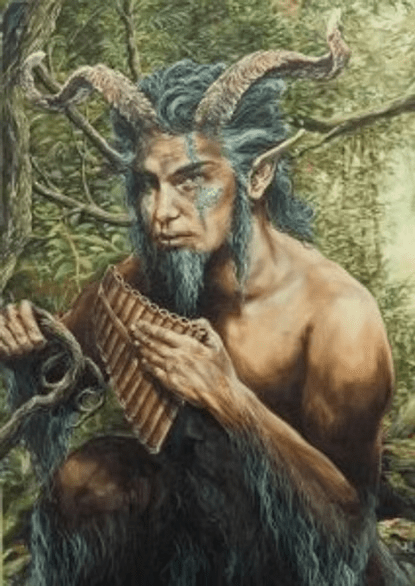
By the time Adam had two sons, Cain and Abel, Satan influenced Cain to become the first teacher of false religion on Earth. He became the first “right hand man” of Satan, which inverts to the first to sit at the “left hand” of Adam’s (the Son’s) throne. Cain begat the goats of the world – those who profess belief in the One God (by whatever false name they call that God) – but goats are like wolves in sheep’s clothing. They serve Satan, while pretending to serve God. They are today false Christians, not true Christians.

Pan, a pagan god.

The bulk of this story told by Jesus is then about the blessing of the righteous and the cursing of the wicked. Both sheep and goats have no clue how they helped God or turned away from God. They are just dumb animals who have no knowledge of Spiritual matters. However, the righteous have allowed God into their hearts and the Christ Mind to lead their actions, while the wicked have turned a cold heart to God and their actions have been led by Big Brains (their own or the leaders to whom they bow down to in service).

If you have ever heard the phrase, “Ignorance of the Law is no excuse,” then you understand that it is never a good thing to depend on a Big Brain, if one is seeking Heaven as the Spiritual reward of one’s time on the earthly plane. The only way that one can totally comply with the Laws set forth by Moses, for all who will claim to serve only God, is to stop trying to think, “God will say this evil deed is okay, if I bend the rules this way to meet my needs.”  It is impossible to keep a brain and serve God.  You serve one or the other, never both.  Only through the influence of God can one be in total compliance of the Law; but then that righteousness means one has no clue how that happened.

You cannot serve the LORD wearing any other face before Him than His. You wear the face of God only through love of God and Him sending the Holy Spirit to you, meaning the “righteous” are Saints.  That distinction come by the rebirth of Christ Jesus – the “sheep at the right hand of Christ the King.”

Let me make this clear in modern terms. If you worship Apple (an appropriate name for the item of original sin?) and think, “An I-phone is to die for,” then have your I-phone and all its wonderful earthly rewards, and God will call that your eternal reward. Of course, I-phones only work on the earthly plane, and Spiritual angels don’t have pockets for them in Heaven.

Aliens can’t go to Heaven either.

Take that base example and apply it to every thing this world has to offer. If God sends an Apostle things, then it is for those things to be used in service of the LORD – as manna from Heaven to live on [remember not to take more than is daily necessary] or a gift of the Holy Spirit given to lead others to the LORD, through Christ.

The moral of this story can be seen in the account of the Ascension in the Book of Acts, when we read:

“And as they were gazing intently into the sky while He was going, behold, two men in white clothing stood beside them. They also said, “Men of Galilee, why do you stand looking into the sky? This Jesus, who has been taken up from you into heaven, will come in just the same way as you have watched Him go into heaven.’” (Acts 1:10-11)

Do not be looking to let God in your heart and Christ into your mind at the end of the world. That “Jesus, who has been taken up from you into heaven, will come in just the same way as you have watched Him go into heaven,” which in the case of those who “were gazing intently” then, that coming was the next morning. At this moment you sit before Christ the King, on the throne of you, as you have for every moment of your adult life – most of which has been spent grazing as a “goat.”

It is not the declaration of Christ the King that made one a “goat” or made another a “sheep.”  It is the faces that tell Christ the King which side the individual has chosen.  Christ the King has been found by all, but the faces they all wear tell the truth.

The question, as always, is: “Are you ready to be Judged this very second?”  I mean this on the level of Holy Judgment, where only you and God know the true answer.

Keep in mind that all the world – those that are not calling themselves Christian – those “people” are happily following the little-g gods of the world: Socialism, Capitalism, Communism, Fascism, Islam, and all religions that teach the ways of Satan-Cain. Added to that count are Christians who give a little and expect a lot in return, when the god they kneel down before can be seen in a mirror placed before their face.

The world is the realm of death. Mortals are flesh and bones that are born of death. Death means an eternity of an eternal soul springing back to life an a new body.  Life means eternally a soul with God.  Heaven is only made up of righteous souls, which can be summed up as God, His Son, and the Good Angels.  “His Son” is a multiplicity of souls.

God sent His Son to lead “people” to the light of truth; but Satan will do everything in his power to turn “people” away from the truth and lead them to the darkness of lies. All the while, dumb animal man and dumb animal woman will not have a clue which way he or she is headed. Their brains are just too small.

Christ the King knows the name of every one of his “sheep.” He only has to call out, “Jesus, come here!” and they all go to his right hand, bleating, “Yes sir.”