Tag Archives: proper 3 Year B

Isaiah 6:1-8 – An ordinary leap of faith

In the year that King Uzziah died, I saw the Lord sitting on a throne, high and lofty; and the hem of his robe filled the temple. Seraphs were in attendance above him; each had six wings: with two they covered their faces, and with two they covered their feet, and with two they flew. And one called to another and said:

“Holy, holy, holy is the Lord of hosts;
the whole earth is full of his glory.”

The pivots on the thresholds shook at the voices of those who called, and the house filled with smoke. And I said: “Woe is me! I am lost, for I am a man of unclean lips, and I live among a people of unclean lips; yet my eyes have seen the King, the Lord of hosts!”

Then one of the seraphs flew to me, holding a live coal that had been taken from the altar with a pair of tongs. The seraph touched my mouth with it and said: “Now that this has touched your lips, your guilt has departed and your sin is blotted out.” Then I heard the voice of the Lord saying, “Whom shall I send, and who will go for us?” And I said, “Here am I; send me!”

——————————————————————————–

This is the Old Testament selection from the Episcopal Lectionary for the First Sunday after Pentecost, Year B 2018. This day in the lectionary schedule is also known as Trinity Sunday.  It will next be read aloud in church by a reader on Sunday, May 27, 2018.  It is important as Isaiah was a “major prophet” of Judah, who had a vision of God in this story. In the vision, Isaiah was purified by fire and volunteered to serve the LORD as His holy messenger. This is the same purification and commitment that all Saints are called to fulfill, when they serve God in the name of Jesus Christ.

This reading is a holy vision that Isaiah experienced.  In the first verse of this reading, Isaiah wrote that the vision is timed as being “the year that King Uzziah died.”  This means it is important to understand the history of King Uzziah.

Uzziah’s death came roughly eleven years after he was stricken with leprosy by God.  As leprosy was a visible sign of sin to the Israelites of Judah, Uzziah was forced into a house-arrest exile.  Still a king, he became an absent co-ruler, with his son Jotham promoted to king to run the affairs of the government. Uzziah’s leprosy was punishment from God, due to his entering the Temple of Solomon to burn incense, which was forbidden to all but the Temple priests. An earthquake occurred, splitting open the Temple walls, where the sunlight came in and struck Uzziah on the face, immediately giving him leprosy.
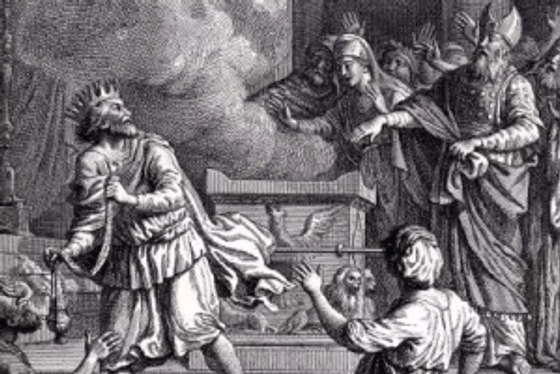
History always likes to apply new standards to old actions. I doubt Uzziah entered the Holy of Holies wearing a crown (as shown) to swing an incense burner (in hand). I believe he tried to light incense on the Golden Altar (depicted with smoke).

The history of Uzziah says that he was one of Judah’s (including unified Israel) greatest kings, as far as bringing prosperity to his nation.  The punishment that befell a king says that no human is above the Laws of God. Thus, Uzziah is symbolic of all Israel, in that sense, where the gifts of holiness were plentiful, but one cannot degrade into self-piety, forgetting that God is always the one and only true king, or one will find just how mortal all human beings are.

King Uzziah, when seen in a dream, has to be seen as an extension of the readers (individually a reflection of you and me). Isaiah, himself, had to feel the sin of Uzziah as if they were his own. Thus, we are all mortals who rule over the Kingdom of Self. It is within that temple of self that we can begin to think the possessions having come to us have been by our own doings; so we think we have the right to offer incense that will be burned in our honor, not God’s.

This makes the symbolism of leprosy be less about physical deformities, and more about how it projects the sinful state of one’s soul.  The truth of our sins are fully known (even if denied), which causes us to hide our inner beings from public view. Therefore, the dual rulership of Uzziah and Jotham can then be seen as symbolic of the id and the ego, using Jungian terms.  “In the year that Uzziah died” is then a statement of the death of the ego, where the soul (the id) finds judgment.

It becomes important to see the personal relationship with God that is demanded in this vision. Rather than seeing it through the eyes of the prophet Isaiah, see it as God presenting a vision to you, through the prophet Isaiah. The purpose is to see the promise of this vision, where sins are forgiven; but to see that, one must understand the mortality and judgment of a king of Judah, one who sat on a throne (shared or alone) for over fifty years, is reflective of one’s own.  For Uzziah, forty-plus years of good acts were followed by eleven years of seclusion.  He had to see God as the true king. God is who we all must serve; and that is the call of ministry required for the first Sunday after Pentecost.

We read how Isaiah (the reader) “saw the Lord sitting on a throne, high and lofty; and the hem of his robe filled the temple.” God is the true King. His throne is one’s heart. God’s temple is one’s body. God’s holy robe flows over every square inch, each nook and cranny, all cells and vessels of one’s body.  This makes God’s robe be symbolic of the Holy Spirit.
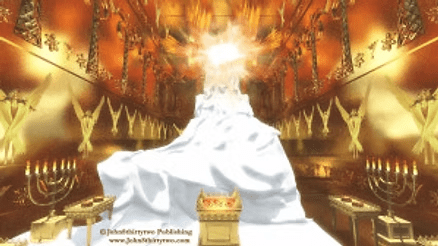
If the likes of King Uzziah are not high enough or important enough to claim superiority to God, no mortal can aspire to immortality. Only through God, as His obedient servants, can eternal life be possible.  The self-king must die so that God can take control of His realm.

This is where the symbolism of Seraphs (or Seraphim) comes into the vision. They are the attendants of God. While the Hebrew states “seraphim” in the plural, the word following infers the singular, not as “in attendance,” but as “it stood” or simply “standing” (Hebrew: “‘ō·mə·ḏîm”). This “standing,” implying “upright,” is not so much “above” God (who is so “high and lofty” only the “hem of his robe” is clearly seen), but the “Seraphim” is “standing upright,” reaching or aspiring to go “upward” (Hebrew: “mim·ma·‘al”). As such, the “Seraphs” are symbolic of the immortal souls that attend to God’s needs.

The Seraphim are seen as angels in Judaic and Christian theology. These angels are one of several mentioned in holy texts, and some are seen as higher and lower in ranking. The Hebrew word “mal’ákh” is commonly used to identify an “angel,” but the word itself means “messenger,” and can be used in identifying both human and divine entities. While there are some who say a “Malakim” is a separate distinction of angel, with a “Seraphim” being another and an “Elohim” one more (among ten total?), these differences are man-made presumptions and not rock-solid certainties.

On a symbolic level, souls are angelic, with their standing upright and reaching upward being those who are in service to the LORD. Alternately, some angels would sink and strive to shun God (those who serve Satan).  This means the day of judgment is when souls are assigned an immortal realm (heaven or hell), or when they are determined to return to the physical plane.  Yahweh, the One God, does this judging.

In this vision shown Isaiah, I see the plural of Seraphs as a statement that many souls have been assigned to serve the needs of Yahweh.  In that regard, each individual soul will have been baptized by the Holy Spirit, making it purified of all human sins.  Purification of a soul makes one of many Seraphs that serve the LORD exclusively. However, the point of Isaiah’s vision is on the rebirth of a soul in its same host body, rather than the soul becoming heavenly.

This means a purified soul is still within a human body.   This results in a Saint or Apostle of Christ being born from the ashes of the old. This aligns this reading to the Gospel lesson from John, where Jesus told Nicodemus about such a rebirth.  Jesus Christ, as the entity that sits at the right hand of God, is then the highest of all angels who serve the One God. Therefore, a Saint is a messenger of the LORD that comes in the name of Jesus Christ.

This leads to the importance of the number six, which is shown in the number of wings that a Seraph has.  The terminology of “wings” can be seen as the instruments of flight, from which elevation is allowed. Seraphs wings are said to be used thus: “With two they covered their faces, and with two they covered their feet, and with two they flew.”  This makes their ability to fly be relative only to one-third of their wings.

There can be a parallel made between the seven gifts of the Holy Spirit, where each gift is given by God, relative to the individual’s abilities to receive more than one gift. There are said to be seven gifts of the Holy Spirit: wisdom, intellect, counsel, fortitude, science, piety, and fear of the Lord. As such, the one gift of the Holy Spirit that all human Seraphs is the sainthood of the body, with the other six gifts being additional wings by which one can serve God’s needs. These can then be subdivided into face (wisdom, intellect, piety) and feet (counsel, science, fortitude) uses, where the heart is filled only with fear of the LORD (not wanting to fail Him).

This is not the clear focus of the number of six wings in the vision of Isaiah, but wings should be taken as meaning more than feathery appendages.
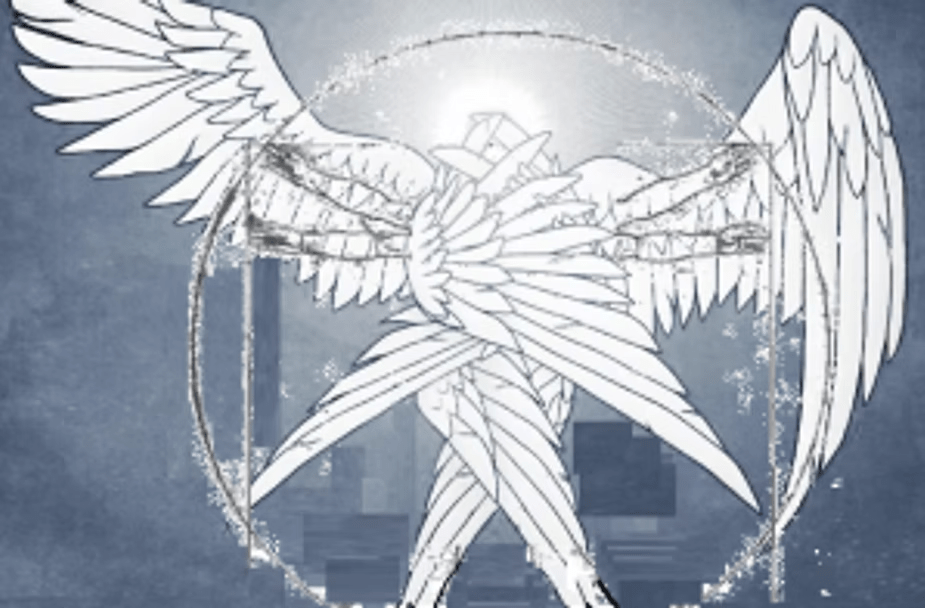
The symmetry of Da Vinci’s Man incorporated into the symmetry of Divine Man.

I invite you to read the insights found on the website linked here, which states several symbolic aspects that are relative to the number six. There are other opinions on the symbolism of this number, but as a perfect number (a mathematical designation) it can be seen as two (duality – left-right; up-down; inside-outside, good-evil, etc.) times three (Trinity – Father, Son, and Holy Ghost). From that perspective, one duality of wings cover the face (the ego of self), while another duality of wings cover the feet (the filth of sin).  The covering of human flaws by the gifts of the Holy Spirit then allows the third duality of wings to raise one above both the hindrances to righteousness that emanate from a soul’s the attachment to a physical body and the influences of the earth. Therefore, the perfection of six wings is symbolic of what allows a soul to attend to the needs of God, as His messenger, standing upright among humanity.

In that respect of righteous placement, the Seraphs then sing in unison the song of Sanctus.

Interestingly, in the Interlinear translations of Isaiah 6:3, from the Bible Hub website, shows the triple repeating of “qā·ḏō·wōš” (well-known as “holy, holy, holy”) as “Holy – of Holies holy.” That places the holiness of God above all mortals who are seen as sanctified, as well as any who are divine immortals, as all are of subservient status. This means the song sung by the Seraphs addresses this supreme deity as the one to who all praise should go. The LORD is the King, the ruler of an army (“host”) of messengers, both mortal (Saints) and immortal (heavenly Angels).

When we see how Isaiah did not quite hear the Christian version of the Sanctus being sung, as only the “earth is full of his glory,” that becomes a statement about the Seraphs (Seraphim). They are of the world, so they are singing in unison about God’s glory shining through their whole beings.  This is the view painted of heaven, where a sea of souls sing the same praise to God (Revelations 4:8).

It is then because of this awareness of being worldly, yet witnessing the heavenly, that Isaiah said, “Woe is me!” His woe was due to knowing how anyone of the earth that sees the LORD must die (from Exodus 33:18-20). By knowing the history of King Uzziah, we see the posts of the doors (“pivots of the thresholds”) were shaking as a repeating of the earthquake that split open the Temple. The smoke the filled the house is then the incense burned by the mortal Uzziah, which brought God’s punishment upon him.  The “woe” Isaiah felt was due to a sin committed in God’s holy Temple.

Isaiah cried out, “I am lost, for I am a man of unclean lips, and I live among a people of unclean lips; yet my eyes have seen the King, the Lord of hosts!” The word “unclean” is representative of the state of leprosy, which was a mark of sin.  Just as King Uzziah died as sole King of Judah when he was stricken with leprosy, retreating to his house until his body would die eleven years later, Isaiah was fearful of the death of his ego. Having seen the Lord of hosts, his ego would likewise be too marred to be seen in public. His ego would have to be kept in secret until the death of his body later.

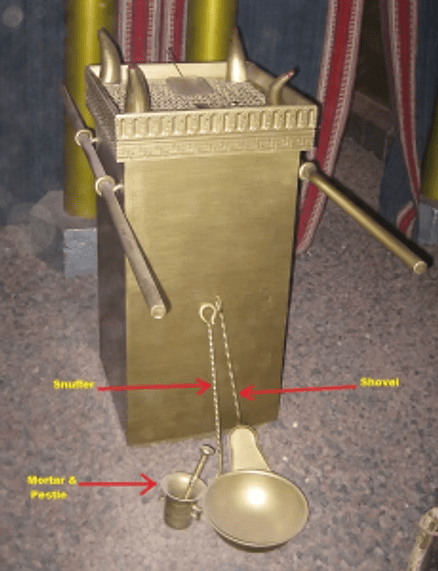
The redemption comes when we next read: “Then one of the seraphs flew to me, holding a live coal that had been taken from the altar with a pair of tongs. “One of the seraphs” should be seen as the divinity of the Holy Spirit, the messenger Angel of God, which is sent to a Saint. The word translated as “tongs” (Hebrew: “bə·mel·qa·ḥa·yim”) is better grasped as an incense “snuffer,” which was an altar tool would be used to extinguish lit candles. One should assume “the altar” is one of two in the Temple of Solomon, most likely from the Golden Altar, or the altar of incense.

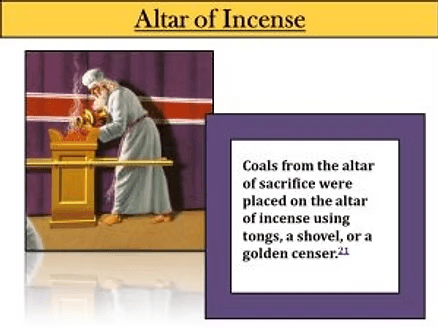
Altar of Incense Coals from the altar of sacrifice were placed on the altar of incense using tongs, a shovel, or a golden censer.21.
According to the Wikipedia article on “Altar (Bible),” the Rabbis said this about the burning of incense in the Temple:

“This was the part of the temple service that was most beloved by God (Zohar I 130:A). The burning of the incense was symbolic of the prayer of the people rising up to God (Psalm 141:2; Revelation 5:8; 8:3-4). The offering of incense had to take place after the sacrifice, because only after the atonement could communion with God take place. After the offering of incense, the Kohenim (priests) pronounced the Priestly Blessing upon the people.”

Incense was burned in the Temple every morning and evening.  Morning is symbolic of birth.  Evening is symbolic of death.

In the vision of Isaiah, the Seraph then removed a “live coal” or red-hot, burning coal from the altar of burnt offering, which would have then been placed in the altar of incense (the Golden Altar) to burn the holy incense. The burning coal, having come from both altars, is then representative of the death of oneself (sacrifice), followed by an atonement of sins. The ember is the result of oneself having been sacrificed to God in order to produce a holy fragrance in the smoking incense. This then makes the “live coal” be one prepared as an “inner sin offering,” done during the Day of Atonement (Yom Kippur).

By understanding the purification of sins that came with the “live coal,” where the aspect of heat is indicative of life, as opposed to a cold coal, without an inner burn that is dead (thus not necessary to pick up with an altar tool) we next read Isaiah report: “The seraph touched my mouth with [the live coal] and said: “Now that this has touched your lips, your guilt has departed and your sin is blotted out.” By Isaiah saying, “sin is blotted out,” that is confirmation of a ceremonious rite of atonement. Still, touching the “lips” must be seen as symbolically stating one’s voice has been made pure.

This becomes a statement of one being a prophet, as a Saint, who can only speak the truth of God. This is itself a prophecy of Jesus Christ, as the Christ Mind could only speak from the Spirit of truth.  Still, as the woe felt by Isaiah was stated as, “I am lost, for I am a man of unclean lips, and I live among a people of unclean lips,” the world is a place where sins are projected by the philosophies of mankind.  It is necessary to have Saints in the world who can counter the lies told.  Jesus said of this, “It is not what enters into the mouth that defiles the man, but what proceeds out of the mouth, this defiles the man.” (Matthew 15:11)

The vision ends with Isaiah writing, “Then I heard the voice of the Lord saying, “Whom shall I send, and who will go for us?” And I said, “Here am I; send me!”’ This is God’s call to all His Saints to prophesy to the breath of truth, so that others can be led to God.  Saints follow the same sequence of progressions, from sinner, to fear of guilt, to absolution of sins, to servant of God, which makes one holy. Importantly, the call is not to be atoned of sins, but to go out into ministry for the LORD. When Isaiah heard himself say, “Here am I; send me!” this is the voice of the Messiah, the Son of God, of which Isaiah was one.

As a reading for the First Sunday after Pentecost, where Pentecost ended the Easter season, this is the beginning of two periods in the Liturgical Calendar known as Ordinary Time.
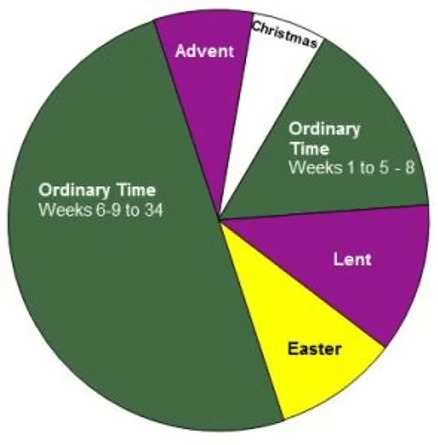
As this graph clearly shows, Ordinary Time fills the majority of a year’s time. While it may be that this period is named for the word “ordinal,” such that each week is numbered as a series of lessons that follow an event (after the Epiphany or after Pentecost), this Ordinary Time that follows Pentecost should be seen as being most applicable to the Ecclesiastical definition for “ordinary,” where ordination into ministry is the loudest message coming from the readings each Sunday. In this case, the call from God, “Whom shall I send, and who will go for us?” are questions that ask, “Who is prepared to serve Me?” When one answers God’s call by saying, “Here am I; send me!” then one begins to serve the LORD through ministry.

The two separate Ordinary Time periods can be seen as parallel to the Gospel commissions.  The first came when Jesus sent his disciples out in the Great Commission, when he was still living.  The greatest commission, thus the True Commission, began when disciples morphed into Apostles, when they were reborn as Jesus Christ. The disciples were allowed to do miracles and be messengers that proclaimed, “The kingdom of God has come near.”  They did that while Jesus of Nazareth was present in the flesh, as their rabbi and guide. The Apostles were given the gifts of the Holy Spirit, which minimally included the Mind of Christ and the Spirit of truth, where Jesus lives within their being, guiding them spiritually.

The point of those assignments given by God, through His Son, is you must serve the LORD. Before you can serve Him, you must prove your commitment – your marriage to God, receiving His love. Then you have to go places you might be unwelcome and perform some tasks you never knew were possible. However, that is the meaning of faith – you cannot walk on water if you never try. You have to take a leap of faith.

#Coaltothelips #Sanctus #Seraphs #Isaiah618 #GoldenAltar #KingUzziah
Romans 8:12-17 – Heirs of God and joint heirs with Jesus as the Anointed

So then, brothers and sisters, we are debtors, not to the flesh, to live according to the flesh– for if you live according to the flesh, you will die; but if by the Spirit you put to death the deeds of the body, you will live. For all who are led by the Spirit of God are children of God. For you did not receive a spirit of slavery to fall back into fear, but you have received a spirit of adoption. When we cry, “Abba! Father!” it is that very Spirit bearing witness with our spirit that we are children of God, and if children, then heirs, heirs of God and joint heirs with Christ– if, in fact, we suffer with him so that we may also be glorified with him.

——————————————————————————–

This is the Epistle selection from the Episcopal Lectionary for the First Sunday after Pentecost, Year B 2018. This day in the lectionary schedule is also known as Trinity Sunday. It will next be read aloud in church by a reader on Sunday, May 27, 2018. It is important as Paul wrote of the debt all human beings owe to the Father, which has to be understood as beyond the time we spend on earth in the flesh.

Again, it is modern paraphrasing that identifies “sisters” in the above translation. Paul wrote, “Ara oun , adelphoi  ,” which says, “So then  ,  brothers”.  This states the result of (“So then”) what Paul had stated prior (Romans 8:1-11), with that now being “brothers.”  Because one has to believe that Paul wrote divinely (not just as some ordinary guy), every word he wrote has divine purpose, which should not be overlooked.  Therefore, “brothers” must be understood, rather than slap “sisters” to that word.

The word “adelphoi ” is set alone by commas, placing importance on its meaning.  It is a stand-alone statement of “brotherhood,” as “brothers” or “brethren.” The word “adelphoi ” says nothing about “sisters.” The Greek word “adelphé” means “sister” and “adelfés” says “sisters.” The exclusivity of women is NOT the point of what Paul wrote.  It should be read as a word similar to “mankind,” which includes all human beings under one heading.

By placing commas around the plural form of the word “brother”, Paul was placing emphasis on the relationship ALL Christians share. Both men and women are “brothers”, as “Sons of God”, because they ALL have been reborn as Jesus Christ. By adding the word “sisters,” the glaring differences between males and females is entered into the interpretation erroneously.

It is unnecessary, as ALL Christians are the wives of God (regardless of human gender), just as ALL Christians are reborn as the Son of God (regardless of human gender), making ALL Christians be brothers of the same Father.  One must get beyond the modern training that gender be given equal status, because that is only a distraction away from the truth.

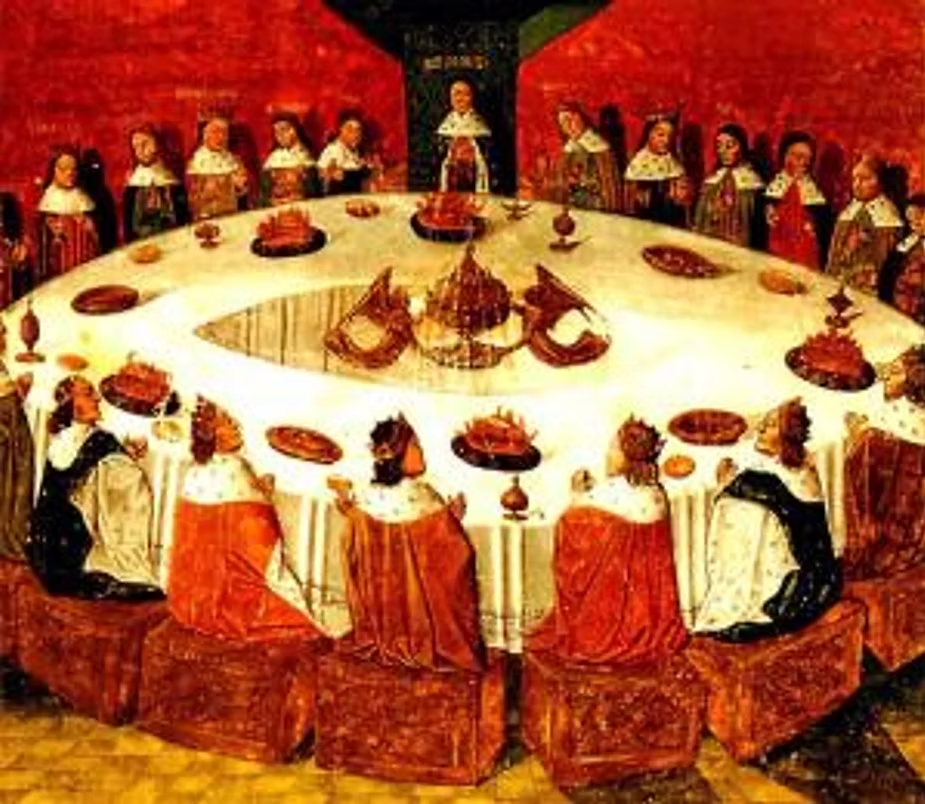
The same qualifications for a knight of the round table are the same for a Saint.

Seeing “brothers” as ALL who are related spiritually, one should then see this familial relationship with the Father as being what makes one a debtor. Thus, following the pause of a comma after “brothers,” this becomes stated as “we are debtors” (literally “debtors we are”).  This makes “debt” be relative to this announcement of “brothers.”

From that realization, Paul discounted how “brothers” were “not to the flesh.”  From this statement, one must grasp how it is the “flesh” that differentiates a man from a woman.  Thus, it is the “flesh” that separates “brothers” from sisters. This statement says (in essence): “Do not mistake “brothers” as saying “brothers and sisters,” because the debt owed has nothing to do with one’s sexuality on the earthly plane.

When Paul wrote, “If you live according to the flesh, you will die,” this was reference to all mortal human beings, who come in the shapes and forms of men and women, males and females. The only reason souls are incarnated (reincarnated) in different shapes and forms is to reproduce. Souls cannot reproduce souls, as souls are immortal, thus asexual by nature. The flesh reproduces so souls can be reincarnated.

To put that in gender terms, souls are masculine “energy,” while bodies (regardless of human gender) are feminine “energy.” God can be seen as masculine, as the Father, whereas the Earth is called a Mother.  In this sense, my use of “energy” should be seen as non-physical, but a compatibility, such as is positive and negative.  It is similar to the notion that opposites are attracted to one another, as compliments.

Thus, the feminine flesh of a baby (regardless of human gender) is penetrated by the masculine soul.  The flesh of the baby receives that breath of life.  The soul’s asexuality then aligns with the human gender, based on the flesh.  This union then stimulates an innate drive to procreate. That innate drive is a need of the flesh, because the flesh knows it is temporal and must reproduce to continue the possibility of life returning to the worldly plane, as returning souls need flesh to inhabit.

The aspect of “the Spirit,” as translated in verse 13, where we read, “If by the Spirit you put to death the deeds of the body, you will live,” is inaccurate.  The Greek actually shows “pneumati” in the lower case (“πνεύματι”). This is then a reference to “the breath” of life, which is the entrance of a “soul” into a form of flesh. A “spirit” that is a soul is eternal; but a returning soul into a form of flesh is not commonly holy.  There are exceptions, such as Jesus, born of a woman.

Verse 13 is also divided by commas, where the better translation can make this lack of holiness more evident.  Literally, the verse states, “If however the breath (wind, soul spirit)  the deeds of the body you put to death  you will live.” This is not a statement of God’s reward to a soul of eternal life, but a promise of reincarnation to a soul.  Reincarnation is a new “breath of life” in human form.  Still, that “spirit” of life brings about the opportunity to achieve eternal life – IF the normal deeds (normal “doings, acts, functions”) of a body of flesh lead an eternal soul to lose its host body (a mortal death).  If a soul directs its body wisely, then it will be reborn into a new body of flesh (i.e.: a newborn baby).

The condition (the “IF”) is then based on the soul somewhat controlling the actions of a body. This admits there will be sins accrued that will prevent the reward of everlasting return to the Father, but enough good deeds will have been done to warrant another chance on the physical plane.  It is just as do not punish a first grader to hard labor in the fields for failing to make the grades that would allow it to go to the second grade.  We also do not graduate straight A first graders to the college level.  This is a mirror of how much is required to be one with God again.  However, should the soul allow the body (by evil influence) to earn itself eternal damnation, then the soul will not find new life in human form. This is the proverbial “Hell.”

When Paul then wrote, “For all who are led by the Spirit of God are children of God,” the capitalized version of “Pneumati” was written (“Πνεύματι”). This is then a reference to those of humanity who are led by the Holy Spirit. The translation of verse 14 shown above, as using the neuter gender word “children,” actually states “huioi,” which means “sons.” The proper translation here then supports the initial claim of being “brothers,” as now the presence of the Spirit  makes one be identified as “son of God.”

This parental relationship with God is then stated as a relationship that reproduces the Son, Jesus Christ.  This masculine association also means the “Spirit,” which is masculine in nature, has caused this relationship to be. Since this masculinity is asexual, there is no sexuality implied by being “sons of God.” Spirits and souls have existed from the Creation and have no need (no ability whatsoever, for that matter) to reproduce.  This is, again, the masculine “energy” of Spirituality being within the feminine “energy” that is a human body.

Angels are neither male of female, in the sense that human beings are. Angels have no sex organs, which includes breasts that would only have a human purpose, such as to nurse babies.

It is then important to see how there is no capitalization of the word “spirit” in verse 15, where we read above it stating, “For you did not receive a spirit of slavery to fall back into fear, but you have received a spirit of adoption.” When one realizes the difference between the “spirit” of life (God’s breathing an eternal soul into flesh) and the “Spirit of God” (the Holy Spirit), then one can see how this translation is saying the renewing of a soul into flesh, giving that flesh life, is not done by God so that the soul will enter into a state of “slavery,” which is an addiction of the flesh to sin.

The reborn soul (reborn into new flesh) is meant to lead the flesh to serve God, not to “fall back into fear,” where “slavery” is to Satan and his material realm. Instead, a soul, as an extension of God that needs redemption to return to God, is placed back into new flesh so it can lead the flesh to “receive a spirit of adoption.” One is adopted by God when one is reborn anew (the transformation of the same soul in the same flesh) as Jesus Christ.

One is not adopted prior to birth into the flesh.  One is adopted after one has lived enough life to understand sin and experience guilt from sin.  Then one has to petition for adoption by repentance for the sins one feels remorse from.

That represents a spiritual change within, which means one’s whole being (soul in flesh) opens to God, through acts of repentance.  One becomes active in learning the messages of holy Scripture.  When one has proved to God one’s sincerity for seeking atonement, the love of God will enter one’s being.  The result of that union brings about a reproduction of the Son of God, so one is truly in the name of Jesus Christ.  True Christians are then those who become the “brothers” of all other Saints on earth (regardless of human gender). Until that transformation takes place, one is “a spirit to slavery” that all human beings are, since the soul is a slave to the flesh, just as the flesh is a slave to the soul.

Human beings are slaves to mortality. The only way to break those chains is through Jesus Christ.

Where Paul wrote about “you have received a spirit of adoption,” here again is an overlooked statement about “brothers” and “sons.”  The Greek actually states “elabete pneuma huiothesias,” where the literal translation says, “you have taken hold of (or received) the spirit [lower case] of adoption as sons.”  The implication of divine adoption can be read into this, but not as total adoption, as the sons of God.  The lower case “spirit” is a statement that one’s soul has “received” or “taken hold of” the ways of righteousness, as far as one can do good alone.  This is how one shows oneself worthy to progress to that point of being “adopted as a son” of God.

Still, the form of the word making the statement about adoption is masculine, thus more properly translated as “adoption of sons.”  This can be seen as how God saw the disciples of Jesus of Nazareth, prior to their official recognition as sons of God on Pentecost Sunday, the day after Jesus ascended to the Father.  While The Acts of the Apostles places focus on the male disciples becoming “adopted sons of God,” it still must be assumed that women (such as Mother Mary, Mary Magdalene, Mary of Cleopas, and other females in the crowds who received the Spirit) were also adopted “sons.” Their female human gender was not a limitation on their adoption worthiness.

Paul then wrote, “When we cry, “Abba! Father!” it is that very Spirit bearing witness with our spirit that we are children of God.”  Here, both the capitalized and lower case versions of “pneuma” are used. That says that the Holy Spirit has made entrance into one’s soul (one’s spirit), causing a thrill of awareness overcome one’s being, such that it knows (“bearing witness”) the Father is in one’s heart center.

By saying “with our spirit,” this is the baptism of one’s soul by the Holy Spirit’s presence, so both become one. When that happens, all baptized souls become the “children of God,” where “children” is the correct translation, from the Greek “tekna.” The use of “children” comes with the understanding of asexuality, since both human genders are equally incapable of reproduction, therefore “children” is a word deemed neuter gender. The word “children” then also implies a lack of adult mentality, where “children” are dependent on the Father for learning.

The aspect of mentality is then found in Paul writing, “and if children, then heirs, heirs of God and joint heirs with Christ.” It says that the “children of God,” as “sons of God,” will inherit the knowledge of God, which comes through the Mind of Christ. It then lets one realize that this awareness that comes from being “children of God,” “inheriting” the Mind of God’s Son, allowing Christians to become “brothers” in Christ (regardless of human gender) is to realize the debts of sins being washed clean by the Holy Spirit then makes one in debt to the grace of God.

The Mind of Christ frees our spirits from thinking we are slaves to a mortal body that will die. The Mind of Christ frees our spirits from the fears of a mortal existence. The Mind of Christ is the realization that we are indeed “heirs” to the same Holy Spirit that was made man by God and sent into the world as Jesus of Nazareth.

This selection then ends with Paul writing, “If, in fact, we suffer with him so that we may also be glorified with him,” which again poses a conditional requirement.  This tells how one knows that one’s “spirit” has indeed been “led by the Spirit of God.” IF that condition has been met, then “we suffer with him.”  The word “sumpaschó” means “I suffer together with,” but this is synonymous with “sympathize.”  This means one suffers by knowing so many in the world are still blind to being adopted by God.

The Greek word “sympaschomen” states “we suffer together with,” which implies the Spirit of God, as one being with Jesus Christ. This says that the Mind of Christ is what enables one to withstand the suffering that causes others to lament.  Personally, one knows the same agony that one faces when denying the pleasures and comforts offered by a sinful world. Still, that experience of suffering is what proved oneself as worthy for adoption by God.

The bond of togetherness – one’s soul spirit with the baptism from the Holy Spirit having brought about the Mind of Christ – is what brings one the “glory of being together with” (“sundoxazó”) Jesus Christ. This is how one can claim to be in the name of Jesus Christ. This is also how ALL who are likewise baptized by the Holy Spirit are “brothers” in Christ, where ALL SAINTS also share the same “glory [from being] together with” Jesus.

As a reading selection for the First Sunday after Pentecost, where the ministry of Apostles has begun, symbolically having taken its first step, we must then see how this is called Trinity Sunday because the Father, Holy Spirit, and Son have been reignited in a soul. All who have this Trinity within them are then “brothers” as having been reborn as Jesus Christ.  Christians are those who have truly become the adopted sons of God (regardless of human gender).

This is the message of the accompanying Gospel reading from John, where Jesus of Nazareth tried to explain this necessary requirement for salvation to Nicodemus, only to see how easy it is to deny this message. The first step of ministry leads to many others, where the “glory of being with Jesus Christ” does not stop with one soul being saved – one’s own. Christian souls are saved for the purpose of sending Jesus Christ into the world, as one with oneself, to save others. The brotherhood of Christianity goes well beyond the limitations and divisions of mortal life on earth, where men and women are called to serve the LORD as His Son.

John 3:1-17 – Being born of water and Spirit

There was a Pharisee named Nicodemus, a leader of the Jews. He came to Jesus by night and said to him, “Rabbi, we know that you are a teacher who has come from God; for no one can do these signs that you do apart from the presence of God.” Jesus answered him, “Very truly, I tell you, no one can see the kingdom of God without being born from above.” Nicodemus said to him, “How can anyone be born after having grown old? Can one enter a second time into the mother’s womb and be born?” Jesus answered, “Very truly, I tell you, no one can enter the kingdom of God without being born of water and Spirit. What is born of the flesh is flesh, and what is born of the Spirit is spirit. Do not be astonished that I said to you, ‘You must be born from above.’ The wind blows where it chooses, and you hear the sound of it, but you do not know where it comes from or where it goes. So it is with everyone who is born of the Spirit.” Nicodemus said to him, “How can these things be?” Jesus answered him, “Are you a teacher of Israel, and yet you do not understand these things?

“Very truly, I tell you, we speak of what we know and testify to what we have seen; yet you do not receive our testimony. If I have told you about earthly things and you do not believe, how can you believe if I tell you about heavenly things? No one has ascended into heaven except the one who descended from heaven, the Son of Man. And just as Moses lifted up the serpent in the wilderness, so must the Son of Man be lifted up, that whoever believes in him may have eternal life.

“For God so loved the world that he gave his only Son, so that everyone who believes in him may not perish but may have eternal life.

“Indeed, God did not send the Son into the world to condemn the world, but in order that the world might be saved through him.”

——————————————————————————–

This is the Gospel selection from the Episcopal Lectionary for the First Sunday after Pentecost, Year B 2018. This Sunday is also known as Trinity Sunday. This selection will next be read aloud in church by a priest on Sunday, May 27, 2018. This is important because Jesus explained the requirement of being reborn from above, having been baptized by the “water” of the Holy Spirit.

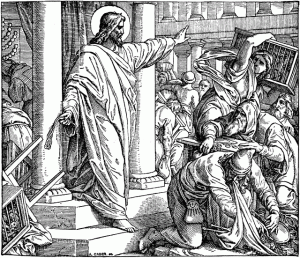
In this reading, the setting should be realized. It is not stated specifically, but it can be deduced from clues in the text.  John’s second chapter ended by John writing how Jesus had just spent the first Passover Festival of his ministry in Jerusalem. Jesus had made a scene by overturning the vendors’ tables; and when he was questioned about what authority he had to do such a thing, Jesus said, if the Temple were to be destroyed, he could raise it again in three days.

During that week, Jesus then displayed signs that drew believers to him; and it was those acts that made Jesus stand out as a new rabbi with an an ability to get attention; and that was what drew “a leader of the Jews” to visit Jesus.

Where Nicodemus encountered Jesus is not clearly stated.  Due to the high ranking that Nicodemus held, it can be assumed that this meeting was private, rather than public.  As it occurred at night, and Nicodemus came to Jesus, it makes sense that the encounter took place at a house or lodge.  Since Jesus lived in Galilee, the assumption can be that the visit would be in or near Jerusalem, since the Passover had just ended and Nicodemus was a leader of the Jews because of his Temple connections.

An additional background element worth noting is that Jesus’ first Passover Festival as a rabbi did not have the accompaniment of twelve disciples. John wrote in his first chapter that Andrew, Simon-Peter, Phillip and Nathanael had followed Jesus. Matthew and Mark tell how James and John of Zebedee had been added as disciples. Still, none of the other Gospel writers tell of this first episode of Jesus overturning the vendors’ tables, which implies their presence in Jerusalem for that Passover Festival was less organized, or Jesus had instructed those six to maintain a distance from him.  This makes John’s presence stand out.

The lack of other disciples being mentioned in Jesus’ first Passover Festival, or other mentioning his acts then, becomes evidence that John was not a disciple of Jesus. We can see this by grasping the big picture that joins all the Gospels. John witnessed Jesus’ first disciples after John the Baptizer had baptized Jesus, but John did not name himself as a disciple. John made no mention of James or another John, nor a relationship with a man named Zebedee. John wrote of the wedding at Cana, saying the disciples of Jesus attended with him, which sets John apart from that designation.  Now, we see how no other Gospels tell this story of Nicodemus, with John being the only one to name Nicodemus. By John writing of this encounter that Jesus had with Nicodemus, when no others did, that shows Nicodemus avoided being seen meeting with Jesus, and adult, male disciples could be called legally as witnesses, should Jesus prove to be an inciter of rebelliousness.  For John to be a witness says John was not an adult, thus no threat as a voice that could be heard.

It is important to note that John wrote how an important Pharisee named Nicodemus “came to Jesus by night.” This implies several things that can go unseen. Seeing the unseen requires putting oneself in the Gospel story, seeing the story unfold as a natural event, rather than a supernatural, fantasy-like imagination. This story did not happen in a vacuum, as it is in chronological sequence with the surrounding text written by John. It happened in real life, where seeing oneself as a first century Jew, not a twenty-first century Big Brain, allows the unwritten reality become visible.

First, this encounter between Nicodemus and Jesus happened after the Passover Festival (an eight-day event) had ended. We know this timing because John’s second chapter ended with that event, stating “Now while he was in Jerusalem at the Passover Festival, many people saw the signs he was performing and believed in his name.” (John 2:23) The chronology then follows with this event, putting Nicodemus in a meeting with Jesus.  This says Jesus was still in or near Jerusalem.

Second, as a Galilean living in Capernaum (Matthew 4:13), Jesus would have been lodged somewhere near Jerusalem for the Passover week. One could assume he stayed with Mary Magdalene, her sister Martha, and her brother Lazarus, who lived in a house in Bethany. Bethany is only fifteen furlongs (“less than two miles”) from Jerusalem (John 11:18).

Third, because Nicodemus would not have known where Jesus would have been staying, as an unknown person prior and especially as just one man among so many Pilgrims in Jerusalem that would remain close until Pentecost. Jesus’ attraction was as a new “Rabbi” teaching at Jerusalem’s Temple, one who caused the Temple leaders to want to know more about him. Therefore, this means Nicodemus was assigned to follow Jesus to his place of lodging, after the Passover week was over.

Fourth, for a Pharisee to travel at “night,” such travel could be dangerous; but the Greek word “nyktos” does not necessarily mean darkness, such as after sunset. The Hebrew clock refers to “night” as the hours between 6:00 PM and 6:00 AM. The sun is still giving light to the earth at 6:00 PM in the spring.  The Passover Festival (always between 15 Nissan and 21 Nissan), is sometime between mid-April and mid-May, depending on the year, with spring occurring on March 20-21.  The days last longer than the nights, once spring arrives.  This means Nicodemus followed Jesus while it was early evening (technical “night”) and sunlight was still out.

Fifth, to have a “ruler of the Jews” to “come to Jesus,” the motivation was not personal, but business related. The eyes of all Jewish leaders would have been on this newcomer, because Jesus was attracting large crowds and displaying signs of divine powers.  One can then assume that Nicodemus was sent to visit Jesus, in a private rather than public place, for the purpose of recruiting Jesus (so to speak) to the philosophical ideology of the Pharisees and other “rulers of the Jews.”

Sixth, Nicodemus came “by night,” which means he followed Jesus and John “by night,” which says such late travel had reason. Rather than say Nicodemus was sneaking around under the cover of darkness, like a thief, one should assume a leader of the Jews would not risk anyone identifying him in that scenario. It makes more sense to see how Nicodemus walked with other Jews along a well-traveled road, as a typical exit from the holy city to lodging places.  This exodus being normal at night says it meant the last day of the Passover Festival was on a Shabbat, such that travelling 2 miles would have been forbidden by Jewish law on that day. Therefore, Jesus and John departed Jerusalem for the 2 mile walk to Bethany around 6:05 PM, when it technically began Sunday, the first day of the week.  This means that Nicodemus followed Jesus and John as if routinely traveling, to see where they were going.

Finally, John was inside this setting, meaning he was staying in the same place as Jesus.  The disciples would have separate places to go, each having made his own lodging arrangements.  With Jesus going to Bethany to lodge, this says John was a relative of Jesus.  This would then imply that Mary, Martha and Lazarus were also relatives of Jesus, with none of them deemed disciples. John had traveled with Jesus prior to the start of his ministry and witnessed the selection of four of Jesus’ disciples because he was related to Jesus and traveling with Jesus naturally. This means John saw Jesus as his teacher (“Rabbi”), just as did Mary Magdalene and the others in Bethany did, but not because John and the others sought to follow the Messiah. John referred to himself and the other relatives as “the one who Jesus loved.” This was because Jesus hugged and kissed his family as a personal way of displaying familial love. That was different from the teacher-student relationship that Jesus had with his disciples and other followers.

By having this sense of the surroundings and timing of a visit by an important Pharisee, one can completely understand why Nicodemus said, “Rabbi, we know that you are a teacher who has come from God; for no one can do these signs that you do apart from the presence of God.”  That greeting meant Jesus’ first Passover Festival was complete and it impressed those who watched his every move.

To understand how Jesus heard those words, it is important to know John had written prior (in Chapter 2), “Jesus would not entrust himself to [the many people who believed in Jesus he had encountered in Jerusalem], for he knew all people. He did not need any testimony about mankind, for he knew what was in each person.” (John 2:24-25) This says Jesus had leaders and pilgrims who had expressed recognition of his powers over the eight days of the festival, but he was not letting any of that go to his head.

Now, a chosen delegate of the Sanhedrin had again praised Jesus as sent by God.  Rather than Jesus answering, “Why thank you,” to Nicodemus, we should intuit that Jesus “knew what was in” Nicodemus, knowing his words of praise were empty and void of true meaning. Because Jesus knew Nicodemus was himself not from God and only knew tricks that amazed common Jews with supposed acts approved by God, as if presented with “the presence of God,” Jesus pointed out a truth that he knew.

Jesus said in reply, “Very truly, I tell you, no one can see the kingdom of God without being born from above.” That meant Jesus had just told Nicodemus, “You wouldn’t recognize true righteousness if God stood directly before your eyes, in human form.”

To see the kingdom of God means to see spiritually, which cannot be done with physical eyesight. To see spiritually means letting one’s brain-fed ego melt away, so a divine Mind leads one’s vision. That means being reborn via the Holy Spirit. That becomes the only way one can truthfully say one knows Jesus had been sent by God, regardless of what words and feats he had been witnessed saying and doing. That divinity also allows one to see clear through the facades of those who pretended to be holy; and Nicodemus was reeking of the worldly success that comes from selling religion for personal gain. There was not any righteousness in Nicodemus.

When we then read how “Nicodemus said to [Jesus], “How can anyone be born after having grown old? Can one enter a second time into the mother’s womb and be born?” this is a classic example of how people still today reject this concept of needing to be “born from above.”

Nicodemus’ response shows how people read the literal word (or a foreign language translation of the original text) and latch hold of one preconception of meaning, totally disregarding any other sense of meaning. Nicodemus heard the word that translates as “being born” (from the root Greek word “gennaó”) and then could only understand that word as meaning, “enter a second time into the mother’s womb.”

This is a classic example of Big Brain Syndrome.  It is how so many English-speaking Christians only know of the English translations read aloud in church or read in a personal Holy Bible owned.  Few realize the multiple varieties of translations and the differences, other than the “ye” and “thou” of King James’ English is now “you” (singular) and “you” (plural).  God forbid anyone suggest, “You know, the Greek (or Hebrew) can also say something else.”  The Big Brain screams, “The why didn’t the Biblical writer say that?!?!”

In my mind, Nicodemus was an intellectual, who studied Mosaic Law and knew it backwards and forwards. For all he thought he knew, he knew nothing of true value. He only knew enough to refuse to know more.  Thus, he was trying to show his intellect to Jesus, not to prove how smart he was, but to belittle the intellect of Jesus.

It was this high view of himself that had made Nicodemus a wealthy Pharisee and leader of the Jews. Here was this Jesus fellow, a newcomer (and obviously not upper crust, having come from Galilee), spouting off about being “born from above,” which Nicodemus thought meant being born of the upper class. Once one is born into a lower class (the one of one’s parents), one could not be rebirthed by one’s mother into a higher class of Jews.

In this intellectual way that Nicodemus knew, I see him as a parallel character to Judas Iscariot.  From the discovery of the Gospel of Judas, we learn that he was also an intellectual, one who debated religion and philosophy with Jesus.

Nicodemus, like Judas, was more interested in picking Jesus’ brain than actually listening to what Jesus had to say.  This attraction to the Big Brain might actually be a clue about the contact Judas had with the Sanhedrin, when he finally decided to betray Jesus.  His liaison may well have been Nicodemus, although that is not stated as fact.

In order to see how Nicodemus responded to Jesus by hearing on a fixated level, unable to comprehend what Jesus said, look at how modern Christians show the same errors of reason. Pentecostals read that the disciples became capable of “speaking in tongues” on the Day of Pentecost, so they think “Pentecost” means “speaking in tongues.” Still, on a much grander scale, Christians read and state belief in John the Baptist saying, “I baptize with water, but one will come after me who will baptize with the Holy Spirit.” They read those words and translate spiritual matters in physical terms.

So many Christians think water is the only way that baptism (a word that literally means, “dunking under water”) can only be with physical water, so holy baptism must mean by a priest, using blessed water. John the Baptizer was a holy priest, even though he was not a Temple priest AND he said baptism by physical water only offered a temporary cleansing of sins.  Physical water cannot offer eternal cleansing. This is precisely how Nicodemus heard what Jesus said, when he spoke of being “born with water and Spirit,” so Nicodemus needs to be seen as a reflection of all modern Christians who think they know some stuff, when the need to shut up and listen to what Jesus says.

This is why Jesus then responded to Nicodemus by saying, “Very truly, I tell you, no one can enter the kingdom of God without being born of water and Spirit. What is born of the flesh is flesh, and what is born of the Spirit is spirit. Do not be astonished that I said to you, ‘You must be born from above.’” Let’s break that down slowly.

1. “Very truly, I tell you, no one can enter the kingdom of God without being born of water and Spirit” is a statement of truth. It means Jesus spoke from the Father, not from a human brain.
2. The Greek states this in reverse order, with a comma separating it, as: “if not anyone is born of water and Spirit  ,  not is he able to enter into the kingdom of God.” This use of “water” means being emotionally moved to seek God in one’s life. Water is one of the four basic elements of life, esoterically speaking, where the fluidity of water is reflective of the changing state of emotions.

Because love is an emotion, the use by Jesus here is saying one cannot enter heaven without the love of God within one’s heart. This means marriage to God, and becoming a bride to God. The power of “water” cleansing one’s soul means one’s self-ego must be emotionally scrubbed from one’s being, making one cleansed by the water of emotion that makes one subservience to God’s Will.
3. The conjunction “and” (“kai”) means “in addition to” water, the soul must be “born again” through the Holy “Spirit.” Because the “water” of emotions is a sensation of the soul within the human flesh, it is physically connected.  That physicality must then be enhanced by divine spirituality.
4. The soul can only be cleansed by the presence of God touching it, which comes ethereally via the Holy Spirit. Once that soul change occurs, one is no longer banished from entering the kingdom of heaven. Thus, Jesus just told Nicodemus what soul salvation required.
5. When Jesus then said, “What is born of the flesh is flesh,” the use of “flesh” (Greek “sarx”) means “materially” or “born of this world.” This is a statement that a soul born into a body of flesh is made one with the material and physical, not the spiritual. It also means that washing a body of flesh with physical water has no lasting effect, as the flesh will always get dirty again. That implication is that a soul born into flesh cannot keep its flesh from sinning, because of the flesh keeps being influenced by the physical world.  As the body goes, so too does the soul go.
6. By saying, “what is born of the Spirit is spirit,” it is important to know how the literal Greek contains a comma, stating, “that having been born of the Spirit (capitalized “Πνεύματος”)  is spirit (lower case “πνεῦμά”).” Because the soul is the “spirit” (lower case), it is then the “spirit” of the “flesh” that is transformed by “having been born of the Spirit” (capitalized). This presence (birth or rebirth transformation) of the Holy Spirit then enters the soul being (Greek word “estin” as “is”), so one’s soul spirit is one with the Holy Spirit.
7. Jesus then mocked Nicodemus by saying, “Do not be astonished” (from the Greek word “thaumasēs”), as Jesus knew the soul of Nicodemus and knew Nicodemus was mocking his use of “born from above.” Jesus repeated, “You must be born from above,” where “Dei” is an addition that is capitalized, thus emphasizing “It is necessary, inevitable, duty, and proper” to be “born from above,” as there is no other way to see the kingdom of God.

With those statements understood, Jesus then said, “The wind blows where it chooses, and you hear the sound of it, but you do not know where it comes from or where it goes. So it is with everyone who is born of the Spirit.”

Here it is very important to grasp how “wind” comes from the exact same word (“pneuma”) that was used in the previous segment of words that are translated as “spirit is.” “Wind” is the same as “breath.”  Both “wind” and “spirit” are the same, as is “breath” and “spirit.”  This means both words state an unseen forces of movement. This means that some will read this and think of the physical movement of air molecules, where the rotation of the earth and the formation of clouds (weather patterns) are based on prevailing “winds” that circulate around the globe. In computer models today, we can track and predict where the “wind blows,” to some degree of accuracy, but this is not what Jesus meant by using those terms.

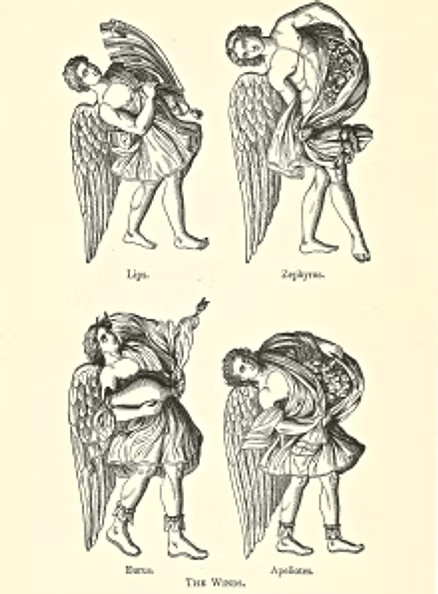
The Greek word “pnei” is translated as “blows,” but can just as equally say “breathes.”  The Greek notion of the Four Winds (North, South, East, and West) was they were controlled by the gods, as entities that could not be foreseen.

As the “breath” of God that controls climate, the implication was humans can only know God has acted (by “sounds”), but humans cannot know those acts before hand nor explain sudden happenings as evidence of God.  Therefore, the confusion ears like those possessed by Nicodemus hear, “the wind blows,” while the intent of Jesus was to say “the spirit breathes.”  One is intellect, while the other is faith.

This statement by Jesus can then be read on two levels, one where the soul spirit is led by the enticements of the world, so that it is said, “a rolling stone gathers no moss.” Nicodemus would have thought he was impervious to such winds of change, as he was firmly attached to the Law. However, Nicodemus was moved by the winds of thought that would overcome the Sanhedrin, so the sounds they made were secret, so no one knew where their new laws came from.  It was the common Jews who were always rolling, gathering no understanding of Scripture “moss.”

Jesus, as the opposite of Nicodemus and the other rulers of the Jews, was also unable to control where the Father would send him. That was the meaning of “So it is with everyone who is born of the Spirit.” The inner voice of the Holy Spirit made sounds that no one else could hear, much less see where they were coming from. Jesus spoke from the Spirit when he encountered Nicodemus at his door, when he began speaking of being “born from above.”

When John recorded that Nicodemus questioned Jesus, asking, “How can these things be?” Jesus asked Nicodemus, “Are you a teacher of Israel, and yet you do not understand these things?”

We can laugh today at how Jesus turned the table on Nicodemus, but those laughs are a sign of having Big Brain Syndrome. People today slap Jesus on the back and think, “You go guy. Let him know how little he knows,” when Christians today are just as ignorant. Being Christian means one’s soul spirit is Spirit led. We should all be “teachers of Israel,” but are we?

Can you sit down with someone and explain the Holy Spirit convincingly, without knowing this Spirit personally? Can you explain what it means to be reborn, in ways that others can feel the truth in your words?

In this regard, Jesus then said to Nicodemus, “Very truly, I tell you, we speak of what we know and testify to what we have seen; yet you do not receive our testimony.”

Here, Jesus spoke in the first person singular when he said, “I say to you” (“legō soi”), and then he switched to the plural “we,” saying, “we know we speak,” and “we have seen, we bear witness to,” leading to his saying, “the witness of us.” This is not Jesus speaking for the many like him in the world, or of he and his six disciples to-date, or even of himself and young John.  Instead, Jesus was speaking for himself (“I”), who was “spirit” joined with “Spirit,” such that “we” meant Jesus and God, in union through the Holy Spirit. “US” is then the Trinity – Father, Son, and Holy Ghost – together in one.

When one is “born from above,” then one is joined with “higher” associates, speaking from divine wisdom.  Keep in mind how this lesson is taught on “Trinity Sunday.”

Jesus then continued to berate Nicodemus, saying, “If I have told you about earthly things and you do not believe, how can you believe if I tell you about heavenly things?”

The earthly comparison to “wind blows” could not be grasped by Nicodemus, as his brain was only geared to know what he had been taught to know, by his keepers in the Temple, who refused to hear any words that were outside the limits of the box they lived within (the Law, which made them rich and powerful). Nicodemus would not allow himself to see “born from above” as anything other than “born from a mother,” as leopards cannot change their spots. “Above,” to Nicodemus, meant wealth, power, influence, prestige, reputation, all of which was inherited from one’s parents. Nicodemus had nothing to gain and everything to lose by allowing himself to see “born from above” as being one with God, baptized by the Holy Spirit.

Nicodemus could not risk losing what he had worked so hard to gain.  Religion was a practice for him to use to his benefit.  If he personally knew the plurality of which Jesus spoke, he would have to cease being who he was.  Is this not the way things are today, for so many who use the church as a data base for financial networking?  Are Christians experiencing “we” as one with Jesus Christ?  Or, are Christians an “I” ego, who believes a Jesus bumper sticker that blesses them with wealth and power?

When Jesus said, “No one has ascended into heaven except the one who descended from heaven, the Son of Man,” this was not heard by Nicodemus as Jesus referring to himself as “born from above.” Keep in mind that Jesus was just beginning his ministry and was still just under three years away from his Ascension.  The Big Brain causes Christians to jump to that conclusion, knowing the end of the story while re-reading from the beginning.

Nicodemus did not hear those words that spoke of “ascended to heaven” by ears that knew Enoch ascended to heaven (“And God took Enoch” – Genesis 5:24) and how Nicodemus left the door open during the Seder meal for the possible return of Elijah, who ascended to heaven (“and Elijah went up by a whirlwind into heaven” – 2 Kings 2:11).  Nicodemus was not calculating in his brain how Jesus meant Jesus was the Son of God.

Nicodemus heard Jesus say (literally from the Greek), “No one has gone up into heaven   if not the one out of heaven having come down  ,  the son of mankind  ,  who is in heaven.” This made Nicodemus think several things:

1. The Pharisees believed there was a Sheol, which was where all souls went and hung out until the end of the world (with a couple of exceptions that were ignored). The souls of Jews could be redeemed by the Messiah at that time, who was prophesied to come. The Sadducees did not believe in heaven, hell, or Sheol, as they saw death as the end of everything that was relative to a soul.
2. God made Adam (Hebrew meaning “Man”) in heaven, as Adam and Eve could hear and know God as no mortal human can. God breathed life into clay (or dust), which was the truth of being “born from above.” Adam was a we, because he was one with God, in the Eden of earth, where God, Son, and the Holy Spirit dwelled together.
3. Adam was the Son of God who was made man, believed to be the father of all mankind. Nicodemus heard Jesus speak of this holy patriarch, who had no mother from which he was born.
4. When Jesus said Adam was “who is in heaven,” that was news to Nicodemus. Genesis 5:5 says, “So all the days that Adam lived were nine hundred and thirty years, and he died.” There was no statement of where Adam’s soul went after death.

Still, Jesus made a point that made philosophical sense to a man of intellect. Why would God not allow His Son back into heaven?

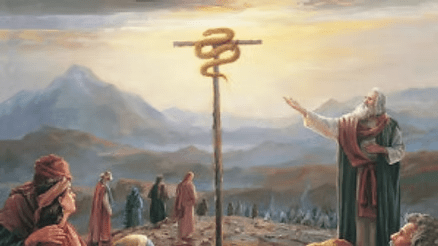
While Nicodemus was pondering that brain-teaser, Jesus then said, “And just as Moses lifted up the serpent in the wilderness, so must the Son of Man be lifted up, that whoever believes in him may have eternal life.”

That was a reference to Numbers 21:9, which says, “And Moses made a bronze serpent and set it on the standard; and it came about, that if a serpent bit any man, when he looked to the bronze serpent, he lived.”

Nicodemus did not realize that Jesus spoke in metaphor, where he was the model of righteousness (raised on a standard, not a cross), as the metal (bronze) of one’s soul having overcome the sins of a mortal being (poisonous snake bites), who would save countless souls from reincarnation or damnation. However, Nicodemus understood that the symbolism of having been bitten by a deadly poisonous snake and only having a bronze snake on a pole to look at for life, he might have had a twinkle of insight that one has to die of snake venom to be reborn as a truly righteous Israelite.

Since “everlasting life” was either Sheol or heaven, Nicodemus had to see the wilderness experience of his ancestors as symbolic of their being reborn, from slavery to freedom as God’s chosen people.  Did he not think Judaism had been reborn from the ashes of Judah and the exile in Babylon?  Did he not think Jews were given an everlasting life?

This reading selection then proceeds to the often quoted verse that is John 3:16. Jesus said to Nicodemus, “For God so loved the world that he gave his only Son, so that everyone who believes in him may not perish but may have eternal life.”

The context of this statement has to be seen hand-in-hand with the statements about Adam (the “Son of mankind”) and Moses (“the uplifted serpent of eternal salvation”). The plurality of we and us means “God’s only Son” is not limited to only one man. Jesus told that to Nicodemus, who thought only in terms of “I,” his ego, his being, his intellect and his power and wealth. To Nicodemus, Adam and Moses were long gone, idly standing in some imaginary place he had been taught to believe in – Sheol. How is that different than those today who think God sent the world Jesus, who died long ago and is some entity that is not only separate from us, but so special that we could never be so bold as think we could be reborn as the Son of Man?

The last verse in this reading is then, “Indeed, God did not send the Son into the world to condemn the world, but in order that the world might be saved through him.”

This is a most important statement about Adam, the original priest for the One God. Adam is known for having committed (along with Eve) the original sin. He and Eve were banished from the Garden of Eden (Heaven on Earth); but that was God’s plan. An all-knowing God could not have been so upset with His Son having sinned (unbeknownst to God), so that God would condemn Adam’s soul spirit to an eternity of roaming the world. No. God knew Adam would sin, so God would intentionally send him to Earth to begin religion that taught belief in God.

That says Adam was not the first Man, but the first priestly man. That was God’s plan for the world, out of love.  It means that Adam would beget a lineage of holy men (the history of the Holy Bible), leading to Adam’s soul returning in Jesus.  That planned reincarnation would be “in order that the world might be saved through him.”

As the Gospel reading lesson for the First Sunday after Pentecost, when the Apostles of Christ are to symbolically take the first steps in ministry, it illuminates the aspect of an Apostle being Ordained by God to preach. This freestyle approach, which does not come with diplomas, certifications, or documents of authorization, will cause the establishment hierarchy to follow such a priest and seek to employ him or her as a profitable asset to suit their needs, not God’s. They will always come to challenge and test one’s mettle; but they will come with complimentary words, such as, “We know that you are a teacher who has come from God.” The establishment challenges all who might rock their boats of piety, exposing them as being only memorizers of words and practitioners of manipulation, profiting from the ignorant remaining forever lost. Today’s lesson is to question the “rulers of the religious” as to who sent him or her into the world as a teacher of spiritual matters.

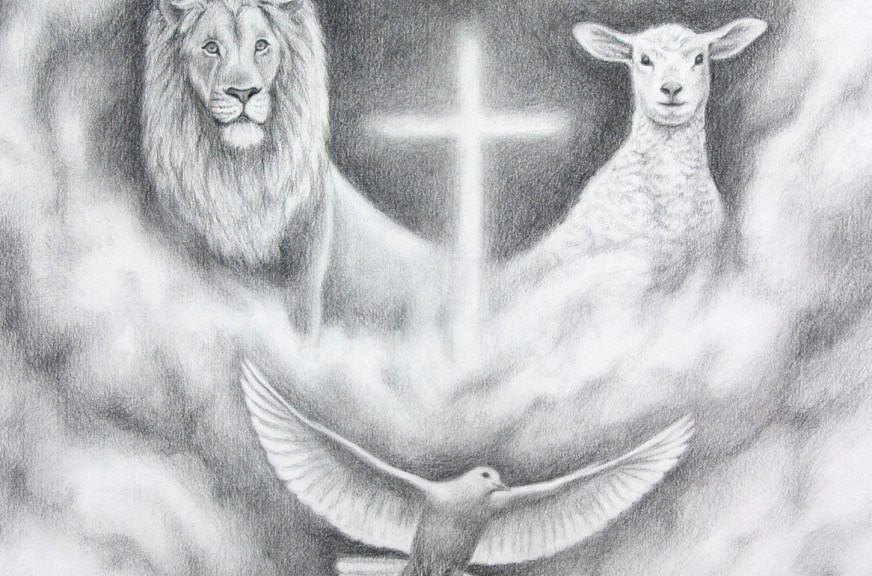
The First Sunday after Pentecost is identified as Trinity Sunday for a reason. Ministry in the name of Jesus Christ cannot begin without each and every Apostle having his or her soul cleansed by the Holy Spirit. That can only come after one has proved a love of Scriptural study and serious faith in prayer. The reward of such devoted commitment, where God knows one’s most secret, heartfelt motivations, is God’s love entering one’s being. Once baptized by God’s Holy Spirit, one rises from those waters seeing the dove of Christ settling upon one’s Mind. We too hear (regardless of human gender), “This is my Son in whom I am well pleased.”  At that time, one has been reborn as the Son of Man, Jesus Christ.

A priest for the One God can only be a walking, talking reflection of true righteousness, as the Trinity that was Jesus of Nazareth … that was Moses leading the Israelites … that was Adam before and after his time in Eden.  A priest for the One God must be born from above.