Now the boy Samuel was ministering to the Lord under Eli. The word of the Lord was rare in those days; visions were not widespread.
At that time Eli, whose eyesight had begun to grow dim so that he could not see, was lying down in his room; the lamp of God had not yet gone out, and Samuel was lying down in the temple of the Lord, where the ark of God was. Then the Lord called, “Samuel! Samuel!” and he said, “Here I am!” and ran to Eli, and said, “Here I am, for you called me.” But he said, “I did not call; lie down again.” So he went and lay down. The Lord called again, “Samuel!” Samuel got up and went to Eli, and said, “Here I am, for you called me.” But he said, “I did not call, my son; lie down again.” Now Samuel did not yet know the Lord, and the word of the Lord had not yet been revealed to him. The Lord called Samuel again, a third time. And he got up and went to Eli, and said, “Here I am, for you called me.” Then Eli perceived that the Lord was calling the boy. Therefore Eli said to Samuel, “Go, lie down; and if he calls you, you shall say, ‘Speak, Lord, for your servant is listening.’” So Samuel went and lay down in his place.
Now the Lord came and stood there, calling as before, “Samuel! Samuel!” And Samuel said, “Speak, for your servant is listening.” [Then the Lord said to Samuel, “See, I am about to do something in Israel that will make both ears of anyone who hears of it tingle. On that day I will fulfill against Eli all that I have spoken concerning his house, from beginning to end. For I have told him that I am about to punish his house forever, for the iniquity that he knew, because his sons were blaspheming God, and he did not restrain them. Therefore I swear to the house of Eli that the iniquity of Eli’s house shall not be expiated by sacrifice or offering forever.”
Samuel lay there until morning; then he opened the doors of the house of the Lord. Samuel was afraid to tell the vision to Eli. But Eli called Samuel and said, “Samuel, my son.” He said, “Here I am.” Eli said, “What was it that he told you? Do not hide it from me. May God do so to you and more also, if you hide anything from me of all that he told you.” So Samuel told him everything and hid nothing from him. Then he said, “It is the Lord; let him do what seems good to him.”
As Samuel grew up, the Lord was with him and let none of his words fall to the ground. And all Israel from Dan to Beer-sheba knew that Samuel was a trustworthy prophet of the Lord.
——————————————————————————–
This is one of two Old Testament selections from the Episcopal Lectionary for the Second Sunday after Pentecost, Year B 2018. The lessons of this Sunday are placed in a Proper Ordinary Time grouping, numbered Proper 4. If chosen, this will next be read aloud by a reader on Sunday, June 3, 2018. It is important because it tells how a servant of the LORD heard His call and answered, “Here I am.” This is how all Saints respond to the call of ministry.
To begin this reading, we hear stated, “Now the boy Samuel was ministering to the Lord under Eli. The word of the Lord was rare in those days; visions were not widespread.” This is important information that should not be overlooked.
It first of all states that “the boy Samuel was ministering to the Lord.” Typically, children were not important enough to be named. Samuel is named because this is a book that bears his name, which says that even as a youth, he “was ministering to the Lord.”
Samuel was a miracle birth, having been granted to his barren mother as the answer to her prayers. The mother dedicated Samuel to serve God at birth, but kept him until he was weaned. Then, she turned Samuel over to the high priest Eli. Therefore, Samuel “was ministering to the LORD under Eli,” meaning Samuel was learning the religion of the Israelites and the One God.
Think of Samuel as an altar boy, in the purest sense.
Second, we are told that “The word of the Lord was rare in those days; visions were not widespread.” This explains why Eli would not immediately understand why Samuel was coming to him as he slept, saying, “Here I am, for you called me.” Eli twice told Samuel just to go back to bed, before telling him to reply to any further calls by saying, “Speak, Lord, for your servant is listening.” That says hearing the voice of God speak was rare then, but a priest like Eli (whose “lamp of God had not yet gone out”) would eventually have it dawn on him that young Samuel was having an auditory hallucination (only he could hear the voice), which was not artificially onset (because of his young age he had not been drinking alcohol). The third time Samuel came to Eli meant he understood this call to Samuel was of divine origin.
To experience “visions” (divine visual revelations), such as Moses seeing the burning bush that was not destroyed by the fire, was even rarer. Dreams, such as Jacob’s ladder, when he saw angels going up and down, from heaven and earth, and Joseph’s ability to interpret dreams, as well as Abraham, Isaac and Moses regularly hearing the voice of God guiding them, that ability had seemed lost. Where it once was written as normal for the Patriarchs to hear the voice of God, that frequency dropped to only the select few. Still, for those dedicated to ministry to the Lord, hearing the voice of God, seeing angels of the Lord, and having dreams with voices was not deemed a psychiatric disease or mental disability. It was a sign of righteousness.
Let that sink in, as Christians who are deeply devoted to a church (the building and organization that maintains it) are just as likely to say, “The word of the Lord was rare in those days; visions were not widespread.” The only times the news reports someone saying, “The voice of God told me” is after some gruesome murder or other act of violence. We are just as trained in our brains to deny voices and visions as ever being divine. Thus, we are models today of that synopsis set up in verse 1, because we find it most rare to hear a voice that is not human created. That has been the circumstances for the most part since the Israelites were deposited in the Promised Land, continuing to this day.
It is not insignificant that Samuel heard the voice of God calling him three times, before Eli told him how to respond, should a fourth call occur. Three is a mystical number, which is symbolic of initial completion. In the Sacred Tarot, the Three of Cups represents celebration and achievement.
This is the accepted proposal of God’s love, as the celebration of engagement. This is the promise of the Trinity. Still, the Three of Wands projects the journey ahead still requires a road be traveled, before one reaches the end destination. The three of Pentacles represents this is just the first recognition of work done, with more refinement required in the future. Sadly, the Three of Sword represent the end of the old you, where heartbreaks of the past, over time to come, will no longer be the root cause of doubts and worry. Samuel knowing to respond to God, not another human being, was such an initial accomplishment in his life.
The number four is symbolic of a foundation. Following the celebration of engagement, the Four of Wands represent a marriage to be celebrated. The Four of Cups offers the symbolism of answered prayers, where the world’s attractions have lost their gleam. The Four of Swords represents the call to step back from ordinary activity, where rest and sleep is the loss of self. Finally, the Four of Pentacles represents a new sense of values that one holds dearly onto, not ever wanting to lose.
The fourth time God called Samuel, Samuel responded to God’s voice. The two were married in Spirit. Samuel’s soul had been made pure by God. As His servant, God told Samuel a prophecy of punishment coming to Eli, should he not correct the evils of his sons. This was a prophecy Eli knew, from his time in service to the Lord. Another prophet had sternly warned Eli prior.
When we then read how Samuel laid in bed until morning, when “he opened the doors of the house of the Lord,” this states the ministry Samuel had under Eli. He was an attendant of a building. He had been given routine duties and responsibilities, which he accomplished without fail. Young Samuel did as instructed, probably not seeing the symbolic nature of making “the house of the Lord” be open to those who sought the Lord. Samuel himself the night before had opened the door of his heart to God, becoming a human house of the Lord.
When we read, “Samuel was afraid to tell the vision to Eli,” this is the apprehension one feels when one has to stop acting as an underling to the Man – the establishment with powers of influence – and begin acting as God’s servant. When we read, “Eli said [to Samuel], “What was it that [the Lord] told you? Do not hide it from me. May God do so to you and more also, if you hide anything from me of all that he told you,” those were the words of a servant of God who knew he was due punishment.
Eli knew his sins and was ready to be punished, because he loved his sons too much to punish them for blaspheming God. Eli had become blind to the truth. Still, Eli was old and tired, but he did not want Samuel to suffer his same mistakes as he. Eli demanded that Samuel tell the truth about what God had told him. Samuel then spoke the whole truth, and Eli accepted that fate.
This becomes a parallel to how Christians today read the Holy Bible, hear a reader read Scripture aloud, or listen to a sermon that speaks to their hearts. They hear the truth be told through prophecy. They know punishment is theirs to come, if they do not listen, hear the voice of God speaking to them, and act appropriately to prevent that end. Like Eli, Christians whisper to themselves, “I accept my fate, because I simply cannot make myself change. I’m in too deep.”
This also becomes a statement about the priest’s role who is preaching the sermons about the readings from Scripture. They have to be like Samuel and speak the truth, even if that truth hurts the ones listening. A priest should be able to hear the voice of God speaking the truth about Scripture. It is the responsibility of a priest to maintain the routine of the house of the Lord. They do that by preaching the truth, even if the truth hurts someone. Otherwise, it is as Eli said, “What was it that [God] told you? Do not hide it from [the congregation]. May God do so to you and more also, if you hide anything from [the congregation] of all that [God] told you.”
Sadly, the buildings of the Lord today are finding more and more apologists of sins. They speak to congregations as Eli would speak to his evil sons. A priest who appeases sinners, for whatever reason, becomes the embodiment of Eli. He or she who speaks to sinful congregations and does “not restrain them,” then the Lord will likewise “swear to the house of [that church and/or denomination] that the iniquity of [that church’s priest’s] house shall not be expiated by sacrifice or offering forever.”
In other words, it will be just as God’s messenger had told Eli, “Those who honor me I will honor, but those who despise me will be disdained.” (1 Samuel 2:30d) Any priest who takes a position of piety and uses that for selfish reasons (politically motivated these days) are committing blasphemy. The call is to not be a wicked priest (like Eli’s sons Hophni and Phinehas), just as the call is not to be a lazy priest to blesses sins because of human blood ties. The call is to be like Samuel and minister to the Lord under God.
Pope Hophni and Pope Phinehas?
As an Old Testament possible selection in the early stages of Ordinary Time (when we are called to move into ministry, leaving the crib of helplessness), we are to become Samuel. To be Eli, who was a priest with two evil sons acting as priests, who would be cursed by God for doing nothing to cease the evil-doings of his sons (the dilemma of family blood coming before spiritual blood), we are just as guilty of ignoring the call of our religion.
Too often the challenge to one’s faith comes when one must decide to pick between serving God and serving family. Too often we choose to offer our souls up to God as sacrifices for protecting the sins of family and friends. Too often we act priestly, where that pretense does nothing of value, nothing that has one hearing God’s call to serve Him. Being Eli then reflects how we have to actually accept that God does call his servants, even though we have only read about such things in books. We have to become Eli before we can become Samuel; but we stand as the evil sons of Eli, if we do nothing, while claiming to be Christian.
At the end of the reading, where we read, “As Samuel grew up, the Lord was with him and let none of his words fall to the ground,” and “all … knew that Samuel was a trustworthy prophet of the Lord,” this is how we should aspire to be. Do you realize that this Scripture reading is the word of the Lord? Do you understand that they fall to the ground when you refuse to understand them AND explain that understanding to others?
Samuel was righteous for all Israel, not just himself and his fellows in the school of priests, the house of the Lord before there was a Temple in Jerusalem. We too are called to serve others, not serve ourselves. We are expected to respond, “Here I am.” We are called to serve God, beyond a dedicated service that tells the leaders of the church buildings that honor God, “Here I am.”
The leaders of the churches today are much like Eli, having lost their ability to see and the inner drive to do more than lay down and sleep on duty. They seek to be near holy objects, rather than become themselves holy objects – the arks of the Lord’s power; the commitment to learn the words of the Covenant, while enabled to maintain those laws. At some point in time, our commitment as God’s servants to God’s buildings will be rewarded: either as a call for more money and more time donated to a church; or a call to stand before evil and tell it to stand down in the name of the Lord.
If one is listening through one’s heart, one will hear the voice calling. The rewards of commitment that comes from one’s heart is a call to be God’s wife. God wants to marry with your soul, baptizing it with the Holy Spirit. Once that engagement is celebrated, the marriage makes one a reborn Samuel. The rewards of having answered God’s proposal are great; but one will have to wait until one reaches the end of one’s time on earth to reap those rewards.
Observe the sabbath day and keep it holy, as the Lord your God commanded you. Six days you shall labor and do all your work. But the seventh day is a sabbath to the Lord your God; you shall not do any work—you, or your son or your daughter, or your male or female slave, or your ox or your donkey, or any of your livestock, or the resident alien in your towns, so that your male and female slave may rest as well as you. Remember that you were a slave in the land of Egypt, and the Lord your God brought you out from there with a mighty hand and an outstretched arm; therefore the Lord your God commanded you to keep the sabbath day.
——————————————————————————–
This is one of two Old Testament selections from the Episcopal Lectionary for the Second Sunday after Pentecost, Year B 2018. The lessons of this Sunday are placed in a Proper Ordinary Time grouping, numbered Proper 4. If chosen, this will next be read aloud by a reader on Sunday, June 3, 2018. It is important because it states the Commandment that the Sabbath day be maintained as a day to honor God exclusively.
Deuteronomy chapter five states what is affectionately called the Ten Commandments. More laws would come, but the ten were written in stone by God. Today’s reading is Commandment number four, which (in short) states, “Observe the sabbath day and keep it holy.”
While not read today, chapter five begins by Moses stating to the Israelites, “Hear, Israel, the decrees and laws I declare in your hearing today. Learn them and be sure to follow them. The Lord our God made a covenant with us at Horeb. It was not with our ancestors that the Lord made this covenant, but with us, with all of us who are alive here today.” (Deuteronomy 5:1-3) What that says is clear: The Ten Commandments and all the following laws are not made as a pact between the whole world and God.
This means the whole world can do as it wants relative to the sabbath day. The sabbath day is just a day, unless one has made a pact with the Lord. One has to have been removed from the world’s ordinary human beings, “brought you out from there with a mighty hand and an outstretched arm,” leading one to commit wholly to God. Only then can one grasp how the sabbath day is deemed holy.
If one understands the Hebrew calendar, the word “yom” means day. Every day of the week is then Yomfill in the number. Sunday is “Yom Rishon,” which means “Day First.” Thus, Sunday is the first day of the week.
If one looks at a calendar today, Sunday is listed above the far left-hand column, which is the first day position. That then shows Saturday as the seventh day, above the seventh column.
In Hebrew, the day Americans call Saturday is “Yom Shabbat,” or Day Seventh. Still, God never told the whole world to make a calendar with weeks that are seven days long. Somehow, everyone just fell in line with this idea.
It is worthwhile to realize that there are seven orbs in our solar system that can be seen by the naked eye, which are luminaries (2) and planets (5). Uranus, Neptune, and Pluto require telescopes and computers to see, so they don’t get special attention. However, the orbs of light did.
The Romans named each day of the week after those seven visible (mostly at night for the planets) orbs: Sunday for the Sun; Monday for the Moon; Tuesday for Mars; Wednesday for Mercury; Thursday for Jupiter; Friday for Venus; and Saturday for Saturn. All cultures seem to adhere to a seven-day week, but some begin the week with Sunday, some with Saturday, and others with Monday. This makes a “seventh day” become confusing, but the confusion allows Christians to call the first day of the week (Sunday shows in that position on the calendar) the Sabbath (seventh day).
This reading selection is optional because the Gospel selection is about some Pharisees complaining to Jesus about his disciples picking grains from the field to eat on a Shabbat. Jesus then told the Pharisees, “The sabbath was made for humankind, and not humankind for the sabbath.”
That says, in essence, the Sabbath Day is less about when it is marked on a calendar and more about it being marked in one’s heart. Thus, the truest meaning of “the Sabbath” is realized when one of humankind stops being one of a sinful world and begins shining the light of Jesus Christ forevermore. One becomes the Son, who was like the Sun, having said, “I am the light of the world.” (John 9:5) This transformation makes one become like Sunday, at all times, once one truly agrees to the Covenant with God – which become one’s marriage vows with the Lord (true holy matrimony).
By understanding this Commandment on a level that places oneself in-line with the Creation, where the Israelites were descended from a six-day period of formulation that led them to a commitment to remain righteous (and each day in that Creation was deemed good), the Sabbath is representative of a continual state of being, rather than just one 24-hour period each week.
This is why the Covenant is not between “our ancestors,” “but with all of us who are alive here today.” Just as Moses stood alive before a group of Israelites who were alive, the same words apply to living, breathing Christians today. By being alive, we stand before God, through the words of Moses, making this Covenant be forever renewed by all current human beings willing to make a commitment to uphold these same Commandments. However, we need to see how permanent righteousness still requires a twenty-four hour period of rest, just as God rested after His Creation.
When we read, “Six days you shall labor and do all your work. But the seventh day is a sabbath to the Lord your God; you shall not do any work,” that simply goes in one ear and out the other.
When God said, through Moses, “The seventh day is a Sabbath to the Lord your God,” that does not mean, “Set aside a couple of hours one day a week to go sit on wooden pews and listen to a sermon.” When God said, “Six days you shall labor and do all your work,” that includes normal chores that are in the “hunter-gatherer” category of maintaining life for a family, but is also demands extended study of holy documents, including prayer and teaching one’s children all they must know. Only by having labors of devotion to God, where work is giving thanks to God, can one find a Sabbath day as a day of rest, when no work is done.
Think of it as being employed as a priest, where six days of work means tending to one’s flock AND preparing for a Sabbath event. Keep in mind the Israelites were separated from the world to be God’s priests, not His pet humans. The day of rest is then when one stands and opens one’s mouth, letting God do all the work of speaking.
To read, “You shall not do any work—you, or your son or your daughter, or your male or female slave, or your ox or your donkey, or any of your livestock, or the resident alien in your towns, so that your male and female slave may rest as well as you,” this says you must recognize how you do not control how other breathing human beings act. If you have done good work the six days prior, then you have surrounded yourself with others who respect your day of no work, even moving them to personally choose to make the same commitment to God as you have. It is hard labor forcing others to do what they do not want to do, so it always behooves one to work smarter, not harder. You draw more flies with honey, than with vinegar.
When God said, through Moses, “Remember that you were a slave in the land of Egypt, and the Lord your God brought you out from there with a mighty hand and an outstretched arm,” this says, “Remember when you were a human being of the world, a slave to the influences of evil.” That memory is the guilt held within of past sins, based on a calendar that has no recognition of God’s Sabbath day. Egypt stands for all governments that separate their laws from those commanded by God.
In America now, we recognize how one man’s Sabbath is Friday, while another man’s Sabbath is Saturday, and still another man’s Sabbath is Sunday. To make laws that accommodate all men, let no Sabbath be recognized as holy.
I remember back in the days of my youth there were “Blue Laws.” Most businesses were closed on Sunday, for the purpose of promoting Christians being afforded a day of worship and rest. Those businesses that were necessary to keep open were required to pay their employees extra money. Those laws were challenged in the courts by people who did not believe Sunday was their Sabbath day and they won. Say goodbye to government mandating holy days.
The point is not for an outside entity, including governments or employers, to force recognition of holiness on people. That is hard work and always results in more problems being created than any problems solved. This is why Moses said, “Therefore the Lord your God commanded you to keep the sabbath day.”
You are the one who determines when the Sabbath occurs. It all depends on how you feel about doing nothing that demands others recognize your right to rest and worship. It is how you take twenty-four hours happily serving God, just basking in the glory of His presence. You cannot keep the sabbath day holy, if you have not come to be holy.
As an optional selection for the Second Sunday after Pentecost, when one’s personal ministry should be underway, the message here is to a total commitment to God. The Jews wrote all kinds of amendments to this law, determining how far one could walk outside the city limits, what was deemed work and not deemed work, what acts of cooking were permitted and which were not, and so on. That becomes the focus in the Gospel reading from mark. However, rules and checklists have no bearing on the Sabbath, as the Sabbath IS Ministry.
The point of this reading from Deuteronomy 5 is to see it as an understanding that once God is in one’s heart, and the Christ Mind is within one’s brain, and the Holy Spirit has baptized one’s soul clean of sins, the Sabbath day is the remainder of one’s life. You rest because you have done the work necessary to bring God into your being. The Sabbath day is when your love is God’s love and it radiates as a beacon to others; and it takes no effort to do so. Ministry to the Lord is not work.
Let that be a lesson to those who leave church after receiving the sacraments of bread and wine, not capable of staying another ten minutes in the same building with others who are partaking of holy food. They are just too busy to stay in church on a Sunday, because they have no clue about keeping the Sabbath day holy. Those people should just stay home in bed or go play golf or shop in the stores that are all open on Sunday. The world, like Egypt and Las Vegas, is open for business twenty-four seven.
Some cities glorify themselves by saying, “We never sleep.” That says those cities do not recognize the Sabbath.
Being a slave of Egypt means work, work, work, with no days designated as holy. It is like always being stuck in God’s sixth day of Creation, refusing to make a commitment that means no more hustling for personal gains, no more beating one’s head against a pyramid trying to make others do what you want them to do. Ministry to the Lord means letting God do all the work through you. The self-ego takes a long nap.
We do not proclaim ourselves; we proclaim Jesus Christ as Lord and ourselves as your slaves for Jesus’ sake. For it is the God who said, “Let light shine out of darkness,” who has shone in our hearts to give the light of the knowledge of the glory of God in the face of Jesus Christ.
But we have this treasure in clay jars, so that it may be made clear that this extraordinary power belongs to God and does not come from us. We are afflicted in every way, but not crushed; perplexed, but not driven to despair; persecuted, but not forsaken; struck down, but not destroyed; always carrying in the body the death of Jesus, so that the life of Jesus may also be made visible in our bodies. For while we live, we are always being given up to death for Jesus’ sake, so that the life of Jesus may be made visible in our mortal flesh. So death is at work in us, but life in you.
——————————————————————————–
This is the Epistle selection from the Episcopal Lectionary for the Second Sunday after Pentecost, Year B 2018. The lessons of this Sunday are placed in a Proper Ordinary Time grouping, numbered Proper 4. This will next be read aloud by a reader on Sunday, June 3, 2018. It is important because Paul explained how the fragile state of a mortal body can only find shatterproof strength from within: by God’s presence in one’s heart, and by the rebirth of Jesus Christ be visible in our mortal flesh.
When Paul wrote, “We do not proclaim ourselves,” that is a statement that all Apostles (no matter how many “we” will be) have died of ego. One cannot stand before a group of people and pretend to have some mystical power that makes oneself capable of casting out damnation on others, by calling upon “the name of Jesus Christ.” When a person uses those words in public, one is proclaiming oneself as special. One then proclaims so others will think one is able to call upon God and Christ, so the divine serves that one.
Plenty “faith healers” have put on grand acts that have profited those special hands handsomely.
True Apostles (to whom Paul wrote) “do not proclaim the self.” If one “does not proclaim oneself,” then one has lost all claims to self. Therefore, Paul wrote, “We proclaim Jesus Christ as Lord and ourselves as your slaves for Jesus’ sake.”
To “proclaim Jesus Christ as Lord,” this says a Saint is in the name of Jesus Christ. A Saint takes on that persona by Divine Will, not personal choice. One serves God, just as His Son Jesus was totally subservient to the Father. It is the Father that gives the name to the Son, not the other way around.
As such, that identification that proclaims Jesus Christ as Lord has replaced the name of oneself, although that name of the self is still attached to the physical body. The identity one claims is Jesus Christ, and that entity is readily identified as the “Lord” to whom one’s self-ego has surrendered. That surrender of self then makes one a “slave for Jesus.”
The word translated as “sake” is the Greek word “dia.” That word means, “successfully across” or “thoroughly,” where the implication says Apostles have “crossed over” to being Jesus reborn. This must be understood as a statement of one’s ego stepping aside willingly, for “Jesus’ sake,” where the Christ Mind takes over. The Spirit of Jesus Christ then uses one’s body to do the biding of the Father, as did Jesus of Nazareth.
Modern Americans may balk at the concept of slavery, and even to the outdated models of wives being subservient to their husbands. Americans lash out harshly at the idea of slavery. However, the reality is all human beings are slaves, who serve many masters.
The soul is imprisoned in a “clay jar”body, one that can only be freed from that captivity through death. This means human beings are slaves to the world. Freedom, as a concept, is well and fine but not a reality. Freedom is an illusion.
Is one free to fly away from earth and go to heaven at will? Or, does gravity on earth and the lack of oxygen and life supporting elements in the void of space not enslave us? The laws of physics master over humanity. Needing a job to afford to buy things makes one a slave to necessities. Needing the comforts of others makes one a slave to relationships. We are never free, but we hate the idea of slavery.
When one becomes the slave of God, with the Christ Mind putting one to work, then the soul has been given the promise of true freedom, which comes by slavery to God’s Will, not human wants and desires.
Paul then wrote, “For it is the God who said, “Let light shine out of darkness,” who has shone in our hearts to give the light of the knowledge of the glory of God in the face of Jesus Christ.” That says Apostles have become married to God, whose love is then placed solidly in the hearts of His beloveds. Marriage is two joined as one, where God commands and His wife (a “clay jar” is always the one penetrated by the Spiritual) obeys. This is willing slavery to the power of God’s love.
The light of that love then permeates their being and radiates outward from within. It beacons to those who do not know this love of God, whose lives are still blind to this light of salvation. It is this inner presence that brings forth the “knowledge of the glory of God,” which is the Christ Mind. Therefore, Saints all become “the face of Jesus Christ” in Spirit.
The metaphor of being “clay jars,” where the Greek words “ostrakinoisskeuesin” may be better grasped as “earthen vessels,” says that human beings are no more than the matter that makes up a human body. The body is form that is fragile, just as are clay jars. It is a soul that is poured into our “vessels” that gives them life. Still, one understands that a soul “does not come from us,” as “this extraordinary power belongs to God.”
The “treasure” within our “clay jars” is our souls, which are God’s creations. A soul is God’s breath of life into an “earthen vessel.” Our souls are eternal forms, whereas human bodies are eternal as matter that cannot maintain a constant state. Bodies change, while the soul remains the same. A soul gives animation to material, where life allows for growth as well as deterioration. Unfortunately, the earth of one’s clay tends to soil its gift from God. Therefore, the soul needs cleansing, just as the body needs washing.
This then makes the “extraordinary power” that Paul wrote of become the presence of God’s Holy Spirit. This Holy Spirit is separate from the soul; and likewise, this Spirit also is not a power commanded by “earthen vessels” or “clay jars.” It is this power that protects the jar from being smashed by the forces of the world, which are the afflictions, perplexities, persecutions, and beatings that comes from a world that looks at a lowly “clay jar” and cannot see the presence of God within it.
The Holy Spirit does not mean escape from worldly punishment, but survival through it. Ordinary life, without the Holy Spirit, can result in the soul being reduced to sins, becoming worthy of punishment. Souls are thus recycled or banished from heaven, based on how well they reject sinful influences. The Holy Spirit is what brings eternal salvation to a soul.
It keeps one’s soul from being crushed under the weight of evil influences. It saves one from fears, sensed as the dangers of losing material things. It soothes the wounds to one’s soul, which come from the persecution and rejection of enemies, friends and family. The Holy Spirit keeps one’s soul standing strong, after harsh strikes that come from those who see the pious as weak targets to hit. When one becomes Jesus Christ reborn, one is always attracting the same satanic hatred that seeks to punish every human form the Christ Minds fills; but a holy soul, like the one possessed by Jesus, does not quit in the face of trouble.
This is how an Apostle wears the face of Jesus Christ, even though one’s human face still rides high atop the human form. We make the face of Jesus be known by acting like him, from sincere motivations as servants of God. Paul still wore the human face of Saul, but wore the face of Jesus Christ once he became Paul. As such, Paul wrote, “For while we live, we are always being given up to death for Jesus’ sake, so that the life of Jesus may be made visible in our mortal flesh.” This projects the death of one’s self-ego, to be exchanged for the ego of Jesus of Nazareth – the Christ Mind.
Once this alter-ego becomes one with an Apostle (a Saint), the soul has been cleansed by the Holy Spirit, with God’s love coursing through the body – the blood of Christ. From then on “we will always be given up to death,” and our souls will have it no other way. Our egos may return as simpletons, seen in bodies that drool and seem inept; but Apostles will always rise to righteous states when confronted with evil choices. The face of Jesus will take on all challengers.
As the Epistle reading selection for the Second Sunday after Pentecost, when one’s personal ministry for the Lord should have begun, the message given by Paul is clear. Ministry is not something a soul in an earthen vessel can achieve alone. It requires divine assistance. Ministry to the Lord requires the sacrifice of self and the love of God within.
To be a Saint is to enter ministry through a leap of faith, not a certificate of study. Of course, God will know the works one will have done, and His gifts of the Holy Spirit will use one’s education and experiences to one’s advantage. One’s special talents will be utilized accordingly. Still, before one can save the world, one must save one’s own soul through the sacrifice of self.
Hold on Abe. No need to do a physical death. We’ll handle the sacrifice Spiritually.
This is why Paul wrote, “So death is at work in us, but life in you.” A literal translation says that better, as “So death in us works,” where the Greek word “energeitai” is translated as “works.” That states “death” is figurative, not permanent. The “death” of one’s ego is what allows one to “accomplish” and be “operative” in ministry. One is free to do the “work” of God, when one is not slowed down by the fears and anxieties of one’s self-ego.
When one slaves from joy and delight, one is truly free. It is then those “works,” through “death,” that leads to eternal “life to you.” That reflects a ministry that comes to all who have died to be in the name of Jesus Christ.
One sabbath Jesus and his disciples were going through the grainfields; and as they made their way his disciples began to pluck heads of grain. The Pharisees said to him, “Look, why are they doing what is not lawful on the sabbath?” And he said to them, “Have you never read what David did when he and his companions were hungry and in need of food? He entered the house of God, when Abiathar was high priest, and ate the bread of the Presence, which it is not lawful for any but the priests to eat, and he gave some to his companions.” Then he said to them, “The sabbath was made for humankind, and not humankind for the sabbath; so the Son of Man is lord even of the sabbath.”
Again he entered the synagogue, and a man was there who had a withered hand. They watched him to see whether he would cure him on the sabbath, so that they might accuse him. And he said to the man who had the withered hand, “Come forward.” Then he said to them, “Is it lawful to do good or to do harm on the sabbath, to save life or to kill?” But they were silent. He looked around at them with anger; he was grieved at their hardness of heart and said to the man, “Stretch out your hand.” He stretched it out, and his hand was restored. The Pharisees went out and immediately conspired with the Herodians against him, how to destroy him.
——————————————————————————–
This is the Gospel selection from the Episcopal Lectionary for the Second Sunday after Pentecost, Year B 2018. The lessons of this Sunday are placed in a Proper Ordinary Time grouping, numbered Proper 4. This will next be read aloud in a church by a priest on Sunday, June 3, 2018. It is important because Jesus gives a lesson that doing God’s work on the Sabbath is why God commanding the Sabbath day maintained as holy.
In this selected Gospel reading, we are presented two separate accounts of events, both of which occurred on a Sabbath. They are separate in time because one story ends Mark’s chapter two, with the next beginning his third chapter. By seeing how this separation places a week’s time (minimally) between one event and the next event, then that time can be seen as either being when nothing holy enough was done by Jesus (not worth writing about), or the disciples were not full-time (twenty-four seven) attendants of Jesus. If the latter is assumed, accepting that Jesus did holy things at all times (too many to record them all), then the space between events speaks about Jesus’ needs and those of the disciples.
As far as Jesus’ needs, he was a teacher, a “Rabbi” (“Rabboni” in Aramaic). His disciples and family loved Jesus; but life has a way of making everyone need space. For as much as many children love their second grade teachers in elementary school, that love does not mean living with their teachers.
Likewise, there was a purposeful place and time for teacher and students to come together. Jesus needed disciples to teach. Rabbis were employed by Jews to teach, such that a synagogue was more a “school,” than a place of ritualistic worship. That was a separate environment to the one Jesus had with his family (the ones Jesus loved and kissed on the lips). This separation explains why the books of the disciples (Matthew and Mark [for Simon Peter]) only occasionally told of the same events told by the family (John and Luke [for Mother Mary]).
The disciples needed someone to teach them; but the disciples all sought the Messiah to learn from, not anyone less. Therefore, the two were predestined to come together, as teacher and students. Still, Jesus did not teach students how to always require a teacher, as that would mean holding back on their lessons, leaving them always needing to learn more. Likewise, the students did not seek to learn from a master that would not graduate them into the world as self-sufficient teachers themselves.
This means that Jesus knew each of his disciples well, in the sense that a dedicated employer knows his or her employees. Most of the time they are together when there is work to be done (the Sabbath), but other times they travel together, with other times joining for special occasions. Jesus and his disciples would also spend separate time with their respective families, each in their homes. This separation would have been greater in the beginning of Jesus’ ministry, allowing the disciples more alone time. However, as Jesus began attracting large crowds during the “pilgrim seasons,” his disciples would be expected to be more in attendance of Jesus, as those encounters with the common Jews would greatly enhance their education of spiritual matters. The students needed to witness all aspects of a religious teacher teaching religion.
With this background established, keep in mind how Mark is telling the story of Simon Peter. Peter was the disciple who sat on the front row in the classroom and always raised his hand to ask questions. He was like a “teacher’s pet,” in the sense that Peter acted as an NCO (Non-Commissioned Officer, more like a Corporal than a Sergeant) among the disciples.
He was expected to hand out the graded papers and tests for the teacher, which he gladly did. Still, whenever Peter thought his extra duties made him the greatest of the students, Jesus would scold Peter and let him know he still had a lot to learn. It is from those eyes that these two events were seen.
In this first scene, when Simon Peter recalled, “Jesus and his disciples were going through the grainfields,” that was a statement of their poverty. None of them were farmers, so none of the owned land or planted their own grain crops, from which they were then plucking “heads of grain” to eat. They were not breaking the law that said, “Thou shall not steal,” as the outer ten percent (notice that figure has become synonymous with standard tithing?) of one’s crops were for the poor to pick from. This says Jesus and his disciples were poor, thus able to lawfully pick from the outer fringes of grain fields. The law they were breaking was the work they did “plucking heads of grain.” Probably, they were hungry and eating raw grain, but they might also be storing some in their leather pouches, to make bread from later. Thus, it was their work that was deemed unlawful.
Another understanding that is revealed in the same verse that tells of Jesus and his disciples walking through fields of grain is that they were headed to a synagogue in Galilee. The lawful limits of travel on a Sabbath (roughly one-half mile outside of a city) would probably make wheat fields too far from Jerusalem for that to be the location. As Mark prior wrote about John’s disciples and Pharisees fasting (“Now John’s disciples and the Pharisees were fasting.” – Mark 2:18a), that was a statement of either Tisha B’Av[1] [the ninth day of Av[2], the fifth month], setting the timing in early August, or Yom Kippur [3], setting the timing of early fall (September-October), as it falls on the 10th day of the 7th month (Tishri[4]). This also has to be prior to the festival of Sukkot [beginning 15 Tishri], when the harvest would have removed all grains from the fields. The period between Shavuot and Sukkot (spring and summer) was when one would be home in Galilee, not visiting Jerusalem.
Because the chapter three event begins by stating, “Again he entered the synagogue,” this means the fast mentioned prior was then identified as Tisha B’Av, such that the following week would not be a required pilgrimage period. This means the Pharisees referred to, in both events, were those in the same synagogue of Capernaum. However, as Capernaum was a city of about 1.500 people, it could well be there were multiple synagogues spread about, making one be closer to grain fields and another more urban.
The first location is assured as around Capernaum, by seeing how Mark’s Gospel told of Jesus calling upon Levi (Matthew) to be one of his disciples, which occurred prior to the event of John’s disciples fasting. By Mark stating, “Once again Jesus went out beside the lake. A large crowd came to him, and he began to teach them” (Mark 2:13), the “lake” was the Sea of Tiberius in Galilee. This then makes both synagogues be in the same area of Galilee.
When we read how Peter was close enough to hear the Pharisees complaints to Jesus, this shows the teacher-student relationship. Jesus was a Rabbi, as were the Pharisees. Thus, the teachers were talking amongst themselves. Simon Peter was close by Jesus, as his star pupil. One set of teachers were complaining to another about the lack of teaching (or the lack of testing what had been learned), by the obvious actions of one’s students. They gave signs of having no idea they were breaking the laws of Moses. Jesus then responded as a teacher speaking to teachers, as students might not be aware of the details in the story of David.
Jesus said to the Pharisees, “Have you never read what David did when he and his companions were hungry and in need of food? He entered the house of God, when Abiathar was high priest, and ate the bread of the Presence, which it is not lawful for any but the priests to eat, and he gave some to his companions.” That was like a slap in the face, because the Pharisees knew full-well the details of David, the most revered ruler of Israel.
Prior to David being made king, but after he had been anointed by Samuel as God’s chosen one to replace Saul, David was deemed a common criminal and hunted by Saul’s soldiers. David often hid in the fields, but David had those who helped him avoid capture. David’s story said he did worse than the acts of Jesus’ disciples had done on a Sabbath, so Jesus was asking the Pharisees, “What crime would you charge David with?”
Naturally, there was no criminal offense possible for God’s chosen ruler of the Israelites. Thus, Jesus (once again) shut the mouths of the ones who called themselves teachers of religion and Judaic history, yet suffered from selective blindness that allowed them to see only what they wanted to see. They were always so busy trying to find the faults in others that they could not see their own faults.
It was this failure in teachers that endangered the learning capabilities of their students. By standing so close to Jesus that Shabbat morning, Simon Peter learned, “The sabbath was made for humankind, and not humankind for the Sabbath.” That is not a lesson that could be found written anywhere in the Old Testament – stated that clearly – and it was a lesson that flew over the heads (the Big Brains) of the Pharisees. They had to think on that one for a while. However, two thousand years later the Rabbis of Israel still haven’t figured it out; but then neither have modern Christians.
I have found it very necessary to understand the root meaning of words as being most helpful in understanding why a word has been created. A word has to serve a purpose, beyond simply being a word. This means understanding the word “Shabbat” (as the root of Sabbath) is important, as it allows one insight into what Jesus just told the Pharisees. In that regard, and according to the article published that defines the word “Sabbath,” the website Bible Study Tools states:
“The origin of the Hebrew sabbat [שַׁבָּת] is uncertain, but it seems to have derived from the verb sabat, meaning to stop, to cease, or to keep.”
Please let that sink in before reading on.
<pause>
The very next statement in the article entitled “Sabbath,” says:
“Its theological meaning is rooted in God’s rest following the six days of creation (Gen 2:2-3).”
Using their assumption that “sabat” means “stop, cease, or to keep,” this becomes the explanation for why there are only seven days in a week. A week stops after seven days (Sabbath day), and a new week has to begin once that end has been met. This is because time rolls on. However, this stop becomes the deep intent of what Jesus told the Pharisees.
For Jesus to say, “The sabbath was made for humankind, and not humankind for the Sabbath,” that can now be rephrased as, “The stop [God’s rest] was made for humankind, and not humankind for the stop [God’s rest].” That “end” is more important as a goal that has been set by God for mankind, more so than as some day at the end of the week that [“woe is me”] men and women have to honor, so the need has been sub-created by other men to create a checklist of dos and don’ts, by which Sabbath laws can be monitored.
In other words, Jesus just made the powerful statement that “the Sabbath” is when mankind stops living in a state of matter, with flecks of light and spots of darkness, part mineral, part vegetable, part animal and part human. It is then when mankind has reached the point of rest with God, because God has seen holiness and righteousness in mankind and deemed that good. It means Jesus just said David had reached a total state of being that made him be the Sabbath, so no laws of mankind could ever reduce him from that Spiritual oneness with the Lord.
The Pharisees were living as the lawyers of the Seventh day, teaching their students what time to show up for “church,” what to wear, and what to do and what not to do between 6:00 PM Friday and 6:00 PM on Saturday. Jesus, on the other hand, was teaching his students the Sabbath meant having the love of God in one’s heart, with a commitment made to serve God, so that whatever one does, at any time, on any day of a human week, is okay because God has rested with that servant, making that servant forever holy.
Once one stops being an ordinary thing of Creation and starts being righteous, then every day is the Seventh Day with God.
This is then how Jesus could add the clarifying statement that said, “the Son of Man is lord even of the Sabbath.” The literal Greek says this better in translation, such that Jesus actually said, “So then lord is the Son of humankind (from “anthrōpou”) also even of the week (from “sabbatou”).” Jesus was “the Son,” who was born of a woman, like all humankind. This means Jesus was “then lord” over the humankind part of himself, by virtue of his being led by the Will of God. This “kingdom” was the domain of God at all times.
Rather than be “lord” over just one day – the seventh day of a week – Jesus, as the Son, was lord all seven days of a week. This is then not limited to only Jesus, as David also was the Son, by having been anointed by Samuel, chosen by God. David was also lord all seven days of the week. So, he could enter the house of God and eat the bread of Presentation, and serve it to his followers, without ever breaking a law. Likewise, the disciples (not yet a full twelve, but all then and all who would later serve God in the same way) would be Sons, (including the female Apostles) being themselves lords (ruler over a Temple of flesh), who were chosen by God to be holy all seven days of every week.
In an article addressing this reading from Mark’s second chapter, Andries Van Niekerk published:
“The Jews, through their traditions, made man the servant of the Sabbath. They made Sabbath holiness the goal, and man the means to achieve this. But the Sabbath was created for man’s benefit. The Sabbath is the means and man’s welfare and happiness is the goal. For that reason human needs are always more important than the Sabbath,” (The Sabbath was made for man, “From Daniel to Revelation”: www.revelationbyjesuschrist.com)
I see this as a view that actually addresses this statement in verse 27, as an honest attempt to grasp why Jesus would make that statement. Most other websites offer minimal explanation of those words, instead skipping to next verse that makes it easier to be giving all honor and praise to Jesus, as “Lord of the Sabbath.” There is much that can be said in support of those interpretations; and Van Niekerk voiced similar views in his article. However, to see “man’s welfare and happiness as the goal” and “human needs” as the relevance of Jesus’ statement misses the point of one’s soul needing Salvation.
Salvation is one’s personal Sabbath. It is the stop point of human needs, when God has deemed one holy. Eternal life is no longer marked in calendars.
If Van Nierkerk is correct, then the Pharisees would have seen their welfare and happiness enhanced by the elimination of Jesus of Nazareth. Their human needs would be a thirst for unimpeded power and control over the lives of other Jews. For them to hear Jesus refer to the “Son of Man” and think that was anywhere close to saying “Son of God,” then that would be the blasphemy they sought. However, it was with ears that did not hear any capitalization applied to “lord” or “man” or “sabbath,” when they heard Jesus’ statements in verses 27 and 28.
The Pharisees most likely heard Jesus say, “The son of humankind [Adam?] is the ruler of even the seventh day.” This would have been heard by the same ears that had the clarification say, “The seventh day was because Adam was made [on the sixth day], and not about humankind for the sake of the seventh day.” Because that would have had no meaning to the Pharisees and was not anything that could be used against Jesus, they were left speechless. Being speechless meant they were disconnected from the truth of God’s Word.
Van Niekerk and other interpretations of this reading from Mark shows how easy it is for Christians to be likewise disconnected from the truth of God’s Word. Just as the leaders of the Jews failed to offer meaningful interpretation of the Torah, Psalms, and Prophets, the same condition applies today. The people search for answers, so people wanting to help feel obligated to learn that which confuses. It never has been about how much knowledge your brain can store, as big brains always block out the truth that comes from connecting to God.
Again, to see this meaning in Jesus’ words requires one to stop thinking with the brain of a Pharisee and start hearing the message of Christ, where one is to start allowing God to control one’s mind and actions. Thinking that one only has to go to church for a couple of hours, for only one day a week (or less), is missing the point of all this Sabbath talk badly. Jesus did not allow himself to be nailed to a tree and die so all of mankind could play “children of the six days of Creation” 96.4% of the time (162 of the 168 hours in a week). God did not send His Son to be an excuse for sin – “Just say six ‘Hail Marys’ and then hold your breath for ten seconds, while clicking your heels together, and I forgive you,” says a priest.
The Pharisees obviously did not grasp the meaning of what Jesus told them because the very next Sabbath (one might assume the chronology to be a week later [5]) they were watching Jesus like hawks. They were in the synagogue with all eyes on Jesus, to see if he would do any work on the day that working was forbidden by Shabbat law. He might have confounded them when the Pharisees though the picking grains on the Seventh Day was work, by reminding them of the story of David; but they had another legal challenge up their tallits.
A tallit is worn by a Rabbi, like a shawl.
When we read, “a man was there who had a withered hand,” there is some degree of probability that the man was a plant, for the purpose of entrapping Jesus. He was truly crippled of hand; but ordinarily, Jews with visible physical abnormalities were deemed sinners, thus not allowed to worship with the normal Jews. He was allowed in as a trap for Jesus. Because Simon Peter saw this man with the withered hand, the man was not trying to hide his hand from view. That means Jesus also saw this defect in the man, while also seeing the Pharisees watching and waiting for him to heal the man that they had let inside the synagogue.
In this story, which is also found in Luke’s and Matthew’s Gospels, Jesus should be seen as the invited reader and teacher of the scrolls. He would have been invited by the members of that synagogue in Capernaum, with the local Pharisees probably recommending his selection. Because we read that Jesus entered the synagogue, before calling to the man with the withered hand to, “Come forward,” Jesus entered after the synagogue had filled. As the one chosen to lead the Shabbat service, it is probable that Jesus was praying as the others assembled. His late entrance might then be seen as similar to the procession to the altar done in an Episcopal church (and others), where the priest enters last.
Once we read that the man with the withered had had reached the focal point of the synagogue, where the teacher would teach so all eyes could see, we read, “[Jesus] said to them, “Is it lawful to do good or to do harm on the sabbath, to save life or to kill?” The translation found in Luke 6:6 makes this be more clearly stated, as: “I ask you, which is lawful on the Sabbath: to do good or to do harm, to save life or to destroy it?”
That became the lesson Jesus would teach. The “them” he asked (as the teacher before students of the Torah) was everyone present.
Answers, based on scriptural evidence, would have been welcomed, as a Jewish synagogue is a place where questions and debate are signs of caring about living one’s religion. Some response would have been normal. Everyone knew the Torah was a book of question marks; and having the floor be opened up for comments was usually an invitation for many to speak at once. However, no one dared to speak up on this Sabbath, as “they were silent,” including the rabbis called Pharisees.
Christian churches I have attended over the years are likewise mute (save a few scattered “Amens” from time to time). This biting on tongues is then a hidden lesson that needs to be learned.
When we then read Simon Peter’s assessment of the situation as “You could hear a pin drop” silence, telling Mark to write, “[Jesus] looked around at them with anger; he was grieved at their hardness of heart,” this was to everyone being silent. Jesus was angry at the lack of feeling in their hearts for the truth. Then, he was sorrowful for the same reason. Their hearts were lifeless.
Such a response to a teacher’s question deserved the lesson that would then follow. Jesus simply instructed the man with the withered hand to “Stretch out your hand.” That was the lesson in a nutshell. His sermon was a command to a plant cripple to expose his malady.
Jesus’ question, “Is it lawful to do good or to do harm on the Sabbath?” was left for God to answer. Jesus’ question, “Is it lawful to save life or to kill on the Sabbath?” was likewise left up to God to answer. A synagogue filled with zipped shut mouths best be able to hear God answering with those cold, hard hearts, knowing the truth when it unfolded before their blind eyes, or they will feel like they went to learn some religion and got nothing in return.
This is not how lessons are taught in synagogues.
Without any assistant wearing a skimpy outfit with feather boas to distract the crowd, and without a wand in hand or any words saying, “Abracadabra,” we read, “He stretched it out, and his hand was restored.” God had answered the questions posed by Jesus. It was lawful to do good on the Sabbath, as God did good in healing the man’s withered hand. It was lawful to save life on the Sabbath, as God saved the man from being outcast from the teachings in the synagogue. The man’s life was saved because he could do good works with two good hands. He could do better works, works for the Lord, knowing God had answered Jesus’ questions when his hand was cured.
At least a few people knew what had happened; but none of them were Pharisees. We read, “The Pharisees went out and immediately conspired with the Herodians against [Jesus], how to destroy [Jesus].” Their plan was to convict Jesus for working on the Sabbath by doing miracle cures. Yet, Jesus did not touch the man with the withered hand. Jesus did not tell him to be cured. Jesus simply asked a question about what was lawful.
After ignorance prevailed, Jesus simply told the man to stretch out his hand. That was a command any doctor would have made routinely, had a man with a withered hand showed up for a cure. If the man’s withered hand could not be stretched out, the doctor would have said, “Well, there’s nothing more I can do. You will always have a withered hand.” Some might question if that is really work, regardless of whatever bill is submitted.
The sad thing is this reading has a heading (some translation versions) that says, “Jesus heals on the Sabbath.” That is what the Pharisees ran off to tell the Herodians. In reality, Jesus did nothing to heal that day. He asked a question to the congregation, but the only one listening was God. God answered. God healed the man with the withered hand on a Sabbath. The fact that Jesus, the Son sent by God was there, asking the right questions, helped – for sure. However, God did the healing that day.
As the Gospels reading selection for the Second Sunday after Pentecost, when one’s personal ministry should be underway, the lesson is twofold. First, an Apostle is one who does not “save a date with Jesus” every Sunday. The question heard asked to YOU is, “Is it lawful to call Sunday the Sabbath, when Jews for Jesus still call Saturday the Sabbath?” Silence is the answer, quite frequently. However, the truth is ALL SEVEN DAYS are the Sabbath, when one’s soul has been cleansed by the Holy Spirit.
So, it is lawful to call Sunday the Sabbath. To not be righteous all the other days and hours … that is where one breaks the law.
Second, one can assume Mary the mother of Jesus, Simon Peter, and a few more disciples living in Capernaum (James and John of Zebedee, Philip, Nathaniel, Andrew and the newcomer Levi [Matthew]) were there. All of them would be Saints in due time; but all of them kept their mouths shuts when asked a simple question of Sabbath law. They were as mute as were the Pharisees and the rest of the Jews in the synagogue that day. Even the lame man did not speak up; but he might have been thrown out for speaking, so he had an excuse.
All of the characters in every story told about Jesus are reflections of the reader. Jesus is the last person one should think he or she models. See the guilt first.
Thus, the lesson here says a ministry for the Lord cannot be silent. One has to do more than whisper to yourself, “I think it is good Jesus,” when Jesus asks a question. One cannot minister to the Lord if one is too afraid to stand up for Jesus. Silence places one hand-in-hand with the Pharisees, running away to plot to destroy Jesus.
We go about doing what we want to do – be that plucking heads of grain from the gain fields and eating them or taking them home with us or be that seeing answers that others cannot see, but doing nothing to speak up. Like the Pharisees, we want to cast down judgment on the wicked; but then we wet ourselves thinking someone might be watching our wicked deeds and cast down judgment on us.
You don’t have to worry about any of that if you just attract God with you desire to know Him better. All you have to do is marry Him when he proposes; and then let the love of God produce a newborn baby Jesus in you, who will replace your ego. With that accomplished, then go out and minister to the needs of others seeking eternal bliss.
When all that is on your side, you’re good to go.
———-
[1]Tisha B’Av is a day of sadness, which then marked the destruction of the Temple of Solomon by the Babylonians.
[2]Av is the fifth month, which is typically between late July and early August, which is when grains would be growing.
[3]Yom Kippur is the Day of Atonement and, when it falls on a Shabbat, it is the only Shabbat that calls for fasting. Otherwise, fasting is forbidden on a Sabbath.
[4]Tishri is generally between September and October, which is the time of harvest.
[5] Matthew’s Gospel implies it could have been the same day (Matthew 12:9), but Luke says it was “On another Sabbath,” when Jesus “was teaching..” (Luke 6:6)
In the year that King Uzziah died, I saw the Lord sitting on a throne, high and lofty; and the hem of his robe filled the temple. Seraphs were in attendance above him; each had six wings: with two they covered their faces, and with two they covered their feet, and with two they flew. And one called to another and said:
“Holy, holy, holy is the Lord of hosts; the whole earth is full of his glory.”
The pivots on the thresholds shook at the voices of those who called, and the house filled with smoke. And I said: “Woe is me! I am lost, for I am a man of unclean lips, and I live among a people of unclean lips; yet my eyes have seen the King, the Lord of hosts!”
Then one of the seraphs flew to me, holding a live coal that had been taken from the altar with a pair of tongs. The seraph touched my mouth with it and said: “Now that this has touched your lips, your guilt has departed and your sin is blotted out.” Then I heard the voice of the Lord saying, “Whom shall I send, and who will go for us?” And I said, “Here am I; send me!
——————–
This is the Old Testament reading selection for Trinity Sunday, Year B, according to the lectionary for the Episcopal Church. This will precede the singing of Psalm 29, which says, “The voice of the Lord is a powerful voice; the voice of the Lord is a voice of splendor.” That will be read before the Epistle selection from Romans, where Paul wrote: “For all who are led by the Spirit of God are children of God.” All will come before the reading from John’s Gospel, where Jesus said, “Very truly, I tell you, no one can see the kingdom of God without being born from above.”
I wrote about this reading selection in 2018. You can read it by searching this site for: Isaiah 6:1-8 – An ordinary leap of faith. I addressed this reading from a different perspective than I will take now. I stand by my insights three years ago; so, please feel free to read both and offer comments.
King Uzziah was said to have been the second greatest King of Judah since Solomon. He was an upright leader for about forty years, but then his ego took hold of him and he tried to burn incense in the Temple, which the Levite priests tried to stop. During the confrontation, a major earthquake occurred that broke open the roof over the Holy of Holies and sunlight shone on Uzziah, immediately causing him to have leprosy. He had to live in a separate house for the remaining eleven years of his life (still a king), with his son Jotham the co-ruler of Judah. Following the death of Uzziah, Jotham’s rule lasted five years. this history of Judah is all downhill after that.
[WARNING: This reading selection involves a divine vision shown to Isaiah. It appears to be a sweet story about him seeing God in all His magnificence and glory, with some kind and gentle seraphim all standing around, forever saying, “Holy Holy Holy.” That does not make sense of the reading. If all were bliss and glorious, then why would Yahweh ask Isaiah, “Who shall I send? Who will go?” I have been led to painstakingly comb through the Hebrew text and see this vision as the horror of religion being overcome by Satan. These verses paint a clear picture of the demonic spirits that have taken over the thrones of Judaism and Christianity, such that there are few left who can answer Yahweh’s question and say, “Here I am! Send me.” Christians today think Isaiah did all the work; so, they can just sit in church pews [if even that is some watery profession of faith] and then go to heaven when they die. I recommend running away now. Do not read further. This was me beginning by praying, “What does this mean?” and being led down a dark path that reflects true wickedness in this world. Just go read some crap somewhere else on the Internet and be thrilled somebody is still keeping faith in Yahweh alive.]
See the Star of David as a seraph that can hide the face of self in service to Yahweh – the leviathan of the sea of Yahweh’s hands. See the Star of David as a seraph that can hide the sins through which the feet have walked – the false prophets. See the Star of David as the presence of darkness that tries to hide the light of Christ – all religions that preach hatred.
——————–
So often when reading Scripture do we disregard something like Isaiah being divinely led to write, “In the year that King Uzziah died.” That is easily assumed to be an ancient historical dating statement, which becomes of no consequence today. We think, “Uzziah died a long, long time ago. That has nothing to do with me.” That attitude says Yahweh leads His prophets to write superfluous crap; and, that is not the case.
I say that as I was about to toss that intro out with yesterday’s garbage, and begin after that tidbit. Then, I was led to ponder the meaning of that history. That led to read the history of Uzziah, which I remembered, but had forgotten his name. The name means “Yah[weh] Is My Strength,” which is important to know [all names in divine Scripture are written with the meaning of the name being the primary intent]. By reading the history of King Uzziah, it dawned on me that Uzziah is a reflection on the whole of Judaism; and, therefore, he is a reflection on the whole of Christianity. Let me explain what I mean.
There is an axiom: As above, so below. That applies here, as King Uzziah’s history becomes a reflection of Christianity today. His history certainly was a reflection of the wrong turn Judah took, leading to its eventual demise. Uzziah is then a perfect example of how the Israelites sought to have a king lead them religiously, so they could go about the usual business of slowly evolving so far away from what Yahweh expected of them that ruin was inevitable. David was not the king the first Israelites chose. They chose an abject failure in Saul. It is a human flaw to always raise the shit of the world into power, to in turn force their subjects to eat shit and die. It is an innate sickness of being born mortal. Even David eventually let down his guard and walked away from Yahweh, proving Yahweh is the only King of merit, because all others will fail to lead the people to salvation.
Like Uzziah, Christianity began with only true Christians, as all were filled with Yahweh’s Spirit and made Saints. Then, someone decided to enter the Holy of Holies and light some incense on the Golden Altar, when that person was not a Saint. Uzziah was an upright king, until his ego took over his body of flesh, making him think he was an equal to Yahweh. Look at this like the system of popes the Roman Catholic Empire created, which led to the extermination [Inquisitions] of anyone who would challenge their rule. After true reproductions of Jesus, all Christs, began a movement that became known as Christianity, someone decided his shit don’t stink and entered the Holy of Holies to burn some incense on the Golden Altar [West]. That form of religion then became stricken with leprosy and forced to live in a house that was separate from Jerusalem: Rome.
The same model then applies to every denomination of Christianity, as all are led by men who were not Saints, because a Saint has no ego and no need to build an organization, with rules and by-laws, and pecking orders, where some are seen as closer to God, usually based on how much wealth they bring into the organization. Christianity has been stricken with leprosy. This whole reading has to begin with the concept that the religions of Christianity have died. They have no usefulness left within their carcasses. To review last week’s First Lesson from Ezekiel: Christianity has become dry bones.
This leads to another sign of Christianity being dead: It is afraid to call Yahweh by that name, thinking [using a brain is always a bad sign] “Yahweh” is the God of Israel, and Roman Catholics most certainly hate Jews, so reduce “Yahweh” to “the Lord.” The problem then comes from not having a way to differentiate “adonay” from “Yah-weh.” This inability raises its ugly head in verse 1. After recognizing that religion was dead, Isaiah is said [NRSV] to write: “I saw the Lord sitting on a throne.” That implies to the ignorant masses of the universal catholic churches that Isaiah saw God. That is not what is written.
The Hebrew of verse 1 states: “wā·’er·’eh ’eṯ-’ă·ḏō·nāy yō·šêḇ ‘al- kis·sê,rām wə·niś·śā,wə·šū·lāw mə·lê·’îm ’eṯ-ha·hê·ḵāl.” That literally translates to say, “and I saw the king sitting on a throne , exalted and lifted up , and his skirt filled the palace .”
When one realizes that “adonay” is not Yahweh [who is specifically named in verse 3], the use of “adonay” reflects back to the death of Uzziah, who was a “king.” Again, from realizing the mention of Uzziah’s death as metaphor for all religions that pretend to serve Yahweh, when they do little more than serve the leaders of those religions, “adonay” is referring to a “lord” [lower case] or a “king” that has subsequently been elevated to fil the vacancy left at the top of an organization.
When I say this, I base it on the regularity that Old Testament books use “adonay Yahweh” together in verses. It is ridiculous to translate that as “Lord Lord.” It says the “lord” of my soul is “Yahweh.” In Christian terms [none Hebrew written], “adonay” is equal to one’s soul having been merged with the soul of Jesus, so Jesus is “the lord” of one’s flesh.
On the level of Christian discipleship, Jesus was the king [who denied the world was his realm of authority] that died. This has led, since the Roman Empire’s collapse into the business of religion, to a hierarchy that built a palace [“ha·hê·ḵāl” can mean both “temple” and “palace,” so what better place does that define than Vatican City?]. None of the Saints that built a religious movement pandered for things opulent, such as thrones and long, trailing gowns or robes. Yahweh never wanted a building of stone to be caged within; and, at three o’clock the day Jesus died, Yahweh left that building. So, it is doubtful that Isaiah was led to a divine vision of Yahweh looking so ‘stately,’ meaning “adonay” does not refer to Him.
Seeing this, verse two begins with the one-word statement: “śə·rā·p̄îm,” which translates as “seraphim.” That word is followed by a long dash [“—“], isolating it from the following text that then describing this creature. This makes it most important to realize what a “seraphim” is.
According to the Wikipedia article entitled “Seraph” the following is written: “The word saraph/seraphim appears four times in the Book of Isaiah (6:2–6, 14:29, 30:6). In Isaiah 6:2–6 the term is used to describe a type of celestial being or angel. The other uses of the word refer to serpents.” The word “seraph” is defined by Strong’s as “fiery serpent.” The Biblical presence of a serpent is not always associated with leading human beings [or souls] to do the right thing.
After having been led just a couple of days ago to see the “leviathan” as the Spirit of Yahweh that filled the “sea” of souls that had become the “hands” of Yahweh, I saw how that word is equally defined in frightful words: “sea monster, sea serpent, dragon.” In my analysis then, I presented how spiritual possession could be both divine [righteousness of a body of flesh and salvation of a soul] and demonic [sinful wasting of a body and soul]. I feel that the seraphim [multiple seraph] in this vision, seen after Uzziah had died and a “lord” sat stately upon a “throne” (which presumably a king ruling Judah), says the “seraph” Christians revere might not be all that glitters, that a serpent is given credit for.
Following the long dash Is written “ō·mə·ḏîm,” which is followed by a “׀” mark, indicating a statement directly relative to a “seraph.” The “׀” mark I read as a “stop” sign. The Hebrew means “it stood,” with the root verb meaning “to stand, remain, endure, take one’s stand.” Whereas the verb indicating “to stand” implies rising to a divine state of being, such that Job was described as being “upright,” here the addition as a clarifying element of the “seraphim” is “it remains,” to assist the “throne,” following the “death” of Uzziah. Knowing that a “seraphim” is a heavenly creature [spiritual, not material], it is doubtful that elevation is possible in that realm, although religious scholars enjoy determining a ‘pecking order’ for angels, such as “seraphim.”
The “׀” mark, which seems to me to end the combination “seraphim — omedim,” is followed by words that say, “above it” or “upwards it” [from “mim·ma·‘al- lōw”]. These words are separated from the “׀” mark and the words that follow, by a comma mark, making them be a separate statement relative to the seraphim. While that could lead one to see the standing as being relative to an elevated position, the stop bar [the opposite of a long dash] begins a new line of thought. This leads me to see the seraphim as the new king’s source of spirituality, which makes it be less a divine possession like the leviathan. The leviathan was beneath and unseen, not above.
This then leads to the repetition of “six wings,” which the NRSV translation has reduced to only one. The literal translation says, “six wings six wings had one.” In this, the number “six” is significant as the number of days the world or universe was created. That aligns the number “six” with the physical realm, not the spiritual realm, where seven is holy. Additionally, man was created on the sixth day, which makes man represent the number six, rather than the soul of man. Finally, in Revelation 13:18, John wrote the number of the beast was “six hundred, sixty, and six” [“hexakosioi hexēkonta hex”]. That is “six” on three levels of awareness: one, ten, and one hundred. Thus, “six” being repeated is not a positive sign.
As for the Hebrew word “kə·nā·p̄a·yim” [plural number of “kanaph”], the word can mean “wings,” with that being descriptive of a garment, such as it is the “extremities” of a “skirt, corner, or loose flowing end.” [Brown-Driver-Briggs] When the word is used in reference to the earth, “wings” becomes a statement about the ends of the earth. When one recalls Isaiah writing “wə·šū·lāw,” which was translated as the “skirt” of the “king” that “filled the palace,” “wings” can be seen as mirroring that usage.
In the repetition, where there is some flexibility in translation, the words translated as “six wings six wings had one,” the same words can now be read as “six extremities six free-flowing ends in one.” When the directions of the winds are numbered as four: north, south, east, and west; the addition of two more directions would then be above and beneath. However, when the number “six” is seen to keep this in the material realm only, above would be the atmosphere of the earth, with beneath being that within the earth, beneath the surface. This would lean me towards seeing this “seraphim” as akin to Satan, more than Yahweh, where the “six” becomes descriptive of where their power is limited.
The remainder of verse 2 then is divided into three segments that each begin with the words “with two.” In the use of “two,” one cannot see the repetition as disappearing, as three times two equals six. Each use of “two” must be read as a duality being expressed. Man is the duality of flesh and soul – matter and spirit. Still, in regard to Elisha requesting a “double share of Elijah’s spirit,” the Hebrew of “double portion” is “pî-šə·na·yim,” whereas here “with two” is written as “biš·ta·yim,” with both pulling from the same root meaning “two.” The reason I mention this, is the duality can mean a spirit joined with a soul.
Seeing those possibilities, the three segments say: “with two was covered his face,” “with two was covered his feet,” and “with two he flew.” From a duality involving “face” and “feet,” it is easy to see that as being relative to the “face” of Yahweh and those Yahweh sends out into the world (His “feet”). In respect to the “face covered,” it should be remembered that Moses talked with Yahweh in the tent of meeting and afterwards his face shone brightly. The Israelites feared seeing that glow on Moses’ “face,” so they demanded he wear a veil, to “cover his face.” That denotes a halo surrounding the “face” of Yahweh’s wives, which is depicted in art as the Saints of Christianity. Thus, that can be a sign of one joined with Yahweh’s Spirit.
As to the covering of “feet,” this seems to be at odds with symbolism of doing Yahweh’s work. When Jesus sent out the seventy in pairs, he told them to take no purse or sandals, meaning their feet must be uncovered. Still, in the act of washing “feet,” Peter reacted badly to the thought that anyone but him handle them, because “feet” are always dirty from walking. To “cover his feet” is then a sign that one does nothing to become dirty, which can also mean failure to enter ministry as Jesus expected.
In all three where “covered” is found, that word can mean “conceal, hide, and shroud.” When a “face is covered” this can mean a mask is worn over the “face,” to keep the true face underneath “covered,” so the true “face” is not seen. As to the “feet” being “covered,” this can be seen as an anointment or washing, such as Mary Magdalene did to Jesus’ “feet.” When Jesus washed the “feet” of his disciples, he said that was a way of treating each other as equals, where the “feet” were always the dirtiest parts of the body, so it was up to all to keep one another clean. That symbolism goes beyond physical “feet,” to metaphor for keeping one another free from sin. Therefore to “cover his feet” means one of royalty that is protected from getting dirty, while never cleaning anything of anyone else.
The aspect of flying must be seen as something human beings were incapable of, in ancient times. Birds flew with wings, but there is no reason for a human being to be expected to literally fly. Angels have no need to use wings to fly, as they simply appear where needed. As such, the Hebrew word “yə·‘ō·w·p̄êp̄” [from “uwph”] has the figurative definitions: “(by implication of dimness) to faint (from the darkness of swooning): – brandish, be (wax) faint, flee away, fly (away – ).” This means the word “to fly” can mean “to be exhausted, to be dark, or to vanish.”
Because the central theme of verse 2 is the details of the “seraphim,” it must be seen as finding it powers only possible within the earthly realm. All of the duality says it can go either way, as far as spirit possession is concerned. It can be joined with one’s face, so one serves Yahweh, only wearing His face. It can be joined with one’s feet, making it a demonic possession that a serpent is known most for doing. The third ability can go both ways, as the ability to escape the worldly realm by divine possession, or to never see heaven because one always flees the responsibility of commitment to serve Yahweh, instead hiding in darkness.
This view of the “seraphim” then leads to verse three, which immediately begins by stating, “and cried this,” where the Hebrew word “wə·qā·rā” means “to proclaim, to call unto.” The word attached to that [“zeh”] adds, “this, here,” but is relative to “he,” as a statement of “(self) same,” which is a “soul.” As this vision is ethereal, like a dream, the “seraphim” is a Spirit, to which the “soul” of Isaiah “called out to.”
It is then identified that it was the “seraphim” who “said, ‘holy,’” with the first use of “qā·ḏō·wōš” [“holy, sacred”] followed by another “׀” mark, indicating an emphasis on what the soul of Isaiah heard the “seraphim” saying. This then follows with Isaiah writing of the dream: “holy holy,” where the repetition can use different translations, such as “sacred holy,” or “saintly sacred.”
One Hebrew translation site says [of the first two presentations of “qā·ḏō·wōš” [ignoring the stop mark], “holy of holies,” which would revert back to the “palace” as the “temple” of Solomon. If that is allowed [to make one of three uses of “qā·ḏō·wōš” be in the possessive, as “of holy”], then the second and third uses could be “holy of holies,” with the first use [leading to the stop] translate as “sanctuary.” It has been my finding in divine texts, when repetition of one word is found, it is more informative to translate each use with a different [yet viable] translation, rather than simply repeat the same translation multiple times.
Following a comma mark of separation, Isaiah wrote “Yahweh,” which is the name of his One God. After that name, he wrote “ṣə·ḇā·’ō·wṯ,” which is translated as “of hosts.” That second word is rooted in “tsaba,” such that a “host” is defined as “army, war, warfare.” The same word is found in Genesis, referring to all Creation. It is found elsewhere as being relative to the “sun, moon and stars.” According to Strong’s Exhaustive Concordance, the word can mean: “appointed time, army, battle, company, host, service, soldiers, waiting upon.”
As one word following “Yahweh,” this acts as a defining aspect of “Yahweh,” as He is not only the Creator of everything known to mankind [all within the visible universe], but he is also the Creator of Spirits, including “seraphim.” These spirits [Jewish scholars do not classify them as angels, although they are of spiritual essence] are then an “army” of “seraphim” [a plural number of “seraph”] that are created by Yahweh.
This identification has nothing to do with the “seraphim” saying “sanctuary ׀ holy of holies.” It can only be understood that Yahweh is the Most Holy, such that defining Him as “holy” is unnecessary. Only those created by the hand of Yahweh, as those having received His Spirit, can then be termed “holy.” Yahweh’s “army” of “holy” entities implies a “sea of saints,” as that is where David said the leviathan swam.
Following a comma mark that separates “Yahweh of hosts” from the last segment of words is found “mə·lō,” meaning “full, fullness, that which fills.” This needs to be seen as a verb that is now describing the “host” of “Yahweh,” which are “filled” with His Spirit. The remaining words in this segment then say, “all the earth his glory.” In that, the word “kə·ḇō·ḏōw” [from “kabowd”] means “glorious, abundance, riches, dignity of position, honor, reputation, character of a man, and reverence” [Brown-Driver-Briggs], which is like the use of “holy.” Yahweh is exempt from all goodness that He bestows “on the earth.” When united with the verb stating “full,” as having been “filled,” the Spirit of Yahweh is what brings all these qualities into the world.
Verse 5 then begins by stating, “and were shaken the posts of the door.” In that, the Hebrew words “’am·mō·wṯ has·sip·pîm” can also be translated as saying “the cubits of the basin” or “cubits of the goblet” [from the roots “ammah caph”]. It is secondary translations that make this become a statement that makes this segment speak of “a door-base” and “a threshold.” This can further be read as a statement about the “measure” or the “limits” of “doorposts,” which in the Israelite history has to be seen as the blood of the lambs spread over the doorposts in the first Passover. It was that blood that kept the firstborn males from dying.
Now, Isaiah is telling that there came a “trembling, wavering, or quivering,” not of fear, but of a “disturbance” in the past, which has made “to be gone away” all “measures” of “doorposts” still being so covered in sacrificial blood. Relative to the history of King Uzziah, when he entered the Holy of Holies to burn incense on the Golden Altar, an earthquake opened the ceiling and light shone upon him, giving him leprosy. This statement by Isaiah must be seen as metaphor for that change having come upon Judah.
Following a comma mark that separates that statement about a “measure” of change to escaping death [the promise of eternal life], Isaiah wrote of the “voice” or “the sound” of “him who cried out.” This refers one back to verse 3, which began “and cried this” or “called out soul.” That was the “seraphim” that was “proclaiming” everything relative to “holy” and the “host of Yahweh.” Now, “shaken” by the “change of measure” that deems a soul saved, it is the seraphim making proclamations, which are part of this change.
Following a comma mark of separation, we learn that the proclamations of the seraphim have “filled the house with smoke.” Here, the word “yim·mā·lê” becomes a progression of “mə·lō,” where the “measure of the goblet” [a viable translation of “has·sip·pîm,” rather than “threshold”] has changed from “all that is glory on earth” to “the house was filled with smoke.” Whereas this too can make one recall the sinful actions of King Uzziah attempting to burn incense [smoke] in the Golden Altar, the use of “smoke” must be seen as a destructive burning of the House of Israel, including Judah.
This then leads to verse 5, where Isaiah first speaks. The first words say, “so I said woe me for I am destroyed.” In that, the Hebrew word “niḏ·mê·ṯî” [from “damah”] means, “to cease, cause to cease, cut off, destroy.” To translate this as “undone” is mild, to say the least. The implication is “to perish,” which says the “limits” set by the blood of the lamb on the “doorposts,” which spared one from death, has now been removed and Isaiah feared the loss of his soul.
Following a comma mark of separation, Isaiah then wrote the segment of words that stated: “that man of unclean speech I.” In that, the words “ṭə·mê- śə·p̄ā·ṯā·yim” [from “tame saphah”] have been translated as “unclean lips,” but the implication is more about what rolls off the “lips,” as “speech” or “language.” The aspect of “’îš” [“ish”] then becomes a statement of a “man,” not the Word of Yahweh. This then implies that the changes of “measurement” are relative to that “spoken” by the one who replaced King Uzziah, whose regality has (along with self-love) been surrounded by “fiery serpent spirits.” It is that presence that has brought about the destruction of Yahweh “man,” those who had been “glorified” by His Spirit.
The last word in this segment is “’ā·nō·ḵî,” which is a statement of “I” [not a stop bar sign]. When one is truly a leader of Yahweh’s people, one has submitted to His Will, such that the “I” of self has been lost. For this to be the last word in this segment of words about “that man of unclean speech,” the element that makes it “unclean” or “defiled” is “that man” expresses personal opinions, relative to the “I” of self-ego. That means one having turned away from Yahweh, not wearing His “face,” but worshiping “self” as a god. In that way, everything said is “unclean,” with nothing “holy.”
This realization is then furthered by the segment that follows the comma after “I,” which says, “and in the midst of people of unclean lips.” This becomes a statement that says, “As goes the head, so goes the rest.” As a king on a throne, whose skirt reaches in all directions, those under his influence are following the guidance of unholy words. As an extra element, following a comma mark of separation, one finds a one-word statement that repeats “’ā·nō·ḵî,” or “I,” which says that the “people” have all followed the lead of this king, such that none of them serve Yahweh through marriage and submission of their souls. It has become a land where everyone is for himself or herself.
Following the one-word statement of “I” is a semi-colon, denoting a new statement of relative context. It is relative to these “people,” as they are said to “dwell for the king.” Here, the Hebrew word “ham·me·leḵ” [from “melek”] refers one back to verse 1, where “adonay” was the “lord sitting on a throne.” As “king” is now stated, this leader must be seen as the replacement for King Uzziah [on a literal, historical sense], while also representing the one who has become the “leader of the people of unclean lips.” When the “measure” of righteousness, which saves a soul from reincarnation, is the sacrifice of the “I” unto Yahweh, the “king” is now who “the people dwell for.” They “inhabit” the “I” of self, such that none of their souls have been sacrificed unto Yahweh. This is a statement of a great lack of souls who will serve Him as His messengers [Apostles].
Following a comma mark that separates the segment of words ending with “king” comes a segment that begins with the naming (a second time) of “Yahweh.” The two words being presented sequentially, as “king , Yahweh” gives the impression that “Yahweh” has been named as “king,” but the comma prevents that association. The “king” is now claiming to be one of “Yahweh’s hosts,” whose claims of “I” now include, “my eyes have seen Yahweh.” Rather than hear Isaiah saying this, one must hear them stating the sacrilege of a “king,” who is a “man” now claiming to be god on earth, as a human deity – as was the presentation of a Roman emperor’s reason for rule.
This then leads to verse 6 beginning with the words that translate to say, “and flew towards me,” where “’ê·lay” is a form of “el,” meaning a “motion” that is “to, into, towards me.” This implicates Isaiah as a soul then recognized as one of “the people,” such that the seraphim was a spirit that sensed a presence that was not of the “I” teaching. As such, the word “el” acts as a statement of rules or standards being enforced, where “flew” [from “way·yā·‘āp̄”] becomes a presence of “darkness” that surrounded the soul of Isaiah.
Following a comma mark of separation, the next segment of words say, “one from the seraphim,” which says the seraphim were relative to this darkness, all of which has surrounded the “king,” the “people,” and influenced the changes of “measure” of the “goblet” or “threshold.”
At that point comes another comma mark, leading to the next segment of words that say, “and in his hand having a live coal.” Here, the Hebrew word “ū·ḇə·yā·ḏōw” [from “yad”] brings out the human characteristic of “a hand,” when the seraphim had been detailed as having “wings” or “extremities,” which “hid” the “face” and “feet,” with nothing mentioned about “hands.” It is now “in his hand” that the seraphim is “holding a live coal.”
In that, the Hebrew word “riṣ·pāh” [from “ritspah”] means “glowing hot stone,” which is not the same as a piece of burnt wood, reduced to a “hot coal.” When the implication is a “stone,” with the “measure” or “limit” of the “goblet” or “doorpost” being relative to that which would lead Moses to bring down the “stone” tablets with the Covenant, this says the original Covenant had been placed into the Golden Altar to destroy it.
Next, following another comma mark of separation, Isaiah wrote, “with the tongs he had taken from the altar.” This implies that the seraph, which is a spirit and not flesh, so it should not be burnt by physical fires, was not allowed to touch the “stone” that was “red hot.” It says the priests of the Temple had “tongs” that were used for the purpose of removing the charred remains of sacrificial animals, for the purpose of those remains being eaten. Thus, the use of “altar tongs” for the removal of a “glowing hot stone” means the “stone” was sacrificed upon the altar. If the “stone” is the “tablet” of Mosaic Law, that marriage agreement between the Israelites and Yahweh was being sacrificed, with its charred remains intended to be served to the pilgrims who came to worship “I” and consume the burnt offering that had been the Covenant to marriage with Yahweh.
Verse 7 then begins by Isaiah writing, “and he reached over my mouth,” where the Hebrew words “way·yag·ga ‘al-pi” can also be translated to say, “and he touched upon my mouth.” This does not mean there was actual touching, but the implication of that nearness leads to the next separate segment.
That is the single Hebrew word “way·yō·mer” [from “amar”], meaning “said.” This form is in the third person singular vav-consecutive imperfect (hence past tense), which then implies the seraphim spoke; but because this word follows the word “mouth” [“peh”], it can be read as words coming from the “mouth” of Isaiah, as “it said.”
This is then followed by another single-word statement, which is “behold!” [from “hin·nêh”]. This should then be seen as the importance of the words spoken, as they need to be grasped as important.
Following the comma mark at the end of “behold!,” Isaiah wrote, “reached here upon your speech,” where again the Hebrew word “nā·ḡa‘” reflects back on the use as “way·yag·ga,” where “reached, touched, or stricken” can be the implication. Once more, the translation of “lips” can equally mean “speech” or “language.” As words flow from the “mouth,” what rolls off the “lips” becomes “speech.”
Following a comma mark at that point, a new two-word statement is shown as “wə·sār ‘ă·wō·ne·ḵā,” which is translated as “is taken away your inequity.” While this translation gives the impression of the burning of lips becomes an act of purification, that cannot be the case when the “mouth” has “uttered” words worthy of “beholding.” The literal translation of “wə·sār” [from “sur”] is “to turn aside” or “to take away,” as meaning “removed, departed, or put aside.” When that is implied to be the “removal of inequity” from words “spoken,” then the presence of the “stone” had evoked “holy” words to come forth, which were not “sinful.”
This then leads to the last two words of verse 7, which state: “and your sin has been covered over.” Here, the use of “tə·ḵup·pār” [from “kaphar”] refers one back to the two uses of “yə·ḵas·she” [each from “kasah”], where the “extremities” of the “seraphim covered the face” and “covered the feet.” This says the “feet” are the source of “sin” or “iniquity,” so the covering of “sin” is based on words “spoken” that still express the Covenant as having not been destroyed. No matter how hot the altar had been stoked, the Covenant being consumed [as words spoken from it] purified Isaiah’s soul. This has nothing to do with the seraphim [a spirit of both divine and demonic spiritual influence, thus neutral] purifying the lips of Isaiah, as the presence of the “glowing hot stone” or “coal” would elicit the truth of a soul. This becomes symbolic of a test, as to whether one cried out “I” or bowed in submission to Yahweh.
Seeing this playing out over seven verses, verse 8 begins with Isaiah saying, “and I heard the voice of adonay.” This is the second of three uses of “adonay” in this chapter. It matches the three uses of “Yahweh” also found written in his sixth chapter. In the first use, in verse 1, following the announced death of Uzziah, the “lord” was seen sitting on a throne. Because “was seen” [from “wā·’er·’eh”] implies a vision of a “lord” that was external to Isaiah’s soul, that use can be generic for one pretending to rule as god’s extension on earth [see the history of popes]. Now, “I heard” implies an inner voice that is with the soul of Isaiah, rather than a voice projected to him [which would be “I saw” – “he said,” rather than “I heard”]. As such, this second use of “adonay” suggests the covering of Isaiah’s feet, left his face so it projected Yahweh as his “lord.” Thus, what Isaiah “heard” was the “voice” of Yahweh, who his soul had married, making Yahweh be his “lord.” In Christian terms, this “lord” would be the soul of Jesus resurrected within.
Following a comma mark of separation is a one-word statement: “’ō·mêr.” That word is the present participle of “amar,” which was seen in the previous verse, as “way·yō·mer,” as “and it said,” referencing the “mouth” of Isaiah. Now, the “voice of the lord” is “saying,” which means there is significance in what is being said within Isaiah.
What Yahweh was “saying” was two questions, separated by comma marks, although there are no question marks written. The first askes, “whom shall I send”. This is followed by “and who will go to.” In that, the Hebrew word “’eš·laḥ” [from “shalach”] has connotations that says “who shall I grow long” or “shoot (forth),” where the question is relative to a vine or new growth. In that, the implication is the “dead stump of Jesse,” which was the death of Israel and Judah. From that dead tree, there would come few who would speak the Word of the “hot stone” when it was placed near their “mouths.” Thus, the questions are relative to being “sent” by Yahweh into ministry, to keep alive the truth of His Spirit.
To these questions, the soul of Isaiah answered, “behold! Send me.” This becomes the mantra of all priests of Yahweh, who do not enter ministry unprepared, as “men” and “women” “filled with the power of I.” They do not go out to present an agenda demanded by a “man on a throne” above them, not Yahweh. They go out as pure servants of Yahweh, speaking only His Word.
As the first lesson after graduation day – Pentecost Sunday – this reading, known popularly as “the commission of Isaiah,” should be the mantra of all who identify as priests, ministers, pastors, preachers, or rabbis. God has not died and left someone of “man” in charge, speaking what “I” wants for oneself. Ministry for Yahweh must be seen as amid the weeds and vines that grow wild grapes, producing only the good fruit that is filled with the truth of a Covenant. Isaiah’s soul was shown the necessity of keeping alive the true Spirit of Yahweh, because the death of Uzziah ushered in the beginning of the end for Judaism. That same end is now reflected in Christianity, a corrupt version that preaches all the lies and inconsistencies of an “I” agenda.
As a Sunday designated as Trinity Sunday, the aspect of the Trinity has to be known. It is not some flowery word that has no truth to its meaning. The Trinity is the union of the Father with the Son [Yahweh and soul], which the point of union is where the Spirit that makes a soul Holy connects those two. The Holy Spirit is then the presence within of Jesus resurrected. The Ordinary time after Pentecost is when only those in possession of Yahweh – His divine possession in Spirit – enter ministry. Please not that the truth of the Trinity symbol is a cross, where the intersection of vertical [Yahweh] and horizontal [soul-flesh] occurs at one point, which is unseen because if blends the two together. In the picture I have attached to this commentary, one will see the Star of David has two triangles intersecting. The triangle cannot be seen as a symbol for the Trinity, because all sides are separate and equal; and, the son is nothing more than man, without marriage to Yahweh and His Spirit.
So then, brothers and sisters [adelphoi brothers only], we are debtors, not to the flesh, to live according to the flesh– for if you live according to the flesh, you will die; but if by the Spirit you put to death the deeds of the body, you will live. For all who are led by the Spirit of God are children of God. For you did not receive a spirit of slavery to fall back into fear, but you have received a spirit of adoption. When we cry, “Abba! Father!” it is that very Spirit bearing witness with our spirit that we are children of God, and if children, then heirs, heirs of God and joint heirs with Christ– if, in fact, we suffer with him so that we may also be glorified with him.
——————–
This is the Epistle selection for Trinity Sunday, Year B, according to the lectionary for the Episcopal Church. It will follow the Old Testament selection from Isaiah, which says: “Then I heard the voice of the Lord saying, “Whom shall I send, and who will go for us?” And I said, “Here am I; send me!’” That will lead to the singing of Psalm 29, where David wrote: “The Lord shall give strength to his people; the Lord shall give his people the blessing of peace.” This reading will accompany the Gospel reading from John, where Jesus said, “And just as Moses lifted up the serpent in the wilderness, so must the Son of Man be lifted up, that whoever believes in him may have eternal life.”
Last Sunday – Pentecost – the optional “New Testament” was from Romans 8, verses 22 to 27. The translation into English was so bad, it was nearly impossible to listen to it be read aloud and come away with any idea about its meaning. I did an in-depth analysis of the Greek text and a remarkable reading appeared, full of life and truth. I said it was an example of what “speaking in tongues” was all about. This reading selection is so much clearer to grasp, it is funny to see that reading and this reading coming from the same chapter of the same epistle. Still, as Paul did not change course as to the purpose of his letter [stating the same thing twice, differently], the Christians churches today refuse to understand what Paul wrote here, which is vividly clearly stated.
The problem with modern translations is evident in verse twelve, where the words read aloud say, “brothers and sisters.” This was not written. The word written is “adelphoi,” which means “brothers.” On top of that, it is one word separated by comma marks, so it is an important one-word statement. The word is a masculine noun in Greek. While it is possible to expand the translation to say “member of the same religious community, especially a fellow-Christian” (Strong’s Usage), it still is masculine.
As a stand-alone statement, one needs to realize Yahweh wrote that word using the hand of Paul. To change a Word of Yahweh is heresy. Jesus said, “For truly I say to you, until heaven and earth pass away, not the smallest letter or stroke of a letter shall pass from the Law, until all is accomplished!” The same philosophy should apply to all Scripture.
The curse modern churches have to deal with these day [if not always] is women make up the majority of those who sit in the pews. They are the gender most delighted by the pageantry of church services [especially the music]. For as little as males contribute to churches [other than money], the women have married their churches, putting more effort in to being a ‘church lady’ than being a wife to their husband. A ‘church lady’ definitely is not married to Yahweh. That means few these days are marrying their souls to Yahweh and few these days are being reborn as Jesus – the Son of Yahweh.
The only reason for Paul to only address “brothers” was Yahweh and the Spiritual realm of heaven is positive-masculine-light, while all made of matter is negative-feminine-darkness. This means Paul was addressing all who had been reborn as Jesus, their souls Anointed ones of Yahweh. So, even the females in Rome who would read Paul’s epistle were Sons of Yahweh, brothers in Jesus. [Not of Jesus, in Jesus.]
When churches pander to paying customers and not work to deliver the message of Yahweh [an Apostle is a Messenger], sent through His prophets [all Scripture], they then reduce themselves to being hired hands [or worse] and they keep lost souls lost. Under such ineptitude in pastoring a flock, no one is led to get up out of a pew and enter ministry, filled with Yahweh’s Spirit, made Saints, appointed as new Christs in the name of Jesus. Whenever that is not happening, then churches are an impediment to salvation, not an assistant to that.
That aspect of being lost and then being found is stated by Paul, when he wrote “debtors we are.” Paul and other true Christians were indebted to Yahweh for having been accepted in marriage, as their souls had been promised eternal life. That promise is their debt, as it does not come with a “Just sit in a pew and I’ll do all the work” card. The debt a soul owes Yahweh for the promise of Salvation is devoted service. Service means entering ministry – the point of the longest season of the Ecclesiastical Calendar – Ordinary time after Pentecost.
As a debt, ministry is an expectation, not an option. The option is either the salvation of a soul or the freedom to serve oneself and come back again in a next life. Reincarnation is a ‘been there, done that’ all souls know. Over eons, it gets old. All souls know past failures; and, all souls know it is a gamble to roll the dice and see what will come next, because all souls know the next incarnation might not have all the luxuries one has enjoyed in this failed life.
When Paul wrote, “not to the flesh,” that says humanity is not indebted to Yahweh for having breathed in the breath of life [a soul]. Being born in the physical realm is actually one’s sentence from the failures of a life before. Because souls are eternal [like Yahweh, having come from Him], they must have flesh in which to exist, if their eternal souls have become dirtied by a past life in the flesh.
While Yahweh is the Father and Jesus is the Son and all that is heavenly is masculine, the soul is neuter gender, having to adjust to life in new bodies of flesh, which can be male or female, but always negative-feminine-darkness. Thus, a soul takes on the femininity of the flesh [matter], regardless of the human necessity for opposite sexes. Souls have no need to mate, but flesh does; because so many souls keep failing to return to Yahweh. There is no debt for being placed in a physical prison for a lifetime. However, that lifetime is when one should be working towards ‘earning freedom.’
That is the meaning of Paul writing, “to live according to the flesh.” The literal translation of the Greek says, “of this according to flesh to live.” The word “tou” [not translated] says “of this,” which reflects back on the debt of the flesh. The part that then adds “according to the flesh to live” is a statement that the debt has nothing to do with being in a body of flesh and calling that being “alive.” The soul is always “alive,” as matter [flesh] is always dead, such that a soul animating flesh gives the impression of dead matter having “life.” That description of “life” comes with no debt owed, as that is debt being paid for past soul failures.
Verse 13 then furthers this by saying, “for if you live according to the flesh, you will die.” Here, the literal translation rephrases this, as “if indeed according to flesh you live , you are about to die.” The nuisance of this says calling the flesh “living” means the neuter soul has become controlled by the feminine matter that a soul has animated. This can be attributed to the fleshy brain, which is a most complicated computer that receives influences from all spiritual sources. When Satan gains control over a soul, it has used the lures of sin [the worldly pleasures] as a way to convince the soul that the flesh equates to “life.” It does not, as matter [flesh] is dead without a soul, thus it is called “mortal life,” meaning the flesh concept of “life” “will die.”
The second half of verse 13 [following a semi-colon] says, “but if by the Spirit you put to death the deeds of the body , you will live.” In that, “Spirit” [as a capitalized word] is not written. The actual Greek states “pneumati,” which refers to the “soul,” which is the “ruach” from Yahweh [with “ruach” meaning “breath, wind, spirit]. Thus, in essence, Paul said this: “If you put to death the influences of the flesh over the soul , then you will live.” This means the self-ego [a fleshy brain sense of self-importance] must die, in order for the soul to be marriage material [with soul] for Yahweh. Such a self-sacrifice must be made first, to be considered for such a divine union [holy matrimony].
It is then in verse 14 that Paul capitalized “Pneumati Theou,” which means marriage to Yahweh and the union of “His Spirit” with one’s “soul” [lower-case “pneumati”]. Knowing that can only happen if one has “put to death the deeds of the flesh,” Paul then wrote [according to the NRSV]: “For all who are led by the Spirit of God are children of God.” Herein lies another ugly snake of translation, where the self- patronizing churches of modern Christianity take the Greek word “huioi” – which clearly states “sons” – and transform it into the uselessness of “children.”
This is not so much ignorance, as it is a complete lack of understanding the masculinity of divine Spirit, which means there is no one alive in Spirit in the places that now translate the Holy Bible. The churches have no Spirit in their hired hands, so [in fear of running off some old ladies with lots of inheritance monies to will to a church organization] they pander to worldly sex organs, not souls.
According to Strong’s, the word “huios” [singular number] translates as “son, descendant.” That means a translation as “descendants” would be somewhat more acceptable, with the caveat being “male descendants.” According to HELPS Word-studies, this is written about “huios“: “hyiós – properly, a son (by birth or adoption); (figuratively) anyone sharing the same nature as their Father.” When one’s soul [“spirit”] has joined with the “Spirit of God” [“Pneumati Theou – Yahweh’s Spirit], then one becomes a “descendant” that “shares the nature of the Father:” i.e.: a son. This is most important to grasp.
The literal translation of the Greek text of verse 14 says, “as many as Spirit of God are brought , these sons are”. There, “agontai” can translate as “are led, are guided, or are carried.” This is reference to marriage, where a bride is “led” down the aisle and given away by her biological father, given wholly to her new husband as the rightful owner. [I feel sorry for any feminists who are disturbed by that thought.] Once “carried away” by Yahweh, the new Husband of a soul [“spirit”], “these sons are.” In that statement, “eisin” is a statement of “being, “ as “are,” but the intent of that word is to say those souls have changed possession.
It is here that a mathematical symbol is inserted in the Greek text, which is a symbol that cannot be translated by translators; so, they ignore it. The symbol is called a left right arrow, which looks like this: ⇔. The symbol appears between two elements that are true, as “if true [to the left] then true [to the right]. It equally applies to statements that are false; but the point is to state the truth being equal. The two words this symbols appears between are: “eisin” and “Theou.” Thus, the change occurring to a soul [“spirit”] says the truth of “being” [“are”] is the truth “of God.” There, the genitive case says the changed “being” has become that “of God,” therefore that soul has been divinely possessed.
As for the explanation that “a son” is either by “birth or adoption,” Paul then wrote in verse 15 [NRSV]: “For you did not receive a spirit of slavery to fall back into fear, but you have received a spirit of adoption.” In that, twice the lower-case “spirit” is used, which means “soul.” In understanding this double statement of “spirit,” it helps to realize the purpose of marriage.
The purpose of marriage is not to legally have sex, to legally play together, to impressively show each other off to friends and family [like the modern concept of marriage has degenerated into]. Marriage is all about having babies. The marriage of kings would bring about witnesses to the consummation of that union, because the purpose was to have a womb generate a male heir. The etymology of the word “husband” means to be the head of a family [household], which means more than two.
The literal translation of verse 15 must address how it beginning with a capitalized “Ou,” which becomes an important statement of what is “Not.” It then says, “Not indeed you have taken hold of spirit of slavery again towards fear.” That segment of words says a human being has already received a “soul” [“spirit”] that is the slave to a body of flesh. That has already taken place, so marriage will not bring that condition about again. Yahweh, that soul’s [“spirit’s”] new Husband, is not going to impregnate that soul with another lost soul [“spirit”]. That would put two lost souls in one body of mortal flesh, so twice the fear of death would arise. That is Not the purpose of divine union [holy matrimony of Spirit and spirit].
The second half of verse 15 then literally says, “on the other hand you have received spirit of adoption as sons.” Here, the NRSV has conveniently omitted the “of sons” [from “huiothesias”] part. That matches its ineptitudes earlier [“brothers and sisters” and “children”]. Here, the “receipt of spirit” has to remind all Christians how the resurrected Jesus appeared to his disciples and “breathed upon them, saying ‘Receive Spirit Holy.’” Jesus appeared as a “spirit” [his “soul” appeared and spoke], so the “spirit” his disciples “received” was his. Even the women of Jesus “received his spirit” so they too were “adopted as sons” of Yahweh, as Jesus reborn within them.
This element of being Jesus reborn was the theme of the seven week [eight Sundays] Easter season. One was supposed to already be married to Yahweh [spirit to Spirit], so the little baby Jesus soul could arise in one’s flesh. The Easter season was all about being comfortable being Jesus reborn in one’s flesh, beside [but leading] one’s soul, as “brothers” in Spirit. Ministry cannot begin until that transformation has occurred and the truth says “I am ⇔ of God.”
Verse 15 then ends by saying, “When we cry, “Abba! Father!” That means only those “adopted as sons” can call Yahweh “Abba!” It says only those who have received the soul [“spirit”] of Jesus can likewise call Yahweh “Father!” One who has not been “adopted as sons” by Yahweh, because one’s soul still hides snugly within its flesh, fearing sacrifice of self and a commitment to servitude to Yahweh as His wife, reborn as His Son Jesus, those have absolutely no right to call Yahweh their Father. Their only father such souls can claim is the man who made a deposit within his wife’s womb, which Yahweh formed into your flesh, before breathing your soul into that prison you refuse to give up. Calling oneself “Christian” does not make Yahweh one’s Father. Only idiots think God is the Father to Red Chinese and Communist Russians [i.e.: all atheists]. One has to marry Yahweh [a commitment of soul], so one can be reborn in the name of Jesus Christ, in order to be adopted as a son of Yahweh – one’s Father.
Verse 16 then states [NRSV]: “it is that very Spirit bearing witness with our spirit that we are children of God.” Here, the Greek word “tekna” is written by Paul, which does translate as “children.” Still, this misses the truth contained in the words written by Paul. To begin, he wrote “auto,” which translates as “self.” The meaning must be realized as referencing a “soul” [a “self”] and not the body of flesh it animates. The body of flesh is either the son or daughter of a human father. It is the “soul” that must be “adopted as the son.”
Next, the literal translation says, “soul this Spirit bears witness with the spirit of us because we are children of God.” That says the marriage between a “soul” and Yahweh is “soul this Spirit.” By becoming one with Yahweh – as His wife – one “bears witness.” This must be seen as giving birth from that divine union, where the truth of “symmartyrei” is it says, “bears witness together with” [Strong’s], where the union of a Husband and a wife “bears” a child that becomes “witness” to that union.
This is then the meaning of the Apostles saying they “bear witness to the resurrection of Jesus,” because Jesus was reborn within each of them, from the union of their souls to Yahweh. That says Jesus reborn is “the spirit of us,” where “spirit” means the “soul” of Jesus having resurrected alongside [but reigning over] one’s soul. As such, all who are created by this Spiritual nature are “children of God,” as “adopted sons.”
This then leads to the last verse in this reading selection, which is translated to state [NRSV]: “and if children, then heirs, heirs of God and joint heirs with Christ– if, in fact, we suffer with him so that we may also be glorified with him.” The Greek text here includes two uses of “kai,” which designates importance to two words written. The NRSV translation does not know to recognize “kai” in that way, so it is best to literally translate that now.
This begins with a conditional statement: “if now children.” This is an implication as one of the “children of God,” which ended verse 16. The “if” condition says “Not” everyone will have been “adopted as sons” by marriage to Yahweh. The conditional says the decision to marry Yahweh is left up to each individual soul, with the freedom to be the “children” of earthly fathers then given.
Following a comma mark of separation, Paul wrote the word “kai,” which then places significant importance on the word “heirs.” The implication of the “if” is then “heirs,” but the importance of “heirs” is elevated, above that of worldly “heirs.” As an “inheritor,” it is worthwhile to realize the ancient tradition of firstborn males being sole inheritors of a father’s estate, which included inheriting the responsibility of the family of that father’s household [as a husband]. This should be seen as a divine birthright, but one that is completely dependent on the “if” one decides to be reality. The inheritance of the Father [who will never die] is His Son. This is then stated in the following segment of words, which say: “inheritors truly of God.”
This then leads to a next segment that begins with the word “synklēronomoi,” which means “joint-participants,” as “co-inheritors” or “joint heirs.” While this can only be possible from a soul joining with the Spirit of Yahweh, the “joint-participants” become the reality of divine possession, where there are two “souls” [“spirits”] possessing the same body of flesh. Both are inheritors of the divine guidance of Yahweh. One is the host soul and one is the soul of Jesus. Since Jesus is the Son of man, so too does the host “soul” inherit that title. Thus, both are “joint-participants now of Christ.”
This selection is given the title by BibleHub as “Heirs with Christ.” This reflects the refusal of Christians to accept any responsibility that comes from being oneself a “Christ” of Yahweh. It sets an expectation that Jesus will adopt those who profess to believe he is the Son of God, so all a Christian has to do is wait for Jesus to die again and let the lawyers come bearing free stuff. It sounds like the last name of Jesus was “Christ.” It sounds like the nickname Christians give to Jesus is “Christ.” All this belittles Yahweh, as if He has not choice in the matter of designating who, what, how many and why a soul other than Jesus of Nazareth [born in Bethlehem] can ever be “the Christ.”
Yes, there is only one Jesus and Jesus is “the Christ,” as the one prophesied [the Messiah], but those word “Christ” [“Christos“] mean “Anointed one.” Yahweh has the power to Anoint whomever He pleases; thank you very much for recognizing that power. Therefore, EVERY APOSTLE-SAINT THAT EVER LIVED – has been, is, and will forever be “the Anointed ones” of Yahweh, ALL REBORN AS JESUS … ALL THE CHRIST.
At that point, Paul wrote: “if indeed [another conditional] we sympathize together.” That means one’s soul “suffers” along with the soul of Jesus. Being the Son of man is hard work, albeit wonderful work. This is how all of the disciples, who had received the soul of Jesus in them, could see the wounds of Jesus in their own flesh. They could witness Jesus resurrected because it was a resurrection within their own bodies of flesh, where they sympathetically could experience the crucifixion personally. It is that personal experience that transforms belief into true faith. It is how someone centuries later could witness the resurrection of Jesus, as a Saint adopted as the son of Yahweh … long after Jesus was born, lived, died, resurrected and ascended.
The final segment of words includes the second use of “kai,” stating: “in order that kai we may be glorified together.” The importance shines light on the conditional [as “may be”], such that the order of transformation demands sacrifice first. Just as Jesus had to die, “in order that” his soul could be inherited by a wife of the Father, so too must the host soul “die of self” to make all the “suffering together” bond two souls. Thus, it is only as two “spirits” in one body of flesh that two “may be glorified together” by Yahweh, the Father.
As the Epistle selection for Trinity Sunday, this has to be seen as the perfect match for Jesus talking to Nicodemus about being reborn from above. It makes bonehead Nicodemus out to be the one who ordered the NRSV to strike out all references to “sons” and “brothers,” because his view of religion is so failed it is wicked. This selection clearly says what needs to happen, if one is going to run around calling God the Father, when one has never considered sacrificing self-ego in order to serve Yahweh. Christians tremble at the thought of calling God Yahweh. Get over yourselves!
There was a Pharisee named Nicodemus, a leader of the Jews. He came to Jesus by night and said to him, “Rabbi, we know that you are a teacher who has come from God; for no one can do these signs that you do apart from the presence of God.” Jesus answered him, “Very truly, I tell you, no one can see the kingdom of God without being born from above.” Nicodemus said to him, “How can anyone be born after having grown old? Can one enter a second time into the mother’s womb and be born?” Jesus answered, “Very truly, I tell you, no one can enter the kingdom of God without being born of water and Spirit. What is born of the flesh is flesh, and what is born of the Spirit is spirit. Do not be astonished that I said to you, ‘You must be born from above.’ The wind blows where it chooses, and you hear the sound of it, but you do not know where it comes from or where it goes. So it is with everyone who is born of the Spirit.” Nicodemus said to him, “How can these things be?” Jesus answered him, “Are you a teacher of Israel, and yet you do not understand these things?
“Very truly, I tell you, we speak of what we know and testify to what we have seen; yet you do not receive our testimony. If I have told you about earthly things and you do not believe, how can you believe if I tell you about heavenly things? No one has ascended into heaven except the one who descended from heaven, the Son of Man. And just as Moses lifted up the serpent in the wilderness, so must the Son of Man be lifted up, that whoever believes in him may have eternal life.
“For God so loved the world that he gave his only Son, so that everyone who believes in him may not perish but may have eternal life.
“Indeed, God did not send the Son into the world to condemn the world, but in order that the world might be saved through him.
——————–
This is the Gospel selection to be read aloud by a priest on Trinity Sunday, Year B, according to the lectionary for the Episcopal Church. This reading will follow the Old Testament selection from Isaiah, where we read: “And I said: “Woe is me! I am lost, for I am a man of unclean lips, and I live among a people of unclean lips.” That is followed by a reading of Psalm 29, which sings: “And in the temple of the Lord all are crying, “Glory!”’ Lastly, a reading from Paul’s Epistle to the Romans will be read aloud, saying “we are debtors, not to the flesh, to live according to the flesh– for if you live according to the flesh, you will die.”
The first verse of this reading says [NRSV]: “There was a Pharisee named Nicodemus, a leader of the Jews.” In the accompanying reading from Romans, it begins by stating, “So, brothers,” but the Episcopal Church has not accepted that truthful translation. Instead, they become little-g gods on earth and rewrite Scripture, in order to satisfy their need to appease people of the feminine gender. They put the words in Paul’s pen that writes, “So, brothers and sisters.” This raises the thought in my mind, here with this reading, “Why stop there? Why not rewrite this Gospel selection too?” There should be questions in everyone’s mind that asks, “Why should we put up with the ‘male only’ stereotypes of ancient Judea? Why can’t we have John write: “There were two Pharisees named Nicodemus and Nicodema, one a leader of the Jews and the other a female Temple priest”?
Certainly, there is mockery in my questions; but the point I make by raising them is this: Modern Christianity is made up of a sea of Nicodemus’, with so many being elevated into leadership positions now, being females, that I feel the females that make up those leadership positions should not be kept from the guilt of a Nicodemus. The character Nicodemus reflects a priest with a complete lack of spiritual knowledge. Since both men and women now routinely come from the same ‘puppy mills’ that are seminaries that feed ‘wet-behind-the-ears young priests’ to the Episcopal Church, it is those who are blind now routinely leading the blind of belief to ruin. Because Paul’s use of “brothers” has been ignored by the Episcopal Church, as to why he would use that specific word as an divine instrument of Yahweh [an Apostle-Saint], the same lack of divine understanding in male priests has been passed on [like an unholy spirit of ignorance] to the women and children of the Church, so all [women and men] are now reflections of Nicodemus.
I always encourage all readers of Scripture to see himself or herself as the weakest link in a Biblical story, rather than the strength. In this reading, Jesus is the strength and all Christians prefer to side with Jesus and cast condemnation on Nicodemus, who is clearly the weak link. By using the philosophy of successful addiction programs, where the first step is to identify “I have a problem,” one needs to identify with Nicodemus, if one wants to realize his weakness are reflections of the self in need. Unfortunately, most people have been in denial for so long, most people could not see himself or herself as having any weaknesses that need fixing. Therefore, rewrite Scripture, by all means, to make the modern women of Christianity equally see themselves as just as flawed as the men – none are Jesus resurrected.
Seeing the flaws mirrored in Nicodemus must begin from understanding the name “Nicodemus” means “Victory of the [Common] People.” When the capitalization takes that meaning to a divine level of understanding, this has to reflect on the name being Latin-based [Roman, in Judea], so a “ruler” – a member of the Sanhedrin – was more a reflection of telling the “People” what they wanted to hear, than finding the “Victory of God” as what he took to the people. The Hebrew word for “Yah[weh] Is Salvation,” also meaning “Victory,” is “Yeshuah.” That is the name “Jesus.” Both Nicodemus and Nicodema [Latin male and female endings on the same meaning] reflect pride in self-actualization. Thus, this meeting of Nicodemus and Jesus reflects on two opposites coming together. All who serve self over Yahweh seek “Victory as [Common] People.”
When in the reading John says, “He came to Jesus by night,” the symbolism of “night-time” [“niktos”] must be seen as the darkness of insight, which is one misled by the ways of the world. The light of truth is missing. While this fact most probably means Nicodemus was prohibited by Jewish laws to travel outside Jerusalem [as far as Bethany] on a Sabbath, “by night” means Nicodemus had to wait until after 6:00 PM to go meet with Jesus. That then says the Passover week [Festival of the Unleavened Bread] ended on a Sabbath.[1] Still, it is the symbolism that aligns this reading to all modern priest [“rulers” of Christians] who are just as ‘in the dark’ spiritually now, as was Nicodemus then.
When Nicodemus said to Jesus, “Rabbi, we know that you are a teacher who has come from God; for no one can do these signs that you do apart from the presence of God,” John capitalized the word “Rhabbi,” as a sign of recognition that Jesus was a divine “Teacher.” That recognition was then voiced by Nicodemus stating the word “didaskalos,” as a stand-alone statement meaning “teacher,” which says Jesus spoke with insight others had not heard before. Jesus expressed new ideas that were applied to old texts. Nicodemus then recognized that ability as coming from Yahweh, which means “Rabbi” being capitalized made Jesus the equivalent of a Prophet of God [like a Samuel or Elijah or Isaiah]. Nicodemus seeing this trait in Jesus, causing him to follow him after it was legal to travel on a Sabbath, along with his third person plural use of “we know,” says neither Nicodemus nor those who were also “rulers of the Jews” had the ability Jesus displayed naturally. This recognition of a personal lack of divinity by Nicodemus was a confession that all priests of the Episcopal Church should admit personally – being righteous and wanting to be good are two different things.
When Jesus replied to Nicodemus saying, “Very truly, I tell you, no one can see the kingdom of God without being born from above,” that was Jesus knowing Nicodemus was a lawyer who had memorized all the books written to become Jewish guidance. Still, no one could begin to explain what their words meant. Nicodemus had a high public position, which came with wealth and respect, even the fear of the common Jews because Nicodemus was one who could easily place punishment on those caught breaking the laws; but neither he nor any of his cohorts could explain how not to break them.
What Jesus said is the truth [“Verily,” from a capitalized “Amēn”], which all modern Christian leaders think they know. However, when Jesus said “no one can see the kingdom of God without being born from above,” all Christian leaders today are exactly like Nicodemus. The reason is none can “see the kingdom of God” that is relative to understanding Scripture. No one today can explain how not to break the laws any better than Nicodemus, because none have been “born from above,” meaning none have become Jesus himself or herself. It is much easier, as Nicodemus knew, thinking about the now, explaining away sins or condemning sinners, than knowing how not to sin and then telling others.
This means the absurdity of Nicodemus asking, “How can anyone be born after having grown old? Can one enter a second time into the mother’s womb and be born?” is the same absurdity shown by modern Christian leaders, who never once have taught an individual [much less a flock] how to be born from above and understand Scripture. From being able to see one’s parallel to Nicodemus, one must realize that speaking flowery sermons that are all fluff and no Spiritual substance leaves all the innocent lambs still in the sheepfold, depositing their wealth to the Church, while never being led to the green pastures of God’s kingdom.
Jesus saying, “Very truly, I tell you, no one can enter the kingdom of God without being born of water and Spirit. What is born of the flesh is flesh, and what is born of the Spirit is spirit.” Says water in a bowl by the front door of a church and wafers and wine at the church railing by the altar is all “flesh.” “Flesh” means physical “things,” all made of matter. Everything offered in an Episcopal Church is “flesh,” not Spirit.
Here, “water kai Spirit” [“hydatos kaiPneumatos”] is the same thing repeated as “Spirit , spirit is” “Pneumatos,pneuma estin”. In that, the use of “water” is metaphor for the flow of life that is a “soul.” Water is the element that maintains life in physical beings, which is metaphor for the soul; as without water or souls, all matter would revert to a state of death. A “soul” [“water” and/or “spirit”] must be married-joined-unified with Yahweh, which is His “Spirit.” All that is “flesh” or “matter” is death; and, death cannot enter into the “kingdom of God” [heaven], because death is only found in the darkness of the physical realm.
When Jesus then expanded on this divine insight by saying, “Do not be astonished that I said to you, ‘You must be born from above,’” that says there is no other way to Salvation. When John wrote of Jesus using the capitalized word “Dei,” that speaks of divine essence that elevates “must be born from above” to “Necessary, Inevitable, Proper, and Duty,” that capitalization demands one “be born from above.”
For Jesus to then say, “The wind blows where it chooses, and you hear the sound of it, but you do not know where it comes from or where it goes. So it is with everyone who is born of the Spirit,” this relates to Acts 2 and Pentecost Day, when “came a sound like the rush of a violent wind.” Wind is movement that is unseen; and, while modern meteorologists employ instruments that monitor wind currents in weather prediction, with much of the movements based on the rotation of the earth, the predictability of the weather is still a difficult endeavor, because the winds can change at any given moment. To then compare this to the “birth from above,” which demands the presence of Yahweh’s “Spirit” within, that says human beings [body and soul] are not the ones who determine when such a “birth” takes place. As such, one does not guarantee Salvation by going to seminary and earning a diploma to be employed by a Church, for as much as that might predict the current of one’s soul, it does not make it so. Nicodemus was proof of that.
The proof of that pudding was Nicodemus asking, “How can these things be?” While it seems he is being astounded by Jesus talking about being born from above and the winds that blow, Nicodemus was not a stupid person. Nicodemus was an intellectual, with a great brain in his head. He was able to memorize everything written in Scripture; and, he made a pretty penny from that intellect. Nicodemus is just as logical as are modern Episcopal priests, who scoff at Christians of other [lesser?] denominations, which believe in such nonsense as speaking in tongues and being filled with a Holy Spirit. I know Episcopalians of leadership wealth who ask, “What does God’s voice sound like? I have never heard it?” implying there is no voice of God, or “I would have heard it speak to me.”
When Jesus said to Nicodemus, “Are you a teacher of Israel, and yet you do not understand these things?” every priest of the Episcopal Church should hear Jesus asking them that. In reality, the Greek written by John literally has Jesus make a declaration that says, “You are this teacher this of Israel ,kai these not know ?” In that, the capitalization of “You” [“Sy”], followed by the word “ei” or “are,” becomes a elevated state of being [“are”] that is totally focused on “Self” [“Yourself”]. That must be seen as the selfishness all priests of Christianity possess – Self-worth above the ability to truly “teach” the Word – where their inability to lead others to be Saved says they do not care about knowing the truth, because they only care about saving himself or herself. At no time have they been “born from above,” so at no time do they “know” anything of value Spiritually. The use of “kai” denotes a question of importance that asks, “How can you call yourself holy, when you have never known Yahweh personally?”
Jesus then said, “Very truly, I tell you, we speak of what we know and testify to what we have seen; yet you do not receive our testimony.” In that, Jesus said “I say” [“legō”] what “we know we speak” [“oidamen laloumen”]. That begins in the first person, but leads to twin words in the third person – from “I say” to “we know we speak.” This is not Jesus referring to him and Nicodemus, because Nicodemus knew nothing of value. It says Jesus was “born from above,” having his soul [“spirit” – 1] joined with the “Spirit” of Yahweh [“Spirit” – 2], so that union created the plurality of “we.” That was what Nicodemus lacked; and, it is what the vast majority of people wearing collars, employed by the Episcopal Church lack. There is no “we” connecting human souls to the divine possession of Yahweh’s “Spirit.”
That plural number of “we” then carries over to implying “we testify to what we have seen.” That becomes a statement that God has shown Jesus [Father joined with Son] the truth of the Word. That divine ‘eyesight’ of Jesus is what “we have seen we bear witness to” [“heōrakamen martyroumen”]. That “we bear witness to” element written has been omitted from the above NRSV translation, as they simplify it through ‘osmosis,’ in the following use of “You do not receive what we bear witness to [“testimony”].” The omission denies the repetition of “martyroumen” and “martyrian,” both referencing “witnessing.” In that, Jesus is making a point of showing how the “we” of himself was different from the “You are” of Nicodemus and all his Temple buds. The same “we” difference exists in that which separates the Apostles [each a “we”] and the mutations that have become today’s priests of Christianity [“You are”].
The element of “bearing witness” was stated by Peter and Paul [et al “born from above”], relative to the truth of the resurrection of Jesus. This must be understood as Spiritual insight, not a physical demand that one having seen Jesus’ resurrected body walking around. A witness becomes a legal person that can testify in court, as to the truth of something seen and personally experienced. The resurrection of Jesus is then the truth known by personal Spiritual experience. That is what only Jesus had, when visited by Nicodemus [there was no “we” in the material realm then]. That is what all the Apostles-Saints had [all reborn as Jesus, being “we”]; and, that was what Nicodemus did not have. He could not receive that testimony of truth, because he was “You are,” not “we.” That is the same failure so many priests of Christianity have: they cannot testify to the truth of faith, because they can only recite stuff memorized by brains.
Jesus then asked Nicodemus questions that still apply today, to all the false leaders of churches: “If I have told you about earthly things and you do not believe, how can you believe if I tell you about heavenly things?” The “earthly things” [“ta epeigeia” – “this earthly”] are the sounds of invisible winds. Nicodemus was no expert in meteorology, just as no priest of a Christian flock today is. They might understand some basic concepts, but the weather patters are still unknown. Therefore, if you cannot understand the weather, then how can you even begin to understand the divinity of Scripture? There is no Christian seminary on planet earth that teaches young goody-goody brainiacs to speak in divine tongues. So, even if they read Scripture and think they know how to tell about such things, they can never testify to the truth of what those things mean.
A simple example of this inability to understand was then stated by Jesus. He said, “No one has ascended into heaven except the one who descended from heaven, the Son of Man.” Quick. Go look up who that “Son of Man” is [actually written “Huios tou anthrōpou,” which actually says, “Son this of man”]. Was it Jesus? Do you know? Who do you teach people who question who the “Son this of man” was-is-will be?
The answer is Adam. Adam was made by Yahweh and placed in Eden, which is heaven on earth. Adam was divine, not animal-like; which was what the mass population on earth prior was, along with female animal-like humans. Humans are not born divine; never have been and never will be. Adam descended from Eden after he sinned; but he was still of divine creation. He then ascended after living a devoted soul joined with the “Spirit” of Yahweh for nine hundred thirty years [see if your non-divine flesh can last that long!]. hen this meeting with Nicodemus took place, Jesus had not yet died, nor had he ascended. Do the math! However, Jesus was the soul of Adam reincarnated into a most divine body, which was the DNA of Adam, placed Spiritually within the womb of Mother Mary [a virgin]. It must be realized that Adam is the original Son of man, with Jesus the soul of Adam reborn.
From that realization, Jesus then said, “And just as Moses lifted up the serpent in the wilderness, so must the Son of Man be lifted up, that whoever believes in him may have eternal life.” In that lesson from Numbers 21 recalled by Jesus [which Nicodemus would have known immediately], the serpent was the bite of death to all who turned away from Yahweh. Yahweh told Moses how to save the Israelites from their own self-inflicted punishments; he should make a bronze serpent [a replica of himself [a graven image] as having died and then repented to salvation]. Yahweh then told Moses to mount that replica of himself on a pole, which had to be raised high for all to see.
Look at the fang on that serpent! The bite of death comes to all mortals, due to the serpents of sin being hidden everywhere in the world. The only way to go beyond the cross of death is to marry Yahweh and become the Son of man resurrected.
Thus, being bit with an urge to sin could bring redemption by looking upon that image of Moses saved by Yahweh – as the bronze serpent. Eternal life defeats sin. The image of Yahweh is found in His Son [Moses became a Son of Adam reborn], meaning Salvation then was for the same reasons – turning away from Yahweh to sin. Salvation required the same external way to be reminded of the path of righteousness, seeing how Adam had sinned and died; but Adam was ascended through faith. Of course, the only thing modern Christians can think of here, in verse 13, is Jesus being crucified so all are saved, without having to do a thing. No one understands looking upon the death of Jesus on a cross means one must also die [self-sacrifice], in order to be resurrected as the Son of man. Nicodemus was not about to give up all he had worked to earn materially; and, modern priests of Christianity have the same selfish flaws born in them.
This leads to the one verse that is taken out of context and made to be memorized by all Christian children, such that none ever connects the dots to Moses and Adam. Everyone is trained to think only of Jesus dying for all the sins of the world. That famous quote is: “For God so loved the world that he gave his only Son, so that everyone who believes in him may not perish but may have eternal life.”
When that verse is read out of context, no one ever takes the time to realize Yahweh only made one Son – Adam. Jesus was born of a woman, so even though the holy DNA of Adam was Spiritually placed in the womb of Mary and even though Yahweh’s hand guided the development of Jesus, Yahweh’s hand guides the development of all human-born babies. Jesus was “flesh,” just like everyone else. Adam was flesh, but he had Yahweh personally fill him with His Spirit. Jesus also had that Spirit with his soul at birth [“we”]. So, Adam is still the only hand-begotten Son of Yahweh.
In addition, no one becomes “born from above” ever thinking that “believing” is what Yahweh expects. Believing is what memorizers like Nicodemus do. The Greek word written by John is “pisteuōn,” which means “having faith in; trusting in; is entrusted with” (Strong’s Usage); and, only weakling souls think “belief in Jesus” means anything of value. The meaning, which should always be the translation in divine Scripture says, “everyone who has faith in him may not perish.” In the third person pronoun – “him” – that is the same Yahweh who Adam never lost faith in, where having one’s soul be married to Him means faith that is built from personal experience as the Son of man reborn. Having such faith is then being “born from above,” so that is the only way to “eternal life” and “not perishing” in soul.
When Jesus then told Nicodemus [and all reading here today], “Indeed, God did not send the Son into the world to condemn the world, but in order that the world might be saved through him,” that still speaks of Adam. Adam was known by Yahweh to sin; and, that sin was known by Yahweh to cause Adam to be punished for his sin, by being banished from the heavenly realm and sent into the material realm. That was known by Yahweh, because that was the plan. Adam was the first seed of divine thought planted into the world. Adam would begin a line of divine priests of Yahweh, which would begin religion in a world that knew nothing of God or Spiritual matters. Thus, the world before Adam was like a world of Nicodemus’ and Nicodema’s. The seed of Adam would beget a lineage that would lead to Jesus, born of a woman in Bethlehem, called a Nazarene. But, then, all that flew over the head of Nicodemus, just like no one teaches that today; meaning no one is teaching flocks to become married to Yahweh and keep the lineage alive and strong.
As the Gospel selection to be read aloud in the aisle of Episcopal churches by collared and berobed priests on Trinity Sunday, were the Trinity speaks of one’s soul being in union with the Father, through His “Spirt,” the great failure is to preach to that title. The state of Christianity has regressed back in time, to be like that of Judea, when the Temple elite never led anyone anywhere, other than to the treasury boxes. The serpents of the wilderness are those in the lineage of the serpent in Eden – the craftiest of the animal kingdom. Souls are routinely suffering from the bites of sins; and, the graven image of Jesus on a cross is not meant to represent what will happen to your body of flesh. Death comes to all flesh; but if one do not marry Yahweh and become Jesus reborn, then there will be no resurrection, no Salvation of a soul. Only those reborn as Jesus get down off that cross of death and ascend to heaven. All the failures – like the Nicodemuses reborn in modern Episcopalian churches – go to hell in a handbasket.
With Trinity Sunday being the first of roughly half a year of time, relative to a life led to ministry, that reflects when all souls should be flowing away from the pews (born of water), into service to Yahweh (born of Spirit) as true priests [not seminary graduates and church employees] having been taught the Word by being Jesus reborn. There are few becoming Saints today; and, all those keeping the Spirit of Jesus alive are individual choosing to be self-sacrificed, from personal devotion to finding the truth that leads one to faith. There is now little more than community organizers masquerading as Episcopal priests, leading flocks to the slaughter, for their own personal gratification. They signal a time to find Yahweh directly, with His Word needing to be explained so one’s soul knows truth.
——————–
[1] This was the case in 22 A.D., the Hebrew year 3783.
1 Ascribe to the Lord [Yahweh], you gods [bene elim – sons mighty ones], *
ascribe to the Lord [Yahweh] glory and strength.
2 Ascribe to the Lord [Yahweh] the glory due his Name; *
worship the Lord [Yahweh] in the beauty of holiness.
3 The voice of the Lord [Yahweh] is upon the waters;
the God [el] of glory thunders; *
the Lord [Yahweh] is upon the mighty waters.
4 The voice of the Lord [Yahweh] is a powerful voice; *
the voice of the Lord [Yahweh]is a voice of splendor.
5 The voice of the Lord [Yahweh] breaks the cedar trees; *
the Lord [Yahweh] breaks the cedars of Lebanon;
6 He makes Lebanon skip like a calf, *
and Mount Hermon like a young wild ox.
7 The voice of the Lord [Yahweh] splits the flames of fire;
the voice of the Lord [Yahweh] shakes the wilderness; *
the Lord [Yahweh] shakes the wilderness of Kadesh.
8 The voice of the Lord [Yahweh] makes the oak trees writhe *
and strips the forests bare.
9 And in the temple of the Lord [Yahweh] *
all are crying, “Glory!”
10 The Lord [Yahweh] sits enthroned above the flood; *
the Lord [Yahweh] sits enthroned as King for evermore.
11 The Lord [Yahweh] shall give strength to his people; *
the Lord [Yahweh] shall give his people the blessing of peace.
——————–
This is the selected Psalm of David that will either be read aloud in unison or sung by a cantor on Trinity Sunday, Year B, according to the lectionary for the Episcopal Church. This song will follow a reading from Isaiah, which says, “Seraphs were in attendance above him; each had six wings: with two they covered their faces, and with two they covered their feet, and with two they flew.” Following this song of praise will come a reading from Paul’s Epistle to the Romans, where he wrote: “if children, then heirs, heirs of God and joint heirs with Christ– if, in fact, we suffer with him so that we may also be glorified with him.” All will accompany the Gospel reading from John, where Jesus said, “Indeed, God did not send the Son into the world to condemn the world, but in order that the world might be saved through him.”
In these eleven verses, the word written by David eighteen times, which has been translated as “the Lord” is “Yahweh.” Yahweh is the name of the One God of Israel, which means Yahweh was the One God of Jesus. To lower this name to “the Lord” becomes a statement of self-will, which indirectly says, “I do not want to identify with the God of Jews.” In the New Testament Greek, the word used to denote Yahweh was “Theos,” or “God” [capitalized]. David did not sing praises to a god or a lord.
When Moses asked Yahweh who he should tell the Israelites had sent him, we read Yahweh told Moses, “’eh·yeh ’ă·šer ’eh·yeh,” which says, “I Am who I Am.” That has become the letters “YHWH,” with vowels added so it becomes: YaHWeH. The meaning of “I Am who I Am” says Yahweh IS whoever – whose soul – He marries and becomes One with. In Exodus 3, where this name is told, the name Yahweh appears written seven times, all before Moses asked that question. That says the name is meant to be used from that point on [before any divine texts were written]. Anything lesser in verbiage means one is not One with Yahweh [He is a stranger one is ashamed to call by name]. Such translations reflect how Christianity has degenerated into a lost flock religion.
In verses 1 and 2, both are shown to begin with “Ascribe to the Lord.” That is stated twice in verse 1, so three times that is said in two verses. Such a translation is wonderful, if the lambs in the pews understand the meaning of “ascribe.” It sounds like “subscribe,” so weak brains think [always a weakness in human beings] Yahweh filled David’s heart and led him to write, “Tell everyone to give me some praise, so my Ego will swell.” That is not what is repeated here at the beginning of this song of praise.
The comma mark following “Yahweh” means “hā·ḇū Yah·weh” is a complete statement in one two-word segment. It says, “give Yahweh.” The only thing a human being possesses that is worthy of being “given to Yahweh” is one’s soul. A soul is above and beyond one’s brain of flesh, which often claims possession of the soul within. If a soul is to be one’s “gift to Yahweh,” then one needs to know the name of the God one’s soul is marrying. To get to know that name Yahweh, one needs to free itself [one’s soul] from its brain’s control.
Following the comma mark in verse 1 is written “bə·nê ’ê·lîm,” which the Episcopal Church has translated as “you gods.” The NRSV shows, “O heavenly beings,” with a footnote that says the Hebrew says “sons of gods.” The truth of what is written by David is “sons gods,” where “elim” is akin to “elohim,” as an abbreviated form that states in the plural number “gods.”
It is a routine practice for the Episcopal Church [and others] to fund translators so they change every use of “elohim” to “God.” They love to pretend “elohim” is a statement of “Yahweh” that has not been stated correctly by someone they call the “E writer.” If they did that here, the words would be shown as “sons of God,” or maybe “Sons of God.” In reality, the act of giving one’s soul to Yahweh makes a neuter soul take on the masculine essence of the heavenly, so a neutered soul has transformed [through marriage] into being a “son” [regardless of human gender, as souls are eternal and sterile – no need to reproduce]. That marriage – union – makes those souls have the powers of “elohim,” as a “wedding gift” returned by Yahweh.
That is the truth of the last segment of verse 1, where David wrote “hā·ḇū Yah·weh kā·ḇō·wḏ wā·‘ōz.” Because all “glory and strength” is a statement of Yahweh and not human in any way, thus making it incapable for a soul to “give Yahweh power and glory,” the way to translate this is as “Yahweh gives [His sons elohim] glory and strength.” These “gifts” are what Paul termed the “gifts of the Spirit,” as that which makes one Set apart by God [“Holy” or “Sacred”]. One gives a soul to Yahweh and Yahweh gives that soul the “glory and strength” of Him.
Verse 2 then expands on this return “gift.” In repeating “hā·ḇū Yah·weh” [“give Yahweh”], David added “kā·ḇō·wḏ šə·mōw” [“glory in his name”] which [again repeats] “glory,” while stating that “glory” is from taking on “His name.” When one investigates the ritual of marriage, it is traditional [regardless of how aborted all traditions have become in the modern era] for a wife to lose her family name [daddy’s family name] and assume the family name of her husband. That is why a father “gives away” a daughter in marriage. Since all human beings are feminine in essence [males and females alike], all are expected to have their souls [a neuter spirit presence, which assumes the “name” of the flesh – feminine] lose that earthly family and assume the “name of Yahweh.” We generally call those “Saints” these days, but “Apostles” also works; and, while David did not know Jesus of Nazareth when he was alive in the flesh, being reborn in the “name of Jesus, reborn as a Christ” reflects the same transformation of marriage, as marriage comes with the expectation to produce a child of Yahweh.
Following a long dash [“—“] after “his name,” David then said to “worship Yahweh in the beauty of holiness.” The meaning of “worship” means “to bow down” to Yahweh, such that a wife [a soul] must be obedient and submissive to her Husband [again, regardless of the slackadasical attitude of modern human beings]. This is the attitude shown by Ezekiel, when asked a question by Yahweh. A subservient wife does not offer personal opinions [Yahweh knows all those anyway]. A submissive wife says, “Oh lord of my soul, You know.” This is said with the “beauty of holiness,” which means one obeys while being “adorned” [“beauty”] with that which sets one “apart” and makes one “sacred.” A “Saint” always obeys Yahweh.
The next three verses all begin by saying, “qō·wl Yah-weh,” or “the voice of Yahweh.” Verse 4 states this twice, so the same words were written four times in three verses. When one has read the repetition of the first two verses and understands that “give Yahweh” means marriage, the “voice Yahweh” is not limited to one’s ability to hear Yahweh speak [“voice”]. Just as in the Ezekiel example, after Yahweh told Ezekiel what to do, Ezekiel then did that. Thus, Ezekiel became the physical “voice of Yahweh,” who prophesied to dry bones, their breath, and the house of Israel. Ezekiel spoke what Yahweh told him to say, the way He told him to say it. A soul married to Yahweh is so betrothed because that soul must become “the voice of Yahweh,” and love being “His voice.”
It is in the remaining verses that metaphor takes over and needs to be understood. As such, “the voice of Yahweh” is “upon the waters” [from “‘al- ham·mā·yim”]. When David wrote about the leviathan, it swam beneath the “waters” that was the “sea of Yahweh’s hands,” or those whose souls had become married to Him. The leviathan was the “Spirit” of Yahweh that inter-related them as a “sea.” In the Gospel reading this Sunday, from John 3, Jesus told Nicodemus one must be “born from above of water and Spirit.” This is the flow from Yahweh that is the breath of life that is a soul. A soul must be seen as water, in metaphor. A soul is the “breath” that returned moisture to “dry bones,” so they could produce sinew, flesh, and skin. This watery essence makes the soul reflect the ever-changing states of emotions, just as the tides of the earth ebb and flow. When not married to Yahweh, a soul has no control over human emotions, which are the symbolic waters ships sail atop, but fear sinking into.
When the NRSV translates the second segment of verse 3 to say, “the God of glory thunders,” where this is an example of the knee-jerk reaction of reading “el” and transforming it to “God.” One “el” comes from a sea of “elim,” which is the collection of the married souls of Yahweh. One “el” is one soul married to Yahweh. This means what David wrote says, “a wife adorned in the glory of Yahweh thunders.” Again, by realizing that it is a “son el” [“ben el,” the singular of “bə·nê ’ê·lîm“] who becomes the “voice of Yahweh,” the metaphor of “thunder” is the power of Yahweh’s truth being spoken by a wife of Yahweh. We saw Ezekiel have that power.
When verse 3 ends with a segment of words saying, “Yahweh is upon the mighty waters,” this multiplies “el” to “elim” [“elohim”] and the “waters” become the sea I mentioned from Psalm 104 [Pentecost Sunday]. When David was led to write this, he was one who was a soul married to Yahweh. Still, as the leader of Israel [a “Christos” chosen to be “Anointed” by the prophet Samuel], all of Israel followed suit and likewise married their souls to Yahweh. They too became reproductions of David, all as a “sea” of souls married to Yahweh. That must be seen as a projection [a [a prophecy] to Jesus, as Jesus is NOT the only “el” of Yahweh. “Yahweh is upon souls many” [David did not add the word “mighty”]. The implication is they all have the “glory and strength of Yahweh,” as “His sons.”
In verse 4 is stated, “The voice of Yahweh is powerful — the voice of Yahweh is full of majesty.” The aspect of “powerful” [from “koach”] implies “human strength” that is sourced from the divine. Samson has such divine power as physical strength. When this is attributed to the “voice of Yahweh,” the power and strength become an “ability” or “efficiency” [Brown-Driver-Briggs] to understand prophecy.
Again, using the Ezekiel example, when Yahweh told him to “prophesy,” and he did, that means speaking the Word so the souls led by human brains could see the power that was written. Ezekiel exposed the truth that they could not see. Ezekiel spoke with the ‘Advocate’ within – the Spirit of truth. Thus, the Word of Yahweh is found to be “full of majesty” or “splendor,” the great power of which cannot be known by souls not married to Yahweh. Therefore, it is the role of Saints to become “Messengers” [the meaning of “Apostles”] that expose the “power and beauty” of the “voice of Yahweh,” which has been spoken through His prophets.
Verse 5 then begins by singing, “The voice of Yahweh breaks the cedar trees.” What the NRSV does not translate here is the long dash [“—”] that adds “way·šab·bêr,” where the repetition of “breaks” [from “šō·ḇêr,” of the same root “shabar”] becomes a way of emphasizing “breaks to pieces” or “splinters.” It is that word that attaches to the second segment that translates as “Yahweh breaks the cedars of Lebanon,” where “splintering” must be seen.
The “cedars of Lebanon” must be seen as the strong trees that marked the northern border of Israel, from which strong dwellings were made. When this is seen as metaphor for the “voice of Yahweh,” the strong dwellings for His Word are the holy books written by prophets married to Yahweh. Thus, the “cedars” are metaphor for Divine Scripture.
A couple of Psalm trees standing side-by-side.
The aspect of “breaking to pieces” is what I do here, now and in other Biblical commentaries I produce and publish freely. One must break to pieces, “splinter” the words of the texts and examine each word for the “voice of Yahweh. Only after doing that can one begin to see the “power and glory” of what is contained therein.
It should be noted that verse 6 is the only verse in this song of praise that does not include the name “Yahweh.” The translation that sings, “He makes Lebanon skip like a calf, and Mount Hermon like a young wild ox” actually first states, “and he makes them skip about like a calf.” This says a Saint does not stay put. It says they do not wear a cow path to the same church pew, Sunday after Sunday. Instead, they are filled with the delight of youth [“like a calf”] that keeps them always on the move.
Following a semi-colon separation, when David then combined two words together – Lebanon Hermon [“lə·ḇā·nō·wn wə·śir·yōn”] – he did so by separating the two by a comma mark. This become prophetic of the range Jesus took in ministry, where he went to Tyre and Sidon, which were Lebanon and Syria [Mark 7], before he crossed the northern reaches of Israel and “came to the region of Caesarea Philippi,” before going up the “high mountain” that is Mount Hermon. [Matthew 16 & 17] There he was Transfigured. Thus, “like the son of a wild ox” [from “kə·mōw ḇen- rə·’ê·mîm”] Jesus appeared as the youngest offspring of a holy line of metaphoric oxen – him being of Moses and Elijah. As ‘oxen,’ Yahweh’s wives all have His strength with their souls.
Verse 7 is the shortest verse of the song of praise, as it only states, “ The voice of Yahweh splits the flames of fire.” What the Episcopal Church places in verse 7 is actually in verse 8; and, the NRSV shows that truth in their version in English translation. The literal translation of verse 7 says, “voice Yahweh divides , flames of fire.” The placement of a comma mark needs to be seen as a point of necessary separation, such that one who has married Yahweh and has become “His voice” then becomes one who “hews, chops, cuts in pieces, or hews out” the “cedars of Lebanon.”
The “cedars of Lebanon” act as the Holy Texts that people bow down before [worshiping] without knowing what they honor. They take for granted the whole, while never doing the work of “chopping wood,” which is the work of a servant of Yahweh [a wife]. While belief is a step in the right direction, the “splintering” must be done so one knows personally the power of the splinters. It is those “splinters” that ignite the “flames” within that sets a soul on “fire” with passion for Yahweh. To have a “fire” within, one must “cut some wood,” otherwise one takes for granted the source that burns, warming oneself from the past actions of others.
Verse 8 then sings, “the voice of Yahweh shakes the wilderness; Yahweh shakes the wilderness of Kadesh” [which the Episcopal Church has incorrectly made subdivisions of verse 7]. The use of “shakes” should be read as a “dance” or the “twirls” of “anxious longing” [Brown-Driver-Briggs]. This should be read as seductive moves that are only between Yahweh and His new bride. In this, the “wilderness” must be seen as a place of seclusion.
In the capitalization of “Kadesh,” the actual word written is “qā·ḏêš,” which is “qadesh.” The word is not capitalized [there are no capital letters in the Hebrew alphabet], so it simply means “sacred.” The “wilderness” implies an area without named places. The repetition of “wilderness” [from “miḏ·bār”] says that this is the separation of oneself from society, for the purpose of ‘honeymooning’ with one’s new Husband. This is not a normal ‘honeymoon,’ because it is “sacred.”
The aspect of the number “forty,” which does not matter if it is days or years, is it boils down to representative of a 4 [40 > 4 + 0 = 4]. The number four is symbolic of a foundation or a solid base, upon which a structure is built. Thus, Moses spent forty days atop the mountain with Yahweh, the Israelites spent forty years in the wilderness with Moses led by Yahweh, and Jesus spent forty days in the wilderness with Yahweh – all to build a solid relationship with Yahweh. Thus, the forty days of the Easter season should depict the “wilderness” experience, when one tests one’s soul for its “sacredness” as the wife of Yahweh. Because the “voice of Yahweh” must be on the move in ministry, skipping as a calf, reincarnated as an oxly Saint, it must be tested in the “wilderness,” separate from all distractions. Think of it as a real good time to ponder Scripture, while Yahweh tenderly stokes the synapses of one’s brain, so enlightenment takes place.
The Episcopal Church then shows verse 9 as saying: “The voice of the Lord makes the oak trees writhe and strips the forests bare.” In reality, they have reduced a most important element of this verse [which they number as verse 8] to a confusing afterthought. That reduced is “yə·ḥō·w·lêl,” which is a variation of the prior use of “yā·ḥîl,” translated as “shakes.” Their translation tosses in “writhe” here, following their translation of “shakes” before.
Both words are rooted in “chuwl,” which is defined as meaning “to whirl, dance, writhe.” Whereas before the “dances” in the wilderness symbolized the consummation of a soul as one being united with her Husband, now the same word can be read as the “pains” and “writhing.” The essence “to bring forth” are then meant to be seen as the natural “dances” of childbirth.” [Brown-Driver-Briggs] To now associate that with an “oak tree” [as the Episcopal Church translation implies] makes the word lose all intent and purpose. Thus, the first segment of words in verse 9 says [from “qō·wl Yah-weh yə·ḥō·w·lêl”], “voice of Yahweh makes give birth.” [BibleHub Interlinear]
Omitted completely from both the Episcopal rendition and the NRSV is the Hebrew word “’ay·yā·lō·wṯ,” which translates as “a hind, doe,” which is a female red “deer.” It is this that is said to “strip the forests bare.” After having realized this verse begins with “the voice of Yahweh gives birth,” following a ‘honeymoon’ with a soul-wife in the “wilderness,” that which is born is as gentle as a “doe.” Here, one must be returned to the “splintering” of the “cedars of Lebanon,” which are the “firewood” that produces the “flames” of love for Yahweh, leading to marriage and a honeymoon.
With the birth of a doe [the female gender indicates a soul in human form], which “strips bare the forests,” it is then with gentleness and tenderness that the prior splintering has been practiced, so it is learned to be presented in ministry. Knowing “deer” are not known to be notorious devourers of trees [they may rut against them], the only “stripping bare” would be the leaves. Such feasting can then be read as metaphor for the words and verses that make up a divine book of Scripture [a cedar tree].
The “doe” can then be seen as the soul of Jesus being reborn within the soul-body of a wife of Yahweh. This birth of a doe then makes perfect sense of what Jesus told Nicodemus about being “born from above.” Without giving birth to the “doe,” as a human being whose soul has married Yahweh, one is still as ignorant as Nicodemus [without him pondering how a deer could take his place in his mother’s womb].
This then leads to the third segment of words in verse 9, which says [according to the Episcopal Church, similar to the NRSV], “And in the temple of the Lord all are crying, “Glory!” In that, David wrote the word “ū·ḇə·hê·ḵā·lōw,” which means “and in his temple” or “palace” [from “hekal”]. Remembering that there existed no ‘Temple of Solomon’ while David reigned, with the Ark of the Covenant still housed in a portable tabernacle, there should be no impression given to a brain that interprets metaphor about forests and a temple as being literal. There are no deer devouring forests of trees and there is no Temple upon Mount Zion to think about. The metaphor of a “temple” is the body animated by a soul, which has married Yahweh and become His voice. That now is possible to be seen as the presence of a little “doe” named “Jesus” – “Yah[weh] Will Save.”
The comma marks that create a one-word statement that says, “everyone” [from “kul·lōw”], then speaks of “all” whose bodies of flesh have also become “temples” for the “voice of Yahweh.” The high priest of that temple is then the “Spirit” of Yahweh, which will be known as Jesus reborn. It is that “all” who were Israelites under David, “all” married to Yahweh as “His voices,” and it will be “all” reborn as Jesus, another Christ “temple,” who will “speak” [as “the voice of Yahweh”] all the “glory” that is His Word. Ezekiel was possessed by that Spirit when he prophesied to dry bones and the breath that came to those relics.
This means “everyone” will “voice” meaning that comes from Yahweh within. They will not “all” be chanting in unison one word of meaningless value: “Glory.” Without one having been married to Yahweh [in soul], so one has “given birth” to His Son reborn [as oneself], so one’s body has become the “temple” of Yahweh, where His high priest rules, there can be no “glory” to sing about.
The Episcopal Church finally catches up and lists verse 10 as singing, “The Lord sits enthroned above the flood; the Lord sits enthroned as King for evermore.” This is a weak translation that needs to be more closely inspected. The Hebrew written by David shows: “Yah-weh lam·mab·būl — yā·šāḇ;way·yê·šeḇ Yah-weh me·leḵ lə·‘ō·lām.” That literally translates to state: “Yahweh outpouring — dwelling ; remains Yahweh as king forever .”
In that, the aspect of a “flood” [from “mabbul”] brings one again to the aspect of “water,” seen in verse 3. The word should then take on the motion of an overwhelming flow of Spirit, which is the filling that becomes one’s true baptism. As stated before, about the symbolism of water to the emotional state of human beings, the “flood” of emotions brought on by Yahweh’s presence is the truth of God’s love, which cannot be defined by human brains. All “water” is metaphor for Spirit merging with spirit [soul].
A long dash then leads to a one-word statement that says “dwells, sits, or remains.” This says that once one has been filled with the Spirit of Yahweh, one is always filled. It is the “everlasting waters” of which Jesus told the Samaritan woman at the well. It stays with a soul, as that soul remains the wife of Yahweh forevermore.
Following that one-word statement, the same word is repeated [in a variant form], saying this “siting” of Yahweh makes the body of flesh that has been possessed then transform the soul into His “temple.” There, He will “be enthroned” as king forever.” This is possible countless times, so the same Yahweh [as His extension, Jesus] is enthroned is a “sea” of souls. Yahweh cannot be limited in any way. He has the greatness to marry all souls, should they all agree to His Covenant of marriage.
When the Israelites asked Samuel to tell Yahweh to give them a human king to lord over them, Yahweh said, “I am their king.” The meaning of that truth is individual, not collective. Each soul must marry Yahweh and create their body of flesh as His throne upon which He will sit.
Finally, verse 11 sings [Episcopal Church, similar to the NRSV], “The Lord shall give strength to his people; the Lord shall give his people the blessing of peace.” In that, there is no conditional stated, as “shall” implies. The first segment of words states a truth: “Yahweh strength to his people.” That says “Yahweh is strength,” plain and simple. There is no conditions that can be set upon that truth. For all who become “his people,” individually, and then collectively, the “strength of Yahweh” exists in the world.
Following a long dash after “to his people” [“lə·‘am·mōw”] is written the additional part of this first segment: “will give” [“yit·tên”]. This then says that all “the people” who become Yahweh’s [through the marriage of their souls to Him], they “will give” to Him their soul and He “will give” back to them His Spirit. It is the union of a “soul” [“spirit”] to Yahweh’s “Spirit” that transforms a neuter “spirit” into a Holy Spirit. The addition of the Divine makes one’s soul Sacred, a Saint, one Set apart as holy. That means it will require “strength” to “give” of oneself to Yahweh, but once given, Yahweh will forevermore feed one’s strength needed. The only conditional is whether or not a soul takes the first step towards that marriage.
Once that statement is concluded with the word meaning “will give,” the result of that marriage is then said to be: “Yahweh will bless his people with peace.” The aspect of “blessing” means there will be an “abundance” of Yahweh’s Spirit present, which matches the “flood of Yahweh” that fills one’s soul. The element of “peace” says there will be no fear, as “completeness” will have been found. The greatest fear humans face is death; but once a soul has married Yahweh and become His wife, then there can never be anything more than a known death of a physical body of flesh [as a mortal]. That does not elicit fear, but joy. That is because at which point there will be no return to a material prison. Peace is the certainty of faith.
As the Psalm of David chosen to be sung aloud on Trinity Sunday, which signals the beginning of ministry for Yahweh, it is clear why the elders chose this song of praise. It states the truth of ministry, which was known by David, through the marriage of his soul to Yahweh. The metaphor is thick, but with divine assistance the message shines brightly through.

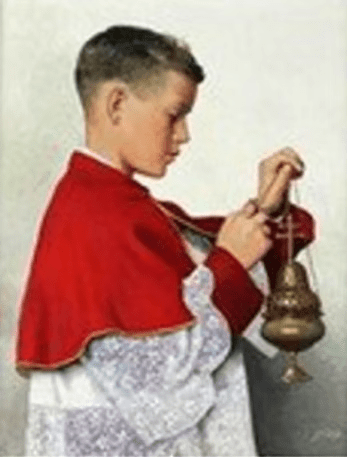
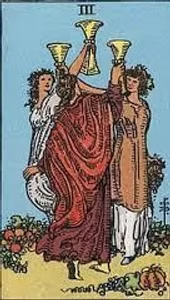
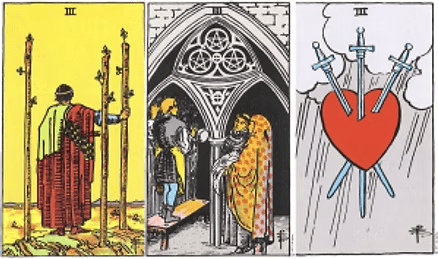
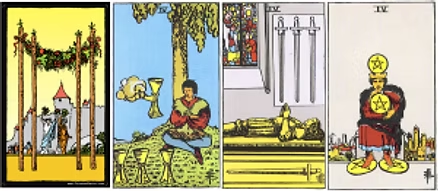

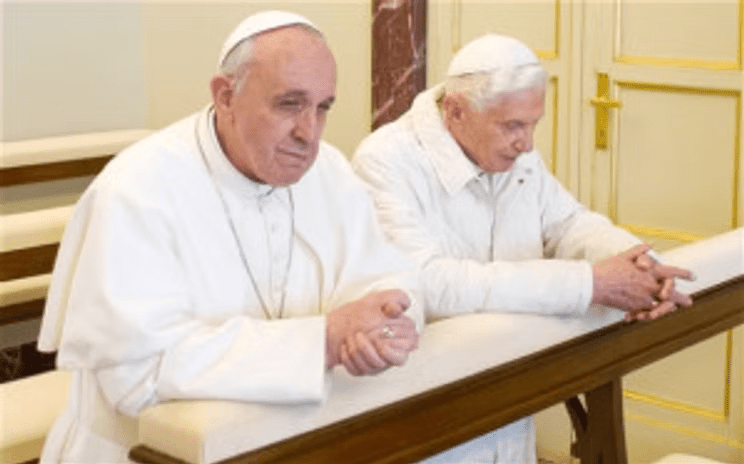







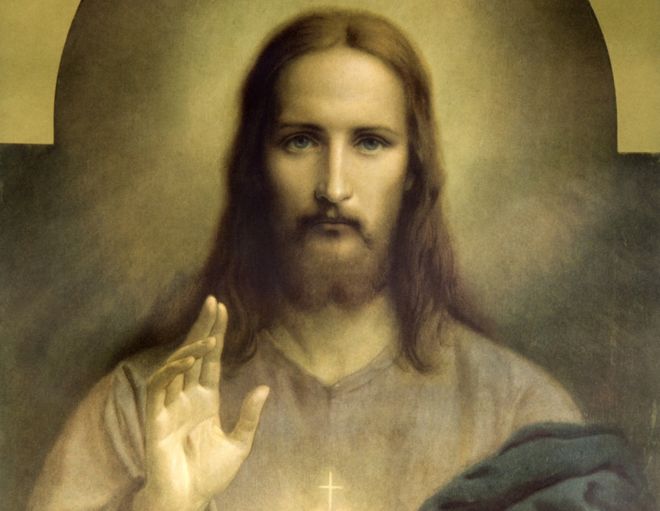

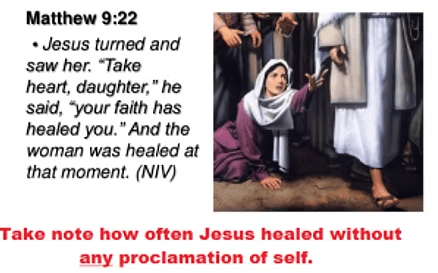


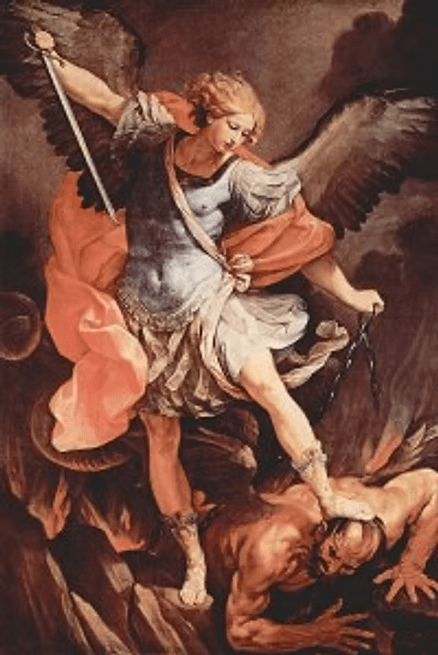
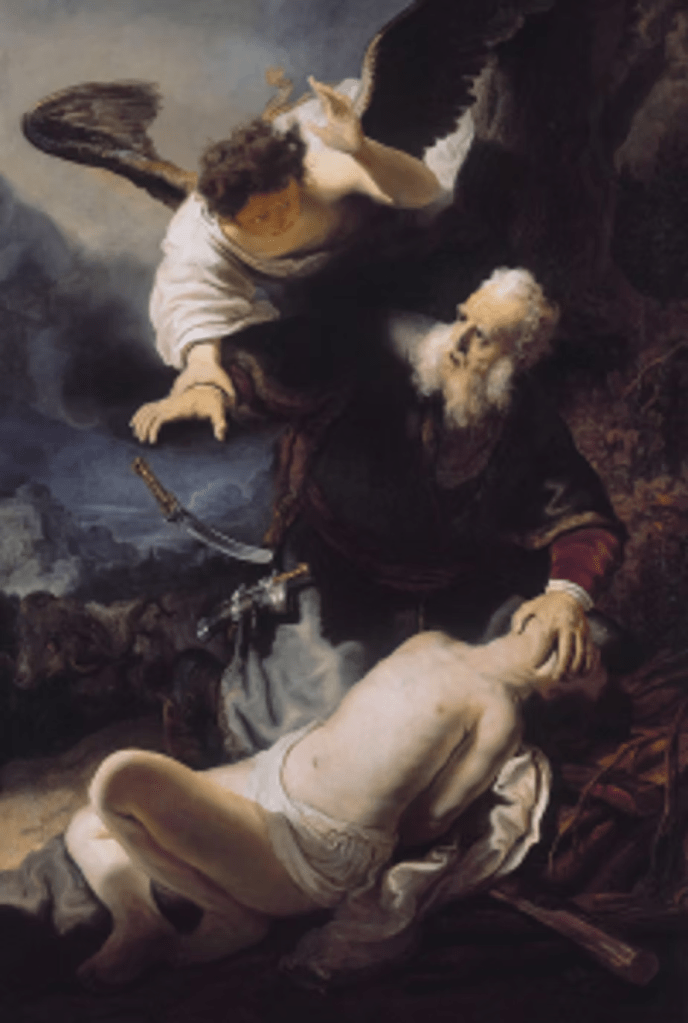
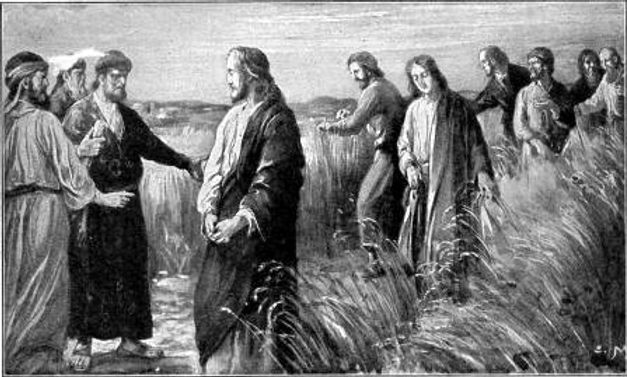


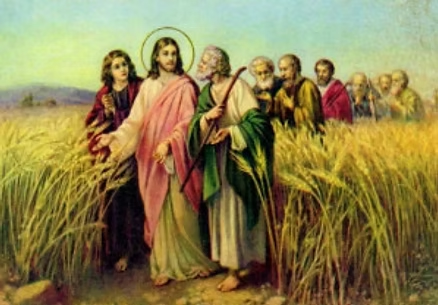
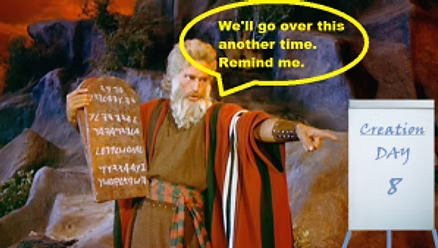



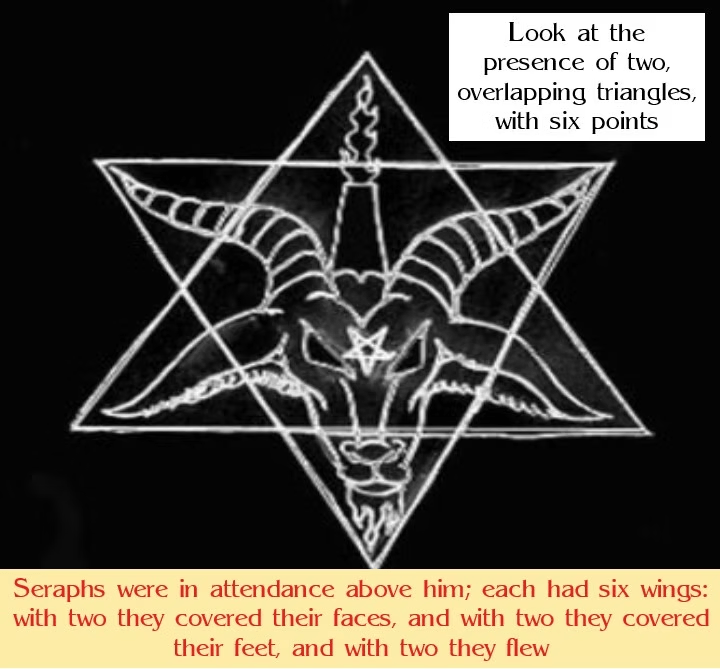


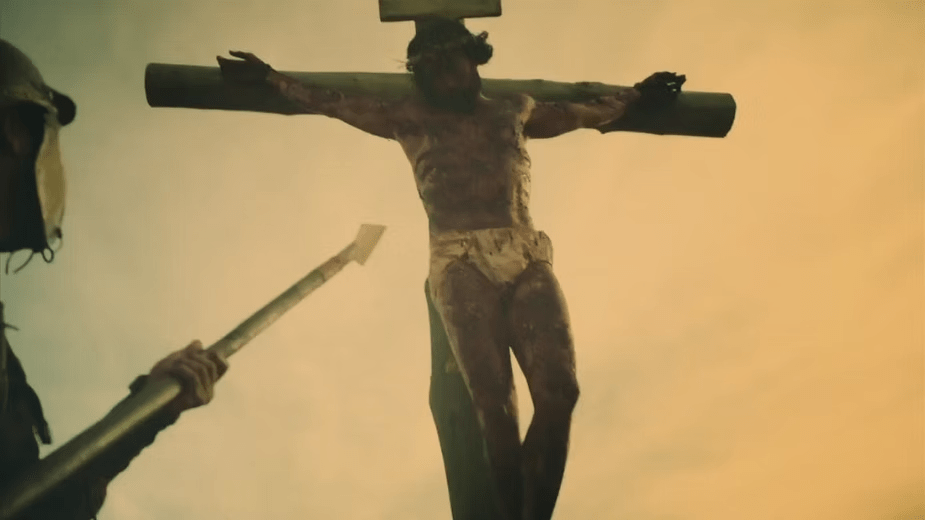
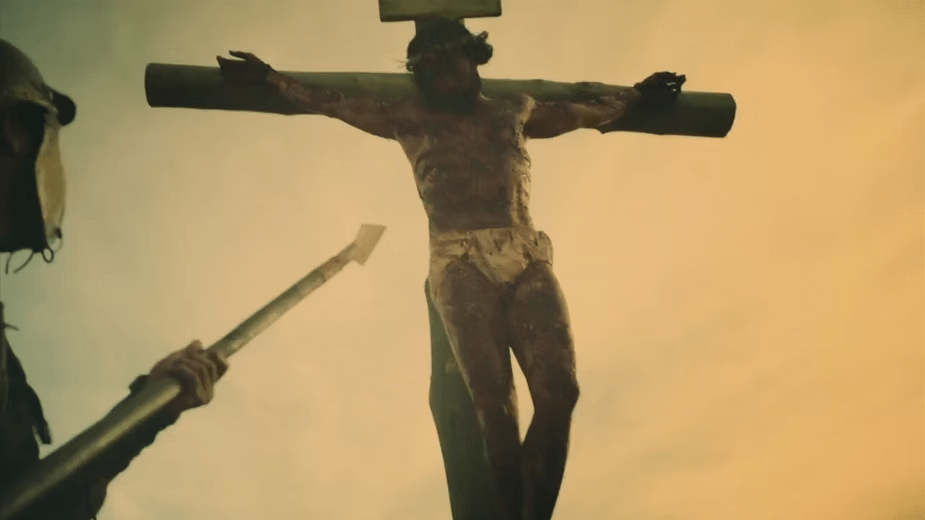


 Explaining the Readings