All the tribes of Israel came to David at Hebron, and said, “Look, we are your bone and flesh. For some time, while Saul was king over us, it was you who led out Israel and brought it in. The Lord said to you: It is you who shall be shepherd of my people Israel, you who shall be ruler over Israel.” So all the elders of Israel came to the king at Hebron; and King David made a covenant with them at Hebron before the Lord, and they anointed David king over Israel. David was thirty years old when he began to reign, and he reigned forty years. At Hebron he reigned over Judah seven years and six months; and at Jerusalem he reigned over all Israel and Judah thirty-three years.
David occupied the stronghold, and named it the city of David. David built the city all around from the Millo inwards. And David became greater and greater, for the Lord, the God of hosts, was with him.
——————————————————————————–
This is an optional Old Testament selection from the Episcopal Lectionary for the Seventh Sunday after Pentecost, Year B 2018. In the numbering system that lists each Sunday in an ordinal fashion, this Sunday is referred to as Proper 9. If chosen, it will next be read aloud in a church by a reader, on Sunday July 8, 2018. It is important as it points out how the Israelites admitted their mistake in choosing a king that was not anointed by God, beginning a new forty-year period under a recognized a true judge.
In this reading, the most significant statement it contains is: “David was thirty years old when he began to reign, and he reigned forty years.” This is significant because this is the only statement that says anything about David’s age.
While we read on the fourth Sunday after Pentecost, “Samuel said to Jesse, “Are all your sons here?” And he said, “There remains yet the youngest, but he is keeping the sheep,” we know David was the youngest son of Jesse. On the fifth Sunday after Pentecost [optional selection] we read, “Saul said to David, “You are not able to go against this Philistine to fight with him; for you are just a boy,” we can be confused when some translations change “young boy” into “young man.” An Internet search of “How old was David when he killed Goliath?” returns a common sense that he was “about sixteen.”
In reality, we do not know how old David was when he was anointed by Samuel. Thus, we do not know how old he was when he slew Goliath. There is nothing written in 1 Samuel that states how much time elapsed between David’s anointment by Samuel and when he was sent by Jesse to take food to his brothers, who were sent to fight against the Philistines and Goliath. David could have been anointed at age ten (a Numerological 1 [1 + 0 = 1]). The number one indicates new beginnings. David could have killed Goliath when he was twelve (a Numerological 3 [1 + 2 = 3]). The number three is symbolic of a significant initial completion.
Last Sunday [the sixth Sunday after Pentecost], we read [optional selection] of David being told of Saul’s and Jonathan’s deaths, to which he wrote a song and had it placed in the Book of Jashar. At that time, David was in Ziklag. No indication was made that David was a king then; but now we read, “All the tribes of Israel came to David at Hebron,” and “All the elders of Israel came to the king at Hebron.” Here is a map of those locations:
In my interpretation of the sixth Sunday after Pentecost reading option, I mentioned that Saul and three of his sons were killed at the battle of Mount Gilboa, with their mutilated bodies disgracefully hung at a holy place in Beth Shan. Allies of Saul, from Jabesh Gilead, reacted to that desecration and recovered the bodies, burned them, and then buried the remains properly. At the time of that defeat of Saul, David was avenging the sack of Ziklag by the Amakelites (Arabian nomads), who took all of the wives there. The King of Gath had given David Ziklag, but the Amakelites destroyed the city while David and his men were making raids. As the spoils, the Amakelites took all the women of Ziklag, which were the wives of David and his six hundred soldiers (Judeans). This implies that David might have been treated like the King of Judah, only not based in Hebron, but he was not made King of Judah until after Saul’s death. Judah remained loyal to David, rather than be ruled by Saul’s heir, Ish-Bosheth.
The statement that “David was thirty years old when he began to reign” allows one to be able to time this change with the reign of Saul and his son Ish-Bosheth. Saul reigned for 42 years; and after his death, Ish- Bosheth reigned for two years, before he was murdered. Because the three other sons of Saul died along with him at the battle of Mount Gilboa, the murder of Ish-Bosheth ended the line of Saul. Since there were no other issue to whom the reign of Israel could be given, the elders of Israel sought David.
When one knows that from the time the elders went to Samuel and asked for a king, “to be like other nations,” forty-four years elapsed and David was only thirty years of age. This means that Saul reigned over Israel fourteen years before David was born. Because we are told that Ish-Bosheth was forty years of age when he took over rule of Israel following his father’s death (2 Samuel 2:10), one can assume that he was Saul’s first-born male heir (born in the second year of Saul’s reign), with Jonathan his last born son. Jonathan would then have been born three or four years before David’s birth, which would have made him fifteen or sixteen when David was ‘adopted’ by Saul, assuming David killed Goliath when he was age twelve. That closeness in age would explain the bond that took place between Jonathan and David. Jonathan saw David as his younger brother, whom he had to protect.
When we read the Hebrew word “na-‘ar” in 1 Samuel 17:33, which was when David said he would respond to the challenge of Goliath, but Saul refused, saying, “For you are but a youth while he has been a warrior from his youth,” the meaning is “boy, lad, youth, or child.” The implication is that David was not a mature male. He was biologically incapable of reproduction. While the word means “male child,” one that has not yet reached a level of maturity that would change his status from boy to young man, this says that David was under the age of thirteen when he faced Goliath. The teen years generally signify when boys physically change from innocent males to fertile young men. A Jewish bar mitzvah is when a male turns thirteen.
In 1 Samuel 18:2 we read, “Saul took him that day and did not let him return to his father’s house,” which occurred when the souls of David and Jonathan bonded as brothers. Between that ‘adoption’ at age twelve, until we read, “So it came about at the time when Merab, Saul’s daughter, should have been given to David” (1 Samuel 18:19), four years’ time had passed and David had turned sixteen. With this sense of timing, when we later read, “So Saul gave him Michal his daughter for a wife,” (1 Samuel 18:27c) David was probably seventeen by then, having led men into battle to kill two hundred Philistines in order to pay the dowry (100 foreskins of Philistines).
It was at this age that David was banished from Saul’s house, causing him to go into exile. From the age of seventeen to twenty-eight (eleven – twelve years), David eluded Saul, fought for the Philistine king in Gath, spared Saul’s life twice, and was given the ‘border town’ Ziklag (between Philistia and Judah), because he had assisted the Philistines so they could war with Saul. Saul died when David was twenty-eight and David heard that news in Ziklag.
When this reading selection says, “At Hebron [David] reigned over Judah seven years and six months,” the six months were prior to Ish-Bosheth being murdered. That means David was named the King of Judah a year and a half after Saul died. This is stated at the beginning of 2 Samuel, where verse one says, “Then it came about afterwards that David inquired of the Lord, saying, “Shall I go up to one of the cities of Judah?” And the Lord said to him, “Go up.” So David said, “Where shall I go up?” And He said, “To Hebron.” That means David was twenty-nine and a half years of age when he first became King of Judah, and when he became King of all Israel he was thirty.
When we then see this timing element, it is understandable to see that David reigned as king in Hebron after the elders visited his and asked him to be the King of Israel – all the twelve tribes. He remained in Hebron as King of Israel for seven more years, before he moved to Jerusalem. That move required David lead soldiers to defeat the Jebusites of Jebus, whose stronghold had existed since the days of Genesis, when the place was called Salem. Joshua could not overthrow that stronghold, so they lived among the Benjaminites. David, however, “captured the stronghold of Zion, that is the city of David,” (2 Samuel 5:7) which was held by Jebusites (2 Samuel 5:6). David renamed the fortress the City of David and then built the city of Jerusalem around it.
When we read, “David built the city all around from the Millo inwards,” the Hebrew word “ham-mil-lō-w” is given proper name status in translation as “Millo.” The lower-case spelling, as “millo,” refers to “earthwork, mound, rampart or terrace,” with the website Abarim Publications stating the name meaning of “Millo” comes from the verb, “to be full or be filled.” Still, no one is sure what the word truly means, making its presence in this verse confusing.
In my mind, as a reason why Joshua could not defeat the Jebusites was there was more than a stronghold carved into the natural rock slope of Mount Zion. The elevations of Jerusalem are generally lower than the heights of the surrounding mountains (Mount Scopus – 2,710’, Mount Olivet – 2,710’, and the Mount of Corruption – 2,451’). Because Mount Zion (place of the City of David) has an elevation of 2,510’ and Mount Moriah (where Solomon would build his temple) is at 2,520’, a fortress built on lower ground is strategically difficult to defend. The Romans would later demonstrate the advantage of controlling higher ground, as Jerusalem’s walls were easily overcome by catapults situated on the surrounding higher mountains (Mount Scorpus in particular). This military weakness makes the millo a significant asset that David would discover and utilize.
One way of reading “millo” is as a “natural rock formation,” which was then further enhanced by man-made construction that built what was natural into a purposeful fortress or stronghold. Still, that rock wall has to be realized as an outward barrier that poses problems to those unwanted. The “inward” (“wā-ḇā-yə-ṯāh.“) building is then not what buildings were raised behind that enhanced natural barrier, but those within the rock itself. The Hebrew word “bayith” means “beneath, below, armory, tomb, and turned inwards, as well as indicating “a shelter for animals” (where stables were usually natural caves).
This means the digging out of natural caves, which created man-made tunnels within the rock. It is well known that an ancient tunnel acted as an aqueduct, where water was a necessity for soldiers defending a citadel. As a “millo” is sometimes read as “a storage place,” such as an armory, tunnels could be used to “fill” them, so tunnels could store food, arms, and people. With the entrances sealed or covered, attacking enemies could not find those in hiding. The tunnels could also provide escape passages, as well as traps for those not familiar with their design and purpose.
This was a pre-existing asset in Jebus, which David discovered when he and his men conquered Jubus. Once discovered, David utilized the engineering of the Jebusites in the building of Jerusalem; and Solomon would further utilize tunnels in the building of the Temple of Solomon. This means “Millo” is stated as an important characteristic of Jerusalem, both ancient and still today.
As a reading option for the seventh Sunday after Pentecost, when one’s personal ministry to the LORD should be underway, one should see this reading personally. The elders of Israel should be seen as one’s body (“Look, we are your bone and flesh.”) being in need to be ruled divinely. The reign of Saul means a body ruled by all the fears and anxieties of trying to stand strong in a world that is a never-ending challenge, offering one battle after another.
Saul overcome by evil gods.
The death of Saul means oneself has reached a point of decision, where the ego (the elders) has surrendered to God. When you want God to become your King, then you become Jesus Christ, as the root from Jesse that was David.
To reach that state of commitment, one has to have done some things good and been rewarded. The self has “led out [one’s body] and brought it in” to the cheers and admiration of others. One knows what is right and good, but one has bowed down to the gods of evil (“elohim rū·aḥ”) on many occasions, because they say, “Serve self, not God,” which is so much easier to do. Leading a parade of warriors, like David, or leading a band of disciples, like Jesus, is so hard to do, as it requires special talents. It is the talent Saul lacked, which is what all righteous leaders have. One has to commit to marriage to God, so He sits on the throne of one’s heart, commanding the brain that sits at the head of the body.
The palace of self is where one has ruled and is where one has become comfortable, but God will call the self to seek Jerusalem within, the City of Jesus Christ. Hebron can be seen as one’s church, where one becomes active as a leader, but one needs to conquer the Holy City of Jebus and make oneself a fortress that serves the One God above. In that development, one will take the natural formations that exist and strengthen them inwardly. New paths will open before oneself, which one needs to fortify and dig deeper to explore where God wants one to develop.
Three times ten represents the potential for a higher level of basic three: God’s love, devotion to righteousness, and spiritual union.
Both David and Jesus began their official ministry at the age of thirty, but that is not the physical age requirement for ministry to the LORD. Thirty is three times ten, which is a higher level three Numerologically (as 3 + 0 = 3), the number of the Trinity. The symbolism says that one has to be more than a son (or daughter) of a man (a basic 3). One needs to become King of Self (a third ten) as Jesus Christ the King reborn. As Christ resurrected within a body, the Son is resurrected, with the soul cleansed by the Holy Spirit, while the presence of God is in one’s heart. When that perfection is complete, then one has turned a “holy thirty.”
Ministry to the LORD means one develops as David reborn on earth, as Jesus Christ resurrected. It means being the Good Shepherd for the people in one’s life. When that reign begins, “Oneself becomes greater and greater, for the Lord, the God of hosts.” That greatness is because the same God that “was with [David]” is with one married to the LORD.
The Lord said to me: O mortal, stand up on your feet, and I will speak with you. And when he spoke to me, a spirit entered into me and set me on my feet; and I heard him speaking to me. He said to me, Mortal, I am sending you to the people of Israel, to a nation of rebels who have rebelled against me; they and their ancestors have transgressed against me to this very day. The descendants are impudent and stubborn. I am sending you to them, and you shall say to them, “Thus says the Lord God.” Whether they hear or refuse to hear (for they are a rebellious house), they shall know that there has been a prophet among them.
——————————————————————————–
This is an optional Old Testament selection from the Episcopal Lectionary for the Seventh Sunday after Pentecost, Year B 2018. In the numbering system that lists each Sunday in an ordinal fashion, this Sunday is referred to as Proper 9. If chosen, it will next be read aloud in a church by a reader, on Sunday July 8, 2018. It is important because it states the truth that a prophet of God is His creation, through His Holy Spirit.
This short five-verse reading option from Ezekiel is fairly straightforward in the translation above, stating that God filled Ezekiel with His Holy Spirit. Once filled with the wisdom of God, Ezekiel was sent to prophesy before the wayward Judeans, before their exile to Babylon and after.
Ezekiel was called Buzzi (beyond being the the son of Buzzi), “because he was despised by the Jews.” (Ezekiel: Wikipedia article footnote: Radak – R. David Kimkhi – in his commentary on Ezekiel 1:3, based on Targum Yerushalmi). The name “Ezekiel” means, “God Strengthens” or “Strengthened By God.” He was of the priestly lineage (Kohen: “a member of the priestly class, having certain rights and duties in the synagogue.”), believed to have been descended from Joshua. The words Ezekiel spoke to the children of Judah, as read in the Book of Ezekiel (regardless of who wrote them onto scrolls of parchment), proves God’s statement, “Whether they hear or refuse to hear (for they are a rebellious house), they shall know that there has been a prophet among them.”
As for a few observations of the actual Hebrew text and the translations English-speaking Christians recognize, whenever Ezekiel is said to hear God speak to him, with a reference to “O mortal,” the reality is Ezekiel wrote, “ben-adam” – “son of man. The translation as a “mortal” human being is relevant to being one of “mankind.” As a male human being, all male human beings are “sons of man.” This means the address is to the physicality of being human, which all human males are.
In the way that Jesus of Nazareth addressed himself as “Son of Man” (such as in Matthew 18:11, but many others) where the capitalization is an application of translation and not what was written (“huios tou anthrōpou” or “υἱός τοῦ ἀνθρώπου”), the assumption that comes from the capitalization is that Jesus addressed himself as the Son of God, in the form of Man. Beyond that, one can assume Jesus (as the Christ Spirit) was the Son of God, whose soul was that of Adam – the Son of God. However, both Ezekiel and Jesus were stating they were both males of mankind, which is ordinary, normal, and typical – not special.
Le Fils de L’Homme (Son of Man) – Magritte
While Jesus was divinely conceived, always to be holy, he was to be born of a woman. That made him a son of man. Likewise, Ezekiel was a son of man born into a holy lineage, predestined to become a prophet. The specialization and uniqueness then comes when ordinary men are transformed by the presence of God’s Holy Spirit; or as Ezekiel wrote: “A spirit entered into me.”
This realization means it is ordinary, normal and typical to read the Holy Bible (or have it read to one) and see Ezekiel like one sees Jesus – as special, as those blessed by God for holiness. It is this failure to see how Ezekiel and Jesus were just like all other men (and women) of the earth. They became special by welcoming the God into their hearts, so they could hear His voice through the Mind of Christ. They became special because of their sacrifice of self (God did not say, “O Ezekiel”) so the Holy Spirit could enter into them. They became special because they heard the voice of God speaking directly to each, such that each responded to what God said (“speaking” = “’ā·mar” = “commanding, advising, designating, and giving an order”).
Normal mortals are like Cain was when his sacrifice to the LORD was not shown favor. Normal human beings often get angry and let their faces become downcast (from Genesis 4:6-7), where “face downcast” or “countenance fallen” is derived from “nā·p̄ə·lūp̄ā·ne·ḵā”.
Those words of Hebrew literally translate to state “lie down before,” where one’s emotional outbursts when things do not go one’s way are like a child throwing a tantrum, lying on the floor and screaming. If children do this ordinarily, normally and typically, so too do mere sons of mankind, no different than Cain did. This is how one should see the statement here by Ezekiel, that God “set me on my feet.”
In the first two verses of this reading selection, we read how God told Ezekiel, “stand up on your feet” (verse 1) and then how God’s Holy Spirit “set me on my feet.” The same word, “amad,” is the root used in the translations “stand” and “set.” It is then important to see how “standing” is the opposite of “lying before,” such that a righteous prophet of the LORD must “rise up” from the ordinary, the normal and the typical and become “upright” before God. Because Ezekiel did this while he was a mere “son of man,” a simple “mortal, then so too can all human beings do the same. However, that requires a willingness to hear the LORD speaking AND it means releasing oneself from the rebelliousness, impudence, and stubbornness that makes life seem so much easier to transgress than to comply with what the LORD says.
In the heritage of Ezekiel, where he was descended from Joshua, who was a true servant of the LORD, as an assistant to Moses and subsequent leader of the Israelites. Joshua also was a prophet of Yahweh, just as was Ezekiel and Jesus. This unique stature was not among mere mortals, as much as it was among the children of God. All gods have their priests and prophets, in the same way that all nations have their kings and presidents, and all humankind has its teachers and guides. Ezekiel, as Joshua and Jesus, stood up among Israelites, Judeans and Jews, because it was those, chosen by God to serve only Him as His priests, who refused to be extraordinary, because they wanted to be ordinary, normal, and typical – like the people of other nations.
The humble bow down before the righteous.
Ezekiel, as Joshua before and Jesus afterwards, was a prophet that told the warning spoken by the LORD to His chosen priests. The Book of Ezekiel was not lessons of righteousness spoken to the whole of mankind, as it was the Word of God to those who had fallen into the gutter before their LORD. The lessons of the Gospel were likewise not to stories of Jesus being sent to save all the sons of man. He came to warn the Jews that they had also fallen into the gutter before their God. The message was to “Arise! If you want to be a priest of Mine, then you best become like Ezekiel, Joshua and Jesus; or you will become mere sons (and daughters) of man and lose the right for eternal life.”
As an optional reading selection chosen for presentation on the seventh Sunday after Pentecost, in the season of Church time when ministers (prophets) to the LORD should be well along the paths God has sent them to travel, the basic lesson here is to stand tall among mere men and women. A ministry then means being a pillar of strength in a cesspool of worldly beings. One is called by God to rise from that muck and be a standard-bearer of righteousness, so the rebellious, the transgressors, and the impudent can see that hope of salvation remains alive.
The English word “transgression” is defined as, “An act that goes against a law, rule, or code of conduct; an offense.” (Google Dictionary) Seeing this as a legal term, where the Law of Moses came from God to the Israelites, as the Covenant between their service as God’s priests, with the agreed rewards as God’s chosen people being eternal salvation, the prophets of the LORD have always only been sent to warn those who profess belief in the One God, and not anyone else. This means a transgressor is anyone who has sworn allegiance to Yahweh (Jews and Christians), expecting the reward of Heaven for simply believing in that God, but who have laid down with the non-believers, going against the Laws of Moses, the rules of Jesus of Nazareth, and the code of conduct that makes one truly a priest to the One God. Such acts by other sons and daughters of humanity do not constitute breaking those laws and covenants, because they serve the gods of the world – the gods of money, sexual stimulation, war, artificial means of transcendence, and any other worship of the physical, rather than the Spiritual.
This reading then focuses less on being sent into the world to right all the wrongs, as God told Ezekiel, “Whether they hear or refuse to hear (for they are a rebellious house), they shall know that there has been a prophet among them.” This says one who refuses to hear will still know that a prophet of Yahweh has come into the world simply because he or she stands among those who wallow in emotional instability. If one wants to hear what a prophet has to say, then that one will rise to ask questions, like, “What has the LORD said to you?”
This means a ministry today is no different than ministry was for Joshua or Ezekiel, as they had to rise above the level of being sons of man, mere mortals, so they could hear God speak. A minister has put oneself in a position so that the Spirit can enter one’s being and strengthen one’s upright position. Once standing, a minister can hear the voice of God speaking words that explain the meaning of Scripture. A minister then radiates the joy of that enlightenment, so the others of mankind can know that God has come near.
When we read in Ezekiel today, we can apply ancient words to today’s reality. We can see how this Scripture can state: “[God] said to me, [son of man], I am sending you to the people of [faith in the One God], to a [religion] of rebels who have rebelled against me; they and their ancestors have transgressed against me to this very day.” What was truth then is still truth today. Jews who have rejected Jesus as their promised Christ are doing nothing more than pretending to obey the Law are transgressors to this day. Christians who have entered the churches as political activists and apologists for sins against the Law are transgressors to this day.
The Hebrew word “pasha,” which translates as “transgressed” and “rebelled,” also infers “to break away (from just authority).” This means the plethora of denominations and sects of Judaism and Christianity, evolving over the millennia, are by definition “transgressors” of the true purpose of one’s original faith in God. Thus, ministers are sent by God for the purpose of replacing the lost with those found, as beacons that others can see.
This makes a minister be an example of the truth, so those who have fallen, like God came and spoke directly to Cain. God speaks through His prophets indirectly, so they speak as symbols. Thus, a minister can make it known that it is possible to do what is right by example, rather than words. The sight of a risen prophet shows the world it is possible to rule over sin, rather than have sin rule over a mere mortal.
I know a person in Christ who fourteen years ago was caught up to the third heaven—whether in the body or out of the body I do not know; God knows. And I know that such a person—whether in the body or out of the body I do not know; God knows— was caught up into Paradise and heard things that are not to be told, that no mortal is permitted to repeat. On behalf of such a one I will boast, but on my own behalf I will not boast, except of my weaknesses. But if I wish to boast, I will not be a fool, for I will be speaking the truth. But I refrain from it, so that no one may think better of me than what is seen in me or heard from me, even considering the exceptional character of the revelations. Therefore, to keep me from being too elated, a thorn was given me in the flesh, a messenger of Satan to torment me, to keep me from being too elated. Three times I appealed to the Lord about this, that it would leave me, but he said to me, “My grace is sufficient for you, for power is made perfect in weakness.” So, I will boast all the more gladly of my weaknesses, so that the power of Christ may dwell in me. Therefore I am content with weaknesses, insults, hardships, persecutions, and calamities for the sake of Christ; for whenever I am weak, then I am strong.
——————————————————————————–
This is an Epistle selection from the Episcopal Lectionary for the Seventh Sunday after Pentecost, Year B 2018. In the numbering system that lists each Sunday in an ordinal fashion, this Sunday is referred to as Proper 9. It will next be read aloud in a church by a reader, on Sunday July 8, 2018. This is important because it places focus on the weakness of the individual who is filled with the Holy Spirit, meaning the only strength one can boast of possessing is one’s ability to withstand the tests and temptations of Satan, which are painful tortures.
This reading skips over verse one, which sets the theme from which this reading flows. It states, “Boasting is necessary, though it is not profitable; but I will go on to visions and revelations of the Lord.” (NASB) However, the literal translation from the Greek says (noting spaces to highlight punctuation marks), “To boast , it should not be profitable to me . I will go on to visions and revelations of the Lord .”
Regardless of Paul’s denial of brag, the vital words in verse 1 are “optasias” (“visions”) and “apokalypseis” (“revelations”). Those words can also translate as “supernatural appearances” and “unveilings.” It should be understood that Paul was not introducing normal sights and discoveries that he had seen, during his travels, to the Christians of Corinth. He was turning his letter’s purpose into Spiritual things the Corinthians should then know.
When we read, “I know a person in Christ who fourteen years ago was caught up,” this unnamed “person in Christ” can possibly be identified by Paul’s epistle to the Galatians (believed to have been written 1.5-2 years prior to this letter). There he wrote, “Then after an interval of fourteen years I went up again to Jerusalem with Barnabas, taking Titus along also.” (Galatians 2:1) As the Book of Acts speaks in detail about Paul and Barnabas, during the early phase of Paul’s ministry, it makes more sense to see Barnabas as the one Paul was referring.
When Paul followed that knowledge of “a person in Christ” by stating, “And I know that such a person,” this is the identification of Paul. By reading slowly, in both cases Paul said “I know” (“oida“), which is a statement of personal knowledge. When Paul followed the first “I know” with “a man” (“anthrōpon“), he next followed “I know” with “tontoiouton anthrōpon,” which more accurately says, “I know this like the man.” As such, Paul and his partner in ministry both shared a similar experience, most likely at the same time.
The translations that says “caught up,” which appears twice (once as harpagenta and then as hērpagē) is rooted in the Greek verb harpazó, which means, “seized, snatched away.” This means Paul was not referring to some event where he and Barnabas went willingly into a situation that overwhelmed them. While they experienced times of trouble and persecution as Christians, some which became intense, this cannot be read as the meaning here. Paul had probably discussed old times prior, while in Corinth; so this reference is to an untold experience where he and his partner were “suddenly and decisively taken by an open display of force.”
One such experience could be the one written of in Acts 14:5, while the duo was in Iconium and “some Gentiles and Jews, together with their leaders, decided to make trouble for Paul and Barnabas and to stone them to death.” They escaped that plan by leaving town. However, it could have been while they were in Lystra, where Acts 14:19 states, “Some Jewish leaders from Antioch and Iconium came and turned the crowds against Paul. They hit him with stones and dragged him out of the city, thinking he was dead.”
This certainly tells how Paul and Barnabas were suddenly and decisively overcome by force, but importantly in a way that could have separated their souls from their bodies. Such an event probably would have been told prior; but Paul is now adding a new twist to the story by writing here (in remembrance), “whether in the body or out of the body I do not know; God knows.” If Paul did not know if he was in body or not, then he was near death.
The focus is now on a version of death that is referred to as an out-of-body experience (OBE). This is vivid memory that is retained, seemingly when the soul is free to leave the body at death. People reporting these events have told of visual experiences (“optasias”) that are vivid and realistic, yet their minds realize a transcendental departure had occurred that is closer to a dream state. This can then be seen as Paul confessing a period in his life that could have been like sleep, which matches those Gospel comparisons to death-followed-by-resurrection as sleeping. Paul then indicated one who was “in Christ” went to a place only the soul can visit, while out of its body. Paul called it “third heaven” (“tritououranou” – lower case).
The translations of the Greek text do not capitalize this place Paul and his companion were “snatched to,” but this reference has become magnified over the centuries as “Third Heaven.” This reference is then dovetailed into the second and third books of Enoch, the Talmud, the Qur’an, the Epic of Gilgamesh, and ancient Hindu texts that refer to “seven heavens.” All of this, as a “Christian” perspective, is then projected upon this one verse of Paul’s second letter to the Christians of Corinth, as supporting all the other references of faith.
This then leads one to recall the Divine Comedy and Dante’s trilogy that projected a satirical view of the Church’s support of a layering of Hell, Purgatory, and Heaven. In Dante’s mind, the lower levels of hell and purgatory were filled with popes and cardinals, as well as the governors that supported them. His spheres of Heaven were much like the Judaic Seven Heavens, where planets and celestial orbs each symbolized a tier (Third Heaven was influenced by Venus in both models). By Dante calling his heavenly realms “Paridiso” (Paradise), there is then a link to Paul’s statement, “was caught up into Paradise” (“Paradeison” – capitalized).
In the Wikipedia article entitled “Third Heaven,” (capitalized), the information posted refers to elements from the Second Book of Enoch, which alludes to a contrast between the third level of Heaven and Paradise. The article states, “Third Heaven is described as a location “between corruptibility and incorruptibility” containing the Tree of Life, “whereon the Lord rests, when he goes up into paradise.” [Reference: Chapter 8, Second Book of Enoch]
This goes on by adding, “In contrast with the common concept of Paradise, the Second Book of Enoch also describes a Third Heaven, “a very terrible place” with “all manner of tortures” in which merciless angels torment “those who dishonor God, who on earth practice sin against nature,” including sodomites, sorcerers, enchanters, witches, the proud, thieves, liars and those guilty of various other transgressions.” [Reference: Chapter 10, Second Book of Enoch]
This certainly paints a sinister picture of “third heaven,” which forces one to look closer at the Greek word “Paradeison,” which is translated as “Paradise.” The Greek word (capitalized) means, “Paradise, Grand enclosure, Garden, Pleasure-ground,” and the “Upper reaches of the heavens,” which is a view that saw outer space (as we know it) as the first heaven. “Paradeison” is even a reference to the Garden of Eden, as well as “that part of Hades which was thought by the later Jews to be the abode of the souls of the pious until the resurrection.” This last view of “Paradise” is then more comparable to the Purgatory of Dante, rather than the Judaic association of Seventh Heaven being where God is pure light.
7. Araboth (ערבות), The seventh Heaven where ofanim, the seraphim, and the hayyoth and the throne of the Lord are located. (Wikipedia article: Seven Heavens).
It does not make sense that Paul could write about out-of-body experiences for both he and a partner, such as Barnabas, especially if one went to the “third heaven” and the other to “Paradise.” While both could have been two places together, it makes more sense that they saw the same place differently, and reported their feelings to one another afterwards. Still, even more likely, Paul knew his partner was seeing the same as him, as both were “in Christ.” The two were “snatched away” into a near-death state, simultaneously, mesmerized by “visions and revelations” while in God’s total care.
When realizing “Paradeison” can be the same place as Dante’s “Paradise,” akin to the Judaic Sheol, that would make “third heaven” capable of being a dark place.
The tone of the remainder of this reading supports that assessment. The association to Eden and the word etymology visualizing a Garden brings to mind recall that the serpent caused so many problems for Adam and wife there. Therefore, it is not hard to see how misery can be a reality, while in a place whose illusion is of something wonderful.
In this regard, “third heaven” becomes a trick of Satan. Paul and partner were forcibly taken to “a terrible place” with “all manner of tortures.” First impression could have been the lure and illusion of something wonderful; but as the letter proceeds, there were pains that one would not expect a spiritual self to experience.
Getting this picture in mind makes it easier to understand how the “revelations” or the “unveilings” (stated in 2 Corinthians 12:1) that were discovered by Paul’s soul in Paradise were then stated as: “[I] heard things that are not to be told, that no mortal is permitted to repeat.” That implies Paul saw things they were astounding, but the voice of God explained the truth behind the “visions.”
It was at this point in the letter that Paul wrote, “On behalf of such a one I will boast, but on my own behalf I will not boast, except of my weaknesses.” This should be seen as the duality of one man – Paul – who was both alive in Spirit (a truth worthy of boasting about), while still in a body (his weakness) that was with him, or not – God knows.
Paul then wrote how filled with elation he was in this state of “visions and revelations.” Still, he wrote, “to keep me from being too elated, a thorn was given me in the flesh, a messenger of Satan to torment me, to keep me from being too elated.” That can be seen as the “pinch me to make sure I’m not dreaming” axiom. Feeling the pain meant Paul still was connected, in some way, to his body.
The “messenger of Satan” (“angelos Satana”) can also be read as “an angel of Satan” or “messenger of the Adversary.” As an “angelic adversary” (another translation possibility), one can see the thought that reads like The Revelation of John (Apokalypsis) – remembering verse 1 set the theme of “optasias” (“visions”) and “apokalypseis” (“revelations”). One can grasp how John also had a view of “third” and “heaven,” which is consistent with Paul’s revelation to the Corinthians.
In chapter 12 of The Revelation, John wrote, “And his tail swept away a third of the stars of heaven and threw them to the earth” (Revelations 12:4a). Common analysis by Christian scholars interprets that as a reference to “a third of the angels” or “a third of the heavens.” In The Watchers of Enoch, we know of a rebellion among the angels, where a portion, led by Lucifer, refused to serve Adam (Holy Man). The story of the serpent and Eve in Eden is then symbolic of that rebelliousness.
John’s Greek words written are, “triton tōn asterōn tou ouranou,” where Paul wrote, “tritououranou.” The “stars” are then synonymous with the “angels,” which are “the Watchers” of Enoch. The “angelos Satana” were the “third heaven” thrown into the earth, which occurred when Adam and wife were banished from Eden. This means “Paradise” was the “Enclosure” (translation possibility for “Paradeison“) that is the Earth and its limitations.
The “thorn” (“skolops”) Paul felt then brings about physical pain, as Paul wrote it “was given me in the flesh,” by the “angel of Satan.” This acts as a view of the future, similar to John’s chapter nine in The Revelation (9:10), where scorpions are said to come from within the earth and be attacking. John wrote there, “They have tails like scorpions, and stings,” where “scorpions” in Greek is “skorpiois.”
Because John wrote of a dismal end time, the comparative terminology found here in Paul’s words should be seen as prophetic. Paul had stated that God told him not to repeat what he saw. This instruction was not disobeyed because Paul, like John and all prophets of the future, write of visions and revelations symbolically. This can be seen as why Jesus taught in parables, rather than giving the world a clear view of the future. God-led metaphor is required to prophesy the future, and the language of God (spoken by all His Prophets) is not easily understood.
This use of “thorn in the flesh” is then Paul speaking metaphorically about the reality of his experience, which he had said “no mortal is permitted to repeat.” John’s use of thick metaphor is then his inability to clearly state the reality of an evil presence on earth – then as now. That is forbidden from being expressly stated. However, that evil presence is nonetheless real and within the depths of planet earth.
The feel of the thorn was so great and real to Paul (remembering that he could not state for sure if he was alive in physical body or alive only in Spirit), he wrote, “Three times I appealed to the Lord about this, that it would leave me, but he said to me, “My grace is sufficient for you, for power is made perfect in weakness.”
The number “three” is then stated in a word that means “three times” (“tris”). Three is a number that is always significant as it represents a statement of “initial completion.” Three is life, where soul (1) and body (1) are joined (1), with the union point representative of “three.” Three times three (3 x 3) is then a holy octave that is the Trinity – Father, Son, and Holy Spirit are joined as one. In this sense, Paul wrote of “three times” he “begged” or “appealed” (“parekalesa“) God for his spirit and flesh to “leave, withdraw from, or to go away from” (“apostē“) the “third heaven,” where the pains of sins were part of his flesh. By begging “three times,” Paul used a word that is all-inclusive of the “times” of eternity: past, present, and future. Paul could not leave his vision of the past, which led to the present state of Christianity, and then the pains shown into the future.
By God stating “His grace” (“charis”) was enough, the presence of the Christ Mind in Paul, making him the resurrection of Jesus Christ (“God’s grace”), was enabled by the weakness of Paul – his sacrifice of self. Therefore, it was the submissive ego of the old Saul that cried out for help, because the pain of his past sins was being felt.
That pain, coming from his mortal weakness, was what led him to love God and be surrounded by God’s Holy Spirit, as the rebirth of Jesus Christ. The pains inflicted by sin endure through all times; but Redemption, through sacrifice of self, is the cure beyond the flesh.
That realization is why Paul then wrote to the Christians of Corinth, “So, I will boast all the more gladly of my weaknesses, so that the power of Christ may dwell in me.” Without the grace of God, as the rebirth of Jesus Christ, the sins of Paul’s past would be forever mounting, with new pains in the present and assured pains in the future. The pains of an earthbound body cannot be escaped. The weakness of the flesh and the ability to be able to retain the pains that led to penitence then becomes the motivation to remain devoted and submissive to God’s Will.
Relief from pain is not the Spiritual answer, as relief represents capitulation to the tests sent by Satan’s angels. The answer is to show strength in the face of pain, which is why Paul wrote, “Therefore I am content with weaknesses, insults, hardships, persecutions, and calamities for the sake of Christ; for whenever I am weak, then I am strong.”
As an Epistle reading selection for the seventh Sunday after Pentecost, when one’s personal ministry to the LORD should be underway, the message of Paul is not to expect ministry to be an easy road to follow. In this day and age, the thorns ready for one’s flesh are closer to the intent of the ancient symbolism that was used by the prophets Paul and John. We have entered the the beginning of the End Times, in bodies that are always liable to be “snatched away.”
When one sees the element of pain and understands that worldly pains represent the punishments of sins, one cannot help but see the world has reached a state of global pain. This is not simply the standard anger between nations, the typical angers between religions, and the ordinary angers between races; but it is the anger now dividing nations, destroying religions, and blending the races.
We know these pains because of the visions of cable and network media. Television and the Social Media have snatched away our bodies and souls, so we feel the thorns of pain of others as if it is our own.
Please, o Box, show me my next anxiety and pain (after 5 minutes of commercials).
For example, the issue of abortion can bring news of violent protests and attacks. We see or hear of this problem, so we feel a pain that may not be relevant to some. Still, anger acts like an angel of Satan, making us feel like we should act violently because that specific sin exists in the world. The media becomes a demon that pierces the flesh with thorns, sending our fantasy selves into a “third heaven” realm of visions and revelations where we visit a world of hurt.
Ministry seems to some to be a spiritual necessity to stand before a congregation and preach against the evils of the world. The pulpit has long been filled by the fire and brimstone warnings that plant the seeds of fear in minds, so those fears will prevent sins from happening. In the same misguided view of ministry, political philosophy has taken hold on churches as a platform for social reforms, where guilt is planted in the minds of congregations, because somewhere in the world people suffer. Some preachers actively preach the overthrow of the evils that have become common within one’s society. However, that is what Paul wrote the Corinthians to advise against.
The role of a minister is to be an Apostle of Jesus Christ, the perfect manifestation of the Trinity on earth. The mission of an Apostle is to teach, both by words and works. This means a minister must be the resurrection of Jesus Christ on earth, for the purpose of leading the lost sheep to themselves become Jesus Christ. Unfortunately, so many love a Jesus on the cross, so the popular opinion is to “Crucify him!”
Instead, the Jews shouted, “Free Barabbas!” This was because the people would always rather be insurrectionists, than teachers. It is easier to lead others to slaughter, than to be held responsible for one’s own self-sacrifice for salvation.
The message that God sends a minister into the world with is stated here by Paul. A minister must recognize his or her own weaknesses. Asking God to make all the sins of the world go away will have the same response as God gave Paul: “My grace is sufficient for you, for power is made perfect in weakness.”
The world we live in today is the “third heaven” that is “a very terrible place.” It comes with “all manner of tortures” in which merciless angels torment “those who dishonor God, who on earth practice sin against nature.” The world has long been a Paradise Lost. A religious philosophy cannot change the world, simply because the philosophy of Christianity is the equivalent of the philosophy of Islam, Judaism, Hinduism, Buddhism, Socialism, and any and all -isms. They are ideals, not realities.
The reality is Christians (like all the others philosophical sects) turn on each other every hour of every day, just as “some Jews came from Antioch and Iconium” stoned Paul until they thought he was dead. The rabble-rousers of the world are the ones who are so bold as to stand in front of an audience and promote anger. This is not the role of a minister to the LORD. If the government is messed up today, it is a sign that the government has always been messed up, is still messed up, and will always be messed up.
Get over it. Don’t let the messenger of Satan thorn you to anger. Don’t fall for the illusion that you can change the world of hurt.
A minister must have a personal relationship with God, where God speaks through one’s own heart, to a brain that should have been surrendered already to the Will of God. If one is asking God “three times” as an appeal: “Please God, give me the power to make the world see the error of its ways, so it can stop its insanity and become a Paradise for your servants.” – Then, there is still that ego within that silently wants the elation of having brought the world peace … in your name, not Christ’s. You still want to boast of the strengths God has given to you.
This lesson of Paul is not to be tricked by the angels of Satan and become snatched away from serving God. If that happens, then one returns to serving self and the thorns of pain come flowing back. The Devil wins that battle when you boast more about what you think you should do, forgetting God’s presence is the only power necessary.
A minister admits, “I am weak. Thanks be to God for Him being my strength to withstand this world.”
A minister has to learn the lesson of Ezekiel and other holy prophets. They hear the voice of God ask the questions and they only say, “You know LORD.”
——————————————————————————
As a reading that is this dark and with a content that can go much deeper in meaning, I can assure the reader that no Episcopal priest will spend his or her 12 minutes of sermon time touching “third heaven” or “messengers of Satan.” Likewise, most avoid talking about The Revelations. In this regard I had much more that I could have written about this and how it applies to future prophecy. However, at this time I am tabling that plan to write more for now.
If I do make an addition, it will be on another blog; but I will announce it here.
Jesus came to his hometown, and his disciples followed him. On the sabbath he began to teach in the synagogue, and many who heard him were astounded. They said, “Where did this man get all this? What is this wisdom that has been given to him? What deeds of power are being done by his hands! Is not this the carpenter, the son of Mary and brother of James and Joses and Judas and Simon, and are not his sisters here with us?” And they took offense at him. Then Jesus said to them, “Prophets are not without honor, except in their hometown, and among their own kin, and in their own house.” And he could do no deed of power there, except that he laid his hands on a few sick people and cured them. And he was amazed at their unbelief.
Then he went about among the villages teaching. He called the twelve and began to send them out two by two, and gave them authority over the unclean spirits. He ordered them to take nothing for their journey except a staff; no bread, no bag, no money in their belts; but to wear sandals and not to put on two tunics. He said to them, “Wherever you enter a house, stay there until you leave the place. If any place will not welcome you and they refuse to hear you, as you leave, shake off the dust that is on your feet as a testimony against them.” So they went out and proclaimed that all should repent. They cast out many demons, and anointed with oil many who were sick and cured them.
——————————————————————————–
This is an Gospel selection from the Episcopal Lectionary for the Seventh Sunday after Pentecost, Year B 2018. In the numbering system that lists each Sunday in an ordinal fashion, this Sunday is referred to as Proper 9. It will next be read aloud in a church by a priest, on Sunday July 8, 2018. This is important as it shows how Jesus was rejected by the Jews of Nazareth, just as were his disciples faced rejection in their appointed ministries. This is seen today in the fight among Christians to cast out anyone who offers wisdom without some degree of approved divinity, such as that handed out by professors of scholastic religion.
This is Mark’s version of the same story told by Matthew (13:53-58) and Luke (4:14-30), with Luke’s more detailed about Jesus being rejected in his hometown. Mark then followed with the commission of the twelve, which Matthew told of in his tenth chapter (the whole chapter) [slightly before Jesus was rejected in Nazareth] and Luke told of in his ninth chapter (verses 1-6) [well after Jesus was rejected in Nazareth]. Luke told the story of Jesus being rejected in Nazareth with much detail, well beyond what Mark wrote; but the inconsistencies of the chronology makes certainty of when each event occurrences difficult to pinpoint. Still, there is purpose to the order of presentation that is found here in Mark.
There is no mention of Nazareth specifically in either Mark of Matthew, but Luke does make that specifically known, with Mark telling that the people in the synagogue knew his father was a carpenter. One can assume Joseph died before Jesus began his ministry, certainly before he moved to Capernaum, because there was no mention of Joseph at the wedding in Cana.
By knowing all of the surrounding stories of the same events, a three-dimensional view of Mark’s story emerges. When we read, “Jesus came to his hometown, and his disciples followed him,” we know from Luke that Nazareth was one of several synagogues that Jesus taught in, after he “returned to Galilee in the power of the Spirit.” (Luke 4:14a) This means that Jesus did not go to his hometown solely for the purpose of showing off his teaching talents. The synagogue of Nazareth welcomed Jesus because of the “news about him [had] spread through the whole countryside” and “he was teaching in [multiple] synagogues, and everyone praised him.” (Luke 4:14b-15)
When Mark wrote, “On the sabbath [Jesus] began to teach in the synagogue,” Luke makes a point of stating, “he went into the synagogue, as was his custom” and “he stood up to read.”
This means each Sabbath in the Hebrew calendar calls for specific readings to be read and discussed. Luke quotes the reading as being that of Isaiah 61:1-2a. In the “Calendar of Torah and Haftarah Readings,” for 2015 – 2018, the schedule for these two verses (plus verses 3-11) comes up in the reading for October 29, 2016 [27 Tishri 5777], which is called the “Blessing for Cheshvan” [Cheshvan = “Eighth Month”]. The same reading was also scheduled for September 9, 2017 [18 Elul 5777].
In the verses recited by Luke (Isaiah 61:1-2a only), the words from the verses include: “The Spirit of the Lord is on me;” and “He has sent me to proclaim.” Some English translation versions place a title on this chapter that comes from verse two-a, which is “The Year of the Lord’s Favor.” This portion of Isaiah 61 announces an unnamed prophet to come, which is not Isaiah but a prophecy of one who will bring freedom to those in captivity. Jesus stood and said, “Today this scripture is fulfilled in your hearing.” (Luke 4:18-21)
While Mark did not address this specific reading as what Jesus “began to teach” about, this is what led the Jews of Nazareth to be “astounded.” The use of the Greek word “exeplēssonto” means “astounded,” which might lead one to think Jesus impressed the Jews of Nazareth, as if he “bedazzled” them or “amazed” with his words. While Luke’s use of “ethaumazon” implies “wonder, marvel, and admiration,” it actually in a statement of “surprise.” Mark’s word most clearly shows that Jesus’ words had the effect of “striking them with panic or shock.”
This view is supported by seeing how those in attendance in the synagogue took this proclamation by Jesus as an insult. It led them to question his credentials: “Where did this man get all this? What is this wisdom that has been given to him? What deeds of power are being done by his hands!” Those questions did not in any way infer that what Jesus said was believable.
The question that asked where Jesus saw Isaiah foretelling of him was one asked in the tone of “What gall!” The use of “sophia,” as “wisdom,” misses the hint at “cleverness,” where a rabbi should teach the “intelligence” that comes from the standards of education, and not unfounded “insight.” The “deeds of power,” from “dynameis,” hints at a stunt proclaiming to be a “miracle.” The addition of “by his hands” is then meant as a preconceived “plan,” which is the art of shysters, made-up by Jesus only.
When the next question was, “Is not this the carpenter, the son of Mary and brother of James and Joses and Judas and Simon, and are not his sisters here with us?” they concluded that Jesus was just the boy down the lane who was the son of a carpenter. Growing up in Nazareth meant Jesus was from another poor family of Jews. His relatives were of no importance … pretty much like everyone from Nazareth … so the same expectations should be placed on Jesus. They let him teach out of respect for his being from Nazareth and some gossip that said, “Give him a chance,” but that sermon (in their minds) was a colossal failure.
To ensure that no one missed that point, Simon-Peter told Mark to be sure to write down, “And they took offense at him.” The Greek word written, “eskandalizonto,” is rooted in “skandalizó,” which in Latin is transcribed “scandalizabantur,” a word that is associated with the etymology of the English word “scandalous.” The “offense” caused was “disgraceful; improper or immoral.” The Nazarenes felt like they had fallen into a trap that had been set by Jesus, snared up quickly from their peaceful Shabbat Jewish selves and forced to become angry and wild in an attempt to free themselves.
Their anger led Jesus to say, “Prophets are not without honor, except in their hometown, and among their own kin, and in their own house.” As a true prophet of the LORD, such that everything Jesus said was the Word of God flowing through his mouth, the “honor” that comes to all “Prophets” (capitalization is purposeful, showing a divine connection, although the capitalization is from the paraphrase of translation) is the presence of God within.
Because a relationship with God requires many years to build up, into a marriage where a Prophet submits his (or her) personal will to the dominant Will of God – the Husband – even Jesus, as a child, was seen as no different as other children his age. Even though God spoke to Jesus daily, from human birth to human death and beyond, Jesus was free to express his personal opinions (albeit God-led) at all times prior to his Spiritual baptism, when the dove lit upon his spirit in the river Jordan, with John the Baptizer. That period of Jesus talking, rather than God speaking directly through Jesus, was not part of any written Gospel. The Jews of Nazareth, therefore, saw Jesus as a little more than an impudent human, one who (as far as they knew) was ordinary.
When we then read, “And he could do no deed of power there, except that he laid his hands on a few sick people and cured them. And he was amazed at their unbelief,” this says that the rejection of Jesus was so great that the Son of God could do little to reach through that refusal to accept holiness. It says that “unbelief” (“apistian”), which is a negative form of “faith.” It means “unfaithfulness” and “distrust” is the power of “disobedience” that pushes those professing “faith” away from God.
This makes Nazareth become a model for all of the Israelites, in particular those who maintain Judaism today, denying Jesus as their Christ. When the scope of definition for “Israelite” is broadened, to be seen as the children of God who do follow the promised Messiah that is Jesus Christ – Christians, Jewish and Gentile – then the same sense of “astonishment” and “taking offense” can be seen when so-called “believers” reject someone who is truly filled with God’s Holy Spirit. When Saints are seen as extremely rare, then the appearance of one teaching about Scripture in ways only God could know, it seems natural that those not in a relationship with God will fail to recognize one who is.
The same “unfaithful” (“offended”) have become led by people like them, who teach an ordinary message, so they set expectations for all substitute teachers – they must teach the same faithless message. Just as were the Jews of Nazareth so “disobedient” to the Lord that they ran Jesus out of town, with few being healed by his hands, Christians today are just as closed-minded to the truth. It is a knee-jerk reaction to reject the unknown, even when it scandalously slaps the truth in their face.
The message that so many fail to hear, and fail to learn, and fail to teach is that message that is repeatedly written in the Gospels and Epistles that says, “in the name of Jesus Christ.” Christians sit in pews and believe they should believe “in the name of Jesus Christ.” Christians believe they should be baptized “in the name of Jesus Christ.” Christians believe they should pray “in the name of Jesus Christ.”
Christians believe Jesus Christ is in Heaven with the Father, listening to prayers and placing check marks by the names of Christians who believe “in the name of Jesus Christ,” just like the Jews of Nazareth sat in pews in the synagogue and believed in the name of Isaiah. They all believed in the prophecies of Isaiah, but they all believed they would never see the day when any of Isaiah’s Saviors would come to town. Therefore, if a Christian stood up in a church on Sunday (or Saturday) after a priest or reader said the words “in the name of Jesus Christ” and loudly proclaimed, “I am in the name of Jesus Christ!” those Christians would (for the most part) be greatly offended.
Anyone who would hear that claim and come to Jesus Christ, in the person who knew he or she had been reborn as that Christian who proclaimed “the year of the Lord’s favor has come!” then he or she would benefit. A few of the whole would only amount to a few sick people who could be cured or have demons cast out of them by Jesus reborn. In that process, those few would have the torch of the Holy Spirit passed onto them, due to their faith. However, the many would shun that person, run him or her out of town, spread ugly gossip about him or her in that wake, and blacklist him or her from ever coming back to that church. In short, a Christian today would treat a reborn Jesus Christ just as the Jews of Nazareth scorned Jesus.
This means that when Jesus said, “Prophets are not without honor, except in their hometown, and among their own kin, and in their own house” that paraphrases as, “Persons gifted at expositing divine truth [true Prophets of Yahweh – “prophētēs”] are not despised, except when surrounded by those not filled with the Holy spirit [not also Prophets of Yahweh],who are not taught by persons gifted as expositing divine truth, thus who are not led to ever be expecting to meet one person gifted at expositing divine truth, much less ever become a “Prophet” themselves.
As such, “hometown” and “own house,” in today’s vernacular, represents one’s specific denomination of Christianity, in a specific church building. The version of Christianity that one holds dear leads one to go to a place where one feels at home. The church one goes to most regularly is then personal, as one’s own house of worship. This means “own kin” are all the others who go to the same church, in the same town, and (in the cases of the devout that adhere to the tenets of Christianity) it has been this way for generations.
As for Jesus, who was a Great Prophet who only spoke the Truth of the Father, his disciples were his “house” [“a church being wherever two or more gather in my name” – Matthew 18:20]. That included his mother, brothers, sisters, aunts and uncles who were all followers that would become “in the name of Jesus Christ” following Jesus’ death, resurrection, and ascension. The became his church, gathered in his name when Jesus Christ returned on Pentecost Sunday (the day after he ascended). They were strong supporters of Jesus as the Christ, who would continue his work when they also became Jesus Christ reborn. All honor and glory was given to Jesus of Nazareth by all who felt the presence of God in and surrounding him.
The Jews of Nazareth, those of Jesus’ hometown, did not bestow any honor onto Jesus, as they did not embrace him as the one Isaiah prophesied. Instead, they saw Jesus as a black sheep who had turned away from their simple mindset of belief … themselves as God’s chosen people … where all were chosen equally, with none to ever rise to the level of being truly righteous and responsible for the well-being of their family of Judaism.
This truth has to be seen in order to then understand why Simon-Peter told Mark (his Gospel writer), “Save the story of Jesus sending us disciple of Jesus out to minister in our hometowns, in the synagogues when we were raised, where the Jews who knew us before we were “in the name of Jesus Christ” could reject us also.”
Peter had Mark write about the commission of the twelve immediately after Jesus was rejected in Nazareth, because (in the imagined words of Peter), “We too were Jesus by extension, through God’s Holy Spirit being our authority.” Therefore, Mark’s story of the sending out of the twelve disciples then becomes the story of every Apostle who ever ministered Jews and/or Gentiles as Jesus Christ reborn. Matthew and/or Luke could chronologically state that event, with the same higher meaning intended to be found; but Mark’s retelling was for the purpose of understanding the future growth and spread of all true Christianity. The commission of the twelve was the commission of all Saints in the name of Jesus Christ.
When Mark wrote, “He called the twelve,” the most basic meaning is the twelve named disciples of Jesus, as of that time in Jesus’ ministry. In Matthew 10:2-4, amid his story of the commission of the twelve, Matthew named each disciple. This included (last and least), “and Judas Iscariot, the one who betrayed [Jesus].”
That inclusion of Judas and the disclaimer that will forever go along with his name is what makes the sending out of twelve guys from Galilee, around 30 A.D., be the least intent of this commission. We can assume Judas Iscariot went, like the others; but one has to ask, “Did he and his partner obey all the instructions and cast out demons?”
That makes the number twelve stand out as the eternal condition for those who would forever be “called” by Jesus Christ AND fully comply with those commands. This means that the number is symbolic, more than literal. Its use intends more than a number of physical disciples be discerned. It implies that twelve is the state of being that must be reached by all who heed that call … with Judas Iscariot failing to meet that requirement (as the note beside his name by Matthew implies).
Rather than attempt to teach a course in numerology, here is one of many web pages that explain the symbolic meaning of the number twelve. It is this symbolic nature that forms the core explanation as to why Jesus had twelve disciples, when he actually had many more followers and believers. Luke wrote of a commission that included seventy (or seventy-two) that were appointed in pairs. (Luke 10:1-20)
The number twelve represents a spiritual elevation, so the self is no longer controlling the soul. Twelve ‘boils down’ to a three (12 => 1 + 2 = 3), but is a special number that is like a “master number” (11, 22, 33). The number three represents “initial completion,” whereas twelve (as 12 => 1 + 2 = 3) is a number that represents “final completion.” We see this in the twelve signs of the zodiac and the twelve tribes of Israel.
A three is then representative of the self, while a twelve elevates the self by submission to God. Still, oneself can reject that elevation and reduce a twelve back to a basic three, which is symbolic of the free will the self maintains. In this regard, Jesus symbolically named twelve disciples to be those who assumed roles that were elevated above his other base followers. However, the inclusion of Judas Iscariot reflected how a title of respect does not guarantee complete subjection to God, as some will always choose self over becoming Jesus Christ.
When this concept of twelve is seen, it allows one to see the eternal potential of the commission of Jesus Christ into the world, through subjects that never knew him as the human being that was Jesus of Nazareth. They were then, are now, and will always be the ones sent out “two by two, given authority over unclean spirits.” That “authority” (“exousian”) is less about being a power over others, as it is more important as the power of the Holy Spirit, which rejects the presence of anything spiritually unclean to enter into an Apostle (i.e.: Saint).
This means that when Mark wrote, “They cast out many demons, and anointed with oil many who were sick and cured them,” it was the power of the Holy Spirit that had the effect of “anointing oil.” This has to then be read as more than olive oil that has somehow been blessed by a Saint. The use of “oil,” where the Greek word “elaion” means, “(figuratively) the indwelling (empowering) of the Holy Spirit,” means this has more power in a Spiritual sense, rather than a physical pouring of oil on one’s forehead. It becomes synonymous with baptism by the Holy Spirit, where physical water has no effect on a soul.
By realizing the power given to the disciples (elevated to Saints) was not self-generated or self-willed, but the power of God’s Holy Spirit passed onto them, we can then best understand Jesus’ instructions. When Peter told Mark that Jesus said, “Take nothing for their journey except a staff; no bread, no bag, no money in their belts; but to wear sandals and not to put on two tunics,” those instructions apply today as well as they applied then, because Jesus spoke in ageless metaphor.
In general, Jesus told the Saints who would be in the name of Jesus Christ, “Go into the world as ordinary looking people, with nothing about you hinting at piety.” In other words, Jesus said, “Go and make it so only the truly faithful to God will be positively drawn to you.” As a fishing analogy applied to fishers of men, Jesus sent them out fishing with just a line and a hook, but no pole, no net, no bait , no spinners, and no lures.
The Greek text of Jesus’ instructions actually states, “Nothing they should take for the journey,” where “hodon” says (in addition to “journey”), “path, road, and way.” This then becomes the path of Jesus, who said, “I am the way (“hodos”) , and the truth, and the life; no one comes to the Father but through Me.” (John 14:6, NASB) “Nothing” more is required, when one walks as Jesus Christ reborn through the Holy Spirit.
This makes the exception of “a staff” be not a walking stick (or crutch to lean on) but the authority of the Holy Spirit. It is like the invisible “rhabdos” that is the “scepter” of Christ the King. Jesus said, “My kingdom is not of this world,” (John 18:36) but when his subjects are the souls within the realm of their flesh, his staff of sovereignty appears as just another human being.
To have his Saints carry “no bread,” this is more than the him demanding they deny the physical necessity of food (fasting), where taking a “loaf of bread” would be viewed as a lack of faith, as if there would be an unwillingness to depend on manna from heaven. More than a demand to physically restrain one’s bodily needs, the symbolism of “bread” is relative to the symbolic presence of matzah is the Passover.
At the Seder meal (the “Last Supper”) ceremonial bread was broken (a ritual breaking, called the Yachatz) and the disciples were told to eat in remembrance of him. The Yachatz is actually hidden and must be found, so it can be eaten as a dessert. Children are the focus of this exercise; and Jesus called his disciples, “little children.” (John 13:33) As such, one is asked to seek and find Jesus Christ, who is hidden in the “bread” that is the Word of God. Scripture must be consumed to begin a journey that, when found, requires one be stripped of self. To reach that point of sacrifice, one must see the prophecies of Jesus in the holy text first.
As an instruction to the holy priests of the LORD who are sent out to teach the truth, “take no bread” means to take no prepared Scripture lessons to teach. A prepared lecture or sermon requires the intelligence of a brain, which cannot withstand questions the brain has not been prepared to answer. When one is without “bread” due to faith, then the manna from heaven will be sent to one.
Trusting Saints are sent unprepared so they can then receive the knowledge of the Mind of Christ that is promised to come, as needed. It comes so that not only will one be fed spiritually, but so too will one’s whole family be fed spiritually. All questions will be answered without conscious thought required, through teaching by the power of the Holy Spirit.
When we hear the instruction, “no bag,” this goes beyond the literal meaning of “a sack, wallet, or leather pouch for carrying provisions.” The intent here is like a quiver that holds a supply of Biblical arrows or Scriptural quotes that are intended to wound or defend one’s position. It means (to Jews) not to be lugging around a selection of Torah scrolls to read for Jews to hear. To a Christian, it means not to carry a copy of a Holy Bible to read to others. This means “no bag” is akin to thinking outside the box, where everything written in scrolls and Holy Bibles is relative to translation restrictions or pronunciation choices. It becomes an attempt to put God in “a bag” that limits Him and the truth of His Words spoken through prophets. Without that bag, God is free to enlighten an unfettered mind.
The requirement that says, “no money in their belts,” where “zōnēnchalkon” (literally “belt money”) can be read as “money belt” or “purse,” was stated at a time when “money” meant minted coins of precious metals. Still, when “belt” and “money” are seen as separate words, where “belt” means “girdle” or “waistband,” such as a leather strap tied around one’s mid-section, and “money” means coins of “brass, bronze, or copper,” the implication is not to go into the world displaying an underlying support (girdle) that is wealth-driven (money). It means not to travel like the scribes of the Temple, with an entourage of support encircling them; and it means not to go public in clothes that say, “Only I can afford this suit.”
“Every girl crazy ’bout a sharp dressed man.” ZZ Top
While such a restriction set by Jesus can easily be noticed in the television stardom of televangelists who plead for contributions to buy another $54-million private jet for ministry, it still applies to all mainstream organized religions, where priests, bishops, cardinals, and popes wear fancy costumes as if those clothes (hats, belts, miters, and staffs) deem them as holy. Further, many churches revel in ensuring their pastors live in nice homes and drive fine cars. The people tend to associate their piety in a figurehead deemed as their reflection. However, Jesus’ order means all of that flash and glitz only distracts from God’s message of sacrifice, causing others to focus on the outward appearances of others and not their own inner needs.
When Jesus said to “wear sandals,” that fashion statement does not means shoes cannot be a footwear replacement. A “sandal” is a piece of leather worn under the sole of the foot, as an invention for the purpose of human beings being able to walk boldly over rocky and sandy soil. It is protective clothing in that sense, which any modern version of footwear that is designed for outdoor walking can match. Still, by Jesus giving an order to wear sandals it has to be seen as symbolic of keeping the feet prepared to walk wherever the Lord sends one. The use of “sandals” is then akin to being a messenger, as God prophesied through Malachi: “Behold, I am going to send My messenger, and he will clear the way before Me. And the Lord, whom you seek, will suddenly come to His temple; and the messenger of the covenant, in whom you delight, behold, He is coming,” says the LORD of hosts.” (Malachi 3:1)
Finally, when Jesus said “not to put on two tunics,” the number two must be grasped. Two reflects the duality of humanity, which is the physical body joined with a spiritual soul. To “put on” or “be clothed” with “two tunics,” where the word “tunics” (“chitōnas”) implies “undergarments” or “shirts worn under a robe,” there is a hidden element that underlies the apparent. This should be seen as an instruction not to retain one’s self-ego under the cloak of righteousness. One can only be a messenger of God when one is wearing the robe of Jesus Christ and no one else. This is why a Prophet of the LORD is merely a nameless “mortal,” whose response to all God’s questions is, “LORD you know.”
With that state of being seen, we then read how Jesus said to the disciples, “Wherever you enter a house, stay there until you leave the place. If any place will not welcome you and they refuse to hear you, as you leave, shake off the dust that is on your feet as a testimony against them,” this should be seen as relative to the story Mark just told about Jesus being rejected in Nazareth. One should see how this connects to the “house” of worship (the synagogue in Nazareth) Jesus had just been rejected from, where as a messenger of God he was shown dishonor.
The symbolism of “dust” (“choun”) is as “earth” or “soil,” which relates to the physical and not the spiritual. God told His Son Adam, “For you are dust, And to dust you shall return.” (Genesis 3:19f) In Ecclesiastes we read, “All came from the dust and all return to the dust.” (Ecclesiastes 3:20b)
Therefore, the rejection of a Prophet of the LORD means the messenger (sandals) has been refused and the punishment means reincarnation on the worldly plane, not the reward of faith – eternal life in Heaven with God.
Mark then summed up Simon-Peter’s memory by stating, “So [the twelve] went out and proclaimed that all should repent.” The Greek word “metanoōsin” states the conditional, such that the recommendation is to repent, so one should repent; but one is free to do as one chooses. This means one must fully grasp the meaning of “repentance,” such that the Greek word “metanoeó” (the root verb) means, “change my mind, change the inner man (particularly with reference to acceptance of the will of God); properly, “think differently after,” “after a change of mind”; to repent (literally, “think differently afterwards”).” When “repent” is understood to basically mean, “to change one’s mind or purpose,” this becomes a recommendation to surrender one’s big brained ego (self) so the Christ Mind can be born within one’s being. A Saint’s purpose is then to recommend that one should make such a change of mind.
As a Gospel selection for the seventh Sunday after Pentecost, when one’s personal ministry to the LORD should be underway – one has truly repented – the intent should be to see the standard of rejection. In most cases, which can be seen in the story of Saul being transformed into Paul, rejection begins within one’s self. Saul stood holding the cloaks of those who rejected the messenger Stephen, so the persecutors’ hands would be free to stone a Saint (in the name of Jesus Christ) to death. They rejected Stephen just as the Jews of Nazareth rejected Jesus. Saul stood by and watched the rejection, not raising a hand to stop the mindset that bears the responsibility for neglecting everything Jesus ordered his disciples not to wear.
The ones who reject a change of mind hold their hard loaves of unleavened bread high, hoping the lack of yeast (the Holy Spirit) will punish those they swing hard at. Instead, that bread breaks and crumbles, unlike bread that was allowed to expand its basic ingredients into a tasty, life-giving softness. The hands with stones have bagged God as their personal slave, whose words say what they want them to say. They have transformed the exclusivity of being God’s chosen people into a lucrative businesses that caters to intellectual giants. The ones throwing the stones that killed Saints pretended to be upholding the Laws outwardly, while they are led by the fears of responsibility denied inwardly. These are the ones a minister of the LORD is called to confront.
Luke wrote of the people of Nazareth being so angered at Jesus that, “They got up, drove him out of the town, and took him to the brow of the hill on which the town was built, in order to throw him off the cliff.” (Luke 4:29) They could not harm Jesus, as Luke continued to say, because “he walked right through the crowd and went on his way.” (Luke 4:30)
As Stephen was dying, “Stephen prayed, “Lord Jesus, receive my spirit.” Then he fell on his knees and cried out, “Lord, do not hold this sin against them.” When he had said this, he fell asleep.” (Acts 7:59-60) That was Jesus again going on his way, because Stephen touched Saul on his path that led him to encounter Jesus Christ.
This says that all ministers of the LORD begin as those who have played their part in rejecting Prophets who have suggested a change of mind and the subjection of self-ego to the LORD. Ministers have been there, done tha;, so when they see others rejecting their transformed souls as being the old insolent human beings they were before, ministers then see themselves in reflection. This leads them to pray for God to forgive them all for being ignorant for so long, while really wanting to be saved.
Aside F.Y.I.: Deleted from this reading is the verse that is marked as an aside [in parentheses] that is a long ending to verse 11, following “a testimony against them.” It states “(Truly I say to you more tolerable it will be for Sodom and Gomorrah in day of judgment , than for that town.) This means rejecting a Prophet of the LORD calls for eternal damnation, assuming repentance does not come before the day of judgment.”
All the tribes of Israel came to David at Hebron, and said, “Look, we are your bone and flesh. For some time, while Saul was king over us, it was you who led out Israel and brought it in. The Lord said to you: It is you who shall be shepherd of my people Israel, you who shall be ruler over Israel.” So all the elders of Israel came to the king at Hebron; and King David made a covenant with them at Hebron before Yahweh, and they anointed David king over Israel. David was thirty years old when he began to reign, and he reigned forty years. At Hebron he reigned over Judah seven years and six months; and at Jerusalem he reigned over all Israel and Judah thirty-three years.
David occupied the stronghold, and named it the city of David. David built the city all around from the Millo inwards. And David became greater and greater, for the Lord, the God of hosts, was with him.
——————–
This is the Track 1 optional Old Testament reading choice for the sixth Sunday after Pentecost [Proper 9], Year B, according to the lectionary for the Episcopal Church. If chosen, it will be accompanied by a reading from Psalm 48, where David sang: “Let Mount Zion be glad and the cities of Judah rejoice, because of your judgments. Make the circuit of Zion; walk round about her; count the number of her towers.” These will precede the Epistle reading from Second Corinthians, where Paul wrote: “to keep me from being too elated, a thorn was given me in the flesh, a messenger of Satan to torment me, to keep me from being too elated.” All will accompany a reading from Mark’s Gospel, where Jesus said, “Prophets are not without honor, except in their hometown, and among their own kin, and in their own house.”
These seven verses make a rather simple statement that David became King of Israel. The complexity of what is stated before, which culminates in this coronation is assumed to be known; but few take the time to ponder what happened in the first thirty years of David’s life that led to this crowning. There is duality stated in this reading that goes over most heads: the thirty years prior; and, the forty years after. Few pick up on the repeated number found in the Old Testament, which is “forty years.” Forty years was the time of wandering in the wilderness under Moses’ lead. Forty years was the times of good that came from Yahweh answering the prayers of the people for help, after having suffered for forty years from having fallen away from Yahweh. David’s reign says he was like a judge sent to right an Israelite wrong once more.
Another duality is David ruling as king in two places: Hebron and Jerusalem. That too goes well over the heads of those sitting [or standing] in Episcopal churches when this reading is selected for reading. Few know where Hebron is, in relationship to Jerusalem. Fewer know the name Hebron means “Place Of Joining, Alliance.” Fewer still know the name Jerusalem means “In Awe Of Peace, Teaching Peace.”
Because verses six, seven and eight have been omitted from this reading, no one is taught that Jerusalem was not the first place of David’s rule because that place was still possessed by the Jebusites. In the whole time of the Israelites coming into Canaan as their “Promised Land,” they had to fight and defeat peoples who resisted that possession of land that had been theirs [or no one’s] prior to the coming of the Israelites. This constant battle was why the number “forty years” is so significant in the history of Israel. Still, in that possession the Jebusites had never been defeated and Jerusalem was their fortress city. The omitted verses tell confusingly of a confrontation between the Jebusites and David, prior to his “occupation of the stronghold and naming it the city of David.” We read the confusion that says, “David built the city all around from the Millo inwards,” but nobody really knows what a “Millo” is.
This becomes my focus now, as I want to present the three omitted verses and bring this element of transition from Hebron to Jerusalem into the picture. I feel the reason we read “David was thirty years old when he began to reign, and he reigned forty years” is very strongly related to knowing the history of the Jebusites and their fortress that was Jerusalem. This history then is still in play today.
Verses 6-8 are translated by the NRSV as this:
“The king and his men marched to Jerusalem against the Jebusites, the inhabitants of the land, who said to David, “You will not come in here, even the blind and the lame will turn you back”—thinking, “David cannot come in here.”
Nevertheless David took the stronghold of Zion, which is now the city of David.
David had said on that day, “Whoever would strike down the Jebusites, let him get up the water shaft to attack the lame and the blind, those whom David hates. ”Therefore it is said, “The blind and the lame shall not come into the house.”
Twice in these three verses is mentioned “the blind and the lame” [from “ha·‘iw·rîm wə·hap·pis·ḥîm,” rooted in “ivver” and “pacach”]. This seems to be some taunt that has been seen as the Jebusites telling David that their fortress could be defended by “the blind and the lame” and still beat back all challengers. That is not the case, and Hebraic scholars have said that was references to Isaac [blind in his old age] and Jacob [who walked with a limp after wrestling with himself, before being named “Israel”].
In this history that goes back to Genesis, it is said that Joshua defeated all the peoples of Canaan, except the Jebusites. That has led scholars to say everything about the Book of Joshua never happened; or, if it did happen, it was later history and not truly relative to the judge Joshua, who took the Israelites into Canaan. In last Sunday’s lesson, the Book of Jasher was said to only be named in Joshua and 1 Samuel, with no record of that book in Hebrew libraries. If that book is false, then so too is the Song of the Bow. This inability to prove what is considered canon Scripture should be seen as an argument for “believers,” which makes a defense for those of “faith;” and, that is the truth of why the Jebusites were never defeated in battle, not even by David.
The Wikipedia article “Jebusite” states the following:
“rabbinical sources also argued that as part of the price of Abraham’s purchase of the Cave of the Patriarchs (Cave of Machpelah), which lay in the territory of the Jebusites, the Jebusites made Abraham grant them a covenant that his descendants would not take control of Jebus against the will of the Jebusites, and then the Jebusites engraved the covenant into bronze; the sources state that the presence of the bronze statues are why the Israelites were not able to conquer the city during Joshua’s campaign.”
The article then goes on to add:
“The rabbis of the classical era go on to state that King David was prevented from entering the city of Jebus for the same reason, and so he promised the reward of captaincy to anyone who destroyed the bronzes – Joab performing the task and so gaining the prize.”
“nevertheless David (according to the rabbis) paid the Jebusites the full value of the city, collecting the money from among all the Israelite tribes, so that the city became their common property.”
While all of this is one scholarly debate opposed to others of scholastic mind, all representative of doubters, little of true faith, this misses the Jebusites telling David, “Whoever would strike down the Jebusites, let him get up the water shaft to attack the lame and the blind, those whom David hates.” That seems to be David giving instructions to raise a champion to defeat the Jebusites, which is then named as Joab. Joab, whose name means “Yah Is Father, Whose Father Is Yah,” was the nephew of David and far from being a champion of Israel, especially since David was named king because he was their champion.
The point of the Hebrew text stating: “śə·nōw śə·nu·’ê ne·p̄eš,” which translates as “hated hate the soul,” the depiction of Isaac as one “blind” and Jacob as one “lame” says those two patriarchs represented the weakness of the soul that leads the flesh to make all the wrong decision. Blind Isaac chose the deception of Jacob as the one to bless in error, while the “limp” of Jacob reflects how many mistakes he regretted from his past, before his soul was saved through marriage to Yahweh. As such, “souls hated from hate” was the curse of defeating the Jebusites, as the agreement made with Abraham – cast in bronze – said the caves possessed by the Jebusites was where the soul of Israel [a name that means “He Retains God; God Is Upright”] hides unseen. To defeat that soul was to be led by a soul that made mistakes – sinned.
It cannot be forgotten that Abram was visited by Melchizedek, the king of the Jebusites who never died [he ascended to heaven], and blessed.
“Blessed be Abram by God Most High, Creator of heaven and earth. And praise be to God Most High, who delivered your enemies into your hand.”
In this blessing, Melchizedek said [in Hebrew] “bā·rūḵ ’aḇ·rām lə·’êl ‘el·yō·wn,qō·nêh šā·ma·yim wā·’ā·reṣ.” This literally translates to say, “blessed be Abram god most high , possessed of heaven and earth .” That means Melchizedek had the power to touch Abram with the Spirit of Yahweh, so Abram’s soul became a “god most high,” which is akin to being one of the “elohim” of Yahweh, such that Abram “possessed” a “Lord” over his soul in the flesh [“heaven and earth”] that was akin to one of the “adonay.” In short, Melchizedek made Abram be forever recognized as a Saint; and, it is from that anointing [in the same manner Samuel anointed David] that Jesus was deemed to be “a priest in the order of Melchizedek.”
This means Melchizedek was the Spirit of Yahweh in the form of a human being on earth.
When one realizes Genesis 3:24 states, “After [Yahweh] drove [Adam and Eve on the serpent] out, he placed in front of the Garden of Eden cherubim and a flaming sword flashing back and forth to guard the way to the tree of life,” the “cherubim” can be seen as the Jebusites. According to the etymology of the word “cherub” is “likely borrowed from a derived form of Akkadian: karābu “to bless” such as kāribu “one who blesses.” [Wikipedia “Cherub”] In that, Melchizedek gave a blessing to Abram.
Abraham is said to have bought the “Cave of the Patriarchs” or the “Cave of Machpelah” to be his place of entombment for Sarah. Abraham would also be buried there, along with Isaac and Rebekah, and later Jacob. The location of that cave was in Hebron. The word “Machpelah” means “doubled”, “multiplied” or “twofold,” where the cave purchased by Abraham was multiple underground tunnels. In the recent news is the elaborate tunnel system under the earth of Gaza. There are also elaborate underground tunnels under Mount Zion and Mount Ophel. In was in a stable cave in Bethlehem that Jesus was born. It was in a cave when God passed by a hiding Elijah. All of this makes it likely that the Jebusites were the rulers of the underground, with David finding out the Cave of Machpelah had an extension that reached seventeen and a half miles north, joining with the caves of Jerusalem.
The rabbinical scholars saying that Abraham was forced to make a covenant with them, because the cave Abraham purchased [made from a Hittite] was in the territory of the Jebusites, the field paid for [four hundred shekels of silver] must have been Hittite land, on which the cave opened. Since Abraham did not pay any Jebusite for the field, the underground network of caves would then be the territory of the Jebusites. That meant Abraham would have to reach two agreements for the same land: one for the field on the surface; and, one for the caves underground. This says the Jebusites (in essence) ruled the underworld, which becomes metaphor for the “front” to the “Garden of Eden,” where the “tree of life” represents eternal life in heaven.
When this reading states, “At Hebron [David] reigned over Judah seven years and six months; and at Jerusalem he reigned over all Israel and Judah thirty-three years,” this says David was already the King of Judah when the Israelite elders approached him to be the king who would replace Saul’s heir Ish-Bosheth, who reigned after his father’s death, for two years. Thus, Israel had already been separated from Judah, because Judah broke from Israel to make David their king, prior to Saul’s death. Because Saul wanted to kill David, Judah broke free of his rule and let David rule them instead. Therefore, after Israel had been left with no king and no heirs, they sought to unite with Judah, so all the land of the Twelve Tribes would again be under one king.
It is that duality that was Judah and Israel being joined as one nation that makes me see a parallel to the naming of the Cave of Machpelah, where a “twofold cave” becomes symbolic of two souls leading one nation – one body of flesh. Because Hebron was where one cave entrance led to the soul of Judah, Jerusalem must have been where the soul of Israel was entered. The ‘capitol’ of Israel under Saul was Gibeah, which was three miles north of Jerusalem.
The element of “hate” that was in the conversation between David and the Jebusites, especially relative to his “soul,” can only be Satan, or any demonic spirit that would possess human beings. Saul would have been such possessed, as was read in the 1 Samuel 18:10a [the fourth Sunday after Pentecost Track 2 option], “The next day an evil spirit from elohim rushed upon Saul, and he prophesied within his dwelling.” That says Saul was possessed by the hated hate soul that was demonic. It reduced a king of Israel to being blind and lame. Thus, there was no taunt that said even the blind and lame could defend Mount Zion [under which was a labyrinth of tunnels from which one’s soul would be judged as either worthy or unworthy]; it was a promise that even David [anointed by Samuel and filled with the Spirit of Yahweh] could not enter the Garden of Eden before death.
This says the motivation for David to move his ‘capital’ in Judah to a place that was not possessed by Israel was pointless, which makes no sense at all. The unstated purpose for that move was a symbolic statement that said Israel was to be known as the “front of the Garden of Eden,” which demanded it forever be divinely possessed by Yahweh or it would become a land defended by the blind and the lame. The ‘siege of Jebus’ [a name that implicates a “Threshing-Floor,” meaning “Trodden Underfoot, He Will Trample Down”] was not a battle, but a simple relocation … as long as the Jebusite realm underground was kept separate from the city of David that would be built above ground.
In support of this motivation, Abram told the King of Sodom, after Melchizedek had blessed him, “hă·rî·mō·ṯî yā·ḏî ’el-Yah·weh ’êl ‘el·yō·wn,qō·nêh šā·mā·yim wā·’ā·reṣ,” which says, “I have raised my hand to Yahweh god most high , possession of heaven and earth .” In that, “raised” means spiritually elevated, with “hand” means become “a hand of Yahweh,” as an “elohim,” so his soul was “possessed spiritually and physically” to serve Yahweh only. David was possessed in the same way, so his move to the land of Benjamin, away from Judah, to the tomb where Israel would live or die as divine or blind and lame, such that Jerusalem would be where Israel and Judah would thrive together as one, or split apart as two.
When verse 7 [omitted from the reading] says, “Nevertheless David took the stronghold of Zion, which is now the city of David,” the “stronghold of Zion” [“mə·ṣu·ḏaṯ ṣî·yō·wn”] can equally say, “the snare of tradition.” The Hebrew word that has been translated as saying, “and nevertheless took” [“way·yil·kōḏ,” rooted in “lakad”] actually is used figuratively as meaning “entrapping men.” By seeing entrapment is consistent with the use of a snare, such that “Zion” means “Tradition” [in one sense], David placed Israel in a siege by locating his capital in Jerusalem, setting the trap for all future Israelites to come, which said, “Live the tradition of giving your souls to Yahweh in marriage, or suffer the defeat of being caught in your own wrongdoings.”
When we read, “David built the city all around from the Millo inwards,” the Hebrew word “ham-mil-lō-w” is given proper name status in translation as “Millo.” The lower-case spelling, as “millo,” refers to “earthwork, mound, rampart or terrace,” with the website Abarim Publications stating the name meaning of “Millo” comes from the verb, “to be full or be filled.” Still, no one is sure what the word truly means, making its presence in this verse confusing. It forces one to ask, “Why is this written?”
By looking more closely at the Hebrew written, a literal possibility emerges that says, “and dwelt David in the net [snare] , and proclaimed it excitement of David ; and built David on every side , from filled in household .” While it certainly can be realized that the place known as “the City of David” is a walled in small portion of Jerusalem, which can be where David had a house of cedar and had steps set into the steep rock incline of Mount Zion, that pales in comparison to how David moving his capital to such a precarious place, where not even Saul had considered attempting, that David did so with an attitude of “excitement,” which he “proclaimed” by his sheer confidence as a Son of Yahweh, so “on every side” of Jerusalem would all the Twelve Tribes be built united as one, with one sole purpose as servants of Yahweh. Thus, the “Millo” is not a rampart and not something built of stone, but the hearts of every Israelite “filled in” with a Spirit of commitment, as a “household” of Yahweh.
When one looks at the miniscule area of Jerusalem that is determined to be the “City of David,” even in its height of newness and works of architecture as a fortress or stronghold, there is nothing about it that would justify the Hebrew that follows, saying “And David went on and became great, Yahwehelohe tsaba [gods angels] fellowship.” There is absolutely nothing “great” that the stronghold that became the City of David, as the only thing “great” was Yahweh and His angel souls whose fellowship with David and all Israel made them “great.”
Strategically, the height of Mount Zion is the lowest of all the hills of Jerusalem. The Romans would later demonstrate the advantage of controlling higher ground, as Jerusalem’s walls were easily overcome by catapults situated on the surrounding higher mountains (Mount Scopus in particular). This military weakness makes the millo inconsequential as some form of a “natural rock formation.” The height of Mount Olivet makes it a simple task to look down on both Mount Zion and Mount Ophel; and David was no military fool; so, for him to choose the lowest hill as a place to defend he was listening to the Jebusites. Without having Yahweh’s blessing, going to the highest mountain would not stop an empire from overtaking everything, when those defending were blind and lame. Going to the lowest height meant always please Yahweh or get ready to lose it all.
As a reading option for the sixth Sunday after Pentecost, when one’s personal ministry to Yahweh should be underway, one should see this reading personally. The elders of Israel should be seen as one’s body (“Look, we are your bone and flesh.”) being in need to be ruled divinely. The reign of Saul means a body that had been ruled by all the fears and anxieties that come from trying to stand strong in a world that is a never-ending challenge, offering one battle after another.
The death of Saul means oneself has reached a point of decision, where the ego (the elders) has surrendered to God. When you want God to become your King, then you become Jesus resurrected. David was the ‘prototype’ of Jesus within one human body, as he was one soul leading a nation of souls to be like him – married to Yahweh. Jesus is the ‘David’ of Christianity.
To reach that state of commitment, one has to have done some things good and been rewarded. The self has “led out [one’s body] and brought it in” to the cheers and admiration of others. One knows what is right and good, but one has bowed down to the gods of evil (“elohim rū·aḥ”) on many occasions, because they say, “Serve self, not God,” which is so much easier to do. Leading a parade of warriors, like David, or leading a band of disciples, like Jesus, is hard to do without special talents provided by Yahweh. It is the talent Saul lacked, which is what all righteous leaders have. One needs to be blessed, as was Abram by Melchizedek. One has to commit to marriage to God, so He sits on the throne of one’s soul [a heart], commanding the brain that sits at the head of the body.
The palace of self is where one has ruled and it is where one has become comfortable; but God will call the self to seek Jerusalem within, the City of Jesus Christ. Hebron can be seen as one’s church, where one becomes active as a leader; but one needs to conquer the Holy City of Jebus and make oneself a fortress that serves the One God above. In that development, one will take the natural formations that exist and strengthen them inwardly. New paths will open before oneself, which one needs to fortify and dig deeper to explore where God wants one to develop.
He said to me: O mortal, stand up on your feet, and I will speak with you. And when he spoke to me, a spirit entered into me and set me on my feet; and I heard him speaking to me. He said to me, Mortal, I am sending you to the people of Israel, to a nation of rebels who have rebelled against me; they and their ancestors have transgressed against me to this very day. The descendants are impudent and stubborn. I am sending you to them, and you shall say to them, “Thus says the adonay Yahweh.” Whether they hear or refuse to hear (for they are a rebellious house), they shall know that there has been a prophet among them.
——————–
This is the Track 2 optional Old Testament reading choice for the sixth Sunday after Pentecost [Proper 9], Year B, according to the lectionary for the Episcopal Church. If chosen, then the accompanying “Response” will come from Psalm 123, where David sang, “Have mercy upon us, Yahweh, have mercy, for we have had more than enough of contempt, Too much of the scorn of the indolent rich, and of the derision of the proud.” Both will precede the Epistle reading from Paul’s second letter to the Christians of Corinth, where he wrote: “Three times I appealed to the Lord about this, that it would leave me, but he said to me, “My grace is sufficient for you, for power is made perfect in weakness.” All will accompany a reading from Mark’s Gospel, where it is written: “[Jesus] called the twelve and began to send them out two by two, and gave them authority over the unclean spirits.”
I wrote about this reading and posted my opinions in 2018, the last time this optional reading came up in the lectionary schedule. It is available on this website. The value then still applies today, so I welcome all to read that post. However, in my contemplations of the Track 1 option from Second Samuel, when David became king over both Judah and Israel after Saul was killed and no heirs of his still lived, those new insights I found coming to me have shed new light on the true reason this reading being an optional choice that mirrors that reading; and, that is the direction I will now take with this selection from Ezekiel.
First, let me state that I have made adjustments to the reading above, so the truth of what Ezekiel wrote is no longer covered up by erroneous translations. The first verse says nothing about who the third person speaker is, although it certainly be assumed [correctly so] to be Yahweh, the Husband of Ezekiel’s soul. Rather than inject that direct name, I have replaced the third person as “He said.” In verse four, Ezekiel wrote “adonay Yahweh,” which has been incorrectly translated as “Lord God.” That translation misses the point of Yahweh speaking to Ezekiel, because Ezekiel was one of Yahweh’s “elohim” [“gods” via Spirit possession]. The plural of ‘elohim” [of the singular “el”] is matched by the plural “adonay” [of the singular “adon”], where the “lord” of Ezekiel was the Spirit of Yahweh. Thus, “lords of Yahweh” is the true intent, not “Lord God;” so, I have returned the Hebrew text, rather than allow the error to stand.
In my ‘epiphany’ from discerning the meaning of the Second Samuel reading [2 Samuel 5:1-10], it became apparent that David moved his capital from Hebron to Jerusalem for one specific purpose and one purpose only. The omission of three vital verses makes this purpose more impossible to see, since the inclusion of those verses makes it possible, but still very difficult. It forces one to understand why the Jebusites had not been defeated in battle, after nearly a thousand years of occupation in the Promised Land of Canaan. The reason David moved to the ‘stronghold’ of their position was to replace them as the overseers’ of Israel. David would force all the Israelites to become the equivalent of the Jebusites, as all needed to marry their souls to Yahweh forevermore or become the blind and the lame incapable of retaining that land.
When David died, he had sinned and broken the Covenant with Yahweh. The child of his adulterous relationship with Bathsheba would become his lone heir to take over his kingdom. Solomon would lead Israel and Judah to become idolaters of material wealth and accepting of foreign philosophies, beginning the end promised by David making Jerusalem the capital of the union between Judah and Israel. After Solomon died, the two again split into separate nations. By the time Ezekiel was a prophet whose soul had married to Yahweh, the nation of Israel had already been scattered to the four corners of the earth and Judah had fallen, with only Jerusalem and the Temple of Solomon still fighting against the Babylonians. This is when Yahweh spoke to Ezekiel in this reading.
In verse one, where Yahweh tells Ezekiel, “O mortal, stand up on your feet, and I will speak with you,” the truth of what is written says this: “to me son of man stand on your feet , and I will speak to you”. In that, the Hebrew written says, “ben-’ā·ḏām,” which has been translated as “o mortal.” In reality, Yahweh is making a statement about the soul of Ezekiel being related – “to me” [“’ê·lāy”] – not only as a wife but also as a “son of Adam.”
This should be understood as a statement of divine priesthood, where Adam was the first divine priest of Yahweh sent to earth, such that the soul of Adam was resurrected within Ezekiel’s soul. Jesus was likewise a “son of Adam,” as THE SOUL OF ADAM resurrected in a divinely impregnated child that grew into the “man” Jesus. Ezekiel was a soul in a body of flesh [a “man” – “adam“] that had submitted to Yahweh in holy matrimony, where the presence of Yahweh’s Spirit then allowed the soul of Adam to be joined with the soul of Ezekiel, making Ezekiel an “elohim,” whose “lord” [“adonay”] was Adam.
When we read the command to “stand up on your feet,” it is easy to get the impression that Ezekiel was asleep and dreaming. While that quite probably could be the case, the deeper meaning says the “feet” of Ezekiel was his body of human flesh. As such, “stand” [“‘ă·mōḏ”] means “make a stand” or to be “attentive,” as “a servant.” Therefore, the element of “I will speak to you” says the “attentive servant” [Yahweh’s wife Ezekiel] will take the “stance” that will be whatever Yahweh has His “servant say,” which is what prophets do.
In verse two we then read, “And when he spoke to me, a spirit entered into me and set me on my feet; and I heard him speaking to me.” The word “ruach” is translated as “spirit,” and that must be realized as the divinely possessing Spirit of Yahweh. The Hebrew text begins this verse with “wat·tā·ḇō ḇî rū·aḥ,” which says, “he entered me spiritually.” It was that entrance that was the marriage of Ezekiel’s soul [also “ruach”] with the Holy Spirit. It was this Spirit that “spoke inwardly” to Ezekiel. Thus, it was the soul of Ezekiel that “heard him speaking to me,” after his body of flesh had become “upright in the name of Yahweh.”
At the end of verse two is a “פ” or “pe,” the seventeenth letter of the Hebrew alphabet. This marks the end of a “petuhah,” which akin to marking the end of a paragraph. As such, the first two verses are stating the marriage of Ezekiel’s soul to Yahweh, which made him become a true prophet, beyond the experience of visions he had, described in his first chapter. Chapter one begins by stating Ezekiel was thirty years old when he first had visions. Now, at the beginning of his second chapter, Ezekiel is telling of the marriage of Ezekiel’s soul to Yahweh, after receiving the communications of Yahweh first as a marriage proposal. The “pe” marks that holy union had been accomplished.
Verse three then begins in the same was as does verse one, where Ezekiel wrote, “he said to me son of Adam,” again identifying him as being separated from those he was born of. Ezekiel was the son of a “kohen” or one born into the Aaronic priestly line. It is such priests who Yahweh then told Ezekiel, “I am sending you to the sons of Israel.” Rather than saying the “people of Judah,” when Ezekiel was a Judean and the nation named Israel had long before been overrun by the Assyrians, one should realize that Yahweh was speaking to the soul of Ezekiel as a “son of Adam.” Because of Judah having been lost, with Jerusalem under siege, Ezekiel was needed to be a messenger to the priests of Aaron – the Levite lineage that had brought down the Kingdom of Judah through mismanagement. Ezekiel was chosen because those “sons of Israel” had failed.
This failure is then stated as being because the Judeans [and Israelites] had come “to [be] a nation rebellious that has rebelled against me they and their fathers have transgressed against me to this very day.” That defines Judah as being representative of all Israel, where the name “Israel” means “He Retains God” or “God Is Upright.”
When David destroyed the bronze covenant between Abraham and the Jebusites [the keepers of the gate to Heaven and the Tree of (Eternal) Life], it was up to each individual to become “He (who) Retains God” and “God Is Upright (within one).” Ezekiel had become an example of what that meant when he stood on his feet filled with Yahweh’s Spirit.
After David sinned and died, then the Aaronic priests had totally failed to rebel against bad kings, instead, they were found supporting bad kings against Yahweh. That says they followed in the footsteps of “their fathers,” those who chose to have kings to lead them (to be like other nations of Gentiles). Rather than rebel against those who sought that rebellious spirit, the Temple priests chose to support the elders and leaders who ruled against the Covenant that married their flesh to Yahweh. David was Yahweh’s Anointed King of Israel, who removed the ‘middleman’ Jebusites. Those “elohim” would no longer act as Yahweh’s liaisons, by possessing the Aaronic priestly line and maintaining contact with Yahweh indirectly.
Verse four then begins by explaining, “for sons severe faces and strong souls”. The translation that says “The descendants are impudent and stubborn” is too weak to clearly express what Yahweh told Ezekiel. The Aaronic priestly line – the Cohens – had become the “sons” of rebellion against Yahweh, who not only did not wear the “face” of Yahweh as His priests, they also made Yahweh appear to be a “hard” and “severe” god that made life miserable for them. In addition to that “face” of self worn falsely, they declared themselves [where a “self” is a “soul”] as having the power of God behind them, because they were His “children” and had been given Canaan as theirs. Thus, that strong self-ego was the destructive power created by their own minds that acted like Yahweh against them.
Verse four then concludes with Yahweh telling Ezekiel, “I am sending you to them , and you say thus to them as the voice of Yahweh’s lords by marriage [“adonay Yahweh”].” That to be said to the priests of Judah as what Yahweh had just said, about their destruction being self-caused. Ezekiel was to make it clear to them that everything going wrong was due to them playing gods on earth and not wearing the “face” of Yahweh as one of His priests must.
Verse five then says, “and they , whether they listen , or whether they refuse , for they a house rebellious will know , that a prophet has been among them”. This rather clearly says that Ezekiel will speak to them and their souls will know Yahweh has spoken to them through one of His prophets. That presence of Yahweh would have been felt surrounding Ezekiel, so they would listen to what he says. While listening, they still would refuse to act on what they heard said.
Because they have become a house that is rebellious, they would continue to act in rebellious ways that were against Yahweh [and therefore against the message of Ezekiel]. They would not be able to remove this knowledge from their souls, when their souls would go before Yahweh in judgment. They would then remember everything Ezekiel had said to them, as their personal sins accepted before would become known to be why their own souls would be condemned.
As an alternate reading option for the story of David making Jerusalem the capital of the union between Israel and Judah, which would temporarily bring all under the name Israel, the whole was still under a human king. The ‘defeat’ of the Jebusites was really Yahweh commanding David to negate the ‘middleman’ arrangement, where an external earthly presence [albeit divine] held the responsibility for the souls of Yahweh’s chosen people, this reading from Ezekiel tells how everyone must “stand on their own two feet,” responsible for one’s own soul. Each would then be required to have his or her soul be individually married to Yahweh.
The message sent to the “sons of Israel” is the same message sent today to the churches of Christianity and their “sons of Israel.” In that demand, “Israel” means each true Christian is now held responsible by truly being able to claim of oneself: “He Retains God” and “God Is Upright.” The message is the same, if anyone teaches Yahweh is a hard and stubborn God, who hates to let human beings have their way, then he or she will be punished severely when their Judgment Day arrives.
The same result is always expected from those who have nothing to gain from relinquishing power as a priest of God. When none of them actually wear the face of Yahweh to lead others to do the same, the only power they will ever know is temporal and worldly. They will hear themselves being called out by the prophets, but they will never do as told. They will stay the course of false shepherding, leading more and more away from marriage to Yahweh, helping all nations to rebel against Him.
As a reading on the sixth Sunday after Pentecost, when one’s own personal ministry should be just like that of Ezekiel, the message is short and sweet. Listen to the voice of Yahweh telling your soul it must marry Him and receive His Spirit. Then it will be time to stand on your feet and walk the path of righteousness of a ministry that follows. Anything less is failure and will be judged as such.
I know a person in Christ who fourteen years ago was caught up to the third heaven—whether in the body or out of the body I do not know; God knows. And I know that such a person—whether in the body or out of the body I do not know; God knows— was caught up into Paradise and heard things that are not to be told, that no mortal is permitted to repeat. On behalf of such a one I will boast, but on my own behalf I will not boast, except of my weaknesses. But if I wish to boast, I will not be a fool, for I will be speaking the truth. But I refrain from it, so that no one may think better of me than what is seen in me or heard from me, even considering the exceptional character of the revelations. Therefore, to keep me from being too elated, a thorn was given me in the flesh, a messenger of Satan to torment me, to keep me from being too elated. Three times I appealed to the Lord about this, that it would leave me, but he said to me, “My grace is sufficient for you, for power is made perfect in weakness.” So, I will boast all the more gladly of my weaknesses, so that the power of Christ may dwell in me. Therefore I am content with weaknesses, insults, hardships, persecutions, and calamities for the sake of Christ; for whenever I am weak, then I am strong.
——————–
This is the Epistle selection to be read aloud on the sixth Sunday after Pentecost [Proper 9], Year B, according to the lectionary for the Episcopal Church. This will follow either the Track 1 pair of readings from 2 Samuel 5 and Psalm 48, where David became King of Israel and occupied Jerusalem and then sang, “Trembling seized them there; they writhed like a woman in childbirth, like ships of the sea when the east wind shatters them.” If that pair is not selected, the Track 2 will offer a pairing from Ezekiel 2 and Psalm 123, where Yahweh called to Ezekiel to become His prophet and tell those lost how to be found; with David singing, “To you I lift up my eyes, to you enthroned in the heavens.” All readings will accompany the Gospel reading from Mark 6, where Jesus said, “Prophets are not without honor, except in their hometown, and among their own kin, and in their own house.”
I wrote deeply about this reading and posted a very informative analysis [which can be read on this website] in 2018. It reflects upon the language that is clearly speaking of an out of body experience [OBE]. I conject that the “person in Christ” along with Paul was Barnabas; and, the experience happened after they had been stoned by angry Jews and left in a heap, presumed dead. While in that state of being near dead, their souls left their bodies; although they would return to life, physically recover and continue their ministry.
I strongly urge all who are truly invested in their Christian education to read what I wrote in 2018 by searching this site for the name and number of this reading. Based on insights I have just recently had come to me, based on the other reading preceding this one – from Second Samuel and Ezekiel – I will now add to what I posted three years ago. Nothing written in 2018 is invalid because of these new findings; but I see no need to repeat those views that have already been stated, which are also most beneficial.
In the Greek that was written by Paul and translated as “was caught up to the third heaven” and “was caught up into Paradise” a form of the word “harpazó” is used each time. That word means “to seize, catch up, snatch away.” As such, “was caught up” denotes Paul and his fellow in Christ “were seized by force, in an open display of force.” [Strong’s Definition and HELPS Word-studies] This does not mean both displays of force came from the same source, especially since one was relative to “third heaven” and the other to “Paradise.”
The evidence of this comes when Paul clarified the first forcible taking as coming from “this such a thing as far as a third spirits.” Here, the words translated as “third heaven” are making a statement about the “third” of the angels [the “heavenly”] who rebelled against Yahweh and were cast down into the earth. The meaning must be seen as Paul saying it was human beings whose souls were under the influence of these demonic angels that forcibly attempted to stone Paul and Barnabas to death, for the things they were preaching in ministry. Therefore, evil influences forced both souls to leave their bodies of flesh.
When Paul then clarified the second “forcible snatching,” he wrote: “into this Paradise.” In that, the capitalized Greek word “Paradeison” is written, which elevates the meaning to a divine level of understanding that must be recognized. Thus, a word that simply means, “a park, a garden, a paradise,” or (from ancient Persian) “enclosure,” the capitalization makes this be a reference to the Garden of Eden.
In the same way that Paul and Barnabas had their souls forcibly separated from their bodies of flesh, stoned by instruments of Satan in the worldly realm, their souls were then forcibly sent to a place that is part of the worldly realm that has been prepared by Yahweh for pure [clean] souls still in possession of a body of flesh. Whereas neither Paul nor Barnabas were taken as bodies of flesh to this place [because those bodies lay stoned, bloodied and appearing dead], they saw each other’s soul as if still in possession of the bodies of flesh they each recognized as one another. Thus, Paul wrote [twice], “whether in the body or out of the body I do not know; God knows;” saying that because their bodies were so real in this vision that it was impossible to tell the difference between reality and an illusion.
When Paul then wrote he and Barnabas “heard things that are not to be told, that no mortal is permitted to repeat,” the use of “ēkousen arrēta rhemata” goes beyond “heard things that are not to be told.” The words actually translate to state, “heard [God’s voice as an] unspoken message.” That says the voice of Yahweh filled their souls with insight, beyond what a brain would limit one’s soul from hearing. It says the lesson of Adam and Even in the Garden of Eden likewise did not hear Yahweh speaking to them through audible means. They too “heard the unspoken.”
The next segment that follows this, as “ha ouk exon anthrōpō lalēsai,” then confirms this, because rather than saying “that no mortal is permitted to speak,” those words translate as saying, “which not possible a man [one of the human race, thus a soul in a body of flesh] to tell.” The reason “a man” is unable “to tell” what was “heard in unspoken message” is the brain is uncapable of recalling everything that can be exposed divinely to a soul. It is not so much ‘secret stuff’ said by Yahweh, as much as it is the limitations a body of flesh keeping it from processing that which is beyond conscious memory capabilities.
If Paul and Barnabas had been told secrets that could never be told to anyone else, then Paul would have been breaking some unstated pact with God by writing this to the true Christians of Corinth. For him to then write, “I will be speaking the truth,” that says everything his soul “heard [from God’s voice]” would only be the “truth.” As the “truth,” it would be foolish for Paul to know “truth” and then be told to keep it to himself. The purpose of ministry is to spread the “truth of Yahweh,” so others will hear “the truth” and be led to their own close personal relationship with Yahweh. By being the messenger of the truth, it would be wrong for others to desire a relationship with Paul, as if he were the source of the truth, when the source of all truth is Yahweh.
Paul then exposed that what he “heard in the unspoken message” was “kai these surpassing excellence of those unveilings.” This says the boiled down “truth” was not to be “elated,” not “surpassing excellence.” The truth of the Greek word written [“hyperairōmai”] said Paul was not to become “arrogant” or “self-important” from having so much revealed to his soul. It wasn’t that Paul could not tell anyone the truth he was told. Instead, it was Yahweh telling Paul not to get the ‘big head’ [I like to call this “Big Brain Syndrome”] and start running around like a pope, cardinal, bishop or Episcopal priest waving a wand over all sinners, saying ”You all get to go to heaven now. That’ll be $100.” Knowing what is true and then acting all high and mighty about it is not why Yahweh shares His truth.
All truth told to Paul was given to him for the purpose of exposing it, with the caveat being along with the truth comes the thorn in his flesh. The Paul who physically walked from town to town preaching the truth was the Paul would often be seen as coming himself as a “messenger of Satan.” This is like how the scribes told Jesus his healing and other miracles were due to Beelzebub possessing him. Certainly, Paul was not a “messenger of Satan,” because he had been told the truth and he wanted to please Yahweh by spreading the truth; and, he did just that. Still, some of the people who Paul told the truth to came out with stones and condemnations for having broken the law, so he would be arrested from time to time, if not stoned to death. Jesus knew this same affliction.
The reason this “thorn” was placed in the flesh of Paul was to keep Paul from ever turning into some flimsy excuse for a priest of Yahweh. To be a priest in the flesh meant to know rejection in the worldly domain, because being in the Garden of Eden meant being a soul separated from its body of flesh. If returning to the world of sin were to become some false expectation of Heaven on Earth, then there would never be any motivation to marry Yahweh, receive His Anointment as Sacred and Set apart as Holy, becoming a body of flesh where His Son Jesus could be resurrected. To be Jesus reborn, one had to always know the pain of the thorn that was being rejected as a prophet of Yahweh, because Satan’s messengers would always bring torment to the pious.
When verse eight says, “Three times I appealed to the Lord about this,” the Greek word “Kyrion” must be read as Paul recognizing the “Lord” of his body of flesh was Jesus. The general title of “Lord,” as a capitalized word, gives it the divine elevation as Jesus being the “Lord” of all Saints ever born into the flesh. The use here says Paul’s soul separating from his near death body allowed that soul to hear the voice of Yahweh, who was not his “Lord.” Yahweh was the Husband of Paul’s soul, thereby his “King.” Jesus was the physical “Lord” that Paul prayed to after returning to life; as pain was not a sensation felt by Paul’s soul in “Paradise.” After visiting Eden and hearing unspoken lessons of faith, Paul returned to life and ministry; and, it was after that return that he prayed to “Lord” Jesus for help.
The use of “tris,” as “three times,” is both a number of times Paul “begged,” but the symbolism of “three” must also be seen as a reflection of “a third,” where the fallen angels become the challenge facing all who have married their souls to Yahweh and been reborn as His Sons. The number “three times” says all times when the thorn of Satan’s messengers caused pain to pulse through Paul’s body, Paul begged Jesus to make it stop.
Dude, one thorn? Tell me when they put a crown of thorns on your head.
For Paul to then write that Jesus said to his prayers: “My grace is sufficient for you, for power is made perfect in weakness,” it must be remembered that Jesus only spoke what the Father commanded him to say. Thus, when a soul is in its body of flesh, in a conscious state of existence and divinely possessed by the Spirit merging Jesus’ soul with one’s own soul, prayers to Yahweh go through the Son. Thus, Yahweh answers through the Son, who resides within one’s flesh. This makes a closer inspection of the Greek of what Jesus said to Paul be worthwhile.
Rather than being the fourth word and in the lower-case [as the NRSV translation shows], the first word spoken to Paul is a capitalized “Arkei,” which divinely elevates the root word that means, “ to assist, suffice” (Strong’s Definition) and “I keep off, assist; I suffice; I am satisfied” (Strong’s Usage) to a meaning that divinely says “(It is) Enough.” This means Jesus told Paul is it “Enough for your soul to be given the favor of my presence” [from “Arkei soi hē charis mou”]. In that, “soi” must be translated as “yourself,” where the “self” part must be understood as the “soul” that was Paul’s in his flesh. Therefore, no matter what pain Paul’s body of flesh felt, it was “Enough” of “Sufficient” for him to know no harm had come to his soul, because Jesus was there with his flesh.
When the second segment of this reply by Jesus says, “for power is made perfect in weakness,” the literal Greek can be read as saying, “that indeed ability with suffering brings fulfillment.” This then led Paul to tell the Corinthians, “So, I will boast all the more gladly of my weaknesses, so that the power of Christ may dwell in me.”
There, the actual first word written is “Hēdista,” which is capitalized and therefore elevated to divine meaning that is missed by showing it as an inconsequential lower-case word that says, “more gladly.” The divine meaning says Jesus told Paul “suffering brings fulfillment.” That made Paul immediately realize the presence of Jesus within was “Most pleasing” and no thorns in his flesh could ever take away from that superlative of “gladness.” For that reason, Paul would “boast about his sufferings, so his flesh could remain covered [like a “tabernacle”] in the Anointment of Yahweh, as one reborn in the name of Jesus Christ.
This led Paul to then conclude this chapter by writing, “Therefore I am content with weaknesses, insults, hardships, persecutions, and calamities for the sake of Christ; for whenever I am weak, then I am strong.” In that, rather than contentment, Paul expressed his own “pleasure” or sense of “goodness” that came to him by way of “suffering, injuries, violence necessitated against him, persecutions and all distresses, which came because his body was representing one Anointed by Yahweh, as Jesus resurrected. Paul declared for however weak his flesh was, his soul [from “eimi” meaning his “existence”] was empowered with eternal life.
By seeing this message of Paul becoming clearly stated, it certainly becomes an appropriate companion reading fro the Gospel of Mark that has Jesus rejected by the Jews of the synagogue in Nazareth. The same rejection Paul faced, Jesus had faced long before. Still, this reading speaking of “the messenger of Satan” makes this be appropriate for the reading that had David move to Jerusalem, breaking the agreement that had been set between Abraham and the Jebusites.
The Jebusites must be seen as the keepers of the faith for Abraham’s descendants, so as long as Jerusalem remained theirs, Israel would be deemed holy land. David took that automatic blessing away, forcing the Israelites to forever marry their individual souls to Yahweh and be led as His wives, or suffer demonic possession that would reduce them to “the blind” and “the lame.” Those who stoned Paul and Barnabas, like those who rejected Jesus in Nazareth. In the same manner, the collapse of Judah witnessed by Ezekiel all came to be because after David sinned and died there was no longer a holy land to protect them.
As a reading selection on the sixth Sunday after Pentecost, when each and every soul should be married to Yahweh, been Anointed as His Son reborn, in divine possession by the soul of Jesus, a ministry like Paul’s should have begun and be ongoing. This reading says suffering is to be expected. Still, as long as one has met all the preconditions of Sainthood, then the presence of Jesus as one’s “Lord” will “Suffice” and the reward will be “Paradise.
Jesus came to his hometown, and his disciples followed him. On the sabbath he began to teach in the synagogue, and many who heard him were astounded. They said, “Where did this man get all this? What is this wisdom that has been given to him? What deeds of power are being done by his hands! Is not this the carpenter, the son of Mary and brother of James and Joses and Judas and Simon, and are not his sisters here with us?” And they took offense at him. Then Jesus said to them, “Prophets are not without honor, except in their hometown, and among their own kin, and in their own house.” And he could do no deed of power there, except that he laid his hands on a few sick people and cured them. And he was amazed at their unbelief.
Then he went about among the villages teaching. He called the twelve and began to send them out two by two, and gave them authority over the unclean spirits. He ordered them to take nothing for their journey except a staff; no bread, no bag, no money in their belts; but to wear sandals and not to put on two tunics. He said to them, “Wherever you enter a house, stay there until you leave the place. If any place will not welcome you and they refuse to hear you, as you leave, shake off the dust that is on your feet as a testimony against them.” So they went out and proclaimed that all should repent. They cast out many demons, and anointed with oil many who were sick and cured them.
——————–
This is the Gospel reading choice for the sixth Sunday after Pentecost {Proper 9], Year B, according to the lectionary for the Episcopal Church. This will be accompanied by either a Track 1 reading from Second Samuel, where David is asked to be the King of Israel and Judah, when he took Jerusalem to be his city; or, a Track 2 option from Ezekiel, where Yahweh chose the prophet to go tell the leaders of the people that have done wrong. The Epistle reading will be from Paul’s second letter to the Corinthians, when he told them of a near-death experience he had, when he went to Paradise but then later carried a thorn of Satan that would always bring him pain.
I wrote deeply about this reading in 2018. I recommend anyone wanting to get to know Yahweh better, through deeper reflection on missed meaning in Scripture, read that posting by searching this site. Everything written in 2018 still applies today, as the translations of the original text have not changed. Now, I will address this from a different perspective, based on new insights about the Second Samuel, Ezekiel, and Paul’s letter readings that accompany this Gospel of Mark selection.
On the broad stroke view of this recollection of Peter, as written by Mark, it can be summed up as Jesus returning to Nazareth new to ministry; and, he was asked to speak [probably after offering his ministerial services] on a Sabbath meeting at the synagogue.
When he spoke, the people were shocked and angered. They struck out at Jesus for having the gall to use their offer as some way of making a name for himself. By mentioning the names of Jesus’ family, they were threatening him with holding them responsible for his actions. Such mention could have produced bad side effects, such as them being banished from their house of meeting. In the same way the Jews of Nazareth were shocked at what Jesus said, Jesus was led to wondering how anyone could reject the presence of Yahweh [by extension into flesh] in their midst. After all, the only reason for Jews meeting on a Sabbath was to keep in touch with Yahweh.
After Jesus left Nazareth, he commissioned his disciples to go out in pairs into ministry. He gave them specific instructions, along with the same powers of Yahweh to heal and cast out unclean spirits. Most likely, the disciples would go to their hometowns, where they would be recognized and more readily accepted. Jesus prepared them for the same rejection he experienced by telling them, “If any place will not welcome you and they refuse to hear you, as you leave, shake off the dust that is on your feet as a testimony against them.” They would do feats as Jesus had done in Nazareth. The unspoken message says they too were rejected in their hometowns, simply because everyone knew them as mere mortals.
The direction I want to take this rather simple reading is to see how the Jews of Nazareth were not ever expecting any real sign of Yahweh watching over them. For all the time they spent ritualistically doing the same things, Sabbath after Sabbath, nothing ever changed. The leaders of the synagogues and the rabbis would read dry scrolls and offer a few words that had little to do with the truth; and, then everyone would all go home happy, feeling like Yahweh was pleased with their rituals that were designed to impress Him. Woe be it to anyone who would come in and rock that boat and make waves.
For a people to consider themselves to be the children of God, one should expect them to be happy that Yahweh would send someone to fulfill the prophecies of the prophets, those which all expressed belief in. The problem the Jews had – and that problem went all the way back to the beginning with Moses leading the Israelites out of Egypt – is they never could take hold of the model intended for them all: to actually be a child of God. That model was designed so each individual Israelite was supposed to be a holy priest of Yahweh, which meant they were all supposed to be souls married to Yahweh. As such, they were all just as Jesus had said, “Today this scripture is fulfilled in your hearing.” (Luke 4:21 addition to this same story)
The problem was they all expected some kingly warrior to come in and announce, “Everyone stay where you are while I single-handedly defeat the Roman Empire and any others who object to my returning this land to its rightful owners!” Had Jesus said that – and looked the part (which he did not) – then everyone in Nazareth would have stood up and cheered. “Hip hip hooray for Jesus, our new king has arrived! Long live the king!” Then, they would have happily gone back to pretending to please Yahweh.
The significance of Jesus sending out his disciples after his being rejected in Nazareth says Jesus (himself) was the epitome of what a true synagogue was. When Jesus said, “Prophets are not without honor, except in their hometown, and among their own kin, and in their own house,” that said the responsibility for being a “prophet” [from “prophētēs”] means being “a person gifted at expositing divine truth.” (Strong’s Usage) Outside the family of kin – primarily those living under the same roof – everyone else was suspect. Rather than looking for reasons to believe, they were trained to look for flaws.
When a “prophet” is seen as the father-husband of a family, this brings out the truth of what Jesus said; which is: Not being a prophet is without honor.” Each head of household is expected to be “a person gifted as expositing divine truth.” When one does “Not” meet that requirement that lack means there is no “honor” coming from Yahweh. The same lack of respect for such a person who is “Not being a prophet” should make him an “exception” – an outcast – in his hometown. Their own kin should show them disdain; and, that includes a wife and children, those all under the same roof as one who does Not serve Yahweh as His priest. Jesus saying that called all the Nazareth Jews out as Not being able to tell him, “Hey Jesus, wasn’t that reading from Isaiah talking about you?”
Of course, the double-edge of what Jesus said says the truth that is the translation by the NRSV, which is the only way most people [if not all] read those words. The truth stated was Jesus was a true “prophet,” who was rejected in his hometown. Rather than him being rejected by his family and neighbors, the “kin” of Jews meant anyone born of a Jewish mother and practiced what is now called Judaism was his relatives, at least in his hometown. Those who knew the kin of Jesus [they did not really know Jesus, because he had gone away from many years] knew Joseph was a carpenter. While Joseph would have been homeschooled and taught his children what he knew, he was not recognized as a rabbi. The opposite edge of the sword of condemnation said, “If anyone other than a hometown boy had come in and said such things, he would be more believable than someone everyone knows is just as wayward as everyone else.”
When Jesus sent out his disciples in pairs, he “gave them authority over the unclean spirits.” That becomes a statement that those in Nazareth who rejected him had “unclean spirits,” but Jesus’ disciples had been made “clean souls.” That says the past does not make the future a certainty, as things [like redemption] can change.
In the Greek that is written, what is more appropriately stated by Mark is this: “he delivered to their souls power to act of them souls impure” [from “kaiedidou autois exousian tōn pneumatōn tōn akathartōn”]. Because that statement is preceded by the marker word “kai,” that marks it as an important statement that “themselves” [from “autois,” where a “self” is a “soul”] were made spiritually pure, which is how one truly becomes a child of God. Only those whose souls have been cleansed of past sins become “clean” or “pure,” and all priests of Yahweh have that expectation. Along with that purity of soul, they are then empowered to go into ministry with the “authority” to lead other souls to become clean.
The history of the Israelites led them away from ‘the big city’ that was the hustle and bustle of Egypt. It took forty years alone in the wilderness, just so all the elders who remembered what civilization was like died. After that, all who entered the Promised Land knew marrying their souls to Yahweh was the only way to survive in a land that had peoples of unclean spirits wanting to kill them for not belonging there. Canaan was not their ‘hometown.’ After forty year the Israelites began to regress and they became influenced by those unclean spirits. Their souls likewise became unclean; and, once that happened, then things would go bad for them … until they prayed for saving. The message Jesus told his disciples to take was for “all to repent.”
Those prayers of repentance would have some judge be given the power of authority over the unclean spirits; and, from them leading the way the other Israelite people would follow suit. After they all got back on board the purity train, they would live in peace for forty years. Then the same thing would happen all over again, and again and again. It was the yo-yo effect of the people needing some one to be their priest of Yahweh that would keep reminding them all to repent and be pure. Then, the Israelites got tired of so much responsibility being placed on the individual souls that they told their judge [Samuel] to appoint them a king.
The point made by wanting a king, rather than a judge coming from out of nowhere – a true prophet of Yahweh who communicated with Him daily – a king would be a strong man who would force the people to follow rules. When a king died [and all judges also died eventually], then the oldest son would continue that line of rule; so, a blood line would replace a spirit line. When the elders went to Samuel, they asked for a king because his sons were not pure spirits like Samuel. The same fate befell Eli, the prophet before Samuel. They proved blood has nothing to do with a soul’s purity.
David was born of normal blood, as the youngest son of Jesse the Benjaminite. When Saul went against the command of Yahweh, given to him through Samuel, Yahweh anointed a boy’s soul to be the king-in-waiting. That anointment was spiritual, which made David’s soul clean. When David became the King of Israel and Judah, he was told by Yahweh:
“You’re it. I will anoint no more kings for the Israelites. They had me as their eternal king. You will be my hand on earth who will lead them like a judge in my name. After you die, the people will have to make a choice. Either they make me their individual king as it was before, or they choose your issue and become like other nations, which rise and fall like the tides and bend every which way with the changing winds of time.”
This conversation between David and Yahweh is unwritten; but the truth is what happened afterwards. After David’s illegitimate issue died [Solomon was born of David’s unclean spirit, not a pure soul], Israel and Judah once again split. The Israelites saw Solomon’s heir like their forefathers had seen the sons of Samuel [and Eli’s]. The reason for this split was a curse had been placed on the land, as the people began to worship the land [and whoever was named the king] much more than Yahweh. They called themselves the children of God, while doing nothing to repent and make their souls pure. The only ones who tried to warn them to return to Yahweh and repent were the prophets whose souls married Yahweh and became his priestly servants.
The curse began when Yahweh told David to take Jerusalem and make it his city of government. The Jebusites had played a role as servants of Yahweh, who protected the land for the Israelites. When things got bad for the Israelites, the Jebusites called out to Yahweh for a judge to be sent. When Yahweh anointed David’s soul as the King of Israel, he also told him to take Jerusalem and void that contract with the Jebusites. Once Jerusalem became the governmental center of Israel, it was up to David to lead the souls of the Israelites to likewise marry Yahweh and serve Him, because when David stopped being that judge over their souls, then there would be no more.
The loss of the lands then became the history of Israel and Judah. There is no land that is protected for them anymore. There never will be. When Jesus met with Nicodemus and told that ruler of the Jews, “Very truly I tell you, no one can see the kingdom of God unless they are born again,” [NIV] Jesus said that because Nicodemus approached Jesus as a recruit who clearly had the qualities of a judge. Nicodemus had told Jesus, “Rabbi, we know that you are a teacher who has come from God. For no one could perform the signs you are doing if God were not with him.” [NIV] Whether or not the ulterior motive of Nicodemus was to use this God-like powers of God, seen in Jesus, for the possible restoration of the land to renew Israel, Nicodemus was moved to speak in terms of the idiocy of that potential.
Nicodemus said to Jesus, “ How can someone be born when they are old? Surely they cannot enter a second time into their mother’s womb to be born!”
That was God moving his lips to say why Israel would never be resurrected. Israel had been born through its death as a nation [twice]. The baby had been born into the world, as soiled and as unclean as it was. There would never be a return to the former glory of having been a divine fetus implanted into the womb of Canaan, watched over by the midwife Jebusites. The stupidity of Nicodemus was spewing the curse of David moving his capital city to Jerusalem. The only way to be born again was to cleanse their souls through marriage to Yahweh, each soul in the flesh becoming a kingdom of Yahweh – a priest of God – each “a person gifted at expositing divine truth.”
This all means the reason Yahweh sent Jesus to be born was so his soul could pass the purity it possessed to disciples, who would then be reborn with souls pure. They would then be sent out in pairs, in much the same way judges would appear and move the people to follow their lead. Unlike the judges, the first Apostles were sent as reproductions of Jesus, each a soul that had married Yahweh and received His Spirit and the soul of Jesus to be their Lord. They would be multiple Jesuses who would spread the reality of what a true child of God is – a wife of Yahweh reborn as Jesus. There would be no worship of land in this process, as the flesh would become the temple, with Yahweh the King and Jesus the High Priest – in the order of Melchizedek, meaning a High Priest who would never die.
Herein lies the reason this reading is read, as nothing has changed. Everything remains the same. Christians have become just like the Israelites. They reject anyone who enters their churches and tells them they have it all wrong. They are not supposed to be sitting on their asses thinking they are the chosen ones of God, because that is a condemnation of their souls for thinking such. Each needs to be touched by a true Christian – an Apostle, a Saint – and led to feel the power of authority their souls have been given by Yahweh, as Jesus resurrected in new flesh. A true Christian then goes out into the world as a servant to Yahweh, as a priest reborn in the name of Jesus Christ.
As a Gospel selection for the sixth Sunday after Pentecost, when a personal ministry to Yahweh should be well underway, this says one is either Jesus reborn or one is those who reject Jesus. The rejection of a minister given divine authority means that is a soul’s right. The lesson one must be made aware of is this: You reap what you sow. To reject Jesus [in any human form presented before you] means your soul will be rejected when the true Judge determines your fate. The lesson is to do unto others as you would have others do unto you. To reject means to be rejected.
2 Beautiful and lofty, the joy of all the earth, is the hill of Zion, *
the very center of the world and the city of the great King.
3 elohim is in her citadels; *
he is known to be her sure refuge.
4 Behold, the kings of the earth assembled *
and marched forward together.
5 They looked and were astounded; *
they retreated and fled in terror.
6 Trembling seized them there; *
they writhed like a woman in childbirth,
like ships of the sea when the east wind shatters them.
7 As we have heard, so have we seen,
in the city of Yahweh of hosts, in the city elohenu; *
elohim has established her forever.
8 We have waited in silence on your loving-kindness, elohim, *
in the midst of your temple.
9 Your praise, like your Name, elohim, reaches to the world’s end; *
your right hand is full of justice.
10 Let Mount Zion be glad
and the cities of Judah rejoice, *
because of your judgments.
11 Make the circuit of Zion;
walk round about her; *
count the number of her towers.
12 Consider well her bulwarks;
examine her strongholds; *
that you may tell those who come after.
13 This elohim is elohenu for ever and ever; *
he shall be our guide for evermore.
——————–
This is the accompanying Psalm for the Track 1 Old Testament possibility from 2 Samuel 5, which says, “David occupied the stronghold, and named it the city of David.” If selected, it will be the “Response” read aloud in unison or sung by a cantor on the sixth Sunday after Pentecost {proper 9], Year B, according to the lectionary for the Episcopal Church. The will precede a reading from Paul’s second letter to the Corinthians, where he said another and himself were “caught up into Paradise and heard things that are not to be told, that no mortal is permitted to repeat.” All will accompany the Gospel reading from Mark, where Jesus “called the twelve and began to send them out two by two, and gave them authority over the unclean spirits.”
I have amended the language above so it correctly states “Yahweh,” rather than the generic insult stated as “Lord.” More importantly, this song of praise accompanies a reading that tells of David taking Zion as his stronghold. He took Jerusalem from the Jebusites, who were not truly human beings. They were elohim, like David, due to their souls having been forever committed to serving Yahweh. David wrote about them in the Psalm, which is not readily seen because translators fail to translate what is truly written as what is truly written. I will explain these uses verse by verse.
In addition to liberties taken by translators, such as the New Revised Standard Version [NRSV], the Episcopal Church has waved its magic wand over this song and changed it from the fourteen verses it is, into one shown as thirteen verses. The NRSV agrees that this is fourteen verses, so the Church has condemned itself before Yahweh for promoting itself as a god that can mislead the flocks. I will explain each verse as is written, leaving the Episcopal Church to explain why it went against divine text as a false shepherd.
This song is identified by David as being written and composed as one “of the sons of Korah,” which needs to be understood. The Israelite Korah led a rebellion against Moses and Aaron in the wilderness [story told in Numbers]. As punishment, Yahweh caused the earth to open up, swallow Korah and then close up. Korah can then be seen as having gone underground. Samuel, a great prophet, was from the line of Korah – a name meaning “Baldness” [Abarim Publications] – and “the Korahites became doorkeepers and custodians for the tabernacle.” After David became king, the Korahites assisted him in battles. [Reference] Still, it must be understood that all of this history stems from the one man who led a rebellion against Moses and Aaron and who was swallowed up within the earth. The sons of Korah can then be understood to be Jebusite allies who assisted David’s reign, with eleven Psalms written and composed that are announced as being relative to them.
With this understood, verse one then sings, “Great is Yahweh, and highly to be praised; in the city elohenu is his holy hill.” This gives immediate praise to the greatness of Yahweh [not some generic “Lord”] as ALLelohim are His creations and from them were created the material universe, according to Yahweh’s plan. Mankind is then a breath of life in a body of flesh, which can be possessed by elohim.
When Korah rebelled, he was a custodian of the Tabernacle as a Levite under Aaron, but he also wanted to be a high priest as was Aaron. His followers among the Israelites were destroyed by fire and plague, to remove dissent from the midst of the whole. As punishment, Korah was forced by Yahweh to forever guard the city named Jerusalem, which was on and within Mount Zion [and beyond]. Yahweh made his descendants [his sons] be the protectors of the land given by Yahweh to those whose souls would be His wives. Thus, David moved from Hebron to Jerusalem, as a way of Yahweh releasing the Jebusites of that responsibility.
Verse two is then translated by the NRSV to state: “Beautiful and lofty, the joy of all the earth, is the hill of Zion, the very center of the world and the city of the great King.” In reality, the verse begins with the Hebrew words “yə·p̄êh nō·wp̄,” which actually say “appropriate elevation” or “fair [fitting] height.” When this then leads directly to naming “Mount Zion” [“har- ṣî·yō·wn”], this must be seen as a statement about the lowest of the seven hills in the Jerusalem area. That “height” is easily surmounted by all foes, thus a beautiful site for an invader’s eyes to see. To say that mount is “the joy of all the earth” misses the point that underneath that “hill” is the gate to Eden, which is truly “the joy of all the earth.”
This is a good representation of how everywhere other than Mount Zion was strategically superior.
The addition of “the very center of the world” is a mutation of that written, which literally says “the sides north” [“yar·kə·ṯê ṣā·p̄ō·wn”]. As far as Biblical symbolism is concerned, the meaning of “north” is this: “the north—represented by the left hand—is also a symbol of disaster. The enemy of God’s people came from the north (Jer. 1:14, 15; Eze. 38:6), bringing destruction. In a sense, the enemy was the false king of the north who tried to usurp God’s role and is finally destroyed by the Lord (Zeph. 2:12; Dan. 11:21-45).” [Reference] The inference as at “the center of the world” says insight makes this within the earth, not on the surface. However, the truth of “the sides north” says it was a place watched by those who were the enemy of the people, those who were not truly Israel reborn [a name meaning “He Retains God”].
To further grasp this darker meaning as the intent, when David then added “city of the king of many,” that “king” [“me·leḵ”] was Melchizedek. Melchizedek had become a son of Korah [a son of Hebron], who ruled Salem [or Jebus or Jerusalem] by the will of Yahweh. Melchizedek never died, he ascended, so he could always come back whenever needed.
Verse three then says, “elohim is in her citadels; he is known to be her sure refuge.” Here, the use of “elohim” must be seen as intended to define the “sons of Korah,” who were divinely married souls that were possessed by Yahweh, in the same way as was David. The “elohim” are the equivalent of demi-gods, in the sense that they have divine powers afforded them, through their complete subservience to Yahweh. This means “her citadels” are the strongholds underground, such that “her sure refuge” was not some low hilltop, but the depths of tunnels underground.
Verse four then sings, “Behold, the kings of the earth assembled and marched forward together.” This verse is better translated as: “when found the royals appointed they passed through together.” The true meaning of “the royals” or “the kings,” seeing how David wrote this as only the third King of Israel in their history, with Saul and Ish-bosheth being the two prior losers, the intent is to point out the judges who routinely saved the Israelites. Those judges [including Samuel] were “together with” the “elohim” sent by Yahweh to lead the people back to serving Him. That history is what David said to “Behold!”
Verse five then sings, “They looked and were astounded; they retreated and fled in terror.” The translation of “they” must be seen as double-edged, where the acts of the judges did amaze those they defeated, but likewise the people of Israel. The words of the second half of this verse say “they were troubled and they hastened away.” Here, “they” is more in line with the people of Israel being “terrorized” with how their waywardness was about to ruin all their souls. So, while the enemies also were filled with terror and fled, the Israelites turned away from their sins and gave praises to Yahweh again.
At this point the Episcopal Church has changed this song, so their translations will be tossed aside, so my literal translations can be presented. Feel free to compare this breakdown to the above presentation to see where they have become false shepherds.
Verse six then literally sings, “trembling took possession of them there , writhing as a woman in birth pangs.” Here, this must be seen as the transformation of the Israelite people, who had been led by judges “together with elohim,” where the souls of the judges had likewise been “taken possession” by Yahweh’s Spirit. This divine possession makes their demon spirits within writhe in pains as they are cast out, no longer having control over human flesh. Thus, the comparison to a woman in labor pains says the Israelites were being reborn as truly Yahweh’s people, divine “elohim.” Rather than giving birth to a baby, they were casting out demon spirits and themselves being reborn as clean souls.
The true verse seven then sings, “with a spirit east , you break to pieces the ships of Tarshish.” Here, one finds David balancing “the sides north” with “a spirit east” [“bə·rū·aḥ qā·ḏîm”], where “east” becomes a reference to Eden. [Reference] This then has the intent of saying that the divine “elohim” that possessed the judges and thereby transferred to the souls of the wayward Israelite people, the “tree of life” [guarded by the Cherubim who descended into Jebusites] made all who were so possessed empowered to defeat the influences of sin. Those influences are then said to be like “the ships of Tarshish,” where the name “Tarshish” means “Breaking, Subjection.” The root word means “to break down and shatter,” which would be the influences to break down one’s commitment to Yahweh and shatter the Covenant. Because Tarshish was known as a seaport with many ships in its fleet, so it could have a far-reaching effect of foreign shores, the metaphor used by David says the Spirit of Yahweh shattered and broke to pieces all such foreign influences that always led to sin.
Verse eight then adds, “who we have heard , thus we have seen the city of Yahweh’s army in the city of [His] elohenu; gods will set firm there forever . Selah”. In this, twice is written “bə·‘îr,” the first time joined with Yahweh, as “in the city of Yahweh” and again as a separate word leading to “elohenu,” which are “His gods” as divinely possessed earthly beings. The meaning of “in the city of Yahweh” must be understood as “Eden,” such that the word translated as “city” actually means “excitement.” This says a “city” is a place of “excitement,” where the “excitement” of “Yahweh’s place on earth” is the place where “elohenu” praise Yahweh constantly – a heavenly place. Such a place on earth is Eden. Eden has been guarded by Cherubim ever since Adam and Eve [and serpent] were cast out. Those guards have “been set firm” to ensure the path to the tree of life is forbidden to sinners. With that “city of Yahweh” being seen as Jebus or Jerusalem, the “army” or “host” of Yahweh are the Jebusites.
At the end of this one verse [one of fourteen] is found the word “Selah.” This word is not fully grasped by Biblical scholars. Many believe it is a note to the musicians to recognize, in their accompaniment to this song. However, the word in Hebrew means “to exalt, to lift up” and that meaning the “heavenly host” – the “elohenu of Eden” – are constantly singing praises that exalt Yahweh, while Yahweh “lifts up” their souls as heavenly beings.
Verse nine then sings, “we have become like gods from your lovingkindness , in the midst of your temple.” In this, the Hebrew word “dim·mî·nū” is written, where the root word is “damah,” meaning “to look like, resemble.” This has erroneously been translated as saying “wait silently.” The meaning must be seen as like that stated in Genesis 1, where the “elohim” made mankind [males and females] in their likeness. Now, the souls of David and the Jebusites “have become resembling gods,” as having been souls reborn as the “elohim” by Yahweh’s divine Spirit possessing them. Thus, “in the midst” becomes the same as the tree “in the midst” of the garden [or enclosure], where a soul is “in the midst” of one’s body of flesh. When Yahweh’s Spirit possesses that flesh, joined in marriage with a soul, the flesh becomes a “temple.” Thus, the “kindness” and “goodness” is extended to the plane of the earth through the hands of Yahweh that are His “elohim.”
Verse ten then sings, “from your name elohim, thus your praise to the boundaries of the material plane , righteousness , it is fully placed into your right hands [by you].” In this David clearly wrote “in the name of gods,” which is no different than the association of Jesus and all his Apostles as “being in the name” that is holy. What David made clear is only elohim are in the “name” of Yahweh [not some lesser generic “lord”]. Bein a divine “elohim” means being a Saint. Jesus and David were both “elohim,” as both were divinely possessed by Yahweh, through having [a word meaning possession] His Holy Spirit poured into their souls, as Anointed by Yahweh. Thus, all who are the “elohim” on the material plane will forever “praise” Yahweh by speaking what He tells them to say. They will only live “righteously.” They will all become His “right hands” as His servants [souls having become His wives in marriage].
Verse eleven then sings, “let rejoice ׀ Mount Zion , let rejoice the daughters of Judah , the purpose , of your judgments.” Here, the element of “rejoicing” or “being glad” is repeated, once alone and once joined with “the daughters of Judah.” The stand alone rejoicing is the presence of Yahweh as a potential Husband, whose offer of marriage goes out to all souls, seeking all to become His “right hands” in marriage [soul to Spirit]. That proposal is worthy of celebration. Mount Zion is separately stated as that is the altar where a divine marriage takes place metaphorically. David placed the Tabernacle, with the Ark of the Covenant and altar, on Mount Zion, atop steps that ascended from below. Physically, “Mount Zion” is the mound of earth covering the gate to Eden and the tree of life. Marriage allows one’s soul to find that path to eternal life. Thus, the celebration of eternal life must be shouted by all the “daughters of Judah,” as Judah is where Mount Zion is located. The “daughters” means the bodies of flesh [males and females] whose souls will be married to Yahweh’s Spirit, with Him the Husband. The “purpose” of marriage is to gain eternal life, for all made of flesh will find death leading a soul’s release to judgment. Wives of Yahweh will rejoice for their souls will have been forever saved.
Verse twelve then sings, “turn about Zion , and surround her , and count her towers.” This is a statement about the move of David from Hebron to Jerusalem, where the control of that citadel had “turned about” and changed hands. The walls of Zion became the City of David, which became the outer shell of that temple. The “towers” were metaphor for all who had taken that place and flown the flags of human rulers over that spot. David was the first and the Jebusites flew no flag and took no pride in a fortress built on the lowest hill in that area.
Verse thirteen then sings, “set well her soul defenses , go through her citadel , purpose you may recount generations following.” This is a clear call for all the Israelites to become like Jerusalem and marry their souls to Yahweh, bringing about His “bulwark” of strength protecting them from being overtaken by invading sins. Each Israelite was asked to become a model of that sanctuary of strength. The reason was for the continued success of Israel – as individuals, a people, and a nation – was so that all would realize the necessity of being seen as “He Retains God” [the meaning of “Israel”]. The call by David was for future generations beyond that one under David to follow suit, forevermore.
Verse fourteen then sings, “for this gods our gods forever and ever , he will be our guide to death.” Here, the words “elohim elohenu” must be read as “gods our gods,” so it becomes a statement of the continuation of “elohim” in the name of Yahweh. The future “gods” in His name will then be due to the “gods” of David and the Jebusites and the following Israelites, so one set of divine “gods” produce regenerating souls married to Yahweh, possessed by His Spirit. This was David’s prayer in song, as all souls born into bodies of flesh will find death eventually. Only those who would be guided to salvation as an “elohim’ will not be condemned to repeat life and death, through reincarnation.
This reading certainly fits the theme established in every other reading choice for the sixth Sunday after Pentecost. It explains why David moved to Jerusalem and took control of the citadel of the “elohenu” who were the Jebusites. As a song of praise during a time when all true Christians should be in ministry for Yahweh [not some unspecified “Lord”], this sings praises about oneself becoming a fortress of God, as one of His “elohim.” The only way to lead another soul to salvation is to know firsthand the experience of Yahweh’s presence within, when one is “in the name of Jesus Christ.” One must have lived the truth of Yahweh in order to preach the truth for others to hear.
2 As the eyes of servants look to the hand of their masters, *
and the eyes of a maid to the hand of her mistress,
3 So our eyes look to Yahwehelohenu, *
until he show us his mercy.
4 Have mercy upon us, Yahweh, have mercy, *
for we have had more than enough of contempt,
5 Too much of the scorn of the indolent rich, *
and of the derision of the proud.
——————–
This is the Track 2 accompanying “Response” to the Old Testament reading choice from Ezekiel 2, when Yahweh told him, “son of man, stand up on your feet, and I will speak with you.” If chosen, this will be read prior to the Epistle reading from Second Corinthians, where Paul wrote, “Three times I appealed to the Lord about [a thorn that was a messenger of Satan to torment Paul], that it would leave me, but he said to me, “My grace is sufficient for you, for power is made perfect in weakness.” All will accompany the Gospel reading from Mark, when “Jesus came to his hometown, and … they took offense at him.”
In the above, I have made changes in the English translation where “Yahweh” is written but translated as some unknown “Lord.” David knew Yahweh because his soul was married to Yahweh and David called his Spiritual Husband by His name. In addition, I have returned the Hebrew word written – “elohenu” – rather than let the mistranslation as “our God” stand. First, the word is written in the plural and must be seen as a word that denotes a soul that has married with Yahweh’s Spirit, as those demigods who have become divinely possessed, as His wives on earth. Finally, the numbering of this song of praise – a Song of Ascent – has become the creation of the Satanic church calling itself Episcopal. The New Revised Standard Version [NRSV], which the Episcopal Church lectionary page claims to be the source of its translations, clearly lists this psalm as having four verses. Please contact them and inquire as to what god they worship that gave them the idea they could rewrite divine Scripture. I will write about the meaning of the four verses based on the numbers written by David.
In the first verse, the meaning of “I lift up my eyes” must be read as beyond the scope of physicality. There are no “eyes” that can see Yahweh. If one were to see Yahweh physically, one would be die. Being removed from one’s sack of flesh means one’s soul no longer has the limitations that a body of flesh places on a soul. Physical eyes cannot possibly see spiritual things. Therefore, “lift up” becomes a statement of divine elevation, so “eyes” takes on the figurative meaning of spiritual trust for insight.
This means the second half of verse one is then saying Yahweh is not external to oneself [a “self” equates to a “soul”], but within one’s being. The place where Yahweh “dwells” [mistranslated as “enthroned”] is with one’s soul in one’s flesh, together as one, due to marriage of one’s soul to the Spirit of Yahweh. As such, one becomes mereged, as His hand reached into the physical realm. Thus, “the heavens” are not some distant place [such as outer space or in a cloud in the sky] but within; such that “heavens” are the source of life within dead flesh – souls plus possessing spirits. The plural form, as “heavens” rather than “heaven,” means there is a soul within each human being and this soul become a “heaven” when married to Yahweh’s Spirit, so many “heavens” are possible.
When one realizes this is a Song of Ascent, it was designed to be sung by Israelites walking up the steps carved into Mount Zion to the altar at the Tabernacle. This song was then like a marriage march, so one’s physical “eyes” could be raised to see the fire burning on the altar of spiritual marriage to Yahweh. As such, the smoke rising from the altar fire would be representing the transformation of a soul, from the flesh to the spiritual. This song was meant for all devout Israelites to sing as a vow before marriage, with the Covenant being the bond that held the soul to the Spirit forever.
Verse two then sings, “behold! as the eyes of the servants to the hand of the masters , as the eyes of the maidservant to the hand of her mistress , so our eyes to Yahweh us gods , until he has shown favor to us .” In this, the first word places focus on “beholding,” where this is more than a vision, as a presence that is felt and understood as all-powerful. The two aspects of metaphor [“servants” and “maidservants”] reflect both men and women are called to be “subjects” or “slaves” as wives to Yahweh. This relationship shows a union recognitzing that a “master” or a “mistress” is a source of stability and security, as a symbiotic necessity. The “eyes” are not to be read as for physical sight, but symbolic of an ability to see the value of servitude. Both men and women are then called to become the “hands” of a greater source of wealth and benevolence than can ever be the worldly reality of most.
It is here that David combined “Yahweh elohenu,” which is a statement of possession [like the genitive in Greek], which says “the gods of Yahweh” or “Yahweh’s gods.” The possessive form is attached to the plural “elohim,” which then says all of these “elohim” are divinely generated by Yahweh alone. Again, the “elohim” are the demigods formed from a soul marrying Yahweh and receiving His Spirit which makes those souls special: one Anointed [a Greek Christos] and Sacred – Set apart as holy – a Saint-Apostle. The plural number here says David wrote a song for all the Israelites to sing as they celebrated their individual soul’s marriage to Yahweh, where they would begin to see [be the “eyes”] as Yahweh led them to see. Lastly, this transformation within one marrying Yahweh – becoming His servant as a wife – would bring about the greatest favor of redemption and salvation, so eternal life would be granted for one’s payment in servitude.
Verse three then sings, “show favor to us Yahweh be gracious to us , for a great many , we are satisfied with contempt .” This becomes a prayer of repentance, as it confesses one’s waywardness that must come before the marriage becomes official. This Psalm is sung in accompaniment with the reading from Ezekiel 2, when that holy prophet had become married to Yahweh and was then sent out into ministry with the purpose of telling the wayward they too must repent or suffer the fate of their evil souls’ judgment. One must respect Yahweh as one’s Husband, acknowledging only He can show favor to a soul. If accepted as His wife in marriage, that favor will be His gracious forgiveness of past sins. A soul’s past debt will be wiped clean. This cleansing of spirits says many are still unmarried to Yahweh, as all have been filled with some level of contempt, as unwilling to submit totally or unworthy to be forgiven. This confession must be made to Yahweh to receive His forgiveness.
Verse four then sings, “a great many are filled to our soul with the scorn of those who are secure , with the contempt of the proud .” The above translation differs, as: “Too much of the scorn of the indolent rich, and of the derision of the proud.” The NRSV translation demans one see this only on the material view, which is not wrong, only limited. Again, as a companion piece to the fall of Jerusalem and the enslavement of the Judeans to Babylon, when Yahweh sent Ezekiel to warn them of His anger with their waywardness, this verse sings of David feeling then like Yahweh would feel in the end days to come. There is a false sense of security that comes when the flesh [and brain] enslaves a soul to do its bidding. Those souls then do not see any reason to themselves become a servant to anyone or anything [denying they are slaves to the flesh]. They bring ruin upon themselves [again, “self” equals “soul”] and those surrounding them as well. This makes those who serve Yahweh also feel His “scorn” as His “hands” on earth. This then ends with the identification of “pride” as a most deadly sin.
In the final days of Jerusalem, it was the pride of those who reigned as all-powerful in the Temple of Solomon that forever lost the land their forefathers had been given graciously by their Husband Yahweh. Their pride was in bloodline, not the spirit-line of souls marrying Yahweh. Their pride was centered on a birthright, seeing themselves [their souls] as the descendants of some people in the past who earned the right to call Canaan “Israel” and then leave it to their heirs in their deaths. When Yahweh sent Ezekiel [and Yahweh sent other prophets as well] it was to make sure the “sons of Israel” knew a prophet had been among them. It is this same sense of pride that leads Christianity to the same ruinous end.
As a companion song of praise to join with that Ezekiel reading on the sixth Sunday after Pentecost, when one’s personal ministry to Yahweh should be underway, the message here says one must find divine insight through a soul’s commitment to serving Yahweh [not some generic Episcopalian “Lord”] and become His “hand” on earth. This says one should go into ministry – as did Paul, as did Jesus, as did his disciples, and as have all true Christian Saints – to warn the wayward that they must repent and return their souls to Yahweh, before they die in the flesh and are forced to begin again in a new body of flesh [reincarnation]. The “scorn” felt by the souls merged with Yahweh [His elohenu] will lead them to find many who will reject them, as well as Yahweh.

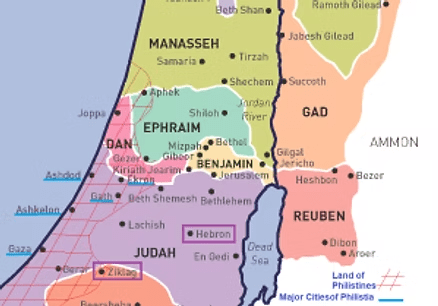

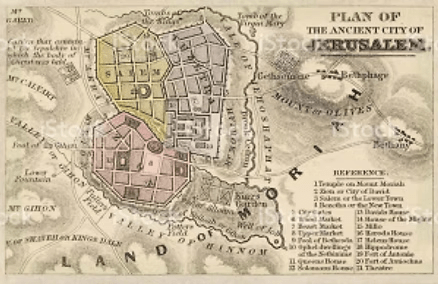

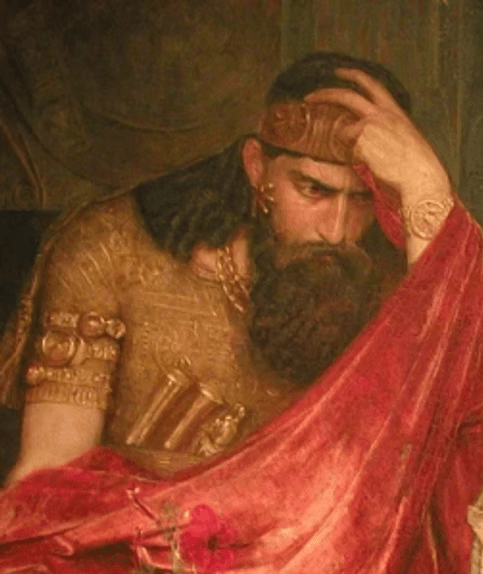




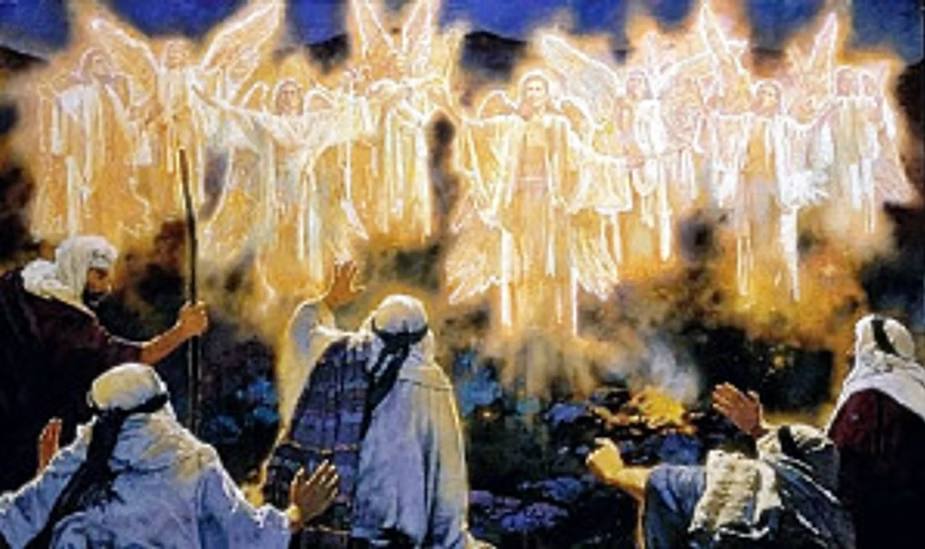



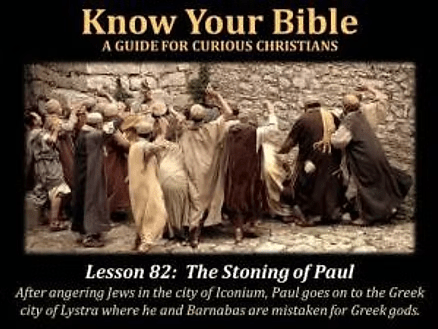

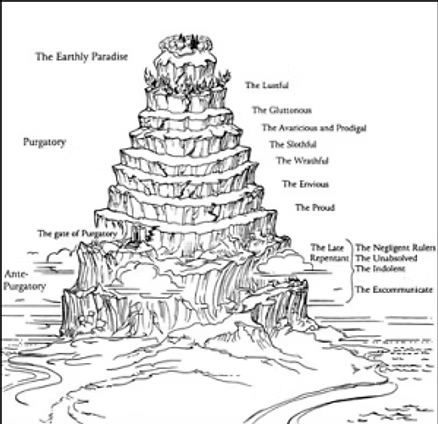





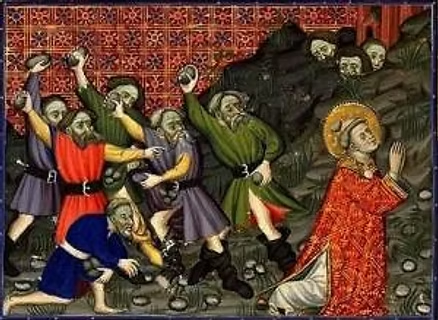




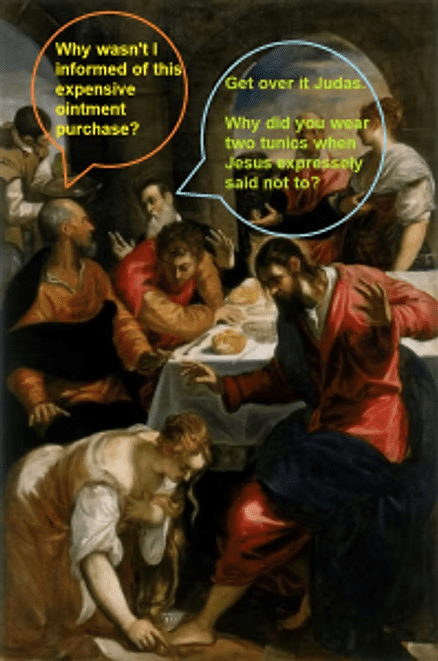

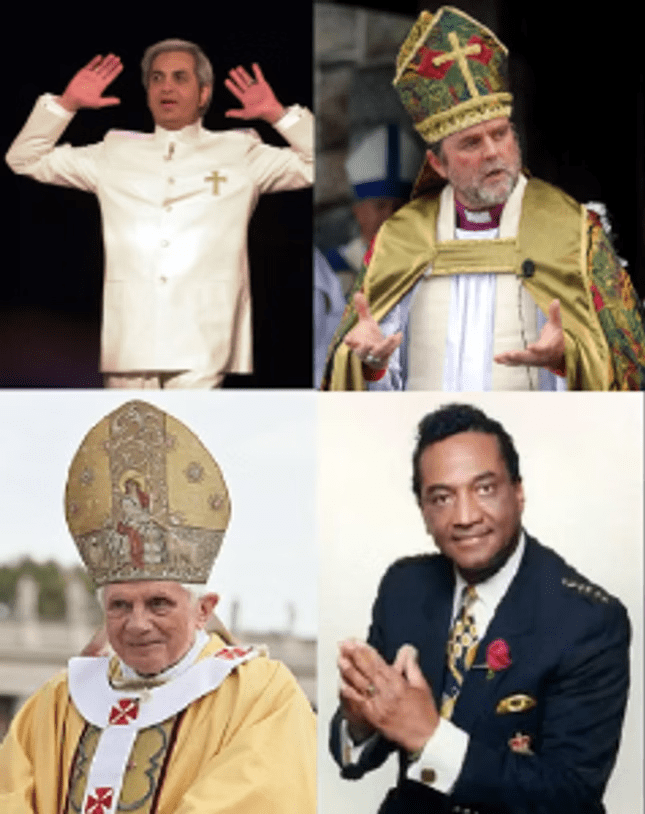
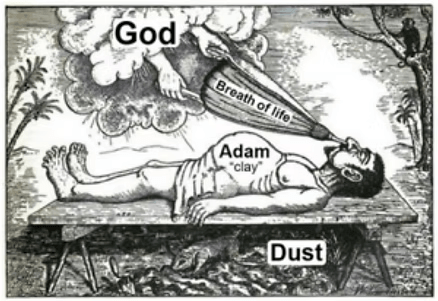
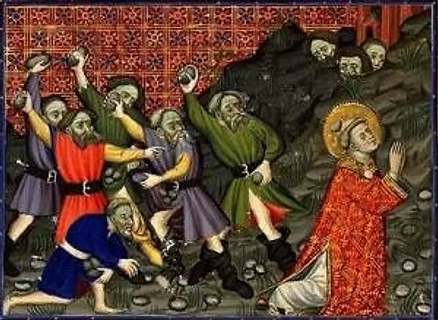
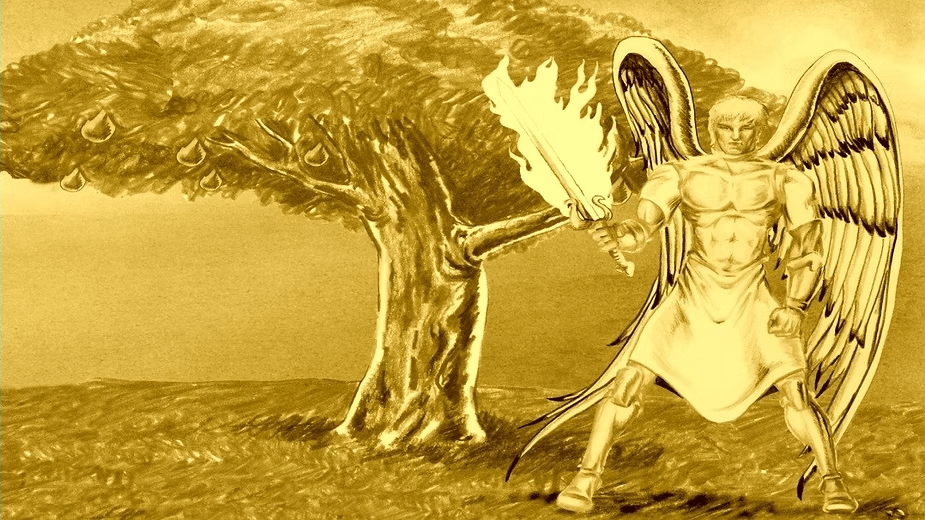
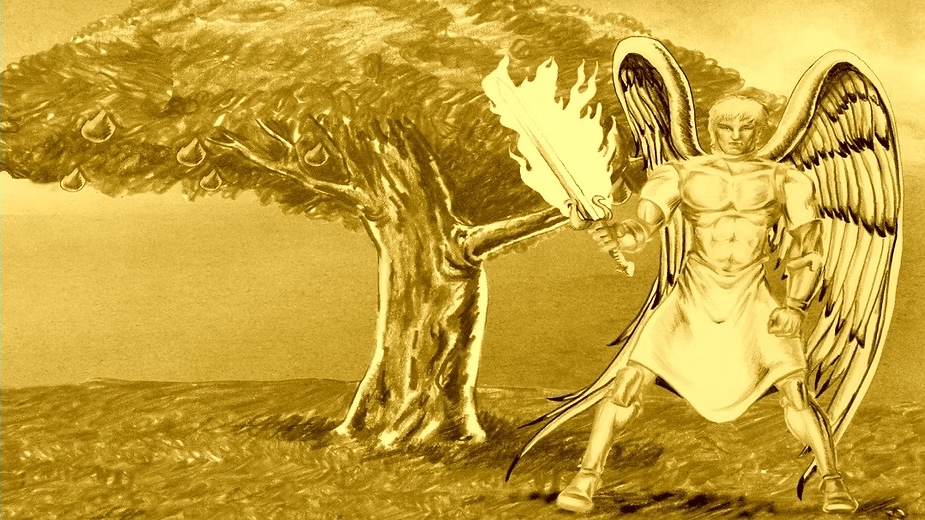



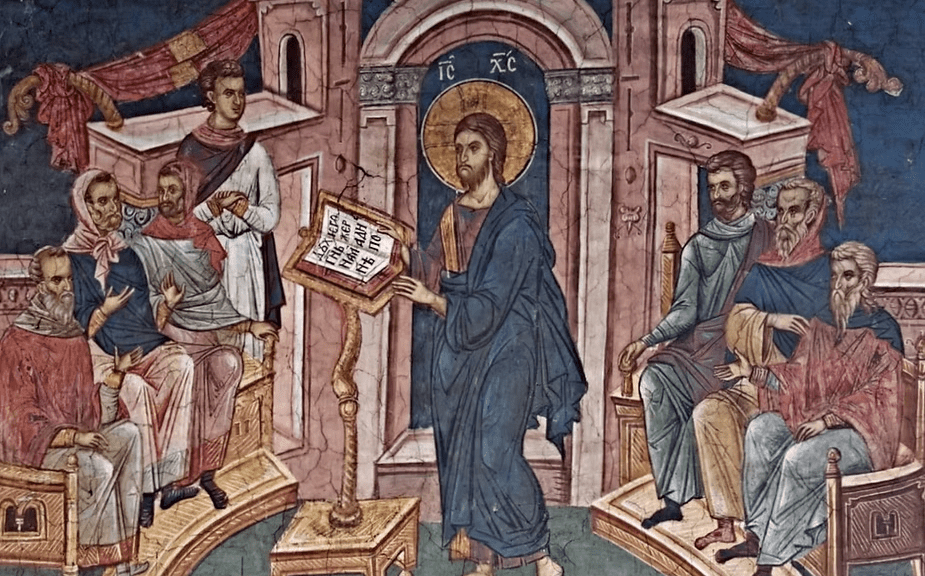
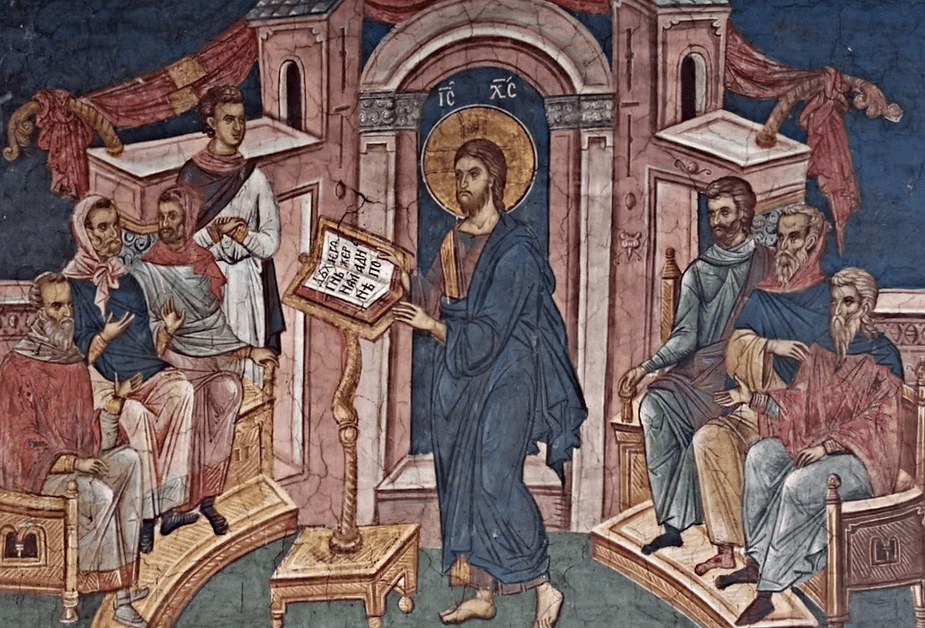
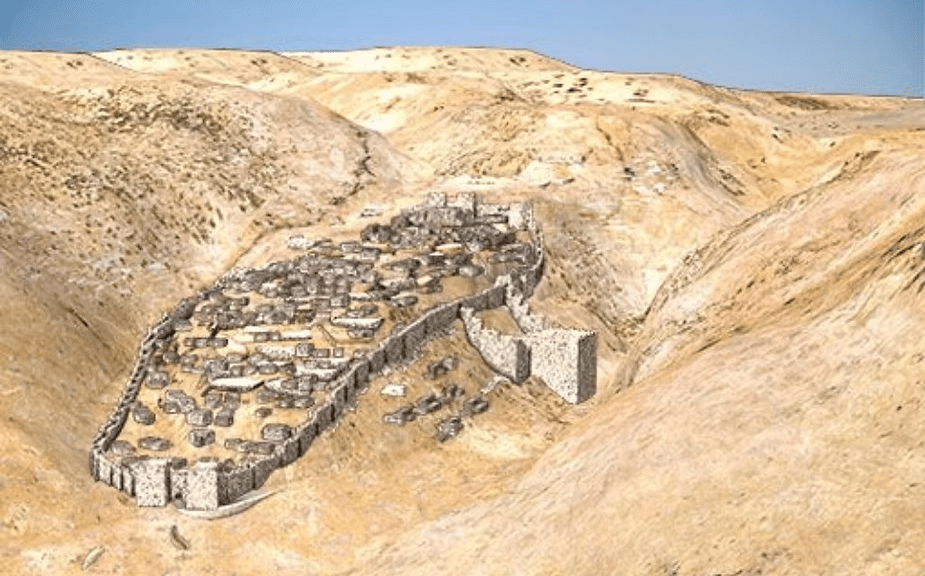
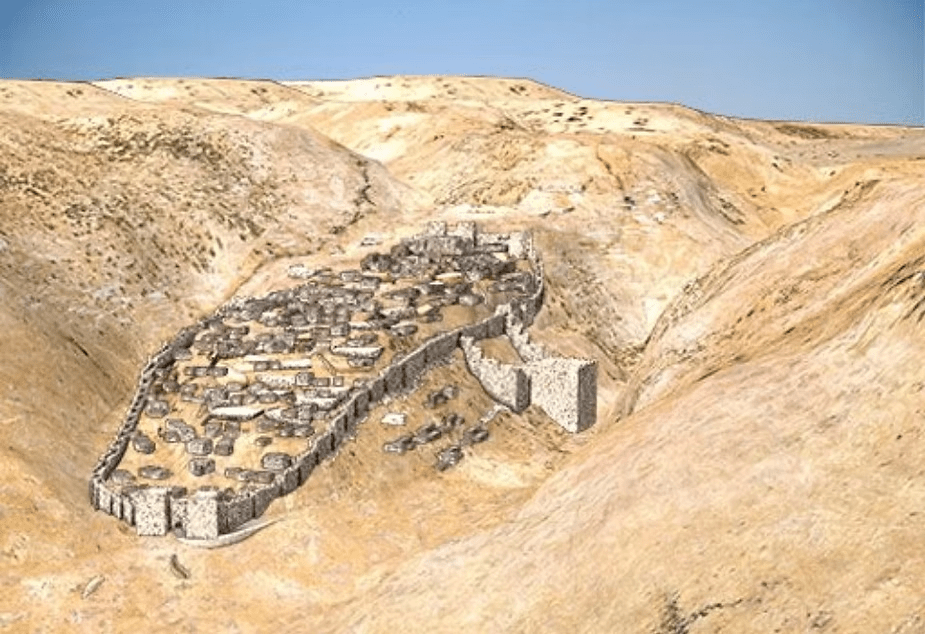


 Explaining the Readings