Tag Archives: Proverbs 22:8-9

Proverbs 22:1-2, 8-9, 22-23 – Materially poor but Spiritually rich

A good name is to be chosen rather than great riches,

and favour is better than silver or gold.

The rich and the poor have this in common:

the Lord is the maker of them all.

——-

Whoever sows injustice will reap calamity,

and the rod of anger will fail.

Those who are generous are blessed,

for they share their bread with the poor.

——-

Do not rob the poor because they are poor,

or crush the afflicted at the gate;

for the Lord pleads their cause

and despoils of life those who despoil them.

———————————————————————————————————-

This is an optional Old Testament selection from the Episcopal Lectionary for the Sixteenth Sunday after Pentecost, Year B 2018. In the numbering system that lists each Sunday in an ordinal fashion, this Sunday is referred to as Proper 18. If chosen, it will next be read aloud in an Episcopal church by a reader on Sunday September 9, 2018. It is important because Solomon’s wise mind was prophesying those who would become Apostles and Saints, through Jesus Christ.

The Hebrew Interlinear version of this proverb shows a mark of pause (a comma) in verse one. The Hebrew literally states:  rather to be chosen   a [good] name    riches   ,   than great    rather than silver    and gold    favor    loving .”

This can translate into conversational English as, “One should rather have a good reputation and the riches that comes with a good name  ,  rather than be great based on the favor bought with silver and gold .” That is somewhat in alignment with the translation above, but here is a caveat to consider:

God leads wise minds to write what God wants, in the order of wording God KNOWS will be viable in all languages, simply by keeping the words that came from God in God’s order. Each word is then God’s word and each word has purpose that needs to be pondered.

That premise should always be considered when pondering every Holy Scripture. However, verse one’s first word is a classic example of how this works.

The Hebrew word “niḇ·ḥār” translates as “rather to be chosen” (from “bachar”). Before one attaches this word to the following implication of a “[good] name,” the question becomes, “Who chooses who?” The answer is that one should rather be God’s chosen, than to not choose to let God choose one.

The good “name” that comes from being chosen by Yahweh is “Israelite.” One has the good name of Israel, meaning “God Strives,” as well as one “Strives for God.” One expert on Hebrew believes “Is-ra-el” means “He Will Be Prince With God.”
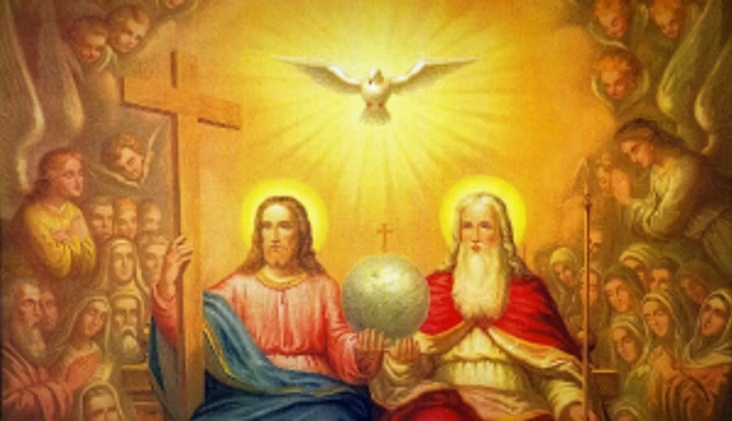
Jesus has a seat saved within all his Apostle-Saints.

This is a viable translation when one sees how each Israelite was supposed to be a priest married to God. That failed until Jesus Christ became that earthly Prince With God, offering himself up so his Apostles could have his [good] name, as Jesus Christ reborn. Therefore, the prophecy of Solomon was (paraphrasing): “It is better to be chosen by God to be reborn as Jesus Christ and reap the riches of the heavenly realm, than to have greatness on earth be chosen to be measured in precious metals.”

When one sees Solomon writing a proverb about Jesus Christ, channeling God (and not even knowing it wasn’t a song modeled after his great fortune), then all the rest falls into place nicely. One has to be chosen by God and that means a proposal of marriage. One has to then choose God by accepting His proposal, with love in one’s heart. That truly makes one a priest for God, such that one acts as the Son of God, speaking for the Father, with no concerns about oneself. One then becomes the resurrection of Jesus Christ.

This is seen in verse eight with the word “‘Av·lah,” which translates as “injustice,” but also “iniquity” and “unrighteousness.” Following the Hebrew word “zō·rê·a‘,” translated as “He who sows,” but equally stating, “He who plants seeds, give birth, or yields.”   That word is stating that one has not given birth to the presence of the Christ Spirit within (righteousness), instead giving birth to the opposite. The motivation is then to serve self and not God. The product of unrighteousness is the “calamity” or “sorrow,” as self will always come up short. This is due to the “rod” (also translatable as a shepherd’s “staff”) will turn self-failures against others, to no avail.  A bad shepherd will have that staff be the cause of his or her soul’s failure.
The opposite is then one who chooses God and becomes righteous. Rather than seeking to be selfish and demanding of others to give, one who is filled with the Christ Spirit will give and be “generous.” When verse nine states, “share their bread with the poor,” the aspect of “bread” (from “lechem”) is less about sharing morsels of physical bread [remembering the lesson of Jesus feeding the five thousand], but sharing the gifts of the Holy Spirit with those lacking it.

When one recalls the “riches” that come from choosing to serve God, and His having chosen one as His wife, one is not given plenty of extra foodstuffs to share. Certainly, sharing bread is a good deed, but sharing the Holy Spirit turns one from being impoverished spiritually to being another one chosen by God.

This act of sharing the Holy Spirit is furthered in verses twenty-two and twenty-three. When it says “not to rob the poor because they are poor,” it is saying not to keep God’s gift of the Holy Spirit for oneself. God gives it to one to share, so there is plenty to go around. The poor are those seeking to be filled, so to not serve God and give the riches that God has given one to give away, one would then be robbing the poor. Since an Apostle-Saint is oneself poor (without the Holy Spirit of God), to not pass on that gift would mean robbing oneself, returning one to an impoverished state of being.

The world is not through with this one.

When verse twenty-two says to not “crush the afflicted at the gate,” this is the story of poor Lazarus and the rich man (Luke 16:19-31). Jesus told that parable to the Pharisees because their responsibility (as priests and rabbis to Yahweh) was to feed the souls of the poor and the afflicted. Instead, they locked them out and let them die, wanting just the crumbs of bread that fell from the rich men’s tables.

When one shares with the poor and the afflicted, one goes to the one who have been outcast as a healing agent of God. All who God sends an Apostle to (to help) will be helped by God, not the messenger of God.

This is stated when verse twenty-three says, “Yahweh [the Lord] will fight [plead, strive] for their cause [of affliction].” If one has brought an affliction upon oneself, then God will bless that person with an epiphany. He or she can receive the Holy Spirit from realizing their faults and showing sincere penitence before God. Whether or not the affliction is removed [poverty will not be remedied by God giving gold and silver], one will learn to not let the affliction be an affliction upon their soul. Healing comes through salvation given by the Lord.

This is stated in verse twenty-three actually stating, “and plunder them those who plunder the soul of.” The Hebrew word “nephesh” means “soul.” The word translated as “plunder or despoils” is “qaba ,” is actually another form of an act “to rob.”  When a “soul” is “robbed,” the only one who can “plunder” a soul is oneself, led by selfish egotism. This repeating of “despoils” twice (“ve·ka·Va’‘et-koe·’ei·Hem) then presents this robbing in two ways.

The body is not the self. The self is the soul within the body.

First, by opening one’s heart to Yahweh, one has to plunder one’s own self-ego [death before resurrection].  No one external to self can harm or remove one’s soul, even if the physical body is placed in jeopardy. This despoiling of soul-self means, second, that God can plunder the evils that have misled one’s soul. Evil influences act in the opposite way as do the holy influences of God.  Removing self eliminates the evil influences, so God is willing to give His world to all His wives, but His wives must pay the dowry of sacrifice first.

As an Old Testament selection for the sixteenth Sunday after Pentecost, when one’s own personal ministry for the LORD should be underway – one has chosen to serve God and take on the good name of Christ – the message is to help the poor. To grasp that in the deepest levels of understanding, one has to admit one is poor, as this will help recognizing another who is poor. To be poor, one has to sell everything one possesses and give to the poor, so one can follow in the footsteps of Jesus Christ.

The greatest failure Christianity faces is found in its pride as a charitable institution. Americans boast of being the most giving nation on earth. Unfortunately, donations of money do little more than make the organizations of Mammon rich; taking advantage of poor Christians that are trying to share their bread with the world, while they struggle with that never-ending load to bear. In addition to giving money to the poor, churches pull out the violin of sorrow and remind their congregations of their financial needs.

A true Christians [defined by what Jesus said to the rich, young Pharisee (Luke 18:18-21;  Matthew 19:16-30Mark 10:17-31)] has no things of value, because clinging to earthly possessions is a selfish endeavor. When one gives everything away, one is worldly poor. Of course, God does not plan on making one worthless, as God’s Spiritual riches includes what one needs to get by … and still have a loaf of bread to share with someone who seeks to come ask, “I know you are as poor as me, but how do you always have a smile and time to share with people?”

Being chosen by God means one has chosen to take a leap of faith. God never fails to provide a safety net to those who take that leap to serve Him.


Proverbs 22:1-2, 8-9, 22-23 – For richer or poorer

A good name is to be chosen rather than great riches,

and favor is better than silver or gold.

The rich and the poor have this in common:

Yahweh is the maker of them all.

Whoever sows injustice will reap calamity,

and the rod of anger will fail.

Those who are generous are blessed,

for they share their bread with the poor.

Do not rob the poor because they are poor,

or crush the afflicted at the gate;

for Yahweh pleads their cause

and despoils of life those who despoil them.

——————–

This is the Track 1 optional Old Testament selection for the fifteenth Sunday after Pentecost [Proper 18], Year B, according to the lectionary for the Episcopal Church. If chosen, it will be paired with Psalm 125, which sings, “The scepter of the wicked shall not hold sway over the land allotted to the just, so that the just shall not put their hands to evil.” This set will be read before the Epistle selection from James, which asks, “What good is it, my brothers and sisters, if you say you have faith but do not have works?” All will accompany the Gospel reading from Mark, where Jesus said, “Let the children be fed first, for it is not fair to take the children’s food and throw it to the dogs.”

I wrote about this in 2018. I stand behind my views then, as they still apply well today. The commentary can be viewed by searching this site. I will not re-interpret these verses; but instead, I will add some additional thoughts about what I see now, which I did not see then.

Reading my posting, I see that I made several references to “Holy Spirit” and “Jesus Christ.” This Ordinary after Pentecost season (and before) I have become more strict in my translations from the Epistles, where those words readily appear. I now see the truth of each being two separate, capitalized words in Greek, meaning each word is vital to grasp separately. First of all, the “Spirit” (some form of “Pneuma”) is the extension of Yahweh into the material plane, when the word is capitalized. There is “spirit,” which is not only a “soul,” but other non-material presences that aid Yahweh’s plan, which makes the physical universe be the playground of eternal “spirits,” where they bring the pretense of life to dead matter.

When the “Spirit” of Yahweh enters into and possesses a soul (a presence that comes from willing commitment and divine marriage), then a soul-flesh entity will act in ways that are “Holy.” In short, it is not the “Spirit” that is “Holy,” but the soul’s flesh acting in ways that please Yahweh, allowed by the soul through divine marriage. The word that translates as “Holy” (Hagios”) means: “sacred (physically, pure, morally blameless or religious, ceremonially, consecrated):–(most) holy (one, thing), saint.” [Bible Tools] Therefore, the same words [“Spirit Holy” or “Pneuma Hagios“] can be read as “Spirit of a Saint.”

As for “Jesus Christ,” reading how often I said that it sounded as if I thought the ‘last name’ of “Jesus” was “Christ.” I no longer use those words together, in the same way I now call what I used to call the “Holy Spirit” the “Spirit of Yahweh.” By understanding “Jesus” and “Christ” are two separate, capitalized words, one can see “Jesus” in the same light as “Spirit.” Because one places focus on that name, one sees how the name means “Yah[weh] Will Save” or “Yah Saves.” I pointed out a similar translation in the article of 2018. However, one must realize the meaning of “Christ” is “Anointed one,” whereas “christo” means “anointed one.” Samuel “anointed” David with physical oil; but it was Yahweh who “Anointed” David with His Spirit, meaning one is physical and one is spiritual. Every Patriarch and Prophet, as well as every Saintly Apostle, is so because of having become an “Anointed one” of Yahweh. The resurrection of the soul of “Jesus,” who was THE Christ, automatically makes the soul-body be transformed into another “Christ.” How ever many souls represent the resurrected “Jesus” is how many “Christs” there are in the world. Therefore, I now see it as wrong to lump two capitalized words of Scripture together, as it gives the wrong impression.

I write this in a commentary about Proverbs 22 because I used those terms in a commentary about this reading in 2018. I wanted to clarify my new views. That does not negate anything I wrote in 2018, as the same essence of “Jesus” and “Spirit” were conveyed, in terms that most people still use, although slightly wrong. Another such wrong use if the written name “Yahweh” being lessened to a translation as “Lord.” While I am sure that the minds of Christians read “Lord” and think “God,” the reality is the Old Testament names the specific God of Israel. The Hebrew letters written are “יְהוָֽה,” which transliterate as “Yah-weh” [the capitalization is not the truth of an alphabet without capital letters, but an honor given to that name]. The problem that I now see in the misuse of “Lord” is anything can be a “lord” over one’s body of flesh. Demon spirits can possess a soul and turn it and its body of flesh into a slave to sin, where such a demonic possession [seen many times in the Gospels and Acts] needs to be cast out. Therefore, to one led by such a “Lord” as Satan, reading the generality of “Lord” can make Scripture seem accepting of such demonic possessions. This means using the proper name, as “Yahweh,” brings a soul closer to the truth that must be known. In the above text, I have restored the name Yahweh, where it was written in two places.

This Proverb is twenty-nine verses long. The Episcopal Church elders (of old) pared this length down to only six of those verses, in three sets of paired verses. This reading, of those specific verses, is only read on this Sunday in the lectionary cycle. In all, Proverbs will only be read eight times in the lectionary cycle, with only six times coming on a set Sunday. To me, this is a statement that the writings of Solomon are not to be leaned heavily on, in order to find one’s faith in Yahweh enhanced. It should be seen that Solomon was not a great priest of Yahweh, because his brain was so large. Still, the truth of Yahweh does shine forth in his writings, even if he was most likely unaware of that presence.

In verse one, it is more likely that Solomon was not writing wisdom about the “good name” of Yahweh. He was probably writing about having been born a prince, whose name he inherited as king. He was of the Davidic lineage and thus more than all the silver and gold that came with any firstborn male, born into a wealthy household of a father of substance and position, Solomon was allowed greater abilities to act, because he became king. By seeing that, verse two’s mention of “Yahweh” says both the “rich and poor” have their social status given to them by Yahweh. More than a statement of praise to the One God of Israel, that acknowledgement should be seen as Solomon saying God made the poor poor and the rich rich, therefore because Solomon was King of Israel, Yahweh had blessed him above all the “common” people.

It is from this first pair of verses that touts Yahweh as the “maker” [from “‘ō·śêh”] that we skip forward to a pair of verses that place focus on “he who sows inequity,” compared with one “who has a generous eye.” The impression given is that the evildoer will be beaten by the “rod” of Yahweh, as the “sorrow” or “shortcoming” [from “’ā·wen”]. Meanwhile, the one with a “giving” disposition will be “blessed” [“yə·ḇō·rāḵ”], such that giving bread to the poor brings a soul redemption. While there is certainly truth to the deeper meaning of these words written, they guide many to think that issuing punishment is only done by the wicked, causing many to idolize the axiom “spare the rod,” where they then think evil deeds can be balanced by good deeds, such as the wealthy giving a small portion of their wealth to others [“alms for the poor”], rather than give their souls completely to Yahweh. Again, in this set of verses, a focus is placed on the rich and the poor, where it appears Yahweh blesses His servants with wealth, so they can rise to govern the people and order the poor be cared for.

In the final pair of verses, the wisdom shared by Solomon says not to “rob” [“tiḡ·zāl”] or “crush” [“tə·ḏak·kê”] the poor, who can then be seen as “afflicted” ones. To the contrary, Solomon says “Yahweh will plead their cause.” This “contention” [from “yā·rîḇ” meaning “strive, contend”] is then projected as a “plundering” [from “qaba”], which says Yahweh is also a “robber,” who steals the souls of the ones who “rob” and “crush” the poor and afflicted. This gives the impression of Yahweh being the one who serves kings like Solomon, who makes the rich the protectors of the poor, by using Yahweh to do their bidding as kings. It projects Yahweh as some knight in service to a human ruler.

The truth that can rise to the top of these words from a large human brain means the “rich and poor” in Solomon’s eyes are reversed in Yahweh’s view. Spiritual wealth comes from souls submitted to Yahweh as His wives [male and female bodies of flesh]. To “rob” one who is materially poor, but spiritually rich, means to take advantage of one who serves Yahweh. It says the “affliction” such a soul-flesh entity has is a refusal to sell its soul for material gains. It is then those who are rich in Spirit that “contend” for “Yahweh,” as His Saints on earth. It is through their presence that those poor in Spirit, yet rich in material wealth, can have their demonically possessed souls be “plundered,” thereby leading them to see the light of truth, after casting out their worldly lusts.

In the years since 2018, I have grown less enjoyment from anything that has to do with Solomon. His wisdom is a reflection of the world’s worship of intelligence, masquerading as divine insight. The reliance on science, when yesterday’s wonders most often become tomorrow’s embarrassments, having to admit a failure of intellect (once again, and again), is worship of a false idol or dead god. I can see how little the lectionary focuses on Solomon; although it is important to see the seeds of evil having been planted into the son, as a necessary reduction of a kingly line for materialistic peoples who were no longer servants of Yahweh by marriage of their souls to His Spirit. One has to comb thoroughly through all the knots of his intellect to find the truth deeply embedded by Yahweh. It is like the work necessary to open an oyster, looking for slimy food, but finding a pearl. It is more work than I enjoy doing, for such little reward.

As an Old Testament possibility for the fifteenth Sunday after Pentecost, when one’s own personal ministry for Yahweh should already be well underway, the lesson here is to see the world through the eyes of the rich and the poor. The common view is like Solomon had, which is to think knowledge (store-bought from some seminary, graduating with a diploma to be a hired hand for some religious organization) makes one the protector of the ignorant, huddled masses. The lesson is to see how poor one is, when all one does is try to figure out how to produce miracles that solve all the world’s problems [in the name of Jesus Christ, presumably]. True Spiritual wealth comes from giving one’s soul to Yahweh out of love and devotion, and Him accepting that soul, knowing it truly submits to His Will. True wisdom comes from getting one’s big brain out of the way and admitting how stupid one is, when one tries to enter ministry with only a brain to guide one. That is the truth of robbing the poor; and, for such actions one’s soul will be self-plundered.