She has slaughtered her animals, she has mixed her wine,
she has also set her table.
She has sent out her servant-girls, she calls
from the highest places in the town,
“You that are simple, turn in here!”
To those without sense she says,
“Come, eat of my bread
and drink of the wine I have mixed.
Lay aside immaturity, and live,
and walk in the way of insight.”
———————————————————————————————————-
This is an optional Old Testament selection from the Episcopal Lectionary for the Thirteenth Sunday after Pentecost, Year B 2018. In the numbering system that lists each Sunday in an ordinal fashion, this Sunday is referred to as Proper 15. If chosen, it will next be read aloud in an Episcopal church by a reader on Sunday August 19, 2018. It is important because Solomon wrote of the wisdom he possessed and did not attribute it to the Father, but to a goddess.
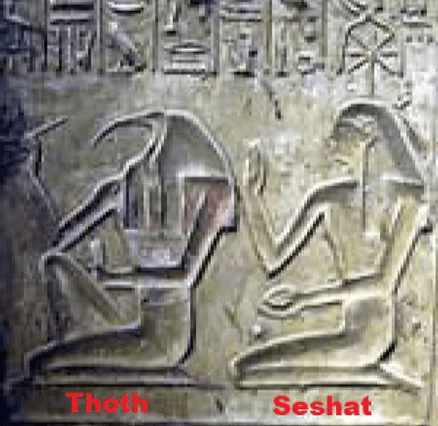
In Greek mythology, the goddess Athena was recognized as the deity who reigned over wisdom. Her Roman equivalent was called Minerva, also a goddess. In ancient Egyptian mythology, perhaps the religion most known by the philosophical minds of the Israelites, Seshat (the counterpart of the god Thoth and his wife Ma’at) was the goddess of wisdom, knowledge and writing.
Because all of these mythological deities are feminine (except Thoth), wisdom should be grasped as a talent that comes from the Earth mother, such that it is a talent of the brain and the powers of physical observation.
In this proverb that is attributed to the writings of Solomon, based on his wisdom possessed, he gives strong support towards that conclusion of wisdom being a feminine characteristic. Solomon wrote of “her house,” “her pillars,” “her animals,” “her wine,” “her table” and “her servant-girls.” That proliferation of feminine pronoun use (in addition to “she” used four other times) says Solomon had discerned (a talent of wisdom) that Yahweh was not the voice of reason he heard in his head.
Solomon’s references to a “house” “hewn” with “seven pillars,” where sacrificed animals spilled their blood upon a “table,” is clearly a statement of a goddess, whose temple was worldly.
The “servant-girls” were then priestesses of that temple. To read that they would “call out from the highest places” means they served the deity of wisdom, who is available to those who submit to that divine power. The “highest places” were religious temples to gods foreign to Israel.
“You that are simple, turn in here,” says ordinary people do not possess wisdom. Solomon then proposed that the masses should follow the lead of those who serve the goddess of wisdom, as the judges blessed by the temple priests. The line that is translated to say, “To those without sense,” the Hebrew word “lêḇ” is used, which means “heart, mind, inner man, will, and understanding.” This is the word Solomon used when he asked God for a Big Brain, rather than prefer God’s presence within him.
Knowing that Solomon wrote his proverbs for the Israelites, who were sworn to serve God and remember the Passover via the ritual consumption of unleavened bread and cups of wine, it is not coincidence that Solomon wrote of “my bread” and “the wine I have mixed.” That physical food and drink would be filled with yeast, rising hot and fluffy and fermented to a highly intoxicating alcohol level. Solomon was telling his people to let him do all the work of rule, so they could turn their backs to God and enjoy the wealth and honor of Solomon’s realm. In that scenario, the people were no longer subjected to finding God individually, so their unleavened bodies could become elevated (raised up) to righteousness and their plain blood be infused with the Holy Spirit.
For Solomon to say, “Lay aside immaturity and live,” proposing that the ignorant should “walk in the way of insight,” he was telling the children of Israel to follow him, his ways, and his knowledge.
Rather than asking the Israelites to put their faith in God, he was promoting himself as God’s chosen king, with the insight of a god. Solomon (whether he figured it out or not) was returning Israel to the royal deity worship of Egypt. No longer were the people of Yahweh asked to be priests in individual relationships with the Lord and walk in the ways of righteousness. They were told to let wisdom light their paths.
As an alternative Old Testament selection for the thirteenth Sunday after Pentecost, when one’s personal ministry to the LORD should be underway – as a different angle on Solomon’s wisdom – the message here is the danger of worshiping individuals as gods. When one sees another human being as holier than oneself, one ceases trying to be holy, submitting oneself to that other human. Israelites did it for Solomon, saying, “No one can be wiser.” Likewise, Christians do it for Jesus, saying, “There can only be one Son of God.”
This is the trap of Satan, which was set before Jesus, offering him the world if he would submit to the will of evil. God set the world that Solomon had at his feet, to test his devotion to Him.
Power and wealth are intoxicating, as were the bread and wine of which Solomon wrote. The world is filled with simple folk, who have no sense for taking advantage of others. The mixed drink that comes from the slaughter of animals is the blood of the innocent spilled so that the elite can laugh at how easy it is to become rich off the ignorance of others. Those sacrificed are the people who bow down before those possessing Big Brains.
The aspect of “immaturity” is that of “foolishness,” where the Hebrew word “p̄ə·ṯā·yim” means “naivety.” It bears the same intent as does “foolish”: “Lacking or exhibiting a lack of good sense or judgment; silly.” (American Heritage Dictionary of the English Language)
This is the excuse of childhood ignorance, where simplicity is a natural state of learning from one’s mistakes. Those life lessons develop one’s maturity, and from life experience comes true wisdom. Solomon did not suffer the growth pains of normal people, as he laid aside his immaturity for a life led by reason, unclouded by childish emotions. Thus, his view of living was void of any possibility of eternal life.
A minister of the LORD has known the errors of thought and the failures that come from not having true insight. The only true source of wisdom comes from the Christ Mind, which demands a soul be blissfully ignorant to possess it. It is why prophets like Ezekiel answered questions from God by saying, “You know Lord.” A prophet never speaks for self as the Big Brain is never large enough to see all possibilities and answers at once … like God can.
She has slaughtered her animals, she has mixed her wine,
she has also set her table.
She has sent out her servant-girls, she calls
from the highest places in the town,
“You that are simple, turn in here!”
To those without sense she says,
“Come, eat of my bread
and drink of the wine I have mixed.
Lay aside immaturity, and live,
——————–
This is the optional Track 2 Old Testament reading that might be read aloud on the twelfth Sunday after Pentecost [Proper 15], Year B, according to the lectionary for the Episcopal Church. If chosen, it will be paired with a reading from Psalm 34, which sings, “Keep your tongue from evil-speaking and your lips from lying words. Turn from evil and do good; seek peace and pursue it.” These will then precede a reading from Ephesians, where Paul wrote, “Be careful then how you live, not as unwise people but as wise, making the most of the time, because the days are evil.” All will accompany the Gospel reading from John, where Jesus said, “Those who eat my flesh and drink my blood have eternal life, and I will raise them up on the last day; for my flesh is true food and my blood is true drink.”
In 2018, the last time this reading came up in the lectionary cycle, I wrote my opinion and published them on my website. That article can be viewed by searching this site. I stand behind those views now, as nothing has changed in the Scripture presented; and, I welcome all to read what I wrote then, as it applies to what I will add now.
It is clear from these six verses that the Hebrew was written in the feminine, such that seven words say “she” and six words say “her.” This obvious direction to the feminine gender must be seen as Solomon (a male) writing about the power of “wisdom,” which does not come from Yahweh (the supreme masculine Father). In this, the Hebrew word translated as “wisdom” – “ḥā·ḵə·mō·wṯ,” from “chokmoth” – means “wisdom, every wise woman,” where the word implies the feminine. This must be understood metaphorically.
Anyone who has regularly read my observations on Scripture will recall how I have regularly written about a soul’s marriage to Yahweh. I have come to the conclusion that all references to the feminine in Scripture are references to the soul trapped in the flesh, where the material world – the physical – is a reflection of the feminine state of being (or negative). Conversely, the spiritual realm, including all angels and immortals related to Yahweh are the masculine (or positive). It is in this way of seeing the material universe, as opposed to the ethereal, spiritual universe, where all matter is feminine and all spirit is masculine, that all humanity led to religion are feminine [regardless of human gender role], therefore potential bridesmaids of Yahweh. Thus, with that said (again), this song about “wisdom” has nothing to do with Yahweh and all to do with a marriage between a soul in human flesh and the goddess that is Mother Earth, which brings a feminine spirit into one’s being.
Another thing that I commonly point out, whenever Old Testament writings have been wrongly translated into English, is the Hebrew word “elohim” does not translate as “God” [the common error found]. It is the plural form of “el” [the singular, lower case “god”], this “gods.” An “elohim” is created by the marriage of a divine spirit, such that a soul placed in a body of flesh has a neuter essence [as do children], with the body of flesh having a feminine essence, simply from being a body of matter [clay, dust, elements of the earth]. Still, a soul-body that is feminine is not an “elohim,” as an “elohim” is created by the possession of that neuter gender soul by the masculine essence of Yahweh’s Spirit, such that a positive added to a neutral makes a positive. On the other hand, an “elohim” can likewise be possessed by an earthly spirit [including Mother Earth and Satan, an angel or elohim cast into the earth], where the neutral soul takes on the feminine spiritually. The presence of “wisdom” in this song sings about that possession of the feminine, of which Solomon was one.
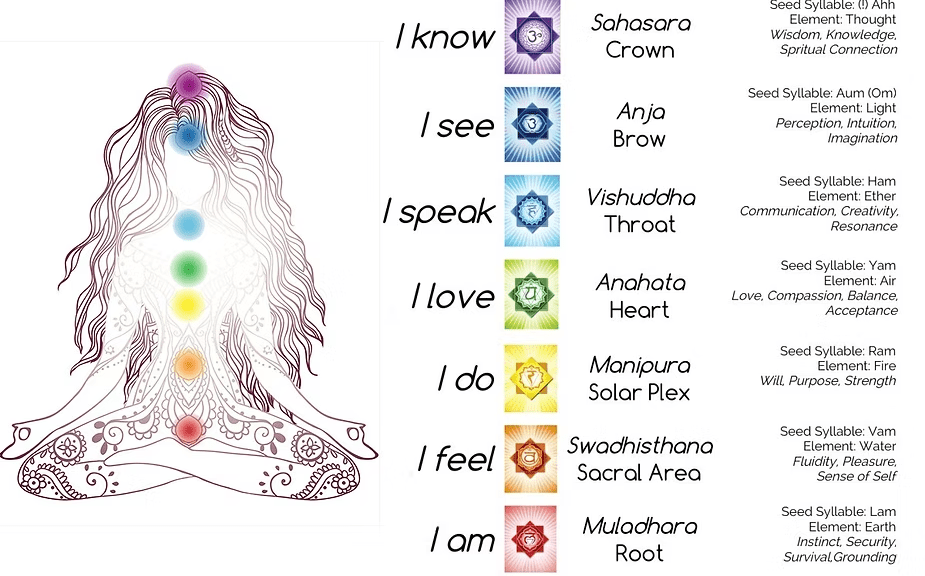
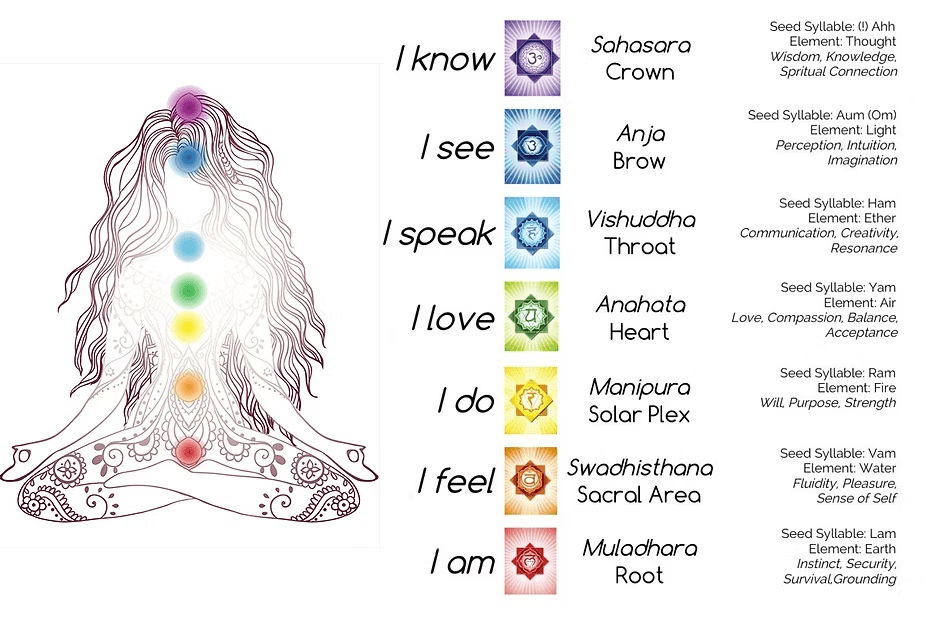
In verse one, the Hebrew literally states, “the wise woman [Mother Earth] has built her house , she has hewn out her pillars seven .” The “house” [“bayith”] is the equivalent of Solomon stating an “elohim” having found a home in a living body of flesh – in this case Solomon. A spirit can only possess a soul, which is eternal life, as flesh without a soul is dead matter and cannot be animated by possession. The seven pillars hewn out can be seen as the chakras of Hinduism.
It should be noted that the practices of Hinduism are meditative, designed to bring spiritual powers of the physical universe [the feminine elohim] into oneself [a “self” always equates to a “soul”]. This means Hinduism is not a religion that worships gods [“elohim”], but a philosophy that the self [soul] can control or master these dead ‘energies,’ for selfish purposes. The mistake of thinking Hinduism is a religion that believes in gods comes from not realizing the only “gods” that are alive and conscious are those of the self [soul], which is then trained how to utilize unseen powers within one’s physical body. This is a philosophy that is common in other pseudo-religions, such as call their teachings some mastery of life. All believe in self as a god that can control natural powers of the universe, with all relegating Yahweh to a dead power of the material realm.
In the little known history of Jesus, during his teens and early twenties, he ventured into India and spent considerable time learning the practices of Hinduism. Jesus did not go to learn to master unseen, dead natural powers of the universe for personal benefit. Jesus was born with all of these powers available to him, because Jesus was divinely born of Yahweh. Jesus did not have to practice meditation for the purpose of learning how to reduce his state of being to become that akin to an antennae that received natural vibratory powers. Jesus prayed regularly and was in communication with Yahweh routinely; but Jesus never sought any powers for selfish reasons. While in India, Jesus displayed an easiness in possessing abilities that the Indians struggled mightily to master. The Hindus saw Jesus as a god, when he was a divinely possessed elohim of Yahweh – masculine and positive – the Son of Yahweh. When Jesus told the Hindu masters how much folly their practices were, Jesus was threatened with death, to the point that he had to leave.
Jesus understood that the story of Genesis, where Yahweh created His Son [we call him Adam], the realm where the spiritual joined with the physical was called Eden. Those two realms were joined by the presence of two trees: the tree of life and the tree of the knowledge of good and evil. The reason Adam was told never to eat the fruit of the tree of knowledge of good and evil was [as learned from breaking that rule] learning how to master life [the way Hindu try] means being banished from Eden (or Heaven). To submit one’s soul to the worship of the earthly powers, which are dead and are freely available to all souls trapped within bodies of dead flesh, means one’s soul cannot remain in a place where all dependency of life comes from sole worship of the tree of life. When one’s soul is fed only from that tree, then the natural powers that come from the tree of knowledge of good and evil are supplied by Yahweh, where the tree of life is His Spirit married with one’s soul. When married to Yahweh’s Spirit, one naturally benefits from the powers of the universe, without any need to eat that fruit of meditative practice.
After Adam and Eve were banished from Eden because they broke the one rule and had their chakra become sources of receptivity, those receptive centers also freely welcomed the influences of the serpent. The serpent was the wisest of the creatures created by Yahweh; so, when the serpent was cast into the earth to crawl, Satan took wisdom from the tree of knowledge of good and evil with him. When young Solomon wished to be able to discern good from evil, it was his openness to receive the influences of Satan (the serpent), rather than submit his soul to Yahweh and do penitence for sins [aka Adam and Eve], so their souls could again marry Yahweh and be returned to Eden after death in bodies of flesh.
By grasping all this insight from Scripture and apocryphal history, one can then read how verse two in this song of Satanic worship literally begins by saying, “she has slaughtered her meat and she has mixed her wine , also , she has furnished her table .” That “slaughtered and butchered” is one’s soul submitting its body of flesh as a sacrifice to the serpent, such that the feminine spirit of worldly desires has become mixed with one’s soul. This says one has become an “elohim” in possession of earthly powers, not heavenly ones. That makes “her table” be the material plane.
When verse three is shown to sing, “She has sent out her servant-girls, she calls from the highest places in the town,” the “servant-girls” [or “maidens”] are the natural powers of the material universe, which have become the fleshy parts of a body enhanced by Satan. The most prominent of these are the brain, the eyes, the hands, the tongue, and certainly the reproductive organs, all of which become the temporary objects that a soul has become enslaved by, from receiving them willingly. The Hebrew word translated as “places” is “gap·pê” [from “gaph”], which means “body, self, height, elevation.” (Strong’s) Thus, the self that has the highest abilities from these new slave girls will control more of one’s surroundings. Certainly, Solomon took great delight in possessing these powers as king.
Verse four then taunts anyone who does not sell his or her soul for the delights of self-power, singing “You that are simple, turn in here!” This calls all who do not deny Yahweh for the rewards of immediate gratifications an “those without sense.” The words that have been translated as “without sense” actually say, “lacking a soul,” from “ḥă·sar-lêḇ.” The word “leb” means “inner man, mind, will, heart,” where “chaser” means “needy, lacking, in want of.” This says young Solomon was in such need that he readily sold his soul to gain a big brain.
In verse four the shift in pronoun use turned to “him,” where the “simple” can also mean “open-minded” [from “pthiy”] are referred to in the masculine gender. Because a soul is a spirit, therefore eternal and from Yahweh, it is born of the masculine, but like children born of gender, that gender is not realized until puberty. Thus, the lure of Satan, parading as a “wise woman,” is selling souls that are “open-minded” (as was Eve), so “him turning,” because of “him lacking” the pretense of wisdom, will be tricked into “him hearing” what she whispers.
Verse five sounds so much like the serpent’s suggestion to Eve in the garden, as Solomon sang, ““Come, eat of my bread and drink of the wine I have mixed.” This reading is an optional view of Solomon’s wisdom; but both choices will be read as a companion to Jesus saying to eat his flesh and drink his blood. Those instructions must be seen as relevant in this song of Satanic worship. This verse is enticing ignorant Eve to take a bite of the apple and become a god. It is suggesting a soul walk in the ways of wickedness, while shown the illusion of piety.
Verse six literally translates to sing, “forsake foolishness and live , and advance , in the way of understanding .” The same word translated as “simple” is now called “foolishness.” The meaning is akin to Ezekiel’s vision of a valley of dry bones, when Yahweh asked his soul, “Mortal can these dry bones live.” Ezekiel responded as a “simpleton,” saying, “you know,” which says, “I know nothing.” The lie is the false presentation of “life” [as “wiḥ·yū,” from “chayah”] is only possible in the flesh, which is always bound to die. The solitary influence “to advance” [from “ashar” meaning “to go straight, go on, advance”], is more on a human level of existence, because advancement into heaven will certainly be denied. All of this comes from growing a big brain, which is an organ of impediment towards spiritual goals.
In First Kings, chapter three, verse nine, young Solomon asked the voice he heard in his dream to give him “lêḇ šō·mê·a” [from “leb shama”], which was requesting an ability “to hear” on a “mind” level. For asking that talent, Solomon was told he would receive “lêḇ ḥā·ḵām wə·nā·ḇō·wn” [from “leb chakam bin”], which is the promise of a “mind wise to discern.” The same use of “bî·nāh” or “bin” is the promise of verse six, such that “the way of understanding” is not a lesson of Yahweh, but the mind’s ability to do without that divine guide.
As an optional Old Testament reading for the twelfth Sunday after Pentecost, when one’s own personal ministry for Yahweh should already be well underway, the lesson here is not to fall for the lure of intelligence as the means to understanding. In my ministry over the past decade, I have used the examples of simpletons as how one submits one’s soul to Yahweh. Fictional characters, such as Forrest Gump, Chance the gardener, and Navin R. Johnson show the way to truly reap the benefits of divine marriage to Yahweh. Intelligence is all about self-aggrandizement, so one rises above others and leads them as would a king. Solomon was such a king; and the lesson of Israel’s kings is they were all total failures in the eyes of Yahweh.

 Explaining the Readings