Tag Archives: Psalm 118:1-2

Psalm 118:1-2, 19-29 – Singing praise as a living temple whose cornerstone is the Holy Spirit

1 Give thanks to the Lord, for he is good; *

his mercy endures for ever.

2 Let Israel now proclaim, *

“His mercy endures for ever.”

19 Open for me the gates of righteousness; *

I will enter them;

I will offer thanks to the Lord.

20 “This is the gate of the Lord; *

he who is righteous may enter.”

21 I will give thanks to you, for you answered me *

and have become my salvation.

22 The same stone which the builders rejected *

has become the chief cornerstone.

23 This is the Lord’s doing, *

and it is marvelous in our eyes.

24 On this day the Lord has acted; *

we will rejoice and be glad in it.

25 Hosannah, Lord, hosannah! *

Lord, send us now success.

26 Blessed is he who comes in the name of the Lord; *

we bless you from the house of the Lord.

27 God is the Lord; he has shined upon us; *

form a procession with branches up to the horns of the altar.

28 “You are my God, and I will thank you; *

you are my God, and I will exalt you.”

29 Give thanks to the Lord, for he is good; *

his mercy endures for ever.

——————–

This is the Psalm selection that will be read aloud in unison or sung by a cantor on Palm Sunday, Year B, according to the lectionary for the Episcopal Church. The same psalm of praise will be scheduled for presentation in Years A and C. Each year the Liturgy of the Palm will include a Gospel reading that tells of Jesus’ “Triumphal Entrance into Jerusalem” [Mark 11:1-11 and Matthew 21:1-11]. All will be performed in an outdoor service that is held first, when palm leaves are passed out to all in attendance, this and another reading are presented, called the Liturgy of the Palm [thereby “Palm Sunday”]. Afterwards, the congregation is then solemnly led inside, where the regular service is called Liturgy of the Word [thereby “Passion Sunday”]. This particular selection from David’s songs will be read in all three years of the lectionary cycle (A,B, and C), but due to the length of the Palm Sunday service [aka Passion Sunday] nothing will be said about these words at those times. However, these verses will also be presented on two other occasions in the church calendar (partially on Easter Sunday [A,B, and C] and entirely, with additional verses on Easter 2-C), with it being possible something will be said about the meaning of these verses from David’s Psalm 118.

In this collection of verses, the translations of “Lord” are written as “Yahweh,” ten times. In verse 28, twice is translated “my God.” The first of these is written “el,” and the second is written “elohay.” Neither of those, nor the appearance of “God” in verse 27 [“God is the Lord”], where “el” is again written, should be capitalized. Capitalization is only allowed for words of divinely elevated meaning, as Hebrew has no capital letters in it usage. Still, the repetition of “Yahweh” has to be known and recognized as the specific God to whom David sang praise.

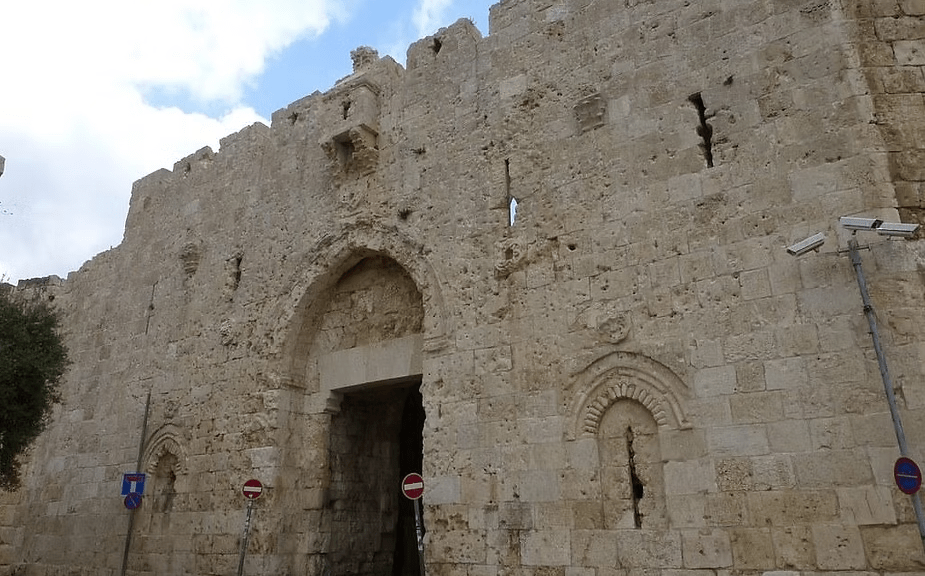
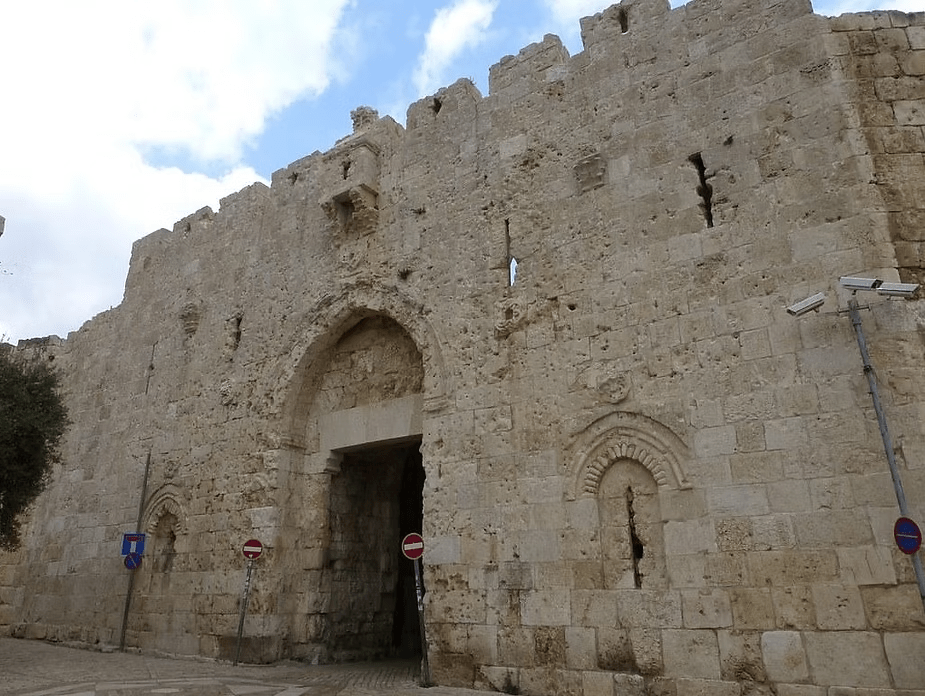
Because these parsed verses begin with verses 19 and 20 using the word “gate” and “gates,” this seems to be an appropriate choice to partner with the story of Jesus’ triumphal entrance into Jerusalem. He entered Jerusalem’s City of David, at the gate known as Zion, with Mount Zion being the hill [the steps formed upon that hill] he climbed to get to the Temple of Jerusalem, atop Mount Moriah. That Temple of stone and mortar did not include the cornerstone that had the name “Jesus” inscribed on it. Thus, this is another song of David that is easily heard as a prophecy of Jesus; but it is God speaking through David, because David was devoted to Yahweh, like Jesus, which means these words are prophetic for all who become Spiritually born as a Son of man.

Because verses 1 and 2 can be seen simply as David expressing his faith in Yahweh, from having surrendered his self-ego to serve God completely, these verses must apply to all who will be able to truthfully sing these words of praise. It can only be from that surrender of self to Yahweh that Yahweh is good and that goodness endures forever. That speaks of having received the gift of eternal life to one’s soul. Only a soul can know Yahweh. Therefore, when David sang to all Israel, verses 1 and 2 speak to all who proclaim belief in Yahweh as their Lord and Master. One must submit in that way for receipt of God’s Holy Spirit, through a marriage to one’s soul, in order to know God personally.

In verse 19 it is most important to see the “gates of righteousness” [“ša·‘ă·rê-ṣe·ḏeq,” from “shaar tsedeq”] are metaphor for the opening of one’s soul to receive the Holy Spirit. The “gates” are then reflections of all the inhibitions of a physical world, where the body has become the fortress in which the soul is imprisoned. In Jerusalem, all gates are entrances within high and imposing walls of defense from attack. The gates were opened at sunrise and closed at sunset, and always manned with guards. This is a projection of the way a human body of flesh defends against the unwanted; but for most sinners, Yahweh is unwanted, thereby the gates are closed to His presence. God will never force His Will to smash down any gates of resistance. It is up to one to lower one’s guard, as a bride must do for her husband to enter her body.
The thanks given to Yahweh represents praise to His presence. That becomes the willing receipt of the Holy Spirit and the birth of a righteous way of being. Because Jesus is the model of righteousness, the Holy Spirit’s penetration into one’s body, upon willing submission by marriage, means David became like Jesus [a name that means “Yah Will Save]. After that birth of righteousness, the gates of one’s body will forevermore refuse entrance of sin. The body of flesh becomes a fortress of righteousness, which is the freedom granted a soul, from a prison representing a body of flesh, so one wholly is granted eternal life. Verse 21 then sings of this salvation [“lî·šū·‘āh” or “yeshuah”].

When it is recognized how verse 22 sings, “The stone that the builders rejected has become the chief cornerstone,” that cornerstone is eternal life, which comes from salvation. The Hebrew word for “salvation” is (in essence) the name “Yeshuah,” which translates into a name as “Joshua” or “Jesus.” The main building block for one’s body to become a temple unto Yahweh is righteousness. Righteousness can only come from the presence of the Holy Spirit; and, the Holy Spirit can only become the ruler over a body of flesh through willing sacrifice of the soul to Yahweh.

When David then sang, “This is the Lord’s doing; it is marvelous in our eyes,” that says no soul-body alone can transform one’s temple of flesh into a palace of righteousness. All the beautifications Herod the Great began to remodel the Second Temple, meaning decades of hard physical labor, was all thrown down in a sudden act of violence. That speaks against human will-power being enough to will oneself to resist sins of the flesh. Only the presence of Yahweh can bring about “marvelous” [from “nip̄·lāṯ,” from “pala,” meaning “to be surpassing or extraordinary”] acts of self to behold. The eyes of self cannot believe its own acts of body; and, the eyes of others find it miraculous that the human being they knew before has now been so remarkably transformed.

When David then followed that verse by singing, “This is the day that the Lord has made; let us rejoice and be glad in it,” that “day” is the Sabbath day, which was made holy. It is also the “day” when one’s soul was forever transformed through a spiritual marriage of one’s soul to Yahweh. It is as one’s wedding day. It is also when the “daylight” of truth entered into one’s being, never to leave. That “day” is when the rejoicing of a freed soul becomes glad it sacrificed self to God, a day never forgotten.

In verse 25, confusion can come from thinking the presence of Yahweh will bring about wealth, influence and power over others. The translation that says, “Hosannah, Lord, hosannah! Lord, send us now success,” actually states the power of prayer overtaking one’s body and soul. “Hosannah” means “I pray.” One prays as Yahweh allowing one to freely talk to Him. The meaning of “send us now” is separated by comma mark from “success.” That becomes a prayer to God to be sent out to do His Will. Therefore, the successes prayed for are to find other lost souls and deliver them a marriage proposal, just like the one they said “Yes” to. Successes are measured by souls saved, not by material gains received from prayers.

Verse 26 is then a most popular verse for Christians to sing aloud. It says, “Blessed is the one who comes in the name of the Lord. We bless you from the house of the Lord.” Verses 25 and 26 become those sung by the people along the road Jesus travelled into Jerusalem. While they sang those praises in mockery, as disbelief in the words’ meanings, David sang them as a statement of truth about all who are filled with God’s Holy Spirit and made righteous. Those wives will truly be “blessed,” having taken on His Holy name [which would later be known to be “Jesus”], as a “Son” of the Father [regardless of human gender]. The “house of Yahweh” is one’s body of flesh, which God’s Holy Spirit then controls fully.

Verse 27 begins by saying, “el Yahweh,” which is more than the translation “The Lord is God” states. The word ‘el” means a little-g “god,” which is one’s soul. Because a soul is eternal and never dies, it is godlike, as a god. David was then saying “My soul is Yahweh’s” or “Yahweh owns my soul.” That is important to grasp, when David then added, “he has given us light.” The “light” given [from “or”] is the truth that leads one to a life of righteousness.

This then had David sing the words that are vital to know, relative to a Palm Sunday outdoor psalm being sung: “Bind the festal procession with branches, up to the horns of the altar.”

The word “festal” comes from the Hebrew “chag,” which is a “festival gathering, feast, pilgrim feast,” one where “sacrifice” has been made to Yahweh. This means the sacrifice is the sacrifice of living “branches,” not cut date palm leaves [where no Hebrew is written that states “branches”]. The Israelites were those who Yahweh had commanded recognition of sacrifice of pure lambs, whose flesh would be burned upon the altar. Therefore, “a procession with branches, up to the horns of the altar” is a call for wives to submit to Yahweh forevermore, so Israel would eternally be filled with the light of truth, as servants to Yahweh. Only living branches can supply that need, not dead ones.

Verse 28 is then where two uses of lower-case spelling of “el” and “elohim” are used, both of which must be seen as David speaking about the souls called to be sacrifice upon Yahweh’s holy altar. The translation by the NRSV says, “You are my God, and I will thank you; you are my God, and I will exalt you.” In reality, the way this verse should be understood is as: “I am a god , and I will confess you , to other gods , I will be exalted because of you.” This becomes a confession [from “wə·’ō·w·ḏe·kā” rooted in “yadah,” meaning “to throw, cast,” as “confessing”] of s soul’s weakness without the presence of Yahweh within. The mission of a wife to God, as David proved in his psalms, is to bring other lost souls into the light of truth, and marriage to Yahweh.

Finally, verse 29 sings, “Give thanks to the Lord, for he is good; his mercy endures for ever.” This is a return to the very beginning of this song of praise, so it can end as a cycle completed, with a new cycle to begin. From a wife of Yahweh having confessed the blessings of becoming one with Yahweh, then others will receive the Holy Spirit and renew this cycle of eternal life.

As a psalm that is sung outside of churches in a ceremony that passes out dead palm leaves for all in attendance to hold, it is important to take it upon oneself and contemplate the words of this song written by David [at least the verses selected to be presented]. No one will take the time to do that for you. The words sing of David being in a loving relationship of commitment to Yahweh. The truth of that relationship – that marriage between a soul and God’s Holy Spirit – is it is not limited to just David.

While David was a king over Israel, it was when he was a boy that God had Samuel anoint David. It was that Anointing that made David the Christ, as a wife of God. Jesus was born with his soul married to Yahweh, so he too was the Anointed One. Still, this song sings praises that all can be just as was David and just as was the man Jesus, because marriage to Yahweh makes one a Son of man, as the Christ. That makes Jesus be reborn time and again in the “elohay” who sacrifice those little-g gods to service to the Lord.
Psalm 118:1-2, 14-24 – The Easter Sunday version

1 Give thanks to the Lord, for he is good; *

his mercy endures for ever.

2 Let Israel now proclaim, *

“His mercy endures for ever.”

14 The Lord is my strength and my song, *

and he has become my salvation.

15 There is a sound of exultation and victory *

in the tents of the righteous:

16 “The right hand of the Lord has triumphed! *

the right hand of the Lord is exalted!

the right hand of the Lord has triumphed!”

17 I shall not die, but live, *

and declare the works of the Lord.

18 The Lord has punished me sorely, *

but he did not hand me over to death.

19 Open for me the gates of righteousness; *

I will enter them;

I will offer thanks to the Lord.

20 “This is the gate of the Lord; *

he who is righteous may enter.”

21 I will give thanks to you, for you answered me *

and have become my salvation.

22 The same stone which the builders rejected *

has become the chief cornerstone.

23 This is the Lord’s doing, *

and it is marvelous in our eyes.

24 On this day the Lord has acted; *

we will rejoice and be glad in it.

——————–

This is the Psalm selection that will be read aloud in unison or sung by a cantor on Easter Sunday, Year B primary service, according to the lectionary of the Episcopal Church. This same song of David was read during the outdoor presentation of the Liturgy of the Palm just last Sunday. The difference now is verses 14 through 18 have been added, while verses 25 through 29 subtracted from the Psalm 118:1-2, 19-29 selection read last week. As the theme transitions from Lent to Easter, or death to resurrection, that change makes the focus of a song of praise need to shift from pain and suffering to promise and hope. The additional five verses now come to the forefront of this reading at Easter, with the removal of the verses singing praise that matched Jesus triumphal entrance into Jerusalem [“Hosanna!]. Because of the duplication of verses 1-2 and verses 19-24, I will leave what I analyzed for Palm Sunday as is, as it too applies to Easter. I will only address the new verses with new interpretative text.

In this collection of verses, the translations of “Lord” are written as “Yahweh,” appearing here seven times, with an additional four written simply as “Yah.” Capitalization is only allowed for words of divinely elevated meaning, as Hebrew has no capital letters in it usage. The Hebrew words “yah-weh” and “yāh” should be seen as worthy of divine elevation, but that capitalization allowance must be seen as greater than any word equating to “lord,” “god” or “gods,” coming from words like “adonay, el,” and “elohim.” The repetition of “Yahweh” and “Yah” has to be known and recognized as the specific God to whom David sang praise.

Because verses 1 and 2 can be seen simply as David expressing his faith in Yahweh, from having surrendered his self-ego to serve God completely, these verses must apply to all who will be able to truthfully sing these words of praise. It can only be from that surrender of self to Yahweh that Yahweh is good and that goodness endures forever. That speaks of having received the gift of eternal life to one’s soul. Only a soul can know Yahweh. Therefore, when David sang to all Israel, verses 1 and 2 speak to all who proclaim faith in Yahweh as their Lord and Master. One must submit in that way for receipt of God’s Holy Spirit, through a marriage to one’s soul, in order to know God personally.

In verse 14, the NRSV translation shows David singing, “ The Lord is my strength and my song, and he has become my salvation.” As the new ‘first’ verse added for Easter Sunday, it is easy to hear and see these words and think only of Jesus, as this is seen as the day he resurrected. In reality, Jesus rose from death on the Sabbath, while in the tomb, prior to anyone leaving at the crack of dawn to go attend to his corpse. It is thus them who should be seen as singing the words of this verse, just as David sang them. Yahweh must be the strength of all who are seeking salvation. The name “Jesus” means “Yahweh Will Save,” thus we all, like David, must become resurrections as those whose faith sings, “Yahweh Will Save,” because Yahweh has sent me the strength to become Jesus reborn.

The floggings of life always leave marks that only Yahweh can erase.

In the next verse, the song says “There is a sound of exultation and victory in the tents of the righteous.” Here, the Hebrew word translated as “sound” can equally be stated as “voice.” From singing about “my salvation,” rather than “sound,” David knew that was due to his hearing “the voice” of Yahweh speaking to him, leading him to “rejoice” from having defeated all fears of death. That means the true meaning of “salvation” comes from hearing Yahweh say, “Your soul is saved” [the meaning behind the name “Jesus”]. This inner voice then becomes the “sounds” of the “righteous,” who speak out within their “homes” or “tents,” so others will also find “salvation.”

Verse 16 then adds: “The right hand of the Lord has triumphed! the right hand of the Lord is exalted! the right hand of the Lord has triumphed!” Here, the Hebrew has “The right hand of the Lord has triumphed!” as the final segment of verse 15, with verse 16 beginning with “the right hand of the Lord is exalted!” It is obvious that the NRSV [possibly others?] has combined the three segments together, so they all act as a chorus. As they, they all sing the word “yə·mîn” [or “yamen”], which means “right hand,” while repeating “ḥā·yil” [or “chayil“], translated as “triumphed,” but meaning “strength.”

In all Scripture repetition is a statement of importance. The meaning of “right hand” or “right side” is to be seen as a position taken where Yahweh is within one. The English word “righteous” has roots in “right wise,” as a reflection of one being “right” in one’s actions, with “right” meaning one knows the ways of the Lord. Thus, the “right hand” refers to one who has married Yahweh and become an extension of Him on earth. It is from this ability to act righteously that one becomes victorious over the evils of the world and triumphs over the traps the world sets for lost souls. One’s soul has become “exalted” by the presence of Yahweh, an undefeatable presence.

From that repetition of a righteous state reached, David sang in verse 17: “I shall not die, but live, and declare the works of the Lord.” In this declaration of faith, one knows a body of flesh will forevermore cease to be a place of imprisonment for an eternal soul. All flesh is earth or clay, thus all flesh is death that can only temporarily be animated by a living soul. To triumph over death, David knew the life granted his being was freedom from the prison a body of flesh becomes for a soul. By not dying, David was saying his soul had been freed of reincarnation by Yahweh. The gift of life, while still in a body of flesh, means the soul leads its body to sing praises to Yahweh, doing the works of a Saint. The purpose of those works is to allow others to come to God and likewise be saved.

In the last of the Easter Sunday additions to this song of praise, verse 18 sings loudly, “The Lord has punished me sorely, but he did not hand me over to death.” This is an important verse to be sung aloud on Easter Sunday, because those who arrived at the tomb found Yahweh had released His Son from death, even though his body of flesh had suffered greatly at the hands of the Romans. Again, this has greater meaning when one hears the words singing to oneself, as one who has a lifetime of experiences that knows full-well the meaning of “punishment sorely.” Many wounds still linger and keep one’s past festering. It is therefore the promise of Yahweh, made to all who completely submit to His Will and become His wives, that the same freedom from reincarnation can be one’s own. All one has to do is commit to Yahweh in spiritual marriage.

[Note: From this point on, until verse 24 is explained, the same is presented here, as is written in the Palm Sunday interpretation. Please read them in the light of the Resurrection, keeping in mind it is your soul placed in the tomb that is a body of flesh. Therefore, it is your soul that needs to be found risen, just as was Jesus in the flesh on Easter Sunday.]

In verse 19 it is most important to see the “gates of righteousness” [“ša·‘ă·rê-ṣe·ḏeq,” from “shaar tsedeq”] are metaphor for the opening of one’s soul to receive the Holy Spirit. The “gates” are then reflections of all the inhibitions of a physical world, where the body has become the fortress in which the soul is imprisoned. In Jerusalem, all gates are entrances within high and imposing walls of defense from attack. The gates were opened at sunrise and closed at sunset, and always manned with guards. This is a projection of the way a human body of flesh defends against the unwanted; but for most sinners, Yahweh is unwanted, thereby the gates are closed to His presence. God will never force His Will to smash down any gates of resistance. It is up to one to lower one’s guard, as a bride must do for her husband to enter her body.

The thanks given to Yahweh represents praise to His presence. That becomes the willing receipt of the Holy Spirit and the birth of a righteous way of being. Because Jesus is the model of righteousness, the Holy Spirit’s penetration into one’s body, upon willing submission by marriage, means David became like Jesus [a name that means “Yah Will Save]. After that birth of righteousness, the gates of one’s body will forevermore refuse entrance to sin. The body of flesh becomes a fortress of righteousness, which is the freedom granted a soul, from a prison representing a body of flesh, so one wholly is granted eternal life. Verse 21 then sings of this salvation [“lî·šū·‘āh” or “yeshuah”].

When it is recognized how verse 22 sings, “The stone that the builders rejected has become the chief cornerstone,” that cornerstone is eternal life, which comes from salvation. The Hebrew word for “salvation” is (in essence) the name “Yeshuah,” which translates into a name as “Joshua” or “Jesus.” The main building block for one’s body to become a temple unto Yahweh is righteousness. Righteousness can only come from the presence of the Holy Spirit; and, the Holy Spirit can only become the ruler over a body of flesh through willing sacrifice of the soul to Yahweh.

A “cornerstone” with no straight edges would easily be rejected by builders of a temple.

When David then sang, “This is the Lord’s doing; it is marvelous in our eyes,” that says no soul-body alone can transform one’s temple of flesh into a palace of righteousness. All the beautifications Herod the Great began to remodel the Second Temple, meaning decades of hard physical labor, was all thrown down in a sudden act of violence. That speaks against human will-power being enough to will oneself to resist sins of the flesh. Only the presence of Yahweh can bring about “marvelous” [from “nip̄·lāṯ,” from “pala,” meaning “to be surpassing or extraordinary”] acts of self to behold. The eyes of self cannot believe its own acts of body; and, the eyes of others find it miraculous that the human being they knew before has now been so remarkably transformed.

When David then followed that verse by singing, “This is the day that the Lord has made; let us rejoice and be glad in it,” that “day” is the Sabbath day, which was made holy. Jesus was risen on the Sabbath. The day of Resurrection becomes the day Yahweh has made holy for all who will be raised from death. It is the “day” when one’s soul is forever transformed through a spiritual marriage of one’s soul to Yahweh. It is as one’s wedding day. It is also when the “daylight” of truth entered into one’s being, never to leave. That “day” is when the rejoicing of a freed soul becomes glad it sacrificed self to God, a day never forgotten.

As a psalm that is sung within churches on Easter Sunday, it is important to take it upon oneself and contemplate the words of this song written by David as your praises to Yahweh, for all Yahweh has truly done for you personally. No one can do that for you. The words sing of David being in a loving relationship of commitment to Yahweh. The truth of that relationship – that marriage between a soul and God’s Holy Spirit – is it is not limited to just David.

While David was a king over Israel, it was when he was a boy that God had Samuel anoint David. It was that Anointing that made David a “Christ,” as a wife of God. Jesus was born with his soul married to Yahweh, so he too was the Anointed One. Still, this song sings praises that all can be just as was David and just as was the man Jesus, because marriage to Yahweh makes one a Son of man, as the Christ.

Psalm 118:1-2, 19-29 – A round stone and flesh going up in smoke

1 Give thanks to Yahweh, for he is good; *

his mercy endures forever.

2 Let Israel now proclaim, *

“His mercy endures forever.”

—–

19 Open for me the gates of righteousness; *

I will enter them; I will offer thanks to Yah.

20 “This is the gate of Yahweh; *

he who is righteous may enter.”

21 I will give thanks to you, for you answered me *

and have become my salvation.

22 The same stone which the builders rejected *

has become the chief cornerstone.

23 This is Yahweh doing, *

and it is marvelous in our eyes.

24 On this day Yahweh has acted; *

we will rejoice and be glad in it.

25 Hosannah, Yahweh, hosannah! *

Yahweh, send us now success.

26 Blessed is he who comes in the name of Yahweh; *

we bless you from the house of Yahweh.

27 el is Yahweh; he has shined upon us; *

form a procession with branches up to the horns of the altar.

28 “You are eli, and I will thank you; *

you are my elohay, and I will exalt you.”

29 Give thanks to Yahweh, for he is good; *

his mercy endures forever.

——————–

On March 31, 2021 I posted an interpretation of this Psalm, which is read each Palm Sunday, in Years A, B, and C. I recommend reading that analysis by following this link here. I am reposting this with adjustments in the NRSV text, which I was not making in my earlier commentary. You will note that there are ten places where David wrote the proper name “Yahweh,” only to have some modern English translation service change that proper name to a generic “Lord.” Also, in verse nineteen, the word written by David is “Yah,” which is an abbreviated form of “Yahweh.” I have restored that written by David in bold type.

In verse twenty-seven is a use of the Hebrew word “el,” which is misleading to translate it as a capitalized “God.” It and the two forms of “el” that are “eli” and “elohay” (both translated as “my God”) are misleading in the way they were translated; so, I have restored the Hebrew text [transliterations] in italics. I will explain my reasons for this soon.

This song of praise is closely associated with the entrance of Jesus into Jerusalem, prior to his final Passover festival there. The whole of the theatrics of that “triumphal entrance” is anything but. In Zechariah’s prophecy, where verse nine says, “your king is coming to you , righteous and having salvation he , lowly and riding on a donkey , and upon a colt foal of a donkey .” That prophecy, which Jesus fulfilled, says everyone who thinks Yahweh is going to send some human hero to become another temporal David reborn is a fool. The prophecy say celebrate the fact there will never be anyone other than Jesus. Thus, that needs to be understood in this song of David.

In verses nineteen and twenty, David wrote of “the gates of righteousness” and “the gate of Yahweh.” This needs to be merged with Zechariah’s prophecy of “the king is coming to you.” Prior to Zechariah writing that, he called to the “daughters of Zion [meaning Dryness]” and the “daughters of Jerusalem [meaning “Teaching Peace],” with “daughters” needing to be seen as every soul living in a body of flesh. A body of flesh is a “daughter,” who is then the bridesmaid of Yahweh. The ”gate” is then the marriage pathway to a soul, penetrated by the divine. The “king” is then the new Lord over one’s flesh, which is the “righteousness” of “Yahweh.” The symbolism of Jesus riding a donkey colt into Jerusalem, through the Dung Gate, says one is sacrificing one’s soul to a most divine possession. Nothing in the material world will catch one’s eye, as all heads are bowed in total submission to Yahweh, because salvation is one’s only prayer being answered in holy matrimony.

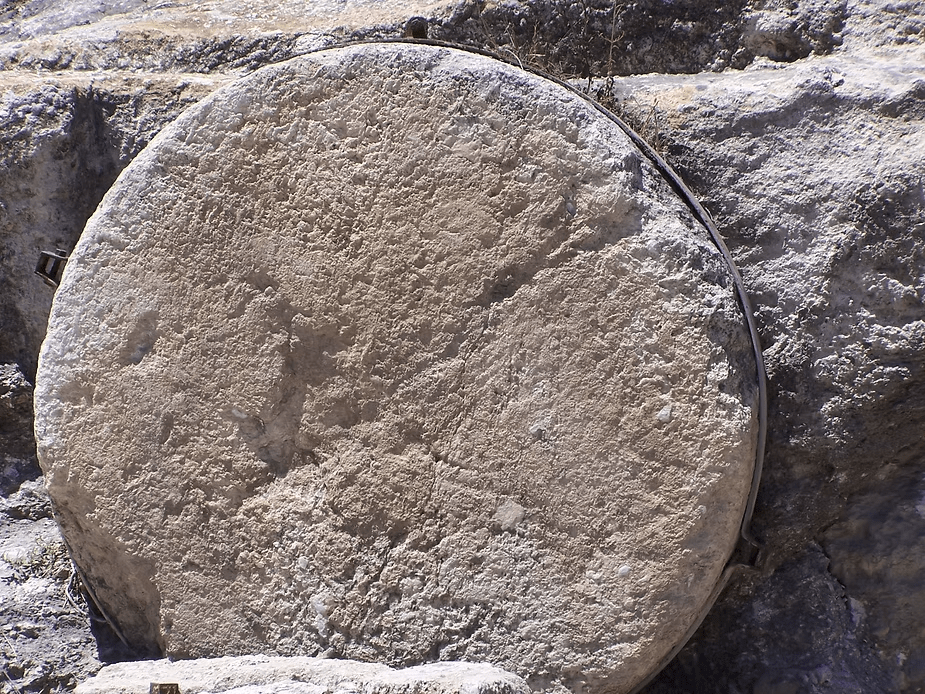
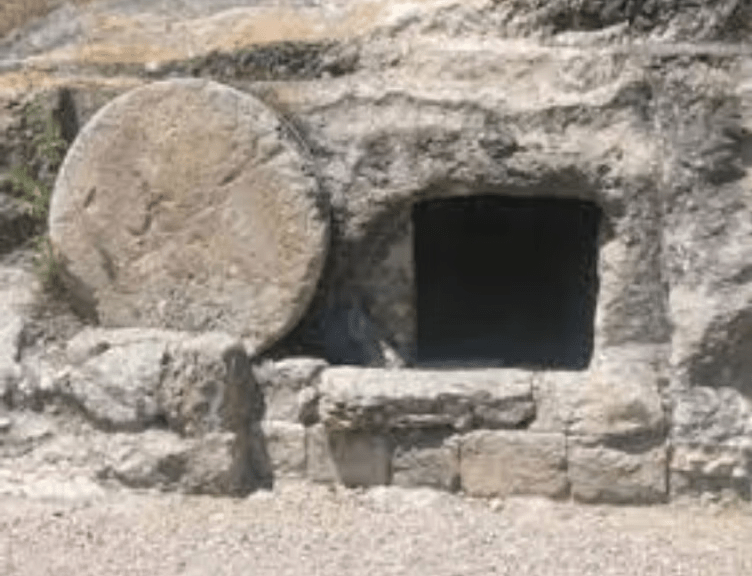
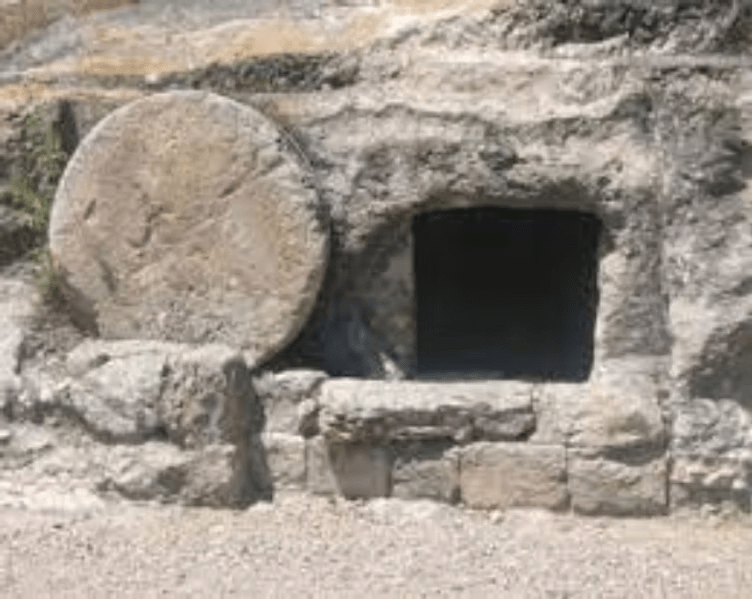
In the past several months (or so), I have come to an entirely new view of the meaning of verse twenty-two, which sings, “The same stone which the builders rejected has become the chief cornerstone.” When writing about the stone that sealed the tomb where Jesus’ body had been laid (the tomb of Joseph of Arimathea), it dawned on me how such a round stone was symbolic of how being reborn as Jesus places a movable stone, which allows a soul to escape a sealed in death, gaining eternal life. It makes no logical sense that any builder of merit would reject a solidly fashioned cube of stone as a cornerstone for a permanent building. However, they would reject a round stone all day long; and, that means one is not building materially (where mortals have no permanence), but spiritually.

The death one avoid by the round stone as one’s cornerstone is that of being a soul born into mortal flesh. Flesh is “mortal” because it will die. When the flesh dies, then the soul is released for Judgment. To be found sealed in a tomb with a squared stone sealing the entrance-exit, then death means coming back again into a body of flesh that is bound to die (repeated death). Only when one’s soul has been married to Yahweh and merged with the soul of His Son can one die of self, without physical dying. One becomes a changed person, as a Saint.

Verses twenty-three through twenty-six sing repeatedly (six times) about “Yahweh.” When we hear the song say, “This is Yahweh’s doing,” that is creating a Son that will be the stone rolled away after death, so one resurrects spiritual as Jesus did. We become Jesus because of Yahweh. This is divine marriage; so, when verse twenty-six sings, “Blessed is he who comes in the name of Yahweh,” the ”name of Yahweh” says one’s soul has taken on His name in marriage AND one has been born in the name of Jesus, as a Christ.

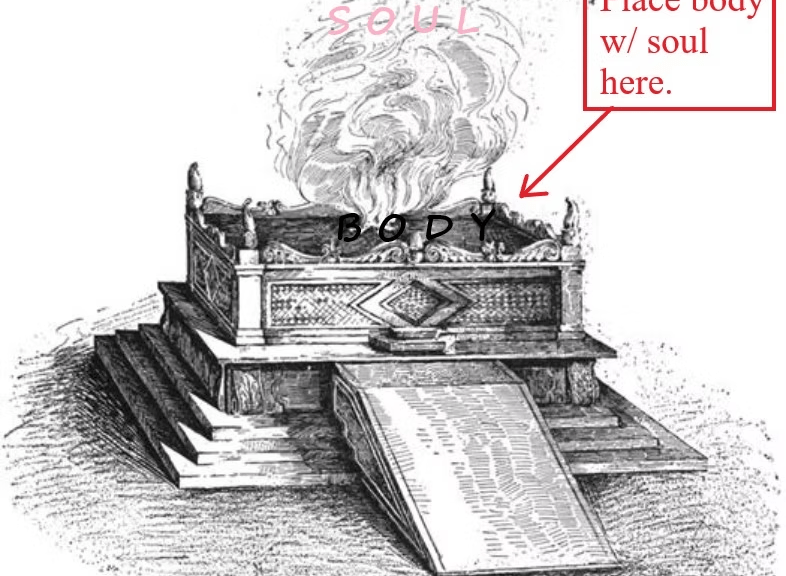
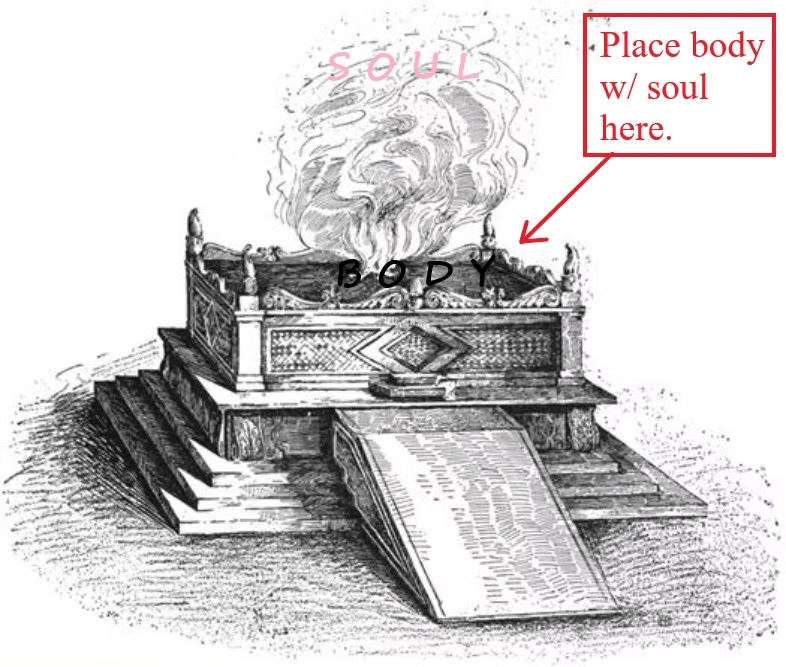
In verse twenty-seven, where David sang, “form a procession with branches up to the horns of the altar,” this sings of a wedding “procession.” The “horns of the altar” are features of the Temple (Tabernacle for David) altar of sacrifice. Thus, marriage to Yahweh means the sacrifice of one’s soul, so it no longer claims control over one’s born flesh. Self goes up in smoke, which is a delight to Yahweh.

When verses twenty-seven and twenty-eight then mention “el” and then “eli” and “elohay,” this sings of the ministry in the name of Jesus that comes. An “el” is an eternal presence, like an angel is. A soul is an eternal entity, but it is not an “el,” per se. An “el” is a spiritual possession within one’s soul-flesh. This can be a demonic spirit that possesses a soul, making it do evil deeds. However, when “el is Yahweh” is stated, that becomes a statement of a divine possession, by Yahweh’s Spirit. That then leads to David singing “my god” (“eli” and “elohay”), these come in quotation marks, as said to a soul by Yahweh. That means Yahweh has heard one’s cries of “thanks” and told those souls “You are mine, as Yahweh elohim.”

As a Psalm that will be sung outside a church, in a precession into a nave for the reading of so much scripture that none of it can be preached (in a twelve minute timeframe), that means the test of Lent is to do your own contemplation about what scripture means to your own soul. Everything in Scripture is valuable insight towards deep faith. Going to a church to have priests do nothing that teaches the meaning of the Word says the blind are leading the blind to a huge pit. One must have more than twelve minutes to devote to Yahweh a week; or, one must plan on repeating life all over again (if lucky).

Psalm 118:1-2, 14-24 – Escaping the tomb of death through resurrection (Easter Day, Year C)

1 Give thanks to Yahweh, for he is good; his mercy endures forever.

2 Let Israel now proclaim, “His mercy endures forever.”

———-

14 Yahweh is my strength and my song, and he has become my salvation.

15 There is a sound of exultation and victory in the tents of the righteous:

16 “The right hand of Yahweh has triumphed! the right hand of Yahweh is exalted! the right hand of Yahweh has triumphed!”

17 I shall not die, but live, and declare the works of Yahweh.

18 Yahweh has punished me sorely, but he did not hand me over to death.

19 Open for me the gates of righteousness; I will enter them; I will offer thanks to Yahweh.

20 “This is the gate of Yahweh; he who is righteous may enter.”

21 I will give thanks to you, for you answered me and have become my salvation.

22 The same stone which the builders rejected has become the chief cornerstone.

23 This is Yahweh doing, and it is marvelous in our eyes.

24 On this day Yahweh has acted; we will rejoice and be glad in it.

——————–

This is the Psalm selection for Easter Day, which is sung every Easter Sunday in Years A, B, and C. This posting is for it being sung during a Year C service. It will follow either the mandatory Acts 10 selection as the “First Lesson,” or a Year C possibility of Isaiah 65. Luke wrote in Acts, of Peter telling Cornelius, “God raised him on the third day and allowed him to appear, not to all the people but to us who were chosen by God as witnesses.” Isaiah wrote, “No more shall there be in it an infant that lives but a few days, or an old person who does not live out a lifetime; for one who dies at a hundred years will be considered a youth, and one who falls short of a hundred will be considered accursed.” If the Acts reading is the “First Lesson,” then the “New Testament” selection will come from Paul’s first letter to the Corinthians, where he wrote, “in fact Christ has been raised from the dead, the first fruits of those who have died.” All will precede a Gospel reading that tells of the women rising early and going to the tomb on the first day of the week. Every Year John’s version can be read, where he wrote: “Then Peter and the other disciple set out and went toward the tomb. The two were running together, but the other disciple outran Peter and reached the tomb first.” However, only in Year C can Luke’s version be the option. Luke wrote this: “Now it was Mary Magdalene, Joanna, Mary the mother of James, and the other women with them who told this to the apostles. But these words seemed to them an idle tale, and they did not believe them.”

In 2021 I wrote about this Easter Psalm and posted a commentary, which can be read by searching this site for the reading name and number. At that time, I did not correct the text as I have done above, showing the eleven times (in these thirteen verses) that “Yahweh” (the proper name that is necessary to learn) was translated as “the Lord.” I welcome all to read that commentary, as it addresses each verse adequately. At this time, I will only add a few comments that bear repeating.

Easter Day (or Easter Sunday) is not a remembrance of how great Yahweh is, so He miraculously raised His Son Jesus from death. Easter is not about Jesus being dead and then coming back to life. Jesus was the seed placed on the earth to die – meaning the outer shell of his flesh fell away from his soul – so that a most holy soul could be raised in new fruit of that most divine vine. Thus, the tomb reflects every Tom, Dick and Harriet that walks on two feet and thinks it is a god by doing so, because no matter how smart one thinks one is … one is going to die.

The tomb reflects the mortality of a soul animating a body of flesh, which without a soul is nothing but dead matter. There is no life in matter. There is only life in the breath of a soul. It is as dead as rock, with the only life in a rock being when workers cut the stone away, making a tomb. When the workers leave, the rock remains … dead to life. There is no eternal life without that soul joining with Yahweh’s Spirit. Therefore, Easter is symbolic of those who seek eternal life to find the divine soul of Jesus raised within his or her sentenced to die soul, held captive in a dead body of flesh – one’s tomb.

When that realization has dawned upon one’s brain, then one can see why these verses from David’s Psalm 118 are sang each Easter Day. There can be no resurrection of Jesus within anyone (not even Jesus could resurrect himself), if it were not for Yahweh (a proper name, whereby knowing that name says one’s soul is at least engaged to be married to Him). David knew that, because his soul was married to Yahweh when Yahweh poured out His Spirit upon David’s soul, soon after Samuel poured some oil on his head. The Spirit of Yahweh Baptized David’s soul with eternal life. So, while David would sin and die, his soul would be risen, because David was a wife of Yahweh, his servant on earth. Therefore, David knew to “give thanks to Yahweh,” because the mortality of death had been removed from his soul. Yahweh’s “mercy endures forever” in the eternity of a soul married to Him.

A soul cannot marry Jesus and give Yahweh the shaft. Jesus is the plan of Yahweh – has been since the beginning – to be the soul of His Son raised within all the wives He takes in marriage. David was a wife of Yahweh and served him as His Son resurrected on the earth. All the amazing things David did, he did because he was Jesus reborn, before the name Jesus (a Greek name) became vogue. The name (rooted in “Yeshua” or “Joshua”) means “Yah[weh] Will Save.” Save means a soul becomes transformed from mortality, through the Baptism that brings on immortality for a soul. To become Jesus resurrected, one’s soul must first marry Yahweh (not some generic “Lord” your brain refuses to name).

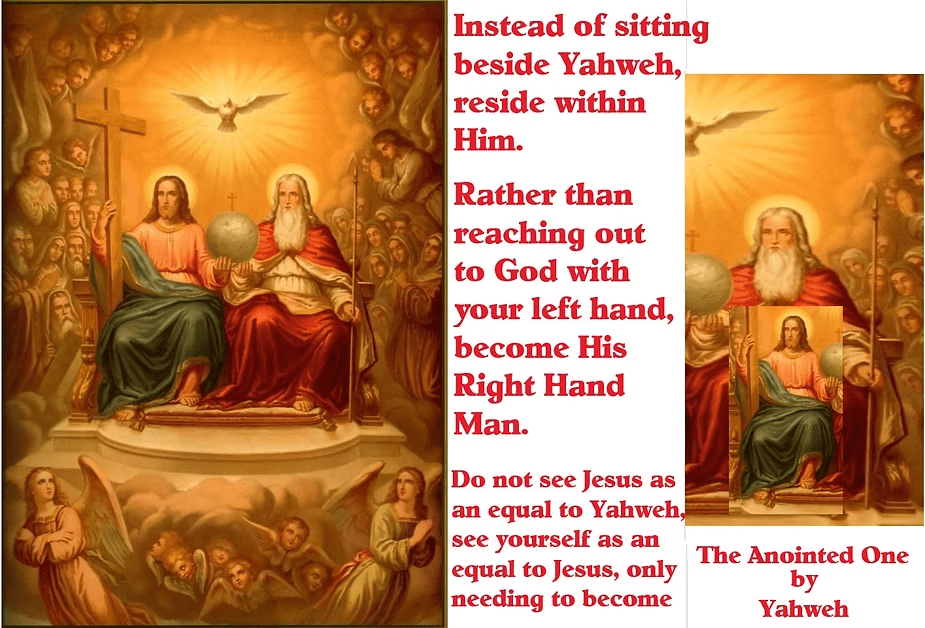
When David sang three times in verse sixteen about the “right hand,” it needs to be recalled how Jesus sits at the “right hand” of Yahweh. When Jesus is resurrected within one’s soul (after a divine union of a soul to Yahweh’s Spirit), then one’s soul-flesh becomes the “right hand” of Yahweh, as Jesus reborn. When oneself is not in divine union with Yahweh (therefore not Jesus reborn), then one is the “left hand,” which means your flesh leads your soul to the ways of the world. The world is made of dead matter; so, the path of the “left hand” is mortal death (if lucky, then reincarnation). The path of the “right hand” is eternal life.

In verses nineteen and twenty, David sang of the “gates of righteousness” and the “gate of Yahweh.” The “gates of righteousness” are 1.) a soul marrying Yahweh’s Spirit, becoming Baptized so the path of the “left hand” has gone away; and, 2) a soul married to Yahweh gives resurrected birth to His Son (Adam, now called Jesus), which keeps the cleansed soul clean, via acts of “righteousness.” This means the “gate of Yahweh” is Jesus, who told us (in John’s Gospel), “I am the gate. Whoever enters by me will be saved.”

David sang loudly in this song of “salvation.” He said, “I shall not die, but live, and declare the works of Yahweh,” which means a soul has been saved. To be saved means Yahweh has saved, which is the name “Jesus.” It is of this salvation that David sang, “The same stone which the builders rejected has become the chief cornerstone.” In my 2021 commentary, I spoke of the rejected “cornerstone” being the round stone that seals a tomb, but can be rolled away. This means the “builders” are those souls who built a life towards an expected death, with entombment. A squared edge block of rock cannot be removed, once one’s death tomb has been sealed. Therefore, Jesus shows a soul how salvation comes after death, when the seal on one’s death tomb is removed, so a soul can ascend to Yahweh and the Spiritual realm.

This round stone that rolls away after death must become the cornerstone of the life one builds. Instead of building a life in service to self; one must build a life in service to Yahweh. That makes one submit to His Will and agree to all the terms of divine marriage (the Covenant), so one can then receive the resurrected soul of Jesus in one’s own soul (breath of life in dead matter. When that happens, it then reflects upon one’s personal Easter Day. That day occurs well before one’s physical death; but when that physical death comes, having built in a rounded stone as one’s cornerstone, the seal of death is rolled away, so a soul can be raised from death.

Of this, David sang, “This is Yahweh doing, and it is marvelous in our eyes.” We cannot do this without Yahweh. There is no soul salvation without Yahweh. Therefore, He is due thanks for allowing one who had been built of sin, to then be rebuilt in the image of His Son. No one can pretend to be Jesus reborn. Yahweh does this; Yahweh alone.

When David ended this song by singing, “On this day Yahweh has acted; we will rejoice and be glad in it,” “this day” is a soul’s personal Easter Day. It is when Jesus’ soul has been resurrected within one’s bound-for-death soul. The gladness that comes from that new and everlasting personal experience cannot be faked. It is not something that is contagious. No one else can know the overwhelming swell of presence that is Yahweh’s Spirit within and surrounding one’s being. No soul can ever forget the special feeling of giving birth to Yahweh’s Son. No words can express one’s personal gain. All words spoken, so others can come to know this same presence, is the truth. That presence of gladness leads one to willingly, lovingly and gladly preach the true meaning of Scripture, so that all eyes will see the marvel of the truth themselves.