1 Give thanks to the Lord, for he is good; *
his mercy endures for ever.
2 Let Israel now proclaim, *
“His mercy endures for ever.”
19 Open for me the gates of righteousness; *
I will enter them;
I will offer thanks to the Lord.
20 “This is the gate of the Lord; *
he who is righteous may enter.”
21 I will give thanks to you, for you answered me *
and have become my salvation.
22 The same stone which the builders rejected *
has become the chief cornerstone.
23 This is the Lord’s doing, *
and it is marvelous in our eyes.
24 On this day the Lord has acted; *
we will rejoice and be glad in it.
25 Hosannah, Lord, hosannah! *
Lord, send us now success.
26 Blessed is he who comes in the name of the Lord; *
we bless you from the house of the Lord.
27 God is the Lord; he has shined upon us; *
form a procession with branches up to the horns of the altar.
28 “You are my God, and I will thank you; *
you are my God, and I will exalt you.”
29 Give thanks to the Lord, for he is good; *
his mercy endures for ever.
——————–
This is the Psalm selection that will be read aloud in unison or sung by a cantor on Palm Sunday, Year B, according to the lectionary for the Episcopal Church. The same psalm of praise will be scheduled for presentation in Years A and C. Each year the Liturgy of the Palm will include a Gospel reading that tells of Jesus’ “Triumphal Entrance into Jerusalem” [Mark 11:1-11 and Matthew 21:1-11]. All will be performed in an outdoor service that is held first, when palm leaves are passed out to all in attendance, this and another reading are presented, called the Liturgy of the Palm [thereby “Palm Sunday”]. Afterwards, the congregation is then solemnly led inside, where the regular service is called Liturgy of the Word [thereby “Passion Sunday”]. This particular selection from David’s songs will be read in all three years of the lectionary cycle (A,B, and C), but due to the length of the Palm Sunday service [aka Passion Sunday] nothing will be said about these words at those times. However, these verses will also be presented on two other occasions in the church calendar (partially on Easter Sunday [A,B, and C] and entirely, with additional verses on Easter 2-C), with it being possible something will be said about the meaning of these verses from David’s Psalm 118.
In this collection of verses, the translations of “Lord” are written as “Yahweh,” ten times. In verse 28, twice is translated “my God.” The first of these is written “el,” and the second is written “elohay.” Neither of those, nor the appearance of “God” in verse 27 [“God is the Lord”], where “el” is again written, should be capitalized. Capitalization is only allowed for words of divinely elevated meaning, as Hebrew has no capital letters in it usage. Still, the repetition of “Yahweh” has to be known and recognized as the specific God to whom David sang praise.
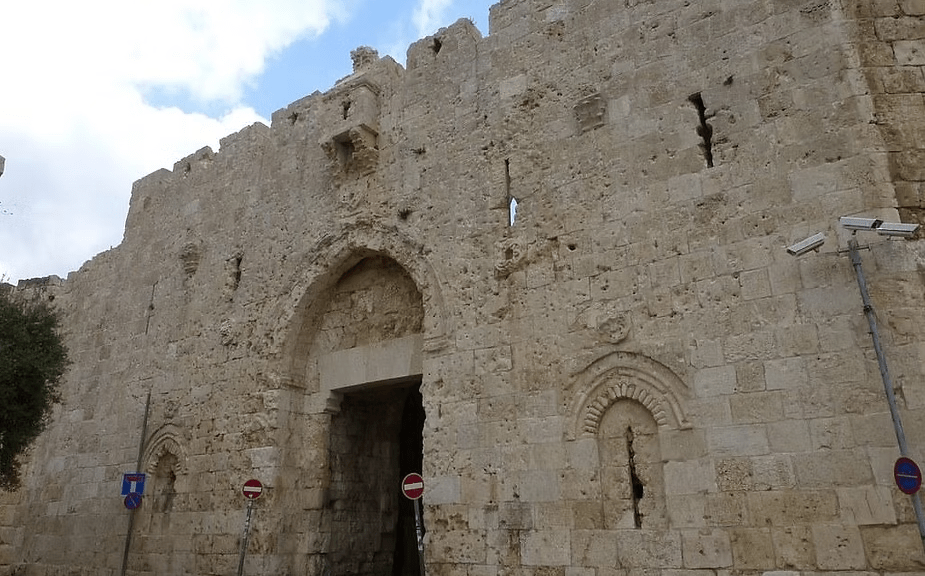
Because these parsed verses begin with verses 19 and 20 using the word “gate” and “gates,” this seems to be an appropriate choice to partner with the story of Jesus’ triumphal entrance into Jerusalem. He entered Jerusalem’s City of David, at the gate known as Zion, with Mount Zion being the hill [the steps formed upon that hill] he climbed to get to the Temple of Jerusalem, atop Mount Moriah. That Temple of stone and mortar did not include the cornerstone that had the name “Jesus” inscribed on it. Thus, this is another song of David that is easily heard as a prophecy of Jesus; but it is God speaking through David, because David was devoted to Yahweh, like Jesus, which means these words are prophetic for all who become Spiritually born as a Son of man.
Because verses 1 and 2 can be seen simply as David expressing his faith in Yahweh, from having surrendered his self-ego to serve God completely, these verses must apply to all who will be able to truthfully sing these words of praise. It can only be from that surrender of self to Yahweh that Yahweh is good and that goodness endures forever. That speaks of having received the gift of eternal life to one’s soul. Only a soul can know Yahweh. Therefore, when David sang to all Israel, verses 1 and 2 speak to all who proclaim belief in Yahweh as their Lord and Master. One must submit in that way for receipt of God’s Holy Spirit, through a marriage to one’s soul, in order to know God personally.
In verse 19 it is most important to see the “gates of righteousness” [“ša·‘ă·rê-ṣe·ḏeq,” from “shaar tsedeq”] are metaphor for the opening of one’s soul to receive the Holy Spirit. The “gates” are then reflections of all the inhibitions of a physical world, where the body has become the fortress in which the soul is imprisoned. In Jerusalem, all gates are entrances within high and imposing walls of defense from attack. The gates were opened at sunrise and closed at sunset, and always manned with guards. This is a projection of the way a human body of flesh defends against the unwanted; but for most sinners, Yahweh is unwanted, thereby the gates are closed to His presence. God will never force His Will to smash down any gates of resistance. It is up to one to lower one’s guard, as a bride must do for her husband to enter her body.
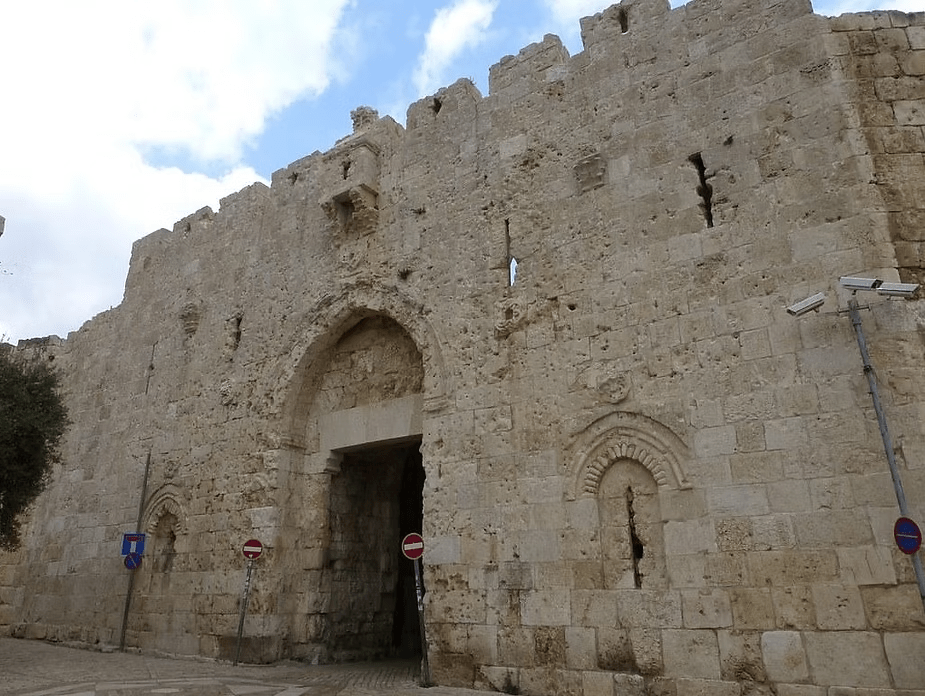
The thanks given to Yahweh represents praise to His presence. That becomes the willing receipt of the Holy Spirit and the birth of a righteous way of being. Because Jesus is the model of righteousness, the Holy Spirit’s penetration into one’s body, upon willing submission by marriage, means David became like Jesus [a name that means “Yah Will Save]. After that birth of righteousness, the gates of one’s body will forevermore refuse entrance of sin. The body of flesh becomes a fortress of righteousness, which is the freedom granted a soul, from a prison representing a body of flesh, so one wholly is granted eternal life. Verse 21 then sings of this salvation [“lî·šū·‘āh” or “yeshuah”].
When it is recognized how verse 22 sings, “The stone that the builders rejected has become the chief cornerstone,” that cornerstone is eternal life, which comes from salvation. The Hebrew word for “salvation” is (in essence) the name “Yeshuah,” which translates into a name as “Joshua” or “Jesus.” The main building block for one’s body to become a temple unto Yahweh is righteousness. Righteousness can only come from the presence of the Holy Spirit; and, the Holy Spirit can only become the ruler over a body of flesh through willing sacrifice of the soul to Yahweh.
When David then sang, “This is the Lord’s doing; it is marvelous in our eyes,” that says no soul-body alone can transform one’s temple of flesh into a palace of righteousness. All the beautifications Herod the Great began to remodel the Second Temple, meaning decades of hard physical labor, was all thrown down in a sudden act of violence. That speaks against human will-power being enough to will oneself to resist sins of the flesh. Only the presence of Yahweh can bring about “marvelous” [from “nip̄·lāṯ,” from “pala,” meaning “to be surpassing or extraordinary”] acts of self to behold. The eyes of self cannot believe its own acts of body; and, the eyes of others find it miraculous that the human being they knew before has now been so remarkably transformed.
When David then followed that verse by singing, “This is the day that the Lord has made; let us rejoice and be glad in it,” that “day” is the Sabbath day, which was made holy. It is also the “day” when one’s soul was forever transformed through a spiritual marriage of one’s soul to Yahweh. It is as one’s wedding day. It is also when the “daylight” of truth entered into one’s being, never to leave. That “day” is when the rejoicing of a freed soul becomes glad it sacrificed self to God, a day never forgotten.
In verse 25, confusion can come from thinking the presence of Yahweh will bring about wealth, influence and power over others. The translation that says, “Hosannah, Lord, hosannah! Lord, send us now success,” actually states the power of prayer overtaking one’s body and soul. “Hosannah” means “I pray.” One prays as Yahweh allowing one to freely talk to Him. The meaning of “send us now” is separated by comma mark from “success.” That becomes a prayer to God to be sent out to do His Will. Therefore, the successes prayed for are to find other lost souls and deliver them a marriage proposal, just like the one they said “Yes” to. Successes are measured by souls saved, not by material gains received from prayers.
Verse 26 is then a most popular verse for Christians to sing aloud. It says, “Blessed is the one who comes in the name of the Lord. We bless you from the house of the Lord.” Verses 25 and 26 become those sung by the people along the road Jesus travelled into Jerusalem. While they sang those praises in mockery, as disbelief in the words’ meanings, David sang them as a statement of truth about all who are filled with God’s Holy Spirit and made righteous. Those wives will truly be “blessed,” having taken on His Holy name [which would later be known to be “Jesus”], as a “Son” of the Father [regardless of human gender]. The “house of Yahweh” is one’s body of flesh, which God’s Holy Spirit then controls fully.
Verse 27 begins by saying, “el Yahweh,” which is more than the translation “The Lord is God” states. The word ‘el” means a little-g “god,” which is one’s soul. Because a soul is eternal and never dies, it is godlike, as a god. David was then saying “My soul is Yahweh’s” or “Yahweh owns my soul.” That is important to grasp, when David then added, “he has given us light.” The “light” given [from “or”] is the truth that leads one to a life of righteousness.
This then had David sing the words that are vital to know, relative to a Palm Sunday outdoor psalm being sung: “Bind the festal procession with branches, up to the horns of the altar.”
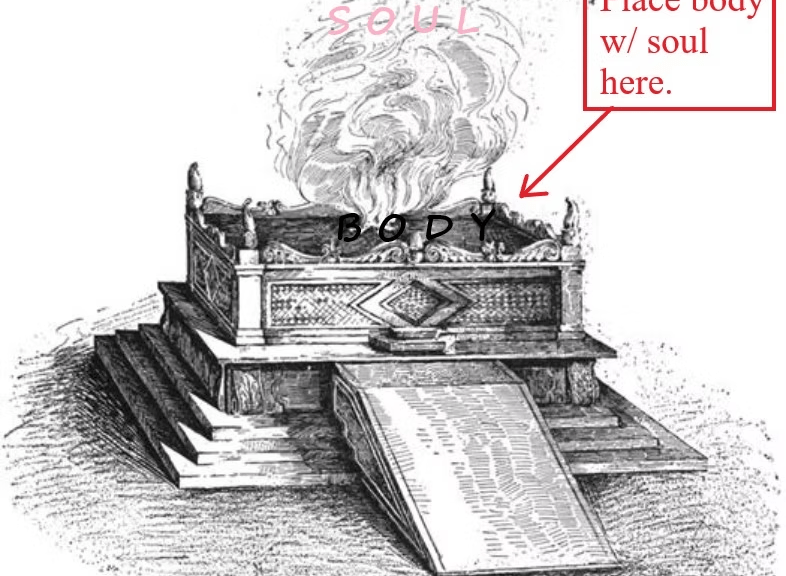
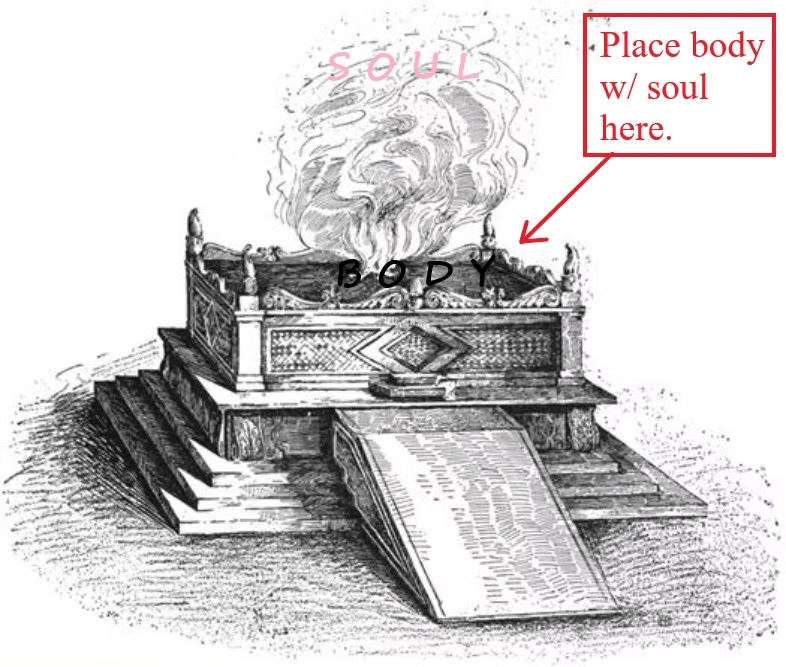
The word “festal” comes from the Hebrew “chag,” which is a “festival gathering, feast, pilgrim feast,” one where “sacrifice” has been made to Yahweh. This means the sacrifice is the sacrifice of living “branches,” not cut date palm leaves [where no Hebrew is written that states “branches”]. The Israelites were those who Yahweh had commanded recognition of sacrifice of pure lambs, whose flesh would be burned upon the altar. Therefore, “a procession with branches, up to the horns of the altar” is a call for wives to submit to Yahweh forevermore, so Israel would eternally be filled with the light of truth, as servants to Yahweh. Only living branches can supply that need, not dead ones.
Verse 28 is then where two uses of lower-case spelling of “el” and “elohim” are used, both of which must be seen as David speaking about the souls called to be sacrifice upon Yahweh’s holy altar. The translation by the NRSV says, “You are my God, and I will thank you; you are my God, and I will exalt you.” In reality, the way this verse should be understood is as: “I am a god , and I will confess you , to other gods , I will be exalted because of you.” This becomes a confession [from “wə·’ō·w·ḏe·kā” rooted in “yadah,” meaning “to throw, cast,” as “confessing”] of s soul’s weakness without the presence of Yahweh within. The mission of a wife to God, as David proved in his psalms, is to bring other lost souls into the light of truth, and marriage to Yahweh.
Finally, verse 29 sings, “Give thanks to the Lord, for he is good; his mercy endures for ever.” This is a return to the very beginning of this song of praise, so it can end as a cycle completed, with a new cycle to begin. From a wife of Yahweh having confessed the blessings of becoming one with Yahweh, then others will receive the Holy Spirit and renew this cycle of eternal life.
As a psalm that is sung outside of churches in a ceremony that passes out dead palm leaves for all in attendance to hold, it is important to take it upon oneself and contemplate the words of this song written by David [at least the verses selected to be presented]. No one will take the time to do that for you. The words sing of David being in a loving relationship of commitment to Yahweh. The truth of that relationship – that marriage between a soul and God’s Holy Spirit – is it is not limited to just David.
While David was a king over Israel, it was when he was a boy that God had Samuel anoint David. It was that Anointing that made David the Christ, as a wife of God. Jesus was born with his soul married to Yahweh, so he too was the Anointed One. Still, this song sings praises that all can be just as was David and just as was the man Jesus, because marriage to Yahweh makes one a Son of man, as the Christ. That makes Jesus be reborn time and again in the “elohay” who sacrifice those little-g gods to service to the Lord.
 Explaining the Readings