
Tag Archives: Psalm 146

Psalm 146 – Praise Yahweh

1 [Hallelujah!]

Praise Yah

Praise Yahweh, O my soul! *

[2] I will praise Yahweh as long as I live;

I will sing praises to leholay while I have my being.

2 [3] Put not your trust in rulers, nor in any child of earth, *

for there is no help in them.

3 [4] When they breathe their last, they return to earth, *

and in that day their thoughts perish.

4 [5] Happy are they who have se-el of Jacob for their help! *

whose hope is in Yahweh elohaw;

5 [6] Who made heaven and earth, the seas, and all that is in them; *

who keeps his promise for ever;

6 [7] Who gives justice to those who are oppressed, *

and food to those who hunger.

7 Yahweh sets the prisoners free;

[8] Yahweh opens the eyes of the blind; *

Yahweh lifts up those who are bowed down;

8 Yahweh loves the righteous;

[9] Yahweh cares for the stranger; *

he sustains the orphan and widow,

but frustrates the way of the wicked.

9 [10] Yahweh shall reign forever, *

elohayik, O Zion, throughout all generations.

Praise Yah!

[Hallelujah!]

——————–

This is the Track 2 accompanying Psalm that will be read aloud in unison or sung by a cantor on the fifteenth Sunday after Pentecost [Proper 18], Year B, according to the lectionary for the Episcopal Church. If Track 2 is chosen, this song of praise will follow a reading from Isaiah, where the prophet sang, “Then the eyes of the blind shall be opened, and the ears of the deaf unstopped; then the lame shall leap like a deer, and the tongue of the speechless sing for joy.” That will precede the Epistle reading from James, where he wrote, “You do well if you really fulfill the royal law according to the scripture, “You shall love your neighbor as yourself.”’ All will accompany the Gospel reading from Mark, when Jesus healed a deaf man and we are told, “Then looking up to heaven, he sighed and said to him, “Ephphatha,” that is, “Be opened.”

In the above translation into English, it should be noted that eleven times I have entered bold type that states either “Yah” or “Yahweh.” In verses one, four, seven, eight, nine and ten there are eight times the NRSV translator [as well as all others, I’m sure] improperly translated “Yahweh” [the transliteration of the written text – “יהוה”] as “Lord.” The generic use of “Lord” demeans the One God whose name is “Yahweh,” as named by all Old Testament writers of Hebrew. The word for “lord” is “adon,” which is not written; and, any spirit that controls a soul in human flesh is a “lord,” which is never a good entity if it is not Yahweh. In addition to the eight times David wrote “Yahweh,” he wrote “hal·lū-yāh” to begin this song and again to end it. The common English translation is “Halleluiah!” but in reality this is two words hyphenated together, which mean “praise YAH.” “YAH” is a short way of saying “Yahweh” [not “Lor”]. Finally, in three places David wrote a form of the plural Hebrew word that says “gods,” while writing the singular “god” once. These amount to (generally) “elohim” and “el.” I have replaced the translations of “God” to state what was actually written.

Psalm 146 has ten verses. The NRSV shows it as having ten verses; and, the Episcopal lectionary page indicates its translations come from that translation. However, they have combined verses one and two into verse one, making it appear there are only nine verses. I have placed brackets with bold numbers that reflect the true verse numbers; and, all subsequent references to verses by number will be to the truth, not some church creation. As to verses one and ten, the NRSV translates the Hebrew “hal·lū-yāh” as “Praise the Lord,” which the Episcopal Church has published as “Hallelujah!”

The truth of what the first verse says is this [in Hebrew]: “hal·lū- yāh hal·lî nap̄·šî , ’eṯ-Yah-weh .” In that, twice is written “halal” [as “hallu” and “halli”], which Strong’s Exhaustive Concordance says is the verb meaning “make boast self, celebrate, commend, deal, make, foolish glory, give light, be make.” It is properly used as “to shine, to be boastful, to praise, of self-confident boasting, and of glorifying – making one’s boast in.” [Brown-Driver-Briggs] All of this meaning means “praise” is not something demanded by instruction, such as someone yelling out, “Sieg heil!” and a bunch of German-speaking robots stick their right arms in the air and repeat, “Seig heil!” It is self-motivated inspiration, coming from the presence of a bright inner light, so David was not singing out for others to “praise Yah!,” he was himself doing that. The eruption of “praise Yah” must be seen as a statement of personal experience, not some rote command that gets tiresome (when one does not feel the reason to give praise).

A soul praises Yahweh by “Being There” with Him, meaning one doing what He says then praises Him.

By understanding this aspect of “praise” or “shine forth” as a statement that comes from within, the first verse’s first segment of words says, “praise Yah praise my soul.” In this, the Hebrew word “nephesh” means “soul,” but also implies “living being, life, self, person, desire, passion, appetite, and emotion.” (Strong’s) Simply by seeing that a soul is not a set of lips attached to a tongue and a set of lungs, David was expressing his “living being” as the “light” of Yah[weh]. The “praise” was the elation that sprang from a most divine presence that was Yahweh on earth – in David. By being an extension of Yahweh, from His Spirit having been poured out upon David’s “soul,” David was “praise of Yah praise of light.” This is then confirmed by David adding, “’eṯ-Yah-weh” [“אֶת־ יְהוָֽה”], which says “Yahweh is” the union of “Yah and soul.” Therefore, verse one is David singing of his Spiritual marriage to his One God.

Verse two then sings literally, “I will praise Yahweh while I live ; I will sing praises to my elohim as I exist beside .” Here, the element of “living” must be seen as relevant to eternal “life,” which is an elevated state of being from an eternal soul possessing a material body of flesh. The flesh is death in waiting, as no human body can retain a living soul forever. This means David’s first segment places focus on that eternal gift of life that his soul had received from Yahweh [his Anointment], so as long as his flesh sustained breath, then David’s existence would be “praise” of Yahweh on earth. The light would shine as he lived. Thus, the second segment of words sings of his psalms written, which did not come from his brain, but from his being a Yahweh elohim, who was writing the Word of praise through David, for others to sing.

Verse three then literally sings, “not do put your trust in princes ; in a son of man nothing not salvation .” This, following verse two ending with a focus on “my elohim,” where the only way to become one of Yahweh’s elohim is to join with His Spirit, says this divine union cannot be duplicated through human marriages, such as having allegiance with a worldly leader would be. David was a “prince” [intuited translation from “nadib”], when he was ‘adopted’ by Saul. David was “noble” [the truth of “nadib”] as a king. This means that those Israelites who did as David said, because they put trust in him, rather than marry their souls to Yahweh and realize the truth of faith from love of God, would likewise fall from grace when David would later sin and his lineage be condemned.

When David wrote, “bə·ḇen-’ā·ḏām,” as “in son of man,” this is a statement about every human being on earth. All are “sons” because a soul, being an eternal spirit [not physical], is of masculine essence, being breath of life from the Father. This then says all male and female bodies of flesh are “sons of man,” as “children of mankind.” Since all human beings have a soul in flesh, none are eternal, in the sense that all living bodies of flesh are born to eventually die. The point of mortal life is to find eternal “salvation” or “deliverance” [from “tə·šū·‘āh” or “teshuah”]. Therefore, one’s “trust” [“batach”] cannot be placed in anyone or anything that is lesser than Yahweh, because nothing less than Yahweh can yield eternal life [the theme of verse two].

Verse four then sings [literally translated], “leaves his breath he returns to his ground ; in day that destroys his thoughts .” This verse says why one’s soul cannot be led by another mortal being. The reason is no mortal is able to defeat death. As soon as one’s “breath of life leaves” [“tê·ṣê rū·ḥōw”], when one becomes ‘dearly departed,’ the flesh “returns to the ground.” As the saying goes: “ashes to ashes, dust to dust.” The princely ruler, like everyone else, leaves a corpse behind, when its soul “departs.” The “day” [“yom”] of significance is then chiseled into a tombstone, as when one’s life ended; and, from that time on there will be nothing new added to the list of “ideas” or “thoughts” that come from that human’s brain-lips. Those bodily parts of speech are no more.

The literal English translation of verse five is then, “blessed , the god of Jacob for his help , whose hope , in Yahweh his elohim .” In this verse there are both singular and plural forms of “el.” Because the name “Yahweh” is associated with “elohim” [as “’ĕ·lō·hāw” – “his gods”], the words “še·’êl ya·‘ă·qōḇ” are then not talking about an upper-case “God.” This relates to why “Yah-weh” does not translate as “Lord,” because Jacob had his own “god” [“še·’êl” – “whose god”] that was himself [self-worship] or a demonic possession [an unclean spirit as lord]. It is vital to realize that Jacob was a sinner, who cheated, stole, and lied, before his lower-g “god” was wrestled away from him, to be replaced by the divine possession of a Yahweh elohim, when his spiritual name became “Israel” [“He Retains God”]. Therefore, David was singing about how “blessed” Jacob was, by having his worldly “god” be replaced with the “hope” [“seber”] that came from his being renamed “Israel,” as a Yahweh elohim. The same hope of Jacob was given to David’s soul, and the offer of that hope was then extended to all who would thereafter sing this song from their hearts.

Verse six then sings out literally, “who made heaven and earth , the sea and all that is within , who preserves truth forever .” This is an important statement about Genesis 1, where all the scholars who read Moses, him having divinely given instructing to be written “gods created,” where the word “elohim” is written thirty-two times, with nary a mention of “Yah-weh.” Those Yahweh-less souls of scholars, who kneel and worship their “god” intelligence, read “gods” and then correct divine text to say “God.” Because their fleshy brains think there could have been no “gods,” they reduce the omnipotence of Yahweh, with a stroke of their pens. The truth is this: the “elohim” were created by Yahweh. Yahweh is stated in Genesis 1:1a, as “in the beginning created elohim ,” [“bə·rê·šîṯ bā·rā ’ĕ·lō·hîm” from “reshith bara’ elohim”], without His name needing to be mentioned. Who else could have “created elohim“? David is then confirming what was written in the Torah, by says “Yahweh elohaw” [Yahweh’s elohim] as being those divine creations of Yahweh “who made heaven and earth.” That confirms Jacob as another of “his elohim” [“elohaw”], created by Yahweh, in human flesh.

In the second segment of verse six, the “sea” must be seen as a separation from the Genesis theme, with the assumption being wrong to think “all that is within” refers to the fish in the sea. That is not the point here. The use of “sea” [“hay·yām” as “yam”] is not physical, but spiritual; because Yahweh did not create all that was made on the first six days of Creation. His elohim did (by His design). This means the “sea” takes us back to Psalm 104, where verse twenty-five referred to the “sea” [“hay·yām”] and verse twenty-six referred to the Leviathan, which was metaphor for the “sea” of “elohim” Yahweh unleashed upon the world and all that is in it. Therefore, the third segment is David singing about the presence of Yahweh within his soul-being, which gave David access to all truth that is forever preserved.

Verse seven then sings, “who brings justice to the oppressed , who sets bread before the hungry , Yahweh sets free those imprisoned .” Following the use of “lə·‘ō·lām” [from “olam”] at the end of verse six, meaning “forever” or the “long duration, antiquity, futurity” of eternity, the singing of “justice” [from “mishpat”] speaks of Judgment upon death, when a soul is released from its body of flesh. Those who have been “oppressed” in physical life, due to having sinned or having been persecuted from refusing to be influenced by worldly traps, the soul out of a body of flesh is free. This freedom comes to all eternal souls; but that release then leads to “judgment” [the truth of “mishpat”].

By seeing how this release of all souls at death is freedom, the second segment says all souls will be judged on how well they fed upon the “bread set before” them by Yahweh. Those who hunger for spiritual food [which should be all Israelites, including those named Christians] will have been nourished by the “bread of life” and become Yahweh elohim. Those who instead hungered for material “food” will have found that also set before them. This then says Judgment will be based on the type of “bread” hungered for in mortal existence.

The third segment of words in verse seven then sings of the length of “freedom” a soul receives. Those who fed on the “bread of life” will have become Yahweh’s hands on earth, thereby released forever from reincarnation, able to remain one with Yahweh in heaven. Others will not be so fortunate, as they will “those imprisoned” again, as only marriage to “Yahweh sets one free.” The prison is a body of flesh; and, the jailers are the temptations that rattle the cage bars.

In should be easily noted, based on my having restored “Yahweh” in the above English translation in bold type, that the third segment of verse seven begins a barrage of uses of “Yahweh” that are repeated in verse eight, before singular uses are found in verses nine and ten. Three uses of “Yahweh” lead each of three segments of words, which must be seen as the food set before a soul while it is in a body of flesh. Verse eight then literally sings, “Yahweh opens the blind , Yahweh raises those bowed down , Yahweh loves the righteous .” In that, Yahweh allows one to see the truth, which allows one to live according to His Will, thereby gaining the freedom of all souls who bow down before Him in marriage and live righteously from a marriage of “love.”

Verse nine then begins with continuation of this series of “Yahwehs” written, literally singing, “Yahweh preserves the sojourners , the orphan and widow he relieves ; but the journey of the wicked he makes crooked .” In the first segment of words, Yahweh is the preservative [from “šō·mêr” as “shamar”] that gives a soul insights that prevent one from being lured into wicked ways. The use of “gê·rîm,” the plural of “ger,” meaning “immigrants, aliens, strangers,” thereby “travelers,” speaks of an incarnation of a soul in human flesh. Because the flesh is bound to die, it is only a temporary home, such that a soul is a “sojourner” in one’s body. To keep a soul from getting lost ‘in the moment’ and selling a soul for temporary pleasures, Yahweh “keeps watch” for His wives.

In the second segment of words, the metaphor used is that of “orphans,” which can be seen as those who are “fatherless.” Likewise, the “widows” are metaphor for women who have lost their husbands. This means the “relief” that comes from marriage to Yahweh is He becomes the Father of those souls reborn as His Sons [in both male and female bodies of flesh] and the Husband of those souls whose material ‘gods’ are all dead, seeking redemption and eternal salvation through marriage to His Spirit.

In the third segment of words, the element of “crooked” [from “yə·‘aw·wêṯ” or “avath”] speaks not of a mortal life of waywardness, but of the judgment that comes from such an illusionary ‘life.’ The truth of the word is “to be bent,” meaning “bowed” into a U-shape. This then reflects on those souls not married to Yahweh being freed upon death, but then returned to the physical realm [that of death animated], as reincarnated souls. All that had been gained will have then been lost, meaning a soul will have to start all over again. As always, the purpose of reincarnation is to seek Yahweh, find Him, marry one’s soul to Him, and gain eternal freedom in judgment.

The tenth and final verse then sings literally, “shall be king Yahweh forever , your elohim Zion dwelling of all dwellings , praise Yah .” In this, the word “Zion” [“ṣî·yō·wn,” from “tsiyyon”] should be read as the archaic [pre-Israelite] meaning as “fortress.” It should not be given the specificity of a mountain named in Jerusalem. When this is understood, the first segment of words places focus on Yahweh being one’s soul’s “king,” which was what Yahweh told Samuel when the Israelites wanted a human to reign over them (like other nations). Eternal salvation is only possible when Yahweh is one’s “king.” For that to be the truth, then one’s soul marries Yahweh and His throne is within one’s soul-body, as an “elohim fortress” that is a divine “dwelling,” which can not be replaced by other “dwellings,” as would be reincarnated bodies in future lives on earth. For that judgment of freedom, that soul will be like David and “praise Yah.”

As the companion Psalm for Isaiah’s song of salvation and redemption through Yahweh, when the faithful will find all their pains and sufferings soothed, the lesson of Psalm 146 is to listen to David and realize life is only illusionary when a soul is animating a body of flesh. The call is to marry Yahweh and become His wife, giving birth to oneself as His Son [regardless of one’s present human gender]. One has to be elevated to the state of a Yahweh elohim, who are all souls who do the work of Yahweh on the material plane. That means being filled with His Spirit and letting Him lead one’s soul in ministry, which demands one walk a path of righteousness. That path cannot be mimicked or walked alone. Attempting that will lead to the misery of coming back to start all over again.

As a reading for the fifteenth Sunday after Pentecost, when one’s own personal ministry to Yahweh should already be well underway, the lesson is to “praise Yahweh.” One does not do that by memorizing prayers to orate publicly or by reading the latest scholarly insights published, relative to what Scripture means, because all of that work is taking what others have done and using it falsely as one’s own work. One’s own work is selfishness and single, afraid of marriage to Yahweh. To “praise Yahweh,” one must be one with Yahweh, letting one’s self-ego go, in submission to His Will. Then, the only opinion that matters is the truth of Yahweh, which flows from one’s righteous self, without forethought or memorization. To teach others to marry Yahweh, one must have the personal experience of Him. Artists depict that personal experience as a halo around one’s head. The halo takes the place of a human brain. A halo means one is a Saint, which David referred to as Yahweh elohim.
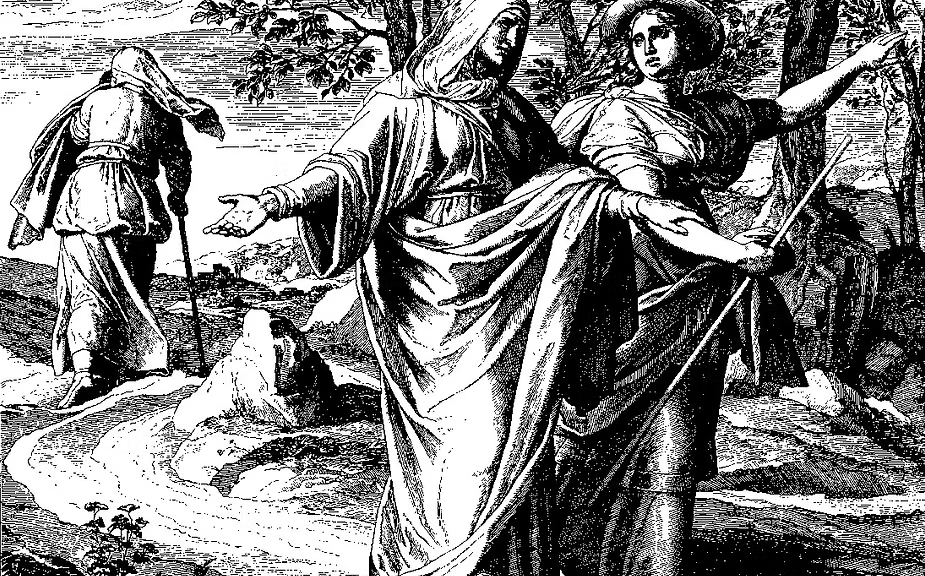
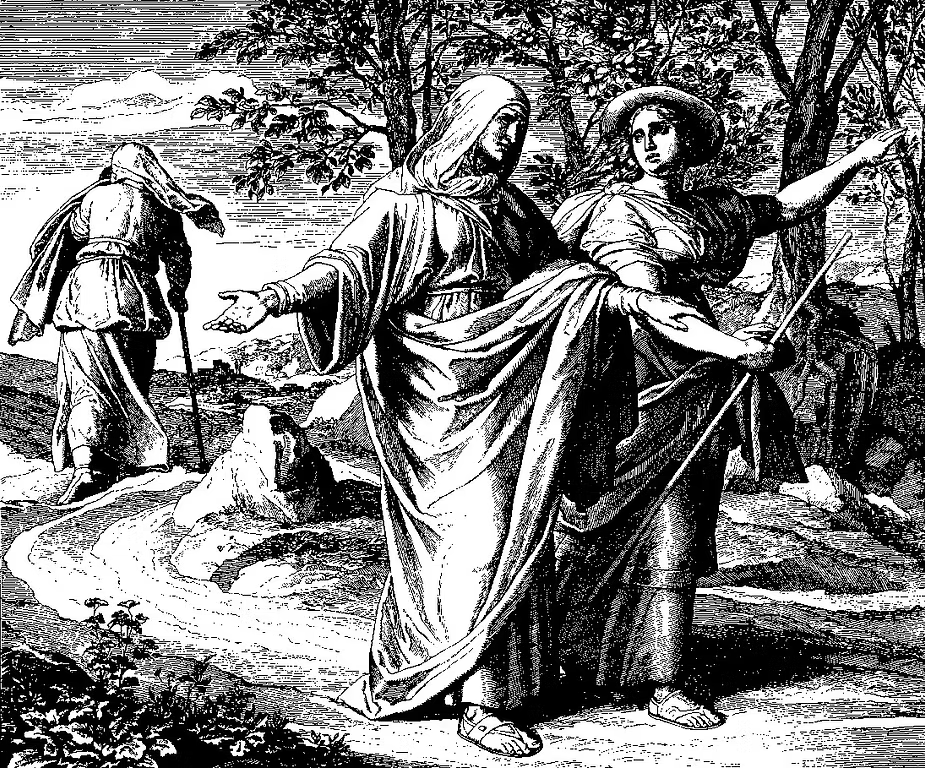
Psalm 146 – Praising Yahweh as a reflection on Naomi and Ruth

1 Hallelujah! [Praise Yah!]

Praise Yahweh, O my soul! *

[2] I will praise Yahweh as long as I live;

I will sing praises lelohay while I have my being.

2 [3] Put not your trust in rulers, nor in any child of earth, *

for there is no help in them.

3 [4] When they breathe their last, they return to earth, *

and in that day their thoughts perish.

4 [5] Happy are they who have se-el of Jacob for their help! *

whose hope is in Yahweh elohaw;

5 [6] Who made heaven and earth, the seas, and all that is in them; *

who keeps his promise for ever;

6 [7] Who gives justice to those who are oppressed, *

and food to those who hunger.

7 [8] Yahweh sets the prisoners free;

Yahweh opens the eyes of the blind; *

Yahweh lifts up those who are bowed down;

8 [9] Yahweh loves the righteous;

Yahweh cares for the stranger; *

he sustains the orphan and widow,

but frustrates the way of the wicked.

9 [10] Yahweh shall reign forever, *

elohayik, O Zion, throughout all generations.

Hallelujah! [Praise Yah!]

——————–

This is the accompanying song of praise that will follow the Track 1 Old Testament reading from Ruth. It will be read aloud in unison or sung by a cantor on the twenty-third Sunday after Pentecost [Proper 26], Year B, according to the lectionary for the Episcopal Church. The Ruth reading will include this: “Naomi said, “Turn back, my daughters, why will you go with me? Do I still have sons in my womb that they may become your husbands? Turn back, my daughters, go your way, for I am too old to have a husband.” The Track 1 pair will precede a reading from Hebrews, where Paul wrote, “For if the blood of goats and bulls, with the sprinkling of the ashes of a heifer, sanctifies those who have been defiled so that their flesh is purified, how much more will the blood of Christ.” All will accompany a reading from Mark, where it is written: “[A scribe] asked [Jesus], “Which commandment is the first of all?” Jesus answered, “The first is, ‘Hear, O Israel: the Lord our God, the Lord is one; you shall love the Lord your God with all your heart, and with all your soul, and with all your mind, and with all your strength.’

I wrote of this Psalm and posted those views this past August, during the fifteenth Sunday after Pentecost [Proper 18], so those interpretations are still valid. You can search this site for my view on Psalm 146. At that time is was on the Track 2 path for a church. Here, it is on the Track 1 schedule; so, this ensures this song of praise will be read during the Year B Ordinary after Pentecost season, one time or the other. Because what I wrote then is still applicable, I will only add now how this song fits the Old Testament selection for Ruth, and show how it also fits the Hebrews and Mark readings.

On the fifteenth Sunday after Pentecost [Proper 18], Psalm 146 accompanied a reading from Isaiah 35, which is a song that sings, “Be strong. Do not fear.” As such, that theme of standing tall in difficult times can be seen as reflected in the theme of Ruth. Naomi had suffered greatly by the losses of her husband and two sons, meaning she was left as a poor widow woman, who had no one in the material world who was responsible for her care and providing for her needs. Both Isaiah and Ruth are stories of difficult times being faced, which happens to all of mankind, from time to time.

While the NRSV does not make it clear that Naomi spoke the name “Yahweh,” she did. When we read, “she had heard in the country of Moab that Yahweh had considered his people and given them food,” that speaks of her commitment to Yahweh in this time of need. When we read of Naomi telling her daughters-in-law, “May Yahweh deal kindly with you, as you have dealt with the dead and with me. Yahweh grant that you may find security, each of you in the house of your husband,” that speaks of her blessing passed from her love of Yahweh to her surviving family, which were then free to find their own humans to provide them security. Those hidden uses of “Yahweh” say Naomi “praised Yah,” the meaning of the Hebrew word “Hallelujah.”

In this song of praise there are found these words written: “lelohay, elohaw, and elohayik,” in addition to “se-el.” All of these uses by David have been transformed into “to my God, their God, your God, and the God,” none of which are truthful translations. The first three listed by me are forms of the plural word “gods,” clearly not in the singular; and, none bears the importance of capitalization, because each reference is to a soul in a human body of flesh, none of who equate to Yahweh Himself – God. The plural is a statement of Yahweh’s ability to marry souls in the flesh and transform them into His gods on earth, which can be understood as Saints. When one then reads “se-el,” this should be seen as one soul [that of Jacob], which worshipped self, before being transformed and renamed – as Israel – a name meaning an el Who Retained Yahweh. All of this must be seen now as being applicable to the state of being within Naomi, as she was a Yahweh elohim; and, it was that marriage of her soul to Yahweh that spilled outward from her, which adhered to the seeker who was Ruth. Just as Isaiah sang to keep the faith, Ruth found the inner joy of her soul having also married Yahweh, so she too became an elohim” like Naomi.

This means every verse of David’s song praising Yahweh can be applied to the story of Ruth. Naomi was suffering physically, due to the famine and the deaths of those close to her, but as long as her soul kept her body alive, that life was time to praise Yahweh, not wallow in self-pity.

The husband and two sons of Naomi can be seen as “princes,” with their names telling a story within a story, which is all metaphor for the religions and subdivision of Christianity. All have died, but her trust was not in organizations. She praised Yahweh only, within her soul.

The deaths from famine led many souls to depart from their flesh. Naomi knew the deaths personally. The return of spirits speaks of reincarnation, which means nothing has been lost. Yahweh’s plan is never affected by such changing states in the material realm. Death is a part of nature.

The blessing of the soul of Jacob [“se-el Yaaqob”], so he became an elohim of Yahweh [“Yah-weh elohaw”] was the same state of marriage Naomi’s soul had experienced. It is the state of being that leads a soul to praise Yahweh. It is how all should be. Thus, it was how Ruth became.

These transformations are then seen in the same light as the Creation. David sang praise not for the air, earth and sea, with all creatures within, but he sang praise for the souls [the “heaven” within] that brings life to a world of matter. In the same way, Yahweh has the power to create a soul in a body of flesh [a “se-el”] into a Yahweh elohim, which is a higher “heaven” within one’s being. When Ruth ends with a song of Ruth, so “When Naomi saw that she was determined to go with her, she said no more to her,” that sings of Ruth being created anew.

In the times of famine, as Naomi and Ruth experienced, David sang of the spiritual food that takes away the hungers that come from reliance on the material for survival. The conditions of the world, such as drought, becomes the limits that imprison all bodies of flesh, forcing them to accept those conditions, move somewhere else or die. It is spiritual food from Yahweh that Naomi fed from, which was then shared with Ruth. David sang praises for this freedom given by Yahweh.

David then sang about the love of Yahweh for His servants [wives]. Their eyes are opened to the truth of life eternal. Naomi’s eyes could see this, although it is not possible for physically suffering humans to see. This inner sight leads a soul to bow down before Yahweh, which means kneeling at the marriage altar, so one’s soul can be united with Yahweh. Naomi said she was too old to attract a human husband and too old to bear sons, which was the main attraction females had in marriage. Naomi was able to see her eternal youth, as a soul, which Yahweh saw as worthy of divine marriage. Ruth can then be seen as the child of her souls’ righteous state of being, brought upon her by Yahweh.

David sang in verse nine of what would be the story told in Ruth. His words singing, “Yahweh watches over the strangers , the fatherless and widow he relieves , but the way of the wicked he turns upside down,” this sings of Naomi and Ruth, whereas Orpah [whose name means “neck”] symbolizes those with stiff necks, or stubborn self-absorbed people, will turn away from Yahweh and find misery.

As an accompanying Psalm to be sung happily on the twenty-third Sunday after Pentecost, when one’s own personal ministry for Yahweh should already be well underway, the lesson is again to look within during times of trouble and find faith through praise of Yahweh. This says one’s soul should already be married to Yahweh, so faith is that inner spiritual food that sustains one through hard times. This song of praise should be seen as fully supporting the Gospel reading, where Jesus answered the scribe by saying the foremost law is to love Yahweh totally and unconditionally. From that connection of love, all else follows in kind. To be a minister of Yahweh means to sing praises to Yahweh, so others will likewise feel the Spirit that is within you and cling to that Spirit, until it is theirs as well. Ministry is about passing on the Spirit so others can be saved; and, the world is always in times of famine, so a true minister will share his or her spiritual food so others can find eternal life.

Psalm 146 – Same song, Elijah verse

1 Hallelujah! [Praise Yah!]

Praise Yahweh, O my soul! *

[2] I will praise Yahweh as long as I live;

I will sing praises lelohay while I have my being.

2 [3] Put not your trust in rulers, nor in any child of earth, *

for there is no help in them.

3 [4] When they breathe their last, they return to earth, *

and in that day their thoughts perish.

4 [5] Happy are they who have se-el of Jacob for their help! *

whose hope is in Yahweh elohaw;

5 [6] Who made heaven and earth, the seas, and all that is in them; *

who keeps his promise for ever;

6 [7] Who gives justice to those who are oppressed, *

and food to those who hunger.

7 [8] Yahweh sets the prisoners free;

Yahweh opens the eyes of the blind; *

Yahweh lifts up those who are bowed down;

8 [9] Yahweh loves the righteous;

Yahweh cares for the stranger; *

he sustains the orphan and widow,

but frustrates the way of the wicked.

9 [10] Yahweh shall reign forever, *

elohayik, O Zion, throughout all generations.

Hallelujah! [Praise Yah!]

————————-

This is the accompanying Psalm that will be read aloud in unison or sung by a cantor, if an individual church is following the Track 2 path set for the Ordinary after Pentecost season. As a Track 2 accompaniment, it will follow the reading from First Kings, where it is written: “Elijah said to [the widow woman], “Do not be afraid; go and do as you have said; but first make me a little cake of it and bring it to me, and afterwards make something for yourself and your son. For thus says Yahweh elohe of Israel: The jar of meal will not be emptied and the jug of oil will not fail until the day that the Lord sends rain on the earth.” That pair will precede a reading from Hebrews, where Paul wrote, “Christ, having been offered once to bear the sins of many, will appear a second time, not to deal with sin, but to save those who are eagerly waiting for him.” All will accompany the Gospel reading from Mark, where the Apostle wrote: “[The scribes] devour widows’ houses and for the sake of appearance say long prayers. They will receive the greater condemnation.”

Psalm 146, as I have stated before, is an important Psalm of David. In the Year B schedule, it is read on the fifteenth, the twenty-sixth and the twenty-seventh Sundays after Pentecost [Proper numbering]. It is also read twice in the Year B schedule, and partially once in Year A. As this is Proper 27, this same Psalm 146 was read last Sunday. The difference is last week it was Track 1, while now (and on Proper 15) it is Track 2. All of the changes made in the above text were presented the two times before, so nothing has changed there. The only difference now is this same Psalm of praise is applied to the story of Elijah and the widow woman who Yahweh promised would provide for Elijah.

When this is seen as an accompaniment for First Kings seventeen, this is the first chapter where Elijah is mentioned in the Holy Bible. While Elijah is identified as “Elijah the Tishbite,” a name that says “Elijah the Returnee,” it should be seen that Elijah was a judge returned to Israel, at a time when famine was great upon the land. Seeing this in that Old Testament reading makes it clear that David was prophesying by song about all who were judges [as was David] and prophets [as was Elijah], because all would have their souls married to Yahweh and praise Him mightily. This is relative to the first and last words of this song being “Hallelujah!” which means, “Praise Yah!”

In verse two the aspect of “life” or “living,” from the transliterated “bə·ḥay·yāy,” meaning “while I live,” sings praise to the eternal life promised a soul by divine marriage. It is this presence of Yahweh within, One with one’s soul, that makes a soul be experiencing the eternity of heaven while in a body of flesh. Because one is giving life to such dead matter, one has become one of Yahweh’s elohim. Thus, David sang the same praise as would Elijah, where the Hebrew word “lelohay” says “to my [being one of the] elohim.” The “my” becomes a statement of divine possession, which means a soul has fully submitting itself [a “self” is a “soul”] to Yahweh. Thus, “while I have my being” is a statement that says one will serve Yahweh as one of His elohim “for as long as my soul inhabits a body of flesh.” This must be seen as how Elijah could hear the voice of Yahweh speak to him, telling him to go to Zarephath.

Verse three then sings, “not to put your trust in nobility,” because those are only “sons of man,” not immortal or divinely married to Yahweh. In First Kings, Elijah confronted Ahab in the third year of drought. Ahab seems at times to see the divinity of Elijah, but his position as king and his marriage to Jezebel kept him from listening to Elijah. Ahab was merely a “son of man,” who would die in time, leaving no lasting legacy of merit. Thus, those who do not have souls possessed by Yahweh are unable to do anything more then shuffle matter around, usually only in ways that are only beneficial to themselves (temporarily).

Verse four then sings of reincarnation, when “departs” one from his or her body of flesh. Then the “spirit” or “soul” [“ruach”] “returns to the earth,” where “earth” equates to more flesh to be born. David sang this return ends any “plans” that might have been put in place prior to death. Keep in mind here how the Egyptians believed their nobility could return and pick up where they left off. In the case of Elijah, he died under a broom tree and then returned in the same body, without any need for mummification or special priestly chants or embalming fluids. Jesus did the same. This shows how David was led to see reincarnation as not being something mortals can control. Only souls married to Yahweh can return, as He sees fit.

Verse five then sings of those who have followed in the steps of Jacob, who wrestled with himself [a “self” equals a “soul”] and defeated the demon possessing spirit within him. His victory meant his soul was renamed “Israel” [a name meaning “He Who Retains Yahweh – as one of His elolhim”]. Thus, David sang the reward was the “hope” that comes from being one of “Yahweh’s elohim.” David was one, as a judge of the people of Israel [also named king], and so was Elijah.

Verse six then sings of Genesis 1, where thirty-two times is written that “elohim” made everything. The lack of Moses naming “Yahweh” in Genesis 1 was purposeful, as the “elohim” who made everything in the material realm were first created by Yahweh, in order to do the acts of His plan. This verse does not play directly into the Elijah story; but, Elijah, like David and all Yahweh elohim, are the creations of Yahweh. The “elohim” do not create divine wives of Yahweh; although they are the ones who demonically possess human souls, as Jacob knew.

Verse seven then makes a direct link to the First Kings story, where the famine in effect when Elijah was sent by Yahweh relates to the widow woman and her son being “hungry.” While “food” was scarce, the same word [“lechem”] means “bread.” This becomes metaphor for spiritual “bread,” which symbolizes the famine that was under the reign of Ahab and Jezebel. When David sang Yahweh “gives freedom to the prisoners,” this is the story of Elijah meeting the widow woman, who was picking up sticks to burn and make her and her son’s last meal. They were prepared to die and then release their souls from the prison of the flesh and the earthly realm. Elijah was sent by Yahweh to meet her needs, as her soul was one of Yahweh’s faithful.

Verse eight then sings of the “blind,” where this is less about not having physical sight, and more about refusing to see the lures of the material realm as the carrots on a stick or bait on a hook that attempts to steal souls for Satan. They are “blind” because their eyes are looking down, while they are “bowed down in worship of Yahweh.” This is metaphor for those who submit their souls in marriage to Yahweh, which is why David sang of “love.” It is that marriage that makes one be “righteous;” and, Elijah and the widow woman were in this classification of people.

Verse nine then sings of the rescue of the widow woman and her son, which tightly fits the story of Elijah in 1 Kings 17. As for the “wicked,” whose “ways will be turned upside down,” that will be found in the priests of Ba’al, who were imported by Jezebel and Ahab. Because Elijah would put them to shame and then death, Ahab and Jezebel swore to have Elijah killed. That did not work out the way they expected.

Verse ten then sings of the righteous being the ones who will always praise Yahweh and make sure His presence on earth is maintained through a line of “elohim.” Elijah would pass this Spirit onto Elisha, who Elijah would go find and tell. This verse sings praise for the lineage that keep judges remaining on earth to fight Satan.

As a Psalm that will be sung on the twenty-fourth Sunday after Pentecost, when one’s own personal ministry for Yahweh should already be well underway, the lesson is the same as before, when this Psalm of praise has been sung. It sings of faith that comes from a soul being married to Yahweh and acting as His servants on earth. This is the purity of ministry, which is not a position of nobility, where someone is from a bloodline of wealthy who go to the best schools and wear the finest robes after graduation from the most elite seminaries (after multiple degree of education prior). Elijah, like David, was a true teacher because his soul praised Yahweh by doing whatever He led him to say and do.

Psalm 146 – Shine Yahweh and heed the warning of Amos

1 Hallelujah! Shine YAH!

Praise Shine Yahweh, O my soul! *

[2] I will praise shine Yahweh as long as I live;

I will sing praises lelohay while I have my being.

2 [3] Put not your trust in rulers, nor in any child of earth, *

for there is no help in them.

3 [4] When they breathe their last, they return to earth, *

and in that day their thoughts perish.

4 [5] Happy are they who have se-el of Jacob for their help! *

whose hope is in Yahweh elohaw;

5 [6] Who made heaven and earth, the seas, and all that is in them; *

who keeps his promise for ever;

6 [7] Who gives justice to those who are oppressed, *

and food to those who hunger. 7 Yahweh sets the prisoners free;

[8] Yahweh opens the eyes of the blind; *

Yahweh lifts up those who are bowed down; 8 Yahweh loves the righteous;

[9] Yahweh cares for the stranger; *

he sustains the orphan and widow, but frustrates the way of the wicked.

9 [10] Yahweh shall reign forever, *

elohayik, O Zion, throughout all generations. Hallelujah! Shine YAH!

———————

I have posted about this Psalm 146 three times prior. I advise those who are interested in what this Psalm 146 says to review the links to those three commentaries. The postings are as follows:

October 2021: Psalm 146 – Same song, Elijah verse

September 2021: Psalm 146 – Praising Yahweh as a reflection on Naomi and Ruth

August 2021: Psalm 146 – Praise Yahweh

All are the same verses, sung aloud in the Ordinary after Pentecost season for Year B. Psalm 146 is also scheduled to be sung aloud on Proper 5 Sunday, in the Year C, but the year 2022 had Trinity Sunday (the first Sunday of the Ordinary after Pentecost season) be on the equivalent of Proper 6, with no Proper 5 readings scheduled in 2022. Still, the point that must be seen in this (along with an absence from the Year A schedule) is this song that places focus on Praising Yahweh! (more accurately Shining Yahweh! from within one’s soul) is an advanced lesson, whose repetitiveness makes it vital to understand.

As the only public singing of this Psalm 146 in Year C for the calendar year 2022, it becomes important how it is companioned now with the Amos 6 reading selection, when Yahweh spoke through His prophet about the laziness of the wayward. That desire to sleep in beds of ivory, while devouring the souls of those putting their trust in false shepherds that wear fancy robes, high hats and carry ornate shepherd’s crooks (never been used to save any souls), this Psalm 146 warns the truly faithful to not follow the liars and cheats of the world.

In verse one, the main focus must go to David singing “nap̄·šî,” where this construct is the feminine (the “soul” – from “nephesh”) and “of me” or “mine,” which is stating the femininity of an eternal “soul” (masculine, as spiritual, non-material) in a body of flesh, where “my” is a statement of the flesh possessing the “soul” – not the other way around. This then makes the repetition of “shine YAH!” and “shine of Yahweh” become a statement that a “soul” alone is incapable of “shining” (therefore “praising” as well) as a feminine entity, a “soul” alone in its body made from the physical realm.

The ability to “shine” – from the word “halal” being an imperative masculine plural – comes from “YAH,” as “of Yahweh,” with both words in Hebrew being masculine singular nouns, denoting the spiritual allowing the material to “shine” a spirituality that is unseen physically, but depicted in Christian religious artwork as a halo. No leaders of temples or synagogues or cathedrals or churches can lead a soul trapped in a body of flesh to emit a divine radiance – the “shine” – as this is an individual commitment between the feminine soul and the masculine Yahweh. It says “to shine of Yahweh” is to be spiritually married to Him, so the outpouring of His Spirit upon one’s “soul” forever is the only way this “shine of Yahweh” can manifest.

In verse two the repetition if the first-person constructs that sing, “I will shine” and “I will make music (to Yahweh).” In that the first-person is a combined spirituality that is the masculine Spirit of “I Am” and the feminine soul that is the sacrificial “I” that receives the Spirit. This is then singing of a union of two as one, where this union brings the promise of eternal “life,” which is guaranteed by the offspring of that divine union, which is “to my elohim I gain my continuance.” The Spirit makes it possible to receive the seed soul of the Son, who merges with a soul forever, making a soul be saved as a reproduction of Yahweh’s Son of love.

It is after David sings two verses about “shining Yahweh,” through the presence of his “elohim” within his “soul” that David then warns of the dangers of following the lead of those who would steal that “shine of Yahweh” away.

While beginning verse three singing “not will put your trust in nobly inclined” humans berobed in the finest cloths, David sings loudly, “in the son of man.” In that, those who will falsely lead souls away from “shining Yahweh” will be deemed “sons of men,” denoting their obedience to bloodlines and souls trapped in sinful bodies of flesh. However, the double edge of that cutting segment says, “in the Son of Adam,” where the Hebrew word “’ā·ḏām” is the name of the Yahweh elohim of Genesis 2, when the divine priestly Man we call Adam was created by the hand of Yahweh. This segment then places a name on what David called “my elohim.” To this name, David then sang, “nothing else offers salvation;” and, here it is vital to know the name “Jesus” means “YAH Saves.”

In verse four, David sings about his inner “elohim” of “salvation.” When one sees “in the son of Adam,” where the preposition indicates this inner union with David’s soul, he then explains this phenomena of “the son” resurrecting there. He sings, “it departs his spirit it will return it to the flesh,” where the Hebrew word “adamah” means “ground, land,” this is metaphor for the material real where souls inhabit bodies of flesh (not ground or land). When the soul is seen as that “returning,” then “it departs” refers to the death of Adam’s flesh, which took 930 human years to accomplish, after the departure from Eden. It is then not the flesh of “the son Adam” that “will return,” but his “soul,” which will divinely possess a soul married to Yahweh, joining with that wife-soul in its body of flesh. This “return” will bring an eternity of “day” – the light of truth within – that will keep a host wife-soul from ever ‘perishing” of soul. Like Adam, when the death of the flesh comes, then the soul will be released to do the work of the Father, as He sees fit.

Verse five then begins with the Hebrew word “esher,” which means “happiness, blessedness.” The construct leads one to sing “blessed” as the first word of this verse. Here, David wrote a vertical bar of rest, which forces the singer to contemplate this word “blessed.” The insight comes from the Greek written by Matthew, which told what Jesus spoke on the mount by the sea, called the Beatitudes. They are called that because the Latin word “beātī” means “happy, rich, or blessed” (plural adjective). The Greek word written by Matthew is capitalized, as “Makarioi” (plural adjective), meaning “happy, blessed,” and implying “to be envied.” The capitalization of the Greek elevates this word to a divine level of meaning, which is “shining Yahweh.” The word then goes much higher than a word of human emotion (as “happy” or even “blessed”), so it should be read as Jesus explaining the attributes of “Saints.” Thus, David’s mark of pause to reflect on “blessed” relates to the “day” light of truth that “shines Yahweh” that is Yahweh’s “plan” to keep His souls from “perishing.” They avoid that fate as being “sainted.”

Following the mark of pause, David sang, “this el of supplanter it needs a helper.” In this, the singular construct “še·’êl” says “the soul” of a body of flesh acts as royalty, as a “god” that always runs into trouble, attempting to “supplant” the possessions and material things of others, to claim as one’s own. This is the guilt of sins heaping up to a debt that must be repaid; and, the only way to repay that debt is to join spiritually with “a helper.” This is the Advocate Jesus promised to send to his disciples who served Yahweh. That coming is then sung to be “his hope in Yahweh his elohim.” This says the “hope” of sins being forgiven comes from divine union with Yahweh’s Spirit, so “his elohim” (“the son of Adam”) will be sent as the savior.

In verse six, David sings about the power of Yahweh. As the Creator, David wrote the Hebrew construct “‘ō·śeh,” rooted in “asah,” meaning “making.” David then wrote a vertical bar of pause for the singers to reflect on this “Yahweh elohaw” that ended verse five. That says “Yahweh His elohim,” which is the Son “made” on the seventh day, after Creation was ended. In Genesis 1:1a, Moses had written (translated into English), “in the beginning created elohim.” This says Yahweh Created all the elohim of Creation, so spirit, angels, gods, laws, and souls did the work that Yahweh planned. Those “elohim of His” are those ethereal beings that were “making” everything; so, everything is “made” was of the plan of Yahweh. Following the vertical bar of pause, David sang of “heaven” and “earth,” which becomes metaphor for “souls” within “flesh.” The totality of mankind (created on day six, unlike Adam) is then a ‘sea” of these souls within flesh. Mankind is then like the fish of the sea, who breathe the least breath of Yahweh to live; so, like the fish of the sea, mankind must be caught by souls in flesh possessed by the Yahweh elohim that is Adam-Jesus – the “son of Adam.” Once caught, those would will be led to the altar of marriage (if willing and loving), where the “truth can be kept in them forever.”

In verse seven, David began with the same word as that beginning verse six (“ō·śeh”), but then he added the word “judgement” to “making,” before placing another vertical bar marking pause for reflection. By being filled with the “truth” that comes into one’s “soul and flesh” (“heaven and earth”) from Yahweh’s elohim, this is “making judgment” an event that a soul can face securely, or with great fear. Following the vertical bar, David wrote the Hebrew construct that places focus on “those who are the oppressing,” which are those souls who reject divine union with Yahweh, making their own souls be the lords over their flesh, seeing themselves as gods. It is they who “oppress” those other souls trapped in bodies of flesh, by leading them to believe there will be no harsh “judgment” to come. Thus, it is they who are “making judgment,” based on lies and half-truths.

Following a comma mark of separation, David then sang of the masculine soul (the son of Adam) that is “giving bread to the hungry.” While modern pastors and priests can take such words and see it as the duty of a religious organization to collect “food” donations and open “bread lines” for the poor, this is missing the intent. In the same way Jesus said, “Give a man a fish and feed him for a day, but teach a man to fish and you feed him for a lifetime,” the purpose of pastors and priests is to offer spiritual food (the truth of Scripture) to seekers (“the hungry”), sos they can be led to themselves seek the truth of Jesus, through divine marriage to Yahweh. That will transform a lost soul into a saint, who will be transformed in that way to serve Yahweh as His Son on earth. It is then from such commitment (divine marriage forever) that David sang, “Yahweh is giving freedom to those in bindings.” This “freedom” is the promise to a soul for eternal life beyond the grave, as a saintly servant in the name of Jesus who saves other souls in His name.

Next, David begins verse eight with the singular word “Yahweh” (“יְהוָ֤ה”), followed by the placement of a vertical bar of pause. This makes one place reflective focus on “Yahweh” as the only way a soul that is bound in flesh, which is wrapped with the “bindings” of sin can be “freed” from repeating that eternal soul’s “imprisonment” in the worldly realm, away from “Yahweh” forever in His spiritual realm. Relative to the “truth” being told, David then sang of “Yahweh” – “opening the eyes of the blind,” which is as Jesus said to many, “you have eyes but cannot see.” The translation “of eyes” is assumed, as this fits the following “of the blind,” but in reality the “opening” is not physical (as making “eyes” see the “truth”) but spiritual. The “truth” is ‘seen’ through divine inspirations, such that the written word does not readily make the “truth” visible to the naked eyes reading those words. The inner “elohim” must whisper this truth to the mind’s ears, which project the “truth” onto the written word with the mind’s eye.

David then sang in verse eight, “Yahweh raises up those who have bowed down.” This is not a statement about religious ritual, where souls trapped in human flesh believe intellectually that they are born special and can do no wrongs on earth, as long as they enter holy buildings, where false shepherds and hired hands are employed, who then direct the believers to kneel before an altar and pray prayers from a book or scroll … mindlessly and without emotional commitment. The “truth” meant by “bowing down” is a soul kneeling spiritually at the altar of divine union, when that soul will become the wife-soul of Yahweh, receiving His outpouring of Spirit, so one’s soul will be pure and able to receive the soul of His Son, resurrecting there within. Thus, David sang of “Yahweh loving the righteous,” where “loving” is the bond of total commitment, where a soul self-sacrifices out of ‘love” for Yahweh, who then are given His “love,” as the Son’s soul resurrected within a wife-soul. It is the presence of the Son’s soul that leads the “sojourner” to change its path and walk “righteously.”

David then again begins verse nine with the word “Yahweh” (“יְהוָ֤ה”), which he also then followed with a vertical bar of pause. David then sings that “Yahweh” – “watches over sojourners,” who are eternal souls “traveling” from body of death to body of death, until “freed” from that cycle, through divine union with Yahweh, becoming His Son resurrected in flesh. Each of those lost souls are then said to be “fatherless and a widow,” which says their most holy Husband has died to them and they have no Son in His name to be their redeemer. At this point, David sang of “Yahweh,” – “he will return them,” – which sings both of the repetition of reincarnation of souls “returning” to the material realm, while also singing the wonder of a soul being found by a saintly priest, who has those lost souls “returning” to be one with Yahweh, in divine marriage of their souls to His Spirit. This then happens to ‘those who sojourn the paths of the wicked,” when “Yahweh” will “bend their course,” or turn their paths “upside down,” so the “criminal” can become lawful (out of love).

In verse ten, David begins with the words that say, “will reign Yahweh.” Here, he again posted a vertical bar mark of pause and reflection. From seeing the end of verse nine speak of “the journey of the wicked will be bent,” we can now confirm that the change of course will be relative to a future course coming, when “will reign Yahweh” over all souls who marry with His Spirit. This means a total and complete subjection of self-will and self-ego, so a soul will never ‘think’ it is an equal to Yahweh. Yahweh “will reign” as King, just as Yahweh told Samuel (when the people asked for a king to be like other nations), “I Am their King.” Yahweh commands and His wife-souls respond, “Yessir, with love to You Master.” David then sang, following the vertical bar of pause, “forever.” This is a statement of eternal salvation, saying that a soul has “returned” to be one with Yahweh and will “forevermore” serve Him as a Yahweh elohim, in the name of His Son.

Following a comm mark of separation, this “foreverness” is confirmed to be as a Yahweh elohim, as David sang, “your elohim” (from “elohayik”). To this, David added “Zion,” which is a word that means “dry place.” This “dry place” is then “to all the generations,” which becomes a statement that Yahweh is not related to any souls trapped in human bodies of flesh, based on a bloodline or a lineage of physical birth. This means “a dry place” is the emotionless flesh that is devoid of spirit relating it to Yahweh, when only a lost soul animates dead ground to mimic life. This then says “your elohim” is the flow of Yahweh’s Spirit that relates all lost souls to Him, which is then the symbolism of the blood of the lamb on a doorway and the blood of Jesus metaphor for that symbolism, where his blood was spilled and run dry in death on a cross. Likewise, all lost souls must bleed their self-egos dry, so they can open their souls to receive the Spirit and be saved. It is at this point that David again sang, “shine YAH!” The flow of the blood of a Christ comes into a wife-soul of Yahweh when it has become reborn in the name of the Son. Then, it can “shine of Yahweh,” as that Son again on the earth in ministry, in new flesh that has been purified forevermore.

Here, with the lesson of Psalm 146 presented, it is important to look back at my reproduction of the reading above, where verses six through ten have many bold references to “Yahweh,” which routinely is translated into English as some generic “Lord.” Beginning in verse six, David placed vertical bars at the beginning of all verses following. To look simply at those words that are supposed to be paused and reflected upon, the following is sung by David:

6 “him making ׀

7. “him making judgment ׀

8. “Yahweh ׀

9. “Yahweh ׀

10. “shall reign Yahweh ׀

Relative to this Psalm 146 being chosen as the companion to the Amos 6 reading selection (Track 2), it should be seen that David is likewise making it a clear warning that it is much easier to do nothing that seeks eternal salvation, when one is born as a baby and told, “You are special and can do no wrong in God’s eye.” These five places where David makes the singer pause and reflect says, “You have to be made special by a relationship with Yahweh. That relationship begins by realizing unrepentant sins will bring a surprise judgment from Yahweh. Yahweh is the only way. Yahweh is the only one who can wash away sins. To have that purification as repayment of past crimes against the Law, you must fully submit before Yahweh and serve him in your cleansed flesh – as His Son reborn anew – or salvation will not be found.” The name “Jesus” must be understood to mean “YAH Saves.” Jesus does not save. Jesus was Adam, who was made by Yahweh for the purpose of saving lost soul; but to do that, Adam had to die in the flesh, so his soul could be released to serve the Father, as the Son of Adam being resurrected in new flesh throughout the ages. Submission unto Yahweh in divine marriage does not allow any soul to ‘think’ “There can only be one Adam and one Jesus, because Yahweh cannot make one soul return as the same soul in different flesh.”