9 Have mercy on me, O Lord, for I am in trouble; *
my eye is consumed with sorrow,
and also my throat and my belly.
10 For my life is wasted with grief,
and my years with sighing; *
my strength fails me because of affliction,
and my bones are consumed.
11 I have become a reproach to all my enemies and even to my neighbors,
a dismay to those of my acquaintance; *
when they see me in the street they avoid me.
12 I am forgotten like a dead man, out of mind; *
I am as useless as a broken pot.
13 For I have heard the whispering of the crowd;
fear is all around; *
they put their heads together against me;
they plot to take my life.
14 But as for me, I have trusted in you, O Lord. *
I have said, “You are my God.
15 My times are in your hand; *
rescue me from the hand of my enemies,
and from those who persecute me.
16 Make your face to shine upon your servant, *
and in your loving-kindness save me.”
——————–
This is the Psalm selection that will be read aloud in unison or sung by a cantor on Passion Sunday, Year B, according to the lectionary for the Episcopal Church. With an outdoor service held first, when palm leaves are passed out to all in attendance, other readings are presented, called the Liturgy of the Palm [thereby “Palm Sunday”]. Afterwards, the congregation is then solemnly led inside, where the regular service is called Liturgy of the Word. This particular selection from David’s songs will be read in indoors, in all three years of the lectionary cycle (A,B, and C); but due to the length of the Palm Sunday service [aka Passion Sunday] nothing will be said about these words at those times. However, these verses will also be presented (partially – two verses) on two other occasions in the church calendar [one a set Sunday service], with it being possible something will be said about verses 15 and 16, but even that is doubtful to leave lasting value.
The NRSV title for this song of David is “Prayer and Praise for Deliverance from Enemies.” The NASB calls it “A Psalm of Complaint and of Praise,” while the BibleHub Interlinear heads it as “Into Your Hands I Commit My Spirit.” When these verses of this psalm are read on Passion Sunday (from the Greek word “paschó,” meaning “to suffer, to be acted upon, to experience ill will”), they become heard as prophetic of Jesus’s arrest, trials, punishment, ridicule, and execution. It is from the fifth verse in the Psalm 31 that Jesus was heard to recite, before he breathed his last breath of life on the cross. (Luke 23:46) Still, this is a song from the heart of David.
To hear this song sung and only think it is prophetic of the punishment that Jesus would go through, thus no longer applicable to anyone else, is wrong. David felt this need to pray for deliverance from enemies, because Israel was land given to the followers of Moses – a promise by God for the marriage between their souls and Yahweh – and the people who had lived on the land of Canaan before (and after) knew nothing of Yahweh; and, they always saw the Israelites as thieves. Thus, David led Israel as a warrior king, one who led his troops out and back in, always doing battle with the enemies that held only hatred for Israelites. Thus, this psalm is written for everyone who has ever lived and who will ever live, because everyone has and will always have enemies; and, successfully dealing with enemies is why souls need to find God and marry Yahweh.
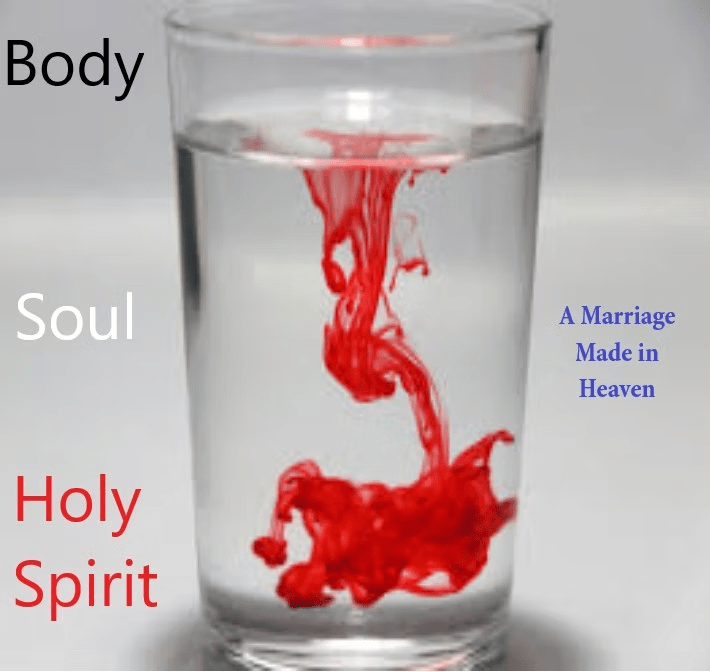
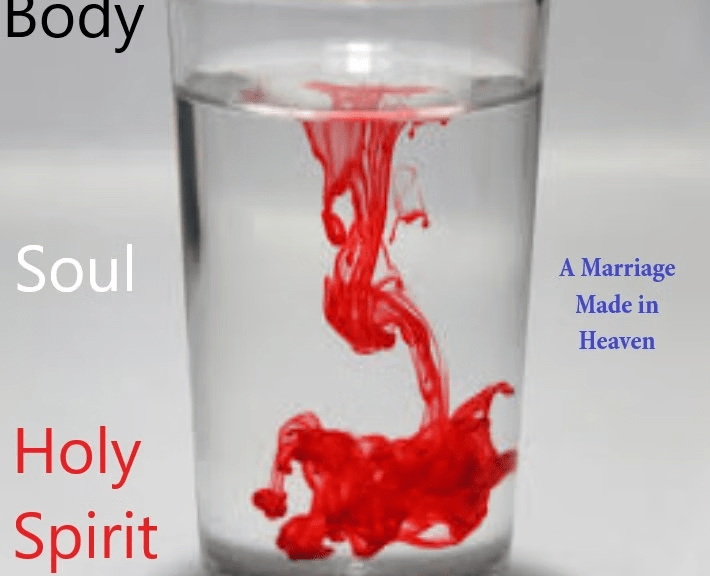
Again, where the translation says “O Lord,” “Yahweh” is written. The name “Yahweh” is written ten times in the Psalm 31, with two of those times found in these parsed verses read aloud. In verse 14, where the second usage of Yahweh is found, David is shown to state, “You are my God.” In reality, what David wrote (thus intended to be understood) is “’ĕ·lō·hay ’āt·tāh,” which literally translates to say, “gods of you.” The word “elohim” (which is plural for “gods,” not “God”) has to be read as a claim that David’s soul (an eternal spirit, like a “god”) was married to Yahweh, thus becoming one of His “elohay.”
To translate it as if David was making some statement of possession, as “You are my God,” this is the opposite meaning intended. Its intent becomes why David prays to Yahweh for help. Rather than be seen as possessing God, so God acts to save the flesh of David (at his beck and call), David knows his flesh is meaningless; it is his soul that begs Yahweh for salvation. Therefore, David would put up with any punishments his enemies could bring upon his body, because his soul was entrusted to Yahweh.
By realizing that error of translation, which is even present in the King James Version (KJV), thereby a longstanding problem for English-speaking Christians, it becomes worthwhile to review all that is translated in this selection. Verse 9 is another that has embellishments that miss the point of what God spoke through the words of David.
The Hebrew written by David in verse 9 states: “ḥān·nê·nî Yah·weh , kî ṣar-lî ‘ā·šə·šāh ḇə·ḵa·‘as ‘ê·nî , nap̄·šî ū·ḇiṭ·nî .” That is divided into three segments that are rooted in “chanan Yahweh , ki sarar ashesh ka’ac ayin , nephesh beten .” Literally those segments state: “show favor on me Yahweh , for bound am I to waste away with anger in my eye , my soul my body .”
This becomes a prayer to God for the strength of Yahweh to withstand the constant barrage of anger and wrath that is always before one to see. It admits one’s own mortality, as a confession that a body of flesh will always be in need. The prayer is then for the soul of David to be strengthened, so then can be the body able to withstand punishments, undue or naturally caused. When David is seen as a wife to Yahweh [a “soul,” a “nephesh”], who has trust in Yahweh – and will forever – this statement to “show favor” becomes a known blessing given to all His wives. In that, David becomes a reflection of Jesus, as well as a reflection of all who are born again as a wife of God.
Verse 10 is then translated so the points of focus are the same. It continues this prayer for divine strength, more closely related to the needs for a “body” of flesh [not a womb or belly]. Rather than David’s “life” being “spent with grief or sorrow,” the word “life” is found in the second segment of words. By removing it from the first segment, the statement recognizes the world is a place where grief and sorrow can find need for Yahweh as its husband.
The focus placed on “my life” [the life of David] is then all “the years” of marriage between his soul and God. The concept of “life” can only come from that union, where marriage to Yahweh allows one to escape the death a soul faces from a body limited by mortality. This means the “sighing” present is that sorrow and grief a soul-body is always confronted with in the state of death that is mortality. All “failures” found in human beings are the “iniquities” that come from being unmarried to Yahweh. Thus, human strength, that found in bones and muscles, always wastes away over the years, with age, when the soul is not strengthened by marriage to Yahweh.
In verse 11, David points out how being married to Yahweh makes one an outcast in a world where so many souls stand alone in their bodies of flesh, unable to find the strength of Yahweh to assist them. The use of “enemies” means those who bind one in the world (from the meaning of “tsarar”), which relates to verse 9 saying, “for bound am I.” This makes “enemies” those who entwine a soul-flesh with expectations of worldliness, not righteousness.
By following that with the word “neighbors” [“shaken”], David said he lived among those who were not married to Yahweh. That was not only Gentiles who submitted to the will of Israel, but also included Israelites who followed rules set by Moses, without marriage to Yahweh. The translation of “acquaintances” [“lim·yud·dā·‘āy,” rooted in “yada”] means others will be known not to be true wives of Yahweh (by their deeds), causing them to run away (an act of a cowardly enemy). They flee a responsibility of commitment to Yahweh, so their actions are not those of a friend and neighbor, not as another of Yahweh’s wives.
In verse 12, David should be heard as Yahweh speaking through his body, as the first person singular “I” having been “forgotten.” For the Israelites to have forgotten the God of their forefathers, that was a present time recall of David. It was his fathers [the elders of Israel] who went to Samuel and demanded a king, to be like other nations. They had forgotten that Yahweh was their King, their Lord.
This forgetfulness then means their “minds” [“mil·lêḇ,” meaning their “inner man, mind, will, heart”] had lost divine insight and guidance, having become solely dependent on the size of their brains. David certainly was not useless and neither was Yahweh; but to those Israelites who were working against being wives of Yahweh, Yahweh was a useless to them as a broken clay pot. Likewise, Yahweh was discarded by many, just as a broken clay pot was tossed into a heap of waste.
In verse 13, David again is speaking the words of Yahweh as the first person singular “I.” The “whispering heard [from “dibbah,” which means “whispering, defamation, evil report”], God hears all minds and all talk, being omniscient. David could then become knowing of those secret plans as a king with aides who reported the scuttlebutt to him.
When “fear” is about, that becomes a signal that many have not accepted the proposal of Yahweh to be married with their souls. Without His presence, the world becomes a place that readily generates fears. Here, again, the element of “life” means a soul granted eternal life, due to a divine merger with His Holy Spirit. Therefore, the plots and schemes are to weaken the aspect of religious education, fearing its call for commitment. That plot would be so others would soon forget all about the delivery of land and protection coming with the promise [marriage vows] of complete servitude, as a holy wife.
With this train of thought realized, it is then that verse 14 proclaims David to be such a wife, one that is thoroughly devoted to serving Yahweh. The “trust” [“batach”] put in Yahweh goes well beyond belief, as “trust” comes from personal experience. It is meant as a statement of true faith. That trust comes from marriage and the experience of the Holy Spirit leading one’s body of flesh, so it only serves God. Therefore, David says he (like all like him) is one of Yahweh’s “elohim,” or souls granted eternal life from servitude in a body of flesh.
Verse 15 then follows this statement of commitment to Yahweh by David singing, “My times are in your hand.” Here, the Hebrew begins with one word – “bə·yā·ḏə·ḵā” – where the root importance is laser focused on “in your hand” [rooted in “yad,” or “hand”]. David sings out that everything about his being – soul-flesh – is in the hands of Yahweh. It is then that power of God that gives David the ability to withstand the “times” when his enemies come down on him. It is that “hand” of God that delivers David’s soul and body the strength to overcome any and all persecutions his enemies can ever bring to him.
Finally, in verse 16, David sings praisingly about having lowered his face in submission to Yahweh, by “Let[ing] your face shine upon your servant.” This is a confirmation of the First Commandment, where one must not wear one’s own face before Yahweh, as that acts as if oneself is a “god,” equal to God. Those who love Yahweh and seek to marry Him will never try to act as equals to Him, by showing one’s face [or any number of other faces of gods] before His. David was married to Yahweh, thereby he wore the face of Yahweh to the world. That means the soul of David had achieved the comfort of knowing salvation was his [“hō·wō·šî·‘ê·nî” as “I am saved” or I have been delivered”].
As a psalm sung aloud on Passion Sunday [the Liturgy of the Word, not the Palm] and easily attributed to Jesus and the enemies that had brought him pain and suffering, the lack of focus on educating the seekers about the deeper meaning become an example of what David’s song sang. If this message from God being in David’s heart goes without explanation, it cannot be applied to all who seek to become wives of Yahweh. As some misguided extension of the forty days of Lent, where somehow Sundays do not count, making Lent extend all the way to “Holy Saturday” [six days from Passion Sunday], the message of marriage to Yahweh is foregone through ignorance.
Jesus was able to withstand the sufferings, read aloud about his suffering, because he was one with Yahweh’s Holy Spirit. David was equally filled with that divine husband, as were all the Apostles. To listen to these selected verses of David and then simply be left go, sent home to let them sink into some subconscious state, simmering under a plethora of other words, all telling of injustice and human enemies of the flesh, means our ‘teachers’ [rabbis, priests, pastors, ministers, etc.] never allow their flocks to be fed the truth. Yahweh expects all seekers to submit their selves to Him and become His servants. Without that alliance of marriage, then one’s soul is only filled with fears brought on by a world of sin.
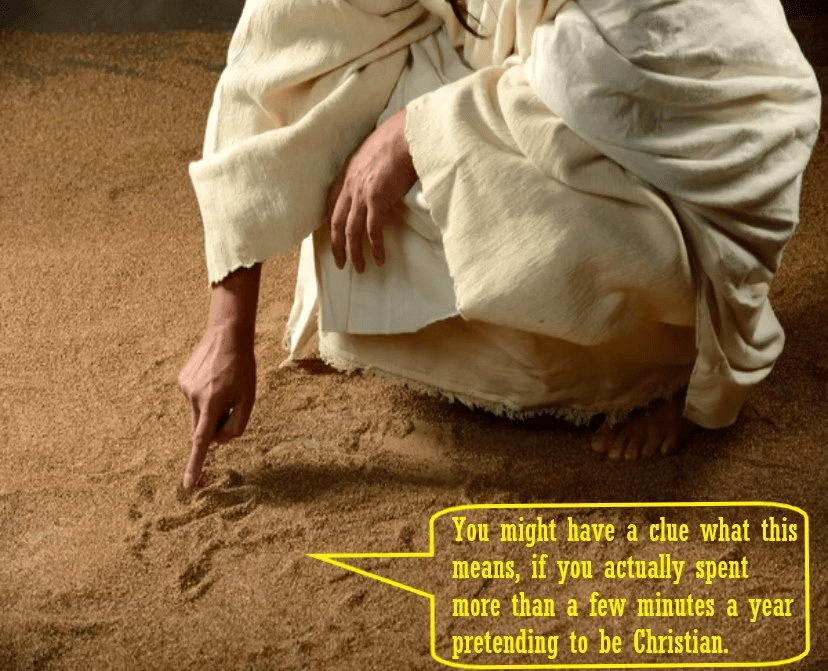
 Explaining the Readings