“From the wilderness of Sin the whole congregation of the Israelites journeyed by stages, as the Lord commanded. They camped at Rephidim, but there was no water for the people to drink. The people quarreled with Moses, and said, “Give us water to drink.” Moses said to them, “Why do you quarrel with me? Why do you test the Lord?” But the people thirsted there for water; and the people complained against Moses and said, “Why did you bring us out of Egypt, to kill us and our children and livestock with thirst?” So Moses cried out to the Lord, “What shall I do with this people? They are almost ready to stone me.” The Lord said to Moses, “Go on ahead of the people, and take some of the elders of Israel with you; take in your hand the staff with which you struck the Nile, and go. I will be standing there in front of you on the rock at Horeb. Strike the rock, and water will come out of it, so that the people may drink.” Moses did so, in the sight of the elders of Israel. He called the place Massah and Meribah, because the Israelites quarreled and tested the Lord, saying, “Is the Lord among us or not?”’
———————————————————————————————————-
This is the Old Testament selection from the Episcopal Lectionary for Year A Proper 21, the seventeenth Sunday after Pentecost. It will next be read aloud in church on Sunday, October 1, 2017. It is the story of Moses striking the rock at Mount Horeb and making water flow to quench the thirst of the Israelites.
In Proper 20’s Old Testament reading from Exodus, the Israelites were complaining about being taken out into the wilderness to die of hunger. God responded with manna and quails. Here, they are complaining about having no water. Whereas their complaint for food did not mention the “children and livestock” that were in their numbers, now it does.
As I explained about Exodus 16:2-15, their pleas of hunger were less spoken from their bellies and more from their minds. They needed spiritual food to consume, so they would have reason to live … live in a largely barren land. The fact that they had children and livestock that were not mentioned before says the adults were the ones needing inner motivation, as the babies and beasts would follow them wherever they went. Water, on the other hand, was a need for everyone, women, children, goats, sheep, and cattle; but, similarly, the need expressed here is not meant to be seen solely in a physical way.
To understand this, one needs to grasp how “water” is one of the four basic elements, metaphysically. The four are water, fire, air, and earth. I have repeatedly stated (so I will state again), “Water represents emotions.” Thus, this whole reading is a statement about the emotional needs of all living creatures in an environment that screams, “Get me out of here!” While being mentally motivated by spiritual food will keep one’s determination strong, will power is limited, with those limits eroded away by changing emotional states. Therefore, the Israelites are metaphorically telling Moses, “We need to be confident in our love for God, which means God needs to show us His love so we don’t worry and doubt.”
In the first verse of this reading, beginning chapter 17, the reader is told, “From the wilderness of Sin the whole congregation of the Israelites journeyed by stages, as the Lord commanded.” This is important information that is relative to understanding this theme of “water.” Relative to the “wilderness of Sin,” this is written on a Wikipedia page under that heading:
“The Wilderness of Sin or Desert of Sin (Hebrew: מִדְבַּר סִין, Midbar Sin) is a geographic area mentioned in the Hebrew Bible as lying between Elim and Mount Sinai. Sin does not refer to sinfulness, but is an untranslated word that would translate as the moon; biblical scholars suspect that the name Sin here refers to the semitic moon-deity Sin, who was worshipped widely around the entire periphery of pre-Islamic Arabia, the Levant, and Mesopotamia.”
In astrology, the Moon is seen as a symbol of “water.” The Moon is the ruler of the sign Cancer – a water sign. The Moon symbolizes the inner self and its emotional realm. The Moon is associated with water because of its phases, from New Moon, to Full Moon and back to New Moon. That change reflects how emotions change (have fluidity), as they wax and wane, over and over – the thrill of victory and the agony of defeat.
By knowing this (whether or not you believe it), one can read how “From the wilderness of Sin the whole congregation of the Israelites journeyed by stages, as the Lord commanded” is referring to emotional tests. The “stages” of travel means they moved and stopped, picked up and set up camp multiple times, by the directions of God. Those “stages” can be read as changing states of emotion because they are “of the Moon” (“of Sin”).
When one reads, “They camped at Rephidim, but there was no water for the people to drink,” the Hebrew root verb for Rephidim (rapad) means “to spread.” In a desert setting (like the changing Moon), places that once had vegetation and water can be overcome by “desertification,” which is defined as: “The transformation of arable or habitable land to desert, as by a change in climate or destructive land use.”* Thus, the name for that campsite was given because Moses thought there would be water there, but that place had changed (“spread”) to desert.
When the Israelites “quarreled with Moses,” he asked them, “Why do you test the Lord?” Moses had knowledge of the area, which came from God, so they had arrived to a place that was no longer an oasis for some unknown reason. Moses, taking offense at the quarreling, gave an emotional response to an emotional confrontation, brought on by fears that everyone (children and animals included) would die of thirst. Therefore, it was with strong emotions that Moses “cried out to the Lord, “What shall I do with this people? They are almost ready to stone me.”’
In the emotional outburst made by the Israelites about food (Exodus 16), we are told “The whole congregation of the Israelites complained against Moses and Aaron in the wilderness.” However, there was no report about crying by Moses, as we then simply are told how the LORD told Moses how that problem would be solved.
Since the transition from chapter 16 to chapter 17 is not clearly timed, the statement of “From the desert of the Moon (Sin)” can be an indication that one complete lunar cycle had passed. If that was the 29 days from full Moon to full Moon, then the Israelite people complained the easiest when that “stage” occurred. The symbolism would then be they complained when everyone’s emotions ran high and it was easy to become angered.
Knowing God told Moses to establish the Hebrew calendar, beginning with 1 Nissan, with the Passover on 15 Nissan, and knowing that calendar is lunar based, the Passover occurred when it was full Moon. In Exodus 16, we read that the setting was “on the fifteenth day of the second month,” so the issue over food was also taking place on a full Moon. One can now assume they reached this place where no water was found, again, when the Moon was full.
Additionally, there are some who say the name Israel is a combination of the Egyptian gods Isis (the Moon), Ra (the Sun), and the Hebrew word El (Saturn). Astrologically, the Sun and the Moon, together, project humanity’s duality of an inner soul (Moon) with a bodily projection (Sun); and Saturn (El) represents God and the Law, while el is the Hebrew word for “god.” So, it is important to realize the role the Moon played in Israelite history, as being chosen by God was not because their bodies looked good. They were chosen because of their inner being (descendants of holy men).
Because we read how Moses became upset and expressing fear that the emotions of the people may be so high they would stone their leader, the one who was God’s emissary, we can see that Moses also was affected emotionally. As it is always best to count to ten during times when emotions are overtaking reasonable thought, God responded to Moses, giving him instructions that would solve the problem.
The solution then becomes an uplifting emotional experience for all of the Israelites to witness. The same staff that Moses used at the Nile, when “in the presence of Pharaoh and his officials [he] struck the water of the Nile, and all the water was changed into blood” (Exodus 7:20b), would symbolize God working through Moses, creating miracles. To have wafers of spiritual food (manna) was good to set the head straight; but to have water flow freely in a desert was an uplifting reinforcement that straightened out their hearts.
In my analysis of Exodus 16:1-15, I offered that the manna and quail represented spiritual food, which equate to the body of Christ. One cannot come to Jesus, from a true faith mindset, without devoted study of the holy documents that prophesied his coming, as he came. That requires a deep level of understanding that is aided by the Mind of Christ.
Here, in Exodus 17, the water rushing from the rock, which quenched the thirsts of the Israelites, is then symbolizing the blood of Christ. Because God told Moses to use the staff that turned the Nile waters into blood, rather than the same staff that parted the sea, that specific staff reference is then saying that Moses released the blood of Christ from the rock. That release was to revitalize the Israelites and their children and animals.
The rock (in Greek petra, or in English Peter), symbolizes the cornerstone upon which the blood flows. Therefore, the blood of Christ is the emotional swelling of faith, like that which one feels when fermented wine enters the bloodstream and, from the heart, the body feels high. The Israelites had their faith uplifted by the miracle of Moses and his staff at Horeb, while their emotional distress over lack of water was quelled by flowing water.
This reading can then be seen as a parallel to Jesus speaking with the Samaritan woman at the well, who Jesus told he could provide her with “living water.” In John 4:10 we read, “If you knew the gift of God, and who it is who says to you, ‘Give Me a drink,’ you would have asked Him, and He would have given you living water.” The Israelites were asking Moses, “Give us a drink.” The same lesson can be seen here, as when Jesus said, “Everyone who drinks of this [well] water will thirst again; but whoever drinks of the water that I will give him shall never thirst; but the water that I will give him will become in him a well of water springing up to eternal life.” (John 4:13-14) God was providing, through Moses, this “living water.”
This reading ends with the statement: “He called the place Massah and Meribah, because the Israelites quarreled and tested the Lord, saying, “Is the Lord among us or not?” The name Massah is said to mean “Testing,” as a “test by trial.” The name Meribah means, “Quarrel” or “Place of Strife.” When verse one says, “the whole congregation of the Israelites journeyed by stages, as the Lord commanded,” this means reaching the point of need for spiritual knowledge is one stage of development in one’s faith, while reaching the point of need for becoming emotionally uplifted is another stage in that development.
Faith is a journey in stages, with God’s test of one’s faith requiring emotional outbursts. Without one quarreling, there is no emotional connection at all. This is supported in the New Testament, when God spoke through the Spirit of Christ, saying, “I know your deeds, that you are neither cold nor hot. I wish you were either one or the other! So, because you are lukewarm–neither hot nor cold–I am about to spit you out of my mouth.” (Revelations 3:15-16)
This is why God posed the question at that place, “Is the Lord among us or not?” The question asks, “Is God in your heart? Are you committed to love the LORD? … Or, not?” Caring for God, enough to quarrel over His tests, is a sign of love and commitment, as in a marriage. It is a testing stage all marriages come to, necessarily. “Are we in this thing together or not?”
A marriage built on love and devotion is rock solid, from which flows unconditional love. A marriage built on selfish desires will fail the difficult tests. The aspect of this reading placing focus on the “children and livestock” reflects the symbolism of a marriage extending beyond the realm of two, with those “offspring” not having the mental capacities to understand the reasoning of faith. Every living creature, however, has the capacity for deep-felt emotions.
The metaphor also says human beings are the children of God, with the devoted faithful being his servants, like beasts of burden. Therefore, God will lead us, as David wrote in Psalm 23:
The Lord is my shepherd, I shall not want. He makes me lie down in green pastures; He leads me beside quiet waters. He restores my soul; He guides me in the paths of righteousness For His name’s sake.
If then there is any encouragement in Christ, any consolation from love, any sharing in the Spirit, any compassion and sympathy, make my joy complete: be of the same mind, having the same love, being in full accord and of one mind. Do nothing from selfish ambition or conceit, but in humility regard others as better than yourselves. Let each of you look not to your own interests, but to the interests of others. Let the same mind be in you that was in Christ Jesus, who, though he was in the form of God, did not regard equality with God as something to be exploited, but emptied himself, taking the form of a slave, being born in human likeness. And being found in human form, he humbled himself and became obedient to the point of death– even death on a cross. Therefore God also highly exalted him and gave him the name that is above every name, so that at the name of Jesus every knee should bend, in heaven and on earth and under the earth, and every tongue should confess that Jesus Christ is Lord, to the glory of God the Father.
Therefore, my beloved, just as you have always obeyed me, not only in my presence, but much more now in my absence, work out your own salvation with fear and trembling; for it is God who is at work in you, enabling you both to will and to work for his good pleasure.
——————————————————————————————————–
This is the Epistle reading from the Episcopal Lectionary for Year A, Proper 21, the seventeenth Sunday after Pentecost. It will next be read aloud in church on Sunday, October 1, 2017. It is important because Paul tells how true Christians are resurrections of Jesus Christ.
If one goes to the BibleGateway.com website and looks up this selection, you are offered some of those summary headings I have talked about before. For the New International Version, the two segments in the presentation above each have a heading. The first part says, “Imitating Christ’s Humility,” with the second part entitled, “Do Everything Without Grumbling.” For the New American Standard Bible, the whole reading is under the heading, “Be Like Christ.”
That NASB heading sounds an awful like the old (I’m dating myself now) “Be like Mike” commercials for Gatorade. Mike was Michael Jordan. Of course, nobody drank Gatorade and became Michael Jordan. Certainly, lots of players of all ages and all skills drank Gatorade, like Michael Jordan did (at least for the commercials), and many of those played basketball in all types of basketball courts, indoors and outdoors; but none other than Michael Jordan was ever Mike (the person dunking basketballs in the Gatorade commercials).
Do the people at the New American Standard Bible think God wants a lot of pretend Jesuses being as bad at ministry as those who thought drinking Gatorade would make them soar down the lane with a basketball held high before a slam dunk?
If they really do, they should slip a few bucks to the Gatorade advertisers and ask permission to begin a “Be like Christ” campaign. They could sell Nike Jesus sandals and Under Armour Jesus robes, and for the kids some costume Jesus wig-beard head gear. Somebody would get rich; but they would get the exact same result as Gatorade got … still only one Christ, and he (like all superstars promoted on TV) cannot be duplicated … only imitated (as implied by the NIV heading).
When someone reads (or hears read) this excerpt of Paul’s letter to the Philippians and then preaches that it means, “Dear brothers and sisters, it is imperative to live your lives like Jesus did,” one ends up with a world exactly like we have surrounding us today. It is a world that is lost and has little hope of finding itself. After all, who knows how to live like Jesus?
I’m sure there are many who think, “Today’s times are so different than those back then. I bet Jesus would be different if alive today.”
Reading that into the message from Paul – who was an Apostle, a Saint, a Christian – is to be a chirstian like the vast majority of Westerners who have called themselves that since Constantine reorganized a Spiritual movement into a business plan for an Empire. Today’s Christians are more creations of the Church of Rome than Apostles, as that Church routinely read Latin verses to people who could barely read, much less understand Latin, while telling their captive audiences, “Just do as we say, not as we do” (mostly).
It begat the mindset that has one pondering, “What would Jesus do?” when confronted with life’s decisions.
Certainly, those who ponder like that – and make the right decisions and live a good life of sacrifice – are headed in the right direction; but that direction, invariably, leads to a plateau, with high mountains that must be climbed still well in the distance. It represents a return to the same state of life that was for Jews in Judea and Galilee, who were plateaued believers in God when Jesus and followers were walking the land. The Jews then were people who were trying to ponder, “What did Moses tell us to do?” but people who were unable to make all the sacrifices and good life choices (consistently) the Law said to do.
And were miserable then, just as many are today.
“Forgive me God. I go to church but nobody ever tells me how to stop sinning.”
There is a statement of faith openly recited in Episcopal churches each week (and other brands of churches), which is labeled “the Nicene Creed.” There is a variation of that, known as “the Apostle’s Creed,” where an “Apostle” should be defined as “a Saint,” with a “Creed” being defined as, “A formal statement of religious belief; a confession of faith.”
It is a statement that is supposed to be read aloud only by Saints, as the trueChurch is an exclusive body (although it welcomes seekers of truth). Both Creeds are confessions of faith that all true Christians fully understand. This is especially understood when Saints say, “He [Jesus Christ, God’s only Son, our Lord] will come again to judge the living and the dead.” The Nicene Creed varies that to state, “He will come again in glory to judge the living and the dead, and his kingdom will have no end.”
What a true Apostle realizes – knows – when he or she makes that public confession of faith is what Paul wrote in this selection of his letter to the Christians of Philippi. While the ordinary – do as I say and not as I do – Christian is asked, “What does that mean … will return again?” they smile and say, “Shhhhhh! We don’t talk about Judgement Day or the End Times in church.”
That implies, “That is what those evangelicals do.” It fosters an “Us vs. Them” mentality. It represents divided brains and not One Mind in Christ.
Such views totally miss the point of how Jesus Ascended on the 49th day and “came again” the next day (the 50th day – Pentecost). The spread of true Christianity meant an exponential return of Christ, with 3,000 filled with the Holy Spirit because the Mind of Christ opened that many eyes, ears, and hearts that day. That spread was why Paul had to write letters to those in his wake, telling them to, “Keep up the good works.”
But, that rapid spread of true Christianity was slowed by those who dreamed of empires.
The Day of Pentecost was when eleven disciples (and close family of Jesus who were in the upstairs room) were filled with the Holy Spirit and became multiple New reproductions of Jesus of Nazareth, in possession of the same Christ Mind. At that time, those Apostles were judged by Jesus Christ as being worthy of climbing those distant mountains – the boundaries of mortal death – thus gaining eternal life. The disciples-turned-to-Apostles began living at that point.
Their bodies became the “kingdom” of God, with the Christ Mind being the right hand of the LORD within them. They bowed down to Christ Jesus, so each human body’s soul would forevermore serve God.
When Paul wrote, “Be of the same mind, having the same love, being in full accord and of one mind,” he was saying, “You cannot keep your big brain and try to figure out what God and Christ want you to do, when the love in your heart is for self and the brain in your head keeps trying to ask, “What would Jesus do?”
You cannot be like Christ, when you like being you more.
And darn it, we like being us.
When Paul then wrote, “Let the same mind be in you that was in Christ Jesus,” we have to remember that Jesus’s name was not “Christ.” The statements of faith that say, “[Jesus] was conceived by the power of the Holy Spirit and born of the Virgin Mary. He suffered under Pontius Pilate, was crucified, died, and was buried,” all acknowledge that Jesus was a human body, just like all of us are. What made Jesus the promised Messiah was the presence of a Messianic Mind, coming from God, via the Holy Spirit.
The same process came upon the followers of Jesus on Pentecost, when they too became with “the same mind that was in Christ Jesus.” With tongues like fire they became Christ Peter, Christ James of Zebedee, Christ John of Zebedee, etc., etc. They suddenly became filled with the same mind.
This is why Paul wrote, “Therefore God also highly exalted him and gave him the name that is above every name,” which is “Christ,” or the name-title as the “Messiah.” That title is greater than any title ever held by any human rulers; but it is a title that human beings, like Jesus, can gain.
This means that when Paul wrote, “So that at the name of Jesus every knee should bend,” all true Christians are to bend a knee to Jesus, by sacrificing their own name, being knighted as Christ Jesus reborn. You must sacrifice your brain to the service of the Christ Mind. Your brain is not capable of figuring out what Jesus would do.
“Every tongue should confess that Jesus Christ is Lord, to the glory of God the Father,” is stated in the Apostle’s Creed where it says, “We believe in the Holy Spirit, the Lord, the giver of life, who proceeds from the Father and the Son. With the Father and the Son he is worshiped and glorified.” Still, “every tongue” in every Apostle stops saying, “I think this is what Jesus would have us do,” as those tongues wag to an ego-driven brain.
An Apostle’s tongue speaks as Jesus spoke, and as Peter spoke with the other ten, when they all spoke to the crowds of pilgrims in Jerusalem. They spoke what God told them to say, which is why Jesus repeatedly said, “For I did not speak on my own, but the Father who sent me commanded me to say all that I have spoken.” (John 12:49)
Jesus of Nazareth, born in Bethlehem to a Virgin Mother, as a mortal human being, was never quoted in the Gospels, because his tongue confessed that his being the Christ was due to the LORD, with all glory going to God the Father. The answer to the question, “What would Jesus say?” is “Jesus would say, ‘You know, LORD.”‘ That is what those with the Christ Mind always say.
This devotion is why Paul encouraged the Christians of Philippi to “work out your own salvation.” You will not save your soul by eavesdropping and overhearing someone say, “You know, I’ve been thinking about what Jesus would want us to do, and that is ….” You cannot be like Christ by repeating what the Apostles Matthew, Mark, Luke and John said Jesus said. You have to do as Jesus did. You have to work for God in order to be saved by the Christ Mind.
This means “to will and to work for his good pleasure” is a statement that only God’s will can guide one’s actions. One does the work of Christ, for his good pleasure, which means one is reborn as Jesus, led only by God, through the Christ Mind. This is why the Acts of Jesus are called Gospels, and the Acts of the Apostles is the first book that follows those four. All of the letters written are also Acts of Apostles, as it is the work of Christ that does “nothing from selfish ambition or conceit, but in humility regard others as better than yourselves. Let each of you look not to your own interests, but to the interests of others.”
Scene from the 1980 movie The Resurrection.
There are no words that can tell one how to be filled with the Holy Spirit and gain the Mind of Christ. If words could make that happen, then just do this: “If you want to be perfect, go, sell what you have and give to the poor, and you will have treasure in heaven; and come, follow Me.” (Matthew 19:21) Too many read those words and start looking down at the footsteps of Jesus, trying hard to place their foot in the same prints. You do not follow Jesus by walking behind his legacy. You follow Jesus by being another Jesus Christ; and that requires happily working for others.
When Jesus entered the temple, the chief priests and the elders of the people came to him as he was teaching, and said, “By what authority are you doing these things, and who gave you this authority?” Jesus said to them, “I will also ask you one question; if you tell me the answer, then I will also tell you by what authority I do these things. Did the baptism of John come from heaven, or was it of human origin?” And they argued with one another, “If we say, ‘From heaven,’ he will say to us, ‘Why then did you not believe him?’ But if we say, ‘Of human origin,’ we are afraid of the crowd; for all regard John as a prophet.” So they answered Jesus, “We do not know.” And he said to them, “Neither will I tell you by what authority I am doing these things.
“What do you think? A man had two sons; he went to the first and said, ‘Son, go and work in the vineyard today.’ He answered, ‘I will not’; but later he changed his mind and went. The father went to the second and said the same; and he answered, ‘I go, sir’; but he did not go. Which of the two did the will of his father?” They said, “The first.” Jesus said to them, “Truly I tell you, the tax collectors and the prostitutes are going into the kingdom of God ahead of you. For John came to you in the way of righteousness and you did not believe him, but the tax collectors and the prostitutes believed him; and even after you saw it, you did not change your minds and believe him.
——————————————————————————————————–
This is the Gospel reading from the Episcopal Lectionary for Year A, Proper 21, the seventeenth Sunday after Pentecost. It will next be read aloud in church by a priest on Sunday, October 1, 2017. This in an important lesson because it addresses who has God’s approval to shepherd His flocks.
This reading reminds me of my experience at a seminary school. I was not a seminarian (my wife was), but I socialized with them at school functions and in the neighborhood housing arrangements. I saw several glaring problems with the whole system of educating priests (too many to get into now), but the statement, “the chief priests and the elders of the people came to [Jesus] as he was teaching, and said, “By what authority are you doing these things?” hit home for me.
I was writing books back then, which explained how to read Nostradamus, so that what he wrote can be understandable. Nostradamus can be seen as John the Baptizer, as “the chief priests and elders of the people” have not believed as I believe – that Nostradamus was a prophet of Jesus Christ. Because I fully believe that, I cannot hold my tongue about that belief.
When asked, “What do you do?” I told seminary students about Nostradamus. I told some teachers about Nostradamus. I even told some invited guest speakers coming to that school (whom I picked up or took back to the major airport nearby) about Nostradamus.
It was like I asked them all, “Do you believe The Apocalypse of John of Patmos is similar to The Prophecies of Nostradamus?” It was like I posed the question, “Whose authority did those books come from: Prophet of Christ or Charlatan?”
Some wanted to shun me forever; but some were patronizing. It was as if their minds were calculating, “If we say, ‘Prophet of Christ,’ he will say to us, ‘Why then did you not believe him?’ But if we say, ‘Charlatan,’ we are afraid we might be talking to an unstable, dangerous person.” They all seemed well-versed in the “smile and nod” reaction to uncertain situations.
My amazing ability to understand Nostradamus was a gift given to me by God. There can be no other explanation for that talent. I was the last person on earth who I figured would be able to understand Nostradamus; but I was led by a higher power, and not simply to understand his cryptic writings. I found that I was able to apply the same systems applicable to making sense of Nostradamus to everything in the Holy Bible. That syntax is God’s, as His Holy Language … Speaking in Tongues not taught in schools. So, it applies to everything He had His people write for Him.
There really are no authorities that grant doctorates or even bachelor’s degrees about the meaning of Nostradamus; so if I am seen teaching about his writings, authority figures have no reason to confront me. They just snicker and poke each other. However, since I have been allowed to put Nostradamus on the back burner (so to speak), due to carpal tunnel in both wrists from writing so much, I have been encouraged to write Biblical interpretations. That will attract some frowns and questions by the religious elite.
What school did you attend to learn that? What scholastic volumes of books have you read and footnoted, while preparing properly detailed papers and dissertations that have been argued before expert authorities? How many reputable scholars can you quote in support of your views?
I will answer your questions, if you let me ask you one first. If you can answer that, then I will answer your question.
What seminary did Jesus and his Apostles attend? The same one begun by Moses in the wilderness, or a different one?
When Jesus said, “Neither will I tell you by what authority I am doing these things,” we all know he was authorized by God the Father. We know because he said that a few times, as noted in the Gospels.
“Very truly I tell you, the Son can do nothing by himself; he can do only what he sees his Father doing, because whatever the Father does the Son also does.” (John 5:19) “ Then Jesus said to them, “When you lift up the Son of Man, then you will know that I am He, and that I do nothing of Myself; but as My Father taught Me, I speak these things.” (John 8:28) “For I did not speak on my own, but the Father who sent me commanded me to say all that I have spoken.” (John 12:49)
The original plan was to have ALL the Israelites be ordained priests for YWHW. When Moses first took them on a 40-year hike, you have to look at the Israelites as babies and infants, because they were incapable of doing anything on their own. Forty years of rote memorization of the laws was priestly training that was more like children’s church on Sunday mornings. They just learned the stories, but the deep meaning escaped them.
When the Israelites were supposed to be priests for YHWH in the Promised Land, they were like teenagers under the Judges – always backsliding and getting into trouble, while having to be bailed out time after time. They entered the rebellious age. By the age they asked for a king, “to be like other teens,” they were like young adults who no longer lived by the rules of their parents. But, by the time Israel and Judah fell in ruin, led by politicians whose only god was self, they were like twenty-somethings with arrest records. All their promise was washed away.
By the time the Jews had formed from those Israelite ashes and been released from Babylon, they were like thirty-somethings, who were “street smart.” You could say they had become charismatic, prison ordained street preachers. That was who Jesus ran afoul of in Jerusalem. It was them acting with the know-it-all of young adults – their audacity – that made them the priest police.
In the parable-like question that Jesus posed to those learned men of the Law. both sons sinned against the father. One refused to go at first, but then thought about it and went (to stay out of trouble). The other said he would go, but flat out lied – a sin against his father. However, the one who refused, but then changed his mind, he was easier to forgive.
This lesson is no different than the one Jesus taught when observing the Pharisee and the Publican in the Temple. When Jesus said here, “Truly I tell you, the tax collectors and the prostitutes are going into the kingdom of God ahead of you,” this is not saying the son who lied by saying “No,” but then did “Yes,” is the exact same as a prostitute or tax collector (Publican). Saying “No,” and then thinking about it, before acting, put him in the same boat. Both were sinners, so unless change comes, both are forbidden from heaven.
What Jesus was really saying was, “You Law police fellows are too full of yourselves to ever realize you are going in the opposite direction of heaven.”
Thank you God for making me holy and not like the riffraff of the world. This is the pretense of a priest who knows nothing of spiritual matters.
At least the tax collectors and prostitutes are aware of their sins. They just can’t see how to stop sinning, in a world that forces sin upon everyone. That is where a good teacher – such as John the Baptizer and Jesus – can get the losers to stop being a loser and change.
When the Pharisees and high priests see good teachers like that, they want to hurl stones at them. They certainly don’t want to pull up a chair and listen to what good teachers are saying. They might learn something then. However, whose authority determines who the good teachers are, without a sheepskin to prove one has that approval?
Remember when Jesus said, “Watch out for false prophets. They come to you in sheep’s clothing, but inwardly they are ferocious wolves.” (Matthew 7:15) That was the Pharisees wearing clerical robes, and what was then has always been and will continue to be.
This is why I see Christianity turning into a cesspool of teachers. It is not that all the sordid pieces and parts of waste in a cesspool were made for that ultimate purpose. Waste is the degradation of value. What goes in good is split in two: the unseen nourishes, while the residue usually does not pass the smell test. That gets flushed with good water. It is just that when you mix the bad in with the good water, the good water has to be purified before it can be good water again.
A couple of years ago, my wife (a priest now) followed a bishop of another diocese on Facebook. She liked a few of his sermons that he posted on his website. He wrote one about the lesson of the Tax Collector and the Publican (Luke 18:9-14), which was uninspiring to me. It was what I call out of the “puppy mill” of sermons. What priest has stood in the pulpit and looked at the smiling faces of tithers in the pews and not said the message of the Pharisee and the Publican was, “The sinners of the world have hope, because they are closer to heaven than those who think they have it made”? (The same sermon that can be preached about the two sons who disobeyed the father.)
That bishop published a sermon that had nothing new in it. What is the lesson of “being closer to heaven than some other guy,” if the sinners never hear a good teacher tell them how to “get to heaven.” Jesus was giving a sermon that said YOU bishop (and every priest who cannot see him or herself in this story) are the Pharisee in that story. Forget about the obvious sinners, because it is YOUwho Jesus said is farther away from salvation.
Telling those who feel guilt about their sins, “Have hope! Keep coming here and I will keep telling you to have hope!” they will always come back for more of the same sermons. But, who wants to stay in a pew when the priest says, “Jesus was pointing out how far away from heaven I am. But hey, who gets to heaven anyway?”
That’s entertainment, not a good shepherd.
A good sermon would be a true Apostle (like were Peter and Paul), who stands in front of a group of attentive sinners, all of whom want to hear how to stop sinning, and admit they too were sinners … sinners who changed.
In a good sermon the priest says, “I was the Pharisee in this story. I was farther away from heaven than you people are now; but I saw myself and felt ashamed. I had lied to the Father when I went into the priesthood. It was all about me being holier than thou. I was young and stupid and thought learning about religion would make me holy. Therefore, I raised my arms to the sky and thanked God for giving me a sweet job that has so many fringe benefits.
Then I realized all my work had been only for me, even when I made it seem like I was helping others. I was only imagining I was working in the vineyard, when I was simply tasting the wine. I want to apologize for having not made every one of you self-sufficient priests for Yahweh.
I now speak to the LORD every day and He wants me to teach you the real meaning of the Scriptures, so you can understand by the Holy Spirit and go tell others the truth. Truth comes not from having learned what someone else knows, but from a love of God that thirsts within one for His knowledge.
Please, I invite each and every one of you to join me in Bible Studies and fellowship, so our love of God branches out and produces fruit. Amen”
I made a post on that bishop’s blog, which suggested this alternative view … politely, in different words than here above. While he politely responded to my post, it was another example of people not really hearing what is being said or not being truthful about what they heard. He wrote back something like, “But who would be left in the pews, if I told them that?”
Wasn’t that the point when Moses freed the Israelites from Egypt? At some point the baby has to grow up, the student has to graduate from school and get a job. God didn’t free cradle to grave sons that say, “Yes sir! I’ll be working in that vineyard bright and early!” who then never do.
“How long, O simple ones, will you love being simple?
How long will scoffers delight in their scoffing
and fools hate knowledge?
Give heed to my reproof;
I will pour out my thoughts to you;
I will make my words known to you.
Because I have called and you refused,
have stretched out my hand and no one heeded,
and because you have ignored all my counsel
and would have none of my reproof,
I also will laugh at your calamity;
I will mock when panic strikes you,
when panic strikes you like a storm,
and your calamity comes like a whirlwind,
when distress and anguish come upon you.
Then they will call upon me, but I will not answer;
they will seek me diligently, but will not find me.
Because they hated knowledge
and did not choose the fear of the Lord,
would have none of my counsel,
and despised all my reproof,
therefore they shall eat the fruit of their way
and be sated with their own devices.
For waywardness kills the simple,
and the complacency of fools destroys them;
but those who listen to me will be secure
and will live at ease, without dread of disaster.”
———————————————————————————————————-
This is an optional Old Testament selection from the Episcopal Lectionary for the Seventeenth Sunday after Pentecost, Year B 2018. In the numbering system that lists each Sunday in an ordinal fashion, this Sunday is referred to as Proper 19. If chosen, it will next be read aloud in an Episcopal church by a reader on Sunday September 16, 2018. It is important because Solomon was led to write about the foolishness of human being, ignoring the call to serve God; then they call out when times of trouble have hit, having squandered their souls from that ignorance.
Here, again, is Solomon writing a song of praise to the LORD, referencing “Wisdom” as feminine. He wrote, “Wisdom cries out in the street; in the squares she raises her voice. At the busiest corner she cries out; at the entrance of the city gates she speaks.” This reference to Wisdom as a female means Wisdom is a goddess. She is one of the elohim, under Yahweh – Yahweh elohim – the Lord of the gods of Israel. Wisdom is then the manifestation of the voice of God through one of His messengers.
Wisdom is ruled by elohim. This goddess of wisdom was named Athena.
It should be grasped that Solomon, as a child king, had God appear to him in a dream, asking, “What can I do for you?” Solomon asked for the ability to understand adult matters. In response to that request, God blessed Solomon with wisdom that was greater than any other human being had ever possessed, or would ever possess. This means the goddess of Wisdom was always made available to Solomon, such that he had the insight for this song from her; albeit the voice of God disguised as a goddess. This means Solomon could write this song in ways that can be interpreted as God speaking, while also reading the same words as the voice of intelligence calling to the ignorant to listen to those with Big Brains.
The translation of verse 20 misses the aspect presented by the literal, where it is written, “Wisdom outside – calls aloud in the open square – she raises her voice.” The Hebrew word “ba·ḥūṣ” (rooted in “chuts”) is then stating that “Wisdom” is an external influence, where one learns from one’s environment, as opposed to one being filled with “Wisdom” within, promoting God like a prophet. The translation above makes one be unsure of the source of this voice.
Children look for outer guidance and adults offer them wisdom.
When the questions are then raised, “How long, O simple ones, will you love being simple? How long will scoffers delight in their scoffing and fools hate knowledge?” there is a double-edged sword being raised. On the one edge cuts God, but on the other cuts the philosophies of man.
The latter is presented by the leaders of governments as their reasoning that offers to lead the ignorant masses, leaving them ignorant. The few rise above the many who are left in love with their simple minds. Wisdom cannot be special when everyone possesses it.
While the religious (Biblical readers) will see this song as Solomon and immediately think he was writing about God’s warning to the people, prompting them from his wisdom to be led by God’s will, the reality is they then fail to heed this message. The people are more often led, like lambs to the slaughter, by those possessing Big Brains, than inspired to seek God’s Wisdom. The promotion of fear leads one astray.
The words translated as “simple ones” and “simple” (actuality “simplicity”) imply an “open-mindedness” that stems from the Hebrew word “pthiy,” which means “one.” This can be read as “oneself,” where one is “stupid” to think one knows enough to save “oneself.” As such, “Wisdom cries out,” asking “how long” before ‘oneself’ realizes a need for inner guidance that is greater than ‘one’ can give alone?”
The question is then, “Will ‘one’ choose God or ‘elohim’?” The “open-mindedness” implied is “one” can be like a god with Wisdom’s influence, rather than having to allow God to be one’s source of Wisdom.
The Hebrew word that states “fools,” is “kesil.” That word means “stupid fellow, dullard, fool,” implying a “foolish man” and “stupid man.” This again can be taken two ways. One is as someone who does not listen to the reasoning of logic and fails to apply the powers of intellect. Most educated Christians would shudder at the thought of being called a “fool.” The second option is to see stupidity as a positive, where innocence and purity are a desired absence of cunning and strategy.
I have regularly used metaphor to portray “fools” that have been characters in popular movies in this positive light. I have done this because one dying of self-ego means willingly becoming “dumb” – “ Conspicuously unintelligent; stupid.” This is then a willingness to sacrifice intellect for the blindness of faith that is obedient to God’s voice. I have projected this image as “simpleton heroes.”
Forrest Gump, Navin R. Johnson, Chance the gardener, and even Karl Childers are all fictitious examples of “stupid men” that achieved higher goals, while being incapable of plotting their successes alone. Ezekiel, likewise, did not offer God his mental powers of thought when asked, “Can these dried bones live?” He simply replied, “Lord, you know.” That statement said he was too stupid to know the answer. Therefore, “fools” should not be seen categorically as a shortfall.
The translation, “Give heed to my reproof,” is perhaps better read literally as, “Turn at my rebuke , surely,” where the one-word statement that is the Hebrew word “hinneh” (“surely”) says, “behold!” This places emphasis on how one “gives heed” to the call of Wisdom, as it is by beholding that outer influence within, as the inspiration of God’s knowledge in one’s soul. Thus, Wisdom says, “I will pour out my thoughts to you; I will make my words known to you.”
The Hebrew word “rū·ḥî” is translated above as “thoughts,” but it means “my spirit,” or “my breath,” rooted in the word “ruach,” which means “spirit, wind, and breath.” It acts as “thoughts” when the voice is heard inside one’s brain, when the external influence has been welcomed to come into “one.”
This is just as Jesus said to his disciples (those “fools”), when he appeared in the upstairs room after his resurrection, saying, “Receive the Holy Spirit.” (John 20:22) John began that verse by stating, “He breathed on them” that command. Solomon’s wisdom now makes it possible to see that John meant the Mind of Christ had joined with the brains of his disciples, so he was leading their “thoughts” by the Holy Spirit of God.
This is where “I will make my words known to you” becomes prophetic of Jesus Christ, where “my words” (the possessive “debaray”) become more than believing that God was the source of “the words spoken through the prophets,” but those “words known” by being one with God. This was the ability of Jesus to instantly know Scripture and point out the errors in the Pharisees. This knowledge comes from the Holy Spirit into Apostles, as the Christ Mind. Still, the Hebrew word “debaray” can state “my business,” in which case one is not filled with holy knowledge of “words,” but influenced to act selfishly. The “words” heard are not divine inspirations.
Can you handle the “charm of making” like Merlin could? Can you call the dragon with Wisdom?
When the song sings, “Because I have called and you refused, have stretched out my hand and no one heeded, and because you have ignored all my counsel and would have none of my reproof, I also will laugh at your calamity,” it becomes difficult to believe that Yahweh would take delight in such failures. Satan, on the other hand, would be an elohim who would. Instead of God being refused, unheeded and ignored, those who seek God and find His love are then laughed at by their persecutors. Their calamity is then due to their refusal to be swayed to be influenced by evil, which uses Wisdom as it means to success and power.
The verses that state, “I will mock when panic strikes you, when panic strikes you like a storm, and your calamity comes like a whirlwind, when distress and anguish come upon you,” the repeated word “p̄aḥ·də·ḵem” is found. Coming from the Hebrew root word “pachad,” it states the possessive use of “panic, terror, dread, and fear.” It says “your terror” or “your panic.”
Since it is told to the Israelites, “You shall fear the Lord your God and no other,” the “calamity that comes like a whirlwind” is the death of one’s ego, when one chooses to serve God and fear only Him. The Hebrew word “bə·’ê·ḏə·ḵem” can then change from “your calamity” to “your destruction,” where you is destroyed, making you free to marry with God. Then, the “distress and anguish” that “come upon you” is not from within, but without.
Wisdom is thus saying, all who choose to serve God rather than self (the Big Brain) will be mocked for having turned one’s back to the lures of the material realm.
Conversely, when one has not come to fear only God, these words project the influences that will lead one to seek Wisdom and worldly safety through knowledge and intellect. It will be the dullards who will be destroyed, because they cannot call upon their brains for help. They will be abused for their lack of education, being treated like wild animals whose fears lead them into traps. Thus, when the song continues by singing, “Then they will call upon me, but I will not answer; they will seek me diligently, but will not find me,” the “fools” will have no way to link to Wisdom. God will be their only salvation.
Singing, “Because they hated knowledge and did not choose the fear of the Lord, would have none of my counsel, and despised all my reproof, therefore they shall eat the fruit of their way and be sated with their own devices,” it is easier to see this as Solomon speaking for Yahweh, because “did not choose the fear of the Lord” uses “Yahweh.” In this view, sinners are without counsel, rebuked, and promised to suffer the consequences of their waywardness. Seeing the literal Hebrew, however, shows this in a different light.
Two segments make up the first statement: “Because they hated knowledge and did not choose the fear of the Lord.” It literally states, “Because that they hated knowledge , and the fear of Yahweh not did choose.” The second separated segment literally can actually state that one “did not choose,” because of “the fear of Yahweh.” Following a separated segment that says, “Because that they hated knowledge,” the second segment is then seen to be not choosing knowledge, due to “fear of the Lord.” Therefore, this section of verses can be seen as Wisdom singing angrily at her rejection, due to the influence of God winning out.
This means, “would have none of my counsel” means ignoring common advice based on probability. It says “despised all my reproof” means pointing out the errors of reasoning that many argue. When Wisdom is not accepted wholly, as Jesus refused to bow under the pressure of the Pharisees, it is possible to “eat the fruit of that way” of righteousness. Christians can “be sated with their own devices,” when those are the “principles” (from “moetsah “) come from God, rather than man.
The final verses then sing, “For waywardness kills the simple, and the complacency of fools destroys them; but those who listen to me will be secure and will live at ease, without dread of disaster.” The Hebrew word “mə·šū·ḇaṯ” can equally mean “turning away,” as an alternative to “waywardness.” When one then reads, “For turning away kills the simple,” this is both the death of one’s ego, to those who choose to serve God, as well as the continuance of mortal death to those who are “wayward” from God. The root word is “meshubah,” which states “faithlessness.” It predicts the outcome of one’s faith,” be it towards righteousness or wickedness.
The focus on “complacency,” stemming from the Hebrew “shalvah,” is actually the “ease, quietness, and time of tranquility” that “fools” experience when self is “destroyed.” That is a statement of God’s presence within them. However, when one becomes at “ease” with a “foolish” lifestyle, which sells a soul for momentary gains, that is then self-destructive. The result is a soul destroyed because it stupidly followed Wisdom.
The danger of Wisdom is it lures one into a mindset that seeks “those who listen to me,” thinking they “will be secure and will live at ease, without dread of disaster.” This is the trap that so many Christians today have fallen deep into, as they seek a lifestyle of comfort and material power, thinking God has made their lives “secure” and “at ease,” due to the profits of their brainy wiles.
When God speaks, he sounds like did Jesus when he said, “If you want to be perfect, go, sell what you have and give to the poor, and you will have treasure in heaven; and come, follow Me.” (Matthew 19:21) Failure to do this means one should face the “dread of disaster” that comes when one’s physical time on earth comes to an end … and all possessions are lost. The rich and famous listen to Big Brains, so they cannot fathom self-made disaster that helps others, at their expense. This is the trick of Wisdom.
As an optional Old Testament reading for the seventeenth Sunday after Pentecost, when one’s personal ministry for the LORD should be underway – one has been played the fool by the world – the message here is to see the danger of Wisdom. There is a fine thin line, one that cuts deep, which separate the powers of intellect from the All-Knowing Mind of Christ. If Holy Wisdom is sought, then one needs to destroy the biggest impediment to that: the love between the self and its brain.
Holy Wisdom reads the words of this song of wisdom written by Solomon and sees the dangers a Big Brain can cause. The human mind shuts the soul away in a heart that is kept from the voice of God.
The self is falsely empowered by higher education and study of philosophies that use logic and reason to find advantages over others and put those advantages to use for personal gains. Wisdom was an overpowering influence on Solomon, such that he lost his way, turned his back on God, and brought the onset of destruction to the land of his father.
The heart is where one falls in love with Yahweh and sees the flaws of a brain that rejects oneness with the Lord. Subservience can only be complete when one realizes a union with God demands the destruction of self, because a house divided against itself cannot stand. The heart trusts God and follows His lead, finding the power within to withstand any outer troubles. Wisdom is then a slave of God that comes to speak to others as the Mind of Christ, from within the simple and meek.
Wisdom, as an angel of Satan, cannot display perfection. It is the voice of catch phrases and double-speak that sounds good, but under closer inspection dissolves into nothing. Wisdom is the voice used by false prophets and bad shepherds. Her voice is used to mislead the ignorant masses, taking them away from a personal relationship with God, so the heart cannot be opened by Scripture.
In today’s world, where science has replaced religion as the belief system of the West, faith has been placed in the care of Wisdom. Technology can be seen as an elohim that many now bow down before. The simple masses listen to talk of life existing elsewhere in our universe and believe travel through space, to distant worlds, will soon be within the grasp of human intellect. Wisdom has become the god (elohim) of the Twentieth and Twenty-first centuries.
To test that statement, take one minute out of a busy day, while in a public place, and look around you. See how many people are engaged in one-to-one conversations and then how many are engaged with a cell phone in their hand. One shows the heart-mind connection, while the other shows the brain-heart enslavement.
Eventually, one has to have a conversation with another, if only to say, “I want the value meal, please.”
Jesus spoke of the signs at the end of the age (Matthew 24:3-14). He began those words of true Wisdom by warning, “See that no one leads you astray. For many will come in my name, saying, ‘I am the Christ,’ and they will lead many astray.” Can Wisdom be one who comes falsely in the name of Christ, intent on leading believers astray?
The signs of the times are pointing toward Wisdom worship. This signals the beginnings of the Age of Aquarius, where the heart is disconnected, allowing the brain to rule freely. This follows the age of Pisces, when self-sacrifice and faith in an unseen presence ruled for two thousand years. The Age of Pisces was all about the emotions flowing from the heart. Jesus and his Apostles wrote of the end of the age, and we are reaching that point now. The voices of the elohim are getting louder and more persistent than ever; many like what they are saying.
It is time to determine which way the sword of Wisdom cuts. Has it made us complacent fools that have become addicted to the illusions of the world? Or, has it awakened us to the faithlessness that is trying to destroy our souls?
Remembering how John prophesied Jesus coming on a white horse and “out of His mouth goes a sharp two-edged sword, that with it he should strike the nations” (Revelations 19:15a), is that not symbolic of how “I will make my words known to you”? Will that sword of truth come from his mouth as words that defend the servants of the Father and cut to pieces those who have dared to speak falsely in his name?
Cannot Wisdom be both the path to salvation and the road to destruction?
This is an optional Old Testament selection from the Episcopal Lectionary for the Seventeenth Sunday after Pentecost, Year B 2018. In the numbering system that lists each Sunday in an ordinal fashion, this Sunday is referred to as Proper 19. If chosen, it will next be read aloud in an Episcopal church by a reader on Sunday September 16, 2018. It is important because it is the voice of God coming from one of His prophets, projecting the strengths and talents that God gives to His devoted.
In contrast to the Proverbs 1:20-33 reading that is an alternative option to this reading in Isaiah, here it is clear that the giver is God, rather than a feminine power referred to repeatedly by feminine pronouns. Here, Isaiah wrote “adonay Yahweh” (variations thereof) four times in six verses, which says “the lord Lord” (translated as “The Lord God”).
The Hebrew word “adonay” is said to be an emphatic version of “adon,” which means “lord, master, owner, king” and even “husband.” It is used to denote a state of divinity, beyond that of humans. While the Hebrew alphabet has no distinction of upper and lower case, such that translating YHWH implies capitalization as “Yahweh,” the capitalized version, “Adonay” is read as an equivalent name for Yahweh. When combined (as Isaiah wrote) the implication is naming God (Yahweh) as the Supreme deity, which means it clarifies Yahweh elohim (God of gods) as the Lord of lords.
This means that Isaiah is speaking clearly of a masculine deity, one who is the greatest of all gods – God the Father. Solomon’s references to “Wisdom” as a “she” and “her” is placing the concept of human intelligence into the hands of a subordinate “god,” meaning “wisdom” is processed through the human brain from a source that is external to one. This means God is then representative of the elements of human life that teach, which can be formal (i.e.: rabbis and professors) or informal (i.e.: parents and peers). Their teaching approach is motivated from the heart leading the brain. Thus, true prophets have learned this method from God.
The dangers of “Wisdom” (the goddess, like Athena) come when one sees the self more godlike, due to being smarter than most of the rest of the human race. It is when humans worship “self-intellect.” “Wisdom” becomes like a protector god that makes humans into heroes, as told in Greek mythology.
This parallels the dangerous course of “mystery schools” of thought (i.e.: Freemasons and Rosicrucians), where the concept of God is relegated to a “Universal Mind,” from which the well-educated can tap into, profiting from the higher knowledge gained. This is then theStar Wars view of God as being the “Force,” into which good (Jedi knights) and evil (Darth Vader and the Dark Side) can access, making God be a slave to human mentality.
And they called him Lord Vader.
This is not what Isaiah wrote of here. Whereas Solomon (who had been given great wisdom as his own – a known characteristic of him) wrote of “Wisdom” belittling the foolish for not embracing “her call,” Isaiah wrote of what God had given him talents, which comes from Isaiah receiving His call. Isaiah wrote, “The Lord God has given me the tongue of a teacher,” which is the Wisdom of Yahweh coming from the mouth of His prophet. This presence must be seen as chosen by Isaiah, welcomed by God, and acknowledged as God speaking through His servant.
This is where reading “adonay” as emphasizing the marriage of God and Isaiah, where Yahweh is the husband and Isaiah the subservient wife. Unlike when one boasts of intelligence and calls it “Wisdom,” where self is proclaimed as having been blessed by God to have a Big Brain, Isaiah left no room for misinterpretation of his source of wisdom. He stated his “husband Yahweh” told him knowledge he had not known before.
By saying, “that I may know how to sustain the weary with a word,” God gave Isaiah the gift of prophecy to uplift others, not self. The message of a prophet is not believable because people recognize one for having always spoken wisely, but because one who had been seen as simple-minded suddenly speaking profoundly.
Isaiah was groomed to serve the Temple in Jerusalem as a priest, being from the royal house of Judah; but he saw himself as inadequate, saying in a dream, “Woe to me! I am ruined! For I am a man of unclean lips, and I live among a people of unclean lips, and my eyes have seen the King, the Lord Almighty.” (Isaiah 6:5) For all he had been taught, he knew nothing of value. Thus, Isaiah volunteered to serve God as His messenger, becoming a prophet, and speaking so others would be led to God.
When Isaiah then wrote, “Morning by morning he wakens — wakens my ear to listen as those who are taught,” it should be realized that Isaiah was not awoken by the voice of God at seven o’clock in the morning. The Hebrew word repeated is “bab·bō·qer,” from the root “boqer,” meaning “morning, dawn, day, and daybreak.” This is metaphor for enlightenment, when the light of truth spoke to Isaiah, showing him the meaning of things previously unnoticed. “Morning” is then Isaiah opening his eyes to signs, as the voice of God’s whispers gave insight that common wisdom would miss and logic would struggle to defend.
This is followed by Isaiah writing, “The Lord God has opened my ear, and I was not rebellious, I did not turn backward.” Again, the use of “ozen,” meaning “ear,” is not about the physical sense of hearing. Isaiah is speaking as did other prophets, including Jesus, who said (in effect), “You have ears but you cannot hear.” Physical sound waves are captured by mature ears and translated by the brain into meaningful thoughts, based on one’s level of education and understanding of thoughts. The metaphorical “ear” is hearing spiritual insights “revealed,” so knowledge is gained without prior learning.
A lack of “rebelliousness” means without question. To question the Lord is to demand one’s brain be filled with explanations and reasoning. To not rebel is to accept silently, understanding that should any need for further explanation arise, then the responding truth will likewise come through holy “revelation.” To “not turn back” (from “achor” meaning “back, backward, away”) means to go forward with that which has been “taught,” as one possessing “the tongue of a teacher.”
Imagine that … a “teaching tongues” lesson during the Pentecost season.
This, again, is different than common intelligence, where the advent of the scientific method has seemingly called as the voice of Wisdom, leading human beings to believe in the powers of observation and calculable data. When “proof” is invisible, as is an inner voice that demands faith, more than belief, it is easier to see how “Wisdom laughs” at those who rebel against her formulas and statistics. In this regard, Isaiah wrote, “I gave my back to those who struck me, and my cheeks to those who pulled out the beard; I did not hide my face from insult and spitting.”
By understanding the times of Judah, when it faced capture and enslavement by the forces of Babylon, a prophet like Isaiah did not offer any tangible advice that could quell a foreign power. The Jews did not want to know how captivity could be a step towards redemption, when they still could not see how they did anything wrong. The punished Jews blamed God for their loss; which was the selfish voice of wisdom seeking to destroy the fools who would be prophesying repentance.
Isaiah offered his back to the whip, as would Jesus when the Jews turned on him, because a prophet can be seen like a stubborn donkey that will not move on the road of public opinion. He let them pull out the hairs of his beard, when holy men are given points by how long their beards are and how untrimmed the edges are. Isaiah let them show their rejection of his words as so that being bearded became a reflection of how Jews were not being those of God. Isaiah having his beard yanked was because their rabbis did not have ears that could hear. As a prophet of the Lord, Isaiah wore the face of God, as did Moses, so it would be God the Jews cursed and spat upon, not having eyes that could see spiritually.
Isaiah wrote then, “The Lord God helps me; therefore I have not been disgraced.” Whereas Solomon wrote of “Wisdom” mocking and laughing at “fools” that reject bowing down before external knowledge, Isaiah wrote that Lord Yahweh comforts souls that commit to Him from such abuse. The language that attempts to belittle the simple ones into forced slavery, through condemnations and epitaphs, will have no effect on souls married to the true God. The husband Lord of a wife soul will ensure that only grace (not disgrace) will be.
This state of contentment means Isaiah could sing, “Therefore I have set my face like flint, and I know that I shall not be put to shame; he who vindicates me is near.” There will be no trembling of lips, as the face of God is worn with conviction.
It is a face as hard as granite rock that causes sparks to fly off it when struck by metal. It will not be lowered because no shame can be set upon it. As one with one’s soul, within one body, the self (“me”) then can see all questions of proof are vindicated by the Mind of God (the Christ Mind) that is “near.” The word translated as “near” is “qarob,” which also means “related.” That states the marital relationship to God.
When Isaiah then posed the question, “Who will contend with me?” the call is as a teacher to those who will heed the voice of God through a prophet. Whereas “Wisdom” would be making a call to stand off against one, like two gunslingers in the Wild West, Isaiah is asking, “Who will join me to plead for God?” Thus, he said, “Let us stand up together.”
Contrary to that question and statement, Isaiah then asked, “Who are my adversaries? Let them confront me.” This does not take the approach of Solomon and the goddess Wisdom, where the people were asked how long they would be simple and fools, rejecting the call of wealth and power that worldly knowledge offers. Instead, Isaiah spoke for God asking, “Who follows a greater one than Yahweh the Lord?”
In this regard, the translation of “adversaries” is misleading, as two words in Hebrew are stated: “ḇa‘almishpat.” This literally translates as “owners of judgment” or the “masters of justice.”
The new makers of law are those who serve Baal and pass mishpat.
It uses the lower-case “lord” that is the god many called Baal by name. Another viable translation of the Hebrew can transform the question so that it also asks,” Who are the married ones of destruction?” That is less to insult others, and more to offer a better marriage to Yahweh, the true lord of justice and the only owner of judgment.
When one sees that God was posing the questions through His obedient wife, it is easy to grasp how, “Let them confront me” is still not a threat, but an invitation for marriage. The word “yig·gaš” is translated as “let them confront,” when the root word that comes from is “nagash,” which is another form of the word “near.” It asks, “Who will come closer to me?” or “Who will stand with me?” It is then an invitation for a date with God and potentially the beginning of a lasting romance.
Following that proposal, Isaiah wrote, “It is the Lord God who helps me; who will declare me guilty?” For the fourth time in six verses Isaiah claims Yahweh is his husband and master, the one who is married to his soul and who leads him to seek the wayward and offer them a new hope. There are none among those who will accept the invitation of Yahweh and get to know him that will declare Isaiah as guilty of a sin.
Still, this translation of verse 9a is wrong, as no question is posed. The literal actually states: “Surely , the lord God will help me , who he will condemn me indeed ,”. A viable translation of this [a paraphrase] says, “It is assured [to all] , God has helped me , who myself would be condemned as well [if not for the Lord God.].” Isaiah has then furthered the invitation to get to know God, through love in one’s heart, because loving God meaning Salvation.
As an optional Old Testament selection for the seventeenth Sunday after Pentecost, when one’s personal ministry for the LORD should be underway – one should be married to God and gladly facing abuse as His prophet – the message here is to understand the difference between intellectual religion and spiritual faith. It is much easier to take the time and make an effort to learn Scripture than it is to walk up to a “professional” and question his or her knowledge of religion. When one is not married to God, one will hide in the shadows (not shine in the “Mornings”), afraid to ask God’s questions and insulted when one’s personal wisdom is questioned.
While Christians can let the words of Isaiah flow over them as they sit in a church on Sunday and like the sounds of the English translations, few realize Isaiah is talking to them. Christians are those who have figuratively been led away into slavery in Babylon. Isaiah still stands as a prophet of the Lord God who is singing a song about how wonderful it is to be married to God, because He sends me out to sing praises to people like you.
This means it is the Christians now who whip the back of those who stop following the road designed to take believers away from God and stubbornly keep hee-hawing, “You’re going the wrong way.”
It is Christians, not Jews now, who are refusing to grow beards, as the new sign of holy men. Catholic friars would also cut halos onto their scalps; today women can be priests and pastors, not needing a beard to be allowed to preach. Whenever looks are the way to tell righteousness, it is time to worry. With the message trusted by simple souls, it is then Christians who insult anyone standing firm against liberalism (changing the laws to suit modern desires), only to be spat upon.
This is not an overnight transformation. It is not a change caused by the youth of the sixties free sex and drug experimentation culture clashing with the ‘fire and brimstone’ ‘old time religion’ that was prominent during the horse and buggy era. It is a change coming since Rome led Crusades against Jews and Arab infidels, while stripping the people of all knowledge of Mosaic Law and refusing translations of Scripture that were not Latin. Christianity was attacked then, just as Judah and Jerusalem were in the times of Isaiah; only the attackers were wearing robes and carrying crosses. Priests have long been taught how not to teach marriage to God [although nuns could marry Jesus].
Certainly, the Church of Rome began a rapid decline in the Twentieth Century, with the rottenness of its core became known, after being covered up for decades. Now there is talk of the Church’s “Holy Father” – supposedly an Apostle who is Jesus Christ reborn – resigning, due to being part of this cover-up. Still, there are cults calling themselves religions that call upon the name of Jesus Christ and branch after branch of Christian denominations that have transformed one true vine bearing good fruit into some wild growth of unkempt shrubbery with poisonous berries. Few can interpret Scripture, and fewer want to try, and even fewer have time to listen to interpretation, much less give thanks to anyone for doing so. Therefore, Isaiah is singing this set of verses to us today, just as his song was heard long ago.
Four times Isaiah refrained, “The Lord God helps me.” That does not say, “The Lord God helps you,” as a promise that believing in God will bring a comfortable living. That was the “Wisdom” boat set sail by Solomon. Still, it can mean “The Lord God helps you … if you become a me, like Isaiah.
Every problem the world has today, which has to be at least as many (if not more) than the Jews faced in a land that followed different mores and ate unclean meats on holy days, can be alleviated by one being married to God. A me is a wife of the Lord God (regardless of one’s human gender). God helps His wives.
The Lord God lets me help you, as you … so He helps me be you. I have to be reborn in you.
Until you can honestly sing this song of Isaiah from a personal perspective, from being in love with God and knowing His presence – His near relationship as the Father to His Son Jesus Christ – then you will be a servant of “baal mishpat” – one awaiting the judgments of masters that excel in the worldly realm. If you want to find freedom from this earthly bondage, while still being in the chains of slavery, then you need to get out of that spiritual box you are hiding in and make a meaningful commitment.
No prior knowledge is required. Just a heart full of faith allows one to say, “Yes” to God’s proposal.
Not many of you should become teachers, my brothers and sisters, for you know that we who teach will be judged with greater strictness. For all of us make many mistakes. Anyone who makes no mistakes in speaking is perfect, able to keep the whole body in check with a bridle. If we put bits into the mouths of horses to make them obey us, we guide their whole bodies. Or look at ships: though they are so large that it takes strong winds to drive them, yet they are guided by a very small rudder wherever the will of the pilot directs. So also the tongue is a small member, yet it boasts of great exploits.
How great a forest is set ablaze by a small fire! And the tongue is a fire. The tongue is placed among our members as a world of iniquity; it stains the whole body, sets on fire the cycle of nature, and is itself set on fire by hell. For every species of beast and bird, of reptile and sea creature, can be tamed and has been tamed by the human species, but no one can tame the tongue– a restless evil, full of deadly poison. With it we bless the Lord and Father, and with it we curse those who are made in the likeness of God. From the same mouth come blessing and cursing. My brothers and sisters, this ought not to be so. Does a spring pour forth from the same opening both fresh and brackish water? Can a fig tree, my brothers and sisters, yield olives, or a grapevine figs? No more can salt water yield fresh.
———————————————————————————————————-
This is the Epistle selection from the Episcopal Lectionary for the Seventeenth Sunday after Pentecost, Year B 2018. In the numbering system that lists each Sunday in an ordinal fashion, this Sunday is referred to as Proper 19. It will next be read aloud in an Episcopal church by a reader on Sunday September 16, 2018. It is important because James told how Christianity spread rapidly through Apostles being sent out as teachers, with God-given tongues of fire.
Twice in the verses of this selected reading, James wrote “adelphoi,” which means “brothers.” There are 145 occurrences of this usage in all the New Testament. While it is easy to stick one’s Big Brained head in the sand and deny “brothers” actually means “brothers,” and that must be understood, the modern tendency is to screw the Holy Spirit inspired writers of those books and act as god almighty (lower case purposefully written, to denote the smallness of this) and bless all womankind by changing the text to say, “brothers and sisters.” That is missing the purpose of “brothers” being written.
The purpose is for an Apostle to address ALL OTHER APOSTLES as the sons of God (therefore, “brothers” in the name of Jesus Christ). This, undoubtedly included women, and the female Apostles back in the days of James knew that. Therefore, changing holy text for political correctness today speaks loudly as saying, “There are no longer any Apostles, so it is best not to piss off the women here, since that is where all the church’s donations come from.”
Re-painting the Last Supper to meet new standards of acceptance.
That is not a good place to be!
Please write that down somewhere and memorize it. “Brothers” is like me saying “married to God” and Christians are “the wives of God.” That has absolutely nothing to do with human sexuality, so one’s genitalia are inconsequential. A wife to God becomes completely subservient to the husband’s commands. James meant no harm to the female of Judaism and they who were truly Christian (reborn as Jesus Christ – a male Spirit) took no offense. I imagine some version of political correctness existed in 30 A.D., but James was not writing to meet their needs.
This is the message James began this reading with: “Not many of you should become teachers, for you know that we who teach will be judged with greater strictness.” It implies that Apostles would rather not be a male and refer to other males as the wives of God, just like they would shy away from calling women Christians “brothers.” It becomes like the chorus of a Dave Matthews song: So much to say.
Actually, the literal translation of verse one says, “Not often teachers become , brothers ourselves , knowing what greater judgment we will receive .” This is not a statement by James that Apostles “should not become teachers,” based on the “condemnations that will come,” as lawsuits and sentences, but quite the opposite. Apostles must teach, so there is no choice in the matter. Few, however, would be recognized as official “rabbis” by the Jewish communities. Instead of expectations of wearing special robes and being invited to speak in beautiful synagogues, Apostles would be called to teach wherever God would open their mouths, because a seeker of truth was near.
When James then clarified this by stating, “For all of us make many mistakes,” it means that that it is impossible for God to err, and His Son will never speak anything but the truth. What James was pointing out was the imperfection that is the human form of an Apostle, which makes all of them come from a background of mistakes (i.e.: sinners). God does not marry wives and expect them to become Him reborn. God does not fill the mouths of His wives that bear His Son in another human body at all times. Apostles will return to being normal human beings when they are not teaching for the Father, which lets them all know just how blessed they are to be married to God. His “greater judgment” will keep the mistakes minimal and the ones that sneak in from time to time will be forgiven through penitence.
Still, God and Christ are perfect. They come to help those who make mistakes.
James then used the analogy of a bridle in a horse’s mouth, which says that God does not control the human brains and force humans to do anything against their will.
So, if everyone agrees, this will be the bridle that will guide you.
As such, true Christians are not made to preach God’s Word as beasts of burden. True Christians are not tamed by God, having been caught unwillingly, corralled in schools of teaching, and then saddled with the burden of riding children around in circles all day long, before being given a bale of hay to munch on.
Apostles want God to lead their lives. They find great joy arises within them when they experience God flowing through their being, speaking the words of Jesus Christ through their lips. Apostles have never been trained in the meanings of Scripture they speak, yet they take delight in completely understanding everything coming out of their mouths.
Likewise, James used the analogy of a ship, which are mechanical devices built by man to serve commercial needs. The larger a ship is the more commerce it allows. All ships have relatively small rudders, which are controlled by just one man. Apostles are not built and used as vehicles of transport that are to be piloted by God. As to size, human beings can deliver the messages of God in small packages, so the size of the Christian (or the human gender) is unimportant. The pilot of a Christian is greater than the size of the Christian, as God is immeasurable. The rudder being steered is Jesus Christ. Combined, they act to guide where the ship goes. Still, the ship itself is made for a worldly existence and steered by the wrong pilot can sink on unseen rocks.
Oooops.
When James wrote, “the tongue is a fire,” which has to be recognized as the story in Acts of the first Apostles having the Holy Spirit descend upon them. They began to speak automatically, in foreign languages they had never been taught. The words that came out of their mouths were then spread to listening pilgrims in Jerusalem. Just as suddenly, three thousand believers became Apostles set afire with the Holy Spirit. They were like a forest “set ablaze by a small fire” of twelve.
The “fire” is the truth of the Word, from which comes the light and warmth that Scripture contains. The Holy Bible, as was the Torah then, is a forest of words that the Holy Spirit can set ablaze in the teacher each Apostles holds within – Jesus Christ. Anyone can navigate the words on a page, but it takes an higher power to ignite one to speak in tongues of fire.
The translation that reads, “The tongue is placed among our members as a world of iniquity” is wrong and confusing. Verse six literally begins by stating: “And the tongue afire , the world that is unrighteous .” That says the Holy Spirit speaks the truth to the unrighteous so they can hear the truth be told. The verse then continues to state: “The tongue is set among the members of us , people defiling all the body , and setting on fire the course this of lineage , and set on fire by what is hell .”
Whoever can give a blessing to mass murder must daily live in a fiery hell of existence.
This series of segments says (paraphrasing): Apostles are given tongues of fire to go forth into a world that is filled with iniquities, one not knowing the truth of the Word. Apostles of God who go forth and speak the truth are set among other Apostles who support those ministries. Together, they open the eyes of those who are defiling their bodies and thus their souls, offering them the cleansing of the Holy Spirit’s baptism by spiritual fire. Apostles speak the truth so the course of their souls can be changed from sinner to Saint, becoming part of the “brothers” of Jesus Christ. The alternative is to remain in the fiery hell their souls are already amidst.
When James wrote, “no one can tame the tongue– a restless evil, full of deadly poison,” the implication is that the “tongue” is the body part that inner spirits love to gain control over. This is confirming what Jesus told the Pharisees, who complained about his disciples not following the laws of handwashing. When Jesus said, “What goes into someone’s mouth does not defile them, but what comes out of their mouth, that is what defiles them” (Matthew 15:11) the “tongue” is the member that speaks for what controls one’s soul. Inner demons use the tongue to be defiled by deadly poison.
James is then saying that God comes from the “tongues” set afire in His Apostles, acting as a counter to the “restless evil” that controls the unrighteous. The “deadly poison” they spew is the death sentence they have set upon their own souls. That poison is from self-ego, doing self-harm, more than the damage they could possibly do to anyone else already mortally dead. The “tongues” of Apostles is then the remedy that offers them the cure for their poison.
This opposition of tongues speaking for inner controlling forces is then stated by James as: “With it we bless the Lord and Father, and with it we curse those who are made in the likeness of God. From the same mouth come blessing and cursing.”
This makes better sense when one realizes the pause (a comma) after “and we curse those [men],” where the translation omits the word “men” or “others” (from “anthrōpous“). As such, the focus is on the “men” cursed, as “those” who are unrighteous, led by “a restless evil.” Following that pause, “those” cursed are the ones “who are made in the likeness of God,” as false shepherds. Their “resemblances” (from “homoiōsin“) of holiness are the robes they wear that advertise them as holy teachers; but their tongues say otherwise. Therefore, it is from those mouths that comes forth both blessings and curses.
James then addressed his fellow “brothers,” saying this split personality ought not to be. It confuses those who are seeking the truth, when the message they teach is: “Do as I say, not as I do.”
Such contradiction was then stated as comparisons of impossibility, when James wrote, “Does a spring pour forth from the same opening both fresh and brackish water? Can a fig tree, yield olives, or a grapevine figs?” The obvious answer says, “No more can salt water yield fresh.”
It must be grasped that James was not saying Apostles speak in such contradictory terms; as the message is how to tell those who speak the truth of God and those who speak as if in possession of intellectual prowess. The focus was placed on those who are bad teachers.
As the Epistle selection for the seventeenth Sunday after Pentecost, when one’s own personal ministry for the LORD should be underway – one’s tongue is on fire with the truth of God – the message here is how to measure the impact of teachers (rabbis, pastors, priests, ministers, and preachers). True teachers have tongues of fire that ignite the passion of the Holy Spirit in those who hear them speak. True teachers spread a forest fire of faith that can only be stopped by a lack of seekers of truth. Others are those who speak out of both sides of their mouths, blessing those who sin and condemning those who do not like those blessings.
The spread of Christianity has turned from a forest fire of faith to sporadic burning embers here and there.
Gone are the days when twelve men could stand before a flood of religious pilgrims and speak the truth in such a way that many lives were instantly changed. The seekers of truth have changed into cults of personality worship. We give our blessings to politicians that then go condemn whole swaths of citizenry, those innocent beings that do not swear allegiance to the same philosophies. The tendency now is to want the laws changed and to demand freedom be given … to allow the masses to determine what should be held near and dear. Today there is a restless evil that prevails.
Rather than be bridled by the Laws of Moses, our government has set many free to roam as wild horses, while jamming the bridle of government laws into the mouths of those broken and tamed. Many are made the beasts of burden to laws that call the minority’s rights superior to the majority’s reasoning, based on religion having been the way of the land.
Rather than be a ship built for a specific purpose and given pre-planned routes of transportation, we have surgically removed the rudder of Christianity from Western nations. Now, what was expected has become chaos. The laws of nations cause many to circle aimlessly and carelessly steer on to collision courses, with no pilots capable of steering the ship to safety.
We now bless iniquity and curse goodness. What was known is questionable. What was up is now down. What was elemental has become complicated.
This Epistle focuses on teaching, accompanying two Old Testament readings that tell of the goddess of wisdom and marriage to the Lord God as the influences that teach the teachers. Apostles choose the later, while all others choose the former. This leads into a Gospel lesson from Mark, where Jesus taught of the responsibility of following in his footsteps. James, the brother of Jesus, who was reborn as Jesus Christ, becoming a brother to all Apostles, knew firsthand the difference between acting holy and being righteous. His words still speak loudly today.
We all are born human, thus we all make mistakes. No one is going to bridle us with laws that will transform the flawed into perfection. Still, we know that God is perfection. It is then up to each individual to give of themselves to God, requesting that He become one with him or her, so that God’s perfection can be a fire renewed on the earthly plane.
The perfection that comes from a tongue of fire is Jesus Christ. God will not force His Son upon anyone. To be an Apostle of Christ, one must desire God first and foremost in one’s life.
Jesus went on with his disciples to the villages of Caesarea Philippi; and on the way he asked his disciples, “Who do people say that I am?” And they answered him, “John the Baptist; and others, Elijah; and still others, one of the prophets.” He asked them, “But who do you say that I am?” Peter answered him, “You are the Messiah.” And he sternly ordered them not to tell anyone about him.
Then he began to teach them that the Son of Man must undergo great suffering, and be rejected by the elders, the chief priests, and the scribes, and be killed, and after three days rise again. He said all this quite openly. And Peter took him aside and began to rebuke him. But turning and looking at his disciples, he rebuked Peter and said, “Get behind me, Satan! For you are setting your mind not on divine things but on human things.”
He called the crowd with his disciples, and said to them, “If any want to become my followers, let them deny themselves and take up their cross and follow me. For those who want to save their life will lose it, and those who lose their life for my sake, and for the sake of the gospel, will save it. For what will it profit them to gain the whole world and forfeit their life? Indeed, what can they give in return for their life? Those who are ashamed of me and of my words in this adulterous and sinful generation, of them the Son of Man will also be ashamed when he comes in the glory of his Father with the holy angels.”
———————————————————————————————————-
This is the Gospel selection from the Episcopal Lectionary for the Seventeenth Sunday after Pentecost, Year B 2018. In the numbering system that lists each Sunday in an ordinal fashion, this Sunday is referred to as Proper 19. It will next be read aloud in an Episcopal church by a priest on Sunday September 16, 2018. It is important because Jesus taught his followers not to be swayed by outside influences, but to stand firm with the confidence that God will bring what is needed at the time of need.
The setting for this reading, as subsequent to the time Jesus and his disciples spent in Tyre and Sidon (last Sunday’s Mark 7 reading) is after they had traveled to Jerusalem for the Shavuot Festival and then returned north to Galilee. Having again encountered the Pharisees and refusing their demand for a sign that would prove Jesus’ divine authority, he returned to Bethsaida. From there, Jesus took his followers north, to Caesarea Philippi, in Gaulanitis (the Golan Heights). That is about twenty-five miles north of the Sea of Galilee, at the foot of Mount Hermon. That was the high mountain of the Transfiguration (Mark 9).
When we read, “Jesus went on with his disciples to the villages of Caesarea Philippi,” it should be recognized that the plural word “villages” (from “kōmas”) implies the group traveled over a number of days. If they traveled along the Jordan River, a village was near Lake Semechonitis (Hulah Lake), with a few in the bend in the river, to the west of Caesarea Philippi (Daphne being the closest). It might be that Jesus obtained supplies, including ropes, tents and warm clothing (rentals possibly), in preparation for his ascent on Mount Hermon, which maintains snow on its peaks most of the year. Since Jesus would only take Peter, James and John of Zebedee with him on the ascent, the remainder of his followers would have set up a ‘base camp’ near Caesarea Philippi.
When we read, “On the way [Jesus] asked his disciples, “Who do people say that I am?” this would imply he was referring to the people in the villages of Galilee, Phoenicia and Gaulanitis. They had a fresh opinion of Jesus, since this was not a region that Jesus had traveled into before in his ministry. Certainly, Jesus would have sought out scattered Israelites and Jews to speak with while in the Jordan River villages; but his miracles were low-key, if at all. This would mean his question was not to ask if he was doing all he could to keep the crowds coming, but to see what the people were saying when only seeing Jesus as an obvious leader of a religious ‘entourage’.
The question asked by Jesus actually uses the Greek word “legousin,” which literally says “do pronounce,” but implies “What conclusions do the people draw about me?” The answers given by the disciples of Jesus should be accepted as truthful, based on what specific guesses they had heard the people venture. Based on the responses that are written, the ideas of the descendants of Israel that came to mind were to associate Jesus with other great names in the history of Judaic holy men.
For someone to say “John the Baptist,” this would either be mistaking Jesus as the zealot who called for the sins of Jews to be bathed away in the waters of the Jordan River, or the assumption that the spirit of John had possessed Jesus. Possibly, the association of the recently dead John to Jesus, when they both lived as contemporaries, was that Jesus had risen to lead John’s disciples after his execution, as a disciple of John assuming the lead. That would be representative of others seeing Jesus as the rebellious ‘wildcat’ that rejected the establishment of Jerusalem.
To then say “others” thought Jesus was Elijah, the most important prophet of Israelite fame, who ascension to heaven without dying, leading to the belief that Elijah would return “before the coming of the great and terrible day of the LORD” (Malachi 4:5), as a harbinger of the coming Messiah, meant that some believed Jesus was a divine human prophet. Still, there were those who mentioned other great prophets of Israel and Judah, which means they thought Jesus was in touch with God, as another example of prophets past.
All of that opinion was the product of a brain trying to make sense of someone who had come into their world making an impact like none prior. Their opinions had been based solely on seeing Jesus, without knowing him. Their opinions were like those of an audience who sees a star’s performance, but never goes backstage; they never do the work of a ‘roadie’ or see the star as human like they are. Therefore, the people are more apt to place people they barely know on pedestals, unlike those who have a closer relationship: family and friends.
This is the reason we read that Jesus asked, “But who do you say that I am?” The disciples (and other followers) were those who saw Jesus eat, get angry at fig trees, and hold hands with Mary Magdalene. Jesus wanted them to state their opinion of him, while it should be realized how Jesus knew the hearts and minds of his disciples and family. Jesus knew in his soul that none of them (including Simon-Peter) felt they were smarter than those whose conclusions had been overheard or voiced to them directly.
Jesus was asking his followers, “When you hear these wild guesses, do you counter them with an opinion of your own?”
When reading the translation above that says, “Peter answered him, ‘You are the Messiah,’” this is misleading. It gives the impression that Peter immediately stood up and answered Jesus. That is wrong, as one should pause when reading, between question and answer. The brain wheels were whirring, but no one was speaking; until Peter spoke up.
The verse (9b) literally states, “Answering , the one Peter concluded to him , You are the Christ .” The separation of the Greek word “Apokritheis” as a one-word statement (of importance due to capitalization) says, “Taking up the conversation.” This means Jesus did not ask anyone specifically, when he said “You” (capitalized “Hymeis“), understood to capture the plural number. It was a question for all to answer, as “Who do each of You say I am?”
As such, no one wanted to be the first to answer. This was because all were filled with doubts as to how to answer the question. The question asked by Jesus was followed by a pause of silence, when no one was bold enough to speak. Also, the Greek word “legei” is stating that Peter brought the pregnant pause to “closure” by speaking.
The reason it is so vital to see the presence of an extended pause being the immediate response, prior to Peter speaking, is that is points out the disciples had surrendered their egos in order to follow Jesus. They were too timid to speak for self, including Simon-Peter. That pause meant they were prepared to receive the Holy Spirit, when the time was right.
It means that Peter did not speak from his brain when he said, “You are the Messiah.” He spoke because the Holy Spirit of God flowed through him, “commanding” (a viable translation of legei) those words be spoken, as the disciples needed to hear it said aloud. Still, none of them was thinking that. Peter did not speak from his brain, but from his heart. They all felt the same way
When we read, “[Jesus] sternly ordered them not to tell anyone about him,” this was because such a suggestion is not to be told to anyone. Jesus did not want a promotional department going into towns before his appearances, using the powers of suggestion that the people needed to see “The Greatest Prophet on Earth!” Jesus warned his family and friends that it is up to each individual to come to that conclusion spiritually.
In other words, Jesus gave a rebuke of his disciples (as a lesson preparing them to become Apostles) to never tell anyone, “believe my words – Jesus is the Christ,” because people believing what others tell them to believe are defeating the purpose of God sending His Savior. That was sternly stated by Jesus to his students.
In case anyone is struggling with the concept of Peter speaking via the Holy Spirit, from God flowing through his heart to his mind, the next segment of verses points out just how Peter’s human brain worked. That which follows points out how Simon-Peter was the self-proclaimed lead disciple. After all, Simon, son of Jonah, had been one of John the Baptist’s disciples that switched over to following Jesus. So (like Farmers insurance) he knew a thing or two. That reasoning power is where age and wisdom can fail those who put their trust in a Big Brain, rather than the One God.
We read, “Then [Jesus] began to teach them that the Son of Man must undergo great suffering, and be rejected by the elders, the chief priests, and the scribes, and be killed, and after three days rise again. He said all this quite openly.”
The Greek word “didaskein” is translated as “to teach,” but the root “didaskó” has more merit as “direct,” as Jesus “imparting knowledge.” That means his lesson was less about “teaching” and more about preparing them for the future. To know what is coming, before one sees the future be up close and personal as the present, prepares one to be forewarned, thus forearmed.
In that regard, the mention of “the Son of Man,” which (as “Huion tou anthrōpou”) actually states “the Son [the one] of man,” is preparing ALL DISCIPLES OF JESUS to become the Son (Jesus Christ) reincarnated as a human being. Jesus “said all this quite openly,” where “openly” (“parrésia”) means with great “confidence.” That certainty was because Jesus knew he had to die first, before the Christ Spirit could return (released through death – as everlasting life) in Apostles.
It must have been difficult for those brains to stay focused after Jesus said he had to be killed. They obviously missed hearing, “after three days rise again.” They had no idea that “rise again” would mean forty days of serious spiritual teaching – their final exam prep – sitting with the risen Lord before he Ascended into heaven the day before Pentecost … returning to rise again in them the next day. Thus, Jesus taught (subliminally) how the future would bring about an unlimited number of reborn Jesuses into the world, including eleven of the twelve disciples being guided to that end that day.
It was a lesson to be grasped in hindsight.
When we then read, “Peter took him aside and began to rebuke him,” this response is in contrast to Peter speaking out for the twelve, which he had done not long before. Instead of openly showing himself as the leader of the followers of Jesus, he “took Jesus aside.” That act should be read as if he thought of himself as an elder, if not an equal to Jesus. Remember, Peter knew some things … he thought.
A private conversation symbolizes the whispers of influence that are designed to gain control of one’s thinking and gently motivate one to do differently that one had initially planned. To “rebuke” Jesus meant Peter was warning Jesus. Simon-Peter was a student speaking to his master in the same manner of sternness that Jesus had used to warn the disciple not to tell anyone to believe Jesus was the Messiah.
What had gotten into Peter?!?!
We are told, when Jesus said to Simon-Peter, “Get behind me, Satan!” Peter was then being influenced by the opposite Spirit of God. He had not long before been motivated by God to speak up for the hearts of all the disciples. Now, however, he was being led to speak like the serpent in Eden or Satan when he appeared to Jesus in the wilderness.
Peter was suddenly overtaken by the Big Brain, when he thought he could rebuke the Son of God. [Remember, he had just announced Jesus as the Messiah.]
Whereas Simon-Peter was a blank slate that spoke for the disciples as channeling God’s Holy Spirit, he then had become a blank slate that was being possessed by the mind of Judas Iscariot, whose thoughts against what Jesus was saying were being manifest through the self-proclaimed leader of the disciples. God (and thus Jesus) knew the heart and mind of Judas. However, God would not expose Judas in that setting, because Judas was only a disciple for one purpose; being an example for a teacher to make a point with, about being led by Satan, while instructing students in a camp near Caesarea Philippi was not the right time.
Poor Simon-Peter.
When Jesus then said to Simon-Peter, “You are setting your mind not on divine things but on human things,” that was a continuation of the teaching that Jesus was giving to his followers. Where God had previously used Simon-Peter to demonstrate complete faith, through the sacrifice of self-ego, God then used Peter as an example of one who was not so self-sacrificing, instead holding dear to a plan to use Jesus for selfish rewards. Simon-Peter was not actually led by Satan, but by God, to show the disciples that Satan indeed sat in their midst. While that day it was Judas Iscariot, at all times Satan could be called out in anyone who “set their minds on human things” (i.e.: those who love the Big Brain).
When we then read, “He called the crowd with his disciples,” the “crowd” (from “ochlon”) is reference to “the people” that regularly followed Jesus (primarily family), but were not officially students of his teachings. In an encampment set up in Gaulanitis, there were no “common people” from the nearby villages that were there. By Jesus then saying, “If any want to become my followers,” that was addressing the general premise that all who were there considered themselves “Jesus followers.” Still, the translation is misleading, as the literal states, “If anyone desires after me to come,” which is less about walking “behind” Jesus, because “desires” is used more as a statement of “faith to come after Jesus.” Jesus based that word’s use on heart-centered devotion, which was the prerequisite teaching demanded to surpass the troubling times ahead.
Jesus then taught all who had followed him to the camp in Caesarea Philippi, “let them deny themselves and take up their cross and follow me.” That was basically the same ‘three step’ approach that Jesus told the young rich ruler (the Pharisee that probably was Nicodemus): Obey the Law; sell your possessions and give the profits to the poor; and follow me. The difference was the Pharisee had not been following the Law, whereas the followers of Jesus were; Jesus was the embodiment of God’s Law. Therefore, the three steps were: 1.) Deny your self-ego – let it die – so you don’t have any problem with trading it in for eternal life; 2.) Raise up the stake that keeps your soul from dragging in the gutter [translated as “take up your cross”] by giving the talents of the Holy Spirit to those who do not have it [the “profits” to be given to “the poor”]; and 3.) Follow Jesus by being reborn as Jesus Christ.
When Jesus said, “For those who want to save their life will lose it, and those who lose their life for my sake, and for the sake of the gospel, will save it,” this, again, is reference to sacrifice of self-ego. If one refuses to sacrifice all that self-importance has brought one in the material world (as the young rich ruler walked away from Jesus, ashamed that he could not assure himself of heaven), all one can ever gain is the illusion of the temporary. However, if one sacrifices the self and becomes completely subservient to God’s Will, then the soul will be saved.
It is important to note that the translation states, “for the sake of the gospel,” which should not be read as modern Christians hear the word and assume a capital “G” is applied. Jesus spoke the word that in Greek is “euangeliou,” which means “good news.” It should be noted that the Gospels were written books of the Apostles, not the disciples. All of the New Testament is writings by those filled with the Holy Spirit, who sacrificed their self-egos to be reborn as Jesus Christ. They all proclaim that, such that THAT IS THE GOSPEL. This has to be understood as the meaning of Jesus’ word usage. The “good news” is every soul can find eternal life, from allowing Jesus to be reborn into oneself.
For Jesus to then ask, “For what will it profit them to gain the whole world and forfeit their life? Indeed, what can they give in return for their life?” those questions place focus on lifting up one’s being, by the sacrifice of ego. The young rich ruler had profited from leading other Jews to enslavement to the law (lawyers always profit from the miseries of others), without offering a peep of advice on how to avoid lawyers AND misery [i.e.: giving others good news for free]. Simply because there are laws, lawyers are given the world by those who want to follow the Law, but find that an impossible task. When they have been given the whole world of material possessions, what can they give in return for one saved soul – one’s own?
Hint: Money can’t buy that.
This reading then ends with Jesus saying, “Those who are ashamed of me and of my words in this adulterous and sinful generation, of them the Son of Man will also be ashamed when he comes in the glory of his Father with the holy angels.” The embarrassment comes from being “ashamed” of taking on the name Jesus Christ, giving up one’s given name. This is how one is afraid of being seen in public speaking the meaning of Scripture, when no one else says those things.
The reason is the one speaking is the Holy Spirit of Jesus Christ within a human body that looks nothing like Jesus. The fear comes from watching the persecution of Jesus Christ, just like Saul held the coats of those stoning Jesus Christ to death, because Jesus then looked like Saint Stephen. Stephen was not ashamed to proclaim the “gospel,” just as Jesus of Nazareth had done. All Apostles speak up as Jesus Christ, because the world will always be full of sinful people worshiping all the gods that pander to selfish gains. If fear keeps one from becoming Jesus Christ, one bows to Satan, not God. Only those bowing to God, having been reborn as Jesus Christ, are going to see the glory of the Father with the holy angels.
As the Gospel selection for the seventeenth Sunday after Pentecost, when one’s personal ministry for the LORD should be underway – one has sacrificed one’s self-ego and become a lifted up stake upon which the true vine bearing fruit in the name of Jesus Christ is raised – the message here is to realize one must walk in the footsteps of Jesus Christ. That means announcing to the seekers of the world, “The Kingdom of God has come near.” That announcement is done through righteous deeds, more than talking of one’s holiness.
When I mentioned earlier about the use of “the gospel” in this reading, it needs to be addressed how the use of “stauron” translates as “cross.” This too should not be read (or heard) as if with capitalized importance (as “THE Cross of Jesus”), because a cross is simply a + or a T or an X configuration, as two lines intersecting (usually forming right angles). In vineyards a “stauron” is simply an “upright stake” that the grapevines are strung upon, which keeps them off the ground. That is how this should be read.
When Mark wrote (Mark the writer for Simon-Peter’s Gospel), “undergo great suffering, and be rejected by the elders, the chief priests, and the scribes, and be killed, and after three days rise again,” there was no mention of crucifixion or being killed on a cross. In fact, Roman execution by crucifixion was not a typical form of execution for ‘white collar criminals’, such as Jesus would deserve. Hanging a criminal on a cross was more typically ordered for rebels and those caught committing crimes against Romans. Despite Jesus saying he would “undergo great suffering” and “be killed,” it would not have been thought to be by the hands of the Romans, but by the Sanhedrin, by stoning to death. Thus, for Jesus to be heard demanding his followers “lift up their cross” that was not a statement that the disciples should be prepared to carry large wooden timbers, as a T-shaped crucifix, from a Roman prison in Jerusalem to the place of the skull.
For Christians to not be given these clarification and to let them hear “take up you cross and bear it,” few will be scared into action, simply because there are no longer executions by hanging criminals on crosses. Criminals have little to worry about in Western nations, because the people are too afraid to allow their governments to execute one. Therefore, such a catchphrase has little meaning.
While bearing a cross does speak of the responsibility of living an upright life, keeping the fruit of the true vine from the ground, as long as Jesus is seen as a spirit sitting on a throne at the right hand of God, who will come again sometime later … well then. There is still time to carry on business as usual, right?
The mark of Cain could be his refusal to listen to God telling him, “If you keep wallowing on the ground, then the influence of evil will take hold of you.” The mark is then the human addiction to the dirt bags that are temporary bodies given live by a reincarnated soul. The mark is the love of self-birth, not the sacrifice of self to be reborn as Jesus Christ, standing tall, having been cleansed of sins by the Holy Spirit. Is not the mark of Cain the possession of a Big Brain that listens to the influences of evil, denying God?
These three remembrances of Simon-Peter, recorded by Mark, are read together for a purpose. The purpose is they all link together to paint a picture of two alternatives: follow the influence of God or follow the influence of Satan.
God spoke through Peter, who like all the disciples of Jesus had been taught by Jesus by observation, watching him destroy the reasoning of the ruling elite of Jerusalem. What they thought was the meaning of Mosaic Law was proved time and again to be different than their brains had been led to believe. They had become obedient to the Word of God that came to them through Jesus and their egos had taken a backseat to Jesus, as students who thirsted for his knowledge. That is the model of ALL Apostles-to-be.
When Simon-Peter acted in a selfish way, rebuking Jesus for telling them he would be suffering and killed, Jesus called him Satan. That was the influence that would dare to speak out against the teacher. As wise and experienced as Peter thought he was, he knew nothing when he depended on a human brain, turning away from the Word of God. Because Peter was shown as a reflection of the intellectual disciple – Judas Iscariot – Peter represented how easy it is for those with good intentions to be led astray. The same can be said of Christians today. To covet one’s brain is to deny God and serve another master.
When Jesus called all his followers to listen carefully, he told them that they have to choose one master over the other. There can be no compromise. Jesus did not just call his disciples to hear that warning, as if only ministers, pastors, priests and preachers (and all their superiors) have to make such a choice. It goes for everyone that calls him or herself Christian. The warning was, is and will always be: Following Jesus does not mean putting a sticker on your car or a crucifix on your wall.
There is nothing about a crucifix that is part of this decision, although one’s self-ego needs to be sacrificed. You cannot hang a soul on a tree. One cannot become Jesus reborn when one still wants to keep the family name. All the comforts and privilege of a name, race, creed, and national origin has to be sacrificed. One’s opinion amounts to little more than wild guesses.
In this regard, one should look at how Saul changed his name to Paul. He was not embarrassed to be in the name of Jesus Christ; but he could no longer be the person he was when he had no heart – only brain. He took on a name that was better fitting the Jesus Christ he had become.
The same decision must be made by all Christians, realizing this is an individual responsibility, not a collective. No one can save a soul by words, signs, sprinkles, or smoke waved around. A life in the name of Jesus Christ means great suffering, and rejection by the establishment, who will seek to silence all who threaten their positions of wealth and power. One must be taught the expectations and consequences, in preparation for making life altering decisions.
Only the one possessing the soul can do that. No one can make the decision for anyone other than him or herself. To do that, then one must choose to marry God and give birth to His Son in one’s body.
Then it is time to start walking in the sandals of Jesus Christ.
with the fruit of her hands she plants a vineyard.
She girds herself with strength,
and makes her arms strong.
She perceives that her merchandise is profitable.
Her lamp does not go out at night.
She puts her hands to the distaff,
and her hands hold the spindle.
She opens her hand to the poor,
and reaches out her hands to the needy.
She is not afraid for her household when it snows,
for all her household are clothed in crimson.
She makes herself coverings;
her clothing is fine linen and purple.
Her husband is known in the city gates,
taking his seat among the elders of the land.
She makes linen garments and sells them;
she supplies the merchant with sashes.
Strength and dignity are her clothing,
and she laughs at the time to come.
She opens her mouth with wisdom,
and the teaching of kindness is on her tongue.
She looks well to the ways of her household,
and does not eat the bread of idleness.
Her children rise up and call her happy;
her husband too, and he praises her:
“Many women have done excellently,
but you surpass them all.”
Charm is deceitful, and beauty is vain,
but a woman who fears the Lord is to be praised.
Give her a share in the fruit of her hands,
and let her works praise her in the city gates.
——————–
This is the Track 1 Old Testament reading selection fot the seventeenth Sunday after Pentecost [Proper 20], Year B, according to the lectionary for the Episcopal Church. If Track 1 has been determined to be a church’s path during Year B, it will be accompanied by a choice of readings, the first of which is Psalm 1, which sings, “They are like trees planted by streams of water, bearing fruit in due season, with leaves that do not wither; everything they do shall prosper.” The other optional accompaniment is from Solomon’s Book of Wisdom, which states, “We are considered by him as something base, and he avoids our ways as unclean.” Whichever two will be read aloud, they will then precede an Epistle reading from James, where the Apostle wrote, “Show by your good life that your works are done with gentleness born of wisdom. But if you have bitter envy and selfish ambition in your hearts, do not be boastful and false to the truth.” All will accompany the Gospel reading from Mark, where we read of Jesus saying, “Whoever wants to be first must be last of all and servant of all.”
I wrote of this reading when it was last a selection in the lectionary cycle. I published my views on my website, and that commentary can be viewed by searching this site. I stand by my comments then, although I no longer appreciate much that has to do with Solomon’s Proverbs or his Wisdom. I see the truth of Yahweh coming from the words of Solomon, but those nuggets of truth are more difficult to realize than are those of other Scripture. I invite all to read my relatively short and painless offering of the meanings of wifely virtues, as they still apply today. However, I will now make new observations.
In the first verse of this reading, the first two words (combined as one) in the Hebrew is “’ê·šeṯ-ḥa·yil,” which translates [NRSV] as “a capable wife.” In reality, the two word independently are “ishshah” and “chayil.” The Hebrew word “ishshah” means, “woman, wife, female.” In Genesis 2 and 3, there is no mention of the name “Eve,” as the only references to her is as “ishshah.” In Genesis 4, when Cain and Abel are born to “man” and “woman-wife,” we read “and Adam [man] knew,” then in the Hebrew, “ḥaw·wāh ’iš·tōw” (from “chavvah ishhah”). In that, “chavvah” (which means “life”) is where “the first woman” is named, as “Eve.” In that, “the first ishshah” is a better understanding, as “Eve” was not a ‘day six’ creation. As for Solomon combining “ishshah” with “chayil,” the word “chayil” means “strength, efficiency, wealth, army.” Thus, instead of “a capable wife,” Solomon meant “a valuable woman.”
In the vast history of the world, a man without offspring, most notably a male heir, is seen as worthless. As such, a man needs a woman to be his wife and produce his heirs. Because man is a mortal creature, his strength comes from being a link in an unbroken chain of souls in a lineage of souls. To be childless means to break the chain; and, that becomes the importance of men whose wives were barren in Genesis (Sarai and Rachel the two most prominent), but Yahweh intervened to show His power, so a “wife” can become the “strength” and “wealth” a man needs.
Because Solomon was the king of Israel, his wives would be deemed “queens.” Before he had his dream about wishing for great powers to understand good and evil, an arranged marriage between young Solomon and an Egyptian princess had taken place. His taking a foreign wife was not a wise decision, according to Mosaic laws. David was chastised in hindsight by scholars for having married Maacah, the daughter of Talmay, king of Geshur. This is wrong because in the genetics of the Israelites the woman born of Israelite lineage will always produce another of that line. Conversely, a woman of a Gentile line will always produce Gentile children, unless some official conversion paperwork is submitted and probably some holy water sprinkled to remove the Gentile from the wife of an Israelite.
In the story of Esther, she was a Jewish woman who had been taken as one of many wives of a Persian king. Like Solomon’s many sexual partners, Esther ended up on the ‘used wives’ pile in the harem of Ahasuerus. This history says, in essence, a “woman, wife, female” is only good for producing babies; but when a husband tires of the same ole same ole and a little strange is the perk-me-up needed, then it is time for another “wife, woman, female.” The woman never gets the luxury of such variety in life.
Because the ancient times have melted down into the modern acceptance of same sex marriage, where sterility is an excuse to adopt the unwanted children of who knows what lineage, with women more often than not preferring to wear the pants and control as many men as possible. To read Proverbs 31 makes more women mad, than those who love to please their husbands ‘the old fashioned way.’ This is why my 2018 commentary went into that direction. This reading has little appeal in these times when Christianity is dwindling into the acceptance of perverse ideas, simply to pay the electric bills of churches and keep food and medical benefits on the plates of its hired hands.
What needs to be read into these words of Solomon, where the feminine gender is applied to Hebrew words creating twenty times “she” is translated into English. That goes along with twenty-seven times the feminine possessive is applied as “her.” All stem from verse ten identifying “ishshah,” which of course is feminine [as “wife”]. It gives the impression that Solomon is in control, as the masculine. So, even though a wife was necessary for Solomon’s strength to come forth, for him to be known, Solomon had to marry with a counterpart, so that two became one, while always realizing that Solomon is still the controlling factor. This attitude needs to be seen as egotistical and unequal. Solomon needs to be seen – for all the wisdom he proclaims to have – as blind as a bat to the reality of marriage.
Because Solomon has delightfully proclaimed the wonders of “wisdom” as his bride, it should be recognized that he is not singing praises to a human woman, because those are a dime a dozen to him. He is singing praise to his true wife, the goddess to his god-ship. This means Solomon saw himself as an “elohim,” where his divine marriage to Wisdom brought him great physical strength, through the powers of a brain to discern things. In Roman terms, Solomon saw himself as a Caesar … a god in human flesh. In reality, his soul was the feminine plaything for his spiritual husband, Satan.
This brings up the polytheistic comparison, from Greek mythology, of the twin gods (Titans) Prometheus and Epimetheus. The two together created a whole, where alone their divine powers were reduced, but together they were strongest. The two names mean, in Greek, Foresight and Hindsight. Prometheus can be seen as the Husband, while Epimetheus can be seen as the Wife. Solomon saw himself as Prometheus, and his thousand wives and concubines as the lessons of the past that had nothing to do with the future. Still, in this comparison, the Titans were the ancient gods and goddesses, which were replaced by the ‘new wave’ gods and goddesses. As such, Solomon could not see the future beyond the realm of worldly reality. So, he could not see how all his selfish plans were the condemnation of his soul. Solomon sold his soul for about fifty years of Wisdom’s service, only to spend eternity wishing he had never been born.
As the Track 1 optional Old Testament reading to be read on the twentieth Sunday after Pentecost, when one’s own personal ministry for Yahweh should already be well underway, the lesson here is see the dangers of self-worship. The feminine essence is everything in the material realm, including the powers of the brain, which see self as more important than Yahweh. This reading being so heavily leaned towards adoration of womanly traits, judged from a male’s perspective, should be a warning not to see oneself as able to judge in the ways Solomon did. Ministry for Yahweh is the subjection of the feminine to the masculine [His], where receipt of the Spirit means to be sent into service for Yahweh [as a Son reborn from the feminine]. Anything short of that obedience is rejection in the eyes of Yahweh.
[18] It was Yahweh who made it known to me, and I knew;
then you showed me their evil deeds.
[19] But I was like a gentle lamb
led to the slaughter.
And I did not know it was against me
that they devised schemes, saying,
“Let us destroy the tree with its fruit,
let us cut him off from the land of the living,
so that his name will no longer be remembered!”
[20] But you, Yahweh of hosts, who judge righteously,
who try the heart and the mind,
let me see your retribution upon them,
for to you I have committed my cause.
——————–
This is the Track 2 Old Testament selection, which will be read aloud if a church is on the Track 2 path during Year B, on the seventeenth Sunday after Pentecost [Proper 20], according to the lectionary for the Episcopal Church. If the Track 2 path is chosen, then this reading will be paired with Psalm 54, which sings, “For the arrogant have risen up against me, and the ruthless have sought my life, those who have no regard for elohim.” That pair will precede a reading from the Epistle of James, who wrote, “if you have bitter envy and selfish ambition in your hearts, do not be boastful and false to the truth. Such wisdom does not come down from above, but is earthly, unspiritual, devilish.” All will accompany the Gospel reading from Mark, where is written: “[Jesus] was teaching his disciples, saying to them, “The Son of Man is to be betrayed into human hands, and they will kill him, and three days after being killed, he will rise again.” But they did not understand what he was saying and were afraid to ask him.”
I wrote about these three verses the last time they came up in the lectionary cycle, and I posted those views on my website in 2018. That commentary can be viewed by searching this site. I stand behind the words I wrote then, as they still apply today as valid insights. I welcome all to read what I wrote then and compare it to what I am about to add. Comments, suggestions, questions and corrections are always welcome.
In this presentation of the reading, the verse numbers have been left off by the Episcopal Church. Presumably, this is their way of remedying the fact that when they do number verses from the Old Testament, they often do so incorrectly. I have supplied the verse numbers in bold type, within brackets. I will then refer to those numbers in the analysis, if need be. Also, in two places you will note that I have placed “Yahweh” in bold type. This is restoring the truth of what was written, whereas the NRSV has generalized this specific name as “Lord.” If one were to actually read all of Jeremiah 11, one would see how Yahweh told the prophet:
“Then the cities of Judah and the inhabitants of Jerusalem will go and cry out to the gods to whom they make offerings, but they will never save them in the time of their trouble. For your gods have become as many as your towns, O Judah; and as many as the streets of Jerusalem are the altars to shame you have set up, altars to make offerings to Baal.” (Jeremiah 11:12-13)
In both places where “gods” is written [“ha-elohim” and “eloheka”], that can be generalized as the many “lords” of the wayward people of Judah and Jerusalem. A “Lord” can be seen as “Baal,” when generalized as such, with nothing specifically naming what “Lord” Jeremiah [et al] was talking about. The specific name, “Yahweh,” has thus been restored; and, it should be learned by Christians today.***
These verses are shown differently by the NRSV, where the text prior and the text after is presented in standard story fashion. These three verse are displayed in song style, as Jeremiah breaking into an ecstatic chant, channeling the voice of Yahweh. As such, it is displayed like a psalm, rather than as normal prose. Because of that difference in presentation, the NRSV places a title before verse 18, which says, “Jeremiah’s Life Threatened.” BibleHub Interlinear gives it a header that says, “The Plot against Jeremiah.” Those titles extend beyond these three verses, to the end of Jeremiah 11, to verse 23.
While the observation I presented in 2018 dealt with the content of this from that perspective of Jeremiah’s conditions and ministry, I will take a broader scope of it and present how this selection fits into it being an alternate selection to the Proverbs 31 reading [Track 1]. It is important to know that all was not rosy in Israel, after David died and Solomon began to mislead the people. There has to be realized that at some point in time the Israelite people began a slow slide to oblivion; and, the Track 1 readings are pointing out the origins of that failure to serve Yahweh as His people, with Track 2 showing the destruction and ruin of long periods of bad habits and practices.
The origin of their demise was (of course) their being human beings, thus nothing any more special than all the other “Gentiles” in the world; but Year B is pointing out the history that first became endangered, when the elders of the tribes went to Samuel and demanded him appoint a king to rule over them, like other nations. Track 1 shows the beginning of that bad decision, while Track 2 shows the end results of that bad decision. The same failures made by the Israelites are made by Christians today, because it all comes down to realizing no human beings are special, especially when those people disregard the name of their marriage partner [“Yahweh”] and shuffle Him off to being some “Lord,” while bowing down before so many “gods” it is disheartening to think about how Yahweh dislikes all who do that.
This means the Proverbs 31 ooze of filth that prays to the slut “wisdom” as one’s “woman” of virtues is part of the reason Jeremiah was tapped by Yahweh to go tell the wayward, “Yahweh has disowned you guys.” It all began with goddess worship, of which Solomon promoted. When one sees how “wisdom” is the god of the 21st Century, as “science” and “philosophy” that cries out, “Beware getting a cold that might kill you.” They influence us, like Solomon’s Wisdom and Proverbs did then, to put your faith in young boys and girls [med school graduates] whose brains have been paid [hired hands] to think the way of profiteering [government and business] and selling faith in knowledge to the masses [religions] will save mankind. So, they pretend to create preventions that are impossible to create by Man. When one can see that parallel to today in Proverbs 31, then reading Jeremiah 11 becomes the parallel for tomorrow.
In verse eighteen, when Jeremiah sang, [literally translated into English] “Yahweh gave me knowledge and I know ; then you let me see their doings” this has to be seen as contrary to how Solomon schmoozed, “She opens her mouth with wisdom, and the teaching of kindness is on her tongue.” All the wise of Judah and Jerusalem were being led to sacrifice children – human sacrifices to Moloch – which Yahweh never ordered. One can only imagine a child would be burned to death after parents were soothed by the “teaching kindness from the tongue” of some priest of a goddess – “The gods will bless you for your sacrifice.” Imagine how a priest saying homosexuality is blessed by God, when that form of sterility means the end of a line. Are they not giving the go ahead – “Burn, baby, burn!”?
When one has been made aware of the “doings” of the souls who have been sold into slavery in a world that is temporal and offers absolutely nothing beyond death [a foreseen conclusion to all human lives], there is then a decision that needs to be made. Solomon was lobbying for more to sell their souls, singing nonchalantly, “Strength and dignity are her clothing, and she laughs at the time to come.” So, one can choose to join the club and go with the flow of sewage to eternal damnation; or, a soul can choose self-sacrifice to Yahweh.” Both ways you die; but one way leads to salvation and the other leads to the failure of repetition.
By knowing the “doings” of wicked ways, Jeremiah then sang of being “like a docile lamb brought to the slaughter.”
Rather than think of poor ole Jeremiah not having a clue about what was going to happen to his fluffy-haired throat, think of Jeremiah as being exactly like young Isaac, who asked daddy Abraham, “If we’re going to make a sacrifice to Yahweh, aren’t we forgetting the lamb?”
Isaac figured out he had to do what his father led him do, even if it meant dying for a cause. Americans make a lot about veterans of military service (something that usually is just a few years of a young adult’s life), making heroes of the ones killed in action or maimed for life. [“Thank you for your service,” the ones who never served say.] So, both Isaac and Jeremiah willingly went forward with self-sacrifice, knowing faith in Yahweh would make their souls A-Okay.
When Jeremiah sang, “not did I know that against me they had devised schemes,” that lack of knowledge is best. Whereas Solomon confused the brains of the Israelites by singing about “wisdom,” as if that worship of intellect was the ‘cat’s meow’ for some beauty to make one’s wife, Isaac and Jeremiah both knew only what was important: What Yahweh wanted their souls to know. The “devised schemes” are the workings of self-worshiping brains that are bowed down in subservience to a “Lord” of demonic qualities.
When verse nineteen then sings, “Let us destroy the tree with its fruit, let us cut him off from the land of the living, so that his name will no longer be remembered!” this is the scheme devised. Jeremiah was the fruit and they were the tree – Judah and its leaders. Their scheme to “destroy the tree” was akin to thinking wisdom had led them to commit suicide, in order to punish those who still wanted to be servants of Yahweh. When Jerusalem would fall and the Temple would be destroyed, the tree would bear no more fruit from there. The fruit is filled with the seeds of Yahweh; so, just like from the stump of Jesse would come a new shoot, the tree is replaceable. Therefore, those who forsake Yahweh will forever be forgotten.
In verse twenty, Jeremiah sang out, “Yahweh of hosts is who will judge righteously.” That does not mean Yahweh is so “righteous” that He gets to “judge.” It means Yahweh is who makes human beings act “righteously.” When Jesus cursed the fig tree that bore no fruit, the metaphor is the same as Judah being some worthless tree that no longer produced any worthwhile fruit. Just as that fig tree withered and died, so too did Judah, the land from which “Jews” get their name. The whole point of true Christianity is this: EVERY member of that group is a CHRIST, which means Anointed by Yahweh through divine marriage with a soul, so EVERY member is His Son resurrected in his or her flesh. That means EVERY TRUE CHRISTIAN “is who will judge righteously.” Yahweh is “Yahweh of hosts” because He can Anoint as many souls as He sees fit to be Anointed. When they say, “An apple doesn’t fall from the tree,” the meaning here is the fruit of “righteous” living has to fall from any tree calling itself “Christian.” If that fruit does not fall, then regardless of what a tree calls itself, if it is a fruitless Christian tree, then it will be cursed for using that name in vain.
When Jeremiah then sang, “testing the mind and the heart,” the words of Proverbs 31 is Solomon failing the test of the mind. He had terminal ‘Big Brain Disease’ and was so full of himself that he though intelligence was his “woman,” his main ‘squeeze.’ All the kings and priests of Israel and Judah, all who followed the lead of Solomon and took to the ways of wickedness, never giving righteous living a chance, they all were tested by how their brains thought and they all failed miserably. In terms of Dr. Seuss, they all had tiny, tiny black hearts, which were incapable of finding one iota of love for Yahweh [they called Him “Lord,” I imagine].
This means a human being today, in the Age of Wisdom, when praying to the scientists is en vogue, the test is just as applicable as always. A brain is a terrible thing to waste; and, using a brain to navigate Salvation is never going to find a soul anywhere positive. A tested mind means self-sacrifice – death of an ego – so the Mind of Christ can come and use the fleshy organ to find reason to follow all the insight that comes and verifies it as simply amazing! A well tested mind hears a question from Yahweh and says, “Whatever you say boss!” A poorly tested mind comes up with arguments that try to change the Mind of God. [Never a good thing to do.]
The test of a heart means following the advice of Jesus, when he was asked, “What is the most important Commandment?” When he said, “Well, of course, the first thing is to love Yahweh with all your heart, all your soul and all your mind,” that says marriage to Yahweh must come; and, it must come from a deeply seated love. Failure to be a soul married to Yahweh [thus His Son reborn into one’s flesh] means the heart test failed.
When Jeremiah sang [NRSV], “let me see your retribution upon them, for to you I have committed my cause,” that says as long as one’s soul is married to Yahweh, it does not matter what happens to all the riffraff that plot and scheme to rule the world. Souls like those of Solomon and the kings of Judah (Zedekiah) are like how Jesus said “dead branches will be pruned from the tree and thrown into the fire and burned.” The fates of the wayward are brought about by their own devices; and, that makes them self-fulfilling prophecies of “retribution upon them.” The element of “commitment my cause” speaks loudly of marriage vows to Yahweh that will not ever be cause to rebel against.
As a reading possible for the seventeenth Sunday after Pentecost, when one’s own personal ministry for Yahweh should already be well underway, the lesson of Jeremiah is to be a sacrificial lamb. The only thing that gets in the way of the “commitment of cause” is one’s big brain making one think, “There’s no guarantees. Woe is me. What if there is no God and I turn my back on all the luxuries of life I have become addicted to. I might never get all my things lost back!!!” If your brain thinks like that, you can have no ministry for Yahweh. You worship Solomon and his daddy – Satan. A life of abject poverty and miserable suffering is like a fleeting memory, once eternity comes and the things of this world are left far behind. Ministry means Yahweh will provide as needed. No other opinions need be considered.
***
Moses asked, “Suppose I go to the Israelites and say to them, ‘The God of your fathers has sent me to you,’ and they ask me, ‘What is his name?’ Then what shall I tell them?” (Exodus 3:13, NIV) The answer given was, “I am who I am. This is what you are to say to the Israelites: ‘I am has sent me to you.’” (Exodus 3:14, NIV) The actual Hebrew text that is translated as “I am who I am” is’eh·yeh’ă·šer’eh·yeh, where this is the root meaning of “Yahweh.” In Judges 13:18 is written, “the angel of YHWH said to him, “Why do you ask my name, seeing it is incomprehensible?”‘ (Abarim Publications) Still, the word “Yahweh” is written 6,220 times in the Hebrew text, without any attempt to make that ‘name’ stand out. As Yahweh told Moses, “I AM WHO I AM” was an instruction to Moses that said, “If anyone asks who empowers you to go in my name, you tell them “I AM” here, because “I AM” sent by the One.
This is most important to realize, as “Yahweh” means one’s soul has been made a Christ (word meaning “Anointment” by Yahweh’s Spirit) and is in His name (YAH Saves is the meaning of “Jesus”). A LORD that is anywhere other than in oneself (one’s soul) is a lesser god. Yahweh was in the soul of Jeremiah. He was thus a gentle lamb led to slaughter willingly, to be led in His name.
Who is wise and understanding among you? Show by your good life that your works are done with gentleness born of wisdom. But if you have bitter envy and selfish ambition in your hearts, do not be boastful and false to the truth. Such wisdom does not come down from above, but is earthly, unspiritual, devilish. For where there is envy and selfish ambition, there will also be disorder and wickedness of every kind. But the wisdom from above is first pure, then peaceable, gentle, willing to yield, full of mercy and good fruits, without a trace of partiality or hypocrisy. And a harvest of righteousness is sown in peace for those who make peace.
Those conflicts and disputes among you, where do they come from? Do they not come from your cravings that are at war within you? You want something and do not have it; so you commit murder. And you covet something and cannot obtain it; so you engage in disputes and conflicts. You do not have, because you do not ask. You ask and do not receive, because you ask wrongly, in order to spend what you get on your pleasures.
Submit yourselves therefore to God. Resist the devil, and he will flee from you. Draw near to God, and he will draw near to you.
——————–
This is the Epistle reading selection for the seventeenth Sunday after Pentecost [Proper 20], Year B, according to the lectionary for the Episcopal Church. It will follow a pair of Old Testament selections, with an accompanying song, based on a church’s path during Year B, either Track 1 or Track 2. If Track 1 is the path, then a reading from Proverbs 31 will be read aloud, which says, “The heart of [a capable wife’s] husband trusts in her, and he will have no lack of gain.” That will be paired with either Psalm 1 or Wisdom 1 -2. Psalm 1 sings, “Therefore the wicked shall not stand upright when judgment comes, nor the sinner in the council of the righteous.” The Wisdom says, “Let us lie in wait for the righteous man, because he is inconvenient to us and opposes our actions; he reproaches us for sins against the law, and accuses us of sins against our training.” If Track 2 is the path, then the Old Testament reading will come from Jeremiah, who said, “And I did not know it was against me that they devised schemes, saying, “Let us destroy the tree with its fruit, let us cut him off from the land of the living, so that his name will no longer be remembered!” All will accompany the Gospel reading from Mark, where Jesus said, “The Son of Man is to be betrayed into human hands, and they will kill him, and three days after being killed, he will rise again.”
I wrote about this reading and published my views the last time it came up in the lectionary cycle, in 2018. That commentary can be read by searching this site. I welcome everyone to read my observations from three years ago, as they are still valid today. However, at this time I will take a different approach and discern James more in a perspective of the other readings that this is read with. Feel free to compare the two articles and offer comments and suggestion, ask questions or point out where corrections need to be made.
In the first question posed here by James – “Who is wise and understanding among you?” – it becomes important to realize that Proverbs 31:10-31 is headed [NRSV] “Ode to A Capable Wife.” That “wife” is his metaphor for the goddess “wisdom,” whom Solomon saw are his divine wife, as if he were a god. That means all the wonders of a human female-woman-wife is not what ‘Mr. Loverboy’ ever looked for. Solomon had seven hundred wives and three hundred concubines, meaning [one can deduce] he never met a human being that could be a wife capable enough for ole Solly to be committed to for long. Thus, every ‘woman’ he wrote poetry or wisdom about was his inner self, which was his lust for being the smartest guy around. So, Solomon would have raised his hand, if he heard James ask this question.
The reason we need to disregard everything Solomon wrote, in particular everything he wrote to make his brain appear to be the biggest the world had ever known, is Solomon would have egotistically read what James wrote incorrectly, just like every average Joe does. In the Greek text of James, it literally translates into English as asking, “Who wise kai understanding in yourself ?” In that, the word “Tis” is capitalized, which means the word must be elevated to a divine level of meaning, higher than the simple definitions: “who?, which?, what?, why?”
This means the question can be shortened to asking, “Who in your soul?” That means “Who, What, Which” is all a statement of Yahweh’s presence “in yourself,” which means one with one’s soul. Therefore, seeing that means realizing James is asking a rhetorical question to other Saints of Christianity, because Yahweh is their true source of “wisdom and most important [from “kai”] “skillful, experienced, knowing” [the true definitions of “epistémón”]. Solomon saw his personal intelligence as a goddess that belonged solely to him; but James saw the knowledge of the movement that was Christianity as all souls married to Yahweh sharing all the knowledge they needed.
James then followed his question with: “Show by your good life that your works are done with gentleness born of wisdom.” This can literally translate into English as saying, “let him show out of this good conduct these works of same self.” In that, a “self” equals a “soul,” and “same” refers to the marriage of a soul to Yahweh, so the “soul” then acts the “same” as He would have done. When “wisdom” is then that “born” from this divine marriage, the feminine “wife” is then all souls who receive the Spirit of Yahweh. This is then the truth of “a capable wife,” as it is not something determined by Solomon – a human in control of his soul – but by Yahweh. Thus, everything Solomon said about some imaginary “woman, female, wife” [“ishshah”] must be applied to all souls [those of both men and women] who welcome Yahweh into them; and, therein lies the truth of His wisdom, not the smarts of a big brain.
In verse fourteen, James addressed the lady friend of Solomon and his lust for intelligence, by writing [NRSV], “But if you have bitter envy and selfish ambition in your hearts, do not be boastful and false to the truth. Such wisdom does not come down from above, but is earthly, unspiritual, devilish.” This is what I have been led to see of Solomon. It was not Yahweh who offered him a gift for burning incense and making blood sacrifices in holy places, because the impish young king was not approved to enter such places and do such things, not being a priest [which being king does not make]. When Yahweh asked Solomon what punishment he deserved, Solomon requested, “Fruit from the tree of knowledge of good and evil, please; and, more than anyone ever before.” At that point Yahweh told Satan, “He’s all yours.” That made Solomon demonically possessed, probably with him not given the wisdom to realize that.
In verse sixteen, James wrote the Greek word “anōthen,” which means: “from above, from heaven,” and the NRSV translates the verse as: “But the wisdom from above is first pure, then peaceable, gentle, willing to yield, full of mercy and good fruits, without a trace of partiality or hypocrisy.” The implication from that says “wisdom” can come “from below” or “not from heaven,” which must be realized as worldly knowledge. Worldly knowledge is taught in public school and ‘pay-to-play’ colleges and universities. This includes [and this must be seen as the whole point of James’ views, as he was not a ‘secular’ kind of guy] the schools of wisdom that produce priestly-dressed fellows, those who would advise kings in religious matters. Think of James being there to say this verse [had he been there] when Jesus marveled at how Nicodemus taught religious wisdom, while not understanding spiritual matters. Just because someone wears robes on Sunday does not mean they have “wisdom from above.”
Verse seventeen, which is the last verse in chapter three, sums up who has wisdom from heaven,” when he pointed out “fruit.” James specifically said this “fruit” came from a tree or vine that produced “righteousness,” not dogma. When James repeated the word “eiréné” twice, meaning “peace,” he was not speaking like an old hippie from the sixties [which is how many Episcopal priests present the word, as a catchphrase]. The word “peace” should be read as the seeds of righteousness that must be sown, not promoted beforehand, as the acts of an Apostle who truly “walks in peace.” One sows peace without pointing out: “Hey are you watching me? I’m walking in peace. You should try it.”
At this point, the reading jumps into chapter four, going through the first three verses, before skipping on to verse seven, and the first part of verse eight. The BibleHub Interlinear heading for chapter four is “Warning against Pride.” The NRSV header says, “Friendship with the World.” Obviously, the “wisdom” talk is no longer the theme; but, that can still carry over, since Solomon certainly took pride in his main ‘squeeze,’ wifey Wisdom. He was friendly throwing her name about as often as he could find a pen and paper.
The focus of chapter four initially is on arguing and bickering, which has to be James pointing this out in rabbinical circles, especially those who wanted to debate the theology of Jesus being the long awaited “Mashiach.” Everything the ruling elite of Jerusalem did was break every law in the Holy Book of Moses, when they put their big brains together and determined killing Jesus was the way to go. Some, obviously, could argue that they had to break the laws, if Jesus was the one, even if they could not defend doing what they did in that regard. After all, Jesus said he must die; and only the Apostles knew that means his death freed his soul to be resurrected in countless others.
James said the bickering was within each. That would relate back to them saying “Peace, brother” a lot, but never finding true “peace.” Even the Jews who were on the fence, wanting to believe Jesus was the promised Messiah, they were struggling with how to tell and be told what to do. This becomes the problem of still being strongly attached to their love affair with a big brain [like Solomon]. Verse three has James telling them, “You ask and do not receive, because you ask wrongly, in order to spend what you get on your pleasures.” This has to be seen as the ongoing failure of Christianity, especially today; so, this needs to be explained.
For as long as I can remember, being raised in a Christian denomination at the young age that had me watched in a nursery crib in my mother’s church, prayer has been a promotional tool used by religions. Certainly, there is a power of prayer; but James is saying prayers are not answered. He says they are not answered because “you ask wrongly.”
In my mother’s church, the pews had printed forms in slots, along with a pencil, which was titled “Prayer Request.” I imagine, some people might have actually filled out one of those forms and turned it in some place. After that, members of the church would gather in the “prayer room” and pray for the people requesting prayers. I was not old enough to submit a prayer request; but my adult mind tells me there is a chance that is a door-opener to getting names and phone numbers, in order to get new members and new sources of income. That equates to “your pleasures,” more than it does any good knowing what people want prayers for.
My mother’s life was saved by some person who answered the Oral Roberts Prayer Hotline, when she called for prayer when she was having congestive heart failure. The person kept her on the line and called 9-1-1 and reported a medical emergency at my mother’s address. On a Facebook group, Episcopalians regularly ask for prayers, because of one’s illness or tragic accident, dangerous operation or medical procedure, even for someone about to die. It comforts people to think others are helping them pray.
As an Episcopalian, I found they have little use for Bibles in racks on pews; but they make sure many Prayer Books are available. They have prayers pre-written for many possible reasons. The Jews also have many prayers they memorize and recite ritually; so, it is quite possible solicitation of prayers and having ‘canned’ prayers have made prayer requests be like taking a Xanex. However, having books of prayers ready for those who are not souls married to Yahweh seems to be putting the cart before the horse.
Because the focus on prayer is so strong in religions, with Judaism and Christianity not the only ones, this takes one back to the wisdom not from heaven point made by James, in chapter three. The “disputes and quarrels” that can be applied to dogma and ritual, as intellectual approaches to prayer, says it was almost a foregone conclusion that a prayer was not expected to be answered, as it was coming from an intellectual perspective, where prayer was an expectation of duty. To think prayer is demanded of faith, in order for God to see one was making an effort to memorize all the songs and prayers, that is faulty reasoning, as if prayer was done so God could deem who was a ‘good Jew.’ The same can be applied to Christians.
To think God led some to write prayers and put them in books, so all the intellectual work was done ahead of time, saving the dimwits from having to think up words to pray, seems Solomonesque, in my mind. That formalized form of prayer can then be seen as at the root of Jesus’ disciples asking Jesus to teach them to pray. As Jews, having been taught to recite prayers for everything under the sun, their question could then be seen as less about, “What is prayer and how should we go about it?” Instead, it was more like asking, “Does praying help us in any way?”
When Jesus gave his disciples [not the whole wide world] and example of how each soul married to Yahweh should talk to him, beginning by calling Him “Father” [an individual statement applied to twelve disciples (maybe some more followers) means Jesus would say “our,” as a way of specifically speaking to that one group that was more than one], Jesus was not suggesting to them, “Hey guys! You know how you always memorized prayers and that work led you to ask, “How do I pray, so Yahweh hears me?” Well, memorize this one too!”
In that bit of teaching (which seems to be totally overlooked), Jesus said this:
“And whenever you pray, do not be like the hypocrites; for they love to stand and pray in the synagogues and at the street corners, so that they may be seen by others. Truly I tell you, they have received their reward. But whenever you pray, go into your room and shut the door and pray to your Father who is in secret; and your Father who sees in secret will reward you. When you are praying, do not heap up empty phrases as theGentiles do; for they think that they will be heard because of their many words. Do not be like them, for your Father knows what you need before you ask him.” (Matthew 6:5-8)
Every one of those rules is broken by anyone standing in a church (or synagogue), reciting a prayer from memory or one published in a book. It makes understanding the meaning of “hypocrite,” which is: “a person who puts on a false appearance of virtue or religion.” [Merriam-Webster] In Luke 11, Jesus told them to use less verses like those he said [similar to Matthew], but then he told about a scenario where someone asked them for something. Prayer should be like that example, when a friend comes asking for help ‘after hours.’ Jesus pointed out someone asking for free bread because of a surprise happening – another friend came visiting when the man was not prepared for a visit. Illnesses and accidents, surgeries and deaths come unexpectedly, when one is not prepared to handle it. At those times of need, Jesus said, “Ask and you will receive.” The point is this: Jesus did not tell his disciples to fill out a wish list and give the list to a friend, expecting to have the friend buy them everything they want, without ever having to do squat.
When Jesus said to call Yahweh “Father,” that is a special relationship that everyone in the world cannot truthfully say. It means a love relationship must be developed. The capitalization of “Father” raises it to a divine level of meaning, where Yahweh becomes one’s “Teacher.” This says the disciples were to Jesus the way Jesus was to Yahweh. All were in the same family of love. Jesus was not telling the members of the Sanhedrin to call Yahweh “Father,” because Jesus would have then promoted them lying, knowing their hearts were far from loving Yahweh. Thus, their souls were far from joining Yahweh’s personal family, which means a soul marrying Him and receiving His Spirit.
Next, when Jesus said Yahweh will know your prayer before your brain can even formulate it into a question [“Ask and you will receive”], look at how often people [Gentiles and Jews] came to Jesus out of faith, from having unspoken a prayer for healing. Jesus told them many times, “Go, your faith has healed you.” Their prayers were answered because they did something, based on faith. Without true faith, one’s soul has no personal experience with Yahweh [most don’t even know His name], so “You ask and you do not receive.”
This is where it is good to recall James writing, “Faith without works is dead.” When that is applied to prayer, it says prayers are normal conversations between a soul and Yahweh. Yahweh knows what one needs before one asks; so, the faith that does what Yahweh says to do, without questioning, means prayers will be answered without having to ask. One knows what others need, so one acts towards meeting those needs. When asked for bread late at night, after the doors are closed and locked, that means do the work required to give the bread asked for. One must have faith that Yahweh sent a prayer to you, for you to answer.
To minimally meet the “friend” status, one has to do something to impress Yahweh first. So, when one goes knocking on Yahweh’s door after it has been closed for the night, asking for some bread to serve someone who came visiting unexpectedly, He at least knows who the heck that one soul is. Being a “friend” of Yahweh means being one of His family. Going and sitting on a church pew and reciting some prayers out of a book is not establishing that kind of close, personal relationship Yahweh wants from His “friends.”
As an optional reading selection to be read aloud on the seventeenth Sunday after Pentecost, when one’s own personal ministry for Yahweh should already be well underway, the lesson of James is to stop thinking you own God, so all you have to do to get to heaven is minimal dogma and ritual stuff: give to a church; go a couple of times a year; own a Bible and a Prayer Book; join some Facebook group for Christians; and put a decal on your car window. All of that might be headed in the right direction, but it is still headed down a path of wisdom that is not from heaven. Being a Christian that has a single soul, not married to Yahweh, possessed by His Spirit, is like being a twelve-year old sister of an older sister who is: a.) married; and, b.) pregnant with her second baby. One can watch that all day long and believe it is real; but until one goes through the same, one has absolutely no faith in one being married and one being a mother. Ministry is not about seeing someone else do it and thinking that’s the way it works.




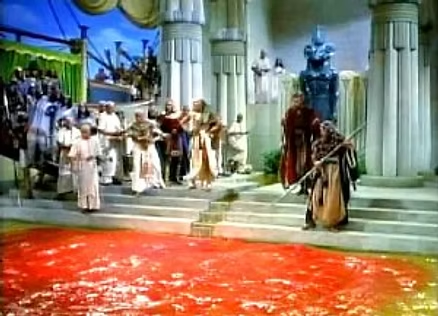







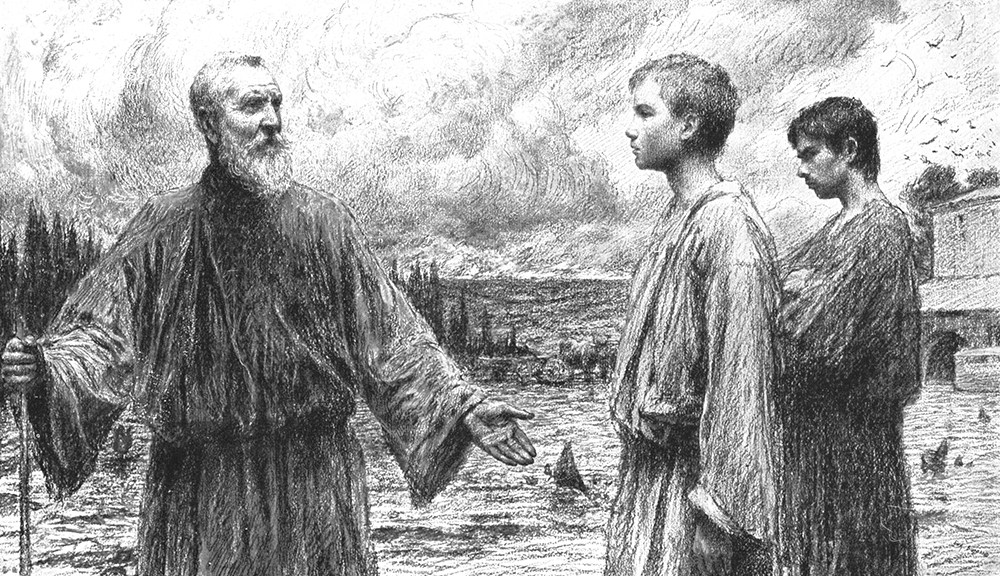



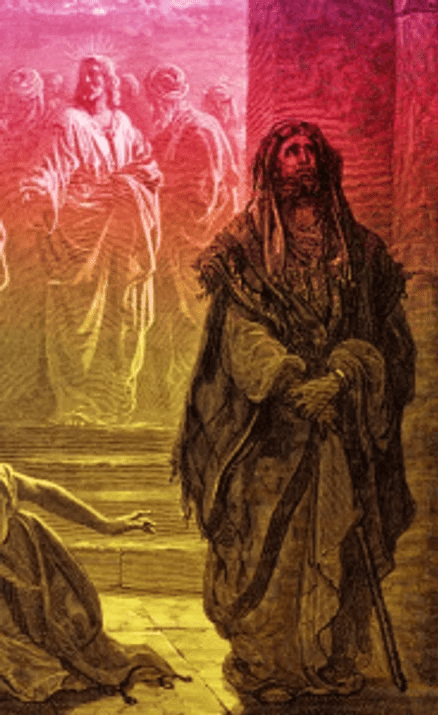


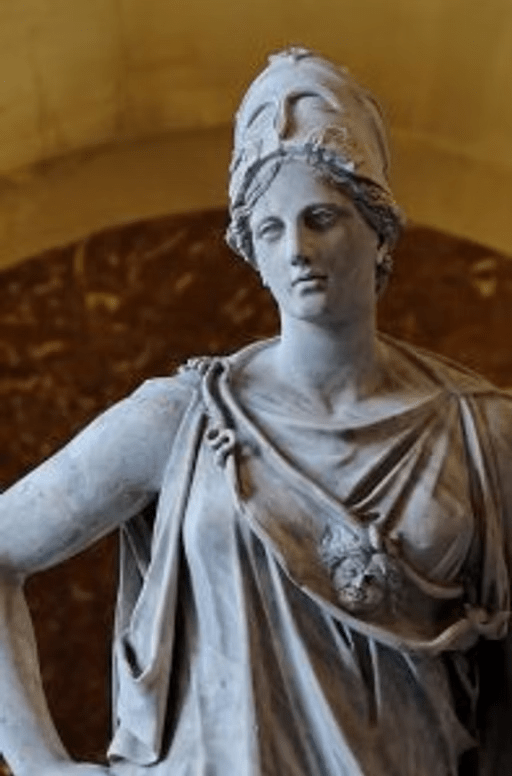

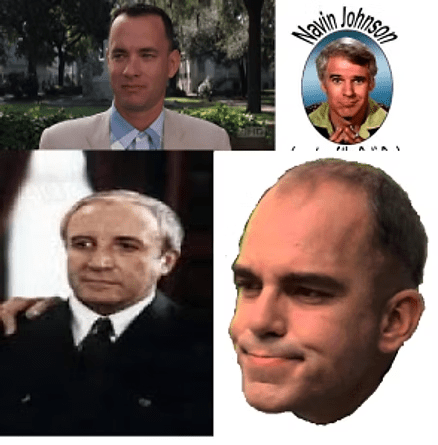



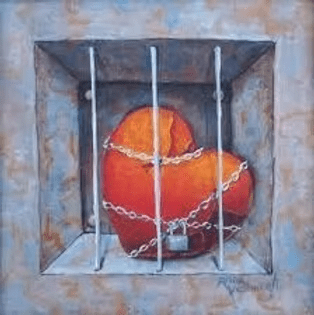

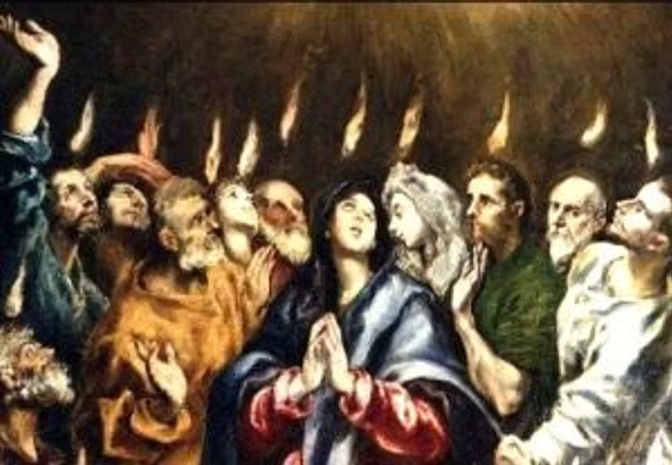

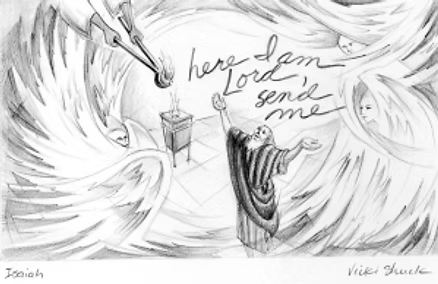



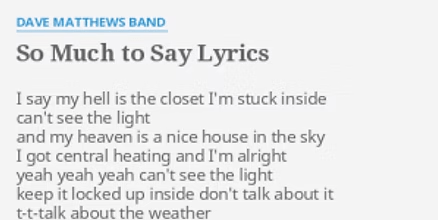
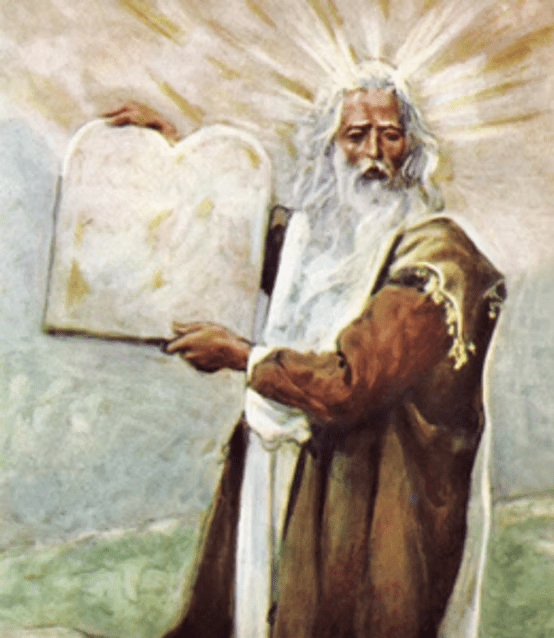





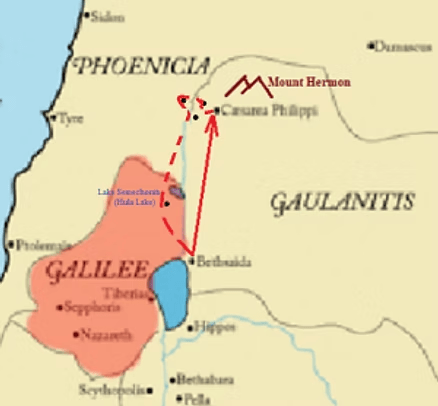





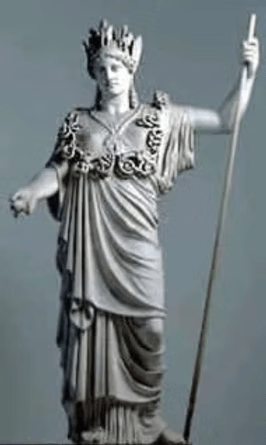
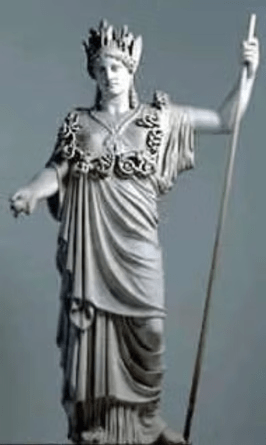


 Explaining the Readings