All the tribes of Israel came to David at Hebron, and said, “Look, we are your bone and flesh. For some time, while Saul was king over us, it was you who led out Israel and brought it in. The Lord said to you: It is you who shall be shepherd of my people Israel, you who shall be ruler over Israel.” So all the elders of Israel came to the king at Hebron; and King David made a covenant with them at Hebron before the Lord, and they anointed David king over Israel. David was thirty years old when he began to reign, and he reigned forty years. At Hebron he reigned over Judah seven years and six months; and at Jerusalem he reigned over all Israel and Judah thirty-three years.
David occupied the stronghold, and named it the city of David. David built the city all around from the Millo inwards. And David became greater and greater, for the Lord, the God of hosts, was with him.
——————————————————————————–
This is an optional Old Testament selection from the Episcopal Lectionary for the Seventh Sunday after Pentecost, Year B 2018. In the numbering system that lists each Sunday in an ordinal fashion, this Sunday is referred to as Proper 9. If chosen, it will next be read aloud in a church by a reader, on Sunday July 8, 2018. It is important as it points out how the Israelites admitted their mistake in choosing a king that was not anointed by God, beginning a new forty-year period under a recognized a true judge.
In this reading, the most significant statement it contains is: “David was thirty years old when he began to reign, and he reigned forty years.” This is significant because this is the only statement that says anything about David’s age.
While we read on the fourth Sunday after Pentecost, “Samuel said to Jesse, “Are all your sons here?” And he said, “There remains yet the youngest, but he is keeping the sheep,” we know David was the youngest son of Jesse. On the fifth Sunday after Pentecost [optional selection] we read, “Saul said to David, “You are not able to go against this Philistine to fight with him; for you are just a boy,” we can be confused when some translations change “young boy” into “young man.” An Internet search of “How old was David when he killed Goliath?” returns a common sense that he was “about sixteen.”
In reality, we do not know how old David was when he was anointed by Samuel. Thus, we do not know how old he was when he slew Goliath. There is nothing written in 1 Samuel that states how much time elapsed between David’s anointment by Samuel and when he was sent by Jesse to take food to his brothers, who were sent to fight against the Philistines and Goliath. David could have been anointed at age ten (a Numerological 1 [1 + 0 = 1]). The number one indicates new beginnings. David could have killed Goliath when he was twelve (a Numerological 3 [1 + 2 = 3]). The number three is symbolic of a significant initial completion.
Last Sunday [the sixth Sunday after Pentecost], we read [optional selection] of David being told of Saul’s and Jonathan’s deaths, to which he wrote a song and had it placed in the Book of Jashar. At that time, David was in Ziklag. No indication was made that David was a king then; but now we read, “All the tribes of Israel came to David at Hebron,” and “All the elders of Israel came to the king at Hebron.” Here is a map of those locations:
In my interpretation of the sixth Sunday after Pentecost reading option, I mentioned that Saul and three of his sons were killed at the battle of Mount Gilboa, with their mutilated bodies disgracefully hung at a holy place in Beth Shan. Allies of Saul, from Jabesh Gilead, reacted to that desecration and recovered the bodies, burned them, and then buried the remains properly. At the time of that defeat of Saul, David was avenging the sack of Ziklag by the Amakelites (Arabian nomads), who took all of the wives there. The King of Gath had given David Ziklag, but the Amakelites destroyed the city while David and his men were making raids. As the spoils, the Amakelites took all the women of Ziklag, which were the wives of David and his six hundred soldiers (Judeans). This implies that David might have been treated like the King of Judah, only not based in Hebron, but he was not made King of Judah until after Saul’s death. Judah remained loyal to David, rather than be ruled by Saul’s heir, Ish-Bosheth.
The statement that “David was thirty years old when he began to reign” allows one to be able to time this change with the reign of Saul and his son Ish-Bosheth. Saul reigned for 42 years; and after his death, Ish- Bosheth reigned for two years, before he was murdered. Because the three other sons of Saul died along with him at the battle of Mount Gilboa, the murder of Ish-Bosheth ended the line of Saul. Since there were no other issue to whom the reign of Israel could be given, the elders of Israel sought David.
When one knows that from the time the elders went to Samuel and asked for a king, “to be like other nations,” forty-four years elapsed and David was only thirty years of age. This means that Saul reigned over Israel fourteen years before David was born. Because we are told that Ish-Bosheth was forty years of age when he took over rule of Israel following his father’s death (2 Samuel 2:10), one can assume that he was Saul’s first-born male heir (born in the second year of Saul’s reign), with Jonathan his last born son. Jonathan would then have been born three or four years before David’s birth, which would have made him fifteen or sixteen when David was ‘adopted’ by Saul, assuming David killed Goliath when he was age twelve. That closeness in age would explain the bond that took place between Jonathan and David. Jonathan saw David as his younger brother, whom he had to protect.
When we read the Hebrew word “na-‘ar” in 1 Samuel 17:33, which was when David said he would respond to the challenge of Goliath, but Saul refused, saying, “For you are but a youth while he has been a warrior from his youth,” the meaning is “boy, lad, youth, or child.” The implication is that David was not a mature male. He was biologically incapable of reproduction. While the word means “male child,” one that has not yet reached a level of maturity that would change his status from boy to young man, this says that David was under the age of thirteen when he faced Goliath. The teen years generally signify when boys physically change from innocent males to fertile young men. A Jewish bar mitzvah is when a male turns thirteen.
In 1 Samuel 18:2 we read, “Saul took him that day and did not let him return to his father’s house,” which occurred when the souls of David and Jonathan bonded as brothers. Between that ‘adoption’ at age twelve, until we read, “So it came about at the time when Merab, Saul’s daughter, should have been given to David” (1 Samuel 18:19), four years’ time had passed and David had turned sixteen. With this sense of timing, when we later read, “So Saul gave him Michal his daughter for a wife,” (1 Samuel 18:27c) David was probably seventeen by then, having led men into battle to kill two hundred Philistines in order to pay the dowry (100 foreskins of Philistines).
It was at this age that David was banished from Saul’s house, causing him to go into exile. From the age of seventeen to twenty-eight (eleven – twelve years), David eluded Saul, fought for the Philistine king in Gath, spared Saul’s life twice, and was given the ‘border town’ Ziklag (between Philistia and Judah), because he had assisted the Philistines so they could war with Saul. Saul died when David was twenty-eight and David heard that news in Ziklag.
When this reading selection says, “At Hebron [David] reigned over Judah seven years and six months,” the six months were prior to Ish-Bosheth being murdered. That means David was named the King of Judah a year and a half after Saul died. This is stated at the beginning of 2 Samuel, where verse one says, “Then it came about afterwards that David inquired of the Lord, saying, “Shall I go up to one of the cities of Judah?” And the Lord said to him, “Go up.” So David said, “Where shall I go up?” And He said, “To Hebron.” That means David was twenty-nine and a half years of age when he first became King of Judah, and when he became King of all Israel he was thirty.
When we then see this timing element, it is understandable to see that David reigned as king in Hebron after the elders visited his and asked him to be the King of Israel – all the twelve tribes. He remained in Hebron as King of Israel for seven more years, before he moved to Jerusalem. That move required David lead soldiers to defeat the Jebusites of Jebus, whose stronghold had existed since the days of Genesis, when the place was called Salem. Joshua could not overthrow that stronghold, so they lived among the Benjaminites. David, however, “captured the stronghold of Zion, that is the city of David,” (2 Samuel 5:7) which was held by Jebusites (2 Samuel 5:6). David renamed the fortress the City of David and then built the city of Jerusalem around it.
When we read, “David built the city all around from the Millo inwards,” the Hebrew word “ham-mil-lō-w” is given proper name status in translation as “Millo.” The lower-case spelling, as “millo,” refers to “earthwork, mound, rampart or terrace,” with the website Abarim Publications stating the name meaning of “Millo” comes from the verb, “to be full or be filled.” Still, no one is sure what the word truly means, making its presence in this verse confusing.
In my mind, as a reason why Joshua could not defeat the Jebusites was there was more than a stronghold carved into the natural rock slope of Mount Zion. The elevations of Jerusalem are generally lower than the heights of the surrounding mountains (Mount Scopus – 2,710’, Mount Olivet – 2,710’, and the Mount of Corruption – 2,451’). Because Mount Zion (place of the City of David) has an elevation of 2,510’ and Mount Moriah (where Solomon would build his temple) is at 2,520’, a fortress built on lower ground is strategically difficult to defend. The Romans would later demonstrate the advantage of controlling higher ground, as Jerusalem’s walls were easily overcome by catapults situated on the surrounding higher mountains (Mount Scorpus in particular). This military weakness makes the millo a significant asset that David would discover and utilize.
One way of reading “millo” is as a “natural rock formation,” which was then further enhanced by man-made construction that built what was natural into a purposeful fortress or stronghold. Still, that rock wall has to be realized as an outward barrier that poses problems to those unwanted. The “inward” (“wā-ḇā-yə-ṯāh.“) building is then not what buildings were raised behind that enhanced natural barrier, but those within the rock itself. The Hebrew word “bayith” means “beneath, below, armory, tomb, and turned inwards, as well as indicating “a shelter for animals” (where stables were usually natural caves).
This means the digging out of natural caves, which created man-made tunnels within the rock. It is well known that an ancient tunnel acted as an aqueduct, where water was a necessity for soldiers defending a citadel. As a “millo” is sometimes read as “a storage place,” such as an armory, tunnels could be used to “fill” them, so tunnels could store food, arms, and people. With the entrances sealed or covered, attacking enemies could not find those in hiding. The tunnels could also provide escape passages, as well as traps for those not familiar with their design and purpose.
This was a pre-existing asset in Jebus, which David discovered when he and his men conquered Jubus. Once discovered, David utilized the engineering of the Jebusites in the building of Jerusalem; and Solomon would further utilize tunnels in the building of the Temple of Solomon. This means “Millo” is stated as an important characteristic of Jerusalem, both ancient and still today.
As a reading option for the seventh Sunday after Pentecost, when one’s personal ministry to the LORD should be underway, one should see this reading personally. The elders of Israel should be seen as one’s body (“Look, we are your bone and flesh.”) being in need to be ruled divinely. The reign of Saul means a body ruled by all the fears and anxieties of trying to stand strong in a world that is a never-ending challenge, offering one battle after another.
Saul overcome by evil gods.
The death of Saul means oneself has reached a point of decision, where the ego (the elders) has surrendered to God. When you want God to become your King, then you become Jesus Christ, as the root from Jesse that was David.
To reach that state of commitment, one has to have done some things good and been rewarded. The self has “led out [one’s body] and brought it in” to the cheers and admiration of others. One knows what is right and good, but one has bowed down to the gods of evil (“elohim rū·aḥ”) on many occasions, because they say, “Serve self, not God,” which is so much easier to do. Leading a parade of warriors, like David, or leading a band of disciples, like Jesus, is so hard to do, as it requires special talents. It is the talent Saul lacked, which is what all righteous leaders have. One has to commit to marriage to God, so He sits on the throne of one’s heart, commanding the brain that sits at the head of the body.
The palace of self is where one has ruled and is where one has become comfortable, but God will call the self to seek Jerusalem within, the City of Jesus Christ. Hebron can be seen as one’s church, where one becomes active as a leader, but one needs to conquer the Holy City of Jebus and make oneself a fortress that serves the One God above. In that development, one will take the natural formations that exist and strengthen them inwardly. New paths will open before oneself, which one needs to fortify and dig deeper to explore where God wants one to develop.
Three times ten represents the potential for a higher level of basic three: God’s love, devotion to righteousness, and spiritual union.
Both David and Jesus began their official ministry at the age of thirty, but that is not the physical age requirement for ministry to the LORD. Thirty is three times ten, which is a higher level three Numerologically (as 3 + 0 = 3), the number of the Trinity. The symbolism says that one has to be more than a son (or daughter) of a man (a basic 3). One needs to become King of Self (a third ten) as Jesus Christ the King reborn. As Christ resurrected within a body, the Son is resurrected, with the soul cleansed by the Holy Spirit, while the presence of God is in one’s heart. When that perfection is complete, then one has turned a “holy thirty.”
Ministry to the LORD means one develops as David reborn on earth, as Jesus Christ resurrected. It means being the Good Shepherd for the people in one’s life. When that reign begins, “Oneself becomes greater and greater, for the Lord, the God of hosts.” That greatness is because the same God that “was with [David]” is with one married to the LORD.
The Lord said to me: O mortal, stand up on your feet, and I will speak with you. And when he spoke to me, a spirit entered into me and set me on my feet; and I heard him speaking to me. He said to me, Mortal, I am sending you to the people of Israel, to a nation of rebels who have rebelled against me; they and their ancestors have transgressed against me to this very day. The descendants are impudent and stubborn. I am sending you to them, and you shall say to them, “Thus says the Lord God.” Whether they hear or refuse to hear (for they are a rebellious house), they shall know that there has been a prophet among them.
——————————————————————————–
This is an optional Old Testament selection from the Episcopal Lectionary for the Seventh Sunday after Pentecost, Year B 2018. In the numbering system that lists each Sunday in an ordinal fashion, this Sunday is referred to as Proper 9. If chosen, it will next be read aloud in a church by a reader, on Sunday July 8, 2018. It is important because it states the truth that a prophet of God is His creation, through His Holy Spirit.
This short five-verse reading option from Ezekiel is fairly straightforward in the translation above, stating that God filled Ezekiel with His Holy Spirit. Once filled with the wisdom of God, Ezekiel was sent to prophesy before the wayward Judeans, before their exile to Babylon and after.
Ezekiel was called Buzzi (beyond being the the son of Buzzi), “because he was despised by the Jews.” (Ezekiel: Wikipedia article footnote: Radak – R. David Kimkhi – in his commentary on Ezekiel 1:3, based on Targum Yerushalmi). The name “Ezekiel” means, “God Strengthens” or “Strengthened By God.” He was of the priestly lineage (Kohen: “a member of the priestly class, having certain rights and duties in the synagogue.”), believed to have been descended from Joshua. The words Ezekiel spoke to the children of Judah, as read in the Book of Ezekiel (regardless of who wrote them onto scrolls of parchment), proves God’s statement, “Whether they hear or refuse to hear (for they are a rebellious house), they shall know that there has been a prophet among them.”
As for a few observations of the actual Hebrew text and the translations English-speaking Christians recognize, whenever Ezekiel is said to hear God speak to him, with a reference to “O mortal,” the reality is Ezekiel wrote, “ben-adam” – “son of man. The translation as a “mortal” human being is relevant to being one of “mankind.” As a male human being, all male human beings are “sons of man.” This means the address is to the physicality of being human, which all human males are.
In the way that Jesus of Nazareth addressed himself as “Son of Man” (such as in Matthew 18:11, but many others) where the capitalization is an application of translation and not what was written (“huios tou anthrōpou” or “υἱός τοῦ ἀνθρώπου”), the assumption that comes from the capitalization is that Jesus addressed himself as the Son of God, in the form of Man. Beyond that, one can assume Jesus (as the Christ Spirit) was the Son of God, whose soul was that of Adam – the Son of God. However, both Ezekiel and Jesus were stating they were both males of mankind, which is ordinary, normal, and typical – not special.
Le Fils de L’Homme (Son of Man) – Magritte
While Jesus was divinely conceived, always to be holy, he was to be born of a woman. That made him a son of man. Likewise, Ezekiel was a son of man born into a holy lineage, predestined to become a prophet. The specialization and uniqueness then comes when ordinary men are transformed by the presence of God’s Holy Spirit; or as Ezekiel wrote: “A spirit entered into me.”
This realization means it is ordinary, normal and typical to read the Holy Bible (or have it read to one) and see Ezekiel like one sees Jesus – as special, as those blessed by God for holiness. It is this failure to see how Ezekiel and Jesus were just like all other men (and women) of the earth. They became special by welcoming the God into their hearts, so they could hear His voice through the Mind of Christ. They became special because of their sacrifice of self (God did not say, “O Ezekiel”) so the Holy Spirit could enter into them. They became special because they heard the voice of God speaking directly to each, such that each responded to what God said (“speaking” = “’ā·mar” = “commanding, advising, designating, and giving an order”).
Normal mortals are like Cain was when his sacrifice to the LORD was not shown favor. Normal human beings often get angry and let their faces become downcast (from Genesis 4:6-7), where “face downcast” or “countenance fallen” is derived from “nā·p̄ə·lūp̄ā·ne·ḵā”.
Those words of Hebrew literally translate to state “lie down before,” where one’s emotional outbursts when things do not go one’s way are like a child throwing a tantrum, lying on the floor and screaming. If children do this ordinarily, normally and typically, so too do mere sons of mankind, no different than Cain did. This is how one should see the statement here by Ezekiel, that God “set me on my feet.”
In the first two verses of this reading selection, we read how God told Ezekiel, “stand up on your feet” (verse 1) and then how God’s Holy Spirit “set me on my feet.” The same word, “amad,” is the root used in the translations “stand” and “set.” It is then important to see how “standing” is the opposite of “lying before,” such that a righteous prophet of the LORD must “rise up” from the ordinary, the normal and the typical and become “upright” before God. Because Ezekiel did this while he was a mere “son of man,” a simple “mortal, then so too can all human beings do the same. However, that requires a willingness to hear the LORD speaking AND it means releasing oneself from the rebelliousness, impudence, and stubbornness that makes life seem so much easier to transgress than to comply with what the LORD says.
In the heritage of Ezekiel, where he was descended from Joshua, who was a true servant of the LORD, as an assistant to Moses and subsequent leader of the Israelites. Joshua also was a prophet of Yahweh, just as was Ezekiel and Jesus. This unique stature was not among mere mortals, as much as it was among the children of God. All gods have their priests and prophets, in the same way that all nations have their kings and presidents, and all humankind has its teachers and guides. Ezekiel, as Joshua and Jesus, stood up among Israelites, Judeans and Jews, because it was those, chosen by God to serve only Him as His priests, who refused to be extraordinary, because they wanted to be ordinary, normal, and typical – like the people of other nations.
The humble bow down before the righteous.
Ezekiel, as Joshua before and Jesus afterwards, was a prophet that told the warning spoken by the LORD to His chosen priests. The Book of Ezekiel was not lessons of righteousness spoken to the whole of mankind, as it was the Word of God to those who had fallen into the gutter before their LORD. The lessons of the Gospel were likewise not to stories of Jesus being sent to save all the sons of man. He came to warn the Jews that they had also fallen into the gutter before their God. The message was to “Arise! If you want to be a priest of Mine, then you best become like Ezekiel, Joshua and Jesus; or you will become mere sons (and daughters) of man and lose the right for eternal life.”
As an optional reading selection chosen for presentation on the seventh Sunday after Pentecost, in the season of Church time when ministers (prophets) to the LORD should be well along the paths God has sent them to travel, the basic lesson here is to stand tall among mere men and women. A ministry then means being a pillar of strength in a cesspool of worldly beings. One is called by God to rise from that muck and be a standard-bearer of righteousness, so the rebellious, the transgressors, and the impudent can see that hope of salvation remains alive.
The English word “transgression” is defined as, “An act that goes against a law, rule, or code of conduct; an offense.” (Google Dictionary) Seeing this as a legal term, where the Law of Moses came from God to the Israelites, as the Covenant between their service as God’s priests, with the agreed rewards as God’s chosen people being eternal salvation, the prophets of the LORD have always only been sent to warn those who profess belief in the One God, and not anyone else. This means a transgressor is anyone who has sworn allegiance to Yahweh (Jews and Christians), expecting the reward of Heaven for simply believing in that God, but who have laid down with the non-believers, going against the Laws of Moses, the rules of Jesus of Nazareth, and the code of conduct that makes one truly a priest to the One God. Such acts by other sons and daughters of humanity do not constitute breaking those laws and covenants, because they serve the gods of the world – the gods of money, sexual stimulation, war, artificial means of transcendence, and any other worship of the physical, rather than the Spiritual.
This reading then focuses less on being sent into the world to right all the wrongs, as God told Ezekiel, “Whether they hear or refuse to hear (for they are a rebellious house), they shall know that there has been a prophet among them.” This says one who refuses to hear will still know that a prophet of Yahweh has come into the world simply because he or she stands among those who wallow in emotional instability. If one wants to hear what a prophet has to say, then that one will rise to ask questions, like, “What has the LORD said to you?”
This means a ministry today is no different than ministry was for Joshua or Ezekiel, as they had to rise above the level of being sons of man, mere mortals, so they could hear God speak. A minister has put oneself in a position so that the Spirit can enter one’s being and strengthen one’s upright position. Once standing, a minister can hear the voice of God speaking words that explain the meaning of Scripture. A minister then radiates the joy of that enlightenment, so the others of mankind can know that God has come near.
When we read in Ezekiel today, we can apply ancient words to today’s reality. We can see how this Scripture can state: “[God] said to me, [son of man], I am sending you to the people of [faith in the One God], to a [religion] of rebels who have rebelled against me; they and their ancestors have transgressed against me to this very day.” What was truth then is still truth today. Jews who have rejected Jesus as their promised Christ are doing nothing more than pretending to obey the Law are transgressors to this day. Christians who have entered the churches as political activists and apologists for sins against the Law are transgressors to this day.
The Hebrew word “pasha,” which translates as “transgressed” and “rebelled,” also infers “to break away (from just authority).” This means the plethora of denominations and sects of Judaism and Christianity, evolving over the millennia, are by definition “transgressors” of the true purpose of one’s original faith in God. Thus, ministers are sent by God for the purpose of replacing the lost with those found, as beacons that others can see.
This makes a minister be an example of the truth, so those who have fallen, like God came and spoke directly to Cain. God speaks through His prophets indirectly, so they speak as symbols. Thus, a minister can make it known that it is possible to do what is right by example, rather than words. The sight of a risen prophet shows the world it is possible to rule over sin, rather than have sin rule over a mere mortal.
I know a person in Christ who fourteen years ago was caught up to the third heaven—whether in the body or out of the body I do not know; God knows. And I know that such a person—whether in the body or out of the body I do not know; God knows— was caught up into Paradise and heard things that are not to be told, that no mortal is permitted to repeat. On behalf of such a one I will boast, but on my own behalf I will not boast, except of my weaknesses. But if I wish to boast, I will not be a fool, for I will be speaking the truth. But I refrain from it, so that no one may think better of me than what is seen in me or heard from me, even considering the exceptional character of the revelations. Therefore, to keep me from being too elated, a thorn was given me in the flesh, a messenger of Satan to torment me, to keep me from being too elated. Three times I appealed to the Lord about this, that it would leave me, but he said to me, “My grace is sufficient for you, for power is made perfect in weakness.” So, I will boast all the more gladly of my weaknesses, so that the power of Christ may dwell in me. Therefore I am content with weaknesses, insults, hardships, persecutions, and calamities for the sake of Christ; for whenever I am weak, then I am strong.
——————————————————————————–
This is an Epistle selection from the Episcopal Lectionary for the Seventh Sunday after Pentecost, Year B 2018. In the numbering system that lists each Sunday in an ordinal fashion, this Sunday is referred to as Proper 9. It will next be read aloud in a church by a reader, on Sunday July 8, 2018. This is important because it places focus on the weakness of the individual who is filled with the Holy Spirit, meaning the only strength one can boast of possessing is one’s ability to withstand the tests and temptations of Satan, which are painful tortures.
This reading skips over verse one, which sets the theme from which this reading flows. It states, “Boasting is necessary, though it is not profitable; but I will go on to visions and revelations of the Lord.” (NASB) However, the literal translation from the Greek says (noting spaces to highlight punctuation marks), “To boast , it should not be profitable to me . I will go on to visions and revelations of the Lord .”
Regardless of Paul’s denial of brag, the vital words in verse 1 are “optasias” (“visions”) and “apokalypseis” (“revelations”). Those words can also translate as “supernatural appearances” and “unveilings.” It should be understood that Paul was not introducing normal sights and discoveries that he had seen, during his travels, to the Christians of Corinth. He was turning his letter’s purpose into Spiritual things the Corinthians should then know.
When we read, “I know a person in Christ who fourteen years ago was caught up,” this unnamed “person in Christ” can possibly be identified by Paul’s epistle to the Galatians (believed to have been written 1.5-2 years prior to this letter). There he wrote, “Then after an interval of fourteen years I went up again to Jerusalem with Barnabas, taking Titus along also.” (Galatians 2:1) As the Book of Acts speaks in detail about Paul and Barnabas, during the early phase of Paul’s ministry, it makes more sense to see Barnabas as the one Paul was referring.
When Paul followed that knowledge of “a person in Christ” by stating, “And I know that such a person,” this is the identification of Paul. By reading slowly, in both cases Paul said “I know” (“oida“), which is a statement of personal knowledge. When Paul followed the first “I know” with “a man” (“anthrōpon“), he next followed “I know” with “tontoiouton anthrōpon,” which more accurately says, “I know this like the man.” As such, Paul and his partner in ministry both shared a similar experience, most likely at the same time.
The translations that says “caught up,” which appears twice (once as harpagenta and then as hērpagē) is rooted in the Greek verb harpazó, which means, “seized, snatched away.” This means Paul was not referring to some event where he and Barnabas went willingly into a situation that overwhelmed them. While they experienced times of trouble and persecution as Christians, some which became intense, this cannot be read as the meaning here. Paul had probably discussed old times prior, while in Corinth; so this reference is to an untold experience where he and his partner were “suddenly and decisively taken by an open display of force.”
One such experience could be the one written of in Acts 14:5, while the duo was in Iconium and “some Gentiles and Jews, together with their leaders, decided to make trouble for Paul and Barnabas and to stone them to death.” They escaped that plan by leaving town. However, it could have been while they were in Lystra, where Acts 14:19 states, “Some Jewish leaders from Antioch and Iconium came and turned the crowds against Paul. They hit him with stones and dragged him out of the city, thinking he was dead.”
This certainly tells how Paul and Barnabas were suddenly and decisively overcome by force, but importantly in a way that could have separated their souls from their bodies. Such an event probably would have been told prior; but Paul is now adding a new twist to the story by writing here (in remembrance), “whether in the body or out of the body I do not know; God knows.” If Paul did not know if he was in body or not, then he was near death.
The focus is now on a version of death that is referred to as an out-of-body experience (OBE). This is vivid memory that is retained, seemingly when the soul is free to leave the body at death. People reporting these events have told of visual experiences (“optasias”) that are vivid and realistic, yet their minds realize a transcendental departure had occurred that is closer to a dream state. This can then be seen as Paul confessing a period in his life that could have been like sleep, which matches those Gospel comparisons to death-followed-by-resurrection as sleeping. Paul then indicated one who was “in Christ” went to a place only the soul can visit, while out of its body. Paul called it “third heaven” (“tritououranou” – lower case).
The translations of the Greek text do not capitalize this place Paul and his companion were “snatched to,” but this reference has become magnified over the centuries as “Third Heaven.” This reference is then dovetailed into the second and third books of Enoch, the Talmud, the Qur’an, the Epic of Gilgamesh, and ancient Hindu texts that refer to “seven heavens.” All of this, as a “Christian” perspective, is then projected upon this one verse of Paul’s second letter to the Christians of Corinth, as supporting all the other references of faith.
This then leads one to recall the Divine Comedy and Dante’s trilogy that projected a satirical view of the Church’s support of a layering of Hell, Purgatory, and Heaven. In Dante’s mind, the lower levels of hell and purgatory were filled with popes and cardinals, as well as the governors that supported them. His spheres of Heaven were much like the Judaic Seven Heavens, where planets and celestial orbs each symbolized a tier (Third Heaven was influenced by Venus in both models). By Dante calling his heavenly realms “Paridiso” (Paradise), there is then a link to Paul’s statement, “was caught up into Paradise” (“Paradeison” – capitalized).
In the Wikipedia article entitled “Third Heaven,” (capitalized), the information posted refers to elements from the Second Book of Enoch, which alludes to a contrast between the third level of Heaven and Paradise. The article states, “Third Heaven is described as a location “between corruptibility and incorruptibility” containing the Tree of Life, “whereon the Lord rests, when he goes up into paradise.” [Reference: Chapter 8, Second Book of Enoch]
This goes on by adding, “In contrast with the common concept of Paradise, the Second Book of Enoch also describes a Third Heaven, “a very terrible place” with “all manner of tortures” in which merciless angels torment “those who dishonor God, who on earth practice sin against nature,” including sodomites, sorcerers, enchanters, witches, the proud, thieves, liars and those guilty of various other transgressions.” [Reference: Chapter 10, Second Book of Enoch]
This certainly paints a sinister picture of “third heaven,” which forces one to look closer at the Greek word “Paradeison,” which is translated as “Paradise.” The Greek word (capitalized) means, “Paradise, Grand enclosure, Garden, Pleasure-ground,” and the “Upper reaches of the heavens,” which is a view that saw outer space (as we know it) as the first heaven. “Paradeison” is even a reference to the Garden of Eden, as well as “that part of Hades which was thought by the later Jews to be the abode of the souls of the pious until the resurrection.” This last view of “Paradise” is then more comparable to the Purgatory of Dante, rather than the Judaic association of Seventh Heaven being where God is pure light.
7. Araboth (ערבות), The seventh Heaven where ofanim, the seraphim, and the hayyoth and the throne of the Lord are located. (Wikipedia article: Seven Heavens).
It does not make sense that Paul could write about out-of-body experiences for both he and a partner, such as Barnabas, especially if one went to the “third heaven” and the other to “Paradise.” While both could have been two places together, it makes more sense that they saw the same place differently, and reported their feelings to one another afterwards. Still, even more likely, Paul knew his partner was seeing the same as him, as both were “in Christ.” The two were “snatched away” into a near-death state, simultaneously, mesmerized by “visions and revelations” while in God’s total care.
When realizing “Paradeison” can be the same place as Dante’s “Paradise,” akin to the Judaic Sheol, that would make “third heaven” capable of being a dark place.
The tone of the remainder of this reading supports that assessment. The association to Eden and the word etymology visualizing a Garden brings to mind recall that the serpent caused so many problems for Adam and wife there. Therefore, it is not hard to see how misery can be a reality, while in a place whose illusion is of something wonderful.
In this regard, “third heaven” becomes a trick of Satan. Paul and partner were forcibly taken to “a terrible place” with “all manner of tortures.” First impression could have been the lure and illusion of something wonderful; but as the letter proceeds, there were pains that one would not expect a spiritual self to experience.
Getting this picture in mind makes it easier to understand how the “revelations” or the “unveilings” (stated in 2 Corinthians 12:1) that were discovered by Paul’s soul in Paradise were then stated as: “[I] heard things that are not to be told, that no mortal is permitted to repeat.” That implies Paul saw things they were astounding, but the voice of God explained the truth behind the “visions.”
It was at this point in the letter that Paul wrote, “On behalf of such a one I will boast, but on my own behalf I will not boast, except of my weaknesses.” This should be seen as the duality of one man – Paul – who was both alive in Spirit (a truth worthy of boasting about), while still in a body (his weakness) that was with him, or not – God knows.
Paul then wrote how filled with elation he was in this state of “visions and revelations.” Still, he wrote, “to keep me from being too elated, a thorn was given me in the flesh, a messenger of Satan to torment me, to keep me from being too elated.” That can be seen as the “pinch me to make sure I’m not dreaming” axiom. Feeling the pain meant Paul still was connected, in some way, to his body.
The “messenger of Satan” (“angelos Satana”) can also be read as “an angel of Satan” or “messenger of the Adversary.” As an “angelic adversary” (another translation possibility), one can see the thought that reads like The Revelation of John (Apokalypsis) – remembering verse 1 set the theme of “optasias” (“visions”) and “apokalypseis” (“revelations”). One can grasp how John also had a view of “third” and “heaven,” which is consistent with Paul’s revelation to the Corinthians.
In chapter 12 of The Revelation, John wrote, “And his tail swept away a third of the stars of heaven and threw them to the earth” (Revelations 12:4a). Common analysis by Christian scholars interprets that as a reference to “a third of the angels” or “a third of the heavens.” In The Watchers of Enoch, we know of a rebellion among the angels, where a portion, led by Lucifer, refused to serve Adam (Holy Man). The story of the serpent and Eve in Eden is then symbolic of that rebelliousness.
John’s Greek words written are, “triton tōn asterōn tou ouranou,” where Paul wrote, “tritououranou.” The “stars” are then synonymous with the “angels,” which are “the Watchers” of Enoch. The “angelos Satana” were the “third heaven” thrown into the earth, which occurred when Adam and wife were banished from Eden. This means “Paradise” was the “Enclosure” (translation possibility for “Paradeison“) that is the Earth and its limitations.
The “thorn” (“skolops”) Paul felt then brings about physical pain, as Paul wrote it “was given me in the flesh,” by the “angel of Satan.” This acts as a view of the future, similar to John’s chapter nine in The Revelation (9:10), where scorpions are said to come from within the earth and be attacking. John wrote there, “They have tails like scorpions, and stings,” where “scorpions” in Greek is “skorpiois.”
Because John wrote of a dismal end time, the comparative terminology found here in Paul’s words should be seen as prophetic. Paul had stated that God told him not to repeat what he saw. This instruction was not disobeyed because Paul, like John and all prophets of the future, write of visions and revelations symbolically. This can be seen as why Jesus taught in parables, rather than giving the world a clear view of the future. God-led metaphor is required to prophesy the future, and the language of God (spoken by all His Prophets) is not easily understood.
This use of “thorn in the flesh” is then Paul speaking metaphorically about the reality of his experience, which he had said “no mortal is permitted to repeat.” John’s use of thick metaphor is then his inability to clearly state the reality of an evil presence on earth – then as now. That is forbidden from being expressly stated. However, that evil presence is nonetheless real and within the depths of planet earth.
The feel of the thorn was so great and real to Paul (remembering that he could not state for sure if he was alive in physical body or alive only in Spirit), he wrote, “Three times I appealed to the Lord about this, that it would leave me, but he said to me, “My grace is sufficient for you, for power is made perfect in weakness.”
The number “three” is then stated in a word that means “three times” (“tris”). Three is a number that is always significant as it represents a statement of “initial completion.” Three is life, where soul (1) and body (1) are joined (1), with the union point representative of “three.” Three times three (3 x 3) is then a holy octave that is the Trinity – Father, Son, and Holy Spirit are joined as one. In this sense, Paul wrote of “three times” he “begged” or “appealed” (“parekalesa“) God for his spirit and flesh to “leave, withdraw from, or to go away from” (“apostē“) the “third heaven,” where the pains of sins were part of his flesh. By begging “three times,” Paul used a word that is all-inclusive of the “times” of eternity: past, present, and future. Paul could not leave his vision of the past, which led to the present state of Christianity, and then the pains shown into the future.
By God stating “His grace” (“charis”) was enough, the presence of the Christ Mind in Paul, making him the resurrection of Jesus Christ (“God’s grace”), was enabled by the weakness of Paul – his sacrifice of self. Therefore, it was the submissive ego of the old Saul that cried out for help, because the pain of his past sins was being felt.
That pain, coming from his mortal weakness, was what led him to love God and be surrounded by God’s Holy Spirit, as the rebirth of Jesus Christ. The pains inflicted by sin endure through all times; but Redemption, through sacrifice of self, is the cure beyond the flesh.
That realization is why Paul then wrote to the Christians of Corinth, “So, I will boast all the more gladly of my weaknesses, so that the power of Christ may dwell in me.” Without the grace of God, as the rebirth of Jesus Christ, the sins of Paul’s past would be forever mounting, with new pains in the present and assured pains in the future. The pains of an earthbound body cannot be escaped. The weakness of the flesh and the ability to be able to retain the pains that led to penitence then becomes the motivation to remain devoted and submissive to God’s Will.
Relief from pain is not the Spiritual answer, as relief represents capitulation to the tests sent by Satan’s angels. The answer is to show strength in the face of pain, which is why Paul wrote, “Therefore I am content with weaknesses, insults, hardships, persecutions, and calamities for the sake of Christ; for whenever I am weak, then I am strong.”
As an Epistle reading selection for the seventh Sunday after Pentecost, when one’s personal ministry to the LORD should be underway, the message of Paul is not to expect ministry to be an easy road to follow. In this day and age, the thorns ready for one’s flesh are closer to the intent of the ancient symbolism that was used by the prophets Paul and John. We have entered the the beginning of the End Times, in bodies that are always liable to be “snatched away.”
When one sees the element of pain and understands that worldly pains represent the punishments of sins, one cannot help but see the world has reached a state of global pain. This is not simply the standard anger between nations, the typical angers between religions, and the ordinary angers between races; but it is the anger now dividing nations, destroying religions, and blending the races.
We know these pains because of the visions of cable and network media. Television and the Social Media have snatched away our bodies and souls, so we feel the thorns of pain of others as if it is our own.
Please, o Box, show me my next anxiety and pain (after 5 minutes of commercials).
For example, the issue of abortion can bring news of violent protests and attacks. We see or hear of this problem, so we feel a pain that may not be relevant to some. Still, anger acts like an angel of Satan, making us feel like we should act violently because that specific sin exists in the world. The media becomes a demon that pierces the flesh with thorns, sending our fantasy selves into a “third heaven” realm of visions and revelations where we visit a world of hurt.
Ministry seems to some to be a spiritual necessity to stand before a congregation and preach against the evils of the world. The pulpit has long been filled by the fire and brimstone warnings that plant the seeds of fear in minds, so those fears will prevent sins from happening. In the same misguided view of ministry, political philosophy has taken hold on churches as a platform for social reforms, where guilt is planted in the minds of congregations, because somewhere in the world people suffer. Some preachers actively preach the overthrow of the evils that have become common within one’s society. However, that is what Paul wrote the Corinthians to advise against.
The role of a minister is to be an Apostle of Jesus Christ, the perfect manifestation of the Trinity on earth. The mission of an Apostle is to teach, both by words and works. This means a minister must be the resurrection of Jesus Christ on earth, for the purpose of leading the lost sheep to themselves become Jesus Christ. Unfortunately, so many love a Jesus on the cross, so the popular opinion is to “Crucify him!”
Instead, the Jews shouted, “Free Barabbas!” This was because the people would always rather be insurrectionists, than teachers. It is easier to lead others to slaughter, than to be held responsible for one’s own self-sacrifice for salvation.
The message that God sends a minister into the world with is stated here by Paul. A minister must recognize his or her own weaknesses. Asking God to make all the sins of the world go away will have the same response as God gave Paul: “My grace is sufficient for you, for power is made perfect in weakness.”
The world we live in today is the “third heaven” that is “a very terrible place.” It comes with “all manner of tortures” in which merciless angels torment “those who dishonor God, who on earth practice sin against nature.” The world has long been a Paradise Lost. A religious philosophy cannot change the world, simply because the philosophy of Christianity is the equivalent of the philosophy of Islam, Judaism, Hinduism, Buddhism, Socialism, and any and all -isms. They are ideals, not realities.
The reality is Christians (like all the others philosophical sects) turn on each other every hour of every day, just as “some Jews came from Antioch and Iconium” stoned Paul until they thought he was dead. The rabble-rousers of the world are the ones who are so bold as to stand in front of an audience and promote anger. This is not the role of a minister to the LORD. If the government is messed up today, it is a sign that the government has always been messed up, is still messed up, and will always be messed up.
Get over it. Don’t let the messenger of Satan thorn you to anger. Don’t fall for the illusion that you can change the world of hurt.
A minister must have a personal relationship with God, where God speaks through one’s own heart, to a brain that should have been surrendered already to the Will of God. If one is asking God “three times” as an appeal: “Please God, give me the power to make the world see the error of its ways, so it can stop its insanity and become a Paradise for your servants.” – Then, there is still that ego within that silently wants the elation of having brought the world peace … in your name, not Christ’s. You still want to boast of the strengths God has given to you.
This lesson of Paul is not to be tricked by the angels of Satan and become snatched away from serving God. If that happens, then one returns to serving self and the thorns of pain come flowing back. The Devil wins that battle when you boast more about what you think you should do, forgetting God’s presence is the only power necessary.
A minister admits, “I am weak. Thanks be to God for Him being my strength to withstand this world.”
A minister has to learn the lesson of Ezekiel and other holy prophets. They hear the voice of God ask the questions and they only say, “You know LORD.”
——————————————————————————
As a reading that is this dark and with a content that can go much deeper in meaning, I can assure the reader that no Episcopal priest will spend his or her 12 minutes of sermon time touching “third heaven” or “messengers of Satan.” Likewise, most avoid talking about The Revelations. In this regard I had much more that I could have written about this and how it applies to future prophecy. However, at this time I am tabling that plan to write more for now.
If I do make an addition, it will be on another blog; but I will announce it here.
Jesus came to his hometown, and his disciples followed him. On the sabbath he began to teach in the synagogue, and many who heard him were astounded. They said, “Where did this man get all this? What is this wisdom that has been given to him? What deeds of power are being done by his hands! Is not this the carpenter, the son of Mary and brother of James and Joses and Judas and Simon, and are not his sisters here with us?” And they took offense at him. Then Jesus said to them, “Prophets are not without honor, except in their hometown, and among their own kin, and in their own house.” And he could do no deed of power there, except that he laid his hands on a few sick people and cured them. And he was amazed at their unbelief.
Then he went about among the villages teaching. He called the twelve and began to send them out two by two, and gave them authority over the unclean spirits. He ordered them to take nothing for their journey except a staff; no bread, no bag, no money in their belts; but to wear sandals and not to put on two tunics. He said to them, “Wherever you enter a house, stay there until you leave the place. If any place will not welcome you and they refuse to hear you, as you leave, shake off the dust that is on your feet as a testimony against them.” So they went out and proclaimed that all should repent. They cast out many demons, and anointed with oil many who were sick and cured them.
——————————————————————————–
This is an Gospel selection from the Episcopal Lectionary for the Seventh Sunday after Pentecost, Year B 2018. In the numbering system that lists each Sunday in an ordinal fashion, this Sunday is referred to as Proper 9. It will next be read aloud in a church by a priest, on Sunday July 8, 2018. This is important as it shows how Jesus was rejected by the Jews of Nazareth, just as were his disciples faced rejection in their appointed ministries. This is seen today in the fight among Christians to cast out anyone who offers wisdom without some degree of approved divinity, such as that handed out by professors of scholastic religion.
This is Mark’s version of the same story told by Matthew (13:53-58) and Luke (4:14-30), with Luke’s more detailed about Jesus being rejected in his hometown. Mark then followed with the commission of the twelve, which Matthew told of in his tenth chapter (the whole chapter) [slightly before Jesus was rejected in Nazareth] and Luke told of in his ninth chapter (verses 1-6) [well after Jesus was rejected in Nazareth]. Luke told the story of Jesus being rejected in Nazareth with much detail, well beyond what Mark wrote; but the inconsistencies of the chronology makes certainty of when each event occurrences difficult to pinpoint. Still, there is purpose to the order of presentation that is found here in Mark.
There is no mention of Nazareth specifically in either Mark of Matthew, but Luke does make that specifically known, with Mark telling that the people in the synagogue knew his father was a carpenter. One can assume Joseph died before Jesus began his ministry, certainly before he moved to Capernaum, because there was no mention of Joseph at the wedding in Cana.
By knowing all of the surrounding stories of the same events, a three-dimensional view of Mark’s story emerges. When we read, “Jesus came to his hometown, and his disciples followed him,” we know from Luke that Nazareth was one of several synagogues that Jesus taught in, after he “returned to Galilee in the power of the Spirit.” (Luke 4:14a) This means that Jesus did not go to his hometown solely for the purpose of showing off his teaching talents. The synagogue of Nazareth welcomed Jesus because of the “news about him [had] spread through the whole countryside” and “he was teaching in [multiple] synagogues, and everyone praised him.” (Luke 4:14b-15)
When Mark wrote, “On the sabbath [Jesus] began to teach in the synagogue,” Luke makes a point of stating, “he went into the synagogue, as was his custom” and “he stood up to read.”
This means each Sabbath in the Hebrew calendar calls for specific readings to be read and discussed. Luke quotes the reading as being that of Isaiah 61:1-2a. In the “Calendar of Torah and Haftarah Readings,” for 2015 – 2018, the schedule for these two verses (plus verses 3-11) comes up in the reading for October 29, 2016 [27 Tishri 5777], which is called the “Blessing for Cheshvan” [Cheshvan = “Eighth Month”]. The same reading was also scheduled for September 9, 2017 [18 Elul 5777].
In the verses recited by Luke (Isaiah 61:1-2a only), the words from the verses include: “The Spirit of the Lord is on me;” and “He has sent me to proclaim.” Some English translation versions place a title on this chapter that comes from verse two-a, which is “The Year of the Lord’s Favor.” This portion of Isaiah 61 announces an unnamed prophet to come, which is not Isaiah but a prophecy of one who will bring freedom to those in captivity. Jesus stood and said, “Today this scripture is fulfilled in your hearing.” (Luke 4:18-21)
While Mark did not address this specific reading as what Jesus “began to teach” about, this is what led the Jews of Nazareth to be “astounded.” The use of the Greek word “exeplēssonto” means “astounded,” which might lead one to think Jesus impressed the Jews of Nazareth, as if he “bedazzled” them or “amazed” with his words. While Luke’s use of “ethaumazon” implies “wonder, marvel, and admiration,” it actually in a statement of “surprise.” Mark’s word most clearly shows that Jesus’ words had the effect of “striking them with panic or shock.”
This view is supported by seeing how those in attendance in the synagogue took this proclamation by Jesus as an insult. It led them to question his credentials: “Where did this man get all this? What is this wisdom that has been given to him? What deeds of power are being done by his hands!” Those questions did not in any way infer that what Jesus said was believable.
The question that asked where Jesus saw Isaiah foretelling of him was one asked in the tone of “What gall!” The use of “sophia,” as “wisdom,” misses the hint at “cleverness,” where a rabbi should teach the “intelligence” that comes from the standards of education, and not unfounded “insight.” The “deeds of power,” from “dynameis,” hints at a stunt proclaiming to be a “miracle.” The addition of “by his hands” is then meant as a preconceived “plan,” which is the art of shysters, made-up by Jesus only.
When the next question was, “Is not this the carpenter, the son of Mary and brother of James and Joses and Judas and Simon, and are not his sisters here with us?” they concluded that Jesus was just the boy down the lane who was the son of a carpenter. Growing up in Nazareth meant Jesus was from another poor family of Jews. His relatives were of no importance … pretty much like everyone from Nazareth … so the same expectations should be placed on Jesus. They let him teach out of respect for his being from Nazareth and some gossip that said, “Give him a chance,” but that sermon (in their minds) was a colossal failure.
To ensure that no one missed that point, Simon-Peter told Mark to be sure to write down, “And they took offense at him.” The Greek word written, “eskandalizonto,” is rooted in “skandalizó,” which in Latin is transcribed “scandalizabantur,” a word that is associated with the etymology of the English word “scandalous.” The “offense” caused was “disgraceful; improper or immoral.” The Nazarenes felt like they had fallen into a trap that had been set by Jesus, snared up quickly from their peaceful Shabbat Jewish selves and forced to become angry and wild in an attempt to free themselves.
Their anger led Jesus to say, “Prophets are not without honor, except in their hometown, and among their own kin, and in their own house.” As a true prophet of the LORD, such that everything Jesus said was the Word of God flowing through his mouth, the “honor” that comes to all “Prophets” (capitalization is purposeful, showing a divine connection, although the capitalization is from the paraphrase of translation) is the presence of God within.
Because a relationship with God requires many years to build up, into a marriage where a Prophet submits his (or her) personal will to the dominant Will of God – the Husband – even Jesus, as a child, was seen as no different as other children his age. Even though God spoke to Jesus daily, from human birth to human death and beyond, Jesus was free to express his personal opinions (albeit God-led) at all times prior to his Spiritual baptism, when the dove lit upon his spirit in the river Jordan, with John the Baptizer. That period of Jesus talking, rather than God speaking directly through Jesus, was not part of any written Gospel. The Jews of Nazareth, therefore, saw Jesus as a little more than an impudent human, one who (as far as they knew) was ordinary.
When we then read, “And he could do no deed of power there, except that he laid his hands on a few sick people and cured them. And he was amazed at their unbelief,” this says that the rejection of Jesus was so great that the Son of God could do little to reach through that refusal to accept holiness. It says that “unbelief” (“apistian”), which is a negative form of “faith.” It means “unfaithfulness” and “distrust” is the power of “disobedience” that pushes those professing “faith” away from God.
This makes Nazareth become a model for all of the Israelites, in particular those who maintain Judaism today, denying Jesus as their Christ. When the scope of definition for “Israelite” is broadened, to be seen as the children of God who do follow the promised Messiah that is Jesus Christ – Christians, Jewish and Gentile – then the same sense of “astonishment” and “taking offense” can be seen when so-called “believers” reject someone who is truly filled with God’s Holy Spirit. When Saints are seen as extremely rare, then the appearance of one teaching about Scripture in ways only God could know, it seems natural that those not in a relationship with God will fail to recognize one who is.
The same “unfaithful” (“offended”) have become led by people like them, who teach an ordinary message, so they set expectations for all substitute teachers – they must teach the same faithless message. Just as were the Jews of Nazareth so “disobedient” to the Lord that they ran Jesus out of town, with few being healed by his hands, Christians today are just as closed-minded to the truth. It is a knee-jerk reaction to reject the unknown, even when it scandalously slaps the truth in their face.
The message that so many fail to hear, and fail to learn, and fail to teach is that message that is repeatedly written in the Gospels and Epistles that says, “in the name of Jesus Christ.” Christians sit in pews and believe they should believe “in the name of Jesus Christ.” Christians believe they should be baptized “in the name of Jesus Christ.” Christians believe they should pray “in the name of Jesus Christ.”
Christians believe Jesus Christ is in Heaven with the Father, listening to prayers and placing check marks by the names of Christians who believe “in the name of Jesus Christ,” just like the Jews of Nazareth sat in pews in the synagogue and believed in the name of Isaiah. They all believed in the prophecies of Isaiah, but they all believed they would never see the day when any of Isaiah’s Saviors would come to town. Therefore, if a Christian stood up in a church on Sunday (or Saturday) after a priest or reader said the words “in the name of Jesus Christ” and loudly proclaimed, “I am in the name of Jesus Christ!” those Christians would (for the most part) be greatly offended.
Anyone who would hear that claim and come to Jesus Christ, in the person who knew he or she had been reborn as that Christian who proclaimed “the year of the Lord’s favor has come!” then he or she would benefit. A few of the whole would only amount to a few sick people who could be cured or have demons cast out of them by Jesus reborn. In that process, those few would have the torch of the Holy Spirit passed onto them, due to their faith. However, the many would shun that person, run him or her out of town, spread ugly gossip about him or her in that wake, and blacklist him or her from ever coming back to that church. In short, a Christian today would treat a reborn Jesus Christ just as the Jews of Nazareth scorned Jesus.
This means that when Jesus said, “Prophets are not without honor, except in their hometown, and among their own kin, and in their own house” that paraphrases as, “Persons gifted at expositing divine truth [true Prophets of Yahweh – “prophētēs”] are not despised, except when surrounded by those not filled with the Holy spirit [not also Prophets of Yahweh],who are not taught by persons gifted as expositing divine truth, thus who are not led to ever be expecting to meet one person gifted at expositing divine truth, much less ever become a “Prophet” themselves.
As such, “hometown” and “own house,” in today’s vernacular, represents one’s specific denomination of Christianity, in a specific church building. The version of Christianity that one holds dear leads one to go to a place where one feels at home. The church one goes to most regularly is then personal, as one’s own house of worship. This means “own kin” are all the others who go to the same church, in the same town, and (in the cases of the devout that adhere to the tenets of Christianity) it has been this way for generations.
As for Jesus, who was a Great Prophet who only spoke the Truth of the Father, his disciples were his “house” [“a church being wherever two or more gather in my name” – Matthew 18:20]. That included his mother, brothers, sisters, aunts and uncles who were all followers that would become “in the name of Jesus Christ” following Jesus’ death, resurrection, and ascension. The became his church, gathered in his name when Jesus Christ returned on Pentecost Sunday (the day after he ascended). They were strong supporters of Jesus as the Christ, who would continue his work when they also became Jesus Christ reborn. All honor and glory was given to Jesus of Nazareth by all who felt the presence of God in and surrounding him.
The Jews of Nazareth, those of Jesus’ hometown, did not bestow any honor onto Jesus, as they did not embrace him as the one Isaiah prophesied. Instead, they saw Jesus as a black sheep who had turned away from their simple mindset of belief … themselves as God’s chosen people … where all were chosen equally, with none to ever rise to the level of being truly righteous and responsible for the well-being of their family of Judaism.
This truth has to be seen in order to then understand why Simon-Peter told Mark (his Gospel writer), “Save the story of Jesus sending us disciple of Jesus out to minister in our hometowns, in the synagogues when we were raised, where the Jews who knew us before we were “in the name of Jesus Christ” could reject us also.”
Peter had Mark write about the commission of the twelve immediately after Jesus was rejected in Nazareth, because (in the imagined words of Peter), “We too were Jesus by extension, through God’s Holy Spirit being our authority.” Therefore, Mark’s story of the sending out of the twelve disciples then becomes the story of every Apostle who ever ministered Jews and/or Gentiles as Jesus Christ reborn. Matthew and/or Luke could chronologically state that event, with the same higher meaning intended to be found; but Mark’s retelling was for the purpose of understanding the future growth and spread of all true Christianity. The commission of the twelve was the commission of all Saints in the name of Jesus Christ.
When Mark wrote, “He called the twelve,” the most basic meaning is the twelve named disciples of Jesus, as of that time in Jesus’ ministry. In Matthew 10:2-4, amid his story of the commission of the twelve, Matthew named each disciple. This included (last and least), “and Judas Iscariot, the one who betrayed [Jesus].”
That inclusion of Judas and the disclaimer that will forever go along with his name is what makes the sending out of twelve guys from Galilee, around 30 A.D., be the least intent of this commission. We can assume Judas Iscariot went, like the others; but one has to ask, “Did he and his partner obey all the instructions and cast out demons?”
That makes the number twelve stand out as the eternal condition for those who would forever be “called” by Jesus Christ AND fully comply with those commands. This means that the number is symbolic, more than literal. Its use intends more than a number of physical disciples be discerned. It implies that twelve is the state of being that must be reached by all who heed that call … with Judas Iscariot failing to meet that requirement (as the note beside his name by Matthew implies).
Rather than attempt to teach a course in numerology, here is one of many web pages that explain the symbolic meaning of the number twelve. It is this symbolic nature that forms the core explanation as to why Jesus had twelve disciples, when he actually had many more followers and believers. Luke wrote of a commission that included seventy (or seventy-two) that were appointed in pairs. (Luke 10:1-20)
The number twelve represents a spiritual elevation, so the self is no longer controlling the soul. Twelve ‘boils down’ to a three (12 => 1 + 2 = 3), but is a special number that is like a “master number” (11, 22, 33). The number three represents “initial completion,” whereas twelve (as 12 => 1 + 2 = 3) is a number that represents “final completion.” We see this in the twelve signs of the zodiac and the twelve tribes of Israel.
A three is then representative of the self, while a twelve elevates the self by submission to God. Still, oneself can reject that elevation and reduce a twelve back to a basic three, which is symbolic of the free will the self maintains. In this regard, Jesus symbolically named twelve disciples to be those who assumed roles that were elevated above his other base followers. However, the inclusion of Judas Iscariot reflected how a title of respect does not guarantee complete subjection to God, as some will always choose self over becoming Jesus Christ.
When this concept of twelve is seen, it allows one to see the eternal potential of the commission of Jesus Christ into the world, through subjects that never knew him as the human being that was Jesus of Nazareth. They were then, are now, and will always be the ones sent out “two by two, given authority over unclean spirits.” That “authority” (“exousian”) is less about being a power over others, as it is more important as the power of the Holy Spirit, which rejects the presence of anything spiritually unclean to enter into an Apostle (i.e.: Saint).
This means that when Mark wrote, “They cast out many demons, and anointed with oil many who were sick and cured them,” it was the power of the Holy Spirit that had the effect of “anointing oil.” This has to then be read as more than olive oil that has somehow been blessed by a Saint. The use of “oil,” where the Greek word “elaion” means, “(figuratively) the indwelling (empowering) of the Holy Spirit,” means this has more power in a Spiritual sense, rather than a physical pouring of oil on one’s forehead. It becomes synonymous with baptism by the Holy Spirit, where physical water has no effect on a soul.
By realizing the power given to the disciples (elevated to Saints) was not self-generated or self-willed, but the power of God’s Holy Spirit passed onto them, we can then best understand Jesus’ instructions. When Peter told Mark that Jesus said, “Take nothing for their journey except a staff; no bread, no bag, no money in their belts; but to wear sandals and not to put on two tunics,” those instructions apply today as well as they applied then, because Jesus spoke in ageless metaphor.
In general, Jesus told the Saints who would be in the name of Jesus Christ, “Go into the world as ordinary looking people, with nothing about you hinting at piety.” In other words, Jesus said, “Go and make it so only the truly faithful to God will be positively drawn to you.” As a fishing analogy applied to fishers of men, Jesus sent them out fishing with just a line and a hook, but no pole, no net, no bait , no spinners, and no lures.
The Greek text of Jesus’ instructions actually states, “Nothing they should take for the journey,” where “hodon” says (in addition to “journey”), “path, road, and way.” This then becomes the path of Jesus, who said, “I am the way (“hodos”) , and the truth, and the life; no one comes to the Father but through Me.” (John 14:6, NASB) “Nothing” more is required, when one walks as Jesus Christ reborn through the Holy Spirit.
This makes the exception of “a staff” be not a walking stick (or crutch to lean on) but the authority of the Holy Spirit. It is like the invisible “rhabdos” that is the “scepter” of Christ the King. Jesus said, “My kingdom is not of this world,” (John 18:36) but when his subjects are the souls within the realm of their flesh, his staff of sovereignty appears as just another human being.
To have his Saints carry “no bread,” this is more than the him demanding they deny the physical necessity of food (fasting), where taking a “loaf of bread” would be viewed as a lack of faith, as if there would be an unwillingness to depend on manna from heaven. More than a demand to physically restrain one’s bodily needs, the symbolism of “bread” is relative to the symbolic presence of matzah is the Passover.
At the Seder meal (the “Last Supper”) ceremonial bread was broken (a ritual breaking, called the Yachatz) and the disciples were told to eat in remembrance of him. The Yachatz is actually hidden and must be found, so it can be eaten as a dessert. Children are the focus of this exercise; and Jesus called his disciples, “little children.” (John 13:33) As such, one is asked to seek and find Jesus Christ, who is hidden in the “bread” that is the Word of God. Scripture must be consumed to begin a journey that, when found, requires one be stripped of self. To reach that point of sacrifice, one must see the prophecies of Jesus in the holy text first.
As an instruction to the holy priests of the LORD who are sent out to teach the truth, “take no bread” means to take no prepared Scripture lessons to teach. A prepared lecture or sermon requires the intelligence of a brain, which cannot withstand questions the brain has not been prepared to answer. When one is without “bread” due to faith, then the manna from heaven will be sent to one.
Trusting Saints are sent unprepared so they can then receive the knowledge of the Mind of Christ that is promised to come, as needed. It comes so that not only will one be fed spiritually, but so too will one’s whole family be fed spiritually. All questions will be answered without conscious thought required, through teaching by the power of the Holy Spirit.
When we hear the instruction, “no bag,” this goes beyond the literal meaning of “a sack, wallet, or leather pouch for carrying provisions.” The intent here is like a quiver that holds a supply of Biblical arrows or Scriptural quotes that are intended to wound or defend one’s position. It means (to Jews) not to be lugging around a selection of Torah scrolls to read for Jews to hear. To a Christian, it means not to carry a copy of a Holy Bible to read to others. This means “no bag” is akin to thinking outside the box, where everything written in scrolls and Holy Bibles is relative to translation restrictions or pronunciation choices. It becomes an attempt to put God in “a bag” that limits Him and the truth of His Words spoken through prophets. Without that bag, God is free to enlighten an unfettered mind.
The requirement that says, “no money in their belts,” where “zōnēnchalkon” (literally “belt money”) can be read as “money belt” or “purse,” was stated at a time when “money” meant minted coins of precious metals. Still, when “belt” and “money” are seen as separate words, where “belt” means “girdle” or “waistband,” such as a leather strap tied around one’s mid-section, and “money” means coins of “brass, bronze, or copper,” the implication is not to go into the world displaying an underlying support (girdle) that is wealth-driven (money). It means not to travel like the scribes of the Temple, with an entourage of support encircling them; and it means not to go public in clothes that say, “Only I can afford this suit.”
“Every girl crazy ’bout a sharp dressed man.” ZZ Top
While such a restriction set by Jesus can easily be noticed in the television stardom of televangelists who plead for contributions to buy another $54-million private jet for ministry, it still applies to all mainstream organized religions, where priests, bishops, cardinals, and popes wear fancy costumes as if those clothes (hats, belts, miters, and staffs) deem them as holy. Further, many churches revel in ensuring their pastors live in nice homes and drive fine cars. The people tend to associate their piety in a figurehead deemed as their reflection. However, Jesus’ order means all of that flash and glitz only distracts from God’s message of sacrifice, causing others to focus on the outward appearances of others and not their own inner needs.
When Jesus said to “wear sandals,” that fashion statement does not means shoes cannot be a footwear replacement. A “sandal” is a piece of leather worn under the sole of the foot, as an invention for the purpose of human beings being able to walk boldly over rocky and sandy soil. It is protective clothing in that sense, which any modern version of footwear that is designed for outdoor walking can match. Still, by Jesus giving an order to wear sandals it has to be seen as symbolic of keeping the feet prepared to walk wherever the Lord sends one. The use of “sandals” is then akin to being a messenger, as God prophesied through Malachi: “Behold, I am going to send My messenger, and he will clear the way before Me. And the Lord, whom you seek, will suddenly come to His temple; and the messenger of the covenant, in whom you delight, behold, He is coming,” says the LORD of hosts.” (Malachi 3:1)
Finally, when Jesus said “not to put on two tunics,” the number two must be grasped. Two reflects the duality of humanity, which is the physical body joined with a spiritual soul. To “put on” or “be clothed” with “two tunics,” where the word “tunics” (“chitōnas”) implies “undergarments” or “shirts worn under a robe,” there is a hidden element that underlies the apparent. This should be seen as an instruction not to retain one’s self-ego under the cloak of righteousness. One can only be a messenger of God when one is wearing the robe of Jesus Christ and no one else. This is why a Prophet of the LORD is merely a nameless “mortal,” whose response to all God’s questions is, “LORD you know.”
With that state of being seen, we then read how Jesus said to the disciples, “Wherever you enter a house, stay there until you leave the place. If any place will not welcome you and they refuse to hear you, as you leave, shake off the dust that is on your feet as a testimony against them,” this should be seen as relative to the story Mark just told about Jesus being rejected in Nazareth. One should see how this connects to the “house” of worship (the synagogue in Nazareth) Jesus had just been rejected from, where as a messenger of God he was shown dishonor.
The symbolism of “dust” (“choun”) is as “earth” or “soil,” which relates to the physical and not the spiritual. God told His Son Adam, “For you are dust, And to dust you shall return.” (Genesis 3:19f) In Ecclesiastes we read, “All came from the dust and all return to the dust.” (Ecclesiastes 3:20b)
Therefore, the rejection of a Prophet of the LORD means the messenger (sandals) has been refused and the punishment means reincarnation on the worldly plane, not the reward of faith – eternal life in Heaven with God.
Mark then summed up Simon-Peter’s memory by stating, “So [the twelve] went out and proclaimed that all should repent.” The Greek word “metanoōsin” states the conditional, such that the recommendation is to repent, so one should repent; but one is free to do as one chooses. This means one must fully grasp the meaning of “repentance,” such that the Greek word “metanoeó” (the root verb) means, “change my mind, change the inner man (particularly with reference to acceptance of the will of God); properly, “think differently after,” “after a change of mind”; to repent (literally, “think differently afterwards”).” When “repent” is understood to basically mean, “to change one’s mind or purpose,” this becomes a recommendation to surrender one’s big brained ego (self) so the Christ Mind can be born within one’s being. A Saint’s purpose is then to recommend that one should make such a change of mind.
As a Gospel selection for the seventh Sunday after Pentecost, when one’s personal ministry to the LORD should be underway – one has truly repented – the intent should be to see the standard of rejection. In most cases, which can be seen in the story of Saul being transformed into Paul, rejection begins within one’s self. Saul stood holding the cloaks of those who rejected the messenger Stephen, so the persecutors’ hands would be free to stone a Saint (in the name of Jesus Christ) to death. They rejected Stephen just as the Jews of Nazareth rejected Jesus. Saul stood by and watched the rejection, not raising a hand to stop the mindset that bears the responsibility for neglecting everything Jesus ordered his disciples not to wear.
The ones who reject a change of mind hold their hard loaves of unleavened bread high, hoping the lack of yeast (the Holy Spirit) will punish those they swing hard at. Instead, that bread breaks and crumbles, unlike bread that was allowed to expand its basic ingredients into a tasty, life-giving softness. The hands with stones have bagged God as their personal slave, whose words say what they want them to say. They have transformed the exclusivity of being God’s chosen people into a lucrative businesses that caters to intellectual giants. The ones throwing the stones that killed Saints pretended to be upholding the Laws outwardly, while they are led by the fears of responsibility denied inwardly. These are the ones a minister of the LORD is called to confront.
Luke wrote of the people of Nazareth being so angered at Jesus that, “They got up, drove him out of the town, and took him to the brow of the hill on which the town was built, in order to throw him off the cliff.” (Luke 4:29) They could not harm Jesus, as Luke continued to say, because “he walked right through the crowd and went on his way.” (Luke 4:30)
As Stephen was dying, “Stephen prayed, “Lord Jesus, receive my spirit.” Then he fell on his knees and cried out, “Lord, do not hold this sin against them.” When he had said this, he fell asleep.” (Acts 7:59-60) That was Jesus again going on his way, because Stephen touched Saul on his path that led him to encounter Jesus Christ.
This says that all ministers of the LORD begin as those who have played their part in rejecting Prophets who have suggested a change of mind and the subjection of self-ego to the LORD. Ministers have been there, done tha;, so when they see others rejecting their transformed souls as being the old insolent human beings they were before, ministers then see themselves in reflection. This leads them to pray for God to forgive them all for being ignorant for so long, while really wanting to be saved.
Aside F.Y.I.: Deleted from this reading is the verse that is marked as an aside [in parentheses] that is a long ending to verse 11, following “a testimony against them.” It states “(Truly I say to you more tolerable it will be for Sodom and Gomorrah in day of judgment , than for that town.) This means rejecting a Prophet of the LORD calls for eternal damnation, assuming repentance does not come before the day of judgment.”
The Epistle reading for the Seventh Sunday after Pentecost (Proper 11) will next be read aloud in Episcopal churches on Sunday, July 19,2020. It comes from Paul’s letter to the Christians of Rome. According to the New Revised Standard Version, the words read will be these:
Romans 8:12-25
So then, brothers and sisters, we are debtors, not to the flesh, to live according to the flesh– for if you live according to the flesh, you will die; but if by the Spirit you put to death the deeds of the body, you will live. For all who are led by the Spirit of God are children of God. For you did not receive a spirit of slavery to fall back into fear, but you have received a spirit of adoption. When we cry, “Abba! Father!” it is that very Spirit bearing witness with our spirit that we are children of God, and if children, then heirs, heirs of God and joint heirs with Christ– if, in fact, we suffer with him so that we may also be glorified with him.
I consider that the sufferings of this present time are not worth comparing with the glory about to be revealed to us. For the creation waits with eager longing for the revealing of the children of God; for the creation was subjected to futility, not of its own will but by the will of the one who subjected it, in hope that the creation itself will be set free from its bondage to decay and will obtain the freedom of the glory of the children of God. We know that the whole creation has been groaning in labor pains until now; and not only the creation, but we ourselves, who have the first fruits of the Spirit, groan inwardly while we wait for adoption, the redemption of our bodies. For in hope we were saved. Now hope that is seen is not hope. For who hopes for what is seen? But if we hope for what we do not see, we wait for it with patience.
———-
It is a passion of all the children pretending to be priests [those in particular hired by the Episcopal Church and sent out as community organizers, social justice advocators, and race-baiting ignoramuses, with no insight whatsoever from God’s Holy Spirit – ALL THINKING with pea-sized brains (as all children possess)] that God wants them to always protect the weak. That misconception leads the children priests to see ‘po black folk’ [an uncommon element in Episcopal churches, overall] as being in need of the sympathy of ‘dem racists white Americans’ [which is the majority of Episcopalians]. Since children are never able to fully understand the real world, it is important now to get a jump on their condemnations of “White privilege” and the delusion that there are “White Nationalists” that Jesus would protest against (if Jesus were here today). The need is to cut off their dim-witted sermons ‘at the pass’ and expose them as the charlatans they are – in advance. Therefore, the following sermon is necessary.
First of all, Jesus is supposed to be here today AS CHISTIANS, as those who have been reborn AS HIM in different bodies of flesh. Thus, the reason a true SAINT uses the word “Christian” is it explains that rebirth as meaning: IN THE NAME OF JESUS CHRIST. An idiot thinks , “All I have to do to be powerful is call upon my boy Jesus, by saying, “in your name Jesus, Come to me!” A child thinks Jesus walks invisibly next to him or her, with his invisible arm draped around his or her shoulders, asking, “What can I do for you today, massah?”
Idiots think Jesus is their slave. Idiots pretending to be priests, projecting that inane imagery is why there are fewer human beings calling themselves ‘Christians’ these days.
Today’s version of Christianity is a model of the rebirth of the final days of Nazi Germany, when all the adult soldiers, those between the ages of 18 and 45, had been so defeated and dwindled down to thin lines of panicked defense, there were too few of them left to be called up to defend the capital. The adult fight to the death for a lost cause was ending. It was then that ole Adolph called upon the Hitler Youth to defend Berlin. You cannot depend on children to save the day.
Just like that failed attempt to save something gone terribly wrong, children dressing like priests, with all the paraphilia used by true Saints, but not filled with God’s Holy Spirit – not in the name of His Son – does not make them capable of filling the void that has been created by a lack of true Saints. Pretending Jesus is beside you – that he has your back and wants to serve your wants and needs – always ends up with the result that Jesus prophesied would come: When [a hired hand] sees the wolf coming, he-she-it abandons the sheep and runs away. (John 10:12)
The hired hands of the Episcopal Church (presently led by a Martin Luther King-worshiping presiding bishop, who loves his hired hands to do the same) are just like Hitler’s youth, indoctrinated in the false philosophies of bad shepherds (many decades long now). As such, they will take the words of Paul and twist them like some pretzel dough into propaganda that supports selective anarchy in America. I guess (thinking about it now) that means they can freely call themselves: in the name of Josef Goebbels.
Since a full understanding of anything Paul wrote exceeds the Episcopalian twelve minute limit on oration [with no questioning of flawed premises allowed], most will only take the one word found above (“slavery”) and run amok with that, like looters who know some Black Lives Matter mayor has ordered the police to stand down and let anarchy reign. None will even give an inkling of thought to “slavery” being how the American media has made Americans, due to the pandemic threat. Unless one riots and protests, using masks as the way to avoid facial identification cameras still in operation, everyone else is a slave to catching the bad version of the common cold. That includes the shackles placed on church doors, keeping Christians from entering churches [unless to demand entrance to violently protest and tear down statues]. Episcopal priests (children that they are, with soft impressionable brains) have been told to believe that the only slaves in America are negroes, with anyone not negro being responsible for slavery.
Paul was IN THE NAME OF JESUS CHRIST, so Paul was a true Christian, filled with God’s Holy Spirit. Paul never limited himself to writing twelve minute letters. Anyone who calls himself or herself a priest of Yahweh – the One True God – but then does not fully explain what Jesus said (through the man named Paul) is due the ‘reward’ of drowning:
“If anyone causes one of these little ones—those who believe in me—to stumble, it would be better for them to have a large millstone hung around their neck and to be drowned in the depths of the sea.” (Matthew 18:6)
Jesus said through Paul, “if you live according to the flesh, you will die.” Not being filled by the Holy Spirit of God means all you have that is keeping breath going in and out of your lungs is a soul. A soul is an eternal spirit of life given to a body of flesh at birth. What that statement says is this: If your soul does what the body of flesh wants, then mortal death is a certainty. A soul cannot save your ass from death and recycling.
Thus, Jesus said through Paul, “if by the Spirit you put to death the deeds of the body, you will live.” That says the soul dies as the animator of sinful acts in the flesh, because one becomes filled with God’s Holy Spirit, which marries with the soul of a body of flesh [“Spirit” and “spirit” above] and the Holy Spirit becomes the overseer that denies any “deeds of the body” that are sinful.
Guess what? That means one becomes Jesus reborn, through the Christ Mind, which is where all the muscular activities of the body are originated. When one subjects oneself to Yahweh, becoming His Son reborn, no longer will the body be controlling the brain, no longer will a soul be a slave to the flesh.
When Jesus then said through Paul’s handwriting, “For all who are led by the Spirit of God are children of God,” the idiots wearing vestments and pretending to be speaking for Jesus, rather than as Jesus reborn, are incapable of understanding that God (Yahweh, the Only God) is not the Father of all humanity. ONLY those “who are led by the (Holy) Spirit of God are children of God,” thus that select group represents the only ones able to call God “Father” (with a capital “F”).
The idiot children pretenders act as if everyone is a child of God, no matter how filthy with sin they are. Born into the world that is the only place sin can thrive means being born to a father of flesh and a mother of flesh. One is then a child of the flesh, much like the Egyptians, much unlike the Israelites. Those hired hands have no clue that being clean from sin means being filled with God’s Holy Spirit, because they have never had the pleasure of that experience.
Listen hard in an Episcopalian service on July 19th and tell if you hear those hired hands talk, minimally, about Jesus saying through his Apostle Paul: “For you did not receive a spirit of slavery to fall back into fear, but you have received a spirit of adoption. When we cry, “Abba! Father!” it is that very Spirit bearing witness with our spirit that we are children of God, and if children, then heirs, heirs of God and joint heirs with Christ– if, in fact, we suffer with him so that we may also be glorified with him.”
Having never come close to ‘filling out the adoption papers,’ the sinners in robes and wearing crosses will not talk about how those sitting lifelessly in the pews having absolutely no right to “cry, “Abba! Father!” when praying to a God that does not know them. Listen and hear if that confession is forthcoming from the pulpit.
All the hired hands want to talk about is taking up your cross of responsibility for slavery having ever existed in America and feel the weight of guilt that should propel one to elect politicians that will enact new laws that will slap the shackles of reparations all over your white ass, making you responsible for adopting whole ghettos filled with worthless criminals and lazy welfare addicts. Your priests will write off many millions of human beings that are the vast majority of all races, who understand slavery is a fact of life, having nothing whatsoever to do with the pigmentation of one’s skin.
Jesus said through Paul, “All humanity is a slave to the flesh,” meaning human beings are all born as slaves to the material realm. Slavery to the flesh means death, as a soul being led to that end by a body of flesh. It does not matter what lies the material world is telling the soul, whether it is: “All police murder black folk, whose only sin is an inability to keep from breaking the law and resisting arrest;” or, “If you don’t hate the politicians I vote against, then you are showing your hatred for Jesus … who I speak for because I wear a collar.”
A lie is a lie is a lie.
The only way to be free of a mortal death sentence is to die of self-ego before your body of flesh physically dies and be reborn as a new baby Jesus, led by the Christ Mind and the love of God as your new Father. However, that does not free one from slavery.
It makes one a slave of God (Yahweh). You become a true priest that no longer gets to preach a political party platform and call that a sermon for Jesus. You naturally speak the WORD OF GOD, and that includes being able to tell the lies people speak, throwing filth all over the name of Jesus Christ.
Then Jesus said through the words in Paul’s letter to the Christians of Rome, “I consider that the sufferings of this present time are not worth comparing with the glory about to be revealed to us.”
If your worthless priest starts talking about the riots in major U.S. cities, the toppling and defacing of monuments and statues, the stealing of things not theirs from looted stores, the burning and destruction of cars and buildings, the savage beatings of innocent human beings, and the threats of armed insurrection – if anyone dared try to stop their “right to protest” – then listen intently to hear if he or she is telling you this:
“Don’t be swayed to accommodate sin, resist it with all the might God sends you, because when Jesus told Peter ‘Those who live by the sword will die by the sword’ that implies someone has to stand up and kill those living in the present by the sword.”
In the media broadcasts of the rioters (like a televised replacement ‘sport’ for it being to dangerous to play baseball or basketball), who is it now ‘living by the sword’? In the place identified as CHAZ in Seattle, who is it putting up barricades and forcing locals to bow to their will … or else? Seems to me that evil is wielding the sword, with no one willing to face evil down.
Listen, then, to your young priest. See if you can hear the children promising to lead you to kill the protestors ‘in the name of Jesus Christ.’
The glory that will be revealed to us true CHRISTIANS is the reward of being a good slave to the Holy Spirit. Tell me when Jesus ran and hid from the threat of those who wanted him dead. Tell me when Jesus was afraid to confront those in power by fighting – striking with truth against lies. Tell me when Jesus was said to have promoted overthrowing either the Romans or the Temple elite and starting a new government.
You can’t, because Jesus was never a coward; not anything like the cowardice that is seen all over the face of the United States of America today. The country is about to be overrun by evil and evil will not stop being evil, simply by gaining whole power of government. Slavery will be the reward everyone will receive, if they gain control. With that subservience comes assured death, with souls sold into the slavery of repeating that plight forevermore.
Jesus then added via Paul’s letter: “For the creation waits with eager longing for the revealing of the children of God; for the creation was subjected to futility, not of its own will but by the will of the one who subjected it, in hope that the creation itself will be set free from its bondage to decay and will obtain the freedom of the glory of the children of God.” The antithesis of those words are in play now.
There are no longer Saints touching the hearts of sinners, transforming the sinners into Saints. The futility of creation has returned in force, by the will of Satan, causing humanity to turn away from God and His Son. The bondage of decay is once again the death sentence of mortality, regardless of one’s racial distinction. If there are no “children of God” to stand and be counted, then the end will bring great misery.
Does the lesson of David mean anything? David was a child of God, leading other Israelite children of God. Israel constantly had to fight against evil; and they did so with God’s help. They had the Ark of the Covenant as their ally from God. Jesus Christ is the Ark of the Covenant that is no longer kept in a box in a building of stones, as he is kept within the being of a Saint. If there is no newborn David to fight age old Goliath today, then the illusion of freedom from the whips and chains of a world run by savages will bring about the end of the age of Christianity.
Jesus then spoke again as Paul, saying, “We know that the whole creation has been groaning in labor pains until now; and not only the creation, but we ourselves, who have the first fruits of the Spirit, groan inwardly while we wait for adoption, the redemption of our bodies.”
The labor pains of Christianity are being replaced by the labor pains of a new creation, brought about by the failure of Christianity to maintain a production of true Saints in the name of Jesus Christ. The good fruit has been lowered to spoiled fruit. The bodies redeemed these days are few and far between; certainly they are not those drawing a paycheck from the Episcopal Church.
They are the fathers of insurrection and destruction, because their souls are black and void of purity and righteousness. They do not promote adoption, as they promote the abject failure of the Western world, to be replaced by a slavery to the State [Marxism decaying into Communism]. The priests are too naïve to understand that they too will be beaten savagely into submission to an evil overlord.
In this Epistle reading, Jesus ended by having Paul write: “For in hope we were saved. Now hope that is seen is not hope. For who hopes for what is seen? But if we hope for what we do not see, we wait for it with patience.”
Hope cannot come from empty shells of flesh speaking empty words of promise. The hope of Christianity has been lost through the negligence of Church leaders. Hope is seen through priests, ministers, pastors, and rabbis all walking arm-in-arm, leading some worthless protest that serves only as a distraction, while true evil is freed elsewhere to do it damage. Such “hope” is not affording one redemption.
A pope was murdered in 1978. His murder was covered up by his murderers, those within the Church the pope was about to expose and discipline. A Communist was elected as the replacement pope. That False Shepherd led the Church of Rome to ruin, over the course of his twenty-five years at the helm. His co-accomplice in murder became his replacement; but then he resigned, rather than pretend to be holy any longer. He took the money and ran.
The Church of Rome was considered a root to the vine of hope that was the flow of the blood of Christ that brought the good fruit of its vine. That ceased to be. That vine now snakes across the ground, where all evil has become one with it. Patience will not restore that dead stump to life.
This is the sad state our religion has fallen into. It is a repeating story throughout the Holy Bible’s Old Testament. Forty years as faithful slaves, followed by forty years as worthless slaves, causing all the evils of an evil world to befall the children of God. The lesson of hope can only be found in the cries of those who see the truth, pleading for forgiveness and God’s help to return life to souls lost.
You cannot gain God’s ear by promoting race. You have to understand that a soul is without color, as color is a physical characteristic. There are no physical characteristics in a spiritual entity.
You have to realize that God is the creator of all lifeforms, even though He is not the Father of a sinful soul being returned to the earthly realm – a failure, not a Son. In that realization, one must understand that God decides what race, what birth defects, what imperfections, what barriers and hurdles one will be born to face. A new birth – a returning soul in a reshaped ball of matter – is by the design of God, for the purpose of the soul facing up to challenges and doing what is right, rather than what is wrong.
Believe you me when I say, it is easier to follow the crowd and do everything wrong, than it is to stand against the crowd and demand that right be done. That is the challenge we all face today. Where is the faith that lives and breathes, “Thou shall only fear the Lord thy God”?
The problem is confounded by priests being part of the crowd preaching, “Do the wrong thing!”
The Gospel reading scheduled for the Seventh Sunday after Pentecost (Proper 11), according to the Episcopal Lectionary, will come from the Book of Matthew. On Sunday, July 19, 2020 a priest of the Episcopal Church will read aloud, amid ritual pageantry from the center aisle of his or her church building, the following (from the New Revised Standard Version):
Matthew 13:24-30,36-43 Jesus put before the crowd another parable: “The kingdom of heaven may be compared to someone who sowed good seed in his field; but while everybody was asleep, an enemy came and sowed weeds among the wheat, and then went away. So when the plants came up and bore grain, then the weeds appeared as well. And the slaves of the householder came and said to him, ‘Master, did you not sow good seed in your field? Where, then, did these weeds come from?’ He answered, ‘An enemy has done this.’ The slaves said to him, ‘Then do you want us to go and gather them?’ But he replied, ‘No; for in gathering the weeds you would uproot the wheat along with them. Let both of them grow together until the harvest; and at harvest time I will tell the reapers, Collect the weeds first and bind them in bundles to be burned, but gather the wheat into my barn.’”
Then he left the crowds and went into the house. And his disciples approached him, saying, “Explain to us the parable of the weeds of the field.” He answered, “The one who sows the good seed is the Son of Man; the field is the world, and the good seed are the children of the kingdom; the weeds are the children of the evil one, and the enemy who sowed them is the devil; the harvest is the end of the age, and the reapers are angels. Just as the weeds are collected and burned up with fire, so will it be at the end of the age. The Son of Man will send his angels, and they will collect out of his kingdom all causes of sin and all evildoers, and they will throw them into the furnace of fire, where there will be weeping and gnashing of teeth. Then the righteous will shine like the sun in the kingdom of their Father. Let anyone with ears listen!”
———-
Omitted from this reading selection are verses 31-35. The heading given to those verses is “The Parables of the Mustard Seeds and the Yeast.” (NRSV) I believe reading verses 34 and 35 are worth knowing, before attempting to explain “The Parable of the Weeds.” Those two verses state:
“Jesus spoke all these things to the crowd in parables; he did not say anything to them without using a parable. So was fulfilled what was spoken through the prophet:
“I will open my mouth in parables, I will utter things hidden since the creation of the world.”
The fulfillment of prophecy, quoted by Matthew, was prophesied by David in his Psalm 78:2 (footnote supplied by NRSV). That is not a Psalm selection option for July 19, 2020. The words of Psalm 78:2 will be recited in unison during the Proper 21 and the Proper 27 Sunday readings, as determined by the Revised Common Lectionary, applied to the Year A Ordinary schedule. However, it should be seen how Jesus speaking in parables – metaphor that will explain “things hidden since the creation of the world” – should shake one’s memory and make one recall the reading from Matthew 11, which was orated on the Fifth Sunday after Pentecost (Proper 9 – Year A), when Jesus said:
“I thank you, Father, Lord of heaven and earth, because you have hidden these things from the wise and the intelligent and have revealed them to infants.”
Simply by hearing such words be read aloud in an Episcopal Church that alone should awaken the pew-sitter to the realization that what is read aloud publicly in a building set aside as holy (consecrated) demands explanation. The only ones who can easily supply that are those filled with God’s Holy Spirit. That is the truth of a priest, as a true priest is an Apostle (i.e.: a Saint) who has been reborn as Jesus Christ [God has revealed things hidden to newborns], so the deeper meaning is why seekers gather on days set apart as holy (consecrated) – they want to be fed Spiritual food by Saints.
One should not be forced to listen to an ordinary human being dress up like a priest and then orate opinions about the news of the day, because everyone sitting in a pew knows what is broadcast daily through media. The media has not been set apart as holy (not consecrated), because the media does not care about Spiritual matters. Saints of Yahweh do not explain the sins of the world. They explain the Word of God in ways that will open one’s hearts to a burning desire to know more of the truth to the meaning of Scripture. That is the only reason Christians go to church … on Sunday or any other day.
This is then stated in the reading today. Jesus told the parable of the weeds. Then he told the parable of the mustard seeds, followed by the parable of the yeast. After that, verse 36 says:
“Then he left the crowd and went into the house. His disciples came to him and said, “Explain to us the parable of the weeds in the field.”’
The question posed by Jesus’ disciples says two things. First it says that the disciples understood the parables of the mustard seeds and the yeast. They both related to the Psalm 78:2 prophecy of little things yielding big results. The “kingdom of heaven” is like an infant (a mustard seed) having access to the Godhead (a mustard tree). The “kingdom of heaven” is like a pinch of yeast added to a large amount of flour (plus salt, oil and water), rolled and turned and placed in an oven, giving rise to hot, freshly risen bread. The metaphor was of Scripture, which was the flatbread of Jewish sustenance, but just add God and the meaning of the words expand greatly. The disciples listened daily to Jesus feed them the bread of heaven, which was probably lessons lasting longer than twelve minutes. They were allowed to ask questions back then, because disciples always are students seeking to learn.
Second, it says the disciples did not understand the parable of the weeds. They did not ask to have anything else explained to them. Previously, in Matthew’s thirteenth chapter, Jesus had told the parable of the sower and the disciples asked him to explain that to them, which he did. Rather than listen to Jesus say something that made no sense to them, they asked him to explain what he meant, so they could learn.
This means that verses 37 through 43 are a classic example of what a sermon delivered by Jesus was like. Anyone professing to be “Christian,” thereby claiming to be “in the name of Jesus Christ,” should take the time to explain ALL READINGS delivered on a Sunday. Every sermon should begin with the invitation: “Anyone have any questions about what had just been read?” Any priest that does not make this offering and does not take the time to fully explain Scripture to those seeking to learn the meaning is not qualified to hold that position [because of a lack of Holy Spirit within].
Jesus explained to his disciples – his students who thirsted for learning – “The one who sowed the good seed is the Son of Man.”
Jesus said, in the Greek of Matthew, “Huios tou anthrōpou,” which is three words with three meanings, not one meaning in three words. The only capitalized word is “Huios,” which alone states the importance of “Son” or “Descendant.” That one word (capitalized) stands for the “Son” of God, stating the Father of Jesus was greater than a normal father. The word “tou” is a definite article (from “ho“), meaning “the,” which is omitted from translation. Still, as a form of “tis,” the word means “what,” as a statement of possession. The “Son” (a noun) is clarified as in “what” form God’s offspring possessed, which was “of man.” The Greek word “anthrōpou” means, “human, mankind, of the human race.” Therefore, the good seed sown is that grown into everyone stated in the Holy Bible, from Adam to Jesus, by all who had become the “Sons” of God, which were then the Jews, but which are today Christians. It should be read as stating “good seed yields the Son reborn in mankind.”
Jesus explained to his disciples, “The field is the world, and the good seed stands for the people of the kingdom.”
The Greek word “kosmos” is translated as “the world,” but the word also conveys “worldly affairs; the inhabitants of the world; adornment.” According to HELPS Word-studies, the literal meaning is “something ordered” “properly, an “ordered system” (like the universe, creation); the world.” The Greek word “agros” translates as “field,” but that should be seen as metaphor for the “material realm,” from which comes the order of bodies of flesh that are filled with souls. Here, the Greek word “huios” is written in the lower case, in the plural number (“huioi“) and translated as “people;” but, the truth says “the sons of the kingdom” or “the descendants of the kingdom.” Therefore, “the people of the kingdom” are the souls planted into the world to continue the lineage of God’s Sons of mankind of earth, being first “sons,” before they grow into “Sons.”
Jesus then explained to his disciples, “The weeds are the people of the evil one.”
Again, the lower case spelling of the Greek word “huioi” is found. The words “huioi tou ponērou” then states “sons what of evil” (or “sons possessed by evil”), where the Greek word “ponērou” also translates as “toilsome, bad, wicked, malicious, slothful” (Strong’s definition and usage), but means “properly, pain-ridden, emphasizing the inevitable agonies (misery) that always go with evil.” (HELPS Word-studies) Thus, the “weeds” are metaphor for the growth of “sons” that are natural in the “world,” as the earth is the only place evil can exist in human form.
Jesus then explained to his students, “the enemy who sows them is the devil.”
The Greek word “echthros” is translated as “the enemy,” but that is a substitute word for the real meaning: “hostile, hated,” with “a deep-seated hatred,” implying “irreconcilable hostility, proceeding out of a “personal” hatred bent on inflicting harm.” (HELPS Word-studies) The one who then planted the weeds upon the face of the earth is identified as “the devil,” coming from “diablos,” meaning “slanderous, accusing falsely. The word (if capitalized) gives a proper name read as “the Slanderer” or “the Devil,” but the lower case becomes a statement that evil one, like its weeds are, is weak, unworthy of being properly addressed or given heightened importance.
Jesus then explained to his Apostles-to-be, “The harvest is the end of the age.”
The Greek word “therismos” is translated as “harvest,” but the same word means a time for “reaping” that which has been sown and is fully grown. This then leads to the Greek words “synteleia tou aiōnos,” which have been translated as “end of the age.” The same words can also be stated as “completion what of a time span.” The Greek word “aiōnos” is the genitive case of “aión,” which is defined by Strong’s as meaning “an age, a cycle (of time), especially of the present age as contrasted with the future age, and of one of a series of ages stretching to infinity.” HELPS Word-studies adds, “characterized by a specific quality (type of existence).” This then does not mean “at the end of some unknown, distant time,” but it instead means the end of every human being’s life. Everyone’s soul will be harvested at “the completion of one’s time span on earth.”
Jesus then explained to his disciples, “the harvesters are angels.”
The Greek word translated as “angels” is “angelous.” The usage, according to Strong’s is ”a messenger, generally a (supernatural) messenger from God, an angel, conveying news or behests from God to men.” When one recalls how the parable stated: “The owner’s servants came to him and said, ‘Sir, didn’t you sow good seed in your field? Where then did the weeds come from?’’ One must realize that “the servants” of God, as “angels.” This awareness exposes the hidden reality that is consistently stated in all Hebrew usage of “Yahweh elohim.” The “elohim” are the “gods” of God, His servants who both planted (in the Creation) and harvested souls released, when their times on earth in bodies of flesh are completed. Thus, “the world” or “the universe” was “the field” into which Yahweh planted souls via His elohim – in their image was mankind – males and females – to be.
Jesus then explained privately to his children, “As the weeds are pulled up and burned in the fire, so it will be at the end of the age.” This referred them to remember the conclusion to the parable story that said, “First collect the weeds and tie them in bundles to be burned.”
Here it becomes valuable to look closely at the written Greek, as the NRSV translation has veered from the truth and transformed it incorrectly, by paraphrase (a common flaw of English). The Greek text states: “Hōsper oun syllegetai ta zizania , kai pyri katakaietai , houtōs estai en tē synteleia tou aiōnos .” This is clearly three segments of words, which state three stages of development. The second segment of words is introduced by the Greek word “kai,” which typically translates as the conjunction “and.” However, there is no need to write “and” following a comma mark, meaning this word in Greek alerts the reader to a vital element that must be understood. With this knowledge, the Greek literally can become translated as stating:
“Indeed just as therefore is gathered those worthless resemblances of wheat , kai in fire is burned , in this manner it will be in the realm that completion what space in time .“
The Greek word “zizania,” which the NRSV translates as “weeds,” is actually stated by Strong’s to mean (in the singular): “zizanium (a kind of darnel resembling wheat).” The usage is then said to mean, “spurious wheat, darnel; a plant that grows in Palestine which resembles wheat in many ways but is worthless.” HELPS Word-studies adds, “(figuratively) a pseudo-believer (false Christian); a fruitless person living without faith from God and therefore is “all show and no go!”‘ Therefore, rather than Jesus simply saying to his disciples, “As the weeds are pulled,” he stated the metaphor of those who clearly will be judges: “Indeed just as therefore is gathered those worthless resemblances of wheat.”
The capitalization of the Greek word “Hōsper” serves the purpose of stating the importance that must be seen in the translation “Indeed just as.” The metaphor of parable then clearly states moreover than “weeds,” but the souls of “false Christians” and “fruitless people living without faith” will be treated exactly as would be weeds harvested, which have no value. The importance of kai is then announcing those souls will likewise “be burned in fire.” The final segment then places focus on full opportunity being given to sinners to change themselves – die of self-ego and cease being worthless growth, as weeds, transforming into good wheat – over a natural lifespan. Once reaped, one’s soul will be judged by the results of one’s life – good seed grown mature or bad seed reflecting having been sown by evil.
Jesus then explained to his disciples, “The Son of Man will send out his angels, and they will weed out of his kingdom everything that causes sin and all who do evil.”
In this repeating of “Son of mankind,” just as seen previously, but those words are now complemented by the Greek “tous angelous autou,” which is best stated as, “those messengers of him.” Knowing that an “angel” is the same as an “elohim,” and knowing that all “elohim” are Spiritual creations of “Yahweh,” the reality of this statement is that Jesus is one of Yahweh’s elohim, as the Christ. His “messengers” then become elohim by being reborn as him, being transformed from worthless human beings into “angels in the name of Jesus Christ.” At the time Jesus was speaking to his disciples, he was still alive and well – as an elohim of the Father in the flesh. However, after his death, resurrection and ascension, Jesus Christ came back on Pentecost Sunday and then “sent out the elohim” that would be his Holy Spirit soul merged (married) to the souls of men and women who had previously been mere mortals.
Again, the NRSV does not adequately preserve the divine intent of the written text, so it becomes necessary to realize the Greek that is written. It states: “kai syllexousin ek tēs basileias autou panta ta skandala kai tous poiountas tēn anomian ,” which can translate better as:
“kai they will collect out from among those ruled by [the Christ Spirit] all who are stumbling blocks kai those causing this disobedience ,“
This translation makes it easy to see how this fully supports what Jesus would say later, found in Matthew 18:6-7: “If anyone causes one of these little ones—those who believe in me—to stumble, it would be better for them to have a large millstone hung around their neck and to be drowned in the depths of the sea. Woe to the world because of the things that cause people to stumble! Such things must come, but woe to the person through whom they come!” The same Greek word “skandala” is used, with it also written as “skandalisē” – “shall cause to stumble.”
This says, overall in verse 41, that the good seed sown as good wheat are the disciples of Jesus, who would fully develop as Apostles (i.e.: Saints), who would in turn act as elohim in the name of Jesus Christ to convert worthless Jews and Gentiles from weeds into wheat. All other Jews and Gentiles [i.e.: Romans] would continue to be worthless replicas of wheat (false Christians) or weeds trying to choke the life out of good wheat, while producing more weeds from their own evil works. The seed sown by the devil are the stumbling blocks to all growth and development of good wheat. Those will then be identified upon their deaths by the souls who gained eternal life as elohim in the name of Jesus Christ. In essence, this says “You can run, but you cannot hide.”
Jesus then explained this parable’s outcome to his disciples by stating, “They will throw them into the blazing furnace, where there will be weeping and gnashing of teeth. Here, the introducing word “kai” is missing. By adding that marker to the text, the verse then shows the importance of “they will throw them into the blazing furnace.”
The plural pronoun “they” is produced through the Greek word “balousin,” such that the third person future plural form of “balló” says, “they will cast.” The ambiguity of “they” needs to be realized as not being the elohim in the name of Jesus Christ, but instead the evil ones themselves. Their own actions as stumbling blocks will condemn their own souls, based on their actions while in the flesh. It will then be those lifestyles enjoyed while alive as mortal human beings, which did as much as humanly possible to block the growth of true Christians in the world, that will be what will “cast” the plural “they” into the “furnace possessing eternal fire.” Because sin is only allowed to exist on earth – in the material realm – the core of the Earth is where molten material generates the gravity that keeps all matter in this world from flying out into outer space. Thus, the metaphor of of ‘furnace possessing eternal fire” means those souls will be “cast” back into the world they so dearly loved, where Satan will form them new bodies of temporal flesh to die in once again [reincarnation].
The “weeping kai gnashing of teeth” are impossible of immaterial souls, especially those thought to be consumed by a furnace of fire. Therefore, eyes that weep and teeth that gnash are signs of a rebirth in a human body of flesh, which has grown old enough to know the errors of one’s ways and realize the anger of oneself not being less selfish before. This is the glimpse of the future God allows to the lost souls, before returning to the material realm.
At that point Jesus explained to his disciples, “Then the righteous will shine like the sun in the kingdom of their Father.”
The Greek word “dikaioi” translates as “righteous,” but this is a word that requires personal experience to begin to fathom. To be righteous is the actualization of Christ within one’s being. Anything less makes ‘righteous” just a word of human parameters, which is the ideal or concept of being “morally right or justifiable; virtuous.” (Oxford Languages definition) The use by Jesus, as written by Matthew, implies having released a soul from a dead body of flesh that had been in union (married) to Yahweh, a brother or sister in the name of Jesus Christ, the Sons of God the Father. Thus, those souls will return to “the kingdom of the Father.”
What is overlooked, due to one missing the aspect of the center of the Earth being the furnace of fire that creates a gravitational pull to the matter possessed by the devil, is how the “righteous will shine like the sun.” The Greek word “eklampsousin” is a statement (in the third person plural future) that says “will shine forth.” This is then a statement about the radiance that will be emitted from the souls of those filled with God’s Holy Spirit (i.e.: married souls to the Christ Spirit). It is the same shining forth that came from Moses’ face, when he spoke with God in the tent of meeting. It is the same aura depicted in religious painting of Saints with halos over their heads. The shining forth is then the righteousness of Jesus being the light of truth by which men’s souls are led. It is the shining light of the Good Shepherd, which cannot be hidden under a barrel or behind a veil, as it will always be known as a source of life for those souls lost in bodies doomed to die mortal deaths.
As a contrast to the magnetism of the earth’s gravitational pull, the sun emits a much greater field of influence, such that all planets in our solar system circle the sun. This, again, relates back to the lower case spelling of “diablos” – “the devil” – as no matter how hard the influence of earthborne evil is targeting human beings, it pales in comparison to the strength of the light of God – Jesus Christ. This is how Jesus said, “I am the light of the world. Whoever follows me will never walk in darkness, but will have the light of life.” (John 8:12) Therefore, the metaphor of “like the sun” is a statement of Jesus being the light, who shines through his Apostles (i.e.: Saints) as them being true examples of righteousness.
Finally, Jesus explained to his disciples, “Whoever has ears, let them hear.”
This is a statement that becomes the mantra of Apostles and the “Good News” of the truth being told. Jesus spoke those words to his disciples, which included Judas Iscariot, whose ears were probably tuned in to Jesus speaking heresies that could be sold for silver coins. The rest of the disciples would begin hearing the Word of God, as it flowed past their lips on Pentecost Sunday, when they spoke in foreign languages they had never learned, but then spoke so fluently that about three thousand with ears heard the truth and their hearts burned to know more. Jesus said that to his would-be-Saints, so they would be able to explain Scripture just as fluently as he did. Jesus said that to future Apostles who would explain the parables of Jesus in ways that go well beyond his explanations to them as disciples.
In the great overview of this parable told to the crowd of Jews, which was over the heads of Jesus’ disciples, causing them to ask him to give them insight to the meaning [the had also asked Jesus to explain to them the Parable of the Sower, which he did] it is important to know that the metaphor of servants planting good seed in their master’s field, finding good wheat surrounded by weeds, it is imperative to realize that the earth IS the place where weeds grow, without the need for servants planting them. The seeds of evil blow in the wind and land everywhere. Thus, the weeds were not the exception found by the servants. The exception was the wheat among weeds.
Without good priests explaining such things to the ones who show up in a church on Sunday, the fields of the world will be nothing but weeds.
David again gathered all the chosen men of Israel, thirty thousand. David and all the people with him set out and went from Baale-judah, to bring up from there the ark of God, which is called by the name of Yahweh of hosts who is enthroned on the cherubim. They carried the ark haelohim on a new cart, and brought it out of the house of Abinadab, which was on the hill. Uzzah and Ahio, the sons of Abinadab, were driving the new cart with the ark haelohim; and Ahio went in front of the ark. David and all the house of Israel were dancing before Yahweh with all their might, with songs and lyres and harps and tambourines and castanets and cymbals.
So David went and brought up the ark haelohim from the house of Obed-edom to the city of David with rejoicing; and when those who bore the ark Yahweh had gone six paces, he sacrificed an ox and a fatling. David danced before Yahweh with all his might; David was girded with a linen ephod. So David and all the house of Israel brought up the ark Yahweh with shouting, and with the sound of the trumpet.
As the ark Yahweh came into the city of David, Michal daughter of Saul looked out of the window, and saw King David leaping and dancing before Yahweh; and she despised him in her heart.
They brought in the ark of Yahweh, and set it in its place, inside the tent that David had pitched for it; and David offered burnt offerings and offerings of well-being before Yahweh. When David had finished offering the burnt offerings and the offerings of well-being, he blessed the people in the name of Yahweh of hosts, and distributed food among all the people, the whole multitude of Israel, both men and women, to each a cake of bread, a portion of meat, and a cake of raisins. Then all the people went back to their homes.
——————–
This is the track 1 option for the Old Testament reading for the seventh Sunday after Pentecost [Proper 10], Year B, according to the lectionary for the Episcopal Church. If chosen, it will be paired with Psalm 24, which sings: “Who can ascend the hill of the Lord? and who can stand in his holy place?” That will precede a reading from Paul’s letter to the Ephesians, where he wrote: “In [Jesus reborn within] we have redemption through his blood, the forgiveness of our trespasses, according to the riches of [Yahweh’s] grace that he lavished on us.” Those will all accompany the Gospel reading from Mark, where is written: “When Herod heard of [Jesus], he said, “John, whom I beheaded, has been raised.”
In the above translation of the Hebrew text into English [said to be from the New Revised Standard Version], it should be noted that I have replaced all words translated as “the Lord” [in bold type] with the actual name written – “Yahweh.” In addition, all words translated as “the ark of God” have been returned to that written [in italics], as “the ark haelohim.” These changes force one to understand that this is “the ark of gods,” where the plural refers to the two Cherubim atop the ark. The Cherubim need to be recognized as the protectors of the ark. Thus, the ark represents both the presence of Yahweh and the presence of those divine eternal creations who forever guard where Yahweh is present.
I have written prior my interpretations of this reading, specifically back in 2018. Those views are still valid and I welcome all to read what I wrote then. You may search this site to find that article. I welcome comments and questions always.
The back story to this reading is the Ark of the Covenant had been lost in battle between the Israelites and the Philistines. This happened prior to Samuel becoming the judge of Israel. Eli was the prophet who tutored Samuel, and Eli’s sons died in the battle in which the Israelites were defeated and the ark taken. News of the loss caused Eli to die, which raised Samuel to become judge.
The ark was then moved by the Philistines from city to city, where they lived. Each move brought greater and greater plagues against them. After seven months they returned the ark to Beth Shemesh, where seventy Israelites died from looking at the ark. In 1 Samuel 7:1-2 this is written:
“So the men of Kiriath Jearim came and took up the ark of Yahweh. They brought it to Abinadab’s house on the hill and consecrated Eleazar his son to guard the ark of Yahweh. The ark remained at Kiriath Jearim a long time—twenty years in all.”
The statement about twenty years is then the time that elapsed before the Israelite elders demanded a king from Samuel. That says Samuel did not move the ark after it was set at Abinadab’s house in Kiriath Jearim; but after Saul was made king, it was moved for use in battle, then returned to the same place after use. A stone had been set there by Levite priests, for the purpose of setting the ark on it. One can then assume they also oversaw the construction and maintenance of a tabernacle to cover it while it was there. As Saul was king for twenty-two years and his heir Ish-Bosheth was king for two more years after Saul’s death, the ark had actually been at that site for roughly forty-five years before David became king at age thirty. It is more likely that the ark had been in Kiriath Jearim for fifty years, with the City of David refined and made ready to receive the ark properly.
The point of the ark being moved to Jerusalem must then be seen as another step that David was led to take, following the instructions of Yahweh. The change would have been relative to the removal of external protections of the land of Israel, forcing all Israelites to submit their souls in marriage to Yahweh. Because the ark had been in the same place for so long, with Gibeon being the official place of the Tabernacle, with Levitical caretakers in place for a long time there, there would be no reason to move it without the direction of Yahweh. That move then relates to David’s move to Jerusalem, when there was no need to leave Hebron and displace the Jebusites. Both moves were directed by Yahweh.
According to the website Abarim Publications:
“The name Kiriath-jearim obviously consists of two elements. The first part is the same as the name Kiriath, which is identical to an older variant of the Biblical noun קריה (qiryah), meaning city. It derives of the verb קרה (qara), meaning to meet or get together.”
“The second part of our name is a regular plural form of the noun יער (ya’ar), meaning forest, from the unused root יער: The verb יער (ya’ar) isn’t used in the Bible and it’s a complete mystery what it might have meant. Noun יער (ya’ar) is the common word for forest or thicket, and the identical noun יער (ya’ar) means honeycomb. It is, of course, perfectly possibly that these two nouns are not two but one, describing something general like a thing that consists of many elements, which contain energetic nutrients (either fruits or honey), and which are patrolled by ferocious animals. The latter noun also occurs as the variant יערה (ya’ra), honeycomb.”
Since it is less likely that a city would be placed in a forest, I am certain the place where the ark was kept was named the “City of Honeycombs.” That name would mean an underground system of caves that was where many lived. The history of Kiriath-jearim is that it was a Gibeonite city, who were a people much like the Jebusites. When Joshua was defeating all the peoples in the Promised Land, he encountered the Gibeonites, who said they were foreigners, which kept Joshua’s army from going to battle with them. Then, it was found that the ‘foreign’ place they were from was right in the middle of Canaan, so they were made the slaves of the Israelites and forced to serve in the tabernacles. It then becomes likely that the Gibeonites were indeed “foreigners” as “elohim.” The honeycomb city they dwelled in was underground, which became a sanctuary for the ark, as they had sworn themselves into service for the Israelite people, as maintainers of their holy place and ark. In the same way the Jebusites were allowed to keep Jebus [or Salem / Jerusalem], because they lived underground guarding the path to the tree of life, the Gibeonites were the keepers of the ark.
From this perspective, it makes it easy for me to read the three references to “ark haelohim” and see that as not only a statement about the ark having golden Cherubim on the top of the ark, but that the ark was so powerful it could not be entrusted to mere mortals to protect it. It had to be watched by “elohim,” who were the Gibeonites. As “elohim” created by Yahweh, being divine “foreigners” set in that most holy land, the movement of the ark demanded both the assistance of Yahweh and His “elohim.”
From this realization, one can more closely examine the Hebrew text that says, “‘ō·wḏ dā·wiḏ ’eṯ- kāl- bā·ḥūr bə·yiś·rā·’êl šə·lō·šîm ’ā·lep̄”, which literally translates as “again David with all chosen of Israel thirty thousand” (with no internal punctuation marks). While this assumes David personally chose all the young soldiers of Israel to accompany him for this mission, that number seems excessively high. After all, the ark was loaded on a cart pulled by animals, so it would seem ordering so many men to go with him for the trip would have meant they would get in the way, more than help. The Philistines had no desire to come near the ark, so the men would not be needed for battle. This means it would be a stronger translation to see those “chosen of Israel” were not Israelites but Gibeonites, who lived in the City of Honeycombs and whose ancestors had been chosen by Joshua to guard and maintain the Tabernacle, which for the past fifty years housed the Ark of the Covenant.
Those Gibeonites numbered thirty thousand.
Verse two actually supports this concept totally. The NRSV translation [with my restorations] says: “David and all the people with him set out and went from Baale-judah, to bring up from there the ark haelohim, which is called by the name of Yahweh of hosts who is enthroned on the cherubim.” The literal breakdown shows: “and went David , and all with the people , from Baale Judah , to ascend from there , the ark of elohim, who are called , name by name Yahweh of host who dwell the Cherubim over .” When this verse is read like the NRSV translates it, it comes off as storytelling, which becomes a pointless waste of words. Because nothing in divine Scripture is pointless or a waste, the literal breakdown shows a series of statements being made, about the “people” who went with David and the ark.
They were “from Baale Judah,” which was where the ark had been for fifty years. The ‘name’ means, “Lord Of Let Him Be Praised.” Because Kiriath-jearim and Gibeon were in Benjamin [as well as Jerusalem-Jebus], there was nothing about the land designated as relative to Judah. Thus, the people who left with David and the ark were those who praised the presence of Yahweh in the ark. Since the foothills of Benjamin were a series of one hill after another, with valleys in between, they were not “bringing up” the ark, as a directional indication. The ark was a place of ascent, from which Yahweh rose as an unseen power of divine elevation. Thus, the ark consisted of divine gods [non-humans in form], while needed to be attended by divine gods [those in human form]. All of them were called by Yahweh into that service to Him; and, all were individually souls joined with the Spirit of Yahweh, so they were a name with a name, where the ‘last name’ was Yahweh. They were some of “the hosts of Yahweh,” as his ‘angels on earth’ and descendants of His Cherubim.
Because of the omission of verses that tell of Uzzah, a son of the house of Abinadab, being killed because he touched the ark, thinking it was going to fall off the wagon, the story resumes after the ark has been left by David at “the house of Obed-edom.” That was where a winepress was located, not far from where the accident took place. That name, “Obed-edom,” means “Servant Of The Red One,” which [when wine is seen] could be an indication of vineyards producing red grapes for red wine. The information given, that the house was a “obed-edom gittite,” the word “gittite” must be seen as meaning “winepress,” not a woman inhabitant of Gath [a Philistine city]. David left the ark there for three months, which would not be a problem during the summer, when vineyards are not busy, letting the grapes grow.
The symbolism of leaving the ark at a place where wine was made, again realizing that David was able to ask Yahweh for direction [and he had prayed for advice after Uzzah died], the ark was back-tracked to the winepress location for a purpose. The symbolism of wine must then be seen as how the ark was representative of the Spirit that revitalized the soul. The three months the ark was left there is then symbolic for when new wine would be produced and fermented. Therefore, before the ark could be moved into Jerusalem the ark had to ‘age.’
When verse twelve says, “So David went and brought up the ark haelohim from the house of Obed-edom to the city of David with rejoicing,” the word translated as “rejoicing” [“bə·śim·ḥāh”] is better seen as saying “mirth from festivity.” If it was indeed the time of wine to be delivered [at a festival such as Sukkot], the dancing before the parade of the ark into Jerusalem would be seen as an act of one “drunken from the wine of celebration.”
The “dance” would be symbolic of an after marriage celebration. David wearing a “linen ephod,” which is a priestly garment, such as a mantle like worn by Elijah, says he was the officiant of the wedding celebration that bringing the ark into Jerusalem meant. Thus, everything about David and the ark’s entrance into Jerusalem was symbolic of a new marriage, where the ‘husband and wife’ were the Ark of the Covenant [the marriage vows of Yahweh the Husband] being joined with the new bride that was Jerusalem [the new home the Husband would enter]. David, as the one who arranged this marriage, was the priest who brought the two lovers together in holy matrimony.
Verse sixteen then says, “As the ark Yahweh came into the city of David, Michal daughter of Saul looked out of the window, and saw King David leaping and dancing before Yahweh; and she despised him in her heart.” This verse becomes another that simply seems to be giving useless information. However, when one realizes that Michal was the wife of David, the marriage theme shine bright. Michal was projected as an unhappy wife.
This verse paints Michal as “daughter of Saul,” rather than the queen of Israel and Judah. She resides in the place named after her husband, but she sees herself as above the status held by David. Her father was dead, having been a disgrace to Israel; and, while she was initially attracted to David as a young girl, she is now looking down on David [from an upstairs window] and her “heart” [meaning her soul] saw David with “contempt.” She saw her husband as if he was “despicable” and worthless to her. A daughter given away in marriage became the property and responsibility of her husband; but because Saul began a quest to kill David after David married his daughter and became an heir to the throne [a lowly son of a Benjaminite], his marriage to Michal was without child. She had helped David escape Saul; but she was later given by Saul to another husband. She was returned to David [angering her second husband] as a term of truce between David and Saul’s successor, Ish-Bosheth.
Because Michal is such an insignificant character in the history of David, her mention here must be seen as symbolizing the grand scope of where the Israelites’ true “heart” was. While David was anointed by Yahweh and the Spirit of Yahweh was forever one with his soul, the commitment the Israelites would be found to have is always be looking down on anyone who promoted sacrifice of self-ego and self-will, in order to have one’s soul be ‘given away’ in marriage to Yahweh. Being filled with the Holy Spirit and wildly celebrating Yahweh’s presence was not what the elite of Israel sought, nor wanted. After David fell from grace as a king and his sons turned against him, only to be killed, his death left (in essence) a bastard son to take his place. Solomon, for all he did to bring wealth to Israel, was seen by the elders of the Northern Kingdom-to-be as “despicable” and unworthy of ruling over them. They would break apart the marriage between Israel and Judah and tear up the Covenant as the marriage agreement with Yahweh. In this way, Michal becomes a reflection of just how minor all the subsequent kings of those two nations would become, as none of them would become a soul married to Yahweh like was David’s.
The remaining verses of this reading tell of the celebration of the people in the city of David, who came, ate and drank, celebrated the new ark in the tent David had pitched, where a tent [a chuppah] was typically where a new husband took his bride to consummate the wedding.
When the last verse says, “Then all the people went back to their homes,” the reality of the literal translation has it say, “so departed all the people each to his house.” Here, the “house” must be seen as that of David, as Israelites living under his rule. The celebration of the marriage between the ark and Jerusalem – in the City of David – was what they all departed with. By eating the food – the bread, meat, and fruit – of marriage, they all went home engaged to Yahweh.
As an Old Testament reading possibility for the seventh Sunday after Pentecost, when one’s personal ministry to Yahweh should be underway, this says one must find the Spirit of Yahweh and invite it into one’s heart [meaning soul]. The omitted verses say one’s soul has no say in what that marriage will bring. Before the ark can become one with one’s soul, the Spirit of engagement must be received. One must feel elated with the proposal and look forward to serving God with all one’s might, with nothing held back. Marriage of a soul to Yahweh is the only way to save one’s soul.
This reading also shines light one the sense of superiority human beings think they deserve to possess. The reflection of Michal is she represents everyone who proclaims to be someone special, who is allowed to look down on others with contempt. So many Christians become a reflection of Michal as they look upon others calling themselves Christians, but with differing views. All are wrong, thinking each is superior to the other, all while the enemy lurks, waiting for the time to pounce and kill all Christians [false or hired hands]. Everyone loves a wedding banquet, but few want to give up themselves as a “daughter in marriage,” when they see their fathers as better than Yahweh.
——————–
After writing this, I turned on the television and the History Channel had a show that featured this recent discovery in Turkey. This make my point of naming a place “City of Honeycombs.”
This is what adonay Yahweh showed me: adonay was standing beside a wall built with a plumb line, with a plumb line in his hand. And Yahweh said to me, “Amos, what do you see?” And I said, “A plumb line.” Then the adonay said,
“See, I am setting a plumb line in the midst of my people Israel; I will never again pass them by; the high places of Isaac shall be made desolate, and the sanctuaries of Israel shall be laid waste, and I will rise against the house of Jeroboam with the sword.”
Then Amaziah, the priest of Bethel, sent to King Jeroboam of Israel, saying, “Amos has conspired against you in the very center of the house of Israel; the land is not able to bear all his words. For thus Amos has said,
‘Jeroboam shall die by the sword, and Israel must go into exile away from his land.'”
And Amaziah said to Amos, “O seer, go, flee away to the land of Judah, earn your bread there, and prophesy there; but never again prophesy at Bethel, for it is the king’s sanctuary, and it is a temple of the kingdom.”
Then Amos answered Amaziah, “I am no prophet, nor a prophet’s son; but I am a herdsman, and a dresser of sycamore trees, and Yahweh took me from following the flock, and Yahweh said to me, ‘Go, prophesy to my people Israel.’”
——————–
This is the track 2 optional Old Testament reading for the seventh Sunday after Pentecost [Proper 10], Year B, according to the lectionary for the Episcopal Church. If chosen, this will be accompanied by a partial reading from Psalm 85, where David sang, “I will listen to what ha-el Yahweh is saying, for he is speaking peace to his faithful people and to those who turn their hearts to him.” Those readings will then precede the Epistle selection from Paul’s letter to the Ephesians, where he wrote: “[You] had believed in him, were marked with the seal of the promised Holy Spirit; this is the pledge of our inheritance toward redemption as God’s own people.” That will all accompany the Gospel reading from Mark, where we read: “The king was deeply grieved; yet out of regard for his oaths and for the guests, he did not want to refuse her. Immediately the king sent a soldier of the guard with orders to bring John’s head.”
It should be noted that the above English translation [said to come from the NRSV] has been amended such that it is seen where Amos actually wrote “adonay” and “Yahweh,” which are not to be generalized as “Lord God.” This is because Yahweh is not to be seen as an external Spirit that commands human beings to act. A soul is the “lord” of one’s flesh and a soul will quite often become lorded over by the flesh it possesses. Many things of the world can then become “lords” over a soul-flesh entity, all allowed by Yahweh. Thus the combination of “adonay Yahweh” becomes a statement that one’s soul has married Yahweh, so His Holy Spirit has become the “Lord” over one’s flesh, through its union with one’s soul, giving the soul the strength to overcome the influences of the flesh to sin.
In this translation, the introduction that says, “This is what adonay Yahweh showed me” actually comes from verse one, which has now been superimposed onto verse seven. The first six verse tell of “adonay Yahweh” allowing Amos to see and “behold!” locusts devouring the crops and grasses, followed by a fire that spread across the land. Both times Amos prayed for Yahweh to make those things go away. With that having been symbolically shown to Amos, as the kings acting as locusts who destroy the source of spiritual bread for the Israelite people, the fire is symbolizing the coming ruin from invaders that will rage uncontrollably. Now, after Amos prayed to make it stop, he was shown the symbolism of a plumb line.
The metaphor of a wall needs to be seen as the split that had occurred that divided Israel from Judah, after the death of Solomon. Jeroboam was the first King of Israel, which would become known as the Northern Kingdom. They refused to follow Rehoboam, who was the son of Solomon and thereby the first King of Judah, the Southern Kingdom. The plumb line being held by “adonay,” which is a statement of Amos seeing his own soul holding it, at the direction of Yahweh, means the wall was not upright. Yahweh said the measure of that necessary perfection was “in the midst of my people,” which needs to be better understood.
The name Jeroboam means “May The People Contend” or “He Pleads The People’s Cause” [Wikipedia], while also meaning “May The People Increase” or “Whose People Are Countless.” This says that Jeroboam [most likely] took a kingly name that became like a pope being elected and losing his given name, in order to be known by a symbolic name. This says Jeroboam was the puppet creation of the people, because the people wanted more ability to do as they pleased; and, they feared following a son of Solomon might force them to give their souls to Yahweh and become true priests of Him, rather than being allowed to be the self-serving evil creatures they wanted to be. Thus, in the haste to break from the monarchy of one Israel, they threw down some rocks and called it a wall of separation, with nothing square, nothing upright, not the people and not the king.
When Yahweh told Amos the plumb line was in the “midst of the people,” the Hebrew word “bə·qe·reḇ” means “in the inward part,” which is the “soul” [or the “heart”]. Yahweh was not calling Amos to serve him because he wanted him to go present arguments that would change the brains of selfish people, to warn them that they were all leaning askew and about to fall over. Yahweh was telling His new prophet that the souls of the Israelites had not been eating spiritual food and the new change of separation was about to bring a swarm of manna-eating locust kings and queen all over Israel, creating a famine that would dry out their souls, making them become kindling for the first spark of lightning that would throw those souls into the eternal fires of hell and damnation. Kings were just the front men. Yahweh wanted Amos to go to the new temple Israel had set up in Bethel, where a real crooked cornerstone had been laid with Amaziah [a false prophet].
When Yahweh told Amos, “I will never again pass them by,” this is a reference to their souls no longer being saved from death, as the firstborn of Yahweh’s priests established to feed the truth to the world. By breaking away from the place where Isaac was placed on an altar by Abraham, to be sacrificed to Yahweh as a lamb of God, Isaac was passed over and a ram would take his place. That place of sacrifice was Mount Moriah, where Solomon had built a Temple. By breaking from Judah, the “high places of Isaac would become desolated” by the Israelites no longer going there. The inference is then that the Israelites would begin to ignore the Passover commitment that kept their souls married to Yahweh, through the rituals of their bodies of flesh. Therefore, Amos was told to tell them their souls were in grave danger.
The creation of new sanctuaries in Bethel would be destroyed. The house of Israel [the Northern Kingdom] would come to ruin. The sword would come from wars over centuries, with the final sword coming from the Assyrians.
The transition to Amaziah sending a message to Jeroboam, telling on Amos then says Amos did as his visions of Yahweh told him to do. That ‘in your face’ message had Amaziah seeking revenge, which required papal approval. When the translation says, “Amos has conspired against you in the very center of the house of Israel,” here, again, is the use of the Hebrew “bə·qe·reḇ,” which says Amos plucked on a “heart” string, which is connected to the ‘soul bones.’ That being in “the midst” of the house of Israel made Amos an “elohim,” whose “adonay” was Yahweh. That fear felt by Amaziah caused him to take it upon himself to cast out Amos himself, telling him: “O seer, go, flee away to the land of Judah, earn your bread there, and prophesy there; but never again prophesy at Bethel, for it is the king’s sanctuary, and it is a temple of the kingdom.” That says Amaziah knew Amos was a prophet, greater than he was, so he needed to run him off as soon as possible.
Where the translation says, “earn your bread there,” the Hebrew written is “we·’ĕ·ḵāl-šām le-hem,” which says “eat there bread.” While it has been seen as evidence that Amaziah was a hired hand prophet, who earned his keep by telling the king what he thought the king wanted or needed to hear, the meaning of “eat your bread” says “receive your manna from heaven somewhere else, other than here.” To see that as “earning” the knowledge of prophecy, that translation admits Amaziah saw Amos as one who truly could prophesy. One thing about prophecy that is revealing is it rarely says good things, like “You will win lots of friends and influence many people.” True prophecy says things like “Yahweh is going to cut Jeroboam’s head off with a sword.” To tell Amos to go to Judah with a divine message like that meant, “Yeah. Go tell someone who wants to hear that news, because we certainly don’t want that.”
When the translation says, “never again prophesy at Bethel, for it is the king’s sanctuary, and it is a temple of the kingdom,” the reality of what is written makes a stronger point of saying “Bethel is holy.” The Hebrew written says “miq·daš-me·leḵ,” or “the sacred place of the king.” That did not mean that Jeroboam hung out in the temple in Bethel, as much as it meant the king would call upon his priests in Bethel for divine guidance. While the king’s residence was nearby, in the same town, the “royalty” was earthly or worldly, not divine or heavenly. Amos had come to let that be known, but Amaziah was already acting like an advisor to a king like those other nations had, not one that had Yahweh as it King. Therefore, there was not true “sanctuary” anywhere in Bethel; and, had not been since the Ark of the Covenant was removed by the sons of Eli.
When Amos listened to Amaziah tell him to leave Israel and go to Judah, Amos told him the truth. He said he lived in Israel, as a landowner that herded sheep and tended to the fruit yielded by sycamore trees, which must be cut off when green and left to ripen. Such a landowner would have been working the land for some time, probably inheriting it from his father. One does not pack up and take sheep and sycamore trees with one to Judah. As such, Amos said he was there to stay; and, besides that, he was not some fancy robe-wearing temple priest. He was one of those influenced by David, in some way [his Psalms perhaps], who was also a shepherd, with Amos representing one of his ripened fruits whose soul had married Yahweh. It was due to that marriage commitment that Amos did as his Holy Husband said.
As an optional reading choice for the seventh Sunday after Pentecost, when one’s personal ministry for Yahweh should be well underway, Amos says how a ministry of Yahweh acts. One receives the message of Yahweh and then one goes and delivers it. Certainly there will be those who hold contempt in their souls over being told their souls are in grave danger if they keep playing gods on earth. However, a true prophet boldly goes and delivers all messages, whereas a hired hand takes offense at having the truth be told to him or her.
As a reflection of modern Christianity, Amos becomes the epitome of a true priest whose soul has found unity through commitment to Yahweh [not some “lord,” which can be anything from a Bishop to a seminary Dean, to a vestry writing the paychecks for a hired hand]. A true priest listens to what Yahweh says, as one whose true “Lord” is Yahweh. So many priests who stand on podiums and deliver college-level sermons that would impress on their college professors, never inspiring a soul-body to suddenly stand up at their pew and praise Yahweh for having been delivered a message that needed to be heard, because none of those hired hands have ever been told to submit to Yahweh and become His face to the world [not anything less than Jesus resurrected within one’s being]. So many priest, pastors, and ministers in Christianity today are resurrections of Amziah. That means the message of the plumb line hold true for the United States of America and all the Christian world. The true cornerstone must be put in the proper place – ONE’S SOUL – or everything will come to ruin – all the holy places will be destroyed – all the Martin Luther King and Pope John Paul II worshipers will fall before the judgment of Yahweh.
Blessed be the God and Father of our Lord Jesus Christ, who has blessed us in Christ with every spiritual blessing in the heavenly places, just as he chose us in [Christ – “him”] before the foundation of the world to be holy and blameless before him in love. He destined us for adoption as his children through Jesus Christ, according to the good pleasure of his will, to the praise of his glorious grace that he freely bestowed on us in the Beloved. In him we have redemption through his blood, the forgiveness of our trespasses, according to the riches of his grace that he lavished on us. With all wisdom and insight he has made known to us the mystery of his will, according to his good pleasure that he set forth in [Christ – “him”], as a plan for the fullness of time, to gather up all things in him, things in heaven and things on earth. In Christ we have also obtained an inheritance, having been destined according to the purpose of him who accomplishes all things according to his counsel and will, so that we, who were the first to set our hope on Christ, might live for the praise of his glory. In him you also, when you had heard the word of truth, the gospel of your salvation, and had believed in him, were marked with the seal of the promised Holy Spirit; this is the pledge of our inheritance toward redemption as God’s own people, to the praise of his glory.
——————–
This is the Epistle reading for the seventh Sunday after Pentecost [Proper 10], Year B, according to the lectionary for the Episcopal Church. It will follow either a Track 1 or Track 2 tandem of Old Testament and Psalm readings, relative to David bringing the ark in his city and Amos being sent by Yahweh to the false prophet of Jeroboam predicting ruin. The songs of praise support those themes, with everything accompanying the Gospel reading from Mark, where the story of John the Baptist’s beheading is told.
I have written deeply about this reading selection before. I posted my observations in 2018, with that commentary available on this website. It can be found by searching this site; and, I welcome all to read what I wrote then, as the same words have that meaning today. Today, I want to narrow my focus just a little.
The Second Samuel reading about David dancing before the ark has to be seen as a wedding celebration. The ark must be seen as the Holy Spirit, which is set in place by the directions of Yahweh. The site in the City of David, which had before been the fortress of the Jebusites, who were the watchers of the path to the tree of life [Eden on earth], that represents the symbolism of two joining together and must be realized as David demonstrating how each Israelite [and therefore all subsequent Christians] must likewise become a soul [a Jebusite] in a body of flesh [Jebus, the gate to Eden] that becomes the welcoming bride of Yahweh’s Holy Spirit within [the ark set in the Tabernacle on Mount Zion]. That story is told as metaphor, although David enacted it for all to see; and, those actions were recorded for all to read. It is a story that says, “From then on, every soul is responsible for being individually married to Yahweh, if one wants one’s soul to pass through the gate of death to the place of eternal life, Eden.”
Conversely, the optional reading from Amos tells the story of those who would break away from that recognition of commitment to Yahweh, following a king whose name means “The People Contend,” who is led by a false prophet that is only in that position for the money and benefits. A prophet was sent by Yahweh to tell them their future led to abject failure and ruin. The same reading holds merit in today’s world of rainbow religion calling itself Christianity. Amos is still read because Yahweh wants a prophet expressing the sword of judgment always being held over the necks of those who tell Yahweh’s prophets, “Leave this place and go be a prophet somewhere else, because we love worshiping the sterility of homosexuality and our god Penis and our goddess Vagina.”
In this selection from Paul’s greetings sent to the true Christians of Ephesus, the word “Christ” had been translated five times, although the NRSV translation liberally translates “him” twice more as “Christ,” which is wrong [as I will explain shortly]. In those five uses, Paul wrote “Christō” three times and “Christou” twice. Each time he wrote “Christou” is followed by his naming “Iēsou.” Each time he wrote “Christō” the word translating as “Christ” stood alone. By writing “Christō” without “Iēsou” says the two are separate, not one. Therefore, the word “Christ” cannot be seen as a ‘last name’ of “Jesus,” so it is wrong to call “him” [the man] by the name “Christ,” because “him” says “Jesus” … and “Jesus” was a body of flesh, just like Paul and just like all the Ephesians.
The word “Christ” comes from the root Greek word “Christos,” which means “Anointed One; the Messiah, the Christ.” (Strong’s Usage) The capitalization reflects a divinely elevated meaning, such that the lower-case spelling (as “christos”) would yield the basic definition: “smear or rub with oil, typically as part of a religious ceremony.” (Oxford Languages, Google search) When Yahweh told Samuel to anoint one of Jesse’s sons, Samuel poured oil from a horn on David’s head. Therefore, David was a “christō,” in the lower-case, even though Samuel was a divinely led priest; but when we also read, “the Spirit of Yahweh came upon David,” David became a capitalized “Christō,” when Greek is applied, replacing the Hebrew “Mashiach” or “Messiah.”
When one realizes it is Yahweh who becomes the meaning in the capitalization of “Christos,” one can see the Greek ending that creates “Christou” makes it possessive, in the Genitive case. It is then a statement that “Jesus” was “of the Christ,” which becomes a statement that “Jesus” was one “of” all who Yahweh anoints. This simple understanding of what is written [which English struggles to state simply] says Yahweh is so powerful a God that He can Anoint a limitless number of “Christs” or “Messiahs,” with the capitalization meaning all so anointed have become souls merged with Yahweh’s Spirit; and, I call that union a divine marriage between a soul and Yahweh’s Spirit.
When one realizes that the angel Gabriel told Mary what the name of her son would be, the instant she became divinely pregnant, says that name bears vital meaning that must always be understood whenever that name is read in Scripture. “Jesus” means “Yah[weh] Saves.” Gabriel took a message from Yahweh to Mary [and thus to all who read her story] that ‘“Yahweh Will Save” souls as My Son to be born from your womb. In that event, Mary’s soul was married to Yahweh’s Spirit, so “Jesus” was literally within her being [soul-flesh entity] as soon as Gabriel appeared before her. Mary was Anointed by Yahweh; thus she was a “Christ,” who would give birth to a son that also was a “Christ,” but not because of his mother.
In these twelve verses, other than the capitalized words “Jesus” and “Christ,” there are seven other capitalized words, each used only one time. The seven are: “Eulogētos” [“Blessed”], “Theos” [“God”], “Patēr” [“Father”], “Kyriou” [“Lord”], “Ēgapēmenō” [“Beloved”], “Pneumati” [“Spirit”], and “Hagiō” [“Holy”]. All of those must be seen as relative to a theme of divine marriage between a soul in the flesh and Yahweh’s Spirit. The lesson of this reading selection, as an accompaniment to the other possible reading selections, means each of these divinely elevated words must be seen in that light of union – Holy Matrimony in the truest sense.
In the first word of this reading, Paul wrote “Eulogētos” as a statement of “Blessing” that is beyond anything one human being can bestow upon another, as far as being “well spoken of.” The root word “eulogétos” is found in the English word “eulogy,” which is something “well spoken of” the dead. The same should be read here, because the marriage of a bride to a bridegroom means the death of the old and the birth of a new state of being. The old that passed away is the singular sense of being – one soul – which has died and been reborn in a union – one soul with one Spirit. That making this union “Blessed” is the Spirit – that of Yahweh – and that makes the togetherness become most Holy.
When that is seen, it becomes natural that Paul would then affirm that divine “Blessing” can only come from “Theos,” or “God.” Because that word is Greek and the Greeks were a polytheistic people, as were the Romans, the capitalization and the singular number identifies “One God,” above all others “gods.” Because there were so many gods to build temples to and assign priests to attend to those gods, the generality of “God” is akin to the capitalization of “Lord,” such that the generality lends to the confusion of ambiguity. Because the Greeks did not use the name of the Hebrew “Yahweh,” and because Paul was ministering to a Greek-speaking mixture of Jews and Gentiles, the writing of “Theos” as a capitalized word was the way Yahweh was identified. Because Christianity is deemed a monotheistic religion, there is only “One God,” which means His Son cannot be in any way a competitor, such as would be Zeus being in competition with Ares or Hermes.
As for the capitalization of the word “Patēr,” this divinely elevates the relationship one has with “God,” when one has been “Blessed” by marriage of one’s soul to Him. This highlights the mundane role a “father” has in a wedding. The father of the bride gives her away to her new husband and his family in marriage. While two families are joined in relationship, the daughter is given away, as the possession of her husband. The purpose of a divine marriage is not to have legal sex, as souls cannot generate any new souls, only flesh requires propagation. This means divine marriage is so one’s flesh can be filled with a soul in union with Yahweh. This is selective, as Yahweh cannot be seen as every human being’s “Father,” any more than anyone has the right to run outside and hug every older male on planet earth, while screaming, “father!” Those who are truly not one’s “father” will pull back and immediately say, “I do not know you!” Therefore, the capitalization of “Father” means a special relationship with Yahweh (“God”), through marriage that adjoins the resurrected soul of Jesus to the marrying soul – two souls possessing one body of flesh. This give one the right to call Yahweh the “Father,” due to marriage AND reproduction (a.k.a. resurrection).
When one’s soul has married Yahweh and received His Spirit, so two have been “Blessed” by having been united as One, as an extension of “God” in the flesh [His hand on earth], then that marriage is consummated spiritually – the sole purpose of marriage. The soul-flesh then becomes the womb in which the Spirit raises the soul of “Jesus,” so one’s soul is not only merged with the Spirit of Yahweh but one’s soul becomes possessed by the resurrected soul of Jesus. This birth of “Jesus” within makes a soul-flesh entity that went by some name given by one’s earthly father then become “in the name of Jesus,” which makes one also “in the name of the Father.” Again, the meaning of the name “Jesus” is “Yah[weh] Saves,” where the “name of the Father” is also “the name of the Son.” This is why Paul changed his name from Saul; and, it is why Jacob was told his name was changed to “Israel” – a name meaning “He Retains God.”
From this presentation of “Father,” Paul then made a divinely elevated statement that Yahweh was “the Father of our Lord,” where “Kyriou,” like “Christou,” is a Genitive form that states possession – “of.” This says Yahweh is “the Father” of “the Lord of us.” That says, without Yahweh’s presence [His Spirit married with one’s soul], there would be no consummation of that marriage, therefore no offspring. With that, the offspring of “the Father” is “the Lord of us.” This Greek word makes a clear statement that “Lord” is not the same as “God” and is not the same as “Father,” which is why the Hebrew texts that state “Yahweh” should not be translated as “Lord,” because Yahweh is not one’s “Lord” directly. Marriage means one’s soul has united with Yahweh, which means the reception of His Spirit; and, the Spirit speaks to a soul as the voice of God. Yahweh is the name of one’s Spiritual Husband and although He becomes one’s Master and Lord indirectly – through an Advocate and holy offspring that will be the actual “Lord” – the soul, as the wife of Yahweh, must be on a ‘first name’ basis. That means referring to “Yahweh” specifically, not referencing Him as anything else.
It must be realized that a soul is, in and of itself, the “lord” of one’s flesh. From first breath at birth, when Yahweh gives the breath of life [“ruach”] into a body of flesh, the body of flesh grows and becomes enamored with external stimuli. This leads the soul to find esoteric influences that are processed by the human brain and seen as married to one’s life direction. These influences become absorbed “lords.” Still, as the flesh matures and feels strong urges to explore the outer world, other people, places, or things can lead the flesh to influence the soul, through the brain, to worship those external entities. These then become “lords” to whom a soul becomes enslaved, unless the flesh can be led to rebel against those influences. In this way, worldly addictions [sins] become the most prevalent “lords” we humans know, even if we deny they exists and refuse to believe they control our souls.
This is where the separation of a soul from Yahweh does not make Yahweh ever be the “Lord” of one soul and its flesh. That is why Yahweh becomes the “Father” through marriage. The child born of that most Holy Matrimony is His Son Jesus, whose individual soul is resurrected in each and every one of Yahweh’s wives [the souls of males and females on earth], so that soul possesses the body of flesh and leads the body-soul it inhabits as its capitalized “Lord.” Without that divine leader, where Jesus becomes the king of one’s kingdom of flesh and bones, one’s soul alone is incapable of resisting the external influences of the world. Without Jesus as one’s “Lord,” reborn within one’s flesh, as a twin with one’s soul, one will not end life on earth sin-free. It is when one has become “Jesus” reborn that one has been Spiritually “Anointed” as “God’s Son,” with Yahweh the “Father.”
From all that stated in verse three alone, where seven capitalized words are found written [with both “Christou” and “Christō” used], verse six then includes the capitalized word “Ēgapēmenō,” meaning “Beloved.” In the NRSV translation that says, “to the praise of his glorious grace that he freely bestowed on us in the Beloved,” this must be read similarly as one sees David dancing and singing mightily before the parade of the ark. This is Paul saying the union of a soul with Yahweh’s Spirit is due to love: that of God and that to God in return. It is why a priest or pastor says before a wedding, “Dearly beloveds we are gathered here today ….” Still, the divine elevation from capitalization says the love of God has been placed on earth, in the form of one of His wives, led by the soul of His Son resurrected.
This then leads to verse thirteen, where the two remaining capitalized words are found, but they are written in a presentation that differs from the NRSV translation as “Holy Spirit.” What is actually written in the Greek is this: “esphragisthēte tō Pneumati tēs epangelias tō Hagiō.” That literally states, “you were sealed thereupon Spirit of this promise then Holy.” This clearly states “Spirit” to come first, such that the result is then a state of being unlike before. This needs to be seen as the pronouncement that the marriage has been completed – “You may kiss the bride.”
In the two words that lead to each “Spirit” and “Holy,” the first makes a statement about being “sealed.” This should be seen like the exchange of rings between bridegroom and bride. The ring symbolizes eternity, as its circular shape always has it following the same path forever. Rather than wedding bands of gold, it is the “Spirit” of Yahweh that seals two as one, forevermore. The capitalization of “Spirit” says it is what we refer to as the “Holy Spirit,” but because it is the Spirit of Yahweh it is known to be perfection, which is incapable of human beings alone. To say Yahweh is “Holy” is unnecessary, as it is the presence of Yahweh that makes the unholy “Holy.” It is the presence of Yahweh’s “Spirit” that brings about the “promise” that “then” leads one to be “Holy.”
The “promise” can also be stated as a “command,” which means all the questions that a priest or pastor asked each bridegroom and bride then become the marriage vows, from which “promises” are made to always and forever keep – till death do us part. While asking questions of fidelity, during both times of good and times of bad, means a promise of commitment, in response to each of the questions posed. Human beings often fail to live up to those promises made. That is because human beings are flawed, thus unholy. The promises that make one “Holy” are then the Commandments brought down from the mountain by Moses. The marriage vows a soul makes with Yahweh are those “Ten Commandments” (plus), primarily [as Jesus said] “to love Yahweh with all one’s heart, all one’s mind, and all one’s soul.” This is what it truly means for Yahweh to write His laws on each wife’s heart. It is this seal forever. It is the protection of Yahweh’s “Spirit” that makes it possible for the “promises” to be kept, as one will “then be Holy.”
Now, if must be realized that Paul was writing this to true Christians who understood all about their souls being married to Yahweh and being reborn in the name of Jesus Christ. What is easy to overlook is how Paul wrote all his epistles as an extension of his eternal commitment that made him “Holy, Sacred, Set apart by God” – a “Saint.” Being made “Holy” means one serves Yahweh till death do you part from your flesh. There is nothing “Holy” about sitting in the same pew, week after week, doing nothing to even think about anyone else [outside one’s family], much less send them a kind word. Thinking a sip of wine at the rail makes one feel the “spirit” sure does not seem to have the after effect of making those sippers “holy.”
Again, I took this selection in a more direct breakdown in 2018. I encourage everyone to read that commentary. I felt it was best to show how what Paul wrote fits a marriage theme very well. Therefore, I chose to only talk here about the capitalized words he wrote in this selection. Feel free to compare what I wrote here to what I wrote before.
As an Epistle selection to be read on the seventh Sunday after Pentecost, when one’s own personal ministry to Yahweh should be well underway, it is important to see how ministry cannot be done properly without one’s soul having married Yahweh and one becoming His Son resurrected within. Without that divine guidance, one does not have the truth to present to others, as the reason they too should marry their souls to Yahweh and also go into ministry. This is the problem facing all Christian churches today; and, this is the result of David having taken Jerusalem and moved the ark into marriage there, because never again could one rest on the laurels of someone other than oneself for redemption. No longer could the Israelites lean on a judge to save them. No longer can a Christian lean on Jesus, as an external, divine, unseen savior. One must be Jesus reborn in your flesh, or suffer the indignity of rejecting marriage to Yahweh.
King Herod heard of Jesus and his disciples, for Jesus’ name had become known. Some were saying, “John the baptizer has been raised from the dead; and for this reason these powers are at work in him.” But others said, “It is Elijah.” And others said, “It is a prophet, like one of the prophets of old.” But when Herod heard of it, he said, “John, whom I beheaded, has been raised.”
For Herod himself had sent men who arrested John, bound him, and put him in prison on account of Herodias, his brother Philip’s wife, because Herod had married her. For John had been telling Herod, “It is not lawful for you to have your brother’s wife.” And Herodias had a grudge against him, and wanted to kill him. But she could not, for Herod feared John, knowing that he was a righteous and holy man, and he protected him. When he heard him, he was greatly perplexed; and yet he liked to listen to him. But an opportunity came when Herod on his birthday gave a banquet for his courtiers and officers and for the leaders of Galilee. When his daughter Herodias came in and danced, she pleased Herod and his guests; and the king said to the girl, “Ask me for whatever you wish, and I will give it.” And he solemnly swore to her, “Whatever you ask me, I will give you, even half of my kingdom.” She went out and said to her mother, “What should I ask for?” She replied, “The head of John the baptizer.” Immediately she rushed back to the king and requested, “I want you to give me at once the head of John the Baptist on a platter.” The king was deeply grieved; yet out of regard for his oaths and for the guests, he did not want to refuse her. Immediately the king sent a soldier of the guard with orders to bring John’s head. He went and beheaded him in the prison, brought his head on a platter, and gave it to the girl. Then the girl gave it to her mother. When his disciples heard about it, they came and took his body, and laid it in a tomb.
——————–
This is the Gospel selection to be read aloud on the seventh Sunday after Pentecost [Proper 10], Year B, according to the lectionary for the Episcopal Church. It will be preceded by one of two optional pairings of Old Testament and Psalm readings, with one focused on David bringing the Ark of the Covenant into the City of David and one focused on Yahweh sending Amos to prophesy to the false prophet Amaziah and the new break-away king Jeroboam, head of the new Northern Kingdom. The song of praise support those themes. The Epistle reading that will precede this Gospel reading comes from Paul’s letter to the Ephesians, where he wrote about the values of an apostle, writing: “In Christ we have also obtained an inheritance, having been destined according to the purpose of him who accomplishes all things according to his counsel and will.”
I wrote about this reading in 2018 and posted it on this website. You can read it by searching this site. I encourage you to read it and offer your opinions and questions. The same reading now was the reading then, so everything I wrote then still applies today. However, now I want to take a different angle on this reading.
Because I have seen the story in Second Samuel, of David and the ark, as a marriage celebration symbolic of Yahweh being joined with the earth, at the place guarding the gate to Eden, this theme of marriage is all centered on the release of a soul at the time of death. Likewise, the track 2 option of Amos being chosen by Yahweh to take the message of pending doom, due to the divorce breaking in two what had married Israel and Judah under David, becomes focus placed on an end known to come. Therefore, the death of John the Baptist is echoing the promise begun by David’s early actions as king over the united lands of Israel, which is through spiritual marriage eternal life defeats physical death, when the soul is released from the body.
The first part of this reading explains that Jesus was making a name for himself, such that the name that used to be spreading was that of his cousin, John. Because the people are always mingled with ‘secret police,’ the rumors and scuttlebutt will always be made known to the powers that be. Back then, one power was Herod Antipas, one of the sons of Herod the Great, who reigned over Galilee and Perea.
The word passed on to Antipas by his informants is stated in the capitalized specific names “John” and “Elijah.” Those two names are then further expanded through the capitalized use of “Baptizer” and “Prophet.” Thus, the people was saying “Yah Is Gracious, Yah Has Been Gracious” [the meaning of “John”], “Yah is God” [the meaning of the name “Elijah”], “Submerger” [the meaning of “Baptizōn”], and “Interpreter Of Divine Truth” [the meaning of “Prophētēs”]. While all those individual elements were spoken, the conglomerate of them all is the truth that Jesus was the “Graciousness of Yahweh,” who was an extension of “God” on earth, whose presence was “Submerged” within his flesh, married with his soul, made empowered by Yahweh to be an “Interpreter” of the truth held in Scripture for all Jews to know.
After we read that Herod Antipas had heard the reports, but came to the conclusion “John, whom I beheaded, has been raised,” this speaks symbolically that the king believed in the immortality of Yahweh’s graciousness. That says he believed death was not an end on this plane of existence for a soul that had been married to Yahweh. By saying he knew John had been killed, but had been raised, he meant the Spirit of John never died. He believe the Spirit of Yahweh continued and was found in the man named Jesus. Therefore, the part of the reading that leads to this conclusion is a series of statements that the people – all the way up to the king – believed death was not an end, when a soul was married to Yahweh and given eternal life; and, that speaks of David celebrating the marriage of the Spirit and the soul by dancing and celebrating before the ark.
When the story then appears to be a leap back in time to retell the events of John and Antipas, we then find this focus takes one from the promise of belief [not true faith] and the external influences that keep one from living up to one’s beliefs. It becomes a reflection of the things people do that lead them to kill the opportunity to marry Yahweh, with all Christians today becoming reflected in Herod Antipas. Each soul in a body of flesh that professes to be a Christian, but then turns around and does the acts of Antipas, is showing how their souls have refused to marry Yahweh and make His Spirit [the birth of His Son anew with their souls] the King over the nation that is their flesh. They act in self-defeating ways.
First they imprison the graciousness of Yahweh [the meaning of “John”] and keep that from freely expressing the Word of God. John pissed off the wife of Antipas – Herodias – telling the truth about a sin having been committed. It was Antipas who sinned and Herodias was the instrument of sin; so, her opinions against the truth led Antipas to cover up his sins and lock them away in a prison. Placing the truth in a prison is how many Christians know they are sinners, but feel that as long as they hide their sins they can still rule over their lives and do as they please.
The name “Herod” means “Freeman, Wanderer, Fugitive, Trembler, or Coward,” depending on how the root Hebrew is read. The name “Herodias” means “Of The Realm Of Herod,” which says the sin of Antipas that caused him to imprison John was his cowardly response, wanting to remain a freeman who went against the laws of his Judaic claims of heritage and belief. While Herodias reflects one of the external influences of sin in the life of Herod Antipas, the acts he committed must be seen as his own responsibility. Thus, everything that subsequently happened because of a fight against the calls for repentance is the path of waywardness [Wandering] that condemns a soul after death. This then reflects the rejection of marriage to Yahweh and the call of Amos to prophesy before one, saying to repent.
When we read that Herod Antipas “gave a banquet for his courtiers and officers and for the leaders of Galilee,” his doing that on his birthday made his own self-ego be placed on display for all to see. A marriage of one’s soul to Yahweh demands one’s self-ego be killed, sacrificed into submission to the higher Spirit’s domination. This is the symbolism of John having been killed so Jesus could rise. By throwing his own ‘birthday party’ Herod was presenting himself as a god for all to behold. A “self” equals a “soul,” and a “self” is all about “ego” that wants to be known.
The symbolism of the daughter of Herodias dancing for the guests says she reflects a daughter of his realm. She was the daughter of his sinful wife, so she was a daughter of sin that was within his realm, thereby becoming another influence of sin. The symbolism of a “daughter” is as an immature thought coming from within one’s mind. All souls inhabiting bodies of flesh must be seen in the feminine sense, as the flesh is receptive of the Spirit [a masculine essence] that penetrates the flesh and unites with the soul – like sperm piercing an egg. All souls must then be seen as “daughters” to be given away in marriage to Yahweh. To have a “daughter” dance enticingly before Herod [forget about the guests at this point], she represented his own filthy thoughts of sin that became his lusts and desires. In reality, a mature “daughter” would be shown to prospective bridegrooms, in order to give her away in a merger of families that would benefit the father. Since the dance was for Herod’s pleasure, on his special day of recognition, she becomes a reflection of one’s own private lusts and wild imaginations that should be controlled.
In the Greek text of Mark, where he told Peter’s story and Peter did not name children specifically [the daughter’s name was Salome, which means “Peace”], there is a mathematical symbol, called a left right arrow, which becomes a statement saying, “if true, then true.”
That symbol is placed between a bracketed “this indeed the king” and “said thereupon girl”. The brackets indicate the inner being that was Herod Antipas, which was his true inner self being projected onto the “girl.” That is then the truth being stated as what the inner “king” said that was then a transference “thereupon girl.” That symbol then says Herod would use the daughter of sinful lusts to make him commit to another sin. Thus, what he said was what he wanted the girl to tell him to do, by him telling a “daughter,” “Ask me for whatever you wish, and I will give it.”
Keep in mind how Americans use a birthday celebration as a day when wishes come true. When we tell our children, “Make a wish and blow out the candle so it will come true,” we are teaching our children to make the light go away, so a desire can be received. In the same way, Herod wanted to be told to do something that would push the envelope to a higher level. He did not know what it was, but he was making a wish that something taken to the edge would bring a new degree of excitement into his soul. He made that wish because his soul knew death and eternal damnation was his future and sin gave his soul the illusion of stimulation.
The promise of a reward, “up to half my kingdom,” says all Herod had to offer was his flesh. That half of his “kingdom” would be left when he died. The other “half” was his soul, which could not be given away. He could have given everything away to Yahweh in marriage, but he protected his soul as his to possess forever.
Because the “daughter” was not a fully mature thought, just a tantalizing idea that something more sinful could grow into full maturity, that inkling needed to merge with an already known sin, which was Herodias – the adulterous wife. That prior suggestion that John be killed for bad-mouthing her, when Herod had been turned aside by Antipas, he had feared Yahweh’s punishment for an act of murder. When Herodias told Salome to tell Herod she wanted John killed, that evil influence became a line drawn in the sand that Herod would be forced to cross [as a suggestion, not a command].
The excuse for a mortal sin that would forever condemn the soul of Herod Antipas – the king of nothing after death – was said to be ego-protecting. Because he had made a public promise, he could not suffer the self-caused indignity of going back on his word. He wanted to kill John, but he was too afraid to do so without cause – and John had done nothing other than tell the truth of a law having been broken. This is why the left right arrow is placed where it is, because Herod would become the girl’s command as a wish publicly granted. Salome said what Herod wanted, so he would have an excuse to do greater sins.
The beheading of John is then a parallel to the dividing of Israel into two halves – Israel and Judah. What David had ordered was the truth John had uttered. Both said, “You cannot sin and gain eternal life for a soul. Marriage to Yahweh is the only way; and, that means sacrifice of self-ego.” Amaziah and Jeroboam were just like Herod Antipas. They wanted some daughters to dance before them and tell them what to do, because they wanted lives of sin, not submission to Yahweh. Thus, the head Herod ordered cut off was his own. Jesus being raised from that beheading says John lived on, while Herod’s soul became dead.
As a Gospel selection for the seventh Sunday after Pentecost, when one’s personal ministry for Yahweh should be well underway, the lesson of Herod has to be seen as one’s own soul decision having to be made. All of the side characters – the wife to a worldly existence, the daughter of sinful ideas, the dignitaries that all play roles in support of one’s sinful life – they are nothing more than excuses not to marry Yahweh. None of those sidekicks will die for you and save your soul from your sins. Each individual soul is responsible for saving itself [a “self” equals a “soul”]. The longer one goes in life denying that responsibility [which David began when he moved the ark into the Tabernacle in Jerusalem], the closer one comes to soul suicide. One is simply waiting for the idea to consult prior past failures and come up with the new idea that says, “Cut off the head of the beast!” The beast is self-ego; and, it can be cut off through self-sacrifice in marriage to Yahweh, or it can be your own head cut off from the cardinal sin of wanting self to be a king.
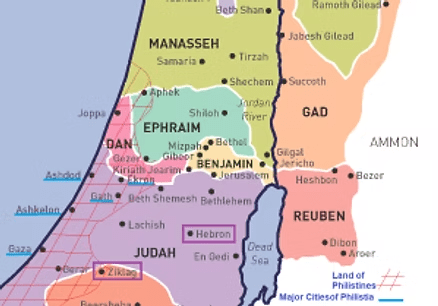
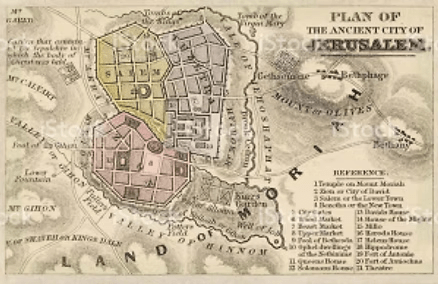

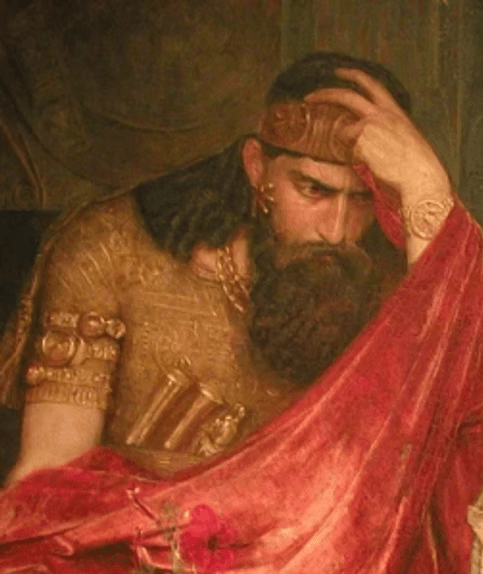




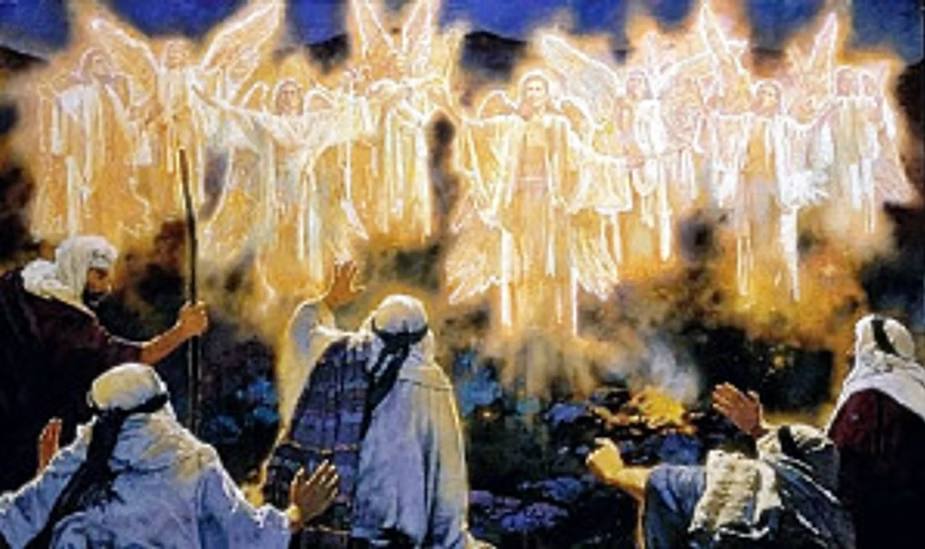



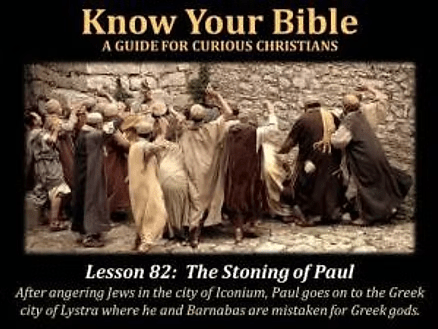

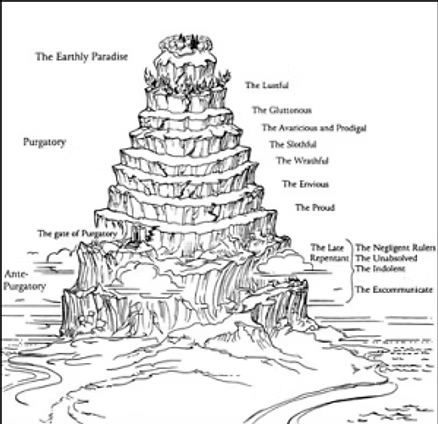

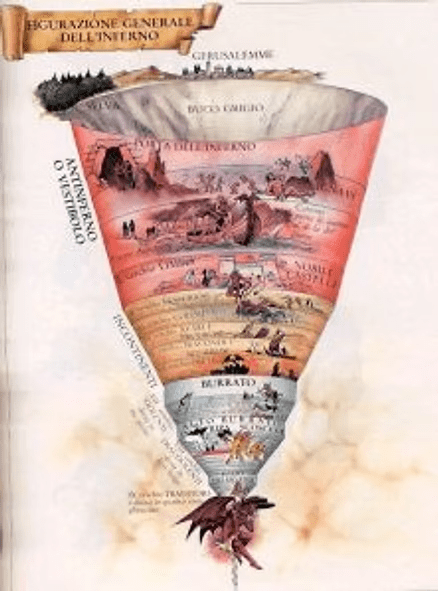

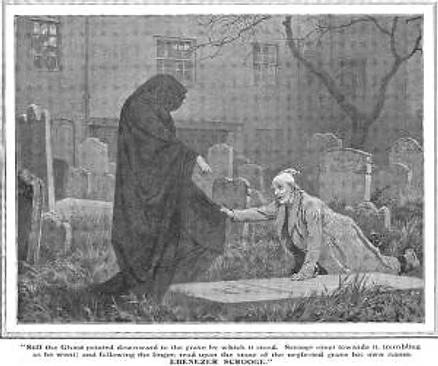


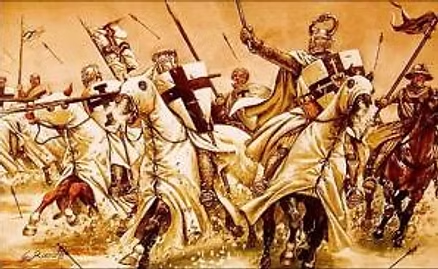
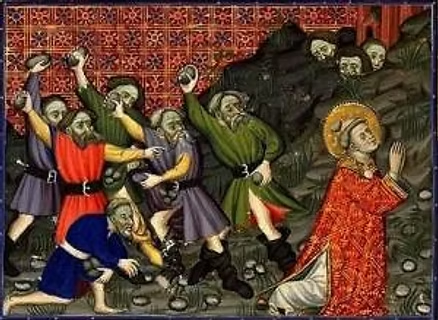




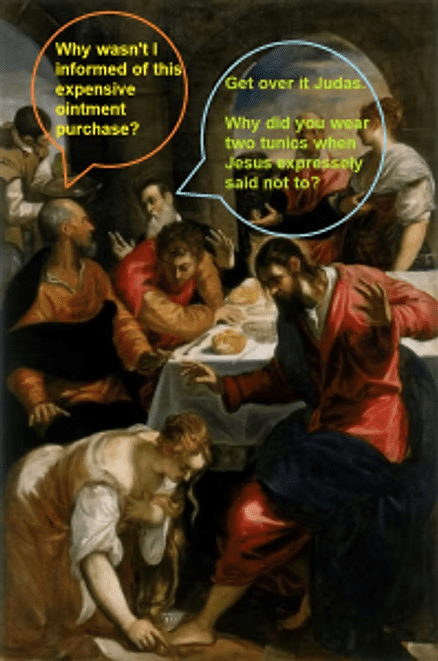
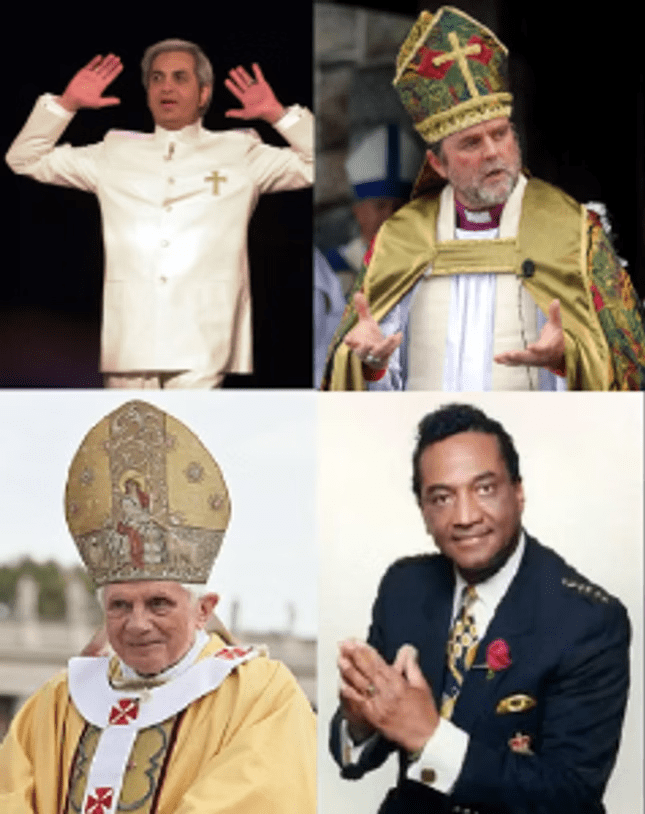
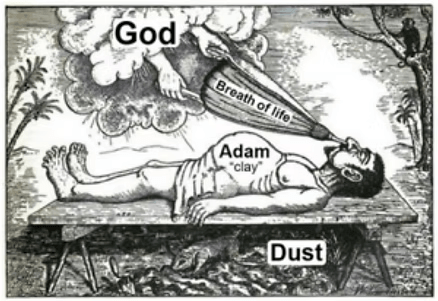
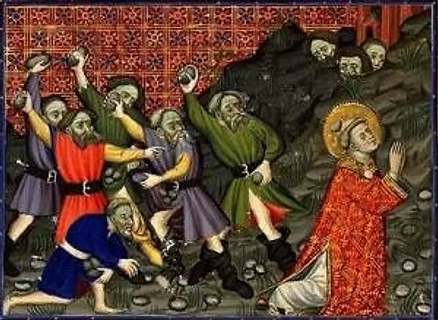




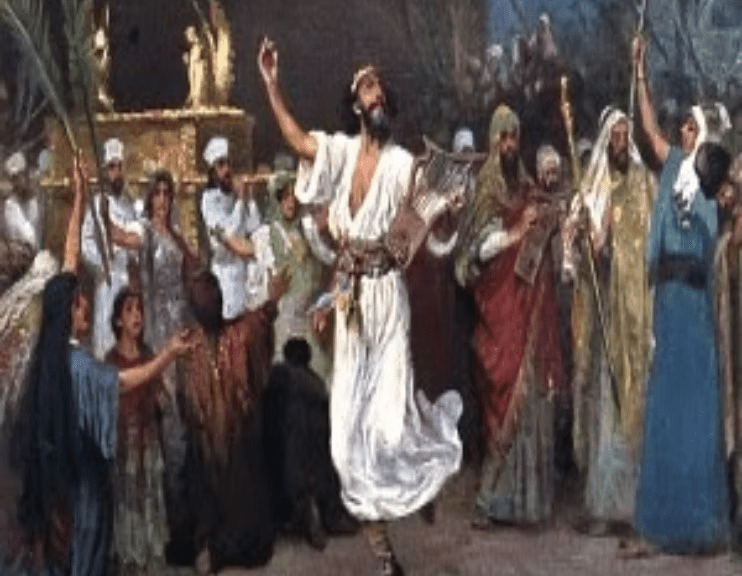
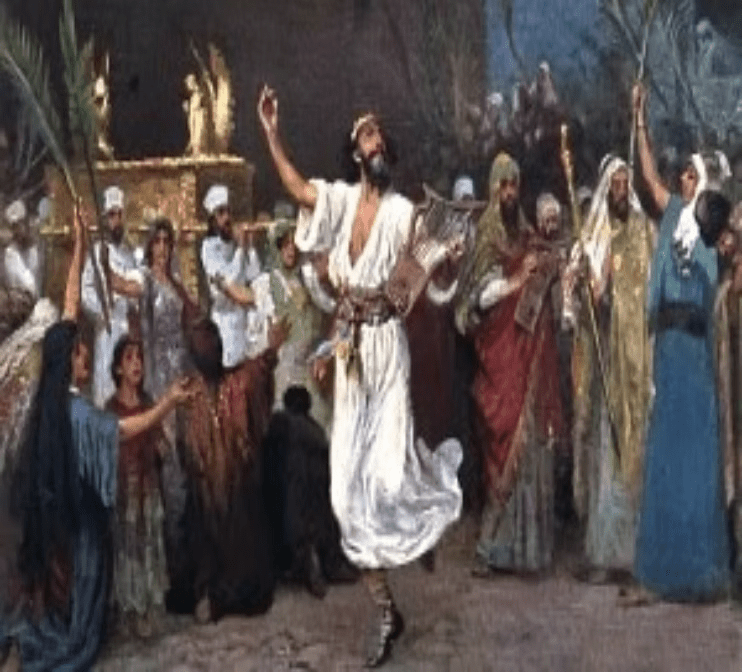
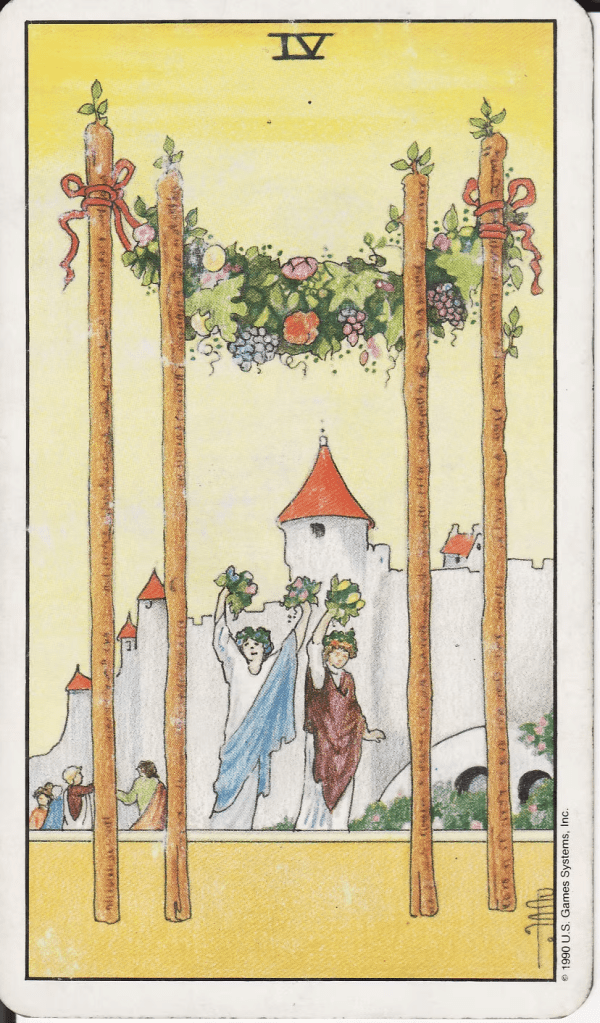
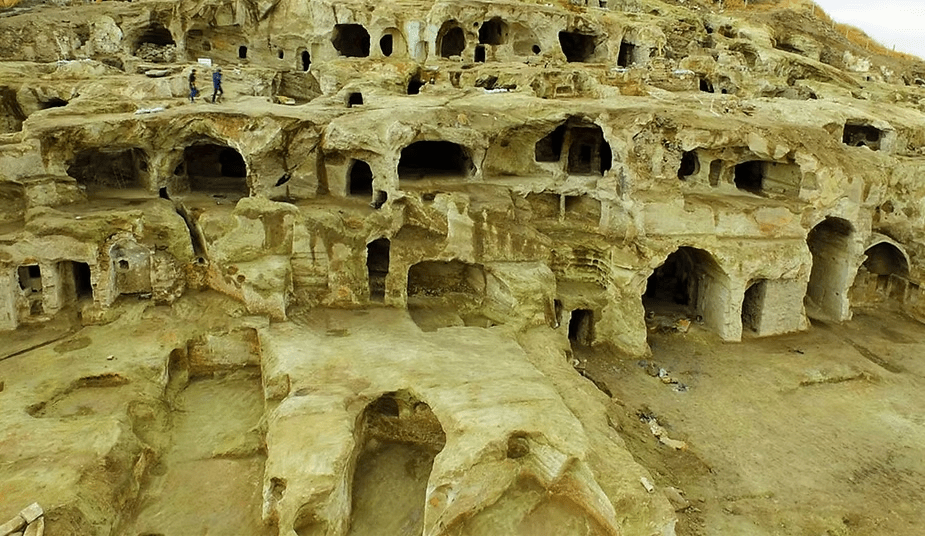






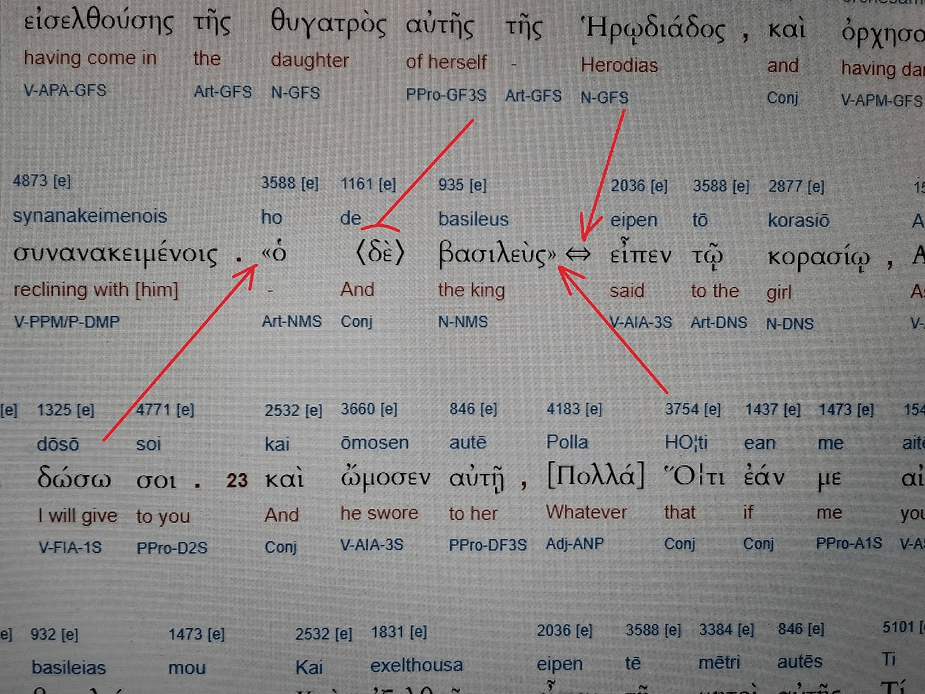
 Explaining the Readings