
The earth is Yahweh’s and all that is in it, *
the world and all who dwell therein.
2 For it is he who founded it upon the seas *
and made it firm upon the rivers of the deep.
3 “Who can ascend the hill of Yahweh? ” *
and who can stand in his holy place?”
4 “Those who have clean hands and a pure heart, *
who have not pledged themselves to falsehood,
nor sworn by what is a fraud.
5 They shall receive a blessing from Yahweh *
and a just reward from me-elohe of their salvation.”
6 Such is the generation of those who seek him, *
of those who seek your face, Jacob. Selah.
7 Lift up your heads, O gates;
lift them high, O everlasting doors; *
and the King of glory shall come in.
8 “Who is this King of glory?” *
“Yahweh, strong and mighty,
Yahweh, mighty in battle.”
9 Lift up your heads, O gates;
lift them high, O everlasting doors; *
and the King of glory shall come in.
10 “Who is he, this King of glory?” *
“Yahweh of hosts,
he is the King of glory.” Selah.
——————–
This is the companion Psalm for the Track 1 Old Testament selection from Second Samuel, telling of David bringing the ark into Jerusalem. If chosen, it will be read aloud in unison or sung by a cantor on the seventh Sunday after Pentecost [Proper 10], Year B, according to the lectionary for the Episcopal Church. This set of readings will precede an Epistle reading from Paul’s letter to the Ephesians, where he wrote: “In him we have redemption through his blood, the forgiveness of our trespasses, according to the riches of his grace that he lavished on us.” All will accompany the Gospel reading from Mark, which tells of the beheading of John being followed by the rise in popularity of Jesus.
In the reading as shown above, I have removed all translations of the word “Yahweh” that erroneously say “Lord.” In addition, there are two verses in this song of praise that end with the word “Selah.” I have added them in bold text. The word “selah” translates as “lift up, exalt,” which must be seen as an indication that one’s soul must become elevated through marriage to Yahweh. Therefore, it would be remiss to exclude that direction from the song.
Verse one makes more sense in a literal translation, as “the earth” must be seen as metaphor for a body of flesh. The translation says, “Yahweh the earth and its fullness ,
inhabited world , and to dwell therein .” This says a soul is in its fullness when it is married with Yahweh. The “inhabited world” [from “tebel”], or simply “inhabited,” means the flesh [the “earth”] has become where Yahweh “inhabits.” Yahweh does not dwell in “the earth,” as He made the physical universe as a compliment to the spiritual universe. Thus, Yahweh only entends to “the earth” as a Spirit that possesses the physical. It is “elohim” who Yahweh creates that dwell in “the earth.” The dwelling, or sitting, or remaining [from “yashab”] makes a human being become the hand of God on earth.
Verse two then literally says, “for he upon the seas has founded it , and upon the rivers ,
has set firm .” Here, the use of “seas” and “rivers” are water references that are metaphor for the emotions brought by the presence of Yahweh within. This extends beyond the physicality of the five senses that create the feelings of a human body, as the presence of Yahweh is Spiritual. The Spirit is greater than a ‘sixth sense.’ Thus, the “seas” and all engulfing waters reflect as the marriage that pours in the Spirit of eternal life that becomes one with a soul. The “rivers” are then the flow of the Word that causes one’s body of flesh to move as directed by Yahweh.
Verse three poses the question, “Who may ascend into the hill of Yahweh?” To grasp the directions of “ascent,” in conjunction with “into,” one needs to visualize the setting on Mount Zion. There were steps carved into the stone of the mountain or “hill,” which led to the place of the Tabernacle near the top, under which the ark was placed. The “ascent” is metaphor for the steps up the mountain to reach the altar, with “into the hill” meaning a marriage that “uplifted a soul” to the point within the place that was Jebus. Jebus [or Jerusalem] reflects where the entrance “into Eden” was; and, it is there that a soul gains entrance, as the result for a soul having married Yahweh. Thus, the answer to the question “Who,” is “all souls who marry Yahweh.”
The subsequent question then literally asks, “then who may stand in place his holy?” This is a question about the elevation of a soul still in its flesh, so the flesh becomes an upright body [“standing” on a path of righteousness], which makes that person become representative of God incarnate. Only as one with Yahweh can one truly be “sacred” and “set apart by Yahweh as holy.” Again, the answer to that question is all who marry their souls to Yahweh.
Verse four then becomes a clarification of these answers, saying literally, “clean hands , and pure soul [that’s] who ׀ not to suffer to an idol his soul , nor sword deceitfully .” In this, there is no need to indicate anyone needs to possess “clean hands.” The word “clean” is stated, which is the answer to “who?” Those who seek redemption are thereby those cleansed of past sins, having been made “clean” by Yahweh. After such cleansing, those souls will each become Yahweh’s “hand” on earth. The word translated as “heart” [“lebab”] means, “inner man, mind, will” [in addition to “heart”], which is more importantly seen as a statement of one’s “soul.” By a “soul” being “pure,” this is an indication of both Yahweh’s Spirit and the resurrection of the “soul” of Jesus, as the “lord” of the flesh to command righteousness has become reborn. This addition marries one in a Trinity union [three in one]. Those are the answers to “who.”
The last part of this verse can be read two ways, based on the words stating “not to lift, carry, take.” In the positive sense, as a continuation of the “clean” and “pure,” they will “not suffer” [an alternative use of “nasa”] from “idol” worship, thereby condemning one’s “soul.” The married to Yahweh “souls” do not “swear” the wedding vows “deceitfully.” However, on the opposite end of the spectrum, as to “who not,” those are the souls that do “not” marry Yahweh, such that they will “not be uplifted” spiritually, so by “not” marrying they will “suffer to the idols” of their worldly lusts. They will call themselves Christians, while having “deceitfully sworn” to believe in and follow commandments they will not keep.
Here, it must be understood that a soul married to Yahweh does become an “idol,” such that the English defines this as the image of God, but the Hebrew means “vanity and emptiness.” The Law that says one should not worship idols says an entity, such as Jesus and all Saints and Prophets, are images and representations of Yahweh on earth. They should be listened to as the voices of God; but they must not be worshiped as gods. A truly holy icon is then empty of self, with all vanity placed upon Yahweh. Thus, one’s own soul should become an “idol,” so one’s “soul does not suffer” after death; but an “idol” brings suffering to all who think Yahweh has made another a god to worship upon the earth, so a true Saint can only be deemed as such postmortem.
Verse five then sings, “he shall receive blessing from Yahweh , and righteousness from elohim .” Here, the use of “elohim” [as “me-elohe”] becomes yet another way to understand how “elohim” are those eternal beings of spirit who are merged with a divine Spirit, who do the acts commanded by Yahweh. An “elohim” can be a law of science and mathematics, thus inhuman but never changed by the wills of humans. An “elohim” can be angels, who are spirits created by Yahweh to be His messengers; but they are never wholly human, although they may appear in human form. Angels cannot be defeated by human souls; and Yahweh commanded His elohim to serve Man. Then, there are the “elohim” who are the saints and apostles, who are wholly human in the flesh, but not influenced by worldly things. Being chosen as an “elohim” of Yahweh through marriage means one’s soul has found “salvation.” Therefore, this verse sings of the “who” that marry Yahweh, as they will be shown “favor” by His Spirit, which makes one become an “elohim” that acts “righteously” in His name, taking forward the message of “salvation” to others.
Verse six then sings, “this a generation of those who seek , who seek your face Jacob . Selah .” In this, the word “generation” must be seen as a “time” or “period” that dwells upon one, as something necessary. Because David had brough the ark into the City of David, forever symbolizing a “generation” of personal soul responsibility for the Israelite people, that was a “time” when birthright no longer did anything for one’s soul. Thus, all had to become “seekers” of redemption and salvation from that point in time on.
When the reference turns to “your face” [from “panim”], this is a direct restatement of the First Commandment, which is the marriage vow that says the wife [soul] of Yahweh will lower his or her face [self-ego] and wear only the face of Yahweh [no other gods before my face].
That “face” does not come by being born a Jew. This becomes the lesson of “Jacob,” who was the second of two twins born, thereby not entitled to a birthright from Isaac. The parents of Jacob named him that because the word captured the essence of him “holding his brother’s heel” [or “He Who Closely Follows” or “Supplanter”]. The divine marriage of Jacob’s soul to Yahweh led to him receiving the name “Israel,” which means “He Retains God,” as one who then had Yahweh within his being. Thus, to seek to earn the “face” of God requires one sacrifice one’s own self-ego [one’s own “face”], so that new “face” can be worn.
It is at this point that the first of two uses of “selah” is found. Again, this word means “to lift up, exalt.” Following the use of “Jacob” [where the capitalization as a proper name is assumed in translation only], the aspect of Jacob must be realized that he was a twin, the lesser of the two from being second-born. This means Jacob reflects the status of one’s own soul, after it has been merged with the Holy Spirit, where that Spirit becomes the ‘firstborn’ and thus the one who rightfully inherits the body of flesh. It is that presence that must be celebrated as a “lift up” and reason to “exalt” that presence. Therefore, the word is not written as a musical direction alone [if at all]. It says rejoice!
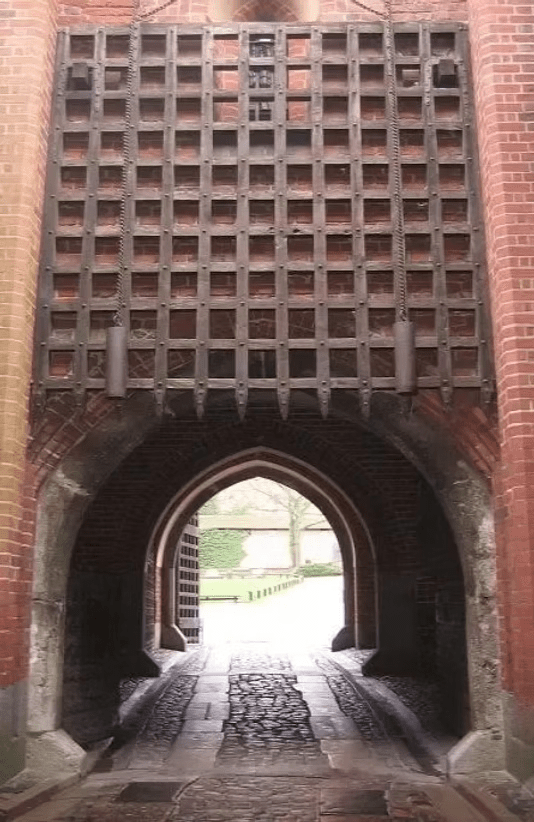
Verse seven then sings, “lift up the gates of your head , be lifted up doorways everlasting ; and shall come in the king of glory .” It should not take much to realize the “head” is where a brain is kept. The brain is the central control organ of the being, as the soul communicates with the flesh through that center. It should also be seen that a city is protected by walls, with “gates” opened and closed as needed. When the “gates of the head” are closed, the brain has become the keeper of the flesh, more than simply keeping the body alive when one sleeps. An “open gate” means being receptive to the Spirit being welcomed in to take control of the brain. Once the brain has been reduced to a function that acts as an influence to righteousness, then the doorway to Eden is opened to the soul. The gates of Eden are guarded by Cherubim [“elohim”], as through those doors lie the tree of life and eternity in heaven. Therefore, once one has removed all blockages to the tree of life, then one shall become one with Yahweh “the King of all that is glorious.”
Verse eight then asks the question, “who this king of glory?” That answer is then sung out as, “Yahweh powerful and strong , Yahweh mighty in battle .” The answer clearly says “Yahweh” is “the king” [from being stated twice], but the deeper question about “who” is relative to those whose brains will receive the Spirit. There is no way a human being can understand the “power, strength, or might” of Yahweh, since the ethereal is not measured by such material principles. Therefore, the question of “who” asks what souls in the flesh will receive the ability of the Holy Spirit [Jesus and Paul referred to them as talents and gifts], to become “powerful” enough to fight the “war” against the lures of sin, cast out by the world. Yahweh grants that power and might to His wives, through the resurrection of His Son Jesus, who is truly “this king of glory.”
Verse nine then sings a refrain of verse seven, stated now as “lift up the gates of your head , and lift up doorways everlasting ; and shall come in the king of glory .” The repetition says those who open themselves [again, a “self” equals a “soul”] up to receiving the Spirit of Yahweh, coming through divine marriage, then there will be no need to repeat the first proposal of marriage. The first opportunity taken [verse seven] means a soul welcomes Yahweh into their submissive body and soul, so the subsequent times when “power” and “strength” and the “might to battle” comes, all “gates” and “doors” will have remained “open,” so no souls will be caught with their ‘gates down.’ The marriage will last eternally, beyond the time a brain will remain fleshy.
Verse then then sings a refrain of verse eight, asking the same questions of “who “ and giving the same answer that is “Yahweh.” The change now says “Yahweh of hosts,” which says the “might of battles and wars” are all easily won by those who form the heavenly “armies” of Yahweh. Yahweh is still “the King of all glorious.” This, once more, is followed by “selah,” which is another statement of “exaltation” from an uplifted soul to salvation.
As the accompanying Psalm for the Second Samuel readings about David taking the ark into Jerusalem, this confirms a theme of marriage between a soul and Yahweh. As a song of praise sang on the seventh Sunday after Pentecost, when one’s own personal ministry for Yahweh should be well underway, this sings the praises of wearing the face of Yahweh, after the submission of one’s own self-ego unto Yahweh, accepting His gift of a righteous life being possible. All the battles against sin will be personally won, because once one opens the gates that resist and reject holy matrimony, then all things are possible. The sustaining strength of ministry does not come from self-will. It comes from the sacrifice of self so one can be lifted up into service.


 Explaining the Readings