While Peter was still speaking, the Holy Spirit fell upon all who heard the word. The circumcised believers who had come with Peter were astounded that the gift of the Holy Spirit had been poured out even on the Gentiles, for they heard them speaking in tongues and extolling God. Then Peter said, “Can anyone withhold the water for baptizing these people who have received the Holy Spirit just as we have?” So he ordered them to be baptized in the name of Jesus Christ. Then they invited him to stay for several days.
——————————————————————————–
This is the Acts reading from the Episcopal Lectionary for the Sixth Sunday of Easter, Year B 2018. It will next be read aloud in church by a reader on Sunday, May 6, 2018. It is important because it tells how the Holy Spirit is for all human beings who seek the truth and hear the word of God speaking to them, individually. As non-Jews hearing the word and receiving the Holy Spirit, this means bloodlines that share no DNA with the tribes of Israel, as those not direct descendants of Abraham, Isaac and Jacob, and those not educated in Mosaic Law, Gentiles have the capacity to be reborn as Jesus, the Christ promised to the Jews.
Certainly, the key element in this reading that makes one worthy of being awarded the Holy Spirit is, “the Holy Spirit fell upon all who heard the word.”
It descended like a dove.
The limiting caveat is the Holy Spirit is not something everyone receives. It is not guaranteed to devoted Jews who profess to adhere to Mosaic laws; and it is not guaranteed to all Gentiles who gather around a true Christian who speaks.
As a reading presented on the Sixth Sunday of the Easter season, the key theme of the Epistle and Gospel reading is clearly “God’s love.” We see that here when we read, “The Holy Spirit had been poured out even on the Gentiles, for they heard them speaking in tongues and extolling God.” The Gentiles – Romans who worshiped pagan gods – who were filled with the Holy Spirit were highly praising [the One] God, which is a sign of the love that overcame them – a love from God.
When Peter asked, “Can anyone withhold the water for baptizing these people who have received the Holy Spirit just as we have?” the focus was on how rules, dogma, laws, or edicts that state a right to symbolically wash a body clean of sin, plays no role in true baptism. When we learn that Peter “ordered [the Gentiles of Cornelius] to be baptized in the name of Jesus Christ,” they had already been baptized by the Holy Spirit, filled with God’s love, and reborn as Jesus Christ. This states that baptism by water can ONLY truly be done after the presence of God has transformed [or Transfigured] one of faith, by His presence in one’s heart.
It is natural for Christians today to want to claim this presence; but after centuries of training by the various denominations of Christianity the majority opinion has been reduced to a belief that baptism by water (done first, as early as infancy) is the call for the Holy Spirit to come to one. We believe ministers, priests, pastors, preachers and educated church leaders are the “Jesus Christ tamers,” who command Jesus to surround a congregation, by invoking that name (“in the name of Jesus come!”). Unfortunately, this reading from Peter’s acts as an Apostle says the truth is quite different.
Prior to these verses from Acts chapter 10, Peter and fellow Apostles spoke to Cornelius and fellow Gentile soldiers. Peter said the following:
“We are witnesses of everything he did in the country of the Jews and in Jerusalem. They killed him by hanging him on a cross, but God raised him from the dead on the third day and caused him to be seen. He was not seen by all the people, but by witnesses whom God had already chosen—by us who ate and drank with him after he rose from the dead. He commanded us to preach to the people and to testify that he is the one whom God appointed as judge of the living and the dead. All the prophets testify about him that everyone who believes in him receives forgiveness of sins through his name.” (Acts 10:39-43)
Significantly embedded in that text is the truth that states, “[Jesus, the risen Lord] was not seen by all the people, but by witnesses whom God had already chosen.” That says that after Jesus has resurrected from death, he appeared to the ones who had been prepared to see him. This is why he appeared in unrecognizable form to Mary Magdalene, to Cleopas and his wife Mary, and to the disciples beside the Sea of Galilee (an event that was actually a dream). It was after Jesus spoke to those disciples that they knew who it was speaking “the word” to them. Because they had been prepared, as “witnesses whom God had already chosen” (during three years of Jesus’ ministry and lessons), they saw Jesus in the flesh and received the Spirit.
This same selectivity that is relative to who can know God’s presence is nearby and to know Jesus is the Messiah can be seen when John told of Jesus predicting his death as the Passover Festival neared. There John wrote, “[Jesus said,] “Father, glorify your name!” Then a voice came from heaven, “I have glorified it, and will glorify it again.” The crowd that was there and heard it said it had thundered; others said an angel had spoken to him.” (John 12:28-29) The point of that is it says not everyone heard the voice of God speak. It was only heard by those who had opened their hearts to God, with faith in Jesus as His Son.
This inability of some to hear the voice of God is still in effect today. It is reminiscent of the event that was witnessed by an estimated crowd that ranges between 30,000 and 100,000 people. It occurred in Fatima, Portugal on October 13, 1917, as the sixth (and final) Marian apparition before three shepherd children (all on the 13th of the months from May and October). The children had prophesied that a miracle would take place on that final date, attracting a much larger crowd than prior. The “voice of God” can be read then as visual words (a picture is worth a thousand words), rather than spoken words. (source: Wikipedia)
The three shepherds of Fatima.
The voice of God for that event is called the “Miracle of the Sun.” According to the Wikipedia article about that event: “Newspapers published testimony from reporters and other people who claimed to have witnessed extraordinary solar activity, such as the sun appearing to “dance” or zig-zag in the sky, careen towards the earth, or emit multicolored light and radiant colors. According to these reports, the event lasted approximately ten minutes.”
This event was officially recognized by the Roman Catholic Church in 1930. However, there are critics of this recognition, such as reported by Wikipedia:
“According to theologian Lisa J. Schwebel, claims of the miracle present a number of difficulties. Schwebel states, “not only did not all those present not see the phenomenon, but also there are considerable inconsistencies among witnesses as to what they did see“. Schwebel also observes that there is no authentic photo of the solar phenomena claimed, “despite the presence of hundreds of reporters and photographers at the field.”
That is basically restating what Peter said about people not being able to see the risen Lord, as he spent time teaching the disciples for forty days before his Ascension. In John’s Gospel, where his words say, “The crowd that was there and heard it said it had thundered; others said an angel had spoken to him,” become a precise parallel to the criticism of “inconsistencies” that occurred in witnesses to the Miracle of the Sun. It is what should be expected, because not everyone is prepared by God to hear His Word.
In addition to the prophesied miracle that some witnesses claimed took place, no one in the crowd of onlookers said he or she saw the Virgin Mary. The three children knelt at the same spot they had been told to kneel each month (by an angel), with the crowd gathered each time seeing their gazes fixed upward, as if there was something above and before them. No one in the crowds gathered ever witnessed anything other than three children kneeling and gazing upward. However, after each visitation of the Virgin Mary, the accounts given by the children was how all three children had vividly seen the Blessed Mother, but only two could hear her speaking to them.
This too fits what John and Peter said, as the voice of God is relative to how well prepared one is to hear that word. The boy shepherd was said by the Virgin to need to do more repentance, which was why he could not hear. Still, he was uplifted by the visions he was allowed.
The proof of someone hearing the divinity of apostolic words being spoken is then found in Peter’s statement that the Gentiles began “speaking in tongues and extolling God.” That statement in Acts is actually divided into two separate segments (denoted by a comma), such that the word “and” has caused translators to omit the comma.
The Greek states, “lalountōnglōssais , kai megalynontōn ton Theon,” with a literal alternate translation saying, “proclaiming with languages , and enlarging (or increasing, or magnifying) the God.” This translation then allows one to stop being mesmerized by a concept that is misinterpreted by man – “speaking in tongues” – so that “languages” is more appropriate when the “voice of God” and “speaking the word” is the motivation for this reaction. Rather than them “extolling God,” the separation allows one to see how it was “the God” within them that was “increasing” their ability to speak the word, which the Gentiles suddenly were doing.
This means that the miracle of hearing God’s voice, from listening to the voice of God through Peter (an Apostle-Saint of Jesus Christ), those Greco-Roman-Gentiles began speaking fluent Hebrew and Aramaic, rather than Greek or Latin. As they spoke in those “languages,” they not only quoted from the Torah, Psalms and Prophets (a task they had no training in), but they expanded on the word of Scripture. Peter saying they “magnified” the “languages” of Holy text says the Gentiles began divinely explaining how those words prophesied Jesus Christ. They “spoke the word” just as Peter had been speaking.
This means the proof of having the Holy Spirit “fall upon” one is the God-given ability to explain and defend the books of the Holy Bible, without prior explanation or defense being taught one.
Arthur being knighted by Merlin
That proof was clearly visible to Peter and his companion Apostles, as there was only one way such automatic utterances could come to be. God had sent His Holy Spirit to the Gentiles, transforming their souls to a purely righteous state (i.e.: Saints). That then moved Peter to mark the event with the element of water, where they were not so much “baptized” as we Christians understand that today, but “christened” with water.
The purpose of that naming (the definition now applied to the word “christening”) was to officially proclaim those Gentiles were in the name of Jesus Christ. That is the truest form of one’s right to profess Christianity; and it is the root of the word “christen,” such that one is given a Christian name: Jesus. Therefore, the ritualistic pouring of water (or a river dunking) was done after the soul had reached a state of righteousness, through a Spiritual rebirth.
When we then read, “Then they invited him to stay for several days,” this is vital to grasp. That statement is not a simple element thrown in at the end. It is actually what links this reading to two others that have crystal clear themes of love.
The whole of Acts 10 is about God preparing Peter to accept non-Jews in his ministry (through a vision). This reading’s event occurred soon after Cornelius sent men to request a visit from Peter, asking Peter to go to Caesarea Philippi. Because of a vision Peter had experienced prior, he traveled with Roman soldiers and entered a Gentile home, which was a forbidden act of Jews. Cornelius (a centurion) and his closest soldiers were good human beings and had treated Jews with kindness and fairness. He had heard some Jews speak if Peter, who was then in Joppa, so he sent for him.
Still, neither Peter nor Cornelius expected what happened in this part of Acts 10 to happen; however, when it did, Peter was moved to recognize Cornelius and his men as brothers in Christ. Because they were then of the same “church” (those who gathered “in the name of Jesus Christ”), staying together “for several days” was then an important act of acceptance, out of love for one another, their love of God, and the love of the Holy Spirit.
As a Easter lesson, it is this aspect of God’s love that instantly came over two groups of strangers that fits into a theme of the Sixth Sunday of Easter, Year B 2018. The Easter lessons are all about a personal Resurrection of Jesus Christ needed in each of us. This Resurrection is only possible when one willingly surrenders oneself to God, dying of ego so one can be reborn as a soul cleansed by the presence of God and the Mind of Christ (which allows one to know everything about Scripture, so a Saint can “speak the word of God” fluently). Thus, from this reading we are to see ourselves as Gentiles who have been prepared for God’s presence, which “falls upon” us by our acts of goodness and fairness towards those who serve the One God faithfully.
Still, being prepared through acts of human love does not fully make one a true Christian. This reading says we need to strive for more. We need to know the love of God.
The Resurrection of Jesus Christ in us can be seen reflected in this story from Acts. Cornelius did good, but he went beyond by sending for Peter. As a Gentile, he wanted to know more. He wanted someone to convince him to convert to Judaism, rather than remain a polytheistic Roman. He reached out to find the truth. God saw that, so He prepared Peter to be His servant who would offer the truth to Cornelius.
We must become opened to receive God. We must pray that the truth will open our eyes and minds. When the bearer of truth comes, we need to listen to the word and let the Holy Spirit fall upon us, so we see the meaning. We must seek to see the truth where others have not seen it. We must desire to know the truth where others have only heard its sound. We must surrender ourselves so our brain is freed to know the truth of the Mind of Christ. When one experiences that knowledge, it is because one has been truly baptized by the Holy Spirit, with one’s soul cleansed by the presence of God, with one then in the name of Jesus Christ.
When that state of existence has been reached, one knows love. One then can recognize all others who have the same state of love surrounding them. Once one knows that love, one enjoys spending a few days with others of the same Godly heart and the same Christian mind. It is like a newfound reunion, where joy abounds.
Everyone who believes that Jesus is the Christ has been born of God, and everyone who loves the parent loves the child. By this we know that we love the children of God, when we love God and obey his commandments. For the love of God is this, that we obey his commandments. And his commandments are not burdensome, for whatever is born of God conquers the world. And this is the victory that conquers the world, our faith. Who is it that conquers the world but the one who believes that Jesus is the Son of God?
This is the one who came by water and blood, Jesus Christ, not with the water only but with the water and the blood. And the Spirit is the one that testifies, for the Spirit is the truth.
——————————————————————————-
This is the Epistle selection from the Episcopal Lectionary for the Sixth Sunday of Easter, Year B 2018. It will next be read aloud in a church by a reader on Sunday, May 6, 2018. It is important as it clearly sets a “love” theme for this day in the Easter season, accompanying the Gospel reading where Jesus instructed his disciples to love one another. Here, John wrote of the love of God, which allows one to obey such commandments.
In this relatively short passage, some form of the word “agapé” is found five times: agapōn, agapa, agapōmen (2), and agapē. All are found in the first three verses. This is John again addressing a state of love that goes well beyond the human emotions that create a range of temporary feelings, from passion, joy, and happiness, to sympathy, empathy, and sorrow for a loved one. John used “agapé” rather than “philos,” as reflecting a motivation to do as God prefers, not as self desires. (John went deep into this in 1 John 4:7-21 – the Epistle reading for the Fifth Sunday of Easter)
Surrounding these references to love (“loving”, “loves”, “we love” (2), and “love”) is the word “pisteuōn,” from the root “pisteuó,” which means, “I believe, have faith in, and trust in.” That Greek repeated word has been translated above as “believes,” but in reality it states “believing.” There is a difference and this difference needs to be understood, just as one needs to know the difference between human love and God’s love.
By adding an “–ing” ending, a verb becomes a present participle form. That states an action that is presently ongoing, versus an act past or one yet to come. Still, it can (in certain cases) change a verb into a noun (a gerund), which is something defined by its intended actions. By translating this verb as though the writer’s intent was to demonstrate a different verb usage, through the third-person plural form of “believe,” one misses the purpose of John’s letter being intended for one specifically (the reader) to be “believing.” By reading “Everyone who believes,” the implied intent is seen as having less to do with the reader presently “believing,” allowing one to imagine oneself among a generic group of individuals who “believe.”
When this individual aspect is realized in the present participle state, the first verse becomes more powerful. When one sees oneself as the measure by which “everyone” like one is “believing Jesus is the Christ,” that then urges each individual reader to ponder, “Do I truly believe?” and “Am I believing this very moment?” “Everyone believing Jesus” is then “believing” as “the Messiah.” That is much more than belief proposed or assumed.
The answer that truly matters comes when one can truly identify with Jesus, because one knows personally (a soul’s knowledge) that Jesus is my Savior. It forces one to realize how true belief can only come through direct experience that proves beyond a personal shadow of doubt or question of belief, due to a lack of personal knowledge. That is unlike a presumption of belief, due to being told something that one’s brain has deemed valid and reliable, because nothing has yet rejected the premise for belief.
From this beginning point of “believing,” one can then understand how belief is “born of God.” It has not been an idea brought forth by some other human being. It is because of the love relationship that has been established, thus experienced, between the Father and the child … the one who is believing.
When the Son of God is known to be born of the Father, that duplication is then present in all the children of God, in the same way that “Everyone is believing” and “everyone is loving.” “Everyone” is not the whole world who believes that Jesus was the Christ, but “Everyone” who has been reborn as Jesus Christ – a very select group. It means one gains the same personal knowledge as Jesus Christ had. Therefore, believing and loving is through the resurrection of Jesus Christ in each individual, so that all who are born of the Father, become mirror images of the Son reborn.
I read the English translations and am often moved to examine the Greek parallel versions. That helps me see more. It helps me see what can easily be missed in one translation from the original text. Perhaps, reading a literal translation of the Greek will be helpful to you, especially as a way to see the actual segment break points.
Punctuation is a relatively modern invention, but one must give some credit to Apostles knowing where pauses should be read.
John (like most Apostolic writings) is purposefully written in a way that takes its meaning well beyond what the surface translation implies. In the translation of 1 John 5:1-6, one will note how often the Greek article “the” (in various forms) is often translated as “the [One]” or regularly omitted, in order to accommodate a translation in English. That implies the Greek language unnecessarily adds words. I prefer to see how “the [one]” adds to understanding. Still, the break points (marked by commas and semi-colons) are important signals to contemplate what has been said, as if John placed a mark to let one know to stop and contemplate what he said before adding that to the next segment.
Here is 1 John 5:1-6 literally translated:
[Note: Not stated in 2018, but most important to realize, is the Greek word “kai” should be read as a marker of importance to follow, rather than a simple conjunction “and.” I am changing all places where “and” was written to bold type, so the reader can contemplate where statements of importance are written. I have also underlined the capitalized presence of “Kai,” as the capitalization acts as greater importance added to one word.]
“Everyone [the one] believing[present participle verb – not a gerund] Jesus is the Messiah ,[comma] of the [one] God has been born ,and everyone loving the [one] having begotten [him] , loves also the [one] having been begotten from him.”
“By this we know we love the children the [one] of God , when the [one] God we love , and the commandments of him keep.”
“This indeed is the love the [one] of God , that the commandments of him we should keep ;[semi-colon] and the commandments of him burdensome are not.”
“For all the [one] having been born of the [one] God , overcomes the world ; and this is the victory the [one] having overcome the world —[double dash] the faith of us.”
“Who now is the one overcoming the world , if not the one believing that Jesus is the Son the [one] of God?”
“This is the [one] having come by water and blood , Jesus Christ ; not by the water only , but by the water and the blood.And the Spirit is the [one] testifying , because the Spirit is the truth.”
From that literal translation, added to the transition from believing and loving coming from God, we see how John explained how the love of God is what allows one to keep His commandments. This becomes much more than learning the laws on a mental level and using personal will-power to not venture beyond those rules. The reason Catholic-based religions have a “confession of sins” as part of their liturgy is because human will-power ultimately fails, due to the overwhelming influences of a world filled with temptations to break the rules of God.
This means the love of God is the presence of an all-controlling desire to live a life within the Law, because nothing of the world can then be a distraction from that goal. Personal will-power no longer comes into play, as the ego has surrendered to God, and the soul has become one with the Holy Spirit. When that happens within a human form, the result is the resurrection of Jesus Christ.
This is the ONLY WAY to overcome the world and find that obedience to God’s Law is not a burden. The Jews of Jesus’ day memorized Mosaic Law but found it difficult complying with it. Disease was seen as a failure of sin, and being a tax collector was seen as going beyond the boundaries of legal permits. When the translation above states, “And this is the victory that conquers the world, our faith,” the definition of “faith” has to go beyond written laws. It must be read as relative to believing. True “faith” is relative to the personal proof that leads one to truly “believe.”
The Greek word for both “faith” and “believe” is “pistis,” meaning there is no difference in meaning between the two translations. The problem is when an English word, such as “faith,” is transformed into a noun, such that the translation then takes on the limitations of dogma that is applied to a particular “faith” (a regular occurrence in Scriptural interpretations). However, as a noun in New Testament usage, “faith” and “belief” are completely intended to be understood as oneness with God, as an ongoing experience where the proof is within.
The present participle of believing can be seen as a leap of faith, always being mid-leap.
In no way can “believing” be dependent on the human brain’s power to discern a multitude of external thoughts that ponders the issue of “faith”. It is the same relationship as that where “breathing” defines “life.” The two are synonymous, without any need to consciously ponder if “life” causes “breathing,” or vice versa. Faith is believing and that is naturally known. just as is love mutually known between the Father and His children.
Reading this passage in 1 John and pondering this relationship between God’s love and an individual’s believing as synonymous with faith, it led me to create these diagrams. They show how the same words can have two meanings: one externally driven and the other internally driven. Perhaps, these will help the reader to grasp the direction my thoughts have gone.
The Law of God externalized. The Law of God internalized.
To me, this demonstrates what John meant by, “when we love God and obey his commandments.” Love has gone beyond a human emotion for God, as generated by the self and the ego of one’s soul. It demonstrates how John said, “For the love of God is this, that we obey his commandments.” In the first diagram, moving outside of the Law would imply one ceases to “love” God, instead “loving” the world. However, the second diagram shows how the love of God makes one subservient to God’s Will, thus always obedient no matter what the world surrounds one with.
When John wrote, ” Whatever is born of God conquers the world,” the second diagram displays this as the submission of self-ego to God, where one becomes married to God through God’s love. This then expands the soul so that it becomes one with the boundaries of God’s Law. It is that soul change that is born of God. It is the transformation from mere human to the rebirth of Jesus Christ.
When John added, “And this is the victory that conquers the world, our faith,” this is a statement that faith is identical with believing, where one is transformed from wandering human to Saint affixed to the Will of God. Whereas the Judaic “faith” produced many wanderers (free radicals), only true faith cleanses one’s soul of sin. One is then believing in the name of Jesus Christ, as that name has become one’s own.
In verse 6, where John posed the existence of a duality in “water and blood,” the diagrams above make it possible to see the difference between “water and blood.” Such words in the same sentence is reminiscent of the saying, “blood is thicker than water,” where “blood” bears the connotation of relationship. That makes “water” more casual in nature; but water is necessary for life on earth. This can then be easy to misunderstand, as a conundrum that asks, “Which is better: blood or water?”
Water is an esoteric element that symbolizes emotions, where one’s feelings flow like water, always changing states (like liquid, solid, gas), rates of speed (like rapids, falls, streams, and rivers) and exploring a range of depths (like ponds, lakes, seas, and oceans). Still, water is a physical element, one which is a basic solvent and cleaner. We bathe dirt from things with water. The human body is up to 60% water; thus life is dependent on water. The body must consume water regularly, because that which is stores is quickly used.
Blood, on the other hand is esoteric as an indication of relationship, where every race in the world has different genetic characteristics that can be examined in one’s blood. There are different blood types, inherent diseases, and types of blood cells found in human blood. Blood is a physical necessity for life, because it is internal to the body. Blood is the most vital element in a system controlled by the heart, where every cell in the human body is strengthened by its blood supply. Loss of blood is life threatening.
All of these esoteric and physical characteristics of water and blood can be seen reflective in the diagrams. The first diagram represents the physical aspects of water and blood, such that the boundaries of God’s Law act as a pool of water that is necessary for life. The world incorporates God’s Law into civil laws. Without that water, life would die of higher purpose. For individual human beings, religions become the blood that leads to the responsibilities of adherence to the Law of God and civil laws. Just as blood is oxygen enriched, by the lungs and the heart, sent out red in arteries, but exhausted of oxygen in the return to the heart in veins, human being act as individual blood cells.
This then allows the second diagram to reflect the internalization of the principles of water and blood. The two become Spiritual in nature. The joining of the self to God, at the death of the ego, becomes the water of God’s love that washes over one cleansing the soul of sins. The expansion of the soul to the boundaries of God’s Law is then the blood of Christ that fills one’s heart and mind.
Religion can then be seen as the water of baptism, which proposes remission of sins and absolution. Christianity is then the baptism by the Holy Spirit, done by the Messiah. Religion is the life blood that teaches acts of goodness and self-constraint to a higher cause. God’s marriage to one’s heart is then the true blood that relates all Christians as the Sons of God (regardless of human gender). Jesus came as water in the physical sense that he lived on earth as a man. However, that water was only available to those living around him. The living water of Jesus is then his being reborn as the blood of Christ.
In the first diagram (Religion – World), it does not matter what the religion is. It can be any that places emphasis on a god, which certainly includes the “big three” that claim the same God: Judaism, Islam, and Christianity. All of those can then be subdivided into sects, branches, and denominations, still falling under the heading of “Religion.” Every different division has its own distinguishing dogma, ethics, and rites that followers of a system of faith or belief (the misnomer of “faith” and “belief”) are expected to follow. Those “laws” then govern the people within a religion, as the determining factors as to who is to be held in high standing within each respective segment of people.
The role of each individual is then denoted by the red circle (a soul) with a black “S” within (the ego of the self), which denotes how each human being is contained within the boundaries of one’s soul. Individuals learn the differences between righteousness and sin, in the schools of the world, which include religions. As such, God’s gift of “Free Will” allows the individual to migrate (become a “free radical”) between those two realms that exist in the world.
Human beings are then free do move away from religion, go back to religion, or straddle the boundaries of religion. To maintain interest (again, a diluted definition of “faith” and “belief”), the religions offer absolution and penitence on a regular basis. This does nothing to lessen the validity of “righteousness,” based on the parameters of “God’s Law,” as it also states it is ultimately the responsibility of the individual to strive for a lifestyle that pleases God.
This becomes reflective of the “water” element of which John wrote. The various churches act as the holy water that bathes the sin from the individuals that are members. It creates a body of emotions that are soothing and dissolving, in which members can soak. Still, such external water is not enough to bring about true faith and belief.
The right diagram replaces an institution (“Religion”) with God, such that the ego has surrendered to God’s Will, no longer able to pick and choose what influence he or she will follow at this instance. The close relationship between God and oneself is one of Father to Son (regardless of human gender), so the soul (the red circle) is cleansed (by the Holy Spirit) and expanded to the perimeter of God’s Law. Rather than an institution (a lifeless entity without individual human beings) acting as a place of refuge in the world, each one who is in a personal relationship with God can freely go anywhere in the world, remaining always within the boundary of God’s Law.
One is then only influenced by God’s Will and the world is only a place for one’s faith and beliefs to be shared. The individual is a temple unto the Lord, thus projecting to the world as the light of Christ. From that God-centered state of being (the present participle), the burden of the world (the guilt of sinning) is removed.
This becomes reflective of the “blood,” where it is the circulation of God’s Holy Spirit within one’s being that is the meaning of the blood of Christ. It is the baptism of the soul, which expands its heartfelt desires to fit God’s Will. Christ has become one with the soul, just as God has become one with the heart. Because the heart is the engine of the blood, there is a Spiritual uplifting that exceeds any human emotional capability. This Spiritual elation is brought on by God’s love.
This explanation (I hope) makes it possible to grasp the meaning of John writing, “The Spirit is the one that testifies, for the Spirit is the truth.” That says that the sacrifice of the ego has allowed the Holy Spirit to be the impetus for everything a human of faith and belief says. Nothing is kept private and secret, as the world needs to know the truth of God’s word (i.e.: Holy Scripture). The truth was spoken by Jesus of Nazareth; and, by his death, resurrection, and ascension – to be used by God (the Father) over and over again (as His right-hand “man”) – one who receives God’s love becomes as pure and clean as was Jesus, speaking the truth through the Christ Mind. The truth continues to be told, always present. The Holy Spirit is sent by God, the Father, to the Son, via the Holy Spirit, so all servants of God can only speak the truth of God (as Jesus of Nazareth always did).
As a lesson in this sixth Sunday in the Easter season of personal resurrection and rebirth as Jesus Christ, one needs to see the importance of personal responsibility. A true Christian is born of God, not anyone or anything that is less than the Father above. A Christian does not recite words written on pages as the source of one’s faith and as that in which one believes, when one cannot explain the meaning of those words with truth and conviction. One has to elevate to a state where the world can be conquered and self-driven will power cannot reach that height and remain in that state eternally in the present.
This lesson flows into the Gospel reading in John, where Jesus told his disciples to love one another. That lesson is easily heard and yet constantly found too difficult to do. This lesson shows how “whatever is born of God conquers the world,” with that only attainable through true faith.
That is the answer to the question, “Who is it that conquers the world but the one who [has faith] that Jesus is the Son of God?” The answer should be you.
———-
[Note: When I see someone has viewed something I have written, I re-read it to see if I made errors that need correcting (my normal grammar is bad). As I re-read this article, I added a note above. Still, I feel it necessary to add an explanation about the “free radicals” of the diagram above. For that soul-ego to be placed within the influence of a religion, this becomes primarily how a child is raised within a church and taught to believe in Bible Stories. As the child grows and is more influenced by the world, the natural movement is away from religion and towards the world. That experience is necessary for one to return to God (not a religion) later in life. The sad thing about this is modern parents are missing that childhood development within religion, so their children are mostly born of the world, without religion’s influence. This is the danger we presently face: few believing.
Jesus said to his disciples, “As the Father has loved me, so I have loved you; abide in my love. If you keep my commandments, you will abide in my love, just as I have kept my Father’s commandments and abide in his love. I have said these things to you so that my joy may be in you, and that your joy may be complete.
“This is my commandment, that you love one another as I have loved you. No one has greater love than this, to lay down one’s life for one’s friends. You are my friends if you do what I command you. I do not call you servants any longer, because the servant does not know what the master is doing; but I have called you friends, because I have made known to you everything that I have heard from my Father. You did not choose me but I chose you. And I appointed you to go and bear fruit, fruit that will last, so that the Father will give you whatever you ask him in my name. I am giving you these commands so that you may love one another.”
——————————————————————————-
This is the Gospel selection from the Episcopal Lectionary for the Sixth Sunday of Easter, Year B 2018. It will next be read aloud in a church by a priest on Sunday, May 6, 2018. It is important because it tells of Jesus instructing his disciple to love one another, just as he has loved them. It is more important when one understands exactly what that commandment to love one another means.
———————————————————-
Preface Note: I believe this is a vital lesson that all Christians should be able to know and defend. For that reason, I have expanded the scope of this interpretation to include other Scripture in support of this lesson. As such, this writing is longer than usual, in order to make this reading fully understandable.
———————————————————–
It is worthwhile realizing that this reading from John is the second time where Jesus told his disciples to love one another. The first time is also found in the Gospel of John, two chapters earlier. There one reads:
“A new command I give you: Love one another. As I have loved you, so you must love one another. By this everyone will know that you are my disciples, if you love one another.” (John 13:34-35)
Both times that John recalled this instruction being given were on the same day – the the evening of the Passover Seder meal (15 Nisan). The first time was soon after the ritual dinner, not long after Judas left to betray Jesus. Jesus knew Judas was going to do that as he said, “What you are about to do, do quickly.” (John 13:27)
That timing makes it worthwhile to know that Jesus did not say to Judas, “Before you leave to betray me, I have a new commandment you need to hear first. It is: Love one another as I have loved you. Okay Judas, what you are about to do, do it quickly.”
Leaving friends behind.
Because that conversation did not take place, nor get recorded as a lesson of love, the omission acts to show how Jesus gave this commandment to a select group of followers – his disciples. By waiting for a traitor to leave, Jesus did not say that commandment as a lesson for the whole world to follow. Although that would be the ideal, just as would Heaven being on Earth would be ideal, the whole world would have to be followers of Jesus Christ; but because that cannot be, one cannot read that ideal as the intended message in this lesson.
Recently, I encountered a man who had solved the whole world’s problems, based on misunderstanding this teaching of Jesus. He had written a short story that used this flawed logic: Because Jesus said his disciples must love one another, then all the world’s problems are rooted in the failure of Christians to follow that order.
This man was less concerned with helping anyone but himself (through sales of his short story), because his ultimate motivation was to throw blame on Christians for not living up to the lessons of Jesus Christ, through the sacrifice of their beliefs to the beliefs of others. He surmised that all the mental problems in the world were due to Christians not forgiving sinners, as though love means not judging anyone. He rationalized that Christians are to blame for pushing guilt onto the guilty, making sinners become psychotic due to a lack of love and acceptance of sins. This man concludes (I presume) that Jesus taught forgiveness as the only expression of love.
The sad thing is this man does not stand alone in using this passage from John 15 as a stick to beat Christians into submission to a world of sin. His view is how so many misunderstand this lesson (especially atheists). People misunderstand this command given for several reasons, but foremost is the difficulty that people have understanding God’s love. The theme for the Sixth Sunday of Easter is God’s love, but the mistake comes from thinking Jesus gave a command relative to human “love.”
Before discussing today’s Gospel lesson, it should be noted that Jesus gave other commandments about love. Unless those commands are understood as still in effect, making this reading’s order be additional, one cannot properly grasp the meaning here.
First, Jesus presented this lesson about loving your enemies:
“You have heard that it was said, ‘Love your neighbor and hate your enemy.’ But I tell you, love your enemies and pray for those who persecute you, that you may be children of your Father in heaven. He causes his sun to rise on the evil and the good, and sends rain on the righteous and the unrighteous. If you love those who love you, what reward will you get? Are not even the tax collectors doing that? And if you greet only your own people, what are you doing more than others? Do not even pagans do that? Be perfect, therefore, as your heavenly Father is perfect.” (Matthew 5:43-48, but similarly in Luke 6:27-36)
It looks harmless.
That passage directly instructs one to love an enemy, but it refers to love of a neighbor also. Jesus directly addressed that love later in his ministry. Jesus was asked what the greatest of the Commandments was, to which he said:
“‘Love the Lord your God with all your heart and with all your soul and with all your mind. This is the first and greatest commandment. And the second is like it: ‘Love your neighbor as yourself.’ All the Law and the Prophets hang on these two commandments.” (Matthew 22:37-40, but similarly in Mark 12:30-31)
When we read in John 13:34, “A new commandment I give you,” the Greek word “kainēn” means “fresh, new, unused, and novel.” That indicates Jesus was not offering a replacement or superseding command. In the same way, the New Testament is an additional Covenant with God, through Jesus Christ. It does nothing to change or eliminate the importance of the Old Testament.
It is as Jesus said: “Do not think that I have come to abolish the Law or the Prophets; I have not come to abolish them but to fulfill them.” (Matthew 5:17) Therefore, Jesus did not make any changes to his previous statements about loving enemies and neighbors. He added another element to the love commands.
When the totality of these commandments to love is grasped, it is easy to see how Jesus recognized there were natural divisions in the world. For Jews, their “enemy” was any and all who sought to take their focus off Yahweh and their Covenant with Him (i.e.: Gentiles). For the disciples, collectively the family and followers of Jesus, they lived among Jews (by Law), many of whom not only broke the laws of Moses but also displayed anger and resentment towards the disciples and Jesus (i.e.: the Temple elite). This means the love that needed to be found between those closest to Jesus (one another) was different than the same love that needed to be found for enemies and neighbors.
When Jesus told those listening to his sermon on the mount, “You have heard it told, ‘Love your neighbor and hate your enemy,’” he was addressing the rulers of Judaism teaching the law based on human principles, not divine guidance. They taught a misleading principle, because they understood the Law only on human levels, not Spiritual .
Because there are enemies, it is human nature to hate those who are opposed to you. Likewise, it is human nature to love those who agree with you. Because Mosaic Law speaks more about guarding from falling under the influence of people who worship other gods, demanding the Israelites submit to complete obedience to the Law of Yahweh, all who are of those distracting influences are deemed enemies.
Because Yahweh promised land to His Israelite people (those who agreed to His Commandments), the people who resided on that land prior (and subsequently) all worshipped other gods. Those indigenous peoples saw the Israelites as their enemies, because they took their land from them. The result was a mixture of races and beliefs, where all who resided on opposing sides were then both neighbors to one another (the Israelites), while also enemies because they opposed one another (all the other inhabitants of Canaan – Israel).
Enemies confront one another.
When this view is established, one can see that neighbors are those who profess belief in the One God (the Jews and scattered Israelites collectively). Enemies are then all Gentiles. The commands to love all who profess belief in the same God and also love all who believe in other gods becomes a love that is above and beyond human “love,” because human “love” must be defined by “hate.” Human emotions are like coins that must have two sides. For every emotion, there is an equal and opposite counter-emotion.
The wheel of human emotions.
The way that God’s love allows one the capacity for an uplifting ability, to rise above all human differences, is done by reaching a state of love that is heart-centered and within oneself. The world’s petty differences become inconsequential because one has found the truth of being chosen by God; and that means loving all others who have not reached that state of bliss. By allowing those who focus on differences to do as they choose, without interference, one is loving others of all kinds.
The love then shown to both neighbors and enemies is a willingness to “Do unto others as you would have them do unto you.” (Matthew 7:12, Luke 6:31) This is not a recommendation to surrender one’s beliefs to another, but an understanding that others are like oneself. Just as one does not want to be told to surrender one’s beliefs, one should not ask others to surrender their beliefs. That mutual respect requires a higher level of love to accomplish.
This love is not self-willed, as an attempt to gain neighbors or eliminate enemies. As a human being in the world, human beings will always be divided and at odds with one another. Wars and fights will always be waged. As such, God did not send Jesus into the world to bring about human peace and “love.”
Jesus said, “Do not suppose that I have come to bring peace to the earth. I did not come to bring peace, but a sword.” (Matthew 10:34) All Christians know that the presence of Jesus caused the ruling elite of Judaism to become the enemy of Jesus. They plotted to kill Jesus; and they recruited Judas from his followers, while convincing the Roman governor to sentence Jesus to death. Thus, Jesus did not teach love as the way to transform the earth into such a wonderful place that no one would ever strive to be good enough to go to Heaven.
From this understanding, one can then see how Jesus is speaking to a select subset of those who profess belief in the One God (Yahweh) – “his disciples.” It is also vital to always keep in mind how Jesus spoke from a human being perspective, having been born of a woman, so he knew his personality was separate from the Father’s. Still, everything Jesus said that is recorded in the Gospels of the Holy Bible was not his brain calculating, but the Mind of Christ that led him to speak.
We know this because Jesus said, “The Son can do nothing by himself; he can do only what he sees his Father doing, because whatever the Father does the Son also does.” (John 5:19) Further, Jesus also said, “I did not speak on my own, but the Father who sent me commanded me to say all that I have spoken.” (John 12:49)
Who said that?
This means that the commandments about love come from God, as requirements that will set one apart from normal human beings through the elevation to Christ status (sainthood). As such, “his disciples” were students on the path to righteousness. That distinction makes “his disciples” unlike those who simply believed in the same God (neighbors) and those who believed in other gods (enemies).
In today’s aftermath of the spread of Christianity, “his disciples” are those who believe in the One God and take steps towards understanding the words Jesus spoke as the means to reach the elevated state of being truly Christian. Now, those who are merely professed Christians and never go beyond learning children’s Bible stories are the neighbors. Now, those who formulate ways to destroy Christianity through belief in lesser gods (philosophies and other worldly idols), some who may even mimic the One God (as false shepherds), they are the enemies.
The command is then to love in three different ways, as love expressed toward three different groups of human beings. This means one must not be blind to the fact that there are indeed enemies, neighbors, and family in the world. This means that the love of God will be expressed differently, accordingly, through those who have received God’s love.
In the reading today from John, we begin by hearing Jesus tell his disciples, “As the Father has loved me, so I have loved you.” That has to be seen as a love of family, where the disciples were the children of Jesus. All the others who followed his ministry and supported it were family members – as brothers, sisters, including his mother. The Gospel stories paint pictures of how Jesus acted differently, yet still from love, to his family, to his neighbors, and to his enemies.
First, his family sought to learn from Jesus. To receive that knowledge, they became subservient to his needs. They carried tents, fetched lunch, prepared meals, and anointed his head and feet with oil. That says a love of family is total commitment to one another.
In this regard, after the crowds would leave Jesus, having heard Jesus speak in profound, yet unclear and uncertain language (as in a parable or a question answered by words that required the listener to truly answer), the disciples were just as confounded as were neighbors and enemies. They would ask Jesus to explain his words; and, Jesus would explain to them. The difference, therefore, in family and friends from neighbors and enemies is the family of Jesus sought to know more.
The neighbors and enemies could sense that was where Jesus was going with his words and that was where they did not want to go. They did not ask questions for fear of being exposed as unknowing or ignorant. When they did ask questions, it was to trap Jesus and expose him as a false leader; but Jesus always turned the tables on them, so they fell into their own traps. Thus, Jesus loved his family and friends by guiding them closer to where they were ultimately intended to go.
Seeing an advisor on registration day is advisable.
As for the neighbors, this primarily meant the Jews. Jesus said he was only sent to the Jews (“the lost sheep of Israel”), which by extension included his disciples. In the great commission, Jesus ordered them, “Do not go among the Gentiles or enter any town of the Samaritans. Go rather to the lost sheep of Israel.” (Matthew 10:5-6) This identifies the Jews as the neighbors who were to be loved. Still, Jesus encountered the outcast neighbors, who typical Jews saw as enemies and worthy of hatred.
In the story of Jesus encountering the Samaritan woman at a well, the woman said to Jesus, “You are a Jew and I am a Samaritan woman. How can you ask me for a drink?” (John 4:9) In the story of Jesus encountering a Canaanite woman, Jesus said to his disciples (who urged Jesus to send the woman away), “I was sent only to the lost sheep of Israel.” (Matthew 15:26) A leper was essentially a Jew that was forced to be outcast because skin lesions were seen as signs of sin; and, contact with a sinner was forbidden by Jewish law. Jesus touched a leper, saying, “I am willing (to make you). Be clean.” (Matthew 8:3) Jesus then encountered a Centurion (a Roman officer who had Jewish slaves), who told Jesus one of his slaves was deathly ill. Again, Jesus would have been forbidden by Jewish law to visit the home of a Gentile, but he asked the Centurion, “Shall I come and heal him?” (Matthew 8:7) All of these examples (and the many more) show the love of Jesus to neighbors, as those who came to Jesus because they believed he was holy.
Because they sought him out, as those who lived in the neighborhood (so to speak) but were not approved Jews, those neighbors were given the same treatment as if they were family and friends. They were lost sheep that heard the voice of their shepherd and came to Jesus willingly, without him seeking them out (against Jewish law). Therefore, the unwritten message of neighbors is it represents all those who live together but in segregated into groups, because of cultural demands, kept from intermingling by protocols.
Jesus loved those neighbors by not rejecting them at face value.
Some neighbors do not believe in cutting grass.
As for the enemies that surrounded Jesus, one has to look at the examples where Jews were angered by something said by Jesus. In Nazareth, we read how all the Jews in the synagogue there, “were furious when they heard [Jesus speak]. They got up, drove him out of the town, and took him to the brow of the hill on which the town was built, in order to throw him off the cliff.” (Luke 4:28-29) While speaking to the Jews on the steps of the Temple, he told them the truth would set them free, which led to them denying they were enslaved. Jesus then spoke of the Father, to which the Jews claimed Abraham as their parentage. This inability to hear the truth in Jesus’ words angered them so, “At this, they picked up stones to stone him.” (John 8:59) During the Feast of the Dedication (now called Hanukkah), we read how the Jews gathered around Jesus and asked when he would clearly say he was the Messiah. He explained to them how they had heard that but did not believe, due to them not being his lost sheep. We then read, “Again his Jewish opponents picked up stones to stone him.”
Those were all the enemies of Jesus, yet Jesus loved them by telling them the truth, even though the truth hurt. Jesus did not capitulate to their demands to accept illegitimate reasoning, as if “love” meant not causing a stir.
It is also important to see some of the acts of Jesus that were also motivated by the love of God are often misunderstood as if an expression of pent up human emotions. For example, when we read, “In the temple courts he found people selling cattle, sheep and doves, and others sitting at tables exchanging money,” we then see the response Jesus had was, “So he made a whip out of cords, and drove all from the temple courts, both sheep and cattle; he scattered the coins of the money changers and overturned their tables.” (John 2:14-15) Later in his ministry, we see how, “When Jesus entered the temple courts, he began to drive out those who were selling.” (Luke 19:45 and similar in Matthew and Mark)
As Jesus was commuting between Jerusalem and Bethany during the pre-Passover week, we read, “Seeing a fig tree by the road, he went up to it but found nothing on it except leaves. Then he said to it, “May you never bear fruit again!” Immediately the tree withered.” This is given a title “Jesus Curses a Fig Tree.” (Matthew 21:19)
It is very easy to miss how Jesus acted appropriately in each instance, because his actions were backed by Scripture, as God’s love being that of a Father (not a mother). His physical acts were vivid and shocking lessons, but they were all backed up by divine words. By those actions, Jesus taught lessons to his family and friends, and also to neighbors and enemies who witnessed them. Jesus demonstrated love as an act in defense of one’s beliefs.
You’ll thank me later, although that is beyond your grasp now.
With that in-depth interpretation of love being much more than human “love,” where one comes from God in one’s heart, with the other coming from self-will that is ever-changing, one can then fully grasp the true intent of Jesus having a heart-felt chat with his students, on the eve of their graduation to Sainthood. This is not a conversation that equally applies to anyone who has not proved a committed relationship with God, through a love bond with His Son. This means understanding these words requires the presence of the Holy Spirit, as the disciples who were told this command did not write about it. (John was not a disciple, as he was family.)
Thus, students of Jesus to this day will have these words fall upon drunken ears, only to forget them when the fear and panic – generated by a world that is filled with dangerous enemies – grabs hold of their hearts and fills them with doubt. (“Oh you of little faith, why did you doubt?” – Matthew 14:31; and, “You of little faith, why are you so afraid?” – Matthew 8:26)
When Jesus told his disciples, “abide in my love,” he had just said his love was that of the Father, so the disciples were commanded to be in the same state. The Greek word “menó” (root of “meinate”) not only translates as “abide,” but also as “await” or “wait for my love.” That must be taken as Jesus telling anyone who desires to be a Saint, like Jesus, how he or she must wait until he or she becomes Jesus reborn.
Because the Father spoke through Jesus, the Son, Jesus saying, “If you keep my commandments, you will abide in my love, just as I have kept my Father’s commandments and abide in his love,” is saying all who have God’s love in their hearts will always obey God’s Will. This means each disciple will never again disobey the Father out of selfish will. That is the sacrifice of self that is awaited, which brings forth the Mind of Christ, so one is a new Jesus.
When Jesus then said, “I have said these things to you so that my joy may be in you, and that your joy may be complete,” the friends and family of Jesus had been seeking the “joy” and “gladness” that comes from “rejoicing” (all derivatives of the Greek word “chara”) that the promised Messiah had been delivered. In modern terms, Christians have the same desire in the promise of Jesus returning. The Jews all said they believed in the Prophets who promised the coming of a Savior, in the same way that Christians believe in the interpretations of Scripture that predict a Rapture and Second Coming. The Jews are still waiting for their Christ, while Christians who do not become Saints are still waiting for the End Times.
The “joy made in” a true disciples is “complete” when the return of Jesus Christ is now, in oneself. As such, the Greek word “plērōthē,” which means “may be complete,” also represents the conditional form of “might be filled.” This “fulfillment” depends on whether or not one opens oneself up to receive the Holy Spirit, which first requires one accept a marriage to God, becoming subservient to His love.
Understanding that self-sacrifice is the conditional demand makes it easier to see how Jesus saying, “This is my commandment, that you love one another as I have loved you. No one has greater love than this, to lay down one’s life for one’s friends.” That says how the ability to possess God’s love demands one sacrifice one’s ego (the Greek word “egó” is the first-person pronoun “I,” emphatically stated as “I am.”). It means that the reward of that sacrifice is love, which is much greater than human “love.”
That sacrifice makes one capable of understanding the divine love that had been established between themselves and Jesus, as the Father being in touch with them through the Son. Thus, as Saints, they would have the love of family and friends between others of the same person (all begat from YHWH – “I Am That I Am” – as the Son reborn). They could then promote the same love in multiplicity to other seekers, so more would become the children of Jesus Christ.
While it is easy to hear Jesus speak of laying down his life for his friends, through the Big Brain Syndrome of knowing the end of the story from the beginning, we can jump to the conclusion that meant Jesus would soon die on a wooden cross. Unfortunately, such a conclusion is wrong. Jesus did not die on a cross so “philōn” (“friends”) could be saved, because that would deny all neighbors and enemies the same opportunity for Salvation.
If that were the case, then call back all the missionaries who travel the world trying to preach the Gospel to heathen enemies.
The meaning of what Jesus said has to be applied to Jesus’ life, not his death. His life began at his birth, which means Jesus willingly sacrificed his human life before his soul was breathed into the human body that was born of a woman. Jesus laid down his life as a mere mortal, so he could become the Son of God, the Messiah.
By his making that sacrifice – laying down his life prior to birth – Jesus could live to create family and friends who would be saved by God’s love through that living body of Christ. Therefore, the conditional demands one exude God’s love amid the lives of neighbors and enemies, so that one will attract the seekers who desire to be close to one of righteousness.
When Jesus said, “You are my friends if you do what I command you,” this is the conditional proposition. If one reads the New Testament of the Holy Bible – the Gospels and the Epistles – and hears Jesus speaking to oneself, then one is a friend of God and Christ. That friendship is then conditional on obedience, which is by definition, “submissive behavior.” (see Collins English Dictionary definition 2)
That then defines a disciple as a slave or servant, such that a student must follow the lead of the teacher in order to obtain a passing grade and the ultimate goal – graduation to teacher status. When one has progressed to teacher status, one has become part of the family of teachers, who then teach their own begotten student friends. When one becomes a teacher of the Word of God, then one has become reborn as Jesus Christ.
In this line of thought that projects a student-teacher relationship that is intended to make the students self-sufficient as teachers, one can see the purpose of Jesus saying, “I do not call you servants any longer, because the servant does not know what the master is doing; but I have called you friends, because I have made known to you everything that I have heard from my Father.” The sacrifice of self that yields obedience, or servitude to the master’s orders, is itself a relationship that calls for love that does not accept failure as passing.
The students are the friends of the master because the master’s desire is for the students to learn the correct way. That level of love for friends means dressing the student down who has failed a test and praising the student who has successfully grasped a lesson. Jesus did this to Peter when Peter tried to rebuke Jesus, when Jesus told Peter, “Get behind me Satan.” (Matthew 16:23) Still, Jesus praised Peter when Peter answered Jesus’ question, “Who do you say I am?” (Matthew 16:15) The praise was because Peter’s answer, “You are the Messiah, the Son of the living God” (Matthew 16:16) was divinely inspired and not memorized (or hearsay). Therefore, Jesus the master told Peter the student, “Blessed are you, Simon son of Jonah, for this was not revealed to you by flesh and blood, but by my Father in heaven.” (Matthew 16:17)
When Jesus said, “You did not choose me but I chose you,” this is a statement of family. It is the relationship a parent has with a child, such that the saying goes, “You can choose your friends, but not your family.” Jesus then became the father of his disciples, telling them, “Follow me” individually, as his children.
That was a selection process based on divine insight, which says (in a way) that the souls who fill the bodies of our children are divinely chosen, by God, with purpose. Nothing happens by chance.
Students do not choose a course of study because they idolize a certain teacher. They choose a course of study because they desire to know that discipline. The disciples of Jesus chose to know righteousness, through one identified as the Christ. They never expected to become Jesus. Therefore, Jesus said it is up to the student to choose to achieve a goal that is higher than the teacher; and, for that reason Jesus chose his disciples because of their hearts having already opened to learn to love God – the ultimate goal.
Realizing that, when Jesus said next, “I appointed you to go and bear fruit, fruit that will last, so that the Father will give you whatever you ask him in my name,” Jesus affirmed he had chosen the eleven because they too would become teachers. They were buds that would blossom and grow into fruit, filled with seeds that would continue as the spread of Christianity. As soon to be fruit from the true vine, the Apostles would become the offspring, true duplications of the Christ fruit.
By seeing this and by realizing that Jesus spoke these words to his disciples after Judas had left to betray him, Judas was like the fig tree that had born no fruit, which became cursed and died. This statement says a true Christian is appointed to also teach disciples, so they too become Jesus Christ reborn. Only by having been so resurrected can one ask God in the name of Jesus Christ for anything that will bear favorable results. Therefore, to be chosen is to be resurrected as Jesus Christ.
With the ending statement being, “I am giving you these commands so that you may love one another,” one must grasp that Jesus was not sitting in the dark of night on the Mount of Olives, speaking to a multitude of doubting Jews and enemies. Jesus, again speaking for the Father, spoke of God’s love being the DNA that joined them all together as brothers, who within fifty days would be reborn as Jesus Christ via the Holy Spirit. This means the command “to love one another” is an order to form a church – a graduate school of brotherhood and sisterhood, where only true Christians can support one another on a human level, as family. In a Church family, every member has bonded to God as His Son reborn. (“For where two or three gather in my name, there am I with them.” – Matthew 18:20)
See this view of Church as a teachers’ breakroom or a faculty lounge, as a place to go when there are no classes of students for the masters to teach. As a teacher of God’s love, one is still “on the clock,” but occasionally in need of re-energizing. The command to love one another is then a command to give support to those in the same “line of work.” The Church is how Christiansmaintain connection with all who are in the name of Jesus Christ. That is then a new command to amend the teachings of the synagogue.
A Church should be modeled after the rules set forth by Moses, where there are three “break times” a year – Passover, Shavuot, and Sukkot – with a call for Christians to share their love with their neighbors and enemies on every Shabbat. The natural abuse that would then be inflicted on those Christians, by neighbors and enemies, would require them to help each other’s wounds in healing.
Lend a hand.
Jesus wept and felt human emotions, because he was human. He was unable to carry his instrument of destruction to his execution, because he was human. He was able to take all the abuse because of God’s love within him, overriding his human feelings. As Jesus hung dying on the cross, he looked down and saw the true members of his Church … his family and friends.
To all the subsequent graduates of Jesus’ teaching, it was knowing their sacrifices would be worthwhile, for a great reward to come. The addition of new student believers, those who sought to know more about the promised Messiah having been delivered, would add to the joy of completeness felt in all having been Jesus Christ reborn. Those new masters would always find support in the others just like them … their family and friends.
As a lesson in the Easter season, it should be easier to see how one fits into this command to love one another. One has to have served one’s time learning the foundations of one’s religion. One has to desire to know God and from that desire seek the teacher that is the Holy Bible and those who can explain its deeper meaning.
Then one has to die of self-will and be reborn of God’s Will, with His love in one’s heart and the Christ Mind exposing all the truth that divine Word holds. All the commandments become second nature and not forced. One lives a life or righteousness for the purpose of attracting more seekers to oneself.
One understands how loving enemies is done by allowing others to hate you, without adding fuel to that hatred. One understands how loving a neighbor is done by living at peace with others who share the same belief in the One God, although others may not share the same devotion to God’s Will. Finally, one understands how loving one another as Jesus loved friends and family means to support others who have also been reborn as Jesus Christ. One is devoted to that end so that the fruit produced will come from enemies and neighbors, led to seek God by the master’s light shining from within a servant of the Lord.
Christianity has grown cataracts over its eyes. Christians are blind to the fact that they have transformed into the Jews that killed Jesus, believing they are God’s chosen people because they believe Jesus was His Son [i.e.: the Messiah – from a Hebrew word (“māšîaḥ“) meaning “savior”]. Christians who do not live lives that prove they are Jesus reborn are then only comparable to Israelites who professed belief in God and did not live up to the promises of the Covenant.
Still, Christians are blind to the fact that they are just like the pagan Greeks, who Paul spoke to in this reading from Acts. Christians are proud of a heritage that believes all human beings have a place in their Christian world, with all their gods welcomed. Christians today, like the Greeks Paul knew, build “objects of worship” and altars to everything believed to be ‘all-powerful’.
Read this Acts 17:22-31 so you will be ‘up to date’. It saves space here and it proves if you really want to study Christianity, not just pretend to be ‘Christian’.
I can only speak for American Christians, as one living with and witnessing those who call themselves Christian, as they bow down before the altar of Jesus Christ. American Christian leaders (priests, ministers, pastors, and preachers) all say, “Jesus is God and God is Jesus. We know God by knowing Jesus.” In reality they know neither.
We do not read Acts 17:22-31 during the Easter season so Christians can glorify themselves as pure and holy people, who imaginarily stand behind Paul as he speaks to the Athenians of the Areopagus. In reality it is to us American Christians (and all others like us, including Jews) that Paul spoke. All Scripture is read aloud in churches for the same purpose: To address the reader and listener, not some long dead figure of an ancient text. It is intended to be read to the ones who still sit and stand in churches, because they are those who know no other way to be.
Lost sheep need to be found; and, then they need to be led to the path that definitely takes them to God.
An American Christian church is an “object of worship,” just as Paul identified in Athens. I can only imagine all Christian churches around the world are the same. People calling themselves devout Christians go to these churches and leave tokens of their worship – usually some form of monetary donation to that building, where the altar they kneel before is housed. If those people actually KNEW God or Jesus, they would be like Paul. Paul “looked carefully at the objects of [their] worship” and found a Christian church (as an example of ALL that exist) being an altar “To an unknown god.”
To know God is to be one with God. To see God in cartoons, or to ‘feel’ God in nature, or to believe God from reading about Him in holy texts is not the same.
The problem with Christianity today is it cannot see how long ago Christianity stopped being a movement of Apostles [i.e.: SAINTS] and regressed to being split between Jewish synagogues that continued to practice Jewish ritual, while amending the scrolls to be pointing to historical Jesus, and pagan gatherings that celebrate all the natural phenomena of our planet (gods) and loosely connect that to the ‘god’ Jesus. Christians cannot see themselves as being the same as the Greeks that Paul walked among.
American Christians and Jews-for-Jesus see Jesus Christ as a promise to come, just as he was promised to come before he came. They cannot fathom how Paul was indeed Jesus Christ walking among the Greeks, reborn as such by God, via the Holy Spirit. American Christians cannot fathom how they should also be like Paul, another Jesus Christ reborn into the world, in order to truly call themselves “Christian.”
For too many centuries the Church of Rome spread its empirical arms around the world, in the same manner as did the Roman Empire. The only difference was the ‘Holy’ Roman Empire followed its swordsmen with cross-bearers, who wore white robes and dangled chains and crosses of gold around their necks. They claimed to be ‘spreading the Gospel’ to the world, where the ‘Gospel’ was the “Good News” about the Messiah having come.
A comedy group I loved to listen to during my teens was The Firesign Theatre. One skit they did was about the colonization of the Americas, by the Spanish. They acted as if two of them where a Conquistador that met a Native American; and, the two had the following conversation (paraphrased from clouded memory):
Conquistador (holding up a gold cross): Got any of this?
Native American: A cross? The quartering of the universe into positive and negative principles?
Conquistador: No! What the cross is made of – GOLD! Got any?
As funny as they made history seem, it was not funny. Just to make sure the devil wasn’t keeping any gold from the Spaniards, they used their swords and raped their holy treasures for the King and Queen of Spain. They did that “in the name of Christ.” They called themselves “Christians,” but they were no such thing.
Paul never set an example of forceful conversion of anyone to a religion. Paul never sought to get wealthy from evangelism. Paul did not go to Greece and speak to polytheists about adding the name “Jesus’ to a shrine or “object of worship.” Paul spoke to the Greeks as Jesus Christ reborn, telling them about the One God – Yahweh – who “does not live in shrines made by human hands, nor is he served by human hands, as though he needed anything.”
Does that not clearly state, “God does not dwell in houses?” God dwells in people, like Adam, Noah, Abraham, Moses, David, and Jesus (to name a few). Remember last Sunday, when priests mistakenly said, “Don’t do anything. Jesus went to reserve us a room in the Father’s Hotel Heaven.” Every church or cathedral on earth was “made by human hands.”
How many Christian churches promote being like Paul? How many ministers ask their congregations, “Why are you still here? Go! Save the world like Paul!” How many denominations of Christianity promote teaching the world the ‘Gospel’ of God, where that bears the meaning Paul stated (quoting the Greek poet Aratus): “In him we live and move and have our being”?
None that I have seen.
Christianity in the United States of America, based simply on the history of the United States, has a record so atrocious that comedy groups have made fun of the lust for cash shown by Christian churches and leaders for many decades. Once the sword of totalitarian control was laid down, the louder the laughs of mockery became. Now, the sword has been picked up by those laughing and it is raised and held over the head of American Christianity, by those who hate the oppression that people calling themselves ‘Christian’ have caused to others. American Christianity is like all empires who rule by the sword, becoming just as Jesus told Peter: “Put your sword back into its place; for all those who take up the sword shall perish by the sword.” (Matthew 26:52, NASB)
The Execution of Louis XVI in the Place de la Revolution on 21 January 1793.
What goes around comes around.
The sword of death to true Christianity fell when royalty was beheaded in the names of Independence, Revolution, and Freedom. Killing the Church of Rome meant the sprouting (like mushrooms) of Republics, with Constitutions and mandated separation of Church and State. The sword’s edge ushered in the Mind of Satan, where all ‘citizens’ and ‘comrades’ began to bow down and pray to Philosophies touting Democracy, Equality, Liberty and Justice for all, under the guise of Enlightenment, Reason, and Science.
A brain is a terrible path to righteousness.
All the old was tossed, with new statues and monuments being erected to show Humanity as a god.
Think about all the ‘temples’ of worship American Christians now build and go to pray. Here are just a few the Greeks would be proud of:
While there has not yet been a monument built in its honor, one of two options are certainly in the works for the following:
Paul saw the efforts of the Greeks as somewhat commendable, about as commendable as are the prayers to God from those lost and desperate. When he wrote: “[God] allotted the times of [our ancestor’s] existence and the boundaries of the places where they would live, so that they would search for God and perhaps grope for him and find him—though indeed he is not far from each one of us,” that can go down as “Give them an A for effort. Still, it is really little more than like the saying goes, “Even a blind squirrel finds a nut once in a while.”
God hears the prayers and knows every heart. He answers prayers so people will learn to have faith and stop being afraid of everything the world has that proves dangerous. Faith requires trust and trust demands knowledge. Still, God the Father knows that babies need to fall so they will learn to walk on their own. But for all God’s help, why do Americans remove their altar to their “Unknown God.”
Rather than remove the non-Christians, its easier to remove the God.
Paul used logic, which the Greeks knew well, when he reasoned, “Since we are God’s offspring, we ought not to think that the deity is like gold, or silver, or stone, an image formed by the art and imagination of mortals.” American Christianity is all about the things of humanity. God’s grace is imagined to be reflected in the wealth, power, and influence one has. After all, don’t nations become successful empires by killing, raping, and pillaging in the name of God, with His approval to keep the spoils of war?
The war against evil begins to be successful when these who leaped into the sheepfold, wearing lamb’s wool, are exposed and banished. Still, the sheep love a good song and dance.
The lesson of this reading from Acts is at the end, when Paul said, “While God has overlooked the times of human ignorance, now he commands all people everywhere to repent, because he has fixed a day on which he will have the world judged in righteousness.”
The times of human ignorance is why God sent His Son into the world. Human brains are inherently incapable of leading human beings down a path of righteousness. They naturally ignore the inner call to do good, when the outer lure to not do good is so tantalizingly tangible. Human brains become adept at trickery and deceit.
Continuous trips and falls, wallowing in the filth of a sinful earth, requires one be cleaned for any chance of being Heaven-bound can appear. The fixed day in EVERYONE’S LIFE when the righteousness of a human being will be judged is their deathday (the opposite of one’s birthday). Without a brain that is capable of making oneself righteous, God sent His Son to be His gate to Heaven.
That is evident when Paul said repentance and judgement as worthy of Heaven would come “by a man whom he has appointed, and of this he has given assurance to all by raising him from the dead.” This appears to say one thing, when one is using a human brain.
It appears to say (to all the really smart human beings of the eighteenth, nineteenth, twentieth and twenty-first centuries, when human beings somehow think they grew a better brain than all the human beings prior) that Paul was evangelizing the Gospel, telling a group of Greeks, “Hey guys, Jesus was raised from death by God, so we can all go to Heaven now!”
Episcopalians all jumped up and said, “Praise be to God!”
The reality of what Paul said is this:
“because he set a day in which he is about to judge the world in righteousness ,“
“by a man whom he appointed ,“
“a guarantee provided to all ,“
“having raised self out of subject to death .“
The first point states that every mortal will die, at which point every soul will be judged by God, in respect of how righteous that soul led its body of flesh to act. [Important Note: You are reading this from the book that tells of the ACTS of the APOSTLES.]
The second point is multifaceted. This is due to the use of the Greek word “andri.” Typically this translates to say “a man,” which makes a brain leap up and down, exclaiming, “He’s talking about Jesus!” That alone is too limiting for God talk, and God was talking through Paul, just as God spoke through Jesus.
The word “andri” can also be more generic, as a statement of “a male.” Yes, Jesus was a male and a man, but when Paul was evangelizing, Paul used to be Saul, when Saul encountered the Spirit that was Jesus Christ. Jesus was no longer on earth as “a man,” but Christianity was well underway, through others reborn as Jesus Christ. This means “a male” as the translation points to a gender statement about “the Son.” That is opposed to “a woman” or “a female,” as “a daughter.”
Still further, the Greek word “andri” can mean “a husband.” This is a usage that flies well over the heads of American Christians and needs to be understood deeper.
By sounding out the English words that come from the Greek statement “en andri hō hōrisen ,” one can see these words separated by marks of pause [commas] force one to contemplate how God is going to judge the world in righteousness. This will come “by [with, in, on, at, among] a man [a male, a husband] he appointed [he designated, he determined, he separated, he marked off by boundaries]”. This becomes truth on multiple levels.
God will judge “by a man he appointed,” who was the Son of Man, Jesus of Nazareth. However, that “man” is no longer in the world as “a man.”
God will judge “in a male he designated,” who is the Son of God reborn “in” a human being. Because the Son of God [and even GOD Himself] is a masculine entity [earthlings are feminine entities, regardless of human gender], then when God judges souls they best be “in the Son [male form]” AND that “male” will then be “he marked off by boundaries,” meaning one who only lives within the boundary of righteousness.
God will judge when he is “with” a human being that has submitted his or her self-ego and self-will to that of “the husband” that is God. As one who becomes the wife of God (human gender is meaningless when speaking in spiritual terms of soul and God), then “he [God] separates” the life breath soul from having any control over the body of flesh it once owned.
I recommend the reader play with these words more, as more can come from them. Keep in mind that God talk is not limited to human brain capabilities of translation (following normal syntax). Just know that judgment leads to this element of being reborn as the Son of God, which then means point three is “a guarantee” of eternal life.
The soul having been saved from the judgment of damnation [return as another baby born of a woman in a sinful world, to repeat the same grade of life and the same challenges: to stop being selfish and stop thinking you do not have to do anything to go to Heaven] means being reborn as Jesus Christ [his Holy Spirit in your flesh along with your submissive soul] makes him truly the Savior. He saves you by not letting you destroy yourself anymore.
When point three says, “provided to all,” this is why Paul [a Jew of Roman citizenship] was preaching to pagan Greeks. It is why Paul’s story is retold to pagan American Christians and everyone else who has ears that want to hear.
The fourth point, after one has seen that Paul was not speaking about believing Jesus was raised from the dead, means it is YOU who is one of “all” who can be saved. YOU are certainly going to die, so YOUR appointed time of judgment will come. However, by removing yourself out of control of your body of flesh, allowing God to Father His Son in you, you become “raised from death” – your own end in this world. Your soul will be saved by letting Jesus Christ become YOU.
To rephrase that, YOU must die of self, prior to your mortal death that is appointed. To earn salvation (just like anything) means work must be done. God the Husband expects His wives to serve Him as Saints. For a flawed mortal to meet that requirement, the Son of God has to be reborn within each wife (again, do not let that word trick a human brain, as souls have no human gender, only human bodies that sense sexual urges.
Now, let me assure you that there will be no ministers preaching what I have written. Why would they?
If you believe this and become reborn as Jesus Christ, then you certainly will not be a ‘paying customer’ in some local church. If you do that, then you will be out like was Paul, telling everyone “You are going the wrong way.”
Priests, pastors, ministers, and preachers are one of two things, if he or she is not being like Paul [or any and all Saints]. First and at best, they are hired hands.
As adults, think of your employment. Being a hired hand does not mean doing a bad job. Most people want to do the best job they can, but as the saying goes: Don’t rock the boat. One learns his or her job and does it to the best of one’s capability … until a better offer comes along or you do so good they give you a promotion. A church is an employer and the hired hands are limited to what they can do and how. Some ministers can feel chained to a contract with a church, not allowed to mingle with the “great unwashed.”
I mean, just look at the American Christian churches today. They have all cowered down to fear of a virus, because a.) paying customers might die and stop paying, or b.) the government might arrest a priest for opening a church and fine the organization that owns the church and employs the priest.
Like Jesus said, “When [the hired hand] sees the wolf [or viral threat of death] coming, he [or she] abandons the sheep [or parishioners averaging age 70 or older] and runs away.”
This is what the meaning of Acts 17:22-31 is. Everyone has an appointed judgment day in the future. The question is: Do you want to die of self and suffer the birth pains of being reborn as Jesus Christ? [Hint: Read this for insight about what that means.]
Or, Do you want to wait it out and hope it is all make believe: You want to hope there is no God. [Look: Something like this, but change the chant.]
This song of praise is selected to be sung loudly in Episcopal churches on the Sixth Sunday of Easter.
The Easter season is when all of true faith answer the call – “Come out!” – and die of Self, experience the lowest of the low, and then rise as the resurrection of Jesus Christ, married to God Almighty, going out into the world in ministry [the purpose of an Ordinary season that follows Pentecost Sunday, the end of the Easter season] leading others to God, through Christ.
This song of David follows a reading from the Acts of the Apostles, where focus was placed on the Greek adoration of gods, including one whose name no one knew, as shown through idols, altars, shrines, temples, and statues. David sang a song that points out where the Greeks had gone wrong, which is why this Psalm was selected to be sung on this day. The elders who made this choice understood this connection; and the point of ministry is to amaze the disciples of Jesus with explanations that open their hearts wide and make them burn with desire to know more, falling in love with the Lord. [Note: We read about this in the story of the road to Emmaus, during the readings on the Third Sunday of Easter.]
The Israelites learned these psalms like girls today learn pop tunes.
The English translation of Psalm 66, as read or sung aloud in church, comes from the Book of Common Prayer (pages 674-675). This translation is not an exact match for the New International Version (NIV) or the New American Standard Bible (NASB), which the other readings are from (with modifications). It is important to realize that the English translations, including the one found in the Book of Common Prayer, are misleading paraphrases. They mislead by making this song of praise become as useless as a Greek statue to a Greek god.
As a human being that thirsted for open discussion about Scriptural matters, which I was not having quenched through listening to inane sermons Sunday after Sunday, I began a search for another human being who was seeing the same truths that I saw, so I could be confirmed that I was not mistaken. My attendance at Bible Study classes on Wednesdays and lectionary study classes before church on Sundays found it was the blind leading the blind, falling into one hole after another.
This led me to leap at the chance to join the program offered by larger Episcopalian churches (large enough to field twelve enrollees per year) called Education for Ministry (EfM). The program is designed to be four years long, with each year having about thirty-nine meetings (two hours each), once per week. I enrolled in a class of twelve that was for the first year students.
The first year of the EfM program focuses on the Old Testament. Right off the bat, as we were reading the course paperwork that came with the admission fee and the Book of Genesis, we were asked to believe the hypothesis of multiple writers of Hebrew Scripture. Rather than think Isaiah wrote every one of the books under his name, scholars had determined Isaiah was like Shakespeare and anyone could have written a book under that name. Those same scholars had determined the Hebrew text has four basic writers, with one of them called “the E writer,” where the “E” represents the Hebrew word “elohim” (“אֱלֹ֘הִ֥ים”).
The Hebrew word “elohim” is said by Strong’s to be “(plural) 1a. rulers, judges; 1b. divine ones; 1c. angels; 1d. gods.” While being a plural form of the word “el” (“אֵל”), Strong’s adds, “(plural intensive singular meaning) 2a. god, goddess; 2b. godlike one; 2c. works or special processions of God; 2d. the (true) God; 2e. God.” As a plural word that quickly implies “gods,” the E-writer was someone who liked writing in the plural number, while meaning the singular.
Now, as a first year student in a course asking me to believe “elohim” means “el” (and their reasoning was not “because Strong’s said so”), the course paperwork explained that belief should come because of a theory by scholars. That theory (admittedly, in the course paperwork) could not be proved, but it needed to be accepted so the students would be able to continue reading their course paperwork, which assumed everyone believed that ‘ghost writers’ hypothesis.
My question was, “Why would a writer choose to scribble four letters, when the intent meant only two were necessary?” Besides the obvious confusion such a stunt would cause, I asked my ‘mentor’ (the class leader), “What is wrong with reading “gods” every time “elohim” is written?” After all, I thought, God created everything, why not helpers?
I became a bad boy student, with thirty-eight (or so) more weeks to go.
I tell this story because the Book of Common Prayer, under the heading “Concerning the Psalter” states this:
“Three terms are used in the Psalms with reference to God: Elohim (“God”), Adonai (“Lord”) and the personal name YHWH.” (page 583)
It is with this understanding that one realizes five times in Psalm 66:7-18 (the numbering of verses differs in other publications) “God” is sung or spoken aloud, with each of those translations coming from the Hebrew word “elohim,” which means “gods.” Once, in verse 16 (some publications list this as verse 18), the word “Lord” is read, which comes from the Hebrew word “adonai.”
Here is an article on Wikipedia that lists the various names for God in Hebrew. In that article one learns that “adonai” is the plural of the singular word “adon,” which means “lord.” Amazingly (to me), the Jews also adhere to the plural versions being acceptable to read in the singular, depending on the context surrounding each use (some plural uses do means “gods”). So, a combination like “adonai elohim” is read as “Lord God,” not “lord of gods” or “lord of lords.”
With all this said, one comes to a point of decision. A choice has to be made. There are only two options: 1.) David wrote Psalm 66; or 2.) The E writer wrote Psalm 66.
The choice is yours. Now that you have been officially educated in scholastic reason (after the fact), do you build a temple to “E” and worship his word, or do you sing the song of David as if your own heart sings of “gods” and “lords”?
All of Genesis 1 says, “elohim” did this and “elohim” did that, only to have it translated so it reads “God” did this or “God” did that.* My EfM mentor refused to allow discussion about my proposition, “Why was God incapable of having lesser gods [which God would have created] do the work He commanded?” I asked, “Why couldn’t Creation be the work of God through His gods?
I believe God is smarter than ole Tom Sawyer. If he could get others to do his work, I’m sure God could do better.
I was told, “There is only One God, so shut up.” [I paraphrase.]
To understand “elohim” as “gods,” one has to understand Paul speaking to the Greeks as one of the “elohim” who had been filled with the Holy Spirit, reborn as God’s Son, and as such God was creating Christianity through “elohim” (then called Apostles). If one can grasp that concept, then back up the calendar to the days of David. David was also filled with God’s Holy Spirit, reborn as God’s Son, and creating a holy Israel.
The scholars who worship the E writer theory cannot even confirm that David existed. They think (but cannot prove) David was a mythical creation of the Jews, something akin to King Arthur. They will not come right out and say that, but there are few true Christians (like Paul) these days, and there are no more King Davids leading anyone anywhere in 2020.
There are no longer any Israelite “elohim” around, of whom David sang. The collapse of Israel was due to the people not wanting to become sons of God (“elohim“). They had asked Samuel to tell God to give us a King, so the Israelites could be like the Greeks and Egyptians, and build monuments to the “gods,” rather than having to make the commitment to be “gods” that did all the work of creation God commanded.
Again, the English translation of Psalm 66 hides the truth that underlies. You can follow along with this Interlinear list of Hebrew and English. If feeling a little lazy, just keep reading and ignore the link. Here are some literal translations that do not ignore the plural number words:
Verse 7 is read aloud so it says, “Bless our God, you peoples; make the voice of his praise to be heard.” It literally can translate this way [keeping in mind that Hebrew has no capital letters]: “kneel you peoples – you gods – and make be heard – the voice of his song of praise”.
Now, can that be read as if David was calling the Israelites the children of God, using “elohim” as a way of their Covenant meaning all “people” of Israel had to be married to God, reborn as His servants [i.e.: holy priests]? You tell me.
Verse 8 then says, “who places our soul among the living – and does not allow out feet to be shaken.”
This is reference (“who”) to the one “voice of his song of praise,” who has the power to give souls away – Yahweh. Still, it says the ‘one soul’ of Israel has been granted eternal life (“among the living,” versus being among the mortal dead). That grant to Israel was to place His priestly servants among the world of peoples, to stand tall because of the faith of elohim, unable to be shaken from its solid foundation that is oneness with God. Christian Saints have that solidity through the perfect cornerstone that is Jesus Christ.
Verse 9 says, “for you have tested us gods (elohim)– you have refined us as is refined silver.”
This says the test of faith means no impure hearts will ever be united in marriage to YHWH. The merger of God with a soul means one is refined and all impurities have been burned away. Having passed that test, the Israelites became “gods” who served the One God.
Verse 10 then says, “you brought us into the net – you laid afflictions around our loins”.
This says that God was the suitor in the relationship with the Israelites. The testing of their merits came from all the attacks they had to face, against the indigenous peoples of Canaan. They had to pass the test of commitment through the times of the judges, when the people cried out to God in anguish. They were not free to interbreed with others.
Verse 11 follows that by saying, “you have caused to mount mankind over our heads – we went through fire and through water – but you brought us out to abundance”.
Following “afflictions around our loins,” where the Israelites were seen as responsible for the plagues of Egypt, is was “through fire” of anger that Pharaoh pursued the Israelites, forcing them to pass “through water” parted by Moses. By God being married to Moses (an “elohim“), God took the Israelites to the Promised Land, the Land of Milk and Honey (“abundance”), with the rest of “mankind” seeking to destroy the Israelites for not being like ‘normal people’.
Verse 12 then says, “I will go into your dwelling places with burnt offerings – I will pay you my vows , which have uttered – and I have declared – in accordance I was narrowed”.
Remembering the Fifth Sunday of Easter, when the reading from John 14 had Jesus telling his disciples about there being many dwelling places in his Father’s household, David spoke of each Israelite as models of himself, where the “I” of his ego was a “burnt offering” so God could dwell within his flesh. That became a marriage, based on the “vows” of the Covenant being “paid” by living up to that commitment. As in a marriage ceremony, two exchange “vows,” therefore God “uttered” and David (Israel) also “declared.” With the bond set, David was then “distressed” or “narrowed,” in the sense that he became the servant of his Lord, without the freedom to do as he so pleased – the Covenant became Law.
And the ring symbolizes eternity.
Verse 13 then follows, saying “burnt sacrifices of fat animals – I will offer you with the sweet aroma of rams – I will offer bulls with goats – selah [lifted up]”.
Certainly, this speaks of the Israelite-Jewish ceremonial rites of altar sacrifices, which are parts of the Covenant. Because the first person singular is used, meaning David spoke of his marriage to God, this speaks on a broader sense of the ministry of the “elohim,” as the act of marriage is only the first step of many in submission to God’s Will. Thus, “fat animals,” “rams,” and “bulls with goats” speaks of the role of a Son of God – to “lift up” others who will give up their self-egos and serve the Lord.
Verse 14 then says, “come hear – and I will declare [to] all you who fear gods (elohim) – what he has done for my soul”.
This fully supports verse 13 being about ministry, because this is what David preached to those who “come hear.” He would speak to Israelites, but also the leaders of any other nations who met him [remember David was kept safe from angry Saul by the leader of the Philistines and welcomed to live among them]. The aspect of “fear” [from the Hebrew “yare“] is perfectly suited for all times, as fearing giving up one’s self-ego and self-identity to serve God is the same fear girls have before being given away in marriage. When David sang about “what [God] has done for my soul,” he was speaking words of encouragement – “Everything will be more than okay. It will be great!” By saying “soul” [from the Hebrew “nephesh“] the marriage is Spiritual, as is being one of the elohim.
Verse 15 then says, “to him with my language – I proclaimed and he was praised by my tongue”.
This says that David was like Jesus, who did not speak for himself but for the Father, because the Father was with him. This says being the voice of God is the role of the elohim.
And the voice of God came like tongues of fire.
Verse 16 says, “if wickedness I ponder in my inner mind – not will hear the Lord [adonai]”.
More than stating God will turn His back from the wicked, it says that one who lets wickedness rule over one [remember Cain] then one will refuse to hear God speaking words that say, “You are going the wrong way.” Human beings destroy themselves by refusing to let God into their hearts, through relinquishing their self-importance.
Verse 17 then says, “surely has heard gods (elohim) he has inclined the voice of my prayers”.
Again, this is not David singing about God hearing someone, but that one who has become married to God, as one of His elohim, they have heard the voice of God coming through their prayers. Prayer is a two-way street, such that God listens to and answers the prayers of His wives (human beings).
Finally, Verse 18 says, “kneel gods (elohim) – who not has turned away my prayer – nor his goodness to me”.
Here, David repeated the word “barak,” which is translated both times as “blessed.” The word means “kneel” also, like when a King of England would knight someone who would kneel before him. That imagery is a comparison of one of the elohim being likewise touched by the sword of God’s power. David sang that the elohim are those who pray to God and have their prayers answered, which comes in the way of “goodness,” which is also “mercy” given to their souls.
With all this said about the meaning, which centers on the concept of elohim not just being God, but being the plurality of God with another’s soul – as an Apostle or Saint – few people these days hear this song in this way. Sermons are not written about the Psalms; but then sermons are not written that tell the people not to fear submitting their egos to serve God wholeheartedly. Everyone sits in pews of the sheepfold or leans on the sheepfold fence wearing a robe of piety, becoming unsacrificed fat animals, foul smelling rams, and bull-headed ornery goats, all going nowhere beyond their mortal destructions.
Waiting for the sermon at the petting zoo?
The imagery of David’s Psalms needs to be modernized and taken to heart today, before it is too late. As a side note, in Psalm 23, read on the Fourth Sunday of Easter, which is commonly referred to as Good Shepherd Sunday, the first verse says, “The Lord is my shepherd; I shall not be in want.” David did not write “adonai” where the translation is “Lord.” He wrote, “Yahweh” (or YHWH or yhwh – “יְהוָ֥ה”). No need for the E writer to be called in for that one.
———-
Footnote:
* – When Genesis 2 rolls around, “elohim” is found in verses 2 and 3, but then changes to “Yahweh elohim” (“יְהוָ֥ה אֱלֹהִ֖ים”), written in verses 4, 5, 7, 8, 9, 15, 16, 18, 19, 21, and 22. Because that clearly states “God of gods,” the EfM course paperwork said, “Oh, by the way, the E writer ended Genesis 1 with the end of that chapter being verses 1-3 of Genesis 2 really being Genesis 1. The scholars believe Moses called “Break Time!” and the E writer walked off leaving three verses at the top of a piece of parchment, but then the Genesis 2 writer came and sat at the scrib’s table and forgot to give those verses to “E.”
“Oh, what a tangled web we weave, when first we practice to deceive!”
The Epistle reading for the Sixth Sunday of Easter comes from the first letter of Peter, his third chapter.
In Peter’s first epistle, chapter three (which is not read) begins sounding like a woman’s high school Home Economics teacher [look it up youngsters], talking about good wives and husbands.
Typical Home Ec classroom
That is not what Peter was writing about, as the voice of God on paper. All human beings are of the earth [i.e.: of dust and clay] and all souls given life on earth in a human body are spirit [i.e.: ethereal]. This is the duality of life in humanity on earth.
I actually heard a priest on one of these Facebook ‘need to keep the paying customers connected to church by pretending to hold church on streaming video’ productions say, “God is the Father, but [since it was Mother’s Day] some people like to call God the Mother, which is okay.” No, it is not okay. There is no duality to God – YHWH – Yahweh.
The word “God” is a masculine gender noun. The word “Goddess” is a feminine gender noun. Those two words were created so no one could ever justify saying, “Well God means goddess.” God is the Father because “God” is a masculine gender noun and “Father” is a masculine gender noun. Has anyone ever heard the term “Mother Earth”?
Meet Gaea – Earth Mother of the Titans.
Well, “Mother” is a feminine gender noun that complements the “Father.” God is masculine and Earth is feminine. Gaea and all her kin are (by the way) elohim. This is the duality of Creation: God + that not God.
Because everything came from God, God is the Father of everything, including Earth. Because humanity is creatures made of dust and clay (and to dust shall they return), we are born of feminine matter (Mother Earth). Thus humanity is feminine, regardless of what sex organs God has given a human being in His womb works. Thus, when Peter seemed to be giving advice to girls to be good wives he was writing to all true Christians (men and women), reminding them of a wifely duty [expectations] to their Husband [God]. So men … don’t start thinking you are gods, when you have not married God yet.
Being a wife to God means having ‘spiritual intercourse’, which means the masculine [God the Father] penetrates the feminine [a human being of either human gender]. This is called the “consummation” of a marriage. This is not an act of sex, because God penetrates the soul, which is masculine spirit and masculine deity … the stuff elohim are made of. The earth of one’s flesh just lies there, as God injects the Holy Spirit, which envelops the soul. There is no physical pleasure or physical climax that comes from the penetration, but there is a continuous sensation of warmth and joy that remains within the soul and surrounding the wife, which is unlike human natural emotional sensations.
The soul still exists, but it is then within an ‘egg shell’ of righteousness and holiness. God’s Son goes by the name Jesus, which means “Yah Will Save.” This is a male name because Jesus is the Son of God [and no, just like it is not alright to call God a goddess, it is not alright to call female a Saint a “daughter” or a “mother,” since male priests like being called “father”].
The birth of Jesus in God’s wife brings with it the Mind of God. The Mind of God then communicates with the Son Jesus, who has enveloped the soul of life breath that is within a body of flesh. When that transformation takes place it represents a repeat of Jesus saying, “I am in the Father as the Father is in me.” At that point, Jesus the Son of God has complete control over the thoughts and actions of the body of flesh, which leads that body to living righteously [NO MORE SIN]. This path of righteousness grants a soul an eternity in Heaven after mortal death, thus Salvation. Therefore, the Mind of God, through the Son of God, becomes the Mind of the Messiah (Savior), also called Jesus Christ.
The makes the wife of God become the Son of God, which is a statement about the masculinity of the spiritual within the feminine of the earthly. Think of the dualities you recognize: life and death; awake and sleeping; and, mortal and immortal. The presence of the Son of God masculinity represents the “living waters” Jesus spoke of. Thus, when a human male is reborn as Jesus, that human male is a wife of God and the Son of God reborn. Likewise, when a human female is reborn as Jesus, she too a wife of God and the Son of God reborn. This means every Apostle-Saint, regardless of human gender, IS a Christian and a brother in the name of Jesus.
This context of Peter’s letter must be realized in order to grasp the meaning of his question that begins the reading: “Now who will harm you if you are eager to do what is good?”
This question (which is actually two statements plus a question at the end) is relative to not becoming a wife of God, as opposed to being Jesus Christ reborn and being enabled to withstand the temptations of evil. It is Satan who will bring great harm to one’s soul, without the protection of God as one’s Husband. Therefore, the question is more than being “eager to do what is good,” but being driven (Peter used the word “zēlōtai,” meaning “zealot”) to do good. Being driven – being a zealot – requires extra help within one’s normal drive mechanisms.
As easy as it is to say, “Oh, just sacrifice your self-ego, marry God, and be reborn as Jesus Christ,” the reality of that plan is harder to find.
In the past, when true Christianity was just taking off and spreading rapidly, the grand life of having plenty (thus more to give up) was not as prevalent. Today, especially during this “shelter in place” fear that has government ruling over the citizens, wealth and prosperity is an expectation of many in the world. People are so comfortable with the lures of sin that being forced to do nothing (thereby doing nothing bad, forced to do nothing in the name of Mammon) means many in the world are clamoring for financial handouts and gifts for staying at home.
The meeting Jesus had with the rich, young ruler (a Temple Pharisee), where he was then in the vast minority is gone. He (I believe he was Nicodemus) was too young, too rich, and too influential to give that up. Most normal Jews had little extra to give away, after taxes to the Romans, the Temple, and the synagogue. Today, most people in the civilized world consider themselves to be too rich to quit being rich or too in debt to stop going further into debt.
The want to do good deeds is not enough to become righteous in one’s lifestyle; but it is a start. One has to do what Jesus told the rich, young ruler and 1. Obey the Law; 2. Give up lust for wealth, by spreading the Word to those poor in spirit; and 3. Become Jesus Christ reborn.
The problems here are: 1.) Most people do not read the Holy Bible more than ten seconds a week, so they do not have a clue about the Law. 2.) Without knowing the Law, it is impossible to quit work and become an evangelist and count on God miraculously leading one to understand His Word. 3.) Giving up one’s self-ego is like death, and everyone fears death too much to want to die (they fear taxes second most).
That is where Peter asking, “If you want to do good, then shouldn’t you be zealous about that desire?” That can only come from becoming the wife of God and giving birth to His Son. Doing a “Lent” trial run every year might be good practice; but, you will probably need to reach rock bottom first, one way or another, and you have few other choices than trust God.
Peter then spoke about fear. He wrote about “suffering for doing what is right.” People fear suffering. It is fear of suffering that keeps so many quarantined in their homes – when physically well, not sick – and to keep that fear motivating people to keep staying at home, all the propaganda networks broadcast, “Death, death, death! Look at the numbers of dead!”
This is more than a ‘catch phrase’ to be thrown about lightly. To “sanctify Christ as Lord in your hearts” means a Holy Matrimony between God (the Holy) and a soul (through the heart). It means the Mind of God has brought His Son to be the Savior (Christ), as the Master of one’s flesh (Jesus is Lord). This does not happen as a matter of self-will. This does not happen because someone in a robe holding a large cracker says, “in your hearts sanctify Christ as Lord.”
This does not happen because words have no lasting power. As soon as one returns to normal life, after kneeling and taking sacraments, the sins start all over again; and, the fears come back.
We know this does not happen when one kneels at a pew, Sunday after Sunday, saying,
“Most merciful God, we confess that we have sinned against you in thought, word, and deed, by what we have done, and by what we have left undone. Etcetra”
Keep in mind the first step in going to heaven is obedience to the Law.
Here, it is worthwhile to make a comparison to what Peter said and what David sang in Psalm 66. There we hear his words singing:
“Come and listen, all you who fear God, and I will tell you what he has done for me. I called out to him with my mouth, and his praise was on my tongue. If I had found evil in my heart, the Lord would not have heard me; But in truth God has heard me; he has attended to the voice of my prayer.”
That is what Peter meant by “in your hearts sanctify Christ as Lord.”
Still, think back to what Paul was recorded to have said in the Acts reading:
“In him we live and move and have our being’; as even some of your own poets have said, ‘For we too are his offspring.’ Since we are God’s offspring, we ought not to think that the deity is like gold, or silver, or stone, an image formed by the art and imagination of mortals. While God has overlooked the times of human ignorance, now he commands all people everywhere to repent.”
Peter was saying become the bride of God by letting Him “in your hearts,” whereby Paul said, “In him we live and move and have our being.” We become “the offspring” of God as the Son reborn; but none of that is possible if our hearts are filthy from the sins of self-importance and self-lusts.
We fear the suffering that comes by killing off self-will, fearing the suffering that comes from giving up everything we sold our souls to get. We fear the unknown, just like a virgin girl fears being given away to some man, with expectations she knows nothing about. All the fears of suffering are imaginary and self-induced.
Get outta my face!
The path of righteousness cannot be traveled alone. God knows that. Still, like a baby needs to fall in order to learn to stand and walk – without the aid of a parent – falling down, suffering, crying, and pains are all part of the growth required to prove to God you are not just ‘flirting’ with Him.
His hand is outreached to you, as a proposal of marriage; but it is up to you to show God you desire being His bride. You have to become (regardless of human gender) a bridesmaid who lamp is always filled with the oil of devotion to good, produced by the sacrifice of self. Men cannot use the excuse, “Well, I have to go to work to support a family and going to work means sinning with the boy to keep a job.” There is a way, guys.
That typically means years of service, just like we read in the story of Jacob and his bargain with Laban for Rachel’s hand in marriage. That story reflects: It is not up to you to determine when God deems your heart clean enough for His Holy presence in it. You might think you are ready, you might think you are due a reward, but it is not up to you. God will come when He Knows you are ready and not before. In the meantime, you keep doing the work you promised to do and you keep your lamp filled with the oil of self-sacrifice.
In that respect, Peter said, “Always be ready to make your defense to anyone who demands from you an accounting for the hope that is in you; yet do it with gentleness and reverence.”
Sometimes we have to break off old relationships that always have a tendency to pull us towards sin. Sometimes, our new commitment to doing good will bring about insults and ridicule from people who no longer serve a purpose in our future lives. Sometimes, we are called to look at how much our souls are being sold into a slavery to sin, to the point that we reach a time to decide that major life changes are in order and need to be taken.
Keep you head up, thus the saying “head in the clouds.”
Leaps of faith are not insurable and do not come attached to ‘golden parachutes’. Thus, Peter wrote:
“Keep your conscience clear, so that, when you are maligned, those who abuse you for your good conduct in Christ may be put to shame. For it is better to suffer for doing good, if suffering should be God’s will, than to suffer for doing evil.”
Suffering is not avoidable in this world. As the old saying from the eighties goes: “Sh*t happens.” When married to God and reborn as His Son, you can have faith that you will always come up smelling like roses.
When Peter then said, “For Christ also suffered for sins once for all, the righteous for the unrighteous, in order to bring you to God. He was put to death in the flesh, but made alive in the spirit, in which also he went and made a proclamation to the spirits in prison,” this can be misconstrued as the catch phrase “Christ died for your sins so you can be saved.” Therefore, it needs to be clarified.
This is what Peter wrote [literal translation]:
1. kai[a signal to take note of importance coming] The Anointed One [Jesus] once for all around sins suffered ,
2. innocent on behalf of unjust ,
3. so that you he might bring to God ,
4. having been put to death indeed in flesh ,
5. having been made alive on the other hand in spirit ,
6. in which also by among prison spirits ,
7. having died he preached .
This says:
1. God sent His Son as one seed from which all who live in a world of sins can be saved from suffering. Importantly to realize – There will be no more Messiahs sent, no more Saviors to come, as Jesus was “The Anointed One” who was sent to likewise suffer in this world.
2. Jesus was innocent of all charges from which persecution came. Persecution comes from all who love sin and will unjustly try to destroy those who walk paths of righteousness and teach others how to do likewise.
3. Jesus was sent by the Father to teach human beings how to get to Heaven.
4. In order to reach the vastness of humanity, well beyond the one time Jesus the man walked the earth, Jesus (as the one seed) had to die so the seed could take root and grow into a vine of righteousness that would stretch to the end of the age.
5. The death of Jesus the man gave rise to Jesus the Christ, as the Holy Spirit, the right hand of God the Father.
6. The Holy Spirit of Jesus Christ would be joined with the souls [from “pneumasin” – the breath of life souls from God] of those which were imprisoned in the mortal flesh that were his disciples (including those followers well into the future).
7. From those disciples dying of self-will and self-ego, Jesus Christ would be resurrected in Apostles and Saints, who would continue the teachings of Jesus, the one Son of God in a brotherhood of Sons of God.
Peter then went into talking about how “God waited patiently in the days of Noah,” which is a statement about God having patience with sinners, whose souls (the breaths of life given by God at birth) life after life [reincarnation] love to wallow in sin so they cannot return and be with God. God flooded the world to remove much of that sin through mortal deaths by drowning, causing those souls to be released, to be later placed back into the world at God’s decision when. Only the eight from Noah’s family were allowed to keep their lives. That means the Great Flood was a cleansing of the earth, which (like the Son of God) will be a ‘one time thing’ and never again.
Water is a great cleansing agent. Water also symbolizes the emotional state of human beings, which is always ebbing and flowing, changing with the latest news or events of life. Water can wash away the dirt of dust and clay; but water cannot wash a soul clean from sins. Thus, Jesus Christ was “prefigured” as the “baptism that now saves you.”
Jesus Christ is the new Great Flood that will drown all the souls of sinners in their own sins, while only saving those who are led to the ark. When Noah took pairs of animals, realize how the Apostles traveled in pairs. Take notice of how David sang, “I will offer you sacrifices of fat beasts with the smoke of rams; I will give you oxen and goats.” They reflect all the ones who will sacrifice themselves in order to get booked on the ark of Jesus Christ.
To get one of those tickets, one has to do as Peter wrote: “appeal to God for a good conscience, through the resurrection of Jesus Christ, who has gone into heaven and is at the right hand of God, with angels, authorities, and powers made subject to him.”
This is a statement about a series of life changes to come, which begin with sincere prayers for survival, confessing a willingness to change and do good works and to prove one is committed to serving God … to the point of making life-changing sacrifices.
God will hear those prayers and God will know the hearts of those praying. Prayers are a first step, but a housecleaning is the follow-up second step.
This reading comes in the Sixth Sunday of Easter. Easter must be realized as being a season of waiting for the Lord to come. It represents when the Israelites camped at the base of the mountain, waiting for Moses to return and tell them what God said. Moses would return with the marriage contract offer, but the Israelites became fearful that Moses was dead; and, they built an idol of a golden calf and began praying to it for help. Their fear almost called off the wedding; but God has patience.
All of that is mirrored in Jesus’ death causing his disciples to hide in fear. They had all been feeling good about the future, having thoughts of being married to Jesus as they had been for three years. Then the leaders had Jesus killed and they feared just like the Israelites had. Jesus resurrected just like Moses came down with the Covenant. The wedding was back on.
Still, the Easter season represents when Jesus whispered to his disciples encouragement to do good deeds and follow the Law. Jesus prepared his disciples to marry God and give him the body he would need to be reborn into. When Pentecost came, God entered a new breath into the twelve and Jesus returned in the flesh of his newborn Apostles.
The Easter season means lessons to lead lost sheep into the sheepfold of the Good Shepherd. The readings are his voice calling out to you. You call yourself “Christian” so you recognize his voice. Being lost seems to be not too bad, as long as the pastures are green and the waters are cool and clear. However, Satan is the wolf that is always watching lost sheep, waiting to pounce when the time is right. Mortal death is when Satan always feasts, when the sheep have not gone into the sheepfold and found salvation.
Each Christian has a different birth of Jesus within (a personal Christmas). Each Christian has his or her own epiphany, when the realization that change must take place within them occurs. Every Christian has a different time come that demands sacrifice of self (a personal Lent). Every Christian finds a different point when death and rebirth come (a personal Easter); and once reborn as Jesus Christ, each true Christian finds a different time when ministry becomes the answer to God’s call (Ordinary time after Pentecost).
For every year that a Christian seasonal cycle comes and goes, with nothing to show but a well-worn pew seat, with none of those markers reached, the less time there is in a mortal’s lifespan to prove to God one’s sincerity and commitment. The proposal has been made and God is patient, but one cannot let fear cause one’s epitaph to be “Here lies another fool.”
The age old question is, “When we going to make it work?”
This is the Gospel reading for the Sixth Sunday of Easter. It will next be read aloud in many Christian churches on Sunday, May 17, 2020.
John’s fourteenth chapter is split between two Sundays in Easter. Verses 1-14 were read last week, on the Fifth Sunday of Easter. Back on the Second Sunday the Gospel reading was from John 20, then the Fourth Sunday it was from John 10. Next Sunday it will be from John 17 and Pentecost (the final Sunday of the Easter season) there are two option from John: chapter 7 or chapter 20 again.
The focus on John is not just a Year A choice, as his Gospel is central to all three years of the lectionary cycle. John is a central to the theme of Easter season, because John wrote of the Jesus that was more personal than teacher and miracle worker. The Easter theme, beyond the Easter day miracle of the resurrection (believe it or not), is to comfort you and ease your fears.
Last Sunday Jesus began by saying to his disciples, “Do not let your hearts be troubled.” Previously he said, “Peace be with you” and then he said, “I am the gate” … “Whoever enters by me will be saved.” That shows the care and concern Jesus had for his followers and because Christians are the followers of Jesus at all times, the Easter season is when words of comfort and ease are spoken to us so the world gains newly reborn Jesuses.
The Easter season is all about our development, from followers to leaders, where leaders of Christianity are expected [by God] to be Apostles and Saints. The day of Pentecost is not about remembering how Peter stood with the eleven and began preaching the Word, but about our achieving the same goal. We have to overcome natural fears; so we need words of encouragement to help us “Receive the Spirit.”
Today we read more of John’s fourteenth chapter. Half the chapter is read over two Sundays. None of the other readings from John incorporate that many verses [21]. However, chapter fourteen was Jesus speaking words of promise to his disciples, at a time when they were all unwinding after the Seder meal, drinking the ritual Seder after-dinner wine.
Because we are all just like the disciples of Jesus, we need to place ourselves [figuratively] on the reclining pillows of the upper room. The alcohol of fermented grapes needs to be seen as having lifted our natural inhibitions, so our brain’s control over not letting anyone get too close loosens. There is no need to fear that someone might trick us into spilling our most kept secrets. Judas, the betrayer, has already left, so his lips won’t slip and have him start telling what his plan with the Sanhedrin is. Everyone left in this imaginary room is laid back and relaxed, just like freshly tilled soil, open to receive seeds of thought, which Jesus is going to plant.
This was discussed in the lyrics of Psalm 66 and in the 1 Peter reading. The Acts reading, where Paul pointed out the Greeks had an altar dedicated to “the unknown god” becomes the reason Jesus used the word “If.” If one does not marry God, then God is “unknown” in the Biblical sense’ of “knowing.”
The cloud that keeps this from being seen as Jesus talking about his disciples marrying God, with the love of submission to a higher power – a Husband God – is the translation that follows, which appears to be Jesus saying, “And I will ask the Father, and he will give you another Advocate, to be with you forever.” Certainly, this is a valid translation, but it is a translation that is blind to the context.
Verse sixteen, in Greek, says: “Kagō erōtēsō ton Patera ,kai allon Paraklēton dōsei hymin , hina ē ⇔« meth’ hymōn eis ton aiōna » .”
In this form that I have presented, notice how the statement made by Jesus (as written by John) is divided by two comma marks plus a symbol called a “left-right arrow,” which is a basic logic symbol.[1] Following that symbol, the remaining words are placed in quotation mark symbols. Three words are capitalized, which makes them have greater value than the same word written in the lower-case. There is also usage of the word “kai,” which I believe is a statement of importance to follow. Based on these words written, a literal translation makes them state the following:
I also question the Father , and a different Paraclete (legal Advisor) he will give you , that should be me ⇔ “ in company with you to the ages ” .
From seeing what John wrote in this new light, Jesus said he also needed assistance knowing how to live up to the Commandments, so he was a human being like the disciples that had to question the Father for guidance. Prayer is how Jesus made these connections, and David also sang about this in Psalm 66.
The use of kai then marks the following is important to grasp: God the Father was the ‘legal Advisor’ for Jesus, but a different Paraclete[2] will be given by God to the followers of Jesus.
Jesus then named himself (“ē” is the second-person singular aorist middle subjunctive of “eimi” – “I am, I exist”), with the inference being the disciples would be like his relationship with the Father, while like their relationship with him. Therefore, Jesus would be their “legal Advisor,” just as God was his. Jesus becomes the ‘middleman’ in the future equation.
The use of the left-right symbol, along with the subjunctive use of “ē” is then a direct explanation of the “If” condition stated prior. This will be the case “If” A and B are true, and the disciples love God as Jesus loves God.
When the quotation marks set off the words “in company with you to the ages,” this has a two-fold meaning. First, the souls of the disciples will be saved through their love of God in marriage. The reward is an eternity married to God. Second, the same condition applies to all future disciples (followers) of Jesus, with the same reward of eternal life.
With that understood, Jesus then said, “This is the Spirit of truth, whom the world cannot receive, because it neither sees him nor knows him.” Here, John capitalized the Greek word “Pneuma,” which translates as “Spirit,” but the capitalization is clearly identified by Christian scholars as meaning the “Holy Spirit.” When one reads the definition of “Paraclete,” one sees that this has a Christian understanding as “the Holy Spirit.” Because Jesus so frequently began statements with “Truly I say,” he was identifying his words not about to come from his brain, but from his heart, through his “Spirit of truth” that guided all of his actions.
Jesus told the rabbi, “Love the Lord your God with all your heart and with all your soul and with all your mind.’ This is the first and greatest commandment. And the second is like it: ‘Love your neighbor as yourself.’ All the Law and the Prophets hang on these two commandments.” This is what Jesus told his disciples when he said, “If you love me, you will keep my commandments.”
The same words are said to all followers of Jesus, until the end of the ages. Christians have to stop thinking they love God, when they barely speak a nice word to others they despise, even when they know the ones they hate are also professed Christians. To love God does not mean on your terms. Human beings are the submissive wives in this Covenant, with males just as wifely as females. The only way one can love God with ALL ONE’S HEART is to stop selfishly holding onto it, to do with as you please.
When Jesus said, “The world cannot receive the Spirit of truth because it neither see it nor knows it” means human brides-to-be cannot tell if another human being is filled with the Holy Spirit and already God’s wife. Those who run about bragging about loving God and being filled with the Holy Spirit should probably be checked for fleeces that hide their evil wolf-like hearts underneath.
Being married to God means the love of God is like Zen meditation. Say, “I do,” then shut up and let God do all the rest with His Son. Anything more only keeps one from experiencingnirvana.
Amen
—————————
[1] It means “material equivalence, such that A ⇔ B is true if both A and B are false, or both A and B are true.
[2] The word parakletos is a verbal adjective, often used of one called to help in a lawcourt. In the Jewish tradition the word was transcribed with Hebrew letters and used for angels, prophets, and the just as advocates before God’s court. The word also acquired the meaning of ‘one who consoles’ (cf. Job 16:2, Theodotion’s and Aquila’s translations; the LXX has the correct word parakletores). It is probably wrong to explain the Johannine parakletos on the basis of only one religious background. The word is filled with a complex meaning: the Spirit replaces Jesus, is an advocate and a witness, but also consoles the disciples. [Wikipedia]
While Peter was still speaking, the Holy Spirit fell upon all who heard the word. The circumcised believers who had come with Peter were astounded that the gift of the Holy Spirit had been poured out even on the Gentiles, for they heard them speaking in tongues and extolling God. Then Peter said, “Can anyone withhold the water for baptizing these people who have received the Holy Spirit just as we have?” So he ordered them to be baptized in the name of Jesus Christ. Then they invited him to stay for several days.
——————–
This is the mandatory reading from the Acts of the Apostles for the sixth Sunday of Easter, Year B, according to the lectionary of the Episcopal Church. It will be the first reading presented, to be followed by Psalm 98, where David sang, “Sing to the Lord a new song, for he has done marvelous things.” That will precede a reading from First John, where was written: “Everyone who believes that Jesus is the Christ has been born of God, and everyone who loves the parent loves the child.” All will bring the Gospel reading from John, where Jesus said, “You did not choose me but I chose you. And I appointed you to go and bear fruit, fruit that will last, so that the Father will give you whatever you ask him in my name.”
This reading ends the tenth chapter in Acts, where verse 34 – 43 were read on Easter Sunday. All of chapter ten deals with Peter being called by God to go to Caesarea and meet with a Roman centurion named Cornelius and his Gentile followers. Simply meeting in the same place as Gentiles was forbidden by Jewish laws and mores. Thus, that is the setting in this reading, where Yahweh has spoken through Peter to Gentiles.
The first word of this reading is translated as “While.” The Greek word written is “Eti,” which is capitalized, meaning a divine essence elevates this adverb to a greater importance. The word itself, in the lower case, means “(a) of time: still, yet, even now, (b) of degree: even, further, more, in addition.” The capitalization means the prior verses, which began with Yahweh speaking through Peter, these verse now speak of a time when Yahweh was “Still” speaking, being a “Further” state of that presentation of the Word.
The segment of verse 44 that shows above as “the Holy Spirit fell upon all who heard the word” needs to be recognized as a syntactical paraphrase that combines two capitalized words, so “Holy Spirit” becomes read as one entity. It is indeed two, as the two capitalized words denote. The order of presentation in the Greek has been changed to suit the preconceptions of English speaking readers, so “Holy Spirit” was not written.
The “Holy Spirit” is read by Christians as one entity; and, it is used commonly as “Jesus Christ” being one name, to the point that “Christ” seems to be the last name of “Jesus.” It is not a last name.
The Greek written in Acts states: “epepesen to Pneuma to Hagion epi pantas tous akouontas ton logon.” That literally says, “lit upon that Spirit that Set apart by God on the basis of all comprehending those this divine utterance.”
Seeing that translation makes it possible to see the “Spirit” as that flowing through Peter from Yahweh, where the source makes the “Spirit” known to be divine, without any need to add that it is “Holy.” Thus, it was this flow of “Spirit” being received by “listeners” that made them become “Set apart by God” [“Hagion”], as “all comprehending those this divine utterance.”
Without seeing the two capitalized words as having separate divine meanings, seeing just the “Holy Spirit” becomes one falling short. It leaves weak imaginations to struggle to understand what that means. The truth written says: The listeners were made Holy.
Verse 45 is then shown to begin with these words: “The circumcised believers who had come with Peter were astounded.” In reality, the verse begins with the word “kai” [lower case], followed by the Greek segment of words [ending with a comma mark]: “exestēsan hoi ek peritomēs pistoi,” which says that segment of words is important to understand, before adding any more words to that.
The Greek literally translates to say, “were amazed those out from circumcision believers.” That has absolutely nothing to say about Gentiles. The “kai” says it is important to see how the flow of the “Spirit” from Peter had an “amazing” effect on those who said they “believed” in Yahweh. Because they were born and circumcised as Jews, Yahweh was their exclusive God. The importance of this segment of words is this: even the Jews who came with Peter were transformed [“amazed, astounded”], which means they had not been transformed before going with Peter to meet with Gentiles.
By seeing that there was nothing of value by having been circumcised, as no true faith can be generated by the physical trimming of a male baby’s foreskin, the importance is realizing that the Jews Peter took with him to Caesarea had yet to be filled by Yahweh’s “Spirit,” even though they were of the same religion. That importance is then followed by Luke writing, “as many as [circumcised believers] had come them with Peter , seeing that kai upon them Gentiles this gift of that Set apart by God of this Spirit having been bestowed liberally.” In that, the presence of “kai” is ignored as a marker of importance, which needs these words be closely inspected.
The comma mark that separates a segment of words that focuses on Jews being Spiritually filled, due to the words Yahweh spoke through Peter, that was witnessed by Cornelius and his Gentile companions [“seeing that,” from “hoti” defined as “introducing a causal clause expressing a reason: because, seeing that”]. While the Jews were becoming elated, the “kai” says importantly “upon them Gentiles this gift of that Set apart by God [“Hagion”] of this Spirit [from “tou Pneumatos”].” The Greek word “ekcheo,” the root of “ekkechytai,” says Yahweh “poured out (liquid or solid); shed, or bestowed liberally” His “Spirit.” There was plenty for all who sought to serve Yahweh.
Verse 45 ends in a period mark, meaning verse 46 is no longer limited to focus on Gentiles. It becomes a fresh new statement about all who were present, Jews and Gentiles. From that perspective, Luke wrote [NRSV], “for they heard them speaking in tongues and extolling God.” This is another segment of words that needs straightening, so the translation becomes more powerful.
The Greek text states: “ēkouon gar autōn lalountōn glōssais kai megalynontōn ton Theon.” Literally this says, “they were listening indeed themselves of speaking languages kai magnifying that of God.”
The NRSV translation gives one the impression that one group [the Jews] were amazed by watching the other group [the Gentile], “listening” to them “speaking in tongues.” This becomes one of those nebulous concepts that people say they believe, but no one knows what it is they believe. What does “speaking in tongues” mean?”
The reality of what is stated in all [both groups – Jews and Gentiles] were “listening,” where the Greek word “ēkouon” [from “akouó”] says all “were hearing, were listening, were comprehending from hearing,” such that the meaning one must realize is this: Yahweh spoke through Peter and the words that came forth “were understood.”
When this then leads to Luke writing, “indeed themselves,” the Greek word “autōn” needs to be read as a statement of plural “selves,” where “selves” are “souls.” Thus, what Peter was saying, coming from Yahweh, was connecting “indeed” with the “souls of all” there.
Because it was Peter doing the “speaking,” it was the “Spirit” of Yahweh that was “speaking” to the souls of all. It was not anyone other than Peter making vocal noises, but rather the abilities of all to understand what was said, so all were “speaking” the same language.
The Greek word “glōssais” is translated as “tongues,” but such a translation should only be applied anatomically – relative to physical “tongues.” This means the accusative plural is only relative to “languages,” which means whatever “languages” the people present were fluent in “speaking,” they all heard the truth spoken in that “language.” What each heard was then relative to the truth that has the translation indicating the people present spoke multiple “languages” [Aramaic, Latin, Hebrew, whatever]. As it was Yahweh “speaking” His divine “language,” His Word was known by all.
Peter’s dialogue is not recorded, but it could be he was reciting [without a scroll to read] divine Scripture. What would have amazed the Jews present is they understood Hebrew, but the looks on the faces of the Gentiles said they too were understanding what Peter said. Still, the more amazing thing to the Jews [that would have also affected the Gentiles] is Peter was explaining the text he recited, in ways that they had never heard explained before.
That became spiritually uplifting; and, that is the truth about “speaking in tongues.”
To make this point, Luke wrote the word “kai” in the middle of that statement, which placed importance that is directly relative to “speaking in tongues,” where the NRSV translation says “extolling God.” That, again, makes the reader be led to hearing a room full of people all talking at once, when nothing has changed since Luke told us Peter was “Still” speaking from Yahweh. Thus, the truth of what Luke wrote is “magnifying that of God,” where what Peter spoke had greater impact on those listening. They were hearing within their souls that which was “that of God.”
The NRSV then has Peter change from speaking the Word of Yahweh, to saying, “Can anyone withhold the water for baptizing these people who have received the Holy Spirit just as we have?” In reality, verse 46 includes a period mark that ends the prior statement, but then adds, “Tote apekrithē Petros,” before beginning verse 47.
The capitalization of “Tote,” means divine essence must be read into the word that means “Then, At that time.” This is a divine statement that until “Then” everything spoken was Yahweh, through Peter’s mouth. Thus, from realizing “apekrithē” is an indication of someone else “taking up the conversation,” we see that “Peter” becomes identified as the one “Then” speaking.
Verse 47 then shows Peter asking, “Can anyone withhold the water,” where the actual Greek states, “If not this water is able to withhold.” In that, physical “water” can only be read in terms of a comparison, such that the statement is about rain falling, which cannot be expected to be selective as to who or what it falls upon. When the rains come, everything and everyone exposed to the rain will get wet. That becomes metaphor and not a literal statement about water being poured out.
Water must always be seen as an element that symbolizes the emotional state of being; so, Peter was moved to realize spiritually that everyone [Jews and Gentiles alike] had been affected by the outpouring of Yahweh’s Word.
The translation by the NRSV that indicates “just as we have” is not actually stated. A comma mark ends the statement about the affect of Yahweh’s “language” on all souls present, as being akin to a heavy downpour of rain [“water”]. From that, everyone who had not previously been filled with Yahweh’s “Spirit” had then become “submerged,” like being dunked [“baptized”].
With that observation made by “Peter Then joining the conversation,” the Greek following a comma says, “hōs kaihēmeis,” which translates as “just as kai we.” This says all who were newly filled [Jews and Gentiles] were “baptized” in the same “Spirit,” “just as” Peter and those who came with him that had been so filled. The word “kai” then becomes a marker of importance saying all [Jews and Gentiles filled “just as”] had become “we,” as a one word statement of unity. All were to be seen as one group, alike as resurrections of Jesus. All were alike as those “Anointed ones” [“Christ”] of Yahweh. Therefore, all were true Christians.
Verse 48, which is translated by the NRSV as stating: “So he ordered them to be baptized in the name of Jesus Christ,” is misleading. As the third person makes one assume “he” is Peter, implying that Peter had some special power that could baptize anyone “in the name of Jesus Christ.” The third person becomes best understood as being Yahweh, whose Word flowed through Peter and baptized like rain falling upon everyone there. The only source of baptism “in the name of Jesus Christ” is and can only be Yahweh. Thus, verse 48 needs to be closely inspected.
Luke wrote: “prosetaxen de autous en tō onomati Iēsou Christou baptisthēnai.” This literally translates to say, “he ordered now them in then name Jesus of Christ to be baptized.” Because of the first word’s lack of capitalization, one can comfortably say that Peter is the one speaking, even making a directive that all should recognize the truth of that experience. His “command, order, or instruction” is not that anyone “should be baptized,” but a statement that all were indeed “baptized” by Yahweh. All had become reborn as His Son, “in the name Jesus.” All had become possessed by Yahweh, thereby “of Anointment,” which was their “baptism.” Nothing needed to be done further, as God’s work through His Apostle Peter had been done.
Verse 48 then ends with the “we” Gentiles offering the Jews to stay with them for a few days. In this statement, the aspect of “days” becomes metaphor for being “in the light of Christ,” where the presence of the “Spirit” gave them all the promise of eternal life [“days”], removing them from the darkness of mortal existences. Therefore them “asking to remain” becomes a prayer of thanks that offered their souls to be led by Yahweh in ways to serve Him forever.
As the mandatory reading from the Acts of the Apostles during the sixth Sunday of Easter, it needs to be seen that the acts of Yahweh’s servant are to make Yahweh’s “Spirit” available to others who are seekers. Cornelius was a seeker, who had family and soldiers who also sought the Lord. Peter had been raised as one circumcised [a Jew] to live separate from Gentiles. Yahweh had come to him in dream [a vision] and told Peter to go wherever He sent him. Peter complied with that divine instruction and became a “Messenger” of Yahweh. All Peter had to do was meet with seekers and then let God speak through him. Yahweh did the baptizing.
Everyone who believes that Jesus is the Christ has been born of God, and everyone who loves the parent loves the child. By this we know that we love the children of God, when we love God and obey his commandments. For the love of God is this, that we obey his commandments. And his commandments are not burdensome, for whatever is born of God conquers the world. And this is the victory that conquers the world, our faith. Who is it that conquers the world but the one who believes that Jesus is the Son of God?
This is the one who came by water and blood, Jesus Christ, not with the water only but with the water and the blood. And the Spirit is the one that testifies, for the Spirit is the truth.
——————–
This is the Epistle selection to be read aloud on the sixth Sunday of Easter, Year B, according to the lectionary of the Episcopal Church. It will follow the mandatory reading from the Acts of the Apostles (chapter 10 today), which states, “While Peter was still speaking, the Holy Spirit fell upon all who heard the word.” That will be followed by the singing of Psalm 98, with the lyric that praises, “With trumpets and the sound of the horn shout with joy before the King, the Lord.” Then, a reading from John’s Gospel will tell of Jesus saying, “I have called you friends, because I have made known to you everything that I have heard from my Father.”
The problem with reading all Epistles in the New Testament is they all are written in divine language, as the Word of Yahweh. Divine language is not how mere mortals read words on paper [or parchment]. In whatever languages human beings read [and this Epistle was not written in English], they always read in human syntax, missing the divinity that stares them in the face, but their brains simply will not allow them to see it. A perfect example of this is in verse 1, where reading “Everyone who believes that Jesus is the Christ” makes all Christians run out the doors of the church proclaiming, “I believe Jesus is the Christ!” That is not the intent of what John wrote.
The Greek text written says, “Pas ho pisteuōn hoti Iēsous estin ho Christos”. In that segment of eight words [ended with a comma mark] there are three capitalized words. ALL capitalized words bear divine essence, which raises them well above the human plane of understanding.
For example, a human plane of understanding “Iēsous” thinks, “Wow! That is the name of “Jesus”!” That does not take into consideration that “Iēsous” is the name Yahweh sent Gabriel to tell Mary, “This will be his name,” with the reason being the name is purposefully chosen by God, intended on leading one to understand, “He will be great and will be called the Son of the Most High.” (Luke 1:32) The name “Jesus” means “Yah[weh] Will Save” or “Yah[weh] Saves.” It is rooted in the Hebrew word “yeshuah,” meaning “salvation.” Human brains simply cannot [and will not] read “Jesus” and interpret that as a statement saying, “Yahweh Saves.”
With that said, the first word is a capitalized “Pas,” which elevates the meaning of the lower case “pas,” which simply means “all, every, the whole, every kind of.” In a segment of words that are seen to include “Iēsous “and “Christos,” the elevation to a divine level of meaning must equate “All” or “Every” to those who are reborn as “Jesus,” thereby “Saved by Yahweh,” having become the “Christ,” meaning another “Anointed one” of God. By seeing that divine link between capitalized words set together in one group of words, one is seeing a divine principle being stated, as a Holy Law that effects “All” equally.
Now, the operative word that links to “Every” and “All” is “pisteuōn,” which Strong’s defines as the participle of “pisteuó,” meaning “believing, having faith in, or trusting in.” Because “Pas” is divinely elevated, one should choose the higher meaning of the choices available, such that faith is greater than belief or trust [although all are valued]. When “ho” is translated as “that,” then “Pas ho pisteuōn” says, “All that having faith in.”
That initial assessment then places focus on the word “hoti,” which means “that” or “because.” That word then connects to the word “Iēsous,” which is clearly seen as the name of Yahweh’s Son, whose name means “Yahweh Saves,” meaning “that” is a weak translation connecting “having faith in” and “Jesus.” The better choice would be to give reason to “having faith in” Yahweh, such that “because” is an elevation of meaning that connects the divine “All” to the divine “Yah[weh] Saves.” Realizing that makes the segment now say, “All that having faith in because Jesus.” That means Jesus is the cause of faith, not the direction of where one’s belief is placed.
It is most important to realize that prophecy given to Mary about her pregnancy, where Jesus was foretold to be “the Son of the Most High.” In that, Luke wrote the two capitalized words “Huios Hypsistou,” which translates as “Son of the Highest” or “Most High.” He who is “Highest” is Yahweh, meaning “Jesus” would be called the “Son” of God. To put one’s faith in anything lower than the “Highest” is a travesty, as a rejection of the name that means “Yah[weh] Will Save.” If one claims to put one’s belief in Jesus, then one has wiped clean all faith in Yahweh. Thus, the meaning of what is written by John here states, “All that having faith in [YAHWEH] because Jesus” is a profession of true faith, where faith in Yahweh is based on the Son who saves.
This is where the most important connector word comes in – “estin” – as that word is the “third-person singular present active indicative unstressed enclitic of εἰμί (eimí)” [Wiktionary], which is a clear statement of “existence” or “being.” It is at the root of the weasel Bill Clinton making famous the answer to a legal question, “It depends on what the definition of “is” is.” By being a snake in the grass, one reads this word as linking “Iēsous” only to “Christos.” That ignores the fact that faith can only be a statement about one’s own being, such that “estin” connects to “Pas“ and “Iēsous,” meaning “All that having faith in because Jesus is.” One’s elevation of belief to faith means one IS Jesus; and, that is how one knows “Yahweh Saves,” “because” one has been reborn as His Son.
When one “Jesus is,” “that” [from “ho”] state of “being” is what also designates one as the “Christ,” as an “Anointed one” of Yahweh. While it is also true that “Jesus is the Christ,” it is impossible to do more than profess belief in something that is impossible to know for oneself. Belief is thinking something happens to others as one has personally experienced something to happen to oneself. Faith, however, is knowing oneself; so when one knows oneself is Jesus reborn, then one also knows being reborn as Jesus makes one equally an “Anointed one” by Yahweh. Being that one [“Jesus”] brings about that other [“Christ”].
That segment of words is separated from the rest of verse 1 by a comma mark, which is not shown in the NRSV translation. They make it a run-on that says, “has been born of God, and everyone who loves the parent loves the child.” That gives the impression that “Jesus Christ” [not a proper name] “has been born of God.” While it is true that Jesus was the creation of Yahweh in the human woman Mary, that further misleads “All” who would likewise be “born of God,” making mere human beings be incapable of anything more than believing “Jesus Christ has been born of God.”
In reality, the second, third, and fourth segments of words in verse 1 say, “ek tou Theou gegennētai,kaipas ho agapōn ton gennēsanta,agapa <kai>ton gegennēmenon ex autou” . These translate to state: “from out of who of God has been born ,kai all that loving this having been born , loves <kai> having been born from out of oneself”. By seeing this literal translation, there is nothing that directly states “parent” and there is nothing that directly states “child.” That is paraphrase for the repetition that states, “has been born [of God],” “having been born [indirectly implying of God]”, and “[oneself] having been born [again indirectly implying of God].”
The only ‘parent’ can then only be “God,” and the only “child” is “all” “from out of who of God has been born” … “kai loving this” birth.” This means verse 1 states first “All” who have been reborn as “Jesus,” as a duplication as the “Christ,” they “all” have been also “born of God.” This birth brings a state of “love” that encompasses them “all,” which is relative to “having been born” as Sons of God [all human genders the same].
When verse 2 is then translated to say, “By this we know that we love the children of God, when we love God and obey his commandments,” here the word “tekna” does state “children,” which is now a statement of those “born of God,” as “Jesus,” as the Christ,” from which true faith comes. The words “en toutō ginōskomen” [“in this we know”] says that “all” who are “in” Yahweh and Yahweh “in” them – “from birth of God” – they receive the knowledge “of God,” from which “love” flows [from “agapōmen” meaning “we love”]. Therefore, “love of God” is what relates “all” as His “children.”
The aspect of “when we love God” actually means, “when this of God we love,” which says “love” is not a touchy-feeling emotion built from physical limits, but “God’s love.” That was explained by John in the fourth chapter of his first epistle. Thus, after a comma mark and the presence of the word “kai,” the importance that comes from God’s love is “the commandments of him are kept.”
There is nothing stating obedience, as if an external projection of a human being displays love of God by complying with an external written Law [Mosaic “Commandments”]. Instead, this says when one [or “All”] are born of God and filled with His love, then one loves to do whatever Yahweh suggests. So, whatever He orders [from “entolas”] one gladly does.
In verse 3, the NRSV translates: “For the love of God is this, that we obey his commandments. And his commandments are not burdensome.” This gives a false impression of that which is written. The verse simply repeats that one’s “love of God,” which is the presence of God’s love” within, is so overwhelmingly powerful that one will do nothing to love that state of being. Doing what Yahweh says to do is then easily done, out of “love” and fear of loving “God’s love.”
When the verse then adds [following a semi-colon and a “kia”] importance is noted as this: doing what Yahweh asks one to do is not a burden. There, the Greek word “barus” means “heavy, weighty, burdensome,” implying “oppressive.” John says none of that is present when Yahweh is married to one’s soul and Jesus is living within, as a new body of flesh that has been Anointed by God.
Verse 4 is then where John stated, “for whatever is born of God conquers the world. And this is the victory that conquers the world, our faith.” Again, the separating of that into one and a half sentences makes what John wrote more difficult to fully grasp.
The translation that says “whatever” is completely wrong, as it demonstrates a laziness to express the truth told. The Greek text says, “hoti pan to gegennēmenon ek to Theou nika ton kosmon”. That literally states: “because all this having been born from out of that them of God overcomes this world”. To reduce “all this [stated prior in verses 1-3] having been born from out of that them” as “whatever” is an abject failure to serve Scripture well.
To say those “born of God conquers the world,” this must be recognized as a statement that the sins of “the world” will be “overcome.” That sense of victory is then relative to one’s having let Yahweh lead their lives, as Jesus reborn, also Anointed ones. The lures and entrapments of “the world” cease having an effect on the lives of saved souls.
After a semi-colon and another “kai” is importantly stated, “hautē estin hē nikē hē nikēsasa ton kosmon:hē pistis hēmōn”. In that, the word “estin” should again be read as a state of “being” or “existence,” which is relative to “here,” where human beings live – in “the world” that is the material plane. It is then that spiritual “being that victory” is found, as “this [state of “is”]” is that “having overcome this world.”
That then makes the whole of this segment of words be leading to exemplify that “existence,” by the presence of a colon then found. The clarification of “here is” is then stated to be “that faith of us.” That state of being is what elevates a soul from simple belief to knowing Yahweh directly, as His children, which brings on true faith.
Verse 5 then follows that direct statement of “faith” [NRSV translating “our faith”] by then reverting back to the watered down translation of “pisteuōn” as “believing.” They have verse 5 translated as asking the question, “Who is it that conquers the world but the one who believes that Jesus is the Son of God?” This becomes a flashback to verse 1, where the mistranslation proclaimed “believing Jesus Christ has been born of God” will do anything towards one being capable of “overcoming the world.” That weak translation is yet another that demands one look at the Greek text written.
First of all, the word beginning verse 5 is capitalized, showing it must be read with a divine elevation. The word capitalized is “Tis,” which has been translated as “Who.” This refers one back to the capitalized first word in verse 1, which was “Pas.” The divine essence of “All” being relative to the capitalization of “Jesus” and to “Christ” means “All” is only relative to those married to Yahweh. Likewise, the word “Tis” must be seen in the same light, as any and all “Who” are also married Spiritually to God’s Spirit. With that understood, the Greek text of verse 5 is as follows:
“Tis de estin ho nikōn ton kosmon,ei mē ho pisteuōn hoti Iēsous estin ho Huios tou Theou?” In those two segments of words are two uses of “estin,” which once more must be read as a statement of “being” or “existence,” not simply as a Bill Clinton “is.” The question raised is “Who now exists that overcoming the world , forasmuch as not that having faith in because Jesus exists that Son who of God ?”
The same statement as in verse 1 is repeated by John as a question asking “Who without faith born as one new Jesus existing as a new Son of God?” John is not asking if belief that Jesus was the Son of God can overcome the lures of Satan in the world. If it were that simple, Satan would have left the building and presidents like Bill Clinton would never rise in power in the world.
The NRSV then translates verse 6 as saying, “This is the one who came by water and blood, Jesus Christ, not with the water only but with the water and the blood. And the Spirit is the one that testifies, for the Spirit is the truth.” Because they make it fairly simple-minded to follow their train of thought, that belief that Jesus was the Son of God, it is now quite easy to see Jesus as being “the one who came by water and blood,” presumably with the first and last names “Jesus Christ.”
Well, by golly, guess what? That is yet another terrible translation that forces one to yet again review the Greek text.
In verse 6, John wrote the Greek that states: “houtos estin ho elthōn di’ hydatos kai haimatos,Iēsous Christos;ouk en tō hydati monon ¸ all’ en tō hydatikaien tō haimati.kaito Pneuma estin to martyroun , hoti to Pneuma estin hē alētheia.” That is six segments of words, not the five shown by the NRSV translation. Included are three more uses of the word “estin,” where again all must be read as a personal statement of “being” [if one is one of those with faith “having been born of God”]. Additionally, there are three uses of “kai,” with two between the words translating as “water” and “blood” and the last introducing the next to last segment where it and the one to follow speak of “Pneuma” or “Spirit.” Those two capitalized spellings of “Pneuma” are half of the capitalized words in this complex verse, with the other two found together in one two-word segment, as “Iēsous Christos.”
Each of the six segments needs to be discussed individually:
“houtos estin ho elthōn di’ hydatos kaihaimatos” translate literally to say, “this existence that having come through then water kai blood”.
Because verse 5 asked “Who has the faith to overcome the world?” verse six beginning with words that say “this existence” or “this state of being Who” is “that having come” of the world. It is that which is “through then water.” Here, “water” can be seen as metaphor for childbirth, where a mother is ready to deliver her baby after her “water” breaks. That makes “water” become one of the four element of “the world” [along with fire, air, and earth], which reflects the flow of changing states of being. That becomes symbolic of the emotions of one’s “being.” Therefore, the metaphor of John says one of faith is born of the ups and downs of “the world,” its highs and lows, which are usually unpredictable and uncontrollable. Therefore, belief is led by the waters that change, according to what “the world” dictates.
These words must be seen as John stating the truth of mortal existence, where even Jesus was born of a woman and had physical emotions that made it difficult for him to control. When John then inserted the word “kai” after “water,” before “blood,” this brings out the importance of understanding the metaphor of “blood” separately.
Here, “blood” must be seen as that within a human body that flows “life” throughout, as the internal fluids [like and made up of “water”] that replenishes all branches of one’s flesh. Water is necessary for life, but without blood one’s life cannot continue. Symbolically, “blood” becomes a statement of relationship, such that all Jews were deemed to be of the same “blood.” The two together, as “water and blood,” then speak of what humans must have to remain alive on the earthly plane.
When this first segment is read as what cannot possibly make a mortal being have true “faith,” because being born a human makes one born to die. The “water” dries up and the “blood” becomes weak. That realization then leads to the two capitalized words together in one segment, “Iēsous Christos.”
While this appears to make “water and blood” be some statement about baptism and sipping wine at a church rail, the first capitalized word must be read separately. It says “Jesus,” where as a word alone means the man of Nazareth, who was born of a woman, sent to “the world” by Yahweh as a mortal. Then, after that word is understood, the fact that “Christos” is capitalized says Yahweh sent “Salvation” to the world through His Son whose name means “Yah[weh] Saves,” such that Jesus was an “Anointed one” of Yahweh. While he was born mortal and known to die, that soul would become the “water and blood” that would forever “Anoint” others in his name.
The third segment of words literally states, “not in that water only,” where this says emotions are not the whole way to faith. While there are Christians denominations that place great value on “trusting” God [snake handlers immediately come to mind], where “emotions” are artificially raised out of fear of death, such belief systems are fueled by the fluidity of human emotions. Faith is greater than that, although emotions in a physical body cannot help but be affected by the presence of Yahweh, after having been born as His Son. Being able to call Yahweh Father, as His Son, means there is a “blood” link to God. The soul of Jesus merged with one’s soul puts his “blood” throughout one’s body of flesh, just like human “blood” does physically. Therefore, the “Christ state of being” [“Christos”] is not obtainable simply from emotions “alone.”
The fourth segment of words say, “on the other hand in that water kai in that blood” . This then states that both “water and blood” must be spiritually part of one’s “being,” where “in that water” means one must be baptized by the Spirit of Yahweh AND that puts “in” one’s soul the “blood” of relationship with Yahweh, which makes one a Son of God. Having both “the water and the blood in one’s being” makes one become “Jesus” reborn. Having both within means one is an “Anointed one,” just as was “Jesus.”
The fifth segment of words then importantly says [introduced by the word “kai”], “that Spirit state of existence that witnessing.” Here, the root Greek word “martureó” becomes a statement of one personally experiencing Yahweh, which can only come from marrying one’s soul with His “Spirit.”
The simple meaning of the word is “I witness, bear witness, give evidence, testify, give a good report,” such that the NRSV translates it as “one that testifies.” The only way one can “testify” as to the “Spirit” and to “faith” is from knowing it firsthand. While belief can come from hearsay evidence and not personally experienced, the Greek word “matureo” is at the root of the English word “martyr,” where sacrifice is implied for a higher good. That sacrifice comes from marriage to Yahweh and submission of one’s soul to His “Spirit,” so one will gladly do what He commands, out of true faith.
Finally, the sixth segment of words say, “because that Spirit state of being this truth.” Here, the last word is “alētheia,” which means “truth, but not merely truth as spoken; truth of idea, reality, sincerity, truth in the moral sphere, divine truth revealed to man, straightforwardness.” (Strong’s Usage) Rather than being a nebulous statement that leads people, like Pontius Pilate who asked Jesus, “What is truth?” [like someone like Bill Clinton would ask], the word stated by John means being a “witness” to the “Spirit” is the “truth,” not some made up lie. The whole basis of faith is summed up as knowing Yahweh’s “Spirit” personally, deeply, and totally, so everything that comes out of one’s mouth [just like Jesus] is the “truth,” because it all comes from God “being” one with one’s soul.
As an Epistle reading selection for the sixth Sunday of Easter, a season when one should be preparing for ministry by practicing being Jesus reborn, it is clear that John says an Apostle must be “born of God.” An Apostle must be “Jesus having been born of God” within one’s flesh. Everything about the Easter season is about Jesus rising within Saints, who Yahweh then sends out into ministry. The NRSV did not do anyone any favors in translating these six verses; but the reason an Epistle reading is selected each week is it is the voice of God speaking through a Saint, which is what “All” true believers are made from. Being able to understand divine text is one of the important talents one must be practicing during this time.
Jesus said to his disciples, “As the Father has loved me, so I have loved you; abide in my love. If you keep my commandments, you will abide in my love, just as I have kept my Father’s commandments and abide in his love. I have said these things to you so that my joy may be in you, and that your joy may be complete.
“This is my commandment, that you love one another as I have loved you. No one has greater love than this, to lay down one’s life for one’s friends. You are my friends if you do what I command you. I do not call you servants any longer, because the servant does not know what the master is doing; but I have called you friends, because I have made known to you everything that I have heard from my Father. You did not choose me but I chose you. And I appointed you to go and bear fruit, fruit that will last, so that the Father will give you whatever you ask him in my name. I am giving you these commands so that you may love one another.”
——————–
This is the Gospel selection to be read aloud on the sixth Sunday of Easter, Year B, according to the lectionary for the Episcopal Church. It will culminate a set of readings, beginning with a mandatory reading from the Acts of the Apostles (this Sunday from chapter 10), which states, “The circumcised believers who had come with Peter were astounded that the gift of the Holy Spirit had been poured out even on the Gentiles.” That will be followed by a reading from Psalm 98, which sings, “In righteousness shall he judge the world and the peoples with equity.” Immediately before this reading, John’s first Epistle will be read, which states, “And the Spirit is the one that testifies, for the Spirit is the truth.”
To even begin to fully understand this reading selection, one must realize the setting and timeframe. As I have stated prior, the adult disciples had left the upper room with Jesus, drunk on Seder wine, with some perhaps bringing a jug with them [because the ritual says drink until you pass out drunk on wine]. Because John was an underage child, he and Jesus were the only ones not drunk on wine. John wrote chapters fourteen, fifteen, sixteen and seventeen, all telling of things Jesus did and said after leaving the upper room, none of which are told by either Matthew or Mark. Thus, the setting is somewhere in the streets of the Essene Quarter, or outside the walls of Jerusalem, as the group slowly walked the trail from the Essene Gate to Gethsemane; and, those who went with Jesus did not include Judas Iscariot, who had left earlier to betray Jesus.
Here, again, is the Episcopal Church adds words that are not written. They do so in order to place the setting as Jesus speaking to his disciples. While that is true, the words “Jesus said to his disciples” is not written in verse 9. Last week’s Gospel reading also came from John 15, which were verses 1 – 8. In those, the Episcopal Church also added the same words, none of which were written by John. The assumption is made because Jesus refers to his “disciples” in the last word of verse 8, which bridges both readings and is who Jesus was talking to. In all of John’s fifteenth chapter, that is the only direct reference to “disciples.”
This reading ends with Jesus telling those present, “I am giving you these commands so that you may love one another.” If one does a search on the Internet looking for where Jesus said “love one another” the answer will be John 13:34, no John 15:17. John 13:34 takes place in the upper room, where the instructions given are found in John 13:31-35, as these:
“When Judas had gone out, Jesus said, “Now the Son of Man is glorified, and God is glorified in Him. If God is glorified in Him, God will also glorify the Son in Himself—and will glorify Him at once. Little children, I am with you only a little while longer. You will look for Me, and as I said to the Jews, so now I say to you: ‘Where I am going, you cannot come.’ A new commandment I give you: Love one another. As I have loved you, so you also must love one another. By this everyone will know that you are My disciples, if you love one another.”’
The liberals that wear the sheep clothing, while hiding wolves underneath who seek to destroy the flock for their benefit, point to this as a global commandment, where the haters of the world will always be able to control the sheep by throwing in their faces, “Jesus said you must love me.” That can only be true if one is an Apostle, Anointed by Yahweh to be reborn as His Son, as Yahweh was speaking [always] through His Son. So, the commandment to “love one another” only applies to those who serve Yahweh, by supporting the ministry of His Son. It is imperative to realize that Jesus did not say this order to Judas Iscariot, who was a traitor, just like all who pretend to be Christians when they serve no gods other than their own selves. Because Judas had left, Jesus said this only to those who were true servants of Yahweh. Thus, this is not intended to be a global message for the whole world to follow – only true Christians.
Last Sunday [the fifth Sunday of Easter], the Epistle reading came from First John, chapter 4, where the repeated word of note was “love.” In these selected verses from John 15 are nine references stating “love” or “loved.” Based on what John wrote in his Epistle, and knowing John was the one sober and recording what Jesus said here to his disciples [and himself], the meaning of “love” must be understood as being exactly the same.
The word “love” cannot be defined in human physical emotional sensations, because the “love” Jesus spoke of [as Yahweh speaking through the mouth of His Son] was the presence of Yahweh’s Spirit and the “love” of eternal salvation given to a soul. Such “love” is given because a soul reciprocates “love” through marriage to Yahweh and submission into His service. That concept of “love” must be maintained when analyzing these words spoken by Jesus to his disciples [and all readers today should feel Jesus speaking to them equally].
Verse 9 can be seen as affirming that concept, as the NRSV translates Jesus as saying, “ As the Father has loved me, so I have loved you; abide in my love.” This must be seen as Yahweh speaking through the Son, such that Jesus has received the “love of God,” but the “love of God” is only God’s to give. Jesus is not asking anyone to marry him physically, out of “love.”
When the last segment says, “abide in my love,” the “love” of Jesus IS the “love of Yahweh.” So, Jesus said to marry God out of “love” and receive “eternal love” by “abiding in God’s love.” The meaning of “meinate,” or “abide,” says “remain, stay, wait,” which is the essence of “union,” where two have become one. Thus, to “abide in my love” is a command to “wait” until the “love” of Jesus has resurrected within a wife [human gender non-specific] of Yahweh.
Verse 10 then goes on to translate Jesus saying, “If you keep my commandments, you will abide in my love, just as I have kept my Father’s commandments and abide in his love.” The Greek word “entolas” is translated as “commandments,” which must be seen as relative to the laws of Yahweh, from which the true boundaries of righteousness are set.
Jesus said, “Do not think that I have come to abolish the Law or the Prophets; I have not come to abolish them but to fulfill them.” (Matthew 5:17) That makes Jesus be the example of one who keeps the commandments of Yahweh and thereby lives [abides] “in His love.” Jesus then told his disciples to become him reborn, in an indirect manner.
The NRSV then has verse 11 stating, “I have said these things to you so that my joy may be in you, and that your joy may be complete.” This translation ignores the capitalized word that has been translated as “these things.”
The Greek text shows verse 11 beginning with “Tauta,” which is the nominative plural form of “hoûtos,” meaning “These.” While “things” might be an applicable generality for “commandments,” the divine essence given reflects back on “Those” who abide in Yahweh, through their soul’s marriage to His Spirit. Thus, the literal Greek needs to be further inspected to identify “These.”
The Greek text of verse 11 is this: “Tauta lelalēka hymin,hina hē chara hē emē en hymin ē,kaihē chara hymōn plērōthē.” That literally translates to state: “These I have talked about to you , so that this source of joy this mine in you may exist ,kai this source of joy yours may be fulfilled .” There are three segments of words in this verse, the first of which addresses “These,” which are Yahweh’s “commandments” that have been written in the Torah, the Psalms, and the Prophets. “These” are what the Jews read some of each Sabbath. “These” are divinely elevated to the sermons Jesus preached [publicly and privately], which taught the disciples – rabbi to pupils.
When one understands the first segment of words as being relative to Jesus’ ability to know Scripture and its meaning, through his marriage to Yahweh’s Spirit, that marriage is “the source of joy” [“chara”] that Jesus wants to share with his students. The third segment of words is then separated by comma and introduced by the word “kai,” which states importance to follow. That importance is stating the sole purpose of Jesus teaching the meaning of Scripture to his students is so they too can become married to Yahweh’s Spirit and become the fulfillment of Jesus reborn into them. They will then know personally the presence of Yahweh, the greatest “joy” imaginable.
Verse 12 then has Jesus telling his disciples, “This is my commandment, that you love one another as I have loved you.” While this becomes the mantra of those who hate Christianity and is an impossible command to make upon people whose souls only know self, not Yahweh through marriage with their souls, the reality is the written text ignores more capitalization, meaning this verse also needs inspection of the Greek.
The Greek text written by John is this: “Hautē estin hē entolē hē emē,hina agapate allēlous kathōs ēgapēsa hymas.” In this, the word “Hautē” is the feminine singular form of “hoûtos,” being similar to the nominative plural for “Tauta.” Now the focus is divinely elevated to become a statement of “This,” which relates back directly to the importance of Yahweh’s “source of joy may be fulfilled” in the disciples of Jesus. “This” then becomes a “state of being” or an “existence,” which is how the word “estin” must be read. It is “This being” that is “this commandment” given, which is both “this mine” of Jesus and Yahweh.
With the first segment of words understood as Jesus-Yahweh setting forth the expectation, as a “command” or “order” or “instruction” to the disciples, the following segment of words says, “in order that you love each other according to the manner in which I have loved you.” This translation paints a clearer picture that without “being This” fulfillment of marriage with Yahweh’s Spirit, one cannot possibly “love as has Jesus loved.”
“This” fulfillment of a “command” to marry Yahweh makes it possible, “in order that” [“hina”] “you love” as one being with Yahweh, so all of “you love” as each married to Yahweh, so the “love of God” reverberates throughout “each other” or “one another,” as Jesus times eleven [plus John]. At no time during the three years prior, during the ministry of Jesus, did he display any other form of “love” than that “of Yahweh,” meaning all definitions of human “love” can never be applied to this verse [or any other in the New Testament]. The definition of this “love” can only be known by a soul married to Yahweh, at which point definitions cannot be constructed that equate to personal experience of Yahweh, other than “the love of God.”
This assessment is then stated in verse 13, as: “No one has greater love than this, to lay down one’s life for one’s friends.” The way this translation appears, it makes one think Jesus suggested “love” is measured by how much one is willing to die for his “friends.” That is not the truth of what John wrote, which is what Yahweh said through Jesus.
The wording that says, “no one has greater love than this,” seems to be a phrase setting up the next phrase; but what was actually said is this: “in the widest sense of this love nothing has.” That says there can be no defining the “love” of which Jesus spoke, because it has “nothing” to do with being based in human emotions. A human understanding of “love” is not equivalent to “God’s love.”
The people who insert headings to the verses of Scripture, which guides the readers to get an idea about what the following verses will tell, have inserted one between verse 12 and verse 13. The BibleHub Interlinear site shows verse 13 beginning a section that explains “Greater Love has No One than This.” Other versions do not add such headings, but they place space between certain verses, as if to silently say, “These verses should be looked at separately.” That is misleading, as it gives the impression that Jesus paused while speaking about the commandment that the disciples marry their souls to Yahweh and love each other as brothers born of the same “love” – “God’s love.”
With that having been stated in verse 12, it makes verse 13 a perfect continuation of that line of thought, by saying, “The love I am talking about cannot be known by human beings, as it is not a physical love. It is greater than that and words cannot aptly describe it.”
When that natural flow of dialogue is seen, verse 13 then separates that segment of words from the next, which then adds, “so that certain this the soul of self should establish on behalf of this of friends of self.”
Here, the Greek word “psychēn” is translated properly as “the soul,” where the NRSV has abbreviated “the breath of life” to simply say “life.” Certainly, “life” being “laid down” becomes a statement of “dying” for a friend, but when “the soul” is seen instead, a “soul” being eternal cannot “lay down” in death for anyone. A “soul” is already “laid down” in a body of flesh that is certain to die, whether or not that “soul” has any “friends.”
As I have pointed out in other postings, the word translated as “lay down” [“tithémi”] actually means, “to place, lay, set,” with usage implying “I put, place, lay, set, fix, establish.” The “soul” of Jesus was “established” by Yahweh to be the soul reborn in others, whose souls married with Yahweh’s Spirit. Jesus died on a cross; but Jesus would have died at some time, being born into a mortal body of flesh. The death of Jesus’ flesh released the “soul” that Yahweh had “established” as “God’s love” to be resurrected in others who would be reborn – like Jesus [Christs].
This is where what I wrote [last week] about Jesus asking Peter three times, “Do you love me?” is important to restate. Twice Jesus used a form of “agape,” with Peter [Simon son of John] answering both times with “philos.” Both words can translate as “love,” but they are not equal statements of that word. When Jesus asked a third time, using “philos,” Peter replied once again using “philos.” This is where the difference needs to be seen as Jesus asking, “Do you have God’s love as me?” [“agape”] and Peter responding, “I have a human love for you.” [“philos”] This needs to be closely observed in the Greek text here.
All the “friends” had this glow about their heads; but then there was that one without a glow.
In verse 12 Jesus said, “that you love one another as I have loved you,” where “agape” was used twice: “agapate” and “ēgapēsa.” To link those uses to verse 13, Jesus said, “in the widest sense this love nothing has,” using “agapēn.” When Jesus then said “the soul of self should establish,” that says only “the soul” can know “this love,” because those who say “I love God” and are not married to Yahweh’s Spirit are “nothing” more than “friends” of Yahweh: “philōn.” The reason one is a “friend” of God and not the “love of God” is all related to “the self,” where one married to Yahweh “establishes” his or her “soul” as Yahweh’s, when one not married stays “of self” centered, thus just on “friendly” terms with God and Jesus.
Seeing that in verse 13, verse 14 then says [NRSV]: “You are my friends if you do what I command you.” Because these standard translation version do not recognize the divinity of Scripture and the rules of language it incorporates, the capitalization of “You” [from “Hymeis”] does nothing to tell the reader to assess that word for divine meaning.
The divine elevation of the second person plural personal pronoun becomes a statement that recognizes those disciples Jesus was speaking to as those chosen by God to have their souls marry Yahweh’s Spirit. Thus, “You” means all would know the “agape” of God. That is then how “este” [translated as “are”] is a statement of “being” that has been divinely elevated, as “souls established” for Yahweh.
When Jesus said, “friends of me” [from “philoi mou”], this then becomes a statement that Jesus would be resurrected in the flesh of each disciple, having been merged with each of their souls. This “love of God” [“agape”] would make each disciple’s name become in the name of Jesus, so all would be “brothers” in that way. Jesus saying “of me” means they would be “in the name of Jesus,” so all would be sharing the “friendship” of brotherhood.
When verse 14 then adds the conditional term “if” [“ean”], that existence as brothers in “friendship” would be “if you do as I command you.” In that, the word “egō” must be heard as Yahweh speaking, such that all commands made to a “soul” married to Yahweh come from Him. Thus, the “if” condition is marriage to Yahweh, so Jesus can be reborn in a “friendly” way in each disciple, so Jesus will lead them to do as the Father commands.
Verse 15 then says, “I do not call you servants any longer, because the servant does not know what the master is doing; but I have called you friends, because I have made known to you everything that I have heard from my Father.” Here, the aspect of “servants” [from “doulous”] is a statement of slavery.
All Jews who did not know what Scripture meant were “slaves” to Judaism, just as all Christians who do not know what Scripture means are “slaves” to words written in a holy book. They were “slaves” to the “masters” that were their rabbis, the lawyers and scribes, just like today those titles include priests, ministers, pastors, bishops and popes. For a master to tell the “slaves,” “Love one another because Jesus was love,” without letting the “slaves” know how and why to do that, the “servants” never progress to the state of being who is Jesus reborn.
When one’s soul has married Yahweh and one’s soul has become “brothers” with Jesus, then every command coming from Yahweh is fully explained by Jesus, through the Christ Mind – given to each of Yahweh’s ‘wives.’ This means when Jesus has become one’s “friend” through marriage, then all will be Sons of God, able to call Yahweh the Father.
This realization leads one to then read verse 16 as: “You did not choose me but I chose you. And I appointed you to go and bear fruit, fruit that will last, so that the Father will give you whatever you ask him in my name.” This connects all of these verses read today, from John 15, to those verses read last Sunday, which were directly relative to the vine made of truth and the branches that would bear fruit. Where this says, “You did not choose me but I chose you,” that is actually two separate segments of words that literally state, “not you me chose , however I chose you .”
While this can appear to be Jesus telling the disciples that he was their master and they were his students, but he chose them from a larger pool of registrants, the truth says it is impossible for one to chose to be Jesus’ brother or friend within. Instead, that decision relative to who becomes resurrections of Jesus is up to Yahweh. Here, again, the use of “egō” must be heard as Yahweh speaking. This means that Yahweh chooses who He proposes marriage to and those so joined Spiritually will then become His Son reborn.
The NRSV that translates “And I appointed you to go and bear fruit, fruit that will last” is missing the marks necessary to denote the importance of what is said. The Greek text is actually this: “kaiethēkahymas hina hymeis hypagēte kaikarpon pherēte,kaiho karpos hymōnmenē;”. In that are three important statements that are all relative to having been chosen by Yahweh.
established you in order that you should bring under
fruit you should bring forth
that fruit of you should remain
Following the first “kai” is the root word that was previously translated as “lay down” – “tithémi” as “ethēka.” Thus, the first important step is a statement that to be reborn as Jesus means one has likewise become one with the Spirit of Yahweh. When the soul of Jesus has been “established [in] you,” then “you” – as self-ego, self-will, or self-importance – “should be brought under” the control of Jesus. This becomes the importance of understanding what “lay down one’s life” truly means.
The second important statement that is relative to that submission of self and the elevation as Jesus reborn says that has nothing to do with what your soul wants in this incarnation on earth. Because it is “not you” choosing to be Jesus, but Yahweh choosing you to serve Him as His Son, the important reason is to do what Jesus did, which was find disciples to be reborn as Jesus.
Here, the Greek word “karpon” means “fruit,” but that is metaphor for human beings; not a command to have physical children. To be reborn as Jesus means to “bring forth” “deeds, actions, results, profits, gains,” which are all valid ways to read “fruit.” This makes the parable of the talents [or minas] have greater impact, as Yahweh does not marry the prettiest girl in the high school to flaunt her and set her up on a pedestal, expecting her to do nothing but look marvelous. Remember this reading is when the Acts of the Apostles is mandatory reading. Yahweh expects works to be the measure of “fruit.”
Finally, the third important element of this choosing by Yahweh is longevity. Once chosen there is no divorce. To “remain” means to enjoy eternal life, so a soul is freed from the imprisonment of temporal ‘life’ in a mortal body of flesh.
The last segment of verse 16 has been translated as stating, “so that the Father will give you whatever you ask him in my name.” This translation is fairly close to accurate, enough to see the intent clearly. However, the aspect of “in my name” must be seen as being relative to having married one’s soul to Yahweh’s Spirit and having become reborn as Jesus, which is the truth of “in my name.”
This means Yahweh is warning fools to stay away from running around throwing the name of Jesus around freely, when one’s soul is still a swinging single and has no knowledge of Jesus being resurrected within one’s soul. Those fakers will not have Yahweh hear their requests, demands, or suggestions; so, let’s hope He does not condemn those as slanderers.
The last verse in this reading then says, “I am giving you these commands so that you may love one another.” Here, the word “agapate” is used, which returns one to the aspect that this “love” is “of God.” Everything written prior [including the “vine made of truth” and the “branches that bear fruit”] is relative to this aspect of receiving “God’s love” in marriage. The statement that says “love one another” is less about some Beatles’ fairy tale, as such a concept is impossible through human emotions.
This sharing of “God’s love” is the truth of Christianity, where all the original members were Saints, each filled with “God’s love” and each reborn in the name of Jesus. That “church” was given the name it received because all were “Christs,” or Yahweh’s “Anointed ones.” The whole purpose of Christianity is to bear fruit, which is not to find paying members, but to transform souls so they will gladly merge themselves with Yahweh’s Spirit and be resurrected as Jesus, another Christ. Anything short of that is just a social club, or worst: a socialist evil with an agenda to destroy Christianity by letting the wolves have control over the sheep.
As a Gospel selection for the sixth Sunday of Easter, it is important to see how these words of Jesus [through John] are telling us how to prepare for ministry. One’s soul has to be married to Yahweh. One’s soul has to know the “love of God.” One’s soul must become brothers of Jesus, each as another Anointed one of God. One has to submit oneself [“lay down one’s soul of self”] to the Will of Yahweh, so one does as commanded. One has to realize compliance to law is a sign of being single Spiritually. One must be married so one can practice understanding Scripture, so others can be told what Scripture means. That truth must be what leads others to offer Yahweh their souls.

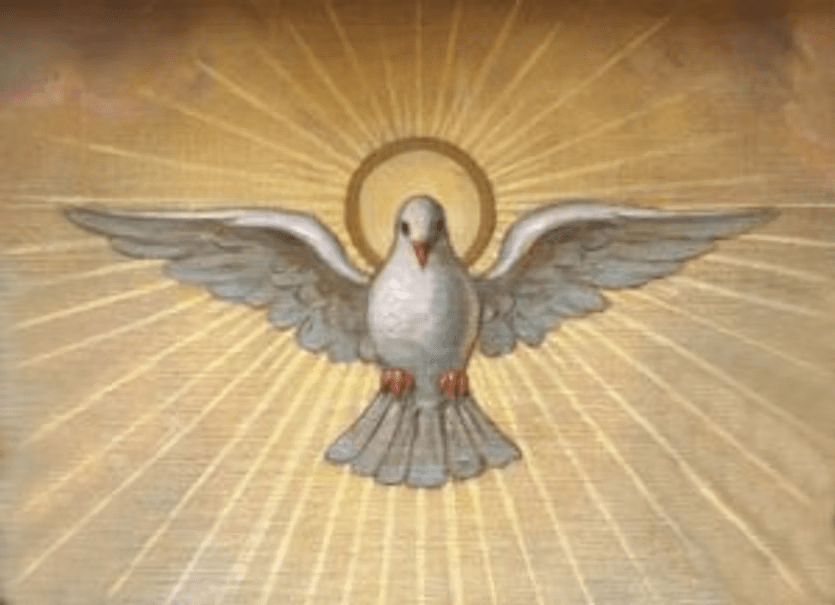









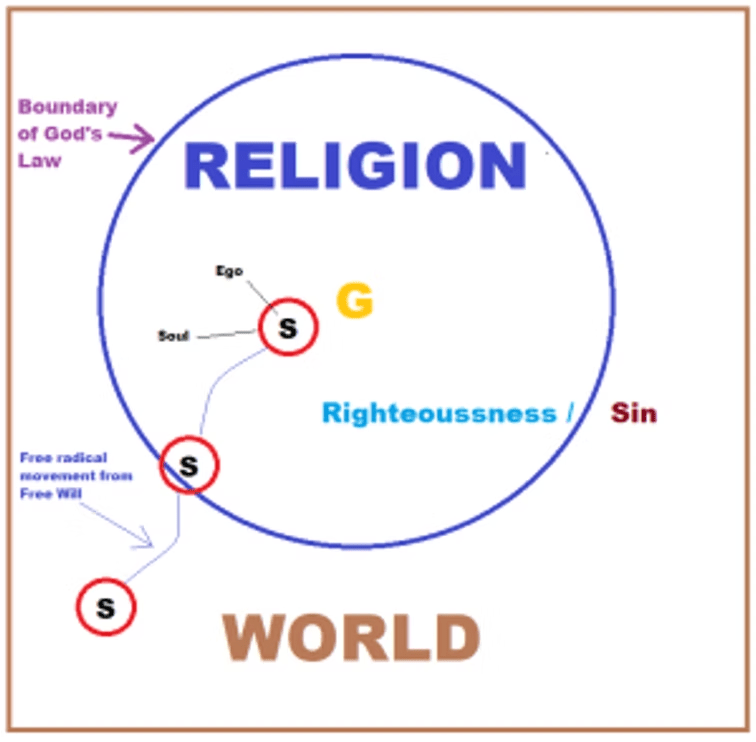
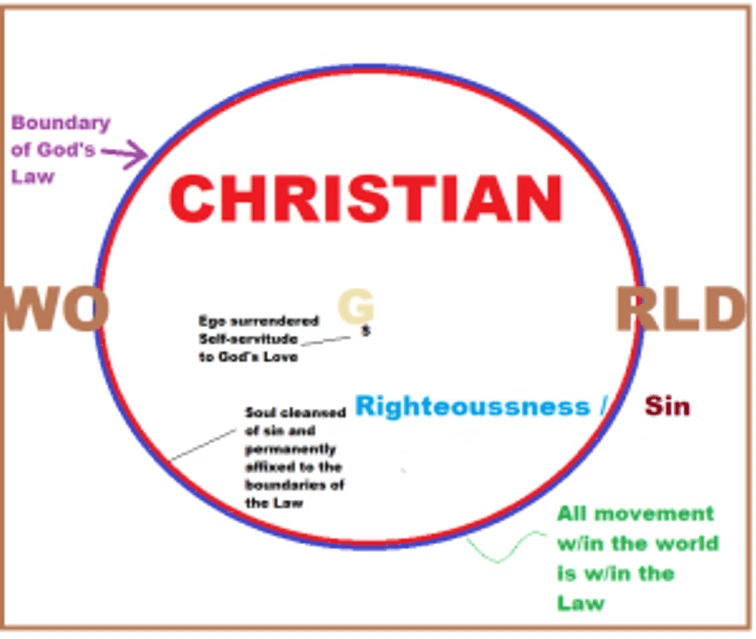

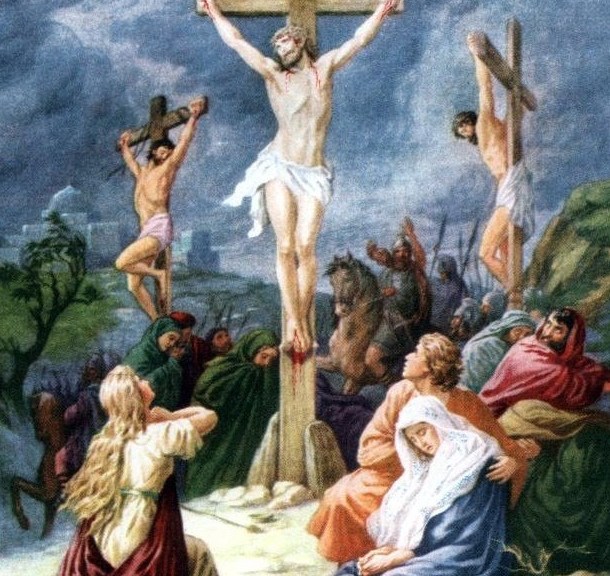
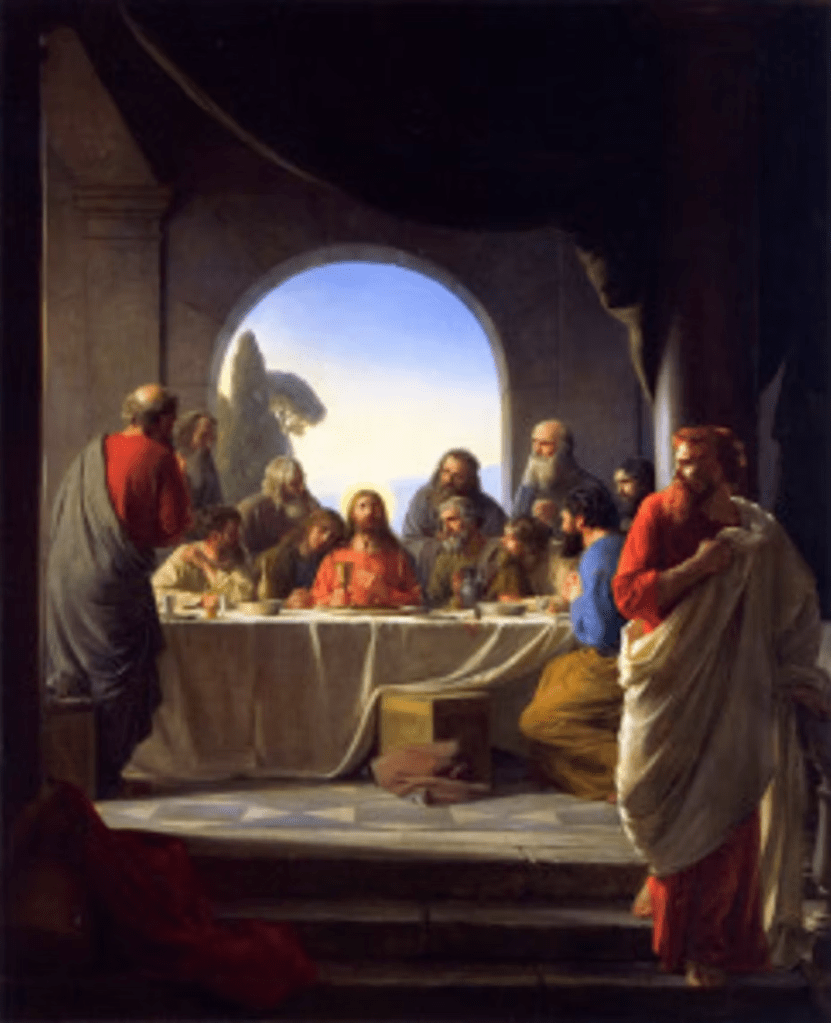






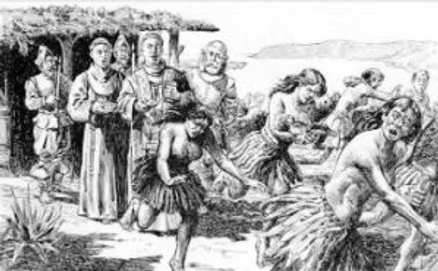














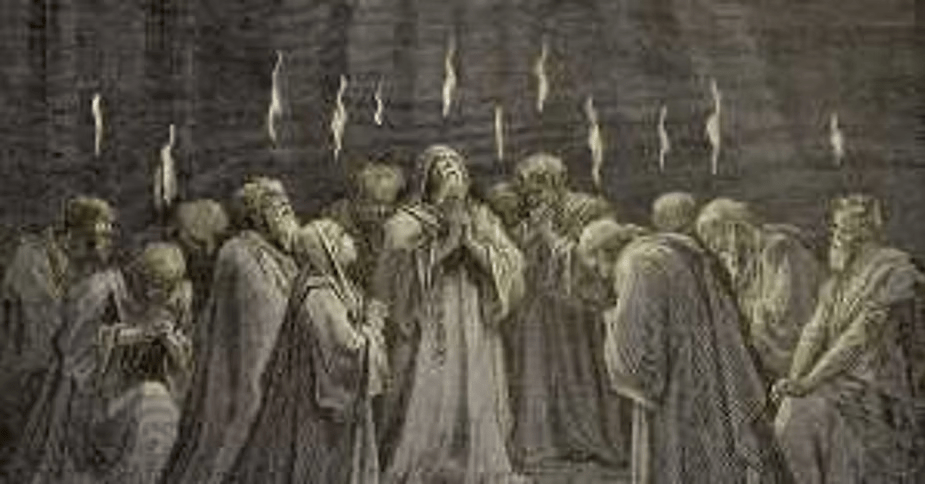





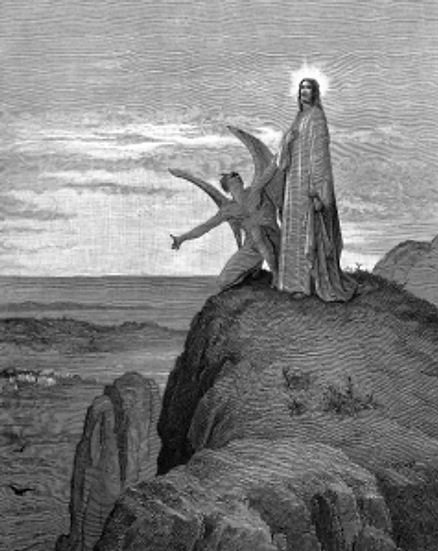



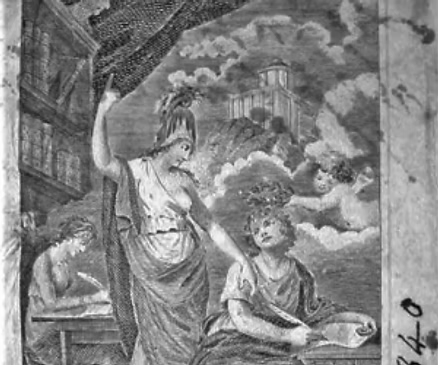






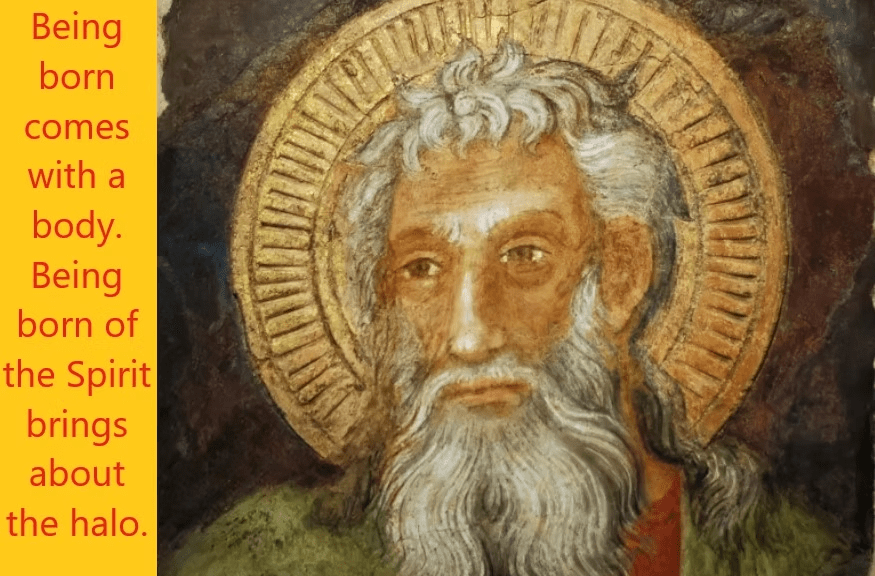
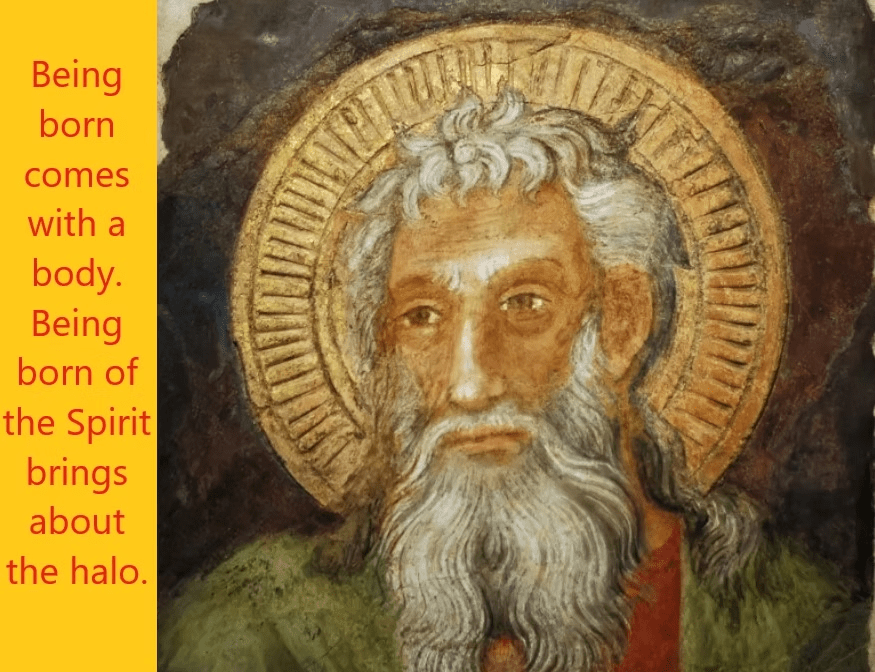

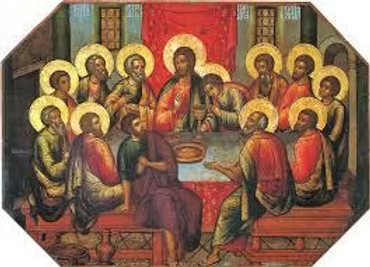
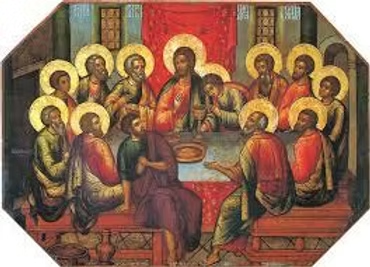
 Explaining the Readings