In this reading, Paul asks the question: “Do you not know that all of us who have been baptized into Christ Jesus have been baptized into His death?” I realize that the words of Paul are not easy to understand; but think about what “baptized into His death” says.
The root Greek word “baptizó” is recognizable as “baptize,” but let us examine the true meaning of that word. According to Strong’s Concordance, the basic definition says, “I dip, sink.” The literal meaning is said to be: “I dip, submerge, but specifically of ceremonial dipping; I baptize.” That means the religious mind takes a word of basic meaning and elevates it to a ceremonial title, such that “baptize” means, “I baptize.” It assumes everyone knows that is a ceremonious sinking underwater, just as John the Baptizer did to Jews in the Jordan River.
That is part of the reason Paul is so difficult to grasp. He wrote in basic terms that are interpreted by the later mind – those who possess the Big Brain of Hindsight – as having greater than basic meaning. Paul somehow transforms from being just a normal guy that is filled with the Holy Spirit to suddenly being a pope, dressed in the finest papal robe and tiara, holding a golden scepter and silver staff. Simple Paul speaks on such a high level that the majority of normal folk whisper to one another, “This is over my head. Thank God we have priests who know what Paul meant.”
Consider the same words written by Paul in ‘ordinary guy’ language: “Do you not know that all of us who have been submerged into Christ Jesus have been sunk into His death?”
First of all, Paul spoke as if his question could not be misunderstood by asking, “Do you not know?” He spoke to those who would easily understand what his words meant. Thus, he began chapter six with the question: “Should we continue in sin in order that grace may abound?”
That leads one to “grace” being another word that the Big Brain thinks it knows, but goes too far beyond a meaning easily defined by the ordinary Joe. The Greek word translated as “grace” is “charis,” which is defined in simple-to-understand terms like “favor, gratitude, thanks, and kindness.” The higher meaning is then: “a gift or blessing brought to man by Jesus Christ.”
Paul said that being submerged into Christ Jesus means our little brains have gone under the control of the Christ mind, so we act just as did Jesus. The favor of that presence … the blessing brought … is Salvation. Salvation means we have been washed clean of our past sins AND that gift means everyone who understands Paul readily agrees that going back to sin would mean rejecting that holy presence … that grace from God. No one who has submerged into Christ Jesus would return to the old ways, bobbing like a Big Brain float on the surface of the water, unable to sink.
This brings out the most confusing part, where Paul added, “all of us … were baptized into his [Jesus’] death.” We know Jesus died for our sins, but we think that means Jesus suffered death and was buried, so we can all go on sinning. All we have to do is realize when we have sinned (like reciting the Confession of Sins aloud together) and ask God for forgiveness. However, that is not the meaning of “we were sunk into his death,” after having been “submerged into Christ.”
Paul goes on to explain: “Our old self was crucified with him so that the body of sin might be destroyed, and we might no longer be enslaved to sin. For whoever has died is freed from sin.” To have ourselves also be crucified, so we too die alongside Jesus, such that “whoever has died is freed from sin,” these are concepts the uninitiated struggle to grasp. Confusion is how a Big Brain attaches baptism to death.
Certainly, human beings are not fish and cannot survive in a submerged state, when water is the element of submersion. If someone were to hold a human being underwater for more than ten minutes, that human being would drown and be dead. In that way, someone could be washed clean of sins by being executed via baptism by water … the ritual where someone dunks a willing participant’s head underwater. If Christians were killed in that act of willing sacrifice, then Judaism and Christianity would be celebrated in cemeteries, rather than synagogues and churches, with priests and pastors in prison for murder.
Realizing how this means “baptism” has absolutely nothing to do with submersion in water seems so difficult for Christians to grasp. It becomes like Consuela, the maid on Family Guy: “Baptism no water. That’s nice. I dunk clean now.”
Priests call christening with water sprinkles a sacrament, while pastors who dunk congregation members in industrial baptismal pools or go down to the local river to do it; both are making their followers believe baptism by water is the cat’s meow. This is even though John the Baptizer said, “I dip you in water. The one after me will submerge you with the Holy Spirit and fire.” Getting wet does not make a Christian “baptized into his [Jesus’] death.”
When Paul then wrote, “We have been united with him in a death like his” … because all Apostles can equally say, “Our old self was crucified with him” … think about what that means.
The Greek word “anthrōpos” was written by Paul and translated into the word “self.” The Greek word actually means “man” (parallel to the Hebrew “adam”), inferring then “human, mankind,” with the contextual reference there being the body of flesh that holds a soul within. A body without a soul is nothing more than dust or clay – matter without the spirit of life. When the English definition of “self” is then understood to mean, “The total, essential, or particular being of a person; the individual,” as well as “one’s consciousness of one’s own being or identity; the ego,” and “the distinct individuality or identity of a person or thing,” “self” or “man” is that part of a Christian-being that must suffer a death like Jesus.
Christians are expected to have already experienced that death, stated by Paul, if they can truly say they have received the gift of the Holy Spirit. The “spirit of life” (man with self) is not the same as “the Holy Spirit.” Thus, the true sacramental baptism cannot be given by a priest or pastor, as they can only symbolically mimic what God’s presence (His gift) in a human being is like. This is seen in each of the Seven Sacraments of the Universal Church.
Baptism through the Holy Spirit is like being submerged in the water of God in Christ. Confirmation through the Holy Spirit is like being able to explain why one wants to be with others of like Mind (the Mind of Christ). That Mind fills Saints with all knowledge of the prophecies of Holy Scriptures, knowledge coming from being filled with the blood of Christ, via the Holy Spirit (not seminaries). Such understanding is then symbolized by the Eucharistic ritual of bread and wine, as the body of words that leads a disciple to be filled with the blood of Jesus – God’s Son. Confession by the Holy Spirit is the admission of sins past, made with the power and promise of never sinning again. The Healing of the Sick is a talent given to those who have the Holy Spirit, thus becoming a reproduction of Jesus Christ, with God’s healing touch the gift given. The Holy Orders of ordination means each Apostle is a Saint, as the rebirth of Jesus Christ, who then repeats a ministry that goes to others for the purpose of passing that Spirit on (as Paul did to the Christians of Rome). They preach the truth via the Holy Spirit, so the kingdom of heaven goes to them (not vice versa). Finally, Marriage is human, when on the human level of two uniting for the physical reproduction of offspring. However, marriage by the Holy Spirit comes when a human being sacrifices self (subservience), in order to become the bride of God. That holy union produces the offspring that is a reborn Jesus Christ, into the human form that has died of ego (self).
When Paul wrote, “The death he [Jesus] died, he died to sin, once for all,” Paul meant Jesus suffered in the death of his physical body only one time. The “once for all” part of that statement of truth does not mean no one else has to die. It means that, like Jesus dying only once before his resurrection, those who will pick up their crosses and follow, “in a death like his,” also only have to die once. Jesus died physically so we can die figuratively, of self. The Apostles all died in that manner, even though they were then likewise persecuted to physical death, similar to that imposed on Jesus. That “pre-death” death is necessary, because it is the ego that will easily be tricked into following sin and make one lower his or her stake (cross) to the ground (no longer lifted up). Thus, the ego must die, so that “we will also live with him,” as him reborn.
So, as Paul wrote, “You must consider yourselves dead to sin and alive to God in Christ Jesus.” The Romans to whom Paul wrote were not trainees. They were Jews who believed the prophecy of a Messiah. They were Jews who believed Paul’s conviction that Jesus of Nazareth was indeed their Christ. Still, they were not believers in Paul. They were alive to God through a deep love in their hearts and a willingness to be subservient to their most holy husband. They were alive to God in Jesus Christ as the deaths of their egos allowed them to be reborn versions of the Savior … just as Paul was.
All this means you don’t need to worry about the way the world is heading, praying to God to save the world of the sin that has taken over. That prayer can only find the “tag, you’re it” response. The world is the mother of all sin, thus (as matter/dust) humans are all born of sin. Jesus had died on a cross and ascended into heaven, but his absence meant his disciples would carry the torch of Christ Jesus, leading others to the kingdom of heaven, where sin does not exist. Paul too was tagged; but his imprisonment did not mean Christianity would die on the vine, because Paul spread the Gospel to thousands of new Jesus Christs. The stakes have been kept high, so the vine can bear good fruit … until today.
Today, as always, maintenance in the vineyard is necessary, so the wild grapes of sin are kept out. Test yourself: Can you fluently understand Paul? Or, do you need it explained to you? Is it clear as mud? Or, is it crystal clear … clear as day?
This reading also addresses the verses from 1 Samuel 11:14-15:
All the elders of Israel gathered together and came to Samuel at Ramah, and said to him, “You are old and your sons do not follow in your ways; appoint for us, then, a king to govern us, like other nations.” But the thing displeased Samuel when they said, “Give us a king to govern us.” Samuel prayed to the Lord, and the Lord said to Samuel, “Listen to the voice of the people in all that they say to you; for they have not rejected you, but they have rejected me from being king over them. Just as they have done to me, from the day I brought them up out of Egypt to this day, forsaking me and serving other gods, so also they are doing to you. Now then, listen to their voice; only—you shall solemnly warn them, and show them the ways of the king who shall reign over them.”
So Samuel reported all the words of the Lord to the people who were asking him for a king. He said, “These will be the ways of the king who will reign over you: he will take your sons and appoint them to his chariots and to be his horsemen, and to run before his chariots; and he will appoint for himself commanders of thousands and commanders of fifties, and some to plow his ground and to reap his harvest, and to make his implements of war and the equipment of his chariots. He will take your daughters to be perfumers and cooks and bakers. He will take the best of your fields and vineyards and olive orchards and give them to his courtiers. He will take one-tenth of your grain and of your vineyards and give it to his officers and his courtiers. He will take your male and female slaves, and the best of your cattle and donkeys, and put them to his work. He will take one-tenth of your flocks, and you shall be his slaves. And in that day you will cry out because of your king, whom you have chosen for yourselves; but the Lord will not answer you in that day.”
But the people refused to listen to the voice of Samuel; they said, “No! but we are determined to have a king over us, so that we also may be like other nations, and that our king may govern us and go out before us and fight our battles.”
Samuel said to the people, “Come, let us go to Gilgal and there renew the kingship.” So all the people went to Gilgal, and there they made Saul king before the Lord in Gilgal. There they sacrificed offerings of well-being before the Lord, and there Saul and all the Israelites rejoiced greatly.
——————————————————————————–
This is one of two optional Old Testament reading selections from the Episcopal Lectionary for the Third Sunday after Pentecost, Year B 2018. In the numbering system that lists each Sunday in an ordinal fashion, this Sunday is referred to as Proper 5. If chosen, this selection will next be read aloud in church by a reader on Sunday, June 10, 2018. It is important as it places focus on the human reluctance to connect to God directly, preferring to look to others to make that connection as their surrogates.
When we read, “All the elders of Israel gathered together and came to Samuel at Ramah, and said to him, “You are old and your sons do not follow in your ways; appoint for us, then, a king to govern us, like other nations,”’ two important aspects of priesthood are shown. Those two are not strengths of devotion, but weaknesses that had long been the reflection of the Israelites’ commitment to their agreement with the Lord. This then leads to a third recognition of priestly flaws, which caused the elders to demand a king.
Like other nations
First, by understanding that God chose the Israelites to become His priests, where each had sworn an oath to God (the Covenant), this transformation was not an “overnight success.” The symbolism of “all the elders” being gathered is a statement of length of service being the standard merit given to leaders of clans, or the twelve tribes of Israel. Because each tribe sent its oldest as those who spoke for the whole tribe, the element of individual responsibility was negated. The elders were not necessarily the most devoted to God, as His subservient priests, thereby becoming a potential weakest link.
When Samuel anointed young David to be the second King of Israel, it was after his seven older brothers had been taken before Samuel. Jesse, as well as Samuel, must have thought God sought the most handsome and most physically developed presented before an important prophet. David was not summoned to appear by his father, Jesse, as he was the youngest and was left to tend the sheep. That omission shows how youth was typically seen as a drawback to leadership, rather than an asset. However, God choosing David showed how purity is more important than looks and strength.
Second, when the elders made the claim, “You are old and your sons do not follow in your ways,” this is a statement that holy men did not pass on righteousness to their offspring. This was a statement made when Adam gave rise to Cain and Abel, where Cain did not share his father’s devotion to the Father. Adam, as the progenitor of the holy line of priests that are identified in the Holy Bible, began the true vine that led to Jesus and his Apostles. In between were many, many dead branches.
The commonality shared by the main characters found in the Biblical books is their spirits represented individuals who connect to God, not their immediate parents or direct heritage. Samuel was trained by Eli, who also had two sons who did not follow in Eli’s ways, although both professed to be priests to Yahweh. The same being said of Samuel would then be repeated in the sons of David and Solomon, whose offspring were unable to lead a nation of priests properly. This can then be seen as a need for each individual to have God as his or her King, with only a teacher that leads one to that connection being the outer influence. A teacher leads one to independence from the whole (groupthink), to help the whole; whereas a king commands obedient subservience, with no individuality recognized (beyond the royal family), as all are insignificant parts of the whole.
This is then the unclear third flaw being stated, where Samuel was the teacher of all of Israel. It was to him (not God) that all Israelites bowed down in reverence. The whole of Israel would trust in Samuel’s commands, just as the Israelites under Moses trusted his commandments. Whereas Moses would leave the tent of meeting with his face aglow, having faced God’s presence, Samuel did not have that physical attribute of God on his face, as he was not a seer.
Those teachers were most holy, but the Israelites saw them as like kings, who led them by speaking to God. Therefore, when the elders demanded of Samuel, “appoint for us, then, a king to govern us, like other nations,” they wanted a ruler like Samuel and Moses (teachers of God’s guidance). However, in their minds they sought an upgrade, as one who spoke to God but was all-powerful (like Pharaoh in Egypt).
Their naivety, even as elders of the people, was in thinking they knew what other nations had. As priests of YAHWEH, God was their King; and each Israelite must be subservient to His Will, with the elders teaching that need. Because Samuel was old, his time was limited. Because Samuel’s sons were flawed, they were like the elders in the sense they were all disconnected from God. When the leaders are disconnected, then the individual Israelites were too. They all suffered from a lack of commitment to their Covenant to their true King – I Am. The Book of Judges tells how they were human backsliders, until their misery and lamentations led them to realize their mistakes, repent and call upon God for salvation.
When we read that Samuel was displeased at hearing this request from the elders, it was not his displeasure from being told his sons were not good enough to guide Israel. Samuel knew his sons were a reflection of all the Israelites, where most people followed their individual material lusts, rather than seeking to know God personally. Samuel was displeased because the people were rejecting God by that request for a human king. This is why, “Samuel prayed to the Lord” for guidance; something the Israelite elders (and those of their tribes) had failed to do.
We then read the response of the Lord, who said to Samuel, “Listen to the voice of the people in all that they say to you; for they have not rejected you, but they have rejected me from being king over them.” By “listening to the voice of the people” Samuel could know their hearts and minds. Their words then exposed the truth about their motivations. While the elders had rejected Samuel’s sons as inheritors of his position as high priest and prophet, they adored Samuel and his works. Because the people were requesting that Samuel give them a king, to be like other nations, they were going to their surrogate “king.” Making this demand of Samuel meant the Israelite elders totally rejecting the concept of God, not once thinking Samuel was led by God. Had they believed that, then they would have listened to what Samuel said in reply.
The elders asked Samuel to “appoint,” as if he had the power to name a successor. The Hebrew word written her is “shaphat” (לְשָׁפְטֵ֑נוּ – “lə·šā·p̄ə·ṭê·nū”), which actually asked Samuel to decree as a judge (meaning “to judge, govern”). While judges had done okay for forty years here and forty years there, in between was always forty years of threats from other non-Israelite tribes and forty years of being forced to suffer. Like a king names his successor ahead of time, the Israelite elders wanted Samuel to do the same, as a judge of Israel.
The big brain powers of reason figured that a king would bring the stability of an all-powerful ruler, who would train his sons to replace him when he died. Again, this was the Egyptian model, not the model Moses taught the first Israelites; and it was breaking the first Commandment, not to place anyone higher in their minds than God. When God told Samuel, “They have rejected me from being king over them,” God saw them placing a human above God. That was a sign that the Israelites were memorizing words but not putting those memorized words into practice.
God then told Samuel, “Now then, listen to their voice; only—you shall solemnly warn them, and show them the ways of the king who shall reign over them.” The word “hā·‘êḏ tā·‘îḏ” (“הָעֵ֤ד תָּעִיד֙” – from “uwd uwd”), where “solemnly warn” or “admonish solemnly” says to make sure the Israelites know exactly what they are asking for. The people of other nations do not worship the One God, Yahweh, because the people of other nations were promised nothing to them, through their patriarchs. The relationship of being God’s chosen children was requested to be severed, with the Covenant made null and void. God told Samuel that this must be made clear the Israelites, as the expectations that come from being like the people of other nations had to be known.
After Samuel prayed to God, he went to the Israelite leaders and said as God had told him. Samuel said, “These will be the ways of the king who will reign over you: he will take your sons and appoint them to his chariots and to be his horsemen, and to run before his chariots; and he will appoint for himself commanders of thousands and commanders of fifties, and some to plow his ground and to reap his harvest, and to make his implements of war and the equipment of his chariots. He will take your daughters to be perfumers and cooks and bakers. He will take the best of your fields and vineyards and olive orchards and give them to his courtiers. He will take one-tenth of your grain and of your vineyards and give it to his officers and his courtiers. He will take your male and female slaves, and the best of your cattle and donkeys, and put them to his work. He will take one-tenth of your flocks, and you shall be his slaves. And in that day you will cry out because of your king, whom you have chosen for yourselves; but the Lord will not answer you in that day.”
At no time did Samuel say, “The Lord said,” as if Samuel was speaking as a messenger that did not believe the words he spoke. Samuel did not end that series of statements of truth by saying, “His words, not mine.” By not saying God told him this to tell the Israelites, he fully believed it; and his old age meant Samuel had encountered the reality of everything he said, from meeting others of other nations, who followed lesser gods. Samuel knew full well that God does not speak favorably of those who are “like other nations.”
The sour and bitter flavor of Samuel’s promise is that a king demands slavery. Every subject to a king is expected to do as the king says, whether that benefits the subject or not. The same conditions of a hard life cannot be avoided by having a human king or by remaining loyal to Yahweh as King. The earth is a place where the common people will always suffer. However, when God is one’s King there is a greater reward awaiting after this life; with a human king the only reward is reincarnation, coming back into a world of hurt.
The Israelite people thought their Covenant with God meant the reward of physical land, rather than a Spiritual Kingdom (Heaven). They had already received that reward and were suffering in the Promised Land of Canaan. Even though Samuel was their judge, who called upon God to save the people from the oppression of their neighbors, the Israelites could not feel free to take more and feel guilty less.
The Israelites, due to their Covenant with “I Am,” were not allowed to be fearful of their neighbors or their enemies, as would be under a human king. Humans are advised by fear, thus more prone to plan defenses and attacks. Human thought focuses on military strength, with the building of armies and storage of weaponry,. Once levels of strength are met, those mind begin plotting preemptive strikes as acts that project fear into those nearby – something God frowns on. The error of reason is violent strikes out only begin a reciprocal cycle of retaliation and retribution (violent strikes in), so the fear never ceases.
With God as one’s King, the enemy will fear the Lord of Israel, who destroys foreign kings and their armies, citizens, and livestock, as punishment for having acted out of fear of prosperous, peaceful people. The prophets of the One God expose the stupidity of the priests of dead gods. Unfortunately, the Israelites always had a hard time being good priests to the God they said they served. The Israelites feared losing the prosperity they had gained under Samuel, more than the hard work that earned it. So, they sought a human king that would protect them before loss, rather than afterwards.
That is why the elders heard the words of Samuel and replied, “No! but we are determined to have a king over us, so that we also may be like other nations, and that our king may govern us and go out before us and fight our battles.”
The leaders of the tribes knew they (personally, as leaders) would be called upon by a human king, one approved by their will, less than would the common members of the tribes they led. The leaders had wealth and power in their possession and did not want to risk losing it because of an unseen God and a aged holy man judge, who had no holy heir. The history of Israel was predicting a coming period of loss and lament, which the wealthy sought to prevent.
This is one of many examples of the Big Brain Syndrome, where thought, philosophy, and cunning (all based on fears) override faith, trust, and beliefs. It is the basis of the principle that says, “Be careful what you wish for. You might just get it.” It is a reflection of the phrase, “The best laid plans of mice and men often go awry.”
We’ll let you take some lands, but no more. Okay?
The jump in this story is then found in 1 Samuel 11, where the elders go with Samuel to Gilgal. There, Saul would be made King of Israel, and “all the Israelites greatly rejoiced.” That story did not turn out very well for Saul or his sons, as the Israelites were plagued by the Philistines and a giant named Goliath. Saul begged Samuel to bail him out of the messes he caused, but God would not listen to the prayers of people led by a human king.
As a reading selected (optional) for the third Sunday after Pentecost, when one’s personal ministry for God, as the rebirth of Jesus Christ within oneself, the message becomes clear. It forces one to question self. Am I a totally committed servant, like Samuel? Or, Am I a fearful human being who seeks a leader that will help protect my wealth, power, and influence, at the expense of others?
The message of this reading is a perfect match for the American lifestyles found today, where the political divisions in this nation call out to human beings that will promise the world, while delivering nothing. Every four years Gilgal becomes Washington, a city in the District of Columbia. The crowning of Saul becomes whatever human is sworn in as President of the United States of America. The celebration of the Israelites turns into the galas that the winning elite attend, rejoicing in their candidate’s victory. It does not matter who wins, as the same empty promises will always be the end result.
Just as Saul was killed and Israel eventually became a divided house that collapsed, so too with the United States of America fall into ruin and captivity. The model is the same for all who choose to be led like nations, rather than as individual servants living together, who all devoutly serve Yahweh. The lamentations of the people forced by kings into abject servitude and slavery are not limited to those sent into exile in Babylon. The question now, where the U.S.A. is divided between the Red states and the Blue states, the Democrats and the Republicans, the Clintons and the Trumps, is whether or not one’s faith has been handed over to kings that are liars and cheats, or given completely to the Lord, through Christ.
God is telling Americans the same lessons of service to kings that Samuel told the Israelites. It can be summed up simply as: “You’ve made your bed, now lie in it.”
For the lazy that expect the government to provide everything to them, a bed and rest might seem like a good freebie to look forward to. Unfortunately, this is symbolic of the “bed of rest” that is a grave to be buried in. By choosing not to serve God (look at the courts that strike down all laws from a Judeo-Christian foundation), Americans (as well as all nations with kings like ours) Americans have chosen death and reincarnation back into the same world of hurt that humans command. Nothing will get better and no changes will come, no matter how hard the church-goers pray aloud:
“For our President, for the leaders of the nations, and for all in authority, let us pray to the Lord.
Lord, have mercy.”
God is not listening when one chooses to serve a leader, to be like other nations, when “Thou shall have no other gods before Me.”
In the same vein of thought, the accompanying Gospel selection for this Sunday has Jesus with his disciples inside a house, eating a meal and escaping a maddened crowd. People are shouting insults at Jesus, saying he is insane and possessed by Beelzebub. Worried, the mother of Jesus and his brothers come, calling for Jesus to come out. Jesus said, “Here are my mother and my brothers.”
We are who we choose to follow. We choose the crowd or we choose God. It is a decision that each individual must make, because when each one reaches the end of this life on earth, then no other soul but our own will be judged. There will be no safety in numbers when that day comes.
They heard the sound of the Lord God walking in the garden at the time of the evening breeze, and the man and his wife hid themselves from the presence of the Lord God among the trees of the garden. But the Lord God called to the man, and said to him, “Where are you?” He said, “I heard the sound of you in the garden, and I was afraid, because I was naked; and I hid myself.” He said, “Who told you that you were naked? Have you eaten from the tree of which I commanded you not to eat?” The man said, “The woman whom you gave to be with me, she gave me fruit from the tree, and I ate.” Then the Lord God said to the woman, “What is this that you have done?” The woman said, “The serpent tricked me, and I ate.”
The Lord God said to the serpent, “Because you have done this, cursed are you among all animals and among all wild creatures; upon your belly you shall go, and dust you shall eat all the days of your life.
I will put enmity between you and the woman, and between your offspring and hers; he will strike your head, and you will strike his heel.”
——————————————————————————–
This is one of two optional Old Testament reading selections from the Episcopal Lectionary for the Third Sunday after Pentecost, Year B 2018. In the numbering system that lists each Sunday in an ordinal fashion, this Sunday is referred to as Proper 5. If chosen, this selection will next be read aloud in church by a reader on Sunday, June 10, 2018. It is important as it tells of God knowing all our sins, just as He knew that one of His holy children in Eden. That judgment means banishment from Heaven for sin is unavoidable, such that complete absolution while on earth is the only way for a soul to return to be with God. That absolution can only come through Jesus Christ.
———-
Preface: This short reading is known by most, but understood by few. The first four chapters of Genesis are easy to read, but just as easy to misunderstand. This sliver of Genesis 3 selected for the third Sunday after Pentecost requires one know all of Genesis 3. To fully understand this reading also requires one know Genesis 1, 2, and 4. For that reason, this interpretation will expand beyond these eight verses. That expansion will require extra words of explanation. Be forewarned.
———-
This selection from Genesis can be said to focus on the judgment placed upon both those who sin and the one who promotes sin. Here, we know “the man and his wife” (“hā·’ā·ḏām hā·’iš·šāh”) admitted to having sinned. They immediately blamed the serpent (“han·nā·ḥāš”) as the influence for their sin. Then, we read of God’s judgment against “the serpent,” which includes words linking “the serpent” to “the wife.” as a dual judgment. The punishment of “the man” comes after these words, which are not read today.
This story in Genesis 3 is commonly called The Fall from Grace. That title implies failure, due to “Adam and Eve” having committed the Original Sin, leading to their banishment from Eden. Because this story is set up somewhat like a fairy tale (allegory), where snakes talk and God walks in the garden in the cool of the evening, it is easy for our minds to capture the images as being similar to known life events. We project human qualities onto divine creatures (anthropomorphism), but that view blinds us from the truth told in this story. For instance, we focus more on “Adam and Eve” being evicted from Heaven, but then lose sight of the snake also being cast out.
When we read this story from a human perspective, we see God as human, which He is not. Our personal experiences tell us how surprised we are when we find out someone has sinned. We can get the impression that God turns a blind eye from His creations, from time to time. Thus, we see God as being surprised in this story. However, God is All-Knowing and All-Seeing, so God is in on everything.
He has omniscience as well.
By realizing that given, one has to understand that God made Man as a heavenly being, giving “Adam” (a personalized name for the Son of God, from “hā·’ā·ḏām” – “the man”) immortality. Although God made Adam from clay or dust, he was an immortal entity – like an angel – which means “Adam” had absolutely no reason, nor innate drive to procreate. When God cast a deep sleep over Adam and took a rib to make “Adam’s” wife, it was for the purpose of sending “Adam” and wife to the earth God had created, where males and females in the image of the gods had been in existence since the sixth “day” of Creation (millions of years, if not more). Therefore, it was God’s plan to seed the earth with the first priest of the One God, who could “hear the voice of the LORD of gods” (“way·yiš·mə·‘ū ’êṯ qō·wl Yah-weh ’ĕ·lō·hîm”).
God knew there was a time when “the man and the wife” would be sent to earth to procreate. God knew the whole story before it happened. Still, the males and females of earth (sixth day creations that were being fruitful and multiplying, which was deemed good) did not know God. Mortal human beings did not know right from wrong. God planned to send them teachers.
When we read “Adam” explain to God (his Father), “I heard the sound of you in the garden, and I was afraid, because I was naked; and I hid myself,” the word “erom” (“naked”) meant Adam was aware of his body for the first time. Because “the wife” (“ishshah”) also hid, she too was aware of her body, which meant the fear (“I was afraid” – “wā·’î·rā”) was from also knowing arousal from becoming aware of each other’s nakedness. They had always been unclothed and had never found reason to think (a mental exercise) that state of being was unusual.
That awareness of their physicality was something never known before by “the man and wife” BUT their fear was based on their realization how unnatural it was for immortal beings to become sexually aroused, when immortal beings have no need to procreate. Indeed, in the Spiritual realm none of the elohim (a plural number word meaning “gods”) or angels could produce other elohim or angels, as only God has the power to create new life. Therefore, “Adam” and wife were souls created by God, which were then placed in physical bodies for the purpose of procreating on earth, outside of Eden.
When the allegory is seen in this story, “Adam and Eve” were like children who had reached puberty. They changed into mature beings, no longer able to return to an innocence of youth. That change was by design; but as immortal beings, there can be no age of mortals applied to how long they had lived together. One can even assume that they were made in the same state of maturity, as growth and normal earthbound bodily needs would be unnecessary. The only change that occurred was an awakening of physical attractions, for the purpose of procreation. Because fruit is the offspring of a tree, they ate of the fruit that opened their minds to physicality, in a spiritual environment.
Simply because the man and the wife were made to beget new priests in a world of human animals, they were known by God to reach a point in their development where they could no longer live in a Spiritual realm, where procreation was impossible. Because both were made to reproduce, they had to be placed into the realm what that act was possible. The timing of that event would be when they first experienced arousal for one another.
In this story the serpent plays the role of influencer. When one is immature, nakedness is not seen as anything more than normal. Eden is then the eternal realm where there is no need for maturation, as one is made whole. The mind is therefore immature, in the sense it is pure innocence. One knows all that God allows one to know and that is all one wants to know. The changes of maturity, for physical bodies designed to grow and reproduce, occur within the being, in the brain and chemistry. The serpent then represents the voice within that has one become fixated (lustful) on the physical, once the brain has awakened and this physical state of maturity has been reached.
This makes the tree that bore the forbidden fruit, which was in the “midst of the garden,” be representative of sexual organs. When God said, “You shall surely die” if that fruit was eaten, death was the change from immortal life to mortal life, where death presents a need for procreation. As the “fruit of the tree of knowledge of good and evil,” this was the genetic programming that was placed in “the man” when God made him. As “Adam” was made on the seventh day, the day deemed holy, “the man” was made to be holy, as a replication of THE Father. “The man” himself was designed to be “a father,” one who taught his children about THE Father.
This is why “the wife” is identified as such (“ishshah “), where “wife” denotes the sexual partner of a husband. Together, they would need to have children, who they would teach to recognize the difference between good and evil. The good would be their connection to God, who would counsel them in how to act. In a world that only knew the natural urges of genetics, with no knowledge of good [God] nor evil [the craftiness of the serpent], “the man and the wife” (the woman who shared the genetics of “the man,” from his X-chromosome “rib”) would be the first priests sent into the earth.
Rather than entering the “new world” with an army and being “in your face” about religion, Adam and Eve chose the “lead by example” method of ministry.
It then becomes important to realize that “the man and the wife” could not enter a world that knew no value judgments of any kind, without them being accompanied by “the serpent.” That character is described as, “more crafty than any beast of the field.” (Genesis 3:1) Without knowing the Hebrew words that translation comes from, “more crafty” or “more subtle” is a statement of the serpent possessing a big brain, which is always something that gets in one’s way of humans trying to find their way back to God.
The Hebrew, “‘ā·rūm mik·kāl ḥay·yaṯ haś·śā·ḏeh,” which has been translated as “more crafty than any beast of the field,” can literally state: “sensible man (arum) [of] all (kol) age [of man] (chay) soil (sadeh).” This can then be read as a statement of an entity that appeared to be more like “the man and the wife,” rather than one of the beasts named by “the man” [“Adam”].
While this character is clearly identified as a “snake” or “serpent,” the anthropomorphic language causes one to see a talking snake confusing “the wife,” rather than someone who looked like “the man.” His sensibility would be mistaken for honesty to a naïve woman, thinking this being knew what he was talking about. This makes the serpent more representative of the parallel character who tried to tempt Jesus in the wilderness (Satan). He came looking trustworthy and helpful, not frightening and scary. As “Lucifer,” whose name means “light-bearer,” the one who tricked “the wife” was shedding light onto why God forbid “the man and the wife” the fruit of one tree. That would be the false light that will forever be offered by the fallen angel.
For anyone who has ever seen a snake, many are known for hiding under rocks and in crevices. Many have coloring that allows them to blend into their surroundings, which means the snake was the influence for “the man and the wife” after they had eaten the fruit, when they were afraid and hid from God. Before the pair encountered the snake, it is doubtful the two had ever experienced fear or any thought that they could be hidden from God’s all-seeing eyes. Thus, because the snake is punished along with “the man and the wife,” all three were hiding in the garden when God called for them. Only the serpent was not afraid. He was staying with his prey.
Again, the questions that followed are not to be read as if God was blind to what had happened. “Where are you? Who told you that you were naked? And Have you eaten from the tree of which I commanded you not to eat?” cannot be read as God not knowing all of the answers to those questions, before he asked them. Those questions are rhetorical, as God knew precisely where they were, that they were attempting to hide, that the snake tricked “the wife,” and that the pair had eaten from the forbidden tree’s fruit. God’s call and questioning was to solicit truthful responses from “the man.” “The man” responded to his Father, immediately offering the whole truth to God, because God had made him so he would tell only the truth.
The man and the wife admitted they had gone against God’s rule. The serpent was not questioned, which means God knew the truth had been told by the wife and the man. This is then when God issued His judgment upon all three. While this reading does not cover the judgment set upon the wife or the man directly, it does include those against the serpent that include the serpent’s relationship to the wife (commonly translated as “women”). It is this judgment that is difficult to understand.
We first read: “The Lord God said to the serpent, “Because you have done this, cursed are you among all animals and among all wild creatures.” This is a quick and easy translation that accurately states the words written. However, the addition of “among all animals and among all wild creatures” makes it easy to lose the impact of the serpent being “cursed.”
If the serpent is an animal, what is the curse of being curse by other animals? This means the additional words add depth to the simple statement, “cursed are you.” To read the additional words, where “animals” or “beasts” are stated (“beasts” is the same word shown above that actually means “age [of man]”), this implies that “animals” and “beasts” are also cursed. That is not the case.
In Genesis 2:18-20, we read how “the man” [Adam] was given all the “animals” of the ground and the air, when “the man” named them all. This naming can be seen as a link between the mind of “the man” and the “animals,” such that the names were based on meaningful communication between the two. In other words, Adam talked to the animals and determined what they should be named (a truly anthropomorphic scenario). By understanding that communication between “the man” and the “animals,” the serpent was cursed “among all animals” by not being able to use his big brain to seduce those creatures to do his will. Despite being the “more crafty” of all the animals, his craftiness (or sensibility or shrewdness) could not have an effect on the lower creatures of earth, whose lives were totally programmed by God’s nature.
When we then read how the serpent is judged to “upon your belly you shall go, and dust you shall eat all the days of your life,” the confusion comes from realizing a snake or serpent always slithers on the ground. It leads many to wonder, was the serpent complete with arms and legs in Eden? Did those arms and legs fly away from him when God punished the serpent?
The punishment can be clearly seen when one realizes “the serpent” was a nickname for a sly devil. Since he was called a “snake,” he would be sent to earth to metaphorically live like a snake.
Snake Plisskin. A character from a bad movie.
However, the description stated as punishment makes the future of the serpent to be more like a worm; and again this is the wrong way to read this metaphor.
The Hebrew word “gachon” (from “gə·ḥō·nə·ḵā”) means “belly” or “abdomen,” but the word becomes synonymous with “stomach” and “uterus” or “womb.” Since the serpent was a male entity, and since the sin committed by “the man and the wife” were from eating fruit, then the punishment was for the serpent to forevermore be driven by his internal urges that seek to devour. The metaphor of “belly” is then being a lowlife, as it travels the lay of the land, which takes it into gutters, hiding under rocks, and seeking the darkness of caves. When “belly” is readily read as the “stomach,” then it becomes a natural subsequent punishment for God to address what the serpent will “eat.”
The Hebrew word translated as “dust” (“aphar,” from “wə·‘ā·p̄ār”) has to be seen than more than “dirt, ground, and earth.” The same word, “aphar,” is found in Genesis 2:7 (“The Lord God formed man of dust of the earth.”) God told “the man” at the end of Genesis 3 (verse 19), “For you are dust, and to dust you shall return.” The focus placed on “earth” means “the man” was a soul in flesh, as both material and spiritual eternally. However, the serpent was just sentenced to forever being an eternal spirit that can only exist on earth.
This association of “dust” should then be read as a reference to mankind in general. As mortals are born to die (and repeat) it will be mankind that the serpent will feed on (as “dust”). In Genesis 1:27, we read, “Male and female elohim created them,” which were “hā·’ā·ḏām” as “mankind.” If the males and females on the physical plane are to be tricked by the serpent, as were “the man and the wife” in Eden, then the “belly” becomes the purpose of a “uterus” and “a wife,” which is to bear new children that God will breathe life into.
The redemption of “the man and the wife” will come more from their producing a holy lineage that will warn humanity against the temptations of the serpent, by teaching mankind how to know the difference between good and evil. However, once new members of mankind are born, the serpent will be attracted to them as innocent and pure, to tempt them to sin. The serpent’s role will be to ensure that an earthbound cycle of souls born into flesh will remain intact.
It is then the last verse of this reading, where God passed judgment upon the serpent, relative to his tricking “the wife” with his craftiness. Genesis 3:15 seems clearly translated as, “I will put enmity between you and the woman, and between your offspring and hers; he will strike your head, and you will strike his heel.” However, this is the most enigmatic statements found in this story and it needs to be grasped properly.
Genesis 3:15 divides into four segments. When read together, one can get an image of a snake eating its tail, which is an icon for the “Ouroboros”.
While this symbol is said to represent, “the perpetual cyclic renewal of life and infinity, the concept of eternity and the eternal return, and represents the cycle of life, death and rebirth, leading to immortality,” (Crystalinks.com) that imagery is secondary to the importance of the individual segments stated in Genesis 3:15.
In the first two segments, a variation of the word “bayin” is found written four times, two times in each segment. The word “bayin” means “between,” but also “above, among, forehead, midst, within, and the interval of.” The first segment is God linking the serpent to “the wife,” such that God said to the serpent, “And enmity I will put in the interval of within the wife.” The second segment then says separately, “In the interval of your children in the interval of her offspring.” Because of the repetition of “bayin” (as “bê·nə·ḵā, uben, uben, and uben”) in these two segments, both can be seen as the “hatred” and “personal hostility” that will be “between” the serpent and “the wife” is relative to “descendants.”
Here, it has to be grasped that the serpent is “cursed” by retaining his eternal state of being, where the heavenly creatures (like angels and elohim) have no sex organs because reproduction was unnecessary, thus impossible. God had created “the man and the wife” for the purpose of having worldly children, so they had been built to procreate, only never in the realm of the divine. This means the “offspring” of the serpent can only be those born of “the wife.” It will be her offspring that will be led to do evil things, having been taught by “the wife,” becoming children knowing the difference “between” God and the “perpetual cyclic renewal of life” into the material plane, not a return to heaven (Eden).
The “enmity” that God will place “within the wife” is less a “personal hatred” in her (as that would be an emotion of evil, not good), but a knowledge of the “hatred” that the serpent has for those who seek to do only good. That will be taught to the children of “the wife,” so they will know to resist the temptations of one who hates them.
The “interval of her offspring” can immediately be seen in the difference in Spirit found “between” Cain and Abel. It can be seen in the 1 Samuel lessons of devoted priests to God not having sons who follow in their holy ways. It can even be seen in the repeated reports of difficulties with conception (barrenness) found in the wives of holy men, such as Abram (his wife Sarai), Manoah (father of Samson), Jacob (his wife Rachel), and Zacharias (his wife Elizabeth). The books of the Holy Bible follow the intervals of those who were taught to know of the hatred held by the serpent for their souls. Because we proclaim Jesus was born of a woman, this can be seen as “of the interval” when “the wife” produced holy offspring.
When God judged the serpent to forever be of the earth, that meant the spirit of the serpent would always locked into that realm. When God then spoke of the association of “the wife” to the serpent, once both were banished from the Spiritual realm of Eden, God was stating that the receptive spirit of females was indeed “of the earth.” Therefore, the joining of the serpent’s judgment with “the wife” is less a punishment of her and more a statement of the physical state that would become the prison for an immortal creature.
While there is no need for procreation in Heaven, procreativity is essential on the earth. Because “the man” was “dust” (physical matter) breathed into by God (the breath of life entering flesh as a spiritual soul), the body of “the man” is essentially feminine, in the sense that it received that breath of life. The sex of all human life is inconsequential in the spiritual realm, making every body of flesh be feminine and every soul be masculine in essence (of the Father). It is in this way that humans refer to God as the Father and the Earth as the Mother of all life, where all that has life needs both mother and father.
In the metaphysic study that is astrology, there is a negative “charge” assigned to the Moon and Venus, such that both orbs are called “feminine.” Conversely, the Sun and Mars are given a positive association, such that both are called masculine. As every human has all astrological planets present within their birth charts, all human beings have both masculine and feminine traits, which is normal. The psychologist Carl Jung called this the anima and the animus. Still, human beings grow into their innate sexuality (the majority do not resist this design), so boys grow up with attractions to masculine acts and girls grow up with attractions to feminine acts (regardless of the excessive weight now put onto cultural conditioning).
This becomes a modern female’s attraction to make-up and clothing, jewelry and homes, as well as family and children. Things become necessary for comfort and security, which the feminine mind is driven towards. This is how the serpent and the wife are both linked, as the serpent will use things to lure the offspring of the wife to make the same mistake the wife made in Eden. Certainly, males have their attraction to things, where sex is a temptation hard to resist; but all the delights of the world are lures to an innate drive of a feminine “body of flesh.”
In the final two segments, which plays on the intervals of good and evil in the offspring of “the wife,” we read, “He will strike your head, and you will strike his heel.” A more literal translation says, “This will bruise head, and you will bruise heel,” where the words of God are aimed at judgment to “the serpent.” When read this later way, the judgment ceases being a “him-her” scenario, or an action-reaction proposition, and becomes fully focused on “the serpent.” It states the results that can be expected, during the intervals of offspring choosing good and offspring choosing evil.
This now becomes a prophecy that says this interval will produce periods when the crafty big brain (“head”) of the snake will be rebuked by the good priests who will hear God’s voice and do good. Conversely, it says the influence of the serpent’s craftiness and temptations will bruise the thought processes of those taught to know better, leading them to sinful acts. It also says that those who the serpent will influence to choose to do evil will be the dregs (“rear, last, or end”) of the lineage (something Jesus called “dead branches”). However, those who will be holy, such as Jesus in the wilderness, they will strike at the serpent and tell them to get to the rear. Together, this says the serpent has no powers to force a human being to do evil, so all power to walk away from the influence of evil is held by the offspring of “the man and the wife.”
As this whole series of events was totally planned by God, one has to see the powerless state of the serpent on earth is his inability to make matter move physically. The only power of the serpent is intellectual, as a devil that sits on one’s shoulder whispering sinful things.
The presence of Satan on earth is as necessary as was the serpent in Eden. The serpent initiated the order for “the man and the wife” to go to earth and begin a holy lineage of priests, who would teach mankind, with the Son of God being allowed to return as Jesus Christ. On earth, Satan is necessary for those who seek to return to God to defeat. The serpent becomes the test of sincerity for repentance. To enter Heaven, one must totally resist evil; and that can only be done by completely devoting one’s soul to God, and letting ego die so eternal life may come through the union of God and “the wife” (Christians of all sexes), bringing about the rebirth of the Son, Jesus Christ. To defeat Satan, one must be Jesus Christ reborn.
As a reading option from the Old Testament for the third Sunday after Pentecost, when one’s personal ministry should be underway, the focus placed here is on the extreme restrictions placed on what souls can be allowed back into Eden and again walk in the garden with God. One cannot allow oneself to fall prey to the tricks of the serpent; and one must communicate that warning to all who seek eternal life.
We have all fallen from grace because we all know the difference between good and evil; but we can all find redemption through God’s love in our hearts and the Christ Mind bruising the big brain of the serpent. We must minister to the “heel,” as that is where the dust of sin gathers in the world, such that Apostles must wash each other’s sins clean. That is done by fellowship, where ministry picks each soul up from the ground, so evil’s influence cannot rise against the righteous. Ministry supports others in Christ, in addition to spreading the Word to those who seek redemption.
As a choice to accompany the Gospel reading from Mark, where the people clamored outside the home Jesus and his disciples had sought solitude in, where Jesus said his family was those who believed as he believed, this relates to the offspring of good. You cannot stand outside and call upon Jesus, as did his mother and brothers. They called from fear, not from faith. If they had faith, they would have been with Jesus when he entered the house. Thus, it was the serpent that called for Jesus to come out, just as the serpent tricked “the wife” to become like God in knowledge.
The focus of this reading is the expressed judgment of God placed on the serpent. As the offspring of “Adam,” as Christians, we are the target of the serpent’s enmity. It is a sly grasp that his evil words of influence entwine us in. Sometimes we cannot see the forest from the trees. We think we are doing only good, when we should question just how blind we have become. When ministry is only in our minds and not a reality, we need to realize we are hiding because of our nakedness. We have sinned but don’t want to admit it. We have sinned by hiding from God.
In a world of serpent-like influences, we need to ask God to help and be prepared to suffer His judgment as repentance.
Just as we have the same spirit of faith that is in accordance with scripture—“I believed, and so I spoke” —we also believe, and so we speak, because we know that the one who raised the Lord Jesus will raise us also with Jesus, and will bring us with you into his presence. Yes, everything is for your sake, so that grace, as it extends to more and more people, may increase thanksgiving, to the glory of God.
So we do not lose heart. Even though our outer nature is wasting away, our inner nature is being renewed day by day. For this slight momentary affliction is preparing us for an eternal weight of glory beyond all measure, because we look not at what can be seen but at what cannot be seen; for what can be seen is temporary, but what cannot be seen is eternal.
For we know that if the earthly tent we live in is destroyed, we have a building from God, a house not made with hands, eternal in the heavens.
——————————————————————————–
This is the Epistle selection from the Episcopal Lectionary for the Third Sunday after Pentecost, Year B 2018. In the numbering system that lists each Sunday in an ordinal fashion, this Sunday is referred to as Proper 5. It will next be read aloud in church by a reader on Sunday, June 10, 2018. It is important as Paul explained that the deterioration of the body is natural for all living beings, but death for Apostles of Christ will release a soul into a most holy, eternal dwelling.
When this selection begins by stating, “We have the same spirit of faith,” that should not be read as an “enthusiasm to believe.” The Greek word translated as “faith” is “pistis,” which can also translate as “belief, trust, confidence; fidelity, and faithfulness.” About “faith” (from “pistis”) Bible Hub HELPS Word-studies states: “[It] is always a gift from God, and never something that can be produced by people. In short, 4102/pistis (“faith”) for the believer is “God’s divine persuasion” – and therefore distinct from human belief (confidence), yet involving it.” Realizing that and then seeing how the word “pneuma” is used with “pistis,” as “spirit of faith,” this is stating that “spirit” comes from God.
The invisible gift that is designed to be re-gifted.
In regard to Paul making the assessment, “We have the same spirit,” knowing that “spirit” comes from God, this is the Holy Spirit, from which true faith comes. The presence of the Holy Spirit must then be within each and every Apostle, such that Paul can write to his brothers in Christ (men and women) knowing they possess the same Holy Spirit as does he, with all truly being Christian. They know the presence of Jesus Christ within them, which is the source of their “spirit of faith.” They do not simply “believe” in Jesus Christ, as they are all duplications of his spirit, being reborn as him.
The Scripture quoted by Paul: “I believed, and so I spoke,” comes from Psalm 116. The complete verse is 166:10, which says, “I believed, therefore spoken, “I am greatly afflicted.” In the NASB version of Psalm 116, posted by Bible Gateway, the song is given a title: “Thanksgiving for Deliverance from Death.” That title is seen as appropriate when one realizes all mortal human beings are born into temporary lives on earth, but the presence of the Holy Spirit comes from admission of personal “affliction” (sins), so one can cease living for self and begin speaking for God. The reward for that commitment, as David knew, is eternal life, thus “deliverance from death.”
Because Paul knew himself and the other Apostles in Corinth had so done this confession of being afflicted, he knew they had been saved from death by the Holy Spirit. He could then truthfully write, “we also believe, and so we speak.” The Christians of Corinth, led by Paul, had all sacrificed self-ego for the “spirit” of Jesus Christ. They all then spoke as ministers of Christ.
This is seen better when one reads, “Because we know that the one who raised the Lord Jesus will raise us also with Jesus.” The disciples of Jesus were with him when he ascended. Jesus was raised by the power of God. Jesus was alone, as a holy individual who ascended that day. Paul and the Christians of Corinth, however, were not on the Mount of Olives on the Sabbath of that occurrence. They only knew the hearsay of that event, before they were baptized by God’s Holy Spirit and God’s knowledge was available to them.
This means that the truth of Paul’s words, “we know that the one who raised the Lord Jesus” is in the promised return of Christ. Paul could make that true statement, just as Jesus’ disciples could also, because all Apostles know they have had the risen Lord Jesus with them. The Apostles of Jesus knew on Pentecost (the next day, when Jesus Christ returned). Paul and the other Saints had the same elevation of their souls, the day their lives were forevermore change by God sending them His Son too.
The Greek word translated as “with” is “sun” (written “syn”). We read that as “the one who raised the Lord Jesus will raise us also with Jesus, and will bring us with you into his presence.” This word’s translation cannot be allowed to give the impression that Jesus Christ is in Heaven, and good living will allow one to go and be with him and God. This is not the intent of that word’s use.
“Syn” (or “sun)” is not a simple preposition. In this regard, Bible Hub HELPS Word-studies states: “[It is] (a primitive preposition, having no known etymology) – properly, identified with, joined close-together in tight identification; with (= closely identified together).” The translations for this word include, “accompanied, accompany, along, associates, besides, companions, including, and together.” This says that Paul was not promising a similar raising, as the disciples witnessed Jesus “raised” into Heaven (the Ascension), but when Jesus Christ is the Lord of oneself, having been “raised” within. At that time, God will raise us also Jesus accompanied. Jesus will have become one with a Saint in his name, so that presence will bring us together in his presence.
The gift of God to the world is His Son, which is the total and complete source of faith. That gift was not for the glorification of Jesus of Nazareth alone, and Jesus promised his disciples they would do greater things than he. Thus, Jesus is the gift that keeps on giving for our benefit, so that grace (Greek “charis” = “a gift or blessing brought to man by Jesus Christ”) can be extended (Greek “pleonasasa” = “to super-abound, to make to abound, increasing, spreading, to be abundant) “through more and more people.”
This means that Paul said that there is no limit to how many times Jesus Christ can be reborn in human flesh, once a disciple (a student of Scripture) has proved him or herself to God as giving thanks, seeking to become an Apostle “to the glory of God.” It is through the ministry of Apostles / Saints that “more and more people, may increase thanksgiving, to the glory of God.” Jesus Christ touches “more and more people” by his being reborn into devoted disciples.
Isaiah 6:8
This connection to God comes through love, where one’s soul becomes married to Him. This marriage becomes the baptism of the Holy Spirit. Indeed, in Psalm 116, where David sang praises to the LORD, as recalled by Paul, David later sang, “I shall lift up the cup of salvation And call upon the name of the Lord.” (Psalm 116:13) David then continued by singing, “O Lord, surely I am Your servant, I am Your servant, the son of Your handmaid, You have loosed my bonds. To You I shall offer a sacrifice of thanksgiving, And call upon the name of the Lord.” (Psalm 116:15-16)
Those are wedding vows, expressed through love. David’s words sang of the obedience, subservience, and loving gratitude that comes from a devoted servant to his master. David, as a male, spoke of God as would a wife to her husband. Thus, through this holy matrimony, where a bond is made until death, one’s heart is given unto the LORD, in the same way as had David’s been given to God.
That love of God is why Paul wrote, “So we do not lose heart.” Those words do not express a plan or plot, as Paul suggesting how not to lose heart. It was a statement of known commitment, by an Apostle bride to his or her source of holy love. Paul said flatly, “We do not lose heart,” because we know the beauty and joy of a relationship with God.
Once we give our hearts totally and completely to God, that love will never cease. God will not forsake His wives (meaning souls in mortal bodies); and, likewise, a soul knowing the love of God will never do anything to lose that love. This is why all selfish ego concerns must be discarded, willfully, as one’s dowry given away at the altar. It is why human wives give away their father’s name and take on the name of their husband. Christians give up themselves out of love of God, and take on the name of Jesus as one Anointed by the Father.
Priest: Who gives this woman to be married to this man? Father of the bride: I do.
Paul then wrote, “Even though our outer nature is wasting away, our inner nature is being renewed day by day.” This is not simply a statement of one’s physical body growing older and weaker, which is the natural order of mortal beings. It also states how the attractions of worldly things – that which once defined our outer being – “is wasting away,” no longer having the lure or the glitter the material plane once had upon us. Instead, once we are filled with the Holy Spirit of God, reborn as His Son, Jesus Christ; so, the outer (material) world has less appeal, as “our inner nature is being renewed day by day,” giving us the strength to become oblivious to the lures of sin.
Those lures are then called by Paul, “slight momentary afflictions.” This says that the world is the illusion of time, where the past and the future are nothing more than a series of present moments. The weight of the past and the future is released by the presence of eternal life within, making feelings and memories of guilt and woe of what “coulda, woulda, shoulda” disappear with the cleansing of one’s soul by the Holy Spirit. We live forever more in the “lightness” of God in the present tense. None of the mental worries are retained, once the ego has been let go and allowed to die. The ravages of a mortal body (natural or from persecution) are fleeting, when the Christ Mind comforts one from the temporal plane.
Paul explained this state of sainthood as being, “Because we look not at what can be seen but at what cannot be seen; for what can be seen is temporary, but what cannot be seen is eternal.” The eyes in our heads are connected to our brains, which then interprets the vibrations of sight. Our bodies also sense vibrations that are detected by ears (sound), skin (touch), tongues (taste), and noses (smell), with all sensations registered differently by different people. The organs of the body cannot sense God or the spiritual, but our souls can feel this presence and gain a higher awareness than a brain can generate from earthly sensations.
Human scientists cannot invent a machine that can see a soul, although they can relate the energy within a human body with heat and light. That only goes to show how faith in the worldly will eventually die, whereas true faith from the Holy Spirit is eternal, beyond mortal death.
The final verse in this reading comes from the beginning of chapter five, where Paul expanded on this concept of the temporal and the eternal. He wrote, “For we know that if the earthly tent we live in is destroyed, we have a building from God, a house not made with hands, eternal in the heavens.” The use of the Greek word “skēnous,” which is translated as “tent,” must be seen as used to denote a higher state of human life. The implication of “tent” is as a “tabernacle,” where the only ones allowed within were priests of the One God (the Levites).
This means the soul has been anointed by God and is the only one allowed within the holy domain, as God sits upon the heart throne and must be guarded by the righteous. Thus, the destruction of such a holy tabernacle means the physical death of one of God’s servants. The Hindu people call death a transition, because the soul is eternal. However, “a house not made with hands, eternal in the heavens” cannot be reincarnation back into the material plane.
The mention by Paul that “we have a building from God, a house not made with hands” is synonymous with Jesus saying, “In My Father’s house are many dwelling places; if it were not so, I would have told you; for I go to prepare a place for you.” (John 14:2) When Paul then added how this house not made by hands is, “eternal in the heavens,” this confirms Jesus having said, “If I go and prepare a place for you, I will come again and receive you to Myself, that where I am, there you may be also.” The eternal dwelling place that has been prepared for us, after our tents have been destroyed, is Jesus Christ.
As the Son of Man (Adam), the Son of God was formed from dust and breathed into by God. Jesus Christ, as the returning soul of righteousness that was originally Adam, was not made by human hands. His Spirit is the temple of the LORD, build by His holy hand. When Jesus said, I am the alpha and the omega,” he said (in essence), “I am the eternal house you need to inhabit.” We live in that holy house when God lives within us, so it is as Jesus said, “Believe Me that I am in the Father and the Father is in Me.” (John 14:11a)
As the chosen Epistle reading for the third Sunday after Pentecost, when one’s personal ministry for God should be underway, we can see how the heart is the core element leading one in that direction. Paul was in ministry and his letters to the others he had led to be filled with the Holy Spirit were also in ministry for God, as Jesus Christ reborn. That rebirth can only come from a love between God and servant, where the “tent” is set up as a sanctuary for God upon a throne in one’s heart.
As an accompanying reading to the Gospel of Mark, where Jesus said, “Here are my mother and brothers,” the Corinthians were the relatives of Paul because all shared the same spiritual blood of Jesus Christ. The ministry of the Lord Jesus Christ cannot be a selfish claim, or a private and hidden state of piety, as it must be shared with others. Amid a world of madness that rejects all who claim to be righteous, expecting more and more proof through miracles, the ministers of the LORD who come through (“together with”) Jesus Christ need time to experience the present time together. The house Jesus and his disciples went into share food and rest, as an escape from the maddening crowd, was the symbolism of a tabernacle. There they shared their righteousness alone, apart from the world. That is the true symbolism of a church; and it is from that inner renewal of peace that one is prepared to face the non-believers of the world.
Therefore, we see the lesson of a support network in one’s ministry. When one is in the name of Christ, one is together with the Lord Jesus Christ; and that strength is sufficient to enter the outer world without fear of being enticed to sin. Still, one needs to bring others to the same state of security, and then one needs to reconnect to those of like mind (the Christ Mind) to partake of the spiritual food of Christ’s body (the Word) and the wine of his blood (the Holy Spirit). Paul’s letters to the Christians of Corinth show how all true Christians need this support.
The crowd came together again, so that Jesus and his disciples could not even eat. When his family heard it, they went out to restrain him, for people were saying, “He has gone out of his mind.” And the scribes who came down from Jerusalem said, “He has Beelzebul, and by the ruler of the demons he casts out demons.” And he called them to him, and spoke to them in parables, “How can Satan cast out Satan? If a kingdom is divided against itself, that kingdom cannot stand. And if a house is divided against itself, that house will not be able to stand. And if Satan has risen up against himself and is divided, he cannot stand, but his end has come. But no one can enter a strong man’s house and plunder his property without first tying up the strong man; then indeed the house can be plundered.
“Truly I tell you, people will be forgiven for their sins and whatever blasphemies they utter; but whoever blasphemes against the Holy Spirit can never have forgiveness, but is guilty of an eternal sin”— for they had said, “He has an unclean spirit.”
Then his mother and his brothers came; and standing outside, they sent to him and called him. A crowd was sitting around him; and they said to him, “Your mother and your brothers and sisters are outside, asking for you.” And he replied, “Who are my mother and my brothers?” And looking at those who sat around him, he said, “Here are my mother and my brothers! Whoever does the will of God is my brother and sister and mother.”
——————————————————————————-
This is the Gospel selection from the Episcopal Lectionary for the Third Sunday after Pentecost, Year B 2018. In the numbering system that lists each Sunday in an ordinal fashion, this Sunday is referred to as Proper 5. It will next be read aloud in church by a priest on Sunday, June 10, 2018. This reading is important because Jesus makes it clear that one cannot serve God part of the time and then serve self the rest of the time, because that is a recipe for disaster. In that way, one is not born into God’s favor, as the Jews deemed themselves as God’s chosen people. God does not choose part-time priests.
In this translation, where we read, “When his family heard it, they went out to restrain him,” this (I feel) is incorrect. The Greek words translated as “his family” – “hoi pará” – more accurately state, “others alongside of.” The Greek words translated as “restrain him” – “kratēsai auton” – more accurately state, “to seize hold of him.” In my mind, this better describes those who had parallel reputations as rabbis or teachers of Judaic Scripture (Pharisees).
Equals beside with greater fears of competition.
I struggle with the concept that the family of Jesus (as stated much later in the text) would not be considered “alongside of” or “beside” him. They would know their place was behind him. Nor can I accept that relatives would be so bold as to “seize” Jesus, as they would know full well his ministry would rock the Jewish boat. It makes more sense that Jesus would have told his family to keep a distance and stay mute. Therefore, I see Peter (through Mark) recounting the rabbis of the synagogues in Galilee and the Pharisees there were joining with the “scribes who came down from Jerusalem” (actually “scribes, from Jerusalem” – those coming up to Galilee, not down[1]) in placing pressures against Jesus, because he was drawing such attention from the locals and pilgrims.
[[1] The use of “having come down” (from “katabantes” = “descended”) means the high-ranking scribes of Jerusalem had removed their holy buttocks from their golden seats in the Temple and ventured out amongst the “great unwashed” of Galilee.]
When we read the scribes (as well as the Pharisees and rabbis) saying, “He has Beelzebul, and by the ruler of the demons he casts out demons,” this stems from the trap the Pharisees had set in the synagogue where Jesus had been asked to lead the Sabbath service, only to enter and find a man with a withered hand in the congregation. When Jesus asked for comments, from the question, “Is it better to do good or evil on a Sabbath?” he then simply told the man to “stretch out your hand,” which the man did – healed. That act was then being deemed the act of Satan, by high authorities, after testimony given by well-respected Pharisees.
When the scribes had declared Jesus possessed by Satan, we read how Jesus “spoke to them in parables.” This leads one astray, since we tend to interpret a “parable” as: “A simple story illustrating a moral or religious lesson.” (American Heritage Dictionary) In reality, the Greek word “parabolais” comes from the word “pará” (“close beside” or “alongside of”) combined with the word “bállō” (“to cast”), which makes it a companion word to the prior statement that relates to “those beside” Jesus (the Pharisees). Thus, the word actually states that Jesus offered those who condemned him a “comparison” for themselves to consider.
Just as Jesus has addressed the synagogue in Capernaum (Galilee) with a question that went unanswered, he spoke again in questions. He first asked, “How can Satan cast out Satan?”
The optional Genesis reading this week is about the serpent being cast out of Eden. How could the serpent cast out the serpent?
The scribes had just implied that Jesus was able to straighten out a lame hand supernaturally, which (in the opinion of the Jerusalem think-tank) could only have been caused by Beelzebul (Satan). They then concluded that by calling upon that “ruler of demons” to “cast out demons” (those determined to be within men with lame hands), Jesus had called upon Satan to cast Satan out of a man’s lame hand. Jesus asked then (in essence), “How is what you propose even possible?”
The “comparison” spoken by Jesus (“parabolais”) was that the scribes and Pharisees were Satan. Here they were attempting to cast out Jesus, because they thought he was Satan. Jesus had simply asked, “Which is lawful on the Sabbath: to do good or to do evil, to save life or to kill?” That was excellent discussion material, but none of the Jews in the synagogue (including the teacher Pharisees) responded. When Jesus asked the man with the withered hand to straighten it out, and he did, why would that be grounds for saying Jesus did anything more than ask the man to stretch out his hand? If his hand was healed, was that good or evil? And, if good, would that not be the work of God?
By the scribes, who came to speak judgment against Jesus based on the Pharisees who reported what Jesus had done, calling Jesus evil, they were answering the question posed by Jesus in the synagogue. They were saying it was unlawful to do good on the Sabbath. That inverts to a decree that says it is lawful to do evil on the Sabbath. The only one who would be so bold as to say that evil was lawful – EVER – even worse on the Sabbath – would be Satan. Therefore, the scribes had just claimed to be – themselves, not Jesus – those who called upon the ruler of the demons (Beelzebul), attempting to cast out the one who would break their laws and do good on the Sabbath.
Jesus spoke truthfully, when he made the scribes’ decree become a reflection on them. Jesus then said, “If a kingdom is divided against itself, that kingdom cannot stand.” That was a statement of history.
The scribes and the Temple priests, with the Pharisees, had become the straw bosses of ancient Israel. Unfortunately (for them), ancient Israel had split into Israel and Judah, with both falling to foreign invaders. The Promised Land of Canaan had been given to those who had to serve the LORD (by official Covenant) in order to keep their land. Instead, they waxed and waned, rising in devotion and falling in neglect. Then, tired from all the hard work, they asked for a king so Israel could be a kingdom, to be like other nations. Then that plan did not work, so they split one kingdom into two. Things then went from bad to worse, and Jerusalem was then in Roman Judea (not Judah), with Galilee another Roman province (not Israel). It all collapsed because the people followed bad rulers.
Jesus then added, “And if a house is divided against itself, that house will not be able to stand.” The use of “oikia” (“house”) is a step down from a “sovereign nation” or the “realm of a king,” where it means “household,” while inferring “family.” The whole claim to fame of the Israelites – as God’s chosen people – was ALL about being a house of worship, as a family linked through priesthood (and interbreeding only between the Twelve Tribes, with marriage to Gentiles forbidden).
That means Jesus was saying that the Pharisees running to tattletale on Jesus, and the scribes running to condemn Jesus by hearsay, was evidence of Jewish scholars being divided against a Jewish newcomer who was working miracles and drawing large crowds of followers. This division was not something that could ever be fixed (Nicodemus had attempted to sway Jesus to join their ranks, and failed), so the fact that Temple rulers (straw bosses) were up in arms about good having been done on a Sabbath, well then … “the house of Judaism was doomed to fall down.”
And that after so much work and planning had brought the exilic Jews back from Babylon. And that after so many years of work having been done, especially in the remodeling and beautification of the Second … ooops …. Herod’s Temple. And that after all the lamenting and complaining to their Roman overseers had allowed Jerusalem near city state status (but not quite). By 70 A.D. very little of that house would still stand, while the new house of Christianity was rapidly taking off.
That assessment can then be seen in Jesus next saying, “And if Satan has risen up against himself and is divided, he cannot stand, but his end has come.” There was still an opportunity for these Satan-serving scribes to run back to Jerusalem and spread the word, “Hey guys, we have it all backwards. This Jesus fellow from Nazareth is the real deal. We need to stop serving ourselves and drop everything and follow him.” Unfortunately, knowing in hindsight that was a BIG IF that did not happen, Jesus then prophesied the end of the Jews. As Jesus died on the cross, God left the inner chamber of the Temple in Jerusalem for the last time. Thus, because Satan had overtaken the Temple, Satan was reaching out to divide and conquer the remnants of Judaism.
Those “comparisons” of ancient failures and current failures were then addressed by Jesus, where he offered the solution. Jesus stated the exception to that history, saying, “But no one can enter a strong man’s house and plunder his property without first tying up the strong man; then indeed the house can be plundered.” A “strong man” had been known prior as individual Judges, Prophets, and (from time to time) Kings who ruled benevolently over the people. John the Baptizer had shown strength, and Jesus was certainly a “strong man” with a house he protected.
The lion is a symbol for strength. It is called the king of the jungle. One with a lionheart is courageous and strong.
By stating “a strong man’s house” (literally, “into the house of a strong man”), Jesus was saying the course to or from failure is each one’s responsibility, such that “the house” of “a strong man” was the domain of each Jew’s body. Their strength was then dependent upon that individual’s commitment to serving God as His priest. The strong individual does not seek any king other than God, who then sits upon the throne of one’s heart and soul. God is the source of a man’s strength.
When that state of service is established, no one can “plunder his property” (where “property” is “goods” [“skeuē”], which are the “works” of that individual). Jesus was such a “strong man,” whose “house” was truly holy; so the efforts of the Pharisees and scribes could not stop Jesus from being a holy and righteous man.
Still, Jesus offered the caveat that IF one “first tied up the strong man; then indeed the house could be plundered.” That means plundering would then have to be the objective, such that the good deeds of the strong man were inconsequential. Such a judgment would be only be meted by evil-doers. In such a case, even the house of a strong man could be plundered, which would be the execution of the pure and innocent, at the hands of the wicked. That could only be prevented if the plunderers were to likewise become strong men, in holy houses, refusing to go against their dominant tyrant rulers. Jesus would eventually be the strong man tied up in arrest and trial, his being judged a criminal, and his being executed by crucifixion.
In this regard, Jesus had just prophesied his own eventual death, symbolically, at the hands of the elite of Jerusalem. He then forecast their ends, when he said, “Truly I tell you, people will be forgiven for their sins and whatever blasphemies they utter; but whoever blasphemes against the Holy Spirit can never have forgiveness, but is guilty of an eternal sin.” For all who stand in churches today and promise that Jesus offered forgiveness to all, are those pastors remembering these words or excusing blasphemers of the Holy Spirit?
The Greek words written by Mark actually state, “tois huiois tōn anthrōpōn,” which is translated above simply as “people,” but is better grasped as “the sons them of men.” Those who will be forgiven for their evil actions will be those following the orders of their elders. Those who were expecting their religious leaders to properly guide them would be forgiven for their sinful acts against the pure, when their “blasphemies” were echoing what their brains remembered their revered scribes saying. That day the common Jews heard the scribes blaspheme Jesus by saying, “He has Beelzebul, and by the ruler of the demons he casts out demons.” Are not “sons of men,” rather than “sons of God” (Saints and Apostles), the ones who find excuses for sinners, because they cannot lead anyone to the Holy Spirit?
A leader who tempts with forbidden fruit is a son of man.
Because that blasphemy was uttered due to a man with a withered hand being healed, where the affliction was deemed by blind men leading the blind people to believe physical infirmities were signs of the presence of sin (i.e.: Satan or Beelzebul planted demons), then the only logical explanation of healing could be God.
The scribes would have to remember the fire-starting contest that Elijah initiated (1 Kings 18), where four hundred fifty priests of Baal could not summon him to light dry wood, while Elijah soaked his wood pile with water and it was lit into a roaring flame by God’s Holy Spirit.
God is the power that makes the impossible possible. Therefore, those who would call God’s work that of someone calling upon Beelzebul were the utterers of a blasphemy of eternal proportions, unworthy of forgiveness.
Did the scribes think the four hundred fifty priests of Baal were forgiven after they called Elijah and his God names, accepting the challenge? Of course not.
Those evil priests, if one recalls, were priests imported by Jezebel into the Northern Kingdom, to guide Ahab and the common Israelites. They were the sons of men, not Sons of God. Those priests of Jezebel all still burn in hell.
Jesus then said, “For they had said, “He has an unclean spirit.” I imagine there could have been a finger pointed when Jesus said “they said” (“elegon”), used in identifying the scribes and their Pharisees pals. “They said” the Holy Spirit of God, which makes crippled hands straight and strong, was the work of “an unclean spirit.”
I imagine Jesus pointed out “them” to the crowd that had been roused to a maddened state, murmuring that Jesus “had gone out of his mind.” I imagine Jesus silenced all of them as they pondered to themselves, “Did Jesus just say I am guilty of an eternal sin?”
Then, I imagine, Jesus went inside the house he and his disciples had been welcomed into, so they could sit peacefully and enjoy some lunch. As the door closed, the crowd was silently stunned … I imagine.
It is then that we read, “Then his mother and his brothers came.” This, again, was not an arrival based on fear for Jesus, as the implication can seem when reading, “When his family heard it, they went out to restrain him.” It might be that the Pharisees (“those beside” Jesus in responsibility, as teachers of Scripture) had stirred such a row that someone ran to tell Jesus’ mother that excitement was about. As this statement is actually separated into two segment (by a comma), it first says “and arrived the mother of him,” followed by a subsequent arrival, “and the brothers of him.” That would imply Mary told someone to go alert her other sons, so she left before them, with each Mary and the brothers arriving one right after the other, in the order of departure from where they were. One would then assume they came in support of Jesus, in case he was being threatened.
By reading, “and standing outside, they sent to him and called him,” they did not know the place where Jesus was with his disciples. Because it is not actually stated to be a home of someone, it could have been a public place, like an eatery. Their not entering could well have been due to the “crowd” that “was sitting around” Jesus was so many there was no room for them to wedge inside.
Good places to eat are not always big, so waits are common.
Thus, they sent word by asking strangers to tell Jesus who was outside. To ensure Jesus got the message, they hollered out Jesus’ name, in familiar voices he might recognize.
Then we read, “They said to him, “Your mother and your brothers and sisters are outside, asking for you.” The inclusion here of “sisters” should be read as the wives of Jesus’ brothers, as “sisters-in-law.” The point of Peter recalling “mother, brothers and sisters” is to make it a point that “the house” of Joseph, husband of Mary, and father of sons through at least two wives, they all had arrived to support their flesh and blood relative. They came to make a show that the “house of Jesus” was not divided, even though Jesus went and did his thing with his disciples, while the rest of the family did their things separately. They arrived to show solidarity of blood.
Jesus knew who was outside. God would have told him; but Jesus heard their cries and recognized them. Still, he did not want to make a show of how one family was strong in support of a common house; but he did want to demonstrate how one man had the strength to defend a holy house of righteousness. Thus, we read, “He replied, “Who are my mother and my brothers?”
Again, this is two segments, separated by a comma. Jesus asked, “Who is the mother of me?” and then, “And [Who are] the brothers of me?” Each separate focus questions not the identity of multiple people, but asked esoterically, “A I not an individual of responsibility?”
These questions were not directed at the physical people standing outside, as they are alluding to what makes a strong man. As a mother is the one who gives birth to a child, Jesus asked, “Who is it that gives birth to a strong man?” Is it one’s physical mommy? Or, is it God?
When Jesus then referred to other male siblings, he was then alluding to what makes a man truly strong. Does strength come in numbers of others who will come to one’s aid? Or, does true strength depend on the relationship that one has with the Holy Spirit? Can one not find inner strength from knowing others like oneself have been made strong by God?
When we then read how Jesus looked “at those who sat around him, [and] said, “Here are my mother and my brothers! Whoever does the will of God is my brother and sister and mother,” that was not a claim of the present state of being. It was prophetic. Certainly, Jesus did not see Mary, James, and his other brothers sitting around him. Instead, we see the twelve disciples that Mark had named earlier in chapter three. Even those twelve had nothing to do with what Jesus said.
Jesus actually did not say, “Here,” as that is a poor translation. The Greek word he actually used was “Ide,” a form of “horaó.” That word says, “Behold!” or “See!” or “Perceive!”
Jesus was not pointing his finger at the human beings dining with him, or even tapping his finger forcefully on the table they were seated at. Jesus probably had used his finger when he pointed to “those” outside who blasphemed the Holy Spirit. In my mind’s eye, at this point in the story, I “See!” Jesus lifting both arms high, inviting all who sat near to realize he held within him the mother of his faith and the lineage of all prior prophets of the LORD who were his brothers. Everyone sitting around him, and those outside calling out his name, would also be his own mother and brothers of Christ and all other Apostles, when they would become saints in the name of Jesus Anointed.
We realize that when Jesus then said, “Whoever does the will of God is my brother and sister and mother.” This is the recipe of a “strong man whose house cannot be plundered.” It is whoever does the will of God – not the will of Pharisees, not the will of scribes, not the will of friends who tell you someone might be in danger, and not the will of relatives who will defend one’s body without question.
The will of God is done by those who sacrifice their dependency on the outside world, so they only respond to the direction of the Holy Spirit. Of course, those all go by the same name – Jesus Anointed.
That name comes when one gives birth to a new you, after marriage to God in one’s heart (a holy house). You become the brother of Jesus of Nazareth, by being reborn as the Son of God. You become the sisters-in-law of Jesus, as human beings given away in marriage to the Father. The officiant of that sacrament is Holy Spirit, which washes away one’s sins, so God can take His throne. A most holy matrimony through a most holy baptism, followed by a most holy christening [naming one as Jesus Anointed].
As the selected Gospel reading for the third Sunday after Pentecost, when one’s personal ministry for the LORD should be underway, Apostles are called to recognize they are either with Jesus, through the Holy Spirit – the mother and brother of Jesus the Anointed one – or they are standing outside, either calling out, “Sweet Jesus, come to me!” or “Cast out my demons, Jesus, if you are indeed holy!” or “Jesus was nothing more than another prophet who did some good things, but not the Messiah we still await.” They are one or the other, not both.
A non-sacred cow.
The reality of today is there are crowds of people wanting a good show, in search of a dependable idol to worship. Few people are strong enough to keep themselves as a holy house worthy of God’s presence.
People remember how “Honest” Abe Lincoln quoted Scripture when he compared the divide between the slave states and the free states as a “house that cannot stand.” Few people realize that ordering the deaths of 620,000 Americans, through battles that would force the will of Abraham Lincoln (as the “king” of a nation divided) upon the people. America has built a monument to Mr. Lincoln. They immortalize some notes he scribbled on an envelops, while on a train to the battlefield where about 50,000 soldiers (both sides of battle) were killed, wounded, or went missing. He wrote of forefathers, the ones who said states had rights, including the right to dissolve the union. Abraham Lincoln rewrote the Constitution, as far as thirteen southern states were concerned. The reality, as far as spirituality goes, is the United States of America fell in 1865, regardless of who claimed victory, simply because a son of man played god – calling upon Baal for all to worship.
Whoever hitches up their wagon to a country, or claims great pride in associations (political, racial, philosophical, or religious, et al) those people are bowing down before a master of lesser value that God Almighty. When Jesus said, “No one can serve two masters” (Matthew 6:24) the same lesson applies to the divisions that inevitably will arise in kingdoms and houses. Only a strong man in his own house, one of absolute devotion to God, stands a chance of surviving the destruction of his tabernacle (bodily temple).
The unnamed place that Jesus sat with his disciples, when he exclaimed, “Behold my mother and brothers!” is the epitome of a church. Jesus said, “Where two or three have gathered together in my name, I am there in their midst.” (Matthew 18:20) The church is not exclusively an elaborate brick and mortar building that is decorated with candlesticks, altar, crosses, stained glass windows and red carpeting between polished pews.
Jesus and his disciples might have gone into the equivalent of a pub or café, where he and his disciples shared a non-Passover loaf of bread and cups of wine. The disciples and the crowd were there because they wanted to be close to Jesus of Nazareth. When Jesus said there would be those who would later “gather in my name,” he meant Apostles in the name of Jesus Christ – as Jesus Christ reborn – the Holy Spirit and the Christ Mind would then be in their midst.
The sacrament of Communion is the gathering of Saints at a time when there is need to get away from the maddening crown that utters one blasphemy after another. It has to do with sharing common experiences of body and blood, and very little to do with a wafer followed by a sip of wine from a fancy cup. The disciples AND those who wanted to be near Jesus that day were in “communion” with Jesus of Nazareth, where that word is defined: “The sharing or exchanging of intimate thoughts and feelings, especially when the exchange is on a mental or spiritual level.”
The message of ministry is not to go out memorizing words found in various translations of the Holy Bible. The Pharisees did that and misled the people. The scribes of Jerusalem did that and misled the people. Ministry for the LORD can only be done by His Son, Jesus Christ.
Apostles and Saints have made that possible since the day of Pentecost, when Jesus returned in twelve disciples, and they in turn filled another three thousand who heard them speak with the power of the Holy Spirit. All 3012 found Jesus Christ within their midst. Ministry is thus about that baton passing. Ministry is all about doing the will of God, so one can be reborn as a brother of Christ.
America has become a nation of king worshippers, regardless of which philosophical persuasion one swings. We love the thought of strength, when the only thing that stands in the way of Americans being attacked and invaded is the fear our enemies have created within themselves. That fear is being tested more and more these days, with a little terrorism here and a little insanity there. We are living in the times when the world has gone out of its collective mind.
There are sects of religions that worship Beelzebul. Their leaders are calling upon the ruler of their demons to cast out the demons they see in a “Christian West.” They call America the “Great Satan,” as a motivator for hatred. Hatred is an emotion of Satan, not God. So, again we have the lunacy of Satan calling to cast out Satan.
In the houses of religion in America, which call themselves “Christian,” we have one preacher praising the works of Donald Trump and condemn the works of Barack Obama. Meanwhile, in another denomination, there is another priest denouncing the works of Donald Trump, while longing for a return of the days when Barack Obama ruled the “kingdom.” Just like when ole Abe ruled the roost, America is a divided kingdom that cannot stand. It has no strong men and women who defend their holy temples as Saints and Apostles in personal ministry. There is no central house of religious thought, so everything sits upon a precipice, about to slide into the oblivion of the Great Abyss.
People question why Christianity is decreasing in numbers. People want to know why “Millennials” are turning away from churches. This video shows the reason as it sings, “You cannot save me. You cannot even save yourself.” This perfectly shows why true ministry was necessary in Jesus’ day, and why true ministry is necessary today. It shows how decadent our society has become. It screams out a need for the truth of Christ to guide us out of our lunacy.
We can be saved, but not as oneself and not by external means. Salvation comes within, through the power of God. For that to happen, one has to fall in love with God and get rid of the ego. Satan loves Americans with big egos and sons of man who go out casting false judgment on the holy, while pretending to know the Law. Ministry is being a real representative of Jesus Christ, leading by example.
All the elders of Israel gathered together and came to Samuel at Ramah, and said to him, “You are old and your sons do not follow in your ways; appoint for us, then, a king to govern us, like other nations.” But the thing displeased Samuel when they said, “Give us a king to govern us.” Samuel prayed to the Lord, and the Lord said to Samuel, “Listen to the voice of the people in all that they say to you; for they have not rejected you, but they have rejected me from being king over them. Just as they have done to me, from the day I brought them up out of Egypt to this day, forsaking me and serving other gods, so also they are doing to you. Now then, listen to their voice; only—you shall solemnly warn them, and show them the ways of the king who shall reign over them.”
So Samuel reported all the words of the Lord to the people who were asking him for a king. He said, “These will be the ways of the king who will reign over you: he will take your sons and appoint them to his chariots and to be his horsemen, and to run before his chariots; [and he will appoint for himself commanders of thousands and commanders of fifties, and some to plow his ground and to reap his harvest, and to make his implements of war and the equipment of his chariots. He will take your daughters to be perfumers and cooks and bakers. He will take the best of your fields and vineyards and olive orchards and give them to his courtiers. He will take one-tenth of your grain and of your vineyards and give it to his officers and his courtiers.] He will take your male and female slaves, and the best of your cattle and donkeys, and put them to his work. He will take one-tenth of your flocks, and you shall be his slaves. And in that day you will cry out because of your king, whom you have chosen for yourselves; but the Lord will not answer you in that day.”
But the people refused to listen to the voice of Samuel; they said, “No! but we are determined to have a king over us, so that we also may be like other nations, and that our king may govern us and go out before us and fight our battles.”
[Samuel said to the people, “Come, let us go to Gilgal and there renew the kingship.” So all the people went to Gilgal, and there they made Saul king before the Lord in Gilgal. There they sacrificed offerings of well-being before the Lord, and there Saul and all the Israelites rejoiced greatly.]
——————–
This is the Old Testament selection to be read aloud on the second Sunday after Pentecost (Proper 5), Year B, according to the lectionary for the Episcopal Church. It will precede the singing of Psalm 138, which has the lyric: “All the kings of the earth will praise you, O Lord, when they have heard the words of your mouth.” An Epistle reading will then follow from Paul’s second letter to the Christians of Corinth, which says: ”Yes, everything is for your sake, so that grace, as it extends to more and more people, may increase thanksgiving, to the glory of God.” All will accompany the Gospel reading from Mark, where Jesus said: “And if Satan has risen up against himself and is divided, he cannot stand, but his end has come.”
This reading selection includes some leaps and skips. It leaps from 1 Samuel chapter 8 to grab two verses from chapter 11, which is optional reading that tells of Saul being approved as the first human King of Israel. The other skips involve details about what all the Israelites would have to sacrifice, for someone to be raised to ‘all-important’ status. The main point of this reading is found in verses 4 to 11, in chapter 8.
In verse 5, the elders that came to Samuel and told him, “You are old and your sons do not follow in your ways.” This has to be seen as part of the history of the Israelites, after they were taken into the Promised Land by Joshua. Joshua was much like Elisha, as the mantle of power and authority was passed to him from Moses, albeit the decision [as Elijah told Elisha] was wholly Yahweh’s. Once in the land of Canaan, the point was to have ALL the Israelites have the mantle of Yahweh passed onto them, so ALL would live righteously and the Spirit of Yahweh would protect them [along with the Ark of the Covenant].
The reality was the Israelites regressed from their commitment to Yahweh [as their Husband – King], so it became a repeating cycle of forty years slipping away from Yahweh until their enemies were about to destroy them, which would then lead them to cry out in anguish and promise, “Never again!” Then, Yahweh would send them a judge. The judge would right the ship; and, that then led to forty years of being good wives of Yahweh. That history is what the elders saw coming again. They felt a regression of commitment and fidelity coming on.
Their statement to Samuel about his sons not following his ways is also a repeated theme, as the prophet who trained Samuel [as a youth learning to listen to the voice of Yahweh] – Eli – also had sons who did wicked things. Yahweh spoke to Eli about his sons, telling him to treat them harshly for their wicked deeds; but Eli responded like a father, who could not bring himself to harm his offspring. Consequently, Eli accepted his punishment from Yahweh for disobeying His command. Isaac had twin sons, one who stole from his brother through trickery and deceit. Samuel also had sons and they too did not act in righteous ways. Adam had Cain and Abel, with one of those becoming the first murderer of divine blood, all of which shows a human bloodline is not a guarantee to saintliness.
The whole Old Testament is story after story of the paring of dead branches from the tree of divine lineage. The only ‘blood’ that matters is the holy flow of Yahweh’s Spirit. This can now be termed the “blood of Christ,” which means individual Anointing by Yahweh’s Spirit. Thus, this history should also be seen as playing a role [along with Samuel’s age making him be beyond fathering more sons] in the demands of the elders.
The elders then demanded of Samuel: “appoint for us, then, a king to govern us, like other nations.” Here, the translation is better stated as a demand to “put in place for us a king to judge us like other people.” Samuel was a most divine prophet, but he was also the judge of Israel. The twelve tribes [from which the elders came] each ruled a separate area of land, with the whole unified to follow the advice of their one judge. Thus, the use of the Hebrew word “melek” was a reference to such leaders as the Pharaoh of Egypt and the kings of other lands that surrounded the land of the Israelites. The intent was for Samuel to find a bloodline within the family of Israelites, whose would always sire sons that would lead the people like Samuel, with no worry about wickedness setting in. Certainly, Samuel was expected to consult with Yahweh to determine whose Israelite blood was most holy.
As far as understanding how this request would go, one need look no further than the wicked ways the Episcopal Church uses translation of the Hebrew text that clearly names Yahweh, but wickedly changes that to “the Lord.” The truth of what should be read says, “Samuel prayed to Yahweh. Yahweh said to Samuel.” In between is written a “פ” [“pe”], which denotes the end of a statement. The prayer ends verse 6; and, the response coming in verse 7. These signals should make it clearly known that Samuel was not immediately answered by Yahweh; and, it can indicate there were a series of prayers and meditations on this matter placed in Samuel’s lap.
Because Samuel was upset over this demand, because “evil things saw Samuel” [from “way·yê·ra‘ had·dā·ḇār bə·‘ê·nê šə·mū·’êl”] as being the result of an unwise demand, it is probable that Yahweh waited until Samuel was ready to receive His response to his prayers. After all, Yahweh knew this demand was coming before Samuel’s prayers came.
When Yahweh told Samuel, “Listen to the voice of the people in all that they say to you; for they have not rejected you, but they have rejected me from being king over them,” that says Yahweh knew there was historical reason for the “voice of the people” to speak their concerns. They knew Samuel would eventually die and they did not blame him for having sons that did not follow in Samuel’s ways. All the elders had sons – just like the parents of today have children – where it is always the case that the ways of the elders is never the direction their youths wants to take. The truth of what the elders were saying to Samuel is this: none of them [including Samuel] were able to pass on the Spirit of Yahweh [a double share of His mantle] to their children.
They most all rejected the ability to hear the voice of Yahweh and become His voice, individually. That can only happen when one’s soul is married to Yahweh, as the soul of Samuel was. The lazy soul’s way to self-indulgence is to place the responsibility of salvation on someone else’s shoulders. Samuel shouldered the load well, keeping alive the flame of the “blood of Christ.”
In verse 8, Yahweh then said, “Just as they have done to me, from the day I brought them up out of Egypt to this day, forsaking me and serving other gods, so also they are doing to you.” The better literal translation says, “this , which they have forsaken me , served gods other , so they are doing to you”. This needs to be understood as a statement that speaks of the Israelites petitioning Samuel for a divorce.
As I have said before, the Covenant brought down from Mount Sinai by Moses was a marriage agreement. The Ten Commandments are what all souls [brides-to-be of Yahweh] must say, “I do” to, in order to be protected by the Almighty. The First Commandment says, “You shall have the face of no other gods before my face.” [This is poorly translated as “You shall have no other gods before me.”] When Yahweh said “this , which they have forsaken me” [“haz·zeh,way·ya·‘az·ḇu·nî”], “this” was the marriage agreement [the Covenant] and “which they have forsaken me” means they cheated on Yahweh, their Husband [King].
This makes “served other gods” be the breaking of the First Commandment, as “gods other” [“’ĕ·lō·hîm ’ă·ḥê·rîm”] means wearing the face of self, rather than the face of Yahweh. The “elohim” are then everything that lured their eyes away from the ground before Yahweh, which is where their eyes should have been focused, while they were kneeling before Yahweh in servitude, submission of soul-wives to their Husband [just as other people had the same responsibility before their kings]. Today, Christians worship “gods other” such as “jobs-careers, money, sex, pleasure, games, repeat infinitely.” Selfishness was then their ‘grounds for divorce.’
When Yahweh told Samuel, “you shall solemnly warn them, and show them the ways of the king who shall reign over them,” the word translated as “solemnly” better translates as “repeatedly” [from “hā·‘êḏ”], where telling them just once is not enough.” Yahweh told Samuel to “warn” [from “tā·‘îḏ“] the people, where the warning is about the repetition of what they can expect. Both “hā·‘êḏ” and “tā·‘îḏ” share the same root word – “uwd,” which means “o return, go about, repeat, do again.” (Strong’s)
Because the elders thought they were so good at figuring out the past, so they could then contrive a plan that would avoid the same mistakes of the past in the future, the word translated as “warn” or “forewarn” comes from the same root as “repeatedly,” used back-to-back. Thus, Yahweh told Samuel to tell the people, “What goes around comes around, time and again, forever and ever.” That meant to reject Yahweh as their king would not only have repercussions in this life, but all through their lives of reincarnation.
The warning Yahweh told Samuel to say was not to tell the elders, “Man, you have a hard life ahead of you with the human king option.” That is known because Yahweh expected all His wives to work hard all their lives – for Him. The beauty of that hard work was eternal life as the reward for a soul, which meant no physical work would ever need to be done after one soul’s release from its body of flesh. Now, Yahweh told Samuel to tell them [albeit, they needed to be the “voice of Yahweh” to understand what was said] that they had not only magnified the work of one lifetime, but infinitely many … with no promise of any good outcome.
The reason the Episcopal Church has decided to cut out much of the verbiage from this selection [the optional text] is pewples fall asleep when forced to imagine chariots, horsemen, plowing ground and reaping harvests, because modern Anglican-Roman Catholics [universal catholic church] are mostly white and so privileged materially that they never have to do any manual labor. All the warnings of Samuel fly well over their elite heads. Thus, they get easily bored and fall asleep. They snore, “Not meeeee. Not meeeee.”
The elders of the Israelites did that, while enslaving all their own people, especially those who had no land or influence over anyone [the Law said to take care of their slaves]. Episcopalians and English Anglicans love to cast condemnations on the ‘racists’ of the lower churches, quickly choosing human kings over Yahweh, because their lives will not change for the worse. In the US of A, Episcopal leaders even bend over backwards electing the one [maybe there was more than one] black guy in their membership to be their presiding bishop. They erect shrines to Martin Luther King in their seminaries, just to prove to all Episcopalians they are sorry God made them be Caucasians. So, like the elder Israelites who went to Samuel, the modern high churches want the self-given right to intermingle with whomever their sex organs tingled over, without having to maintain the race the Israelites had begun in the wilderness with Moses, not being allowed to cross-breed with Gentiles [even if they too were white folk]. Following a human king releases Episcopalians from having to call Yahweh by name.
The point of that is the same word – “king” – applies to presidents and prime ministers. All of those are spat from a tube that is called a political party. The Episcopal Church has ‘flat knees’ from kneeling at the altar of social justice and community organizing, loving to hate anyone who does not think like their leaders think. They need to hear the warnings of Samuel, as told to him by Yahweh, so they know what “repeatedly repeat” means. It foretells what such behavior can expect; and, it is not heaven.
After Samuel made a very clear picture about how bowing down before [the meaning of the word translated as “worship”] mere human beings [and not Yahweh] meant everyone but the guy on top [wait women, there will come a Jezebel in Israelite history, who would smear the odor of waste matter all over your gender] was a slave. Even then the people screamed: “No! but we are determined to have a king over us, so that we also may be like other nations, and that our king may govern us and go out before us and fight our battles.” This means the elders decided for the ordinary Israelites [surely thinking they would never have to work a day in this new arrangement] and chose the equivalent of “patriotism” as one of the “elohim” that sounded good at the time.
So, the “repeatedly repeat” outcomes American Christians see now, as parallels to that choice: George W. Bush led a country into a twenty year war against ghosts [not a nation]; followed by Barack Hussein Obama giving away state secrets and billions in cash to our Muslim enemies; followed by Donald Trump selling patriotism and conservatism for his own self-benefit; and, they have been followed by a career politician with a brain disorder, who is presently selling the country down the river to ruin, pretending to be a savior of a Chinese flu. The common people have forever had their hands tied, by the ancient commitment to obey human leaders, even when Yahweh is always saying, “Not where I would have led you.”
The optional verses from the leap ahead to chapter 11 are just the final straws being loaded on the camel’s back. Saul was thrown a fancy party, much like the presidential galas held in recognition of a new stolen election [COVID19 pandemics aside]. While the Congress pretends to care about any of the common slaves, all the while doing nothing more than line their own pockets, the people still do all the work, with no chance of ever gaining anything more than reincarnation. Life after life their souls come back into a worse and worse world, where the same sold souls are always the leaders of the masses, taking the common souls to ruin.
As fun as Saul’s party was, the fun didn’t last. It never is fun; but it is always coming back again. Like the axiom: You might be through with the past, but the past isn’t through with you.
As a reading for the Ordinary Sunday deemed “Proper 5,” on the second Sunday after Pentecost in the season that symbolizes personal ministry, it is vital to see the depth of meaning that comes from this Old Testament reading. Yahweh did not choose a “people,” as a “bloodline” to serve Him. If He had, then the blood of Samuel would have become the kings of Israel. In the same way, Yahweh did not choose a “nation” or a “religion” to lead souls. The Christian movement came to be because the lead of human beings had so corrupted the religion that had been built from Mosaic Law and other divine texts. Judaism had failed to be anything more than the reincarnation of the dead souls of Israel and Judah. There were no “kings” that knew Yahweh, like Samuel knew Him, like Jesus knew Him. Jesus was not sent to create the Church of Rome, much less the Episcopal Church. A “church” is anywhere two or more gather “in the name of Jesus[souls merged with the soul of Jesus]. Worshiping a “Church” is the same thing as bowing down before a king.
The season of personal ministry means one has to have his or her soul married to Yahweh [become His wife, regardless of human gender], so one has received the Spirit and been reborn as the soul of Jesus in the flesh. Yahweh is the only King to serve. Yahweh will send His wives to lead others to become His wives. Nothing like that is found in any Church, of any denomination. That is because the leaders of those churches are all selfishly trying to climb the ladder of success within an organization, where paying customers means higher wages and better benefits. No one who serves a Church can also serve Yahweh. That is the message of the message of the Gospel reading; and, that message is echoed here in 1 Samuel.
They heard the sound of the Lord God walking in the garden at the time of the evening breeze, and the man and his wife hid themselves from the presence of the Lord God among the trees of the garden. But the Lord God called to the man, and said to him, “Where are you?” He said, “I heard the sound of you in the garden, and I was afraid, because I was naked; and I hid myself.” He said, “Who told you that you were naked? Have you eaten from the tree of which I commanded you not to eat?” The man said, “The woman whom you gave to be with me, she gave me fruit from the tree, and I ate.” Then the Lord God said to the woman, “What is this that you have done?” The woman said, “The serpent tricked me, and I ate.” The Lord God said to the serpent,
“Because you have done this,
cursed are you among all animals
and among all wild creatures;
upon your belly you shall go,
and dust you shall eat
all the days of your life.
I will put enmity between you and the woman,
and between your offspring and hers;
he will strike your head,
and you will strike his heel.”
——————–
This is the ‘track 2’ optional Old Testament selection to be read aloud on the second Sunday after Pentecost (Proper 5), Year B, according to the lectionary for the Episcopal Church. If chosen, it will precede the singing of Psalm 130, where a lyric is: “If you, Lord, were to note what is done amiss, O Lord, who could stand?” Those readings will then introduce the Epistle selection from second Corinthians, where Paul wrote: “So we do not lose heart. Even though our outer nature is wasting away, our inner nature is being renewed day by day.” All will accompany the Gospel reading from Mark, where Jesus said, “Truly I tell you, people will be forgiven for their sins and whatever blasphemies they utter; but whoever blasphemes against the Holy Spirit can never have forgiveness, but is guilty of an eternal sin.”
It should be noted that this Sunday is the only place in the lectionary schedule of readings where either the 1 Samuel choice or this from Genesis 3 will ever be read. Since there will be no time when both will be read on the same day, there is a chance that favoritism can lead a priest to choose one over the other, meaning the one not chosen may never be read aloud in certain churches. The lectionary creation of track 1 and track 2 options, which combine Old Testament and Psalms together as pairs, should be followed for an entire Ordinary after Pentecost season, meaning if track 2 is chosen on this second Sunday, then track 2 must be the choice every Sunday when an option is presented.
I have found that the way to view Genesis chapters two and three is as recognizing the metaphor of the divine, when it is presented in a worldly setting. The symbolism is heaven on earth, where the scenes of Adam and Eve and a serpent are more than the limitations of most ancient individuals. They are projections of all human beings ever after, who are heaven and earth together, as souls in bodies of flesh.
Moses was not capable of knowing anything about what happened in the history of Yahweh, before he was born and matured to have a brain that could have studied such history. Moses was a soul in a body of flesh who had married Yahweh and become divinely knowledgeable of this history; and, as the wife of Yahweh, his soul was shown what later became the stories of the Torah that predate the historical record of the Israelites who were led by Moses. Thus, all that was shown Moses is the truth; but that truth can be seen as projecting a spiritual presence in the worldly realm, in ways that reflect normal human existence [anthropomorphism].
This means that “man” [“hā·’ā·ḏām”] was not the first male human being, as those were created by the “elohim” on day six. The “man” Christians love to call ‘Adam’ was made on the seventh day – the day Yahweh designated as “holy.” Since there have been no other ‘days’ written of in the Scriptures of Moses, the world is still in the ‘seventh day’ today. Since scientists have ‘proven’ the world was created over billions of years ago [calculated as complete circuits of the sun around planet earth], the first ‘six days’ means a ‘day’ is a very long time. Nothing close to a very long time has passed since it became the “seventh day,” which God blessed as holy. Therefore, “man” called ‘Adam’ was the first ‘Holy man,’ whose presence on earth would begin knowledge of the spiritual realm being present on earth.
In this story, we also read about “the woman” [“hā·’iš·šāh”], who Christian brains love to call ‘Eve.’ The Hebrew word that tells of her is “ishshah,” which means “woman, wife, female.” (Strong’s) It must be understood that “ishshah” was also made by the hand of Yahweh, where the element of a “rib” [“tsela”] is relative to the sex chromosome of “man,” which is “XY.” One of those ‘ribs’ was duplicated, as “XX,” so “man” was recreated as “woman.” Both “man” and “woman” were exactly the same, except one had a penis and one had a vagina. When they were created and when they lived happily in Eden, they were born immature, therefore children of neuter gender. This means “man” and “woman” were incapable of reproducing; and, as divine creations of Yahweh, placed in a surreal setting that was heaven on earth, there was no need for immortal creations from the hand of Yahweh to need to reproduce.
This brings us to chapter three, where the “serpent” [“nachash”] tricks “woman.” In Genesis 3:1 [not read aloud today] is written: “Now the serpent was more cunning,” from “wə·han·nā·ḥāš hā·yāh ‘ā·rūm.” In that, the Hebrew verb “hayah” is translated as “was,” but this must be seen as a statement of “being” that in relative to those ancient times. The “serpent’s” state of being “was” how the “serpent” had “fallen out, came to pass, became, be.” (Strong’s) Thus, the “serpent” had also been made by the hand of Yahweh and given traits that made it “be crafty, shrewd, sensible” [from “arum”]. This should be recognized as the gift of intelligence or higher brain cognitive abilities. This then set the “serpent” on a higher level of intelligence “than any beast of the field.”
That designation is stated in the Hebrew of Moses as “mik·kōl ḥay·yaṯ haś·śā·ḏeh,” where the roots – “kol chay sadeh” – say, “all alive on earth” [more than “any beast of the field”]. This includes all the animals “man” had named; and, it included all the human beings that ran around earth like cavemen and cavewomen, along with “holy man” and “holy woman” counted in that number. The “serpent” was more cunning than them all.
Because “man” had learned to name animals and had learned to know what not to eat from the garden, even having the intellectual ability to teach “woman” the same rules, the ability to think is not what the “serpent” possessed. Yahweh gave the “serpent” the ability to influence thoughts in “mankind” [an acceptable translation for “adam”]. This is because “cunning” means “showing skill in achieving one’s ends by deceit or evasion.” When the most of this kind of intelligence, there would have been no one capable of knowing the “serpent” fibbed all the time.
Added to that statement that says the “serpent was more cunning than all living on earth,” the segment that follows says, “that had made Yahweh elohim.” In this is found one of the nine references to “Yah-weh” made in Genesis 3, with all nine adding “elohim” to His name. In Genesis 1, there were no references whatsoever to “Yah-weh,” but thirty-two references to “elohim,” all of which have been translated to teach readers of the Christian English Bibles – “God” created everything – because “elohim” [“gods”] has been written as “God.” Thus, when finding “Yahweh elohim” written in Genesis 3, the same translators have to still refer to “elohim” as “God,” making “Yahweh” translate as “Lord,” or “the Lord God” [“Yahweh elohim”]. If that was the truth, then why wasn’t the first day of Creation also “holy”?
The answer is “Yahweh” means “Yahweh,” the “Only One God” and “elohim” are the “gods” created by Yahweh to make things for Him, at His command. This makes “elohim” be “all alive on earth,” simply because “alive” means having a soul. Therefore, all “elohim” are “spirits” [including souls] that can be called little-g “gods,” simply because they are eternal sources of life that animates bodies of flesh on earth. That says “all beasts of the land” have souls; but only “man” and “woman” [the “Day six” and “Day seven” varieties] have brains that think better than “all the others” [except the “serpent”]. That is why the “gods” [at the unwritten command of Yahweh] gave “man” [“male and female they made them”] dominion over everything on earth; and, it is why Yahweh allowed “holy man” to name all the animals [including the “serpent”].
It is so important to realize this, as the “serpent” did not just crawl out of a hole in the ground and create itself. It was made by the hand of God, as a spirit of life that was given the talent of influence.
In an Education for Ministry course I enrolled in [the only one – the first – which presented the Old Testament], when we discussed the ‘fall from grace’ I made the basic observation: “God knew Adam and Eve would sin.” A woman [raised Roman Catholic, converted to Episcopalianism] screamed out, “How could God know that!?!?” I responded, “Because God is omniscient.”
This is how the presentation of the story of ‘Adam and Eve’ is told in human terms, where it seems Yahweh is just like our parents, who have no clue about all the dirty little secrets us children hide from them. Thus, that woman read the story of Genesis 3 with the basic mind of a child, as if she were “holy woman” being tricked by the big, bad snake in the grass. If Genesis 3 were a Disney movie and she was in the theater it was being shown, she probably would shout at the screen, “Don’t listen to him Eve!” The theatrics overtake the truth.
It must be with this insight that one sees “woman.” She was destined to be influenced by the “serpent;” and, Yahweh knew this would lead “man” to follow suit, as he and “woman” were of the same physical make-up (other than the different sex organs that they had). In this, verse 8 says, “in the garden at the time of the evening breeze.” This has come from the Hebrew that states, “bag·gān lə·rū·aḥ hay·yō·wm,” which has roots in “gan ruach yom,” or “enclosure spirit day.”
While this gives an idyllic image of some giant walking, so the sound of giant footsteps are heard as evening has come, the truth written says the “spirit contained within” [not “evening of day in the garden”]. Both “man” and “woman” – those made on the “seventh day” – “heard” Yahweh’s vibrations in their souls [the “ruach” of “breath”]. There is nothing stated that says “evening” has come. One should imagine that there is never any darkness in the “garden of Eden, as that is where “Yahweh’s souls” [“Yahweh elohim”] live. If anything, the timing would be the dawning of judgment that was about to come.
When the translation of verse 8 states, “the man and his wife hid themselves,” this is false and misleading. The Hebrew states “hā·’ā·ḏām wə·’iš·tōw,” where it is still “man and woman,” where they must be seen as still children, albeit those having reached the equivalent stage of puberty. The translation of “woman” as “wife” implies that “man” and “woman” were married in a sexual way, where propagation was the reason. Neither of the two had any idea about sexual intercourse or the need to make babies, as at that time they were still living souls in the place that reflected heaven on earth. Therefore, they were still immortal creature – without any age attached to immortality – although the time had come when both physical bodies had matured to the point of having their eyes opened to the arousal that comes from realizing another’s nakedness. That is what caused them to cover themselves; but, both were still virgins.
In verse 11, Yahweh asked two questions, which are interrelated. The first is, “Who told you that you were naked?” That says the immediate response to “man’s” claim that he and “woman” were hiding, because they were” naked” [“erom”] was the first indication that anything physically had changed in their bodies. More than “woman” starting to display breasts, the “man” would have a quite obvious erection that would need to be covered. This realization would have been absolutely unique, if neither “man” nor “woman” had ever seen the animals of Eden go into heat or mate [heavenly beasts would also have no need to reproduce]. To realize they were having sexual urges that needed to be masked or covered says nothing in the “garden” [“enclosure”] needed to reproduce, as all were “elohim” or the souls reflective of physical creatures on earth, outside of that “enclosure.”
This means the immediate follow-up question: “Have you eaten from the tree of which I commanded you not to eat?” made the first question rhetorical, as Yahweh knew the answer to both questions, having planned for this event to occur. This brings up the bigger issue that is relative to Genesis 2, which is the “two trees in the center of the garden.” The first of those was the “tree of life” [“wə·‘êṣ ha·ḥay·yîm” – from “ets chay”]; and, the second was the “tree of knowledge of good and evil” [“wə·‘êṣ had·da·‘a ṭō·wḇ wā·rā‘” – from “ets daath towb ra’”]. This duality must be realized as the tree of soul [life] and the tree of flesh [intellect and pleasure]. Because “man” and “woman” covered themselves from self-awareness [knowledge] and therefore knew they had broken a rule [sin of pleasure], they had naturally transitioned both of themselves from immortal spirits to human forms with souls. They ate from the tree of common “mankind,” turning away from spiritual “man” and spiritual “woman.”
When Genesis 2:17 has Yahweh giving instructions to “man” that said, “but you must not eat from the tree of the knowledge of good and evil, for when you eat from it you will certainly die,” the certainty of death was not instant. Because “man” and “woman” were immortal creations of the seventh ‘day’ and not normal cave dwellers that routinely reproduced, like normal animals on earth, Yahweh promised them that they would never face mortality, unless they chose to break the one law that forever kept them immortal. Once that law was broken, there could be no turning back and undoing a wrong. Forgiveness of that sin was impossible.
This “sin” is then the rule that applies to all human beings, for all times, saying: “You must not worship the physical realm or your soul will forever find mortality its redemption [reincarnation].” It is solidly reflected in the First Commandment that says, “You shall not wear the face of anyone other than Yahweh’s face” [including your own face]. It says no sinners can ever be allowed to enter into heaven.
This is why Jesus told Nicodemus [last Sunday’s Gospel reading]: “No one has ascended into heaven except the one who descended from heaven, the Son of Man.” the “man” who was God’s only begotten “Son” was here on the verge of Yahweh’s judgment that would have him “descend from heaven.” Nine hundred thirty solar years later, the divine soul of ‘Adam’ would ascend to heaven, having never forgotten the lessons of the Father, teaching his sons to be priests of Yahweh. His soul paid the price of ignorance, never sinning again; and, that soul was returned to assist Yahweh’s development of religion multiple times, including an incarnation named Jesus.
The death of “man” would then come after he had been banished from Eden – after nine hundred thirty years (a sign of having been made by the hand of Yahweh Himself). Seeing that time span as beginning when ‘Adam’ was a mature creature, estimated to be around the earthly equivalent of eighteen years of age, one can estimate that one-fifth of his flesh’s development occurred while technically still immortal. That means the body of ‘Adam’ existed for 232 earth years, while he was in Eden. It took that much time [time does not exist in the spiritual realm] just to reach an physical stage of development that made reproduction able. ‘Eve,’ on the other hand, was made after Yahweh had made ‘man,” so if she was the equivalent of thirteen when banished, she would have only existed in Eden for a little more than 167 earth years. This is where the “serpent” comes in, as the influencer of “woman,” not “man.”
While both ‘Adam” and ‘Eve’ were going through natural biological changes, due to the fact that Yahweh had made them male and female for the purpose of mating, that coupling could not take place in the immortal realm. The “serpent” was therefore programmed [so to speak] by Yahweh to monitor that biological development and influence them when biological maturity was reached. Whereas, it would have been inevitable that both “man” and “woman” had interactions with the “serpent” over the time that all were placed in the enclosure together [“man” would have named it “serpent”], there could have been times when the “serpent” assessed “man’s” sexual development and coaxed him to touch himself in certain places. While “man” had most likely experienced temptations to experience self-pleasure, there would never have been any breakdown of his commitment to go against the one Law that could not be broken. Pleasing the body [the tree of knowledge of pleasure and pain] would never become more important than pleasing Yahweh [the tree of Spirit]. That would not be the case when it came to ‘woman’s” maturation; and this relates back to the “X-factor” of ‘Adam’s rib.’
The “Y-factor” of a sex gene reflects the tree of life. This is why all that is heavenly spiritual is masculine in essence, made by the hand of the Father – Yahweh. The “X-factor” of a sex gene then reflects the tree of knowledge of good and evil, as it becomes the femininity of all that is material in nature [the ‘stuff’ of the universe]. Thus, because ‘Adam’ had the “Y-factor” in his being, he was the Son of Yahweh; but, because he too had the “X-factor” rib in his genetic make-up, he was the Son of man, where mankind is all born of flesh in the material realm. ‘Eve,’ being an all-feminine form of “man,” was made only for satisfying the reproductive needs of the Son of man. Therefore, it would be that inbred weakness that allowed a seed of thought to penetrate her resistance to outside influences and be the first to break the Law.
Everything must be seen in the light of “elohim” having created the universe, not Yahweh directly. Human beings had been made and given dominion over all that lived on the earth; but they were made in the image of the “elohim.” Yahweh has no form, as He is only masculine Spirit. Yahweh made “man,” and then “woman from “man,” in the image of the “elohim” created and commanded by Yahweh. Because Yahweh knew worldly human beings [all alive temporarily, as souls giving life to dry bones] knew nothing of the demands of returning their breaths [souls] to the heavenly realm [salvation, versus reincarnation]. They needed to be taught about Yahweh and the Law [the First Commandment]. That means a “holy man” and a “holy woman” would have to be sent into the world, knowing firsthand the demands of Yahweh.
In essence, Yahweh created Satan, when He made the “serpent” the “craftiest.” The “serpent” is an eternal spirit, who is now the trickster of all humanity. When Satan tempted Jesus in the wilderness, the two spirits spoke to one another as if they had a history together. Satan was not an angel, just as the leviathan and the seraph, both of which are spiritual “serpents” that are neither physical entities nor angels. While Yahweh gave this eternal spirit the gift of influence and set it free in Eden, He did so with the sole purpose of it evolving into a spirit that would misuse a divine gift and lead His children to turn their backs on immortality, choosing the selfishness of the mortal realm. Thus, Yahweh knew he must forever banish that influencer to only be allowed to prey on souls in bodies of flesh the material realm, as a spirit that would unite with those souls, influencing their flesh as his own.
Still, this presence in the material realm, as a spirit, could be commanded by Yahweh to serve His need, above all others. As such, Yahweh condemned the “serpent” to never escape the physical universe, never again to return to the heavenly realm. The angels of Yahweh [there are levels, from cherub to archangels] are able to visit the souls who have been possessed by the divine Spirit [the “serpent” commanded to do Yahweh’s bidding]. The angels take the holy messages from above.
When Yahweh commanded that the “serpent” would forever [“all his days”] be “on his belly,” this is less about the loss of arms or legs and more about being placed in a position of subservience. It is a posturing that must feel the ground of the material realm, with all its being. It was symbolic of Cain’s “countenance falling,” where his focus was then placed upon the world, not on pleasing Yahweh in heaven. Because the “serpent” would always be laying “on his belly,” all eyes looking downward could be influenced by him. As such, Yahweh told Cain: “Sin crouches at your doorway.” The aspect of “eating dust’ is then the condemnation that the only flesh the evil “serpent” could “consume” would be that of souls turned away from Yahweh, whose flesh would always return to the “dust” of dry bones.
When verse 15 is translated to state: “I will put enmity between you and the woman, and between your offspring and hers; he will strike your head, and you will strike his heel,” this is returning one’s brain to the story that is metaphor, not reality. The aspect of “woman,” as read in “I will put enmity between you and the woman,” needs to be seen in the “XX” genetics of the physical realm. Instead of “woman,” the “hostility placed” [“put enmity”] will be between human beings [the femininity of soul-body life forms] and an evil influencing spirit that cohabitates [demonic possession] with weak souls. This hostility will be born into multiple personalities that are the “offspring” or “seeds” of thought that will prohibit souls from returning to the heavenly realm [until divinely cast out].
The aspect of “striking” [from “shuph,” meaning “bruise, overwhelm”] means the influence will be to take control of a brain [“head”], while resistance to that possession will mean a human being taught [by religion] to stomp on evil’s head [with a “heel”]. It means “knowledge of good and evil” is necessary for that duality to happen. Therefore, “man” and “woman” born of Yahweh were necessary to teach the world about Yahweh; but the “serpent” was further sent to become a necessary influencer that mislead souls. To know Yahweh, one must first know sin, so badly that one sincerely cries out for His help. This is necessary, so only those souls who became “Y-factor” Sons [not human gender specific] are allowed to return to Eden.
As a track 2 reading option for the second Sunday after Pentecost, when personal ministry should be underway, the deep metaphor of this lesson is doubtful to ever be truthfully taught. Few realize the murderer Cain would be the first minister of the “serpent” Satan. Cain would beget a lineage that would become the opposite of that created by Adam, through Jesus, onto all present-day Apostles. Cain’s lineage can be seen sprouting up in Ishmael and Esau [among others], who claim to worship the same God [another name than Yahweh]. Churches that are led by community organizers and social reformers, condemning their souls by falsely claiming to be “in the name of Jesus Christ,” are leading pewples to ruin, like the Pied Piper of Hamlin stole away with the children of the people.
One must be led to see the truth that Genesis 3 tells. One must see this necessary evil as all being part of Yahweh’s plan. Our souls are His property, but it is that pesky tree of knowledge of good and evil that we need to stop bowing down before. No Church is ever going to lead a soul to heaven. All Churches lay on their bellies and will always remain the dust of the material realm, because a Church is only a brick and mortar building. All souls bowing down before such a belly place are led by the religion[s] created by Cain, the offspring of the ‘serpent.”
Just as we have the same spirit of faith that is in accordance with scripture—“I believed, and so I spoke” —we also believe, and so we speak, because we know that the one who raised the Lord Jesus will raise us also with Jesus, and will bring us with you into his presence. Yes, everything is for your sake, so that grace, as it extends to more and more people, may increase thanksgiving, to the glory of God.
So we do not lose heart. Even though our outer nature is wasting away, our inner nature is being renewed day by day. For this slight momentary affliction is preparing us for an eternal weight of glory beyond all measure, because we look not at what can be seen but at what cannot be seen; for what can be seen is temporary, but what cannot be seen is eternal.
For we know that if the earthly tent we live in is destroyed, we have a building from God, a house not made with hands, eternal in the heavens.
——————–
This is the Epistle reading selection that will be read aloud on the second Sunday after Pentecost, Year B, according to the lectionary for the Episcopal Church. It will follow either a track 1 or a track 2 selection as an Old Testament and Psalm pairing. If track 1 is chosen, then a reading from 1 Samuel will be read, which says: “We are determined to have a king over us, so that we also may be like other nations, and that our king may govern us and go out before us and fight our battles.” That will be followed by a singing of Psalm 138, which says: “Though the Lord be high, he cares for the lowly; he perceives the haughty from afar.” If track 2 is chosen, the there will be read aloud verses from Genesis 3, which states: “[Yahweh] said, “Who told you that you were naked? Have you eaten from the tree of which I commanded you not to eat?” That will be followed by Psalm 130, which sings: “With him there is plenteous redemption, and he shall redeem Israel from all their sins.” All choices will accompany the Gospel reading from Mark, where Jesus said, “If a kingdom is divided against itself, that kingdom cannot stand. And if a house is divided against itself, that house will not be able to stand. And if Satan has risen up against himself and is divided, he cannot stand, but his end has come.”
In this reading of Paul’s second letter to the Christians of Corinth, he states some standard aspects of a soul’s marriage to Yahweh and the subsequent abilities that come to one being sent into ministry. While the above translation into English does make paraphrases and chooses weaker word choice in translations that hide the deeper message, the basic message can still be seen. It is important to realize that divine language comes from the Godhead, not from the brain of an Apostle. Thus, the words written by Paul are spoken by Yahweh; as that is the way of divine ministry.
In verse 13 is the use of the Greek word “auto,” which has been translated as “same.” This word means, “(1) self (emphatic) (2) he, she, it (used for the third person pronoun) (3) the same.” (Strong’s) Because the Greek word translated as “spirit” is in the lower case [“pneuma”], the lower case reflects the “breath” of life [“ruach” in Hebrew], which is a “soul,” but acceptable as “life.” This makes the use of “auto” also be reflecting how “self” is the life animating flesh, which is a “soul.” Thus, the first segment of words in verse 13 says, “Possessing now this soul breath [of life] of this of faith.”
In that, the first word is a capitalized “Echontes,” which is the present participle of “echo,” meaning “I have, hold, possess.” The capitalization raises the word “Having” to a divine level of intent, such that a holy “Possession” is in place within Paul’s “soul spirit.” It must be seen that without this “Possession” by Yahweh’s Spirit, the best Paul could attain [as a Jew] would be “belief. However, due to this capitalized word, the Greek word “pisteōs” is properly translated as “of faith.”
The second and third segments of words written then say: “kata to gegrammenon :Episteusa”. This literally says, “according to that having been written : I believed”. That “having been written” is certainly appropriate to translate, meaning the Hebrew texts of “scripture;” but Paul is stating here that he had been raised as a Jewish child, taught to read and memorize all “that having been written.” As a “soul spirit” that had not yet found Yahweh “Possessing” that “soul,” he “believed” what he was taught to believe. Thus, following a colon mark, Paul wrote the capitalized first person aorist version of “pisteōs,” which is properly translated as “believed.” The capitalization of that word then raises the first person – “I” – to that “spirit of ego” that possessed Paul’s soul [when Paul was named Saul].
When Paul then followed that statement of personal beliefs, based on his brain’s interpretation of “that having been written,” he stated (again in the first person): “I have spoken.” This must be seen as Paul acting as a reflection of all Jews who strongly “believe” the texts they have to guide them. They all believe the scriptures are indeed holy. Still, what Paul “spoke” then, as a Jew named Saul, was condemnation of Christians. They did not believe in the same way as did Saul. Therefore, speaking for “self”-interests does not speak for Yahweh. For that to happen, one’s “soul spirit” must be found through being Yahweh’s “Possession” – His wife.
Paul then wrote two segments of words using the word “kai.” The first begins with that indicator that importance should be found in his stating, “we believe.” The “we” states the unity of religion that becomes the same reason for “belief” [from the form of “pisteōs” that is now “pisteuomen”]. Here, again, “belief” is the translation, as all Jews make up a religion by birth alone, taught the same Hebrew texts. Thus, Paul wrote “dio kailaloumen,” where the importance of “speaking” about “belief” is the same result of one’s religion that is shared by all Jews.
In that, the uses of “kai” are then necessary to realize the same generality of “belief,” for all associated by the religion called Judaism, becomes importantly elevated to “faith,” when the commonality of all to whom Paul wrote were just like him. The importance is then “we possessing faith,” where in turn, they importantly “speak” what Yahweh leads them to “speak” in ministry. While a normal Jew might be compelled to say something in a synagogue, or tell his children it is important to memorize scriptures and psalms, it is on a higher plane that one teaches others how to come to possess faith, when they speak.
Verse 14 is then translated to say, “because we know that the one who raised the Lord Jesus will raise us also with Jesus.” This is actually two segments of words, where the first literally translates to state: “knowing that he having raised up this Lord Jesus.” There, two capitalized words are written back-to-back – “Kyrion Iēsoun”. The error of the translation comes from it presenting “Lord Jesus” as if that were one title for one man. That misleads.
The real intent of “Kyrion” is to relate back to the third person “he,” such that “he” is Yahweh and Yahweh is the “Lord” of all the Christian souls to whom Paul wrote [including himself]. The aspect of “having raised up” is not a reference to a man none of them had ever known personally, where there could never become anything more than “belief,” from a story that Jesus had been raised from death. That is because none of them knew that to be the truth, from personal experience. What they did know [from “eidotes” – “knowing”] is Yahweh [the “Lord”] had “raised up” within their soul-flesh the soul of “Jesus.” This says Paul and other true Christians were all “Jesus” reborn.
This is confirmed in the following segment of words, which begins with the word “kai.” That literally translates to say, “kai us together with will raise up Jesus kai will stand together with you.” In that, the Greek word “hēmas” is correctly translated as “us,” but here it must be realized the word is the plural number of “egó,” which states a collective of “I.” Because Paul used two “kais” in what becomes a combined segment, the second use is found preceding the reference to “you” [a plural, as “yourselves” or “you souls”]. This then makes it important to see “us” and “you” are combined, intended to be seen as the joint “Possession” of Yahweh’s Spirit. This means each of the Christians in Corinth was an “us,” which was a “self soul” merged with the “soul of Jesus.” It is then the “raised” soul of “Jesus” that will be “presented together with you.” This is then how one is able to “stand together with” all others who are sent into ministry for Yahweh, a collection of resurrected Jesuses.
Verse 15 is then translated to say, “everything is for your sake, so that grace, as it extends to more and more people, may increase thanksgiving, to the glory of God.” In that, the word translated as “for the sake of” [“dia”] is better translated as “on account of.” That subtle change allows one to see that the “Possession” by Yahweh is never forced upon any soul. A soul must submit to Yahweh in marriage, which means agreeing to the wedding vows [the Covenant] before saying, “I do.” Thus, all coming from that marriage becomes the result of one’s own decision of commitment.
The “increase thanksgiving” is then the growth that comes from “self souls” making that commitment to Yahweh; and, their obedience to go forth as His messengers [definition of an apostle] makes them be seen s His wives in marriage. That means “more and more people” were marrying their souls to Yahweh {becoming His “Possessions”], so more and more Jesuses were expanding the ministry the Yahweh had begun, by sending one man as the seed of ministry. All of that movement [called Christianity] was because Yahweh [“Theou”] had made His “glory” become the “honor” of saints in the world, in His name [Jesus = “Yah[weh] Will Save].
Verse 16 then begins with a statement that says, “On which account not we lose heart,” where the Greek word “enkakoumen” more accurately says, “ we become faint” or “we become weary” [“not” added separately]. This says importantly, via the capitalization of “Dio,” that “On which account” means a divine level of assistance that keeps one forever strong in service to Yahweh.
The translation that follows, saying “Even though our outer nature is wasting away,” is poorly stated. The literal shows the presence of the word “kai,” which follows an introduction that says “on the other hand if.” Because this strength is dependent on a soul’s decision to serve Yahweh totally and completely, the “if” restates this as a condition of commitment that must be first met. This condition is then stated as important by “kai,” with this following: “the exterior of us mankind is being brought to decay.” This states two things, which is based on the conditional.
First, “if” one has not committed one’s soul to marriage with Yahweh, then the outer body of flesh will cause to decay [or “corrupt”] the soul. When the death of the flesh comes, the soul will be returned to new flesh [reincarnation], where the outer body will again cause the same decay of soul [as the body of mankind leads to corruption]. Second, “if” one’s soul has been submitted to Yahweh, then the influence of the outer flesh will decay, until it no longer has any control over a brain. The inner self will then command the body to do all the work that Yahweh demands, which is the “if” of never getting weakened or faint in one’s ability to “stand” for Yahweh.
This is the meaning of the translation that says, “our inner nature is being renewed day by day.” Still, in that, the uses of “day by day” are actually written “hēmera kaihēmera,” where “day” is first stated, followed by emphasis being placed on seeing the importance of what “day” means. This says the “light” of truth will never turn to darkness. Darkness [symbolized by “night”] leads to doubts and fears. Those weaken one’s resolve and stamina. However, when committed to serving Yahweh, as seen through a marriage of “Possession,” then one’s life will never again be surrounded by darkness.
Verse 17 then says, “For this slight momentary affliction is preparing us for an eternal weight of glory beyond all measure.” This is written by Paul in two segments of words, with the first stating: “that indeed momentary of little burden of this tribulation of us.” This needs to be seen as the difficulties that will “immediately” [from “parautika”] present themselves, through the “persecutions” [from “thlipseōs”] that will come from other Jews. Because of the strength supplied by the Spirit of Yahweh, along with the soul of Jesus being merged with one’s normal soul, all such resistance will be “slight” or “lightness,” as “of little burden.” All that applied in the times of Paul can equally apply today, as “persecution” of the righteous never goes out of style.
The second segment of words in this verse then says, “according to superiority into surpassing excellence an eternal weight of glory is producing for us.” In that, the repletion of “hyperbolēn eis hyperbolēn” says the deep truth of “that having been written” becomes a much “superior” understanding than the ‘professional’ lawyers have ever known. This knowledge will be within one’s being, without any need to do anything more than allow the Mind of Christ to lead one’s understanding. This means the most ‘simple’ people can have knowledge that far exceeds that of the ‘professionals,” bringing about great resistance. This too never goes out of style. However, the ability to stand up to all resistance means the reward of eternal life in heaven is promised.
Verse 18 then begins by stating this, as “because we look not at what can be seen but at what cannot be seen.” Here, “what can be seen” is the physical writings of “that having been written.” The ‘professionals’ have seen the same marks on parchment that the scrolls contain, as have the commoner of a religion. This means all of “belief” comes from the same ability to see words and express belief that the words are holy. Still, the separation comes from thinking one knows what the words mean, when thinking is not the same as “knowing.” Because Yahweh is the author of all divine text [told to prophets who recorded His words], that which has purposefully been hidden from the wise and the intelligent is known by those who are “Possessed” by Yahweh and have true faith [proverbial “babes” or “children”].
The second segment of words in verse 18 then is translated to say: “ for what can be seen is temporary, but what cannot be seen is eternal.” This is actually two separate statements of truth, separated by a semi-colon. The first says, “these indeed being seen temporary,” where “temporary” becomes a reference to changing times – as “temporal.” This is true for all people of faith and belief, such that one of faith can be led by Yahweh to see the truth that is most applicable at the “moment.” At other times, the same words can add deeper insight that ties the previous with the later, as all being deep truth. On the other hand, those of simple “belief” [not souls married to Yahweh] will change the meaning of “that having been written” to suit their needs, as times change. This means they support their own corruptions by misusing divine text.
The second statement is then saying, “these now not being seen eternal.” This fully supports what I just wrote, as those of belief do not firmly stand by “that having been written” as truly divine, as coming from Yahweh. They tend to think the prophets were using their brains to write their opinions, when old brains are never as great as current brains. Present man [“now”] is always smarter than ancient man. One of true faith, however, is “not seeing” by physical terms, so the times never amend the text. The same text is eternally adjusting to the times, so it equally applies at all times. This is the beauty of the Mind of Christ, which is connected to the Godhead.
For some reason, the Episcopal Church has decided to add the first verse from the next chapter to this reading selection. While that verse is also truth, the change of chapter means a change of focus. Any transitional verbiage that connects the two must be found in the translation that says: “For we know that if the earthly tent we live in is destroyed, we have a building from God, a house not made with hands, eternal in the heavens.” In that, “the earthly tent” is the “tabernacle” that is a body of flesh. It has been “destroyed” by a commitment to Yahweh. One’s body no longer serves as the temple of self, because the Spirit of Yahweh within has made it the kingdom of God. Everything Paul wrote can be attributed to his soul having become “built by the hand of God.”
As the Epistle reading selection for the second Sunday after Pentecost, Paul is always a good source for telling what ministry for Yahweh requires. It demands faith, more than belief, with faith being the natural result of personal experience of Jesus being resurrected within one’s flesh, alongside one’s soul. Everything is based on one’s own decision, as one can serve self or one can serve Yahweh, but not both at the same time. Ministry means understanding the truth of “that having been written,” because memorization is only good for telling people what they want to hear, always changing with the times. So, religion becomes big business by doing that, because people pay a Church to save their souls, rather than marrying Yahweh. True ministry stands up to rejection, without fail. The reward that comes from withstanding persecution is eternal life with Yahweh. Failure means reincarnation.
The crowd came together again, so that Jesus and his disciples could not even eat. When his family heard it, they went out to restrain him, for people were saying, “He has gone out of his mind.” And the scribes who came down from Jerusalem said, “He has Beelzebul, and by the ruler of the demons he casts out demons.” And he called them to him, and spoke to them in parables, “How can Satan cast out Satan? If a kingdom is divided against itself, that kingdom cannot stand. And if a house is divided against itself, that house will not be able to stand. And if Satan has risen up against himself and is divided, he cannot stand, but his end has come. But no one can enter a strong man’s house and plunder his property without first tying up the strong man; then indeed the house can be plundered.
“Truly I tell you, people will be forgiven for their sins and whatever blasphemies they utter; but whoever blasphemes against the Holy Spirit can never have forgiveness, but is guilty of an eternal sin”— for they had said, “He has an unclean spirit.”
Then his mother and his brothers came; and standing outside, they sent to him and called him. A crowd was sitting around him; and they said to him, “Your mother and your brothers and sisters are outside, asking for you.” And he replied, “Who are my mother and my brothers?” And looking at those who sat around him, he said, “Here are my mother and my brothers! Whoever does the will of God is my brother and sister and mother.”
——————–
This is the Gospel selection to be read aloud by a priest on the second Sunday after Pentecost, Year B, according to the lectionary for the Episcopal Church. This will follow either a track 1 or track 2 pairing of Old Testament and Psalm readings. If track 1 is chosen, a reading from 1 Samuel will be read aloud, including this verse where God told Samuel, “Listen to the voice of the people in all that they say to you; for they have not rejected you, but they have rejected me from being king over them.” The Psalm paired with that is Psalm 138, which sings: “The Lord will make good his purpose for me; O Lord, your love endures forever; do not abandon the works of your hands.” If track 2 is chosen, the there will be read aloud a selection from Genesis, where God judged, “Because you have done this, cursed are you among all animals and among all wild creatures; upon your belly you shall go, and dust you shall eat all the days of your life.” The accompanying Psalm will be 130, which sings: “O Israel, wait for the Lord, for with the Lord there is mercy; With him there is plenteous redemption, and he shall redeem Israel from all their sins.” In all Sundays the Epistle will come from Paul’s second letter to the Corinthians, where he wrote: “So we do not lose heart. Even though our outer nature is wasting away, our inner nature is being renewed day by day.”
Verse 20 begins with the segment of words that have been omitted from the reading. Mark wrote, “Kaierchetai eis oikon,” which begins with a capitalized “Kia,” signifying this is very important information being stated. The Greek text literally translates to say, “Kai he goes into a house [or dwelling].” The importance of this demands context.
In the first verse of Mark’s third chapter, he wrote, “Again he entered the synagogue,” where “synagōgēn” was written. In verses 7-12, Mark wrote about “the sea” and “a boat” to use to keep the crowd from crushing him, as so many were coming to him. In chapter 2, verse 1, Mark wrote, “he returned to Capernaum after some days, it was reported that he was at home.” This means that the “dwelling” Jesus entered was his house. The importance of a capitalized “Kai” then shows that one’s own home demands a sense of privacy. Jesus had accommodated the crowd of followers who wanted healing by going to the place where five thousand would later be fed; but he escaped by boat when they became uncontrollable. Now, the importance says the crowd had found out where Jesus lived; and, after he went into his house, they barged in.
To add an aside at this point, chapter 3 of Mark’s Gospel has 68 uses of “kai,” both lower case and capitalized. Those occur in 35 verses, meaning there are almost two per verse. In the verses of this reading selection there are twenty-five uses of “kai,” including the capitalized one that begins verse 20. This should not be seen as Mark stuttering or having some lack of imagination when it came to writing style and technique. Mark’s Gospel tells the accounts of Peter; and, Peter is clearly one who cuts out anything unnecessary. I like to call Mark the Dragnet version of Matthew, where Sergeant Friday was known to say, “Just the facts, ma’am. Just the facts.” The plenteous uses of “kai” must be seen as Mark writing with the attitude that says, “If it doesn’t need to be said, then don’t say it.” That says Jesus entering into a house has divine meaning of importance that is easily missed.
This means the “house” [“oikon”] of verse 20 is parallel to the use of “synagōgēn” in verse 1. The Hebrew word “sunagógé” means “a bringing together, an assembling; congregation, synagogue, either the place or the people gathered together in the place.” (Strong’s Definition and Usage) It is a place where those of faith come together to share their religion with others of like mind. By the time verse 20 comes, in the ‘facts only’ memories of Peter Jesus had begun his ministry by entering a synagogue, where he healed a man with a withered hand, on a Sabbath. That attracted large crowds seeking him for healing; and, that began the “Pharisees and Herodians” plotting how “to destroy” Jesus.
The popularity gained Jesus a large number of permanent followers, causing the need to name twelve as “apostles” [“apostolous”], who were not simple “disciples” [“mathētais”]. To avoid direct confrontation with the Pharisees and scribes, Jesus accommodated the crowds drawn to him by preaching in open ground [the reality of the “sermon on the mount”]. As such, Jesus himself became a “house of the holy,” so wherever he went that “tabernacle” moved with him. Thus, when Jesus entered into his own home, that “house” became a synagogue and the crowd felt it was open for all of faith.
This can be seen confirmed in the second segment of words, which also begins with the word “kai” [lower case]. There the literal English translation says, “kai assembled again that crowd.” Here, the word “synerchetai” has to be seen as having a similar root word as “synagogue” [“sunerchomai”], where “assembly, come together and congregate” says importantly that the “crowd” saw wherever Jesus was as a place necessary to gather.
In the segment that adds [NRSV], “his disciples could not even eat,” the Greek does not include any verbiage that states “disciples.” The Greek text does state “dynasthai autous,” which should be read as “those being strong souls.” That does refer to Jesus and to his newly named “apostles,” with Jesus’ “house” becoming so crowded with uninvited guests that “not even bread to eat” is what Mark wrote [literally translated into English]. When the two words are read independently from the other words in the segment, the ability to eat is less important than identifying who was invited into the home of Jesus.
By reading “dynasthai” in a higher sense than “are they able,” the truth of the root [“dunamai”] allows one to see “[they are]: (a) I am powerful, have (the) [em-]power[-ed] , (b) I am able, I can.” (Strong’s Usage) Therefore, those with Jesus had been passed the Spirit of ministry [a verse 14 statement]; so, they had a greater power than being able to chew “bread” [a specific not mentioned by the NRSV translation].
When Mark did specify “bread to eat” [“arton phagein”], this speaks more about a guest in a “house” being offered “bread to eat.” Mark was not recording Peter complaining that the house became so full of people that he could not eat bread. The value of this specific says the “house” of Jesus was without “bread to eat.” This acts as a mini-prophecy of the feeding of five thousand [men: the women and children increased that number significantly], such that the “bread to eat” that the apostles [twelve] passed out was spiritual manna, with the power [ability] to pass that out then given to them by Jesus. At this time, having just been named apostles and only possessing the powers of ministry, “they were not able to give spiritual food to feed the crowd.”
Verse 21 begins with a “kai,” which places important focus on one word: “having heard” [“akousantes”]. As a stand-alone word of importance it has multiple dynamics, as it reflects back upon the crowd and the apostles, where they were those “having heard” the divinity of Jesus, both in speech and in presence. The word here can equally mean “having listened.” When taken forward, where the following segment of words tells of an attempt to seize Jesus, the same word becomes important as those “having reported,” as well as those “having heard” the reports.
This importance being placed on “having heard,” which comes before a comma mark indicating separation and pause, is missed in the above translation that states: “When his family heard it, they went out to restrain him, for people were saying, “He has gone out of his mind.” In that, there are no words written that says “family” or “people.” That is intuited.
What is written literally translates to say, “those by the side of him came out to take hold of him.” In that, “those beside him” can be neighbors [Jews], who did not appreciate the sudden influx of strangers in their midst. It also says “those side-by-side with him,” who are the apostles. It also says “those in the presence of him,” which was the crowd that had come. The intuition of “family’ cannot be taken as truth, as it would be the family of Jesus who would come and be announced later in this reading. However, “family” can be the intuition of Jews, such that the “family” of Judaism was all trying to have control of Jesus [as being “possessed” by or “obsessed” with his power].
After a semi-colon mark of separation, as a new statement that is relative to the previous, a segment of words states, “they were talking indeed because.” While this implies a collective of “people” [the third person plural, as “they”], who were all “saying” the quote that would follow, the segment alone [without the quote] must be read as a new statement relative to those trying to “take hold of Jesus,” as now “they” were all “speaking” at the same time, “indeed because” of him and the crowd he had drawn. All were “talking” about Jesus: positive and negative.
The quote that follows is one word, which is capitalized. As a capitalized word, what was being said must now be seen as having divinely elevated meaning. The Greek word written is “Exestē,” which has been translated as: “He is out of his mind.” This spelling is the third person active subjunctive, where a hypothetical statement is made. The root word [“existémi”] actually states, “to displace, to stand aside from” (Strong’s Definition), with the implication then being (literally) “I remove from a standing position.” In the intransitive tenses it says, “I am astonished, amazed; I am out of my mind, am mad.” (Strong’s Usage) Thus, all people had various opinions about how the popularity of Jesus was above and beyond that of any ordinary Jew. Therefore, a better translation that could apply to everyone “speaking” would be: “He is not normal,” with the divine elevation meaning [spoken by those who stood by and flocked to be near Jesus]: “He is God incarnate.”
Verse 22 then begins with another capitalized “Kai,” which denotes much importance must be see in that which follows. The words written say, “Kai them scribes”. Because verse 21 spoke of those “side by side of him,” that spoke of those natural of Capernaum, including those visitors that were transitory from the regions north of Galilee. This makes the importance of verse 22 be now placed on those of the Temple, which is stated in the following segment as “scribes having come from Jerusalem.”
In that segment, the Greek word “katabantes” is translated as “having come down,” which is not a proper translation, when Jerusalem is south of Capernaum. That direction would be best serving the truth by saying “having come up” [which is does not say]. The truth now needs to be seen as “them from Jerusalem having descended” upon Capernaum, as if coming from the ‘higher realm’ of Jerusalem, to the country bumkins of Galilee. They were “coming down” because of the reports of this man who cast out demons and healed the sick on the Sabbath. They wanted to “come down” hard.
Because those academic Jews had been summoned to climb down off their high chairs of importance, as the ones who advised the teachers [lawyers] of Judaism in the tweaks and nuisances of the Hebrew text [and long before, their counterparts had advised the failed kings of Israel and Judah], they swooped down like birds of prey. To go to Capernaum and “speak because” of the reports of Jesus doing miracles and speaking insight about Scripture – insight that the “scribes” had never advised anyone about – they came with chests all puffed up, looking like well-to-do authorities. Thus, as the clamor was going on at the “house” of Jesus worship [“the house” of the Son of God], the “scribes said, “Beelzebub he possesses,” adding “kai because In then prince of the demons he casts out them demons.”
In that, following the “kai” marking importance to follow, is a capitalized “En,” which divinely elevates the word that normally means “In, On, At, By, With,” implying “Among.” (Strong’s) This means the “scribes” were speaking of an “Inner” possession of Jesus, acknowledging the man Jesus was not doing works of miraculous nature. Instead, they proposed that Jesus had been possessed by the “Lord of the flies” [the meaning of the name “Beelzebub”]. This implies “flies” are the nuisance of demonic possession, which cannot be controlled. Certainly, the “scribes” had figured out that God allowed the bodies of wayward Jews to be possessed by a demon, due to past sins. Therefore, the accusation they made was Jesus was possessed; and, the Lord of the flies was the power within Jesus that cast out its own, having power over all demon spirits.
Verse 23 then beings with another capitalized “Kai,” which says major importance must be realized in that which follows. The literal translation of the Greek says, “Kai having summoned themselves”. With this following the “scribes” having said Jesus was possessed by Beelzebub, as a demon casting out demons, verse 23 then makes the important statement that should be seen as the children’s taunt: “I am rubber, you are glue, what bounces off me sticks on you.” As such, “having summoned” Beelzebub by name [remember the movie Beetlejuice?], the “souls” of the “scribes” [the word “autous” means “selves,” which implies “souls”] had brought such a demonic possession upon their very own “souls” [“selves”].
Jesus was alert to that demonic possession when he then responded “in parables.” Jesus then said, “How is able Satan , Satan to cast out ?” This is two statements made in one question, with the first word being capitalized: “Pōs.” This raises the meaning to a divine level of inference, where “How, In what manner, By what means” becomes a question of spiritual presence, as a possession is accepted to be.
This word of question, best stated as “By what means,” leads to the word “dynatai,” which is a form of the same word that described those “beside” Jesus [his apostles], meaning “to be able, to have power.” Then, Jesus named “Satan” [not “the Lord of the flies”], which is a capitalized word that means “Adversary [of Yahweh’s faithful]” or “the Devil.” Thus, the first segment of words asks the “scribes” [who were the ones demonically possessed, without knowing it], “In what manner does Satan have power”?
The impact of this segment of words must be seen as Jesus saying, “Well now, isn’t this the pot calling the kettle black?” Jesus spoke in parables, meaning it flew well over the heads of the “scribes” [think-tank nobodies], because Jesus had no Temple authority to run and tell anyone not to have a demon cast out. The “scribes,” on the other hand, had been given such power to run tell people, “Stay away! He is making you whole, but it is only a trick of the Lord of the flies!” Their words were heard by all who “were listening” to Jesus [and the imbecile scribes] as absurdity, so Jesus asked the ones exercising demonic powers, “By what means does Satan exercise power?”
This makes the second segment of words begin with the capitalized word “Satan,” again speaking of demonic possession, through the influence of the world’s greatest trickster. Jesus then asked, “Satan to cast out ?” As those words came from his mouth, he was looking straight at those who had come from Jerusalem as “Satan to cast out,” meaning Satan proliferated in Jerusalem’s Temple. The “Adversary” of Jews who were trying to find the path for redemption of their souls, healing of their illnesses, and the meaning of the Word was everyone who pandered to the power possessed by a religious organization.
It is at this point that Jesus speaks in a parable that brings in the importance of a gathering at his “house” and the “house” that was the remnant of Israel [two failed nations, reduced to one city with a Temple, run by morons not possessed by Yahweh, but instead by Satan]. In verse 24, begun by a “kai”, he said: “kai if a kingdom against itself is divided , not is empowered to stand the kingdom that”. Here, the history of Israel has just been thrown in the face of the scribes, where the importance of the conditional [“if”] says Yahweh did not create a “kingdom,” the elders of the Israelites did [the 1 Samuel reading choice for today]. Without that “kingdom” being possessed by Yahweh, it would become “against itself” and “divide” [Israel > Israel and Judah]. This means Jesus just confirmed that “Satan had cast out scribes from Jerusalem,” because only a failed “kingdom” is possessed by Satan. The “power to fail” comes from Satan worship, not worship to Yahweh and obedience to His Law.
That is why Jesus then said, in verse 25 [also begun by “kai”], “kai if a house against itself is divided , not will be empowered that house there to stand”. Because of the example of Israel dividing into two kingdoms – Israel and Judah – falling to scattered remnants because of the kings of Assyria and exiles forced to serve Babylonian kings, divided kingdoms became the higher octave – a “house” that is not a kingdom. As a portion of one city in a Roman province, the Temple elite were allowed to be a “house” of religion. If the same division was to ever take place where unity must exist to be truly holy, then the same result must be expected. It is a principle or law of humanity, which is easily possessed by Satan, going to extremes to reject Yahweh.
The aspect of a “house” being “divided” was the known fact that sects existed, where the Pharisees, Sadducees, scribes, and Essenes did not all see eye to eye. The fact that crowds of people thirsted for the truth and saw how the power of Yahweh had manifested in a human being named Jesus; and, the fact that the Temple elite had hurried a group of “scribes” to go ‘spin doctor’ the narrative to be against Jesus – when they were all were of the “house” of Jews – all that says Judaism was indeed “divided” and should be expected to collapse [not stand or remain]. Because the “scribes” had raised their ugly heads as a sign of that pending collapse, coming to summon Satan upon themselves, in the name of “Beelzebub,” Jesus then furthered this historical-based expectation [a prophecy] to their saying Jesus was possessed by a demon.
Verse 26 then also begins with the word “kai,” saying: “kai if that Satan has risen up against himself kai has been divided , not he has the power to remain steadfast , otherwise the principle end is possessing”. This then makes “Satan” be the demon that possessed Israel, then Israel and Judah, and now the “house” of Judaism. So, if Jesus was possessed by a demon spirit – Satan, not the Lord of the flies – then Satan would never cast out his own demons that possessed Jews. To do that would mean he was divided against his own works, in the same way Israel [et al] had done. If anything were to make sense, according to what the satanic scribes were saying, Jesus would be casting out demons into Jews, not removing them. He was doing the opposite.
By bringing Satan into this series of logical assumptions, based on history, Jesus had just called the scribes demonically possessed by Satan. They proved that by showing up speaking of “Beelzebub” and talking about demons. The crowd had flocked to be close to Jesus, because they never felt the power of Yahweh when they marched like zombies to the synagogues on the Sabbath. They barged into the “house” of Jesus because their souls hungered for spiritual food, seeking to be fed manna from heaven. The scribes, on the other hand, same as Satan’s minions, tried to keep the masses enslaved to Satan, because they profited greatly by keeping them ignorant of spiritual food.
In verse 27, Mark drew a mathematical symbol [a left right arrow], in between the words that state “on the other hand not is empowered ⇔ nothing” [“all’ ou dynatai ⇔oudeis”]. This becomes a statement of truth, such that what is stated to the left is true when that stated to the right is true. The same applies to the truth of falseness, if that to the left is false, then that to the right is also false.
When this symbol is applied to Jesus speaking of the “power” of Satan, then Satan gives “no one” [“oudeis”] any “powers” or “abilities,” such as those the scribes said Satan had given to Jesus. The symbol emphasizes this as a mathematical truth. Satan takes away power possessed by a soul over its body of flesh, causing one to be so lacking in power that one becomes a slave to sin, powerless to break free from that state of being. No true priest of Yahweh would ever teach that false narrative, unless he or she had been possessed by Satan.
This statement is then what led Jesus to speak about sins that will be forgiven by Yahweh, which is how those healed by Jesus had Yahweh forgive them and make them whole. On the other hand, the condemnations cast upon Jesus, by the scribes, would become a blasphemy standing eternally against their souls. When the NRSV translates Jesus saying: “Truly I tell you, people will be forgiven for their sins and whatever blasphemies they utter; but whoever blasphemes against the Holy Spirit can never have forgiveness, but is guilty of an eternal sin,” this needs closer inspection.
First of all, the word “people” was not written. Instead, Mark wrote the Greek words “huiois tōn anthrōpōn,” which literally translates as “sons those of mankind.” In that, “anthrōpōn” is the genitive masculine noun that says, “of mankind, of humanity, or of the human race,” which obviously includes males and females. The use of the lower case spelling of “sons” must be seen as expressing the masculine essence of “spirit, breath of life, soul,” where all “souls” are “sons,” even when they animate bodies of opposing gender, as males and females of “mankind.” By seeing this use of “sons” as “souls,” one can then grasp how the capitalization of “Son” becomes a divinely elevated “soul,” not simply one animating a body of flesh. Thus, Jesus said “all souls” will be forgiven the sins of their flesh [both male and female], including all “blasphemies” that make the flesh speak out against impossible interpretations of the Law to live up to. Forgiveness comes by sincere repentance of one’s sins.
In verse 29, Jesus made clear the one blasphemy that cannot be forgiven. He said, “who now might speak evil against unto this Spirit this Holy not has forgiveness into that age.” In that, the capitalization of “Pneuma” and “Hagion” must be read separately and not as one inverted name [“Holy Spirit”]. The divinely elevated meaning of “Spirit” [remembering “huios” is a “spirit” or “soul”] is that of Yahweh’s “Spirit,” which comes through a “soul” marrying Yahweh, meshing one’s “spirit” with His “Spirit.” More than a “breath of life” [a “soul”] one is then a wife of Yahweh in the flesh.
This is where one has to realize that a “soul” that has married Yahweh then becomes an extension of Yahweh on earth, as one who has become “Holy.” The capitalization here says a “soul” married to the “Spirit” of Yahweh has become “Sacred, Set apart by God,” therefore “Holy.” Yahweh is “Holy,” not His “Spirit.” Therefore the “soul” is not “Holy,” but Yahweh’s presence is, which comes through His “Spirit.” It is that presence of Yahweh that makes whoever Yahweh possesses become “Holy” ground. [Re-read the story of Moses and the burning bush.] This separation of “Spirt” and “Holy” must be read at all times in the New Testament.
Mark then made a point of adding the aside that made sure the readers knew what Jesus said was about the “scribes,” as “they had said, “He has an unclean spirit.” In that translation, they ignore the fact that Mark capitalized the word “Pneuma” again, meaning it was true that Jesus was divinely possessed by the “Spirit” of Yahweh, because his “soul” was married to the “Father,” being the “Son of man.” However, the blasphemy was in calling true “Holiness” – a “Saint” of Yahweh – a “demon spirit possession.” Since Jesus would only be the first of many [the movement called “Christianity”], the same blasphemy used against anyone filled with Yahweh’s “Spirit” and reborn as His “Son” is treading on thin ice. For one to say, “I am full of the “Spirit” and not be so, then that one has blasphemed the “Spirit” and condemned oneself [“soul”].
In verse 31, when we are most importantly [use of a capitalized “Kai”] read of the arrival of the “mother” and “brothers” of Jesus, this confirms it was Jesus’ house to which they had come. They came as visitors who were always invited to his home. It must be realized that they were “standing outside” because the house was full of a “crowd” of people who sought Jesus. The crowd came because they recognized he was married to the “Spirit,” and the family of Jesus assisted him while he held meetings with the people by the sea. Because the house was overflowing with people, it was impossible for Mary and James, et al to enter. So, they sent a message to Jesus, letting him know they were outside. They sent no demands to be let in. They expressed no fear that Jesus was in danger. They just sent a message letting him know they had arrived.
Because verse 21 has been incorrectly translated to say: “When his family heard it, they went out to restrain him’” the impression given is Mary and the brothers of Jesus came to rescue him from a hostile crowd. First of all, the mother and brothers of Jesus knew full well who he was and what Spiritual powers he possessed. They, most likely, had been traveling to get to Jesus’ house and were surprised to find his house full of people. They sent a message that was, at most, seen as a request for favoritism, because they were related by blood [all related to Mary]; but Jesus’ response was a statement against the favoritism.
After all, that was a satanic trait expressed by the Temple elite. They routinely made special places at the table for those who buttered their bread most heavily [the wealthy contributors]. They did that while all the poor commoners were forced to pay for glimpses of their elite status – much like going to Vatican City and hanging out at St. Peter’s Square, hoping one of the high and mighty might wink at you.
When told that his mother and brothers were outside, unable to get in, Jesus then said, “Behold!” [not translated by the NRSV]. This is a capitalized one-word statement of divine elevation. The divinity of what Jesus said must then be read as “See with Spiritual eyes!”, as a proclamation made to all who felt a strong need to be fed manna from heaven. That elevation of insight then led Jesus to say, “the mother of me ,kai the brothers of me,” where the symbolism of “mother” and “brother” must be understood, especially [from use of “kai”] that of “brotherhood.”
One must realize Jesus had just given a command for all within his presence to “See!” with their souls, rather than with their physical eyes. He was in the center of that spiritual environment. His “house” had become like a synagogue; and, the “Spirit” married to the “soul” of Jesus made him speak for the Father that was within, as the “Son” submitted to the Will of the Father. Therefore, “me” is God-incarnate.
This made the “mother” of God having been incarnated in human form be the womb of necessity. Because so many had opened up their souls to receive the Spirit of Yahweh, they had conceived Jesus and brought him into the world. While Mother Mary gave birth to the physical Jesus, the need of the lost but faithful sheep [Jews] was his spiritual “mother.”
The importance [“kai”] of Jesus spreading open his arms as he said, “the brothers of me,” meant those closest to him were certainly the newly named “apostles.” They were those “side by side” with Jesus, as those having been given the power of ministry, as other servants of Yahweh in training, through the Son. Beyond them were all the crowd who made it inside the “house,” as those who came in close contact with Jesus, so their souls had become touched by Yahweh’s “Spirit.” That spiritual touch made them become spiritual “brothers,” whether or not their human gender was male.
This last reference point is confirmed when Jesus said in verse 35, “whoever indeed might act this desire of this of God , here brother of me ,kai sister , kai mother is.” In this there are two uses of “kai,” one making “sister” be importantly recognized. That importance says a Son of man is not gender exclusive, as all of mankind is made of neuter essence souls [absorbing the feminine essence by having entered feminine matter], which becomes masculine essence once married to Yahweh. Therefore the lack of “kai” before “brothers” says all are “brothers” through receipt of the “Spirit,” as all will have been made “Holy.”
The ‘kai” before “sisters” clarifies this. Still, the “kai” before “mother” [an inversion of the prior order of presenting “mother and brothers”] becomes an important statement that all are then expected to give birth to the Son of man reborn, which is the soul of Jesus. The expectation is for all who marry Yahweh [males and females] to be wives of Yahweh, become impregnated by their “Holy” Husband and then give birth, each as the “mother” of Jesus reborn.
As the Gospel selection for the second Sunday after Pentecost, when one’s personal ministry to Yahweh should have commenced, this reading shows the strength of faith that must be within one’s soul. One must be driven by “desire” to marry one’s soul to Yahweh, so His “Spirit” resurrects Jesus’s soul within one’s soul-flesh being. As side-by-side souls, one instantly becomes a “brother” of Jesus, regardless of one’s human gender.
One must become divinely possessed by the “Spirt” that makes one’s soul “Holy.” One must cease being a divided “house,” which wants to go to church on Sunday, but then run wild in the world of sin every other waking moment. That can only happen when one’s soul is totally committed to letting Yahweh redeem one’s soul of its past sins of the flesh, so Jesus can be resurrected within, keeping that flesh from ever again being influenced by the brain-soul.
One must realize that rejecting Yahweh makes one just like the “scribes” who came to blaspheme the divine possession of Jesus. A soul cannot serve two masters. Divided it will collapse in ruin.
1 I will give thanks to you, O Lord [implication, not written], with my whole heart; *
before the gods [elohim] I will sing your praise.
2 I will bow down toward your holy temple
and praise your Name, *
because of your love and faithfulness;
3 For you have glorified your Name *
and your word above all things.
4 When I called, you answered me; *
you increased my strength within me.
5 All the kings of the earth will praise you, O Lord [Yahweh], *
when they have heard the words of your mouth.
6 They will sing of the ways of the Lord [Yahweh], *
that great is the glory of the Lord [Yahweh].
7 Though the Lord be high, he cares for the lowly; *
he perceives the haughty from afar.
8 Though I walk in the midst of trouble, you keep me safe; *
you stretch forth your hand against the fury of my enemies;
your right hand shall save me.
9 The Lord [Yahweh] will make good his purpose for me; *
O Lord [Yahweh], your love endures forever;
do not abandon the works of your hands.
——————–
This is the track 1 Psalm of David that will be read aloud in unison or sung by a cantor, following the Old Testament reading from 1 Samuel on the second Sunday after Pentecost, Year B, according to the lectionary for the Episcopal Church. The 1 Samuel reading will say, “So Samuel reported all the words of the Lord to the people who were asking him for a king.” An Epistle selection from Paul’s second letter to the Corinthians will then be read, which states: “I believed, and so I spoke.” All will accompany a reading from Mark’s Gospel, which says, “And looking at those who sat around him, [Jesus] said, “Here are my mother and my brothers! Whoever does the will of God is my brother and sister and mother.”
To begin, this translation presented by the Episcopal Church, referencing the New Revised Standard Version [NRSV] states “Lord” seven times. David wrote “Yahweh,” not “Lord,” six times. The first presentation of “O Lord” is a fabrication that, based on intuiting this is a song of praise to Yahweh, is written to Him. Verse 1 presents the word “’ō·wḏ·ḵā,” which says, “I will give thanks,” “I will praise,” or “I will laud,” with the implication being “to you. This word has led translators to explain to readers “O Lord,” when David was led by the Spirit of Yahweh to simply state, “I will praise with my whole heart.” Only the Psalms of the NRSV say “O Lord” when it was not written. It must be known that using a general reference to Yahweh acts as lowering the name of Yahweh to be “Lord,” when that name is written. It makes a statement that lessens one’s personal experience with God, saying “I know of Him, but I do not know him personally.” It also says the translators were just doing a job and didn’t want to offend Christians who hate Jews, because protocol says only Jews call “God” “Yahweh.” David was not a Jew.
Where we read, “with my whole heart,” the Hebrew word “lib·bî” is written [“my heart”], with the central word “leb” meaning “inner man, mind, will, heart.” (Strong’s) The translation that limits this word as only meaning “heart” forces brains to think in terms of human love and emotion. While that certainly is the motivation for a human to “praise, give thanks, and laud,” a physical “heart” is not the source of such emotions. Thus, one needs to see the “heart” as the core of one’s life in the flesh, which is one’s soul. Therefore, one does not utter praises by singing words alone; one praises from a soul that is married to Yahweh and His love is reverberated throughout one’s being, emanating from one’s flesh. [It is difficult to see this spiritual “heart” as the intent, when one has hard feelings for a general “Lord,” not the Spirit of a specific Yahweh in one’s core being.]
After the pause point of verse 1 [ * ] is written: “before the gods I will sing praises,” with “to you” again assumed. Here, the word “elohim” is found properly translated as the plural of a lower-g “god” [“el“] as “gods.” It has become fashionable in English translations of Hebrew to see “elohim” written and then presto-chango make that translate as “God” [upper case]. This has been done quite regularly, with the justification of that right to change given to the elusive and non-existent “E writer” [where “E” stands for “elohim”]. It has not been changed here, meaning the word “elohim” should be read as “souls,” which have also [like David] been elevated to eternal “gods” by marriage of their souls [“hearts”] to Yahweh [not “O Lord”].
In verse 2 is translated the word “temple.” Here, it is important to remember that David erected no “Temple” for the Ark of the Covenant, as that was still kept in a portable tabernacle. To read, “I will bow down [or “worship”] in temple” means David submitted his ‘first person pronoun’ – “I” or “ego” – to Yahweh, as His wife in spiritual marriage. David became, as a wife of Yahweh, a “temple” in which Yahweh could reside. This then led David to attribute this submission to “the sacredness and praise to your name.” This confesses that David was married in spirit to Yahweh, such that as His wife David had taken on the name of Yahweh, as His wife.
This then leads to David singing about the “kindness,” which sent David the “truth” from “above,” or from the Godhead. At this point, David continues to write in his second verse; but the Episcopal Church figured it would be better to place this text in a third verse [not the NRSV]. That addition then makes an eight-verse song become nine verses. As still relative to the theme established in the second verse, David added: “the magnification of your truth from above is only possible for those in your name.” This refers to those souls also married to Yahweh. David then said that “truth of greatness” – an expansion of the written text hidden from unmarried souls’ ‘eyes’ – is “your word” or “the Word” of Yahweh.
Verse 3 [Episcopal Church 4] then sings “When I called.” The reality of this is written “bə·yō·wm,” which translates to say, “in the day.” This is a greater statement than simply “when.” By saying “in the day,” David was alluding to the “light” that shines from the “truth” being seen. It was then the “light of truth” that caused David to sing praises and give thanks, as Yahweh “answered” David’s prayers by leading his eyes to see the truth. By seeing the “truth,” David’s “soul was embolden with strength” [from “tar·hi·ḇê·nî ḇə·nap̄·šî ‘ōz”].
Verse 4 [Episcopal Church 5] then begins by singing, “Will praise you Yahweh,” which is a clear statement that those who call upon the name of the God (who is their Husband), not those too ashamed to know Yahweh personally, soul to Spirit. This recognition raises a soul to a higher state of being that even “kings” will see reason to bow down before Yahweh, giving praises to the truth of His Word. Those “kings” only have dominion on the “earth,” but all “souls” being equal will “hear” the call of Yahweh’s Word and know all of the “earth” is temporal life within the realm of death. No “king” has the power to cheat death,
Verse 5 [Episcopal Church 6] then “sings” praise to “the ways of Yahweh.”
The Hebrew word “bə·ḏar·ḵê” means “the road, path, distance, journey, manner,” which is that of righteousness. To say a soul, whose flesh is led to travel the remaining “distance” of life as a wife to Yahweh, is “great is the glory of Yahweh” gives the wrong impression. There is never a question about Yahweh being “glorious” [Hebrew “kabowd”]. The question is which souls will know the greatness of Yahweh’s “glory,” which is measured in how a lowly “soul” is enabled to walk a “path of righteousness” and “sing” about the presence that one experiences in that “journey.”
Verse 6 [Episcopal Church 7] then sings, “For exalted, Yahweh, the lowly sees.” Instead of making it seem as if Yahweh is like a human “king” and aloof, as haughty, the truth of David’s words say the “soul” is elevated through divine marriage. Those souls become “Yahweh” incarnate on earth. While the flesh is and always will be “the lowly,” the ability to “see” the “truth” leads the wives of Yahweh to show the “truth” to others in the flesh, so they too can be led to “see.” Conversely, those human beings who think possession of material things is what makes them be “exalted” [even if attempting to give credit to a god for their exclusivity on earth], they are “distant” and “far away” from “knowing” Yahweh. [They would be the ones calling Yahweh “Lord.”]
Verse 7 [Episcopal Church 8] says [NRSV], “Though I walk in the midst of trouble, you keep me safe.” The Hebrew word “bə·qe·reḇ” refers to the “midst” of one’s being, which is the “inward part” that is the soul. The soul is imprisoned in flesh, making the earthly realm be where all failed soul return, incarnation after reincarnation, eternally finding life breath filling new dry bones. This sentence of reincarnation becomes the fear of death, due to the mortality of the flesh, which innately causes “distress” or “trouble” that all souls know inwardly. The ‘safety’ of the NRSV translation is the promise for a “revived” soul, where “life” has been granted to a soul married to Yahweh.
This then makes the translation that says [NRSV], “you stretch forth your hand against the fury of my enemies” mean the protection Yahweh gives to His wife-souls, where the “paths of Yahweh” keep one always going “above, over, beyond” [from “‘al”] the “fury” that is the world’s influences to sin. This means “the enemies” of Yahweh are oneself, when a soul rejects marriage to Yahweh. Others of that disposition then attempt to lure a wife of Yahweh away from a commitment of fidelity, only to fail and feel self-guilt in their wake.
This means “your right hand shall save me” speaks of the outstretched hand of Yahweh” that is His Spirit. Rather than an invisible “hand of God” streaking down from the sky, one’s soul is transformed into a “hand of Yahweh,” where all His “hands” are His wives that become His presence in the flesh – Saints and Apostles. Rather than being “saved” [from “yasha”], one becomes an instrument offering “to deliver” the marriage proposal to others, those in need of soul salvation. It is in this way that the “right hands” of Yahweh are divine “messengers” who “deliver” the opportunity that knocks. Those who seek salvation will answer when opportunity knocks.
The final verse [8, but 9 for the Episcopal Church] says, “Yahweh will complete me,” which means “an end” will come to a long cycle of failures for lost souls. The Hebrew word “gamar” means, “to end, come to an end, complete” (Strong’s), with the implication that “perfection” will fix all that was broken. Since this applies to souls, as all flesh is death animated by a soul, the soul is then freed from repeated trips of reincarnation.
All of this completion says the missing link has always been marriage to Yahweh, while a soul is imprisoned in a body of flesh. Amid the worldly lures and influences to break laws [divine and civil], one must know the punishment of crimes, in order to feel the soul’s need for redemption. Marriage to Yahweh must become one’s soul’s only “concern,” as nothing else will bring salvation and freedom to know eternal life with Yahweh.
It must be understood that the gift of freedom is Yahweh’s “mercy.” It is only given to His wives. While Yahweh is total “goodness” and all “kindness,” which “endures eternally,” a soul has been given the ultimate test of faith, by being cast into a world that never wants to lose a “life breath” animating the death that permeates the earth. In that way the world lures a soul to remain in its realm, with the test being to fall in love with Yahweh and turn away from the illusion of life that is the reality of mortality. To escape that ‘siren,’ one must experience the “mercy” of Yahweh.
That “mercy enduring eternally” is then the reward for a life of service in the flesh. To return to the heavenly state of existence “forever,” one must first commit to a marriage of Spirit, which makes one the “hand of Yahweh” on earth. That “hand” is expected to do the “works” of Yahweh incarnate, which reflects the truth of being Jesus reborn. It is from those “works” that a soul will not be “forsaken.
As the companion Psalm to the First Samuel reading about the elders rejecting Yahweh for a king, which came with the warning what a commitment to a king would mean, the elders readily chose to serve a king like a god, thinking their souls could escape a responsibility of marriage, as innocent onlookers. This Psalm says such notions are foolishness. The only way to find salvation of a soul is through marriage to Yahweh, becoming His “hand on earth,” and then doing all the “works” that He commands. There is no escaping the soul’s responsibility to Yahweh, and there is eternity to pay for such rejections of marriage.








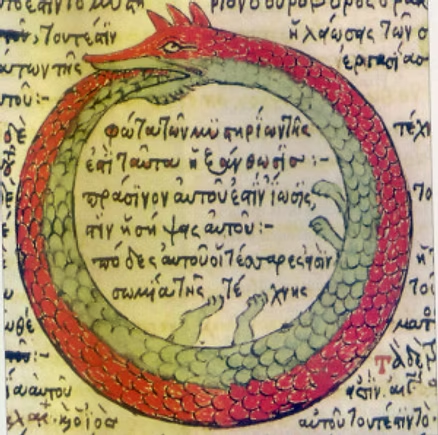














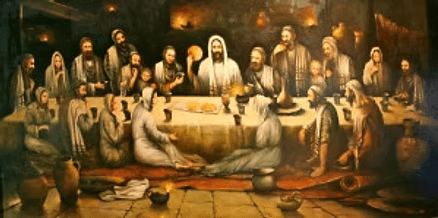

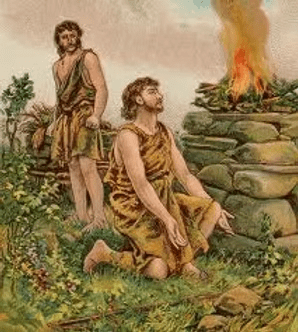

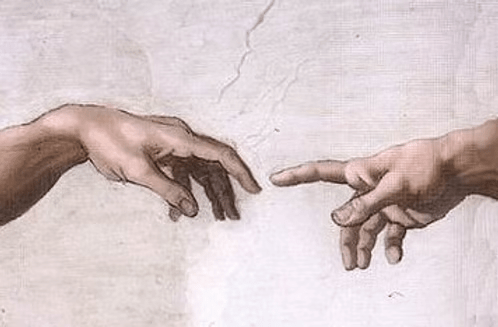


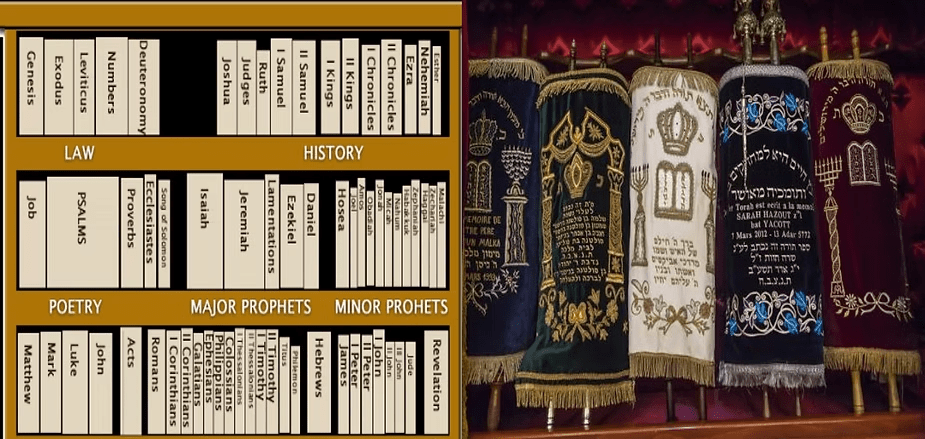
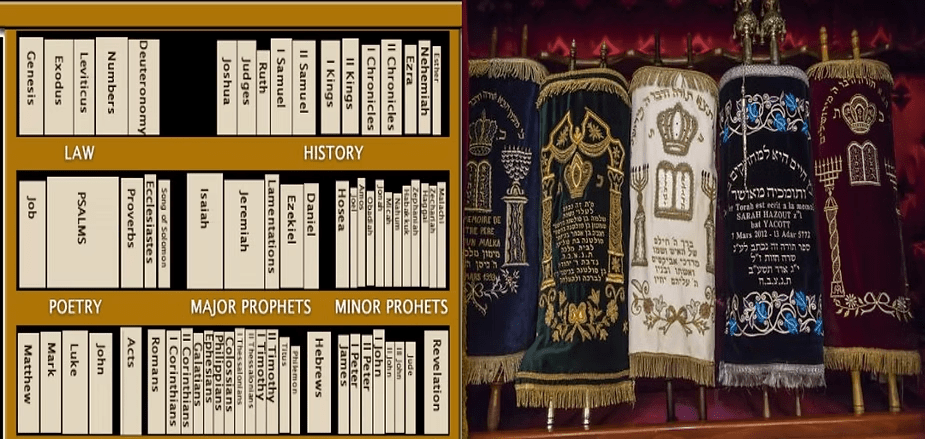




 Explaining the Readings