After John was arrested, Jesus came to Galilee, proclaiming the good news of God, and saying, “The time is fulfilled, and the kingdom of God has come near; repent, and believe in the good news.”
As Jesus passed along the Sea of Galilee, he saw Simon and his brother Andrew casting a net into the sea—for they were fishermen. And Jesus said to them, “Follow me and I will make you fish for people.” And immediately they left their nets and followed him. As he went a little farther, he saw James son of Zebedee and his brother John, who were in their boat mending the nets. Immediately he called them; and they left their father Zebedee in the boat with the hired men, and followed him.
——————————————————————————————————-
This is the Gospel selection for the third Sunday after the Epiphany, Year B. It will next be read aloud in church by a priest on Sunday, January 21, 2018. This is important because Mark recalled the beginning of Jesus’ ministry by his proclamation, “The kingdom of God has come near.” In that beginning, Mark told how Jesus called fishermen away from their boats, to “make them fish for people.”
I have called Mark the “Sergeant Friday” of the Gospels, as his version is short and quick to the facts: “Just the facts ma’am. Just the facts.”
The reality is Mark (who is not named as a disciple) was the name of the writer who told the story of Simon Peter. While scholars originally attributed this anonymous work to Mark the Evangelist, who was the travel companion of Saint Peter, later thought has moved away from that view. Regardless of the proof or lack thereof, the Gospel of Mark has to be seen as the witness of “the Rock,” Simon bar-Jonah, who was a disciple of John the Baptizer before following Jesus. Seeing this reading as the story told by Peter makes elements of this reading make more sense.
First of all, the announcement, “After John was arrested,” is a reflection on the man to whom Simon (named Peter by Jesus) was once a disciple. John, the baptizing prophet of God, was who Peter had followed, as a disciple, thinking John might be the promised Messiah. To say “John was arrested,” Mark was the first to write about that event. Both Matthew and Mark wrote of the death of John, recalling his arrest as attributable to Herod Antipas complying with his brother Philip’s wife, Herodias (Matthew 14:3 and Mark 6:17). However, that makes this statement that “John was arrested” take on a meaning directly relative to Simon Peter.
The Greek of Mark 1:14 says, “Kai meta to paradothēnai ton Iōannēn,” which literally translates to state, “And after the delivering up the [one] John,” where “paradothēnai” can mean “handing over, delivering up, abandoning, or betraying.” The Greek of Mark 6:17 states, “ekratēsen ton Iōannēn,” where “ekratēsen” means “taking hold of, seizing hold of, obtaining, or holding fast.” Matthew wrote (Matthew 14:3) “kratēsas ton Iōanēn,” which translates the same (root being krateó), as “seized hold of.” The difference in tone, from “handing over” and “seizing hold of,” means Mark 1 is less about Herod Antipas “arresting” John than it is more about Peter “abandoning” John, to follow Jesus. Thus, Mark told of Simon Peter remembering the time “After the handing over of his devotion to John, beginning when Jesus came to Galilee proclaiming the good news of God,” with Simon Peter alongside.
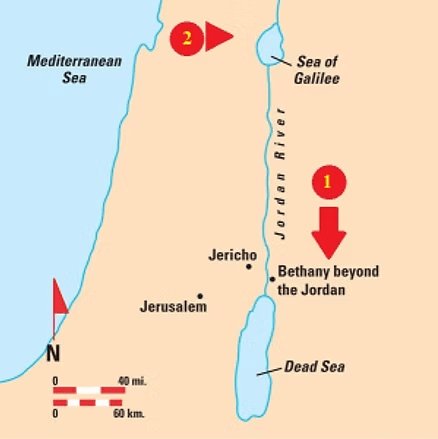
In the Gospel of John, we read of Jesus’ baptism, which took place in the Jordan, close to Bethany beyond the Jordan. Mark jumps from that location to Galilee, which represents a greater gap in time than John presented in his Gospel. John fills in that gap that Mark presents, through its brevity.
One of the gaps is where John wrote of Andrew (a disciple of John). John told how Andrew went and told his brother Simon to come and meet Jesus. Jesus then told Simon he would be called Peter (Képhas). This took place before Jesus “purposed to go into Galilee” (John 1:43). Both Andrew and Simon (called Peter by Jesus) were already committed to follow Jesus; but Jesus obviously told them to go home and go about business as usual, until he was ready to begin his ministry. They had been prepared to await his later call to come and follow him.
This means that in the space between the comma following “arrested” and the “J” of “Jesus came to Galilee,” Jesus, John the Beloved, Andrew, Philip and Simon-Peter walked from Jerusalem to their various homes in Galilee, attended a wedding in Cana, and some possibly accompanied Jesus to the edge of his sojourn in the wilderness (forty days fasting), before returning to Galilee. All that occurred before Jesus moved to Capernaum and began “proclaiming the good news of God, and saying, “The time is fulfilled, and the kingdom of God has come near; repent, and believe in the good news.”’
Thus, when Mark wrote, “As Jesus passed along the Sea of Galilee, he saw Simon and his brother Andrew casting a net into the sea—for they were fishermen. And Jesus said to them, “Follow me and I will make you fish for people.” And immediately they left their nets and followed him,” they were prepared for this call. This was not their first encounter with Jesus. Because Andrew and Simon-Peter were part of the overall family of fishermen in Capernaum, on the Sea of Galilee, they could have prepared James and John, sons of Zebedee that Jesus might call. Still, everything written by John is the truth, with no errors out of sequence, just as Peter told Mark the truth, but without every detail.
For some reason, modern artists love to think of the fishermen on the Sea of Galilee as backwards people who never came up with the concept of piers. The Romans built them back then.
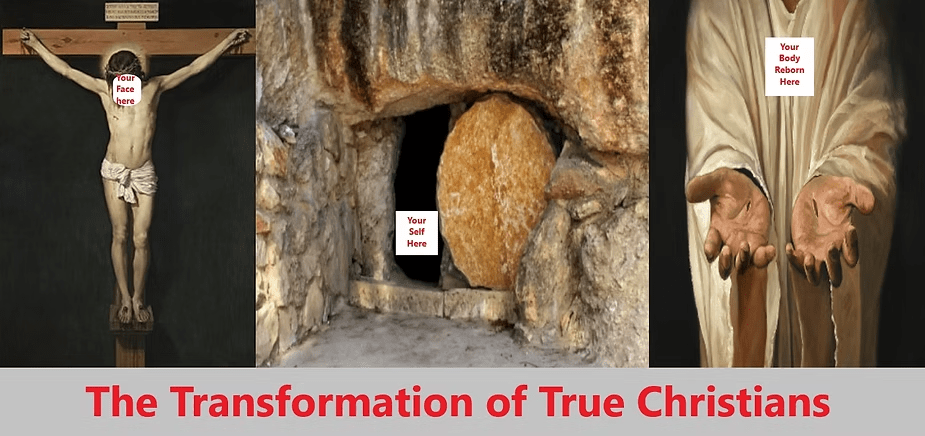
When one sees Mark telling the story of Simon-Peter, Peter’s identification of himself as Simon says that when he was not in the presence of Jesus, Simon was not “the Rock” Jesus foresaw. The name Simon becomes a confession of his common self, as he and his brother Andrew “were fishermen” as ordinary laborers. As a personal Epiphany lesson, all true Christians are common and ordinary before the presence of the LORD shines within. Just as Simon was Peter’s ordinary name, Peter represented his transformed or elevated self name, one given to him by the Messiah. A Saint loses his or her birth name and becomes transformed in the name of Jesus Christ.
Mark wrote, “As [Jesus] went a little farther, he saw James son of Zebedee and his brother John, who were in their boat mending the nets.” The overlooked element here is the statement “James son of Zebedee and his brother John” is a parallel to the statement “Simon and his brother Andrew.” Beyond those two pairs of brothers, Thaddeus (also called Jude or Lebbeus) was the son of Alpheus (also called Cleopas or Clopas), as was James the Younger (or Lesser). Levi (also called Matthew) is another who is identified as the son of Alpheus, such that if Alpheus is the father of all three, then there are three sets of brothers who followed Jesus.
Cleopas and his wife Mary (who was with Mother Mary and Mary Magdalene at the cross, with John, as Jesus died) were aunt and uncle of Jesus. Cleopas was the brother of Mother Mary (either directly or by marriage to Joseph). Thus, James the Younger, son of Cleopas, is also referred to as the brother of Jesus. John wrote about the brothers of Jesus, saying they did not believe in him (John 7:3-5), which indicates Joseph had sons by a prior marriage and possibly with Mary after Jesus. Do not forget that when Jesus was preaching to the crowd that followed him, and he was told his mother and his brothers were waiting outside for him, Jesus said, “My mother and my brothers are these who hear the word of God and do it” (Luke 8:21; similar in Matthew 12:50 and Mark 3:35).
The point of these observations is they are rooted in why Paul regularly addressed fellow Christians as “adelphoi,” or “brothers.” All Christians are related because they are the sons of God, as Jesus reborn infinitely into human bodies. It is easy (common) to do the work of “hired hands,” mending the nets that are to be thrown out to capture a mortal living; but a hired hand will leave one employer and follow another that offers more material gain. The fathers of family businesses never have enough sons to expand, meaning they are barely able to stay afloat as time wears away all physical investments.
Families used to be big, but then the great era of Industrialization and Technology destroyed the need for growing your own workers.
We can see this now, as Simon abandoned John for one who was said to come after him, the one John baptized with water, and the one John announced to be the Lamb of God. Simon and Andrew likewise “handed over” a job that had them fishing for worldly sustenance. The left a livelihood in exchange for an eternity with God. James and John of Zebedee made the same trade. They were all brothers of earthly fathers, but they became brothers in service to the LORD, the Father. All Christians since have been called to make the same sacrifice, opting out of an earthly, mortal lineage, to be filled with the Holy Spirit as the new body and blood of Jesus Christ, Sons of God.
At such a time the prophecy of Jesus will be fulfilled, as new Christians hear him say, “This is the good news of God! The time is fulfilled again and again, as the kingdom of God has been born anew! You have repented, and believed in the good news, because a good Son always obeys his Father.”
The word of the Lord came to Jonah a second time, saying, “Get up, go to Nineveh, that great city, and proclaim to it the message that I tell you.” So Jonah set out and went to Nineveh, according to the word of the Lord. Now Nineveh was an exceedingly large city, a three days’ walk across. Jonah began to go into the city, going a day’s walk. And he cried out, “Forty days more, and Nineveh shall be overthrown!” And the people of Nineveh believed God; they proclaimed a fast, and everyone, great and small, put on sackcloth.
When God saw what they did, how they turned from their evil ways, God changed his mind about the calamity that he had said he would bring upon them; and he did not do it.
———————————————————————————————————
This is the Old Testament selection for the third Sunday after the Epiphany, Year B. It will next be read aloud in church on Sunday, January 21, 2018. It is important as it presents the purpose of a prophet being to save people, which can only be done by telling them the evil they are doing, eliciting repentance and changing ways that avert the end foretold.
It should be understood that this selection from Jonah, as a reading on the third Sunday after the Epiphany, is linked to the reading from Mark (1:14-20), which told of Jesus calling Andrew and Simon, and James the son of Zebedee and his brother John, to follow him. That connection makes it possible to see a call made by a prophet and the devoted dropping everything to follow that call.
Just as verse 10 from the third chapter of the Book of Jonah is sliced off and tied to the first five verses, which neatly says, “And they all lived happily ever after” (sarcastic paraphrase), it is also noteworthy to read what Jesus said about Jonah, according to Matthew (or Luke). All is well and good when one responds to holy calls of repentance. All only stays well and good when one keeps honoring that call.
In the Biblical versions available, which divide the chapters into groups of verses and then place neat summation titles above them, Matthew 12:38-42 (as well as Luke 11:29-32) is headed: “The Sign of Jonah” or “The Desire for signs.” This is because the Pharisees and scribes who followed Jesus, confronting him, told Jesus they desired an “attesting miracle” (“sēmeion” means “sign, mark, token, or miracle”) from him, to prove he was not an agent of “Beelzebul the ruler of the demons” (Matthew 12:24). They drew that conclusion from having watched Jesus cast out demons from a blind mute, who had been brought to him for healing.
In response to that miracle on demand, Jesus said, “An evil and adulterous generation craves for a sign; and yet no sign will be given to it but the sign of Jonah the prophet”
(Matthew 12:39) Jesus then added, “The men of Nineveh will stand up with this generation at the judgment, and will condemn it because they repented at the preaching of Jonah; and behold, something greater than Jonah is here.” (Matthew 12:41) That message from Jesus requires one understand this reading from Jonah.
When we hear the announcement, “The word of the Lord came to Jonah a second time, saying, “Get up, go to Nineveh, that great city, and proclaim to it the message that I tell you,” you have to realize that the first time the word of the Lord came to Jonah, he was told to do the same thing: “Go to Nineveh the great city and cry against it, for their wickedness has come up before Me” (Jonah 1:2).
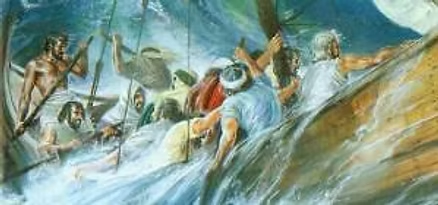
The problem then was that Jonah did not want to go into a Gentile land and tell them what an Israelite’s God said. So, he fled on a boat that was headed away from Nineveh. That boat was about to be sunk by bad weather caused by God, who knew Jonah was fleeing his responsibility as a prophet.
The sailors eventually threw Jonah overboard, where he was swallowed by a whale. Three days in that whale’s belly changed Jonah.
Jesus told the Pharisees and scribes, “Just as Jonah was three days and three nights in the belly of the sea monster, so will the Son of Man be three days and three nights in the heart of the earth.” That prophecy flew over the heads of the Pharisees and scribes, because Jesus had basically just told them, “You want a miracle? Here will be a big one to look for” (sarcastic paraphrase). Still, the Israelites and Jews, much less the Pharisees and scribes, had no clue about the meaning of “three days and three nights in the belly of the sea monster,” so they could not have foreseen the meaning of “three days and three nights in the heart of the earth.”
In the Jonah reading, one learns, “Nineveh was an exceedingly large city, a three days’ walk across.” There is that number “three” again. Three is associated with the Trinity, such that there is a divine nature symbolized by the number three; but I see this divinity on the worldly plane, representative of one’s initial completion of the tests that prove the presence of the Holy Spirit, which connects God with man. Heaven joins with earth to complete this triangle.
Because God had sent Jonah to warn Nineveh that it would be overthrown, that dire prediction was due to a state of three in Assyria (symbolized by Nineveh being “a three days walk across). Thus, as the capital of Assyria, the initial completion for them was to have entered into a divine state that connected them to an evil spirit. The warning sent by God was that Nineveh had been filled with an evil spirit, one that would cause its destruction.
For Jonah to enter Nineveh and walk one-third of the length into it, he had repeated an entrance into a danger zone, just as when he had been swallowed by the “sea monster.” That being the “second time,” where “two” symbolizes an attraction between two singles (two ones) so they come together so two is as one, Jonah had no fear of being God’s messenger. Jonah entered Nineveh as a “three,” one who was married to God, as the bearer of the Holy Spirit for others to meet. The symbolism of the number “one” (“going a day’s walk) says Jonah then represented a “new state” or “new opportunity” that was being offered to the Assyrians, which was from the Israelite God, a new God for them to listen to.
The happy ending of verse ten was not to be permanent. When Jonah announced, “Forty days more, and Nineveh shall be overthrown!” the prospect of forty days becomes significant. Moses was on top of Mount Sinai for forty days. The Israelites wandered in the wilderness for forty years. Jesus was tested in the wilderness, fasting for forty days.
The number 40 breaks down numerologically into 4 times 10. Thus, it is a higher octave (spiritual elevation) of a base four. This means forty days (or years) represents one’s return to basics (the foundation or base of 4), with an assistance from above. Therefore, just as Jesus was attended by angels, the people of Nineveh spent forty days cleansing themselves to the God of Israel by repentance and a successful testing of their sincerity for changing their ways. They put on the sackcloths of mourning, as repentance for their evil ways. None of that could have happened without belief in a prophecy and a commitment to please the God who blessed them with warning.
Alas, they eventually reverted back to their evil ways, causing God to send another prophet to tell them the same fate was coming, only to have them fail to believe and fail to change. So, they were eventually destroyed, meaning the prophecy of Jonah never stopped being in their future. They averted that end by changing their ways, away from evil. The moral of that story is why Jesus told the Pharisees and scribes:
“Now when the unclean spirit goes out of a man, it passes through waterless places seeking rest, and does not find it. Then it says, ‘I will return to my house from which I came’; and when it comes, it finds it unoccupied, swept, and put in order. Then it goes and takes along with it seven other spirits more wicked than itself, and they go in and live there; and the last state of that man becomes worse than the first. That is the way it will also be with this evil generation.” (Matthew 12:43-45)
That was the fate of Assyria as a world power. Its collapse and the razing of Nineveh was the end of its height of power. In the accompanying reading from Mark, Jesus called upon disciples who responded to that call, just as the people of Nineveh responded to Jonah’s call. Jesus went out into Galilee proclaiming “the kingdom of heaven has come near.” However, Jesus was rejected, just as the people of Nineveh rejected the second prophet of Israel.
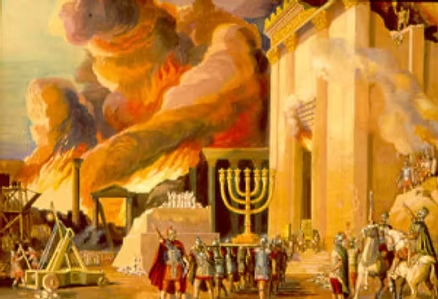
Judas Iscariot responded to the call of Jesus, as did Andrew, Simon, James and John (first two sons of Jonah and last two sons of Zebedee). Judas reverted to evil, as did the Assyrians. The same rejection of God’s messenger was what the Jews who were in power in Jerusalem, during the times of the Second Temple, did to Jesus and his Apostles. Rather than that Temple taking its attraction to God (a two) to the initial completion as a Trinity (a three), as one with God (a thirty-three), it would eventually be destroyed by the Romans because of the same failures seen by God in the people of Nineveh.
It is important to see Jonah in the light of an Apostle being sent into a land of Gentiles, to spread the Gospel of God just as Paul and his companions went into the Roman conquests of a fallen Greek empire. This concept continued over centuries, to the fallen Roman Empire and into their European holdings, where pagans had fought against Rome. America today can be seen as a modern Assyria, with Washington D.C. as its Nineveh, at the height of its power. When prophets warn of evil ways needing to be changed, and then there is no repentance, what can one expect to happen, based on the past? America pretends to thank the One God for not letting it be destroyed, while building altars to worldly deities.
Perhaps, when the second prophet came to warn the Assyrians, and they did not change their evil ways, it was because they said to that prophet, “We already bowed to that God, back when Jonah came.” Does that sound like someone using the excuse, “I don’t need to change my ways, because I have been baptized with water and I believe in Jesus Christ”?
The same fate always awaits anyone (no matter how big in rank or size) who thinks they are too big to fail. Failing comes when evil ways are called righteous.
The one unforgivable sin, according to what Jesus told the Pharisees and scribes, is this:
“Blasphemy against the Spirit shall not be forgiven.” (Matthew 12:31) He added, “Whoever speaks against the Holy Spirit, it shall not be forgiven him, either in this age or in the age to come.” (Matthew 12:32)
One speaks against the Holy Spirit by saying, “I have been baptized (by water), so I have the Holy Spirit.” We discussed that lesson when Paul asked the Corinthians, “Did you receive the Holy Spirit when you were baptized?” They admitted they had never heard of the Holy Spirit.
It is the Holy Spirit that sends a prophet into places like Nineveh. The presence of the Holy Spirit does not send one running in the opposite direction that God wills. The presence of the Holy Spirit does not create excuses for why someone cannot do as God asks. It does not lie and say, “God told me to do nothing.”
If you do not know what the Holy Spirit is, then admit it and get to work getting it. Or spend three days in the belly of a whale [death symbol], so you can be spit back out into the world [reincarnation], given a second chance to get that Holy Spirit within. Life and death are the common two that are always joined to one soul that never gets the Holy Spirit.
As a personal Epiphany lesson in 2018, it is easy to read this Jonah selection as one hearing the call of Jesus to follow him, as Jonah (eventually) followed the call of God. The Big Brain of hindsight tells us, “We learn from the lessons the ancients went through, so there is nothing more to do than believe it all happened and enjoy the wealth of that faith since.” The Big Brain hinders receipt of the Holy Spirit. The Big Brain convinces the body to go along with its ideas, not those from God.
The problem is not seeing the demand from God, for Him to see what you have done towards sincere repentance and changed ways. All adult Christians are first evil human beings (sinners), whose ways have to change for God to “change his mind about the calamity that he had said (through Jesus that) would be brought down upon the wicked.”
All is well and good, to dance and skip along saying, “I am Christian. I am saved by Jesus.” All is well and good if that is the truth and not a lie. All is well and good as one evangelizes that truth so others can find God in the same ways.
The truth of one’s ways is fully known by the mind of God. It is one thing to follow what a preacher, pastor, priest or minister says, as peons or minions, doing nothing more than walk in the shadow of Jesus the Son of the Almighty (i.e.: showing up for church on Sunday). It takes disciples that act in righteous ways, so one becomes an Apostle; just as it takes prophets who do not flee their service to God, those who go to the Gentiles with a message.
Still, a prophet cannot make God change the outcome of the future. The sailors pleaded with Jonah to make his God calm the storm; but Jonah could do nothing. That was why they threw him overboard. It took “the people of Nineveh believing in God” for “God to change his mind about the calamity that he had said he would bring upon them.” Collectively, as one, and individually, the responsibility lies within, not without.
Apostles are those who walk fearlessly into the depth of evil and speak for God. That proves one’s sincerity. Without that test proving one’s metal, one is little more than the evil God warns others not to be led by.
After John was arrested, Jesus came to Galilee, proclaiming the good news of God, and saying, “The time is fulfilled, and the kingdom of God has come near; repent, and believe in the good news.”
As Jesus passed along the Sea of Galilee, he saw Simon and his brother Andrew casting a net into the sea—for they were fishermen. And Jesus said to them, “Follow me and I will make you fish for people.” And immediately they left their nets and followed him. As he went a little farther, he saw James son of Zebedee and his brother John, who were in their boat mending the nets. Immediately he called them; and they left their father Zebedee in the boat with the hired men, and followed him.
———-
In this reading selection, which is the Gospel presentation on the third Sunday after the Epiphany in the Year B, it appears as a puff of cloud in the void of space that is a sheep’s head. It seems as if nothing is written before it or after it. It is the honing of words and the paring of verses, served nicely on a platter for fine dining. Bon appetit!
While it is normal to walk through the line at the cafeteria and point to the sacrificial meat one desires and have the attendant pass you a portion, nobody cares to see the whole of the beast prepared, before it was butchered, then glazed, marinated, battered, baked, or deep fried, before being dumped in a pan or set, waiting on a board to be carved up. One takes a portion without questions of foresight or hindsight.
Mmmmmmm. Yum.
Divine Scripture is food for the soul. It is manna from heaven. It is prepared by the hands of the most high, with the intention being that a very small portion will expand greatly once consumed. It does not feed the stomach or even the brain, as those physical organs cannot digest divinity nor can they ever come to a state of satiation from having spiritual food set before one’s body of flesh. Only a hungry soul will chew on a small portion of Scripture and feel the fullness of all that is both before and after that portion.
This reading begins with the capitalized word “After.” That word is followed by words that state “John was arrested.” While that might feel to the tongue to be a hard, gristly piece of fat, which needs to be discretely spit out into one’s hand, it should be realized that the master chef [God] is smiling as he watches you eat His carefully prepared presentation, waiting to see how well you enjoy His Word.
Good? Yes?
The text prepared by God, written by his assistant Mark [who wrote the story of Simon Peter], actually begins with a capitalized “Kai,” which is then followed by the word “after” (“meta“). The word “kai” – in the lower case – is a mark that alerts the reader that the words to follow that mark are important to pay close attention to. When a capitalized “Kai” is written, the words that follow take on a most important meaning that needs to be understood. Thus, before one should spit out this importance into one’s church napkin, one needs to grasp what “meta to paradothēnai ton Iōannēn” means.
The longest word in that mix is “paradothēnai.” The root verb is “paradidómi .” According to Strong’s, that word states “to hand over, to give or deliver over, to betray.” [definition] The word’s “usage” then denotes “I hand over, pledge, hand down, deliver, commit, commend, betray, abandon.” The form written is a passive aorist infinitive, thus stating what happened in the past. The word, as shown above, then states “was arrested,” but by realizing the capitalized “Kai” is an alert for higher meaning, that realization makes one pause before spitting something out. You suddenly can dissolve the gristle with a quick flip with the tongue, so the flavor is released as “was handed over.”
More than the power of a tetrarch over Galilee and Perea being in play, “Kai” lets one realize God is somehow involved in this change involving John the Baptizer.
Savor this: HELPS Word-studies says of this word, “paradídōmi” it is from pará, meaning “from close-beside” and dídōmi, “give”. The word is then “properly, to give (turn) over; “hand over from,” i.e. to deliver over with a sense of close (personal) involvement.”
This understanding then allows one to elevate a simple meaning [“was arrested’] to a higher level [the capitalization of “Kai“], so one is led into this reading by the realization that John (the baptizer, the cousin of Jesus, the one who would come before Jesus, the one representing the reincarnation of Elijah who would come before the Messiah) has been handed over to the authorities by God, as a most necessary timing element that had to come before Jesus could begin his ministry.
The words of Mark, prior to this important statement, tell of Jesus being tested at the end of his forty days in the wilderness. The test of Satan was like Jesus’ final exam before graduating from seminary, so he was officially ordained to go out into the world and preach the truth of God. However, God did not plan for His Son to be in competition with His other Son, John; so, before Jesus could begin his ministry, John’s ministry had to come to a close.
In Malachi 4:5 is prophesied: ““See, I will send the prophet Elijah to you before that great and dreadful day of the Lord comes.”
For anyone who keeps up with what the four Gospels of the New Testament says, there are several places where a prophecy stated before will be fulfilled by Jesus. One example is found in Matthew 2:15: “[Jesus] stayed [in Egypt] until the death of Herod. so was fulfilled what the Lord had said through the prophet: “Out of Egypt I called my son.”‘ That final quote comes from Hosea 11:1.
Thus “Kai after this handing over who John” [a literal translation of the Greek text] is a major statement of the fulfillment of Jesus (the Messiah) coming after Elijah.
When John said [Matthew 3:11], “after me comes one who is more powerful than I,” that says [reading between the lines] John’s ministry had to end first, in order for the ministry of Jesus to begin. As such, the same Jesus who told his mother [at the wedding in Cana], “My hour has not yet come” (John 2:4), knew he could not begin his ministry until John’s ministry had ended. Therefore, after Jesus had successfully completed his time in the wilderness, he was prepared to enter that practice; but only “After John’s ministry had been handed over to Jesus, by the Will of God.”
When one reads this introductory partial verse that way, it then allows one to see the importance of what followed: “Jesus came to Galilee, proclaiming the good news of God, and saying, “The time is fulfilled.”
The hour of Jesus had arrived; so, “the kingdom of God has come near.”
Just as John had washed the sins off the Jews who were repentant, so too did Jesus say, “repent.”
Here comes the final part of what Mark’s fifteenth verse has Jesus saying. That statement is begun by the lower case spelling of “kai.” That word again marks a point of importance needing to be read into the words that follow. Those words state “believe in the good news,” but can also be translated as “put your trust in the Gospel.”
Now, modern Christians call the four books of Matthew, Mark, Luke and John the “Gospels.” Most adult Christians have heard it said so many times they also know “gospel” means “good news,” thus the translation above affirms that knowledge.
This translation as “gospel” or “good news” comes from the Greek word “euaggelízō,” which is recognizable as the root of the English word “evangelize,” which is commonly defined as meaning: “preach the Christian gospel” (while also being a means to “convert someone to Christianity”). Few know that the Greek word “euaggelízō” is a combined form word, where “eú” means “good, well” and “angellō” means “announce, herald.” Thus, the word literally means “proclaim the good message.” [HELPS Word-studies]
Well, let’s pause and reflect on that for a moment.
<pause, with quiet whispers of reflection>
Raise your hands if everything I proposed about the words “After John was arrested” was something you knew, so everything I wrote above was boring as heck [as if you were reading and saying to yourself, “Come on! We know that already. Get past that!”]?
<look out at a sea of people sitting on their hands>
Okay. That is an example of what “Gospel” truly means. It is not going into work and proclaiming, “I went to a Christian church Sunday, so I believe in Jesus .. <singing> Because the Gospels tell me so.”
When we read Mark 1:15 end by Jesus stating, “believe in the good news,” everyone has to grasp that Jesus was talking about the same words Jews had been memorizing for many centuries, but few had ever figured out what they truly meant, much less how to believe in words that no rabbis could properly explain. Jesus announced, “have faith in the truth of God’s Word.” [Rather than “believe in the Gospel.”]
That has to be grasped; and, it must be understood that every time Jesus began a statement by saying “Truly” he was speaking the truth of what everyone knew was written, but nobody knew what it meant. The same condition is still around today, because God does not allow just anyone to read His Word and know what His Word means. If that were to be the case, then Christians would know only what they read [very little] and atheists would know everything [by reading the Bible just to make fun of ignorant Christians].
That proclamation of Mark says the ministry of Jesus began as a new phase of letting the truth of God’s Word be known. The ministry of John, which had come to an end, was to find out who wanted to know the truth enough to ask John to wash their sins clean, because nobody in the synagogues [or the Temple of Jerusalem] could tell them how to stop sinning. By identifying there were indeed seekers of the truth, Jesus could begin sowing the seeds of truth to those who truly repented and sought a life of righteousness.
Okay, I have written over 1500 Word Count words explaining two of seven verses in this reading. To be perfectly honest, not one sermon on the third Sunday after the Epiphany will focus on Mark 1:14-15. No truth of those verses will be shared. No truth of those verses will be heard; so, nothing inspiring faith will be spoken that will lead a pewple to rise up [become spiritually elevated – one’s soul merged with the Spirit of Christ] and become the next in a lineage of most divine priests [aka Saints]. If anything, sermons will focus on Jesus calling Simon and Andrew, then James and John.
Rather than spoil those orations, let me just point out a few pieces of deduced fact, based on a holographic whole view of what is written, which connects to verses 16 – 20.
First, John wrote about Jesus coming out of the river after being baptized by John, where he met Andrew, who went and got Simon to bring him back to meet Jesus. That was when Jesus said he was going to call Simon “Peter” (“Kēphas“), an Aramaic name meaning “Rock” (“Petros” in Greek). Since John was still baptizing then, that meeting occurred before John was arrested. Therefore, one should realize that when Jesus called to Simon and Andrew, they were already acquainted; so, the call by Jesus was awaited, causing the immediacy of their response.
What is missed in the truth of these verses is the presence of the word “kai” between the names Simon and Andrew. The imagery created makes me see two men holding onto one large net, which they are both about to cast into the water, meaning they were on the sea, not at a dock. That leads one to think Jesus saw the two, making them out at a distance; and, knowing it was the two he knew, Jesus then hollered as loud as he could to get their attention (maybe waving his arms too), with both hearing him at the same time.
The “kai” announces that Andrew was as important as was Simon, the way Jesus “perceived” them. So, Jesus did not “see” them so much with his physical eyes. What Jesus “said” to the pair was heard by their souls, equally, more than their ears.
The translation of what Jesus said, [above shown as] “Follow me and I will make you fish for people,” is not the best translation for the truth to shine forth. The Greek text states, “Deute opisō mou , kai poiēsō hymas genesthai halieis anthrōpōn .” Notice the comma-kai combination in the middle. That separates what Jesus said into two commands, one important by beginning with a capitalized word (“Deute“) and the other important because of the marker word “kai.”
The first command says, “Come after me,” where the word “Come” is important as an imperative command, which can also say “Follow!” When the word “opisō” is seen as a statement of “after,” by having realized the truth of Jesus’ ministry “Coming after” that of John, the command is much more than Jesus saying, “Hey guys! You remember we agreed that you would carry things for me when I begin my ministry?” It is a command that his ministry had begun and they would need to stay close to Jesus, so they could be the next in the lineage as most divine priests.
The second important statement is then best read as, “I will act you to be born fishers of men.” Here, one needs to pause after one word, without a mark written to indicate that need. This makes the word “kai” directly place focus on “poiēsō” alone, which says, “I will act” (in the future active indicative). By reading that one word separately, it becomes a statement that the four Gospels of Matthew, Mark, Luke and John could be dubbed “The Acts of Jesus.” The fifth book of the New Testament being named “The Acts of the Apostles” is then a statement that the disciples of Jesus had all [sans Judas] been born as those who acted like Jesus, all fishing for souls to bring to God.
The word “halieis” translates as “fishers,” but because both Simon and Andrew were fishing by casting nets, the promise of Jesus says each [the individualization of “kai” between Simon and Andrew] will cast nets in the world, where men live as fish out of water. Such a realization also becomes metaphor for a spiritual soul being lost in the material realm. The acts of Jesus would be the model of preaching the truth of God’s Word, which says the nets that will catch the souls of men [and women] are woven by the truth of God’s Word.
An important point in this regard comes from remembering what was written in John 1:39, when Jesus told Simon and Andrew, “Erchesthe kai opsesthe” or “Come kai you will see.” Last week, we read how Philip told Nathaniel, “Erchou kai ide” or “Come kai see.” Today, those commands relate to the importance of being a “Follower” [a Saint] that will have divine insight into the truth, so one who “follows behind” Jesus will be enabled to “Come after” him, doing the acts of true evangelism.
At this point in the reading, the truth of what Jesus had promised Simon and Andrew is brought as proof before their eyes. The reality of Jesus walking along the shore of the Sea of Galilee, where Jesus saw James kai John, might have been what physically took place; so, when Jesus called to them and they immediately came, such a response makes one think the brothers of Zebedee had also made some arrangements with Jesus.
While that might be the case, the truth becomes exposed more easily in the form of metaphor, as new ways to view fishers of men, and their use of nets. This metaphor is then aptly set upon the model of Judaism, where the rabbis were the fishers of Jews, whose nets were woven by the scrolls of Mosaic Law, the Psalms, and the Prophets.
This means the names of James, John, and Zebedee are meaningful and necessary to realize. James is a Greek form of the Hebrew name Jacob, which is a word meaning “Supplanter.” A supplanter is one who takes the place of another, as Jacob would do to Esau. The name John means “Yahweh Is Gracious,” with the male children of Jews seen as God’s blessings upon parents. The name Zebedee means “Yahweh Has Bestowed.” Together, the three names reflect the state of Judaism, where Zebedee is the religion God Bestowed upon Israel, with the sons reflecting a need to replace the Old with the New, by receiving God’s Graciousness and Supplanting Judaism with Christianity.
In this metaphor, we are told James and John “were in their boat mending the nets.” Here, the word “ploiō” can be generalized as a “vessel,” which should be seen as a building for believers, like a nave is both a boat and a church. This means the nets used by synagogues to catch Jews was the Law; but their nets were traps that entangled human beings, rather than freeing them. By using the Law as a battering ram on sinners, that misuse caused many holes to be opened, letting sinners escape punishment the rulers used against Jews. In order to keep the Jews compliant to Law, and thus their rule, that net was always in need of being mended.
This means Jesus “called” out to James and John the truth of the Law, which they heard for the first time. The truth was so attractive to the ones who would Supplant Jesus and become bearers of the Graciousness of Yahweh that they left the synagogue. That identified Zebedee as being left there with “hired hands,” where the Greek word “misthōtōn” implies someone who is only there for selfish reasons, not seeking to help anyone else without pay.
The power that the truth these words of Mark bears says all true Christians are those who hear the voice of truth calling, such that he or she cannot stop from becoming a Follower in the lineage of Jesus. Anyone who is still sitting in a church pew, waiting for Jesus to wander by the shoreline and call out to him or her is out of luck. That ship has sailed.
Jesus has to be reborn in someone that looks more like Simon, Andrew, James or John (and women like Mary too), whose voice sound is inconsequential, because the soul is not listening with ears that hear vibrations of sound, but feeling the truth that is spoken from God. Those souls hearing the truth of God’s Word do not stay in the nave mending nets. They jump out and become Jesus reborn.
This reading from Mark only comes during the third Sunday after the Epiphany. The meaning of Epiphany is echoed in the responses of Jesus, Simon and Andrew, and James and John. Jesus did not have John arrested so his path to priestly stardom was free and clear [there were no lures of high hats and crosiers with golden handles that led him to his wilderness experience]. The disciples of Jesus did not drop their nets and leave their boats simply because Jesus called them in words that made them coo like women listening to their favorite minister preach. The all had Epiphanies that heard the voice of God speaking to their souls, telling them, “You’re next, so get in line.”
When was the last time your pastor, preacher, minister, priest, or rabbi had that effect on anyone?
Hmmmm. Maybe someone needs to tell them the truth.
I mean, brothers and sisters, the appointed time has grown short; from now on, let even those who have wives be as though they had none, and those who mourn as though they were not mourning, and those who rejoice as though they were not rejoicing, and those who buy as though they had no possessions, and those who deal with the world as though they had no dealings with it. For the present form of this world is passing away.
———-
This is the epistle reading selection for the third Sunday after the Epiphany, Year B, which is next scheduled to be read aloud in universal “catholic” churches on January 24, 2021. This is a short selection from Paul’s letters, only being three verses. It clearly presents the paradox true Christians experience (and have for the length of time since Jesus ascended and returned in Spirit form to inhabit true Followers).
Anyone who has ever read a dozen or so of my posts here has seen me write about self-sacrifice being the only way for the soul Spirit of Jesus to be born into one’s ordinary soul, inside one’s fleshy body. That self-sacrifice means the reduction of the ego to nothing of value, which is what makes one become a willing servant of God. It means one has to lower one’s brain in subjection to the Lord and become His obedient servant. In old fashioned ways of thinking [a lost way of life acceptance, which is why this is so hard to fathom these days], subjection to God is the equivalent to the submission of a wife to her husband. A soul in a fleshy body [regardless of human gender, because souls do not have gender] marries with God, such that His Holy Spirit penetrates the soul inside a physical body. This is divine possession, which can only take place after one’s ego has died.
Saul had a big ego. Saul had a position of power and influence, as a Jew with Roman citizenship that was free to hunt down and punish severely anyone who was a follower of some guy named Jesus. Saul had an Epiphany. Saul died of that self-ego. Saul was resurrected as Jesus Christ, who changed his name to Paul, a word that means “small, very little, restrained.” [Abarim-publications]
Paul [or Saul] never knew Jesus physically. He was never a follower of Jesus, as one of his disciples. He was a follower of the Temple of Jerusalem, most likely as a member of the Pharisee sect. Paul [as Saul] thought in his Big Brain that he was most devout and supremely religious. Paul [as Saul] thought he was doing God a favor by hunting down Christians and having them tortured. Therefore, Paul [as Saul] is vastly important as a model for all humanity after Jesus ascended, as the prototypical Christian, which means anyone who sits in a church pew listing to an sermon and following rituals, anyone who presents sermons and performs rituals in churches, and anyone else who has little-to-nothing to do with churches in the world since the Romans tore down the Temple of Jerusalem is a model of Saul, not Paul.
To become a true Christian means a transformation of self, a transfiguration of soul, and a metamorphosis in the way a human body of flesh becomes completely submissive to the Mind of Christ and the resurrections of Jesus, so two souls exist in one body. Again, because a soul has no gender designation, because souls have no need for reproductive organs [only fleshy bodies need those], a paradox is created that is a body of flesh becoming the wife of God [even in manly mans] and a neuter soul becoming the Son of God [even in womanly womans]. If there is no Christ within a soul-body lifeform, then there is no Christian present.
Certainly, this is not typically an immediate change, from one state of being to one completely new. In Saul’s case, he was caused to go blind. He stayed blind for three days. He had to be blessed by a man who had become a true Christian, who talked with God because of that change within himself – just as Jesus talked to God the Father. The disciples that followed Jesus around for three years had to wait for Jesus to ascend to heaven, before they suddenly were reborn in his name on Pentecost Sunday. This means there can be a period of confirmation in this process, kind of like that of a squire, before one is tapped with Excalibur and knighted.
If this concept is foreign, then the words of Paul in this reading selection will fly well over your heads [where Big Brains lie]. Paul wrote to true Christians [those he came in contact with and God’s Holy Spirit within Paul, so they too were completely changed], encouraging them to keep the faith and pass it on – an Apostle thing to do. Therefore, Paul wrote to those true Christians in Corinth, reminding them that sainthood means a continued existence of sacrifice on the earthly plane, as sacrifice here allows a soul to ascend into heaven, where none of the normal worldly practices are normal anymore.
When the above translation says, “brothers and sisters, the appointed time has grown short,” Paul simply wrote “adelphoi,” which states only “brothers.” The addition of “sisters” is because most Christians who sit in churches are women, so the ones who run the churches don’t want them to feel left out. Certainly, Paul wrote to both men and women true Christians, but he was not addressing them by their sex organs. He was addressing them by their Holy Spirit designation – as all being Sons of God. Thus, they were all “brothers.”
Still, Paul wrote that “the appointed time has grown short,” which is a statement about the amount of life a true Christian has left in him or her, before one’s soul is released from a body of flesh [death] and the Day of Reckoning comes. Here, the Greek word “kairos” has been translated as “appointed time,” but a better viable translation would be “opportunity.” For all who had not yet been fully committed to being a wife of God – still virgins awaiting their bridegroom – as those disciples of those resurrected as Jesus Christ, still in training, the time between now and a known death, assured to come eventually, is that “appointed time” human beings dread. However, death to a true Christian is an “opportunity” to not fail God one more time, and be reincarnated in this world of pains.
When Paul then wrote “from now on” that is a statement to make the most of one’s “opportunity” in whatever life one has remaining. His words of encouragement were saying, once you commit your soul to the Lord there is no going back to being a virgin again. The time remaining after becoming Jesus Christ reborn means constantly doing the Will of the Father, because self-ego has become blinded and died.
Paul then wrote a series of statements that are relative to that death of the old and the changes into the new. First he wrote, “let even those who have wives be as though they had none.” Those who have wives are male human beings. In that ancient world, no matter how harsh the outside world was on a man, there was always the wife that all one’s frustrations could be taken out on. Paul was saying, a Saint no longer has anyone below that can be treated as a servant or a slave. A true Christian has to see oneself as the lowest form of life there is. ALL true Christians are the wives of God, meaning ALL are equally expected to keep their eyes bowed down. ALL are expected to answer any question posed to him or her by God with words like, “You know Lord,” “Here I am, choose me,” and “The Spirit is willing, but the flesh is weak.”
Similar to that flip-flop from some sense of superiority over others, to one of becoming the lowest of the low, Paul wrote: “those who mourn as though they were not mourning.” To receive the Holy Spirit within one’s soul means to stop worrying about death coming. As one grows older, entering into the twilight of life, when death is felt stronger and stronger each year, with people close to one more frequently meeting death and departing this world, mourning becomes an act of selfishness. To mourn the dead does their souls no good. Mourning is only for self-benefit. Even when mourning becomes a reflection of the dread one has that the world will once again thrash one about, causing more pain and agony, that is merely some perverse desire to live longer and enjoy life on earth more. Paul is saying to true Christians, realize there is no pain or suffering that the world can heap upon one’s body of flesh that will be any more than a fleeting whisper of illusion, once heaven’s eternity is gained.
When this aspect of self-pity is said to be denied, Paul then wrote: “those who rejoice as though they were not rejoicing.” That becomes a statement that being happy because something good has come into one’s life, something that can be measured in worldly gains, anything received in the material realm is nothing to find happiness for. God does not reward His servants by letting them win the lottery or get a promotion at work that means more money and benefits. All of that celebration is selfish. Still, God may find it appropriate in one’s spiritual development to receive more than one needs; but that is not to be a time of rejoicing, because one having more than one needs is simply God giving to one so one can help many, as a servant of God. Nothing received in this physical world is worthy of celebrating, as receipt of the Holy Spirit is not of this world.
Paul then advised: “those who buy as though they had no possessions.” This goes along with the receipt of worldly things, such that money is the measure that allows one to buy things. To read this as if Paul said “those who spend like poor people having money for the first time” is wrong. It must be read as Paul telling true Christians that there is nothing in the world that will go along with one’s soul to heaven. The only “possession” one has it one’s soul, as the body will be left behind, along with anything and everything bought over one’s lifetime in the flesh. When this reality is understood, then one does not go making deals with the devil, where things bought come with the price of one’s soul – one’s only possession. Therefore, those who buy as though they had no possessions are those who are the wives of God and their souls have already been given freely to the Lord, leaving them with nothing they possess, thus no buying power.
Paul then ends this string of statements designed for true Christians to grasp, writing “those who deal with the world as though they had no dealings with it.” When one has freely promised one’s soul to God Almighty, then one is committed to serving God on earth, until one leaves all physical parts behind and goes to be one with God. The only dealings one has in the world, during the remaining time one’s soul has on the earthly plane, are those God commands. The Greek word translated as “deal with the world” focuses on “chrōmenoi,” which means “uses.” The word translated as “no dealing with it” is “katachrōmenoi,” meaning “using it as their own.” Seeing this, one realizes “dealing with the world” is all about what uses what. Paul is telling true Christians that they will no longer allow themselves to be used by the world, because they no longer have use for what it offers.
Finally, Paul wrote to the true Christians in Corinth, telling them “the present form of this world is passing away.” The key word written there is “paragei,” which means “is passing away.” The Greek root word, “paragó,” is metaphor for “death.” This means that the “present” state of being a true Christian knows is the “passing away” of the self-ego, as one has died of self-will and only does the Will of the Father. There can be no other way.
As a short reading from Paul on the middle Sunday in the season recognized as the ordinary time between the Epiphany and the coming sacrifice of Lent, this is preparing one for the ultimate sacrifice of self that is one’s personal wilderness experience, when one is tested for one’s true level of commitment to God. An Epiphany leads one to subject oneself to that extreme test of faith, and survival cannot be found by a soul alone, because Satan’s lures will force the body to drag the soul back into the world of sin. One can only survive a wilderness test by being married to God’s Holy Spirit and having been changed from whatever name one went by to being “in the name of Jesus Christ.” An Epiphany is realizing changes must come and they can only come with God’s help. God helps His wives, so marriage means a change of name is a mandatory self-sacrifice that must be made.
The word of the Lord came to Jonah a second time, saying, “Get up, go to Nineveh, that great city, and proclaim to it the message that I tell you.” So Jonah set out and went to Nineveh, according to the word of the Lord. Now Nineveh was an exceedingly large city, a three days’ walk across. Jonah began to go into the city, going a day’s walk. And he cried out, “Forty days more, and Nineveh shall be overthrown!” And the people of Nineveh believed God; they proclaimed a fast, and everyone, great and small, put on sackcloth.
When God saw what they did, how they turned from their evil ways, God changed his mind about the calamity that he had said he would bring upon them; and he did not do it.
———-
This is the Old Testament reading selection for the third Sunday after the Epiphany, which is read during the Year B of the Episcopal lectionary. As a source of insight during one’s personal season of Epiphany, it is important to see oneself as a Ninevite.
Human beings are born into a world that slowly overcomes a soul and turns a body of flesh towards serving all that pleases the flesh, with little concern about God or His gods. In the U.S. of A. this very moment, Americans are celebrating the overthrow of its flawed form of philosophy. Those who once ruled have fled into the mountains surrounding what Ronald Reagan made famous as a “bright, shining city on the hill” – as if Washington, D. C. is some great place where the powerful worship lesser gods and receive all the benefits of having cheated half of the people of any say in how their government should work. America is Washington D. C. and Nineveh is metaphor for all governments like the one in America today.
Americans are as corrupt as was Nineveh. Therefore, this prophecy is most important to be understood personally, seeing oneself as a Ninevite.
In this sliver of the whole story of Jonah, Jonah appears to be a dutiful prophet of the Lord. In the reality of the whole story known, Jonah had run away from his duties, no longer wanting to tell people, “God says you are going the wrong way. Change or die.” His presence on a ship caused a storm to threaten to sink the ship and kill everyone on board; but the sailors figured out everything was being caused by Jonah, so they threw Jonah overboard. There a large fish, like a whale [metaphor for a submarine?] swallowed Jonah and made him sit for three days in the belly of that whale. This part of his story begins after Jonah has had an Epiphany and he was willing to go back to work for the Lord, as His Prophet.
When this part of the story ends with God showing pity on the sinners of Nineveh, who changed their evil ways, that was not what Jonah wanted God to do. He threw a hissy fit and moaned and groaned for quite a while, praying for God to destroy Nineveh. Jonah, as a prophet, knew any changes in that wicked city were nothing more than temporary. After Jonah was slapped around by God, he left Nineveh and went back to square one.
Jonah was right, however. The people of Nineveh would return to being sinful. God would send another Prophet to tell them to change. They laughed that time; so, God destroyed them. That is what awaits America in the future. Evil ways always end in destruction. It is the law of the pendulum. Once it has been set in motion, it keeps swinging back and forth, as a change one way being replaced by a change the other way. Cheat to win today, be cheated to lose tomorrow. Back and forth; and, so it goes.
On the third Sunday after the Epiphany [hump day of that season, so to speak] the whole lesson of Jonah is not read. The listeners are only told the good news. That message is, “If you change from your sinful ways, God will show mercy on your soul and not condemn your soul to hell.” As bad as you know you are (deep down, on the inside), if you wash yourself clean, God will reward that effort. But, God is not going to wash your soul clean for you. God didn’t wash the Ninevites clean. Jonah certainly didn’t either. Jonah is like your guilty conscience showing up to say, “You filthy pig! You disgust me! Imagine how God feels!!!”
When we read, “And the people of Nineveh believed God; they proclaimed a fast, and everyone, great and small, put on sackcloth,” that foretells the coming of Lent. Lent is the sackcloth and fast of a wilderness experience. Saying to yourself, “I need to change my evil ways” is only the first step. It is like an alcoholic taking the first step of a twelve step program, where admitting one is an alcoholic is headed in the right direction [all addictions fit this model, with sin the heading for them all]. The second step is self-imposed abstinence.
When you get to the end of forty days of sacrifice, God will allow Satan to come offer you a drink [or a fix, or whatever sin you love most]. Most people come out of Lent starved for that one little thing they have tried for forty days to do without. All the natural-born cheaters never give up cheating for Lent, so they substitute some minor lust – like chocolate or cigarettes – always finding the time to cheat one here and there. All while making it seem to others like they have been a good boy or girl.
Jonah knew that human nature to cheat. He did not believe the Lent Nineveh was going through was a permanent union of their heathen souls with God. He hung around to watch them feast on the sins they loved so much, once the forty days was up. He was denied seeing that failure, so he left. After he left, the people of Nineveh would fall off the wagon and binge to make up for their lost sins. That is a normal failure in mankind. It is why AA assigns helpers (sponsors); because nobody can successfully go the abstinence route alone.
The value of this reading in the middle of the Epiphany season is it offers the promise of hope. Hope is the only good thing that came out of Pandora’s Box, along with all the evils that people have struggled avoiding ever since she opened that dang thing. She was known to open it. That is why Zeus sent that ‘gift’ to Pandora. That is why God sends Satan as a ‘gift’ sent to you. Satan is the one who offers the delights of the world, sent by God as your test of commitment. The only redeeming value of a world full of sin is hope; but hope must be seen as a lack of faith, and a confession of sins that says, “I cannot do this alone! Please help me!”
The hope of this reading is you have to take the first step, before you can ever get to the point of making a follow-up step. A first step is reason to celebrate, because God is watching. God knows all. God knows your heart. God knows your brain. God knows your flaws and weaknesses, better than you admit to them.
So, I expect there will be a lot of sermons preached about this message of hope. Listen to it. Then go home and feast on all the sinful things you might consider doing without for forty days. Get all the sinning out of your system, because God will let you destroy your soul if you refuse to go an eternity without sinning again.










 Explaining the Readings