Peter addressed the people, “You Israelites, why do you wonder at this, or why do you stare at us, as though by our own power or piety we had made him walk? The God of Abraham, the God of Isaac, and the God of Jacob, the God of our ancestors has glorified his servant Jesus, whom you handed over and rejected in the presence of Pilate, though he had decided to release him. But you rejected the Holy and Righteous One and asked to have a murderer given to you, and you killed the Author of life, whom God raised from the dead. To this we are witnesses. And by faith in his name, his name itself has made this man strong, whom you see and know; and the faith that is through Jesus has given him this perfect health in the presence of all of you.
“And now, friends, I know that you acted in ignorance, as did also your rulers. In this way God fulfilled what he had foretold through all the prophets, that his Messiah would suffer. Repent therefore, and turn to God so that your sins may be wiped out.”
——————————————————————————–
This is the reading selection from the Acts of the Apostles from the Episcopal Lectionary for the Third Sunday of Easter, Year B 2018. It will next be read aloud in church by a reader on Sunday, April 15, 2018. It is important as it is considered Peter’s second sermon given, following his sermon to the pilgrims in Jerusalem on the Day of Pentecost (the Fiftieth Day). Here, Peter called for the Israelites to recognize their sins against God and to repent so those sins can be erased.
In this excerpt from Acts 3, it is important to realize that Peter was preaching “at the so-called portico of Solomon,” after having healed a lame beggar who sat for years at the “Beautiful Gate of the temple.” (Acts 3:1-3)
Chapter three begins by stating “Peter and John were going up to the temple at the ninth hour, the hour of prayer.” The first thing to grasp from that setting is that one has to realize that John was John of Zebedee, and not John the Beloved (of the Gospel of John). The Apostles had begun to travel in pairs, with adult partners, which is why John is named as being with Peter. Children (underage males) were not specifically named in text and neither were common women, even if their names were known. John of Zebedee was an adult, one of the eleven filled with the Holy Spirit of Pentecost.
Second, because each day a Jew (Israelite) is required to pray in the morning, noon and evening, an official rite of “morning prayer” would be held in all synagogues, as well as in the Temple of Jerusalem, in the morning hour of nine o’clock of all days. Thus, this identification could be any day. However, as chapter two dealt with the Day of Pentecost (a Sunday) – THE Day of Shavuotin Jerusalem, the next morning (Monday) would represent the last official event on the schedule that began with the Passover, seven weeks prior. As such, morning prayer on that day would then officially send all pilgrims from foreign lands back home. Therefore, seeing this as the timing of Peter’s second sermon would mean he gathered a larger crowd of listeners, than he would on any typical day of morning prayer.
When verse eleven states, “While [the healed lame man] was clinging to Peter and John, all the people ran together to them at the so-called portico of Solomon, full of amazement,” one has to see this as happening after the morning prayer service was over, and after Peter, John and the healed lame man had left the priestly area and gone to the portico along the Temple wall. Thus, when verse twelve shows Paul state, “You Israelites, why do you wonder at this, or why do you stare at us,” the identification of “Israelites” means more than hometown Judeans were gathered there (a sign it was the end of a two-month pilgrimage).
When Peter continued in verse twelve to add, “as though by our own power or piety we had made him walk,” this relates back to verse six, where Peter said to the lame beggar, “I do not possess silver and gold, but what I do have I give to you: In the name of Jesus Christ the Nazarene—walk!” This makes verse twelve explanatory of “what I do have I give” and “In the name of Jesus Christ.” Thus, Peter told the Israelites it was not some special privilege that made Peter or John healers, it was the presence of Jesus Christ within them – as it truly was Jesus the Christ, Son of God, whose presence had made a man – lame from birth – walk.
When Peter then said, “by faith in his name, his name itself has made this man strong,” Peter said he had faith in God and faith that Jesus was His Son, has healed a cripple. As such, the faith held by Peter allowed God to act through his physical body, as the resurrection of Jesus Christ. Peter then pointed out that it was the same Jesus whom the Israelites had killed, who not only resurrected in wounded flesh (to which Peter witnessed), but Jesus Christ had then resurrected in Peter (and the other Apostles). These statements of Peter are then highlighting the CORE ELEMENTS of Christianity.
The power to heal and have one returned to perfect health, after a lifetime of being crippled by the circumstances that signal sin to others, this is the same power possible to all. In a worldly environment, sin surrounds EVERYONE in the same crippling manner. As mortals, humans are born with a life-long crippling condition that makes all beg for grace. However, to be able to stand and walk, after sin’s disability, this can only come by sincere repentance, increased faith, and a willingness to sacrifice self needs for the needs of others.
The lame beggar represents more than just one person in Jerusalem whose sins were clearly marked by his inability to use his legs (thus not allowed to fulfill his commitments to prayer with the other Jews). The lame beggar was then a reflection of ALL the Israelites who had just condemned Jesus to death. Still, the lame beggar is a reflection of ALL Christians today, who reject not allowing Jesus to Resurrect in them. The rejection of God in one’s heart and denial of Jesus Christ to baptize one’s soul with the Holy Spirit means it is easy to walk past the poor and downtrodden, tossing a coin of guilt on the ground, rather than stop and heal another.
Let’s look at what Peter said to those who were “amazed” at a lame beggar having been healed. He said, “the God of our ancestors has glorified his servant Jesus, whom you handed over and rejected in the presence of Pilate, though he had decided to release him. But you rejected the Holy and Righteous One and asked to have a murderer given to you, and you killed the Author of life, whom God raised from the dead.” Peter came down heavy on those Israelites, because he spoke the truth. They chose to free Barabbas, and let Jesus be murdered.
By seeing the lame beggar as ourselves, we are then able to see how all the fortunate Israelites (not lame from birth) become a model for so many fortunate Americans and Westerners. While many give credit to God and Christ for their fortune and good standing in their Church, is it not true that many Christians have also chosen to release a murderer, over “the Holy and Righteous One”?
Christians struggle with the mere concept of being Jesus Christ, as they see Jesus the Icon, an idol of worship. That makes Jesus a statue or household idol, which is always kept far from one’s soul. That distant relationship leaves one vulnerable to the influences of sin. Therefore, anyone who has not become the Resurrection of Jesus Christ has chosen to release Satan, the one who murders souls. As Peter said it was their ignorance and that of their rulers who killed Jesus (a must to fulfill prophecy), the same judgment can be used today. Rejecting Jesus Christ his rightful Resurrection in a disciple is also an act of ignorance, which can only be overcome through sincere repentance that calls upon God for Spiritual guidance.
As a reading from the Acts of the Apostles during the Easter season – the equivalent of the Jewish Shavuot, the Festival of Weeks, and the celebration of Moses delivering the Law to the Israelites, as well as a celebration of the harvesting of the first fruits of the land – Easter as a Christian event symbolizes the Resurrection of Christ. More than Moses bringing down the Law, Jesus Christ is offering to bring down the Holy Spirit of righteousness to the faithful.
This period of time beyond Easter Sunday and until the Fiftieth Day (called Pentecost Sunday by Christians) is symbolic of how Christ must find Apostles in whom he can Resurrect again … and again. Therefore, the lesson here, which links with the Easter lesson from Luke 24, when Jesus appeared before his disciples and their companions, is to be “witnesses of these things” (Luke 24:48) that foretold of the Messiah in Scripture. One can only be such a witness through the presence of the Holy Spirit and the knowledge of God that comes from the Christ Mind. To witness Christ, one must become Christ reborn.
Jesus himself stood among the disciples and said to them, “Peace be with you.” They were startled and terrified, and thought that they were seeing a ghost. He said to them, “Why are you frightened, and why do doubts arise in your hearts? Look at my hands and my feet; see that it is I myself. Touch me and see; for a ghost does not have flesh and bones as you see that I have.” And when he had said this, he showed them his hands and his feet. While in their joy they were disbelieving and still wondering, he said to them, “Have you anything here to eat?” They gave him a piece of broiled fish, and he took it and ate in their presence.
Then he said to them, “These are my words that I spoke to you while I was still with you—that everything written about me in the law of Moses, the prophets, and the psalms must be fulfilled.” Then he opened their minds to understand the scriptures, and he said to them, “Thus it is written, that the Messiah is to suffer and to rise from the dead on the third day, and that repentance and forgiveness of sins is to be proclaimed in his name to all nations, beginning from Jerusalem. You are witnesses of these things.
——————————————————————————-
This is the Gospel selection from the Episcopal Lectionary for the Third Sunday of Easter, Year B 2018. It will next be read aloud in church by a priest on Sunday, April 15, 2018. This is important as it tells how Jesus appeared to his disciples in his recognizable body, as proof that death had not maintained its claim on him. More subtlety, Jesus told his disciples, then and now, how repentance and forgiveness of sins can only be proclaimed in his name, which means disciples must be baptized by the Holy Spirit, so proof comes through being a reproduction of the Messiah.
In this Easter season, I have already compared the information in this reading with the information that comes from the Gospel of John. I have pointed out how Jesus saying “Peace be with you” is more than a greeting, being rather a command to become centered in spirit and emotionally stable from being soul-centered. All of that analysis still applies; however, I want to project a new light upon this event that happened then and relate that to how Christians now (and for quite some time past) are in this pre-state of Christianity, being disciples who are scared, where that uneasy state is due to a separation from the Lord.
When one immediately reads, “Jesus himself stood among the disciples,” the circumstances established is that a separate body, known to be that of Jesus, physically stood with his disciples in the upstairs room in Jerusalem. This becomes a parallel comparison to the Churches of Christianity (all denominations, including Jewish Christian), where congregations come into buildings that are designated as safe houses dedicated to Jesus. That means the upstairs room in Jerusalem can be seen as synonymous with the focus on special buildings where assemblies of disciples can sit and remember Jesus, as if reproducing that event in Luke (and John) when “Jesus himself stood among the disciples.”
It would not take much imagination to think that if an Episcopal priest were to be calling Jesus to come put his Spirit into some wafers and wine at the altar (or communion table) and if then a full-bodied Jesus were to suddenly appear beside that priest, he or she, the chalice bearer, the organist, the choir, and the rest of the assembly in that church would be “startled and terrified, [thinking] they were seeing a ghost.” The reason is that Jesus would have just appeared from out of nothing.
You called? I am here.
Additional information for the setting in the upstairs room is that Jesus had (not long before this) appeared (incognito) to Mary Magdalene early that Sunday morning, had appeared (incognito) to two disciples on the road to Emmaus, and had appeared (as himself) already once prior to the disciples and their companions in the upstairs room (when Cleopas, Mary of Cleopas, and Thomas were not there). That scenario of prior appearances was more normal (incognito) than shocking; but his first appearance to the disciples (as himself) says terror comes as easily as someone jumping out and yelling, “Boo!”
That natural shock can then be related to my present day imaginary appearance, as an example of people just not comfortable with people suddenly appearing in such a surprising manner. Even though today’s Christian believe he did that before, long ago, there is no expectation of Jesus re-appearing before the end of the world. Therefore, if Jesus were to likewise appear today, and stand among of people who profess belief in the piety of that Son of Man, it would be natural for Jesus to ask the members of this imaginary church, “Why are you frightened, and why do doubts arise in your hearts?”
Jesus would most certainly ask the same questions if he appeared before any Christian congregation in that way in the year 2018. People would cry. People would scream. People would faint; and I imagine some would wet themselves, with a few children squealing with glee (if any still go to adult church services). Hopefully, God would block all cell phone use, so no pictures, texts, or tweets could act as proof for their claims of witness.
After all, in 2018 we have hologram technology, where many would think the priest planned some hoax to frighten everyone. Pictures can be doctored to make it appear Jesus was there (my insert as evidence). This means seeing is not belief worthy. Things are not always the way they appear. This means the truth of Jesus’ question about doubting hearts is valid, because it is the same in all doubters (such as Thomas the disciple). “No way I am believing that!”
If a pollster had been stationed outside this imaginary church on Sunday (or any other gathering day of the week), asking everyone entering, “Do you believe Jesus will appear here today, in full-body form, able to be poked and touched as proof he has resurrected?” The truthful answer would be “No!” No one would truthfully answer, “Yes” (save a few young children, perhaps, those who are known to have imaginary friends). Therefore, Christians today are just like the disciples were then, because without Jesus Christ alive and physically with them, they have doubts in their hearts.
Because Jesus asked his disciples to “Look at my hands and my feet” and then told them, “Touch me and see; for a ghost does not have flesh and bones as you see that I have,” he knew they did not trust their eyes. That means belief is not reliant on seeing.
The disciples had to experience the body of Jesus, which they did with touch. They felt his wounds, maybe even smelt his divine presence was surrounded by a sweet, flowery scent. Perhaps they could hear Jesus chewing the broiled fish he ate before them, hearing him swallowing. The combination of physical senses led them to come to a personal conclusion that Jesus was indeed alive and present with them, even after having been known dead, prepared for burial and entombed. Because the sights of that death seemed vivid and real, they doubted if they could trust their eyesight ever again. However, the realityof touching Jesus’ body increased their faith to a solid level of belief.
The comparison that must be made is that the level of belief increased once the disciples were able to become one with Jesus physically. Even though that oneness came from the sensations of his external body of flesh and bones, it is like how lovers feel they are one while entwined in a partner’s embrace. When two souls become so close, oneness is felt on a spiritual level … a soul level. The symbolism then extends beyond Jesus being a separate and distant being, such that this “hands on” level of belief came from Jesus being one with each of the disciples, collectively and individually.
This is how Peter (in the accompanying Acts reading for Easter Three) explained that he was in the name of Jesus Christ when the lame beggar was healed outside the temple. Peter, as a separate disciple who knew Jesus of Nazareth, admitted he had no powers of healing in the name of Simon bar Jonah (Simon the son of John) … his human birth name. Therefore, the Resurrection of Jesus Christ, as demonstrated by Peter, gains power from on high anytime the Holy Spirit of God has become ONE with flesh and bone … recreating the Father’s Son.
It is vital to see this union of one’s soul with the Holy Spirit, as that presence makes one capable of higher knowledge. When Luke then wrote, “Then [Jesus Christ] said to them, “These are my words that I spoke to you while I was still with you—that everything written about me in the law of Moses, the prophets, and the psalms must be fulfilled,” that statement by Jesus accompanied vivid remembrances that each disciple had personally experienced with Jesus. “These are my words that I spoke to you” goes beyond the collective, to the heart of each disciple’s relationship with Jesus. As Jesus spoke then, it was as if all of his disciples were reliving everything Jesus ever taught them, which they had heard but not grasped.
That was the same synopsis of what Jesus (as a stranger) had presented to Cleopas and Mary over a forty-minute walk along the road to Emmaus. That synopsis of everyone present having their lives with Jesus relived as he spoke can be grasped by realizing the commitment the disciples all had. Their initial commitment was to God, as His chosen people, as they believed the prophets foretold of a Messiah. Still, it was due to their devotion as Jews that led them to follow Jesus of Nazareth as the Messiah, more than them being less by Jesus claiming that. They were led to follow Jesus (become his disciples) more from higher knowledge guiding them, recognizing their faith. Their devotion to God led them to find Jesus (and vice versa).
This is where the religious practices of Jews have merit, as learning Scripture becomes the first basic step towards a union with the divine. The Israelite peoples raise their children to learn what it is they have been chosen by God to do: Serve Him by learning the laws of Moses, learning the prophecies of the prophets, and learning the wisdom of the psalms written by unified Israel’s two kings. This devotion to learning their religion continues into adulthood, so parents teach their children the same things, from generation to generation.
This level of rehearsed memory of Scripture makes the base knowledge of Christians pale in comparison. Finding more than ten percent of a congregation that has time for adult religious studies is unfounded. Most Christians would fail a serious test that would be based on the writings in the Old Testament (Laws of Moses, psalms, prophets) … miserably. Christian church services are not conducive for discussion about the deeper meaning of the readings presented, as one speaks and others listen (depending on whether or not they like the sermon). A thirst for learning has been replaced by an arrogance of not needing reason to learn more than children’s church lessons.
Comparatively, the disciples of Jesus (which included all their companions, his family and followers) represented a minuscule number of all the sects of Israelites. For all who studied the Scriptures of the Jews, only a tiny sliver had been in touch with Jesus of Nazareth – Jesus the promised Messiah prophesied. Just as Jesus spoke and reminded about thirty disciples, “I have spoken about this being written in Scripture,” that went over as well as asking someone from a Christian church as he or she was leaving church, “What three points of the sermon were significantly enlightening to you today?”
The vast majority would stammer and walk on, not remembering anything when asked. The same state of having short attention spans was present in Jesus’ disciples. It is human nature to let one’s mind drift during boring lectures. This means there is a sense of pleasure that comes from “basking in the glory of a religious talker,” such that the disciples of Jesus felt the power of his speech, even if they did not understand the depth of what he was saying.
This tendency to get in line behind someone who sounds wise means human beings commonly allow others to lead them. Jesus was not the only Messiah “game in town” in his day, as the people were so much looking for the prophecy of the Messiah to come true, many jumped up to claim the right to pull that sword out of the stone. Following someone else means “sheeple” will always follow charismatic leaders, in any time or age; thus the warnings about “false prophets” and “bad shepherds.”
This means the disciples of Jesus were converted to Christians in this meeting of the risen Lord. The conversion of Jews (which all the first disciples were) to Christianity meant they had to actually hear the words, remember the past, and long for the future’s responsibility. That level of commitment required being in touch with Jesus Christ as a basic requirement. The same requirement is in place today.
It doesn’t hurt when I poke you there?
For all who have spent time studying and memorizing Scripture, the number who experience total enlightenment as to the meaning of the words of Scripture is comparable to the number of disciples who personally knew and lived with Jesus of Nazareth. It was a very small percentage; but that is always a number that is relative to the depth of one’s devotion. The more one devotes time to learning God’s Word, the more one will gain from that effort. When one understands that a “church” is the gathering of two or more in the name of Jesus Christ , that gathering is so two can compare spiritual notes and support the holy presence of Christ within each other. This is the ultimate purpose of a church.
That state of knowledge did not exist in the synagogues or the Temple of Jerusalem. It began small and spread, when Apostles allowed many to be in touch with Jesus Christ. In Jesus’ day, the Jews were lost spiritually, in spite of their varying levels of devotion to discerning meaning; but many sought proof that the Messiah had come. The meaning of Jesus of Nazareth could not be seen by Jews who never knew Jesus personally; but being lost led many to beg for answers. This is why Luke writing, “Then he opened their minds to understand the scriptures” is so important to grasp. All the answers to their questions became known then.
Unless one’s mind is opened to understanding by the Holy Spirit (as written of in Acts 2, on the day of Pentecost), one has not become One with God (love and marriage through heart), bringing on the Christ Mind. The opening of human brains to the Christ Mind is the meaning of this verse. It is much more than a crack in the doorway of knowledge opening, as the Christ Mind allows all of God’s Knowledge to be at one’s disposal.
To fully “understand the scriptures,” one has to relive the writing of the scriptures. This means the “opening of the mind” is God’s ability to place a present day human brain in an ancient figure’s body of flesh and bones. For example, to know the meaning of David’s psalms is to become one with David’s mind. One must feel the flesh and bones of David, as if one has been reborn as David. This is the power of the Holy Spirit; and it was that power that Jesus knew his entire lifetime. That power was not born in a manger in Bethlehem and it did not die on a cross in Jerusalem. That power has always lived and will always live, through the Christ Mind in God-loving Apostles.
By having one’s mind opened to that understanding, one can then read Luke’s verses that state, “Thus it is written, that the Messiah is to suffer and to rise from the dead on the third day, and that repentance and forgiveness of sins is to be proclaimed in his name to all nations, beginning from Jerusalem. You are witnesses of these things,” and gain an entirely new perspective. Just as easily as one who is in possession of the Christ Mind knows the experience of writing prophecies that tell of the sufferings of the Christ, for the forgiveness of sins, one can then know the sufferings of Jesus Christ personally, when one is One with Christ, in the name of Jesus Christ.
This is how Jesus could say, “You are witnesses of these things,” because you have become all the divine personalities of Scripture. To know Adam is to know God. To know Noah is to know God. To know Abraham, Isaac, Jacob, Moses, Samuel, David and all the other holy Apostles is to know the love of God.One becomes Jesus of Nazareth reborn when one’s mind is opened to seeing through His eyes. One is Resurrected as Jesus Christ when one’s eyes see through an understanding brought on by the Christ Mind.
The spread of Christianity could never have expanded beyond the scope of Jews who knew the scriptures of the Israelites, had it not been for the ability of Gentiles to become the Israelites of Scripture, knowing the meaning of Scripture, by becoming Jesus Christ reborn, full of the knowledge of the Christ Mind. If anything can be called “a religious experience,” it is that. One does not come to a level of belief that one would sacrifice one’s life in a Roman arena, simply by being told about a man named Jesus, a Jew who lived in Nazareth of Galilee, who others witnessed dying and resurrecting, so they were confident that Jesus was the Savior that an Israelite God promised to send to his people.
Hearsay is rejected by rational minds. Proof is required for belief. No one can reach a reasonable, beyond all doubts level of belief by being told about Jesus or reading about him in a book. Belief in Jesus as the Messiah can only come from being One with Jesus Christ and having one’s mind opened by the Mind of Christ.
This knowledge is then understood by all Apostles of Christ as meaning they too will be called upon “to suffer and to rise from the dead.” Early Christians did suffer physical death (most of the first Apostles, who knew Jesus of Nazareth), so their “rise from the dead” was as Saints venerated by their followers. Saints are worthy of special recognition because they have proven to have been the embodiment of Jesus Christ. Still, the majority of true Christians are called upon to “suffer the death” of their devotion to self, where they prefer to be separate, worshipping in churches or synagogues, all the while being frightened and terrified of actually sacrificing themselves for the glory of God or His Son.
One has to die of self to become One with God and take on the Christ Mind. Only by that sacrifice can repentance be sincere and can one’s sins be forgiven by God. The sacrifice of self ego means one’s dependencies on selfish goals are self-forgiven … where “forgiven” means “forever given away,” never to be a distraction again.
From all of this, one needs to see how the Christ Mind has led whoever it has been who organizes the lectionary readings into groupings by season. Each Sunday readings and psalms are selected with deeper meaning, from a higher mind. Thus, as the Third Sunday of Easter Gospel lesson, amid a season that places focus on the Resurrection of our Lord Jesus Christ, we must take firm hold of this lesson. The Resurrection of Christ does the world no good if no one else is ever also Resurrected to become Jesus Christ … his Holy Spirit reborn in true Christians. To wait for Jesus to suddenly appear from a cloud, at the end of the world, means to prophesy the end of a world that never knew Jesus Christ.
While that meaning has been lost from plain view, like so many other meanings of Scripture have been lost, we must see ourselves as devoted followers of the man named Jesus. Until he suddenly appears in our flesh and bones, placing each one of us in touch with Jesus Christ, we are full of doubts, which leave us full of terror at what might be … all natural fears when separated from the divine.
Thus, we must calm our souls – “Peace be with you.” We must prove to ourselves individually that Jesus has risen – “Touch me and see; for a ghost does not have flesh and bones as you see that I have.” Then, we must let our brains be opened to the Christ Mind so we can understand this Scripture as a direct lesson for us to know personally.
The Third Sunday of Easter, like all Sundays inside the confines of Episcopalian churches in America, finds a Psalm of David read aloud. Usually the congregation reads aloud, either by half or alternating whole verses, although some fancy churches will have a chanter sing the Psalm (which means “song”). The production made over the Psalm is unlike the production made over the other readings, where only one person reads aloud (not singing aloud) and all the rest just listen.
Think back to when you were in elementary school. Think back to your high school and college days. No teachers sang any lessons to the class. While some classes would read something from a book out loud, going from desk to desk, that was more to practice being bold enough to talk to a group, more than an exercise in learning what a book said by having people read only a portion aloud. If anyone else is like me, then you will agree that it is hard to focus on what is said by someone else out loud, when I am trying to keep track of when I will have to read aloud. Thus, no matter how powerful a Psalm of David is, it is only an exercise in “togetherness” – “See, we all read aloud together. Aren’t we special?”
The problem with this approach is no priest will then walk into the aisle, announce a reading from a Gospel, read that aloud, and then rise above the masses at a podium saying, “I want to talk to you today about that Psalm we read.” Nope. Never happens. However, it should today.
In the Gospel reading from Luke is read the story of Jesus appearing in unrecognizable form as Cleopas and wife (“two of Jesus’ disciples”) walked to their home in Emmaus. That reading comes up Wednesday of Easter Week, Easter evening in Year C, and here on the Third Sunday of the Easter season, Year A. So, regular church attendees regularly hear a sermon about that story from Luke’s Gospel. The repetition might force a priest to put a new slant on an old topic, so his or her words don’t conjure up feelings of déjà vu.
In the Easter season there is always a reading from the Book of the Acts of the Apostles, and today we read about Peter speaking with a raised voice and how three thousand Jewish pilgrims would “save themselves from that corrupt generation” by being baptized in the name of Jesus Christ that day … instantly. That is another reading that comes up multiple times during the Easter season. Certainly, a sermon or two will have been focused on that story, so you remember that reading.
This year (A), during the Easter season, is the only time we read from 1 Peter. So, if you did not listen carefully today, there is a good chance you will have forgotten all about what Peter wrote in his first epistle. It is fairly short and says things that can easily be incorporated into any sermon, simply because the epistles tend to state the “catch phrases” that most adult Christians know. Today Peter wrote, “live in reverent fear,” “you were ransomed,” “with the precious blood of Christ,” “your faith and hope are set on God,” and “you have genuine mutual love.”
The Epistles do not get much deep attention in the Episcopal Church, simply because Episcopalians have short attention spans and a priest is limited to twelve minute sermons. Those two traits are not conducive of deep understanding of anything; so it is best to just stick with the catch phrases found in the letters and maybe give the Apostle a quote credit (or not).
Parts of Psalm 116 are read on three different Sundays over the three-year cycle, and on two other week days. It is read on Maundy Thursday – the foot washing service few people attend – so its words might ring a bell, but probably not. Because we need to realize that David was led by God to write songs of praise and lament, his words are recorded to speak to us in the same way God led the other writers of Scripture to record God’s conversations as though directed to each of us, individually.
The people who organized the lectionary were also led by God to choose readings that link everything together, so divine purpose is in play here today and every Sunday. The readings are not randomly picked, and they are not based on what a priest wants to talk about. Certainly, they are not the product of some people in a smoke-filled room saying, “Okay what snippet do we have next to add here and there?” By having that understanding – that everything read today is part of a whole with purpose – we are able to read the words of Psalm 116 and know they deeply relate with the words written by Peter and Luke.
Knowing that the divine purpose is to teach, not to attempt to twist words into some self-serving political message or current event words of encouragement, a sermon has to be a model of the Acts reading, where “Peter, standing with the eleven, raised his voice and addressed the crowd.”
Were his words uplifted by the Holy Spirit; or did he scream like a maniac to get everyone’s attention?
The Greek word translated as “raised” is “epēren,” a form of “epairó,” meaning “to lift up” are “to exalt.” Rather than “raised his voice” giving the impression of twelve Apostles screaming at the tops of their lungs, so three thousand Jewish pilgrims were scared into signing a petition to join the new Church of Jesus Christ, it is more sacred to read “with lifted voice.” That way, it is easier for us to understand the Apostles spoke divinely. Therefore, their words “testified with many other arguments and exhorted them.”
That means God was speaking through the mouths of the Apostles, who not long before were still nervous about public anything. Surely, before the Holy Spirit hit them, they were not longing to have some rabbi to tell them, “Today class we will read Psalm 116 out loud, with each disciple reading one verse. Andrew, why don’t you start us off.” God then spoke through the Apostles just as God had spoken through the mouth of Jesus. We must agree that it was God coming out of Peter that encouraged seekers to be filled with the love of God in their hearts.
Therefore, the first verse read from Psalm 116 sings out with the same exalted voice of God. There, David began by stating, “I love the Lord, because he has heard the voice of my supplication, because he has inclined his ear to me whenever I called upon him.”
Three thousand pilgrims in Jerusalem “welcomed [Peter’s] message [and] were baptized” because they were Jews seeking a closer relationship with their God.
David then sang, “The cords of death entangled me; the grip of the grave took hold of me; I came to grief and sorrow. Then I called upon the Name of the Lord: “O Lord, I pray you, save my life.”
Peter told those whose ears heard his words, “Repent … so that your sins may be forgiven … saying, “Save yourselves from this corrupt generation.”
The Greek actually written (“geneas tēs skolias tautēs”) says, “generation the perverse this,” where geneas means “race, family, and birth.” One cannot presume Peter was only talking about those who just watched the Romans crucify Jesus, but all who think they are added to the family that calls Yahweh their God – at all times between then and today. Thus, as Christians today, WE live in the perversion that has been allowed to be born around us – the generation of perverseness or a degenerate state. It exists now, just like it existed prior to Jesus, when David cried out in fear.
Every Jew in Jerusalem who heard Peter (and the other eleven Apostles) felt the cords of death – MORTALITY – strangling them, not knowing how to ensure God would not punish them because they all had unforgiven sins. They, like us and like David, called upon the name of the Lord to be saved.
You have to see yourself in that light of failure, or you do not call upon the name of the Lord for salvation. If you are okay with your life of sin and say, “Its okay. I’m good,” then you certainly are not getting God’s attention, whether you want it or not. God does not compete with lesser gods – like oneself – so you are free to be part of the definition of a “corrupt generation.” After all, we are each the center of our own universe, which goes whichever way we direct our universe to go.
Seekers, on the other hand, feel guilt and want to stop living lives that cannot cease wallowing in lusts and self-pity. Like the hated tax collector Jesus saw, seekers silently beat their chests and bemoan there is no way to stop. Sure, the money is great, but it all makes me feel dirty inside.
If only sin wasn’t so damn rewarding. Then, like the Pharisee Jesus saw, one can be led to thank God for material things. That’s when one prays, “How shall I repay the Lord for all the good things he has done for me? I will lift up the cup of salvation and call upon the Name of the Lord.”
Everyone here today has many reasons to thank the Lord, more than for a good career, a nice house, or a fancy car. God does more for you than give you the latest gadgets of technology to play with. God has given you health, or children, or a sense of redemption. Whatever your personal rewards, God gave them to you without you having to do anything in return. Many Christians just take God for granted, like they deserve all that is good, simply because their parents let a priest drip some holy water on their little foreheads. Not to mention them not complaining too loudly after being forced to learn all those Bible stories in children’s church.
Typical Christians today are just like the typical Jews of Jesus’ days – wallowing in self-gratifying sins with the pretense of being special because they were descended of the people chosen by God. One corrupt and perverse generation after another. The world is a place where perversion is easily handed out, asking nothing in return. Christians do not even know what “the cup of salvation” is.
In the Episcopalian Church, where the Eucharist flows like welfare checks to the poor, freely given at the rail, asking nothing in return, it is easy to think the cup of salvation is the chalice that comes before one, with the altar server saying, “The blood of Christ the cup of salvation.” That is not what David had in mind when he wrote those words.
THE cup of salvation is the second cup of wine poured out at the Jewish Seder meal. That IS called “the cup of salvation,” which is poured out to commemorate the freedom from bondage in Egypt. Whether David’s Israel practiced the Passover exactly the same as do Jews today is immaterial. The “cup of salvation” was the marriage of the children of Israel to God. A cup of wine is then symbolically drank to commemorate that eternal bond. It is like a toast to the covenant, where marriage is a covenant. One MUST marry with God, meaning He is the husband and everyone else is the wife.
With that understood, David then sang, “I will fulfill my vows to the Lord in the presence of all his people.”
The “vows” are the Laws Moses brought down to the Israelites. Everyone had to announce their agreement to the covenant, in order to enter into a bond of commitment. The wife submits to the will of the husband and the husband guarantees the wife will always be protected. A marriage is therefore a public event of celebration.
Still, when David then sang, “Precious in the sight of the Lord is the death of his servants,” one needs to see how marriage means the death of the old self. Commitment demands sacrifice. In order to receive salvation, one must die of one’s old ways. God does not take delight in the physical deaths of human beings, simply because death is nothing more than a stage of life. Death is like the old 45-rpm records played on a phonograph – when the needle hits the space at the end, it rose and waited for it to be placed back down on that record again. The soul is like the etched meaning in the grooves of the record, which is why it was made.
In the Hebrew of David’s Psalm 116, the word translated above as “servants” is “lahasidaw,” which is a statement from the root word “chasid,” meaning “kind, pious.” The statement better says, “of his saints” or “of his godly ones.” That means the death of God’s “servants” is the end of their life of sins, committed to fulfill a purpose of holy priesthood. In a marriage ceremony, rather than drinking wine to celebrate a new partnership or union, a desired death is then like how the Jews symbolically break a glass wrapped in a napkin when a couple gets married. The death of the old can never cut the marriage asunder. The fragility of a sinful life is shattered, so it can no longer ruin a soul.
Marriage to God must be recognized as what that commitment truly means. David sang, “O Lord, I am your servant; I am your servant and the child of your handmaid; you have freed me from my bonds.”
Here, the repetition of “servant” is accurate, from the Hebrew “abdika,” from the root “ebed,” meaning “servant, slave.” To rise from the lowest of the low, which the state of being a “child of a maidservant” indicates, means one must feel deeply indebted to God for that favor granted. The only thing one so low can ever be expected to repay is one’s complete devotion. Devotion to God means serving His every need as His priest.
David then sang, “I will offer you the sacrifice of thanksgiving and call upon the Name of the Lord.” This does not say that “thanksgiving” is a “sacrifice,” as if one begrudgingly has to suffer through repayment with lip-service, like: “Oh okay. Thank you God.” THE sacrifice is the death of your self-ego, which you do in the most sincere “thanksgiving” to God. No words are necessary, as God knows each and every heart of His wives (i.e.: saints). Still, when David sang, “call upon the name of the Lord,” that is equally not some “catch phrase” that is meaningless. That needs complete understanding.
The literal Hebrew there says, “ubesim Yahweh eqra,” which means “upon the name Yahweh will proclaim.” This is where one grasps that the wife in a marriage takes on the name of the husband. Regardless of modern perversions of the human institution of marriage, “in the name of” means, “I am now known as.” To take “upon the name of Yahweh” one has become married to God, becoming a saint in His service, so one can “call” or “proclaim” just like we read Peter spoke “with raised voice.”
This is important stuff, becuase just as David used “the name of” so too did Peter. In Acts Peter said to the pilgrims, “Repent, and be baptized every one of you in the name of Jesus Christ so that your sins may be forgiven; and you will receive the gift of the Holy Spirit.” That says one IS JESUS reborn. God is the one who forgives sins through the “cup of salvation,” thus when one has married God then one’s sins are forgiven and one receives the wedding gift of God’s Holy Spirit. The Holy Spirit is what baptizes one so one becomes Jesus resurrected in the flesh.
In Peter’s epistle he wrote, “with the precious blood of Christ,” [the sacrificial lamb] “you have come to trust in God, who raised him from the dead and gave him glory” [as THE WIFE OF GOD]. Peter then added, “You have purified your souls by your obedience to the truth so that you have genuine mutual love, love one another deeply from the heart.” That is a statement about marriage and commitment.
From that, Peter was led to write, “You have been born anew, not of perishable but of imperishable seed, through the living and enduring word of God.” To be “born anew,” one must first experience death, where David wrote, “Precious in the sight of the Lord is the death of his saints.” Marriage to God means the death of the sinner and the rebirth of the Saint in the name of Jesus Christ.
David then sang again the words, “I will fulfill my vows to the Lord in the presence of all his people,” but this is not the same as the marriage vows first taken. Those vows are taken publicly; but the life of a Saint is not for one’s personal enjoyment.
A Saint lives to BE the resurrection of Jesus on earth, as God incarnate. This is not so one can boast, “Look at me! I am married to God!” Instead, one becomes like “the child of [God’s] handmaiden,” a servant to the Word of God. A slave whose only role is to offer the cup of salvation to seekers of the truth. The vows of marriage to God are the realities of being a priest of God, using the gifts of the Holy Spirit in the midst of the public eye.
That is then the meaning in David’s last verse, where he sang, “In the courts of the Lord’s house, in the midst of you, O Jerusalem. Hallelujah!” That says the Saint, as the reborn Jesus Christ, is the house of God. God resides within one’s heart center.
Jesus is the High Priest who rules over one’s brain, as the Christ Mind. Every area of life one comes into becomes the courts where divine judgment will keep one from wandering into the worldly traps of sin. When David wrote “in the midst of you,” he was not focusing on a place on the earth, but his being one with God. It has the same meaning as Jesus saying, “I am in the Father as the Father is in me.” The word “Jerusalem” then bears the eternal meaning of “foundation of peace.” Jesus Christ is the perfect cornerstone from which the foundation of eternal peace in heaven is built.
By seeing this coming from Psalm 116, it is easy to set one’s eyes on the affect an unrecognizable Jesus had on two disciples who had known him all his life. Cleopas looked at his wife, Mary, and said, “Were not our hearts burning within us while he was talking to us on the road, while he was opening the scriptures to us?” Those two were just like the three thousand who listened to Peter offer “arguments” as explanations of Scripture. They all received an invitation of marriage to God, carried by God’s messenger Saints, and they all happily said, “Yes!”
On this Third Sunday of the Easter season, when the counting of fifty days marks when Moses came down with the marriage proposal of God to his Israelite brides AND also when Jesus returned from heaven and wrote the marriage Covenant on the hearts of those who said “Yes,” it is time to make your choice about God’s proposal to you.
Do you say, “I love the Lord, because he has heard the voice of my supplication, because he has inclined his ear to me whenever I called upon him”? Do you love God because he feels like your sugar daddy, giving you everything you want?
Or, do you say, “The cords of death entangled me; the grip of the grave took hold of me; I came to grief and sorrow,” so you pray to God for forgiveness of your sins?
David sang a song about your life. You just need to understand what the lyrics mean. Ignoring them will do you no good.
A serious proposal has been made. It is up to you to determine your outcome.
For anyone who cares, I feel it is most important to clarify a misunderstanding about the Gospel of Luke’s road to Emmaus account.
Here is a link to the Interlinear page for Luke 24, which lists the Greek text (in Greek and transliterated text [put in the alphabet letters Americans recognize]) along with an English translation. One can also look at the New International Version of the standard English translation that is read aloud by a priest in church, whenever Luke 24:13-35 is the chosen Gospel reading.
Again, IF ANYONE CARES, look at verses 13 to 35 and tell me EXACTLY how many times Luke wrote the word that can be translated as “disciples.” [Hint: this would be “mathētai” or “μαθηταὶ”.] CORRECT ANSWER: 0 – Zero – Nada – Not once.
The assumption [there is a joke that begins, “Do you know how to spell assume?”] is that the road to Emmaus story had two disciples as the main characters [in addition to Jesus]. There were no “disciples,” but there were TWO [“dyo“] who knew Jesus. Luke identifies this as “them” [“autōn“], “they” [“autoi“], and “one another” [“allēlous“]. In addition to those identifiers, he used the third person plural in other combined forms [for example, the word “ēngisan” means “they drew near”].
Now, in today’s Episcopalian homosexual-loving world, after church two gay men might go home together. BUT, this was back in the normal days of Jesus, when homosexuals still kept all that stuff hidden. What still happens today, which is what happened on the road to Emmaus, is a husband and wife go home together. This means the TWO were man and woman, not a couple of disciples. The male is identified by Luke as being “the one named Cleopas,” but he did not identify the wife for two reasons.
First, Cleopas spoke, which was the husband’s role in public. Second, because identifying women and children was not what they did in texts back then, if Mary had said anything, then it was not to be recorded – as inappropriate to quote a woman. The natural assumption back then was Cleopas walked with Mary of Cleopas, his wife.
[Aside: It is also important to grasp that Jews love fresh baked bread as much as us Americans do. They love it risen with yeast. God told Moses to have the Israelites clean out their houses of leavening and keep it that way for a week, in preparation for the angel of death’s pass over. The story of three walking the road to Emmaus takes place after the Passover Week was over. I can assure you that going without regular food and hot, freshly baked bread risen with yeast an extra day, after a week of nothing good to eat, is not what normal Jews want to do. While it is not written [and more is unwritten than written in Scripture], I can assure you that Cleopas and Mary would not want to impress a stranger (one who had greatly impressed them) with stale, week-old crackers. Mary stopped off at the stash of yeast away from the house on the way in and then baked some fresh bread, which was the invitation given to Jesus. When a meal had been prepared, they all then sat at the table. So, it was a fresh loaf of bread Jesus the pilgrim broke, which was appropriate for the freshy risen Jesus to do.
Also, when we read, “kai autos aphantos egeneto ap’ autōn,” those words are translated by the NIV to state: “and he disappeared from their sight.” This does not mean that a solid flesh body suddenly disappeared like a ghost. Just like when John wrote of Mary Magdalene’s encounter with Jesus, “Thinking he was the gardener,” all three saw real, flesh and blood human beings. Mary Magdalene saw the gardener of the cemetery and Cleopas and Mary saw a pilgrim Jew who was walking the same direction on a road that went well beyond Emmaus. Think about how many times you have seen a ghost and then ask yourself how many other people in the world have REALLY seen a ghost?
No one really believes in ghosts being visible, even if they exist. This means these sightings have to be of real people, which is a HUGE statement about others being one with the Holy Spirit of Jesus Christ. It is then examples of Christianity, of the first people who could claim they were in the name of Jesus Christ. Two people, not Jesus of Nazareth, became vehicles through which God spoke, making them become His Son reborn. That is vital to grasp.
The Greek written by Luke literally says, “and he vanished being seen away from them.” The word aphantos translates as “disappeared” and “vanished,” but that does not mean the real pilgrim, who had been divinely possessed by the Holy Spirit of Jesus, disappeared or mysteriously vanished. The eyes of Cleopas and wife Mary had been opened to see the Holy Spirit of Jesus was within a stranger; so, they knew Jesus spoke to them through another human being that looked nothing like Jesus of Nazareth. Once they were allowed to “see” that, after a stranger invited into their home broke the bread and sounded just like Jesus had at the Seder meal, the pilgrim then returned to being a pilgrim that had been touched by Jesus and God. Their vision of Jesus disappeared, not the pilgrim. Thus, before Cleopas and Mary got up and left to go back to Jerusalem, they told the pilgrim, “Stay as long as you want, but we just remembered something important we need to do in Jerusalem.”
By failing to make Scripture believable, it is easy to fake belief or outright say it is impossible to believe.
Peter addressed the people, “You Israelites, why do you wonder at this, or why do you stare at us, as though by our own power or piety we had made him walk? The God of Abraham, the God of Isaac, and the God of Jacob, the God of our ancestors has glorified his servant Jesus, whom you handed over and rejected in the presence of Pilate, though he had decided to release him. But you rejected the Holy and Righteous One and asked to have a murderer given to you, and you killed the Author of life, whom God raised from the dead. To this we are witnesses. And by faith in his name, his name itself has made this man strong, whom you see and know; and the faith that is through Jesus has given him this perfect health in the presence of all of you.
“And now, friends, I know that you acted in ignorance, as did also your rulers. In this way God fulfilled what he had foretold through all the prophets, that his Messiah would suffer. Repent therefore, and turn to God so that your sins may be wiped out.”
——————–
This is the mandatory reading from the Acts of the Apostles for the third Sunday of Easter, Year B, according to the lectionary of the Episcopal Church. It will precede Psalm 4, which will sing out the verse that says, “Know that the Lord does wonders for the faithful; when I call upon the Lord, he will hear me.” A reading from First John will then follow, which says, “Beloved, we are God’s children now; what we will be has not yet been revealed.” Finally, the reading will accompany a Gospel reading from Luke, where Jesus said, “Touch me and see; for a ghost does not have flesh and bones as you see that I have.”
In this reading selection, the story told prior had Peter and John (of Zebedee) going to the temple for the morning prayer, where they came to a lame-from-birth beggar had been set upon a mat at the gate outside. The beggar asked them for alms. When Peter told him he had no silver or gold to give, but in the name of Jesus Christ of Nazareth he commanded the man to walk; He did. And then he leaped and praised Yahweh. This led to a gathering around Peter, John and the healed man, at Solomon’s porch [or Colonnade]. This is the setting for this reading, although verse 11 is omitted here.
That omitted verse begins with the capitalized Greek word “Kratountos.” It should be realized that all capitalized words (and names) bear divine meaning, which is greater than a simple base meaning. The simple base meanings are those found in translation, which distract one’s brain and keep one from seeing the truth that is clearly visible to the seeker of truth.
The root Greek word from which that written comes is “krateó,” which means “to be strong, rule” (Strong’s definition), but is applied in usage as: “I am strong, mighty, hence: I rule, am master, prevail; I obtain, take hold of; I hold, hold fast.” (Strong’s Usage) The intent of the word is to “to place under one’s grasp (seize hold of, put under control).” (HELPS Word-studies) With all that known, the NRSV simple translation has this word say, “he clung,” while the word written is actually the present active participle genitive singular masculine, meaning the past tense [“While he clung”] is wrong. This word is better translated as “[is] Taking hold of.”
The third person aspect added [as “he clung”] then paints a picture of a man that was walking, leaping and praising God, who had been born lame, but is now suddenly clinging to Peter [or John, or both] out of fear of a crowd running towards them. What is stated in the Greek of Luke is this: “Kratountos de autou ton Petron kaiton Iōannēn,” where the word “kai” makes the important statement that says John was equally “Taken hold of.” In that, the word “autou” is translated as “he,” when the word primarily says “self” or “same.” To make that be the healed man, that would make the verse state, “Taking hold of now himself that [or who, which] Peter kai that [or who, which] John.”
While the simple surface translation can imply the healed man clung to Peter and John, the divine realization says the Holy Spirit of Yahweh had “Taken hold of now himself [the healed man] which Peter and which John.” The repetition of “which” [“ton“] then says the “same” state of “self” applied to all three that had been “Taken hold of.”
To add to that level of divinity, the names of Peter and John also transform to make divine statements, so the truth of verse 11 is it begins by saying, “Taking hold of the same that Stone and that Yahweh Has Been Gracious,” where “Peter” means “Stone” and “John” means “Yahweh Has Been Gracious” or “Yahweh Is Gracious.” This divine statement says the lame man had become as strong and as devout as would be any Apostle reborn in the name of Jesus Christ.
With this concept grasped, it is them important to see how verse 12 begins with the Greek words [not translated above], “idōn de ,ho Petros,” which announces, “having seen now , this Peter.” The NRSV does place this in their translation, as “When Peter saw it,” but this element of “seeing” has been omitted from this reading.
What Peter “had seen” at that point in time [“now”] was the presence of Jesus Christ in three men, who just moments prior had been Jesus only as Peter and John. This also needs to be understood, going into an interpretation of what Peter then said, keeping in mind that Jesus gave Simon a name that meant Stone; a statement that Jesus knew Simon would become the Cornerstone of Christianity, as Jesus reborn.
Another element left out of the above NRSV translation is Peter addressing “Andres,” which is the plural number of the Greek word “anér,” meaning “a male human being; a man, husband.” This one word is set apart by comma marks, such that the capitalization makes this a divine declaration of God addressing “Men.” The elevation points out all Jewish males would be “Husbands,” which not only implied they had wives, but also they had produced offspring in their image. In the same way, Yahweh had His elohim make mankind in their image. The power of one word is then the innate creativity that allows “Men” to act like gods. This address can now be seen as the truth being voiced, which placed those surrounding Peter, John, and a newly healed man as mere “Men,” those mortals of the earth, thereby pointing out their failures as gods.
This then leads to the capitalized naming of those “Men” as being “Israelites.” Here, the divine elevation acts as a statement of when Peter and John were going to the temple at 9:00 AM for prayer. Both Peter and John lived in Galilee, with both owning houses where their families lived, near to the sea. The use of “Israelites” as an address says there were more than Jews of Judea gathered at the temple for morning prayer. Since chapter 3 is beyond the Day of Pentecost, one can now assume a leap forward in time has taken place, such that the festival of Sukkot becomes the next commanded reason for pilgrims [“Israelites”] to be those gathered around.[1] Thus, the meaning behind the naming of “Israelites” is “He Retains God” or “God Is Upright.” [Abarim Publications] Thus, Peter addressed the “Men” who have the divine responsibility of bringing forth children into the world, while then raising those children to “Retain God” by forever obeying His Commandments [such as pilgrimage to Jerusalem].
It is then from those divine words being expressed that Peter asked the crowd, “Why do you wonder at this?” What they had witnessed, having all seen a lame beggar asking for alms who then was seen walking and leaping, while praising God as the power that allowed that miracle to his being, was evidence of the Creativity of Yahweh. What they all saw is something all Israelites should expect to see, based on faith in their God.
Peter then asked the crowd of pilgrims, “Why do you stare at us, as though by our own power or piety we had made him walk?” That says Peter knew those pilgrims were looking closely at each of the three, in disbelief, rather than belief. They were known by Peter to be trying to figure out what trick had been pulled on them. Probably, some travelers had given alms to the lame beggar, who now walked and leaped. Most likely, those who gave then wanted what they gave back, thinking the “power” or the “godliness” was little more than smoke and mirrors.
<Poof>and he walked!
In verse 13, Luke wrote a string of capitalized names, which roll off the tongue and disappear, without any thought whatsoever given as to what Peter meant, when he said, “Ho Theos Abraam,kai[ho theos] Isaak,kai[ho theos] Iakōb”. Here, the first word is capitalized, such that “Ho” becomes the divine explanation of “This,” which is the divine miracle of the man born lame being healed. This then names Yahweh as “Theos,” where the capitalization means the One God. This then leads to the capitalization of “Ἀβραὰμ,” which states “of Abram.” The divinity of the genitive case [showing possession] is not then the simplicity of saying Yahweh was “the God” that Abram believed existed, because it states strongly that Abram was “of God,” in the same way the lame man had become “of God,” just like Abram.
This then leads to two segments of words, marked off by commas, which are then followed by the word “kai,” stating two equally powerful examples of who was “of God.” In that, the words “of god” are written in the lower case, with both sets bracketed, meaning they are words implied, rather than outwardly stated. This, the word “kai” importantly implies the same capitalization is the intent of words not spoken. The first becomes importantly “Isaac,” a name that is divinely stating “Laughter,” as that which comes from the joy of praise for the Lord [which the healed man displayed]. The second then importantly states “Jacob,” a name that is divinely stating “He Who Closely Follows” or “Supplanter.” In that name, it was the twin aspect of Jacob’s birth that caused his father to give him that name [which would later become Israel], meaning the healed man had become twin spirits – a soul merged with Yahweh’s Holy Spirit.
By Peter naming Abram, Isaac, and Jacob – three names that roll off the tongue with little thought more than history – he told “Men” who claimed to be “Israelites” the healed man was in touch with Yahweh [“God”], in the same was as “Abram” [a name meaning “Exalted Father”], having become Yahweh’s Son [Jesus reborn], with great “Laughter” and knowledge that his weakness (by birth) had become “Supplanted” by the Holy Spirit.
When Peter said to those pilgrims gathered around, “the God of our ancestors,” he was telling them all that they too should have been reborn as Sons of man, so the healed man would be nothing unusual to behold. It would be like, “Oh look, another one has become one with God.” Ho hum. Move along, nothing new to see here.
It is then that Peter said, “[the God of our ancestors] has glorified his servant Jesus,” which is a two-part statement that says, “has glorified his servant , Jesus.” By the separation, as two statements, Peter said the healed man had been healed by [the God of our ancestors], in evidence by Him having “bestowed his servant” or “honored his servant,” such that the healed man had become a new servant of Yahweh.
In this, the Greek text of Luke has capitalized the word “Paida,” which becomes a divine elevation of the word “Servant.” This means the lame man, like Peter and John, had become a “Son of Yahweh,” having married his soul to His Holy Spirit, completely subjecting to God’s Will through marriage. This is, of course, the plan all children of Yahweh should follow, as that marriage brings about the name for that new wife – “Jesus,” the name that states divinely, “Yahweh Will Save” or “Yahweh Saves.” That says ALL who become “Servants of God” become in the name of “Jesus.”
When Peter is then shown to say, “whom you handed over and rejected in the presence of Pilate,” this refers back to the previous Passover week [five months earlier]. Still, here it is worthwhile to note that Peter stated “betrayed” [“paredōkate”] first, following that with a “kai,” placing important emphasis on the acts that “disowned” [“ērnēsasthe”] the Jews from Yahweh. When all Israelites are called upon to “Serve” Yahweh as His Priests, that commitment was betrayed and the right to call themselves the “children of God” was ended through their own acts that brought about their being “disowned.” That disconnect came “in the presence of Pilate,” a name that means, “Freedman.” {Abarim Publications] By turning on the Son of man, all Jews became servants of a “Freedman,” making them free to serve whoever they wished.
It was Pilate who had determined that Jesus should be the one freed, as he found no crimes worthy of punishment. That state is then said by Peter to be when the Jews “rejected the Holy and Righteous One,” which presents the capitalized Greek words “Hagion kaiDikaion ērnēsasthe.” While the simple surface translation leads one to read those words as only being an assessment of Jesus of Nazareth, as the Holy and the Righteous [one] denied,” the reality of the deeper meaning says those shouting to save Barabbas had rejected themselves ever becoming “Holy” [one with Yahweh in marriage] or “Just” [alternative translation to “Righteous”], where all actions one does after marriage to Yahweh becomes “Equal” to His Will.
When Luke then said Peter told the pilgrims they “asked to have a murderer given to you,” that becomes their own choice of justice that made them all to become individually “a murderer.” It was Yahweh who “granted” [or “gave”] them their wish, allowing His Son to die at their hands, as known.
When Peter then said, “you killed the Author of life,” Luke wrote the capitalized Greek word “Archēgon.” According to Strong’s, the root word “archégos” means “founder, leader,” with its usage expanding to be “originator, author, founder, prince, leader.” The capitalization then forces one to look at the Greek word “zōēs,” where “life” becomes a statement of eternal life. To have “killed life” [from “zōēs apekteinate”] means the decision to choose to be a “murderer” made each one become, individually, the “Author” of one’s own demise. To choose death over life means to reject Yahweh and marriage through His Holy Spirit.
When Peter is then shown to state, “whom God raised from the dead,” this makes the reader think only of Jesus of Nazareth, who physically died and came back to life. However, the reality of what Peter said to the Jews and pilgrims was the state of death is what all human beings are born into, as mortal beings. The healed man was in a state of death as a born lame man, forced to beg, after someone moved him into a position to do so. He was given “life” by Yahweh, such that his being “raised up” [“ēgeiren”] to a walking and leaping state of being also meant he had been “raised up” Spiritually, given eternal “life” by becoming a “Servant” of Yahweh – one of His wives.
The NRSV then separates as a new sentence, showing Peter saying, “To this we are witnesses.” The reality is the Greek text shows a comma mark, making a continuation of the statement about “this God has raised up out from dead,” thought to simply be Jesus of Nazareth. By seeing this as a continuation of the prior thought, as a segment of words the point is really saying, “which we witnesses are.” The truth of that statement is Peter was then referring to the healed man and John as “we,” where the state of being “dead” was not only Jesus of Nazareth, but themselves. They all became “witnesses” of being “raised up” from death by having been reborn as Jesus Christ. They were sacrificed [“martyrs” of “witness”] to Yahweh as His wives, having then given rebirth to His Son, who they all knew to be alive within their bodies of flesh.
Peter then turns what seems to have been a dissertation about his personal condemnation on the Jews, for having killed Jesus, who Peter and John personally saw alive after burial, to statements about the healed man. Peter is shown to say: “And by faith in his name, his name itself has made this man strong, whom you see and know; and the faith that is through Jesus has given him this perfect health in the presence of all of you.” This series of thoughts begins with the capitalized word “Kai,” making all of this important to look more closely at, in order to see major importance being stated.
The capitalized “Kai” follows Peter having said “we are witnesses,” which must be realized as him including the healed man in “we.” Knowing that inclusion, he is reflected in the importance that is having faith [from “pistei”], which is a divine level of experience that goes beyond simple belief. Being a “witness” is thereby a personal experience that comes when one is “in the name of him,” where the Greek word translating as “name” [“onomatos”] means, “in the authority, cause, fame, character, and/or reputation” that goes by the “name” Jesus [meaning “Yahweh Saves”].
When people wag their tongues and utter the words “faith healer,” they are diluting the meaning of true “faith.” Faith does not mean healing, but “strength” that comes only from the presence of Yahweh’s Holy Spirit within. That presence brings about His Son’s Spirit, so all so filled become Jesus reborn; and, the name of Jesus gives one strength. In that case, the man who had been lame became in “perfect health,” which is translated from the Greek word “holoklērian.”
The word “holoklērian” actually means “soundness, completeness,” (Strong’s Definition) which implies a “wholeness” and “unimpaired health. (HELPS Word-studies) While the man was healed in this instance (like others who had been healed by Jesus), “faith” is the completeness of a woman joining with her Husband, so that together they become One Spirit. When Jesus said, “you faith has healed you,” those so healed had become one with Yahweh. Regardless of one’s flesh surrounding its soul, it is the “unimpaired health” of a soul that grants a soul eternal life, no matter how diseased the body of one possessing true faith is. [See the story of Job.]
Luke then tells of Peter saying, “And now, friends, I know that you acted in ignorance, as did also your rulers.” In this, we again find it begun by a capitalized “Kai,” showing divine importance was then being stated by Peter. The word translated as “friends” is “adelphoi,” which says “brothers.” As this follows Peter telling about the healed man demonstrating his amazing new health before those watching, he was then declaring the healed man to be a “brother” to him and John. This was not because he was a male, but because they all were related by “name.” They were all reborn as Jesus, all Sons of man.
It is from this presence of the Christ Mind that Peter knew the hearts and minds of those pilgrims, knowing their actions were based on their lack of awareness [“ignorance” or “agnoian”]. Peter knew as Jesus reborn, with God’s Mind at his disposal, allowing him to tell their actions were directed by their “rulers” [“archontes”], who were the Sanhedrin. Because they acted “as” their leaders willed, their leaders were equally lacking any knowledge of value. Ignorant leaders beget ignorant followers.
From this statement of ignorance, Peter then said, “In this way God fulfilled what he had foretold through all the prophets, that his Messiah would suffer.” In this, the translation of “Messiah” must be realized as written “this Christ” [“ton Christon“], where the simple meaning implies there can only be one “Messiah.” In reality, both capitalized words [Messiah and Christ] mean the same, where the divine importance becomes Yahweh’s “Anointed One.” This says that not only would Jesus of Nazareth be the “Anointed One,” but all who would become the wives of Yahweh were likewise prophesied by the prophets, just as Jesus prophesied to his disciples that they too would suffer “in his name.” Thus, because the lame-at-birth man had suffered as a dead man [a mortal], who never lost his faith [again, see Job], he was “raised up” just like the prophets said Jesus would be.
In the last verse of this reading, Peter told the Jews, “Repent therefore, and turn to God so that your sins may be wiped out.” Here, the placement of a “kai” before the Greek word “epistrepsate” places importance on “turning.” The root word “epistrephó” means “to turn, to return.” (Strong’s Definition) That one word [led by “kia”] places great importance on understanding a command “to return,” with the aorist active imperative [second person] says, “you personally have returned” as the result of serious repentance. Once one has returned to Yahweh, as a wife [breath of life, ruach] joined with His Holy Spirit [Pneuma], then one becomes the return of Jesus. When that promised return occurs [not at the end of time], one will find all one’s past sins will have been erased, through devoted submission to the Will of God.
As the mandatory Acts reading during the third Sunday of Easter, it is most important to grasp the depth of meaning that comes through understanding the divine language of Apostles. The purpose of the Easter season is to become Jesus reborn in one’s flesh, not to talk about how great Jesus was, without physically knowing Jesus. Where Peter spoke as a firsthand witness to seeing Jesus alive after death – physically as a separate body of flesh, not his own – one must be able to see how Peter never expected Christianity to grow through simple belief in things he said, as a first hand witness. No one can ACT like Jesus, without having become Jesus reborn. That can only come from true faith, not simply from being told to believe in someone you have never known personally, within one’s being.
The lesson of Easter is practicing righteousness. One has to stop seeing Peter as some amazing guy who listened to what Jesus said and then went out acting like Jesus. No pretender can heal anyone born lame and give them the power to be strong and walk with renewed physical health. Thus, the Easter season is not about pretending to be Peter. Instead, the Easter season is about realizing without Jesus within one’s being, one is like the lame beggar that needs healing. Healing can only come from true faith. Thus, the Easter season is when one must find that and realize it means becoming a Servant of Yahweh [not self-serving].
[1] Because the time is stated in verse 3:1 as taking place “at the ninth hour,” the statement in Acts 2:15, which had Peter reply to complaints that the Apostles were drunk on new wine, saying, “for it is only nine o’clock in the morning” [NRSV], the two events are separate. However, it is possible this took place the next morning, while Peter and John were still in Jerusalem; but Pentecost is a get out of town time for pilgrims who have been away from home for two months. There would be little reason for them to hang around.
See what love the Father has given us, that we should be called children of God; and that is what we are. The reason the world does not know us is that it did not know him. Beloved, we are God’s children now; what we will be has not yet been revealed. What we do know is this: when he is revealed, we will be like him, for we will see him as he is. And all who have this hope in him purify themselves, just as he is pure.
Everyone who commits sin is guilty of lawlessness; sin is lawlessness. You know that he was revealed to take away sins, and in him there is no sin. No one who abides in him sins; no one who sins has either seen him or known him. Little children, let no one deceive you. Everyone who does what is right is righteous, just as he is righteous.
——————–
This is the Epistle reading selection for the third Sunday of Easter, Year B, according to the lectionary for the Episcopal Church. This reading will follow the mandatory Acts reading, which says, “The God of Abraham, the God of Isaac, and the God of Jacob, the God of our ancestors has glorified his servant Jesus.” That will be followed by a Psalm 4 reading, which sings, “Many are saying, “Oh, that we might see better times!” Lift up the light of your countenance upon us, O Lord.” All of these will accompany the Gospel reading from Luke, which has Jesus ask, “Why are you frightened, and why do doubts arise in your hearts?”
This reading begins with the capitalized Greek word “Idete.” The root verb is “horaó,” but this word is transformed into the aorist active imperative, 2nd person, where it becomes more than “See.” On the most basic terms, the word demands its own exclamation point, as “Behold!” The word also means, “Observe, Perceive, Recognize; [intransitive] Make sure, See to; [passive] and Appear,” all of which can be equally translated, as: “Perceive!; Observe!; Recognize!; Make sure!; or See to! The capitalization elevates the meaning of this word to a divine level of “Seeing,” where John was not speaking about physical eyes, but Spiritual perception. It is imperative to grasp this urgency, in order to understand what follows, as the second person means is John directly addressing “you,” individually and personally.
From that one introductory word, it is that enhanced element of Spiritual vision that becomes “what love the Father has given us.” When “love” [from “agapēn”] is understood to be “love, goodwill, benevolence, esteem” (Strong’s Usage), that is something impossible to see with human eyes, as it is an experience that is all-encompassing one. John then said this state of “love” is a gift from the “Father,” which cannot be thought to mean Yahweh is the Father of the whole wide world. Yahweh can only become the “Father” when one has become His Son [Jesus resurrected within one’s flesh]; and, having Yahweh as one’s “Father” means one’s soul has married Yahweh, such that the gift of His Holy Spirit becomes how one defines “love.” That “love” cannot be known by anyone who has not reached that state of commitment to Yahweh.
This marriage relationship with Yahweh is then stated by John to be recognized that “we should be called children of God.” Written in the aorist passive subjunctive (1st person plural), John was saying more than him (“we”) had met the conditions necessary to bring about something wanted or expected. By stating “we should be called,” this says a relationship with the “Father” and His gift of relationship came about by actions in the past. That means one must desire to marry Yahweh and do everything necessary to bring about that union, in order that one can truly claim to be a child of God.
The Greek word “klēthōmen” is that stated in the aorist passive subjunctive (1st person plural) form, which stems from “kaleó.” That root means, “(a) I call, summon, invite, (b) I call, name.” This becomes a double-edged statement, where the expectation is for a “name” to be “given,” by which one can be “called.” Yahweh “calls” one to be married [His proposal that is one’s “call”] and once married one takes on the “name” of that marriage. Both the “call” and the “name” become synonymous at that point; so, John wrote, “that is what we are.”
That affirmation is begun by the word “kai,” which always denotes importance to be found in the words following that marker word. In reality, there is only one Greek word following the word “kai,” which is “esmen.” That word is the present active indicative form of “eimi,” which states, “I am, I exist.” Thus, John wrote, importantly, “we are” those who truly exist as children of Yahweh; and, it was so important that one word is followed by an exclamation point [that beginning verse 1, with “Idete”].
The presentation by the NRSV that begins a new sentence, saying “The reason the world does not know us is that it did not know him” is wrong. Instead of beginning a new sentence, the word following the exclamation point is “dia,” which addresses this state of being as the “children of Yahweh.” That is not a “reason” but “by the instrumentality of” (Strong’s Usage), which is not observable outwardly. This means the two word segment beginning an explanation that clearly avows “we are!” that cannot be proved through a DNA test proving parentage. Therefore, “dia touto” says, “by the instrumentality of this” or “through this” that “we know!” It says no one else knows “this.”
This is why John then wrote, “the world does not know us.” There, the Greek word “kosmos” becomes a declaration of the “ordered system” (HELPS Word-studies) by which “names” are catalogued and listed. There is no registry where one goes in order to apply for relationship with Yahweh. One can only take on His “name” through marriage or rebirth.
John then stated why this was not something possible for those unmarried Spiritually, stating it as “because [the world] did not know him.” This is both a statement that Yahweh had been the One God of the children of Israel, with the “world” being those Gentiles who believed in other gods; while also being a statement that says the children of Israel, who profess belief in Yahweh, cannot make this claim of knowing Yahweh, nor affirm the claims of others, as they never merged their souls with God’s Holy Spirit and became His wives … in His name. This statement then becomes the “why” one needs to see the capitalization of “Idete” as a divine ability to know Yahweh Spiritually, in intimate relationship.
After having stated, “what love the Father has given us,” John begins his second verse with the single word, separated by a comma mark, “Agapētoi.” Again, this simply appears as if John is pandering to a reading audience, by being extra friendly and calling everyone blanketly “Beloved.” The capitalization has to be seen as a statement of divine meaning, which relates back, directly, to those who are children of Yahweh, who have been given His love. As a one-word statement of divine power, John is not addressing anyone in the world who does not know true children of Yahweh; he is making a statement about all who are His children. They are “Beloved.”
In the usage of the Greek word “agapétos,” from which “Agapētoi” comes [plural number], HELPS Word-studies writes this about the root verb: “properly, divinely-loved; beloved (“loved by God”), i.e. personally experiencing God’s “agapē-love.”’ This confirms that John was speaking as one of those who were all related through a Spiritual marriage to Yahweh.
John then followed the comma mark by writing, “we are God’s children now.” Here, John has repeated use of the word “tekna,” which has been translated as “children.” The singular “teknon” means “child,” but can also be used to denote “descendant, inhabitant.” Here, the repetition becomes worthwhile to see how “inhabitant” becomes a statement where those like John have become temples unto the Lord, such that “God inhabits” them. Again, “Theou” and ”esmen” are repeated also, such that one’s [the collective individually] soul [the natural inhabitant of a body of flesh] has become united with “God,” so that state of being [“we exist”] is as a temple unto Yahweh.
Where the NRSV has John translated as saying next: “what we will be has not yet been revealed,” this series of words is begun by the word “kai,” marking this as an important statement to grasp. Here, the literal translation of the Greek written says, “not yet has been revealed what we will be.” In that, the “kai” marks “not yet” as an important timing, where the future tense of “esometha” says the future is more important than the present. As a statement of future “being” or “existence,” being a “child of God” is then “a manifestation, a knowing,” or something “made clear” as a “revelation” that is not possible in “the world.” So, God cannot be known and seen by anyone other than those to whom He is married. This is important to realize as the work that must be done first, before one can manifest as one with God outside one’s flesh.
Because this talk of being “children of God” has been reduced to the third person singular, as “he” or “him,” it becomes easy for one to hear the words of John be read aloud in a Christian church setting and drift into visions of “he” and “him” being the appearance of Jesus. This becomes a clear possibility when John is then shown to have written, “What we do know is this: when he is revealed, we will be like him, for we will see him as he is.” Instead of one seeing this as the presence of Yahweh within one’s being, in the Easter season it becomes easy to expect that John was then talking about Jesus returning.
To see the flaw of that, the word translated as “he is revealed” is “phanerōthē.” This is the aorist subjunctive passive (3rd person singular), where the expectation makes this be a statement saying, “he should be made manifest.” Still, the use of “he,” when seen now as the Holy Spirit of Yahweh as the expectation of marriage to Him, this makes more sense as “it should be made manifest.” “When” that manifestation takes place [“ean” as “the condition of “if”], the expectation as a result will be “like him we will be.” There is the place where Jesus comes in, where the word translated as “like” needs closer inspection.
The Greek word “homoioi” [from “homoios”] means, “the same as” (Strong’s definition), but implies “like, similar to, resembling, of equal rank” in usage. This then says one does not “act like Jesus” [“like him we will be”] but one “will be of equal rank to him,” as the same Holy Spirit of Yahweh will lead all His children to act “similar to him.” This then means, “we will see him as he is” is a statement of “witnessing,” which all the Apostles speak of, where “seeing” [from “opsometha”] is (again) not a physical sense from eyes seeing, but a Spiritual presence that allows one to know, experience, perceive everything about “being” Jesus in the flesh. That knowledge is because the same rank will have come over one’s flesh, through marriage to Yahweh. All will be His Son reborn.
This then leads John’s letter to state, “And all who have this hope in him purify themselves, just as he is pure.” In this new verse [3], there is importance noted by it beginning with the word “kai.” That importance directly attaches to “all who have this” [literally “all this having,” from “pas ho echōn”], with the word “echōn” necessary to see as a two-way meaning, where “this” [“ho”] is the Holy Spirit. There, “possession” is a better way to read this meaning. While one’s flesh will “have” this presence within, it is the inner presence that really “possesses” one’s flesh, as one in submission of self-will to Yahweh. It is that complete commitment to Yahweh that makes one act “similar to” Jesus.
The word “hope” is less about promise, as the word written, “elpida,” is repeating the “should” subjunctive of “expectation” that comes with “trust” and “confidence” [all viable translations]. It is element of “hope” that is regularly misunderstood, as it is commonly used as an expression of a wish and desire, as a “what if” one would love to come true. John is talking about the “hope” Yahweh has in His servants, who like Jesus, take “hope” into the world for those lost to cling to.
This then brings about the element of “purity,” such that the presence of the Holy Spirit is what “purifies” [“hagnizei”] the soul [stated as “himself” – “heauton”]. This marriage to Yahweh is then how one’s past sins are erased, through the marriage vows of righteousness, willingly in submission to God. It is that “purification” that then duplicates Jesus in the flesh, as one will have been made “just as he is pure.”
John then wrote in verse 4: “Everyone who commits sin is guilty of lawlessness; sin is lawlessness.” In this run-on translation, the capitalization of the word “pas” is overlooked. This word was stated prior, in the lower case, as “all who have this hope.” The capitalization brings about the divine meaning that “All” or “Whole” or “Every kind of” is relative to humanity, or human beings of flesh and bones. “All” are born of mortality and death, so “All” are born with it known they will be tempted to “sin,” and “sin” will make “All” feel the guilt of God’s judgment in their souls. Thus, the Greek text written leads to a comma mark, after stating “All this [those saved] committing that sin,” saying all who marry Yahweh will have a debt to wipe clean through marriage.
Following the comma mark is the word “kai,” which is not translated by the NRSV. This word then denotes the importance of realizing “that” [“sin” means “lawlessness”]. In that, the word “anomian” means “lawlessness,” but also “inequity, disobedience, and sin.” This must then be realized as a statement about Jews [or Israelites], as those are the only ones committed by birth to memorize [without instruction how to follow] Mosaic Laws. There can be no “lawlessness” for Gentiles who are never made to commit to the Law of God. Still, “All” of “Every kind” will acts naturally in a “lawless” manner, because none will have their souls married to Yahweh and thus led by the Holy Spirit to purity.
Verse 5 also begins with the word “kai,” but that is ignored in the NRSV translation that states, “You know that he was revealed to take away sins, and in him there is no sin.” The importance marked is what “you know” [from “oidate”]. There, the second person plural speaks for what “All” who have married Yahweh “know, perceive, or appreciate.” As sinners, no matter what walk of life one comes from, the presence of the Holy Spirit is “known” to have the effect of “taking away sins”
In that designation “that he was revealed” the Greek word “ekeinos” is written, which has been translated as “he.” In reality, that word means “that, that one there, yonder,” which better suits a presence that becomes “manifested” or “made known” [“ephanerōthē” translated as “revealed”], rather than a “he.” In this presence, one’s knowledge of “sin” becomes “apparent,” felt as guilt, such that the manifestation of Yahweh’s Holy Spirit lets one realize a need for one’s soul to be “raised” or “lifted up” so desires that lead to one’s sins “might be removed.”
Following a semi-colon at that point of realization, John again wrote the word “kai,” which shows the importance necessary to be grasped in his writing, “sin in him not there is” (which the NRSV translates as “in him there is no sin”). In both translations (literal or paraphrased), focus must be placed on the preposition “en,” which means “in.” Everything written prior is leading one to see the marriage of a soul to Yahweh brings about the presence IN one’s being that is the Holy Spirit. It is the purity that comes from that presence that allows Yahweh to take up residence in one’s heart, so one’s brain (a fleshy organ) is guided by the Christ Mind, so a soul-body being becomes “in him” as Jesus reborn in the flesh. Thus, there cannot be any “sin in” Father, Son, or the Holy Spirit.
In verse 6, John again wrote the lower case spelling of “pas,” which means “all, whole, every kind of.” This means the paraphrase that says, “No one who abides in him sins” is wrong. The truth stated says, “all who abide in the Trinity [where “he” is the masculinity of the Spiritual, which overtakes the sinners of the physical]” finds that he or she [a body of physical flesh whose soul has married Yahweh] “not sins.” This defines “sin” as “not” being filled with the Holy Spirit, while also defining one who is so filled as one who will “not sin.”
That is then stated by John in the following, which says, “no one who sins has either seen him or known him.” In that, the Greek word “heōraken” must not [once more] be read as something visible to physical eyes. The word more applicable in translation becomes “experiences, perceives, or discerns.” The word “egnōken” is translated as “known,” which must be understood to be less about having been educated and be read as “come to know,” through a presence “realized” and “ascertained” personally. This becomes the basic difference between “belief” and “faith” [both possible from the same word “pistis”], where “knowing” is weakly relative to brain power, while strongly relative to soul experience.
In the final verse of this reading, John capitalized the word “Teknia,” which is translated as “Little children.” While this makes John appear fatherly as he wrote, the elevation of that word to a divine level of understanding comes from knowing that address was a term of “Endearment.” This makes “Teknia” be parallel to the earlier stated word, “Agapētoi” or “Beloved.” While the word “Teknia” indeed means “Children,” it is stated on a level of love, as the “Children” of the “Father.” This one-word statement [separated by a comma mark] must be read in that manner.
When the NRSV follows this address with the words, “let no one deceive you,” this presents some sense of insecurity, as a warning, which is not stated. Instead, John wrote, “planatō,” which is the present active imperative, becoming a bold statement that says, “no one leads you astray.”
Once that assured state of being is recognized, the semi-colon that follows then introduces one to John affirming, “this practicing that righteousness , righteous is.” Here, the word “poiōn,” is written, which has been translated as “practicing.” The word would best be translated as “acting,” since this reading is presented during the third Sunday of Easter, when mandatory readings of ACTS are read. John affirmed those “acting righteous” are just that, because “acting righteous” can only come through the power of the Holy Spirit.
John then ended this selection of verses by making the comparison to those who “act righteous” as being “just as he righteous is.” This becomes a statement of being [“estin”], such that one can only “act righteous” when one “is” the resurrection of Jesus in the flesh. One becomes “righteous” by being Jesus reborn.
As a reading selection for the third Sunday in Easter, the whole season of Easter must be realized as the time to “practice being righteous.” The Acts of the Apostles will be the expectation once Pentecost has passed. One needs to be submitting oneself to Yahweh as a suitable bride-to-be, with prayers to lead one to do righteous acts that forego sin. The Easter season becomes like the commissions assigned by Jesus, during his ministry. That becomes when one was sent out alone or in pairs to practice ministry [internship].
Jesus himself stood among the disciples and said to them, “Peace be with you.” They were startled and terrified, and thought that they were seeing a ghost. He said to them, “Why are you frightened, and why do doubts arise in your hearts? Look at my hands and my feet; see that it is I myself. Touch me and see; for a ghost does not have flesh and bones as you see that I have.” And when he had said this, he showed them his hands and his feet. While in their joy they were disbelieving and still wondering, he said to them, “Have you anything here to eat?” They gave him a piece of broiled fish, and he took it and ate in their presence.
Then he said to them, “These are my words that I spoke to you while I was still with you—that everything written about me in the law of Moses, the prophets, and the psalms must be fulfilled.” Then he opened their minds to understand the scriptures, and he said to them, “Thus it is written, that the Messiah is to suffer and to rise from the dead on the third day, and that repentance and forgiveness of sins is to be proclaimed in his name to all nations, beginning from Jerusalem. You are witnesses of these things.
——————–
This is the Gospel selection to be read aloud on the third Sunday of Easter, Year B, according to the lectionary of the Episcopal Church. Before this reading will be presented, the mandatory reading from Acts [today Acts 3:12-19] will include the verse stating: “You rejected the Holy and Righteous One and asked to have a murderer given to you, and you killed the Author of life, whom God raised from the dead. To this we are witnesses.” Psalm 4 will also be presented on this day, with the verse singing, “Tremble, then, and do not sin; speak to your heart in silence upon your bed.” Immediately before the priest presents this Gospel reading, a reader will offer wisdom from the First Epistle of Saint John, which says, “The reason the world does not know us is that it did not know him.”
This reading begins in the middle of verse 36, where the omitted introduction tells of Cleopas and his wife Mary having arrived to the place where the disciples and followers of Jesus were in hiding. The verse begins, “While they were talking about this,” which was the appearance of Jesus, in unrecognizable form, in their home in Emmaus. Those two had hurried to walk back the seven miles to Jerusalem, in order to give those close to Jesus hope that he was back … just looking different. That setting must be realized for this appearance of Jesus to have greater impact.
Last Sunday the Gospel reading was John’s version of this same event, although it included two appearances of Jesus, one when Thomas was away from the group and one after Thomas had returned. The first appearance was in the evening of day, or around three in the afternoon. The second appearance was around 6:30 PM, after the group had offered a prayer for the eighth day in the Counting of the Omer. They were eating broiled fish and bread for dinner, as Cleopas and Mary came in and talked about what they had seen, while the others ate. This means this reading from Luke is after everyone is together in one place; and, that needs to be realized to make this reading have greater impact.
Still, on Easter Sunday there were two Gospel reading possibilities, one from John and one from Mark, which told of the women going to the tomb and finding it opened and the tomb appearing to be empty. That prompted Mary Magdalene to run tell Peter and John to come investigate. With the physical body of Jesus found gone, the women (and John) saw a man robed in dazzling white, with Mary Magdalene witnessing a man she thought was the gardener, with both of those unrecognizable figures realized to be Jesus. All of those people had stories to tell about that day, which had then led them all to be together that evening, eating broiled fish and hearing Cleopas and Mary excitedly come in telling about what they had seen.
One has to grasp that there were perhaps as many as ninety people all together (men, women and children), all followers or disciples who had been commissioned by Jesus, and their families who were in Jerusalem for the Passover festival, which had just ended. All were from out of town [Galilee] and their rental agreements in town had expired. It becomes important to imagine this crowded situation as being a din of noise and conversation [several people trying to talk at once, over one another], so the sudden appearance of Jesus is less conspicuous than if he suddenly popped in on a much smaller group. That needs to be realized to make this reading have greater impact.
Sunday, the first day of the week, followed a festival of the Unleavened Bread [seven days, plus the Seder feast prior to that week] that ended on a Sabbath. While that meant the festival was officially over around 9:00 AM the day before people went to the tomb, the Jewish restrictions on travel on a Sabbath kept everyone in place until Sunday morning. The crack of dawn was when all roads leading away from Jerusalem were filled with families returning from whence they came.
Cleopas and Mary had most likely gathered with the large group of Jesus’ family, followers and disciples, to make sure everyone was okay and safe, before they left to go home to Emmaus. Most likely, they had heard some of the scuttlebutt about Jesus’ tomb being empty and seeing angels and whatnot; but they had all that fly over their heads. Cleopas and Mary were no different than you and I, in the sense that being told there were such things as angels and ghosts does not guarantee we will believe that ourselves. Just like us, they would have put everything said as someone else’s opinion [which is always lesser than one’s own opinion].
Because the people who followed Jesus were Galileans, they would have all traveled together in a caravan-like group back home. They would have all departed Jerusalem as soon as the ‘green light’ turned on. However, because the figure Mary Magdalene thought was the gardener told her, “I am ascending to my Father and your Father, to my God and your God” (John 20:17b), she had told the disciples this; and, those leaders probably decided to hold everyone for a day, to see if Jesus needed them in his ascension to the Father.
Because such a large number of people had decided not to head out of town on Sunday, along with large flows of pilgrims, many of which were going to or through Galilee, that safety in numbers grew weaker as sunset came. Most likely (I believe), they were allowed to stay on the grounds of Joseph of Arimathea’s estate just outside of Jerusalem. There they would have set up a campsite, with the estate probably having a gated driveway and some fence or wall, which would have been closed at night [after 6:00 PM].
Thomas [and perhaps a couple of others who were not disciples of leadership] had been sent out to secure food for a large group. He would have found some vendor selling bread, wine, and salted fish, which would have been purchased and taken back to the group before the gates of Jerusalem and Joseph’s compound were closed. There, the women would have broiled the fish for everyone to eat. Still, by not leaving when the vast majority of Jews were leaving, they would be more recognizable, if any of the leaders of the Temple spotted them traveling. Because Joseph was a member of the Sanhedrin, but a follower of Jesus, he offered them a safe haven for the time they stayed.
This reading begins by naming “Jesus” specifically, when what Luke wrote was this: “autos estē en mesō autōn”. That literally states, “himself stood in the middle of them.” The implication says Jesus stood among them and that becomes the surface simplicity of these words. However, the same words can mean on a deeper level of spirituality that the soul of Jesus suddenly was within each one of them, so all felt his presence. This has to be acknowledged as the truth being exposed in this reading, because by not naming him specifically, Jesus appeared as every one of those named people.
When this concept is taken hold of, one can then hear the voice of Jesus speaking a gentle command within one’s brain, saying, “Peace to you.” Here, the word “Eirēnē” is capitalized, which brings upon its meaning a divine essence, more than a simple sense of calm or a common Jewish greeting [like shalom]. The meaning (as I explained in the John 20 reading last Sunday) becomes “Wholeness” or “Union,” which makes it be the proposal of Yahweh, spoken through the image of His Son, to marry with Him and become His wives [individually and collectively]. Thus, that message of “Unity” is more powerful when heard spoken within one’s being, more than hearing it spoken externally, captured by one’s ears.
It is at this point of hearing a voice inside their heads calling for “Wholeness” that Luke wrote three series of words, the second introduced by the word “kai,” which all deal with the recent past, as “having been terrified ,kai filled with fear having been , they were thinking soul to experience”. All of that terror and fear had been brought on by the thoughts that were once in their brains, which were led by a soul [“pneuma”] that could only perceive things in terms of the material world. They had watched Jesus be unjustly tried, then tortured, then executed and entombed, only to find someone had stolen his corpse, so they all importantly feared the same would happen to them, for having followed, supported, and learned from Jesus. However, with the appearance of Jesus and his “Peace” within them, all that had been and was disappeared.
This then leads to the great importance [the presence of a capitalized “Kai”] of the presence of Jesus asking each of them, “Why” [from a capitalized “Ti”] “troubled are you”? The capitalization then says the soul of Jesus was added [“Kai” as “And”] to each one of them. Therefore, the reason “Why” was his soul knowing “troubled you are” [from “tetaragmenoi este”].
Then, following a comma-kai combination, it becomes important to realize Jesus was then asking each soul-body, “because of what doubts do come up in the hearts of you?” All had been asked to stay in Jerusalem another day, while all had heard unbelievable accounts of strangers seeming to be Jesus, only to suddenly disappear, all while the group feared the Temple elite would have them all arrested, tortured and killed, just like the Jesus they saw. The presence of Jesus’ soul within them all knew what doubts were in there hearts … and then there was Thomas who verbalized those doubts.
It was at that point that this voice spoke to each one of them, loud and clear, saying “see these hands of me kai those feet of me , that I am same.” In this, each one saw their own hands and their own feet as those of Jesus. The importance of “those feet,” when not so importantly stated before “these hands,” says Jesus would walk as each one of them, sent to deliver the Word of Yahweh to seekers. Therefore, when Jesus spoke the words “that I am” [from “hoti egō eimi”], each one of them knew “that” he or she, young or old, could make the claim, “I am” Jesus reborn. Each had become one with Yahweh, having given birth to His Son in their flesh, so they were all “the same self” [“autos”] as Jesus.
The voice of Jesus then appealed to the physical senses of his followers, saying to each of them, “touch me kai experience , because soul flesh kai bones not possesses , according to the manner in which me you perceive possessing.” That says Jesus spoke to each and every one of his family, followers, and disciples, telling each one his or her soul [spirit of life] was each of them. To touch Jesus, all they had to do was touch themselves, another, or anything and feel what if feels like to feel as Jesus. Everything they sensed and experienced they did as Jesus reborn. Each of them was a soul possessing flesh, but none of their bones any longer controlled their souls, forcing them to do the bidding of the body their souls were within. All had become possessions of Yahweh, through the marriage of their souls to His Holy Spirit; so, everything their bodies of flesh perceived in the material world was now filtered through the Mind of God, as each perceived as Jesus resurrected within them.
This important series of revelations then leads to the word “kai” beginning verse 40, where the importance one must denote comes in the Greek words “touto eipōn,” which simply translates as “And when he had said this” [NRSV] or literally “this having said.” The importance falls directly on the necessity to realize “this” [“touto”] directly points back to Jesus saying, “me you perceive possessing” [“eme theōreite echonta”]. Realizing the truth of “this” said by Jesus within is then importantly that “having brought word” divinely to them all, as having become Jesus in the flesh [along with themselves – their souls – in submission to Yahweh].
By realizing the importance of that spiritual possession [divinely manifest], the presence of Jesus within them “showed to them these hands kai those feet,” such that they each could see Jesus in themselves. The Greek word “edeixen” translates as “he showed” [aorist active indicative, 3rd person singular], but the root verb “deiknumi” means “he pointed out” or “he exhibited,” while equally stating “he demonstrated, made known” or “he taught.” In this way, Jesus was teaching those who were newly born as him how to be him, like a parent asks a baby if he or she can touch their feet or where are your hands?
In verse 41, Luke wrote the capitalized word “Eti” along with the word “de,” where the translation by the NRSV has mutated this divine importance in a weak paraphrase that misses the point. The Greek word “Eti” simply means, “still, yet,” while its usage allows for two variations of meaning: “(a) of time: still, yet, even now, (b) of degree: even, further, more, in addition.” The capitalization raises this word to a divine state of that says “Even now” [with “de” translating as “now”], with the proof of Jesus being in their bodies, speaking directly to each and every one of them, there was “Still” some hesitation keeping absolute faith from leading them.
That reluctance is then stated as “while they were disbelieving” [“at the Same time”] “they were feeling this [presence of Jesus with] joy.” That “joy” was importantly accompanied [the presence of the word “kai”] by “amazement” or “wonder, marvel, admiration” [from the word “thaumazontōn”]. With this hesitancy felt by Jesus, Luke then wrote that Jesus asked the group, “Have you something to eat in this place?”
Once again there is a capitalized word that deals with “Possession.” The word “Echete” is now repeated, after having been used earlier in a question about “bones not possessing” souls [“pneuma”]. Now the capitalization in the 2nd person present indicative asks “Have you,” where this can also be read as divinely asking what “Possesses you?”
To then add the element of “brōsimon,” where “edible” suggests something “suitable for eating,” the question (on the divine level of the soul of Jesus speaking to each one “in that place”) was relative to the doubts and fears that put them behind closed doors or gates. Their doubts had them thinking Jesus just said, “Man, I am hungry all of a sudden.” That was not why he asked that question, as Jesus was asking about what possessed their souls, making them hesitant to receive his presence completely? Thus, Jesus was asking them, in essence, “Do you regularly eat spiritual food while here?”
Instead of hearing his question as being related to their doubts to accept his presence, even when knowing his presence brought them joy, they handed Jesus some broiled fish. The answer to Jesus’ question was, “We eat food that fills the belly and satisfies our hunger for a day.” Jesus politely took the fish and, as them, they all ate the broiled fish together. Seeing one piece of broiled fish feeding that multitude is akin to a minor miracle, but still like that of feeding the five thousand twelve loaves and two fish, with twelve baskets of leftovers after.
Verse 44 then begins with the capitalized word “Eipen,” which is another that has been used before, as “eipen autois” – “He said to them” – where I presented more than audible speech Jesus “brought word” to each one an awareness that seemed sensory, but was spiritual communication. Here, with the capitalization, the word is divinely elevated to say, “Commanded,” joined with the words that literally say, “now with to them.” This becomes Yahweh speaking at that moment [“de” – “now”], as Jesus was “with” each soul [“pro” – “with, towards”], in each body of flesh, so God’s “Commandment” was clearly known “to them” [“autous”].
After a comma mark is the capitalized word “Houti,” which becomes a divine statement of “These,” that identifies everyone in the group that has been spiritually possessed by Jesus’ soul. That has to be grasped, because the next word in Greek, “hoi,” also translates as the plural form of “the,” which reflects “these.” The repetition is then understood as linked to the words “logoi moi,” which says, “These” here gathered are “these words of me,” or “those who speak the word of God as Jesus reborn.”
At this point, Jesus confirmed that as the meaning, by saying, “that I spoke to you while I was still with you” [NRSV translation]. By Jesus saying “while I was still with you,” he is confirming that he is still with them at that point, but not in the same way that he was with them before. This says Jesus is divinely manifesting within them, not as an external body like he was prior.
With this insight coming to each of the family members, followers and lead disciples of Jesus, he then added: “that everything written about me in the law of Moses, the prophets, and the psalms must be fulfilled” [NRSV translation, missing a “kai”]. This misses the element of Jesus stating “dei,” which says “it behooves” or better put as “it is absolutely necessary” all of this that is written be understood. While Jesus had pointed a thing or two out over three years of ministry, about what was written, and the Jews had a great ability to memorize that written, understanding what was written was the only way to realize if something written about had been fulfilled or not.
This realized, it makes perfect sense that Luke would write, “Then he opened their minds to understand the scriptures.” Here is when one has to grasp that the only way Jesus could open their minds is by being one with their souls, having complete control over their brains. Jesus would then need to be within each one of them and not a magician with a magic wand to wave over them at once.
Here, the actual Greek text of verse 45 states, “tote diēnoixen autōn ton noun tou synienai tas graphas,” which literally translates as “at this time it opened up completely of them this understanding of that to perceive these writings.” More than their brains being made super computers by Jesus, the Christ Mind became one with their souls, so everything known by Yahweh became immediately recallable, as to what all divine scripture meant. This must be understood as each one of those in that group became Jesus Christ reborn, so all were Anointed ones of Yahweh to be where His Son would resurrect in the flesh.
Verse 46 then begins with a capitalized “Kai,” followed once more by the word “eipen,” so it becomes most important to understand what that sudden ability “brought word” to those divinely possessed. That revelation sensed as “he said” is then begun with a capitalized “Houtōs,” which is God stating “In this way” of divine intellect for understanding, so too was divine text written. Yahweh is the Mind that possesses all who write divine scripture; therefore, Yahweh is the Mind that must likewise possess all who understand divine scripture.
Where the NRSV translates Jesus saying, “that the Messiah is to suffer and to rise from the dead on the third day,” the Greek text follows a colon mark, first stating, “was to suffer this Anointed one,” where “Christon” was written [not the Hebrew Messiah]. A comma followed by the word ”kai” then separates and presents as important to understand: “to raise up out from dead this one third day.” The importance makes “to raise up out from dead” be a statement of elevating one’s soul spiritually, having been freed from the curse of mortality and the dead state of humanity.
As a separate statement relative to the “Anointed one,” this says all who will be saved from that penalty of death will be raised up spiritually, such that “this one” so blessed by Yahweh will mark the “third” element being merged with a soul [one] and body of flesh [two], which is the Holy Spirit [three]. At that time, one’s soul will never see the darkness of mortal death, as it will only be able to shine the light of truth, as a new “day” having broken.
When this is supposed to be a statement saying Jesus was written of in divine scripture, where he would suffer and raise up on the third day, the addition of verse 47 makes that less believable, knowing Jesus would ascend. The NRSV states this as saying, “and that repentance and forgiveness of sins is to be proclaimed in his name to all nations, beginning from Jerusalem.” Since it would be the Apostles [all those in that large group] who would fulfill this [not the physically risen Jesus], it says prophetic Scripture not only foretells of Jesus, but also all who would be reborn as him. They would all be the Christ, who would likewise suffer. It would be them elevating their souls to Salvation, by being reborn as Jesus Christ. Then, it would be them who offer repentance and forgiveness of sins, through proclamations in his name [meaning all would qualify as being named “Yahweh Saves,” the meaning of “Jesus”], spreading Christianity [a name that means “Anointed one around the world”] to all nations, beginning in Jerusalem [on Pentecost].
Thus, Luke ended this reading by writing, “You are witnesses of these things.” [NRSV] Here, the Greek word “martyres” is simply translated as “witnesses.” This needs to be seen as the root word from which the English word “martyr” comes.
The Online Etymology Dictionary writes this of “martyr”: “one who bears testimony to faith,” especially “one who willingly suffers death rather than surrender his or her religious faith,” specifically “one of the Christians who in former times were put to death because they would not renounce their beliefs.” When one sees a Christian placed in an arena, as entertainment for pagan Gentiles who know nothing of Jesus of Nazareth, but would hear anyone who says, “I am a witness to Jesus Christ,” as a supernatural designation misunderstood, simply by saying that would be reason to put them to a severe test. Feeding them to hungry lions would be entertainment, just to hear them cry out, “I was lying!” as their body was being ripped apart. The reality is many true Christians did go to their deaths without recanting what they had seen, without crying out a desire to stay alive in a sinful world. They saw Jesus because [like this whole group of family, followers and lead disciples of Jesus] they witnessed Jesus Christ as one within their soul and body of flesh. They were truly in his name.
As a Gospel reading selection for the third Sunday of Easter, one where the truth of this reading has been hidden within the divine text so it has never been seen as I have just presented it before [today was the first time I have seen this truth], it clearly becomes a statement of how one must prepare for ministry. The Easter season is all about becoming Jesus reborn and carrying his torch of ministry to others.
This new light on age-old verses shows that even when nearly a hundred family, followers and lead disciples of Jesus became one with Jesus and were allowed full access to the Godhead, all Anointed ones reborn as the Son of man, they still were not ready to begin ministry. They had to practice being Jesus first. They had to be tested for forty days. They had to enter into their own wilderness experience, so they could prove to Yahweh they were ready to fully be filled with His Holy Spirit and set free, in accordance to the Scriptures. This says to all who have doubted and feared, “Daylight’s burning. Let’s get a move on.”
1 Answer me when I call, O God, defender of my cause; *
you set me free when I am hard-pressed;
have mercy on me and hear my prayer.
2 “You mortals, how long will you dishonor my glory; *
how long will you worship dumb idols
and run after false gods?”
3 Know that the Lord does wonders for the faithful; *
when I call upon the Lord, he will hear me.
4 Tremble, then, and do not sin; *
speak to your heart in silence upon your bed.
5 Offer the appointed sacrifices *
and put your trust in the Lord.
6 Many are saying, “Oh, that we might see better times!” *
Lift up the light of your countenance upon us, O Lord.
7 You have put gladness in my heart, *
more than when grain and wine and oil increase.
8 I lie down in peace; at once I fall asleep; *
for only you, Lord, make me dwell in safety.
——————–
This is the Psalm that will be read aloud in unison or sung by a cantor on the third Sunday of Easter, Year B, according to the lectionary for the Episcopal Church. This song of praise will follow the mandatory reading from Acts [Acts 3:12-19], which states, “by faith in his name, his name itself has made this man strong.” After, the Epistle reading will come from First John, where the Apostle wrote, “we should be called children of God; and that is what we are.” Lastly, this will accompany the Gospel reading from Luke, which tells of Jesus asking, “Why are you frightened, and why do doubts arise in your hearts?”
In the translation of this song, there are five references to “the Lord,” with the first verse shown to state “O God.” In reality, the five references translated as “Lord” state “Yahweh” [realizing the capitalization is to satisfy translators, because Hebrew has no capital letters]. In the first verse is actually written “‘ă·nê·nî ’ĕ·lō·hê ṣiḏ·qî,” which literally says, “hear me gods of my rightness.” There, “elohim” is mistakenly [on purpose] translated in the singular and capitalized as “God,” with “tsedeq” [“ṣiḏ·qî”] made to fit a state of being deserved of a servant of Yahweh.
Verses one and two are David placing emphasis on the difference that exists between an Israelite [or anyone who believes in God] and a servant of Yahweh. The first word of this song sings out, “When I call,” followed [after a comma mark] by this command of a human being, demanding of God, “hear me gods of my rightness.” The word “tsedeq” can mean both righteousness or rightness, but the use as a demand of “gods” [“elohim”] is to justify one’s acts [which may be pious or sinful]. That makes “defender of my cause” be a statement about self-will and self-ego, which is not recognized by Yahweh. The “defender” becomes seeking to twist the words of Law to suit one’s needs.
Where the translation sings, “you set me free when I am hard-pressed,” that becomes relative to one’s guilts resulting from one’s actions, which are known sins that are not allowed to God’s children. Thus, wayward Israelites [which also reflects on today’s wayward Christians] will offer up meaningless prayers, begging God for mercy and forgiveness, so the sins may continue. A poor Israelite sees prayer as the way to justify sin, always presented after the sin has been committed, never before, as a prevention.
In verse two, David is calling those failures out. The translation that has him call them “mortals” [a clear denial of them being children of Israel] actually says, “bə·nê ’îš,” or “sons of men.” That is insulting because all male human beings equate to that recognition, whereas being children of Abraham, Isaac, and Jacob implies being Sons of men. Being a “son of man” means being mortal, thus flawed and prone to sin. Jesus referred to himself as a “Son of man,” where the capitalization of “Son” indicated his soul had been given over to Yahweh, whereas “sons of men” have retained their souls for selfish reasons.
The question then asked those “sons of men” [as a lowlife] is voiced by Yahweh, who knows of their selfish prayers, knowing they think they control Yahweh, not the other way around. Yahweh then had David ask them [in song], “How long before you welcome My glory upon your flesh, through marriage of your souls with My Holy Spirit?” [paraphrasing] This question is posed by Yahweh, knowing they “worship dumb idols and run after false gods.” The Hebrew of that is literally translated into English as: “you will love worthlessness , seek falsehood.” That says the wayward will always be more in love with themselves and see themselves as false gods, than see Yahweh as a deity to fully submit to, as a wife in marriage devoted to her husband.
In verse three, David turns the focus away from the wayward and places it on Yahweh. In the NRSV translation, we hear sung, “Know that the Lord does wonders for the faithful; when I call upon the Lord, he will hear me.” The literal translation in English is: “but know has set apart Yahweh , him who is godly for himself Yahweh will hear when I call to him.”
This says first that Yahweh is set apart, meaning He is above that which lingers on the earthly plane. Yahweh is divine and will never stoop as low as Satan, pandering to the whims of lowlifes who sin and then ask to be excused. By being set apart, it becomes the responsibility of the human to recognize Yahweh is set apart, therefore it is one’s responsibility to know Yahweh by likewise setting oneself apart from the distractions of the worldly plane. That is what makes one “godly,” rather than “justified by law” [“rightness].
That state of being that is “godly” [“chasid”] comes from marriage to Yahweh, through submission of one’s soul to His Holy Spirit. This sacrifice makes “himself” [“lōw”] become a “soul of Him.” That relationship means Yahweh will always know when a part of Him is in need, so “Yahweh will hear when I call to him,” before one actually makes that call.
This state of comforting trust [faith] then led David to sing, “Tremble, then, and do not sin; speak to your heart in silence upon your bed.” Here, the first word translated as “tremble” is rooted in the Hebrew “ragaz,” which allows a meaning seen as “to be agitated, quiver, quake, be excited, perturbed.” This is then the freedom of a soul in the flesh to feel natural flows of negative emotions, ranging from anger to fear. This one word is then separated from another single word that follows, which rather than “then” says “and not.” This says Yahweh knows it is human to become disturbed in life, but when one is married to Yahweh those impulses to strike out and sin will “not” manifest.
When the NRSV translation says, “speak to your heart in silence upon your bed,” this becomes more than saying one’s prayers before going to sleep at night. It says at times of agitation one must get in touch with one’s heart, which is where the marriage of a soul to Yahweh connects. The words “in silence” can then be read as a state of “meditation,” which is the proverbial “count to ten.” That pause of reflection becomes calming, as if one has put negative emotions to bed. When that has happened, then one will reconnect to the stillness of Yahweh surrounding one’s being.
David then sang out in verse five, “Offer the appointed sacrifices and put your trust in the Lord.” More than “the appointed sacrifices,” the sacrifice offered is one’s soul being placed upon the altar of marriage. The death of self-will and self-ego means one is resurrected in a state of righteousness [“ṣe·ḏeq”], where the word “tsedeq” is now repeated and “righteousness” overcomes “rightness” through self-sacrifice. To “put your trust in Yahweh” means one has carried all the wood to build an altar upon which to make a sacrifice to Yahweh, knowing the only lamb around is you. The trust Isaac had as he walked with Abraham to make a sacrifice is faith that one will never be harmed in sacrifice to Yahweh. The Lord will provide.
Verse six then has David singing, “Many are saying, “Oh, that we might see better times!” Lift up the light of your countenance upon us, O Lord.” The first element of better times is asking, “Who will show us good?” The sacrifice of one’s soul to Yahweh, where David knew “many” of the Israelites he led had done just that, always leads to results that will be “good.” That is a state of “righteousness,” without sin.
That promise is more than eternal life being found after years of suffering in life, but rather the appearance of an inner light that goes on and will never turn off. That is the insight of day, which never returns to the death of mortal existence as the night bring on sleep. Here, one has put on the face of Yahweh [“your countenance upon us”], where one is no longer looking to enhance life on earth, because one’s soul has entered into the light of Yahweh and it can get no better than that.
It is this presence of Yahweh within and wearing his face as a glow [a halo] that led David to sing out, “You have put gladness in my heart, more than when grain and wine and oil increase.” This inner joy is greater than any seasonal change that brings about the bounties of the earth. It is constant, as if one never runs out of the best spiritual food and one is always intoxicated by the finest spiritual blood. This presence within makes one feel as wealthy and established as any king of a bountiful land ever can.
This contentment then led David to end this song of praise by writing the lyrics, “I lie down in peace; at once I fall asleep; for only you, Lord, make me dwell in safety.” Here, the Hebrew text literally states: “in peace , united I will lie down to sleep , for you , Yahweh , alone in safety make me dwell.”
In the first word, separated by a comma, we can hear David utter the same state of being that Jesus said to those he appeared among – “Peace to you.” David then followed this state by adding the word “yachad,” which means “unitedness” or “both” together as one. It is the marriage to Yahweh that brings about this state of serenity.
When the lyrics turn to “sleep,” this becomes metaphor for “death,” where one willingly submits one’s soul to the Lord in marriage. One’s ego “lies down” so that Yahweh can lead one’s body. This sacrifice is made “for you,” which is then clearly stated as “Yahweh,” set apart by commas. It is this safety that cannot be found in any other worldly god.
As the Psalm sung aloud on the third Sunday of Easter, it is clear that David knew the presence of Yahweh within him. It is also clear that David knew how those who pretended to serve the gods of the world claimed to be right by law. This song praises the “all or nothing” that comes with divine marriage to Yahweh. One is either a sinner or a saint. There is no wandering back and forth allowed. Thus, the Easter season is set aside as a time when one learns full submission to one’s heart and practices what Yahweh preaches. It is when one puts on the countenance of the Lord and lies down forevermore to His care.

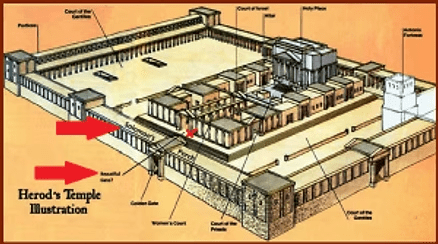
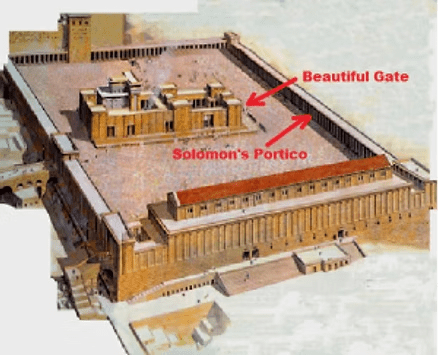
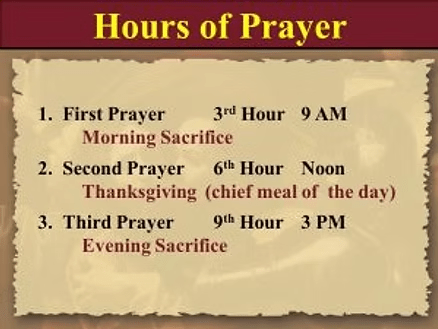
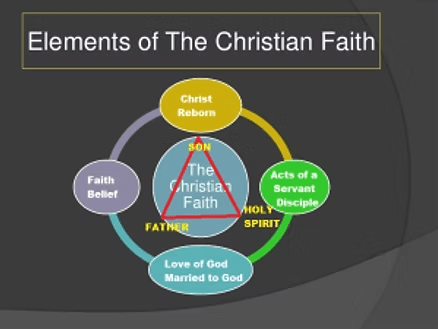


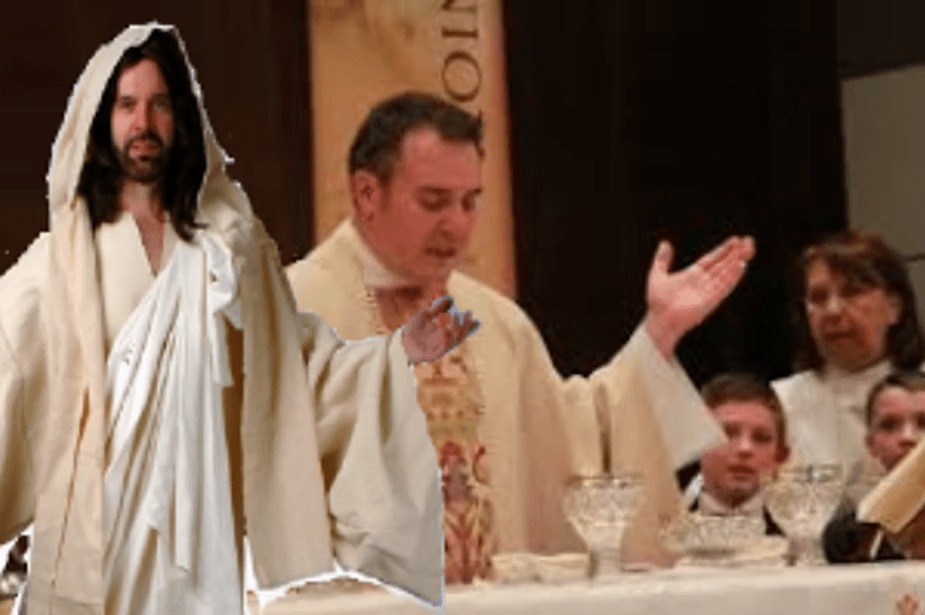


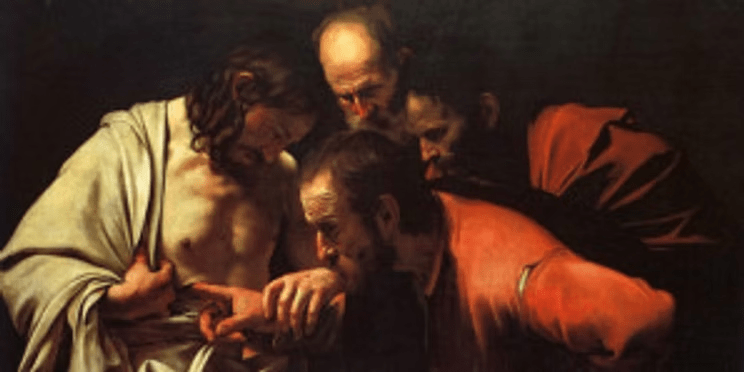

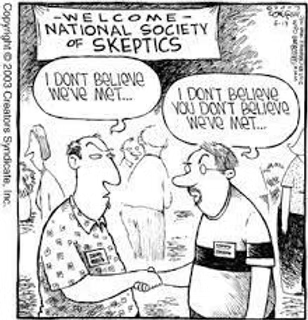














 Explaining the Readings