In the year that King Uzziah died, I saw the Lord sitting on a throne, high and lofty; and the hem of his robe filled the temple. Seraphs were in attendance above him; each had six wings: with two they covered their faces, and with two they covered their feet, and with two they flew. And one called to another and said:
“Holy, holy, holy is the Lord of hosts; the whole earth is full of his glory.”
The pivots on the thresholds shook at the voices of those who called, and the house filled with smoke. And I said: “Woe is me! I am lost, for I am a man of unclean lips, and I live among a people of unclean lips; yet my eyes have seen the King, the Lord of hosts!”
Then one of the seraphs flew to me, holding a live coal that had been taken from the altar with a pair of tongs. The seraph touched my mouth with it and said: “Now that this has touched your lips, your guilt has departed and your sin is blotted out.” Then I heard the voice of the Lord saying, “Whom shall I send, and who will go for us?” And I said, “Here am I; send me!”
——————————————————————————–
This is the Old Testament selection from the Episcopal Lectionary for the First Sunday after Pentecost, Year B 2018. This day in the lectionary schedule is also known as Trinity Sunday. It will next be read aloud in church by a reader on Sunday, May 27, 2018. It is important as Isaiah was a “major prophet” of Judah, who had a vision of God in this story. In the vision, Isaiah was purified by fire and volunteered to serve the LORD as His holy messenger. This is the same purification and commitment that all Saints are called to fulfill, when they serve God in the name of Jesus Christ.
This reading is a holy vision that Isaiah experienced. In the first verse of this reading, Isaiah wrote that the vision is timed as being “the year that King Uzziah died.” This means it is important to understand the history of King Uzziah.
Uzziah’s death came roughly eleven years after he was stricken with leprosy by God. As leprosy was a visible sign of sin to the Israelites of Judah, Uzziah was forced into a house-arrest exile. Still a king, he became an absent co-ruler, with his son Jotham promoted to king to run the affairs of the government. Uzziah’s leprosy was punishment from God, due to his entering the Temple of Solomon to burn incense, which was forbidden to all but the Temple priests. An earthquake occurred, splitting open the Temple walls, where the sunlight came in and struck Uzziah on the face, immediately giving him leprosy.
History always likes to apply new standards to old actions. I doubt Uzziah entered the Holy of Holies wearing a crown (as shown) to swing an incense burner (in hand). I believe he tried to light incense on the Golden Altar (depicted with smoke).
The history of Uzziah says that he was one of Judah’s (including unified Israel) greatest kings, as far as bringing prosperity to his nation. The punishment that befell a king says that no human is above the Laws of God. Thus, Uzziah is symbolic of all Israel, in that sense, where the gifts of holiness were plentiful, but one cannot degrade into self-piety, forgetting that God is always the one and only true king, or one will find just how mortal all human beings are.
King Uzziah, when seen in a dream, has to be seen as an extension of the readers (individually a reflection of you and me). Isaiah, himself, had to feel the sin of Uzziah as if they were his own. Thus, we are all mortals who rule over the Kingdom of Self. It is within that temple of self that we can begin to think the possessions having come to us have been by our own doings; so we think we have the right to offer incense that will be burned in our honor, not God’s.
This makes the symbolism of leprosy be less about physical deformities, and more about how it projects the sinful state of one’s soul. The truth of our sins are fully known (even if denied), which causes us to hide our inner beings from public view. Therefore, the dual rulership of Uzziah and Jotham can then be seen as symbolic of the id and the ego, using Jungian terms. “In the year that Uzziah died” is then a statement of the death of the ego, where the soul (the id) finds judgment.
It becomes important to see the personal relationship with God that is demanded in this vision. Rather than seeing it through the eyes of the prophet Isaiah, see it as God presenting a vision to you, through the prophet Isaiah. The purpose is to see the promise of this vision, where sins are forgiven; but to see that, one must understand the mortality and judgment of a king of Judah, one who sat on a throne (shared or alone) for over fifty years, is reflective of one’s own. For Uzziah, forty-plus years of good acts were followed by eleven years of seclusion. He had to see God as the true king. God is who we all must serve; and that is the call of ministry required for the first Sunday after Pentecost.
We read how Isaiah (the reader) “saw the Lord sitting on a throne, high and lofty; and the hem of his robe filled the temple.” God is the true King. His throne is one’s heart. God’s temple is one’s body. God’s holy robe flows over every square inch, each nook and cranny, all cells and vessels of one’s body. This makes God’s robe be symbolic of the Holy Spirit.
If the likes of King Uzziah are not high enough or important enough to claim superiority to God, no mortal can aspire to immortality. Only through God, as His obedient servants, can eternal life be possible. The self-king must die so that God can take control of His realm.
This is where the symbolism of Seraphs (or Seraphim) comes into the vision. They are the attendants of God. While the Hebrew states “seraphim” in the plural, the word following infers the singular, not as “in attendance,” but as “it stood” or simply “standing” (Hebrew: “‘ō·mə·ḏîm”). This “standing,” implying “upright,” is not so much “above” God (who is so “high and lofty” only the “hem of his robe” is clearly seen), but the “Seraphim” is “standing upright,” reaching or aspiring to go “upward” (Hebrew: “mim·ma·‘al”). As such, the “Seraphs” are symbolic of the immortal souls that attend to God’s needs.
The Seraphim are seen as angels in Judaic and Christian theology. These angels are one of several mentioned in holy texts, and some are seen as higher and lower in ranking. The Hebrew word “mal’ákh” is commonly used to identify an “angel,” but the word itself means “messenger,” and can be used in identifying both human and divine entities. While there are some who say a “Malakim” is a separate distinction of angel, with a “Seraphim” being another and an “Elohim” one more (among ten total?), these differences are man-made presumptions and not rock-solid certainties.
On a symbolic level, souls are angelic, with their standing upright and reaching upward being those who are in service to the LORD. Alternately, some angels would sink and strive to shun God (those who serve Satan). This means the day of judgment is when souls are assigned an immortal realm (heaven or hell), or when they are determined to return to the physical plane. Yahweh, the One God, does this judging.
In this vision shown Isaiah, I see the plural of Seraphs as a statement that many souls have been assigned to serve the needs of Yahweh. In that regard, each individual soul will have been baptized by the Holy Spirit, making it purified of all human sins. Purification of a soul makes one of many Seraphs that serve the LORD exclusively. However, the point of Isaiah’s vision is on the rebirth of a soul in its same host body, rather than the soul becoming heavenly.
This means a purified soul is still within a human body. This results in a Saint or Apostle of Christ being born from the ashes of the old. This aligns this reading to the Gospel lesson from John, where Jesus told Nicodemus about such a rebirth. Jesus Christ, as the entity that sits at the right hand of God, is then the highest of all angels who serve the One God. Therefore, a Saint is a messenger of the LORD that comes in the name of Jesus Christ.
This leads to the importance of the number six, which is shown in the number of wings that a Seraph has. The terminology of “wings” can be seen as the instruments of flight, from which elevation is allowed. Seraphs wings are said to be used thus: “With two they covered their faces, and with two they covered their feet, and with two they flew.” This makes their ability to fly be relative only to one-third of their wings.
There can be a parallel made between the seven gifts of the Holy Spirit, where each gift is given by God, relative to the individual’s abilities to receive more than one gift. There are said to be seven gifts of the Holy Spirit: wisdom, intellect, counsel, fortitude, science, piety, and fear of the Lord. As such, the one gift of the Holy Spirit that all human Seraphs is the sainthood of the body, with the other six gifts being additional wings by which one can serve God’s needs. These can then be subdivided into face (wisdom, intellect, piety) and feet (counsel, science, fortitude) uses, where the heart is filled only with fear of the LORD (not wanting to fail Him).
This is not the clear focus of the number of six wings in the vision of Isaiah, but wings should be taken as meaning more than feathery appendages.
The symmetry of Da Vinci’s Man incorporated into the symmetry of Divine Man.
I invite you to read the insights found on the website linked here, which states several symbolic aspects that are relative to the number six. There are other opinions on the symbolism of this number, but as a perfect number (a mathematical designation) it can be seen as two (duality – left-right; up-down; inside-outside, good-evil, etc.) times three (Trinity – Father, Son, and Holy Ghost). From that perspective, one duality of wings cover the face (the ego of self), while another duality of wings cover the feet (the filth of sin). The covering of human flaws by the gifts of the Holy Spirit then allows the third duality of wings to raise one above both the hindrances to righteousness that emanate from a soul’s the attachment to a physical body and the influences of the earth. Therefore, the perfection of six wings is symbolic of what allows a soul to attend to the needs of God, as His messenger, standing upright among humanity.
In that respect of righteous placement, the Seraphs then sing in unison the song of Sanctus.
Interestingly, in the Interlinear translations of Isaiah 6:3, from the Bible Hub website, shows the triple repeating of “qā·ḏō·wōš” (well-known as “holy, holy, holy”) as “Holy – of Holies holy.” That places the holiness of God above all mortals who are seen as sanctified, as well as any who are divine immortals, as all are of subservient status. This means the song sung by the Seraphs addresses this supreme deity as the one to who all praise should go. The LORD is the King, the ruler of an army (“host”) of messengers, both mortal (Saints) and immortal (heavenly Angels).
When we see how Isaiah did not quite hear the Christian version of the Sanctus being sung, as only the “earth is full of his glory,” that becomes a statement about the Seraphs (Seraphim). They are of the world, so they are singing in unison about God’s glory shining through their whole beings. This is the view painted of heaven, where a sea of souls sing the same praise to God (Revelations 4:8).
It is then because of this awareness of being worldly, yet witnessing the heavenly, that Isaiah said, “Woe is me!” His woe was due to knowing how anyone of the earth that sees the LORD must die (from Exodus 33:18-20). By knowing the history of King Uzziah, we see the posts of the doors (“pivots of the thresholds”) were shaking as a repeating of the earthquake that split open the Temple. The smoke the filled the house is then the incense burned by the mortal Uzziah, which brought God’s punishment upon him. The “woe” Isaiah felt was due to a sin committed in God’s holy Temple.
Isaiah cried out, “I am lost, for I am a man of unclean lips, and I live among a people of unclean lips; yet my eyes have seen the King, the Lord of hosts!” The word “unclean” is representative of the state of leprosy, which was a mark of sin. Just as King Uzziah died as sole King of Judah when he was stricken with leprosy, retreating to his house until his body would die eleven years later, Isaiah was fearful of the death of his ego. Having seen the Lord of hosts, his ego would likewise be too marred to be seen in public. His ego would have to be kept in secret until the death of his body later.
The redemption comes when we next read: “Then one of the seraphs flew to me, holding a live coal that had been taken from the altar with a pair of tongs. “One of the seraphs” should be seen as the divinity of the Holy Spirit, the messenger Angel of God, which is sent to a Saint. The word translated as “tongs” (Hebrew: “bə·mel·qa·ḥa·yim”) is better grasped as an incense “snuffer,” which was an altar tool would be used to extinguish lit candles. One should assume “the altar” is one of two in the Temple of Solomon, most likely from the Golden Altar, or the altar of incense.
Altar of Incense Coals from the altar of sacrifice were placed on the altar of incense using tongs, a shovel, or a golden censer.21.
According to the Wikipedia article on “Altar (Bible),” the Rabbis said this about the burning of incense in the Temple:
“This was the part of the temple service that was most beloved by God (Zohar I 130:A). The burning of the incense was symbolic of the prayer of the people rising up to God (Psalm 141:2; Revelation 5:8; 8:3-4). The offering of incense had to take place after the sacrifice, because only after the atonement could communion with God take place. After the offering of incense, the Kohenim (priests) pronounced the Priestly Blessing upon the people.”
Incense was burned in the Temple every morning and evening. Morning is symbolic of birth. Evening is symbolic of death.
In the vision of Isaiah, the Seraph then removed a “live coal” or red-hot, burning coal from the altar of burnt offering, which would have then been placed in the altar of incense (the Golden Altar) to burn the holy incense. The burning coal, having come from both altars, is then representative of the death of oneself (sacrifice), followed by an atonement of sins. The ember is the result of oneself having been sacrificed to God in order to produce a holy fragrance in the smoking incense. This then makes the “live coal” be one prepared as an “inner sin offering,” done during the Day of Atonement (Yom Kippur).
By understanding the purification of sins that came with the “live coal,” where the aspect of heat is indicative of life, as opposed to a cold coal, without an inner burn that is dead (thus not necessary to pick up with an altar tool) we next read Isaiah report: “The seraph touched my mouth with [the live coal] and said: “Now that this has touched your lips, your guilt has departed and your sin is blotted out.” By Isaiah saying, “sin is blotted out,” that is confirmation of a ceremonious rite of atonement. Still, touching the “lips” must be seen as symbolically stating one’s voice has been made pure.
This becomes a statement of one being a prophet, as a Saint, who can only speak the truth of God. This is itself a prophecy of Jesus Christ, as the Christ Mind could only speak from the Spirit of truth. Still, as the woe felt by Isaiah was stated as, “I am lost, for I am a man of unclean lips, and I live among a people of unclean lips,” the world is a place where sins are projected by the philosophies of mankind. It is necessary to have Saints in the world who can counter the lies told. Jesus said of this, “It is not what enters into the mouth that defiles the man, but what proceeds out of the mouth, this defiles the man.” (Matthew 15:11)
The vision ends with Isaiah writing, “Then I heard the voice of the Lord saying, “Whom shall I send, and who will go for us?” And I said, “Here am I; send me!”’ This is God’s call to all His Saints to prophesy to the breath of truth, so that others can be led to God. Saints follow the same sequence of progressions, from sinner, to fear of guilt, to absolution of sins, to servant of God, which makes one holy. Importantly, the call is not to be atoned of sins, but to go out into ministry for the LORD. When Isaiah heard himself say, “Here am I; send me!” this is the voice of the Messiah, the Son of God, of which Isaiah was one.
As a reading for the First Sunday after Pentecost, where Pentecost ended the Easter season, this is the beginning of two periods in the Liturgical Calendar known as Ordinary Time.
As this graph clearly shows, Ordinary Time fills the majority of a year’s time. While it may be that this period is named for the word “ordinal,” such that each week is numbered as a series of lessons that follow an event (after the Epiphany or after Pentecost), this Ordinary Time that follows Pentecost should be seen as being most applicable to the Ecclesiastical definition for “ordinary,” where ordination into ministry is the loudest message coming from the readings each Sunday. In this case, the call from God, “Whom shall I send, and who will go for us?” are questions that ask, “Who is prepared to serve Me?” When one answers God’s call by saying, “Here am I; send me!” then one begins to serve the LORD through ministry.
The two separate Ordinary Time periods can be seen as parallel to the Gospel commissions. The first came when Jesus sent his disciples out in the Great Commission, when he was still living. The greatest commission, thus the True Commission, began when disciples morphed into Apostles, when they were reborn as Jesus Christ. The disciples were allowed to do miracles and be messengers that proclaimed, “The kingdom of God has come near.” They did that while Jesus of Nazareth was present in the flesh, as their rabbi and guide. The Apostles were given the gifts of the Holy Spirit, which minimally included the Mind of Christ and the Spirit of truth, where Jesus lives within their being, guiding them spiritually.
The point of those assignments given by God, through His Son, is you must serve the LORD. Before you can serve Him, you must prove your commitment – your marriage to God, receiving His love. Then you have to go places you might be unwelcome and perform some tasks you never knew were possible. However, that is the meaning of faith – you cannot walk on water if you never try. You have to take a leap of faith.
So then, brothers and sisters, we are debtors, not to the flesh, to live according to the flesh– for if you live according to the flesh, you will die; but if by the Spirit you put to death the deeds of the body, you will live. For all who are led by the Spirit of God are children of God. For you did not receive a spirit of slavery to fall back into fear, but you have received a spirit of adoption. When we cry, “Abba! Father!” it is that very Spirit bearing witness with our spirit that we are children of God, and if children, then heirs, heirs of God and joint heirs with Christ– if, in fact, we suffer with him so that we may also be glorified with him.
——————————————————————————–
This is the Epistle selection from the Episcopal Lectionary for the First Sunday after Pentecost, Year B 2018. This day in the lectionary schedule is also known as Trinity Sunday. It will next be read aloud in church by a reader on Sunday, May 27, 2018. It is important as Paul wrote of the debt all human beings owe to the Father, which has to be understood as beyond the time we spend on earth in the flesh.
Again, it is modern paraphrasing that identifies “sisters” in the above translation. Paul wrote, “Ara oun ,adelphoi ,” which says, “So then , brothers”. This states the result of (“So then”) what Paul had stated prior (Romans 8:1-11), with that now being “brothers.” Because one has to believe that Paul wrote divinely (not just as some ordinary guy), every word he wrote has divine purpose, which should not be overlooked. Therefore, “brothers” must be understood, rather than slap “sisters” to that word.
The word “adelphoi ” is set alone by commas, placing importance on its meaning. It is a stand-alone statement of “brotherhood,” as “brothers” or “brethren.” The word “adelphoi ” says nothing about “sisters.” The Greek word “adelphé” means “sister” and “adelfés” says “sisters.” The exclusivity of women is NOT the point of what Paul wrote. It should be read as a word similar to “mankind,” which includes all human beings under one heading.
By placing commas around the plural form of the word “brother”, Paul was placing emphasis on the relationship ALL Christians share. Both men and women are “brothers”, as “Sons of God”, because they ALL have been reborn as Jesus Christ. By adding the word “sisters,” the glaring differences between males and females is entered into the interpretation erroneously.
It is unnecessary, as ALL Christians are the wives of God (regardless of human gender), just as ALL Christians are reborn as the Son of God (regardless of human gender), making ALL Christians be brothers of the same Father. One must get beyond the modern training that gender be given equal status, because that is only a distraction away from the truth.
The same qualifications for a knight of the round table are the same for a Saint.
Seeing “brothers” as ALL who are related spiritually, one should then see this familial relationship with the Father as being what makes one a debtor. Thus, following the pause of a comma after “brothers,” this becomes stated as “we are debtors” (literally “debtors we are”). This makes “debt” be relative to this announcement of “brothers.”
From that realization, Paul discounted how “brothers” were “not to the flesh.” From this statement, one must grasp how it is the “flesh” that differentiates a man from a woman. Thus, it is the “flesh” that separates “brothers” from sisters. This statement says (in essence): “Do not mistake “brothers” as saying “brothers and sisters,” because the debt owed has nothing to do with one’s sexuality on the earthly plane.
When Paul wrote, “If you live according to the flesh, you will die,” this was reference to all mortal human beings, who come in the shapes and forms of men and women, males and females. The only reason souls are incarnated (reincarnated) in different shapes and forms is to reproduce. Souls cannot reproduce souls, as souls are immortal, thus asexual by nature. The flesh reproduces so souls can be reincarnated.
To put that in gender terms, souls are masculine “energy,” while bodies (regardless of human gender) are feminine “energy.” God can be seen as masculine, as the Father, whereas the Earth is called a Mother. In this sense, my use of “energy” should be seen as non-physical, but a compatibility, such as is positive and negative. It is similar to the notion that opposites are attracted to one another, as compliments.
Thus, the feminine flesh of a baby (regardless of human gender) is penetrated by the masculine soul. The flesh of the baby receives that breath of life. The soul’s asexuality then aligns with the human gender, based on the flesh. This union then stimulates an innate drive to procreate. That innate drive is a need of the flesh, because the flesh knows it is temporal and must reproduce to continue the possibility of life returning to the worldly plane, as returning souls need flesh to inhabit.
The aspect of “the Spirit,” as translated in verse 13, where we read, “If by the Spirit you put to death the deeds of the body, you will live,” is inaccurate. The Greek actually shows “pneumati” in the lower case (“πνεύματι”). This is then a reference to “the breath” of life, which is the entrance of a “soul” into a form of flesh. A “spirit” that is a soul is eternal; but a returning soul into a form of flesh is not commonly holy. There are exceptions, such as Jesus, born of a woman.
Verse 13 is also divided by commas, where the better translation can make this lack of holiness more evident. Literally, the verse states, “If however the breath (wind, soul spirit) , the deeds of the body you put to death , you will live.” This is not a statement of God’s reward to a soul of eternal life, but a promise of reincarnation to a soul. Reincarnation is a new “breath of life” in human form. Still, that “spirit” of life brings about the opportunity to achieve eternal life – IF the normal deeds (normal “doings, acts, functions”) of a body of flesh lead an eternal soul to lose its host body (a mortal death). If a soul directs its body wisely, then it will be reborn into a new body of flesh (i.e.: a newborn baby).
The condition (the “IF”) is then based on the soul somewhat controlling the actions of a body. This admits there will be sins accrued that will prevent the reward of everlasting return to the Father, but enough good deeds will have been done to warrant another chance on the physical plane. It is just as do not punish a first grader to hard labor in the fields for failing to make the grades that would allow it to go to the second grade. We also do not graduate straight A first graders to the college level. This is a mirror of how much is required to be one with God again. However, should the soul allow the body (by evil influence) to earn itself eternal damnation, then the soul will not find new life in human form. This is the proverbial “Hell.”
When Paul then wrote, “For all who are led by the Spirit of God are children of God,” the capitalized version of “Pneumati” was written (“Πνεύματι”). This is then a reference to those of humanity who are led by the Holy Spirit. The translation of verse 14 shown above, as using the neuter gender word “children,” actually states “huioi,” which means “sons.” The proper translation here then supports the initial claim of being “brothers,” as now the presence of the Spirit makes one be identified as “son of God.”
This parental relationship with God is then stated as a relationship that reproduces the Son, Jesus Christ. This masculine association also means the “Spirit,” which is masculine in nature, has caused this relationship to be. Since this masculinity is asexual, there is no sexuality implied by being “sons of God.” Spirits and souls have existed from the Creation and have no need (no ability whatsoever, for that matter) to reproduce. This is, again, the masculine “energy” of Spirituality being within the feminine “energy” that is a human body.
Angels are neither male of female, in the sense that human beings are. Angels have no sex organs, which includes breasts that would only have a human purpose, such as to nurse babies.
It is then important to see how there is no capitalization of the word “spirit” in verse 15, where we read above it stating, “For you did not receive a spirit of slavery to fall back into fear, but you have received a spirit of adoption.” When one realizes the difference between the “spirit” of life (God’s breathing an eternal soul into flesh) and the “Spirit of God” (the Holy Spirit), then one can see how this translation is saying the renewing of a soul into flesh, giving that flesh life, is not done by God so that the soul will enter into a state of “slavery,” which is an addiction of the flesh to sin.
The reborn soul (reborn into new flesh) is meant to lead the flesh to serve God, not to “fall back into fear,” where “slavery” is to Satan and his material realm. Instead, a soul, as an extension of God that needs redemption to return to God, is placed back into new flesh so it can lead the flesh to “receive a spirit of adoption.” One is adopted by God when one is reborn anew (the transformation of the same soul in the same flesh) as Jesus Christ.
One is not adopted prior to birth into the flesh. One is adopted after one has lived enough life to understand sin and experience guilt from sin. Then one has to petition for adoption by repentance for the sins one feels remorse from.
That represents a spiritual change within, which means one’s whole being (soul in flesh) opens to God, through acts of repentance. One becomes active in learning the messages of holy Scripture. When one has proved to God one’s sincerity for seeking atonement, the love of God will enter one’s being. The result of that union brings about a reproduction of the Son of God, so one is truly in the name of Jesus Christ. True Christians are then those who become the “brothers” of all other Saints on earth (regardless of human gender). Until that transformation takes place, one is “a spirit to slavery” that all human beings are, since the soul is a slave to the flesh, just as the flesh is a slave to the soul.
Human beings are slaves to mortality. The only way to break those chains is through Jesus Christ.
Where Paul wrote about “you have received a spirit of adoption,” here again is an overlooked statement about “brothers” and “sons.” The Greek actually states “elabete pneuma huiothesias,” where the literal translation says, “you have taken hold of (or received) the spirit [lower case] of adoption as sons.” The implication of divine adoption can be read into this, but not as total adoption, as the sons of God. The lower case “spirit” is a statement that one’s soul has “received” or “taken hold of” the ways of righteousness, as far as one can do good alone. This is how one shows oneself worthy to progress to that point of being “adopted as a son” of God.
Still, the form of the word making the statement about adoption is masculine, thus more properly translated as “adoption of sons.” This can be seen as how God saw the disciples of Jesus of Nazareth, prior to their official recognition as sons of God on Pentecost Sunday, the day after Jesus ascended to the Father. While The Acts of the Apostles places focus on the male disciples becoming “adopted sons of God,” it still must be assumed that women (such as Mother Mary, Mary Magdalene, Mary of Cleopas, and other females in the crowds who received the Spirit) were also adopted “sons.” Their female human gender was not a limitation on their adoption worthiness.
Paul then wrote, “When we cry, “Abba! Father!” it is that very Spirit bearing witness with our spirit that we are children of God.” Here, both the capitalized and lower case versions of “pneuma” are used. That says that the Holy Spirit has made entrance into one’s soul (one’s spirit), causing a thrill of awareness overcome one’s being, such that it knows (“bearing witness”) the Father is in one’s heart center.
By saying “with our spirit,” this is the baptism of one’s soul by the Holy Spirit’s presence, so both become one. When that happens, all baptized souls become the “children of God,” where “children” is the correct translation, from the Greek “tekna.” The use of “children” comes with the understanding of asexuality, since both human genders are equally incapable of reproduction, therefore “children” is a word deemed neuter gender. The word “children” then also implies a lack of adult mentality, where “children” are dependent on the Father for learning.
The aspect of mentality is then found in Paul writing, “and if children, then heirs, heirs of God and joint heirs with Christ.” It says that the “children of God,” as “sons of God,” will inherit the knowledge of God, which comes through the Mind of Christ. It then lets one realize that this awareness that comes from being “children of God,” “inheriting” the Mind of God’s Son, allowing Christians to become “brothers” in Christ (regardless of human gender) is to realize the debts of sins being washed clean by the Holy Spirit then makes one in debt to the grace of God.
The Mind of Christ frees our spirits from thinking we are slaves to a mortal body that will die. The Mind of Christ frees our spirits from the fears of a mortal existence. The Mind of Christ is the realization that we are indeed “heirs” to the same Holy Spirit that was made man by God and sent into the world as Jesus of Nazareth.
This selection then ends with Paul writing, “If, in fact, we suffer with him so that we may also be glorified with him,” which again poses a conditional requirement. This tells how one knows that one’s “spirit” has indeed been “led by the Spirit of God.” IF that condition has been met, then “we suffer with him.” The word “sumpaschó” means “I suffer together with,” but this is synonymous with “sympathize.” This means one suffers by knowing so many in the world are still blind to being adopted by God.
The Greek word “sympaschomen” states “we suffer together with,” which implies the Spirit of God, as one being with Jesus Christ. This says that the Mind of Christ is what enables one to withstand the suffering that causes others to lament. Personally, one knows the same agony that one faces when denying the pleasures and comforts offered by a sinful world. Still, that experience of suffering is what proved oneself as worthy for adoption by God.
The bond of togetherness – one’s soul spirit with the baptism from the Holy Spirit having brought about the Mind of Christ – is what brings one the “glory of being together with” (“sundoxazó”) Jesus Christ. This is how one can claim to be in the name of Jesus Christ. This is also how ALL who are likewise baptized by the Holy Spirit are “brothers” in Christ, where ALL SAINTS also share the same “glory [from being] together with” Jesus.
As a reading selection for the First Sunday after Pentecost, where the ministry of Apostles has begun, symbolically having taken its first step, we must then see how this is called Trinity Sunday because the Father, Holy Spirit, and Son have been reignited in a soul. All who have this Trinity within them are then “brothers” as having been reborn as Jesus Christ. Christians are those who have truly become the adopted sons of God (regardless of human gender).
This is the message of the accompanying Gospel reading from John, where Jesus of Nazareth tried to explain this necessary requirement for salvation to Nicodemus, only to see how easy it is to deny this message. The first step of ministry leads to many others, where the “glory of being with Jesus Christ” does not stop with one soul being saved – one’s own. Christian souls are saved for the purpose of sending Jesus Christ into the world, as one with oneself, to save others. The brotherhood of Christianity goes well beyond the limitations and divisions of mortal life on earth, where men and women are called to serve the LORD as His Son.
There was a Pharisee named Nicodemus, a leader of the Jews. He came to Jesus by night and said to him, “Rabbi, we know that you are a teacher who has come from God; for no one can do these signs that you do apart from the presence of God.” Jesus answered him, “Very truly, I tell you, no one can see the kingdom of God without being born from above.” Nicodemus said to him, “How can anyone be born after having grown old? Can one enter a second time into the mother’s womb and be born?” Jesus answered, “Very truly, I tell you, no one can enter the kingdom of God without being born of water and Spirit. What is born of the flesh is flesh, and what is born of the Spirit is spirit. Do not be astonished that I said to you, ‘You must be born from above.’ The wind blows where it chooses, and you hear the sound of it, but you do not know where it comes from or where it goes. So it is with everyone who is born of the Spirit.” Nicodemus said to him, “How can these things be?” Jesus answered him, “Are you a teacher of Israel, and yet you do not understand these things?
“Very truly, I tell you, we speak of what we know and testify to what we have seen; yet you do not receive our testimony. If I have told you about earthly things and you do not believe, how can you believe if I tell you about heavenly things? No one has ascended into heaven except the one who descended from heaven, the Son of Man. And just as Moses lifted up the serpent in the wilderness, so must the Son of Man be lifted up, that whoever believes in him may have eternal life.
“For God so loved the world that he gave his only Son, so that everyone who believes in him may not perish but may have eternal life.
“Indeed, God did not send the Son into the world to condemn the world, but in order that the world might be saved through him.”
——————————————————————————–
This is the Gospel selection from the Episcopal Lectionary for the First Sunday after Pentecost, Year B 2018. This Sunday is also known as Trinity Sunday. This selection will next be read aloud in church by a priest on Sunday, May 27, 2018. This is important because Jesus explained the requirement of being reborn from above, having been baptized by the “water” of the Holy Spirit.
In this reading, the setting should be realized. It is not stated specifically, but it can be deduced from clues in the text. John’s second chapter ended by John writing how Jesus had just spent the first Passover Festival of his ministry in Jerusalem. Jesus had made a scene by overturning the vendors’ tables; and when he was questioned about what authority he had to do such a thing, Jesus said, if the Temple were to be destroyed, he could raise it again in three days.
During that week, Jesus then displayed signs that drew believers to him; and it was those acts that made Jesus stand out as a new rabbi with an an ability to get attention; and that was what drew “a leader of the Jews” to visit Jesus.
Where Nicodemus encountered Jesus is not clearly stated. Due to the high ranking that Nicodemus held, it can be assumed that this meeting was private, rather than public. As it occurred at night, and Nicodemus came to Jesus, it makes sense that the encounter took place at a house or lodge. Since Jesus lived in Galilee, the assumption can be that the visit would be in or near Jerusalem, since the Passover had just ended and Nicodemus was a leader of the Jews because of his Temple connections.
An additional background element worth noting is that Jesus’ first Passover Festival as a rabbi did not have the accompaniment of twelve disciples. John wrote in his first chapter that Andrew, Simon-Peter, Phillip and Nathanael had followed Jesus. Matthew and Mark tell how James and John of Zebedee had been added as disciples. Still, none of the other Gospel writers tell of this first episode of Jesus overturning the vendors’ tables, which implies their presence in Jerusalem for that Passover Festival was less organized, or Jesus had instructed those six to maintain a distance from him. This makes John’s presence stand out.
The lack of other disciples being mentioned in Jesus’ first Passover Festival, or other mentioning his acts then, becomes evidence that John was not a disciple of Jesus. We can see this by grasping the big picture that joins all the Gospels. John witnessed Jesus’ first disciples after John the Baptizer had baptized Jesus, but John did not name himself as a disciple. John made no mention of James or another John, nor a relationship with a man named Zebedee. John wrote of the wedding at Cana, saying the disciples of Jesus attended with him, which sets John apart from that designation. Now, we see how no other Gospels tell this story of Nicodemus, with John being the only one to name Nicodemus. By John writing of this encounter that Jesus had with Nicodemus, when no others did, that shows Nicodemus avoided being seen meeting with Jesus, and adult, male disciples could be called legally as witnesses, should Jesus prove to be an inciter of rebelliousness. For John to be a witness says John was not an adult, thus no threat as a voice that could be heard.
It is important to note that John wrote how an important Pharisee named Nicodemus “came to Jesus by night.” This implies several things that can go unseen. Seeing the unseen requires putting oneself in the Gospel story, seeing the story unfold as a natural event, rather than a supernatural, fantasy-like imagination. This story did not happen in a vacuum, as it is in chronological sequence with the surrounding text written by John. It happened in real life, where seeing oneself as a first century Jew, not a twenty-first century Big Brain, allows the unwritten reality become visible.
• First, this encounter between Nicodemus and Jesus happened after the Passover Festival (an eight-day event) had ended. We know this timing because John’s second chapter ended with that event, stating “Now while he was in Jerusalem at the Passover Festival, many people saw the signs he was performing and believed in his name.” (John 2:23) The chronology then follows with this event, putting Nicodemus in a meeting with Jesus. This says Jesus was still in or near Jerusalem.
• Second, as a Galilean living in Capernaum (Matthew 4:13), Jesus would have been lodged somewhere near Jerusalem for the Passover week. One could assume he stayed with Mary Magdalene, her sister Martha, and her brother Lazarus, who lived in a house in Bethany. Bethany is only fifteen furlongs (“less than two miles”) from Jerusalem (John 11:18).
• Third, because Nicodemus would not have known where Jesus would have been staying, as an unknown person prior and especially as just one man among so many Pilgrims in Jerusalem that would remain close until Pentecost. Jesus’ attraction was as a new “Rabbi” teaching at Jerusalem’s Temple, one who caused the Temple leaders to want to know more about him. Therefore, this means Nicodemus was assigned to follow Jesus to his place of lodging, after the Passover week was over.
• Fourth, for a Pharisee to travel at “night,” such travel could be dangerous; but the Greek word “nyktos” does not necessarily mean darkness, such as after sunset. The Hebrew clock refers to “night” as the hours between 6:00 PM and 6:00 AM. The sun is still giving light to the earth at 6:00 PM in the spring. The Passover Festival (always between 15 Nissan and 21 Nissan), is sometime between mid-April and mid-May, depending on the year, with spring occurring on March 20-21. The days last longer than the nights, once spring arrives. This means Nicodemus followed Jesus while it was early evening (technical “night”) and sunlight was still out.
• Fifth, to have a “ruler of the Jews” to “come to Jesus,” the motivation was not personal, but business related. The eyes of all Jewish leaders would have been on this newcomer, because Jesus was attracting large crowds and displaying signs of divine powers. One can then assume that Nicodemus was sent to visit Jesus, in a private rather than public place, for the purpose of recruiting Jesus (so to speak) to the philosophical ideology of the Pharisees and other “rulers of the Jews.”
• Sixth, Nicodemus came “by night,” which means he followed Jesus and John “by night,” which says such late travel had reason. Rather than say Nicodemus was sneaking around under the cover of darkness, like a thief, one should assume a leader of the Jews would not risk anyone identifying him in that scenario. It makes more sense to see how Nicodemus walked with other Jews along a well-traveled road, as a typical exit from the holy city to lodging places. This exodus being normal at night says it meant the last day of the Passover Festival was on a Shabbat, such that travelling 2 miles would have been forbidden by Jewish law on that day. Therefore, Jesus and John departed Jerusalem for the 2 mile walk to Bethany around 6:05 PM, when it technically began Sunday, the first day of the week. This means that Nicodemus followed Jesus and John as if routinely traveling, to see where they were going.
• Finally, John was inside this setting, meaning he was staying in the same place as Jesus. The disciples would have separate places to go, each having made his own lodging arrangements. With Jesus going to Bethany to lodge, this says John was a relative of Jesus. This would then imply that Mary, Martha and Lazarus were also relatives of Jesus, with none of them deemed disciples. John had traveled with Jesus prior to the start of his ministry and witnessed the selection of four of Jesus’ disciples because he was related to Jesus and traveling with Jesus naturally. This means John saw Jesus as his teacher (“Rabbi”), just as did Mary Magdalene and the others in Bethany did, but not because John and the others sought to follow the Messiah. John referred to himself and the other relatives as “the one who Jesus loved.” This was because Jesus hugged and kissed his family as a personal way of displaying familial love. That was different from the teacher-student relationship that Jesus had with his disciples and other followers.
By having this sense of the surroundings and timing of a visit by an important Pharisee, one can completely understand why Nicodemus said, “Rabbi, we know that you are a teacher who has come from God; for no one can do these signs that you do apart from the presence of God.” That greeting meant Jesus’ first Passover Festival was complete and it impressed those who watched his every move.
To understand how Jesus heard those words, it is important to know John had written prior (in Chapter 2), “Jesus would not entrust himself to [the many people who believed in Jesus he had encountered in Jerusalem], for he knew all people. He did not need any testimony about mankind, for he knew what was in each person.” (John 2:24-25) This says Jesus had leaders and pilgrims who had expressed recognition of his powers over the eight days of the festival, but he was not letting any of that go to his head.
Now, a chosen delegate of the Sanhedrin had again praised Jesus as sent by God. Rather than Jesus answering, “Why thank you,” to Nicodemus, we should intuit that Jesus “knew what was in” Nicodemus, knowing his words of praise were empty and void of true meaning. Because Jesus knew Nicodemus was himself not from God and only knew tricks that amazed common Jews with supposed acts approved by God, as if presented with “the presence of God,” Jesus pointed out a truth that he knew.
Jesus said in reply, “Very truly, I tell you, no one can see the kingdom of God without being born from above.” That meant Jesus had just told Nicodemus, “You wouldn’t recognize true righteousness if God stood directly before your eyes, in human form.”
To see the kingdom of God means to see spiritually, which cannot be done with physical eyesight. To see spiritually means letting one’s brain-fed ego melt away, so a divine Mind leads one’s vision. That means being reborn via the Holy Spirit. That becomes the only way one can truthfully say one knows Jesus had been sent by God, regardless of what words and feats he had been witnessed saying and doing. That divinity also allows one to see clear through the facades of those who pretended to be holy; and Nicodemus was reeking of the worldly success that comes from selling religion for personal gain. There was not any righteousness in Nicodemus.
When we then read how “Nicodemus said to [Jesus], “How can anyone be born after having grown old? Can one enter a second time into the mother’s womb and be born?” this is a classic example of how people still today reject this concept of needing to be “born from above.”
Nicodemus’ response shows how people read the literal word (or a foreign language translation of the original text) and latch hold of one preconception of meaning, totally disregarding any other sense of meaning. Nicodemus heard the word that translates as “being born” (from the root Greek word “gennaó”) and then could only understand that word as meaning, “enter a second time into the mother’s womb.”
This is a classic example of Big Brain Syndrome. It is how so many English-speaking Christians only know of the English translations read aloud in church or read in a personal Holy Bible owned. Few realize the multiple varieties of translations and the differences, other than the “ye” and “thou” of King James’ English is now “you” (singular) and “you” (plural). God forbid anyone suggest, “You know, the Greek (or Hebrew) can also say something else.” The Big Brain screams, “The why didn’t the Biblical writer say that?!?!”
In my mind, Nicodemus was an intellectual, who studied Mosaic Law and knew it backwards and forwards. For all he thought he knew, he knew nothing of true value. He only knew enough to refuse to know more. Thus, he was trying to show his intellect to Jesus, not to prove how smart he was, but to belittle the intellect of Jesus.
It was this high view of himself that had made Nicodemus a wealthy Pharisee and leader of the Jews. Here was this Jesus fellow, a newcomer (and obviously not upper crust, having come from Galilee), spouting off about being “born from above,” which Nicodemus thought meant being born of the upper class. Once one is born into a lower class (the one of one’s parents), one could not be rebirthed by one’s mother into a higher class of Jews.
In this intellectual way that Nicodemus knew, I see him as a parallel character to Judas Iscariot. From the discovery of the Gospel of Judas, we learn that he was also an intellectual, one who debated religion and philosophy with Jesus.
Nicodemus, like Judas, was more interested in picking Jesus’ brain than actually listening to what Jesus had to say. This attraction to the Big Brain might actually be a clue about the contact Judas had with the Sanhedrin, when he finally decided to betray Jesus. His liaison may well have been Nicodemus, although that is not stated as fact.
In order to see how Nicodemus responded to Jesus by hearing on a fixated level, unable to comprehend what Jesus said, look at how modern Christians show the same errors of reason. Pentecostals read that the disciples became capable of “speaking in tongues” on the Day of Pentecost, so they think “Pentecost” means “speaking in tongues.” Still, on a much grander scale, Christians read and state belief in John the Baptist saying, “I baptize with water, but one will come after me who will baptize with the Holy Spirit.” They read those words and translate spiritual matters in physical terms.
So many Christians think water is the only way that baptism (a word that literally means, “dunking under water”) can only be with physical water, so holy baptism must mean by a priest, using blessed water. John the Baptizer was a holy priest, even though he was not a Temple priest AND he said baptism by physical water only offered a temporary cleansing of sins. Physical water cannot offer eternal cleansing. This is precisely how Nicodemus heard what Jesus said, when he spoke of being “born with water and Spirit,” so Nicodemus needs to be seen as a reflection of all modern Christians who think they know some stuff, when the need to shut up and listen to what Jesus says.
This is why Jesus then responded to Nicodemus by saying, “Very truly, I tell you, no one can enter the kingdom of God without being born of water and Spirit. What is born of the flesh is flesh, and what is born of the Spirit is spirit. Do not be astonished that I said to you, ‘You must be born from above.’” Let’s break that down slowly.
1. “Very truly, I tell you, no one can enter the kingdom of God without being born of water and Spirit” is a statement of truth. It means Jesus spoke from the Father, not from a human brain. 2. The Greek states this in reverse order, with a comma separating it, as: “if not anyone is born of water and Spirit , not is he able to enter into the kingdom of God.” This use of “water” means being emotionally moved to seek God in one’s life. Water is one of the four basic elements of life, esoterically speaking, where the fluidity of water is reflective of the changing state of emotions.
Because love is an emotion, the use by Jesus here is saying one cannot enter heaven without the love of God within one’s heart. This means marriage to God, and becoming a bride to God. The power of “water” cleansing one’s soul means one’s self-ego must be emotionally scrubbed from one’s being, making one cleansed by the water of emotion that makes one subservience to God’s Will. 3. The conjunction “and” (“kai”) means “in addition to” water, the soul must be “born again” through the Holy “Spirit.” Because the “water” of emotions is a sensation of the soul within the human flesh, it is physically connected. That physicality must then be enhanced by divine spirituality. 4. The soul can only be cleansed by the presence of God touching it, which comes ethereally via the Holy Spirit. Once that soul change occurs, one is no longer banished from entering the kingdom of heaven. Thus, Jesus just told Nicodemus what soul salvation required. 5. When Jesus then said, “What is born of the flesh is flesh,” the use of “flesh” (Greek “sarx”) means “materially” or “born of this world.” This is a statement that a soul born into a body of flesh is made one with the material and physical, not the spiritual. It also means that washing a body of flesh with physical water has no lasting effect, as the flesh will always get dirty again. That implication is that a soul born into flesh cannot keep its flesh from sinning, because of the flesh keeps being influenced by the physical world. As the body goes, so too does the soul go. 6. By saying, “what is born of the Spirit is spirit,” it is important to know how the literal Greek contains a comma, stating, “that having been born of the Spirit (capitalized “Πνεύματος”) , is spirit (lower case “πνεῦμά”).” Because the soul is the “spirit” (lower case), it is then the “spirit” of the “flesh” that is transformed by “having been born of the Spirit” (capitalized). This presence (birth or rebirth transformation) of the Holy Spirit then enters the soul being (Greek word “estin” as “is”), so one’s soul spirit is one with the Holy Spirit. 7. Jesus then mocked Nicodemus by saying, “Do not be astonished” (from the Greek word “thaumasēs”), as Jesus knew the soul of Nicodemus and knew Nicodemus was mocking his use of “born from above.” Jesus repeated, “You must be born from above,” where “Dei” is an addition that is capitalized, thus emphasizing “It is necessary, inevitable, duty, and proper” to be “born from above,” as there is no other way to see the kingdom of God.
With those statements understood, Jesus then said, “The wind blows where it chooses, and you hear the sound of it, but you do not know where it comes from or where it goes. So it is with everyone who is born of the Spirit.”
Here it is very important to grasp how “wind” comes from the exact same word (“pneuma”) that was used in the previous segment of words that are translated as “spirit is.” “Wind” is the same as “breath.” Both “wind” and “spirit” are the same, as is “breath” and “spirit.” This means both words state an unseen forces of movement. This means that some will read this and think of the physical movement of air molecules, where the rotation of the earth and the formation of clouds (weather patterns) are based on prevailing “winds” that circulate around the globe. In computer models today, we can track and predict where the “wind blows,” to some degree of accuracy, but this is not what Jesus meant by using those terms.
The Greek word “pnei” is translated as “blows,” but can just as equally say “breathes.” The Greek notion of the Four Winds (North, South, East, and West) was they were controlled by the gods, as entities that could not be foreseen.
As the “breath” of God that controls climate, the implication was humans can only know God has acted (by “sounds”), but humans cannot know those acts before hand nor explain sudden happenings as evidence of God. Therefore, the confusion ears like those possessed by Nicodemus hear, “the wind blows,” while the intent of Jesus was to say “the spirit breathes.” One is intellect, while the other is faith.
This statement by Jesus can then be read on two levels, one where the soul spirit is led by the enticements of the world, so that it is said, “a rolling stone gathers no moss.” Nicodemus would have thought he was impervious to such winds of change, as he was firmly attached to the Law. However, Nicodemus was moved by the winds of thought that would overcome the Sanhedrin, so the sounds they made were secret, so no one knew where their new laws came from. It was the common Jews who were always rolling, gathering no understanding of Scripture “moss.”
Jesus, as the opposite of Nicodemus and the other rulers of the Jews, was also unable to control where the Father would send him. That was the meaning of “So it is with everyone who is born of the Spirit.” The inner voice of the Holy Spirit made sounds that no one else could hear, much less see where they were coming from. Jesus spoke from the Spirit when he encountered Nicodemus at his door, when he began speaking of being “born from above.”
When John recorded that Nicodemus questioned Jesus, asking, “How can these things be?” Jesus asked Nicodemus, “Are you a teacher of Israel, and yet you do not understand these things?”
We can laugh today at how Jesus turned the table on Nicodemus, but those laughs are a sign of having Big Brain Syndrome. People today slap Jesus on the back and think, “You go guy. Let him know how little he knows,” when Christians today are just as ignorant. Being Christian means one’s soul spirit is Spirit led. We should all be “teachers of Israel,” but are we?
Can you sit down with someone and explain the Holy Spirit convincingly, without knowing this Spirit personally? Can you explain what it means to be reborn, in ways that others can feel the truth in your words?
In this regard, Jesus then said to Nicodemus, “Very truly, I tell you, we speak of what we know and testify to what we have seen; yet you do not receive our testimony.”
Here, Jesus spoke in the first person singular when he said, “I say to you” (“legōsoi”), and then he switched to the plural “we,” saying, “we know we speak,” and “we have seen, we bear witness to,” leading to his saying, “the witness of us.” This is not Jesus speaking for the many like him in the world, or of he and his six disciples to-date, or even of himself and young John. Instead, Jesus was speaking for himself (“I”), who was “spirit” joined with “Spirit,” such that “we” meant Jesus and God, in union through the Holy Spirit. “US” is then the Trinity – Father, Son, and Holy Ghost – together in one.
When one is “born from above,” then one is joined with “higher” associates, speaking from divine wisdom. Keep in mind how this lesson is taught on “Trinity Sunday.”
Jesus then continued to berate Nicodemus, saying, “If I have told you about earthly things and you do not believe, how can you believe if I tell you about heavenly things?”
The earthly comparison to “wind blows” could not be grasped by Nicodemus, as his brain was only geared to know what he had been taught to know, by his keepers in the Temple, who refused to hear any words that were outside the limits of the box they lived within (the Law, which made them rich and powerful). Nicodemus would not allow himself to see “born from above” as anything other than “born from a mother,” as leopards cannot change their spots. “Above,” to Nicodemus, meant wealth, power, influence, prestige, reputation, all of which was inherited from one’s parents. Nicodemus had nothing to gain and everything to lose by allowing himself to see “born from above” as being one with God, baptized by the Holy Spirit.
Nicodemus could not risk losing what he had worked so hard to gain. Religion was a practice for him to use to his benefit. If he personally knew the plurality of which Jesus spoke, he would have to cease being who he was. Is this not the way things are today, for so many who use the church as a data base for financial networking? Are Christians experiencing “we” as one with Jesus Christ? Or, are Christians an “I” ego, who believes a Jesus bumper sticker that blesses them with wealth and power?
When Jesus said, “No one has ascended into heaven except the one who descended from heaven, the Son of Man,” this was not heard by Nicodemus as Jesus referring to himself as “born from above.” Keep in mind that Jesus was just beginning his ministry and was still just under three years away from his Ascension. The Big Brain causes Christians to jump to that conclusion, knowing the end of the story while re-reading from the beginning.
Nicodemus did not hear those words that spoke of “ascended to heaven” by ears that knew Enoch ascended to heaven (“And God took Enoch” – Genesis 5:24) and how Nicodemus left the door open during the Seder meal for the possible return of Elijah, who ascended to heaven (“and Elijah went up by a whirlwind into heaven” – 2 Kings 2:11). Nicodemus was not calculating in his brain how Jesus meant Jesus was the Son of God.
Nicodemus heard Jesus say (literally from the Greek), “No one has gone up into heaven , if not the one out of heaven having come down , the son of mankind , who is in heaven.” This made Nicodemus think several things:
1. The Pharisees believed there was a Sheol, which was where all souls went and hung out until the end of the world (with a couple of exceptions that were ignored). The souls of Jews could be redeemed by the Messiah at that time, who was prophesied to come. The Sadducees did not believe in heaven, hell, or Sheol, as they saw death as the end of everything that was relative to a soul. 2. God made Adam (Hebrew meaning “Man”) in heaven, as Adam and Eve could hear and know God as no mortal human can. God breathed life into clay (or dust), which was the truth of being “born from above.” Adam was a we, because he was one with God, in the Eden of earth, where God, Son, and the Holy Spirit dwelled together. 3. Adam was the Son of God who was made man, believed to be the father of all mankind. Nicodemus heard Jesus speak of this holy patriarch, who had no mother from which he was born. 4. When Jesus said Adam was “who is in heaven,” that was news to Nicodemus. Genesis 5:5 says, “So all the days that Adam lived were nine hundred and thirty years, and he died.” There was no statement of where Adam’s soul went after death.
Still, Jesus made a point that made philosophical sense to a man of intellect. Why would God not allow His Son back into heaven?
While Nicodemus was pondering that brain-teaser, Jesus then said, “And just as Moses lifted up the serpent in the wilderness, so must the Son of Man be lifted up, that whoever believes in him may have eternal life.”
That was a reference to Numbers 21:9, which says, “And Moses made a bronze serpent and set it on the standard; and it came about, that if a serpent bit any man, when he looked to the bronze serpent, he lived.”
Nicodemus did not realize that Jesus spoke in metaphor, where he was the model of righteousness (raised on a standard, not a cross), as the metal (bronze) of one’s soul having overcome the sins of a mortal being (poisonous snake bites), who would save countless souls from reincarnation or damnation. However, Nicodemus understood that the symbolism of having been bitten by a deadly poisonous snake and only having a bronze snake on a pole to look at for life, he might have had a twinkle of insight that one has to die of snake venom to be reborn as a truly righteous Israelite.
Since “everlasting life” was either Sheol or heaven, Nicodemus had to see the wilderness experience of his ancestors as symbolic of their being reborn, from slavery to freedom as God’s chosen people. Did he not think Judaism had been reborn from the ashes of Judah and the exile in Babylon? Did he not think Jews were given an everlasting life?
This reading selection then proceeds to the often quoted verse that is John 3:16. Jesus said to Nicodemus, “For God so loved the world that he gave his only Son, so that everyone who believes in him may not perish but may have eternal life.”
The context of this statement has to be seen hand-in-hand with the statements about Adam (the “Son of mankind”) and Moses (“the uplifted serpent of eternal salvation”). The plurality of we and us means “God’s only Son” is not limited to only one man. Jesus told that to Nicodemus, who thought only in terms of “I,” his ego, his being, his intellect and his power and wealth. To Nicodemus, Adam and Moses were long gone, idly standing in some imaginary place he had been taught to believe in – Sheol. How is that different than those today who think God sent the world Jesus, who died long ago and is some entity that is not only separate from us, but so special that we could never be so bold as think we could be reborn as the Son of Man?
The last verse in this reading is then, “Indeed, God did not send the Son into the world to condemn the world, but in order that the world might be saved through him.”
This is a most important statement about Adam, the original priest for the One God. Adam is known for having committed (along with Eve) the original sin. He and Eve were banished from the Garden of Eden (Heaven on Earth); but that was God’s plan. An all-knowing God could not have been so upset with His Son having sinned (unbeknownst to God), so that God would condemn Adam’s soul spirit to an eternity of roaming the world. No. God knew Adam would sin, so God would intentionally send him to Earth to begin religion that taught belief in God.
That says Adam was not the first Man, but the first priestly man. That was God’s plan for the world, out of love. It means that Adam would beget a lineage of holy men (the history of the Holy Bible), leading to Adam’s soul returning in Jesus. That planned reincarnation would be “in order that the world might be saved through him.”
As the Gospel reading lesson for the First Sunday after Pentecost, when the Apostles of Christ are to symbolically take the first steps in ministry, it illuminates the aspect of an Apostle being Ordained by God to preach. This freestyle approach, which does not come with diplomas, certifications, or documents of authorization, will cause the establishment hierarchy to follow such a priest and seek to employ him or her as a profitable asset to suit their needs, not God’s. They will always come to challenge and test one’s mettle; but they will come with complimentary words, such as, “We know that you are a teacher who has come from God.” The establishment challenges all who might rock their boats of piety, exposing them as being only memorizers of words and practitioners of manipulation, profiting from the ignorant remaining forever lost. Today’s lesson is to question the “rulers of the religious” as to who sent him or her into the world as a teacher of spiritual matters.
The First Sunday after Pentecost is identified as Trinity Sunday for a reason. Ministry in the name of Jesus Christ cannot begin without each and every Apostle having his or her soul cleansed by the Holy Spirit. That can only come after one has proved a love of Scriptural study and serious faith in prayer. The reward of such devoted commitment, where God knows one’s most secret, heartfelt motivations, is God’s love entering one’s being. Once baptized by God’s Holy Spirit, one rises from those waters seeing the dove of Christ settling upon one’s Mind. We too hear (regardless of human gender), “This is my Son in whom I am well pleased.” At that time, one has been reborn as the Son of Man, Jesus Christ.
A priest for the One God can only be a walking, talking reflection of true righteousness, as the Trinity that was Jesus of Nazareth … that was Moses leading the Israelites … that was Adam before and after his time in Eden. A priest for the One God must beborn from above.
In the year that King Uzziah died, I saw the Lord sitting on a throne, high and lofty; and the hem of his robe filled the temple. Seraphs were in attendance above him; each had six wings: with two they covered their faces, and with two they covered their feet, and with two they flew. And one called to another and said:
“Holy, holy, holy is the Lord of hosts; the whole earth is full of his glory.”
The pivots on the thresholds shook at the voices of those who called, and the house filled with smoke. And I said: “Woe is me! I am lost, for I am a man of unclean lips, and I live among a people of unclean lips; yet my eyes have seen the King, the Lord of hosts!”
Then one of the seraphs flew to me, holding a live coal that had been taken from the altar with a pair of tongs. The seraph touched my mouth with it and said: “Now that this has touched your lips, your guilt has departed and your sin is blotted out.” Then I heard the voice of the Lord saying, “Whom shall I send, and who will go for us?” And I said, “Here am I; send me!
——————–
This is the Old Testament reading selection for Trinity Sunday, Year B, according to the lectionary for the Episcopal Church. This will precede the singing of Psalm 29, which says, “The voice of the Lord is a powerful voice; the voice of the Lord is a voice of splendor.” That will be read before the Epistle selection from Romans, where Paul wrote: “For all who are led by the Spirit of God are children of God.” All will come before the reading from John’s Gospel, where Jesus said, “Very truly, I tell you, no one can see the kingdom of God without being born from above.”
I wrote about this reading selection in 2018. You can read it by searching this site for: Isaiah 6:1-8 – An ordinary leap of faith. I addressed this reading from a different perspective than I will take now. I stand by my insights three years ago; so, please feel free to read both and offer comments.
King Uzziah was said to have been the second greatest King of Judah since Solomon. He was an upright leader for about forty years, but then his ego took hold of him and he tried to burn incense in the Temple, which the Levite priests tried to stop. During the confrontation, a major earthquake occurred that broke open the roof over the Holy of Holies and sunlight shone on Uzziah, immediately causing him to have leprosy. He had to live in a separate house for the remaining eleven years of his life (still a king), with his son Jotham the co-ruler of Judah. Following the death of Uzziah, Jotham’s rule lasted five years. this history of Judah is all downhill after that.
[WARNING: This reading selection involves a divine vision shown to Isaiah. It appears to be a sweet story about him seeing God in all His magnificence and glory, with some kind and gentle seraphim all standing around, forever saying, “Holy Holy Holy.” That does not make sense of the reading. If all were bliss and glorious, then why would Yahweh ask Isaiah, “Who shall I send? Who will go?” I have been led to painstakingly comb through the Hebrew text and see this vision as the horror of religion being overcome by Satan. These verses paint a clear picture of the demonic spirits that have taken over the thrones of Judaism and Christianity, such that there are few left who can answer Yahweh’s question and say, “Here I am! Send me.” Christians today think Isaiah did all the work; so, they can just sit in church pews [if even that is some watery profession of faith] and then go to heaven when they die. I recommend running away now. Do not read further. This was me beginning by praying, “What does this mean?” and being led down a dark path that reflects true wickedness in this world. Just go read some crap somewhere else on the Internet and be thrilled somebody is still keeping faith in Yahweh alive.]
See the Star of David as a seraph that can hide the face of self in service to Yahweh – the leviathan of the sea of Yahweh’s hands. See the Star of David as a seraph that can hide the sins through which the feet have walked – the false prophets. See the Star of David as the presence of darkness that tries to hide the light of Christ – all religions that preach hatred.
——————–
So often when reading Scripture do we disregard something like Isaiah being divinely led to write, “In the year that King Uzziah died.” That is easily assumed to be an ancient historical dating statement, which becomes of no consequence today. We think, “Uzziah died a long, long time ago. That has nothing to do with me.” That attitude says Yahweh leads His prophets to write superfluous crap; and, that is not the case.
I say that as I was about to toss that intro out with yesterday’s garbage, and begin after that tidbit. Then, I was led to ponder the meaning of that history. That led to read the history of Uzziah, which I remembered, but had forgotten his name. The name means “Yah[weh] Is My Strength,” which is important to know [all names in divine Scripture are written with the meaning of the name being the primary intent]. By reading the history of King Uzziah, it dawned on me that Uzziah is a reflection on the whole of Judaism; and, therefore, he is a reflection on the whole of Christianity. Let me explain what I mean.
There is an axiom: As above, so below. That applies here, as King Uzziah’s history becomes a reflection of Christianity today. His history certainly was a reflection of the wrong turn Judah took, leading to its eventual demise. Uzziah is then a perfect example of how the Israelites sought to have a king lead them religiously, so they could go about the usual business of slowly evolving so far away from what Yahweh expected of them that ruin was inevitable. David was not the king the first Israelites chose. They chose an abject failure in Saul. It is a human flaw to always raise the shit of the world into power, to in turn force their subjects to eat shit and die. It is an innate sickness of being born mortal. Even David eventually let down his guard and walked away from Yahweh, proving Yahweh is the only King of merit, because all others will fail to lead the people to salvation.
Like Uzziah, Christianity began with only true Christians, as all were filled with Yahweh’s Spirit and made Saints. Then, someone decided to enter the Holy of Holies and light some incense on the Golden Altar, when that person was not a Saint. Uzziah was an upright king, until his ego took over his body of flesh, making him think he was an equal to Yahweh. Look at this like the system of popes the Roman Catholic Empire created, which led to the extermination [Inquisitions] of anyone who would challenge their rule. After true reproductions of Jesus, all Christs, began a movement that became known as Christianity, someone decided his shit don’t stink and entered the Holy of Holies to burn some incense on the Golden Altar [West]. That form of religion then became stricken with leprosy and forced to live in a house that was separate from Jerusalem: Rome.
The same model then applies to every denomination of Christianity, as all are led by men who were not Saints, because a Saint has no ego and no need to build an organization, with rules and by-laws, and pecking orders, where some are seen as closer to God, usually based on how much wealth they bring into the organization. Christianity has been stricken with leprosy. This whole reading has to begin with the concept that the religions of Christianity have died. They have no usefulness left within their carcasses. To review last week’s First Lesson from Ezekiel: Christianity has become dry bones.
This leads to another sign of Christianity being dead: It is afraid to call Yahweh by that name, thinking [using a brain is always a bad sign] “Yahweh” is the God of Israel, and Roman Catholics most certainly hate Jews, so reduce “Yahweh” to “the Lord.” The problem then comes from not having a way to differentiate “adonay” from “Yah-weh.” This inability raises its ugly head in verse 1. After recognizing that religion was dead, Isaiah is said [NRSV] to write: “I saw the Lord sitting on a throne.” That implies to the ignorant masses of the universal catholic churches that Isaiah saw God. That is not what is written.
The Hebrew of verse 1 states: “wā·’er·’eh ’eṯ-’ă·ḏō·nāy yō·šêḇ ‘al- kis·sê,rām wə·niś·śā,wə·šū·lāw mə·lê·’îm ’eṯ-ha·hê·ḵāl.” That literally translates to say, “and I saw the king sitting on a throne , exalted and lifted up , and his skirt filled the palace .”
When one realizes that “adonay” is not Yahweh [who is specifically named in verse 3], the use of “adonay” reflects back to the death of Uzziah, who was a “king.” Again, from realizing the mention of Uzziah’s death as metaphor for all religions that pretend to serve Yahweh, when they do little more than serve the leaders of those religions, “adonay” is referring to a “lord” [lower case] or a “king” that has subsequently been elevated to fil the vacancy left at the top of an organization.
When I say this, I base it on the regularity that Old Testament books use “adonay Yahweh” together in verses. It is ridiculous to translate that as “Lord Lord.” It says the “lord” of my soul is “Yahweh.” In Christian terms [none Hebrew written], “adonay” is equal to one’s soul having been merged with the soul of Jesus, so Jesus is “the lord” of one’s flesh.
On the level of Christian discipleship, Jesus was the king [who denied the world was his realm of authority] that died. This has led, since the Roman Empire’s collapse into the business of religion, to a hierarchy that built a palace [“ha·hê·ḵāl” can mean both “temple” and “palace,” so what better place does that define than Vatican City?]. None of the Saints that built a religious movement pandered for things opulent, such as thrones and long, trailing gowns or robes. Yahweh never wanted a building of stone to be caged within; and, at three o’clock the day Jesus died, Yahweh left that building. So, it is doubtful that Isaiah was led to a divine vision of Yahweh looking so ‘stately,’ meaning “adonay” does not refer to Him.
Seeing this, verse two begins with the one-word statement: “śə·rā·p̄îm,” which translates as “seraphim.” That word is followed by a long dash [“—“], isolating it from the following text that then describing this creature. This makes it most important to realize what a “seraphim” is.
According to the Wikipedia article entitled “Seraph” the following is written: “The word saraph/seraphim appears four times in the Book of Isaiah (6:2–6, 14:29, 30:6). In Isaiah 6:2–6 the term is used to describe a type of celestial being or angel. The other uses of the word refer to serpents.” The word “seraph” is defined by Strong’s as “fiery serpent.” The Biblical presence of a serpent is not always associated with leading human beings [or souls] to do the right thing.
After having been led just a couple of days ago to see the “leviathan” as the Spirit of Yahweh that filled the “sea” of souls that had become the “hands” of Yahweh, I saw how that word is equally defined in frightful words: “sea monster, sea serpent, dragon.” In my analysis then, I presented how spiritual possession could be both divine [righteousness of a body of flesh and salvation of a soul] and demonic [sinful wasting of a body and soul]. I feel that the seraphim [multiple seraph] in this vision, seen after Uzziah had died and a “lord” sat stately upon a “throne” (which presumably a king ruling Judah), says the “seraph” Christians revere might not be all that glitters, that a serpent is given credit for.
Following the long dash Is written “ō·mə·ḏîm,” which is followed by a “׀” mark, indicating a statement directly relative to a “seraph.” The “׀” mark I read as a “stop” sign. The Hebrew means “it stood,” with the root verb meaning “to stand, remain, endure, take one’s stand.” Whereas the verb indicating “to stand” implies rising to a divine state of being, such that Job was described as being “upright,” here the addition as a clarifying element of the “seraphim” is “it remains,” to assist the “throne,” following the “death” of Uzziah. Knowing that a “seraphim” is a heavenly creature [spiritual, not material], it is doubtful that elevation is possible in that realm, although religious scholars enjoy determining a ‘pecking order’ for angels, such as “seraphim.”
The “׀” mark, which seems to me to end the combination “seraphim — omedim,” is followed by words that say, “above it” or “upwards it” [from “mim·ma·‘al- lōw”]. These words are separated from the “׀” mark and the words that follow, by a comma mark, making them be a separate statement relative to the seraphim. While that could lead one to see the standing as being relative to an elevated position, the stop bar [the opposite of a long dash] begins a new line of thought. This leads me to see the seraphim as the new king’s source of spirituality, which makes it be less a divine possession like the leviathan. The leviathan was beneath and unseen, not above.
This then leads to the repetition of “six wings,” which the NRSV translation has reduced to only one. The literal translation says, “six wings six wings had one.” In this, the number “six” is significant as the number of days the world or universe was created. That aligns the number “six” with the physical realm, not the spiritual realm, where seven is holy. Additionally, man was created on the sixth day, which makes man represent the number six, rather than the soul of man. Finally, in Revelation 13:18, John wrote the number of the beast was “six hundred, sixty, and six” [“hexakosioi hexēkonta hex”]. That is “six” on three levels of awareness: one, ten, and one hundred. Thus, “six” being repeated is not a positive sign.
As for the Hebrew word “kə·nā·p̄a·yim” [plural number of “kanaph”], the word can mean “wings,” with that being descriptive of a garment, such as it is the “extremities” of a “skirt, corner, or loose flowing end.” [Brown-Driver-Briggs] When the word is used in reference to the earth, “wings” becomes a statement about the ends of the earth. When one recalls Isaiah writing “wə·šū·lāw,” which was translated as the “skirt” of the “king” that “filled the palace,” “wings” can be seen as mirroring that usage.
In the repetition, where there is some flexibility in translation, the words translated as “six wings six wings had one,” the same words can now be read as “six extremities six free-flowing ends in one.” When the directions of the winds are numbered as four: north, south, east, and west; the addition of two more directions would then be above and beneath. However, when the number “six” is seen to keep this in the material realm only, above would be the atmosphere of the earth, with beneath being that within the earth, beneath the surface. This would lean me towards seeing this “seraphim” as akin to Satan, more than Yahweh, where the “six” becomes descriptive of where their power is limited.
The remainder of verse 2 then is divided into three segments that each begin with the words “with two.” In the use of “two,” one cannot see the repetition as disappearing, as three times two equals six. Each use of “two” must be read as a duality being expressed. Man is the duality of flesh and soul – matter and spirit. Still, in regard to Elisha requesting a “double share of Elijah’s spirit,” the Hebrew of “double portion” is “pî-šə·na·yim,” whereas here “with two” is written as “biš·ta·yim,” with both pulling from the same root meaning “two.” The reason I mention this, is the duality can mean a spirit joined with a soul.
Seeing those possibilities, the three segments say: “with two was covered his face,” “with two was covered his feet,” and “with two he flew.” From a duality involving “face” and “feet,” it is easy to see that as being relative to the “face” of Yahweh and those Yahweh sends out into the world (His “feet”). In respect to the “face covered,” it should be remembered that Moses talked with Yahweh in the tent of meeting and afterwards his face shone brightly. The Israelites feared seeing that glow on Moses’ “face,” so they demanded he wear a veil, to “cover his face.” That denotes a halo surrounding the “face” of Yahweh’s wives, which is depicted in art as the Saints of Christianity. Thus, that can be a sign of one joined with Yahweh’s Spirit.
As to the covering of “feet,” this seems to be at odds with symbolism of doing Yahweh’s work. When Jesus sent out the seventy in pairs, he told them to take no purse or sandals, meaning their feet must be uncovered. Still, in the act of washing “feet,” Peter reacted badly to the thought that anyone but him handle them, because “feet” are always dirty from walking. To “cover his feet” is then a sign that one does nothing to become dirty, which can also mean failure to enter ministry as Jesus expected.
In all three where “covered” is found, that word can mean “conceal, hide, and shroud.” When a “face is covered” this can mean a mask is worn over the “face,” to keep the true face underneath “covered,” so the true “face” is not seen. As to the “feet” being “covered,” this can be seen as an anointment or washing, such as Mary Magdalene did to Jesus’ “feet.” When Jesus washed the “feet” of his disciples, he said that was a way of treating each other as equals, where the “feet” were always the dirtiest parts of the body, so it was up to all to keep one another clean. That symbolism goes beyond physical “feet,” to metaphor for keeping one another free from sin. Therefore to “cover his feet” means one of royalty that is protected from getting dirty, while never cleaning anything of anyone else.
The aspect of flying must be seen as something human beings were incapable of, in ancient times. Birds flew with wings, but there is no reason for a human being to be expected to literally fly. Angels have no need to use wings to fly, as they simply appear where needed. As such, the Hebrew word “yə·‘ō·w·p̄êp̄” [from “uwph”] has the figurative definitions: “(by implication of dimness) to faint (from the darkness of swooning): – brandish, be (wax) faint, flee away, fly (away – ).” This means the word “to fly” can mean “to be exhausted, to be dark, or to vanish.”
Because the central theme of verse 2 is the details of the “seraphim,” it must be seen as finding it powers only possible within the earthly realm. All of the duality says it can go either way, as far as spirit possession is concerned. It can be joined with one’s face, so one serves Yahweh, only wearing His face. It can be joined with one’s feet, making it a demonic possession that a serpent is known most for doing. The third ability can go both ways, as the ability to escape the worldly realm by divine possession, or to never see heaven because one always flees the responsibility of commitment to serve Yahweh, instead hiding in darkness.
This view of the “seraphim” then leads to verse three, which immediately begins by stating, “and cried this,” where the Hebrew word “wə·qā·rā” means “to proclaim, to call unto.” The word attached to that [“zeh”] adds, “this, here,” but is relative to “he,” as a statement of “(self) same,” which is a “soul.” As this vision is ethereal, like a dream, the “seraphim” is a Spirit, to which the “soul” of Isaiah “called out to.”
It is then identified that it was the “seraphim” who “said, ‘holy,’” with the first use of “qā·ḏō·wōš” [“holy, sacred”] followed by another “׀” mark, indicating an emphasis on what the soul of Isaiah heard the “seraphim” saying. This then follows with Isaiah writing of the dream: “holy holy,” where the repetition can use different translations, such as “sacred holy,” or “saintly sacred.”
One Hebrew translation site says [of the first two presentations of “qā·ḏō·wōš” [ignoring the stop mark], “holy of holies,” which would revert back to the “palace” as the “temple” of Solomon. If that is allowed [to make one of three uses of “qā·ḏō·wōš” be in the possessive, as “of holy”], then the second and third uses could be “holy of holies,” with the first use [leading to the stop] translate as “sanctuary.” It has been my finding in divine texts, when repetition of one word is found, it is more informative to translate each use with a different [yet viable] translation, rather than simply repeat the same translation multiple times.
Following a comma mark of separation, Isaiah wrote “Yahweh,” which is the name of his One God. After that name, he wrote “ṣə·ḇā·’ō·wṯ,” which is translated as “of hosts.” That second word is rooted in “tsaba,” such that a “host” is defined as “army, war, warfare.” The same word is found in Genesis, referring to all Creation. It is found elsewhere as being relative to the “sun, moon and stars.” According to Strong’s Exhaustive Concordance, the word can mean: “appointed time, army, battle, company, host, service, soldiers, waiting upon.”
As one word following “Yahweh,” this acts as a defining aspect of “Yahweh,” as He is not only the Creator of everything known to mankind [all within the visible universe], but he is also the Creator of Spirits, including “seraphim.” These spirits [Jewish scholars do not classify them as angels, although they are of spiritual essence] are then an “army” of “seraphim” [a plural number of “seraph”] that are created by Yahweh.
This identification has nothing to do with the “seraphim” saying “sanctuary ׀ holy of holies.” It can only be understood that Yahweh is the Most Holy, such that defining Him as “holy” is unnecessary. Only those created by the hand of Yahweh, as those having received His Spirit, can then be termed “holy.” Yahweh’s “army” of “holy” entities implies a “sea of saints,” as that is where David said the leviathan swam.
Following a comma mark that separates “Yahweh of hosts” from the last segment of words is found “mə·lō,” meaning “full, fullness, that which fills.” This needs to be seen as a verb that is now describing the “host” of “Yahweh,” which are “filled” with His Spirit. The remaining words in this segment then say, “all the earth his glory.” In that, the word “kə·ḇō·ḏōw” [from “kabowd”] means “glorious, abundance, riches, dignity of position, honor, reputation, character of a man, and reverence” [Brown-Driver-Briggs], which is like the use of “holy.” Yahweh is exempt from all goodness that He bestows “on the earth.” When united with the verb stating “full,” as having been “filled,” the Spirit of Yahweh is what brings all these qualities into the world.
Verse 5 then begins by stating, “and were shaken the posts of the door.” In that, the Hebrew words “’am·mō·wṯ has·sip·pîm” can also be translated as saying “the cubits of the basin” or “cubits of the goblet” [from the roots “ammah caph”]. It is secondary translations that make this become a statement that makes this segment speak of “a door-base” and “a threshold.” This can further be read as a statement about the “measure” or the “limits” of “doorposts,” which in the Israelite history has to be seen as the blood of the lambs spread over the doorposts in the first Passover. It was that blood that kept the firstborn males from dying.
Now, Isaiah is telling that there came a “trembling, wavering, or quivering,” not of fear, but of a “disturbance” in the past, which has made “to be gone away” all “measures” of “doorposts” still being so covered in sacrificial blood. Relative to the history of King Uzziah, when he entered the Holy of Holies to burn incense on the Golden Altar, an earthquake opened the ceiling and light shone upon him, giving him leprosy. This statement by Isaiah must be seen as metaphor for that change having come upon Judah.
Following a comma mark that separates that statement about a “measure” of change to escaping death [the promise of eternal life], Isaiah wrote of the “voice” or “the sound” of “him who cried out.” This refers one back to verse 3, which began “and cried this” or “called out soul.” That was the “seraphim” that was “proclaiming” everything relative to “holy” and the “host of Yahweh.” Now, “shaken” by the “change of measure” that deems a soul saved, it is the seraphim making proclamations, which are part of this change.
Following a comma mark of separation, we learn that the proclamations of the seraphim have “filled the house with smoke.” Here, the word “yim·mā·lê” becomes a progression of “mə·lō,” where the “measure of the goblet” [a viable translation of “has·sip·pîm,” rather than “threshold”] has changed from “all that is glory on earth” to “the house was filled with smoke.” Whereas this too can make one recall the sinful actions of King Uzziah attempting to burn incense [smoke] in the Golden Altar, the use of “smoke” must be seen as a destructive burning of the House of Israel, including Judah.
This then leads to verse 5, where Isaiah first speaks. The first words say, “so I said woe me for I am destroyed.” In that, the Hebrew word “niḏ·mê·ṯî” [from “damah”] means, “to cease, cause to cease, cut off, destroy.” To translate this as “undone” is mild, to say the least. The implication is “to perish,” which says the “limits” set by the blood of the lamb on the “doorposts,” which spared one from death, has now been removed and Isaiah feared the loss of his soul.
Following a comma mark of separation, Isaiah then wrote the segment of words that stated: “that man of unclean speech I.” In that, the words “ṭə·mê- śə·p̄ā·ṯā·yim” [from “tame saphah”] have been translated as “unclean lips,” but the implication is more about what rolls off the “lips,” as “speech” or “language.” The aspect of “’îš” [“ish”] then becomes a statement of a “man,” not the Word of Yahweh. This then implies that the changes of “measurement” are relative to that “spoken” by the one who replaced King Uzziah, whose regality has (along with self-love) been surrounded by “fiery serpent spirits.” It is that presence that has brought about the destruction of Yahweh “man,” those who had been “glorified” by His Spirit.
The last word in this segment is “’ā·nō·ḵî,” which is a statement of “I” [not a stop bar sign]. When one is truly a leader of Yahweh’s people, one has submitted to His Will, such that the “I” of self has been lost. For this to be the last word in this segment of words about “that man of unclean speech,” the element that makes it “unclean” or “defiled” is “that man” expresses personal opinions, relative to the “I” of self-ego. That means one having turned away from Yahweh, not wearing His “face,” but worshiping “self” as a god. In that way, everything said is “unclean,” with nothing “holy.”
This realization is then furthered by the segment that follows the comma after “I,” which says, “and in the midst of people of unclean lips.” This becomes a statement that says, “As goes the head, so goes the rest.” As a king on a throne, whose skirt reaches in all directions, those under his influence are following the guidance of unholy words. As an extra element, following a comma mark of separation, one finds a one-word statement that repeats “’ā·nō·ḵî,” or “I,” which says that the “people” have all followed the lead of this king, such that none of them serve Yahweh through marriage and submission of their souls. It has become a land where everyone is for himself or herself.
Following the one-word statement of “I” is a semi-colon, denoting a new statement of relative context. It is relative to these “people,” as they are said to “dwell for the king.” Here, the Hebrew word “ham·me·leḵ” [from “melek”] refers one back to verse 1, where “adonay” was the “lord sitting on a throne.” As “king” is now stated, this leader must be seen as the replacement for King Uzziah [on a literal, historical sense], while also representing the one who has become the “leader of the people of unclean lips.” When the “measure” of righteousness, which saves a soul from reincarnation, is the sacrifice of the “I” unto Yahweh, the “king” is now who “the people dwell for.” They “inhabit” the “I” of self, such that none of their souls have been sacrificed unto Yahweh. This is a statement of a great lack of souls who will serve Him as His messengers [Apostles].
Following a comma mark that separates the segment of words ending with “king” comes a segment that begins with the naming (a second time) of “Yahweh.” The two words being presented sequentially, as “king , Yahweh” gives the impression that “Yahweh” has been named as “king,” but the comma prevents that association. The “king” is now claiming to be one of “Yahweh’s hosts,” whose claims of “I” now include, “my eyes have seen Yahweh.” Rather than hear Isaiah saying this, one must hear them stating the sacrilege of a “king,” who is a “man” now claiming to be god on earth, as a human deity – as was the presentation of a Roman emperor’s reason for rule.
This then leads to verse 6 beginning with the words that translate to say, “and flew towards me,” where “’ê·lay” is a form of “el,” meaning a “motion” that is “to, into, towards me.” This implicates Isaiah as a soul then recognized as one of “the people,” such that the seraphim was a spirit that sensed a presence that was not of the “I” teaching. As such, the word “el” acts as a statement of rules or standards being enforced, where “flew” [from “way·yā·‘āp̄”] becomes a presence of “darkness” that surrounded the soul of Isaiah.
Following a comma mark of separation, the next segment of words say, “one from the seraphim,” which says the seraphim were relative to this darkness, all of which has surrounded the “king,” the “people,” and influenced the changes of “measure” of the “goblet” or “threshold.”
At that point comes another comma mark, leading to the next segment of words that say, “and in his hand having a live coal.” Here, the Hebrew word “ū·ḇə·yā·ḏōw” [from “yad”] brings out the human characteristic of “a hand,” when the seraphim had been detailed as having “wings” or “extremities,” which “hid” the “face” and “feet,” with nothing mentioned about “hands.” It is now “in his hand” that the seraphim is “holding a live coal.”
In that, the Hebrew word “riṣ·pāh” [from “ritspah”] means “glowing hot stone,” which is not the same as a piece of burnt wood, reduced to a “hot coal.” When the implication is a “stone,” with the “measure” or “limit” of the “goblet” or “doorpost” being relative to that which would lead Moses to bring down the “stone” tablets with the Covenant, this says the original Covenant had been placed into the Golden Altar to destroy it.
Next, following another comma mark of separation, Isaiah wrote, “with the tongs he had taken from the altar.” This implies that the seraph, which is a spirit and not flesh, so it should not be burnt by physical fires, was not allowed to touch the “stone” that was “red hot.” It says the priests of the Temple had “tongs” that were used for the purpose of removing the charred remains of sacrificial animals, for the purpose of those remains being eaten. Thus, the use of “altar tongs” for the removal of a “glowing hot stone” means the “stone” was sacrificed upon the altar. If the “stone” is the “tablet” of Mosaic Law, that marriage agreement between the Israelites and Yahweh was being sacrificed, with its charred remains intended to be served to the pilgrims who came to worship “I” and consume the burnt offering that had been the Covenant to marriage with Yahweh.
Verse 7 then begins by Isaiah writing, “and he reached over my mouth,” where the Hebrew words “way·yag·ga ‘al-pi” can also be translated to say, “and he touched upon my mouth.” This does not mean there was actual touching, but the implication of that nearness leads to the next separate segment.
That is the single Hebrew word “way·yō·mer” [from “amar”], meaning “said.” This form is in the third person singular vav-consecutive imperfect (hence past tense), which then implies the seraphim spoke; but because this word follows the word “mouth” [“peh”], it can be read as words coming from the “mouth” of Isaiah, as “it said.”
This is then followed by another single-word statement, which is “behold!” [from “hin·nêh”]. This should then be seen as the importance of the words spoken, as they need to be grasped as important.
Following the comma mark at the end of “behold!,” Isaiah wrote, “reached here upon your speech,” where again the Hebrew word “nā·ḡa‘” reflects back on the use as “way·yag·ga,” where “reached, touched, or stricken” can be the implication. Once more, the translation of “lips” can equally mean “speech” or “language.” As words flow from the “mouth,” what rolls off the “lips” becomes “speech.”
Following a comma mark at that point, a new two-word statement is shown as “wə·sār ‘ă·wō·ne·ḵā,” which is translated as “is taken away your inequity.” While this translation gives the impression of the burning of lips becomes an act of purification, that cannot be the case when the “mouth” has “uttered” words worthy of “beholding.” The literal translation of “wə·sār” [from “sur”] is “to turn aside” or “to take away,” as meaning “removed, departed, or put aside.” When that is implied to be the “removal of inequity” from words “spoken,” then the presence of the “stone” had evoked “holy” words to come forth, which were not “sinful.”
This then leads to the last two words of verse 7, which state: “and your sin has been covered over.” Here, the use of “tə·ḵup·pār” [from “kaphar”] refers one back to the two uses of “yə·ḵas·she” [each from “kasah”], where the “extremities” of the “seraphim covered the face” and “covered the feet.” This says the “feet” are the source of “sin” or “iniquity,” so the covering of “sin” is based on words “spoken” that still express the Covenant as having not been destroyed. No matter how hot the altar had been stoked, the Covenant being consumed [as words spoken from it] purified Isaiah’s soul. This has nothing to do with the seraphim [a spirit of both divine and demonic spiritual influence, thus neutral] purifying the lips of Isaiah, as the presence of the “glowing hot stone” or “coal” would elicit the truth of a soul. This becomes symbolic of a test, as to whether one cried out “I” or bowed in submission to Yahweh.
Seeing this playing out over seven verses, verse 8 begins with Isaiah saying, “and I heard the voice of adonay.” This is the second of three uses of “adonay” in this chapter. It matches the three uses of “Yahweh” also found written in his sixth chapter. In the first use, in verse 1, following the announced death of Uzziah, the “lord” was seen sitting on a throne. Because “was seen” [from “wā·’er·’eh”] implies a vision of a “lord” that was external to Isaiah’s soul, that use can be generic for one pretending to rule as god’s extension on earth [see the history of popes]. Now, “I heard” implies an inner voice that is with the soul of Isaiah, rather than a voice projected to him [which would be “I saw” – “he said,” rather than “I heard”]. As such, this second use of “adonay” suggests the covering of Isaiah’s feet, left his face so it projected Yahweh as his “lord.” Thus, what Isaiah “heard” was the “voice” of Yahweh, who his soul had married, making Yahweh be his “lord.” In Christian terms, this “lord” would be the soul of Jesus resurrected within.
Following a comma mark of separation is a one-word statement: “’ō·mêr.” That word is the present participle of “amar,” which was seen in the previous verse, as “way·yō·mer,” as “and it said,” referencing the “mouth” of Isaiah. Now, the “voice of the lord” is “saying,” which means there is significance in what is being said within Isaiah.
What Yahweh was “saying” was two questions, separated by comma marks, although there are no question marks written. The first askes, “whom shall I send”. This is followed by “and who will go to.” In that, the Hebrew word “’eš·laḥ” [from “shalach”] has connotations that says “who shall I grow long” or “shoot (forth),” where the question is relative to a vine or new growth. In that, the implication is the “dead stump of Jesse,” which was the death of Israel and Judah. From that dead tree, there would come few who would speak the Word of the “hot stone” when it was placed near their “mouths.” Thus, the questions are relative to being “sent” by Yahweh into ministry, to keep alive the truth of His Spirit.
To these questions, the soul of Isaiah answered, “behold! Send me.” This becomes the mantra of all priests of Yahweh, who do not enter ministry unprepared, as “men” and “women” “filled with the power of I.” They do not go out to present an agenda demanded by a “man on a throne” above them, not Yahweh. They go out as pure servants of Yahweh, speaking only His Word.
As the first lesson after graduation day – Pentecost Sunday – this reading, known popularly as “the commission of Isaiah,” should be the mantra of all who identify as priests, ministers, pastors, preachers, or rabbis. God has not died and left someone of “man” in charge, speaking what “I” wants for oneself. Ministry for Yahweh must be seen as amid the weeds and vines that grow wild grapes, producing only the good fruit that is filled with the truth of a Covenant. Isaiah’s soul was shown the necessity of keeping alive the true Spirit of Yahweh, because the death of Uzziah ushered in the beginning of the end for Judaism. That same end is now reflected in Christianity, a corrupt version that preaches all the lies and inconsistencies of an “I” agenda.
As a Sunday designated as Trinity Sunday, the aspect of the Trinity has to be known. It is not some flowery word that has no truth to its meaning. The Trinity is the union of the Father with the Son [Yahweh and soul], which the point of union is where the Spirit that makes a soul Holy connects those two. The Holy Spirit is then the presence within of Jesus resurrected. The Ordinary time after Pentecost is when only those in possession of Yahweh – His divine possession in Spirit – enter ministry. Please not that the truth of the Trinity symbol is a cross, where the intersection of vertical [Yahweh] and horizontal [soul-flesh] occurs at one point, which is unseen because if blends the two together. In the picture I have attached to this commentary, one will see the Star of David has two triangles intersecting. The triangle cannot be seen as a symbol for the Trinity, because all sides are separate and equal; and, the son is nothing more than man, without marriage to Yahweh and His Spirit.
So then, brothers and sisters [adelphoi brothers only], we are debtors, not to the flesh, to live according to the flesh– for if you live according to the flesh, you will die; but if by the Spirit you put to death the deeds of the body, you will live. For all who are led by the Spirit of God are children of God. For you did not receive a spirit of slavery to fall back into fear, but you have received a spirit of adoption. When we cry, “Abba! Father!” it is that very Spirit bearing witness with our spirit that we are children of God, and if children, then heirs, heirs of God and joint heirs with Christ– if, in fact, we suffer with him so that we may also be glorified with him.
——————–
This is the Epistle selection for Trinity Sunday, Year B, according to the lectionary for the Episcopal Church. It will follow the Old Testament selection from Isaiah, which says: “Then I heard the voice of the Lord saying, “Whom shall I send, and who will go for us?” And I said, “Here am I; send me!’” That will lead to the singing of Psalm 29, where David wrote: “The Lord shall give strength to his people; the Lord shall give his people the blessing of peace.” This reading will accompany the Gospel reading from John, where Jesus said, “And just as Moses lifted up the serpent in the wilderness, so must the Son of Man be lifted up, that whoever believes in him may have eternal life.”
Last Sunday – Pentecost – the optional “New Testament” was from Romans 8, verses 22 to 27. The translation into English was so bad, it was nearly impossible to listen to it be read aloud and come away with any idea about its meaning. I did an in-depth analysis of the Greek text and a remarkable reading appeared, full of life and truth. I said it was an example of what “speaking in tongues” was all about. This reading selection is so much clearer to grasp, it is funny to see that reading and this reading coming from the same chapter of the same epistle. Still, as Paul did not change course as to the purpose of his letter [stating the same thing twice, differently], the Christians churches today refuse to understand what Paul wrote here, which is vividly clearly stated.
The problem with modern translations is evident in verse twelve, where the words read aloud say, “brothers and sisters.” This was not written. The word written is “adelphoi,” which means “brothers.” On top of that, it is one word separated by comma marks, so it is an important one-word statement. The word is a masculine noun in Greek. While it is possible to expand the translation to say “member of the same religious community, especially a fellow-Christian” (Strong’s Usage), it still is masculine.
As a stand-alone statement, one needs to realize Yahweh wrote that word using the hand of Paul. To change a Word of Yahweh is heresy. Jesus said, “For truly I say to you, until heaven and earth pass away, not the smallest letter or stroke of a letter shall pass from the Law, until all is accomplished!” The same philosophy should apply to all Scripture.
The curse modern churches have to deal with these day [if not always] is women make up the majority of those who sit in the pews. They are the gender most delighted by the pageantry of church services [especially the music]. For as little as males contribute to churches [other than money], the women have married their churches, putting more effort in to being a ‘church lady’ than being a wife to their husband. A ‘church lady’ definitely is not married to Yahweh. That means few these days are marrying their souls to Yahweh and few these days are being reborn as Jesus – the Son of Yahweh.
The only reason for Paul to only address “brothers” was Yahweh and the Spiritual realm of heaven is positive-masculine-light, while all made of matter is negative-feminine-darkness. This means Paul was addressing all who had been reborn as Jesus, their souls Anointed ones of Yahweh. So, even the females in Rome who would read Paul’s epistle were Sons of Yahweh, brothers in Jesus. [Not of Jesus, in Jesus.]
When churches pander to paying customers and not work to deliver the message of Yahweh [an Apostle is a Messenger], sent through His prophets [all Scripture], they then reduce themselves to being hired hands [or worse] and they keep lost souls lost. Under such ineptitude in pastoring a flock, no one is led to get up out of a pew and enter ministry, filled with Yahweh’s Spirit, made Saints, appointed as new Christs in the name of Jesus. Whenever that is not happening, then churches are an impediment to salvation, not an assistant to that.
That aspect of being lost and then being found is stated by Paul, when he wrote “debtors we are.” Paul and other true Christians were indebted to Yahweh for having been accepted in marriage, as their souls had been promised eternal life. That promise is their debt, as it does not come with a “Just sit in a pew and I’ll do all the work” card. The debt a soul owes Yahweh for the promise of Salvation is devoted service. Service means entering ministry – the point of the longest season of the Ecclesiastical Calendar – Ordinary time after Pentecost.
As a debt, ministry is an expectation, not an option. The option is either the salvation of a soul or the freedom to serve oneself and come back again in a next life. Reincarnation is a ‘been there, done that’ all souls know. Over eons, it gets old. All souls know past failures; and, all souls know it is a gamble to roll the dice and see what will come next, because all souls know the next incarnation might not have all the luxuries one has enjoyed in this failed life.
When Paul wrote, “not to the flesh,” that says humanity is not indebted to Yahweh for having breathed in the breath of life [a soul]. Being born in the physical realm is actually one’s sentence from the failures of a life before. Because souls are eternal [like Yahweh, having come from Him], they must have flesh in which to exist, if their eternal souls have become dirtied by a past life in the flesh.
While Yahweh is the Father and Jesus is the Son and all that is heavenly is masculine, the soul is neuter gender, having to adjust to life in new bodies of flesh, which can be male or female, but always negative-feminine-darkness. Thus, a soul takes on the femininity of the flesh [matter], regardless of the human necessity for opposite sexes. Souls have no need to mate, but flesh does; because so many souls keep failing to return to Yahweh. There is no debt for being placed in a physical prison for a lifetime. However, that lifetime is when one should be working towards ‘earning freedom.’
That is the meaning of Paul writing, “to live according to the flesh.” The literal translation of the Greek says, “of this according to flesh to live.” The word “tou” [not translated] says “of this,” which reflects back on the debt of the flesh. The part that then adds “according to the flesh to live” is a statement that the debt has nothing to do with being in a body of flesh and calling that being “alive.” The soul is always “alive,” as matter [flesh] is always dead, such that a soul animating flesh gives the impression of dead matter having “life.” That description of “life” comes with no debt owed, as that is debt being paid for past soul failures.
Verse 13 then furthers this by saying, “for if you live according to the flesh, you will die.” Here, the literal translation rephrases this, as “if indeed according to flesh you live , you are about to die.” The nuisance of this says calling the flesh “living” means the neuter soul has become controlled by the feminine matter that a soul has animated. This can be attributed to the fleshy brain, which is a most complicated computer that receives influences from all spiritual sources. When Satan gains control over a soul, it has used the lures of sin [the worldly pleasures] as a way to convince the soul that the flesh equates to “life.” It does not, as matter [flesh] is dead without a soul, thus it is called “mortal life,” meaning the flesh concept of “life” “will die.”
The second half of verse 13 [following a semi-colon] says, “but if by the Spirit you put to death the deeds of the body , you will live.” In that, “Spirit” [as a capitalized word] is not written. The actual Greek states “pneumati,” which refers to the “soul,” which is the “ruach” from Yahweh [with “ruach” meaning “breath, wind, spirit]. Thus, in essence, Paul said this: “If you put to death the influences of the flesh over the soul , then you will live.” This means the self-ego [a fleshy brain sense of self-importance] must die, in order for the soul to be marriage material [with soul] for Yahweh. Such a self-sacrifice must be made first, to be considered for such a divine union [holy matrimony].
It is then in verse 14 that Paul capitalized “Pneumati Theou,” which means marriage to Yahweh and the union of “His Spirit” with one’s “soul” [lower-case “pneumati”]. Knowing that can only happen if one has “put to death the deeds of the flesh,” Paul then wrote [according to the NRSV]: “For all who are led by the Spirit of God are children of God.” Herein lies another ugly snake of translation, where the self- patronizing churches of modern Christianity take the Greek word “huioi” – which clearly states “sons” – and transform it into the uselessness of “children.”
This is not so much ignorance, as it is a complete lack of understanding the masculinity of divine Spirit, which means there is no one alive in Spirit in the places that now translate the Holy Bible. The churches have no Spirit in their hired hands, so [in fear of running off some old ladies with lots of inheritance monies to will to a church organization] they pander to worldly sex organs, not souls.
According to Strong’s, the word “huios” [singular number] translates as “son, descendant.” That means a translation as “descendants” would be somewhat more acceptable, with the caveat being “male descendants.” According to HELPS Word-studies, this is written about “huios“: “hyiós – properly, a son (by birth or adoption); (figuratively) anyone sharing the same nature as their Father.” When one’s soul [“spirit”] has joined with the “Spirit of God” [“Pneumati Theou – Yahweh’s Spirit], then one becomes a “descendant” that “shares the nature of the Father:” i.e.: a son. This is most important to grasp.
The literal translation of the Greek text of verse 14 says, “as many as Spirit of God are brought , these sons are”. There, “agontai” can translate as “are led, are guided, or are carried.” This is reference to marriage, where a bride is “led” down the aisle and given away by her biological father, given wholly to her new husband as the rightful owner. [I feel sorry for any feminists who are disturbed by that thought.] Once “carried away” by Yahweh, the new Husband of a soul [“spirit”], “these sons are.” In that statement, “eisin” is a statement of “being, “ as “are,” but the intent of that word is to say those souls have changed possession.
It is here that a mathematical symbol is inserted in the Greek text, which is a symbol that cannot be translated by translators; so, they ignore it. The symbol is called a left right arrow, which looks like this: ⇔. The symbol appears between two elements that are true, as “if true [to the left] then true [to the right]. It equally applies to statements that are false; but the point is to state the truth being equal. The two words this symbols appears between are: “eisin” and “Theou.” Thus, the change occurring to a soul [“spirit”] says the truth of “being” [“are”] is the truth “of God.” There, the genitive case says the changed “being” has become that “of God,” therefore that soul has been divinely possessed.
As for the explanation that “a son” is either by “birth or adoption,” Paul then wrote in verse 15 [NRSV]: “For you did not receive a spirit of slavery to fall back into fear, but you have received a spirit of adoption.” In that, twice the lower-case “spirit” is used, which means “soul.” In understanding this double statement of “spirit,” it helps to realize the purpose of marriage.
The purpose of marriage is not to legally have sex, to legally play together, to impressively show each other off to friends and family [like the modern concept of marriage has degenerated into]. Marriage is all about having babies. The marriage of kings would bring about witnesses to the consummation of that union, because the purpose was to have a womb generate a male heir. The etymology of the word “husband” means to be the head of a family [household], which means more than two.
The literal translation of verse 15 must address how it beginning with a capitalized “Ou,” which becomes an important statement of what is “Not.” It then says, “Not indeed you have taken hold of spirit of slavery again towards fear.” That segment of words says a human being has already received a “soul” [“spirit”] that is the slave to a body of flesh. That has already taken place, so marriage will not bring that condition about again. Yahweh, that soul’s [“spirit’s”] new Husband, is not going to impregnate that soul with another lost soul [“spirit”]. That would put two lost souls in one body of mortal flesh, so twice the fear of death would arise. That is Not the purpose of divine union [holy matrimony of Spirit and spirit].
The second half of verse 15 then literally says, “on the other hand you have received spirit of adoption as sons.” Here, the NRSV has conveniently omitted the “of sons” [from “huiothesias”] part. That matches its ineptitudes earlier [“brothers and sisters” and “children”]. Here, the “receipt of spirit” has to remind all Christians how the resurrected Jesus appeared to his disciples and “breathed upon them, saying ‘Receive Spirit Holy.’” Jesus appeared as a “spirit” [his “soul” appeared and spoke], so the “spirit” his disciples “received” was his. Even the women of Jesus “received his spirit” so they too were “adopted as sons” of Yahweh, as Jesus reborn within them.
This element of being Jesus reborn was the theme of the seven week [eight Sundays] Easter season. One was supposed to already be married to Yahweh [spirit to Spirit], so the little baby Jesus soul could arise in one’s flesh. The Easter season was all about being comfortable being Jesus reborn in one’s flesh, beside [but leading] one’s soul, as “brothers” in Spirit. Ministry cannot begin until that transformation has occurred and the truth says “I am ⇔ of God.”
Verse 15 then ends by saying, “When we cry, “Abba! Father!” That means only those “adopted as sons” can call Yahweh “Abba!” It says only those who have received the soul [“spirit”] of Jesus can likewise call Yahweh “Father!” One who has not been “adopted as sons” by Yahweh, because one’s soul still hides snugly within its flesh, fearing sacrifice of self and a commitment to servitude to Yahweh as His wife, reborn as His Son Jesus, those have absolutely no right to call Yahweh their Father. Their only father such souls can claim is the man who made a deposit within his wife’s womb, which Yahweh formed into your flesh, before breathing your soul into that prison you refuse to give up. Calling oneself “Christian” does not make Yahweh one’s Father. Only idiots think God is the Father to Red Chinese and Communist Russians [i.e.: all atheists]. One has to marry Yahweh [a commitment of soul], so one can be reborn in the name of Jesus Christ, in order to be adopted as a son of Yahweh – one’s Father.
Verse 16 then states [NRSV]: “it is that very Spirit bearing witness with our spirit that we are children of God.” Here, the Greek word “tekna” is written by Paul, which does translate as “children.” Still, this misses the truth contained in the words written by Paul. To begin, he wrote “auto,” which translates as “self.” The meaning must be realized as referencing a “soul” [a “self”] and not the body of flesh it animates. The body of flesh is either the son or daughter of a human father. It is the “soul” that must be “adopted as the son.”
Next, the literal translation says, “soul this Spirit bears witness with the spirit of us because we are children of God.” That says the marriage between a “soul” and Yahweh is “soul this Spirit.” By becoming one with Yahweh – as His wife – one “bears witness.” This must be seen as giving birth from that divine union, where the truth of “symmartyrei” is it says, “bears witness together with” [Strong’s], where the union of a Husband and a wife “bears” a child that becomes “witness” to that union.
This is then the meaning of the Apostles saying they “bear witness to the resurrection of Jesus,” because Jesus was reborn within each of them, from the union of their souls to Yahweh. That says Jesus reborn is “the spirit of us,” where “spirit” means the “soul” of Jesus having resurrected alongside [but reigning over] one’s soul. As such, all who are created by this Spiritual nature are “children of God,” as “adopted sons.”
This then leads to the last verse in this reading selection, which is translated to state [NRSV]: “and if children, then heirs, heirs of God and joint heirs with Christ– if, in fact, we suffer with him so that we may also be glorified with him.” The Greek text here includes two uses of “kai,” which designates importance to two words written. The NRSV translation does not know to recognize “kai” in that way, so it is best to literally translate that now.
This begins with a conditional statement: “if now children.” This is an implication as one of the “children of God,” which ended verse 16. The “if” condition says “Not” everyone will have been “adopted as sons” by marriage to Yahweh. The conditional says the decision to marry Yahweh is left up to each individual soul, with the freedom to be the “children” of earthly fathers then given.
Following a comma mark of separation, Paul wrote the word “kai,” which then places significant importance on the word “heirs.” The implication of the “if” is then “heirs,” but the importance of “heirs” is elevated, above that of worldly “heirs.” As an “inheritor,” it is worthwhile to realize the ancient tradition of firstborn males being sole inheritors of a father’s estate, which included inheriting the responsibility of the family of that father’s household [as a husband]. This should be seen as a divine birthright, but one that is completely dependent on the “if” one decides to be reality. The inheritance of the Father [who will never die] is His Son. This is then stated in the following segment of words, which say: “inheritors truly of God.”
This then leads to a next segment that begins with the word “synklēronomoi,” which means “joint-participants,” as “co-inheritors” or “joint heirs.” While this can only be possible from a soul joining with the Spirit of Yahweh, the “joint-participants” become the reality of divine possession, where there are two “souls” [“spirits”] possessing the same body of flesh. Both are inheritors of the divine guidance of Yahweh. One is the host soul and one is the soul of Jesus. Since Jesus is the Son of man, so too does the host “soul” inherit that title. Thus, both are “joint-participants now of Christ.”
This selection is given the title by BibleHub as “Heirs with Christ.” This reflects the refusal of Christians to accept any responsibility that comes from being oneself a “Christ” of Yahweh. It sets an expectation that Jesus will adopt those who profess to believe he is the Son of God, so all a Christian has to do is wait for Jesus to die again and let the lawyers come bearing free stuff. It sounds like the last name of Jesus was “Christ.” It sounds like the nickname Christians give to Jesus is “Christ.” All this belittles Yahweh, as if He has not choice in the matter of designating who, what, how many and why a soul other than Jesus of Nazareth [born in Bethlehem] can ever be “the Christ.”
Yes, there is only one Jesus and Jesus is “the Christ,” as the one prophesied [the Messiah], but those word “Christ” [“Christos“] mean “Anointed one.” Yahweh has the power to Anoint whomever He pleases; thank you very much for recognizing that power. Therefore, EVERY APOSTLE-SAINT THAT EVER LIVED – has been, is, and will forever be “the Anointed ones” of Yahweh, ALL REBORN AS JESUS … ALL THE CHRIST.
At that point, Paul wrote: “if indeed [another conditional] we sympathize together.” That means one’s soul “suffers” along with the soul of Jesus. Being the Son of man is hard work, albeit wonderful work. This is how all of the disciples, who had received the soul of Jesus in them, could see the wounds of Jesus in their own flesh. They could witness Jesus resurrected because it was a resurrection within their own bodies of flesh, where they sympathetically could experience the crucifixion personally. It is that personal experience that transforms belief into true faith. It is how someone centuries later could witness the resurrection of Jesus, as a Saint adopted as the son of Yahweh … long after Jesus was born, lived, died, resurrected and ascended.
The final segment of words includes the second use of “kai,” stating: “in order that kai we may be glorified together.” The importance shines light on the conditional [as “may be”], such that the order of transformation demands sacrifice first. Just as Jesus had to die, “in order that” his soul could be inherited by a wife of the Father, so too must the host soul “die of self” to make all the “suffering together” bond two souls. Thus, it is only as two “spirits” in one body of flesh that two “may be glorified together” by Yahweh, the Father.
As the Epistle selection for Trinity Sunday, this has to be seen as the perfect match for Jesus talking to Nicodemus about being reborn from above. It makes bonehead Nicodemus out to be the one who ordered the NRSV to strike out all references to “sons” and “brothers,” because his view of religion is so failed it is wicked. This selection clearly says what needs to happen, if one is going to run around calling God the Father, when one has never considered sacrificing self-ego in order to serve Yahweh. Christians tremble at the thought of calling God Yahweh. Get over yourselves!
There was a Pharisee named Nicodemus, a leader of the Jews. He came to Jesus by night and said to him, “Rabbi, we know that you are a teacher who has come from God; for no one can do these signs that you do apart from the presence of God.” Jesus answered him, “Very truly, I tell you, no one can see the kingdom of God without being born from above.” Nicodemus said to him, “How can anyone be born after having grown old? Can one enter a second time into the mother’s womb and be born?” Jesus answered, “Very truly, I tell you, no one can enter the kingdom of God without being born of water and Spirit. What is born of the flesh is flesh, and what is born of the Spirit is spirit. Do not be astonished that I said to you, ‘You must be born from above.’ The wind blows where it chooses, and you hear the sound of it, but you do not know where it comes from or where it goes. So it is with everyone who is born of the Spirit.” Nicodemus said to him, “How can these things be?” Jesus answered him, “Are you a teacher of Israel, and yet you do not understand these things?
“Very truly, I tell you, we speak of what we know and testify to what we have seen; yet you do not receive our testimony. If I have told you about earthly things and you do not believe, how can you believe if I tell you about heavenly things? No one has ascended into heaven except the one who descended from heaven, the Son of Man. And just as Moses lifted up the serpent in the wilderness, so must the Son of Man be lifted up, that whoever believes in him may have eternal life.
“For God so loved the world that he gave his only Son, so that everyone who believes in him may not perish but may have eternal life.
“Indeed, God did not send the Son into the world to condemn the world, but in order that the world might be saved through him.
——————–
This is the Gospel selection to be read aloud by a priest on Trinity Sunday, Year B, according to the lectionary for the Episcopal Church. This reading will follow the Old Testament selection from Isaiah, where we read: “And I said: “Woe is me! I am lost, for I am a man of unclean lips, and I live among a people of unclean lips.” That is followed by a reading of Psalm 29, which sings: “And in the temple of the Lord all are crying, “Glory!”’ Lastly, a reading from Paul’s Epistle to the Romans will be read aloud, saying “we are debtors, not to the flesh, to live according to the flesh– for if you live according to the flesh, you will die.”
The first verse of this reading says [NRSV]: “There was a Pharisee named Nicodemus, a leader of the Jews.” In the accompanying reading from Romans, it begins by stating, “So, brothers,” but the Episcopal Church has not accepted that truthful translation. Instead, they become little-g gods on earth and rewrite Scripture, in order to satisfy their need to appease people of the feminine gender. They put the words in Paul’s pen that writes, “So, brothers and sisters.” This raises the thought in my mind, here with this reading, “Why stop there? Why not rewrite this Gospel selection too?” There should be questions in everyone’s mind that asks, “Why should we put up with the ‘male only’ stereotypes of ancient Judea? Why can’t we have John write: “There were two Pharisees named Nicodemus and Nicodema, one a leader of the Jews and the other a female Temple priest”?
Certainly, there is mockery in my questions; but the point I make by raising them is this: Modern Christianity is made up of a sea of Nicodemus’, with so many being elevated into leadership positions now, being females, that I feel the females that make up those leadership positions should not be kept from the guilt of a Nicodemus. The character Nicodemus reflects a priest with a complete lack of spiritual knowledge. Since both men and women now routinely come from the same ‘puppy mills’ that are seminaries that feed ‘wet-behind-the-ears young priests’ to the Episcopal Church, it is those who are blind now routinely leading the blind of belief to ruin. Because Paul’s use of “brothers” has been ignored by the Episcopal Church, as to why he would use that specific word as an divine instrument of Yahweh [an Apostle-Saint], the same lack of divine understanding in male priests has been passed on [like an unholy spirit of ignorance] to the women and children of the Church, so all [women and men] are now reflections of Nicodemus.
I always encourage all readers of Scripture to see himself or herself as the weakest link in a Biblical story, rather than the strength. In this reading, Jesus is the strength and all Christians prefer to side with Jesus and cast condemnation on Nicodemus, who is clearly the weak link. By using the philosophy of successful addiction programs, where the first step is to identify “I have a problem,” one needs to identify with Nicodemus, if one wants to realize his weakness are reflections of the self in need. Unfortunately, most people have been in denial for so long, most people could not see himself or herself as having any weaknesses that need fixing. Therefore, rewrite Scripture, by all means, to make the modern women of Christianity equally see themselves as just as flawed as the men – none are Jesus resurrected.
Seeing the flaws mirrored in Nicodemus must begin from understanding the name “Nicodemus” means “Victory of the [Common] People.” When the capitalization takes that meaning to a divine level of understanding, this has to reflect on the name being Latin-based [Roman, in Judea], so a “ruler” – a member of the Sanhedrin – was more a reflection of telling the “People” what they wanted to hear, than finding the “Victory of God” as what he took to the people. The Hebrew word for “Yah[weh] Is Salvation,” also meaning “Victory,” is “Yeshuah.” That is the name “Jesus.” Both Nicodemus and Nicodema [Latin male and female endings on the same meaning] reflect pride in self-actualization. Thus, this meeting of Nicodemus and Jesus reflects on two opposites coming together. All who serve self over Yahweh seek “Victory as [Common] People.”
When in the reading John says, “He came to Jesus by night,” the symbolism of “night-time” [“niktos”] must be seen as the darkness of insight, which is one misled by the ways of the world. The light of truth is missing. While this fact most probably means Nicodemus was prohibited by Jewish laws to travel outside Jerusalem [as far as Bethany] on a Sabbath, “by night” means Nicodemus had to wait until after 6:00 PM to go meet with Jesus. That then says the Passover week [Festival of the Unleavened Bread] ended on a Sabbath.[1] Still, it is the symbolism that aligns this reading to all modern priest [“rulers” of Christians] who are just as ‘in the dark’ spiritually now, as was Nicodemus then.
When Nicodemus said to Jesus, “Rabbi, we know that you are a teacher who has come from God; for no one can do these signs that you do apart from the presence of God,” John capitalized the word “Rhabbi,” as a sign of recognition that Jesus was a divine “Teacher.” That recognition was then voiced by Nicodemus stating the word “didaskalos,” as a stand-alone statement meaning “teacher,” which says Jesus spoke with insight others had not heard before. Jesus expressed new ideas that were applied to old texts. Nicodemus then recognized that ability as coming from Yahweh, which means “Rabbi” being capitalized made Jesus the equivalent of a Prophet of God [like a Samuel or Elijah or Isaiah]. Nicodemus seeing this trait in Jesus, causing him to follow him after it was legal to travel on a Sabbath, along with his third person plural use of “we know,” says neither Nicodemus nor those who were also “rulers of the Jews” had the ability Jesus displayed naturally. This recognition of a personal lack of divinity by Nicodemus was a confession that all priests of the Episcopal Church should admit personally – being righteous and wanting to be good are two different things.
When Jesus replied to Nicodemus saying, “Very truly, I tell you, no one can see the kingdom of God without being born from above,” that was Jesus knowing Nicodemus was a lawyer who had memorized all the books written to become Jewish guidance. Still, no one could begin to explain what their words meant. Nicodemus had a high public position, which came with wealth and respect, even the fear of the common Jews because Nicodemus was one who could easily place punishment on those caught breaking the laws; but neither he nor any of his cohorts could explain how not to break them.
What Jesus said is the truth [“Verily,” from a capitalized “Amēn”], which all modern Christian leaders think they know. However, when Jesus said “no one can see the kingdom of God without being born from above,” all Christian leaders today are exactly like Nicodemus. The reason is none can “see the kingdom of God” that is relative to understanding Scripture. No one today can explain how not to break the laws any better than Nicodemus, because none have been “born from above,” meaning none have become Jesus himself or herself. It is much easier, as Nicodemus knew, thinking about the now, explaining away sins or condemning sinners, than knowing how not to sin and then telling others.
This means the absurdity of Nicodemus asking, “How can anyone be born after having grown old? Can one enter a second time into the mother’s womb and be born?” is the same absurdity shown by modern Christian leaders, who never once have taught an individual [much less a flock] how to be born from above and understand Scripture. From being able to see one’s parallel to Nicodemus, one must realize that speaking flowery sermons that are all fluff and no Spiritual substance leaves all the innocent lambs still in the sheepfold, depositing their wealth to the Church, while never being led to the green pastures of God’s kingdom.
Jesus saying, “Very truly, I tell you, no one can enter the kingdom of God without being born of water and Spirit. What is born of the flesh is flesh, and what is born of the Spirit is spirit.” Says water in a bowl by the front door of a church and wafers and wine at the church railing by the altar is all “flesh.” “Flesh” means physical “things,” all made of matter. Everything offered in an Episcopal Church is “flesh,” not Spirit.
Here, “water kai Spirit” [“hydatos kaiPneumatos”] is the same thing repeated as “Spirit , spirit is” “Pneumatos,pneuma estin”. In that, the use of “water” is metaphor for the flow of life that is a “soul.” Water is the element that maintains life in physical beings, which is metaphor for the soul; as without water or souls, all matter would revert to a state of death. A “soul” [“water” and/or “spirit”] must be married-joined-unified with Yahweh, which is His “Spirit.” All that is “flesh” or “matter” is death; and, death cannot enter into the “kingdom of God” [heaven], because death is only found in the darkness of the physical realm.
When Jesus then expanded on this divine insight by saying, “Do not be astonished that I said to you, ‘You must be born from above,’” that says there is no other way to Salvation. When John wrote of Jesus using the capitalized word “Dei,” that speaks of divine essence that elevates “must be born from above” to “Necessary, Inevitable, Proper, and Duty,” that capitalization demands one “be born from above.”
For Jesus to then say, “The wind blows where it chooses, and you hear the sound of it, but you do not know where it comes from or where it goes. So it is with everyone who is born of the Spirit,” this relates to Acts 2 and Pentecost Day, when “came a sound like the rush of a violent wind.” Wind is movement that is unseen; and, while modern meteorologists employ instruments that monitor wind currents in weather prediction, with much of the movements based on the rotation of the earth, the predictability of the weather is still a difficult endeavor, because the winds can change at any given moment. To then compare this to the “birth from above,” which demands the presence of Yahweh’s “Spirit” within, that says human beings [body and soul] are not the ones who determine when such a “birth” takes place. As such, one does not guarantee Salvation by going to seminary and earning a diploma to be employed by a Church, for as much as that might predict the current of one’s soul, it does not make it so. Nicodemus was proof of that.
The proof of that pudding was Nicodemus asking, “How can these things be?” While it seems he is being astounded by Jesus talking about being born from above and the winds that blow, Nicodemus was not a stupid person. Nicodemus was an intellectual, with a great brain in his head. He was able to memorize everything written in Scripture; and, he made a pretty penny from that intellect. Nicodemus is just as logical as are modern Episcopal priests, who scoff at Christians of other [lesser?] denominations, which believe in such nonsense as speaking in tongues and being filled with a Holy Spirit. I know Episcopalians of leadership wealth who ask, “What does God’s voice sound like? I have never heard it?” implying there is no voice of God, or “I would have heard it speak to me.”
When Jesus said to Nicodemus, “Are you a teacher of Israel, and yet you do not understand these things?” every priest of the Episcopal Church should hear Jesus asking them that. In reality, the Greek written by John literally has Jesus make a declaration that says, “You are this teacher this of Israel ,kai these not know ?” In that, the capitalization of “You” [“Sy”], followed by the word “ei” or “are,” becomes a elevated state of being [“are”] that is totally focused on “Self” [“Yourself”]. That must be seen as the selfishness all priests of Christianity possess – Self-worth above the ability to truly “teach” the Word – where their inability to lead others to be Saved says they do not care about knowing the truth, because they only care about saving himself or herself. At no time have they been “born from above,” so at no time do they “know” anything of value Spiritually. The use of “kai” denotes a question of importance that asks, “How can you call yourself holy, when you have never known Yahweh personally?”
Jesus then said, “Very truly, I tell you, we speak of what we know and testify to what we have seen; yet you do not receive our testimony.” In that, Jesus said “I say” [“legō”] what “we know we speak” [“oidamen laloumen”]. That begins in the first person, but leads to twin words in the third person – from “I say” to “we know we speak.” This is not Jesus referring to him and Nicodemus, because Nicodemus knew nothing of value. It says Jesus was “born from above,” having his soul [“spirit” – 1] joined with the “Spirit” of Yahweh [“Spirit” – 2], so that union created the plurality of “we.” That was what Nicodemus lacked; and, it is what the vast majority of people wearing collars, employed by the Episcopal Church lack. There is no “we” connecting human souls to the divine possession of Yahweh’s “Spirit.”
That plural number of “we” then carries over to implying “we testify to what we have seen.” That becomes a statement that God has shown Jesus [Father joined with Son] the truth of the Word. That divine ‘eyesight’ of Jesus is what “we have seen we bear witness to” [“heōrakamen martyroumen”]. That “we bear witness to” element written has been omitted from the above NRSV translation, as they simplify it through ‘osmosis,’ in the following use of “You do not receive what we bear witness to [“testimony”].” The omission denies the repetition of “martyroumen” and “martyrian,” both referencing “witnessing.” In that, Jesus is making a point of showing how the “we” of himself was different from the “You are” of Nicodemus and all his Temple buds. The same “we” difference exists in that which separates the Apostles [each a “we”] and the mutations that have become today’s priests of Christianity [“You are”].
The element of “bearing witness” was stated by Peter and Paul [et al “born from above”], relative to the truth of the resurrection of Jesus. This must be understood as Spiritual insight, not a physical demand that one having seen Jesus’ resurrected body walking around. A witness becomes a legal person that can testify in court, as to the truth of something seen and personally experienced. The resurrection of Jesus is then the truth known by personal Spiritual experience. That is what only Jesus had, when visited by Nicodemus [there was no “we” in the material realm then]. That is what all the Apostles-Saints had [all reborn as Jesus, being “we”]; and, that was what Nicodemus did not have. He could not receive that testimony of truth, because he was “You are,” not “we.” That is the same failure so many priests of Christianity have: they cannot testify to the truth of faith, because they can only recite stuff memorized by brains.
Jesus then asked Nicodemus questions that still apply today, to all the false leaders of churches: “If I have told you about earthly things and you do not believe, how can you believe if I tell you about heavenly things?” The “earthly things” [“ta epeigeia” – “this earthly”] are the sounds of invisible winds. Nicodemus was no expert in meteorology, just as no priest of a Christian flock today is. They might understand some basic concepts, but the weather patters are still unknown. Therefore, if you cannot understand the weather, then how can you even begin to understand the divinity of Scripture? There is no Christian seminary on planet earth that teaches young goody-goody brainiacs to speak in divine tongues. So, even if they read Scripture and think they know how to tell about such things, they can never testify to the truth of what those things mean.
A simple example of this inability to understand was then stated by Jesus. He said, “No one has ascended into heaven except the one who descended from heaven, the Son of Man.” Quick. Go look up who that “Son of Man” is [actually written “Huios tou anthrōpou,” which actually says, “Son this of man”]. Was it Jesus? Do you know? Who do you teach people who question who the “Son this of man” was-is-will be?
The answer is Adam. Adam was made by Yahweh and placed in Eden, which is heaven on earth. Adam was divine, not animal-like; which was what the mass population on earth prior was, along with female animal-like humans. Humans are not born divine; never have been and never will be. Adam descended from Eden after he sinned; but he was still of divine creation. He then ascended after living a devoted soul joined with the “Spirit” of Yahweh for nine hundred thirty years [see if your non-divine flesh can last that long!]. hen this meeting with Nicodemus took place, Jesus had not yet died, nor had he ascended. Do the math! However, Jesus was the soul of Adam reincarnated into a most divine body, which was the DNA of Adam, placed Spiritually within the womb of Mother Mary [a virgin]. It must be realized that Adam is the original Son of man, with Jesus the soul of Adam reborn.
From that realization, Jesus then said, “And just as Moses lifted up the serpent in the wilderness, so must the Son of Man be lifted up, that whoever believes in him may have eternal life.” In that lesson from Numbers 21 recalled by Jesus [which Nicodemus would have known immediately], the serpent was the bite of death to all who turned away from Yahweh. Yahweh told Moses how to save the Israelites from their own self-inflicted punishments; he should make a bronze serpent [a replica of himself [a graven image] as having died and then repented to salvation]. Yahweh then told Moses to mount that replica of himself on a pole, which had to be raised high for all to see.
Look at the fang on that serpent! The bite of death comes to all mortals, due to the serpents of sin being hidden everywhere in the world. The only way to go beyond the cross of death is to marry Yahweh and become the Son of man resurrected.
Thus, being bit with an urge to sin could bring redemption by looking upon that image of Moses saved by Yahweh – as the bronze serpent. Eternal life defeats sin. The image of Yahweh is found in His Son [Moses became a Son of Adam reborn], meaning Salvation then was for the same reasons – turning away from Yahweh to sin. Salvation required the same external way to be reminded of the path of righteousness, seeing how Adam had sinned and died; but Adam was ascended through faith. Of course, the only thing modern Christians can think of here, in verse 13, is Jesus being crucified so all are saved, without having to do a thing. No one understands looking upon the death of Jesus on a cross means one must also die [self-sacrifice], in order to be resurrected as the Son of man. Nicodemus was not about to give up all he had worked to earn materially; and, modern priests of Christianity have the same selfish flaws born in them.
This leads to the one verse that is taken out of context and made to be memorized by all Christian children, such that none ever connects the dots to Moses and Adam. Everyone is trained to think only of Jesus dying for all the sins of the world. That famous quote is: “For God so loved the world that he gave his only Son, so that everyone who believes in him may not perish but may have eternal life.”
When that verse is read out of context, no one ever takes the time to realize Yahweh only made one Son – Adam. Jesus was born of a woman, so even though the holy DNA of Adam was Spiritually placed in the womb of Mary and even though Yahweh’s hand guided the development of Jesus, Yahweh’s hand guides the development of all human-born babies. Jesus was “flesh,” just like everyone else. Adam was flesh, but he had Yahweh personally fill him with His Spirit. Jesus also had that Spirit with his soul at birth [“we”]. So, Adam is still the only hand-begotten Son of Yahweh.
In addition, no one becomes “born from above” ever thinking that “believing” is what Yahweh expects. Believing is what memorizers like Nicodemus do. The Greek word written by John is “pisteuōn,” which means “having faith in; trusting in; is entrusted with” (Strong’s Usage); and, only weakling souls think “belief in Jesus” means anything of value. The meaning, which should always be the translation in divine Scripture says, “everyone who has faith in him may not perish.” In the third person pronoun – “him” – that is the same Yahweh who Adam never lost faith in, where having one’s soul be married to Him means faith that is built from personal experience as the Son of man reborn. Having such faith is then being “born from above,” so that is the only way to “eternal life” and “not perishing” in soul.
When Jesus then told Nicodemus [and all reading here today], “Indeed, God did not send the Son into the world to condemn the world, but in order that the world might be saved through him,” that still speaks of Adam. Adam was known by Yahweh to sin; and, that sin was known by Yahweh to cause Adam to be punished for his sin, by being banished from the heavenly realm and sent into the material realm. That was known by Yahweh, because that was the plan. Adam was the first seed of divine thought planted into the world. Adam would begin a line of divine priests of Yahweh, which would begin religion in a world that knew nothing of God or Spiritual matters. Thus, the world before Adam was like a world of Nicodemus’ and Nicodema’s. The seed of Adam would beget a lineage that would lead to Jesus, born of a woman in Bethlehem, called a Nazarene. But, then, all that flew over the head of Nicodemus, just like no one teaches that today; meaning no one is teaching flocks to become married to Yahweh and keep the lineage alive and strong.
As the Gospel selection to be read aloud in the aisle of Episcopal churches by collared and berobed priests on Trinity Sunday, were the Trinity speaks of one’s soul being in union with the Father, through His “Spirt,” the great failure is to preach to that title. The state of Christianity has regressed back in time, to be like that of Judea, when the Temple elite never led anyone anywhere, other than to the treasury boxes. The serpents of the wilderness are those in the lineage of the serpent in Eden – the craftiest of the animal kingdom. Souls are routinely suffering from the bites of sins; and, the graven image of Jesus on a cross is not meant to represent what will happen to your body of flesh. Death comes to all flesh; but if one do not marry Yahweh and become Jesus reborn, then there will be no resurrection, no Salvation of a soul. Only those reborn as Jesus get down off that cross of death and ascend to heaven. All the failures – like the Nicodemuses reborn in modern Episcopalian churches – go to hell in a handbasket.
With Trinity Sunday being the first of roughly half a year of time, relative to a life led to ministry, that reflects when all souls should be flowing away from the pews (born of water), into service to Yahweh (born of Spirit) as true priests [not seminary graduates and church employees] having been taught the Word by being Jesus reborn. There are few becoming Saints today; and, all those keeping the Spirit of Jesus alive are individual choosing to be self-sacrificed, from personal devotion to finding the truth that leads one to faith. There is now little more than community organizers masquerading as Episcopal priests, leading flocks to the slaughter, for their own personal gratification. They signal a time to find Yahweh directly, with His Word needing to be explained so one’s soul knows truth.
——————–
[1] This was the case in 22 A.D., the Hebrew year 3783.
1 Ascribe to the Lord [Yahweh], you gods [bene elim – sons mighty ones], *
ascribe to the Lord [Yahweh] glory and strength.
2 Ascribe to the Lord [Yahweh] the glory due his Name; *
worship the Lord [Yahweh] in the beauty of holiness.
3 The voice of the Lord [Yahweh] is upon the waters;
the God [el] of glory thunders; *
the Lord [Yahweh] is upon the mighty waters.
4 The voice of the Lord [Yahweh] is a powerful voice; *
the voice of the Lord [Yahweh]is a voice of splendor.
5 The voice of the Lord [Yahweh] breaks the cedar trees; *
the Lord [Yahweh] breaks the cedars of Lebanon;
6 He makes Lebanon skip like a calf, *
and Mount Hermon like a young wild ox.
7 The voice of the Lord [Yahweh] splits the flames of fire;
the voice of the Lord [Yahweh] shakes the wilderness; *
the Lord [Yahweh] shakes the wilderness of Kadesh.
8 The voice of the Lord [Yahweh] makes the oak trees writhe *
and strips the forests bare.
9 And in the temple of the Lord [Yahweh] *
all are crying, “Glory!”
10 The Lord [Yahweh] sits enthroned above the flood; *
the Lord [Yahweh] sits enthroned as King for evermore.
11 The Lord [Yahweh] shall give strength to his people; *
the Lord [Yahweh] shall give his people the blessing of peace.
——————–
This is the selected Psalm of David that will either be read aloud in unison or sung by a cantor on Trinity Sunday, Year B, according to the lectionary for the Episcopal Church. This song will follow a reading from Isaiah, which says, “Seraphs were in attendance above him; each had six wings: with two they covered their faces, and with two they covered their feet, and with two they flew.” Following this song of praise will come a reading from Paul’s Epistle to the Romans, where he wrote: “if children, then heirs, heirs of God and joint heirs with Christ– if, in fact, we suffer with him so that we may also be glorified with him.” All will accompany the Gospel reading from John, where Jesus said, “Indeed, God did not send the Son into the world to condemn the world, but in order that the world might be saved through him.”
In these eleven verses, the word written by David eighteen times, which has been translated as “the Lord” is “Yahweh.” Yahweh is the name of the One God of Israel, which means Yahweh was the One God of Jesus. To lower this name to “the Lord” becomes a statement of self-will, which indirectly says, “I do not want to identify with the God of Jews.” In the New Testament Greek, the word used to denote Yahweh was “Theos,” or “God” [capitalized]. David did not sing praises to a god or a lord.
When Moses asked Yahweh who he should tell the Israelites had sent him, we read Yahweh told Moses, “’eh·yeh ’ă·šer ’eh·yeh,” which says, “I Am who I Am.” That has become the letters “YHWH,” with vowels added so it becomes: YaHWeH. The meaning of “I Am who I Am” says Yahweh IS whoever – whose soul – He marries and becomes One with. In Exodus 3, where this name is told, the name Yahweh appears written seven times, all before Moses asked that question. That says the name is meant to be used from that point on [before any divine texts were written]. Anything lesser in verbiage means one is not One with Yahweh [He is a stranger one is ashamed to call by name]. Such translations reflect how Christianity has degenerated into a lost flock religion.
In verses 1 and 2, both are shown to begin with “Ascribe to the Lord.” That is stated twice in verse 1, so three times that is said in two verses. Such a translation is wonderful, if the lambs in the pews understand the meaning of “ascribe.” It sounds like “subscribe,” so weak brains think [always a weakness in human beings] Yahweh filled David’s heart and led him to write, “Tell everyone to give me some praise, so my Ego will swell.” That is not what is repeated here at the beginning of this song of praise.
The comma mark following “Yahweh” means “hā·ḇū Yah·weh” is a complete statement in one two-word segment. It says, “give Yahweh.” The only thing a human being possesses that is worthy of being “given to Yahweh” is one’s soul. A soul is above and beyond one’s brain of flesh, which often claims possession of the soul within. If a soul is to be one’s “gift to Yahweh,” then one needs to know the name of the God one’s soul is marrying. To get to know that name Yahweh, one needs to free itself [one’s soul] from its brain’s control.
Following the comma mark in verse 1 is written “bə·nê ’ê·lîm,” which the Episcopal Church has translated as “you gods.” The NRSV shows, “O heavenly beings,” with a footnote that says the Hebrew says “sons of gods.” The truth of what is written by David is “sons gods,” where “elim” is akin to “elohim,” as an abbreviated form that states in the plural number “gods.”
It is a routine practice for the Episcopal Church [and others] to fund translators so they change every use of “elohim” to “God.” They love to pretend “elohim” is a statement of “Yahweh” that has not been stated correctly by someone they call the “E writer.” If they did that here, the words would be shown as “sons of God,” or maybe “Sons of God.” In reality, the act of giving one’s soul to Yahweh makes a neuter soul take on the masculine essence of the heavenly, so a neutered soul has transformed [through marriage] into being a “son” [regardless of human gender, as souls are eternal and sterile – no need to reproduce]. That marriage – union – makes those souls have the powers of “elohim,” as a “wedding gift” returned by Yahweh.
That is the truth of the last segment of verse 1, where David wrote “hā·ḇū Yah·weh kā·ḇō·wḏ wā·‘ōz.” Because all “glory and strength” is a statement of Yahweh and not human in any way, thus making it incapable for a soul to “give Yahweh power and glory,” the way to translate this is as “Yahweh gives [His sons elohim] glory and strength.” These “gifts” are what Paul termed the “gifts of the Spirit,” as that which makes one Set apart by God [“Holy” or “Sacred”]. One gives a soul to Yahweh and Yahweh gives that soul the “glory and strength” of Him.
Verse 2 then expands on this return “gift.” In repeating “hā·ḇū Yah·weh” [“give Yahweh”], David added “kā·ḇō·wḏ šə·mōw” [“glory in his name”] which [again repeats] “glory,” while stating that “glory” is from taking on “His name.” When one investigates the ritual of marriage, it is traditional [regardless of how aborted all traditions have become in the modern era] for a wife to lose her family name [daddy’s family name] and assume the family name of her husband. That is why a father “gives away” a daughter in marriage. Since all human beings are feminine in essence [males and females alike], all are expected to have their souls [a neuter spirit presence, which assumes the “name” of the flesh – feminine] lose that earthly family and assume the “name of Yahweh.” We generally call those “Saints” these days, but “Apostles” also works; and, while David did not know Jesus of Nazareth when he was alive in the flesh, being reborn in the “name of Jesus, reborn as a Christ” reflects the same transformation of marriage, as marriage comes with the expectation to produce a child of Yahweh.
Following a long dash [“—“] after “his name,” David then said to “worship Yahweh in the beauty of holiness.” The meaning of “worship” means “to bow down” to Yahweh, such that a wife [a soul] must be obedient and submissive to her Husband [again, regardless of the slackadasical attitude of modern human beings]. This is the attitude shown by Ezekiel, when asked a question by Yahweh. A subservient wife does not offer personal opinions [Yahweh knows all those anyway]. A submissive wife says, “Oh lord of my soul, You know.” This is said with the “beauty of holiness,” which means one obeys while being “adorned” [“beauty”] with that which sets one “apart” and makes one “sacred.” A “Saint” always obeys Yahweh.
The next three verses all begin by saying, “qō·wl Yah-weh,” or “the voice of Yahweh.” Verse 4 states this twice, so the same words were written four times in three verses. When one has read the repetition of the first two verses and understands that “give Yahweh” means marriage, the “voice Yahweh” is not limited to one’s ability to hear Yahweh speak [“voice”]. Just as in the Ezekiel example, after Yahweh told Ezekiel what to do, Ezekiel then did that. Thus, Ezekiel became the physical “voice of Yahweh,” who prophesied to dry bones, their breath, and the house of Israel. Ezekiel spoke what Yahweh told him to say, the way He told him to say it. A soul married to Yahweh is so betrothed because that soul must become “the voice of Yahweh,” and love being “His voice.”
It is in the remaining verses that metaphor takes over and needs to be understood. As such, “the voice of Yahweh” is “upon the waters” [from “‘al- ham·mā·yim”]. When David wrote about the leviathan, it swam beneath the “waters” that was the “sea of Yahweh’s hands,” or those whose souls had become married to Him. The leviathan was the “Spirit” of Yahweh that inter-related them as a “sea.” In the Gospel reading this Sunday, from John 3, Jesus told Nicodemus one must be “born from above of water and Spirit.” This is the flow from Yahweh that is the breath of life that is a soul. A soul must be seen as water, in metaphor. A soul is the “breath” that returned moisture to “dry bones,” so they could produce sinew, flesh, and skin. This watery essence makes the soul reflect the ever-changing states of emotions, just as the tides of the earth ebb and flow. When not married to Yahweh, a soul has no control over human emotions, which are the symbolic waters ships sail atop, but fear sinking into.
When the NRSV translates the second segment of verse 3 to say, “the God of glory thunders,” where this is an example of the knee-jerk reaction of reading “el” and transforming it to “God.” One “el” comes from a sea of “elim,” which is the collection of the married souls of Yahweh. One “el” is one soul married to Yahweh. This means what David wrote says, “a wife adorned in the glory of Yahweh thunders.” Again, by realizing that it is a “son el” [“ben el,” the singular of “bə·nê ’ê·lîm“] who becomes the “voice of Yahweh,” the metaphor of “thunder” is the power of Yahweh’s truth being spoken by a wife of Yahweh. We saw Ezekiel have that power.
When verse 3 ends with a segment of words saying, “Yahweh is upon the mighty waters,” this multiplies “el” to “elim” [“elohim”] and the “waters” become the sea I mentioned from Psalm 104 [Pentecost Sunday]. When David was led to write this, he was one who was a soul married to Yahweh. Still, as the leader of Israel [a “Christos” chosen to be “Anointed” by the prophet Samuel], all of Israel followed suit and likewise married their souls to Yahweh. They too became reproductions of David, all as a “sea” of souls married to Yahweh. That must be seen as a projection [a [a prophecy] to Jesus, as Jesus is NOT the only “el” of Yahweh. “Yahweh is upon souls many” [David did not add the word “mighty”]. The implication is they all have the “glory and strength of Yahweh,” as “His sons.”
In verse 4 is stated, “The voice of Yahweh is powerful — the voice of Yahweh is full of majesty.” The aspect of “powerful” [from “koach”] implies “human strength” that is sourced from the divine. Samson has such divine power as physical strength. When this is attributed to the “voice of Yahweh,” the power and strength become an “ability” or “efficiency” [Brown-Driver-Briggs] to understand prophecy.
Again, using the Ezekiel example, when Yahweh told him to “prophesy,” and he did, that means speaking the Word so the souls led by human brains could see the power that was written. Ezekiel exposed the truth that they could not see. Ezekiel spoke with the ‘Advocate’ within – the Spirit of truth. Thus, the Word of Yahweh is found to be “full of majesty” or “splendor,” the great power of which cannot be known by souls not married to Yahweh. Therefore, it is the role of Saints to become “Messengers” [the meaning of “Apostles”] that expose the “power and beauty” of the “voice of Yahweh,” which has been spoken through His prophets.
Verse 5 then begins by singing, “The voice of Yahweh breaks the cedar trees.” What the NRSV does not translate here is the long dash [“—”] that adds “way·šab·bêr,” where the repetition of “breaks” [from “šō·ḇêr,” of the same root “shabar”] becomes a way of emphasizing “breaks to pieces” or “splinters.” It is that word that attaches to the second segment that translates as “Yahweh breaks the cedars of Lebanon,” where “splintering” must be seen.
The “cedars of Lebanon” must be seen as the strong trees that marked the northern border of Israel, from which strong dwellings were made. When this is seen as metaphor for the “voice of Yahweh,” the strong dwellings for His Word are the holy books written by prophets married to Yahweh. Thus, the “cedars” are metaphor for Divine Scripture.
A couple of Psalm trees standing side-by-side.
The aspect of “breaking to pieces” is what I do here, now and in other Biblical commentaries I produce and publish freely. One must break to pieces, “splinter” the words of the texts and examine each word for the “voice of Yahweh. Only after doing that can one begin to see the “power and glory” of what is contained therein.
It should be noted that verse 6 is the only verse in this song of praise that does not include the name “Yahweh.” The translation that sings, “He makes Lebanon skip like a calf, and Mount Hermon like a young wild ox” actually first states, “and he makes them skip about like a calf.” This says a Saint does not stay put. It says they do not wear a cow path to the same church pew, Sunday after Sunday. Instead, they are filled with the delight of youth [“like a calf”] that keeps them always on the move.
Following a semi-colon separation, when David then combined two words together – Lebanon Hermon [“lə·ḇā·nō·wn wə·śir·yōn”] – he did so by separating the two by a comma mark. This become prophetic of the range Jesus took in ministry, where he went to Tyre and Sidon, which were Lebanon and Syria [Mark 7], before he crossed the northern reaches of Israel and “came to the region of Caesarea Philippi,” before going up the “high mountain” that is Mount Hermon. [Matthew 16 & 17] There he was Transfigured. Thus, “like the son of a wild ox” [from “kə·mōw ḇen- rə·’ê·mîm”] Jesus appeared as the youngest offspring of a holy line of metaphoric oxen – him being of Moses and Elijah. As ‘oxen,’ Yahweh’s wives all have His strength with their souls.
Verse 7 is the shortest verse of the song of praise, as it only states, “ The voice of Yahweh splits the flames of fire.” What the Episcopal Church places in verse 7 is actually in verse 8; and, the NRSV shows that truth in their version in English translation. The literal translation of verse 7 says, “voice Yahweh divides , flames of fire.” The placement of a comma mark needs to be seen as a point of necessary separation, such that one who has married Yahweh and has become “His voice” then becomes one who “hews, chops, cuts in pieces, or hews out” the “cedars of Lebanon.”
The “cedars of Lebanon” act as the Holy Texts that people bow down before [worshiping] without knowing what they honor. They take for granted the whole, while never doing the work of “chopping wood,” which is the work of a servant of Yahweh [a wife]. While belief is a step in the right direction, the “splintering” must be done so one knows personally the power of the splinters. It is those “splinters” that ignite the “flames” within that sets a soul on “fire” with passion for Yahweh. To have a “fire” within, one must “cut some wood,” otherwise one takes for granted the source that burns, warming oneself from the past actions of others.
Verse 8 then sings, “the voice of Yahweh shakes the wilderness; Yahweh shakes the wilderness of Kadesh” [which the Episcopal Church has incorrectly made subdivisions of verse 7]. The use of “shakes” should be read as a “dance” or the “twirls” of “anxious longing” [Brown-Driver-Briggs]. This should be read as seductive moves that are only between Yahweh and His new bride. In this, the “wilderness” must be seen as a place of seclusion.
In the capitalization of “Kadesh,” the actual word written is “qā·ḏêš,” which is “qadesh.” The word is not capitalized [there are no capital letters in the Hebrew alphabet], so it simply means “sacred.” The “wilderness” implies an area without named places. The repetition of “wilderness” [from “miḏ·bār”] says that this is the separation of oneself from society, for the purpose of ‘honeymooning’ with one’s new Husband. This is not a normal ‘honeymoon,’ because it is “sacred.”
The aspect of the number “forty,” which does not matter if it is days or years, is it boils down to representative of a 4 [40 > 4 + 0 = 4]. The number four is symbolic of a foundation or a solid base, upon which a structure is built. Thus, Moses spent forty days atop the mountain with Yahweh, the Israelites spent forty years in the wilderness with Moses led by Yahweh, and Jesus spent forty days in the wilderness with Yahweh – all to build a solid relationship with Yahweh. Thus, the forty days of the Easter season should depict the “wilderness” experience, when one tests one’s soul for its “sacredness” as the wife of Yahweh. Because the “voice of Yahweh” must be on the move in ministry, skipping as a calf, reincarnated as an oxly Saint, it must be tested in the “wilderness,” separate from all distractions. Think of it as a real good time to ponder Scripture, while Yahweh tenderly stokes the synapses of one’s brain, so enlightenment takes place.
The Episcopal Church then shows verse 9 as saying: “The voice of the Lord makes the oak trees writhe and strips the forests bare.” In reality, they have reduced a most important element of this verse [which they number as verse 8] to a confusing afterthought. That reduced is “yə·ḥō·w·lêl,” which is a variation of the prior use of “yā·ḥîl,” translated as “shakes.” Their translation tosses in “writhe” here, following their translation of “shakes” before.
Both words are rooted in “chuwl,” which is defined as meaning “to whirl, dance, writhe.” Whereas before the “dances” in the wilderness symbolized the consummation of a soul as one being united with her Husband, now the same word can be read as the “pains” and “writhing.” The essence “to bring forth” are then meant to be seen as the natural “dances” of childbirth.” [Brown-Driver-Briggs] To now associate that with an “oak tree” [as the Episcopal Church translation implies] makes the word lose all intent and purpose. Thus, the first segment of words in verse 9 says [from “qō·wl Yah-weh yə·ḥō·w·lêl”], “voice of Yahweh makes give birth.” [BibleHub Interlinear]
Omitted completely from both the Episcopal rendition and the NRSV is the Hebrew word “’ay·yā·lō·wṯ,” which translates as “a hind, doe,” which is a female red “deer.” It is this that is said to “strip the forests bare.” After having realized this verse begins with “the voice of Yahweh gives birth,” following a ‘honeymoon’ with a soul-wife in the “wilderness,” that which is born is as gentle as a “doe.” Here, one must be returned to the “splintering” of the “cedars of Lebanon,” which are the “firewood” that produces the “flames” of love for Yahweh, leading to marriage and a honeymoon.
With the birth of a doe [the female gender indicates a soul in human form], which “strips bare the forests,” it is then with gentleness and tenderness that the prior splintering has been practiced, so it is learned to be presented in ministry. Knowing “deer” are not known to be notorious devourers of trees [they may rut against them], the only “stripping bare” would be the leaves. Such feasting can then be read as metaphor for the words and verses that make up a divine book of Scripture [a cedar tree].
The “doe” can then be seen as the soul of Jesus being reborn within the soul-body of a wife of Yahweh. This birth of a doe then makes perfect sense of what Jesus told Nicodemus about being “born from above.” Without giving birth to the “doe,” as a human being whose soul has married Yahweh, one is still as ignorant as Nicodemus [without him pondering how a deer could take his place in his mother’s womb].
This then leads to the third segment of words in verse 9, which says [according to the Episcopal Church, similar to the NRSV], “And in the temple of the Lord all are crying, “Glory!” In that, David wrote the word “ū·ḇə·hê·ḵā·lōw,” which means “and in his temple” or “palace” [from “hekal”]. Remembering that there existed no ‘Temple of Solomon’ while David reigned, with the Ark of the Covenant still housed in a portable tabernacle, there should be no impression given to a brain that interprets metaphor about forests and a temple as being literal. There are no deer devouring forests of trees and there is no Temple upon Mount Zion to think about. The metaphor of a “temple” is the body animated by a soul, which has married Yahweh and become His voice. That now is possible to be seen as the presence of a little “doe” named “Jesus” – “Yah[weh] Will Save.”
The comma marks that create a one-word statement that says, “everyone” [from “kul·lōw”], then speaks of “all” whose bodies of flesh have also become “temples” for the “voice of Yahweh.” The high priest of that temple is then the “Spirit” of Yahweh, which will be known as Jesus reborn. It is that “all” who were Israelites under David, “all” married to Yahweh as “His voices,” and it will be “all” reborn as Jesus, another Christ “temple,” who will “speak” [as “the voice of Yahweh”] all the “glory” that is His Word. Ezekiel was possessed by that Spirit when he prophesied to dry bones and the breath that came to those relics.
This means “everyone” will “voice” meaning that comes from Yahweh within. They will not “all” be chanting in unison one word of meaningless value: “Glory.” Without one having been married to Yahweh [in soul], so one has “given birth” to His Son reborn [as oneself], so one’s body has become the “temple” of Yahweh, where His high priest rules, there can be no “glory” to sing about.
The Episcopal Church finally catches up and lists verse 10 as singing, “The Lord sits enthroned above the flood; the Lord sits enthroned as King for evermore.” This is a weak translation that needs to be more closely inspected. The Hebrew written by David shows: “Yah-weh lam·mab·būl — yā·šāḇ;way·yê·šeḇ Yah-weh me·leḵ lə·‘ō·lām.” That literally translates to state: “Yahweh outpouring — dwelling ; remains Yahweh as king forever .”
In that, the aspect of a “flood” [from “mabbul”] brings one again to the aspect of “water,” seen in verse 3. The word should then take on the motion of an overwhelming flow of Spirit, which is the filling that becomes one’s true baptism. As stated before, about the symbolism of water to the emotional state of human beings, the “flood” of emotions brought on by Yahweh’s presence is the truth of God’s love, which cannot be defined by human brains. All “water” is metaphor for Spirit merging with spirit [soul].
A long dash then leads to a one-word statement that says “dwells, sits, or remains.” This says that once one has been filled with the Spirit of Yahweh, one is always filled. It is the “everlasting waters” of which Jesus told the Samaritan woman at the well. It stays with a soul, as that soul remains the wife of Yahweh forevermore.
Following that one-word statement, the same word is repeated [in a variant form], saying this “siting” of Yahweh makes the body of flesh that has been possessed then transform the soul into His “temple.” There, He will “be enthroned” as king forever.” This is possible countless times, so the same Yahweh [as His extension, Jesus] is enthroned is a “sea” of souls. Yahweh cannot be limited in any way. He has the greatness to marry all souls, should they all agree to His Covenant of marriage.
When the Israelites asked Samuel to tell Yahweh to give them a human king to lord over them, Yahweh said, “I am their king.” The meaning of that truth is individual, not collective. Each soul must marry Yahweh and create their body of flesh as His throne upon which He will sit.
Finally, verse 11 sings [Episcopal Church, similar to the NRSV], “The Lord shall give strength to his people; the Lord shall give his people the blessing of peace.” In that, there is no conditional stated, as “shall” implies. The first segment of words states a truth: “Yahweh strength to his people.” That says “Yahweh is strength,” plain and simple. There is no conditions that can be set upon that truth. For all who become “his people,” individually, and then collectively, the “strength of Yahweh” exists in the world.
Following a long dash after “to his people” [“lə·‘am·mōw”] is written the additional part of this first segment: “will give” [“yit·tên”]. This then says that all “the people” who become Yahweh’s [through the marriage of their souls to Him], they “will give” to Him their soul and He “will give” back to them His Spirit. It is the union of a “soul” [“spirit”] to Yahweh’s “Spirit” that transforms a neuter “spirit” into a Holy Spirit. The addition of the Divine makes one’s soul Sacred, a Saint, one Set apart as holy. That means it will require “strength” to “give” of oneself to Yahweh, but once given, Yahweh will forevermore feed one’s strength needed. The only conditional is whether or not a soul takes the first step towards that marriage.
Once that statement is concluded with the word meaning “will give,” the result of that marriage is then said to be: “Yahweh will bless his people with peace.” The aspect of “blessing” means there will be an “abundance” of Yahweh’s Spirit present, which matches the “flood of Yahweh” that fills one’s soul. The element of “peace” says there will be no fear, as “completeness” will have been found. The greatest fear humans face is death; but once a soul has married Yahweh and become His wife, then there can never be anything more than a known death of a physical body of flesh [as a mortal]. That does not elicit fear, but joy. That is because at which point there will be no return to a material prison. Peace is the certainty of faith.
As the Psalm of David chosen to be sung aloud on Trinity Sunday, which signals the beginning of ministry for Yahweh, it is clear why the elders chose this song of praise. It states the truth of ministry, which was known by David, through the marriage of his soul to Yahweh. The metaphor is thick, but with divine assistance the message shines brightly through.
[22] Yahweh created me at the beginning of his work,
the first of his acts of long ago.
[23] Ages ago I was set up,
at the first, before the beginning of the earth.
[24] When there were no depths I was brought forth,
when there were no springs abounding with water.
[25] Before the mountains had been shaped,
before the hills, I was brought forth–
[26] when he had not yet made earth and fields,
or the world’s first bits of soil.
[27] When he established the heavens, I was there,
when he drew a circle on the face of the deep,
[28] when he made firm the skies above,
when he established the fountains of the deep,
when he assigned to the sea its limit,
[29] so that the waters might not transgress his command,
when he marked out the foundations of the earth,
[30] then I was beside him, like a master worker;
and I was daily his delight,
rejoicing before him always,
[31] rejoicing in his inhabited world
and delighting in the human race.”
——————–
This is the Old Testament selection that will be read aloud on Trinity Sunday, the first Sunday of the Ordinary after Pentecost season, Year C, according to the lectionary for the Episcopal Church. It will precede a singing of either Psalm 8 or Canticle 13 [“Song of three young men”]. In Psalm 8, David wrote: “You have made him but little lower than the angels; you adorn him with glory and honor”. In Canticle 13 is written: “Glory to you, Father, Son, and Holy Spirit; we will praise you and highly exalt you forever.” Those will be followed by a reading from Romans 5, where Paul wrote: “we also boast in our sufferings, knowing that suffering produces endurance, and endurance produces character, and character produces hope, and hope does not disappoint us”. All will accompany the Gospel reading from John, where we read: “Jesus said to the disciples, “I still have many things to say to you, but you cannot bear them now. When the Spirit of truth comes, he will guide you into all the truth; for he will not speak on his own, but will speak whatever he hears, and he will declare to you the things that are to come.”
As a reading selected for Trinity Sunday, it is important to understand why “Trinity Sunday” always follows “Pentecost Sunday,” in the lectionary cycle. Christians that know the “Trinity” say it is the threesome that is Father, Son, and Holy Spirit. In reality, it is a foursome, where the word translated as “Holy” means “Sacred” or “Set apart by God.” Such a designation is not for a “Spirit.” If it were, then we would all recite: “Holy Father, Holy Son, and Holy Spirit.” Since we do not do that, the immediate understanding is the “Spirit” is like the “Father” and the “Son,” with all being spiritual in divine essence. This means the “Holy” designates a “Saint,” who has become such by the “Trinity” coming upon that soul in a body of flesh. The “Father” represents marriage of Yahweh to a soul. The “Son” represents the resurrection of Jesus’ soul within a soul; and, the “Spirit” is the Baptism that cleanses a soul of sin, making it prepared to be the wife of Yahweh and the mother. Nothing heavenly can be deemed “Holy,” as all are in a spiritual realm that cannot be judged by human beings, based on physical deeds. Thus, only a soul trapped in a body of flesh can be made to be “Holy,” by the presence of the Trinity of heaven.
When one sees that meaning in the name for the first Sunday after Pentecost, that says the Ordinary after Pentecost season (half a year in length) is all about a soul in a body of flesh having been made “Holy,” by receiving the “Trinity” within one’s soul. This is what happened on Pentecost Sunday; and, once that divine state has made one become a “Saint,” then ministry begins and that state of being never ends. Receipt of the Trinity means one has done the deeds to become Jesus reborn on the physical plane, so Jesus can again walk the earth in ministry – in the flesh of those souls who received the Trinity. That ministry lasts until one’s physical death releases one’s soul to eternal salvation. Thus, the cycle of the lectionary reflects it taking half a life to become changed spiritually, with the remainder of one’s life spent in service to Yahweh, as the Son resurrected, filled with the Spirit that will then be passed onto others, as deemed by Jesus within.
The paradox of that changed state is then reflected in this reading selection from Solomon’s Proverbs. The header listed by BibleHub Interlinear says “The Excellence of Wisdom.” The NRSV calls it “The Gifts of Wisdom.” While “Wisdom” can be seen as the insight that leads a soul in a body of flesh to minister to those lost souls seeking to be found, the danger comes when intellectualism is mistaken as wisdom. It is my opinion that Solomon was not led by the Trinity, risen as a boy king over a nation, who asked Yahweh for the ability to discern things. The lesson of the great prophets of Israel (including David and Moses) is they become filled with the Spirit of Yahweh and made so their brains knew little. The more one knows, the more one thinks one is an equal to God. Solomon was given his “Wisdom” not by Yahweh, but by Satan. Thus, this intellectualism of poetry written by Solomon (36 verses in length) is found to only name “Yahweh” three times, with only one of those found in this reading (where I have made that change in the text above, in bold type). Such neglect of “Yahweh” says Solomon took credit for having been given “Wisdom,” so he could project his own godlike state of being; and, that is not ministry as Jesus resurrected.
In verse one, it becomes important to place focus on the feminine transliteration “qō·w·lāh,” which says “her voice.” This is Solomon saying “wisdom” is a goddess. Had he heard a voice of Yahweh, then he would have written “his voice.” This gender designation, where all of the physical realm is deemed feminine, with all in the spiritual realm deemed masculine, “wisdom” is a function of a human brain, which is the fleshy “earth” that often becomes a goddess that lords over a soul trapped in flesh. When the NRSV then translates the question, “does not understanding raise her voice,” the word shown as “raise” is relative to the Hebrew word “nathan,” which means “gift.” It leads one to see there is a value “set” upon obtaining “wisdom,” so to see it “raised up” means there is a cost involved. That cost is obedience and servitude to this “gift” from a goddess.
Verse two is then shown to say, “On the heights, beside the way, at the crossroads she takes her stand”. This focus on “the way,” which is the “journey” of life, or “the path” that a soul must take to return and be with Yahweh, “the crossroads” actually translates as “where paths meet.” This means “the place she takes her stand” is where the influence to sin suddenly enters one’s soul-guided direction, forcing one to deal with a thought that offers ‘free advice,’ with ‘no strings attached.’ This is a spirit of the world [a Leviathan] that sees a lone fish in the sea, which is ready to be eaten. This makes “the heights” (which actually says “head height,” or ‘big brain’) comes “beside” one’s simple brain, impressing it with knowledge that is beyond normal thinking tendencies. It suggests veering from one’s path, taking a new route, saying, “It will be fine!”
In verse three, Solomon is shown to say, “beside the gates in front of the town, at the entrance of the portals she cries out”. Here, the term “city” would be more appropriate as a place having “gates,” whereas a “town” would be without walls. By seeing “cities” as places of excitement, this is where souls become more easily lost, when not skilled in the craftiness that is necessary to fend for oneself in a large environment that forces each soul in flesh to fend for itself. Thus, by leading one’s life path to such a place of hustle and bustle, the voice of lady wisdom is louder and more easily heard, when souls are seeking to survive. The use of “portals” or “doorways” should be seen as where the blood of the sacrificial lamb being placed there is what kept souls from the death of sins. The voice of wisdom distracts those, having them cover their souls with the fluids of smarts, which is no replacement for the blood of the lamb.
The NRSV translation of verse four that says, “To you, O people, I call, and my cry is to all that live,” is far from the truth. Perhaps, it has been changed to say “people” and “all that live” is to accommodate the modern world’s desires to stroke the egos of women, such that generic forms of that actually written does not offend those female ears stuffing the coffers of today’s churches. The Hebrew literally states this: “towards you men I call ; and my voice to the sons of man .” In this, “bene adam” is written at the end, which says “sons of Adam,” where this is the rulers of the world, like was Solomon. If women today want to join in the debauchery this verse sings, then let them know the goddess wisdom seeks those whose egos are so easily swayed by flimsy promises that any woman like that can claim to be one of these “human beings” that wisdom calls “men.” In spiritual terms, where humans of both sexes are expected to see themselves as brides of Yahweh – thus women – Solomon was singing that the goddess wisdom calls to all those souls who serve self and no one else. They are the souls most readily caught in the snare of her temptations.
It is here that the Episcopal Church skips forward, to verse twenty-two, where the one use of “Yahweh” is found. It is here that the NRSV adds a header that says, “Wisdom’s Part in Creation.” The BibleHub Interlinear does not list any headers, beyond the lead title given. The literal translation here says, “Yahweh acquired me in the beginning of his way ; formerly his works at that time .” This says that Solomon’s life path originally was to serve Yahweh and do the deeds he led him to do, living a life of righteousness.” Because Solomon implies this is the way of the past, this says Solomon walked that path until he was swayed to change course by the voice of the goddess wisdom.
Verse twenty-three is confusing, the way the NRSV translates it. The literal translation is clearer, as it says: “from everlasting I have been established from the beginning ; before there was ever an earth .” In this, the word translated as “an earth” (“’ā·reṣ”) more specifically refers to the “flesh” or “a body” into which Yahweh placed an eternal soul. The eternal soul was with Yahweh before Creation, then released by Yahweh as the breath of life He placed into “earth.” This says that the soul of all human beings comes from Yahweh and is as eternal as He is. Thus, “the earth” or the “flesh” is nothing of long duration; therefore, it is not something one’s soul should be sold to gain.
Verse twenty-four then says, “when nothing sea depths I was brought ; when nothing springs , burdensome with waters .” Here, Solomon is referring to the “sea” of souls that fill the earthly plane. The soul of Solomon (like all souls released by Yahweh) are thrown into physical matter, like fish in the “sea.” When Solomon says his soul is “nothing,” this is because it has been released by Yahweh. To be something, a soul must be caught by Yahweh’s fishers of souls, caught in the nets of righteousness. Unfortunately, the “sea” has “nothing” but the “heavy weight” of sins, which make being caught by Yahweh’s fishers of souls most difficult. The spirits of lesser gods (like the Leviathan) become the big fish eating the little ones.
Verse twenty-five then literally says, “before the mountains were sunk down ; the face of the hills I was brought forth .” Here, it is important to see two Hebrew words (transliterations) that appear to say the same thing: “before.” The word “bə·ṭe·rem” is rooted in “terem,” which means “not yet, ere, before that,” such that it is a statement of a time “before.” The word “lip̄·nê,” however, stems from “paneh,” which means “face.” This word is written in the First Commandment, such that the translation that says “before me” is actually a statement about the “face” one wears on its soul-body. To agree to marriage to Yahweh, one must lose one’s “face” of self-identity and become the “face” of Yahweh. Anything less than that is wearing the “face” of another “god” (which includes self-worship). Therefore, the difference in this verse sing that the soul of Solomon was created “before” any “mountains” of worldly rule had ever been “sunk into the sea of souls,” but when Solomon was breathed into the flesh, he became a “hill” of power that was a boy king over the hill country of Israel.
Verse twenty-six then says literally, “as yet he had not made the earth or the streets ; the heads , dust of the world .” While this can sound as if Solomon was so wise he knew about the Creation (like he were a god), the use of “earth” again must be read as a soul placed into “flesh.” The “streets” (from “wə·ḥū·ṣō·wṯ,” rooted from “chuts,” meaning “the outside, a street”) are then the “paths” of Yahweh’s “ways.” All ways led souls in flesh back to Yahweh, at first. Then the “heads” arose and became the “hills” of power, which acted as gods, shunning the “face” of Yahweh. They led souls in the flesh so they would return to become “dust,” as it was “dust” they served, and to “dust” they would return. The “dust” is then metaphor for “heads” being the “street” to death, leading souls away from Yahweh.
Verse twenty-seven then says literally: “when he firmed the heavens there I ; when he inscribed a vault , on the face of the deep .” In this, “heavens” must be understood as “souls,” such that the soul of Solomon became “affixed” to a body of flesh at birth. The “inscription” that surrounded Solomon (as Yahweh places on all souls breathed into clay) was the plan of life, which was to return full “circle” (alternate translation of “ḥūḡ”), meaning to find the “path” of righteousness (which always demands Yahweh’s assistance). At birth, Solomon was given an identity – “I.” It was then his “face” that was placed into the “deep” of the “sea” of souls, where Solomon would have to deal with many distractions and possessing spirits.
Verse twenty-eight then literally states: “when he emboldened the clouds above ; when he strengthened the eyes of the deep .” Here, the use of “clouds” must be seen as the inability of a soul (once placed into flesh) to remember its time as a soul being in the hand of Yahweh, to be judged as to where a soul will go next. The “clouds above” are the blindfolds put on by being breathed as life into dead matter. Souls cannot see the spiritual realm as they once did. This means the “eyes” of sight into the spiritual realm lurks within the “abyss,” where spirits mingle with the material realm, as demons, snakes, and the angels of Yahweh. Being possessed makes a soul be “strengthened” of weakened, depending on the spirit a soul gives control over its flesh to.
Verse twenty-nine then literally says, “when he placed to the sea its statutes ; so that the waters not would passover his command , when he inscribed , the foundations of the earth .” Once more the “sea” is the collection of souls in the physical realm, with the “earth” being a reflection of the “flesh” in which a soul is breathed. This then says the “sea” of life – souls animating dead flesh – has rules that must be maintained at all times. The laws of science and mathematics are such “statutes,” which cannot be broken. This means “the waters” are the flow of spirits in which souls are watched and possessed are “limited” in what they can do to the souls in flesh. The use of “abar” (meaning “passover) says no soul will be condemned to death by any spirit less than Yahweh. He has the “command” of Judgment; and, if Yahweh marks a soul for His use, it forbids a lesser spirit from doing anything more than assist that soul. These marked souls are thus “inscribed” to return to Him, but while on earth they will serve Him as saints. Those saints will establish the “foundations” of a righteous way of living, which will be the ‘set in stone’ “way” to Yahweh, which must always be followed by lost souls.
Verse thirty then literally states: “and I came to pass joined with him , an architect and I came to pass enjoyment day by day ; rejoicing in his face always .” In this, the first-person “I” must not be seen as a soul, as all souls must submit their self-identity to Yahweh. To be “joined” with Yahweh is to become possessed by His Spirit in divine union. This then makes being “an architect” relative to an apostle, who enters into ministry, wearing the “face” of Yahweh, becoming the “master” of His plans enacted. This becomes how one becomes filled with a Yahweh elohim (Jesus’ soul resurrected within) and Acts as an “adonay,” or “lord” that teaches the lost souls. This says one “comes to pass” on the Spirit of Baptism onto others, with that ministry an “enjoyment” like no other. The use of “day by day” says the light of truth will always shine into the darkness of the “deeps,” so there is no longer the night of death to fear. This makes the “rejoicing” be the knowledge of eternal salvation having been gained, when one’s soul forevermore wears the “face” of Yahweh over one’s own.
Verse thirty-one then says literally, “rejoicing in the world of flesh ; and my delight , with the sons of adam . פ” Here, the intent is to see the happiness a soul feels in the flesh, when committed in divine marriage to Yahweh’s Spirit. The opposite is still the artificial joy lost souls experience, when they sell their souls into the “world of flesh.” That becomes a double-edged sword. When the first-person possessive pronoun is read into “delight,” “my delight” is meant to be th realization that all past sins have been wiped clean and eternal life await beyond the time the flesh can no longer support a soul in the material plane. Still, this can also be seen as self-delights that are the rewards of selling a soul to Satan. Therefore the “sons of men” are failures to become “Sons of Yahweh,” while “sons of Adam” says a soul has been joined with the soul created by Yahweh to save lost soul (a.k.a. “Jesus” – Yahweh Saves”). This verse is then ended with a “peh,” which when used alone marks the end of a series of text.
As the Old Testament reading on Trinity Sunday, it is important to see that the brain of Solomon was shown the truth of a commitment to Yahweh, even if his soul was misled to self-importance, as the wisest man on earth (until his death made him nothing). This becomes not Solomon writing, but Solomon being like the girl possessed by “spirit Python,” who told the truth, while being annoying and non-productive in her prophecies. Solomon said he serves the goddess Wisdom, rather than Yahweh; but that goddess still served Yahweh and would not go against His commands. Solomon asked to be possessed by a goddess, which Yahweh allowed. However, everything Solomon wrote was guided by a possessing spirit that was not Yahweh. It only knew the truth that Yahweh allowed it to express.
2 [2a] Out of the mouths of infants and children *
[1b] your majesty is praised above the heavens.
3 [2b] You have set up a stronghold against your adversaries, to quell the enemy and the avenger.
4 [3] When I consider your heavens, the work of your fingers, *
the moon and the stars you have set in their courses,
5 [4] What is man that you should be mindful of him? *
the son of man that you should seek him out?
6 [5] You have made him but little lower than the angels; *
you adorn him with glory and honor;
7 [6] You give him mastery over the works of your hands; *
you put all things under his feet:
8 [7] All sheep and oxen, *
even the wild beasts of the field,
9 [8] The birds of the air, the fish of the sea, *
and whatsoever walks in the paths of the sea.
10 [9] Yahweh adonenu, *
how exalted is your Name in all the world!
——————–
This is one of two possibilities that can be read aloud in unison or sung by a cantor, as the Psalm for Trinity Sunday, Year C, according to the lectionary for the Episcopal Church. If chosen, it will follow a reading of Solomon’s Proverb 8, where he wrote: “When he established the heavens, I was there, when he drew a circle on the face of the deep”. The first pair selected will be followed by a reading from Paul’s letter to the Christians of Rome, to whom he wrote: “Since we are justified by faith, we have peace with God through our Lord Jesus Christ, through whom we have obtained access to this grace in which we stand; and we boast in our hope of sharing the glory of God.” All will accompany the Gospel selection from John, where Jesus said: “When the Spirit of truth comes, he will guide you into all the truth; for he will not speak on his own, but will speak whatever he hears, and he will declare to you the things that are to come. He will glorify me, because he will take what is mine and declare it to you.”
I wrote about Psalm 8 and posted my commentary in 2021, when it was the optional Psalm for Proper 22 [the nineteenth Sunday after Pentecost] in Year B. Psalm 8 is also an optional song for Trinity Sunday, in Year A. My only posting on this song of praise is in-depth and worth reading. If you would enjoy that opportunity, the commentary can be read by clicking on this link: A little lower than angels. I will now address this Psalm from a Trinity Sunday point of focus.
In this observation, I want to point your attention to the first and last verses, where “Yahweh adonenu” is repeated. In my commentary of 2021, I changed the English translation that the Church presents as “O Lord” to “Yahweh” and placed that in bold type. I left alone the English translation that says “our Governor” [the NRSV shows “our Sovereign”], although I explained the meaning of “adonenu” is the explanation I presented. This is the core element that makes this Psalm be sung aloud in unison on Trinity Sunday [if chosen]; and, that is what I want to explain now.
On the BibleHub Interlinear website for Psalm 8, the word “adonenu” is listed as such: “Noun – masculine plural construct | 1st person common plural.” The root word is “adon,” which means “lord.” This specific spelling (a construct, which adds words to the root word) is found written seven times in the Old Testament, with Psalm 8 having two of those. The consistent translation in all seven is as “our Lord,” although 1 Samuel 25 has two uses, which are translated as “our Master.” The addition of “our” is the common plural construct, in the first-person, attached to the masculine singular noun. When it is written in the plural number, then that makes the translation become “our lords.” The word means “our lords,” without any capitalization, because Hebrew has no capital letters. The capitalization is led by ignorance of the meaning of “lords” (as well as “lord,” many times) such that the Hebrew teachers of English translators have whispered into their ears, “We think anon, adonai, and adonenu are all ‘pet names’ for Yahweh … in the singular. Forget the plural constructs. So, you can make all of its uses have that capitalized meaning be seen as “God” implied.”
What is important to realize is the Jews (the teachers of Hebrew to English translators) have fallen so far away from Yahweh that long ago they could not tell Yahweh stood among them, going by the name “Jesus of Nazareth.” They would not know an “adon” if one came up and said, “By the way, I am an adon, but as you can see, I am physical. So, you cannot say I am Yahweh. Instead, I am His Son; but the truth of that too cannot be seen either.”
The word has the same implications as does “elohim,” which is similar to “adonai,” as “elohim” is the plural word saying “gods” and “adonai” is the plural word saying “lords.” Both “gods” and “lords” are almost the same thing, as both are God-sent spirits that possess many souls in human flesh, individually, as a plural collective. The singular words: “el” and “adon” – meaning “god” and “lord” – are not capitalized, because they are spirits within flesh. Their ‘kingdom’ is always one body of flesh, although the common plural denotes there are a limitless number of soul in bodies of flesh that can be divinely possessed by an “el” or an “adon.”
In Genesis 1 there are thirty-two uses of the masculine plural word “elohim” (as “’ĕ·lō·hîm”). Even thought that word is clearly a plural number word (not “el”), the Jews that whisper insights to English translators have told them, “Forget the plural number. We think this is how Moses and fellows meant the singular, implying Yahweh. So, we think this means “God.” Thus, all thirty-two times the lower-case “gods” (which are the “angels” of Yahweh, but not Yahweh) is translated as “God.” From such whispering by Jews, English-speaking ‘Christians’ think “God” worked up a sweat for six days, before (in Genesis 2) calling Himself to a meeting, where He told Him, “Take a rest Me. I got it from here on.” All the Jews and Christian translators of English cannot even fathom that IF Yahweh can Create everything, then why the heck would any fool think Yahweh could not Create “elohim,” as His ‘worker’ angels? Why the heck would six days of Creation not be done by angels, at the command and plan of Yahweh, with that being the reason He Created “elohim” “In the beginning”?
Then (after Genesis 2:1-4) “elohim” changes to “Yahweh elohim,” which is written eleven times – two words together, in the same order – in the text that tells of Yahweh forming Adam, to become His Son. That is the truth of “Yahweh elohim.” It is an “angel of Yahweh” placed within the flesh made of earth. Adam IS the “Yahweh elohim” that Yahweh made on the seventh day – the day made Sacred – for the purpose of saving lost souls stuck in the material plane. When Adam and wife sinned (they ate from the tree that bears the fruit of Big Brains), they fell from heaven (Eden, the place of immortals in the flesh) to earth. When they entered the material plane, it was to be the first priests of Yahweh in the world – ‘worker’ angels in the flesh that served Yahweh (because they could truthfully testify to Yahweh, as He was within their souls … made that way. They were the first priests because both were “Yahweh adonenu,” “teachers of Yahweh,” with their first students being their own children.
Every priest of Yahweh, since Adam and wife came to earth, have been the resurrection of that same “Yahweh elohim” formed by Yahweh in Eden. Being ‘taught’ about Yahweh can only lead a soul to seek Yahweh in divine union. Each soul has to be resurrected with the soul of “Adam” – the “Yahweh elohim” within, which is the only way to know the truth of Yahweh. The same ‘soul’ in Adam was the same ‘soul’ in Jesus. Every Saint that has walked the face of the earth has been that one ‘soul’ resurrected within a soul-body; and, some of the most important figures in Israelite history were the physical reincarnation of the Adam-Jesus ‘soul.’
Still, to be a most Holy man on earth (or woman), when a “Yahweh elohim” is sent out in ministry, in order to save other souls, that “Yahweh elohim” must teach seekers, in the same way that Jesus taught his disciples. It is this “teacher” element that is the meaning of the use of “adonenu.” This is why all the disciples called Jesus their “Lord” or their “Master.” They did not use that word because Jesus was a normal teacher, as that would be written in Greek with a lower-case spelling. However, because Jesus held the soul of a “Master” of the truth that leads souls to be where his soul will resurrect. The disciples of Jesus would become Apostles only after each of their individual souls had married Jesus’ Father, when all would be made pure – each made a Christ. One needs to be prepared to become a “Yahweh elohim” by a “Yahweh adonenu.” One needs to receive the soul of Jesus into one’s cleansed soul by coming in contact with a “Yahweh adonenu.”
This means the translation of “Yahweh adonenu” as “Yahweh our Masters” becomes what all the souls possessed by the Trinity will proclaim. The addition of the plural construct that adds “our” or “ours” must then be realized as a possessive pronoun, where the truth being stated is “Yahweh Masters our souls,” where “our” is also “ourselves,” with “selves” meaning “souls.” It is then that collective of souls, who all have the “Lord of Yahweh” leading their souls (as each being led by the “Yahweh adonenu” that is Jesus resurrected within their souls), who then are shown to exclaim, “how majestic your name in all the earth!”
There, “earth” does not mean everywhere on a planet, but specifically in “all the flesh” (“earth” metaphor) that has souls divinely united with “Yahweh,” having become “His elohim” who “teach” others (as Jesus reborn – Apostles). The second exclamation then says, “who have been given your majesty , above the heavens !”
Yahweh’s “majesty” is His Son’s soul. The presence of that soul within brings the pure love of God into “our souls” (“heavens” metaphor). This is the sudden burst of “tongues like fire” being placed on all the Apostles, so they began “teaching” in foreign tongues [which includes being spiritually communicated, through telepathic means].
A Magic Eye picture. Let your eyes see the intent beneath the confusion.
When David repeated this in the last verse, it hammers home the importance of this love of God that remains in the world through saints that are reborn as Jesus. The “name” comes from a soul’s marriage to Yahweh. A ‘wife’ takes on the “name” of her Husband. For David, that “name” was “Israel” – “Who Retains Yahweh (as His elohim).” That marriage means a Baptism by His Spirit, which purges one’s soul of all past sins. The “glory” that a soul then experiences – the love that is the resurrection of Jesus within – is metaphor for a soul having become the womb in which Jesus is born. The ‘virgin birth’ is a soul that has become pure then becoming pregnant with the Son of Yahweh – His “Yahweh elohim” that saves souls [the meaning of the name “Jesus”].
Now, the Episcopal Church has mutated verses one and two, mixing them together for some reason; but the truth of verse two, when it states, “out of the mouths of children ׀ nursing infants,” says each soul is “newborn” as both a Christ and as Jesus. The souls of “Yahweh adonenu” use their “mouths” to preach the truth of Scripture, so other souls will known the truth personally – faith instilled – so they will be led to receive the Spirit of the Trinity. To speak that truth, their “mouths” must “suckle” from Jesus’ soul within. As “nursing infants,” as “newborn” souls having entered ministry as Jesus, they must feed on his source of truth, just as a baby nurses from its mother’s breast. This ability cannot be seen as the “infant’s,” because a higher power has to be known to be the source. They “nurse” on spiritual food, which is the truth of Scripture.
David then added that this “strength is intended for your enemies,” or those worldly influences that “bind” or ensnare souls to sins. One cannot have the maturity of an adult, because that presumes all loss of innocence and purity. One is reborn as a “child of Yahweh,” so one knows nothing beyond what one is taught from within. A child of Yahweh says such things as “you know, Lord” and “I do not speak for myself, but for the Father who is in me.” This inability to discern worldly matters in a lustful or desiring way keeps one from acting in ways that repulse this “Yahweh adonenu” away from one’s being. That brings about a “silence” that projects the “rest” and “completion” of the seventh day, when one’s soul becomes “whole” or “one” and nothing more is desired, beyond a return to be with Yahweh.
The rest of this song of praise then sings of the abilities a soul knows and experiences, as one connected to the Trinity. It is beyond anything normal human beings can put into words. Therefore the metaphor of great natural wonders are sung. It says a “Yahweh adonenu” is “mindful of the son of man” and “made a little lower than an angel.” A “Yahweh elohim” is a “son of man” [regardless of human gender]. One of the “elohim” in the flesh, is an ‘angel in the flesh,’ who is “made a little lower than an angel.” Both sing praises to the Adam-Jesus created in Eden, for the purpose of saving lost souls on earth.
As an optional Psalm to be sung on Trinity Sunday, it is vital to see this connection to one becoming a minister reborn as Jesus, because of the Trinity being the outpouring of Yahweh’s Spirit on Pentecost Sunday. One was raised from the dead as Jesus on Easter Sunday. The ripening of his first fruits (Pentecost Sunday) says one must be taught how to teach the truth, as a “Master” sent out in ministry. David was a “Yahweh adonenu,” as was Jesus of Nazareth. It is a statement about divine possession, where the Spiritual nature of a soul in a body of flesh has changed. That change not only secures one’s own salvation; but it sends one out in ministry, as Jesus resurrected in new flesh, to repeat that intent and purpose of Yahweh.
Glory to you for the radiance of your holy Name; *
we will praise you and highly exalt you forever.
Glory to you in the splendor of your temple; *
on the throne of your majesty, glory to you.
Glory to you, seated between the Cherubim; *
we will praise you and highly exalt you forever.
Glory to you, beholding the depths; *
in the high vault of heaven, glory to you.
Glory to you, Father, Son, and Holy Spirit; *
we will praise you and highly exalt you forever.
——————–
This is the alternate ‘Psalm’ that can be read aloud in unison or sung by a cantor on Trinity Sunday, Year C, according to the lectionary for the Episcopal Church. If chosen, it will follow a reading from Proverbs, where Solomon wrote: “Yahweh created me at the beginning of his work, the first of his acts of long ago. Ages ago I was set up, at the first, before the beginning of the earth.” That pair of songs will be presented before a selection from Paul’s letter to the Romans, where he wrote: “God’s love has been poured into our hearts through the Holy Spirit that has been given to us.” All will accompany the Gospel selection from John, where Jesus said to his disciples, “I still have many things to say to you, but you cannot bear them now. When the Spirit of truth comes, he will guide you into all the truth”.
This song is said to be sung by three young Jews cast into the furnace in Babylon by Nebuchadnezzar. They are named “Hananiah, Mishael, and Azariah,” listing the names of the people told of in Daniel 3. Christians know them as Shadrach, Meshach, and Abed-nego.
One version of this revision of Daniel (in Latin or Greek) explains that this is the Song of Three Young Men [or Jews or Hebrews], which was sung when Hananiah, Mishael, and Azariah praised God together in the furnace, during the times in exile in Babylon (when Daniel prophesied). That site then states: “One of the Lord’s angels came down into the furnace to protect Azariah and his two friends. The angel forced the flames out of the furnace, so that the inside of the furnace felt as if a cool breeze were blowing. The fire didn’t touch the three men at all, and it caused them no pain or trouble.”
Daniel 3:25 calls this angel [literally translated from the Hebrew] a “[fourth] (fourth) to be like the son of elohin.” In that, the brackets, followed by parentheses, both sets surrounding the Hebrew word saying “fourth,” speaks spiritually (silently) as the Trinity having been added to each of the three young men. Each individual soul became a “fourth,” when it is understood they each became protected by the “angel” that is the Trinity (1 + 3 = 4).
The use of “elohin” says they were each made the “angel of Yahweh,” as each became His “elohim” Adam-Jesus. That transformation meant each of the three young men because Yahweh’s “sons,” because each was raised by the spiritual presence of Adam-Jesus in their souls. The coming of the “angel” that is Adam-Jesus says each of the three young Jews had married their souls to Yahweh (as devoted Jews), having been Baptized with the Spirit by the ‘Yahweh adonenu‘ that was Daniel – each made a Messiah or a Christ – so all they needed to each become a “fourth” was the resurrection of the “angel” within their souls, who was Adam-Jesus.
This aspect of the “fourth” must be seen as why this Canticle 13 is an optional song for Trinity Sunday. It is only possible to by sung on the Vigil of Pentecost (a Sabbath) and each of the three Trinity Sundays.
Britannica says this about this song, which includes a prayer by one man [Azariah], followed by a song of praise sung by all three [Canticle 13 is the song sung by all three]: “The two poems are not found in the original Daniel and were never a part of it. They were translated from Hebrew originals or adapted from them. A passage from the second, a liturgical hymn of praise, is a poetic expansion of the doxology that was sung in the Temple when the holy name of God was pronounced. Like the other additions to Daniel, the two prayers were probably composed before 100 BCE.”
Another translation site shows these particular verses as saying:
29 “We praise you, O Lord, the God of our ancestors.
30 May your glorious, holy name be held in honor and reverence forever.
31 May hymns be sung to your glory forever and may your holy presence be praised in that temple,
32 where you sit on your heavenly throne above the winged creatures and look down to the world of the dead. May you be praised and honored forever.
The differences between this above and the Episcopal Church’s Canticle 13 says the addition of “Glory to you,” “the throne of your majesty,” and “Glory to you, Father, Son, and Holy Spirit” are additions that fit a Church’s personal understanding of this story; and, that agenda was then added to have the members of their organization sing those words, without ever being told why they were added or what they implied. It is vital to understand that the “glory” that comes from Yahweh is His Son.
Adam was made perfect in the place of perfection, which was where the heavenly joined with the worldly (Eden). Remaining in that place was dependent on only feeding from the fruit of the tree of life [eternal life]. To feed from the fruit that distinguished between “good and evil” meant being outcast into a world where “evil” was known. Yahweh allowed the serpent to test His Son [and wife], to have then personally witness the loss of eternal life, by becoming souls breathed into human flesh, with all the serpents of the world ready to prey upon those souls. This is how David sang of a sea of souls, where the Leviathan was made by Yahweh for sport.
Adam [and wife] were the first saints seeded into the world to teach lost souls how to return and be one with Yahweh. Their first students were their sons [a lesson that says being taught of Yahweh does not make one become of Yahweh]. To encounter one whose soul has been resurrected as Adam-Jesus [“Jesus” means “Yahweh Saves”] means to meet one raised as the “[fourth] (fourth) to be like the sons of elohin.”
This means the addition of “the throne of your majesty” is one’s soul, which has received the Spirit of Baptism [made a Christ] by divine union coming, between a soul and Yahweh. This cleansing of past sins then makes one’s soul become a ‘virgin womb,’ into which is resurrected the soul of Adam-Jesus.
The meaning of the three young men – the faithful – says the fire of death did not consume them. It says their souls were not to come back into the earthly plane without being sent by Yahweh with a purpose to save souls. Therefore, the addition of “Glory to you, Father, Son, and Holy Spirit” says a soul has been saved by the presence of Adam-Jesus, so the completion of the Trinity has come.
As an optional song to be sung on Trinity Sunday, the message is clear. One’s soul must learn to allow itself to be possessed by Yahweh, His Spirit, and become reborn as His Son. That Trinity demands a “fourth,” which is the host soul in a body of flesh. Yahweh does not save souls to tap them on the shoulder and tell him or her how special he or she is. Yahweh did not spare His Son Adam, nor his wife, from punishment for sins; so, no soul can expect any favoritism given, without expectations being made. The expectation for eternal life is to only feed from the tree of life, which means “no sins allowed!” To have the power to do that requires the soul of Adam-Jesus be resurrected within one’s soul; and, then be given Lordship over that soul-body. Once that Lord is established, the soul is granted eternal salvation, with the expectation being to go into ministry as Adam-Jesus reborn, so the Trinity can be preached truthfully and then passed on to other souls. This song of praise must be seen as salvation preventing lasting pains from worldly persecutions. It sings that one has already died of self-ego, just as Jesus was killed first, so he could enter other souls and save them. It sings the glory of being raised from the dead with a purpose.
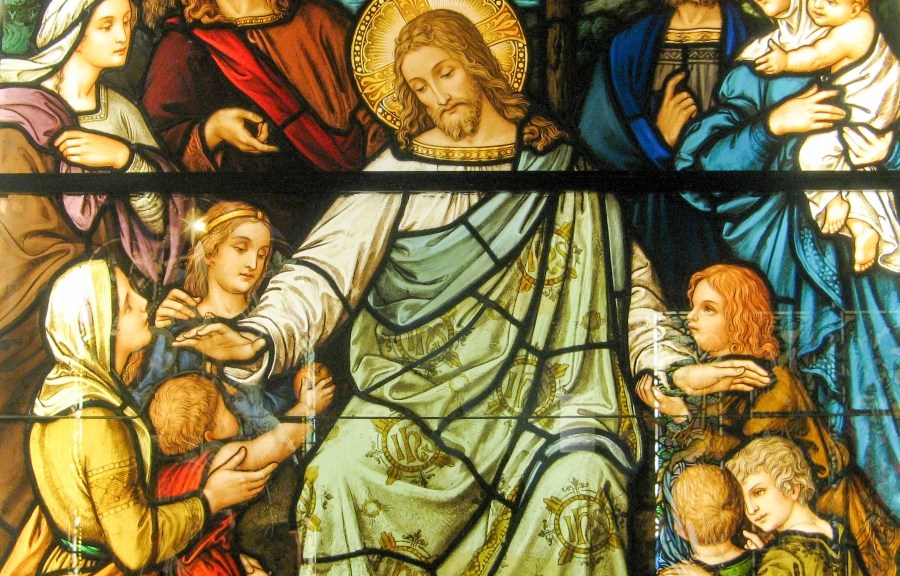
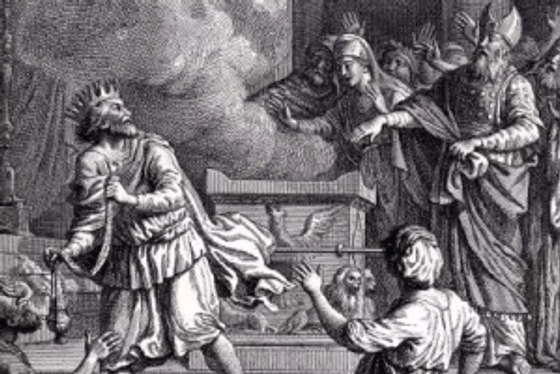
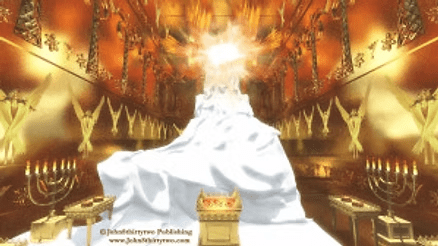


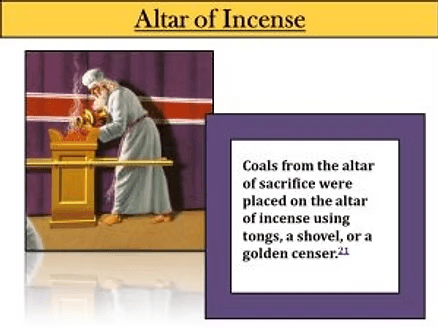
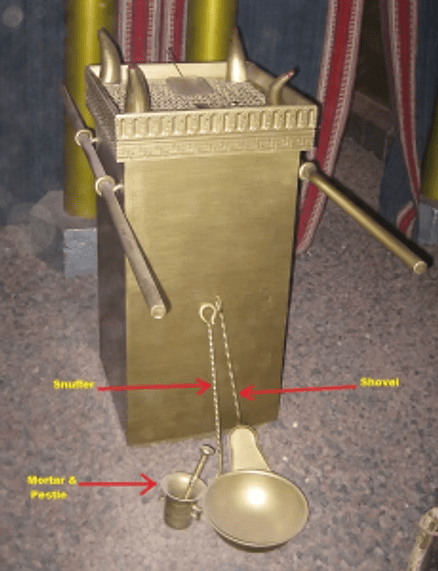
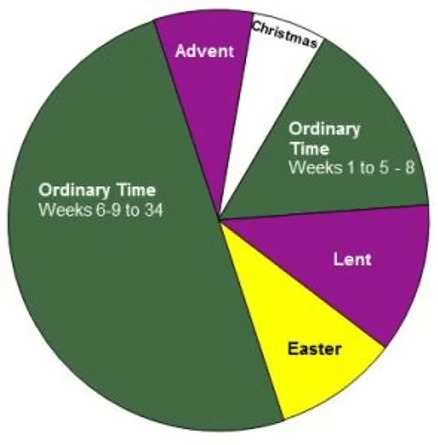

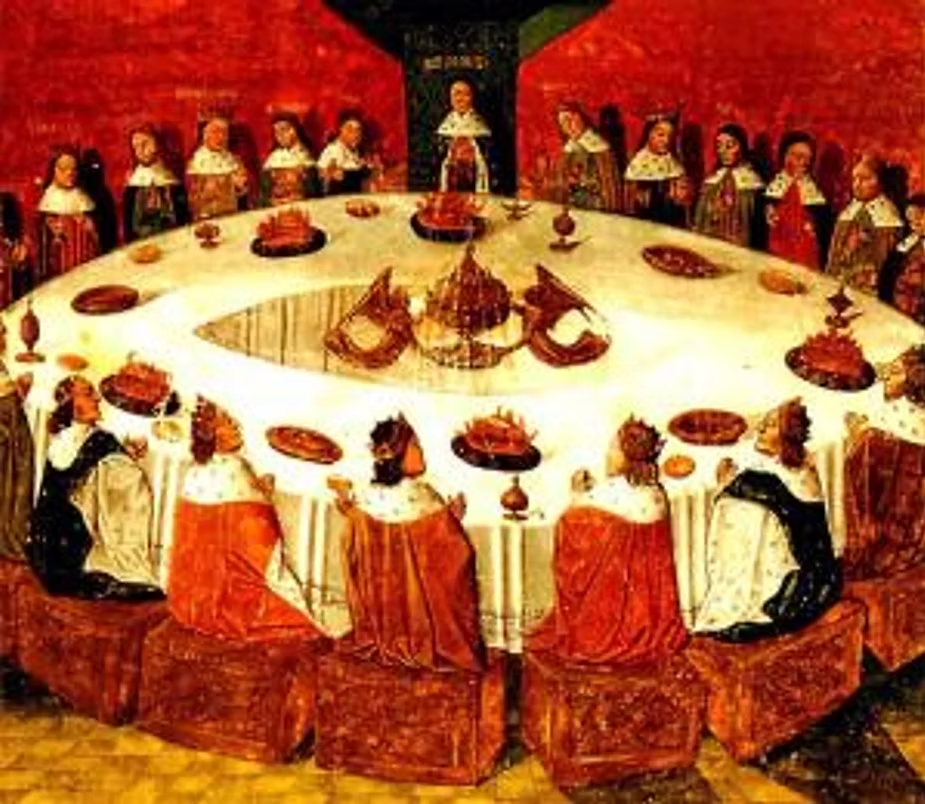

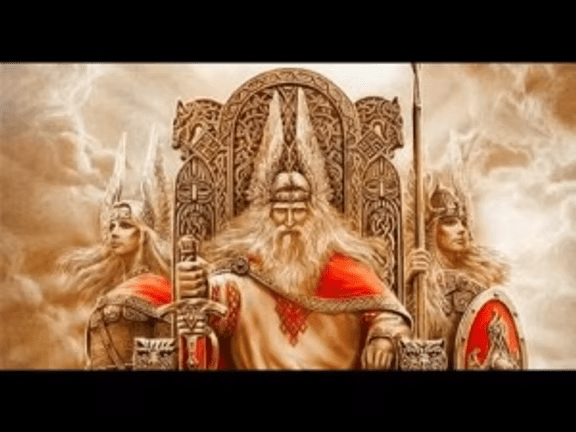


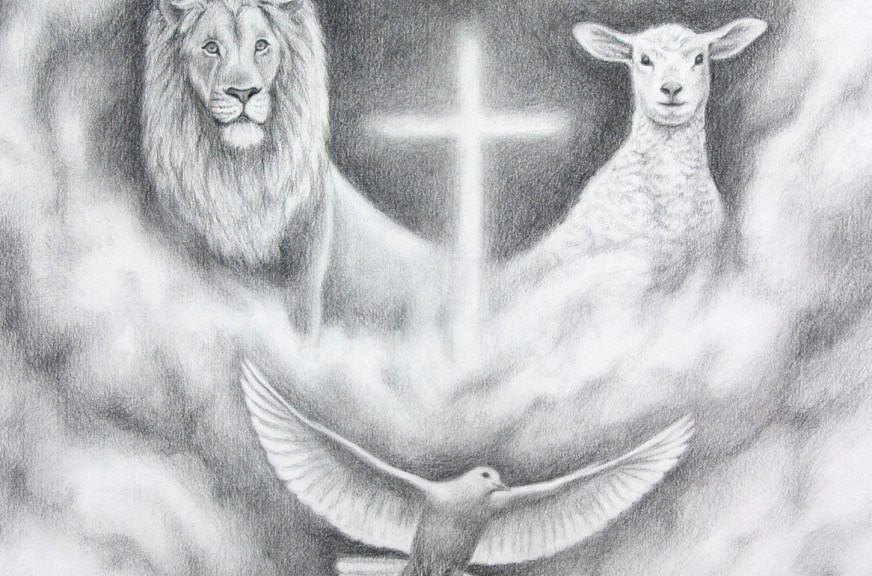
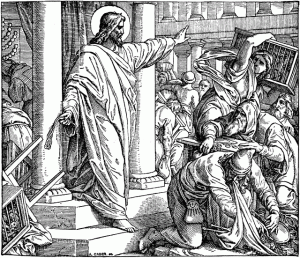
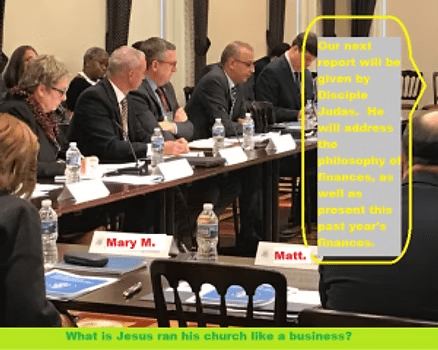

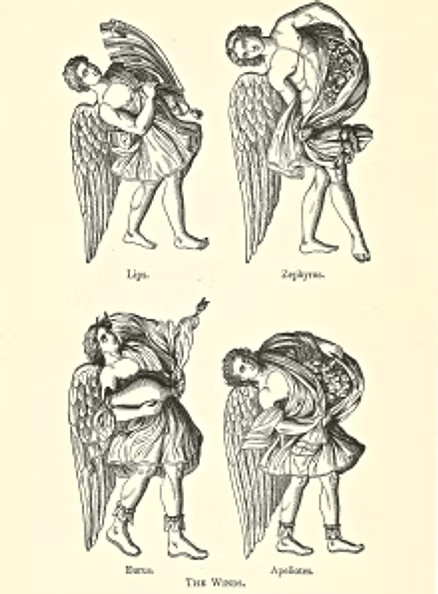
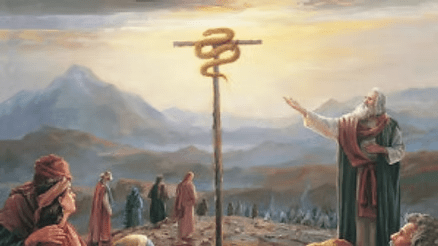
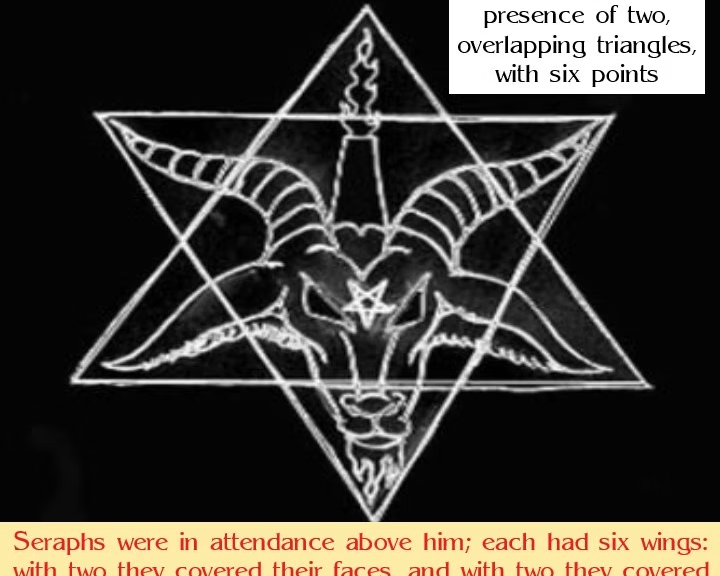
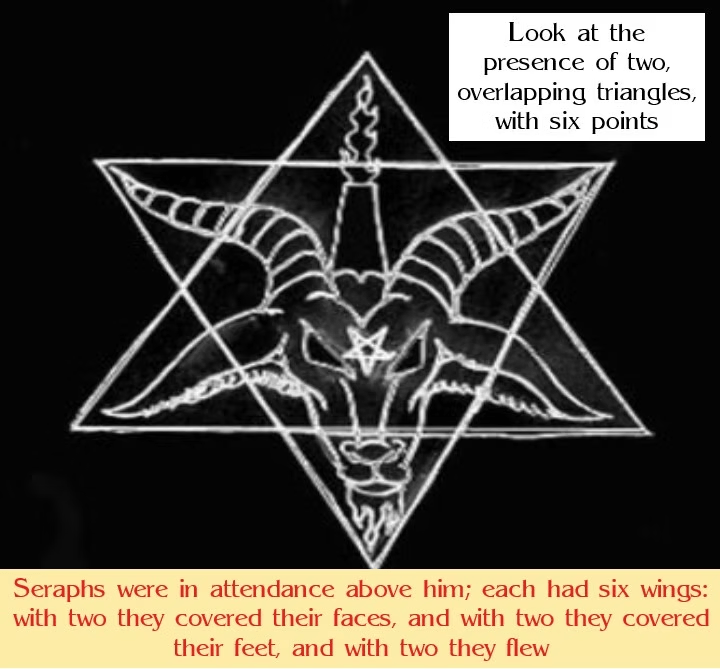


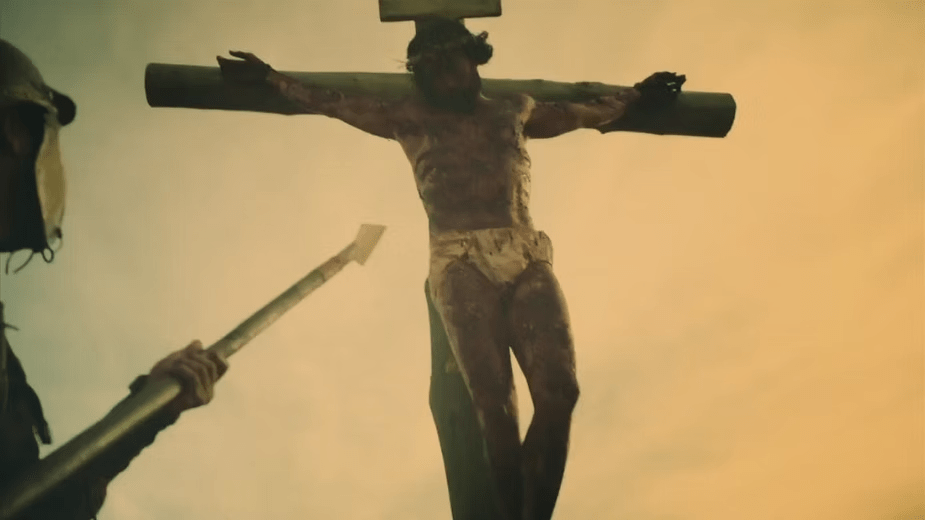
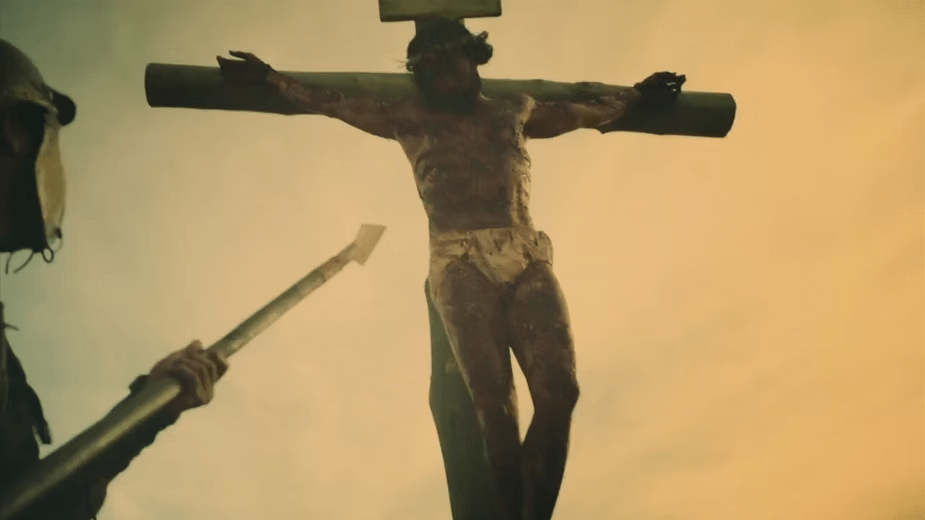


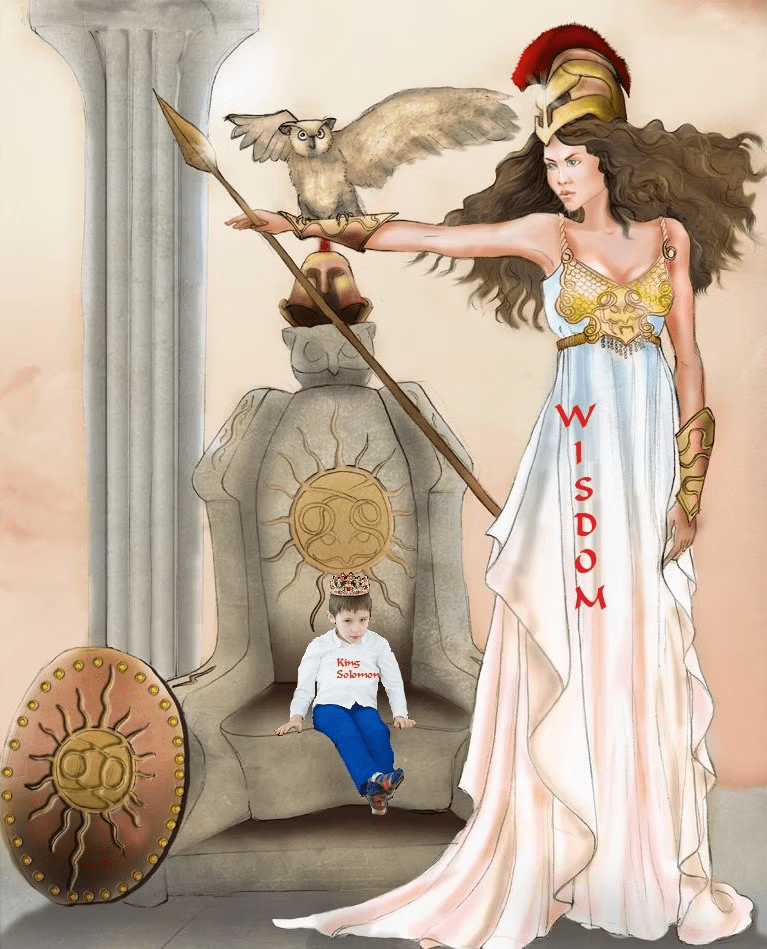


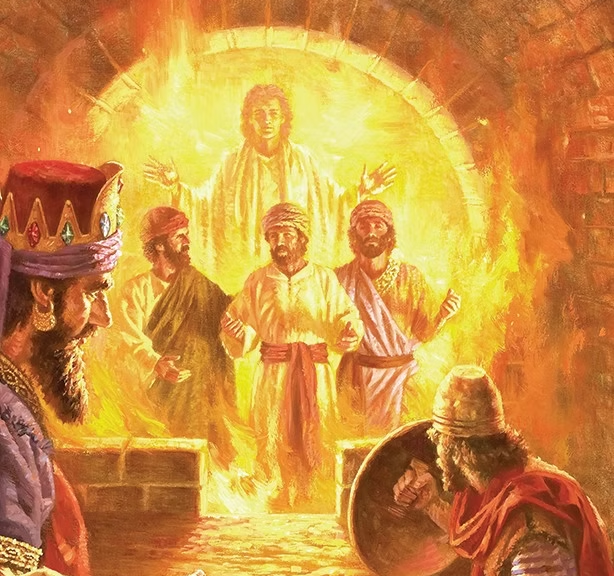
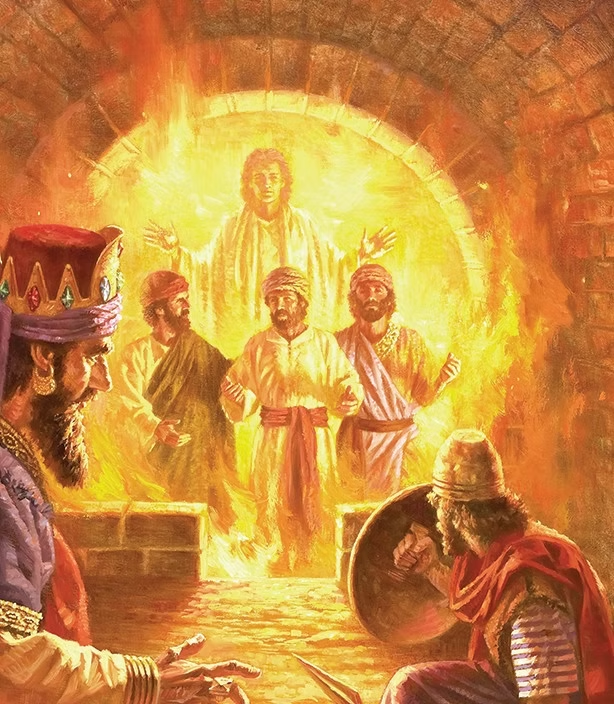
 Explaining the Readings