Tag Archives: Twenty-third Sunday after Pentecost

Hebrews 9:11-14 – Understanding the blood of Christ

When Christ came as a high priest of the good things that have come, then through the greater and perfect tent (not made with hands, that is, not of this creation), he entered once for all into the Holy Place, not with the blood of goats and calves, but with his own blood, thus obtaining eternal redemption. For if the blood of goats and bulls, with the sprinkling of the ashes of a heifer, sanctifies those who have been defiled so that their flesh is purified, how much more will the blood of Christ, who through the eternal Spirit offered himself without blemish to God, purify our conscience from dead works to worship the living God!

——————–

This is the Epistle selection that will be read aloud in churches on the twenty-third Sunday after Pentecost [Proper 26], Year B, according to the lectionary for the Episcopal Church. It will be preceded by one of two pairs of Old Testament and Psalm readings, either Track 1 or Track 2. The track chosen by an individual church will determine if the Old Testament reading is from Ruth or from Deuteronomy. Track 1 will include these verses: “See, your sister-in-law has gone back to her people and to her gods; return after your sister-in-law” and “Yahweh sets the prisoners free; Yahweh opens the eyes of the blind; Yahweh lifts up those who are bowed down.” Track 2 will include these verses: “Hear therefore, O Israel, and observe them diligently, so that it may go well with you, and so that you may multiply greatly in a land flowing with milk and honey” and “Oh, that my ways were made so direct that I might keep your statutes!” Those will accompany the Gospel reading from Mark 12, where the response to Jesus by the scribe was, “You are right, Teacher; you have truly said that ‘he is one, and besides him there is no other’; and ‘to love him with all the heart, and with all the understanding, and with all the strength,’ and ‘to love one’s neighbor as oneself,’ —this is much more important than all whole burnt offerings and sacrifices.”’

The last time this reading selection came up in the lectionary cycle (2018) I wrote a deep observation of the literal text, coming from the Greek written by Paul. I included background that is relative to the ten verses that precede these four selected from chapter nine. I stand behind my observations then, as they are still applicable today. If that article is one you would like to read, it can be accessed by searching this site. As it is with all the writings of the Epistles, there is much depth that can come from writings that are divinely inspired, coming from the Mind of God, where ‘speaking in tongues’ is required to see more and more truth become exposed from the language of Yahweh being used. This language cannot be translated properly by services that know Greek and know other languages and transform the Word of God into human paraphrases. The reading above is so much more than is shown.

From the translation services that provide English-speaking Christians with the quotes and passages they love to memorize as ‘the Gospel,’ these four verses from Hebrews 9 fall under headings, such as: “Redemption through His Blood” [Bible Hub Interlinear]; “The Earthly and the Heavenly Sanctuaries” [NRSV]; “The Blood of Christ” [NIV]; “The Old and the New” [NASB]; and, “New Covenant Ministry” [Christian Standard Bible – CSB]. From this variety of headings, all coming from the same text, although some separate these verses, while other lump all into one whole, they convey a duality of past and present, old and new, such that the “blood” must be seen as spiritual, not physical.
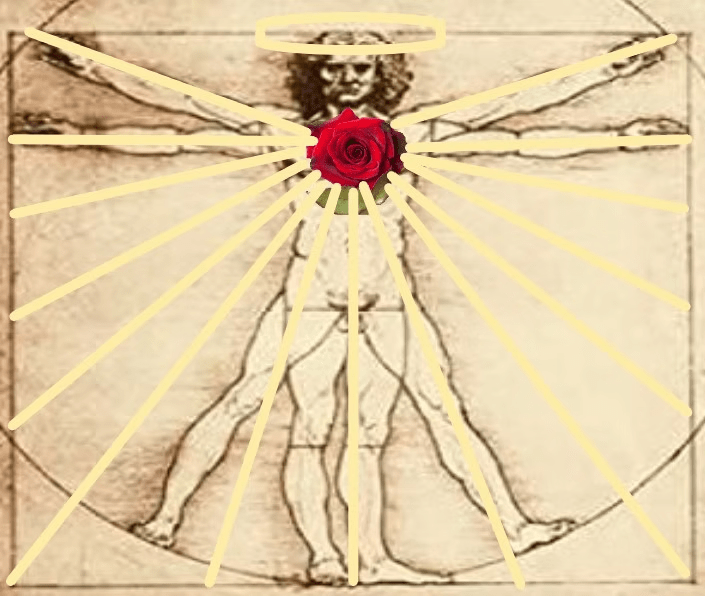
I wonder if Leo drew two bodies, one imposed on top of another, to show the union of two souls in one body of flesh?

In the first verse of this reading selection (verse 11), the NRSV translators have set aside two series of words in parentheses, separated by a comma mark. The parentheses are not part of the written text. Verse eleven literally translates into English saying, “Christ now , having arrived as high priest of those having become of good use , on account of this greater kai more complete tabernacle not made by hands , this existence , not of the latter this institution .” This must be seen as Paul explaining the “high priest” he wrote of in Hebrews 7, which has been the readings the past two Sundays.

First of all, the writing of “Christos,” is a capitalized word that takes on a divine level of meaning. The word “christos” in the lower-case means “to be rubbed on, used as ointment or salve.” The capitalization says Paul is speaking of ALL souls that have been Spiritually Anointed ones by Yahweh. This is not a divine level of meaning otherwise. Only Yahweh can Anoint a soul, making that soul be a “Christ;” and, Yahweh is not to be limited in any way by mere human translators or mere human interpreters to say “Christ” can only be Jesus in the flesh. This reality is because Yahweh can Anoint the whole world, if the whole world submits to His Covenant for marriage. “Christ” is NOT to be limited to being read as the ‘last name’ of Jesus of Nazareth, born of a woman in Bethlehem. The Old Testament is one story after another that tell of the Christs of Yahweh: males and females He Anoints who He chooses.

When one realizes “Christ” is a state of being, one which Paul knew personally, as Paul was an Anointed one of Yahweh, his writing “Christ now” is speaking about the death of Jesus of Nazareth, whose soul was most certainly Anointed by Yahweh, as His Son, but that Anointed soul was no longer present on the face of the earth as it was, when Jesus lived in flesh [his Anointed soul animated dead matter]. At that moment of writing [“now”] the focus of verse eleven states a change has occurred, unlike what was before. The rest of the segments of this verse must be realized as Paul writing about the present state of the “Christ,” as opposed to the way it was when Jesus lived and walked.

In that new [remember the titles that transitioned from “old” to “new”?] state, Paul wrote next: “having arrived as high priest of those having become of good use.” That says the Anointed soul of Jesus had entered into others, like Paul [not only Paul, but all Apostles or Saints], with that soul of Jesus “having arrived” in “those as high priest.” This means the soul of Paul was no longer the “high priest” of Paul’s body of flesh. Paul had been named Saul, when his soul was his “high priest,” but Saul was not anointed by any deity as a divine servant of any true God. Saul was his own “god” [a “soul” as an “el”], who worshiped his own evil acts as being righteous. However, after Saul submitted his soul to Yahweh [changing his name to denote that transition from old Saul to new Paul], the presence of Jesus’ soul with his soulAS HIGH PRIEST – means Paul [like “those” also “Christs” of Yahweh] had “become of good use.”

Following that statement of divine presence being within Paul [and others like him] for “good use,” he then wrote a segment of words that contain the marker word “kai,” which denotes importance needing to be seen in that stated after that marker word. Here, Paul wrote, “on account of this greater kai more complete tabernacle not made by hands.” In that, “greater” becomes relative to the “good use,” which says people who have not become Saints will try to do “good things,” but when the soul has been enhanced by the presence of Jesus’ soul, as a “Christ,” then the “good use” of one’s being is “greater.” This can be intuited to be meaning Jesus walks again in the flesh – in the flesh of a Saint – so being Jesus reborn is “greater” than being someone who likes Jesus a lot and tries to figure out what Jesus would do “now.”

The marker word “kai” then says “more complete tabernacle not made by human hands” becomes very important, relative to this “greater” state of being. In this, the “tabernacle” must be seen as the most holy place in which Jesus has become the “high priest.” That is one’s body of flesh. Saul was a tabernacle for Judaism, where he served as the “high priest” who took delight in the persecution of Christians. When his soul became “Anointed” by Yahweh and Jesus became the “high priest” of his “tabernacle,” then Paul was transformed … but “not by human hands.” Jesus never physically met Saul. Jesus did not physically come touch Saul and tell him, “Change and be Paul.” In the same way, the Judaic religious system was built by human hands, where everything they believed in was made up by the intelligence of their brains, with none of the leaders of that religion a divine “high priest,” who was one “Anointed” by Yahweh.

Paul then separated two words by comma use, which makes one pause to reflect on his writing “this existence,” which also says “this is.” This says the old state of being has changed into a new state of being. The new state that “exists” “is” the “Christ” state of being – a Saint whose soul has married Yahweh and then given birth to the resurrected soul of Jesus as “high priest” in that body of flesh – a body is no longer as it was before, led only by one’s soul.

The final segment of words is then Paul writing, “not of the latter this institution.” In that, the Greek word “ktiseōs” is written, which the NRSV has translated [within parentheses that are non-existent] as “creation.” According to Strong’s, the word means “creation (the act or the product)” [definition], but then “(often of the founding of a city), (a) abstr: creation, (b) concr: creation, creature, institution; always of Divine work, (c) an institution, ordinance.” [usage] Thus, the intent, following a segment of word that spoke of a spiritual “tabernacle” [one “not made by human hands”], says “this existence” is “not” to be confused with a “creation” of Jews in Jerusalem, but the new “institution” that would go by the name of Christianity [based on the reality of all members of that “institution” being Anointed ones by Yahweh, with His Son the “high priest” of all].

In the translation I present, the Greek word “ταύτης” is written, which transliterates as “tautēs.” This is the genitive singular form of “hoûtos,” which means “this,” but can mean “here, the preceding, the latter, or a reference to someone famous or infamous.” As “here,” Paul was writing from a Roman prison, who was persecuting him because of Jewish influences within Rome. The “preceding institution” was the Judaic religion, which was coming to an end of relevancy (“the latter”). Thus, Paul was writing so translators would catch his drift and see him writing about a change taking place, from the old to the new.

Verse twelve then can literally be seen to translate as stating, “not through blood spilled of goats kai calves , through now this own blood spilled , he entered once for all among these set apart by God , eternal redemption having obtained .” This is where people see the blood of Jesus on the cross as him dying for the sins of the whole world, which is stupid to think. This speaks of the old “institution,” created by the “hands of men,” not Yahweh, being one where blood sacrifices was an integral part of their physical system that saw spilling blood as a cleaning exercise, one which pleased Yahweh.

Jesus was indeed the sacrificial lamb whose blood would be spilled, meaning he would be killed and he would have marks on his flesh that bled; but that was not so his flesh could be roasted on the altar fire and then served to people waiting for some barbequed goat or calf. Jesus died so his soul could be spilled out; and, that is the meaning of Paul writing, “he entered once for all among these set apart by God.” Those “set apart by God” [aka “sacred ones” or “holy places”] are those who are “Christ now.” The soul of Jesus has been released through willing sacrifice. That sacrifice was not to cleanse sins ceremoniously [with physical blood and ashes sprinkled], but to enter those who repent from their sins, forevermore. Thus, when Yahweh sends into those who will be His Saints His Son resurrected – to become their “high priest” – then they have earned “redemption” and “eternal” life for their souls.

Verse thirteen then literally translates to say, “If indeed this blood spilled of goats , kai of bulls , kai ashes of a heifer , ceremoniously sprinkled to cleanse those who have become unclean , make holy towards this of this flesh purification ,” this is Paul speaking of symbolic restoration of sins done by bodies of flesh. Such ritual sacrifices have no lasting value. Just like washing the dirt off one’s flesh with water makes one clean for a moment, only to get dirty again later, nothing has changed within. Physical cleansing does not (cannot) reach into where the motivation to get dirty again comes from.

Verse fourteen is then a continuation of the line of thought begun in verse thirteen. Here, it is important to realize the capitalization of the Greek word “Ei,” at the beginning of verse thirteen. That “If” is still in effect as the line of thought moves into the next verse (following a comma mark, not a period). The capitalization of “If” means the divine level of meaning the word absorbs says all physical sacrifices of living creatures for religious purposes are to please some god, IF that god indeed requires a blood (soul release) sacrifice. Thus, the proposition that animal sacrifices please Yahweh is the ‘big IF’ here. It asks the question, “Does Yahweh only want His servants and priests to clean their bodies of flesh, routinely, through ritual spilling of animal blood?”

The answer to that question can be found in Isaiah 1:11, where Yahweh spoke to the prophet, saying ““The multitude of your sacrifices— what are they to me?” says Yahweh. “I have more than enough of burnt offerings, of rams and the fat of fattened animals; I have no pleasure in the blood of bulls and lambs and goats.” This is what Paul was alluding to in verse thirteen.

The literal translation of verse fourteen into English has it say: “how much more this blood shed who of Christ , which because of the Spirit eternal , itself to bring to blameless this God , will cleanse this conscience ourselves away from mortal works , into this to serve God living !” This becomes a statement about how much “greater” is the freeing of Jesus’ soul, than that of farm animals, because that soul being released from a physical body means it can then enter into those who are deemed by Yahweh to be His Anointed ones. Being a “Christ” means one’s soul has been cleansed, which is “much more” than being washed by water or having had some ritual ashes sprinkled nearby.

The second segment of words confirm that being Anointed ones of Yahweh is Spiritual, where the capitalization of “Pneumatos” gives this a divine level of meaning, which is the marriage of Yahweh with a soul, through His “Spirit.” This marriage is taking on the name of Yahweh [which is “Jesus”]; and, that union with a soul forever grants it eternal life … beyond the time in the flesh. It is this marriage that cleanses the soul [and thus the body of flesh too], which allows Yahweh to sit upon the throne of one’s heart, while His Son becomes the “high priest” of one’s fleshy “tabernacle.” Like Job [and all Saints] one becomes “blameless,” which is a statement about being free of the condemnations of sins.

Jesus did not die to forgive sins. Jesus died so his soul could be given by Yahweh … to His wives in divine marriage … who agreed at the marriage altar never to sin again. The First Commandment – “Do not wear the face of other gods before My face” – says, “the faces of other gods lead souls to become sinners.” A soul cannot marry Yahweh and not forever give up being a sinner. Thus, Jesus died to show how each wife-to-be of Yahweh [a soul] must also crucify one’s past worship of self, in order to become reborn as the Son of man.

When the next to last segment speaks of a clean conscience, which says one’s soul is well aware of past sins having been forgiven [through sincere repentance and love for marriage to Yahweh], the future direction taken by the soul still possessing a body of flesh is “away from mortal works,” where “mortal” is sins of the flesh, which lead to death of a body, releasing the soul to reincarnation or being sent forever into damnation. Therefore, the last segment of words then say ministry ensues, where one does the works of Yahweh incarnate, as His Son reborn. One is transformed divinely, to serve the Father in a world in need of Saints.

As a reading for the twenty-third Sunday after Pentecost, when one’s own personal ministry for Yahweh should already be well underway, the lesson here is to realize the need to be reborn as Jesus, as one of Yahweh’s Christs. One has to realize that physical blood of Jesus is meaningless, until one sees one’s own blood becoming that of Jesus, after his soul has been resurrected within one’s own soul. Otherwise, the ‘blood of Christ’ has to be seen as the outpouring of Yahweh’s Spirit upon one’s soul. The marriage of one’s soul to Yahweh allows one to be clean enough for His Son’s soul to be reborn into human flesh. When that transformation takes place – from the old to the new – then ministry can indeed begin for Yahweh.
Mark 12:28-34 – Total love means loving Jesus as oneself

One of the scribes came near and heard the Sadducees disputing with one another, and seeing that Jesus answered them well, he asked him, “Which commandment is the first of all?” Jesus answered, “The first is, ‘Hear, O Israel: the Lord our God, the Lord is one; you shall love the Lord your God with all your heart, and with all your soul, and with all your mind, and with all your strength.’ The second is this, ‘You shall love your neighbor as yourself.’ There is no other commandment greater than these.” Then the scribe said to him, “You are right, Teacher; you have truly said that ‘he is one, and besides him there is no other’; and ‘to love him with all the heart, and with all the understanding, and with all the strength,’ and ‘to love one’s neighbor as oneself,’ —this is much more important than all whole burnt offerings and sacrifices.” When Jesus saw that he answered wisely, he said to him, “You are not far from the kingdom of God.” After that no one dared to ask him any question.

——————–

This is the Gospel reading that will be read aloud by a priest on the twenty-third Sunday after Pentecost [Proper 26], Year B, according to the lectionary for the Episcopal Church. This will follow one of two sets of Old Testament and Psalm pairings, either Track 1 or Track 2. Depending on the predetermined path for an individual church during Year B, Track 1 will present a reading from Ruth, which says, “Then she started to return with her daughters-in-law from the country of Moab, for she had heard in the country of Moab that Yahweh had considered his people and given them food.” That will be paired with Psalm 146, which sings, “Happy are they who have se-el of Jacob for their help! whose hope is in Yahweh elohaw.” Track 2 will offer a reading from Deuteronomy 6, where Moses spoke as Yahweh, saying, “Hear, O Israel: Yahweh ehohenu, Yahweh alone.” That will be accompanied by Psalm 119, which sings: “Then I should not be put to shame, when I regard all your commandments.” One of those two will precede a reading from Hebrews, where Paul wrote, “How much more will the blood of Christ, who through the eternal Spirit offered himself without blemish to God, purify our conscience from dead works to worship the living God!”

I wrote in-depth about this reading selection the last time it came up in the lectionary cycle (2018). I posted my observations at that time on my website. That insight is still relevant today; so, there is no need for me to repeat what I wrote three years ago. I recommend all readers to search this site for Mark 12:28-34 and read what I wrote then, before coming back to read what I will now add. I will do more towards showing how the others readings set aside for the twenty-third Sunday after Pentecost enhance this lesson; but I will now add for the first time insight that has just come to me recently.

The first thing I want to point out from this reading is it is written in Greek. Mark is the author of Peter’s story – his first-hand account of Jesus’ ministry that he witnessed, divinely recalled – and Mark wrote the Gospel bearing his name in Greek. Most likely, Peter spoke to Mark in Aramaic; and, most likely the scribes and Sadducees spoke to Jesus in Aramaic, in which same language he responded to them. This means that the Greek that is translated into English, from which the NRSV translation is read aloud by a priest [from a large book written in English], is not the whole truth and nothing but the truth of what Jesus actually said.

To see Mark write [transliterated], “Akoue Israēl : Kyrios ho Theos hēmōn , Kyrios heis estin ,” [et al] and think that was what Jesus said, when the Hebrew written is [transliterated], “šə·ma‘ yiś·rā·’êl : Yah-weh ’ĕ·lō·hê·nū Yah-weh ’e·ḥāḏ” [et al] is wrong. Jesus did not refer to the name ordered written by Moses in Deuteronomy – “Yah-weh [or “יְהוָ֥ה”] – as “Kyrios” [or “Κύριος”]. Jesus would have quoted the Hebrew as written, which the scribe [a university professor equivalent in Hebrew] would also have had down to acute memory. In other words, the Greek of Mark was intended to be read by English-speaking Christians [two thousand years later] as “Hear Israel : The Lord our God , the Lord is one” [et al], when Jesus should be realized to have said, “hear Israel ; Yahweh of whom we are gods , Yahweh alone” [et al].

The evidence of this is where Jesus regularly referred to Yahweh as “the Father” [“Patros”] and not “Kyrios.” What needs to be found from the Greek that has Jesus speaking is this: the truth is not found by thinking he spoke in Greek. By Yahweh leading all the Gospel writers to write their stories of Jesus in a language Jesus did not regularly speak, with enough references to things he said in Aramaic being enough to say, “He spoke in Aramaic,” the point is to hide the truth under words of paraphrase. To believe in paraphrases is only half-way towards finding the truth. To find the other half means reaching true faith; and, Yahweh had the Gospels written in Greek to see who is willing to search for the truth that lies underneath.

It is from that perspective that it becomes imperative that one realize Jesus quoted the Hebrew of Deuteronomy, as well as the Hebrew from Leviticus 19:18, when he answered the question posed to him by the scribes. The question (translated literally from the Greek) is: “Which is law most important of the whole?” That becomes a hidden statement that there are 613 commandments listed by Moses, which made it be a trick question that sought to have Jesus say one was more important than all the others, when all are equally important. When Jesus said one was foremost, with another subsequent to the foremost law and no others greater than those two, he gave the right answer; and, he did it without having to draw in the dirt or pull out his list of Mosaic laws. That speed of answer impressed the brainiac that was one of the scribes.

For Jesus to quote from Deuteronomy, which is (by definition) the “second law,” or “repeated law,” he was not listing one of those most commonly memorized by Christians, from the “Ten Commandments.” Jews today laugh at this Christian view, knowing there are 613, which is about six hundred three more laws than Christians learn or remember. Still, when Moses told the Israelites to “hear Israel,” that meant they needed to hear their soul’s new name was “Israel,” meaning “One Who Retains God,” through marriage that joined each soul to Yahweh. That marriage was and could only be through love. Therefore, the foremost of all the commandments was one that repeated, “If your soul is not in this because of total love, then there are no agreements that will be kept.”

In the difference between how the Greek states “the Lord our God,” it is easy to get lost in how that repeats “Lord” as “God.” That repetition is not what Moses stated with his use of “elohim,” where the plural intent of “gods” does not elevate into Gods or God. It is the repetition of Yahweh as the One God to whom each Israelite soul must be divinely married, so all of those “elohim” of Yahweh are extension of Yahweh on earth. Had Moses known Jesus of Nazareth, he might have changed what he said to be “Yahweh Jesuses,” instead of “Yahweh elohim.” That is because “the Lord our God” has the same meaning, such that Jesus knew Yahweh was his Father, to whom the soul of Jesus submitted totally, out of complete love.

This means that when Jesus repeated Moses in saying [here it is capitalized in Greek], “Hear Israel,” such that each word took upon itself a divine level of meaning, the scribe did indeed listen and understand the truth said in “Hear Israel.” The divinity of those two words say one must “Hear” the voice of Yahweh speaking; and, when that voice cries out “Israel,” that is not calling out the name of a nation of people who squandered their land by allowing wicked rulers over them, who subsequently had been scattered around the globe, including being bound as slaves to oppressors. The name “Israel” meant to be “One Who Retains Yahweh,” as His wife, one of His “elohim,” where each is an “el” of Yahweh – a Lord’s god. At least one scribe “Heard Israel” and realized the truth of that name. That scribe then commenced to tell Jesus what Paul would later write from his prison cell in Rome – about the uselessness of animal sacrifices.

It is here that I have been allowed to see the truth that has been hidden deeply in Jesus quoting from Leviticus 19:18, when he said, “you shall love this neighbor of you as yourself.” In reality, the same words written in Greek can translate as, “you shall love this near of you as long as of yourself.” In both translations, “yourself” must be seen as a statement of “your soul,” where a “self” is a “soul.” Thus, when “plēsion” is not translated as “neighbor” but as a viable “near” or “nearby,” then what Jesus said is this: “you shall love Yahweh who is of you in marriage for as long as He is with your soul.” Nothing is said about anyone else.

In the similar version of this encounter, as told by Luke [the Gospel writer of Mother Mary’s story of Jesus], the scribe asked Jesus, “Who is my neighbor?” One can see now that such a question would be rooted in the semantics of the Hebrew word [transliterated] “lə·rê·‘ă·ḵā,” from “rea,” where “your neighbor” can actually translate as “your companion” or “your fellow.” The scribe’s question is then not about who lives next door to him, but how Jesus can quickly know the truth of a word he (the scribe) had struggled to comprehend all the years of his scholastic prominence. He was asking Jesus to explain who his “companion” was.

That led Jesus to give a parable in answer, rather than say, “Well take me to your house and I will point your neighbors out to you.” The parable was that of the “Good Samaritan,” where the story is seeped with metaphor that calls one to see the man beaten, robbed and left for half dead” as one’s relationship with Yahweh – as the Covenant. The two who were leaders of the Temple of Jerusalem both walked by the torn and tattered agreement with Yahweh, not wanting to have anything to do with it or Him. The one who found the Covenant in distress, as a cheated on Yahweh, took steps to restore that contract. The Samaritan [seen as worst than a Gentile by the Jews] picked up the agreement and nurtured a relationship with Yahweh to health. It was the Samaritan who loved Yahweh with all his heart, mind, soul, and strength, and who spared no expense in making sure the Covenant between his soul and Yahweh was in good standing. Thus, the soul of the Samaritan loved the agreement with Yahweh until the two were married as One, and his soul loved Yahweh as his own soul’s Lord.

After Jesus told that parable, he asked the man which of the three was a “neighbor” [a “plēsion”], to which the man answered, “The one who showed compassion to him.” This says “compassion” [from “eleos,” meaning “covenant-love”] is not to some external entity, but to the inner relationship that a soul has to the Spirit that is “nearby.” The same meaning must be read into this reading from Mark 12.

When Jesus heard the response by the scribe, he was pleased that the soul of this intellectual was being led by the Spirit, meaning his soul and Yahweh were ‘engaged, to be married.’ By Jesus sensing that, he told him, “You are not far from the kingdom of God.” Here, one needs to realize “not far” [from “Ou makran,” where the capitalized “Ou” or “Not” takes on a divine level of meaning, where “Not far” means “Near Yahweh”] says all the scribe needed to do to reach the kingdom of God was to love Yahweh as his own soul.

When this deeper meaning has been exposed, this love of Yahweh has to be seen as the metaphor of the story told in Ruth. The famine that drove Naomi and her husband and two sons into Moab becomes the same famine that had Pharisees trying to trick Jesus with questions about paying taxes to Caesar and whether the resurrection was real or not. Moab becomes the fertile ground of Christianity, with Israel and Judah being void of any spiritual food. Still, Christianity would kill off the husband of Naomi [someone like Moses, with the spirit-soul of Jesus] and her two sons [the Eastern and Western Church as any religions of truth], leaving Naomi with two daughters-in-law and only her Covenant to Yahweh. She freed the wives of her dead sons to fend for themselves and find their own gods to marry their souls to [Gentiles as they had been]; but Ruth clung to Naomi and refused to leave. The love of Ruth for Naomi becomes the love said by Jesus to be the foremost Law. We love our neighbors as ourselves when we cling to the inner Yahweh and not run to the closest sin to feed on.

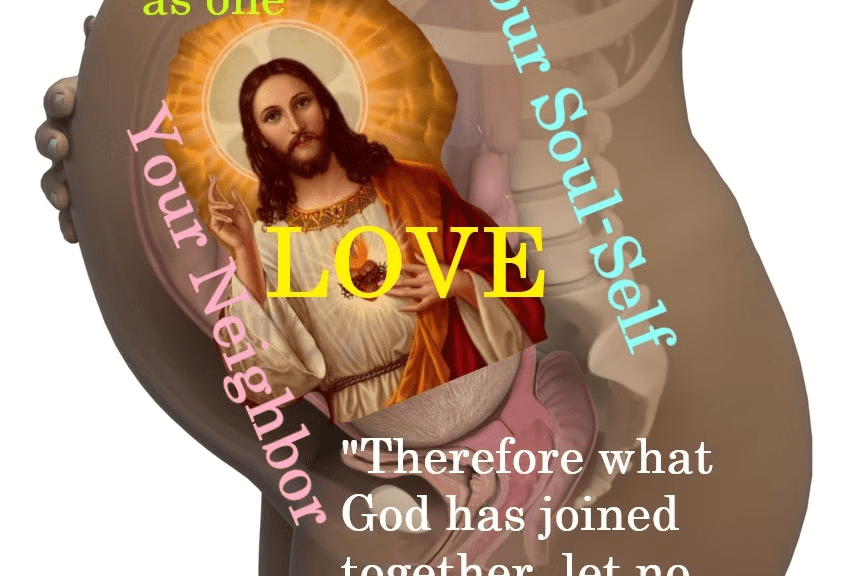
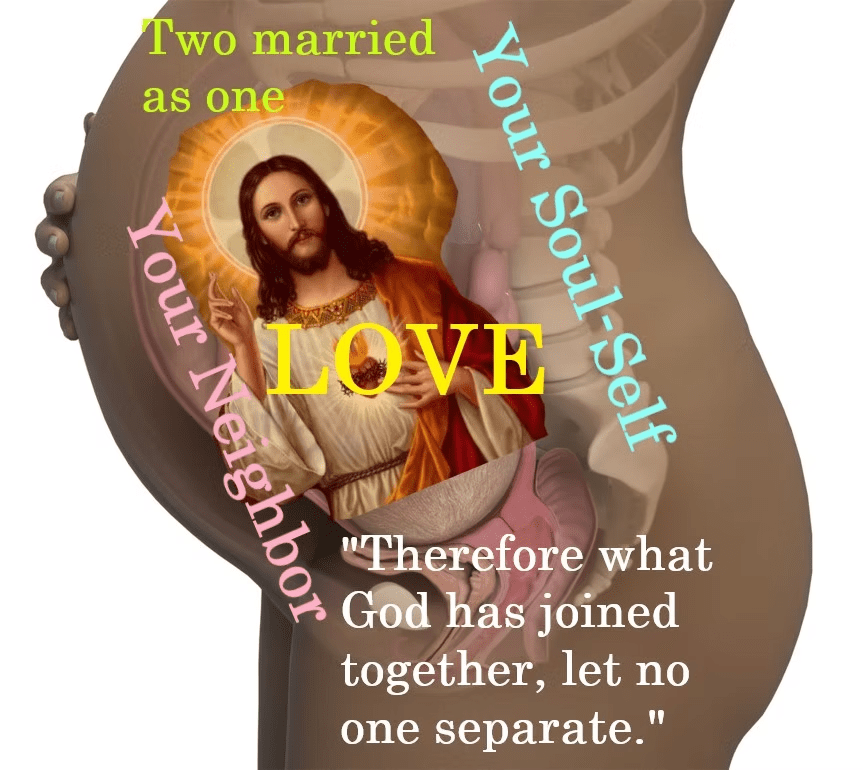
Because the Deuteronomy reading is what Jesus quoted, it becomes important to see how the scribe also referred to the sacrifices of animals, as did Paul in Hebrews. When Paul wrote of the high priest entering the tabernacle, this must be seen as a reference to two souls within one body of flesh. This is one’s “neighbor,” as Ruth knew there was no other “neighbor” beyond the one who was “near” and loved. Jesus’ soul becomes the “high priest” sent by Yahweh, after marriage, which become the one “near” that must be loved as one’s own soul. This becomes the truth of being reborn as Jesus. When Paul referred to the “Christ” on two occasions in the reading selection, it is the presence of Jesus within that makes one also become an Anointed one of Yahweh. That Anointment comes from a most Spiritual marriage with one’s soul. Therefore, to be assured the kingdom of God, one then must be married to Yahweh in Spirit and be reborn as His Son, a new Christ walking the face of the earth.

Psalm 119 then praises this presence, singing, “Happy are they whose way is blameless, who walk in the law of Yahweh!” Psalm 146 then adds, “Hallelujah! Praise Yahweh, O my soul! I will praise Yahweh as long as I live; I will sing praises to lelohay while I have my being.” In that, “Hallelujah” means “Praise Yahweh!” This is praise that states total love by a soul for Yahweh. It says Yahweh is one with one’s being, which is the “companion” to whom all love is shown, as the Spirit that has become one’s soul expression. This love grants one access to the kingdom of God, as a wife (a soul) in good standing.

As the Gospel reading to be read aloud on the twenty-third Sunday after Pentecost, when one’s own personal ministry for Yahweh should already be well underway, the lesson here is to receive the Spirit and love it with all one’s soul. In these modern times when filthy spirited, berobed men and women are calling themselves priests and pastors, spewing crap that says a “neighbor” is anyone or anything in the world that breathes air, where nothing is relative to the way one’s soul lives – and Christians, Jews, Muslims, Hindu, and Commie Reds are all alike in their rejection of Yahweh’s Spirit with their souls in marriage – none of them realize what I have now been shown.

The meaning of “love your neighbor as yourself” can only be accomplished when one’s soul has courted Yahweh to the altar and agreed fully with His Covenant as one’s marriage vows [all 613 of the agreements] AND that marriage has given rise to a new soul alongside one’s own soul – baby Jesus reborn – to be one’s true “neighbor, companion, nearby soul.” When the world comes to this realization, it will either admit to being those who pass by the beaten, robbed, and left for half-dead Covenant with Yahweh, nowhere close to the kingdom of God; or, some will realize they are Saints and ministry to Yahweh means self-sacrifice, in order to maintain the Covenant, out of true and total love.

Psalm 146 – Praising Yahweh as a reflection on Naomi and Ruth

1 Hallelujah! [Praise Yah!]

Praise Yahweh, O my soul! *

[2] I will praise Yahweh as long as I live;

I will sing praises lelohay while I have my being.

2 [3] Put not your trust in rulers, nor in any child of earth, *

for there is no help in them.

3 [4] When they breathe their last, they return to earth, *

and in that day their thoughts perish.

4 [5] Happy are they who have se-el of Jacob for their help! *

whose hope is in Yahweh elohaw;

5 [6] Who made heaven and earth, the seas, and all that is in them; *

who keeps his promise for ever;

6 [7] Who gives justice to those who are oppressed, *

and food to those who hunger.

7 [8] Yahweh sets the prisoners free;

Yahweh opens the eyes of the blind; *

Yahweh lifts up those who are bowed down;

8 [9] Yahweh loves the righteous;

Yahweh cares for the stranger; *

he sustains the orphan and widow,

but frustrates the way of the wicked.

9 [10] Yahweh shall reign forever, *

elohayik, O Zion, throughout all generations.

Hallelujah! [Praise Yah!]

——————–

This is the accompanying song of praise that will follow the Track 1 Old Testament reading from Ruth. It will be read aloud in unison or sung by a cantor on the twenty-third Sunday after Pentecost [Proper 26], Year B, according to the lectionary for the Episcopal Church. The Ruth reading will include this: “Naomi said, “Turn back, my daughters, why will you go with me? Do I still have sons in my womb that they may become your husbands? Turn back, my daughters, go your way, for I am too old to have a husband.” The Track 1 pair will precede a reading from Hebrews, where Paul wrote, “For if the blood of goats and bulls, with the sprinkling of the ashes of a heifer, sanctifies those who have been defiled so that their flesh is purified, how much more will the blood of Christ.” All will accompany a reading from Mark, where it is written: “[A scribe] asked [Jesus], “Which commandment is the first of all?” Jesus answered, “The first is, ‘Hear, O Israel: the Lord our God, the Lord is one; you shall love the Lord your God with all your heart, and with all your soul, and with all your mind, and with all your strength.’

I wrote of this Psalm and posted those views this past August, during the fifteenth Sunday after Pentecost [Proper 18], so those interpretations are still valid. You can search this site for my view on Psalm 146. At that time is was on the Track 2 path for a church. Here, it is on the Track 1 schedule; so, this ensures this song of praise will be read during the Year B Ordinary after Pentecost season, one time or the other. Because what I wrote then is still applicable, I will only add now how this song fits the Old Testament selection for Ruth, and show how it also fits the Hebrews and Mark readings.

On the fifteenth Sunday after Pentecost [Proper 18], Psalm 146 accompanied a reading from Isaiah 35, which is a song that sings, “Be strong. Do not fear.” As such, that theme of standing tall in difficult times can be seen as reflected in the theme of Ruth. Naomi had suffered greatly by the losses of her husband and two sons, meaning she was left as a poor widow woman, who had no one in the material world who was responsible for her care and providing for her needs. Both Isaiah and Ruth are stories of difficult times being faced, which happens to all of mankind, from time to time.

While the NRSV does not make it clear that Naomi spoke the name “Yahweh,” she did. When we read, “she had heard in the country of Moab that Yahweh had considered his people and given them food,” that speaks of her commitment to Yahweh in this time of need. When we read of Naomi telling her daughters-in-law, “May Yahweh deal kindly with you, as you have dealt with the dead and with me. Yahweh grant that you may find security, each of you in the house of your husband,” that speaks of her blessing passed from her love of Yahweh to her surviving family, which were then free to find their own humans to provide them security. Those hidden uses of “Yahweh” say Naomi “praised Yah,” the meaning of the Hebrew word “Hallelujah.”

In this song of praise there are found these words written: “lelohay, elohaw, and elohayik,” in addition to “se-el.” All of these uses by David have been transformed into “to my God, their God, your God, and the God,” none of which are truthful translations. The first three listed by me are forms of the plural word “gods,” clearly not in the singular; and, none bears the importance of capitalization, because each reference is to a soul in a human body of flesh, none of who equate to Yahweh Himself – God. The plural is a statement of Yahweh’s ability to marry souls in the flesh and transform them into His gods on earth, which can be understood as Saints. When one then reads “se-el,” this should be seen as one soul [that of Jacob], which worshipped self, before being transformed and renamed – as Israel – a name meaning an el Who Retained Yahweh. All of this must be seen now as being applicable to the state of being within Naomi, as she was a Yahweh elohim; and, it was that marriage of her soul to Yahweh that spilled outward from her, which adhered to the seeker who was Ruth. Just as Isaiah sang to keep the faith, Ruth found the inner joy of her soul having also married Yahweh, so she too became an elohim” like Naomi.

This means every verse of David’s song praising Yahweh can be applied to the story of Ruth. Naomi was suffering physically, due to the famine and the deaths of those close to her, but as long as her soul kept her body alive, that life was time to praise Yahweh, not wallow in self-pity.

The husband and two sons of Naomi can be seen as “princes,” with their names telling a story within a story, which is all metaphor for the religions and subdivision of Christianity. All have died, but her trust was not in organizations. She praised Yahweh only, within her soul.

The deaths from famine led many souls to depart from their flesh. Naomi knew the deaths personally. The return of spirits speaks of reincarnation, which means nothing has been lost. Yahweh’s plan is never affected by such changing states in the material realm. Death is a part of nature.

The blessing of the soul of Jacob [“se-el Yaaqob”], so he became an elohim of Yahweh [“Yah-weh elohaw”] was the same state of marriage Naomi’s soul had experienced. It is the state of being that leads a soul to praise Yahweh. It is how all should be. Thus, it was how Ruth became.

These transformations are then seen in the same light as the Creation. David sang praise not for the air, earth and sea, with all creatures within, but he sang praise for the souls [the “heaven” within] that brings life to a world of matter. In the same way, Yahweh has the power to create a soul in a body of flesh [a “se-el”] into a Yahweh elohim, which is a higher “heaven” within one’s being. When Ruth ends with a song of Ruth, so “When Naomi saw that she was determined to go with her, she said no more to her,” that sings of Ruth being created anew.

In the times of famine, as Naomi and Ruth experienced, David sang of the spiritual food that takes away the hungers that come from reliance on the material for survival. The conditions of the world, such as drought, becomes the limits that imprison all bodies of flesh, forcing them to accept those conditions, move somewhere else or die. It is spiritual food from Yahweh that Naomi fed from, which was then shared with Ruth. David sang praises for this freedom given by Yahweh.

David then sang about the love of Yahweh for His servants [wives]. Their eyes are opened to the truth of life eternal. Naomi’s eyes could see this, although it is not possible for physically suffering humans to see. This inner sight leads a soul to bow down before Yahweh, which means kneeling at the marriage altar, so one’s soul can be united with Yahweh. Naomi said she was too old to attract a human husband and too old to bear sons, which was the main attraction females had in marriage. Naomi was able to see her eternal youth, as a soul, which Yahweh saw as worthy of divine marriage. Ruth can then be seen as the child of her souls’ righteous state of being, brought upon her by Yahweh.

David sang in verse nine of what would be the story told in Ruth. His words singing, “Yahweh watches over the strangers , the fatherless and widow he relieves , but the way of the wicked he turns upside down,” this sings of Naomi and Ruth, whereas Orpah [whose name means “neck”] symbolizes those with stiff necks, or stubborn self-absorbed people, will turn away from Yahweh and find misery.

As an accompanying Psalm to be sung happily on the twenty-third Sunday after Pentecost, when one’s own personal ministry for Yahweh should already be well underway, the lesson is again to look within during times of trouble and find faith through praise of Yahweh. This says one’s soul should already be married to Yahweh, so faith is that inner spiritual food that sustains one through hard times. This song of praise should be seen as fully supporting the Gospel reading, where Jesus answered the scribe by saying the foremost law is to love Yahweh totally and unconditionally. From that connection of love, all else follows in kind. To be a minister of Yahweh means to sing praises to Yahweh, so others will likewise feel the Spirit that is within you and cling to that Spirit, until it is theirs as well. Ministry is about passing on the Spirit so others can be saved; and, the world is always in times of famine, so a true minister will share his or her spiritual food so others can find eternal life.

Psalm 119:1-8 – A song for Aleph, with the Law step one

Happy are they whose way is blameless, *

who walk in the law of Yahweh!

2 Happy are they who observe his decrees *

and seek him with all their hearts!

3 Who never do any wrong, *

but always walk in his ways.

4 You laid down your commandments, *

that we should fully keep them.

5 Oh, that my ways were made so direct *

that I might keep your statutes!

6 Then I should not be put to shame, *

when I regard all your commandments.

7 I will thank you with an unfeigned heart, *

when I have learned your righteous judgments.

8 I will keep your statutes; *

do not utterly forsake me.

——————–

This is the accompanying Psalm that will happily be read in unison or sung aloud by a cantor on the twenty-third Sunday after Pentecost [Proper 26], Year B, according to the lectionary for the Episcopal Church. It will follow a reading from Deuteronomy, where Moses told the people [without the errors of translation in the way], “Hear, you who have been reborn as those Who Retain Yahweh as His extensions on earth [Saints or Angels in the flesh]: Yahweh is the creator of us as His gods [Saints or Angels], Yahweh alone.” This set that is designated for churches on the Track 2 path will precede a reading from Hebrews, where Paul wrote [adjusted to match the truth of the written text], “Christ came as a high priest of the good who have arrived, through the greater and perfect tabernacle not made by human hands.” All will accompany the Gospel reading from Mark, where Jesus heard a scribe give him a good answer about the foremost law, saying, “You are not far from the kingdom of God.”

It is worthwhile to realize that Psalm 119 is 176 verses long. This length then sets eight verses for each of the twenty-two letters of the Hebrew alphabet. These first eight verses are then assigned to the letter “Aleph.”

The Episcopal Church will set aside eight groups of these verses for reading over eleven Sundays and the day designated for “St Simon & St Jude.” These eight verses will also be assigned for reading on two Sundays in Year A, designated for “Epiphany 6” and “Proper 1.” While every verse is not given attention by the Church, this preponderance of attention shows that Psalm 119 is an important song of David.

Repeated in these first verses are the words translated as “law, decrees, ways, commandments (twice), statutes (twice), and judgements” [from “torah, edah, derek, tsavah, choq, mitsvah, mishpat, and choq”] While some of these translations into English are off the mark, the whole creates a strong theme that is the Law brought to the Israelites from Yahweh, for them to agree to be His people. That amounts to a marriage contract between Yahweh and each soul within all the human bodies of flesh that were the descendants of Jacob. Therefore, it is appropriate that this Psalm selection accompany an Old Testament selection that is Moses quoting elements of their marriage vows.

Verse one literally translates into English, saying “happiness the complete in the distance ; who come , in the direction of Yahweh .” While this can be translated to infer “walking,” that physical act is less meaningful than “to come.” While it can be translated “a way” of the “blameless” is traveled by walking, the greater impact says “the complete,” in the sense that being “blameless” means one has become united with Yahweh, so a cycle of return has been “completed.” It represents the “soundness” of being one, rather than being separate. Thus, a “way” or a “path” means more concisely “in the direction of Yahweh.” Here, the Hebrew word “torah” is translated as “direction,” more than “the law.” As a marriage agreement between a soul and Yahweh, one submits self-will so one is “directed” in how to act, do, go, and be. This needs to be seen as the truth of what Moses said, as recorded in Deuteronomy six.

Because verse two also begins with the same Hebrew word that has been translated as “blessedness” or “happiness,” this sense of elation should be realized as a state of joy being presence. This should then be related to the joy of marriage, where a wife [males and female bodies surrounding a soul] welcomes being given away to her Husband. This makes “happiness” be the time of celebration when one has been transformed by taking on the name of one’s Husband. It also says the union is out of love and welcomed. It says one’s desires for union have been met, making one’s soul be happy.

Verse two then literally translates into English as saying, “happiness those who guard his witness , with whole heart seek him .” In the translation “guard his witness,” this can also say, “keep his testimonies.” The meaning is a state of vigilance that makes listening to the inner voice be always on guard, as one seeks to make Yahweh happy, while pleasing Him brings oneself happiness. The “testimonies” are the marriage vows [the Covenant], but when those are all written within the walls of one’s heart [one’s soul], then one has personal witness to when a law comes up in one’s life path, hearing the divine voice of Yahweh leading one to always do the right thing.

Verse three then translates into English saying, “also not they make unrighteousness ; in his manner they go .” Here, it is easy to turn this around and say “they do not walk with iniquities,” which is true; but the focus on themselves making a point of not sinning is better stated as “not they make unrighteousness.” That becomes a willing desire to please Yahweh, with His divine assistance in the ways one acts being based on that desire to be righteous. Together “they go,” where the same word earlier translated as “who come,” means the marriage of a soul with divine Spirit is the plural number that “goes” forth. That duality is then multiplied by the number of Israelites “going” the same way.

Verse four then says literally in English, “you have given charge your precepts , to preserve diligently .” In this, “given charge” can equally mean “your commandments,” which says one’s soul is “ordered” to act righteously. A better translation, based on knowing love and marriage is the desire to please one another, is “given charge your precepts,” where the “general rules that guide behavior” are decisions of agreement that these rules are best. With those laws written on the walls of one’s soul, the soul then “diligently” acts within those parameters of agreement, so the Covenant between a soul and Yahweh are preserved. This is not to be seen as an order to go against one’s will, as acts of compliance. The acts are from common ownership of the values the rules set stand for.

Verse five is then seen to say, “oh that were firm my ways , to keep your prescriptions !” Here, again, the delight is seen in the exclamation point at the end of the verse. David is singing of the wonder that one’s brain is no longer distraught in having to decide what to do and what not to do. Because the Covenant with Yahweh makes “firm” the course to take, one loves letting Yahweh lead one always to make the right decisions. This path is always prescribed by the Mind of Yahweh overriding one’s fleshy brain.

Verse six then sings, “at that time not I would be ashamed ; when I look , towards all your commandments .” The word translated as “at that time” (or “then”) is a statement of whenever the potential to sin comes to one’s place, inviting one to make an error of judgment. When one’s soul is not married to Yahweh, one easily becomes tricked, thus one afterwards feels shame from one’s sinful acts and deeds. The word translating as “when I look” is then a statement of having been given clear vision to see sin coming and know not to be tricked into shaming one’s soul. This inner vision is then directed “towards all” times in life (post-marriage with Yahweh), because one is then led totally by Yahweh’s Covenant.

Verse seven then sings, “I will cast out uprightness of inner self ; when I exercise in , judgments your rightness .” This becomes a statement of one becoming a model of Yahweh within, which is the truth of the Frist Commandment – I will wear the face of no other gods before your face – as one becomes a reflection of Yahweh in the flesh. Wearing that holy face makes one act righteously, which become the daily “exercises” of Yahweh’s ways in His wives. It will be those acts of righteousness that will be how one’s soul will be judged after the soul is released from its flesh.

Verse eight then sings, “your statutes I will keep ; not to leave me up to force .” This says that once a soul has married Yahweh it will not be swayed to break any marriage vows. The Covenant will gladly be maintained for the rest of one’s life. This is the meaning of the second segment of words, which speaks of death as “up to force” or “until abundance.” That speaks of when a soul is freed of the limitations of the physical realm and can truly become one with the All-Powerful Yahweh in Spirit.

As the companion Psalm to the reading of Moses telling the Israelites to love Yahweh totally, David wrote a divinely inspired song of praise to the Law that seals one in marriage to Yahweh. When sung on the twenty-third Sunday after Pentecost, when one’s own personal ministry for Yahweh should already be well underway, the lesson here is to find happiness in the proposal for marriage. If one does not know the delight of this song for the aleph letter, then one must prepare as a bridesmaid [regardless of one’s human gender] and do all the work that keeps a light burning brightly for Yahweh to come take your soul in marriage. The oil that keeps the light burning is one’s efforts to let Yahweh see your love for Him. Study of Scripture is one way that He enjoys watching. So many Christians these days have little time to put oil in their lamps, meaning when darkness comes they sin, thinking no one can see or feel their shame. They like to huddle with other sinners who change the laws to suit their needs. They will be left behind, never finding the pleasure of marrying their souls to Yahweh. As a song for aleph, the law becomes the first step of many steps one’s soul must take.